



Round faces are not a styling problem. They’re a shape problem, and that’s a much easier thing to work with.
The wrong cut tends to sit flat at the sides, stop right at the cheekbones, or build too much width at the jaw. The right one does the opposite. It gives you vertical movement, softens the widest part of the face, and lets the front pieces fall in a way that feels intentional instead of helmet-shaped. Face-framing layers are the cleanest way to do that. They can be subtle or dramatic, long or short, blown out or air-dried, but the basic job stays the same: guide the eye down, not out.
That’s why some hairstyles keep getting saved over and over. They don’t just look nice in a single photo. They keep their shape when they grow out, they work with different textures, and they don’t demand a perfect blowout every morning. A good face frame can do a surprising amount of work with just a few inches of hair and the right angle.
Why These Cuts Work So Well on Round Faces
-
They break up the widest part of the face: When the shortest front pieces sit below the cheekbones, the hair stops making a circle around your face and starts creating length instead.
-
They build vertical lines: Long front layers, curtain bangs, and diagonals pull the eye downward, which makes the face read a little longer and leaner.
-
They keep the sides from puffing out: A blunt cut that hits at the cheek or jaw can add width where you do not want it. Softer layering keeps that edge from feeling heavy.
-
They work with your texture instead of fighting it: Straight, wavy, curly, and coily hair all need different placement, but the same idea applies: use movement in the front to shape the face.
-
They grow out better than one-length cuts: The front pieces keep doing visual work even after your haircut starts to lose its fresh edges.
-
They let you keep the length you like: You do not have to go short to flatter a round face. Sometimes all you need is a smarter front section and a little less bulk at the sides.
1. Long Layers with Curtain Bangs
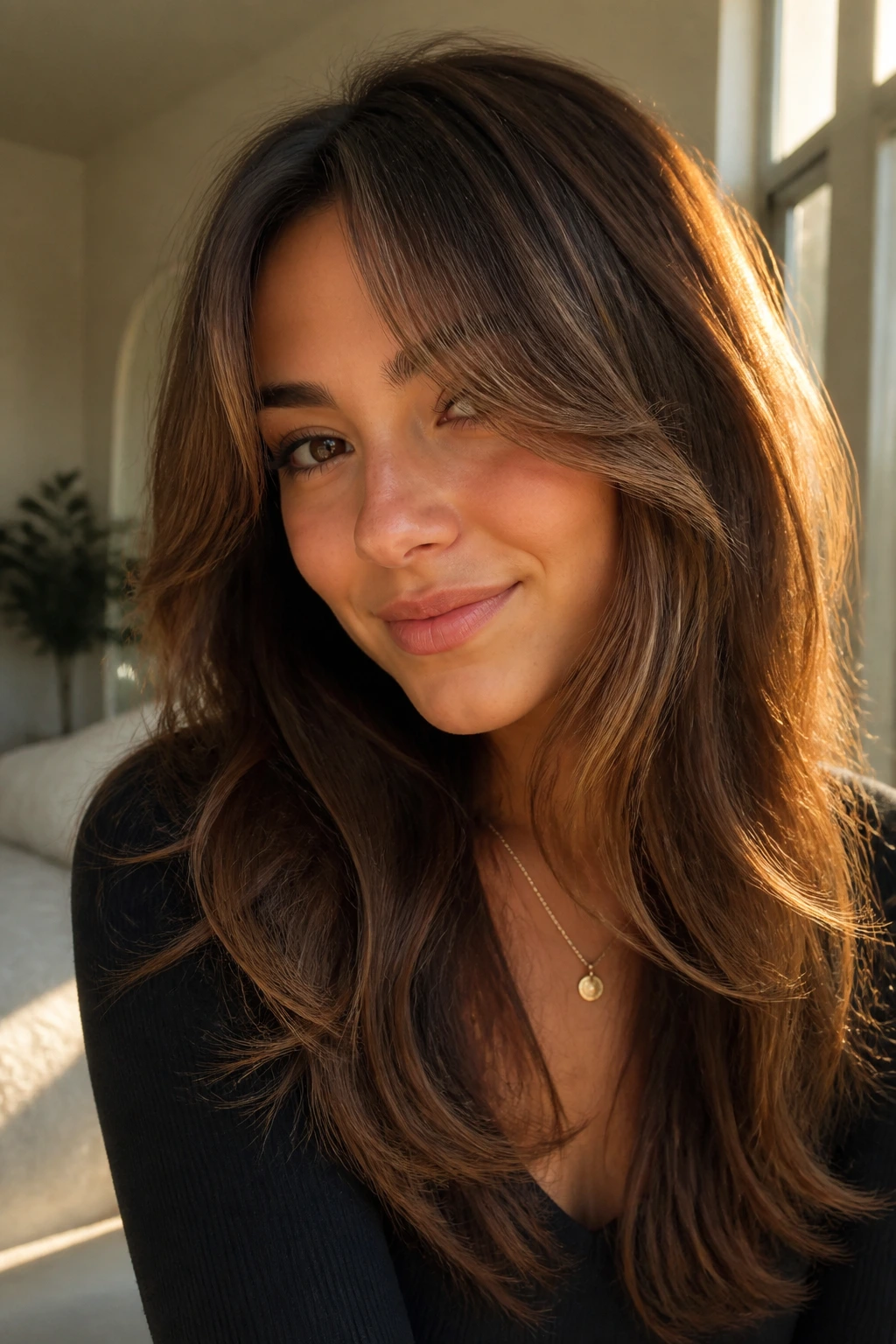
Soft curtain bangs and long layers are the safest place to start if you want shape without drama. The bangs split at the center, then sweep past the cheekbones, which keeps the front from sitting like a blunt shelf. The layers then carry that line down through the rest of the hair so the cut feels airy, not chopped.
Why It Works
The magic here is placement. Curtain bangs that begin around the bridge of the nose or just below the brows draw the eye inward first, then downward. On a round face, that diagonal movement matters more than people think. It breaks the wide-open curve at the cheeks and gives the top half of the face a little more length.
What to Ask For
- Curtain bangs that start around the brow or nose line
- Long layers that begin below the chin
- Soft face-framing pieces, not heavy chunks
- A blended perimeter, not a hard line
Styling note: blow the bangs away from the face first, then tuck the ends inward with a round brush. That tiny bend makes the front pieces sit like a frame instead of a curtain rod.
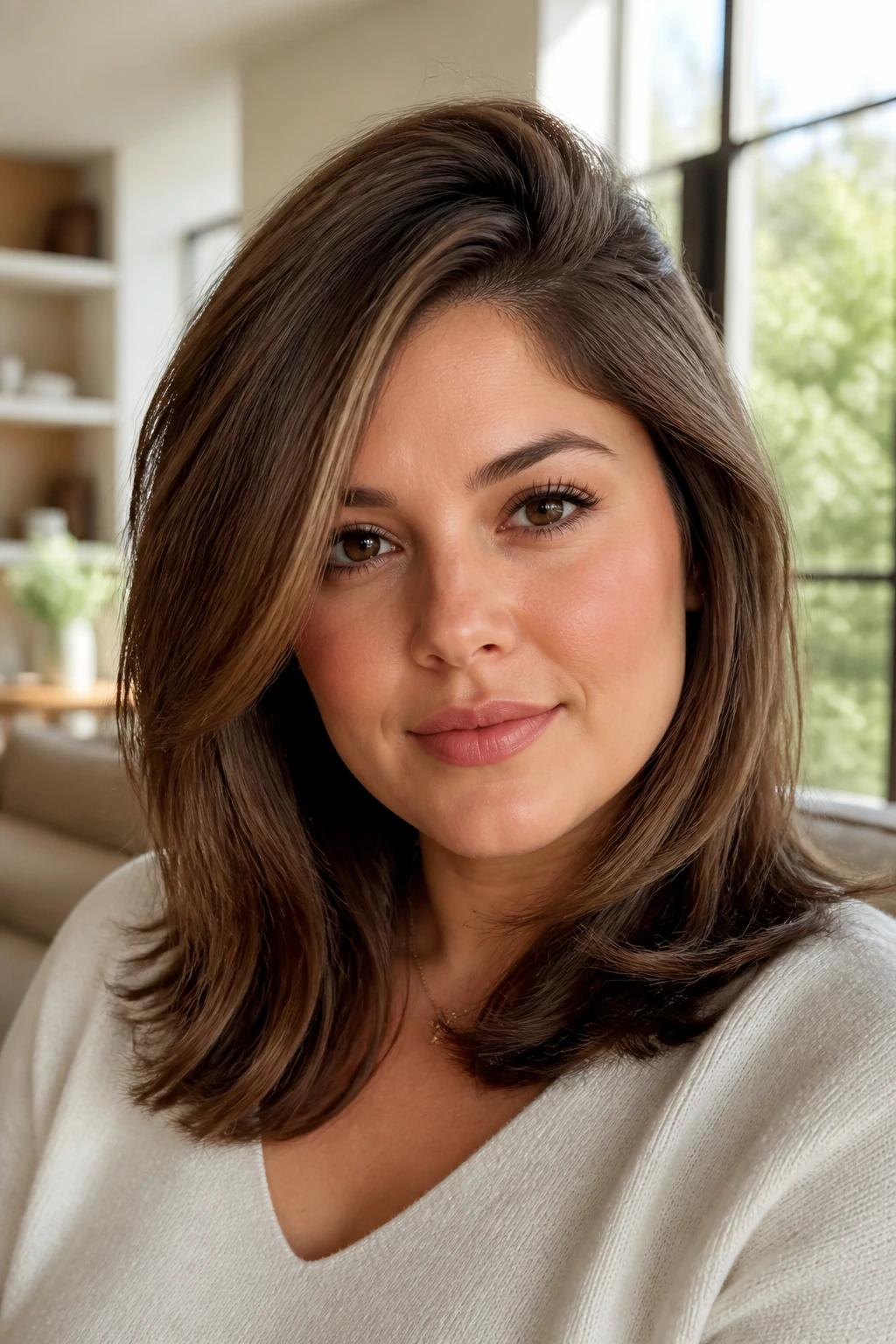
2. Collarbone Lob with Soft Front Pieces
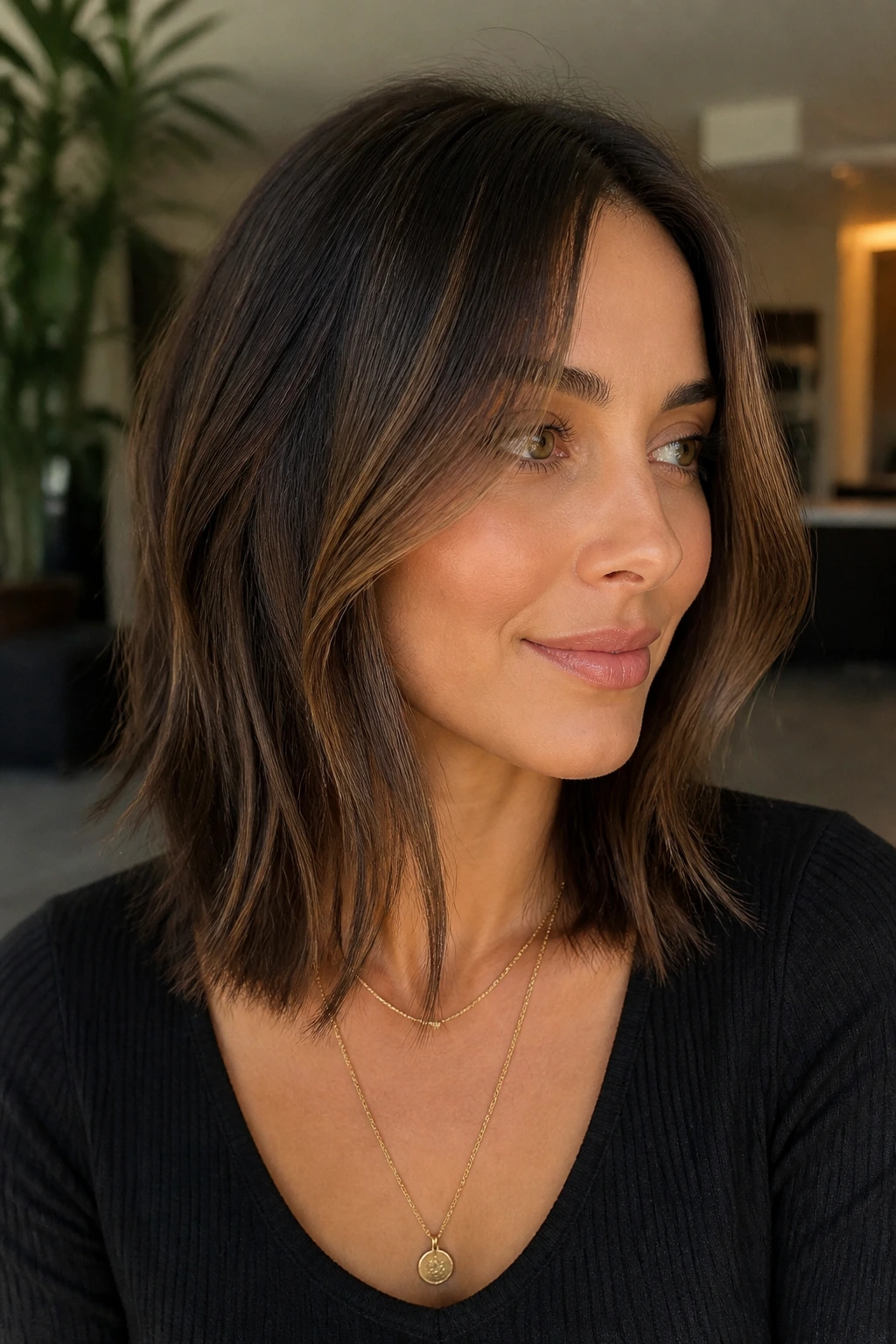
If you want shorter hair but not a full bob, the collarbone lob is the sweet spot. It lands low enough to avoid the chin-heavy look that can happen with round faces, and the front pieces skim past the jaw instead of ending right at it. That little extra length changes everything.
This cut looks best when the front is slightly longer than the back. Nothing severe. Just enough angle to keep the eye moving. When the hair is tucked behind one ear, the shape gets even better, because the loose front section keeps the face from looking too open.
My opinion: this is one of the easiest short cuts to live with because it does not need constant perfect styling. A rough bend through the ends is enough.
3. Butterfly Cut with Airy Crown Volume

Why does the butterfly cut keep showing up in round-face-friendly hair inspo? Because it does two jobs at once. It gives you the look of shorter layers around the face without actually sacrificing length, and it builds lift through the crown, where round faces usually benefit from extra height.
The shorter top layers fall away from the cheeks, while the longer bottom section keeps the silhouette from going boxy. That contrast creates movement. A flat, one-length cut tends to stop the eye. This one keeps it traveling.
How to Style It
Use a large round brush or hot brush to lift the top layers at the root, then curl the front pieces away from the face. Keep the ends soft. If you make the whole cut too polished, it can lose the breezy shape that makes it work.
4. Angled Bob with Longer Front Corners
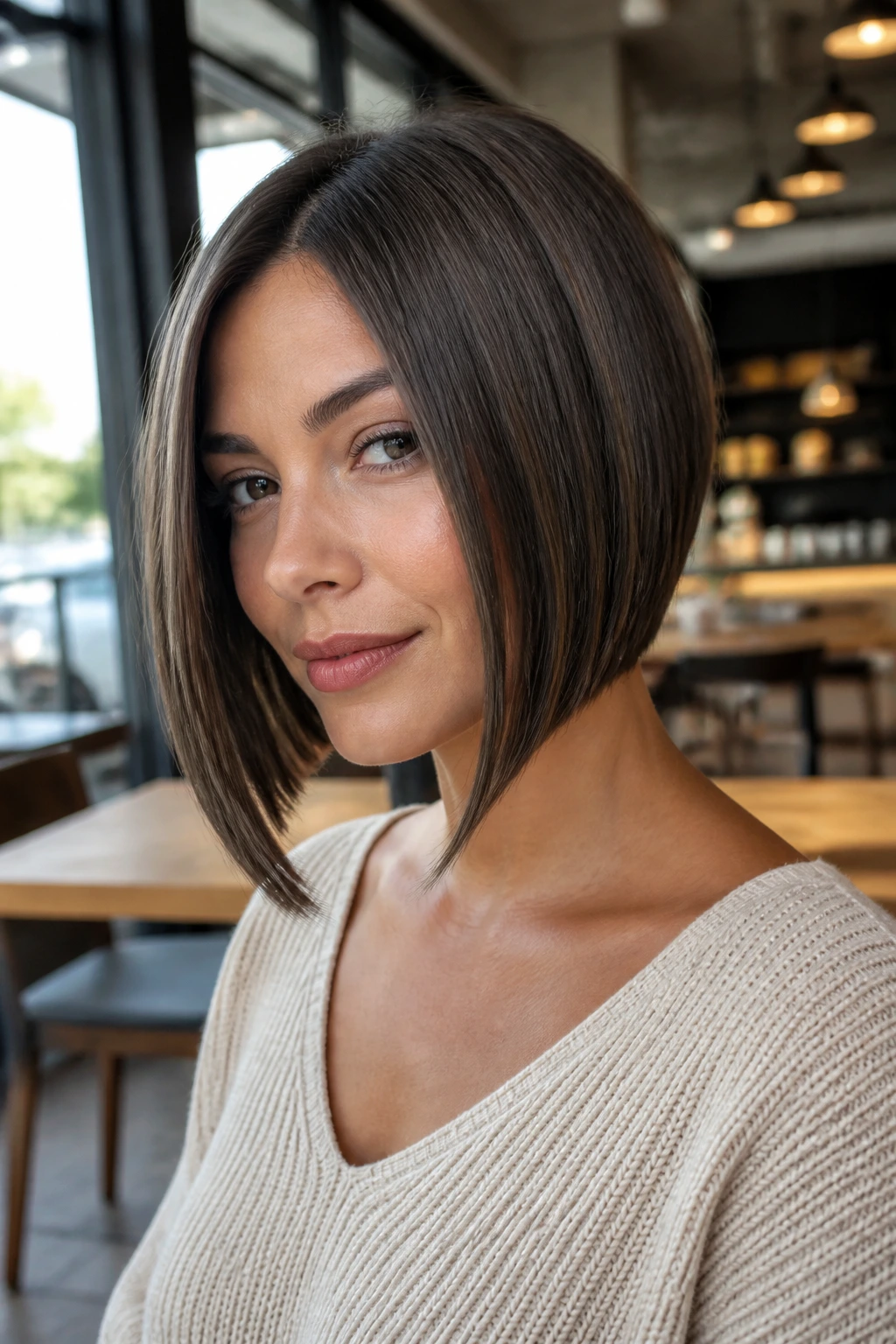
A sharp chin-length bob can be a risky choice on a round face. An angled bob is the smarter version. The back sits slightly shorter, the front drops longer, and that line gives the face a more elongated feel without turning the haircut into a dramatic asymmetrical statement.
The key is not just angle. It’s where the front stops. If the longest point lands at the collarbone or just above it, the bob looks sleek. If it ends exactly at the jaw, it can make the lower face feel broader. That’s the trap. Move the front down a bit, and the shape opens up.
A light bend at the ends helps, too. Stick-straight angled bobs can feel severe. A tiny inward flip at the front softens the whole thing.
5. Soft Shag with Broken-Up Ends

A shag is not for everyone. I’ll say that plainly. But when it’s cut with a light hand, the shag can be brilliant on a round face because it destroys the idea of one big, circular outline. The layers are broken up, the ends are piecey, and the front falls in uneven lengths that feel casual instead of bulky.
The best version for a round face avoids a heavy fringe and keeps the shortest pieces around the cheekbones light. You want air between the layers. You do not want a dense block of texture sitting at the sides.
What Makes It Work
- Keeps the silhouette from feeling wide
- Adds movement around the cheekbones
- Looks good when it grows out a little
- Works with natural wave or a loose bend from a wand
6. Wolf Cut with Cheekbone-Grazing Pieces
The wolf cut is the more rebellious cousin of the shag, and it can be very flattering on a round face when the face frame is placed carefully. The shorter crown layers create lift up top, while the longer front pieces drag the eye down past the cheeks. That contrast is the whole trick.
What you do not want is too much bulk at the sides. A wolf cut with dense volume right at the cheek line can make the face look wider, not slimmer. So the version that works best keeps the choppy texture higher up and the front pieces longer and softer.
This is a better cut for someone who likes messy texture and does not mind a little edge. It looks best with lived-in waves, not a crisp blowout.
7. Side-Parted Mid-Length Layers
A deep side part can change a round face almost immediately. It interrupts the symmetry and creates a diagonal line across the forehead, which stops the face from reading as one even circle. Add mid-length layers that start below the cheekbones, and the whole haircut starts to feel taller.
This style is underrated because it does not need a dramatic cut to work. Even a fairly simple shoulder-length shape can look sharper with a side part and a face frame that slips under the jaw. If you wear glasses, this one is especially useful, because the part keeps the front from competing with the frames.
The best version has a little root lift at the crown. Flat roots make the part collapse. A bit of height keeps the shape alive.
8. U-Shaped Long Layers
If you like long hair and don’t want a lot of obvious layering, the U-shape is a quiet win. The perimeter curves gently upward at the sides and stays longer through the back, which keeps the hair from forming a straight horizontal line across the lower face. That curve matters on a round face because it softens width without cutting the hair bluntly.
This cut is especially good if your hair is thick and tends to spread out at the bottom. The U-shape gives it direction. The face-framing pieces can begin around the mouth or chin, then slide into the longer lengths so the whole cut feels blended.
It’s not flashy. That’s the point. Some of the best round-face haircuts are the ones that do their work quietly.
9. V-Cut with Sweeping Face Frame
A V-cut gives you drama without adding side width. The back falls into a sharper point, which creates a long vertical line, while the front pieces can stay soft and sweeping. On a round face, that downward motion is useful because it keeps the eye moving toward the center rather than across the cheeks.
The danger with a V-cut is overdoing the angle. If the point is too sharp and the layers are too disconnected, the hair can start looking stringy. The better version is blended, with face-framing strands that start below the cheekbones and a perimeter that still feels full.
This one loves waves. Even a soft bend makes the V shape easier to read.
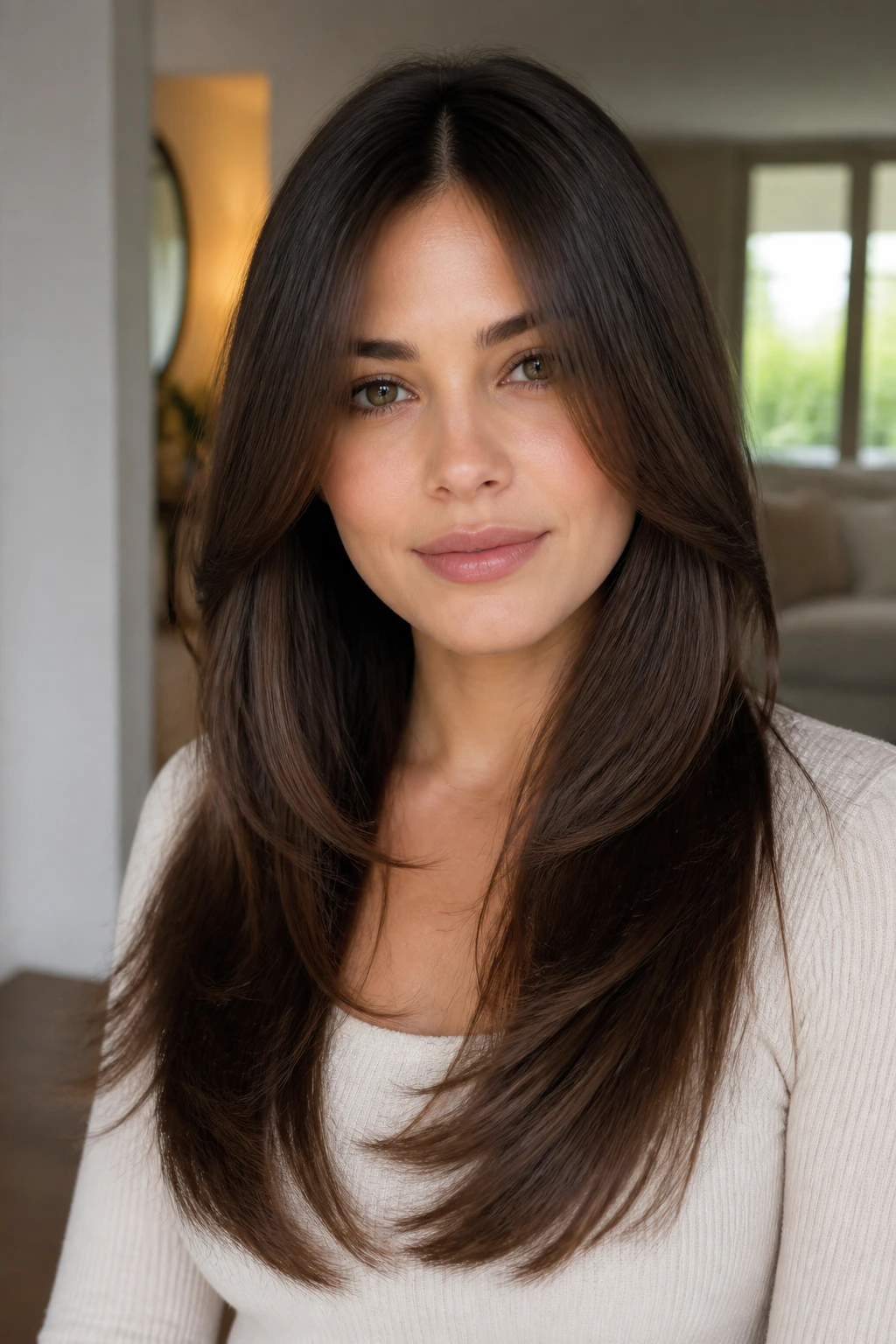
10. Sleek Long Layers with a Center Part
A center part on a round face is not the enemy. A bad center part is. If the hair is flat and the layers are too short, the face can look wider. But if the front pieces start lower and the length stays long, the center part turns into a clean vertical line that actually helps.
This works best when the layers are subtle and the ends are polished. Think smooth, not stiff. The front pieces should skim the jaw or fall just below it, never stop at the broadest part of the cheek. That one detail keeps the style from turning boxy.
I like this cut for straight hair and loose waves. It feels calm. Not boring. Calm.
11. Textured Midi Cut with Flipped Ends
The midi cut sits somewhere between a bob and long hair, and that in-between zone is useful on round faces. Add texture through the ends, then flip them out a little, and the haircut starts to move away from the cheeks instead of sitting against them.
The front layers should be soft enough to frame the face without bunching up at the jaw. A little shag-like texture helps, but keep the weight line below the chin. That keeps the lower half of the face from feeling crowded.
This is the kind of cut that looks best with a dry texture spray and a finger-combed finish. Too much smoothing can flatten the personality right out of it.
12. Bottleneck Bangs with Shoulder-Length Layers
Bottleneck bangs are a clever middle ground. They’re shorter in the center, then taper longer toward the cheekbones, which creates a gentle narrowing effect without a hard blunt fringe. On a round face, that taper matters because it gives the forehead a bit of structure and the cheeks a bit of soft cover.
Shoulder-length layers keep the whole cut from feeling too dense. The bangs do the face-framing work, and the lengths below them carry the shape downward. If you’ve avoided bangs because you were worried they’d make your face look shorter, this is the version worth trying.
How to Wear It
Keep the bangs slightly separated, not sealed together by heavy product. They should fall in loose, feathery pieces. That airy finish is what keeps the look from feeling heavy.
13. Invisible Layers for Thick Hair
Thick hair on a round face needs control more than it needs drama. Invisible layers are a smart answer because they remove bulk from the interior without leaving obvious chopped lines around the face. The result is a smoother shape that still moves.
If thick hair is cut in one dense block, it can balloon at the sides and make the face look wider. Invisible layering reduces that puff while keeping the perimeter clean. The front pieces can still be used to frame the face, but the real work happens inside the haircut, where all that weight is sitting.
This is a good salon phrase to use: remove bulk without losing length. It gets the point across fast.
14. Cascading Waterfall Layers
Waterfall layers are made for movement. The shorter pieces fall into longer ones in a stepped pattern, which gives a round face the exact opposite of a static outline. Instead of one broad curve, you get repeated vertical movement that draws the eye down the hair.
The face frame should start below the cheekbone and then blend into longer waves or bends. If the shortest layers are too high, the effect can look puffy around the cheeks. Keep the shortest movement lower and softer, and the cut stays elegant rather than busy.
This style is especially nice if your hair has a natural wave. It almost styles itself. Almost.
15. Curly Shoulder-Length Layers
Curly hair and round faces are a good match when the layers are placed with care. Shoulder length gives the curls room to spring without turning into a triangle, and the face-framing pieces can be cut to fall around the mouth or chin instead of stopping high at the cheeks.
The big mistake with curly hair is over-layering the top and leaving the sides too wide. That can make the face look broader than it is. A better cut keeps the crown balanced and removes enough weight from the lower half to let the curls fall in a soft oval shape.
Dry-cutting or cutting curl by curl makes a huge difference here. Wet curls lie.
16. Coily Shape with Tapered Face Framing
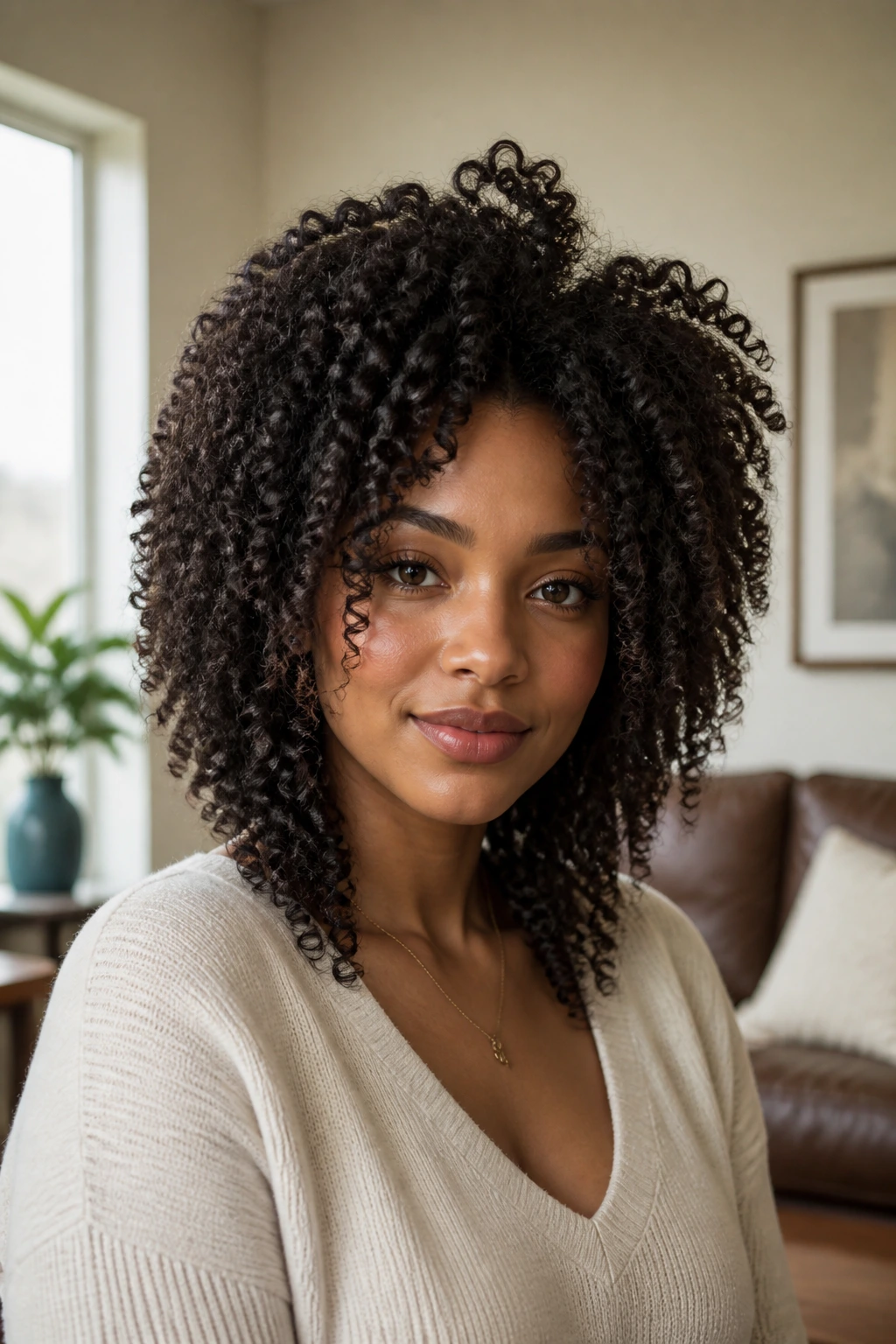
Coily hair needs a different kind of face frame, one that respects shrinkage and shape memory. Tapered layers around the front help create an oval silhouette, which is usually the goal on a round face. The shorter pieces should not stop exactly at cheek level unless the rest of the shape is longer and lifted.
A good coily cut keeps fullness where it belongs and removes width where it does not. That usually means a little height at the crown, a soft taper around the temples, and enough length in the front to create a vertical line. Sharp lines can work, but they need purpose.
This is one of those cuts where the stylist’s hand matters more than the photo. Bring a photo anyway. Then talk about shrinkage.
17. Layered Pixie with a Long Top
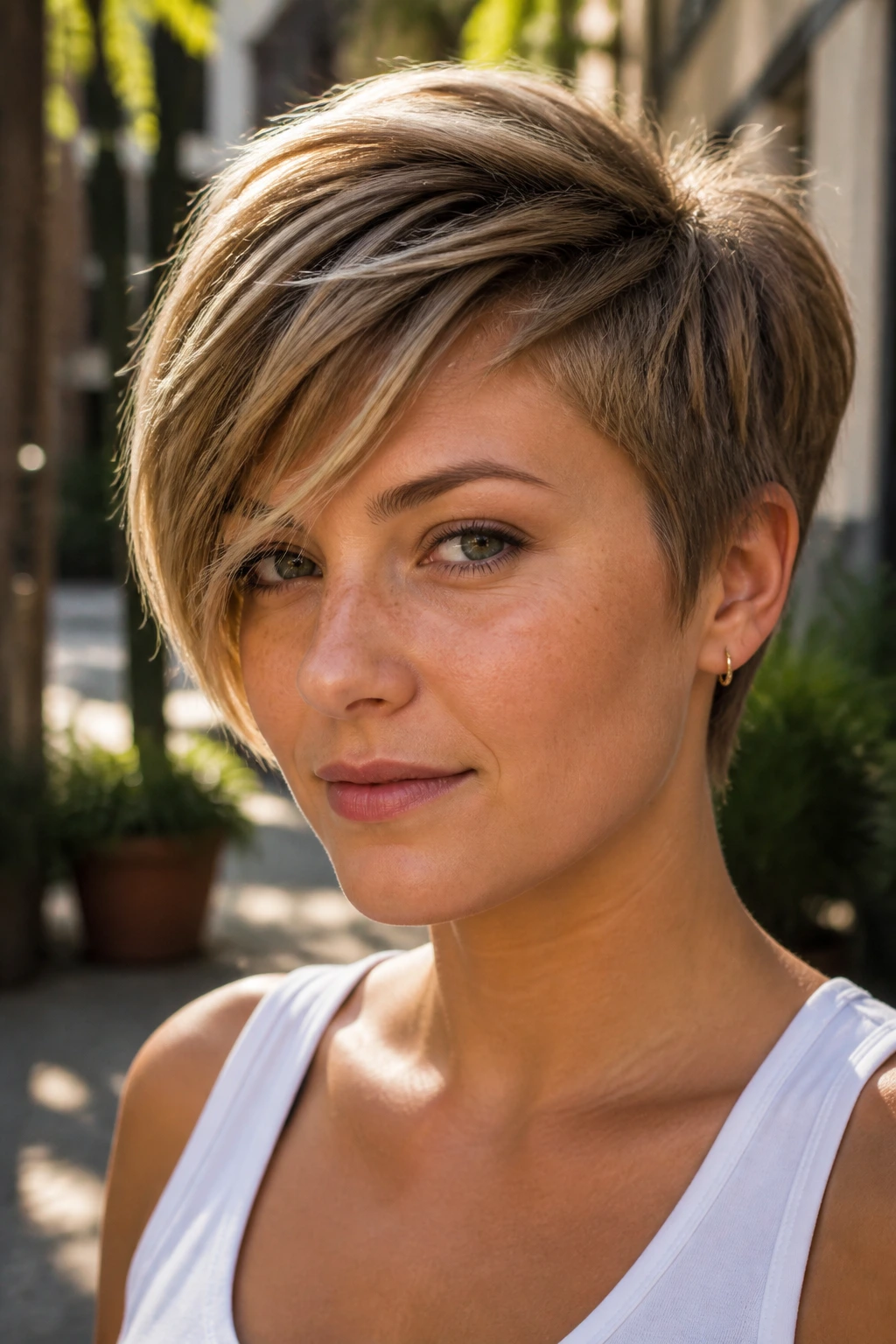
Short hair can work on a round face. The trick is keeping enough length on top to build height and enough softness around the sides so the cut does not sit like a helmet. A layered pixie with a longer top does exactly that.
The front can sweep across the forehead, the crown can lift upward, and the sides can stay tight without becoming severe. That vertical height is what changes the face shape. If the top is flat, the pixie can make the face look wider. If the top moves, the shape opens up.
This cut feels crisp, but not fussy. And yes, it needs regular trims. Short hair tells on you fast.
18. Bixie with Side-Swept Fringe
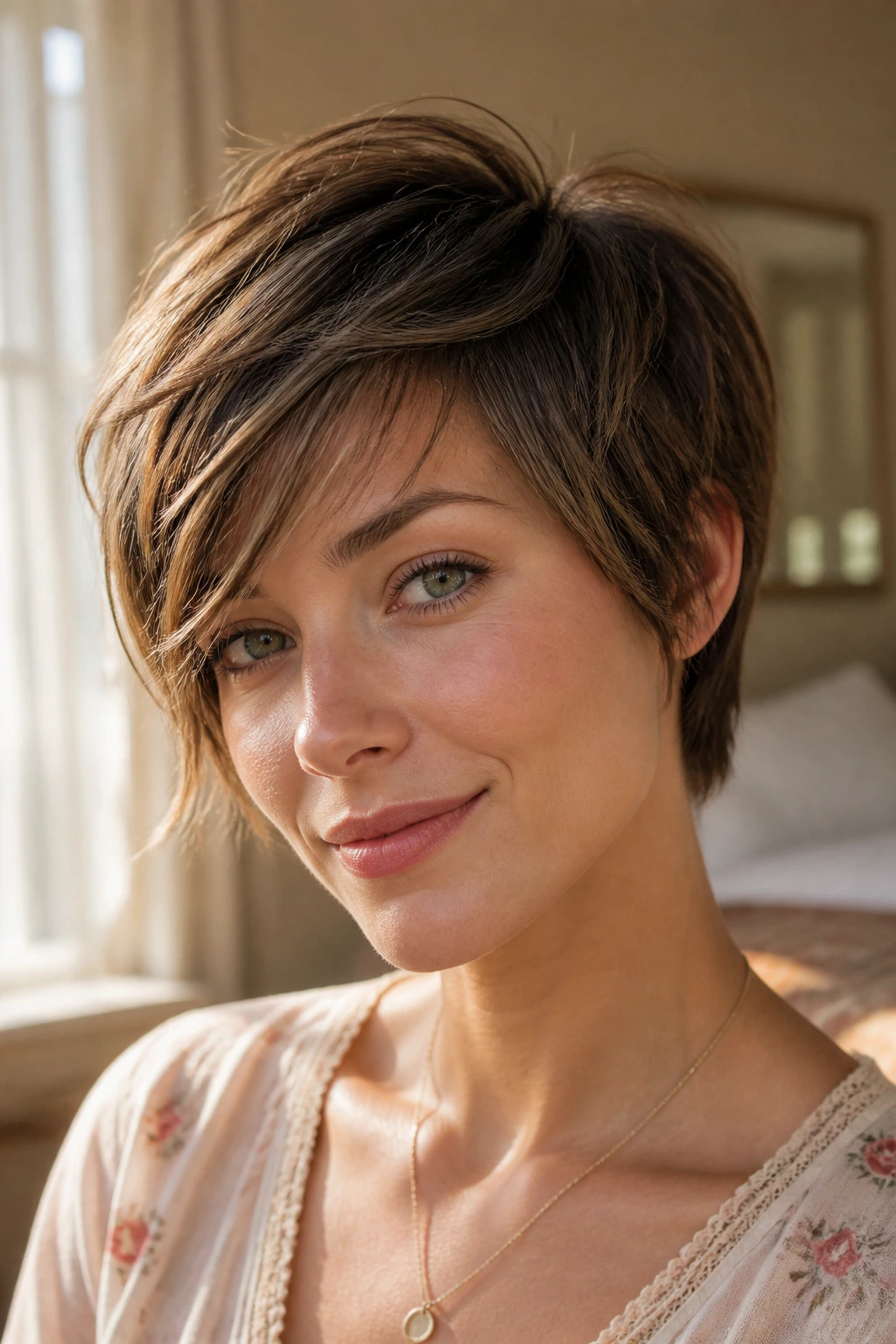
The bixie sits between a bob and a pixie, which sounds like a compromise but is actually a strength. On a round face, the side-swept fringe is the part that matters most. It creates a diagonal across the forehead and breaks the symmetry that can make a face feel broader.
The length around the ears and nape stays soft, while the top carries enough texture to avoid looking flat. If you want short hair with movement and a little edge, this is one of the better options. It’s lighter than a bob, but it still keeps some of the softness people love in longer cuts.
A little styling paste goes a long way. Use too much and it turns gummy. Fast.
19. Asymmetrical Lob with One Longer Side

Asymmetry is useful when a face shape needs interruption. A lob with one side a touch longer than the other creates that interruption without screaming for attention. It breaks the roundness, gives the eye a line to follow, and keeps the style from feeling too even across the cheeks.
This cut works best when the longer side falls below the jaw. Not just at it. Below it. That extra inch or two matters because it lengthens the silhouette instead of boxing it in. A side part makes the effect even stronger.
I like this one for straight and slightly wavy hair. The angle reads clearly. With very curly hair, the asymmetry needs careful shaping so it does not get lost.
20. Blowout Layers That Start Below the Cheekbones
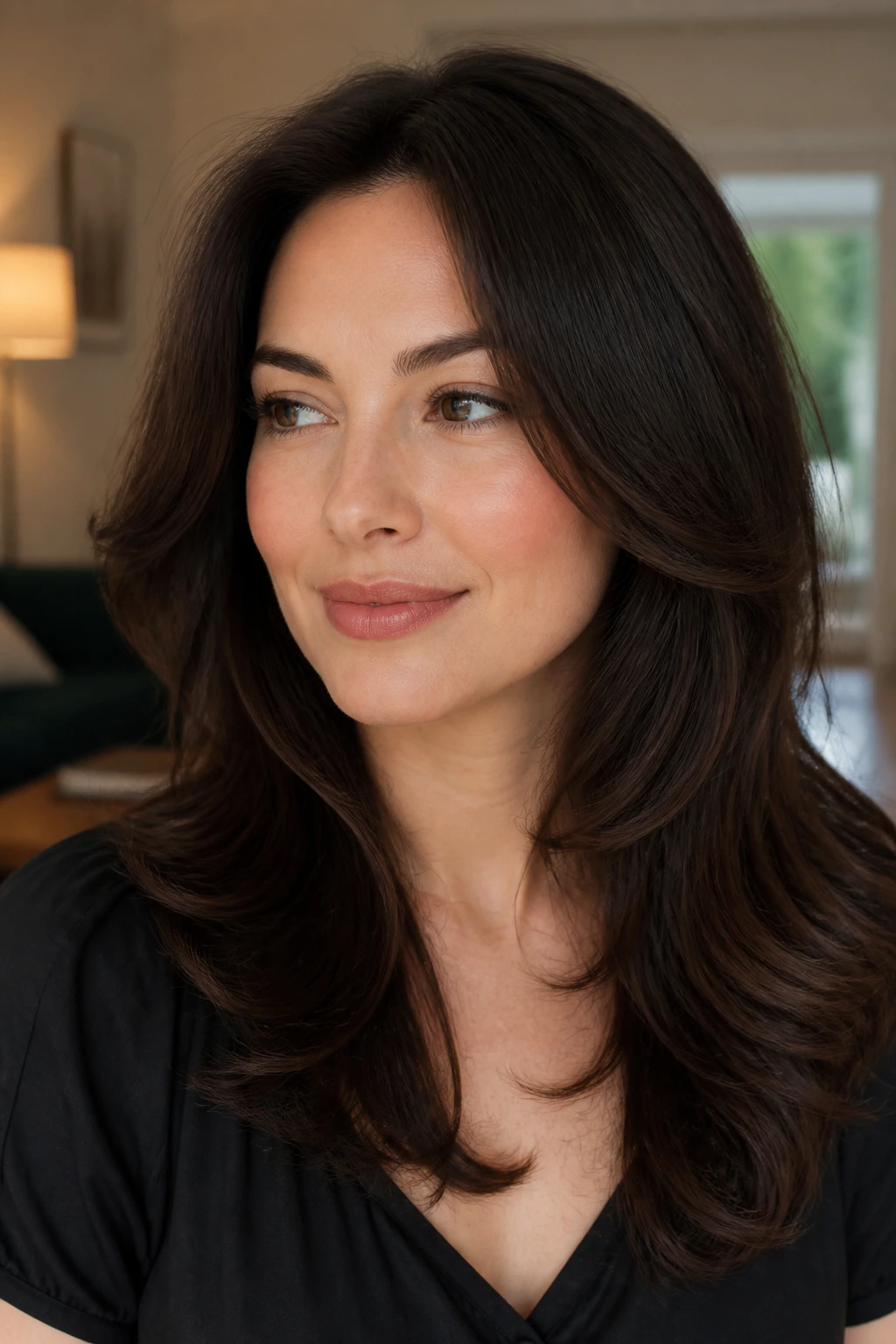
This is the haircut for people who like hair with bounce. The layers begin low enough to avoid puffing at the sides, then get styled with a round brush so the ends curve away from the face. That polished bend is what gives the cut its shape.
The reason it flatters a round face is simple: it creates space. The front is open, the crown has lift, and the ends swing below the widest part of the face. The whole style feels bigger at the top and narrower around the cheeks, which is exactly the balance you want.
If your hair falls flat in humid weather, this cut still works — it just needs a little more root support. Velcro rollers help more than most people expect.
21. Tapered Long Cut with Money Piece
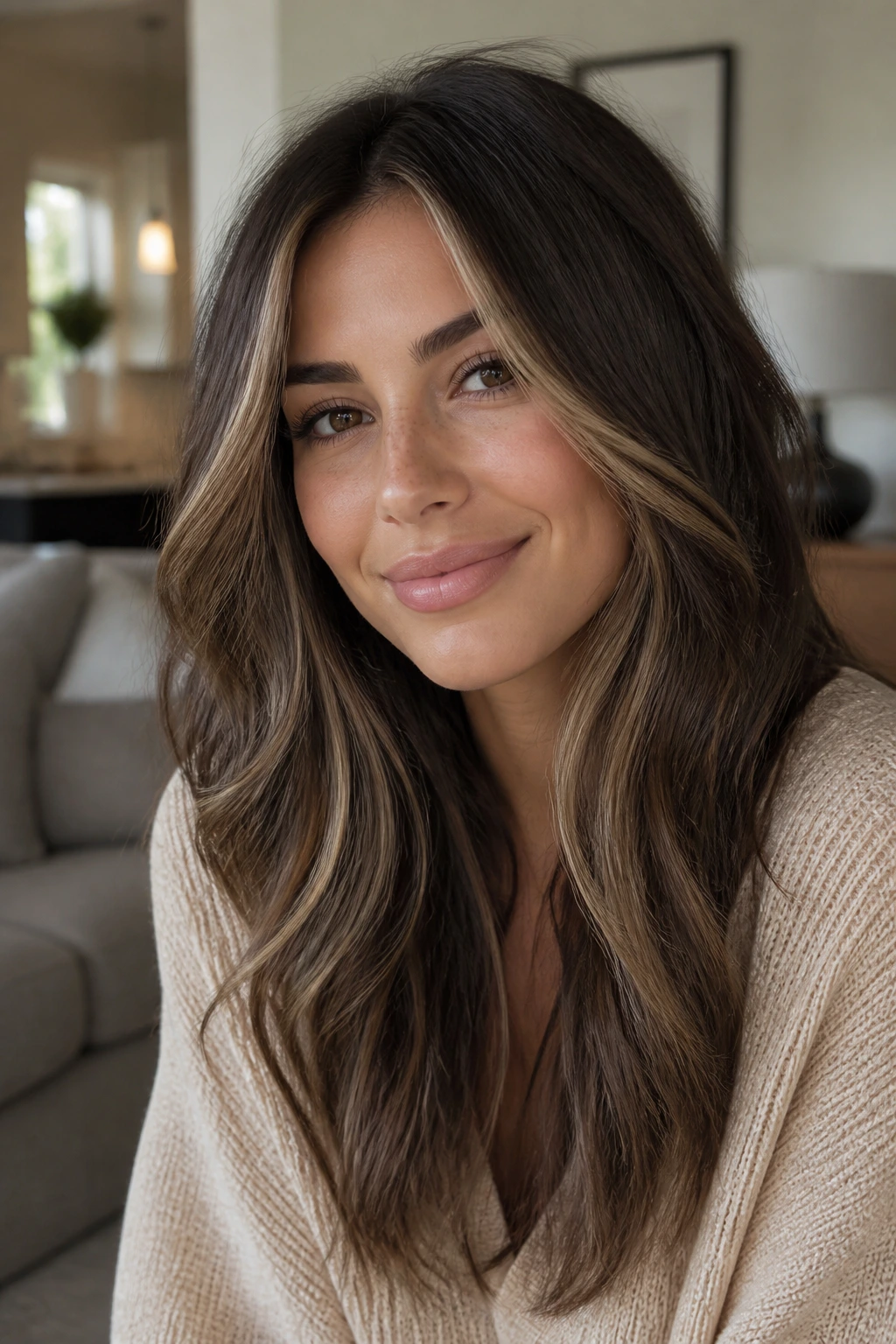
A money piece can be useful on a round face if it is not too thick or too short. The brighter front sections pull focus upward and inward, then the taper through the rest of the cut keeps the hair from puffing at the sides. It’s a nice mix of light and shape.
The important thing is softness. Thick, high-contrast face-framing streaks can harden the face line if they stop too abruptly. A subtler money piece, blended into long layers, looks more modern and less stripey. The cut still gets the face-framing benefit, but the grow-out is gentler.
This style loves waves. A little bend keeps the color and the cut from looking too flat against the face.
22. Choppy Midi Shag with Piecey Ends

A choppy midi shag is all about movement that doesn’t sit in one place. The piecey ends break up width, while the face-framing layers create a narrow channel down the front of the hair. That can be useful on a round face because it stops the silhouette from turning into one big circle.
The shortest layers should be feathered, not blunt. The difference is huge. Feathered layers move. Blunt layers sit there and announce themselves. If the goal is to slim the face a bit and keep the style easy, feathering wins.
This is one of those cuts that looks better a little imperfect. A perfect curl pattern can make it too neat. A few bent pieces look better.
23. Rounded Lob with Underturned Ends

A rounded lob sounds counterintuitive for a round face, but the shape can work if the layers are placed correctly. The ends turn under softly, which makes the cut feel smooth, while the front pieces stay long enough to pull the eye down. The key is to keep the volume controlled, not puffy.
This cut is good for someone who likes a cleaner shape and does not want too much piecey texture. The underturned ends give the hair a finished look, and the long front pieces keep the line from stopping at the jaw. If the blunt edge hits too high, the effect changes fast, so length matters here.
A side part makes this version even better. It gives the rounded outline some welcome asymmetry.
24. Waist-Length Layers with Soft Waves
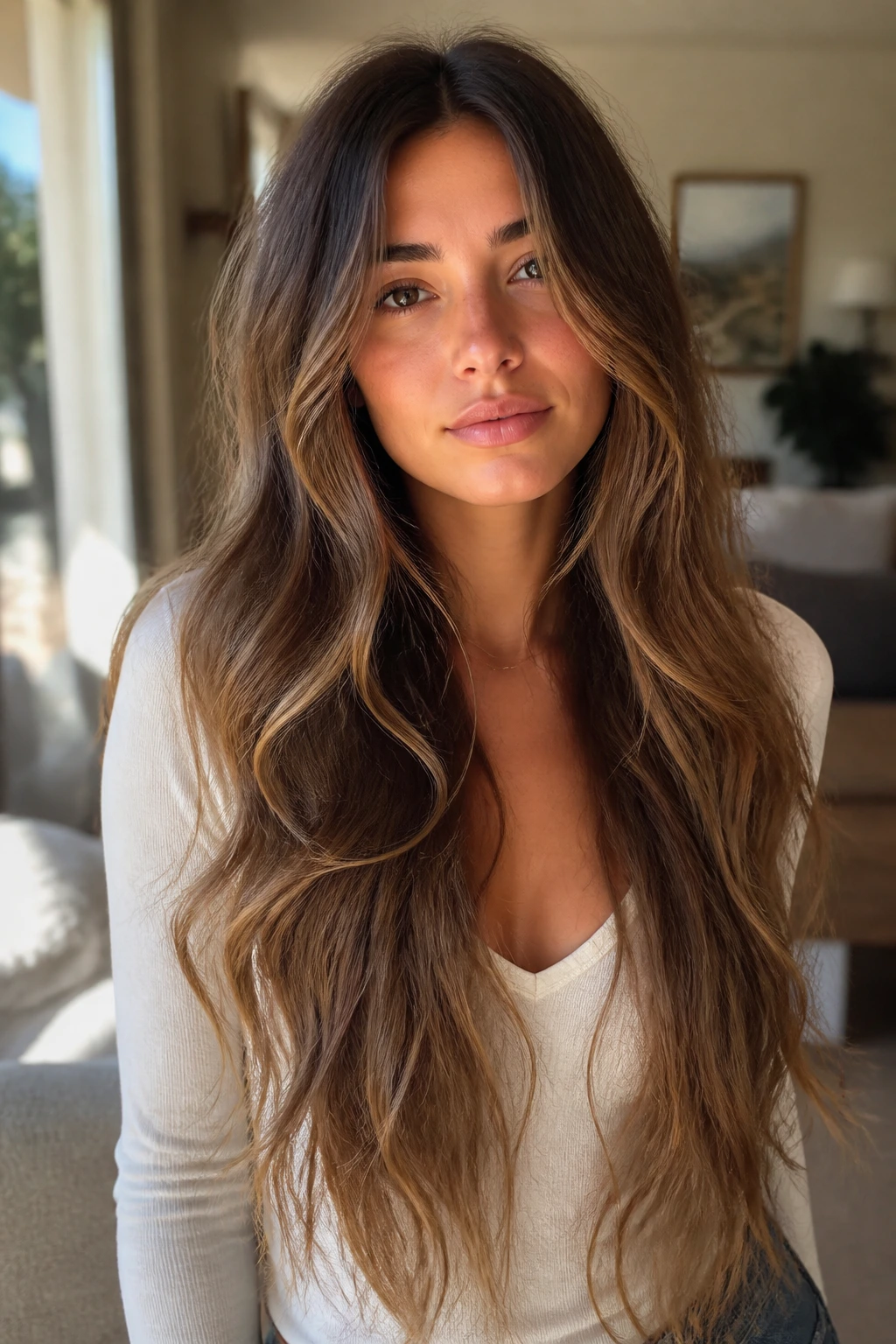
Very long hair on a round face can look gorgeous, but only if it has shape. Waist-length hair with soft waves and face-framing layers keeps the length but avoids the heavy curtain effect that can swallow the face. The front pieces should begin well below the cheekbones and blend slowly into the rest of the length.
The point is not to hide the face behind hair. The point is to give the face a clean frame that moves with the rest of the cut. Loose waves help because they create vertical rhythm instead of one solid mass of hair on each side.
This style does take more maintenance, plain and simple. Long hair shows split ends fast, and the face frame loses shape first. Still, when it’s cared for, it’s one of the most elegant ways to flatter a round face.
25. Grow-Out-Friendly Layered Cut with a Soft Fringe

Some haircuts look good only on day one. This is not one of them. A grow-out-friendly layered cut with a soft fringe keeps working because the face frame is intentionally broad and blended, not razor-thin or overcut. The fringe stays light, the layers stay mobile, and the shape doesn’t collapse as soon as the first inch grows in.
This is the cut for people who want fewer salon visits without losing the frame around the face. The fringe can split a little, the layers can soften, and the haircut still reads well. That’s the payoff. It’s one of the smartest choices on a round face if you hate the feeling of a haircut going “off” too fast.
A soft wave or bend helps it grow out gracefully. Straight hair can do it too, but the front needs a little lift so it doesn’t sit flat.
How Face-Framing Layers Change the Shape of a Round Face

Round faces usually have softer angles, fuller cheeks, and a width that feels about as broad as it is long. That is not a flaw. It just means the haircut needs to create a little more vertical movement than horizontal bulk. Face-framing layers do that by changing where the eye lands first.
The placement is the whole game. If the shortest pieces hit at the cheekbones, they can make the face look wider. If they start below the mouth, at the jaw, or even closer to the collarbone, the line of the hair drops downward and lengthens the face visually. That’s why long front layers and curtain bangs keep showing up in flattering round-face cuts.
Texture matters too. Straight hair needs soft bends so the front doesn’t sit like a flat sheet. Wavy hair gets away with less effort because the movement is already there. Curly and coily hair need the layers placed with shrinkage in mind, or the front frame can jump upward and land too high.
The other trick is crown height. A little lift at the top changes the whole silhouette. A round face with flat roots and side width can feel wider. Add height through the crown and a soft taper through the front, and the balance shifts fast. Not magically. Just enough to matter.
Tools and Products That Actually Help These Looks
-
A medium round brush: This is the fastest way to bend curtain bangs, lob layers, and long face-framing pieces away from the cheeks.
-
A blow dryer with a concentrator nozzle: The nozzle keeps air moving in one direction, which helps you smooth the top and lift the roots without blasting the layers around.
-
Heat protectant: Use it every time you style with a hot brush, flat iron, or curling iron. The face frame gets touched up often and needs the extra protection.
-
A wide-tooth comb: Useful for curly and coily versions of these cuts, especially if you want to separate the front layers without tearing at the pattern.
-
Duckbill clips or sectioning clips: These make root clipping and blow-dry sectioning easier. Small tool. Big payoff.
-
Texturizing spray: Best for shag, wolf cut, bixie, and choppy lob styles. A little at the mid-lengths keeps the front from sticking together.
-
Light mousse or volumizing foam: Good for fine hair that needs lift at the crown and a little support through the front layers.
-
Smoothing cream or serum: Use a tiny amount on the ends of sleek long layers or blowout cuts. Too much will weigh the front down.
How to Pick the Right Cut for Your Hair Texture
Fine hair and thick hair need different answers. Fine hair usually does better with longer face-framing layers, a little crown lift, and cuts that keep the perimeter from getting too thin. If you over-layer fine hair on a round face, the ends can turn wispy and make the face look broader because all the volume floats up top.
Thick hair needs bulk removed in the right places. Invisible layers, waterfall layers, and U-shapes keep the cut from ballooning at the sides. If your hair is dense, ask for softness around the cheek line, not a hard, wide shelf. That one adjustment saves a lot of frustration.
If Your Hair Is Wavy, Curly, or Coily
Wavy hair likes soft, blended layers and a face frame that can move. Curly hair needs the layers placed with curl pattern and shrinkage in mind, so the shortest front pieces do not jump too high. Coily hair often looks best with tapering around the temples and crown lift that makes the face read more oval than round.
If You Heat Style Every Day
Choose cuts with a clear front shape: curtain bangs, lob layers, angled bobs, blowout layers, or long layers with a center part. These styles keep their structure when you smooth or bend the hair. If you prefer air-drying, lean toward shags, wolf cuts, and layered midi shapes that already have movement built in.
How to Wear These Cuts in Real Life
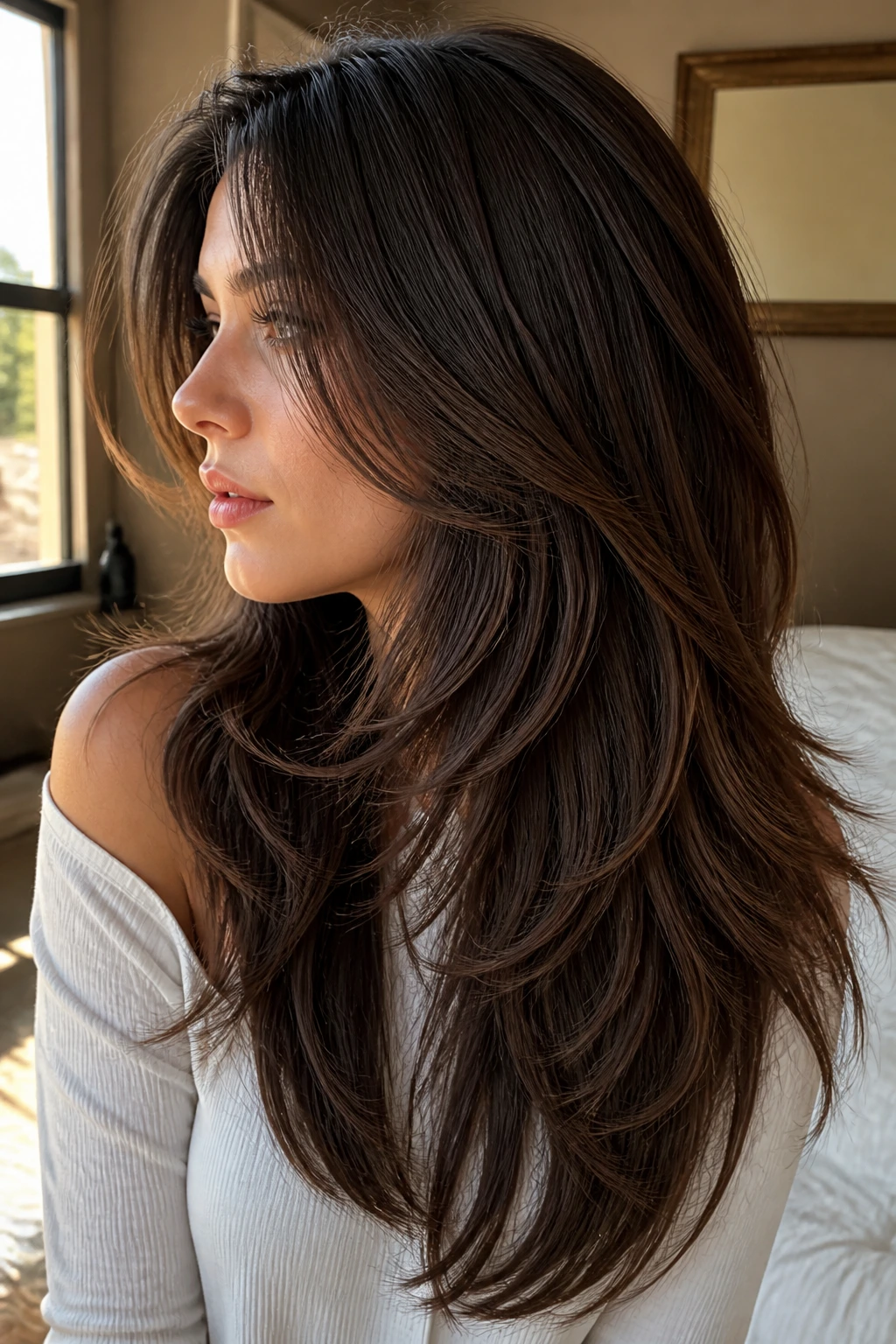
Center Part: Long layers, waterfall layers, and sleek long cuts look sharp with a center part as long as the front pieces start low enough to avoid the cheeks. A flat center part with short layers is a different story. That one can widen the face fast.
Side Part: Side parts help nearly every round face because they break symmetry and create a diagonal line across the forehead. They’re especially useful for lobs, bixies, and shorter layered cuts that need a little extra shape at the crown.
Air-Dry Finish: Shags, wolf cuts, curly layers, and choppy midi cuts often look better with a dry, touchable finish. Scrunch in a bit of mousse or cream, then leave the front pieces slightly separated so they don’t collapse into one block.
Polished Blowout: Collarbone lobs, butterfly cuts, rounded lobs, and long layered cuts benefit from a smooth finish with lifted roots and softly turned ends. Keep the front away from the face first, then set the shape. That order matters.
The Small Styling Moves That Make the Shape Better
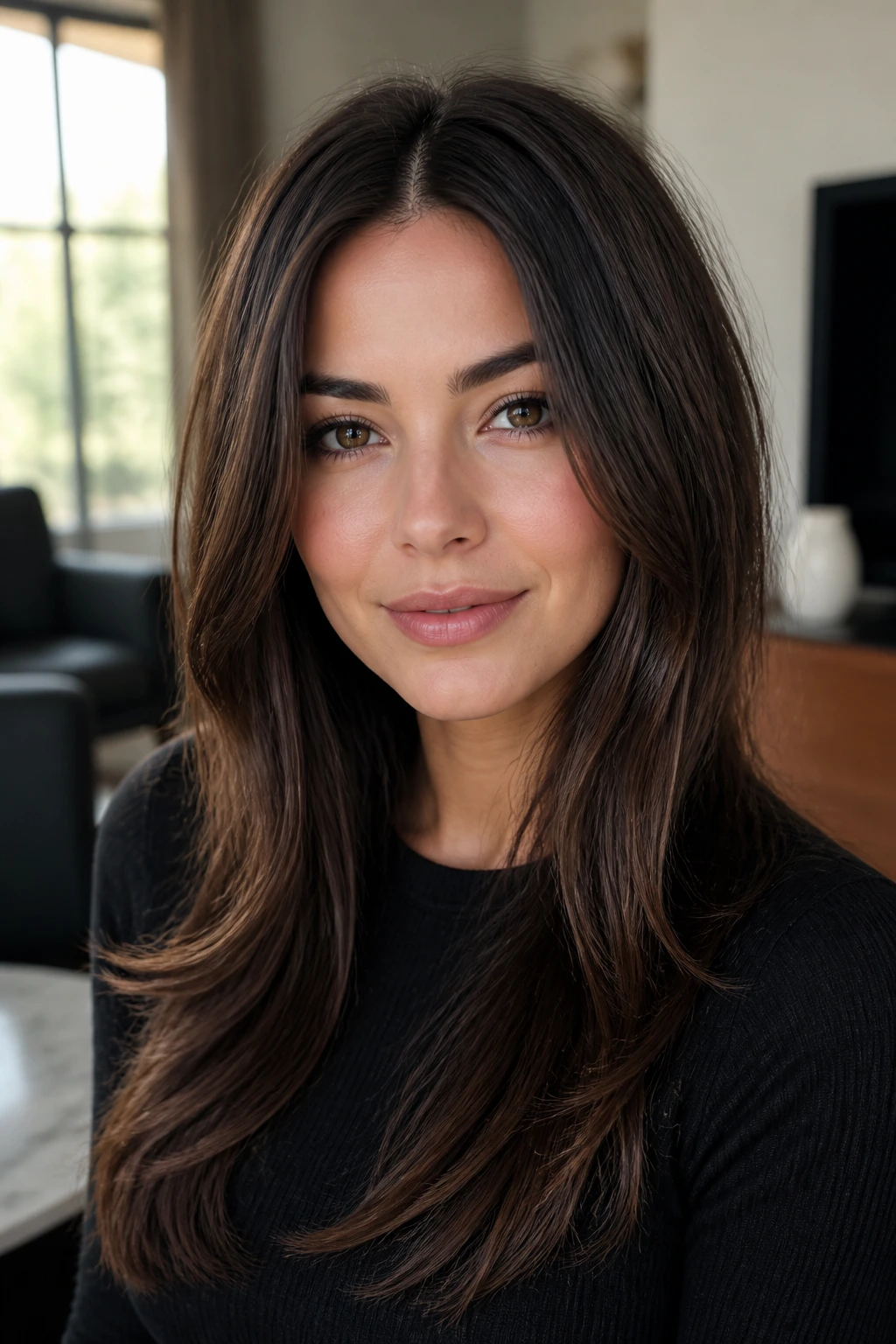
Lift at the Crown: If you do nothing else, add height at the top. Root clips for 10 to 15 minutes after blow-drying, or a quick blow-dry with the nozzle pointed up and back, can change the whole silhouette.
Keep the Face Frame Soft: The first front pieces should bend away from the cheeks or slide under the jaw. A straight piece ending right at the cheekbone can work against the whole point of the cut.
Use Texture Where It Helps: Fine hair often needs mousse or root spray. Thick hair needs a little smoothing cream on the ends. Curly hair usually wants a lighter hand and more separation. One product does not suit every texture, and the front shows that faster than the rest.
Change the Part Now and Then: A strict middle part every day can flatten the same section and make the shape stale. Switching to a slight side part or a soft off-center part gives the layers a different fall and keeps the face frame from getting lazy.
Trim the Front Before the Back Feels Long: The face-framing pieces lose their job first. If they start hanging into the jaw or flipping in weird places, the whole haircut looks older than it is.
Maintenance, Grow-Out, and Between-Wash Care

Face-framing layers need regular shaping, even when the rest of the cut is intentionally soft. For most of these styles, a trim every 8 to 12 weeks keeps the front pieces in the right place. Bangs or shorter fringe usually need attention sooner, around 4 to 6 weeks, because a small amount of growth changes how they sit around the face.
At night, a silk pillowcase or a loose, low tie can help preserve the front shape. If you wake up with the front pieces bent in a bad direction, mist them lightly with water and re-bend them with your fingers or a brush. Do not soak the whole head. That usually creates more work than the original problem.
Dry shampoo is useful, but use it at the roots, not through the face frame. Product buildup around the front strands can make the layers look sticky and dull. A tiny bit of texture spray or light cream is enough for most styles. Heavy product tends to drag the front down, and the whole point is movement.
Curly and coily styles often benefit from a refresh on the second or third day with a little water and a leave-in product, then scrunching or finger-shaping the front pieces back into place. Straight and wavy styles usually need less water and more direction.
Common Mistakes That Make Round Faces Look Wider

-
Starting the shortest layer too high: If the face frame hits at the cheekbones, it can draw attention straight across the widest part of the face. Ask for the shortest pieces to start lower, usually around the mouth, jaw, or collarbone.
-
Picking a blunt line at jaw level: A blunt bob that stops exactly at the jaw can make the lower face look fuller. A longer front, an angle, or a soft bend fixes that fast.
-
Adding all the volume at the sides: Too much width near the cheeks turns the haircut into a circle. Lift at the crown instead and keep the sides a little softer.
-
Over-thinning curly hair: Thinning curly layers too aggressively can create a frizzy halo with no shape. Better to shape the curl pattern carefully and remove weight in controlled sections.
-
Ignoring your growth pattern: Cowlicks at the crown or a strong front swirl can flip the face-framing pieces in odd directions. If you know your hair fights a center part, stop pretending it doesn’t. Work with the part your hair wants, then shape from there.
Variations and Adaptations to Try
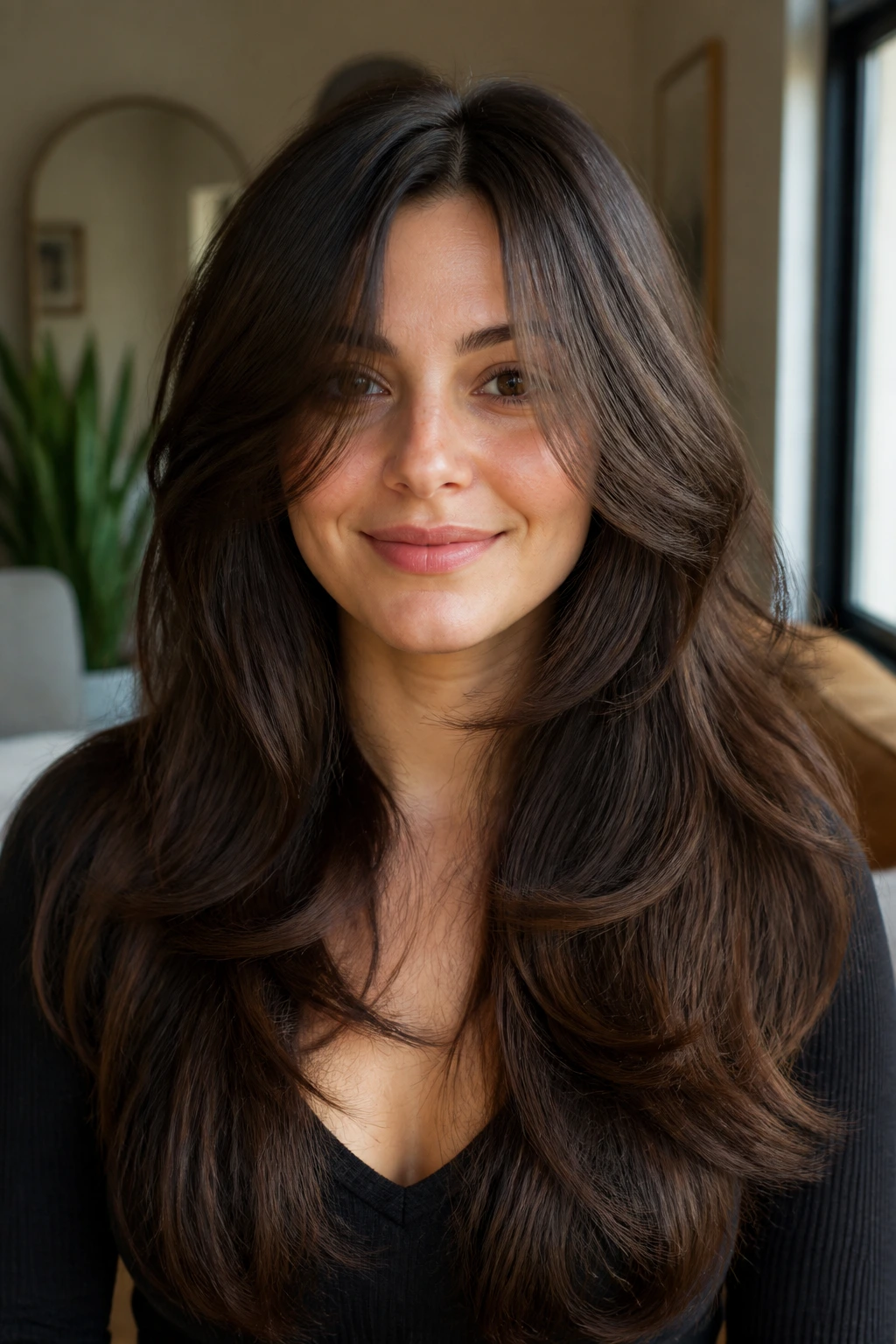
The Soft Fringe Edit: Add curtain bangs or bottleneck bangs to almost any long or medium-length layered cut. The fringe gives the front more structure without boxing in the face, and it’s one of the easiest ways to make a simple haircut feel more tailored.
The No-Heat Version: Choose a shag, wolf cut, or layered midi shape, then let the texture do the work. A little mousse, a scrunch, and a side part can replace a full blowout on most days.
The Thick-Hair Tamer: Ask for invisible layers, a U-shape, or a long lob with internal weight removal. These cuts reduce the feeling of bulk at the sides while keeping the ends looking full.
The Short-Hair Shape Fix: If you want short hair, try a bixie, an angled bob, or a layered pixie with height at the crown. The extra lift matters more than the exact length.
The Curly Frame: For curls and coils, make the face-framing layers longer than you think they need to be. Shrinkage changes everything, and it’s better to cut conservatively and refine later than to take too much off the front.
Questions People Ask Before They Cut the Length
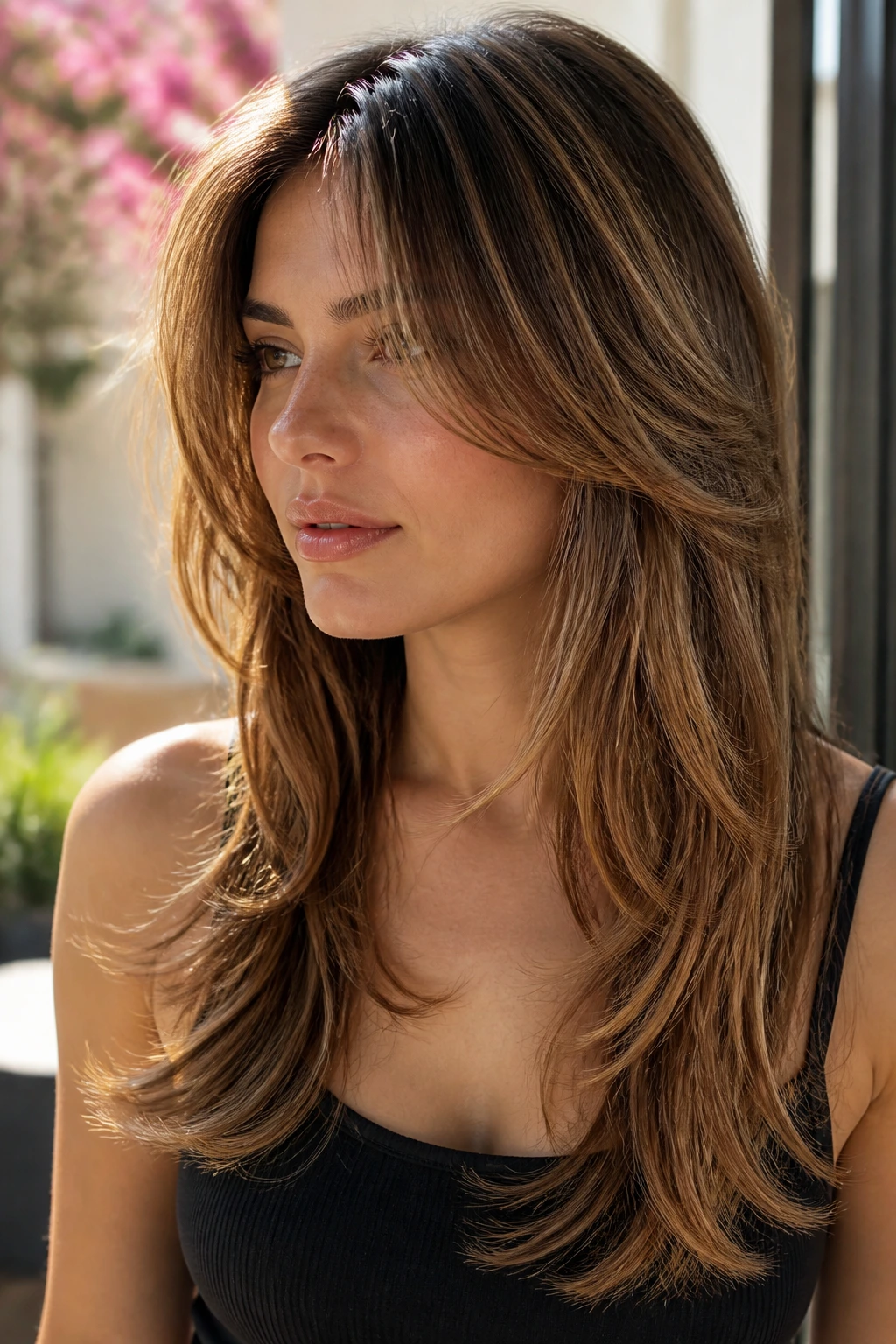
Do face-framing layers actually help a round face?
Yes, when they’re placed below the widest part of the face. The cut needs to create vertical movement, not a short, curved frame right at the cheeks.
Should round faces avoid bobs completely?
No. They just need the right bob. Angled bobs, longer lobs, and bobs with front pieces that drop below the jaw tend to work much better than blunt chin-length cuts.
Are curtain bangs good for round faces?
They usually are, especially when they’re longer at the sides and not cut too heavy across the forehead. The taper is what helps, not just the bangs themselves.
What if my hair is fine and flat?
Go for long layers, curtain bangs, or a collarbone lob with a little crown lift. Fine hair needs shape without too much thinning, or the ends can look stringy.
What if my hair is very thick?
Choose a cut that removes bulk from the interior, like invisible layers, waterfall layers, or a U-shape. Thick hair needs room to move or it will puff at the sides.
Can I wear a center part with a round face?
You can, but the front pieces need to start low enough to avoid the cheeks. A center part works best with long layers, blowout styles, or cuts that have crown height.
How often should I trim face-framing layers?
Every 8 to 12 weeks is a good range for most cuts. Bangs or shorter fringe may need a quick trim more often, especially if they start covering the eyes.
What if my hair flips the wrong way around my face?
Dry the front pieces in the direction you want them to fall, then set them with a brush or clips while they cool. Hair has a stubborn memory, and sometimes you have to retrain it for five minutes to save yourself for the whole day.
The Shape You Wear Most Often
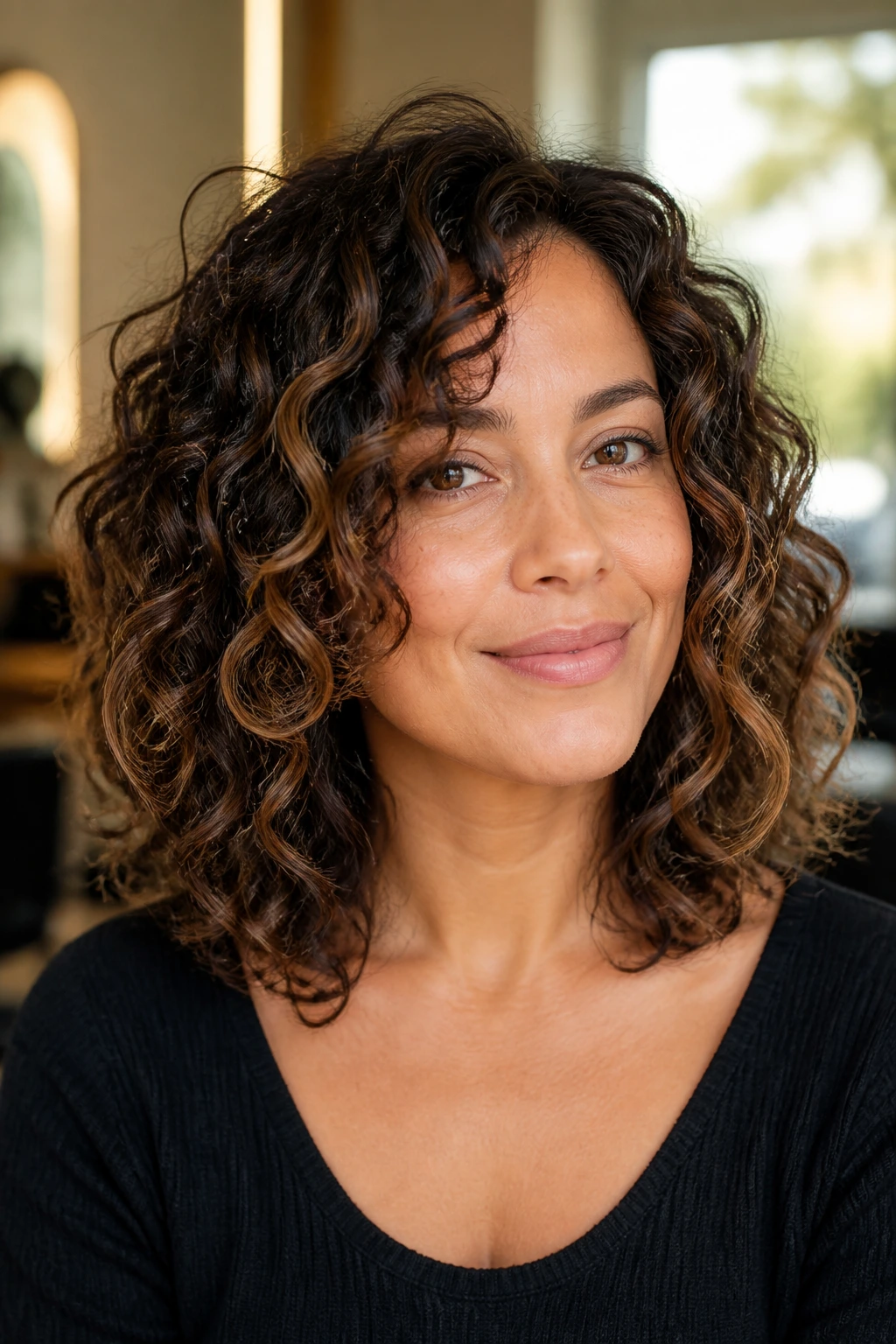
The best haircut for a round face is rarely the most dramatic one in the room. It’s the one that gives you a little height, a little angle, and a front section that knows where to fall. Face-framing layers do that job with less fuss than a lot of other cuts, which is why they stay in rotation for so long.
I’m especially fond of the styles that keep their shape as they grow: long layers with curtain bangs, a collarbone lob, a soft shag, or a layered cut that starts doing its work below the cheekbones. Those are the ones that keep looking deliberate after a few weeks, which matters more than people admit.
If you’re taking one thing from this list, make it this: don’t ask the haircut to shrink your face. Ask it to guide the eye. That’s a much better deal, and it gives you far more room to make the style your own.