



Square faces don’t need to be hidden. They need a little interruption.
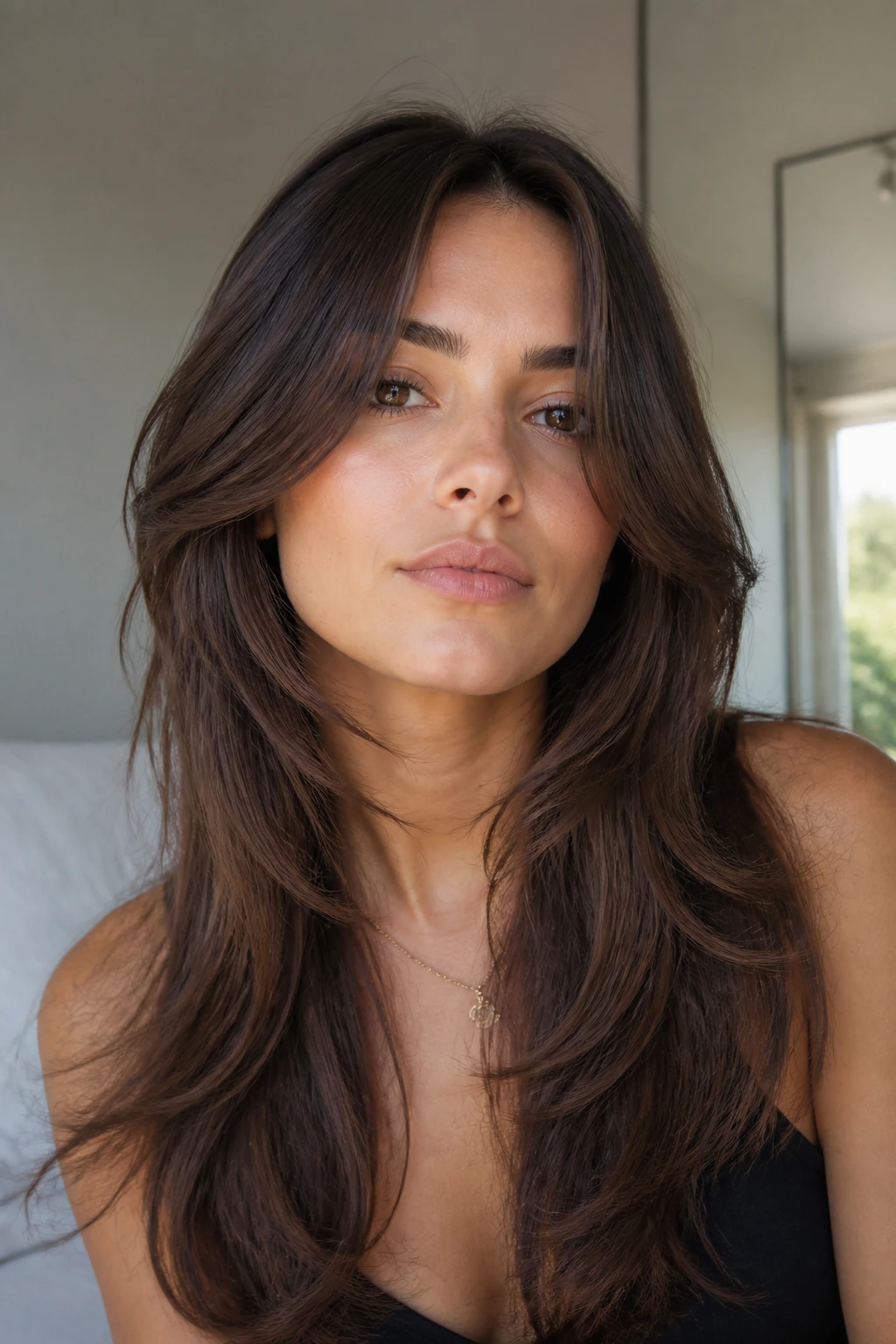
That’s the whole trick with textured layers for long hair and square faces: you’re not trying to erase the jawline, the wide forehead, or those firm angles. You’re softening the outlines so the hair moves around the face instead of tracing a neat little box. The wrong cut makes a square face look stiffer. The right one makes it look balanced, longer, and a bit lighter at the edges.
I’ve seen this go wrong more times than I can count. A blunt bottom line lands exactly at the jaw. A too-short face frame ends right where the face is widest. A heavy middle part splits everything in half and leaves the angles doing all the talking. The fix is rarely dramatic. Usually it’s a few inches of placement, a better blend through the front, and enough texture that the hair bends instead of hangs.
Some of the cuts below are polished. Some are messy in the best way. A few lean airy and blown-out; others work with waves, coils, or straight hair that won’t hold a curl for long. What they all have in common is this: they give long hair movement without turning a square face into a hard outline.
Why These Layers Soften a Square Face
-
They break the jawline’s straight edge. When the shortest front pieces land above or below the jaw instead of right at it, the eye stops reading a square border and starts reading movement.
-
They keep the length where it helps most. Long hair below the collarbone still gives vertical line, which is useful on a square face because it pulls attention downward instead of sideways.
-
They make thick hair feel lighter. Texture through the mid-lengths removes that helmet effect. The hair moves instead of sitting as one solid sheet.
-
They let you choose how much softness you want. A tiny face frame, a curtain fringe, or a full shag all change the silhouette in different ways. You can go subtle or obvious.
-
They work with natural texture better than blunt cuts do. Waves, bends, curls, and even straight hair with a little bend all look more natural when the cut has internal movement.
-
They create a curve where square faces need one. The goal is not to hide angles forever. It’s to add enough bend around the cheeks and jaw so the whole shape feels less rigid.
1. Butterfly Layers With Lift at the Cheekbones
Butterfly layers are the cut I reach for when someone wants movement near the face without losing that long, dramatic length. The shorter pieces sit around the cheekbones and then fall quickly into longer sections through the chest, so the hair opens up around a square jaw instead of stopping on it.
Why It Feels Softer
The key is placement. Ask for the shortest face frame to land about 1 to 2 inches above the jawline, not right at it. That tiny gap matters more than people think.
The layers should also keep the ends full. If the bottom gets too wispy, the whole cut can start to look like it was thinned out by mistake.
- Blow-dry the front pieces away from the face.
- Use a 1.25-inch curling iron only through the mid-lengths.
- Keep the last inch of the hair soft and loose.
Best finishing move: tuck a pea-sized amount of styling cream into the front pieces while they’re still warm. It keeps the lift without making the hair crunchy.
2. Long Shag With a Soft Curtain Fringe

A square face can carry a shag better than most people expect, as long as the shag stays long and the fringe stays soft. The rough, piecey texture breaks up the straightness in the jaw and temples, while the curtain fringe draws the eye inward toward the center of the face.
The version I like here is not the wild, choppy shag that eats up length. It’s the one with layers that start below the cheekbone, fringe that opens around the eyebrows, and ends that still look like hair, not shredded paper. That balance is the whole point.
If your hair is naturally wavy, this cut almost styles itself. If it’s straighter, a little bend with a medium curling wand gives the shape enough grit to hold through the day. Keep the part slightly off-center; a dead-center part can make the face look firmer than it needs to.
3. Invisible Layers for Straight, Heavy Length
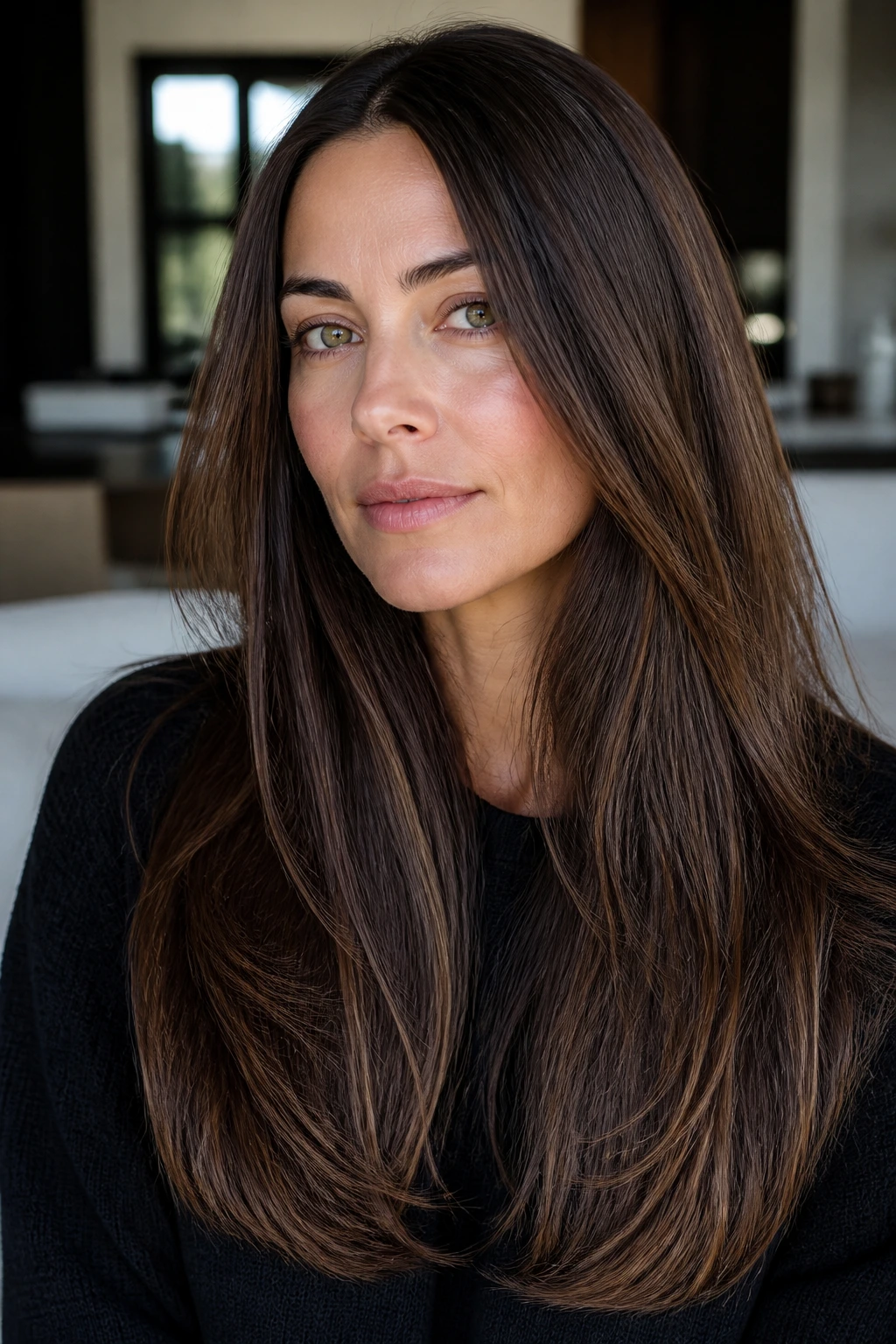
Why does straight hair so often make a square face look more angular? Because a single heavy sheet of hair draws a hard frame around the jaw. Invisible layers fix that without turning the cut into a visible staircase.
This version keeps the perimeter long and smooth, then removes weight from the inside. The result is movement when you walk and turn your head, but not so much chop that the ends look broken apart. It’s a smart choice if you like sleek hair and hate obvious layers.
How to Wear It
Ask your stylist for slide-cut or point-cut shaping through the interior, with the face frame beginning below the cheekbone. That keeps the shape clean from the front.
A flat iron is fine here, but do not press every section bone-straight. Leave a slight bend at the ends. That tiny curve stops the cut from reading as boxy.
4. U-Shaped Layers With Plush Ends
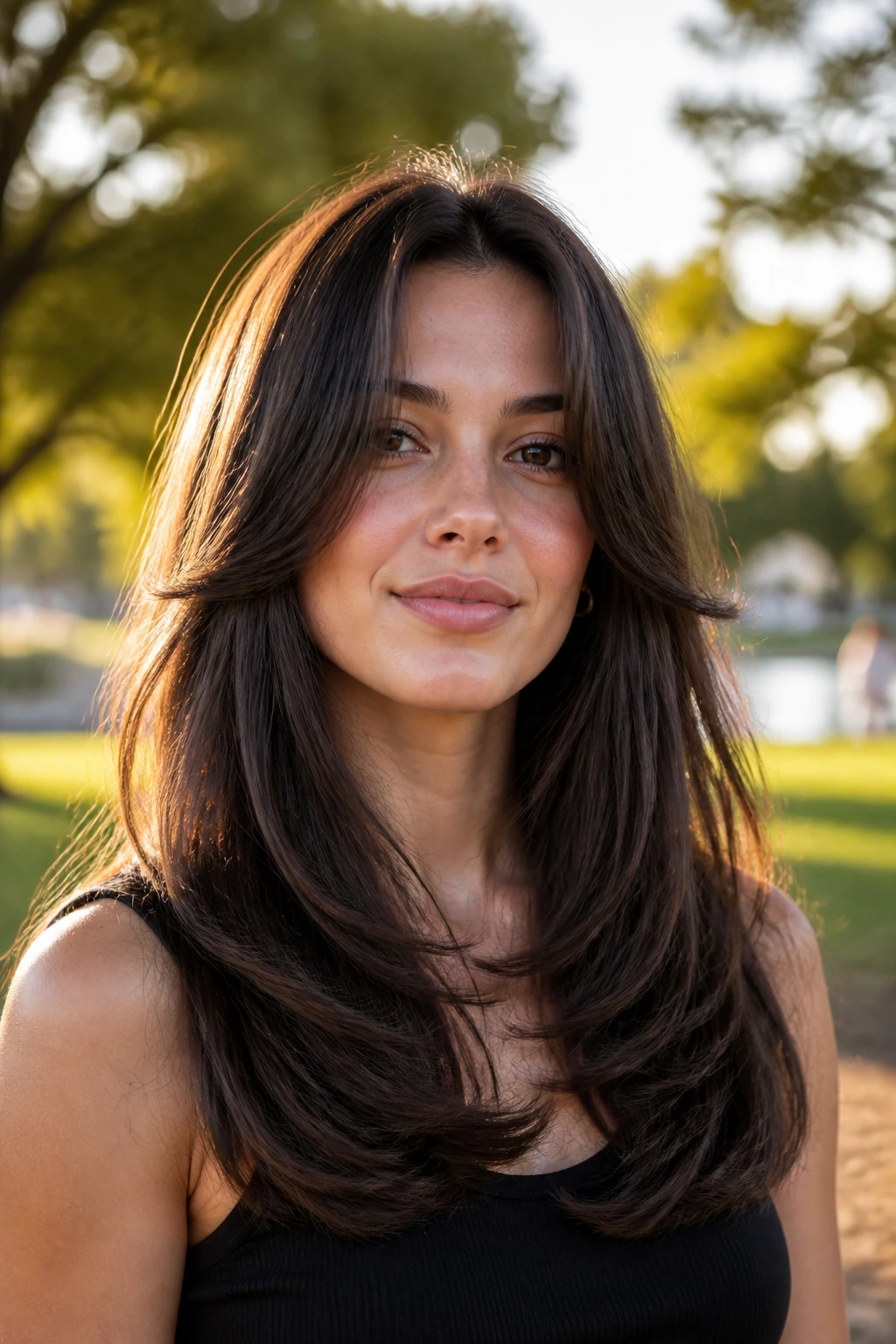
If you want long hair to still look thick at the bottom, the U-shape is your friend. The perimeter curves gently upward at the sides and drops lower in the center, which creates a softer outline than a blunt line ever will.
On a square face, that curved edge matters because it keeps the eye moving. The sides do not sit at the jaw and argue with it. They slide past it. That alone changes the whole balance of the haircut.
I like this shape on hair that’s medium to thick, because the curve lets the ends keep some weight. Thin hair can wear it too, but the layers need to stay conservative or the bottom gets stringy fast. Ask for a rounded finish, not a sharp arc.
5. C-Cut Layers That Sweep Past the Jaw
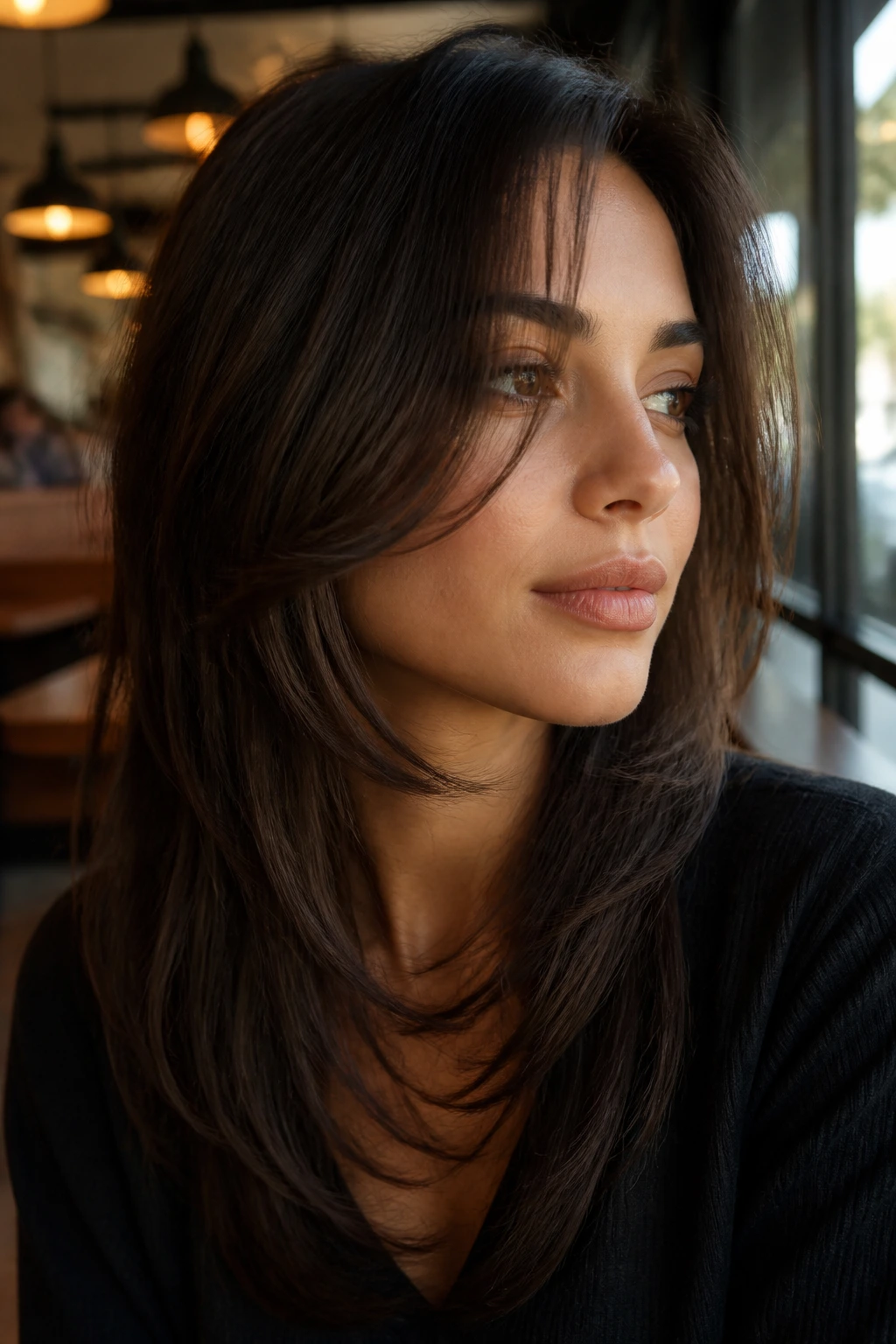
A C-cut has a little more swing than a U-shape, and that swing is doing real work on a square face. The front pieces curve inward and then sweep down in a shape that almost hugs the sides of the face before dropping below the jaw.
That inward motion softens the corners without making the haircut look overstyled. It’s especially good if you like blowouts, because a round brush gives the front that smooth C-shaped bend in under ten minutes.
Keep the shortest pieces away from the jawline itself. If they land right there, the shape gets blunt again. The sweet spot is closer to the cheekbone, then tapered into the chest.
6. Feathered Blowout Layers
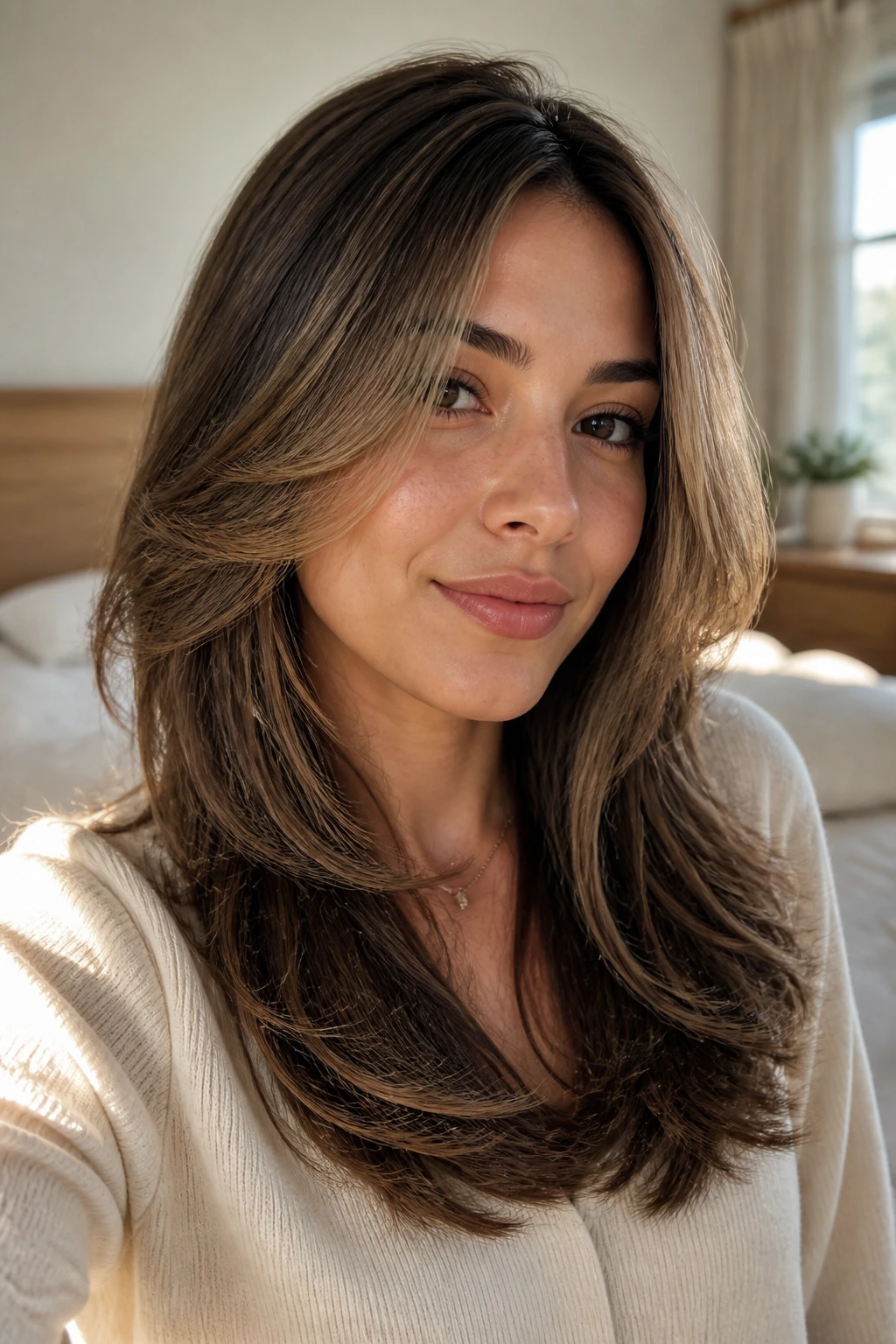
There’s a reason feathered layers keep coming back: they move. Not in a trendy, overdone way. In a useful way.
The feathering here should be soft through the top and sides, with the ends turned under or slightly out depending on your styling habit. On a square face, that airy motion keeps the front from sitting like a hard curtain. It lifts the eye, then releases it.
This is the cut for people who like a round brush and do not mind spending a little time at the mirror. Blow-dry the crown first for lift, then rotate the brush away from the face through the front half. A large brush, around 2 inches, helps keep the finish smooth instead of puffy.
7. Razor-Textured Waves With Loose Ends
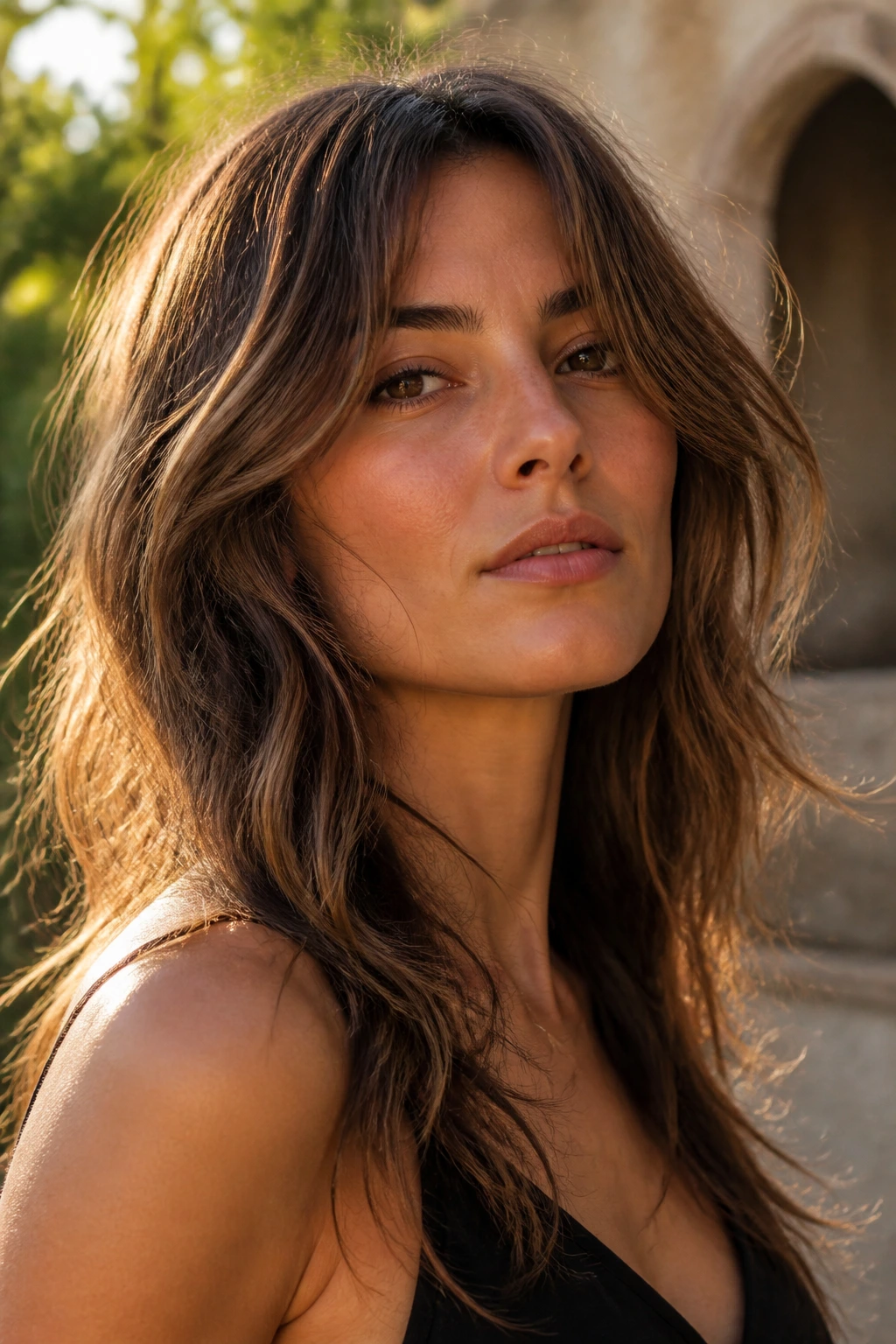
Razor texture can look fantastic on square faces when the hair has some wave in it already. The softness of the ends matters here. You want the cut to feel broken up, not chopped.
A razor adds airy separation, which keeps dense hair from building too much width at the jaw. The trick is restraint. Too much razor work on fine hair can make the ends fray and look thin; too much near the temples can widen the face instead of softening it.
Use this cut if your hair likes to bend on its own. A salt spray misted through damp lengths, then scrunched and air-dried, is often enough. If you need a little more shape, twist two-inch sections around your fingers while the hair is drying and leave the ends imperfect.
8. Deep Side-Part Layers With a Long Fringe
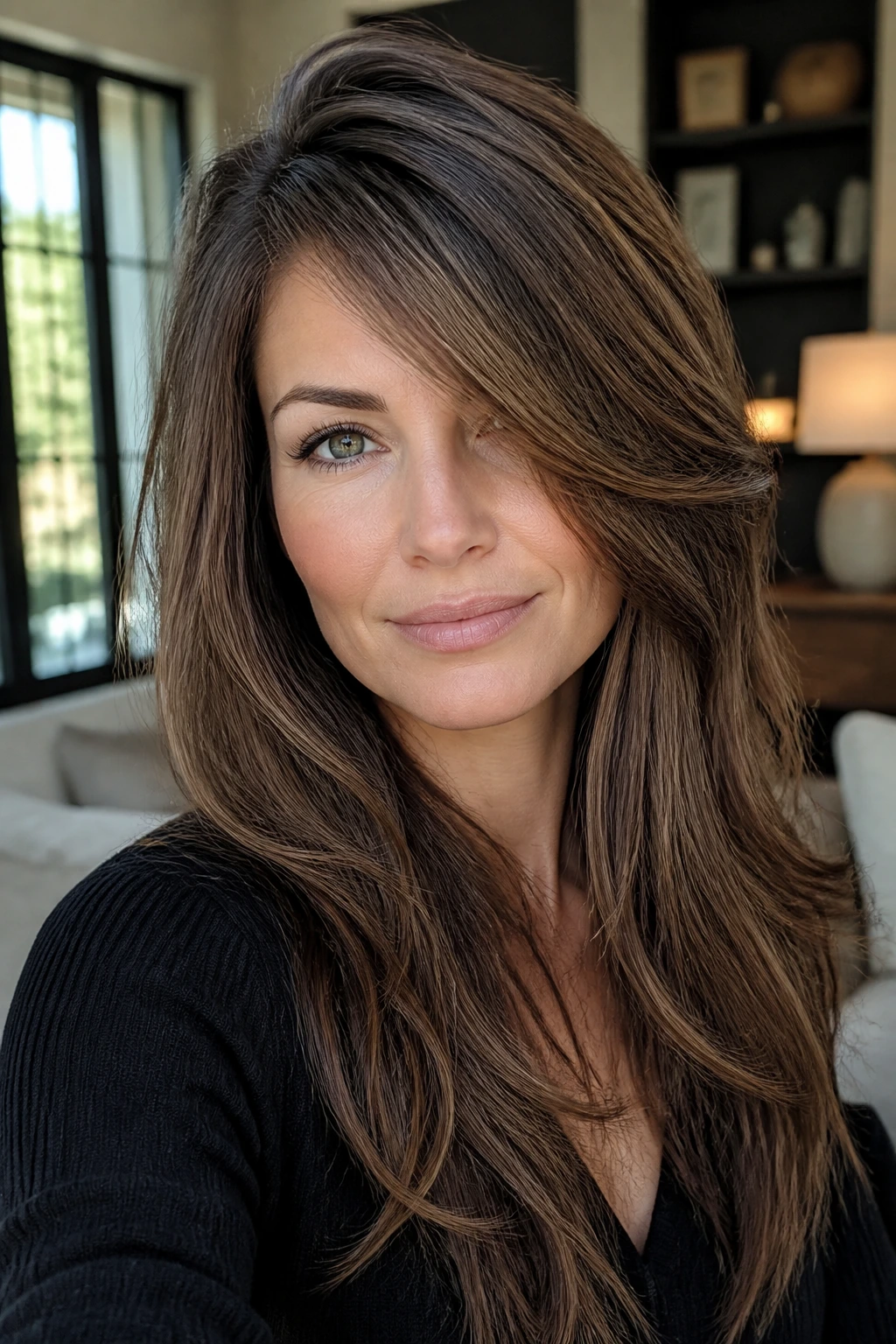
A deep side part changes the geometry fast. It creates a diagonal line across the forehead, which is useful on square faces because straight horizontal lines are often what make the shape feel hardest.
The longer fringe on the heavier side should fall past the cheekbone and skim the upper jaw, not cut across it. That diagonal sweep narrows the face visually and gives the front more motion. I like this when the client wants obvious change without touching the overall length much.
You can wear it sleek, wavy, or with a soft bend. Just keep the parting clean and commit to it for a few days before judging the cut. Hair needs time to settle.
9. Internal Layers for Thick Hair
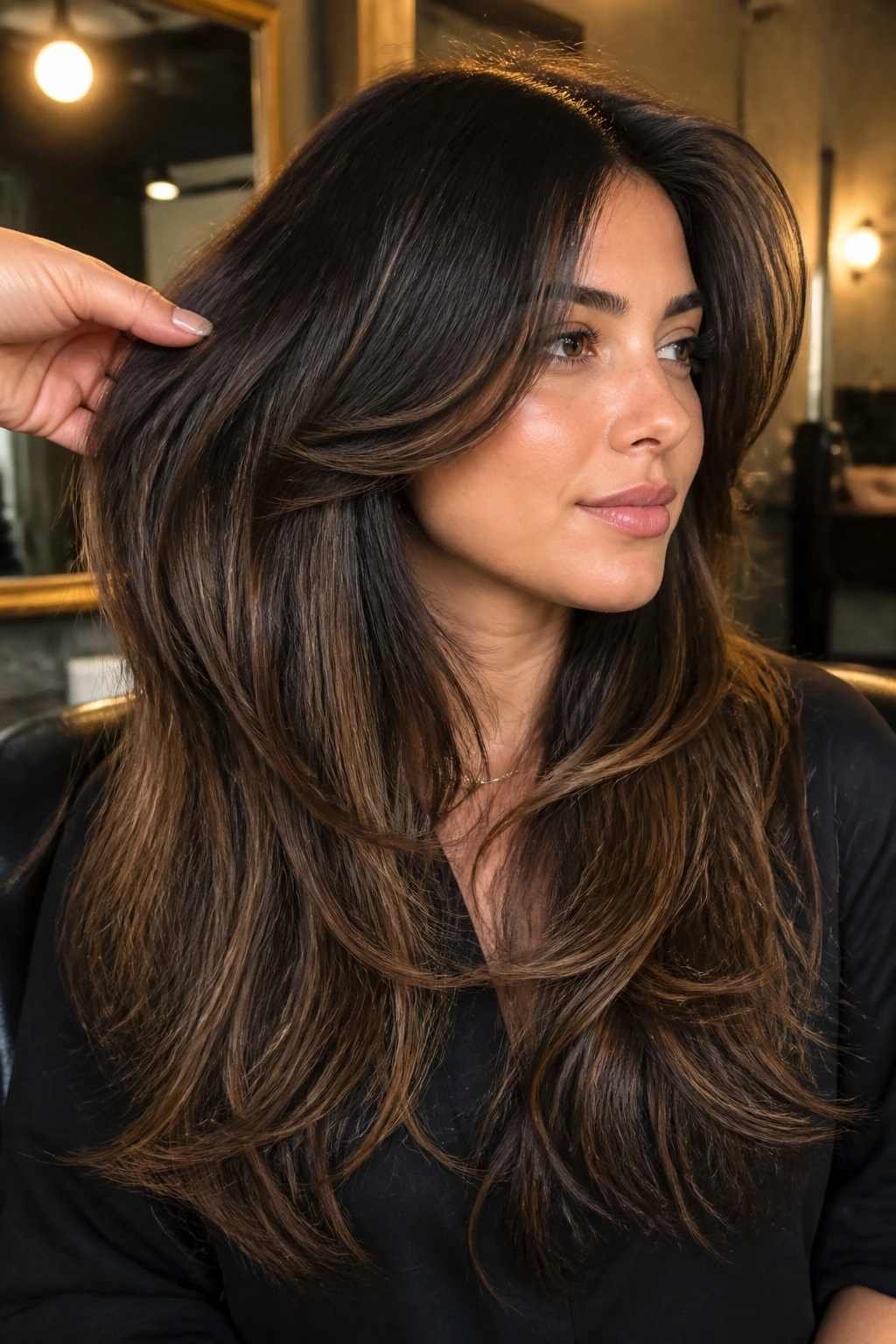
Thick hair on a square face can either look lush or look like a triangle with opinions. Internal layers help keep it lush.
These layers live inside the haircut, so the outer line still looks long and controlled. That matters because removing too much from the outside can leave the face frame too wide or too short. The interior shaping takes weight out of the midsection, where thick hair tends to balloon first.
This is the kind of cut that behaves better after it’s dry than it does while it’s wet. Trust the dry shape. If you’re getting this done at a salon, ask for weight removal through the interior with the perimeter left full. Those words save a lot of grief.
10. Fine-Hair Layers That Build Soft Motion
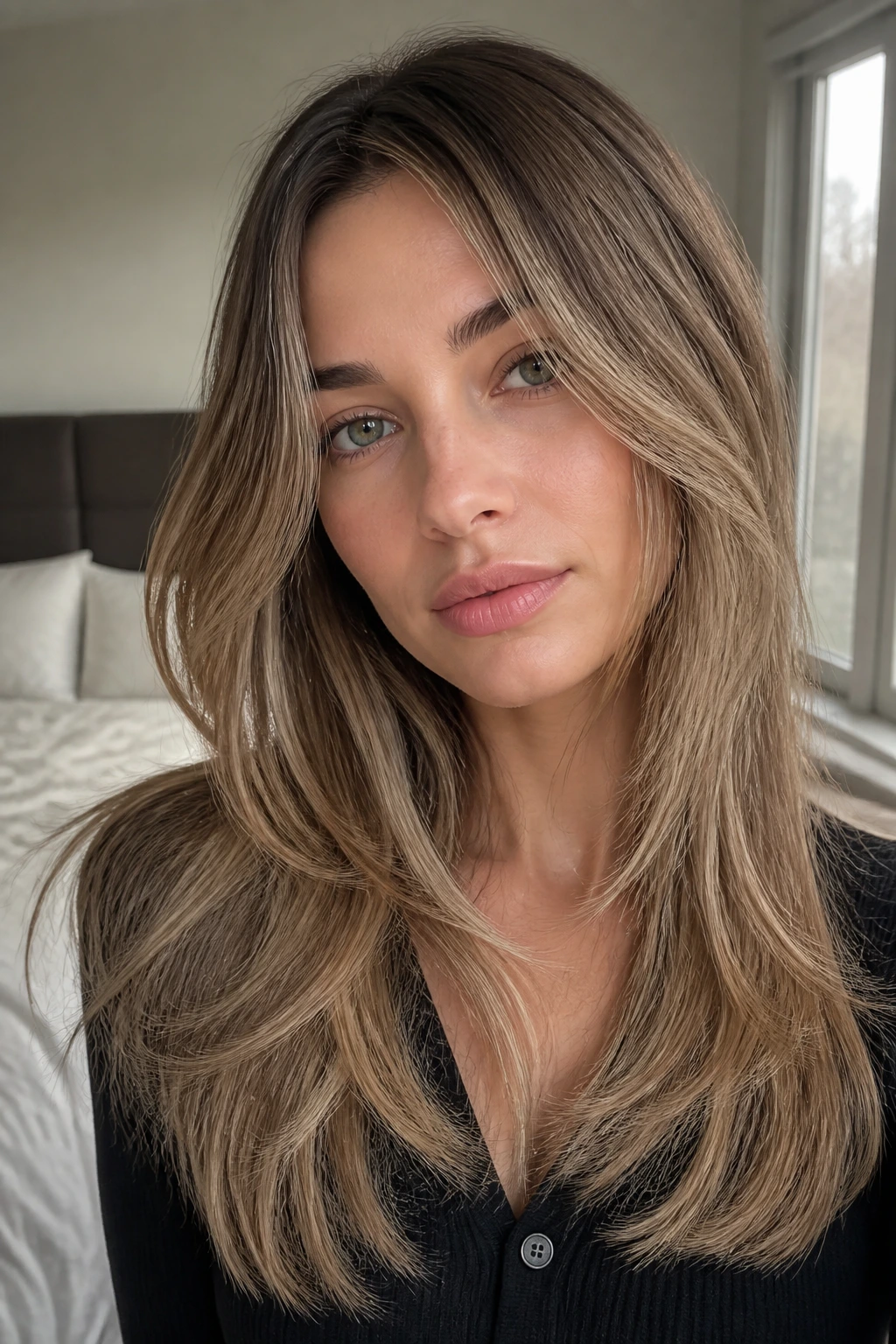
Fine hair and layers can be tricky. Too much layering, and the ends vanish. Too little, and the hair falls flat against the cheeks.
The better approach is long, blended layers with a blunt enough perimeter to keep the bottom looking dense. Around a square face, the front pieces should be subtle and placed low enough to avoid cutting the face at its widest point. You want motion, not a feathered halo.
A root-lifting mousse at the crown helps here, but keep it light. Fine hair can go limp if it gets overloaded. A small round brush and a cool shot at the end of the blow-dry make the shape last longer than a pile of spray ever will.
11. Soft Wolf Cut for Long Length
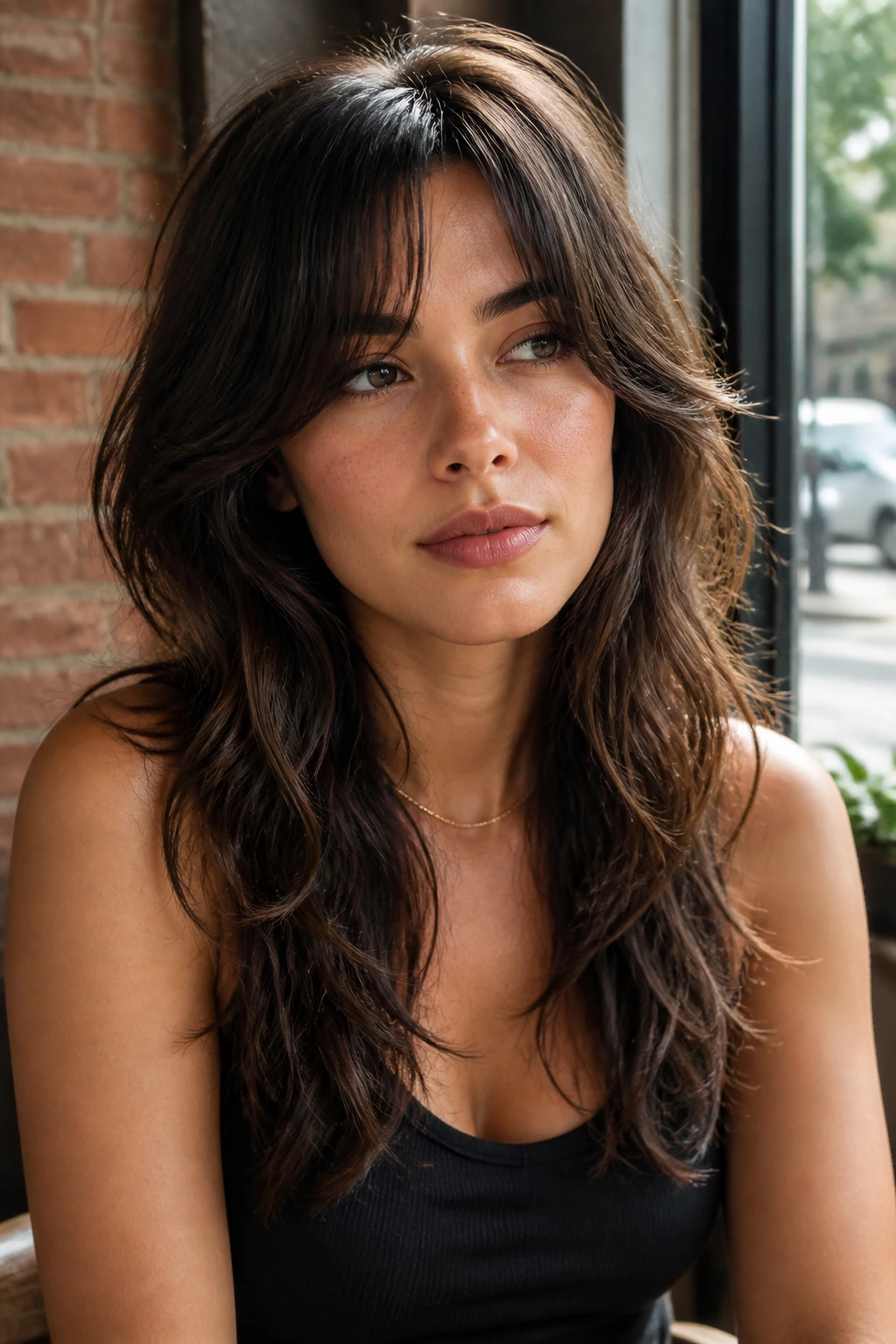
A full wolf cut can be too much for a square face if the top gets too short. The softened long version, though, has real charm.
The crown gets a bit of lift, the front gets airy, and the length stays below the shoulders so the outline remains long. That balance keeps the haircut from pulling outward at the cheeks. It’s a better fit for people who want edge without losing all the polish.
A soft wolf cut needs a little styling to look intentional. Air-dry with curl cream if your hair is wavy. Blow-dry with a diffuser if it’s curly. Straight hair benefits from a few loose bends through the front pieces so the cut doesn’t read as flat.
12. Rounded Crown Layers That Keep the Outline Gentle
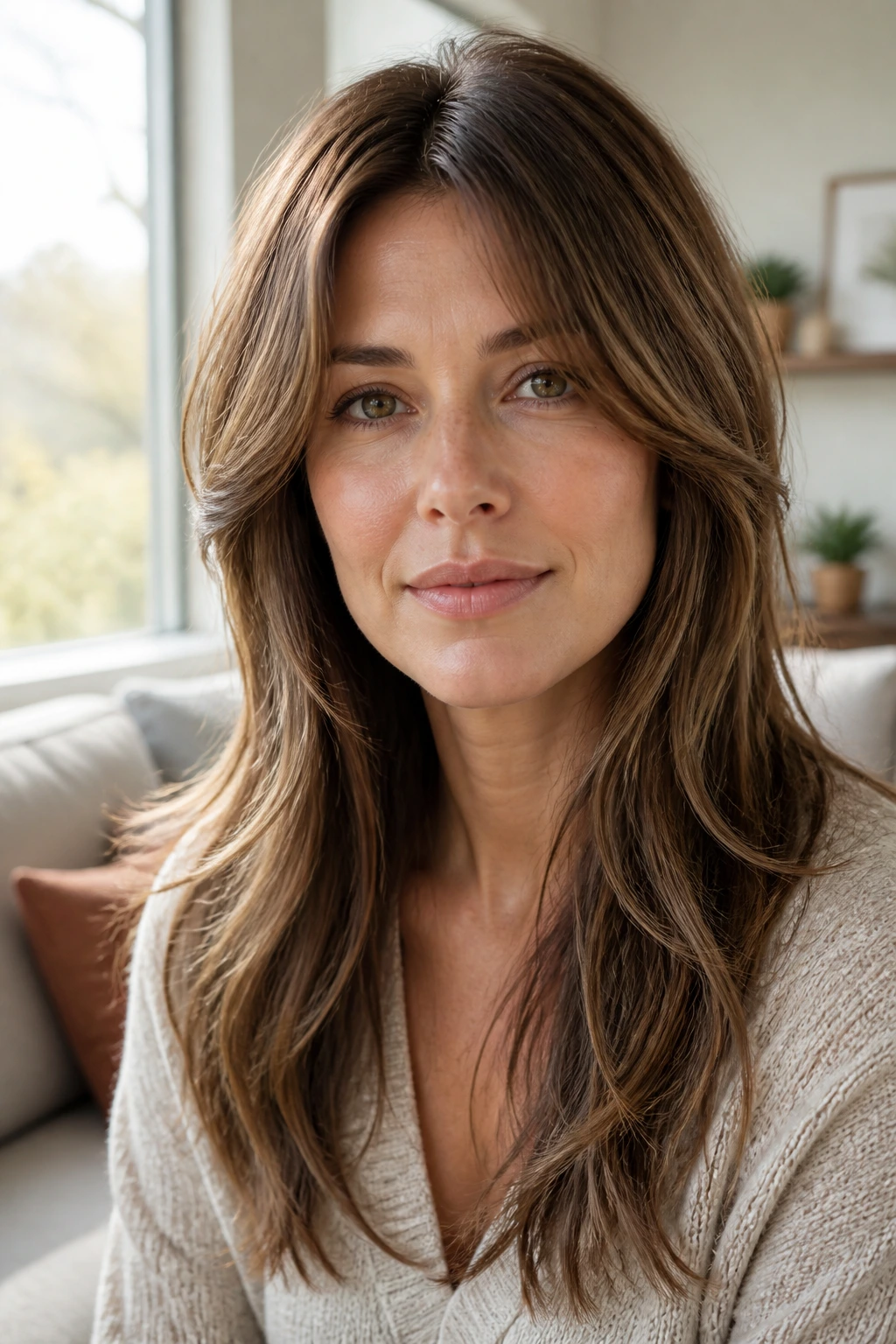
What if you want volume, but not at the sides? This is the cut for that.
Rounded crown layers add height where a square face can use it, then taper gently through the sides so the silhouette stays soft. The top gets lift, the jaw gets less attention, and the hair keeps enough length to feel feminine without being fussy.
I like this shape for hair that falls limp around the temples. A little crown lift changes the entire balance. Ask for the layers to be concentrated near the top third of the head, with the side pieces kept longer. If the stylist starts slicing into the side panels too hard, the face can look wider instead of softer.
13. V-Cut Layers With a Narrow Back
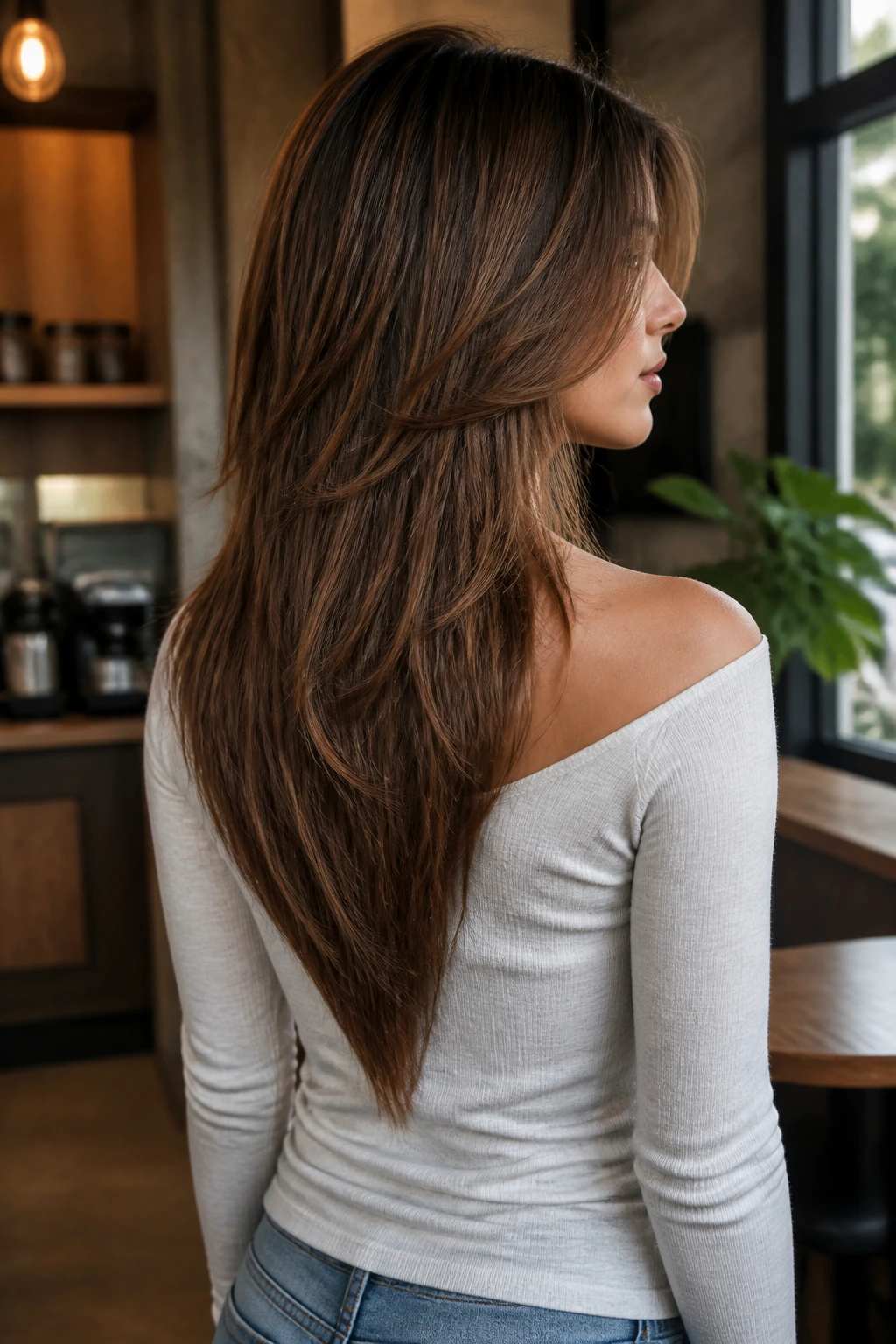
A V-cut is a smart move when the goal is length with direction. The back falls to a center point, while the sides stay longer and more tapered, which creates a vertical line that flatters a square face.
The cut works because it pulls the eye downward. That’s useful when the face already has strong horizontal width. The V shape also gives long hair a little swing when you turn your head, which keeps it from sitting like one flat wall.
This one is less about face-framing pieces and more about the overall silhouette. If you’re tired of cuts that only fuss around the front, the V-shape gives the whole head a cleaner line.
14. Curtain Bangs With Long Side Pieces

Curtain bangs are one of the easiest ways to soften a square face, but they need the right length. Short curtain bangs can look sharp. Longer ones, parted in the middle and falling to the cheekbones, open the face without boxing it in.
The side pieces should melt into the rest of the layers instead of stopping abruptly. That blend is what keeps the cut from feeling busy. With square faces, the best curtain fringe is usually not the shortest version you can find. It’s the one that hovers around the high cheekbone and then turns down.
A round brush gives the bang area a clean bend. If your hair is stubborn, pin the fringe to the side while it cools. That little setting time is worth it.
15. Beachy Air-Dry Layers

Not every good haircut needs a blowout. Some are built to look better when they dry with a bit of mess in them.
Beachy air-dry layers should have enough internal shape to create bends on their own. The layer placement matters more than the styling product here. On a square face, the hair should fall in loose waves that soften the sides rather than fanning out at the jaw.
Scrunch in a light cream, twist a few face-framing sections away from the face, and leave the ends free. If the hair dries too straight, give the front pieces two or three bends with a curling wand just to break up the line. The goal is relaxed, not sloppy.
16. Curly Layers That Keep the Bottom Full
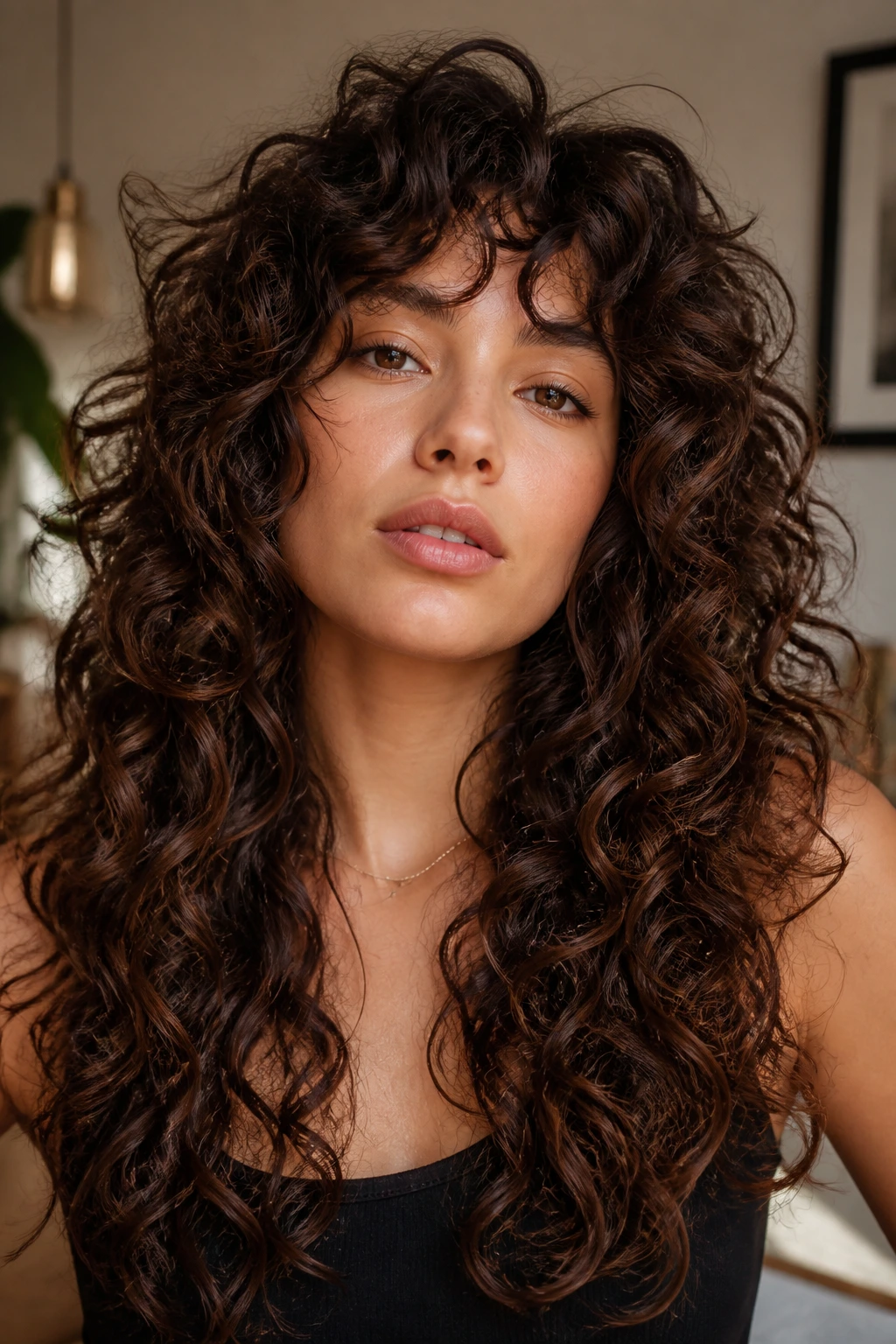
Curly hair on a square face needs room to move, but it also needs shape. Too many short layers can make curls puff at the sides and widen the face. Too few, and the hair turns into a heavy triangle.
The better approach is long layers that respect the curl pattern and keep the bottom full. Face-framing should begin below the cheekbone and follow the curl’s natural spring. If the curls are cut dry, even better. You can see where the shape actually sits.
A diffuser helps, but don’t blast the roots until they’re frizzy. Cup the curls and let them dry in sections. The hair should look like it has space, not like it’s fighting for air.
17. 90s Supermodel Layers
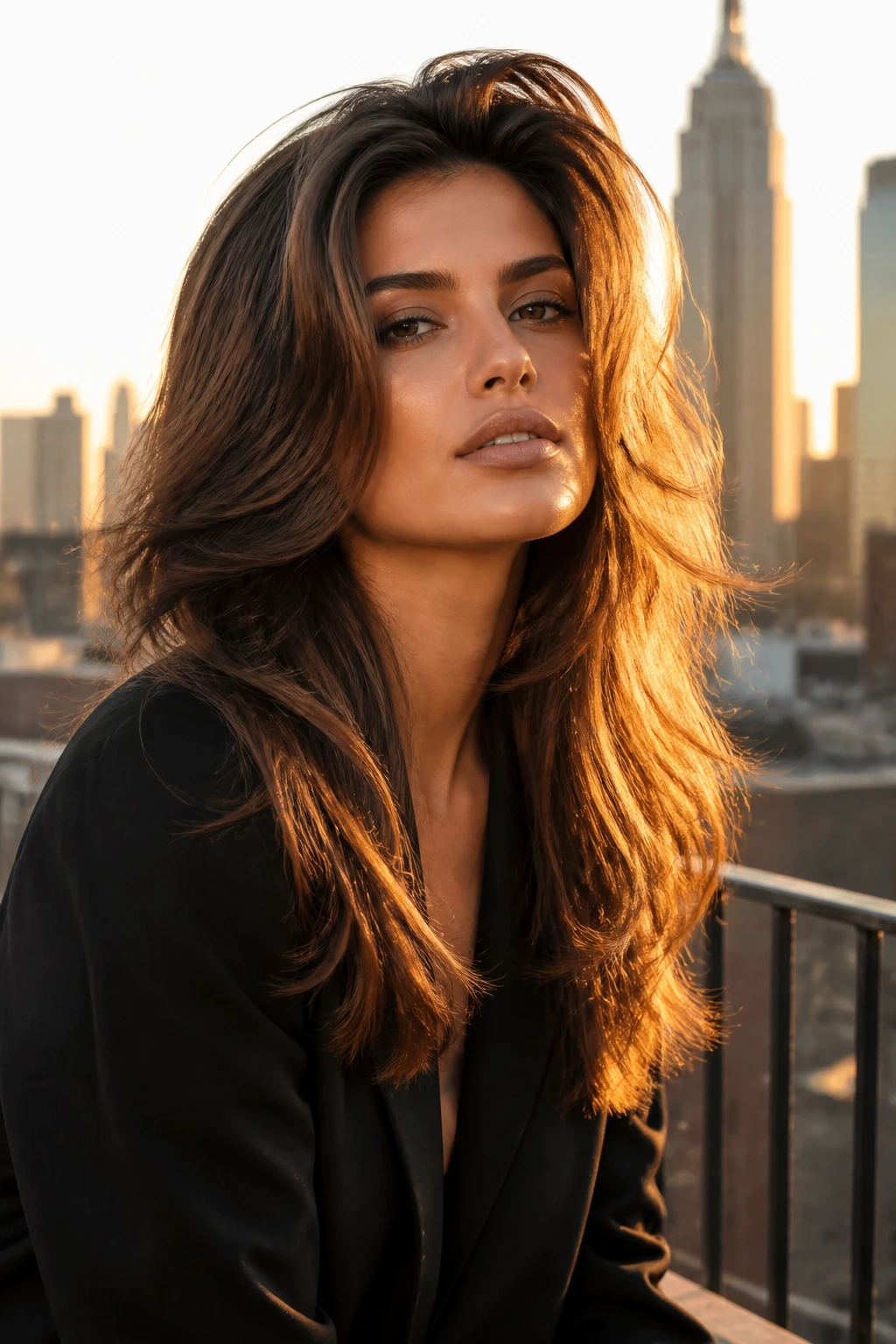
Big, glossy, blown-out layers can look sharp on square faces in the right way. Not sharp as in angular. Sharp as in polished and controlled.
The reason this cut works is the bend. Those long, flowing layers start high enough to move around the cheeks, then sweep past the jaw in a smooth line. It gives long hair that expensive-looking swing people keep trying to describe with too many adjectives.
You need a good round brush, a heat protectant, and a little patience. Roll the front away from the face, clip it while it cools, then brush it out gently. The finished shape should have lift at the crown and softness around the lower half of the face.
18. Subtle Step Layers for a Low-Key Grow-Out
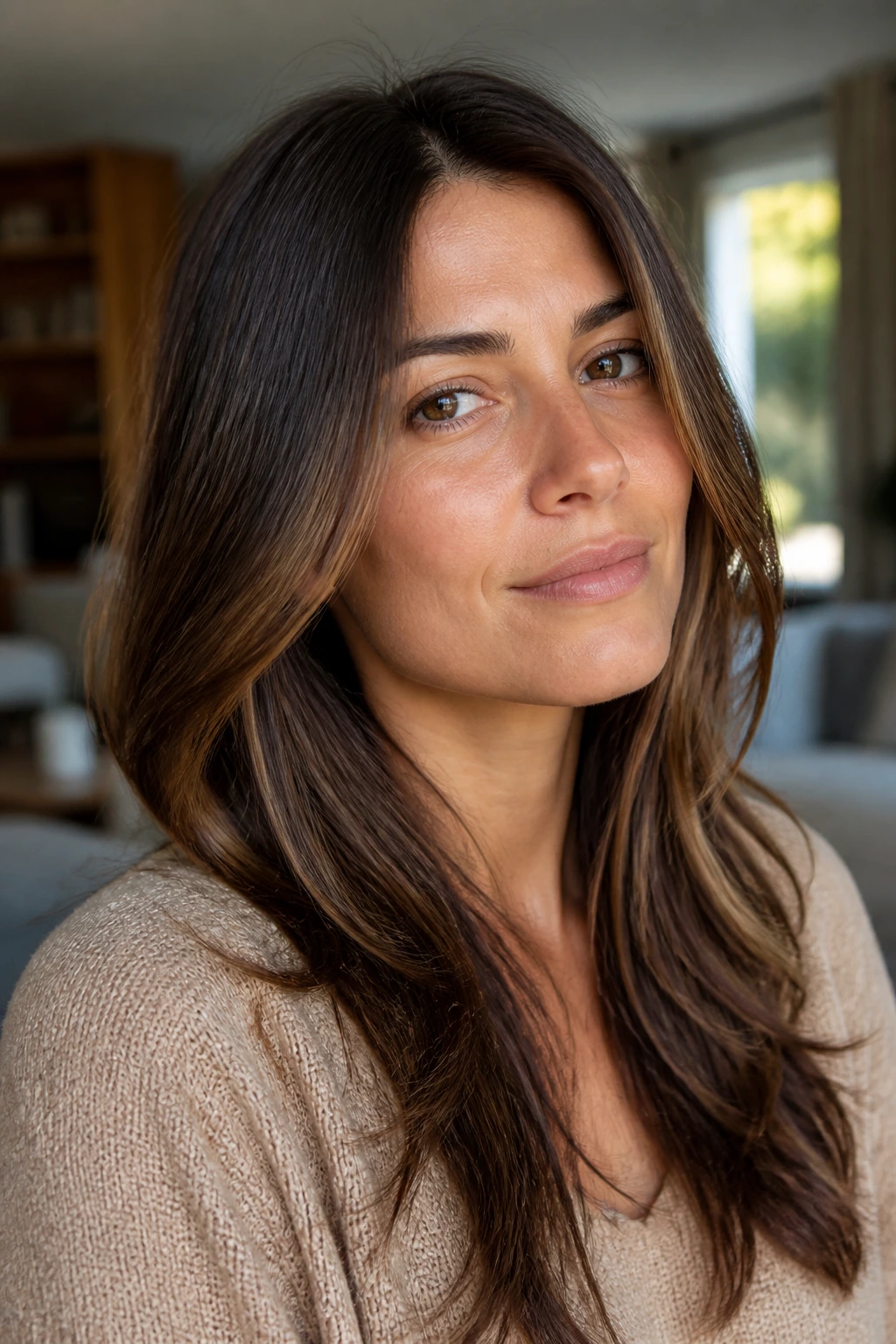
Some people want layers without announcing it to the room. Subtle step layers do that.
The steps are long and mild, so the cut keeps its shape as it grows. That’s useful if you do not want to book frequent trims or if you’re easing into layers for the first time. On a square face, the subtlety matters because the hair stays smooth around the jaw while still giving a little motion through the ends.
This is a low-drama choice, and I mean that in the nicest way. It’s the haircut for someone who wants to look put together on day one and still look fine six weeks later. The front pieces should still miss the jawline. Quiet doesn’t mean boxy.
19. Bottleneck Bangs With a Soft Frame
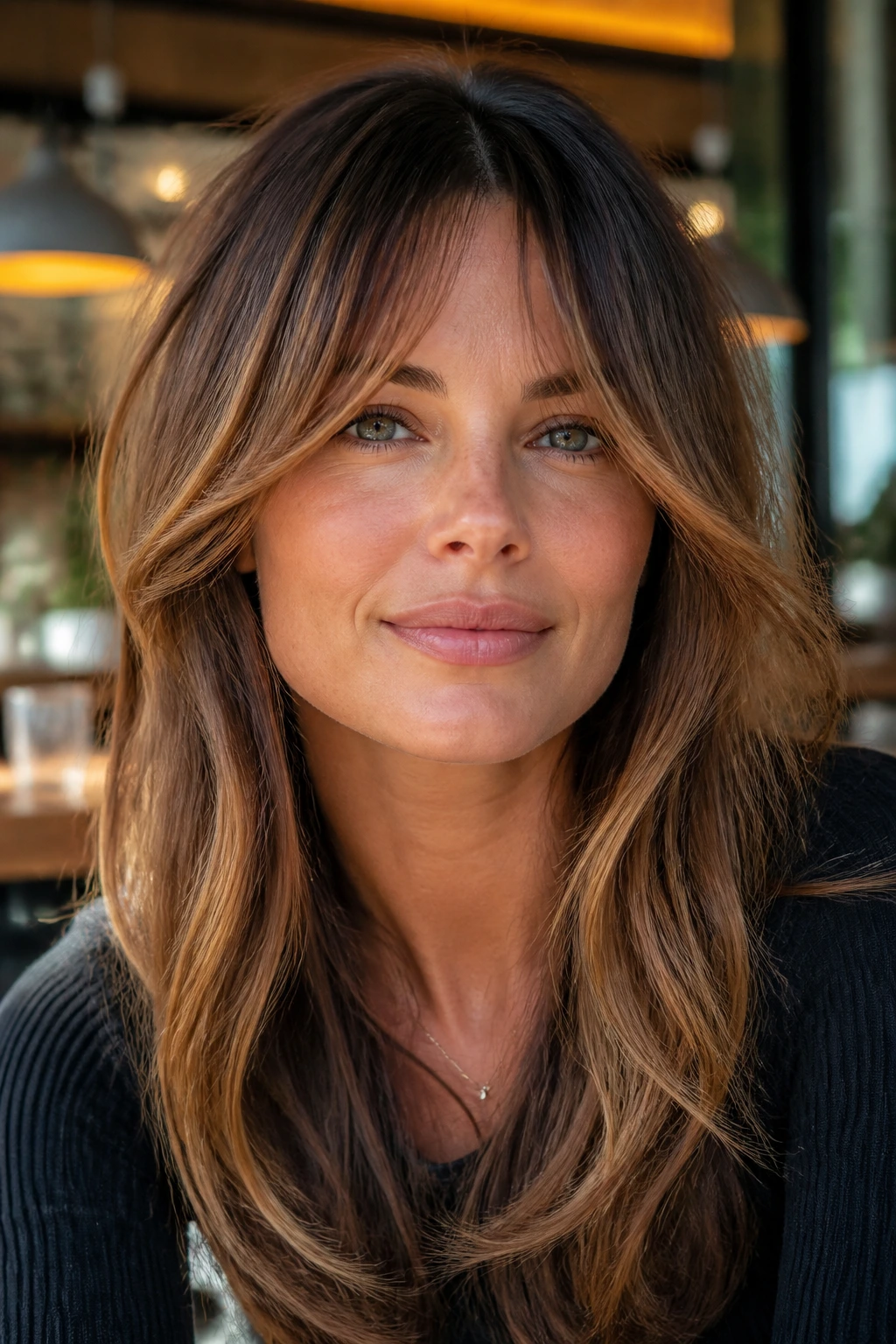
Bottleneck bangs are a smart compromise when you want fringe without the heaviness of a full curtain bang. They’re narrower in the center and open out at the sides, which keeps the forehead from feeling boxed in.
On a square face, the opening is the point. The fringe needs to widen gently as it drops toward the cheekbones, then blend into the longer layers. That shape pulls the eye inward without drawing a straight line across the widest part of the face.
This cut can be styled with a small round brush or even a finger wrap while it dries. Keep the center short enough to matter, but not so short that it looks severed from the rest of the hair.
20. Sleek Long Layers With a Center Part
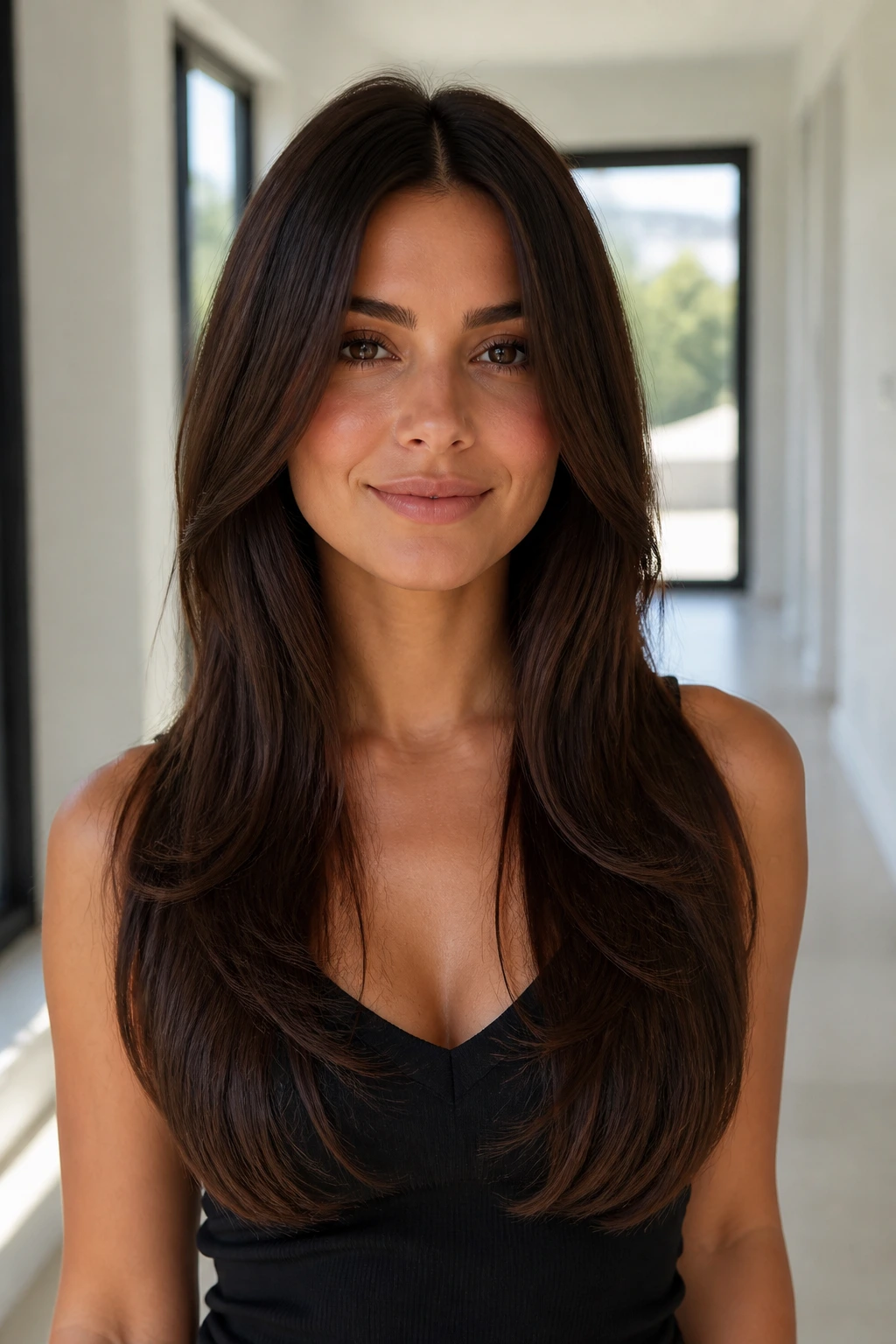
Can a center part work on a square face? Yes, if the layers do some of the work.
A sleek center-part style needs long, blended layers that soften the sides and keep the ends from feeling too blunt. The trick is in the front pieces: they should curve just enough to interrupt the straight line from temple to jaw, even if the rest of the hair is smooth.
I like this when the hair is naturally straight and shiny. Add a tiny bend at the ends with a flat iron, then tuck a little serum only on the last two inches. That’s enough. If the front hangs dead-straight, the face looks harder than it needs to.
21. Tousled Layers for Dense Hair
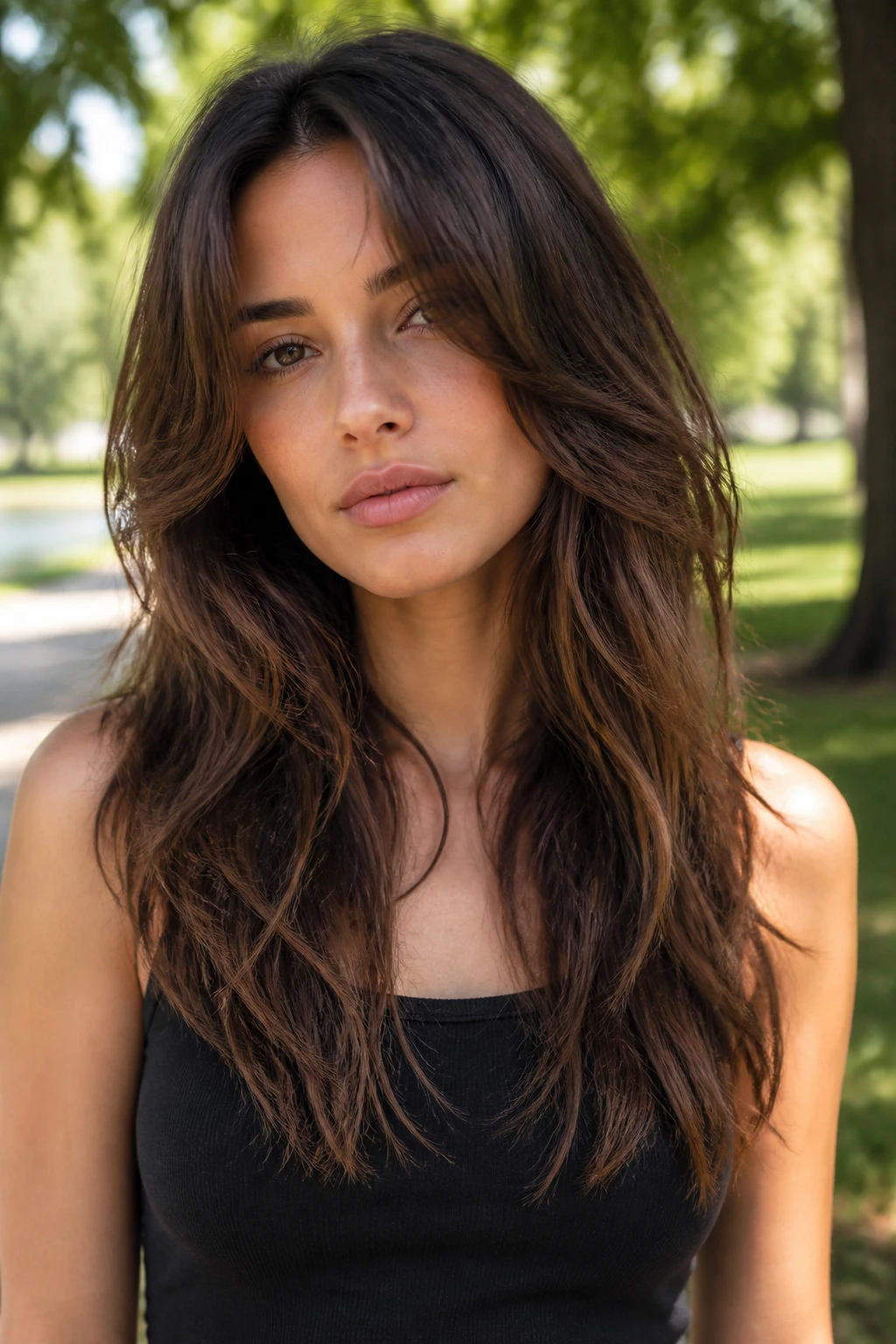
Dense hair can wear texture with confidence, but it needs internal shaping or the whole mass sits too wide. Tousled layers break that up.
The strongest versions keep the length long and remove bulk in controlled zones, usually through the lower mid-lengths and around the front edges. A square face benefits from that because the hair gets movement without building outward at the temples or jaw. Think airy, not shredded.
This cut usually looks best with a rough-dry first and styling second. Let it dry about 80 percent of the way, then add a few bends with a wand and shake them out with your fingers. Dense hair can handle a little texture product, but keep it lightweight so the ends don’t clump.
22. Off-Center Part Layers That Slip Past the Jaw
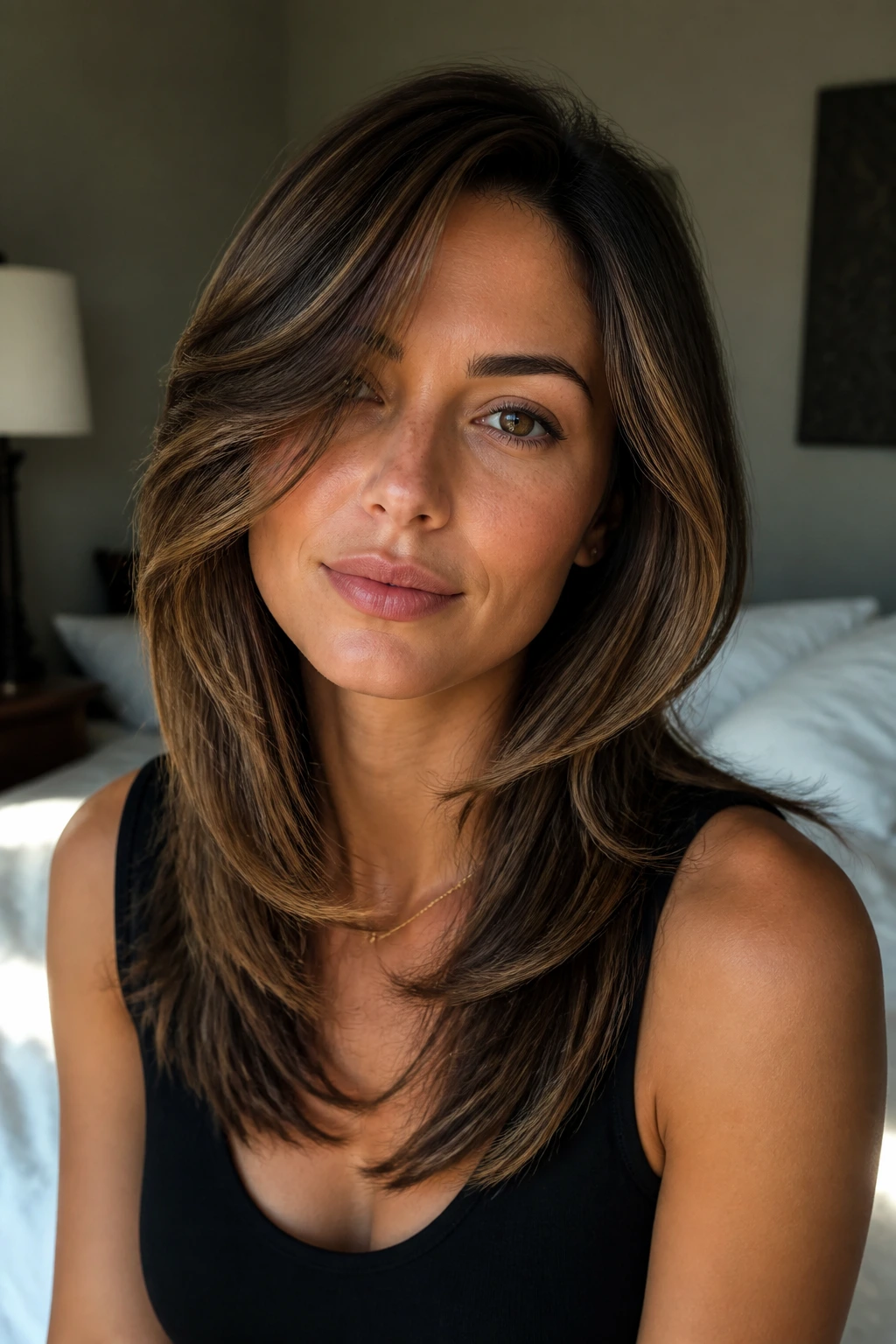
A tiny shift in the part can change everything. Moving the part just an inch or two off center creates a diagonal line that softens the square outline fast.
That diagonal line matters because it breaks up symmetry. The hair falls more loosely on one side, which keeps the face from feeling boxed in by equal weight on both sides. It’s a small adjustment with a real payoff.
Pair the off-center part with longer front layers that slip past the jaw and curl slightly inward at the ends. You do not need a lot of volume here. Just enough movement to keep the eye traveling.
23. Polished Flip-Under Layers
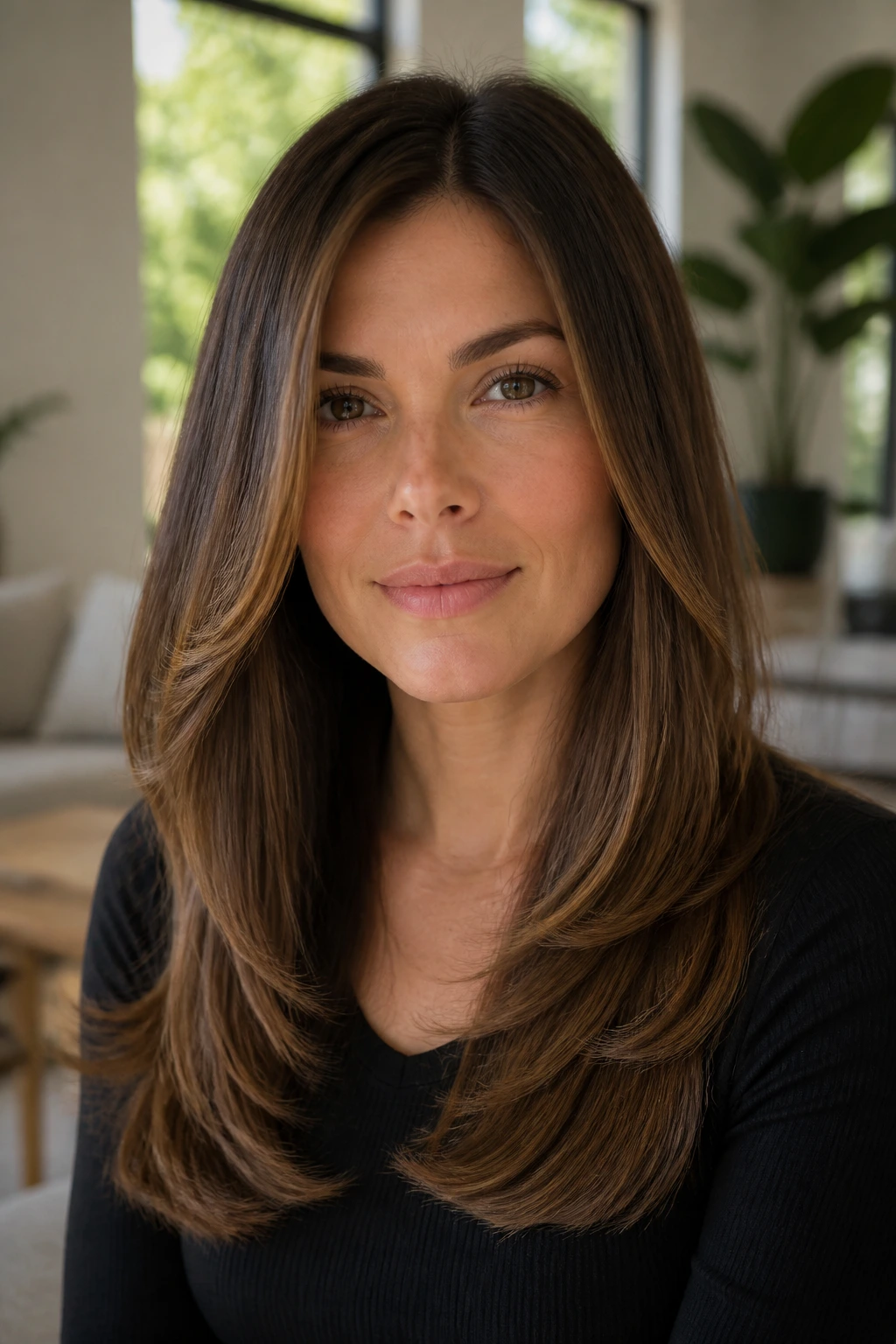
The flip-under layer is one of those details people notice without knowing why. The ends curve inward just enough to round off the silhouette, which is useful when the face already has clear corners.
This works especially well on long hair that tends to dry straight and a little stiff. A round brush or a flat iron with a slight inward bend at the last inch does the trick. The line should feel smooth and tidy, not curled under like a pageant blowout from a bad decade.
A square face looks softer when the outer line of the hair follows a curve instead of a straight wall. That’s the whole job of this cut.
24. Soft Face-Framing Ribbons for Long Hair
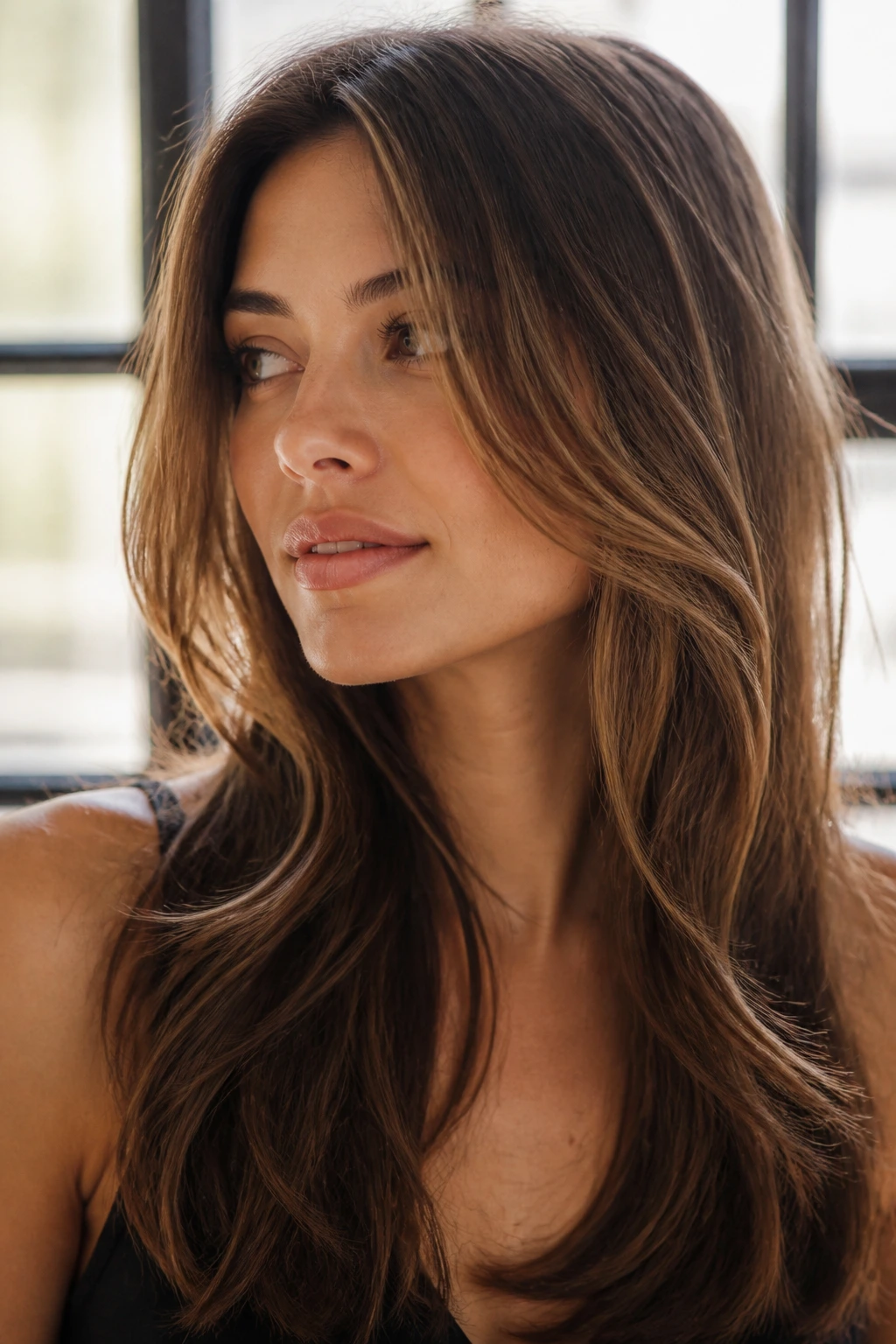
Sometimes the best answer is a few long pieces, cut with care and left alone. Soft face-framing ribbons do exactly that.
They start high enough to matter, usually around the cheekbone, then taper into the rest of the length so they do not sit on the jaw. The beauty of this version is its restraint. It gives shape without making the haircut look busy or over-styled.
This is a good fit if you wear your hair down a lot and want a simple silhouette that still feels intentional. Curl the ribbons away from the face on day one, then let them loosen naturally over the next couple of days. They often look even better once they settle.
25. Tailored Long Layers With a Quiet Finish
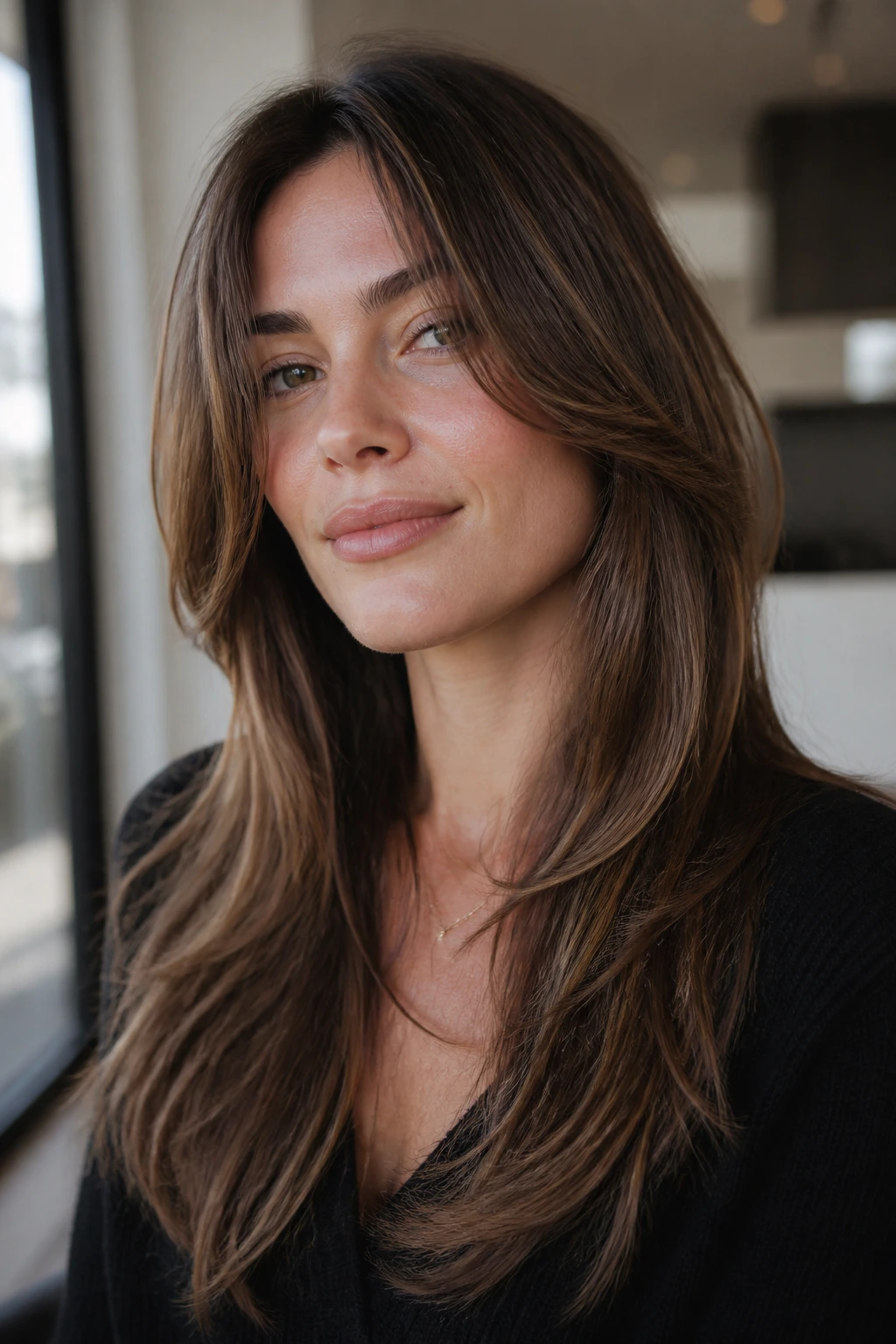
Not every haircut needs a dramatic name. Sometimes what works best is the version that feels tailored to your face, your hair density, and the way you actually style it.
This cut keeps the length, uses long layers to release weight where needed, and places the shortest face-framing pieces below the cheekbone so the jaw never gets boxed in. It’s the most adaptable option in the bunch, which is why I like it as a final catch-all for square faces. It can lean sleek, wavy, or softly blown out.
Ask your stylist to look at your hair in motion before cutting too much. A square face rarely needs aggressive layering. It needs smarter layering. The quiet finish is the point.
Why Texture Beats a Blunt Edge on Square Faces
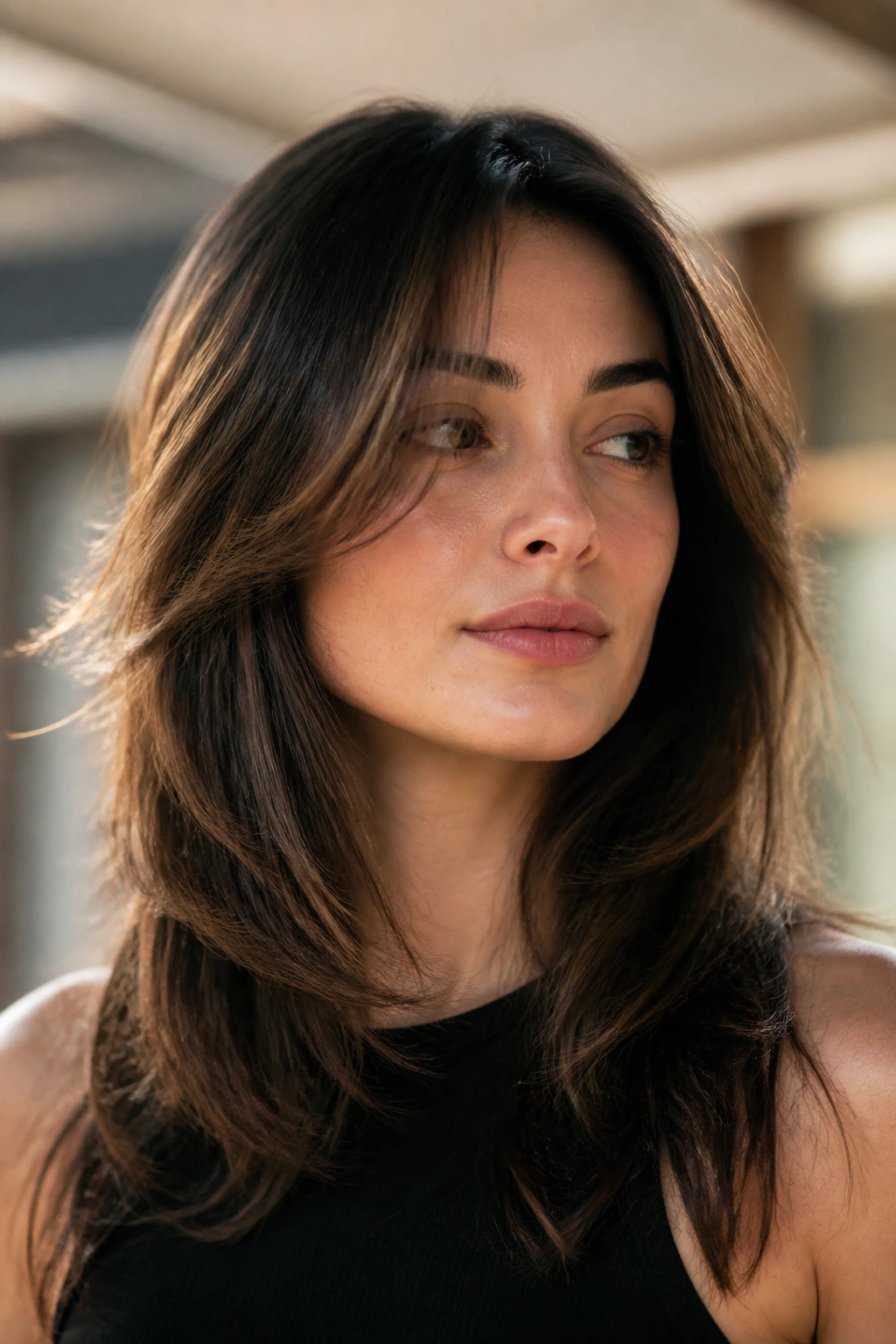
A blunt edge has its place. On square faces, though, it can be a stubborn thing. It draws a clean horizontal line right where the face already has width, and that usually makes the whole shape feel harder than it is.
Texture changes the read. A few broken-up layers around the cheekbone, some bend through the front, and a perimeter that stays long enough to keep vertical line — that combination makes the face look softer without making the haircut feel flimsy. The best part is that the change is usually not huge. Two inches here, three inches there, and suddenly the haircut bends instead of bracing.
The other reason texture wins is simple movement. Hair that sways a little when you turn your head always feels less rigid than hair that sits in one sheet. Square faces tend to benefit from that looseness because there’s already enough structure in the bone. The hair should give it room to breathe.
Tools, Brushes, and Products That Keep the Cut Moving
-
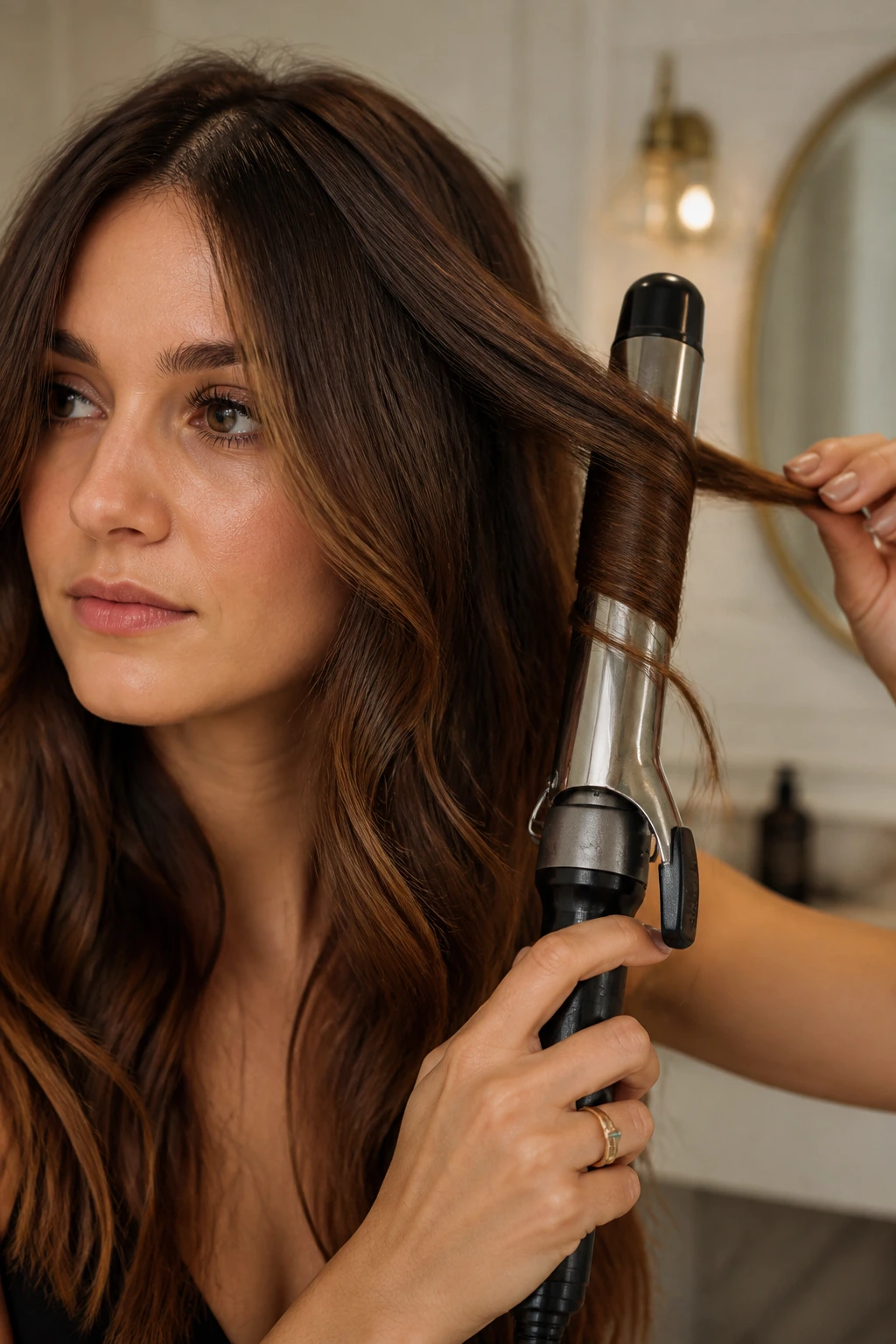
1.25-inch curling iron or wand: The sweet spot for creating a soft bend through long layers without turning the ends into hard ringlets.
-
Large round brush, 2 to 3 inches: Best for blowouts, especially when you want lift around the cheekbones and a smooth front.
-
Heat protectant spray: Use it every time you blow-dry or heat-style; long layers show damage fast at the front pieces.
-
Lightweight mousse: Good for fine or straight hair when you need root lift without sticky buildup.
-
Texturizing spray: Helpful for shaggy, beachy, or piecey styles, but use a small amount or the ends start to feel dry.
-
Leave-in cream: Better for curls and dense hair than heavy oils, which can drag the layers flat.
-
Wide-tooth comb: Keeps wet curls and waves separated without smashing the shape.
-
Clips for sectioning: Not glamorous, but they make blow-drying the face frame much easier.
-
Silk or satin scrunchie: Useful for overnight braids or loose buns so the layers do not crease badly.
-
Reference photos folder: A few pictures of the same haircut from different angles help more than one perfect shot.
How to Ask for the Right Layer Placement
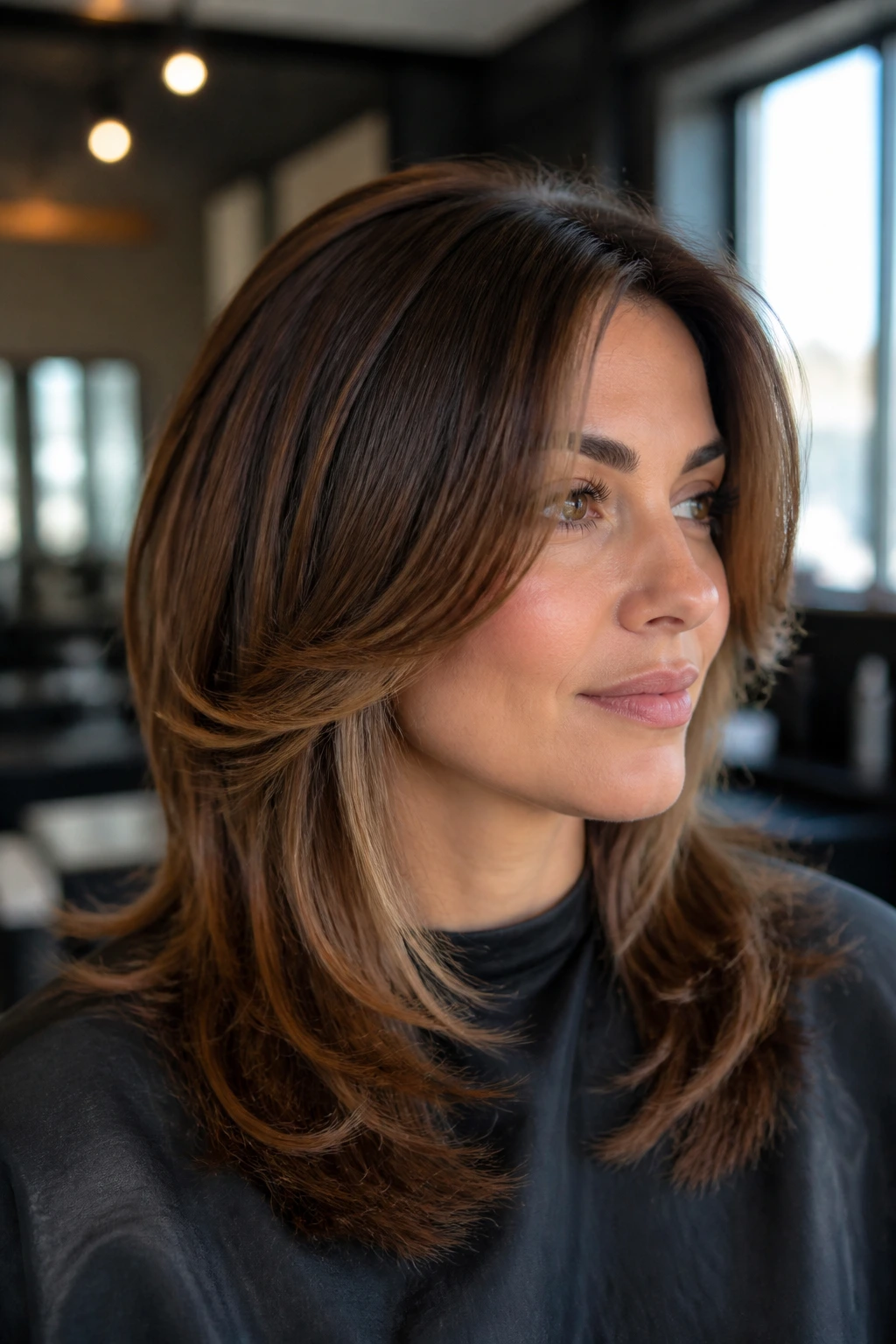
The salon conversation matters more than people admit. “Long layers” by itself is too vague. On a square face, vague often means you get something that looks fine from the back and oddly boxy from the front.
Say where you do not want the shortest pieces to land. That’s more useful than just saying you want softness. I’d be blunt about it: tell the stylist you do not want the front layer sitting right at the jaw. Ask for the shortest face frame to start around the cheekbone or a little below it, depending on your hair density.
Bring one photo of the cut and one photo of the front shape you like. Those are not the same thing. A style can have the right layers but the wrong front, and that mismatch is where bad haircuts are born.
Also mention how you wear your hair most days. Center part, side part, blowout, air-dry, curl wand, flat iron — all of that changes where the layers should start. If you only ever air-dry, a heavy blowout layer map may not do you any favors.
Styling Moves That Keep the Shape Soft
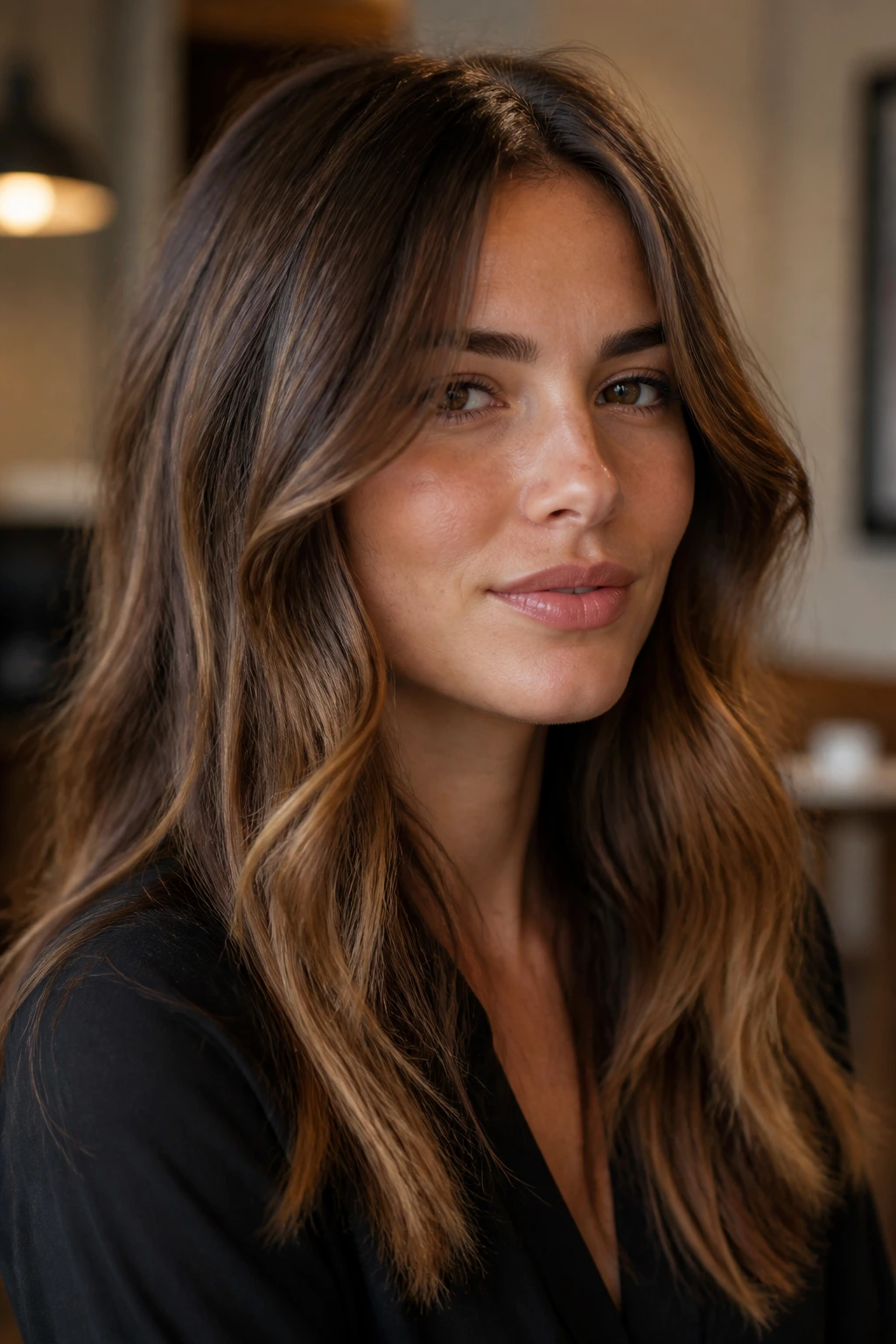
Root lift first. If the crown is flat, the face looks wider. A little mousse at the roots or a quick blow-dry lift at the top changes that balance fast.
Bend, don’t curl. Square faces usually look better when the front pieces make a soft turn instead of a tight loop. Wrap the hair around the iron for half a turn, then release the ends before they over-shape themselves.
Shift the part when the cut feels too hard. A part that sits exactly in the middle can sharpen the whole look. Moving it even slightly off-center takes the pressure off the jaw.
Keep the ends clean. Split, ragged ends make layered cuts look tired. A tiny trim every couple of months keeps the texture readable.
Use less product than you think. Heavy creams and oils can flatten the very movement you’re paying for. Start with a dime-sized amount, then add only if the ends feel dry.
One more thing. If your hair looks too wide after styling, it usually means the motion is happening at the wrong height. Move the bend lower, closer to the mid-lengths, and leave the top smoother.
Common Mistakes That Make Long Hair Look Boxy
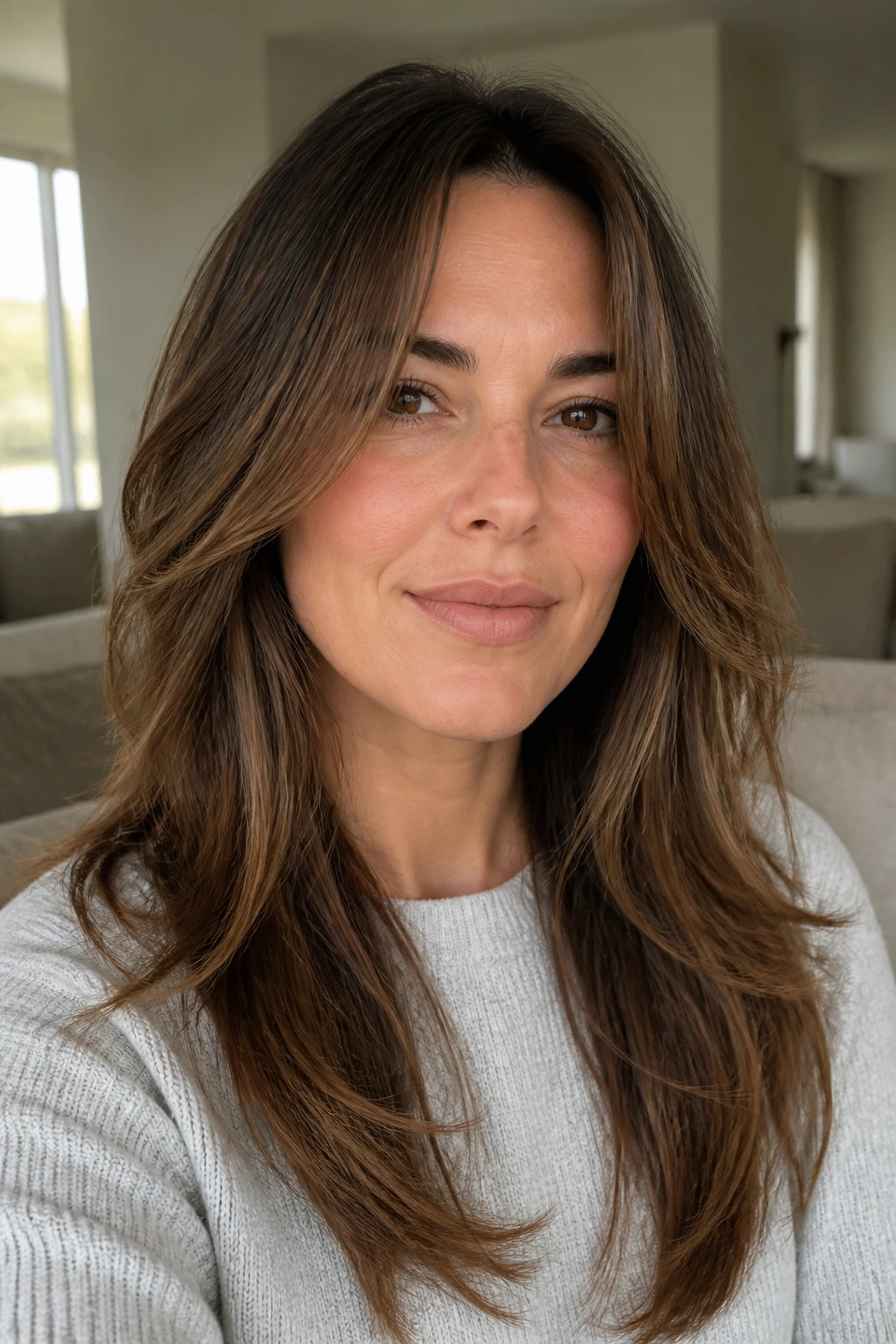
-
Starting the shortest layer at the jaw. The symptom is obvious: the hair lands right on the face’s widest point and makes the angle look stronger. Move that starting point up to the cheekbone or down past the jaw.
-
Over-thinning fine hair. You end up with see-through ends and a ragged outline. Keep the perimeter fuller and ask for soft layering instead of aggressive thinning shears.
-
Piling short pieces at the temples. That tends to widen the face rather than soften it. Keep the face frame long and let the texture live lower.
-
Ignoring the part. A dead-center part can look severe on a square face, especially with sleek hair. Try a slight off-center part or a curtain-style opening.
-
Styling every strand stick-straight. A rigid finish makes the cut feel harder. Leave a small bend in the front pieces and a little movement through the ends.
-
Letting the layers grow too long without shaping them. Once the face frame drops past its sweet spot, the cut can collapse into a heavy curtain. A trim brings the softness back.
Variations and Adaptations to Try
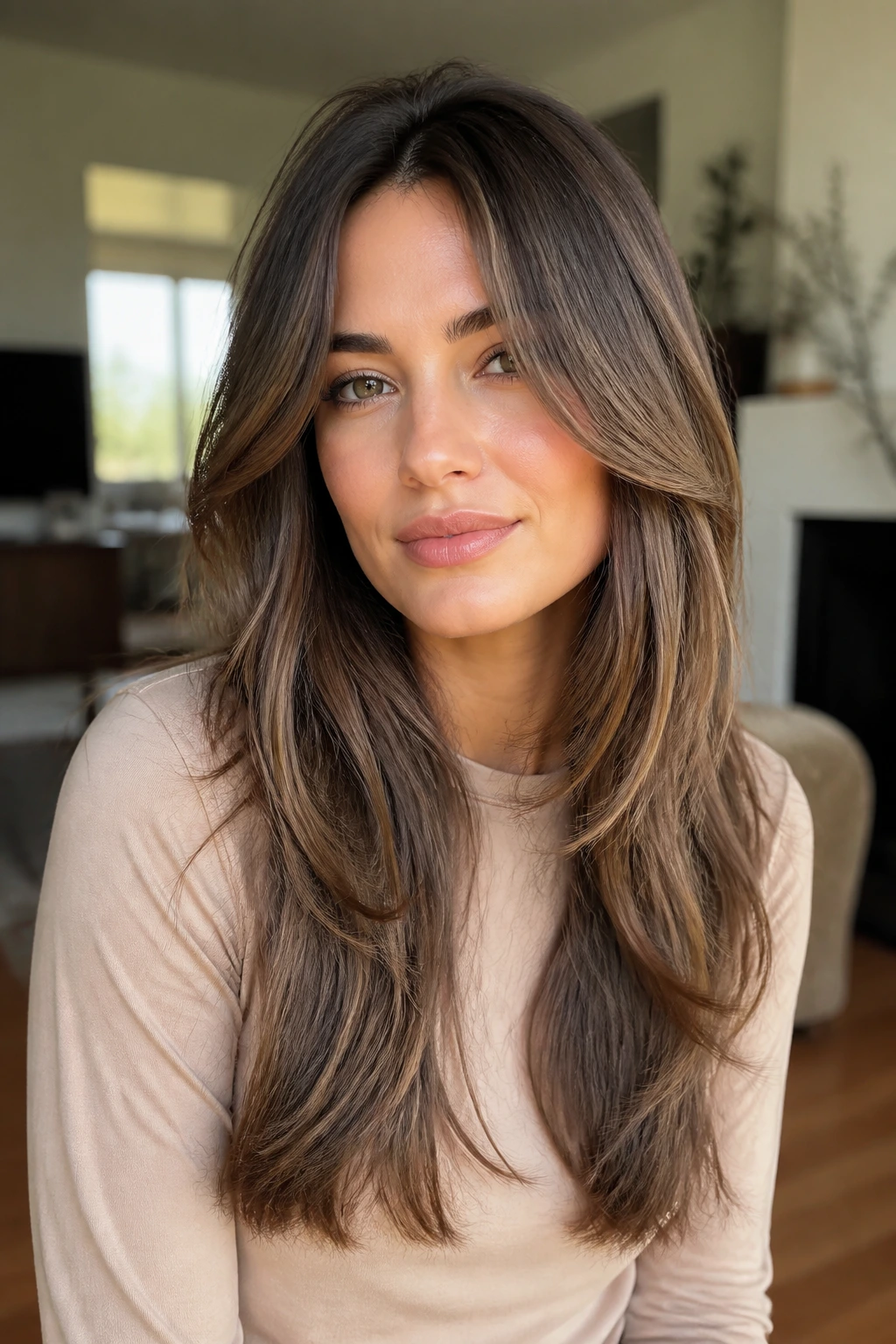
Fine-Hair Friendly Version
Keep the layers long, the texture subtle, and the perimeter full. A little root lift and a clean bend through the front will do more than lots of slicing.
Thick-Hair Debulked Version
Ask for internal removal of weight and a rounded outer line. That lets the hair move without widening around the cheeks.
Curly Shape-Respecting Version
Have the cut shaped around the curl pattern, with longer front pieces and enough length at the bottom to keep the silhouette grounded. Dry cutting often gives the cleanest read.
Low-Styling Air-Dry Version
Choose long layers that support your natural bend and keep the front soft. A touch of cream and a quick scrunch is enough for most days.
Grow-Out-Friendly Version
Stick with subtle step layers or a U-shape so the cut stays pleasant for months, not weeks. This is the one I’d pick for people who hate constant salon visits.
How to Keep the Layers in Shape Between Trims
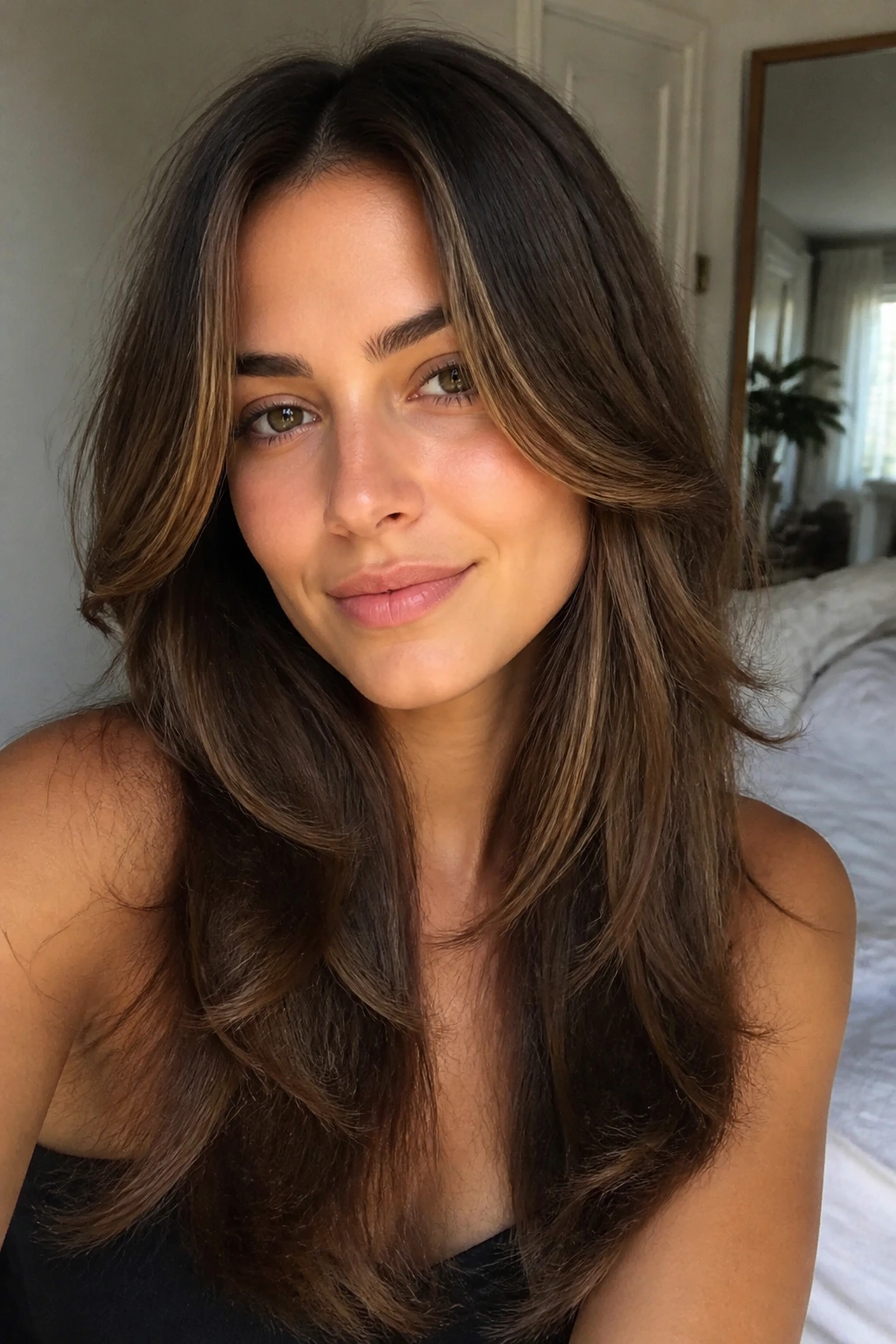
Long layered hair on a square face looks best when it stays soft, not when it gets scraggly and overgrown. A quick trim every 8 to 10 weeks keeps the front pieces from falling into the jawline. If your layers are heavy or highly textured, a shaping visit every 10 to 12 weeks helps the silhouette stay clean.
At night, a loose braid or a silk scrunchie keeps the face frame from crimping. A satin pillowcase helps too, especially if the hair frizzes easily or if the layers are fine and prone to tangling. Small things. They add up.
Heat styling needs a little discipline. If you use a blow dryer or iron often, heat protectant is not optional. Once the ends start feeling rough, the layers stop reading as soft and start looking choppy in a bad way.
If you want to stretch a blowout, dry shampoo at the roots and a quick re-bend of the front pieces usually buys another day. Don’t redo the whole head. That’s how the hair gets tired.
Frequently Asked Questions
Will textured layers make a square face look wider?
Not if the placement is right. Layers that start at the jaw can make width stand out, but layers that begin around the cheekbone or below it tend to soften the outline instead.
Are curtain bangs a good idea for square faces?
Yes, as long as they’re long enough to open at the cheekbones rather than sitting blunt across the forehead. Short curtain bangs can feel harsh; longer ones usually behave better.
Should I avoid a center part?
Not automatically. A center part works if the layers around the face are soft and the ends have some bend. If the hair is very sleek and straight, a slight off-center part often looks gentler.
Can fine hair handle long textured layers?
Yes, but keep the layering conservative. Fine hair needs enough perimeter weight to avoid stringy ends, so a blunt base with soft movement inside is usually better than heavy chopping.
What if my hair is thick and puffy?
Ask for internal layering and weight removal through the mid-lengths, not the outside edges. That keeps the shape controlled and stops the sides from ballooning out.
How often should I trim these layers?
Face-framing pieces usually need attention every 8 to 10 weeks. Full reshaping can stretch a little longer if the cut is subtle and the hair grows evenly.
Can these styles work on naturally curly hair?
Absolutely, but the cut should respect the curl pattern. Cutting curly hair dry or nearly dry makes it easier to see where the layers will actually sit on the face.
What if I hate the way my layers look after styling?
Check the starting point first. If the shortest pieces hit right at the jaw, that’s often the problem. A slight bend in the front and a lower layer line can change the whole look without sacrificing length.
The Shape That Moves
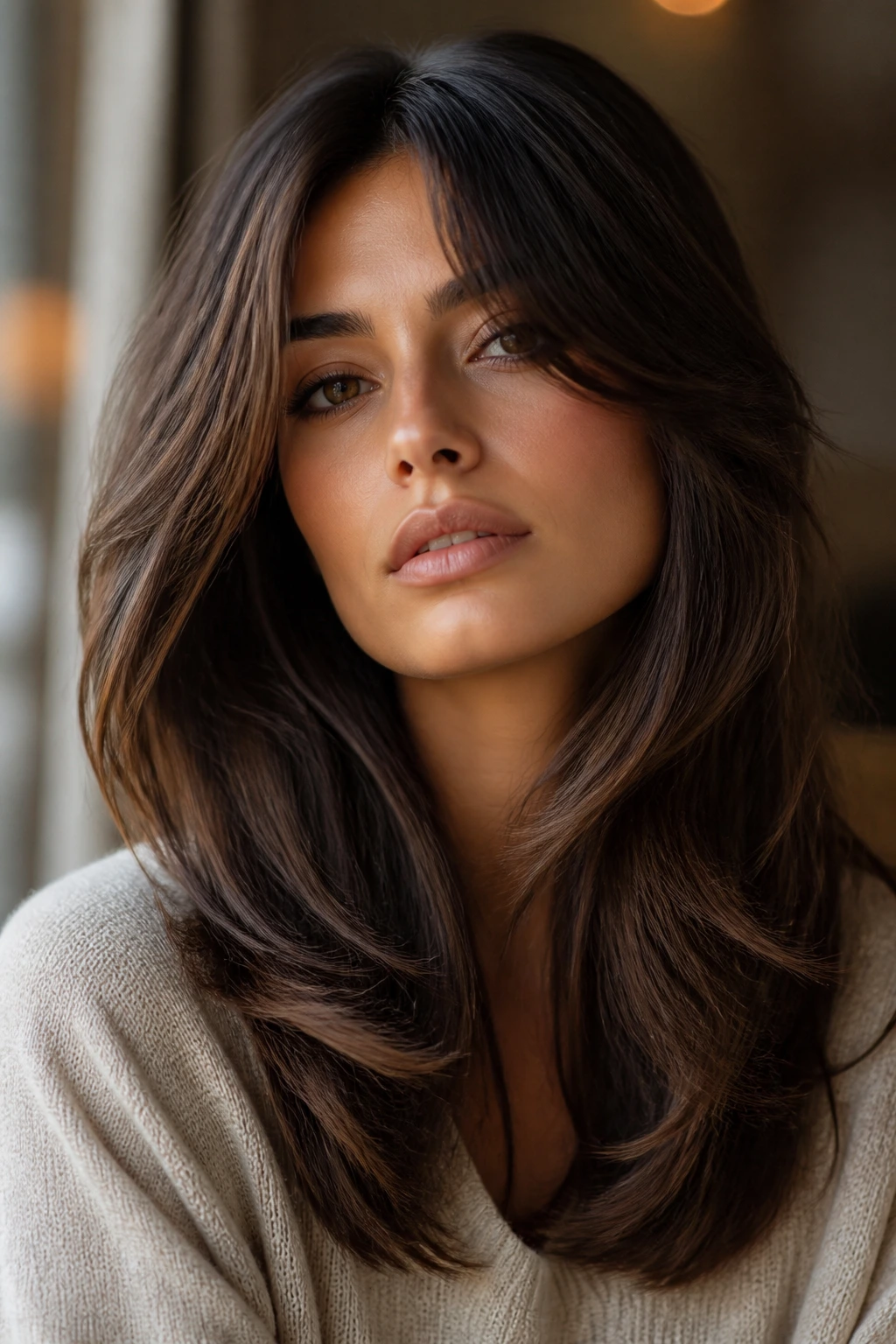
The best long haircut for a square face isn’t the one that hides the face. It’s the one that gives the angles somewhere to go. Texture does that job better than blunt edges, and long layers do it better than heavy, unmoving length.
If you keep one rule in mind, make it this: let the shortest pieces miss the jaw. Everything else — the fringe, the bend, the part, the styling — can shift around that idea. Once the hair starts moving around the face instead of drawing a hard frame, the whole cut changes.
A square face can wear softness without losing structure. That’s the sweet spot, and it’s a good one to live in.