



Long, thin hair has a cruel little habit: it can look silky and expensive right after a cut, then turn flat, stringy, and a bit apologetic once the day gets going. Multi layered haircuts for long hair with thin hair fix that only when the layers are placed with discipline — not the kind that chew up the perimeter, but the kind that lift the front, keep weight at the ends, and make the whole shape move when you turn your head.
That’s the part a lot of salon language skips. Thin hair is often used as a catch-all, but there’s a real difference between fine strands and low density. Fine hair has a smaller strand diameter; low density means fewer hairs on the scalp. A cut that helps one can wreck the other. Too many short layers on sparse hair and the ends go see-through fast. Too much one-length length and the whole head hangs like a curtain with no air in it.
The good layered cuts live in the middle. They give you lift around the cheekbones, softness around the jaw, and enough weight through the hem that the length still feels intentional. A good version doesn’t shout “layers.” It whispers them, then quietly makes your hair look twice as full.
Why These Layered Cuts Work So Well on Long, Thin Hair
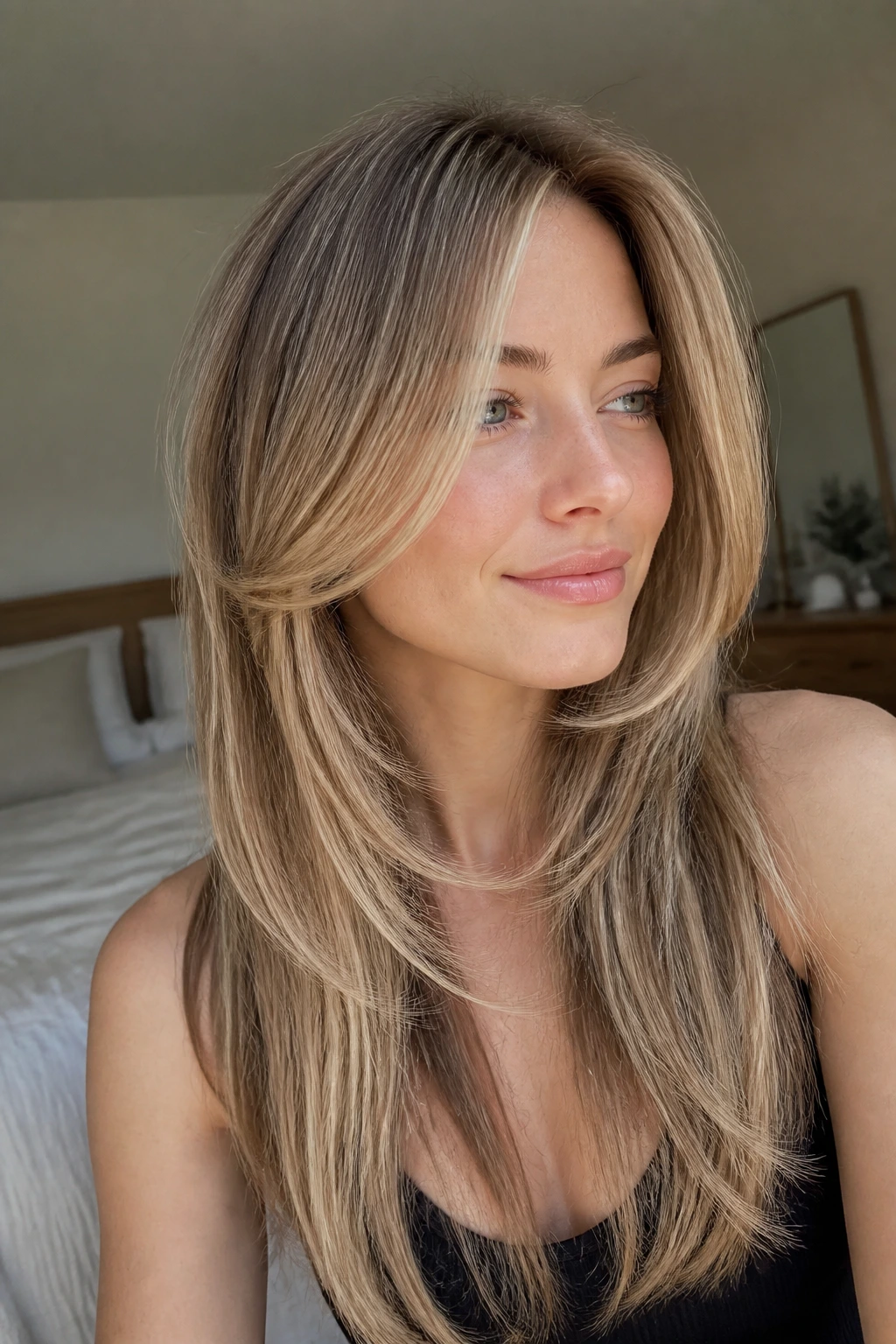
Less weight in the wrong places: When long hair is all one length, the top can go limp while the bottom does all the work. These cuts move some of that weight up and out, so the hair doesn’t collapse as fast.
More shape around the face: The right face-framing pieces can make the front look fuller even when the overall density is modest. Cheekbone and chin-level layers do a lot of heavy lifting here.
Better movement without losing length: You still get the long line people love, but the hair bends, sways, and catches air instead of hanging in one flat sheet.
Easier styling on day two: Layered long hair usually responds better to a quick bend with a curling iron, a round brush, or even a headband set. One-length hair tends to show every slump.
A smarter way to fake fullness: The best cuts use internal layers, curved outlines, or a blunt base to keep the ends looking dense. That’s the trick. Not more chopping. Better placement.
1. Butterfly Layers
Butterfly layers are the closest thing thin long hair has to a flattering cheat code. The shorter front pieces sit high enough to create movement around the face, while the longer back section keeps the length from feeling abandoned. The result is soft, fluttery, and a little airy — which is exactly why this shape keeps showing up on long hair that needs more life.
Why It Works
The magic is in the contrast. You get the illusion of two haircuts at once: a shorter, voluminous top section and a long, intact base underneath. That means you can round-brush the front and leave the rest alone, which is a blessing on mornings when you don’t want to wrestle every strand into submission.
Ask for the shortest face frame to start around the chin or just below it if your hair is very sparse. If it starts too high, the haircut can open up the crown too much and expose the ends. Keep the perimeter soft, not shredded.
- Best for: medium-fine hair that needs lift around the cheeks
- Styling note: blow-dry the top layers away from the face with a medium round brush
- Ask your stylist: for long internal layers that do not break the hemline too hard
One small tip: If your hair is naturally flat at the crown, clip the top section up while it cools after blow-drying. That cooling set matters more than people think.
2. Long U-Shaped Layers
A long U shape is calm, not flashy. That’s why it works. The sides sweep down gently, the back stays fuller, and the whole haircut keeps a smooth outline instead of a sharp point that can look too thin at the ends.
The U shape is especially kind to thin hair because it doesn’t ask the perimeter to do any heroic work. The longest layer stays long. The center back keeps enough weight to avoid that scraggly tail effect that happens when layers are cut too aggressively into fine lengths. If you like a neat, polished look, this is one of the safest long layered haircuts you can ask for.
The face frame can still do plenty. Start the shortest pieces around the cheekbone or jaw if you want softness without losing density near the temples. If your hair is straight, this shape also holds up well on days when you air-dry and leave it alone.
It’s not dramatic. That’s the point. Some haircuts shout for attention; this one quietly makes the hair look expensive because the hem stays thick enough to read as healthy.
3. Curtain Bangs with Cheekbone Layers

Curtain bangs are doing a lot of work here, but not in a noisy way. They split the forehead, open the face, and let the rest of the long layers feel lighter without cutting the whole length into pieces. On thin hair, that matters. You get a front view that feels fuller without sacrificing the back.
The sweet spot is the cheekbone. That’s where the shortest layers should start if you want the bangs to blend instead of sit on top like a separate idea. If the fringe is cut too short, the hair can look sparse around the temples. Too long, and you lose the lift that makes the style worth wearing.
How to Style It
Use a small-to-medium round brush or a blow-dry brush and bend the curtain pieces away from the face. The goal is a soft curve, not a hard flick.
This cut is one of my favorites for readers who want face-framing without a full fringe commitment. It grows out better than blunt bangs, and it still lets you tuck the sides behind your ears when you want a cleaner look.
4. Invisible Internal Layers
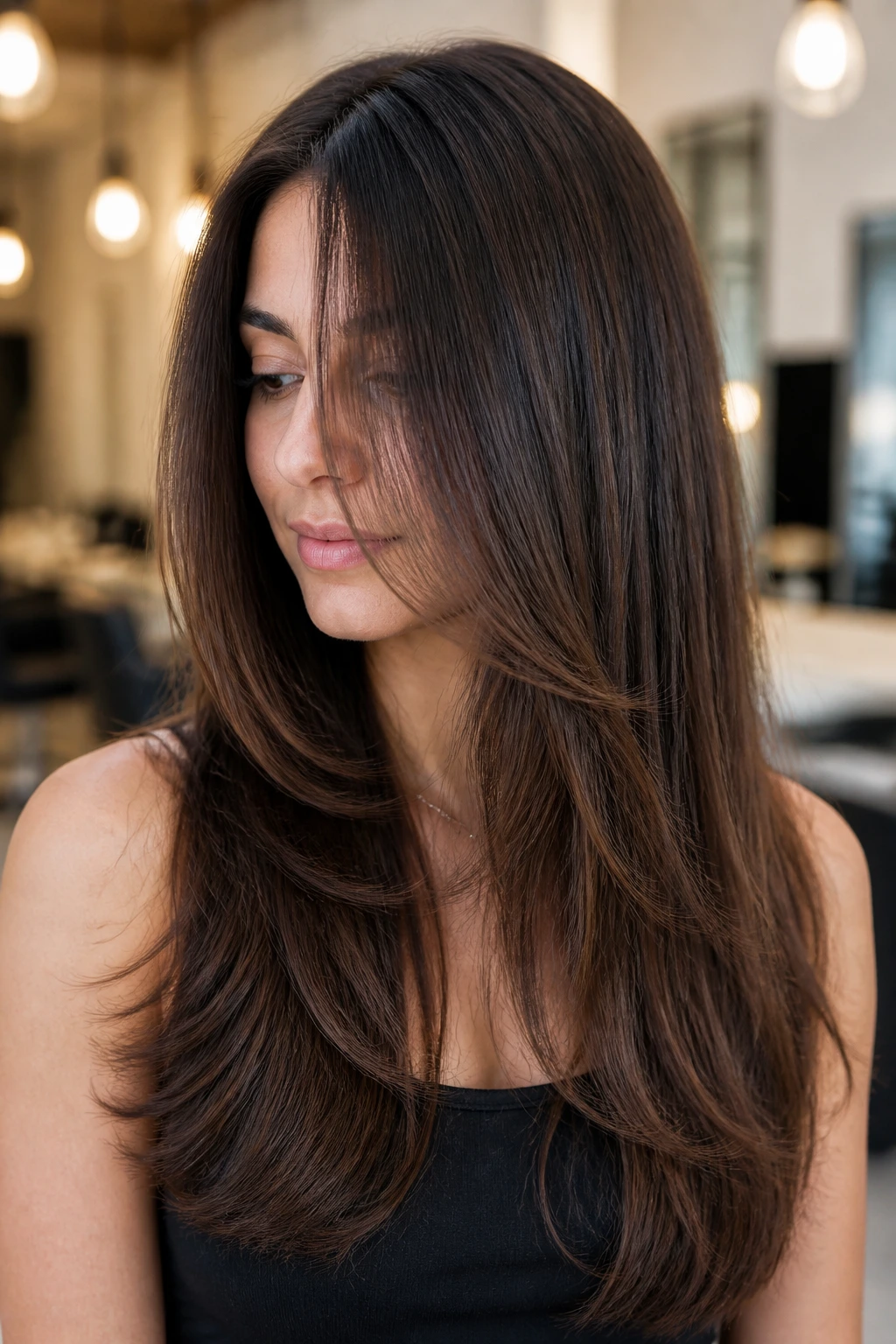
Invisible layers are for the person who wants movement but does not want obvious steps. The outside silhouette stays calm and long, while the inside loses enough weight to keep the hair from collapsing into a flat sheet. On thin hair, that’s often the smartest move in the room.
A lot of stylists will call this “internal layering” or “under-layering.” The language changes. The result is the same: soft lift hidden under the top sections, with the visible outline left intact. If you’ve ever hated how layered cuts can make the ends look chopped, this is the answer.
Here’s why it’s so useful for long thin hair:
- The hem stays dense, so the ends read as fuller
- The top moves more freely when you curl or blow-dry it
- The haircut grows out with less obvious lines
- It works well if you part your hair the same way every day
Best for: straight or slightly wavy hair that goes limp at the crown.
Not ideal for: very sparse hair that already struggles to keep fullness at the bottom.
The cut feels subtle in the chair, then strangely satisfying at home because the hair suddenly behaves better.
5. Feathered 90s Blowout Layers
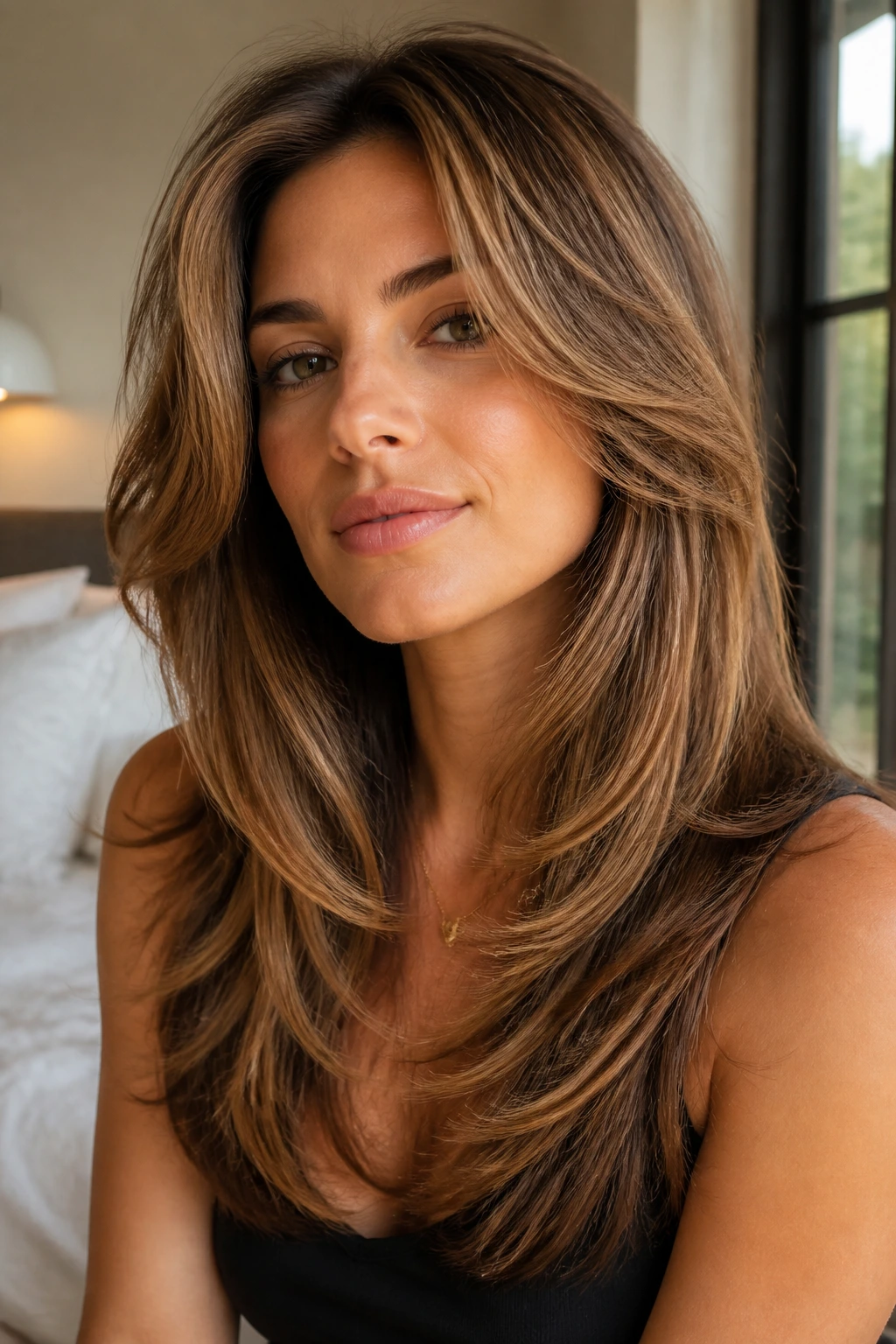
Feathered layers bring back a very specific kind of movement: soft, brushed-out, a little glossy, and built to swing away from the face. On long thin hair, that feathering can make the whole cut look fuller because the layers don’t sit as blunt little shelves. They bend.
This style works best when the layers start below the cheekbone and are styled with a round brush and a light volumizing mousse. Don’t overdo the product. Thin hair gets weighed down fast, and feathered ends look much better when they stay touchable rather than sticky.
The best version of this cut keeps a decent amount of length through the back. If the stylist removes too much from the lower half, the feathering can turn wispy in a bad way. You want lift, not feathers that look like they lost a fight with the scissors.
A small Velcro roller at the crown after blow-drying can help. Old-school trick. Still works.
6. V-Cut With Long Cascading Ends
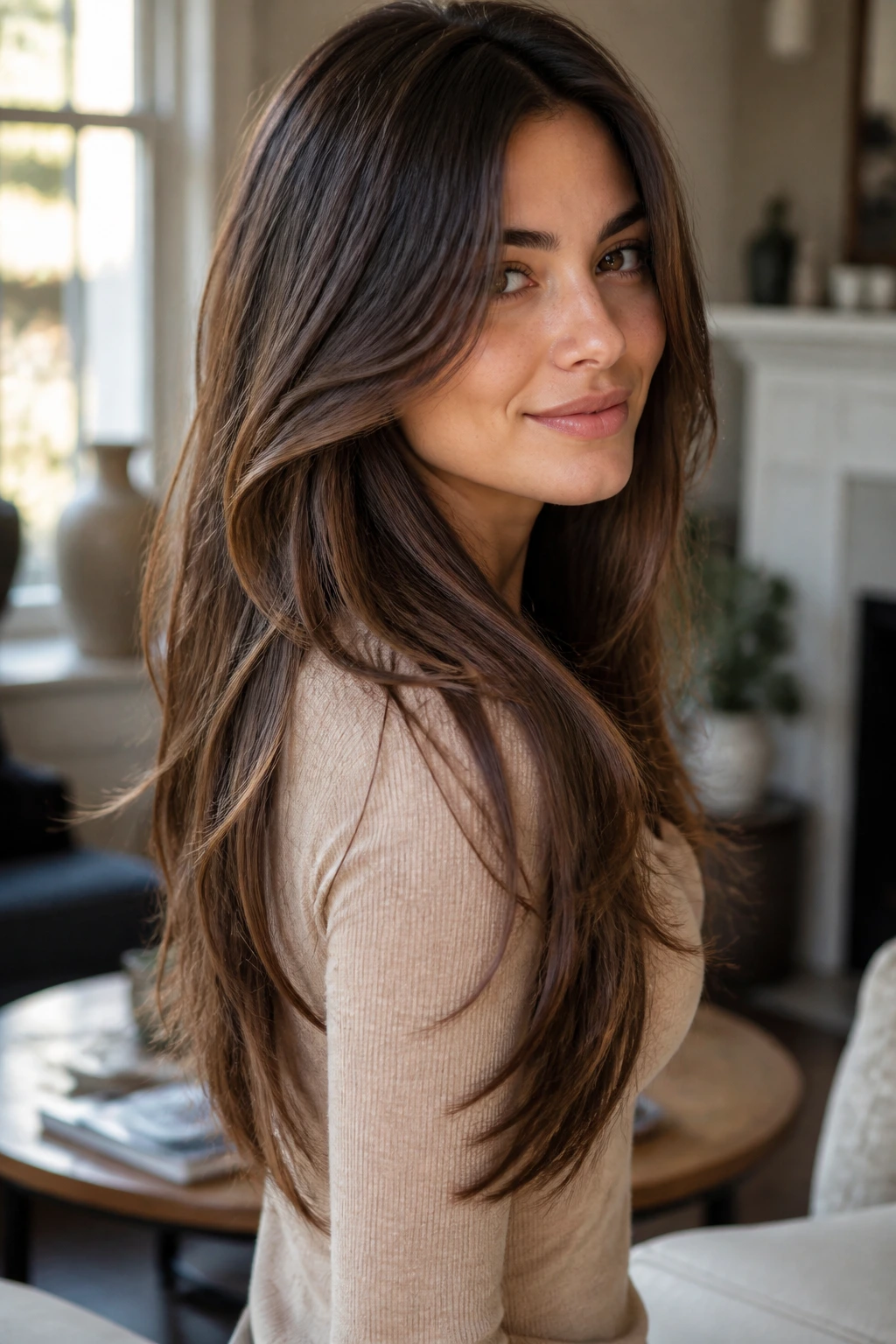
A V cut brings drama. More than a U shape, less than a full shag. The back tapers into a soft point, while the layers cascade down the sides and keep the shape from feeling blunt or heavy. It’s a prettier silhouette when you want the length to look deliberate.
That said, this one needs judgment. On very thin hair, a deep V can expose the ends too much and make the tail look stringy. If your hair is fine but you still have decent density, it can look elegant and lifted. If the ends are already fragile, ask for a soft V instead of a sharp one.
Best Use Case
Choose this when you want the hair to fall longer in the center and slightly shorter at the sides, especially if your face feels wider and you like a little vertical line.
The biggest advantage is movement. Curling the side pieces away from the face gives a cascading effect that makes long hair feel fuller across the shoulders. It is not a low-maintenance cut if you flat-iron everything every day, but on wavy hair, it has real charm.
7. Soft Wolf Cut Lite
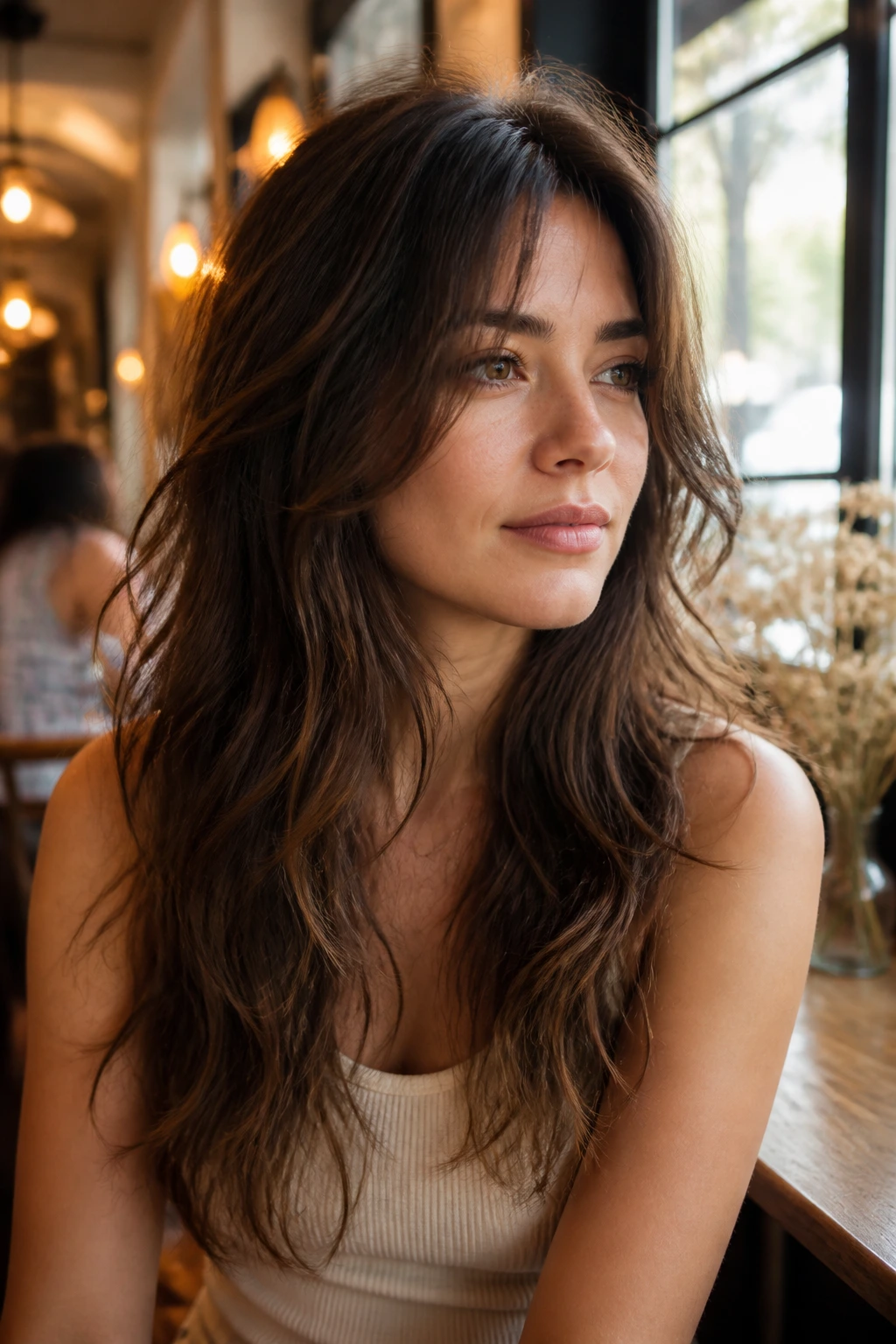
A wolf cut can work on thin long hair. The keyword is lite. Not shredded. Not over-textured. Just enough short layers at the top and around the face to create lift, while the bottom stays long enough to keep the haircut from looking sparse.
People get this wrong by asking for too much choppiness. Then the ends fray, the crown lifts too high, and the cut starts looking like it’s missing pieces. A softened version keeps the attitude, not the chaos.
This is a good choice if your hair already has some wave and you want that lived-in shape without a lot of heat styling. A bit of mousse at the roots, a diffuse-dry, and maybe a little texture spray through the mid-lengths can bring it to life.
If your hair is pin-straight and very fine, I’d be careful. The wolf shape can still work, but the layers should be longer and the perimeter should stay sturdy.
8. Face-Framing Money Piece Layers
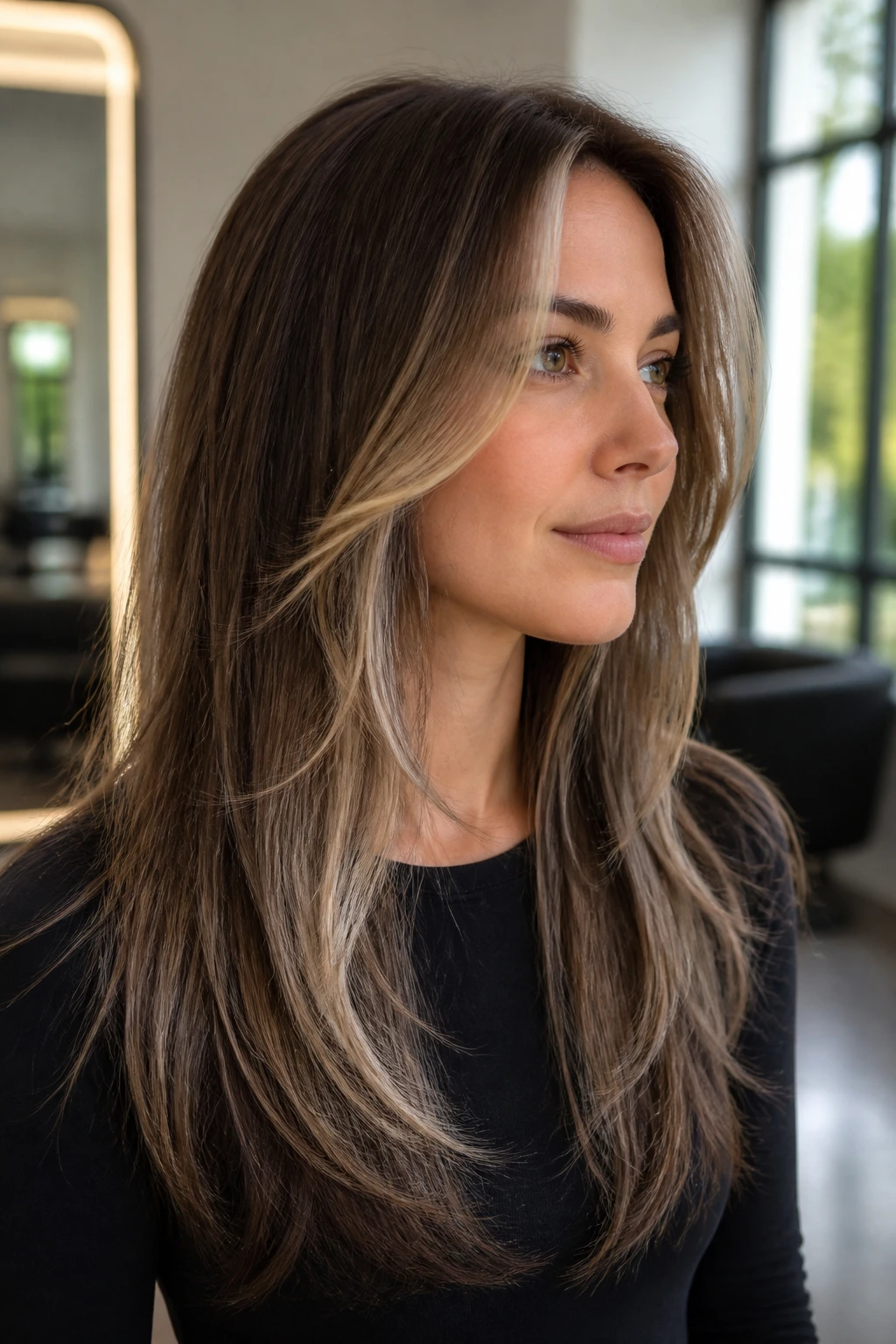
This one is less about dramatic layering and more about strategic framing. The front pieces are cut to sit a little brighter around the face — usually with a soft, light-catching effect if color is involved — while the rest of the hair stays long and movable. Even without color, the cut alone can make the front read fuller.
The reason it works is simple: your eyes go to the face frame first. So even if the back is modest in density, the haircut feels more substantial where people actually look. That’s a useful illusion.
What to Ask For
Ask for the front pieces to start around the cheekbone or chin, then melt into long layers through the sides. Keep the shortest pieces soft enough to tuck behind the ear when needed.
This cut is especially good if you wear your hair down most of the time and want a little more structure around the jawline. It’s also one of the easiest ways to make a long blowout feel more styled without touching the length much at all.
9. Rounded Layers With a Blunt Hem
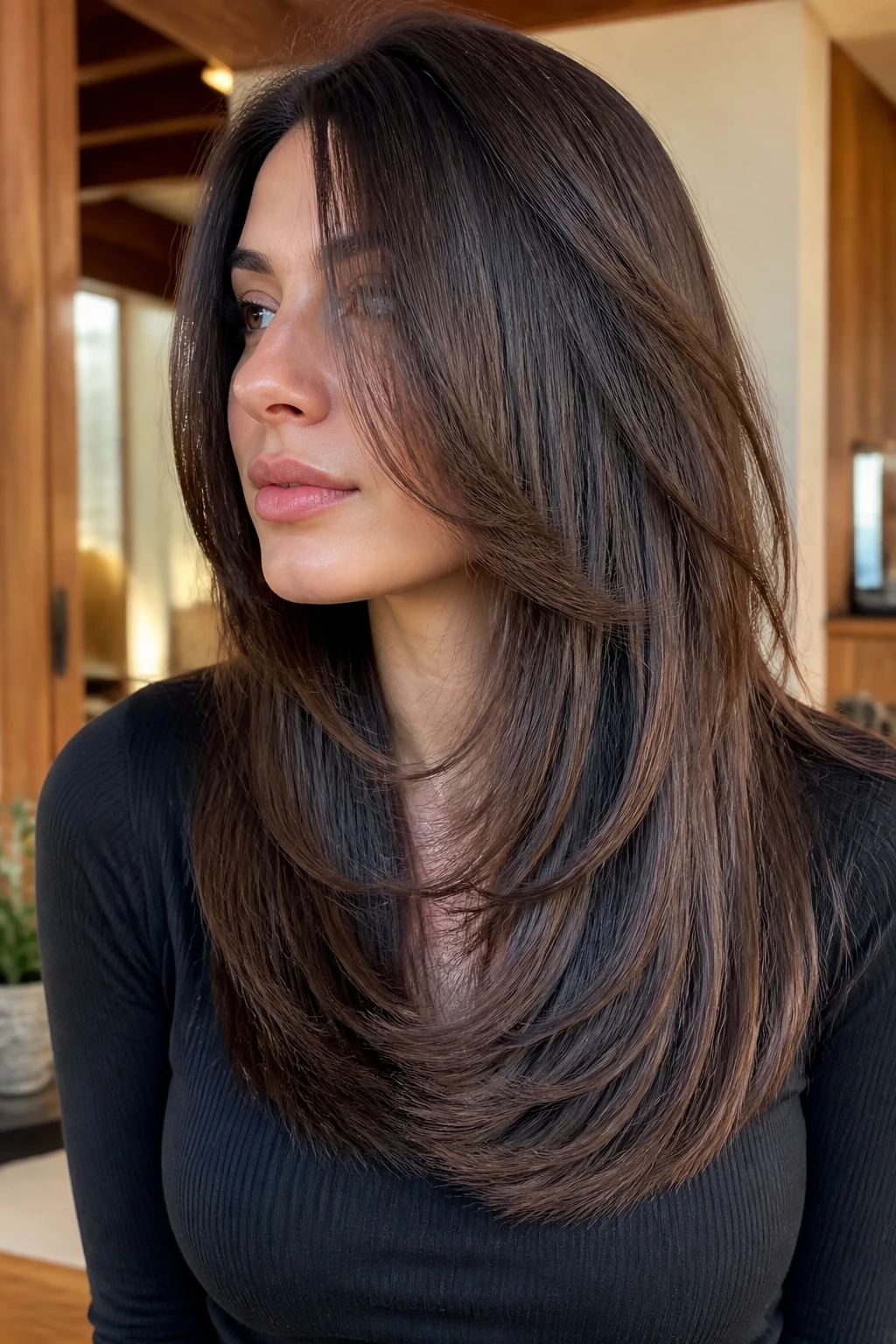
Rounded layers create a soft curve around the whole head, but the hem stays blunt enough to keep the ends looking dense. That blunt bottom line is the reason this cut behaves so well on thin hair. It gives the eye a solid finish point.
If you’ve ever had layers that looked nice when freshly cut and then a little see-through two weeks later, this shape solves that problem better than a razor-heavy cut. The curve keeps motion at the sides and the front, while the bottom still looks full when it rests on the shoulders.
It’s a practical cut for people who don’t want to spend forever styling. A quick bend with a 1.25-inch iron, or even a blow-dry brush, can show the shape without much effort. If the hair is straight, the rounded outline is still visible. If it’s wavy, even better.
This is one of the quieter options on the list, but I’d argue it’s one of the smartest.
10. Side-Swept Layers

A deep side part changes everything. Seriously. It gives the roots a lift on one side, creates a little height at the crown, and lets the longer layers sweep across the face in a way that hides thinness without screaming for attention.
The haircut itself doesn’t need to be extreme. Long layers with a strong side part often do more for volume than a more aggressive cut with the wrong part. That’s the part most people miss. The styling choice matters just as much as the scissors.
How It Changes the Shape
Side-swept layers are especially nice if your hair falls flat at the top but still has decent length through the ends. The extra diagonal line across the face breaks up the straight curtain effect and makes the whole style look more deliberate.
Best for round and square faces, and for anyone who wants a little softness without bangs. If you change your part occasionally, this cut also avoids the “same side every day” dent that can happen with fine hair.
11. Waterfall Layers
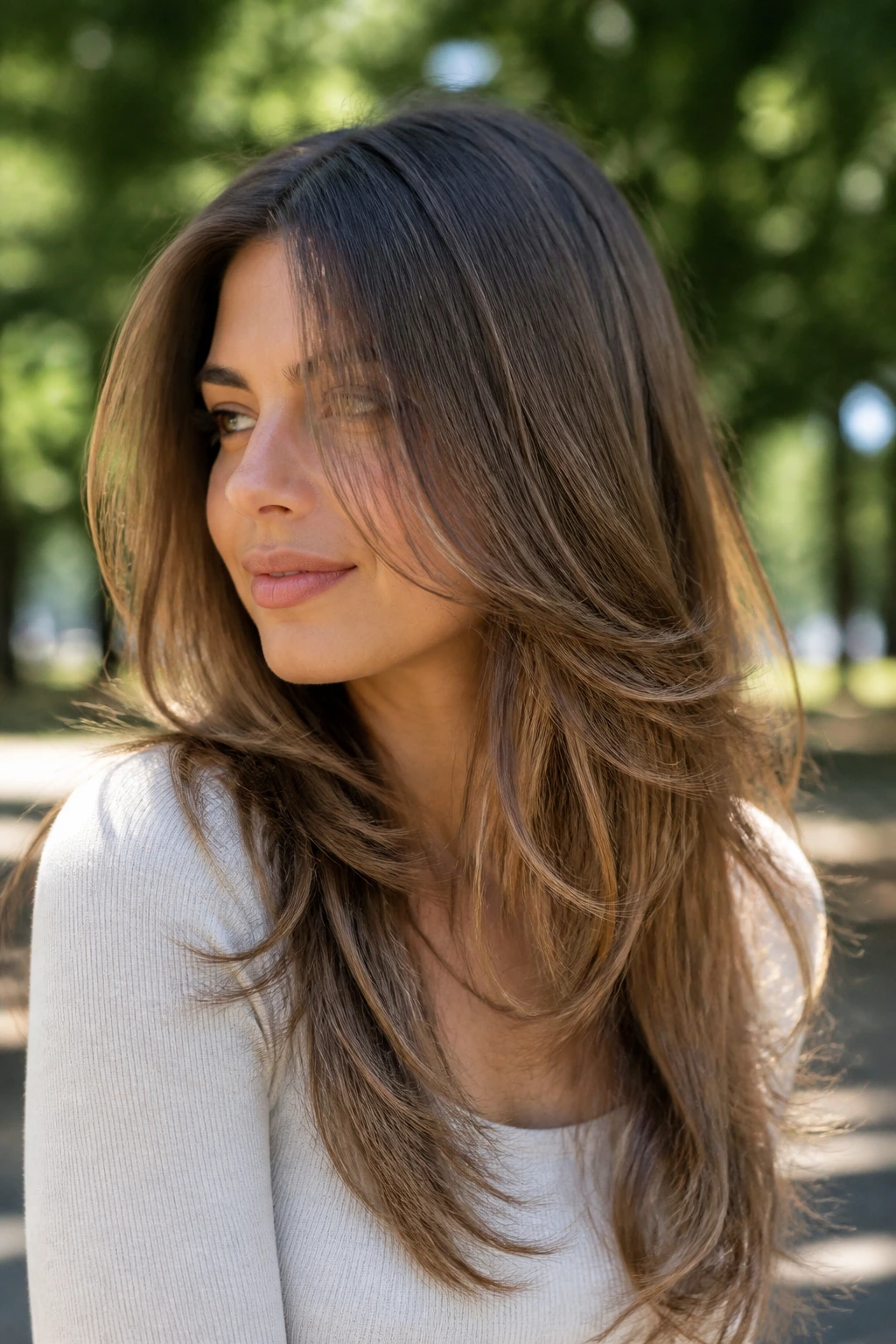
Waterfall layers fall in soft steps, but they’re gentler than the phrase sounds. Think of strands sliding over one another instead of dropping in obvious sections. That’s why they work so well on long thin hair. The motion looks graceful, not chopped.
This shape loves wave. If your hair has a bend to it naturally, waterfall layers make it look fuller because the hair catches on itself in motion. Straight hair can wear the cut too, but the layers need to be long and softly blended so the ends don’t look whippy.
It’s also a very face-friendly cut. The front starts softly around the chin or collarbone, then the length keeps moving down the sides. If you want something between a butterfly cut and a classic long layer, this is the quiet middle ground.
The styling move is simple: bend the front sections away from the face and leave the rest soft. Hard curls kill the effect. Loose movement makes it work.
12. Razor-Sliced Layers

Razor slicing can be beautiful on the right hair and a mess on the wrong one. On thin long hair, the trick is restraint. A stylist who knows how to use a razor lightly can create soft, airy layers that move without leaving blunt little weight lines.
The danger is over-thinning. If the ends are already fragile, a heavy razor session can make them fray faster than scissors would. That’s why this cut should be done with a very specific eye: the goal is motion, not wispy damage.
Use this if your hair is fine but not sparse, and if you like a slightly undone finish. It can look gorgeous with a loose wave or a lived-in blowout. It’s not the best choice if you heat-style hard every day, because the fragile ends tend to show wear sooner.
Ask the stylist to keep the perimeter controlled. You want the cut to feel soft at the edges, not shredded.
13. Collarbone-Start Layers

If you want layers but you’re nervous about losing thickness, this is the safest place to start. Collarbone-length face framing gives movement without taking too much from the sides or crown. The hair stays long, the front gets some bend, and the ends don’t get sacrificed.
This cut is a good starter option for someone who’s never worn layers before. It offers visible change without the fear factor of shorter top layers. On thin hair, that matters. You can always go shorter later. You cannot uncut too-short layers without waiting for them to grow out.
A collarbone start also pairs well with air-drying. The front pieces sit nicely against the face, and the rest of the hair still has enough length to gather in a low ponytail or claw clip without looking awkward.
No drama. Just enough shape to make the hair stop hanging like a single flat sheet.
14. Octopus Cut Lite
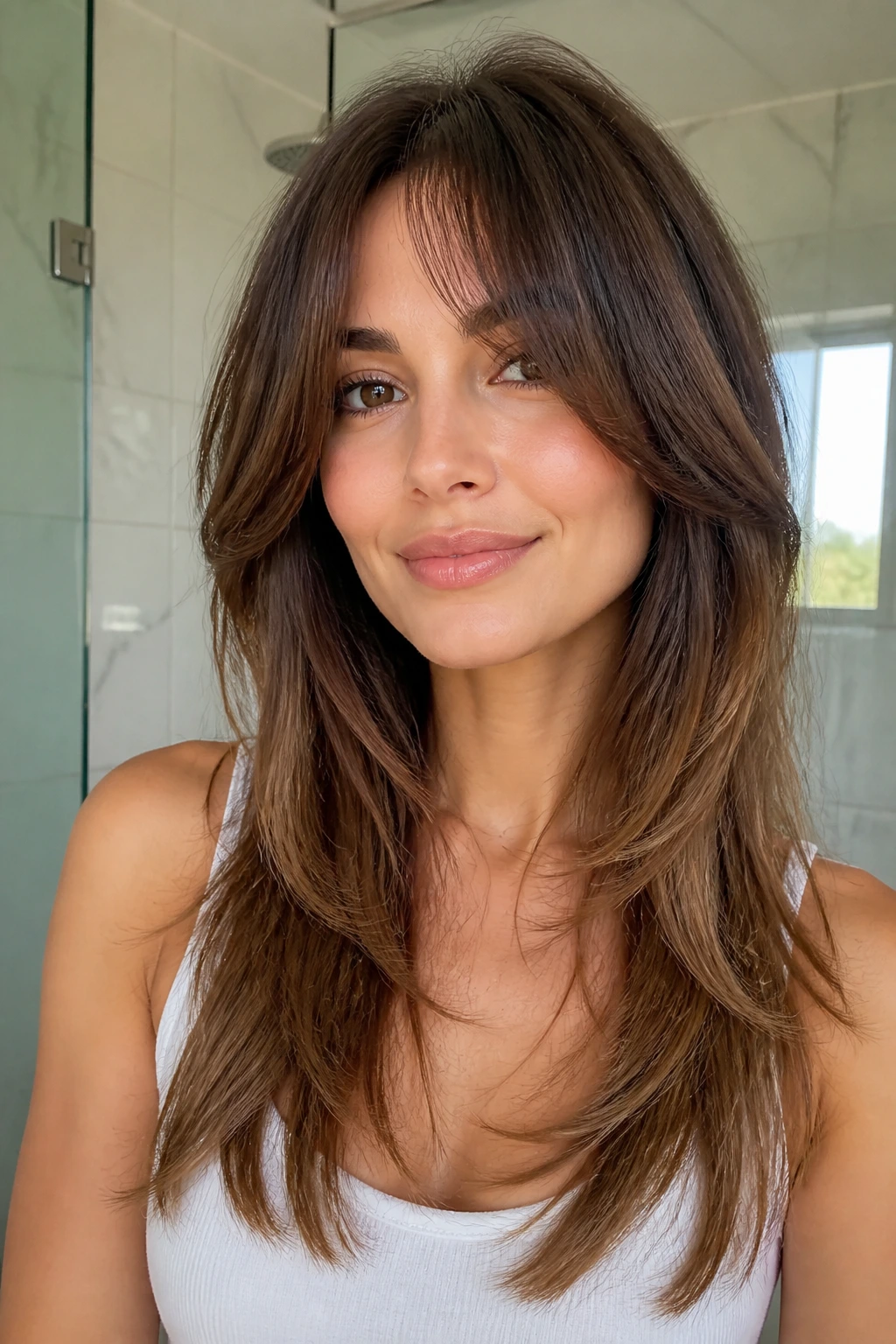
The octopus cut has a lot of personality, but on thin long hair it needs a softer hand. The “lite” version keeps the crown and face frame a bit shorter for lift, while the lower lengths remain long and soft. That creates a rounded, floating shape without shredding the ends.
The name can sound intimidating if you picture a full-on shag with every edge thinned out. Don’t. The good version is more controlled. It gives the top movement, then lets the long pieces trail below like soft tentacles — yes, the nickname is weird, but the haircut has a real logic to it.
How It Reads on Thin Hair
It reads fuller at the top because the layers are concentrated where hair tends to flatten. The lower length stays intact enough to keep the silhouette from looking hollow.
This is a strong choice for wavy hair and for anyone who likes a little edge in the haircut. It’s less ideal if you want polished, one-step styling. The shape likes a bit of rough drying and a touch of texture.
15. Center-Part Sliced Layers
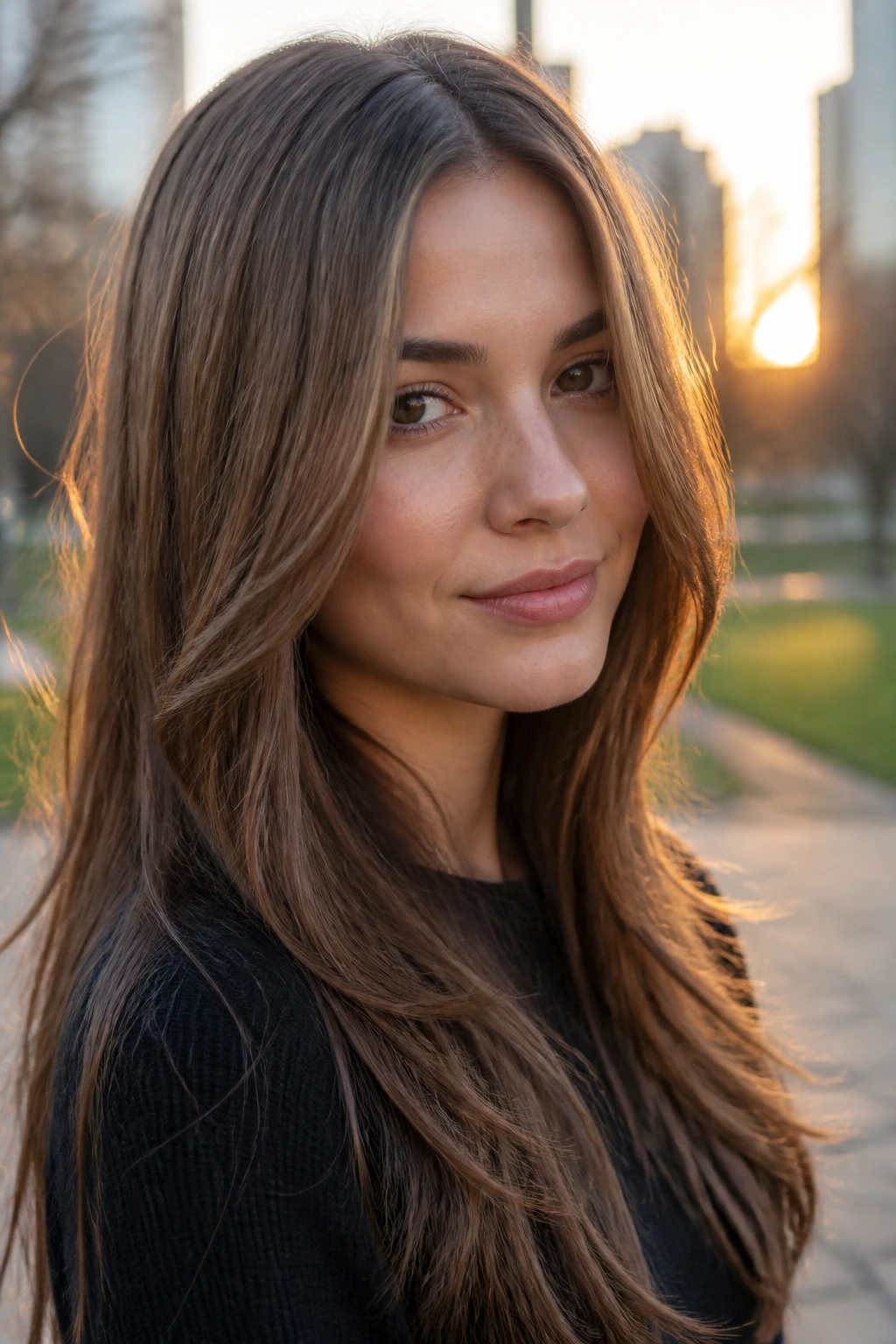
A center part can be brutally honest on thin hair, which is why the cut around it matters so much. Center-part sliced layers help by framing both sides evenly and keeping the lines long enough that the part doesn’t expose too much scalp at the crown.
The middle part gives the haircut symmetry. The sliced layers keep it from looking stiff. Together, they create a shape that feels modern but not trendy in a short-lived way. If your face is oval or heart-shaped, this can be a very flattering balance.
- Best for: straight or gently wavy hair
- Best detail: long face-framing pieces that start near the lips or chin
- Avoid: short top layers that lift the crown too much
I like this cut for people who wear sunglasses a lot, because the front pieces sit neatly around the frames and don’t fight them. Small thing. Big difference in daily life.
16. Soft Shag With a Long Perimeter

A shag on thin long hair has to be soft, or it gets ugly fast. The perimeter should stay long and solid, with enough layering through the top to create lift and movement. That’s the version that looks cool instead of sparse.
This cut works because it takes weight off the crown and upper mid-lengths, where long hair often droops. The ends stay there, holding the shape together. On natural wave, it can air-dry into a lived-in shape with almost no effort. On straight hair, it needs a little styling to show off the movement.
The key is moderation. The more textured the top, the more careful the bottom has to be. If the ends are already delicate, the shag should be more “soft shape” than “heavy chop.”
I’d choose this for someone who likes a little mess in the finish. Not unkempt. Just relaxed.
17. Bottleneck Bangs and Long Layers
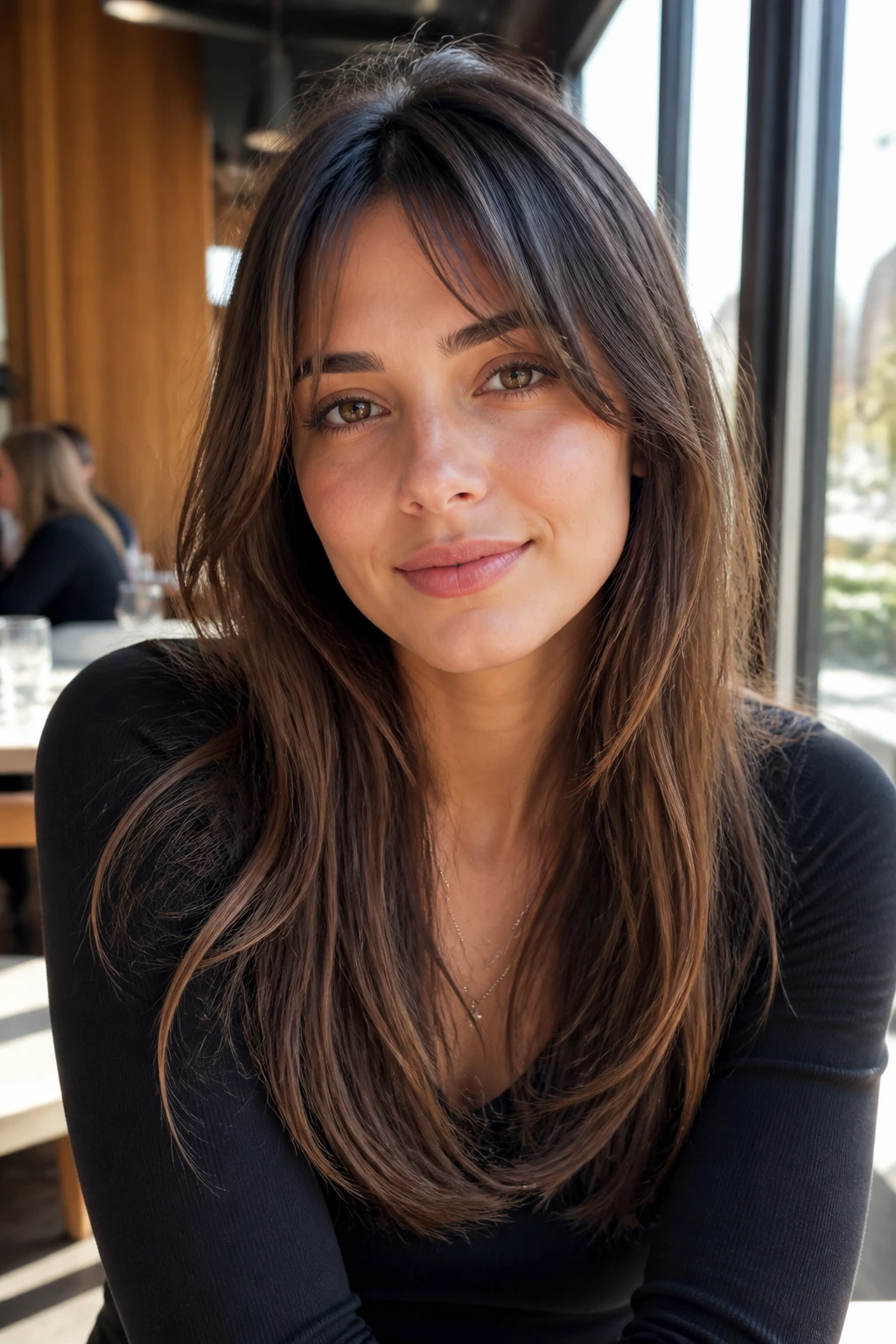
Bottleneck bangs sit between curtain bangs and a full fringe. They open in the middle and curve gently toward the temples, which makes them flattering on long thin hair because they add visible shape without building a bulky front line.
They’re a little more deliberate than curtain bangs, and I like that. The narrower center opening creates a clean frame around the eyes, while the longer sides blend into the layers. If the cut is done well, the bang area doesn’t look separate from the rest of the haircut. It melts.
This style is worth considering if your forehead feels broad or if your hairline is a little uneven and you want a soft fix. It does need trims. Bangs always do. If you are the kind of person who forgets about fringe for six weeks and then regrets it, skip this one.
For styling, a small round brush and a light mist of heat protectant are enough. Keep the bangs airy. Heavy cream will only make them cling together.
18. Tapered Layers With Fuller Ends
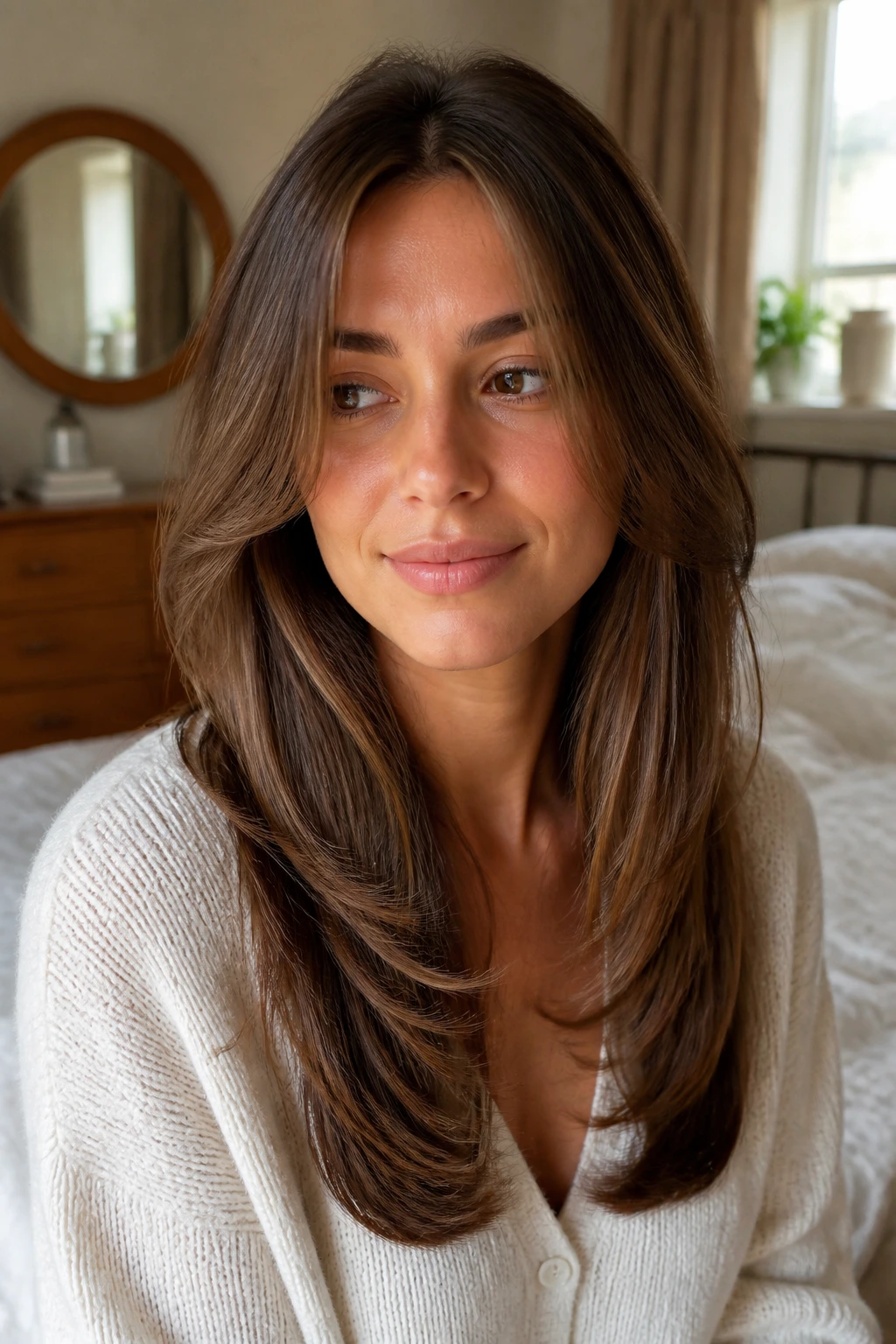
Tapered layers remove bulk where you don’t want it and leave more strength at the bottom. That’s a good deal for thin long hair, because it keeps the silhouette from looking top-heavy or blocky while protecting the ends from disappearing.
This shape is sneaky in a good way. It doesn’t look highly layered at first glance, but once the hair moves, the taper shows up in the way the lengths fall around the shoulders. The cut feels light without turning the perimeter into a feathered mess.
When It Fits Best
Choose this if your hair is long enough to sit past the shoulders and you want movement without obvious step lines. It’s especially nice on hair that tends to bend inward at the ends, because the taper keeps that bend from looking bulky.
The cut is also forgiving as it grows out. That’s not a small thing. Some layered shapes go weird after four weeks. This one usually hangs on a little longer.
19. Crown-Lift Layers
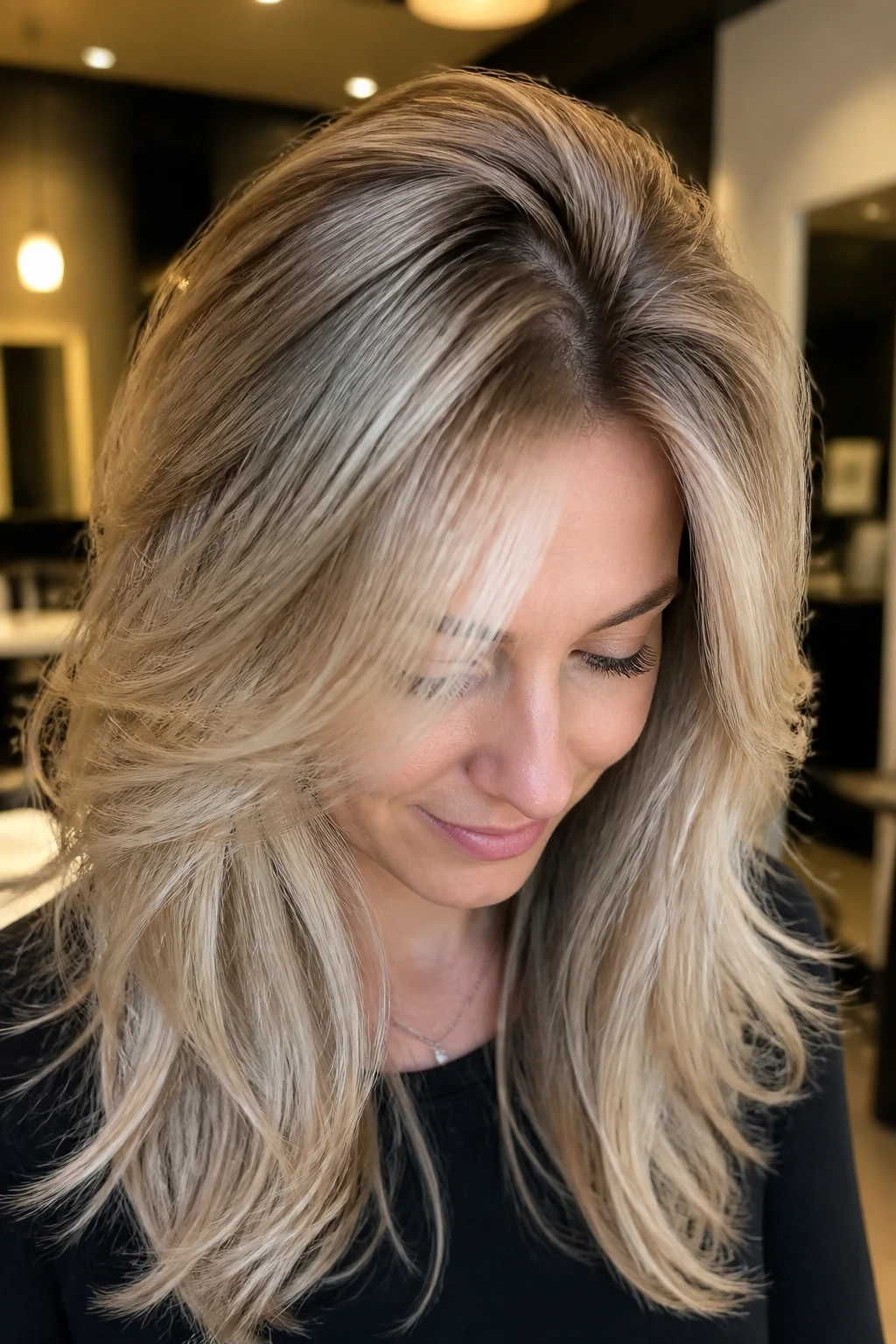
Crown-lift layers are for the part of the head that gives you trouble first. The top goes limp, the roots go flat, and the rest of the length carries the haircut like a burden. Short internal layers near the crown change that. They create lift where the head needs it most.
I’m cautious with this one on very sparse hair. Too many short layers near the top can expose scalp or make the crown look airy in the wrong way. But on fine hair with decent density, it’s a smart choice because it gives the illusion of height without taking much from the hem.
The haircut depends on styling a bit more than some others on this list. A root-lift spray, a round brush, or even a set of clips while the hair cools can make the crown layers show up properly. No need for a complicated routine. Just not zero effort.
If you hate the feeling of hair lying heavy on your head, this is a good fix.
20. Deep Side-Part Layers
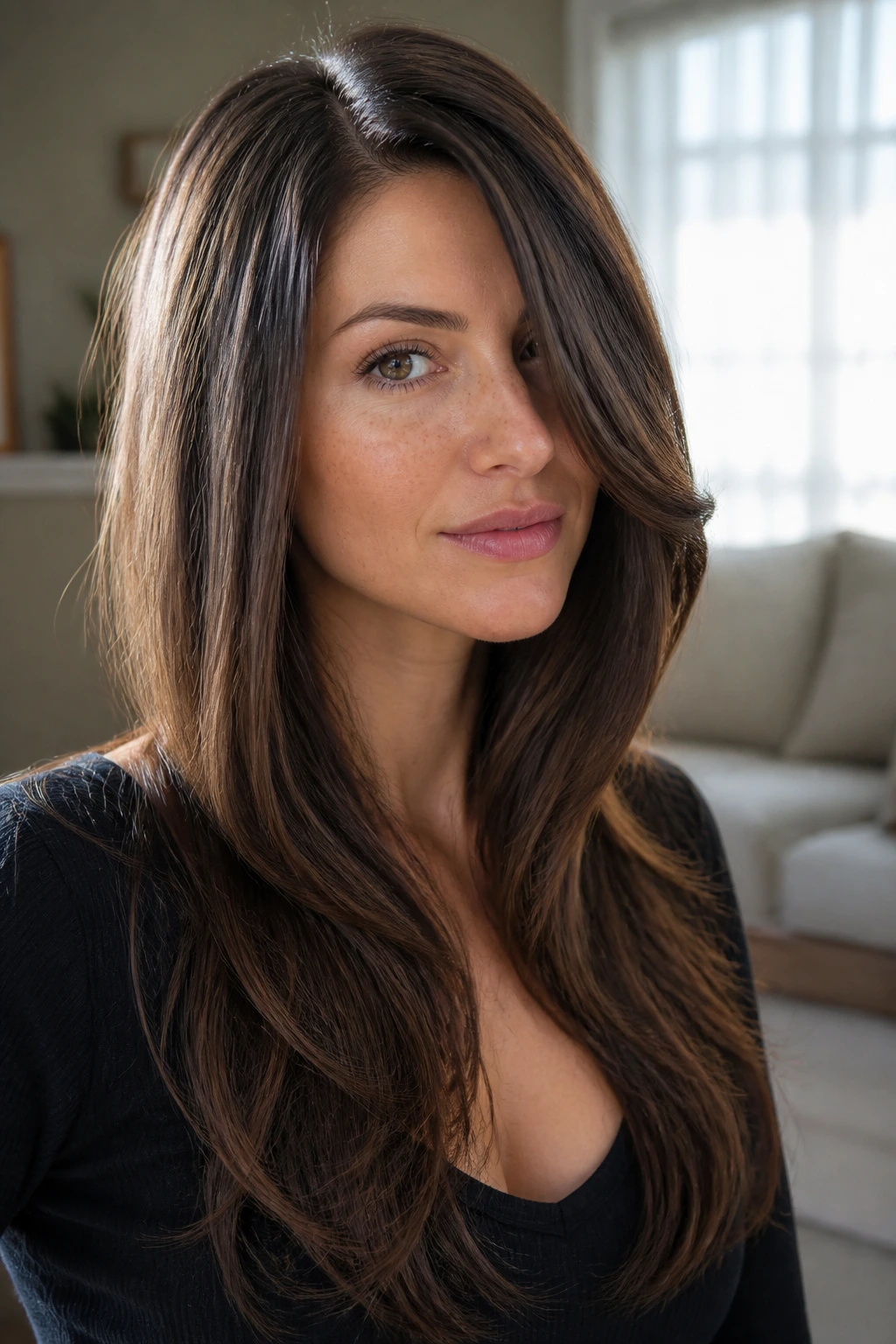
A deep side part can do more for long thin hair than a dramatic chop. It shifts weight, creates instant lift, and gives the front a sweeping line that makes the whole haircut feel larger. Pair it with long layers and you get softness without losing polish.
This is one of the easier styles to live with because it doesn’t demand a lot of haircut drama. The styling change is doing half the work. Still, the layers have to be placed well — ideally starting around the cheekbone or lower, so the part doesn’t expose too much of the crown.
It’s a solid choice if you want a grown-up version of volume. Not flashy. Not trendy for the sake of it. Just clean lines and a little lift where the eye wants it.
On days when you want more texture, tuck the heavier side behind one ear and let the lighter side fall across the cheek. Simple move. Good payoff.
21. Chin-Grazing Face Frame
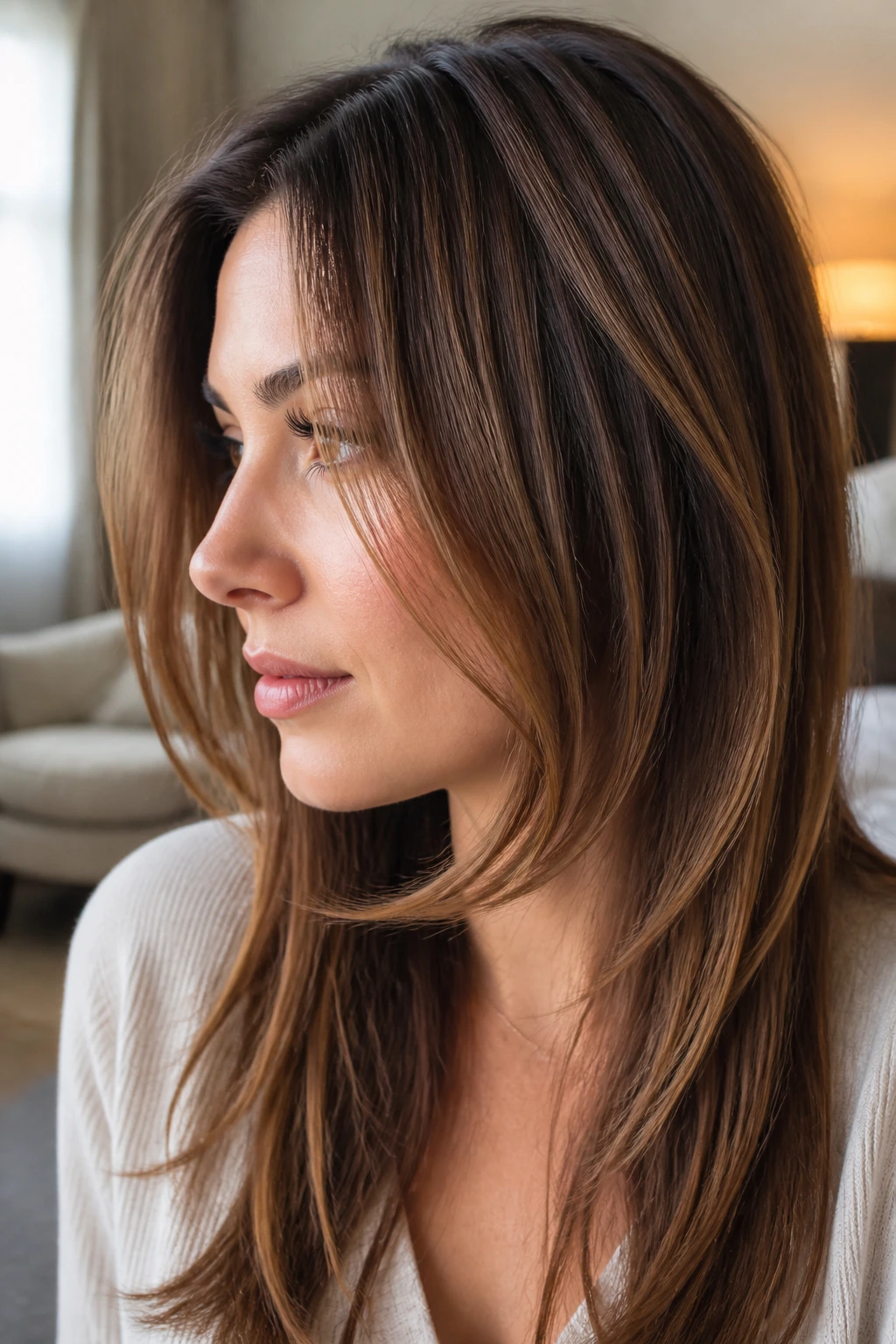
Chin-grazing face-framing pieces have a nice effect on thin long hair because they give the front a shape without cutting into the overall density too hard. They sit right where the jaw starts to matter, which can make the face look more defined and the hair look intentionally styled.
This is a great option if you are nervous about bangs but still want something that changes the front. The pieces can be tucked, curled, or left straight. And because they’re not ultra-short, they don’t scream for weekly maintenance.
What makes it work: the chin is a strong visual point. Hair that lands there draws the eye outward and downward at the same time, which is useful when long hair needs a little more presence around the face.
Best for people who wear their hair in a center part, a low bun, or loose waves. It’s a very flexible shape, and flexibility matters when you don’t have the density to waste.
22. Airy Textured Layers
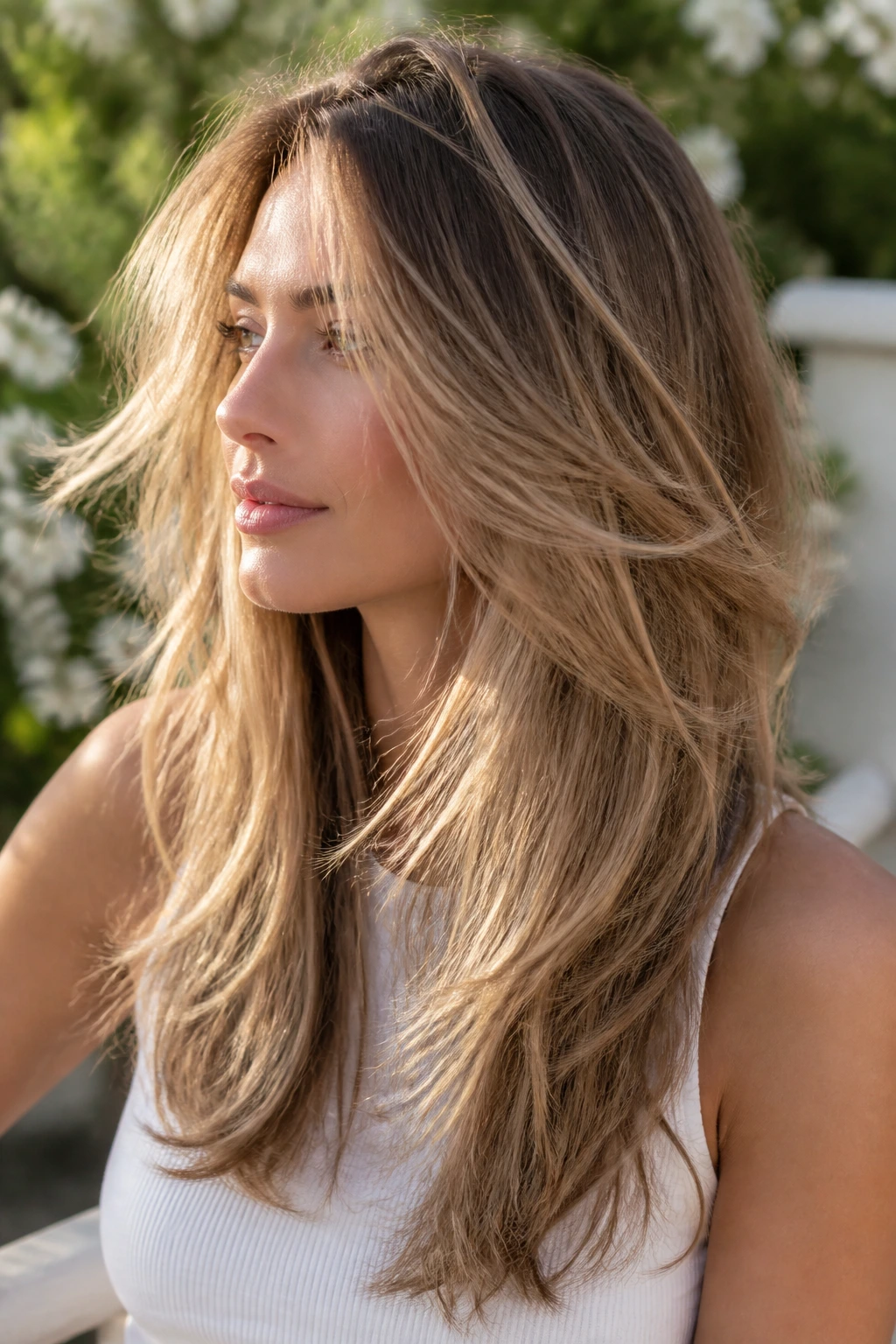
Airy textured layers are all about lightness, but there’s a careful line between airy and thin. The good version removes just enough weight to create motion, then leaves the base stable enough that the ends still read full. If the cut gets too broken up, it starts looking tired.
This is a nice choice for hair that already bends a little on its own. Waves love it. Straight hair can wear it too, but it needs some finishing work to show the texture. A little mousse at the roots and a quick bend through the mid-lengths can make the difference.
The haircut is especially kind to people who like to wear their hair half-up. Because the layers are light, the shape doesn’t puff out awkwardly when gathered at the crown. That matters more than it sounds like it should.
If your hair is delicate, ask for a soft texturizing touch rather than heavy thinning. There’s a big difference.
23. Heavy Bottom Line With Layers
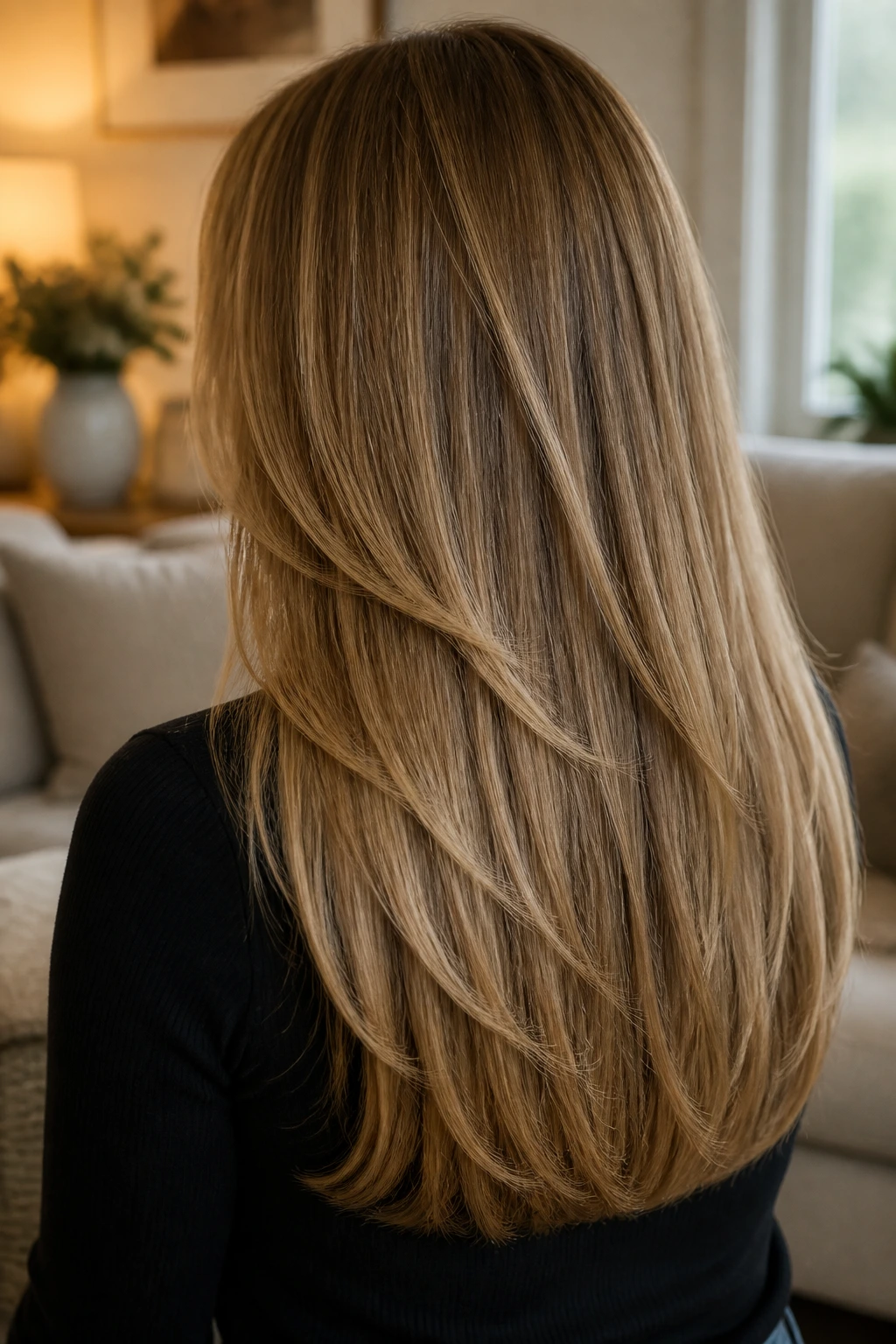
This one is for anyone who has lost faith in wispy ends. A heavy bottom line keeps the hem dense and strong, while layers above it add movement. It’s the haircut I’d point to if someone wants long hair to look fuller from the back instead of just around the face.
The style is useful for very fine hair because it protects the visual weight at the bottom. That’s the part people notice when your hair falls over a sweater or down your back. If the ends look sparse, the whole haircut looks tired. A heavier perimeter fixes that.
The Core Idea
Keep the bottom line blunt enough that the ends stack together. The layers above should be long and soft, not chopped into short fragments that leave daylight between strands.
It’s a calmer haircut than a shag or butterfly cut, but on thin hair, calm can be smarter. Especially if you like your hair straightened or blown smooth.
24. Grown-Out Fringe Layers
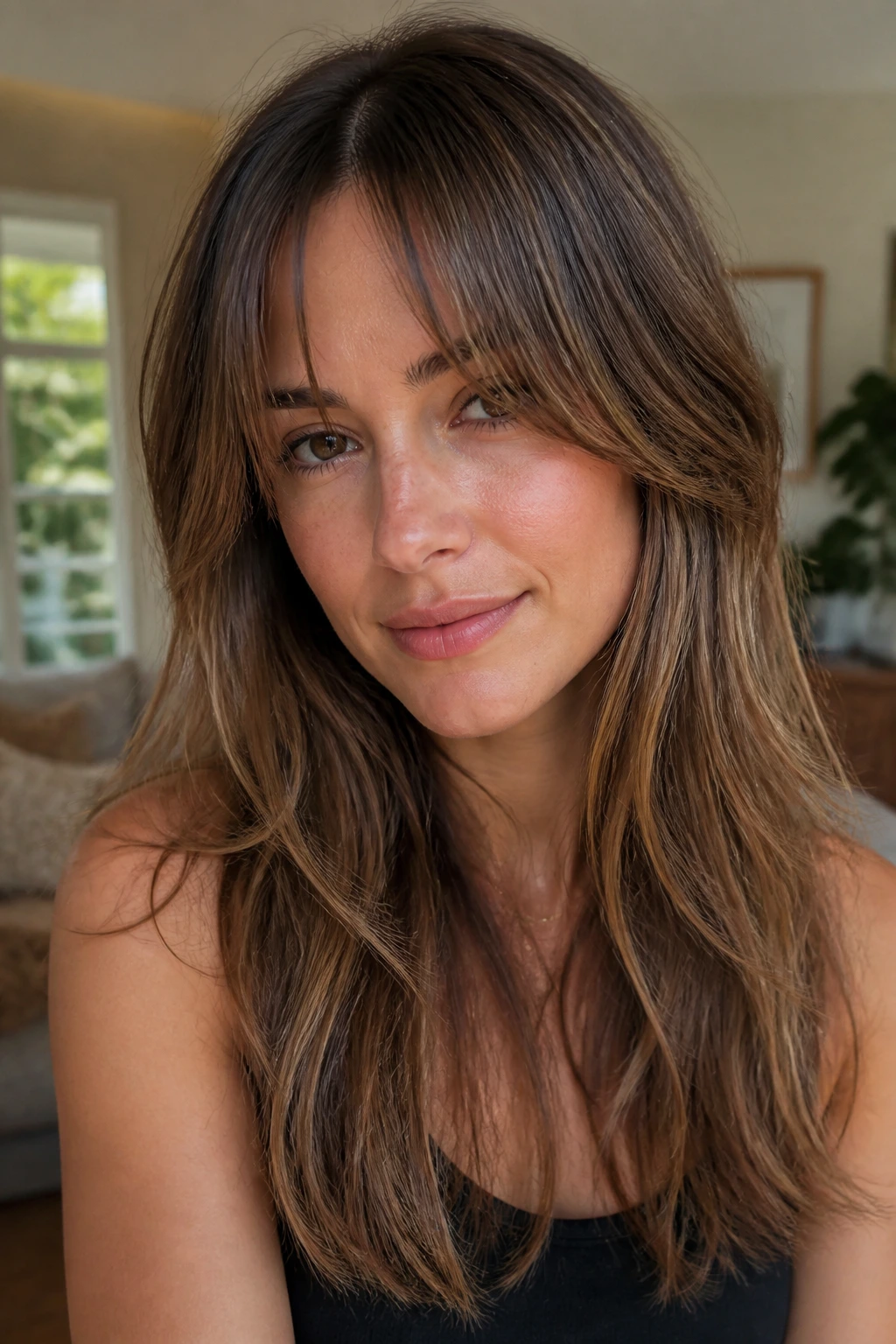
A grown-out fringe is a nice middle ground for people who want shape but not regular bang trims. The fringe sits long enough to blend into the layers, which makes the front look fuller without creating a hard line across the forehead.
This one is useful if you’ve been burned by blunt bangs before. Been there. The softer fringe gives you that face-framing effect with less upkeep, and it blends into long hair instead of sitting on top of it. That’s why it flatters thin hair so well: the front gets help, but the rest of the cut stays long and stable.
The style works with a center part or a soft side part. If the hair is fine, keep the fringe pieces wispy but not sparse. If they’re too thin, they separate and start looking accidental.
Ask for the fringe to live between brow and cheekbone length, then melt into layers that continue down the sides. That keeps the front from feeling boxed in.
25. Soft C-Shape Layers
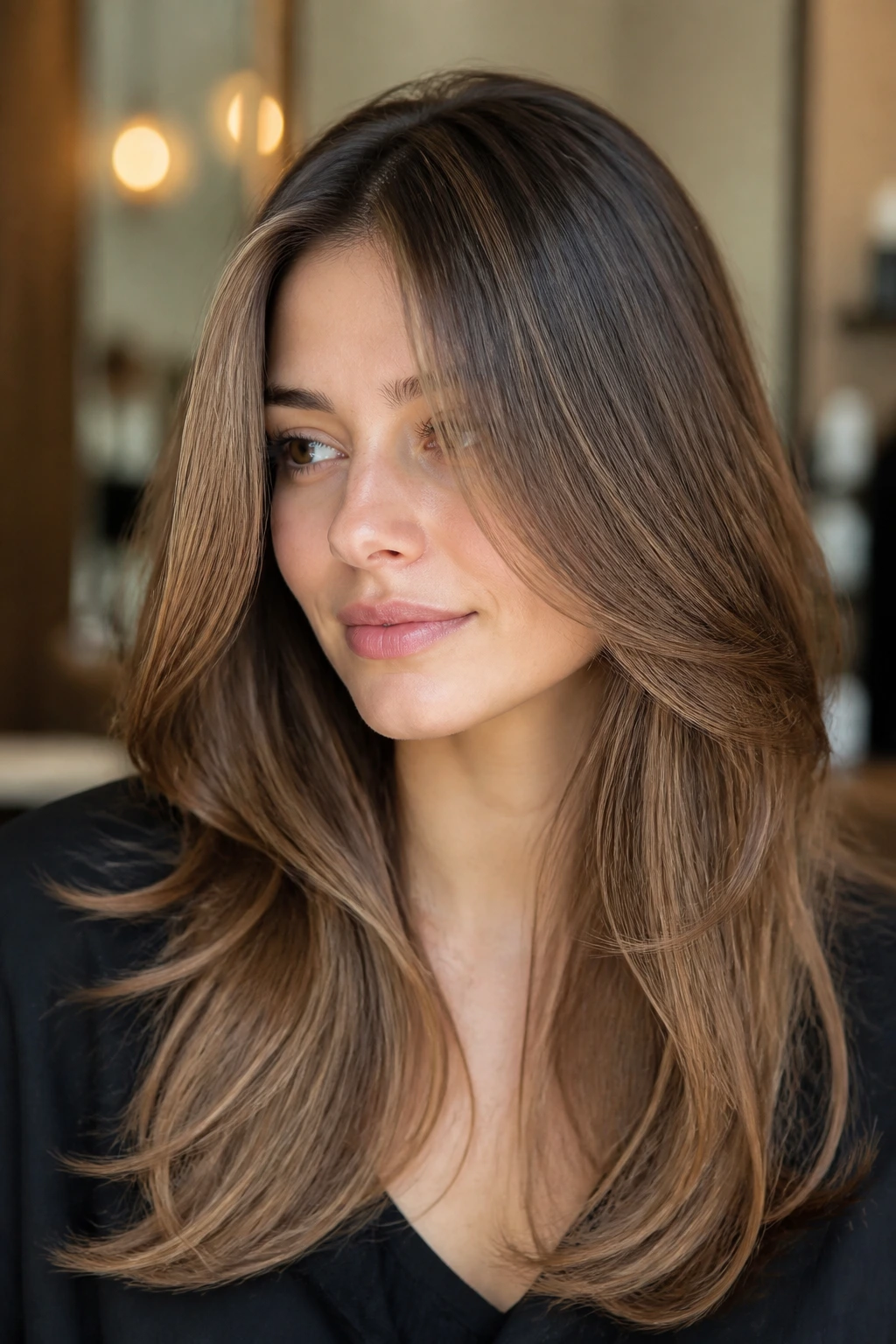
A C-shape cut curves softly around the face and back toward the ends, which gives long thin hair a graceful outline instead of a straight drop. The shape is subtle, but that’s why it works. It makes the hair feel styled even when it’s not overworked.
This is one of the best options if you like a round brush blowout. The curve shows up beautifully when the front pieces turn inward or away from the face, and the rest of the hair carries the same soft bend down the sides. It’s flattering without being fussy.
The C shape also plays nicely with fine hair because it doesn’t require a lot of internal chopping. The motion comes from the outline, not from cutting the head into tiny sections. That means the ends keep their strength, which is the whole game with thin long hair.
If you want one haircut on this list that feels polished, easy to explain, and hard to mess up, this is it.
Why the Shape Matters More Than the Trend Name
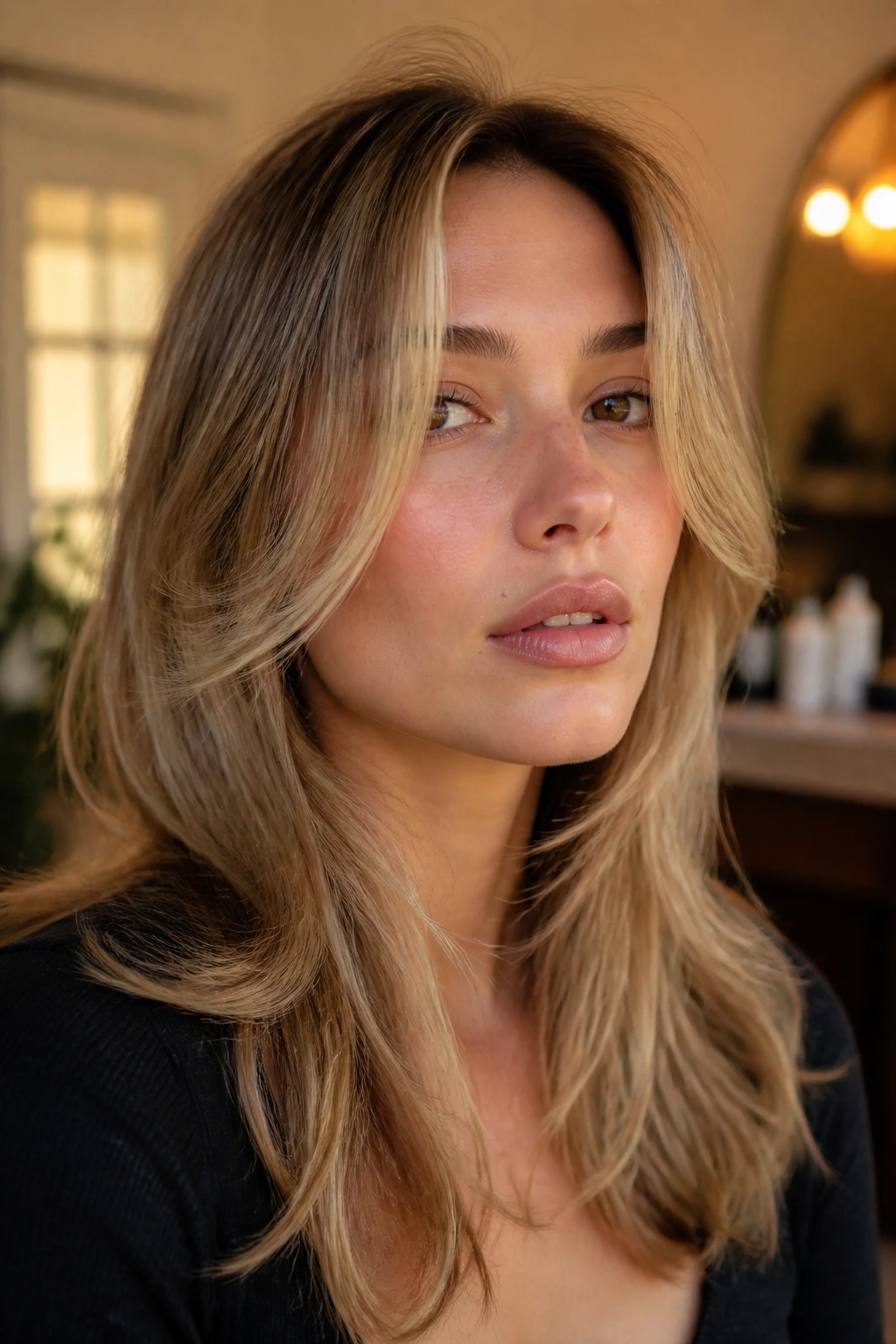
A haircut name can be useful, but it can also mislead you. “Butterfly,” “wolf,” “shag,” and “octopus” all sound distinct, yet the real question is where the layers start, how much weight stays at the hem, and whether the face frame is doing anything helpful. Those details matter more than the label on the salon menu.
Thin long hair needs a haircut that respects gravity. Short layers near the crown can lift the top, sure, but if the ends get stripped too hard, the whole cut turns brittle-looking fast. That is why the best options on this list keep some kind of blunt or weighted edge. The line has to hold.
The face-framing part matters too. If the hair is long and sparse around the cheeks, a few well-placed pieces can change the whole read of the cut. Not because they are dramatic. Because they are placed where the eye goes first.
What to Ask Your Stylist at the Chair
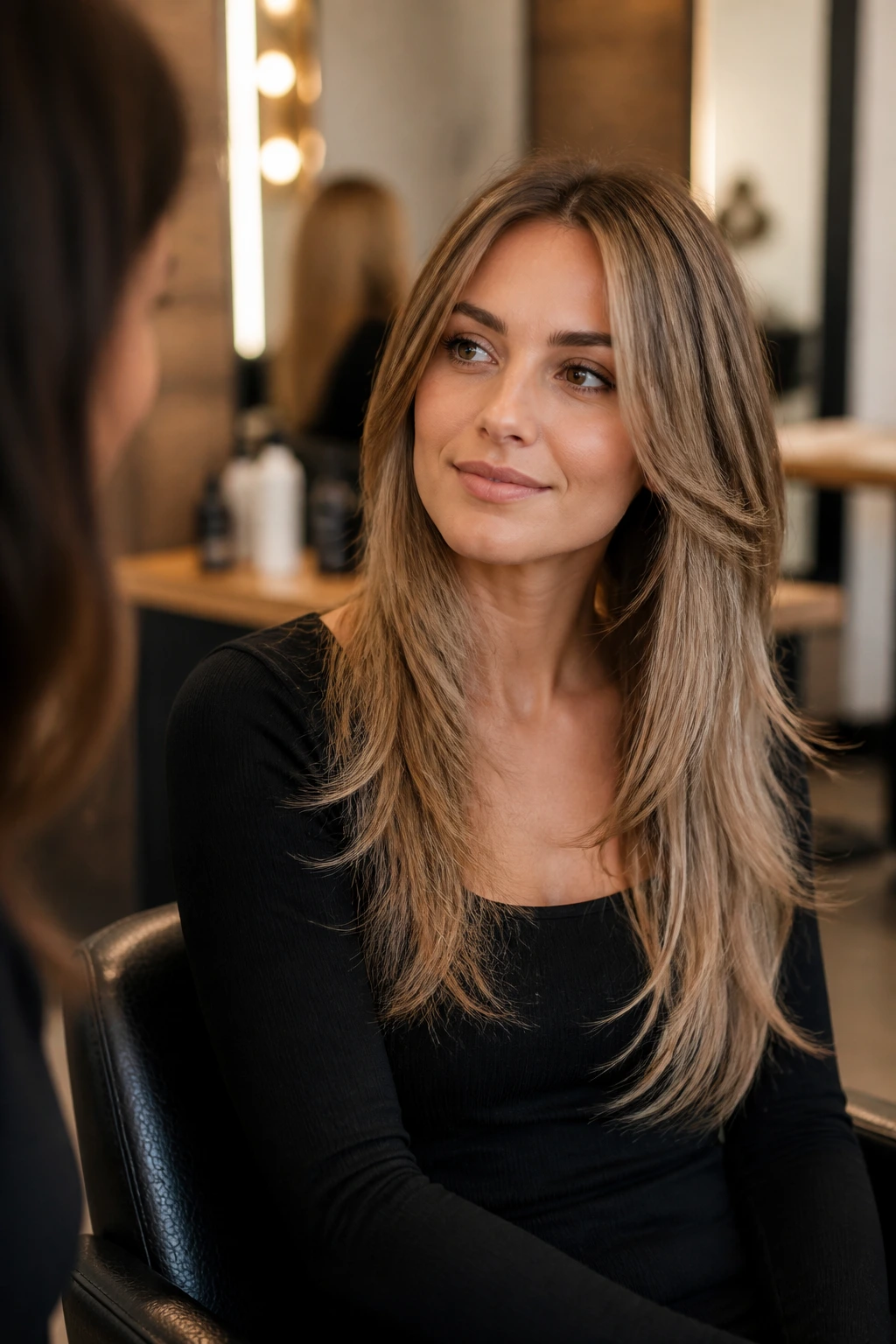
Bring photos, but don’t stop there. Photos show mood. Words tell the stylist where the weight should live.
Say where your hair feels weakest. If the crown goes flat, mention that. If the ends start to look scraggly after a few weeks, say that too. Ask whether the cut will rely on internal layers, face framing, or a blunt hem with soft movement above it. That single question usually gets better results than “I want lots of layers.”
A few useful phrases:
- “Keep the perimeter fuller.”
- “Start the face frame around my cheekbone or chin.”
- “I want movement, not see-through ends.”
- “Can the layers be longer so the hair still feels dense?”
If your hair is fine and straight, ask for more visible shape and less aggressive texturing. If it’s fine but dense, the stylist can usually take a bit more weight out underneath. That distinction matters. One haircut formula does not fit both.
What to Bring to the Chair and Keep in Your Styling Drawer
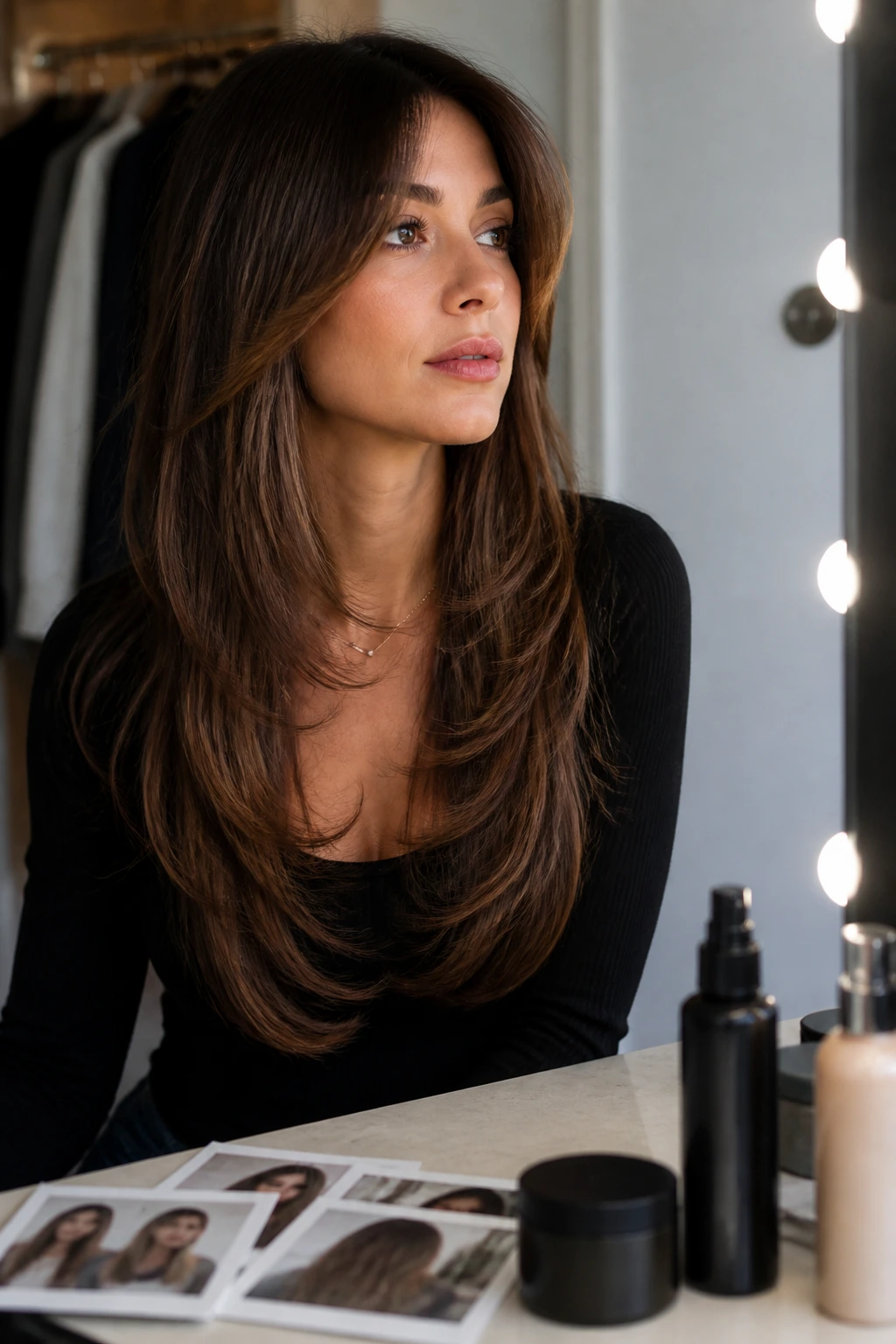
Reference photos: Bring 2 or 3, not 12. One should show the overall silhouette, one should show the front, and one should show the length you want to keep.
A dry, styled version of your hair: If possible, arrive with hair worn the way you normally wear it. A center part that’s always a side part will fool the cut.
A wide-tooth comb and section clips: These help at home when you’re rough-drying or setting the front pieces.
A medium round brush or blow-dry brush: The easiest way to show off layers on thin long hair is to bend the front and crown away from the face.
Volumizing mousse: Pick a lightweight foam, not a heavy cream. Foam gives lift without smothering fine strands.
Heat protectant: Fine hair burns faster than people expect. Use it every time you touch a hot tool to the hair.
Dry shampoo: A root-friendly one can keep the crown from collapsing on day two.
1.25-inch curling iron or wand: Best for bending long layers and face-framing pieces without making the ends look short.
How to Style Long Layers So They Actually Show Up
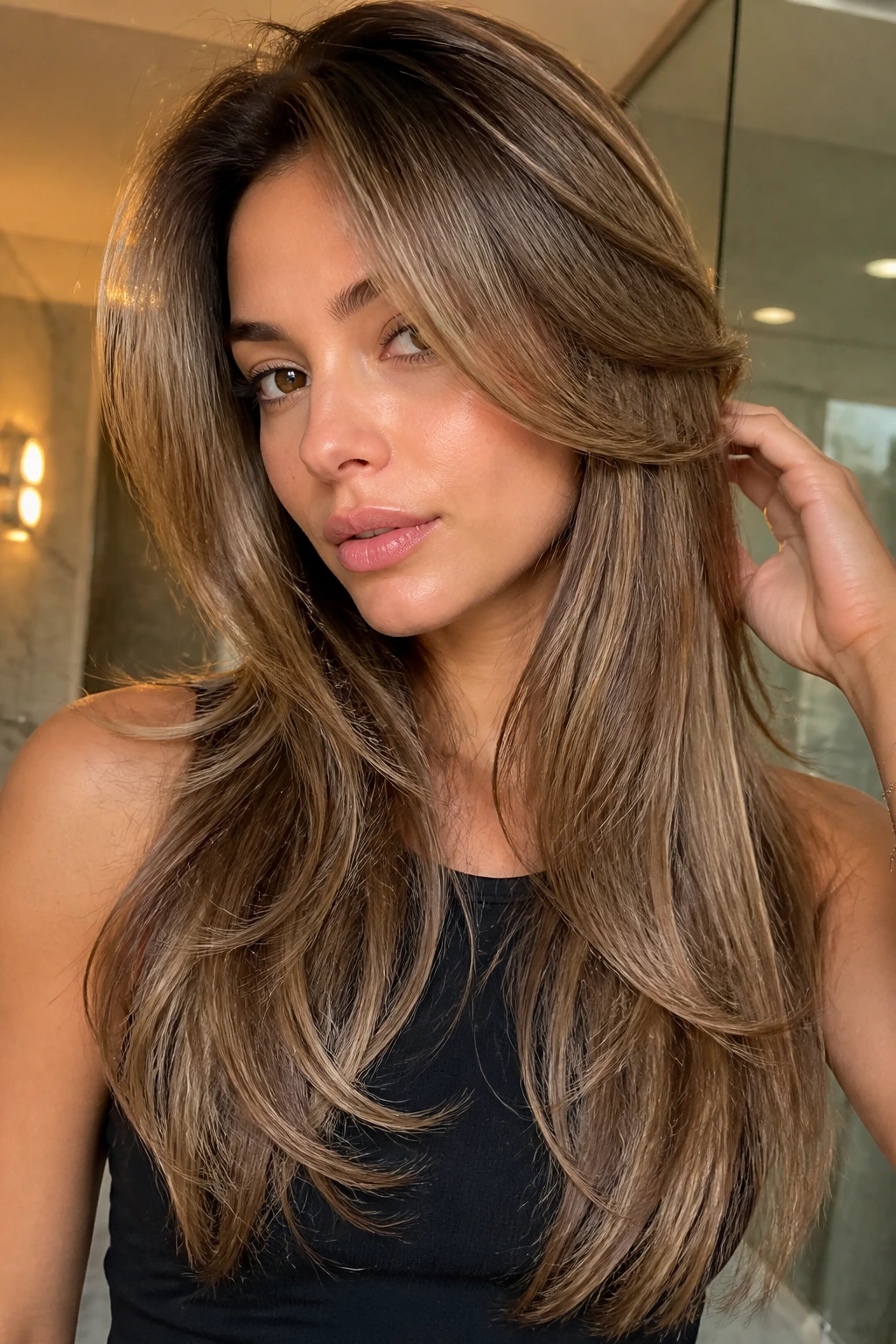
Blowout: Start with a light mousse at the roots and a heat protectant through the mids and ends. Blow-dry the crown first, then direct the front pieces away from the face with a round brush. The roots need lift before the lengths can look full.
Air-dry: Scrunch a small amount of mousse or foam into damp hair, then clip the top section up at the crown while it dries. That little bit of root memory helps the layers show instead of collapsing into the scalp.
Heat styling: Use a curling iron to bend only the face frame, the top layer, and a few pieces through the back. Don’t curl every strand. Thin hair looks thicker when some sections stay straight and others bend.
Day two: Put dry shampoo at the crown, wait 30 seconds, then massage it in at the roots. Re-bend the front pieces only. That’s usually enough to make the layers read again.
Smart Product and Styling Choices for Thin Strands
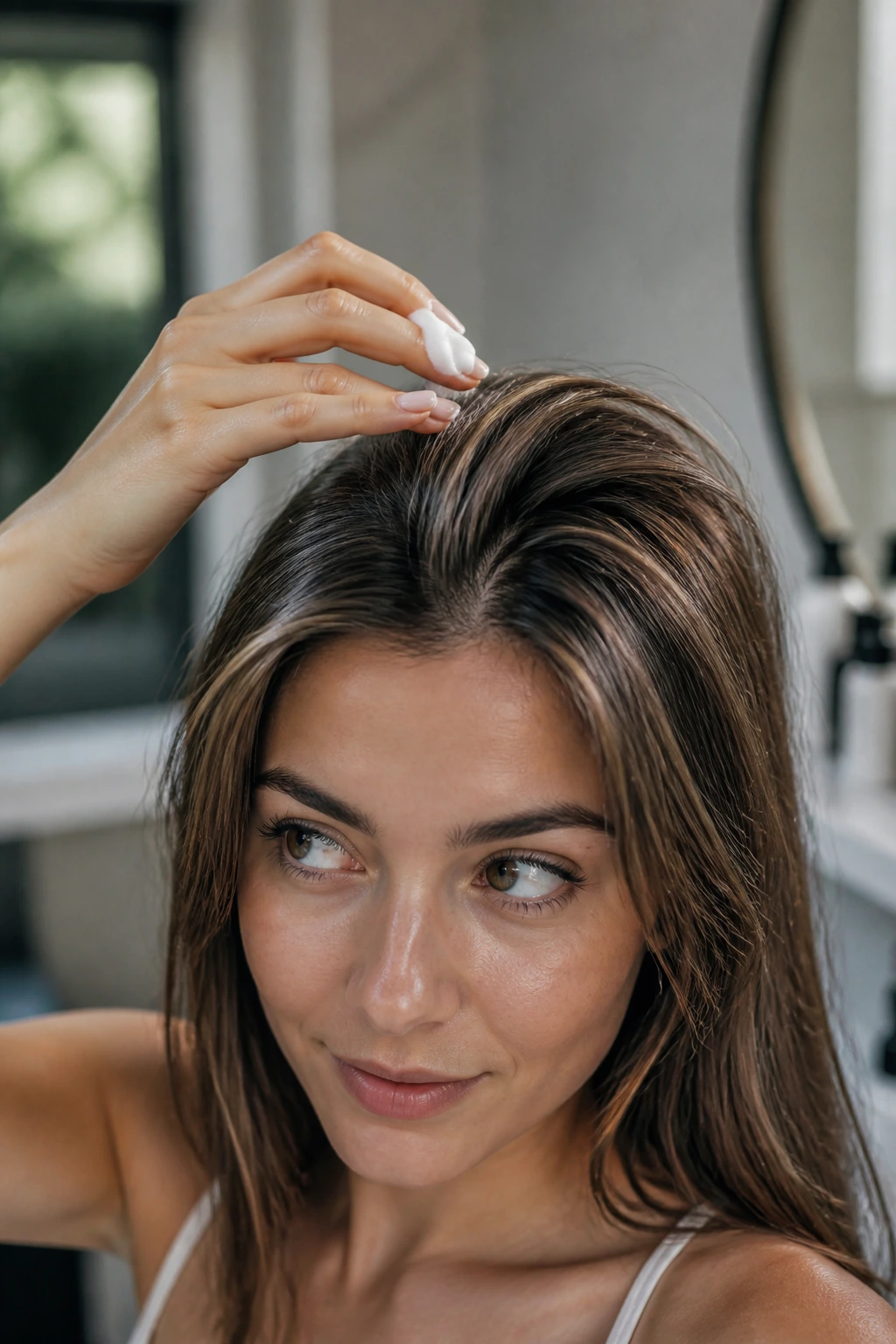
Thin hair gets overfed easily. Heavy oils, thick leave-ins, and rich masks can flatten the whole cut by lunchtime. Save the heavy stuff for the very ends, and use it sparingly. One drop too many can erase the lift you just spent 15 minutes creating.
Look for styling products that say volumizing, light hold, or root lift, and pay attention to how they feel in your hands. A good mousse should feel airy before it dries. A good spray should disappear fast, not leave a wet film that sits on the hair for too long.
Root lift matters more than ends in this haircut. That’s the part many people skip. If the crown collapses, the layers disappear. If the roots stay up, even modest layering looks fuller.
If your hair gets product buildup quickly, use a clarifying shampoo every 2 to 4 weeks. Thin hair shows buildup faster than thick hair does, and buildup is one of the sneakiest reasons a layered cut stops looking fresh.
Common Mistakes That Make Long Thin Hair Look Thinner
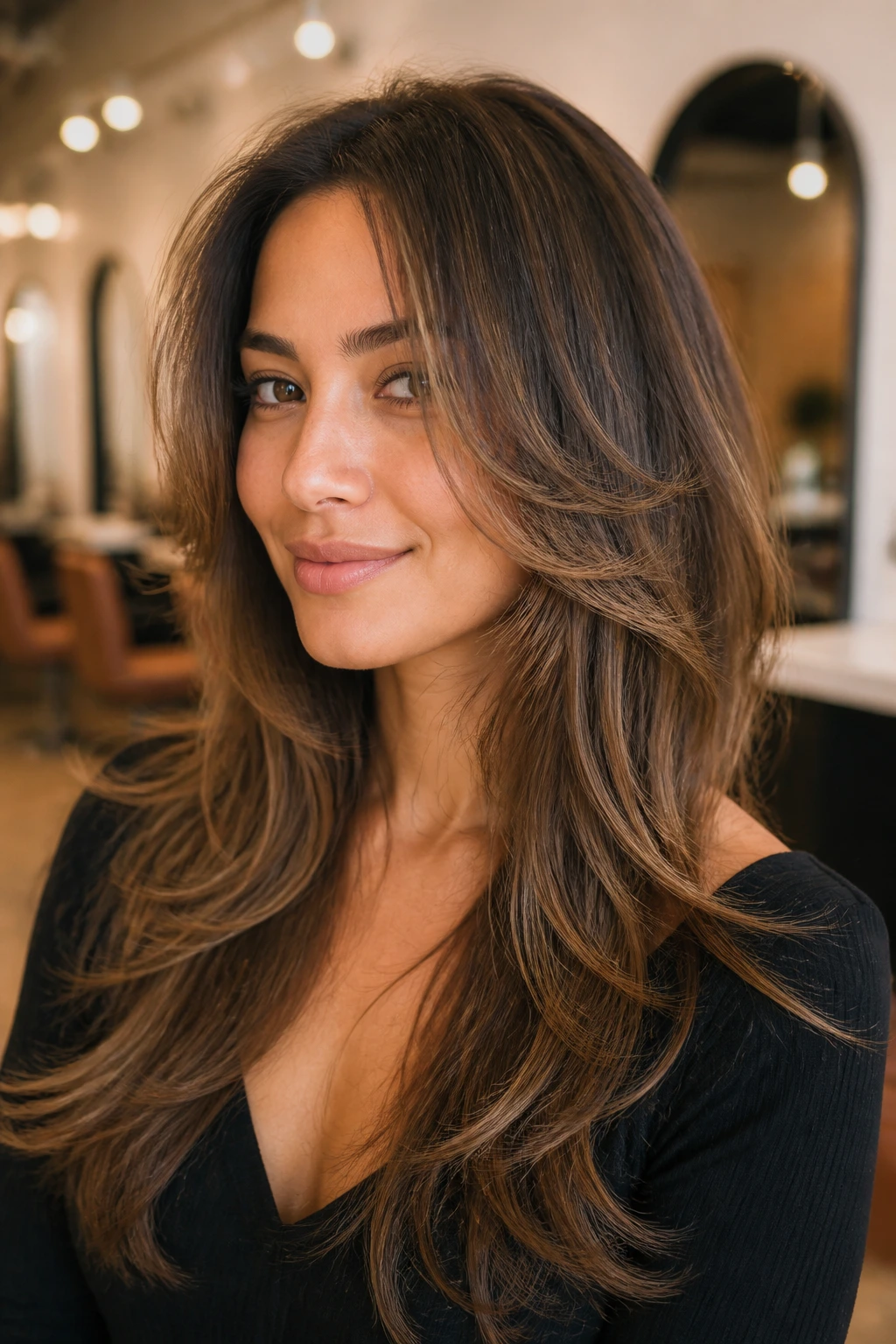
The biggest mistake is asking for too many short layers. The haircut may look exciting in the mirror, then go wispy at the ends once you wash it a few times. The fix is simple: keep the shortest pieces longer, especially if the hair is already sparse.
Another problem is over-thinning with razors or aggressive texturizing shears. That can leave the ends fuzzy and weak. If your stylist reaches for a razor, ask exactly where it will be used and how much weight stays at the hem.
A third mistake is ignoring the part. If you wear a side part every day, a center-part style can make the crown feel flatter than it actually is. Cut and part need to match.
A fourth one: too much conditioner near the roots. Fine hair does not forgive that. Use conditioner from mid-length to ends, then rinse well. If the roots feel coated, the layers will slump.
And one more, because it matters: overusing a flat iron. Straightening thin layered hair bone-flat can erase every bit of dimension. Leave a little bend. The shape needs texture to read as full.
Variations and Adaptations to Try
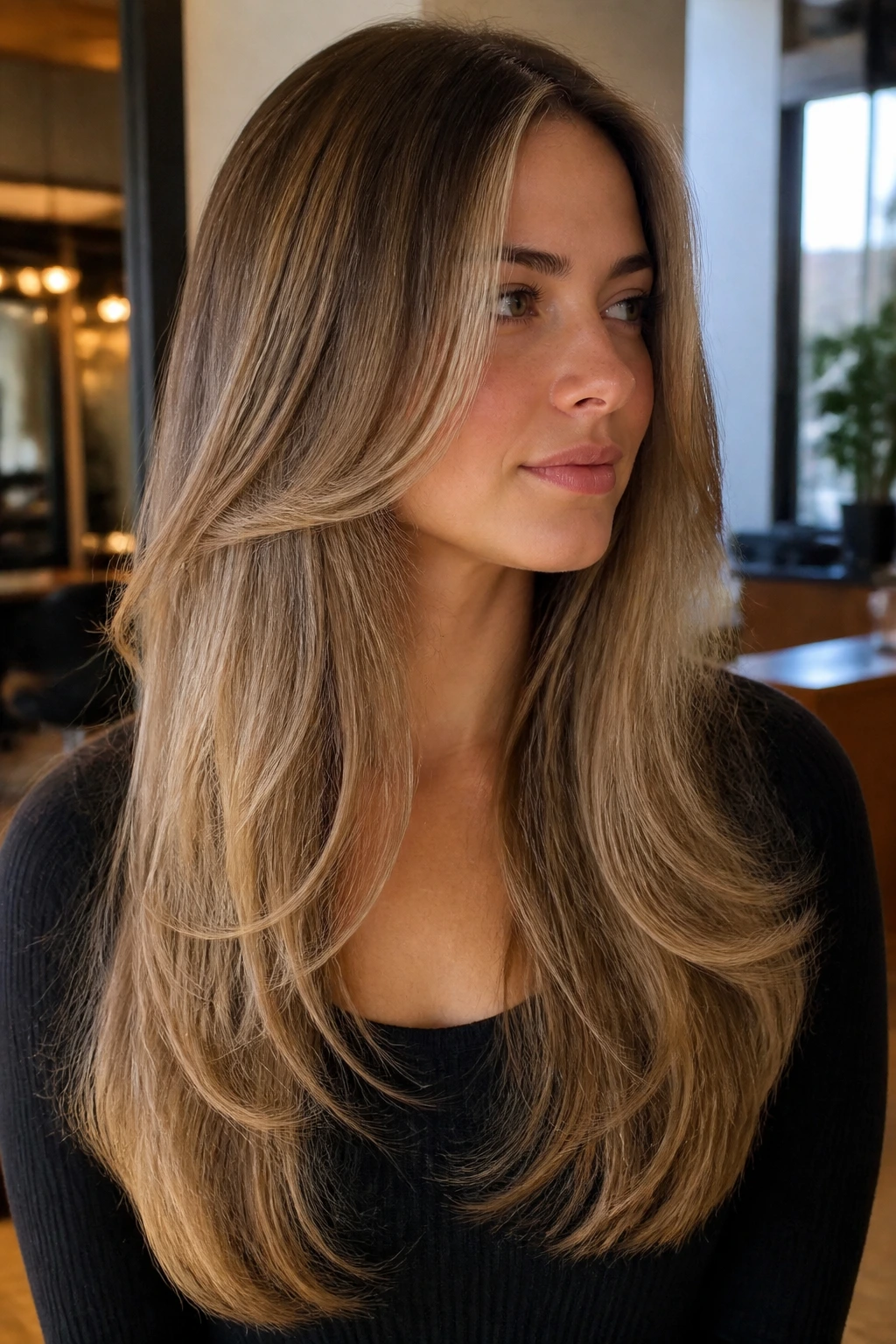
The Blowout Version: Keep the layers long and the face frame soft, then style with a round brush and a root-lift spray. This version is best if you want movement without visible choppiness.
The Air-Dry Version: Ask for long internal layers and a blunt or rounded hem, then skip the short pieces around the crown. This keeps the hair from looking stringy when you let it dry naturally.
The Bangs-Free Version: Trade curtain bangs for chin-grazing face-framing pieces. You still get softness around the face, but you avoid fringe maintenance.
The Wavy-Hair Version: Cut the hair with a little more length in the layers so the wave pattern doesn’t puff up. This version works best when the stylist sees your hair in its natural bend.
The Low-Maintenance Version: Choose a U shape or C shape with soft internal layers and a fuller hem. It grows out cleanly and doesn’t need constant shaping.
The Extra-Edge Version: Try a softened wolf or octopus lite cut with longer top layers and a textured front. Keep the ends controlled so the haircut still reads as full.
Keeping the Shape Fresh Between Trims
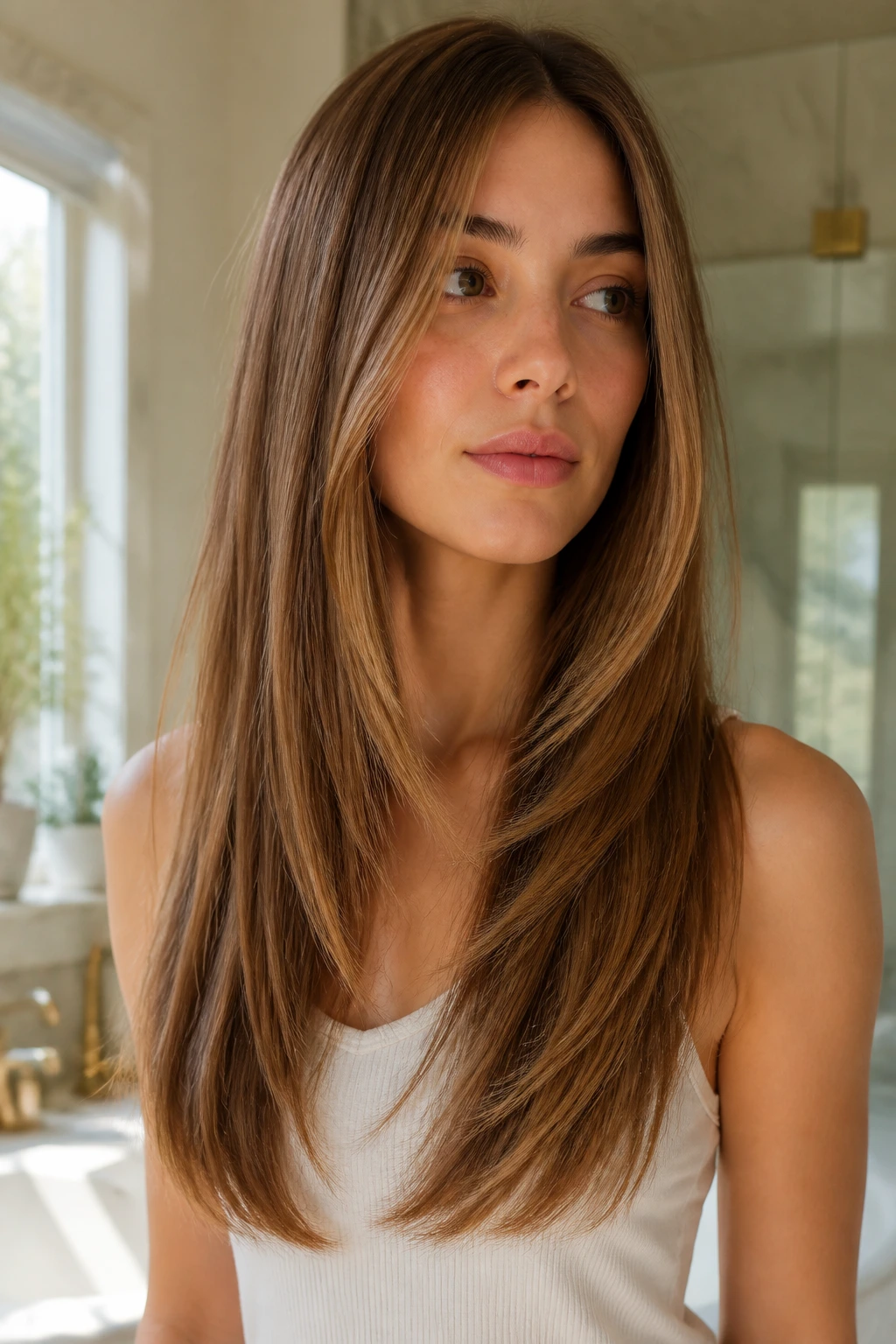
Thin long hair can lose its shape before it actually looks “grown out.” That is why maintenance matters. A bang area or fringe usually needs a touch-up every 3 to 5 weeks if you want it to sit right. The rest of the cut can often go 8 to 12 weeks before it needs a real reshaping.
If the ends start to look airy, don’t wait until they split all the way up. A tiny dusting trim every couple of months can keep the hemline strong. That matters more than people want to admit. Once the bottom gets too frayed, the haircut starts looking thinner even if the layers above are fine.
Use clarifying shampoo every 2 to 4 weeks if you style with mousse, root spray, or dry shampoo. Product buildup is sneaky. It weighs down the crown first.
Heat protectant should be non-negotiable any time you use hot tools. And if your hair is fine, keep the heat moderate — around 300°F to 350°F is usually plenty for a bend and a polish. Higher heat is often more about habit than need.
Frequently Asked Questions About Long Layers on Thin Hair
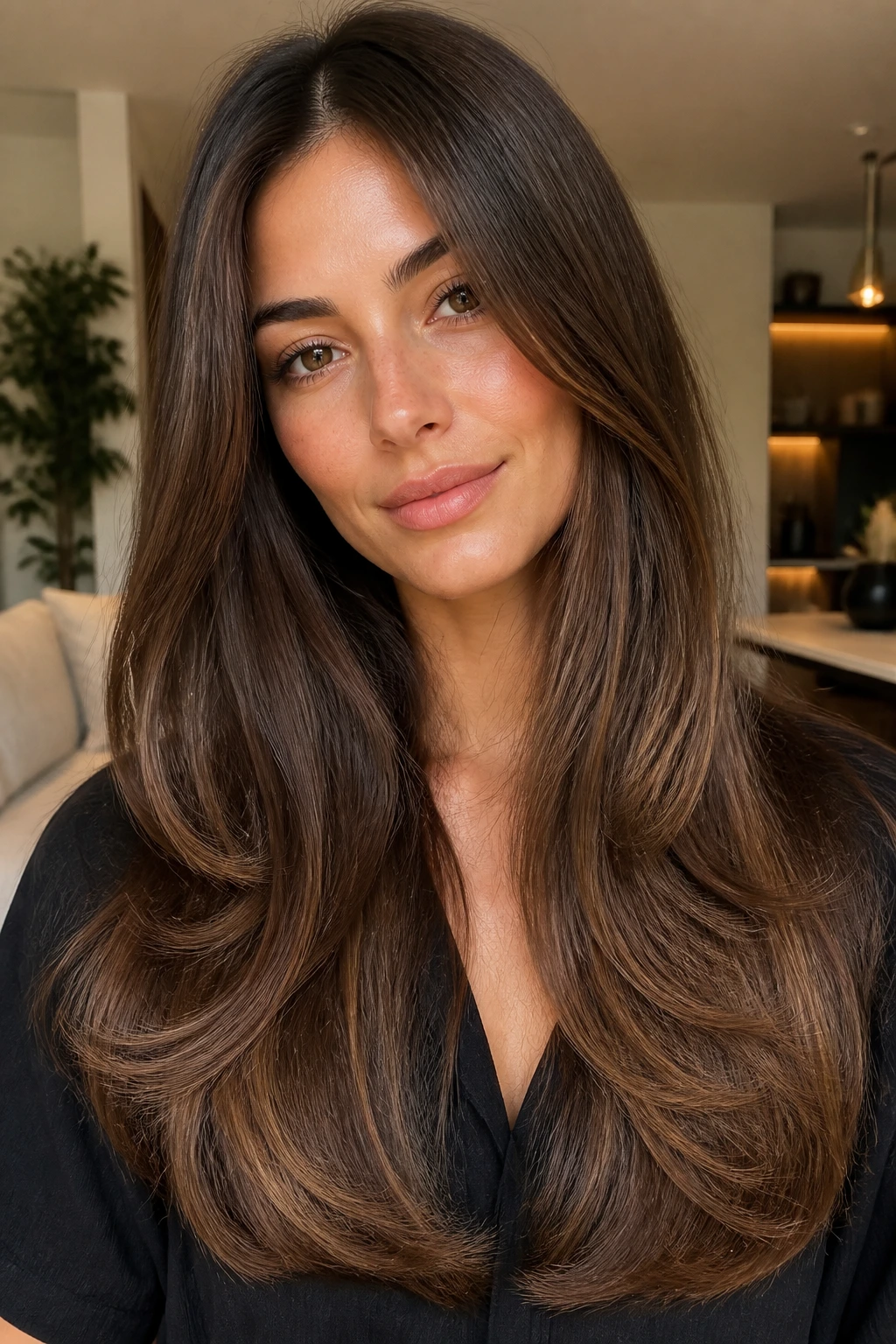
Are layers bad for thin hair?
Not when they’re placed well. The problem is not layers themselves; it’s too many short layers or layers that start too high. Long, controlled layers can make thin hair look fuller by moving weight into the right places.
What’s the difference between thin hair and fine hair?
Fine hair refers to the size of each strand. Thin hair usually means lower density, or fewer strands on the head. You can have fine-but-dense hair or thick-but-sparse hair, and each one needs a slightly different cut.
Which haircut gives the most volume without looking choppy?
Butterfly layers, a long U shape, and invisible internal layers are all strong options. They create lift without tearing up the ends, which is where a lot of thin hair cuts go wrong.
Should I avoid razors if my hair is thin?
Not always, but they should be used carefully. A light razor touch can soften the ends, while too much razor work can make thin hair look frayed and weak. If the hair is already fragile, scissors are often the safer bet.
Can I get curtain bangs with thin long hair?
Yes, and they can be very flattering. Keep them soft and long enough to blend into the sides, or they can split oddly and expose the temples.
How often should I trim long layered hair?
Most thin long hair does best with a trim every 8 to 12 weeks, plus fringe touch-ups sooner if you wear bangs. Waiting too long lets the ends unravel, and that makes the cut look thinner than it is.
What if my hair is straight and flat?
Pick a cut with a blunt or rounded hem and layers that start lower, around the chin or collarbone. Then use root-lift styling at the crown. Straight flat hair needs shape placement more than aggressive chopping.
Which cut is best if I want to keep as much length as possible?
Collarbone-start layers, a C-shape cut, or invisible internal layers are all safe choices. They keep the hem intact while still giving the front some movement.
Will a side part help thin hair look fuller?
Usually, yes. A deep side part adds height at the crown and hides some scalp at the center line. It’s one of the easiest volume tricks there is.
Can I wear these cuts if I air-dry most days?
Definitely, but choose softer layering and a more stable hem. Air-dried thin hair needs a haircut that still looks good when the styling is minimal, not one that falls apart without a blowout.
The Shape That Keeps Length Looking Intentional
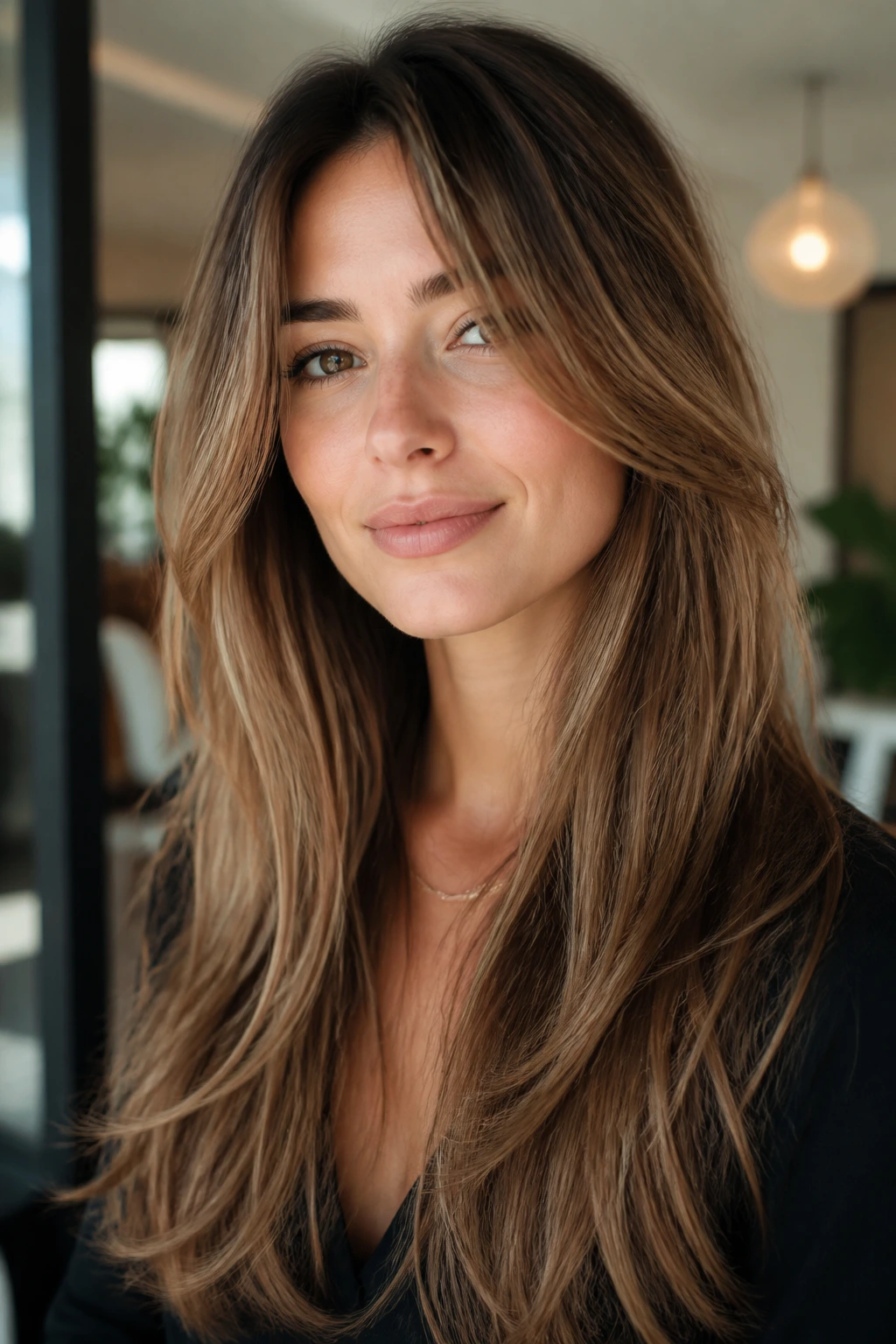
The best layered cuts for long thin hair don’t try to fake thickness with chaos. They use weight, placement, and face-framing to make the hair look fuller where it matters most. That’s a much better bargain than chasing a heavily textured cut that looks exciting for one wash and strange the next.
If you want one piece of advice to take with you, it’s this: protect the hem, place the layers carefully, and keep the front doing some of the visual work. That combination gives thin long hair a shape that lasts past the salon exit and into real life, which is where the haircut actually has to earn its keep.
Bring a few photos, say where your hair falls flat, and ask for the shortest pieces to start with purpose — not just because the stylist “likes layers.” That one conversation can change everything.