



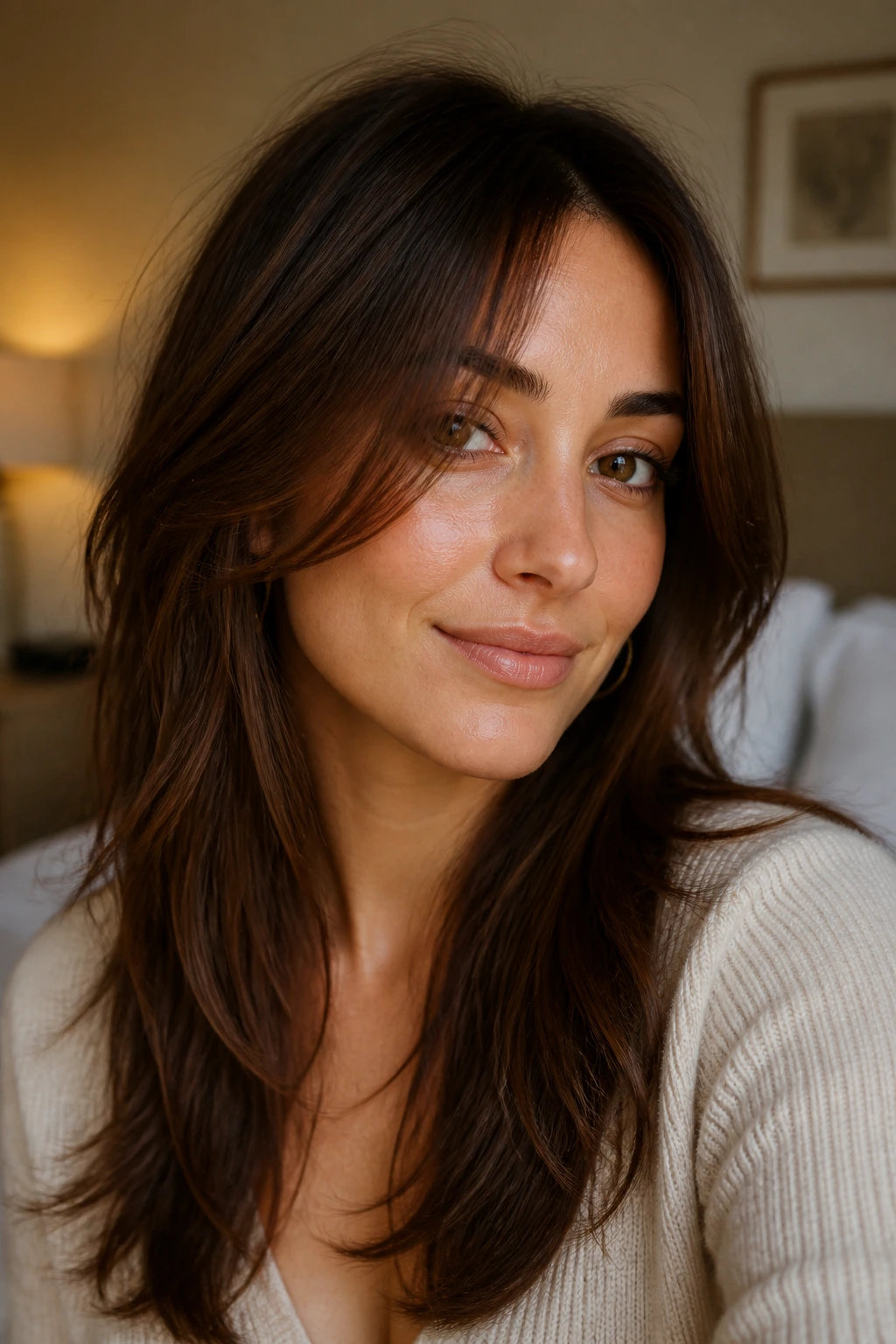
Brown hair gets underestimated because people stare at the shade before they notice the shape. That’s a mistake. A good cut on brunette hair lives or dies by the front pieces — the way the hair falls from temple to cheekbone, how the ends skim the jaw, and whether the whole style has enough lift to keep it from looking like one heavy curtain.
That’s where brown hairstyles for brunettes with face-framing layers earn their keep. A few well-placed pieces can make chestnut hair look softer, make espresso hair look richer, and give darker brunettes a little movement without sacrificing length. The best versions don’t scream for attention. They just make your features look cleaner, your hair look shinier, and your overall shape look like someone actually thought about it.
The tricky part is that face-framing layers are not one thing. On a long brunette blowout, they can be swoopy and polished. On a shag, they can be choppy and cool. On curls, they can lighten the whole silhouette so the front doesn’t overwhelm your face. The cut changes with texture, parting, density, and where the layers start — and that’s exactly why the right brunette reference photo matters so much.
Why These Brown Hairstyles Feel So Good on Brunettes
-
They break up heavy lengths: Brunette hair can look gorgeous and a little solid at the same time, especially when it’s one deep shade from root to end. Face-framing layers create movement around the cheeks and jaw so the cut doesn’t sit there like a block.
-
They show off brown tones better: Chestnut, mocha, cocoa, espresso, walnut — these shades all catch light differently when the front is layered. The shine shows up faster when the ends are not all lined up in one blunt edge.
-
They work with your natural part: Whether you wear a center part, a soft side part, or flip your hair from day to day, a good face frame keeps the front from collapsing flat. That matters more than people think.
-
They can look polished or undone: You can blow them smooth, bend them with a curling iron, or let them air-dry with a little texture cream. The cut keeps doing its job either way.
-
They soften the face without hiding it: That’s the sweet spot. The layers sit near the eyes, cheekbones, and jawline, which gives shape without turning your hair into a helmet.
-
They grow out more gracefully than a blunt fringe-heavy cut: If you hate constant salon maintenance, this is a useful lane. A face frame can drift a little and still look intentional for weeks.
1. Chestnut Curtain Layers
Chestnut hair and curtain layers get along like old friends. The shade has enough warmth to feel soft, but not so much that it turns copper, and the face-framing pieces split cleanly at the center so the whole style moves when you walk. This works especially well on medium to long hair because the layers can start around the cheekbone and slip into the length instead of chopping it up.
The magic is in the front. Keep the shortest pieces near the top of the cheekbone, then let the rest angle down toward the jaw so the style opens the face instead of boxing it in. On brunette hair, that little curve reads as shape, not fuss.
A loose bend with a 1.25-inch curling iron is enough. Nothing tight. The goal is that soft, brushed-out swing you get after a good blowout, not springy ringlets fighting each other near your chin.
2. Espresso Butterfly Cut
The butterfly cut is built for drama, but the useful kind. The shorter top layers lift the crown, while the face-framing pieces fall forward like soft wings, and on espresso brown hair that contrast looks crisp without feeling harsh. It’s one of the best choices if your hair is thick and tends to sit heavy at the sides.
What makes it work is the split between short and long. You keep the bulk of your length, but the front gets a lot of air. That means the cut can handle a round brush blowout and still look good if you just rough-dry it and add a touch of serum.
Ask for the front layers to start around the lips if you want a softer effect, or closer to the cheekbones if you want more lift. Either way, the shape should feather outward, not drop straight down.
3. Chocolate Lob With Chin-Grazing Angles
A lob can feel blunt fast, especially on rich chocolate brown hair. The fix is a slight forward angle that kisses the jaw and then moves away from the face, which keeps the shape clean but not boxy. The whole cut sits at that useful collarbone-to-chin zone where hair looks long enough to feel versatile and short enough to style without a battle.
This version is excellent for anyone who likes straight styles or a soft bend at the ends. The face-framing pieces should be a little shorter than the rest of the lob so your cheekbones get some lift. That small detail matters more than people think.
If you want this cut to feel more modern, tuck one side behind the ear and leave the front piece loose. Simple. Sharp. No extra work.
4. Caramel Balayage Shag
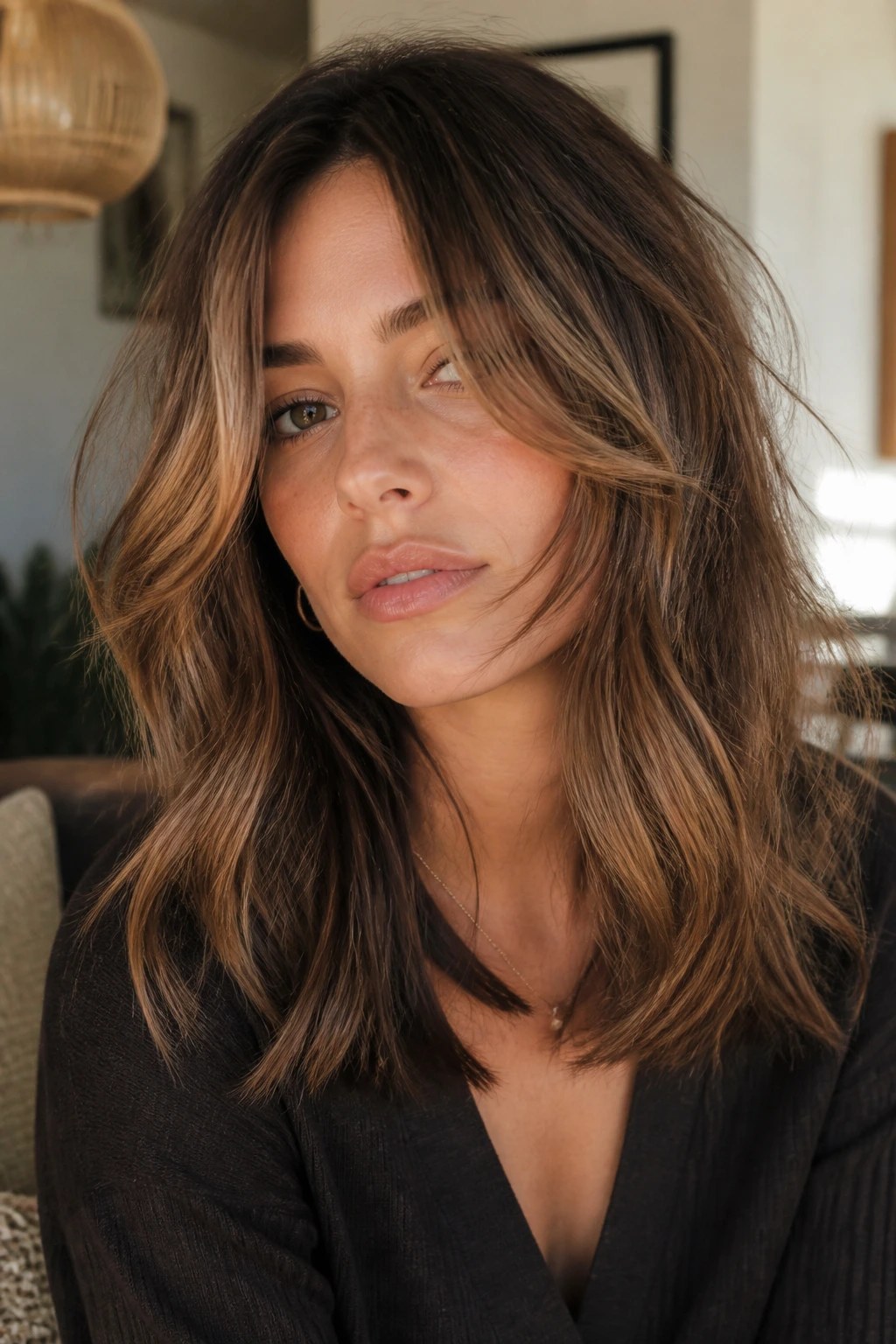
This is the brown hairstyle for people who want movement they can see from across the room. The shag keeps the ends airy, and the caramel balayage painted around the face adds brightness right where the layers land. On brunette hair, that contrast keeps the cut from reading flat or muddy.
The face-framing layers should not be too neat here. A shag likes a little disorder. Let the front pieces start around the cheekbone and break up around the lips, then keep the rest of the layers choppy enough that the cut has a lived-in edge.
Air-drying works well if your natural wave has some shape. If not, a diffuser and a dab of mousse at the roots will keep the whole thing from collapsing by noon. This is not a precision cut. It is a controlled mess, and that’s the point.
5. Mocha Curls With Oval-Framing Pieces
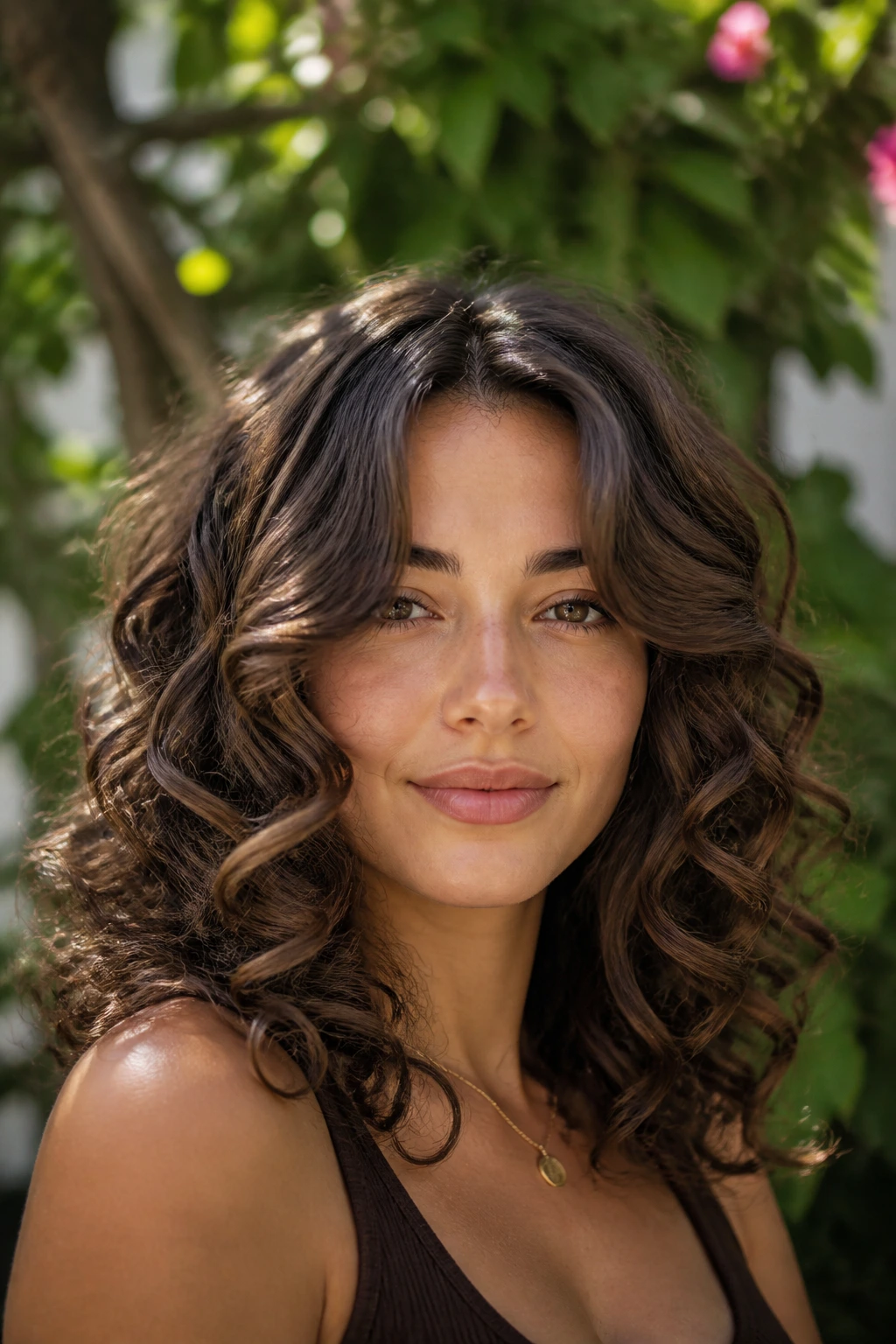
Curly brunette hair gets heavy near the front if the shape is all one length. Oval-framing layers solve that by taking a little weight out of the sides while leaving the curl pattern intact. Mocha brown makes the curls look glossy and dense in a good way, not bulky.
The key is to cut the front pieces where the curl naturally springs, not where it lies wet and stretched. Curly hair lies. A lot. If you cut it too long while it’s soaked, the face frame can end up sitting below the jaw and doing nothing useful.
This style is especially nice if you like a rounded silhouette. It makes the top of the curls sit a little higher, the sides move away from the cheeks, and the whole head looks lighter without losing fullness.
6. Cinnamon Brown Wolf Cut
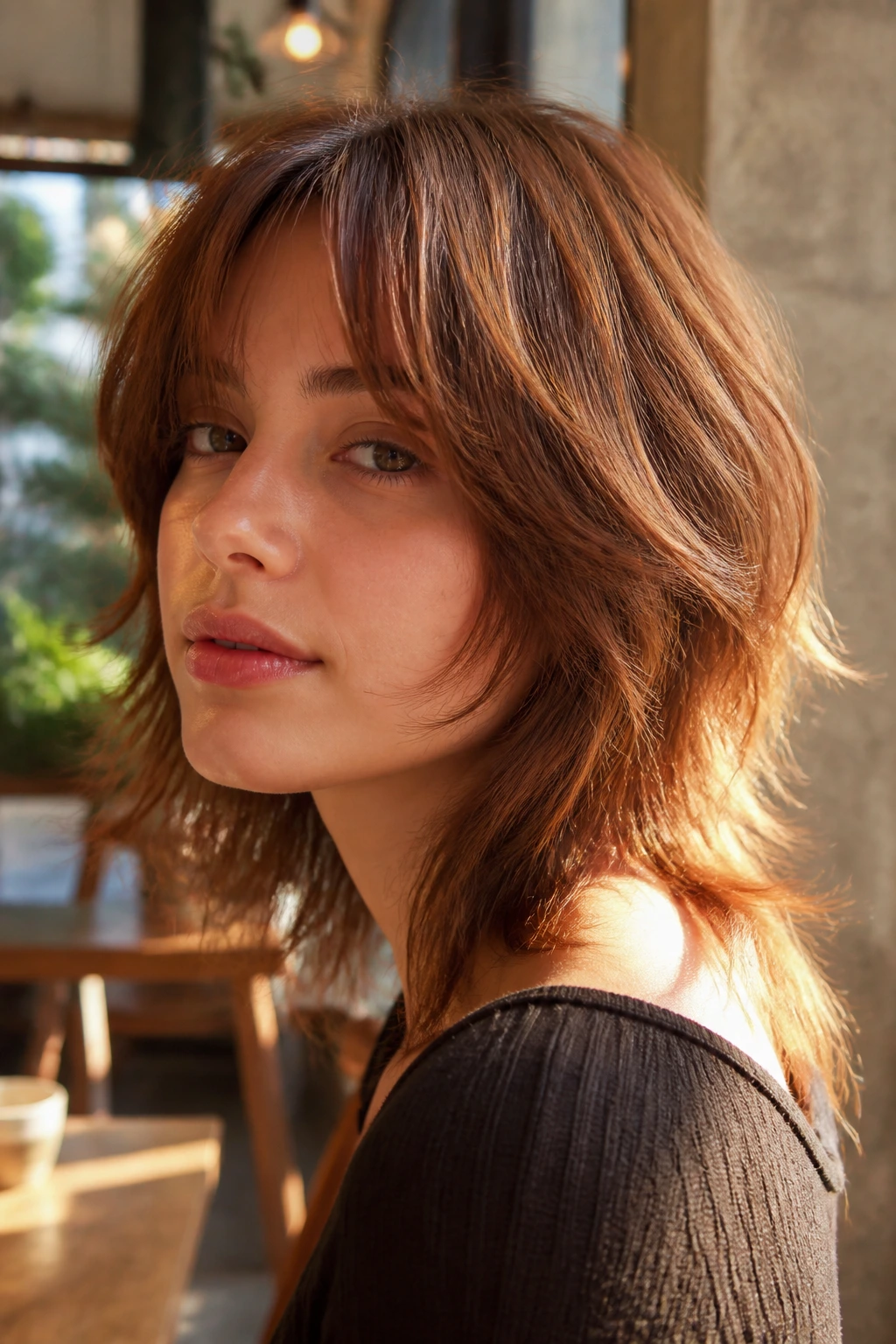
The wolf cut is not shy, and cinnamon brown gives it just enough warmth to keep the choppiness from looking severe. The face-framing layers are shorter and messier here, often falling somewhere between the cheekbone and the mouth, while the back stays longer and looser. That mismatch is the whole vibe.
This cut works best on hair with some natural texture. Straight hair can wear it too, but you’ll want texture spray or a small bend with a flat iron to keep the layers from lying dead flat. On wavy hair, it practically styles itself.
A good wolf cut should look better a little imperfect. If every piece is too polished, the style loses its edge. If you like hair that looks like it has opinions, this is your lane.
7. Walnut Blowout With Swoopy Bangs
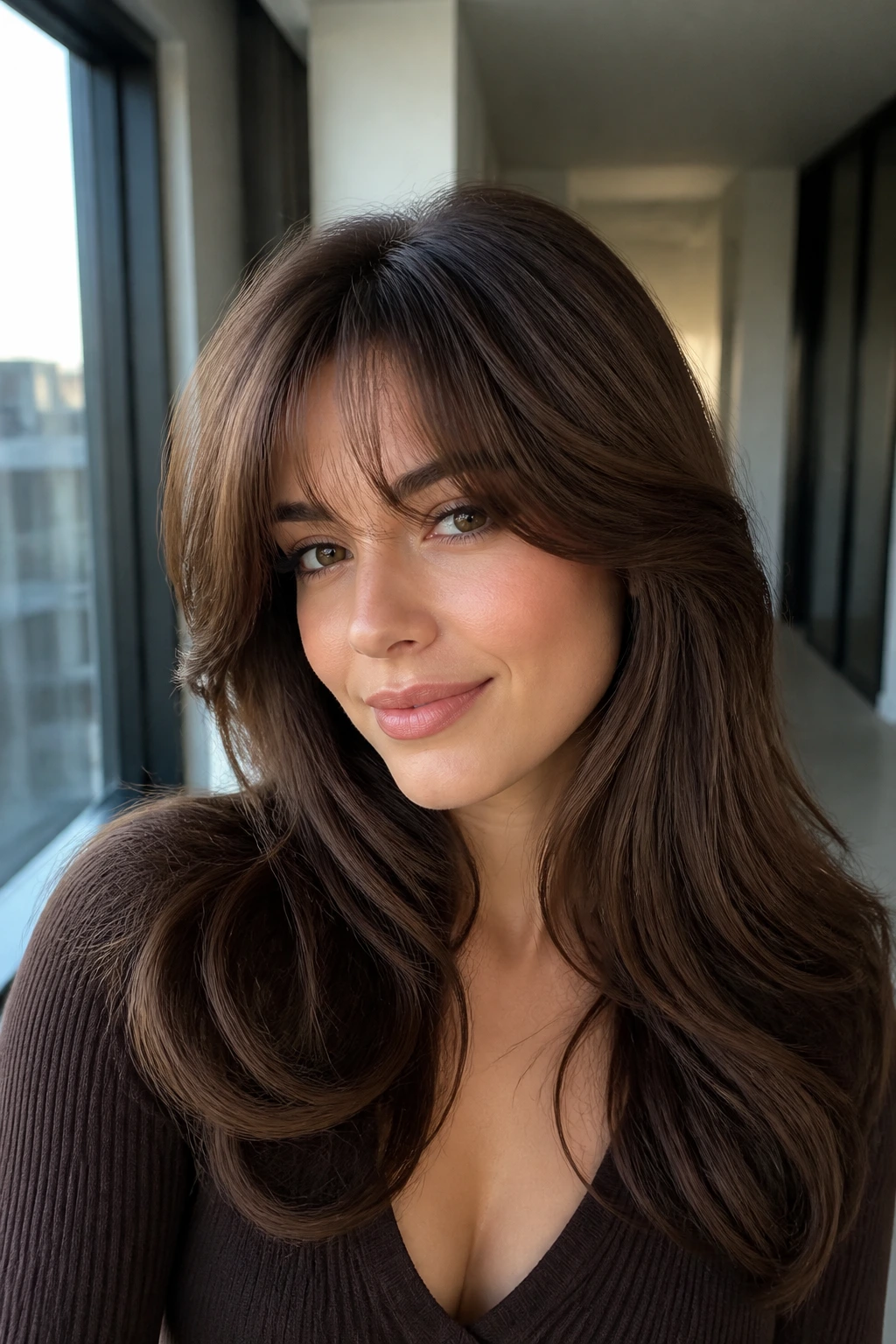
Walnut brown is one of those shades that looks expensive when it’s glossy, and a big blowout gives it room to show off. The face-framing layers connect into swoopy bangs that skim the brow and split softly near the cheekbones, so the front feels airy instead of heavy.
The trick here is lift. Use a round brush and direct the front pieces away from the face while they cool. If you skip the cool-down, the bend falls too fast and the shape loses that salon finish.
This style suits medium-density hair especially well. Fine hair gets volume without too much weight, and thicker hair gets a cleaner front line. It is one of those cuts that looks better on day one, but the day-two version is usually nice too, which is rare enough to mention.
8. Dark Chocolate Straight Cut With Forward Angles
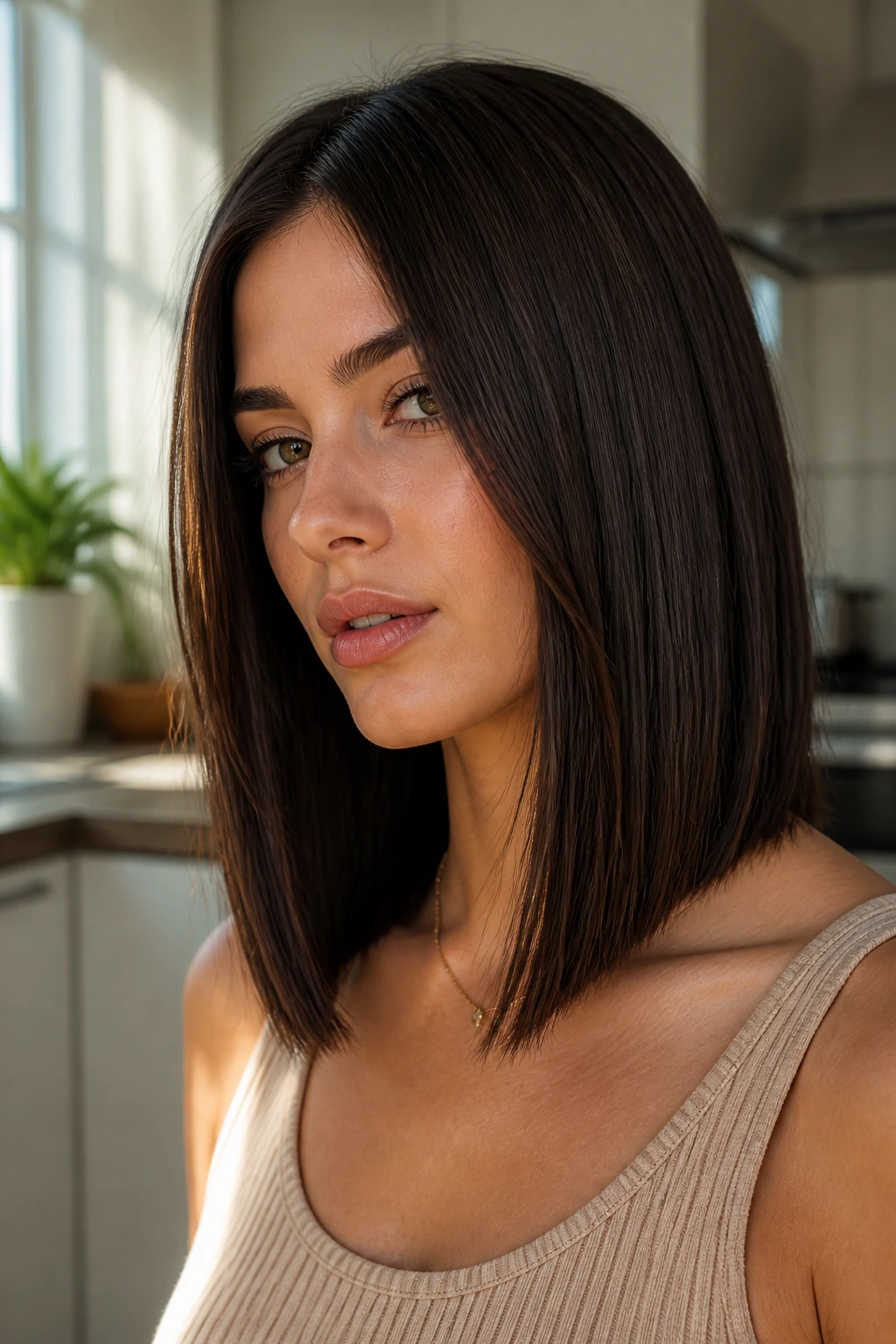
Straight brunette hair can be beautiful and stubborn at the same time. When it’s one length, it often hangs hard. Forward angles fix that by nudging the front pieces slightly shorter so they angle toward the collarbone instead of hanging like a curtain.
Dark chocolate hair makes the shape look even cleaner because the shine line is obvious. That matters on straight cuts. You want the front to frame the face without turning into a blunt wall, and this version does that with a small, deliberate slope.
If you wear a middle part, this cut is especially good. The face frame falls on both sides in a tidy way, and the whole style looks crisp with minimal effort. Add a flat iron bend only at the ends if you want a little movement without losing the sleek feel.
9. Mushroom Brown Collarbone Cut
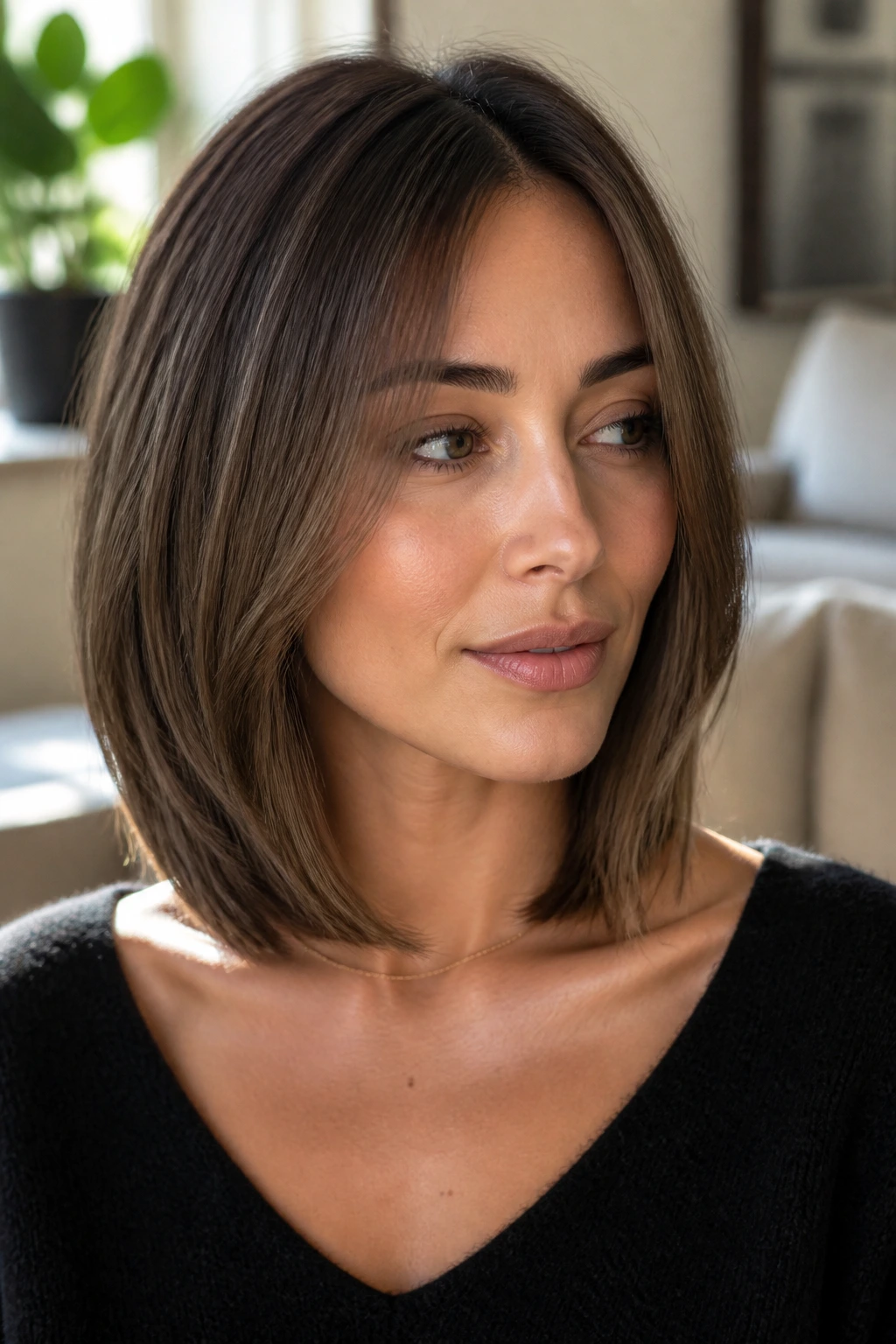
Mushroom brown has a cool, smoky softness that suits face-framing layers better than people expect. The cut itself stays just below the shoulders or right at the collarbone, which gives the layers enough room to move without swallowing your neck. It’s a clean, modern shape.
The front pieces should be subtle here. Think gentle angles, not dramatic swoops. This is a good choice if you want shape but hate anything that looks over-styled. A half-inch shorter at the front can make the whole cut feel lighter.
A middle part keeps it calm and sleek. A side part gives it a little more bend and some old-school polish. Either way, the mushroom tone makes the ends look muted and smooth, which is part of the appeal.
10. Toffee Brown Mid-Length Layers
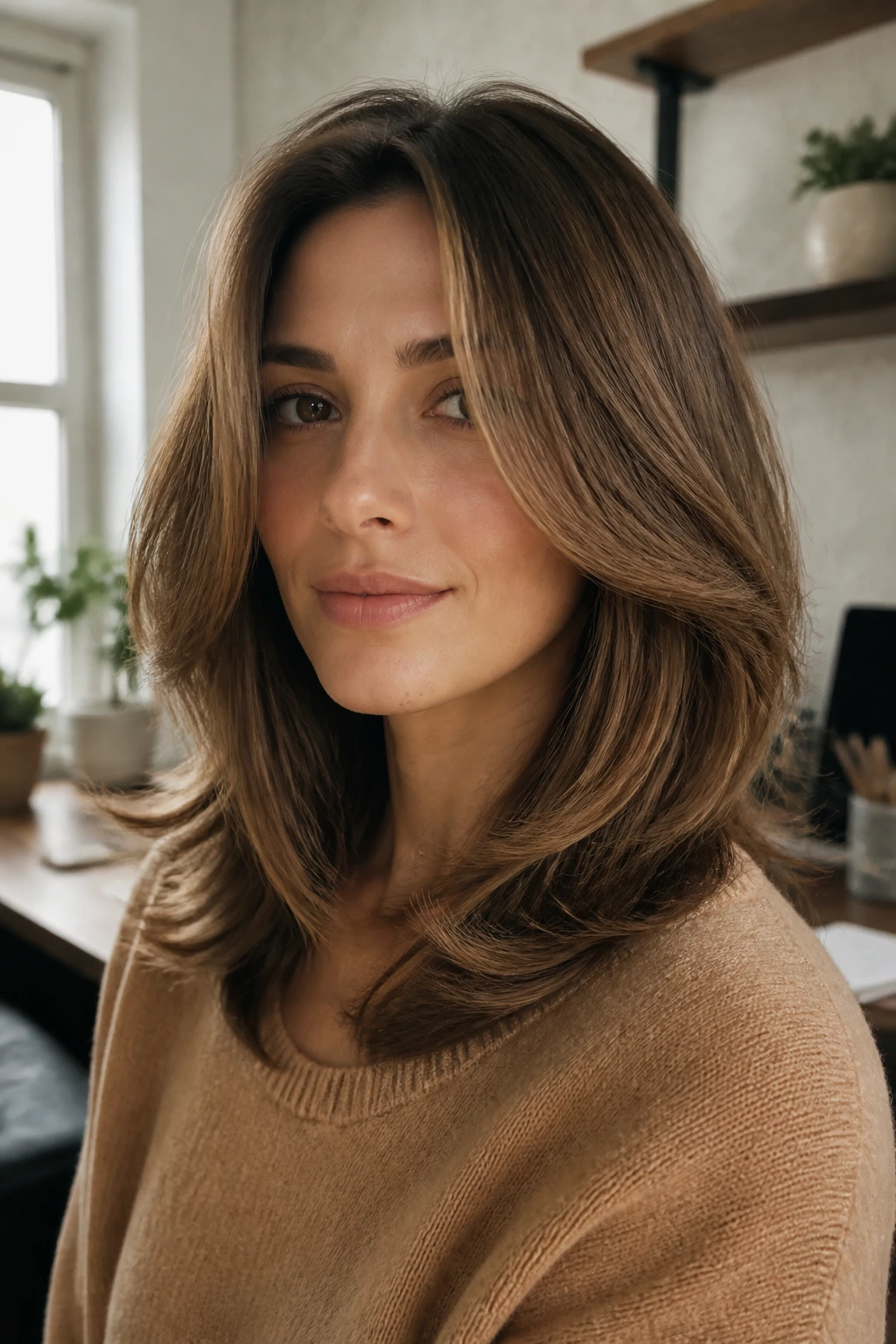
Toffee brown has a warm, creamy look that makes face-framing layers feel soft from the first glance. On mid-length hair, those layers can start around the cheekbones and taper through the ends without making the cut feel thin. It’s a comfortable sweet spot for people who want movement but not too much drama.
The front should be slightly graduated so the face frame guides the eye downward. That little slant makes the hair feel lighter near the temples, which is often where brunettes complain their hair looks heavy. It also works well with soft waves because the layers catch each bend.
If you want a style that can go from office clean to weekend loose, this is one of the easiest picks. It does not need a perfect blowout to make sense. Even a rough dry with a paddle brush gives it shape.
11. Mahogany Layered Curls
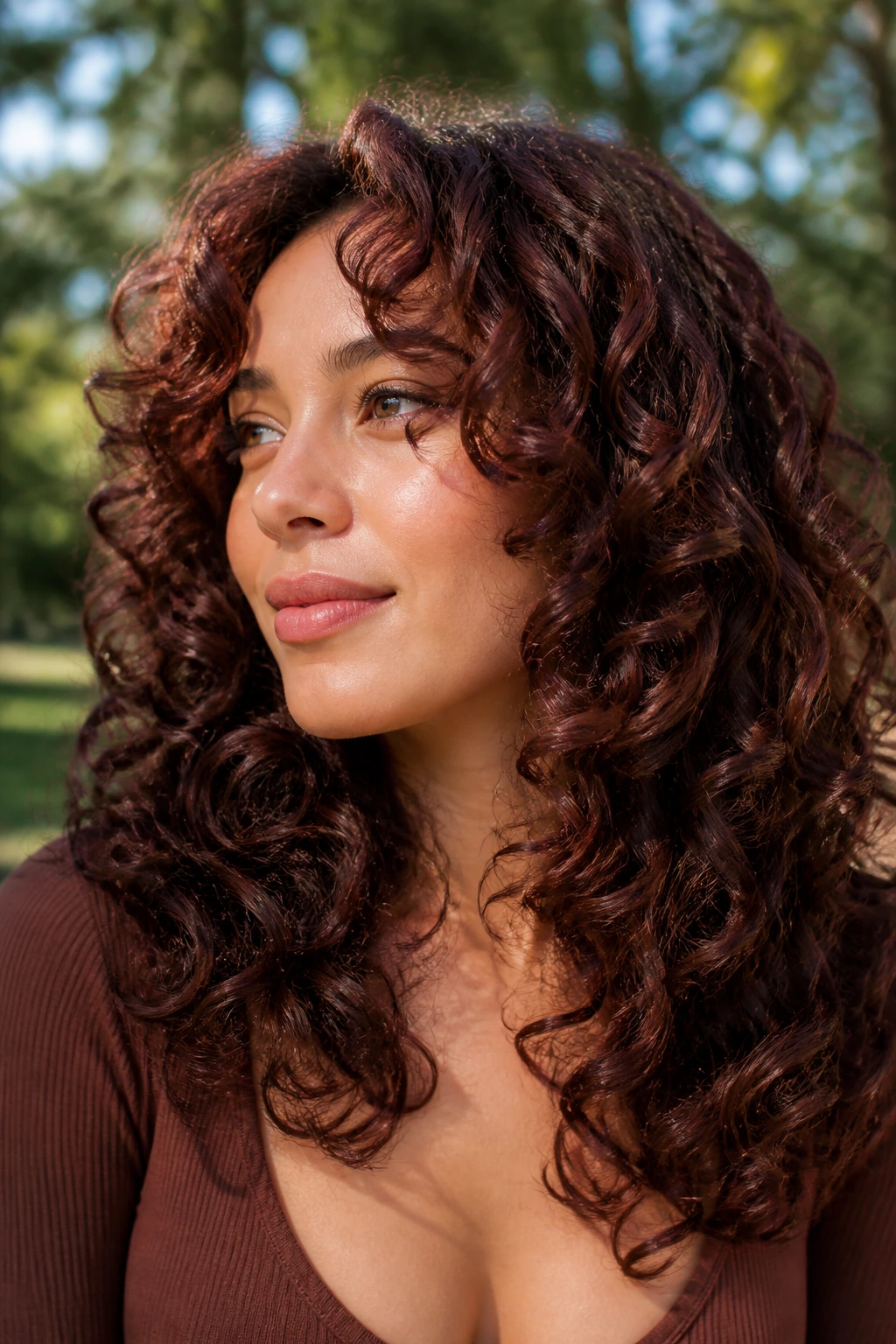
Mahogany gives curly hair a deeper, richer look because the reddish-brown undertone shows up when light hits the ringlets. Face-framing layers keep the curls from piling up near the chin, which is a common problem with one-length curly cuts.
The front pieces should be shaped to follow your natural curl spring, not forced into a straight line. That means the first layer may sit shorter than you expect when it’s dry. Good. Curls shrink, and a smart stylist plans for that instead of guessing.
This style looks especially good when the front curls are defined and the crown has a little lift. Diffuse upside down if you want more volume at the top. If you prefer a softer finish, clip the roots while they cool and let the mahogany color do the rest.
12. Bronde Money-Piece Layers
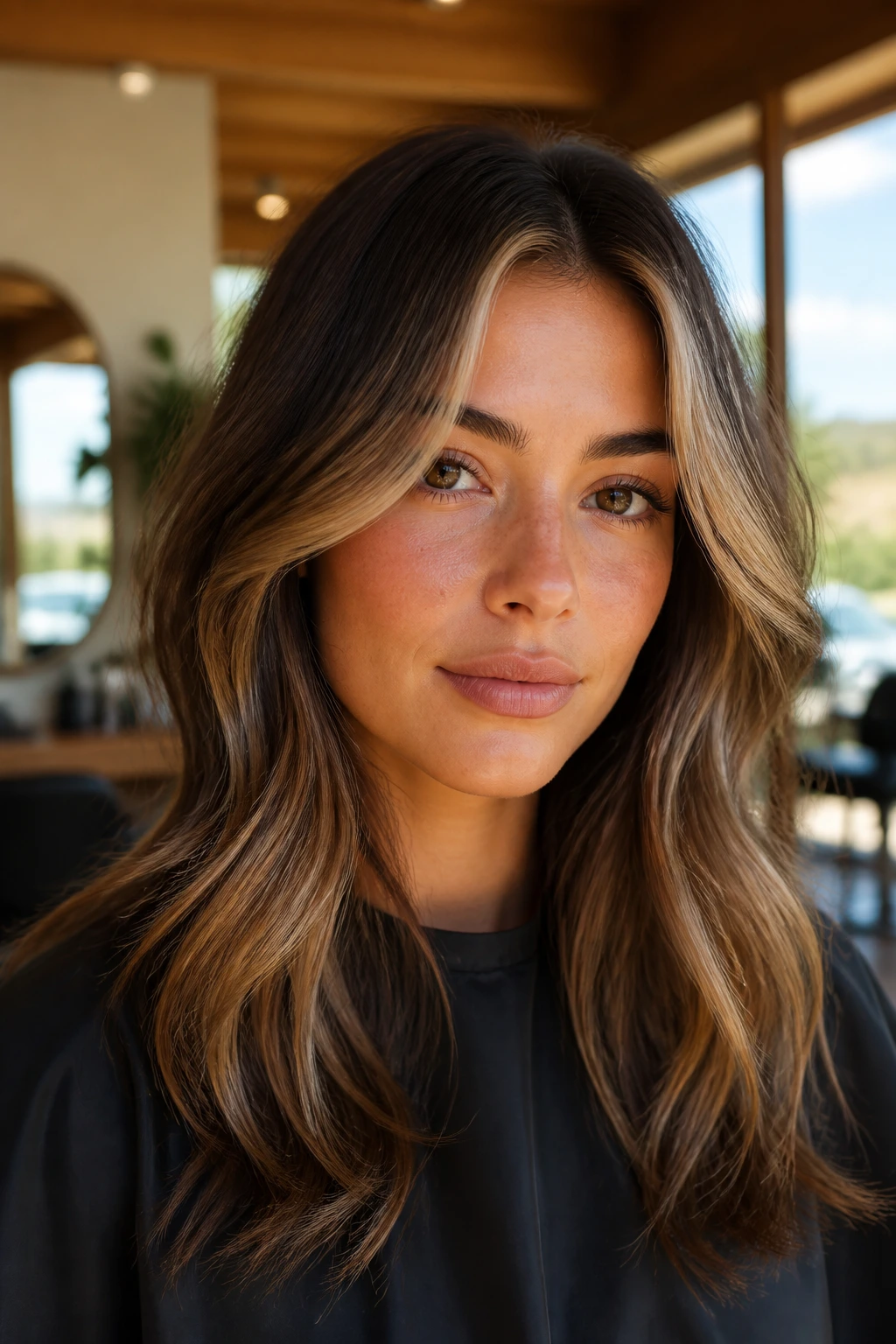
Bronde is the closest thing brunettes have to cheating the light without going blond. The face-framing layers are the main event here, and the lighter money-piece highlights around them make the cut look brighter at the eyes and cheekbones. It’s a strong move if you want the front of your hair to pop.
The layers should stay soft, not chunky. If the highlights are too wide and the cut is too sharp, the result can look striped. Better to keep the front pieces airy and let the color sit inside the shape rather than on top of it.
This one is useful if your brunette shade feels a little flat in plain daylight. A few lighter ribbons around the face can change the whole mood of the cut. Not dramatic. Just enough to wake it up.
13. Hazelnut Feathered Layers
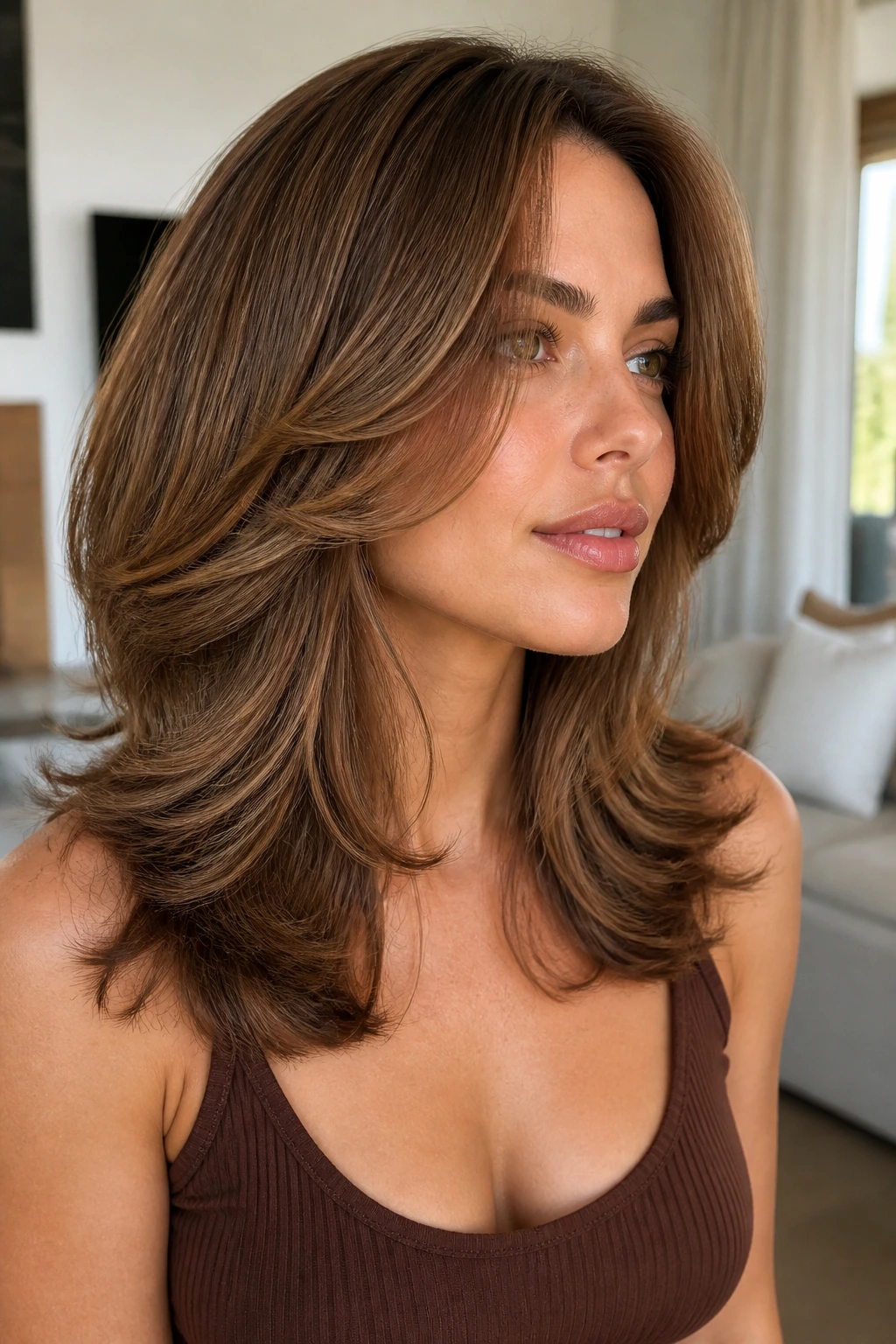
Feathered layers have a very specific feel: light, loose, and slightly retro in the best way. Hazelnut brown keeps them soft and wearable, and the face-framing pieces feather away from the cheeks instead of hanging straight down. The result is motion you can see even when the hair is still.
This works especially well if you like a round brush blowout or a soft flip at the ends. The hair should move outward and back, not inward toward the face. That tiny direction change is what makes feathering look intentional rather than dated.
A lot of people think feathered layers only suit long hair, but mid-length hazelnut cuts can wear them beautifully. The trick is avoiding harsh steps. Ask for a smooth blend through the front so the layers melt instead of stack.
14. Deep Brunette Shag With Airy Fringe
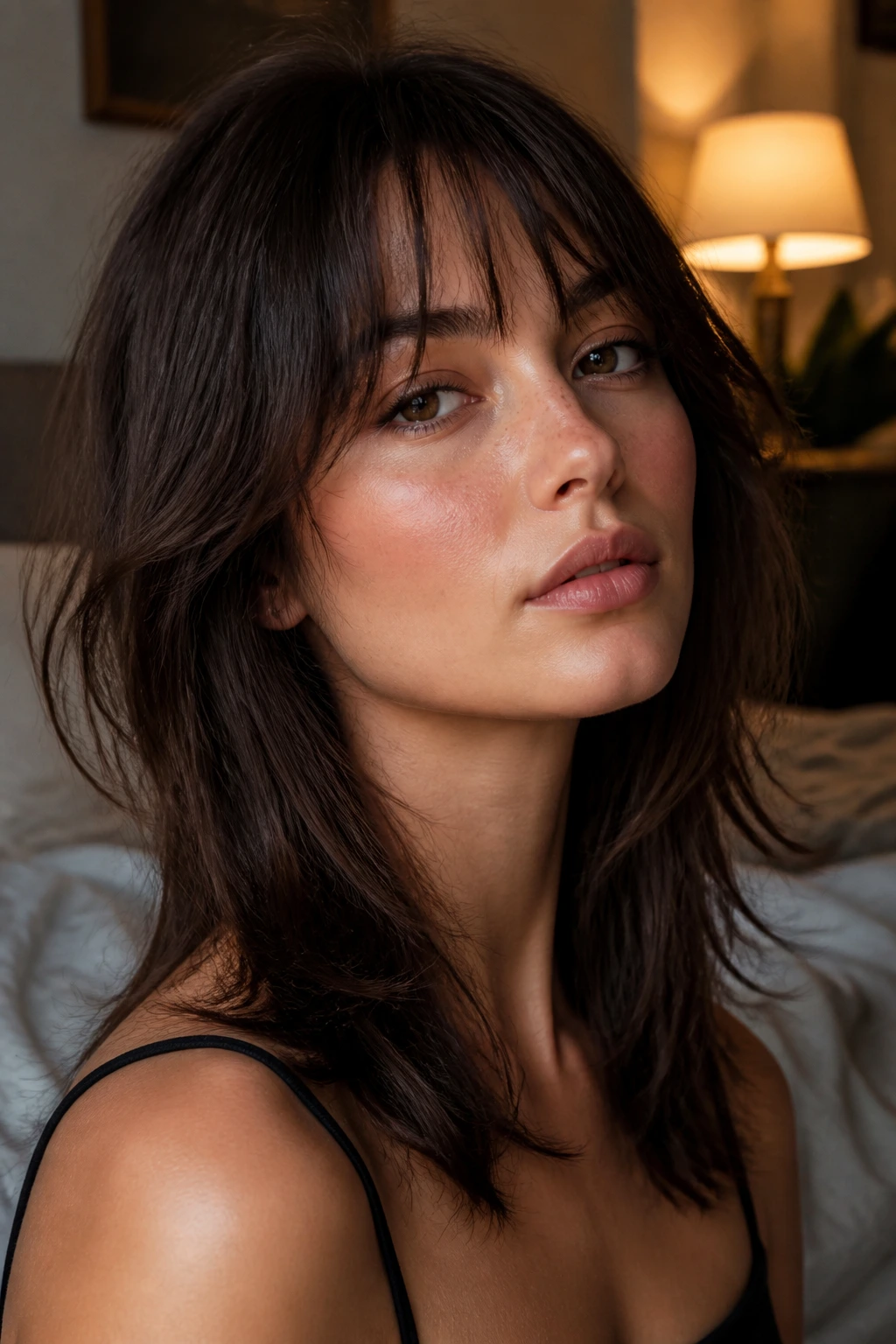
Deep brunette hair can look striking in a shag because the depth of color gives every broken layer a little shadow. The airy fringe matters here. It keeps the front from looking too dense and gives the face a lighter edge.
This cut is ideal if you want texture without spending twenty minutes with a curling wand every morning. The layers should be uneven in a controlled way, with the front pieces resting around the cheekbones and the fringe sitting light across the forehead. Heavy bangs would kill the point.
I like this on hair that has a bend or wave already. It wants to look a little rebellious. The better it grows out, the better it looks, which is the opposite of many salon cuts and one reason people keep coming back to it.
15. Cocoa Bouncy Layers
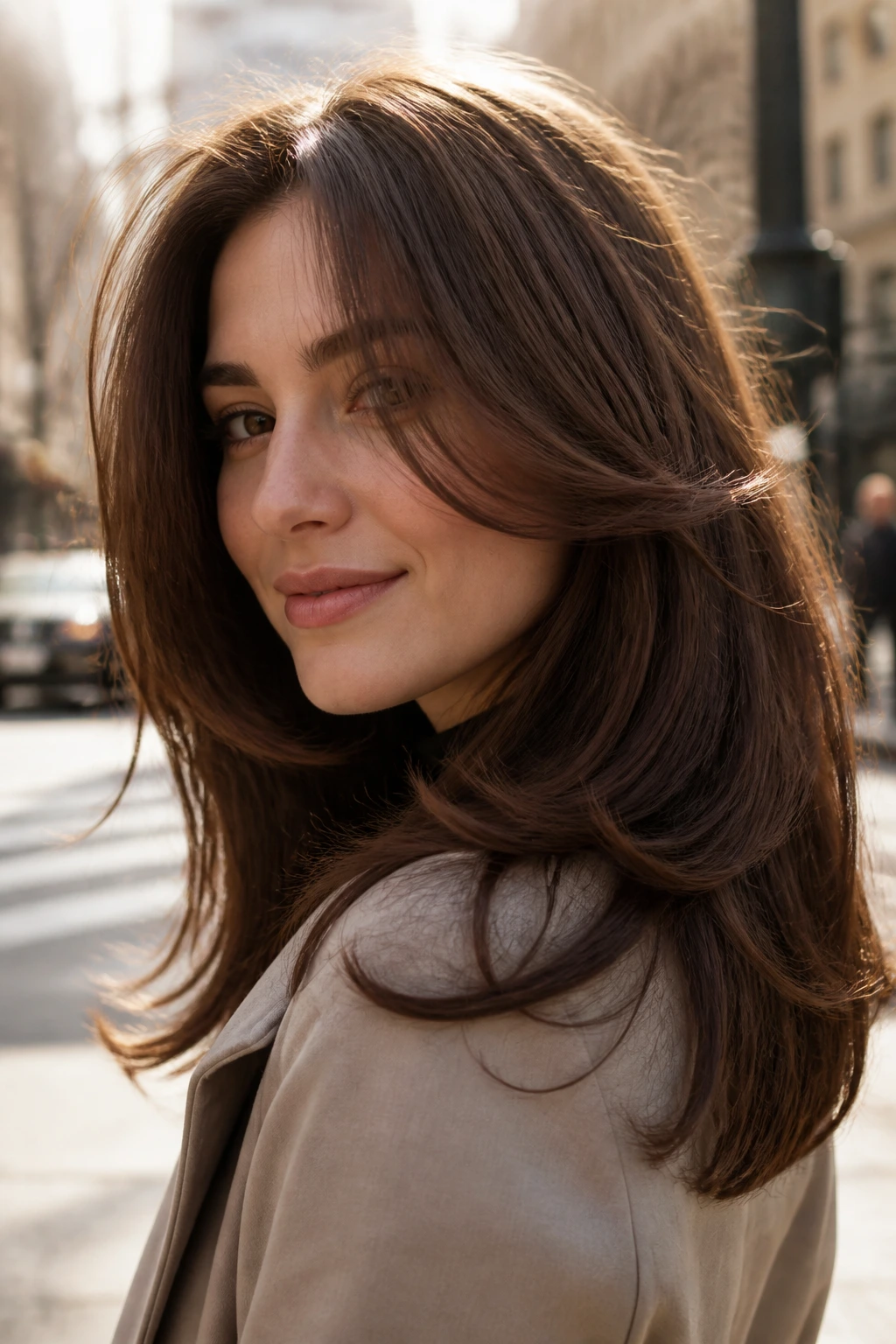
Cocoa brown has enough softness to keep a bouncy cut from feeling fussy. Here the face-framing layers are less about sharp angles and more about spring — the kind of lift that makes the hair move when you turn your head. It’s a cheerful shape without being childish.
The cut works best when the ends are healthy and the layers are evenly blended. If the hair is damaged, the bounce disappears first at the front, which is a shame because the face frame is the part everyone notices. Trim the ends before you ask for a big shape change.
A medium barrel brush or a 1.5-inch curling iron gives this cut the right curve. You want an easy bend, not tight curls. The cocoa tone will do enough visual work on its own.
16. Auburn-Brown Face-Framing Lob
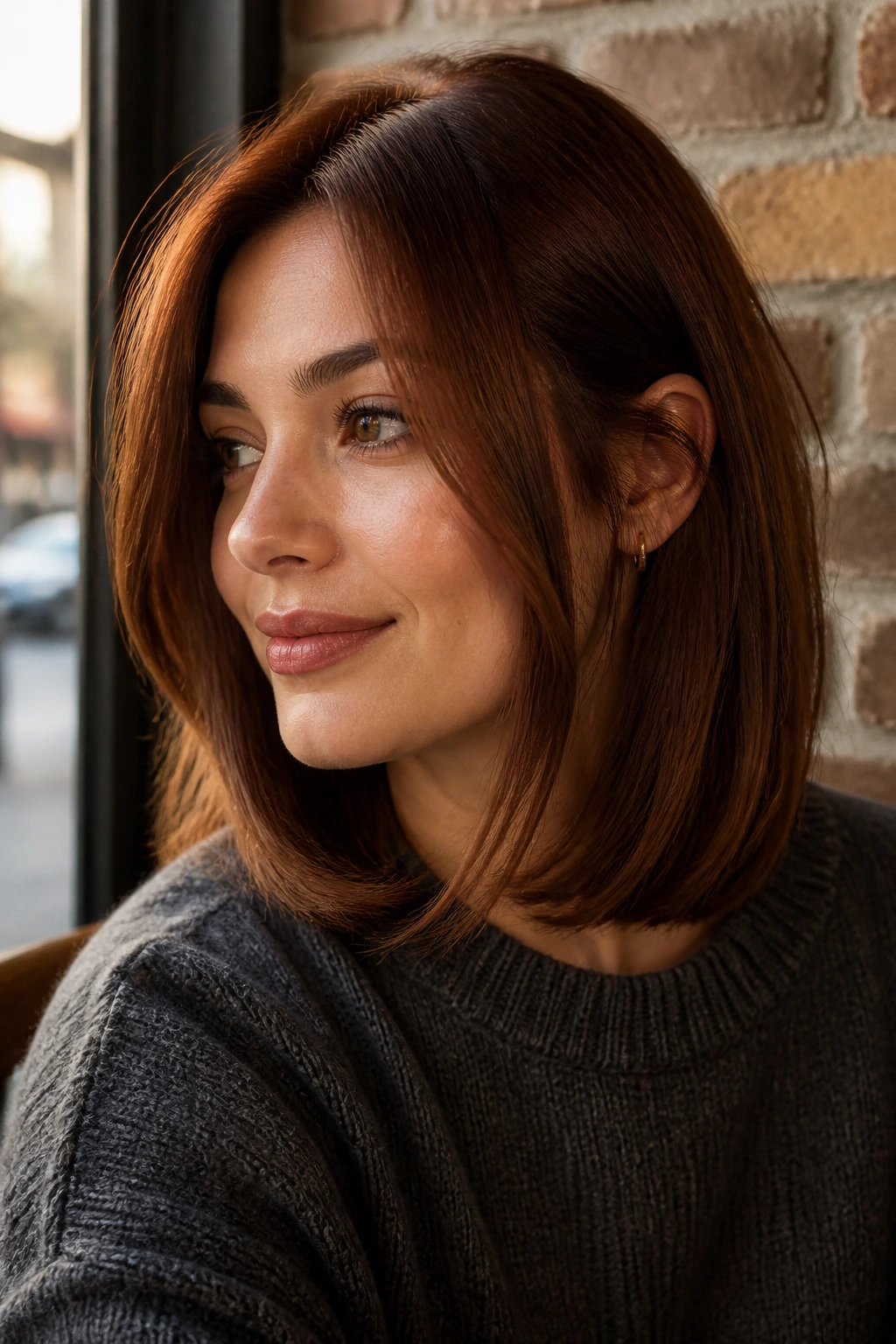
Auburn-brown sits right in the sweet spot between brunette and red, and a lob keeps it from feeling too loud. The face-framing layers can be a little more visible here because the warm tone makes the edges glow when they turn under. That matters near the jawline and cheekbones.
This cut is smart for anyone who likes low-maintenance styling with a little personality. The lob gives you enough length to tuck behind the ear or wave with a curling iron, while the front pieces keep it from looking like a plain box.
If your skin tone likes warmth, this shade can pull the whole style together. If not, keep the auburn subtle and ask for a brown base with warm ribbons rather than a full copper shift. Small moves. Better payoff.
17. Smoky Brunette Butterfly Cut
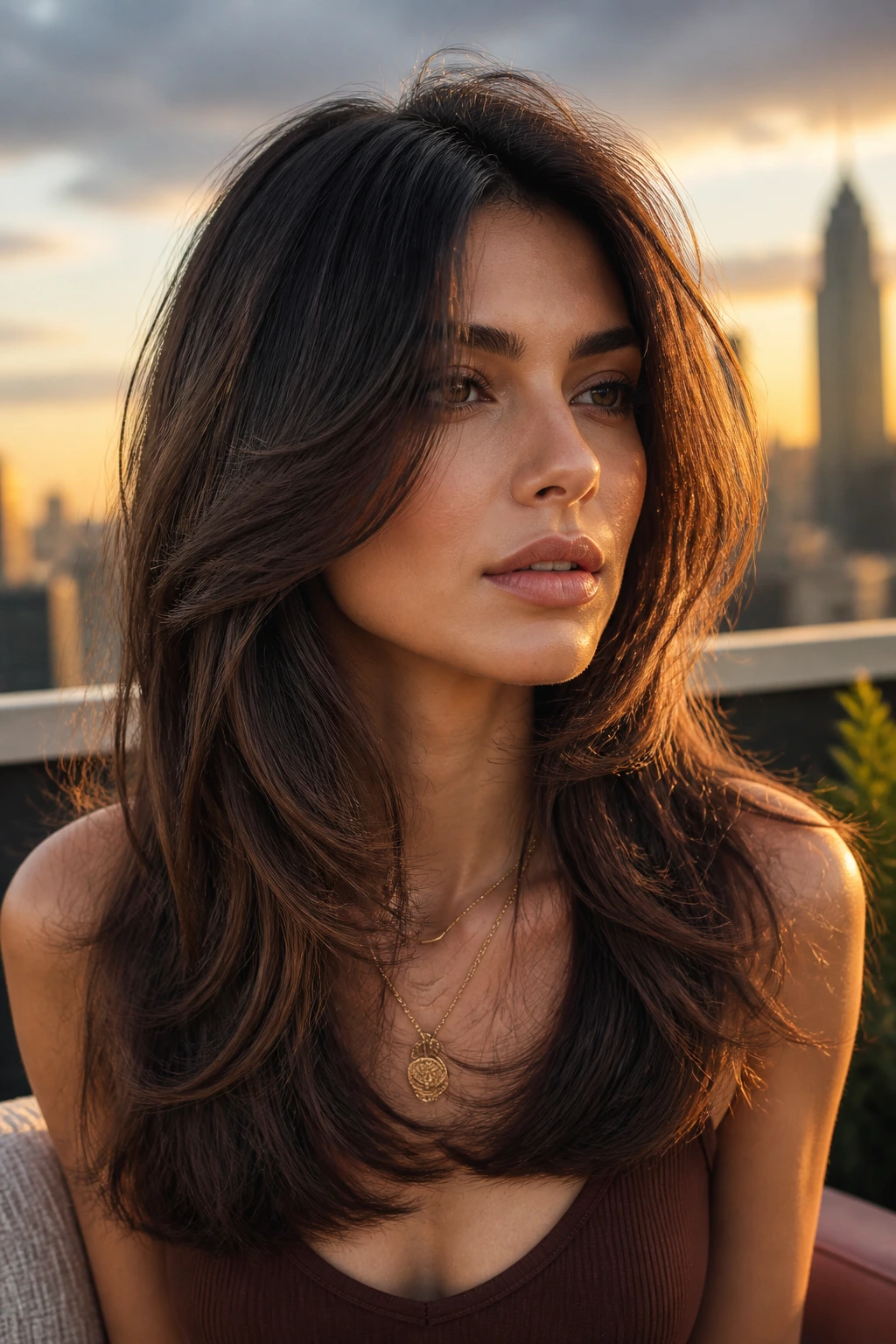
Smoky brunette hair has a cool, muted depth that makes layers look sleek instead of soft in the sugary sense. The butterfly cut changes that by lifting the crown and sweeping the front pieces away from the face in long, airy arcs. It gives a lot of shape without a huge haircut.
What I like about this version is the contrast between volume and length. The top half can be blown out with a round brush, and the bottom still falls long and smooth. That mix is what makes the cut feel expensive to wear, even when the styling is casual.
Ask your stylist for a layered front that begins near the cheekbone and opens toward the clavicle. That keeps the shape from looking too round. Smoky brown needs crisp lines or the tone can flatten out.
18. Sandy Brown Long Layers
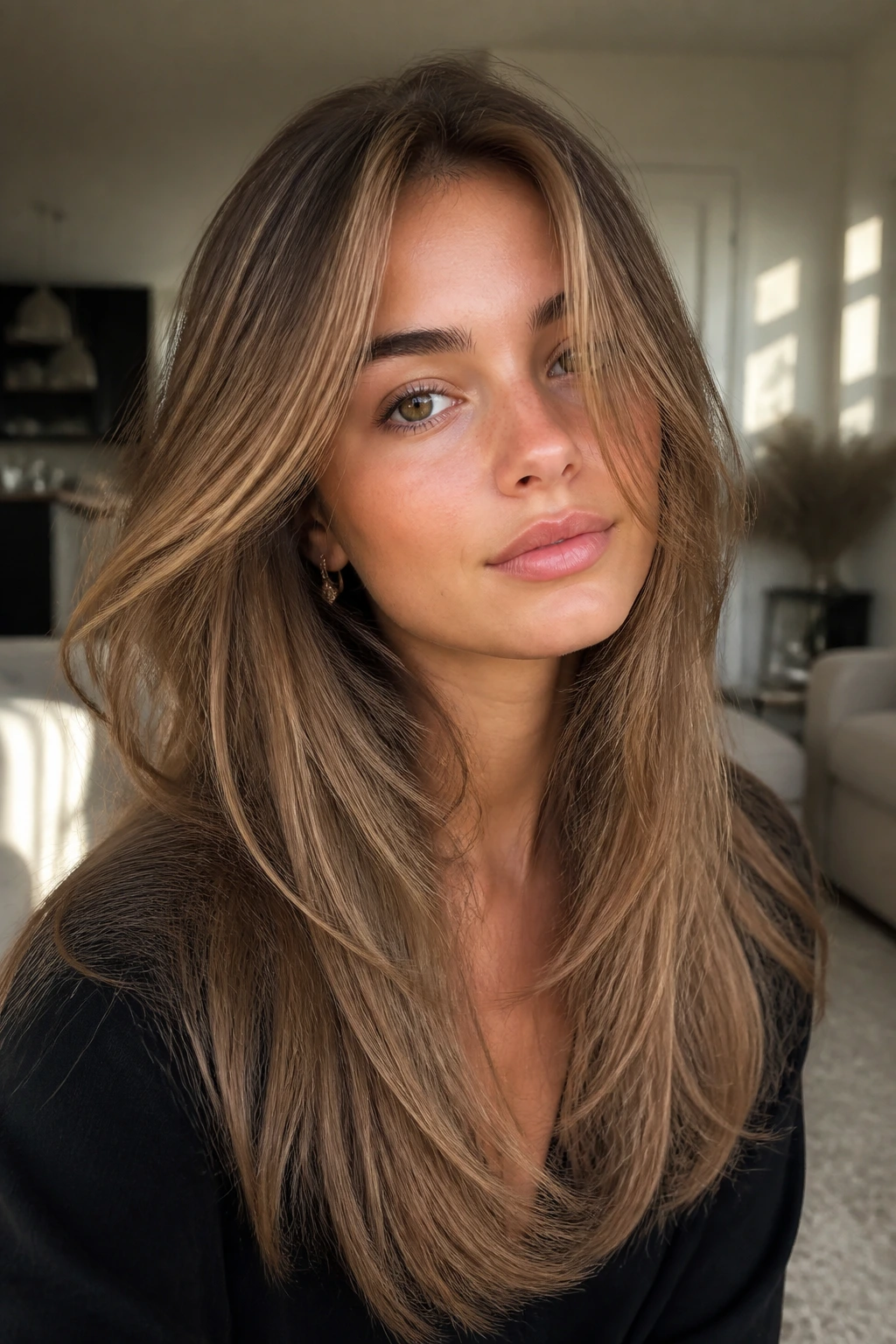
Sandy brown is softer than most brunettes expect, with a muted beige-brown cast that looks especially good in layered hair. The face frame here is long and gentle, almost like the hair is being pulled forward by a breeze. No hard edges. No obvious steps.
This style is best if you want the least possible visual clutter around your face. The layers are there, but they don’t announce themselves. They just keep the length from hanging dead straight and give the front enough movement to catch light.
Long layers need maintenance if you want them to stay pretty. Once the ends go wispy, the face-framing pieces stop blending. A trim every eight to ten weeks keeps the sandy tone and the cut from drifting into limp territory.
19. Iced Mocha Mid-Length Waves
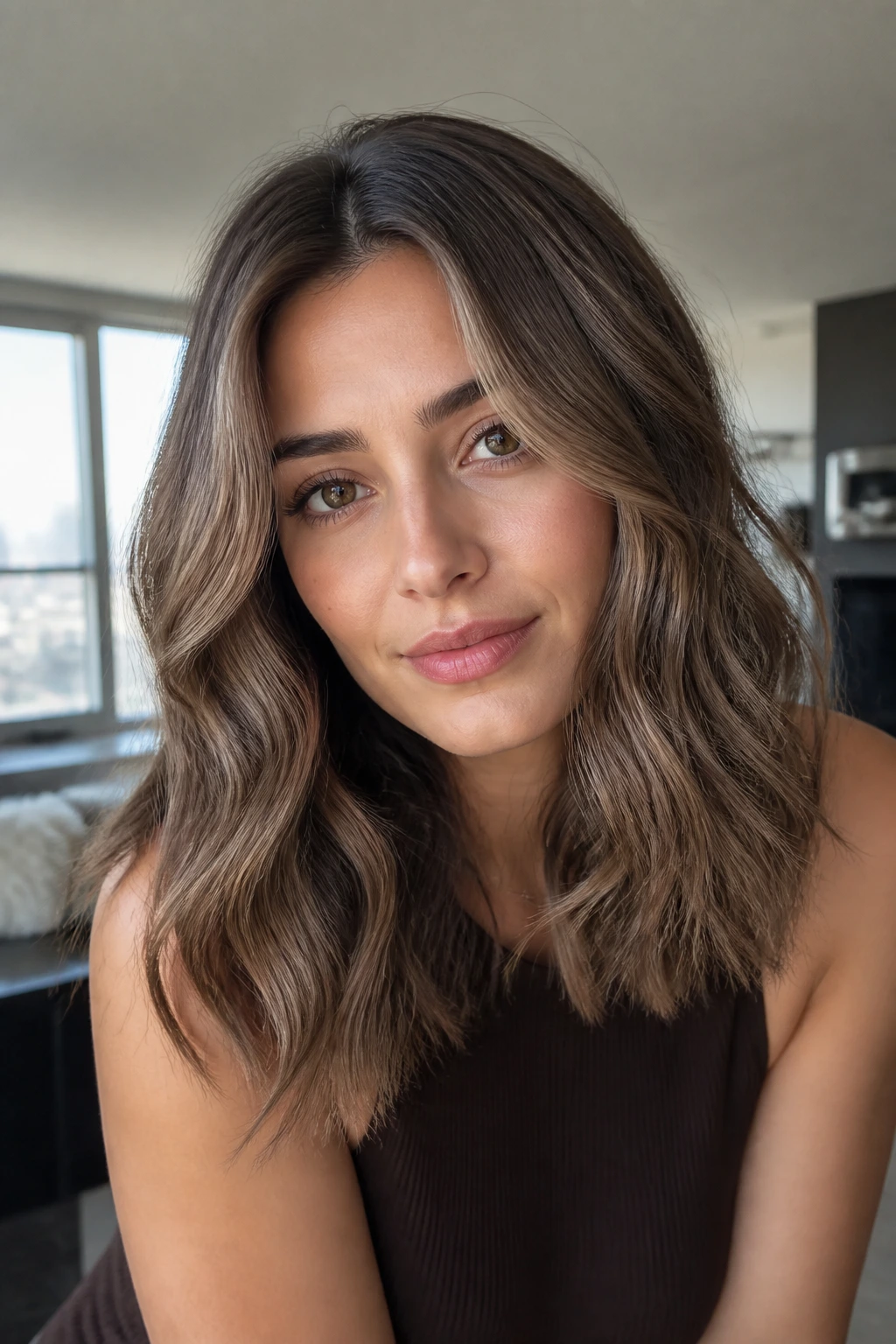
Iced mocha brown has a cooler finish, and mid-length waves give it plenty of room to show texture. The face-framing layers are usually cut to support the wave pattern rather than fight it, which makes the shape feel soft and deliberate. It is a very good cut for hair that bends but does not curl hard.
The point here is contrast: smooth roots, bent ends, bright movement around the face. If the layers are too short, the style can get puffy. If they’re too long, the whole thing sits flat. The sweet spot is around the cheekbone and mouth.
This is one of the easiest brunette looks to style with a flat iron if you like a loose, almost brushed wave. Bend the front away from the face, then let it cool before touching it. That cooling step matters. Skip it, and the wave drops before lunch.
20. Amber Brown Soft Mullet
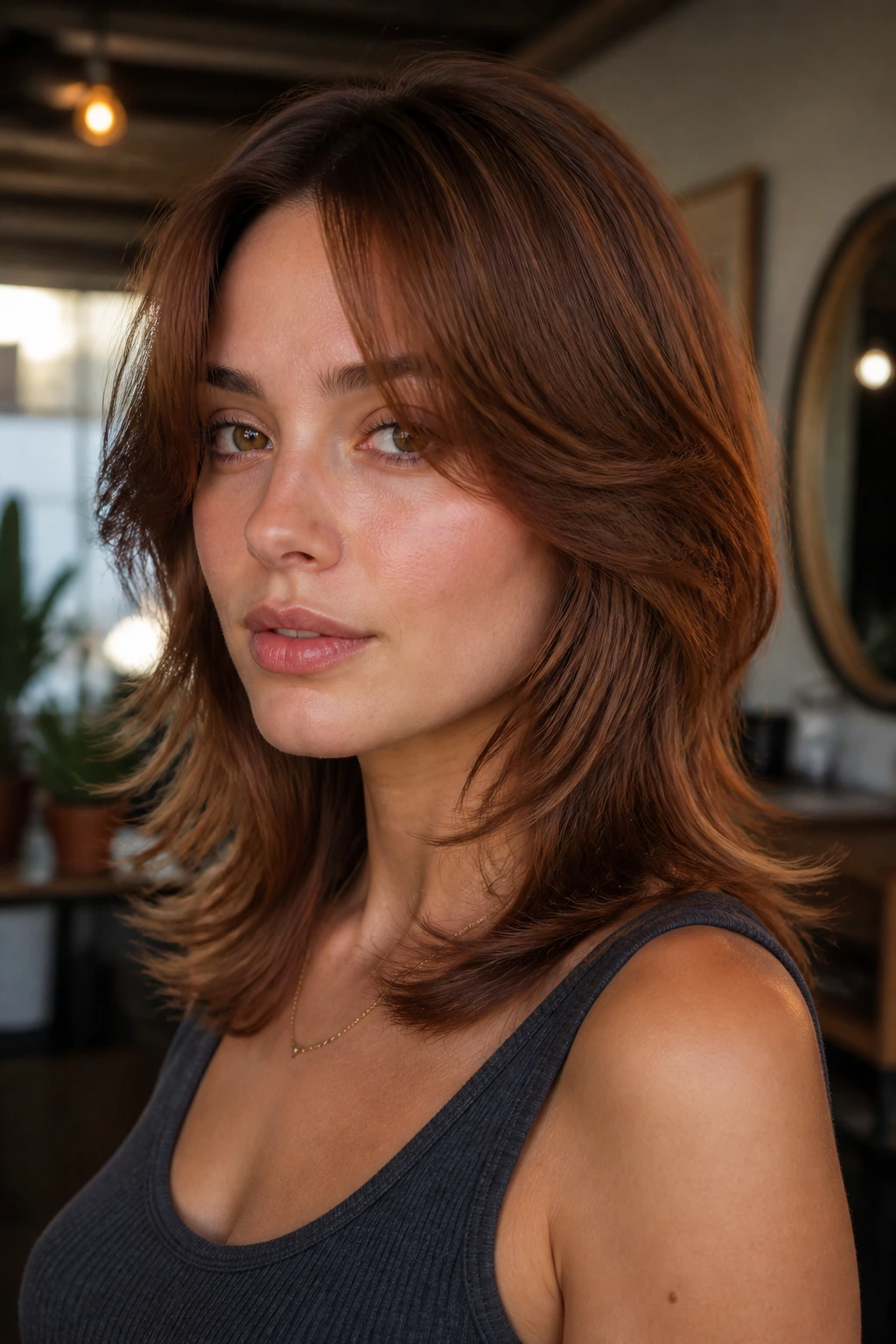
A soft mullet sounds more extreme than it wears. Amber brown keeps it approachable, and the face-framing layers give the front a light, lifted feel while the back stays longer and a little wild. It’s a smart option if you want something current without losing the softness that makes brunette hair so wearable.
The front should be cut with a little attitude. Shorter around the cheekbones, longer under the jaw, and enough texture to stop the style from reading as a standard layered cut. The back can be feathered out so it moves instead of hanging in a heavy line.
This one is for people who like their hair to have personality. It looks especially good with air-dried texture and a few finger-coiled pieces near the face. Not tidy. Better.
21. Rooty Espresso Curls
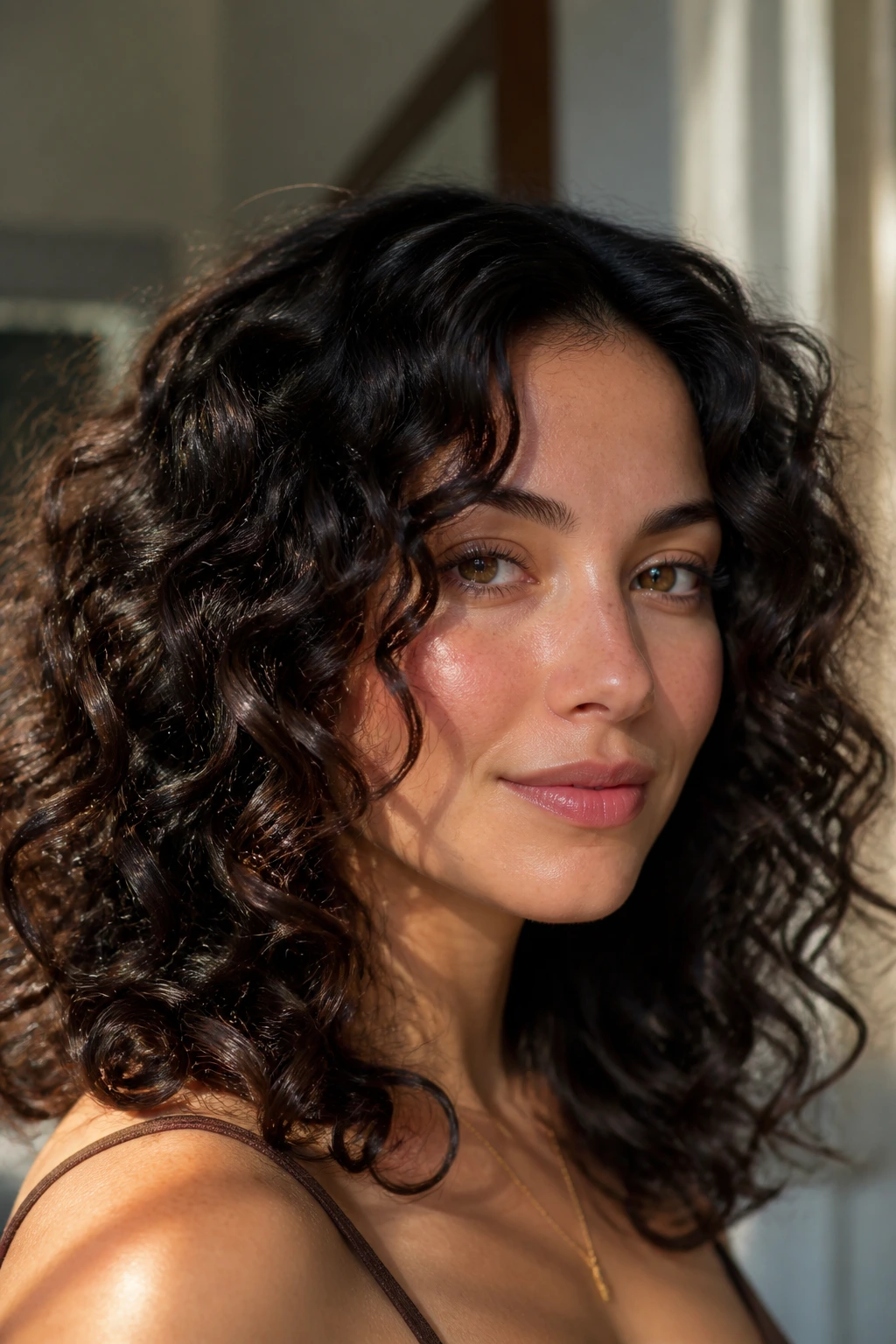
Rooty espresso curls are all about low maintenance that still looks deliberate. The deeper roots give you natural shadow at the scalp, and the face-framing layers help the curls lift away from the cheeks so the style doesn’t balloon out sideways. That shape control is the real win.
A rooty brunette color also buys you time between color appointments because the grow-out blends into the darker base. Pair that with layered curls and you have a style that doesn’t demand perfect upkeep every week. Nice change.
The face-framing pieces should follow your curl pattern and sit a touch shorter than the rest of the front. That keeps the curls defined near the eyes and jaw. If the front curls are too long, they drag everything down.
22. Chestnut S-Curl Blowout
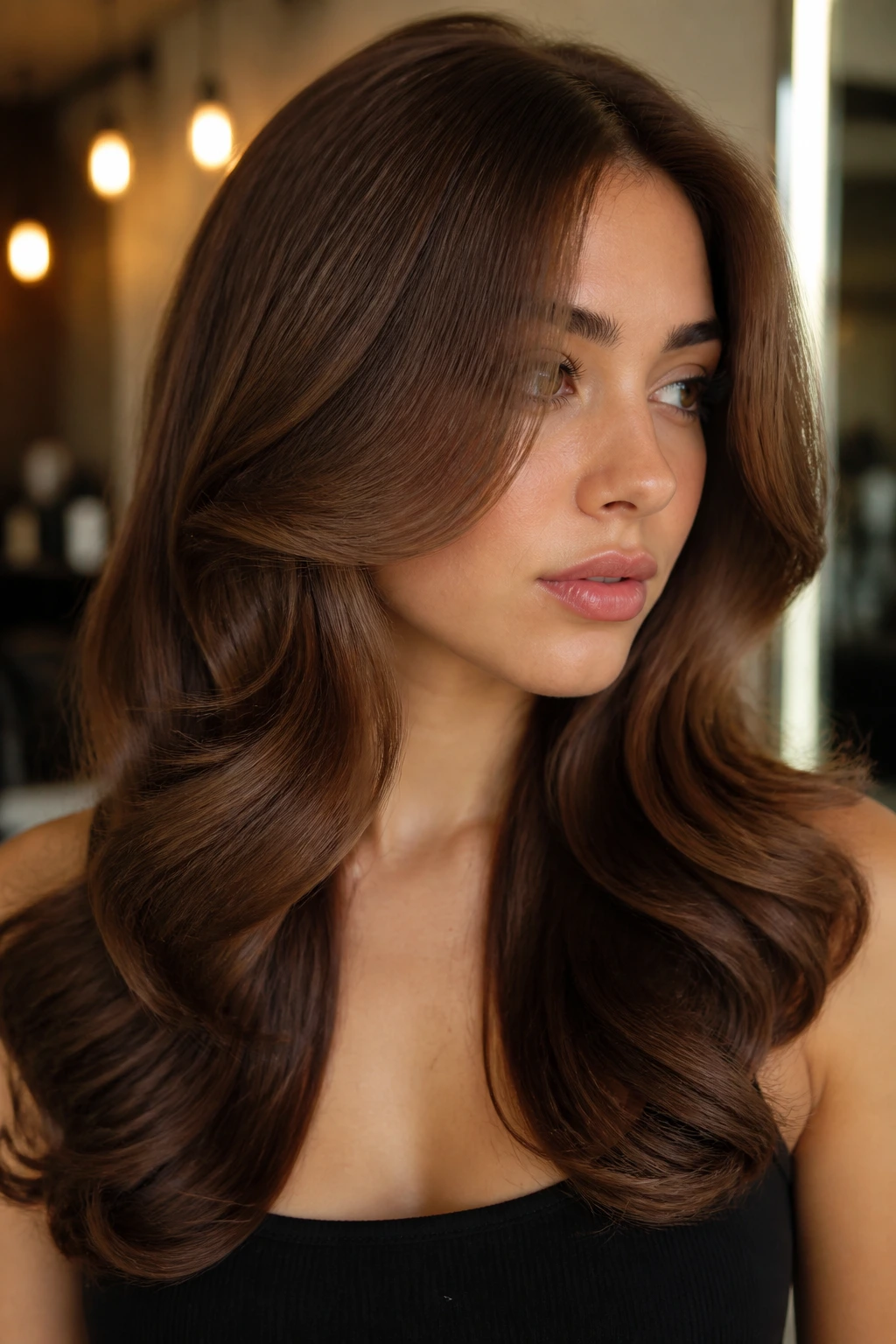
This one has movement without chaos. Chestnut brown gives the cut warmth, and the S-curl blowout — those loose, ribbon-like bends that alternate direction — makes the face-framing layers swing instead of sit. It’s polished, but not stiff.
The front pieces should be curled away from the face at the cheekbone, then turned back in slightly lower down so the line looks fluid. That little S-shape is what makes the style feel rich rather than overdone. It also works well if your hair is medium to thick and likes to hold a bend.
I like this look for dinners, events, or any day you want to feel a little more pulled together without going full formal. The chestnut shade catches the light beautifully when the bends are smooth. Keep the ends glossy and the shape does the rest.
23. Cinnamon Swirl Long Cut
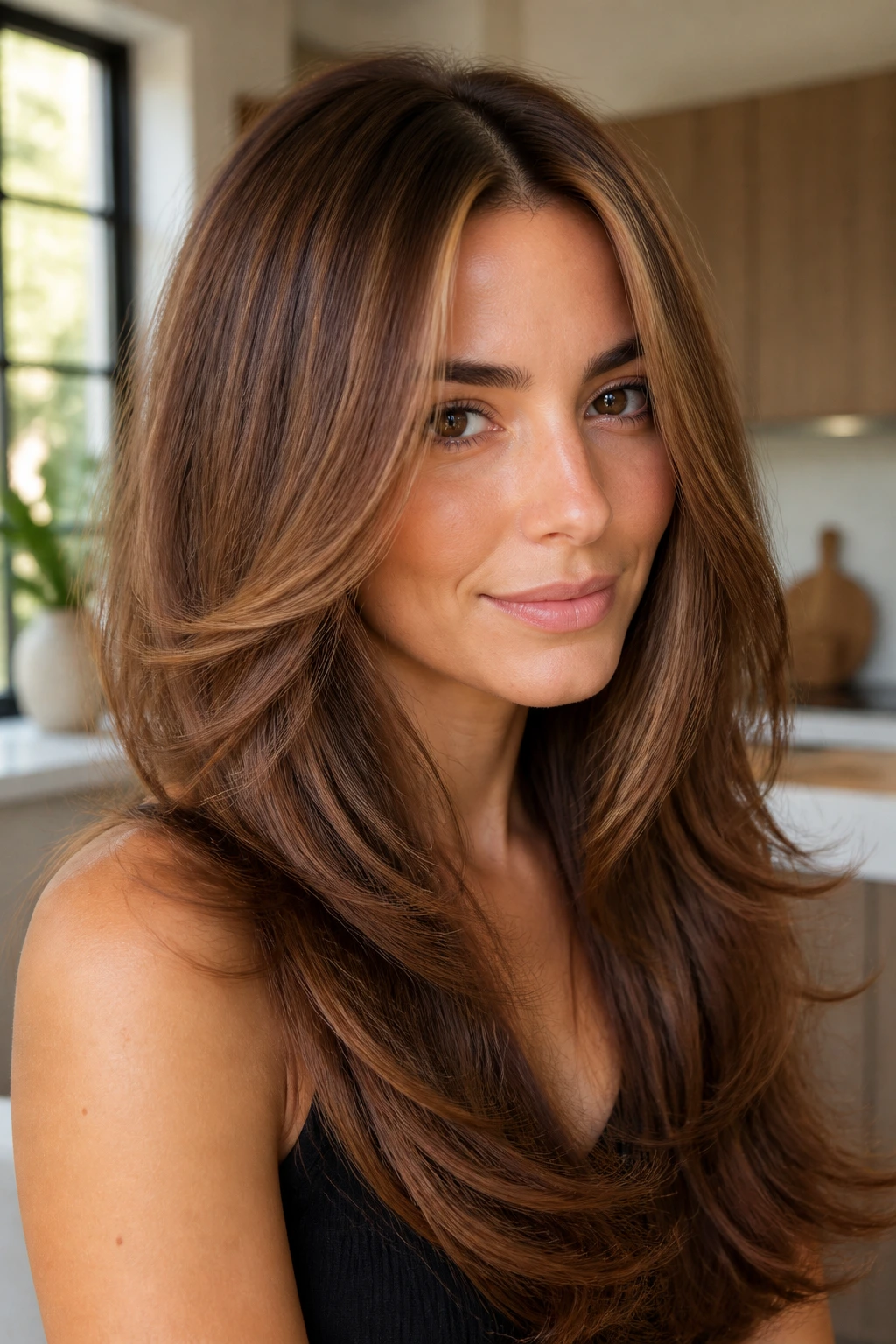
Cinnamon swirl hair has warmth in the color and softness in the shape. The long layers keep the length, while the face-framing pieces swirl outward from the face so the style looks full but not heavy. It’s a good answer for long brunette hair that needs movement at the front.
The trick is not to over-layer the back. Too much chopping and the front pieces stop looking like a frame. Better to keep the layers long and let the cinnamon tone provide the interest.
This style flatters people who like a romantic look without going into obvious curls. A big barrel brush, a little shine spray, and a middle part are enough to make it feel finished. Very little drama. Good payoff.
24. Rich Brunette Layers With Bottleneck Bangs
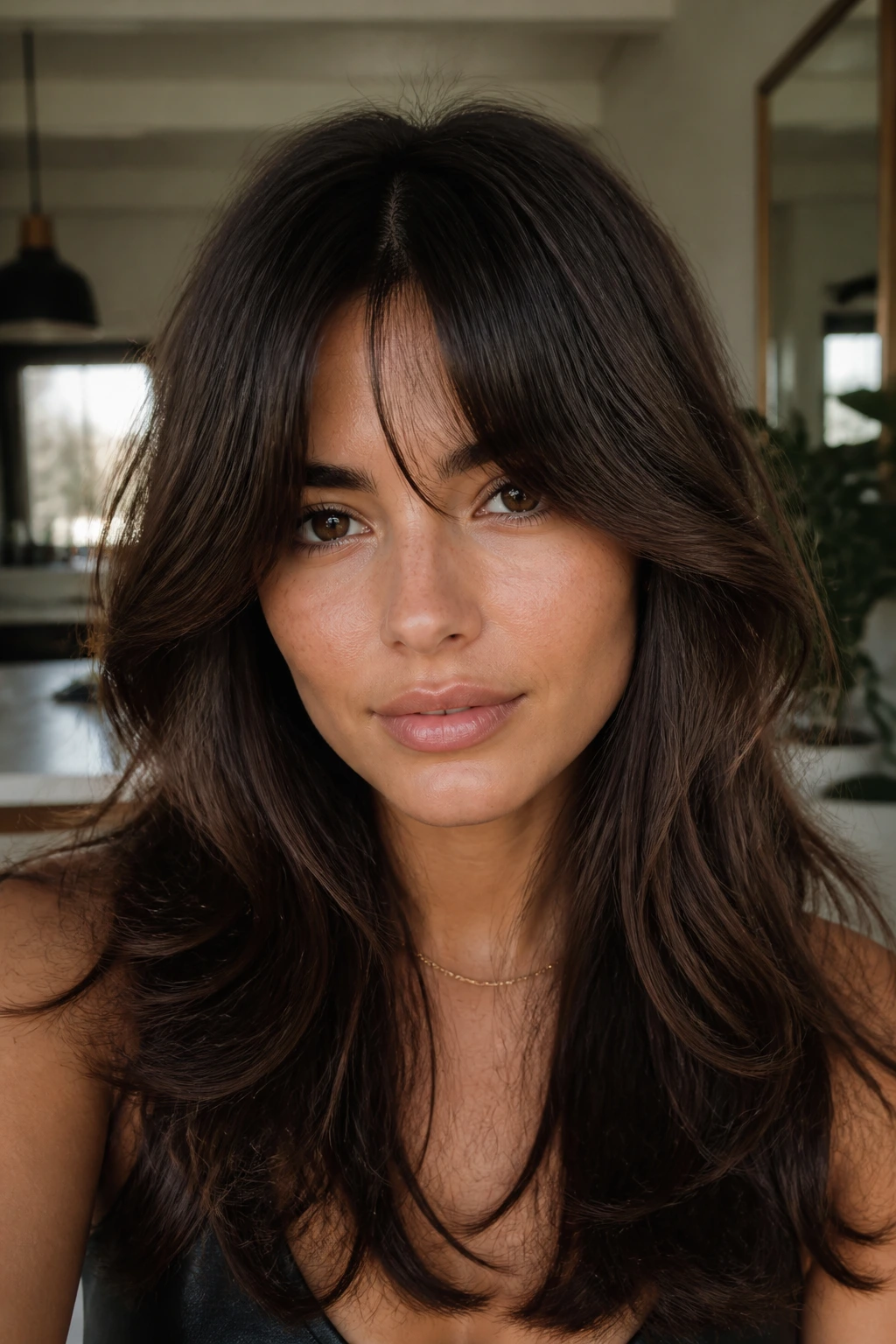
Bottleneck bangs are a neat compromise between curtain bangs and full fringe. They’re narrower at the forehead and open out toward the cheekbones, which makes them perfect for rich brunette layers that need some structure in front. The shape gives you definition without swallowing the face.
The rest of the layers should flow gently from the bangs into the length. If the transition is too abrupt, the cut starts to feel chopped up. You want a soft melt from the brow area to the jaw, especially if the brunette tone is dark and glossy.
This is a good pick if you like a bit of forehead coverage but don’t want a heavy bang line. It also grows out well. The bottleneck shape keeps making sense even when it gets longer, which saves you from awkward in-between months.
25. Dark Walnut Gloss Cut With Tucked Front Pieces
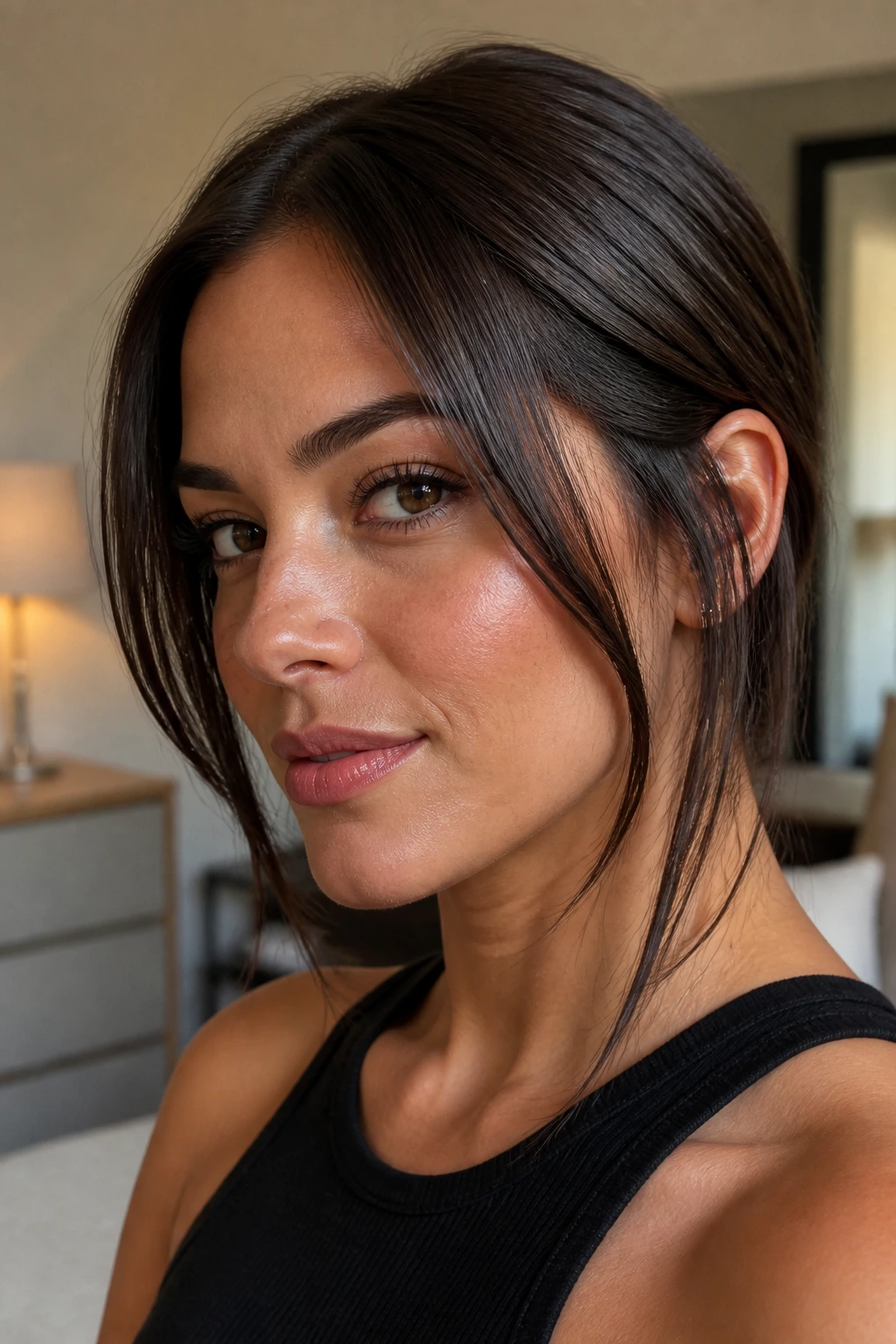
Dark walnut hair looks at its best when the finish is smooth and reflective. This cut keeps the length sleek, then uses subtle face-framing pieces that can be tucked behind the ears or left loose near the jaw. It is clean, quiet, and a little sharp in the best way.
The layers in front should be minimal but precise. Too much texture would fight the glossy walnut tone. A slight angle at the cheekbone and a soft taper into the ends is enough to keep the style from feeling flat.
I like this for people who want brunette hair that reads polished without needing a fancy styling routine every day. A blow-dry, a center part, and a tiny bit of serum on the ends. That’s it. Sometimes restraint does the heavy lifting.
How Brown Hair Layers Change the Whole Shape
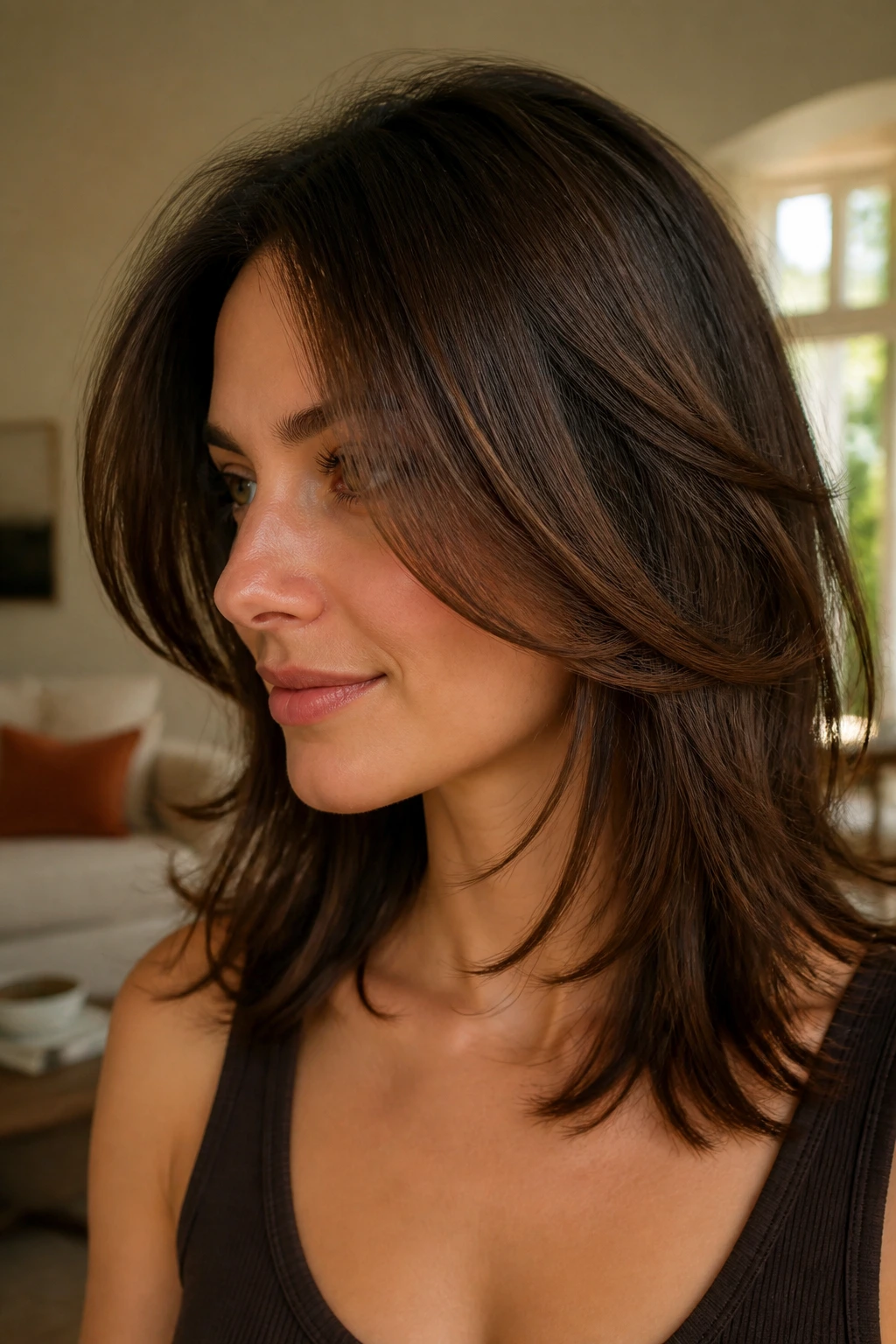
Face-framing layers are not there to decorate the cut. They change the silhouette. On brunette hair, that matters because darker shades show shape first and texture second; a heavy front can make even healthy hair look dense, while a little angle near the face opens the whole look up.
The best brunette cuts use the front pieces to steer the eye. Cheekbone-length layers pull attention upward. Longer jaw-skimming pieces slim the sides. On curls and waves, the layers keep the pattern from expanding outward like a triangle. On straight hair, they stop the style from falling into one flat sheet.
A good cut also changes how often you want to style your hair. That sounds small, but it isn’t. If the front already has shape, you can air-dry more often, use less heat, and still look finished. That’s a real win, especially if your brunette color has a glossy finish you want to keep intact.
Essential Tools for These Looks
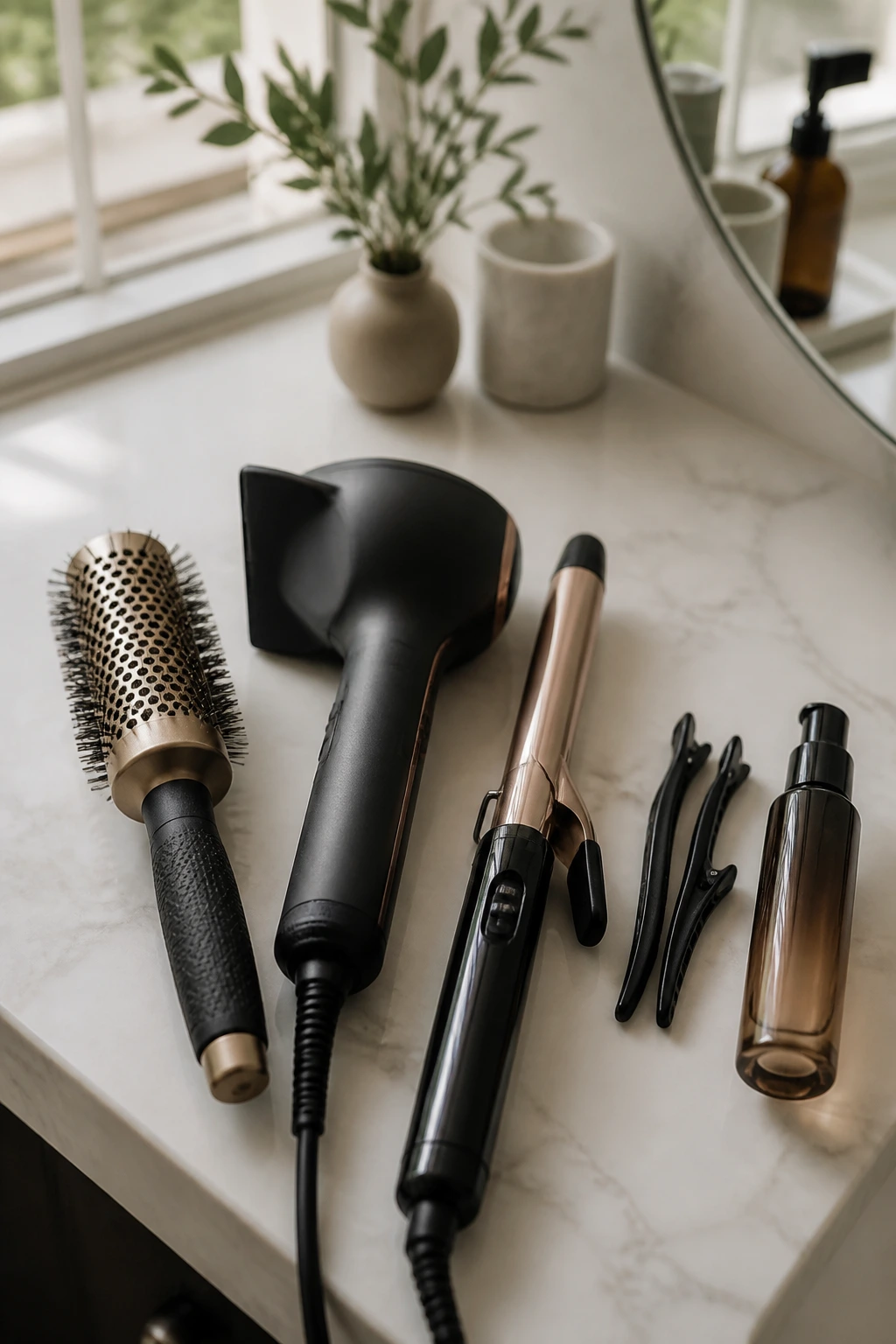
- Round brush, 1.25 to 1.75 inches: Useful for flipping the face-framing pieces away from the cheeks and smoothing the ends.
- Blow-dryer with a concentrator nozzle: The nozzle keeps the airflow focused so the front layers don’t puff up and frizz out.
- Curling iron or wand, 1 to 1.5 inches: Best for soft bends, curtain pieces, and brushed-out waves.
- Heat protectant spray: Non-negotiable if you use hot tools more than once a week.
- Lightweight smoothing serum: A tiny amount on the ends keeps brunette hair glossy without turning it greasy.
- Volumizing mousse or root spray: Helpful if the layers are fine and need a little lift at the crown.
- Sectioning clips: Make styling the front pieces easier, especially when you want both sides to mirror each other.
- Wide-tooth comb or detangling brush: Better than ripping through the front layers when they’re damp.
- Texturizing spray: Good for shags, wolves, and piecey layered cuts that need separation.
- Silk or satin pillowcase: Not glamorous, but it helps the face-framing pieces stay smooth overnight.
How to Get the Most From the Cut
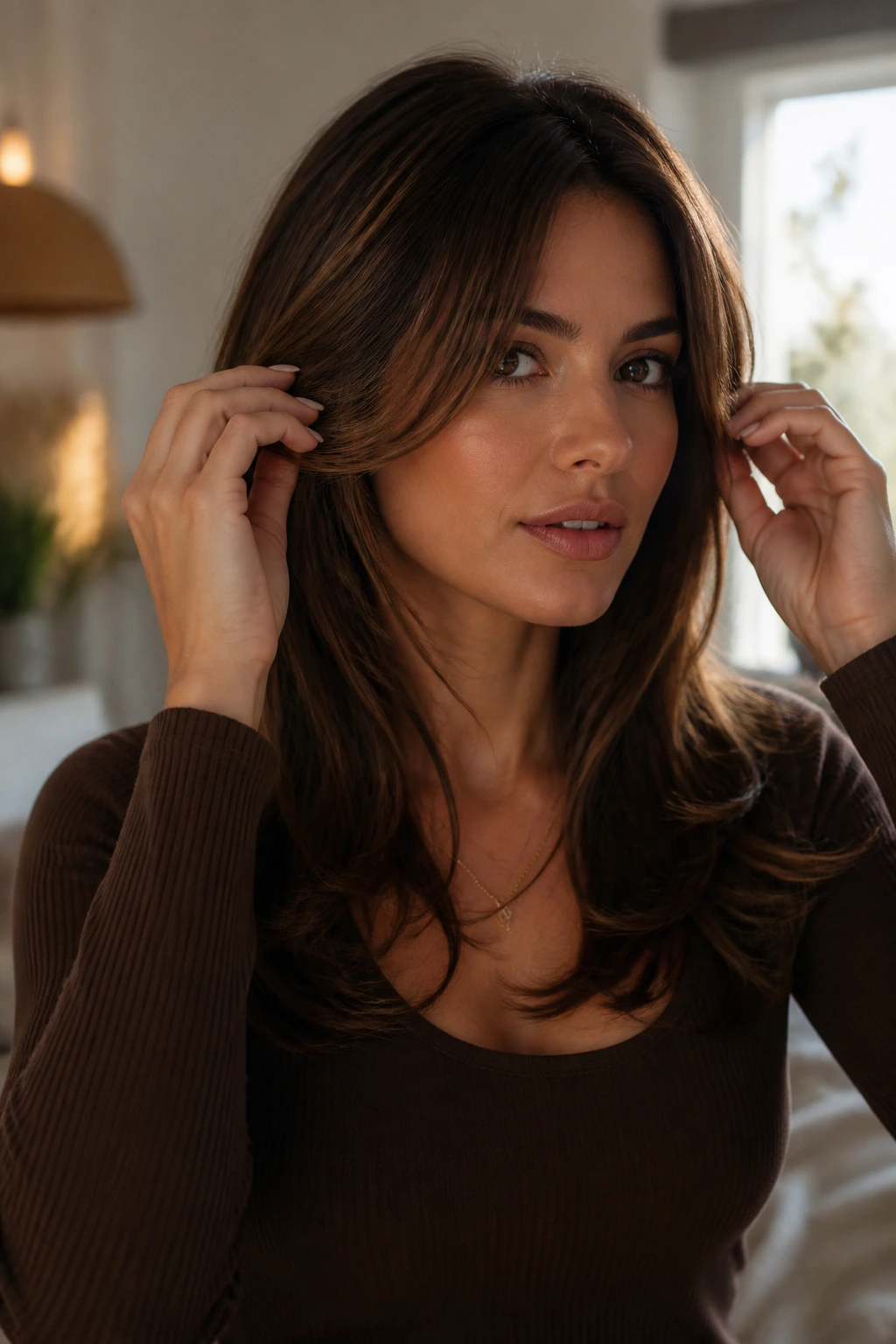
Parting matters: A center part gives curtain layers and butterfly cuts their open shape, while a soft side part can make lobs and blowouts feel fuller at the front. Don’t lock yourself into one part if the haircut was built to move.
Styling is about the front first: If you only smooth the back and ignore the face frame, the whole style can look half-done. Spend the first few minutes on the front layers, then move on. That’s where the eye lands.
Gloss changes everything: Brown hair shows shine more than people expect. Even a clear gloss, a demi-permanent refresh, or a good shine spray can make layers read cleaner and richer.
Choose the right amount of bend: Fine hair usually looks best with a soft wave or tucked-under finish. Thick hair can take a bigger bend and still stay controlled. If the wave is too small, the cut gets busy fast.
Ask for the shortest front point before the trim starts: That one question saves a lot of regret. You need to know where the front layer begins when dry, not just where the stylist snips it wet.
Mistakes That Make Face-Framing Layers Look Off
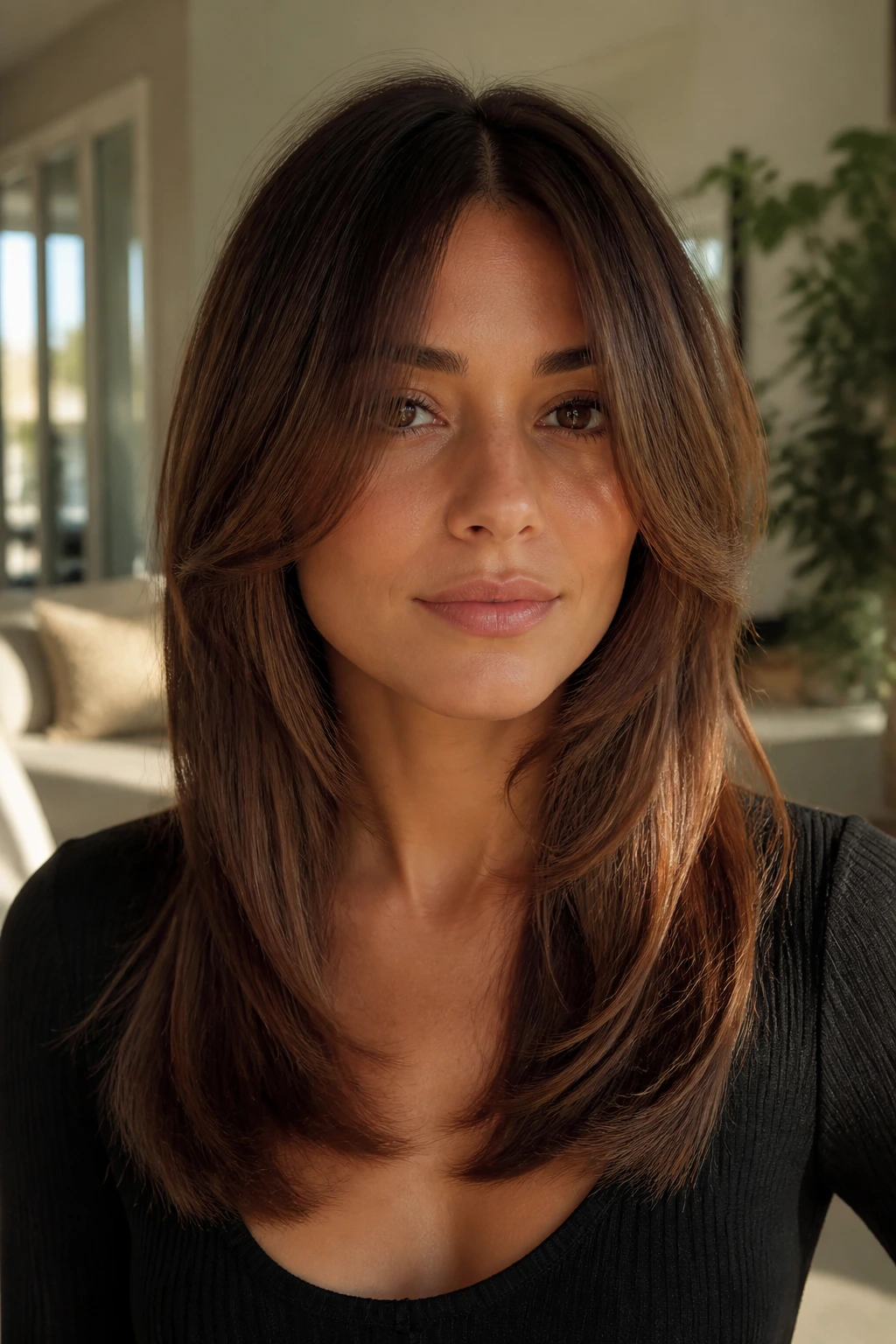
The most common problem is layers that start too low. If the front pieces begin near the collarbone instead of the cheekbone or jaw, they don’t frame anything. They just sit there. The fix is simple: bring a photo and point to the exact place where you want the shortest front layer to land when your hair is dry.
Another miss is cutting the front too aggressively on fine hair. The result looks stringy, not airy. Fine brunette hair usually needs softer angles and lighter graduation so the front keeps some density.
Then there’s over-styling the face frame while leaving the rest untouched. That gives you two different haircuts on one head. If you’re curling the front, bend a few pieces through the mid-lengths too so the shape flows.
The last one is forgetting about your natural texture. A cut that looks great on a smooth blowout can go sideways on a wavy or curly day if it isn’t designed for shrinkage and movement. Curly brunettes especially need a stylist who cuts in a way that respects spring, not just length.
Ways to Make the Look More Personal
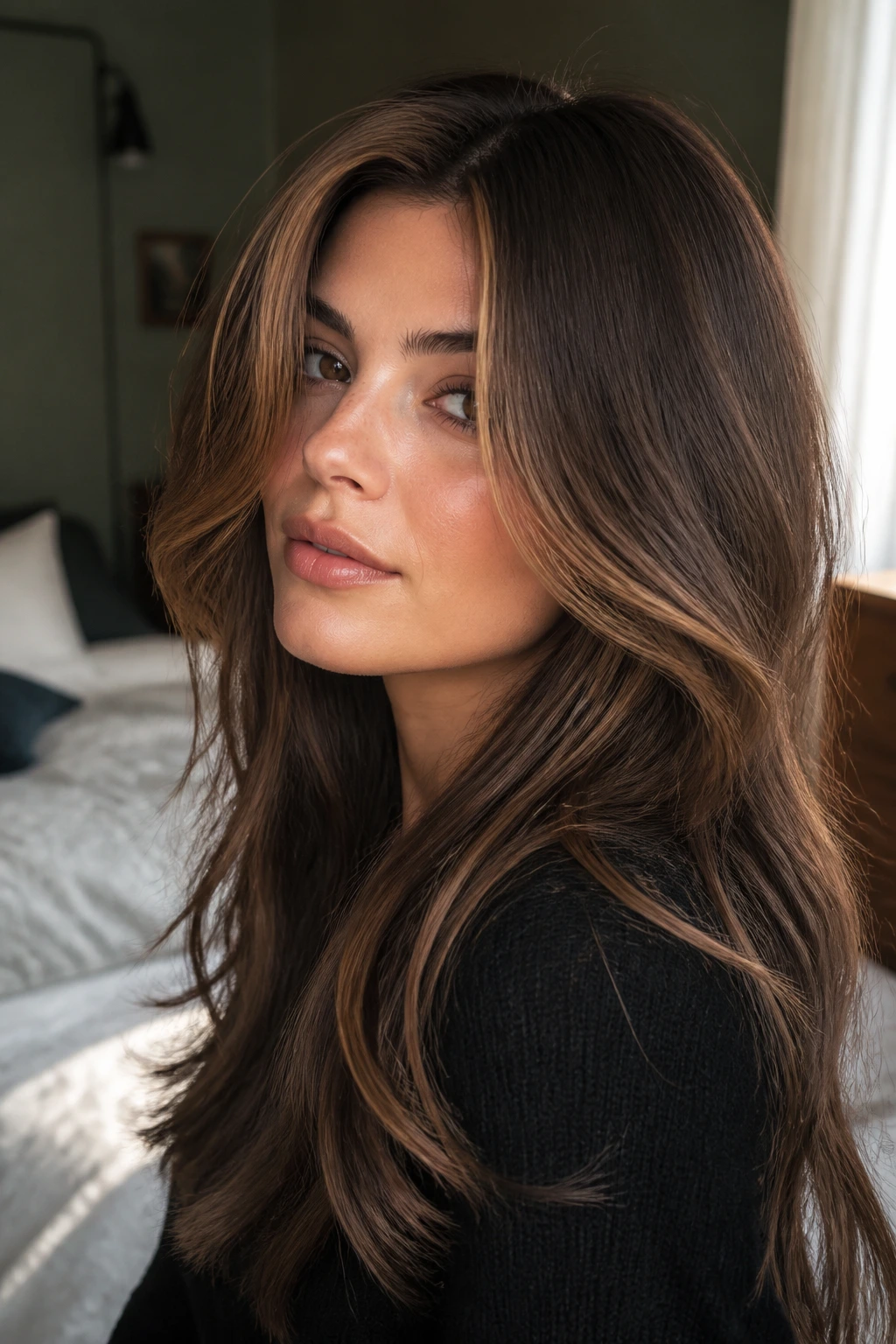
Soft Glow Brunette: Add a few warmer ribbons around the face if your brown shade feels flat. Keep them fine, not stripey, so the layers stay the focus.
Cool Smoky Finish: Choose ashier or mushroom-toned brown if you want the cut to feel modern and muted. It’s a strong match for sleek lobs and butterfly cuts.
Lived-In Texture: Ask for a piecey finish if you prefer air-dried waves, shags, or wolf cuts. The face-framing layers should separate a little instead of blending too perfectly.
Polished Blowout Shape: Use a round brush and a smoothing cream if you like the front pieces to curve softly under or away from the face. This suits curtain layers, lobs, and walnut browns especially well.
Low-Maintenance Grow-Out: Keep the front layers longer and less dramatic if you don’t want constant trims. The shape will stay useful even as it drifts.
Smart Salon Requests and Color Notes
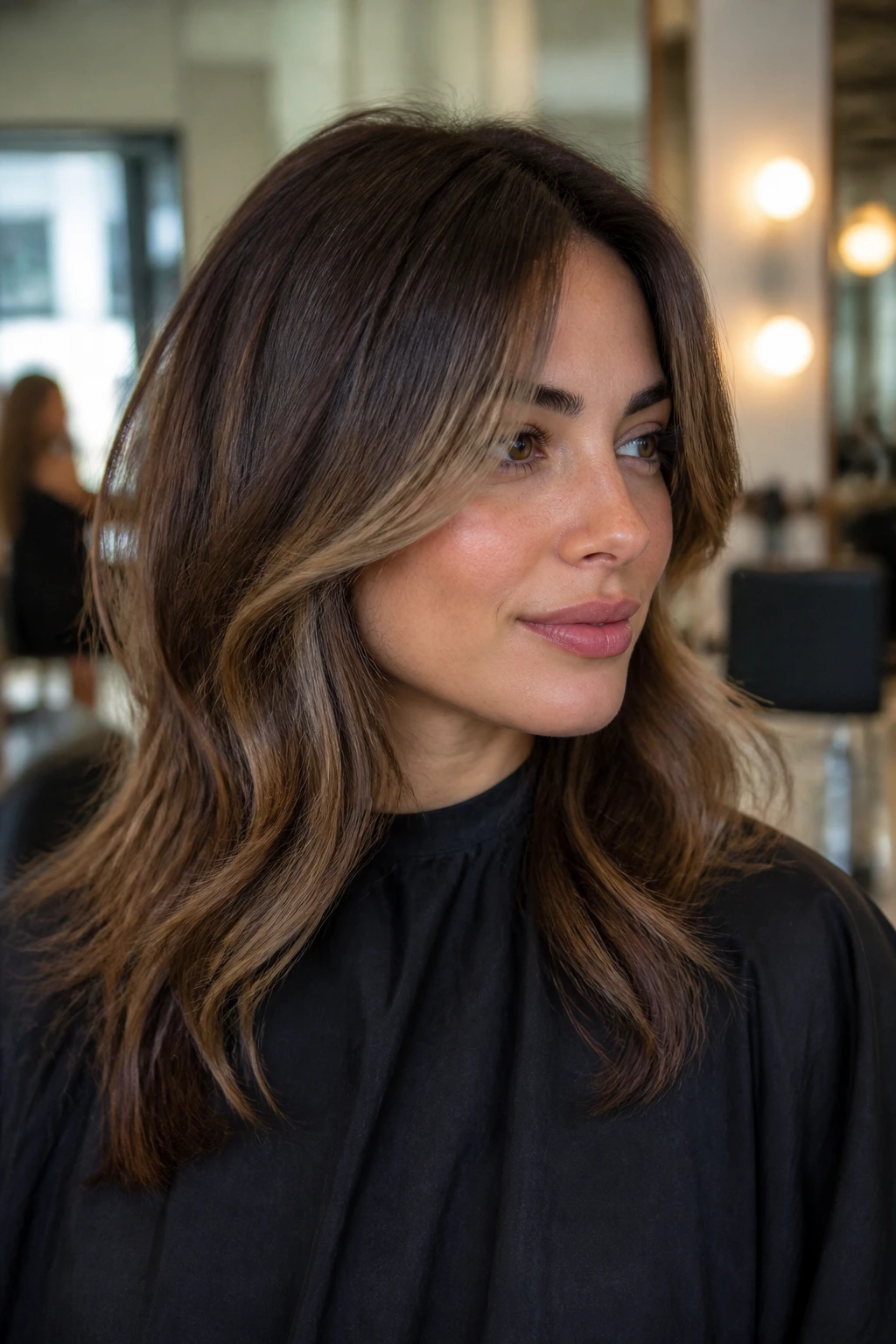
Tell your stylist where you want the shortest front piece to hit when your hair is dry. That sentence does more useful work than saying you want “face-framing layers,” because those words mean different things to different people. One person hears cheekbone. Another hears chin. Another hears a soft front angle that barely changes anything.
Bring a photo with hair close to your texture and density. A thick, blown-out chestnut cut will not behave like a fine, air-dried mocha wave, even if the front shape is similar. You want the stylist to see the amount of movement you actually need, not just the vibe.
If your brunette color is one flat shade, ask about a gloss or a few lighter pieces around the front. You do not need a full balayage to make layers look alive. Often a small brightness shift near the face gives the cut enough contrast to show off the shape.
Keeping the Shape Fresh Between Salon Visits
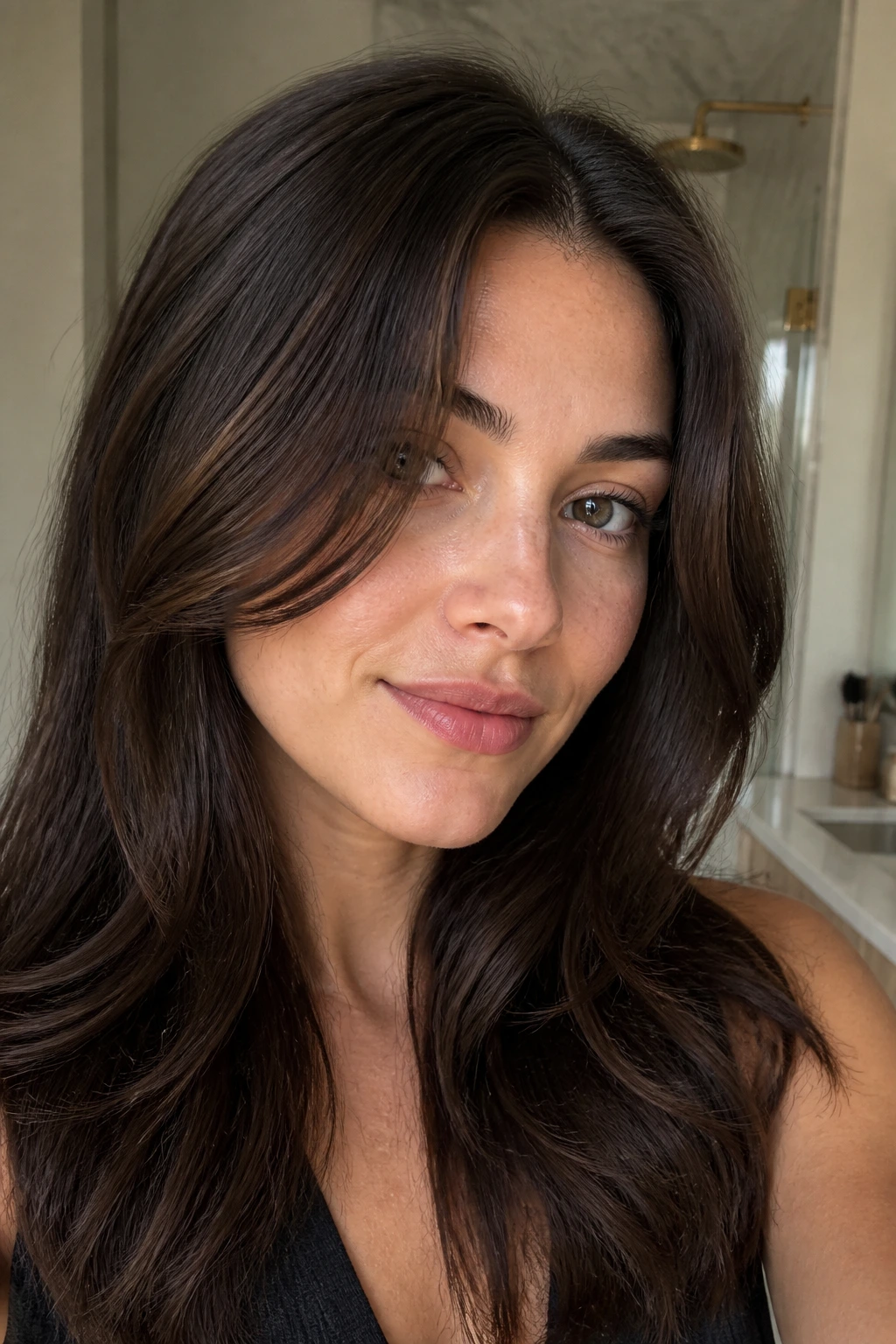
Face-framing layers usually need a trim every 8 to 12 weeks if you want them to keep landing at the right place. Shorter front pieces drift first, especially if you wear your hair up often or use heat to curl the ends. If the shape starts to vanish into the rest of the cut, that’s your cue.
Brown hair color also benefits from regular glossing or tone refreshes if the shade is treated. Warm browns can go brassy, cool browns can go dull, and both problems show up fastest around the front because that’s where light hits most often. A gentle color-safe shampoo helps, but the real fix is not over-washing and not using scorching water every day.
At home, keep the front pieces from getting bent into odd shapes by sleeping with the hair loosely secured or spread over a silk pillowcase. It sounds fussy. It saves time in the morning. If you wear heat often, give the ends a break between styling sessions and use a leave-in that keeps them smooth.
Face-Framing Layer Questions People Ask
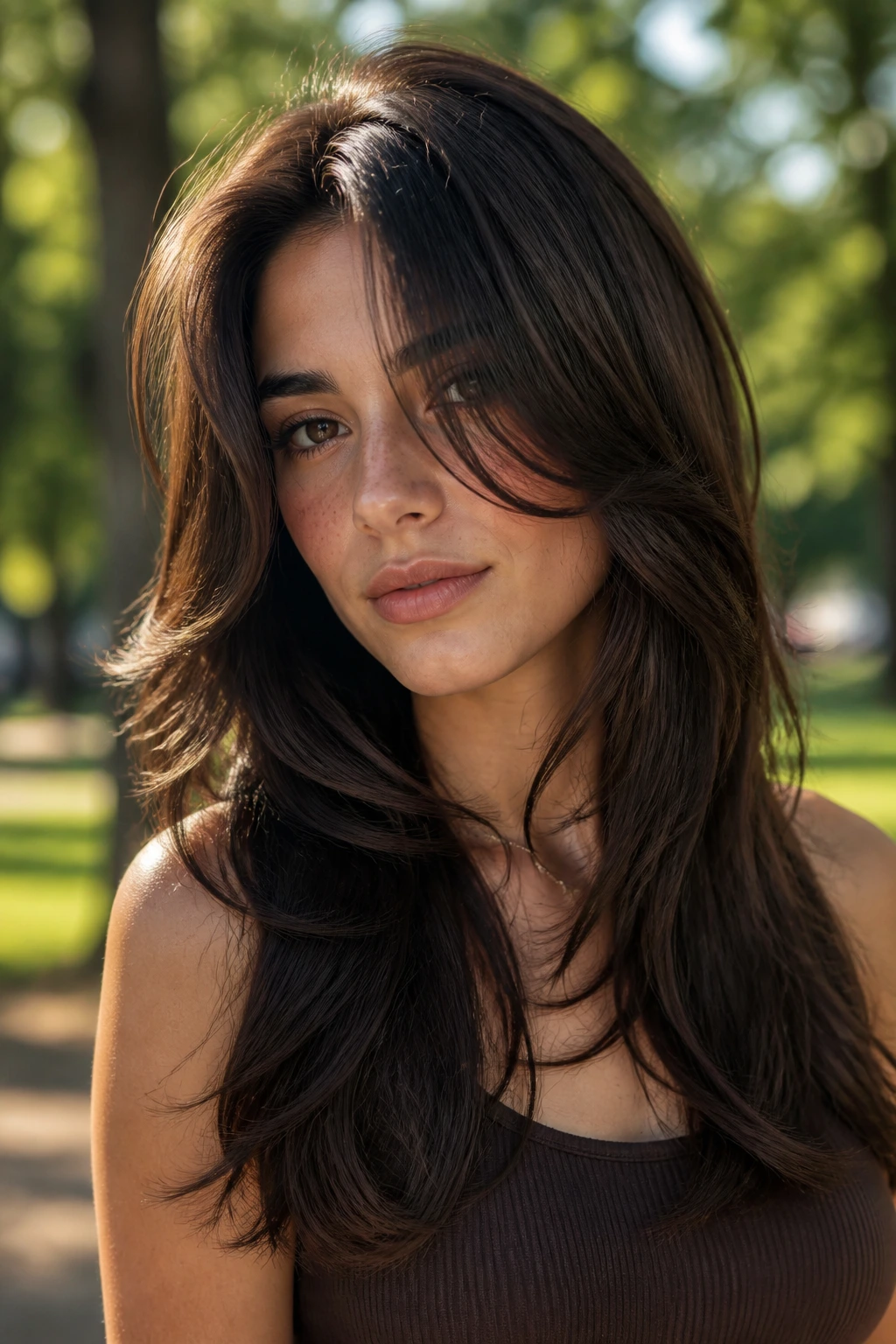
Will face-framing layers make my brown hair look thinner?
Not if they’re cut well. On dense hair, they remove bulk. On fine hair, they should be softer and longer so you keep enough weight at the front. The danger is not layering itself — it’s cutting too much too high.
What if I wear a middle part every day?
That’s actually one of the easiest ways to wear face-framing layers. Curtain pieces, butterfly cuts, and bottleneck bangs all sit naturally with a center part and open the face without needing much styling.
Can curly brunettes pull this off without losing curl definition?
Yes, but the cut has to respect shrinkage. The layers should be shaped while the stylist considers how your curls spring up dry. If the face frame is too short, it can puff instead of frame.
Do I need highlights for the layers to show up?
No. Color helps, but it isn’t required. Dark chocolate, espresso, and walnut brown all show shape beautifully when the cut has clean angles and a little shine.
Which front layers need the most styling time?
Curtain bangs and swoopy blowout pieces usually need the most attention. Shags, wolf cuts, and softer lob layers are faster because they’re designed to look good with a less perfect finish.
How do I know if the front pieces are too short?
If they sit well above your cheekbone and you’re constantly pinning them back, they’re probably too short for your taste. Face-framing layers should feel like part of the haircut, not a separate fringe you need to manage all day.
Can I ask for this if I’m growing out bangs?
Absolutely. That’s one of the smartest times to do it. The bangs can blend into the front layers instead of sitting there in an awkward in-between stage.
The Shape Worth Repeating
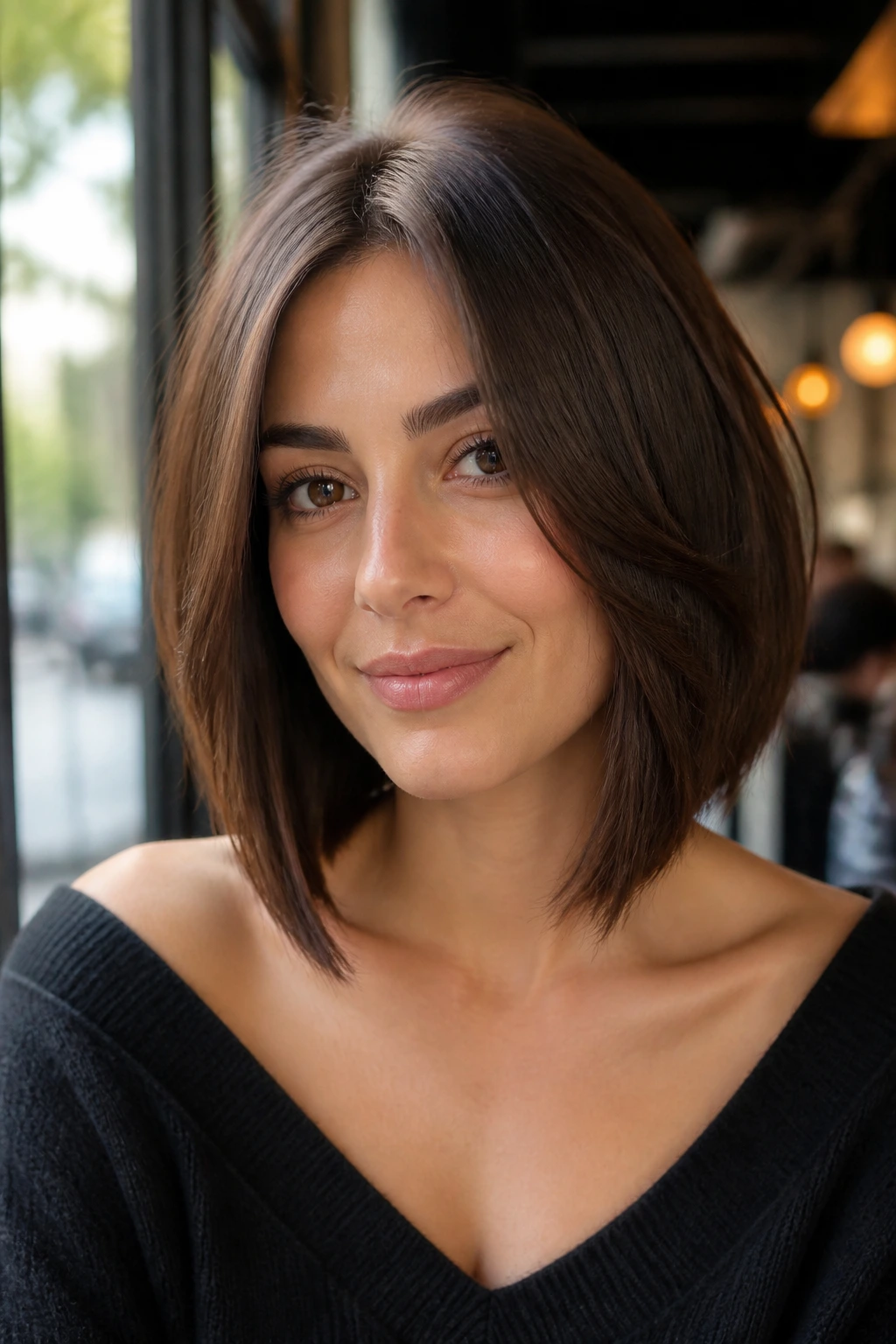
Brunette hair gets better when the front has a plan. That’s really the whole story here. A brown cut can be glossy, rich, and healthy-looking, but without some movement around the face it can still read heavy. The right face-framing layers change that in a way you notice the second you tuck one side back or step into daylight.
The nice part is that there isn’t one correct answer. A chestnut curtain layer, a smoky butterfly cut, and a walnut blowout all solve the same problem in different ways. Pick the one that matches your texture, your part, and the amount of styling you’re willing to do on a Tuesday morning. Then keep the front pieces trimmed enough that they still do their job.
If you’ve been staring at your brunette hair wondering why it feels a little flat, the fix is usually smaller than you think. A better front shape can change everything.