



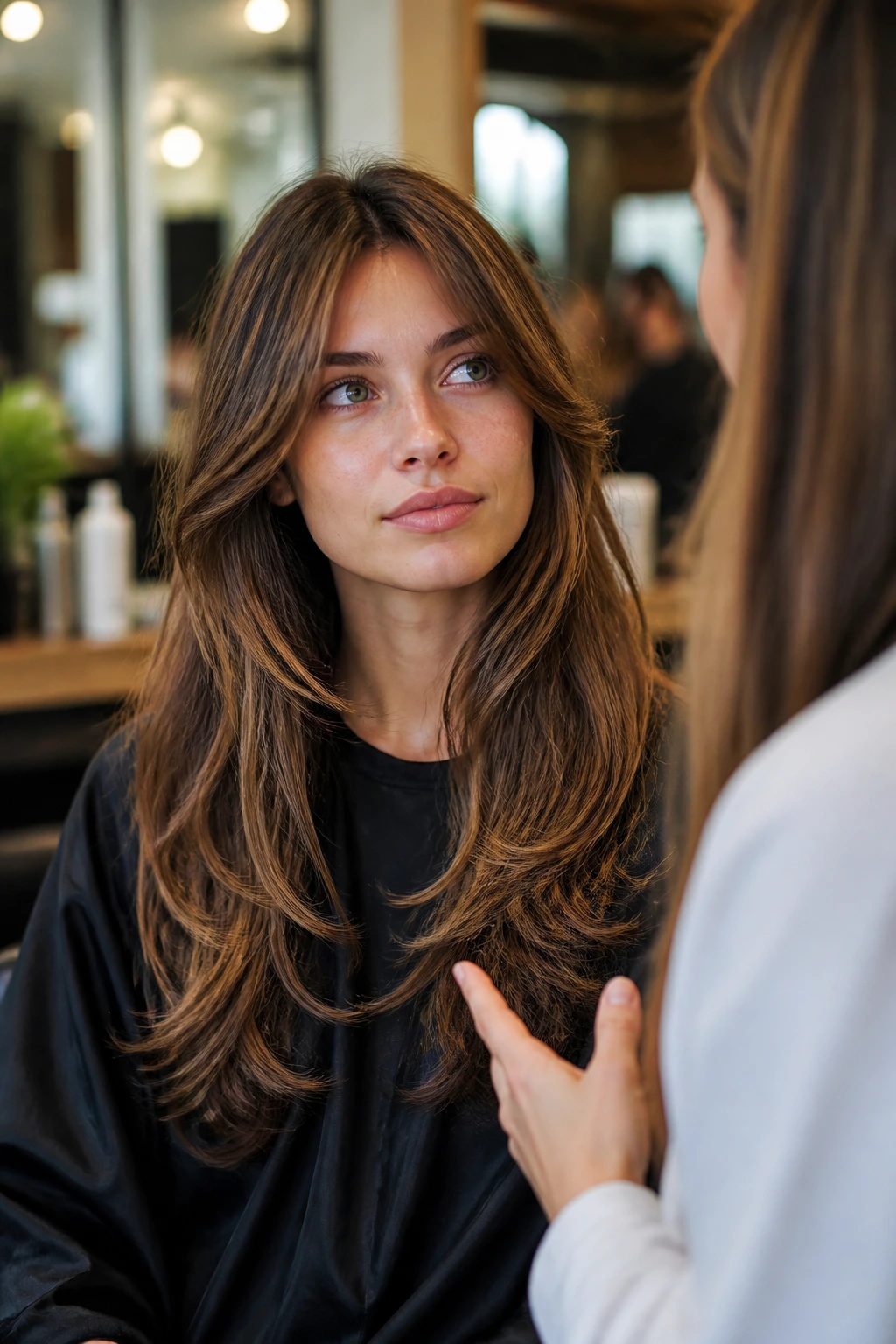
Long hair can turn heavy fast. On a heart-shaped face, that heaviness usually shows up in two annoying places: the forehead starts looking wider, and the chin disappears under a blunt sheet of hair. Feathered layers for long hair and heart-shaped faces fix that by breaking the length into moving pieces instead of one dense block.
The cut works when the front pieces start low enough to soften the cheeks but not so high that they puff around the temples. I like feathering that begins near the cheekbone, lip, or chin, depending on density, because it keeps the lower half alive without turning the whole head into a triangle.
Some versions look soft and airy. Some are glamorous, with a round-brush flip at the ends. A few are nearly invisible until you move. The right one depends on where your part sits, how much body your hair holds, and whether you want to style it in ten minutes or chase it with a hot brush every morning.
Why Feathered Layers for Long Hair and Heart-Shaped Faces Keep the Shape Light
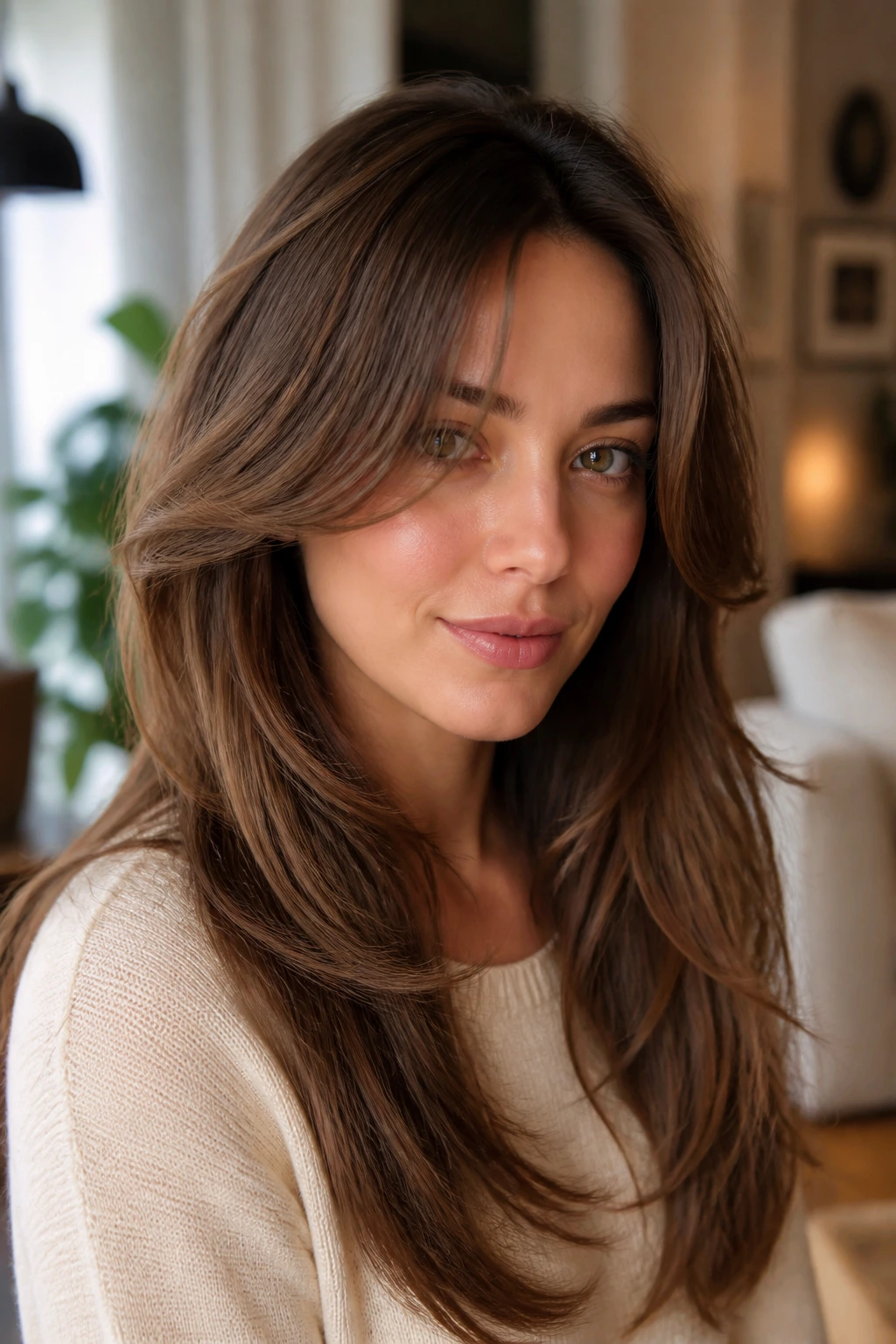
- They pull the eye downward: A long face frame that starts near the cheekbone or chin stops the forehead from stealing all the attention.
- They soften a narrow jawline: Feathered ends around the lower half give the chin more visual presence without making the haircut bulky.
- They keep the length from feeling like a blanket: Long, sliced layers move when you turn your head; one heavy curtain of hair just hangs there.
- They work with center parts and side parts differently: A center part makes the face frame do more of the balancing, while a side part gives the top half a softer diagonal line.
- They grow out better than blunt fringe shapes: You can trim the front pieces and leave the back length alone for a while, which matters if you don’t love frequent salon visits.
1. Cheekbone Feathering With a Soft Curtain Fringe
This is the cut I reach for when the forehead feels like the widest part of the face and the chin needs a little more visual company. The curtain fringe opens in the center, then bends out right where the cheekbones begin, so the eye doesn’t get stuck at the top. Keep the shortest face-framing piece around the upper cheekbone and the longest just past the lip. That small difference does more work than people expect.
Best for: medium to thick hair, especially if it already has a little bend.
Avoid this if: your hair frizzes the minute it dries, because a razor-heavy finish can make the fringe feel wispy in the wrong way.
A round brush or a quick bend with a 1.25-inch iron keeps the movement soft. That matters. A hard flip at the front can make the cut look dated fast, while a loose curve keeps the whole thing believable.
2. Chin-Grazing Butterfly Layers
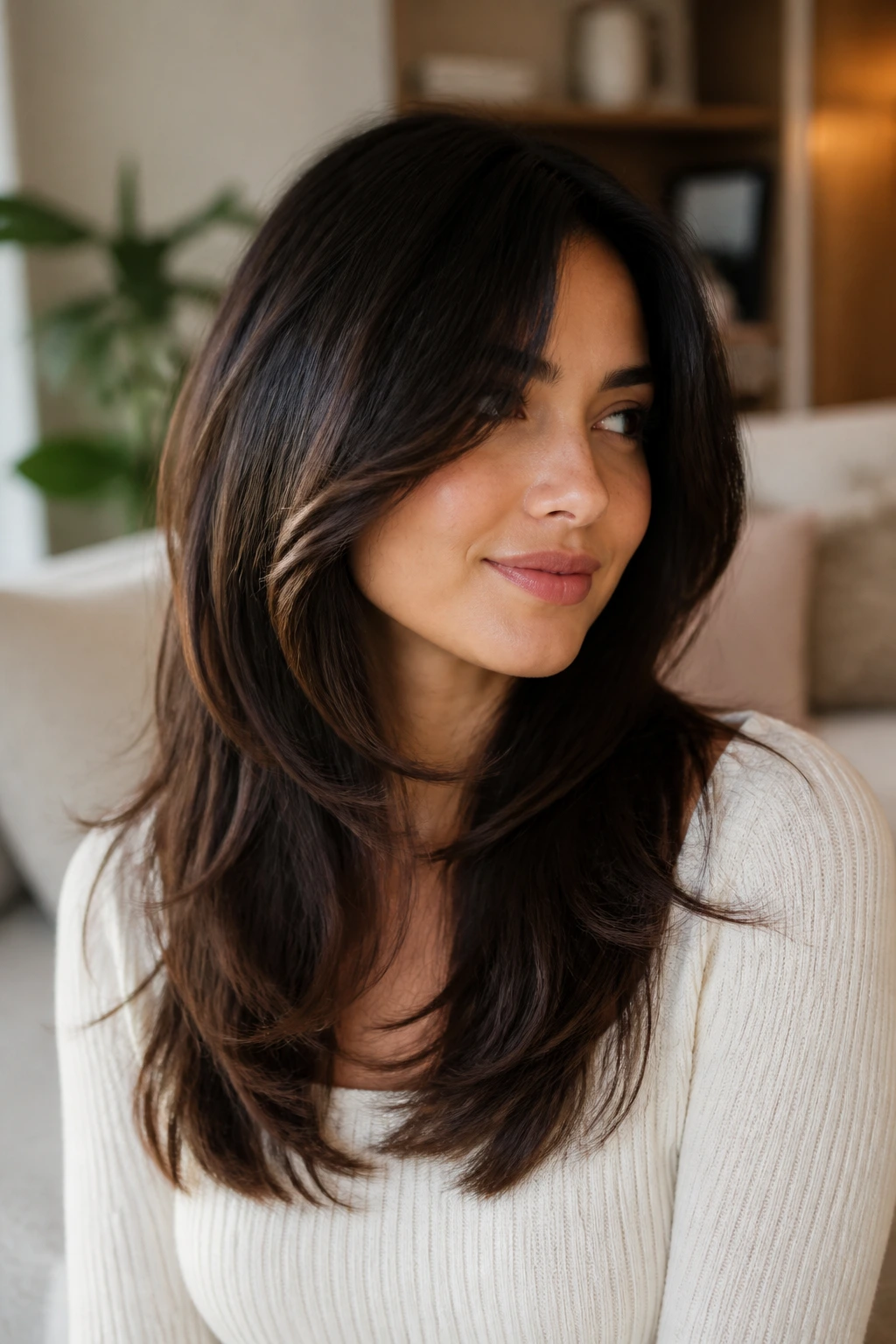
Want movement without sacrificing the length that took forever to grow? This is the one. Butterfly layers build shorter internal pieces through the top half, then let the bottom stay long, so you get lift around the face without giving up that curtain of hair down the back. On a heart-shaped face, the chin-grazing pieces are the sweet spot because they add width exactly where the face starts to narrow.
The trick is not to push the shortest layer too high. If those pieces sit near the temple, the top half gets bigger and the balance goes the wrong way. Keep the shortest slices around the chin or just below it, and let the longer layers melt into the collarbone.
How to wear it
Use a large round brush or hot rollers on the top section only. The lower length can stay straighter or softer, which keeps the cut from looking overdone. If you like a blowout that moves when you walk, this is one of the easiest cuts to get there.
3. Side-Swept Feathering for a Wider Forehead
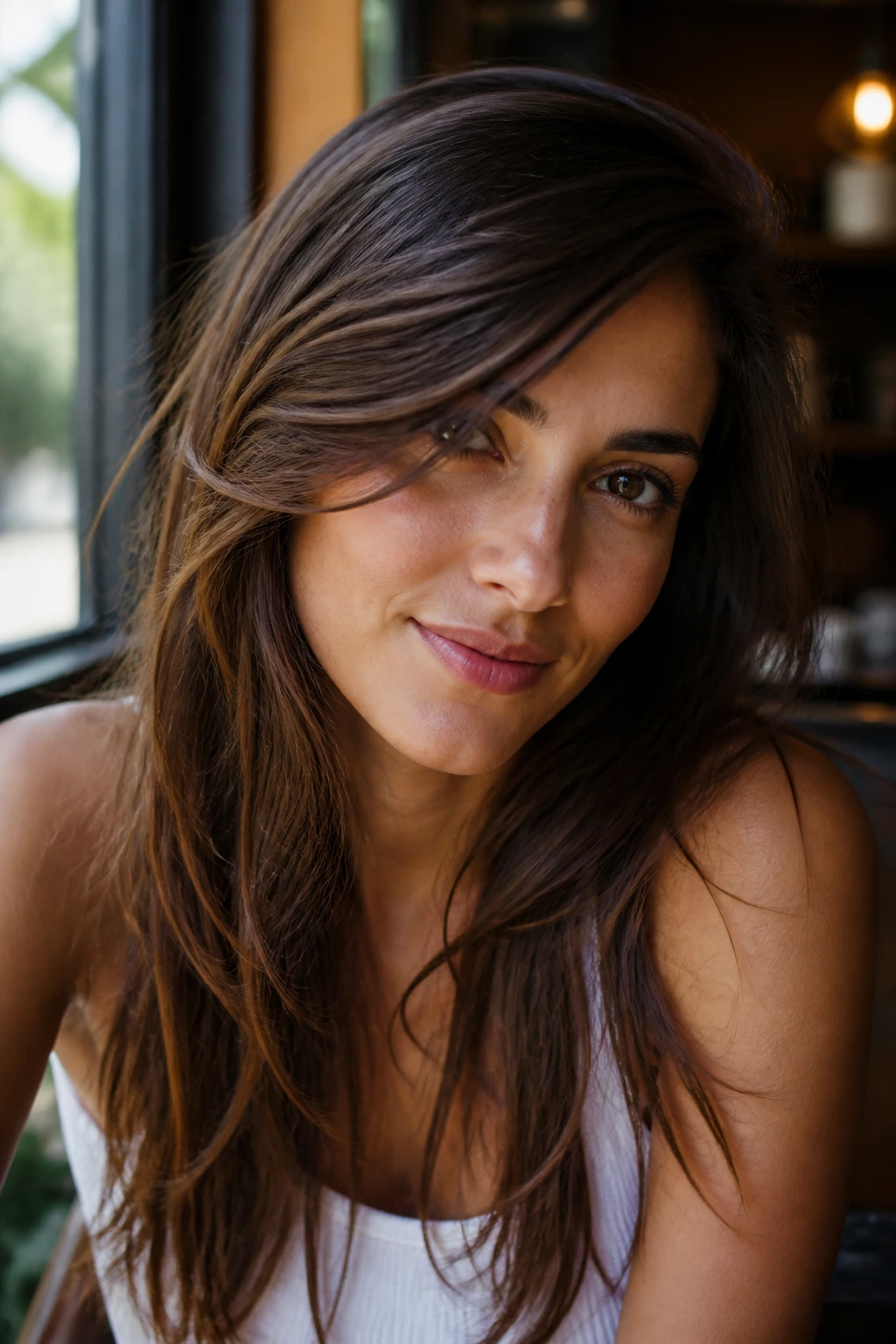
A side part is underrated. People treat it like a fallback when it can be the thing that saves a heart-shaped face from looking top-heavy. The diagonal line breaks up forehead width, and the side-swept front pieces keep the eye moving across the face instead of stopping at the temples.
The best version of this cut doesn’t shove all the weight to one side. It uses feathering that starts low enough to skim the cheekbone, then drops toward the jawline so the front looks deliberate, not accidental. If your hair naturally falls to one side, work with it. Fighting your part every morning gets old fast.
This shape also works well when you want a little polish without bangs. Keep the front long enough to tuck behind one ear and still fall back into place. That tiny bit of length makes the style easier to live with.
4. The Soft U-Shaped Feather Cut
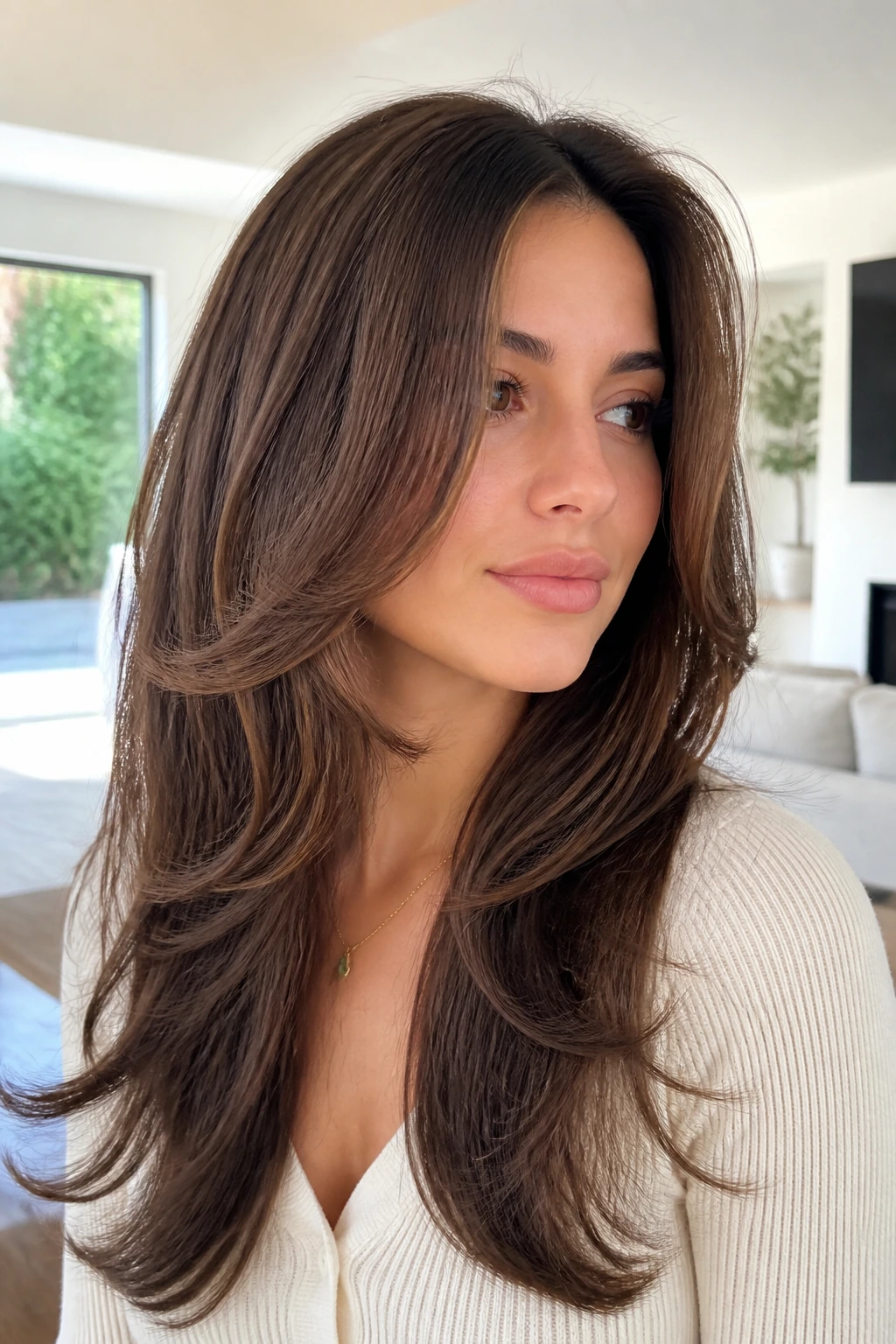
If the ends of your hair already feel pointy from old layering, a soft U-shape fixes the whole mood. The perimeter stays rounded, so the back keeps its fullness, and the feathering lives in the front and through the mid-lengths instead of eating away at the outline. On a heart-shaped face, that rounded base makes the jawline feel less sharp.
This cut is a good choice for people who like their hair sleek. A V-shape can look dramatic, but a U-shape reads calmer and often more expensive-looking in person, especially when the hair is straightened or brushed smooth. The front pieces should still open at the cheekbone or chin, but they shouldn’t slash downward in a hard line.
It’s a strong option if your hair is wavy and you don’t want the layers to explode when it dries. The rounded shape keeps the silhouette controlled.
5. V-Cut Feather Layers With Tapered Ends
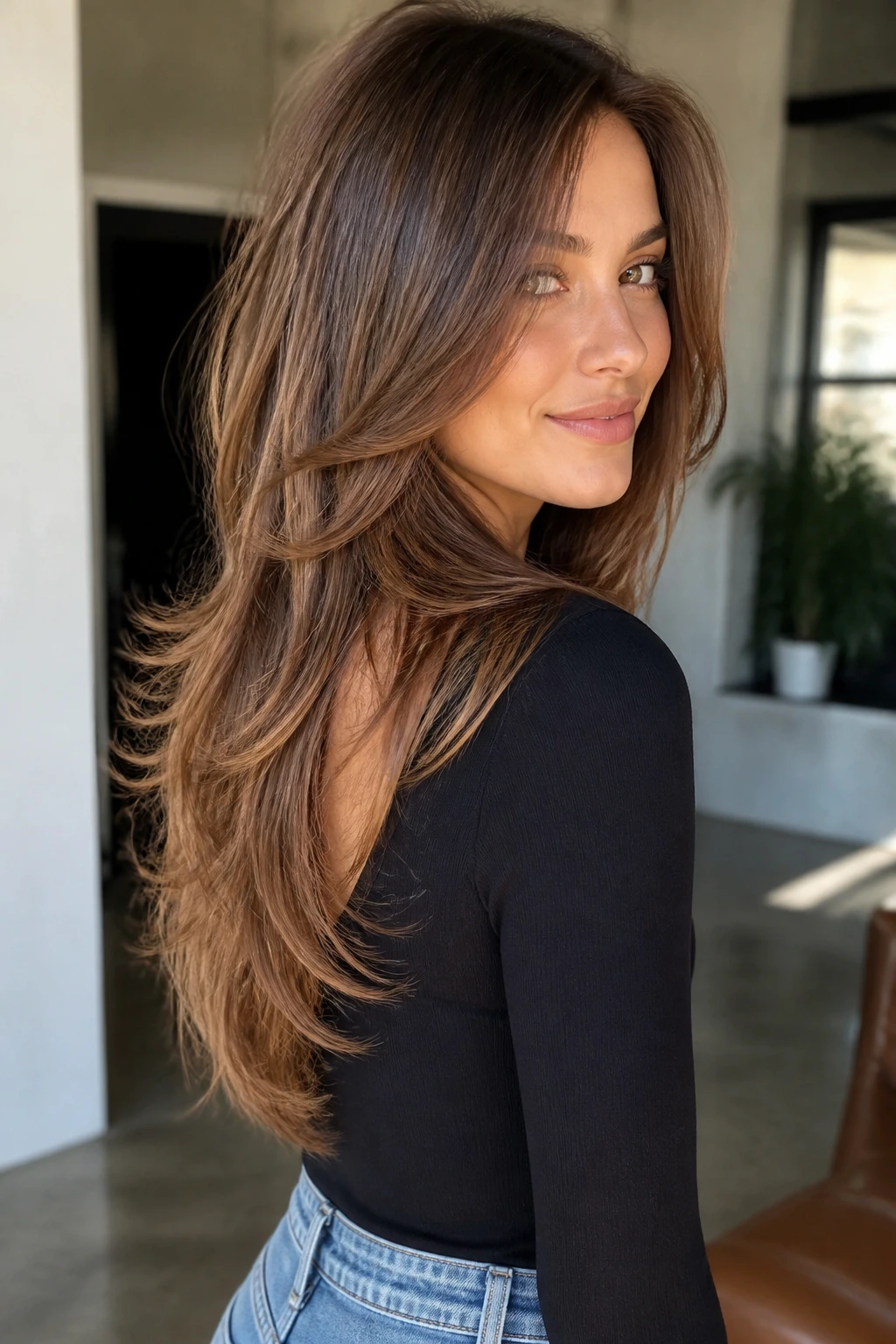
A V-cut gives long hair that long, swishy tail down the back, and feathered layers keep it from feeling too severe. This version works best when the V is shallow, not aggressive. If the point drops too quickly, the whole cut can make a heart-shaped face look narrower at the bottom than it already is.
The safe zone is a taper that begins somewhere below the cheekbone and stays gentle through the ends. Thick hair loves this shape because it releases weight without making the perimeter collapse. Fine hair can wear it too, but only if the layers stay long and the ends aren’t thinned to nothing.
If you wear your hair curled or blown out, the V shape adds movement every time you turn your head. It’s a little more dramatic than the U-cut. Not louder. Just more swing.
6. Crown-Lift Butterfly Layers
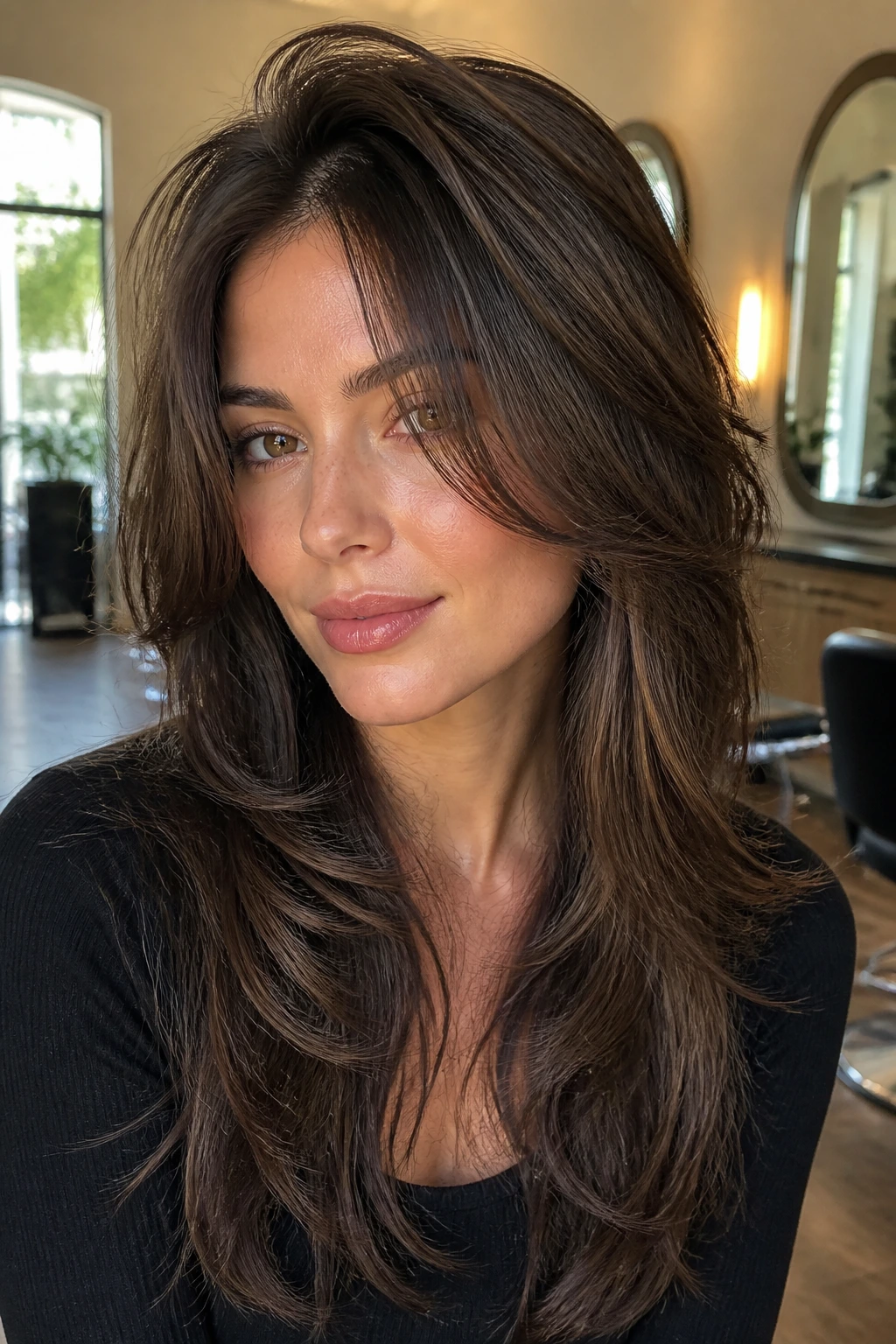
Flat crown? This one earns its keep. Crown-lift butterfly layers add height at the top without letting the sides puff out too much, which matters on a heart-shaped face because you want lift, not width at the temples. The short internal layers sit high enough to build body, while the longer face frame stays calm and soft.
A lot of people assume volume at the crown is always flattering on a heart-shaped face, and that’s not quite right. You want controlled height. Too much teasing or too many short layers at the top makes the whole head look busy. Keep the crown airy, not fluffy.
This cut is useful if your hair falls flat against the scalp after a few hours. A little mousse at the roots and a big brush through the top section usually brings it back. That’s the whole appeal: not a giant styling project, just enough lift to keep the cut from lying down.
7. Invisible Layers for Thick, Heavy Hair
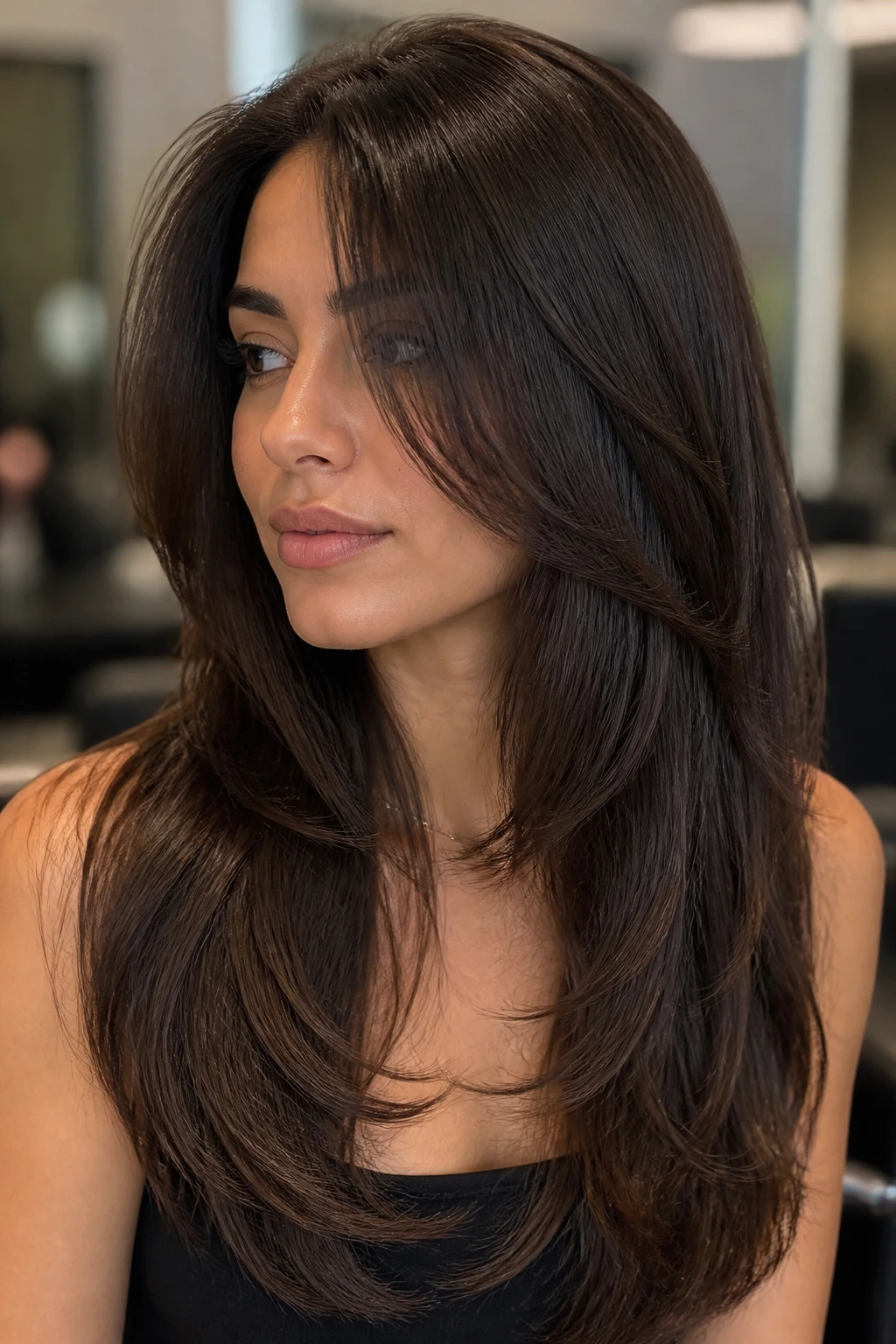
Invisible layers are the quiet fix for hair that feels like too much hair. The exterior still looks smooth, but the inside loses weight, so the length moves instead of standing in one dense block. On a heart-shaped face, that’s a smart trade because you get shape without more width around the cheeks.
This is where a stylist’s hands matter. You want internal removal, point cutting, and careful blending, not aggressive thinning shears run all over the place. Over-thinning thick hair can create frayed ends and weird puffs that show up the second humidity hits. I’d take a little more weight over choppy ends any day.
If your hair is past the shoulder and tends to spread out at the bottom, invisible layers are the cut to ask about. The surface stays clean. The inside does the work.
8. Whisper Layers for Fine, Flat Hair
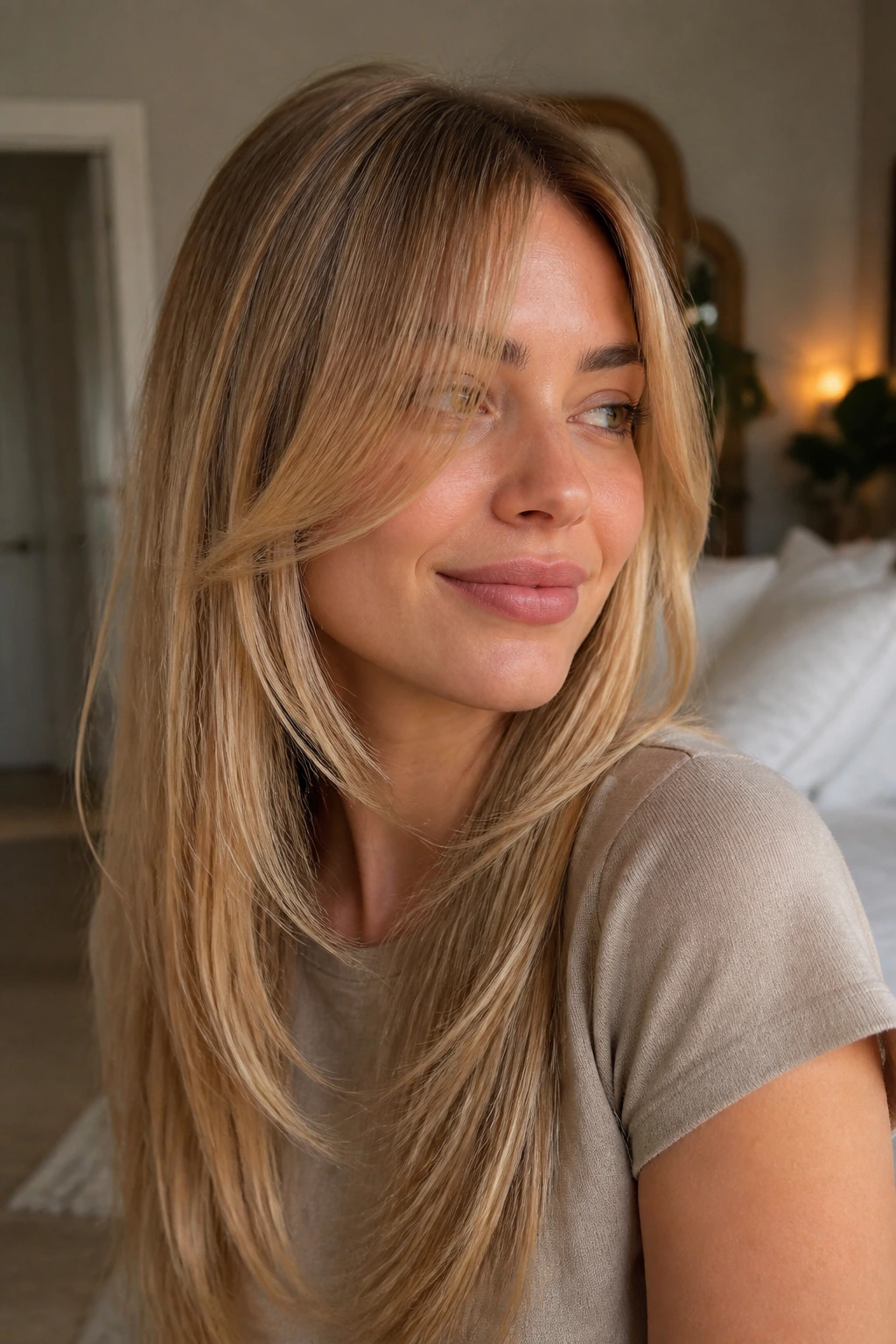
Fine hair needs a lighter touch. Too many layers and it starts looking see-through, especially at the ends where every strand suddenly seems to have opinions. Whisper layers keep the perimeter fuller and tuck the feathering farther down the length, so the cut still has body.
The shortest pieces should stay long enough to be useful. Think cheekbone, lip, or even chin — not all the way up near the eyes. That’s the mistake that turns fine hair into string. The goal is to create motion you can see when the hair moves, not to chop density away.
How to style it
Use mousse or root-lift spray on damp hair, then blow-dry the roots first. The ends don’t need much. A round brush through the front and a little bend at the tips is usually enough, and heavy serum near the crown will flatten the whole thing in about ten minutes.
9. Long Shag With Soft Feathered Ends
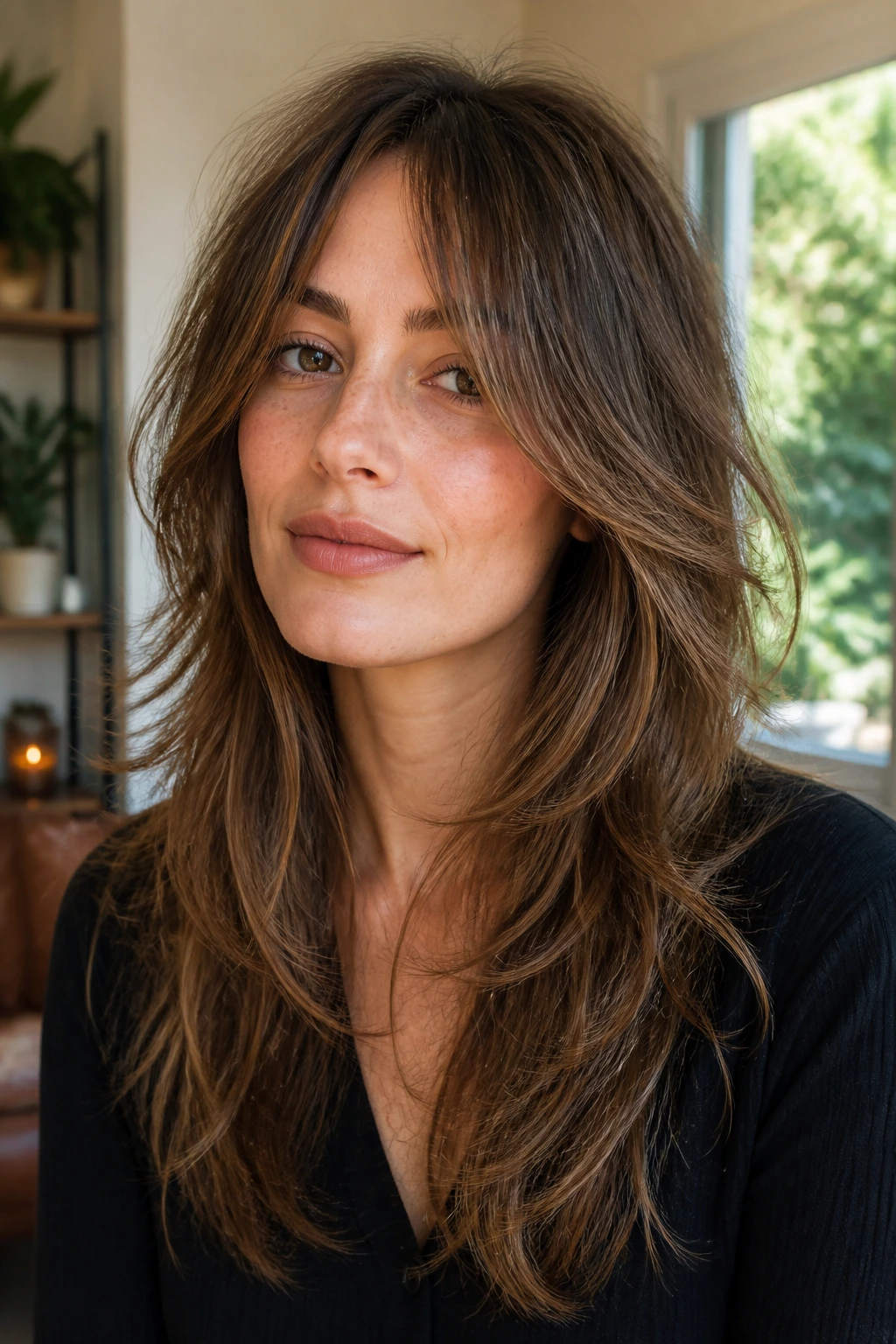
The long shag is for people who want some attitude but don’t want a haircut that looks like it’s trying too hard. The soft feathered ends keep it wearable, while the uneven layers around the cheeks and jaw add texture that suits a heart-shaped face surprisingly well. The face gets less top-heaviness, and the lower half gets a little more action.
What keeps this from becoming a mess is restraint. The layers should be visible when the hair moves, not hacked into the shape. If the ends are sliced too aggressively, the cut can turn fluffy around the sides and fight the face instead of framing it.
This is one of the best choices if you air-dry a lot or use a diffuser. A little texture spray through the mid-lengths is enough. You do not need perfect curls or a full blowout for it to make sense.
10. Bottleneck Bangs and Floating Sides
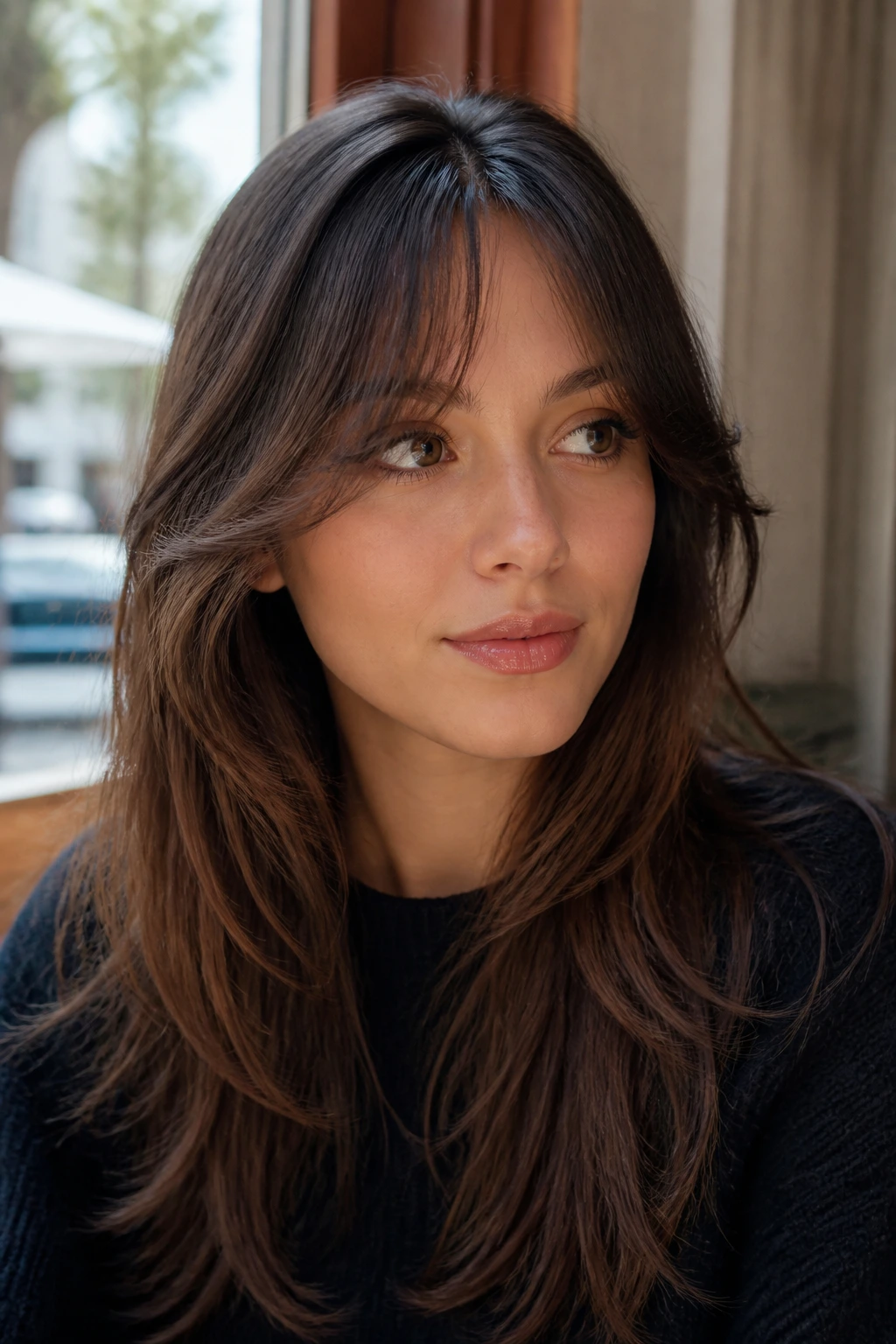
Bottleneck bangs are a nice middle ground between curtain fringe and full bangs. They start narrow in the center, then widen softly toward the temples before blending into the side layers. On a heart-shaped face, that shape is useful because it cuts down forehead width without boxing in the face.
The trick is keeping the sides floating. They shouldn’t land in one blunt shelf around the cheekbones. They should slip into the rest of the haircut so the front looks seamless when you tuck one side back or push it off your face. If the bangs stop too abruptly, you lose the whole effect.
This style suits medium-density hair best. Very fine hair can lose too much weight in the fringe area, and very curly hair needs a different approach to avoid shrinkage surprises. But if your texture is somewhere in the middle, bottleneck bangs are a smart, modern-looking option.
11. Center-Part Symmetry With Balanced Face Framing
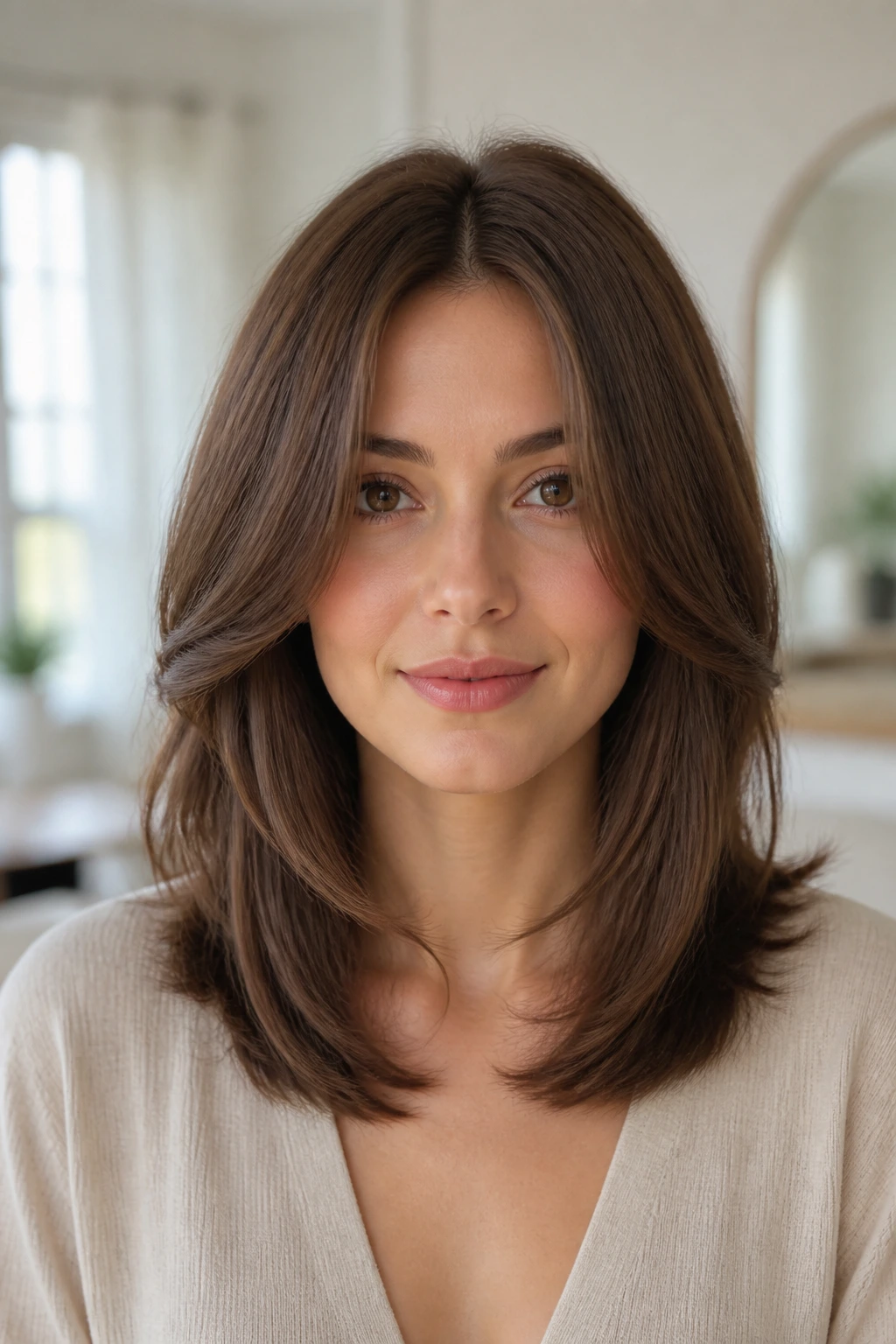
A center part can work on a heart-shaped face, and I’d argue it works better than people think when the face frame starts low enough. The key is not to cut the front pieces too short. Let them begin near the chin, then drift to the collarbone so the face gets length and softness instead of a sudden shelf.
What makes this cut feel polished is symmetry. The two sides mirror each other, so the feathering becomes the visual interest rather than the part itself. On straight hair, that can look especially clean. On wavy hair, it gives a calmer shape than a shag or a deep side part.
If your forehead feels broad, a center part is still fair game. Just keep the shortest layer out of the temple zone. That zone is where a lot of heart-shaped faces get too much width too high up, and that’s the mistake that makes the cut look off.
12. Deep Side-Part Layers for Extra Sweep
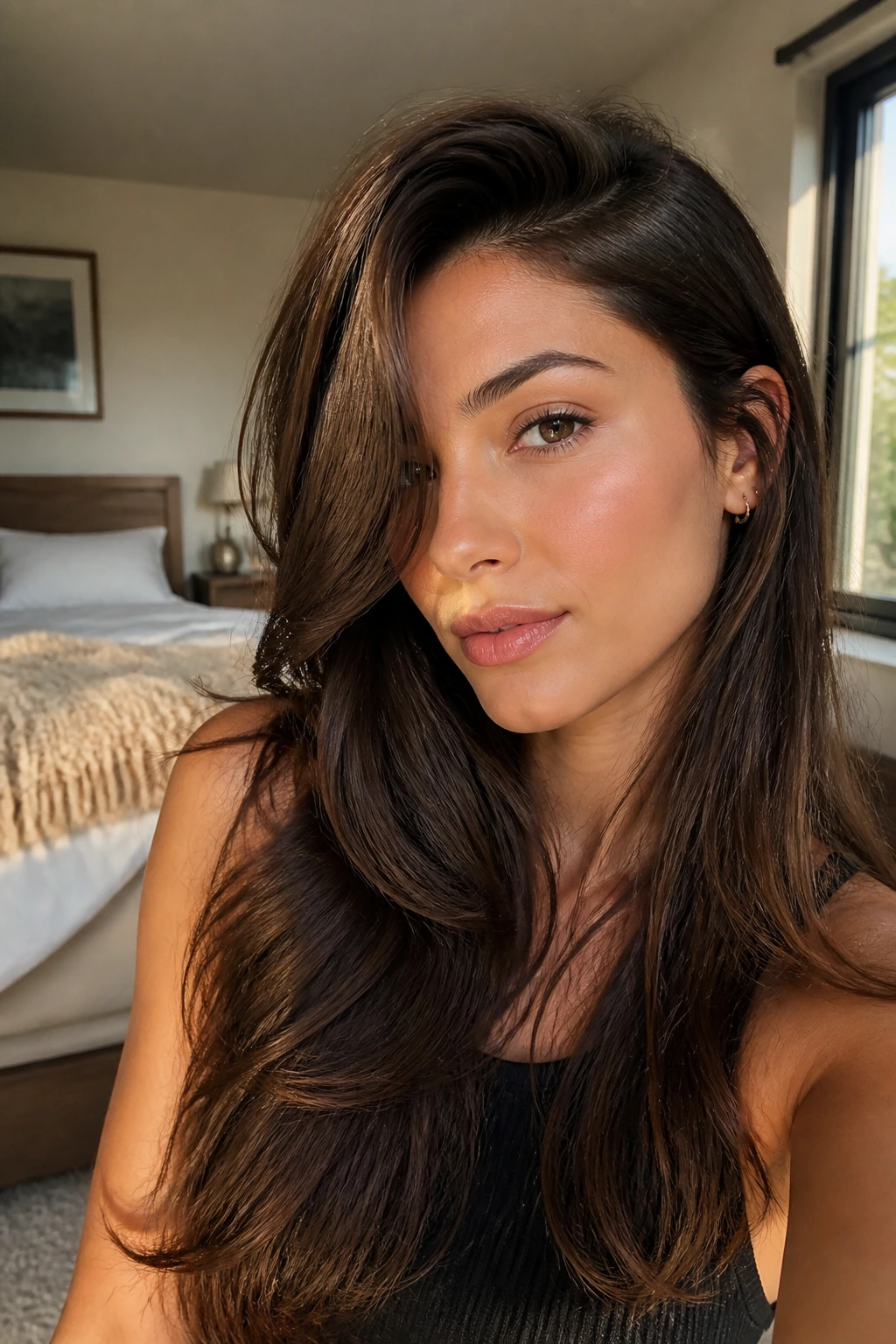
This is the easiest way to fake instant lift. A deep side part shifts the mass of the hair so one side falls across the forehead and the other side stays cleaner, which gives a heart-shaped face a stronger diagonal line. Diagonals are your friend here. They interrupt the straight vertical feel that long hair can create.
The layers need to follow the sweep, not fight it. The front can be long enough to tuck behind one ear on the heavier side, while the opposite side lands near the jaw or collarbone. That asymmetry keeps the cut from feeling rigid. It also makes the hair look fuller than a center-part style when the roots are a little flat.
Best styling move
Lift the root on the open side with a fine-tooth comb and a blast of cool air. That tiny bit of lift stops the part from collapsing and keeps the whole style from feeling limp by noon.
13. Blowout Layers With a Rounded Under-Flip
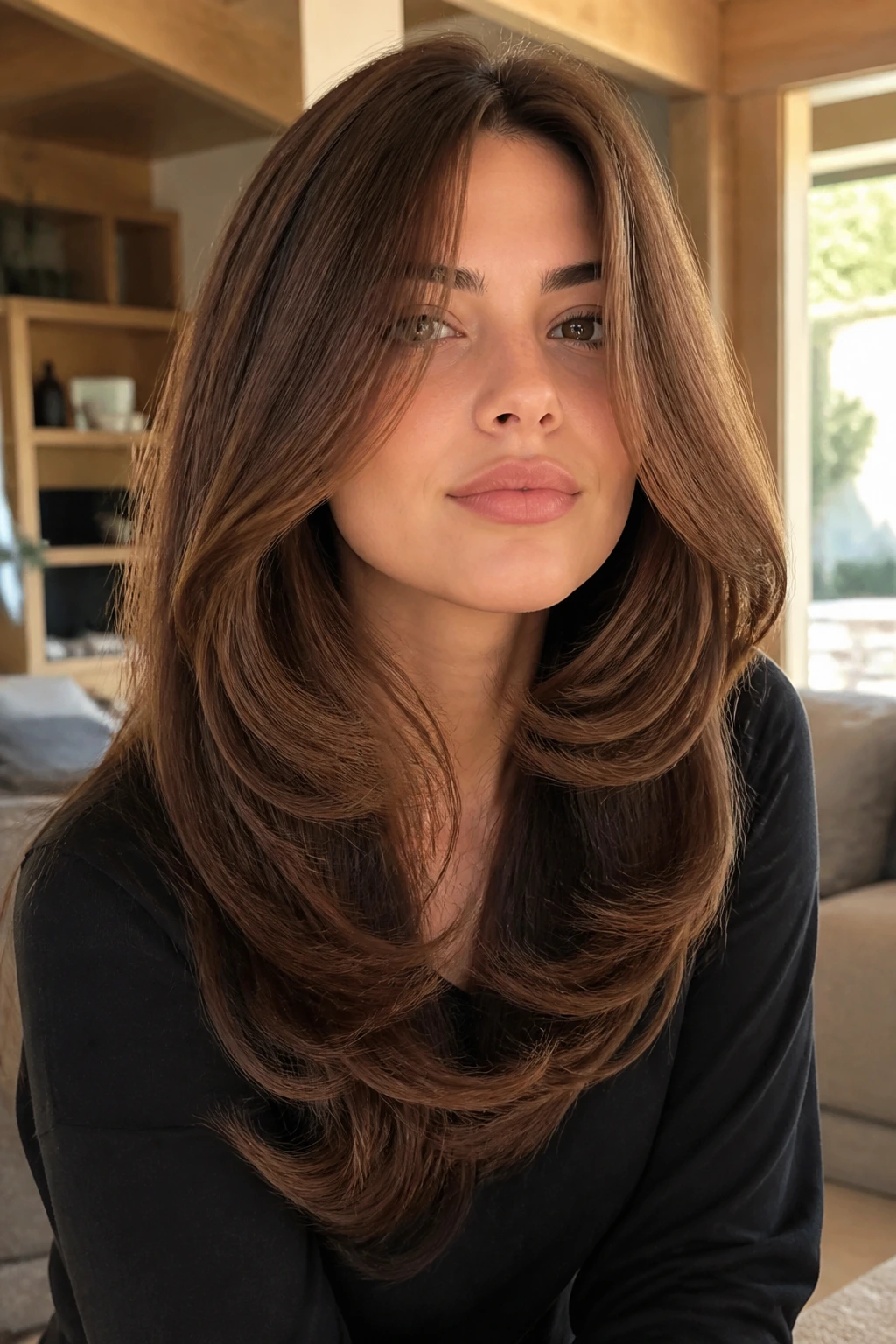
If you love a salon blowout, this is your lane. The rounded under-flip turns the ends inward instead of letting them hang straight, and that bend softens the jawline on a heart-shaped face. The silhouette ends up more oval, which is usually what people are after whether they say it or not.
This cut needs to be shaped with the blow-dry in mind. Ask for face-framing layers that respond well to a round brush, not pieces so short that they kick out in odd directions. The best version moves like it was set with a large roller, even when it wasn’t.
It works especially well on medium to thick hair. Fine hair can still wear it, but the ends need to stay full enough to hold the curve. Otherwise the flip goes flat and the style loses its charm.
14. Sleek Straight Layers That Keep the Perimeter Full
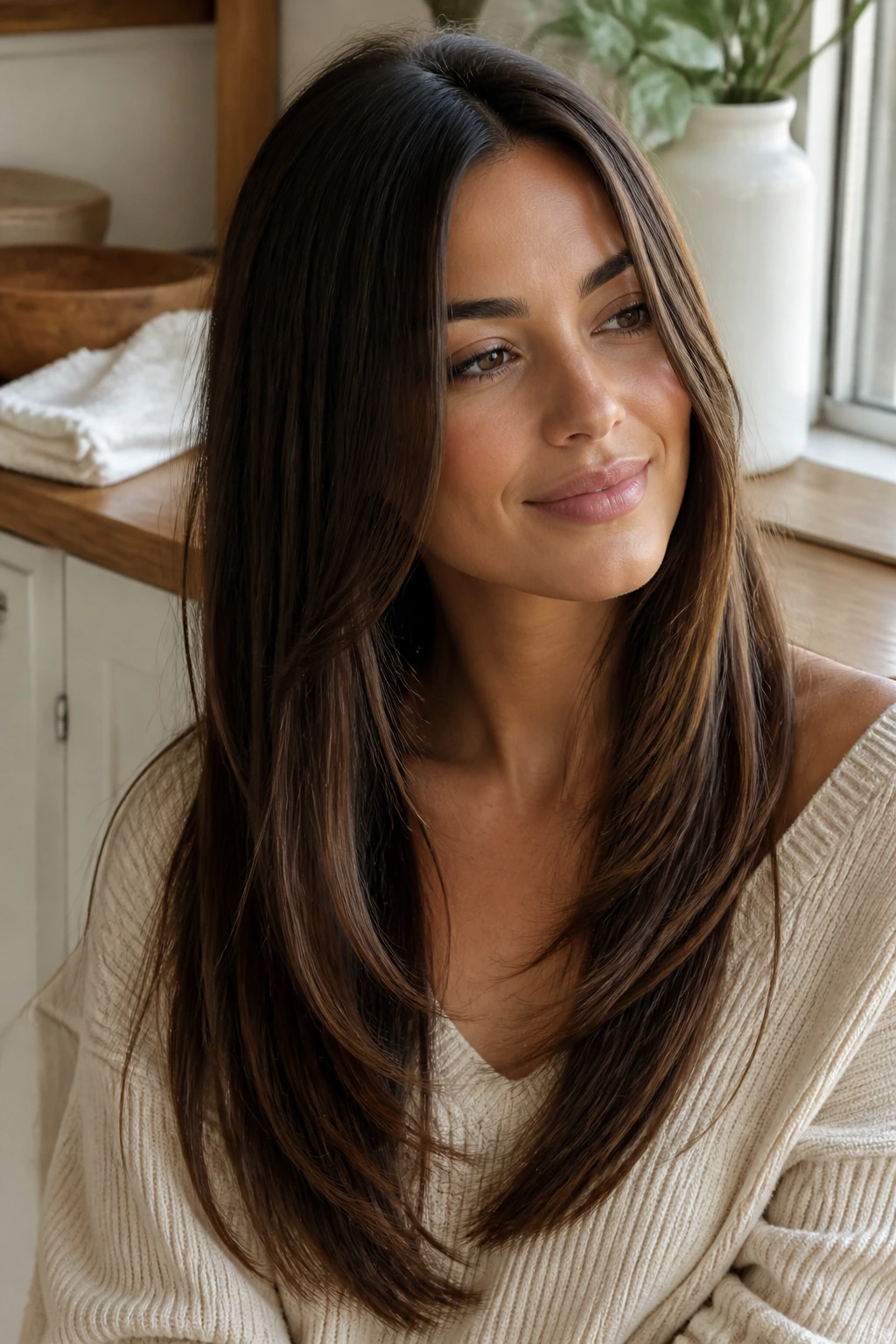
Not every feathered cut needs bounce. Straight hair can wear feathering beautifully if the layers are long and the perimeter stays full. The trick is to keep the movement subtle — just enough softening around the front and mid-lengths to keep the cut from feeling like a long sheet.
This version is especially good if you prefer a clean look and don’t want to curl or round-brush every morning. A slight bevel at the ends is enough. Too much layering makes straight hair look thin, and on a heart-shaped face that can make the chin area feel even narrower.
I’d ask for long, blended layers that show when the hair swings, not when it sits still. That’s the difference between a shape that looks elegant and one that looks accidentally chopped.
15. Wavy Piecey Layers With Separated Ends
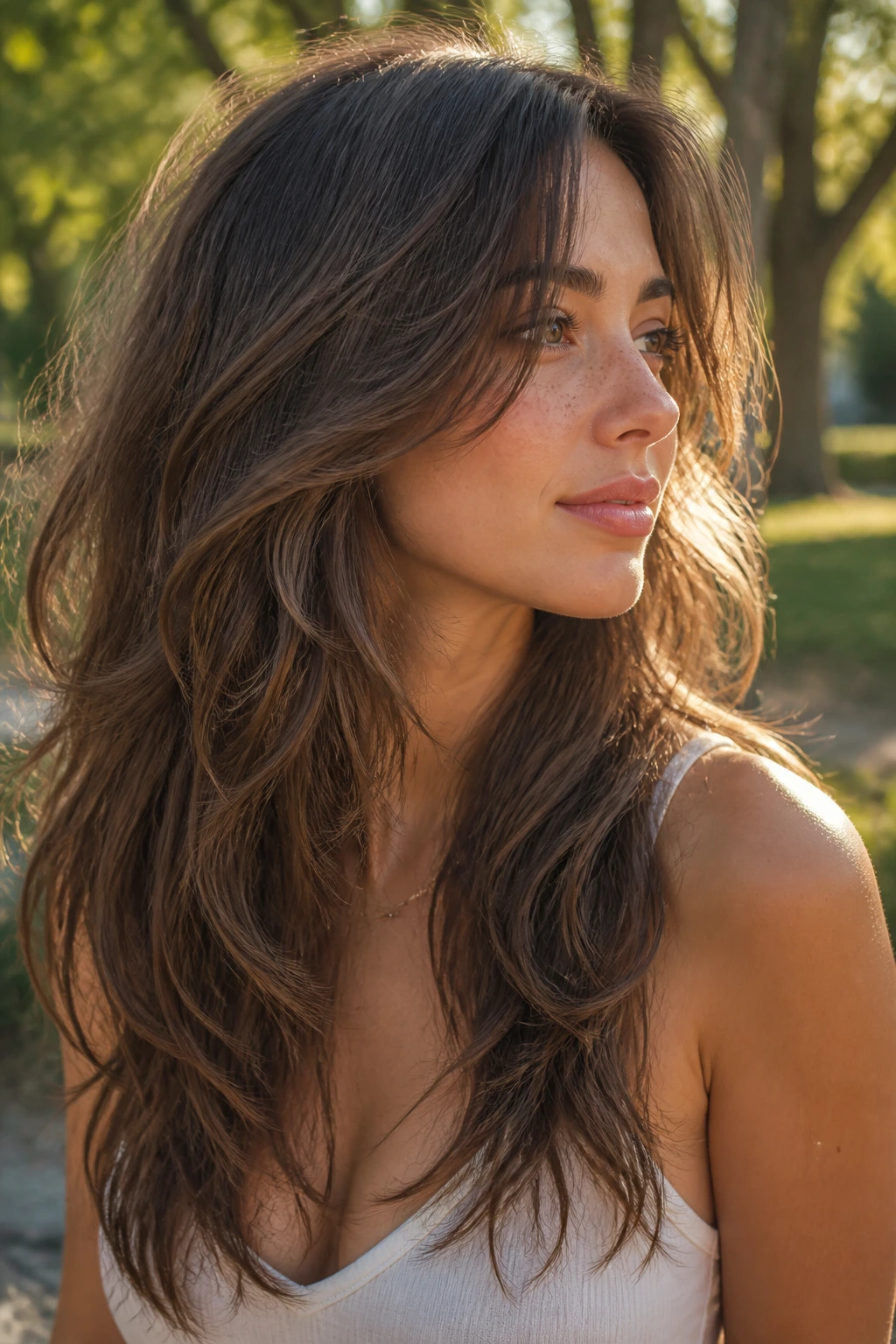
Wavy hair likes space. If the layers are too heavy, the wave pattern clumps. If they’re too thin, the ends frizz. The sweet spot is a piecey feathered cut where the layers land right around the wave’s natural bend — cheekbone, mouth, or collarbone — and the hair falls into ribbons instead of a wall.
For a heart-shaped face, the piecey look helps because it keeps movement lower on the face. The temples don’t need extra puff. The jawline does. A little salt spray through damp hair, then scrunching from ear level down, gives enough texture without making the top explode.
This is one of those cuts that looks better a little imperfect. If every strand sits in place, the whole point gets lost.
16. Curly Feathering That Keeps the Curl Pattern Intact
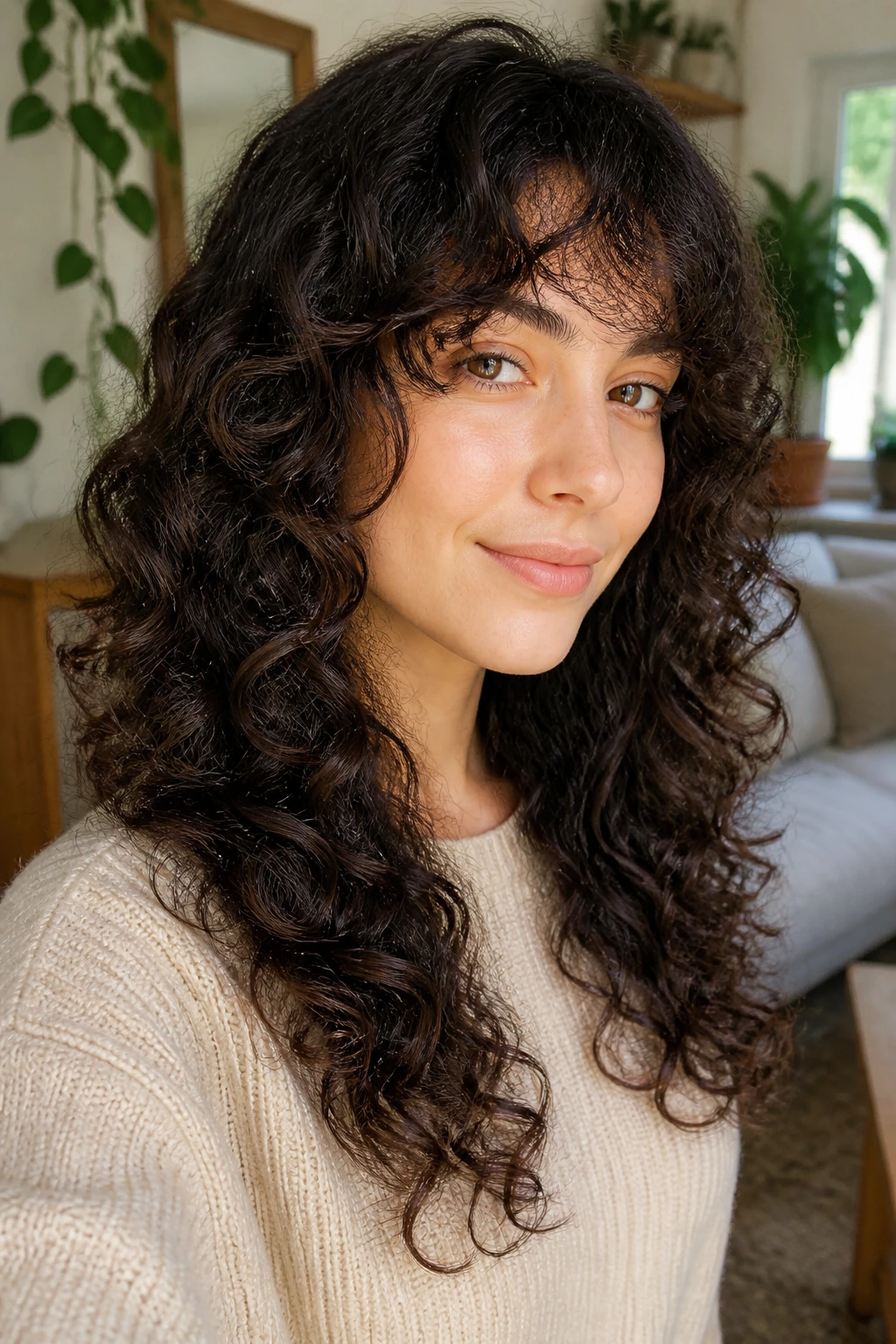
Curly hair needs feathering that respects the curl pattern instead of flattening it. A dry cut or curl-by-curl shaping session usually gives the best result because the stylist can see where each curl actually lands. On a heart-shaped face, the shortest pieces should still live around the cheekbone or jaw, not up around the temples where they can puff out.
The goal is roundness without a triangle. That means some internal shape, some weight left in the lower half, and no over-thinning at the edges. If the cut is too stripped down, curls can frizz and separate in a way that makes the face look wider up top than intended.
Diffuse on low heat. Scrunching too much at the roots can build volume where you do not want it. The best curly feathering looks like the curls were allowed to fall into place, then gently nudged, not wrestled into submission.
17. Razor-Softened Layers for Airy Movement
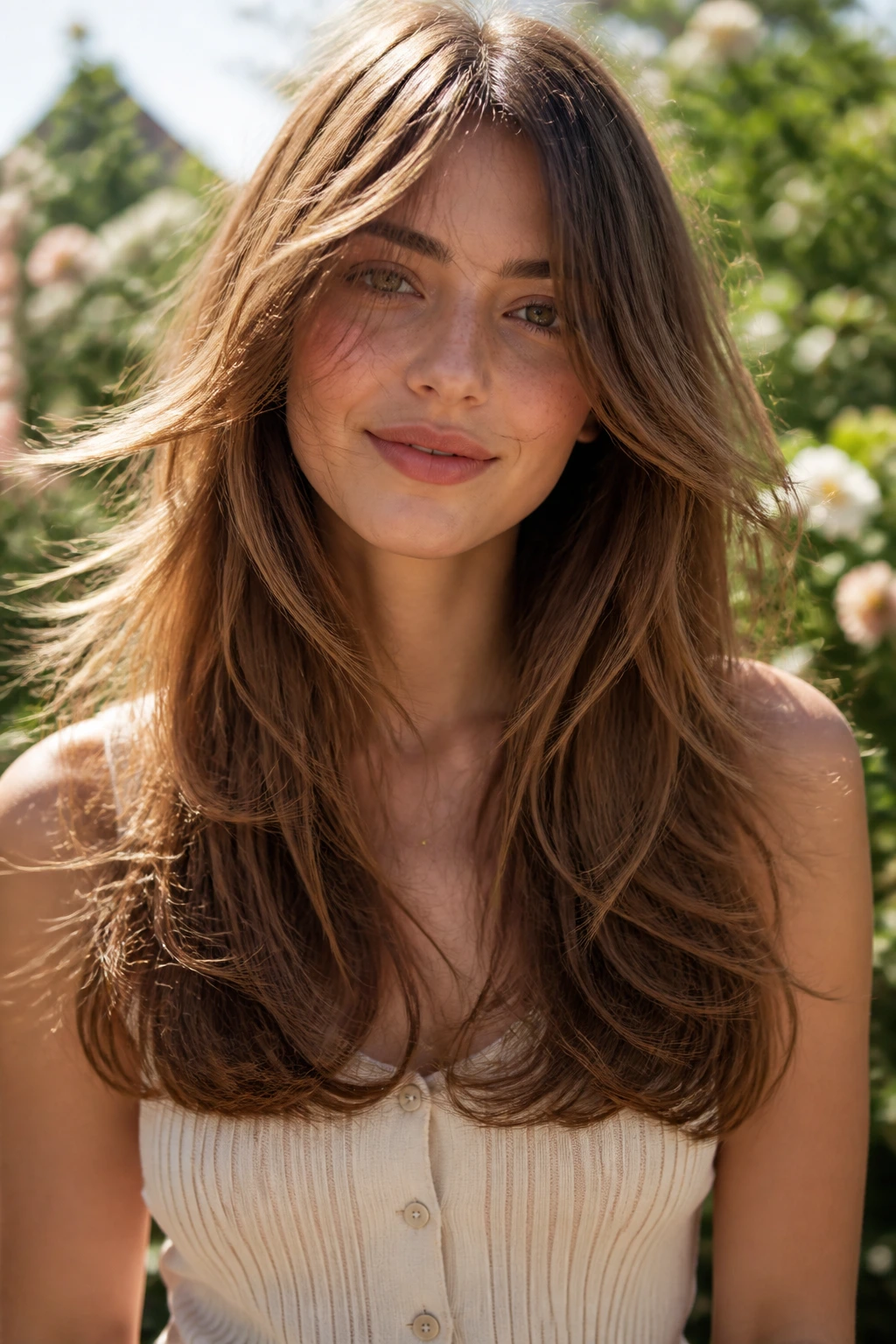
Razor cutting can make feathered layers feel almost weightless. The ends turn wispy, the front pieces soften fast, and the whole haircut has a little air in it that scissors sometimes miss. On a heart-shaped face, that softness is useful around the cheeks because it keeps the front from feeling boxy.
But this one has a catch. Razor work is best on healthy, straight-to-wavy hair with enough strength to hold the shape. If the hair is already dry, porous, or frizzy, a razor can make the ends look shredded rather than feathery. That’s not a small detail. It changes the whole haircut.
If you choose this path, keep the layers long and ask the stylist to leave the perimeter solid enough to support the texture. The haircut should move. It should not dissolve.
18. Jawline-Skimming Layers That Widen the Lower Face
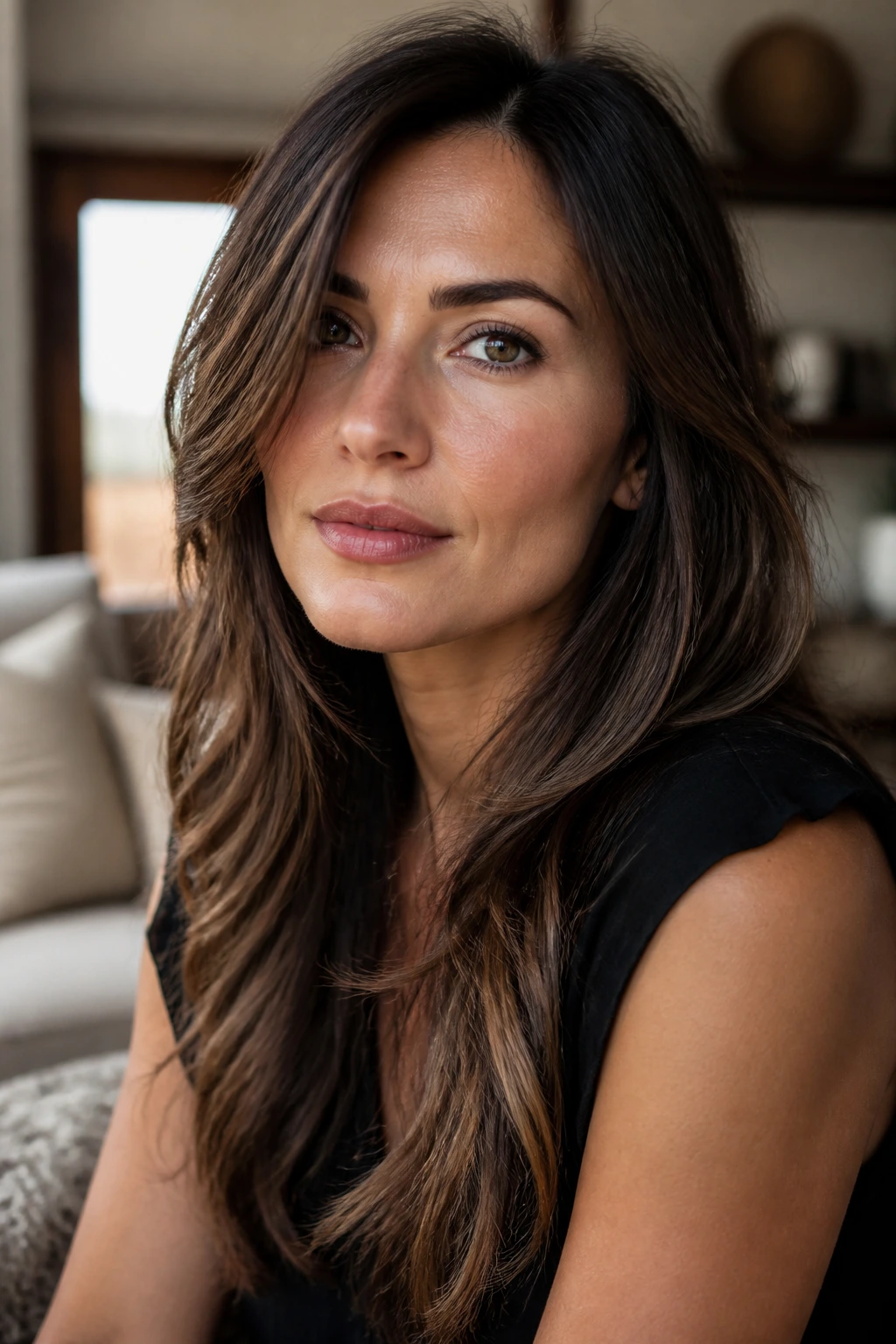
This is one of the smartest shapes for a heart-shaped face because it does exactly what the name says: it gives the jawline some company. The shortest visible layers skim around the jaw or just below it, which broadens the lower half without making the haircut look bulky. That small bit of width can make the whole face feel more balanced.
I like this version with a slight off-center part. It keeps the front from looking too symmetrical or too top-heavy. The layers should still be feathered, not blunt, so the movement feels soft when the hair swings forward.
If you like to wear your hair tucked behind one ear, this cut still reads well. The jawline pieces keep the shape alive even when one side disappears.
19. Low-Maintenance Grow-Out Layers
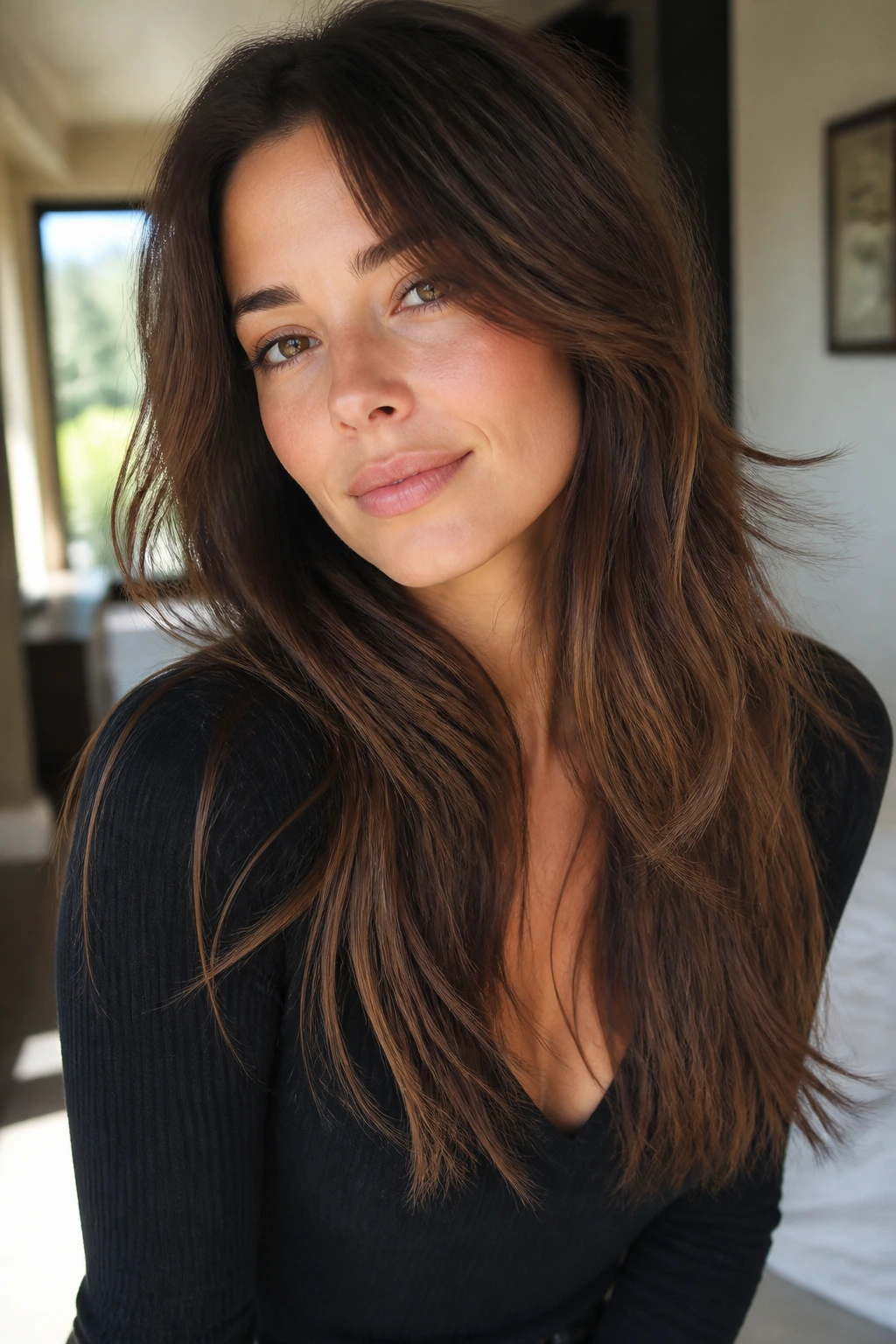
This is the cut for people who want the long hair to keep behaving after the salon visit wears off. The shortest pieces stay below the cheekbone, the steps between layers stay subtle, and the perimeter remains strong enough that the grow-out doesn’t look choppy. On a heart-shaped face, that matters because a bad grow-out can make the top half feel wide and the lower half feel empty.
The whole point is to avoid dramatic shelves. If the layers are too short or too disconnected, the shape starts looking obvious after a few weeks. A softer plan gives you more time between trims and fewer mornings spent trying to fix strange bends.
This is not the most dramatic option. It is one of the smartest.
20. Glam Layers With Full, Flipped Ends
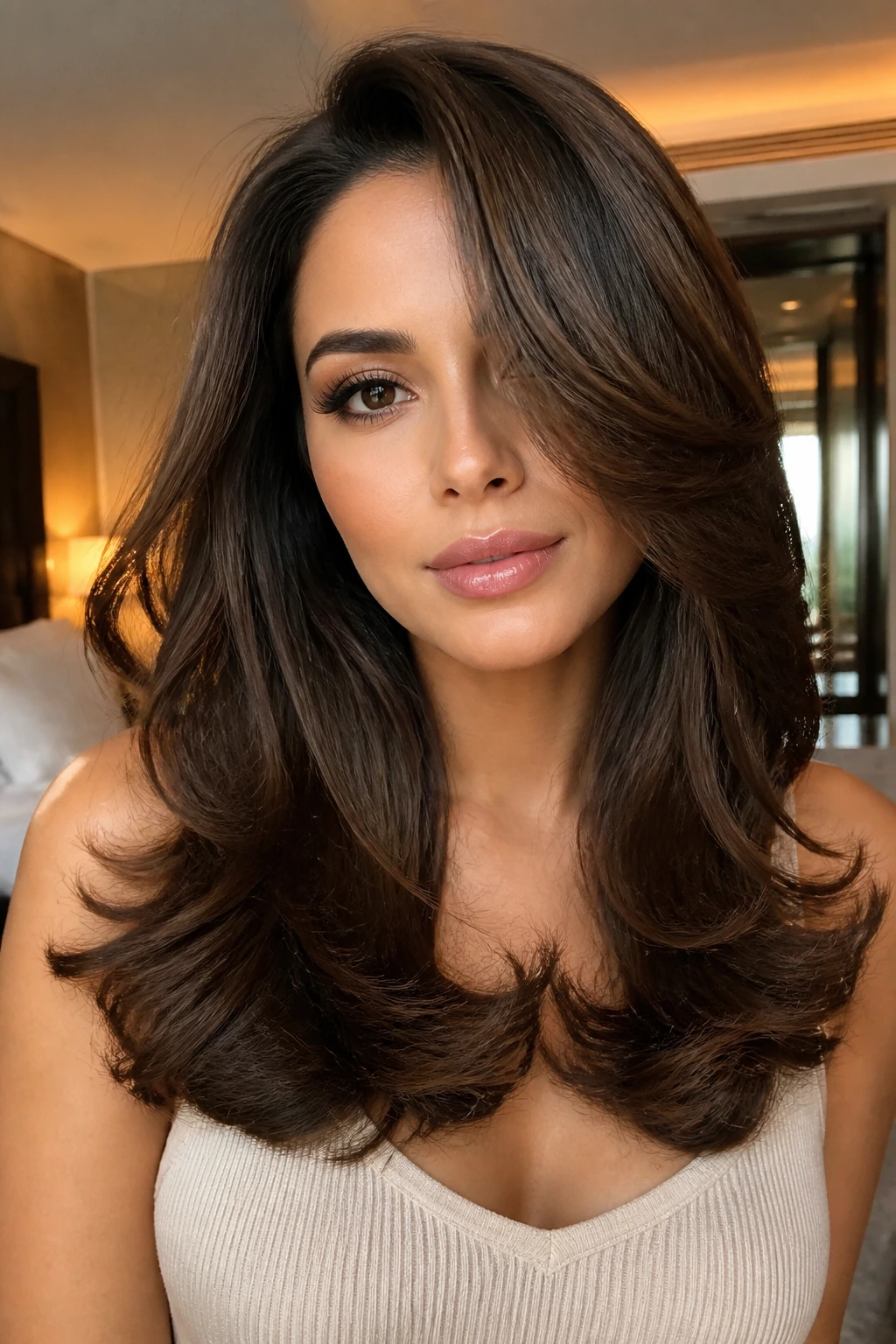
This cut is for people who like hair with a little theater. The layers are built to hold a big round-brush blowout, and the ends flip under or outward in a way that adds width around the jaw and collarbone. That lower fullness is exactly why it flatters a heart-shaped face so well.
The styling matters here. You need enough sectioning to set the bend properly, and the hair should cool fully before you brush it out. If you rush it, the shape collapses and the whole point of the cut disappears.
This version pairs well with a side part or a soft center part. It’s the one I’d choose for an event, a dinner, or any day you want your hair to look like it had a plan.
21. Long Layers With a Feathered Brow-Length Fringe
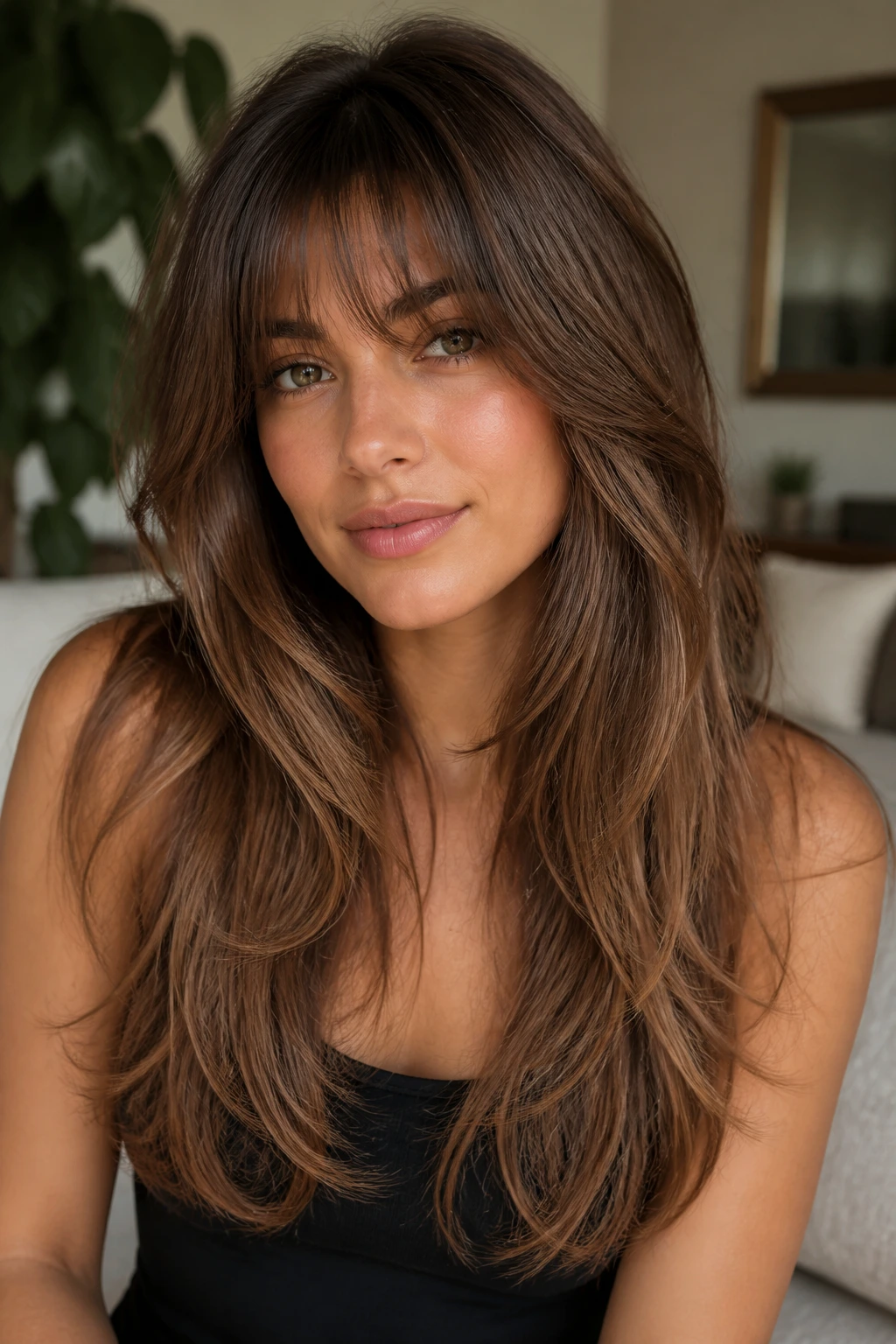
A full fringe can absolutely work on a heart-shaped face, but only if it’s softened. Brow-length is a good stopping point because it covers enough forehead to matter while still letting the eyes and cheekbones stay visible. The fringe should be broken up at the ends, not cut into a hard wall.
The long side pieces are what keep this from feeling heavy. They bridge the fringe into the rest of the cut so the front doesn’t look separate from the length. If your hair is straight, this shape is especially easy to live with. If it’s wavy, a tiny bit of bend in the fringe keeps it from shrinking up too high.
This is a bolder choice than curtain bangs. It also gives the forehead the most coverage of any style on this list.
22. Soft Debulked Layers for Dense, Waist-Length Hair
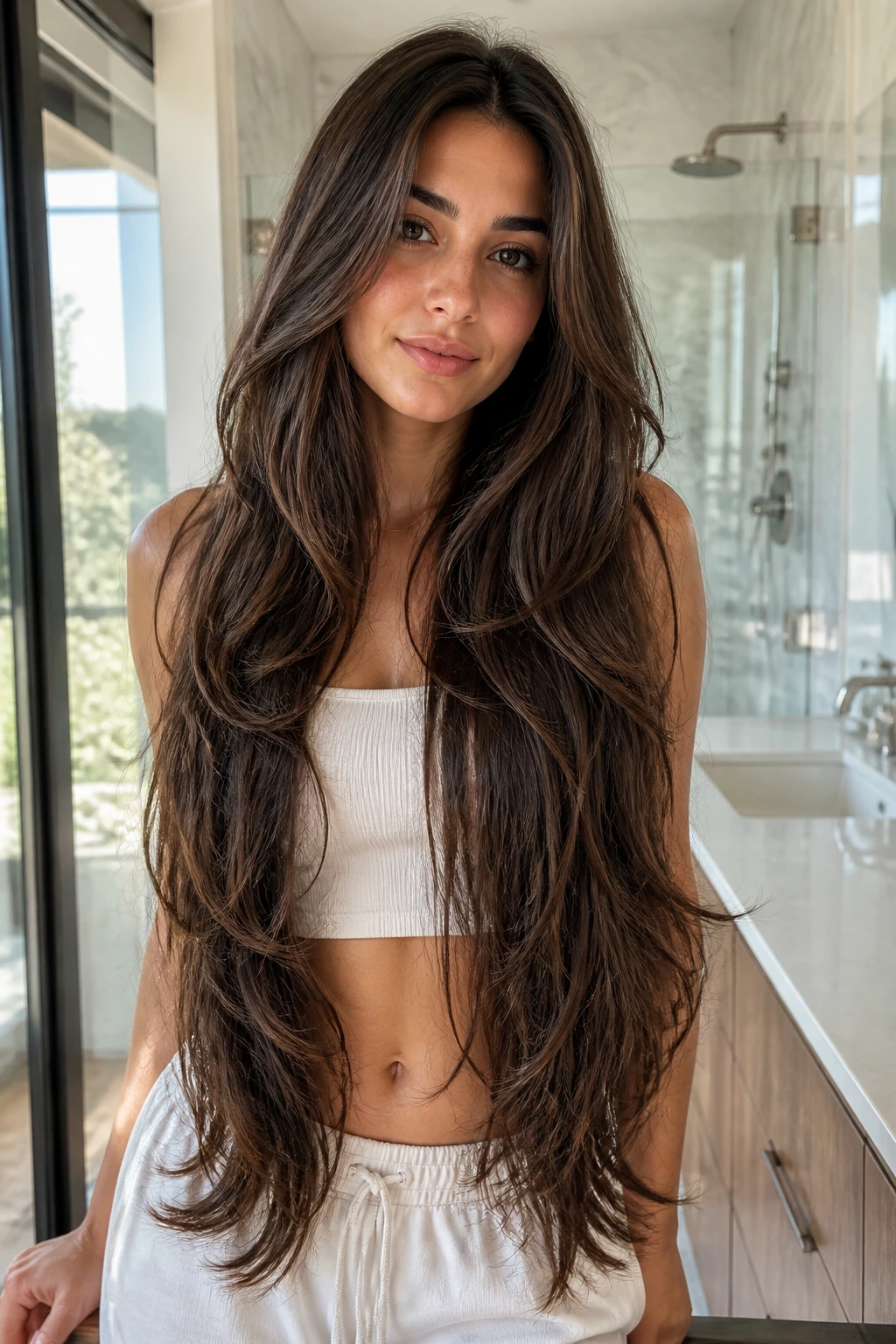
Very thick, very long hair needs shape, not extra bulk. Soft debulking removes weight from the inside while keeping the outside long and smooth, so the hair still feels like hair instead of a blanket with a hem. On a heart-shaped face, the movement at the lower half helps balance a narrower chin.
The mistake here is over-thinning the ends. Don’t do that. Keep the bottom line strong enough to hold onto length, and let the interior do the work. If your hair tends to puff in humidity, ask for controlled point cutting rather than a heavy razor pass.
This is the cut I’d pick for someone with waist-length hair who still wants the face to show up first. Long hair should frame you. It should not hide you.
How to Brief Your Stylist for Feathered Layers on Long Hair
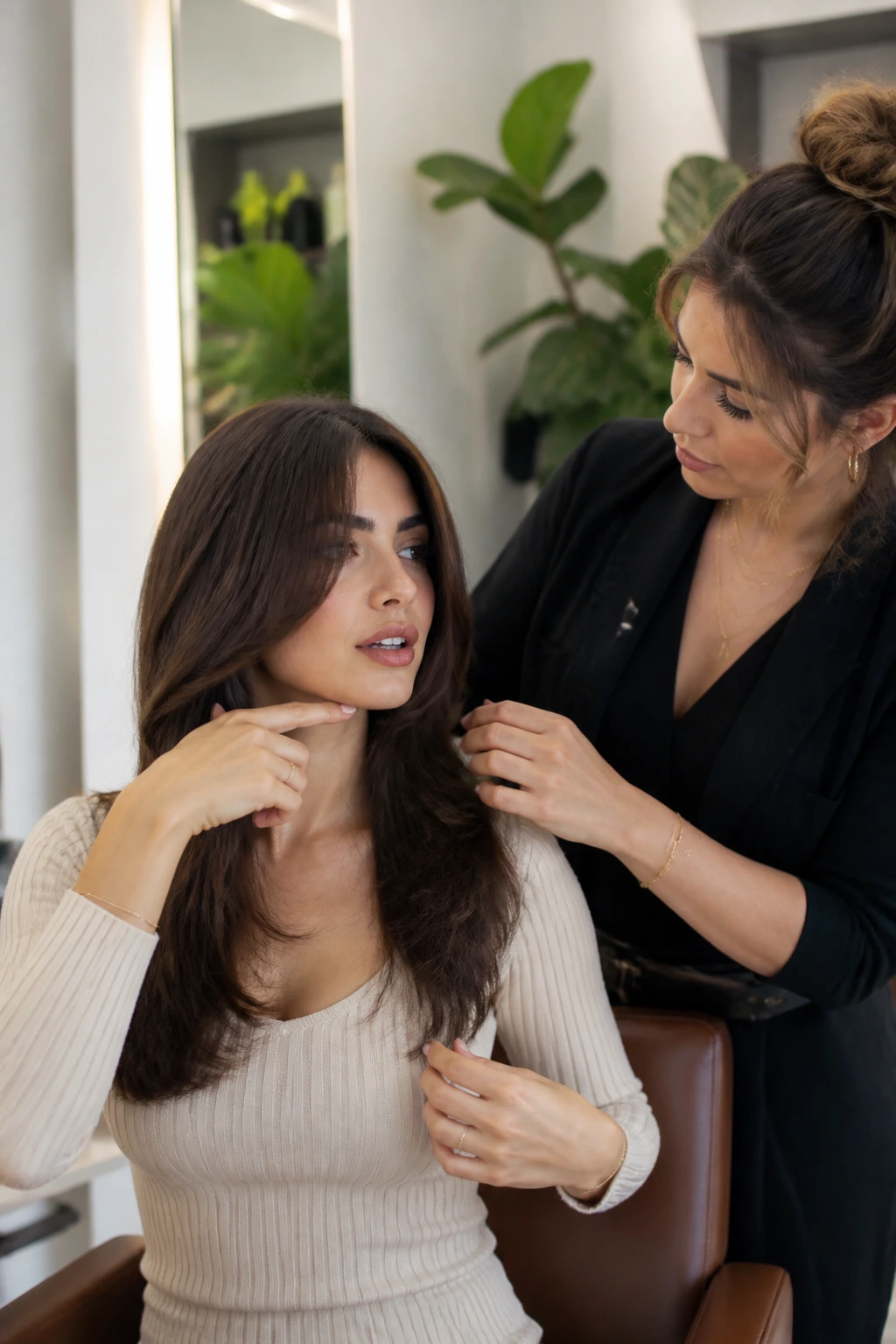
Bring photos, but don’t bring only one. One picture may show the fringe you like, another may show the layer fall, and a third may reveal the part or texture that makes the whole thing work. That matters because a cut that looks soft in a photo can be very specific about density, blow-dry style, and the amount of weight left at the bottom.
Say where you want the shortest face-framing piece to land. Cheekbone, lip, chin, or collarbone are the words that do the real work here. If you say “soft layers,” a lot can go wrong. If you say “keep the shortest front piece at the chin and let the rest blend into the collarbone,” you’ve actually given useful direction.
Also tell the stylist how you wear your hair. Air-dried, diffused, round-brushed, flat-ironed, curled. Feathered layers can look completely different depending on the finish, and the cut should match the finish you’ll repeat at home. A style that needs a perfect salon blowout every time is a bad fit if you live in a ponytail most days.
Essential Tools for Styling Feathered Layers
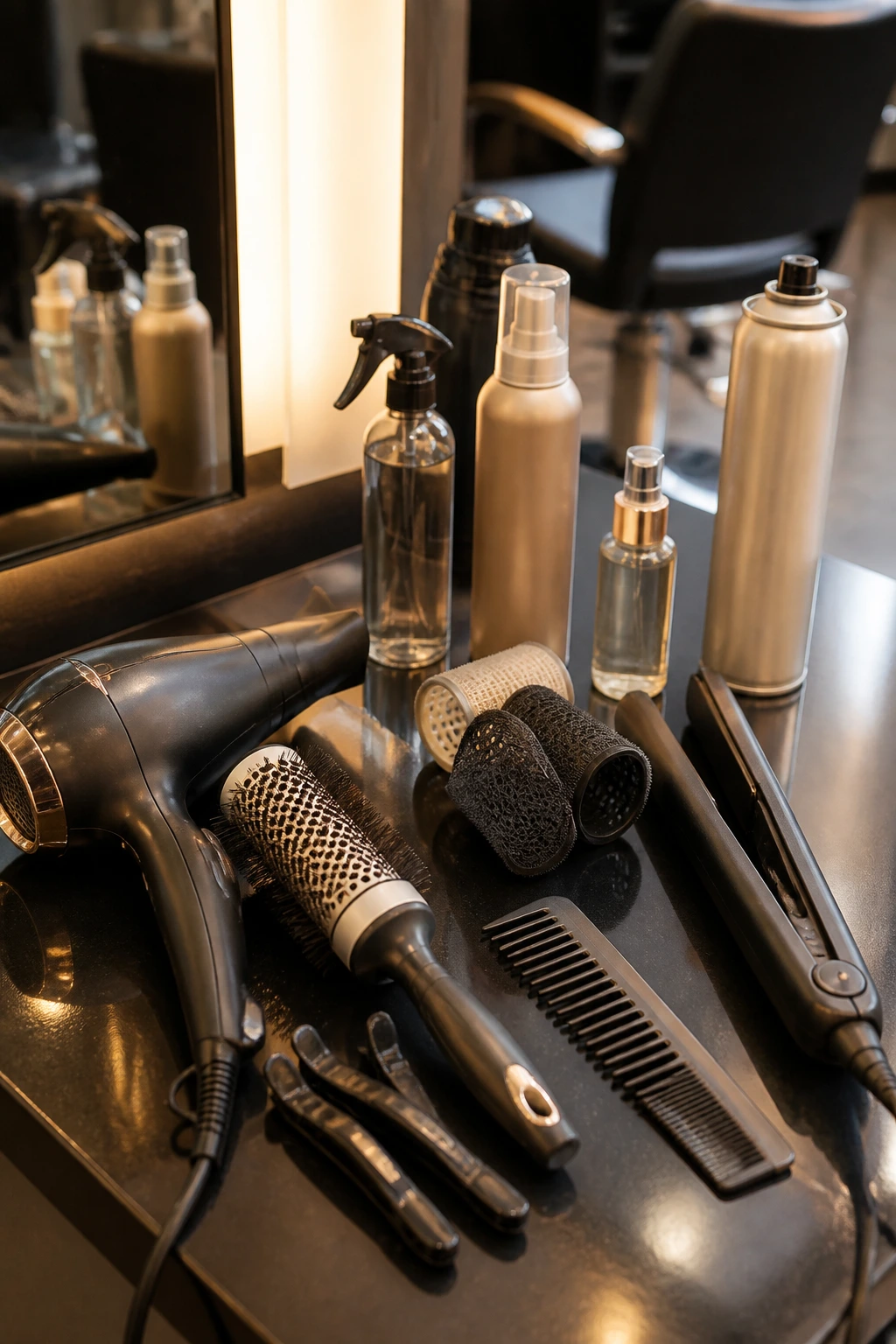
- A blow dryer with a concentrator nozzle: It helps direct airflow down the shaft so the feathering stays smooth instead of fuzzy.
- A 1.25- to 1.5-inch round brush: This size gives the front pieces a bend without creating tiny curls that fight long hair.
- Sectioning clips: They keep the crown, sides, and back separate, which matters when you want the front to lift without collapsing.
- Heat protectant spray: Feathered ends live or die by heat protection; dry ends show every mistake.
- Lightweight mousse or root-lift foam: Use it at the roots and mid-lengths if your hair goes flat by lunch.
- Velcro rollers or large hot rollers: Good for the glam blowout versions and the under-flip shapes.
- A wide-tooth comb: Best for detangling wavy and curly versions without pulling the feathering apart.
- A small flat iron or curling iron: Handy for bending only the face-framing pieces, not the whole head.
- Light serum or oil: Keep it to one or two drops on the ends; too much kills movement fast.
- Dry shampoo: Useful for side parts and crown-lift shapes that need a little lift on day two.
Small Styling Moves That Make the Feathering Read Better
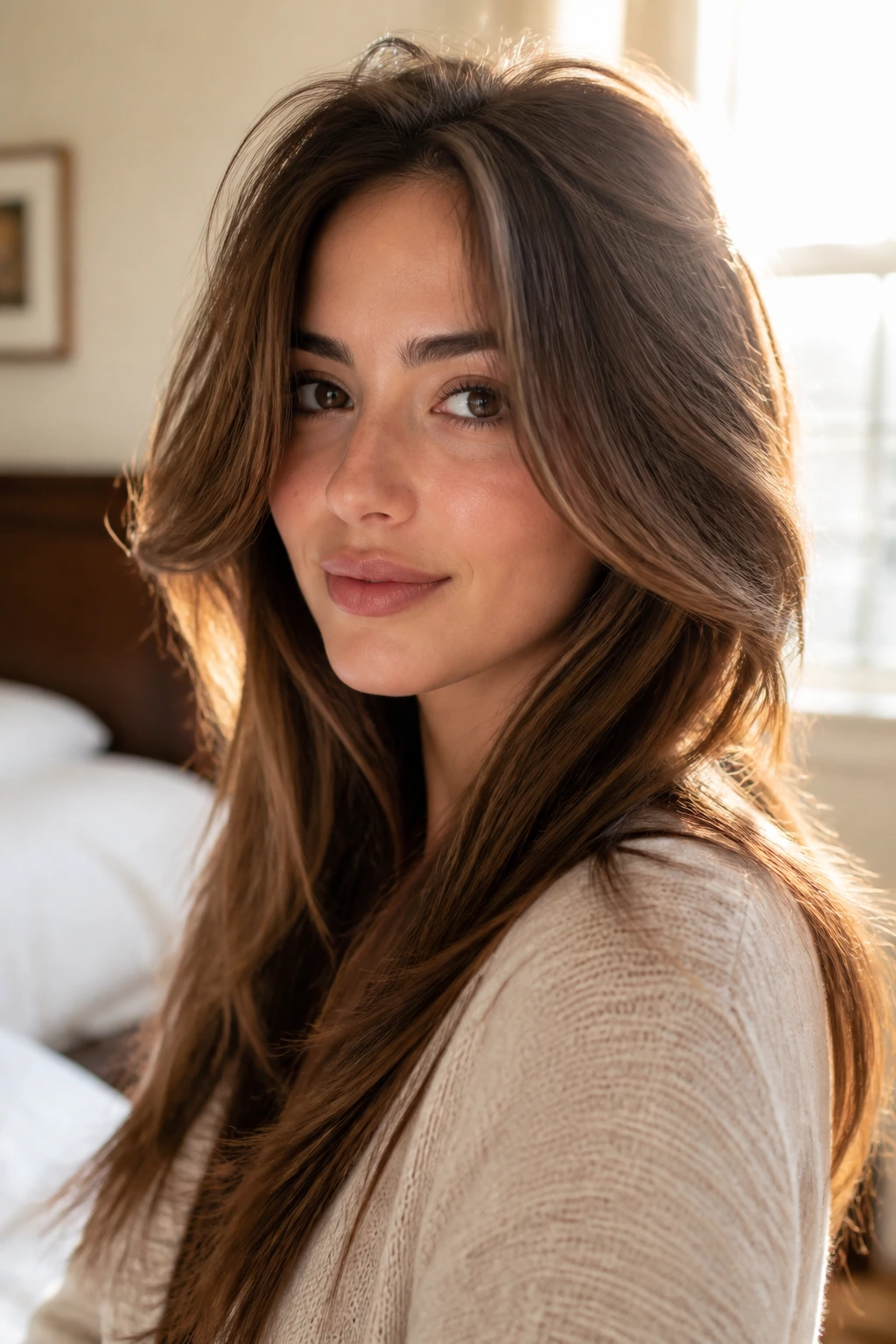
Start at the roots, not the ends. Feathered layers only look feathered when the top has a little lift. If the roots are flat, all the movement gets buried under the surface. A quick blast at the crown, then a round brush through the front, usually changes the whole haircut in under ten minutes.
Use less product than you think. Heavy creams and oils can make the layers collapse into one soft mass, which sounds harmless until you see it in the mirror. A pea-size amount on the mid-lengths is plenty for most long hair. Fine hair needs even less.
Set the front away from the face first. That one move keeps the cheekbone pieces from sticking to your cheeks like wet paper. Once the front has shape, you can choose whether the ends turn under, flick out, or stay straight with a soft bend.
Finish with movement, not helmet hair. If you want the feathering to stay visible, touch the roots with your fingers after the hair cools, then stop. The cut should move when you walk, not sit in one stiff curve.
What Usually Goes Wrong With Feathered Layers
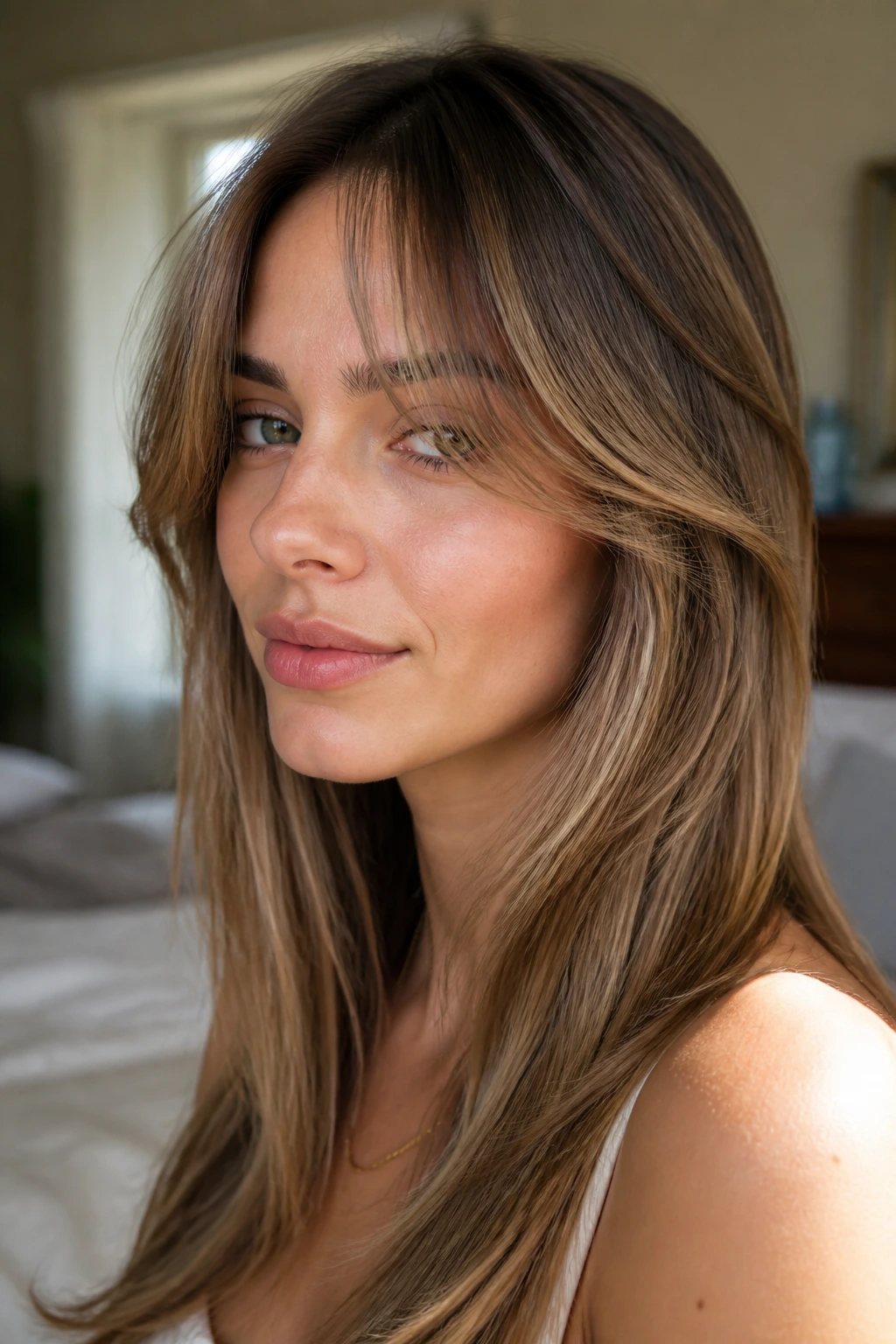
- The shortest layer starts too high. The symptom is a puffy top half and a forehead that looks even wider. The fix is to keep the shortest face-framing pieces lower, usually around the cheekbone or chin.
- Too much thinning makes the ends look see-through. You’ll spot this when the bottom of the hair turns wispy and dry-looking. Ask for internal layering instead of aggressive texturizing on the perimeter.
- The fringe is cut blunt and short. A hard line across the forehead fights the softness that feathering is supposed to create. Soft point cutting or a longer fringe keeps the face open.
- Heavy product kills the movement. If your layers look fine in the morning and flat by noon, there’s probably too much cream or oil in the mix. Use a lighter hand and keep most of it on the ends.
- The style is cut for a blowout but worn air-dried. That mismatch makes the layers flip in strange places. Tell your stylist how you actually wear your hair, not how you wish you wore it.
Ways to Adapt the Cut for Different Hair Types
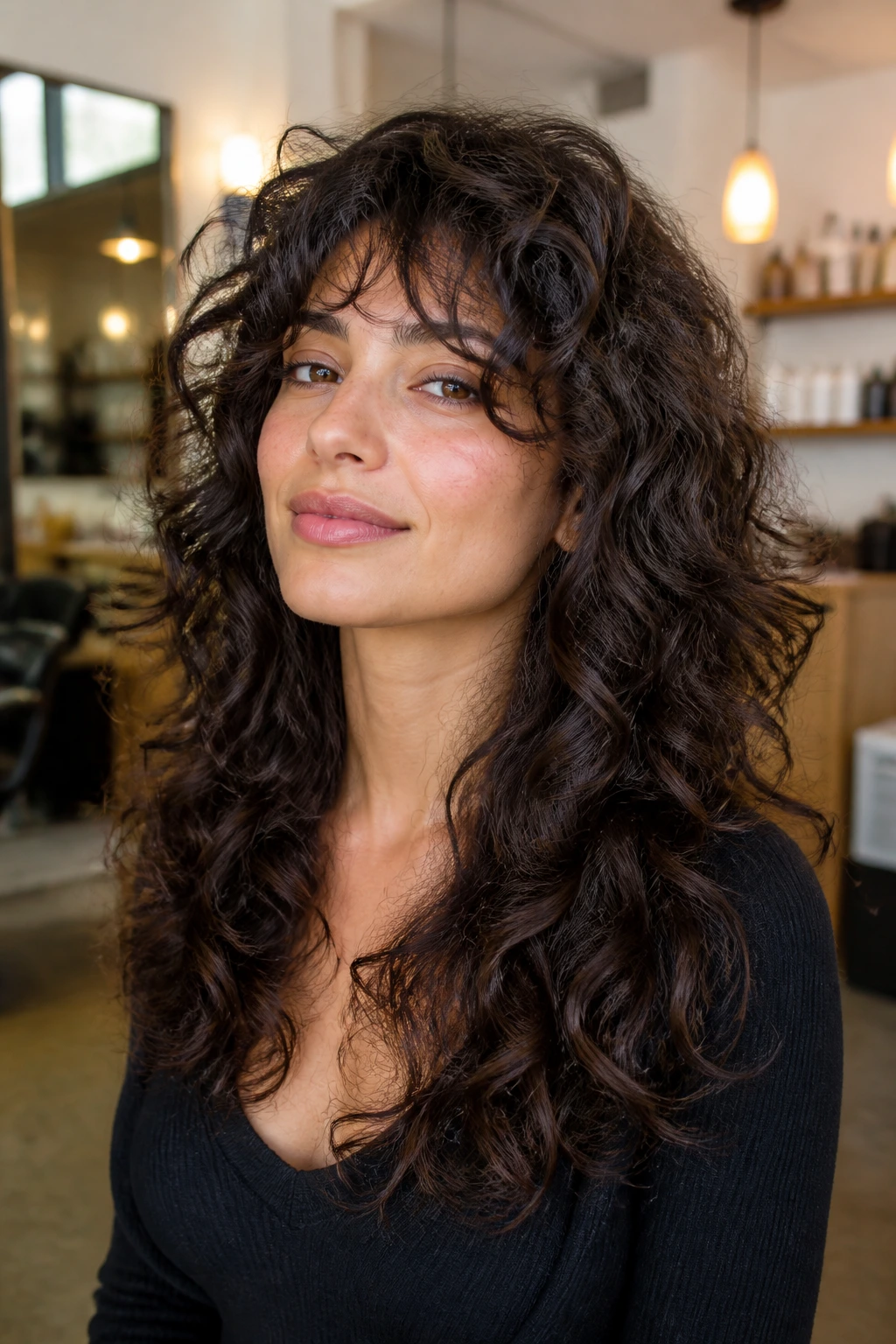
- Fine-Hair Float: Keep the layers long, the perimeter full, and the face frame subtle. This version needs mousse at the roots and very little thinning, or the ends will look hollow.
- Thick-Hair Sweep: Ask for internal weight removal and a strong bottom line. The haircut stays soft, but the bulk comes down enough that the layers can actually show.
- Curl-First Feathering: Shape the cut around the curl pattern instead of against it. That keeps the movement round and stops the triangle effect.
- Straight-Hair Gloss Line: Leave the surface polished and only soften the front and the last few inches. The result is sleek, not chopped.
- Low-Drama Grow-Out: Choose a chin-to-collarbone face frame and avoid short crown pieces. It won’t shout for attention, which is exactly why it lasts.
- Glam Blowout Version: Add more round-brush-friendly layers and a fuller under-flip at the ends. This is the version that looks like you spent time on it, even when you didn’t spend an hour.
Keeping Feathered Layers for Long Hair and Heart-Shaped Faces in Shape Between Cuts
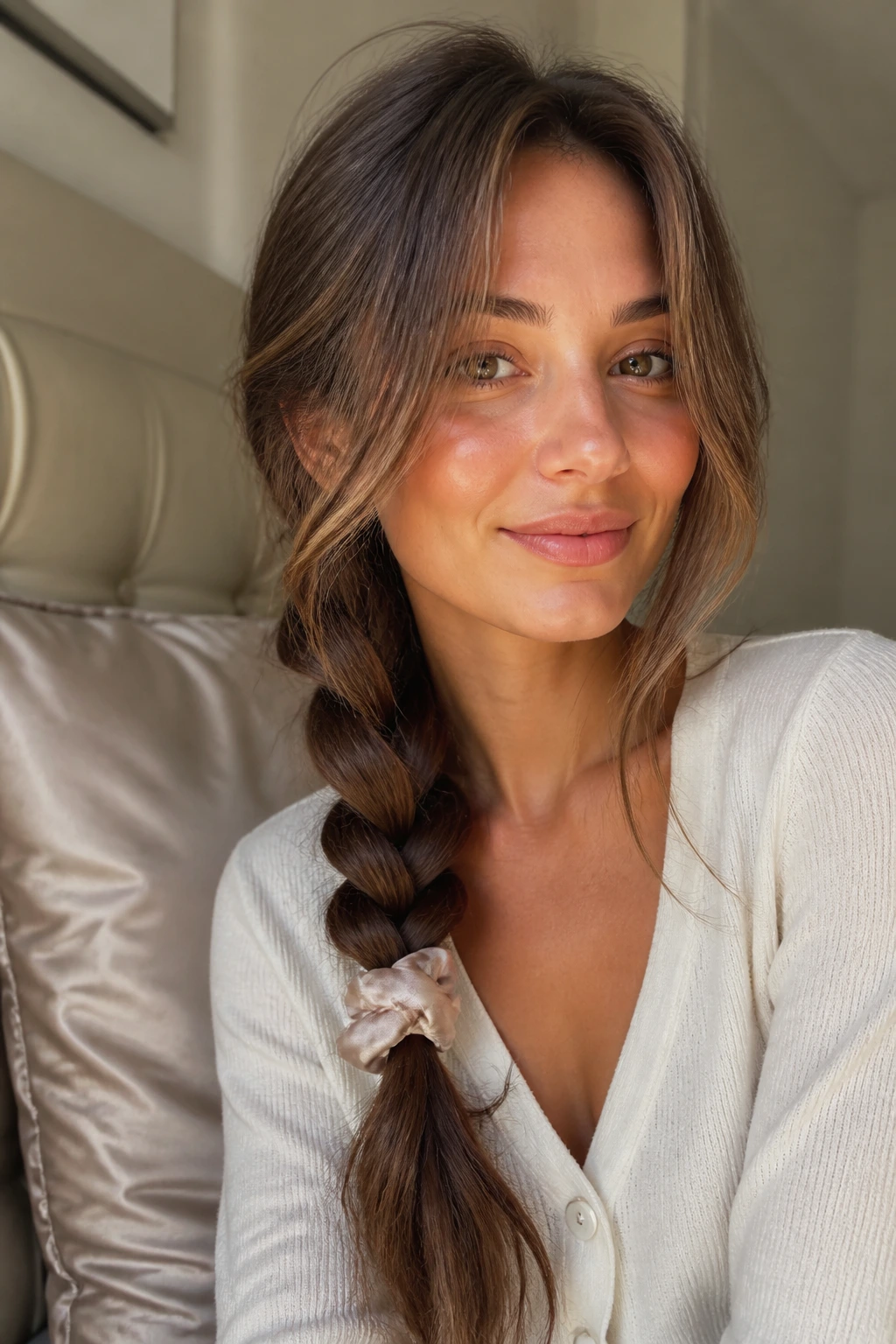
The face frame usually needs attention before the rest of the haircut does. A trim every 6 to 8 weeks keeps the shortest pieces from dropping into your cheeks or splitting at the ends. The full length can often go 8 to 12 weeks if the perimeter stays healthy and the layers are long.
Sleep matters more than people admit. A loose braid, silk pillowcase, or soft scrunchie keeps the front from kinking overnight. If your hair is wavy or curly, rewetting only the face frame in the morning is often enough to wake the whole style up.
If the ends start looking dry, use a light mask once a week and keep heat tools on the lowest setting that still shapes the hair. Feathered layers look best when the ends are smooth. Scraggly ends make even the nicest cut look tired.
Questions People Ask Before They Commit
Will feathered layers make my heart-shaped face look wider at the top?
Not if the shortest pieces stay below the temple zone. The real problem is layers that start too high, because they add width exactly where you don’t want it.
Are curtain bangs better than side-swept bangs for this face shape?
Curtain bangs are easier if you like a center part and want softness on both sides. Side-swept bangs work well if your forehead feels broad or one side of your part always wins.
Can fine hair pull off feathered layers?
Yes, but the layers need to stay long and sparse. Too many cuts through the mid-lengths will make the ends look thin and stringy.
What if my hair is thick and puffy?
Ask for internal layering and a strong perimeter. That combination removes bulk where it matters without making the bottom edge fray apart.
Do feathered layers work with straight hair?
They do, especially if the ends are bent slightly under or outward. Straight hair needs shape built into the cut, because it won’t hide bad layering with texture.
How often should I trim them?
Fringe and face-framing pieces usually need a tidy-up every 4 to 6 weeks. The full haircut can go longer if the shape stays balanced.
Can I grow out a shag into feathered layers?
Yes, if you keep the face frame soft and trim the bottom line clean. That keeps the grow-out from turning into a mullet-shaped accident.
What if I air-dry most of the time?
Choose softer, longer layers and avoid a cut that relies on a big round-brush blowout. Air-dried feathering works best when the front pieces are long enough to fall naturally.
A Shape That Stays Soft
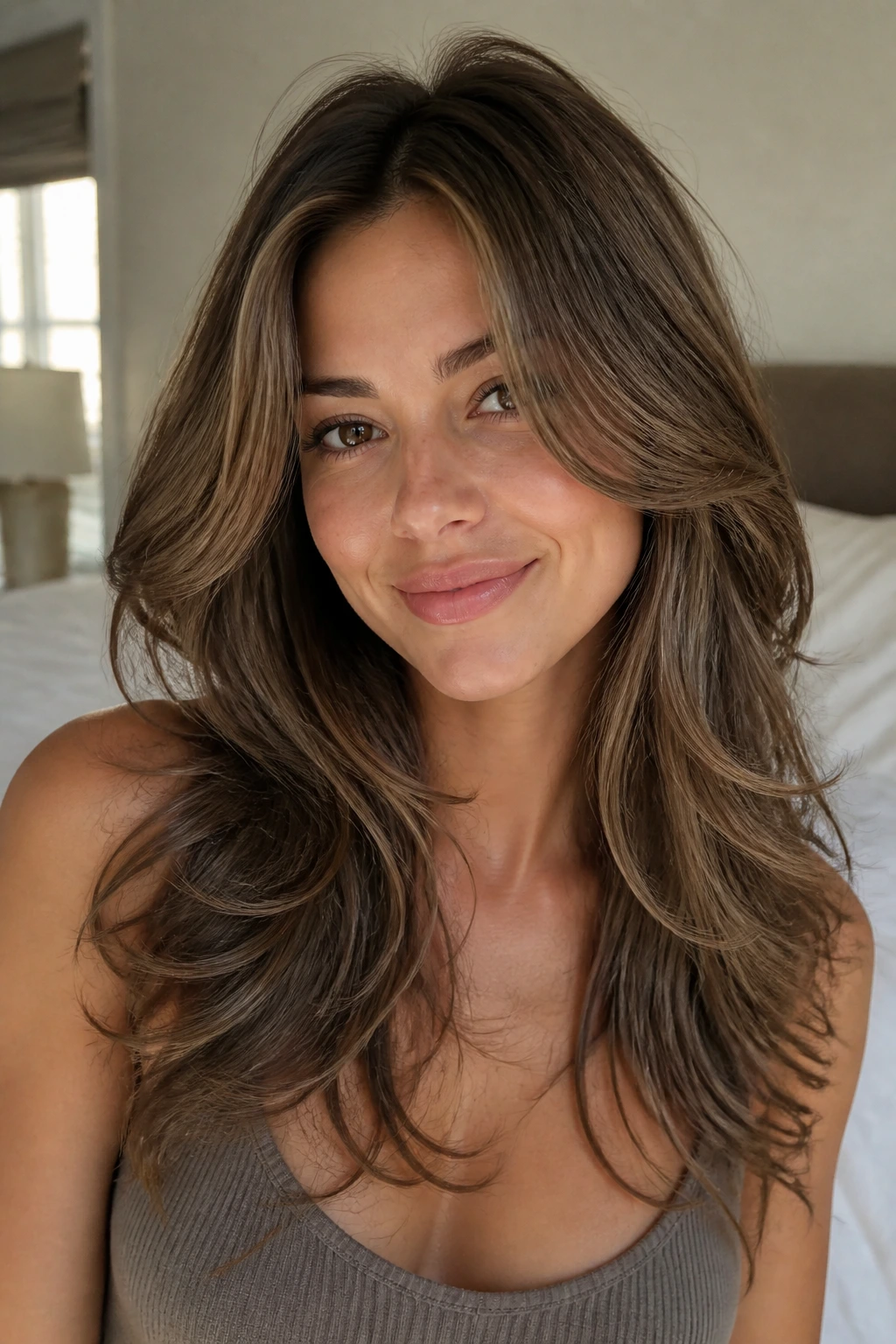
Feathered layers are at their best when the cut does a little balancing for you. On a heart-shaped face, that usually means taking weight off the top half, giving the jaw some company, and letting the ends move instead of hanging in one flat sheet.
The smartest version is the one that matches the way you actually wear your hair. If you blow-dry, a rounded under-flip might be your favorite. If you live in air-dry mode, long whisper layers or a soft shag will probably behave better.
Bring the shortest face-framing pieces lower than instinct says, and the whole shape settles down. That’s the part people miss, and it’s why a good feathered cut can look polished without looking stiff.