



Long hair can turn into a heavy curtain fast. One blunt cut, and the front hangs like a thick drape that swallows cheekbones, jawlines, and every bit of movement you thought you had. Feathered-around hairstyles for long hair fix that by shifting weight into soft, face-skimming pieces that flick instead of sit dead still.
The best feathering is never random. It starts where the hair needs help—around the cheekbone, collarbone, or just under the chin—and leaves enough length behind it so the cut still feels full, not wispy. I like that balance. Too many layered cuts either remove so much hair that the ends look stringy or keep so much bulk that the front feels like one solid sheet. Feathering sits in the middle, and that’s why it works so well on long hair.
There’s also a styling payoff that gets overlooked. Feathered layers catch a round brush, a curling iron bend, or even a rough air-dry in a way blunt lengths do not. The ends move. The front opens. And when the cut is done right, it looks good tucked, clipped, curled, or left alone on a lazy day when you can’t be bothered to do much more than brush and go.
Why These Feathered Styles Work on Long Hair
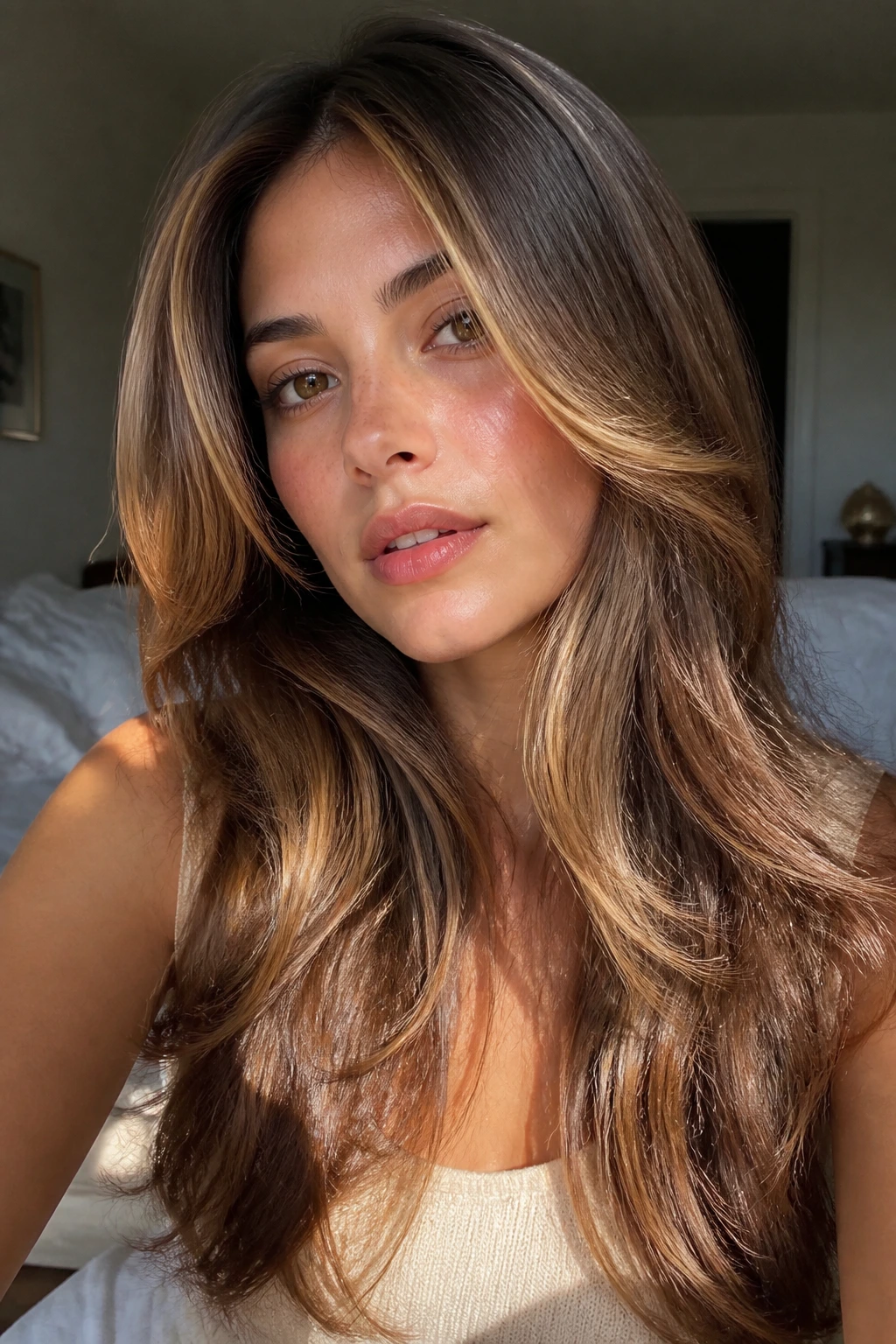
Lighter at the front, fuller at the bottom: The point of feathering is not to shred the length. It’s to move weight out of the places that make long hair feel flat, especially the front corners and the heavy edge at the hem.
Better shape from every angle: A good feathered cut changes what happens when hair swings, tucks behind an ear, or falls forward over the shoulders. That matters more on long hair than on short cuts, because the shape has more distance to travel.
More forgiving grow-out: Soft layers that begin around the collarbone or lower cheekbone don’t look brutal when they grow. The worst feathered cuts are the ones that start too high and turn into a shelf; the best ones stay soft for months.
Works with more textures than people think: Straight hair gets movement, wavy hair gets definition, thick hair loses bulk, and fine hair gets lift if the layers stay long and controlled. The cut changes a little, but the idea stays the same.
Easy to style without a salon finish: You do not need a perfect blowout to make feathering read well. A medium round brush, a twist with a flat iron, or air-dried waves with a little cream can show the shape just fine.
1. Soft Curtain Feathering at the Collarbone
This is the safest place to start if you want feathering without drama. The shortest face-framing pieces land around the collarbone, then melt into longer lengths that skim the chest instead of breaking into obvious layers.
It works because the front gets movement before the rest of the cut gets aggressive. Ask for the first interior layer to start low and for the face frame to stay soft, not chopped. The result is gentle, not fussy.
2. Deep Side-Part Feathering That Lifts One Side
A deep side part makes feathering look twice as intentional. One side gets the lift, the other side falls in a longer sweep, and the whole cut suddenly has a bit of swagger.
This is a strong move for hair that lies flat at the crown or clings too close to the face. The longer side gives the illusion of fullness near the roots, which is useful if your hair is fine and tends to go limp by lunch.
3. Chin-Grazing Face Framing for Rounder Faces
What if you want movement without losing the softness of long hair? Start the shortest pieces at the chin, then let the layer line taper into the rest of the length.
That tiny shift changes the whole mood of the cut. The front opens up the cheeks instead of sitting right on them, and the longer back keeps the hair looking lush rather than over-thinned.
4. Bottleneck Bangs into Feathered Lengths
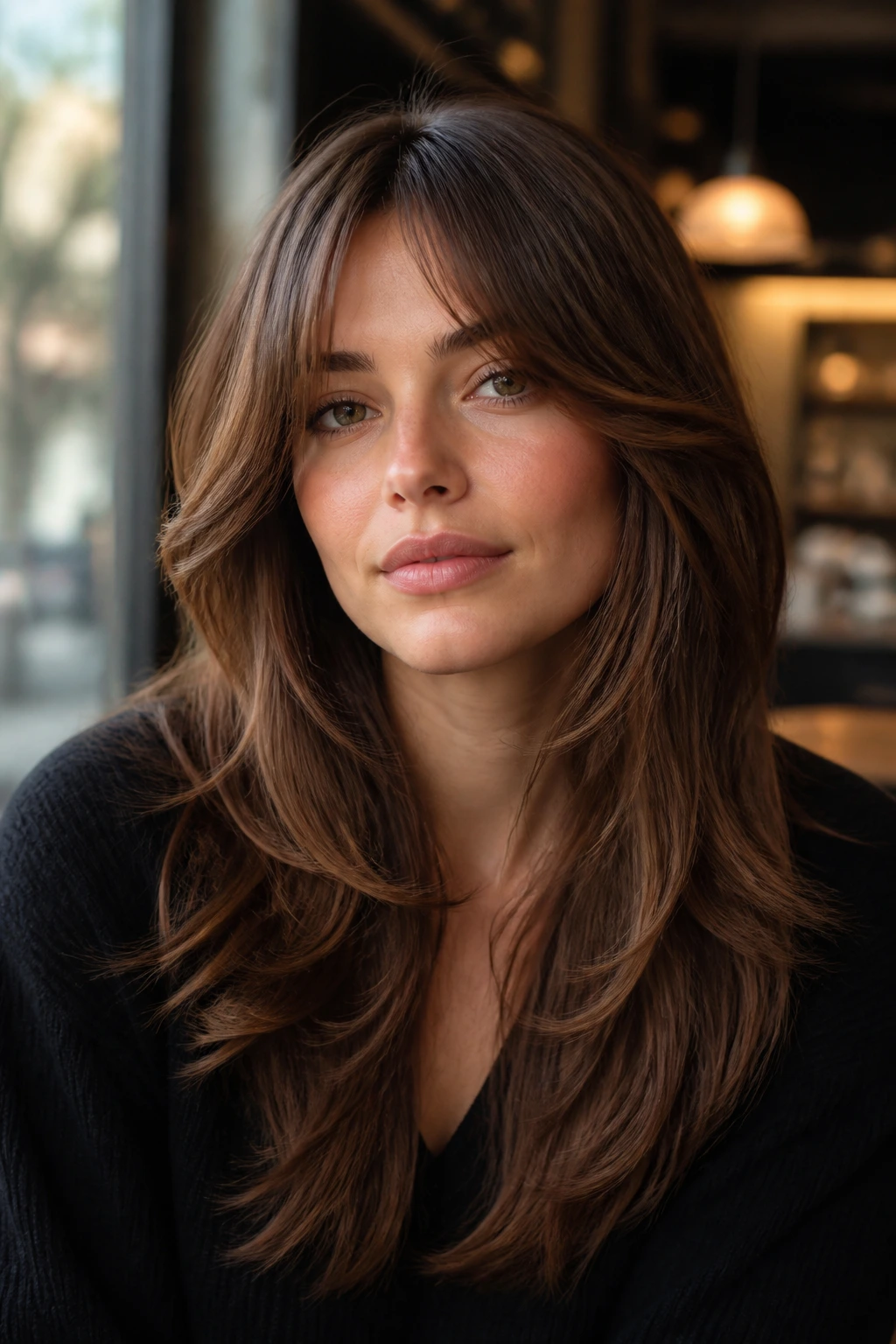
Bottleneck bangs are the sneaky good choice here. They sit narrow near the brow, open a little at the temples, and then feed straight into feathered long layers without looking like a hard fringe.
The shape is useful because it softens the top of the face while the layers handle the lower half. It’s a nice bridge if you want bangs but do not want them to feel like a separate haircut from the rest of the length.
5. Butterfly Cut with Long Feathered Wings
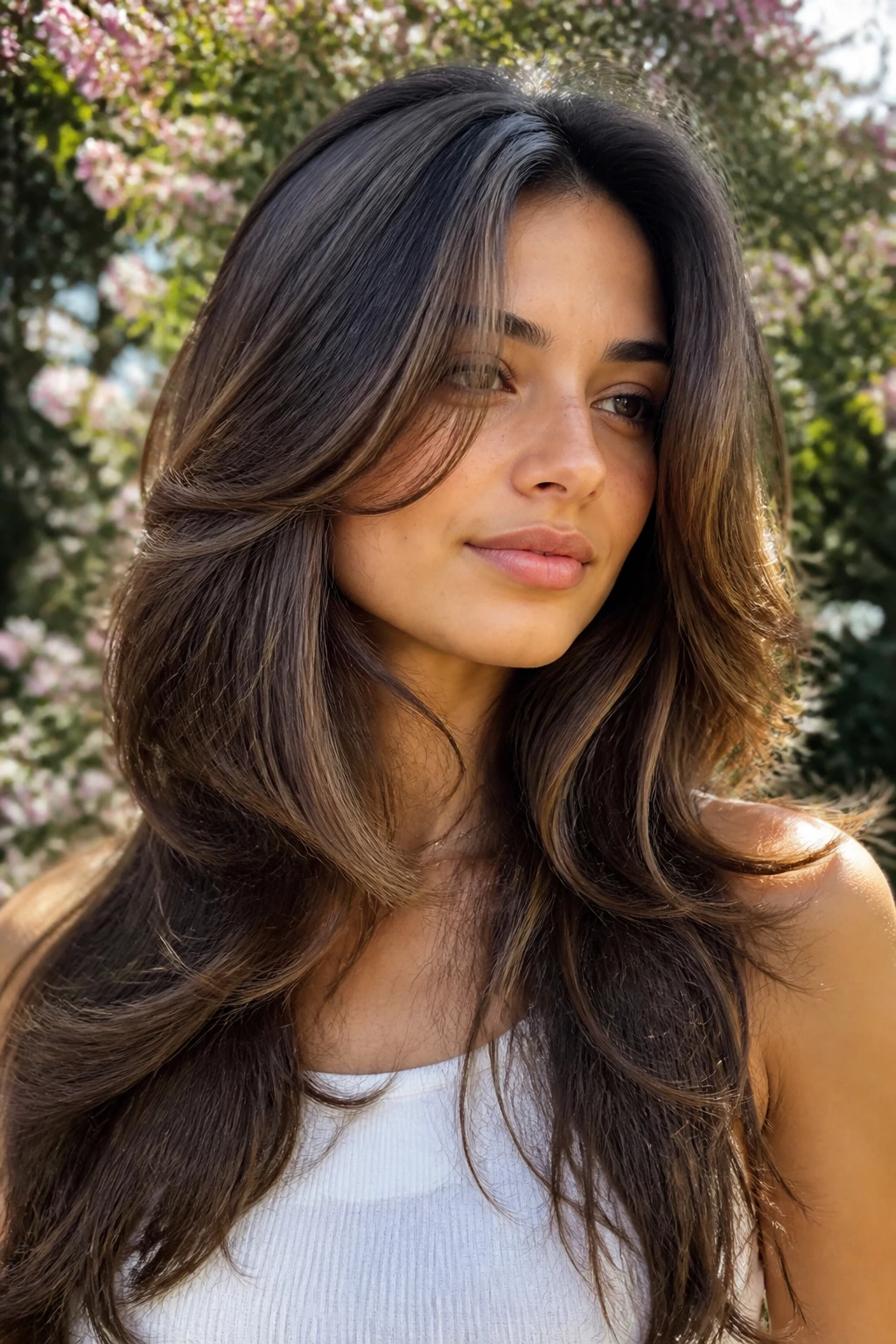
The butterfly cut still gets attention for a reason. It gives you that lifted, airy movement around the top layer while keeping the long underlayer intact, which makes the hair feel lighter without sacrificing the length you worked for.
I prefer this when someone wants a blowout shape more than a shag. The front pieces swing away from the face, the crown gets body, and the back still reads as long and full.
6. U-Shaped Long Layers with a Soft Feathered Perimeter
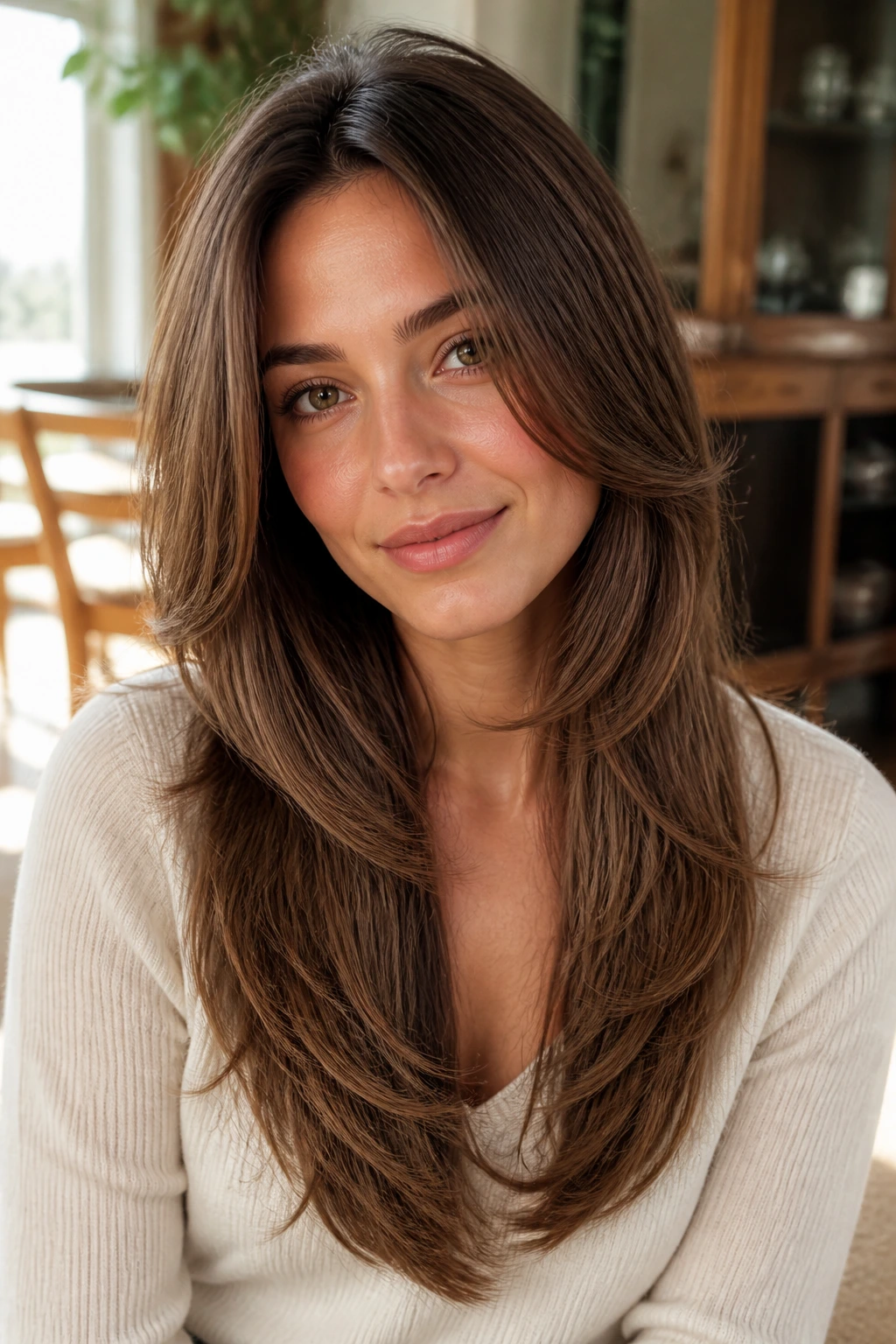
A U-shape keeps the back from looking blunt and blocky. The center sits slightly longer, the sides taper down, and the feathering around the perimeter keeps the whole thing from looking too carved.
This shape is especially nice if you like your hair down most of the time. It falls in a smooth curve, then the front pieces bend away from the jaw instead of hanging there like two tired strips.
7. Razor-Soft Feathering for Straight Hair
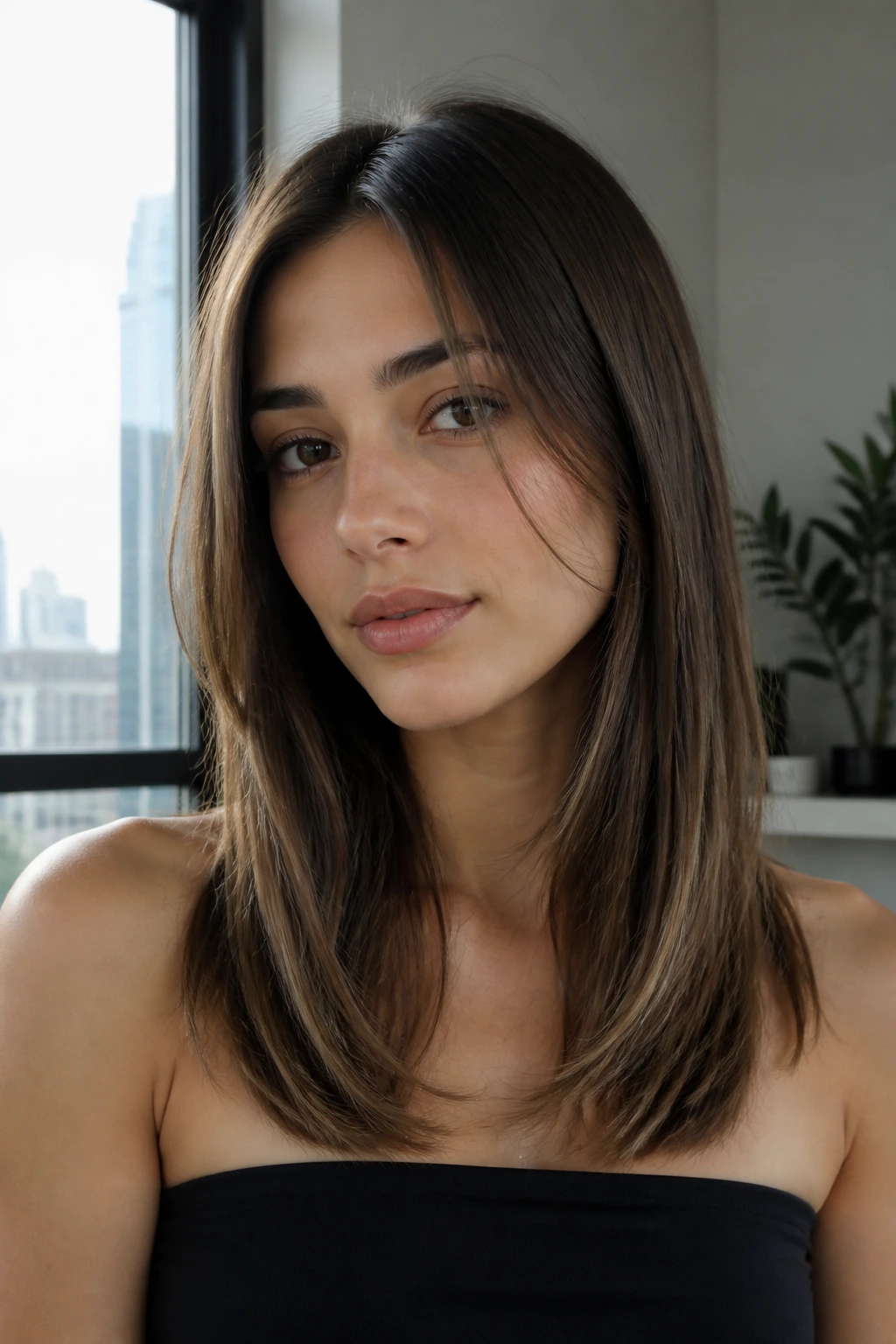
Straight hair can look brutal with hard scissors. A razor-soft finish takes the edge off, literally, and gives the ends a lighter, airier line that moves instead of snapping into place.
A good razor cut should still look controlled. If the hair is very fine or fragile, I’d rather see point cutting and soft slicing than a heavy razor pass that frays the ends and makes them look see-through.
8. ’90s Blowout Feathering with Full Body
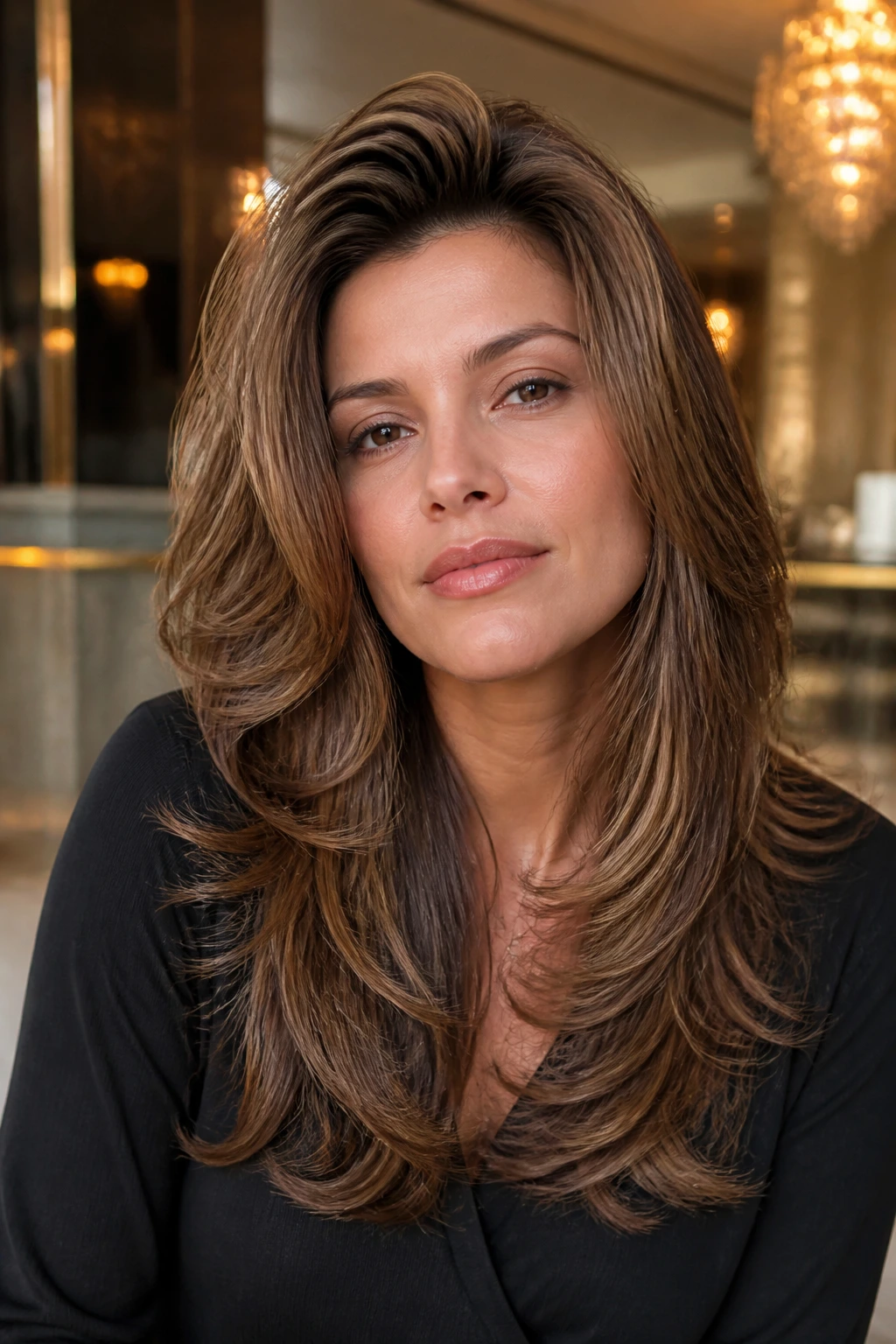
This is the version people bring to the salon when they want swing. The layers are long, the front is lifted, and the styling leans on a round brush and a big bend at the ends.
It’s a cut that likes volume products. A small dab of mousse at the roots, a heat protectant through the mid-lengths, and a medium or large round brush can pull the whole look together without making it stiff.
9. Polished Feathered Ends on a Sleek Finish
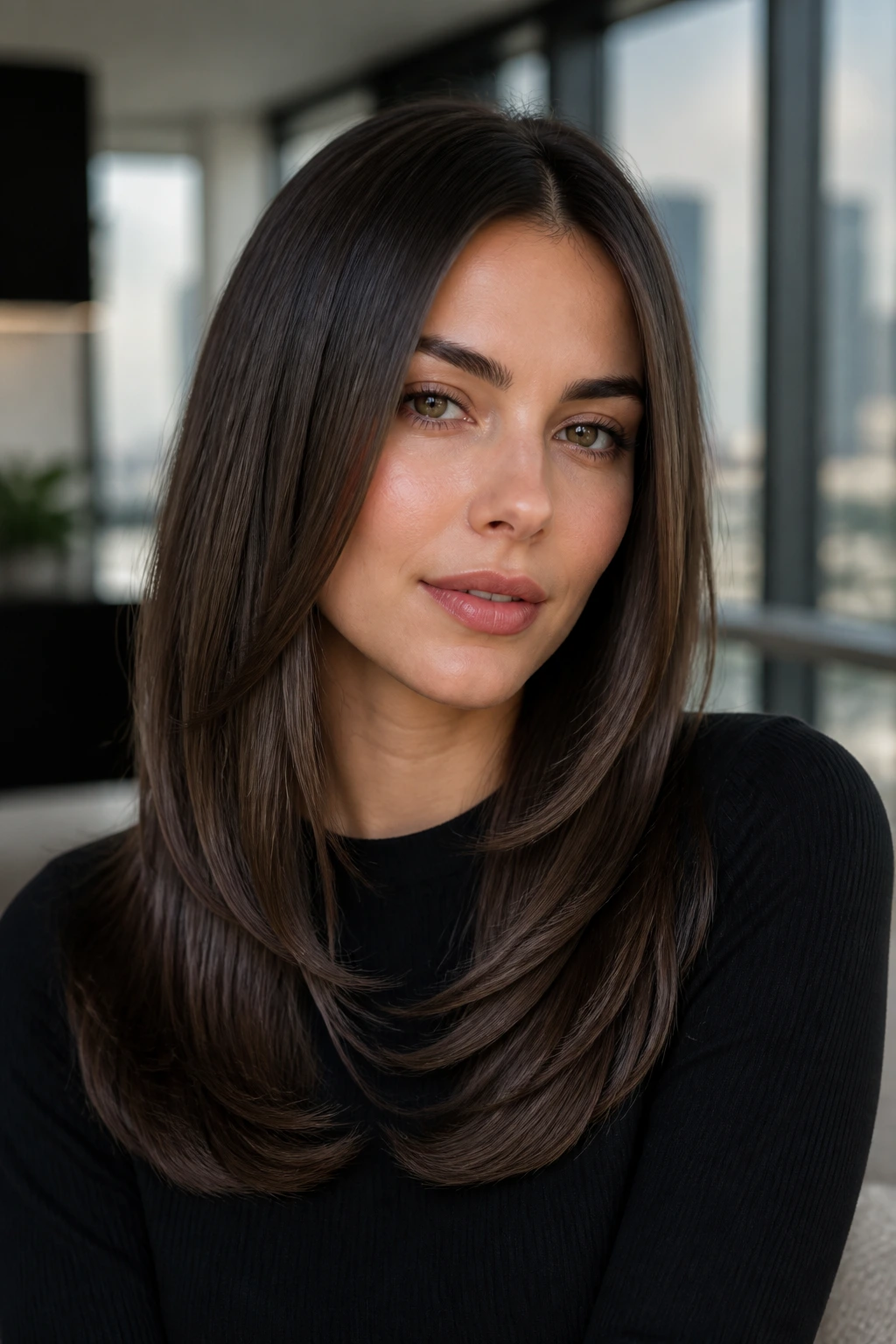
Not every feathered style has to look lived-in. On very straight or relaxed hair, the right move is a sleek finish with softened ends that curve under or flick out just enough to show the shape.
This is one of my favorites for people who hate too much texture. The haircut does the work quietly, and the styling stays clean. You get movement without the mess.
10. Long Shag with Feathered Face Framing
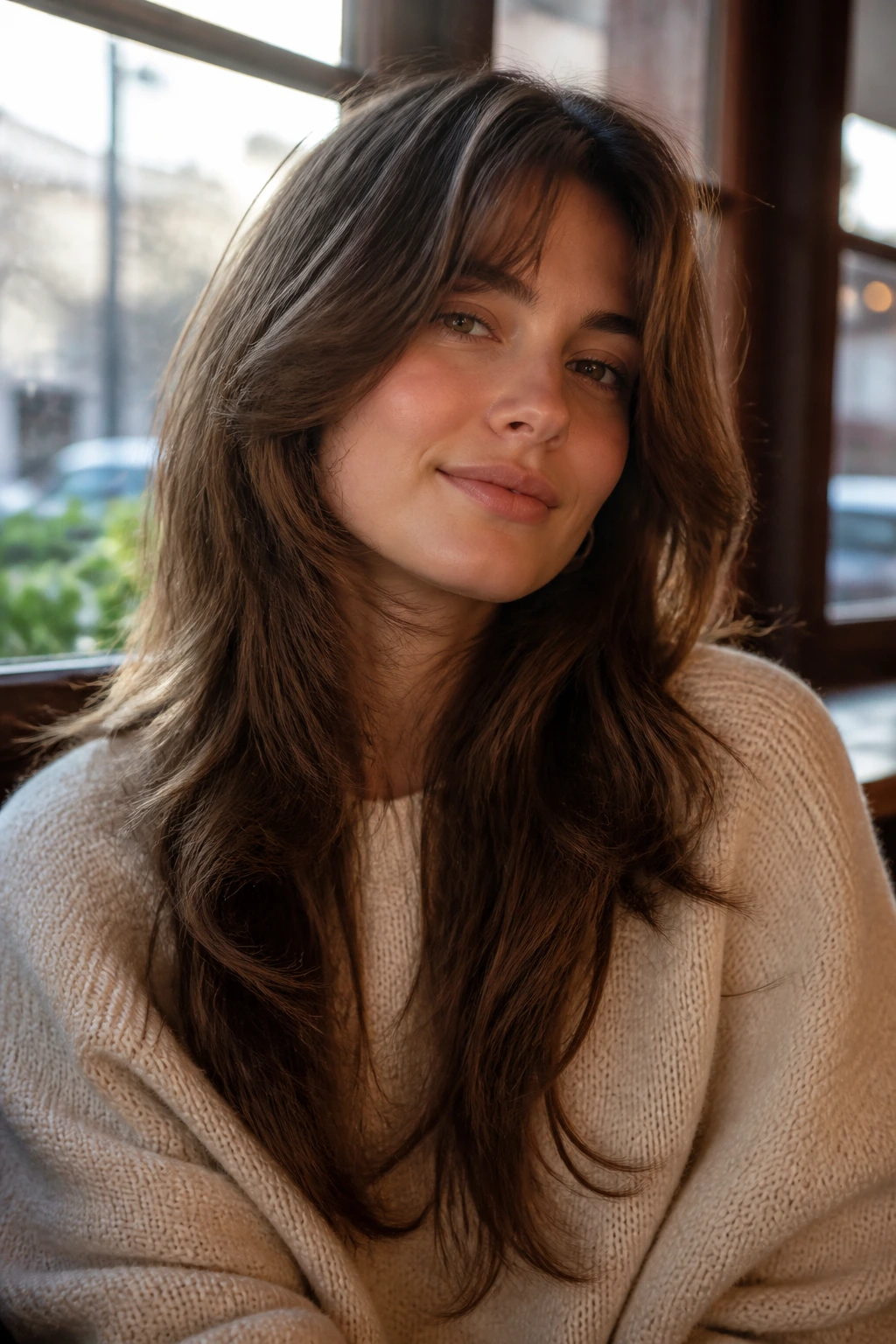
The long shag is for someone who wants the front to feel a little cooler and a little less precious. The layers are more visible, the texture is piecey, and the feathering gives the face frame a loosened, broken-in edge.
It works best when the ends are not over-thinned. Keep the back long enough that it still reads as hair, not a stack of random pieces, and the cut stays wearable instead of costume-y.
11. Full Fringe with Feathered Sides
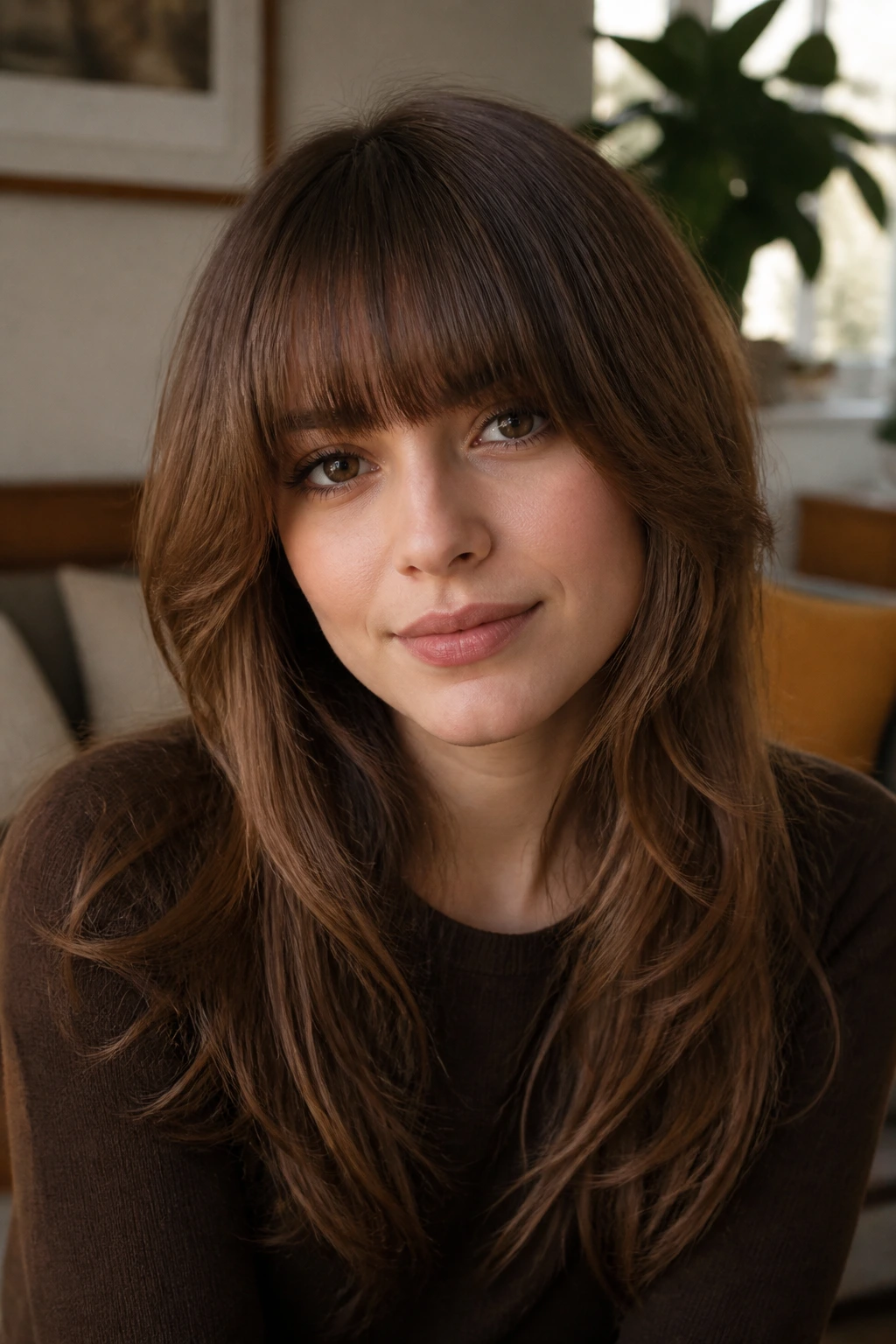
A full fringe can feel heavy fast on long hair, especially if the rest of the cut is also dense. Feathering the sides keeps the fringe from looking like a brick sitting on top of a curtain.
The trick is to let the bangs own the forehead while the side pieces soften the temple area. That balance matters if your hair tends to puff at the sides or if your forehead feels visually crowded by a straight blunt bang.
12. Soft Wolf Cut with Long, Wearable Length
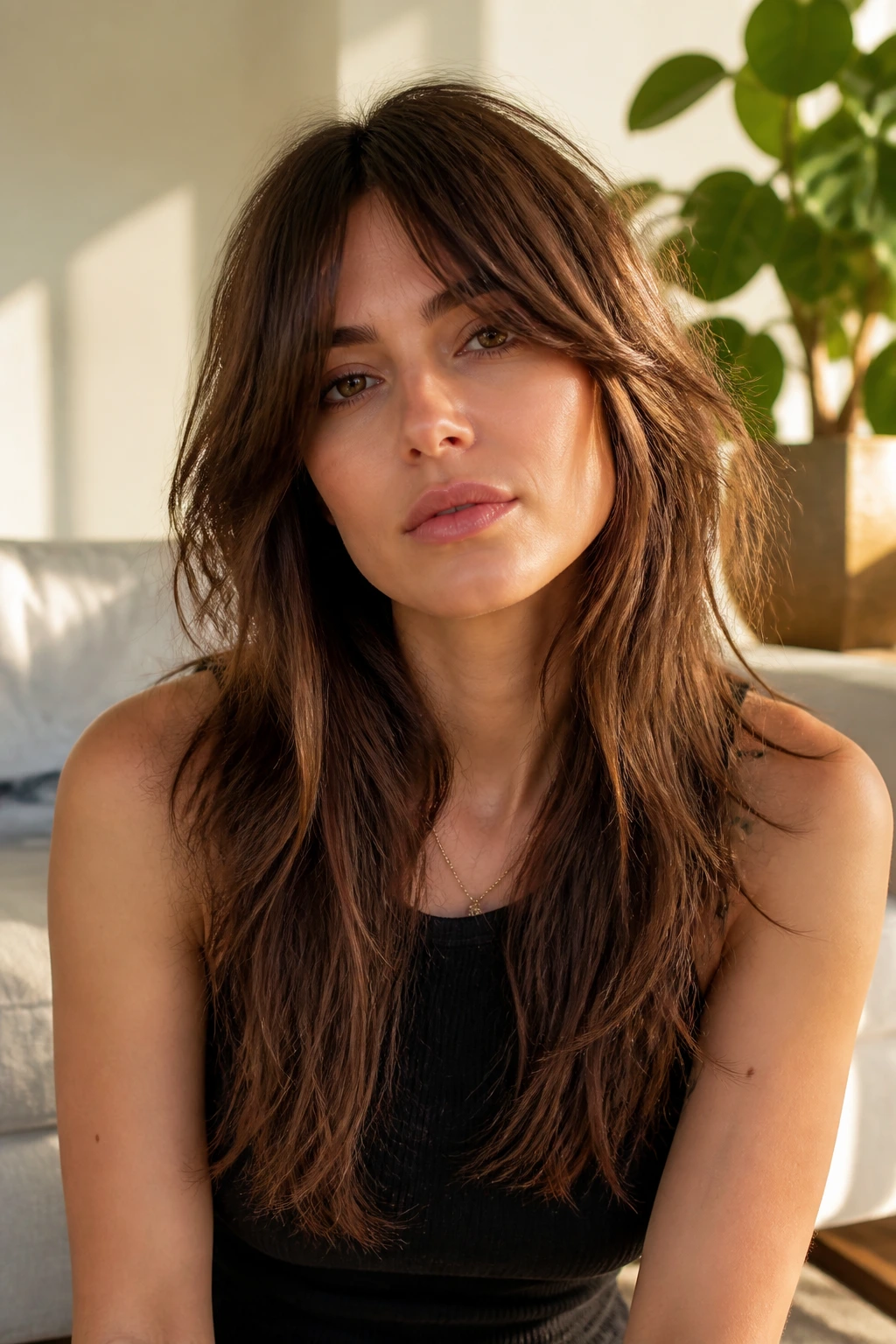
A wolf cut can go too far, too fast. Keep it long, keep the layers blended, and the result is a softer, more wearable version that still has that slightly undone attitude.
This is the cut I’d suggest for someone who wants edge but not a full chop. The front gets broken movement, the crown gets lift, and the length stays long enough to braid, clip, or wear over a jacket collar.
13. Invisible Layers for Low-Key Movement
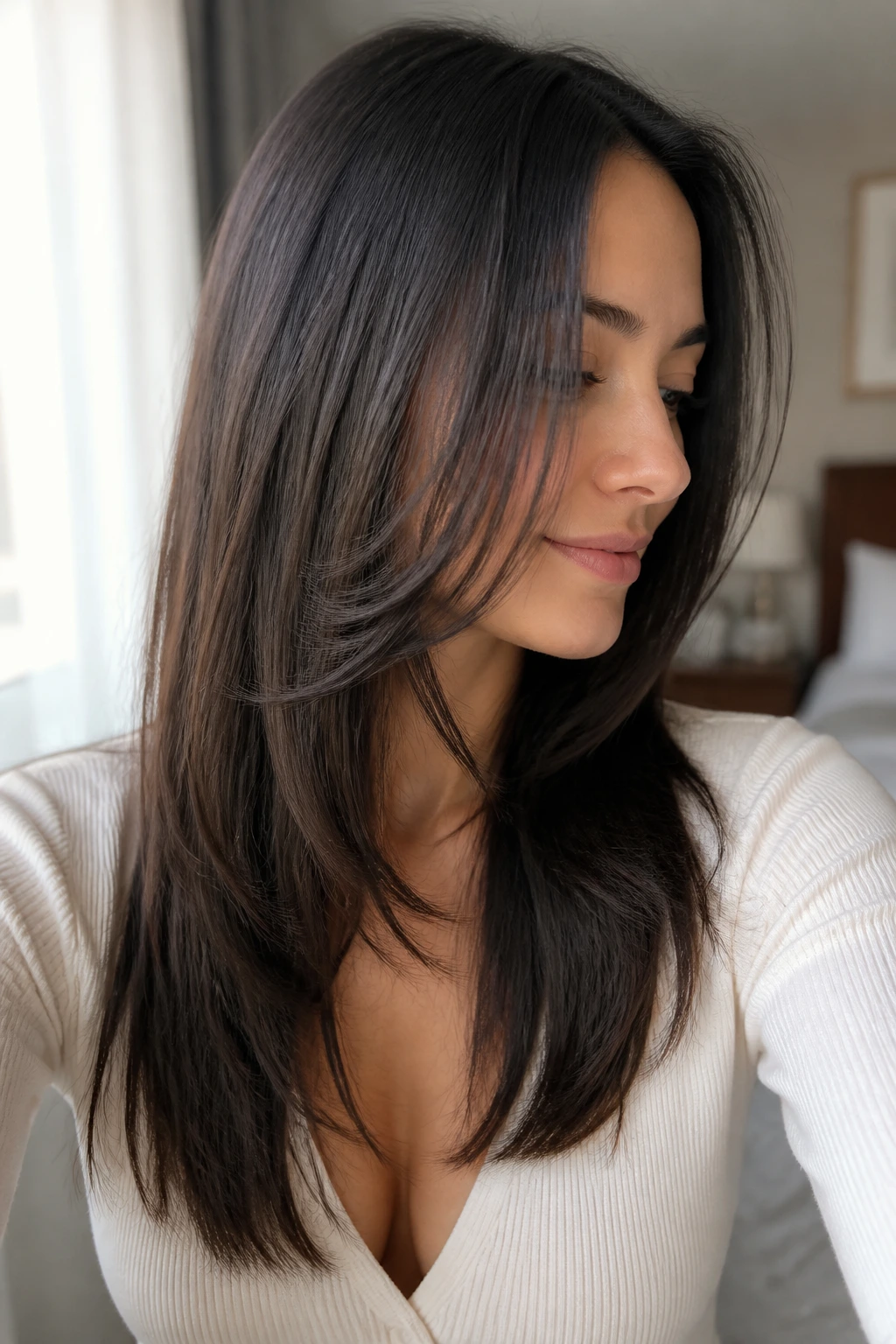
Invisible layers are the quietest option in the bunch. You do not see them right away, but you feel them when the hair swings and stops clumping into one thick line.
They’re a good fit if you like your hair to look mostly uniform but hate the dead weight that long hair can gather at the bottom. The cut stays calm. The movement shows up in motion.
14. Deep Side-Swept Feathering for Fine Hair
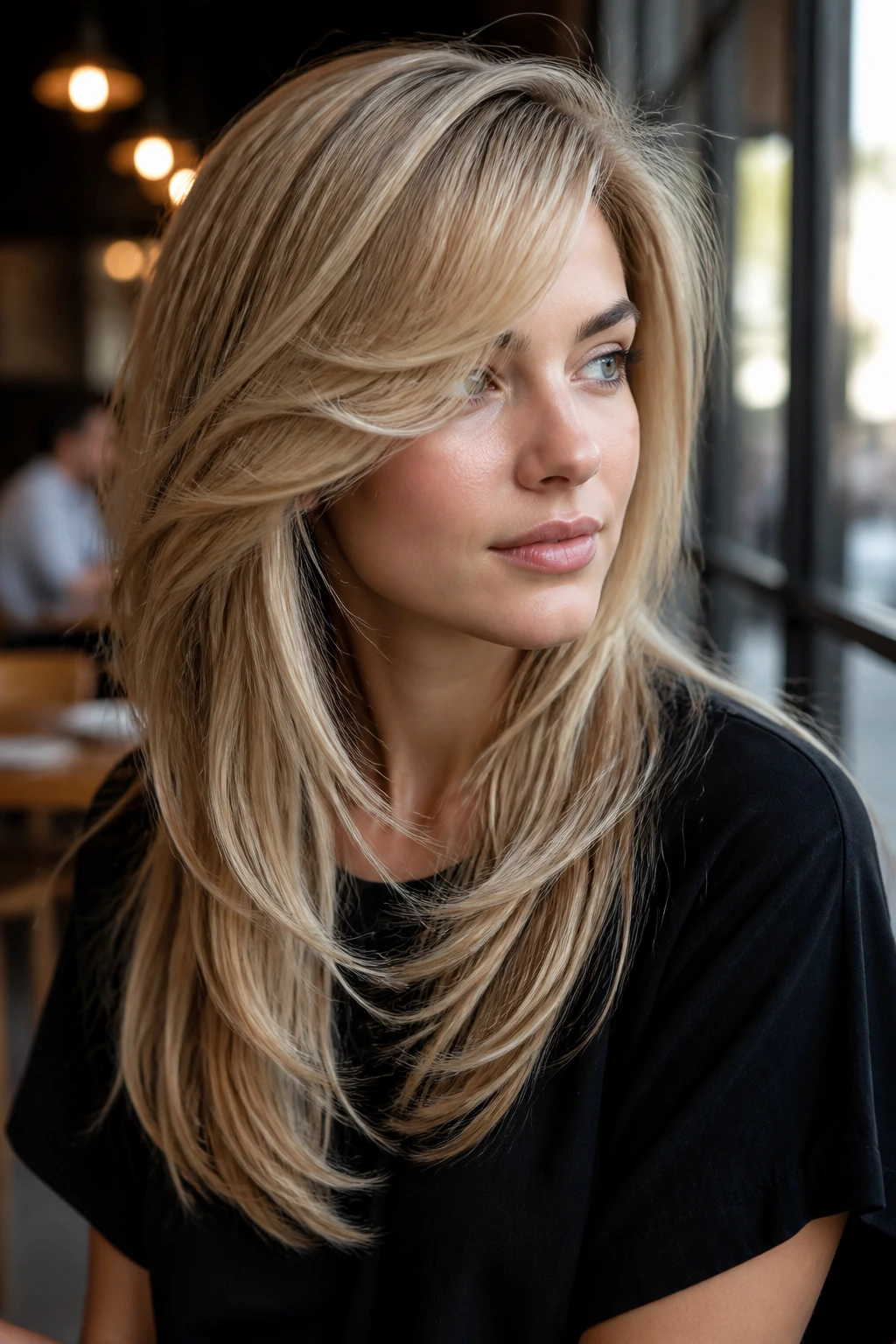
Fine hair needs a little help pretending to be fuller, and a side-swept front does that better than a center part sometimes. The longer sweep at one side gives the eye more surface to read, which makes the hair seem denser.
Keep the layers long and avoid over-texturizing. Fine hair can look thin fast if the feathering starts too high or if the ends get chewed up by too many thinning passes.
15. V-Cut with Feathered Front Pieces
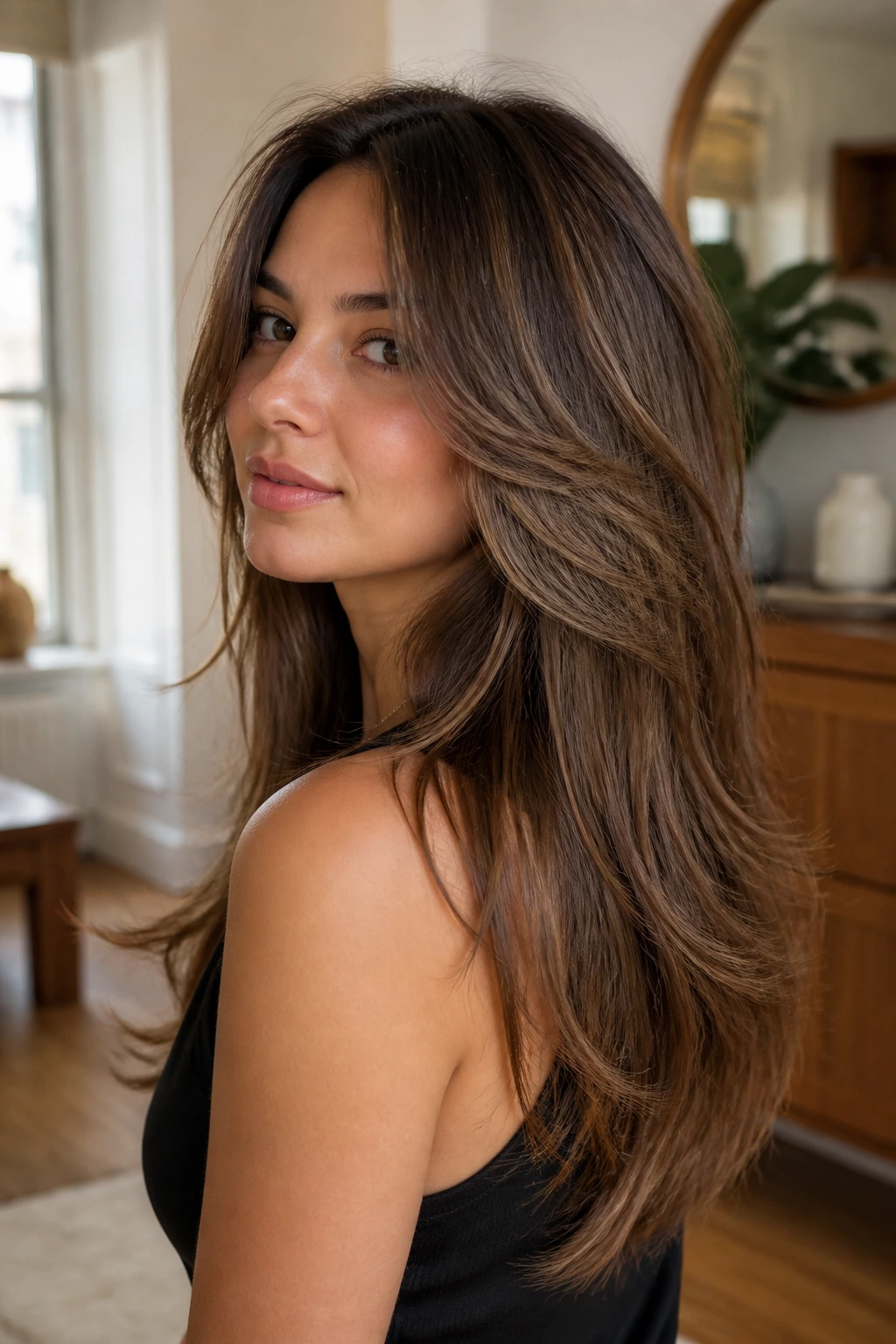
A V-cut gives the back its drama. The center point drops lower, the sides angle up, and the feathered front pieces stop the shape from feeling sharp or severe.
This one is especially good on thick, long hair. The V keeps the length dramatic, but the face frame softens it so the whole style does not look like a triangular block when it’s loose.
16. Air-Dried Waves with Feathered Shape
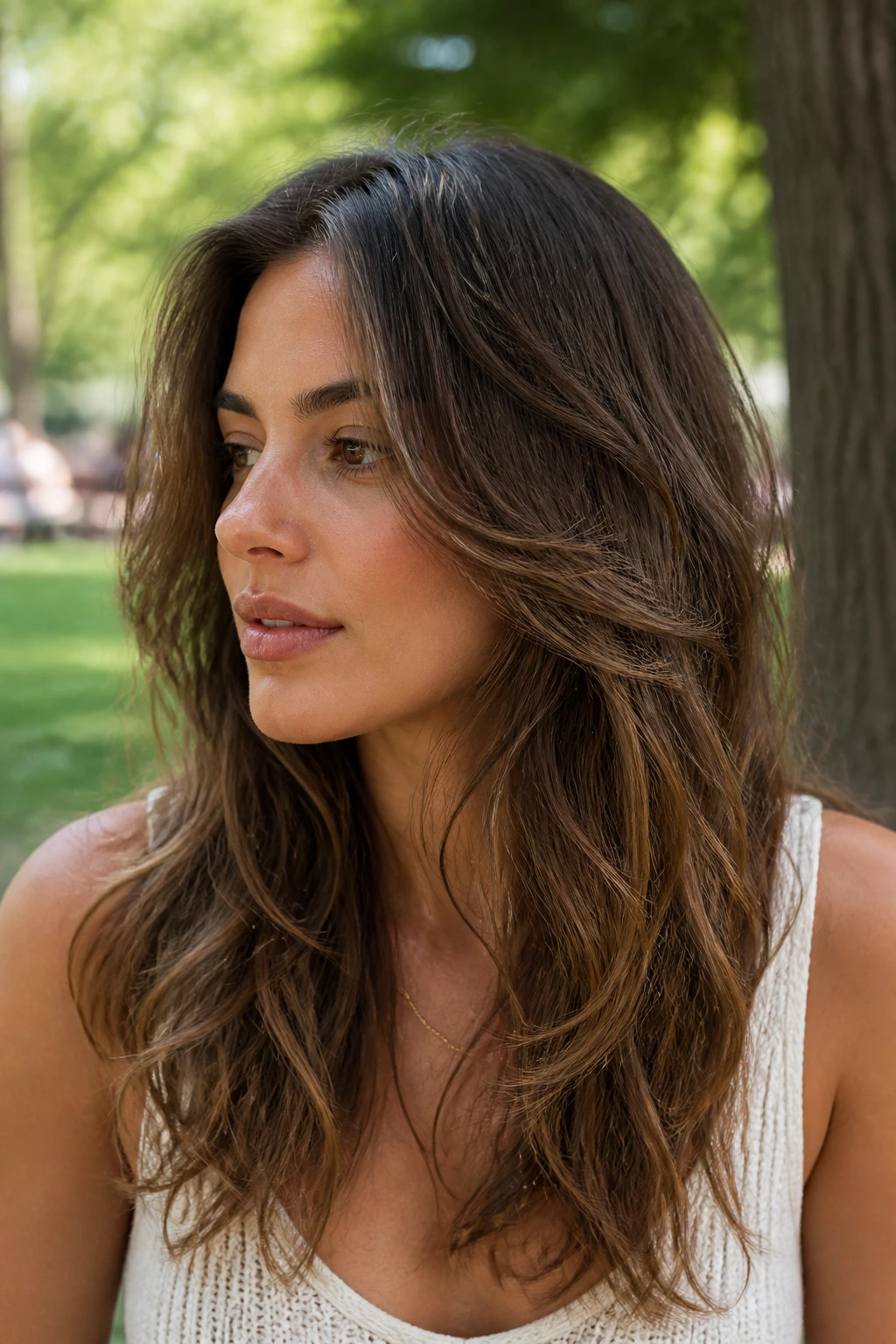
If your hair already bends on its own, feathering should work with that texture, not fight it. A long cut with soft front layers gives air-dried waves a place to settle instead of puffing out at the sides.
Scrunch in a light cream, part it where you naturally wear it, and leave the roots alone as much as possible. The layers show up as bends and curves rather than obvious cuts, which is exactly the point.
17. Thick Hair Weight-Removal Feathering
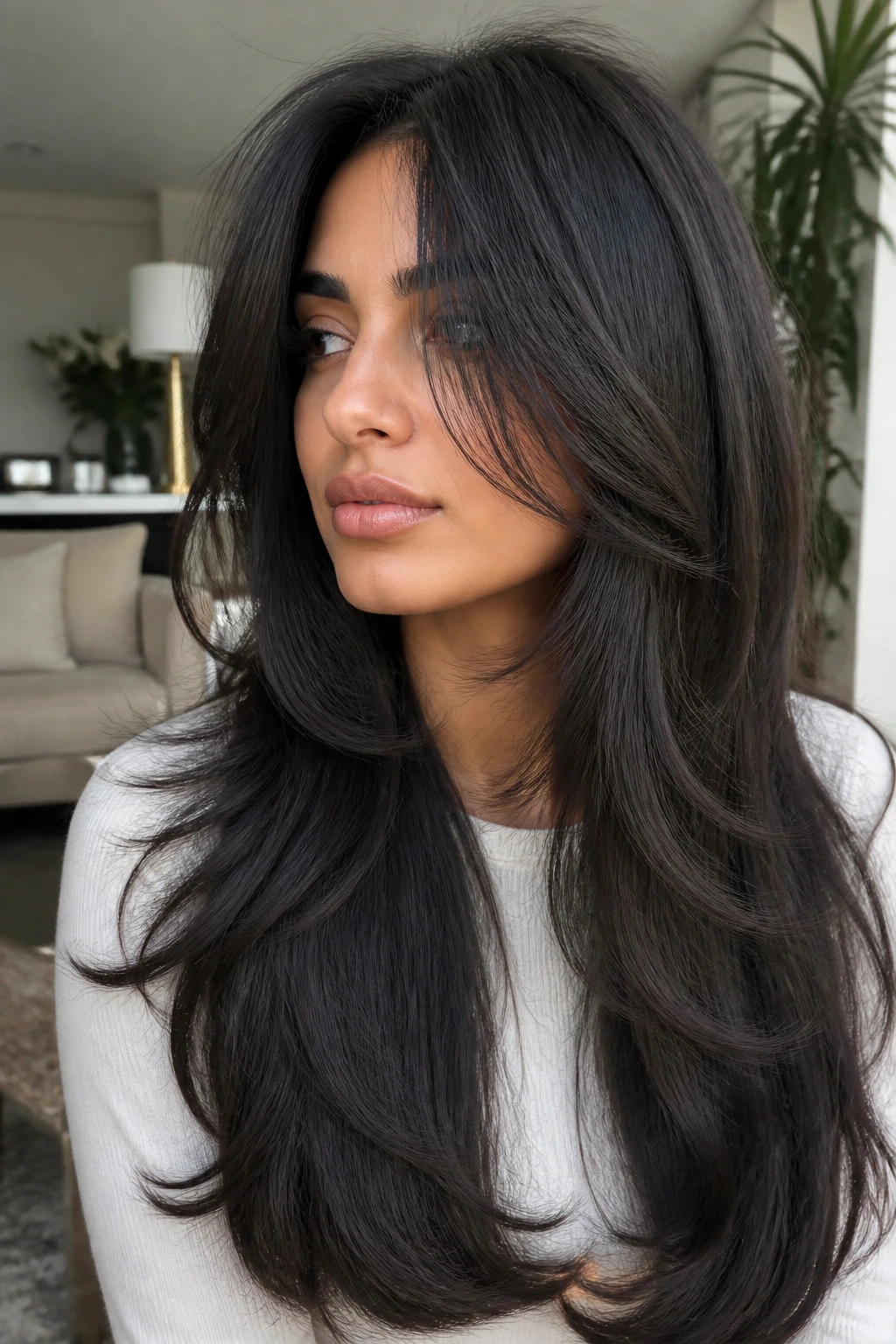
Thick hair can handle more feathering than people think, but only if the weight comes out from the right places. The interior gets lightened, the front pieces get movement, and the ends keep enough density to look healthy.
I would not ask for aggressive thinning on thick hair unless the stylist knows how it behaves when dry. Bulk removal should feel controlled, not like someone attacked the mid-lengths with a blender.
18. Fine Hair Density-Preserving Feathering
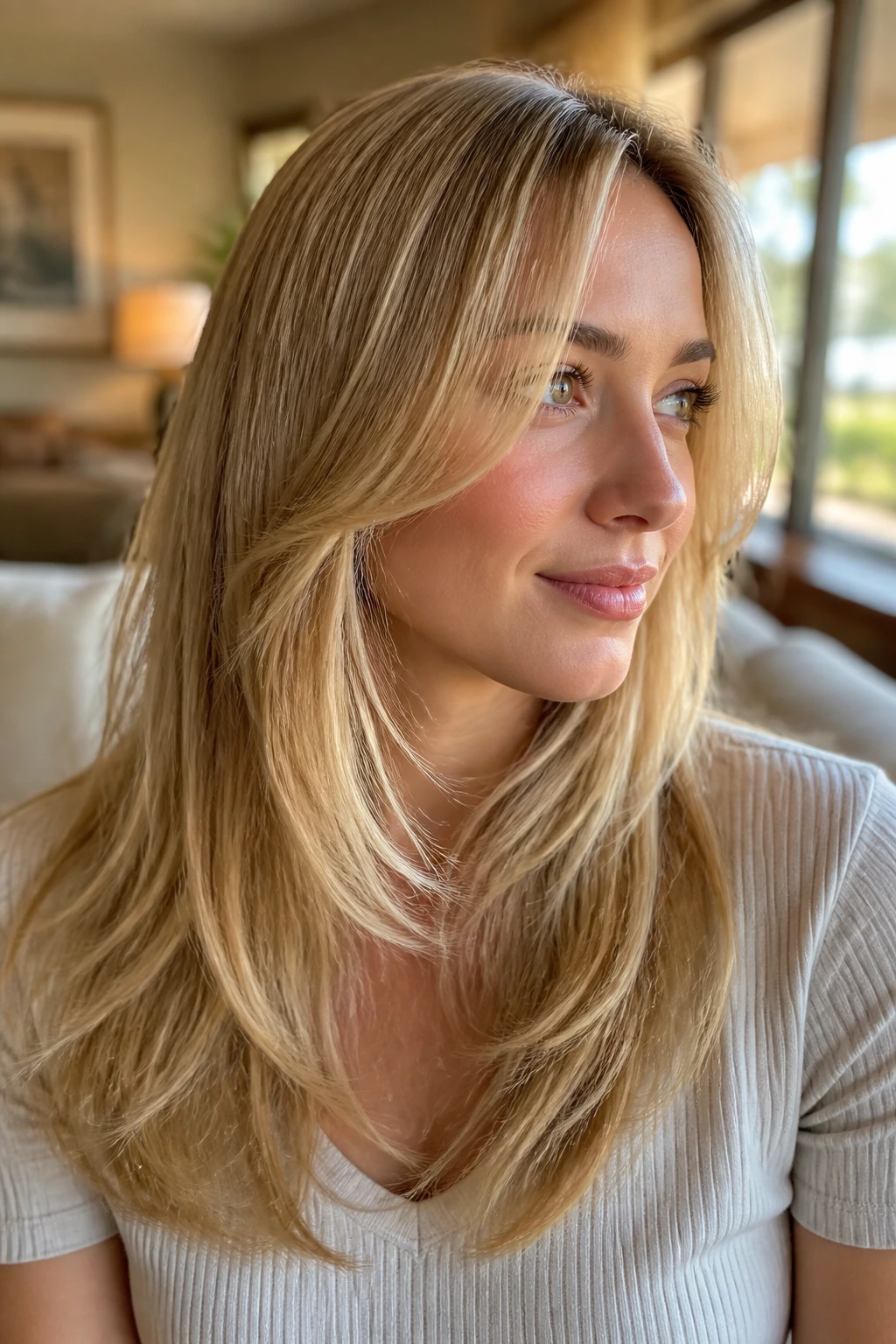
Fine hair needs a different kind of restraint. Keep the face frame soft, keep the layers longer, and protect the perimeter so the ends still look full when the hair is down.
This style is about suggestion, not drama. You want the illusion of shape, not a cut that exposes every sparse inch of the ends.
19. Curly Feathering That Respects the Curl Pattern
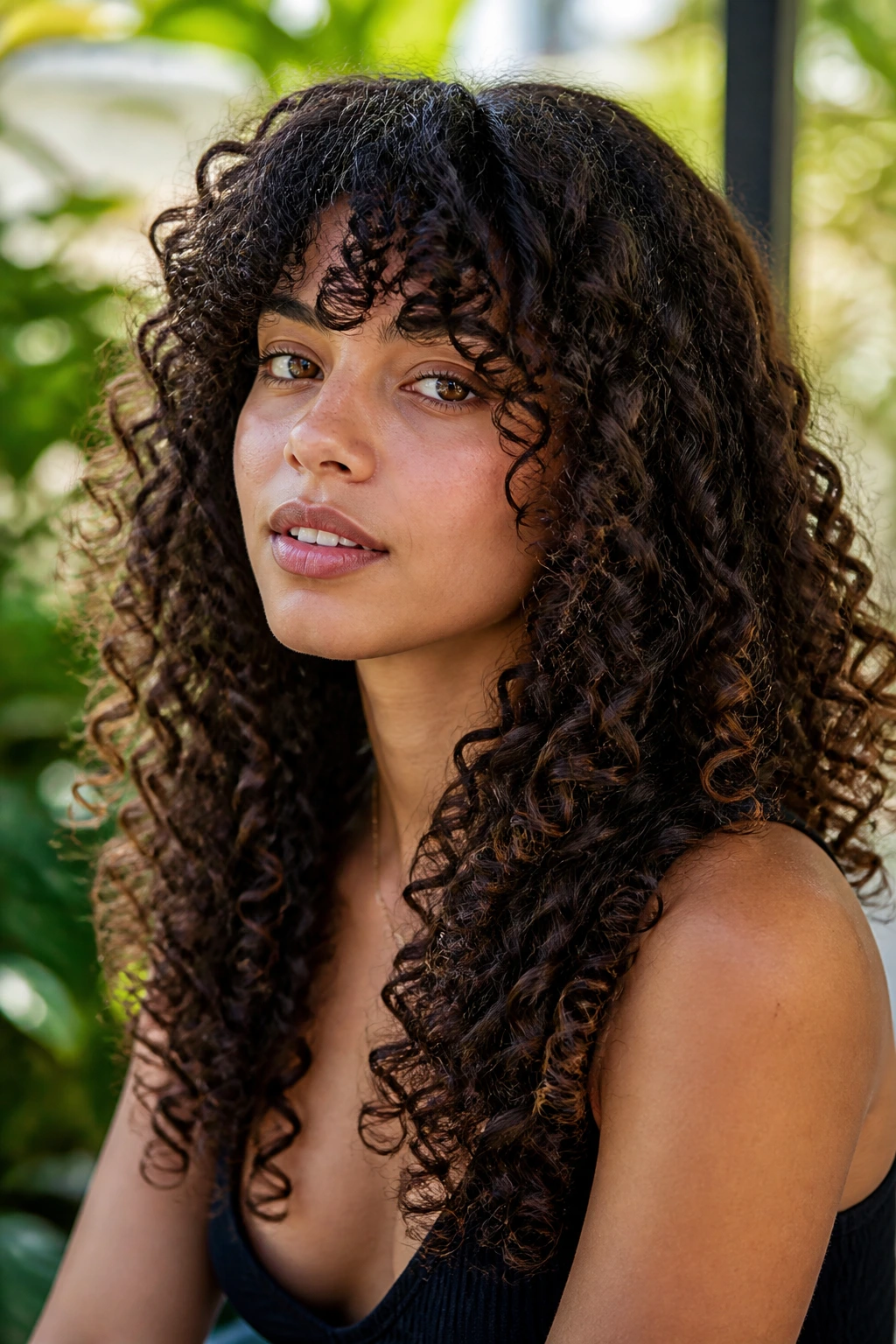
Curly hair should be cut with the curl in mind, not flattened into someone else’s idea of feathering. Dry cutting or curl-by-curl shaping lets the layers land where the curls actually live.
Long curls often get the dreaded triangle when the shape is wrong. Feathering helps, but only if the layers are long enough to move without breaking the curl family apart.
20. Long Curtain Bangs That Blend into the Length
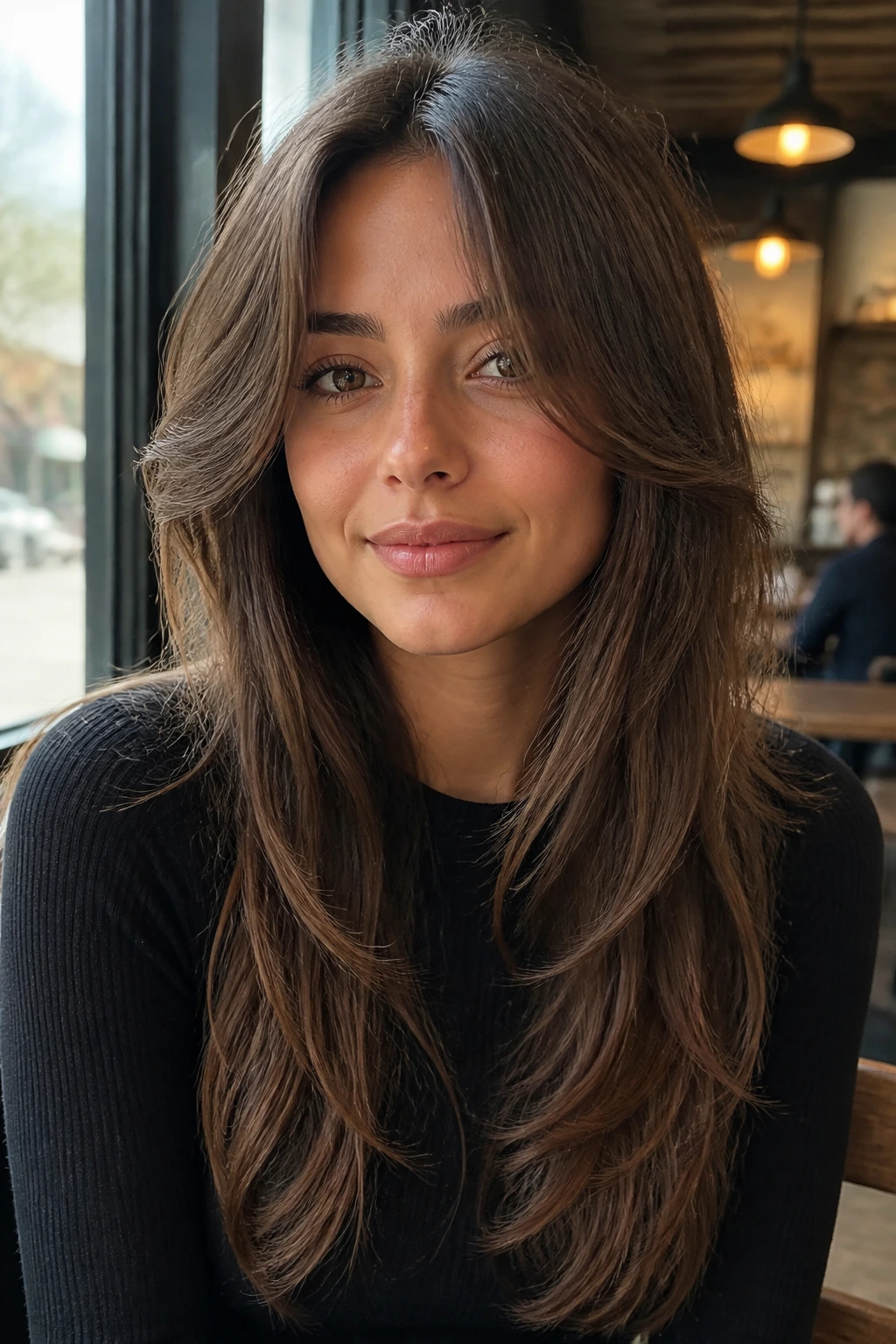
Curtain bangs are one of the easiest ways to get feathered movement around the face. The center stays short enough to lift the eyes, then the sides sweep down into the lengths like they were always meant to live there.
This cut works if you want fringe energy without the full commitment of blunt bangs. It also grows out better than people expect, which is useful because bangs are rarely a forever decision.
21. Flipped-Out Ends for a Lighter Finish
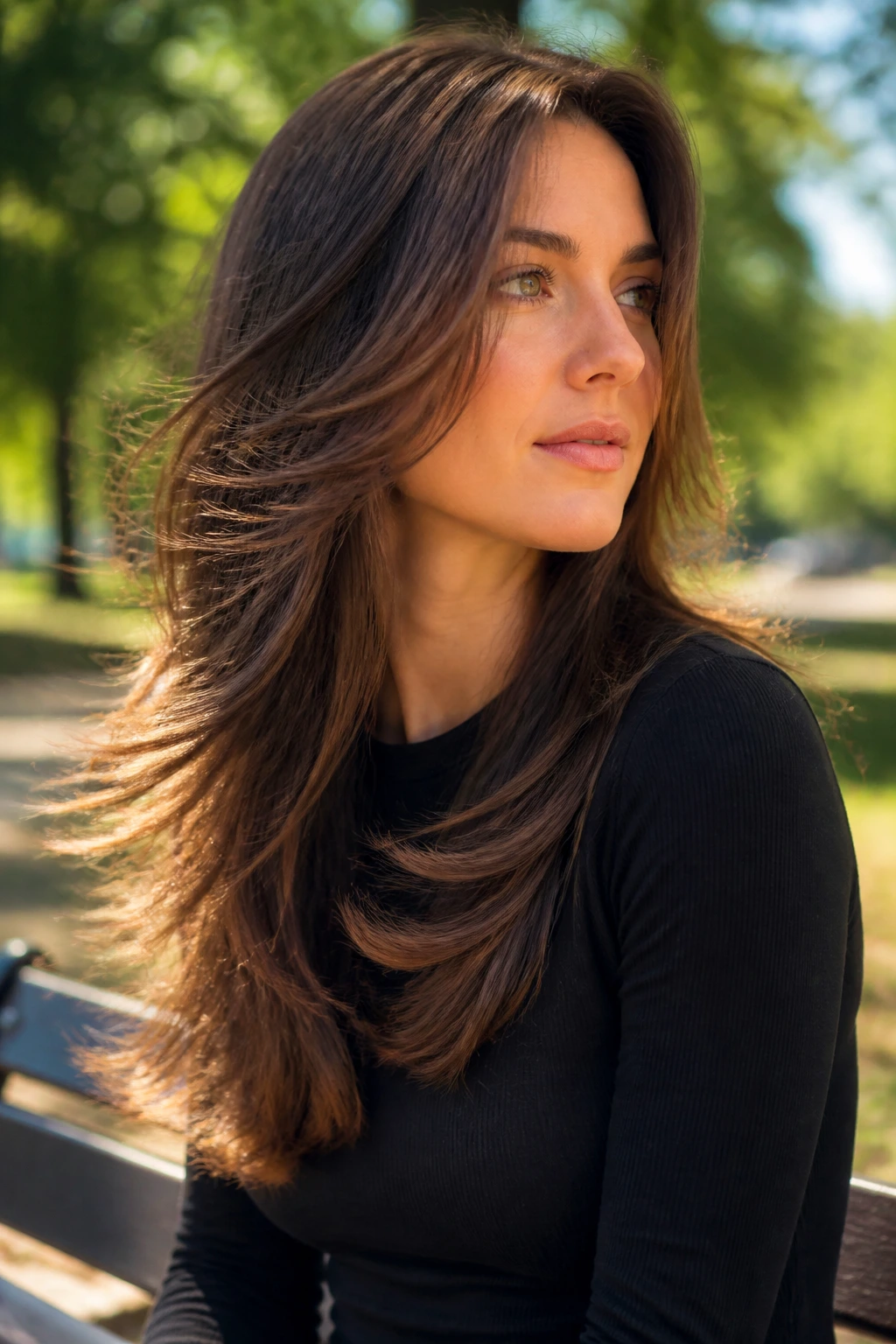
A feathered cut does not always have to fall in. Sometimes the fun is in the flip. When the ends turn outward, the haircut looks lighter and more animated, especially on long layers.
A flat iron or round brush can create that bend in under a minute per section. Keep the finish soft, not pageant-hard, or the whole style tips into old-school territory fast.
22. Feathering That Starts Below the Chin
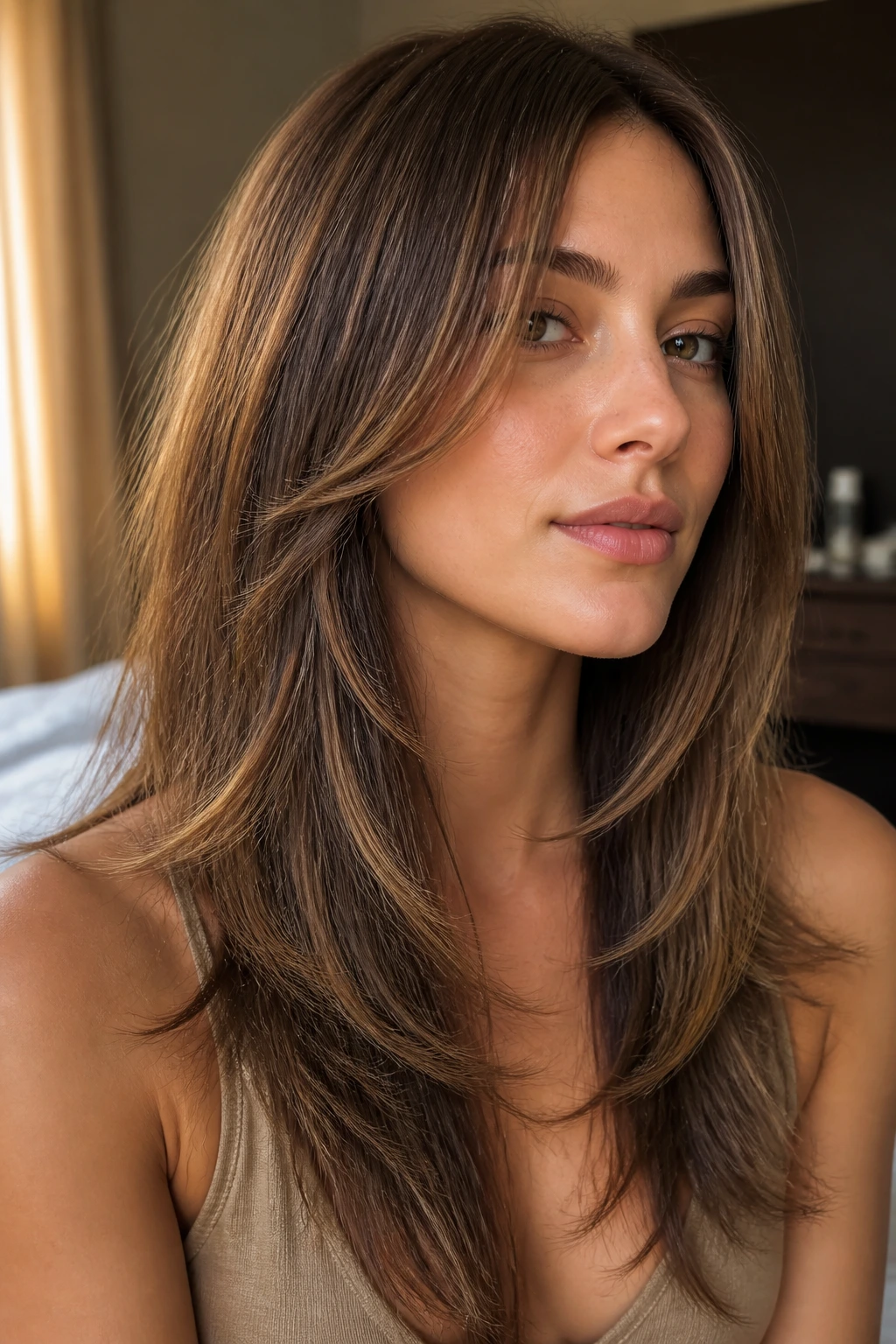
Here’s the move for anyone who likes long hair near the face but still wants movement. Start the feathering below the chin so the shortest pieces do not sit right on the jawline.
That tiny shift keeps the front from getting too busy. You still get shape, but the hair frames the face from a little farther out, which can be kinder on square or fuller faces.
23. Feathered Layers That Work in Half-Up Styles
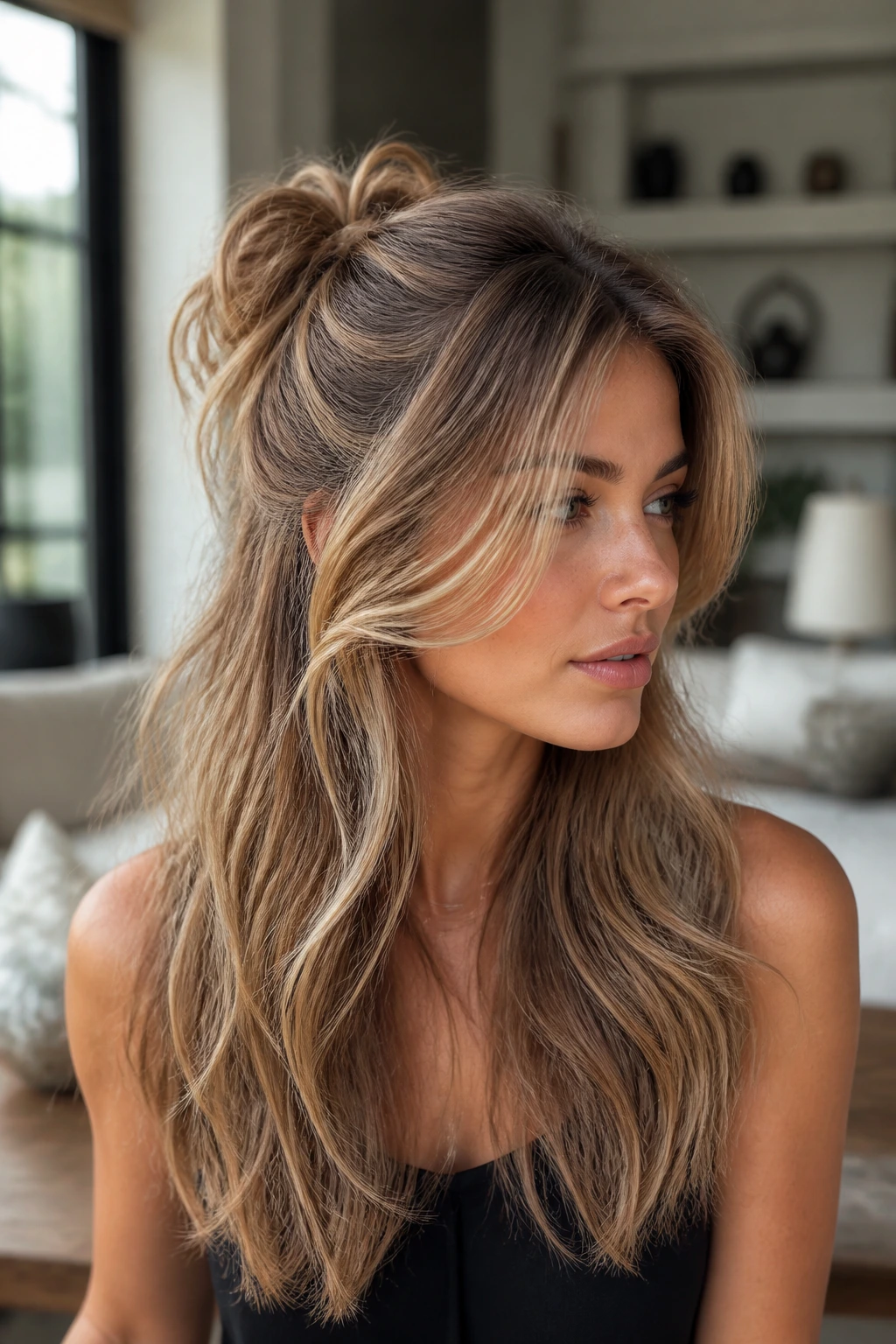
Some cuts look great only when fully down. This is not one of them. Feathered long layers can fall loose around a half-up knot, which keeps the style soft instead of giving you a stiff bump at the crown.
If you wear your hair tied back a lot, make sure the shortest pieces are long enough to stay in the ponytail without slipping out. That detail sounds small until you spend the whole day fixing baby hairs.
24. Feathered Hair That Lives in a Claw Clip
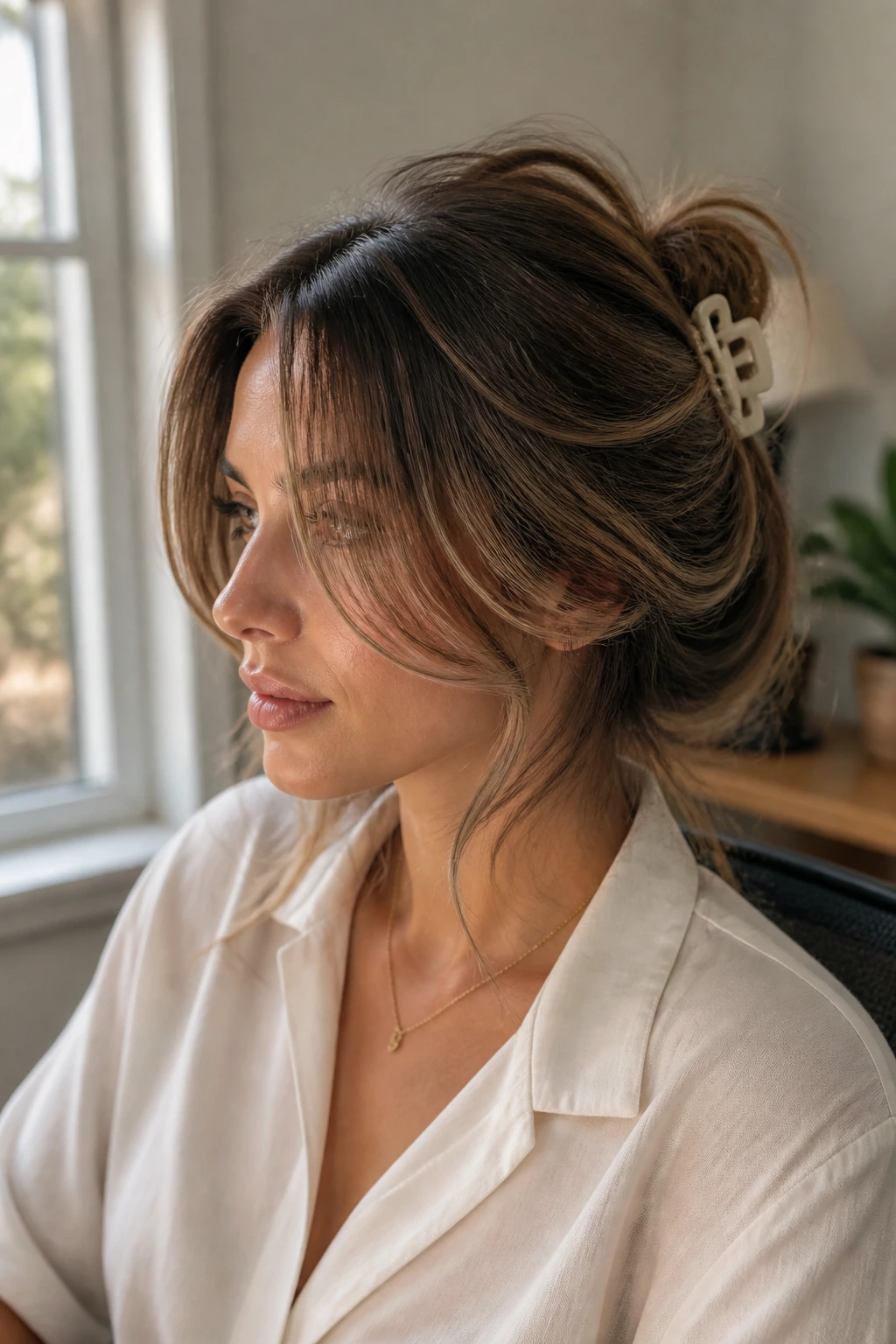
A claw clip changes everything. Long feathered layers make the clip style look deliberate because the front pieces fall away from the face in a soft bend instead of sticking out like loose wire.
This is a smart shape for anyone who wears their hair up for work and down at dinner. The cut has to behave in both modes, and feathering helps with that.
25. Feathered Layers for Braids and Ponytails
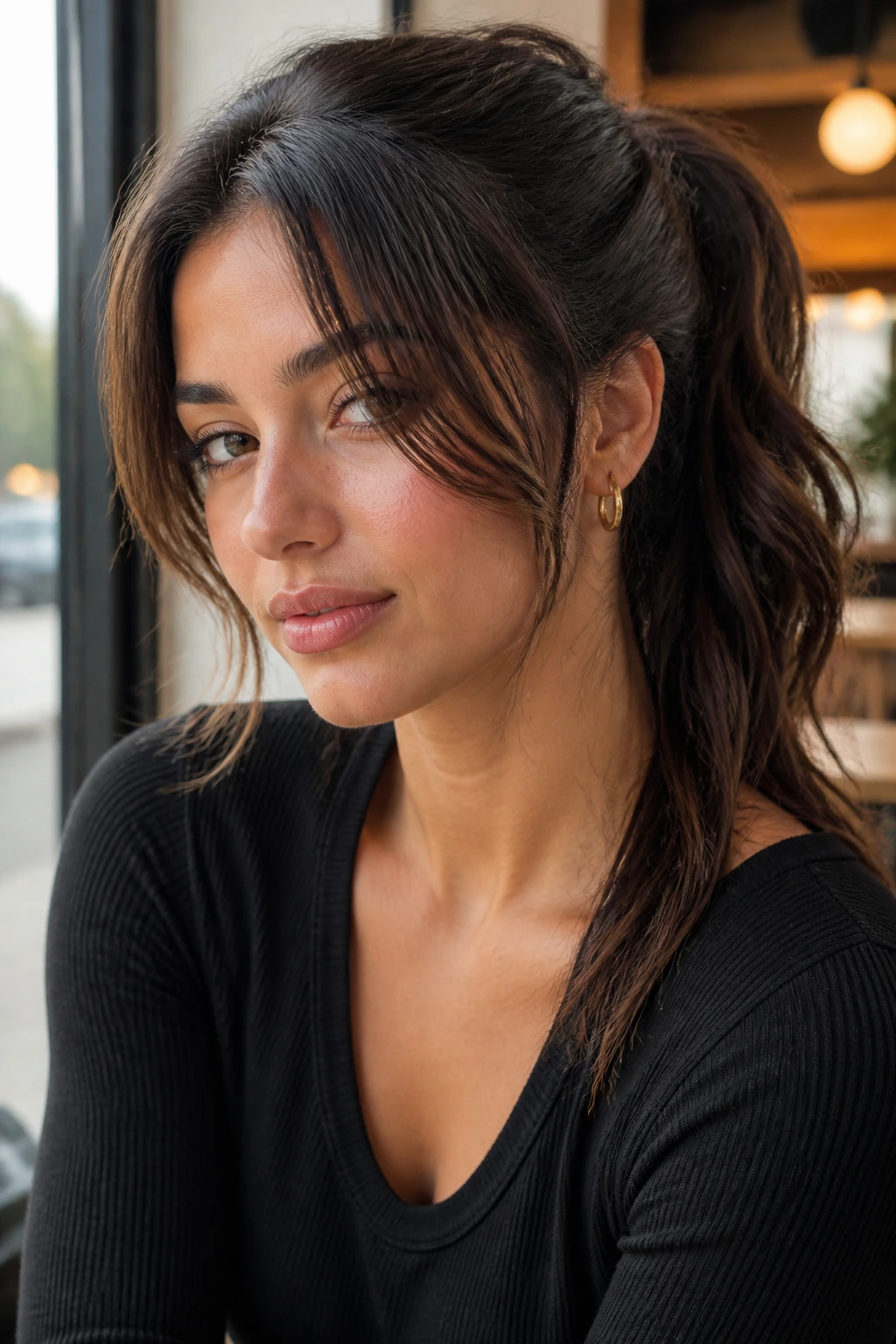
Braids and ponytails can look bulky when long hair has no shape. Feathered layers remove enough weight to keep the style from turning into a giant rope, but they still leave enough length for the braid to hold.
The front pieces matter here. A few soft layers around the face can make a simple ponytail feel finished, which is more useful than people admit.
26. Soft Feathering with Dimensional Highlights
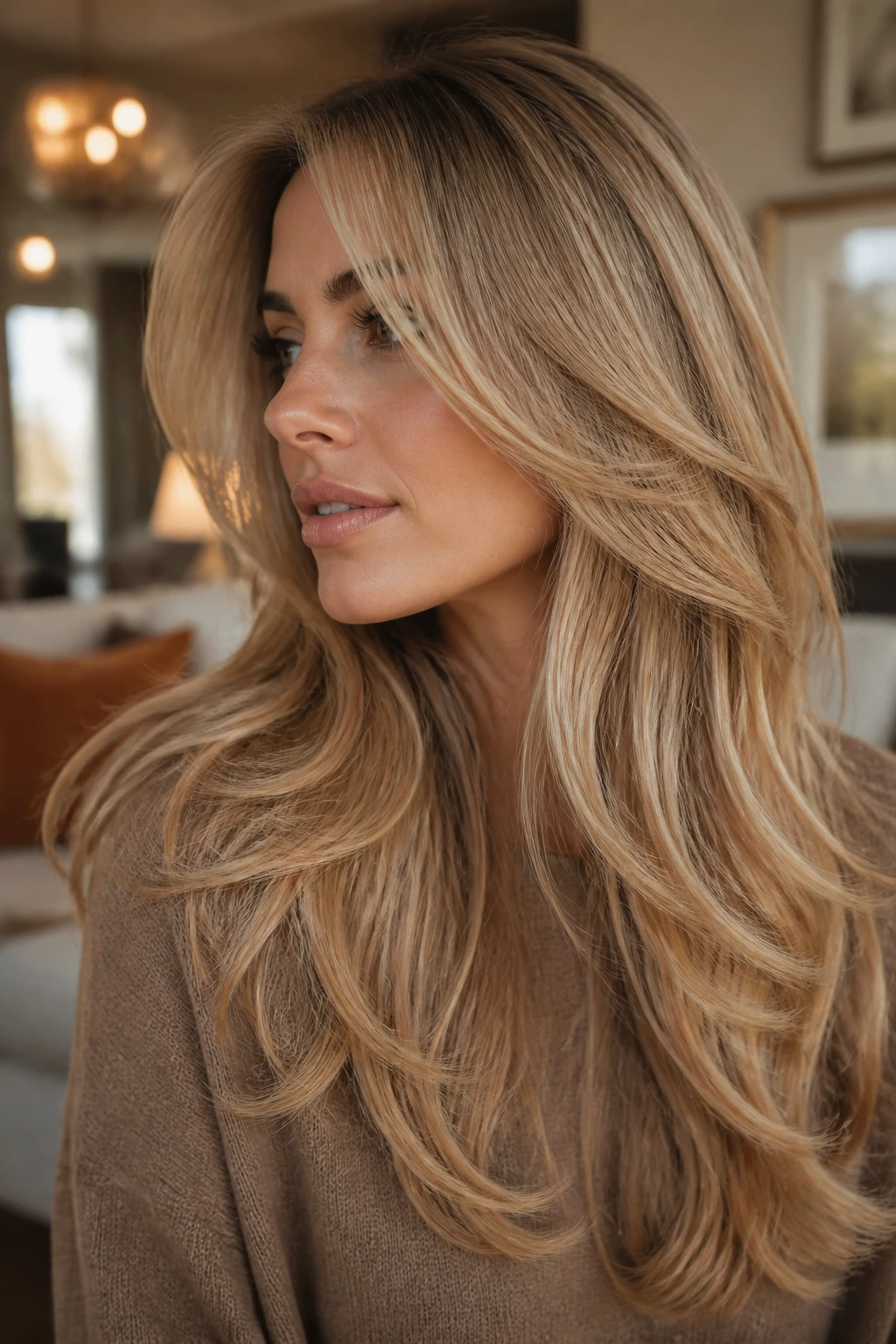
Color is not the haircut, but it changes how the haircut reads. Feathered layers plus subtle highlights or lowlights make the movement obvious because the light hits the bends and edges.
If you already have color around the face, keep the feathering soft so the front does not get busy. The cut and the color should talk to each other, not compete.
27. Glossy Middle-Part Feathering
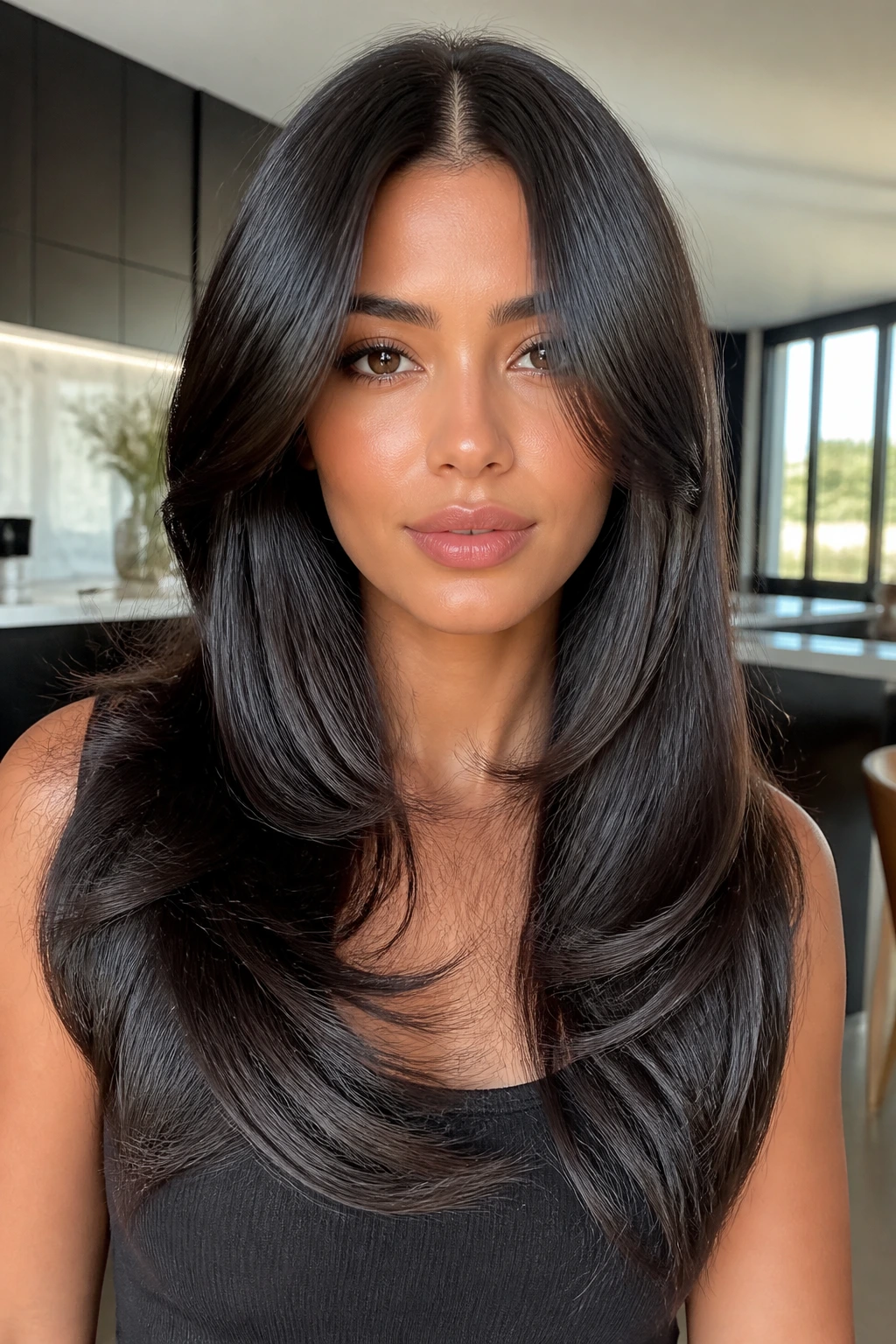
A middle part can feel severe if the hair is too flat. Feathered front pieces soften that line and give the center part a little motion, especially when the ends are smooth and glossy.
I like this best on long hair that gets a silk-press-style finish or a polished blow-dry. The cut stays clean, but the front stops looking like it was split with a ruler.
28. Feathered Straight Hair That Needs Shape
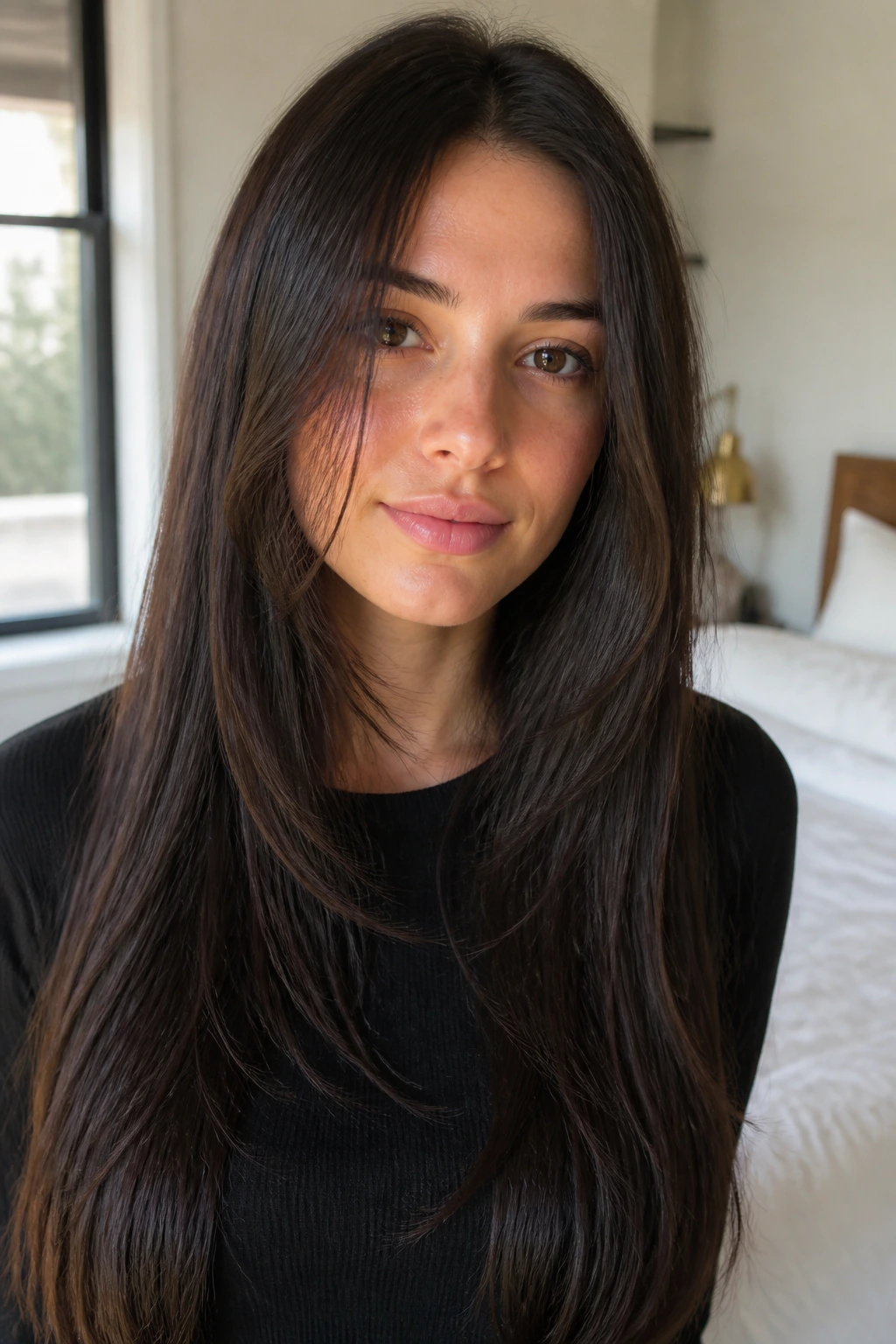
Pin-straight hair often hangs like one long ribbon, which sounds neat until it starts to feel lifeless. Feathering gives the front some bend and the ends a little bounce without destroying the long line.
The key is restraint. Straight hair shows every layer, so the best version is soft and gradual, not chopped into obvious steps that you can see from across the room.
29. Feathered Waves That Want Definition
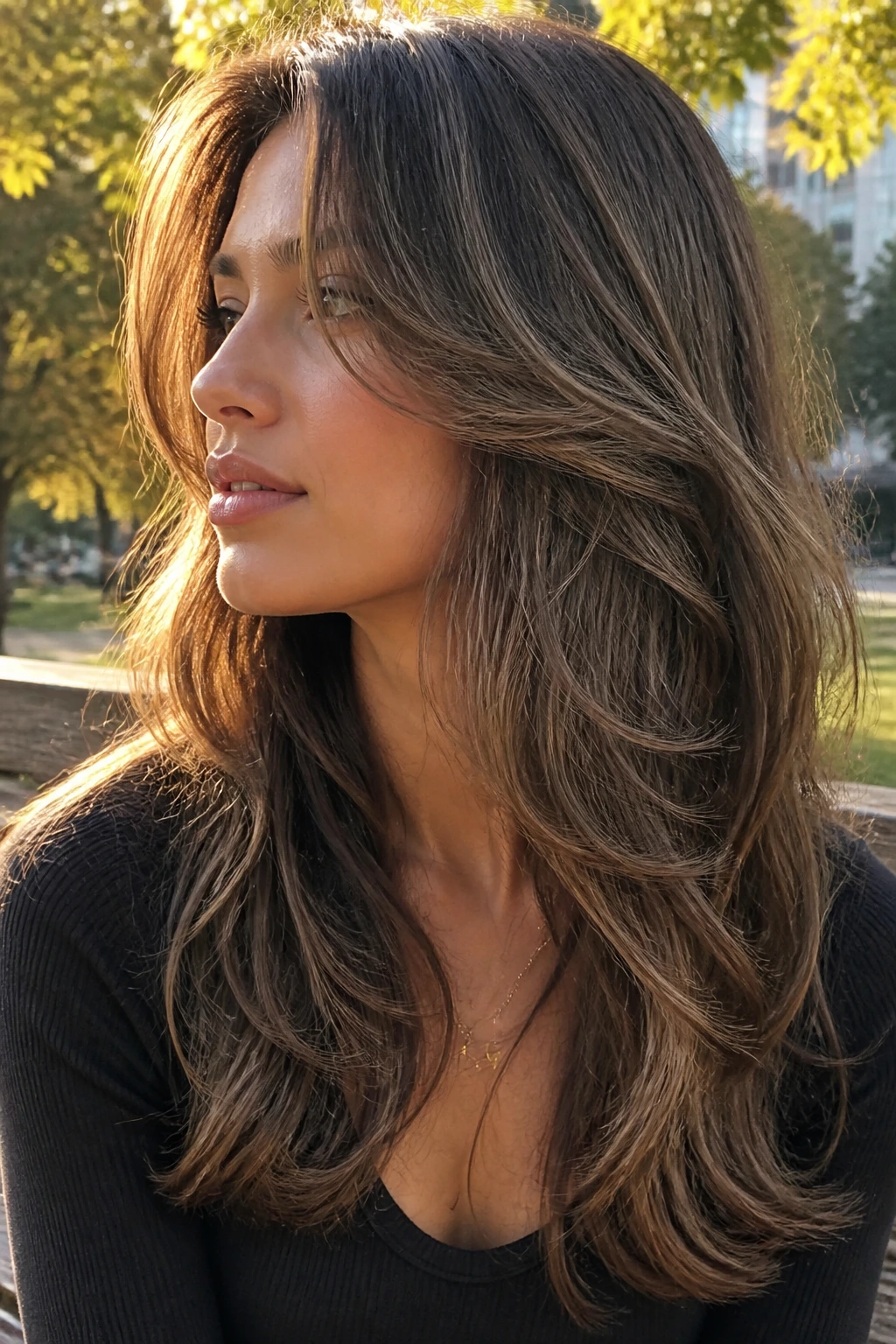
Wavy hair can go puffy in all the wrong places if the shape is off. Feathering helps the waves stack in a cleaner pattern, especially when the shortest pieces fall around the cheekbones and then taper down.
Use a little wave cream and scrunch gently. The cut will do most of the talking, and the waves will read as textured instead of fuzzy.
30. Minimal Feathering for Length-First Hair
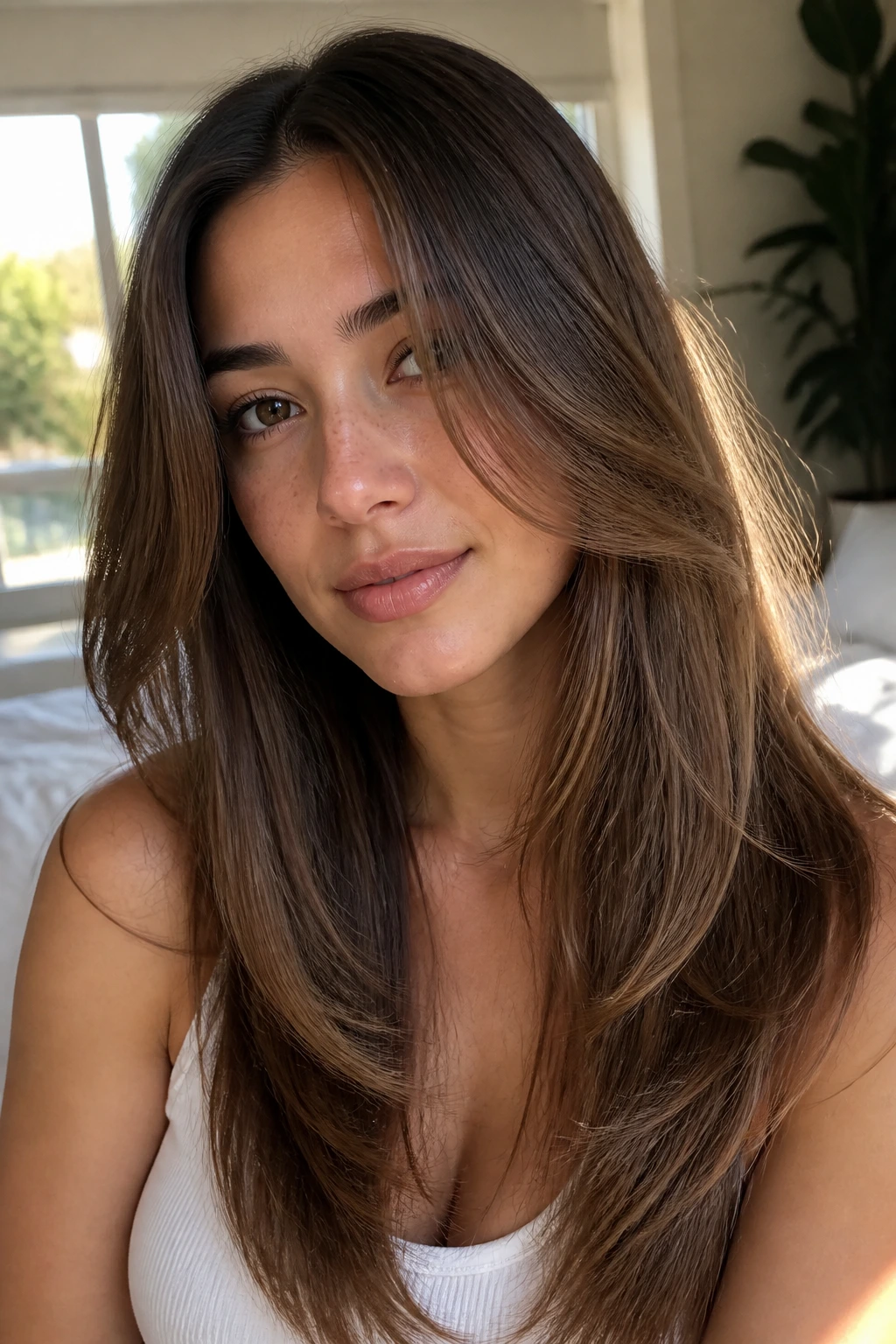
Some people want the length first and the shape second. Fair enough. A minimal feathered cut gives you just enough front movement to keep the hair from feeling heavy, but it leaves the bulk and the inches where you want them.
This is the version I’d choose for someone nervous about layers. It is the least risky path, and if you miss the idea of more shape later, you can always go stronger on the next trim.
What Feathering Changes Before You Touch the Blow Dryer
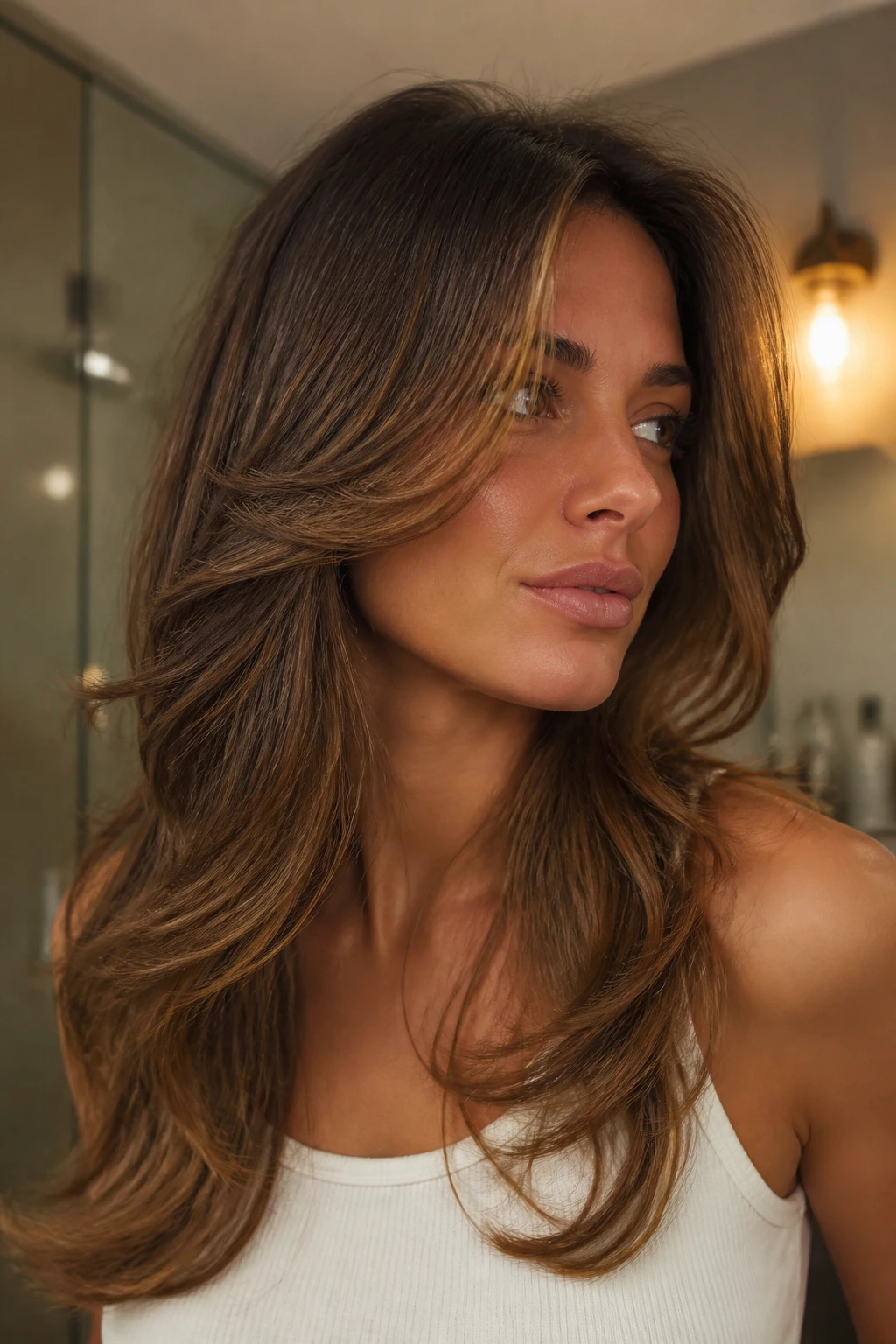
The cut matters more than the product. That sounds obvious, but people waste a lot of time trying to style heavy long hair into movement that the haircut never gave them in the first place. Feathering changes where the hair falls, so the blow-dry has a place to land.
A blunt long cut needs more work to look lively. Feathered layers start helping the second the hair leaves the brush. That is why I’m so picky about where the shortest face-framing piece begins. One inch too high can turn soft movement into awkward flip. One inch lower can make the whole haircut easier to wear.
What to Ask for at the Salon
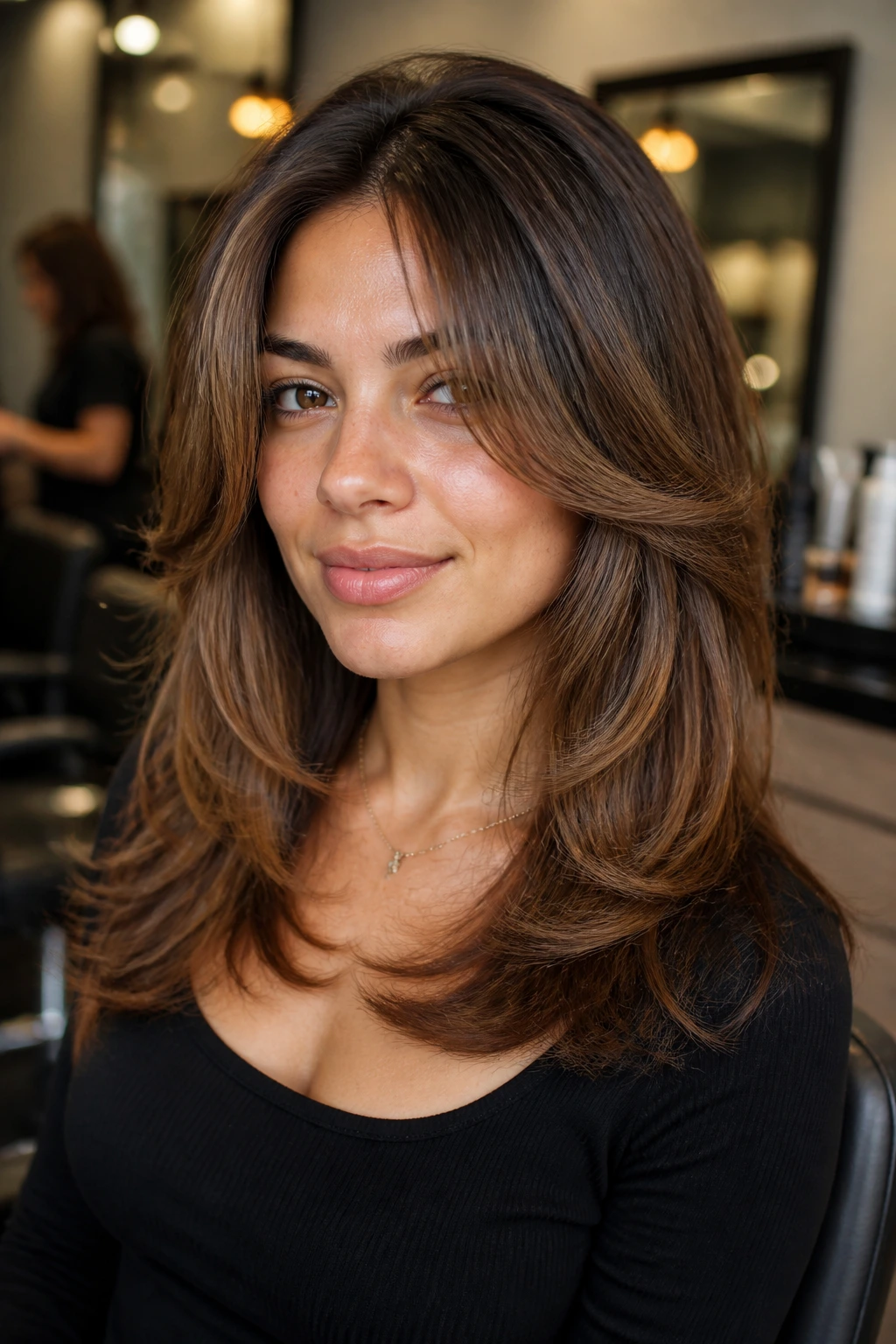
Bring a photo, yes, but bring the right photo. Show the stylist what the front looks like, what the length looks like from the side, and how much layering you want around the face. One picture from the front is not enough. Hair changes a lot once it moves past the shoulder.
Say where you part your hair. Say whether you wear it straight, wavy, curled, or air-dried. If you do not, the stylist will have to guess where the face frame should sit, and guessing is how people end up with layers that fight their routine.
A useful request sounds like this: “Keep the length, start the face frame around the collarbone, and blend the layers softly so they still look good tucked back.” That is a much better conversation than asking for “a lot of layers.” That phrase means almost nothing.
Essential Tools and Products for Feathered Long Hair
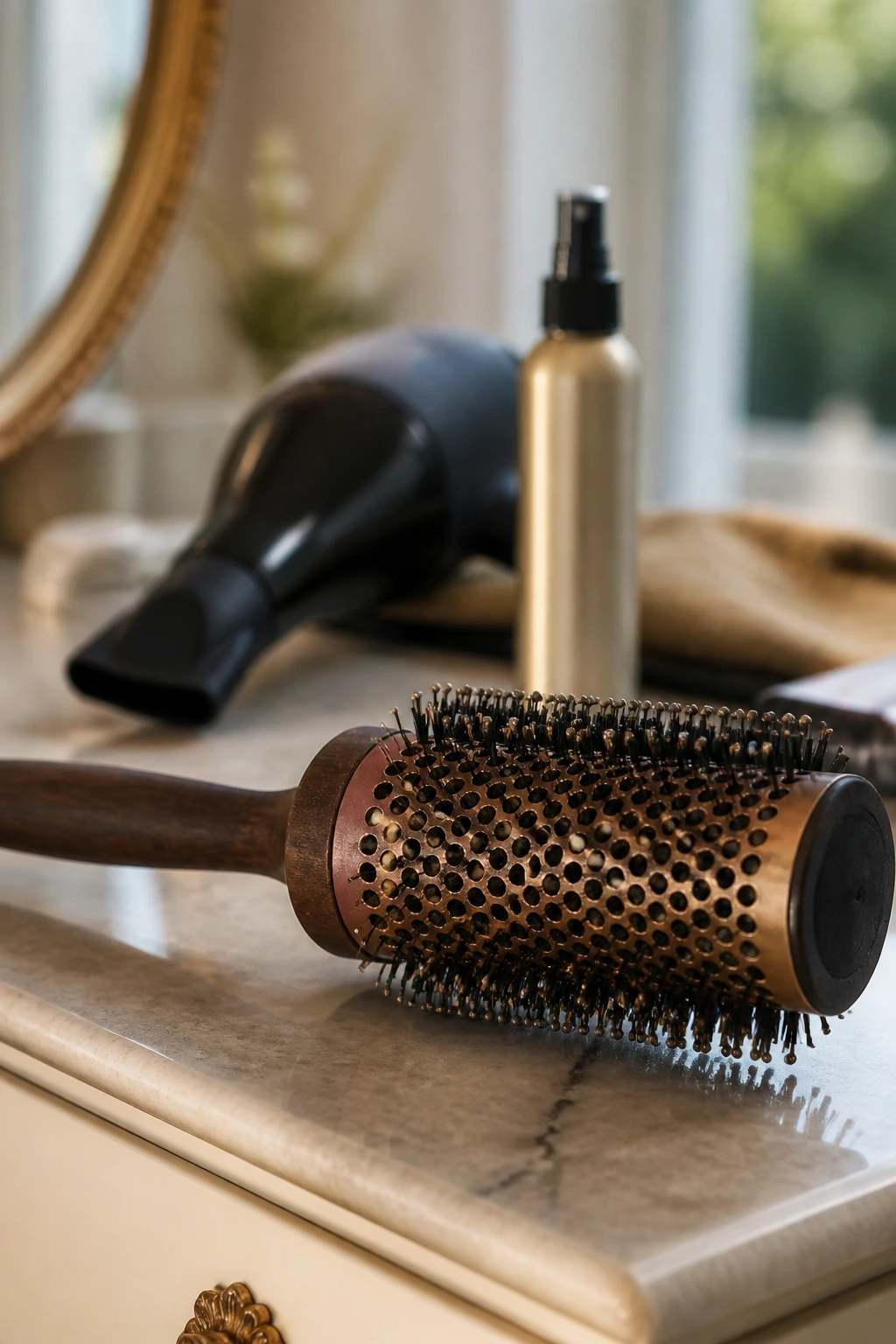
- Round brush, 1.5 to 2.5 inches: The size changes the bend; smaller brushes make a tighter flip, larger ones make a softer curve.
- Blow dryer with a nozzle attachment: The nozzle keeps the air pointed where you want it, which matters when you’re trying to smooth a face frame.
- Heat protectant spray or cream: Feathered ends can look fried fast if they’re curled or brushed with too much heat.
- Lightweight mousse: Good for roots and crown lift on blowout-style feathered cuts.
- Texturizing spray: Best for shaggy or butterfly shapes that need a little separation at the ends.
- Hair clips: Sectioning is half the job when the layers are long and face-framing pieces get in the way.
- Wide-tooth comb: Useful for waves and curls, especially if you want the feathered pieces to stay grouped rather than frizzed apart.
- Light serum or oil: Use a tiny amount on the last 3 to 4 inches only; too much will flatten the movement you paid for.
How to Style Feathered Layers Without Killing the Shape
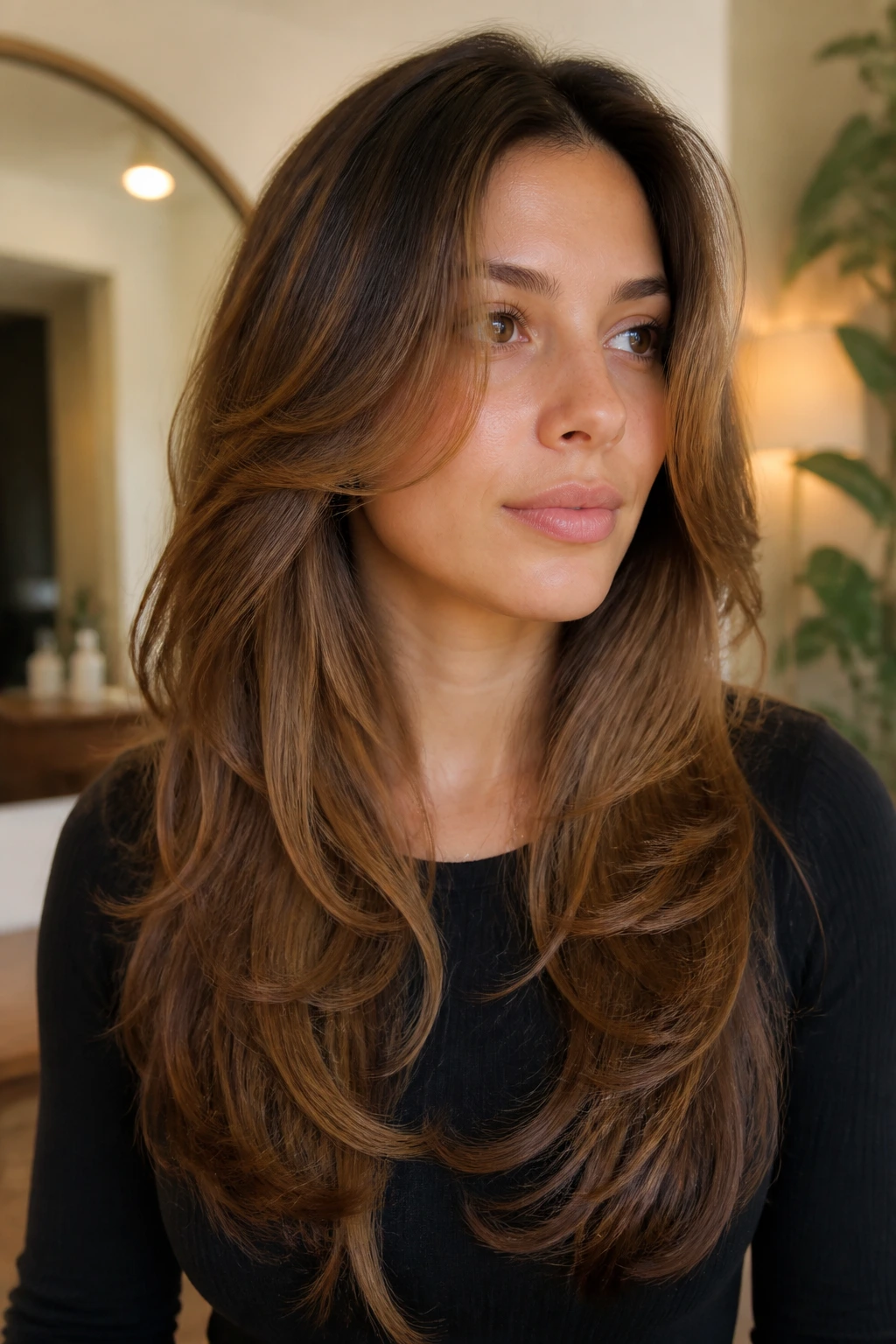
Round-Brush Blowout: Aim the dryer down the hair shaft, then roll the ends under or away from the face depending on the look you want. The front should bend, not puff. That small difference changes everything.
Air-Dry Finish: Work in a light cream or mousse, scrunch the mid-lengths, and leave the roots alone unless they sit completely flat. Feathered cuts usually show their shape even without heat, but they look best when you keep the product light.
Second-Day Refresh: Mist the front pieces with water, twist them around your fingers for a few seconds, and hit them with low heat for a minute. The goal is to wake up the bend, not rebuild the whole style from scratch.
Product Choice: Heavy oils and thick butters can crush long feathered layers. If your hair is fine or straight, lean toward mousse, spray, or a light cream. Thick hair can take a little more weight, but not much.
Common Mistakes That Make Feathering Look Choppy
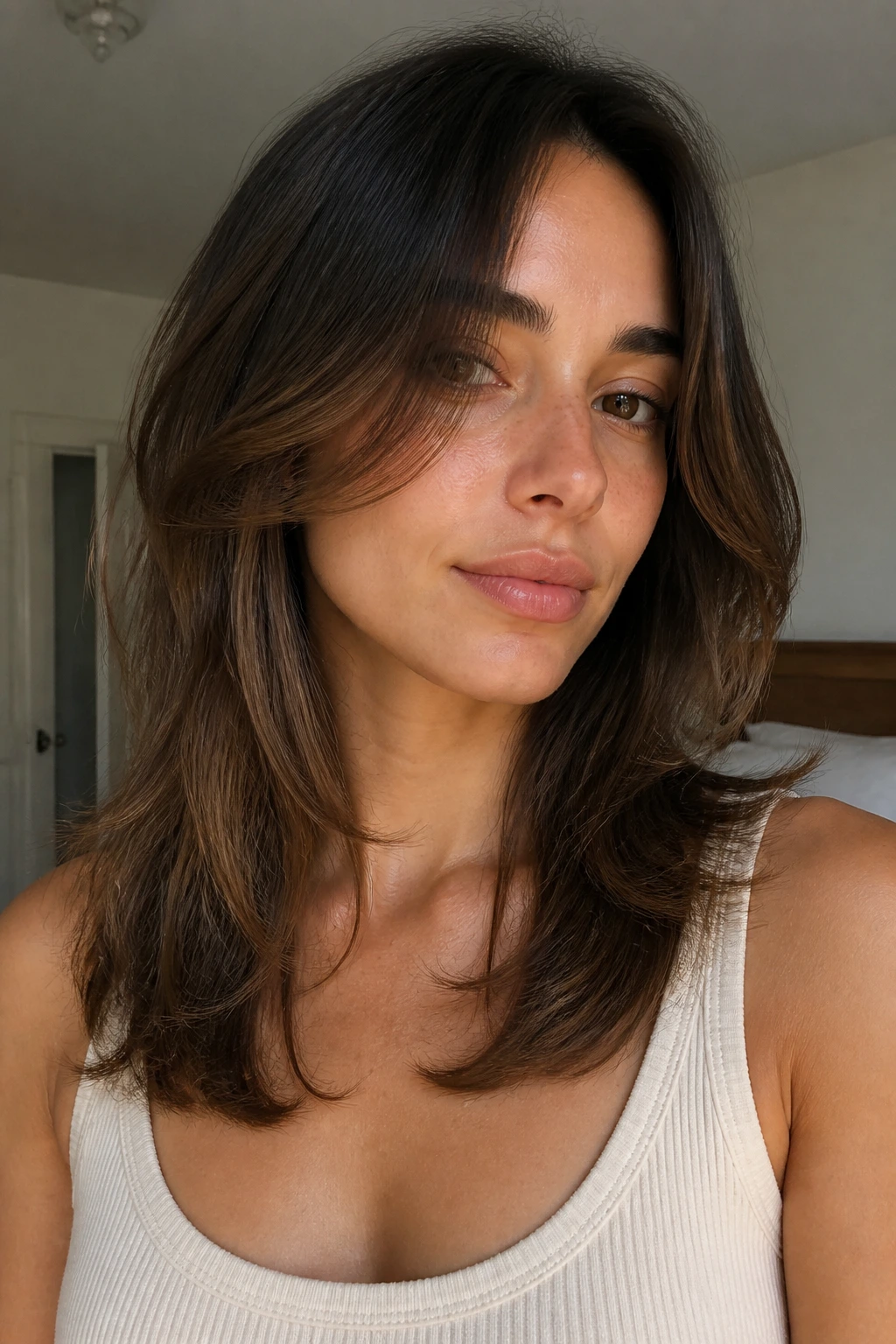
Starting the shortest layer too high: If the first face-framing piece begins near the cheekbone on hair that is already fine, the front can get stringy fast. Ask for a lower starting point and keep more length in the frame.
Over-thinning the mid-lengths: This is how long hair turns fuzzy and weak-looking. Feathering should remove bulk with a soft hand, not strip the inside of the haircut bare.
Ignoring how you wear your part: A center part and a side part do not need the same face frame. If you switch parts often, your layers should be flexible enough to work both ways.
Using too much oil at the ends: A glossy finish is nice. Limp, greasy layers are not. Use a drop, not a pour.
Expecting the cut to style itself: It won’t. Feathering gives you a better starting point, but the bend still needs a brush, a clip, or a little drying direction if you want it to show.
Variations and Alternatives Worth Trying
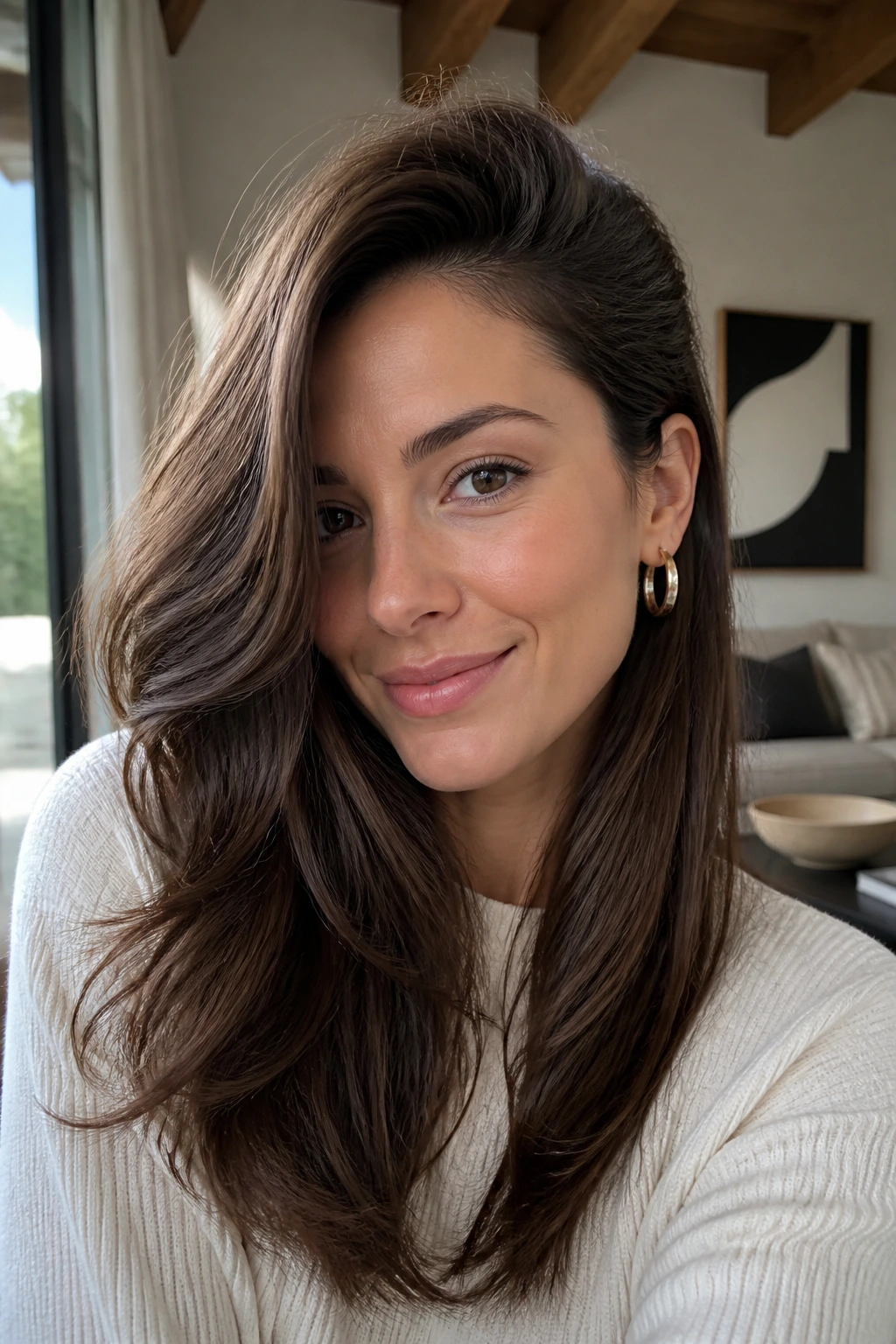
Soft 70s Blowout Feathering: This version leans into bounce, with round-brush volume and layered movement that opens away from the face. It suits people who want a softer version of glam hair without harsh bangs.
Razor-Light Straight Hair Feathering: A razor-finished cut can make straight hair feel less rigid, but it needs a careful hand. Best for dense, healthy ends that can handle a softer edge.
Curly Feathered Shape: Long curly layers with a dry-cut finish let the curls stack without ballooning at the sides. It’s the best choice when you want shape but hate triangle hair.
Shag-leaning Feathering: More layers, more separation, more texture. Good for hair that likes to live a little messier and looks better with product in it.
Minimal Face Frame: Keep the length almost intact and just add soft movement around the front. This is the one to choose if you want to test feathering without going all in.
Keeping Feathered Layers in Shape Between Cuts
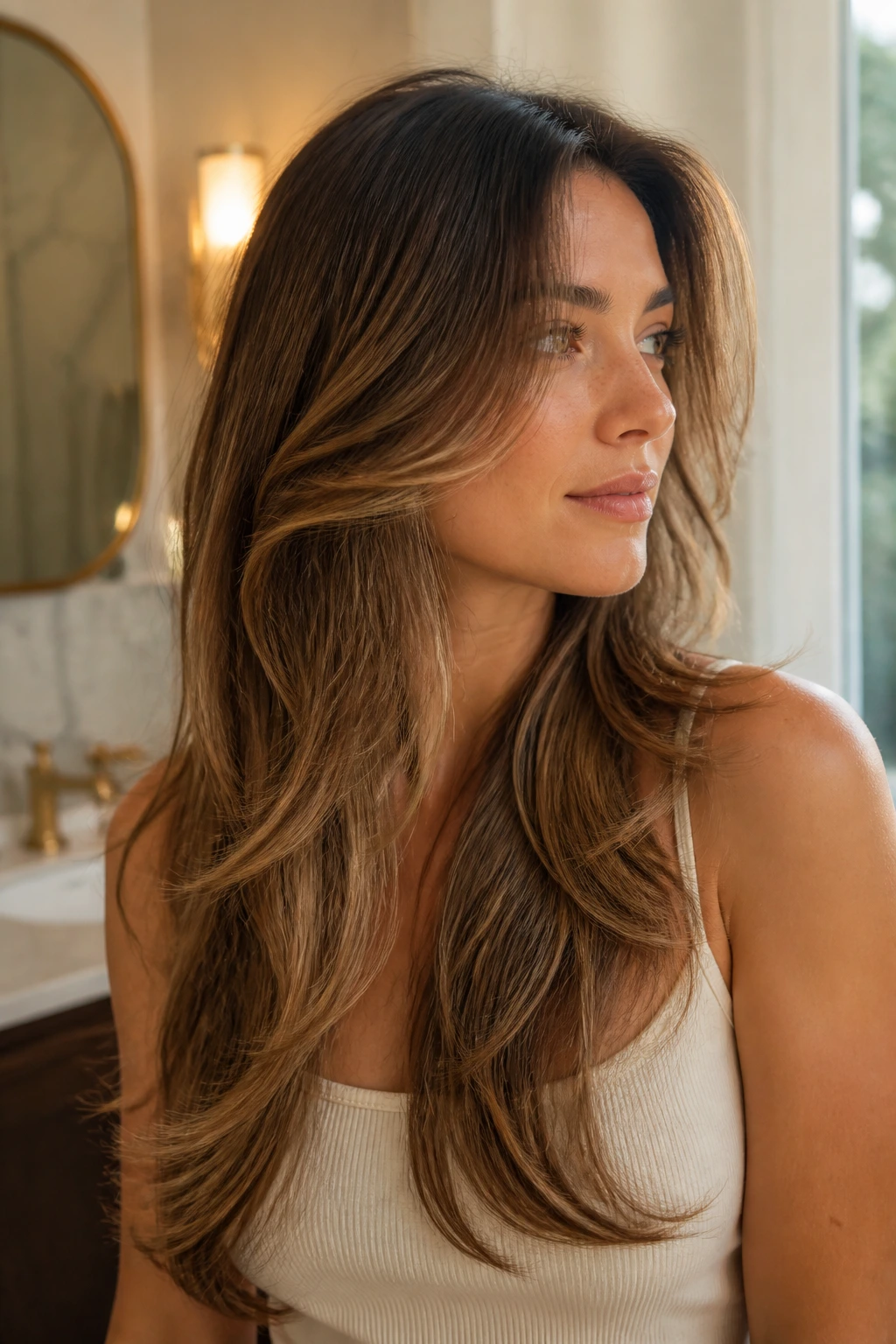
Feathered long hair stays prettier when you trim it on a real schedule. Every 8 to 12 weeks is a useful target for most people, though thick hair can sometimes stretch a little longer if the ends stay healthy. Let it go too long and the face frame loses the shape that made it worth cutting in the first place.
Heat protection matters every time. Even if you only curl the front pieces, those same pieces get touched the most, and they age faster than the rest of the hair. A light protectant before blow-drying or using a flat iron helps the ends stay soft instead of crispy.
Washing also changes the shape. If your hair is fine, too much product buildup can make feathered layers collapse at the roots. A clarifying wash every couple of weeks can bring the bounce back. Thick or dry hair usually needs less stripping and more moisture on the ends, not the scalp.
Sleep helps more than people think. A loose braid, a silk pillowcase, or a soft scrunchie keeps the front from smashing flat overnight. The haircut still matters most, but a little nightly care keeps it from turning into one long snaggy mess by morning.
Frequently Asked Questions
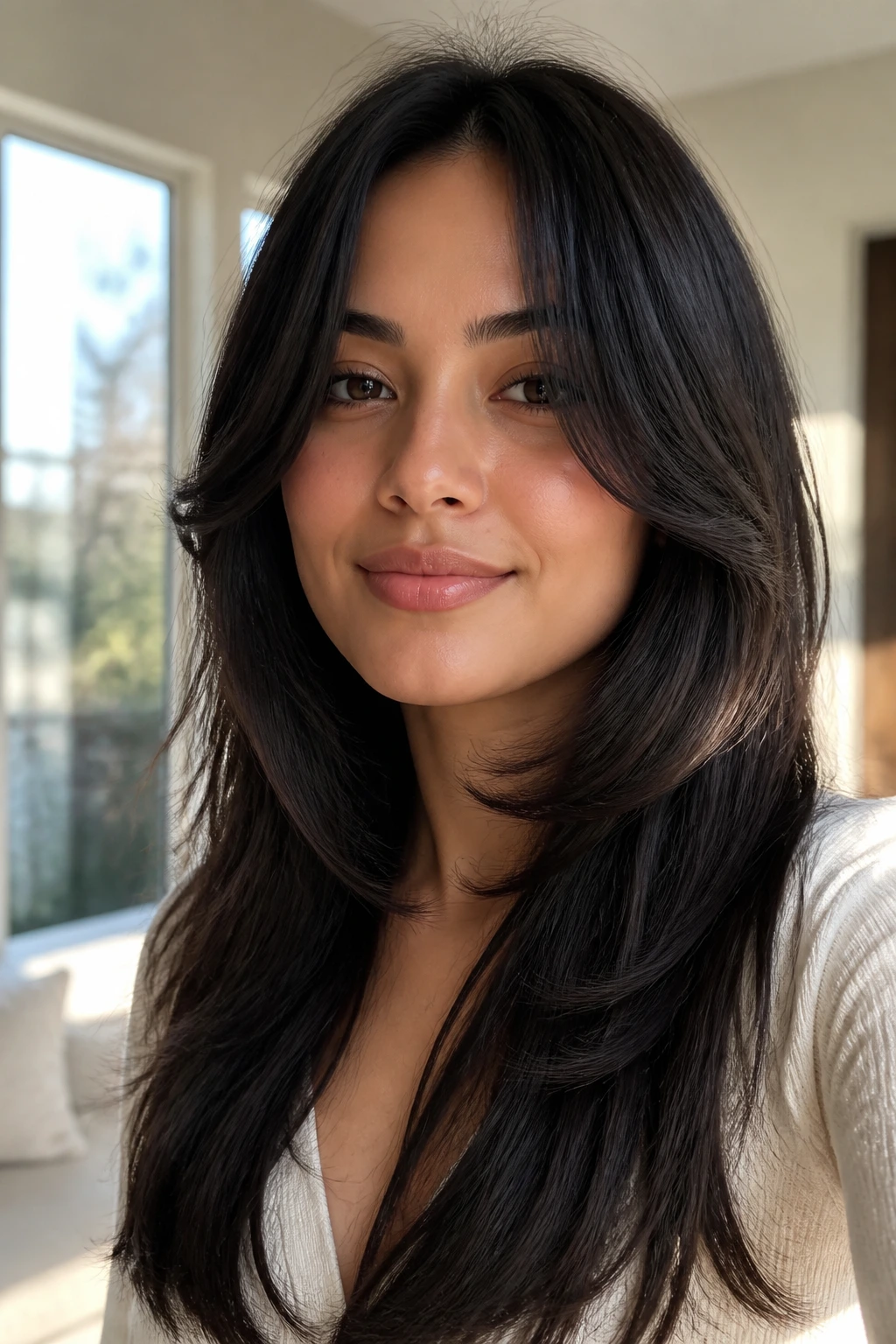
Do feathered layers work on very long hair?
Yes, and that’s where they can look best. Long hair gives feathering more room to move, so the front pieces can open the face without making the rest of the cut look short.
Are feathered layers the same as curtain bangs?
Not quite. Curtain bangs are a fringe that splits in the center and falls to the sides, while feathered layers describe the softer, tapered shape of the rest of the cut. The two often work together, but they’re not the same thing.
Will feathering make my hair look thinner?
It can, if the layers are cut too high or if the stylist removes too much bulk from fine hair. Kept long and soft, feathering adds movement without stealing density from the ends.
Can curly hair be feathered?
Absolutely, but it should be cut with the curl pattern in mind. Dry cutting or curl-by-curl shaping usually gives a better result than cutting curly hair wet and hoping the shape works itself out later.
How often should I trim feathered long hair?
Every 8 to 12 weeks is a safe range for keeping the face frame fresh and the ends from getting scraggly. If you wear lots of heat styling or color, you may want trims a little closer together.
What if I want feathering but no obvious layers?
Ask for invisible layers or very long face-framing pieces. That gives you movement when the hair swings, but it keeps the cut looking mostly even from the back.
Can I air-dry feathered hair, or does it need a blowout?
You can air-dry it, especially if your hair already has a bend. A little mousse or cream helps the shape show up; you do not need a perfect salon blowout every time.
What should I tell a stylist if my hair gets heavy at the front?
Say that the front collapses and the length feels bulky around the cheeks or collarbone. That gives the stylist a real problem to solve, which is better than asking for “some layers” and hoping they guess right.
The Shape That Keeps Long Hair Moving
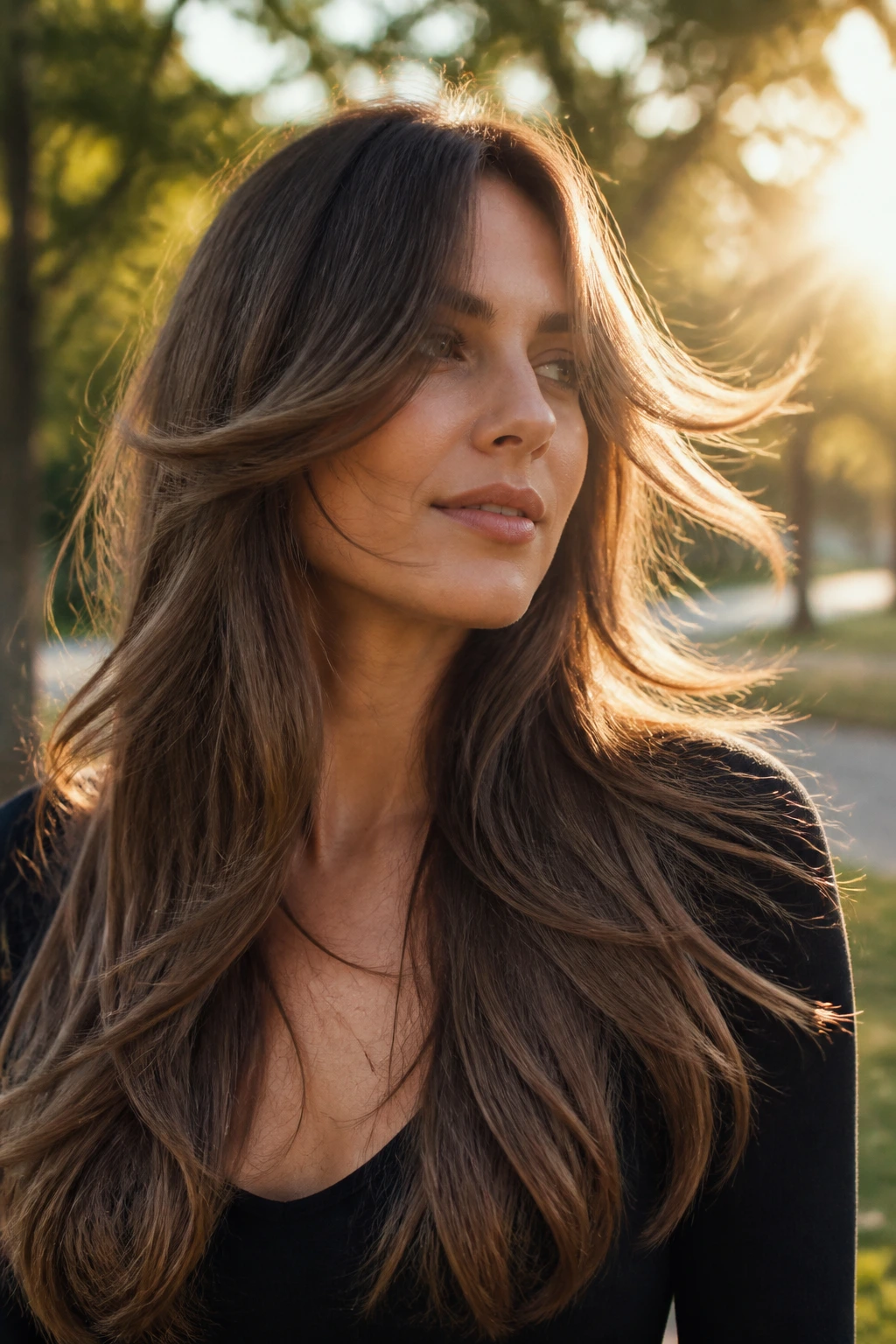
Feathering works because it respects long hair instead of fighting it. You still get the length, the weight, and the swing that long hair is supposed to have, but the front stops acting like dead weight. That is the whole trick, and it’s a good one.
The nicest part is how many directions it can go. Soft and polished, shaggy and undone, thick and lifted, fine and airy—feathered layers can bend toward all of them without losing the point of the cut. If your long hair has been sitting heavy, the right face frame can change the feel of the whole head, not just the front pieces.