



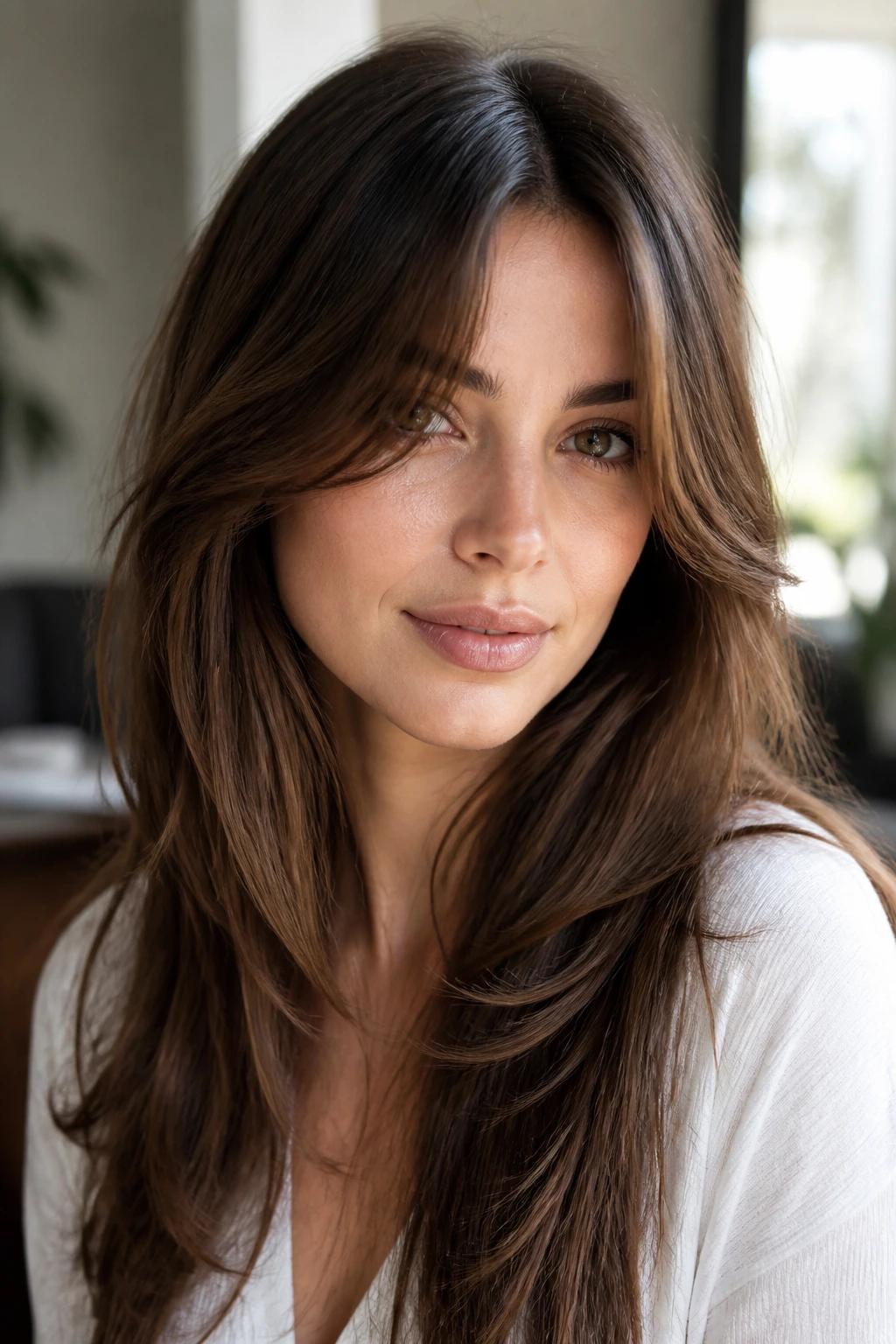
Oval faces give you room to play, but long hair still needs shape or it drifts into a flat sheet that hides the best parts of your features. The sweet spot in textured layers for long hair and oval faces is movement that starts high enough to wake up the cheekbones, then tapers through the mids and ends so the length still feels lush. Done well, the cut looks like the hair is moving even when you’re standing still.
What I like about this pairing is that it doesn’t force one answer. A center part can look polished. A soft side part can bring out the eyes. Curtain pieces, feathered ends, long shags, polished blowout layers — they all work, but they work for different reasons, and that’s where the real choice lives.
There’s a catch, though. Long hair with layers can go from chic to scraggly fast if the shortest pieces are cut in the wrong place or thinned out too hard. So the details matter. A lot. The first thing worth understanding is what these layers are actually doing to the shape of the hair, and why an oval face gives you more room than most.
Why These Cuts Keep Showing Up in Good Salons
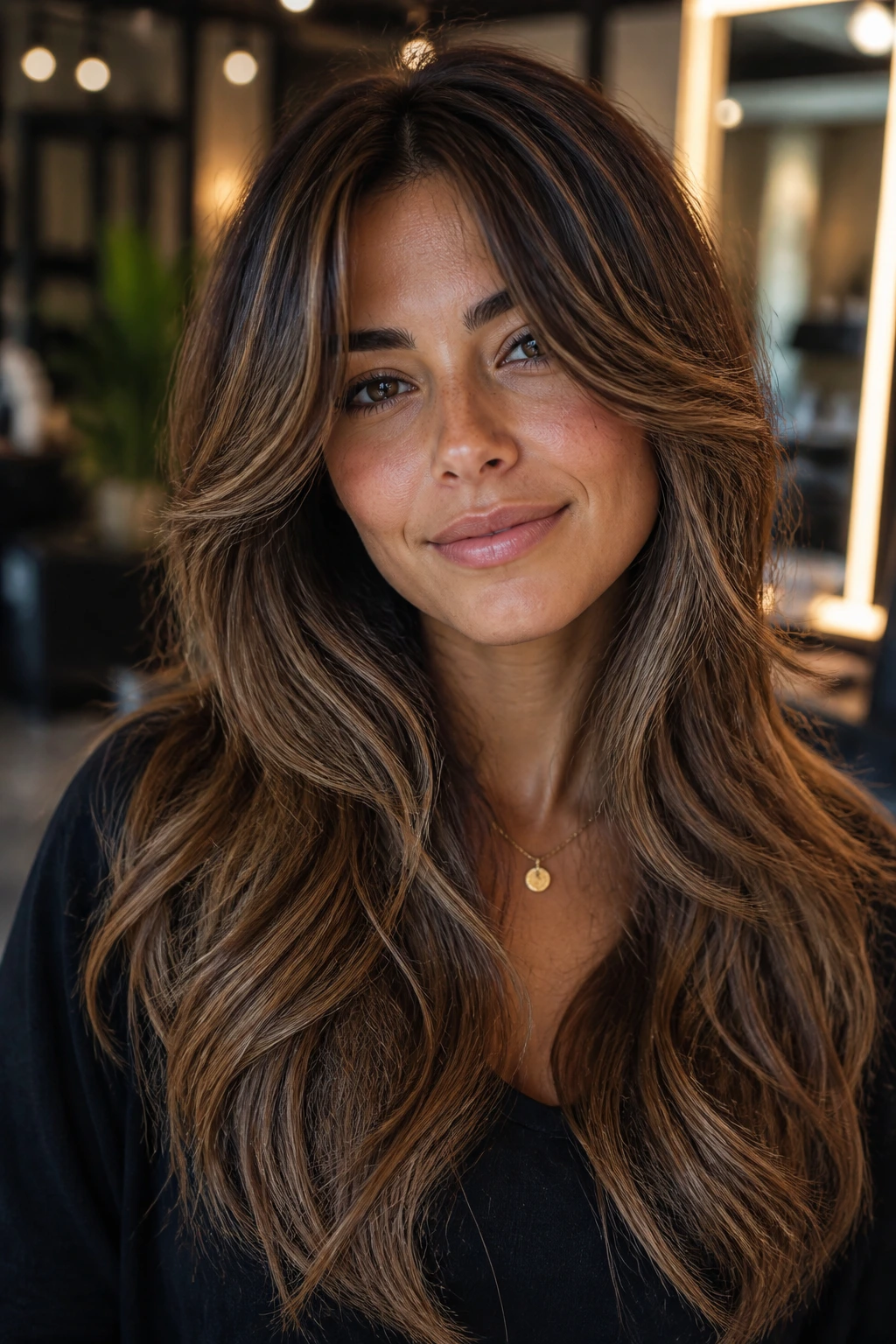
Oval faces are forgiving, but not lazy-proof. The balance of an oval face lets stylists put movement near the cheekbones, jaw, or collarbone without making the face look crowded. That means you can wear layers that start higher or lower than someone with a round or square face, and the result usually still reads clean.
Long hair needs structure, not just length. A single heavy line can make even thick hair look tired by lunchtime. Textured layers break that weight into sections, so the ends move, the top gains lift, and the whole cut looks like it has shape instead of just mass.
The best versions change with your texture. Fine hair wants light internal movement. Thick hair wants weight removed in smart places. Wavy hair can handle a lot more texture than straight hair before it starts looking frayed. That’s why this isn’t one haircut with 25 names; it’s 25 ways to place the same idea on different heads.
The grow-out matters. A good layered cut should still look decent six to eight weeks later. If the front pieces are cut too bluntly or too short, you’ll spend months fixing a shape that should have been easy to wear from the start.
1. Soft Butterfly Layers with Cheekbone Lift
Soft butterfly layers are the easy favorite for a reason: they give long hair lift around the face without chopping off the length people are trying to keep. The shortest pieces usually land around the cheekbone or just below it, then melt into longer layers through the body. On an oval face, that little bit of lift can sharpen the eyes and keep the hair from hanging too straight down the sides.
Why it works
The cut gives you two jobs at once. You get face-framing movement near the front, and you keep a long, feminine outline in the back. The difference is subtle until you blow it out or curl the front away from the face, and then it suddenly looks alive.
Ask for a soft transition, not a hard step. If the layers are too abrupt, the front pieces will sit like shelves. If they’re too soft, the shape vanishes. Somewhere in the middle is where this cut earns its keep.
2. Curtain-Bang Layers with a Center Part
Curtain bangs are one of the cleanest ways to frame an oval face because they split the forehead without crowding it. Paired with long textured layers, they give you a center part that feels intentional instead of severe. The trick is to keep the bang area soft enough to blend into the cheek and jaw.
Why it flatters an oval face
An oval face can take a center part without looking boxy, and curtain bangs add a little contrast near the eyes. That keeps the face from reading too long, which can happen when the hair hangs uniformly from scalp to ends.
If you wear your hair up often, this one earns extra points. The bangs do the work on down days. On up days, the front pieces still soften the face instead of leaving you with a scraped-back look that feels too bare.
3. U-Shaped Layers That Keep the Bottom Full
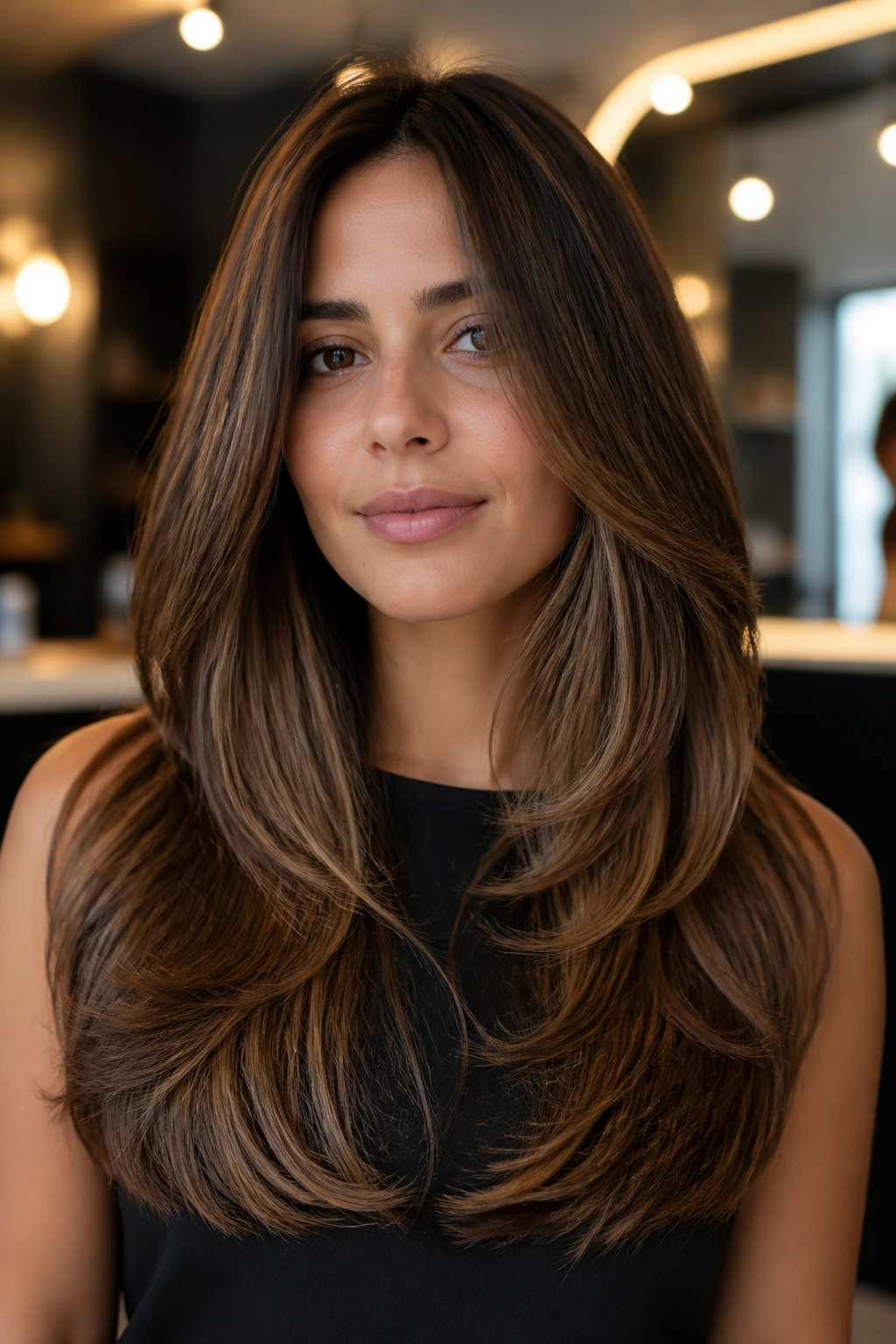
A U-shaped cut is for anyone who likes the idea of layers but doesn’t want the ends to feel thin. The perimeter stays rounded and full, while the internal layers add movement through the mid-lengths. It’s a quieter shape than a V-cut, and I think it’s easier to wear with straight or slightly wavy hair.
The face shape benefit is simple: the rounded bottom keeps the eye moving downward in a smooth line, which feels balanced on an oval face. You don’t get that sharp, pointed finish that sometimes makes long hair look too narrow at the bottom.
Ask your stylist to keep the longest line dense. If the bottom gets over-thinned, the whole cut loses its weight and starts looking wispy in a way that is hard to fix without taking off more length.
4. V-Cut Layers for Extra Movement at the Ends
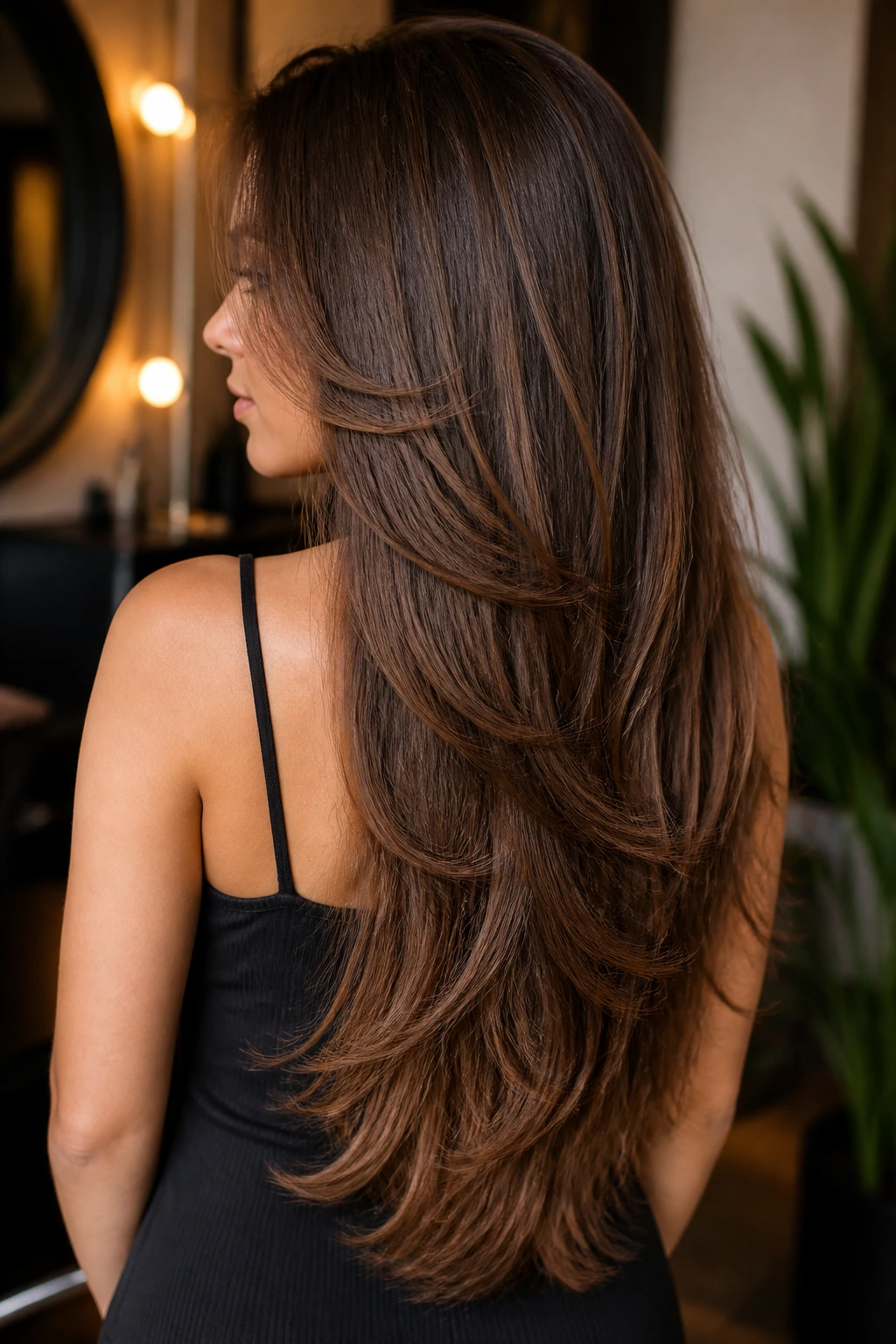
A V-cut creates a sharper point in back, and on long hair that shape can be gorgeous when the hair is thick enough to hold it. The layering around the sides gives the length movement, but the center back remains long and pointed, which makes the whole cut feel dramatic without needing short layers everywhere.
This is a strong choice if your hair tends to sit flat at the bottom. The V-shape gives the eye a clear line to follow, and that extra swing at the ends keeps long hair from feeling static.
It’s not the best choice for very fine hair that already looks thin at the tips. In that case, the point can start to look stringy. Thick hair, though, can wear this shape beautifully.
5. Long Shag Layers with Airy Crown Texture
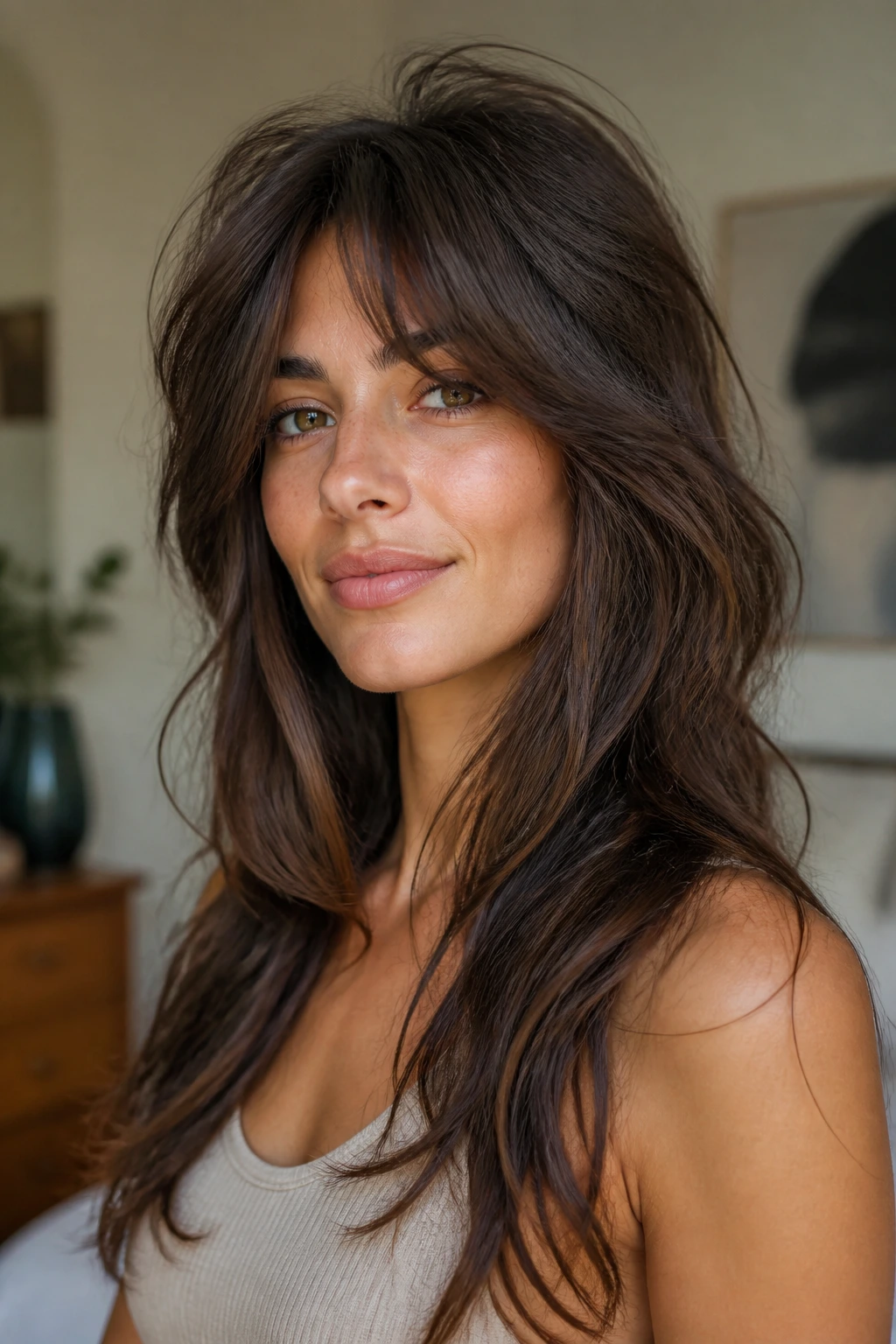
A long shag has more attitude than a butterfly cut, but it still works on an oval face because the layers are spread through the crown, sides, and ends instead of stacked in one heavy zone. The top gets a bit of lift, the mids get broken up, and the ends stay long enough to keep the shape from turning into a mullet.
What to ask for
Tell the stylist you want movement, not chunks. That one sentence matters. A shag that is cut with too much aggression can sit in weird spikes around the face. A long shag should feel soft enough to air-dry, then wake up with a little mousse or texture spray.
This style is one of the best answers for hair that falls flat at the roots but gets puffy in humid weather. The texture hides the frizz better than a blunt cut does.
6. Razored Mid-Length Layers for Straight Hair
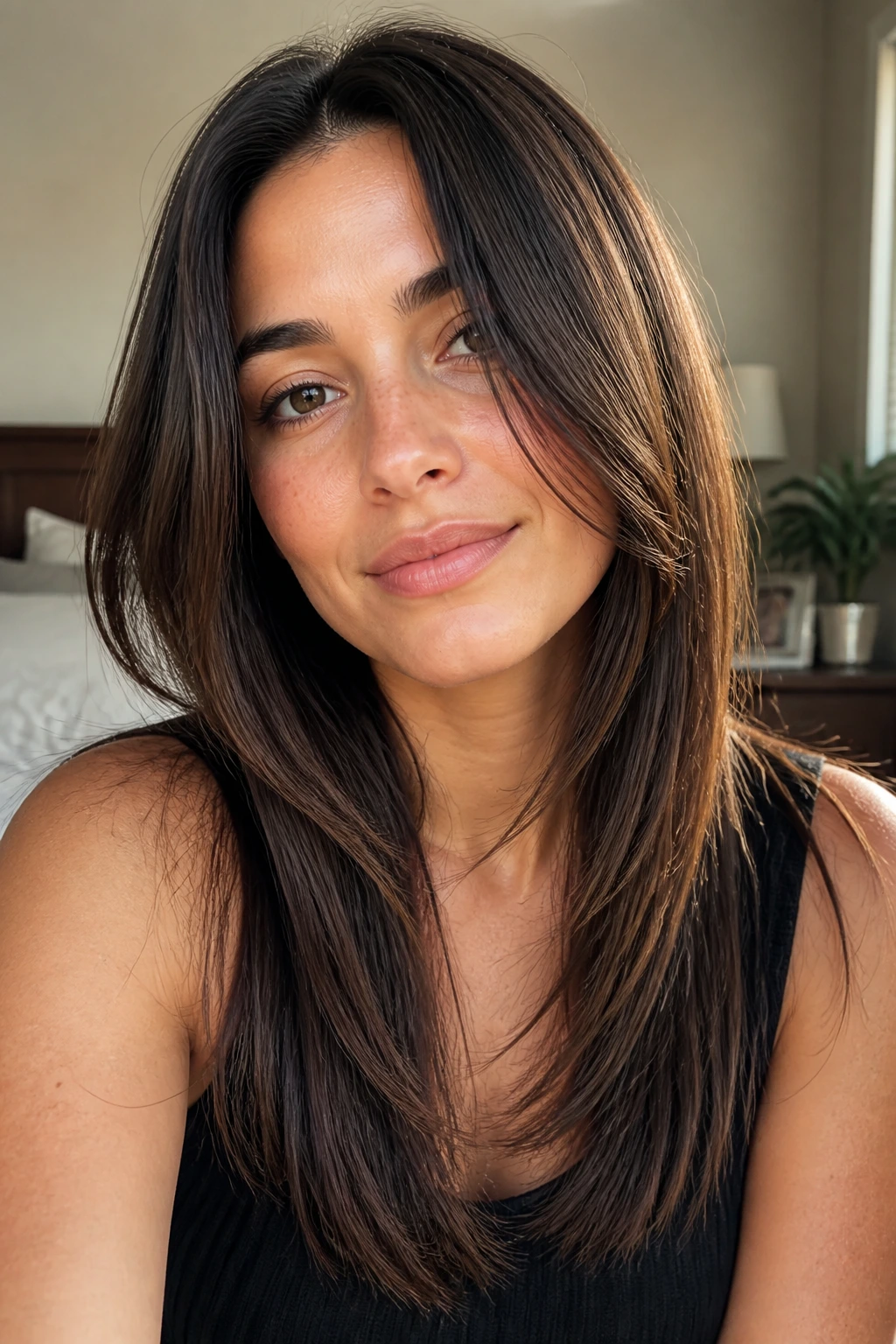
Straight hair can look gorgeous with layers, but it’s also the texture most likely to show a bad cut. Razored mid-length layers take some of the heaviness out without leaving obvious stair-steps. The result is cleaner than choppy scissors layering and softer than a blunt mid-back length.
For oval faces, this works because the movement starts around the cheek and ribcage of the hair instead of all the way at the bottom. That gives straight hair enough swing to keep the face from looking over-framed.
A razor cut can go wrong if the hair is already fragile or overprocessed. In that case, the ends can look too airy. Healthy straight hair, though, can wear this with a sleek middle part and a bent-under blowout that feels expensive without trying hard.
7. Invisible Layers for People Who Hate Obvious Chopping
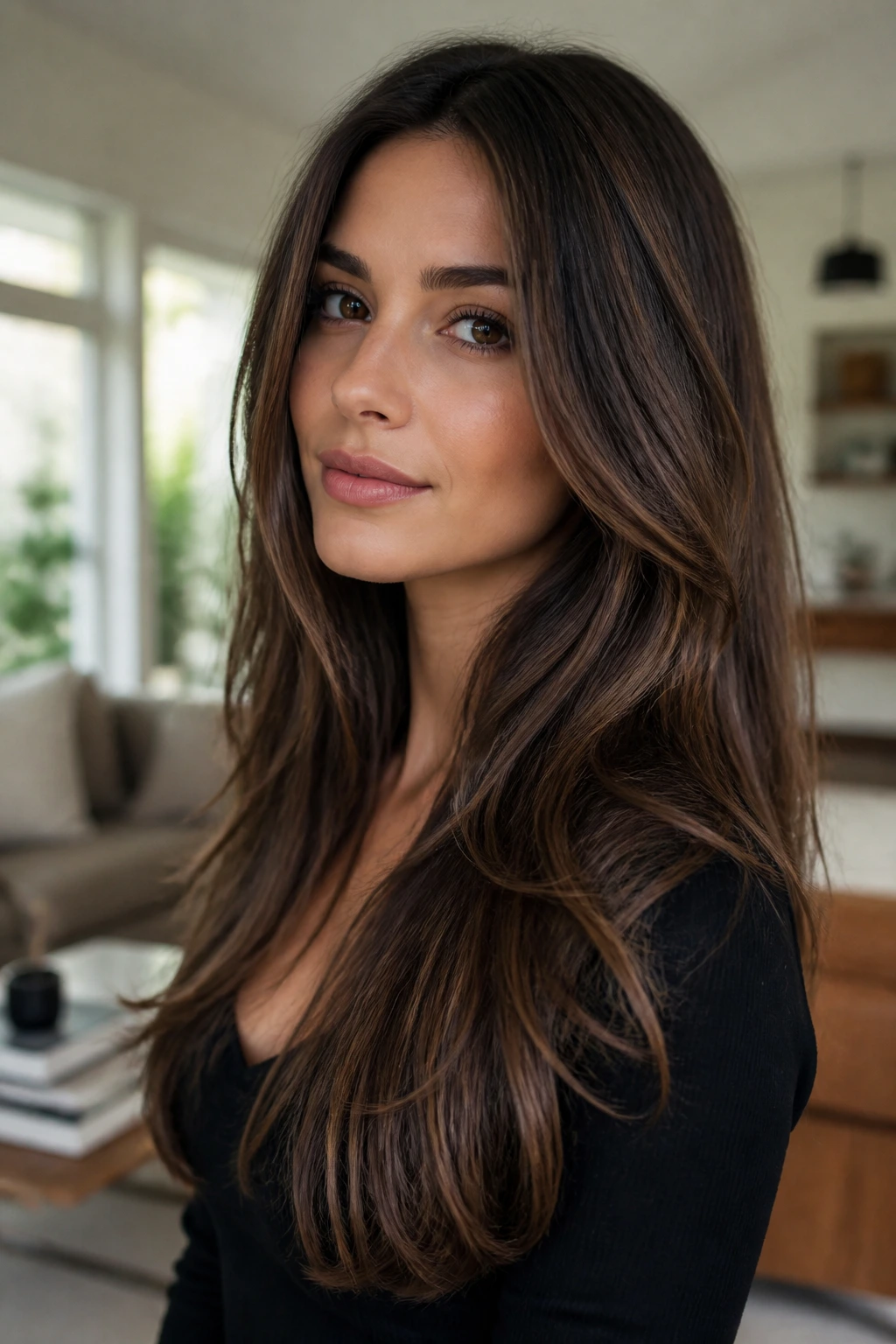
Invisible layers are the quietest version in this whole collection. The cut keeps the outer line looking long and fairly even, while the hidden interior layers take out weight and create movement underneath. You don’t see the layers right away. You feel them when the hair swings.
That makes this a smart pick if you like long hair but hate the choppy look some layered cuts can create. On an oval face, the shape stays clean around the perimeter, so the face doesn’t get visually crowded.
How to ask for it
Say you want internal movement with a mostly blunt outline. That tells the stylist you want the hair to move without looking heavily layered from the front. It’s a good compromise for people who like polished hair during the week and soft waves on weekends.
8. Bottleneck Bang Layers with a Soft Jawline Sweep
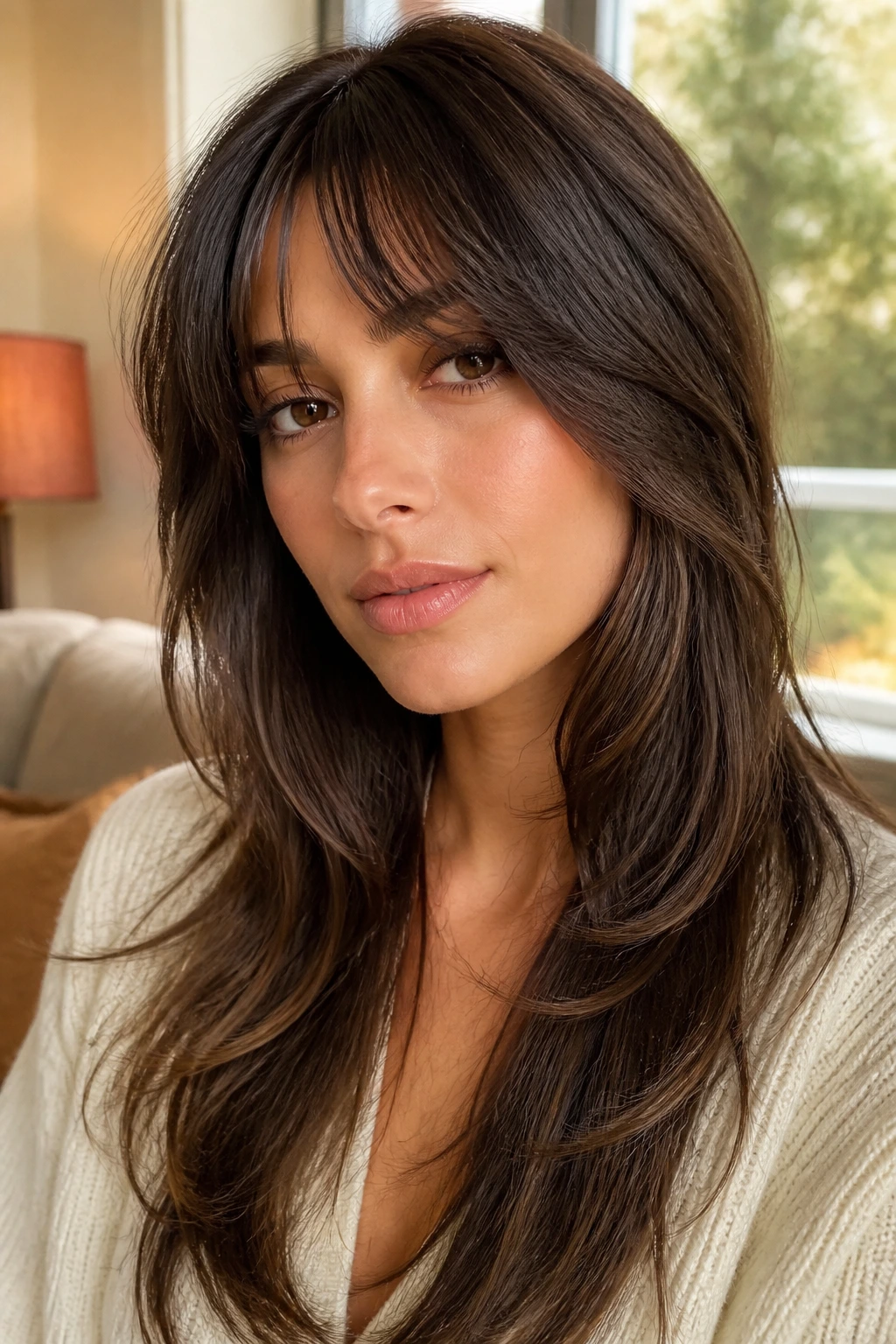
Bottleneck bangs start narrower in the center and get a little fuller toward the sides, which makes them feel softer than a blunt fringe. When they blend into long layers, they create a nice frame around an oval face without closing off the forehead.
This shape is useful if you want bangs but don’t want the maintenance of a heavy straight-across fringe. The side pieces can sit at the jaw or just under it, which helps the cut feel airy instead of boxy.
If your hairline grows in unevenly, ask your stylist to leave enough length to tuck or part the bangs a little off-center. That tiny bit of flexibility is what keeps this style from feeling precious.
9. Choppy Layers That Wake Up Heavy Hair
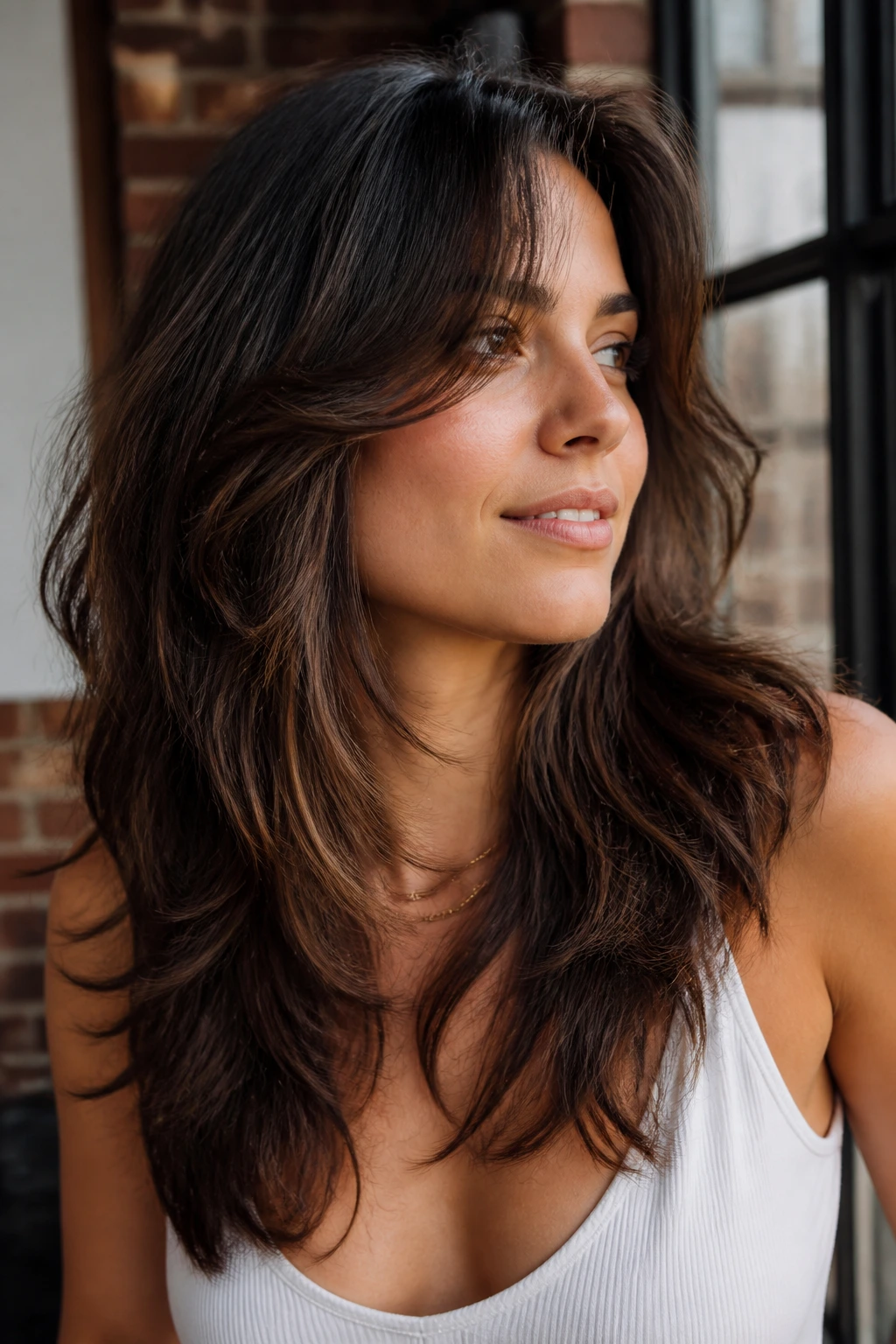
Heavy hair needs a haircut that can keep up with it. Choppy layers remove bulk in visible sections, so the hair can move instead of sitting like a solid curtain. On oval faces, the trick is to keep the strongest texture around the mid-lengths and ends, not packed right at the cheekbones.
The effect is a little bolder than a soft butterfly cut. You see the layers more clearly. That can be a good thing if your hair naturally swallows softer shapes.
Styling note
A little grit helps here. Dry texture spray, a loose wave with a 1.25-inch iron, or a rough blow-dry with a diffuser can make the layers read as intentional instead of accidentally broken up.
10. Waterfall Layers That Fall in Soft Ribbons
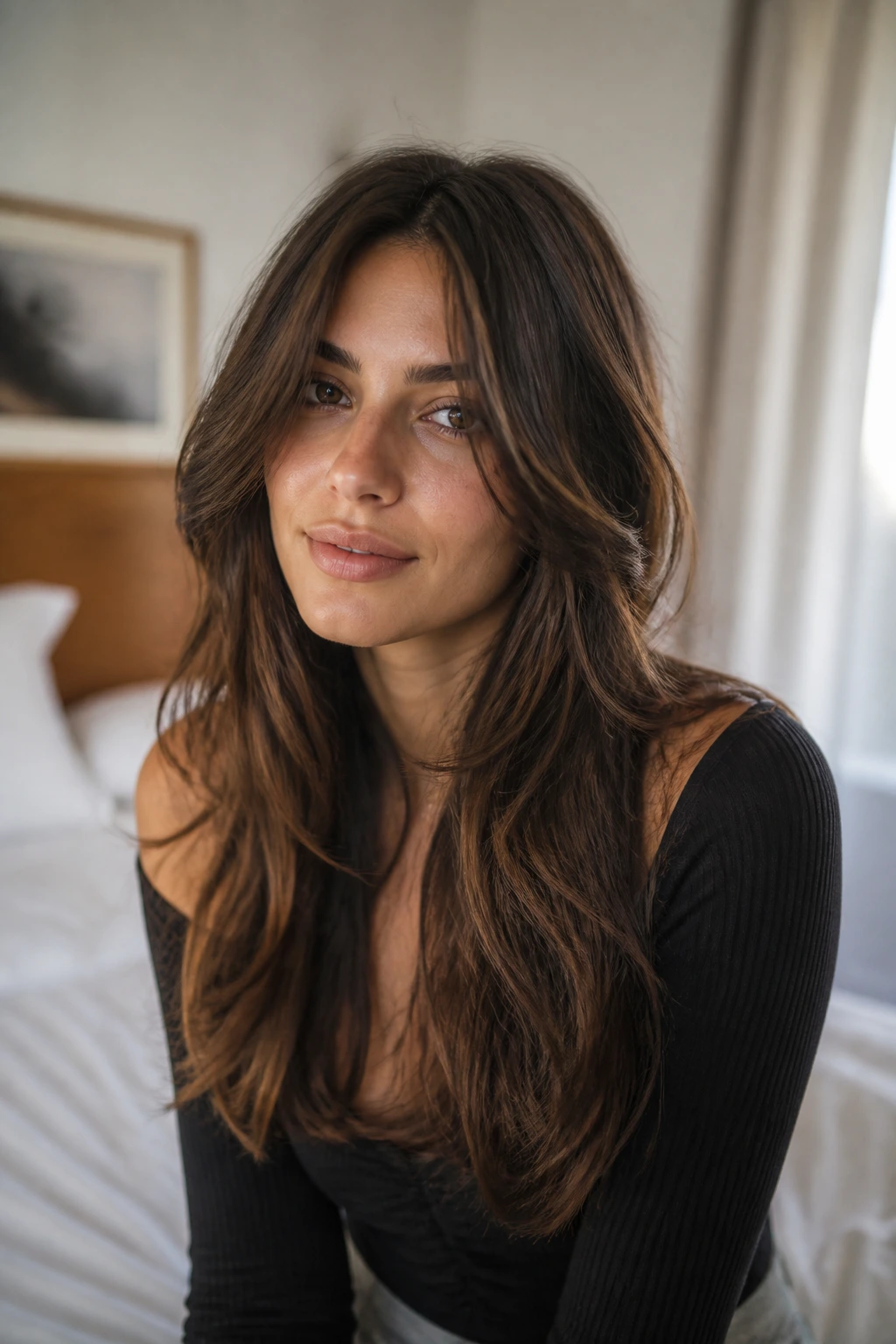
Waterfall layers are all about flow. Each section drops into the next like a soft cascade, which is a nice match for long hair because the length still feels rich while the movement shows up at the sides. On an oval face, this shape keeps the face open and the ends active.
I like this cut when the goal is romance more than edge. It looks good with soft bends, not stiff curls. The hair should move in ribbons, not in separate chunks.
A center part or slightly off-center part both work. The only thing I would avoid is too much root volume at the crown, because that can make the face look longer than it really is. Keep the lift lower and the swing softer.
11. Flipped-Front Layers for a Little Retro Lift
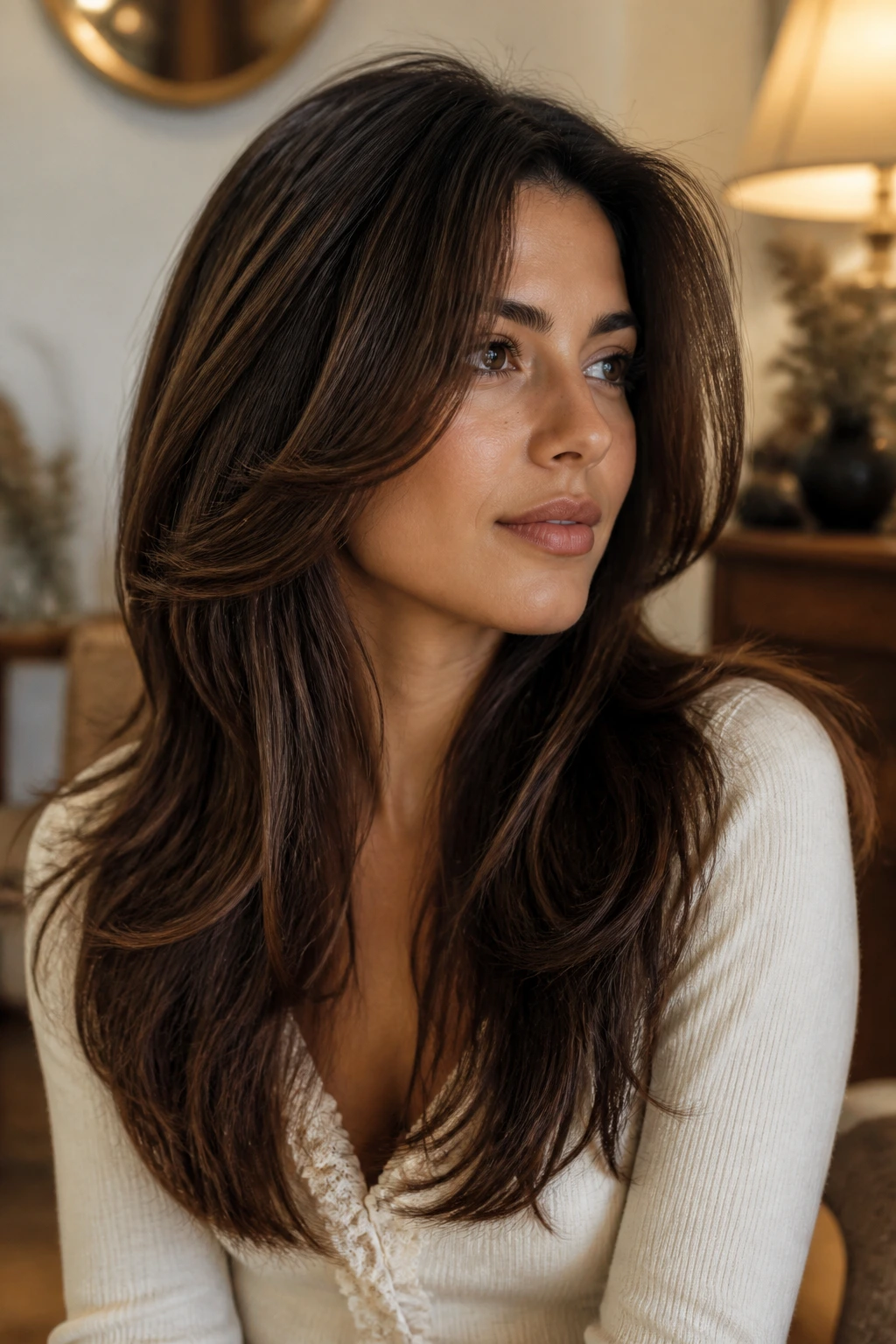
Flipped-front layers bring back that lifted, brushed-away face frame that turns a plain long cut into something with shape. The front pieces are cut to curve outward slightly, which creates movement around the cheekbone and jaw. On an oval face, that outward bend adds width where you want it.
This is one of those cuts that looks better when styled with a round brush than when left to air-dry completely flat. The hair doesn’t need a massive blowout. It just needs the front ends trained away from the face.
And yes, it reads a little retro. That’s the point. There’s a reason older salon shapes keep returning — they do something specific that modern minimalist cuts sometimes miss.
12. Blowout Layers Built for Big Brush Styling
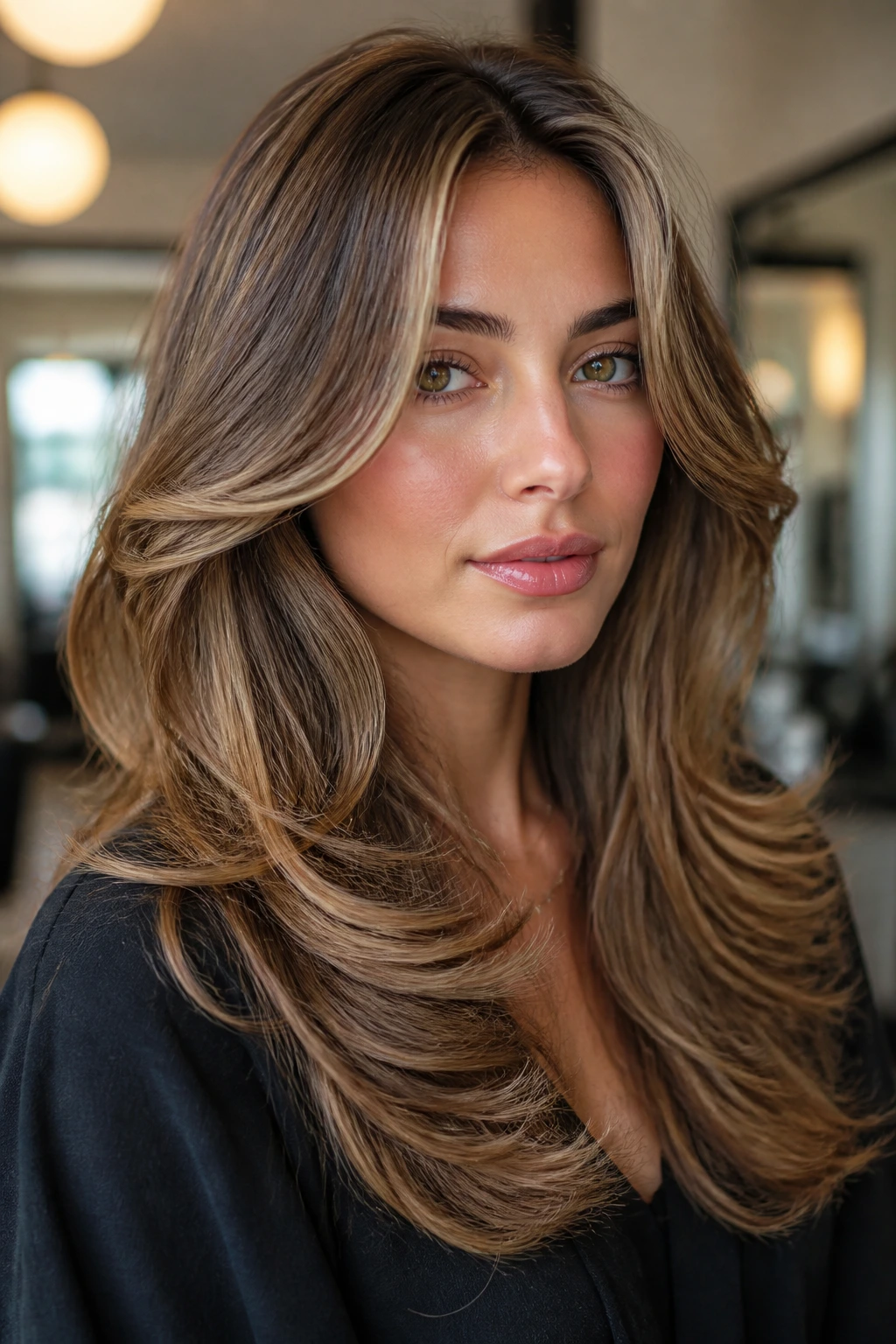
Some cuts are made for air-drying. This one is made for a brush, a dryer, and a little patience. Blowout layers are usually cut so the front pieces wrap nicely around a round brush while the back keeps enough length to swing. The result is glossy, lifted, and polished without looking frozen.
What makes it different
The layering is placed to help the hair bend in the same direction, which saves time when you’re trying to smooth the front and add a curve at the ends. Oval faces do well with this because the lift at the crown and cheekbone balances the soft length below.
If your hair is frizzy or swells in humidity, this is one of the most forgiving layered styles — as long as you seal the ends with a light serum, not a heavy cream that makes everything collapse.
13. Boho Wave Layers with Internal Texture
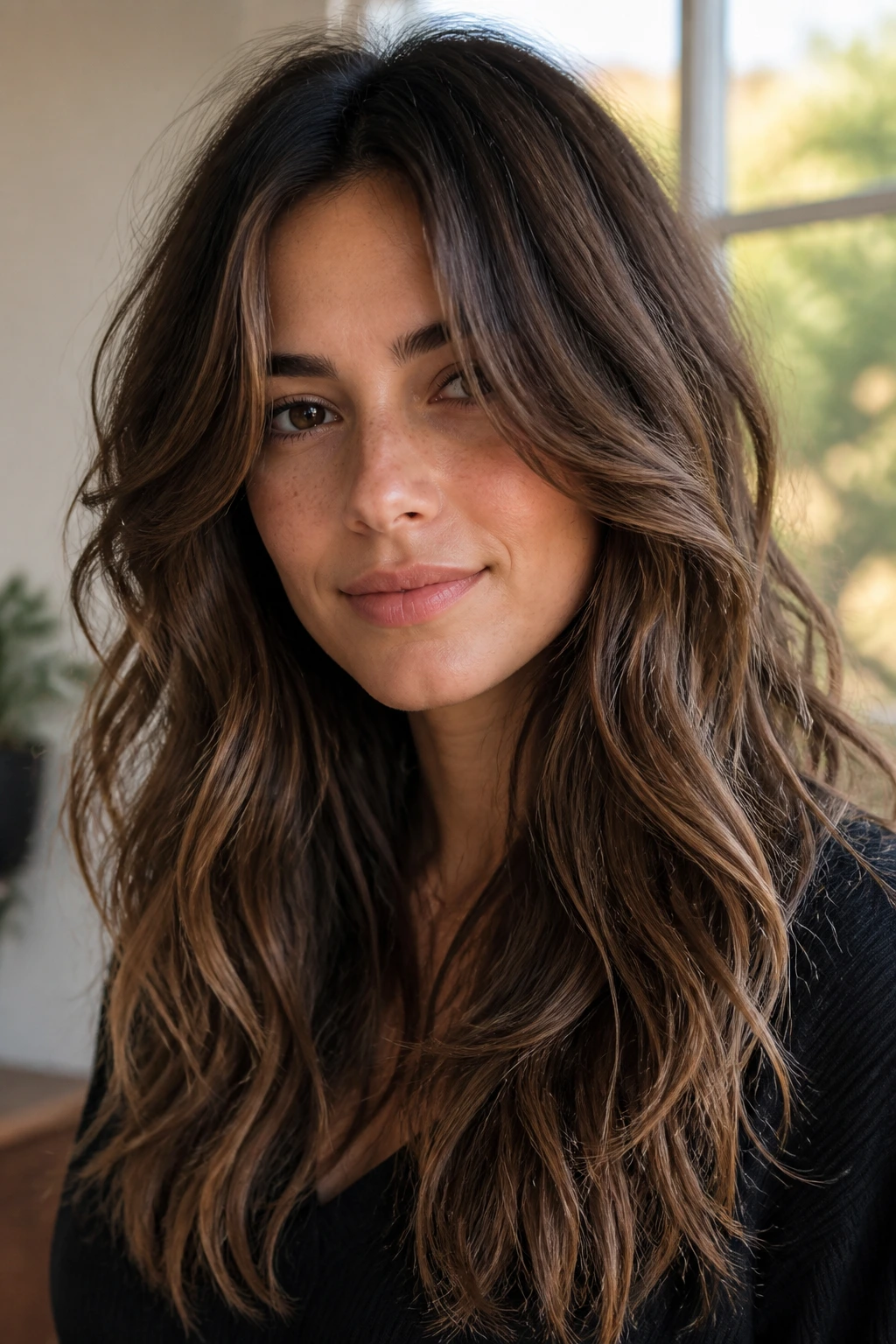
Boho wave layers are the laid-back cousin in the group. The ends aren’t over-refined, and the texture is meant to look soft, not sharp. This works especially well on long hair that has a natural wave or a little bend after braiding.
An oval face can carry this cut because the looseness doesn’t blur the features. The layers sit mostly where they need to sit — around the face, through the mids, and in the ends — without trying to create a hard outline.
The best version looks like hair that has spent the day in a braid, then been shaken loose with a bit of texturizing mist. Not crunchy. Not over-curled. Just a little piecey around the front and relaxed through the rest.
14. S-Curve Layers That Bend Instead of Hanging Straight
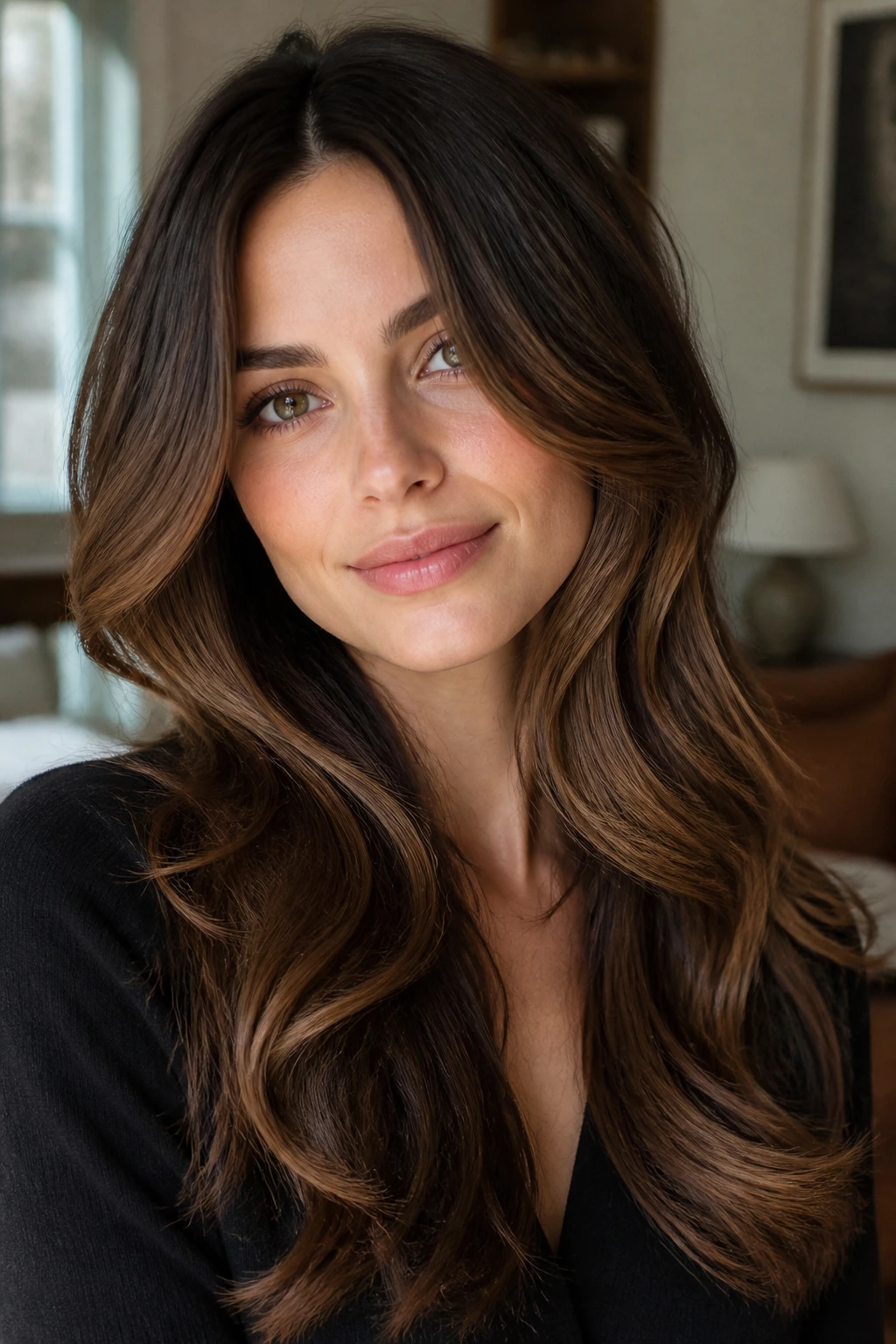
Some layered cuts are about volume. This one is about line. S-curve layers are cut and styled so the hair bends in an S-shaped flow: out from the face, then back in through the ends. That shape adds a quiet kind of movement that feels elegant without being stiff.
For an oval face, the S-curve keeps the hair from dragging straight down the sides. Instead, the front opens a little, which gives the features more room. It’s a subtle shape, but it changes how the whole haircut reads.
If you’re someone who likes a polished finish but doesn’t want a heavy curl pattern, this is a smart lane. It works best when the ends are lightly beveled with a brush or a large curling iron, not twisted into tight waves.
15. ’90s Supermodel Layers with a Polished Finish
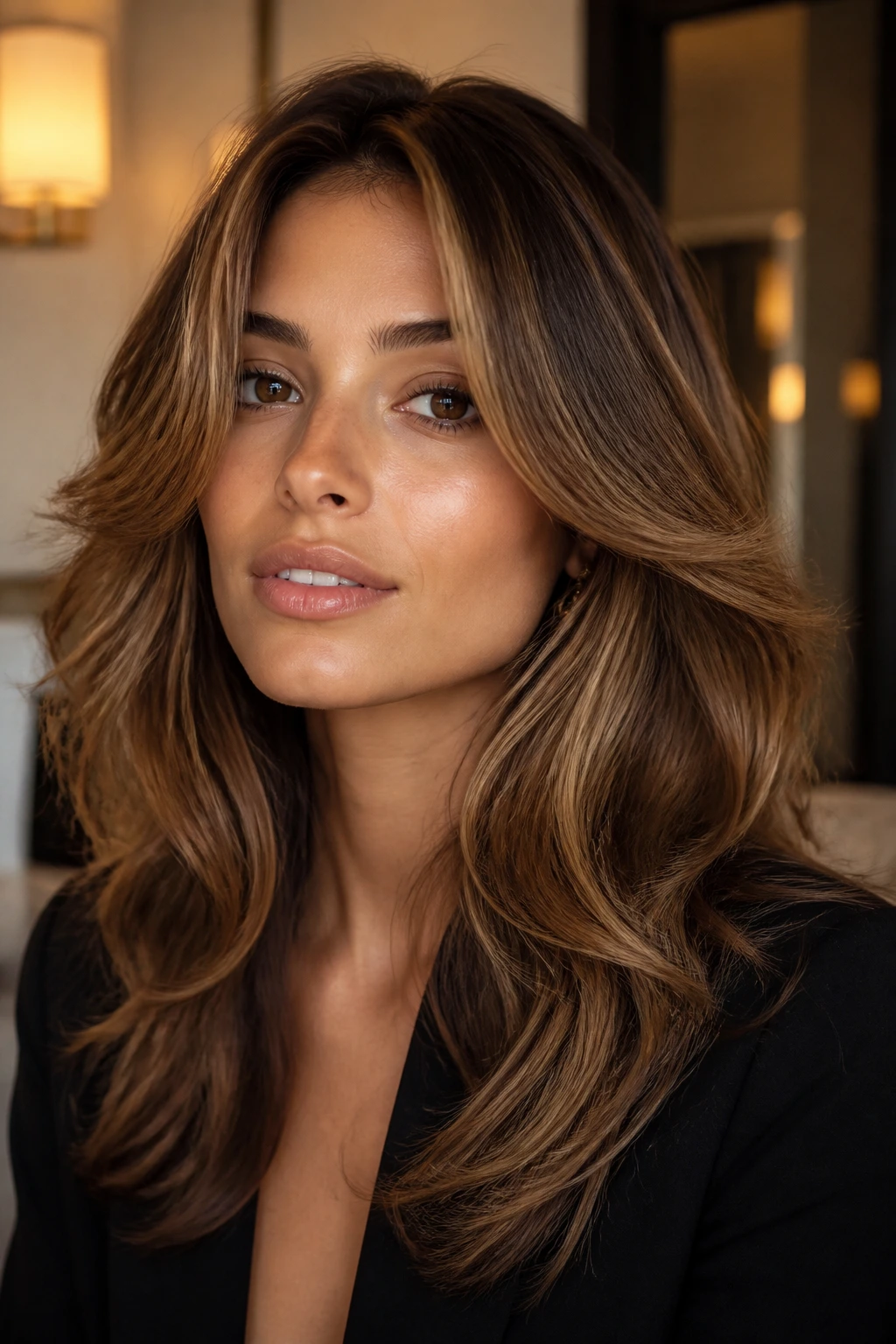
Big, glossy layers from the late-salon era still work because they do a few things at once: they add volume at the crown, swing at the ends, and soft framing at the cheeks. On long hair and an oval face, that combination can be flattering without looking overdone.
The key is not to cut the layers too short. The shape should feel luxurious, not feathered into oblivion. The front pieces can start around the cheekbone or mouth, then slide into longer layers that move when you walk.
This cut loves a proper blowout. If you want it to hold, set the front with clips while it cools. Old trick. Still works.
16. Deep Side-Part Layers That Show Off Cheekbones
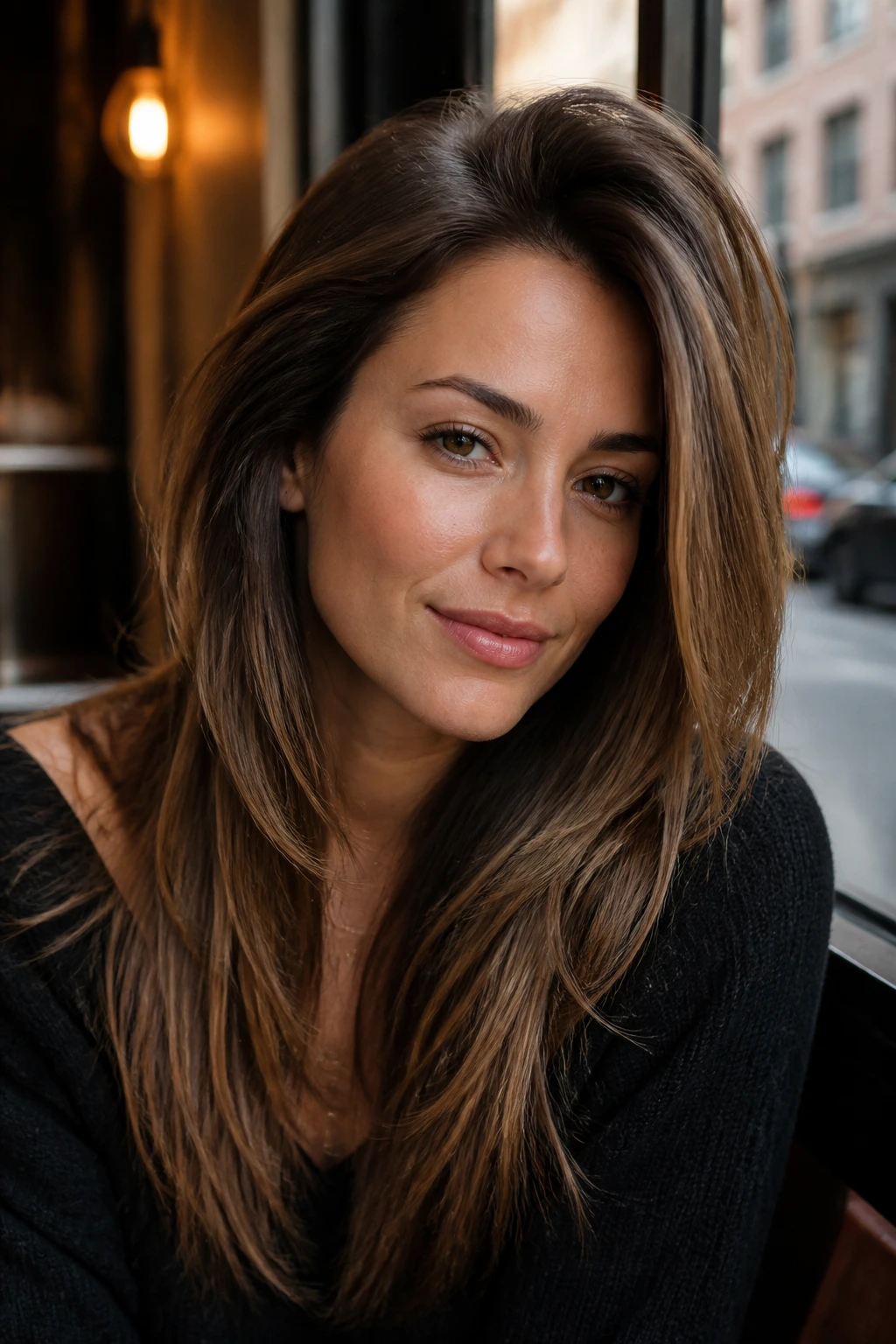
A deep side part changes the whole mood of long layered hair. It gives one side more lift, lets the front pieces sweep across the forehead, and creates a little asymmetry that works well on an oval face. The layers themselves can be soft, but the part does a lot of the visual work.
Why the side part matters
Oval faces can carry a center part easily, but a deep side part gives you drama fast. It also helps if one side of your hair naturally falls flatter than the other. The heavier side can drape near the cheekbone, while the lifted side adds height near the crown.
This style is especially good for days when you want your hair to look styled with almost no effort. A quick bend through the front and a side part that isn’t dead straight are enough. That tiny bit of asymmetry keeps the face from feeling too symmetrical and flat.
17. Light Wolf-Cut Layers for Long Hair
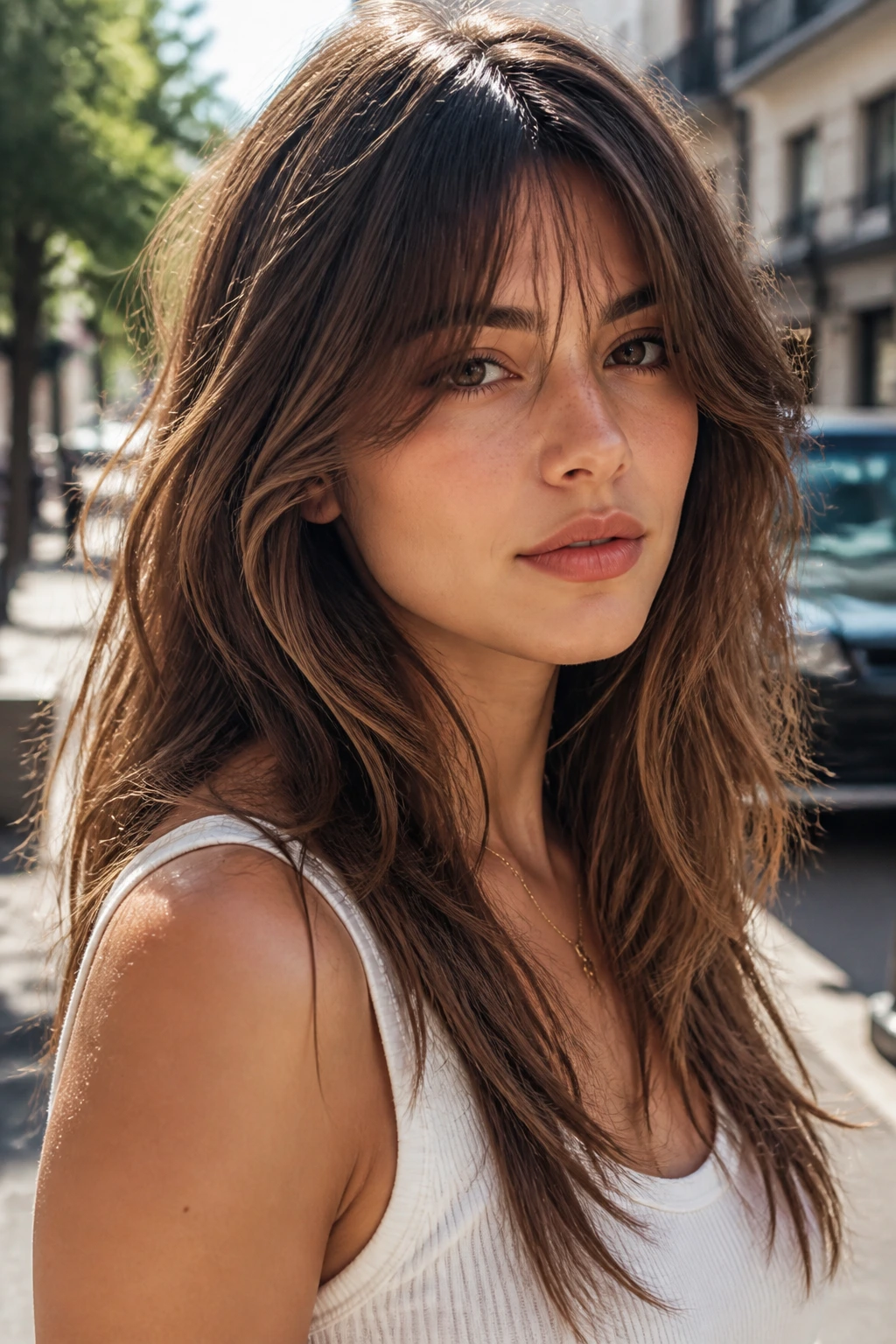
A wolf cut can be too much on long hair if it’s pushed hard, but the lighter version is surprisingly wearable. Think shag energy without the hard edge. The crown gets some lift, the face gets soft broken-up pieces, and the bottom keeps enough length to avoid a jagged finish.
On an oval face, a light wolf cut gives the features some contrast. The face doesn’t need heavy framing, just a little shape and a little attitude. This cut gives both.
If your hair is thick and naturally wavy, this can be a fun place to live. If it’s fine, ask for a gentler version with fewer short layers at the top. Too much crown texture can leave the ends looking thin.
18. Ribbon Layers for Fine Hair
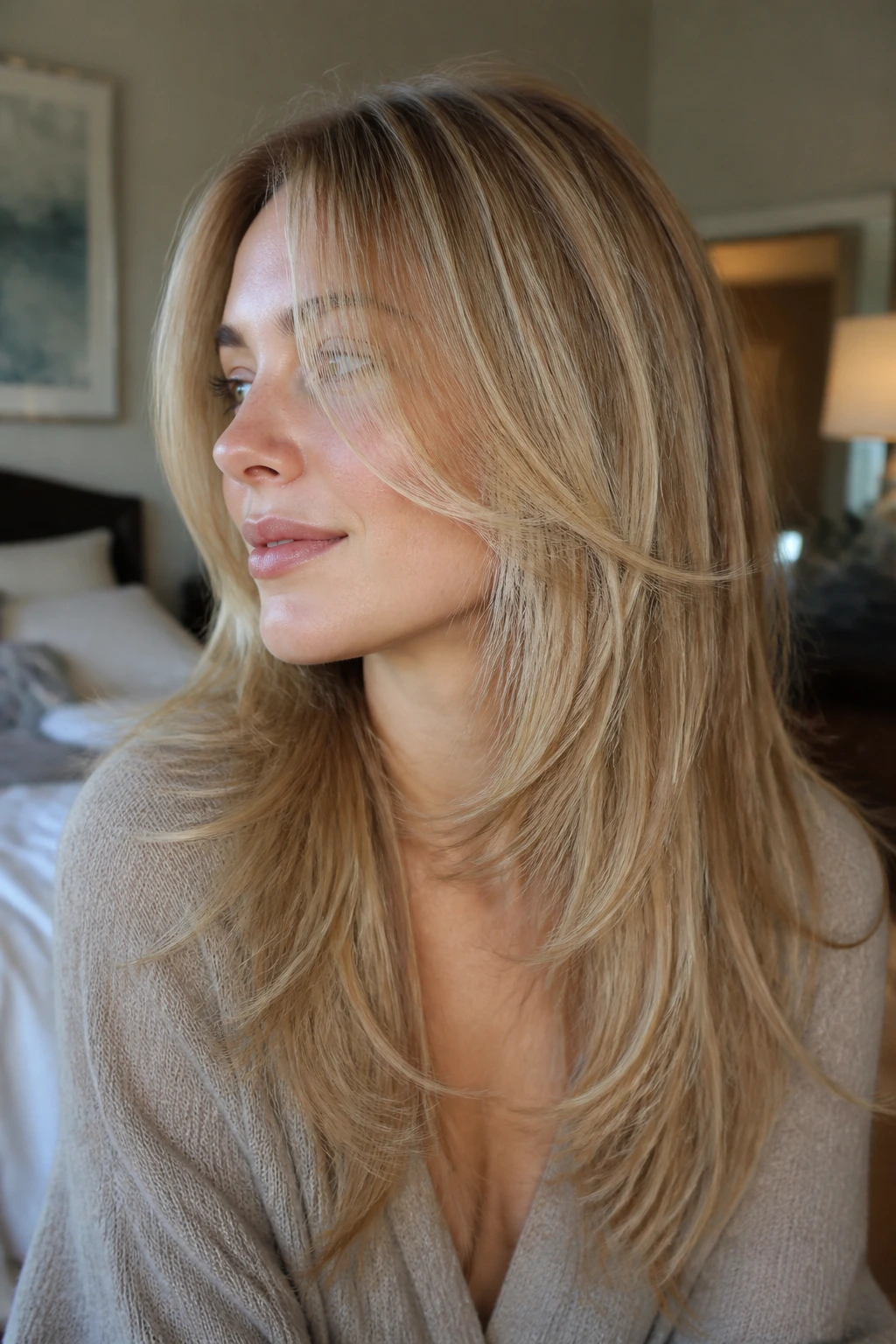
Fine hair needs a careful hand. Ribbon layers are thin, airy sections that move like strips of silk instead of bulky panels. The goal is to keep the shape soft and flowing while giving the hair more motion than a single blunt line can provide.
This is a good answer for oval faces because it adds shape without stealing density from the bottom. Fine hair usually looks best when it keeps some weight in the ends, and ribbon layers do that better than harsh, high layers.
Quick note
If your hair is very fine, avoid getting it overly razored. Ribbon layers should look feather-light, not see-through. The best version gives you a little lift around the face and keeps the ends looking full enough to catch light in movement.
19. Chin-Opening Layers That Start Low
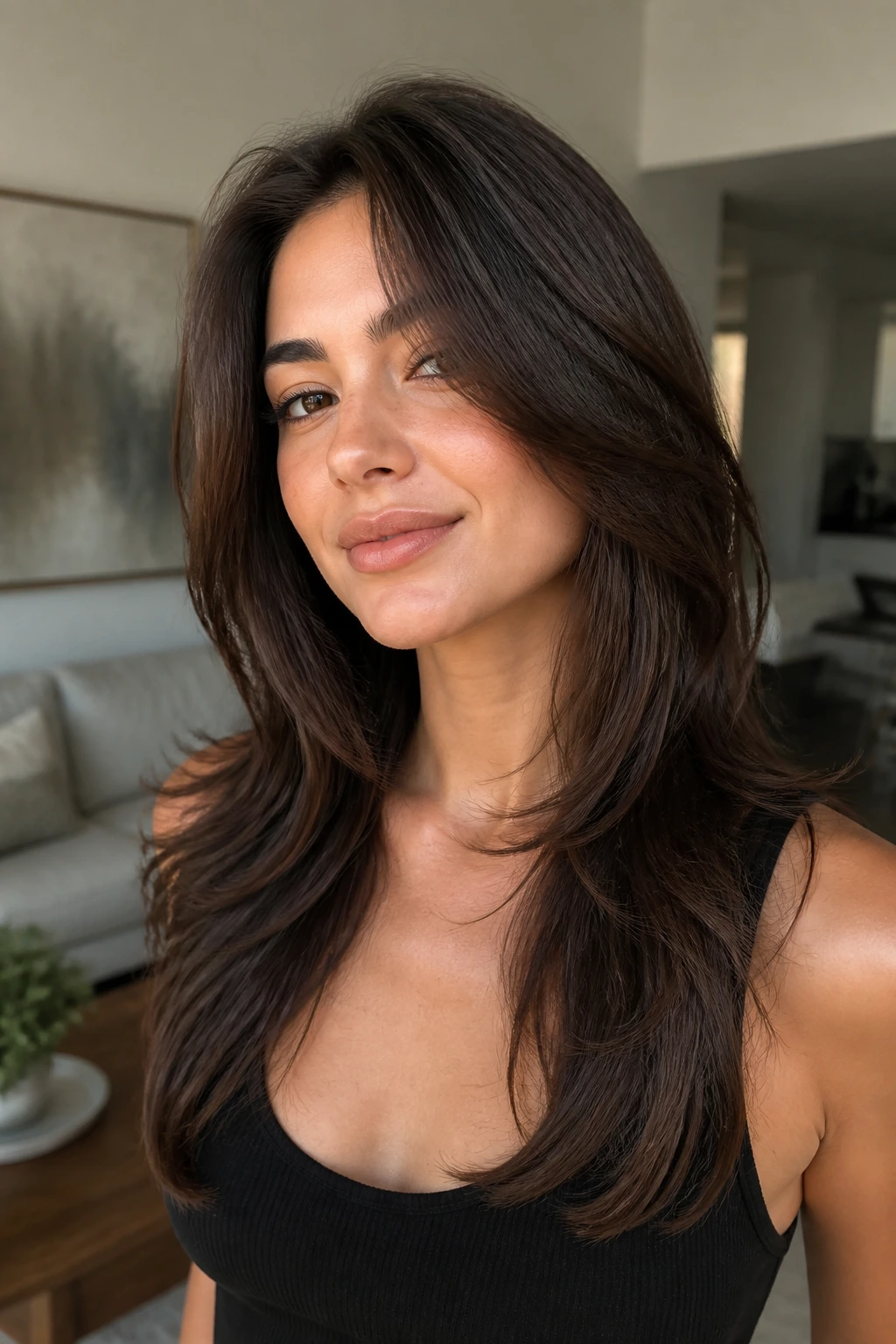
Here’s the opposite approach: keep the layers lower. Chin-opening layers start around the jaw or just below it, then move down through the lengths. That gives the face room near the forehead and cheekbones while still adding shape where long hair usually goes heavy.
This is especially good if you don’t want the front pieces to feel short. Oval faces can wear low-start layers beautifully because the shape doesn’t need a lot of help at the top; it needs movement around the lower half to stop the hair from hanging straight.
The result is clean, elegant, and easier to grow out than a high face frame. If your hair lives in a ponytail more days than not, low-start layers are less fussy when you let it down.
20. Long Curtain Fringe with Feathered Ends
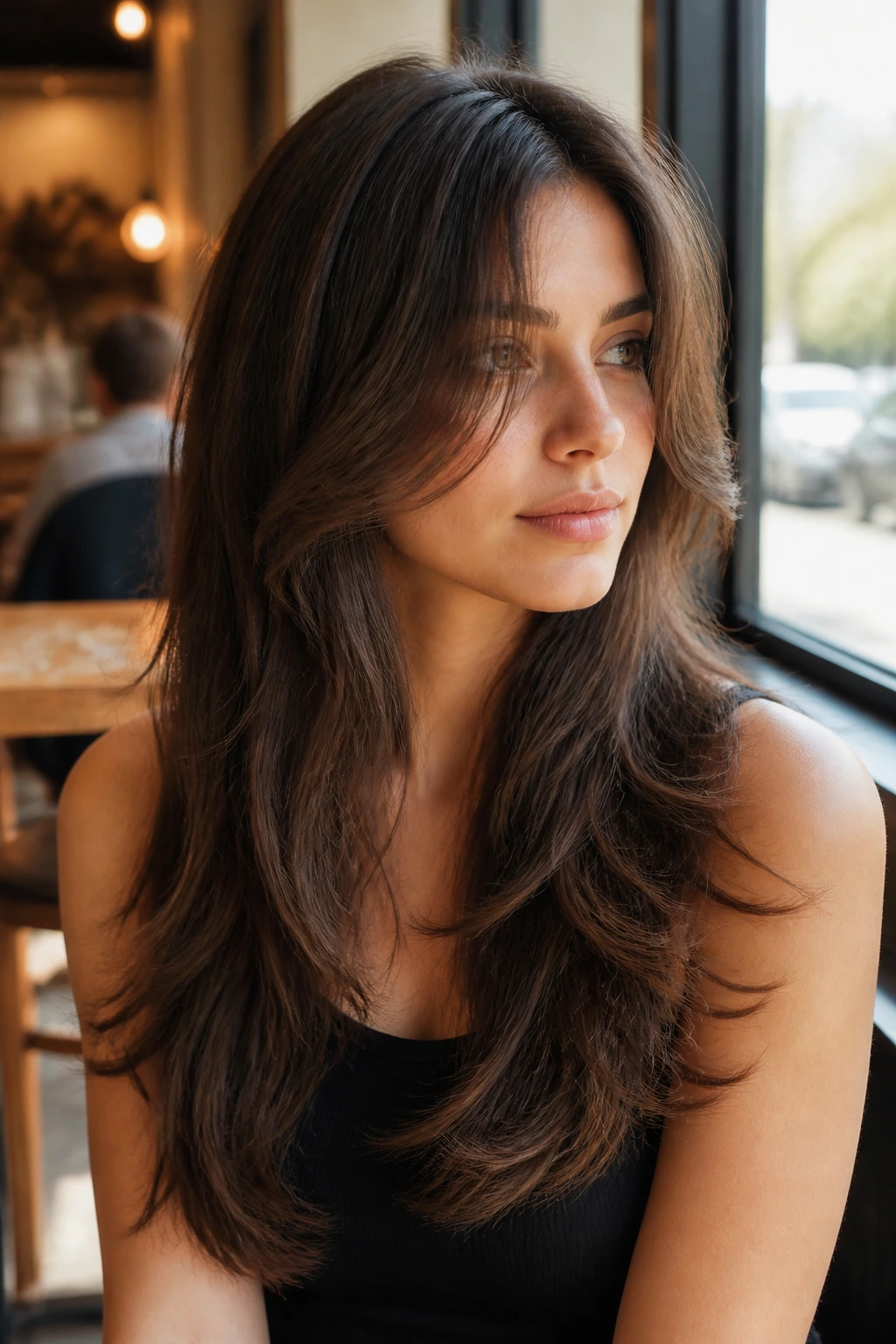
This version pushes the fringe a little longer and keeps the ends feathered instead of blunt. The result is soft from top to bottom, which is exactly why it works so well on long hair. The curtain fringe opens the forehead, and the feathered ends keep the length from feeling too heavy.
Oval faces can wear this without fighting the proportions. The fringe frames the eyes, the side pieces slide into the jawline, and the rest of the hair keeps a long, airy shape. It’s a flattering cut that doesn’t need dramatic styling to make sense.
The feathering matters. If the ends are cut too bluntly, the whole thing turns boxy. Keep the finish soft, and the fringe will feel like part of the haircut instead of a separate add-on.
21. Sleek Long Layers with Barely-There Texture
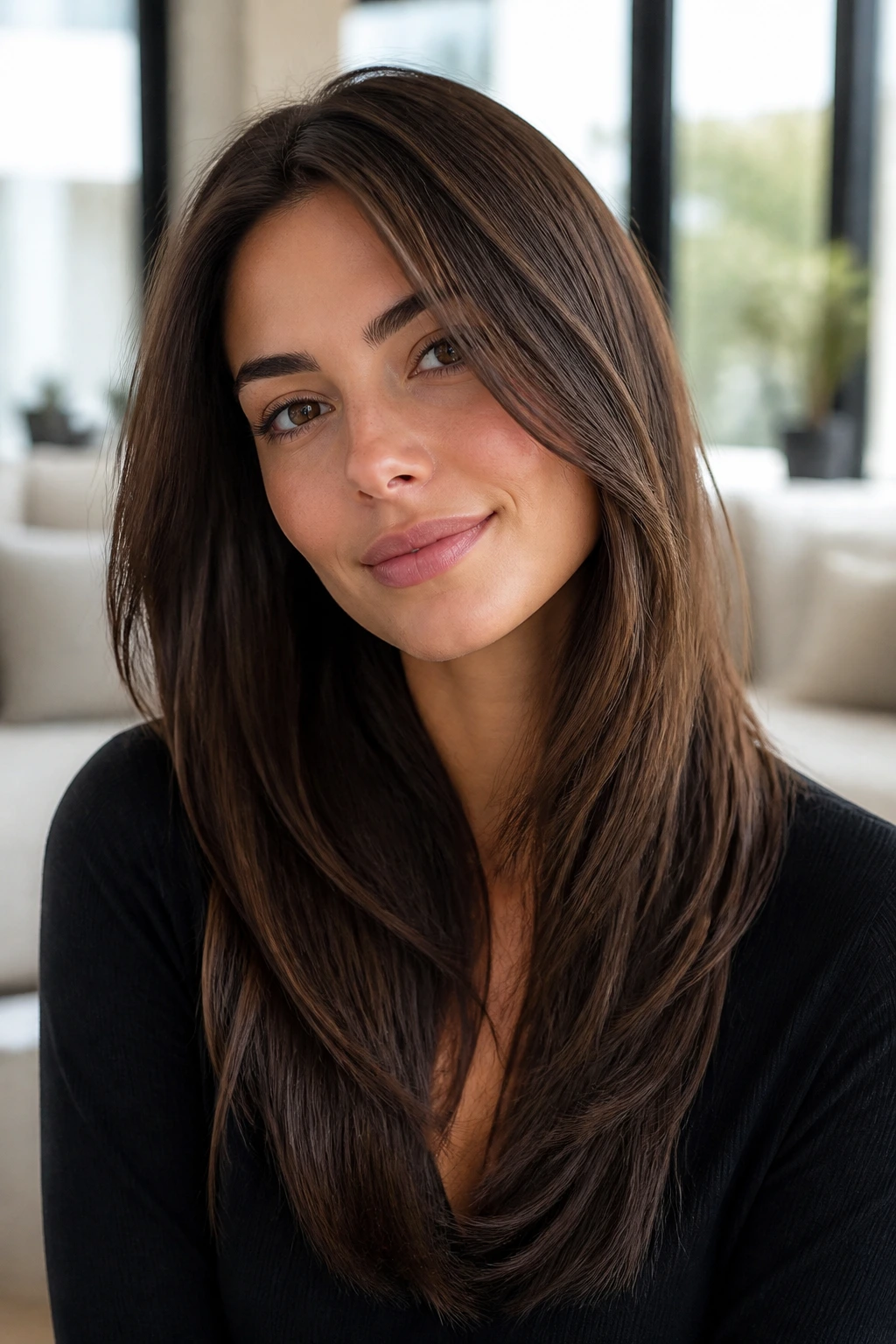
Not every layered cut needs to shout. Sleek long layers with very subtle texture are for people who want movement but still love a smooth, polished finish. The layers are there, but they’re hidden enough that the hair still looks mostly one length at first glance.
Why less is more
An oval face doesn’t need a huge amount of correction, which is why this style works. A little texture through the mids stops the cut from feeling heavy, but the overall line stays clean. You get shine, swing, and enough shape to keep the ends from sitting dead.
This is the version I’d point to if you wear a lot of straight styles or if your hair tangles easily. Too many layers can create friction. A restrained cut keeps the silhouette neat and easier to brush out.
22. Grown-Out Shag Layers for Low-Maintenance Styling
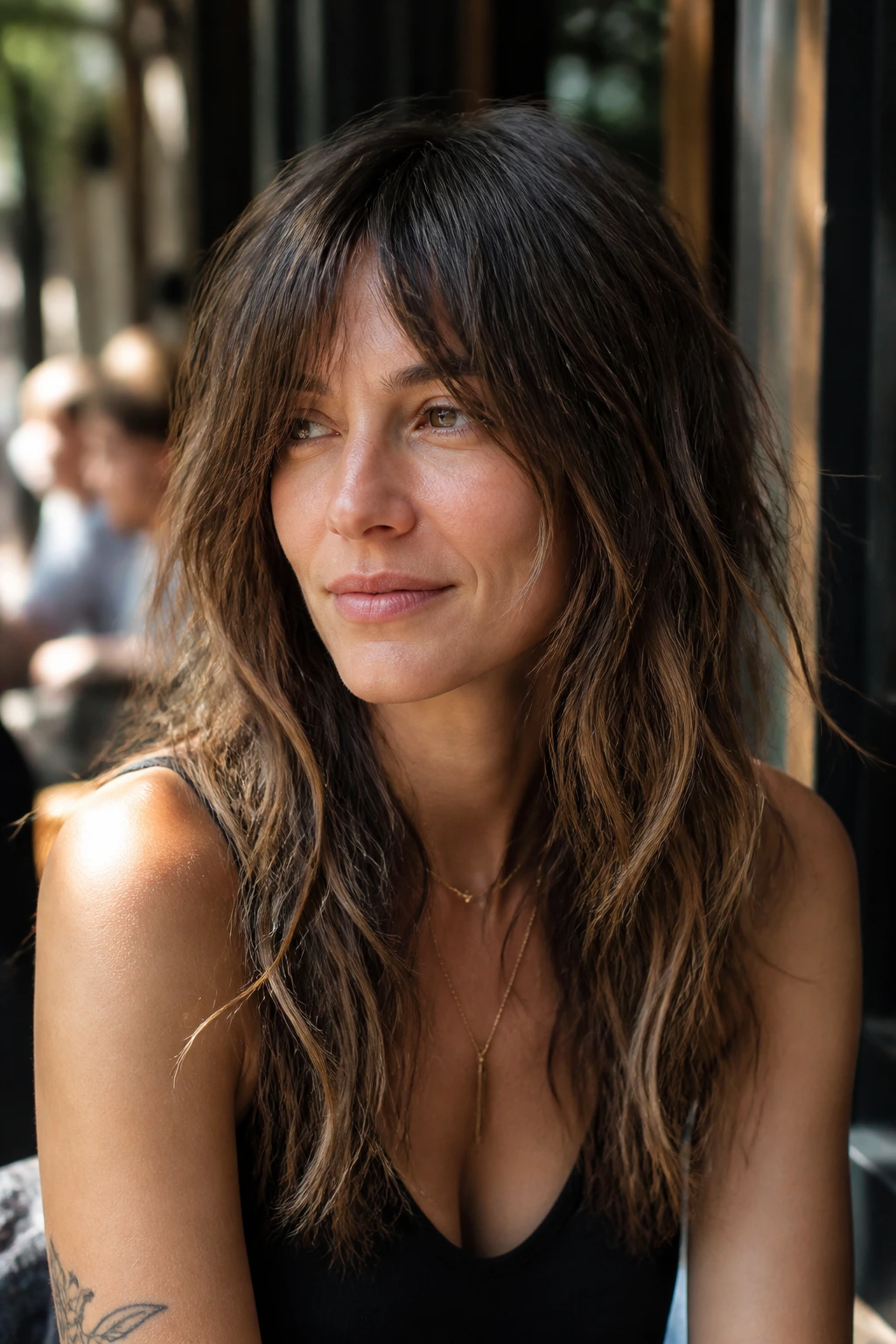
A grown-out shag is one of the easiest layered looks to live with because it already looks slightly lived-in. The layers are piecey, the face frame is soft, and the whole cut tolerates a little mess. On an oval face, that looseness can look cool instead of accidental.
The cut works best when you don’t fight your texture. Let waves wave. Let bends bend. A small amount of mousse or leave-in cream can keep the shape from puffing up, but the style should still look relaxed.
If you hate frequent salon visits, this is a safe bet. It grows out with more grace than sharper layered cuts, which means you can stretch the trim window a little longer without the shape falling apart.
23. Curly Long Layers Shaped Around the Face
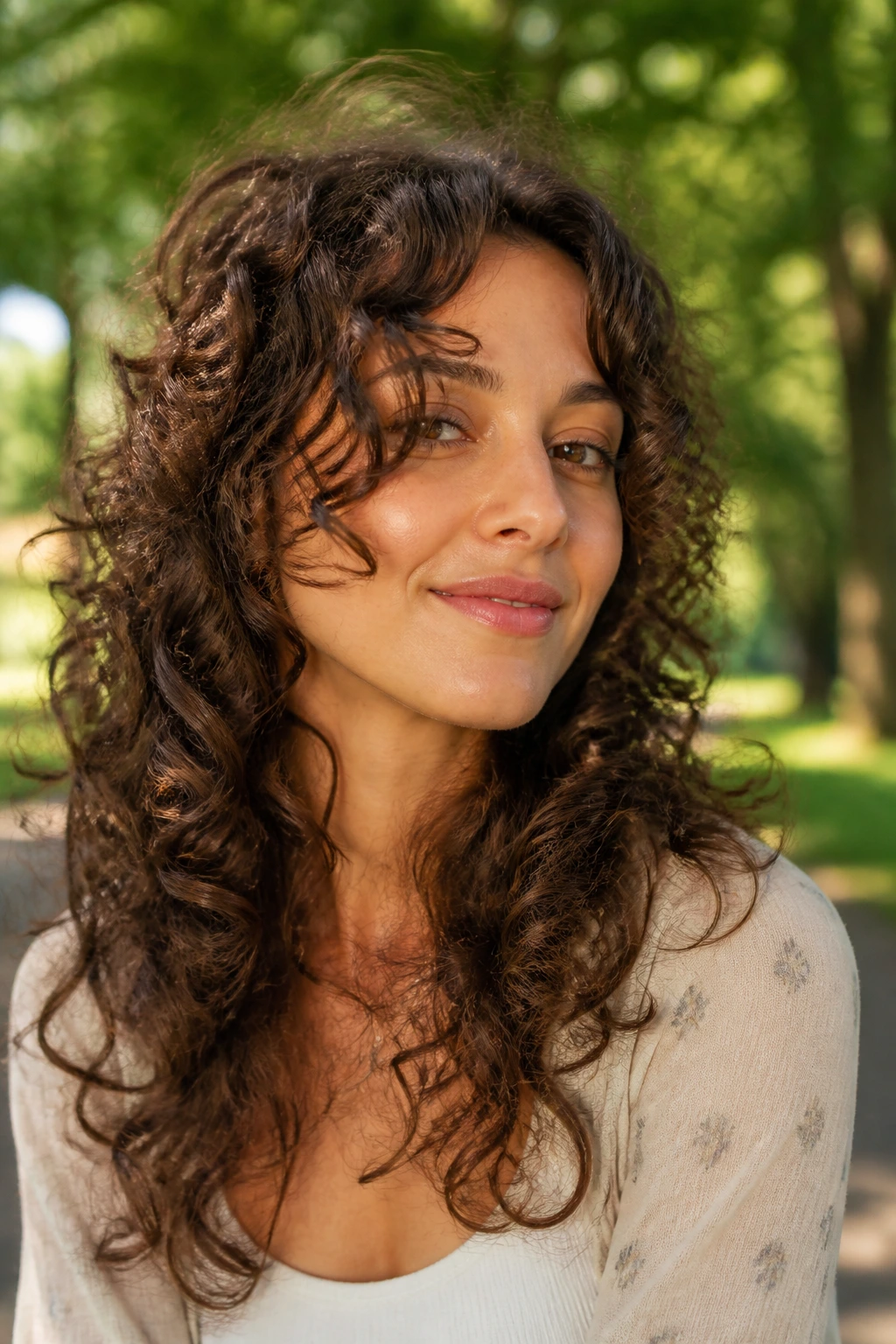
Curly hair needs layers that respect shrinkage, bounce, and the way curls stack on top of one another. Long curly layers around an oval face should carve out room near the cheeks and jaw so the curls don’t sit like a helmet. The best shape lets the curls spring without building width in the wrong spots.
A good curly cut should move when dry, not just when wet. That means the stylist has to think about how each curl family lands, especially around the front where the face frame matters most. If the shortest layers are too short, the curls can pop up too high and shorten the face visually.
Keep the top soft, the sides balanced, and the ends shaped enough to show the curl pattern. That’s the sweet spot.
24. Point-Cut Layers for Dense, Thick Hair
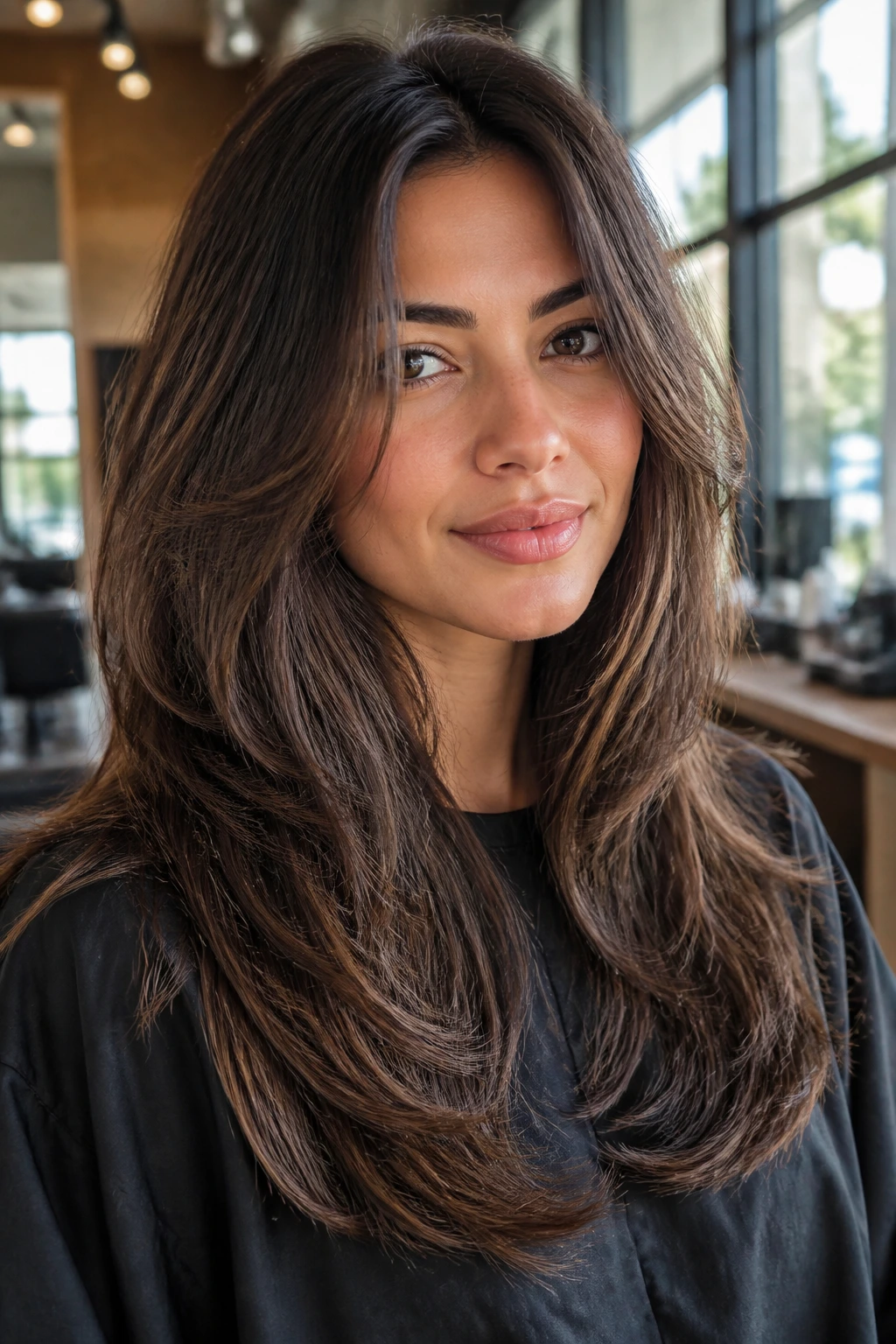
Point-cut layers are cut into the ends at an angle, which removes bulk without carving obvious lines. Thick hair loves this because the shape stays textured instead of blocky. On an oval face, point-cut layers can open the sides just enough to keep the face from getting buried.
What to watch for
The stylist should thin with purpose, not with enthusiasm. Too much point cutting can leave thick hair looking frayed. Done carefully, though, it gives the ends a softer edge and helps the hair move more freely through the shoulders.
This is a smart choice if your hair feels heavy by noon. The cut takes some of that weight off while leaving enough density to keep the length looking rich.
25. Expansive Volume Layers with Soft Ends
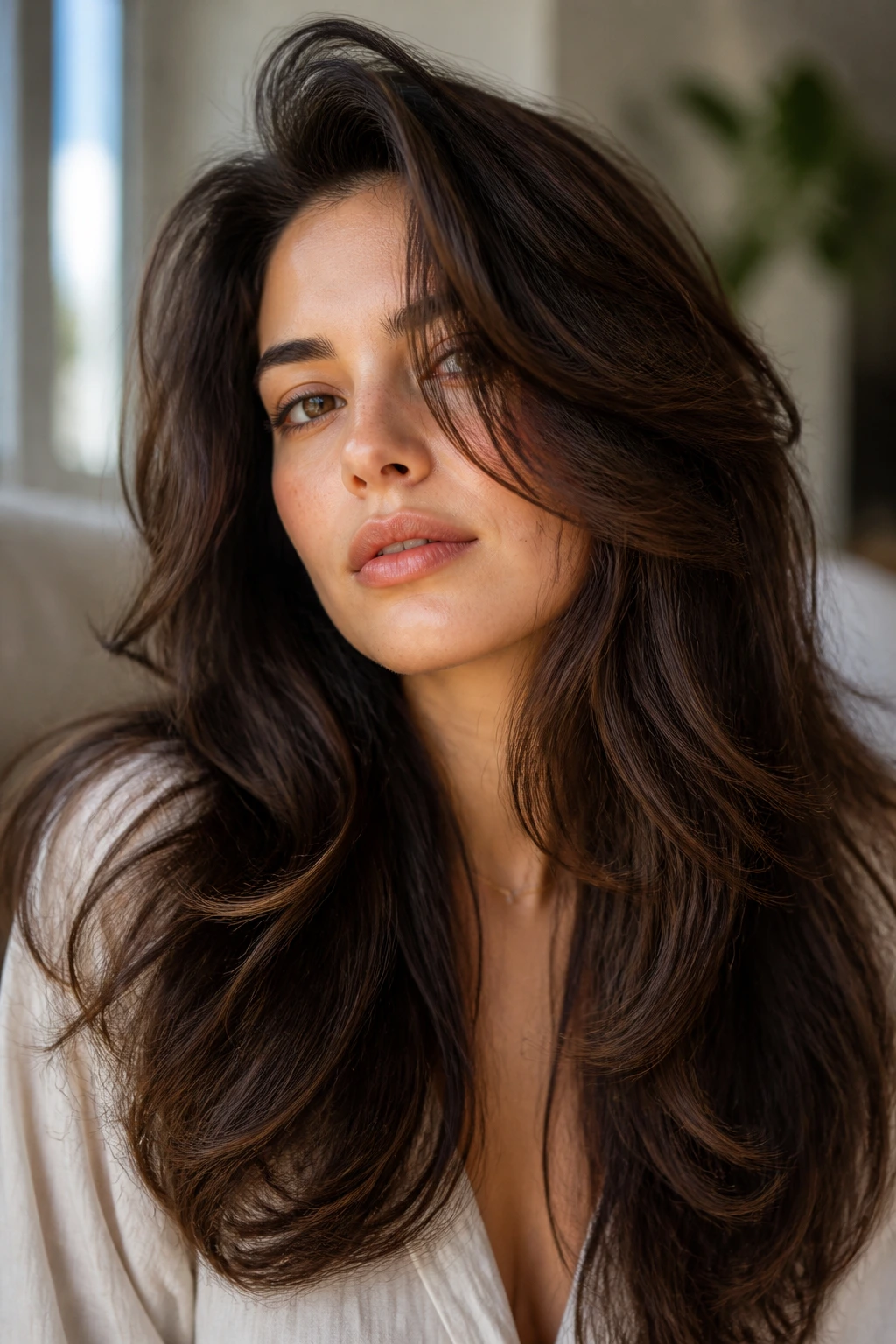
This is the big one. Expansive volume layers are for long hair that wants body, movement, and a little air between the sections. The layers are placed to support lift through the crown and sides, while the ends stay soft so the cut doesn’t tip into a brittle, over-processed look.
Oval faces wear this well because the volume can sit around the face without overwhelming it. There’s enough balance in the face shape to hold a bigger silhouette, especially if the fringe or front pieces stay soft.
If you love a fuller blowout, this is the haircut to ask about. Just don’t let the stylist take too much off the ends. The drama comes from the architecture, not from chopping the length away.
What Textured Layers Actually Change in Long Hair
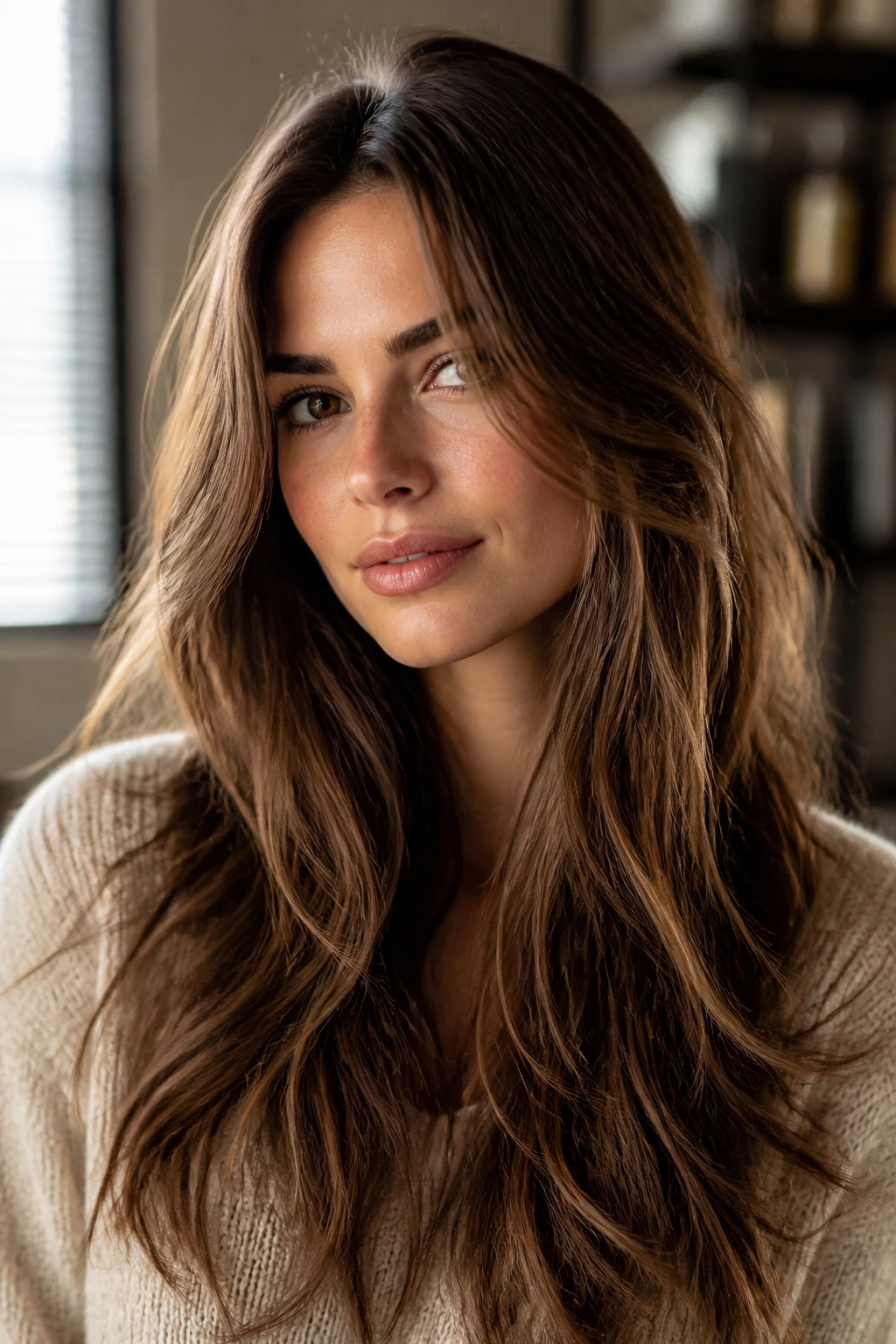
The real job of textured layers is weight control. Long hair gets heavy fast, and once the weight pulls straight down, the face frame loses its job. Layers interrupt that line. They give the hair places to bend, places to move, and places to lift without making the whole cut shorter.
That matters even more on long hair because length can disguise bad layering for a week or two, then suddenly expose it. A smart cut keeps the silhouette long while still giving the mids enough separation that the hair doesn’t sit as one dark block. On an oval face, that separation is useful because it lets you show cheekbones, soften the jaw, or widen the upper half a touch without changing the whole shape of your head.
Density changes the answer. Fine hair usually needs fewer, softer layers. Thick hair can carry more internal texture. Wavy and curly hair need the layers placed with shrinkage in mind, or the front ends spring up too far and the cut starts living its own life.
What to Tell Your Stylist in the Chair
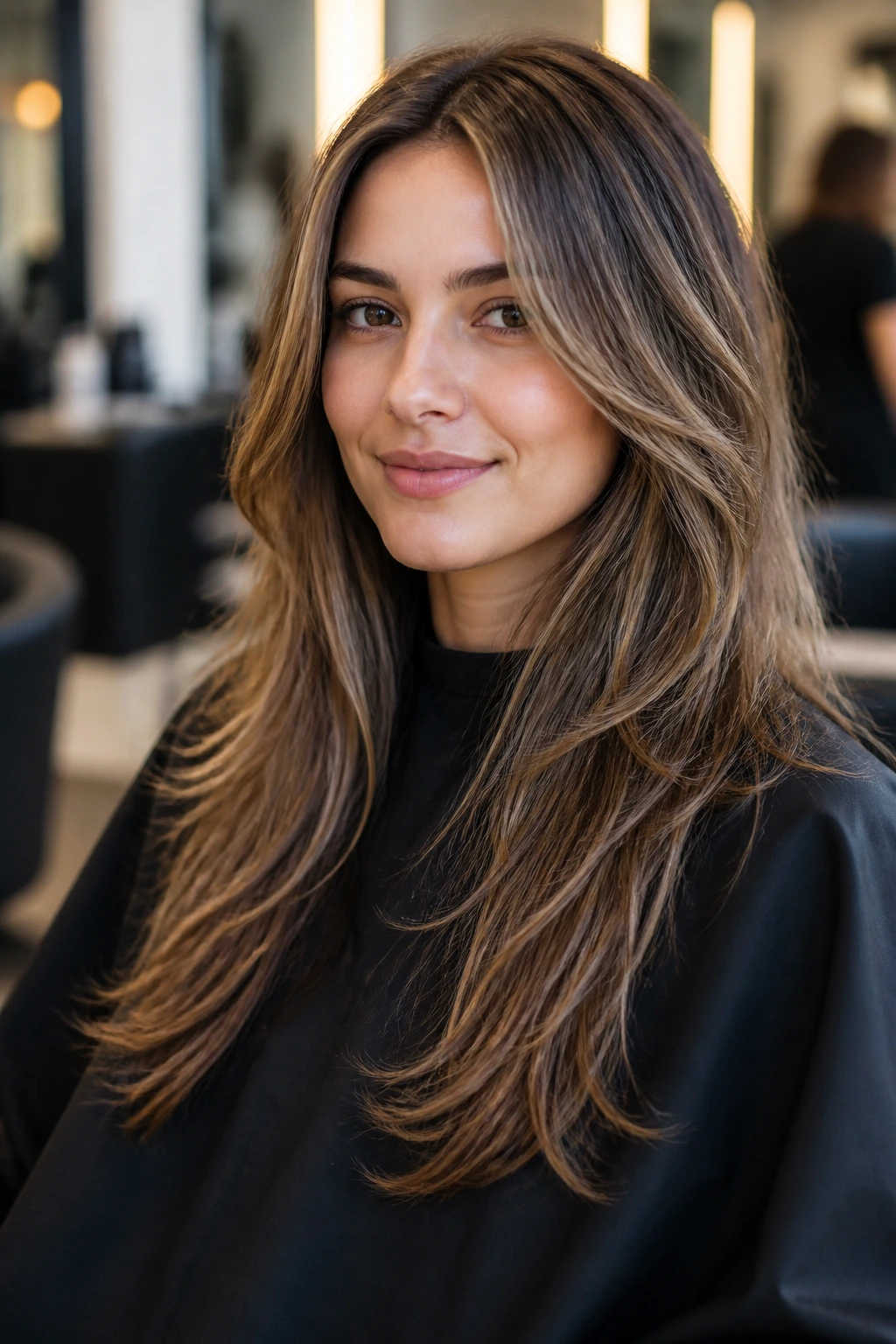
Bring more than one photo. One front shot is never enough, because the side view tells you where the layers start and how much weight is left in the back. If you can show a straight version and a wavy version of the same idea, even better. That gives the stylist a clue about the finish you want, not just the shape.
Say where you want the shortest pieces to land. Cheekbone, jaw, or collarbone are not interchangeable. If you say “face-framing layers,” some stylists hear chin length and some hear mouth length. A specific landmark saves everyone time.
Mention what your hair does on a bad day. Does it go flat at the roots? Puff at the ends? Split in the front? Does one side fall faster? Those details matter more than saying you want “volume.” Volume where? That’s the question.
Essential Tools for Styling These Cuts
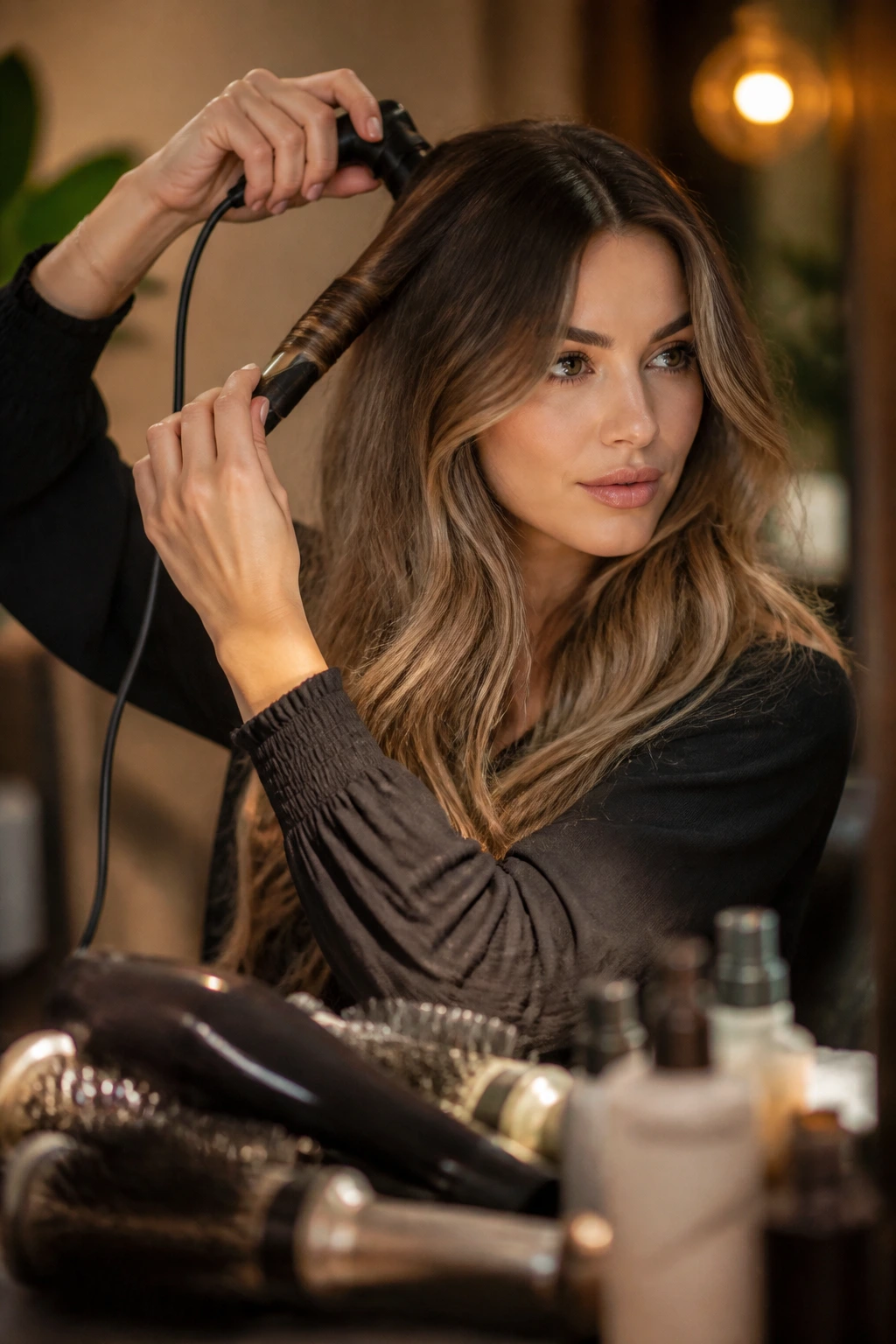
- A good blow dryer with a concentrator nozzle — The nozzle lets you direct the airflow and smooth the face frame without blasting the whole cut into frizz.
- Round brushes in two sizes — A medium brush for the front pieces and a larger one for the mids and ends keeps the bend soft.
- 1-inch or 1.25-inch curling iron or wand — Best for adding loose bends to textured layers without making ringlets.
- Heat protectant spray — Use it every time you touch the hair with heat; layered ends can look fried fast.
- Lightweight mousse or volumizing spray — Helpful at the roots and through the crown for cuts that need lift.
- Texturizing spray or dry shampoo — Gives grip and separation, especially on silky straight hair.
- Wide-tooth comb and sectioning clips — Makes styling easier when you want to keep the face frame neat.
- Microfiber towel or soft T-shirt — Better for wavy and curly hair than a rough bath towel.
How to Style These Cuts on Real Mornings
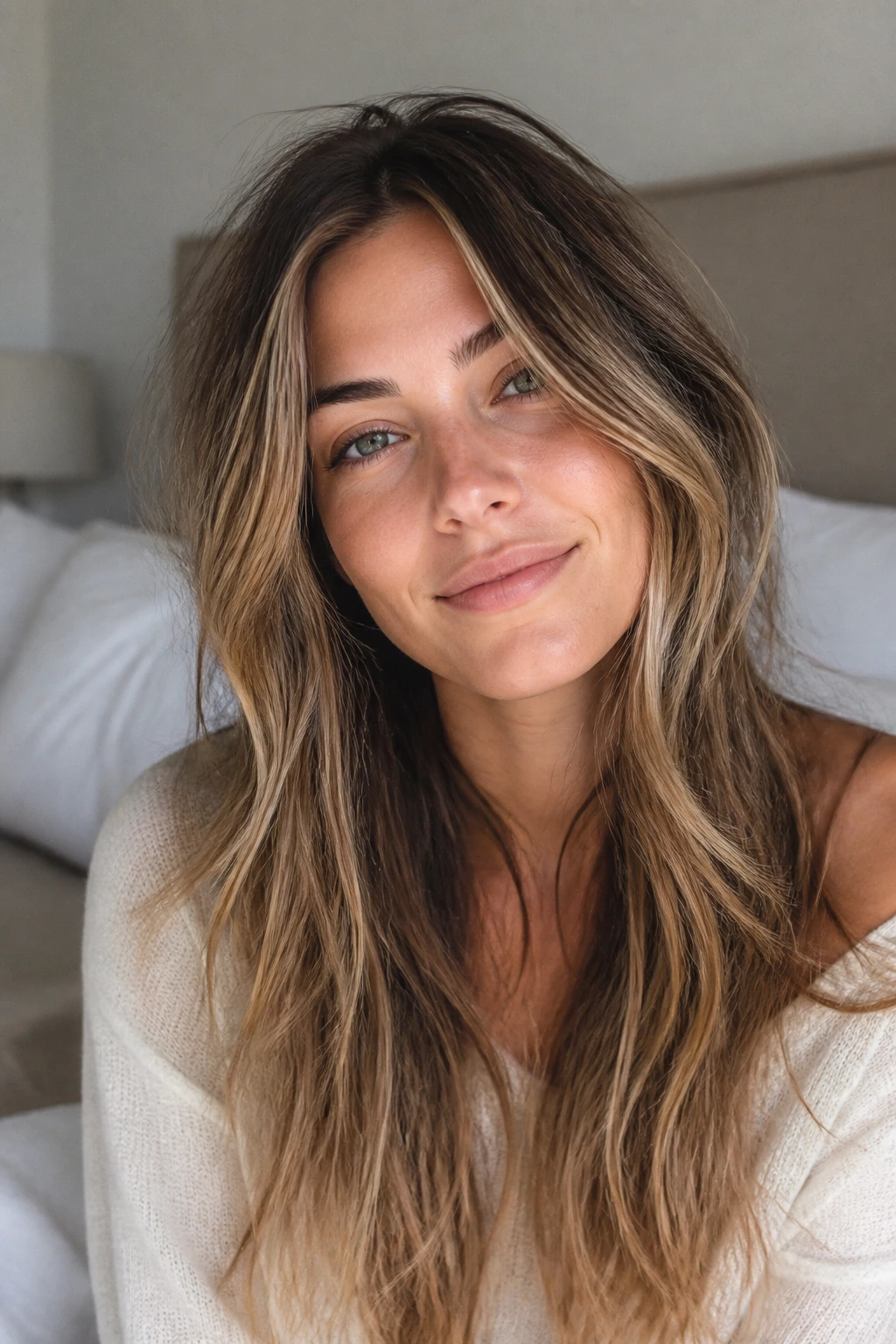
Air-Dry:
If your hair is wavy or curly, scrunch in a leave-in conditioner or light cream while the hair is damp, then lift the roots with your fingers so the layers don’t dry flat against the scalp. Let the front pieces fall where they want, then redirect only the ones that hit awkwardly at the cheek.
Blowout:
Use a round brush and dry the front pieces away from the face first. That one move changes the whole haircut. Once the top is dry, wrap the mids and ends around the brush just enough to create bend, not curl.
Heat Style:
Wrap sections around a curling iron away from the face, leave the ends out for a softer finish, and let the curls cool before you brush them apart. Alternate directions in the back so the layers don’t clump into one pattern.
Finish:
Use a pea-sized amount of serum on the ends only. If you put oil at the roots, the whole cut loses lift and the layers disappear. A small mist of hairspray at the front can keep curtain pieces in place without turning them stiff.
Small Styling Moves That Change the Whole Cut
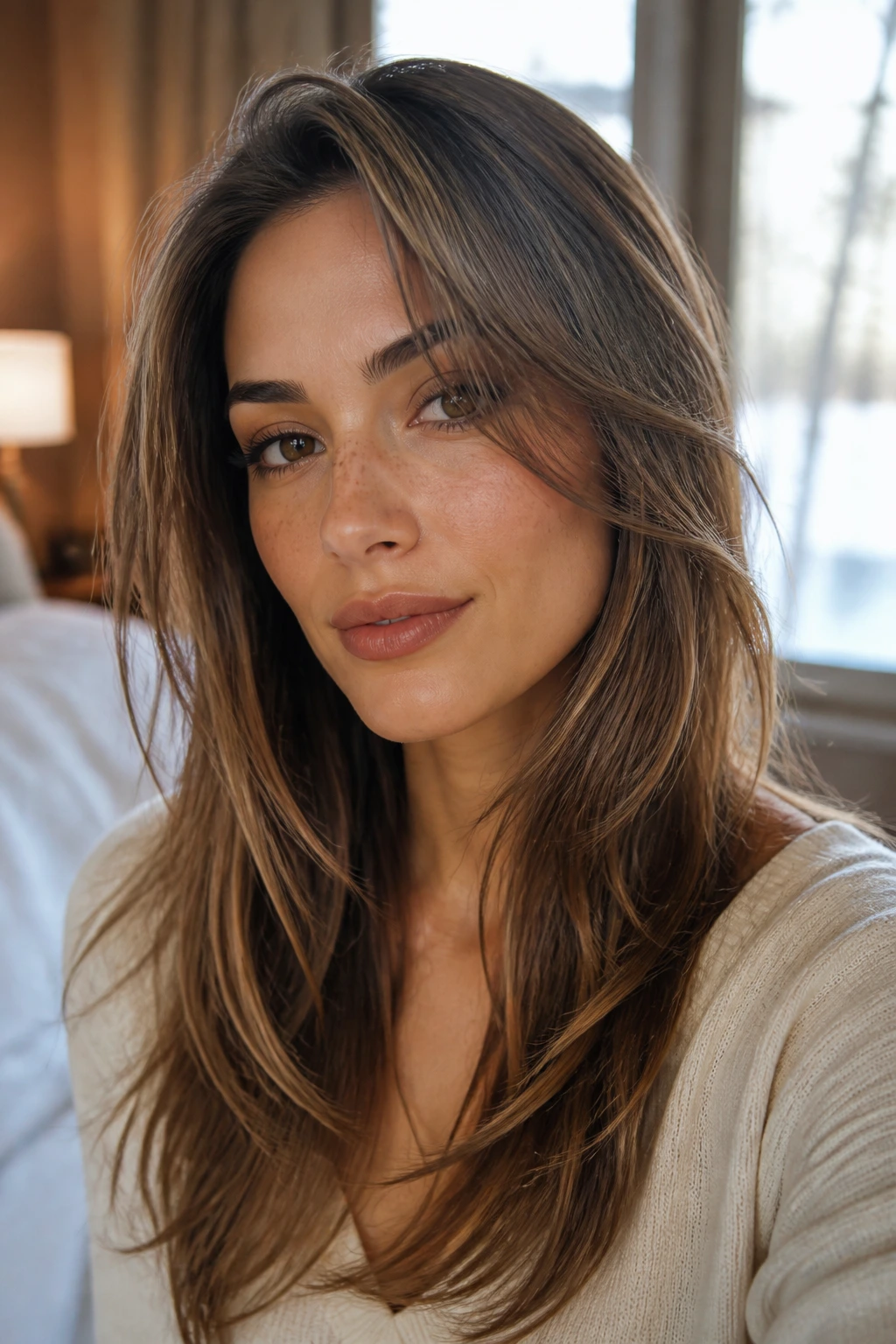
Parting Choice: A center part gives an oval face a clean line, but shifting it half an inch off center can wake up the front layers fast. That tiny change is often enough.
Root Lift: A little mousse at the crown or a quick blast with a round brush keeps long layers from flattening against the scalp. Skip heavy creams near the roots; they weigh the shape down.
Front Pieces First: Style the face-framing layers before anything else. If they dry in the wrong direction, the whole haircut starts arguing with your face.
Ends Last: The ends should look soft, not scruffy. A light bend or bevel at the bottom keeps the cut from reading too broken up.
Make-It-Yours: If you wear glasses, ask for slightly longer face-framing layers so the frames and hair do not fight for space around the eyes.
How to Keep the Shape Between Salon Visits
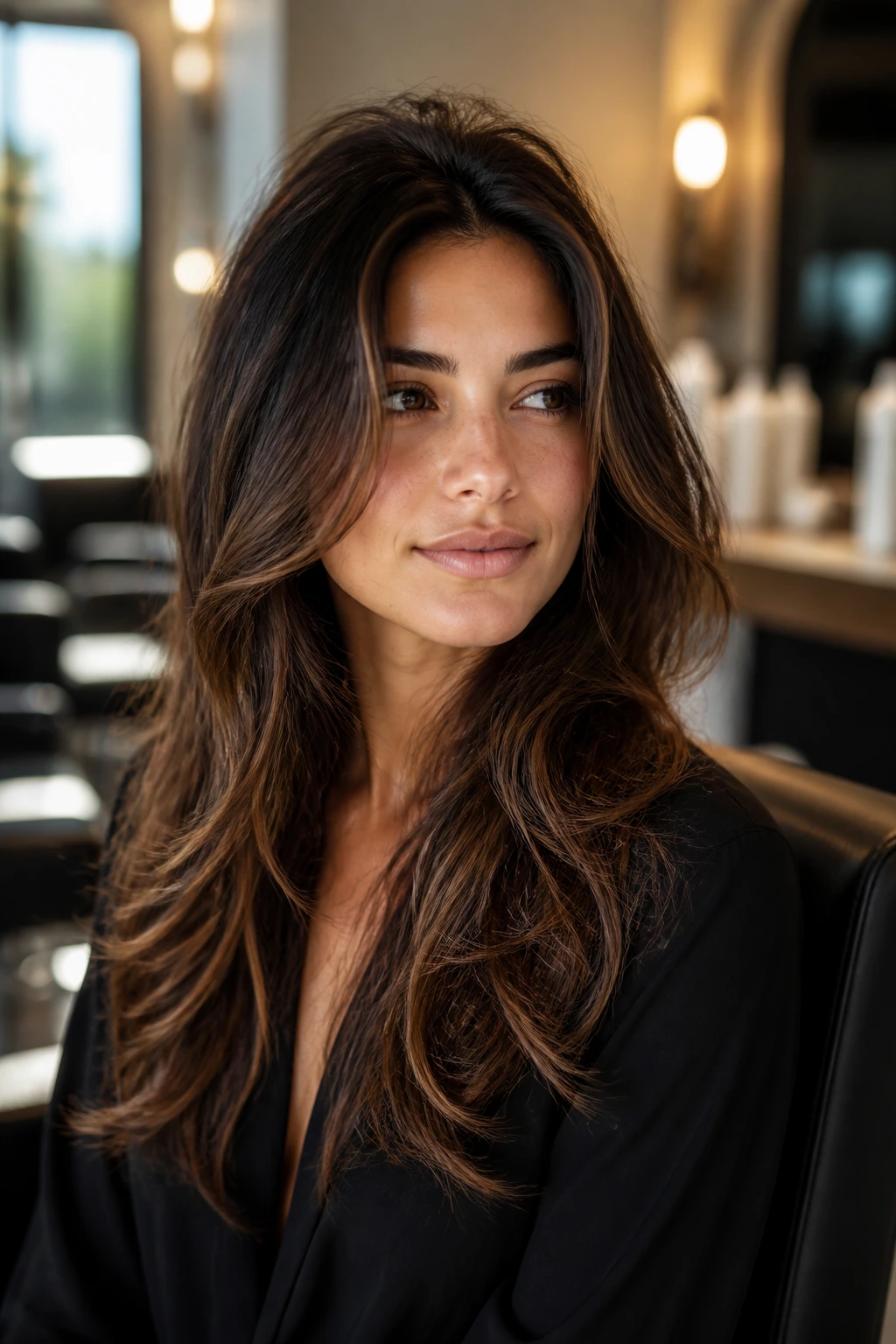
Most textured long layers need a trim every 8 to 12 weeks, though curtain bangs and very short face-framing pieces may need attention closer to 6 to 8 weeks. The goal isn’t always a full haircut. Sometimes you just need the ends dusted and the front reshaped so the layers still sit where they should.
Dry shampoo helps more than people think. It buys you another day or two of lift at the roots, which matters when layered hair starts collapsing against the scalp. Use it before the hair looks oily, not after. That way it never has to fight through a greasy base.
If the cut starts looking thin at the bottom, resist the urge to over-style the ends into bigger curls every day. That can make them fray. A soft bevel, regular conditioning on the lower half, and a light trim schedule will do more than piling on product.
Variations and Alternatives to Try
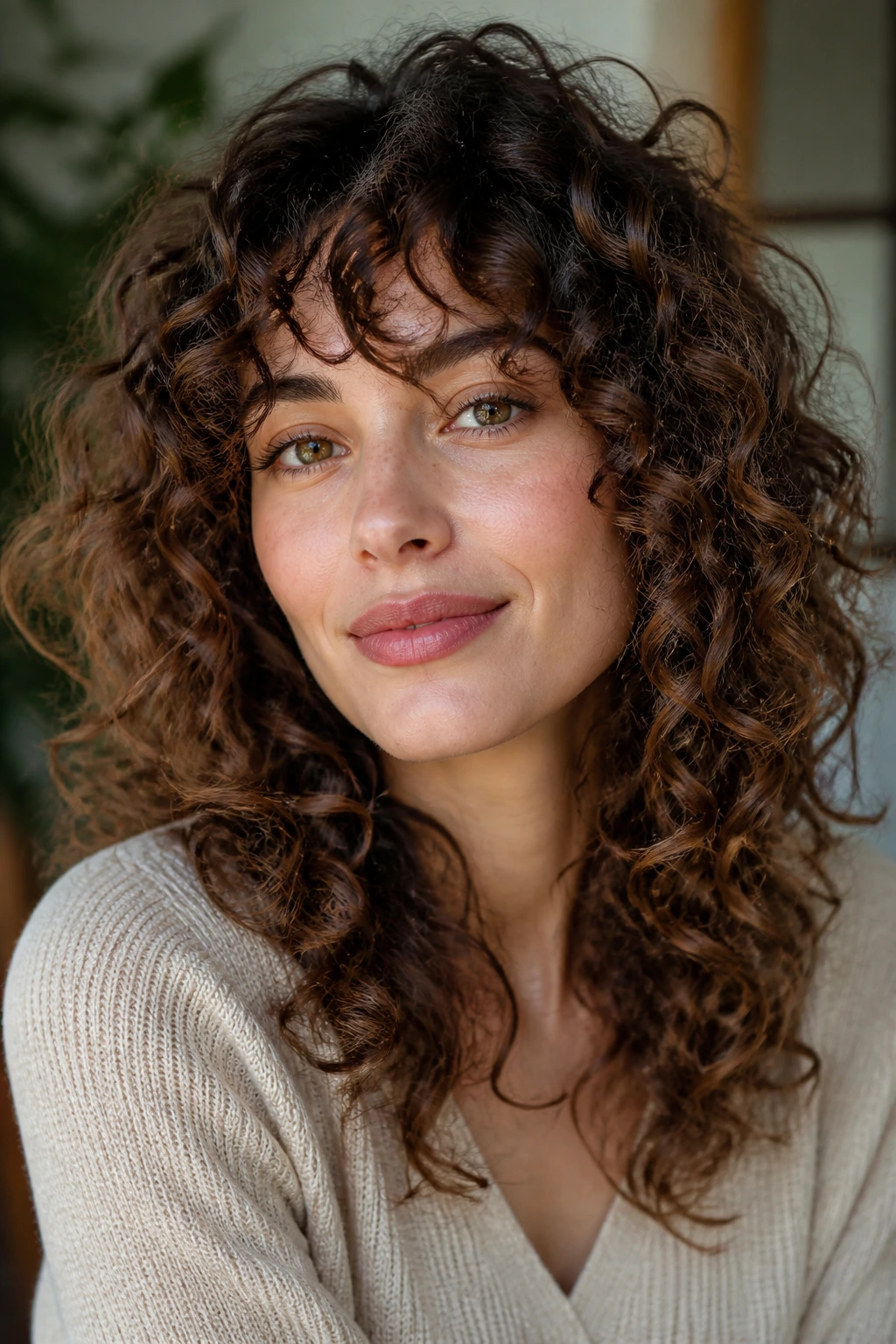
Fine-Hair Lift:
Ask for fewer layers and more internal movement so the ends keep their density. This version gives the face frame a soft bump without making the tail of the hair look sparse.
Thick-Hair Release:
Go heavier on point cutting, internal layers, and weight removal around the mid-lengths. The goal is movement that survives a full day, not just a fresh blow-dry.
Curly Halo Shape:
Keep the face frame a little longer and cut the layers based on curl pattern, not wet length alone. That keeps the curl halo balanced around an oval face instead of puffing wide in the wrong place.
Polished Blowout Version:
Keep the layers clean and the face frame soft, then style everything with a round brush and large velcro rollers or clips. The haircut stays smooth, but the movement still shows.
Low-Maintenance Grow-Out:
Choose lower-starting layers and a softer perimeter so the cut still looks right if you stretch the trim window. This one is smart if you dislike frequent reshaping.
Common Mistakes That Flatten the Shape
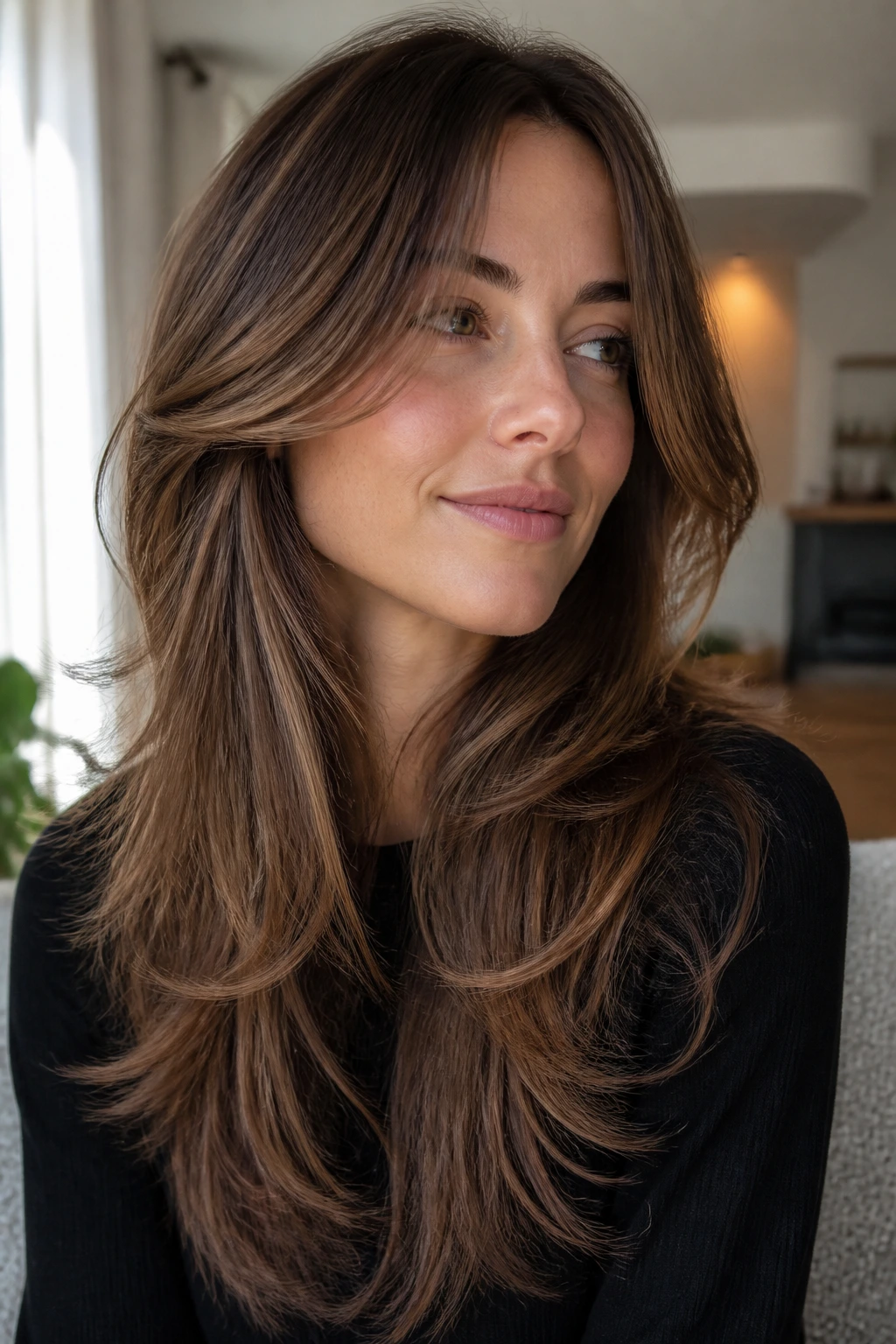
- Starting the shortest layers too high — The hair can end up with a crown-heavy, mullet-like feel. Ask for the face frame to begin lower if you want softness instead of edge.
- Thinning fine hair too aggressively — The ends go see-through, and the haircut loses body. Fine hair usually needs careful layering, not a lot of texturizing shears.
- Ignoring shrinkage in curly hair — Layers that look balanced wet can jump too high once dry. Always cut curls with the final shape in mind.
- Leaving the front pieces too blunt — The face frame sits hard against the cheek instead of melting into the rest of the cut. Softening the transition makes the shape easier to wear.
- Styling everything straight down — Long textured layers need some bend or direction, even if it’s subtle. A little curve through the front keeps the cut from looking tired.
Frequently Asked Questions
Do textured layers work on very fine long hair?
Yes, but they need a light hand. Fine hair usually looks better with soft internal layers and a gentle face frame than with heavy choppy cutting, which can make the ends look thin fast.
How short should the front layers be for an oval face?
Cheekbone to jaw length is the safest range if you want movement without a drastic change. Shorter can work, but once the front pieces hit the chin or above, they start shaping the face more aggressively.
Should an oval face avoid bangs?
Not at all. Curtain bangs, bottleneck bangs, and longer fringe all work well because an oval face can carry balance without needing the forehead fully exposed. The only thing to watch is density — too much bang can close the face in.
Can I keep most of my length and still get movement?
Absolutely. Ask for invisible layers, lower-starting face-framing pieces, or a U-shape. Those options keep the perimeter long while still giving the hair swing.
What if my hair is thick and poofy at the ends?
Point cutting and a V- or U-shaped base can help, but the layers need to be placed carefully. If the ends are poofy, the issue is often weight distribution, not just volume.
How often do these layered cuts need trims?
Most look best with a tidy-up every 8 to 10 weeks. Curtain bangs or shorter face-framing pieces may need trimming sooner if you want them to sit in the same place.
Will layers make straight hair look stringy?
They can if the cut is too aggressive. Straight hair usually needs cleaner layering and a softer finish so the ends still look full when they fall flat naturally.
What if my stylist cuts the layers too short?
You can usually soften the look with styling, but not fix the length overnight. Ask for a smoothing blowout, keep the front pieces tucked behind the ears for a few days, and let the next trim grow out a bit before reshaping.
The Shape That Stays Soft
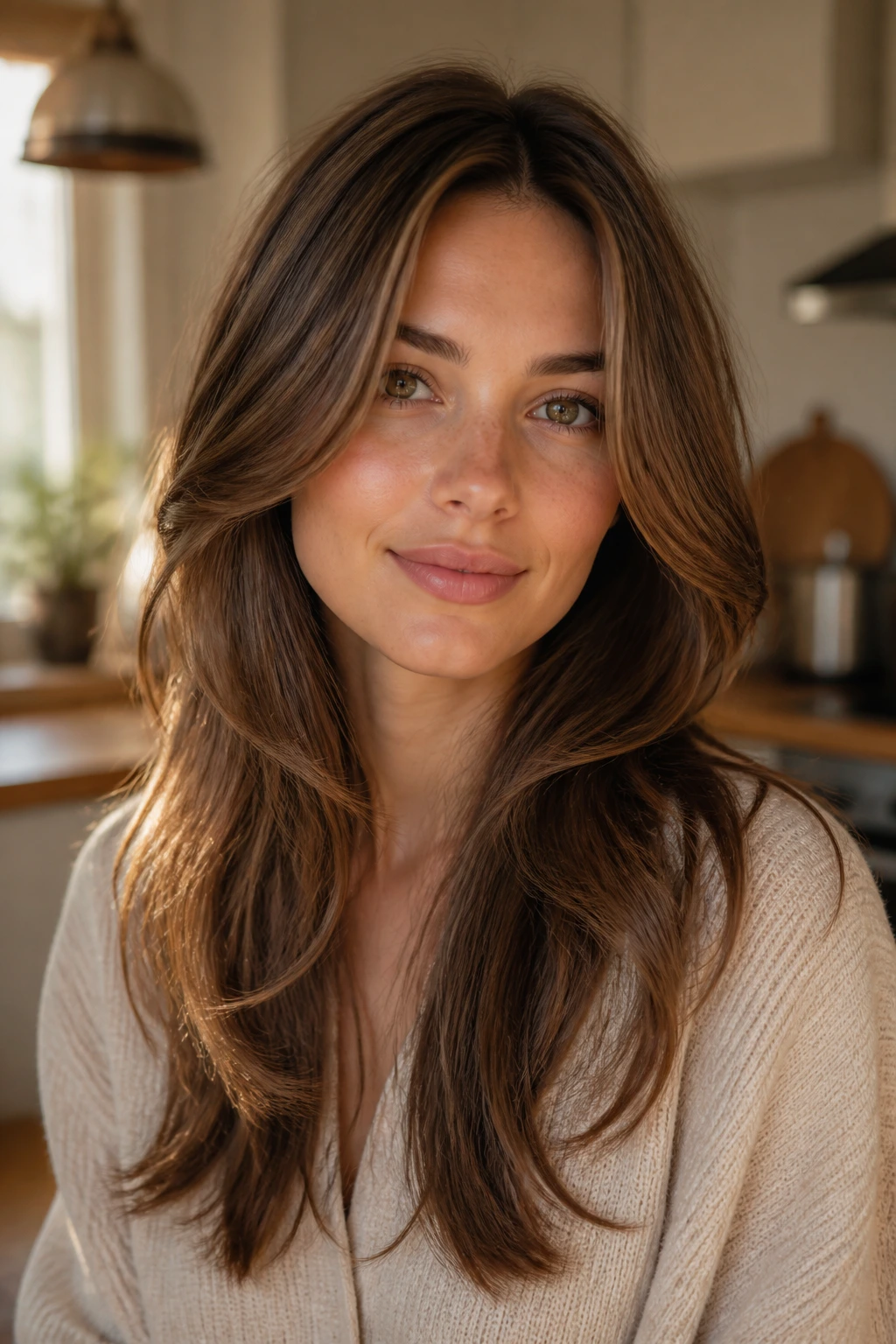
The best thing about textured layers on long hair is that they don’t fight the hair’s length; they give it a reason to move. On an oval face, that movement can be subtle or bold, polished or undone, but it should always feel placed on purpose. That is the difference between a cut that looks pretty in a photo and a cut you actually enjoy wearing on a Tuesday morning.
If you’re booking the haircut, think less about the label and more about the placement. Where do you want the lift, where do you want the weight, and how much time do you want to spend styling it? Those answers will point you to the right version faster than any trend name ever will.
And once you find the version that sits right on your face, keep the shape soft, keep the ends healthy, and let the layers do the work.