



Dark short balayage has a sneaky advantage: it can make a cropped cut look richer, softer, and more expensive-looking without turning the whole head into a block of one color. On medium skin tones, that matters even more. A few hand-painted ribbons of caramel, chestnut, bronze, or espresso can wake up the face in a way that flat highlights often miss.
The trick is balance. Short hair does not give color much room to fade, so a strong stripe near the front can look harsh fast, while a soft melt in the right shade can look polished for weeks. I’ve always liked dark balayage on medium skin because the color sits close to the base and lets the haircut do some of the work. The bob, pixie, shag, or lob gets the shape; the color just gives it depth.
And depth is the whole story here. Medium skin tones can carry warmth, coolness, or a mix of both, which means the best shades are the ones that look like they were chosen on purpose — not pulled from a random box in a back room. The right placement near the cheekbone, temple, or fringe can change the whole read of a cut.
Why Dark Short Balayage Flatters Medium Skin So Well
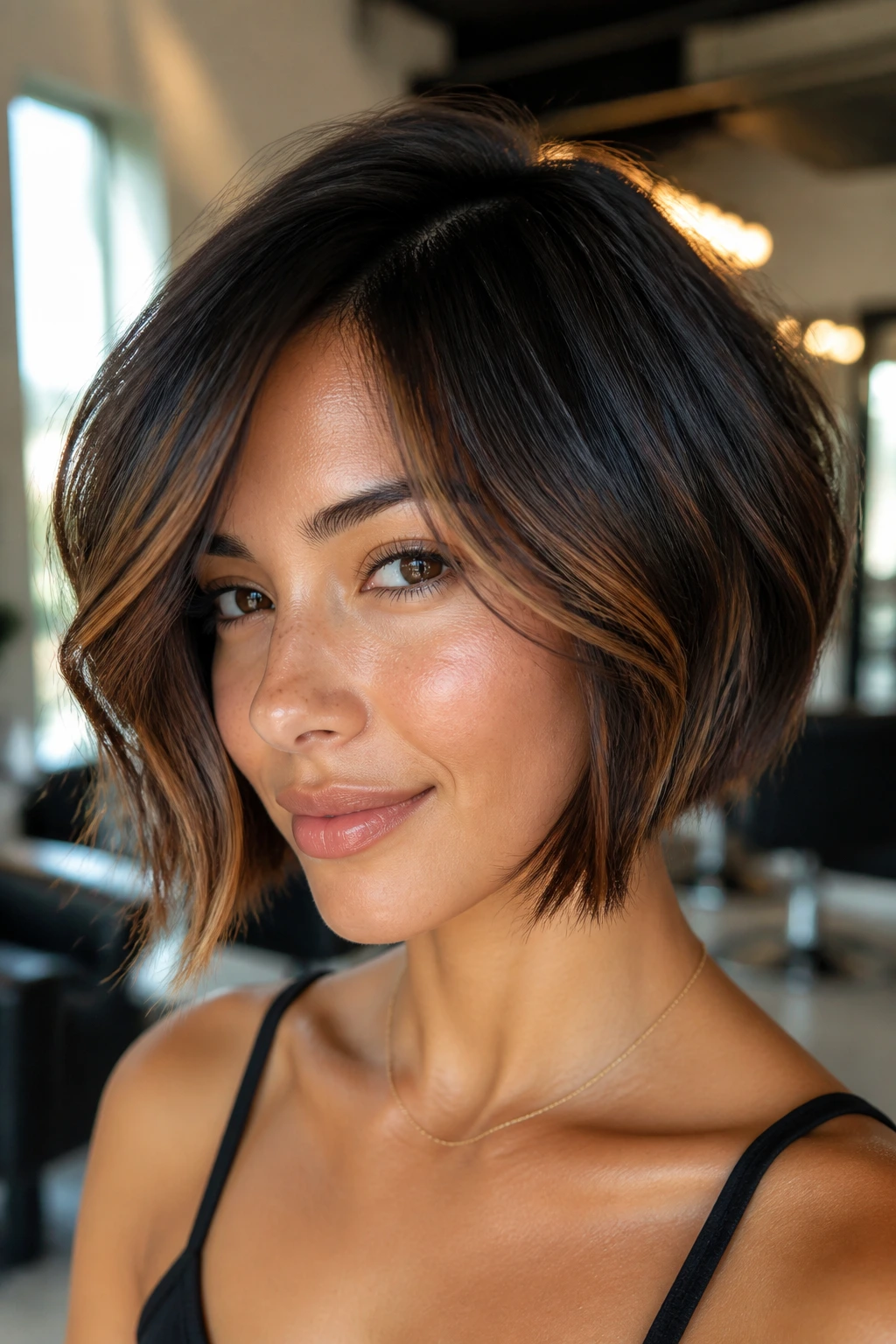
Why it works: Dark bases keep short cuts from looking over-lightened or dry at the ends, which is the problem with too much contrast on compact hair. On medium skin, a few shades of lift — not six — usually give the cleanest result.
Warm, neutral, and olive tones all have room here: Medium skin isn’t one note. If your undertone runs golden, caramel and bronze tend to look natural. If your skin leans neutral, chestnut, mocha, and soft beige-brown stay easy on the eyes. Olive skin often likes smoky brunette or mushroom-brown ribbons because they don’t fight the skin’s green-gold cast.
Short hair shows placement more than length does: On a lob or bob, you can actually see where the light lands. That makes balayage feel more intentional, but it also means sloppy placement is obvious. I’m a fan of painting the brightest pieces around the cheekbone, jawline, and fringe — the places where hair moves when you talk.
Gloss matters more than extra brightness: Short dark balayage looks best when it has shine. A clean gloss or toner keeps caramel from turning brassy and keeps espresso from looking flat. That sheen is what makes the color read rich instead of dull.
Why You’ll Love This Collection
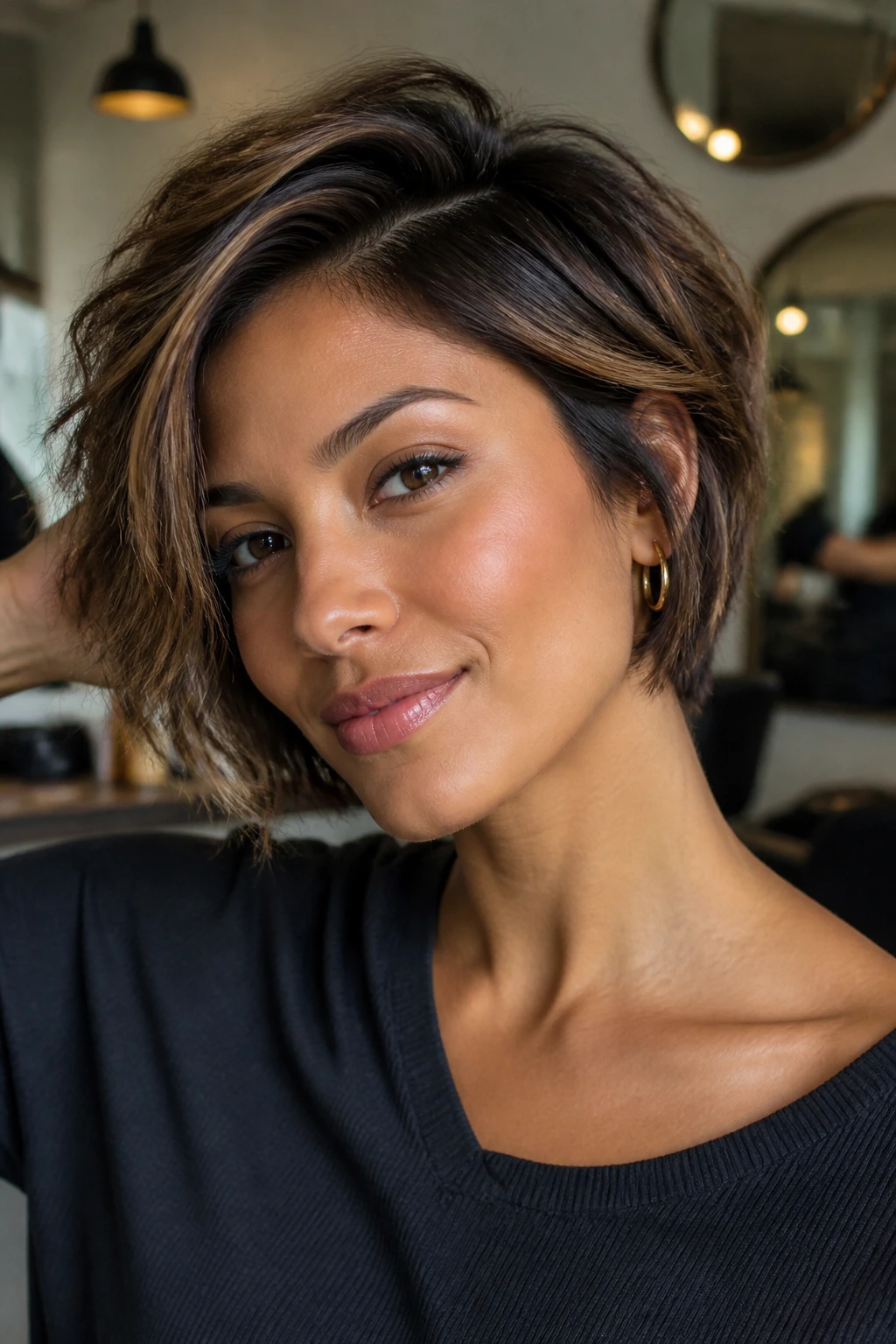
- Built for real short cuts: These ideas work on bobs, lobs, shags, pixies, and cropped layers instead of assuming you have long hair to “show off” the color.
- Friendly to medium undertones: The shade range leans warm, neutral, and softly cool, so you can match golden, olive, or balanced skin without forcing the tone.
- Low-drama grow-out: Dark balayage softens as it grows, which means fewer hard lines around the hairline and nape.
- Plenty of salon flexibility: You can ask for hand-painted ribbons, root shadow, face framing, glossing, or muted ombre depending on how bold you want to go.
- Easy to style at home: These looks usually need one good bend, wave, or blowout, not a shelf full of products and thirty minutes with a round brush.
- Works with glasses and makeup: Dark short balayage frames the face in a way that sits well with brows, liner, lipstick, and the rest of your routine.
1. Espresso Ribbon Bob
A clean espresso bob with thin ribbons of mocha and soft cinnamon is one of those styles that looks calm from across the room and detailed up close. The base stays dark, so the short cut keeps its shape, but the lighter threads catch on the ends and around the face.
Why It Wins on Medium Skin
The color shift is subtle enough to flatter neutral and golden undertones without shouting. I like this on a blunt or slightly beveled bob because the ribboning keeps the cut from feeling heavy at the bottom.
If your skin has a little warmth, ask for the lightest pieces to sit one to two levels above your base, not more. That keeps the result rich, not stripy. A soft bend with a 1-inch iron is enough.
2. Mocha Melt Crop
This is the one for people who hate obvious highlights. A mocha melt crop keeps the roots nearly untouched and lets the color blur into deep coffee and milkier brown mids, which gives a short style a smoother line.
The reason it flatters medium skin is simple: the transition is gentle, so the hair reads polished instead of foiled. On jaw-length cuts, that softness helps the face feel framed rather than boxed in. Ask for the lightest tones only on the outer layers and around the temples.
Best when:
- You wear your hair straight a lot
- You want a darker finish with dimension
- Your skin leans neutral or slightly warm
3. Caramel Face-Frame Lob
Why does a lob suddenly look more expensive the moment you add caramel around the face? Because the light sits where people actually look first — the cheekbones, temples, and ends near the jaw. That placement does more than a full-head highlight ever could on short hair.
A dark brunette base with caramel framing works especially well on medium skin with golden undertones. The warmth near the face lifts the complexion, but the dark crown keeps the style from drifting into orange. Keep the face frame thin; chunky pieces can take over a short cut fast.
4. Chestnut Pixie with Tapered Nape
A pixie is where balayage gets tricky, and that’s exactly why this version earns its place. Chestnut accents on the longer top layers give the crop movement, while the tapered nape stays dark and neat.
I like chestnut on medium skin because it has enough red-brown in it to wake up the complexion without turning coppery. If the cut has a side-swept fringe, put the brightest stroke on the front bend, not the whole bang. It stops the style from looking frosted.
Placement note
- Keep the nape close to the base color
- Brighten the crown only by half a level to one level
- Let the fringe carry the light
5. Toffee Shaggy Bob
Toffee on a shaggy bob is all about motion. The layers break up the color so the lighter ribbons land on bends, not in flat streaks, and that gives the hair a loose, lived-in feel without looking messy.
Medium skin tones usually like toffee because it sits in the warm middle ground — softer than gold, lighter than chestnut. On a shag, that range keeps the cut from looking too dark at the ends. A salt-free texturizing spray and a quick scrunch are enough; overstyling kills the shape.
6. Cinnamon Money-Piece Bob
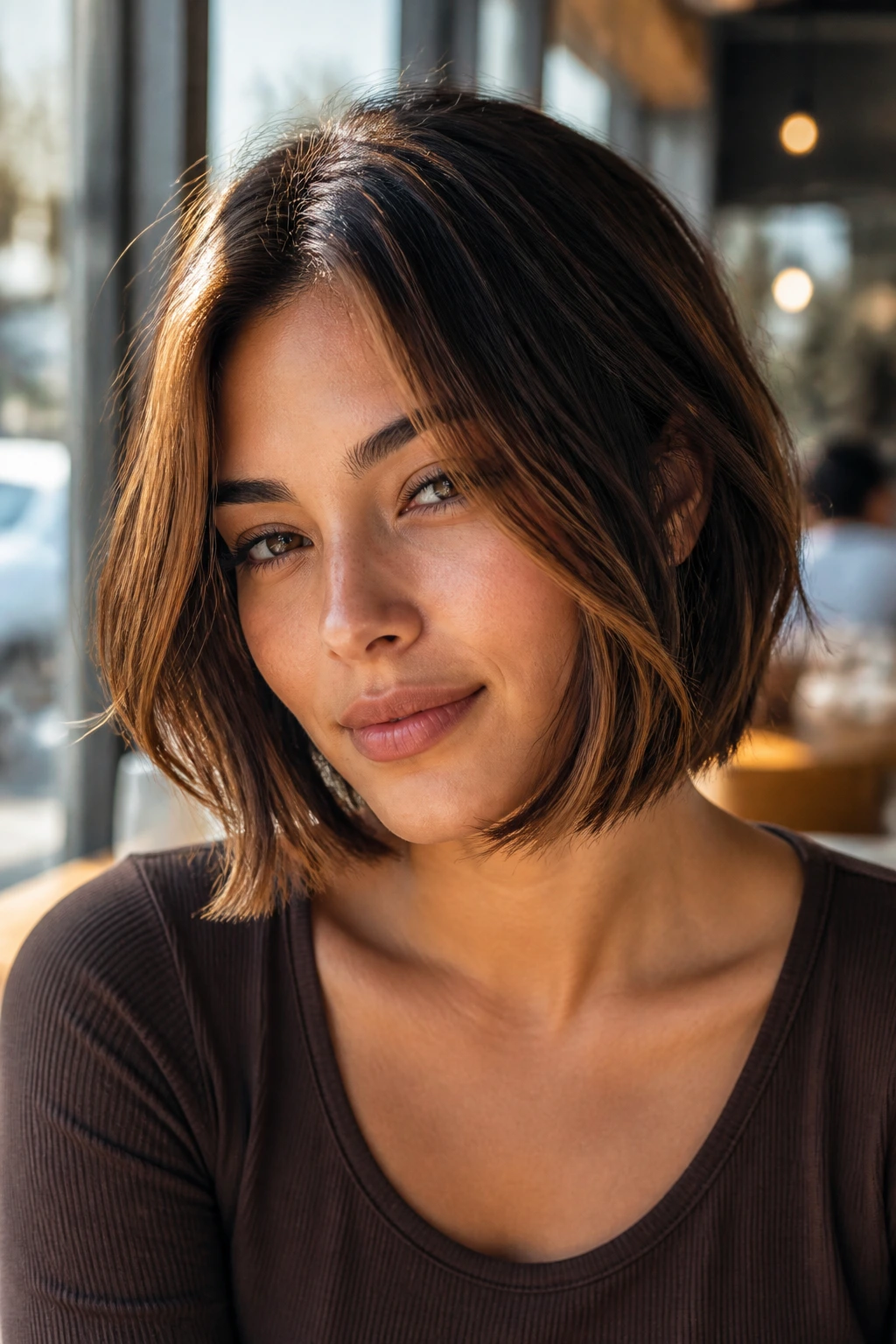
A money piece gets attention, which is the point, but cinnamon makes it feel smarter than neon-bright face framing ever could. The darker base stays in charge, while the front pieces add warmth near the eyes and cheekbones.
Compared with all-over highlight work, this is cheaper to maintain and easier to grow out. That matters on short hair, where every half-inch shows. Medium skin with a warm or olive cast usually handles cinnamon well, especially when the ends stay brown rather than copper.
7. Cocoa-Hazelnut Waves
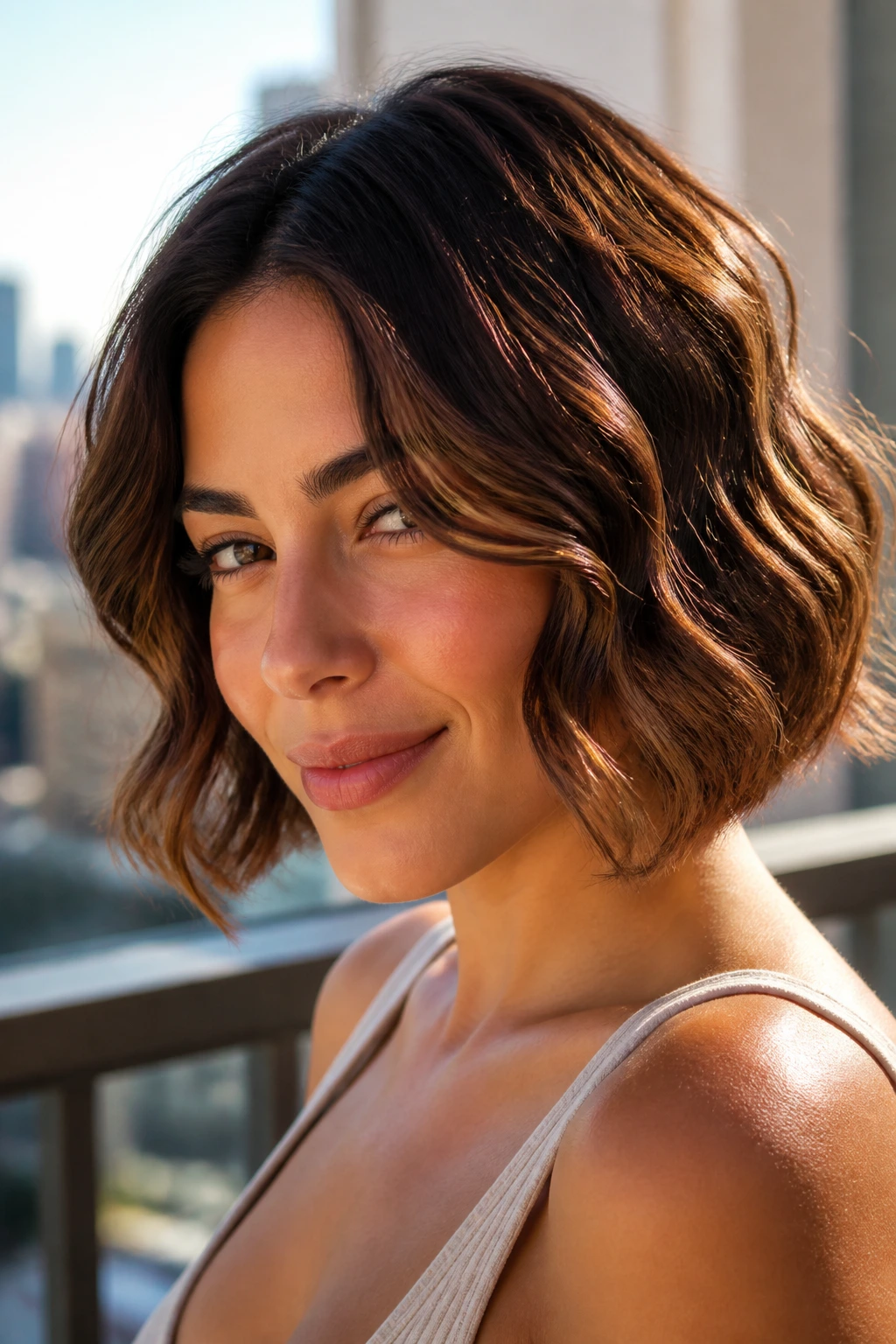
Cocoa and hazelnut together give short waves that soft, roasted look I never get tired of seeing. The darker cocoa base keeps the style grounded, and the hazelnut ribbons sit on top like light from a window moving across the hair.
This shade pairing is friendly to medium skin because it doesn’t go too yellow. If you curl short hair, use a 1-inch barrel and leave the last inch out on purpose. That little straight end keeps the wave modern instead of pageant-y.
Quick styling note
A wave only needs two or three bends per side on a bob. More than that can make the balayage look busy.
8. Auburn Toasted Lob
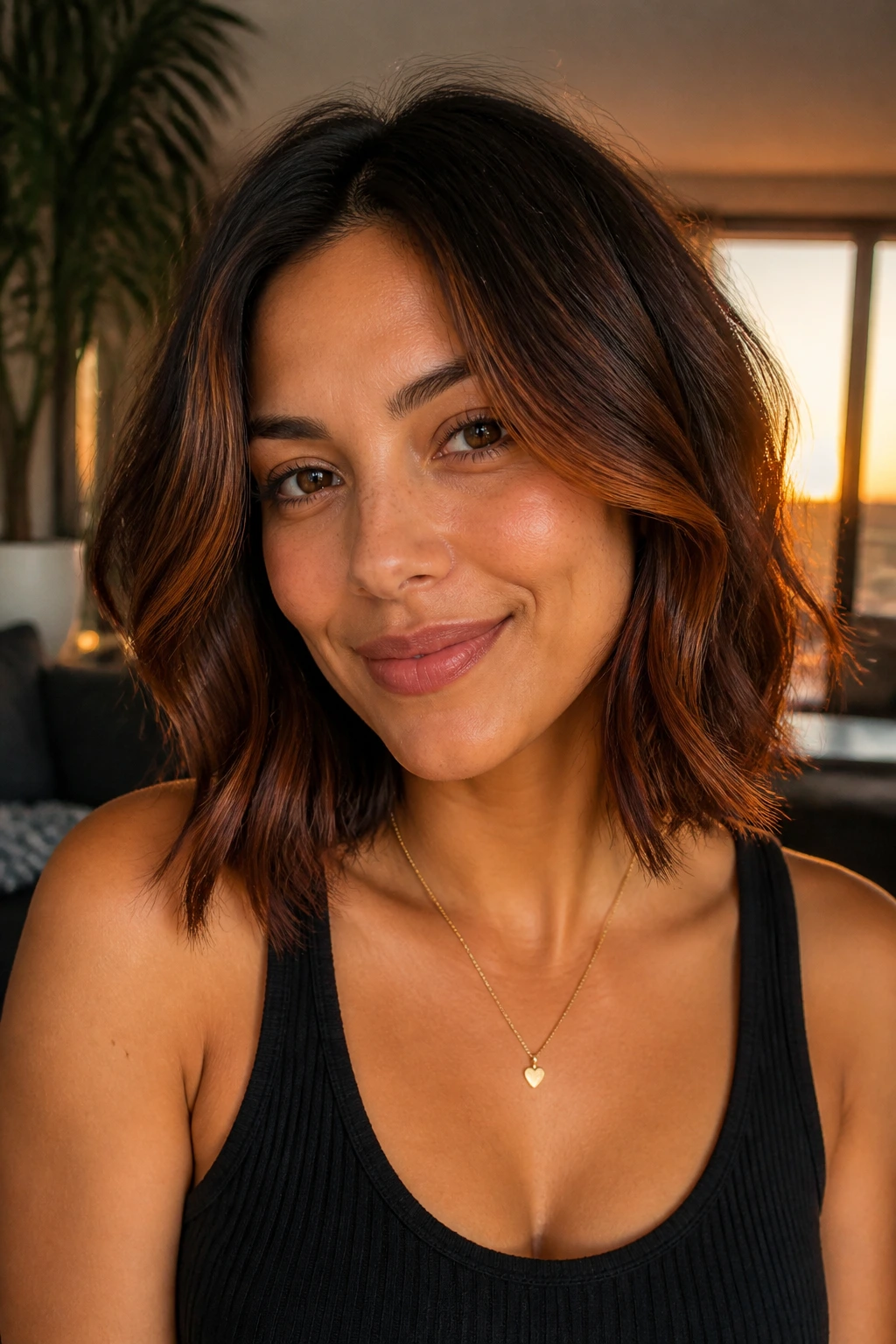
Auburn is not only for naturally red hair. On a dark lob, a toasted auburn balayage can look like the hair caught late-day light and held onto it. The base stays brunette, but the ends pick up a burnished red-brown that looks especially good on medium skin.
If your skin has golden or peach undertones, auburn can pull the whole face warmer in a flattering way. The key is restraint. Keep the auburn muted — more toasted chestnut than fire-engine copper — or it starts fighting the haircut.
9. Mushroom Brown French Bob
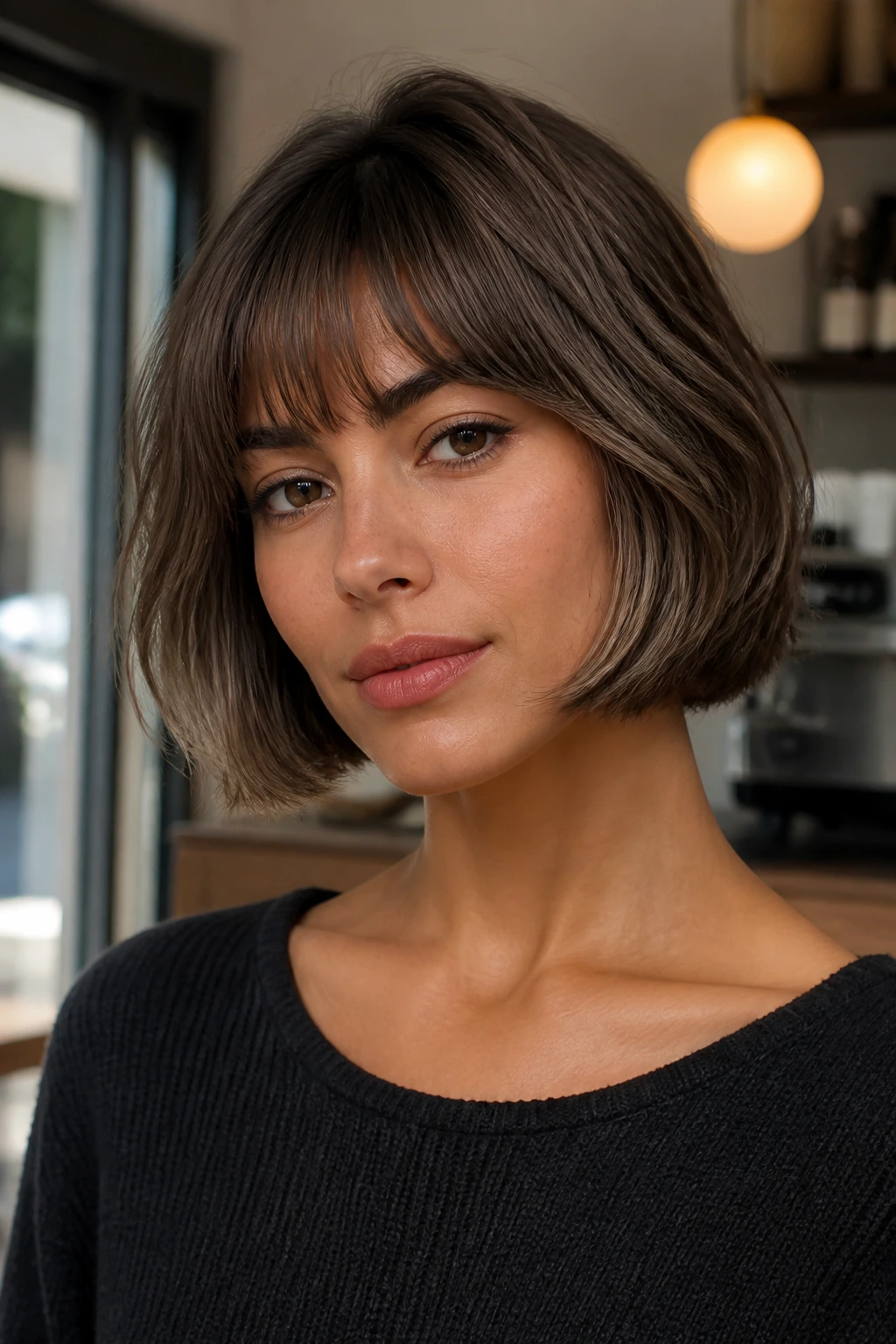
What makes mushroom brown work on a French bob is the cool edge. The color has enough taupe to stay earthy, enough brown to stay wearable, and just enough ash to keep it from going brassy under indoor light.
On medium skin with neutral or olive undertones, mushroom brown can look elegant without looking pale. I’d avoid too much contrast on the fringe; let the light pieces peek through the sides and ends. A sharp cheekbone-length cut with this color reads clean and a little Parisian without trying hard.
10. Bronde Shag Cut
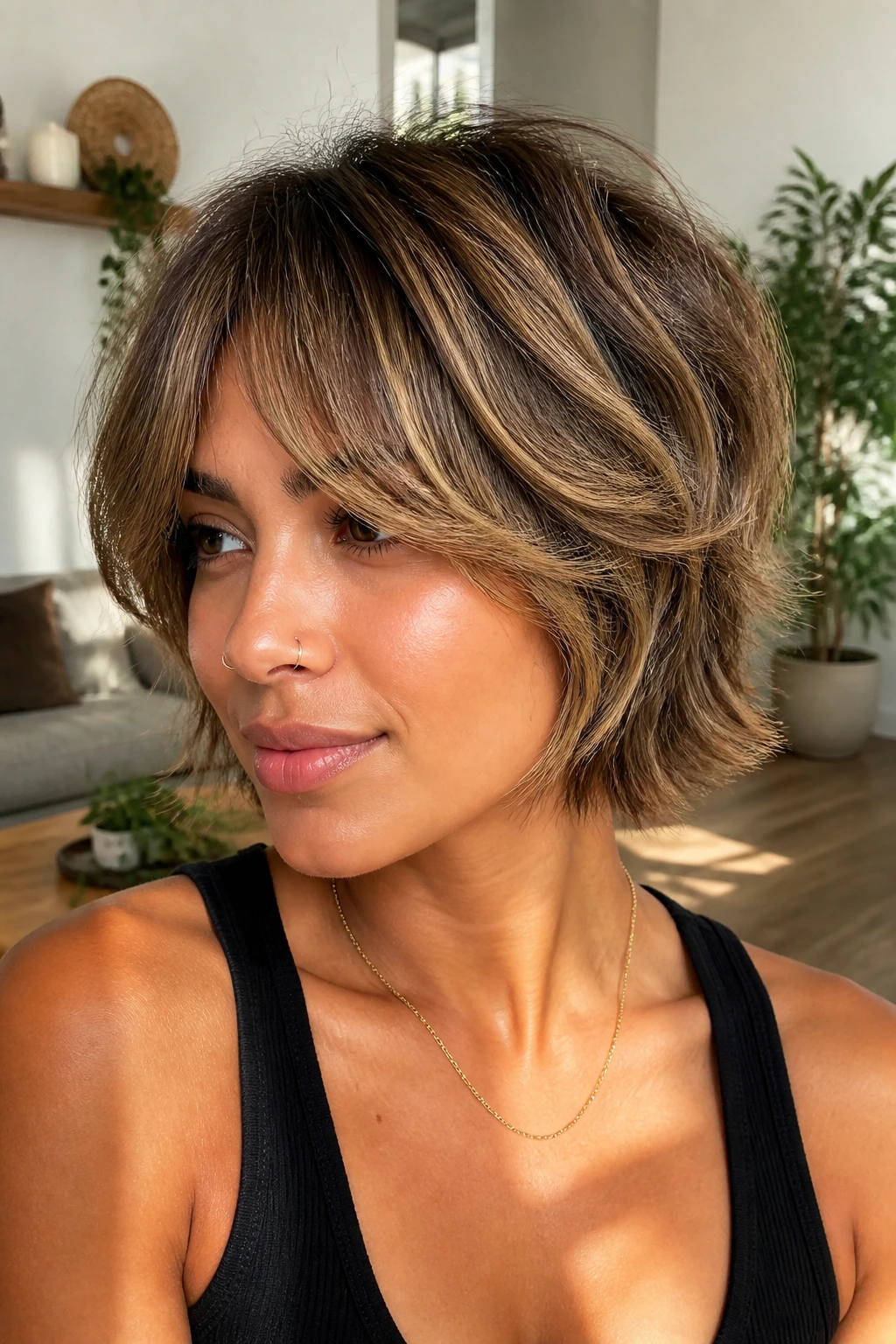
A short shag can swallow color if the highlight pattern is lazy. Bronde fixes that by sitting right between brunette and blonde, which gives the layers enough lift to separate, especially around the crown and the ends.
This one works best when the face frame gets a touch more brightness than the back. Medium skin tones usually look balanced when the bronde stays honey-beige instead of icy beige. The whole cut feels lighter, but the base still holds it together.
11. Walnut Blunt Bob
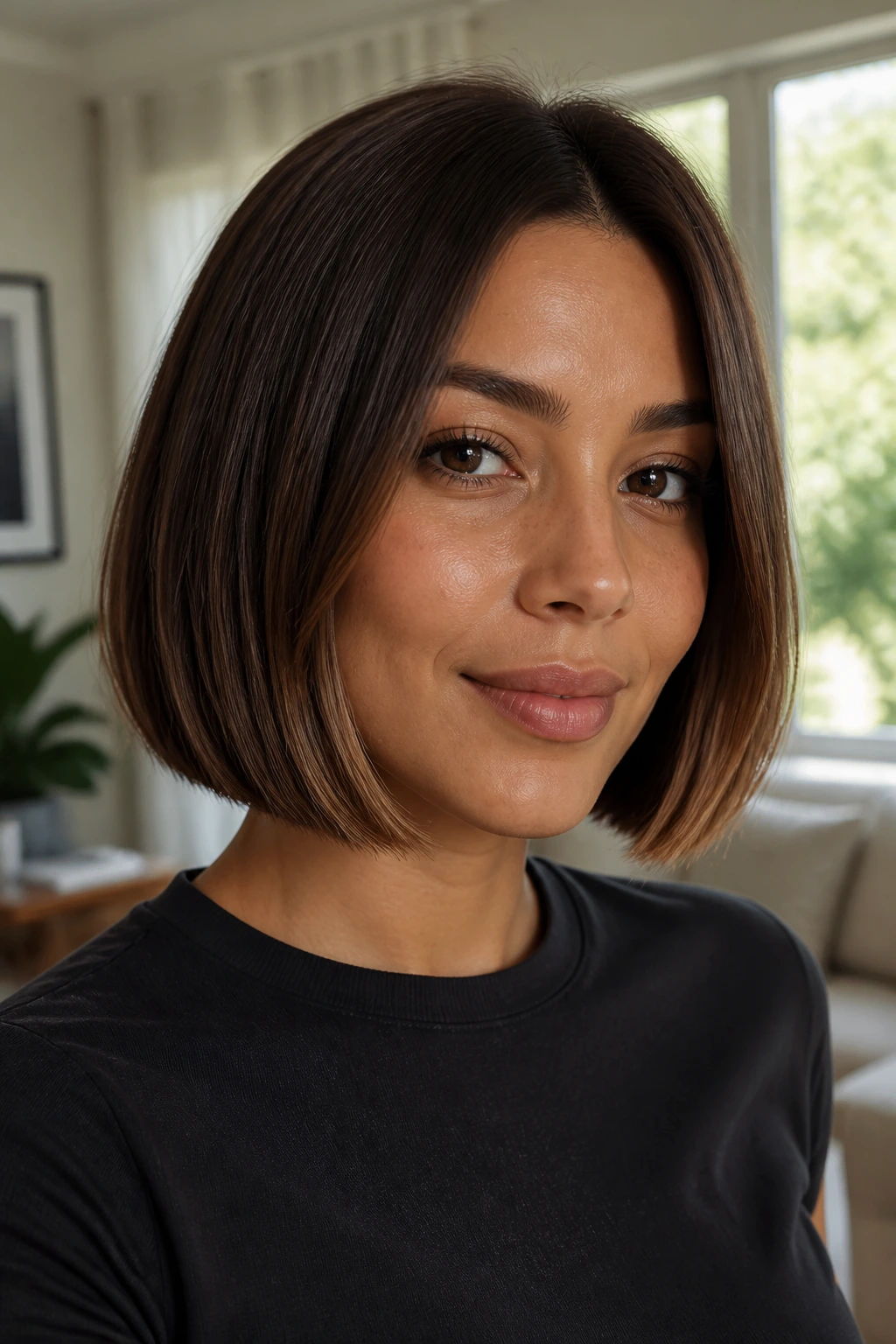
A walnut blunt bob is for people who like structure. The cut itself does most of the visual work, and the balayage is there to stop the bob from reading like a single dark slab.
Walnut sits in that deep brown family that looks expensive in natural light. On medium skin, especially skin with a neutral undertone, it adds a quiet warmth without tipping into red. Keep the highlights sparse and painted low, close to the ends. That keeps the blunt line sharp.
12. Honey Brunette Crop
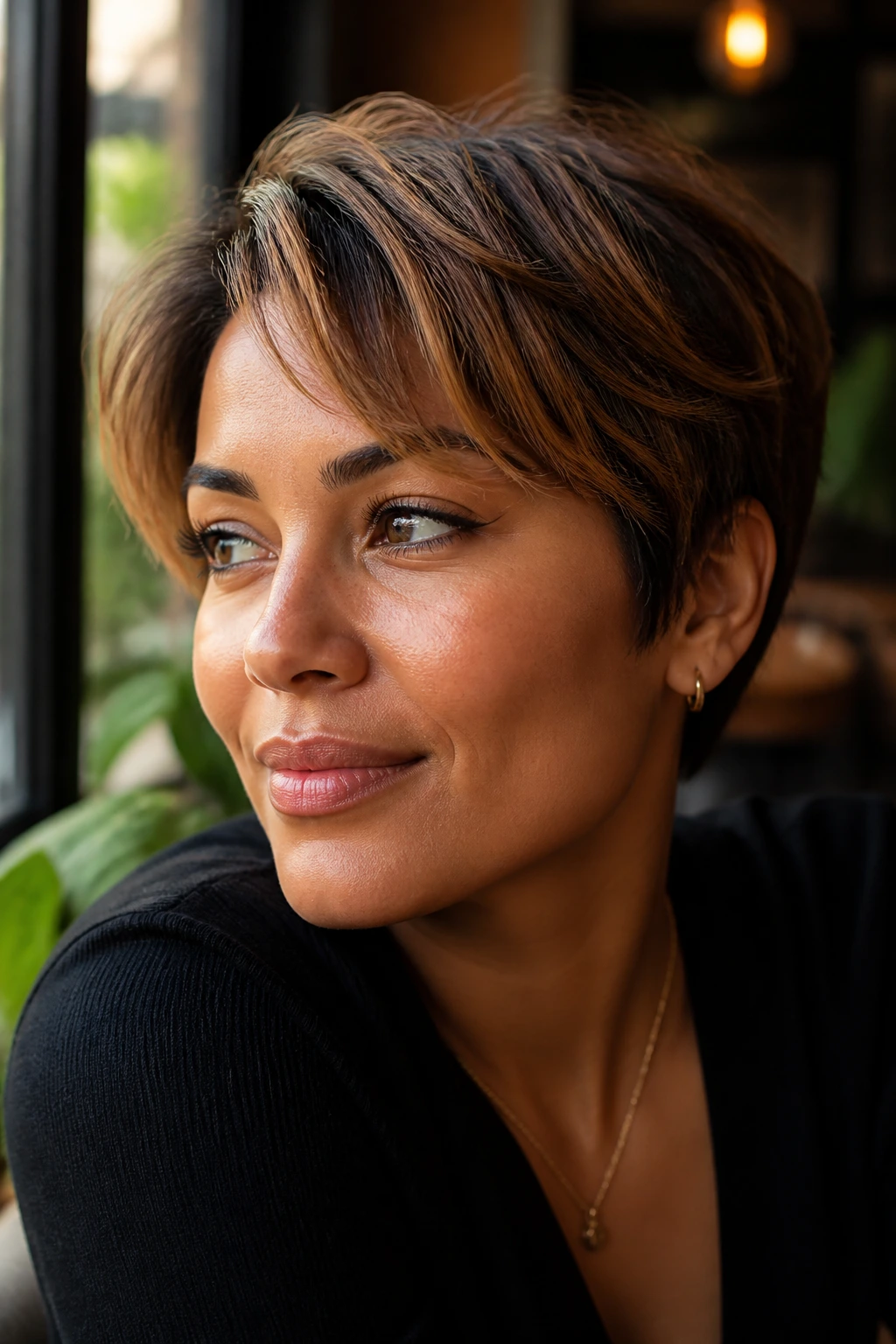
Honey brunette can sound sweet in a way that makes people underestimate it. On a short crop, though, it gives enough glow to lift the face while leaving the base dark enough for contrast.
I like this on medium skin because honey can warm the complexion fast, sometimes in a good way and sometimes too much. If your skin already runs golden, ask for honey diluted with a little beige-brown. If your skin is more neutral, you can go a touch brighter.
13. Bronze Gloss Bob
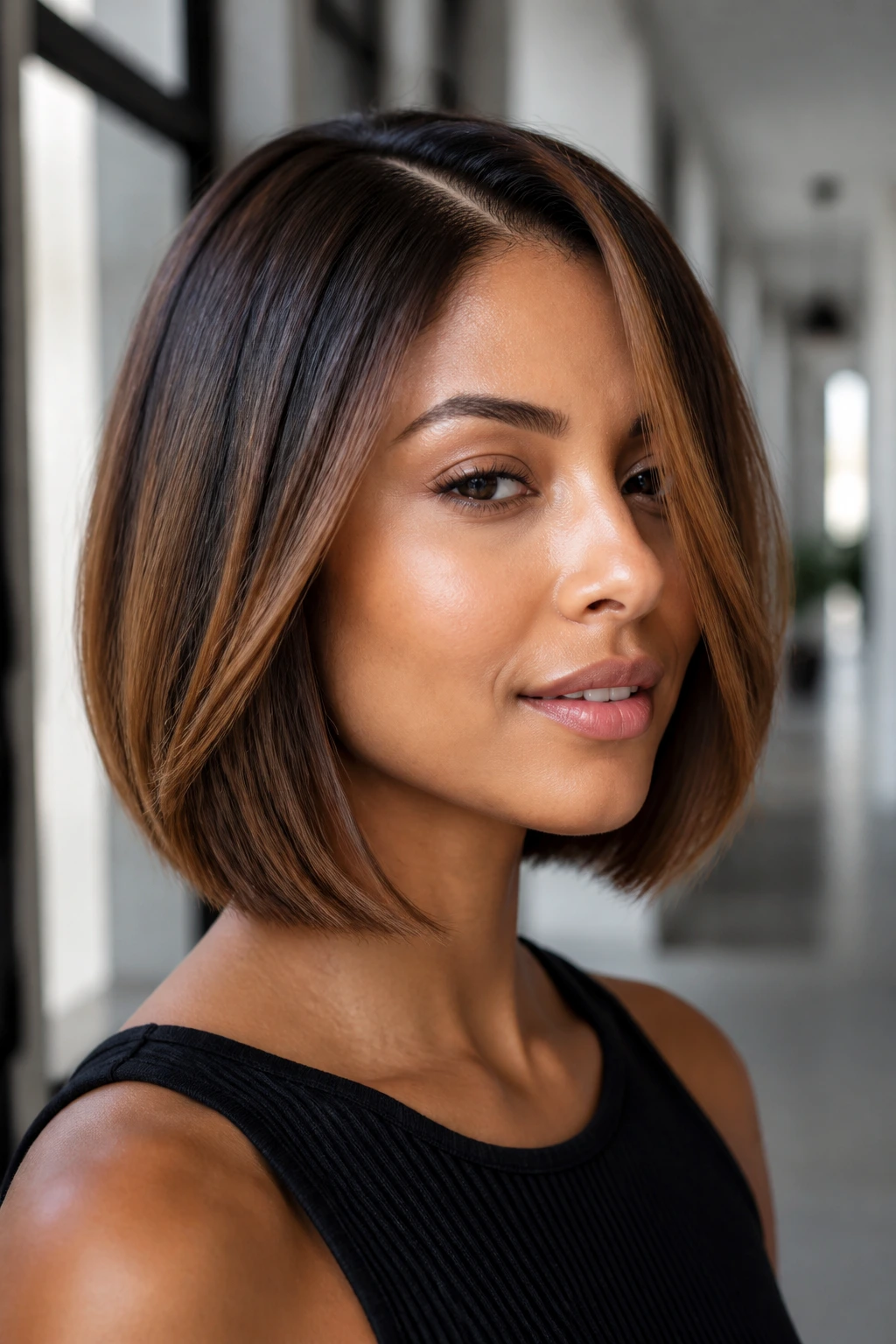
Bronze is one of those shades that looks modest in the bowl and rich on the head. A bronze gloss bob keeps the roots dark and drops the warmth toward the mid-lengths and ends, which makes the hair look polished even when the styling is loose.
Medium skin often loves bronze because it sits between gold and brown. That middle ground avoids the orange cast that can happen when warm tones go too far. I’d pair this with a side part and a tucked-behind-the-ear finish. Simple. Clean. It works.
14. Smoky Beige Brunette
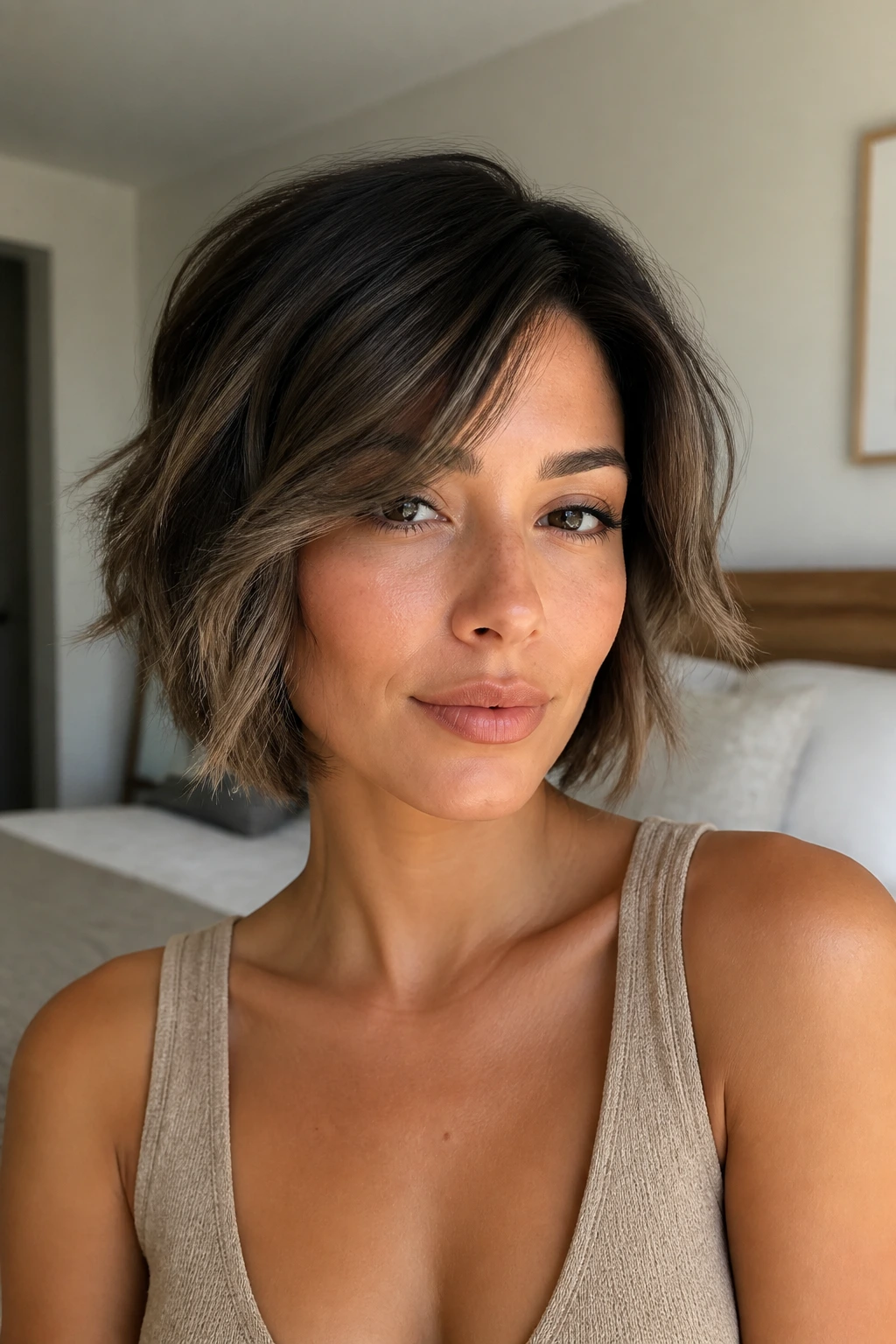
Smoky beige brunette is the answer when you want something cool enough to feel modern but soft enough to stay flattering. The beige keeps the dark color from looking flat, while the smoky cast mutes unwanted orange.
This is a smart pick for medium skin that leans neutral or olive. Too much ash can wash out warmth, so I’d keep the beige pieces mid-length and not all the way to the root. On a short cut, that restraint is what makes it look expensive rather than washed down.
15. Cherry Cola Crop
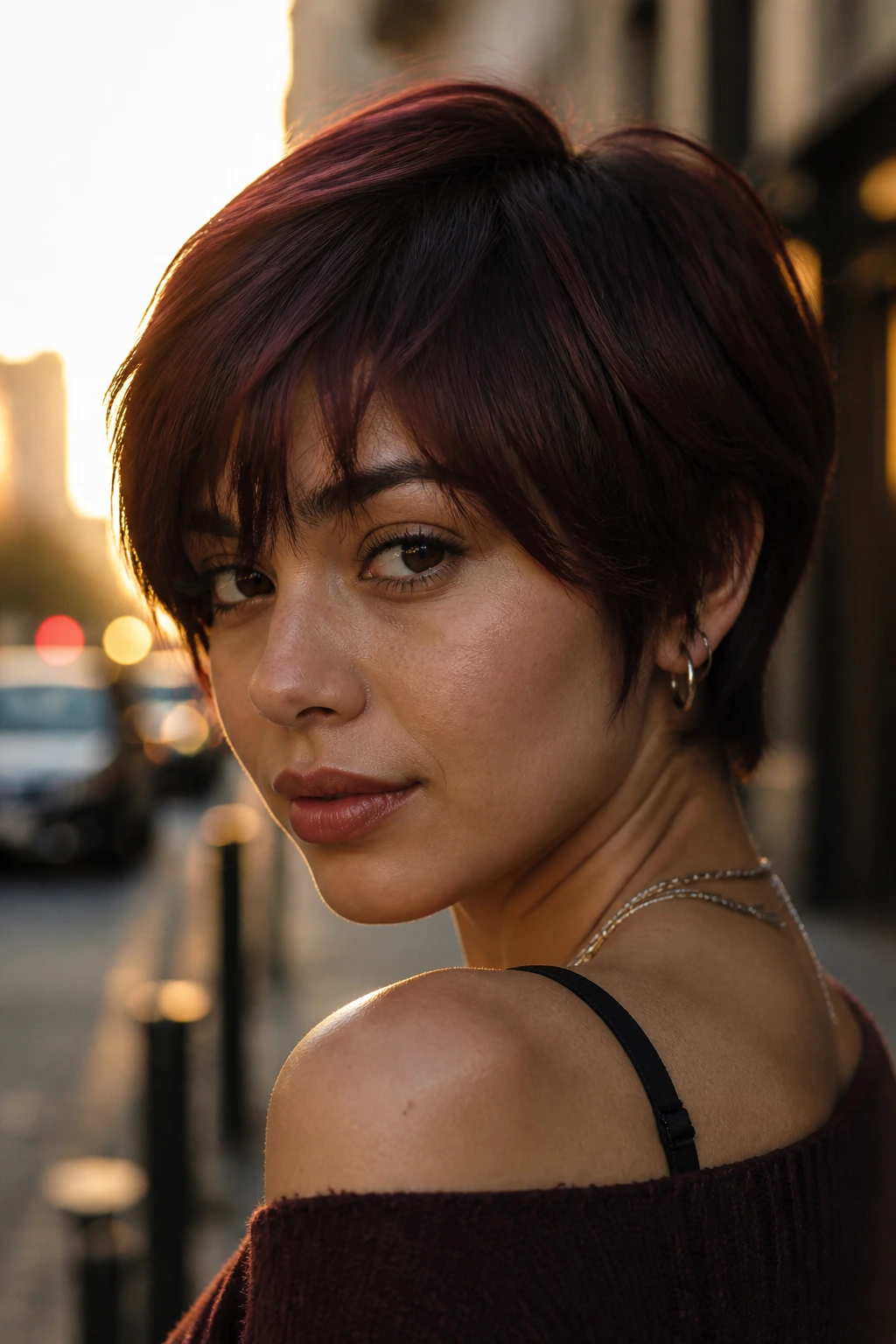
Cherry cola is dark, glossy, and a little moody in the best way. On short hair, the red-brown sheen shows up mostly when the light hits it, which means you get color shift without a loud red head of hair.
Medium skin with peach, gold, or neutral undertones usually handles cherry cola beautifully. The red is deep enough to stay wearable. Ask for the color to stay underneath the top layer if you want the effect to feel hidden at first glance and richer when the hair moves.
16. Sandalwood Pixie
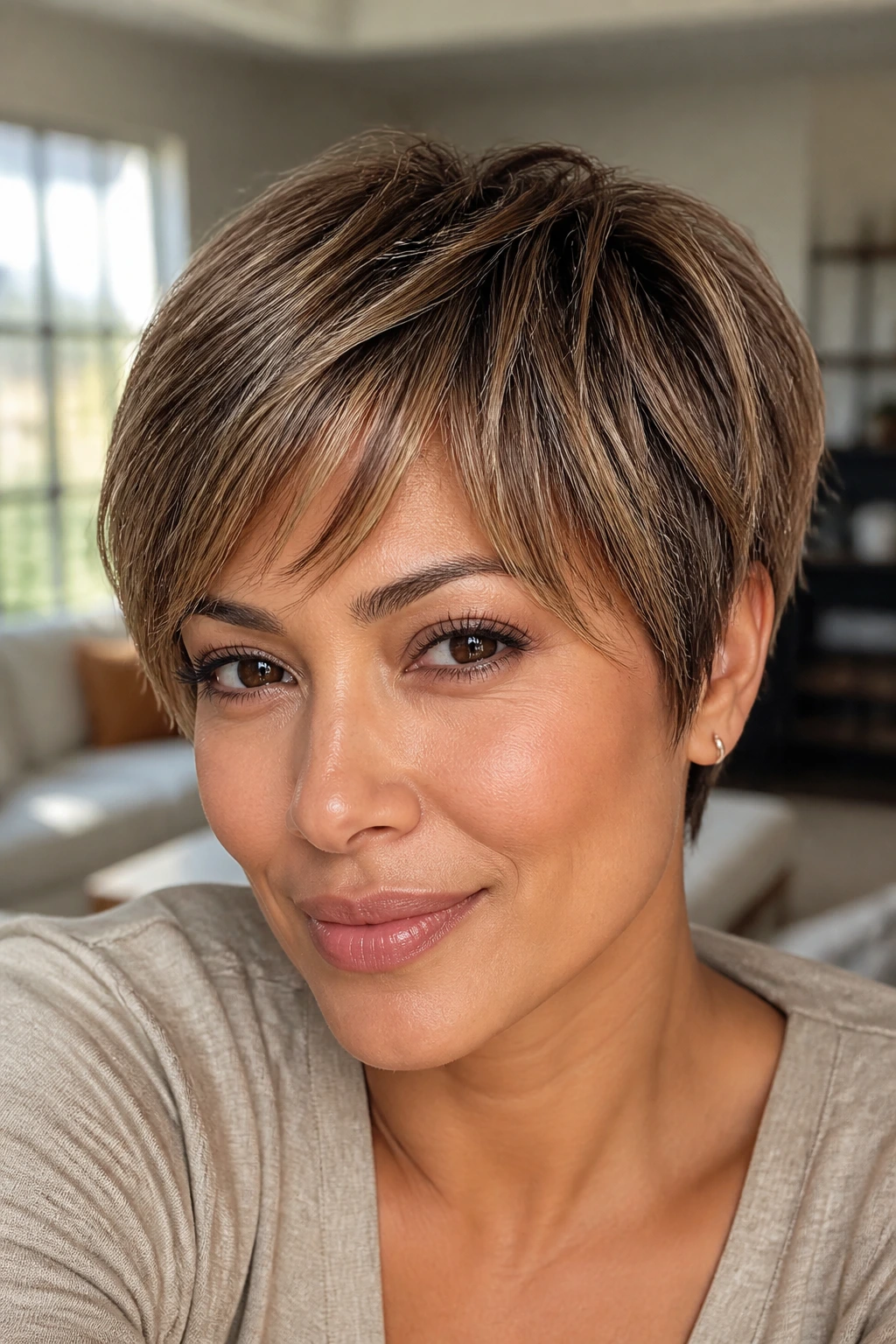
Sandalwood has a soft beige-brown quality that sits between warm and cool. On a pixie, that softness matters because the cut already has edge; the color should smooth the edges, not sharpen them more.
This look flatters medium skin with a balanced undertone. The lighter pieces should be thin and feathered through the top, not packed into the bangs. A little shine cream goes a long way here — too much product will make the color look dull.
Small detail that helps
Keep the roots deeper than the ends by at least one shade level. That tiny shift gives the pixie shape.
17. Sable Copper Layered Bob
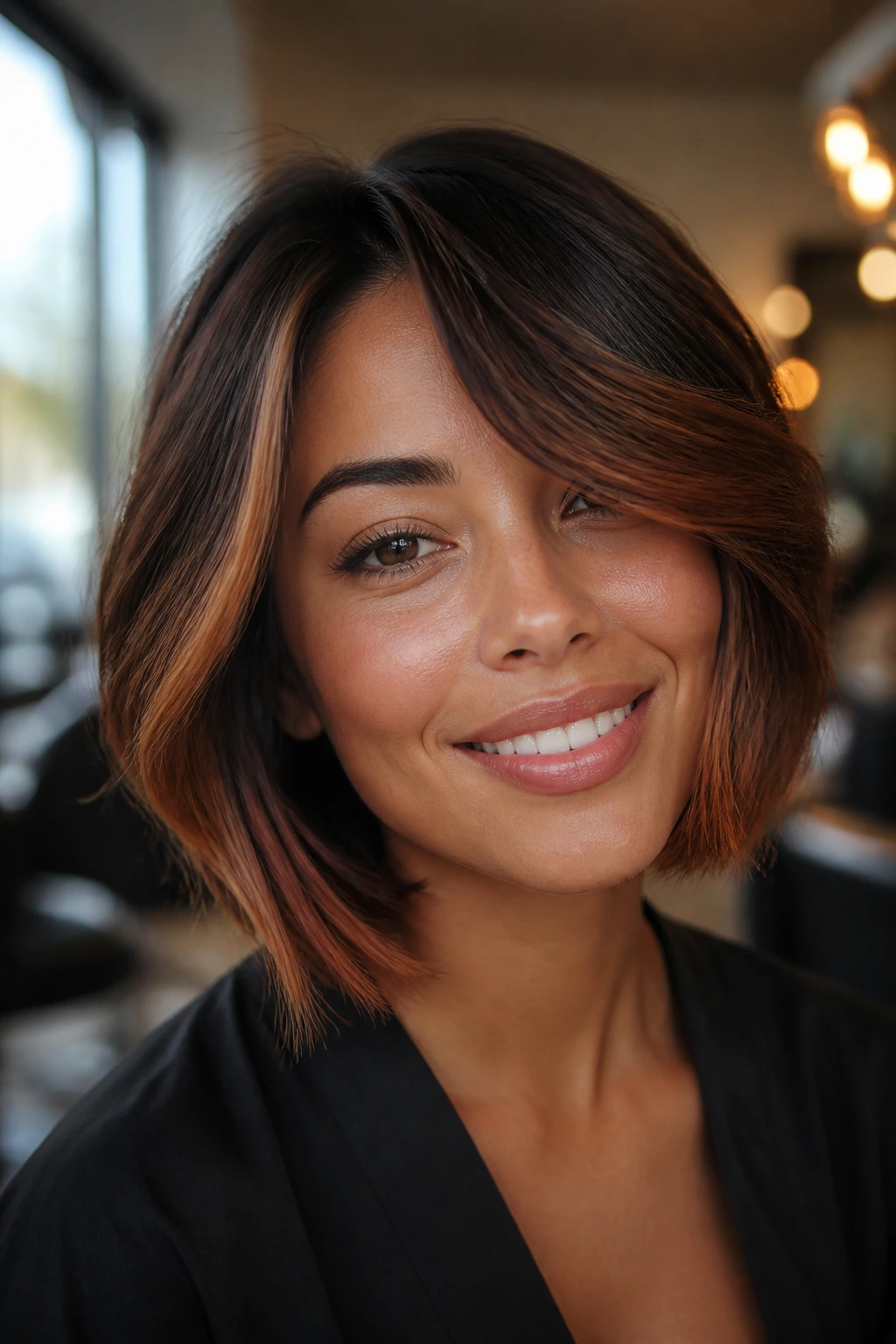
Sable copper sounds bolder than it often is in real life. The sable base stays dark and rich, while the copper pieces are worked in like highlights of rust and warm metal, usually near the ends and around the front.
If your medium skin has warmth, this can make the whole face come alive. If your undertone is more neutral, ask for copper that leans brown, not orange. I prefer this on a layered bob because the layers catch the copper at different angles and keep the color from feeling flat.
18. Rooted Caramel Curly Bob
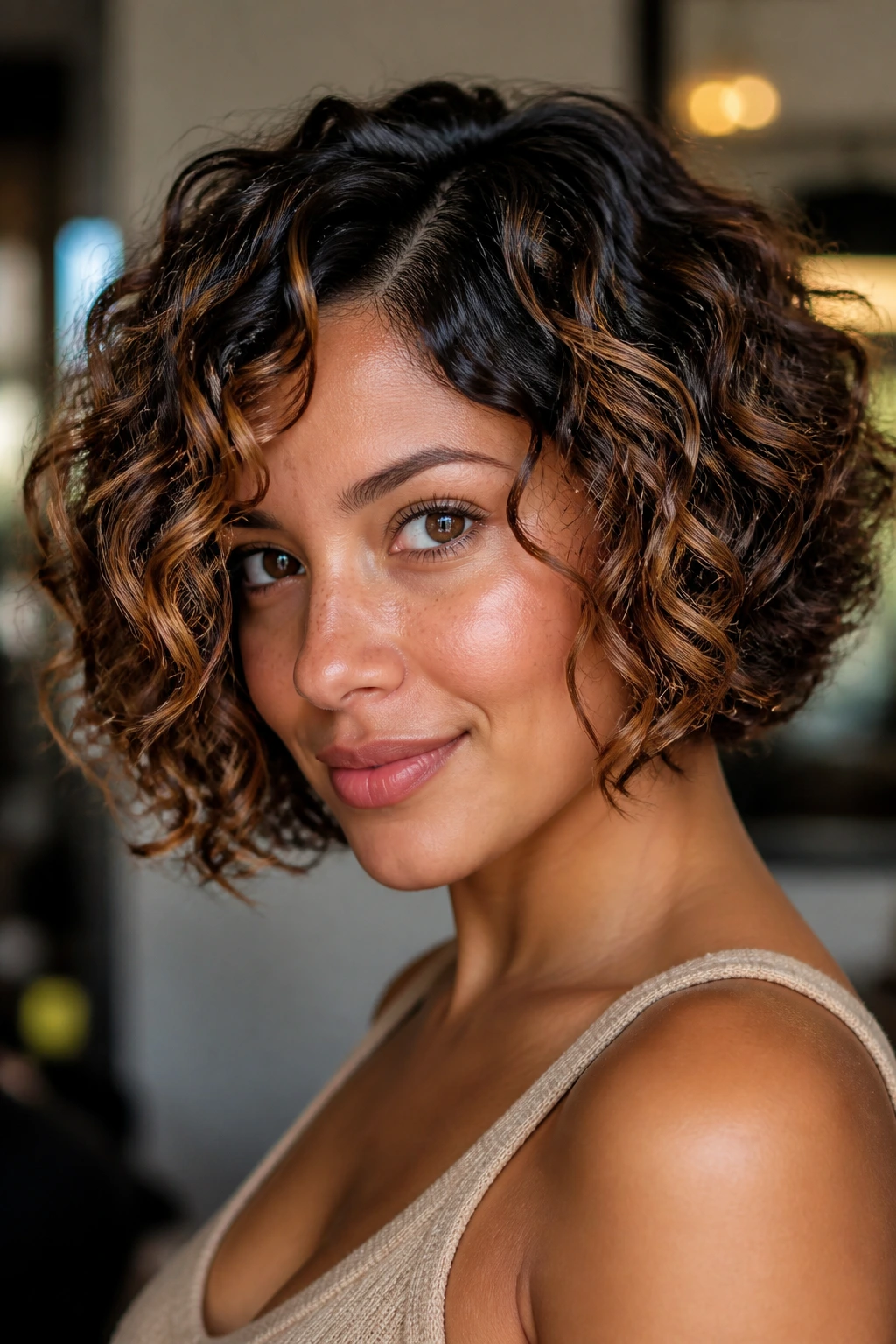
Curly hair changes the whole conversation. Balayage has to follow the curl clumps, not fight them, and rooted caramel is one of the best ways to do that on a short curly bob.
The dark root gives the curl pattern depth right at the scalp, while caramel painted on the outer coils creates lift where the eye lands first. Medium skin tones usually like this because the caramel brightens without stripping the hair of its brunette base. A diffuser on low heat helps keep the ribbons visible instead of puffing them apart.
19. Latte Curtain Fringe Lob
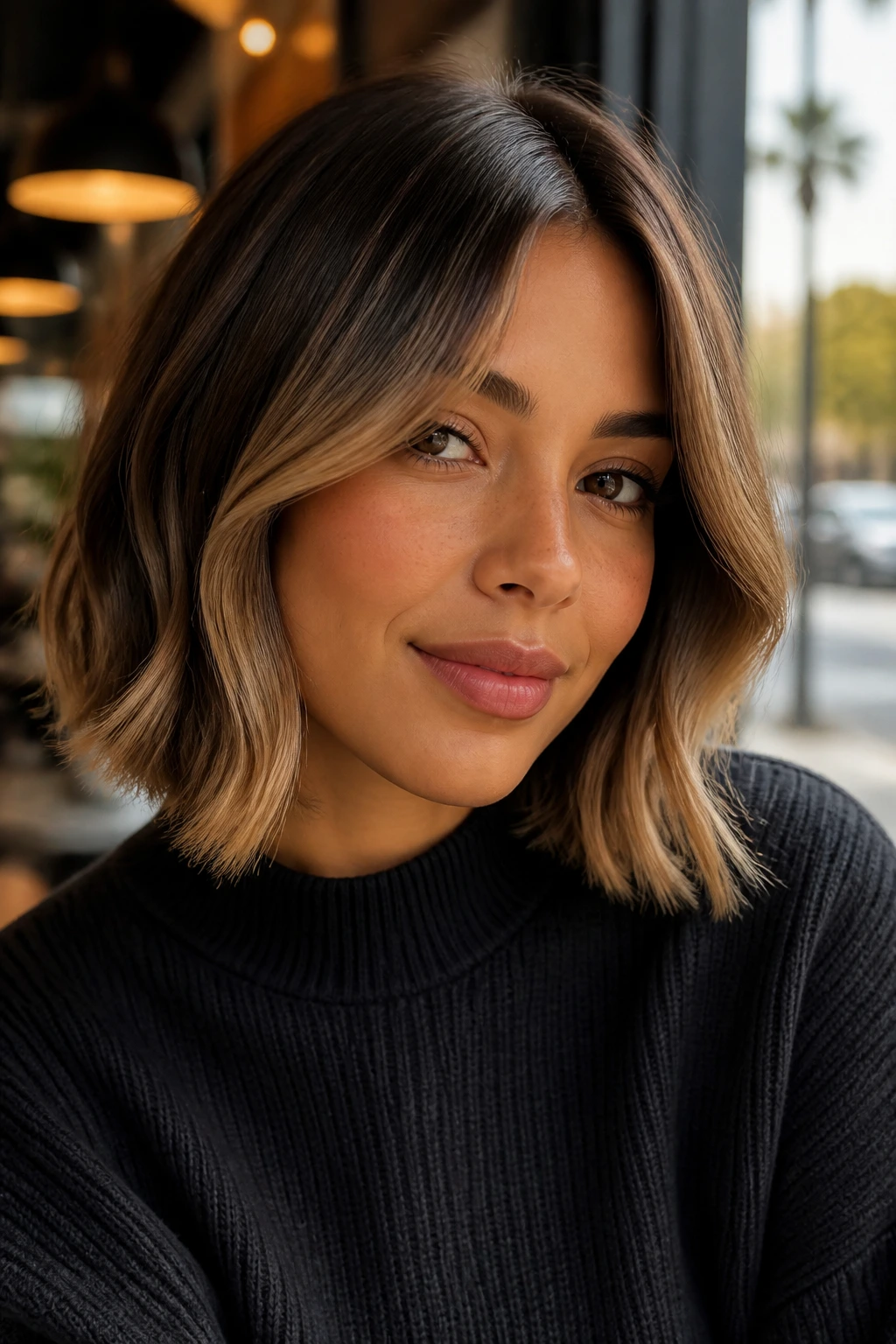
A latte lob with curtain fringe is basically a soft frame for the face. The fringe gives you movement up top, and the latte balayage adds that creamy, coffee-with-milk color shift through the sides and ends.
It works on medium skin because latte tones rarely fight the complexion. They’re warm enough to bring light forward, but muted enough not to look yellow. Keep the fringe slightly darker at the root and brighter from the cheekbone down. That little fade makes the cut feel intentional.
20. Toasted Almond Blunt Cut
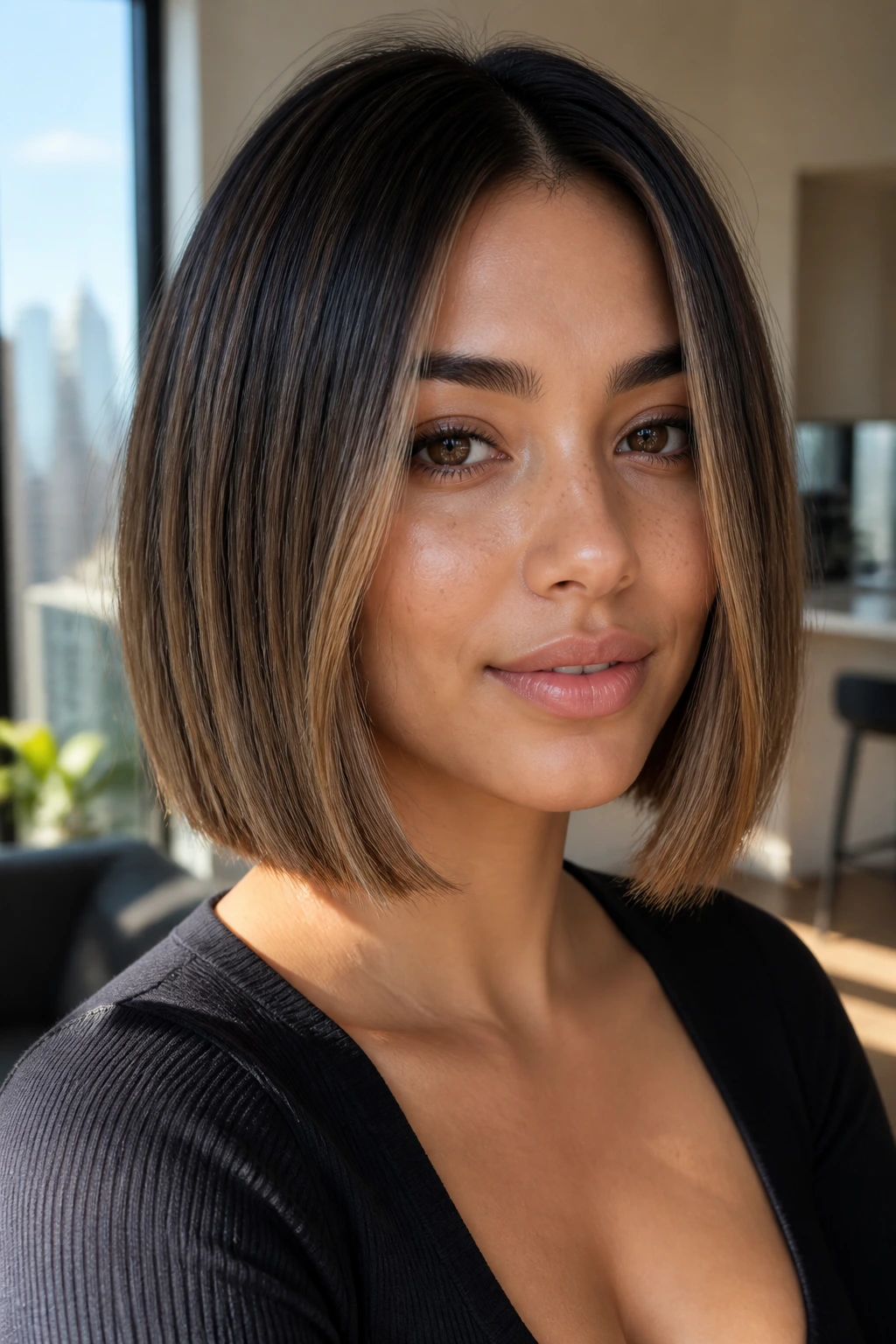
Toasted almond is one of my favorite short-color shades because it never looks sugary. The brown base stays deep, the almond finish adds a soft tan glow, and the whole thing reads as polished rather than blonded out.
On medium skin, especially skin with neutral or warm undertones, toasted almond can brighten the face without changing the identity of the haircut. It’s especially good on a blunt bob because the shape is already bold. The color should whisper, not shout.
21. Mahogany Layered Crop
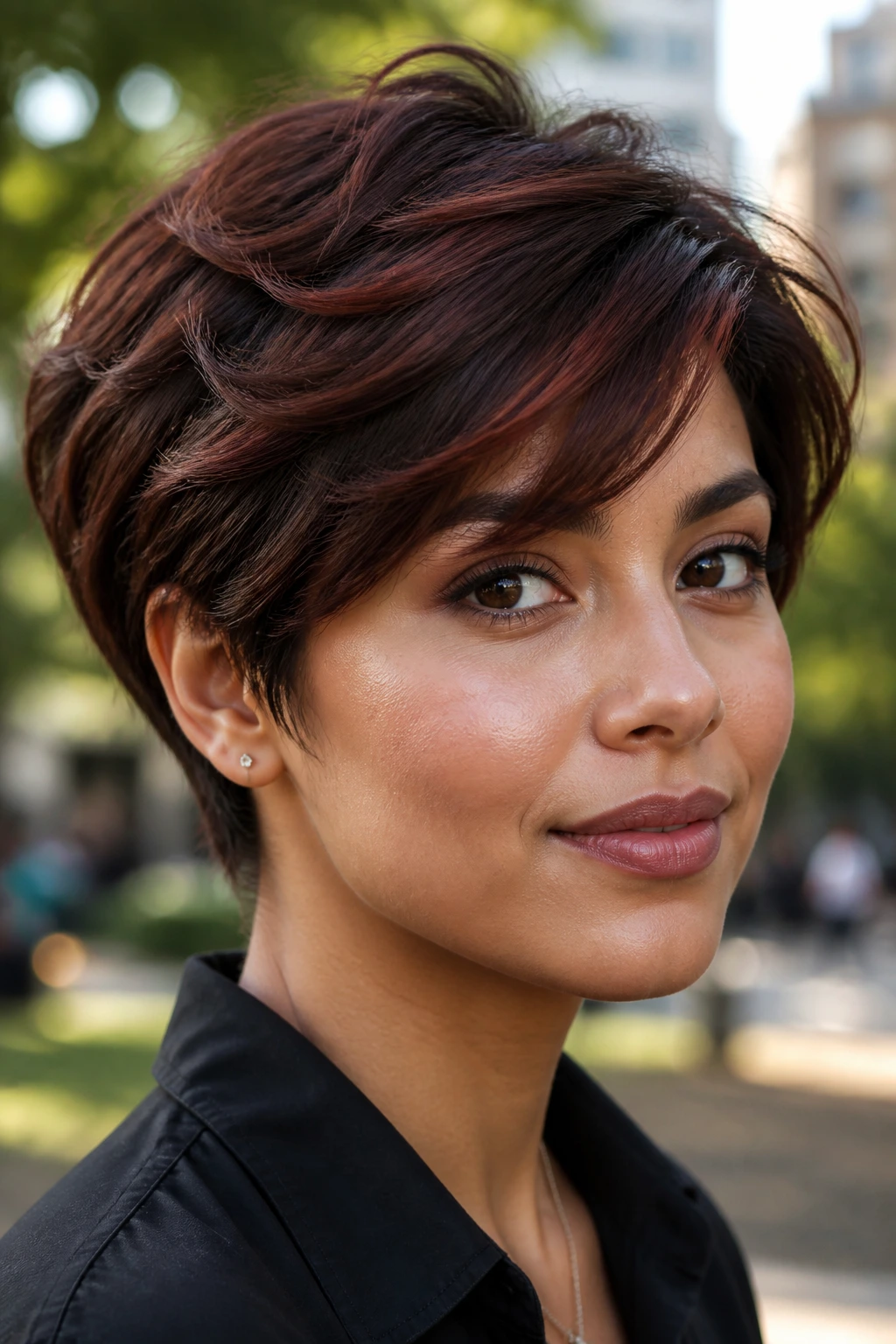
Mahogany brings a red-brown richness that can make a layered crop feel deeper and more expensive in one move. On short hair, the color catches on the layer edges and creates a shadow-to-light effect that looks almost like fabric.
Medium skin with golden undertones often handles mahogany well because the red-brown gives the complexion some life. Keep the red within the brown family. If it drifts too wine-heavy, the look gets dramatic fast, and not always in a useful way.
22. Ash Brown Champagne Ends
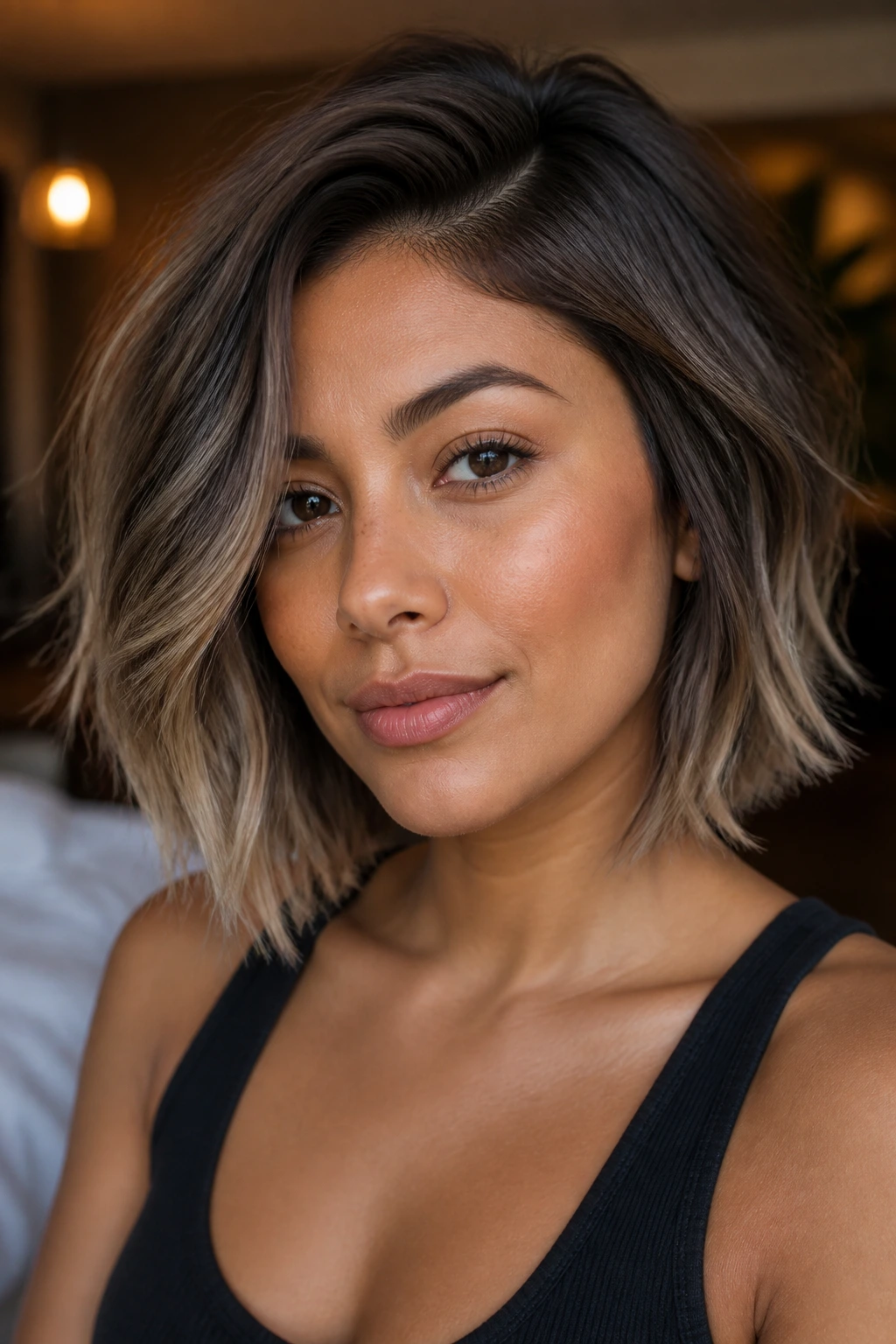
Cool ash brown with champagne ends is for someone who wants contrast without going bright all over. The ash keeps the base quiet, and the champagne adds a pale lift just at the tips and outer layers.
This pairing works best on medium skin that leans neutral or slightly olive. Champagne can go too yellow if the base is too warm, so the ash backbone matters. On a short cut, I’d keep the ends light but sparse; you want a hint of glow, not a high-contrast streak.
23. Mocha-to-Cinnamon Ombre Bob
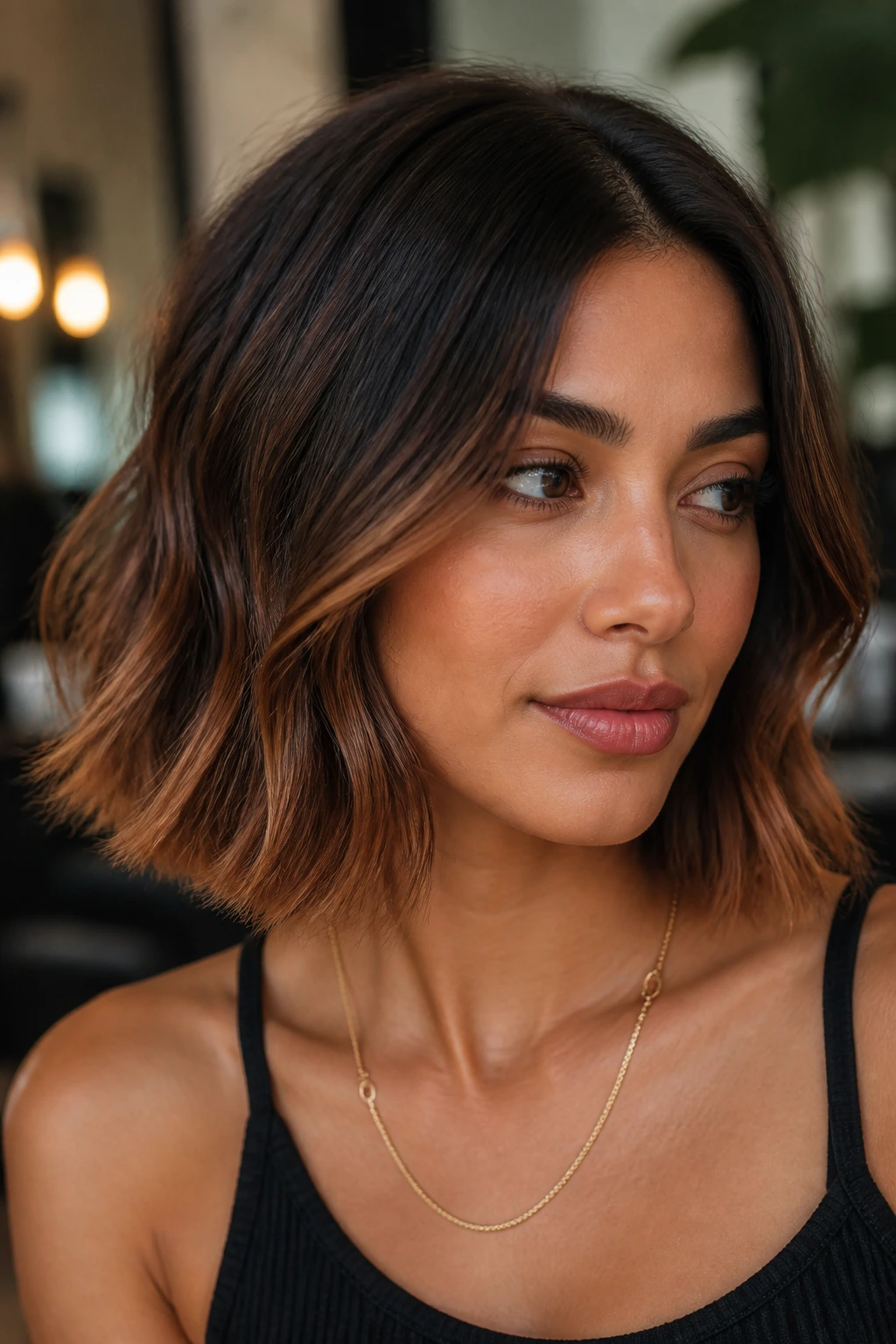
Can ombre still feel modern on short hair? Yes, if the transition is short, soft, and dark enough to stay wearable. A mocha-to-cinnamon bob keeps the roots and upper mids rich, then slides into a warmer cinnamon finish near the ends.
Medium skin tones usually like this when the cinnamon is kept muted. The color should look like warmed wood, not bright red. The appeal here is movement: every bend in the bob shows a little more of the shift, which keeps the cut from feeling heavy.
24. Dark Chocolate Gold Sweep
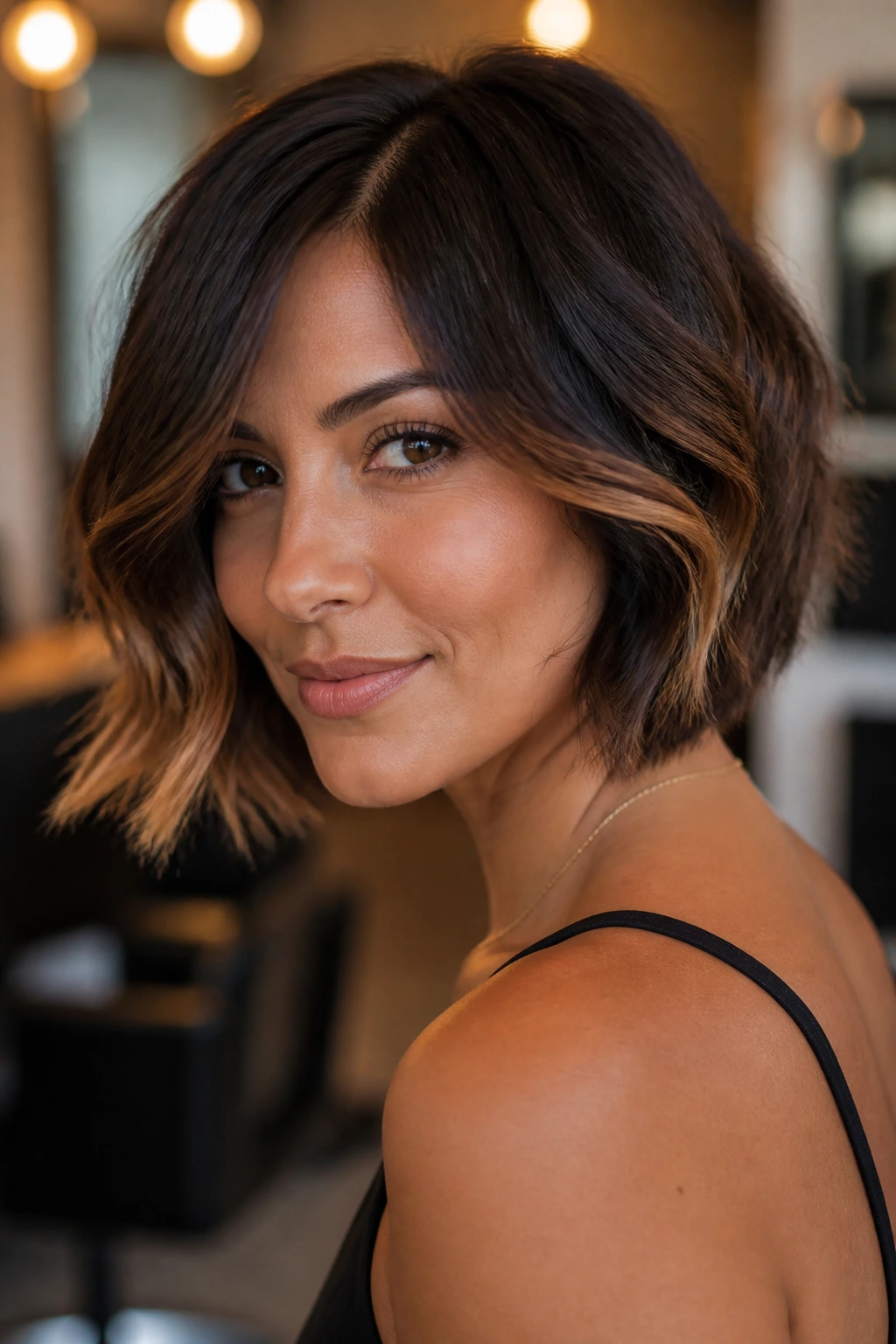
A gold sweep over dark chocolate hair can look expensive when the gold is painted in thin, broken pieces. Thick gold bands are the fastest way to make short hair look dated. Thin ones give you glow.
Medium skin with golden undertones often loves this because the gold echoes the skin without matching it too hard. I’d keep the sweep on the outer layers and fringe, then let the underlayers stay dark. That contrast makes the haircut look fuller.
25. Burgundy Peekaboo Lob
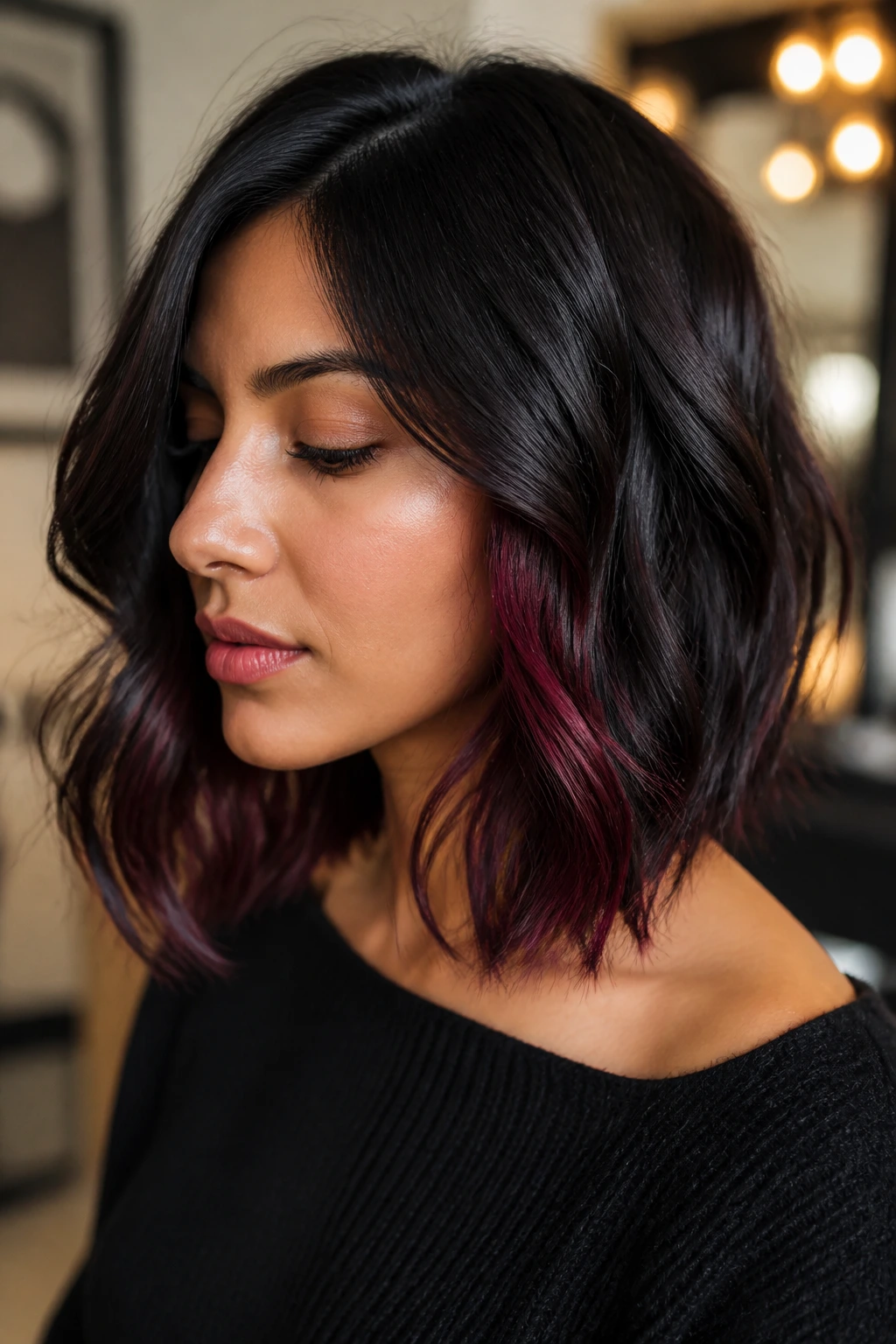
Peekaboo color is one of the few ways to go bold without committing every inch of the hair to the idea. Burgundy underlayers hidden beneath a dark lob give you a flash of wine-red when the hair moves or gets tucked behind the ear.
On medium skin, burgundy often works better when it stays deep and plum-leaning. Bright burgundy can get loud. The hidden placement makes this style easy to live with if you like color but still need a darker, work-friendly finish.
26. Hazelnut Undercut Bob
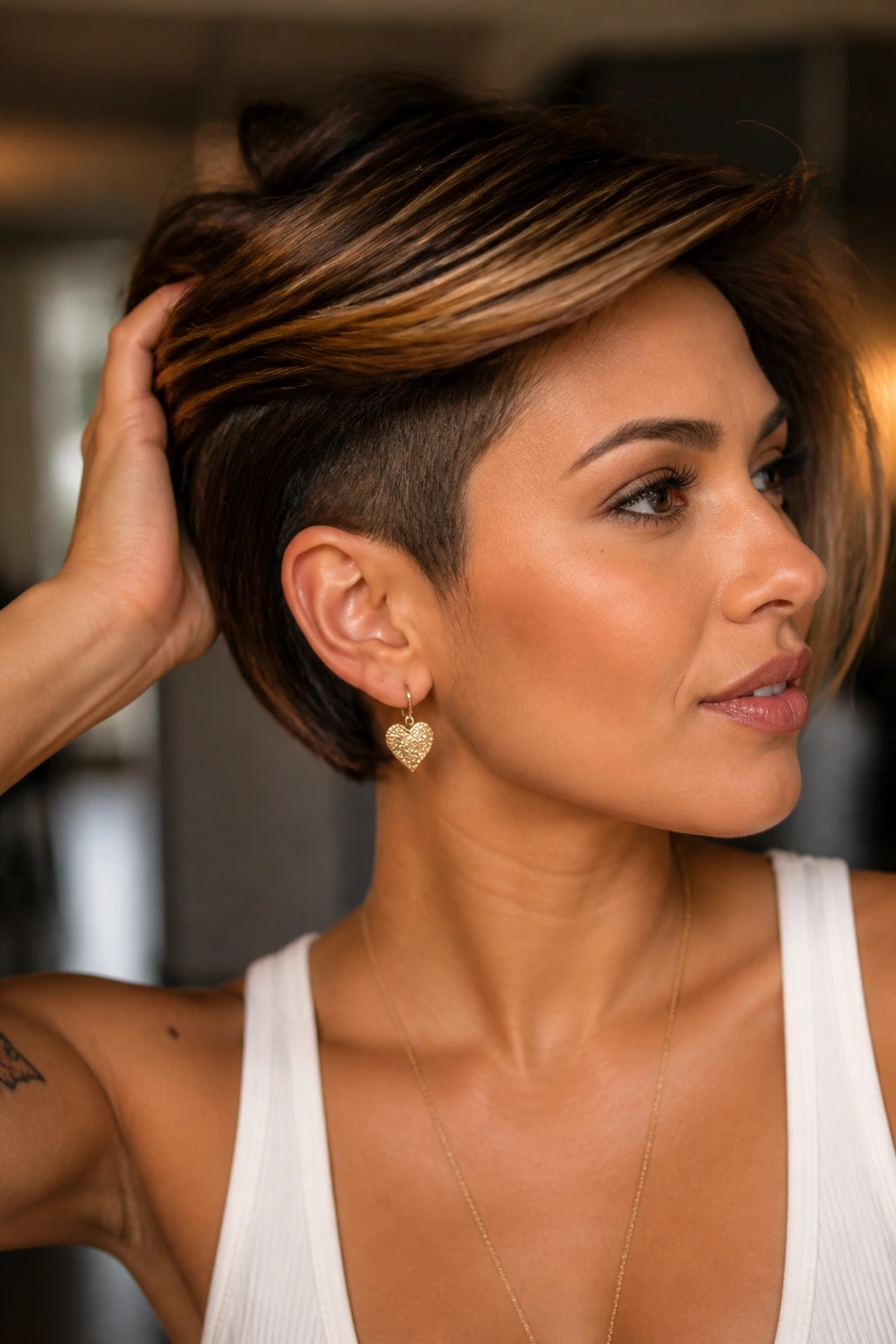
The undercut gives this one some attitude, but the hazelnut balayage softens the whole thing. On the visible top layers, the hazelnut brings warm brown dimension; on the shaved or closely cropped sections, the darker base keeps the line neat.
This works well on medium skin because hazelnut has enough warmth to avoid looking muddy. I’d keep the visible top slightly brighter than the rest. That way, when the hair flips over the undercut, the color change feels deliberate instead of accidental.
27. Amber French Bob
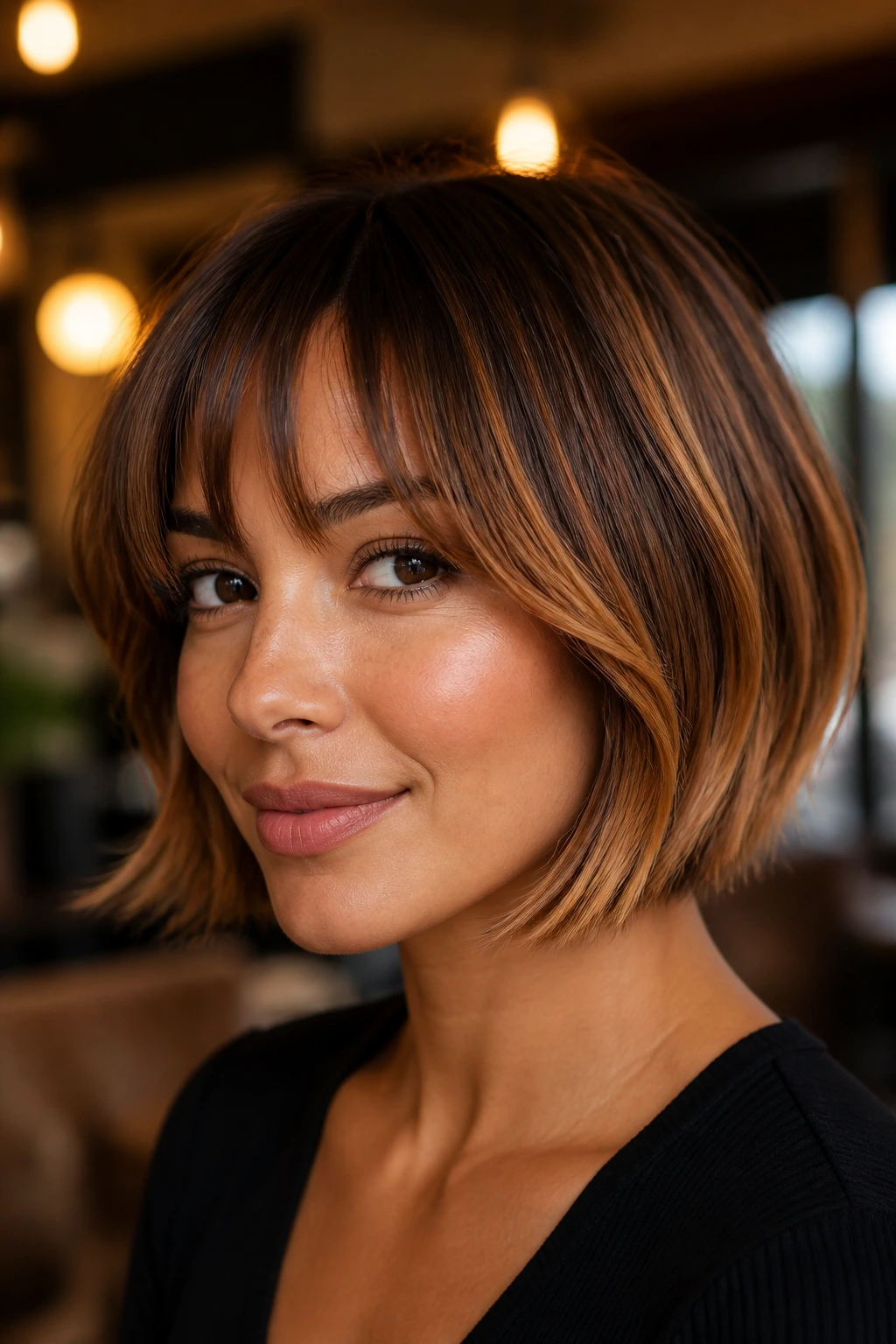
A French bob with amber balayage has a little old-school glamour in it, but not the stiff kind. The cut sits close to the jaw, and the amber pieces catch the curve of the ends and the edge of the fringe.
Medium skin with warm or peach undertones can wear amber beautifully, especially if the amber leans honeyed rather than orange. Shorter bangs help keep the color from taking over the whole face. It’s a small canvas, so the color has to be tuned carefully.
28. Sooty Brunette with Mulberry Shine
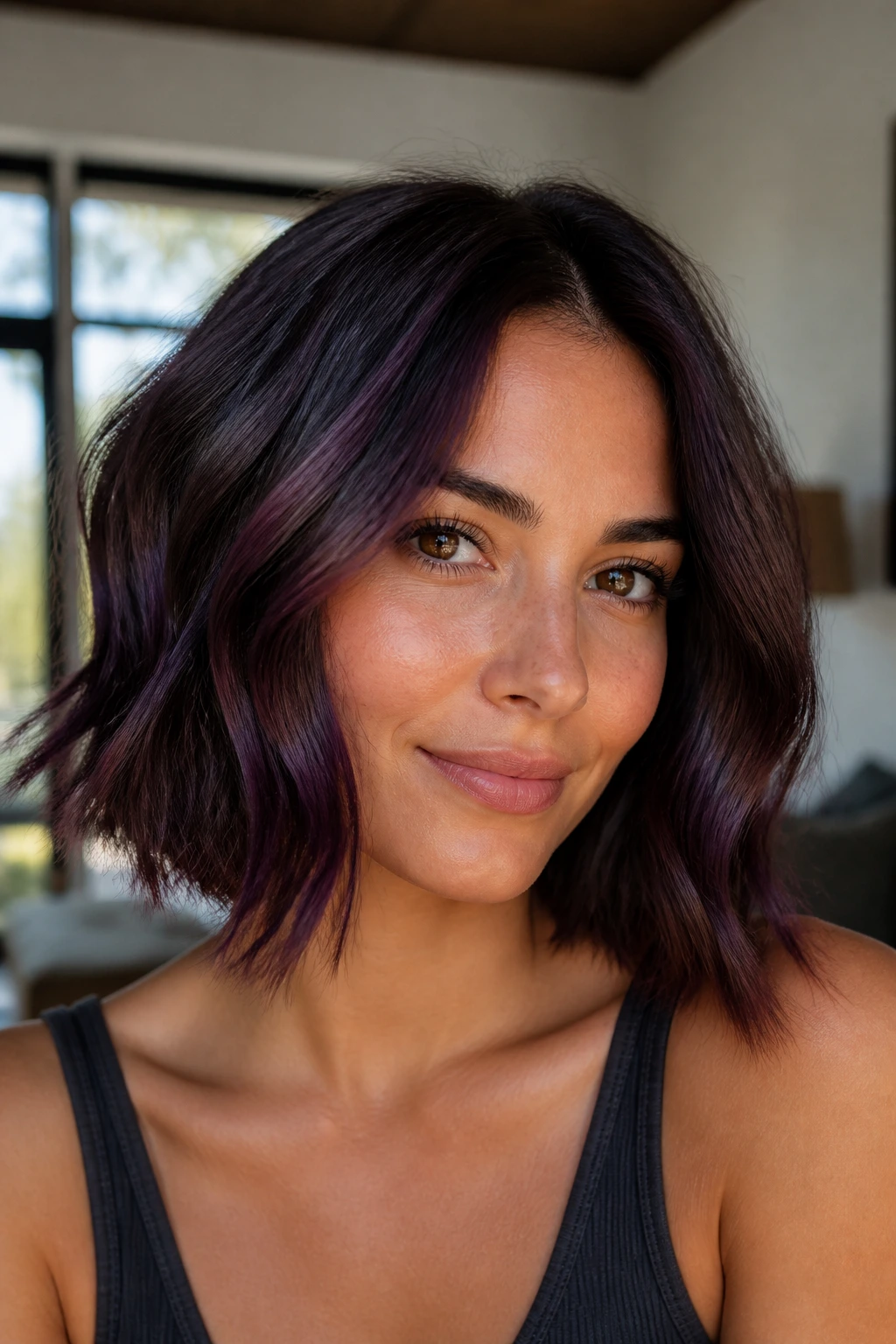
Sooty brunette sounds plain until the mulberry shine hits the light. Then the hair shifts from deep brown into a cool berry cast that reads rich, not loud. It’s one of the best ways to play with color on short hair without going full fantasy.
Medium skin with neutral or olive undertones can wear this especially well because the berry tint keeps the complexion from looking flat. I’d keep the mulberry more visible through the mids and ends, less so at the root. That’s what keeps it wearable.
29. Cocoa Wolf Cut
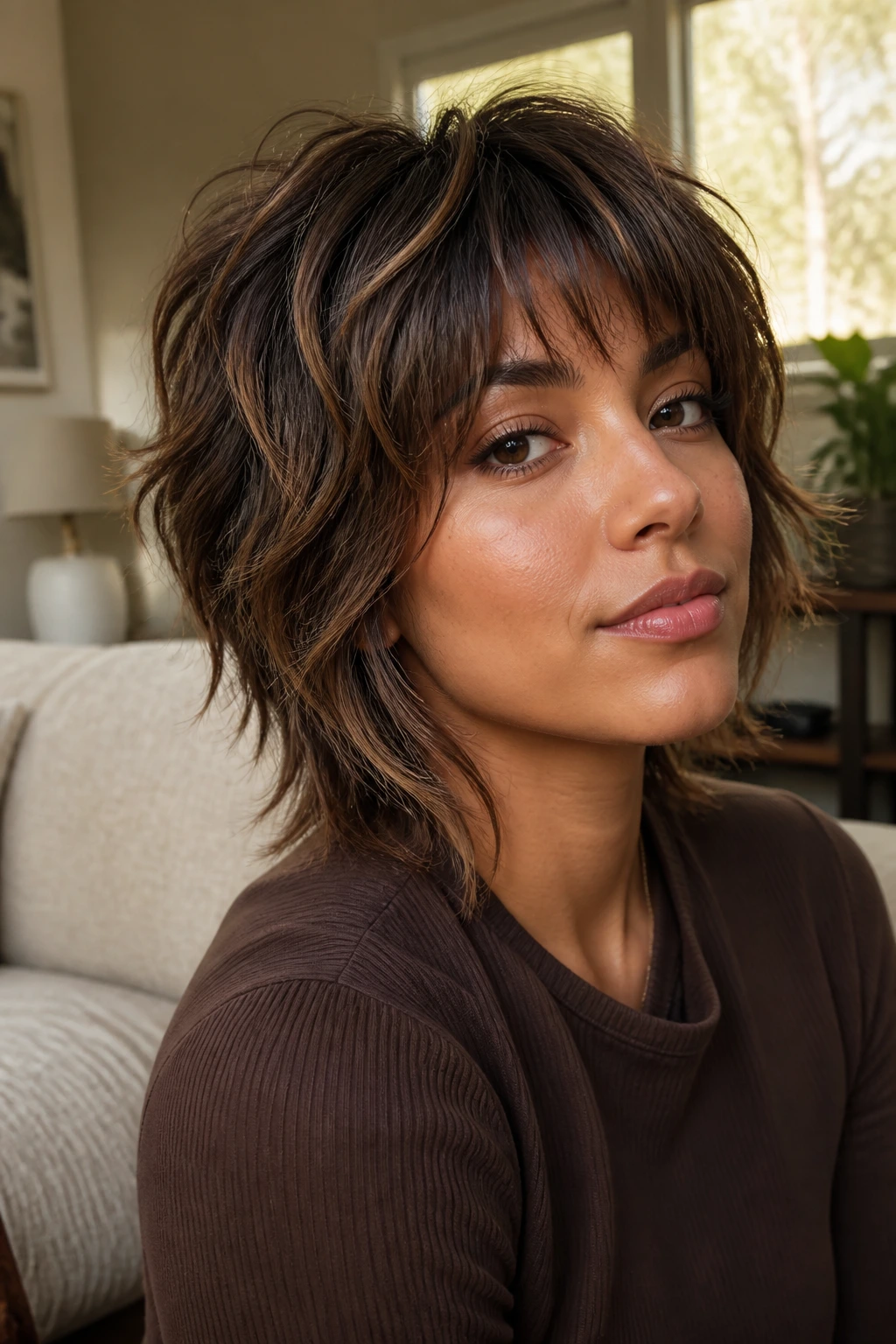
A short wolf cut is already a little wild. Cocoa balayage reins it in just enough to keep the layers from looking dusty or dry. The lighter cocoa pieces land on the shaggy ends and the crown, where they make the cut look fuller.
This is a good pick for medium skin because the cocoa sits in a friendly brown family instead of going pale. I like this with a rough blow-dry or air-dry finish. Over-smoothing a wolf cut takes away the whole point.
30. Black Coffee with Copper Dusting
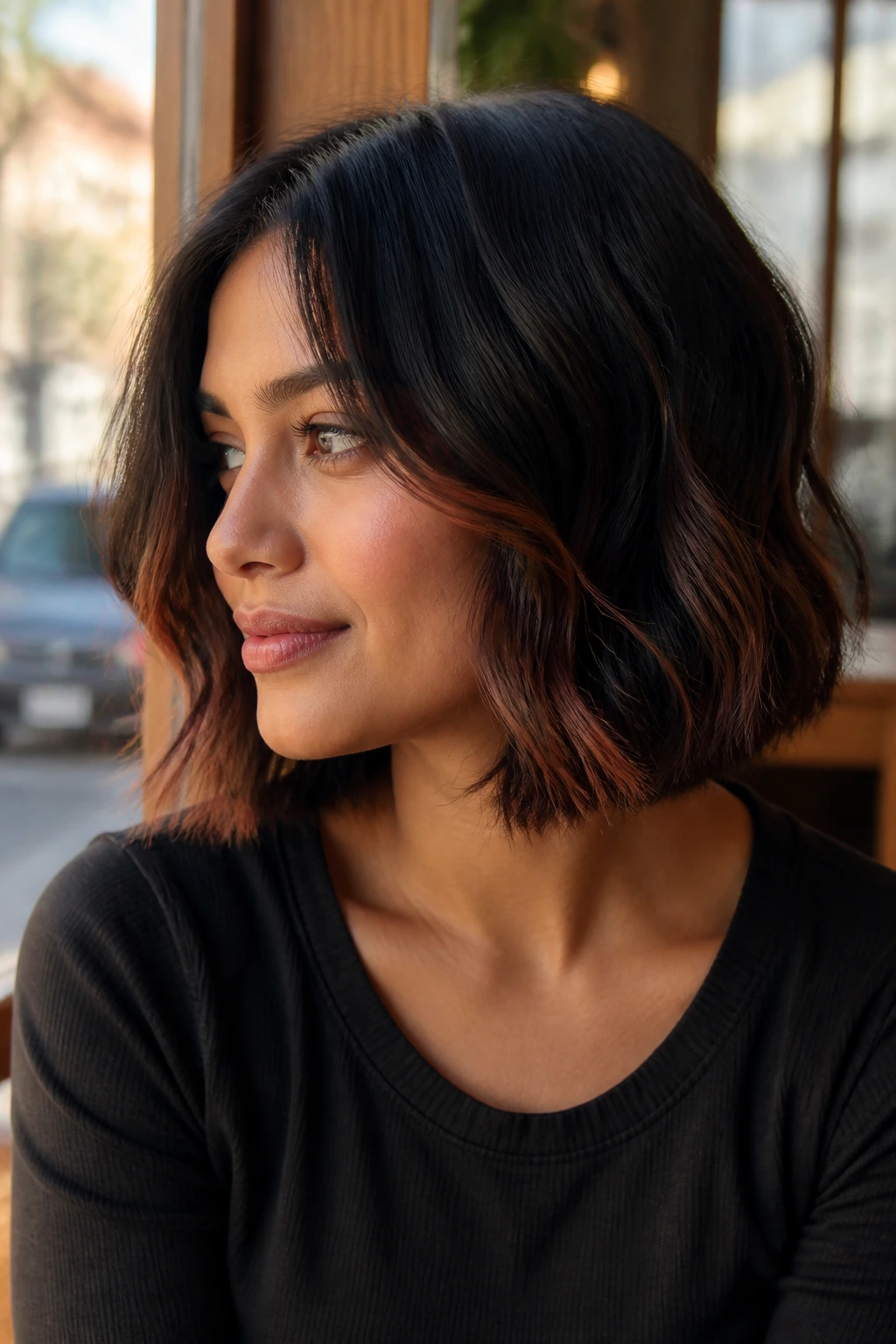
This one is for people who want the hair to stay dark, period. Black coffee forms the base, and the copper is dusted in so lightly it almost reads like a reflection rather than a highlight. That tiny shift is enough to keep short hair from looking flat.
On medium skin tones, especially warm or neutral ones, a copper dusting can wake up the face without asking for a full color leap. Keep the copper around the front and lower ends. If you see it from every angle, it’s too much. The magic is in the restraint.
What Makes Dark Short Balayage Hold Its Shape and Shine
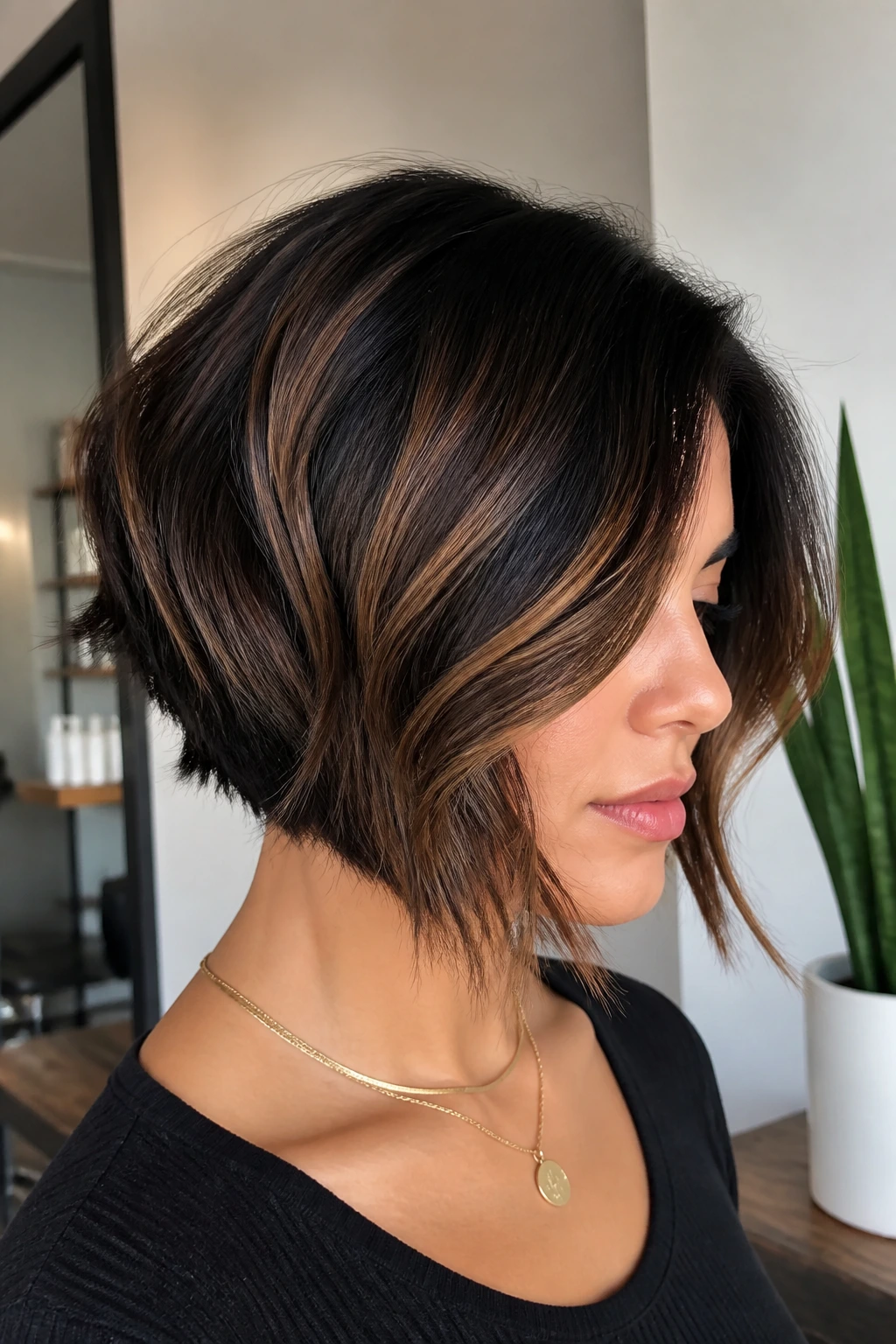
Short hair has no place to hide a bad tone, which is why dark balayage on cropped cuts lives or dies by placement and gloss. If the light pieces are scattered randomly, the cut can look spotty. If the light follows the line of the haircut — the bend of a bob, the sweep of a fringe, the curve of a pixie top — the whole style looks smoother.
I also like how dark short balayage behaves after a few washes. A tiny bit of fade usually helps. The highlights soften, the root shadow stays clean, and medium skin keeps the benefit of the color without the harshness you can get from fresh foil lines.
What to ask for at the chair
- Hand-painted ribbons, not chunky stripes
- A root shadow or gloss to soften the grow-out
- Face-framing brightness one notch lighter than the rest
- Tone matched to undertone: caramel for warm, mocha or beige for neutral, smoky brunette for olive
Tools That Make These Looks Easier to Wear
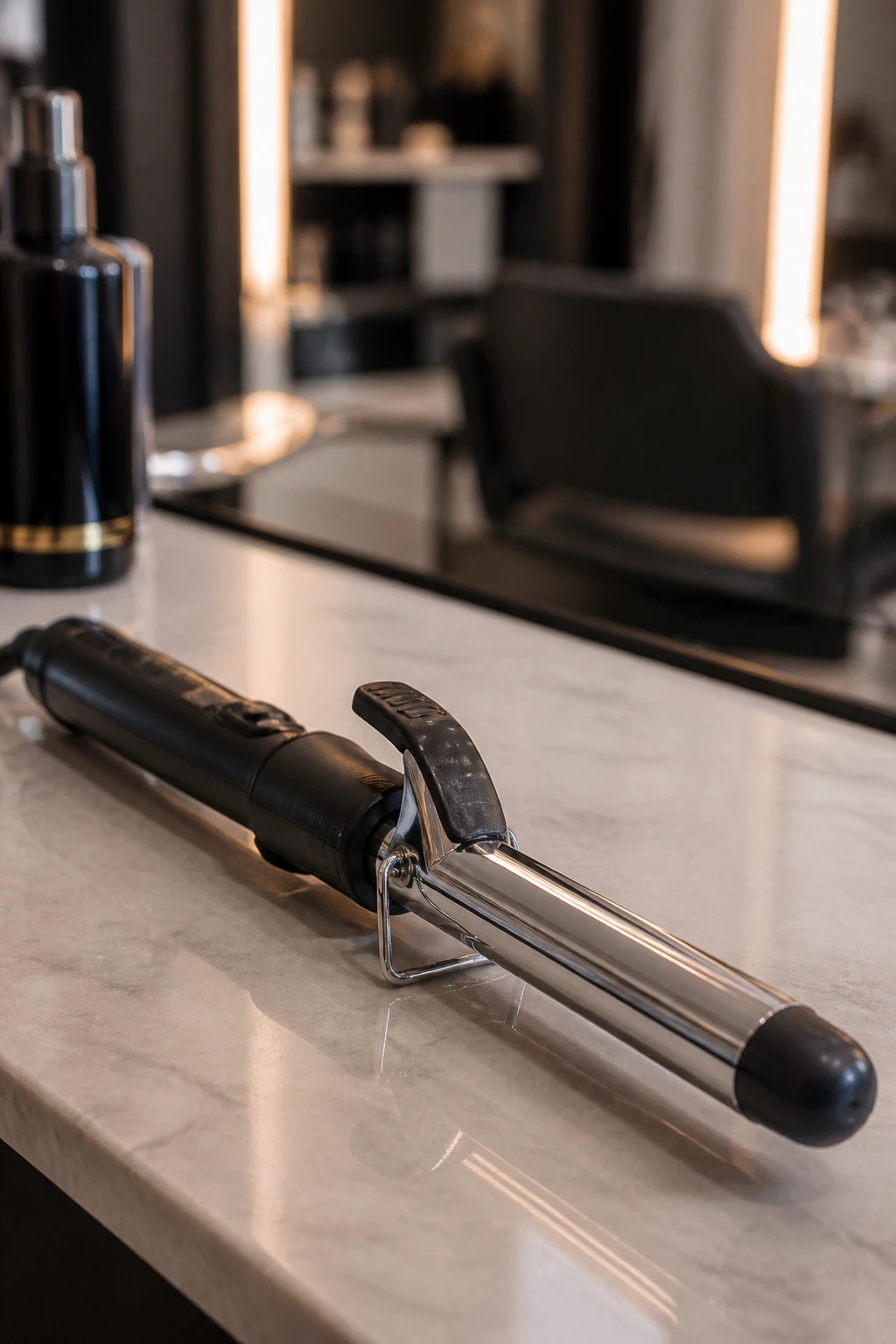
- Color-safe shampoo: Keeps the brunette base from washing out and dulling the balayage ribbons.
- Sulfate-free conditioner: Helps the ends stay smooth, which matters a lot on short cuts where the tips are always visible.
- 1-inch curling iron or wand: Gives bob and lob lengths a soft bend without turning them into tight curls.
- Flat iron with rounded edges: Useful for flipping ends under or out on blunt bobs and French bobs.
- Heat protectant spray: Non-negotiable if you want the dark tones to keep their shine.
- Wide-tooth comb: Better than a brush for working through wet waves without dragging the color around.
- Sectioning clips: Handy when you’re styling a pixie, shag, or layered crop and need to keep the top separate.
- Microfiber towel or soft tee: Cuts down on frizz, which makes the highlights look cleaner.
- Glossing mask or color-depositing conditioner: Good for keeping warm browns rich between salon visits.
- Handheld mirror: Sounds obvious, but it helps you check the back and nape, where short balayage can hide or bunch up.
Picking the Right Dark Shade for Your Undertone
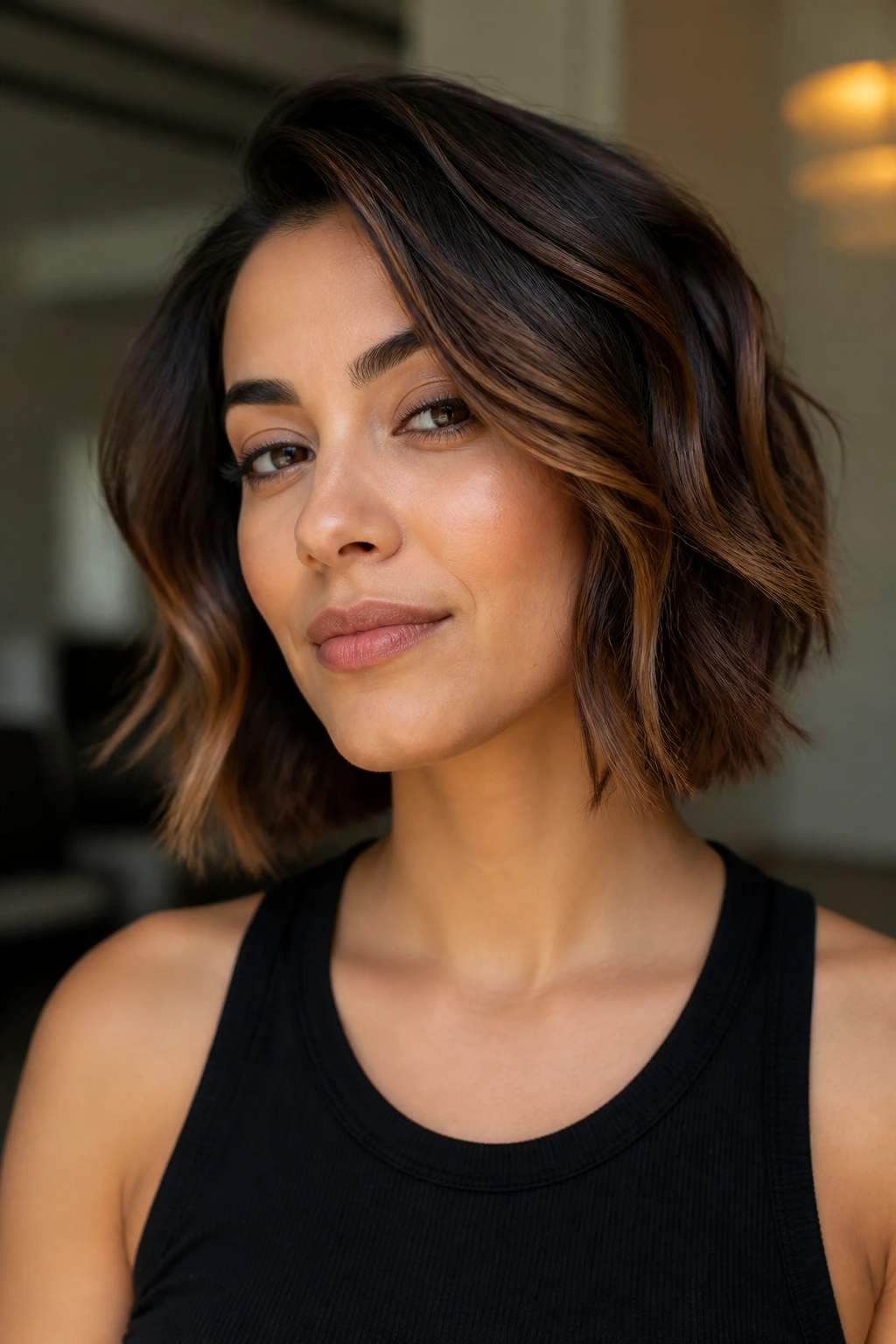
If your skin leans golden, copper, caramel, bronze, chestnut, and honey-brown tend to sit nicely against it. They pull warmth forward without making the face look flat. I’d stay away from highlights that go too pale or too yellow, because those can make medium skin look overly shiny in the wrong way.
Neutral skin gives you more room. Mocha, walnut, toasted almond, soft beige-brown, and espresso ribbons all work because they don’t fight the face. That’s the easiest undertone to style, honestly, because you can choose whether you want a warmer or cooler read without the color shouting at you.
Olive skin needs a little care. Too much orange can turn sallow fast, so smoky brown, mushroom, ash-brown, and deep caramel usually behave better. If you want warmth, keep it brown-based. If you want coolness, make sure the toner is soft, not gray.
How to Wear These Looks Day to Day
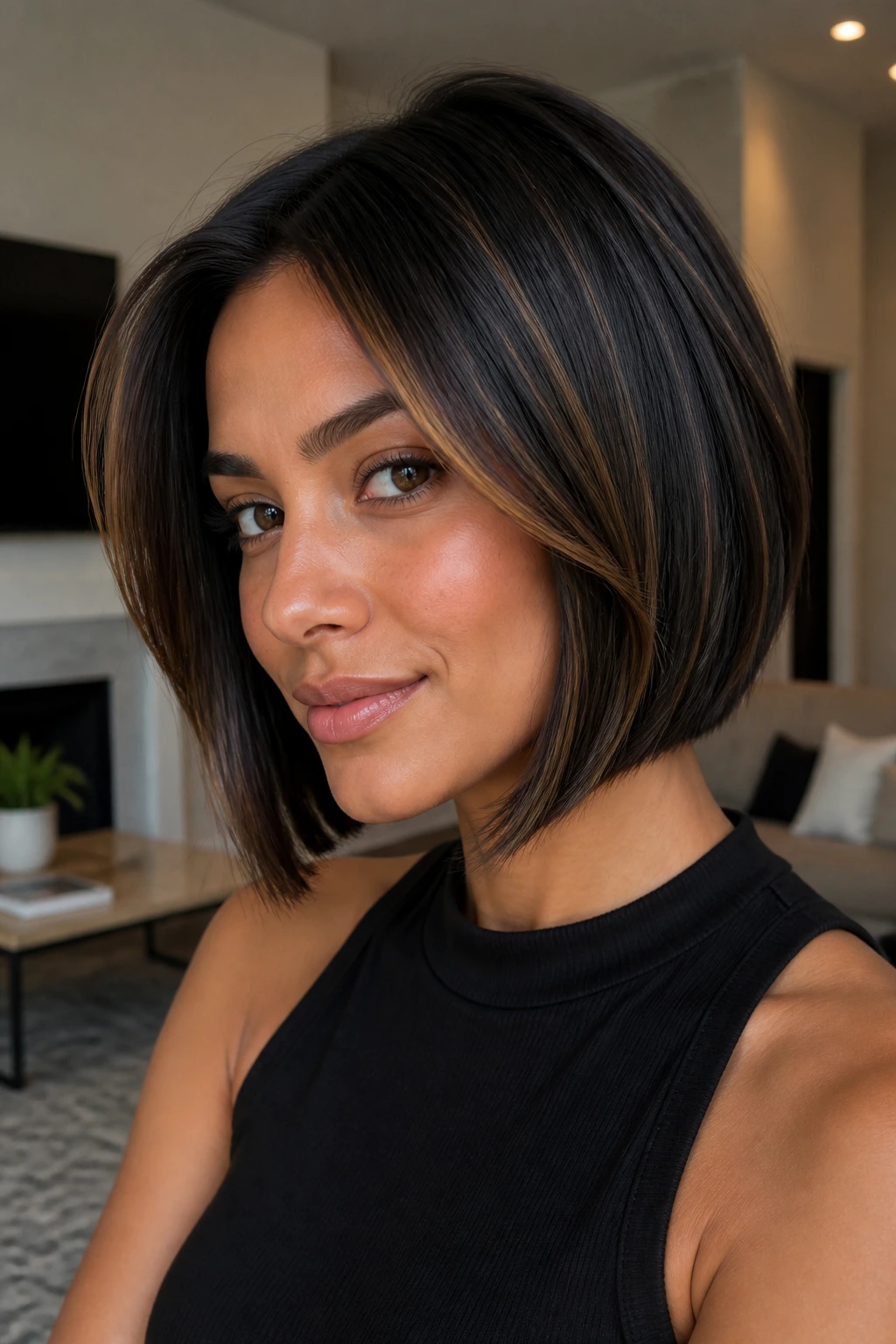
Texture: Soft waves show balayage the fastest. On a bob or lob, wrap only the mid-lengths and leave the ends straight or slightly bent. That keeps the hair from looking too “done” and lets the color pieces sit where the eye naturally lands.
Parting: A middle part sharpens a blunt bob and makes the face-frame brighter. A slight side part softens a pixie, shag, or layered crop. If your cut feels too severe, move the part half an inch and check the mirror again. Tiny shifts matter more on short hair than people think.
Makeup: Warm browns, soft peach blush, and brick or berry lip colors often play well with dark balayage on medium skin. If your color leans cooler — mushroom, ash, smoky brunette — a cooler nude lip or taupe liner can keep the look balanced.
Outfit pairing: Dark short balayage likes strong necklines. Crew necks can swallow a short cut, while V-necks, open collars, and hoop earrings give the color room to breathe around the face.
Additional Tips and Color Boosters
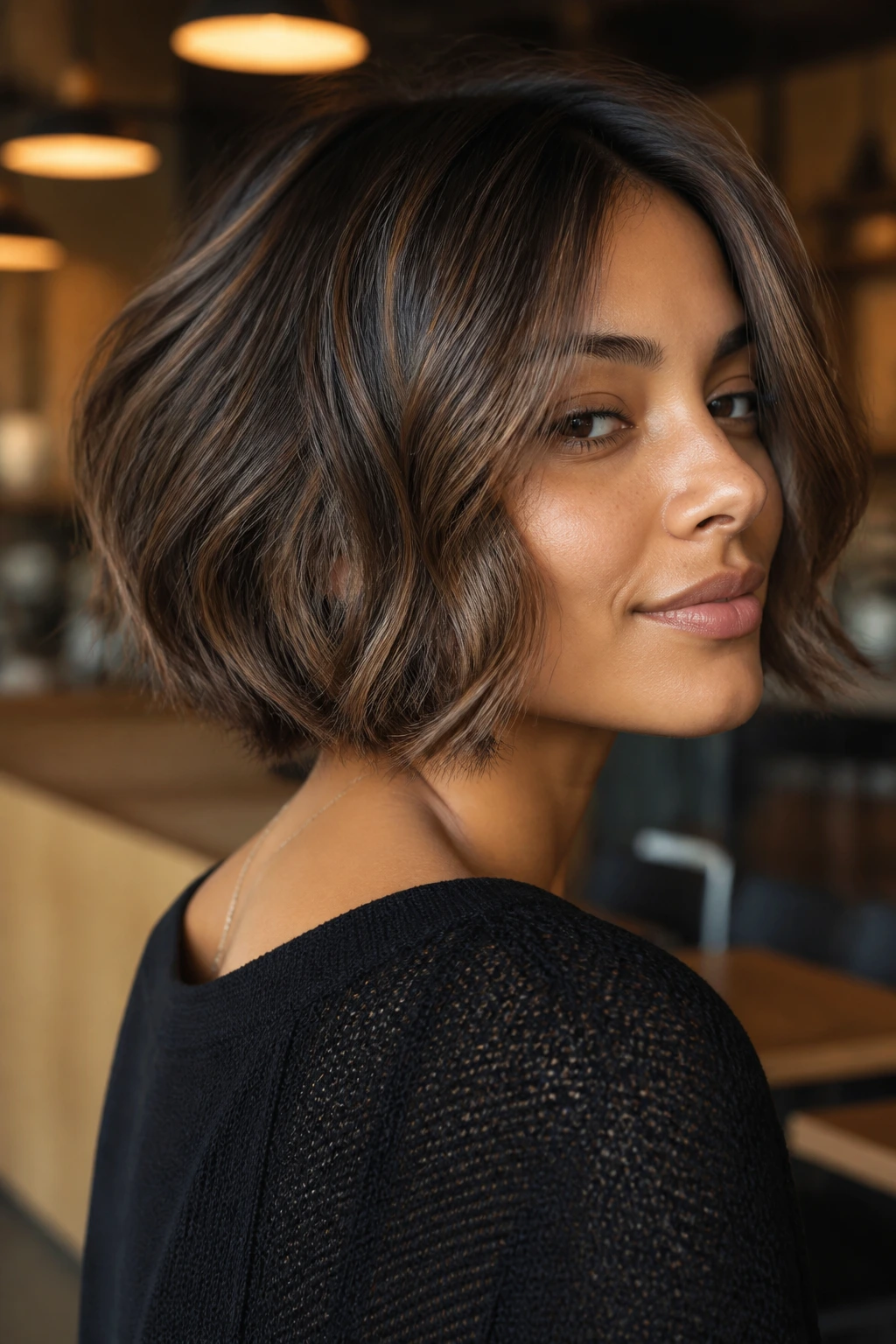
Gloss trick: Ask for a clear or demi gloss every 4 to 6 weeks if your hair pulls brass quickly. That one step can rescue a brown balayage that’s started to look flat under indoor light.
Wave boost: On short hair, set only the top layer and front pieces. Leave the underlayer smooth. That contrast keeps the style from turning puffy and makes the ribbons show up better.
Root shadow: A soft shadow root makes the grow-out cleaner and helps the darker base blend into the lighter ends. On short cuts, this is more useful than adding more lightness.
Make-it-yours: If you like a softer look, keep the highlights narrow and close to your base. If you like a bolder look, widen the face frame and brighten the ends by one extra level — not three.
Quick shine fix: A pea-sized amount of serum rubbed through the ends only can make dark balayage look richer. Too much, and you’ll drag the hair down. Less is more here.
Mistakes That Flatten the Color or Make It Brass
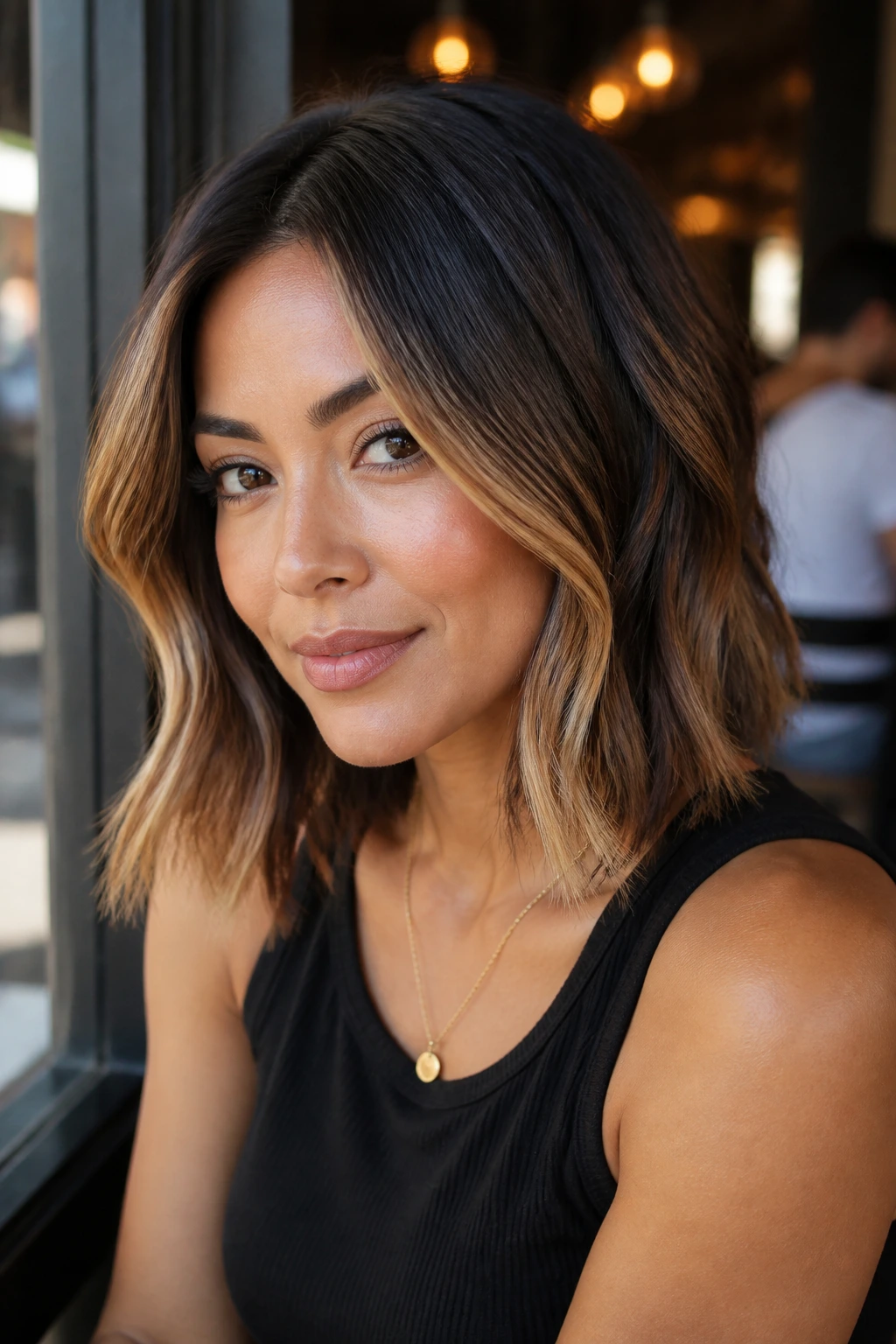
Going too light on short hair: This is the biggest one. Short cuts can’t hide heavy contrast, so pale blonde pieces on a dark bob often look chunky instead of chic. The fix is to stay within one to three levels of lift for most of the head and save the brighter work for the face frame.
Skipping toner or gloss: Balayage without toning can drift orange, gold, or muddy fast. If the hair started as dark brunette, a gloss keeps the brown believable and the lighter ribbons clean. Without it, medium skin can start to look tired rather than bright.
Painting too high near the root: On a pixie or bob, high placement can make the hair look like it’s been striped from the scalp. Keep the brightest pieces lower on the bend or fringe so the haircut still has depth at the root.
Ignoring texture: Flat-ironed to the bone? Fine, but then the balayage needs a clean contour. If you never wear your hair straight, ask for placement that works with bends and waves. Color that only looks good in one styling pattern is a pain.
Choosing the wrong warmth: Warm skin with very ashy color can look gray. Olive skin with too much orange can look off. The fix is not “more highlights.” It’s better toner, better shade choice, and less panic at the chair.
Variations and Adjustments to Try
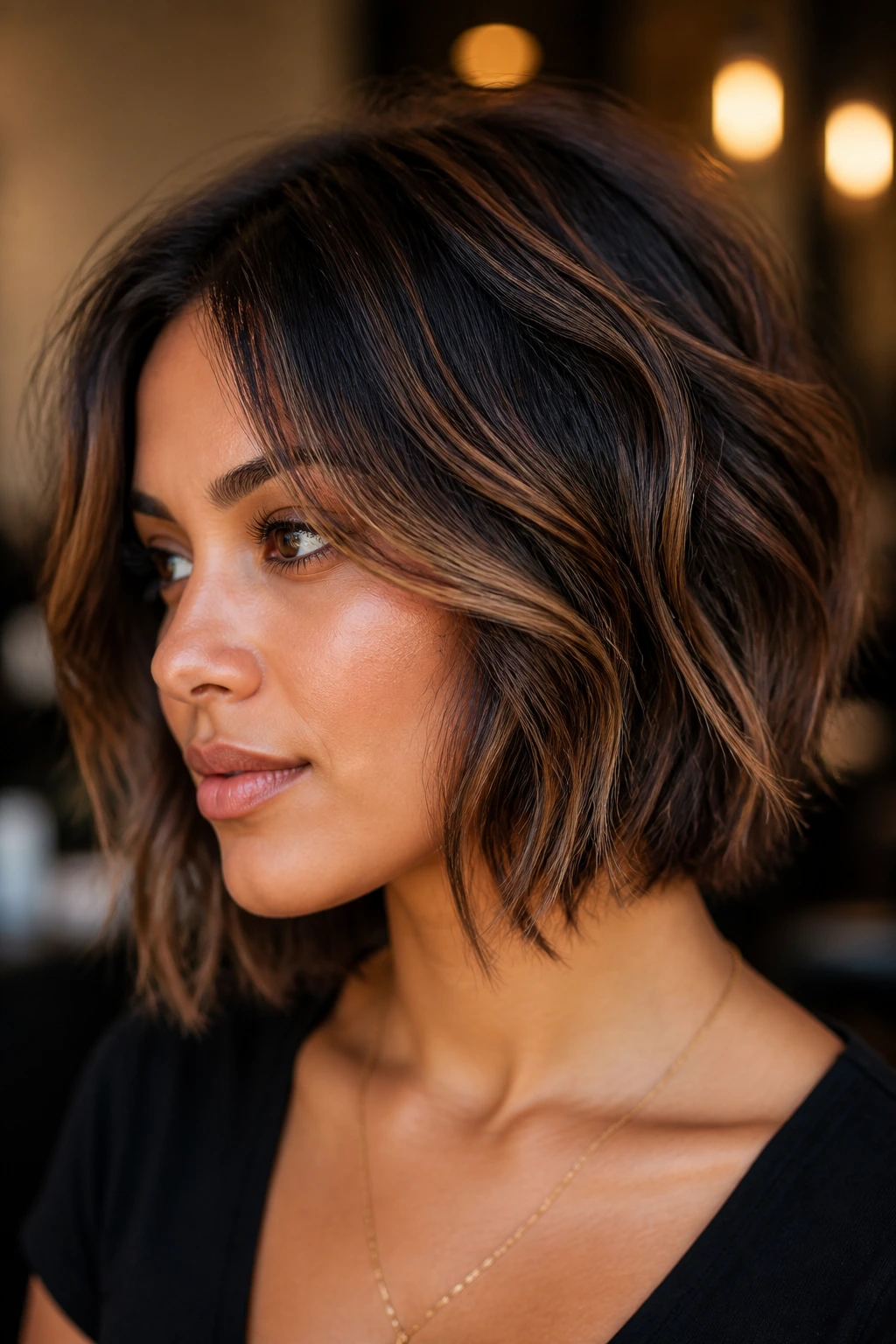
Soft-Growout Brunette: Keep the base dark and paint the lightest pieces only through the front and outer layers. This is the easiest version if you want something that looks tidy for weeks and doesn’t need constant touch-ups.
Cool Smoky Edit: Swap caramel for mushroom, beige-brown, or ash-brown. It suits medium skin with neutral or olive undertones and gives short hair a cleaner, more muted read.
Copper Kiss Version: Add copper only at the ends and around the face. The color stays brown-first, which keeps it wearable, but the copper gives enough warmth to wake up golden or peachy skin.
Curly Ribbon Cut: Use wider, curved placement that follows the curl pattern instead of straight lines. On curly bobs and lobs, this makes the color appear naturally woven into the hair instead of pasted on top.
Peekaboo Depth: Put the boldest tone underneath the top layer. Burgundy, cherry cola, or even bronze can hide under the darker cap of hair and show only when the hair moves or is tucked back.
Keeping the Color Fresh Between Appointments
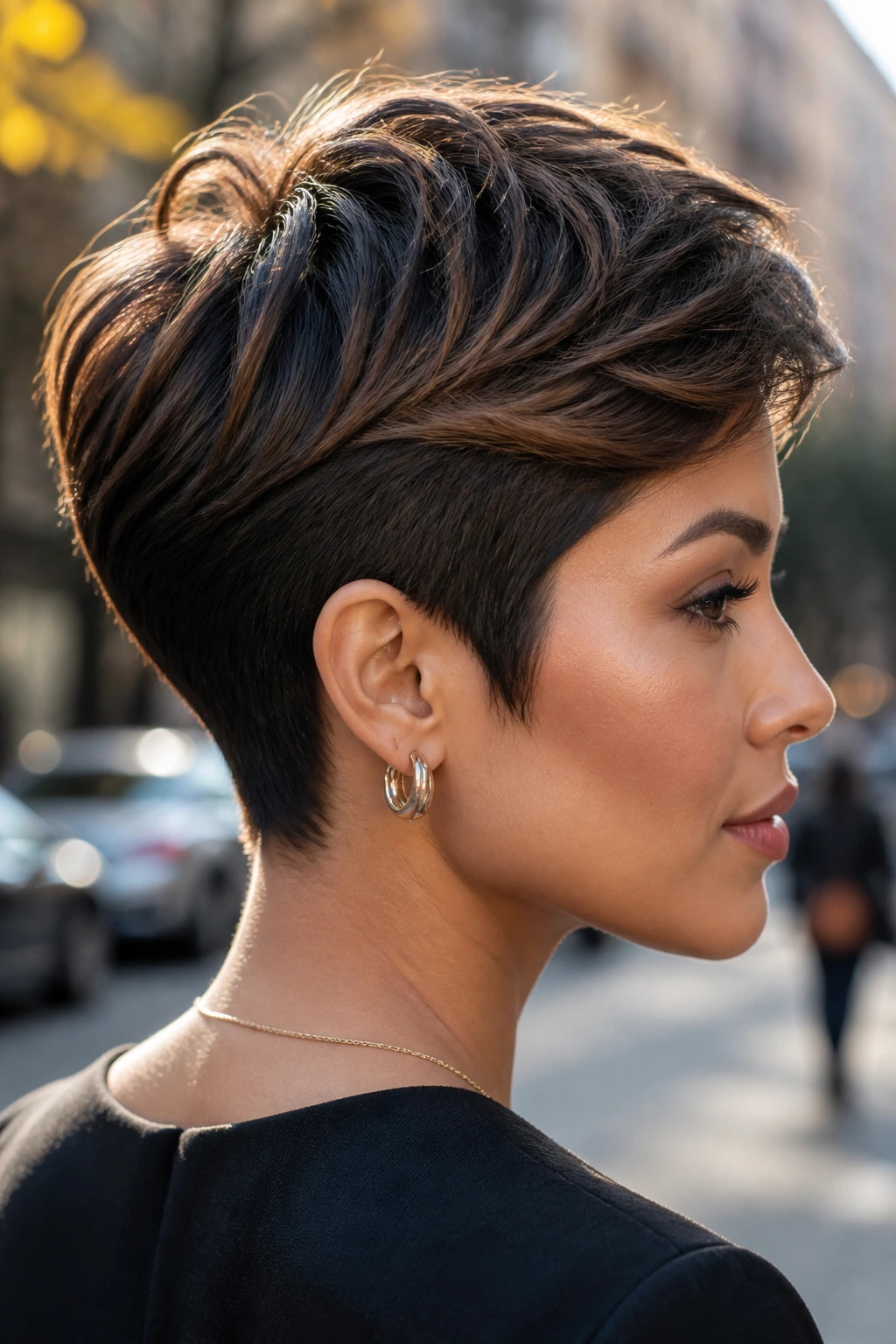
Dark short balayage usually grows out better than all-over color, but it still needs a little care if you want the tones to stay clean. Shampoo 2 to 3 times a week if you can; more washing tends to drain the gloss from the lighter pieces first. Use lukewarm water, not hot water, because hot showers are rough on the cuticle and they fade warm browns faster than most people expect.
A salon gloss or toner every 4 to 6 weeks keeps caramel from going brassy and mocha from looking flat. If your color leans warm, a color-depositing conditioner in brown, beige, or copper-brown can help between visits. If the tone is cool, a blue-based brunette mask is safer than anything too violet.
Heat is another quiet saboteur. Keep hot tools around 300°F to 350°F for short hair and use protectant every time. On fine hair, even a small amount of daily heat can rough up the ends and make the balayage pieces look dry. A trim every 6 to 8 weeks helps more than people think. Short hair loses its shape fast when the ends fray.
Frequently Asked Questions
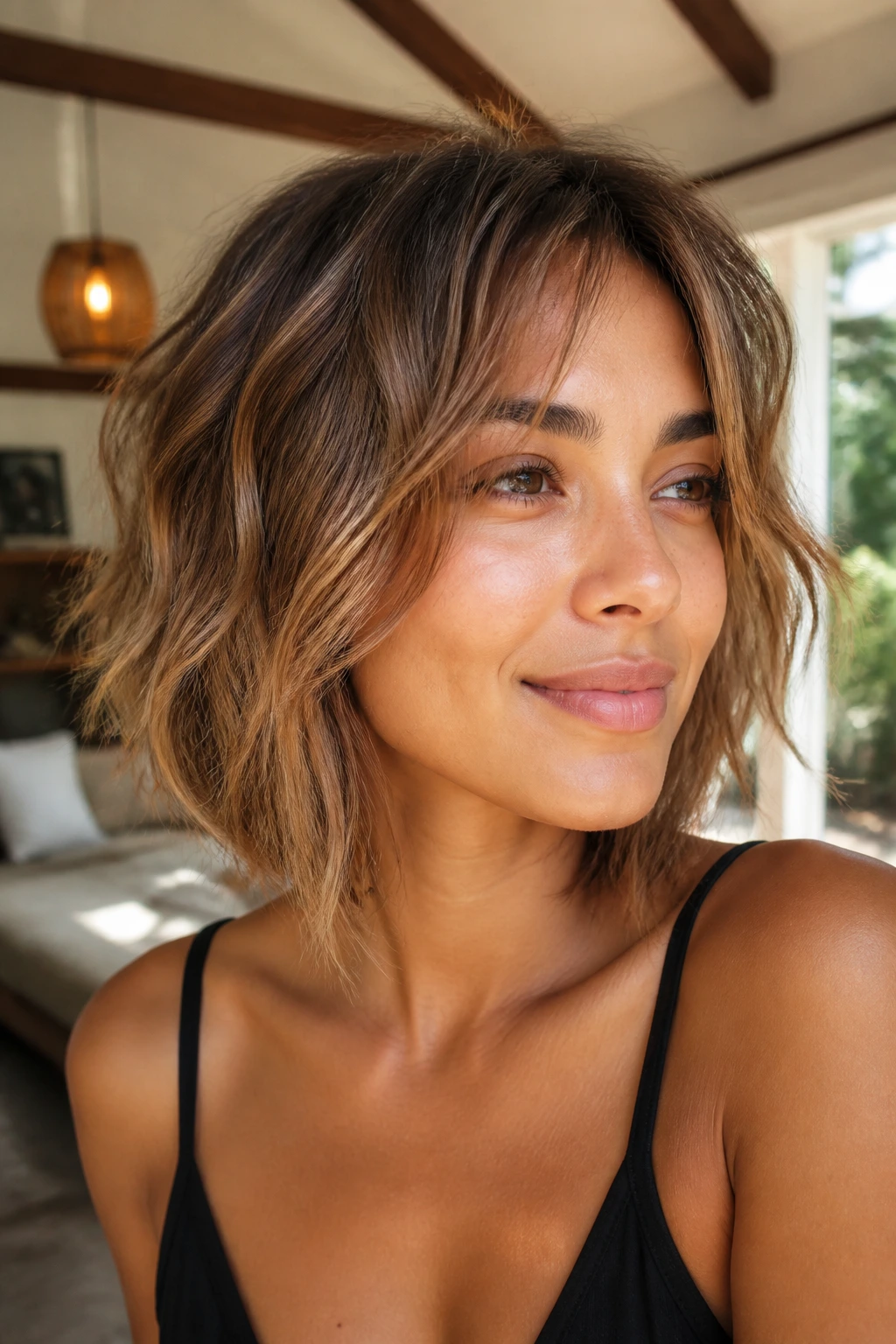
Will dark short balayage work on medium skin with olive undertones?
Yes, as long as the tone stays brown-based. Mushroom brown, smoky brunette, walnut, and muted caramel usually work better than bright gold or orange copper, which can fight olive skin.
Is balayage or ombre better on short hair?
Balayage usually wins because the placement can follow the haircut and keep the color soft. Ombre can work on a lob or bob if the fade is short and subtle, but strong ombre lines can look heavy on cropped styles.
How often should I refresh the color?
A gloss every 4 to 6 weeks keeps the tone in check, while a full lightening or repaint usually waits longer depending on growth and contrast. Short cuts grow out fast enough that trim appointments matter too.
Can I get this look without bleaching the whole head?
Yes. Most of these ideas rely on hand-painted lightening only where it matters, plus toner and shadow root. If your hair is already dark and healthy, you may not need full-head bleaching at all.
Does short balayage make hair look thinner?
Not if the placement is done well. In fact, soft ribbons can make fine hair look fuller because the contrast gives the eye more texture to follow. Too much light on the ends, though, can make them look wispy.
What if my highlights turn orange?
That usually means the toner has faded or the underlying pigment is showing through. A blue-based brunette gloss or a salon toner can cool it back down, and using color-safe shampoo helps the fix last longer.
Can curly or wavy hair wear dark short balayage?
Absolutely. Curly and wavy hair often looks even better with it because the ribbons move across the curl pattern. Just make sure the color placement follows the curl clumps instead of being painted in straight bands.
How much contrast is too much?
If the lighter pieces look disconnected from the base when the hair is dry, the contrast is probably too strong for a short cut. On medium skin, most of the strongest looks stay within a controlled range so the face still reads soft.
The Short Dark Color That Does the Most With the Least
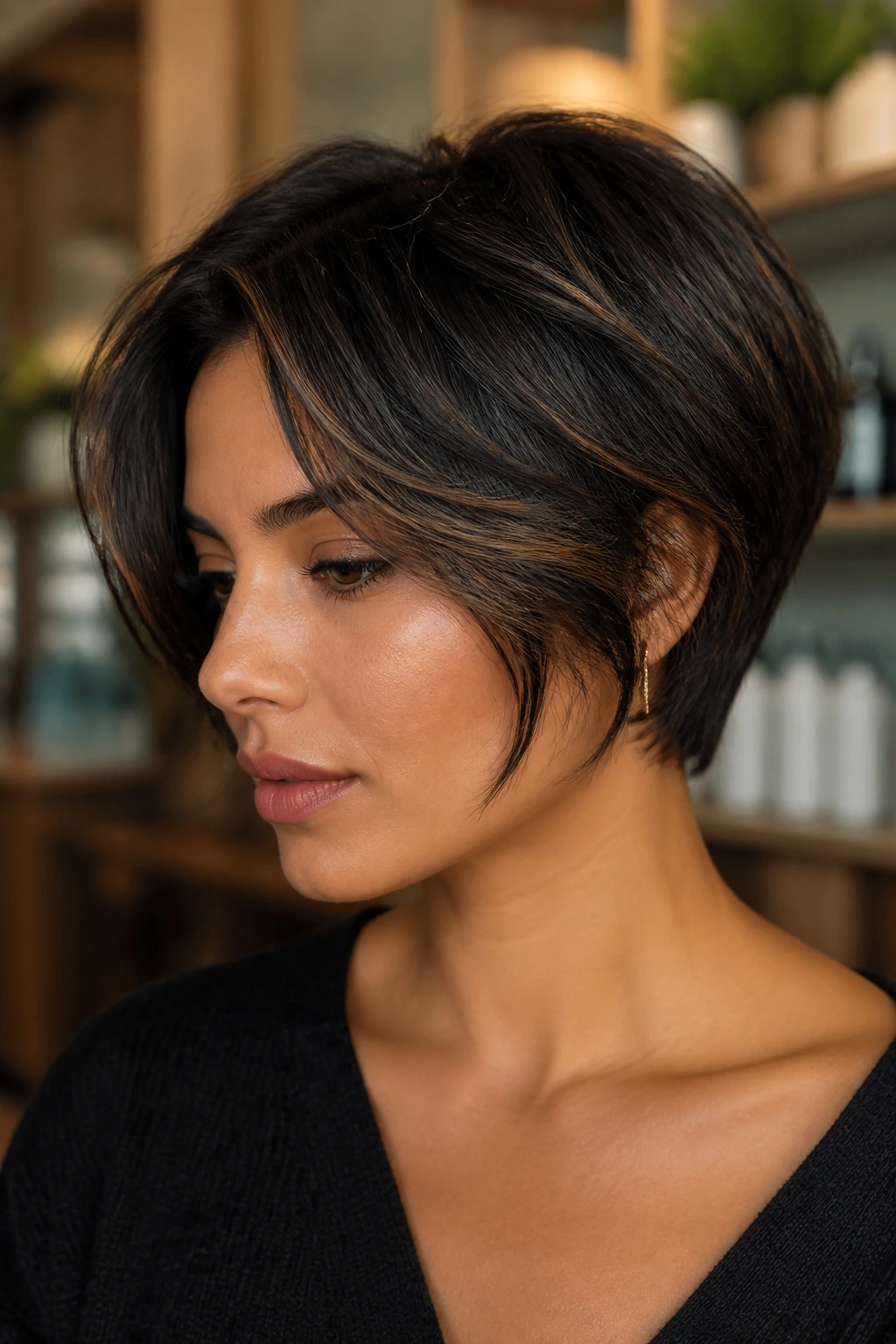
Dark short balayage is one of those styles that rewards restraint. A few smart ribbons, the right gloss, and a shade that respects your undertone can do more than a full head of loud color ever could. On medium skin tones, that balance is the sweet spot — enough light to shape the face, enough depth to keep the cut grounded.
If you’re choosing between shades, start with the one that sounds a little too quiet. The softest espresso, mocha, chestnut, or smoky caramel usually wears better on short hair than the bold option does. And once the cut is moving, even a subtle ribbon starts to show its teeth in the best way.