



Honey ombre can look muddy fast on pale skin if the tone drifts too yellow or the placement sits too high. That’s the part most people miss. The color itself is only half the story; the other half is where the light lands, how deep the root stays, and whether the finished blend still leaves room for your features instead of bulldozing them.
For heart-shaped faces, the placement question matters even more. Wide at the forehead, narrower at the chin, a heart shape usually looks best when the brightest pieces don’t camp out at the temples like two little spotlights. The color should soften the top, widen the lower half a touch, and move in a way that feels natural when your hair swings. That’s why the best honey ombre for pale skin and heart-shaped faces isn’t one fixed formula. It’s a set of decisions.
I’ve always preferred honey tones that lean beige, amber, or soft gold rather than loud sunflower yellow. Straight yellow blonde can be harsh against fair skin, especially if your undertone runs pink or cool. A good honey ombre has warmth, yes, but also restraint. It should glow, not shout.
Why These Honey Ombre Looks Work on Pale Skin and Heart-Shaped Faces
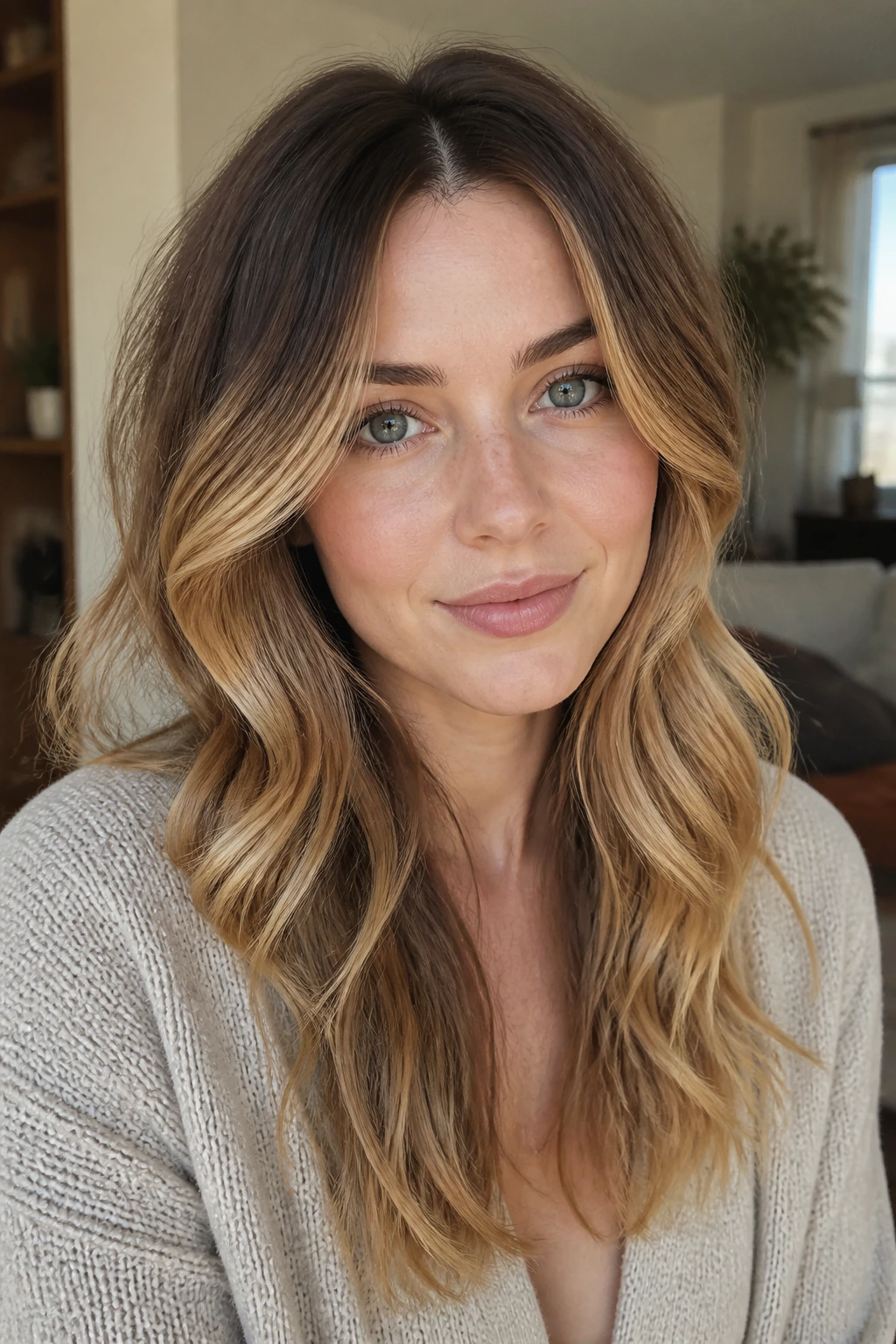
-
They warm up fair skin without flattening it: The right honey shade adds color near the ends and around the face, so pale skin doesn’t disappear next to a pale blonde panel.
-
They keep the forehead from looking wider: A deeper root or a soft shadow at the crown pulls the eye downward, which is exactly what a heart-shaped face needs.
-
They let the jawline do some work: Brightness that starts around the cheekbone or lower jaw helps balance a tapered chin and makes the lower half of the face feel less delicate.
-
They age out better than one-tone blonde: Ombre grows softly, which means you’re not stuck with a hard line every six weeks. That softer grow-out is a gift if you hate constant salon trips.
-
They play nicely with texture: Waves, bends, curls, and even a blunt bob all catch honey differently. The color gets movement from the cut instead of sitting there like a helmet.
-
They can be tuned cool or warm: Honey is a range, not one yellow blob. Beige honey, smoky honey, peach-gold honey, and amber honey all solve slightly different problems.
How to Read the Shade Notes Before You Choose
Pale skin is not one thing. Some fair complexions lean pink, some lean peach, some sit neutral and can borrow from either side. That’s where people go wrong. They hear “honey” and picture one generic golden tone, then wonder why the result looks brassy or washed out.
If your skin flushes pink easily, the safest honey usually sits closer to beige or soft gold. If your skin has a peach cast or your natural coloring leans warmer, amber and caramel honey can look richer. The difference can be tiny in a salon swatch book, but on your head it matters. A level 8 beige-gold gloss reads expensive; a too-warm level 9 gold can read orange by week two.
Heart-shaped faces need a separate kind of attention. The brightest pieces should usually begin a little lower than people expect, often around the cheekbone or just below it. That keeps the top from looking top-heavy. Think of the color as a soft triangle: quieter at the crown, brighter through the lengths, and then a little extra glow where the face narrows.
1. Soft Vanilla-to-Honey Melt
This is the gentlest version, and I reach for it when someone wants warmth but hates the look of obvious blonde streaks. The root stays a creamy vanilla-beige, then the color melts into a soft honey that sits midway between gold and beige. On pale skin, that little bit of restraint keeps the face from going pale-gray next to the hair. On a heart-shaped face, the gradient lowers the visual weight and gives the lower half more presence.
What I like most here is the transition. There isn’t a hard line telling you where the blonde starts. The eye just slides downward. If your hair is medium length or longer, loose waves show this beautifully because the lighter ends catch light without shouting for it.
Ask for a shadow root one to two levels deeper than the ends, then a gloss in the beige-honey family. If your natural base is already light, keep the contrast soft. Too much lift at the crown makes the forehead look wider, and that’s the one thing this face shape doesn’t need.
2. Chestnut Root, Honey Midlengths
Why this one works is simple: the chestnut root gives the face a frame. Pale skin often looks fresher next to a deeper root than next to an all-over light base, and heart-shaped faces get a little visual anchoring near the temples. The honey starts in the midlengths rather than blasting out from the top, which keeps the whole shape from puffing out around the forehead.
I also like this version on clients who wear darker brows. The chestnut root connects the hair to the brows in a way that feels intentional, not accidental. It’s a quiet detail, but it keeps the face from floating away from the color.
What to ask for
- A root smudge in the level 5 to 6 chestnut range
- Midlength balayage that begins around the ear or cheekbone
- Ends finished in a gold-beige honey gloss
- Soft face-framing pieces, not chunky stripes
This one suits straight hair more than people expect. On smooth textures, the contrast shows clearly and looks polished. On waves, the honey midlengths break up the root even more and create a softer bend around the jaw.
3. Face-Framing Honey Ribbons
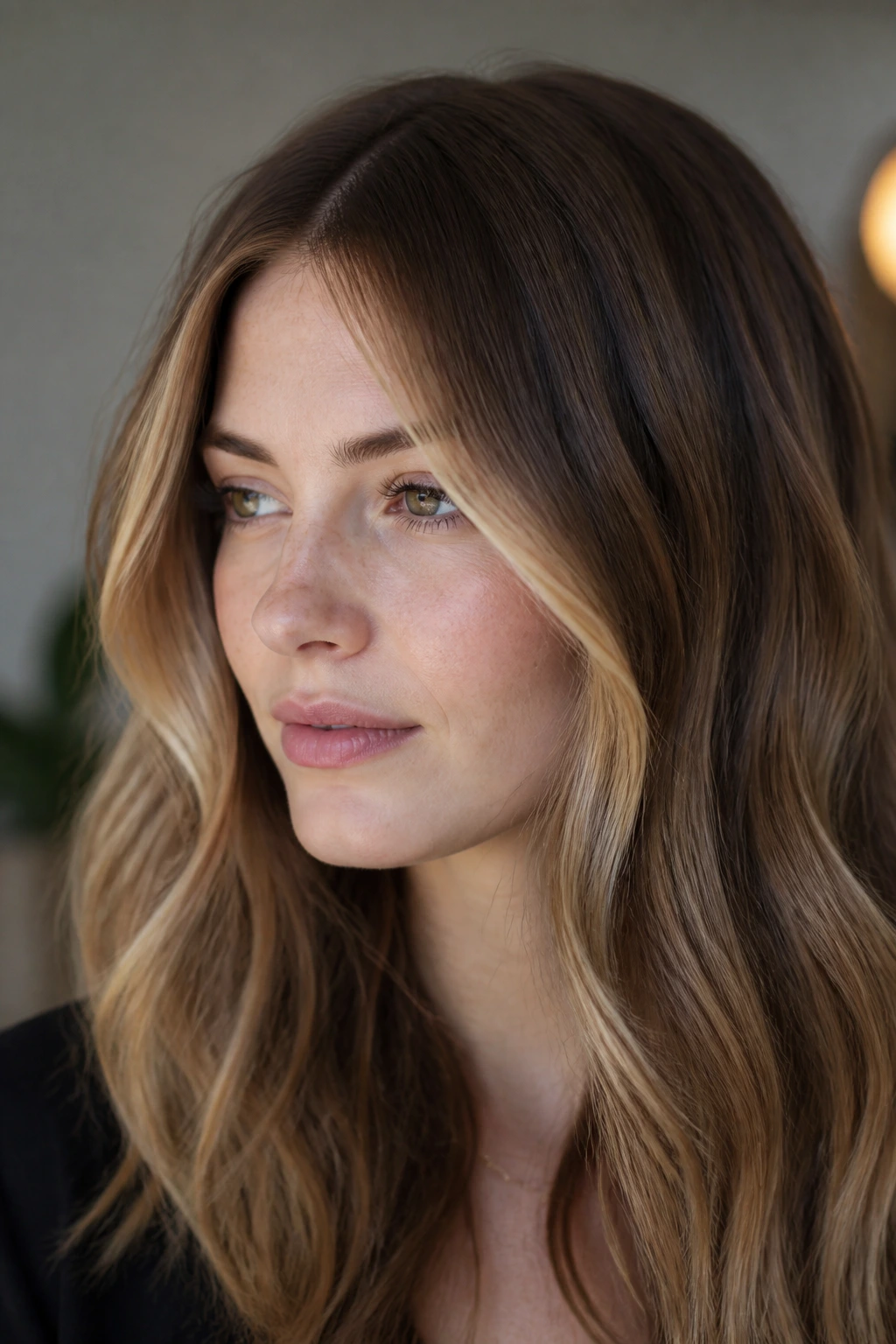
Some colors are about the whole head. This one is about the front. The best honey ribbons start around the cheekbone, slide along the front layers, and stop before they flood the temples. That keeps the brightness where a heart-shaped face actually wants it — lower and slightly inward, not up on the widest part of the forehead.
Pale skin often needs a little foreground brightness near the face to look alive, especially if your natural base is medium brown or dark blonde. Honey ribbons do that without forcing a full blonde commitment. They’re a good compromise if you like seeing light around your face but don’t want the maintenance of platinum or high-contrast front pieces.
If you wear your hair with a center part, keep the ribbons a touch thicker around the first front layer and finer as they move back. If you wear side parts, the brighter side can handle a little more width. Tiny adjustments like that matter more than people think.
4. Beige Honey Balayage with Airy Ends
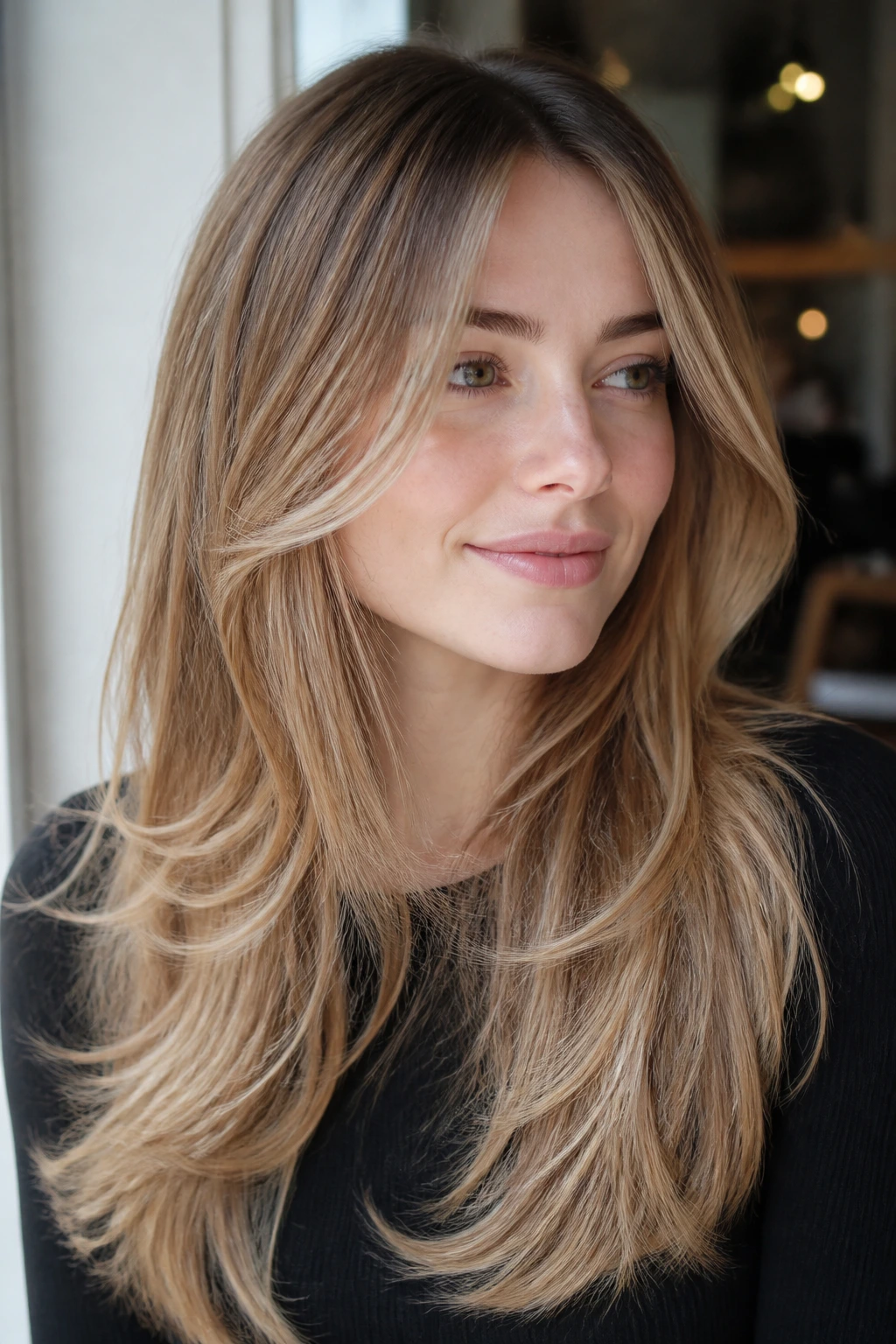
Beige honey is my favorite answer for pale skin that goes reddish in bright light. The tone stays warm enough to feel soft, but not so golden that it fights with pink undertones. The ends look airy rather than dense, which is exactly what this face shape needs when the goal is balance instead of drama.
The balayage placement should be feather-light. I mean that literally. The color should look painted on, not packed in. On heart-shaped faces, airy ends help widen the lower silhouette just a little, especially if the haircut has long layers or a collarbone cut.
If you style your hair with a medium round brush bend or a 1.25-inch iron, this shade gives you that soft, expensive-looking movement people often chase with a lot more effort. Don’t overtone it. Beige honey dies when it gets overworked.
5. Cinnamon Root Shadow and Golden Ends
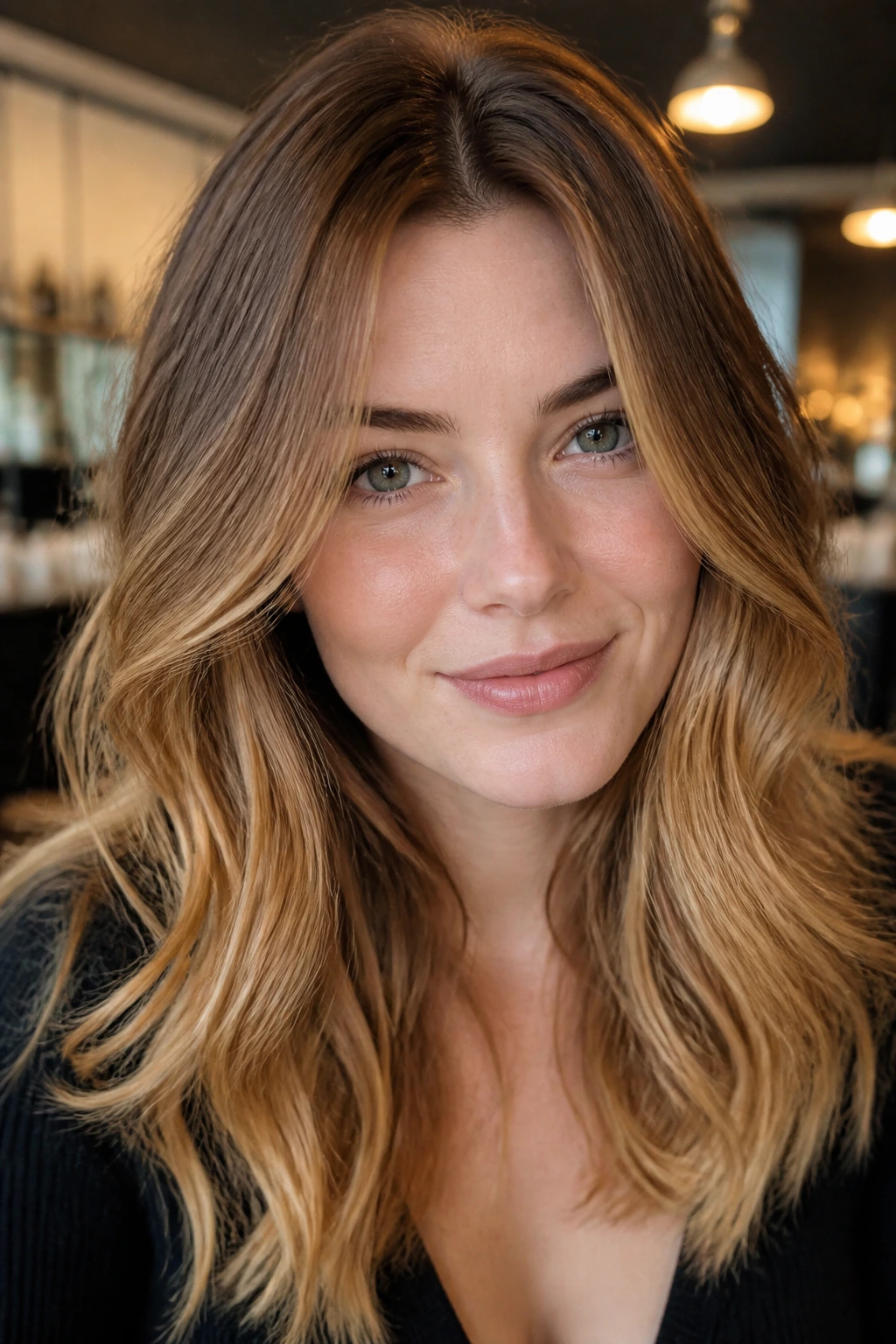
This one has more personality. The cinnamon root gives warmth near the crown, then the golden ends keep the finish light. On pale skin, that root shadow stops the top from looking washed out. On a heart-shaped face, it keeps the crown grounded so the eye isn’t dragged straight upward.
I’d choose this version if your brows are medium to dark and you want the hair to stand up to them. The cinnamon isn’t coppery in a loud way. It’s a warm brown with a whisper of spice. The ends can lean gold or honey-gold depending on how warm your skin runs.
A blunt fringe can work here, but only if it’s soft and piecey. A hard fringe plus a wide root shadow can box in the forehead. Keep the front airy. Let the color do the balancing.
6. Honey Ombre Bob with Curved Brightness
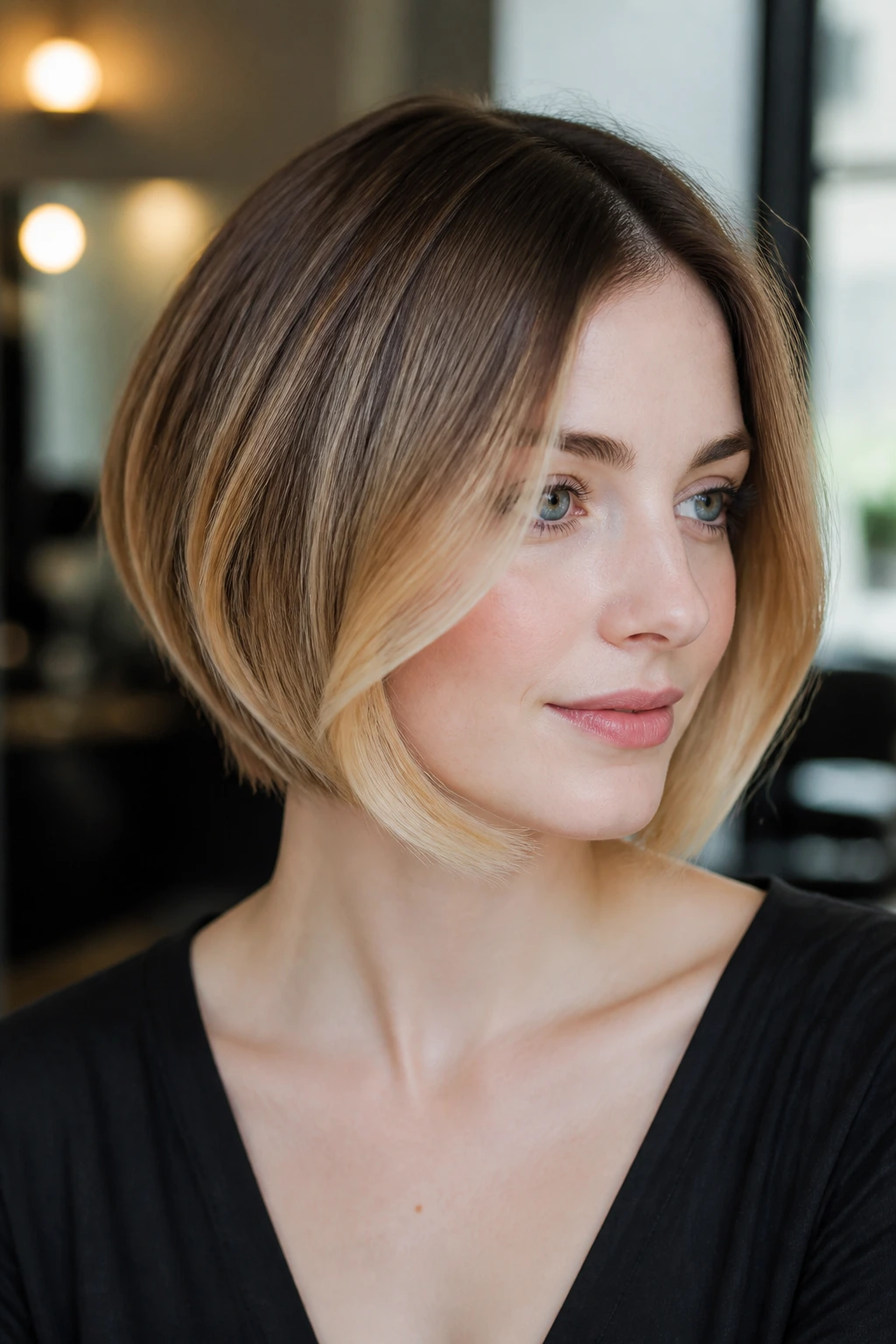
Short hair changes the whole conversation. On a bob, honey ombre should curve with the cut instead of hanging like a stripe under it. The brightest pieces usually sit from the cheekbone to the jaw, which gently widens the lower face and helps a heart shape feel more even.
Pale skin tends to look especially crisp with a shorter cut because there’s less hair covering the neck and collarbone. That means tone matters even more. I’d keep the honey clean and soft, not too orange, because short hair has nowhere to hide a bad gloss.
This is one of those cuts where styling matters almost as much as coloring. A slight bend at the ends makes the ombre look intentional. Flat, pin-straight bob? Fine, but the gradient shows more cleanly if the ends tuck inward a little. It softens the line under the chin, and that’s the whole point.
7. Caramel Sweep with a Bright Money Piece
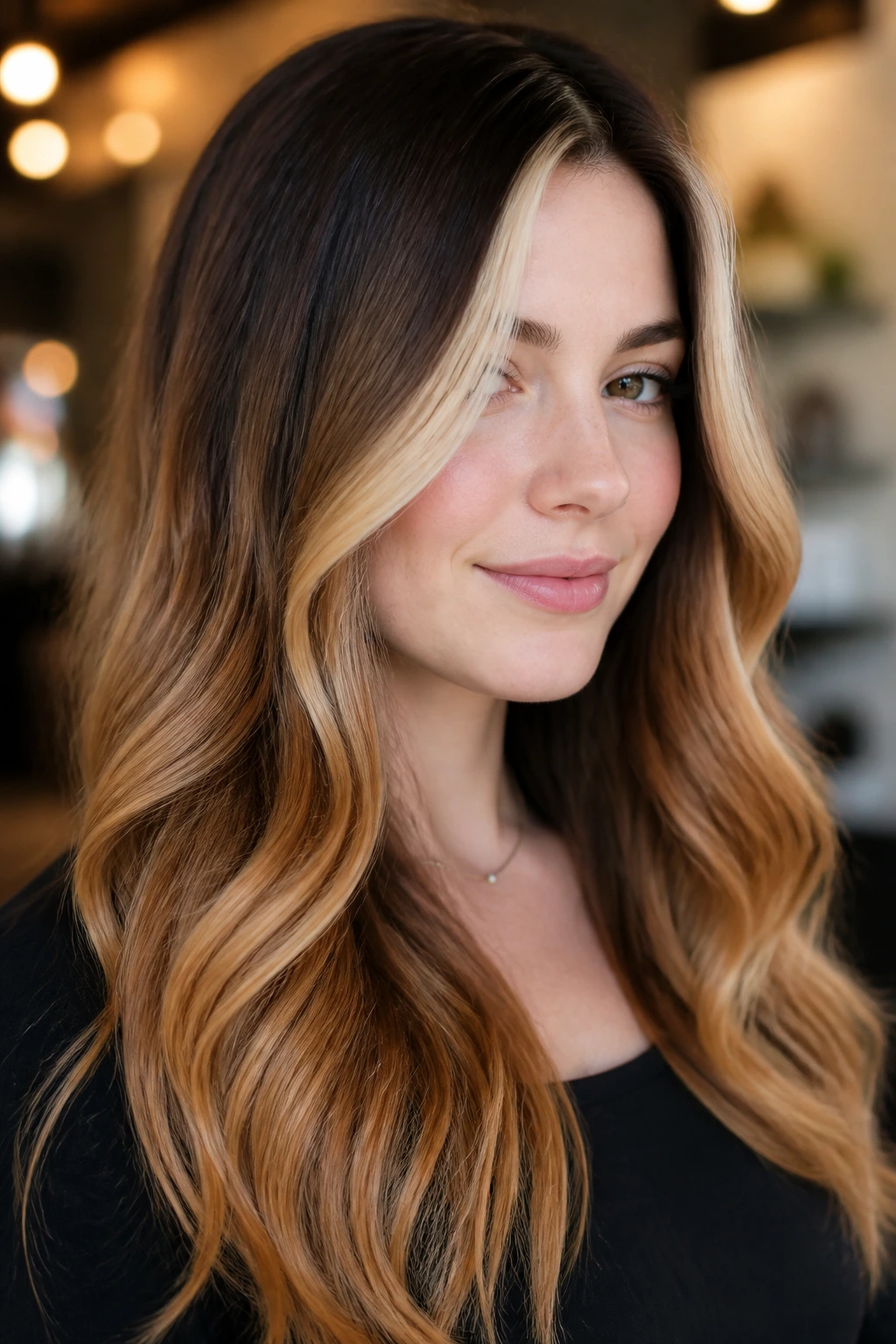
This is the bolder option, but it works if you’re careful. The caramel sweep keeps the body of the hair warm and dimensional, while a bright money piece opens the face. On pale skin, that front highlight can look fresh fast. On a heart-shaped face, though, placement is everything. Start the brightest section lower than the hairline or you’ll widen the forehead more than you wanted.
I like this when the rest of the hair is a medium brunette or dark blonde. The contrast makes the honey feel richer. If the base is already light, the money piece should be softer and narrower, almost like a veil rather than a stripe.
Best for: people who like a little contrast around the face.
Keep in mind: the money piece should be softened through the root, not pasted on.
Salon note: ask for a blended lift, then a caramel-beige gloss through the midlengths.
8. Warm Biscotti Honey on Wavy Layers
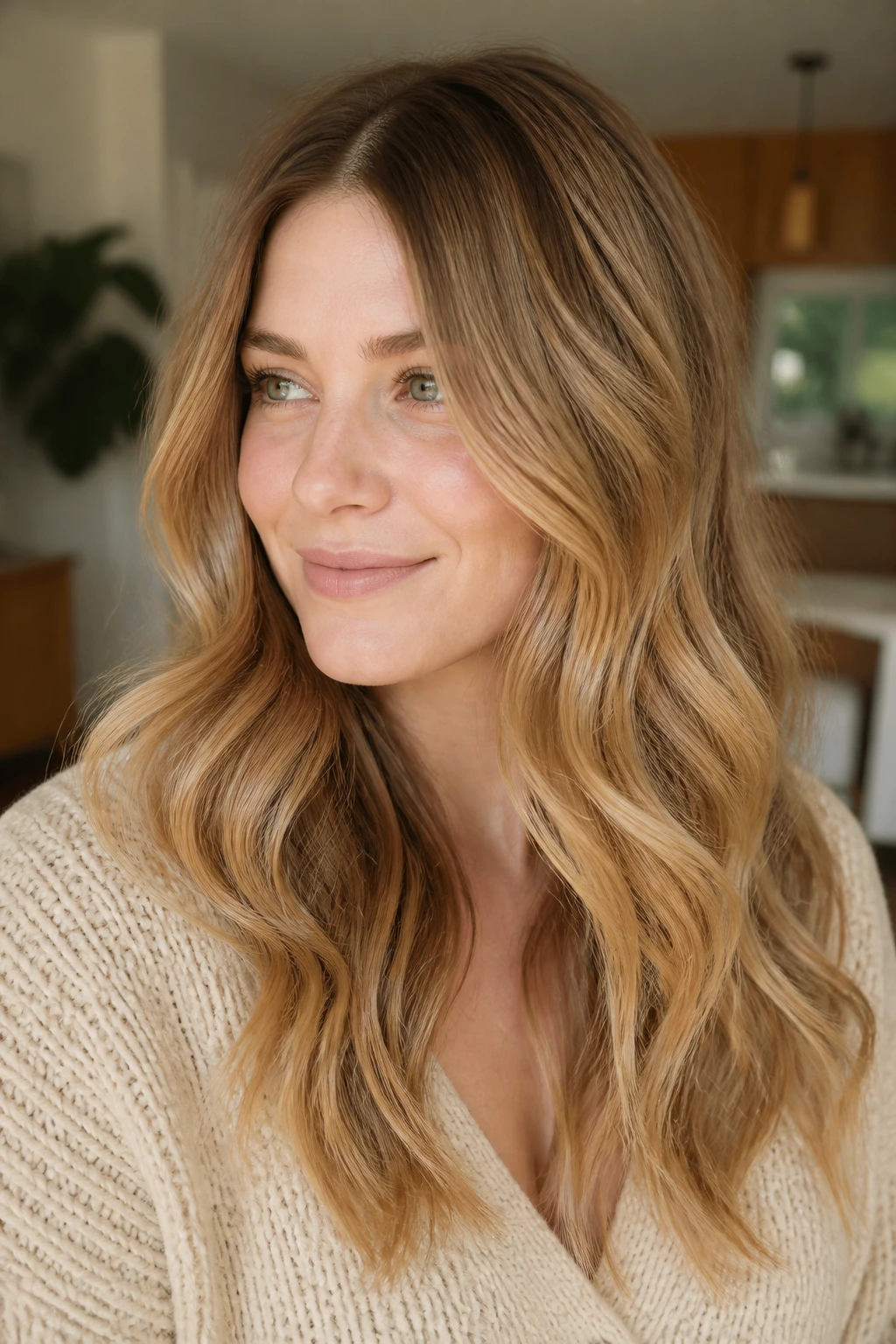
Warm biscotti honey sits in that nice middle zone between beige and gold. It has enough warmth to flatter pale skin, but not so much that it turns brassy the minute you step outside. On layered waves, the color catches on each bend and gives the hair a thicker, more lived-in look.
Heart-shaped faces usually do well with layers that begin below the cheekbone, and this color respects that. The light sits where the hair already moves, so the shape feels balanced instead of front-heavy. It’s a very forgiving choice if you want something pretty but not precious.
A curl or wave cream helps this shade. So does a bit of shine spray on the mids and ends. Keep the roots quieter. Let the biscotti tone do the talking through the lengths, where it can soften the jaw and open the face at the same time.
9. Smoky Root Stretch into Buttery Honey
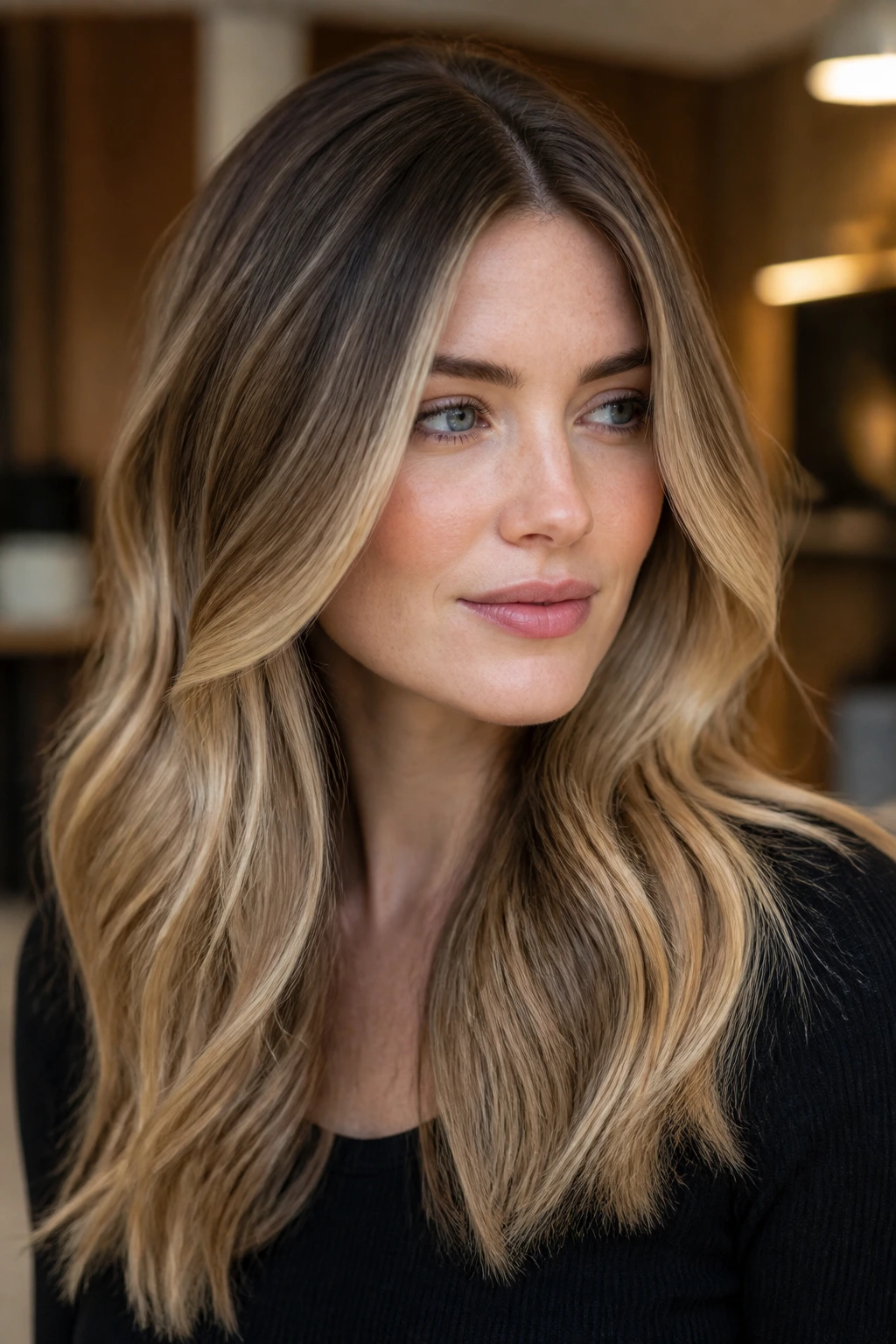
Not every honey ombre needs to look sweet in the sugary sense. The smoky root stretch gives this look a cooler start, which is excellent on pale skin that leans pink or blue. Then the buttery honey ends bring the warmth back in a controlled way. The result feels balanced, not sticky.
This is one of the strongest choices for a heart-shaped face because the shadow at the crown keeps the upper part from looking too wide. The eye travels down through the midlengths, where the honey takes over. It’s a small trick, but it makes the whole face look longer and a little softer at the jaw.
If your natural color is dark blonde or light brown, this can be a beautiful low-maintenance choice. The grow-out line stays soft because the root is intentionally deeper. No one needs to know you skipped a refresh for a few weeks. The hair just keeps behaving.
10. Sunlit Honey Ombre with Micro-Babylights
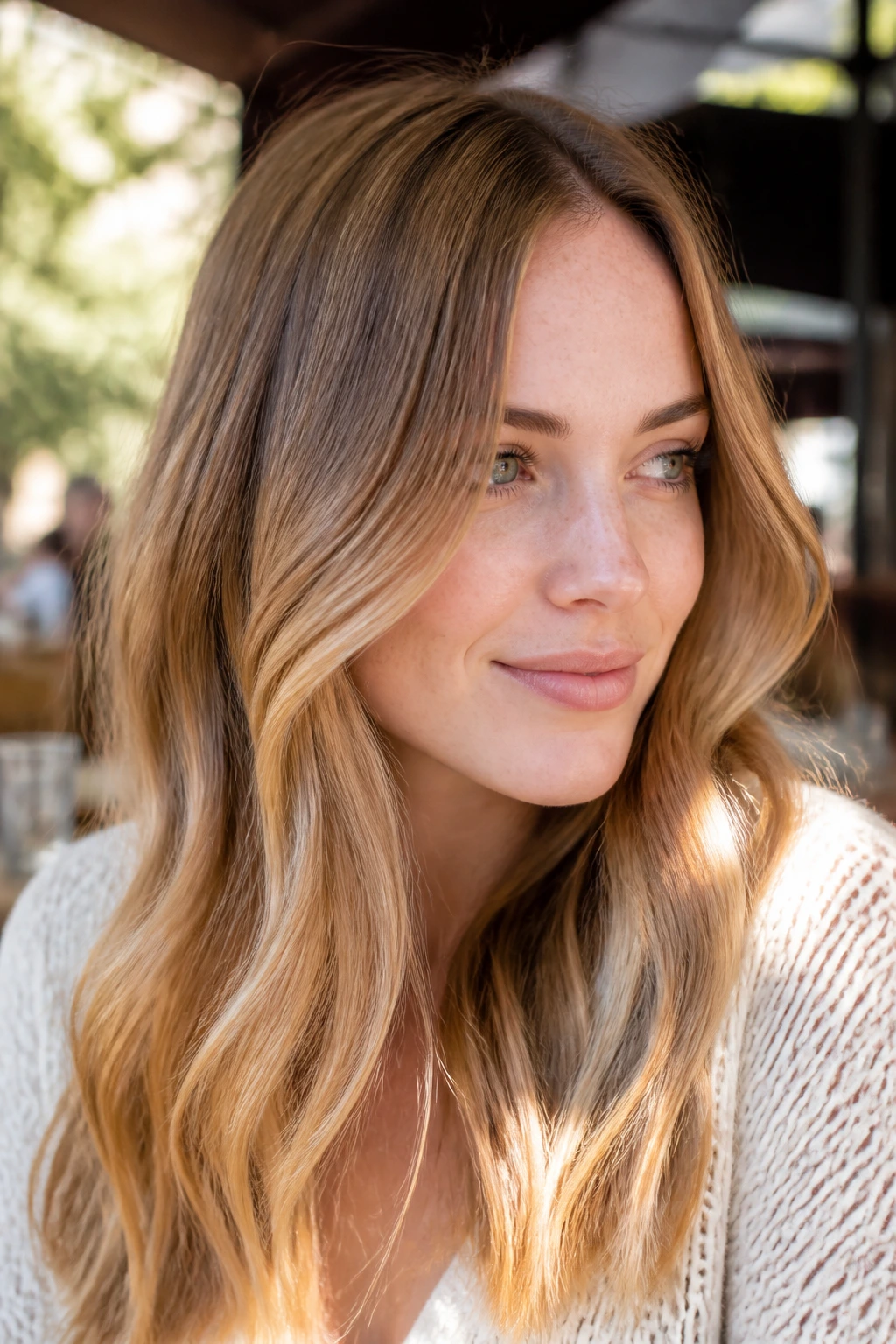
This version is all about fine detail. Instead of broad painted panels, the color is built with micro-babylights and a slow honey transition through the ends. On pale skin, that subtlety matters. It keeps the overall effect light without crossing into harsh contrast. On a heart-shaped face, the tiny threads of brightness stop the front from feeling blocky.
I love this on fine hair because chunky highlights can look heavy when the strands are thin. Micro-babylights create a shimmer instead of a stripe. The hair looks fuller because your eye sees texture, not just color bands.
If you live in a place with hard water or use a lot of heat, this is the kind of finish that can fade fast. It needs gloss upkeep. Worth it, though. When it’s fresh, the hair looks like it has light woven through it rather than color painted on top.
11. Strawberry Honey Blend for Rosy Skin
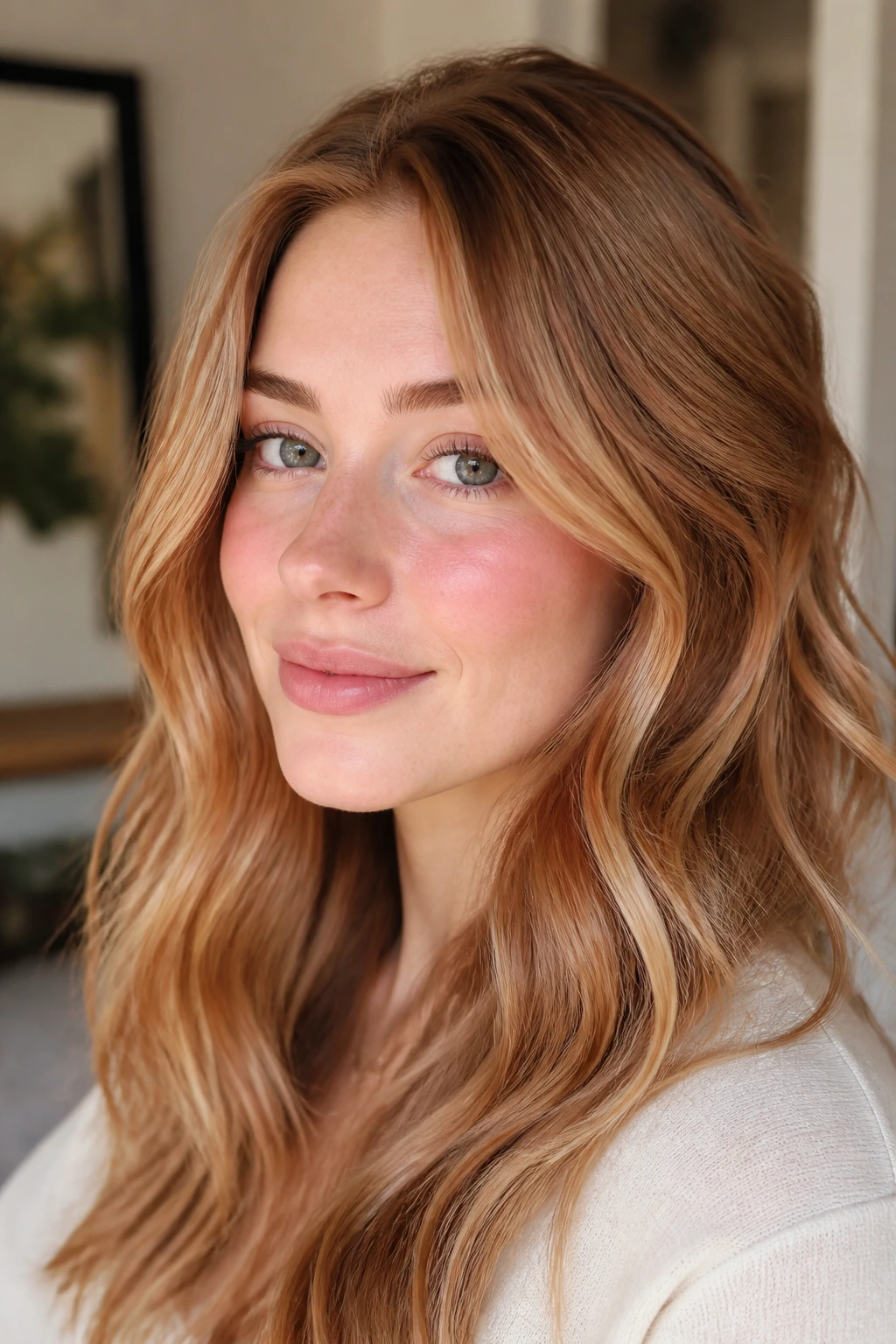
This one has a little blush in it. Not full copper. Not strawberry blonde in the old-school sense. More like honey that’s been nudged toward rose-gold, which can be lovely on pale skin with a rosy cast. It keeps the face from looking stark, and it brings a soft warmth that feels almost lit from within.
Heart-shaped faces benefit from the warmth being stronger through the lower lengths than at the root. That way the color doesn’t exaggerate the forehead. A rosy honey end on long layers or soft curls can make the jawline feel less narrow without doing anything loud.
Be careful with the gloss here. Too much red and the color tips into copper. Too little and it just looks beige. The sweet spot is a warm honey with a faint strawberry note, especially if your cheeks already flush pink when you’re warm or active.
12. Toffee Ribbon Ombre on Long Shags
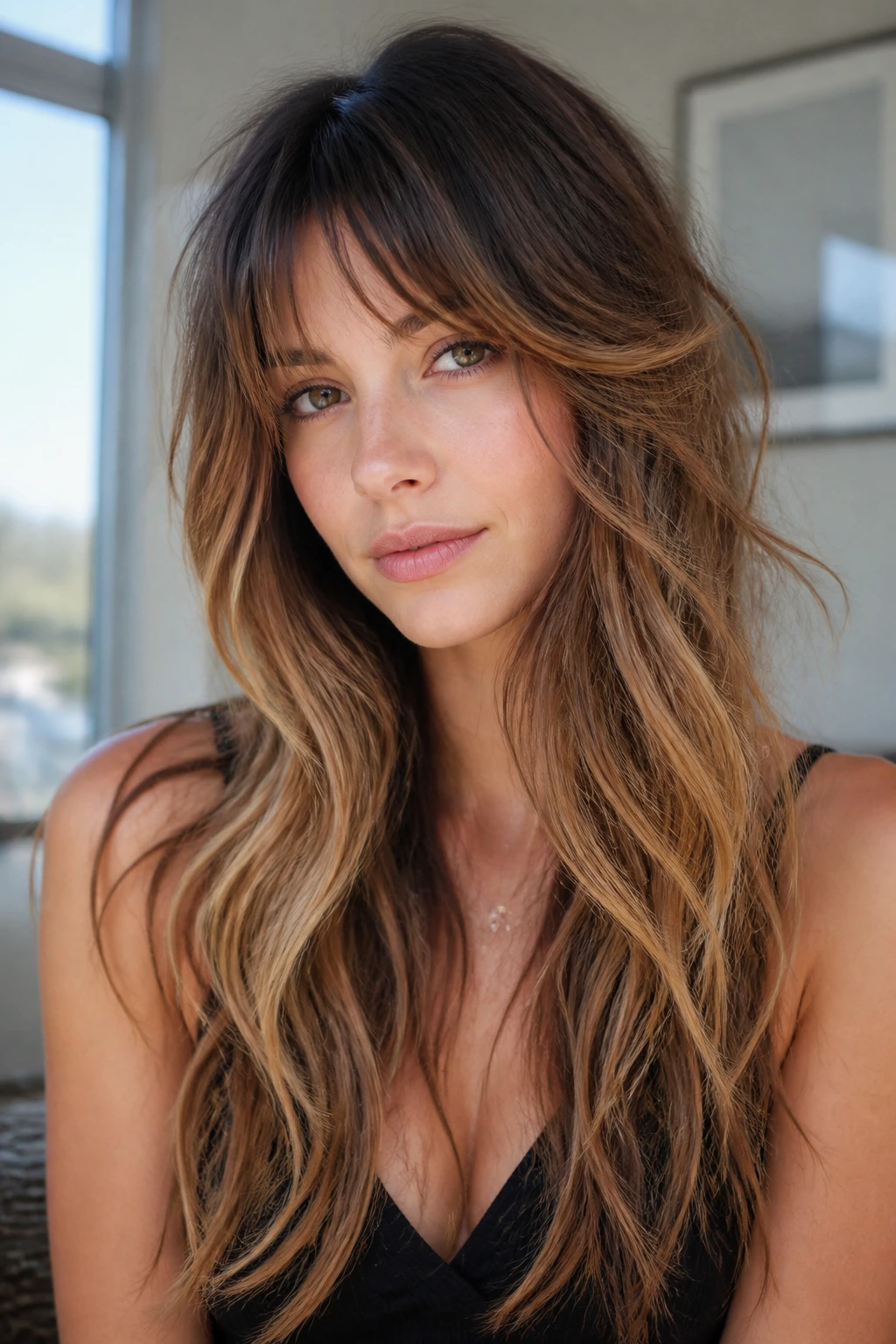
A long shag loves ribboned color. The layers break the honey into pieces, which keeps the whole thing from looking heavy. Toffee at the root, honey through the mids, then lighter ribboned ends gives pale skin enough warmth to hold its own while still keeping the hair airy.
For a heart-shaped face, the shag is doing some of the balancing already. The color should support that work, not fight it. I’d keep the brightest ribbons a little lower and avoid loading the temples. Let the movement happen around the cheekbones and below.
This is a good choice if you like a slightly undone look. Not messy. Just broken-in. The color shows differently every time the hair moves, and that movement does a lot of the face-shaping for you.
13. Curly Honey Halo Ombre
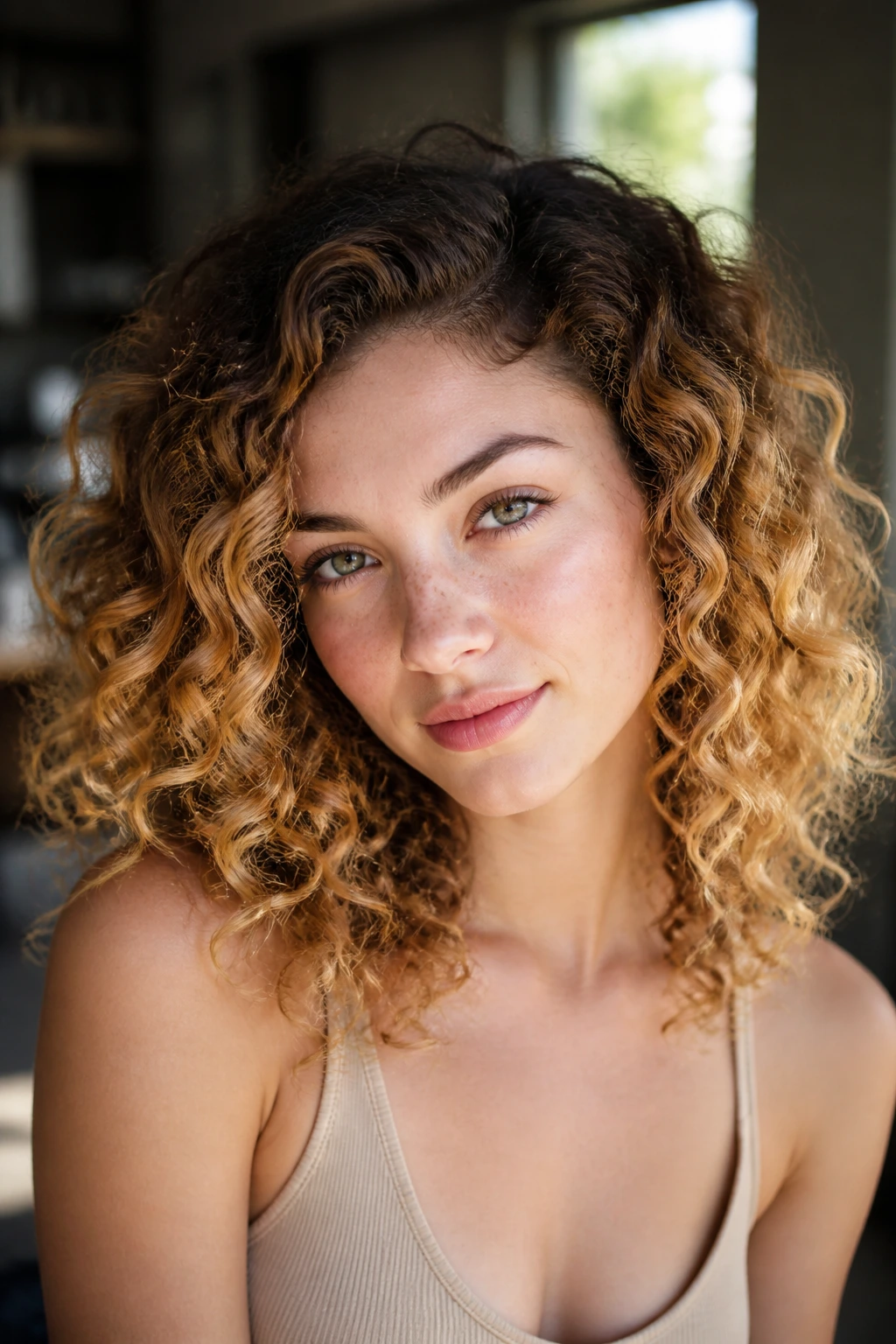
Curly hair changes how ombre reads, and this is one of the nicest ways to do it. A honey halo means the color isn’t shoved only into the ends; it wraps around the outer curves of the curls, where light naturally hits. That gives pale skin a glow from the hairline outward, while the deeper interior keeps the curls from going flat.
Heart-shaped faces can look beautiful with this kind of halo because curls create width where the face narrows. The trick is to keep the brightest curls a bit lower around the cheeks and jaw, not just at the temples. That shifts balance downward in a very soft way.
Diffusing helps the color show. So does a curl cream with a little hold. If the curls are frizzy, the honey can look patchy. Keep the moisture up, and the whole shape will read smoother and richer.
14. Cool Honey with Soft Ash at the Crown
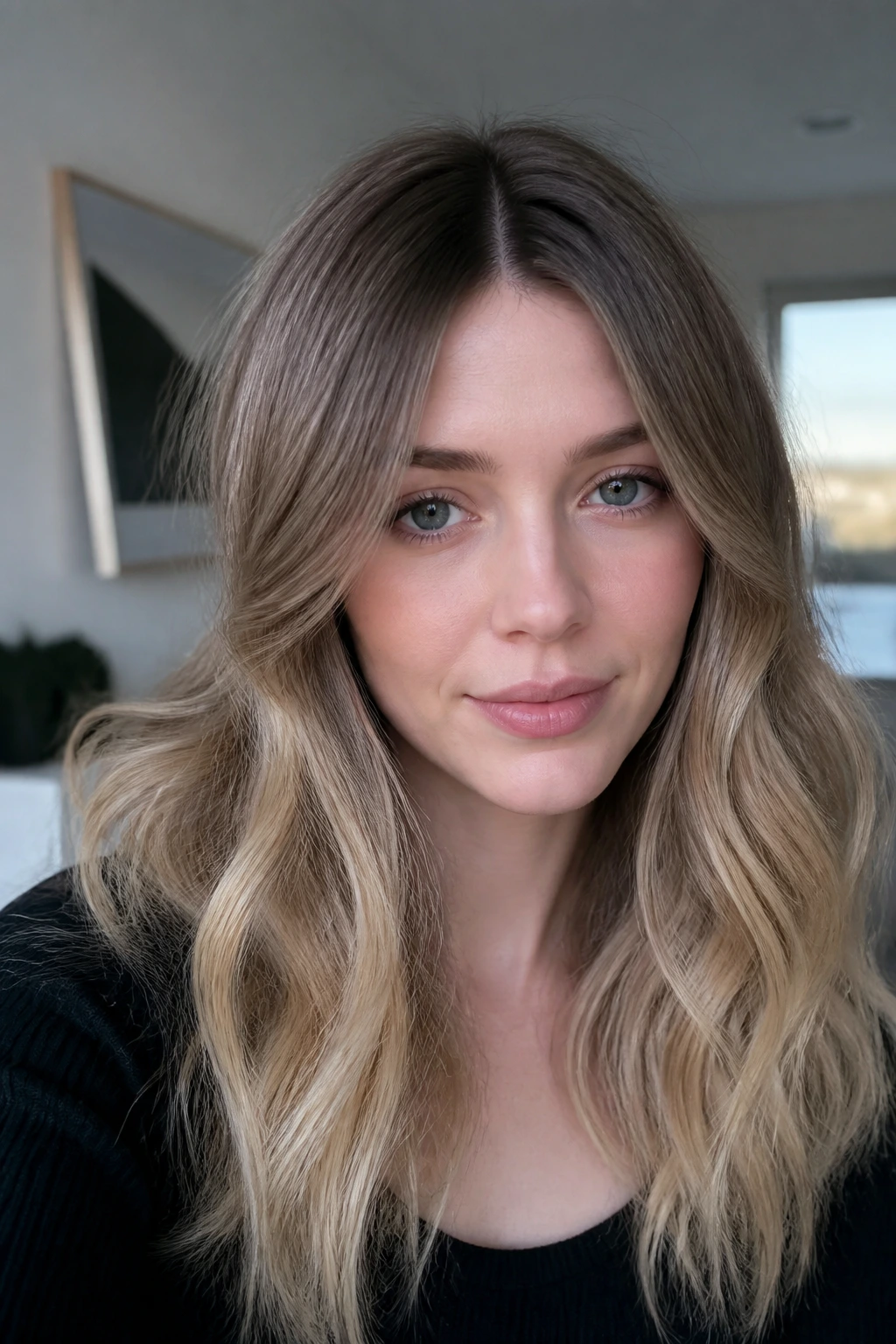
Here’s the contrarian take: pale skin does not always need warmer honey. Sometimes the cleaner choice is a cool honey with a soft ash root. That combination can look sharper and fresher, especially on very fair skin that leans pink or blue. The ash at the crown stops the top from turning yellow, and the honey through the ends keeps the hair from looking dull.
This is a strong move for heart-shaped faces because the softer root reduces width at the forehead. The eye moves downward into the honey lengths, where the face can use a little extra softness. I’d call this the quietest of the bunch, but not the least interesting.
If you wear minimal makeup, this is a smart pick. It doesn’t ask for much from your face. It just sits there and behaves, which is a nice change from blondes that need constant fixing.
15. Peach-Gold Honey for Pale Skin
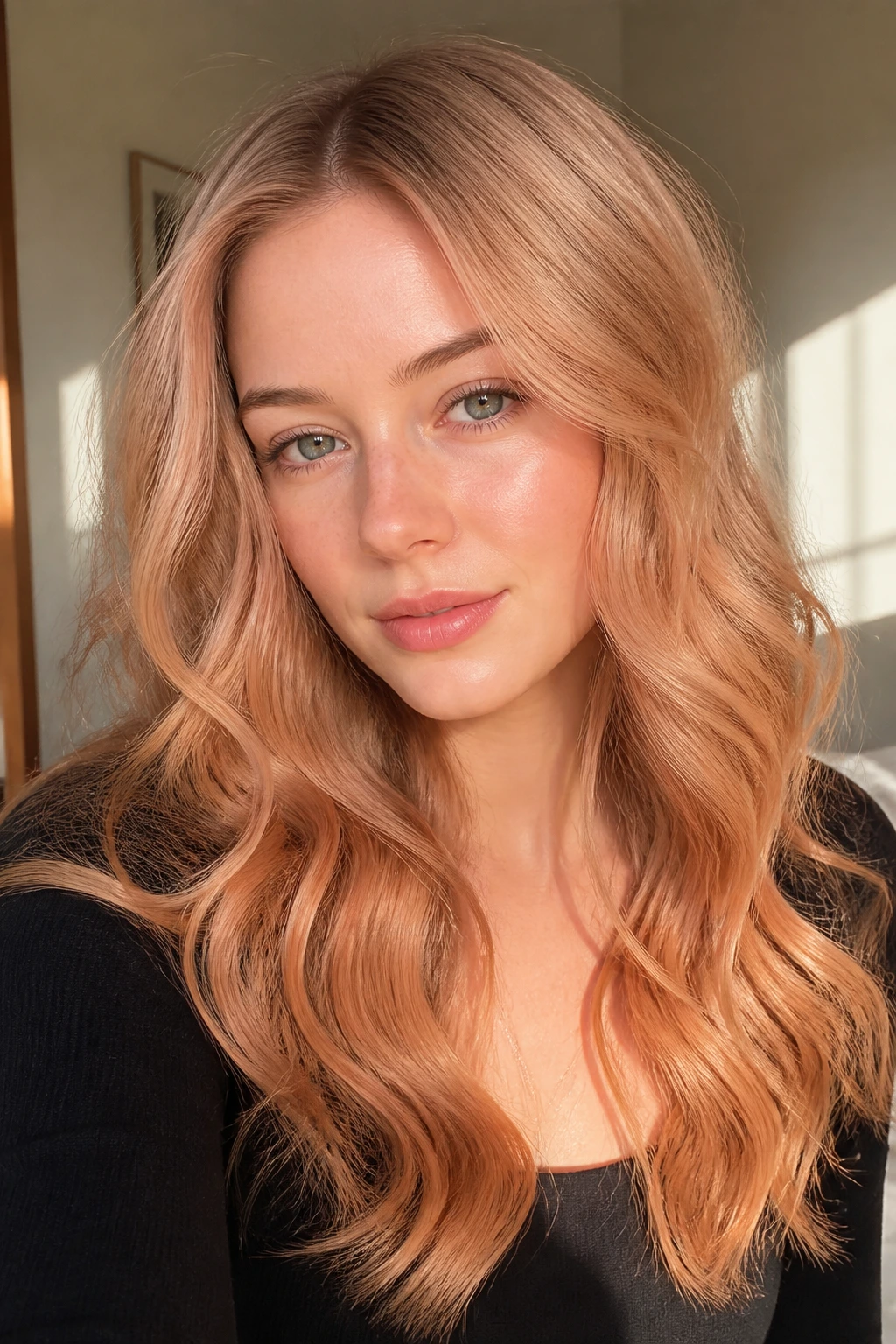
Peach-gold honey sits warmer than beige, but it isn’t loud. On pale skin, especially skin with a little peach in it, this tone brings life back fast. It has a gentle warmth that feels healthier than icy blonde and less orange than copper. That middle ground is where it shines.
Heart-shaped faces can take this color well if the light starts below the cheekbone and then falls through the ends. The peach-gold tone around the lower half of the hair visually softens the chin and balances the wider top. It’s a friendly color. Not precious. Not fussy.
I’d pair this with soft waves or a blowout that bends away from the face. Straight, flat hair makes peach-gold look a bit more obvious. A little movement lets the gold and peach tones blend instead of sitting in separate lanes.
16. Curtain Bangs and Honey Sweep
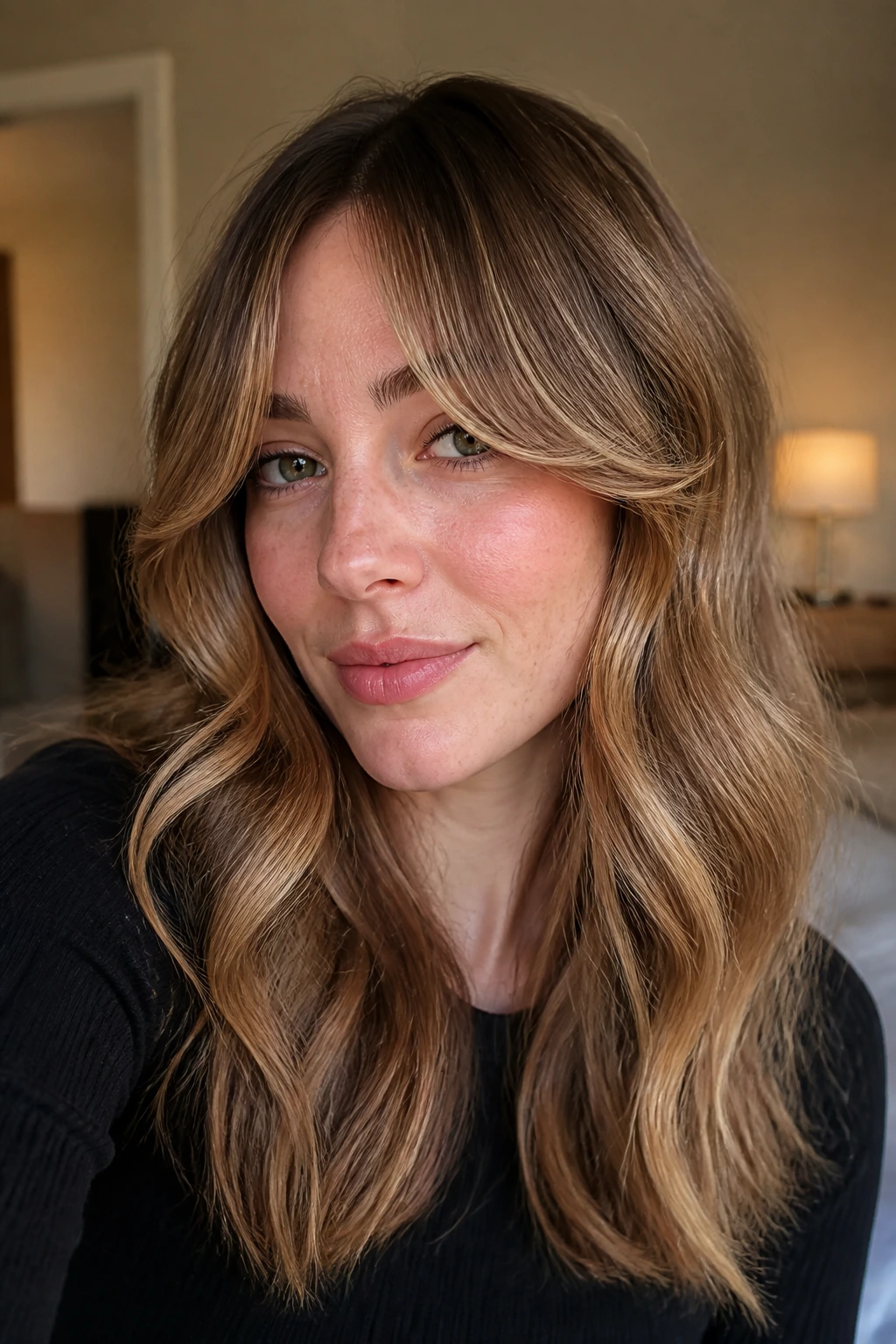
Curtain bangs are almost cheating on a heart-shaped face, and I mean that kindly. They break up the forehead, soften the upper third, and make space for the cheekbones to breathe. Add a honey sweep through the lengths and you get a look that feels balanced without trying too hard.
For pale skin, keep the bangs a shade darker or more neutral than the brightest ends. If the fringe is too light, it can widen the forehead visually. The sweep through the lengths should begin around the cheekbone and open into the collarbone area, where it can help the jaw feel fuller.
This is one of the easiest styles to wear with a middle part. The bangs do the softening, and the ombre does the rest. Honestly, when this works, it works fast.
17. Cinnamon-Honey Melt for Strong Brows
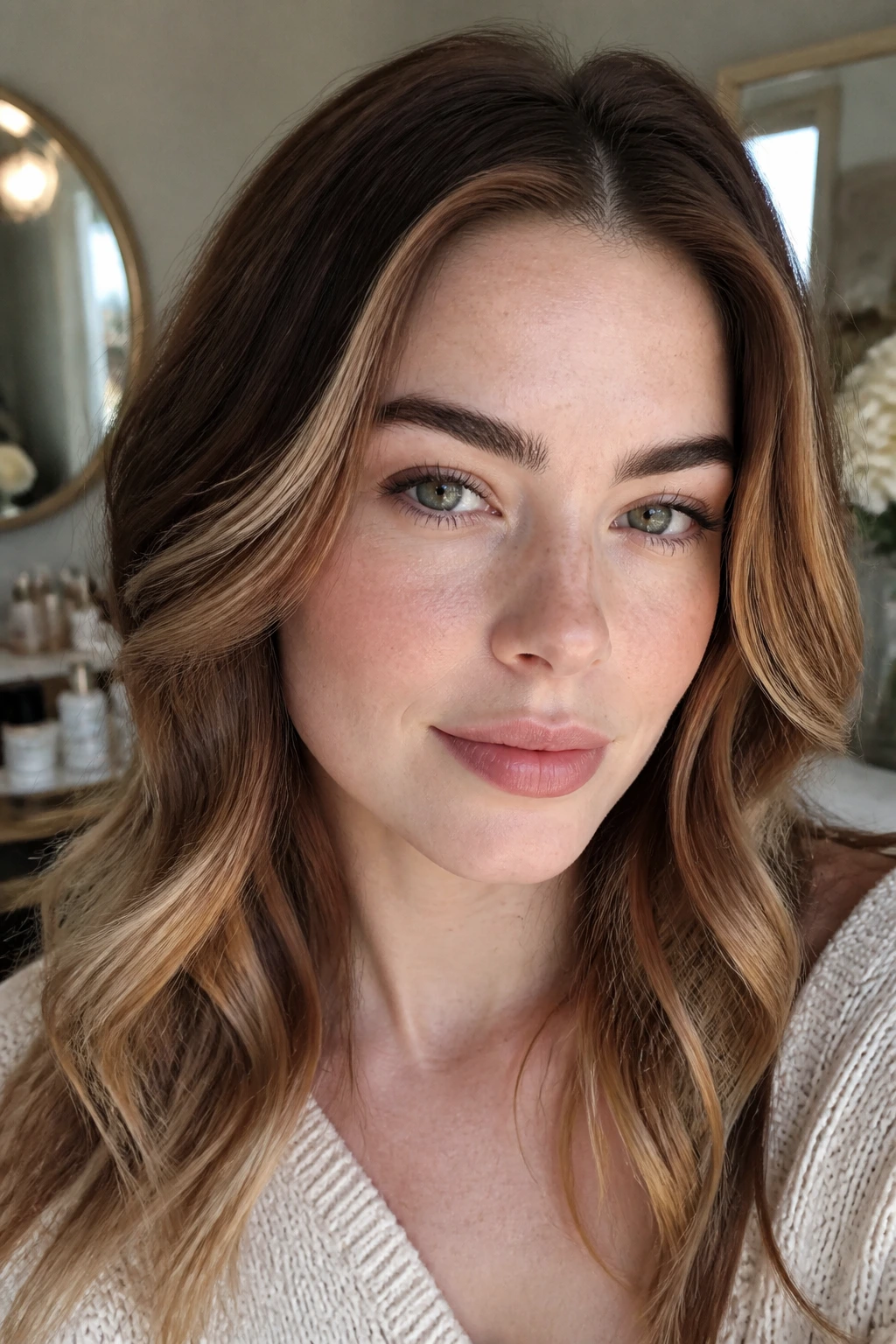
Some pale-skinned people have dark brows, and that changes the whole equation. A cinnamon-honey melt gives those brows something to talk to. The root stays rich and warm, then the honey comes in through the mids and ends so the hair doesn’t disappear next to stronger features.
Heart-shaped faces often look best when the hair has a little depth near the top, and this version gives it. The cinnamon root is enough to keep the forehead from dominating, while the honey lower down widens the bottom half in a soft way. It’s a useful trick if your features are bold and you don’t want the hair to go powdery beside them.
This shade also wears well with makeup. A berry lip, a soft brown liner, even a simple mascara-and-brow look — the hair doesn’t fight any of it. That’s a nice bonus when your color has enough contrast to stand on its own.
18. Soft Amber Finale with Glossy Ends
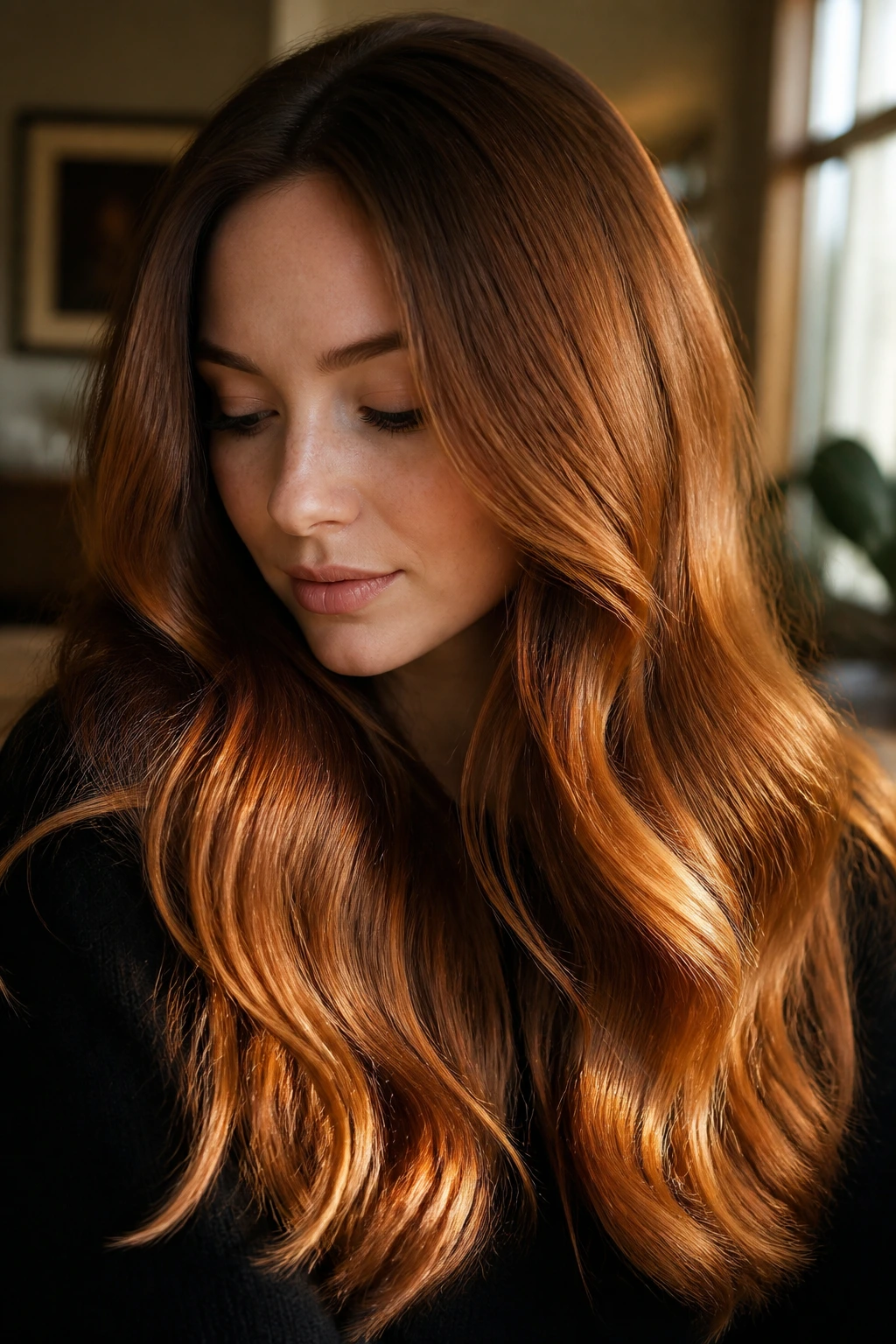
Amber honey is the richest option in the group, and I save it for people who want warmth that feels deeper than classic blonde. On pale skin, the trick is keeping the amber glossy rather than flat. Gloss is what keeps it from looking muddy. It should shine, not sit there like caramel left in the sun.
For heart-shaped faces, the richer ends help pull attention downward and give the jaw a little more visual weight. If the roots are kept softly shaded, the whole head looks balanced. It’s a particularly good choice for long hair because the gradient has room to breathe.
I like this one with loose, polished waves or a soft blowout. The color needs movement. Without that, amber can feel heavy. With it, the hair looks full, warm, and a little bit expensive — though I’d still skip the word “expensive” if I were writing this from a salon chair, because what you’re really after is clean shine and clear tone.
How to Ask Your Colorist for the Right Honey Tone
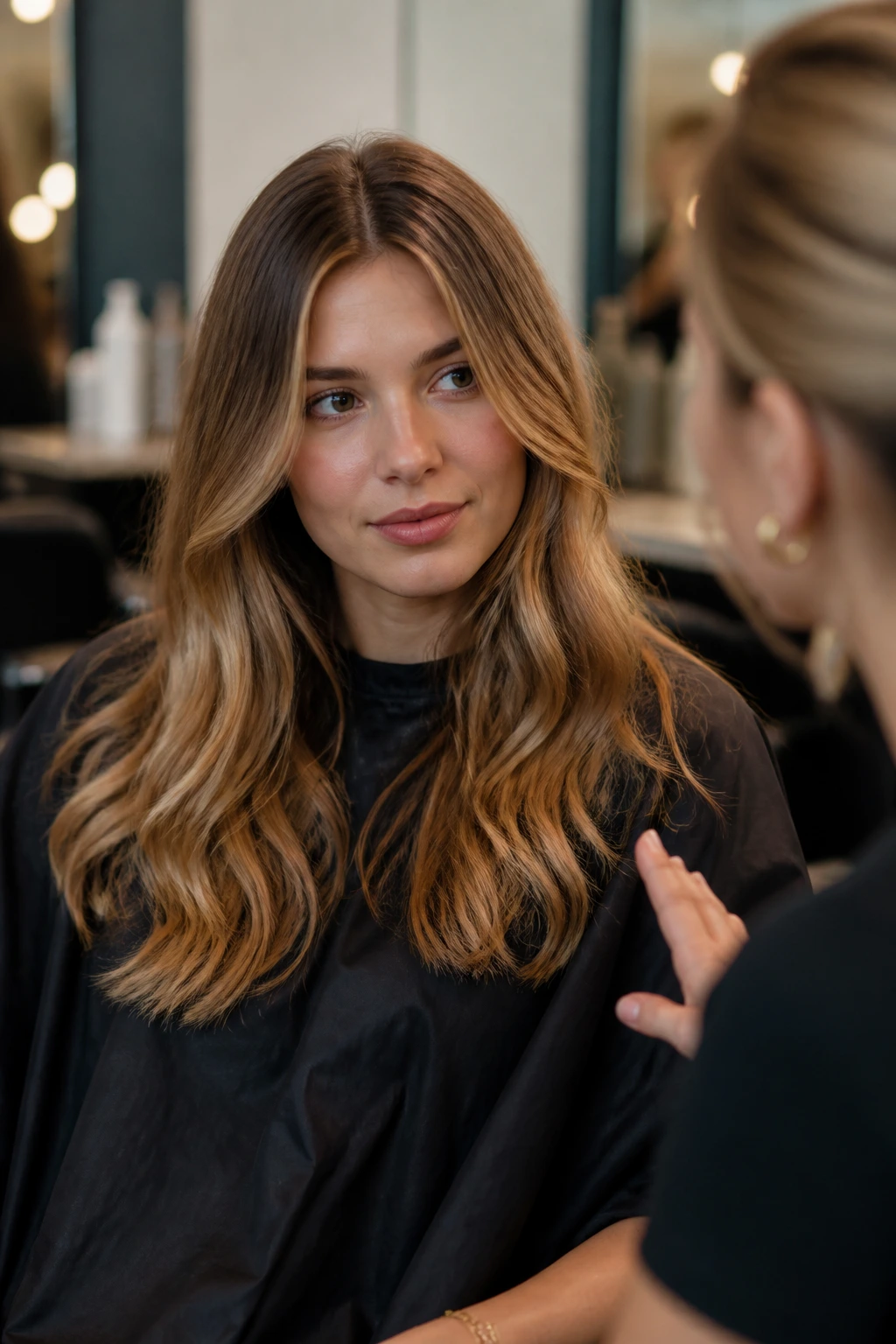
Walk in with a color idea, not a fantasy. That sounds blunt, but it saves everyone time. Tell the colorist whether your skin leans pink, neutral, or peach. Tell them if your brows are light or dark. Tell them where you want the brightest pieces to sit, because for a heart-shaped face that part matters more than the exact honey name on the swatch ring.
A useful script sounds like this: “I want a soft honey ombre with a deeper root, and I’d like the brightest pieces to start below the cheekbone so the forehead doesn’t look wider.” That one sentence does a lot of work. If your hair tends to brass, add “Please keep the tone beige or amber, not yellow.”
Bring one photo that shows the tone and one photo that shows the placement. Don’t rely on one image to do both jobs. The human eye notices a placement pattern faster than it notices a color label. If the placement is right, you can usually tweak the gloss later.
Tools That Keep the Color Soft and the Styling Easy
-
Color-safe sulfate-free shampoo: Keeps the honey from stripping out too fast, especially on porous ends.
-
Blue or purple shampoo: Use sparingly. Blue helps if the honey turns orange; purple helps if it turns yellow. Too much of either will dull the warmth.
-
Deep conditioning mask: A weekly mask keeps the lightened ends from feeling dry and rough.
-
Heat protectant spray: Honey tones lose their shine fast when you flat-iron them without protection.
-
Glossing treatment or clear glaze: Handy for reviving shine between salon visits if the ends start looking tired.
-
Wide-tooth comb: Better than a brush on wet, highlighted hair because it reduces tugging.
-
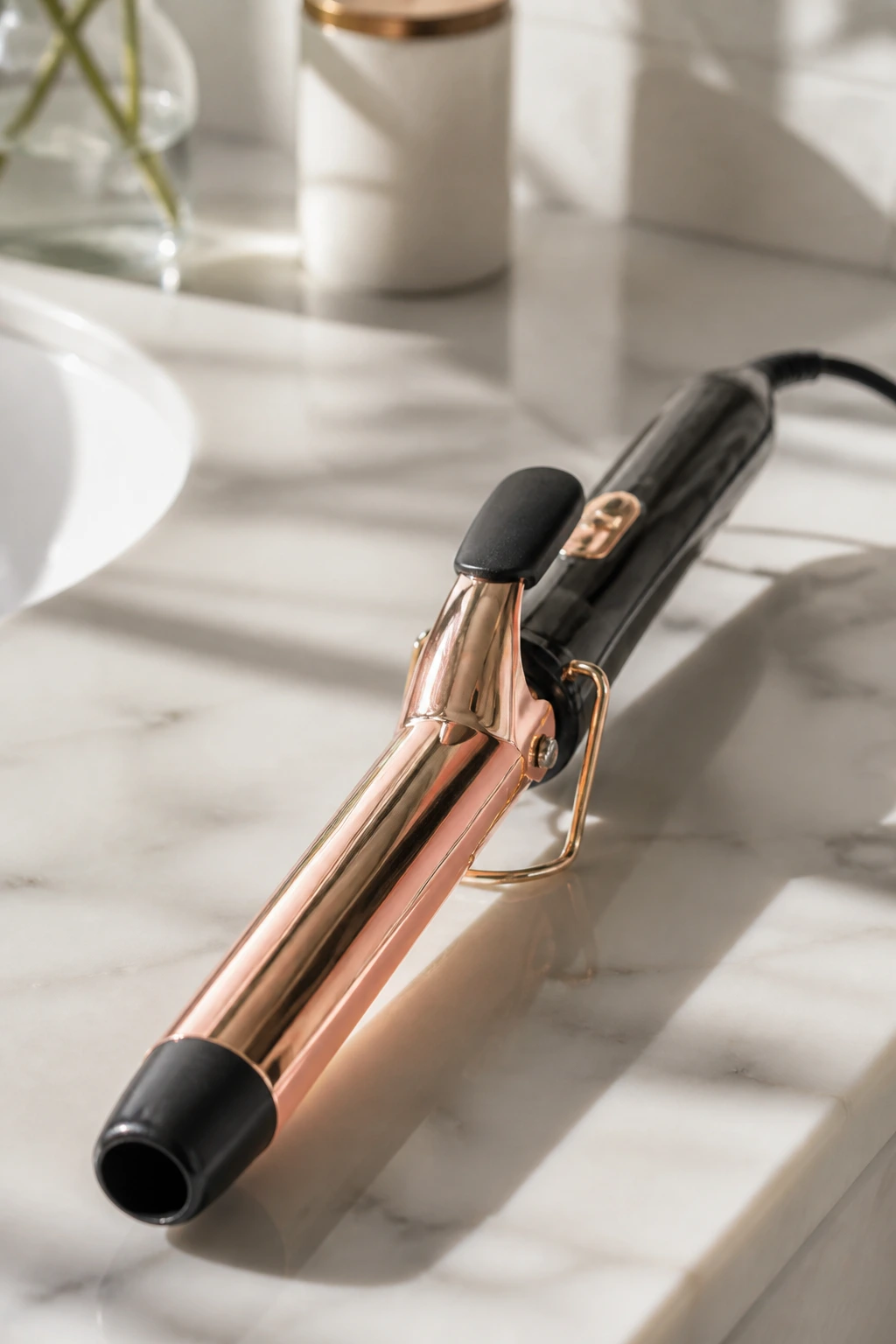
1.25-inch curling iron or round brush: Both create the bend that shows off ombre placement without making the hair look overdone.
-
Microfiber towel or soft T-shirt: Less friction, less frizz, less faded-looking blonding.
How to Keep Honey Ombre Glossy Between Visits
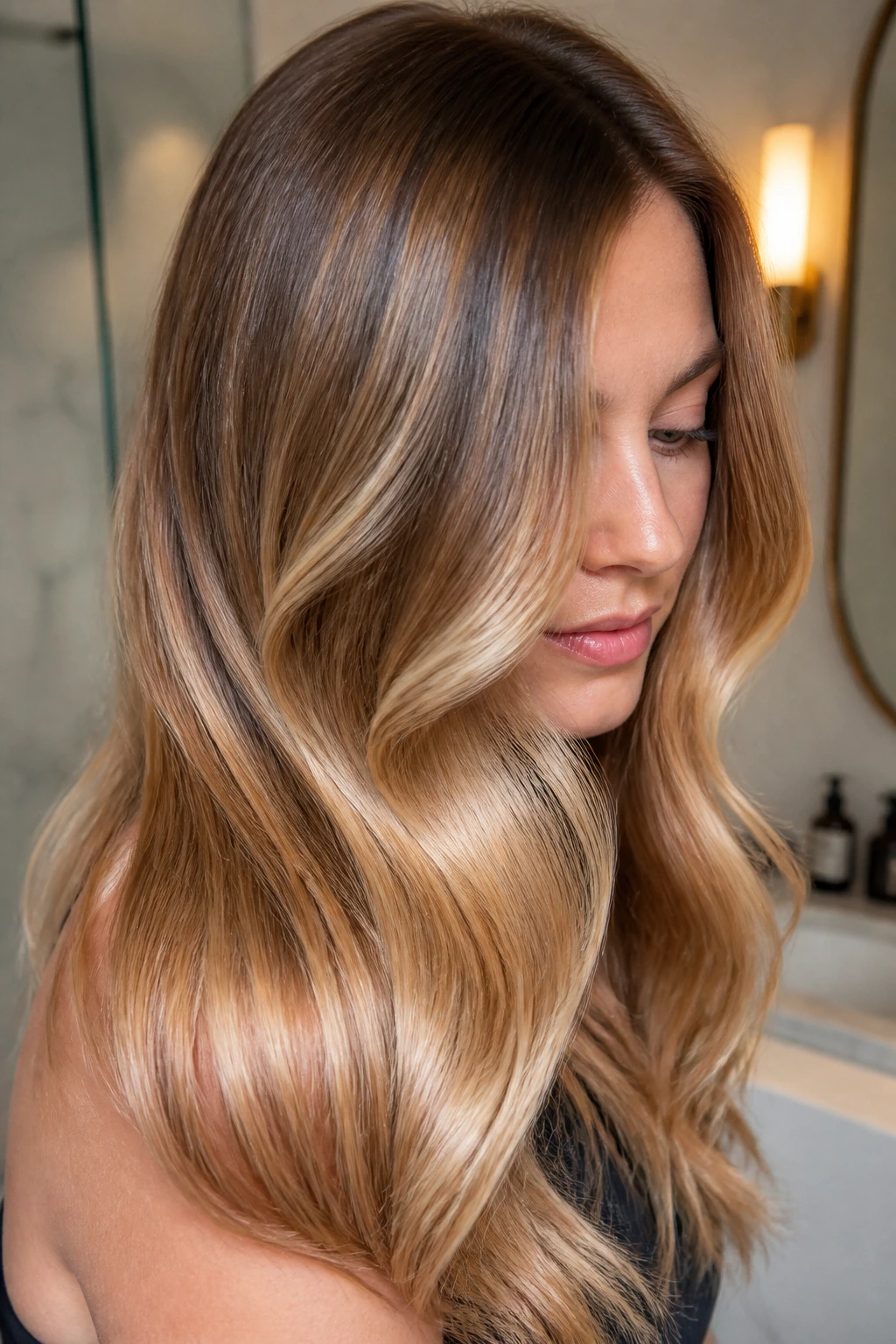
Honey ombre needs care, but not the kind that turns your bathroom into a lab. Wash with lukewarm water, not hot. Hot water strips gloss from lightened hair faster than most people realize, and the ends are usually the first place to go dull. Two or three washes a week is plenty for many hair types, especially if you’re using dry shampoo between washes.
A gloss refresh every 4 to 6 weeks keeps the color in the beige-gold lane. If your hair lifts orange, a blue shampoo every 10 to 14 days can help, but don’t use it like a daily cleanser. It’s a correction tool, not a lifestyle. Purple shampoo works better when the ends drift too yellow, though again, sparingly.
Deep condition once a week if your hair is highlighted from midlengths down. If the hair feels rough at the ends, leave the mask on for 10 to 15 minutes and clip the hair up so it stays warm. That small trick helps the product do more work. Heat style with a protectant every single time. Missing it once or twice is usually how the ends start looking frayed.
If you air-dry, scrunch in a light leave-in cream and let the color do the rest. If you blow-dry, finish with a cool shot. The shine matters here. Honey reads best when the surface is smooth enough to reflect light.
Common Mistakes That Make Honey Ombre Look Flat
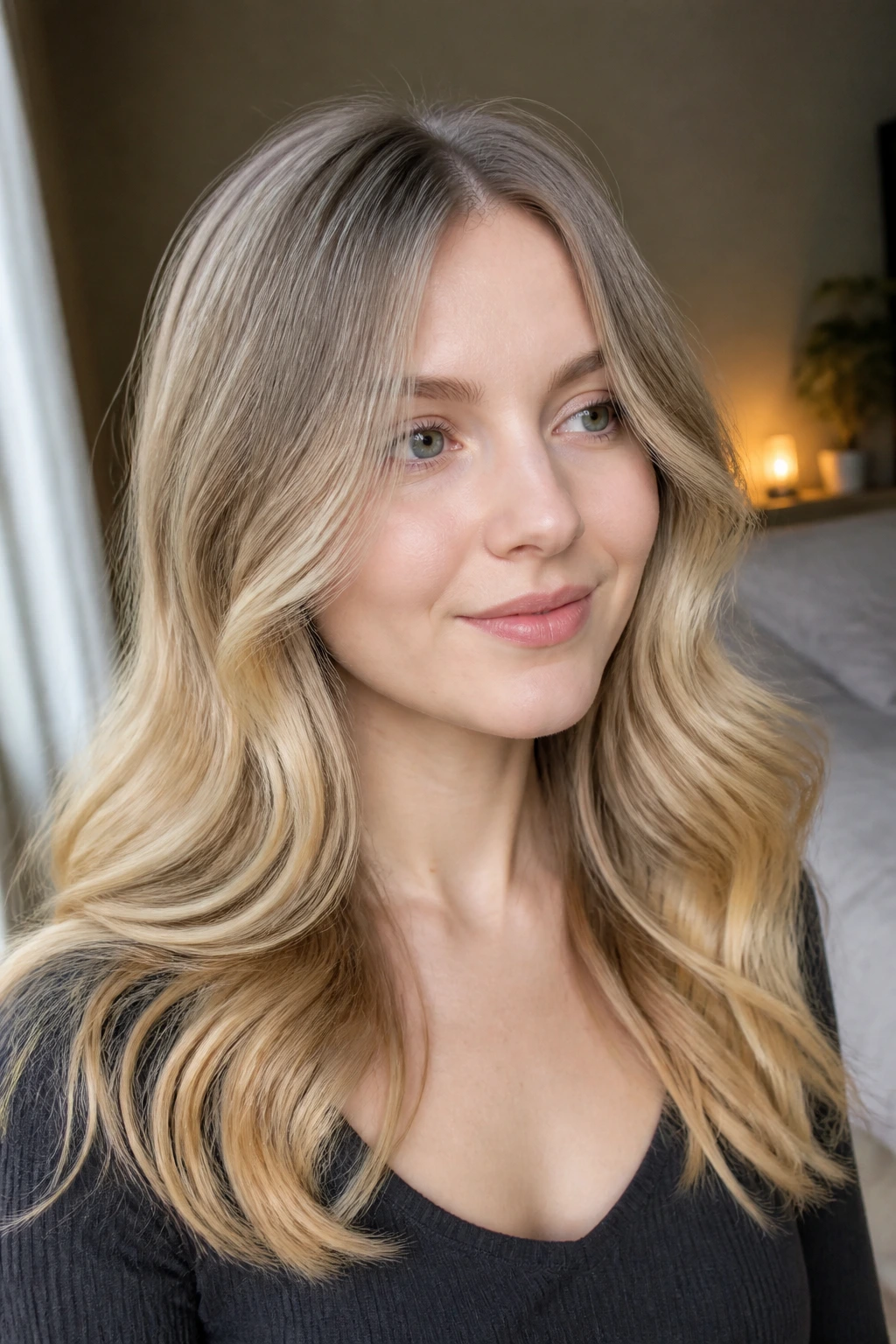
The first mistake is starting the lightness too high. On a heart-shaped face, brightening the temples and crown too aggressively can make the forehead feel wider than it is. The fix is to keep the strongest brightness lower — cheekbone, jaw, and ends.
The second mistake is choosing honey that runs too yellow. Pale skin can handle warmth, but not every blonde needs to lean sunflower. If the color turns brassy, it usually means the gloss is too warm or the lift wasn’t balanced well. Ask for beige, amber, or biscuit honey instead.
The third mistake is flattening the hair with too much tone correction. Purple shampoo every wash can drain the warmth out of honey until it looks dull and dusty. Use toning shampoo only when the color shifts, not as part of every cleanse.
The fourth mistake is ignoring the haircut. Honey ombre on a blunt, heavy cut can look like a stripe if the placement isn’t broken up by layers or movement. Even a small bend at the ends helps the gradient show its shape.
The fifth mistake is skipping a root shadow when the base is too light. A weak root can make pale skin look washed out and heart-shaped faces look broader up top. That extra shade at the root isn’t hiding anything. It’s doing the framing work.
Variations Worth Trying If You Want More Cool, Warm, or Low-Maintenance
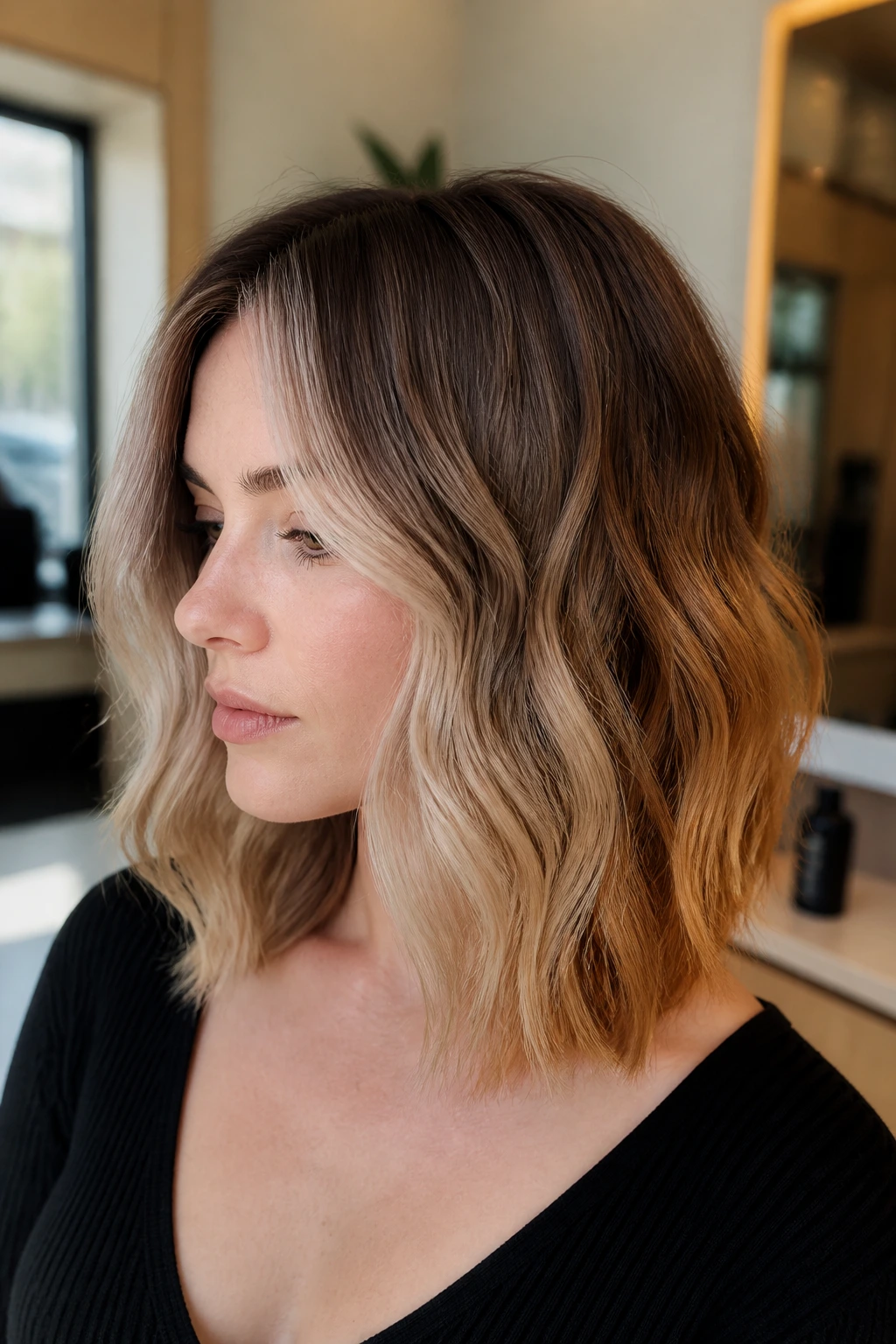
Beige-Forward Honey: Keep the gloss almost neutral, with only a hint of gold. This is the safest lane for pink or cool pale skin, and it fades cleaner than warmer shades.
Amber Wash: Push the ends a little deeper and warmer for a richer glow. It’s the version I’d pick for peach undertones or for anyone who wears warm makeup shades often.
Low-Rise Ombre: Start the transition lower, around the lower cheek or even the collarbone. That gives you a softer grow-out and a less dramatic line, which is handy if you don’t want frequent salon visits.
Curly Placement: For textured hair, paint the honey on the outside curves of the curls rather than only on the ends. That keeps the color visible as the hair shrinks and expands.
Fringe-Softened Version: Add curtain bangs or a face frame that begins at the cheekbone. This is the easiest fix if your heart-shaped face feels top-heavy in most blonde placements.
High-Contrast Honey: Keep a deeper root and brighter ends for a sharper look. Use this when you want the color to read more fashion-forward and less whisper-soft.
Frequently Asked Questions
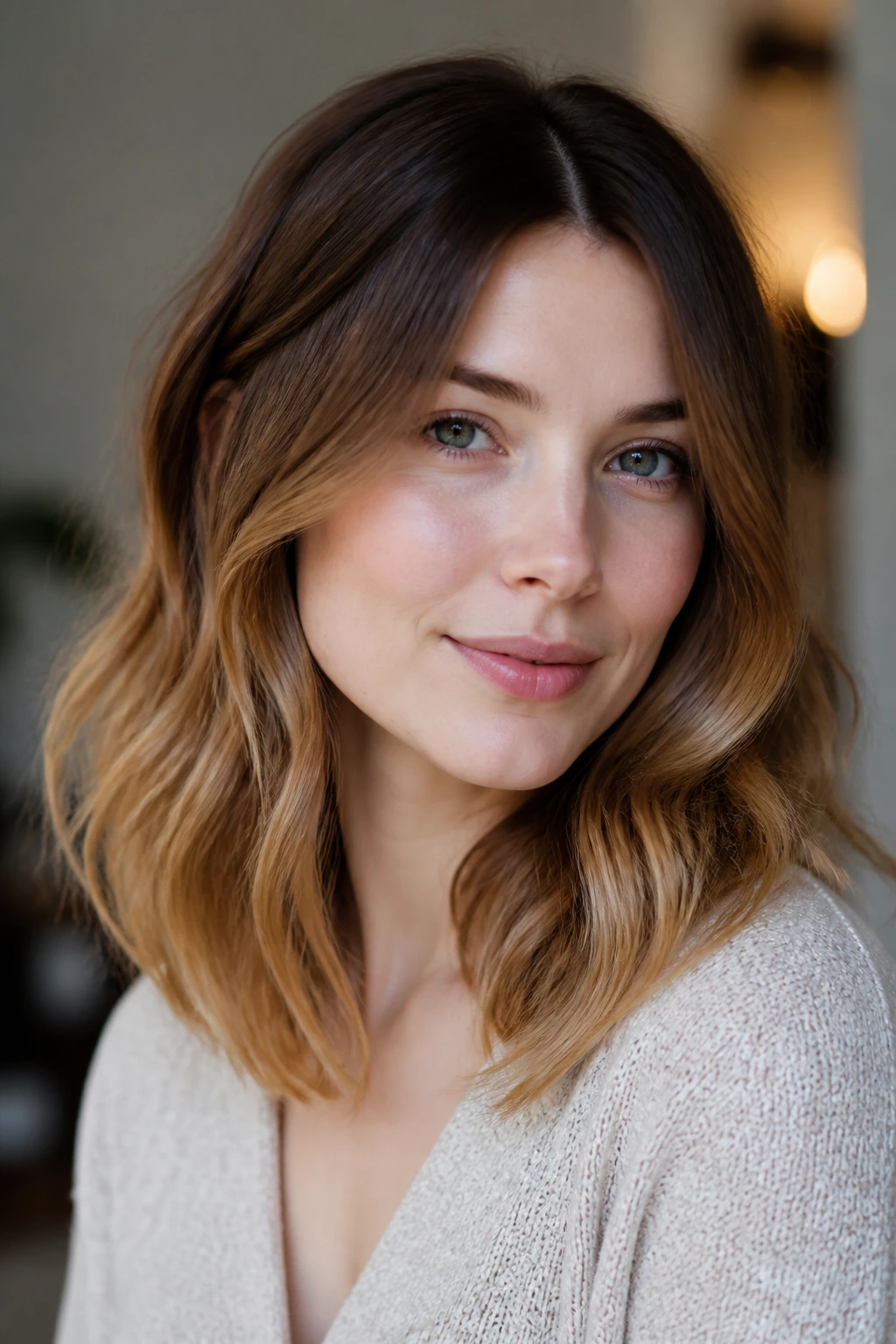
Will honey ombre make pale skin look sallow?
It can if the tone is too yellow or too flat. Beige honey, amber honey, and soft gold usually flatter fair skin much better than a strong banana blonde, especially when the root has enough depth.
Is honey ombre good for cool undertones?
Yes, but the tone should lean beige or smoky rather than orange-gold. Cool pale skin usually looks cleaner with a root shadow and a softer gloss through the ends.
Where should the lightest pieces sit on a heart-shaped face?
Usually below the cheekbone, with a little extra brightness around the jaw and lower lengths. That placement softens the forehead and keeps the face from looking top-heavy.
Can I wear honey ombre with a center part?
Absolutely. A center part can work well if the front pieces are softened and the brightness doesn’t start too high at the temples. Curtain bangs make that even easier.
Does honey ombre work on short hair?
Yes, but the gradient has less room to stretch, so the placement needs to be tighter. A bob looks best when the brightest pieces curve around the jaw rather than stopping abruptly underneath.
How often do I need to tone it?
Most people need a gloss or toner refresh every 4 to 8 weeks, depending on porosity and how often they heat-style. If the honey turns too yellow or orange sooner, that’s your cue to adjust the gloss instead of waiting for the whole look to fade.
Can curly hair pull off honey ombre without looking patchy?
It can, if the color is painted to follow the curl pattern. Honey placed only on the tips often disappears when curls shrink, so the best colorists build the lighter pieces around the outer curves too.
What if my hair is already brassy?
Then a soft honey ombre needs correction before it needs color. Blue shampoo can help short term, but if the brass is deep, a salon gloss or toner will give you a cleaner base to work from.
The Shade That Keeps the Face Bright
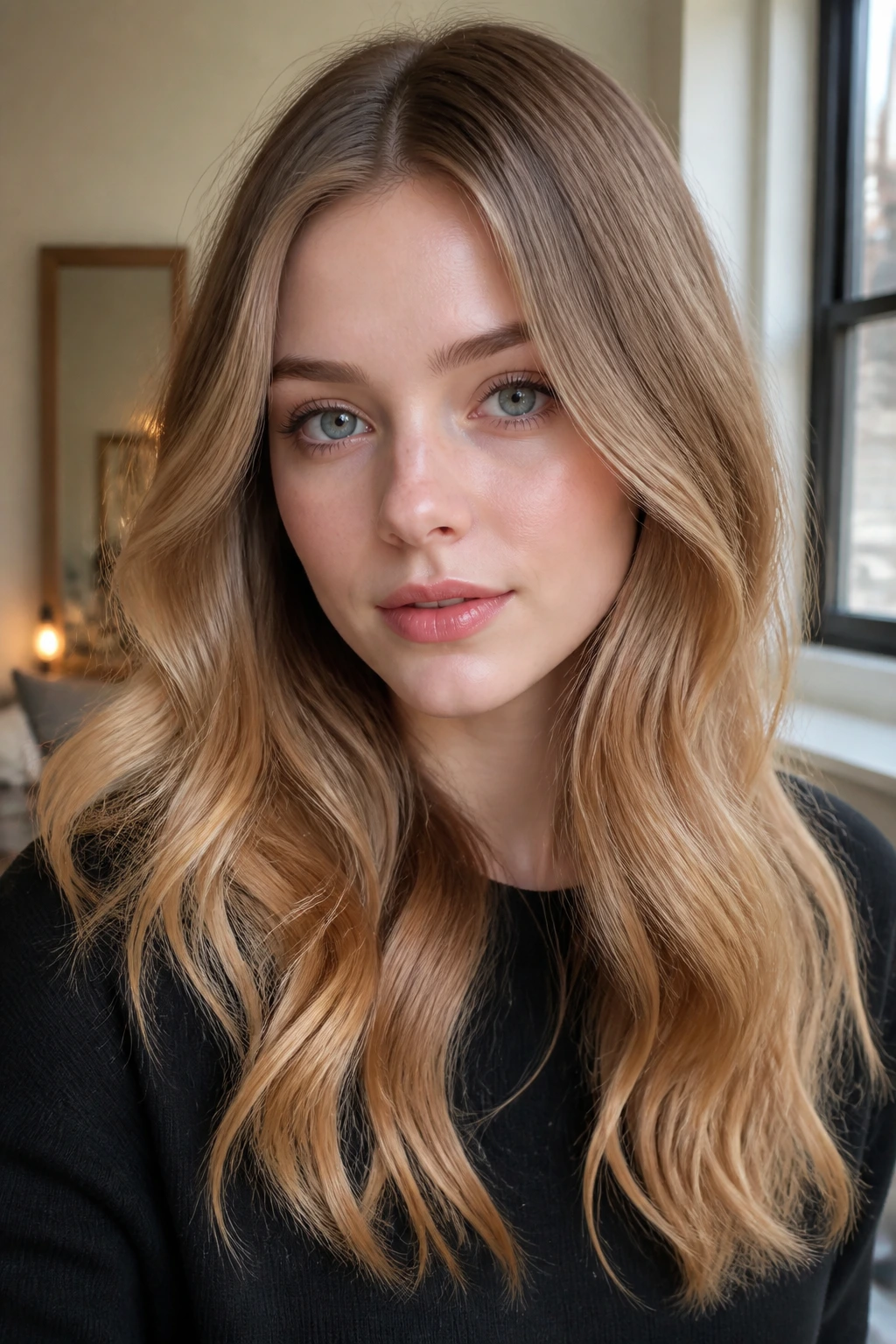
The best honey ombre for pale skin and heart-shaped faces does two jobs at once. It warms the complexion without turning it yellow, and it moves brightness away from the widest part of the forehead so the face feels balanced from top to bottom. That’s the sweet spot. Not too pale, not too copper, not too perfect-looking to move.
I’d pick the softer beige and amber options first, then adjust warmer or cooler from there. Once the placement is right, the rest becomes easy. The hair grows out softer, the face looks less top-heavy, and the color keeps doing its work even when you stop thinking about it for a minute.