



A fringe can do more for a short haircut than another inch of length ever will. On a round face, the wrong line can make the front of the hair sit like a shelf; the right one cuts diagonally, softens the cheeks, and gives the whole cut somewhere to go.
That’s the real reason layered fringe on short hair and round faces keeps showing up in good salons. It isn’t about hiding your face. It’s about building shape where a short crop can get boxy fast — across the brow, at the temples, and through the front corners that frame the cheeks.
I’ve always thought the best fringe is the one that moves a little. Not floppy. Not flat. Just enough separation at the ends that the eye keeps traveling instead of stopping at one blunt line. That matters even more with shorter cuts, because there’s nowhere else for the silhouette to breathe. A heavy bang can make a bob feel shorter; a layered one can make the whole cut feel lighter, cleaner, and sharper.
Why These Fringe Cuts Earn Their Keep on Short, Round Faces
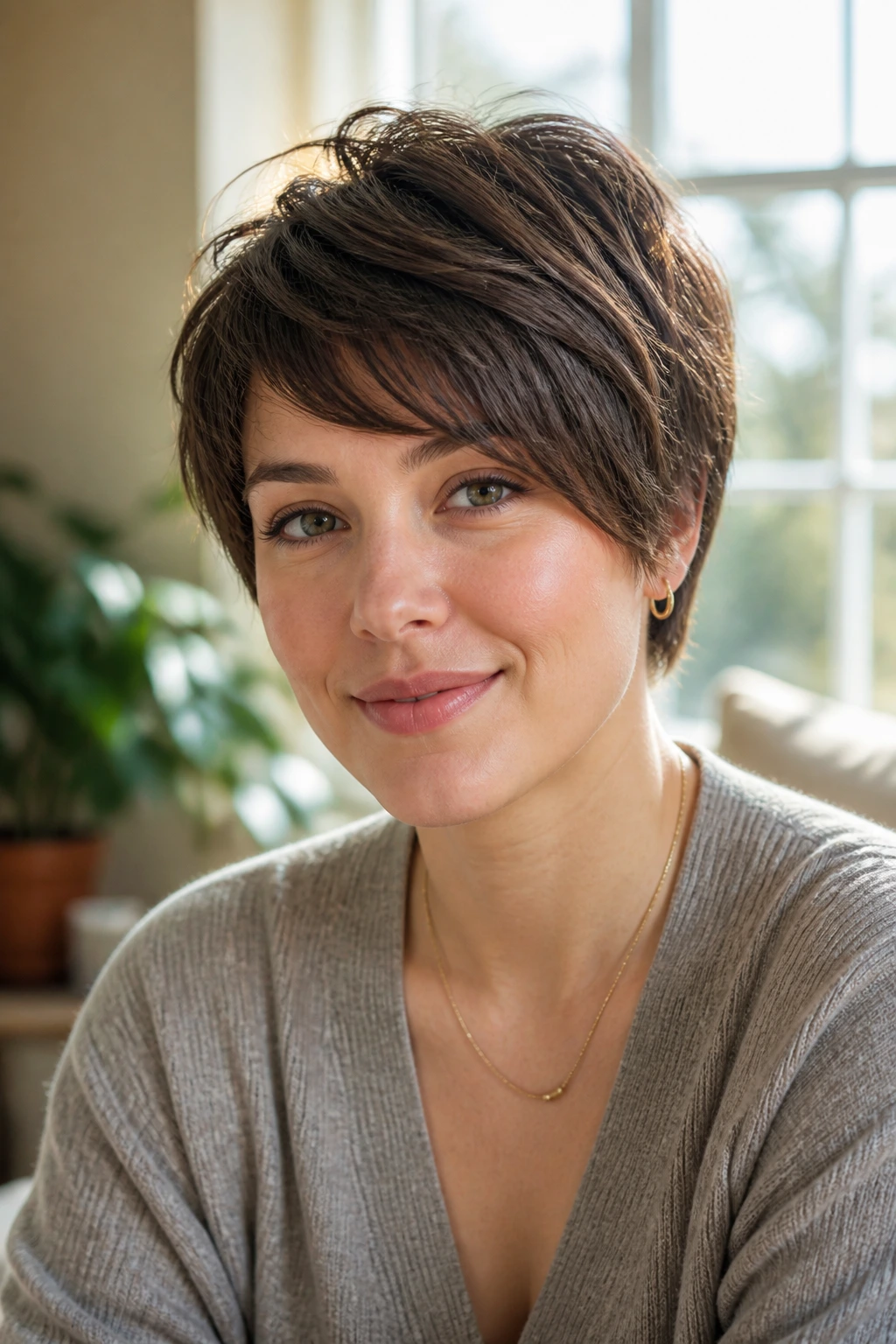
-
They break the circle without stealing attention: A layered fringe creates diagonal lines and tiny gaps of skin at the forehead, which keeps a round face from reading as one solid soft shape.
-
They keep short hair from looking blocky: Short cuts can bunch up around the jaw and ears. Fringe layers pull the eye upward and forward, so the haircut feels shaped instead of chopped.
-
They work with cheekbones instead of fighting them: The best pieces land around the brow, temple, or cheekbone, where they act like little framing strokes instead of a curtain that hides everything.
-
They grow out with fewer bad weeks: A layered fringe leaves room for the cut to soften as it lengthens. That’s a mercy if you don’t want a trim every three weeks.
-
They can be tuned to your texture: Straight hair, waves, and curls all need a different amount of weight removed, and layered fringe handles that better than a blunt line.
-
They give you styling options on sleepy mornings: You can wear them forward, swept, tucked, or bent with a round brush. One cut, several moods.
1. Curtain Fringe That Skims the Cheekbones
Curtain fringe is the easy favorite for a reason: it parts in the middle, drapes away from the forehead, and lands where the face starts to narrow. On short hair, that little opening at the center matters. It keeps the front from feeling dense, which is exactly what a round face doesn’t need.
Why it works
The longest pieces should hit around the top of the cheekbones or just below the brow, not slam straight across the widest part of the face. Ask for soft internal layers so the ends split rather than sit like one solid sheet. A good curtain fringe on a bob or pixie bob makes the eyes feel lifted and the cheeks look less dominant.
If your hair is thick, have the stylist remove weight from the middle without thinning the edges to death. If it’s fine, keep the fringe airy and a little longer, because too much point-cutting can make it look see-through in a bad way. I’d rather see a curtain fringe that’s slightly too full than one that looks like it was clipped by a paper cutter.
Styling note
Blow-dry it forward first, then split it with your fingers and bend the ends away from the face using a small round brush. That tiny bend at the cheekbone is the whole point.
2. Side-Swept Wispy Fringe On A Textured Bob
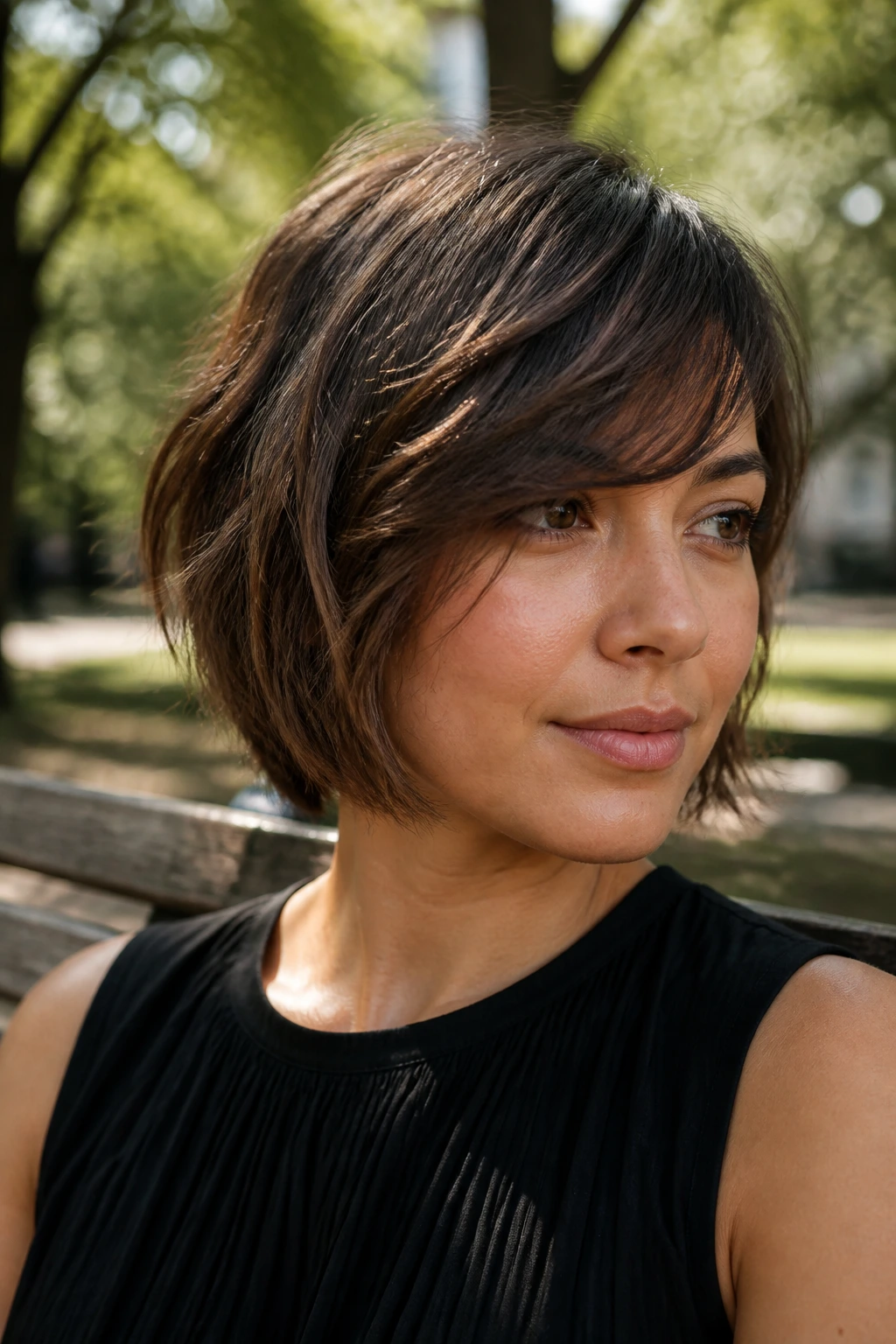
A side-swept fringe is the old reliable that still earns its place. The angle gives a round face a strong diagonal, and on a textured bob it stops the shape from feeling too neat. That little bit of disorder is doing real work here.
This is the one I recommend when someone wants fringe but gets nervous about commitment. The cut can be long enough to tuck behind the ear, and the front can be styled flat or lifted depending on your mood. On a jaw-length bob, it keeps the eye moving from the part to the cheek, which is exactly the sort of line round faces usually like.
The key is not to let the fringe become one heavy swoop. Ask for soft ends and a touch of layering through the interior so it doesn’t feel like a helmet visor. If your hair has a little bend already, this shape is especially easy; the natural curve does half the styling for you.
3. Bottleneck Fringe For A Chin-Length Crop
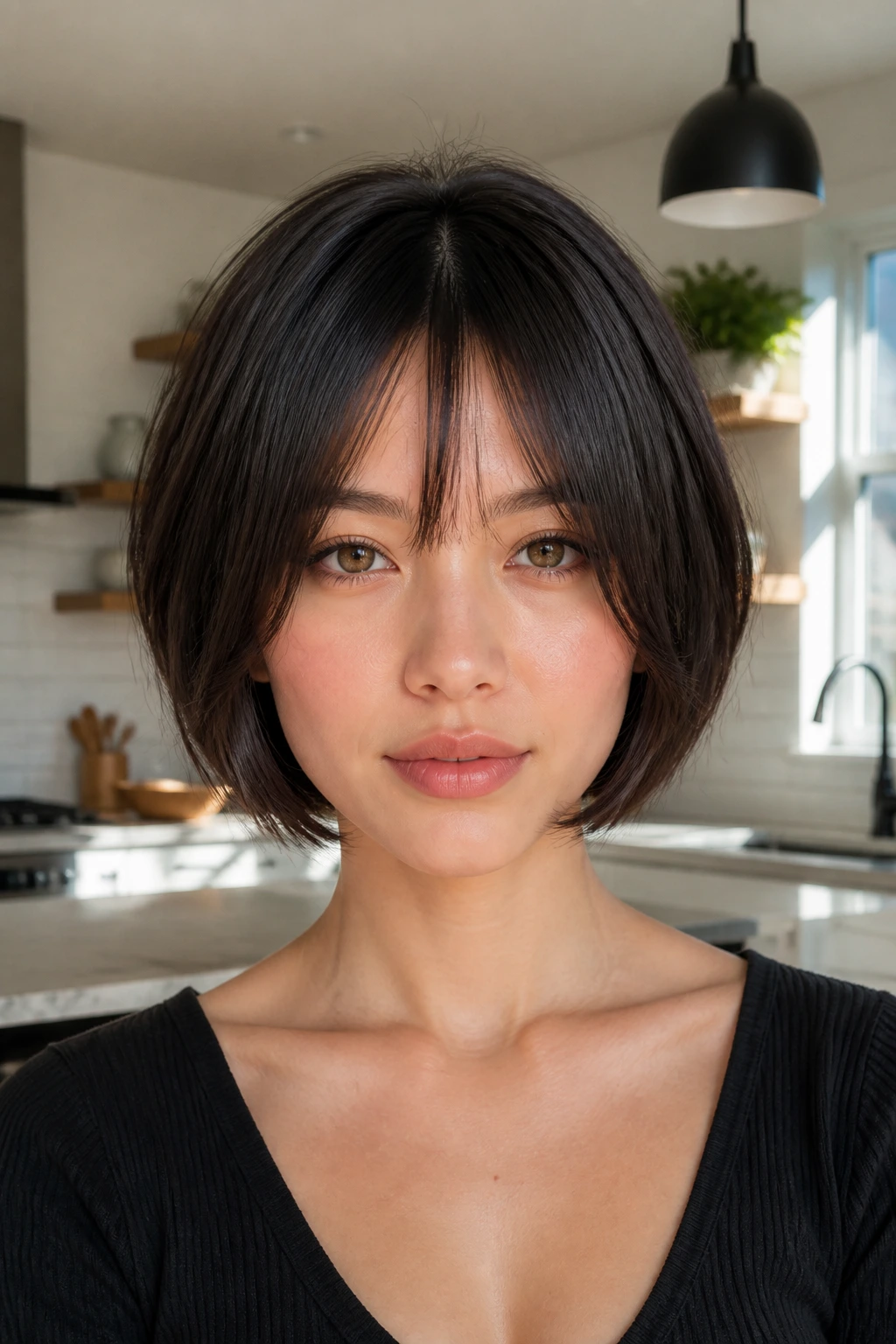
Bottleneck fringe starts shorter in the center and gets longer toward the temples. That shape sounds subtle, but it changes the whole front of a haircut. The center opens up the forehead, while the longer sides give a round face the vertical pull it needs.
It’s one of my favorites for chin-length crops because it doesn’t crowd the face. The shorter middle keeps the bangs from drooping into the eyes, and the temple pieces create a soft frame that makes the cheek area look narrower. If a blunt bang is a brick wall, bottleneck fringe is a set of steps.
Best for
- Medium to thick hair that can hold shape.
- Straight or softly wavy textures.
- Anyone who wants fringe without a full curtain across the forehead.
Keep the transition gentle. The shorter center should not jump sharply into long sides. You want a smooth taper, like the fringe is opening as it moves outward.
4. Feathered Fringe On A French Bob
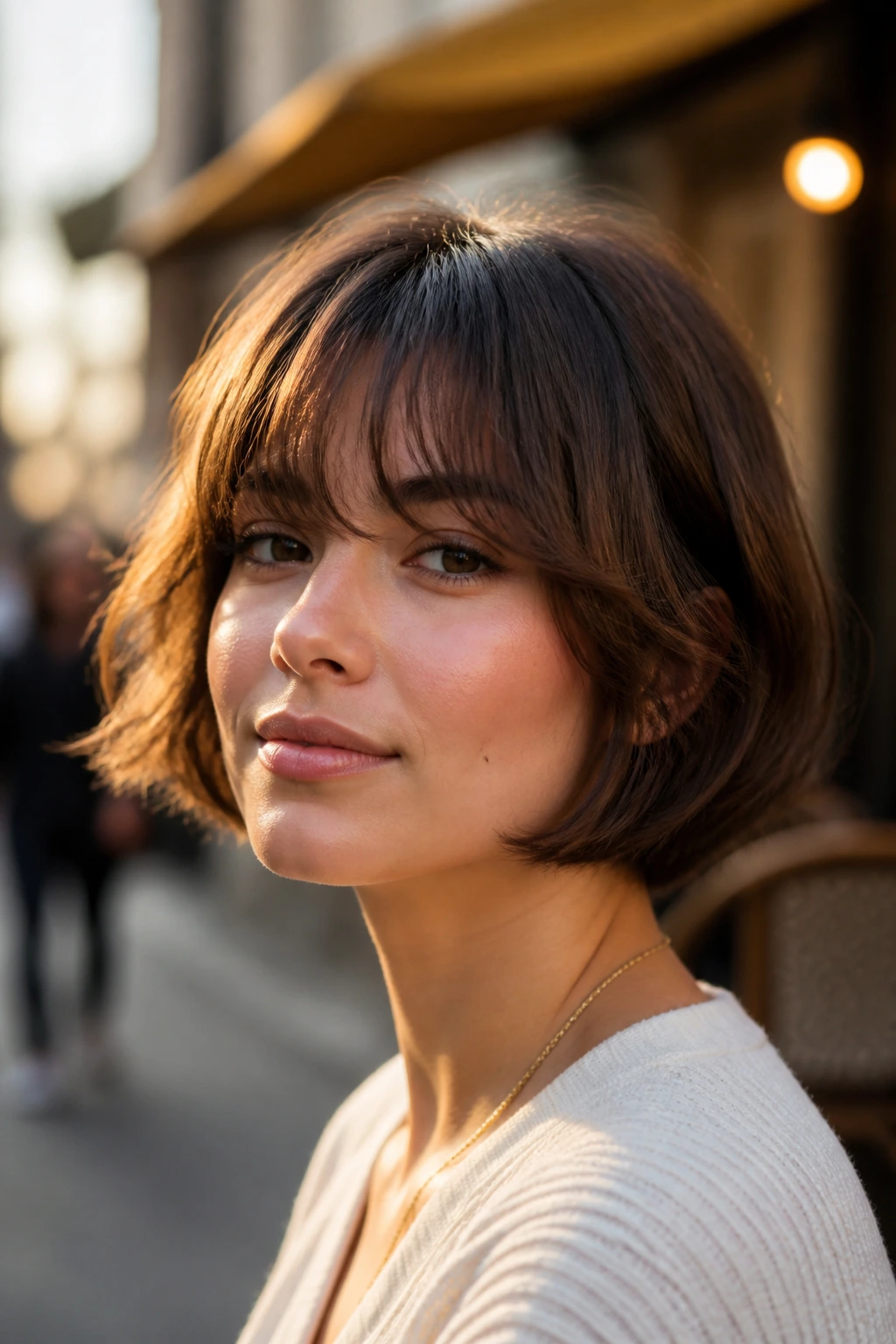
French bobs have attitude, but the right fringe keeps them from looking too severe. Feathered fringe is the fix. It gives the front some motion, softens the outline, and keeps a short cut from clinging too hard to the jaw.
The nice thing about feathering is that it breaks the line without making the bangs wispy to the point of disappearing. You still get shape. You just don’t get a blunt bar across the face. On a round face, that softness matters because it lets the cheekbones show through instead of flattening them out.
Ask for point-cut ends and a little extra length at the sides so the fringe brushes the brows instead of sitting above them like a shelf. A French bob with feathered fringe looks best when the hair has a bit of bend. Too polished, and it starts to feel fussy. A little undone is better.
5. Choppy Fringe With A Shaggy Pixie
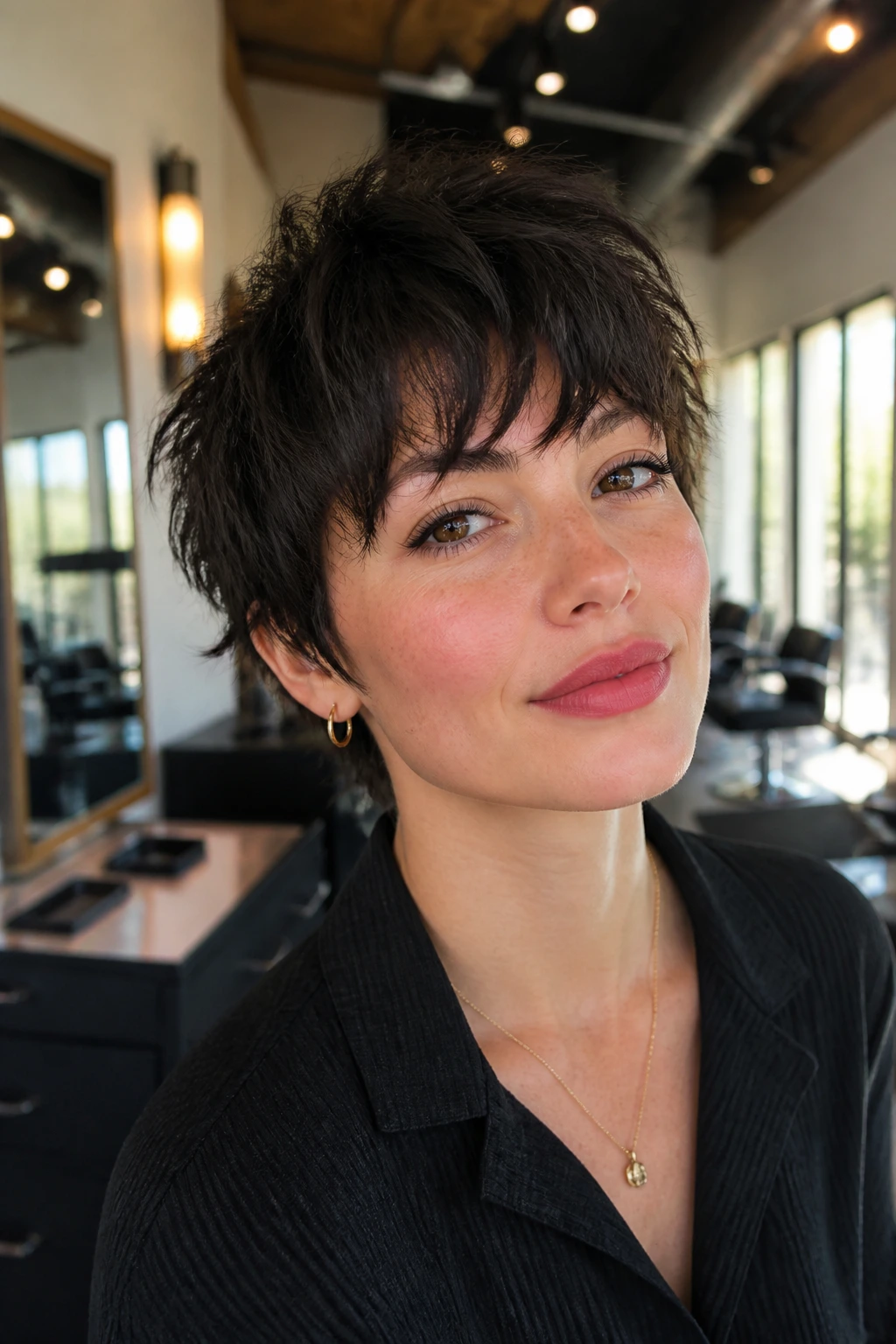
A shaggy pixie needs fringe that can keep up. Choppy layers through the front make the cut feel alive instead of tidy, and that uneven texture is very useful on a round face. It creates little breaks in the line, so the face doesn’t read as one smooth curve.
This is a good choice if your hair wants to move and you don’t want to spend ten minutes fighting it. The fringe can be cut piece by piece, with the longest sections landing near the center and the shortest flicking out around the temples. That keeps the eye moving upward, especially if the crown has a little lift.
Styling tip
Rub a pea-sized amount of paste between your fingers and twist two or three pieces forward. Don’t coat the whole fringe. That’s how you get crunch. You want separation, not stiffness.
6. Long Swept Fringe With A Tapered Crop
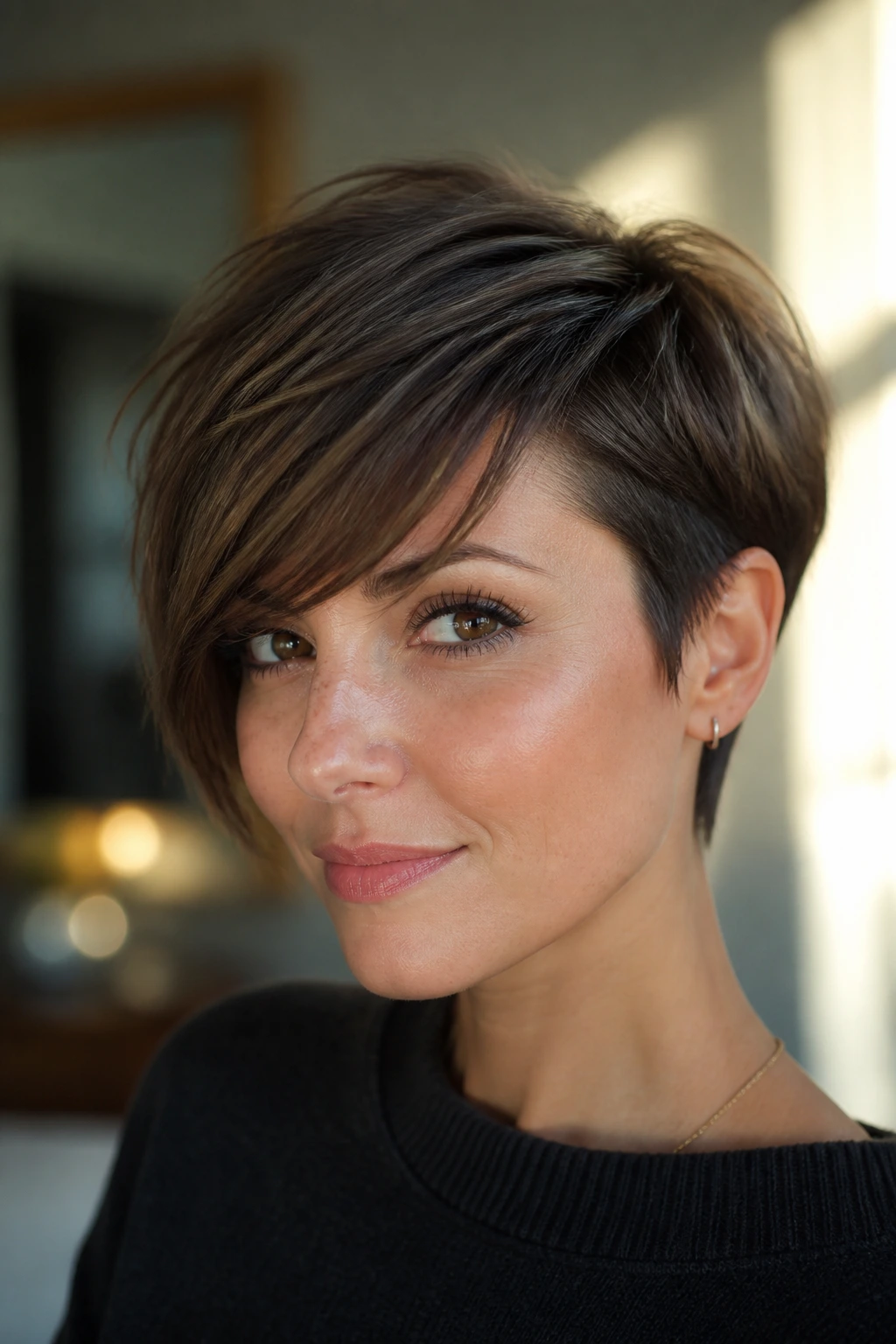
Long swept fringe is one of the cleanest ways to lengthen the face visually. The front travels across the forehead on a diagonal, and the taper through the sides keeps the crop from puffing out at the cheeks. On round faces, that diagonal is gold.
The cut works especially well when the fringe is left long enough to move. If it stops too high, you lose the effect. If it gets too heavy, it stops looking light and starts acting like a curtain. The sweet spot is usually around brow level, then longer at the side where it can skim the temple or tuck behind one ear.
This style is a strong choice for people who like short hair but still want a little softness around the eyes. It also grows out cleanly. In three or four weeks, it still looks intentional instead of awkward, which is more than I can say for some sharper bangs.
7. Arched Fringe That Follows The Brow Line
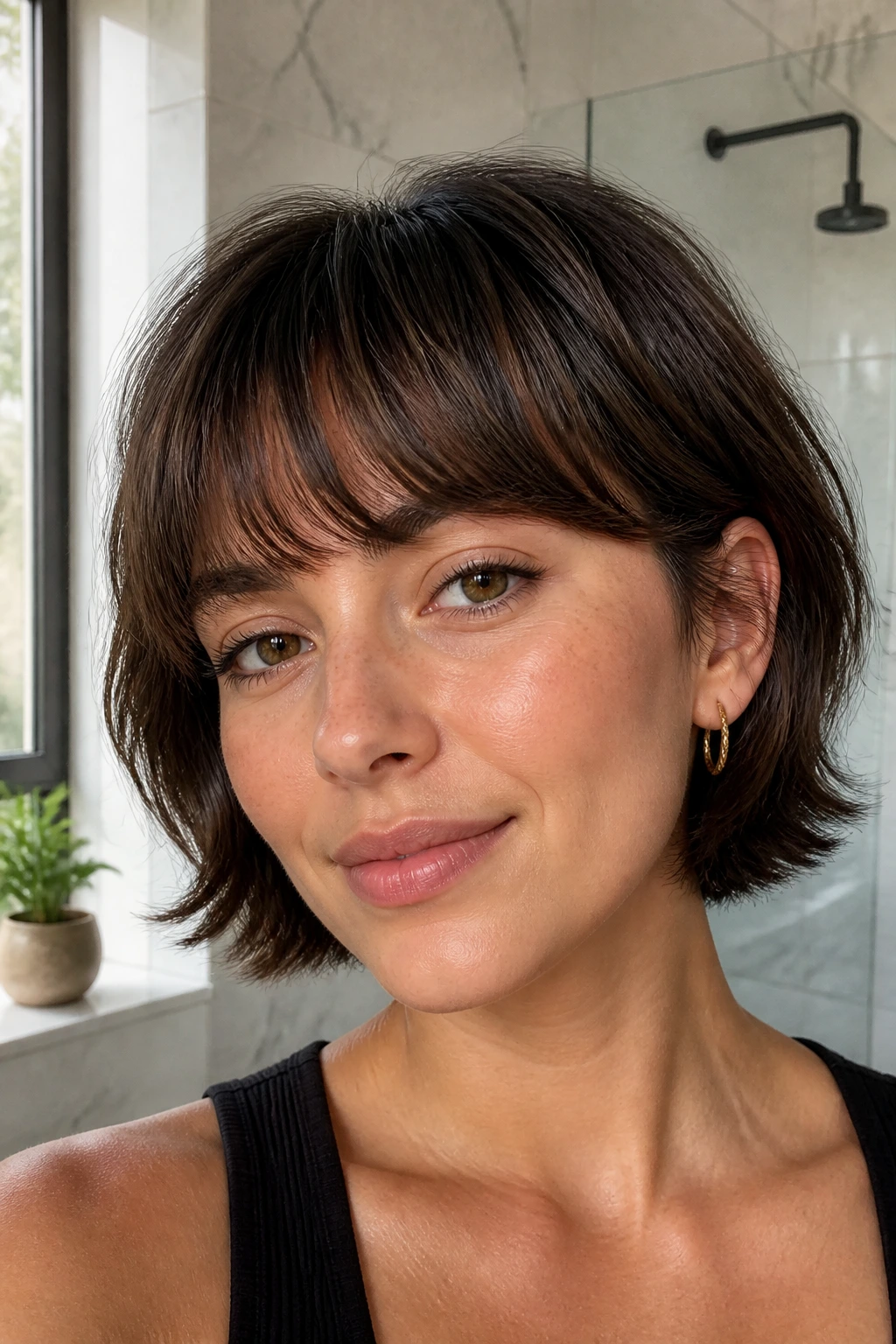
Arched fringe can be tricky on a round face, and that’s exactly why it’s worth talking about. A true blunt arch can make the face look shorter. A soft arched fringe, though, does something different: it mirrors the brow, adds shape, and keeps the center from dropping too low.
The trick is in the finish. The center should sit just above or at the brow line, while the edges get slightly longer and lighter. That keeps the curve from looking rigid. It’s a small detail, but hair is full of small details, and bangs are where they matter most.
This is a smart cut if you like polished styles and don’t want your fringe hanging in your eyes all day. It pairs well with a neat bob or a cropped cut that already has a clean outline. Keep the rest of the hair textured, though. Too much smoothness around an arched fringe can make the whole thing feel stiff.
8. Piecey Baby Fringe On A Soft Bowl Cut
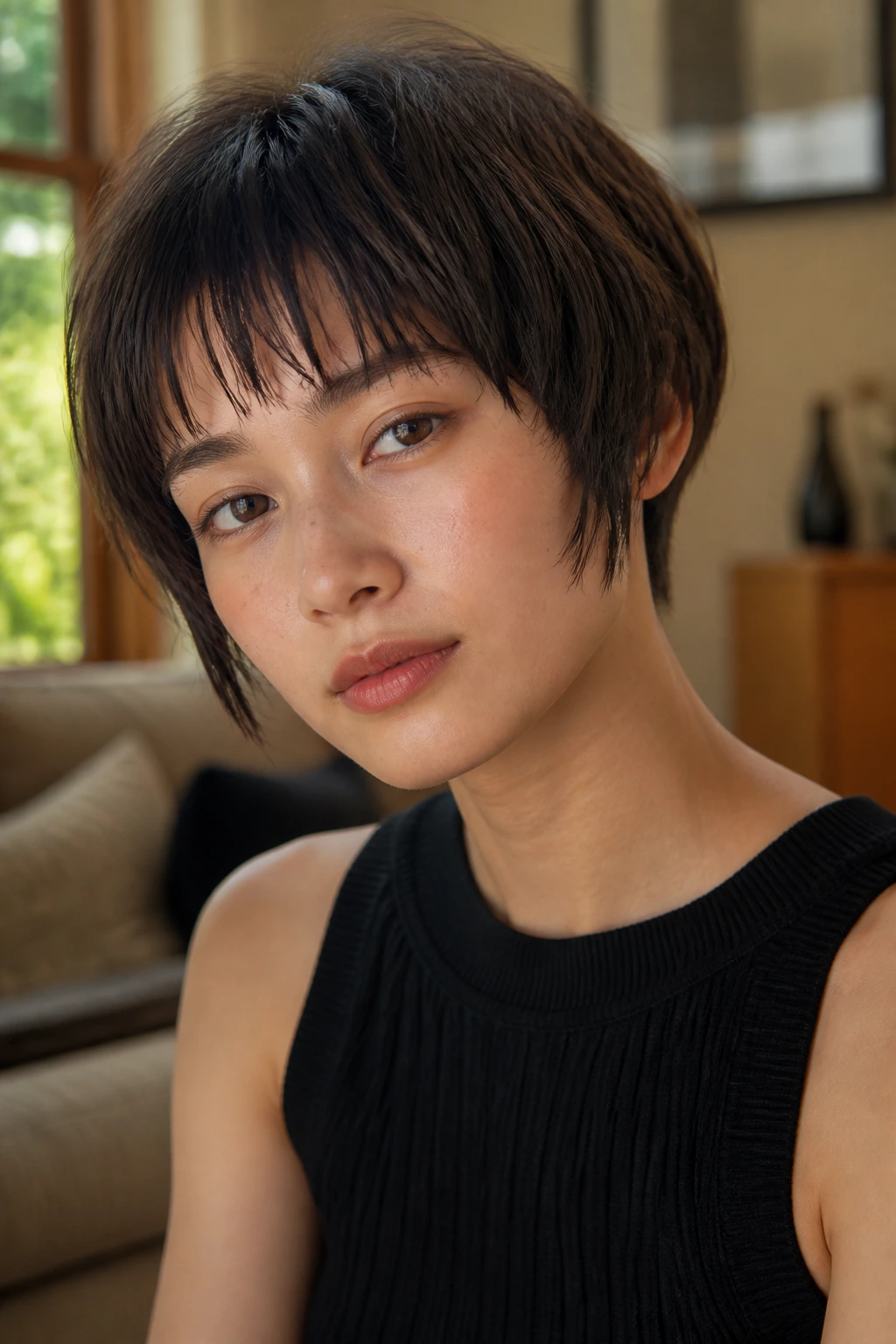
Baby fringe is not the obvious choice for a round face, which is why it can be so good when it’s cut well. The danger is the blunt line; the fix is piecey texture and a soft bowl-shaped outline that’s longer at the sides than the center.
That little bit of openness at the temples matters. It stops the cut from caving in on the face. The fringe should feel broken, almost like tiny separate strokes rather than one solid band. I like this look best when there’s some lift at the crown, because the vertical height balances the shortness of the fringe.
It’s a bolder cut, no question. But if you like a strong silhouette and you’re tired of soft styles that disappear, this one has teeth. Just don’t go too short with the first cut. Start a touch longer than you think. You can always trim higher later.
9. Razored Fringe With An Asymmetrical Bob
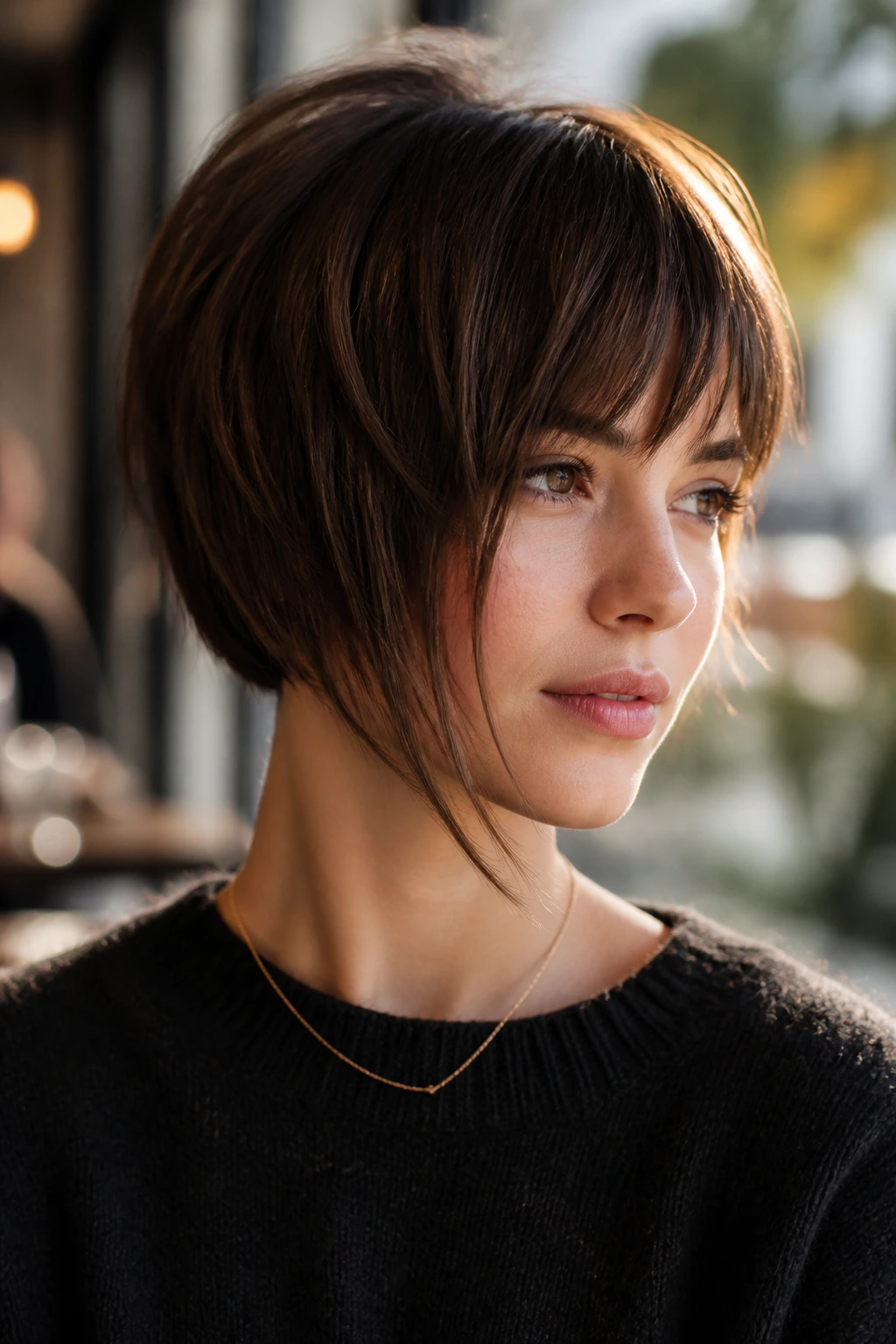
Razored fringe has a thinner, softer edge than scissor-cut bangs, which makes it useful on short hair that needs air around the face. Pair it with an asymmetrical bob and you get two shapes working in your favor: the fringe breaks up the forehead, and the bob pulls one side lower to lengthen the whole face.
This cut is best when the hair is medium to thick, because the razor can remove a lot of bulk fast. On finer hair, the same technique can make the fringe look too shredded, so be careful there. You want movement at the ends, not a fringe that feels thin and fragile.
Ask for this
- A longer side sweep on one side.
- Pointed, razor-soft ends through the fringe.
- Slightly shorter back or one side of the bob to create a diagonal line.
The asymmetry matters. Without it, razored fringe can just look messy. With it, the whole cut feels deliberate.
10. See-Through Fringe For Fine Hair
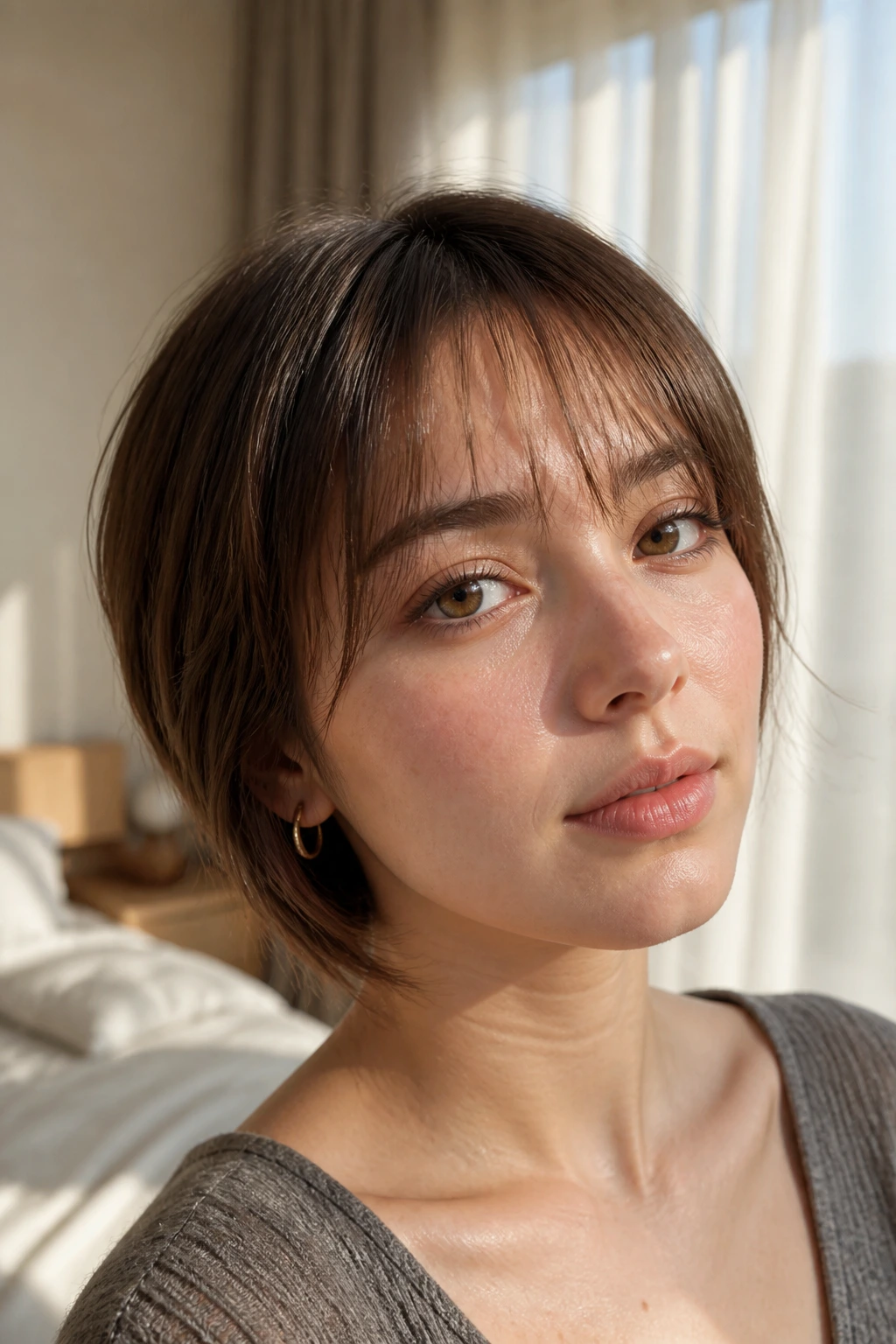
See-through fringe is light by design. It uses less density at the front so the forehead doesn’t get boxed in, which is a neat trick for round faces and fine hair alike. The result is softer than a full bang and much easier to live with if you hate the feeling of hair sitting on your skin.
The cut works best when the strands are spread out in tiny sections, with a little space between them. That space keeps the fringe from turning into a heavy line once it dries. On short hair, it’s useful because it doesn’t fight the rest of the cut. Everything stays light.
I like this better than many heavy fringes for people with fine hair, because thin hair rarely needs more bulk at the front. It needs shape. That’s the whole game. A see-through fringe gives you shape without draining the movement out of the cut.
11. Curly Fringe That Leaves The Forehead Breathing
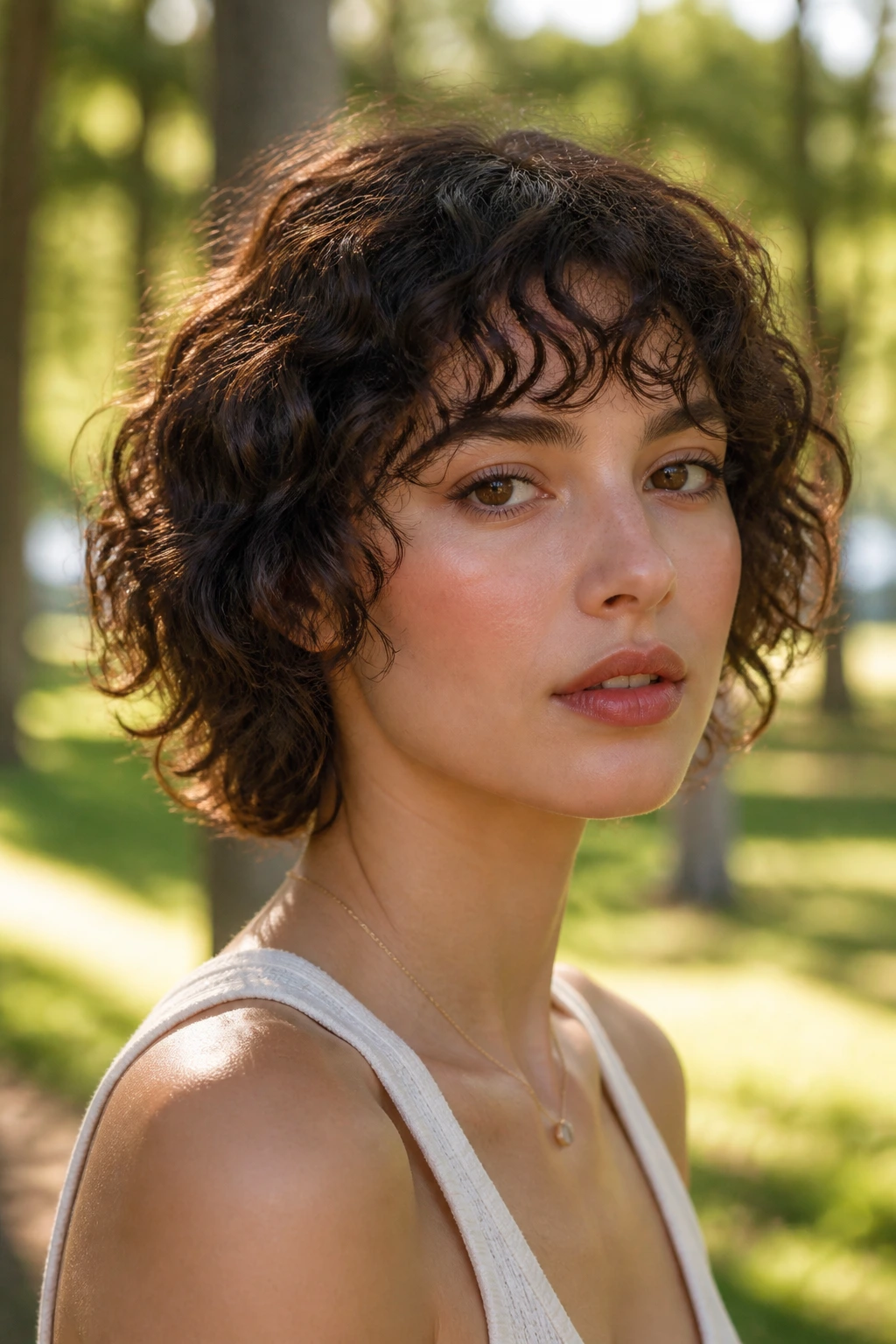
Curly fringe on a round face can look fabulous, but only when it’s cut with shrinkage in mind. If the bangs are trimmed dry or at least very close to dry, the curl pattern can sit where it should instead of springing up into a surprise situation above the brows.
The key is space. You do not want the fringe sitting as one thick block over the forehead. Break it up. Let a few curls fall forward, let others skim the temples, and keep the middle a touch shorter so the face doesn’t feel covered up. That open center makes the curls look intentional, not crowded.
Why it flatters
Curly fringe naturally adds movement near the eyes, which softens the roundness of the cheeks. It also gives height and texture right where short hair needs it most. On a curly bob or curly crop, that can be enough to change the whole mood of the cut.
12. Deep Side Fringe On A Jaw-Skimming Lob
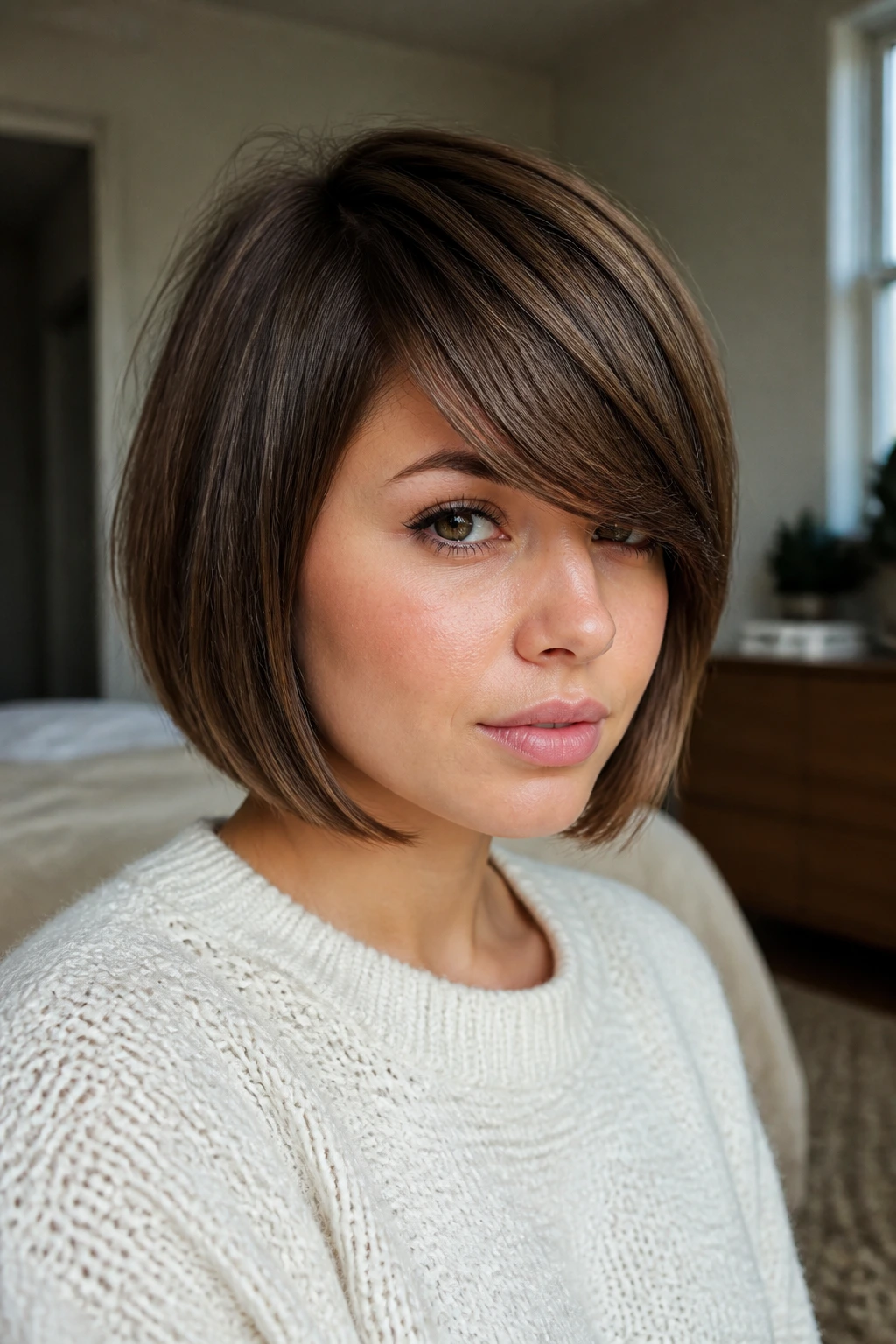
A jaw-skimming lob is technically a little longer than many people mean when they say “short,” but I’m including it because this shape still lives in the short-hair zone. A deep side fringe is one of the easiest ways to keep that cut from widening the face.
The heavy side part creates a strong line, and the fringe sweeps across the forehead instead of stopping straight across it. That diagonal is flattering on round faces because it gives the eye a path to follow. Add a little texture through the ends of the lob and the whole cut stops feeling boxy.
If your hair falls flat, this is a good place to add a root-lifting mousse at the part. Not a mountain of product. Just enough to keep the front from collapsing by noon. The fringe can look heavy if the root lifts and the rest of the cut sits limp, so balance matters.
13. Layered Fringe With An Undercut Nape
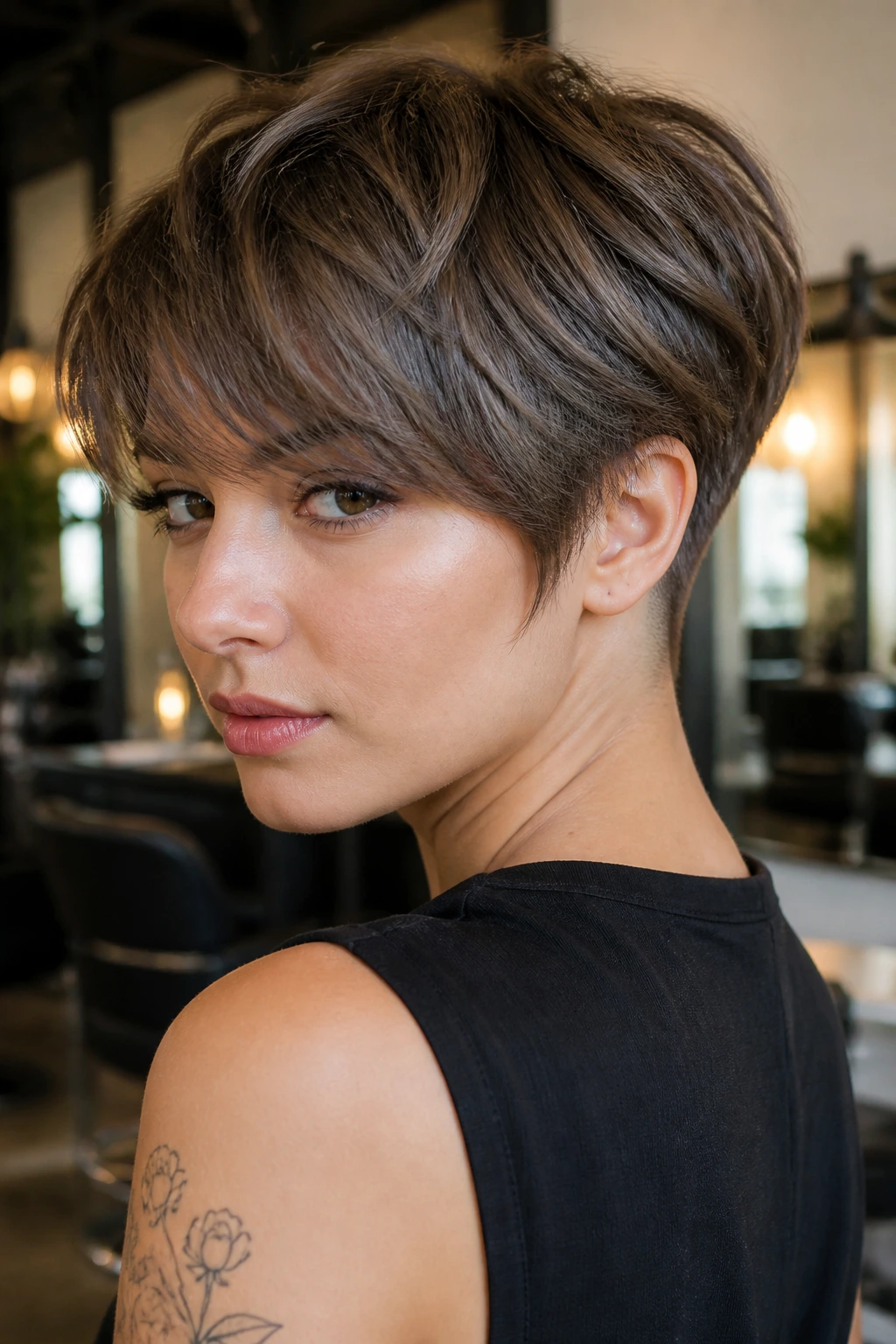
An undercut nape changes the weight distribution in a short haircut, and layered fringe finishes the job up front. The back gets leaner, the front stays soft, and the face gets frame without bulk. On round faces, that balance can be a relief.
This look works because the fringe and the nape are doing opposite things. The back removes heaviness. The front creates movement. Together they stop the head shape from reading as round and compact. It’s a little edgy, a little practical, and much easier to wear than people think.
The fringe should be cut to move, not sit as one front block. Ask for longer layers near the temples and a little lift through the top. If the crown is flat, the undercut can make the head feel even wider at the sides. Height up top fixes that fast.
14. Rounded Fringe Softened With Internal Layers
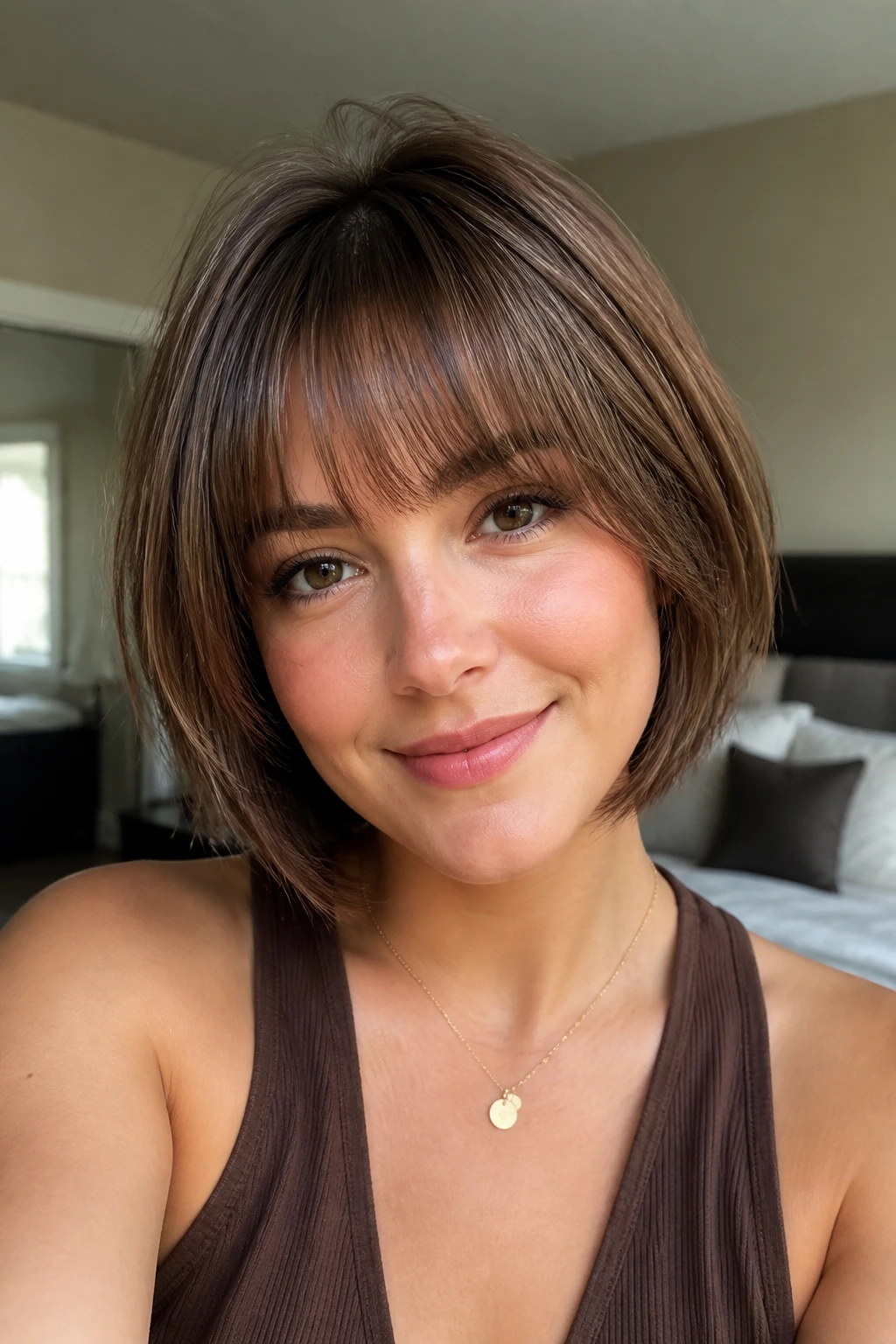
Rounded fringe sounds like it might be the wrong move on a round face, but internal layering changes the story. Instead of one hard curve, the fringe has broken ends and a softer center, so the line doesn’t echo the roundness too literally.
This is the kind of fringe that looks simple until you see it move. Then the layers show up. The ends separate just enough to keep the forehead open, while the curve still gives the haircut a polished finish. It’s particularly nice with a classic bob or a short layered cut that needs a little softness at the front.
I’d ask the stylist to keep the fringe slightly longer than they think is necessary. Rounded shapes can shrink visually once they dry, and a fringe that lands exactly on the brow when wet can jump too short once it’s done.
15. Grown-Out Fringe For Easy Styling

Not everyone wants fringe that needs daily fussing. Grown-out fringe is the answer when you want the shape of bangs without the strict maintenance. It blends into face-framing layers, and on short hair it keeps the front from looking too severe.
For round faces, the grown-out version is especially useful because it creates a long line from the part to the cheek. That line is doing more work than a blunt edge ever could. It also buys you flexibility. Tuck it back, split it down the center, sweep it sideways — the haircut will still make sense.
This is a good one if you’re nervous about commitment or if you know you’ll miss your old layers halfway through the first week. You get the fringe effect without the full bang experience. And yes, that matters. Hair should fit your life, not make you negotiate with it every morning.
16. Mini Mullet Fringe With Crown Volume

Mini mullet territory gets misunderstood all the time. Done well, it’s not wild for the sake of being wild. It’s a short cut with a little extra length in the back, crown lift, and a fringe that has movement instead of weight.
On a round face, crown volume is the whole point. The eye goes up first, then down through the fringe layers, which stretches the silhouette. The front can stay broken and textured, while the top keeps enough height to avoid that flat, round cap effect some short cuts develop.
Best when you want
- Edgier texture.
- A cut that looks better a little messy.
- Fringe that blends into the top instead of sitting like a separate piece.
I’d avoid this if your hair lies very flat and you hate adding heat or product. It likes a little styling. Not much, but enough.
17. Temple-Skimming Fringe For Angular Balance
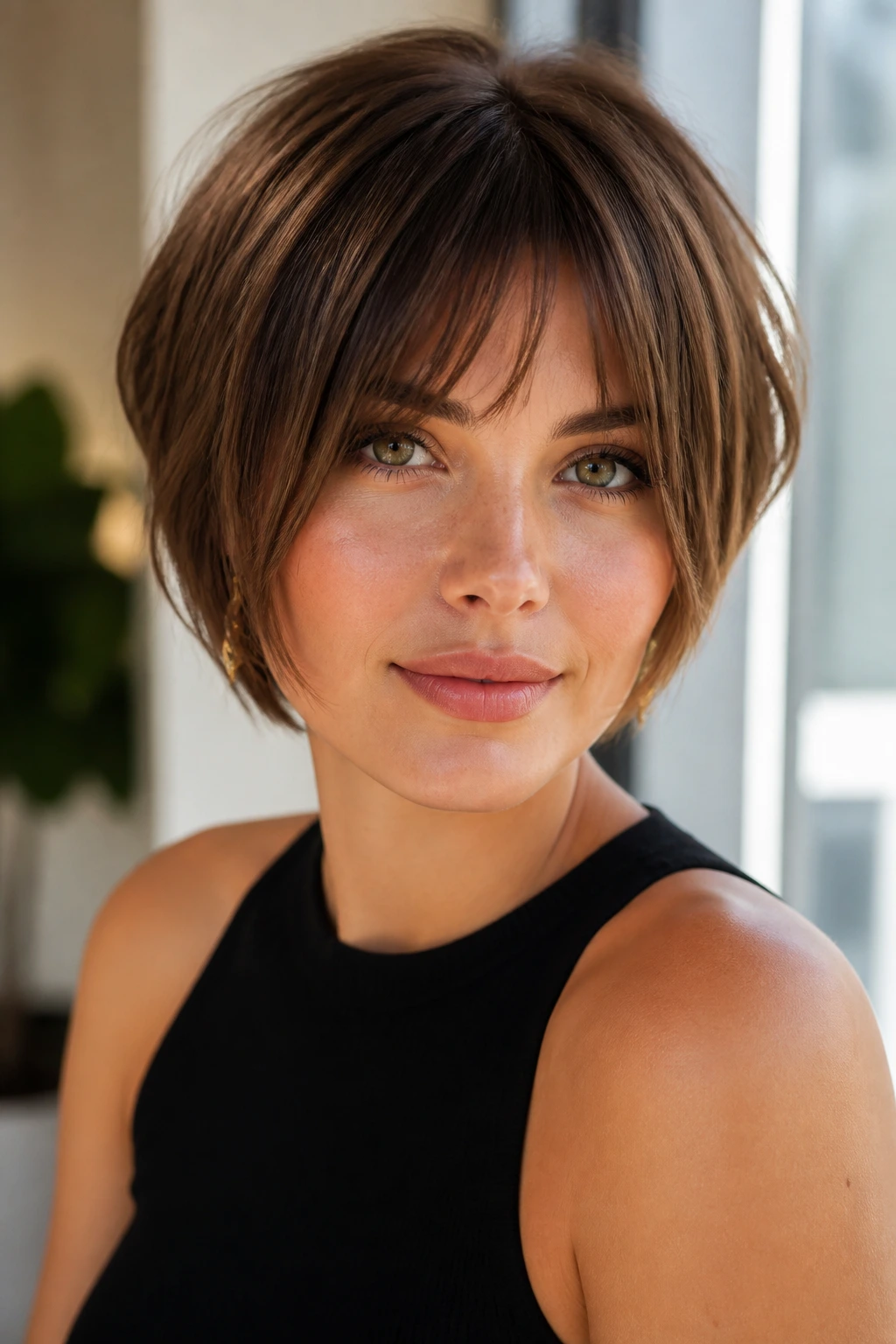
Temple-skimming fringe is one of the smartest shapes for a round face because it does something a blunt bang can’t: it narrows the visual field at the sides. The fringe pieces start soft near the center and drift out toward the temples, where they land like a frame rather than a border.
That temple area is where short hair often needs help. Leave it blank, and the face can feel wider. Cover it with a heavy bang, and you lose light. Temple-skimming pieces sit in the useful middle. They soften the face without shutting it down.
This style works particularly well with rounder cheeks and a strong jawline because it keeps the eye from stopping at one point. You see the brow, the temple, and the cheek in one sweep. That’s the sort of movement that makes a short cut look designed, not accidental.
18. Wispy Fringe On A Rounded Pixie Bob
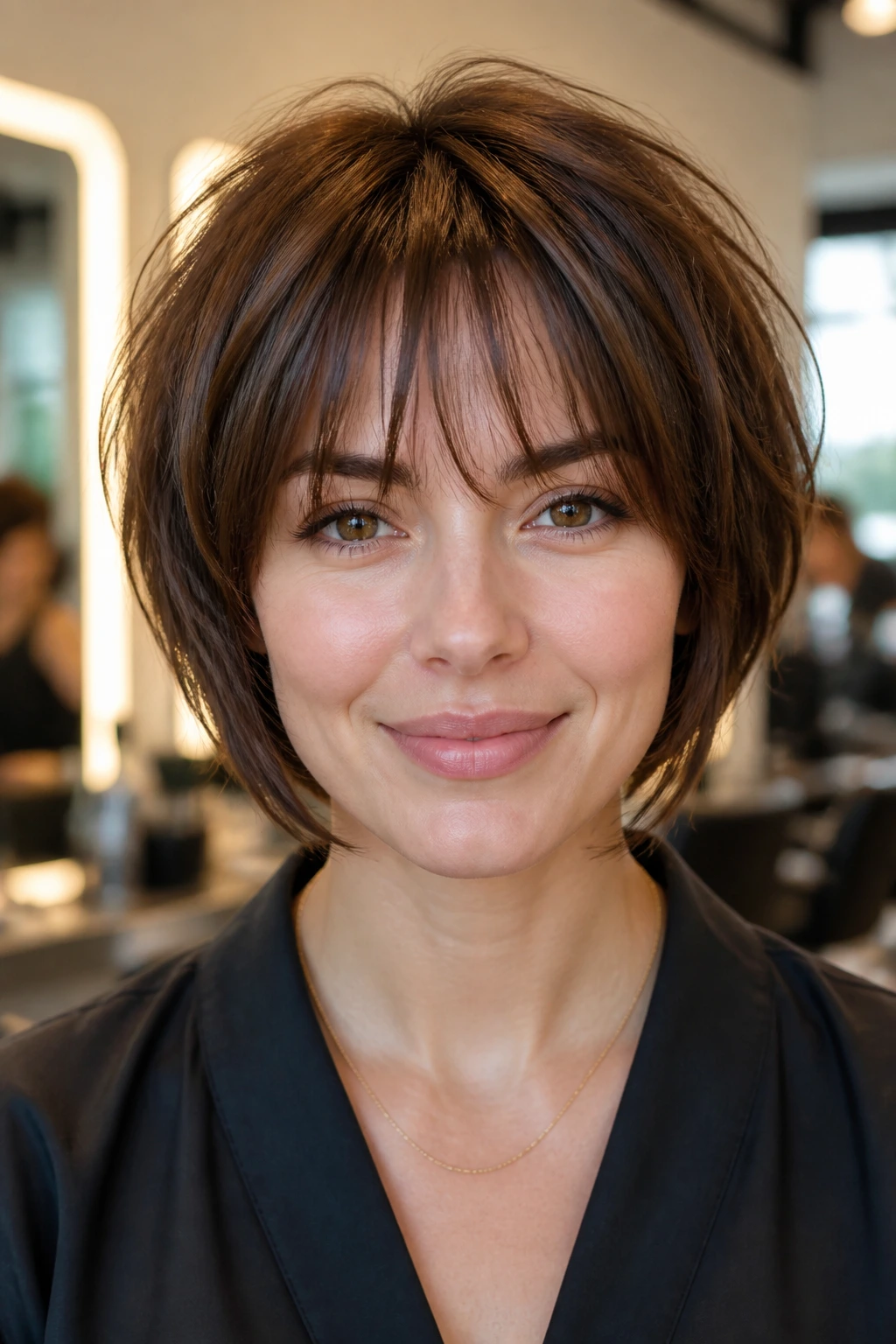
A pixie bob wants softness at the front or it can turn too helmet-like. Wispy fringe is the fix. It breaks the surface, adds a little air above the brows, and keeps the roundness of the haircut from echoing the roundness of the face.
The fringe should be light enough that you can see skin between some of the strands. Not gappy. Just airy. On a rounded pixie bob, that air matters because the rest of the cut already has shape. You don’t need more width. You need movement and a bit of lift.
I like this on hair that has some natural texture but not too much frizz. If the front frays wildly, wispy bangs can look overdone fast. If the hair sits smooth, though, they give a soft, almost brushed-on finish that flatters the eyes and the forehead.
19. Split Fringe With A Center Part
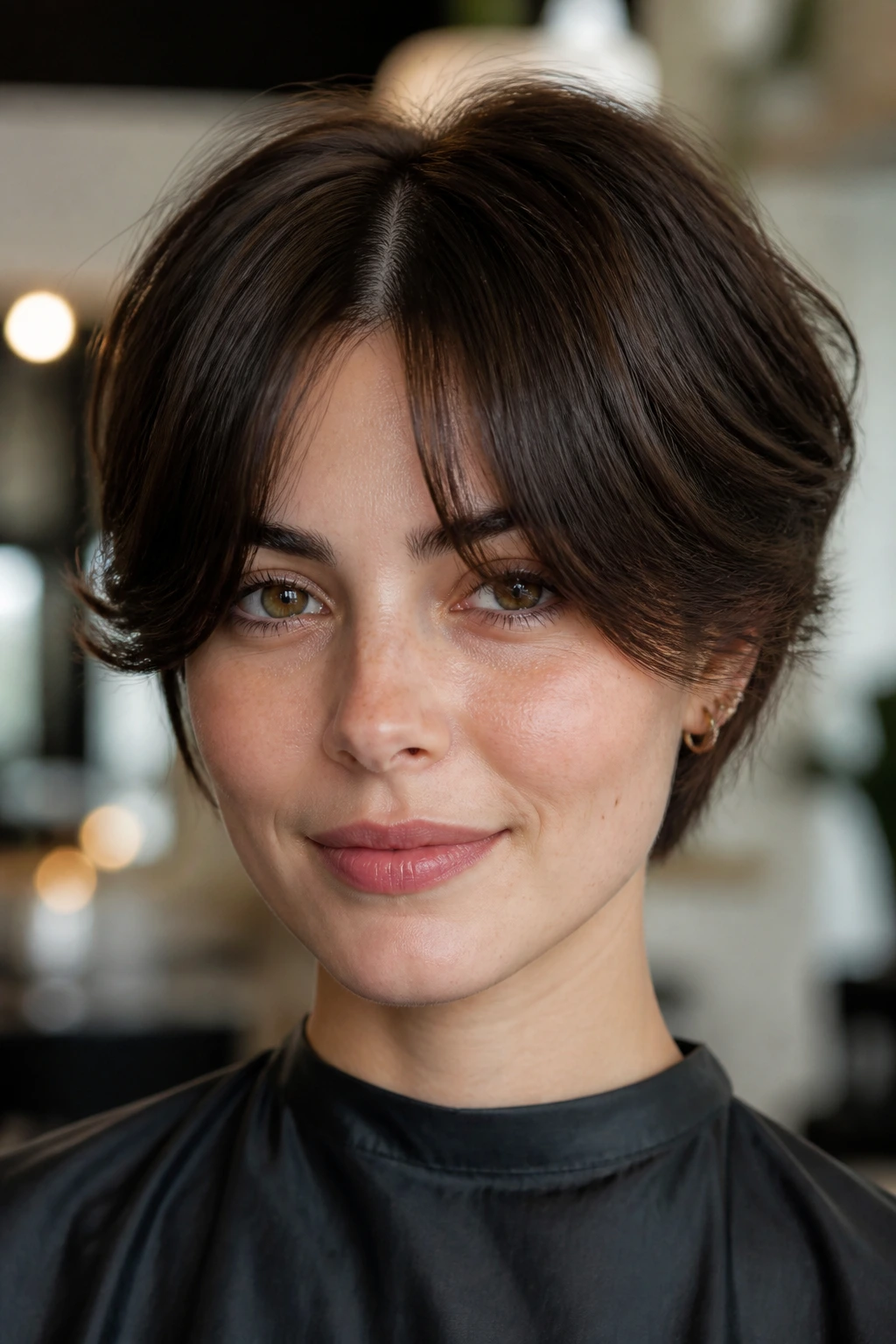
Split fringe is the quieter cousin of full curtain bangs. It leaves more forehead visible, which is useful on a round face because it avoids the feeling of being covered up. The two sides still frame the face, but they do it with less weight.
It works best when the front pieces are cut to fall just past the brows and then taper into the shorter lengths around the cheek. The result feels open at the center and softer at the edges. On short hair, that can make a huge difference. The haircut stays airy, not closed in.
This is the fringe I’d recommend to someone who likes the idea of bangs but doesn’t want to change the whole feel of their face. It’s a small shift, but small shifts matter in hair. A few centimeters can take a style from plain to sharp.
20. Air-Dried Fringe For Natural Waves
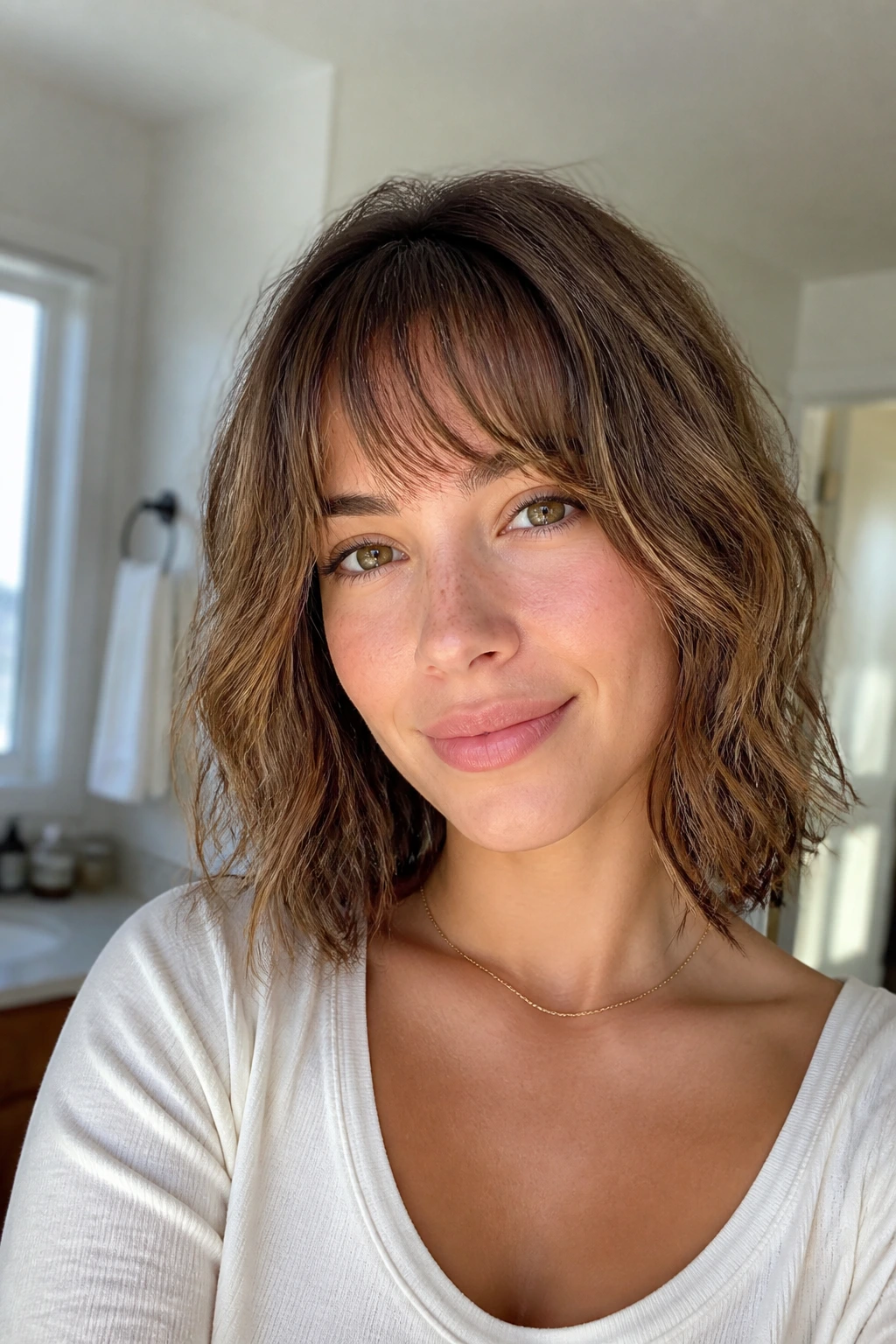
Some fringes are built to be brushed and blown every morning. This is not one of them. Air-dried fringe for natural waves is cut to follow the way the hair already bends, which is a much saner approach if your hair refuses to sit still.
The front should be left long enough to move once it dries. If you cut wavy fringe too short, it can spring up and sit higher than intended. On a round face, that can throw the proportions off. Keep enough length in the center and shape the sides so they drift toward the cheekbones.
A little wave at the front is useful because it softens the face without hiding it. The key is not to overmanipulate it. Scrunch a little cream through damp hair, twist the front sections once or twice, then let them fall. The shape should look chosen, not forced.
21. Heavy-At-The-Center Fringe, Light At-The-Edges
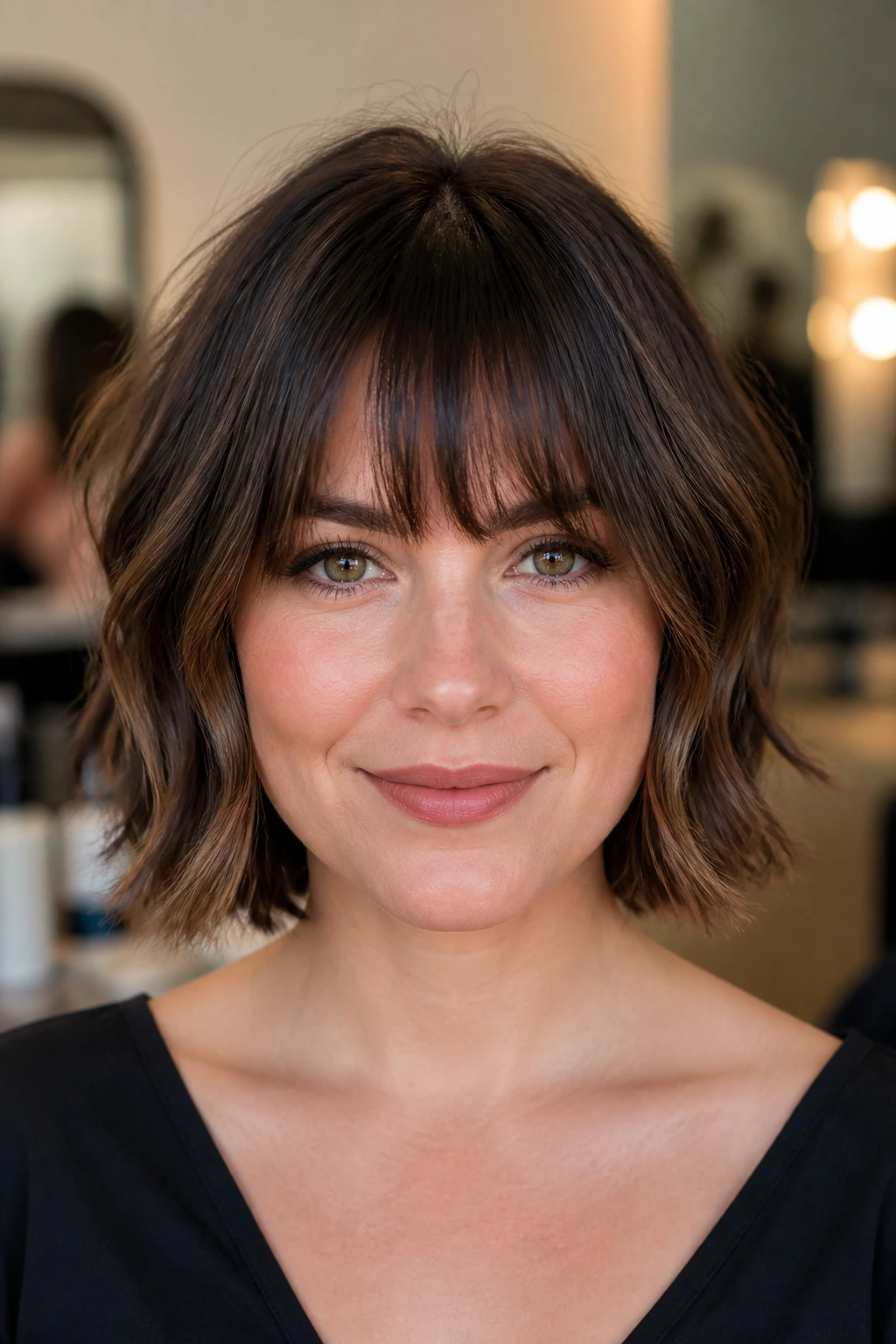
This is basically a more dramatic bottleneck shape, and I like it because it gives the center of the face some anchor while leaving the sides open. The fringe is fuller in the middle, then gets lighter as it moves outward. That means the eye lands high, then travels outward instead of stopping at one straight line.
On a round face, this can be a useful compromise between a full fringe and a curtain fringe. You get the feeling of bangs without the wall effect. The lighter edges keep the temples visible, which is where a lot of short-hair balance lives.
If your hair is thick, this shape can be carved beautifully. If it’s fine, the center fullness may need to be kept modest so the fringe doesn’t separate too much by afternoon. The shape should look soft but deliberate. Not sparse. Not helmet-like. Just nicely controlled.
22. Soft Micro-Fringe For Bold Short Cuts
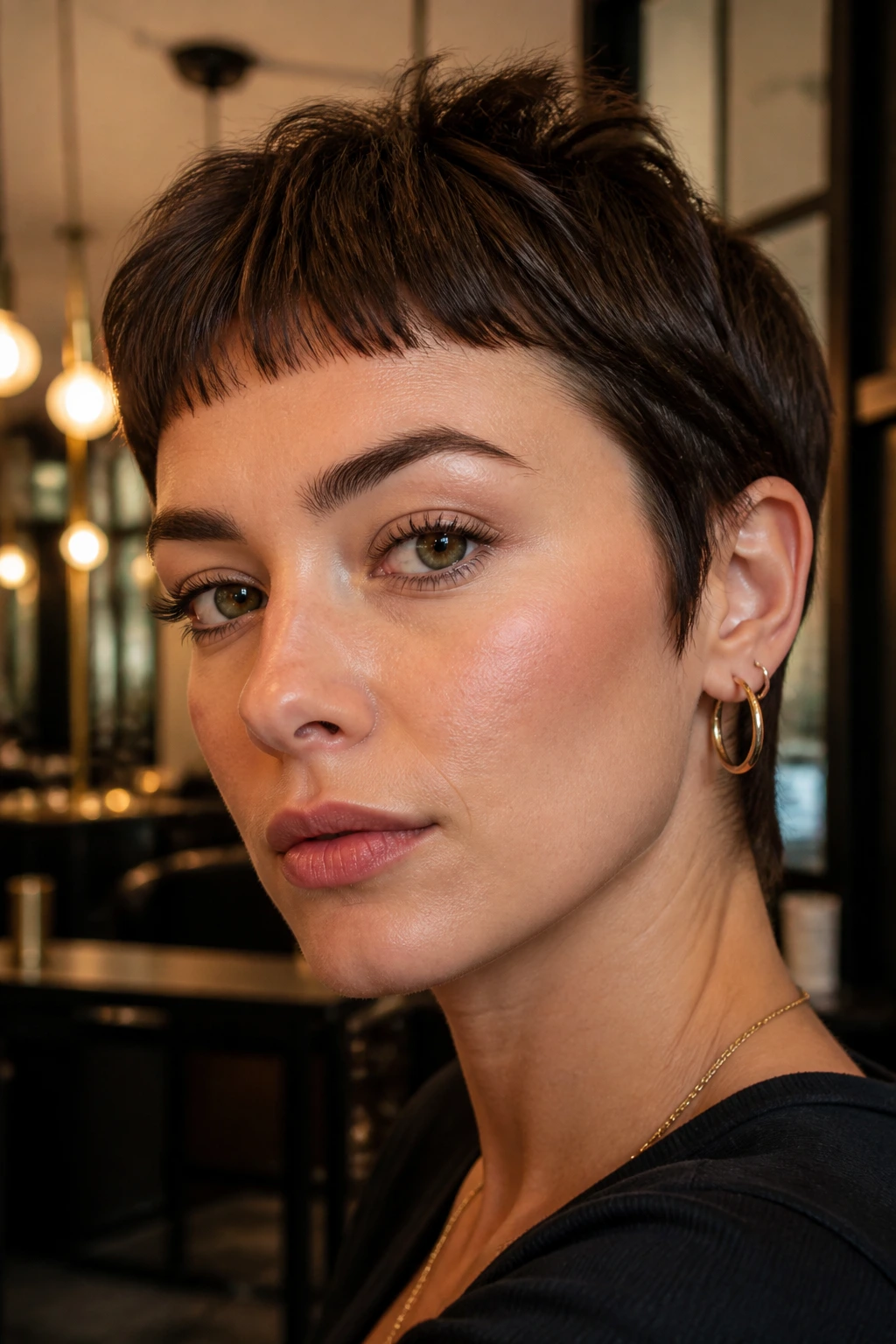
Micro fringe is not the easy option. It is the daring one. But when it’s cut with texture and paired with a short shape that has height through the crown, it can look clean and surprisingly flattering on a round face.
The trick is to keep it soft, not blunt. A hard micro bang can make the face feel wide because it draws all the attention to the forehead. A softer version, with broken ends and a little movement, does the opposite. It adds a sharp point of interest while the rest of the haircut stays lifted.
This cut wants confidence and maintenance. It also wants the right styling attitude — a little paste, a little texture, and no panic when it doesn’t lie perfectly flat. If you like neatness, skip it. If you like shape with edge, it has a lot to offer.
Why Layering Matters More Than Bang Length
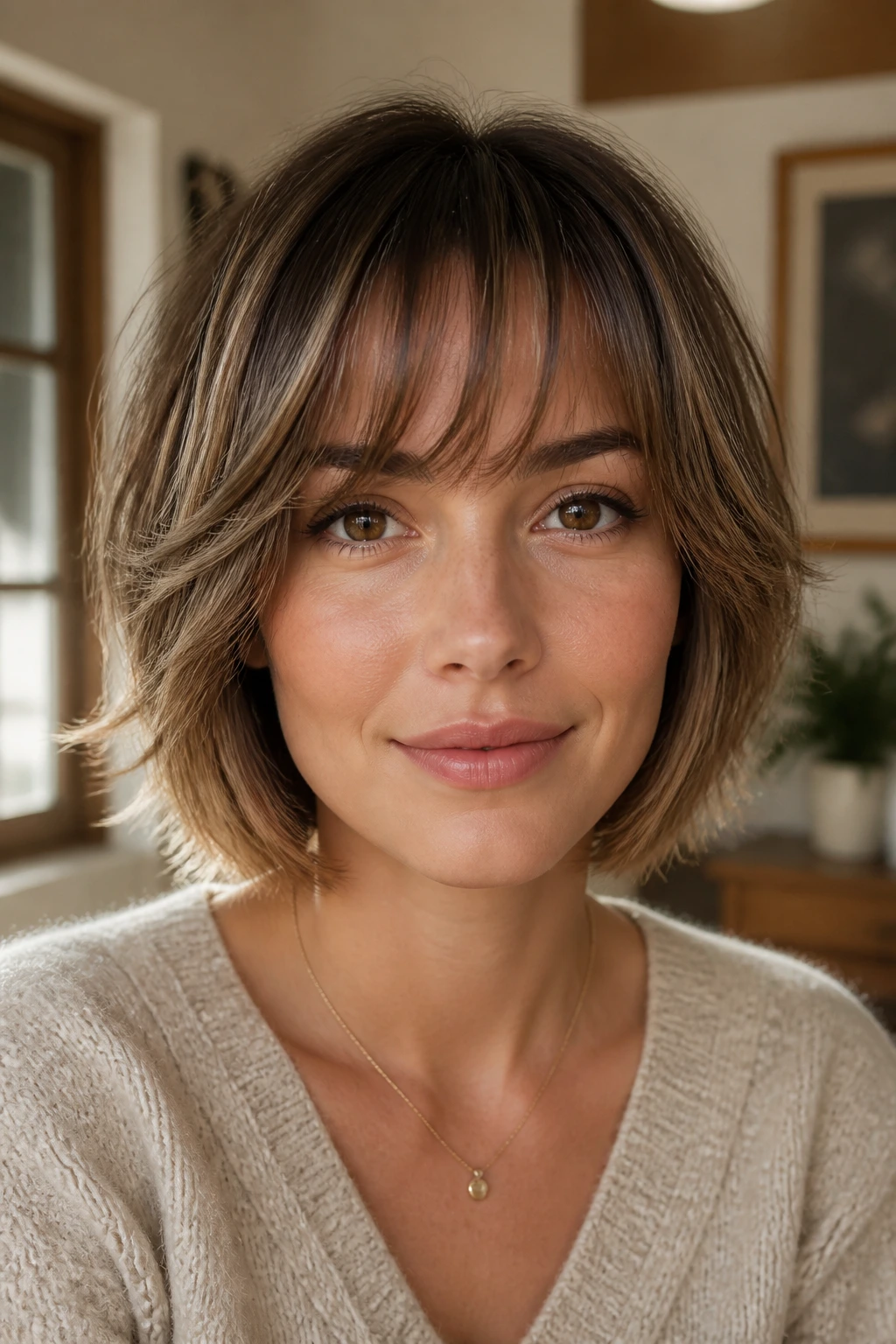
A lot of fringe advice gets stuck on one number: how long the bangs are. That’s only part of the story. On short hair and round faces, the more useful question is where the fringe breaks the face and how it moves when you turn your head.
A straight line across the brows can shorten the face fast. A layered line can change direction three times in the span of an inch — heavier in the center, lighter at the temples, softer at the cheek. That’s why a short cut can feel taller or slimmer with the right fringe even though the actual hair length barely changes.
Layering also affects how fringe behaves after a wash. Dense bangs dry into a block if they’re cut blunt. Layered bangs split, feather, and bend. That means less fighting with a brush, fewer hard lines around the forehead, and a shape that still looks like hair instead of a sheet.
Tools That Keep the Front Soft, Separated, and Not Puffy
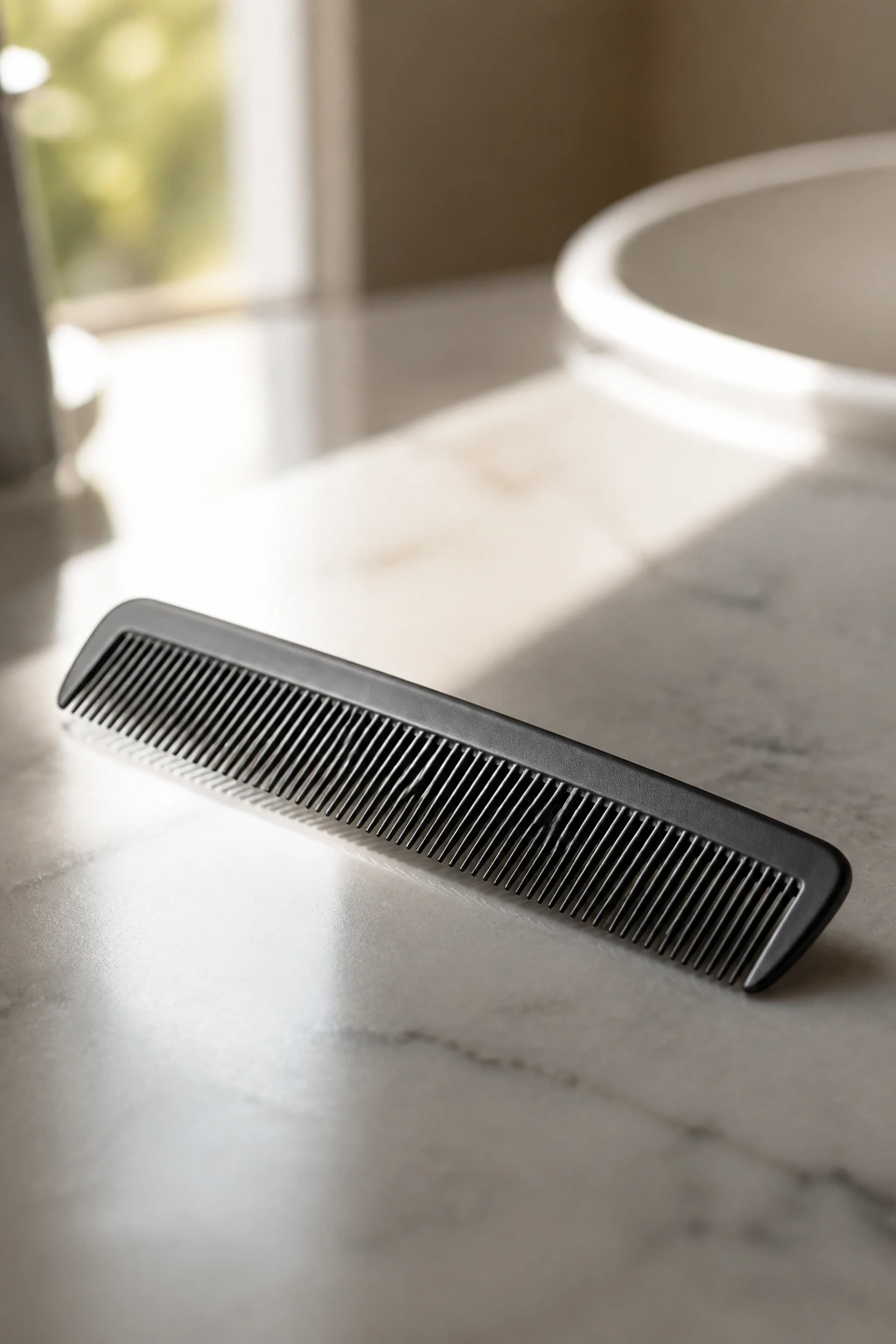
A good fringe is only half cut and half routine. The tools matter because short hair shows everything. If the front gets frizzy, flattened, or greasy, you notice it immediately.
- Small round brush, 1 to 1.25 inches: Best for bending fringe away from the face and giving the ends a slight curve without big volume.
- Blow dryer with a concentrator nozzle: Directs the airflow so the fringe dries in the direction you want instead of flipping around.
- Fine-tooth comb: Useful for sectioning the front cleanly, especially if you part the fringe in the middle or create a deep side sweep.
- Light mousse or root lift spray: Helps short hair keep height at the crown, which matters more than people think on round faces.
- Texturizing paste or cream: Keeps piecey layers separated without making them crunchy.
- Dry shampoo: A fringe gets oily faster than the rest of the head because it sits on the skin. This is not optional if your hair is fine or your skin is on the oily side.
- Flat iron with rounded edges: Good for tightening a bend in a side-swept fringe or smoothing a stubborn front section.
What To Ask For At The Salon So The Fringe Fits Your Face
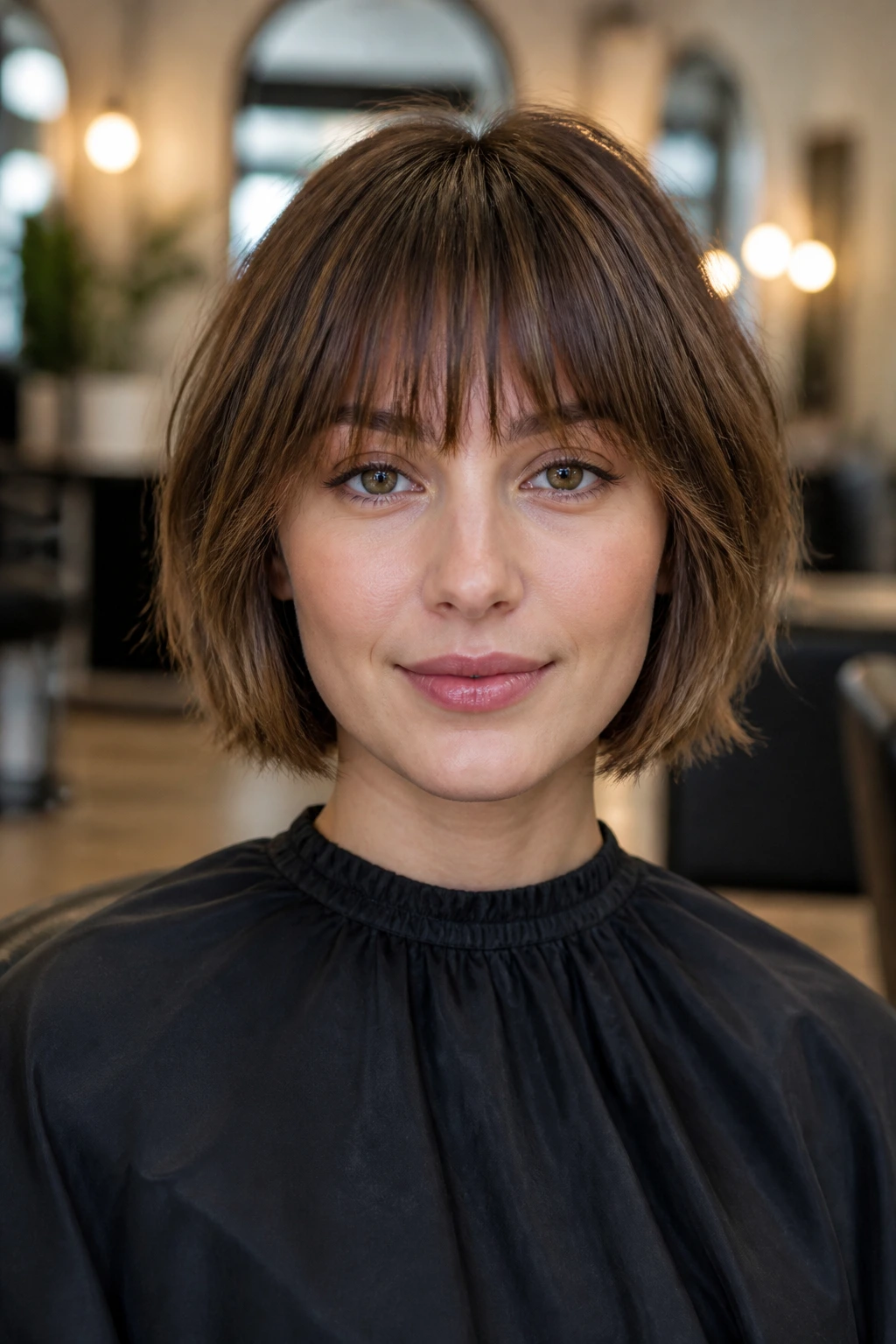
Vague requests lead to vague bangs. “I want something flattering” is not enough. That gives the stylist almost nothing to work with, and fringe is too precise for guesswork.
Say where you want the longest pieces to land. Brow, cheekbone, temple, or jaw. Those landmarks matter. On a round face, cheekbone and temple tend to be safer bets than a hard stop right at the brow.
Ask for point-cut or feathered ends if you want softness, and ask for internal layering if your hair is thick or tends to sit heavy. If you have fine hair, say you want the fringe light but not wispy enough to look sparse. If you have a strong wave or curl, ask to cut it with the way it dries, not against it.
A useful line is: “I want the fringe to slim the sides of my face, not sit as one blunt line.” That gives the stylist a real shape goal. Better still, bring photos of the silhouette you want, not just the bang itself. The fringe and the haircut around it have to talk to each other.
Styling Moves That Keep The Front Soft, Not Puffy

A lot of fringe problems come from trying to flatten everything into place. That usually backfires. Short hair needs a little lift and a little separation, especially around a round face.
Start with the front while it’s damp. Fringe dries fast, and if you wait until the rest of the head is done, it may already be going in the wrong direction. Dry the fringe forward first, then bend it the way you want.
Use less product than you think. A pea-sized amount of paste or cream is usually enough for a short fringe. Too much makes the front sit in greasy strands instead of soft pieces.
Rough-dry the roots, then refine the ends. If you blow-dry only the ends, the fringe can collapse at the scalp. Lift the roots first with your fingers or the brush, then shape the tips.
Trim timing matters. Fringe starts losing its shape faster than the rest of a short cut. If it keeps falling in your eyes or splitting in odd places, it may need a dusting before the haircut as a whole does.
Common Mistakes That Make A Fringe Widen The Face
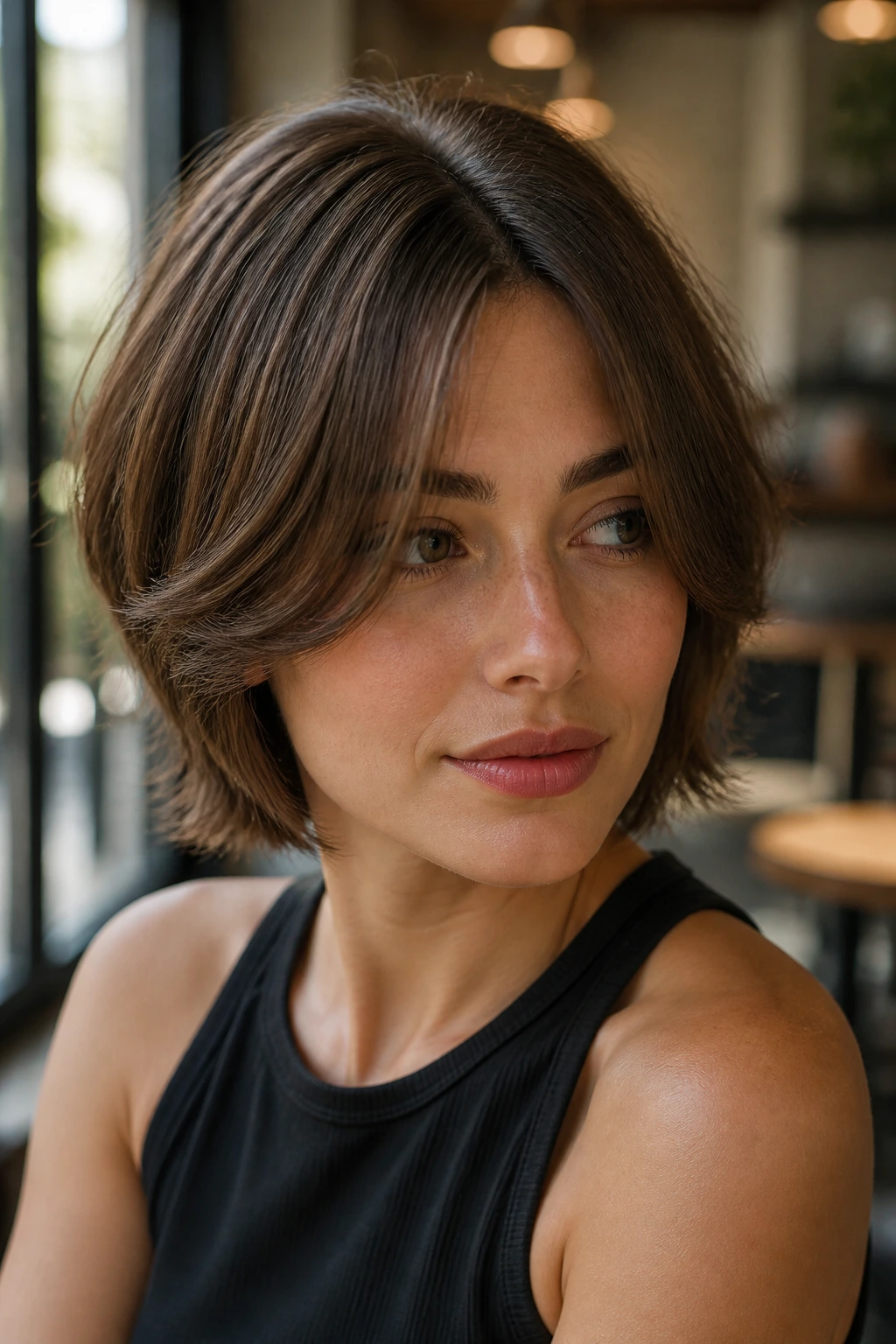
The biggest mistake is cutting the fringe too blunt and too full. On a round face, a solid bar across the forehead can make the face look shorter and wider at the same time. The fix is texture, a little transparency, or a longer side taper.
Another common problem is stopping the fringe right at the widest part of the cheeks. That’s the zone where a lot of round faces need either opening or lengthening, not more visual weight. If the fringe lands there without any break, the face can feel boxed in. Move the longest pieces higher or lower, and the effect changes fast.
People also flatten the crown to make the fringe easier to handle. Bad trade. Flat roots on short hair can make the whole head look broader. A bit of lift at the crown gives the fringe somewhere to fall from, and that creates a cleaner shape.
Over-thinning is its own trap. Fine hair that gets shredded too much can look stringy, while thick hair that is aggressively thinned near the front can puff out in odd places. The answer is selective layering, not random removal of bulk.
Ways To Adapt The Look For Fine, Thick, Wavy, Or Curly Hair
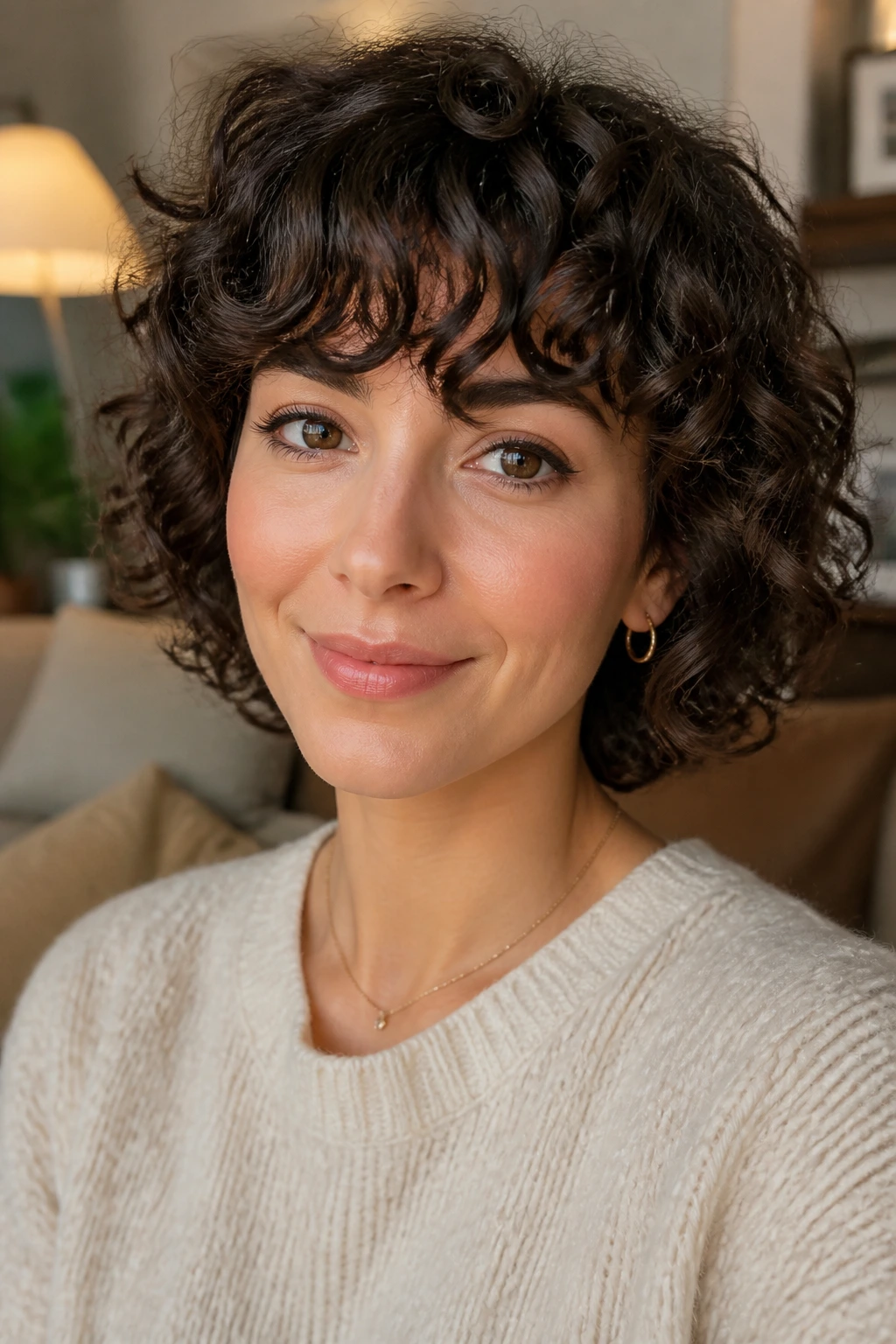
Fine Hair Feathering: Keep the fringe longer and slightly separated, with soft point-cut ends instead of heavy layering. Fine hair needs shape, but it also needs enough weight to stay visible.
Thick Hair Internal Debulking: Remove bulk underneath the surface, not only at the front line. That keeps thick bangs from ballooning and helps short hair sit closer to the head.
Wavy Hair Air-Dry Shape: Cut the fringe to match the natural bend, then let it dry with a touch of cream and no brushing once it starts to set. Wavy fringe looks best when it has a little imperfect movement.
Curly Hair Dry-Cut Framing: Trim the fringe close to dry or fully dry so the curl pattern doesn’t spring up higher than expected. Keep the front pieces longer than you think you need; curls shrink, and they rarely ask permission.
Straight Hair Soft Bend: Use a round brush or a flat iron with a gentle curve at the ends. Straight hair can look severe fast, so the bend gives it life.
Keeping The Shape Between Trims
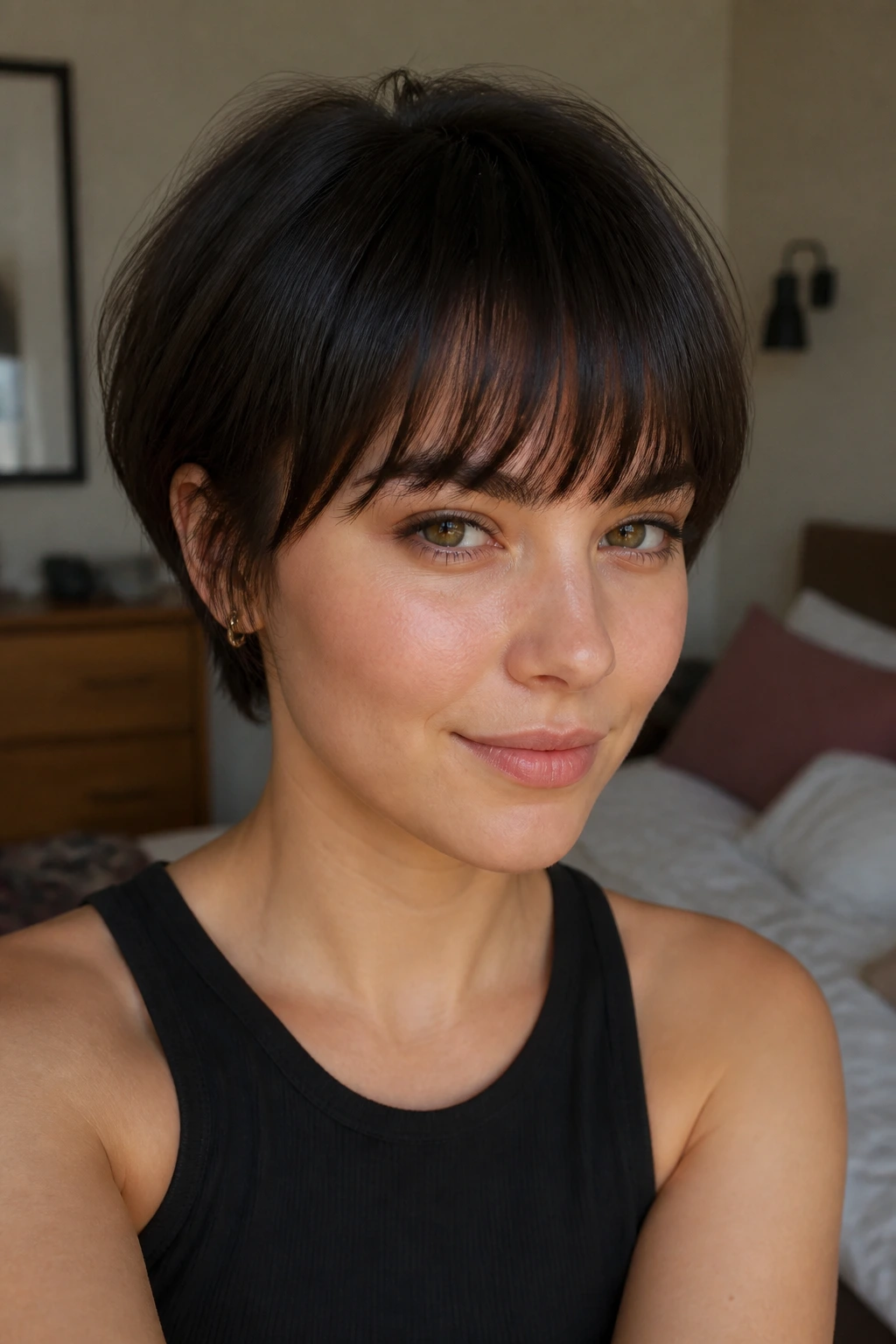
Fringe grows fast enough to change the balance of a cut in a few weeks. That’s not a flaw. It’s just how bangs work. The trick is knowing what needs regular upkeep and what can be left alone.
For shorter fringe styles like micro bangs or baby fringe, a trim every 3 to 4 weeks keeps the line where it belongs. Curtain fringe, side-swept fringe, and grown-out styles can usually stretch to 5 to 7 weeks before they start falling into your eyes or losing their shape.
Wash or at least refresh the front more often than the rest of the hair if it gets oily. The forehead produces enough oil to make bangs look tired by the second day on many hair types. A small dab of dry shampoo at the roots can buy you another day, but use it sparingly or the front will get powdery.
If you sleep on fringe, don’t just smash it under a pillow and hope. Either pin it loosely, wrap it, or rewet the front in the morning and dry it for a minute. Fringe is one of those small things that can look polished with almost no work — or neglected with almost no work, which is the same thing in bad light.
Frequently Asked Questions
Will layered fringe make my round face look wider?
Not if the layers are placed well. The wider look usually comes from a blunt, heavy line that stops at the cheek area, while layered fringe uses diagonals, texture, and a little space to keep the face opening up instead of closing in.
What fringe length is safest for short hair and a round face?
The most forgiving lengths usually sit at the brow, cheekbone, or just below. Anything that ends exactly at the widest part of the cheeks can feel heavy unless the ends are broken up or swept to one side.
Can I wear fringe if my hair is curly?
Yes, but the cut has to respect shrinkage. Curly fringe usually needs to be a bit longer at the start, with dry-cut shaping so the curl doesn’t bounce up into a shorter shape than you wanted.
What if my bangs get oily faster than the rest of my hair?
That’s normal. The front sits on the skin, so it collects oil, sweat, and makeup residue faster than the back. A quick wash of just the fringe, a bit of dry shampoo, or a small round brush blow-dry can reset it without redoing the whole head.
Is side-swept fringe better than center-parted fringe for round faces?
Side-swept fringe usually gives more diagonal movement, which can be useful on a round face. Center-parted fringe can still work, but it tends to need longer pieces and softer sides so it doesn’t sit too squarely on the face.
How do I grow out a fringe without hating the awkward stage?
Blend it into face-framing layers early instead of waiting until it gets in your eyes. Once it’s long enough to split or tuck, the grow-out stops feeling like a problem and starts feeling like a different haircut.
Should I avoid micro bangs if I have a round face?
Not automatically. The issue isn’t the short length alone; it’s the shape and density. A soft, textured micro fringe with crown height can look sharp, while a blunt, dense one can make the face feel wider.
What product gives the best finish without making fringe stiff?
A light mousse at the roots and a pea-sized bit of paste or cream at the ends usually works better than a heavy hairspray routine. You want movement and separation first, then hold.
A Fringe That Keeps Its Shape
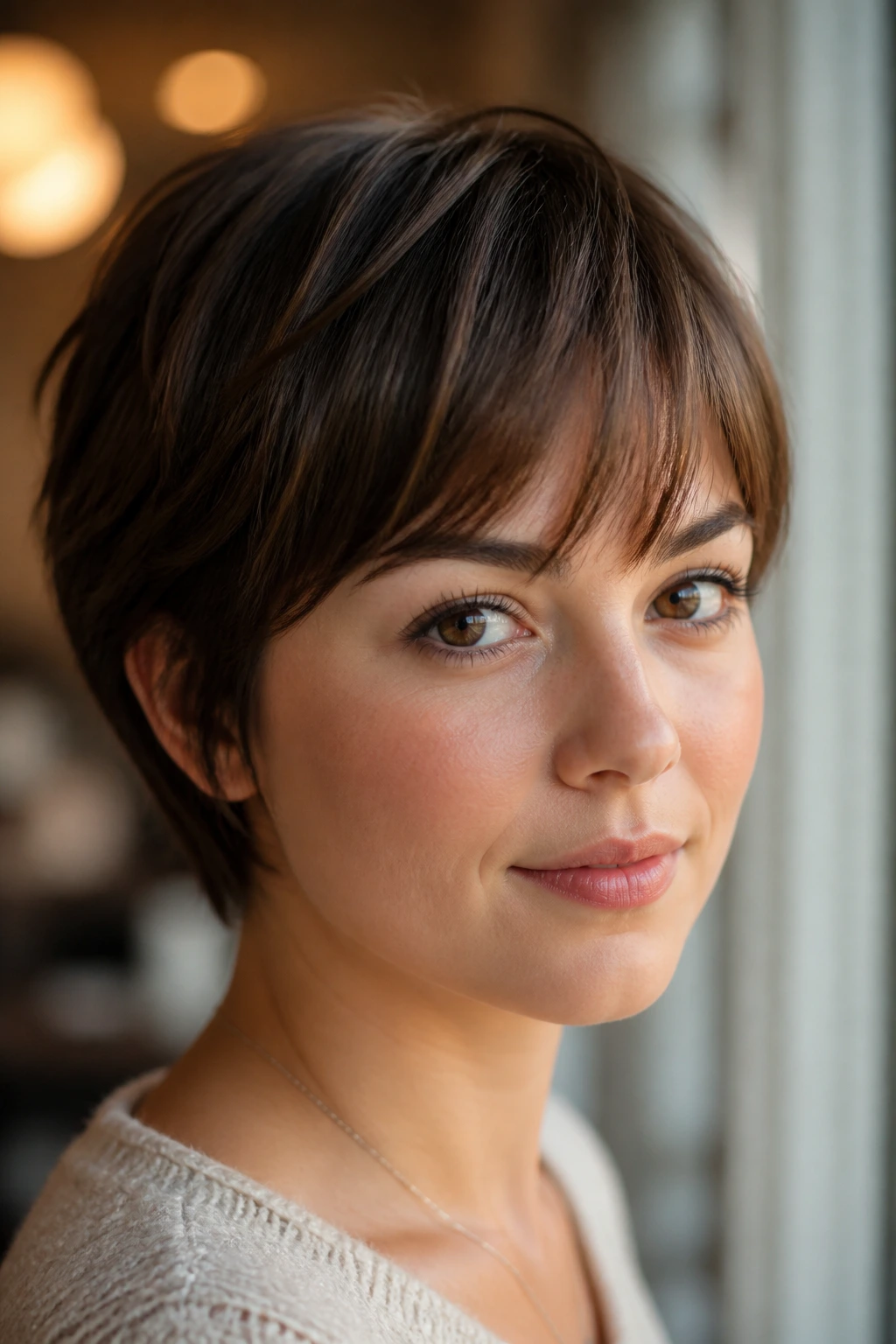
The best fringe for short hair and round faces isn’t the one that hides the most. It’s the one that moves the face in the right direction. Sometimes that means a curtain shape. Sometimes it means a side sweep, a bottleneck edge, or a wispy cut that barely covers the forehead at all.
What matters is the line. If the front is soft at the temples, lighter at the edges, and shaped with the rest of the haircut instead of pasted on top of it, the whole cut starts behaving better. Less puff. Less boxiness. More shape where you want it.
And that’s the real reward here: a short haircut that feels deliberate from every angle, not just from the front. If you keep the fringe layered, a little airy, and tuned to your hair texture, it will keep doing its job long after the salon visit is over.