



Long straight hair has a particular problem: it can look expensive at 8 a.m. and a little too honest by lunch. The shine is there, the length is there, and the movement? Sometimes it vanishes the second the hair dries. A side-swept bang fixes that with a single diagonal line, which is why this combo keeps showing up on women who want long hair that still has shape at the front.
The best part is how much personality you can get from one small cut decision. A deep side sweep can look soft and romantic. A wispy diagonal fringe can make blunt ends feel lighter. A heavier, cheekbone-skimming bang can give long hair a more deliberate frame, the kind that keeps the face from getting swallowed by all that length.
And straight hair is a good canvas for it. You see the line of the cut immediately. You see whether the bangs blend or sit there like a separate piece. You also notice every tiny styling choice — the part, the root lift, the way the ends tuck under or fall dead-straight — which is exactly why the right version matters so much.
Why These 25 Looks Work So Well on Straight Hair
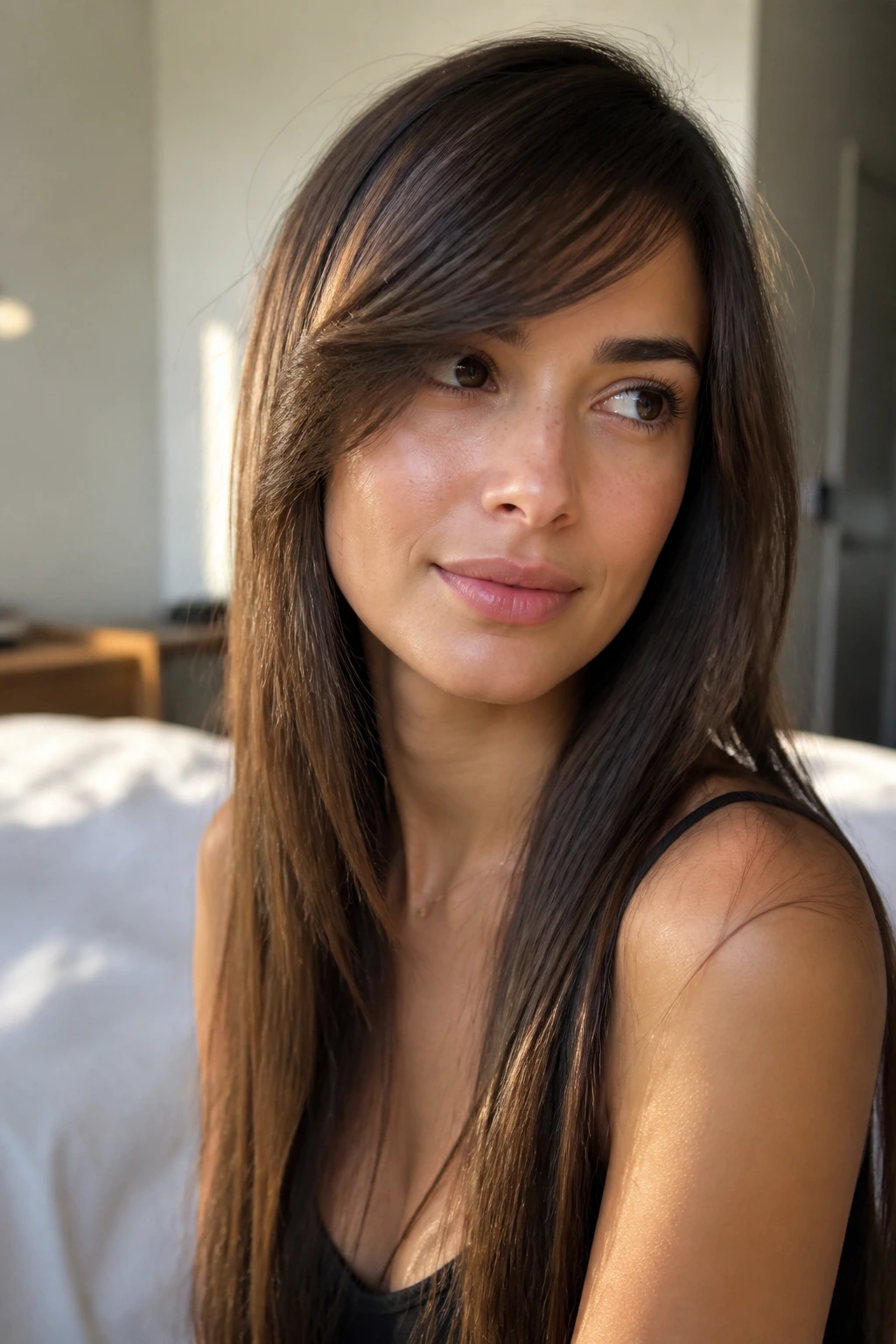
-
They stop the front from going flat: A side-swept bang breaks the long vertical line of straight hair and gives the eye a place to land right at the face.
-
They let you keep the length you like: You don’t have to chop off inches to get movement; the shape lives in the front and along the layering, not in a dramatic length loss.
-
They suit different hair densities: A heavier sweep helps thick hair stay controlled, while a lighter fringe keeps fine hair from looking boxed in.
-
They grow out more gracefully than blunt bangs: The angle softens as it gets longer, so you can stretch a trim schedule without the awkward shelf effect that comes with a straight-across fringe.
-
They work with everyday styling and dressed-up hair: The same cut can look polished with a blowout, neat with a low ponytail, or softer with a loose bend at the ends.
-
They make straight hair feel intentional: That sounds small, but it matters. A clear front angle makes even very simple long hair look shaped rather than untouched.
1. Glassy One-Length Hair with a Deep Side Sweep
A blunt, glassy sheet of hair looks sharper when the front falls into a deep side part. The length stays clean and even, but the side-swept bang gives the whole cut a bit of attitude. I like this version on hair that already lies flat and smooth, because it turns that natural straightness into a feature instead of trying to fight it.
Ask for the bang to start high enough to skim the brow and then slide down toward the cheekbone, not stop in the middle of the forehead like a chopped-off strip. A tiny point-cut through the ends keeps the fringe soft at the edge. Without that, the front can look too boxy against the sleek length.
This style is almost severe in a good way. It works best when the finish is disciplined: a blow-dry with a nozzle, a flat iron only if needed, and a drop of serum through the mids and ends, not the roots.
2. Soft U-Shape Layers with Feathered Bangs
Why does a U-shape make long straight hair feel lighter without sacrificing the length? Because the front pieces travel inward before they fall, so the eye sees motion even when the hair is perfectly straight. That subtle curve matters more than people think. It keeps the back full and the front from looking like one long curtain.
What to Ask For
Tell your stylist you want long layers that begin low, usually around the collarbone or just below it, with a gentle U at the perimeter. The side-swept bang should blend into those front pieces instead of sitting on top of them. If your hair is fine, keep the layering conservative. Too much removal and the ends start to feel wispy in a bad way.
This cut is a good match for hair that needs shape but not drama. It also grows out well because the front layers can keep doing their job long after the bang itself has lost that fresh trim sharpness. A round brush at the front and a paddle brush through the rest is all it needs on most days.
3. Long V-Cut with Airy Side Fringe
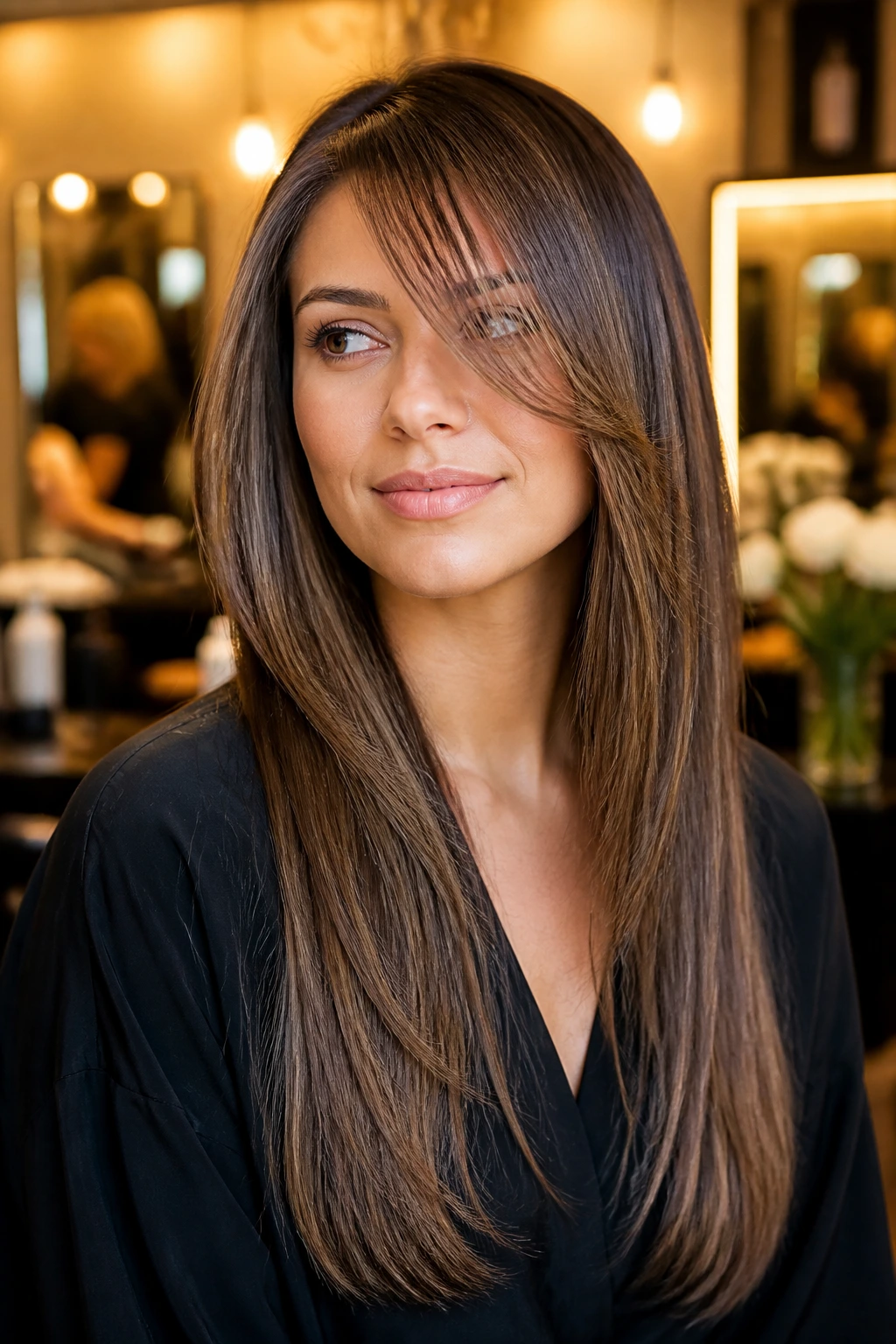
The V-cut gives long straight hair a tail-like finish that feels more deliberate than a blunt hem. The point falls between the shoulder blades and the waist, depending on how much length you want to keep, and the diagonal bang helps the front connect to that tapered shape. Without the fringe, a V-cut can look a little too harsh. The side sweep softens it.
- Best for: hair that’s dense enough to hold a visible point at the back.
- Ask for: long face-framing layers that taper slowly, not sharp steps.
- Styling note: a slight bend at the ends keeps the V from looking stringy.
This is one of those cuts that looks better when the hair moves. I’d reach for a medium round brush and a light mist of heat protectant, then let the ends turn under just a bit. The bang should feel feathered, not shredded.
4. Blunt Ends with Wispy, Slanted Bangs
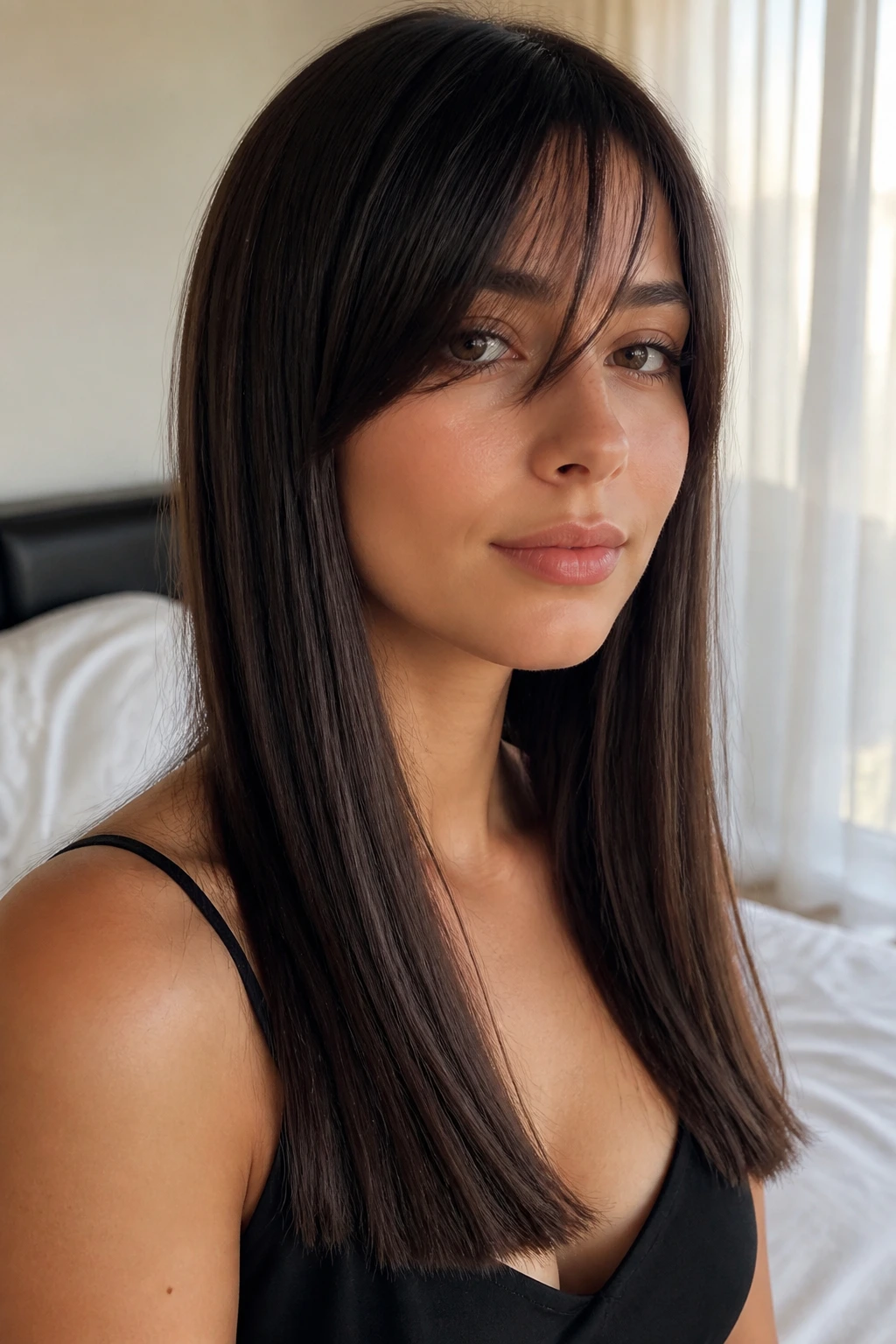
Blunt ends don’t have to feel heavy. In fact, on straight hair, a crisp hem can look expensive when the front is softened by a wispy side bang. That contrast is the whole trick: the length is clean and direct, while the fringe gives the face a little drift.
This version is especially good if your hair is fine or medium and you want the appearance of density through the ends. Ask for a bang that’s narrow enough to move, then longer on the outer edge so it sweeps across the temple rather than stopping at the eyebrow. The outer corner should almost feel like it disappears into the cheek.
I’d keep the styling dead simple here. Blow-dry the bang to one side, clip it for a minute while it cools, and leave the rest straight with just a slight bend under at the ends. That’s enough.
5. Butterfly Layers with a Soft Diagonal Fringe
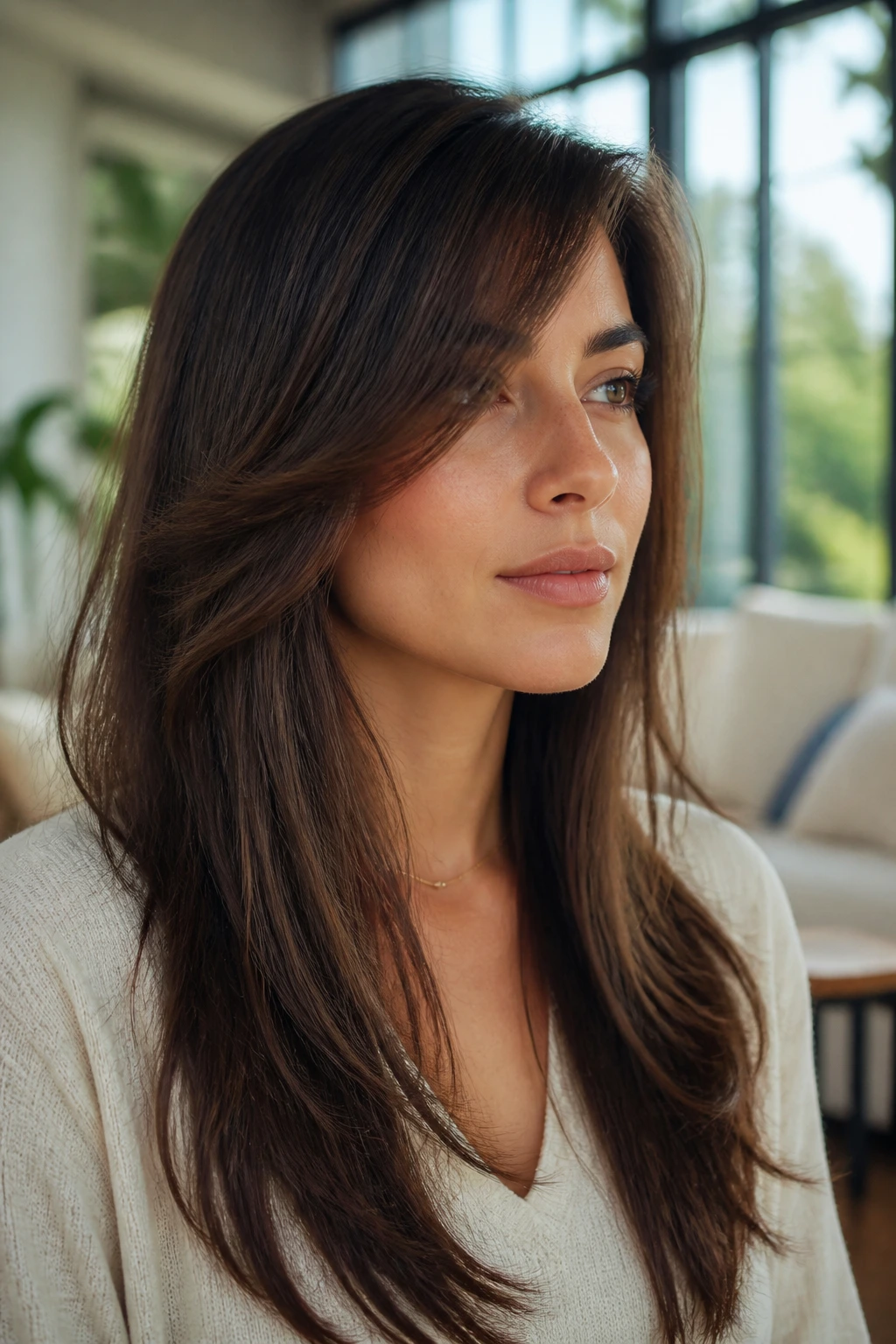
Butterfly layers are the cut you reach for when you want movement around the face without giving up the feeling of long hair. The shortest layers sit near the front, then drop away quickly so the length stays dramatic. On straight hair, a side-swept bang ties those pieces together and keeps the front from going sparse.
This shape looks best when the shortest front layer hits somewhere between the cheekbone and jaw, then gradually blends into longer lengths. The diagonal fringe should echo that angle. If the bang is cut too bluntly, the whole look can feel disconnected, like two separate haircuts living on the same head.
I like this style with a soft blowout rather than poker-straight ends. A tiny bit of bend through the front layers makes the feathering visible. And yes, the back still matters — if the layers are cut with care, the whole thing has that light, swinging look without losing body.
6. Long Shag with a Swooping Front Piece
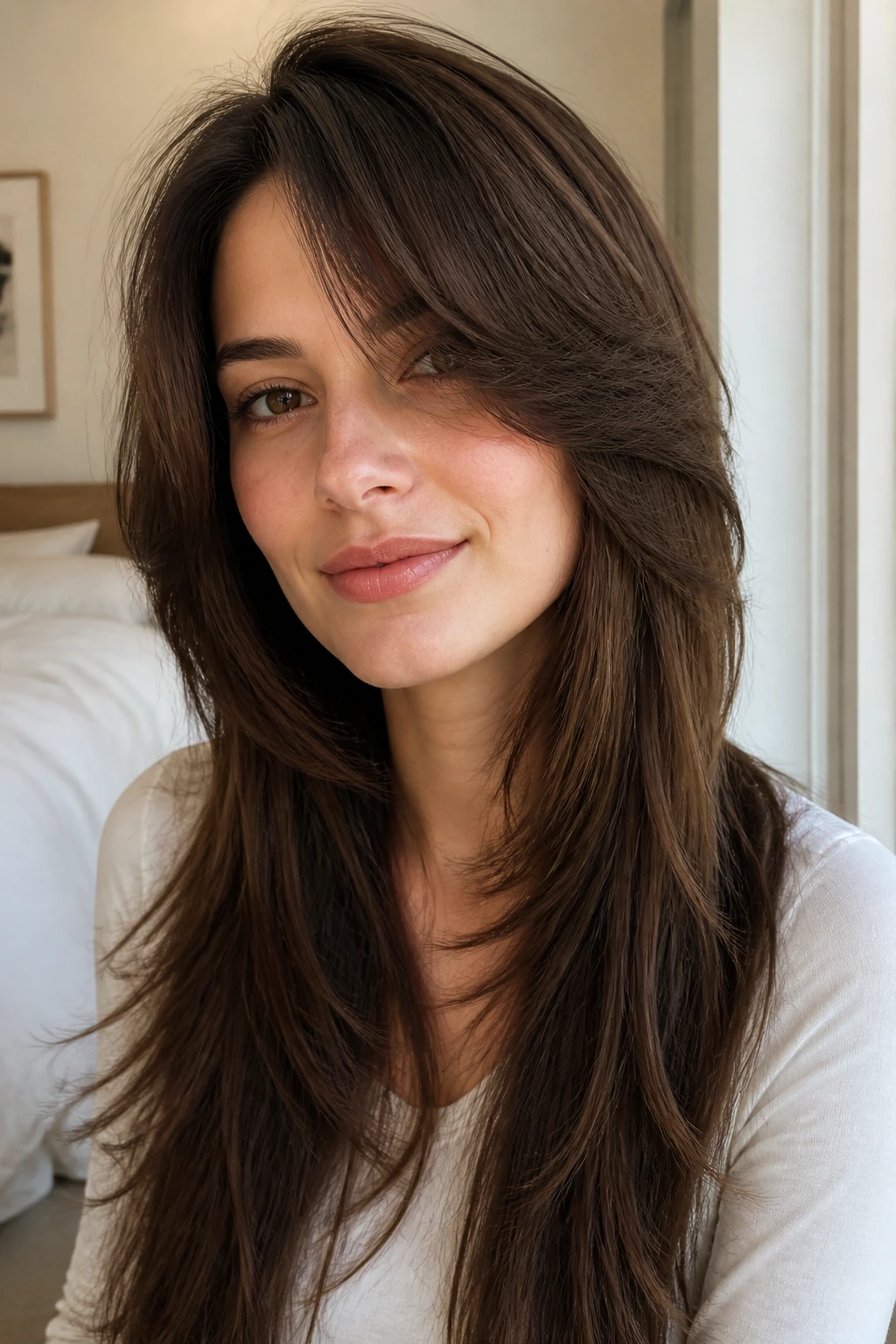
A shag on straight hair needs control. Too much texture and it starts to look like you got caught mid-grow-out. But when the layers are long and the front piece is swept rather than chopped, the result has a cool, lived-in shape that still respects the length.
The side-swept bang is doing a lot of the heavy lifting here. It anchors the cut, keeps the front from getting too piecey, and gives the shag a cleaner line at eye level. Ask for longer layers through the crown and around the jaw, not short choppy bits that stick out on their own. Straight hair can handle a shag only when the edges stay soft.
This is a strong choice if you like a little edge but don’t want to spend twenty minutes making your hair look “done.” A matte texturizing spray through the mids, a smooth bang, and a small bend at the ends is usually enough.
7. Straight Lengths with One Ear Tucked and a Wide Side Part
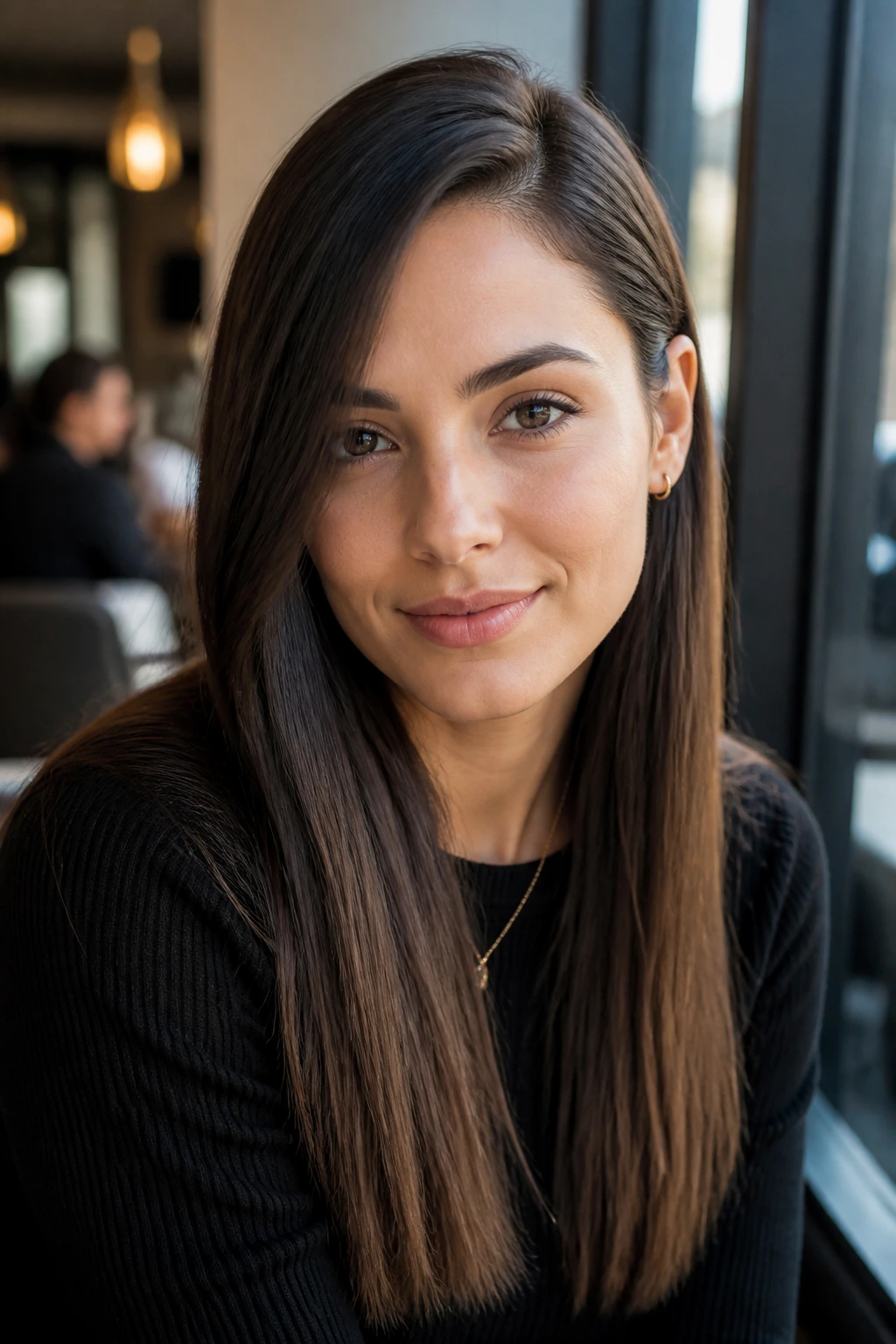
Some styles work because they’re almost nothing at all. A wide side part, one side tucked behind the ear, and a long sweep across the forehead can make straight hair feel more styled than a complicated cut ever could. The asymmetry does the work.
What makes this look interesting is the contrast between exposed and hidden. One side shows your cheekbone and jaw; the other stays draped and soft. The side-swept bang should be long enough to slide into that tucked side without fighting it. If it’s too short, it looks fussy every time you move your head.
Use a tail comb to place the part a little off the arch of the eyebrow, not directly over it. That slight shift changes the whole balance. I’d keep the ends clean and straight here, with a touch of polish at the front so the sweep doesn’t collapse by noon.
8. Low Ponytail with Loose Side Bangs
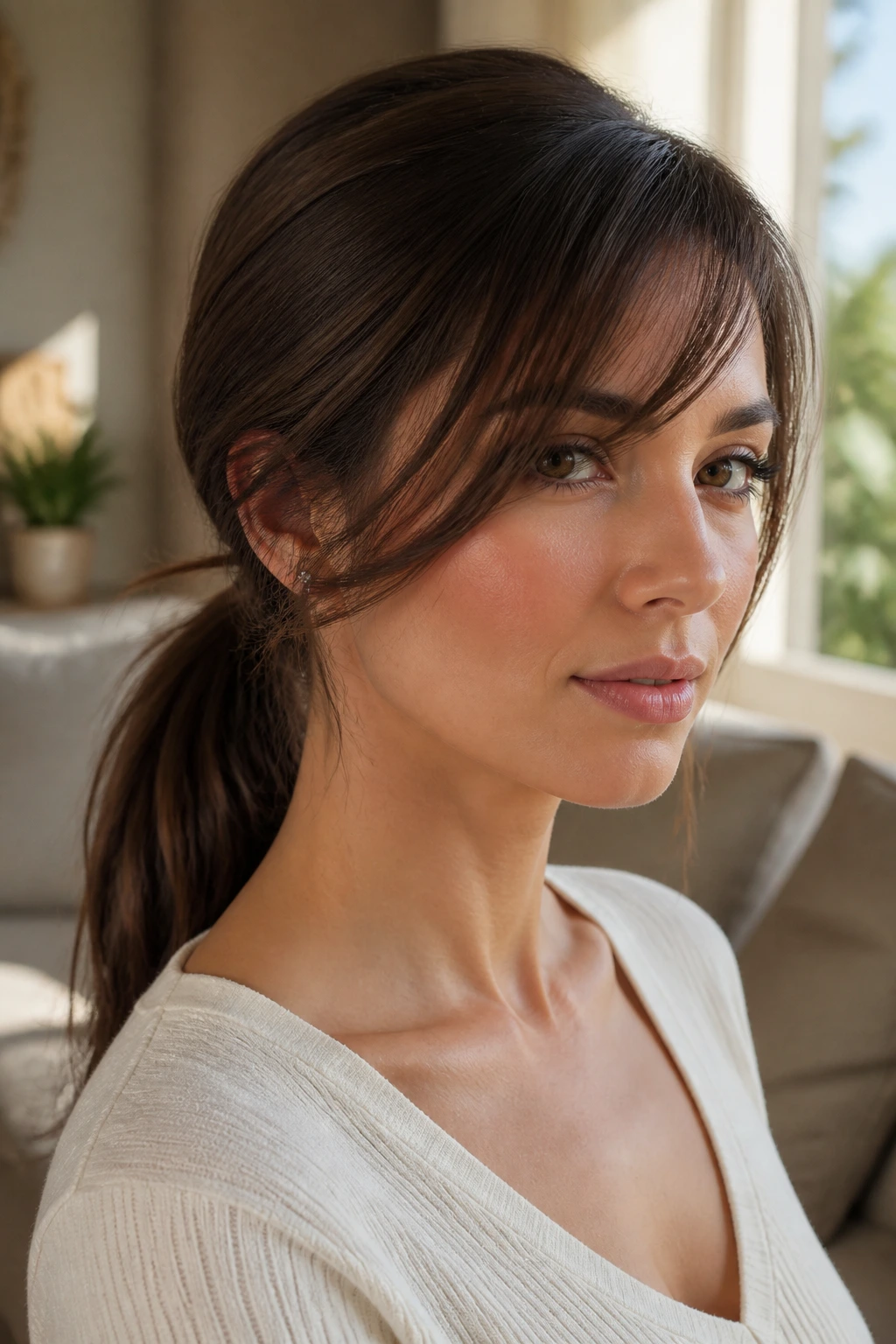
A low ponytail becomes a different animal once the front has a side sweep. Without bangs, the style can look strict and practical. With them, it gets a little softness near the face, which matters if your hair is naturally very straight and tends to pull tight.
The trick is keeping the pony low enough that the bang can move freely. If the elastic sits too high, the front pieces get dragged back and the whole shape loses its balance. I also like a wrapped strand around the base so the ponytail looks finished, not snapped on.
This is one of the easiest styles to wear on second-day hair. Smooth the front with a brush, mist a little flexible-hold spray at the roots, and leave the ends of the bang curved just slightly. It’s neat without being severe.
9. Half-Up Twist with Face-Framing Bangs
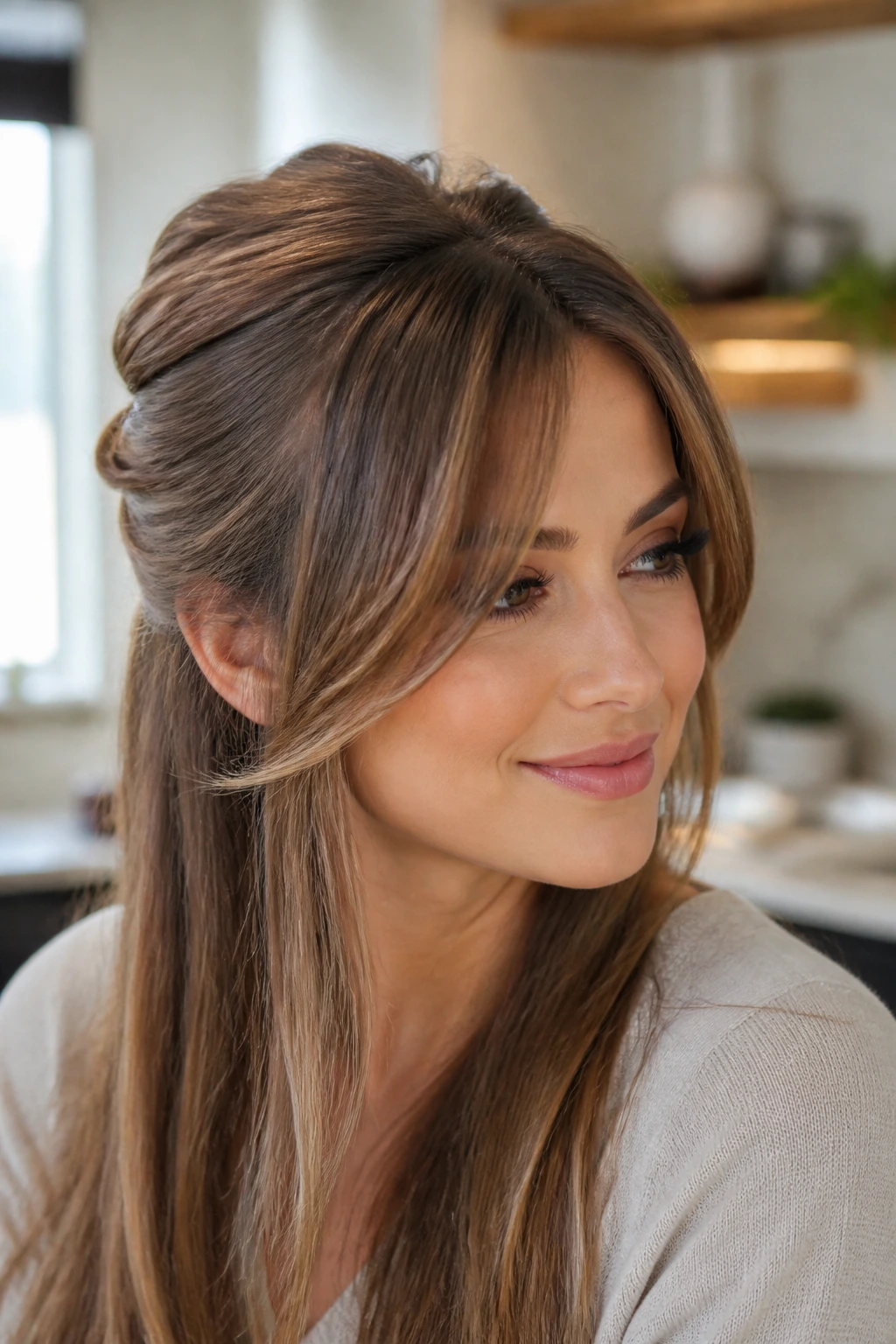
A half-up twist is one of the better ways to show off long straight hair when the front needs a little direction. The top section lifts the crown, while the side-swept bang and front pieces keep the style from looking too pulled back. That contrast is the charm.
How It Sits on the Head
The twist should start loosely from above the temples, not from the top of the crown only. That gives you enough space for the bang to fall naturally. I’d leave the front pieces soft and slightly curved at the cheekbone, especially if your hair is very straight and otherwise wants to hang in one line.
This look is useful when you want your hair off your face but still want movement around the front. It also works well for hair that’s mid-back or longer, because there’s enough length left down to balance the lifted top.
10. Sleek Blowout with Flipped Ends
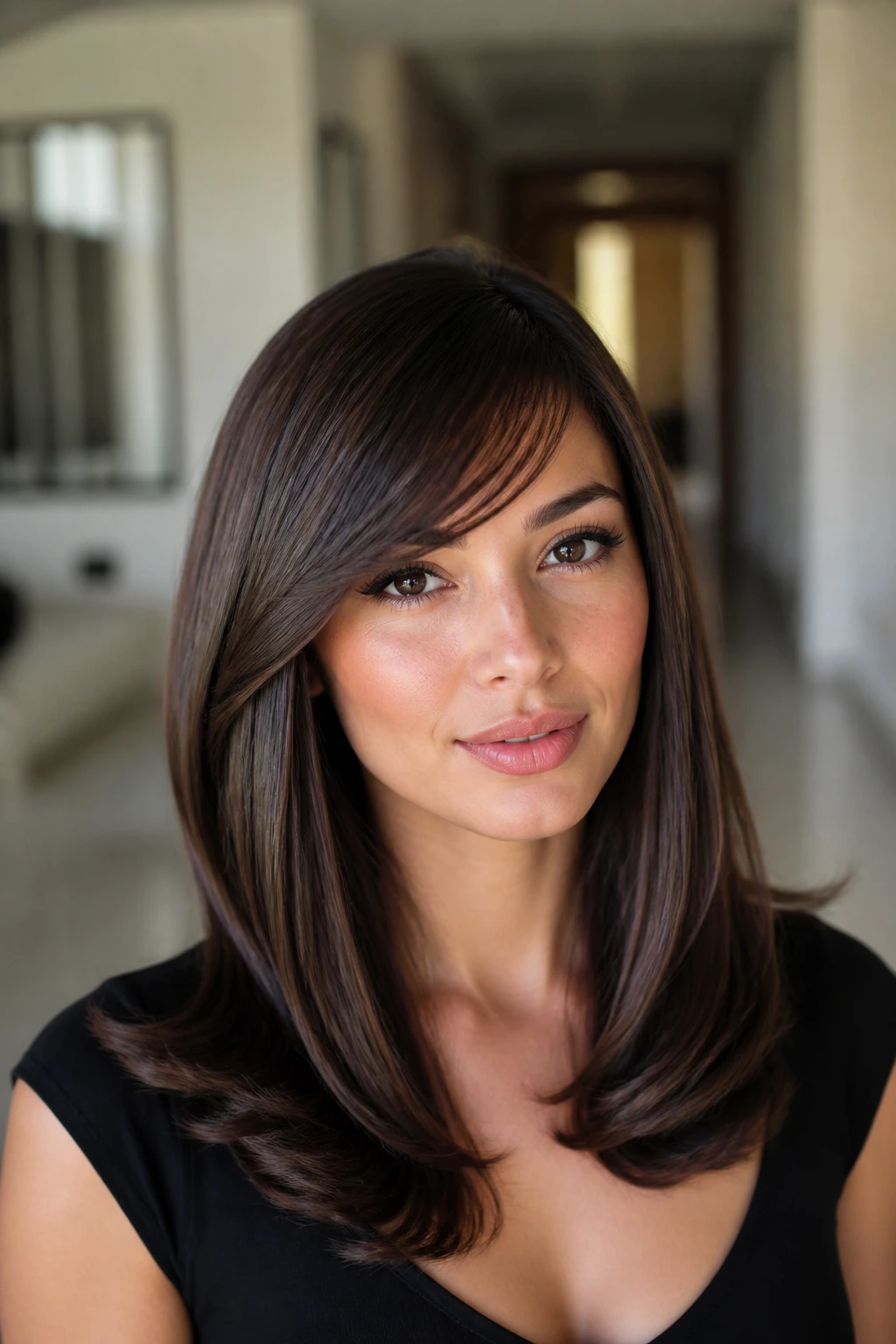
A sleek blowout is one of the few styles that can make straight hair look even straighter in a flattering way. The side-swept bang gets brushed away from the face, then set with a cool shot so it doesn’t fall into your eye two minutes later. The ends turn slightly under or out, just enough to show they were styled on purpose.
The best version has bounce at the front and calmness everywhere else. That sounds contradictory, but it isn’t. You want the bang to move, the roots to have lift, and the lengths to keep their long line. If every section gets too much bend, the whole thing starts looking busy.
I’d choose this for dinners, interviews, or any day when you want your hair to say “I paid attention” without going full formal. A medium round brush, a blow dryer with a nozzle, and a little patience near the front are the whole game.
11. Collarbone-to-Waist Gradient Layers
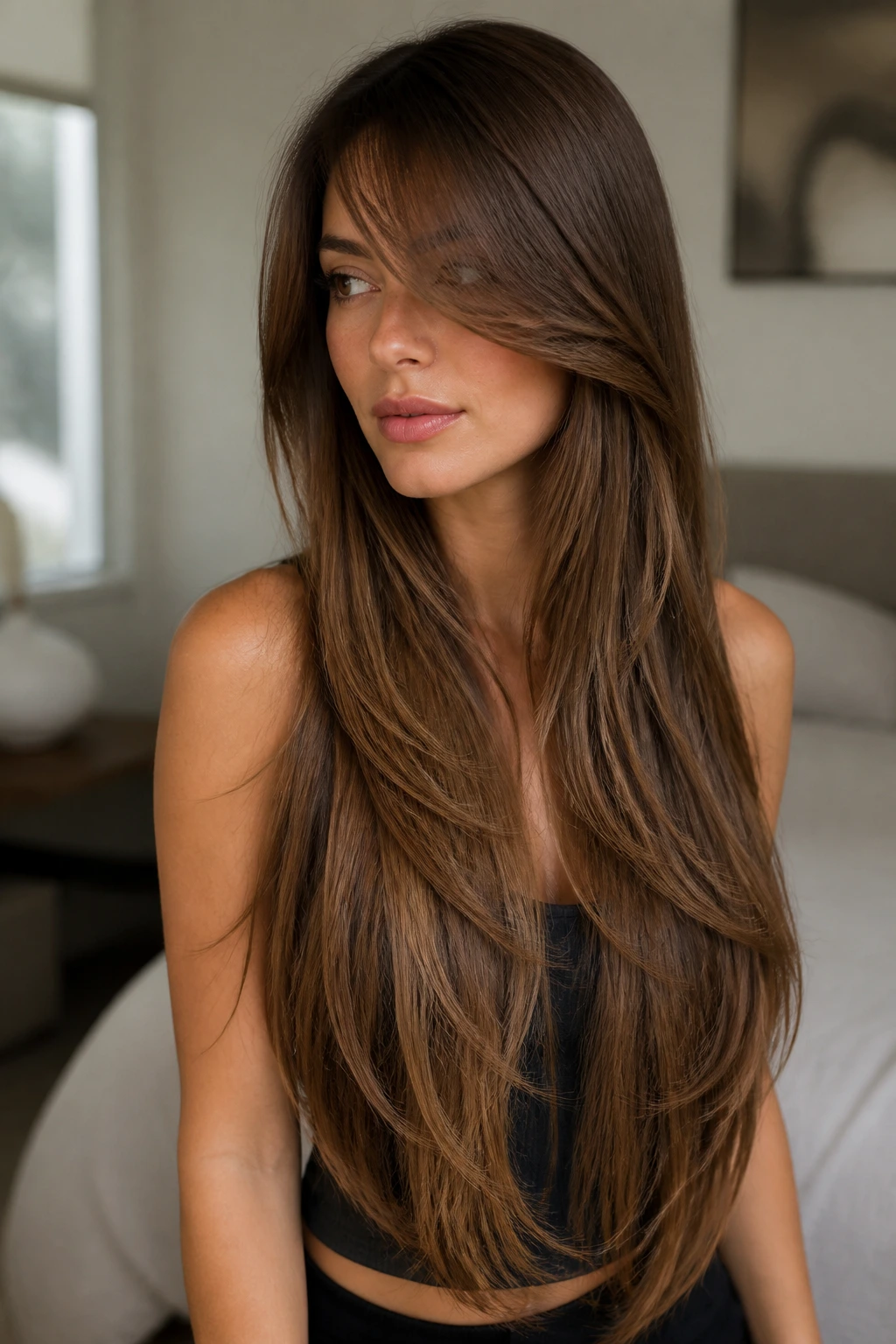
This is the cut for someone who likes length but wants a little slope instead of one hard drop. The layers begin around the collarbone and gradually open into longer lengths, which keeps the face framed and the back full. The side-swept bang slots into that gradient beautifully because it doesn’t need to fight a blunt edge.
The effect is quieter than a shag or butterfly cut. It’s not about visible texture. It’s about a long, slow transition that keeps straight hair from looking like one big panel. If your hair is thick, this kind of layering removes weight without making the ends look hollow.
What Makes It Feel Balanced
The front angle should not be too short. If the bang starts high and the layers start high, the cut loses its length-first identity. Keep the front soft, and let the gradient do the work.
12. Asymmetrical Side Part with Long Fringe
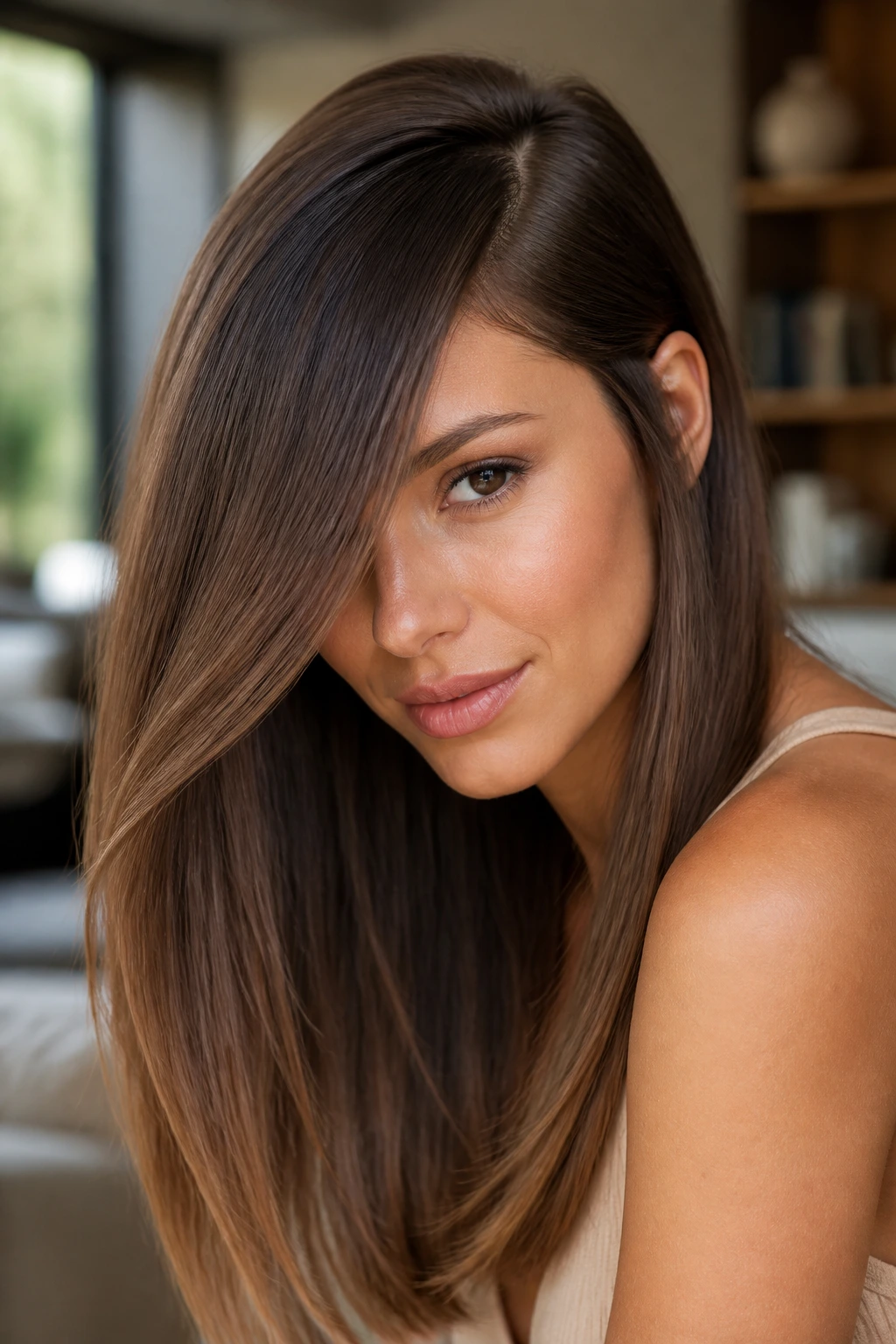
A deep asymmetrical part changes the mood of straight hair fast. It gives one side a little lift at the root and sends the bang across the forehead at a sharper angle, which makes the whole look feel more directional. Compared with a center part, it has more energy. Compared with a blunt fringe, it’s far less rigid.
This is a strong pick if your hair tends to lie too flat around the crown. The off-center part creates volume without teasing, and the long fringe can be tucked, pinned, or brushed across depending on the day. I like it best when the bang is long enough to graze the cheekbone rather than stopping at the eyebrow.
It’s a small change, but it reads immediately. You can keep the rest of the hair simple — straight, smooth, maybe with one bend at the end — and the part alone carries the style.
13. Straight Cut with Cheekbone Layers
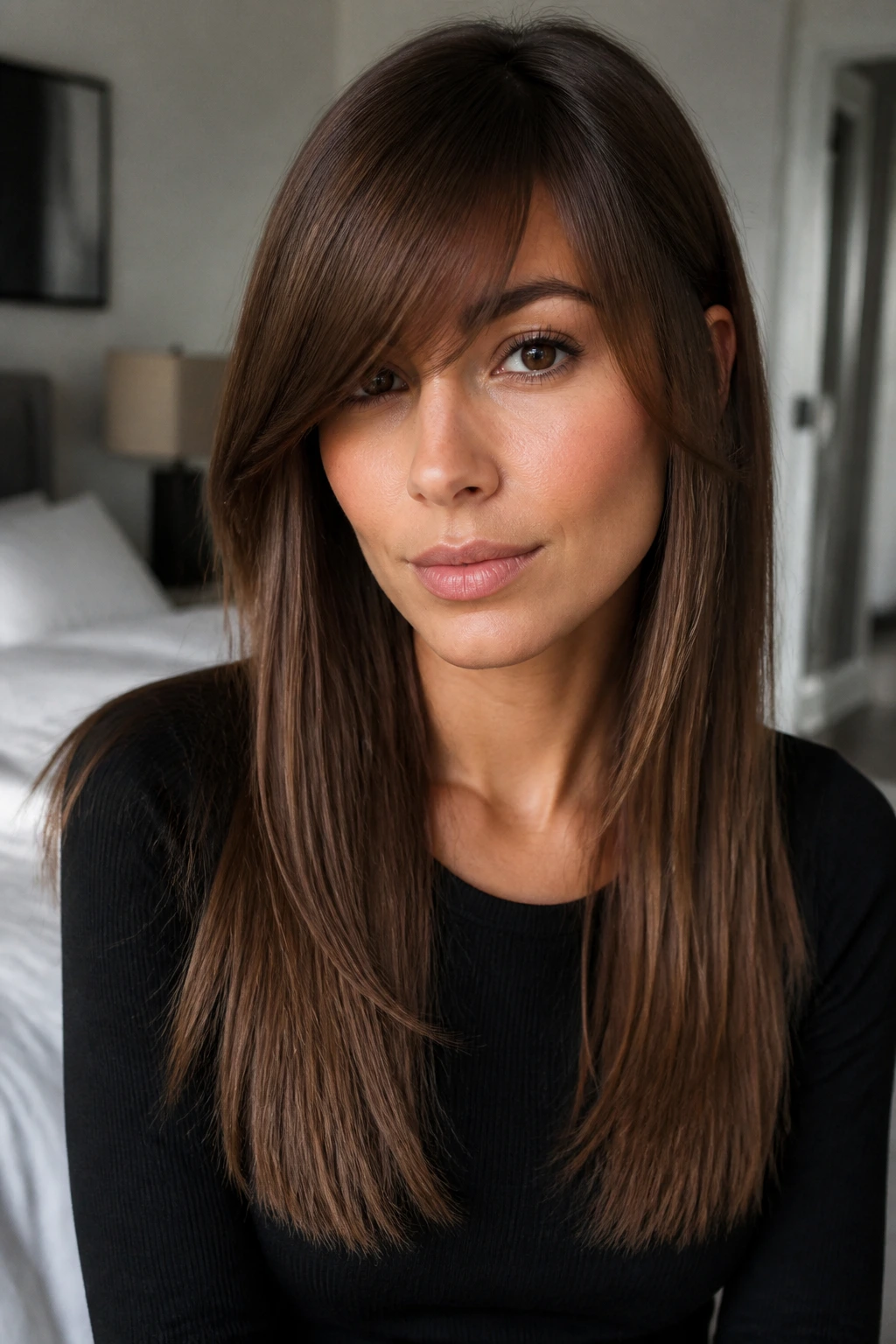
A straight cut doesn’t have to mean no shape. If the perimeter stays mostly even but the front pieces start around the cheekbone, the hair gets enough contour to frame the face without losing that blunt, glossy finish. The side-swept bang should blend into those front layers so the whole front half reads as one movement.
This is one of my favorite choices for people who want a clean line but hate the feeling of hair hanging straight down from the temples. The cheekbone layers make the face look less boxed in. They also work nicely when the hair is tucked behind one ear, because the front pieces still leave a soft line behind.
Keep the layers long. That’s the thing. Too much cutting turns the style airy in a way that can look thin on straight hair. The best version has restraint.
14. Invisible Layers and an Airy Sweep
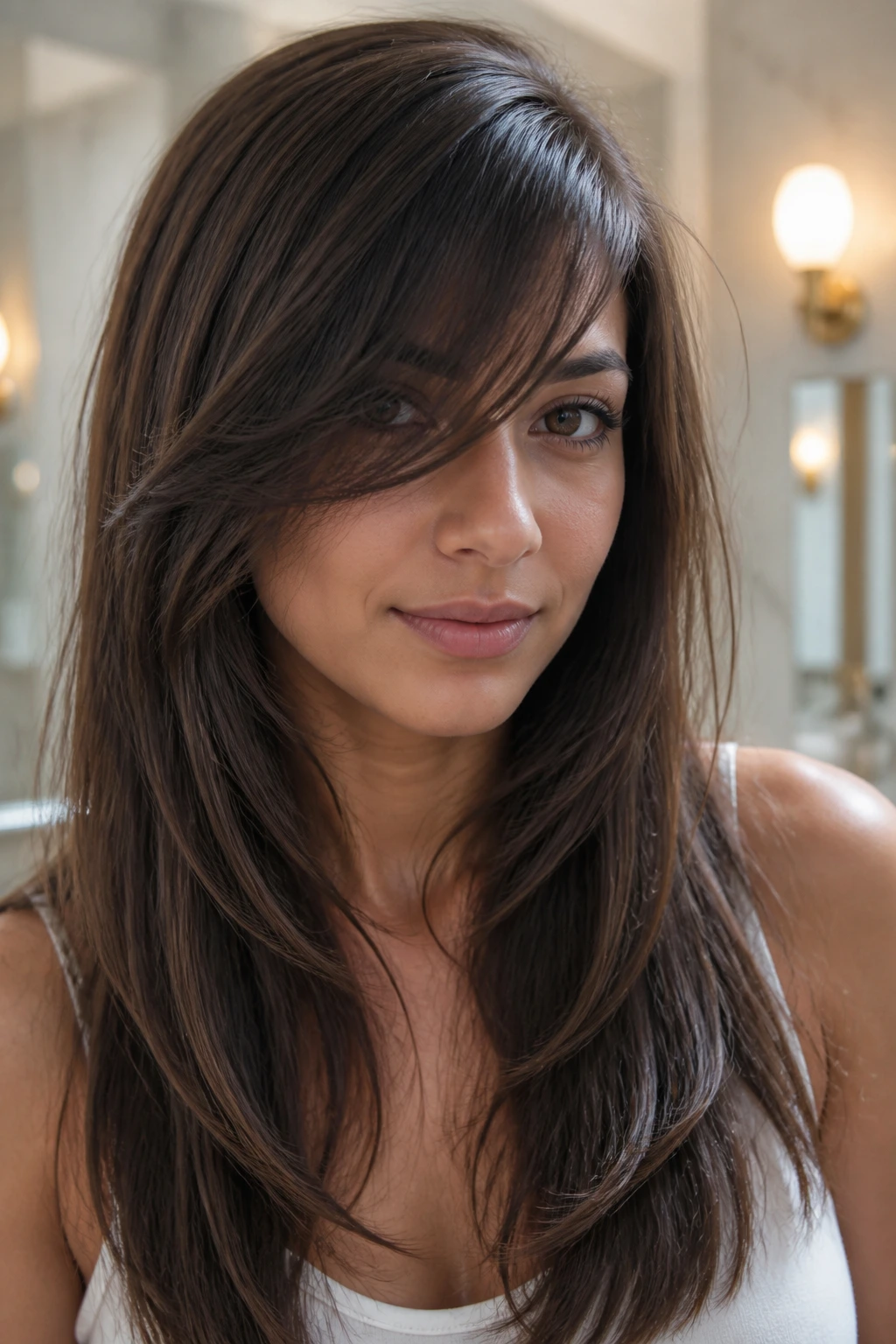
Invisible layers are for people who want movement without obvious steps. From the outside, the hair still looks full and long. Underneath, the layers remove enough weight to keep the ends from dragging. With side-swept bangs, the result is soft and polished, not obviously “layered.”
This is especially useful for fine straight hair, because heavy visible layering can make the ends collapse. Ask for interior shaping and a fringe that feathers from one side of the temple down toward the brow. The bang should feel light enough to move, but not so thin that it separates into little strands.
A clean blow-dry matters here. If the roots are flat and the bang is oily, the whole illusion falls apart. But when it’s done well, this cut has that expensive-looking finish that people can’t quite place.
15. Braided Crown with Side-Swept Bangs
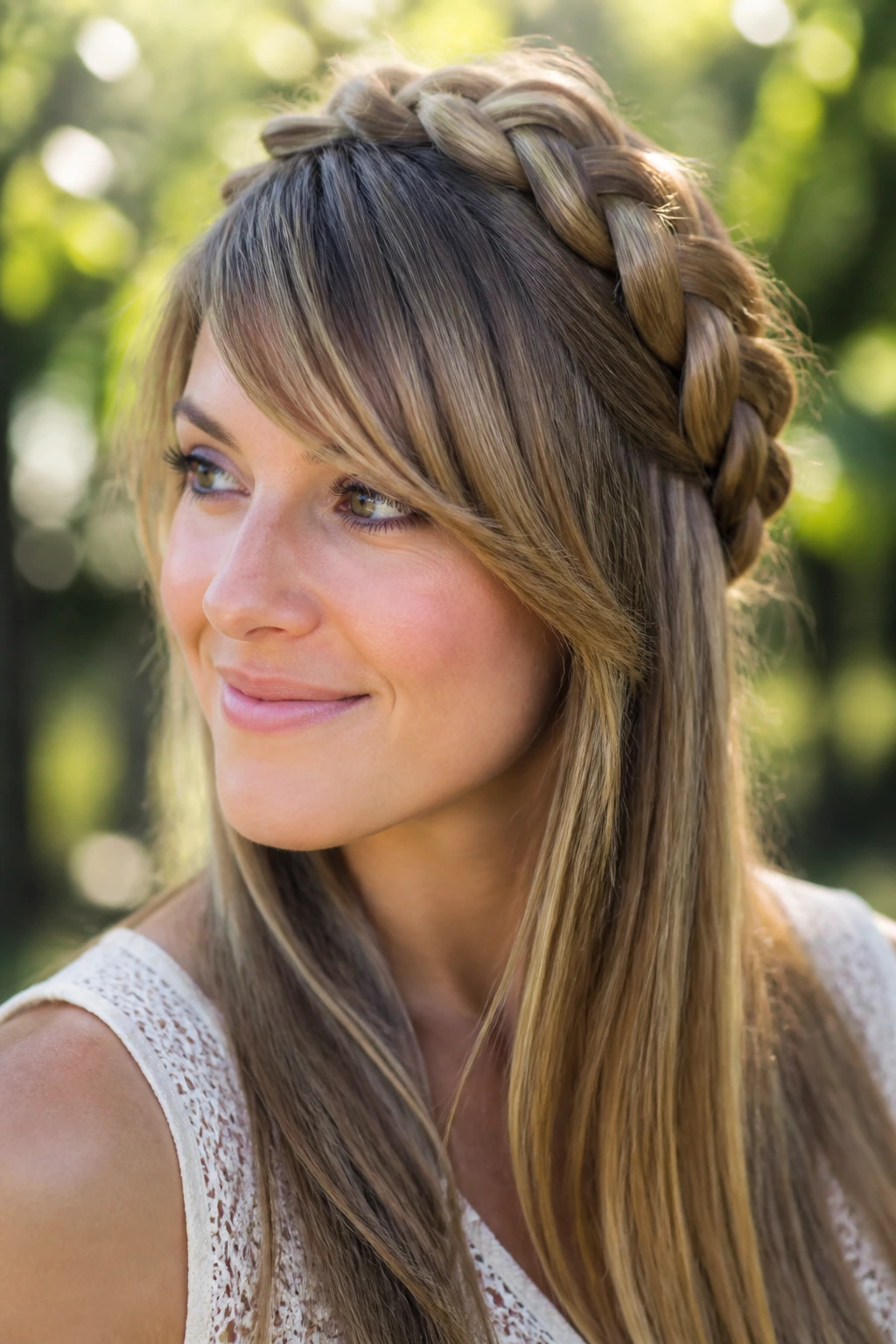
Braids and straight hair can be tricky because the texture is often too slippery, but that’s exactly why the side-swept bang helps. It keeps the front from looking severe when the rest of the hair is pulled back and braided. A braided crown, in particular, gets softer and more wearable when the bang falls across the forehead instead of disappearing into the braid.
This style works best when the braid starts close to the hairline and wraps around the crown in a loose path. You do not want it tight and shiny in a school-uniform way unless that’s the point. Leave a few millimeters of lift at the roots and keep the bang slightly curved so it looks like it belongs there.
I’d use a texturizing spray at the roots before braiding. Straight hair needs a bit of grip, or the braid slips apart. The bang should be the finishing touch, not an afterthought pinned to the side.
16. Low Chignon with a Soft Front Sweep
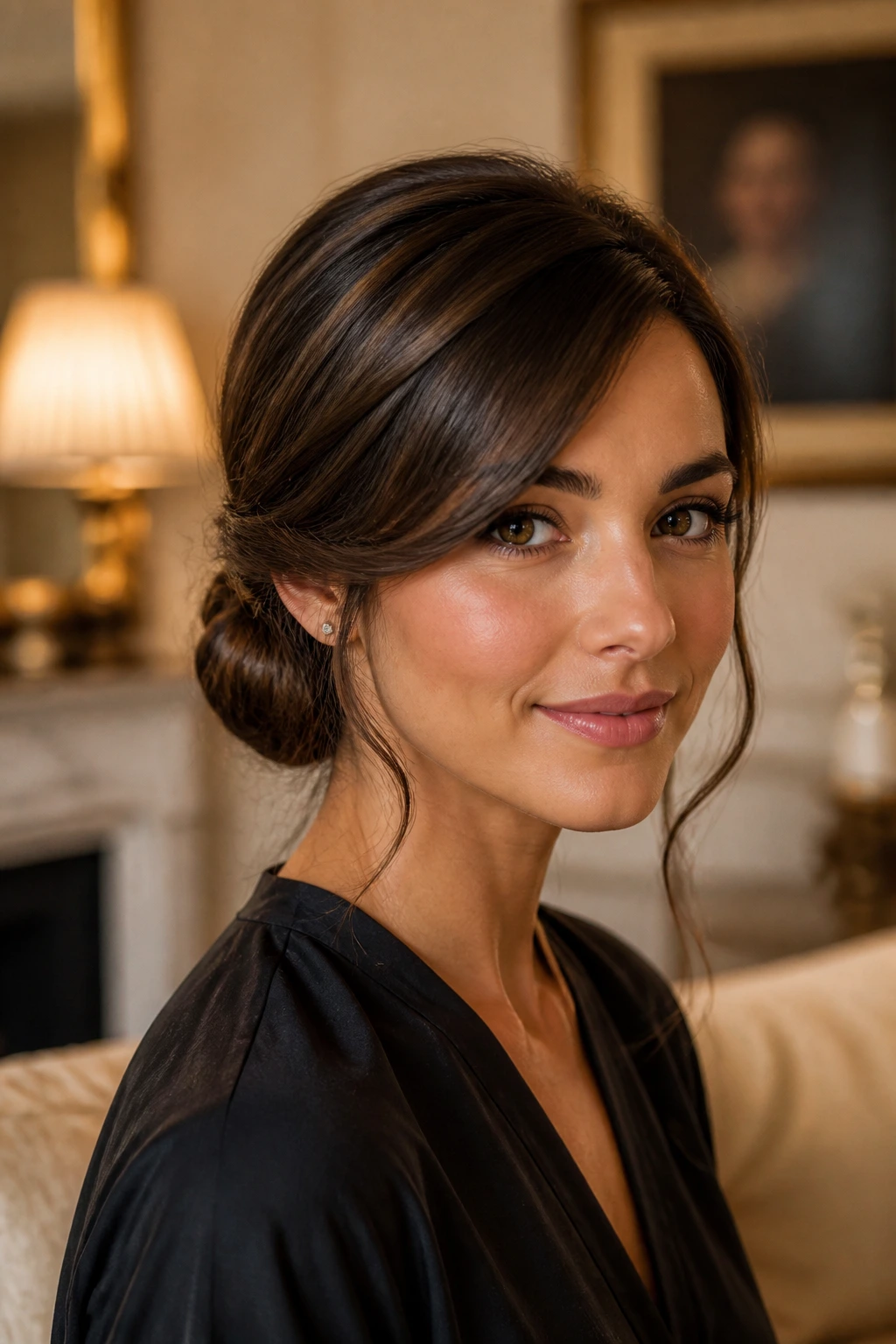
A low chignon can go severe in a hurry on straight hair. The side-swept bang is what keeps it from looking like a strict bun pulled too tight at the crown. It creates a little softness near the eyes and cheekbone, which changes the whole feel of the updo.
The best version sits low at the nape and isn’t over-pinned into a hard knot. Let a few pieces stay loose around the twist, and keep the bang long enough to sweep rather than sit on the forehead. If you want the style to read elegant instead of plain, a slightly off-center part helps more than extra accessories do.
This is the kind of style that looks most expensive when it doesn’t feel overworked. Smooth the top, tuck the ends neatly, and let the front do the softening. That’s enough.
17. Rapunzel-Length Hair with a Heavier Bang
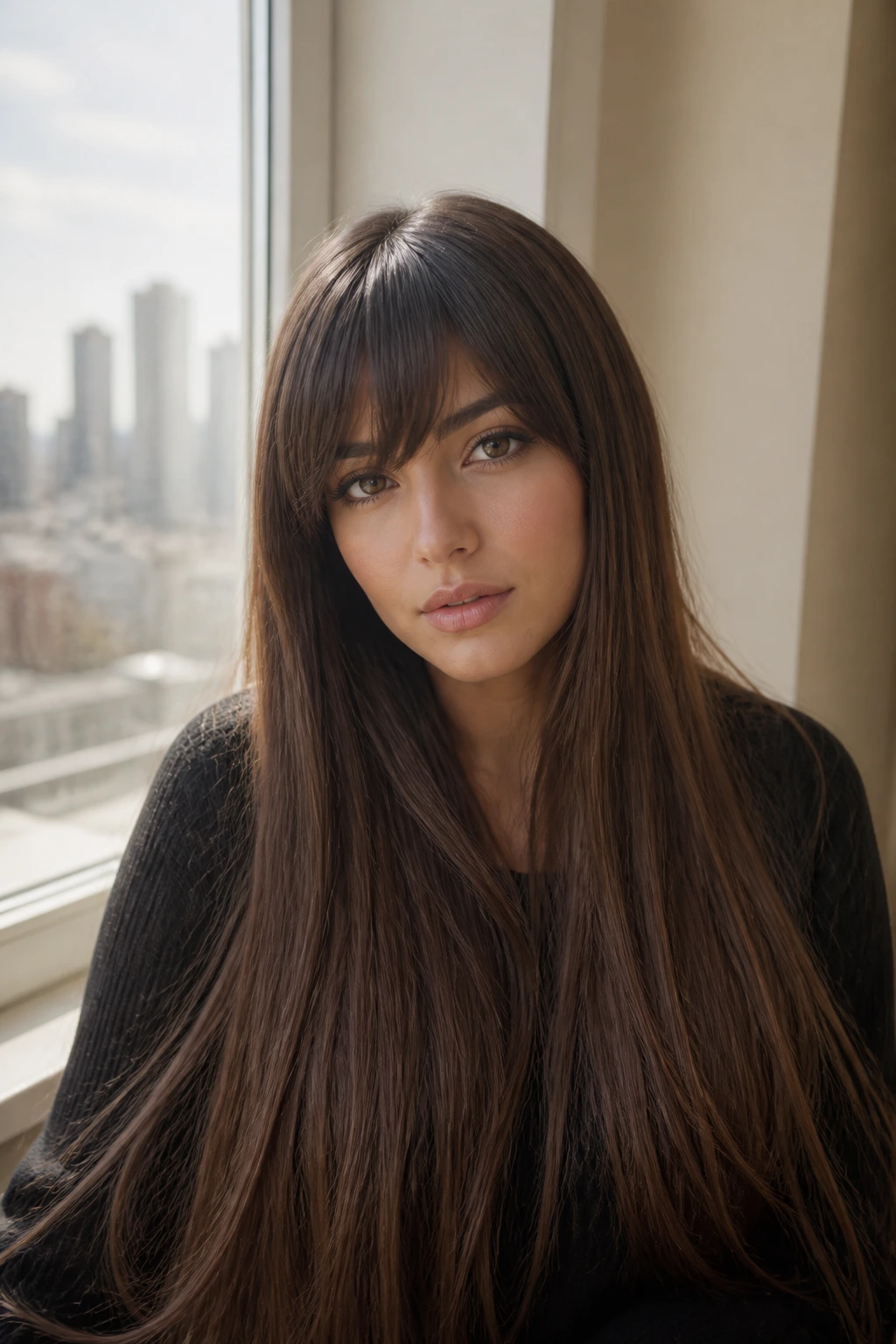
Very long straight hair can disappear into itself if the front is too light. A heavier side-swept bang gives the face a clear frame and stops the entire style from becoming one uninterrupted waterfall. The key is weight — enough hair in the fringe to hold its own, but not so much that it covers half the forehead.
This version looks best when the bang starts deep and travels long, with the outer edge blending into the front layers. If the fringe is too wispy, it can get lost next to all that length. If it’s too blunt, it becomes a slab. The sweet spot is somewhere in the middle, with movement at the brow and softness at the temple.
I’d keep the rest of the hair sleek and simple. Big, dramatic length already brings the visual noise. The bang should frame, not compete.
18. Long Hair with Peekaboo Highlights
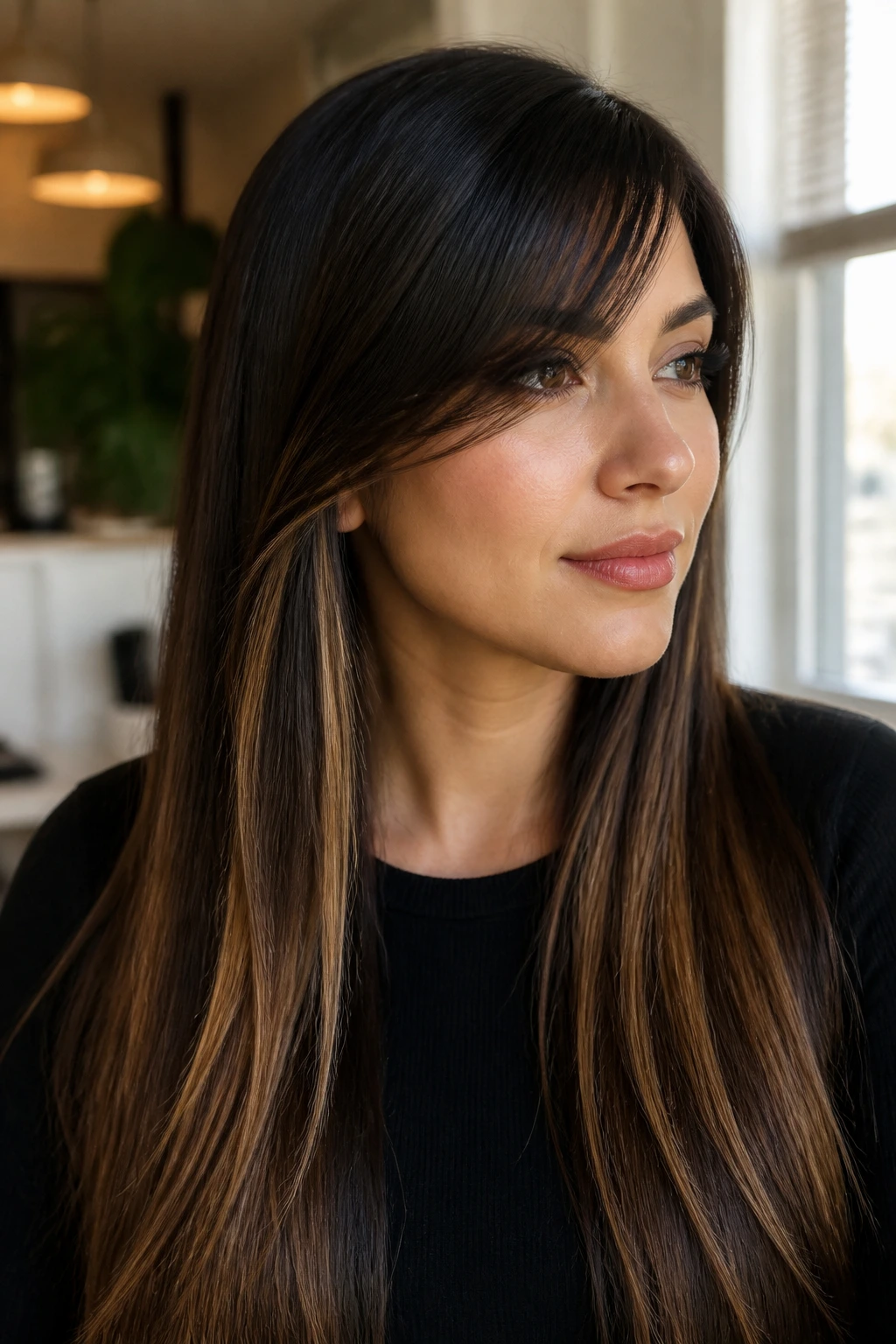
A side-swept bang shows color in a nicer way than a center part often does. When the fringe falls across the forehead, it catches the lighter strands underneath and lets them flash through as you move. Peekaboo highlights work especially well on straight hair because the surface is smooth and the contrast reads cleanly.
This is a good pick if you want dimension without turning the whole head into a color project. Put the lighter pieces just under the top layer and through the front sections, then let the side-swept bang skim over them. The result is subtle in stillness and more obvious when the hair swings.
A tiny warning: if the contrast is too high, the bang can look chunkier than you intended. Keep the highlights soft around the front if you want the sweep to stay elegant. The color should support the cut, not fight it.
19. Soft Wolf Cut for Straight Hair
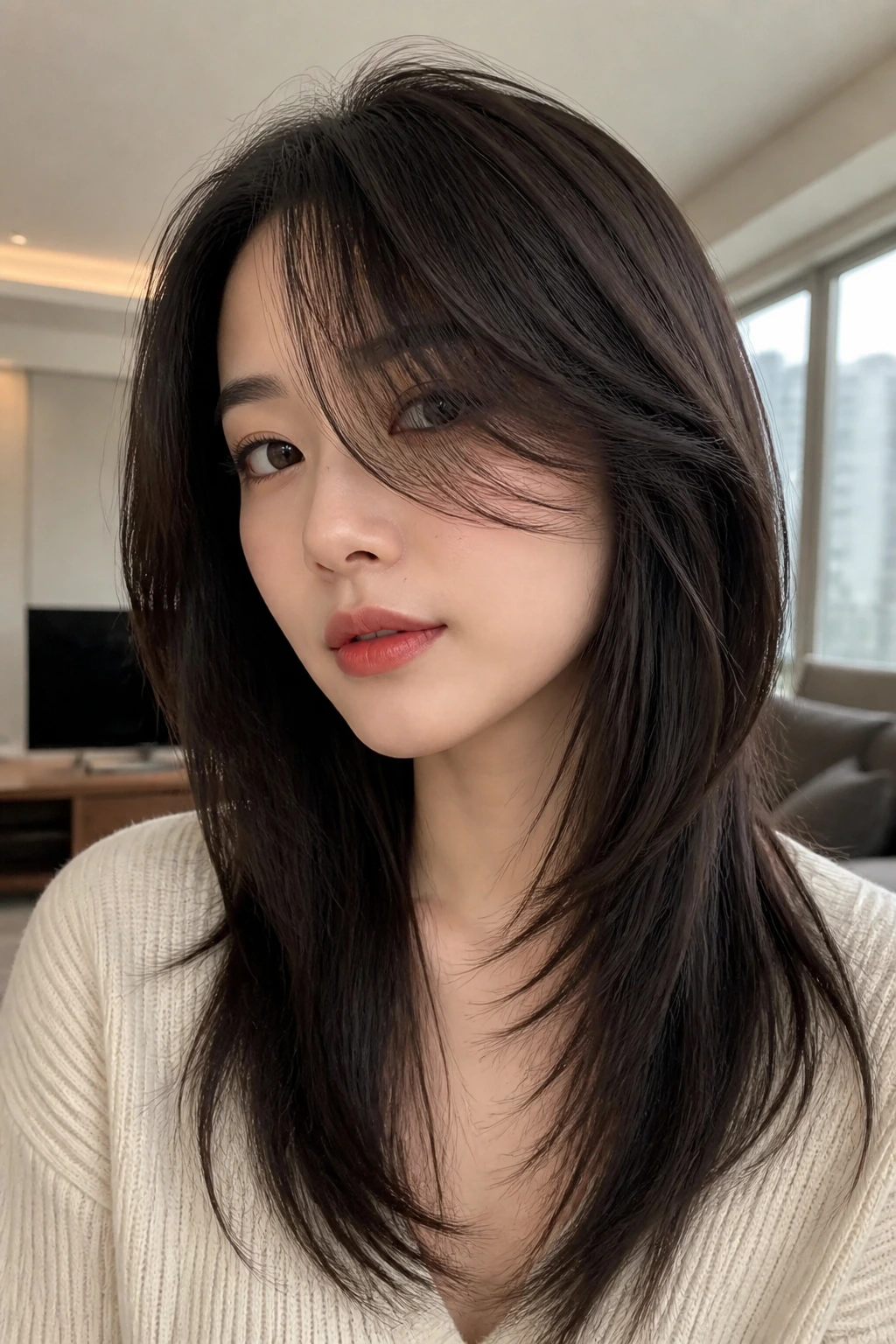
A wolf cut on straight hair needs a gentle hand. Too much disconnect and the hair puffs in odd places. Keep the layers long, let the crown have movement, and use the side-swept bang to ground the front so the style stays wearable instead of chaotic.
This is the choice for someone who wants edge but not hardness. The sweep across the forehead softens the shaggy silhouette and keeps the shape from feeling too punky. I’d keep the ends a little piecey and the top controlled, because straight hair can turn every layer into a visible line if the cutting is too aggressive.
The best part is how modern it looks without needing a lot of daily fuss. Dry it smooth, rough up the ends a little with texturizing spray, and leave the bang polished. That contrast is the whole point.
20. Bubble Ponytail with Side Bangs
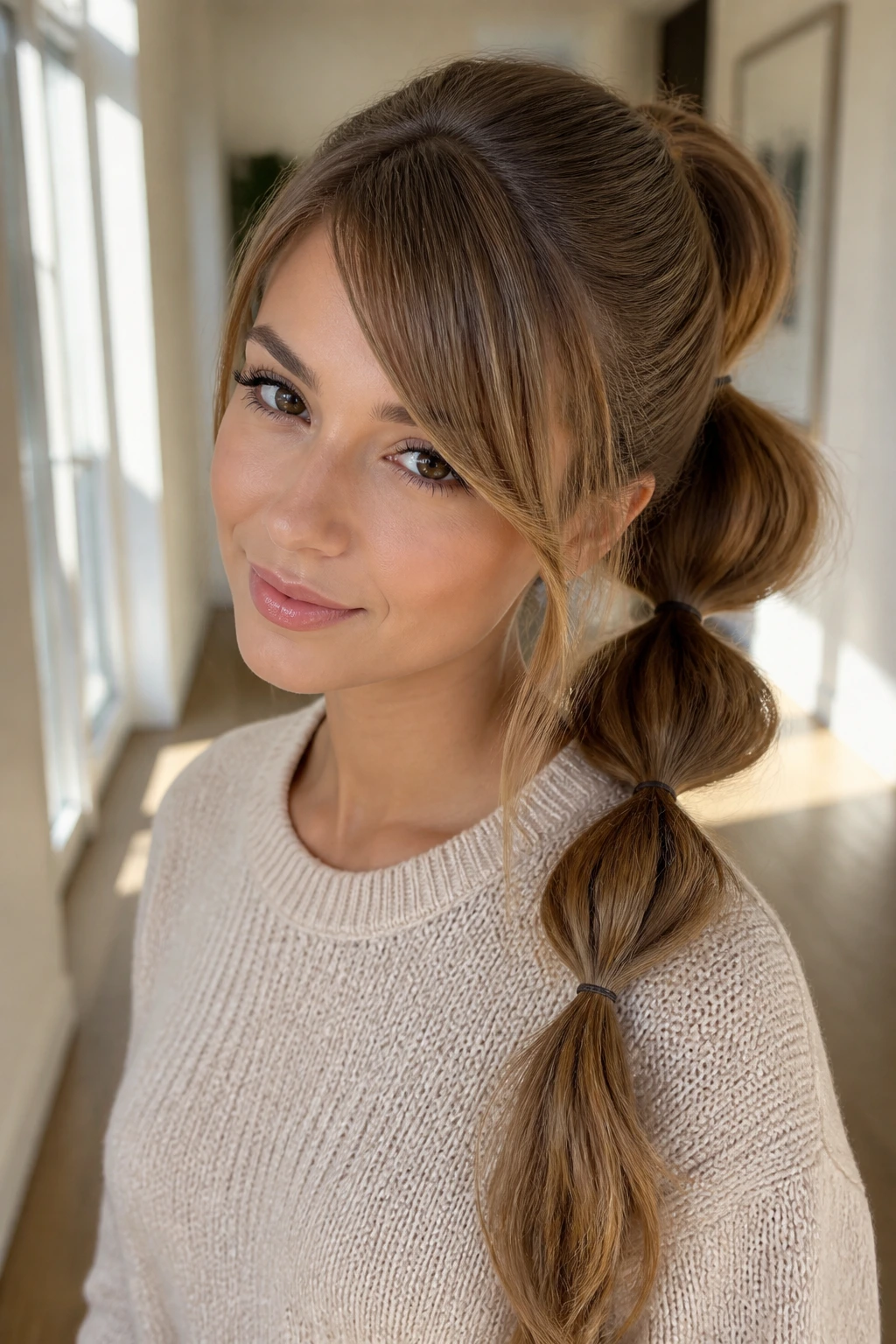
Bubble ponytails are playful, but on straight hair they can look a little too rigid if the front is pulled back too tight. The side-swept bang softens the face and breaks up the geometry of the elastic sections. That one change makes the style feel less costume-y and more wearable.
Space the bubbles about 2 to 3 inches apart, depending on your length, and keep each one gently rounded, not overstuffed. The bang should stay smooth and curved to one side, with enough movement that it doesn’t fight the rhythm of the ponytail. If you want grip, use a little dry texture spray before tying the sections.
This is a fun one for long hair that needs a change without cutting anything. It’s neat, it’s quick, and the side fringe keeps it from feeling too sporty.
21. Low Bun with One-Sided Volume
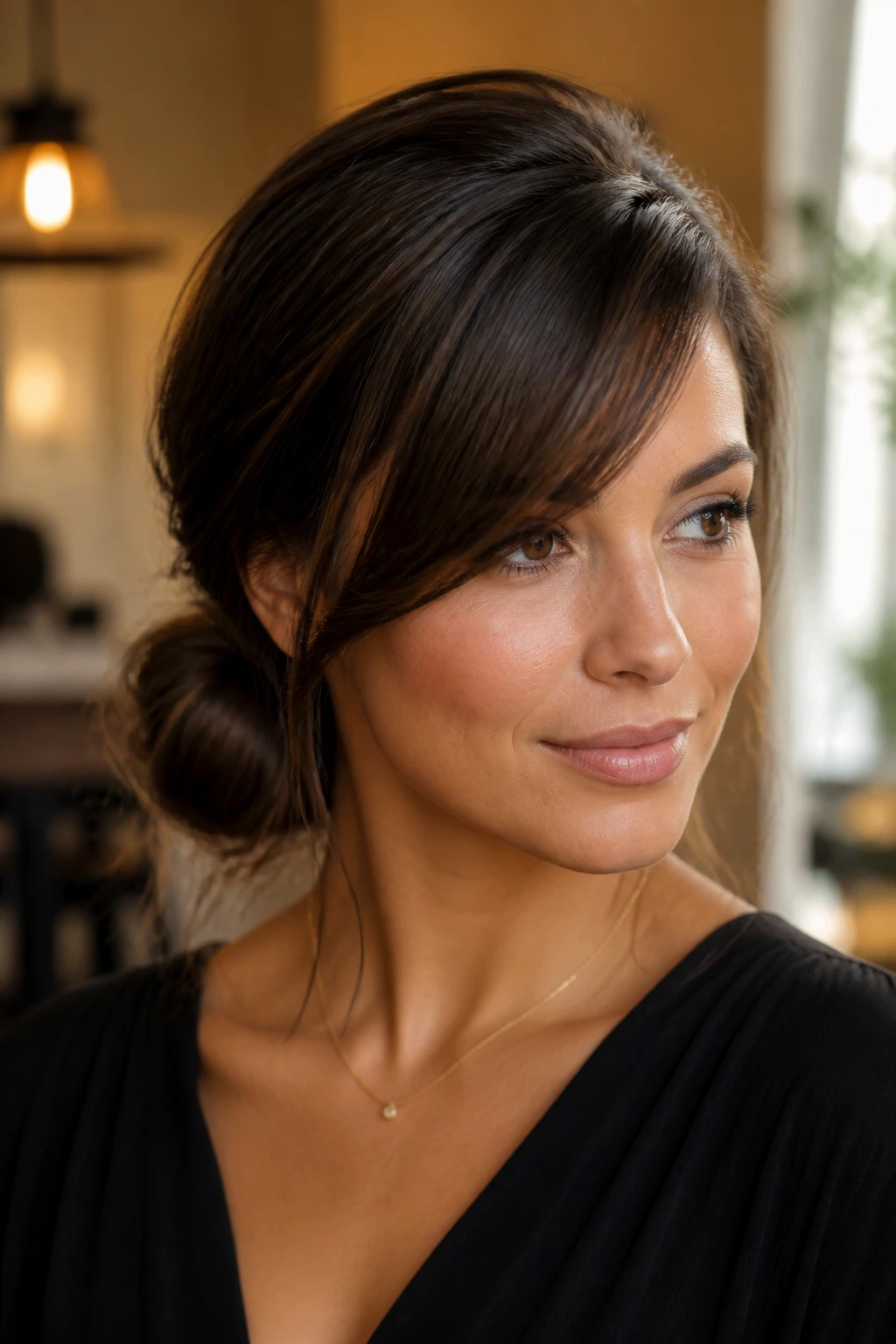
A low bun can look flat in every direction when straight hair is involved. Give the bang side a little more volume, and the whole style changes. That asymmetry keeps the face open and the bun from sitting like a tight knot at the base of the neck.
I like this style when the bun itself is loose, with the ends tucked but not hidden so perfectly that the shape looks stiff. The side-swept bang can be brushed smooth or left with a small bend. Either way, it should stay soft at the temple and fuller near the brow than a center part would allow.
Use pins in crossed pairs if your hair is slippery. One pin alone often gives up. The front should be the polished part; the bun can have a little imperfection.
22. Rounded Ends and a Minimal Side Sweep
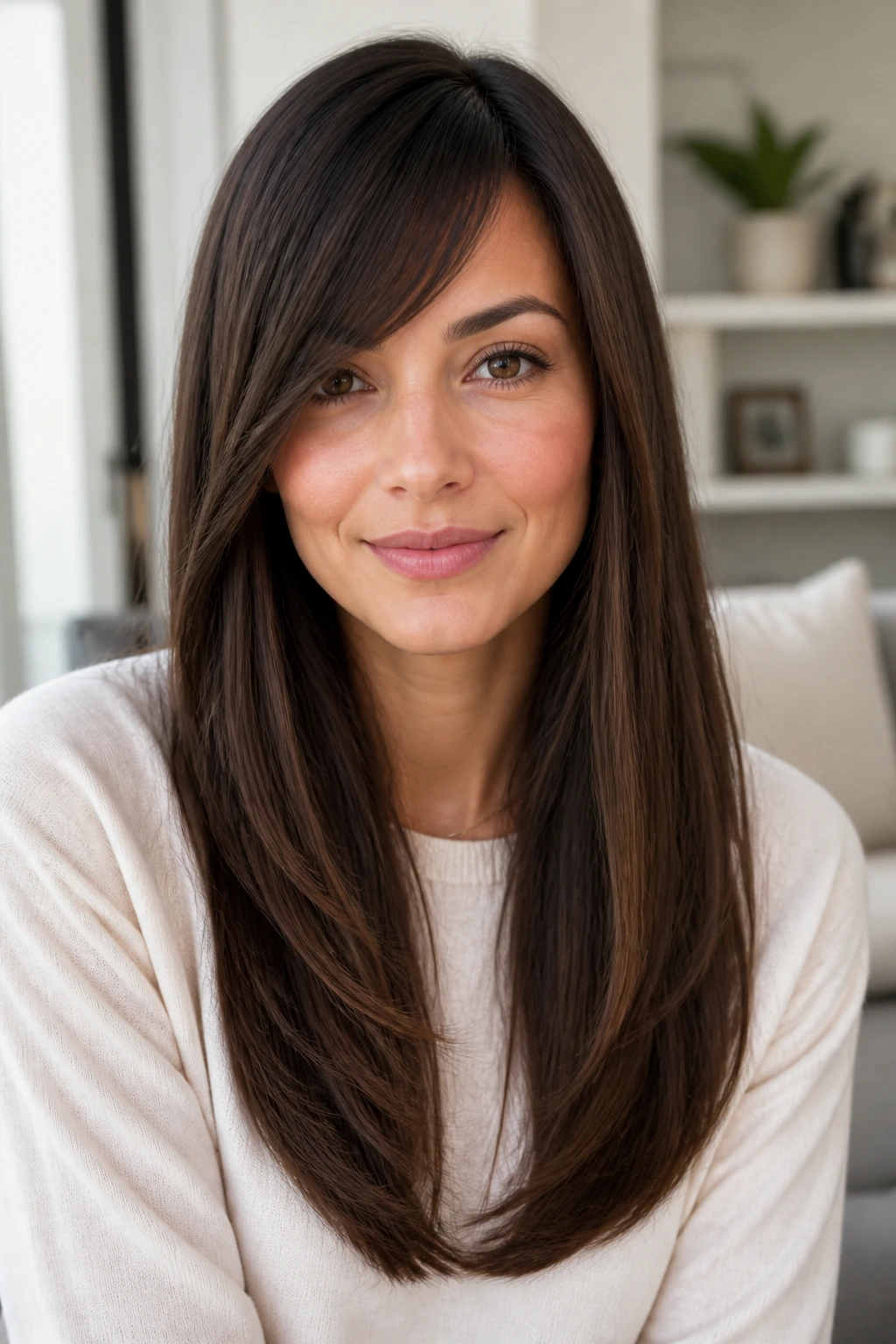
Not every look needs layers everywhere. Rounded ends — where the hair curves inward a touch instead of sitting as a hard straight line — give long straight hair a cleaner finish, especially when the front is only lightly swept. This is the minimalist option.
The bang here should be narrow and modest, almost a quiet gesture rather than a headline. It gives the hair a front shape without taking up too much face. That makes this style good for people who like low-maintenance cuts but still want a bit of movement around the eyes.
I’d call this one the “wear it and forget it” version, except that sounds lazy, and it isn’t. It’s precise. The ends need to be cut with enough intention that they turn neatly, not flip out in odd directions. Done right, it grows out beautifully.
23. S-Curve Blowout with Long Bangs
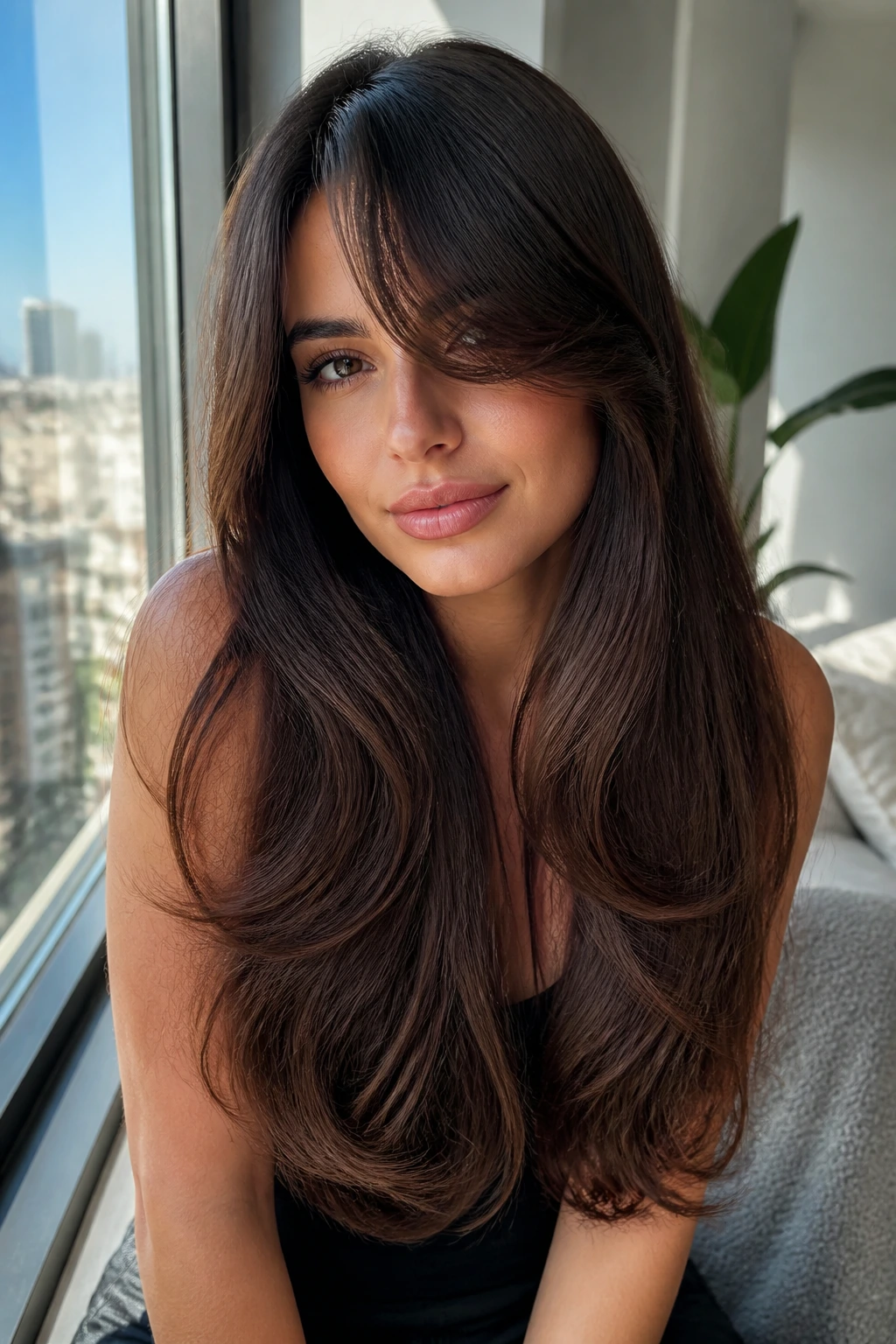
An S-curve blowout gives straight hair more life than a stiff curl and more softness than a pin-straight finish. The length bends gently in alternating directions, and the side-swept bangs mirror that movement at the front. It’s polished, but not frozen.
This style works especially well on thick straight hair because the shape shows up clearly. The key is to bend the mids and ends in different directions with a round brush or a wide-barrel iron, then keep the bang smooth enough to frame the face instead of joining the wave pattern too closely. If the front gets too curly, the whole look loses its clean edge.
I reach for this when I want hair that looks touched on purpose. Not overdone. Just finished. A little root lift, a little bend, and a bang that lands where the cheek starts to matter.
24. Minimalist Long Cut with a Narrow Fringe
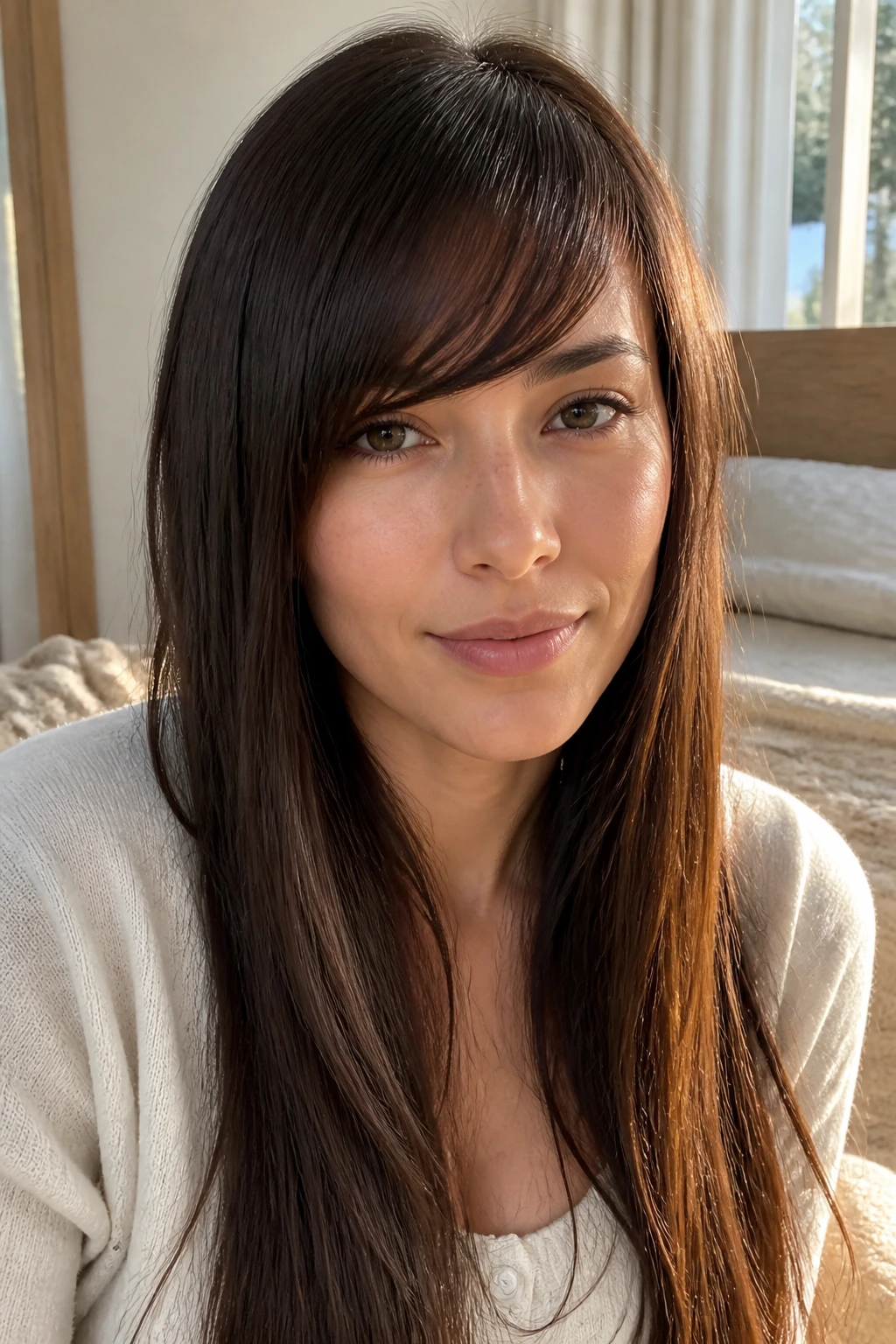
A narrow side-swept fringe is for people who want bangs but don’t want a big commitment at the forehead. It covers less space, moves easily, and grows out with far less drama than a fuller bang. On long straight hair, that restraint can be a relief.
The rest of the cut stays long and plain, which is exactly why the front piece matters. The small diagonal section gives the face some shape without changing the overall mood of the hair. It’s neat, subtle, and a little understated in the best way.
If your forehead is on the smaller side, this can be especially flattering because it doesn’t crowd the face. Ask your stylist to keep the bang narrow at the base and longer on the outer edge so it sweeps cleanly into the side layers.
25. Polished Length with a Long Diagonal Bang
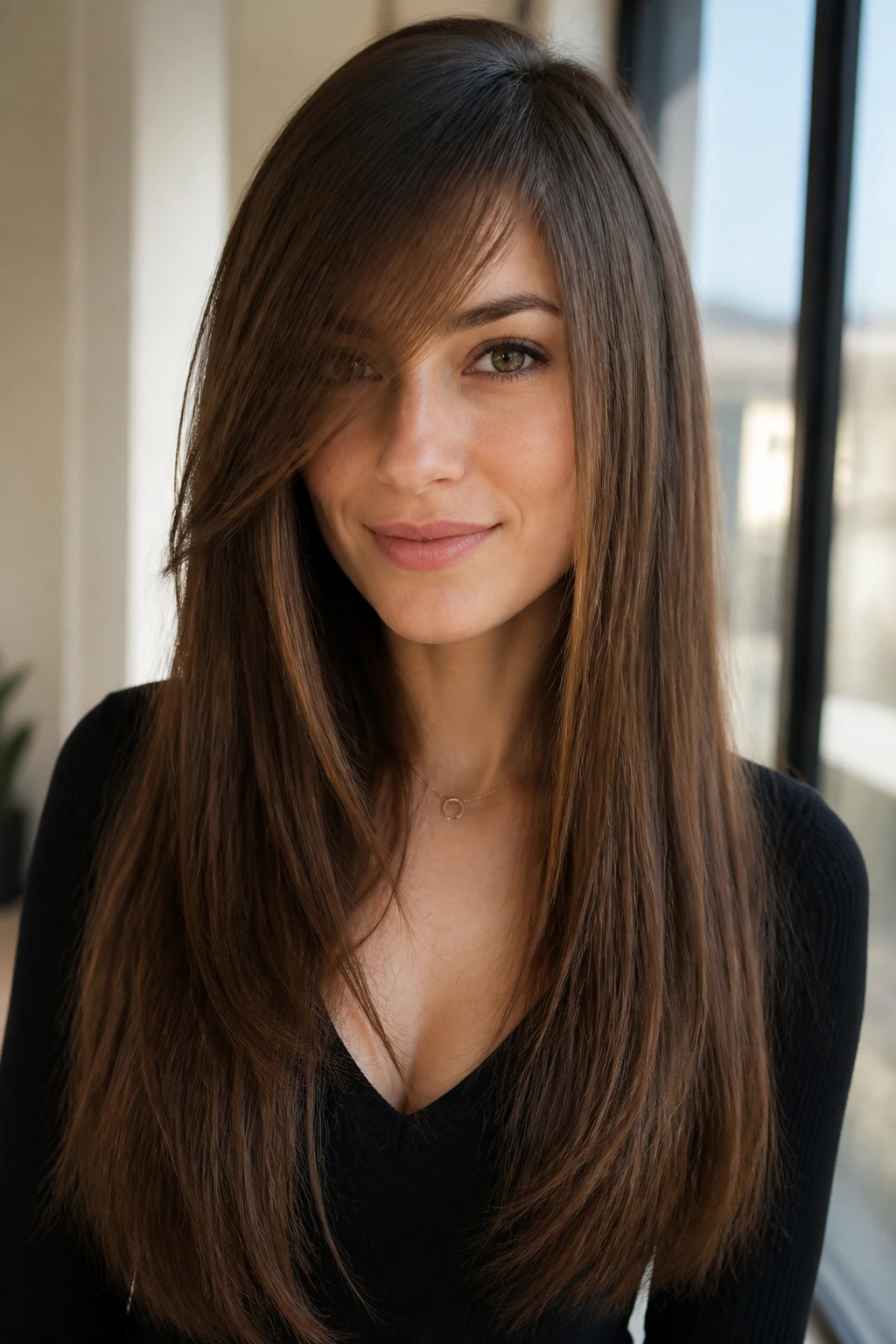
A long diagonal bang is one of the most useful shapes for straight hair because it does not fight the length. It leans across the face, blends into the front layers, and gives the hair a calm, deliberate frame. The rest of the hair can stay sleek and simple, which is part of the appeal.
This is the style I’d hand to someone who wants to keep their hair long but feels bored every time they look in the mirror. The bang adds interest without asking for a new routine. It can be worn smooth, tucked, pinned back, or brushed into a deep side part, and it still makes sense.
The best version lands somewhere around the cheekbone or just below it on the longer side. That length gives you room to work with it instead of forcing a daily reset. It’s classic, but not bland.
The Front Shape That Keeps Long Straight Hair Interesting
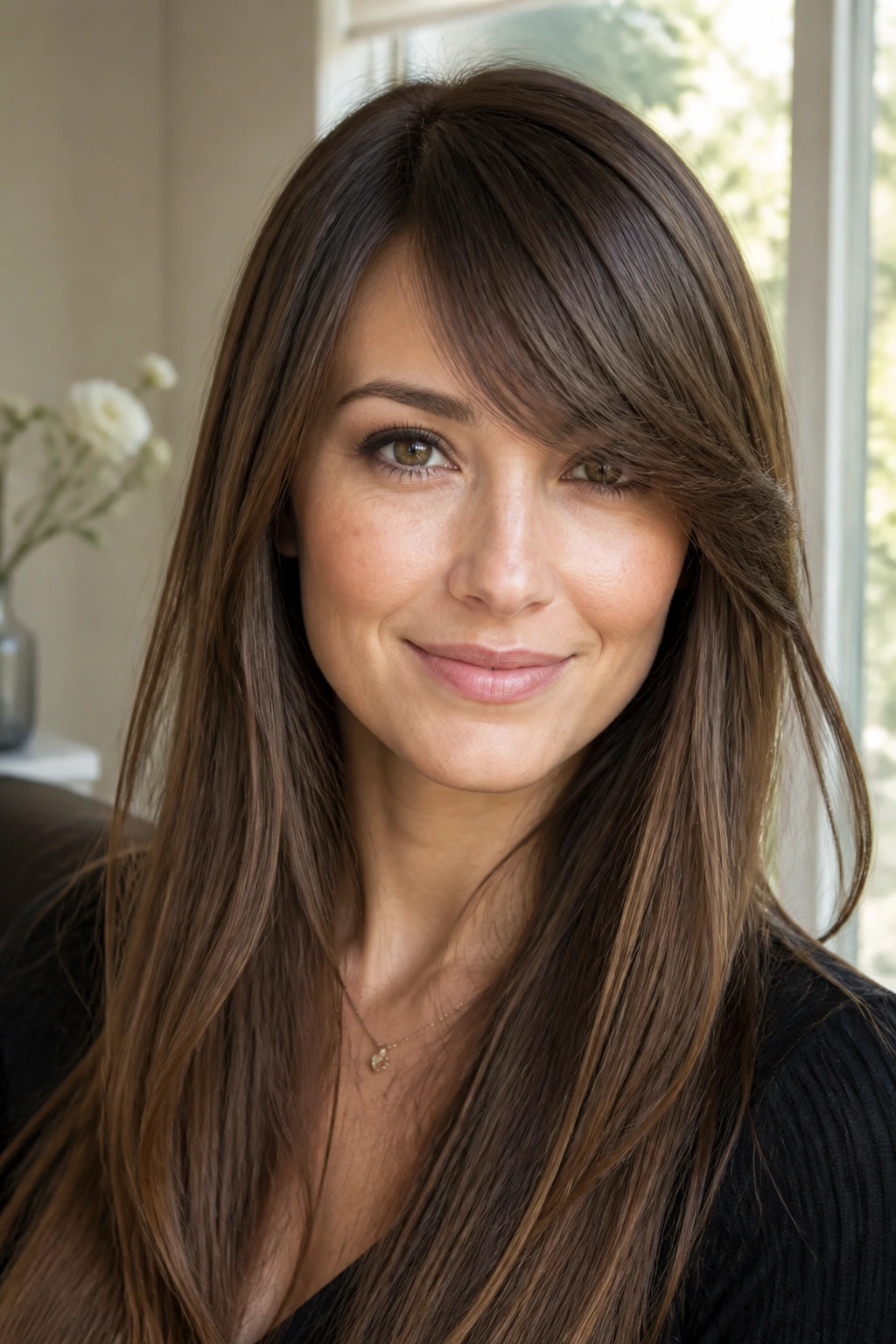
Straight hair does not need rescue. It needs a line. A side-swept bang gives you that line at the front, and once it’s there, the rest of the length starts behaving differently — lighter, softer, more considered.
That’s why these looks work across so many moods. Some are sleek and glassy. Some are loose and romantic. Some are plain in the best possible way, the kind of style that looks like you know exactly what your hair is doing and have no desire to apologize for it.
Practical Ways to Keep the Front Soft
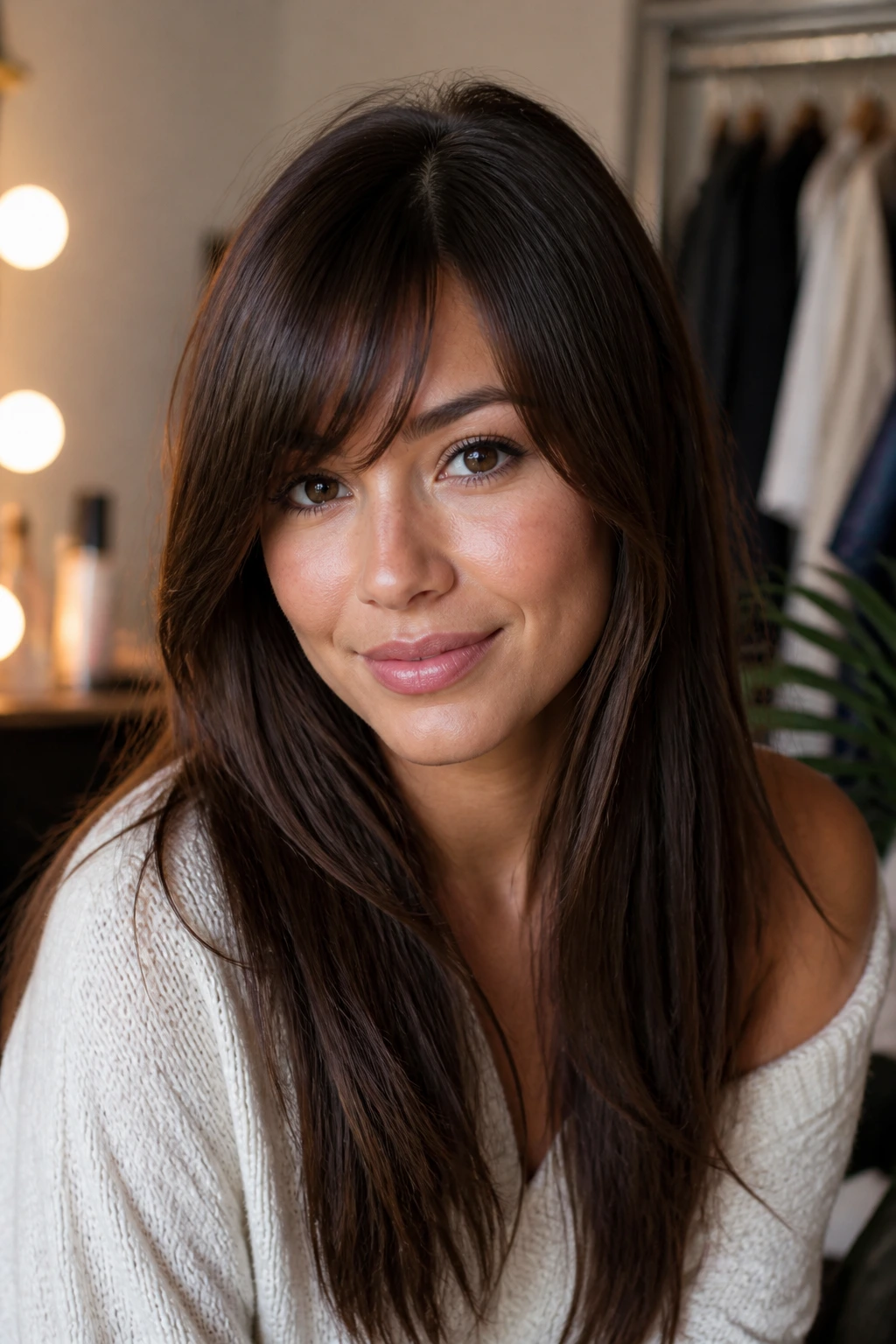
Root Lift: Blow-dry the bang in the opposite direction first, then sweep it back the way you want it to sit. That tiny reset at the root keeps the fringe from collapsing into the same flat spot every day.
Finish Lightly: Use serum on the mids and ends only. The bang needs movement, not oil, or it will separate into strings and hang straight down by noon.
Part Placement: Shift the part a half-inch at a time until the sweep falls naturally. Too deep and the front can look dramatic in a way that fights the rest of the cut. Too shallow and it loses the diagonal line that makes it work.
Trim Rhythm: Side-swept bangs usually need cleanup every 4 to 6 weeks if you want the edge to stay soft and the angle to stay clear. The layers around the face can wait longer, often 8 to 12 weeks.
Day-Two Rescue: A little dry shampoo at the crown and a quick brush-through of the front is often enough. If the bang has lost its shape, dampen just that section and re-blow-dry it for 30 seconds instead of redoing the whole head.
The Brushes, Clips, and Sprays That Actually Help
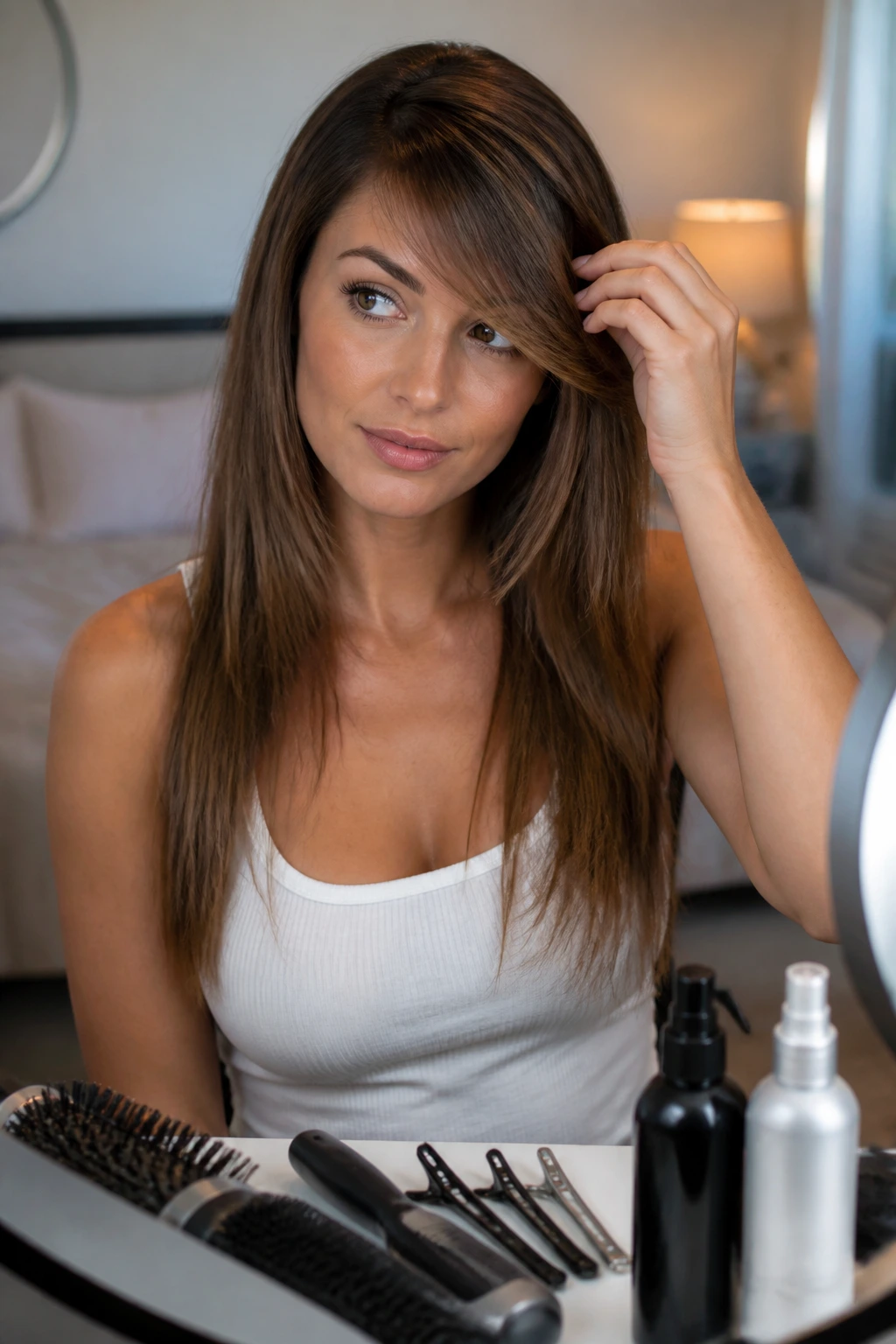
-
Tail comb: Parting the hair cleanly matters more than people admit, and a tail comb lets you place the sweep exactly where you want it.
-
Medium round brush: This gives the bang enough bend without creating a giant, floppy curve that drops too fast.
-
Blow dryer with a nozzle: The nozzle matters. It keeps the air focused so the front dries smooth instead of puffing at the roots.
-
Flat iron with 1-inch plates: Useful for straightening the lengths or putting a subtle inward bend at the ends.
-
Sectioning clips: The front is easier to control when the rest of the hair is clipped away. Less fighting, fewer stray pieces.
-
Heat protectant spray: Use it before any hot tool, especially on the fringe, where repeated styling can dry the ends out fast.
-
Flexible-hold hairspray: A light mist keeps the bang in place without turning it stiff and crunchy.
-
Light serum or cream: Good for the mids and ends. Keep it away from the roots and away from the fringe unless you want separation.
-
Dry shampoo: Handy for keeping the crown from looking greasy, which helps the side sweep stay lifted instead of collapsing.
The Haircut Mistakes That Flatten This Look
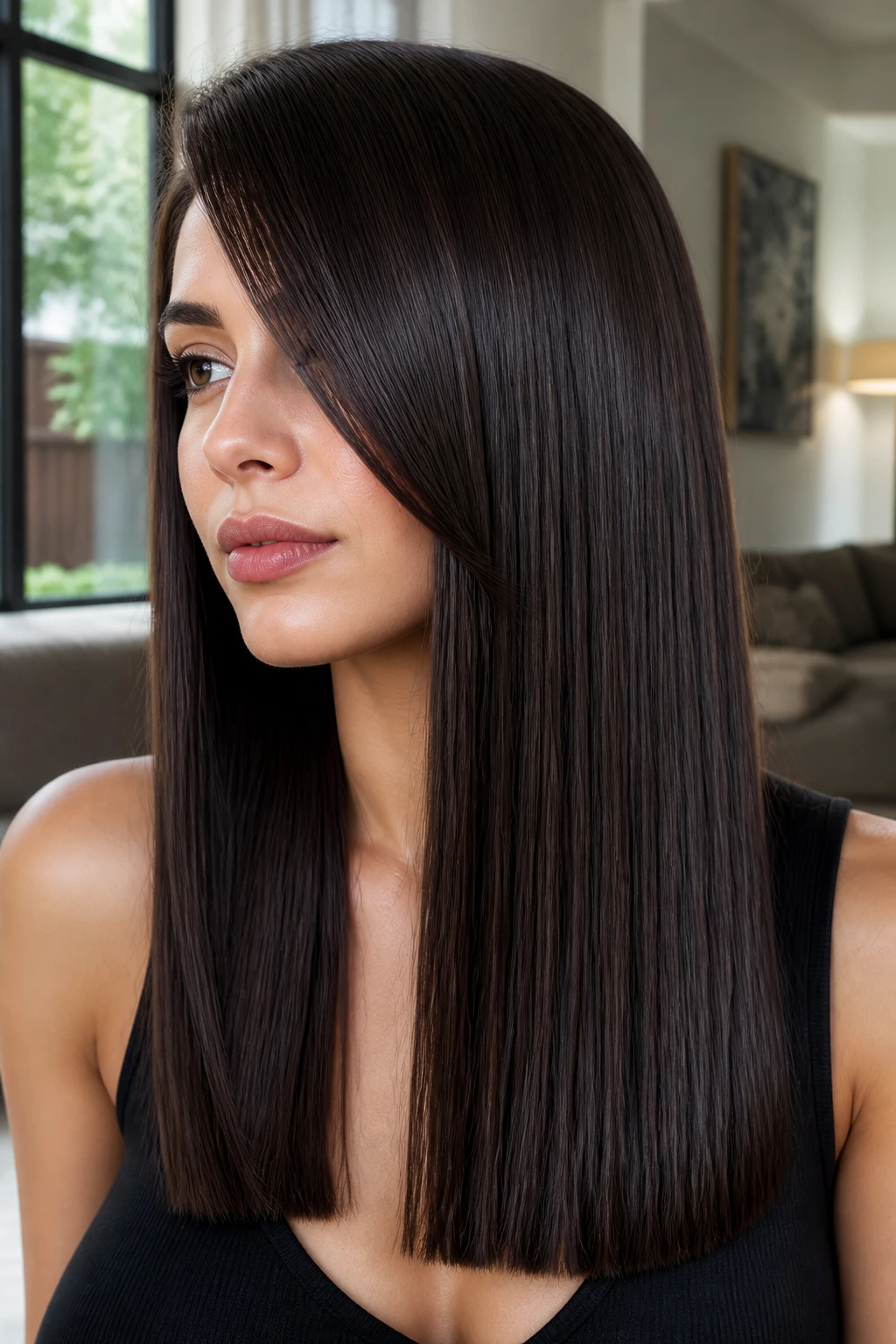
The most common mistake is cutting the bang too blunt and heavy. On straight hair, that often creates a hard shelf across the forehead, which fights the softness the style is supposed to bring. Ask for a slant, not a wall.
Another one: overlayering the length. Fine straight hair especially can look stringy fast if too much weight gets taken out of the bottom. Long layers should support the shape, not steal the density.
Product misuse is a sneaky problem. A little too much oil or cream near the front and the bang separates into oily ribbons. That’s fixable. Keep heavy products below the cheekbone and use only the lightest touch near the fringe.
Flat roots make everything worse. If the crown is pressed down, the side-swept bang has nowhere to live. Even a 30-second root lift at the front makes a real difference.
Four Ways to Bend the Look to Your Mood

Soft Office Sweep: Keep the bang long, the part shallow, and the ends smooth. This version reads polished and quiet, and it grows out with almost no drama.
Deep Drama Part: Shift the part farther over and let the bang travel longer across the forehead. It has more attitude and works well when you want the front to carry the whole cut.
Airy Grow-Out Version: Ask for a longer fringe that can tuck behind the ear. It’s useful if you know you’ll want to stretch the trim schedule and avoid a hard maintenance cycle.
Thick-Hair Control Cut: Use longer internal layers and a more substantial bang. The extra weight helps dense straight hair stay controlled instead of puffing at the sides.
Heatless Day Version: Let the fringe dry clipped to one side after a shower, then smooth it with your fingers and a touch of flexible spray. It’s less perfect, but it still holds the diagonal shape.
Keeping the Cut Fresh Between Salon Visits
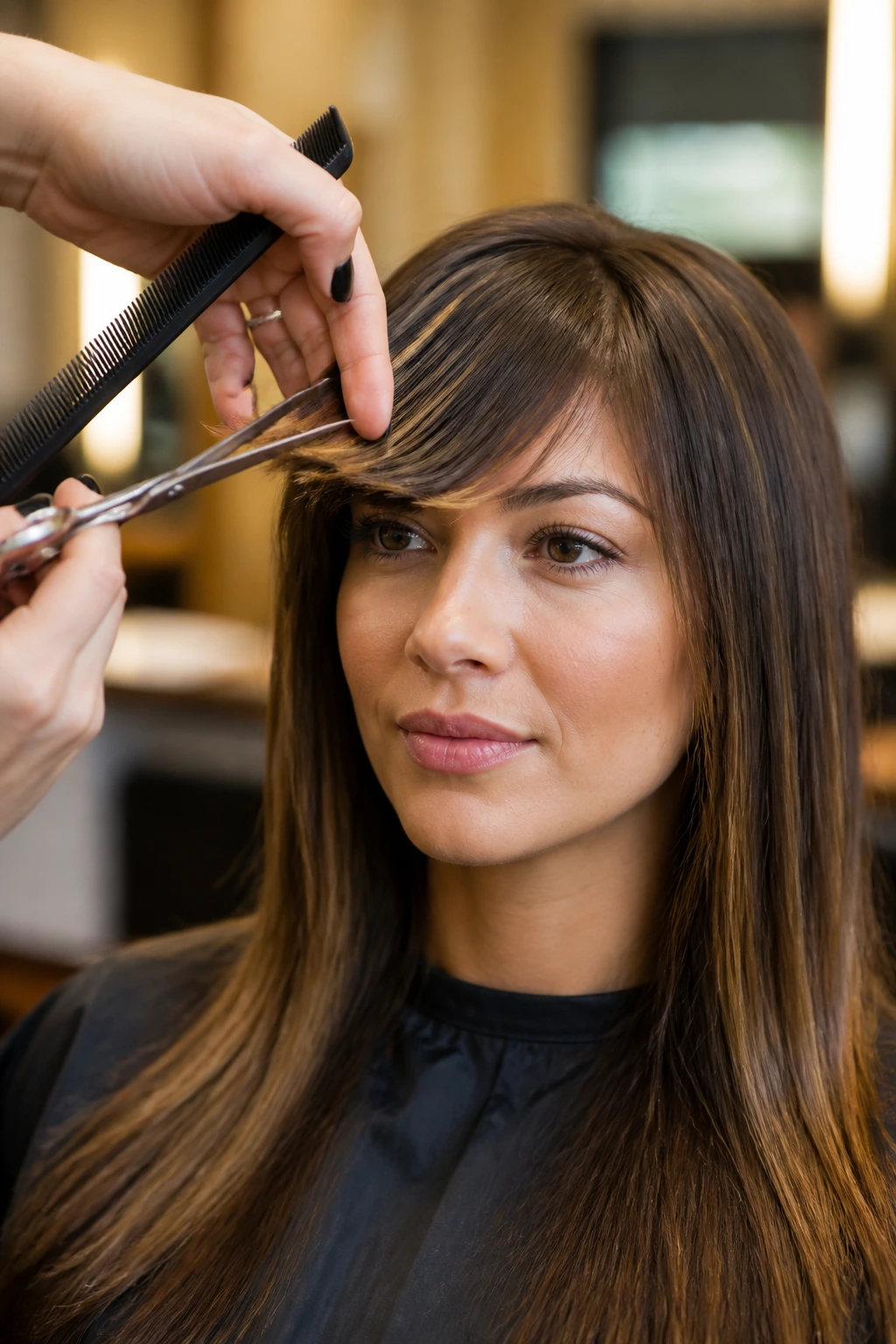
Side-swept bangs are the first thing to show when a cut has grown out too far. They don’t usually fail all at once. They get a little too long, a little too heavy, then suddenly the sweep stops sweeping and starts hanging. That’s your cue.
A fringe trim every 4 to 6 weeks keeps the angle readable. Long layers can usually go 8 to 12 weeks, depending on how fast your hair grows and how much weight you want to keep at the ends. If your hair is fine, wait a little longer on the layers. If it’s thick, keep the shape checked more often so the front doesn’t swell outward.
Wash day matters less than people think, but the front does need the most attention. If the bangs get greasy before the rest of the hair, spot-cleaning the front with a quick rinse or a tiny bit of dry shampoo is smarter than over-washing everything. And if you sleep on a side sweep, pin the bang loosely away from your face or let it dry with a soft clip in place. That one habit keeps the part from setting in the wrong direction.
Frequently Asked Questions About Side-Swept Bangs on Long Straight Hair
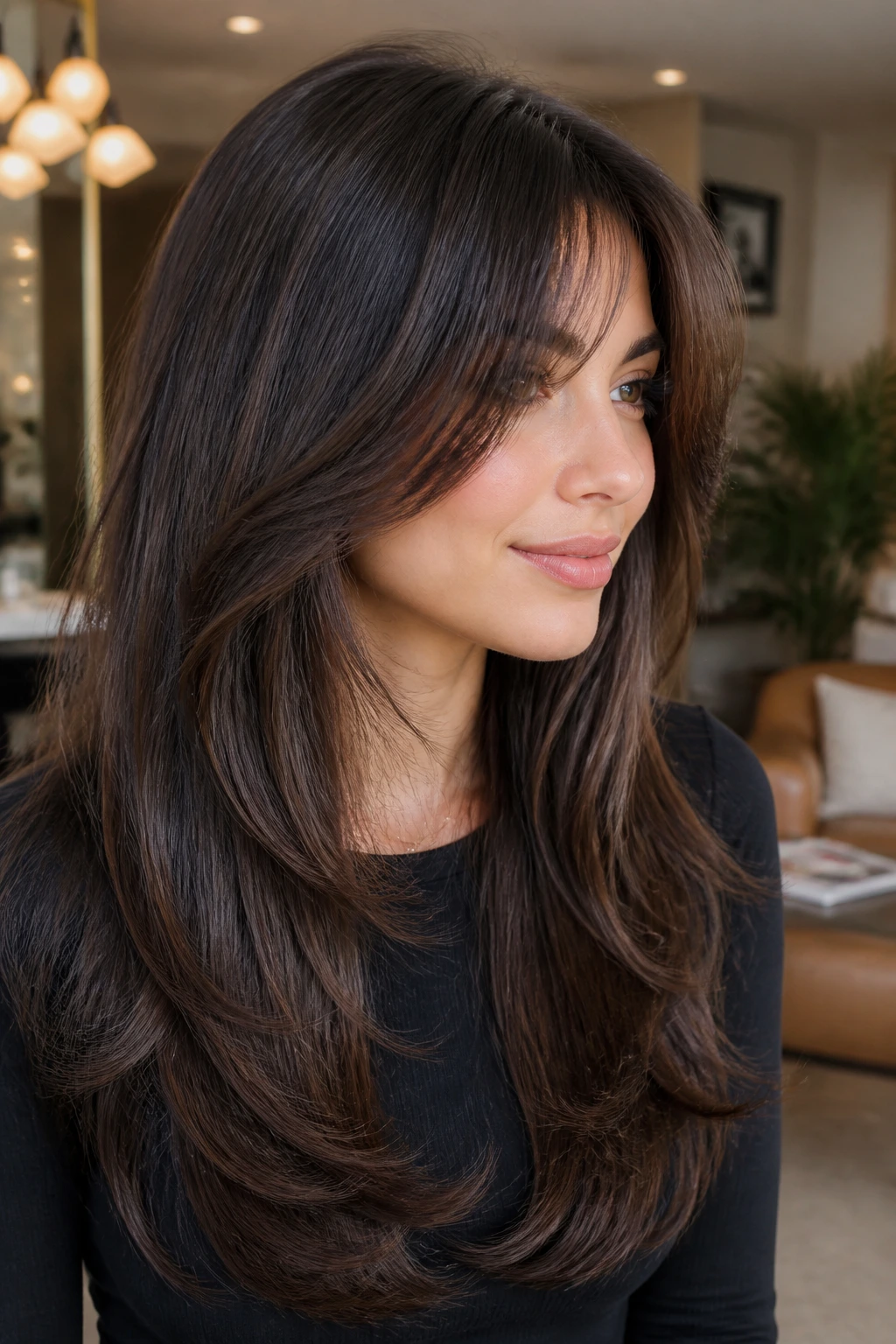
Do side-swept bangs work on very straight hair?
Yes, and that’s part of why they’re such a good match. Straight hair shows the diagonal line clearly, so the bang reads as a shape instead of disappearing into the rest of the cut. The key is a little root lift at the front so the sweep doesn’t go flat.
What face shape looks best with side-swept bangs?
They’re flexible, which is the real answer. A softer sweep can narrow a broad forehead, a longer diagonal can soften a square jaw, and a slightly heavier fringe can keep a long face from looking even longer. The length and depth of the bang matter more than the face-shape label.
Are side-swept bangs high-maintenance?
Less than blunt bangs, but not zero-maintenance. You’ll still want trim appointments every 4 to 6 weeks if you care about the shape, and the front usually needs a few extra seconds of styling each morning. The grow-out is easier, though, which is why so many people stick with them.
How do I stop the bang from splitting in the middle?
Dry it in the direction you want it to fall, not straight down the center. A round brush, a clip while it cools, and a small amount of flexible spray usually solve most of the split. If the part keeps opening, it may need to be cut a little heavier at the base.
Can I wear side-swept bangs with ponytails and buns?
Absolutely. In fact, they often make those styles look softer because the front still frames the face. A low ponytail, low bun, or braided crown usually looks better with a side sweep than with all the hair pulled tight off the forehead.
What if my hair is fine and slips flat by midday?
Keep the fringe lighter and the layers longer. Fine straight hair does better with a less aggressive cut, plus a dry shampoo at the roots and a bit of root-lift spray near the part. Heavy creams will flatten it faster than you think.
Can thick straight hair wear side-swept bangs without looking bulky?
Yes, but the bang needs to be cut with enough internal softness to move. Thick hair usually benefits from longer face layers and a fringe that blends rather than sits as one block. If it feels too heavy, the fix is usually better shaping, not shorter bang length.
Can I grow them out without an awkward stage?
You can, especially if the cut was long and slanted to begin with. While they grow, tuck the front behind the ear on one side, clip it back on windy days, or blend it into a half-up style. Side-swept bangs are far kinder during grow-out than a blunt fringe.
A Shape That Keeps Moving
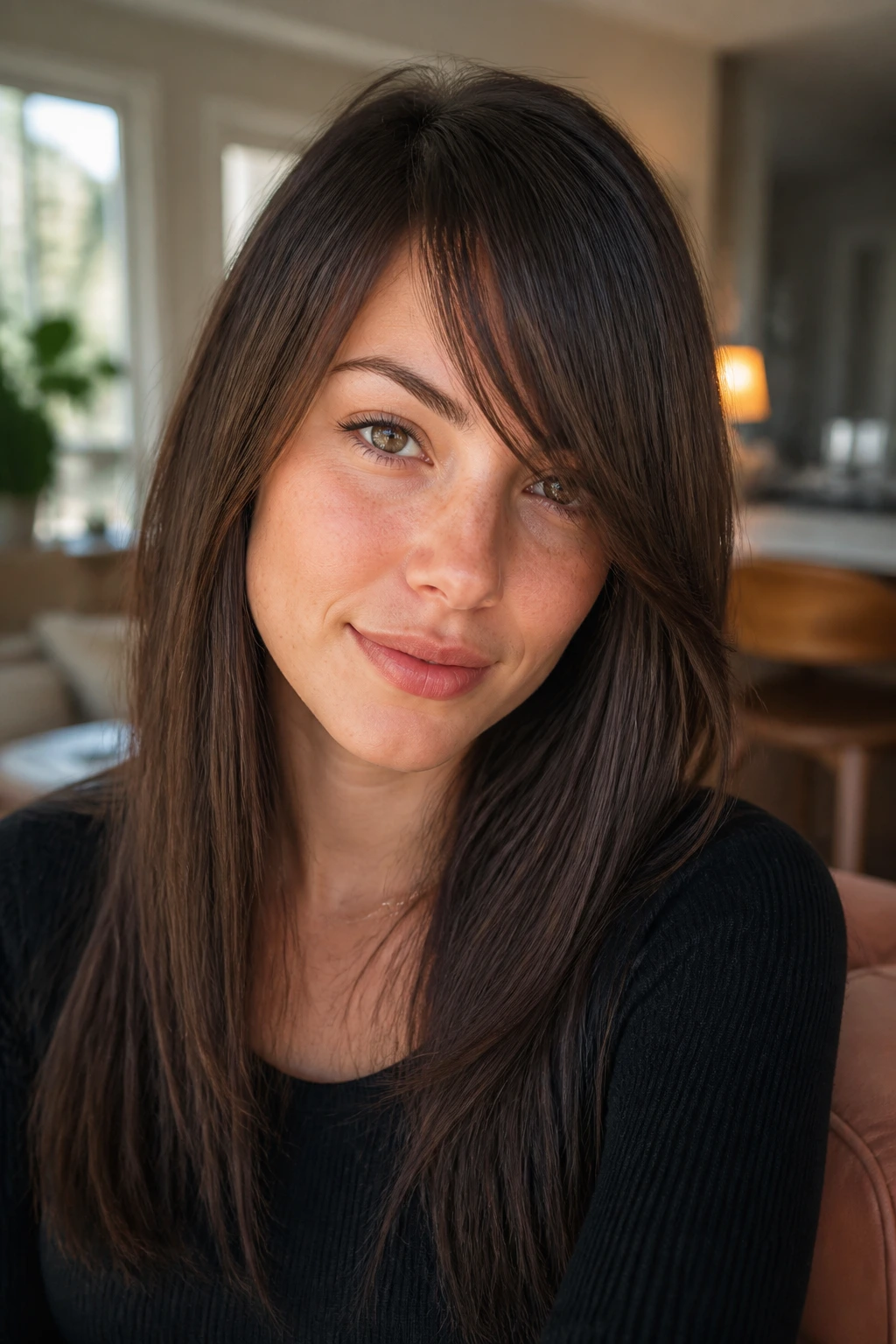
Long straight hair doesn’t need more rules. It needs a front shape that gives the length somewhere to go. Side-swept bangs do that better than most cuts because they create motion without asking you to give up the length you already like.
The best version is the one that matches how you actually wear your hair. Sleek and glassy if you like polish. Soft and layered if you want movement. Tucked, twisted, pinned, or blown out if your life changes from one day to the next. Pick the line that flatters your face, then keep it fresh enough that the sweep still sweeps.