



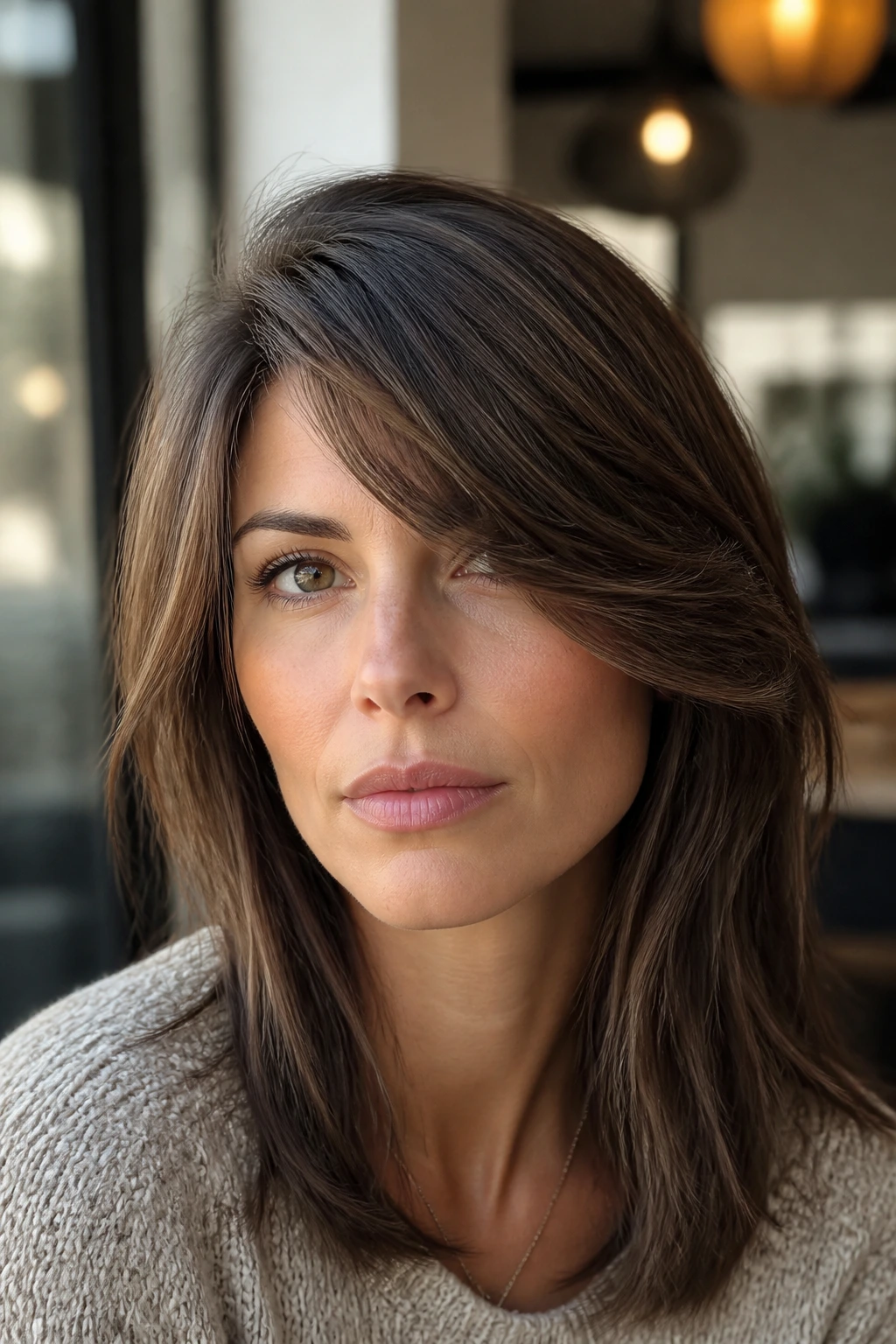
A square face and fine hair can make bad bangs look louder than they should. A blunt fringe can box in the forehead, and a wispy one can disappear by lunch. Swoop bangs for square faces and fine hair sit in the narrow space between those two failures. They bend the eye diagonally, soften the corners of the jaw, and give thin strands a line they can actually hold.
The trick is not volume for its own sake. It’s direction. A good swoop bang starts somewhere believable — usually near the outer brow or temple — then glides across the forehead and lands in the rest of the haircut without drawing a hard border. On fine hair, that means lighter internal weight, careful point-cutting, and a blow-dry that leaves a little lift at the root instead of pinning everything flat to the head.
I keep coming back to one rule: if the bang looks like a separate object sitting on the face, it’s the wrong bang. If it moves like part of the haircut — with a bend, a taper, maybe a bit of airy separation at the ends — it starts doing the real work. Some of the styles below are polished. Some are messy in a good way. A few are designed to grow out without making you regret your salon appointment halfway through the month.
Why This Collection Works for Strong Angles and Soft Strands
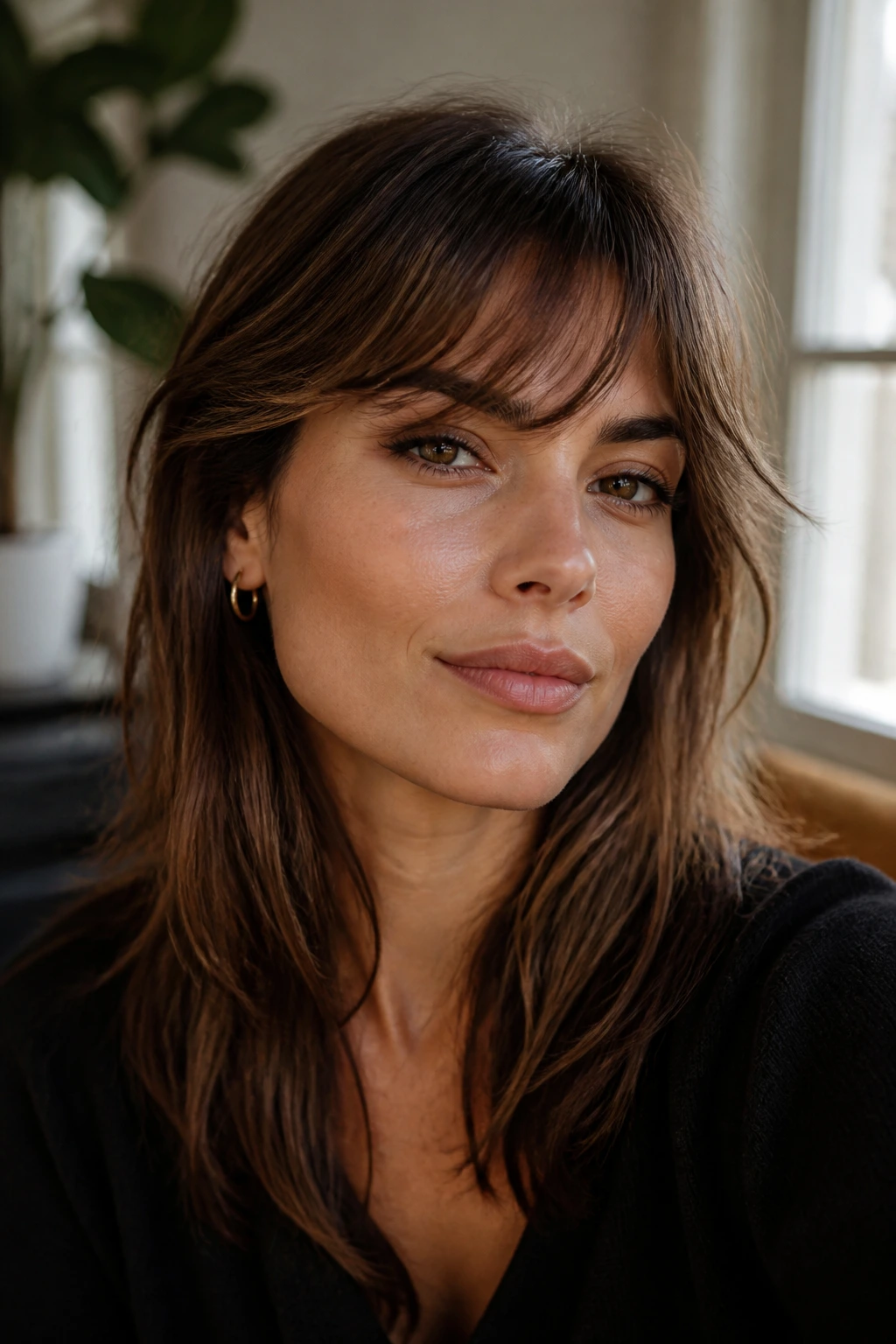
- It breaks up the boxiness: A diagonal fringe interrupts the forehead-to-jaw straight lines that make square faces look even more angular.
- It gives fine hair a shape, not a shell: Light, side-swept pieces look fuller than a heavy chunk of hair that lies flat and splits.
- It buys you styling flexibility: Most of these cuts can be pushed more open, more polished, or a little messier depending on how much time you have.
- It grows out more gracefully: Swoop bangs usually blend into face-framing layers faster than a blunt fringe, so the awkward phase is shorter.
- It plays well with daily life: Glasses, ponytails, low buns, and second-day hair are easier when the fringe has movement instead of a hard line.
- It softens without hiding your face: That matters. The best swoop bangs don’t cover everything; they redirect attention.
1. Soft Feathered Side Sweep
This is the safe place to start if you want movement without committing to a dramatic bang line. The hair lifts off the forehead just enough to soften the square jaw below, and the ends taper instead of stopping in one blunt row. On fine hair, that feathered edge matters more than people think. A soft edge reads as density; a hard edge can expose every thin spot.
What to Ask Your Stylist
- Keep the shortest point near the outer brow, not deep in the center of the forehead.
- Point-cut the ends so the fringe breaks into soft pieces.
- Keep the bang narrow enough that it doesn’t swallow the face.
Why It Works
The diagonal line draws the eye across the face instead of straight down the width of it. That little shift is what makes a square face feel gentler. Blow-dry the fringe with a small round brush, then send it back in the opposite direction for 5 seconds to add lift at the root.
Best move: finish with a light mist of flexible hairspray only at the ends. The root needs bounce, not shellac.
2. Deep-Part Diagonal Curtain Bang
A deep side part does more face-shaping than a lot of heavy layering. When the part sits off-center and the fringe sweeps across the forehead on a long diagonal, the face looks less blocky right away. Fine hair benefits too, because the part itself creates volume at the root before the bang even starts.
This one suits people who hate the feeling of a full fringe touching their forehead all day. The shape is controlled, but not stiff. The longest side can land near the cheekbone, which keeps the cut from feeling too short or too choppy on a square jaw.
Fine-Hair Note
Use root-lift spray at the part and dry the bang in two passes: first against the natural fall, then back into the sweep. That small reset gives the hair memory. If you go straight to the final direction, it often falls limp in ten minutes.
Who it’s best for: anyone whose hair looks flatter on one side and whose forehead needs a bit of diagonal movement instead of heavy coverage.
3. Brow-Grazing Bend

Can a bang sit right at the brow and still soften a square face? Yes, if it bends instead of cuts straight across. This version skims the eyebrow, then curves away toward one side with just enough air between the strands to keep it from looking dense. It’s a good choice when you want to see your forehead a little, not hide it.
Fine hair likes this because the cut doesn’t ask for a thick curtain. The fringe can be kept slightly longer in the center and carved shorter toward one side, which gives the illusion of weight without piling on more hair. A mini round brush or a small curling iron at the ends is enough.
How to Style It
Use a quick wrap around a 1-inch brush, direct the fringe toward the heavy side, and let it cool before you touch it. If you brush too soon, the bend collapses. That’s the whole game here.
Watch for this: if the shortest point lands too high above the brow, the look starts reading as accidental rather than intentional.
4. Chin-Skimming Sweep
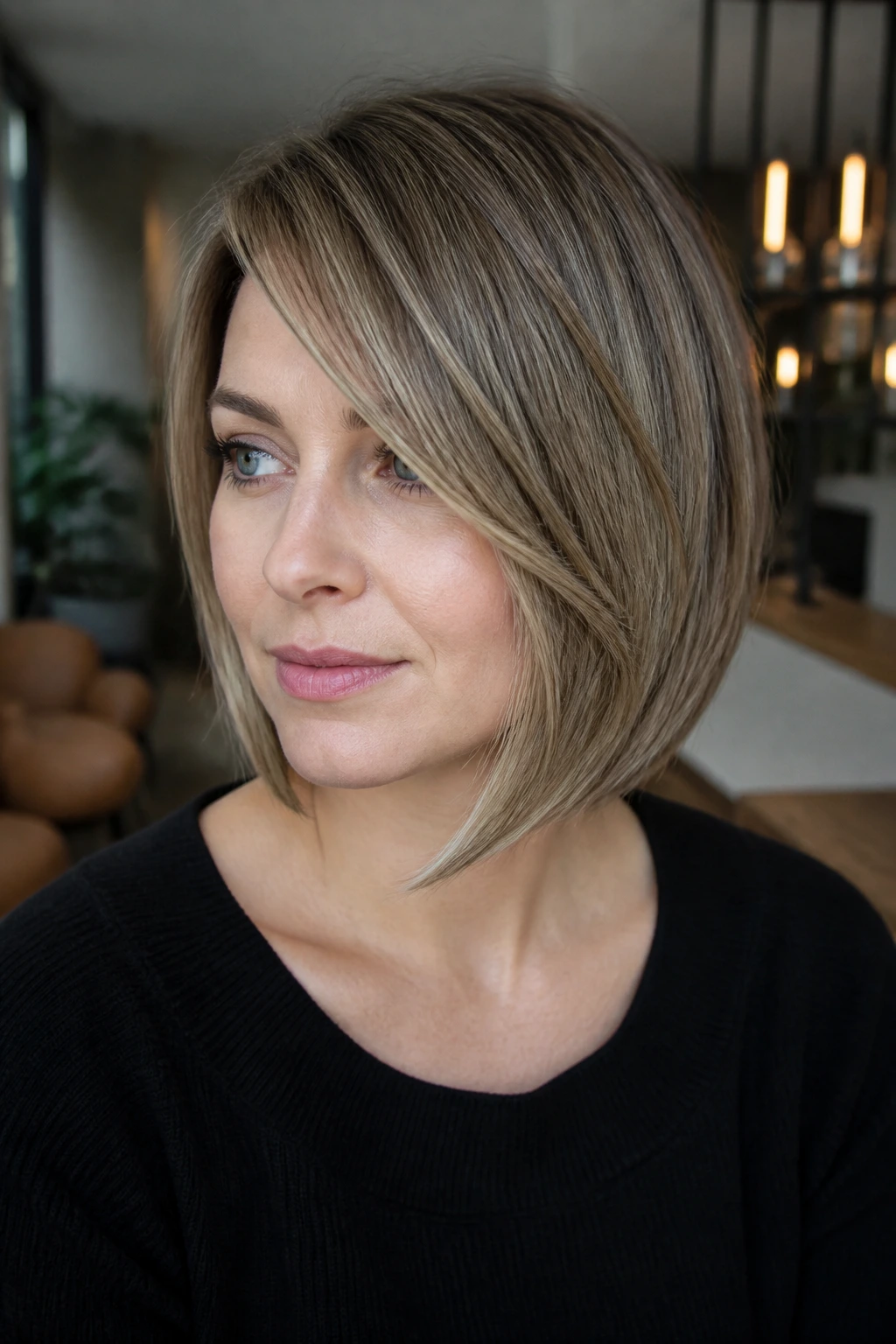
This is the option for someone who wants bangs but not the feeling of having bangs. The shortest pieces start around the brow line, then travel past the cheekbone and land closer to the chin. That extra length is useful on square faces because it stretches the eye downward and breaks up the width at the jaw.
It’s also one of the kinder options for fine hair, because the length gives the strands more chance to behave. Short, thin bangs can separate and float in strange ways. Longer swoop pieces usually move with the haircut instead of fighting it.
Key Details
- Ask for a long diagonal line from temple to chin.
- Keep the interior light so the fringe doesn’t turn heavy at the forehead.
- Use a soft bend, not a tight curl.
This is the bang I’d hand to someone with a layered lob who wants shape around the face but refuses anything that looks too obvious from across the room.
5. Airy Wispy Swoop
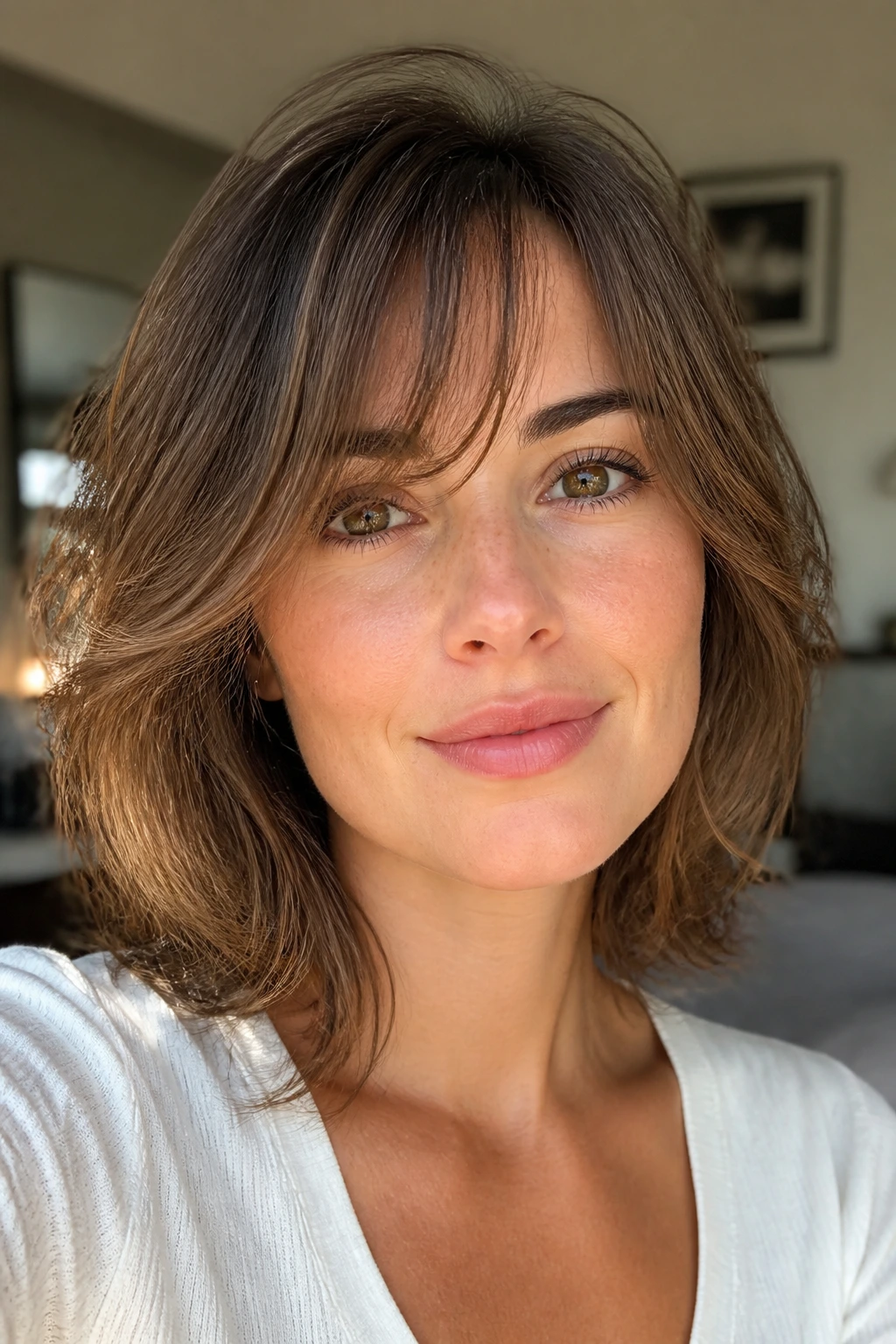
Some bangs need to announce themselves. This one doesn’t. It sits lightly on the face, with just enough presence to soften the forehead and just enough separation to keep fine hair from looking packed together. The trick is restraint. Too much thinning, and the fringe looks straggly. Too little, and it turns into a flat strip.
That balance matters on square faces, because the bang should soften, not sharpen. A wispy swoop gives you the suggestion of a fringe line without drawing a thick border across the top of the face. It looks best when the ends are broken up with point-cutting and the roots have a little lift.
Styling Cue
Rough-dry the roots with your fingers, then use a small round brush only on the front half of the fringe. Don’t overwork the ends. A few loose strands are the point.
Use this if: your hair tends to go limp after a full blowout and you’d rather spend two minutes than twenty chasing perfection.
6. Rounded Side Bang with Soft Curve
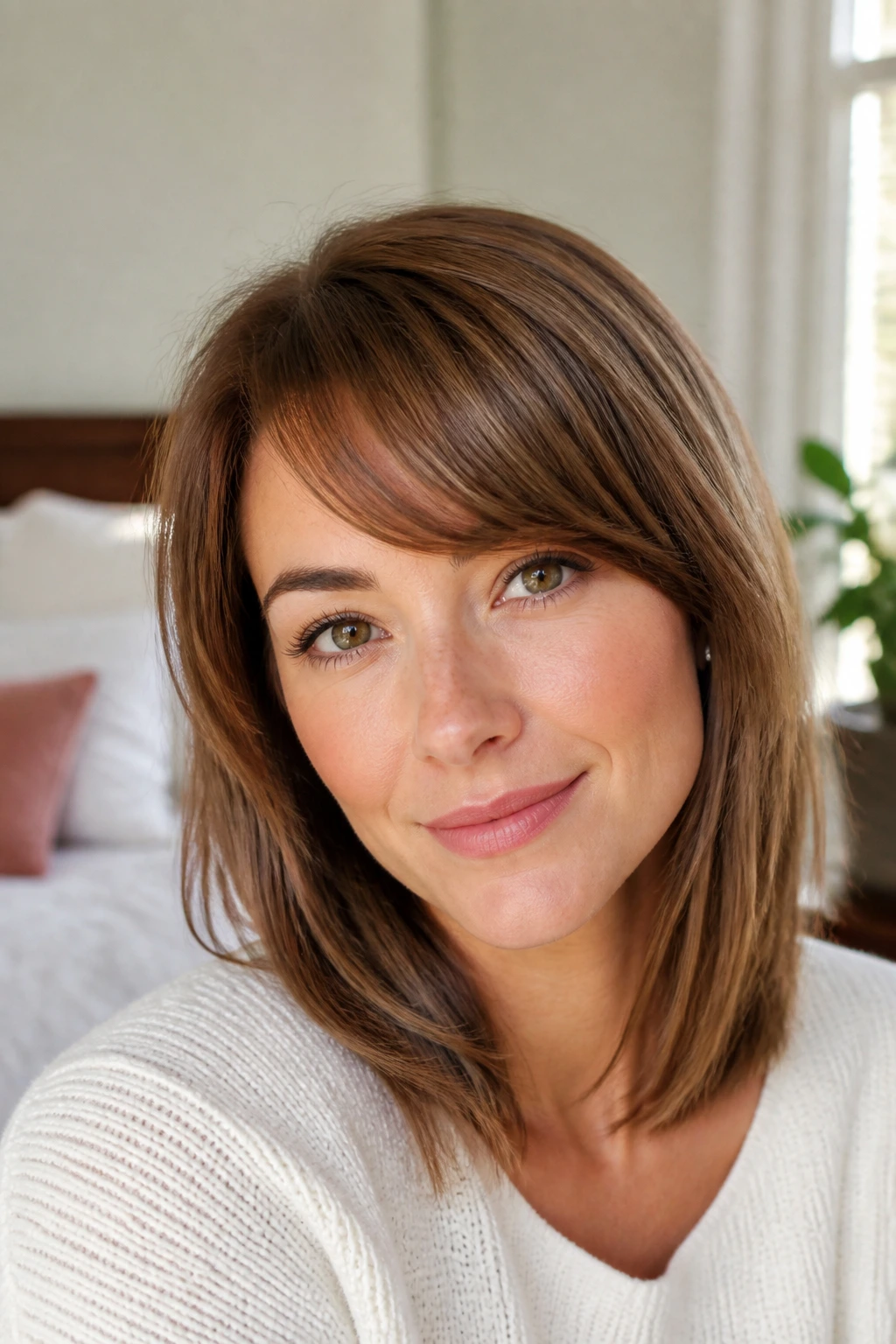
Unlike a straight side bang, this one bends in a smooth arc before it leaves the forehead. That curve is flattering on square faces because it rounds off the harder corners near the temples and jaw. It also gives fine hair a more deliberate shape, which can keep it from looking like it was swept over by accident.
The best version starts slightly fuller near the part and narrows as it travels across the face. If the fringe is too thin at the start, it loses its contour. If it’s too thick at the end, it piles up. You want a clean arc that feels soft but not flimsy.
A round brush helps here, but so does a flat brush and a blow-dryer nozzle if you already know your hair doesn’t love too much curl. The shape matters more than the tool. The curve should be visible, not dramatic.
7. Lob-Length Sweep with Face Layers
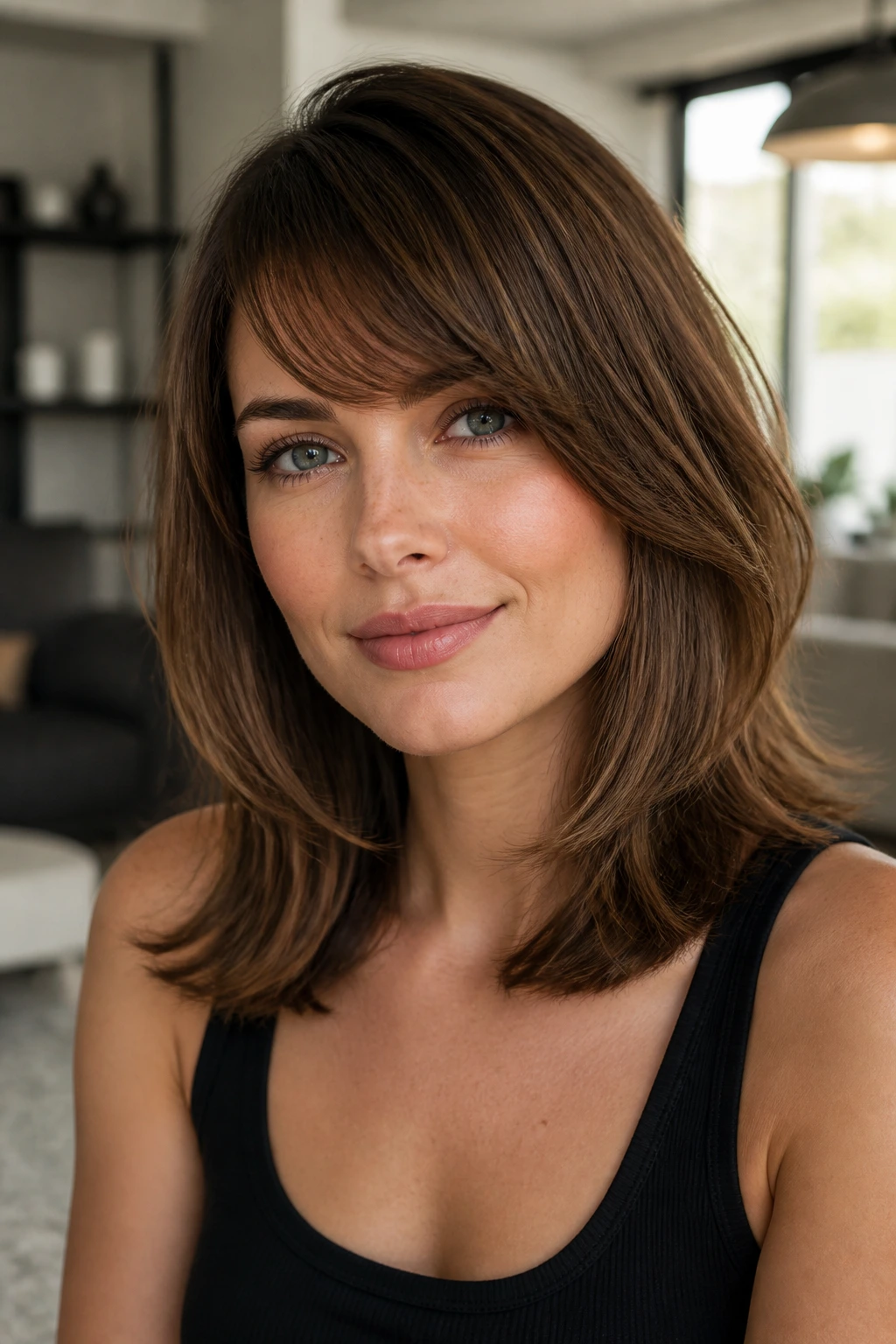
If your hair already hits the collarbone or sits just above it, this is the move. The bang blends into the rest of the cut instead of stopping short, which is exactly what a square face and fine hair need when the goal is softness without bulk. The fringe lands around the brow, then dissolves into layers that frame the cheekbones.
This cut works because it creates one long line from top to bottom. No hard edge. No sudden shelf at the forehead. The eye sees movement all the way down, which makes the face feel longer and less rectangular.
What to Ask For
Ask your stylist to connect the fringe to the front layers, not carve a separate bang zone. That keeps the haircut from looking chopped. It also helps the grow-out, which is worth caring about before the scissors come out.
Good for: people who like a blowout look but do not want to redo their hair every morning.
8. Razor-Soft Fringe

A razor cut gets blamed for a lot of bad bangs. Fair. But when it’s controlled, it makes fine hair move in a way blunt scissor cuts never quite do. The edges soften, the ends separate, and the fringe takes on a lightness that flatters square faces by avoiding that hard, boxed-in line across the brow.
The risk is over-thinning. If the stylist removes too much weight, the bangs can look see-through under bright light. You want shaved softness, not a shredded mess. That means a light hand and a clear plan for where the shortest point should land.
Fine-Hair Fix
Keep the interior texture soft, but leave enough density at the front so the bang still reads as a shape. For styling, use a pea-sized amount of lightweight cream only on the ends. Never near the roots. Razor bangs show product buildup fast.
9. Pixie Crop Swoop

Short hair and square faces can be a sharp-looking pair, which is exactly why this swoop matters. The bang gives the pixie or bixie its softness. Without it, the cut can feel severe. With it, the face gets a diagonal line that blurs the jaw and keeps fine hair from lying too flat around the crown.
The shortest point usually starts near the temple and falls over one side of the forehead. The bang should be narrow enough to feel intentional, not like a section that got left behind. On fine hair, the sides and crown need a little lift so the fringe doesn’t look detached from the rest of the crop.
Style Note
A small round brush or even a finger wrap with a blow-dryer works here. The point is to keep the bend light. If you overcurl it, the whole cut can start looking cutesy instead of clean.
10. Blowout Bang with Root Lift
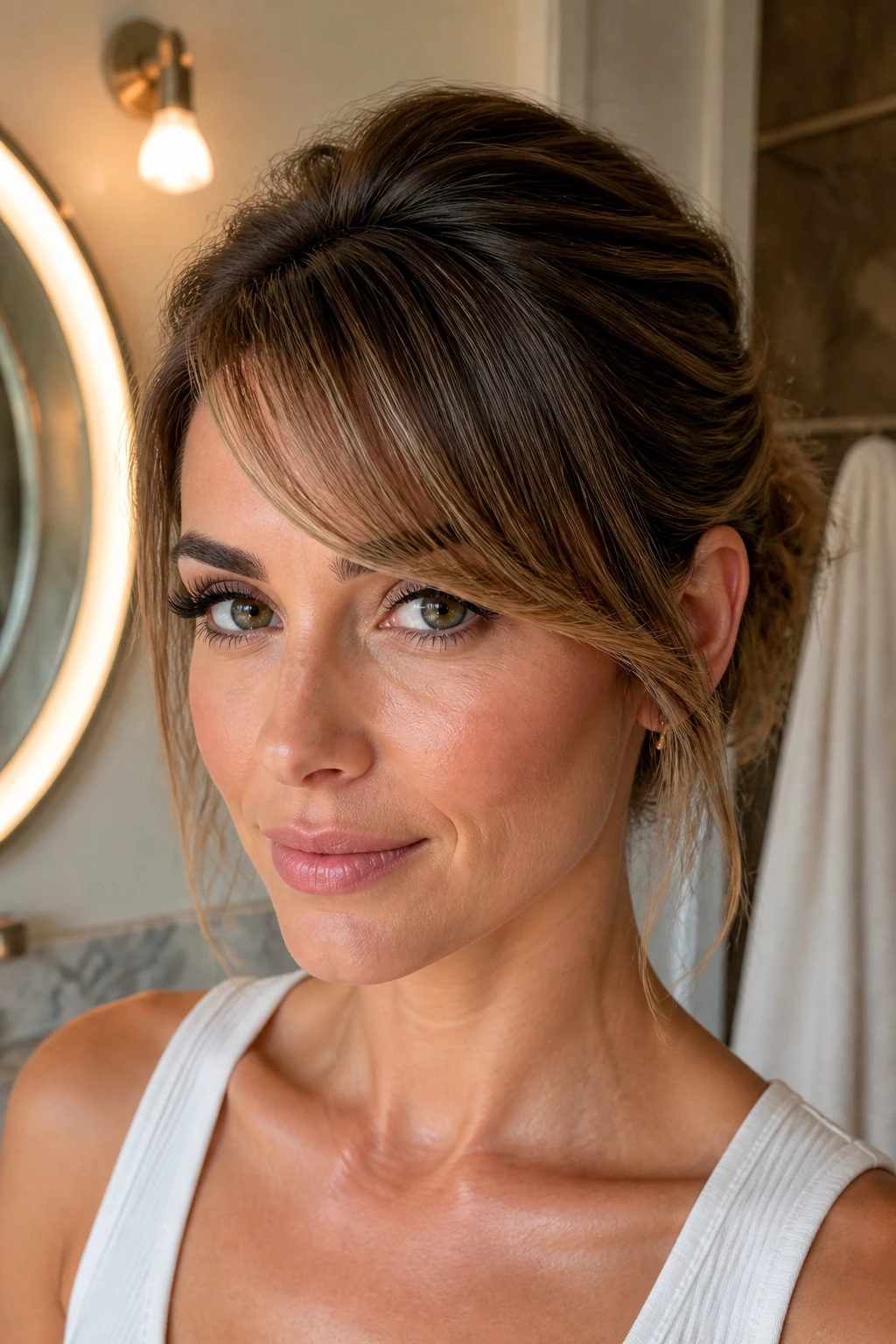
This is the polished version. If you like your fringe to look as if it was set with a round brush and a little patience, this one gives you that smooth, lifted sweep across the forehead. Square faces get the benefit of a diagonal line plus height at the roots, which stretches the face instead of widening it.
Fine hair loves root lift because it changes the silhouette before the ends even move. A flat fringe against the forehead can make the top of the face look wider. A lifted bang steals some of that width back.
Best Setup
Use a heat protectant, then dry the root first with the nozzle pointed up and away from the scalp. Wrap the front section around a 1.25-inch round brush, hold for a few seconds, and let it cool on the brush. That cooling step is what gives the shape some memory.
If you skip the cool-down, the bang may collapse before you even get out the door.
11. Shaggy Side Fringe

A shag fringe earns its keep by breaking up the line. It never sits in one neat strip, and that irregularity is what makes it good for square faces. The jaw already has clean edges; the fringe doesn’t need to add more. A shaggy side sweep softens things by letting a few ends fall forward, then move away again.
Fine hair can wear this well if the layering stays long enough to preserve some body. Too many short layers and the fringe can turn threadbare. Keep the texture in the front, not all the way through the bang.
What Makes It Different
This is the least fussy option in the bunch. It looks better with a bit of air in it, not a perfect brush-out. A small amount of dry texture spray through the lengths can help the pieces separate without making them crunchy.
12. Sleek Diagonal Fringe
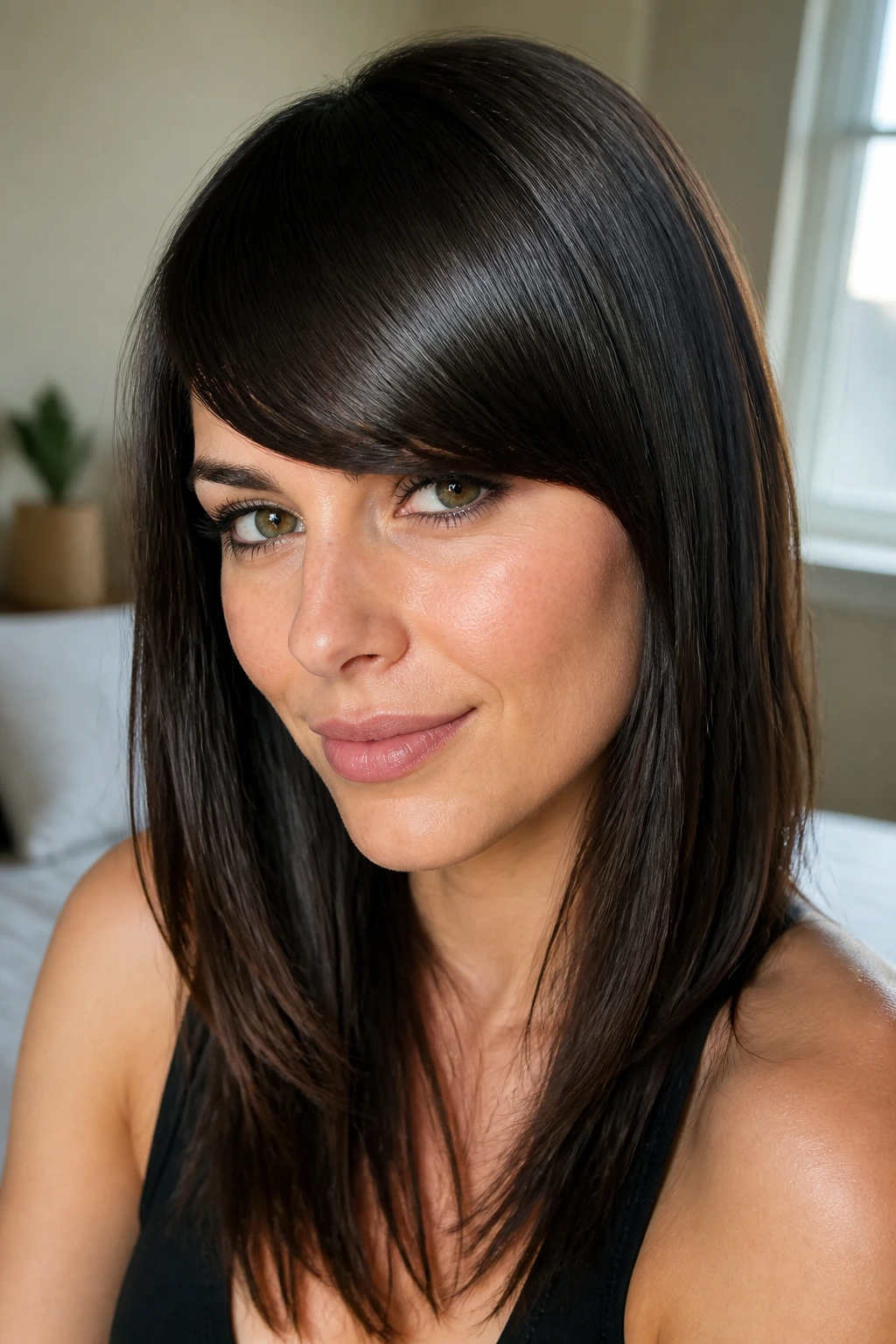
Not every swoop needs to look tousled. This one is clean, smooth, and a little glossy, which can be a relief if your hair already has enough texture to deal with. The diagonal line still softens the square face, but the finish is sharper and more controlled.
The upside for fine hair is surprising: a sleek fringe can sometimes look thicker because the pieces lie together instead of fraying apart. That only works if the cut has enough density at the front. If the bangs are too sparse, the polished finish exposes the gaps.
How to Wear It
Blow-dry the fringe flat first, then bend the ends under with a brush or a small iron so they skim the forehead. A light mist of flexible spray is enough. No sticky creams, no heavy oils, no drama.
Best for: people who wear tailored clothes, sharp collars, or minimal makeup and want the haircut to hold that same crisp mood.
13. Blended Face-Frame Sweep
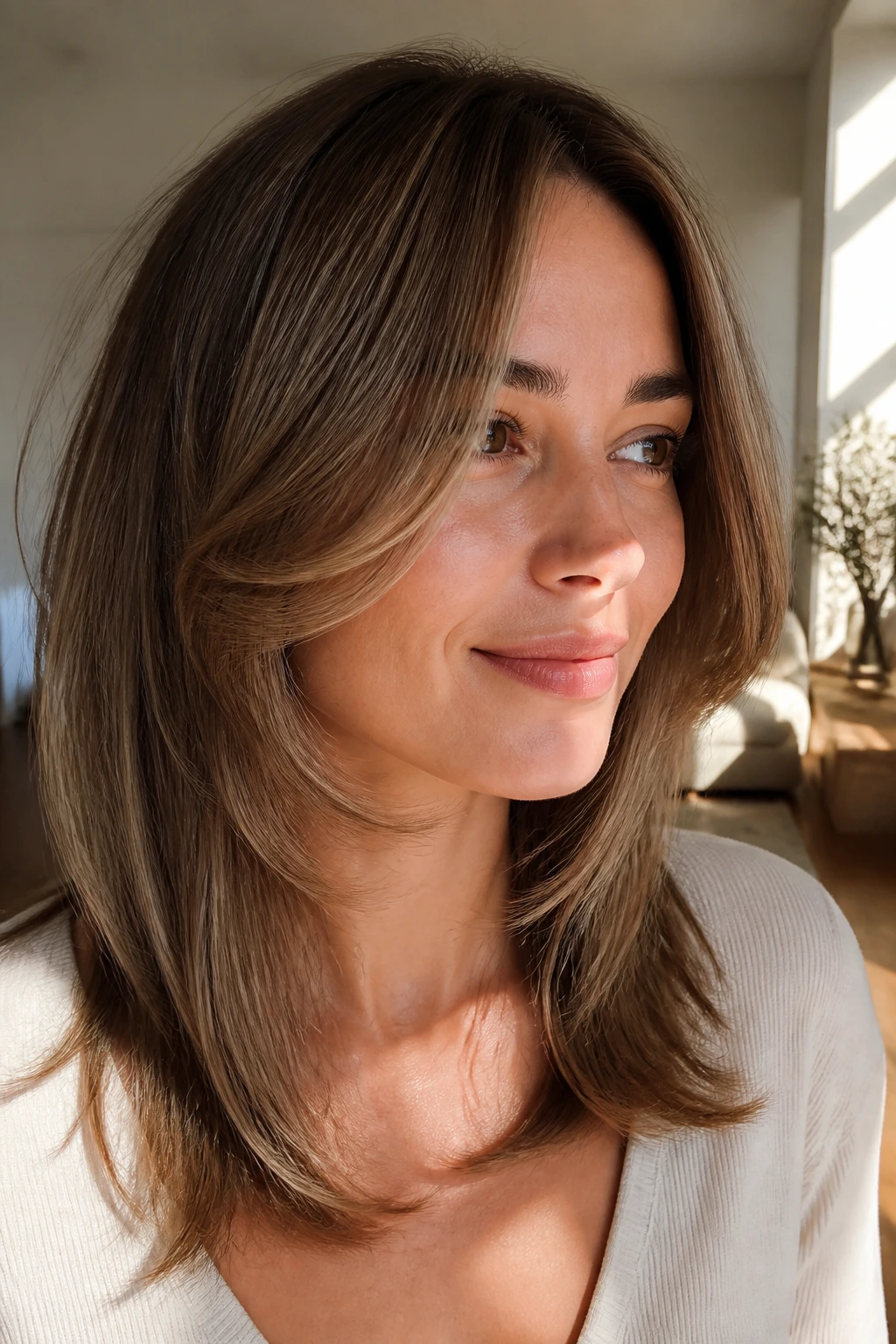
This one behaves like a fringe and layers at the same time. The bang starts across the forehead, but the outer pieces are cut to melt into the face-framing layers around the cheekbone and jaw. That continuous line is useful on square faces because it keeps the haircut from splitting the face into separate blocks.
Fine hair gets a bonus here. Instead of asking thin strands to carry a heavy bang and then separate layers below, the cut spreads the work out. The result is lighter on the head and softer on the eye.
Salon Language That Helps
Ask for a bang that “connects to the front layers” and avoid a hard corner at the temple. That little phrase matters. Otherwise, you can end up with a fringe that looks pretty from the front and awkward from the side.
This is one of those cuts that looks even better after a day or two, when the front pieces settle and move with the rest of the hair.
14. Piecey Split Sweep
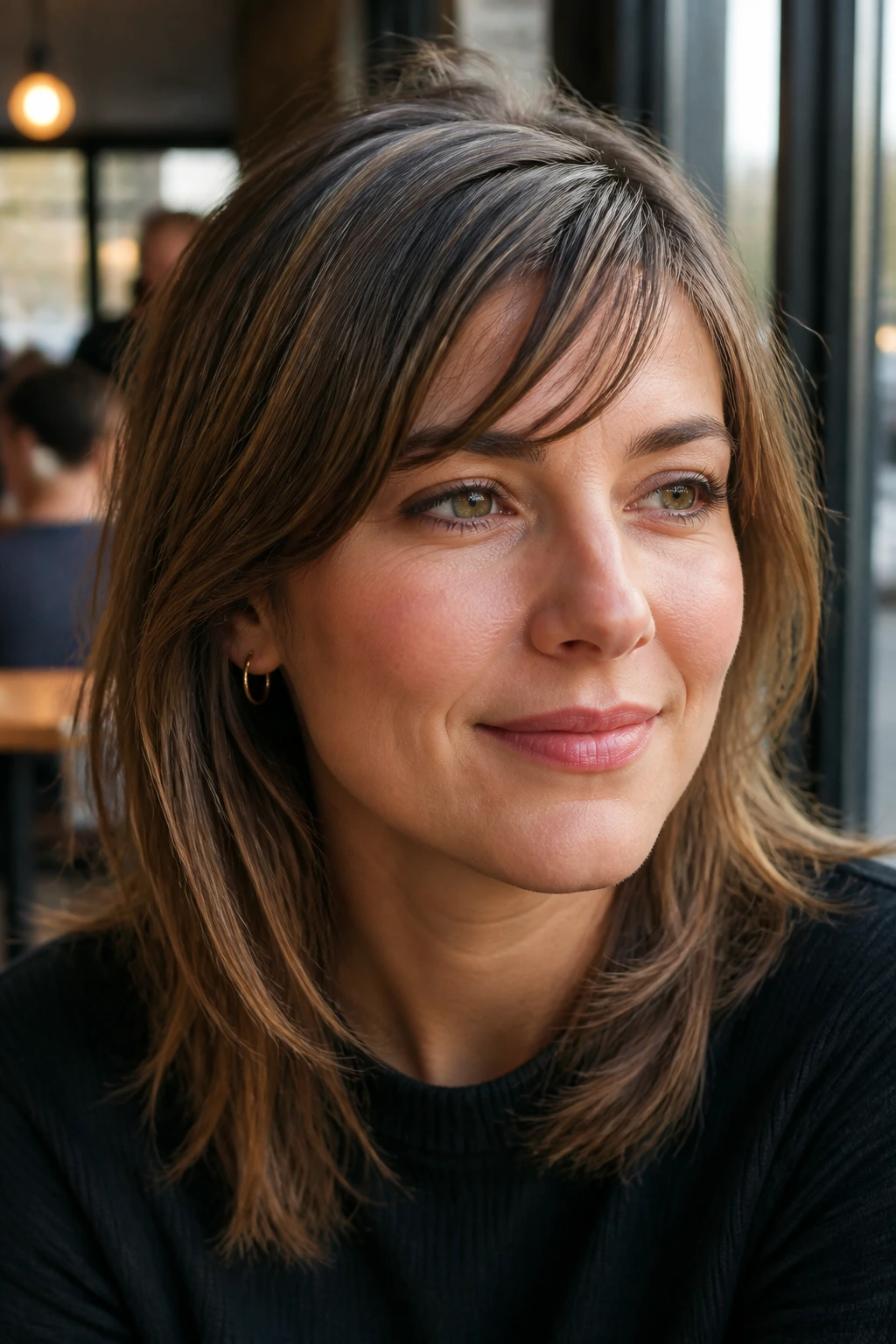
A little separation can be a good thing. In this style, the bang opens into two or three soft pieces as it crosses the forehead, which keeps the face from feeling boxed in. On square faces, that broken line is flattering because it interrupts width. On fine hair, it helps the fringe look airy instead of flat.
The key is control. Piecey does not mean random. The sections should still follow the same diagonal direction, with the split happening as a result of cut and styling, not because the hair gave up.
Pro Tip
Use only a dab of styling paste — half a pea at most — and rub it between your fingertips before touching the ends. If the product hits the roots, the whole bang can go stringy. That’s a fast way to lose the shape.
15. Bob-Friendly Feathered Fringe

A bob can turn boxy in a hurry if the fringe is too blunt. This feathered sweep prevents that. It curves around the forehead, then softens the line where the bob ends, which helps square faces feel less rigid. Fine hair also appreciates the lighter edge, because a heavy bang can make a bob look helmet-like.
The shortest pieces should sit just below or at the brow line, depending on your forehead length. The outer sweep should land near the cheekbone rather than stopping high on the temple. That keeps the head shape balanced.
A chin-length bob with this fringe is one of those cuts that looks more expensive than it is. Not because it’s fancy. Because the line is clean and the softness is built in.
16. Grown-Out Sweep
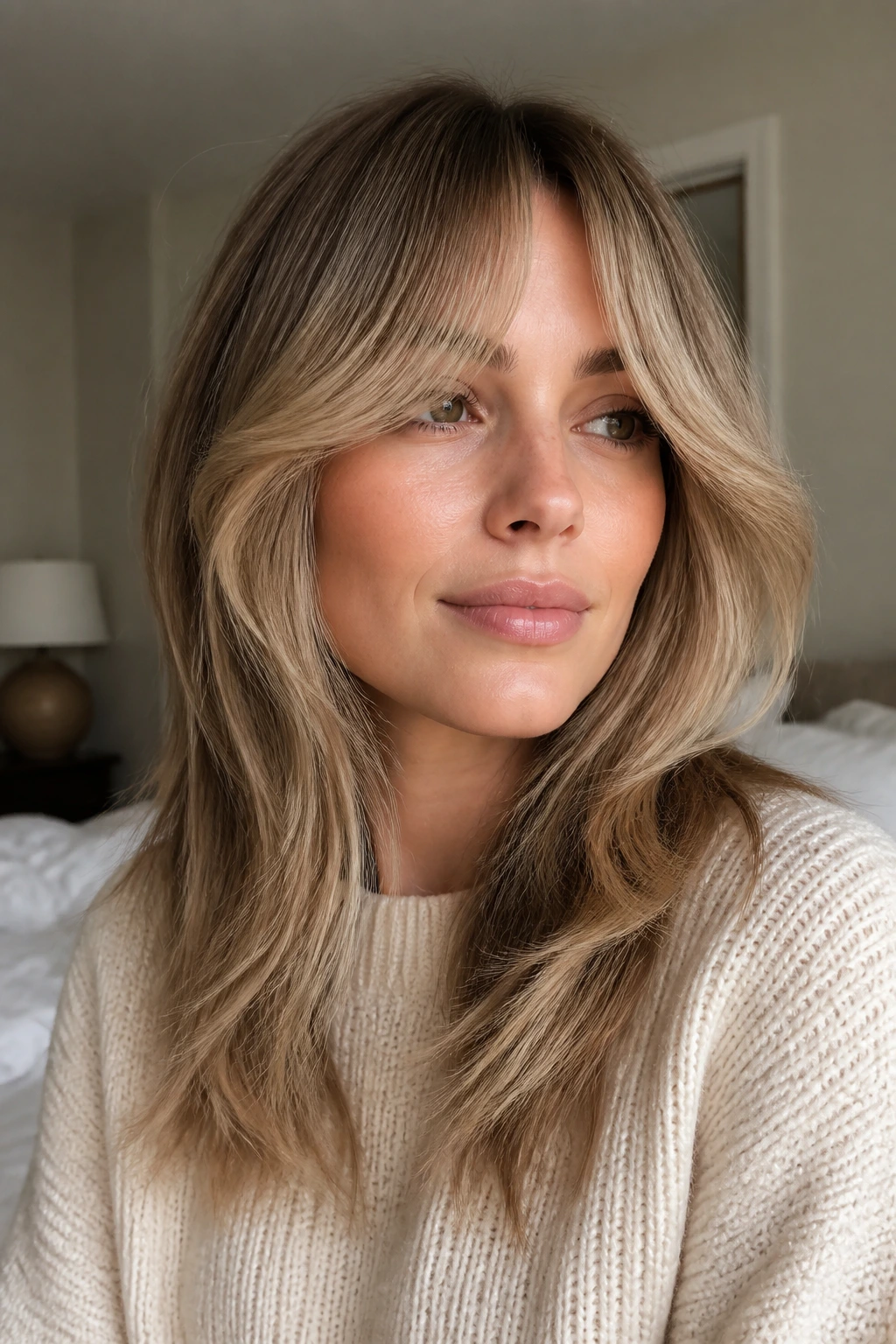
What if you want bangs now and freedom later? This is the answer. The cut starts as a proper swoop, but the lengths are set a touch longer so the fringe can fold into the rest of the haircut instead of turning into a hard grow-out shelf. That matters if you are impatient or if your schedule doesn’t leave room for frequent trims.
Square faces benefit from the gradual transition. The face frame stays soft even when the bang starts losing its shape. Fine hair benefits too, because a longer sweep tends to look more intentional as it loosens up.
The Smart Detail
Ask your stylist to avoid cutting the fringe too short in the center. A little extra length gives you room to tuck, bend, or clip it back on the days you want less face coverage.
17. Tousled Texture Bang
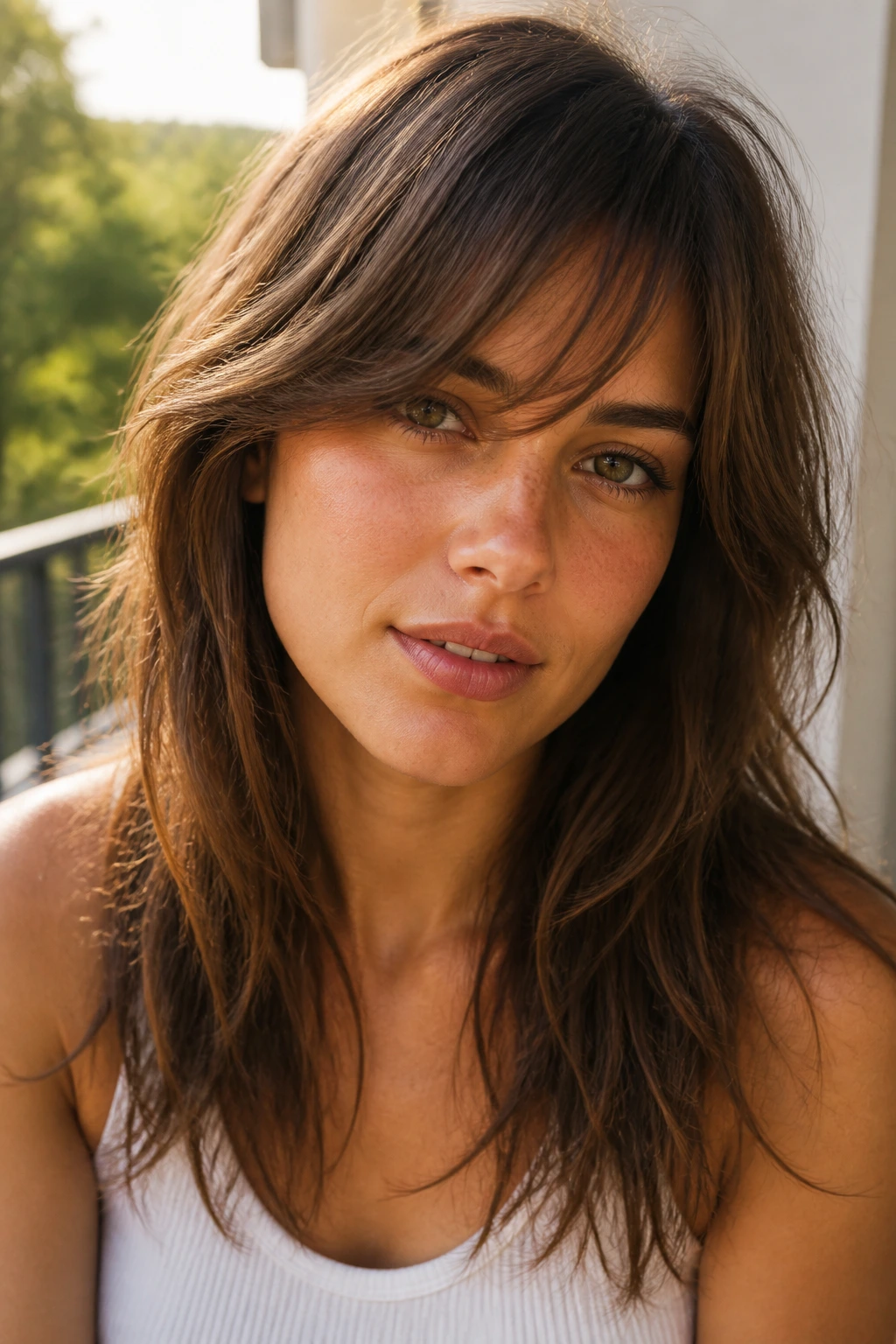
This one looks like it was dried with fingers, not overmanaged with a brush. That’s the charm. The texture breaks the clean line that can make a square face feel even more angular, and it gives fine hair a bit of grit so the fringe doesn’t collapse the second you step outside.
It’s not a messy bang. It’s a lightly undone one. There’s a difference. You still want the shortest pieces to lead the eye diagonally across the face, just with a little movement in the ends.
How to Style It
Rough-dry the roots about 80 percent of the way, then twist the fringe in the direction of the sweep while it’s still damp. Once it cools, separate the pieces with your fingers. Skip the brush if your hair is ultra-fine and prone to puffing out.
Use this when: you want the kind of fringe that looks better after a few hours than it did in the mirror five minutes after styling.
18. Root-Lift Side Flip

This style is all about the first inch of hair. If the root lifts, the entire bang looks fuller. If it lies flat, the sweep falls apart. The flip happens at the end, but the shape starts at the scalp. That’s why it works so well for fine hair, which can lose its shape before lunch.
Square faces get a nice side benefit: the lifted root adds height, while the flipped end makes a diagonal line that softens the jaw. It’s a simple illusion, but a useful one.
How to Get It
Blow-dry the front section against its natural direction first. Then roll it over a brush or clip it up while it cools. That root reset keeps the bang from sitting like a wet napkin on the forehead.
A little dry shampoo at the root can help on the second day. Not much. Too much and you get chalk.
19. Soft Split Bang
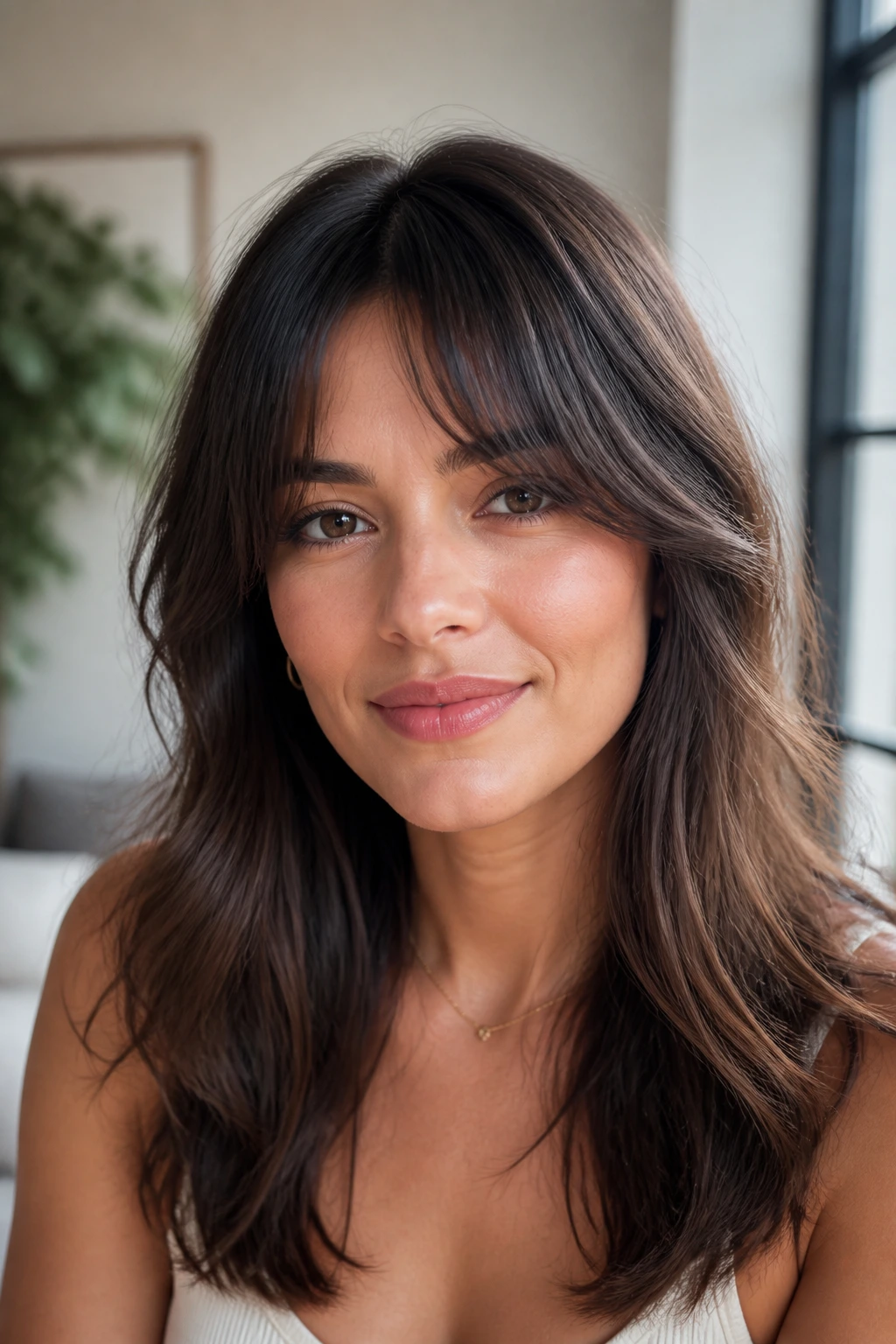
This is the quieter cousin of curtain bangs. The fringe opens slightly in the middle, but not so much that it looks like a full split curtain. That small opening keeps the forehead from feeling crowded and gives square faces a softer frame around the eyes and cheeks.
Fine hair can wear this because the split reduces the amount of hair sitting in one heavy chunk. It gives movement without demanding thickness. The sides still need to sweep down and out, though. If they just hang there, the shape loses purpose.
Best Pairing
This works especially well with medium layers around the cheekbone. The bang and the layers should feel related, not separated. If the cut below the face is too blunt, the soft split can feel disconnected.
20. Collarbone Arc Bang
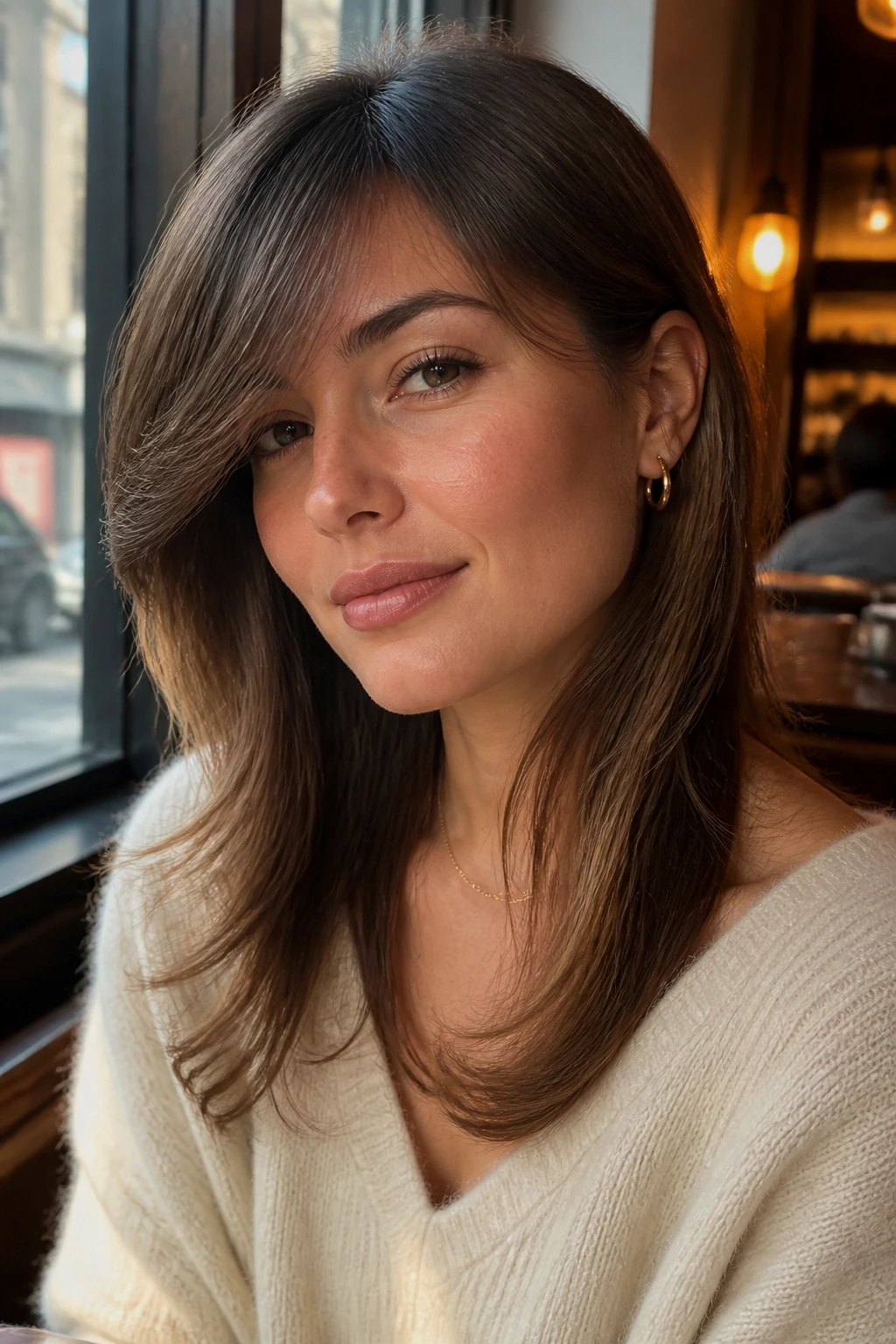
A longer arc gives you more room to play. The fringe starts near the brow, then travels into the collarbone area, where it blends into the front lengths. That long curve is flattering on square faces because it creates a vertical sweep that counterbalances the width of the jaw.
For fine hair, length is your friend here. A longer section tends to lie a little more gracefully than a short, highly textured bang. It also lets you tuck one side behind the ear when you want the fringe out of your eyes without losing the shape entirely.
This is one of the few styles that can go from polished to casual with almost no effort. A quick bend with a flat iron, and you’re done. Let it dry naturally, and it turns softer and less exact.
21. Micro-Textured Swoop

A micro-textured bang has tiny internal shifts instead of obvious layers. That sounds technical, but it just means the cut is broken up enough to move without looking shaggy. Fine hair often does better with this than with heavier texturizing, because the fringe keeps its shape while still feeling light.
Square faces get a softer frame because the texture interrupts the straight line across the forehead. The eye keeps moving. That matters. A perfectly even bang can make a square face feel more rigid than it needs to.
Caution
Do not let this one get over-thinned. Micro-texture is not a license to remove half the fringe. If the ends turn see-through, the style stops looking deliberate and starts looking tired.
22. Voluminous Side Flip
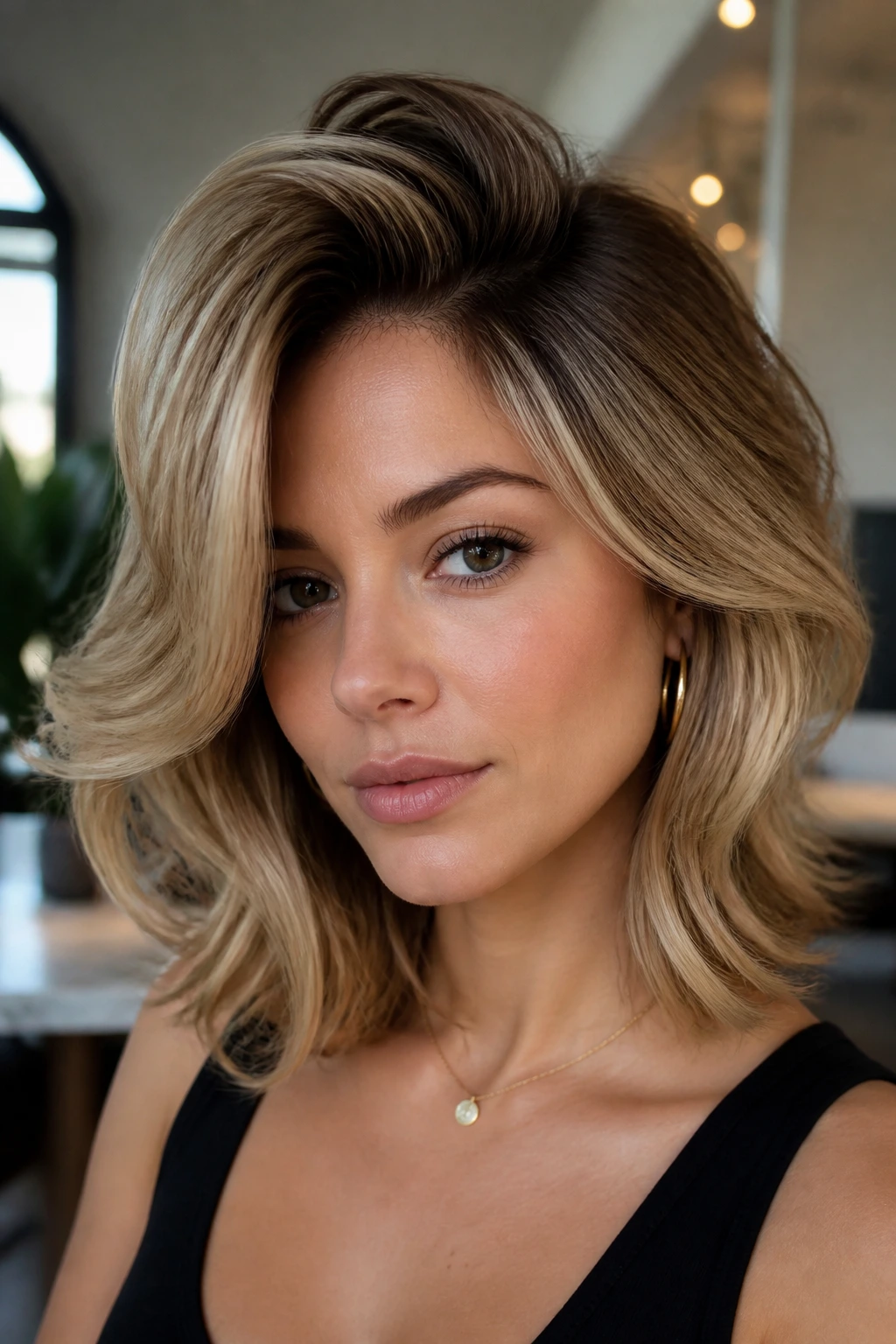
Can fine hair look full in a swoop? Yes, if the lift happens at the root and not only at the ends. This style is built around that idea. The bang is blown up and over before it settles into the side sweep, which makes it look thicker and more alive around the forehead.
On square faces, the volume steals focus from the jawline and gives the upper half of the face a little more height. That can be a good thing when the face shape reads broad across the forehead and jaw. The flip doesn’t have to be dramatic; even a small upward bend changes the silhouette.
A medium round brush and a bit of tension while drying are enough. The real secret is letting the hair cool in the lifted position. If you let go too soon, the shape drops.
23. Long Arc Fringe

This is a longer, softer answer to the question of bangs on square faces. The fringe arcs from the forehead out toward the cheekbone and jaw, which means it does more than cover. It traces the face in a way that feels smooth, not abrupt.
Fine hair likes the length because the weight keeps the strands together a little better. You’re not fighting flyaway bits every ten minutes. You’re working with a line that has somewhere to go.
Good Pairings
- Layered shoulder-length cuts
- Straight hair with a soft bend
- Hair that tucks behind one ear part of the day
If you like bangs that can disappear into the haircut when needed, this is the one to keep on your shortlist.
24. French Side Sweep

There’s a slightly undone elegance to this cut — not fussy, not stiff, not trying too hard. It starts off-center, sweeps across the forehead in a loose diagonal, and leaves a bit of space around the temples. That asymmetry is flattering on square faces because it breaks the symmetry of the jawline without turning the haircut into a costume.
Fine hair benefits from the lighter construction. You’re not carrying a thick panel of fringe. You’re wearing a side sweep with shape and a little attitude.
Style It This Way
Let the bang dry about 70 percent of the way, then use your fingers and a brush together to finish it in the direction you want. A tiny bend at the end is enough. The goal is soft movement, not perfect symmetry.
This is the style I’d pick for someone who wants to look like they “just happen” to have good hair, even though there’s a brush nearby.
25. Razor-Tapered Soft Swoop
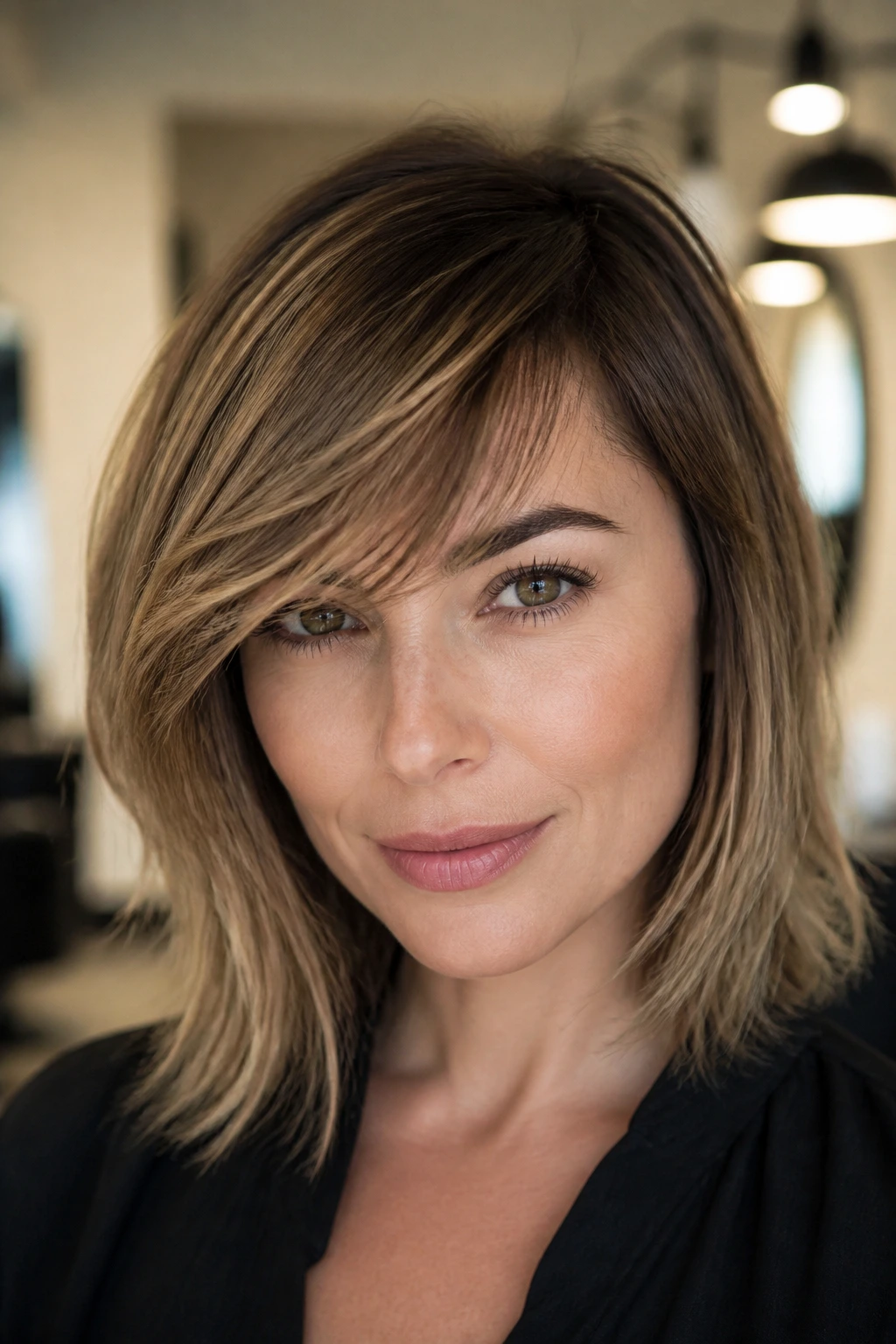
This is the one for people who like a little edge without the edge showing. A controlled razor taper makes the front feel light, but the shape still sweeps across the forehead in a soft diagonal. On square faces, that diagonal line is the whole point. It takes the sharpness out of the jaw and keeps the forehead from feeling boxed in.
Fine hair can pull this off beautifully because the taper reduces bulk where it isn’t needed. The danger is going too far and leaving the fringe wispy in the wrong way. A good version still has enough density to read as a bang from a normal distance.
Ask for
A soft taper through the ends, not a shredded finish. The shortest point should still sit low enough to touch the brow zone, and the outer edge should melt into the front layers. If your stylist starts talking about “more texture” without mentioning shape, pause. Shape comes first here.
Why the Diagonal Line Flatters a Square Face
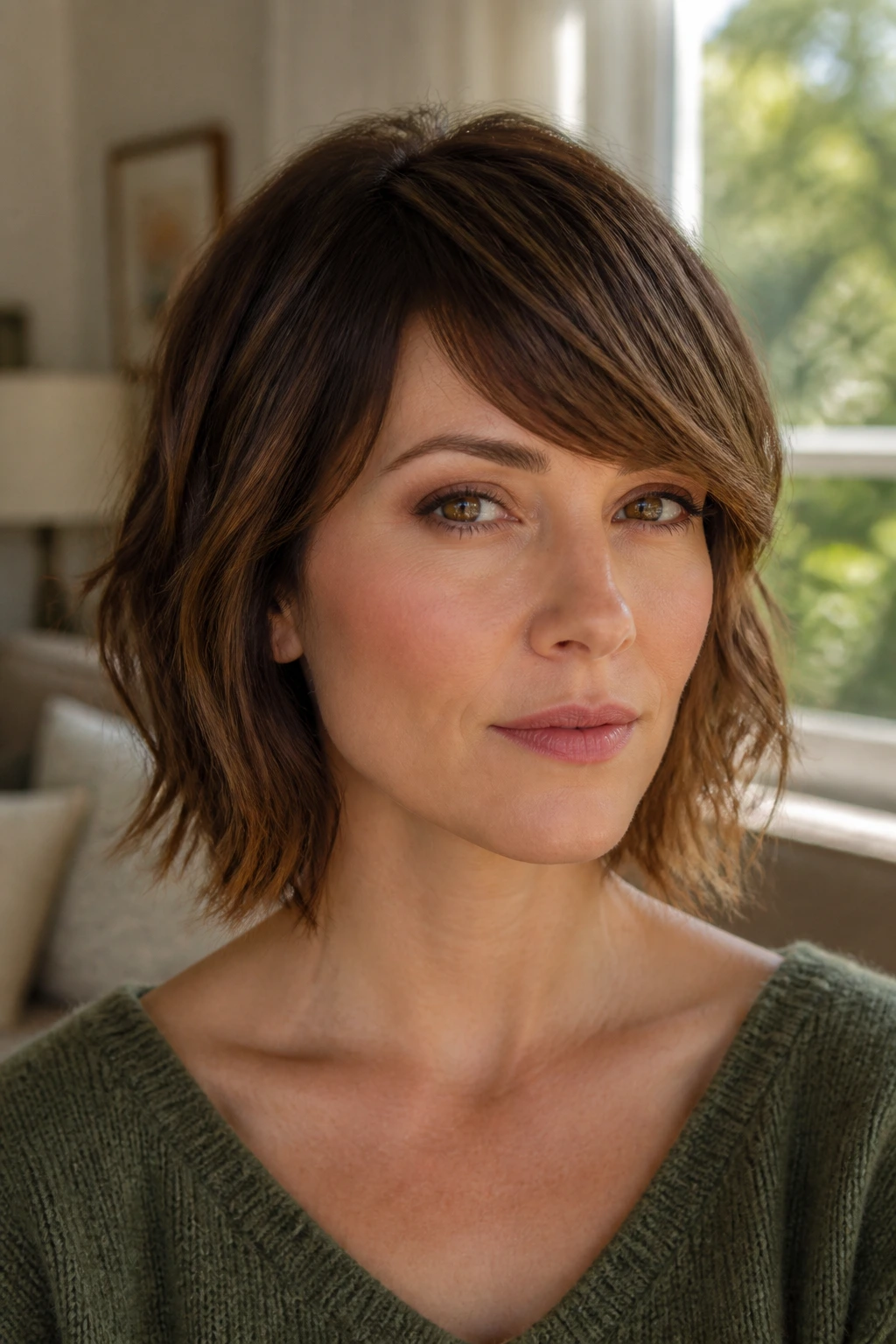
Square faces tend to share a wider forehead, a strong jaw, and fairly direct lines from top to bottom. That structure is good-looking on its own, but it can make a straight fringe feel harsher than expected. A swoop bang works because it interrupts those straight lines with a diagonal one. The eye moves sideways, then down. That’s the whole trick.
The soft angle also keeps attention from pooling at the jaw. Instead of staring straight at the width of the face, you see a bend across the forehead and cheekbone. That bend creates a little visual softness. It doesn’t hide the bone structure. It edits it.
Fine hair changes the equation a bit. You do not want a fringe so heavy that it collapses into a flat strip, because fine strands show every mistake. Light internal weight, a clean outline, and some lift at the root give the hair enough presence to stay visible without looking bulky. Too much thinning, though, and the bang disappears in daylight. Too little, and it starts looking like a slice of cardboard.
The Best Bangs for This Face Shape
The most flattering swoops are the ones that start near the outer brow or temple and travel across the forehead at a slight angle. The shortest point should soften the top of the face, while the longer side should blend into the cheek line or front layers. That keeps the haircut from feeling chopped.
What Not to Chase
A dense, straight-across fringe. It can look chic on some faces, but on a square face with fine hair, it often looks too blunt and too flat. You want movement first, coverage second.
Essential Tools for Swoop Bangs That Behave
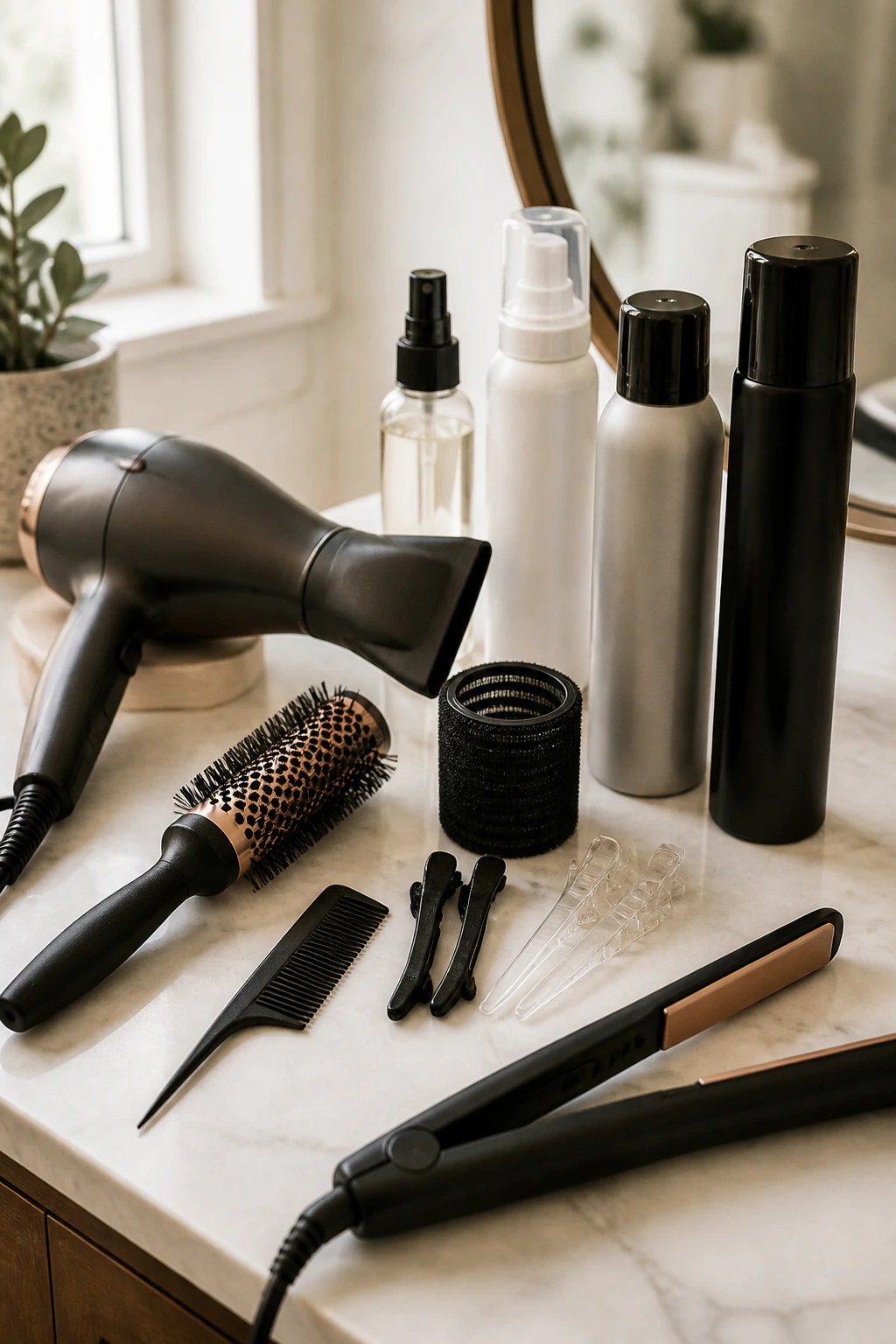
- Blow dryer with a nozzle attachment: The nozzle keeps airflow focused so the fringe bends where you want it instead of puffing everywhere.
- 1-inch to 1.25-inch round brush: Small enough to control the bang, large enough to create a soft bend instead of a tight curl.
- Fine-tooth comb: Useful for parting cleanly and checking whether the bang is sitting too wide.
- Velcro roller or setting clips: Great for cooling the front section in the lifted position while you do the rest of your makeup.
- Heat protectant spray: Fine hair burns fast. A light spray before heat styling matters more than a fancy finish product.
- Lightweight mousse or root spray: A little grip at the scalp helps the bang hold shape without feeling stiff.
- Dry shampoo: Best used at the root of the fringe when it starts to separate or flatten.
- Small flat iron or mini curling iron: Handy for fixing the last inch of the bang or tightening a bend on humid days.
- Flexible-hold hairspray: Keeps the sweep in place without turning it crunchy.
Smart Product Picks for Fine Fringe
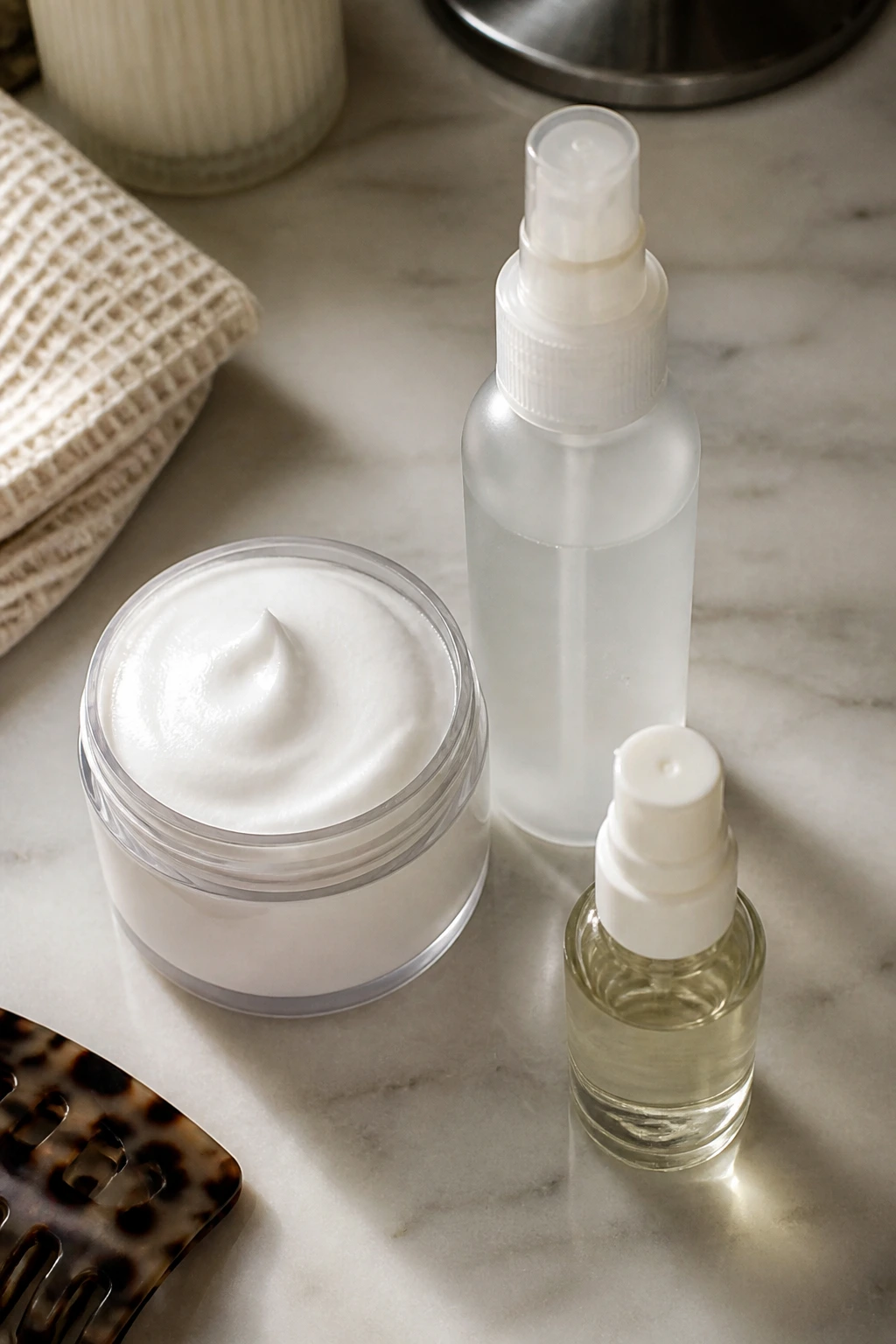
Fine hair is allergic to weight. A thick cream that works wonders on coarse hair can flatten a swoop bang into a sad little strip by lunchtime. That’s why the product choice matters as much as the cut. Go light at the root, and keep richer products away from the forehead.
Best texture helpers: look for mousses and sprays that claim body or lift, not heavy smoothing. A mousse the size of a walnut, worked through damp roots, is plenty for most fringe sections. Anything more starts to show. Fine hair does not need a lot of help to become greasy-looking.
Best finishing products: flexible hairspray, not hard hold. If the fringe needs to move when you blink, the spray did its job. If you can feel it cracking, you used too much.
Best for shine: a tiny amount of serum on the very ends only. One drop, rubbed between fingertips. That is enough. Put it anywhere near the scalp and the bang will flatten faster than you want.
Watch out for: heavy oils, thick leave-ins, and powders dumped directly onto the front hairline. Those products are fine elsewhere. On a fringe, they can turn soft movement into sticky separation.
How to Wear These Bangs in Real Life

Polished and smooth: Blow-dry the fringe with a round brush, then tuck the longer side toward the cheekbone. This works well if you wear tailored clothes or want the haircut to look sharp with very little fuss.
Soft and piecey: Dry the bang mostly with fingers, then separate the ends with a light touch of texture spray. That version looks a little less formal and hides fine-hair separation better on second-day hair.
Fast morning fix: Mist the front section with water, clip it into the side sweep for five minutes, then remove the clip and let it cool. That tiny reset often works better than re-wetting the whole head.
With glasses: Keep the shortest point just below or at the brow, not higher. Frames and fringe need space to coexist. If both fight for the same line, the front of the face starts feeling crowded.
Extra Lift and Polish Without Making the Fringe Stiff

Root Lift: Set the front section in the opposite direction first. Even 10 seconds of counter-drying gives fine hair a cleaner bend and keeps the swoop from lying flat against the forehead.
Texture: Use texture spray only after the hair is dry. Spraying it onto damp bangs tends to make the ends clump in the wrong way. A light mist at the mid-lengths is enough.
Face Balance: If your jaw is especially square, let the outer edge of the bang travel a little farther toward the cheekbone. That extra length softens the lower face without dragging the whole cut down.
Make-It-Yours: Prefer less forehead coverage? Keep the shortest point closer to the brow and the diagonal cleaner. Want more softness? Ask for a slightly thicker center that thins toward the side.
Keeping the Shape Between Washes
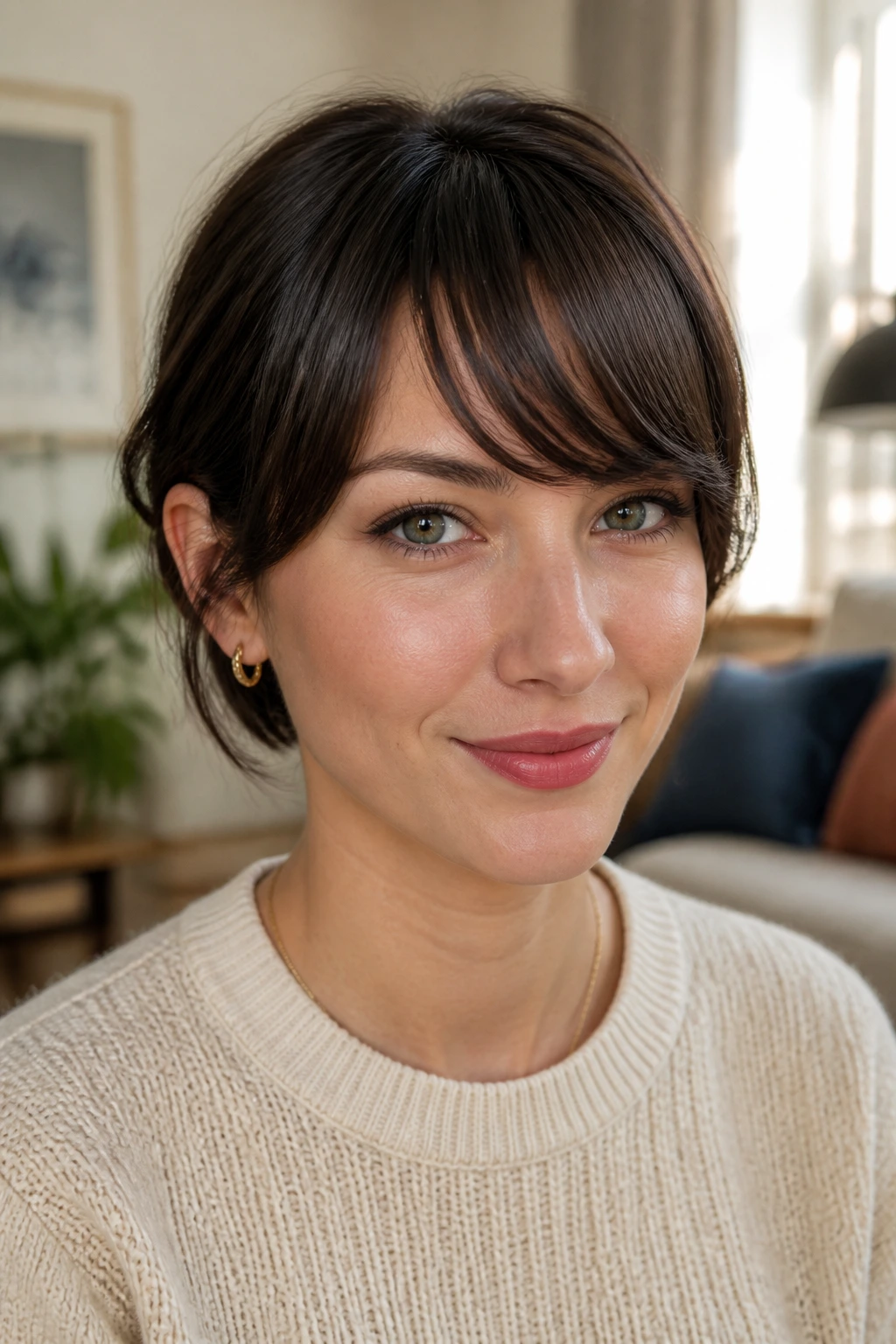
Bangs do not have to be washed every time the rest of your hair gets a rinse. In fact, over-washing can make fine fringe limp and fussy. Most people do better refreshing the front section separately, then washing the whole head when the roots need it.
A good trim rhythm for swoop bangs is every 4 to 6 weeks if you want the shape to stay crisp. If you’re intentionally growing them out, stretch that to 6 to 8 weeks and ask for only the ends to be cleaned up. Fine hair shows overgrown bangs faster because the shape loses its bend before it gains length.
Overnight matters too. A soft clip or a loose side pin keeps the fringe from bending in the wrong direction while you sleep. A satin pillowcase helps, especially if your hair gets fuzzy or static-prone. In the morning, a quick mist of water or dry shampoo at the root is often enough to revive the swoop. You do not need a full wash for every small collapse.
If humidity is a problem, dry the fringe fully before you leave the house. Half-dry bangs almost always change their mind later.
Variations and Adaptations to Try

Air-Dry Friendly Sweep: This version is cut a touch longer and softer so the hair can fall into place without much heat. It’s a good call if your fine hair holds a natural bend and you want a low-maintenance routine.
Glasses-Friendly Arc: Ask for the shortest point to graze the brow and the longer side to sit just above the frame line. That keeps the bang from fighting your glasses every time you blink.
Curly-Wave Soft Swoop: For hair with loose wave, keep the bang longer and allow the natural curl to bend it into the sweep. Cutting it too short can shrink it right into your eyes.
Bixie Sweep: If the rest of your cut is short, let the fringe carry more of the softness. A short side sweep gives the face structure without making the top feel blocky.
Long Grow-Out Fringe: This one starts as a proper swoop, but it’s shaped to blend into face-framing layers after a few weeks. It’s the best choice if you like change but not maintenance.
What Usually Goes Wrong with Swoop Bangs
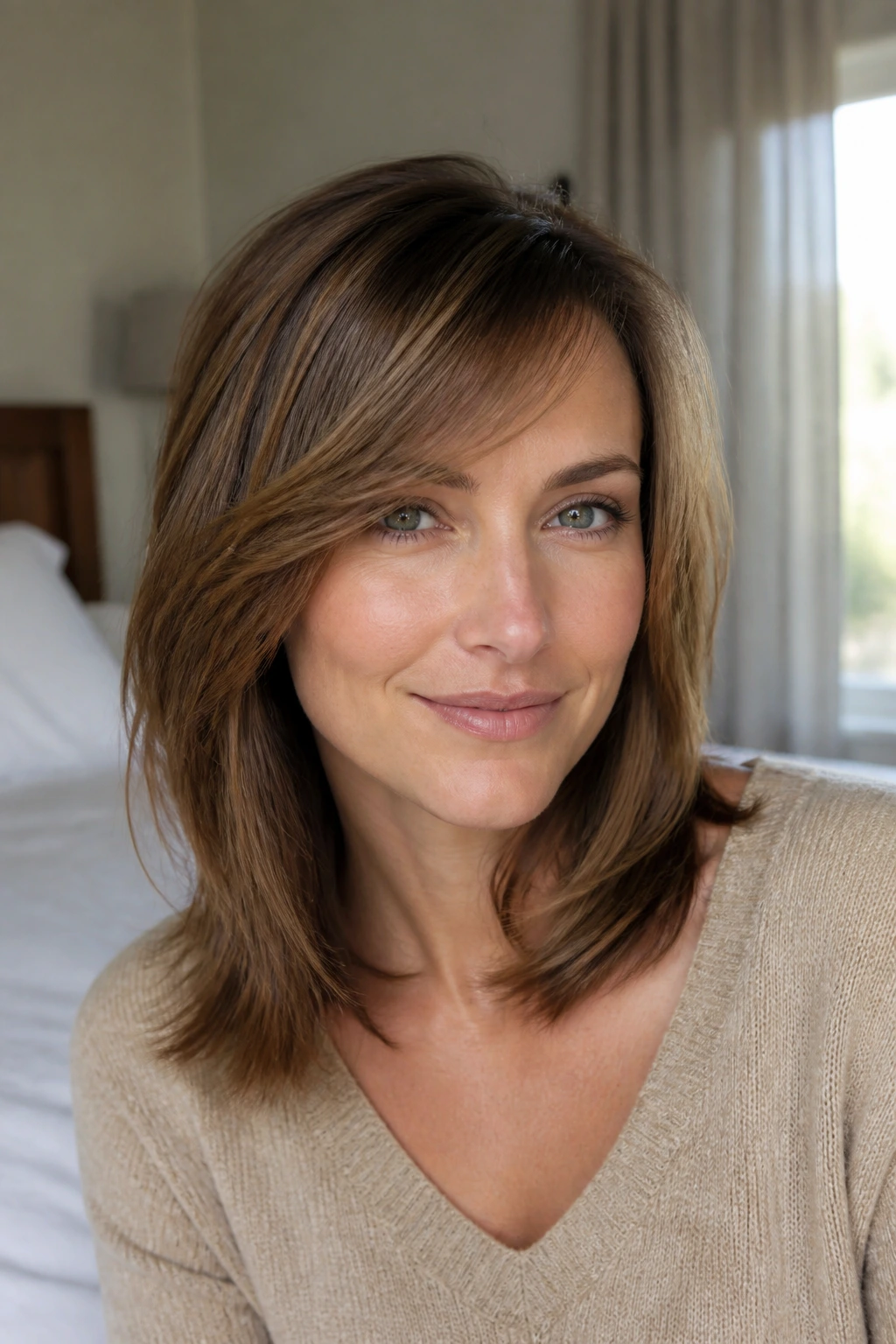
Too much width: If the bang starts temple-to-temple, the face can look wider and more square. The fix is a narrower section that begins closer to the outer brow.
Too much thinning: Fine hair can go see-through fast. When the fringe looks wispy in the bad way, the shape has been over-texturized. Ask for softer ends, not less hair.
Product overload: A greasy root is the fastest way to lose a swoop. If the bang separates into oily strings, stop using heavy creams at the front and switch to dry shampoo or a lighter mousse.
Blowing it straight down: That dries the bang flat and emphasizes width. Dry it with the nozzle aimed up and slightly sideways so the hair has a bend from the start.
Ignoring the cowlick: If your fringe splits or flips the wrong way every morning, the cut has to account for that growth pattern. Dry against the cowlick first, then redirect it into the sweep.
Waiting too long for trims: Once the bang gets past its sweet spot, the bend turns floppy. A small cleanup every month or so prevents that awkward hang.
Frequently Asked Questions About Swoop Bangs for Square Faces and Fine Hair
Are swoop bangs actually flattering on square faces?
Yes, when the line is diagonal and soft. The angle breaks up the straight edges of the forehead and jaw, which keeps the face from looking overly boxy. The wrong version is a blunt, thick fringe that stops the eye instead of moving it.
Can fine hair hold a swoop bang?
It can, but the cut has to respect the texture. Fine hair does better with lighter weight at the ends, some lift at the root, and a shape that blends into the haircut instead of sitting as a heavy panel on the forehead.
Should I choose side-swept bangs or curtain bangs?
If your face is square and your hair is fine, a swoop bang is often easier to control than a full curtain shape. Curtain bangs can work, but they usually need more density. A side sweep keeps the front lighter and more direct.
How long should the shortest piece be?
For most people, somewhere around the brow line works best. If it’s much shorter, the bang can fight your features. If it’s too long, it may slide into the cheek and lose its shape. Your forehead height and glasses matter here too.
What if my bangs separate by midday?
That usually means there’s too much oil at the root or not enough support in the cut. Use dry shampoo at the root before it looks greasy, and ask your stylist to keep the bang slightly denser through the center if your hair is extra-fine.
Can I air-dry a swoop bang?
Sometimes, yes. A longer, softer sweep can air-dry into place if your hair has a little natural bend. If it dries flat or in the wrong direction, a 30-second touch with a brush or clip usually fixes it faster than starting over.
Will swoop bangs work with glasses?
Yes, and often better than shorter fringes. The key is to keep the shortest point from sitting directly on the frame line. You want enough space so the bangs and glasses don’t compete for the same part of the face.
How often should I trim them?
Every 4 to 6 weeks if you want the shape to stay crisp. If you’re growing them out, you can stretch a little longer, but the ends still need occasional cleanup so the sweep doesn’t turn ragged.
The Fringe That Softens the Edges

The best swoop bangs for square faces and fine hair do one thing really well: they soften the hard lines without turning the haircut into a puffed-up mess. That balance is the whole point. You want a fringe that moves, bends, and blends, not one that sits there demanding maintenance every hour.
If you’re stuck between wanting bangs and fearing bangs, start with the softer versions first — the feathered sweep, the long arc, the grown-out fringe. They’re easier to live with, easier to fix, and much kinder to fine hair that doesn’t like being bossed around. Once you know how your hair behaves, you can go a little bolder.
The right shape should make your face feel less boxed in the second you see it in the mirror. When that happens, you’ll know the cut is doing its job.