



Short hair turns honest fast.
One wrong part, and the whole cut sits there like it missed its coffee. A swept fringe fixes that by sending the eye sideways instead of letting the forehead and hairline take the whole stage. On an oval face, that sideways line is especially useful. The face already has balance; the fringe does not need to fight your proportions, it just needs to give them motion.
That is why a swept fringe for short hair and oval faces can look sharp, soft, messy, polished, or downright cool without needing a total haircut overhaul. A few inches of length at the front can change the mood of a pixie, bob, bixie, or cropped shag in a way that surprises people who think bangs are either blunt or nothing. They are missing the fun part.
The best versions do not sit there like a curtain. They bend, skim, tuck, split, and shift. That little bit of direction is the whole story.
Why These Looks Are Worth Saving
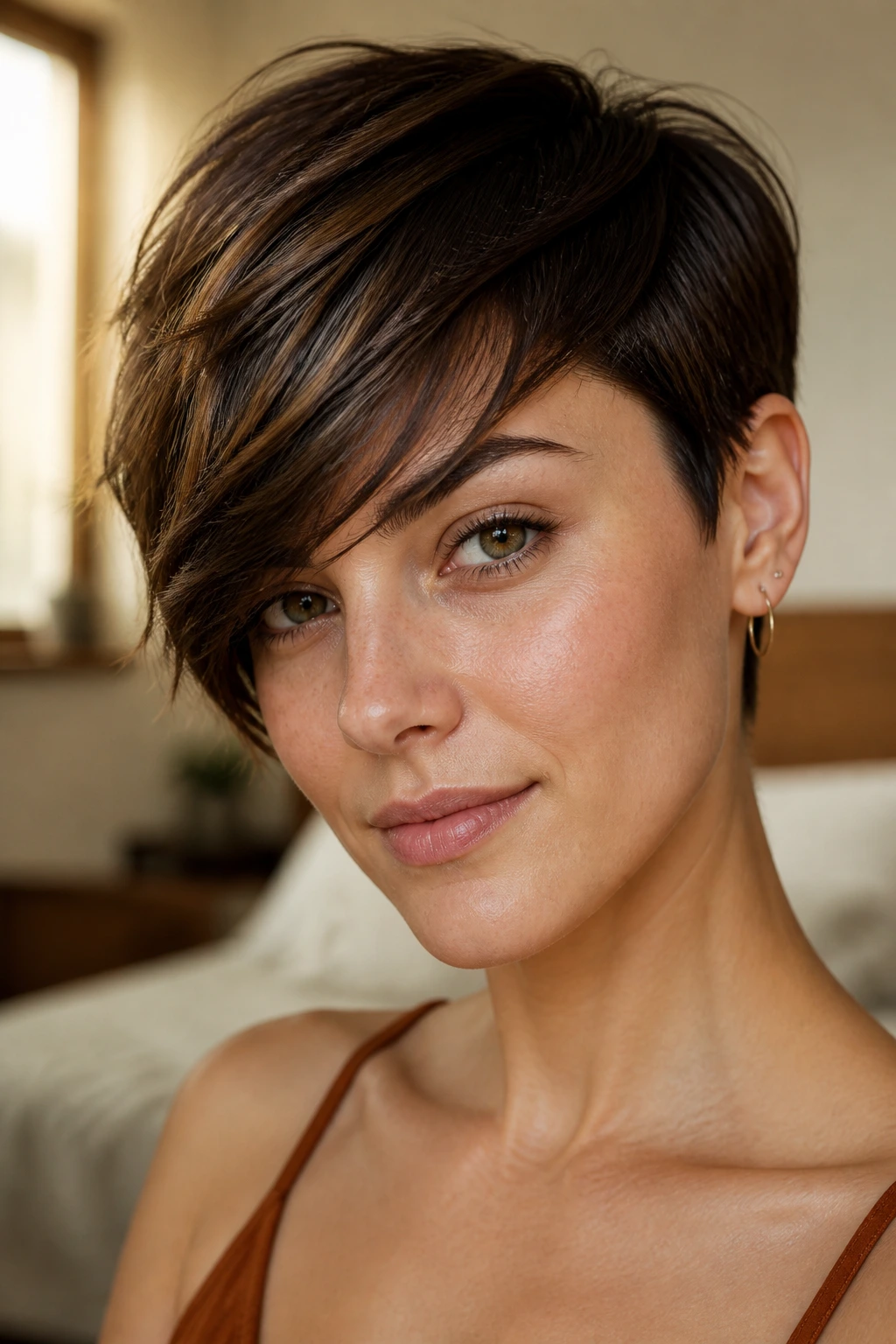
-
Diagonal movement: A fringe that sweeps from one side to the other pulls the eye across the face, which keeps short hair from reading flat or boxy.
-
Oval-face freedom: Oval faces can wear more fringe styles than most shapes, so you get to choose based on mood, texture, and maintenance instead of trying to “fix” anything.
-
Forehead control without a hard line: A sweep softens a larger forehead better than a blunt band, but it still leaves light around the eyes instead of packing the front too full.
-
Better texture behavior: Cowlicks, swirls, and a stubborn part usually behave better when the front is cut with direction instead of being forced straight down.
-
Easy grow-out: Swept fringe grows into a side layer more gracefully than a blunt bang, which matters if you like changing your mind.
-
Short-hair balance: A crop, bob, or bixie can start to look severe at the temples; a soft sweep breaks that edge in one clean move.
1. Feathered Pixie Sweep
A feathered pixie with a swept fringe has a little air in it, and that is why it works. The front is cut with soft, light ends that flick off the forehead instead of landing as one heavy chunk, so the shape feels quick and lively rather than helmet-like.
What I like here is the control. Ask for the fringe to be point-cut and left a touch longer on the outer edge, then style it with a pea-size bit of mousse and a vent brush. Blow-dry from the crown forward, then direct the front to the side while it is still warm. That movement matters more than product.
Oval faces can take this cut cleanly because the sweep frames the eyes without crowding the cheeks. It reads crisp, not severe.
2. Deep Side-Part Micro Fringe
A micro fringe does not have to look blunt or punky if the part is deep enough. The trick is to keep the shortest pieces just grazing the brow while the rest of the fringe disappears into the side panel.
Why It Flatters an Oval Face
An oval face gives you room to play with asymmetry. The deep side part creates a long diagonal line that keeps the forehead open on one side and softly broken up on the other, which is a nice trade if you do not want the front to feel heavy.
What to Ask For
- Start the part about 2 to 3 inches off center.
- Keep the shortest pieces just below the brow line when dry.
- Ask for soft point-cut ends, not a hard blunt edge.
- Style with a flat brush and a cool shot so the front keeps its bend.
This one is neat, tiny, and a little sharp. If you like structure, it has plenty.
3. Choppy French Bob Sweep
A chin-length bob with a swept fringe and broken ends has that undone Paris salon feel, but only if the fringe is loose enough to move. When the front is cut too full, the whole thing turns into a shelf. Nobody needs that.
The better version is choppy through the perimeter, with the fringe sitting longer at the temple and shorter near the center part line. That little unevenness is what makes the sweep feel natural. A flat iron bend on the ends, just one turn of the wrist, is enough. Do not polish it to death.
Oval faces wear this well because the bob gives width at the jaw while the fringe pulls attention up and sideways. The balance is clean. Not precious.
4. Razor-Cut Temple Sweep
Razor-cut fringe is thin at the ends and soft around the temples, which makes short hair feel lighter fast. I prefer it on straight or slightly wavy hair, where the slices can sit close to the forehead instead of puffing outward.
The shape lives or dies on how the corners are cut. If the temple pieces are left too dense, the fringe stops looking swept and starts looking like a curtain trying to leave the room. Ask for the longest point to land near the outer brow and for the interior to be thinned with restraint.
This is the cut for people who like a little edge but do not want an obvious bang line. It is sharp in the good way.
5. Curved Curtain Bob
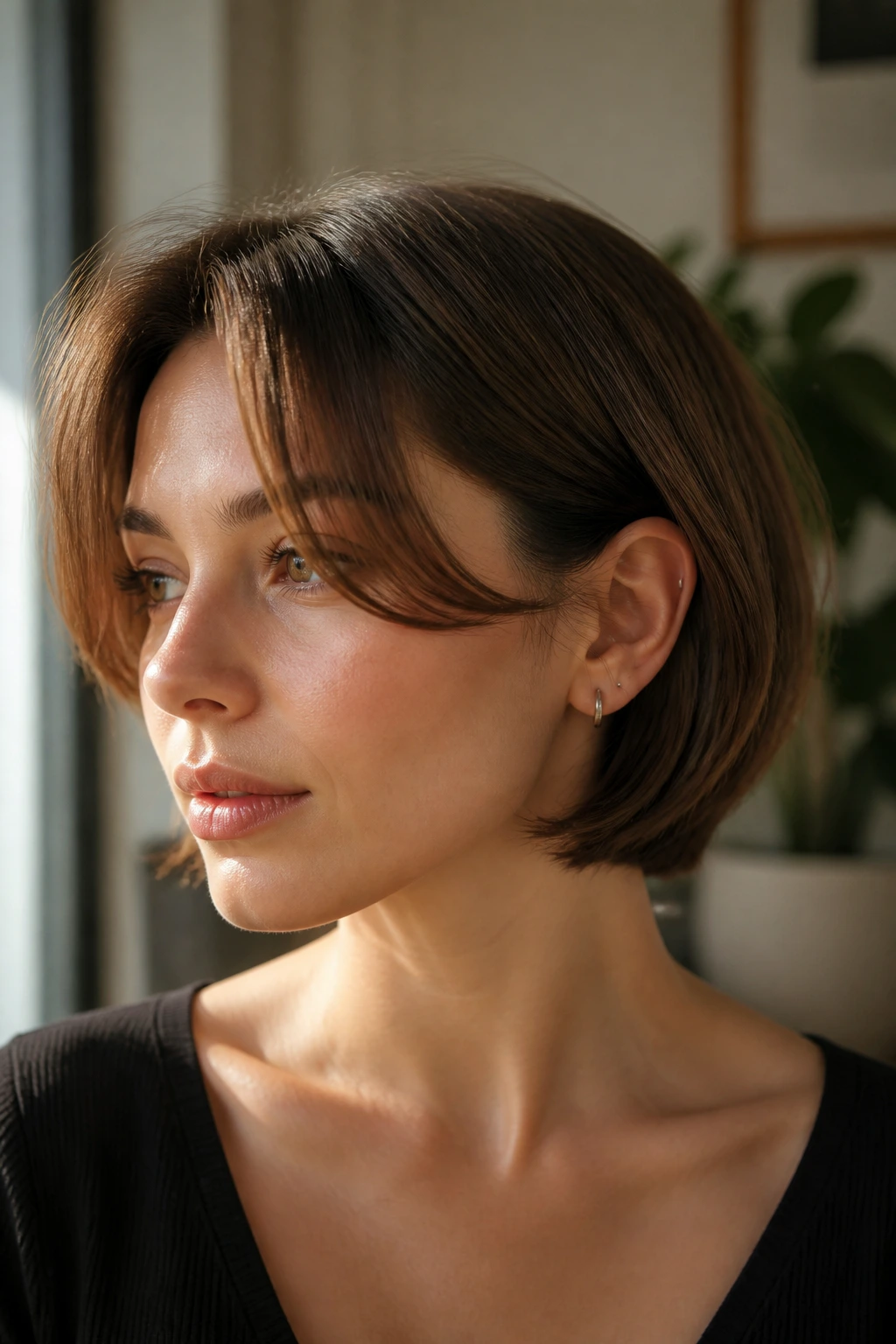
Can curtain fringe count as swept fringe on short hair? Absolutely, if the split sits a little off center and the pieces bend toward the cheekbones instead of hanging straight down. That small shift changes everything.
The bob should hit around the jawline or just under it, with the front pieces left long enough to tuck behind the ear or skim the lashes. Blow-dry the fringe away from the face first, then bring it back toward the cheeks with a round brush so the curve lands softly. A cool shot locks the bend.
Oval faces do not need the curtain to “fix” anything. They need it to add shape. This version does that without swallowing the forehead.
6. Wispy Bixie Fringe
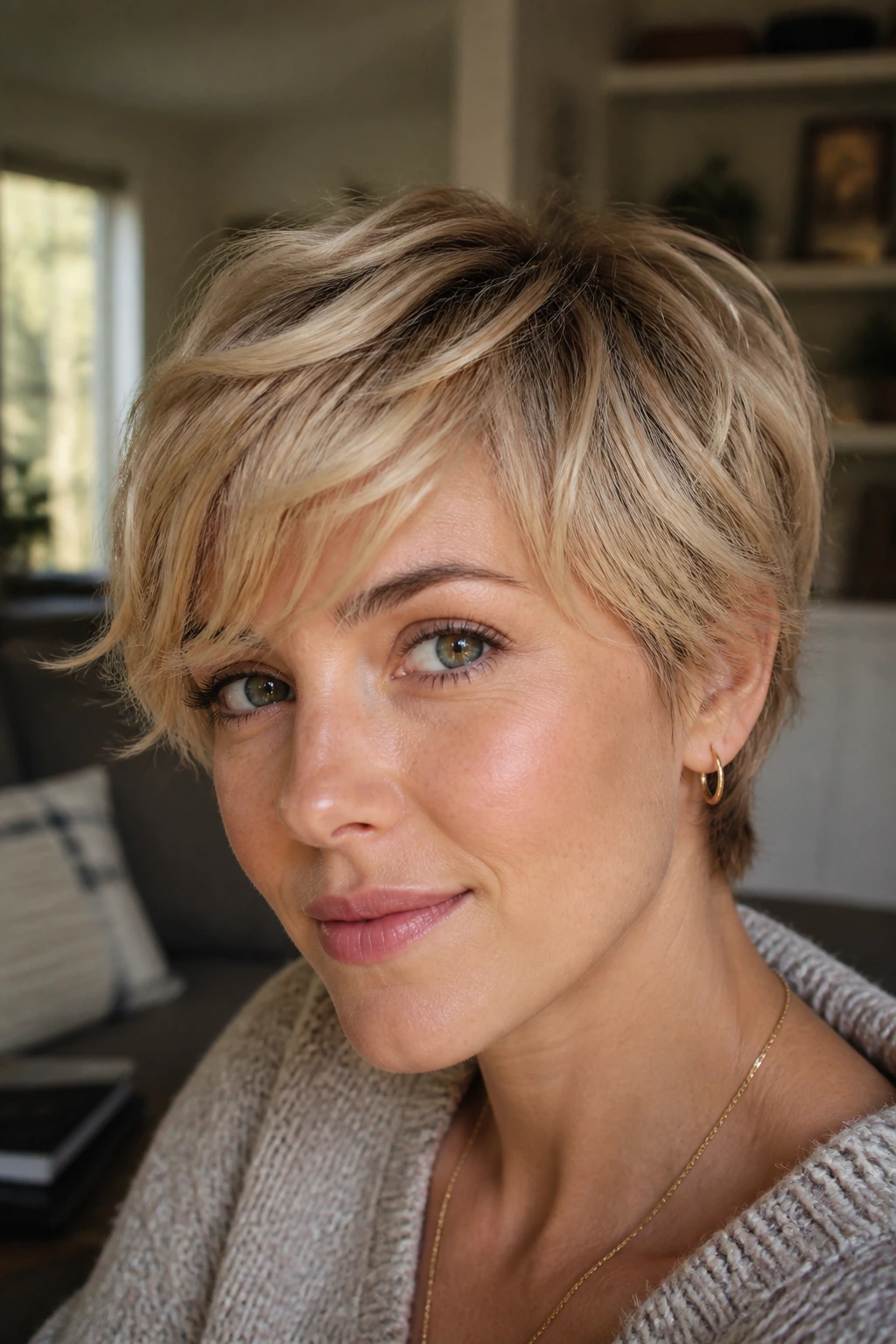
The bixie sits in that useful middle ground between pixie and bob, and the fringe should behave the same way: not too short, not too full, not too obedient. The wispy sweep keeps the cut from becoming blocky at the front.
Best Hair Type for It
Fine to medium hair gets a lot out of this shape because the fringe can be left airy without looking sparse. Thick hair works too, but it needs weight removal through the top so the front can fall instead of standing up like a little roof.
A dab of lightweight cream on damp hair, then a finger-comb and side blow-dry, is usually enough. The point is softness with a little lift. That combo keeps the bixie from reading dated.
7. Asymmetrical Crop Sweep
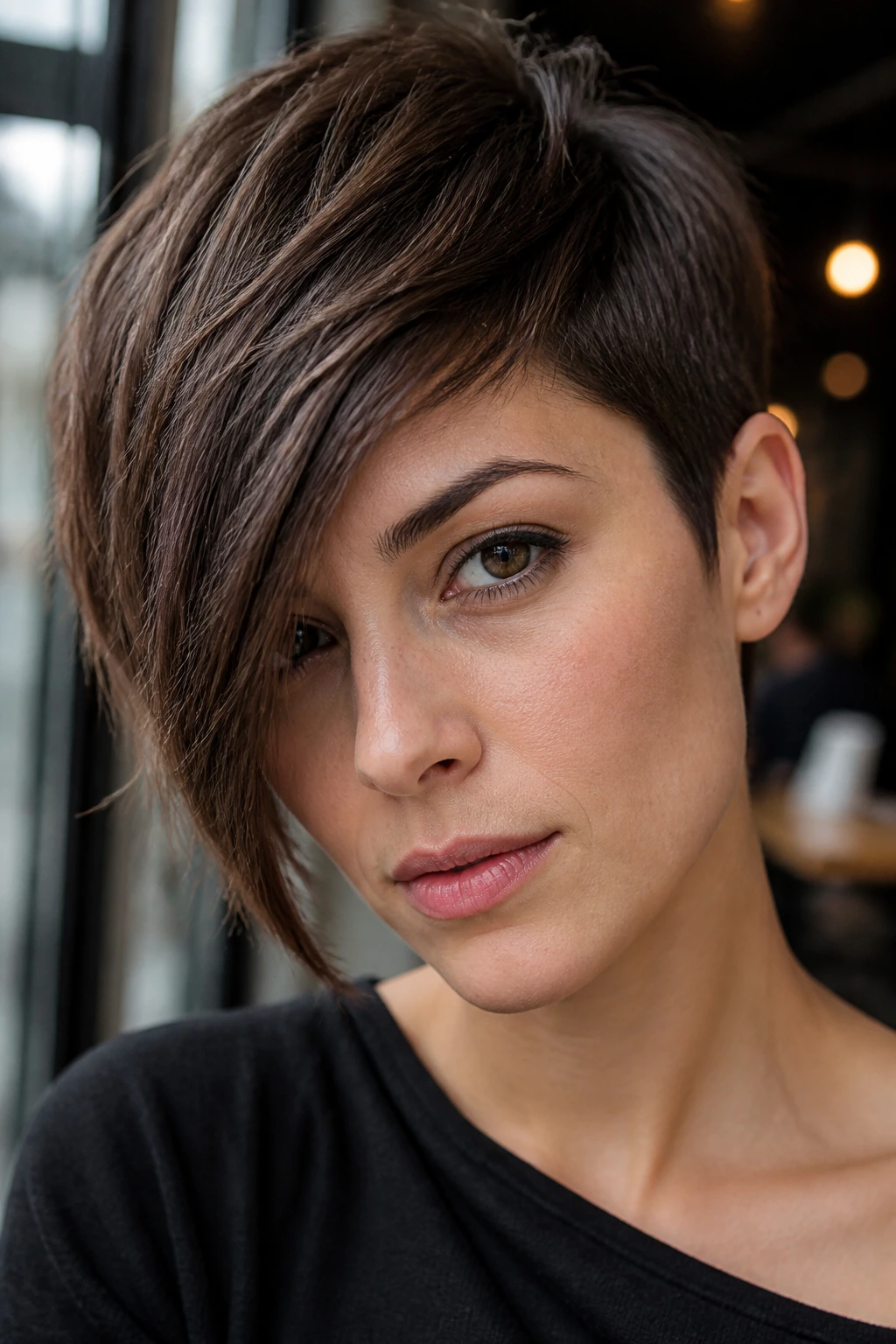
One side longer, one side shorter. That is the whole appeal, and it is a good one.
The asymmetry makes the fringe feel deliberate even when the rest of the crop is simple. I like this cut when the longest front piece lands somewhere near the cheekbone, because that gives the sweep a visual anchor. The shorter side can skim the temple or sit above the brow, depending on how much forehead you want to show.
A few quick notes:
- Keep the crown light so the front does not collapse.
- Ask for a clean taper around the ear.
- Use a matte paste, not a shiny serum, or the shape turns slippery fast.
- Brush the longer side across the forehead while drying, then let it cool in place.
On an oval face, the strong side line adds energy without overpowering the features.
8. Tucked Pixie Fringe
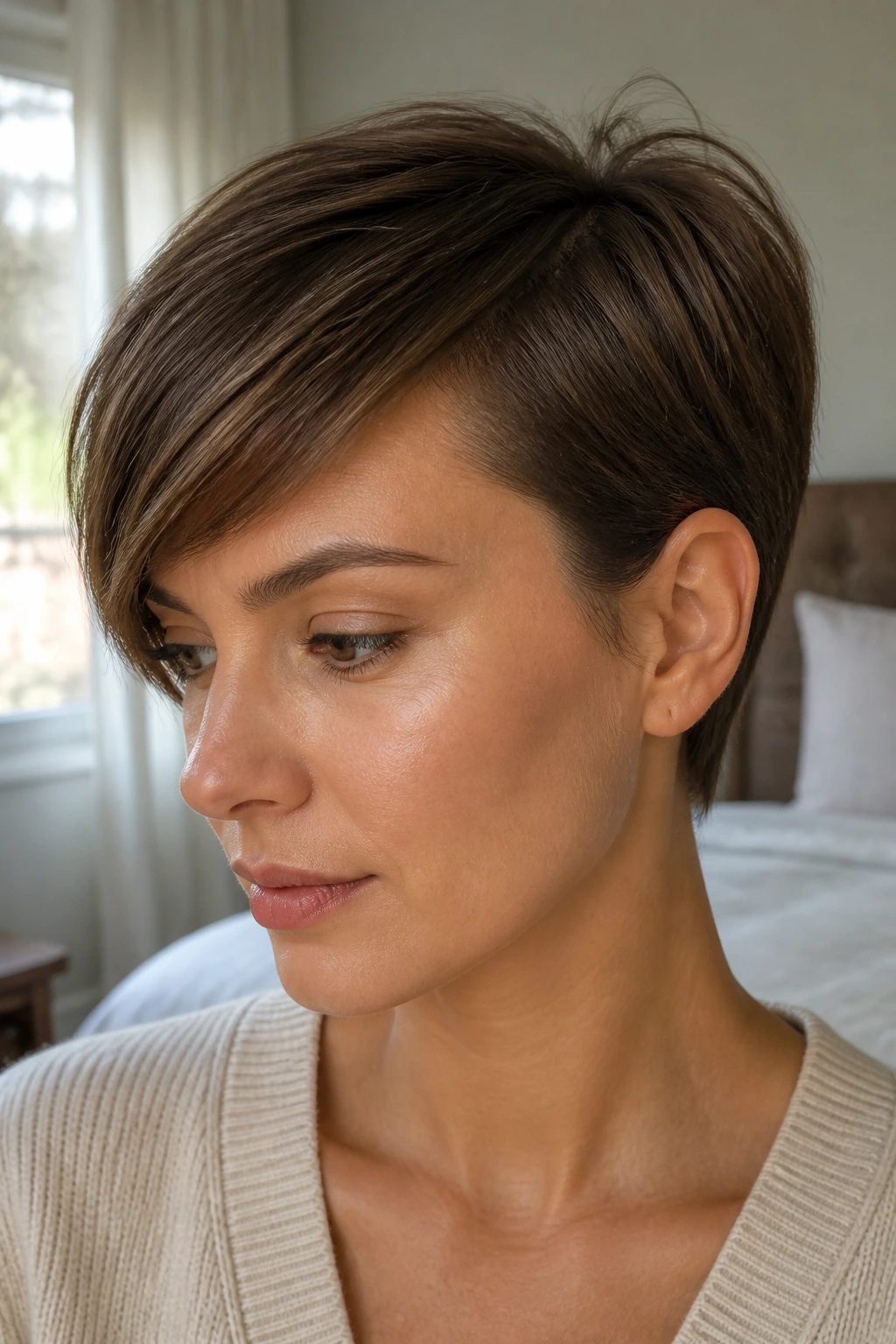
If you habitually tuck hair behind one ear, stop fighting it and build the cut around that habit. A tucked pixie fringe is cut with that one-sided move in mind, so the fringe lands just long enough to slide back cleanly.
The best version starts slightly longer at the front hairline and gets shorter as it moves toward the crown. That creates a soft fall over the forehead, then a neat tuck at the temple. It is a very practical shape. Not fussy.
This style looks especially good when the tucked side shows a little ear and the front side keeps a soft curve over one eyebrow. That contrast gives a short cut more personality than a perfectly even pixie ever could.
9. Rounded Bob Sweep
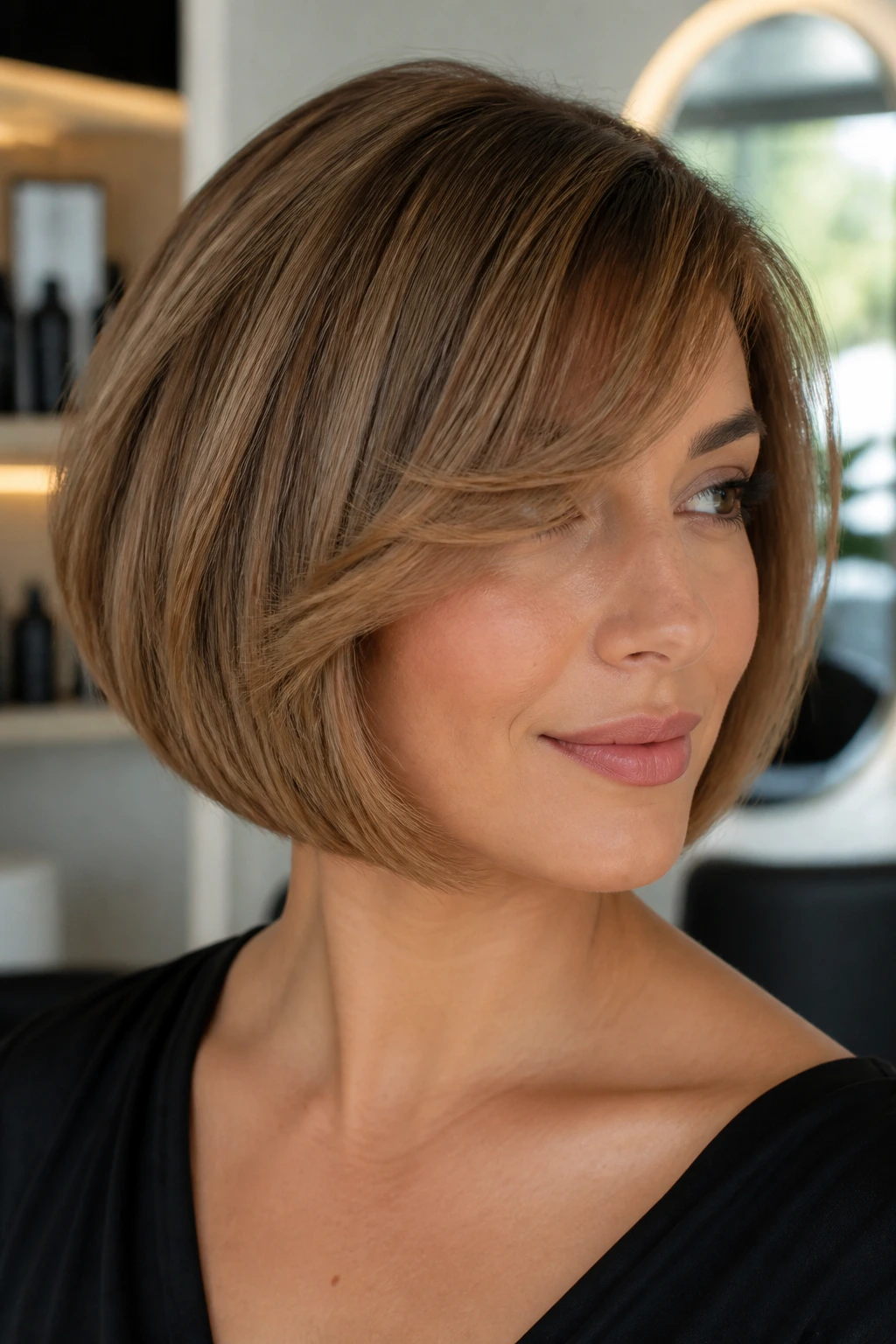
A rounded bob with a swept fringe is one of those cuts that quietly fixes a lot. The curved perimeter keeps the bob from looking hard at the jaw, and the fringe directs the eye upward instead of letting the face feel boxed in.
This works best when the ends are beveled under with a round brush. If the bob is flat and blunt, the sweep can seem disconnected. Ask for soft graduation through the front so the fringe melts into the side lengths.
The oval face is made for this kind of balance. You get shape near the jaw, motion near the brow, and nothing in the cut feels overworked. It is one of the cleaner looks on the list.
10. Soft Shag Sweep
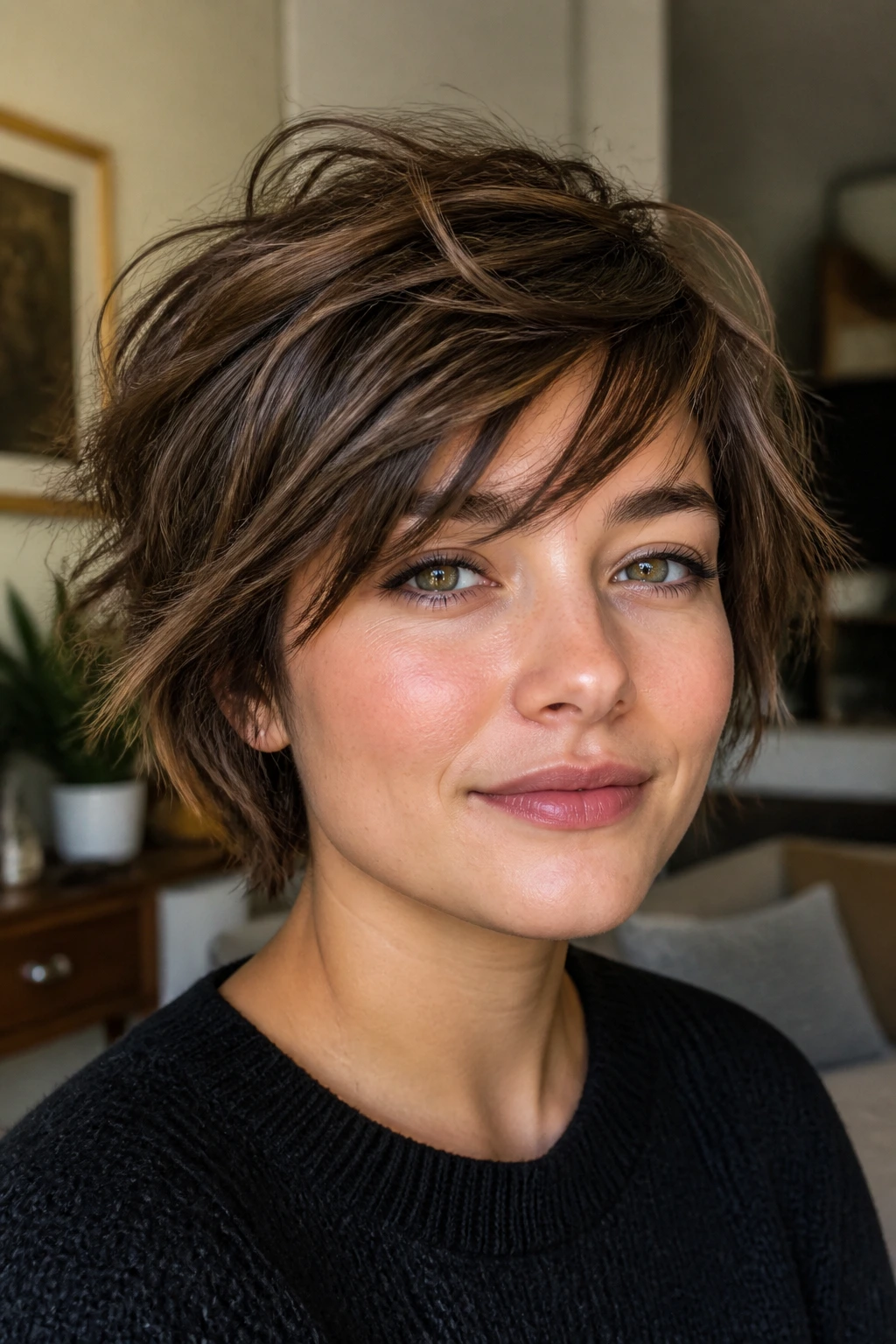
A soft shag with a swept fringe has that slightly rumpled front that makes short hair feel less stiff the second it dries. The layers are the point. They let the fringe break into a few pieces instead of behaving like one solid strip.
That piecey movement is especially useful if your hair bends on its own. You can let it air-dry with a touch of cream, scrunch the front away from the face, and then push the fringe sideward with your fingers once it is mostly dry. The cut does the heavy lifting for you.
Oval faces can wear a shag without losing structure, because the fringe keeps the volume concentrated in a diagonal line rather than puffing all around the head. It is messy on purpose. Which is the best kind.
11. Sleek Side-Part Sweep
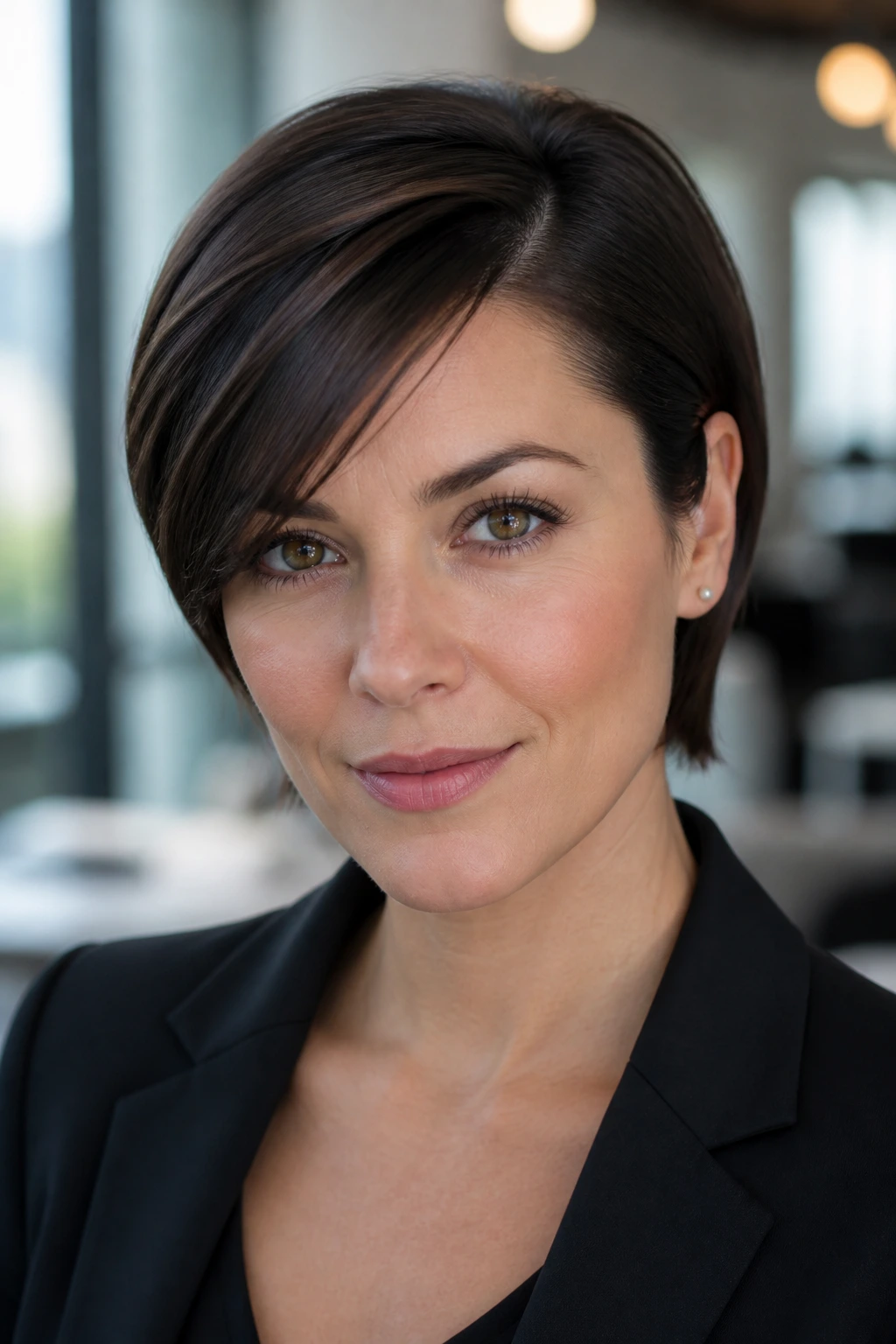
This is the clean, polished version of the whole idea. The side part is defined, the fringe lies smooth across the forehead, and the short hair behind it stays neat enough to look intentional all day.
A concentrator nozzle helps here. Dry the fringe first, using a small round brush to guide the front from the roots across the face. Then switch to a cooler setting and press the front flat for a second or two with the brush. That final cool-down is what keeps the sweep from springing back.
Keep the product light. Too much serum and the front goes stringy; too much spray and it gets crunchy. A tiny amount of cream at the ends is enough.
12. Wavy Crop Sweep

Do you have a crop that kinks, bends, and does a little of its own thing? Good. A swept fringe on wavy hair usually looks better when it is allowed to misbehave a bit.
How to Wear It
Cut the fringe a little longer than you think you need, because waves spring upward once they dry. Then diffuse on low heat or let the front dry naturally while clipped to one side for ten minutes. Once it is set, break the curl pattern with your fingers so the sweep lands in pieces, not a single loop.
This one is forgiving on oval faces because the wave softens the forehead and the side movement keeps the shape from feeling too round. I would not overstyle it. A wave that is touched too much turns fuzzy fast.
13. Nape-Heavy Crop Sweep
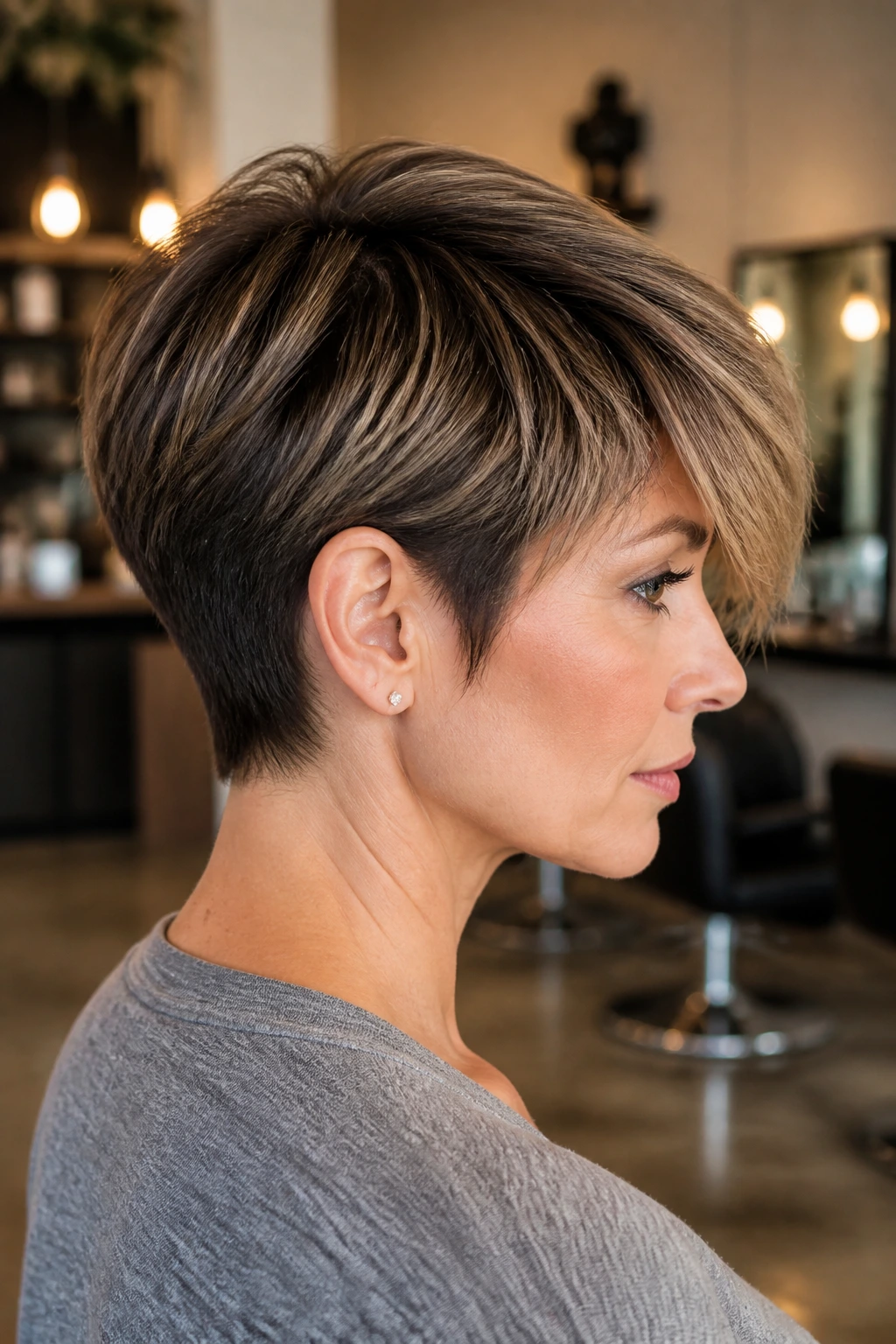
A nape-heavy crop keeps more structure in back and more motion in front, which is a smart exchange if you want a swept fringe to do more visible work. The back stays neat and close, so the front can carry the personality.
This shape suits finer hair that needs a little illusion of density. By holding weight at the nape and crown, the fringe can fall forward without the whole cut collapsing. Ask for stacked layers in back and a front section that graduates softly into the side.
It is a good cut when you want a short haircut that still feels styled even on a lazy morning. The front does enough to make the rest of the head look finished.
14. Airy Pageboy Sweep
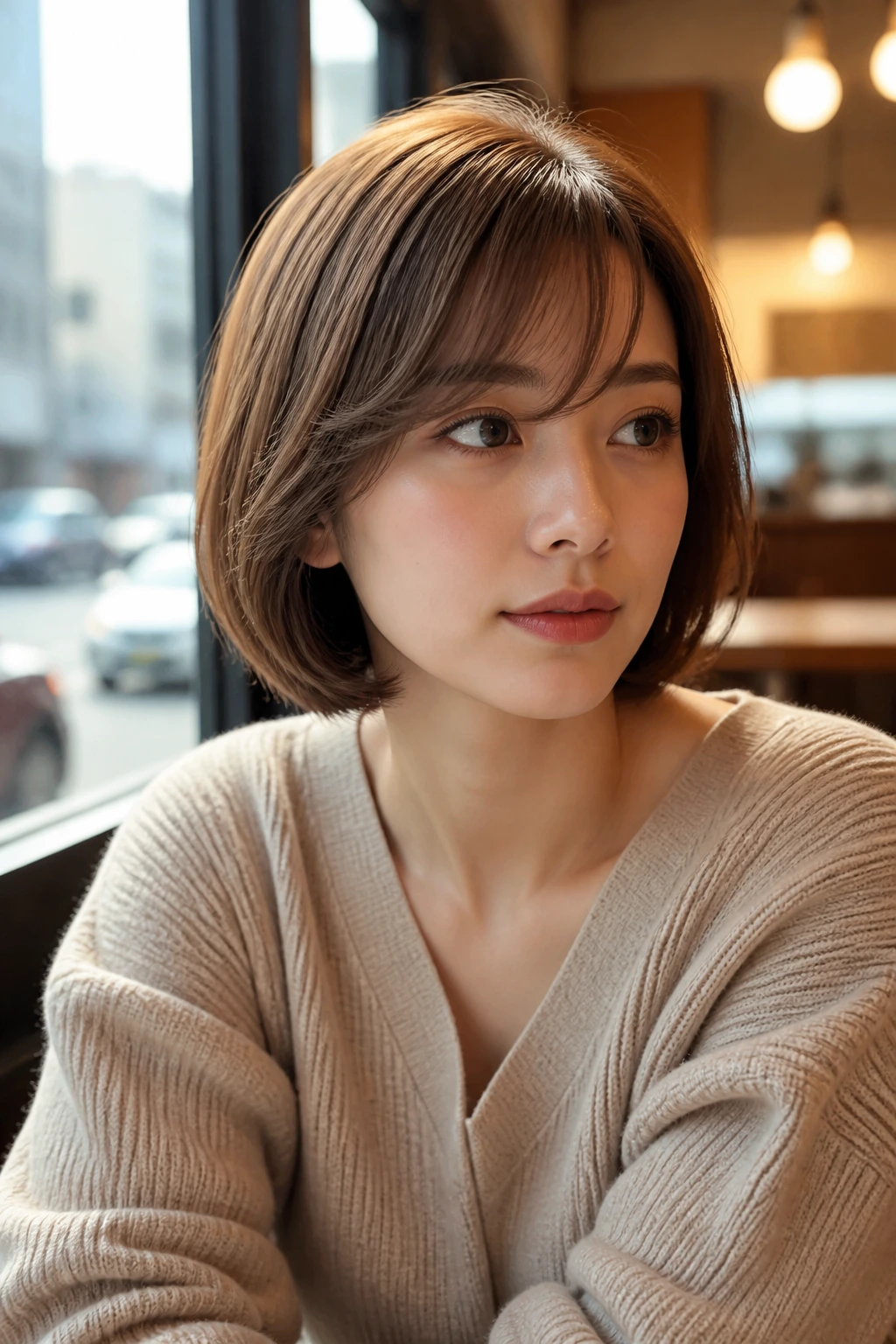
A pageboy gets a bad reputation when it is cut too round and too heavy. The airy version keeps the inward bend at the ends, but the fringe is swept rather than sealed in a hard line.
That little change makes the shape modern. The bob hugs the jaw, the front parts loosely across the forehead, and the ends curl under just enough to keep the silhouette tidy. A medium round brush and a gentle wrist turn at the ends are enough. Do not chase perfection here.
Oval faces can carry the pageboy better than most shapes because the balanced proportions stop the cut from feeling like a cap. The sweep opens it up.
15. Piecey Micro Sweep
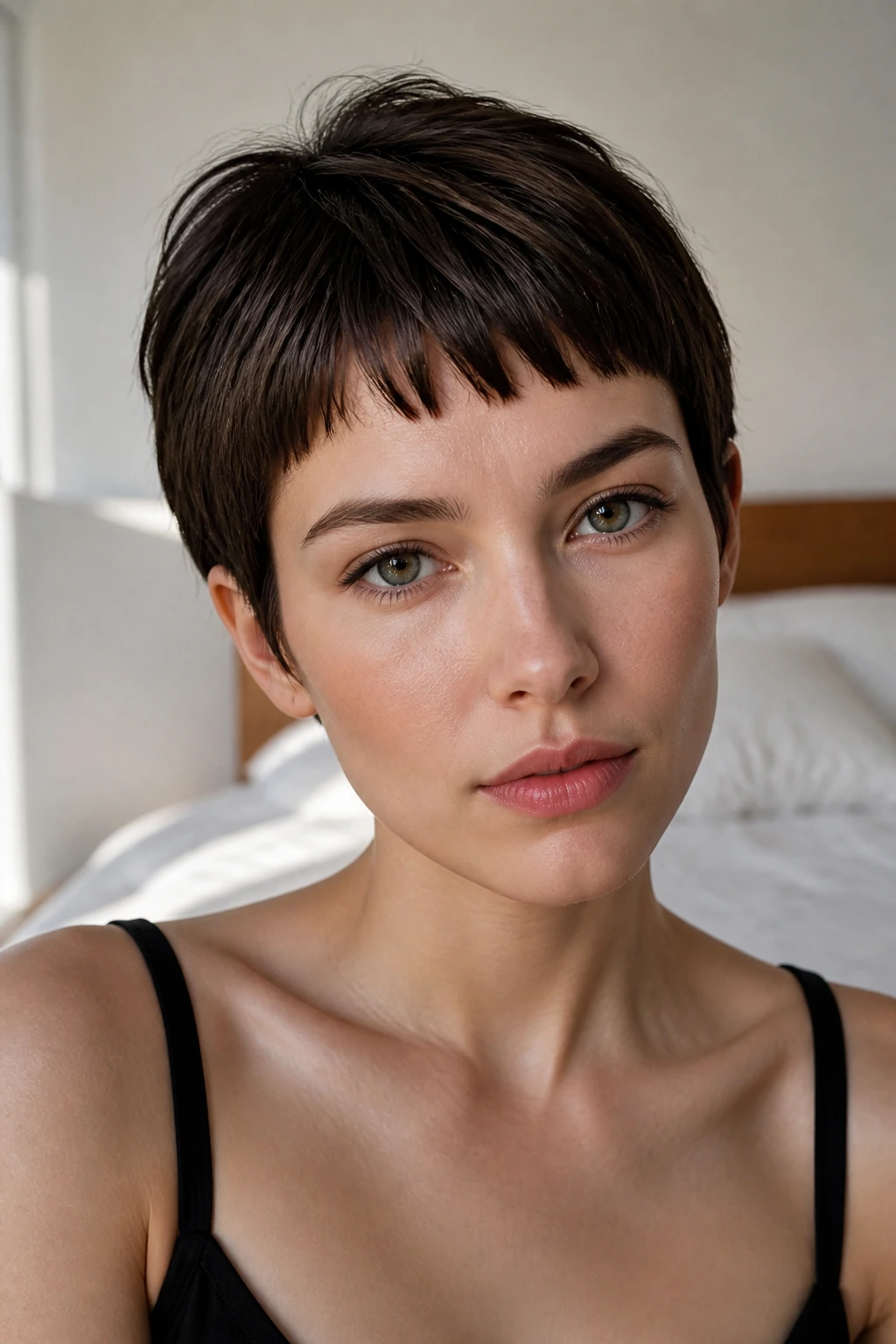
Tiny lengths can still move. In fact, they often look better when they do.
A piecey micro sweep works when the fringe is chopped into little uneven segments that separate at the ends. You get eyebrow grazing on one side, a sharper little angle on the other, and enough texture to make the cut feel intentional instead of severe. I like this on straight hair with a strong brow line.
Use a whisper of paste and keep your hands off once it is set. If you keep raking through it, the pieces blend too much and the whole front loses its punch.
The style has a graphic edge, but the sweep keeps it from feeling harsh. That is the useful part.
16. Curled-Under Bob Fringe

This is a bob that likes a neat finish. The fringe sweeps over, then the ends tuck under with a small bend that mirrors the jawline.
The cut works best when the front is left long enough to move but short enough to sit inside the bob’s outline. A 1-inch or 1.25-inch round brush is plenty. Roll the front under just at the ends, let it cool, and then disturb it with your fingers so it does not look too styled.
A curled-under fringe is especially nice on thicker hair because it controls bulk at the front without chopping off too much length. The oval face gets a clean frame, not a helmet.
17. Soft Mullet Sweep
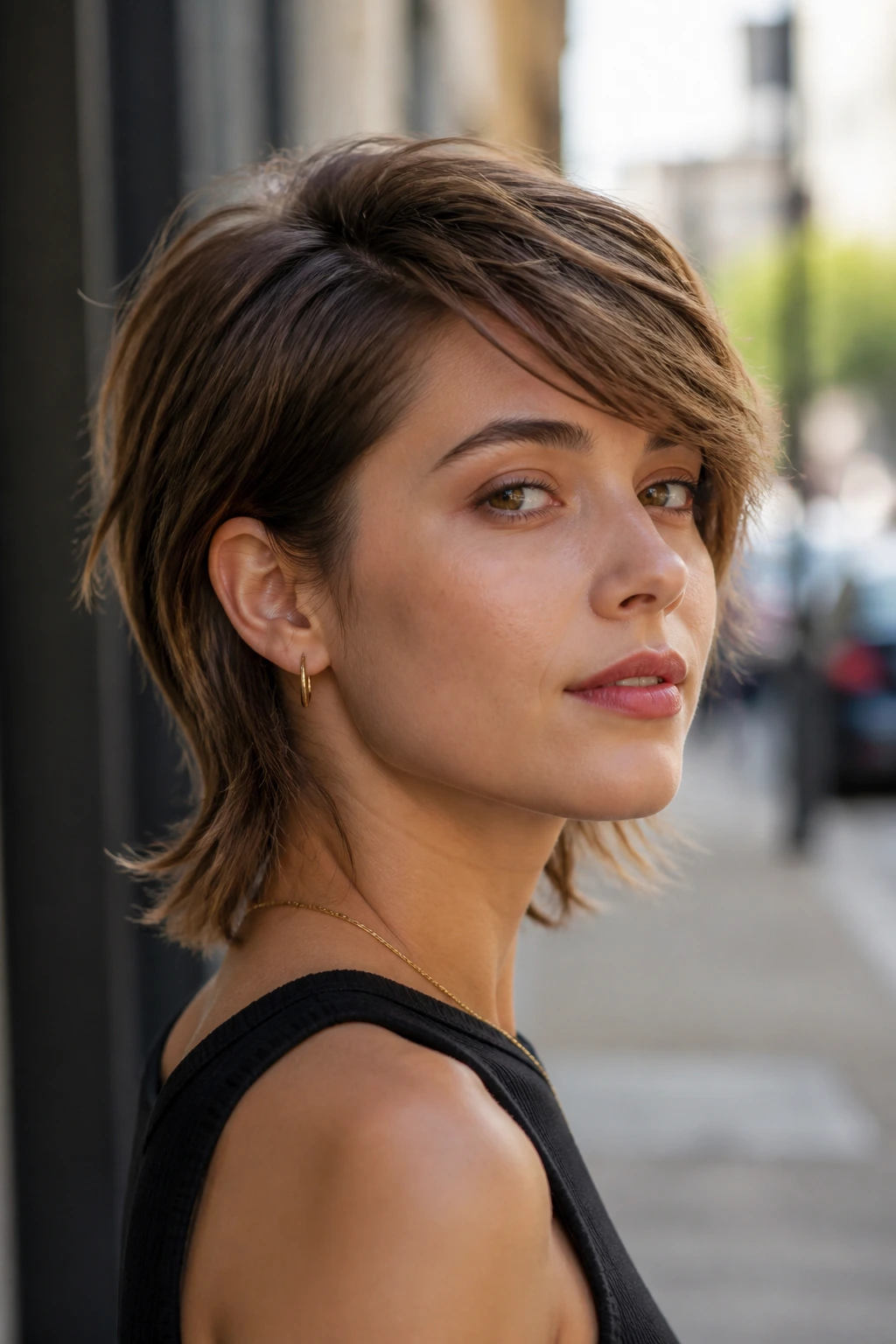
A soft mullet sounds bolder than it feels. The back is left a touch longer, the sides are tapered, and the fringe sweeps sideways in a soft arc rather than hanging straight across the forehead.
What Keeps It Wearable
Keep the transition around the ears smooth. If the sides are cut too abruptly, the shape starts shouting. The better version has a gentle drop from the fringe into the side pieces, so the whole cut reads as one shape. That matters more than length.
This is a smart choice if you want a little edge but still need the front to behave. Oval faces can wear the longer top length without looking crowded because the fringe is moving diagonally instead of sitting square.
18. Short Curly Sweep
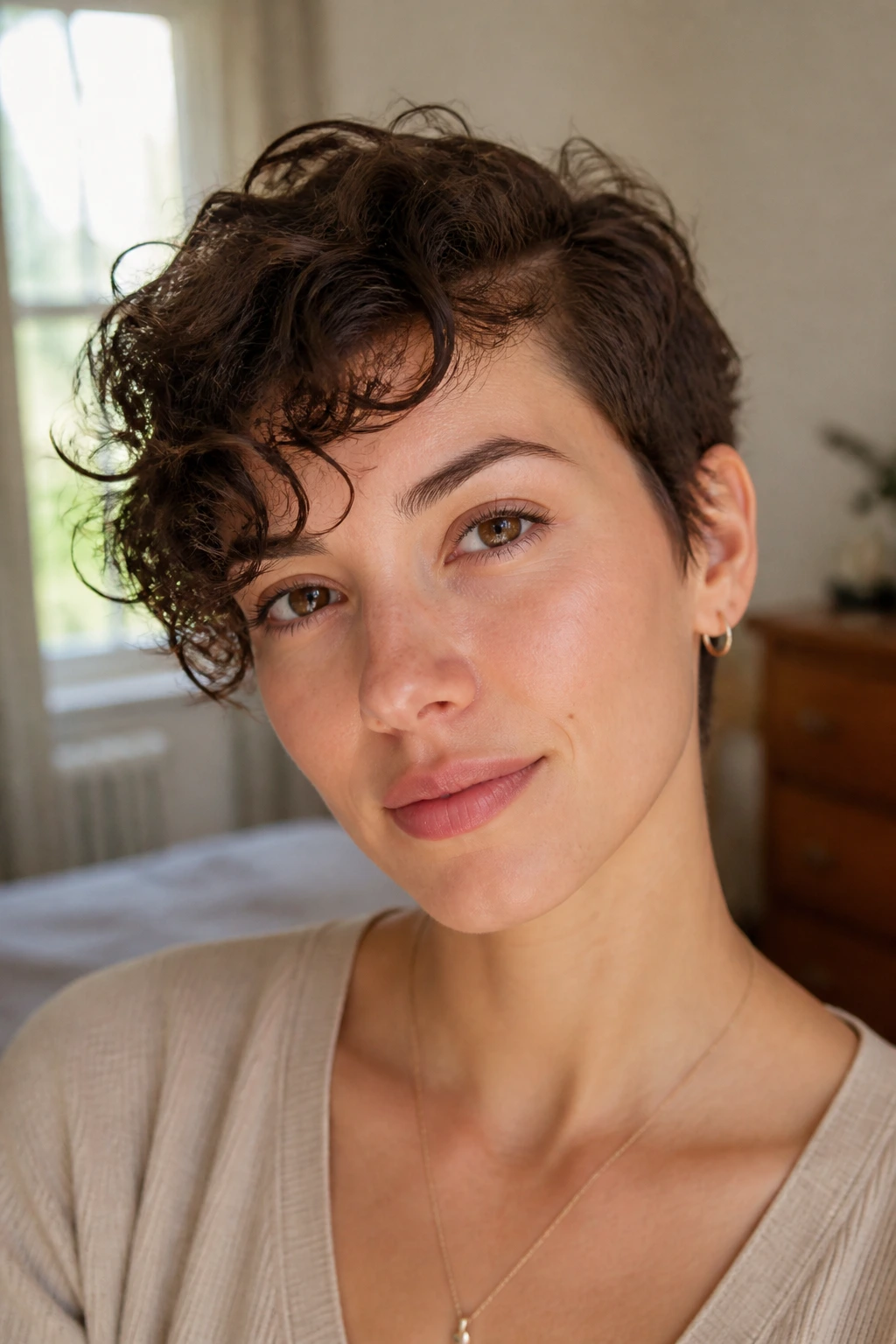
A curly crop with a swept fringe needs a different mindset. Do not flatten the front and call it a day. Let the curls form, then direct them with a side part while they are damp so the fringe lands as a curve, not a block.
The best curly version keeps the front a little longer than a straight-hair cut would. That extra length lets the curl shrink up without sitting too high. Dry-cutting is often better here because you can see how the curl actually falls. A diffuser on low heat helps, but so does patience.
On an oval face, this style gives lift without a round puff at the forehead. The movement stays controlled, which is the whole trick.
19. Retro Flip Sweep

What if you want volume at the front without a heavy bang? Flip the ends away from the face.
A retro sweep like this borrows a little from old-school blowouts: the fringe is directed sideways and then bent slightly outward at the ends so it lifts off the brow. The result is airy and bright, not flat. A medium round brush and a small hit of flexible spray will do most of the work.
This style looks good with a tucked side or a barrette on the heavier side, especially if the rest of the hair is kept short and smooth. Oval faces can wear the lift without getting top-heavy, which is why this one feels easy rather than costume-y.
20. Sliced Pixie Sweep
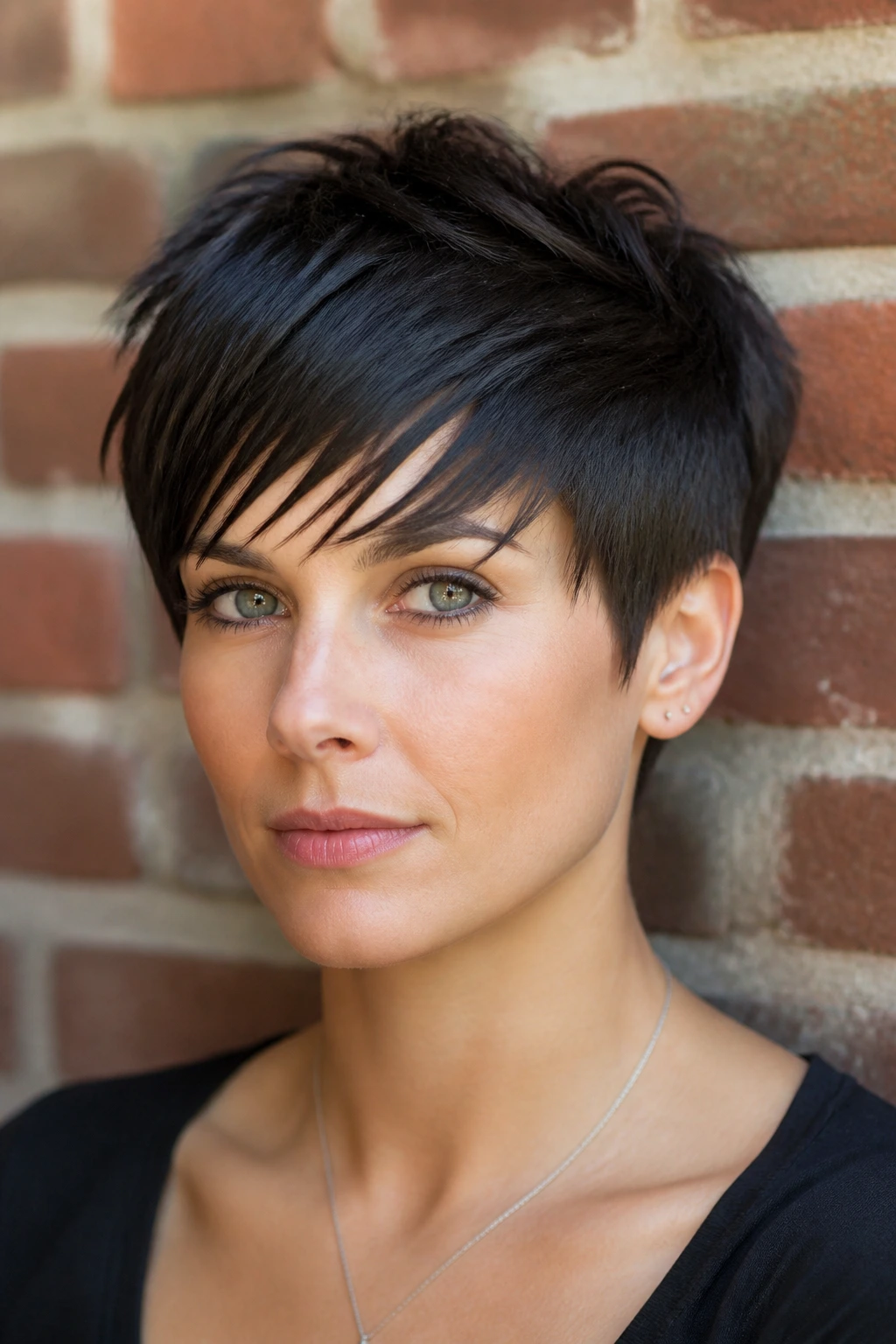
A sliced pixie uses sharper layers through the top, so the fringe can fall in thin, clean sections across the forehead. The line is crisper than feathered or wispy styles, and that sharper edge is what gives the cut its attitude.
This is a strong choice for dense straight hair. The slices remove bulk without making the front fluffy, and the side sweep keeps the structure from feeling too severe. A matte paste is enough to separate the front pieces. Use too much, and the texture clumps.
It works well on oval faces because the strong diagonal line gives the features a frame without hiding them. The cut knows where it is going.
21. Grown-Out Fringe Sweep
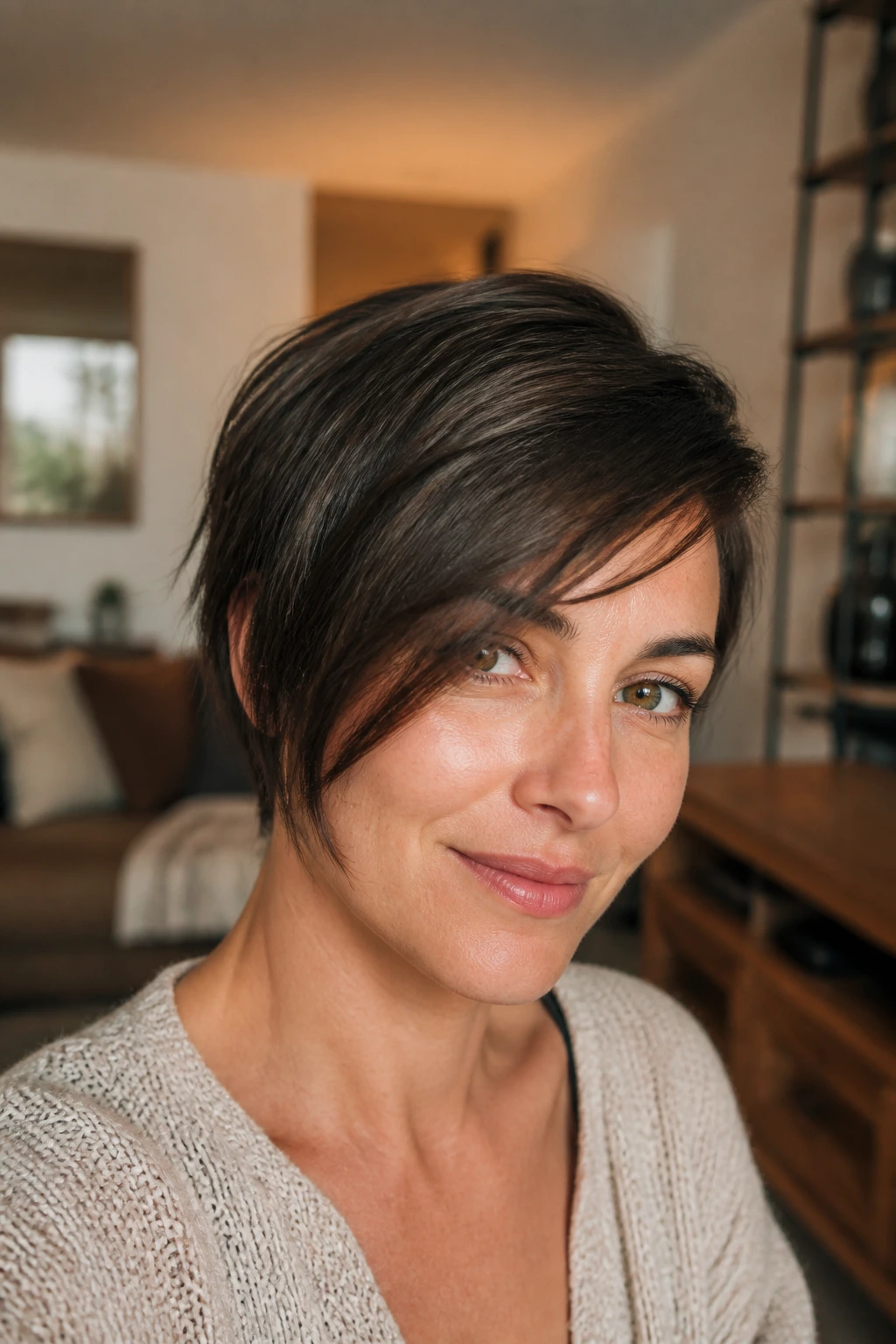
A grown-out fringe sweep is what happens when short hair keeps its shape after the bang line has softened. The front pieces are longer now, often touching the cheekbone, and the sweep leans into that length instead of trying to pretend it is still a fresh cut.
I like this version for people who want to stretch time between trims. The fringe can part a little more loosely, tuck behind the ear, or fall over one eyebrow depending on the day. It is forgiving. That matters.
Oval faces are a good match because the longer front pieces do not crowd the face; they just add a soft frame. If you are in between haircuts, this is the one that still looks deliberate.
22. Undone Crop Sweep
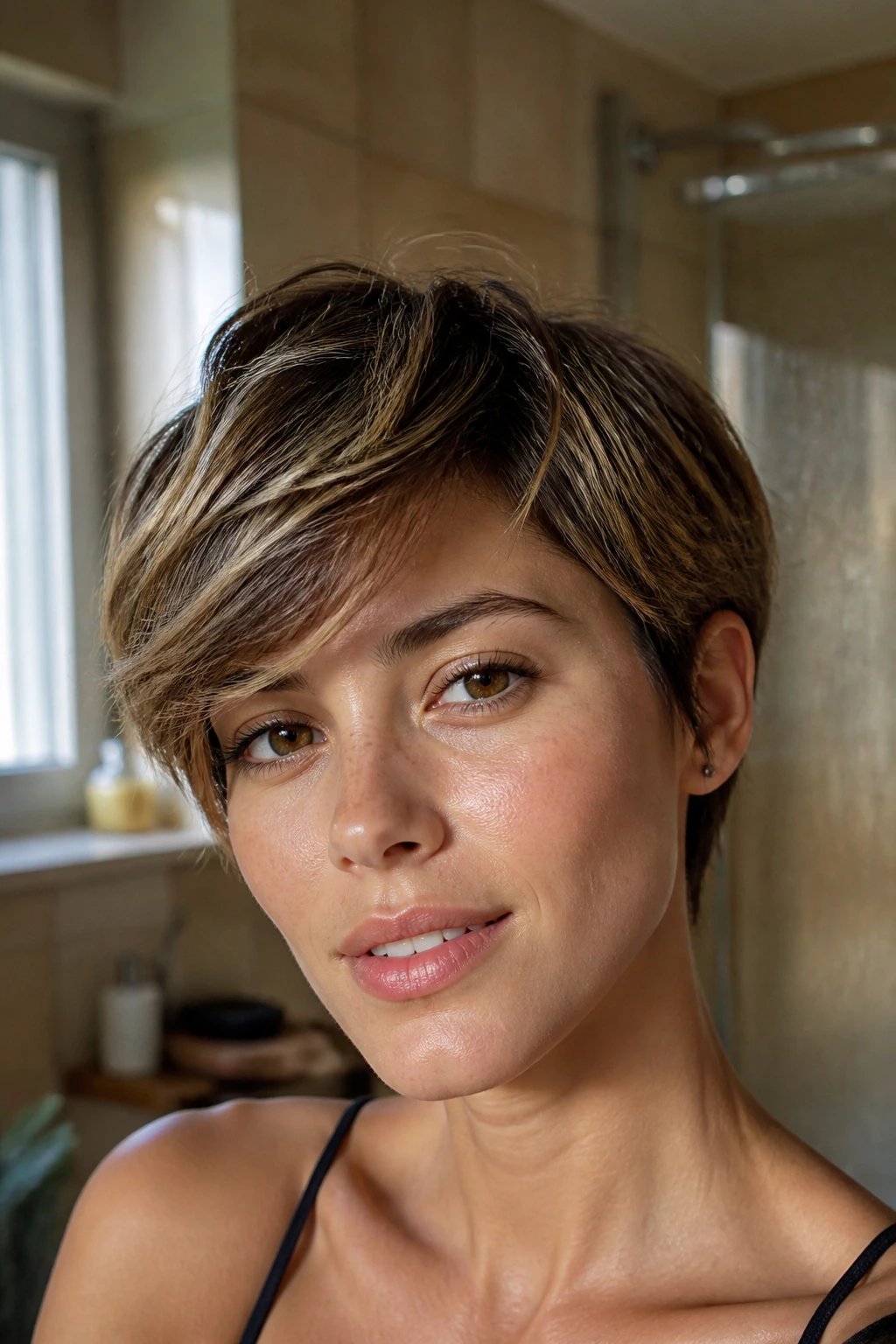
A crop like this is happiest when it looks a bit lived in. The fringe is swept, yes, but not brushed into a polished shell. A little lift at the root, a little separation at the ends, and the front looks modern without trying too hard.
Quick Shape Notes
- Keep the fringe longer at the outer edge.
- Use a salt spray or light texture mist on damp hair.
- Dry the front in the opposite direction first, then sweep it back.
- Stop touching it once it has cooled.
That last part matters. The more you keep resetting the front, the more likely it is to collapse into a greasy-looking strip. Oval faces can wear the casual shape well because the open forehead keeps the cut from feeling crowded.
23. Modern Bowl Sweep
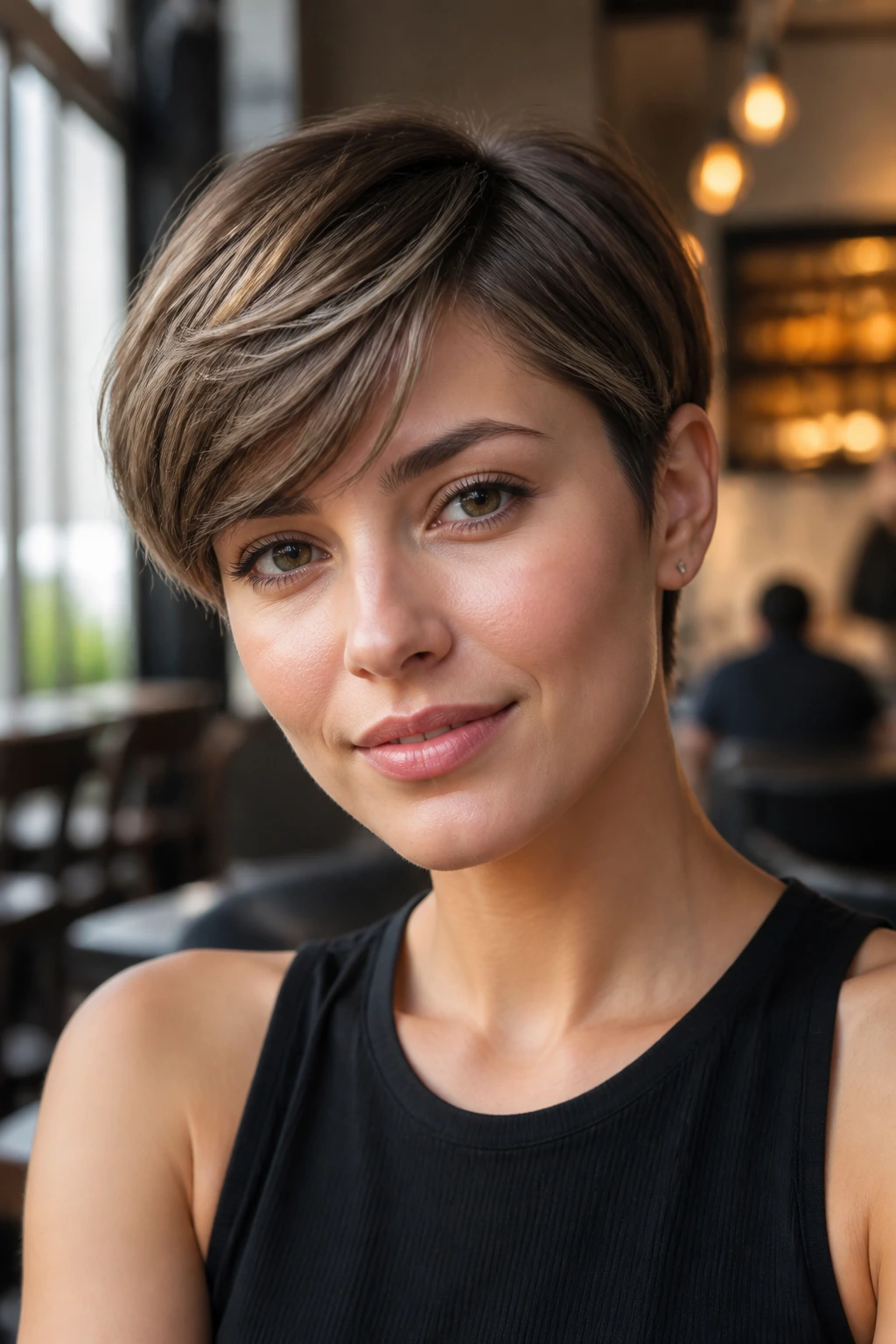
A modern bowl cut can work on oval faces if the fringe is softened and swept instead of cut into a hard circle. The shape still keeps that graphic outline, but the side movement breaks the roundness before it turns severe.
This is not the mushroom cut from childhood photos. The better version has internal layers, a light fringe, and a side part that interrupts the edge across the forehead. That interruption is the whole point. It makes the cut feel current and a little architectural.
If you like strong lines and short lengths, this is one of the more interesting options on the list. The sweep prevents the bowl shape from swallowing the eyes.
24. Air-Dry Spiral Sweep
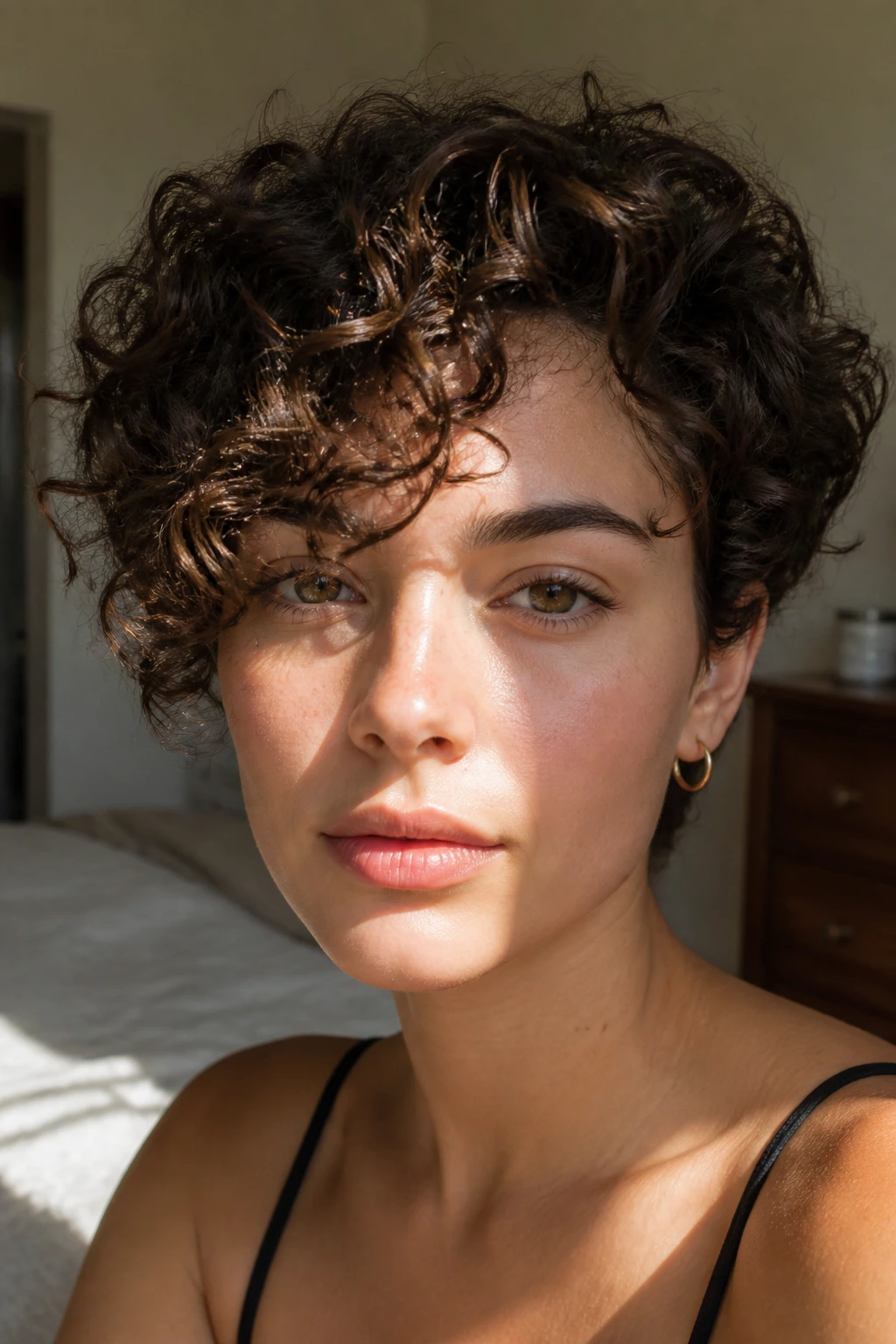
A spiral sweep lets curls do the styling for you. The front is cut long enough that the curl pattern can fall across the forehead in a diagonal, then the side pieces are left to frame the face.
This works best when the hair is cut dry and the curl pattern is respected, not forced. Use a curl cream or a light gel, scrunch the front toward the side, and leave it alone until it is dry. Once it sets, separate only the top layers if they clump together too much.
Oval faces can wear this easily because the curl adds softness without adding width all over the head. It is one of the least fussy ways to get a swept fringe shape.
25. Side-Tucked Lob Fringe
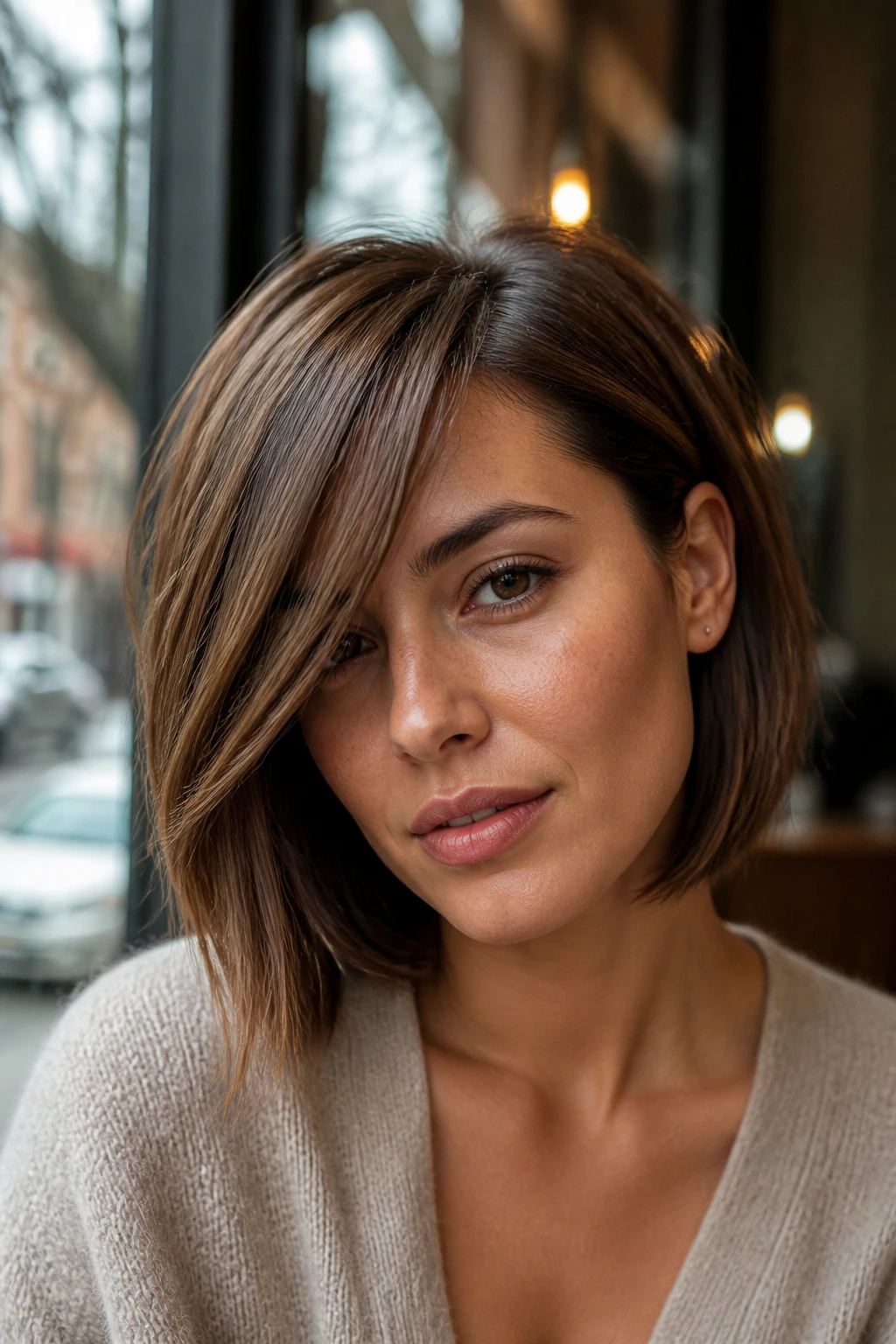
A lob is the longest cut here, but it still belongs in the short-hair conversation when the fringe does the real work. The front is swept over and often tucked behind one ear, leaving just enough length at the cheek to soften the line.
The appeal is simple: if you are growing out a shorter cut, this shape keeps the front from getting awkward. The fringe can sit on the forehead one day and swing into a side tuck the next. That flexibility is useful. More useful than people admit.
Oval faces look especially good with this style because the longer front line echoes the face’s natural balance instead of competing with it. It is the quiet finish to the list, but not a boring one.
Why Swept Fringe Gives Short Hair More Direction
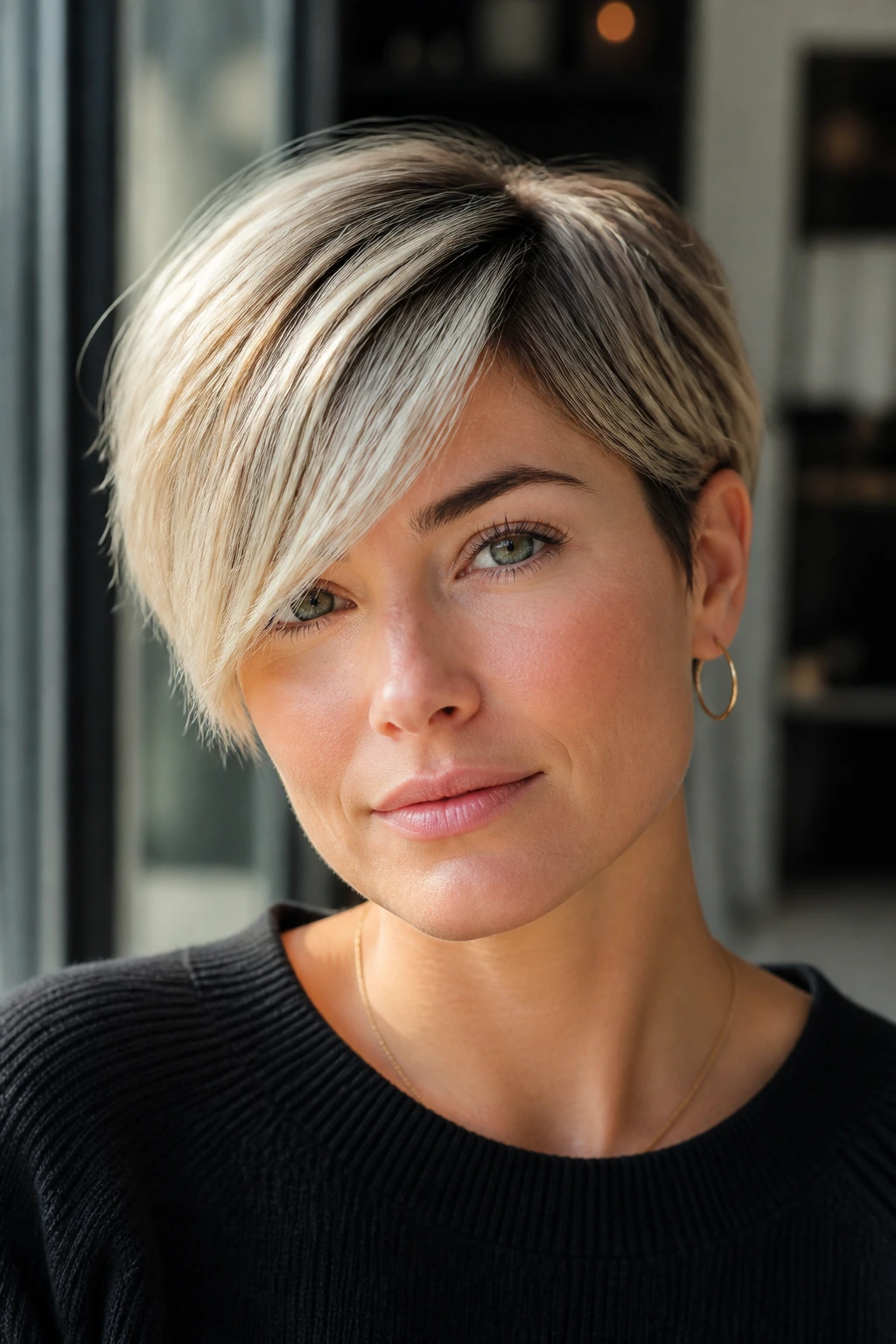
A short cut can lose its point fast if the front is too straight, too blunt, or too wide. A swept fringe changes the direction of the haircut. That sounds small. It is not.
The diagonal line does three jobs at once. It softens the forehead, gives the eye a place to travel, and stops the top of the haircut from feeling like a flat shelf. On an oval face, that matters even more because the face already carries balance; the fringe should add motion, not correction. That is why the best versions are often only a few centimeters different in length from one another, but they look completely different once they are styled.
Hair texture changes the result too. Fine hair likes a lighter sweep with point-cut ends. Thick hair usually needs a little internal removal so the fringe does not flop forward in one slab. Wavy hair can get away with a softer, less polished line. Curly hair needs the front left longer than a straight-hair version, because shrinkage is real and it is rude.
The part line matters more than most people think. If your part sits in the exact same spot every day, the fringe will train itself into that shape. If you want movement, change the part while the hair is damp, then set the sweep with your fingers or a brush before it dries. That one habit can save a cut that looks too stiff.
Essential Tools and Products for Styling the Shape
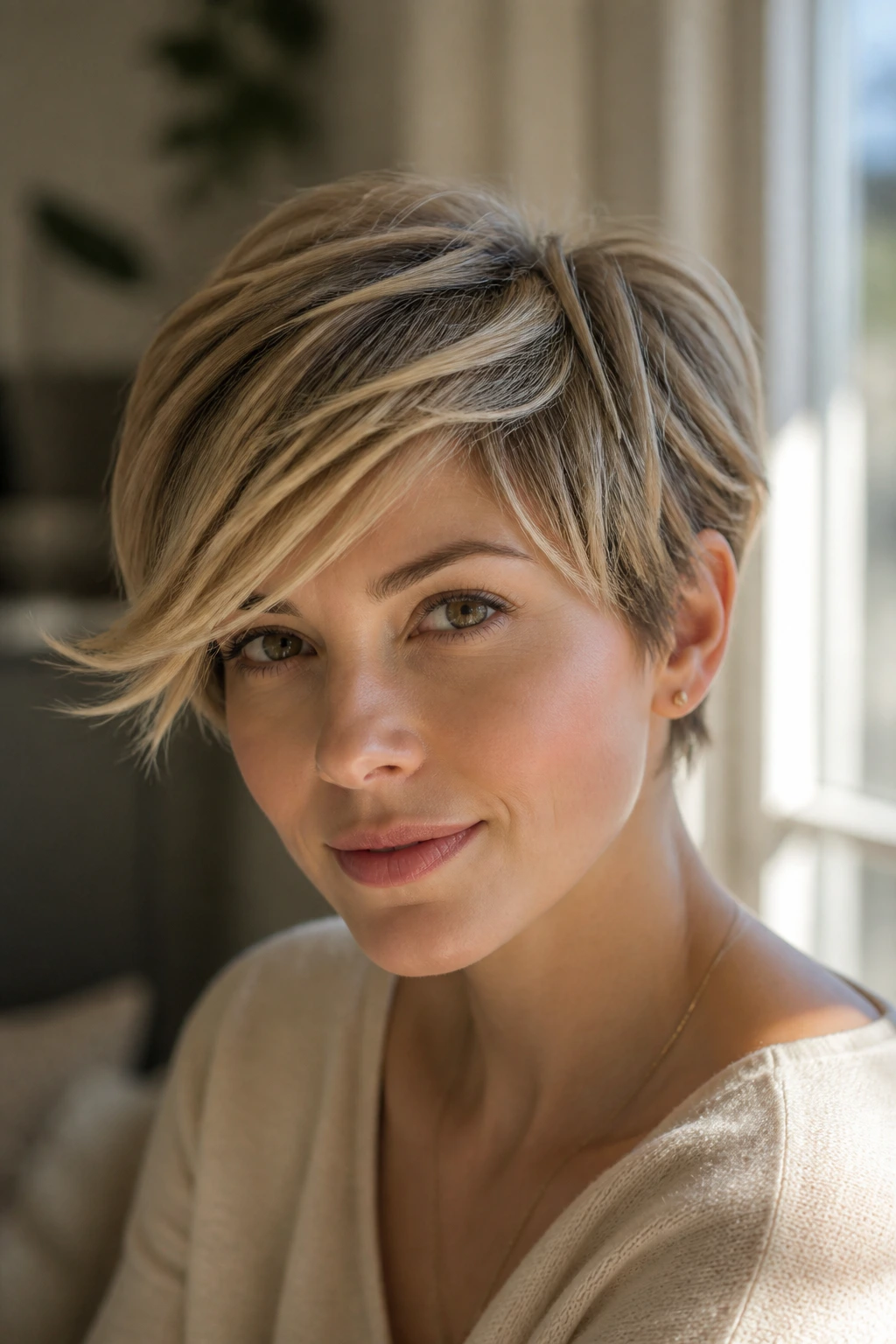
-
Blow dryer with a concentrator nozzle: The nozzle narrows airflow, which helps you direct the fringe across the forehead instead of blasting it every which way.
-
Small round brush, 1 to 1.25 inches: Best for bending the front without making the whole fringe curl into a loop.
-
Vent brush: Useful for quick root lift on pixies, bixies, and shorter crops.
-
Fine-tooth tail comb: Handy for setting a clean side part and separating a very short fringe.
-
Duckbill clips: Keep the front pinned in the desired direction while it cools.
-
Light mousse: Gives short hair a little memory without the crunch of heavy gel.
-
Root-lift spray: Helps the fringe stay off the forehead instead of collapsing by lunchtime.
-
Dry texture spray: Good for piecey cuts, sliced pixies, and shaggy finishes.
-
Flexible-hold hairspray: Keeps shape without making the front stiff enough to crack.
-
Mini flat iron: Useful for a tiny bend at the ends of bobs and lobs.
-
Lightweight styling cream: Best for waves and curls that need softness more than hold.
-
Satin pillowcase or bonnet: Reduces the morning kink that can wreck a good side sweep.
How to Explain the Cut to Your Stylist
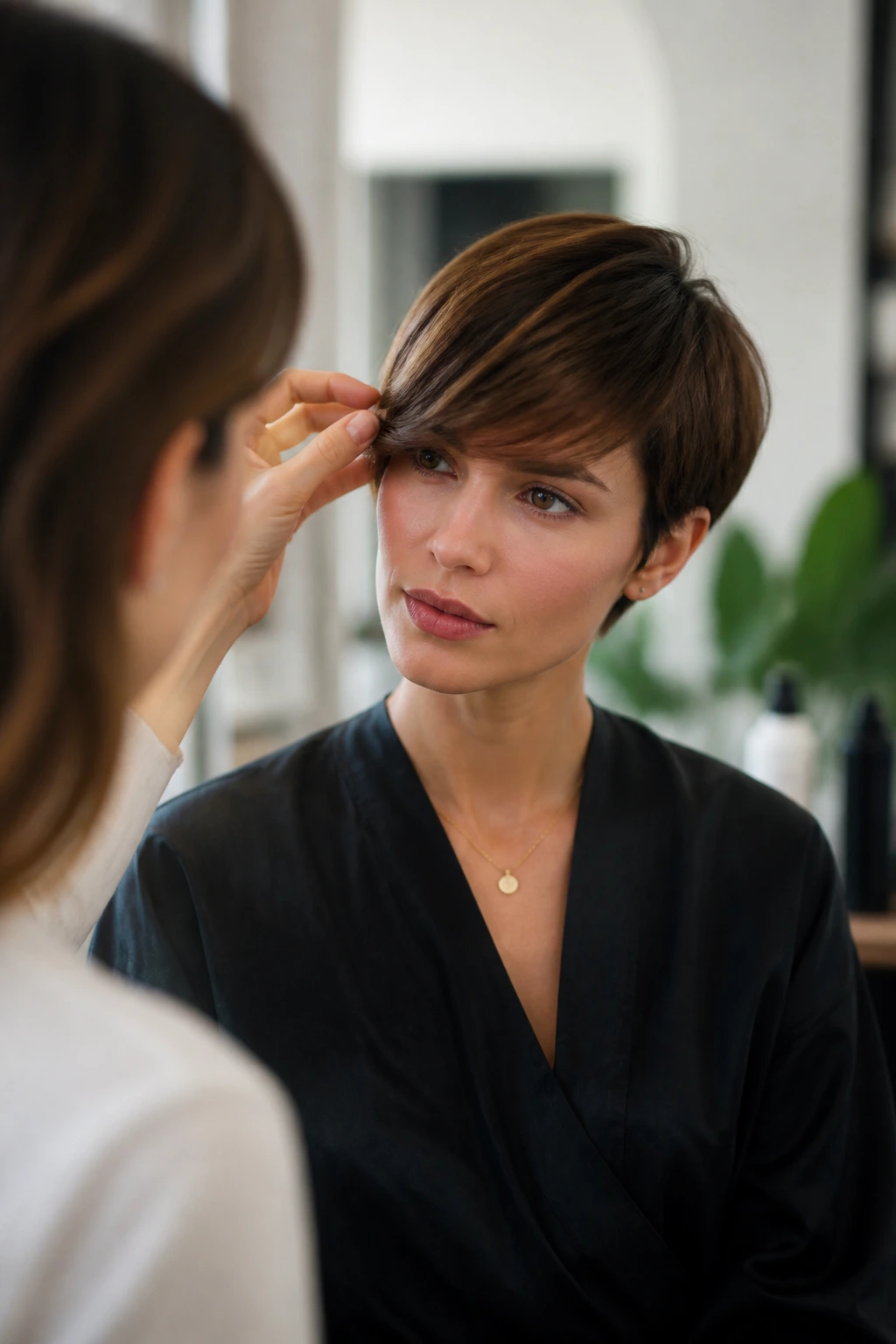
Bring photos, yes, but bring the right ones. Photos of a cut on someone with a completely different hairline or density can be misleading, because the sweep depends on where your hair naturally falls. A better reference is one or two photos with hair texture that matches yours, even if the face shape is a little different.
Say where you part your hair on most days. Tell the stylist if one side wants to flip up, if your crown swirls, or if the front splits in the middle no matter what you do. That information changes the cut more than people expect. A fringe that ignores a cowlick will fight you every morning.
If you want the fringe to skim one eyebrow and sit longer on the outer edge, say that plainly. If you tuck hair behind one ear or wear glasses, mention it. Those tiny habits should shape the cut. They are not side notes.
Ask for the fringe to be refined dry if the salon does that kind of finish. Dry cutting lets the stylist see how short the front really sits once it springs back. That is especially useful on curls, waves, and dense hair, where a wet fringe can fool everyone in the room.
The Daily Styling Moves That Keep It in Place
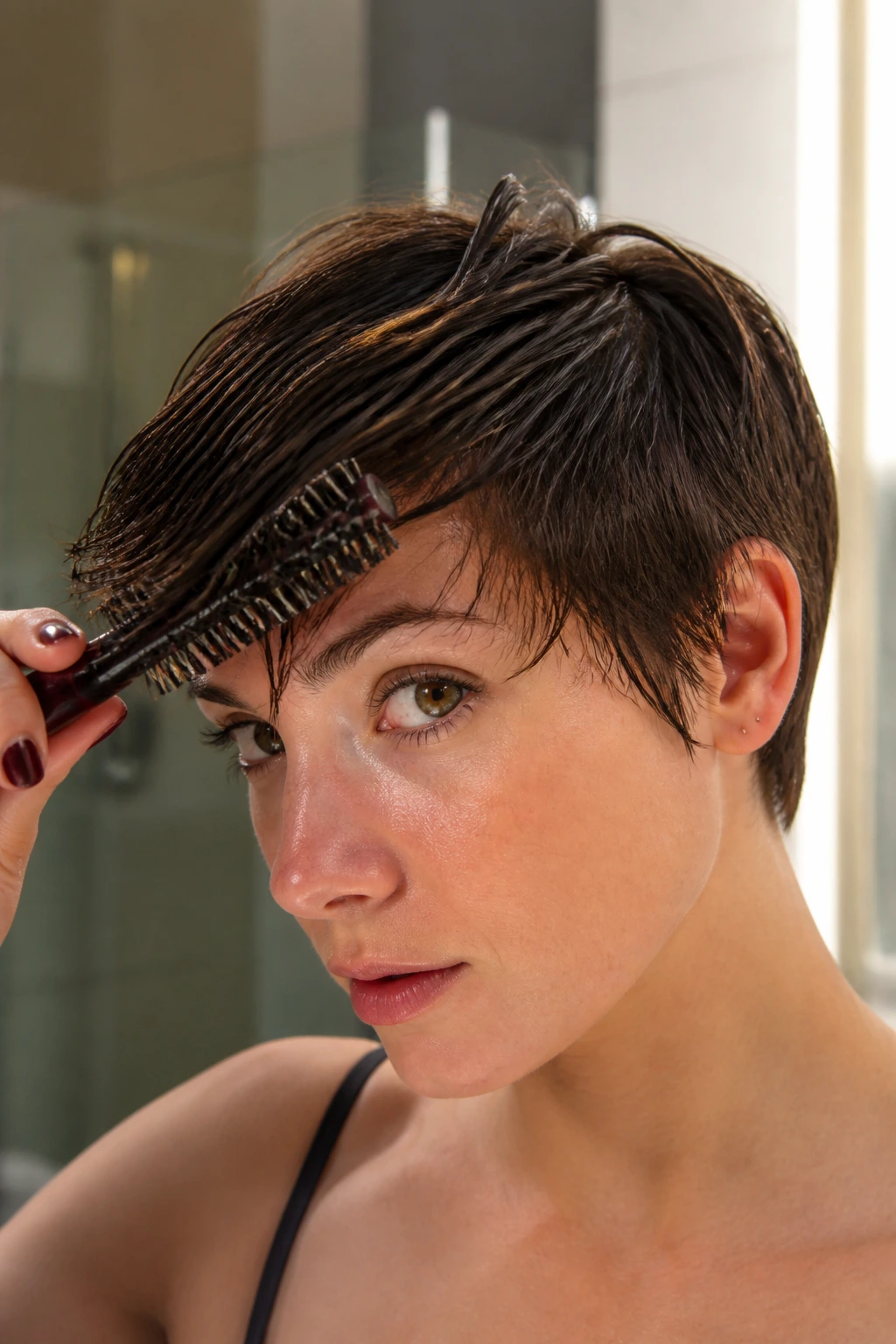
The front of a swept fringe usually needs direction more than force. Start with damp hair and decide where the part sits before the roots dry in the wrong place. Then use a brush, comb, or even your fingers to push the fringe across the forehead and hold it there while you dry the root area first.
Roots: Aim the dryer at the root for 10 to 15 seconds, then switch to a cooler blast so the hair sets in the direction you want. This works better than trying to smooth the whole front all at once.
Length: If the fringe keeps falling into the eyes, bend the ends under or away from the face with a small brush or mini flat iron. A tiny change at the ends can save the whole shape.
Finish: Use less product than you think. A pea-size amount of cream, or two light sprays of texture mist, is often enough. Heavy product makes the front collapse and stick together by midday.
Heat-free mornings: Clip the fringe to one side while you do the rest of your routine. Once the roots are nearly dry, release it and finger-shape the bend. That trick is boring, but it works.
Common Mistakes That Make Fringe Fall Flat
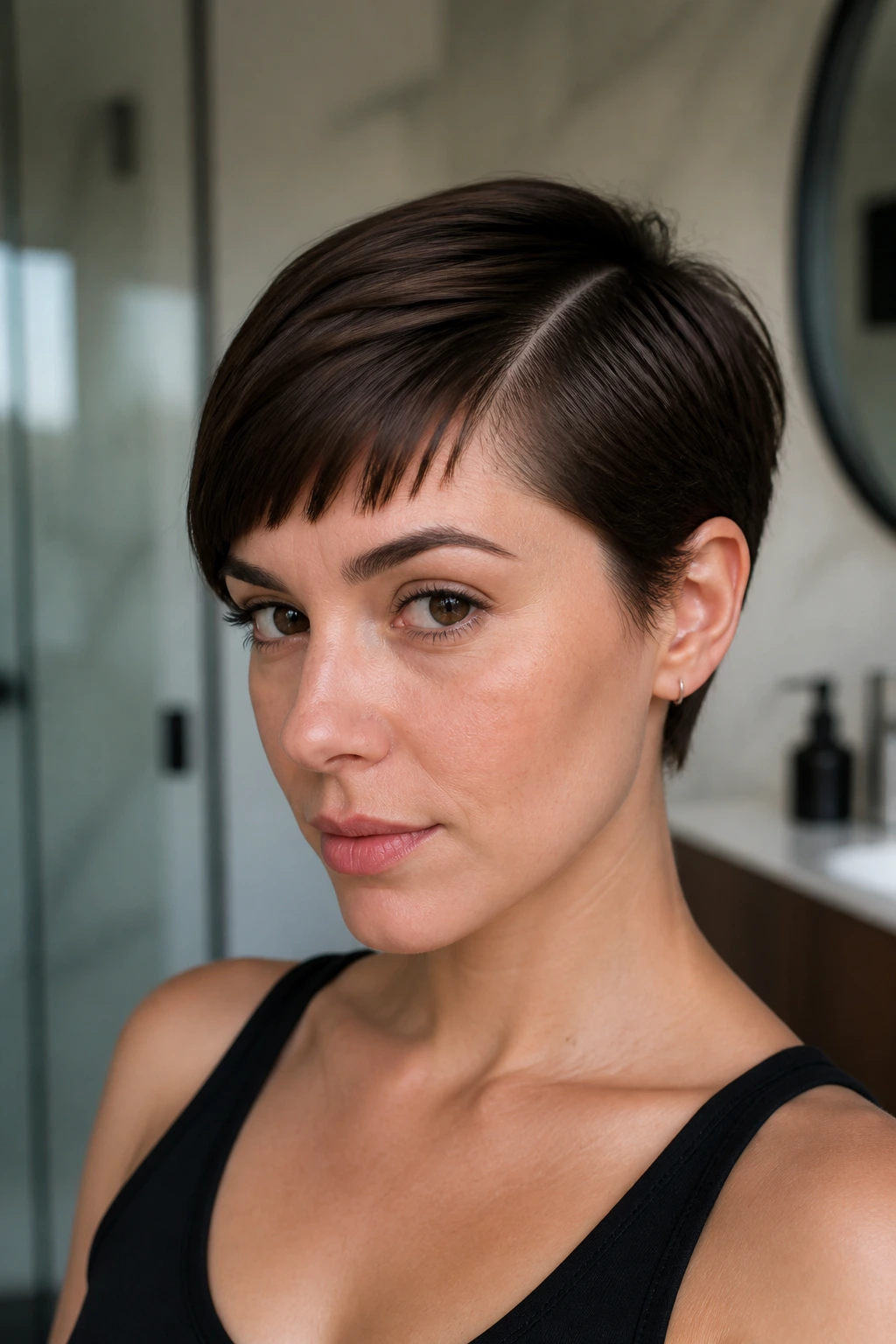
-
Cutting the fringe too short on day one: The front can look tidy in the chair and then shrink up at home, especially on waves or curls. Keep the longest piece a little below where you think you need it.
-
Leaving the fringe too heavy at the temples: That makes the sweep stop dead at the cheekbone. Ask for soft removal around the outer edge so the front can flow into the side length.
-
Using too much serum or oil: The fringe gets stringy, separates in the wrong spots, and starts sticking to the forehead. Start with almost nothing; you can always add more.
-
Ignoring the root direction: If the fringe dries straight down, it usually stays that way. Set the part and sweep while the hair is still damp.
-
Thinning curly hair the wrong way: Over-thinning creates frizz and gaps. Curly fringe usually needs shape, not aggressive removal.
A bad fringe is rarely about the fringe alone. It is usually about the root direction, the weight at the sides, or the styling habit that keeps repeating the same problem every morning.
Variations for Fine, Thick, Curly, and Wavy Hair
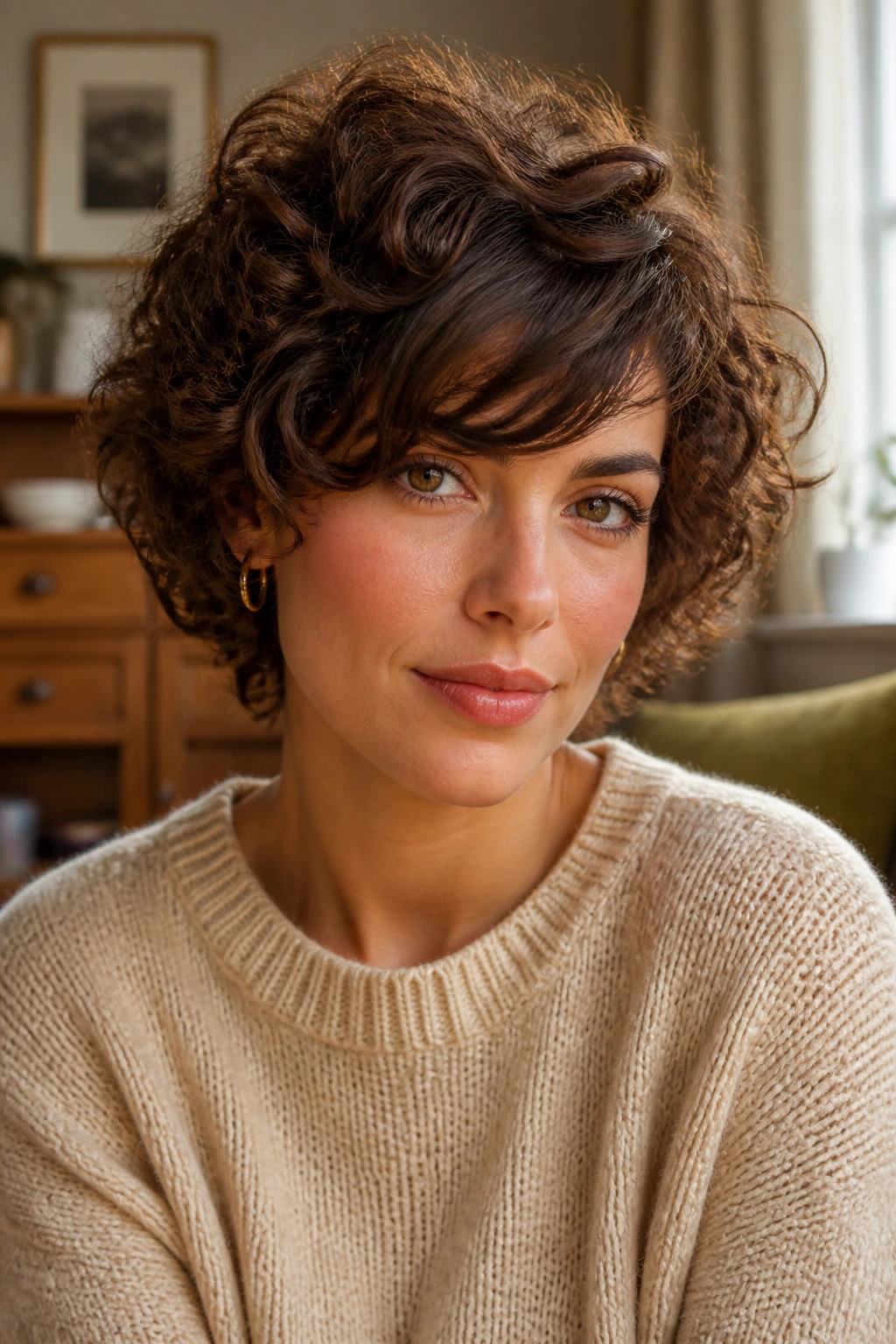
The Fine-Hair Lift: Keep the fringe longer and lighter, then use root spray and a vent brush to build a little lift at the base. Fine hair looks best when the sweep has body without visible chunkiness.
The Thick-Hair Breakup: Ask for interior removal through the top and a point-cut fringe that does not all land on one line. Thick hair can carry a heavier sweep, but it needs the bulk broken up so it bends instead of bulking up.
The Curl-First Sweep: For curly hair, cut the front longer and dry it in its natural curl pattern. A side direction works better than flattening the fringe into submission, and a diffuser on low heat helps keep the shape intact.
The Wave-Friendly Bend: Wavy hair likes a fringe that is just long enough to fold into the face at one side and flip out a little at the ends. A light cream and a quick scrunch are enough most days.
The Glasses-Friendly Arc: Keep the fringe a touch higher and the outer corner longer so it clears the frames. If the fringe sits right on top of your glasses, it tends to fight them all day.
The Grow-Out Sweep: Let the front grow into cheekbone-skimming layers, then tuck one side back when you want the shape cleaner. This is the easiest adaptation if you do not want to commit to frequent trims.
Keeping the Fringe in Shape Between Trims
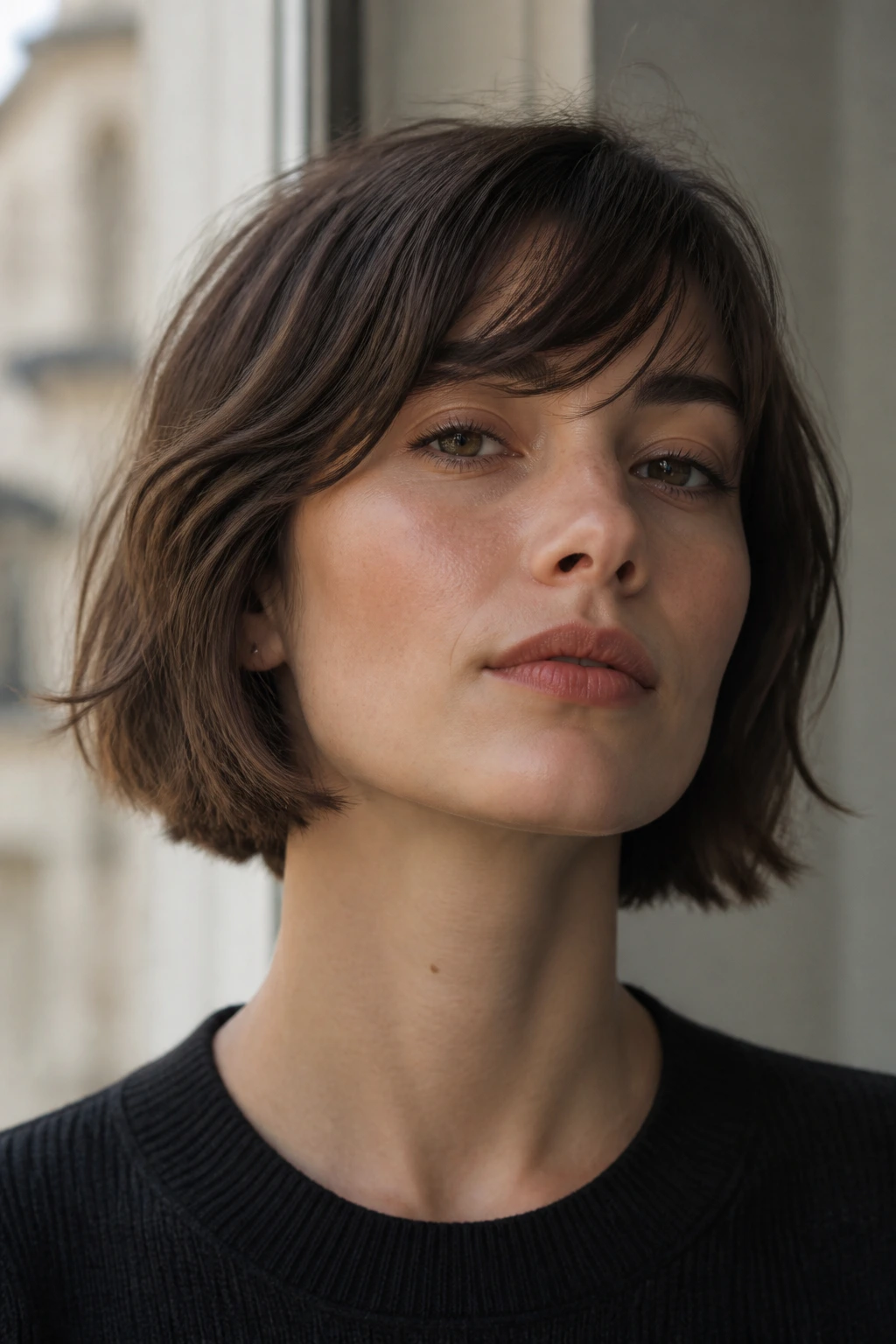
Short fringe needs more maintenance than people want to admit. A very short micro sweep may need a trim every 2 to 3 weeks if you want it to stay crisp. Longer swept fringe on a bob or lob can usually go 4 to 6 weeks before it starts losing the shape that made it good in the first place.
Wash schedule matters too. If your roots get oily fast, the fringe will collapse earlier than the rest of the haircut because it touches skin, sweat, and product more often. Dry shampoo at the roots on day two can buy you another day of lift. Use it sparingly, then massage it in with fingertips so it does not sit dusty on the front.
At night, a satin pillowcase helps, but so does a simple habit: pin the fringe loosely to the side you want in the morning, or wrap it in a soft clip if your hair takes on weird bends while you sleep. That tiny move saves a lot of time.
If the front gets bent out of shape, re-wet only the fringe area with a spray bottle, then re-dry it in the correct direction for two or three minutes. You do not need to start the entire haircut over.
Frequently Asked Questions
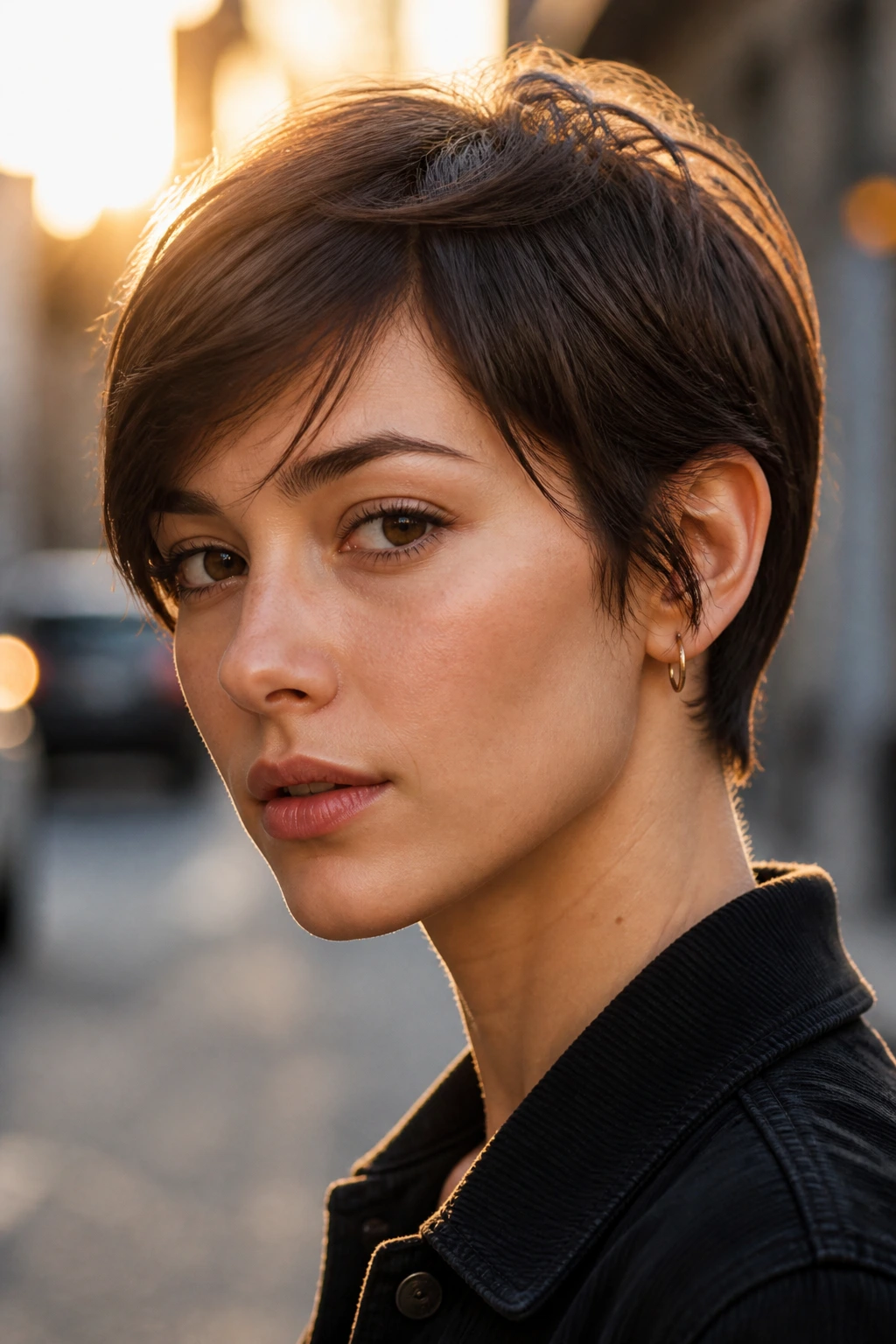
Will a swept fringe make my oval face look longer?
Usually, no. A side-swept shape breaks up the vertical line at the forehead, which can actually make the face feel a little shorter and softer. The key is keeping some width near the cheekbone so the cut still feels balanced.
Is swept fringe better on fine hair or thick hair?
Both can wear it well, but the cut needs different handling. Fine hair benefits from lighter layers and root lift, while thick hair usually needs internal removal so the front does not sit heavy and square.
Can curly hair pull off a swept fringe on short hair?
Yes, and it often looks better when the cut respects the curl pattern. Keep the front longer than a straight-hair fringe, cut it dry if possible, and let the curl fall diagonally instead of forcing it flat.
What if my fringe keeps splitting in the middle?
That is usually a root-direction issue, not a styling failure. Change the part while the hair is damp, dry the roots in the new direction, and use a small clip for a few minutes while the front cools.
How short is too short for a swept fringe?
If the front is cut too high above the brow, the sweep can lose its softness and start looking like a little shelf. The safe zone is usually around brow to outer-brow length, depending on texture and shrinkage.
Do I need heat styling every day?
No, but some hair types need a quick root reset. A fringe can often be redirected with water, fingers, and a clip while you get dressed. Heat is useful for stubborn roots and sleek finishes, not as the only answer.
How often should I trim it?
Micro fringe needs the most frequent trims, often every 2 to 3 weeks. Longer side-swept shapes can stretch longer, especially if the front blends into cheekbone layers or a bob.
Can I grow it out without an awkward stage?
You can, if the fringe is cut to drift into side layers instead of stopping bluntly at the brow. As it gets longer, ask for soft shaping at the temples and tuck the front behind the ear when it starts hitting your eyes.
A Fringe That Keeps Short Hair Interesting
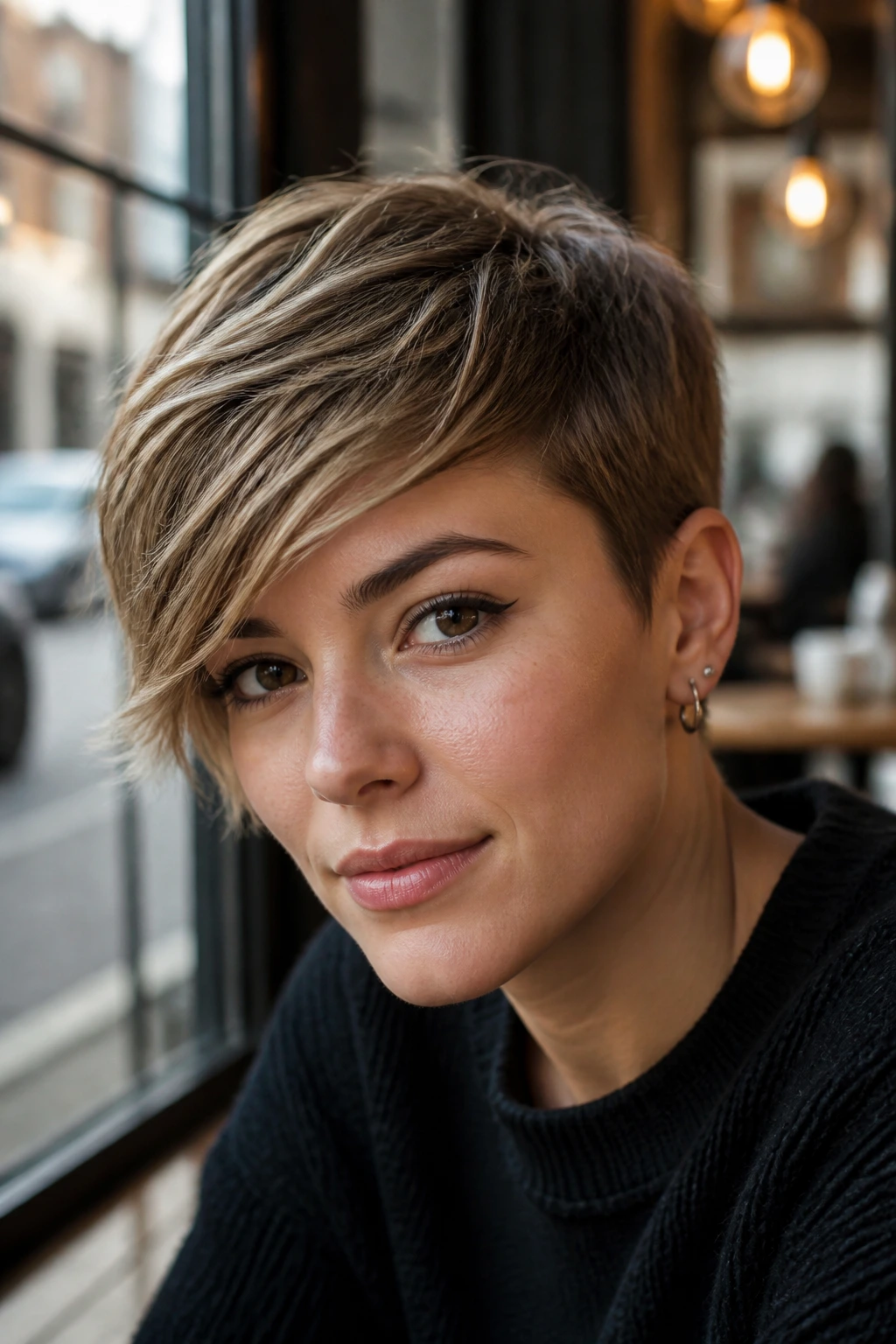
A swept fringe gives short hair a direction the moment it lands in the right place. That is the part people notice, even if they cannot name it. The cut feels lighter at the forehead, cleaner at the temples, and less likely to sit there like it needs help.
Oval faces make the whole thing easier, because the proportions already hold the shape. You can go soft, sharp, airy, piecey, polished, or a little rebellious without fighting your own features. That flexibility is the gift.
If you are thinking about changing a pixie, bob, bixie, or cropped shag, start with the fringe. It is the smallest part of the haircut with the biggest personality, and once it is swept into the right line, the rest of the shape tends to follow.