



At a certain point, a haircut has to do more than sit there. Sweeping layers with bangs for women over 40 earn their keep because they move with the head, soften the front of the face, and keep the whole shape from turning heavy or dated by lunch.
That matters more than people admit. Hair changes, faces change, styling patience changes. The crown can go a little flatter, the ends can feel drier, and bangs that looked airy in the salon can turn into a hard shelf if the cut was too blunt or too short. The right sweep in the layers fixes a lot of that before you ever pick up a brush.
And the best part? There isn’t one “correct” version. Some of these cuts are sleek and collarbone-grazing. Some are feathered, some are shaggy, some lean polished, and some are built for air-drying with almost no drama. The trick is knowing which shape matches your hair texture, your face, and how much maintenance you’re willing to do on a Tuesday morning.
Why This Collection Is Different
-
Softness without hiding the face: The layers open around the cheekbones and jaw instead of sitting like a curtain over everything, so the cut frames rather than covers.
-
Bangs that can age well with you: Side-swept, curtain, bottleneck, and airy fringe all grow out more gracefully than a hard, short bang that needs constant rescue.
-
Built for real hair textures: Fine, thick, wavy, straight, silver, and curly hair all behave differently, and the right layering pattern changes the result completely.
-
Easy to adjust at the salon: A good stylist can shift the bang length by half an inch, move the layer start point, or keep more weight at the ends, which makes a huge difference.
-
Looks finished even when it’s not perfect: These cuts tend to forgive a late blow-dry, a little humidity, or a day when the round brush never makes it out of the drawer.
1. Collarbone Sweep with Side-Swept Fringe
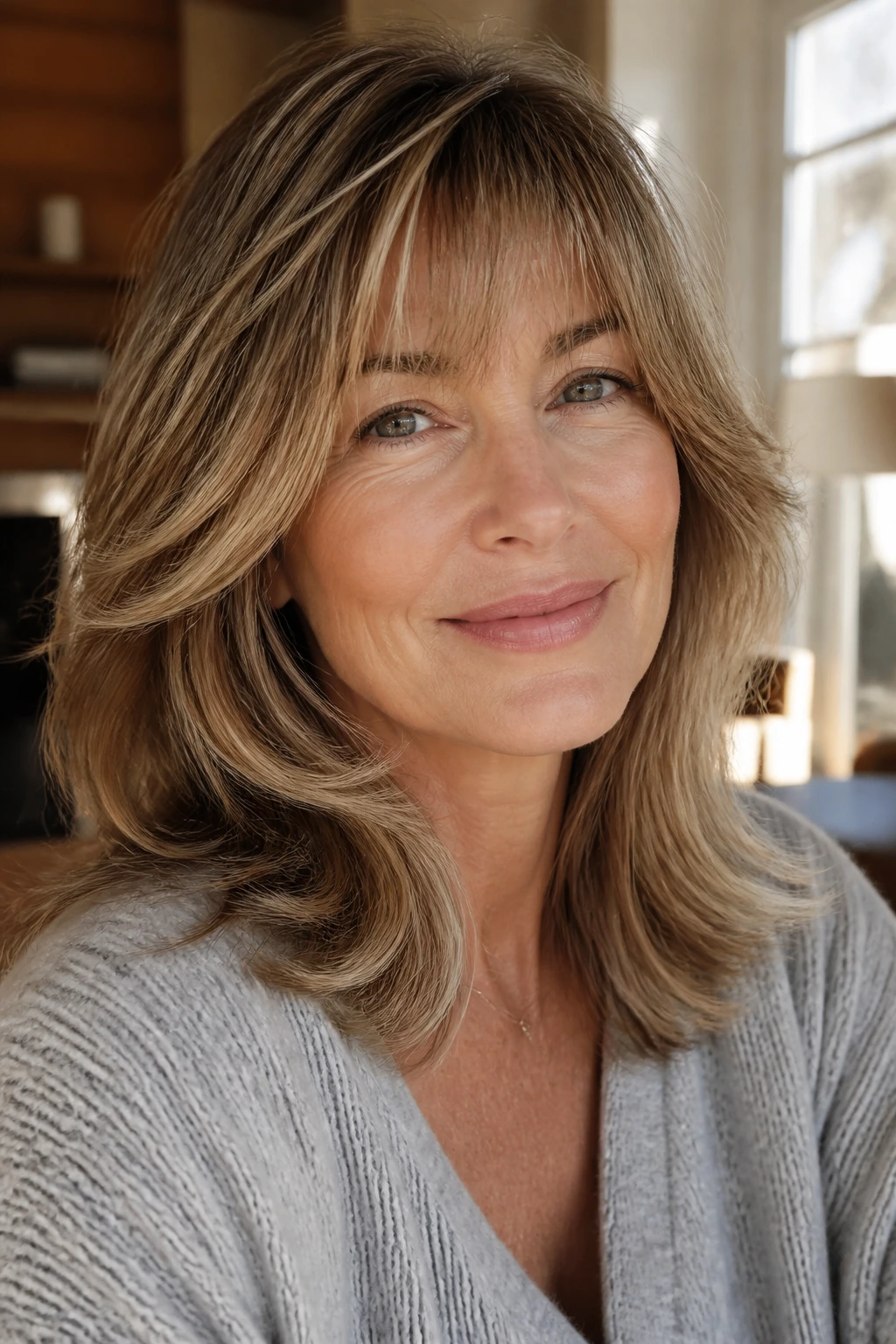
This is the cleanest place to start if you want movement without a lot of styling noise. The length sits at the collarbone, which keeps the ends from fanning out too wide, and the side-swept fringe slides across the forehead in one soft diagonal line. It’s a good cut for hair that needs shape but not a lot of extra pieces fighting each other.
Ask for layers that begin below the chin and a front section that lands around the cheekbone. That keeps the front light without exposing too much of the forehead. I like this one on people who wear glasses, because the fringe moves away from the frames instead of landing right on top of them.
The whole thing looks best when the ends are curled under just a touch with a 1.5-inch round brush. Nothing fussy. Just enough bend to keep the line from going flat.
2. Long Feathered Layers and Curtain Bangs
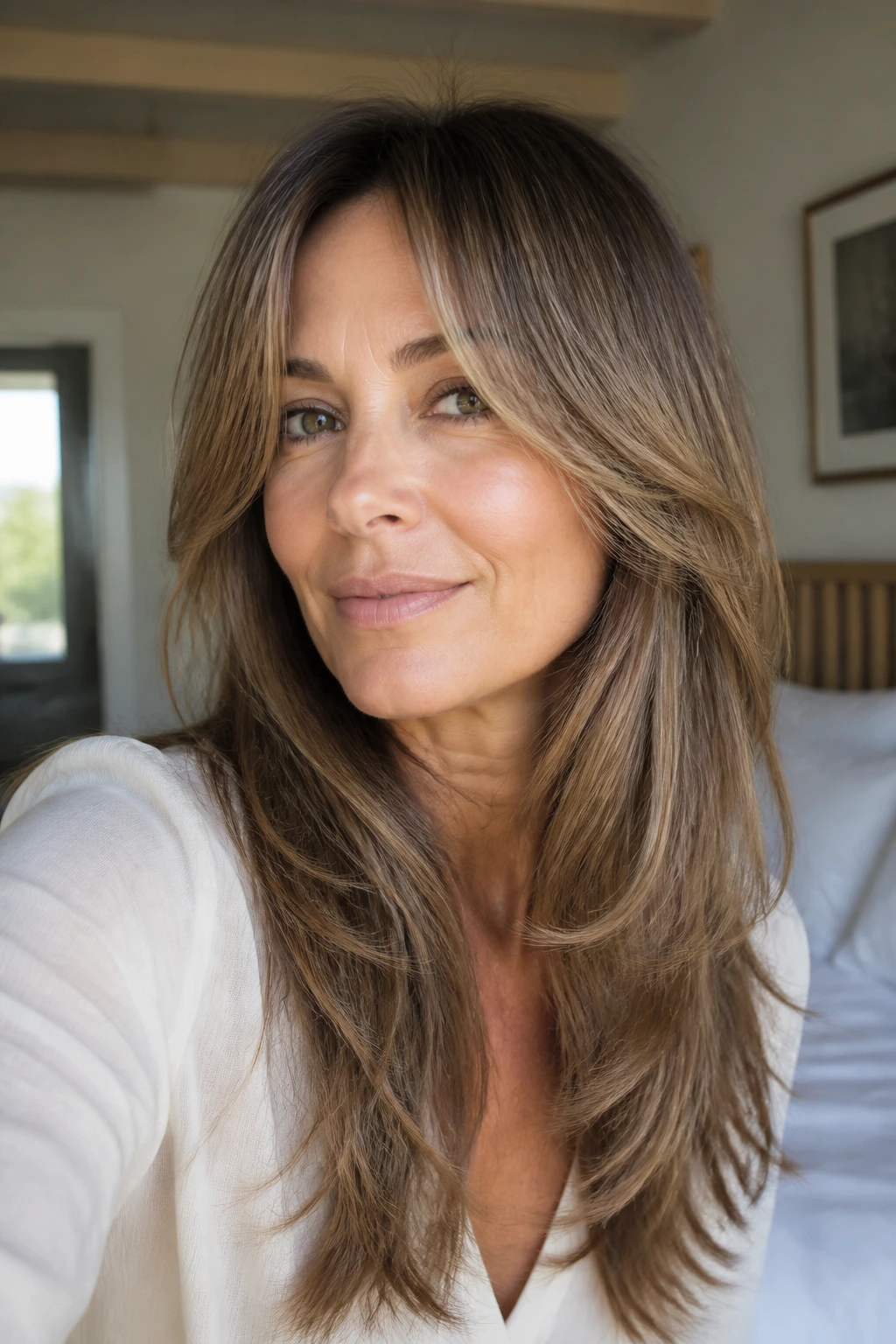
Long feathered layers are the haircut version of breathing room. They keep the length, but the interior loses enough weight to let the hair swing instead of hang like a sheet. Curtain bangs finish the look by opening from the center and sweeping out toward the temples, which gives the front a soft, lifted shape.
Why It Feels So Light
This cut works especially well on medium to thick hair because feathering removes bulk without making the bottom edge look thin. That’s the part a lot of people miss. If the longest layers are too high, the ends can look wispy and tired; if they’re too low, the cut loses movement. The sweet spot is usually around the mouth to collarbone range.
Curtain bangs are also forgiving when you’re not in the mood to style every strand. A quick blow-dry with the nozzle aimed downward, then a round brush just on the front pieces, is enough to make them fold away from the face.
- Ask for the center part of the fringe to hit around the bridge of the nose.
- Keep the side pieces long enough to brush the cheekbones.
- Use a light mousse at the roots, not a heavy cream.
3. Soft Shag with Cheekbone Bangs
A soft shag should feel airy, not choppy for the sake of being choppy. The layers are shorter through the crown and crown sides, then longer through the ends, which creates that little bit of lift people want when their hair has gone flat at the top. Cheekbone bangs help keep it feminine and balanced, not too retro and not too messy.
The best versions of this cut work with natural wave. If your hair already bends on its own, the layers will catch that bend and make it look deliberate. If you straighten everything pin-straight, you can still wear it, but you’ll need a texture spray or a small round brush finish so the layers don’t sit like disconnected slices.
I’d avoid making the fringe too short here. Once it jumps above the brow, the shag starts reading louder than most people want. Keep it grazing the cheekbone and let the rest do the talking.
4. Butterfly Layers with Brow-Grazing Curtain Bangs
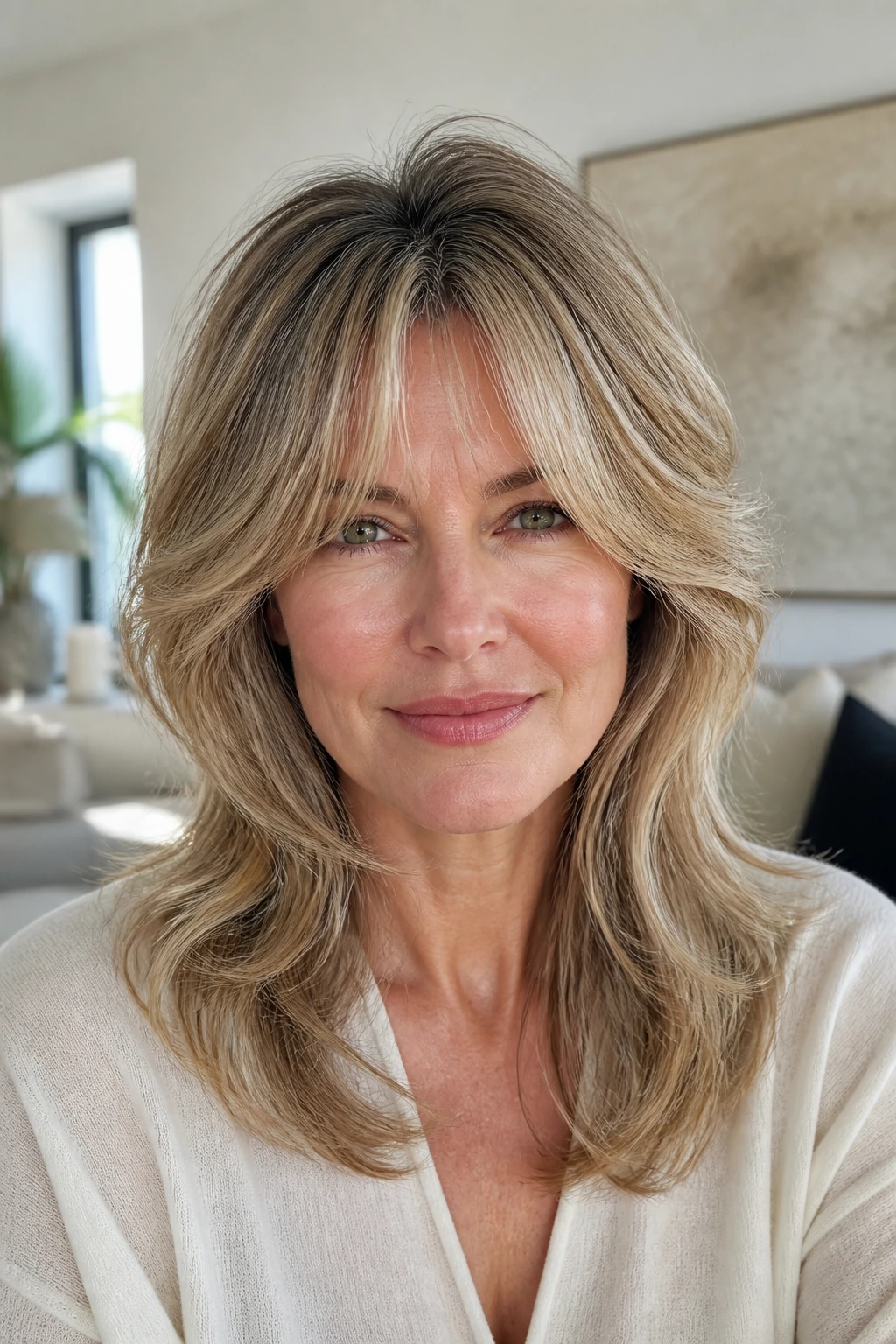
Butterfly layers are built for anyone who wants volume near the top and length through the bottom. The upper layers are cut to fall away from the face, while the longer lengths stay intact underneath, so the whole shape feels floaty instead of bulky. Brow-grazing curtain bangs tuck right into that system and make the front look intentional from the first second.
What I like about this cut is the way it gives the illusion of thicker hair without actually making the hair look overworked. The crown gets a lift, the cheeks get a soft frame, and the ends still keep enough weight to move. That is a rare combination.
If your hair tends to collapse at the roots, this one needs a little blow-dry help. Dry the roots first, then wrap just the front pieces around a medium round brush. Stop before the ends get too curled. You want a bend, not a prom-wave situation.
5. Shoulder-Length Swoop with Tapered Ends
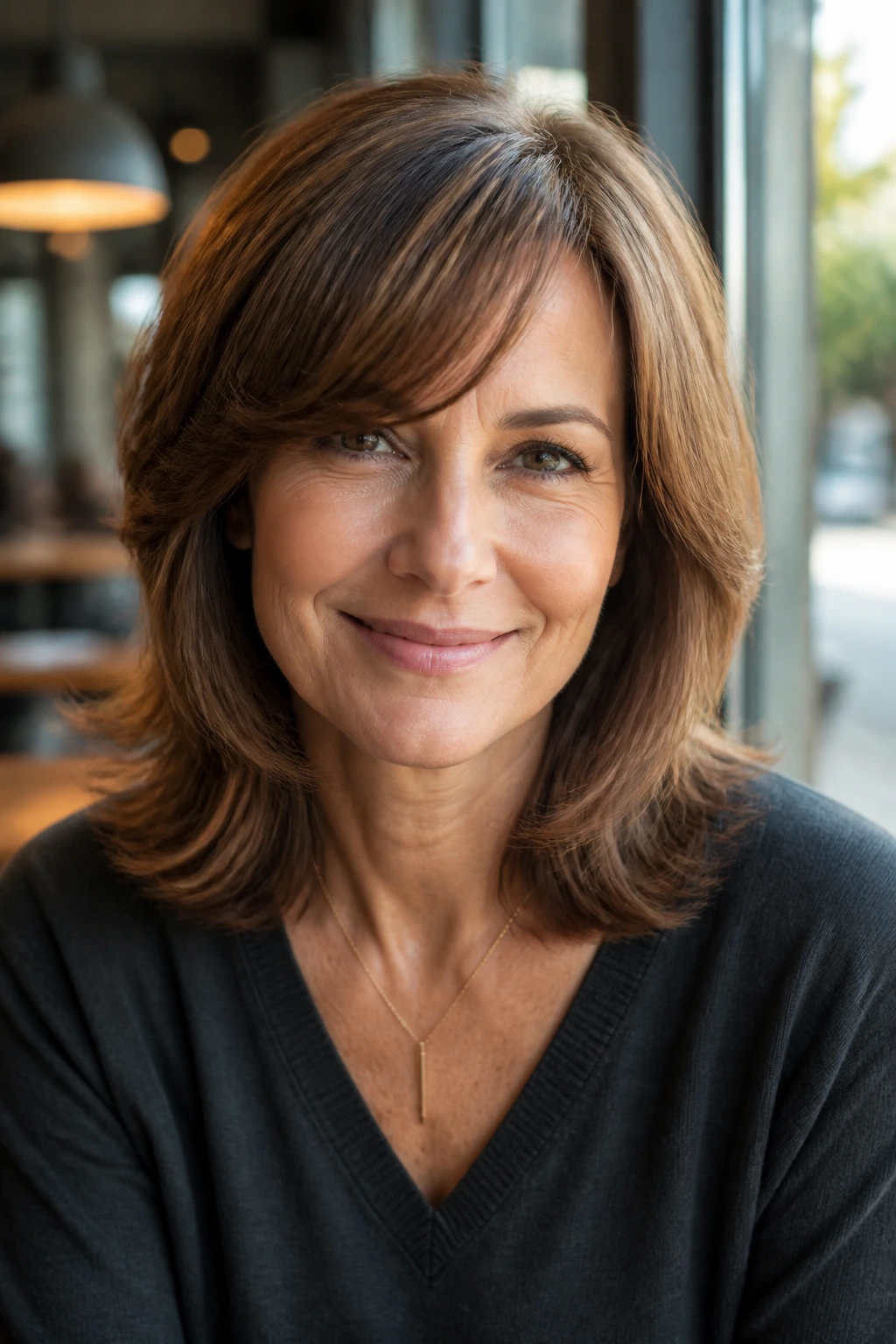
Shoulder-length hair can turn boxy fast, and that’s exactly why tapered ends matter here. The shape sits around the shoulders, but the ends are cut so they narrow gently instead of flaring out. A swooping bang—side-swept or slightly off-center—keeps the whole front soft and wearable.
This is one of the easiest cuts to live with if you want enough length to tuck behind the ears or pull back, but not so much that it feels heavy. The taper makes the perimeter look cleaner, and the front pieces can skim the jawline without hanging in your mouth every time you talk.
It also behaves well with a simple blowout brush routine. Work the roots upward, then angle the brush down and away at the ends. No need to overthink it. The shape is doing most of the work.
6. Wavy Lob with Arched Fringe
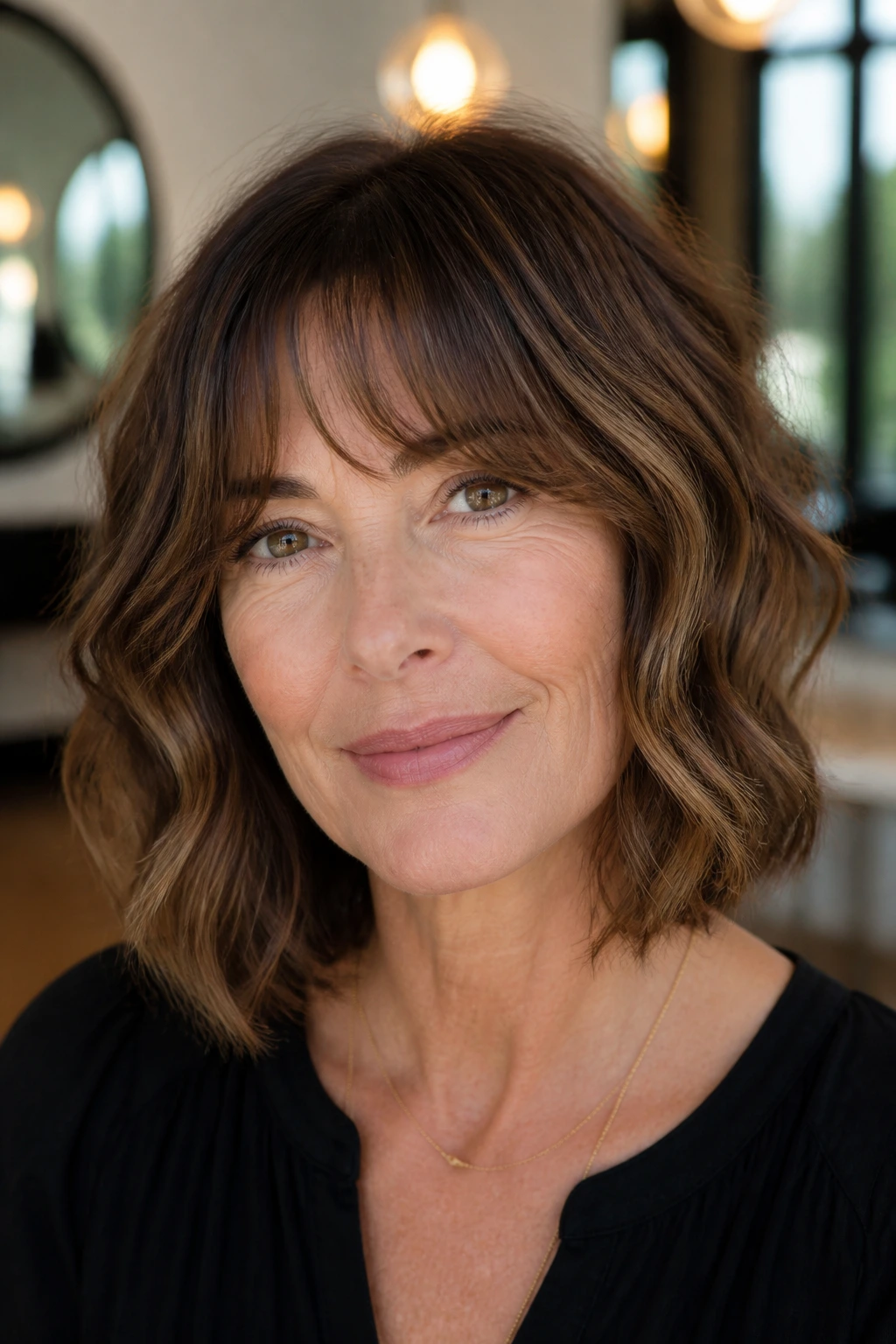
A wavy lob is one of those cuts that looks expensive even when the styling is low-key. The length usually lands between the chin and collarbone, which gives waves enough room to show their pattern. An arched fringe adds a small lift through the center and curves down at the sides, so the front feels softer than a straight line would.
What Makes It Friendly for Natural Wave
The arched bang keeps the face open while still giving you forehead coverage where you want it. That matters more than people expect. A perfectly straight fringe on wavy hair can split and kink by the afternoon, but a soft arch moves with the texture instead of fighting it.
This is a good option if your wave is looser near the roots and stronger at the ends. The lob gives those bends a place to settle, and the fringe keeps the cut from feeling too beachy or too casual. A little sea-salt spray helps, but not too much. Dryness shows up fast on layered waves.
7. Sleek Long Layers with a Deep Side Part
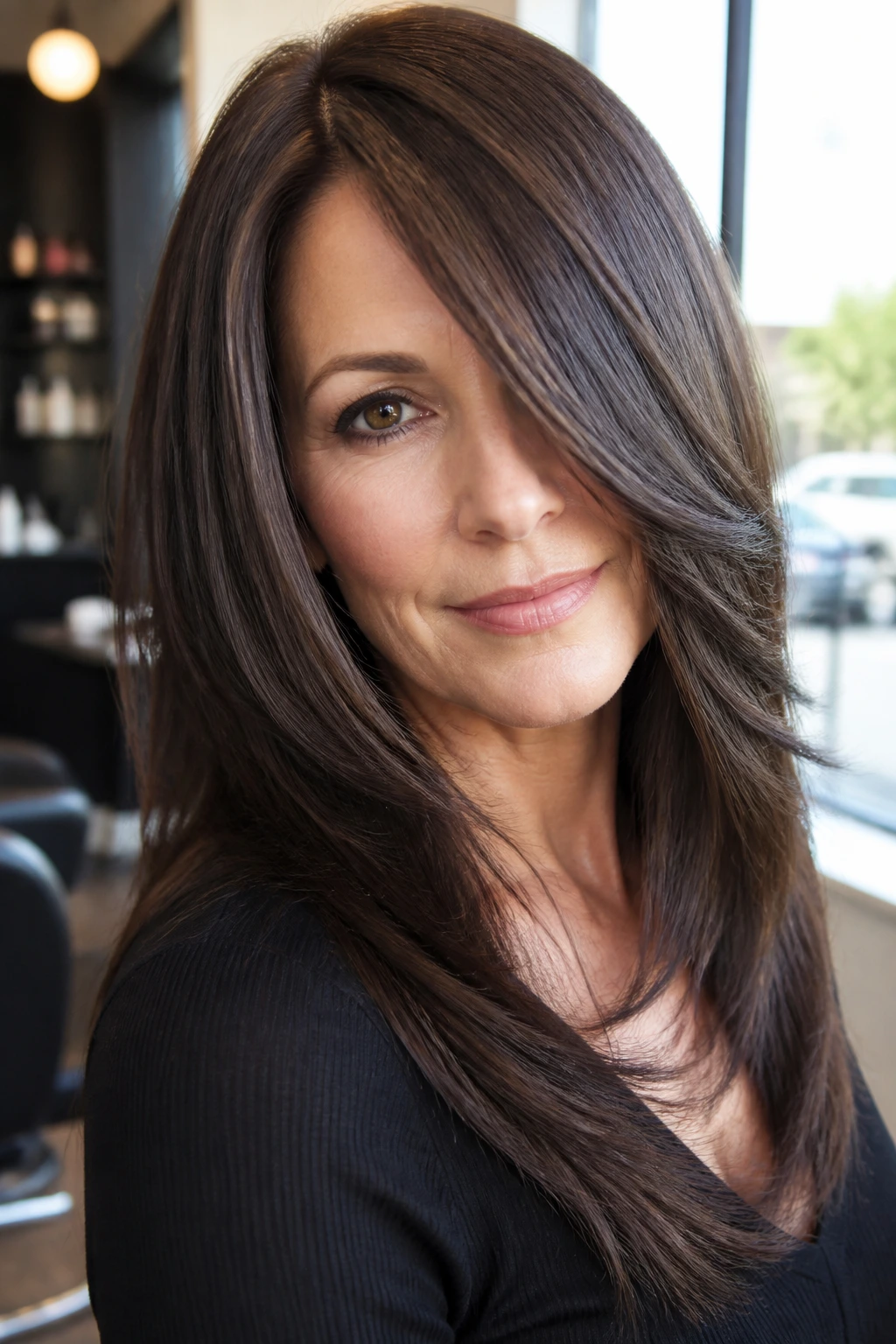
Not every flattering haircut has to be airy and undone. Sleek long layers with a deep side part give you polish, shine, and a very clean line around the face. The layers are subtle, almost hidden until the hair moves, which makes this cut a smart choice if you like length but want a little more shape than a one-length style offers.
The deep side part is the key. It creates lift at the front without asking for extra volume everywhere, and it allows the longest layer near the face to sweep across the cheek rather than sit flat. That diagonal line can be surprisingly flattering around the eyes and jaw.
This one works best when the ends are healthy enough to reflect light. A smoothing cream, a paddle brush, and a finishing pass with a flat iron are usually enough. If your hair is coarse, keep the layers long; if it’s fine, keep them even longer so the ends don’t fray.
8. Razor-Textured Layers and Bottleneck Bangs
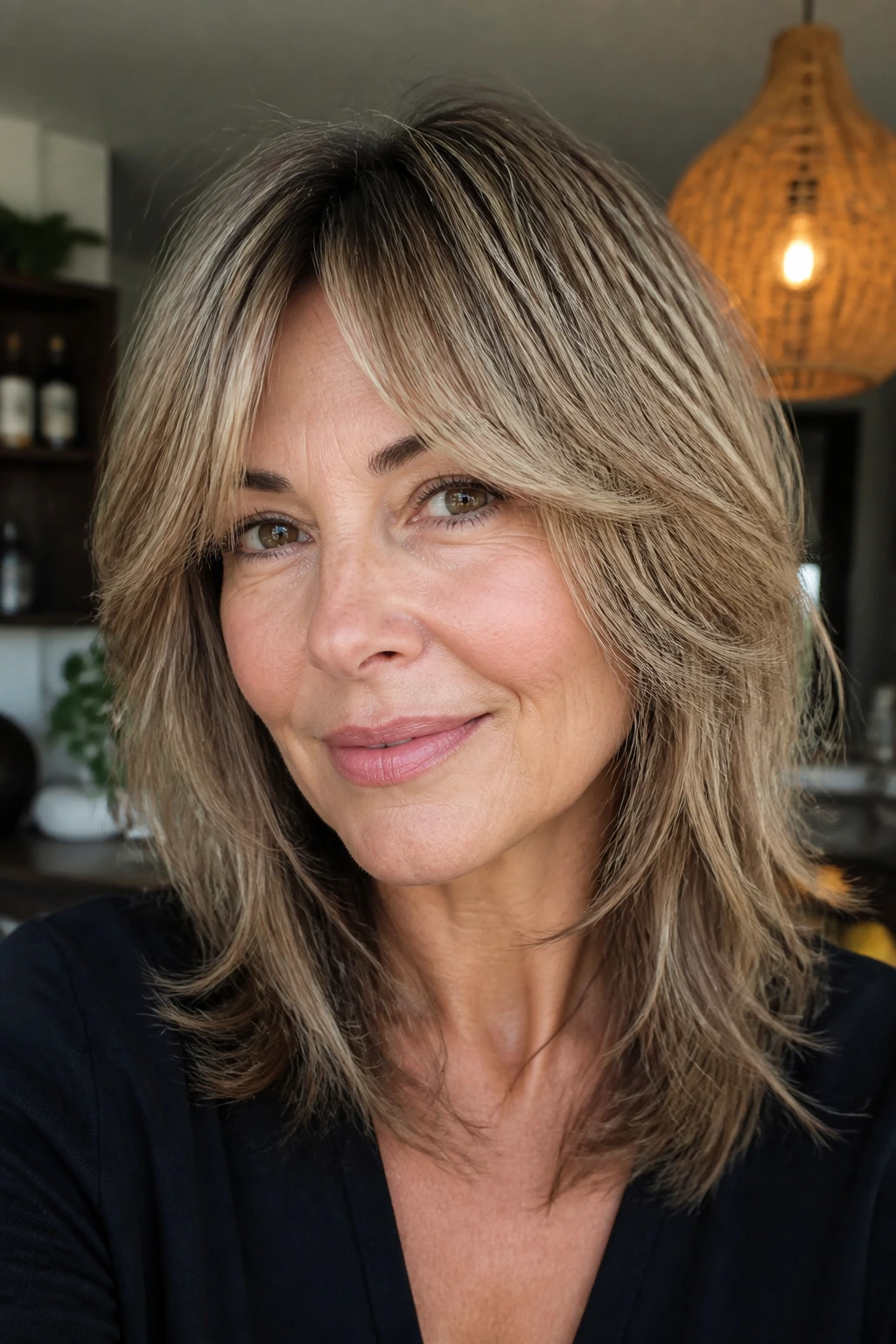
Bottleneck bangs have a narrow opening at the center and wider pieces at the sides, which gives the fringe a soft, lived-in bend. Pair them with razor-textured layers and the result is a cut with movement that feels slightly undone on purpose. Not messy. Just a little more edge.
Best When You Want Piecey Texture
Razor cutting can be gorgeous on thick, straight, or slightly wavy hair because it reduces bulk and leaves the edges less blunt. But it is not the move for every head of hair. If your hair is very dry or frizzy, a razor can make the ends look ragged instead of feathered, so ask for careful texturizing rather than aggressive slicing.
The bottleneck fringe needs a bit of styling at first, then it settles down. Blow-dry the center forward and the sides away from the face. Once it cools, it falls into that relaxed shape that looks a little more interesting than curtain bangs without being hard to grow out.
9. Layered Bob with a Floating Fringe
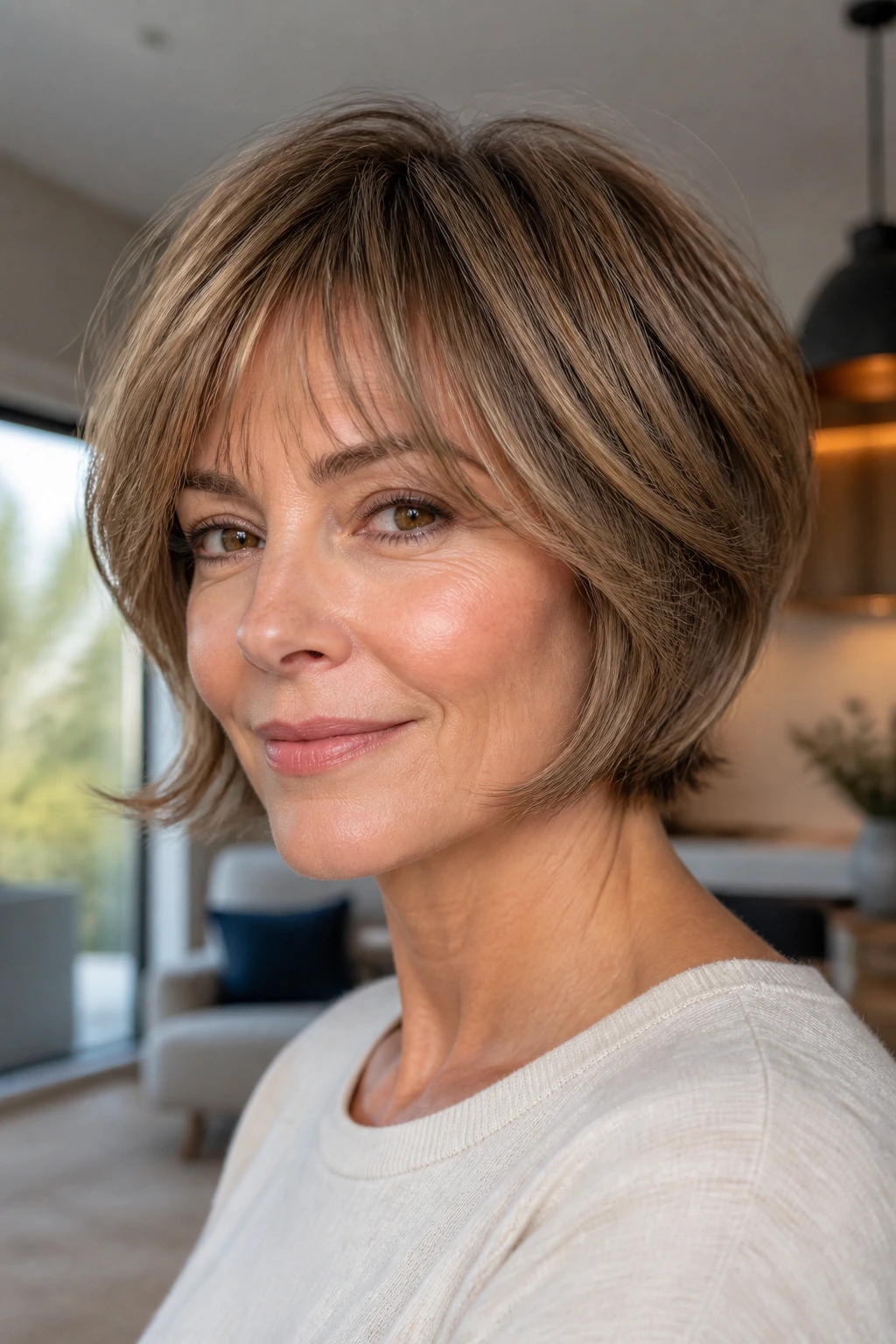
A layered bob is short enough to feel fresh, but not so short that it becomes high-maintenance by default. When the layers are placed inside the shape instead of chopped all over the surface, the bob gets swing and lift without turning fluffy. A floating fringe sits just above or at the brow and moves easily with the rest of the cut.
This is one of the nicest options if your hair has started to lose density at the ends. The bob keeps the line strong, and the layers create movement where you need it most, near the jaw and cheekbones. The fringe should feel light enough to shift when you turn your head.
I’d keep the perimeter blunt-ish. Too much texture at the bottom and the bob can lose the clean shape that makes it look expensive. A soft bevel under the chin? Good. A shredded bottom edge? Not nearly as good.
10. Blunt Base with Lived-In Face-Framing Layers
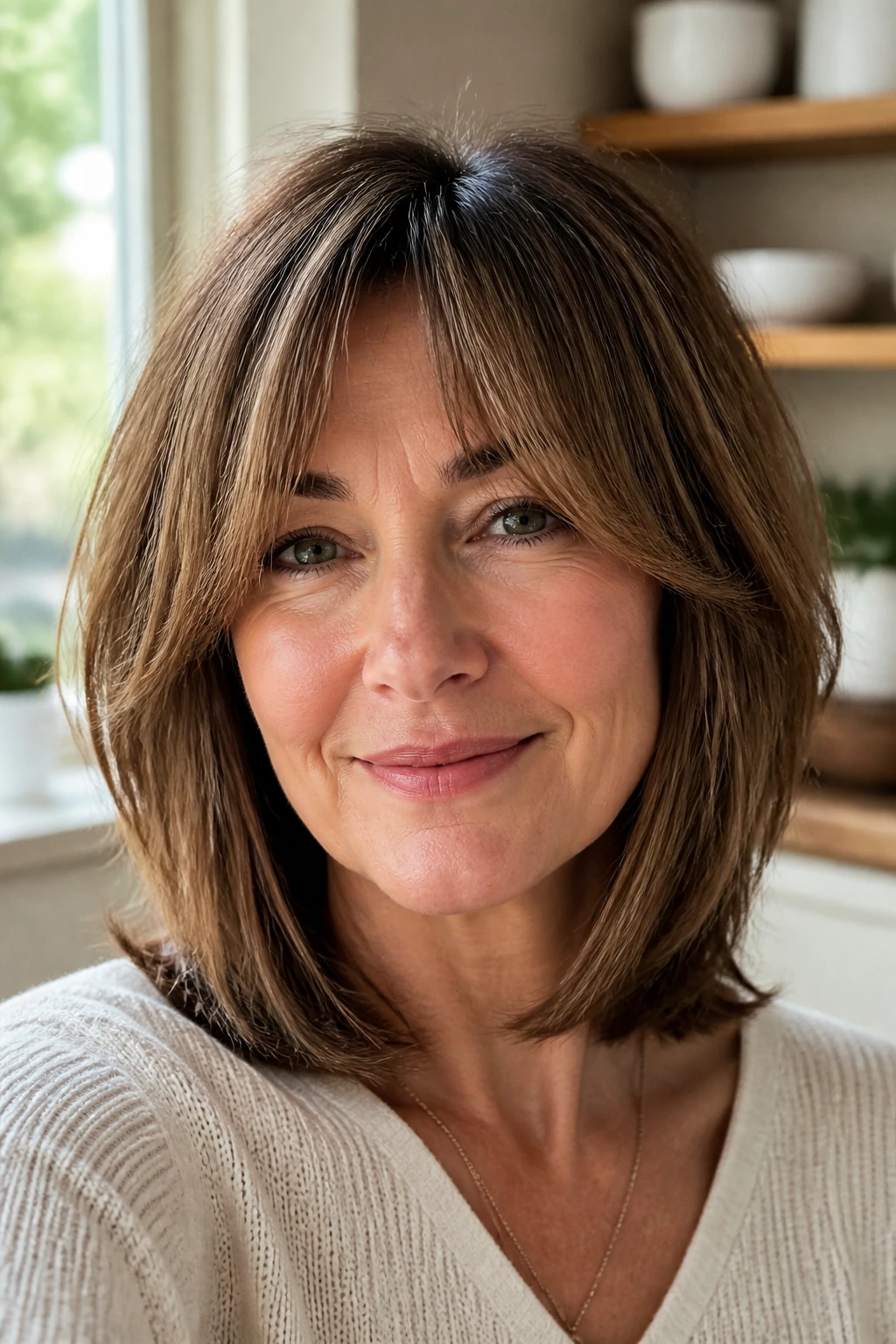
Here’s the trick: sometimes the best place to add softness is not the ends, but the front. A blunt base gives the haircut strength, while the face-framing layers start around the cheekbones and flow into a loose bang. That combination keeps the cut looking full, which is useful if the hair has thinned a bit at the perimeter.
The blunt edge stops the style from feeling stringy. The face frame stops it from feeling severe. Together they make a shape that looks controlled without being stiff, and that balance matters a lot once you want hair to look polished on a normal day instead of only after a salon visit.
This cut is especially kind to fine hair because it preserves the look of density. Add a little root spray and a smooth bend through the front, and the whole style reads more deliberate than it actually is.
11. Rounded Curls with Soft Arc Bangs
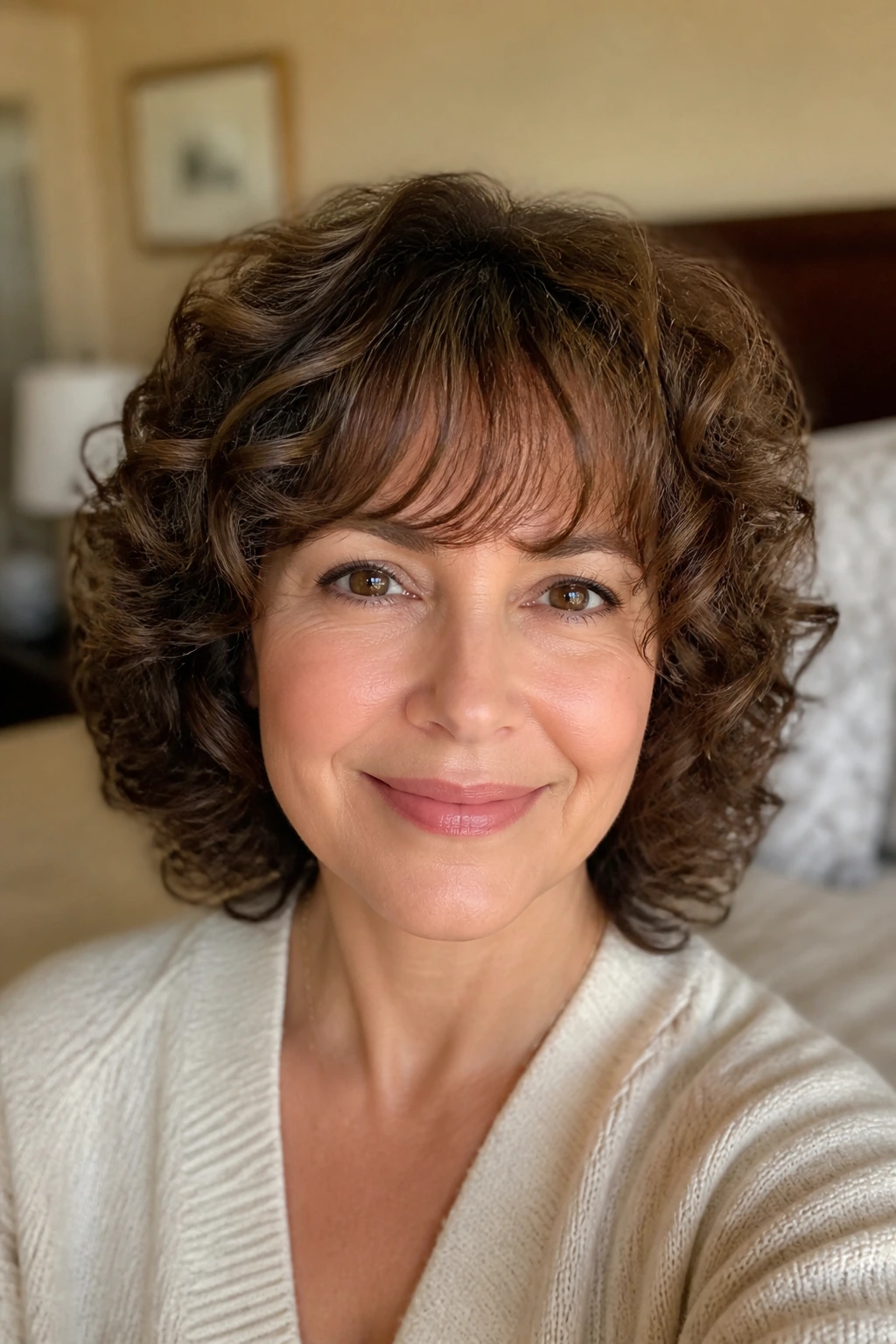
Curly hair and bangs can be beautiful together, but the shape has to respect the curl pattern. Rounded layers keep the silhouette from turning triangular, and soft arc bangs follow the natural curve of the curl instead of trying to sit like a straight bar across the forehead.
Cut this one dry, or close to dry, because curls lie. They lie a lot. A curl that looks long and tame when wet can spring up an inch or more once it dries, so the front needs to be longer than you think. The arc should fall gently through the center and open at the sides.
A diffuser helps, but the real win is shape. When the layers are placed to support the curl pattern, the bangs blend in instead of looking pasted on. That’s the difference between a good curly cut and a fight you’ll regret every morning.
12. Silver Layers with a Light Curtain Fringe
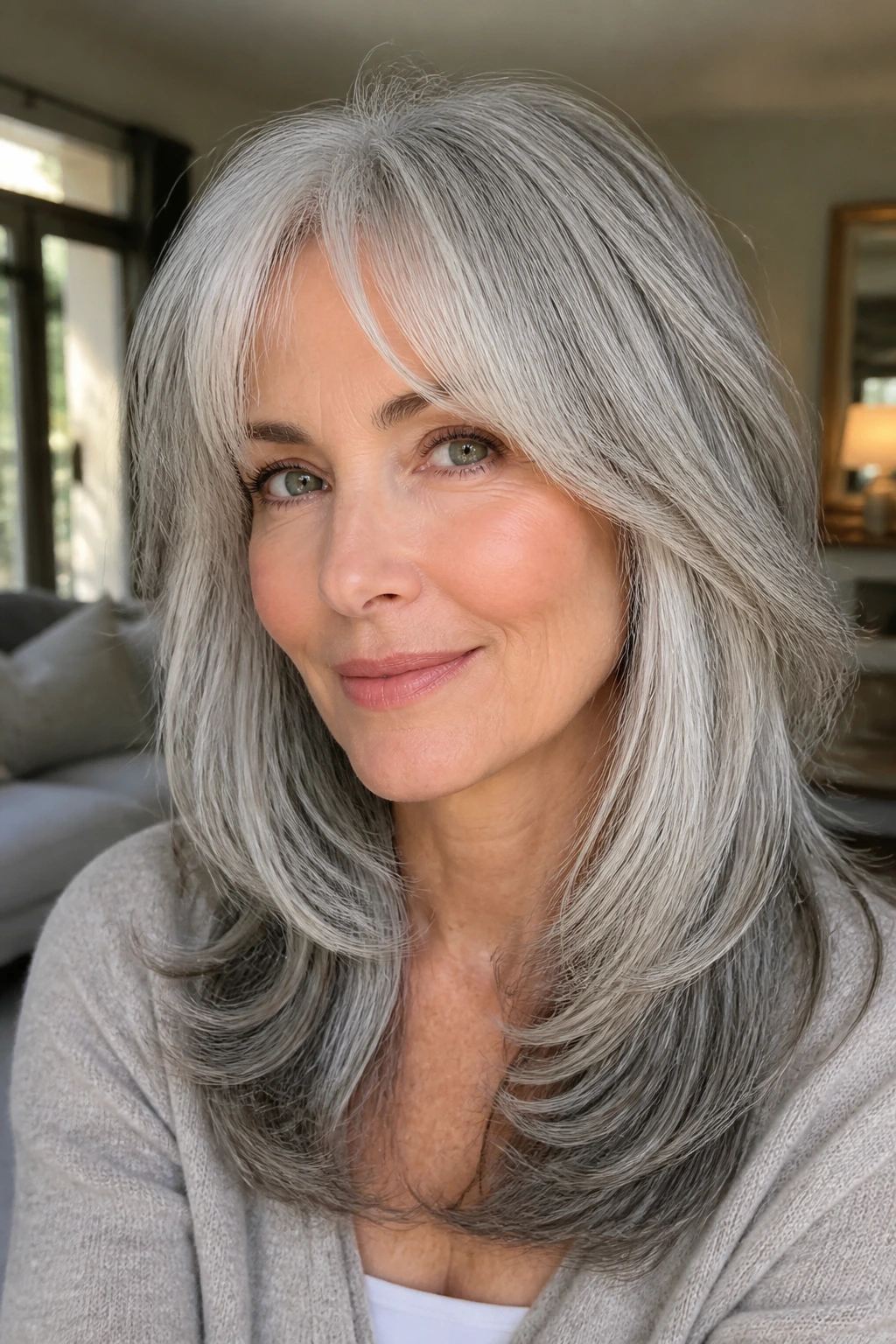
Silver and gray hair has a way of showing every line in a haircut, which is why soft layering matters so much here. A light curtain fringe breaks up the front without making the face look boxed in, and the layers give the silver dimension instead of a single flat sheet of color.
The beauty of this cut is in the movement. Silver strands catch light differently along each layer, so the haircut starts looking textured even before you style it. If the fringe is too heavy, though, that softness disappears and the whole front can look severe. Keep it airy. Let it separate a little.
I also like this cut for people who are letting gray grow in naturally. The sweep in the fringe makes the transition look intentional, not like you’re waiting for the rest of the color to catch up.
13. Choppy Midlength Layers with Textured Bangs
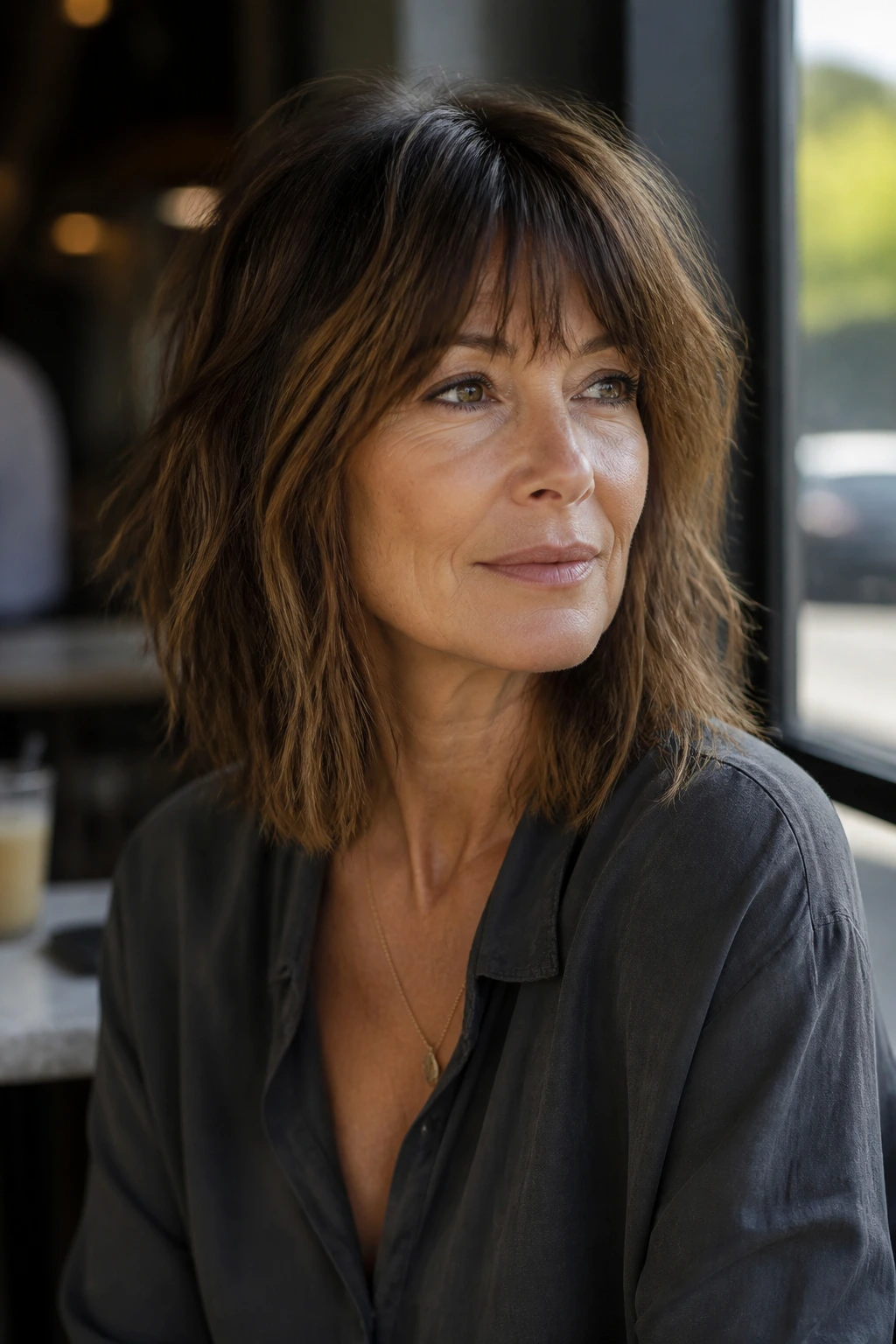
Choppy midlength layers give you that slightly lived-in look without pushing the cut into full shag territory. The bangs stay textured and broken at the ends, which helps the front blend into the rest of the haircut instead of sitting like a separate piece. It’s casual in a good way.
This one suits people who don’t want a polished blowout every day. Air-dry it with a little cream, twist the front sections while damp, and let them dry away from the face. The bangs should separate into soft pieces rather than one solid line. That’s the goal.
If your hair is naturally straight, this cut needs a bit of styling product or it can look limp. If your hair bends on its own, it’s easier. Either way, keep the texture soft, not crunchy. Choppy does not mean crispy.
14. Blowout Layers with Long Swept Fringe
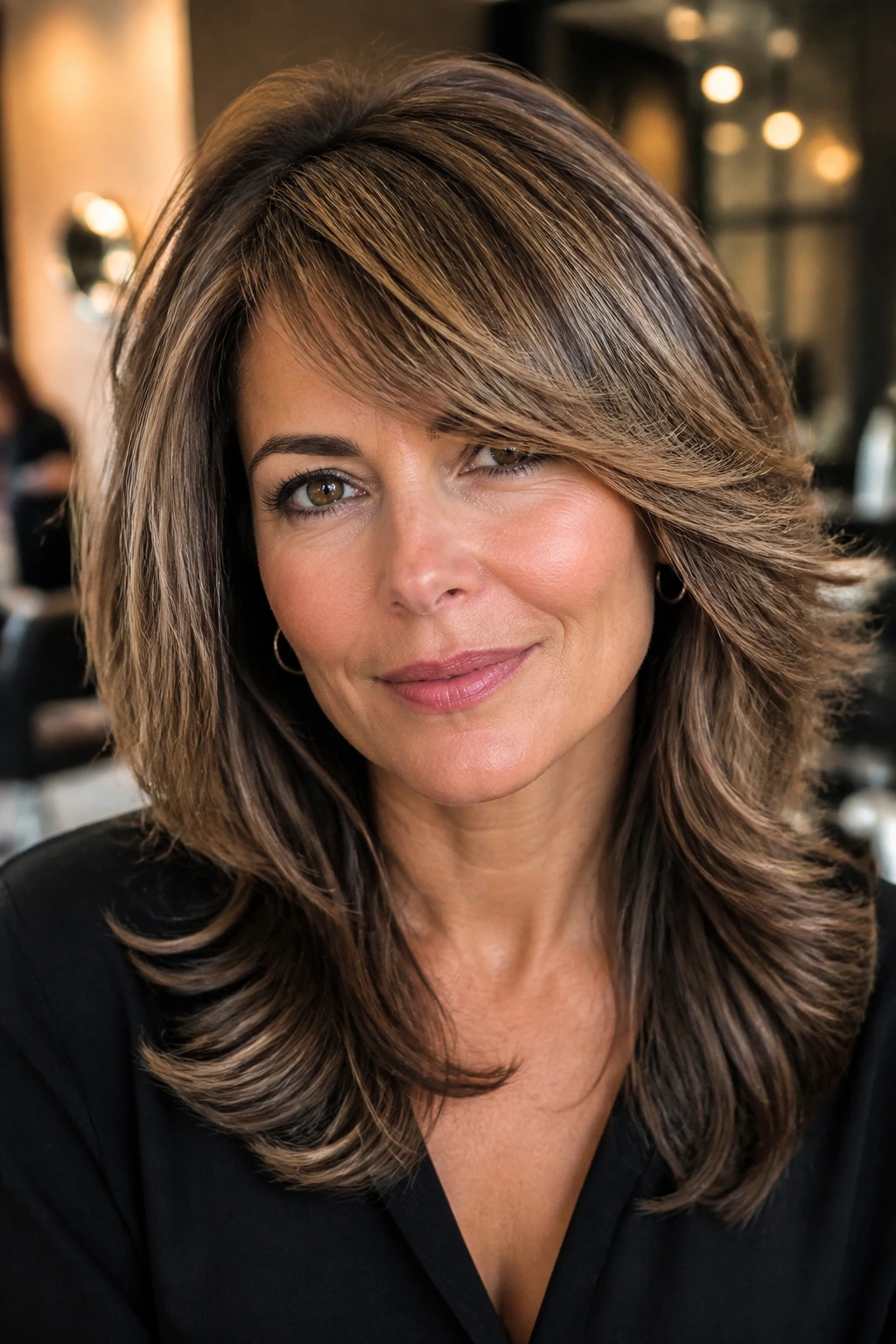
Some cuts are made for the round brush, and this is one of them. Blowout layers with a long swept fringe create that lifted, salon-finished shape where the hair curves away from the face and the ends turn under just enough to look deliberate. The fringe stays long, so it can move from side to side or blend into the front layers.
How It Should Sit
The crown should have gentle lift, not a teased bump. The layers through the sides need enough space to arc, which means the cut is usually better when the front pieces are not over-thinned. If the hair is fine, keep the layers long and the blow-dry loose. If it’s thick, the stylist can remove some interior weight so the bend holds.
This is a good cut for people who like a cleaner, more finished look. It reads polished without being stiff, and that long swept fringe softens the forehead without cutting the face into pieces.
15. Fine-Hair Layers with a Wispy Air Bang
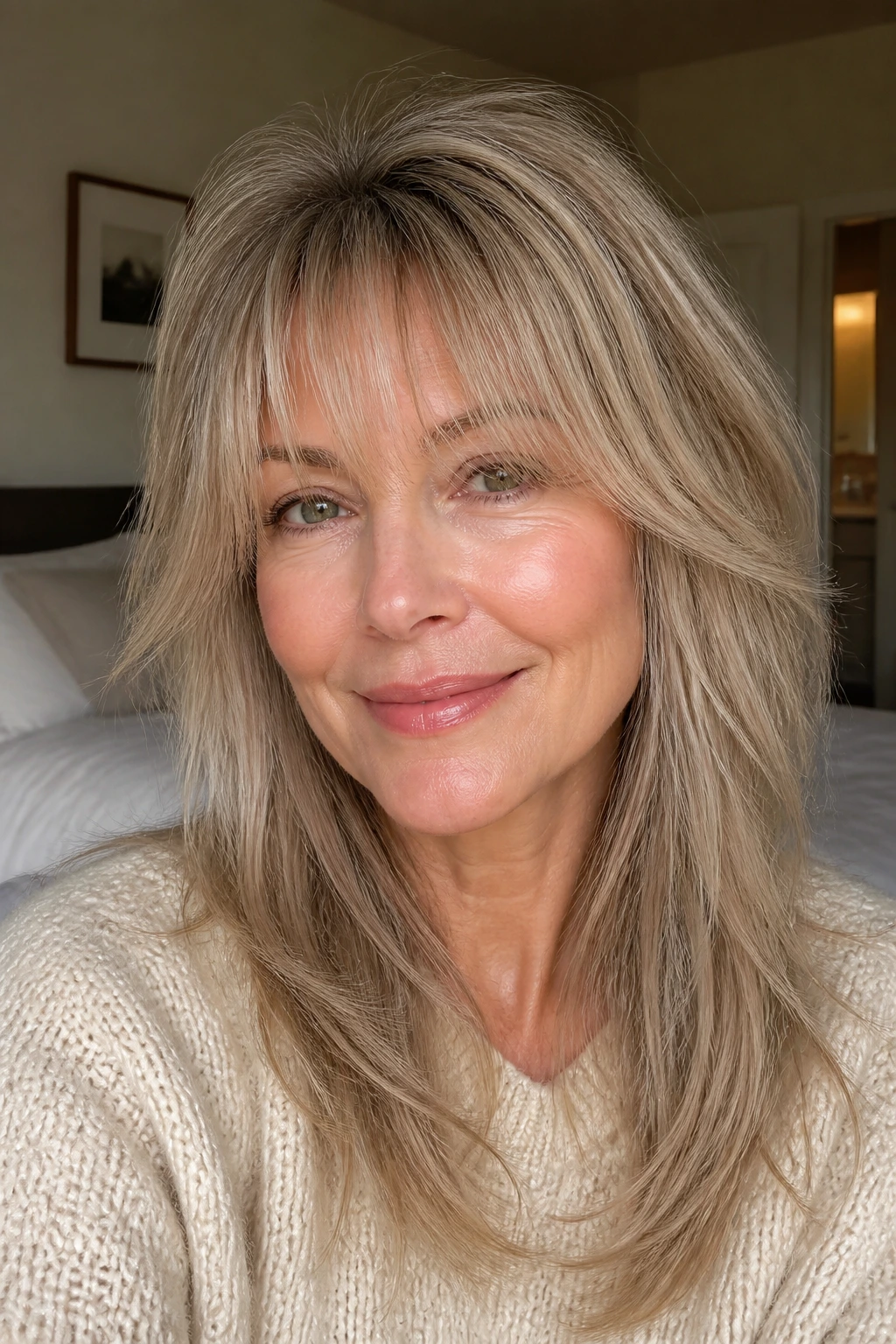
Fine hair needs a careful hand. Too many short layers and it starts to look see-through; too much bang and the front collapses into a flat strip. Wispy air bangs fix that by keeping the fringe light and the layers long enough to preserve fullness through the ends.
The smartest thing about this shape is restraint. The stylist removes only enough weight to create movement, usually starting low, and leaves the perimeter strong. That means the hair still looks like it has body even when it’s not fully blown out. A root-lifting spray and a quick round-brush lift at the front usually do the rest.
This cut is also easy to grow out. The wispy bang blends into the face frame instead of becoming a hard line, so you can stretch the trim a little without the style falling apart. That matters if you hate living on a four-week fringe schedule.
16. Deep Side-Swept Layers for a Longer Face
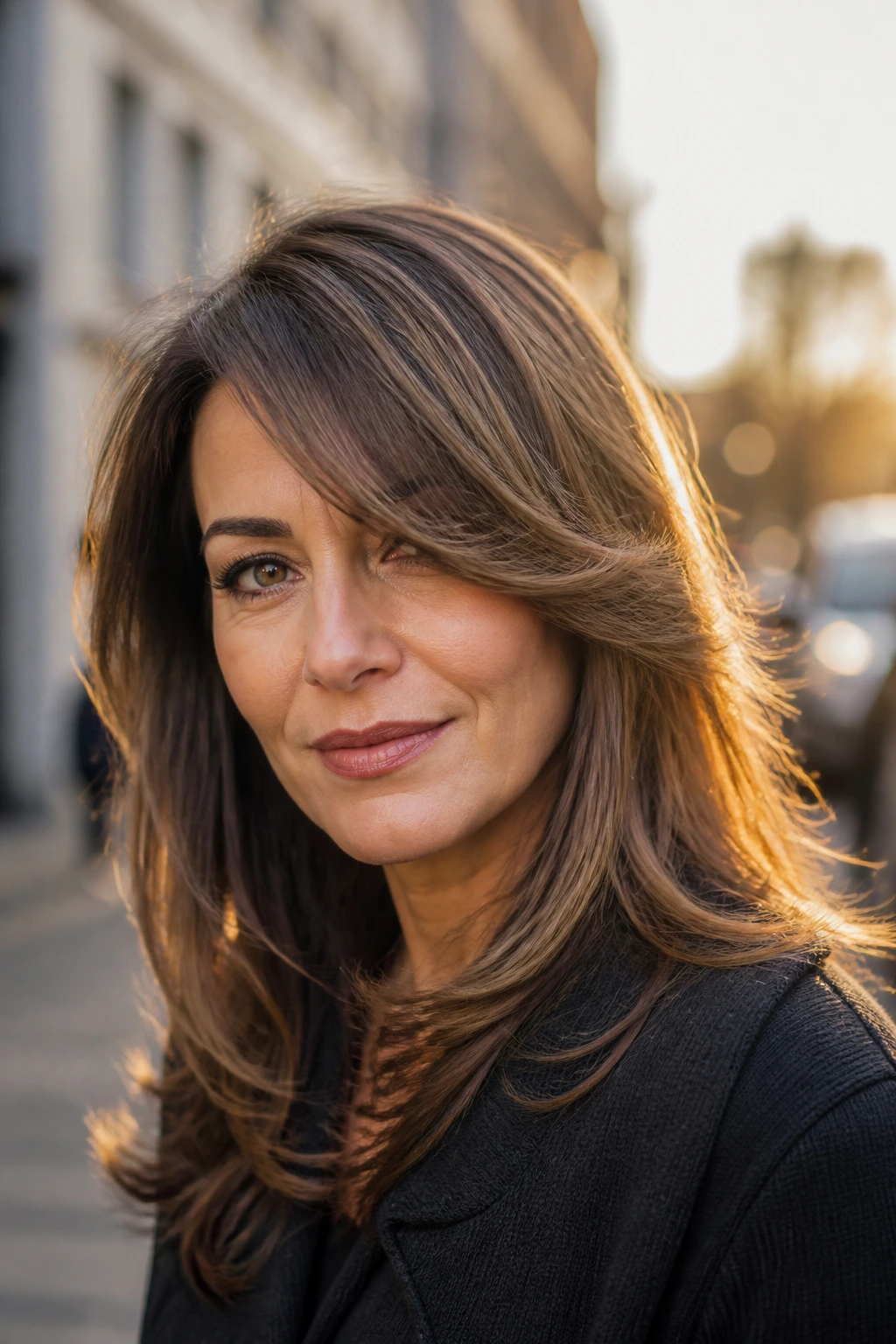
A longer face needs width more than height, and deep side-swept layers know how to give it. The part shifts away from the center, the fringe moves across the forehead, and the layers land around the cheekbones rather than climbing too high on the head. That creates balance fast.
What I like here is how the front does the work without screaming about it. There’s no heavy fringe sitting on the brows, no choppy pieces jutting out, just a long diagonal sweep that breaks up vertical length. If your hair naturally falls straight, this cut can be especially flattering because the shape itself adds softness.
Ask the stylist not to push too much volume at the crown. That’s the usual mistake. You want width through the sides and movement around the temples, not an inch of extra height up top.
17. Bottleneck Bangs with Cheekbone Layers
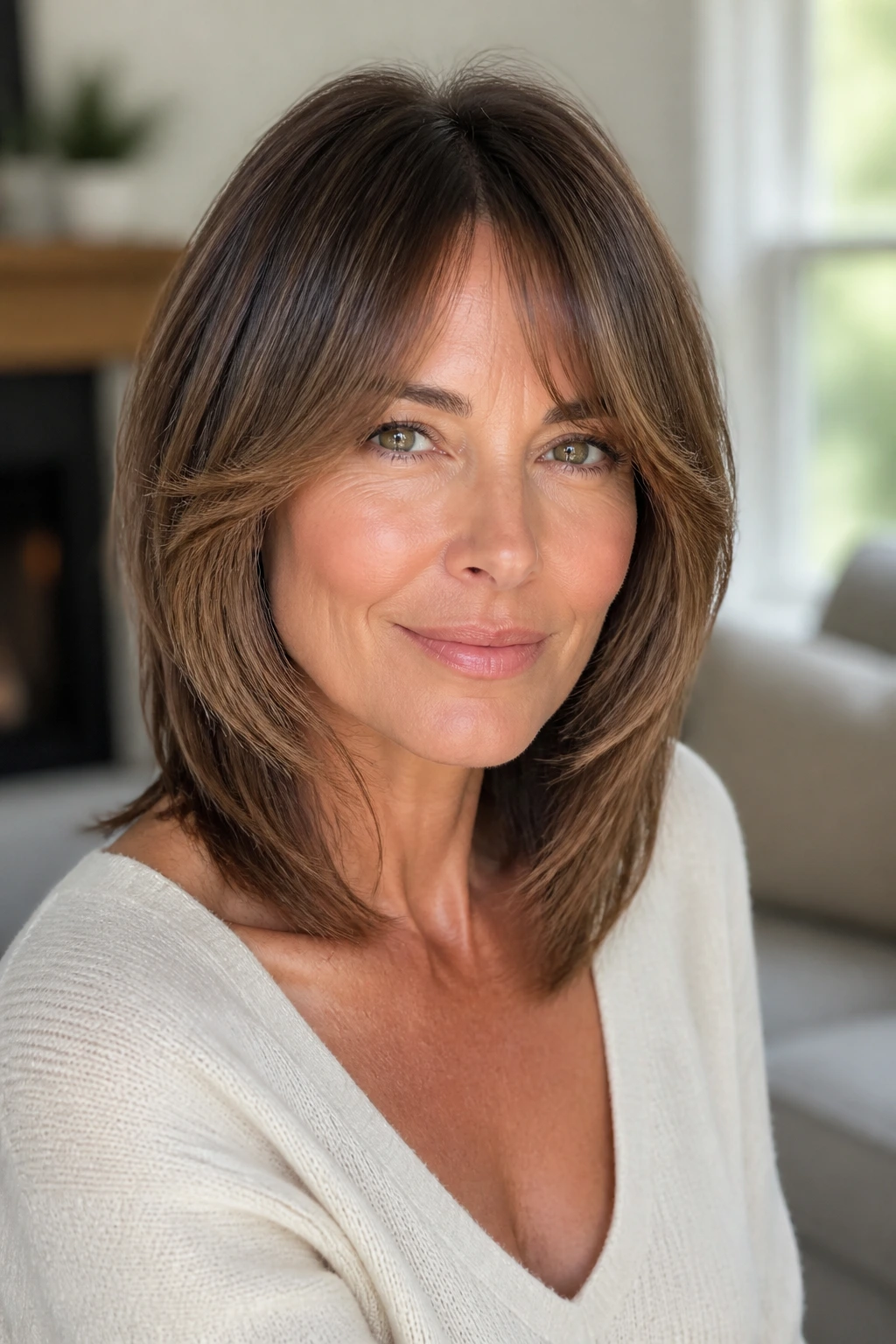
Bottleneck bangs are having a quiet moment for a reason: they solve a lot of front-of-face problems without looking obvious. The center of the fringe starts narrower, then opens toward the edges, and the cheekbone layers echo that shape. The result is a front that feels soft, broken up, and easy to wear.
This cut works especially well if your forehead is broad or your jaw is more angular. The softer center keeps the front from feeling blunt, while the longer sides slip into the rest of the haircut. It’s one of the more adaptable options on this list because the bang can be pushed aside, brushed down, or tucked into a blowout.
A lot of people ask for curtain bangs when what they really want is this. Bottleneck fringe sits a little more structured and a little less floppy, which can be a good thing if your hair has a natural bend that needs a bit of shape.
18. Internal Layers with Brow-Grazing Fringe
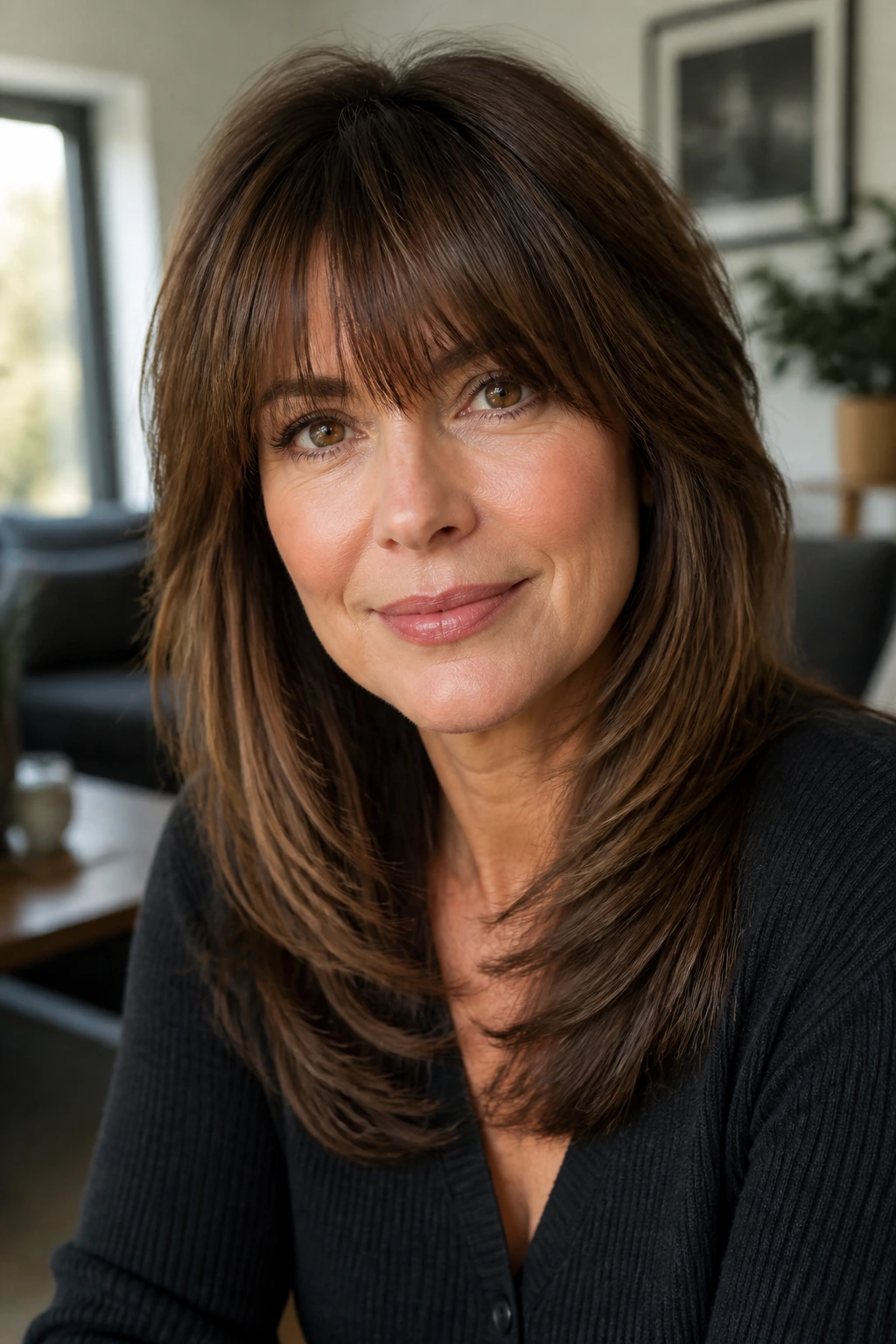
Internal layers are the secret weapon when you want movement without losing the appearance of thickness. Instead of carving away the outline, the stylist removes weight from inside the shape, so the surface still looks full. Pair that with a brow-grazing fringe and the haircut stays soft around the face while keeping a solid perimeter.
This is one of my favorite choices for dense hair. Not because it’s flashy. Because it works. Dense hair can turn triangular or bulky fast, especially around the midlengths, and internal layers fix that without leaving obvious holes in the shape.
The fringe should sit right at or just below the brows. That keeps the front from feeling harsh and gives the eyes some room. If you wear glasses, this can be a smart compromise: enough coverage to frame the face, not so much that the bang fights the frames.
19. Soft Wolf Cut with Feathered Bangs
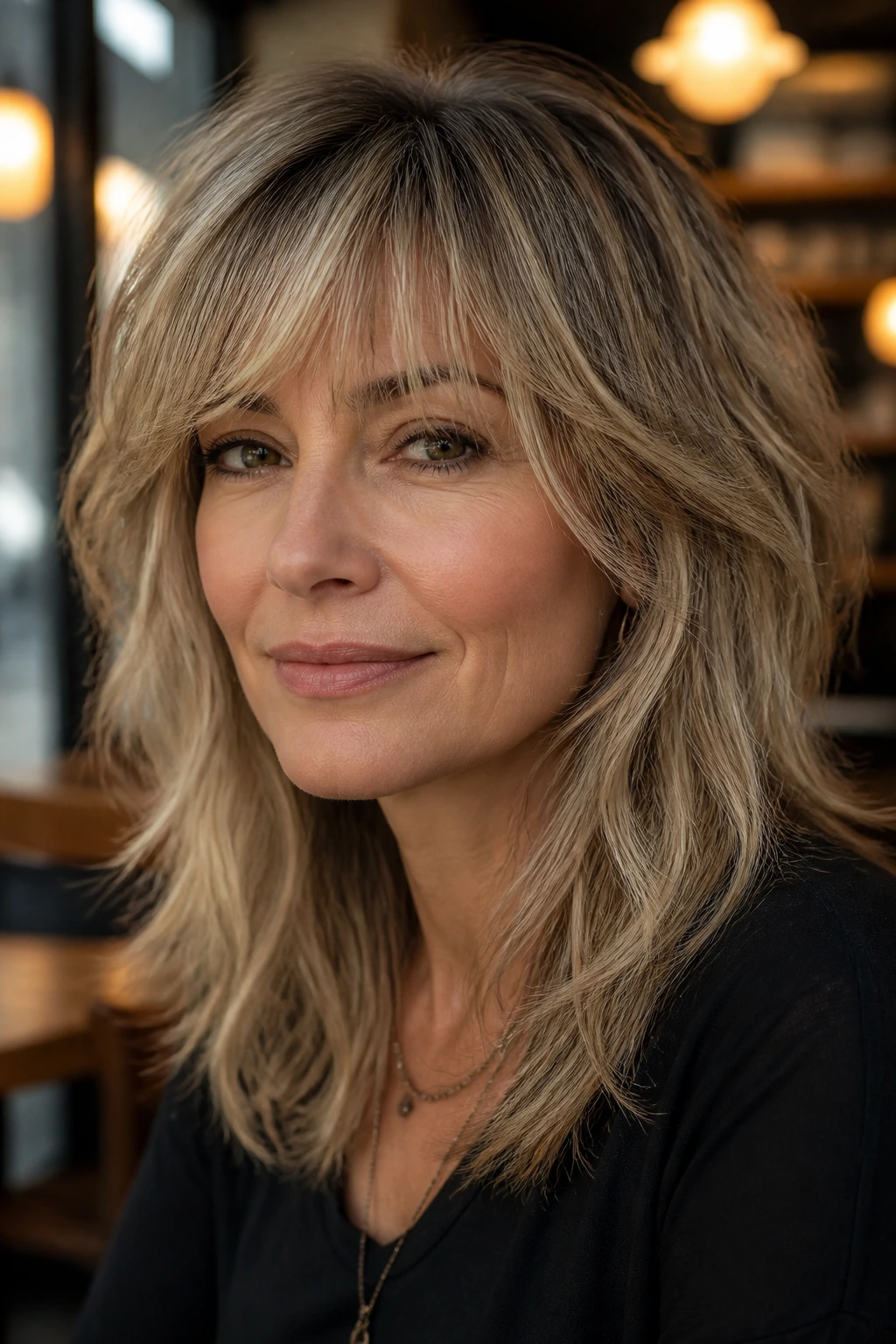
The wolf cut gets a bad reputation when it’s overdone. In a softer version, it simply means shorter, feathered layers near the crown and longer lengths through the bottom, with bangs that blend into the front instead of ending in a hard line. It has edge, but not a costume.
Who It Fits Best
This shape works best on hair that wants texture. Wavy hair loves it. Thick hair can handle it. Very fine hair can wear it too, but the layers need to stay controlled so the ends don’t disappear. The bangs should feather outward and around the cheekbones, not stick straight down the forehead.
The style reads modern because it doesn’t try to be neat all the time. That said, it does need a little product—usually a dry texturizer or a light paste at the ends—to keep the layer separation visible. Too much, and it starts looking overworked.
20. Thick-Hair Layers with a Long Broken Fringe
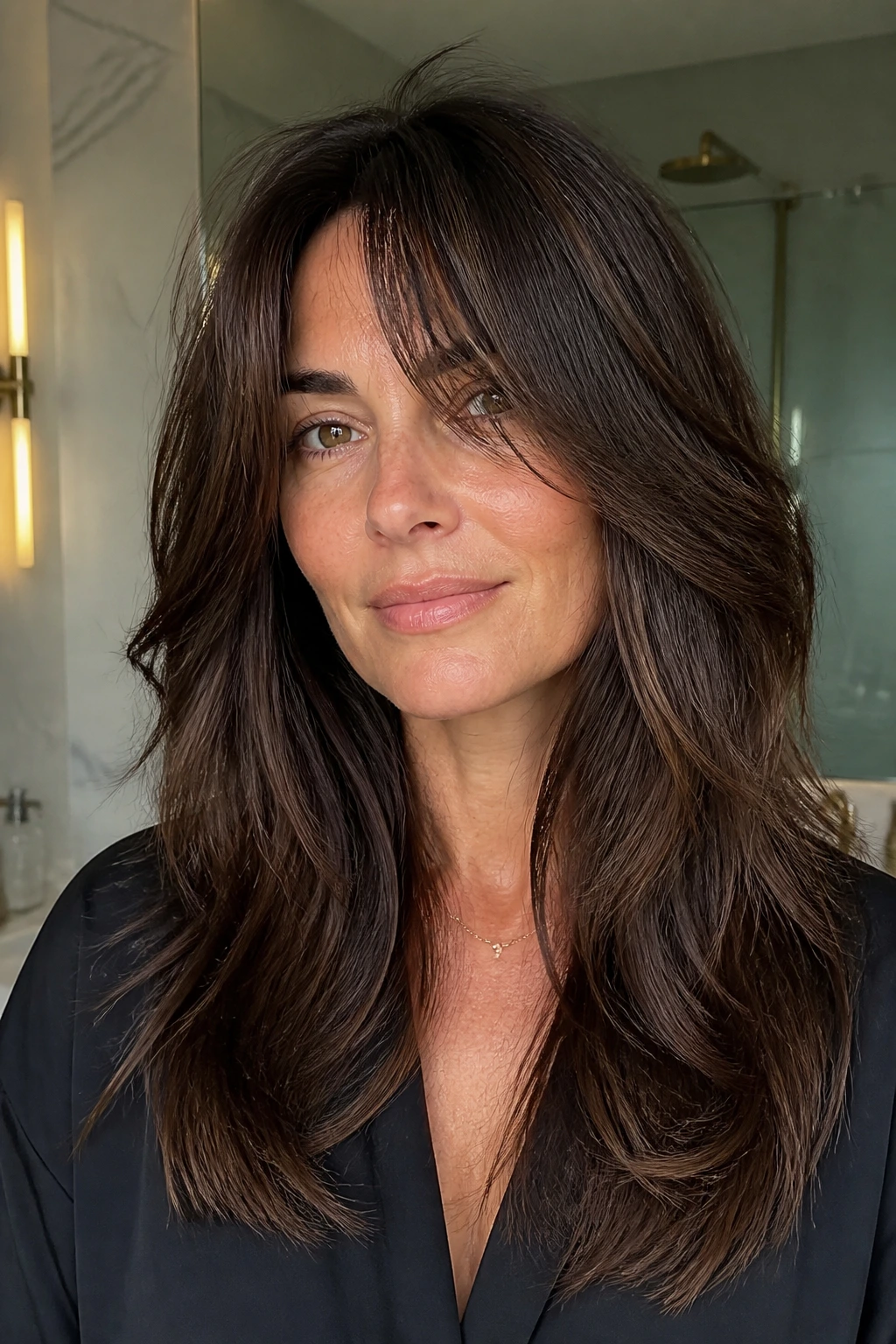
If your hair feels heavy, this is the answer that actually solves the problem instead of just rearranging it. Thick-hair layers with a long broken fringe remove bulk where it stacks up, then keep the front loose and piecey so the bang can move instead of sitting like a wall.
The words “broken fringe” matter. It means the bangs are not cut into one solid slab. They’re separated into soft bits that let the forehead breathe. That helps thick hair behave, especially when the hairline grows in strong or the front wants to puff out.
I’d avoid too much thinning at the very ends. That can leave thick hair looking weak at the bottom while still bulky at the roots. The smarter move is interior weight removal and a fringe that stays long enough to sweep aside when you need a break from it.
21. Curly Shag with Curved Bangs
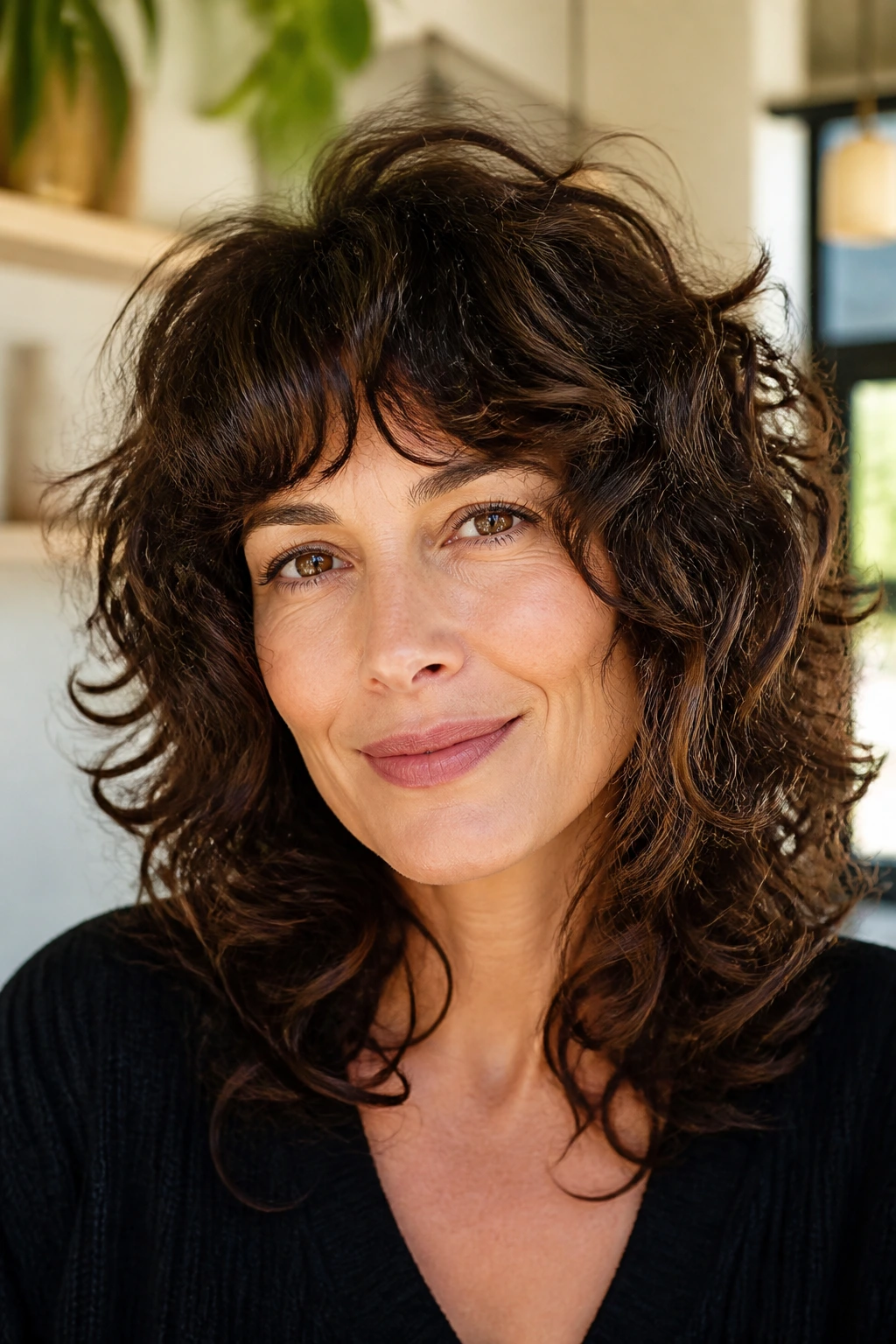
Curly shag cuts need room to spring, and curved bangs give them that room. The layers are shaped around the curl pattern, which keeps the silhouette rounded rather than boxy, and the fringe follows the arc of the curls instead of trying to force a straight line where one won’t live.
The key here is length. Curly bangs usually need to be longer than straight bangs by a good margin, sometimes half an inch or more, because they bounce upward as they dry. A stylist who cuts curls dry knows this instinctively. If they don’t, the fringe can end up too short the first time you wash it at home.
This cut is especially nice when you want definition around the eyes and cheekbones without spending forever with a diffuser. The shape does a lot of the work on its own.
22. Shoulder Flip Layers with Side Fringe
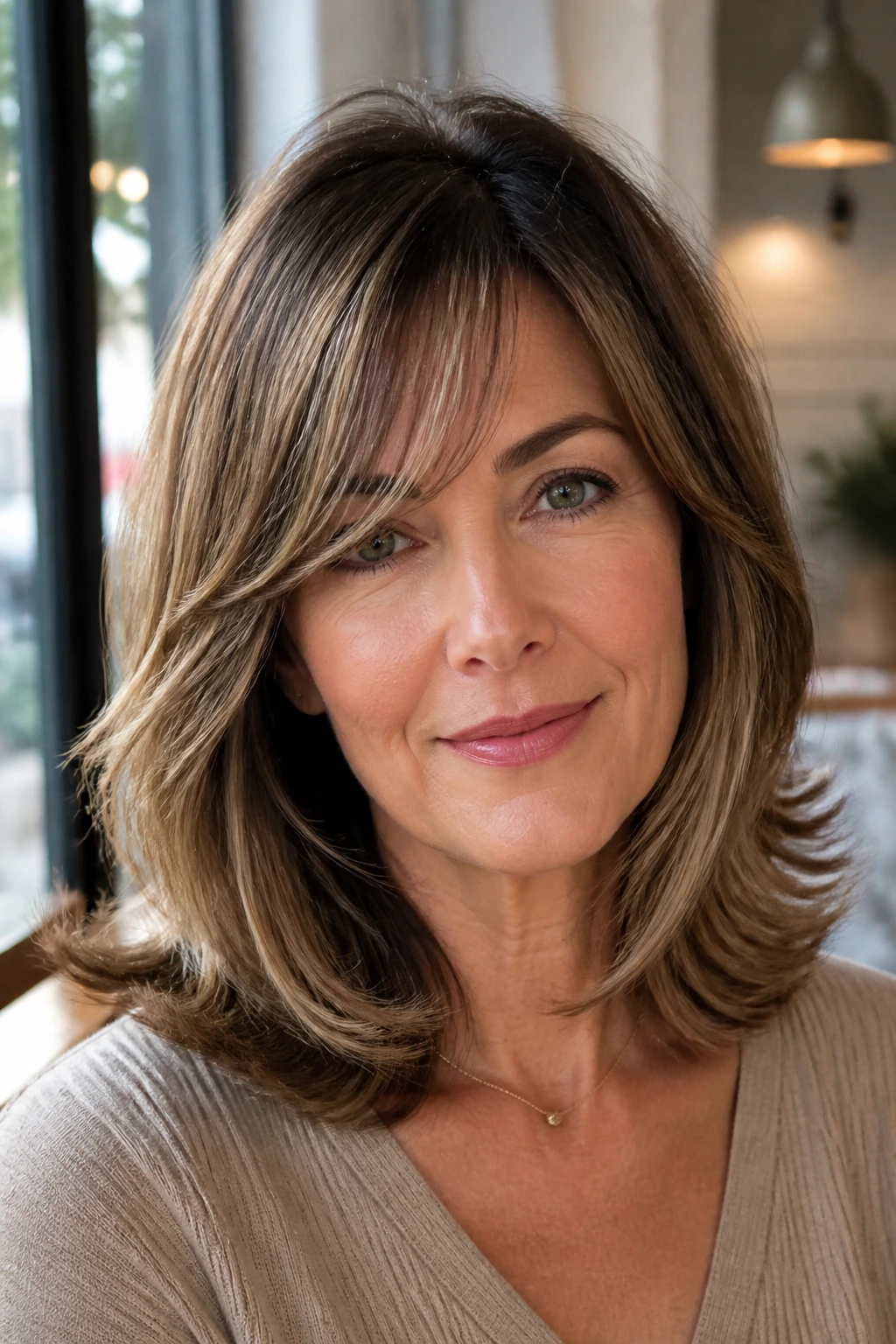
Shoulder flip layers have a playful edge. The ends are cut and styled to flick away from the shoulders, which creates movement even in otherwise straight hair. Add a side fringe and the cut becomes softer, less blunt, and a little less retro than it first sounds.
This one is good if you like a bit of personality in the haircut. It doesn’t sit still. The layers encourage the ends to curve out, and the fringe breaks up the front so the shape doesn’t feel heavy. A medium round brush or a quick pass with a flat iron can set the flip without making it stiff.
I like this shape on hair that falls in the medium density range. Fine hair can lose too much structure if the ends are over-flipped, and very thick hair may need some internal debulking first.
23. Invisible Layers with Soft Fringe
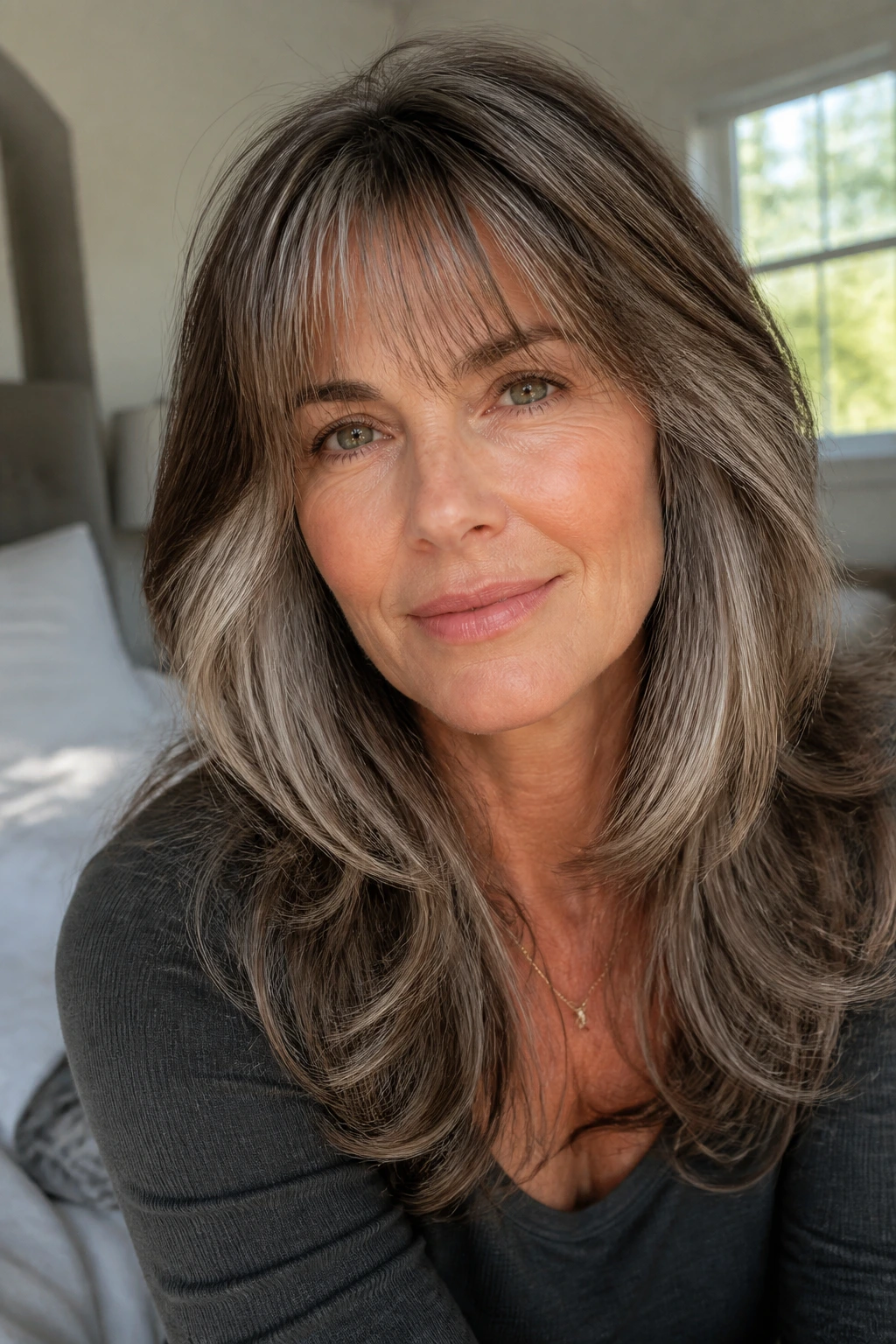
Invisible layers are for people who want movement but hate the obvious “layered haircut” look. The cut keeps the outline mostly intact, then removes weight from the inside so the hair falls with a softer bend. A soft fringe ties the front together without creating a dramatic line across the forehead.
This is one of the most low-maintenance options here. It doesn’t demand a lot of daily styling, and it grows out in a calm way because the layers are hidden. If your hair is already pretty healthy and you just want it to behave a little better, this may be the smartest direction.
The fringe should be long enough to brush away from the face when needed. That makes the cut flexible. You can wear it swept, part it, or tuck it, and the haircut still makes sense.
24. French-Girl Layers with Eyelash Bangs
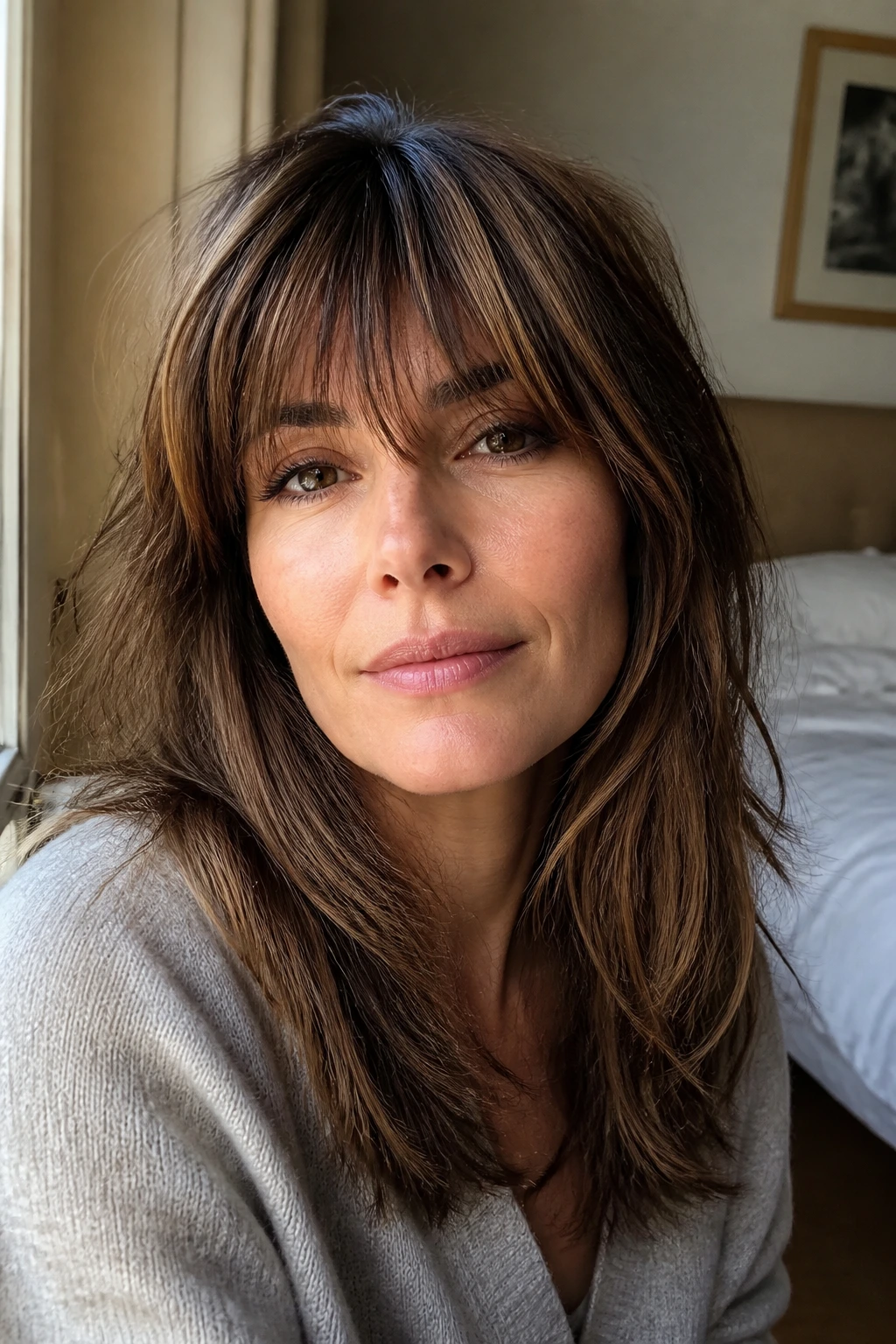
French-girl layers are not really about nationality. They’re about a certain relaxed shape: soft ends, natural movement, and bangs that sit just at the eyelashes so the face looks framed without feeling boxed in. It’s a little romantic, a little undone, and much easier to wear than it looks in photos.
What to Ask For
- Keep the layers soft through the midlengths, not jagged.
- Let the fringe skim the lashes, then open slightly at the sides.
- Avoid over-styling the ends; a loose bend is enough.
This cut looks best when it’s not too perfect. A little bend, a little separation, a little natural texture—that’s the point. If you spend twenty minutes making every piece behave, it loses the charm. A quick blow-dry and a touch of light cream are usually enough.
25. Air-Dried Layers with Long Loose Bangs
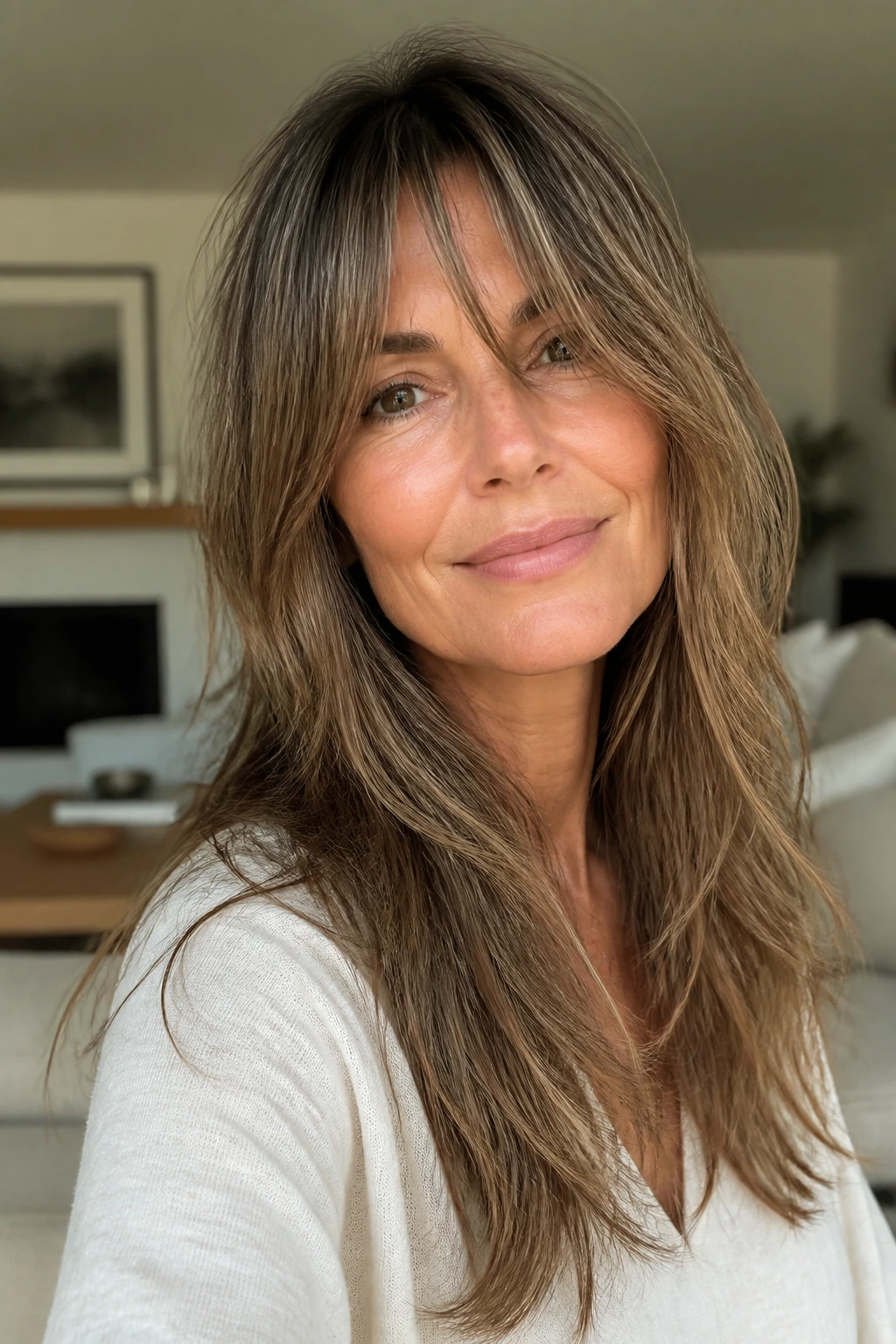
This is the cut for busy mornings, humid weather, and anyone who wants hair to look decent before the coffee is finished. The layers are placed so they fall into shape on their own, and the long loose bangs stay soft enough to tuck aside, part in the middle, or let drift across the forehead.
What makes it work is tolerance. The cut does not fall apart if you skip a brush-through or sleep on it wrong. It’s built to bend naturally, which makes it a smart option if you wear your hair wavy, slightly bent, or plain old imperfect.
Keep the fringe longer than you think you need. Long bangs are far more forgiving than short ones, especially if you want the option to pin them back on off days. That little bit of length buys you a lot of peace.
Why Sweeping Layers Keep Their Shape Instead of Going Flat
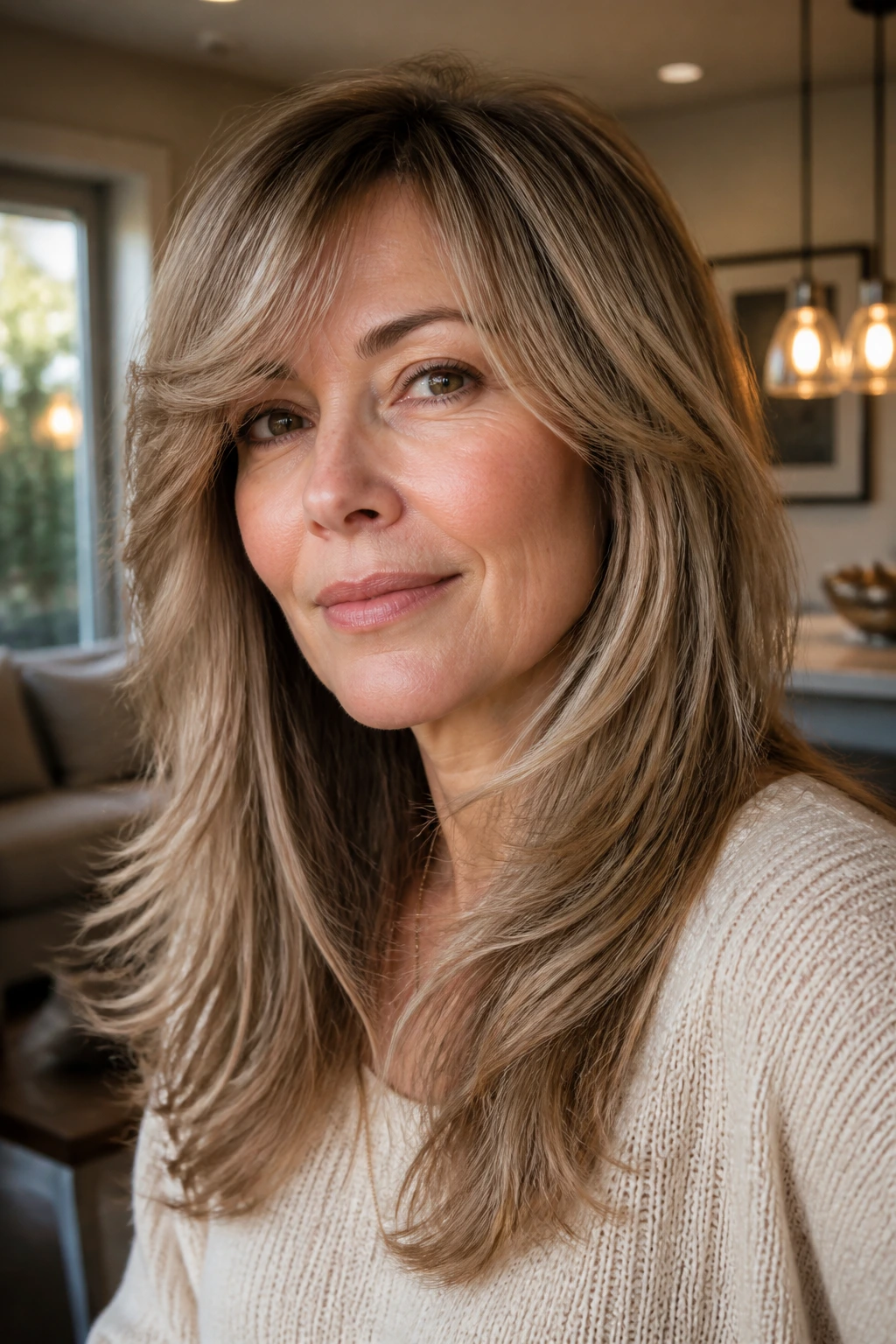
Sweeping layers do one thing better than blunt, one-length cuts: they create movement where hair tends to get stuck. The front pieces are usually cut to frame the cheekbones or jaw, then the longer layers fall away from the face instead of piling on top of it. That small shift changes the whole look. The haircut no longer hangs from the crown down. It moves outward, which is why it feels lighter even when the total length stays the same.
Bangs matter here because they control the first impression. A straight fringe can be sharp, and a too-short fringe can look fussy fast. Sweeping fringe, curtain fringe, bottleneck fringe, and side-swept fringe all soften the front without erasing the face. That’s useful if your hairline has cowlicks, if your forehead is wider than you want to emphasize, or if your glasses need room to live without a fight.
The other quiet advantage is grow-out. These cuts tend to blur into each other as they get longer, which is a gift if you don’t want a harsh grow-out line every six weeks. A good sweep can survive a little humidity, a missed blow-dry, and a bad hair day with more grace than a blunt cut usually can.
The Tools That Make the Shape Behave at Home
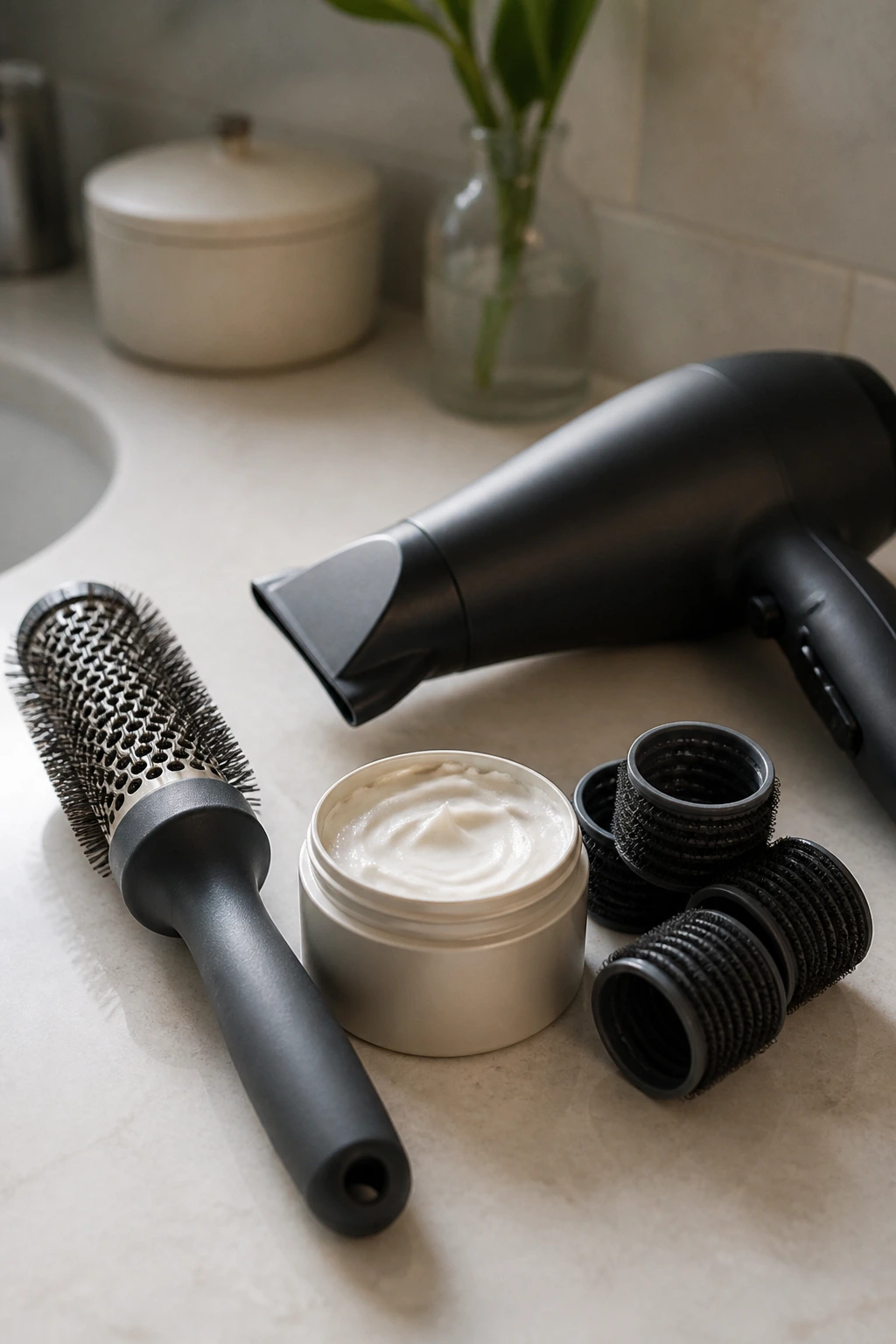
You do not need a suitcase of styling gear. You need a few pieces that actually do something. The right brush matters more than a drawer full of random products.
- 1.5- to 2-inch round brush: This gives the bangs and front layers enough bend without making them look over-curled.
- Dryer with a concentrator nozzle: Direct airflow keeps the fringe smoother and helps the layers fall in the direction you want.
- Root-lift spray or mousse: Use this at the crown if the cut needs a little height and you hate flat roots.
- Light smoothing cream: This keeps the front from frizzing out, especially on gray, coarse, or wavy hair.
- Velcro rollers: Old-school, yes. Effective, also yes. They give the front a soft lift while you finish makeup or get dressed.
- Duckbill clips: Great for setting a side part or holding curtain bangs away from the face while they cool.
- Small flat iron: Handy for just the fringe or the face frame. You do not need to iron the entire head.
- Dry shampoo: Good for day-two roots and for keeping bangs from looking greasy at the forehead line.
How to Tell Your Stylist What You Want
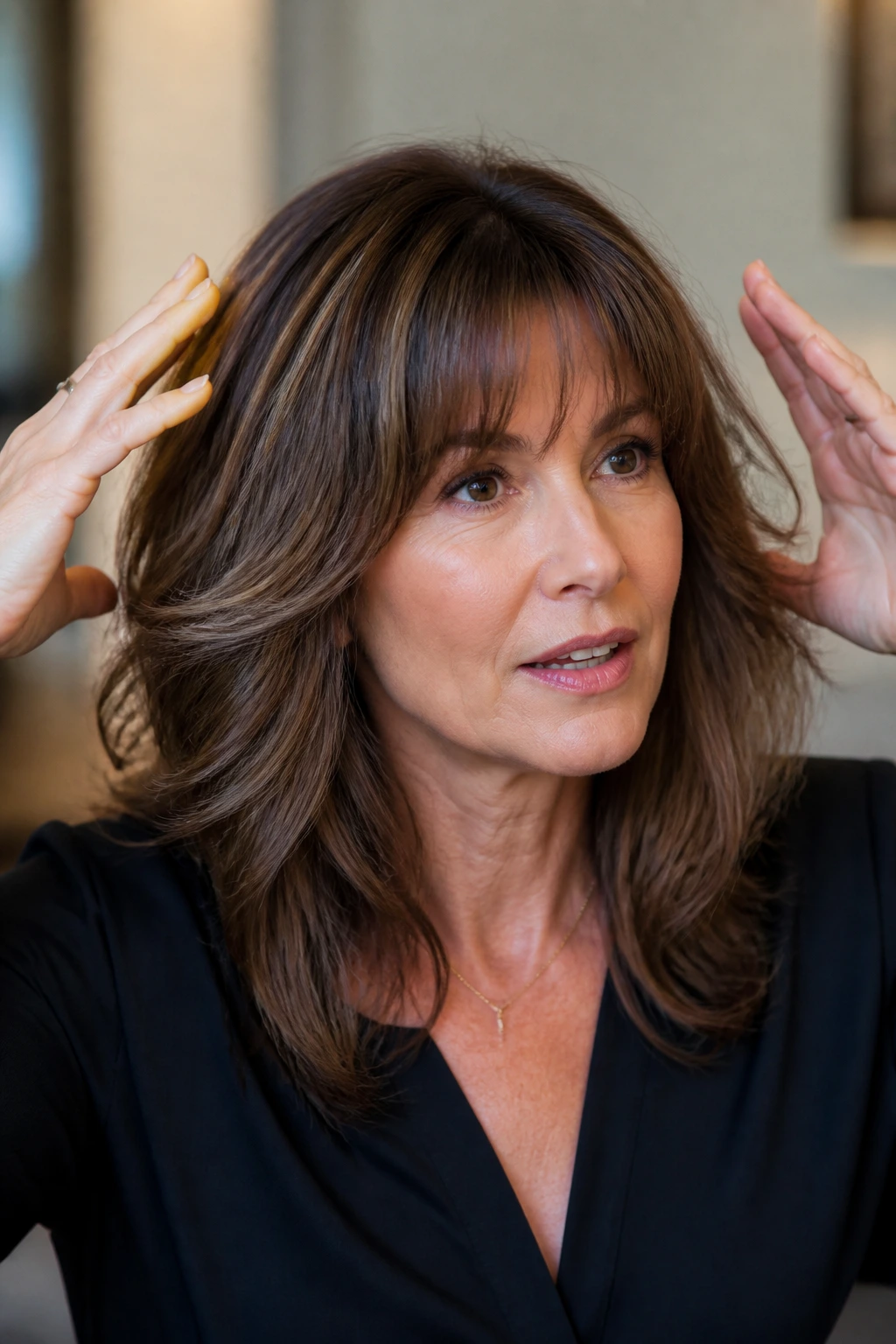
The words matter. “Sweeping layers” can mean a lot of things, and that is where bad haircuts start. Bring a photo, yes, but also say what you want the haircut to do. Do you need more lift at the crown? Less bulk at the sides? Bangs that can be pinned back? Those details change the cut more than the photo does.
Be specific about length. Say where you want the shortest face-framing pieces to land: cheekbone, lip, jaw, or collarbone. Say whether the fringe should hit the brows or sit below them. If you wear glasses, say that out loud. If your hair cowlicks at the front, say that too. A stylist can cut around a cowlick, but not if they never hear about it.
The other thing to mention is how often you actually style your hair. If you air-dry most days, don’t ask for a shape that only works with a round brush. If you hate trims, avoid a fringe that needs constant precision. That honesty saves everyone time.
How to Style These Cuts on Busy Mornings
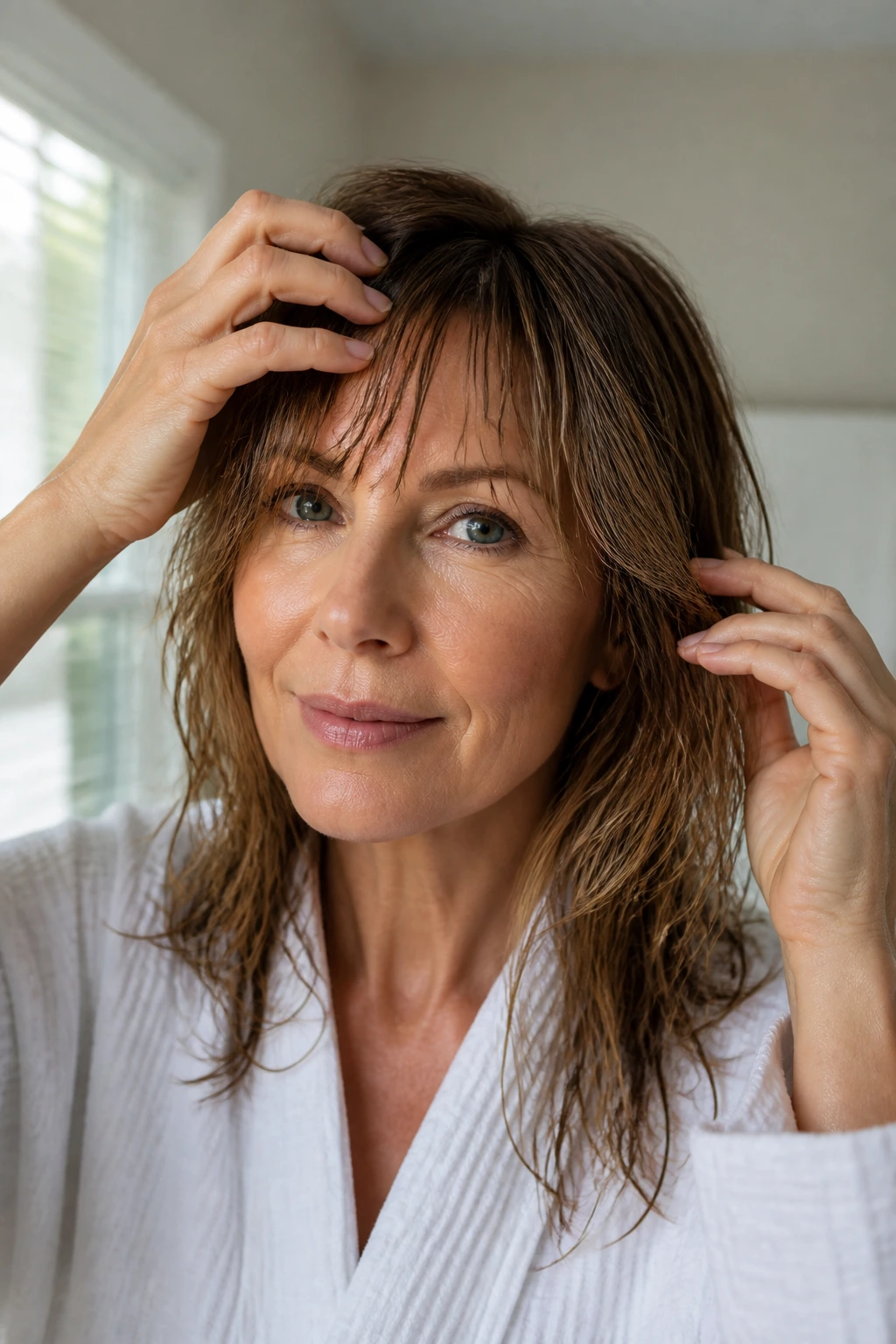
You don’t need a 45-minute blowout to make sweeping layers look decent. You need a repeatable routine. Start with damp hair, not soaking wet hair, so the front doesn’t take forever to dry. Work a little mousse or root spray into the crown, then use your fingers or a brush to set the part before the hair dries in the wrong direction.
For bangs, the first 60 seconds matter. Blow them from side to side, then finish in the direction you want them to live. That little cross-dry keeps them from splitting or sticking straight down. If the ends need shape, wrap only the top two front sections around a round brush and let the rest air-dry. The whole head does not need a full salon pass.
Day two is where dry shampoo earns its keep. Lift the fringe, spray lightly at the roots, wait a minute, then brush it through. If the layers have gone too flat, mist the front with water and re-dry just the top half. You can fix a lot with 5 minutes and a little patience.
The Mistakes That Turn Soft Layers Into a Mess
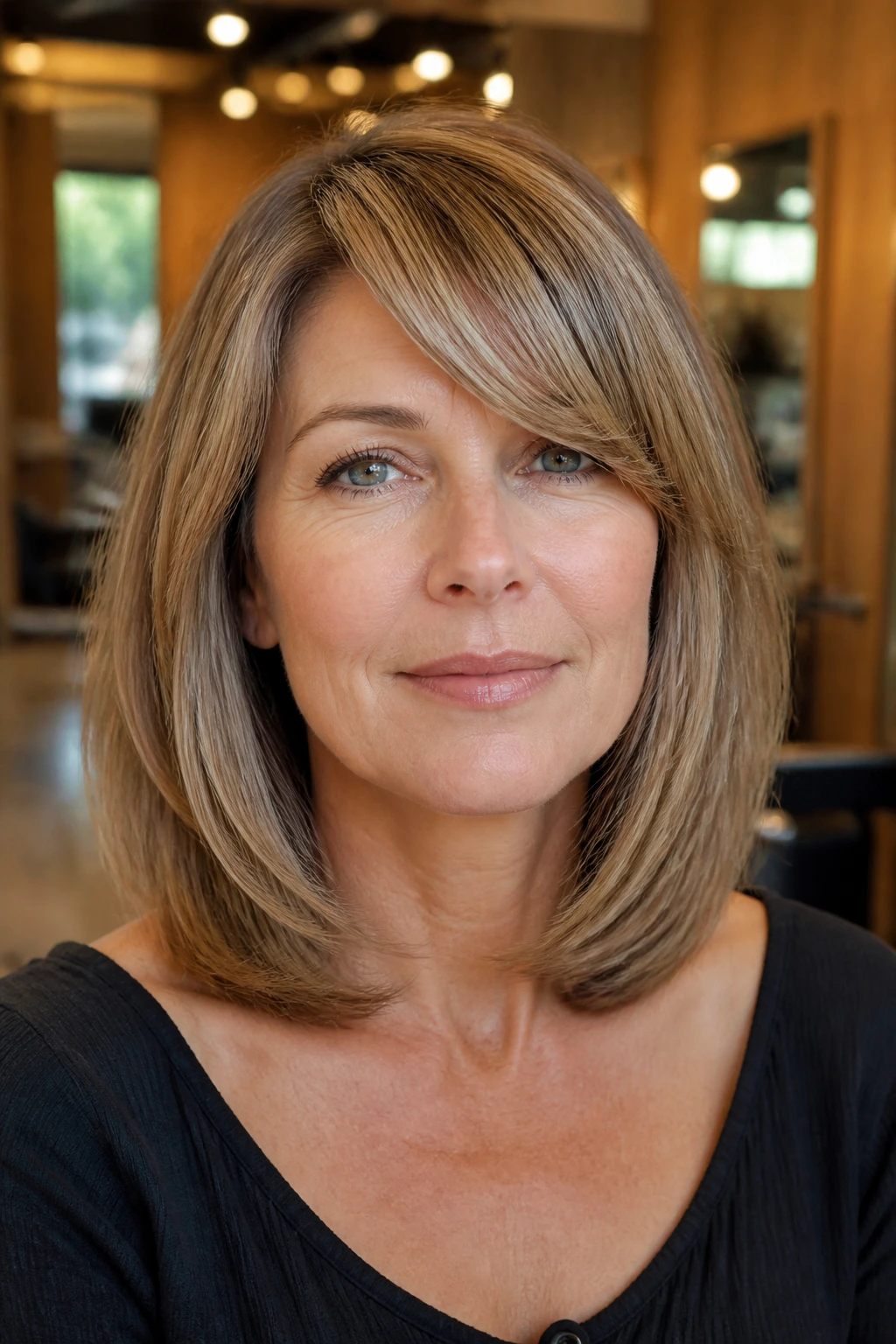
The most common mistake is cutting the bangs too short. Short fringe can look edgy for about two days, then it starts sitting awkwardly above the brows and fighting every cowlick in the room. The fix is simple: leave the bangs slightly longer than the final target and trim them dry in small passes.
Another one is starting the layers too high. When the shortest layers begin near the cheekbones or higher, thick hair can puff outward and fine hair can lose density fast. Ask for the layers to start lower if you want softness instead of volume overload.
People also tend to overload the front with product. Bangs do not need a golf ball of cream. A pea-sized amount is usually enough, and even that can be too much on fine hair. Use the smallest amount that keeps the fringe from frizzing.
Finally, don’t ignore the trim schedule. A beautiful fringe can get sloppy in three weeks if it grows fast. That is not the haircut’s fault.
Good Tweaks for Fine Hair, Thick Hair, Gray Hair, and Curls
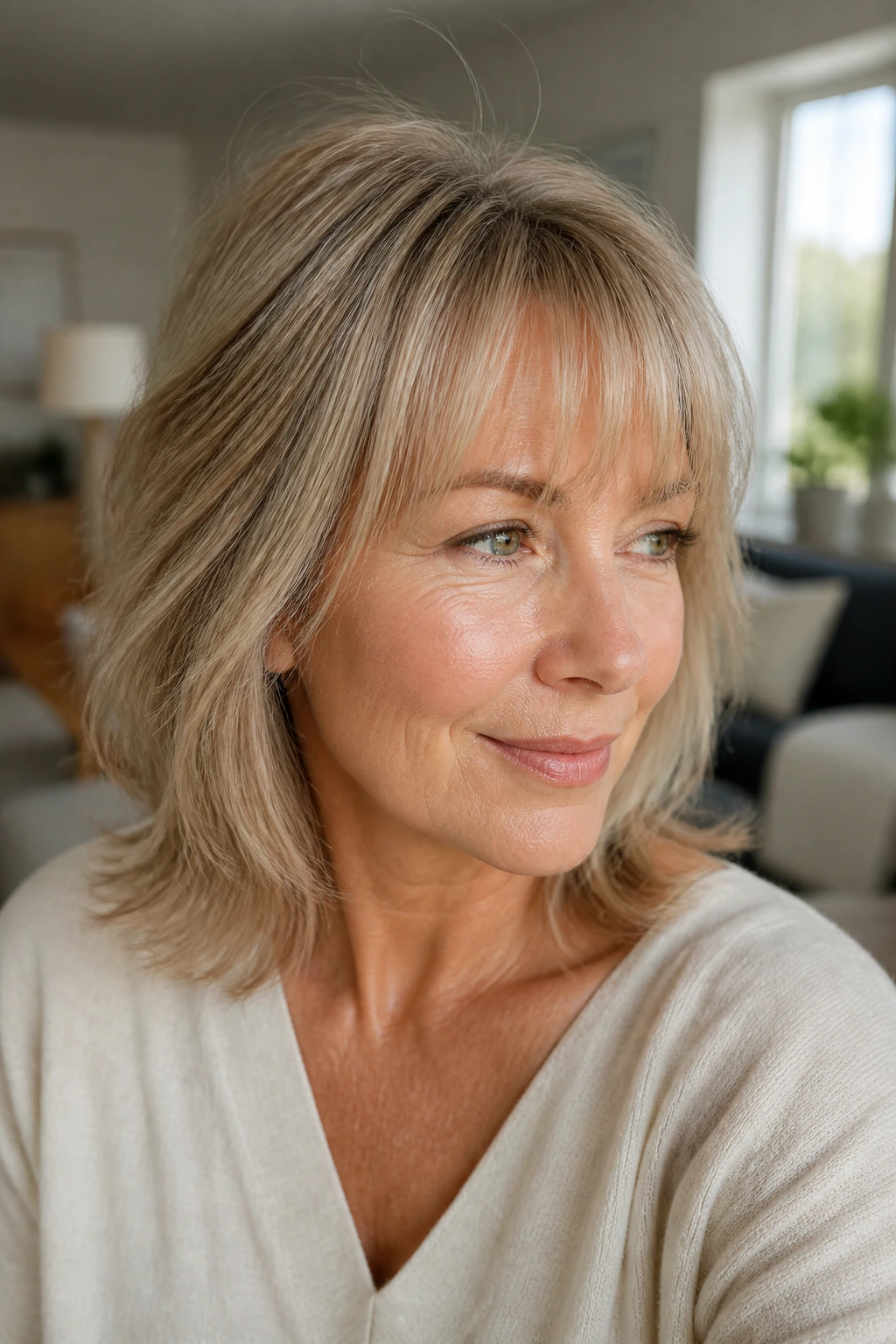
Fine Hair Lift Version: Keep the layers low and the perimeter strong. A light bang and a root spray will give you shape without making the ends look thin.
Thick Hair Weight-Removal Version: Ask for interior debulking and longer layers through the face. That keeps the outline controlled and stops the cut from ballooning outward.
Gray Hair Soft-Frame Version: Favor curtain or side-swept fringe over blunt bangs. Silver hair shows hard edges fast, and a softer front feels more natural.
Curly Shape-Friendly Version: Cut the fringe longer and dry, then let the curls spring. The layers should support the curl pattern, not slice through it.
Low-Maintenance Grow-Out Version: Choose longer bangs and invisible layers. They hold their shape longer and don’t need a trim every time you blink.
Keeping the Fringe and Layers Fresh Between Trims

Bangs usually need attention sooner than the rest of the cut. For shorter fringe, expect a tidy-up every 3 to 4 weeks if you want the shape to stay crisp. Curtain bangs and longer side-swept fringe can usually stretch to 5 or 6 weeks before they start covering the eyes or collapsing into the cheekbones.
The layers themselves can go a bit longer. Most sweeping-layer cuts stay in shape for 8 to 12 weeks, depending on how fast your hair grows and how precise the front is. If the haircut is more forgiving—soft shag, invisible layers, long loose fringe—you can stretch a little farther. If it’s a sharper bob or a blunt base with face-framing pieces, book sooner.
Between appointments, keep the ends from drying out with a tiny bit of cream or oil, but stay away from heavy buildup around the bangs. That’s the fastest route to separation and flatness. Once every 2 to 4 weeks, use a clarifying wash if your styling products start leaving the fringe sticky or dull. Clean hair moves better. Always has.
Frequently Asked Questions
Which bang shape is easiest to live with if I don’t want constant trimming?
Long curtain bangs or side-swept fringe are the easiest to manage. They grow out into the face-framing layers instead of turning into a hard line across the forehead, so they buy you more time between salon visits.
Will sweeping layers work if my hair is fine and flat?
Yes, but the layer placement matters. Ask for long internal layers and keep the bangs light; too much removal at the ends will make fine hair look sparse. A root-lift spray or mousse at the crown helps more than heavy styling cream.
Can I wear this kind of cut with glasses?
Absolutely, and some versions are better with glasses than others. Side-swept fringe, curtain bangs, and brow-grazing fringe usually sit more comfortably around frames than short, blunt bangs that hit right at the top edge.
What if my hair is thick and puffy?
Ask for weight removal inside the shape, not just more layers around the outside. Thick hair often needs a controlled perimeter and a longer fringe so the front doesn’t expand outward like a triangle after one wash.
Do these cuts work on gray or silver hair?
They do, and they often look especially good because the movement shows off the color changes in the strands. Soft fringe and layered movement keep silver hair from looking too solid or helmet-like.
How do I know if I should choose a middle part or side part?
Use the part that gives your roots the best lift and your face the softest frame. A middle part suits curtain bangs and bottleneck fringe; a side part works better if you want one side to lift off the forehead and the other to tuck into the cheek.
What if my bangs split in the middle no matter what I do?
That usually means a cowlick or a strong growth pattern at the front. Keep the fringe longer, dry it from side to side while it’s damp, and avoid cutting it too short. A tiny change in length can fix a lot.
Can I ask for this if I’m growing out a bob?
Yes, and it’s a smart way to make the grow-out look planned. Face-framing layers and soft fringe can bridge the awkward stage between a shorter bob and a longer shape without leaving the front looking heavy.
The Cuts That Keep Moving

The best thing about sweeping layers is not that they make hair look younger. I’d argue that’s the wrong goal anyway. The better payoff is movement, softness, and a haircut that still looks like a haircut on days when your styling routine is half-finished and the humidity is winning.
That is why these shapes hold up so well. They give the hair somewhere to go. Up at the crown, away from the cheeks, across the forehead, or out through the ends—any of those directions is better than a flat, unmoving block.
Bring one of these ideas to the salon, but bring your real-life habits too. That part matters just as much. The right sweep, the right fringe, and the right length can make your hair feel like it belongs to you again.