



Round faces can wear bangs. The problem is usually the cut, not the face.
A blunt line that lands right at the cheeks has a nasty habit of making everything feel wider and shorter at the same time. Layered bangs for long hair are the cleaner fix: they break up that horizontal line, keep movement at the front, and drag the eye down through the length of the hair instead of letting it sit in one wide band across the face.
Long hair gives you room to play. You can keep the shortest point soft, let the side pieces fall past the cheekbones, and build a little lift at the crown so the whole shape reads longer, not fuller. That last part matters more than most people think. Volume in the wrong place makes a round face look rounder. Volume up top, though, changes the whole story.
Some fringe styles need a round brush and a bit of patience. Others settle in with a quick bend and a small amount of texturizing spray. The useful part is learning which shapes do what, because once you see the difference, you stop asking for “bangs” in the abstract and start asking for a line that actually works on your face.
Why These 25 Cuts Are Worth Saving
-
They stretch the face visually: The best versions keep the shortest point above the widest part of the cheek and let the corners fall longer, which creates a more vertical read.
-
They keep long hair from feeling shapeless: A long length with no front structure can look heavy fast; layered fringe gives the haircut a clear starting point.
-
They work with different textures: Straight hair, soft waves, dense curls, and fine strands all need a different bang density, and the styles below cover that spread.
-
They grow out with less drama: A layered fringe softens into face-framing pieces instead of turning into a hard shelf that sits there for months.
-
They can be styled fast or polished: Some of these are built for a ten-minute blowout; others look better with an air-dried bend and a little piecey separation.
-
They give round faces more shape without hiding them: That’s the sweet spot. You still see your face, but the line through it is cleaner and longer.
What Actually Flatters a Round Face at the Front
A round face usually has similar width and length, softer angles, and cheeks that hold the widest point. That does not mean you need to cover it up. It means the front of the haircut should create direction.
Keep the shortest point away from the cheek width
If the bang ends exactly where the face is widest, the eye stops there. That’s the trap. Better shapes keep the shortest piece a little above the brows or a little lower around the nose bridge, then let the outer pieces slide past the cheeks and into the jawline or collarbone. That diagonal line matters. It’s doing a lot of the work.
Crown lift does more than extra side volume
A lot of people try to “slim” a round face by adding width around the temples. Bad move. What usually helps more is height at the crown and a clean fall through the sides. A little lift at the top makes the face read longer. Side puff does the opposite. If you remember one thing, remember that.
Parting lines change the whole mood
Center parts can be gorgeous on round faces when the bangs are long enough to break away cleanly. Deep side parts bring asymmetry, which can be even more forgiving if your cheeks are full or your hair likes to lie flat. There is no one part that wins every time. The cut and the styling have to agree.
1. Curtain Bangs with Long Center-Swept Layers
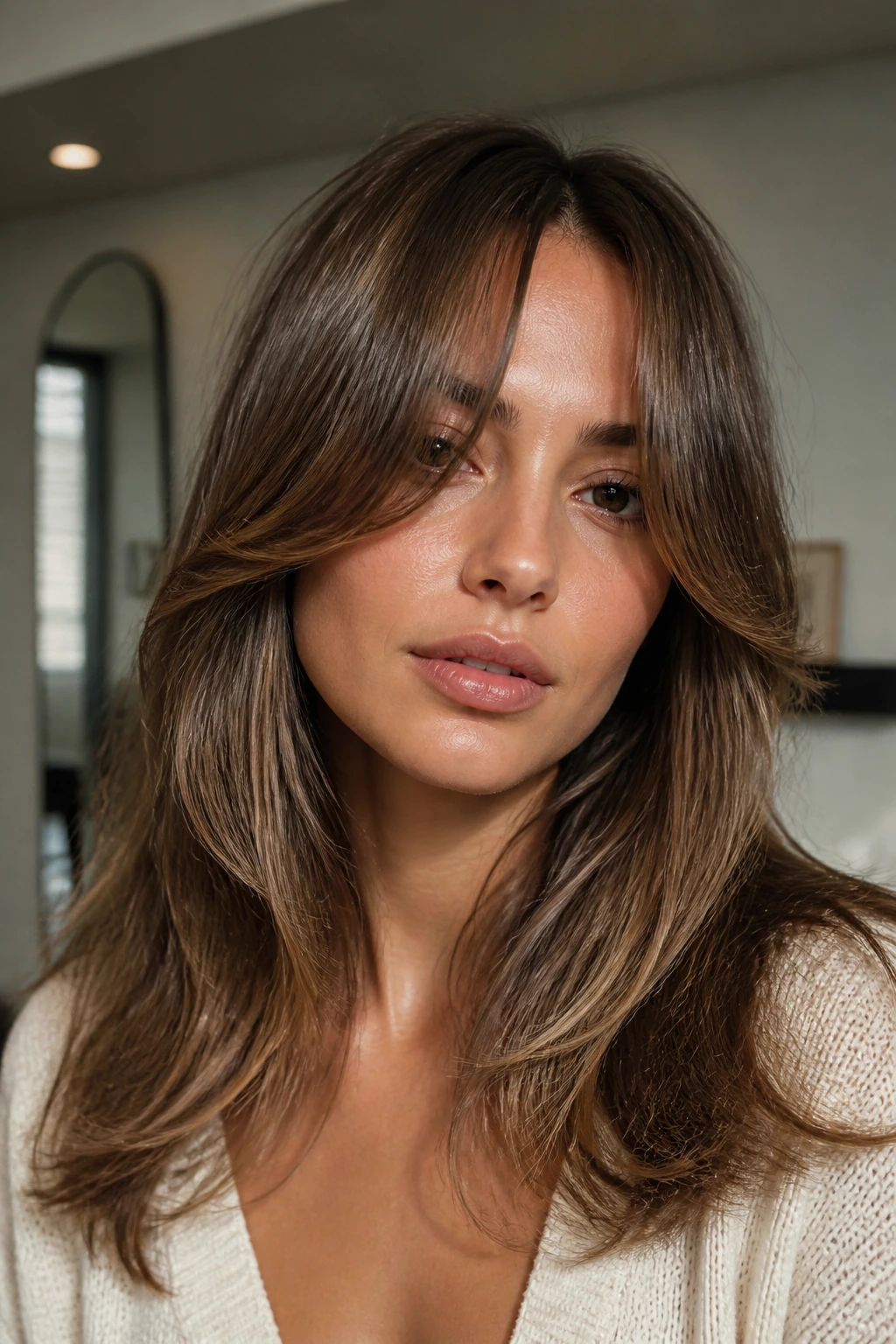
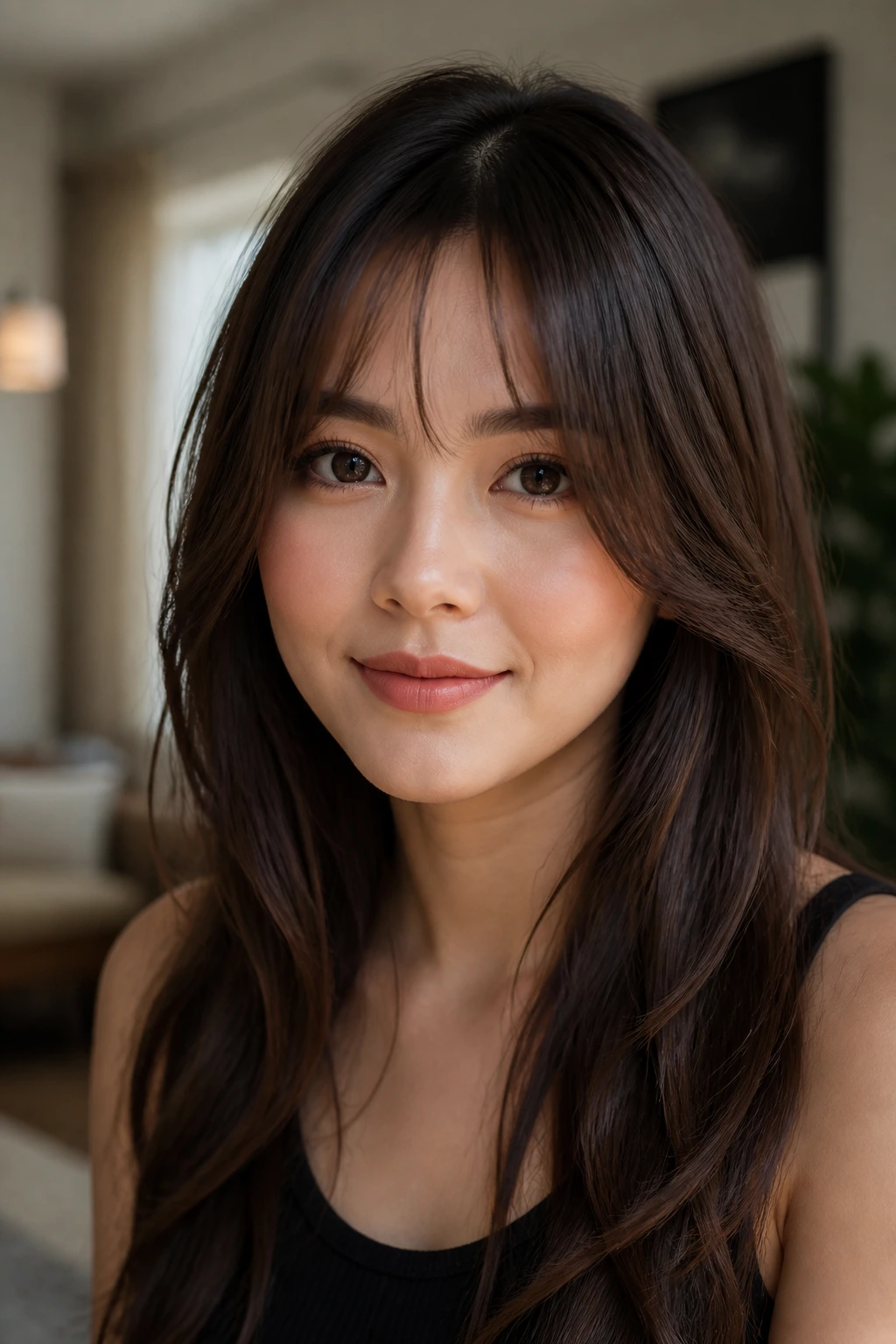
This is the easy starting point for a reason. Curtain bangs split near the center, then drift outward so the shortest point sits somewhere around the bridge of the nose or just below the brows, while the sides fall past the cheekbones. On a round face, that opening in the middle creates a long line down the center instead of a wide bar across the forehead.
The key is not making them too short. I like the first bend to happen below the fullest part of the cheek, because that keeps the front from ballooning out at the exact place you do not want it. Blow-dry the roots forward first, then sweep the pieces away from the face with a round brush. If the ends kick in too hard, they can make the face look broader. A softer bend is better.
2. Bottleneck Fringe with Tapered Cheek Pieces
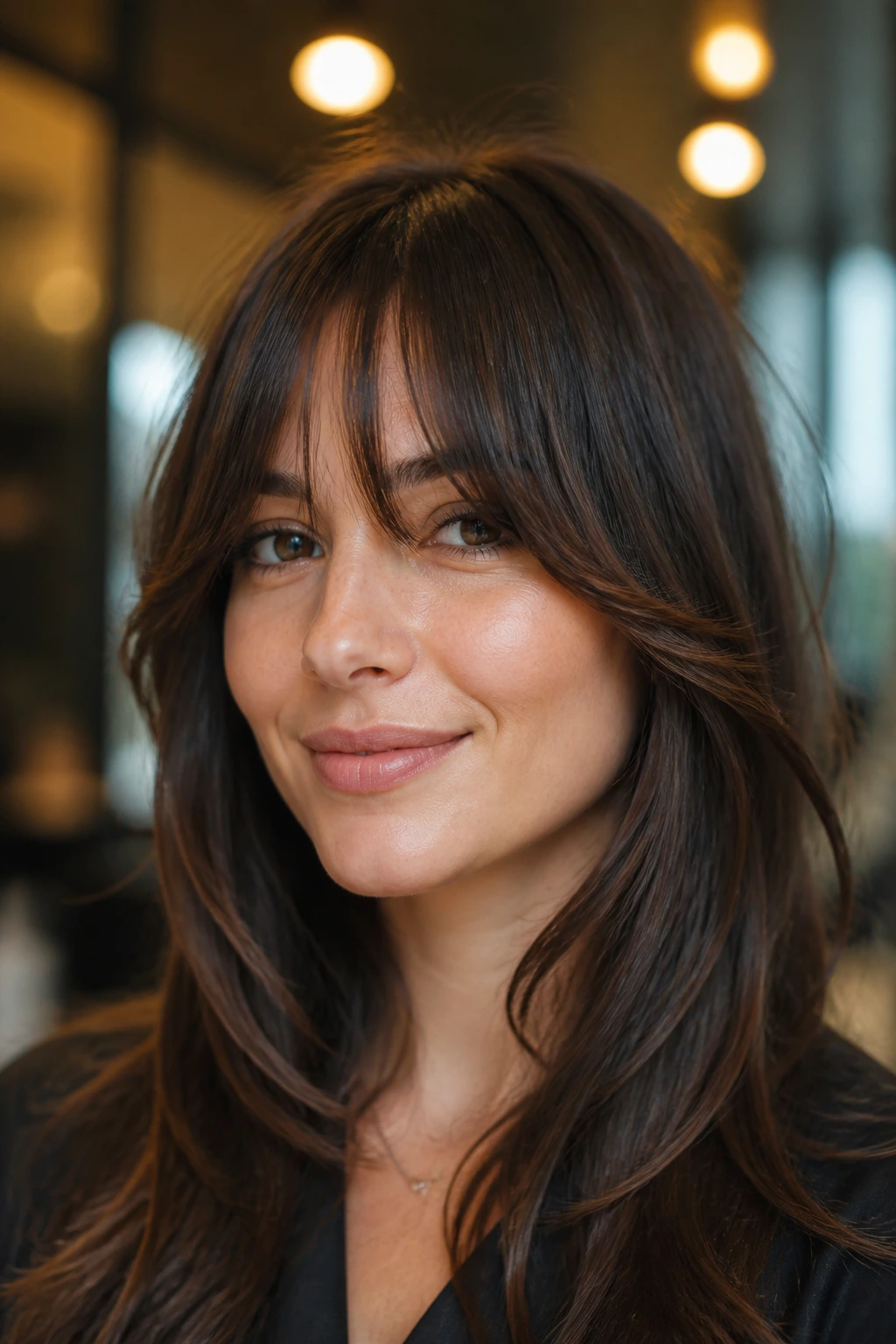
Why does this shape keep showing up on round faces? Because it behaves in layers. The center sits a little tighter, then the width opens gradually toward the temples, which keeps the front from looking boxy. The cheek pieces are the real trick here. They should graze the face, not sit on top of it like a wall.
This cut is especially good if your hair has enough density to hold shape without collapsing by noon. Ask for the center to be slightly shorter and the sides to be tapered longer, then style it with a mild curve away from the face. If the bend is too dramatic, the bang can flare out. You want shape, not wings.
3. Side-Swept Layered Bangs and a Deep Off-Center Part
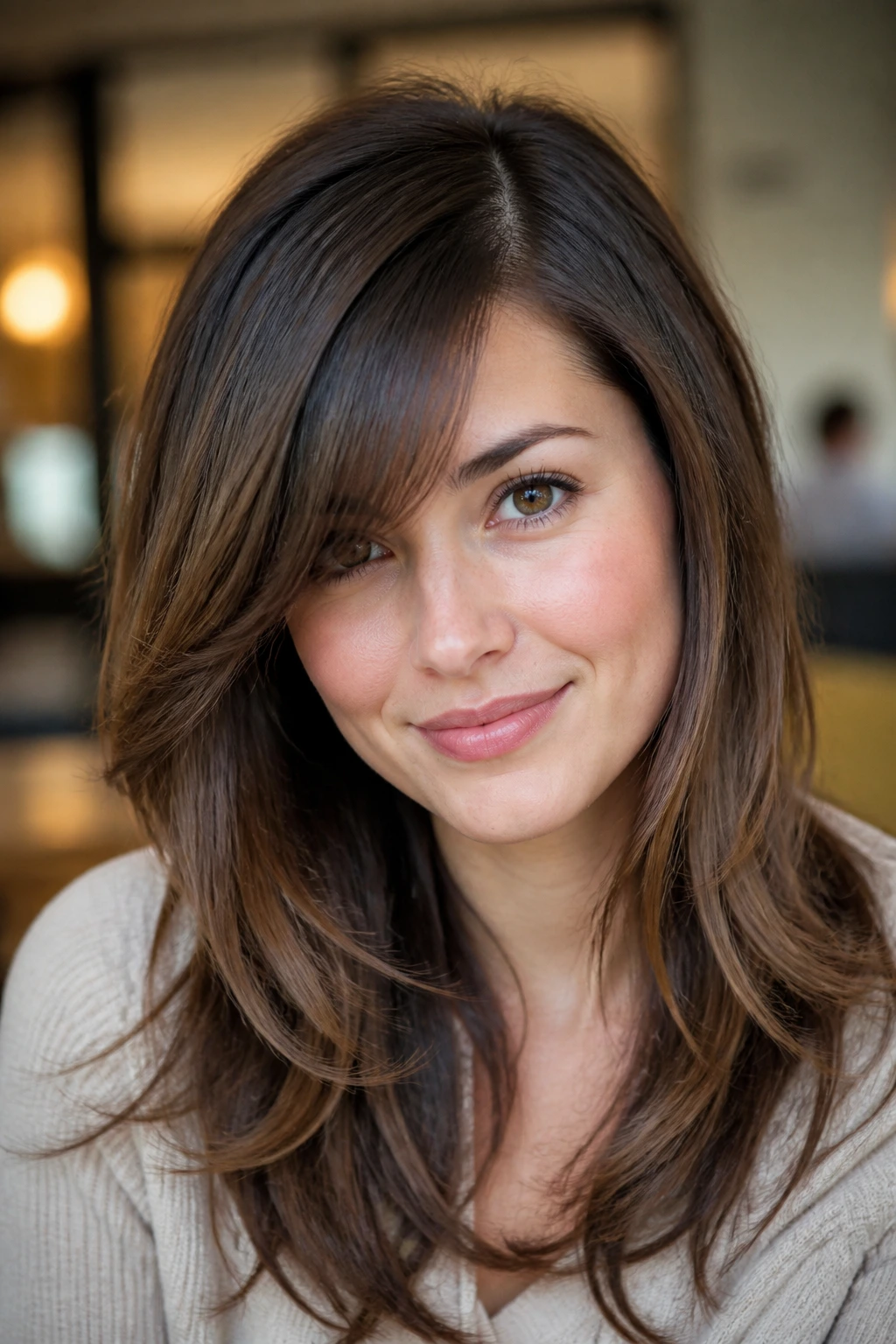
A deep side part can do more for a round face than a full curtain fringe if you like asymmetry. The diagonal line cuts across the forehead, then drops toward one cheek, which breaks the straight-on width of the face. It also gives you crown lift on the heavier side, and that bit of height is worth its weight in gold.
This is the style for someone who wants bangs without the daily commitment of a full fringe. The front pieces can be cut long enough to sweep across the brow and still blend into the sides. Use a blow-dryer and a medium brush to lift the roots at the part, then direct the bang across the forehead with a small bend at the end. Flat, limp side bangs are the enemy here.
4. Feathered Wispy Bangs That Melt Into the Length
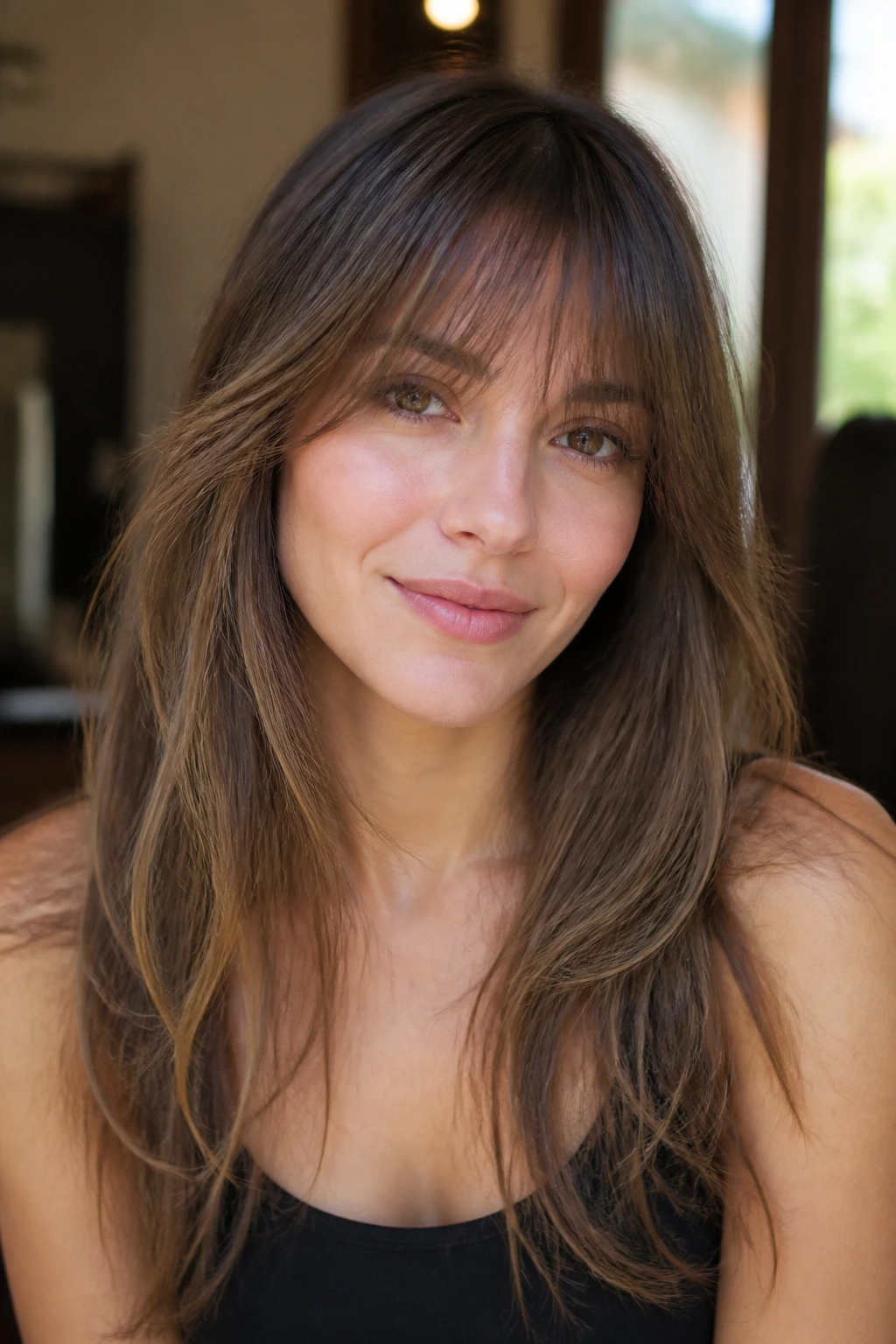
These are light enough that you almost forget they’re there until you see the shape they create. The strands are soft, broken up, and airy, so the front never becomes one solid band. That makes them a good option for fine hair or for anyone who wants the face framed without a lot of visual weight.
The danger with wispy bangs is going too sparse. If the layer gets thinned to death, it can look stringy in daylight. Ask for feathering, not over-thinning, and keep the corners long enough to connect to the front layers. A touch of mousse at the roots and a quick finger-scrunch can give these enough body to stay visible.
5. Brow-Skimming Choppy Fringe with Soft Corners
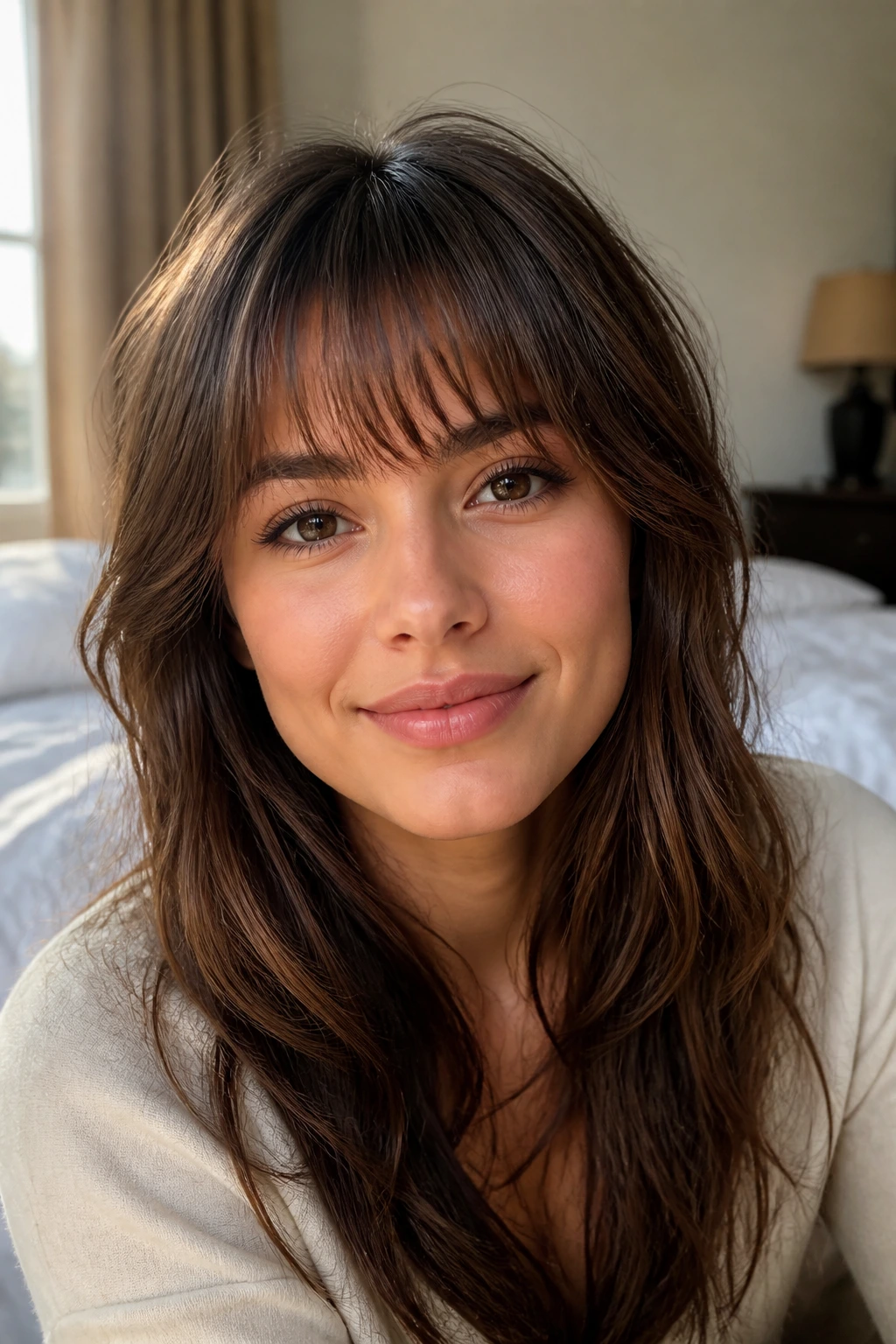
A straight line is not the enemy. A hard straight line is. Brow-skimming bangs can look sharp and fresh on a round face if the corners are softened and allowed to stretch toward the temples. That broken edge keeps the fringe from sitting like a shelf.
I like this on medium-density hair that can hold a little structure but still needs movement. The middle can sit right at the brow line, while the outer bits are left a touch longer. That tiny drop at the corners changes the whole feel. Style with a flat brush or a tiny round brush, then separate the ends with a dab of lightweight cream. No heavy paste. It will go clumpy fast.
6. Arched Layered Bangs That Open at the Cheeks
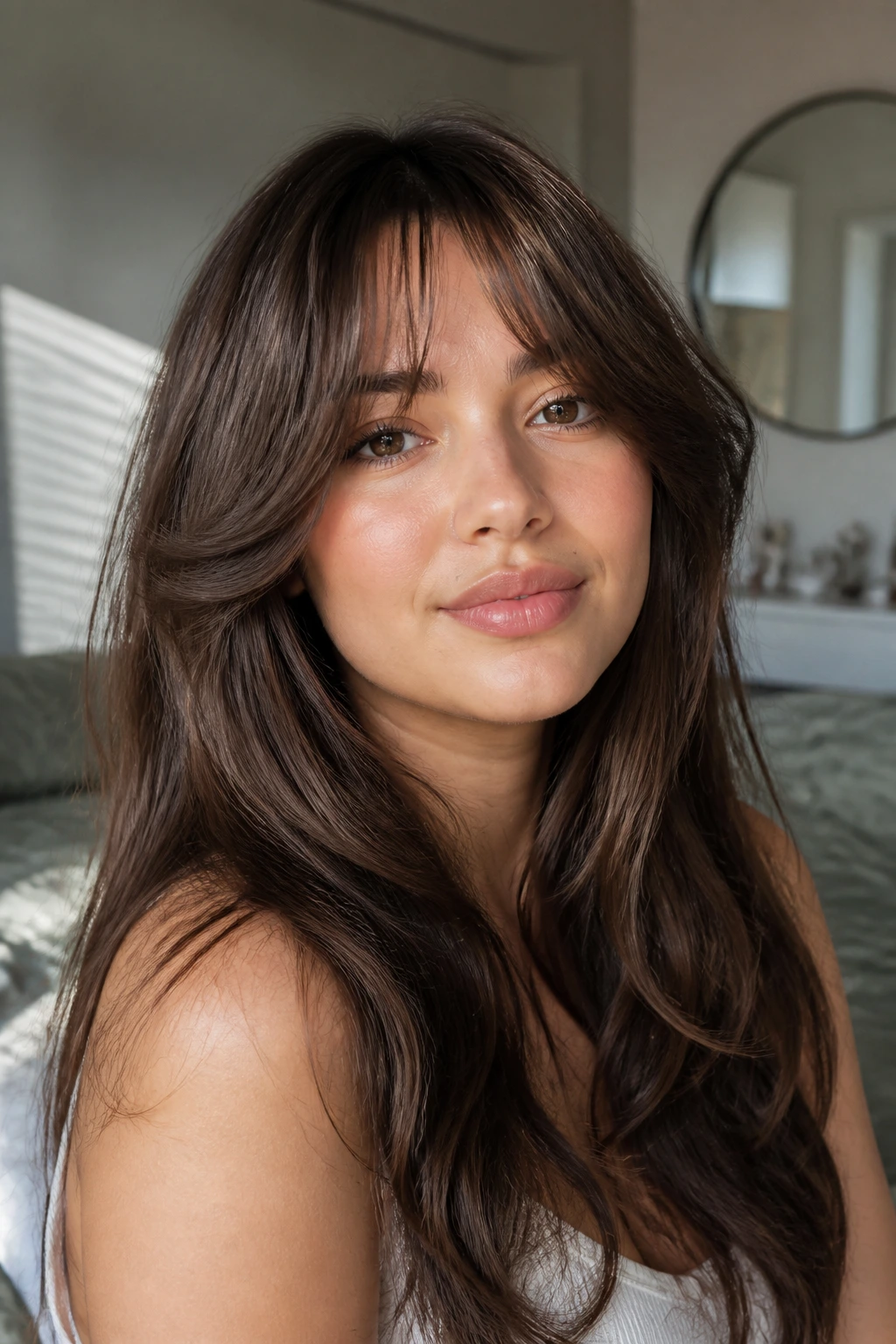
Think of this as a gentle curve rather than a blunt sweep. The center starts shorter, the sides drop longer, and the whole shape creates a soft arch over the forehead. On a round face, that arch matters because it keeps the eye moving upward and outward instead of stopping in one flat line.
This shape looks nicest when the curve is visible but not exaggerated. Too round, and it starts to echo the face instead of balancing it. Too flat, and it loses the effect. A medium round brush is usually enough to build the bend. I would not over-style it. Let the curve breathe a little.
7. French-Inspired Bangs with Piecey Texture

French-inspired fringe usually has a little more presence at the center, but the pieces are separated enough that the forehead never feels boxed in. That gives round faces some definition without the heavy feel of a dense blunt bang. It also wears well with long hair because the fringe can look intentional even when the rest of the hair is loose and undone.
The part that makes this shape work is the texture. If the bangs are all one thickness, the style turns heavy fast. Ask for soft point-cut ends and a bit of internal removal so the center sits cleanly. A dry texturizing spray helps here, but do not overdo it. You want separation, not grit.
8. Split Fringe with a U-Shaped Front Cut
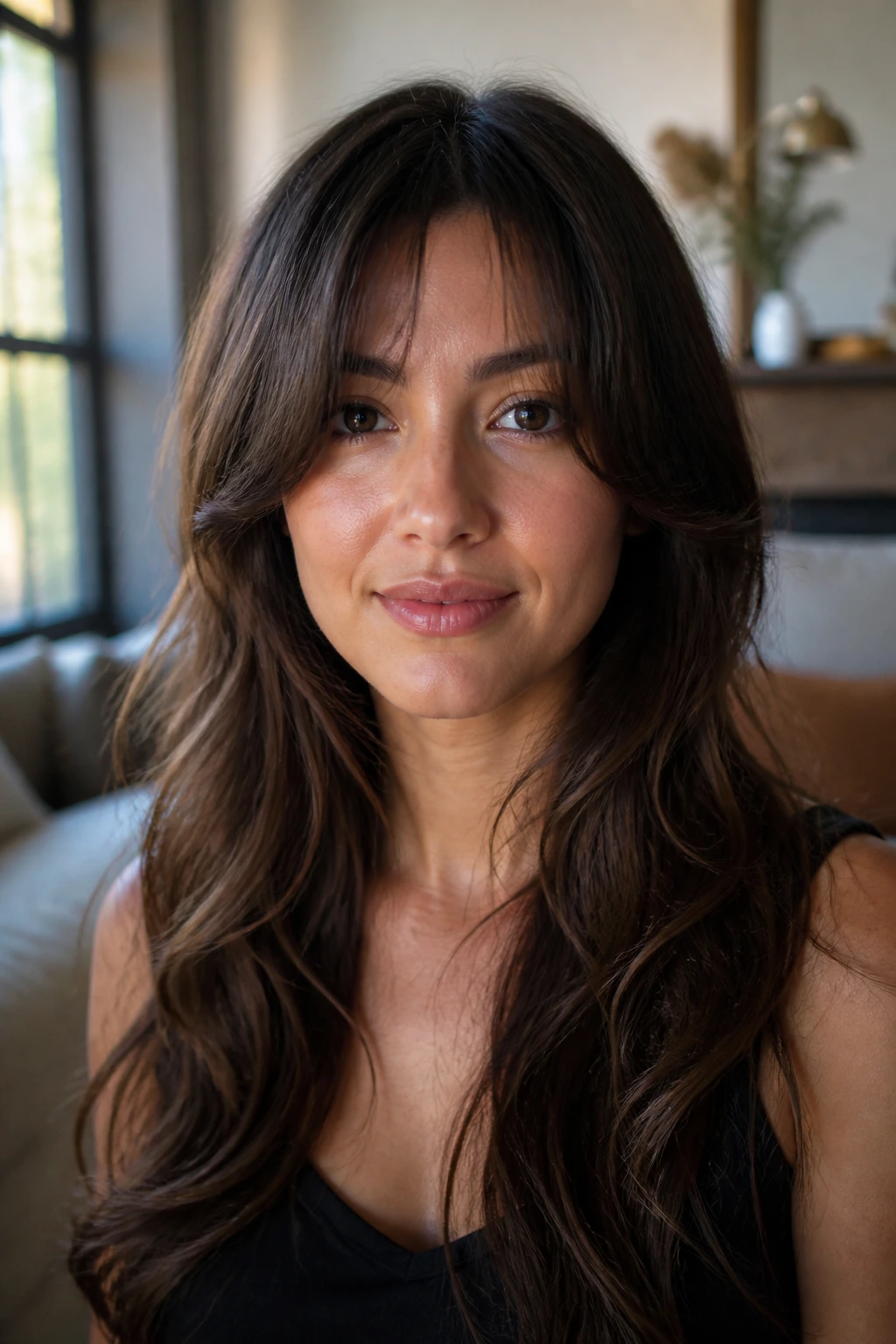
This one looks simple until you watch it move. The center sits slightly shorter, then the lengths rise gently toward the sides, making a soft U rather than a straight edge. That little dip in the middle gives the face room to breathe while the side pieces travel downward along the cheeks.
It’s one of my favorite shapes for long hair because it connects so naturally to the rest of the cut. The front becomes part of the haircut instead of a separate piece dropped onto it. If your hair has a slight wave, this shape gets even better. Let the layers fall where they want, then guide the center with a round brush so it doesn’t kick straight up.
9. Razor-Cut Bangs for Thick, Straight Hair
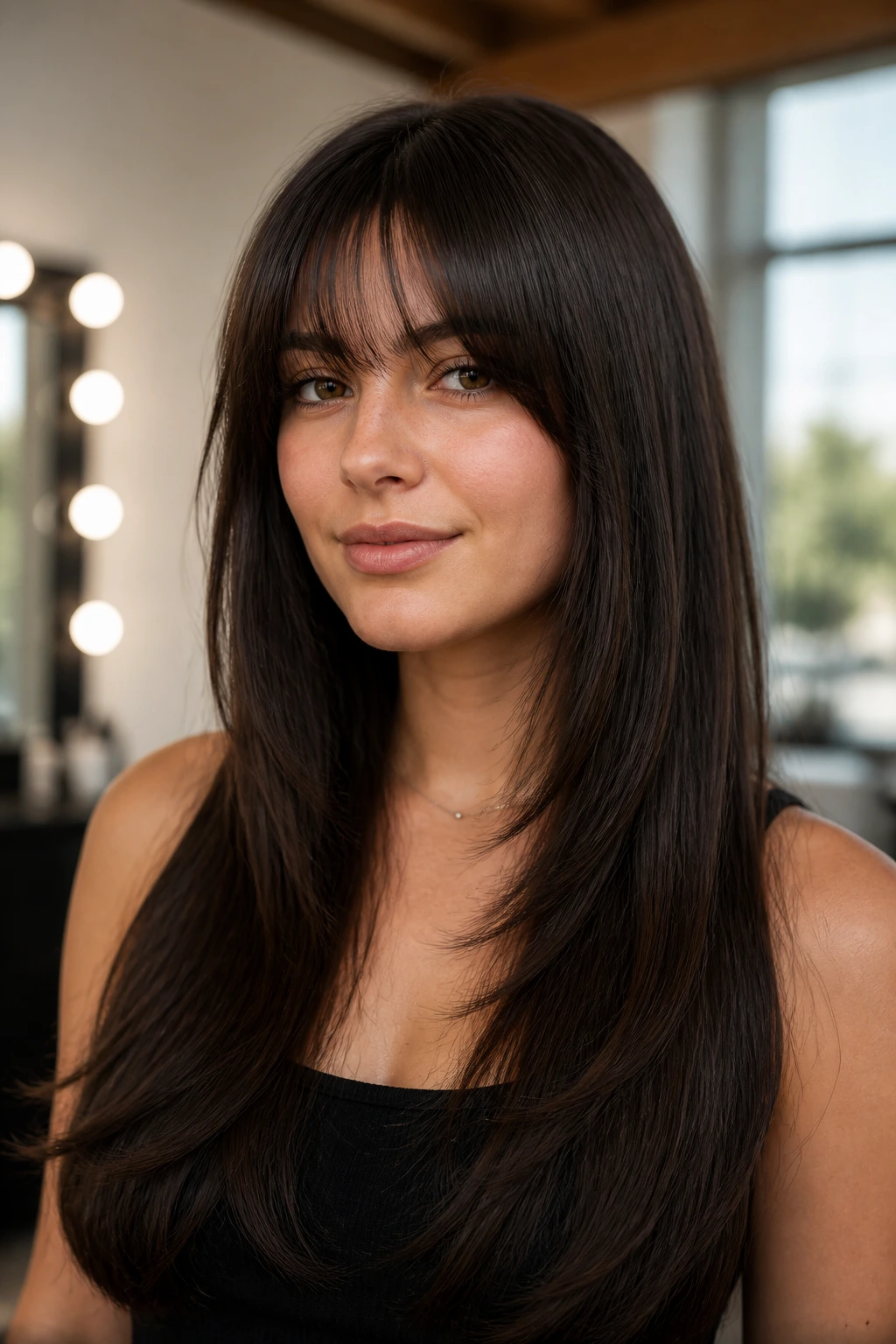
Thick hair can swallow a round face if the front sits like a shelf. Razor cutting removes weight and softens that bulk before it starts building width. The result is a fringe that moves instead of sitting there like a solid block. On straight hair, the difference is huge.
This style needs a careful hand. Razor-cut bangs should feel light at the ends and denser through the center, not shredded. If the cut gets too choppy, thick hair can puff in strange places. A smoothing cream and a flat brush usually give the best finish. Skip the heavy oil unless your ends are extremely dry. Too much shine product can make the fringe hang in strands.
10. Butterfly Layers with a Floating Fringe
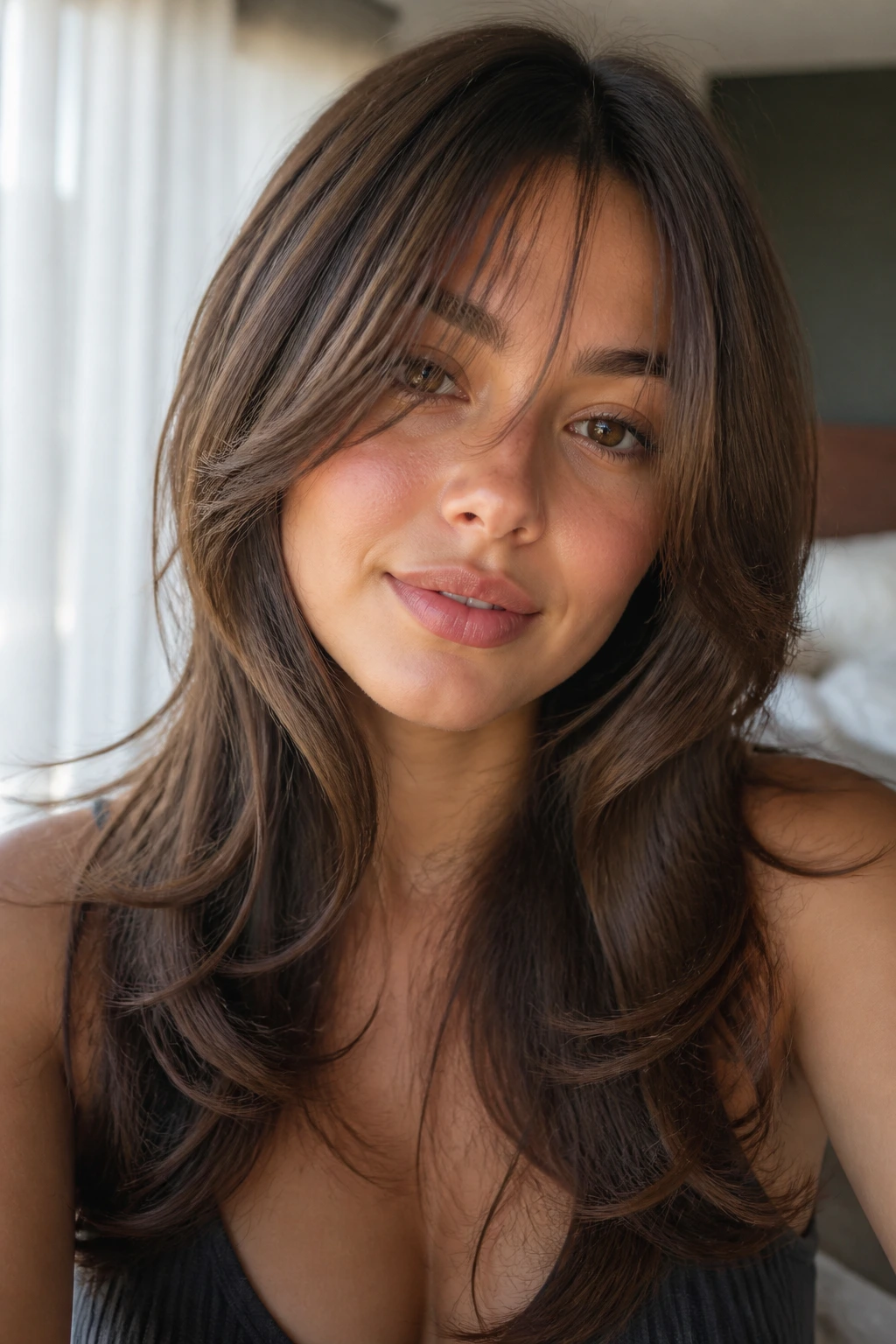
Butterfly layers are built for movement through the front and around the face, which is exactly why they work so well on long hair with a round face. The shortest face-framing pieces start high enough to create lift, then fall into much longer layers that flick away from the cheeks. The bang almost feels like a doorway into the rest of the haircut.
This style looks strongest when the top layers are blown out with a bit of volume at the roots. The “floating” part comes from the separation between the front and the length. If the whole front gets flattened, the shape loses its magic. Use a large round brush or a roller at the front for a few minutes. That small lift makes the layers read properly.
11. Blowout Bangs with 90s Crown Volume
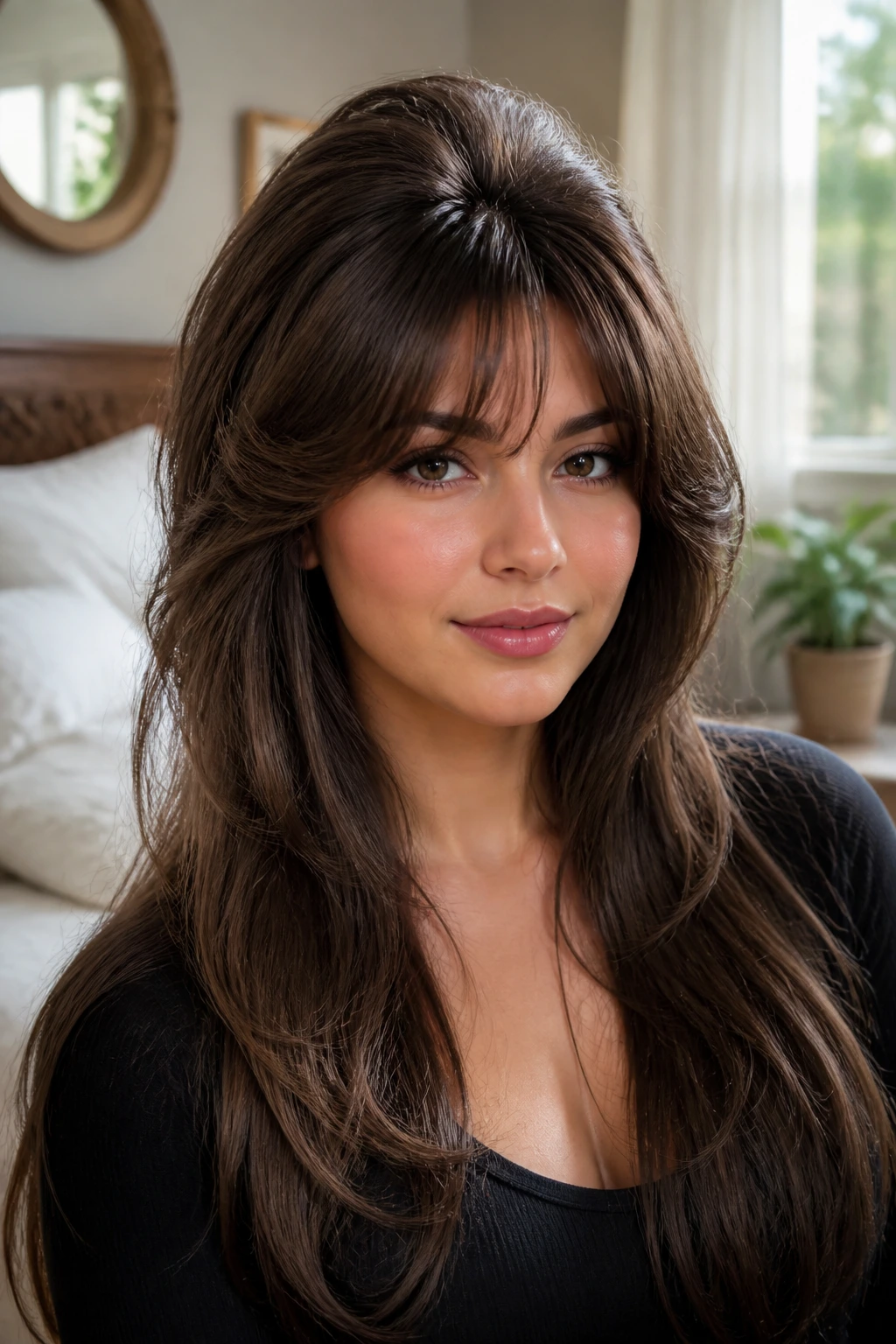
If you like hair that moves when you turn your head, this is the one. Blowout bangs pair a soft fringe with crown lift and a rounded bend away from the face, which creates more height and less width. That crown volume is doing quiet, useful work on a round face. It pulls the eye upward.
The bangs themselves should not collapse into the forehead. They need enough body to curve, but not so much that they puff out. A medium round brush, a root-lifting mousse, and a little patience at the front section go a long way. I usually clip the roots up for a few minutes while the rest of the hair cools. It helps the shape hold longer than a quick blast ever will.
12. Swoopy Bangs with Collarbone Front Pieces
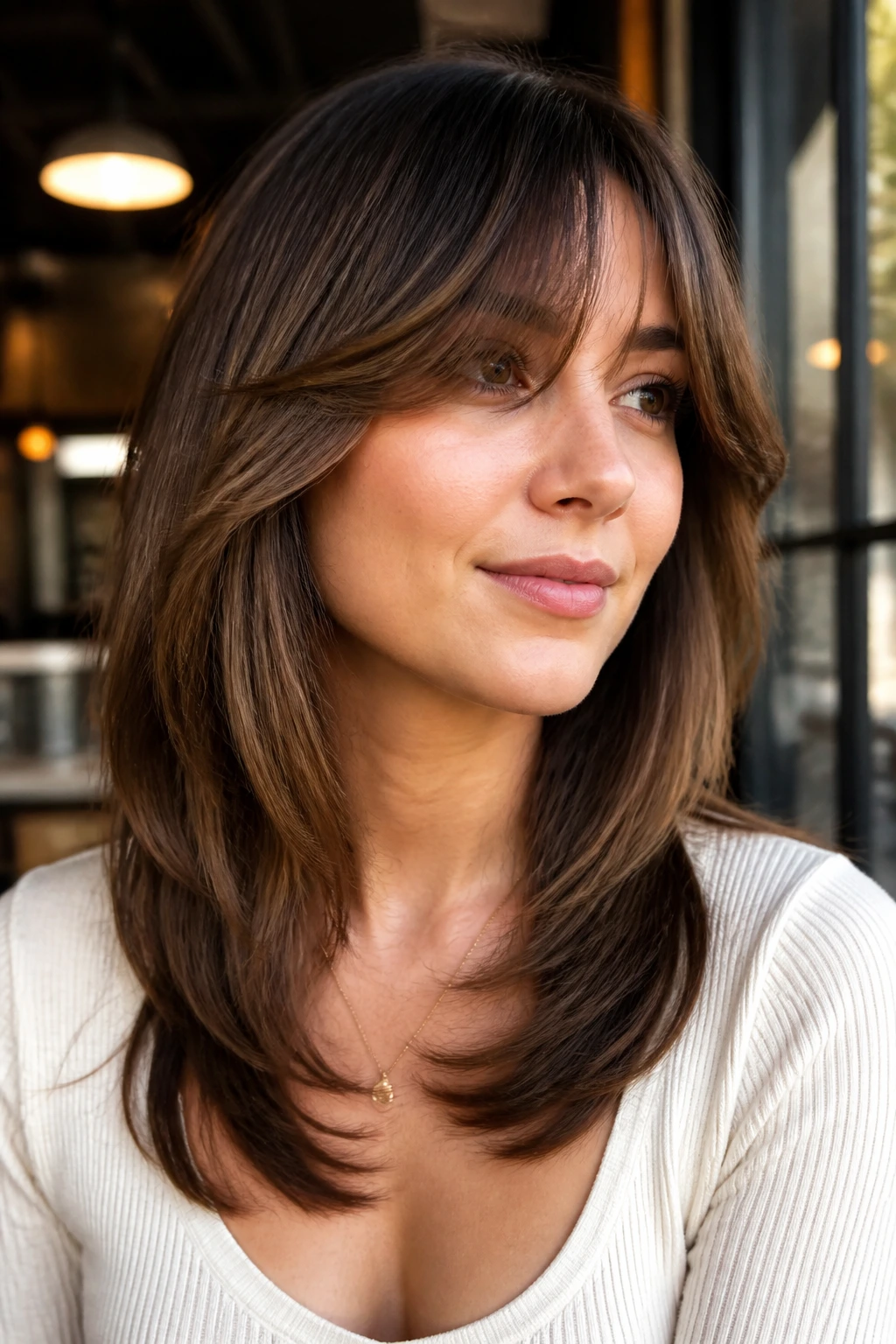
This is one of the most forgiving shapes on the list. The bang sweeps across the forehead, then dissolves into long front pieces that land near the collarbone. That long diagonal line gives a round face a clean path downward. There’s no hard stop at the cheek.
It also plays nicely with long hair because the front pieces are already built to belong to the rest of the cut. If you want softness but not full curtain bangs, this is a smart middle ground. Ask for the shortest piece to stay above the cheekbone and the longest to fall well below the jaw. That gap is what keeps the front from feeling wide.
13. Bright Money-Piece Bangs with Long Face-Framing Layers
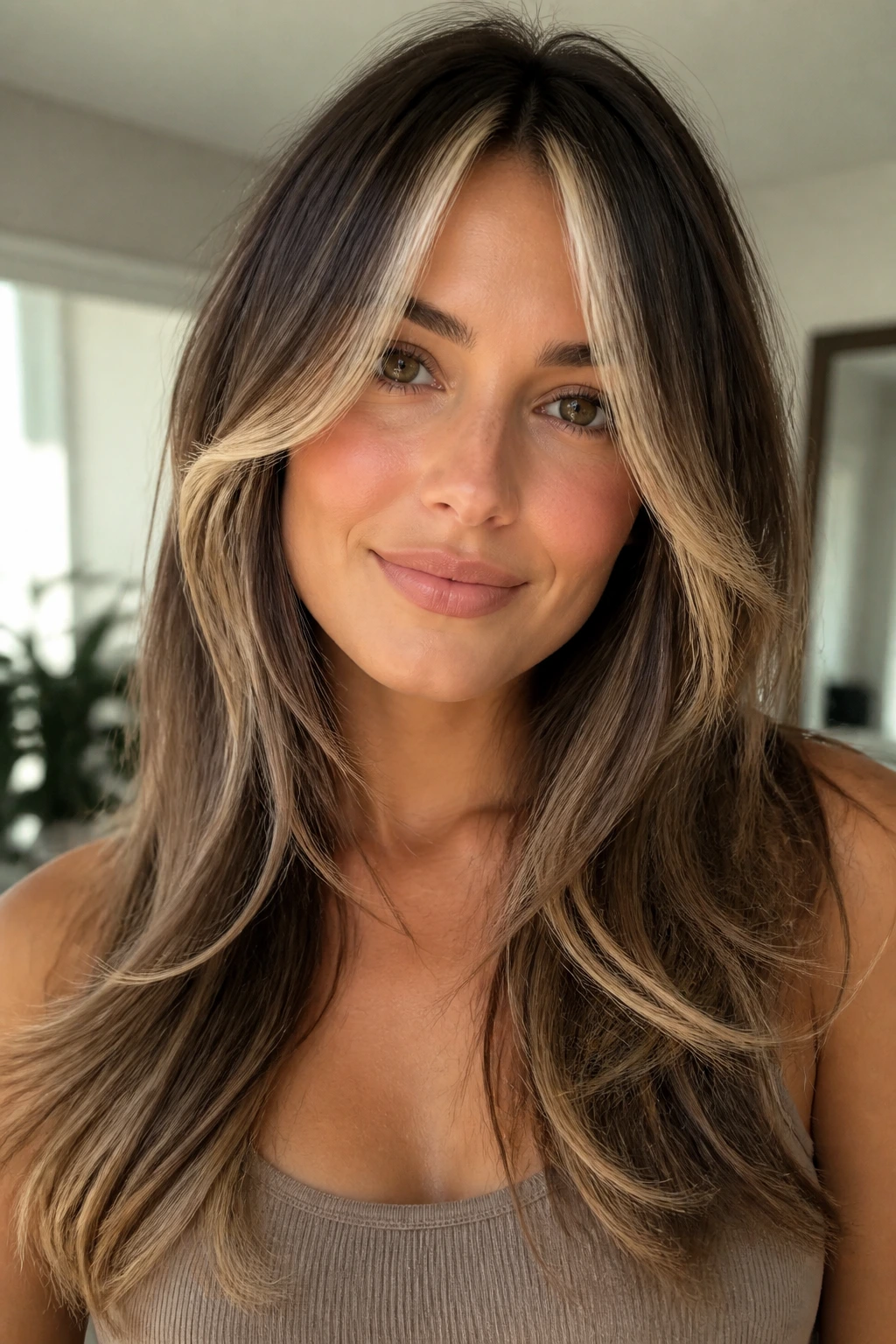
A bright front panel changes how the face is read. Whether the pieces are naturally lighter or brought up a shade or two, those vertical strips pull attention down the front of the hair instead of across the cheeks. On a round face, that matters. The eyes follow the line, and the line goes down.
I like this style best when the color stays concentrated near the bangs and the first layers, not all over the head. Too much lightening can flatten the whole shape. Keep the front pieces long enough to skim the cheek and collarbone, then ask for soft layering so the ends do not look pasted on. The bang itself can be curtain-like, piecey, or swooped. The brightness is the extra move.
14. Textured Bangs for Wavy Hair
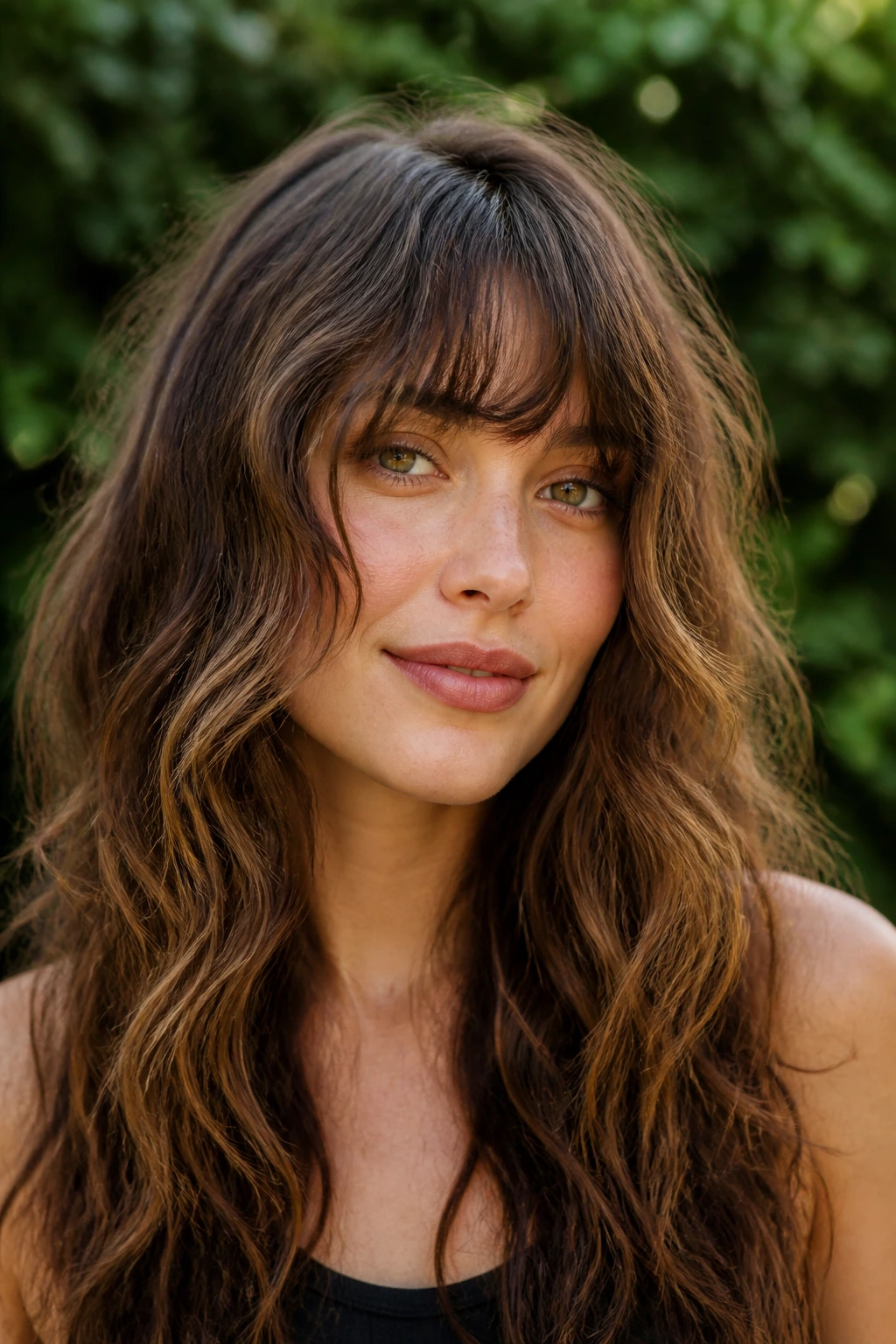
Wavy hair does half the styling for you if the cut respects the bend. The best version of textured bangs keeps the fringe a little longer than you think, then lets the wave break it up into pieces. That broken line is excellent on a round face because it avoids the wide, solid band that can make the face look flatter.
The mistake is over-brushing wavy bangs into a puffball. That only adds width. Scrunch in a little mousse, diffuse on low heat, or let the bangs air-dry and then separate them with your fingers once they’re fully dry. If you want more control, bend only the roots and leave the lengths loose. That keeps the front soft without making it fuzzy.
15. Soft Shag Bangs for Long Lengths
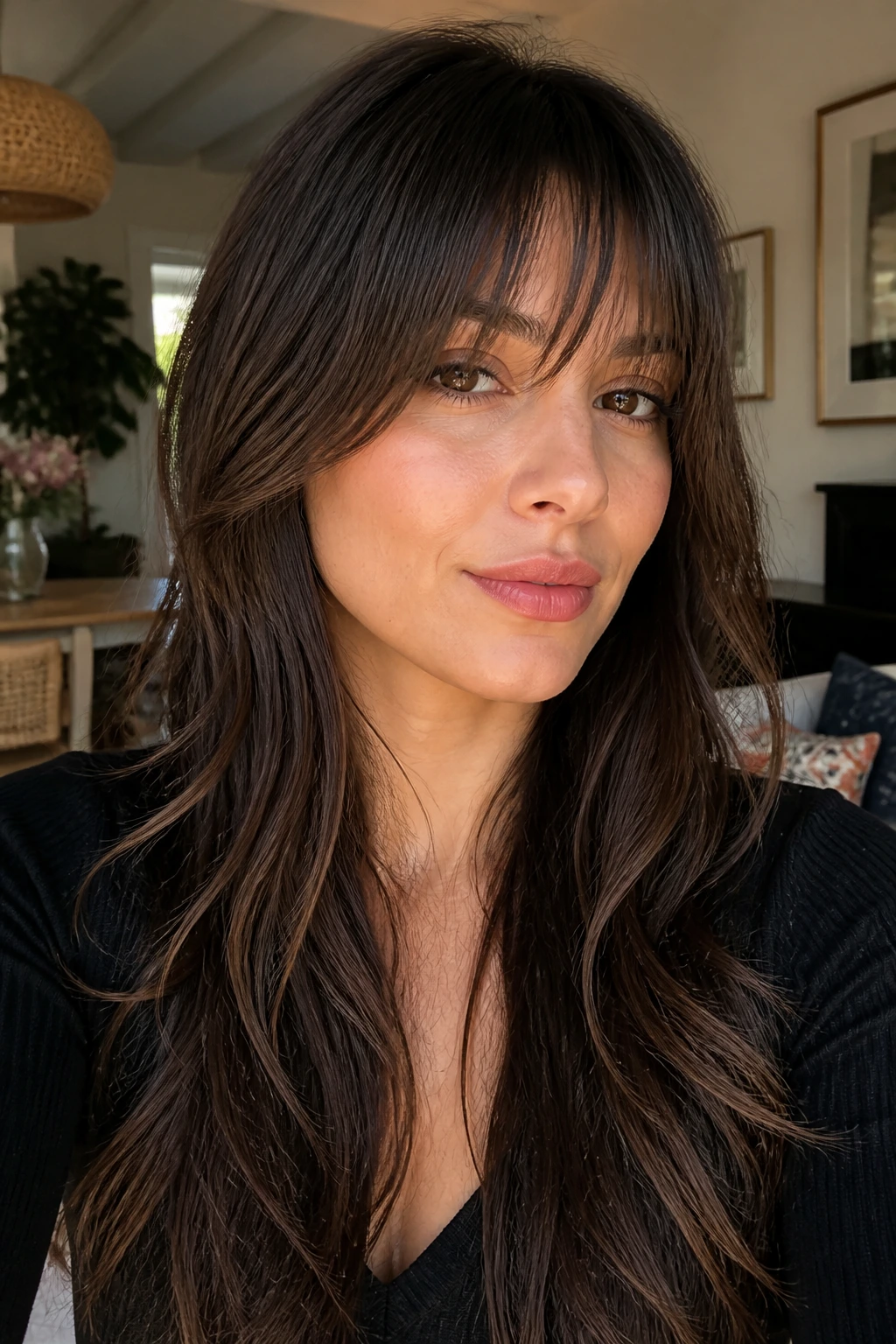
A long shag is one of the easiest ways to stop a round face from looking too full at the sides. The layers create choppy movement, and the fringe usually sits somewhere between curtain and wispy, with plenty of texture and a little edge. It’s not a helmet cut. Good. It should not be.
The best part is how the layers keep the face from looking boxed in. The front is never one solid wall; it’s a set of broken lines that move into the rest of the hair. I’d recommend this for people who like some mess in the finish. If you want neat and glassy every day, a shag may feel like too much effort. But if you like hair that looks slightly undone on purpose, it has real shape.
16. Long Peekaboo Bangs for Low-Commitment Wear
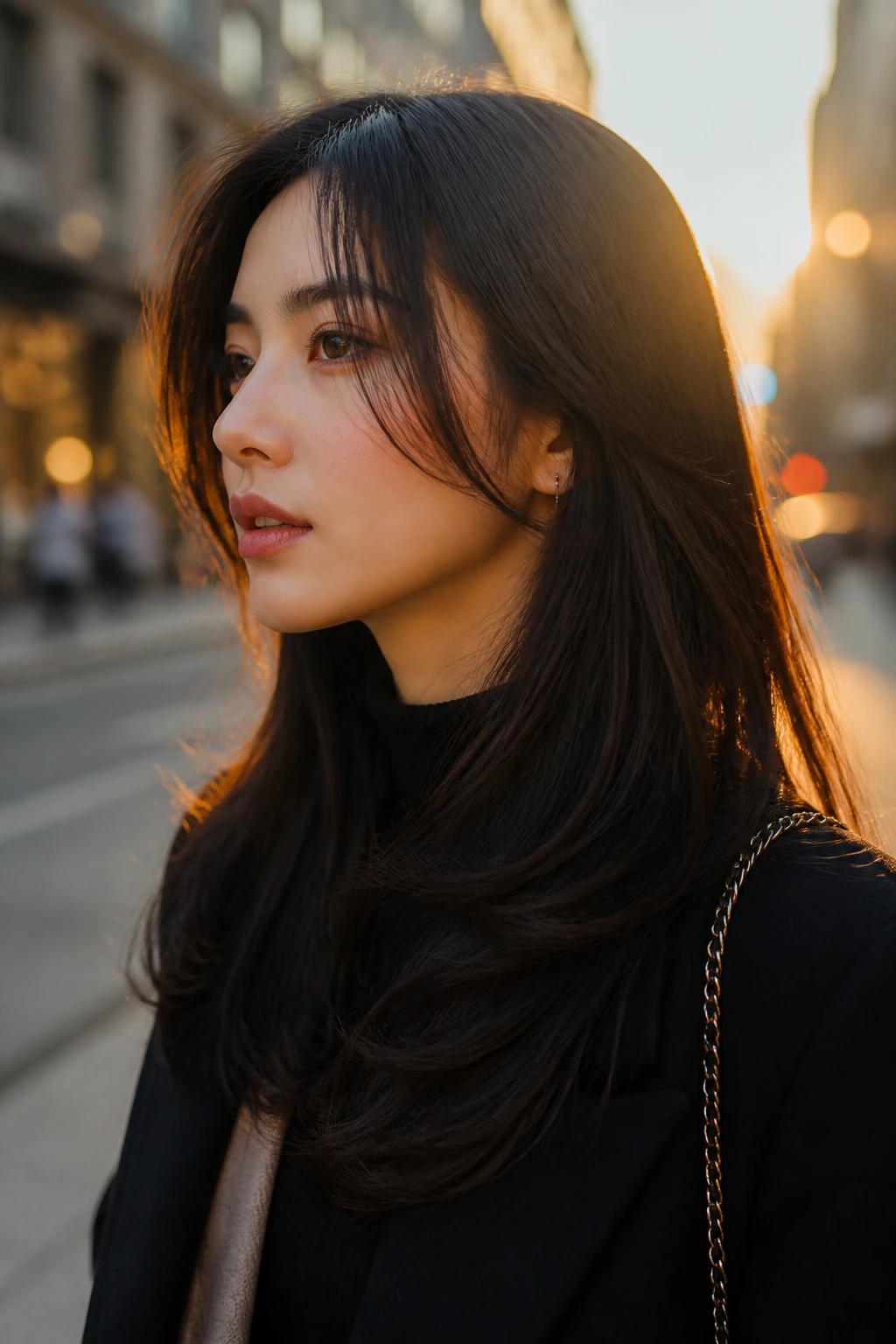
This is the quiet one in the group. Peekaboo bangs live inside the haircut instead of sitting out front and announcing themselves every second of the day. You can wear them tucked into a middle part, sweep them to one side, or pull them forward when you want more face framing. For a round face, that flexibility is gold.
Because the fringe stays longer, it keeps the cheek area open instead of cutting across it. That makes the face read softer and less boxed in. It’s also one of the easiest shapes to grow out. If you’ve ever regretted a short fringe halfway through the first week, this is the safer lane. A little bend at the ends is enough. Do not over-style it or it loses the whole point.
17. Tapered Fringe with Extra Lift at the Crown
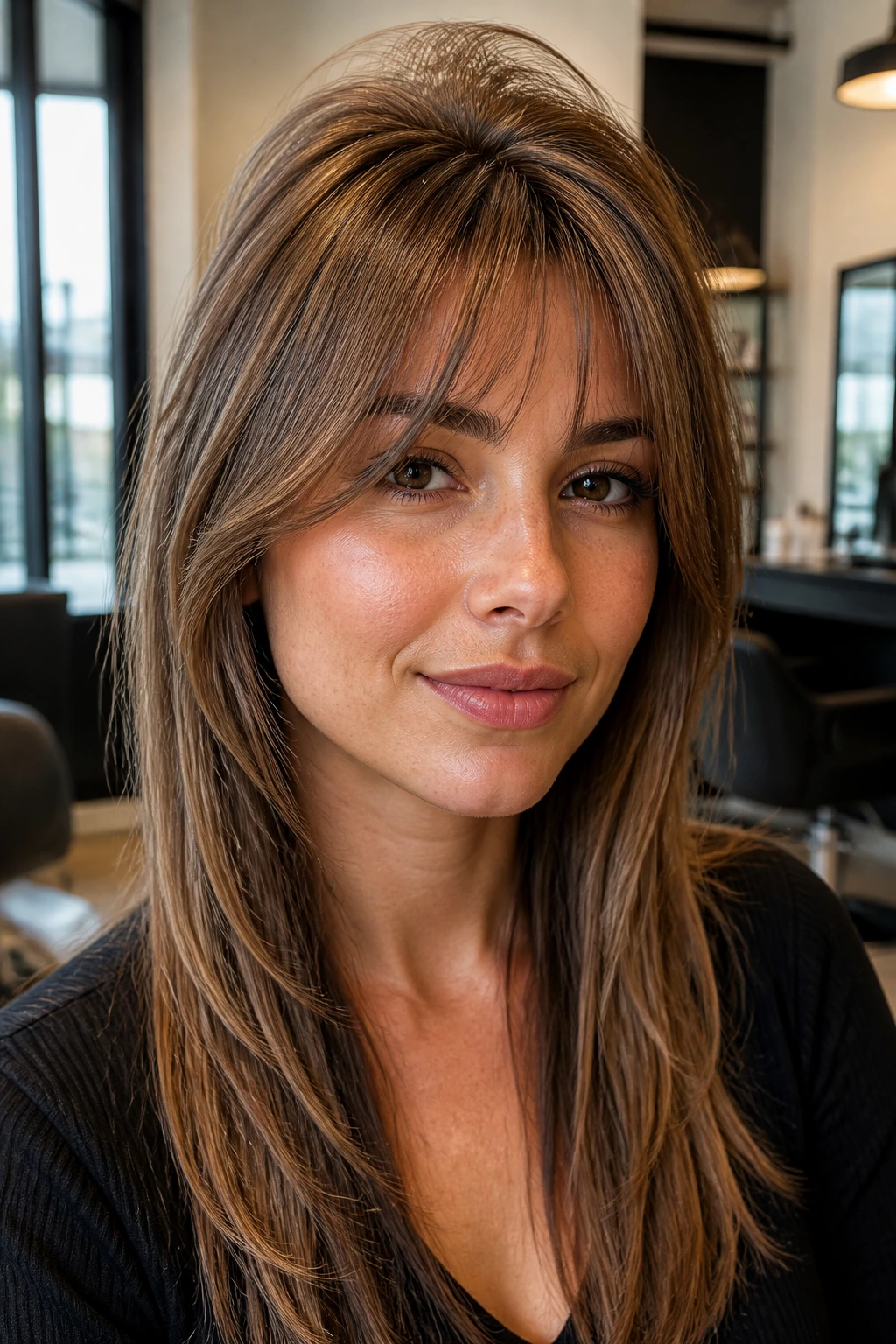
If you only fix the fringe and ignore the roots, the face can still read wide. Tapered fringe works because it narrows at the forehead, lengthens toward the temples, and gets support from a little crown lift. That combination stretches the silhouette better than a flat bang ever will.
This one is especially good if your hair falls limp at the roots. Use a root-lifting spray before blow-drying, then clip the top section up while it cools. That cooling time matters. The shape sets better than a hot blowout that gets touched immediately. The fringe itself should feel light enough to move, but not so thin that it disappears. The crown should carry some of the visual weight.
18. Curly Layered Bangs Cut for Shrinkage
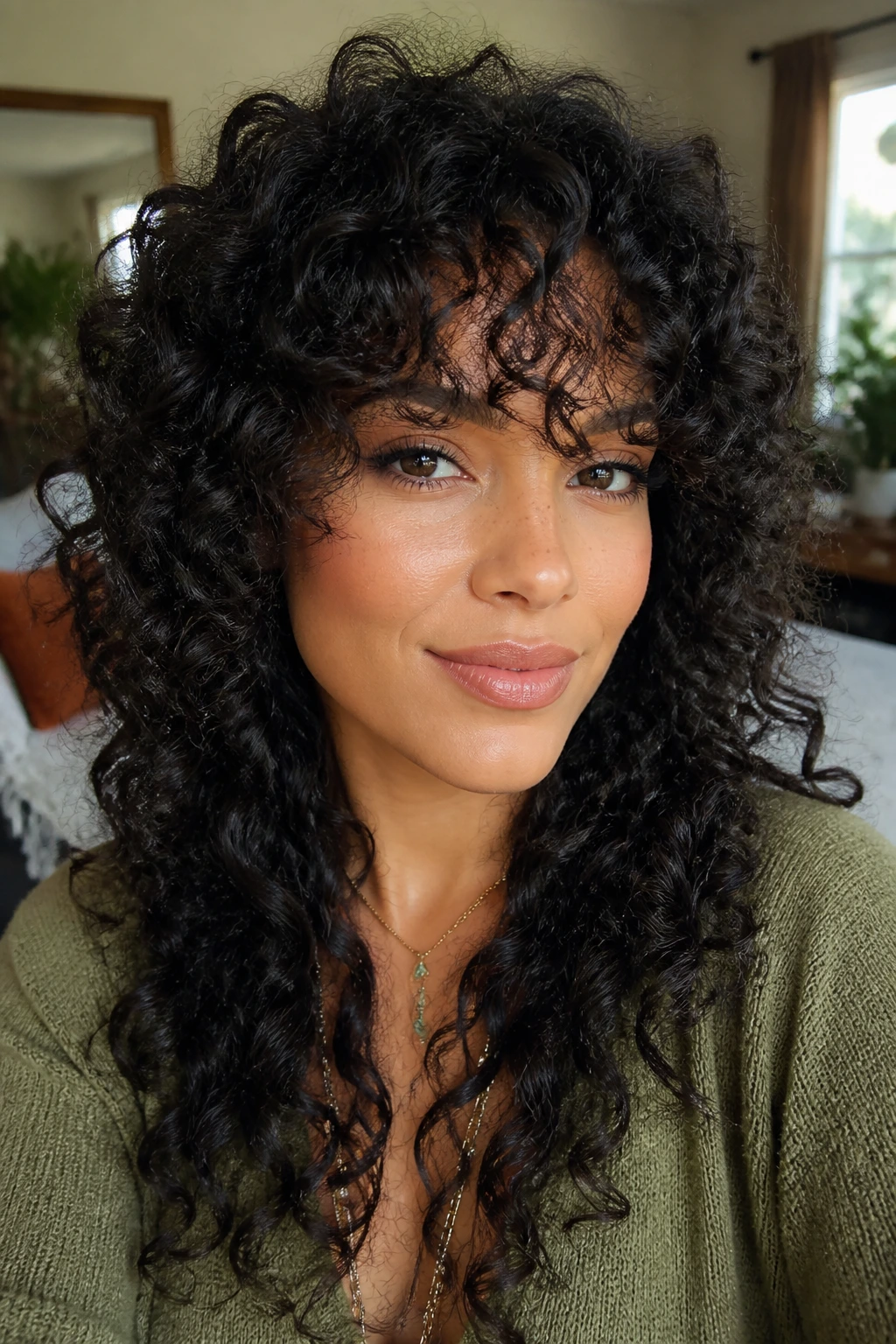
Curly bangs need a different rulebook. If the stylist cuts them wet and short, they can spring up and sit miles above the brows. On a round face, that creates the wrong kind of width. The better move is a dry cut, or at least a curl-aware cut, with the shortest pieces left longer than they look in the chair.
The curls should fall around the forehead, then soften at the cheek and jaw with longer layers. That helps keep the front open while the texture does the shape work. Use curl cream, not a crunchy gel unless you want a firmer finish. And do not drag a brush through them once they dry. Curly fringe gets wider when it gets brushed out.
19. Wispy Blunt Bangs with Soft, Broken Ends
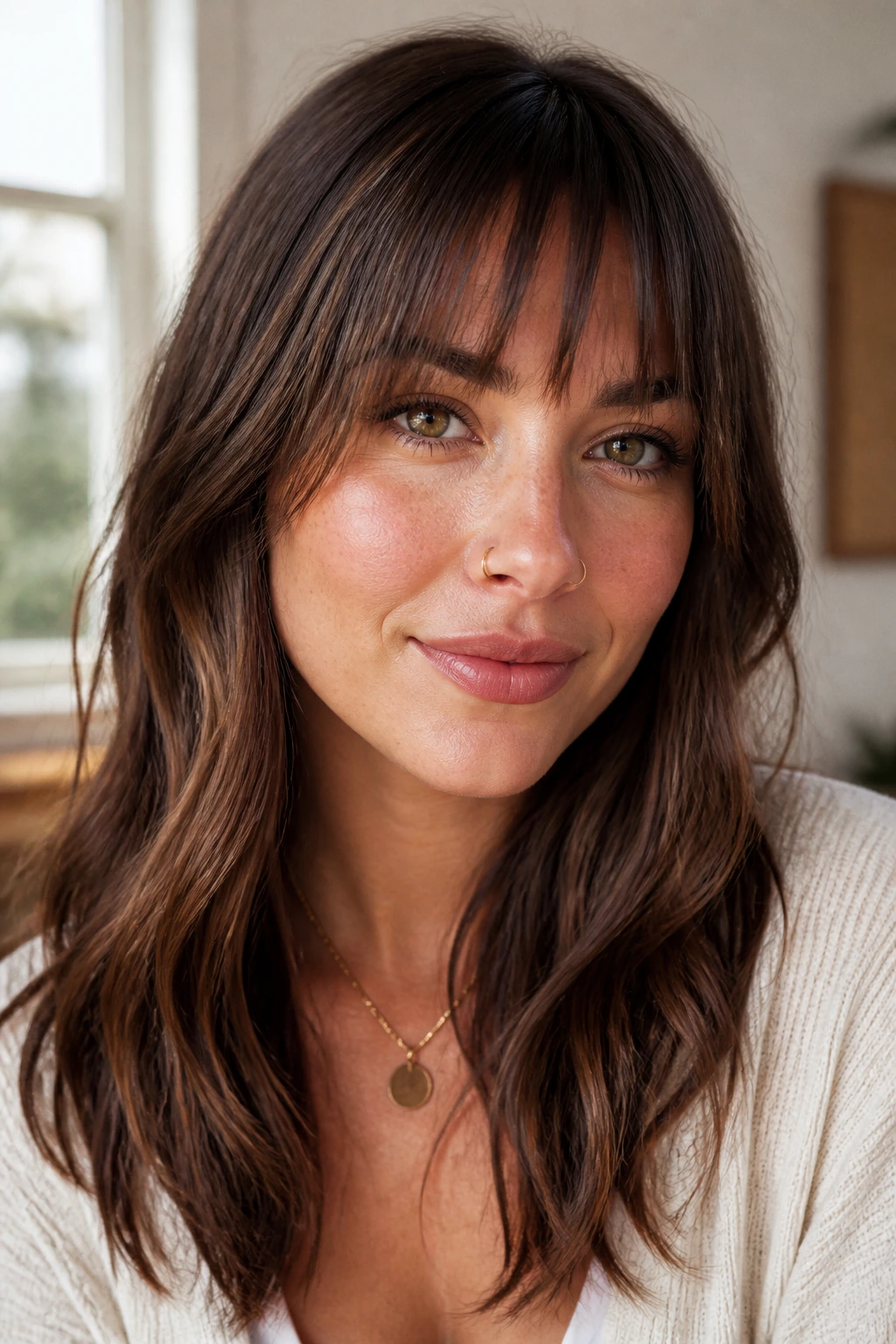
This is for the person who wants the idea of blunt bangs without the blocky effect. The line is there, but it’s softened with point-cut edges and a little internal lightness, so the fringe doesn’t sit like a panel across the forehead. On a round face, that difference is huge. You get definition without the extra width.
I like this shape when the center hits around the brows and the corners drift a touch longer. That keeps the eye moving outward and down. Styling should stay simple: quick blow-dry, small brush, maybe a very light bend with a flat iron if the pieces split. If you overwork the ends, they look wispy in the wrong way. Keep the finish clean.
20. Invisible Bangs That Blend Into the Front Layers
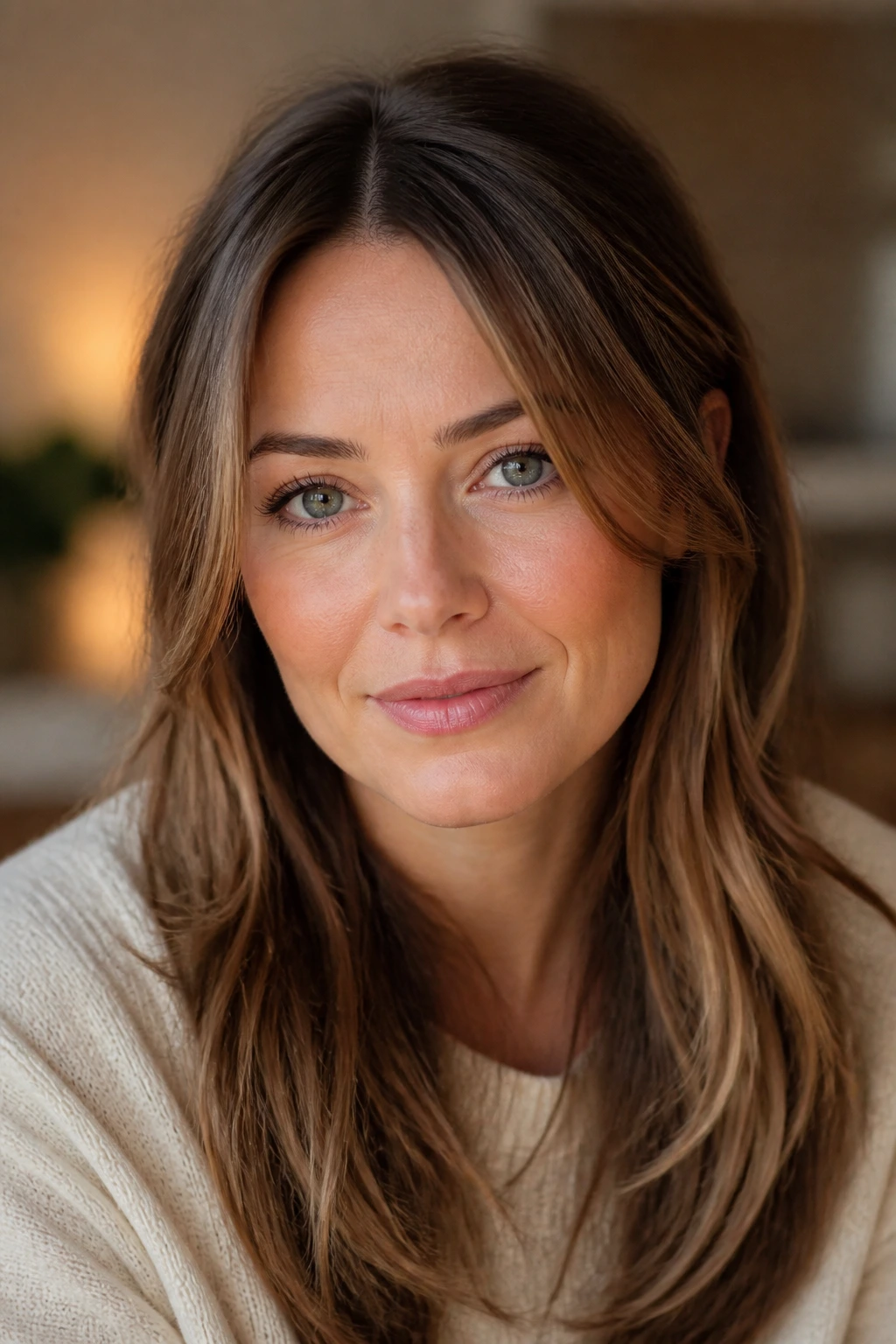
Some people want fringe without looking like they have fringe. Invisible bangs are basically that. The front layers are short enough to frame the face, but long enough to tuck in and disappear when you part the hair differently. On a round face, that can be a relief. Nothing is sitting hard across the forehead.
This is one of the best low-pressure options if you’re nervous about commitment. It grows out with grace and can be tucked behind the ears, swept forward, or blended into a blowout. Ask for the shortest pieces to live around the nose or cheekbone and the longest to merge into the front lengths. That keeps the face open while still giving you shape.
21. Rounded Curtain Fringe for Thick Hair
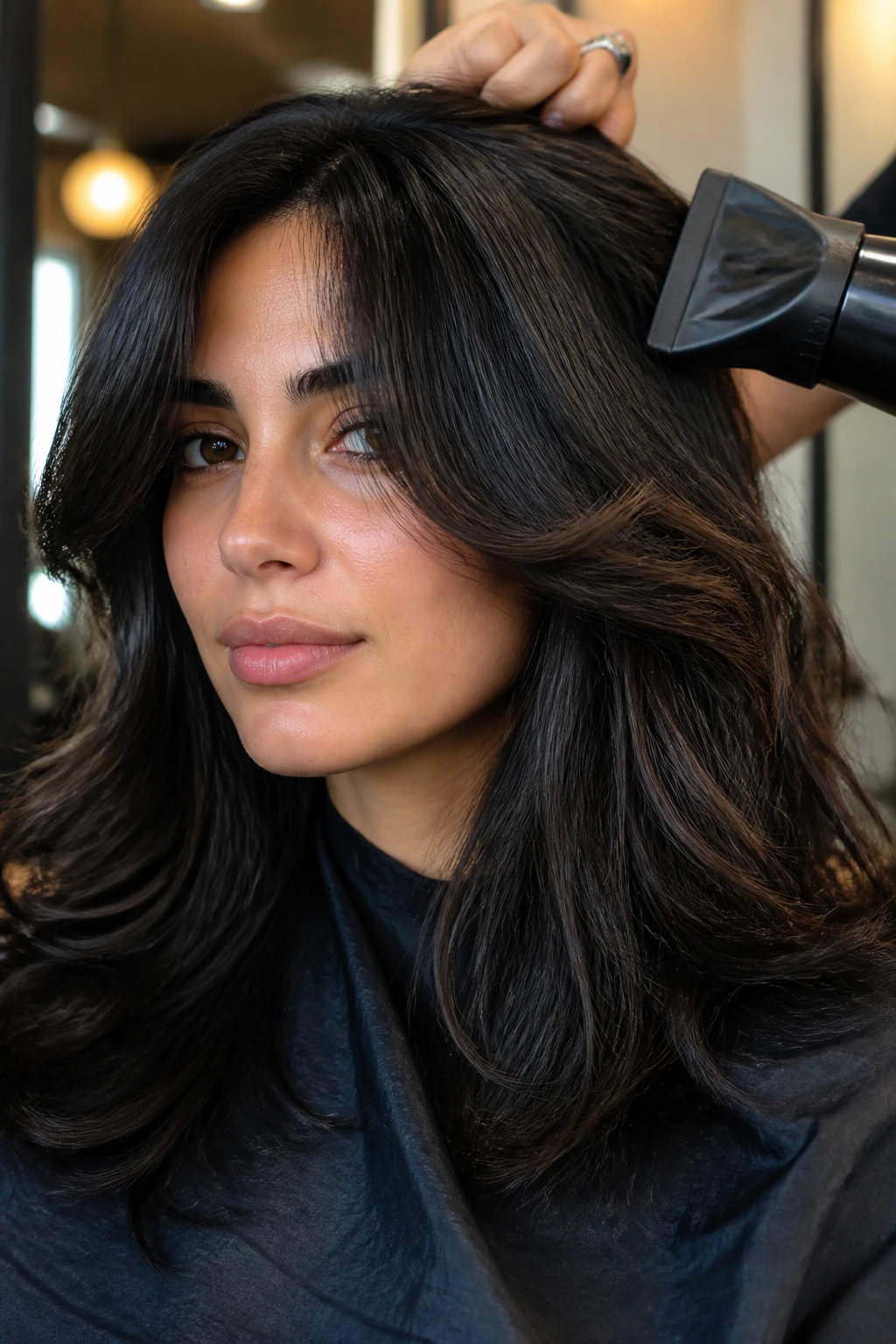
Thick hair can support a rounded curtain better than fine hair can, as long as the bulk gets removed in the right spots. The shape should curve gently through the center and open at the sides, but the density needs to be controlled so the fringe doesn’t puff outward like a mushroom. Nobody wants that.
The trick is internal weight removal. Not the blunt, obvious kind. The cut should still look full, but the inside needs enough thinning that the fringe can bend instead of sit rigidly across the forehead. Blow-dry with a strong nozzle and a medium brush. Thick bangs fight back when they’re not dried properly. Give them direction from the start.
22. Choppy Bottleneck Bangs with Shattered Layers

This is the messier cousin of the bottleneck fringe. The center still starts a bit tighter, but the edges are broken up with choppy texture so the whole thing looks lived-in instead of polished. On a round face, those shattered ends keep the line from feeling heavy. Your eye sees movement, not a bar.
It works especially well on hair that likes a little grit. Wavy and dense strands take to this shape fast. You can enhance it with texturizing spray, but I’d keep the product light. Too much grit makes the ends stiff, and stiff bangs are never flattering. The beauty here is in the looseness.
23. Long Side Bangs with a Vintage Flip
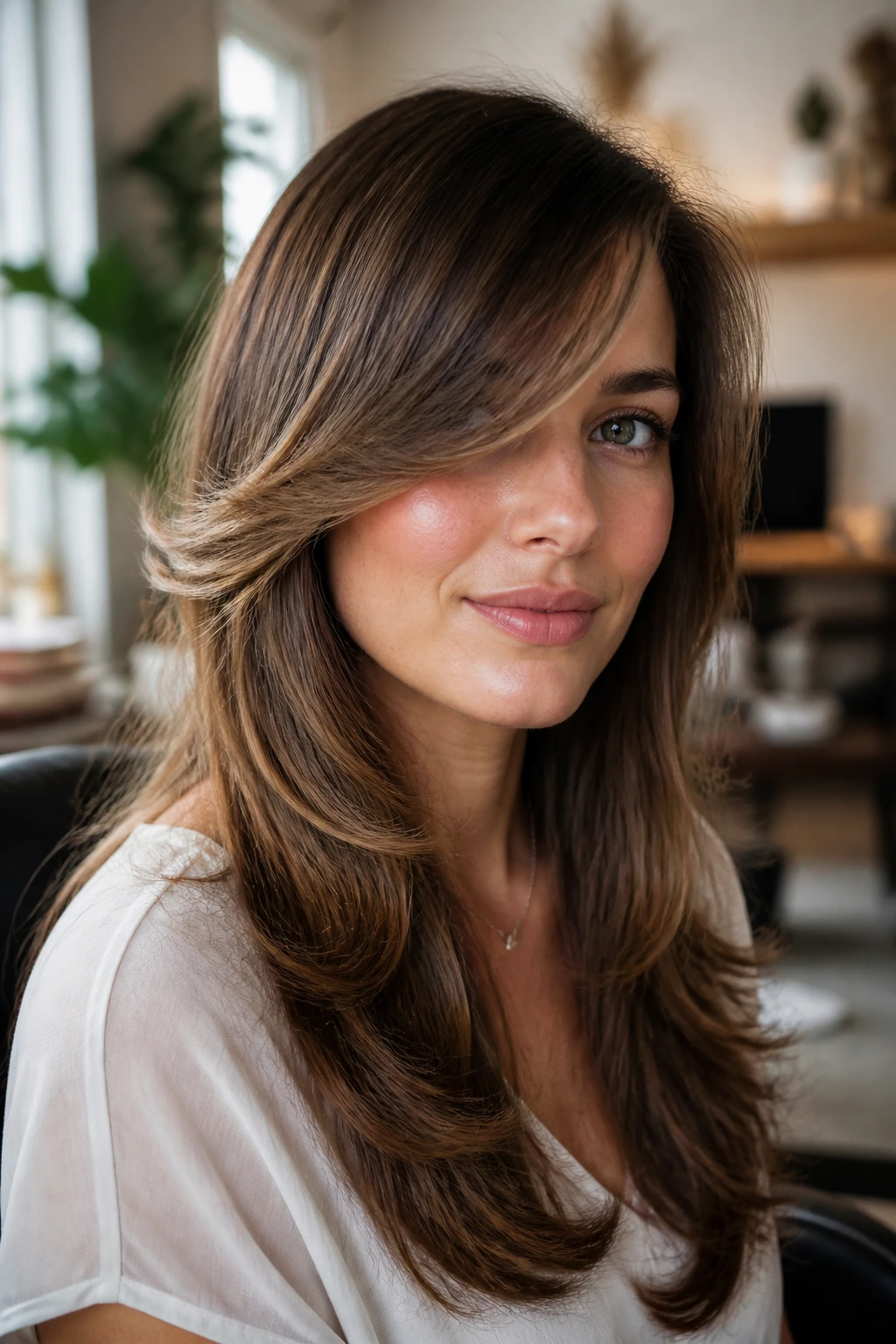
A side bang with a little flip at the ends gives the face a diagonal line and a touch of old-school softness. That diagonal is the important part. It breaks the roundness of the face without needing a heavy fringe to do the job. Long hair helps because the side bang can melt into the length instead of ending abruptly.
This style looks best when the front is brushed with some bend, not ironed flat. Roll the bang away from the face or under slightly, then let the ends land near the cheek or jaw. If the hair is too sleek, the shape can lose its lift. A soft root boost at the part keeps it from lying down too hard.
24. Air-Dried Fringe for Natural Texture
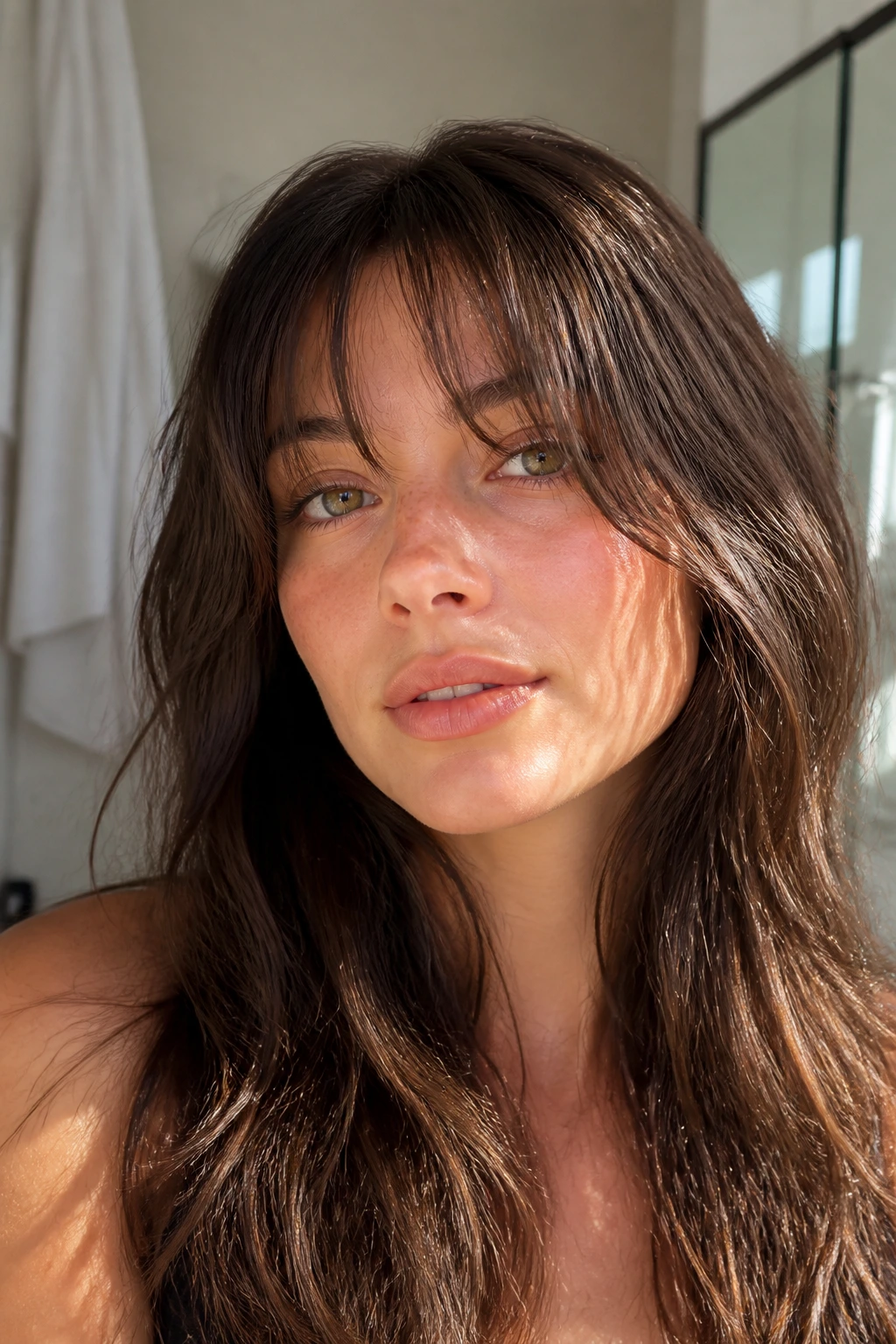
If you hate heat, this is your lane. Air-dried fringe should be cut with your real texture in mind, not some fantasy of flat, obedient hair. The shortest point should be a little longer than a salon blowout fringe, because natural drying usually shortens the look a bit. On a round face, that softness is a gift.
The bang should separate on its own into a few pieces, not one clean sheet. That broken pattern keeps the front from adding width. Use a curl cream, leave-in, or light foam depending on your texture, then leave it alone until it’s dry. Touching it while it dries tends to make the front fuzzy. Once it’s set, scrunch the ends a little and go.
25. Long Layered Bangs with a Soft U-Cut Finish
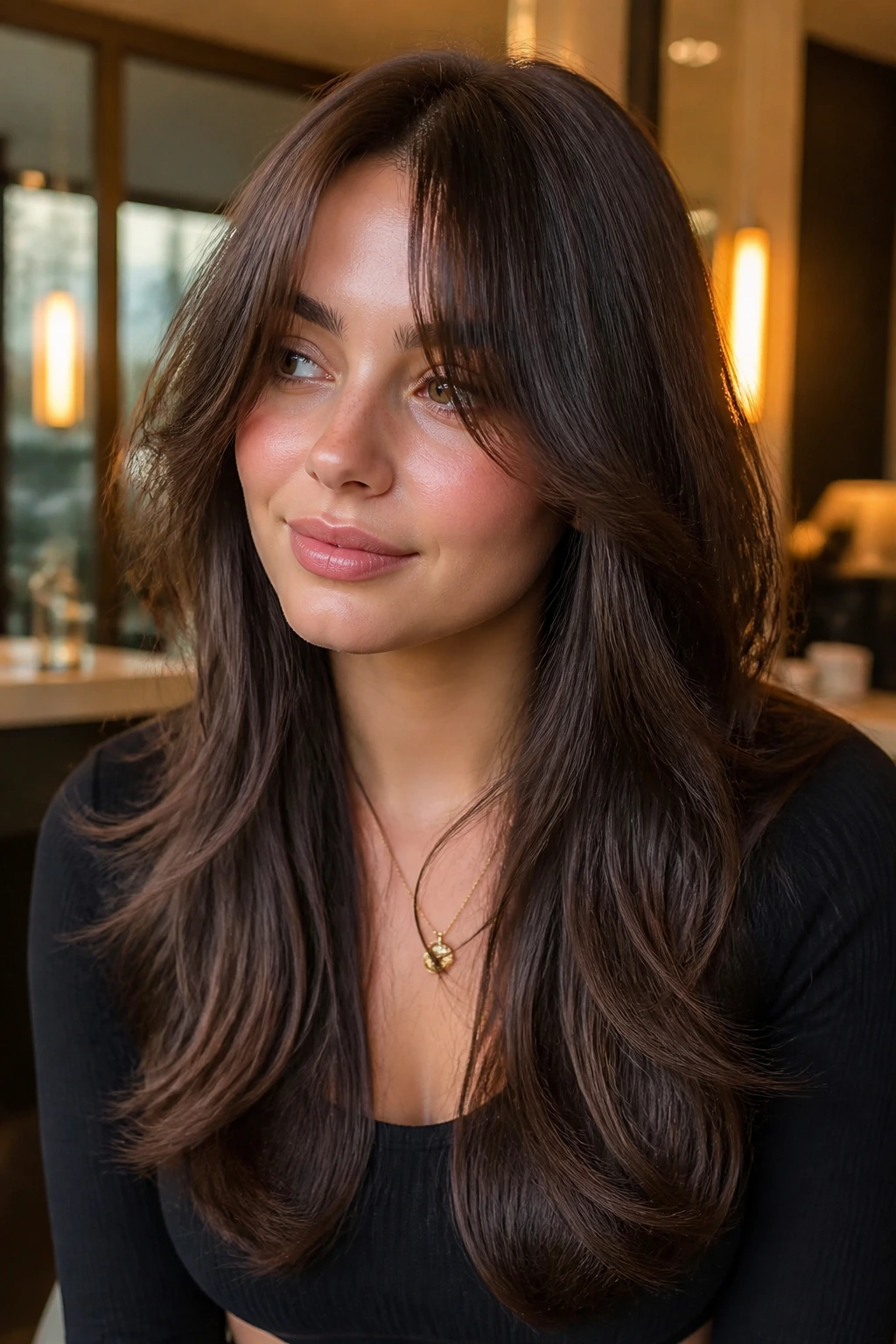
If you want one shape that rarely fights a round face, this is it. The soft U-cut keeps the center a little shorter and the sides longer, which creates a frame that feels open rather than boxed in. The fringe blends into the front lengths, and the whole haircut reads as one piece instead of a front chunk attached to a long haircut.
It’s forgiving, which is why I like it as the final style in this list. It can be worn sleek, brushed out, waved, or air-dried without losing the main shape. Ask for point-cut ends and face-framing layers that begin around the cheekbone or just below it. That gives the cut enough movement to soften the face while still pulling the eye downward through the length.
How to Ask Your Stylist What You Actually Want
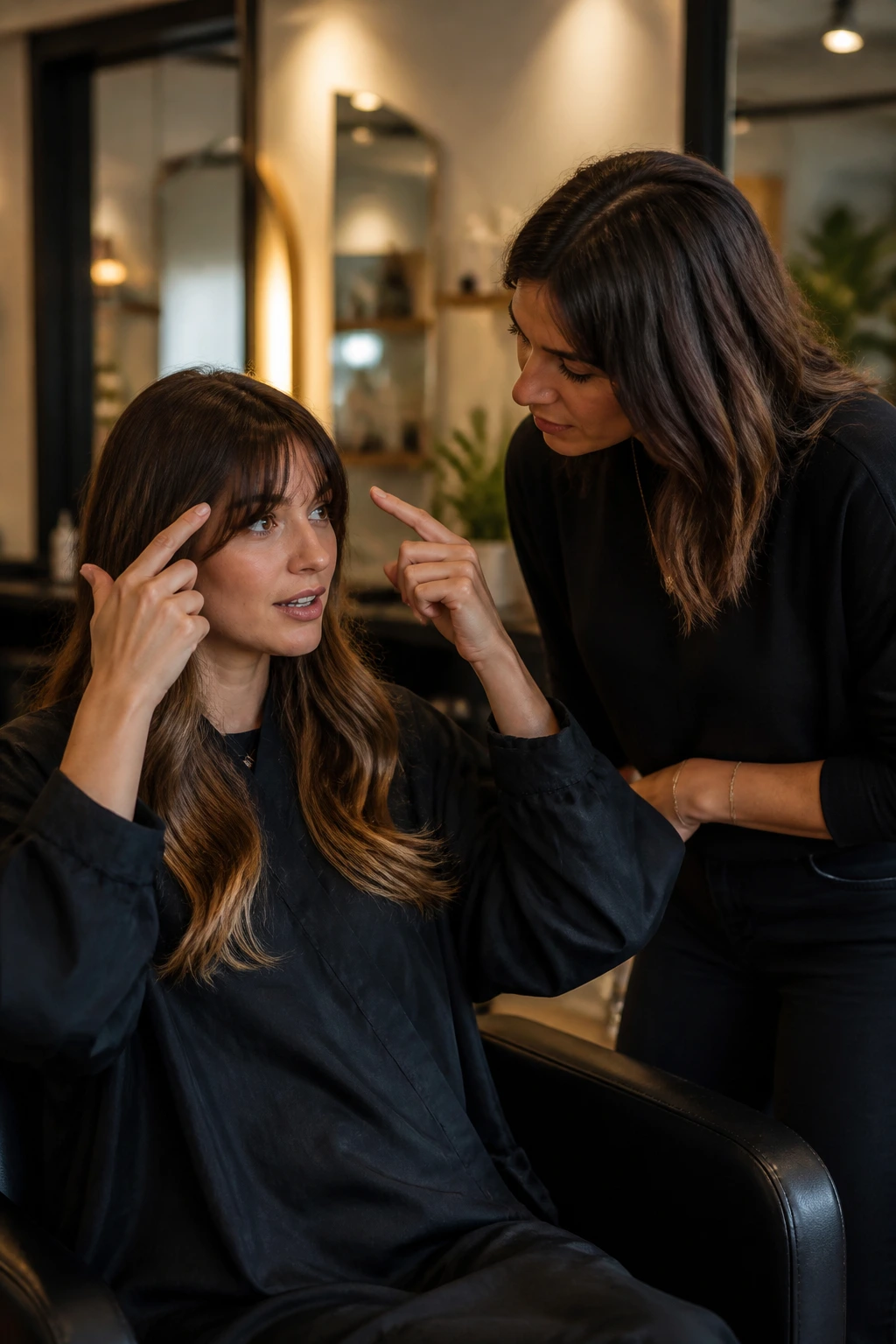
“Layered bangs” is not a precise sentence. It’s a starting point. If you want the cut to flatter a round face, bring more information than a screenshot and a shrug.
Tell your stylist where you want the shortest point to land when your hair is dry and parted the way you actually wear it. If you wear a center part, say so. If you flip to the side on second-day hair, say that too. The part changes everything. Also mention whether you want the fringe to blend into the sides or sit as a separate feature. Those are two different outcomes, and they grow out differently.
A few phrases help more than vague adjectives:
- “Keep the shortest piece around the bridge of my nose or just below the brows.”
- “I want the corners longer so it doesn’t sit wide on my cheeks.”
- “Please leave enough length for it to tuck into the layers.”
- “I need the cut to work with my natural part and cowlick.”
Bring your hair in the state you wear it most. Dry if possible. If you arrive with it blown out flat when you usually air-dry it, the cut may look wrong once you wash it at home.
The Brushes, Clips, and Products That Make Bangs Behave
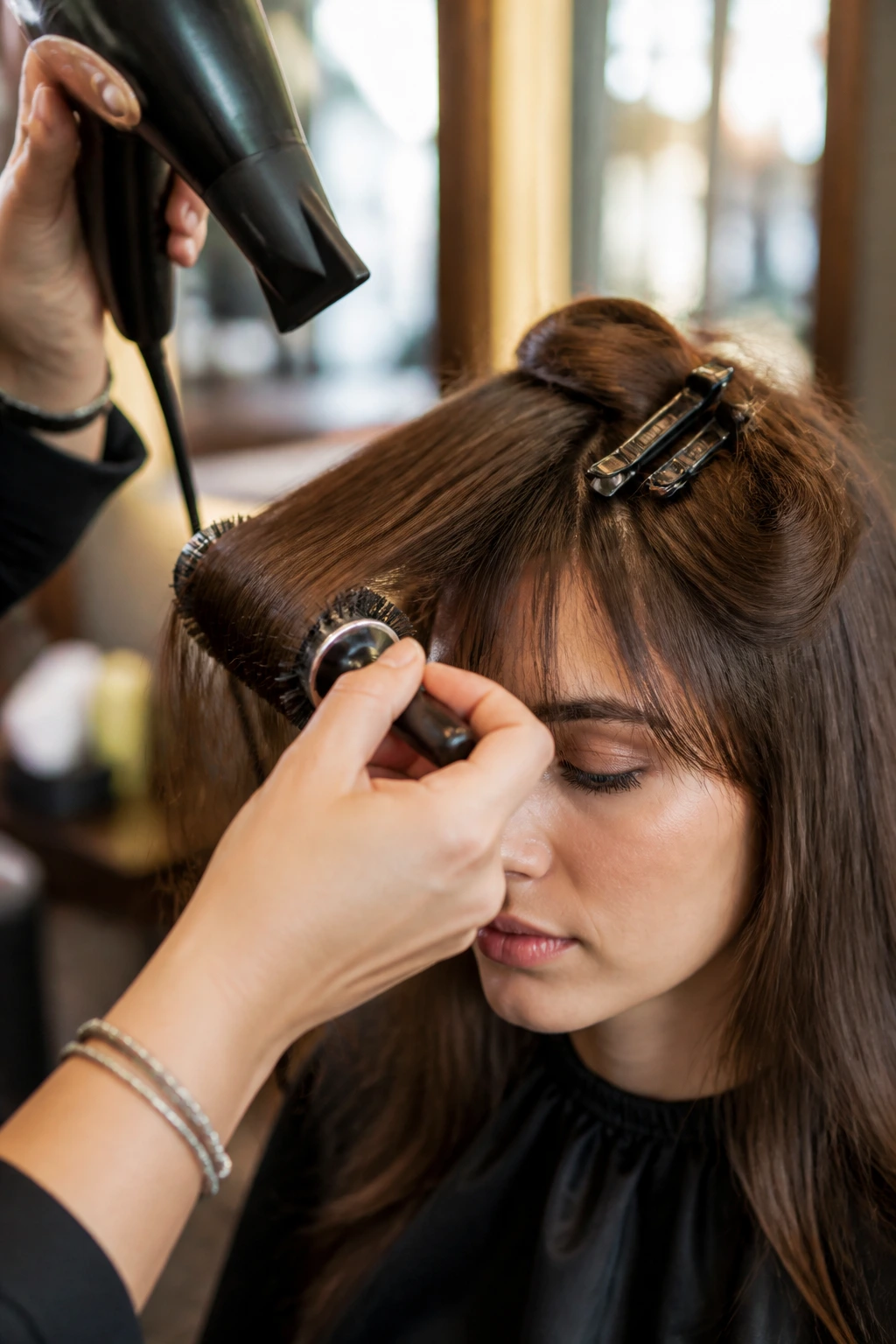
You do not need a bathroom full of gear. You do need the right few tools, because bangs show every mistake.
- A small or medium round brush: Best for building bend without making the fringe too puffy.
- A narrow paddle brush: Useful if your bangs are longer or you want a flatter, sleeker finish.
- Alligator or duckbill clips: These help set the roots while the hair cools. Cooling is where shape gets locked in.
- A blow-dryer with a nozzle: The nozzle matters. It keeps the airflow focused so the bangs don’t fly everywhere.
- Heat protectant: Use it on the fringe every time you touch it with heat. Bangs get fried faster than the rest of the hair because they’re shorter and re-styled more often.
- Lightweight mousse or root spray: Good for lift at the front and crown, especially on round faces that need a little height.
- Texturizing spray or a tiny bit of cream: Good for piecey finishes, but use a small amount. Bangs can go greasy in a hurry.
- A mini flat iron: Optional, but useful for taming a bendy cowlick or smoothing the ends.
Picking the Right Fringe Shape for Your Hair Density and Texture
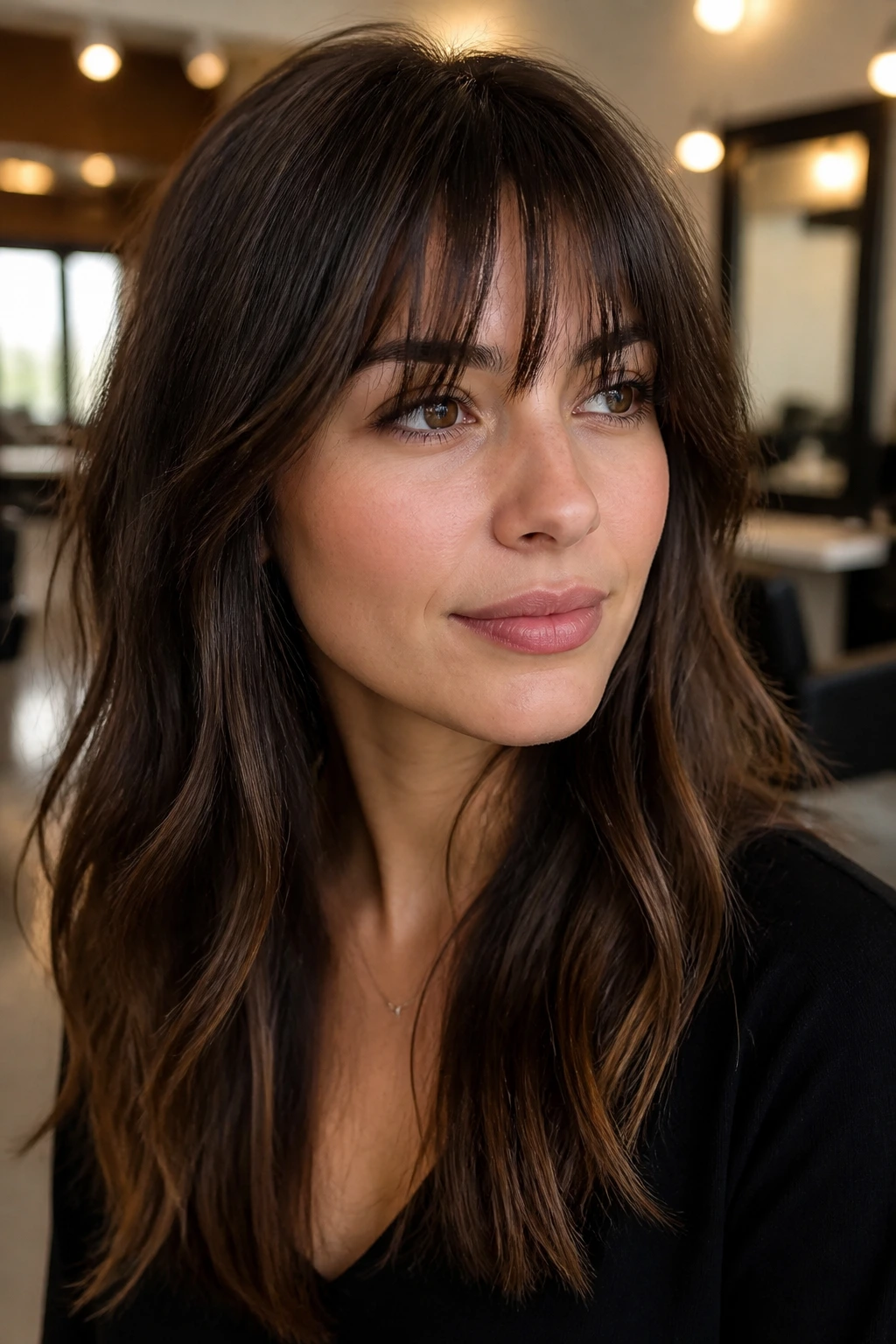
Fine hair wants movement without too much thinning. Thick hair wants weight removed in the right places. Curly hair wants length left on purpose. Straight hair usually needs some bend built in so the fringe doesn’t sit stiffly across the forehead.
Fine hair
Go lighter: feathered wisps, soft curtain bangs, or invisible fringe with longer side pieces. Heavy bangs on fine hair can separate in odd ways and make the forehead look narrower than you want.
Thick hair
Choose bottleneck, rounded curtain, or razor-cut shapes. These keep the front from sitting like a slab. If the stylist does not remove bulk internally, the cut will feel too wide at the cheeks.
Wavy hair
Wavy texture loves choppy bottlenecks, shag fringe, and air-dried bangs. Ask for a little extra length because the wave will push the fringe up once it dries.
Curly hair
Think curl pattern first, shape second. Cut it dry or nearly dry if possible. Long layered bangs and soft U shapes are often easier than short blunt fringe because shrinkage can get wild fast.
Small Styling Moves That Keep the Front Open and Light
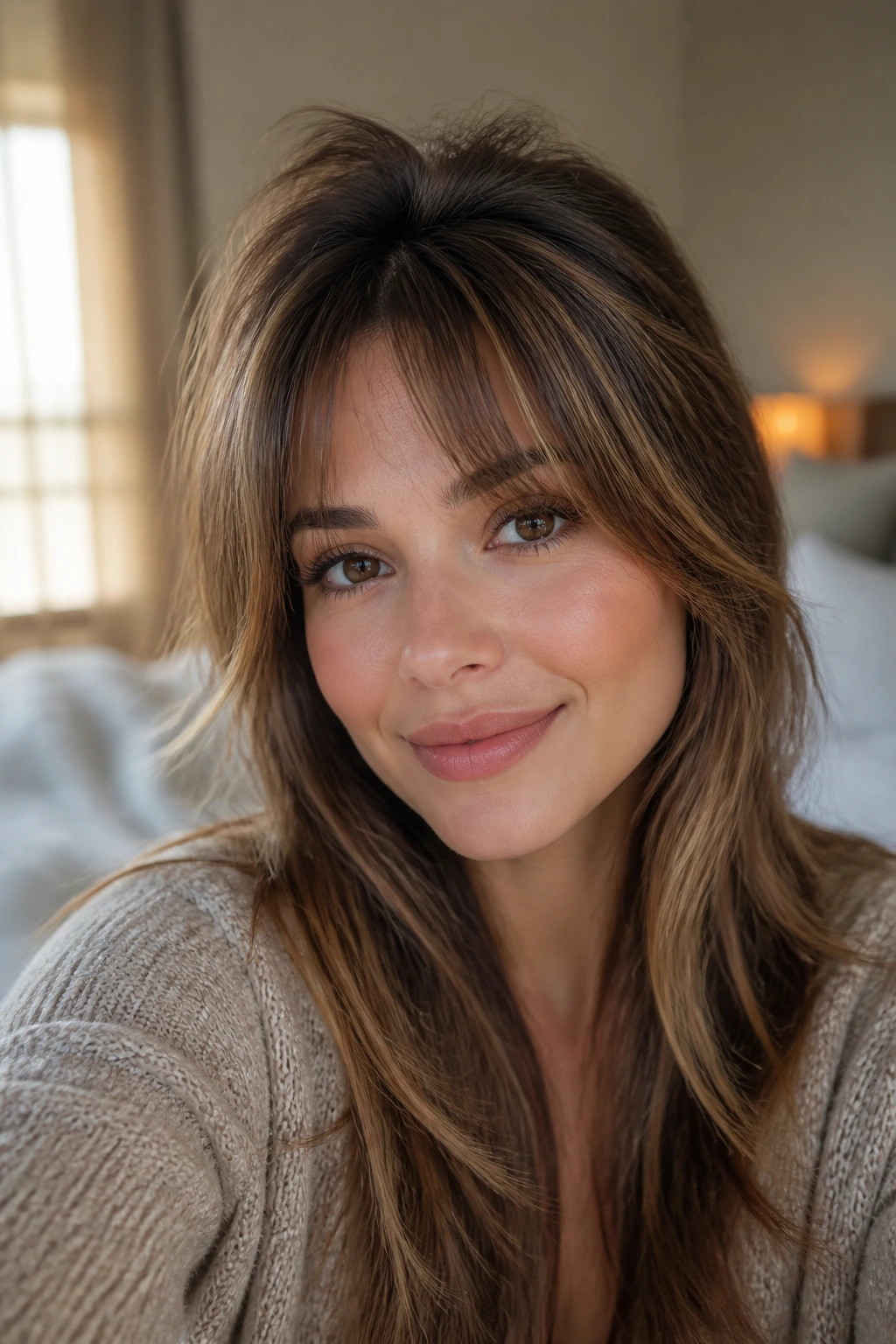
A lot of bangs fail because people try to make them behave like a separate haircut. They’re not. They’re part of the whole shape, and they need the rest of the head to cooperate.
Root lift first: Dry the roots at the front and crown before fussing with the ends. That one move keeps the face from looking flat and wide.
Let the sides fall, don’t force them out: If the fringe flips too much at the temples, it can widen the face. Guide the hair away from the cheeks, then stop.
Keep product light near the forehead: Heavy oil or rich cream close to the roots can make bangs collapse and separate in greasy-looking strips.
Use one styling tool, not three: If you dry, brush, flat iron, and re-brush the same fringe every morning, it starts to look cooked. Pick the least work that gets the line right.
How to Style Layered Bangs on a Busy Morning

The quick version is usually the one people need most. You do not need a salon blowout every day. You need a reliable reset.
Fast reset: Mist the bangs lightly with water, add a pea-sized amount of mousse or root spray, then blow-dry only the front section with a small round brush. Two to three minutes is enough if the cut was done well.
Smooth finish: If the fringe likes to split, use a mini flat iron just on the roots and the first inch of the bang. Keep the iron moving. Hold it still and you get a crease. That looks worse than a messy wave.
Air-dry fallback: If you are not using heat, separate the bangs with your fingers while they are still damp, then leave them alone. Keep touching to a minimum. Once they dry, you can soften the ends with a tiny bit of cream.
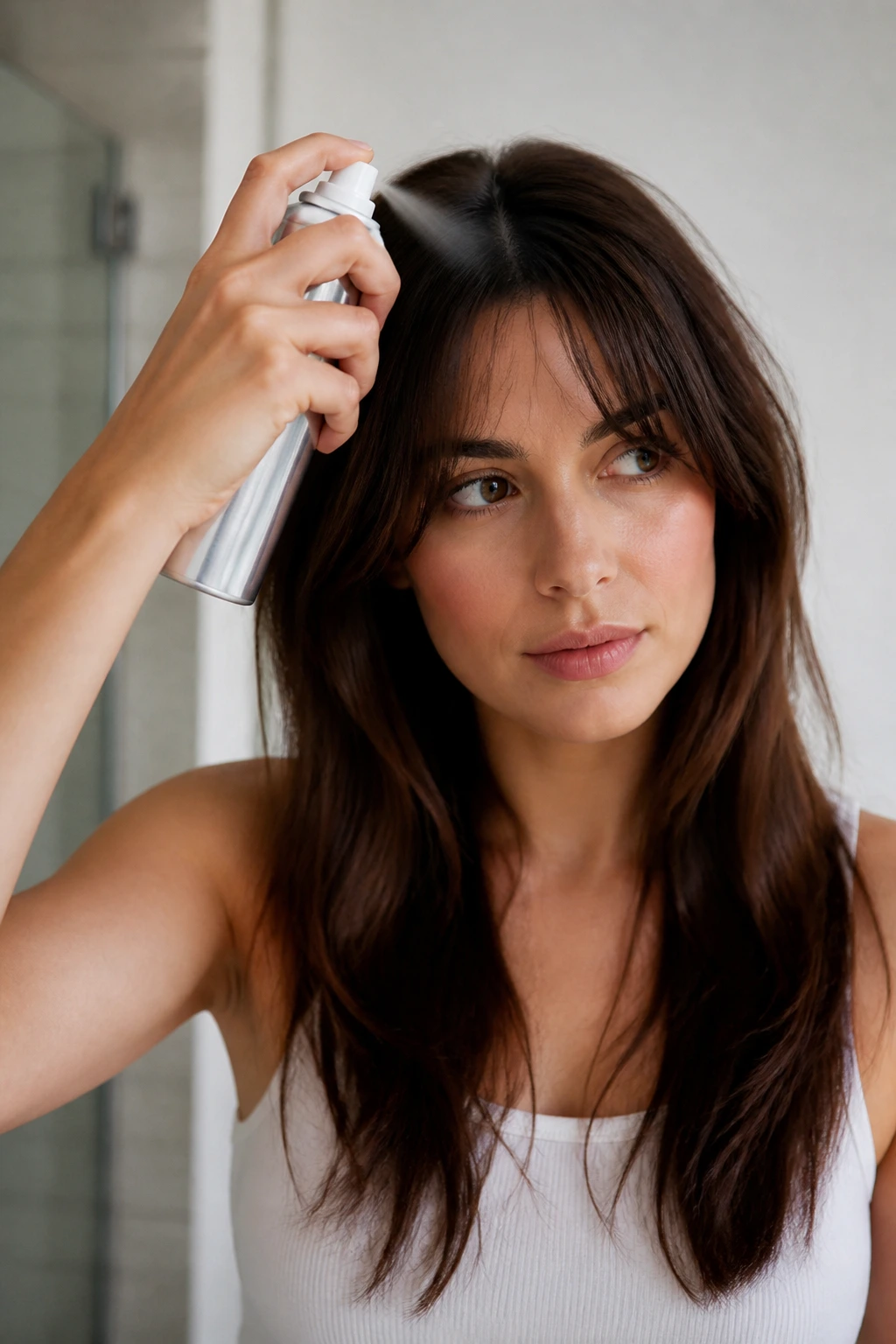
Second-day rescue: Dry shampoo at the roots, a quick blast with cool air, and a small brush usually fixes most of it. If the ends look rough, smooth only the tips. Do not re-wash unless you have to.
Common Mistakes That Make Bangs Puff, Split, or Sit Too Short
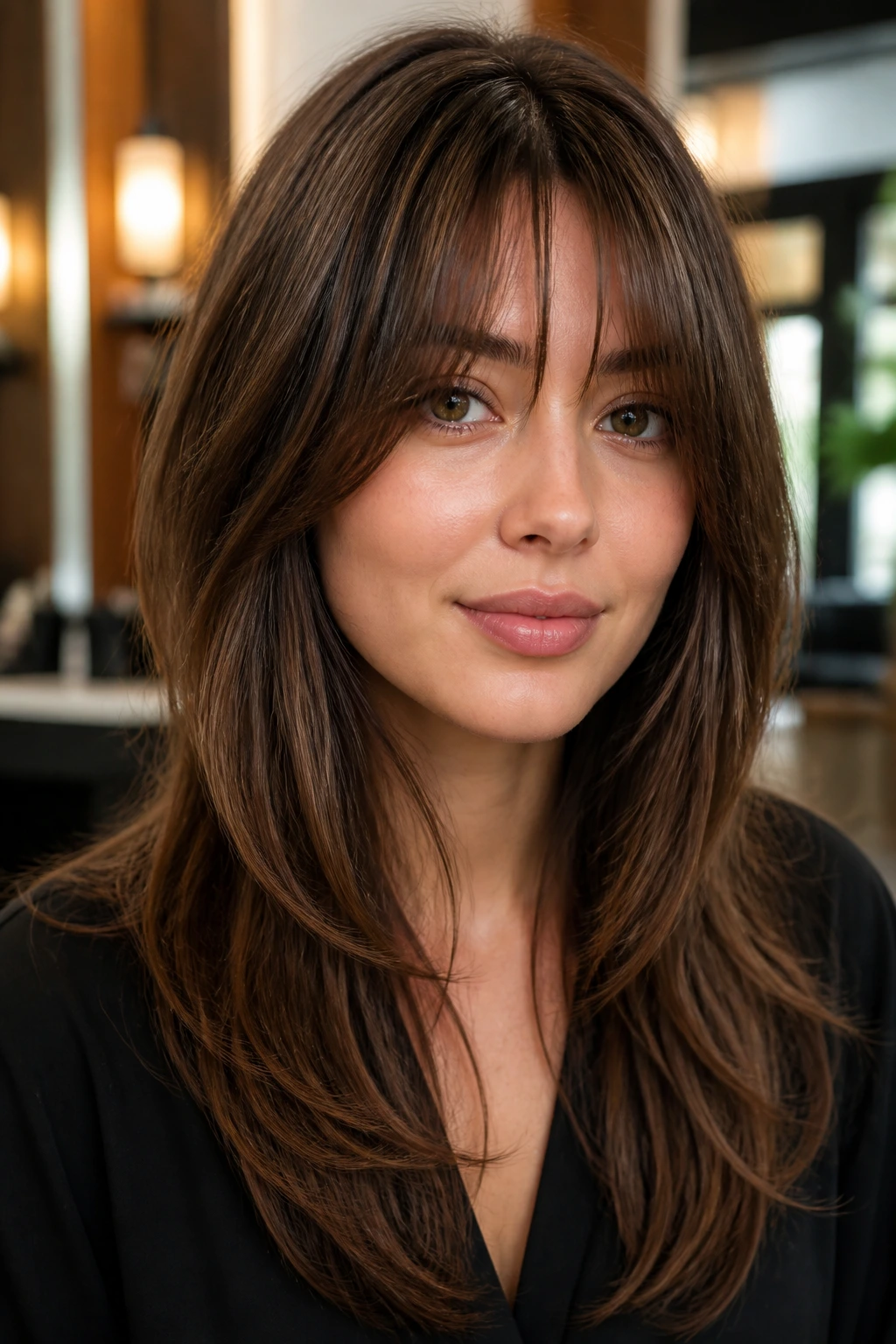
Cutting the fringe too short at the cheeks: This is the biggest problem on round faces. The bang stops where the face is widest, and the whole cut reads broader. Ask for longer corners or a lower starting point.
Ignoring the crown: Flat roots make the face look wider. Add a little lift at the top, even if the fringe itself stays soft.
Over-thinning wispy bangs: If the stylist removes too much hair, the bangs split into see-through pieces and look tired by lunchtime. Feathered does not mean sparse.
Forgetting shrinkage: Curly and wavy hair can spring upward after the cut. Always think in terms of dried length, not wet length.
Using too much product near the forehead: Heavy cream, oil, or spray can make bangs stick to the skin and separate in greasy lines. The front wants restraint.
Blowing the fringe straight down every time: That can collapse the shape and push the bang into the cheek area. Guide it with a bend instead.
Variations and Alternatives for Different Routines

The Office-Safe Version: Keep the fringe longer, softer, and easier to tuck aside. This works well if you need your bangs to disappear into the rest of the hair by lunch.
The Low-Heat Version: Choose air-dried fringe, long peekaboo bangs, or soft shag layers. These rely on natural movement instead of a brush and roller routine.
The Bold Version: Try brow-skimming choppy fringe, razor-cut bangs, or a vintage side sweep. These give more definition and a stronger front line.
The Curl-Friendly Version: Ask for long layered bangs cut for shrinkage, with the shortest pieces left longer than they look in the chair. That keeps the shape wearable after drying.
The Thick-Hair Version: Bottleneck, rounded curtain, and shattered choppy bangs help remove bulk without losing shape. Internal weight removal is the difference between a good cut and a puffed-out one.
How to Keep the Cut in Shape Between Salon Visits
Layered bangs need maintenance, but not constant maintenance. The front grows fast because it’s short and because you notice every millimeter of change.
Most fringe cuts need a trim every 4 to 6 weeks if you want the shape to stay crisp. If the bangs are long and blended, you can sometimes stretch that a little longer. Once the shortest point starts brushing the lashes in a way that forces you to shove it aside all day, it’s time.
Dry shampoo helps more than people admit. Bangs touch the forehead, pick up oil, and lose lift quickly. A small amount at the roots on the second day can buy you another wear. Keep your blow-dryer and brush in the same drawer so you actually use them. If they’re buried, the bangs will end up pinned back for a month.
At night, clip the fringe up loosely or separate it from the rest of the hair with a soft clip so it doesn’t crease into your face while you sleep. If you use a satin pillowcase, that helps too. Less friction means less weird bending in the morning.
Questions People Ask Before Cutting Fringe
Will layered bangs make a round face look wider?
They can, if the shortest pieces land at cheek level and the sides puff outward. The safer shapes keep the center light and let the corners fall longer so the eye moves down the length of the hair.
What part works best with a round face?
A center part works well with curtain or split fringe if the pieces are long enough. A deep side part can be even better if you want more asymmetry and crown lift. The part should match your growth pattern, not fight it.
Can fine hair handle layered bangs?
Yes, but heavy layering can make fine fringe look stringy. Soft curtain, feathered wisps, and longer peekaboo shapes usually behave better because they keep enough density at the front.
What if I have a cowlick at the front?
Tell your stylist before they cut anything. Cowlicks often need extra length, a different part, or a bit of root-setting with clips after drying. If you cut against the cowlick too aggressively, the bang will split all day.
Do bangs work with glasses?
They do, but the length matters. Bangs that hit right on the frame can feel crowded. Long layered fringe or side-swept pieces usually sit more comfortably around glasses.
How do I grow them out without looking awkward?
Let the front pieces get long enough to tuck behind the ears, then blend them into the side layers. Invisible bangs and long side bangs are easier to grow out than a sharp, short fringe.
Should I cut them myself?
If you want a clean result on a round face, I would skip the DIY trim unless you already know how your hair falls dry. Fringe reveals mistakes fast, and a millimeter too short can change the whole face shape.
A Shape That Works With You
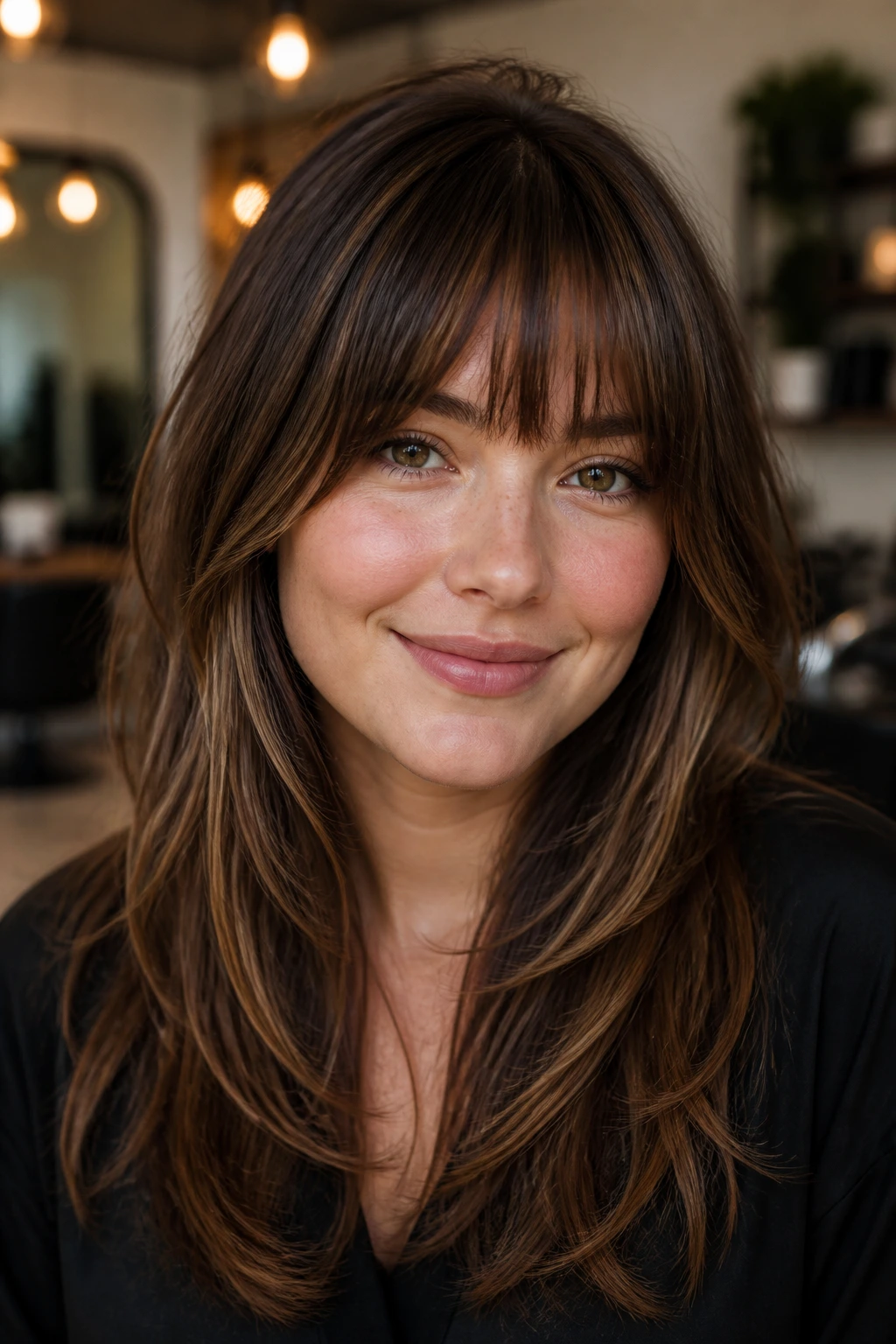
The nicest thing about layered bangs is that they give a round face structure without turning the front into a wall. That’s the whole game here. Keep the line moving, keep the corners longer than the middle, and keep some height at the crown so the haircut pulls the eye where you want it.
A good bang doesn’t fight your face. It changes the frame around it.
If you pick one of these shapes and ask for it with a little precision, you give your stylist something real to work with — and that is usually where the good hair starts.