



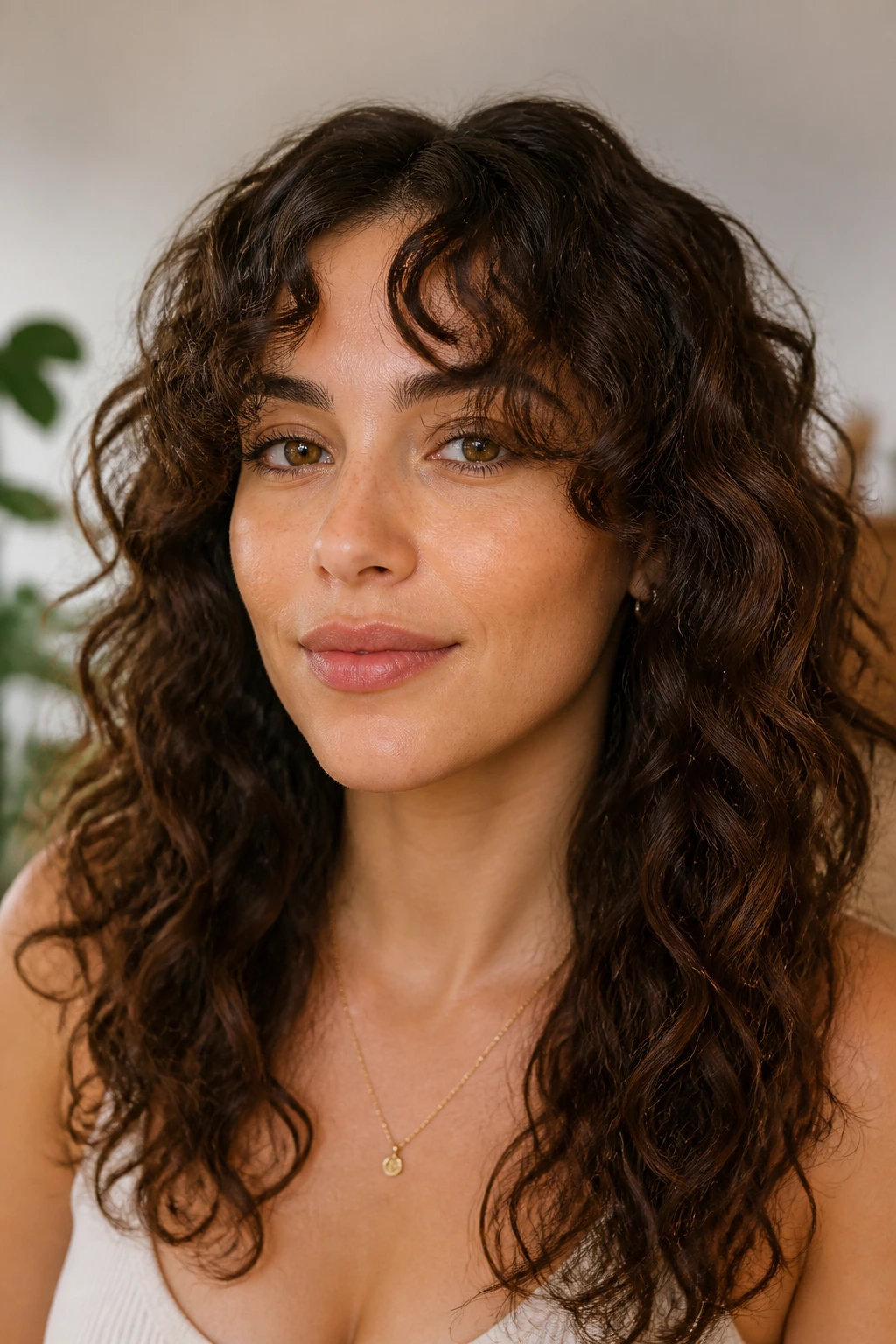
Curly bangs on an oval face can look effortless, or they can land like a damp curtain you immediately want to pin back. The difference usually comes down to where the curl springs up, how much weight is removed, and whether the cut respects shrinkage. That’s why bangs for oval faces and curly hair deserve their own lane. Straight-hair fringe logic does not survive first contact with a bendy, springy curl pattern.
Oval faces have a gift and a problem. The gift is balance: the forehead, cheekbones, and jawline already give you room to play with shape. The problem is that curly bangs can throw off that balance fast if they’re cut too short, too heavy, or too blunt in the wrong place. I’ve seen gorgeous curl patterns get buried under a shelf of fringe that sat an inch higher than the stylist expected once it dried. Not ideal.
The styles below lean into the things curly hair does well. They leave room for movement, they give the face some structure without boxing it in, and they account for the fact that a 3B curl can spring up like it’s had three cups of coffee. If you want bangs that look intentional on day one and still make sense on day three, this is the good stuff.
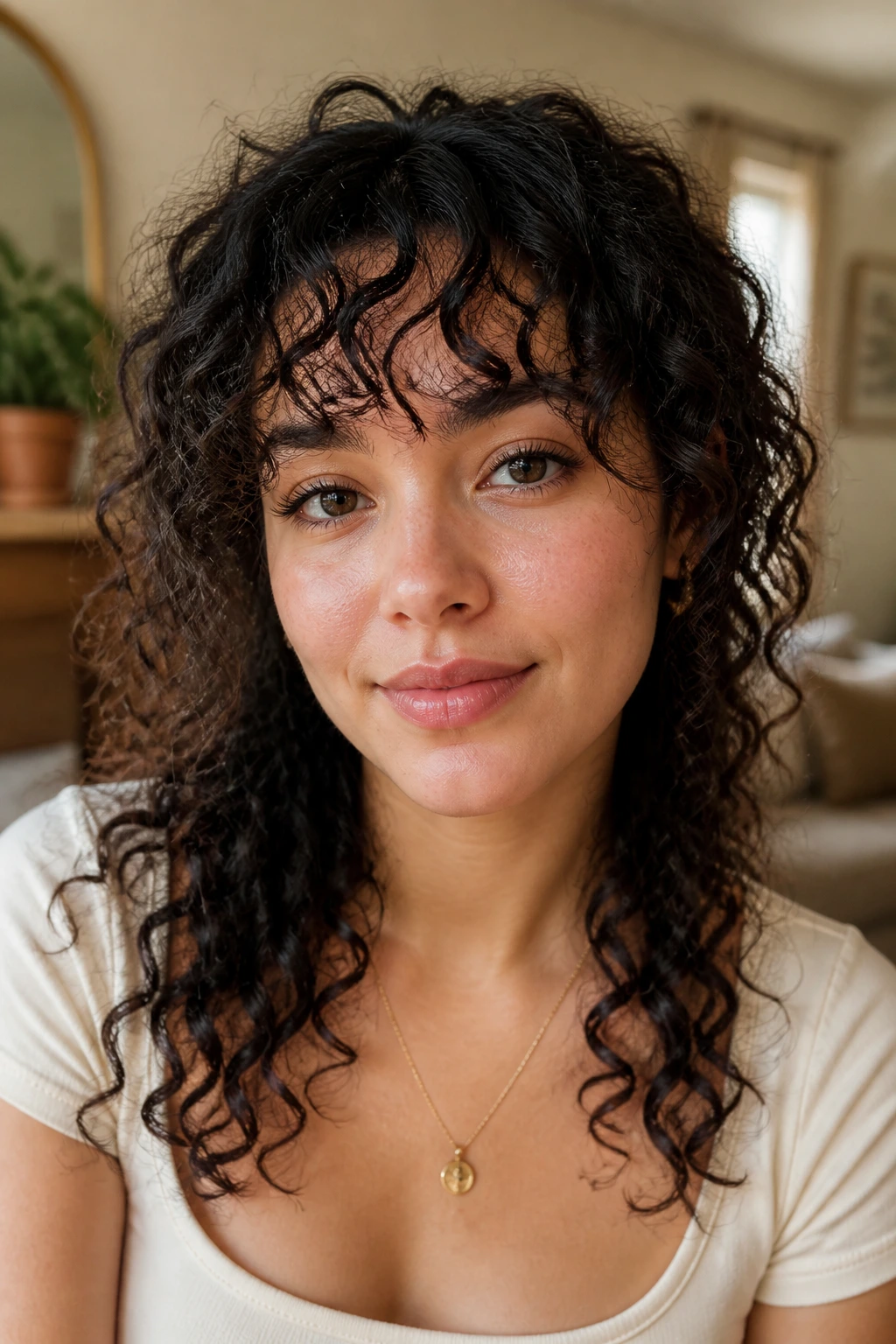
Why These Bangs Work So Well on Oval Faces and Curly Hair
-
Face Balance: Oval faces can carry blunt, split, side-swept, and micro fringe because the proportions are already even; you do not need bangs to “fix” the face, only to frame it.
-
Curl Shrinkage: Curly bangs need extra length left in the cut because many curl patterns spring up 1 to 2 inches once they dry, and tighter coils can bounce even more.
-
Shape Variety: This face shape can handle soft curtain fringe one day and a sharper, shorter fringe the next, which gives you room to pick based on style rather than face-shape rules.
-
Less Fighting, More Following: The best curly bangs work with the bend of the hair instead of trying to iron it into a straight line that disappears the second humidity shows up.
-
Easy Grow-Out: Longer fringe styles like bottleneck, curtain, and split bangs can melt into face-framing layers, so you are not trapped in an awkward halfway stage for months.
1. Soft Curtain Bangs That Melt Into the Cheekbones
Soft curtain bangs are the safest place to start if you want bangs for oval faces and curly hair without waking up to regret. They part near the center, then fall into longer pieces that graze the cheekbones instead of stopping dead across the forehead. On curls, that shape feels airy rather than heavy, and it gives the face a loose frame that still looks finished.
The trick is to keep the middle shorter and the sides longer, but not dramatically so. Ask for the center pieces to land around brow level when dry, with the side pieces dropping toward the top of the cheekbone. That small length difference is what gives the fringe its swing. If the stylist cuts them wet, ask them to leave a little extra room for spring.
Curtain bangs are especially kind to oval faces because they echo the natural curve of the face instead of flattening it. They also work when you want to pin them back for two days a week. That flexibility matters more than people admit.
Best for: 2C to 3B curls, medium density, and anyone who wants a soft front shape without full forehead coverage.
Tip: If your curls separate a lot, ask for a light point-cut at the ends so the pieces do not sit like one solid block.
2. Bottleneck Bangs With a Narrow Center and Flared Sides
Bottleneck bangs are one of those cuts that look fussy on paper and strangely easy in real life. The center is narrower and a little shorter, then the fringe opens out toward the temples. On an oval face, that shape feels balanced because it mirrors the face’s gentle width without making the forehead look boxed in.
Why it works
The bottleneck shape gives you more forehead coverage than a curtain bang, but less commitment than a blunt fringe. That matters with curly hair, because curls need room to move. A center section that lands just below the brow, with side pieces closer to the cheekbone, keeps the front from puffing out like a triangle.
Ask for the cut to be done dry or at least mostly dry. Wet curls lie. They always do. You want the stylist to see where the front curls actually rest, not where they pretend to sit before they spring back.
- Center pieces: dry length at or just below the brow
- Side pieces: longer, around temple to cheekbone level
- Shape: soft taper, not a hard edge
- Finish: light separation, never helmet-like
This style is a good bridge if you want fringe but do not want to look like you chopped off all your front layers at once.
3. Brow-Skimming Curly Fringe That Stays Light
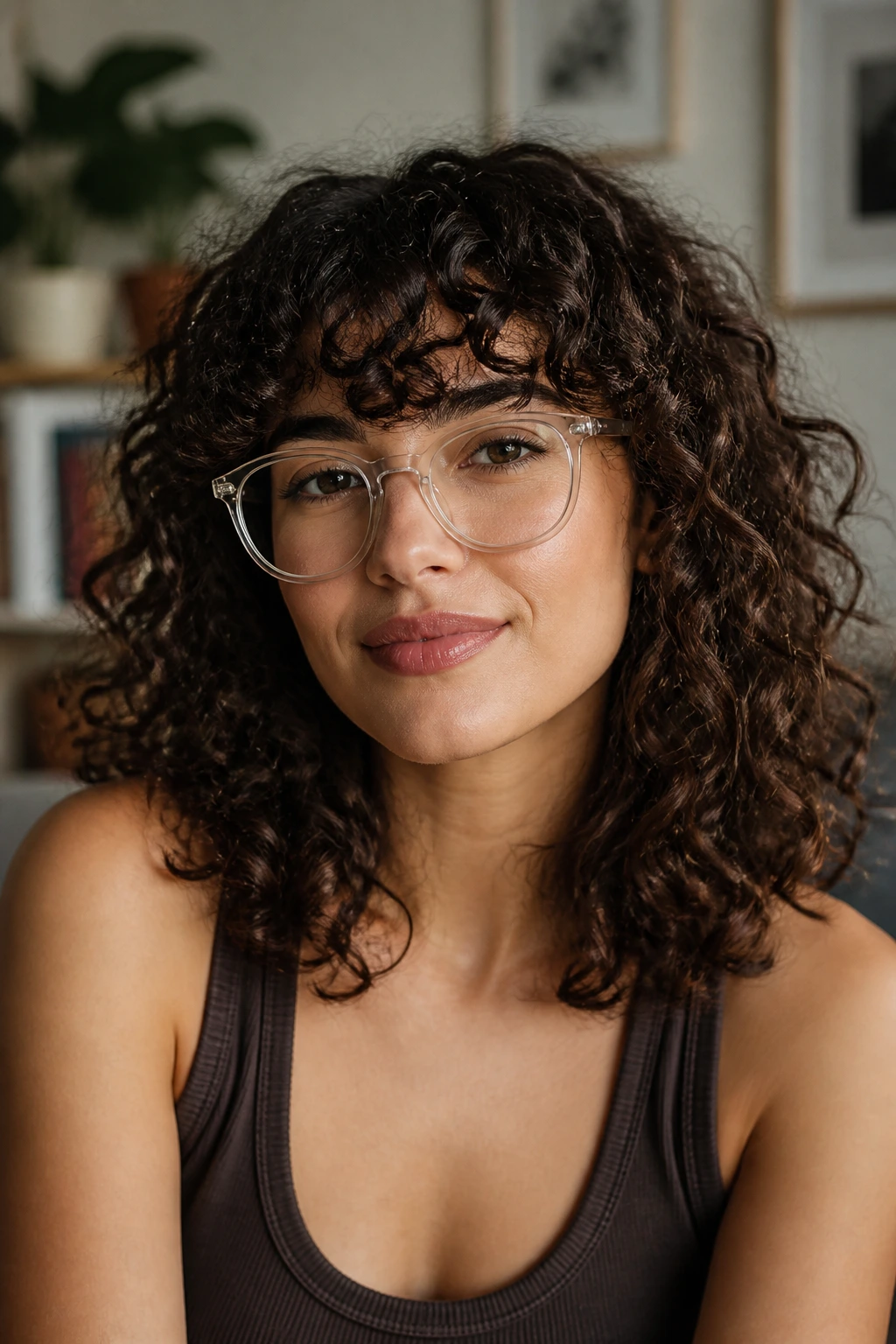
Brow-skimming fringe sounds simple, and that is the appeal. It lands around the eyebrows when dry, not above them, not halfway into the lashes. On curly hair, that small difference keeps the fringe from feeling too short once it springs up.
The real win here is control. You get the feeling of bangs without the heavy block that can overwhelm a curl pattern. On an oval face, brow-skimming fringe creates a clean horizontal line right where the eyes want attention, which gives the face a bit of crispness without changing its proportions too much.
I like this style most on looser curls and waves that want a little body in the front. If your curl pattern is tighter, the stylist should keep the length conservative and cut in tiny sections. A curly brow-skimming bang cut too aggressively turns into baby fringe by lunchtime, and that is not the same thing.
It also plays nicely with glasses. The fringe sits high enough to avoid constant lens brushing, but low enough to frame the eyes instead of disappearing into the rest of the hair.
4. Side-Swept Curly Bangs With a Loose Bend
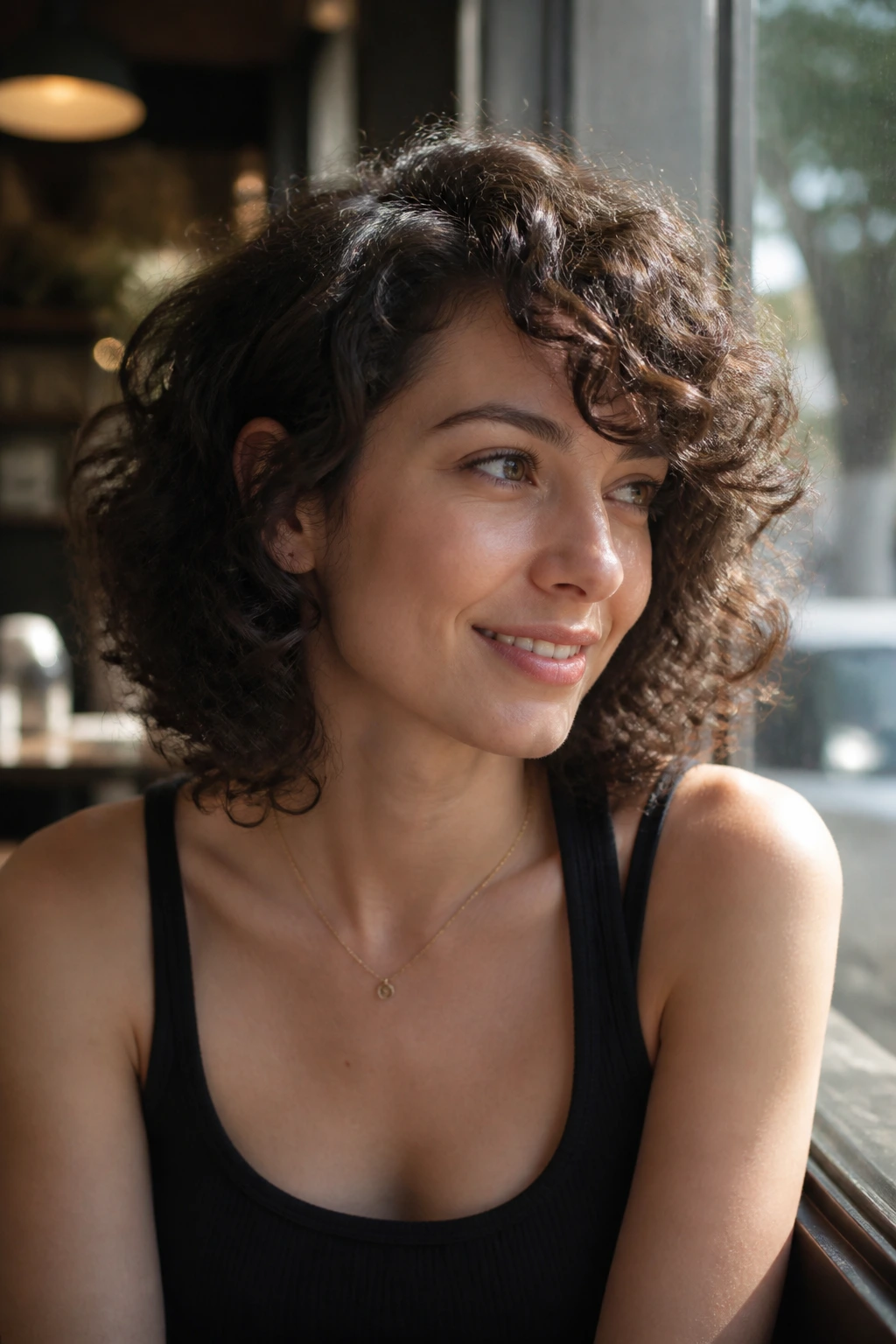
Side-swept curly bangs are the low-drama option, and I mean that as a compliment. They let the curl pattern move diagonally across the forehead, which softens the face without forcing symmetry. If you part your hair off-center already, this style makes sense immediately.
The reason it flatters oval faces is simple: it adds a little asymmetry without making the face look longer. A full, center-heavy fringe can sometimes stretch an oval face visually if the rest of the hair is flat. A side sweep breaks that line and keeps the eye moving.
Ask for the shortest point to start near the eyebrow arch, then let the fringe fall longer toward the opposite temple. That creates a diagonal line that looks deliberate even when the curls are doing their own thing. If your hair tends to spring up unevenly, this is one of the few styles where that messiness works in your favor.
A side sweep also buys you time on day two. If the front starts to separate, you can mist it, twist it once, and send it off to one side again. Done.
5. Curly Birkin Bangs With Soft Separation
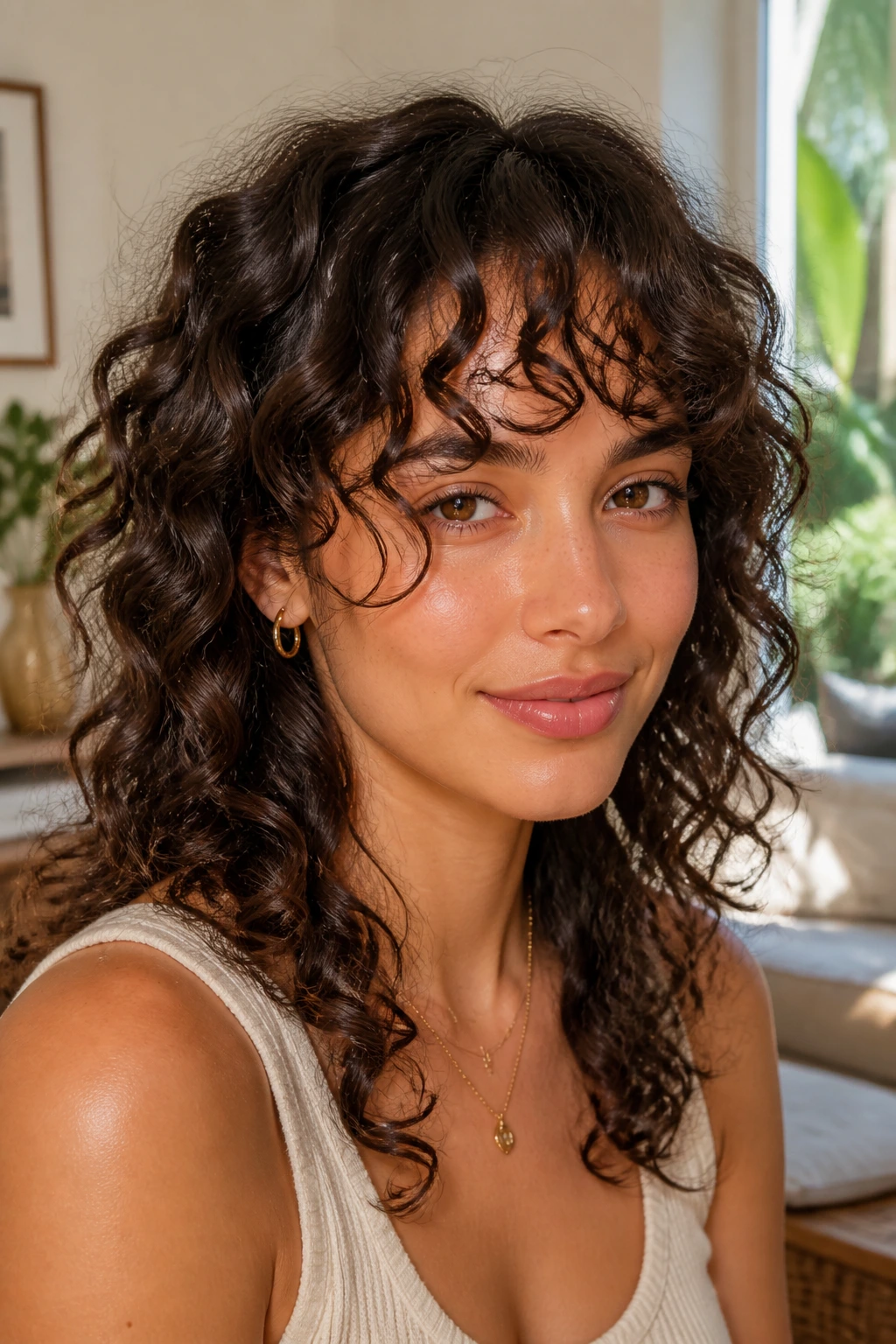
Curly Birkin bangs have that slightly undone, almost airy look that never seems to overstay its welcome. They sit full enough to show off texture, but they are not dense enough to feel like a wall. On an oval face, that separation keeps the features visible and avoids stealing all the attention from the eyes.
This cut works best when the stylist leaves a little internal space. You do not want every curl clumped together into one heavy line. You want a fringe that breaks into pieces naturally, with a few strands falling higher and a few resting lower. That unevenness is the point.
Ask for this if: you like a polished shape that still looks soft on a humid day.
Avoid this if: your curls are very fine and tend to collapse when overloaded with product. Birkin bangs need a light hand, not a slick finish.
The best version lands just over the brows at the center and opens slightly at the sides. If the cut is right, it looks like the fringe decided where to fall on its own. That’s the effect people are after, even when they pretend they are not.
6. Micro Bangs for a Sharp Oval Frame
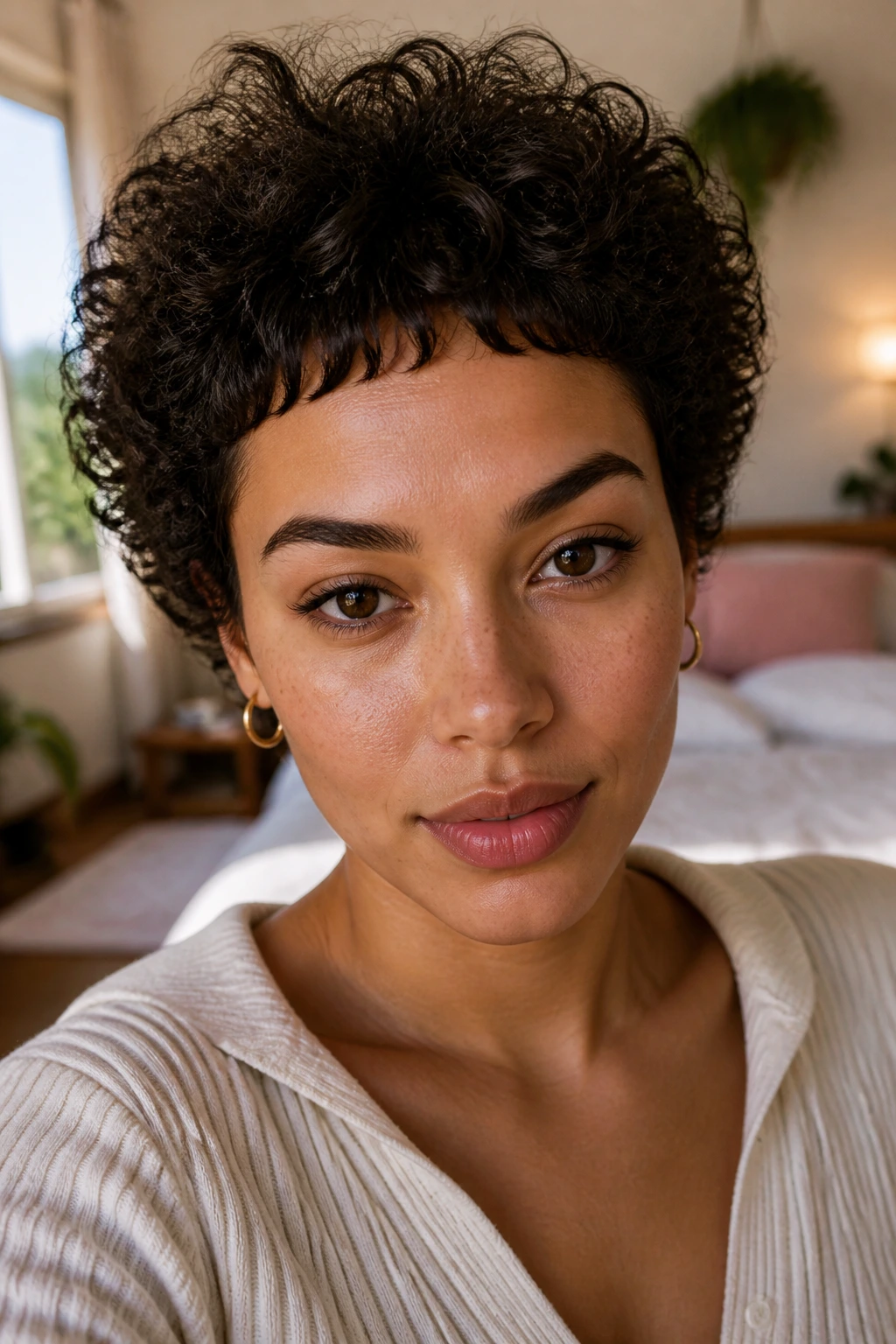
Micro bangs are the boldest thing on this list, and on an oval face they can look fantastic if the curl pattern is compact enough to stay put. The cut sits well above the brows, so it shows the forehead and throws all the focus upward. That can sharpen an otherwise soft face shape in a way that feels modern rather than severe.
The downside? Maintenance. Micro bangs are not forgiving, especially with curls. Shrinkage matters more here than anywhere else in the article. If your curls regularly bounce up more than an inch, the stylist should cut them longer than your instinct says, then come back and refine after they dry.
I like this style on tighter curls and coils that hold a tiny, rounded shape. It looks especially good with short cuts, pixies, and curly shags that already have a little attitude. But it is not a “set it and forget it” fringe. You will be trimming it more often than every other bang on this list.
Still, if you want something sharp and graphic, this is the one that changes the whole face in two inches of hair.
7. Rounded Full Fringe That Follows the Brow Arc
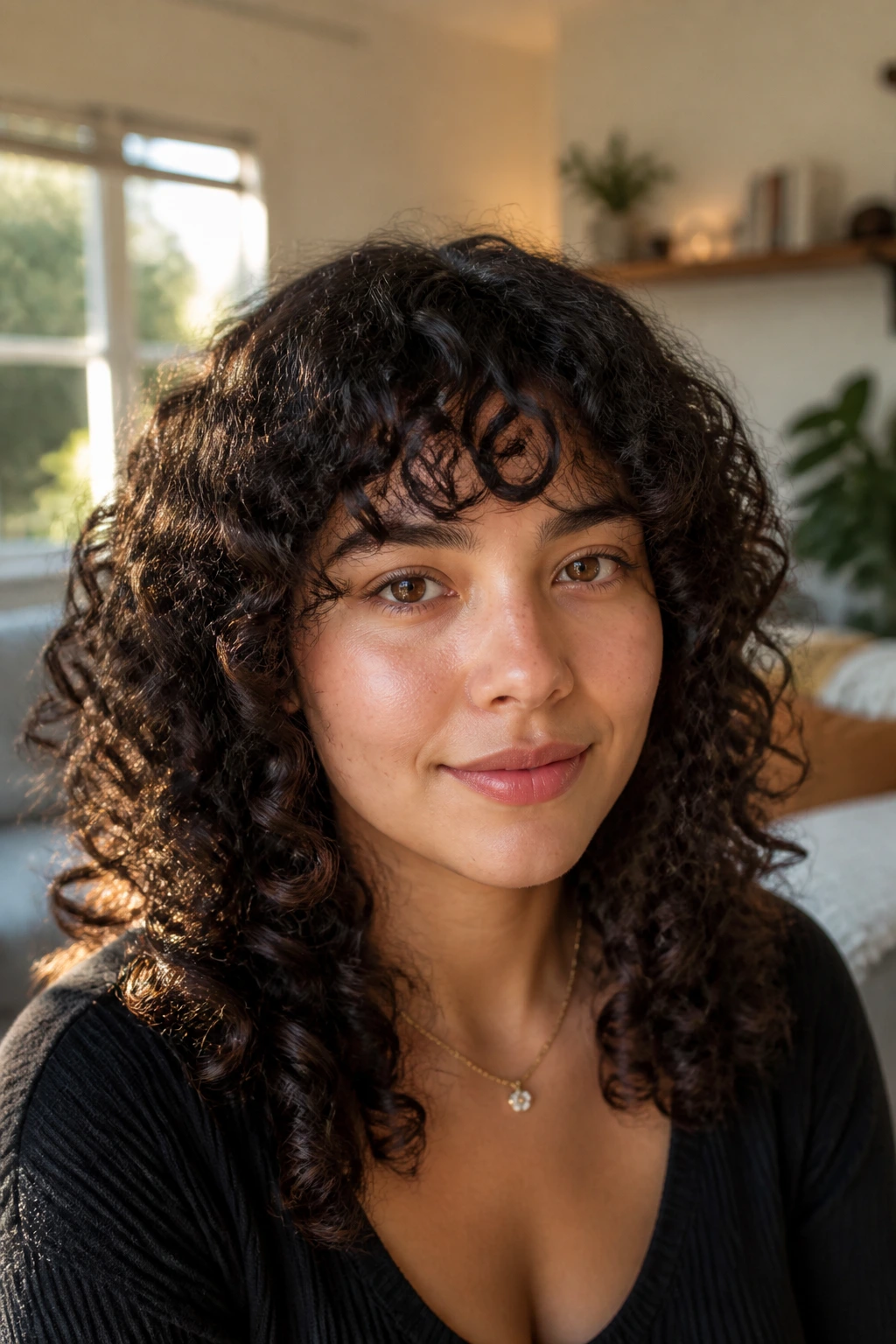
Rounded full fringe gives you more coverage across the forehead, but the curve keeps it from feeling stiff. On curly hair, that rounded line is easier to live with than a blunt straight-across cut because the curl pattern naturally wants to arc anyway. It works with the hair instead of forcing a ruler-straight line that curls refuse to obey.
Oval faces can wear a fuller fringe without looking crowded, which is one of the quiet advantages of this face shape. The curve adds softness around the upper half of the face, and it can make the eyes look more prominent. If you have a long forehead and dense curls, this style can be a smart choice.
The cut should keep the center a touch shorter than the outer edges, even if the line reads full. That tiny taper keeps the fringe from turning into a shelf. A point-cut finish helps too, because it breaks up the ends enough to keep air between the curls.
This is not the lightest option on the list, but it has presence. Some people want that.
8. Piecey Split Bangs That Open in the Middle
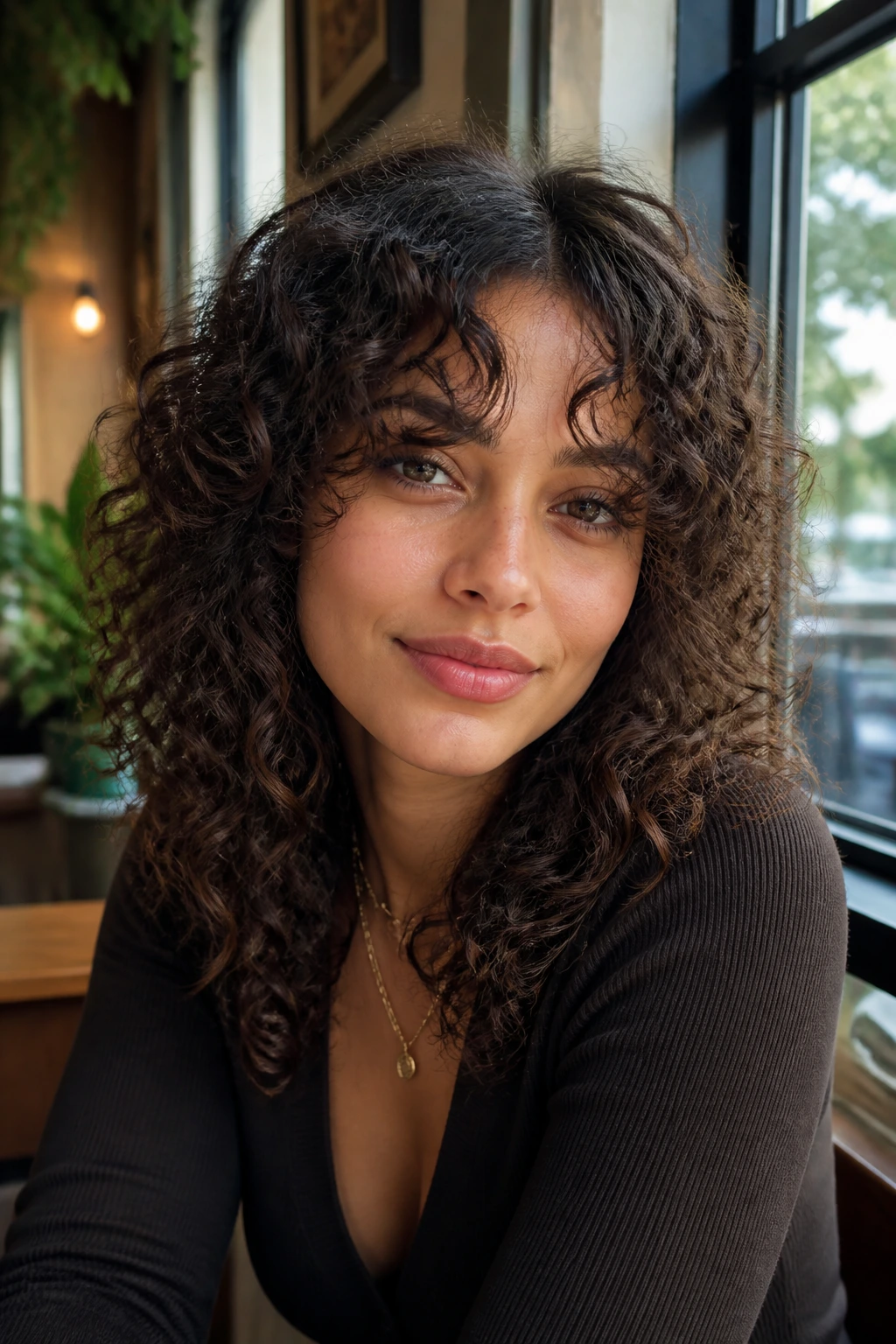
Piecey split bangs give you the visual of fringe without the full weight of a solid curtain. The center opens slightly, then the pieces fall on either side in little curl clusters. On an oval face, that open middle keeps the forehead from looking boxed in and gives the face a bit of lift.
How to style them
Start with damp hair and work a pea-sized amount of light cream or mousse through the front section only. Then separate the bangs with your fingers instead of a brush. A brush can make the pieces too uniform, and uniform is exactly what piecey bangs are trying to avoid.
- Best on: 2C to 3C curls
- Cut cue: leave the center long enough to part on its own
- Finish: scrunch lightly and let some strands fall where they want
- Watch for: over-product, which makes the pieces stick together
I like this version for people who want fringe that looks intentional but not strict. It has enough mess to feel relaxed, yet enough shape to read as a haircut. That is a nice balance, and it is harder to get than it sounds.
9. Shaggy Bangs Layered Into a Curly Cut
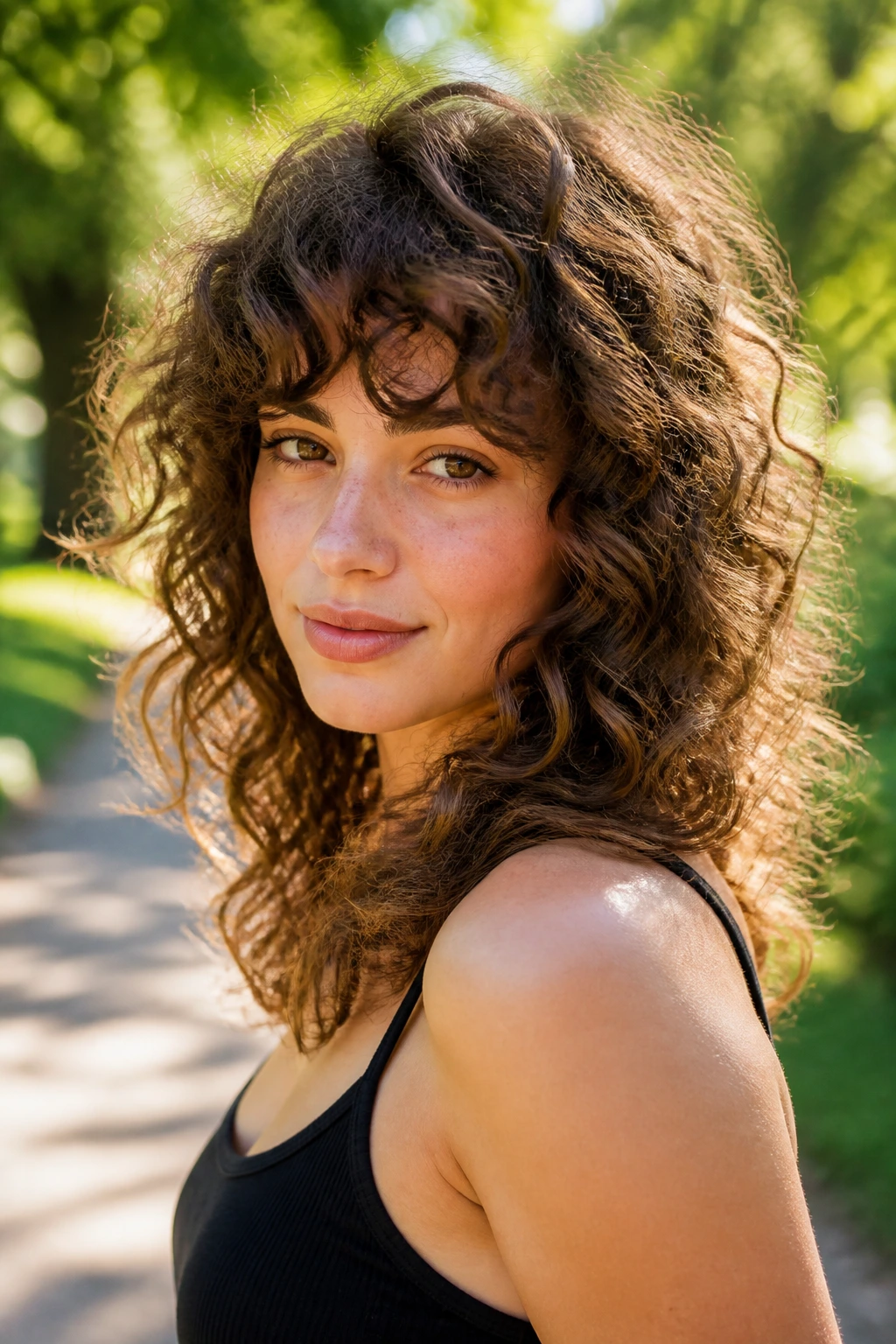
Shaggy bangs are what happen when the front section stops trying to be a separate event and starts acting like part of the cut. They blend into layers, which makes them ideal if you already live in a curly shag, wolf cut, or layered lob. On an oval face, that blend stops the bangs from visually shortening the face too much.
The best version is choppy, but not random. You want movement at the front and along the temples, with enough length left in the middle so the fringe can drop forward when it needs to. If the layers are cut too high, the bangs can puff away from the forehead instead of falling into it.
This is one of the most forgiving choices for curly hair because the whole style is built around texture. It does not need perfect symmetry. It does not need the same curl to sit the same way every morning. In fact, a bit of inconsistency helps it.
If you are the type who likes hair that looks cooler after a few hours of wear, shaggy bangs are your lane. They get better when they loosen up.
10. See-Through Bangs for Looser Curl Patterns
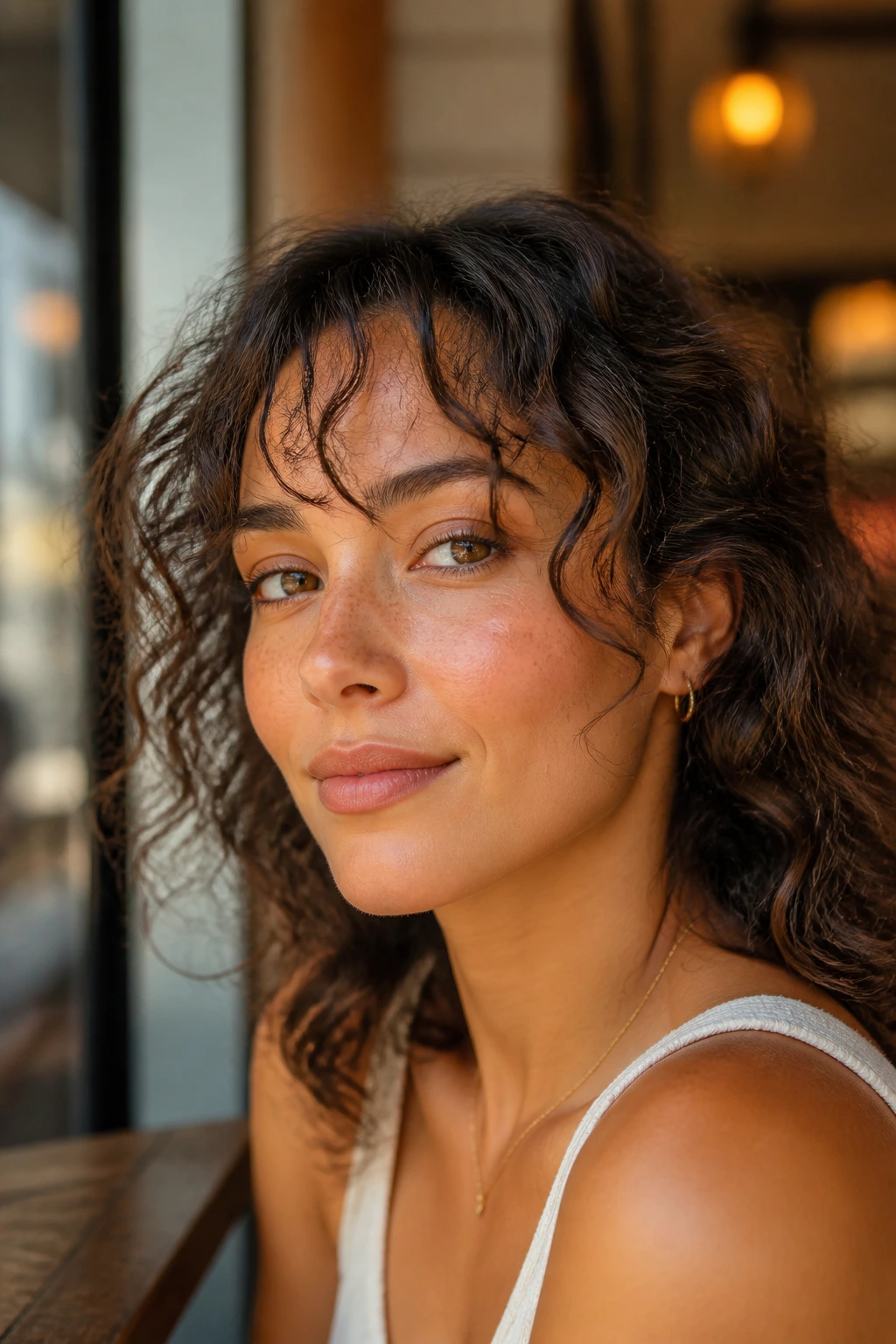
See-through bangs are light on density and soft at the edges, which makes them a smart pick for loose curls and waves. They let the forehead show through a little, so the fringe frames the face without taking over. On an oval face, that keeps the features open and easy to read.
This style works because it never asks the curl pattern to do too much. The stylist leaves space between the sections, and the hair falls in delicate pieces instead of one dense front panel. If you have fine curly hair, that can be a gift. Heavy bangs on fine curls tend to collapse into a sweaty-looking strip by noon.
The only real rule is restraint. You do not want to overload them with cream or oil, because then the “see-through” part disappears. A small amount of mousse or light gel is enough.
If your curls are loose enough to drape but not so loose that they go flat, this fringe can look clean and fresh in a way that heavier bangs cannot.
11. Arched Bangs That Trace the Brow Line
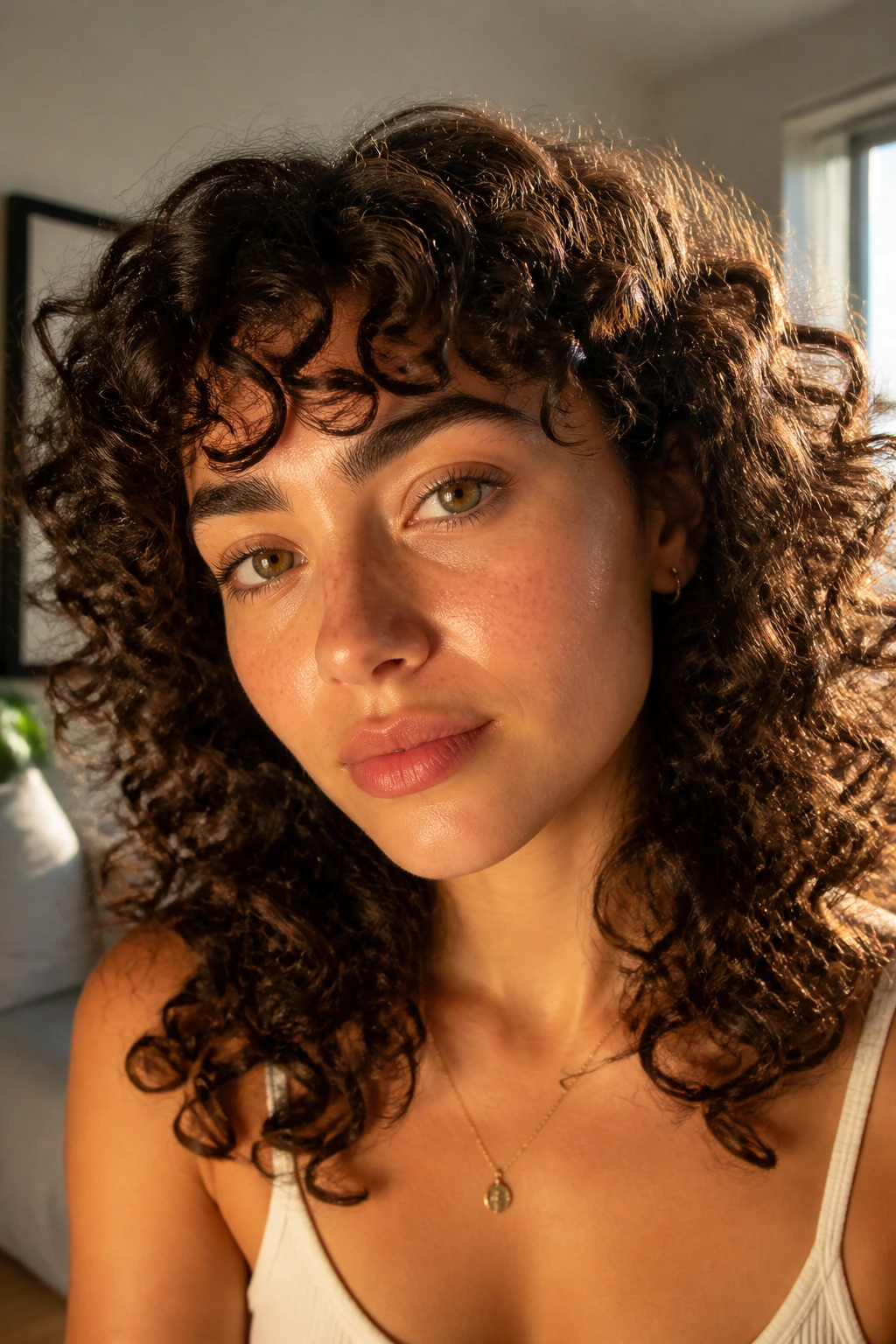
Arched bangs follow the curve of the brow rather than cutting straight across it. That makes them one of the nicer shapes for oval faces, because the arch adds a little structure without hard edges. Curly hair gives the style more texture, which keeps it from looking too neat or dated.
I like arched bangs when the fringe is dense enough to look like a true bang, but not so dense that it becomes a block. The middle should land a touch lower than the sides, creating a gentle dome across the forehead. That tiny rise is what makes the style feel tailored instead of blunt.
The cut also works well if your curl pattern clumps into clear sections. The arch can use those clumps instead of fighting them. You get a fringe that looks shaped, not flattened.
It is a good choice if you like the idea of a classic bang but need the softness that curly texture brings. The arch does a lot of quiet work.
12. Curly Blunt Bangs With a Soft Edge
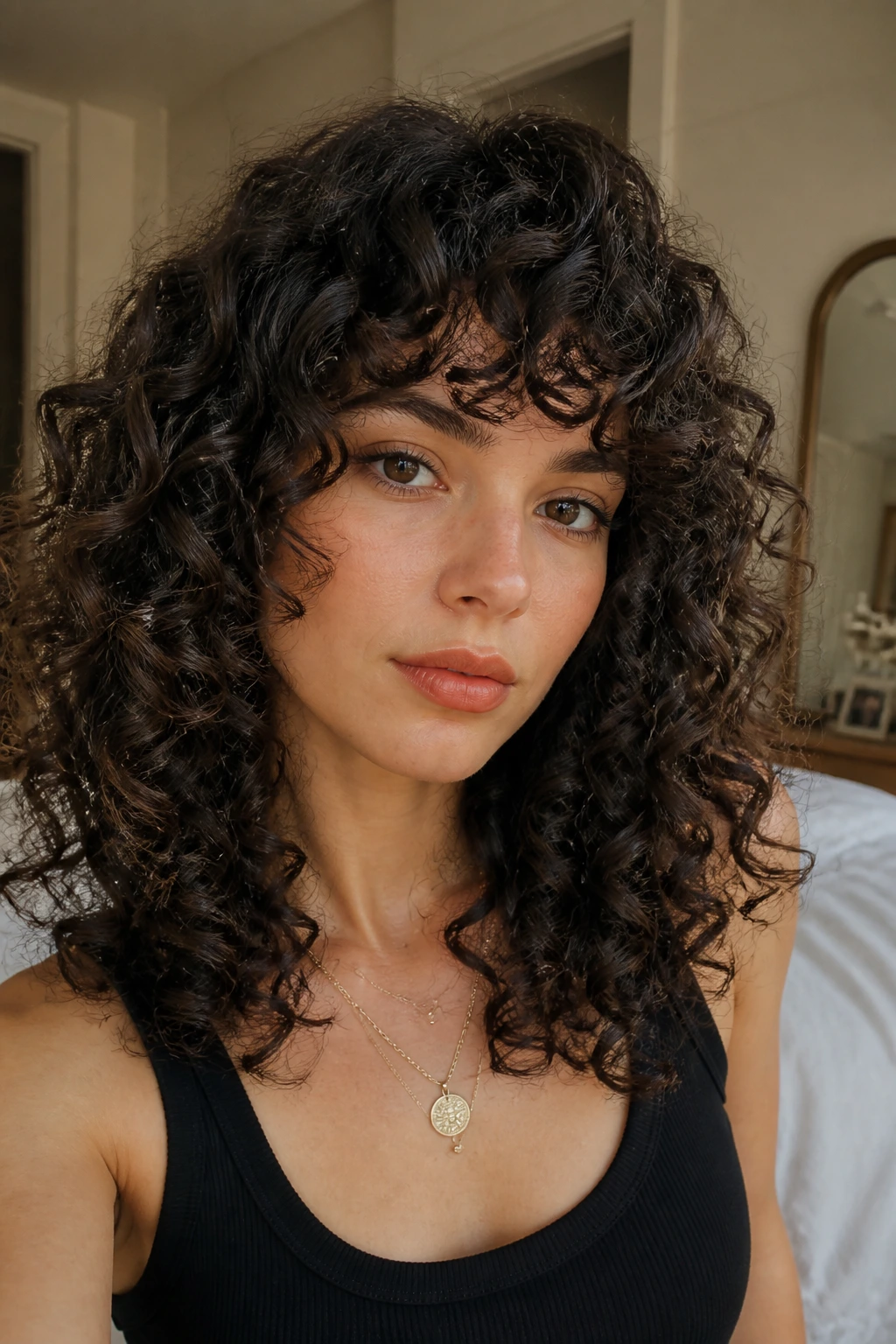
Blunt bangs on curly hair sound risky, and sometimes they are. But on an oval face, a blunt line can look striking if the curls are strong enough to hold shape and the edges are softened a little with point cutting. The key is not to make the fringe hard; it is to make it full.
The center should be cut to the desired length in the dry state, then checked once the curls settle. That extra check matters because blunt bangs can jump higher than expected. If the line ends up too short, you will spend weeks styling around a mistake.
This style suits denser curls better than wispy ones. When the front has enough hair to hold a visible line, the blunt shape reads as intentional. Without density, it starts to look patchy.
It is a strong choice if you want contrast. Oval faces can handle it because the proportions stay balanced, and the blunt edge gives the eyes a clean frame. Just don’t ask a limp curl pattern to do this job. It will not cooperate.
13. Tapered Coily Bangs That Sit Higher in the Center
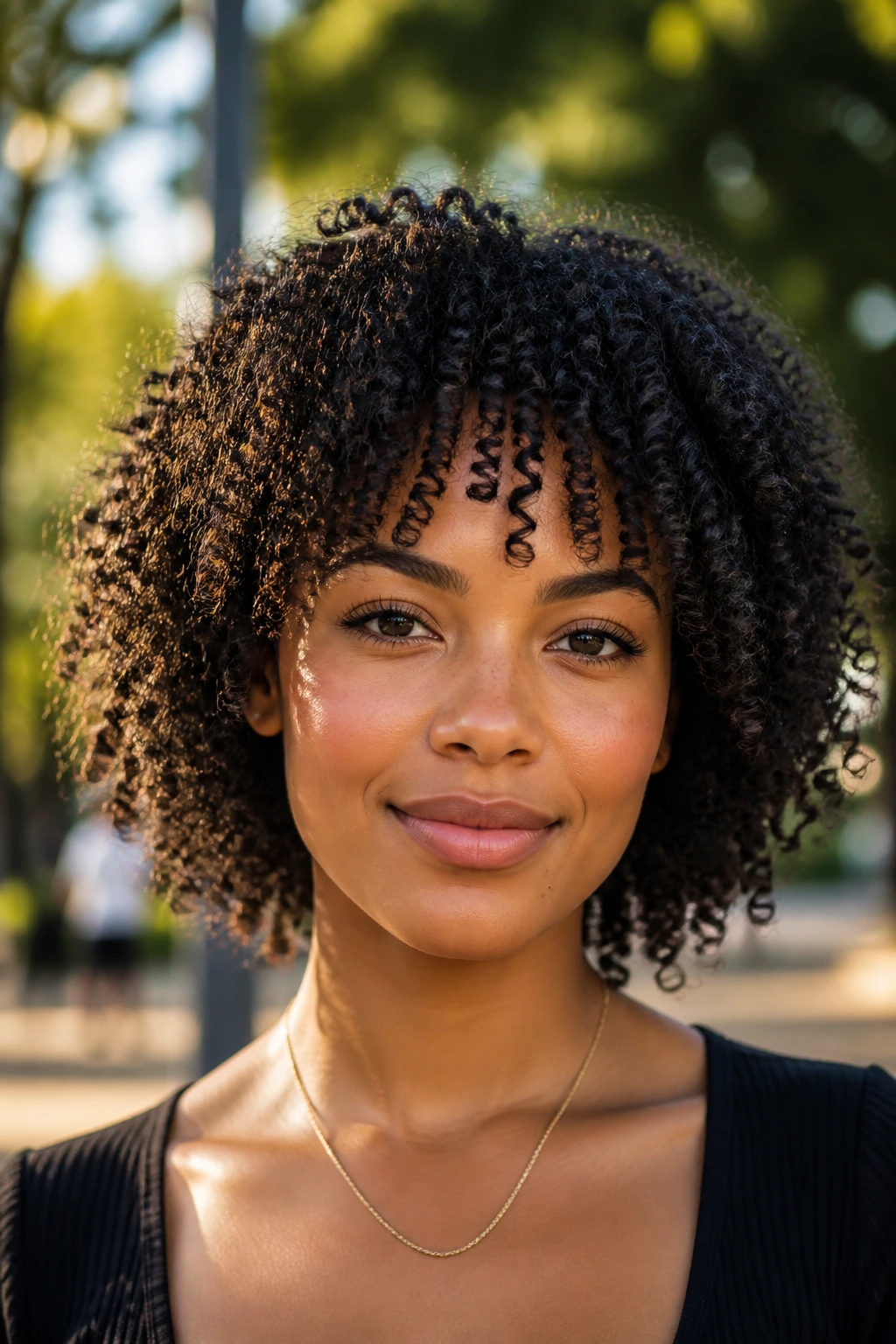
Tapered coily bangs are built for tighter textures, where shrinkage is part of the design and not a problem to solve. The center sits a little higher, with the sides left longer and shaped down toward the temples. On an oval face, that taper keeps the forehead open enough while still giving the haircut a front edge.
The cut details matter
Ask for the bangs to be shaped curl by curl if your coils vary in tightness. Cutting them all at the same wet length is a gamble, and with coily hair the gamble usually loses. Dry cutting gives a better picture of where each coil will sit.
- Center: slightly shorter to lift the eyes
- Sides: longer to soften the temple area
- Shape: tapered, not squared off
- Finish: light moisture, no heavy butter
This is one of the few fringe styles that looks better when the texture is obvious. The shape is not hiding the coils; it is using them. That makes it feel honest, which I like. Hair should not look like it is apologizing for what it is.
14. Mixed-Length Bangs That Move on Their Own
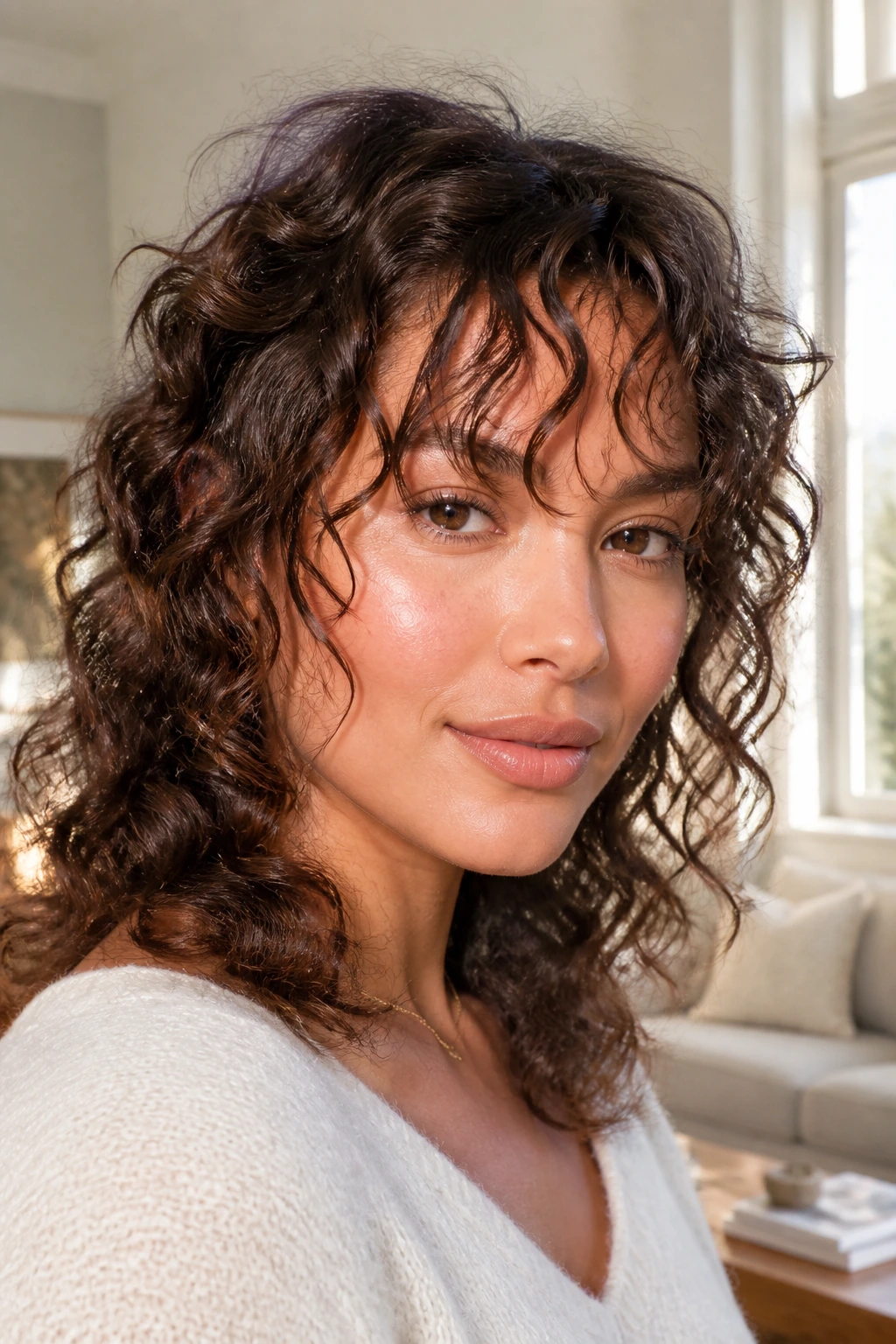
Mixed-length bangs are exactly what they sound like: a fringe with pieces that land at different heights on purpose. The result is a front section that moves a little more naturally, especially on curly hair where every strand already has its own opinion. On an oval face, the staggered lengths keep the forehead from looking too blocked.
This is a smart option if your curls have different diameters or if your front pieces refuse to sit in the same place. Instead of forcing symmetry, the cut builds around that variation. A few shorter pieces can land near the brows while longer ones graze the cheekbones, which gives you softness without a heavy line.
The style also hides mistakes well. That sounds a little rude, but it’s true. If one curl decides to spring up more than the others, mixed lengths make the unevenness look intentional rather than botched.
It is an easy fringe to live with when you want movement first and neatness second. The hair can breathe.
15. Grown-Out Fringe That Skims the Eyes
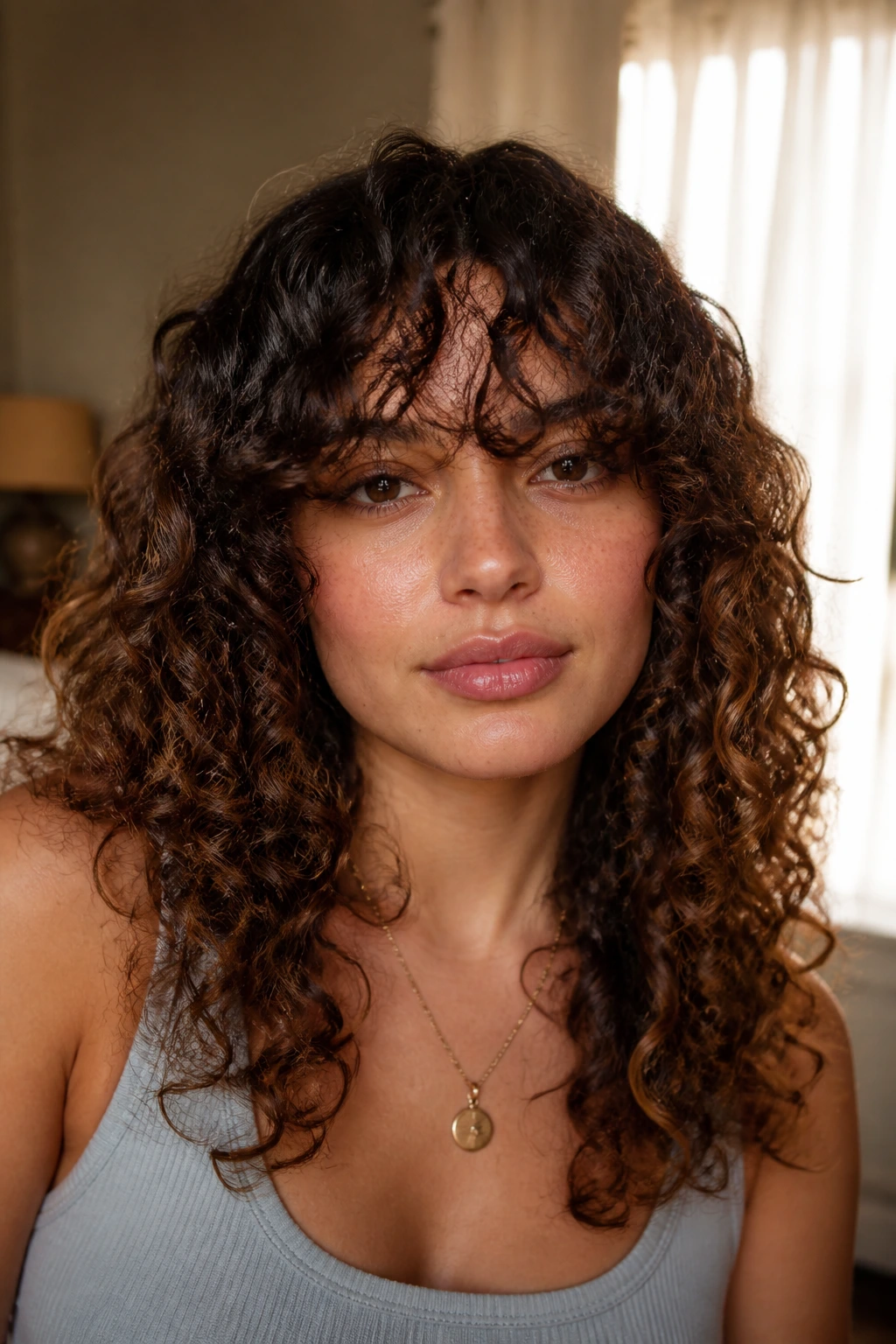
Grown-out fringe is what happens when bangs pass the awkward stage and become good again. The pieces sit long enough to skim the eyes, then fall into the rest of the haircut with a soft sweep. For oval faces, that longer fringe keeps the vertical line of the face from looking too stretched while still making the front interesting.
I keep coming back to this style because it is one of the most wearable for curly hair. It does not need constant trimming, and it looks better with a little lived-in texture. If you like to wear your curls loose, half-up, or clipped back, grown-out fringe can do all three.
The secret is keeping the front soft, not heavy. The length should feel deliberate, not like you gave up on a bang trim. A little shape at the temple keeps the cut from turning into one long face layer.
If you want a fringe that buys you time between salon visits, this is the practical choice. And practical is underrated.
16. Deep Side-Part Bangs That Sweep Across the Forehead
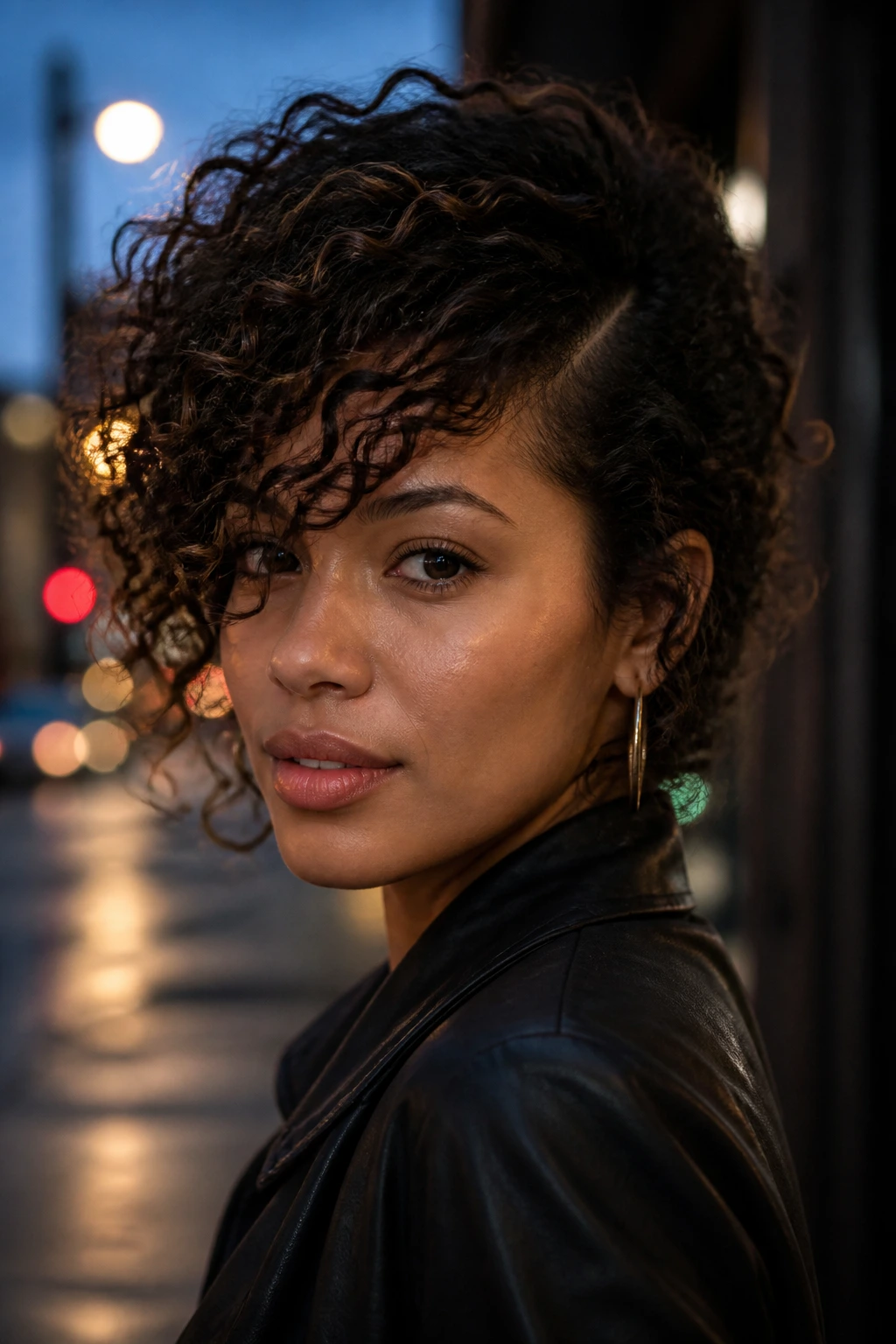
Deep side-part bangs give curly hair a lot of movement with very little demand. The front sweeps across the forehead and lands somewhere near the opposite cheekbone, which creates a dramatic diagonal line. On an oval face, that diagonal adds interest without fighting the face’s natural balance.
This style is especially good if your curls already prefer a side part. Fighting your natural part just to get a “bang look” is a waste of time. Let the hair go where it wants, then shape the front so it falls with the part instead of against it.
A deep side sweep also works when you want bangs but still need the option to tuck them back. The front can be clipped, pinned, or blended into the rest of the hair on busy mornings. That flexibility matters more than people think, especially if your curl pattern changes depending on humidity.
If your front pieces are dense and springy, this style keeps them from taking over the whole face. It is controlled, but not stiff.
17. Airy Wash-and-Go Bangs That Dry Fast
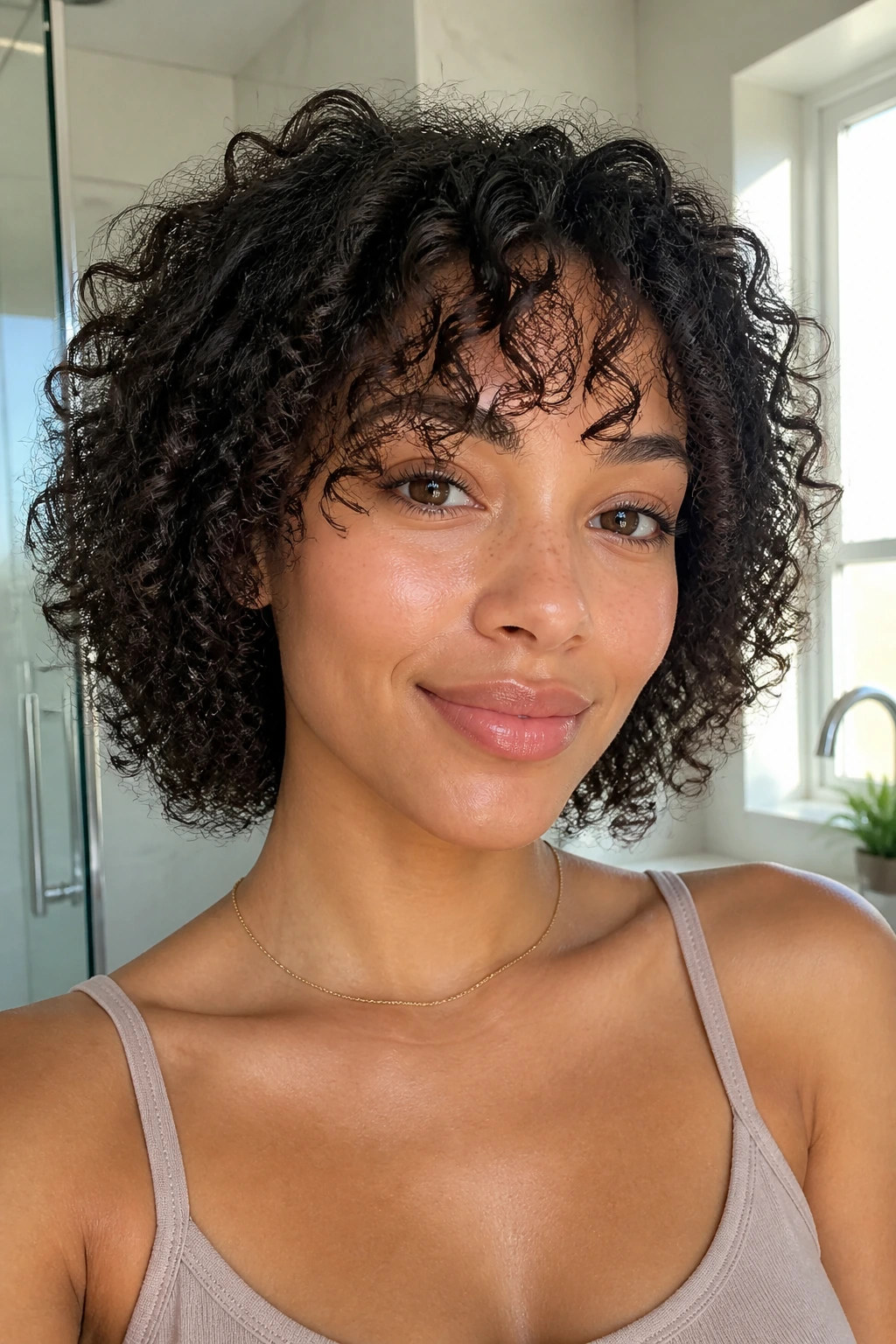
Airy wash-and-go bangs are for people who want the front to dry with the rest of the hair and not demand a second styling session. The fringe is cut light, with enough space between pieces that it does not trap moisture forever. On an oval face, that lightness keeps the top half of the face open.
The idea here is speed. You wash, apply product, scrunch the front with the rest of the curls, and let it dry in shape. No round brush circus. No flat iron rescue mission. If your curls are loose to medium and your mornings are not generous, this is the fringe that respects your schedule.
Keep the cut long enough that the front can collapse a little and still read as bangs. Too short, and “airy” becomes “accidental toddler fringe.” Not cute.
I like this option for people who wear a diffuser on low heat and want the bangs to dry roughly when the rest of the hair does. It is a small detail, but it changes the whole routine.
18. Halo Fringe With a Rounded Curly Shape
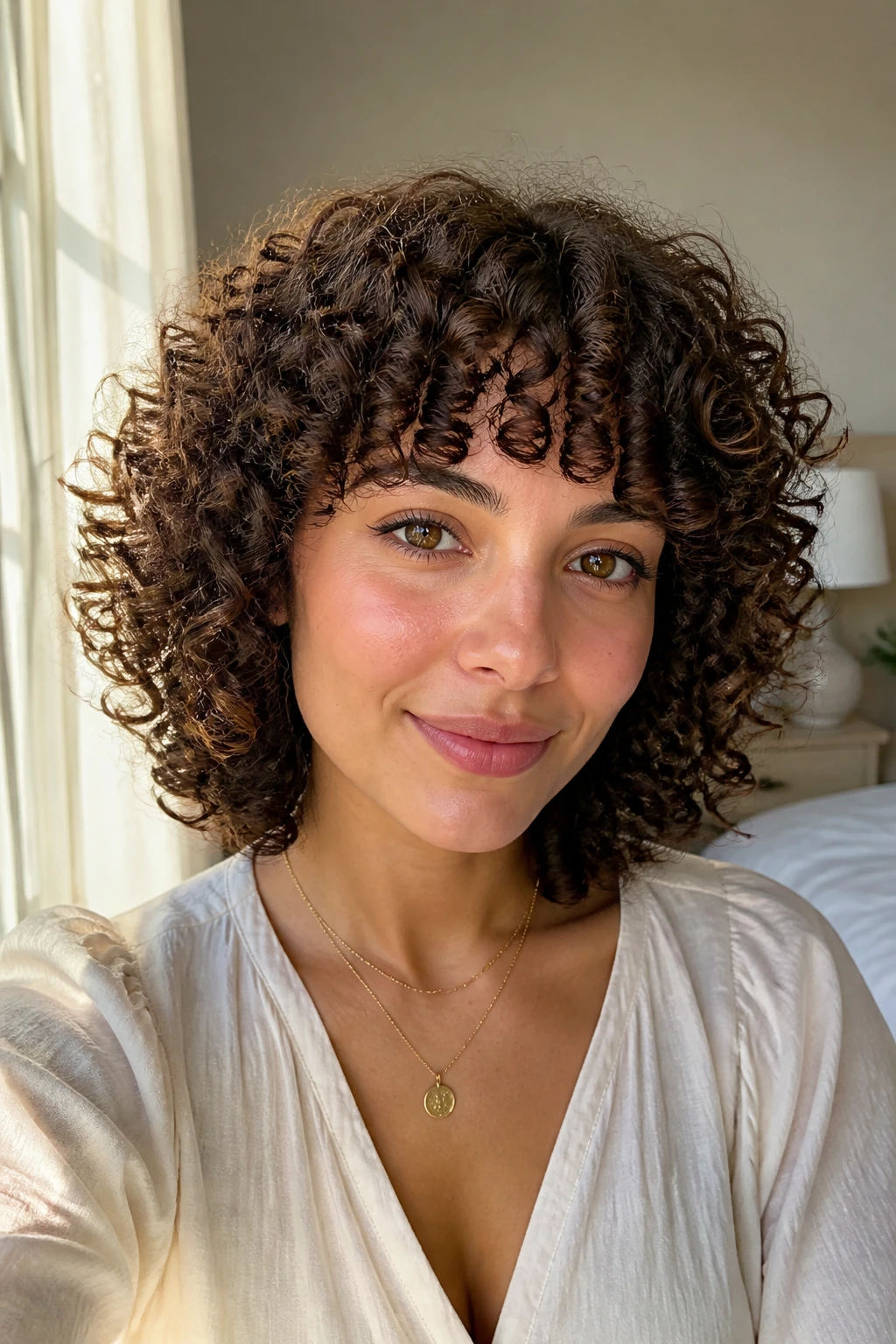
Halo fringe circles the forehead with a rounded, almost cloud-like shape. It is fuller at the center, with soft curve at the sides, which gives oval faces a gentle frame instead of a hard line. On curly hair, the natural bend helps the shape hold its rounded outline without needing much fuss.
Why it stands out
The halo shape is not trying to imitate straight bangs. That is its strength. It uses the curl’s bounce to create a soft arch that can feel romantic or slightly vintage, depending on the rest of the cut.
The best version has enough length to sit just above the brows in the center and a little longer at the sides. A stylist with good curl judgment will trim this dry and keep the curve loose rather than precise. Precision is overrated here. Soft shape is the point.
This one looks especially good with layers around the face because the fringe and the rest of the cut can echo each other. It also photographs well in a very real sense: the shape reads clearly from the front without looking carved.
19. Face-Hugging Bangs That Blend Into Layers
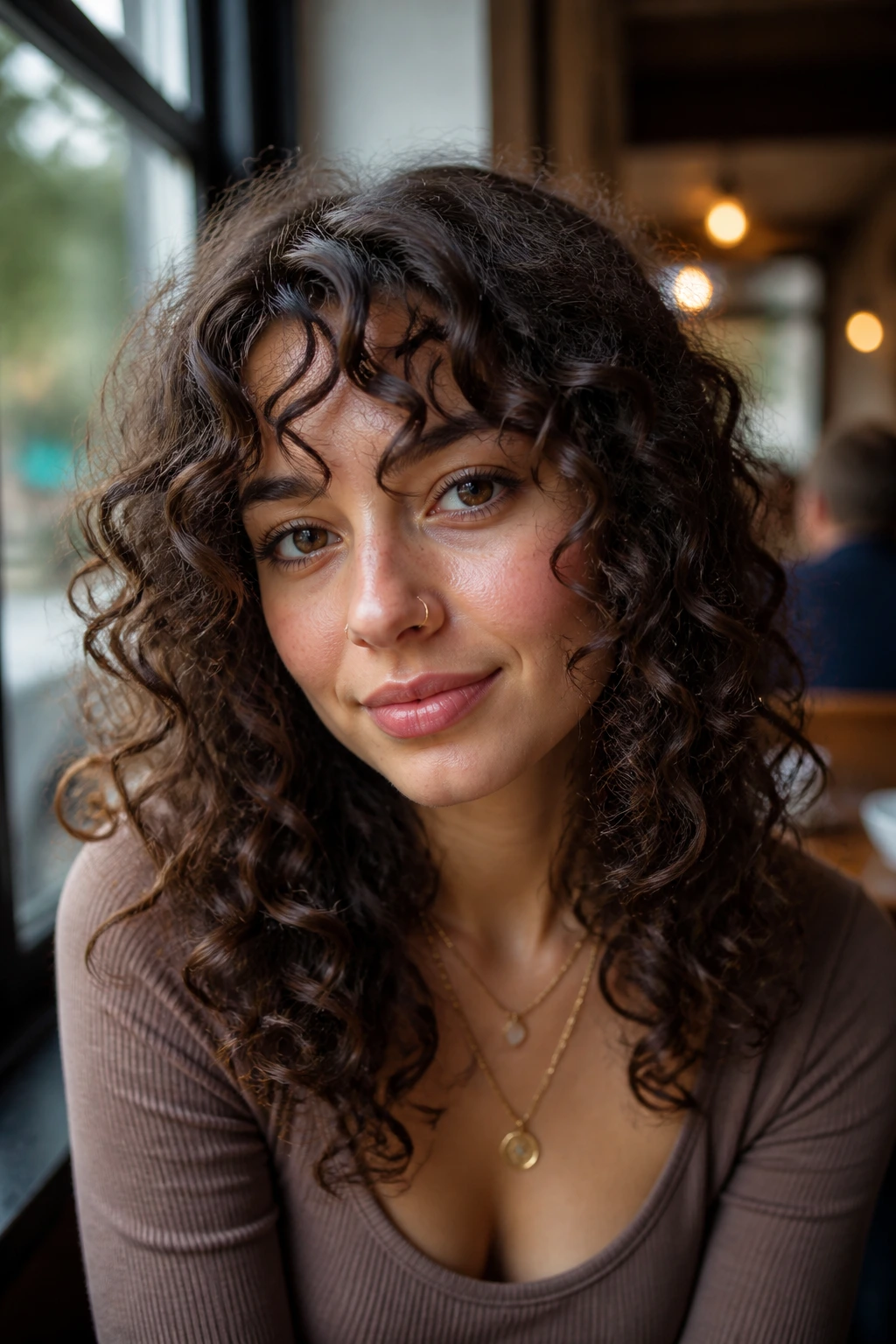
Face-hugging bangs sit closer to the temples and cheekbones than a classic fringe does. They do not take over the forehead; they skim the face and blend into the front layers. On an oval face, that creates a narrow frame that still leaves the face open.
This style is a strong choice if you hate the feeling of hair sitting directly on your forehead. Some people do. The minute the front gets too heavy, they start wanting to sweep it away. Face-hugging bangs solve that by keeping the shape close but not crowded.
The curl pattern matters here, because looser bends will drape while tighter curls may spring up and create more lift. Either can work, but the cut should be shaped with that behavior in mind. You want the front to skim the face, not press into it.
I think this is one of the most underrated options on the list. It is subtle, which makes it easier to wear every day.
20. Wolf Cut Bangs With Choppy Texture
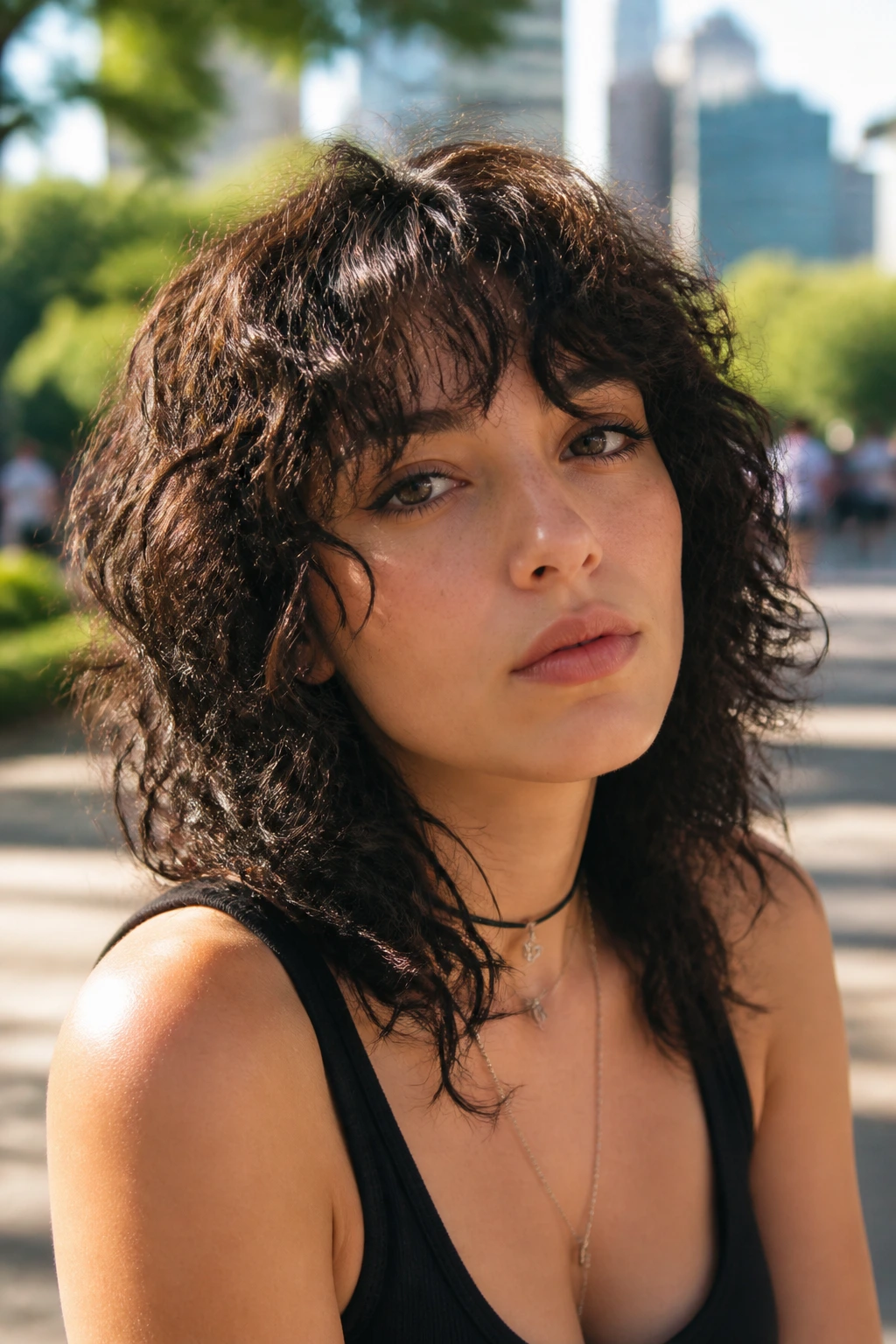
Wolf cut bangs are the wild card. They’re choppy, a little shaggy, and built to sit inside a haircut that already has movement everywhere. On an oval face, that front texture can be fun because the face shape can handle the irregularity without looking lopsided.
The bangs should not be too neat. If they’re neat, they lose the whole point. Ask for texture through the ends and some variation in length so the front can break apart naturally. Curl pattern does most of the rest.
Best when you want edge
This style looks better with a little mess. Day one can be clean, but day two often looks even better because the curls separate and the front pieces shift around the forehead. That looseness is the appeal.
- Works best with medium to dense curls
- Needs a layered haircut around it
- Benefits from lightweight gel or foam
- Not ideal if you want a polished, uniform fringe
If you like hair that has a little bite, this is the one. It does not whisper.
21. Point-Cut Fringe With Feathered Ends
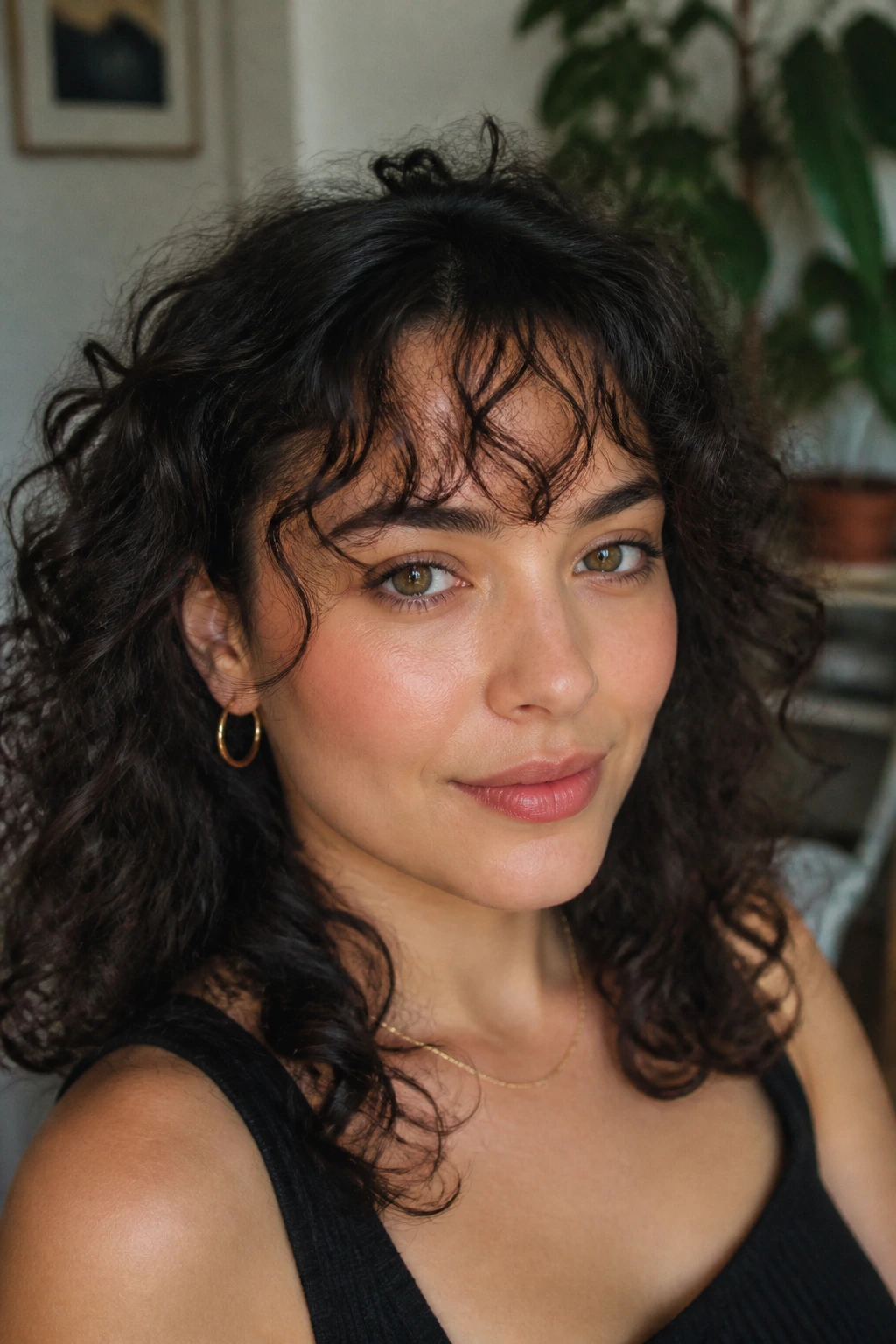
Point-cut fringe is less a shape than a technique, but it deserves its own place because curly hair often needs that softened edge. Instead of a blunt line, the stylist cuts into the ends at a slight angle, which creates feathered tips. On an oval face, that soft edge keeps the fringe from overpowering the features.
Why point cutting works so well here is simple: curls already add volume, so the ends do not need to be heavy. A feathered edge lets the front fall with more air between the pieces. That means less puff, less shelf, and less of that weird helmet effect that happens when bangs are cut too solidly.
I would ask for this if you like fringe but hate when it looks too engineered. It also helps if your curl density changes across the front. The feathering makes the line read as a shape instead of a wall.
It is a quiet fix, but sometimes that is exactly what the haircut needs.
22. V-Shaped Bangs for a Narrow Forehead Opening
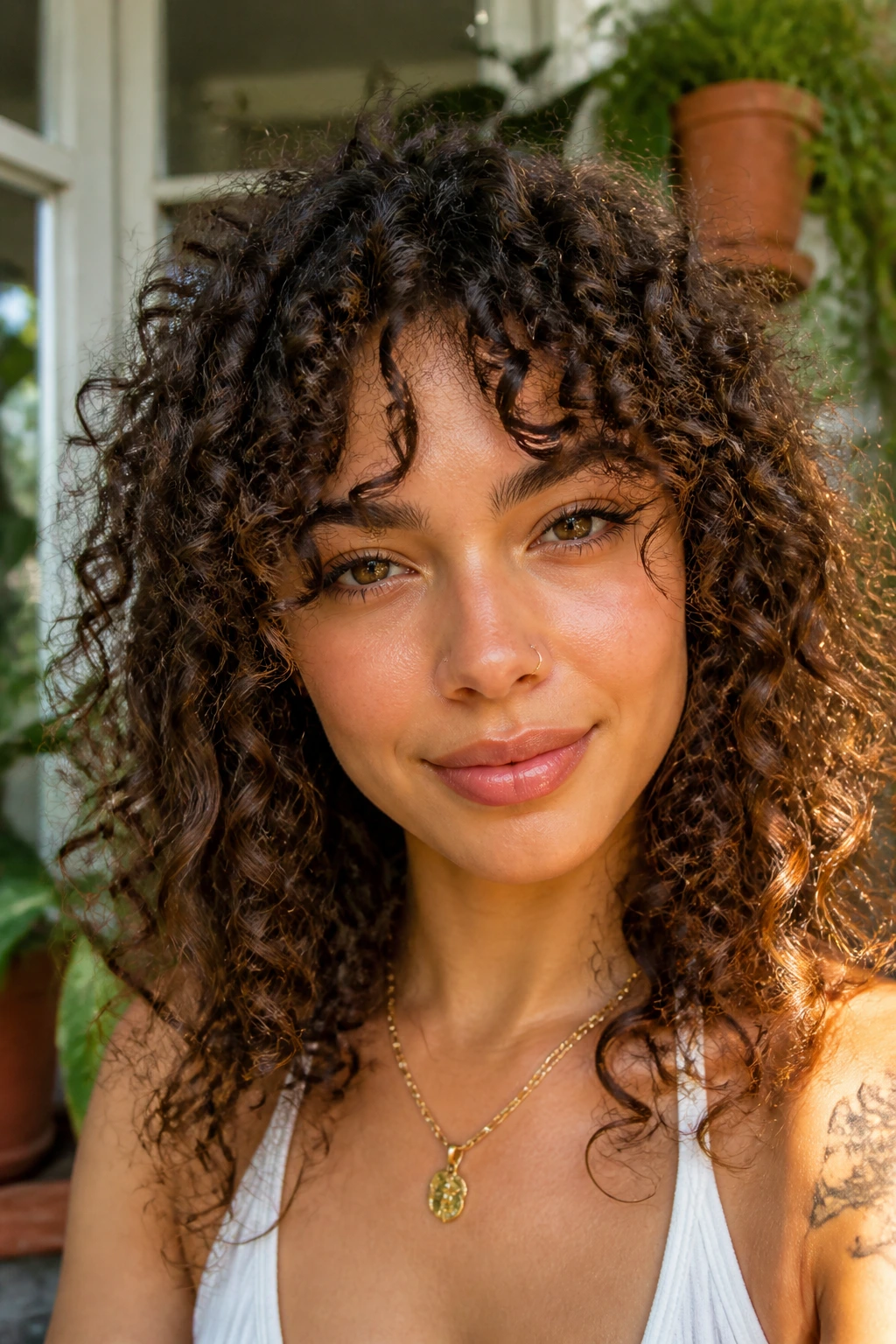
V-shaped bangs are cut a little longer at the center or a little longer at the edges, depending on how dramatic you want the opening to feel. The overall effect is a V that creates space in the middle of the forehead. On an oval face, that opening keeps the front light while still giving the hair a visible shape.
I like this cut when the curls are dense and you want some of that density removed visually. A full bang can feel heavy fast. The V shape breaks the mass apart, which lets the forehead breathe. It also draws the eye toward the center of the face in a soft way.
This is not the most common fringe shape, which is part of why it feels fresh. If you want something a little different but not extreme, this sits in a good middle zone. The shape is visible, yet the curl pattern still has room to do its thing.
It’s a neat trick, honestly. Small cut, big change.
23. Temple-Grazing Fringe That Softens the Sides
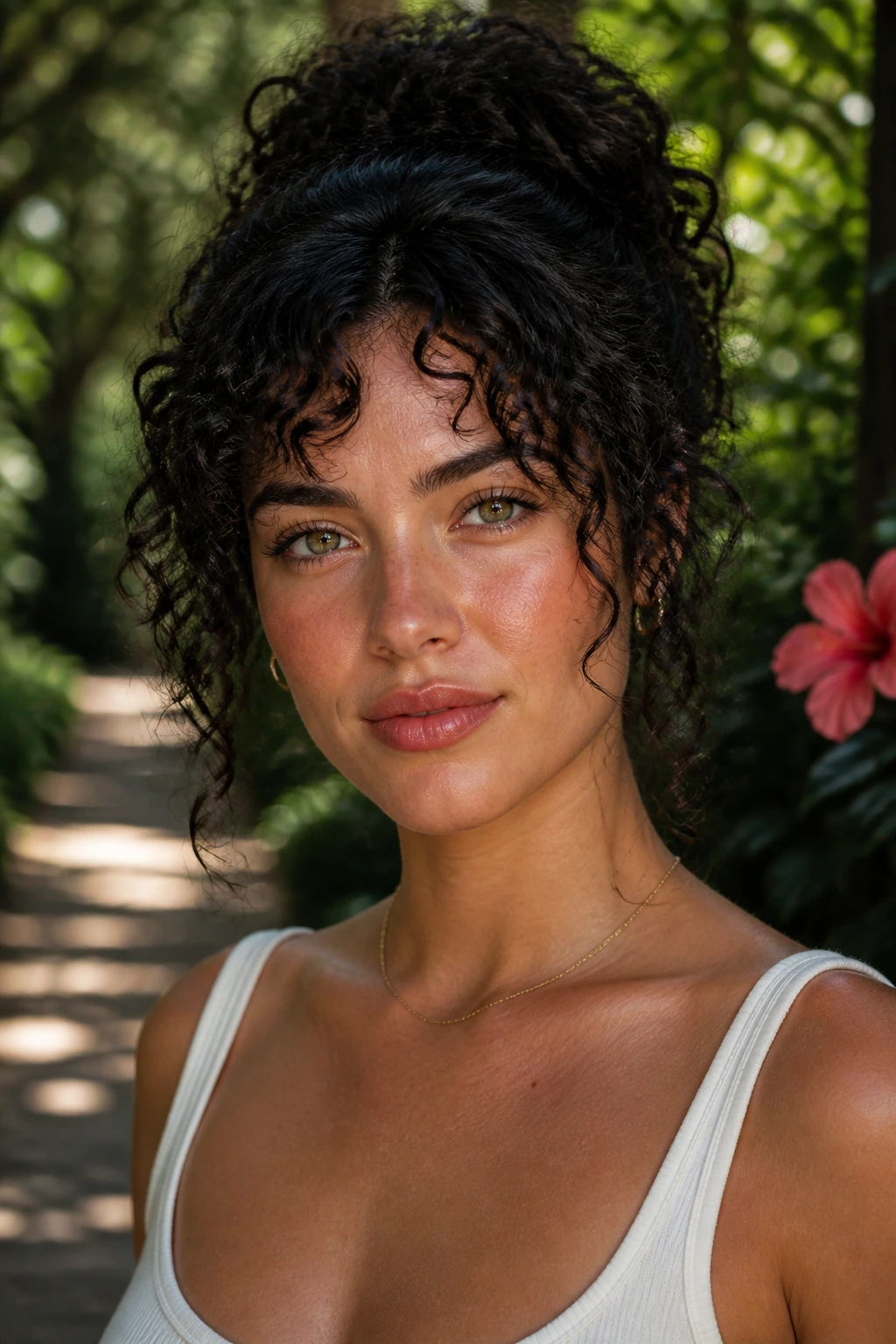
Temple-grazing fringe sits light at the sides and keeps most of the action away from the center of the forehead. That makes it a smart option when you want the face framed more than covered. On an oval face, it adds width where the face can take it without making the top feel crowded.
This style can be especially pretty with curls that form loose loops near the temples. The curls land in a way that softens the eye area and gives a bit of movement where the hairline usually feels plain. If your face looks best with a little side softness, this is a clean answer.
A temple-grazing fringe also works well with half-up styles. When you pull the rest of the hair back, the front pieces still hang around the temples and keep the haircut from looking bare. That makes it useful, not just pretty.
If you want bangs, but only a little, this is a strong place to land.
24. Long Split Bangs With a Center Opening
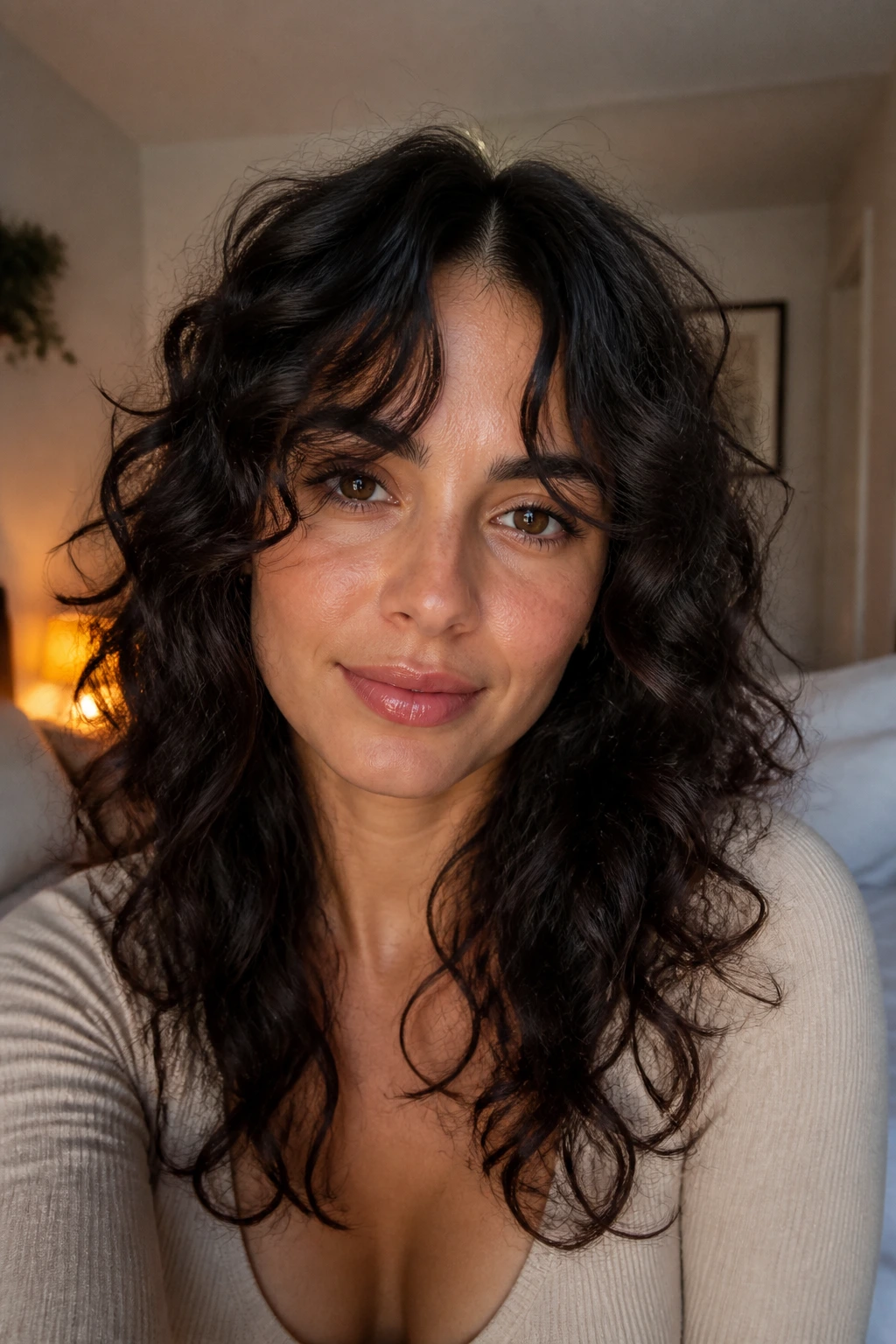
Long split bangs are a cousin to curtain bangs, but they stay longer and open more slowly in the middle. The center part is visible, and the front pieces drop down on either side with a looser curve. On an oval face, that opening keeps the shape soft and stops the fringe from shortening the face too much.
The long length is the point. It gives the curls room to settle, which is helpful if your pattern is springy or if your hair changes mood with the weather. It also means the fringe can be tucked behind one ear, pinned back, or left to drop into the rest of the cut.
I like this style for anyone who wants the bang effect without a hard line. It has more movement than a blunt cut and less commitment than micro bangs. That middle space also looks nice when the hair is pulled back loosely. You get shape without losing light around the face.
It’s the kind of fringe that keeps making sense as it grows out. That’s a good sign.
25. Defined Ringlet Bangs That Show Off Curl Pattern
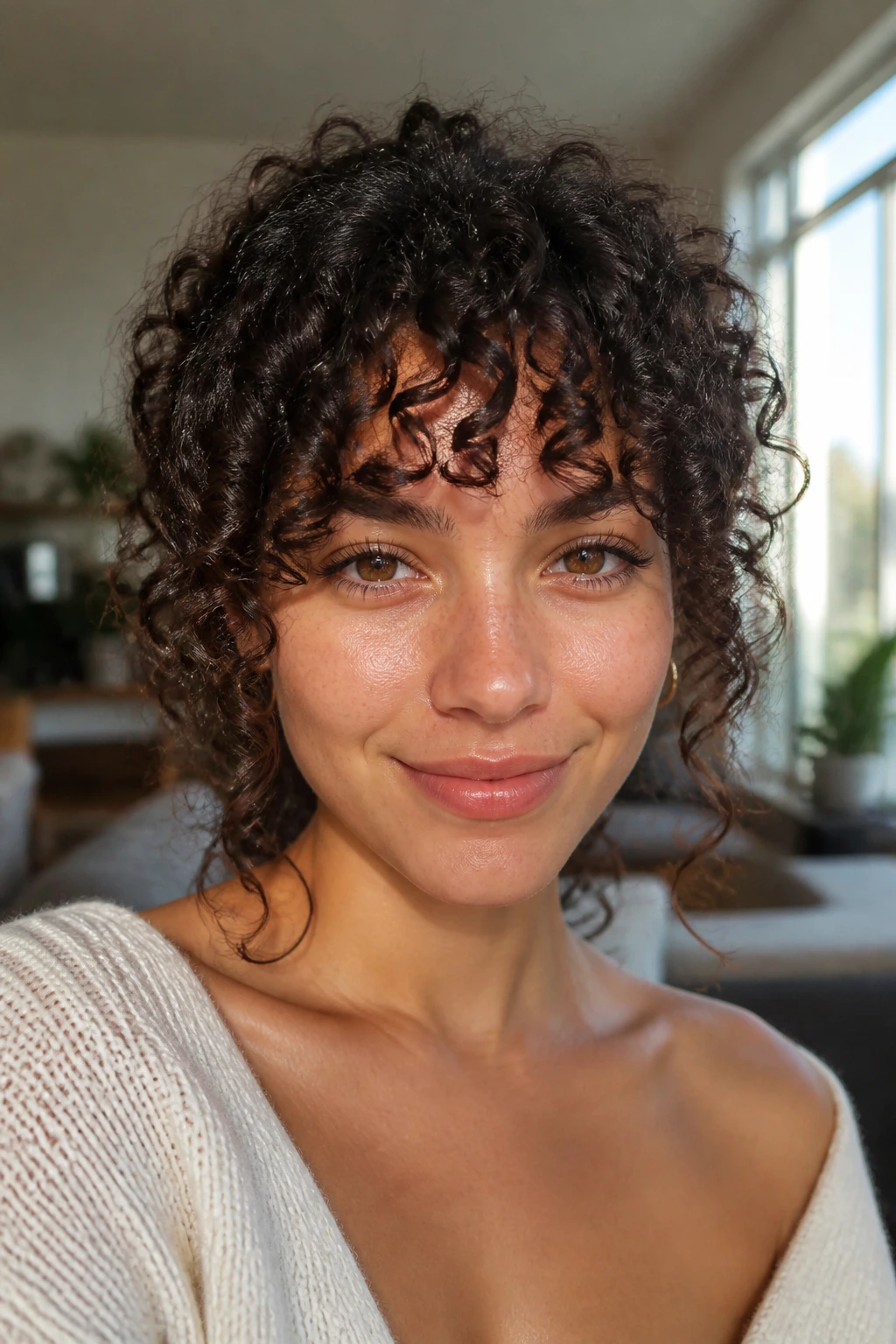
Defined ringlet bangs are for people who want the front to be as curly as the rest of the hair, maybe even more so. The bangs are cut to encourage individual ringlets to sit in front, with enough shape that you can actually see the curl pattern. On an oval face, that definition makes the forehead frame feel lively instead of heavy.
Why this one ends the list
This style works when the curl pattern is strong and consistent. A good cut will let the ringlets stack just enough to create a fringe, but not so much that they sit in one thick clump. The stylist should check the shape dry, curl by curl, and trim with shrinkage in mind.
- Best for: 3B to 4A curls with clear ringlet formation
- Cut cue: leave extra length; ringlets bounce high
- Finish: a light gel cast, then scrunch out the crunch
- Watch for: uneven spring between the left and right sides
This is a fringe that says, “Yes, the curls are the point.” I respect that.
What Makes the Shape Work on an Oval Face
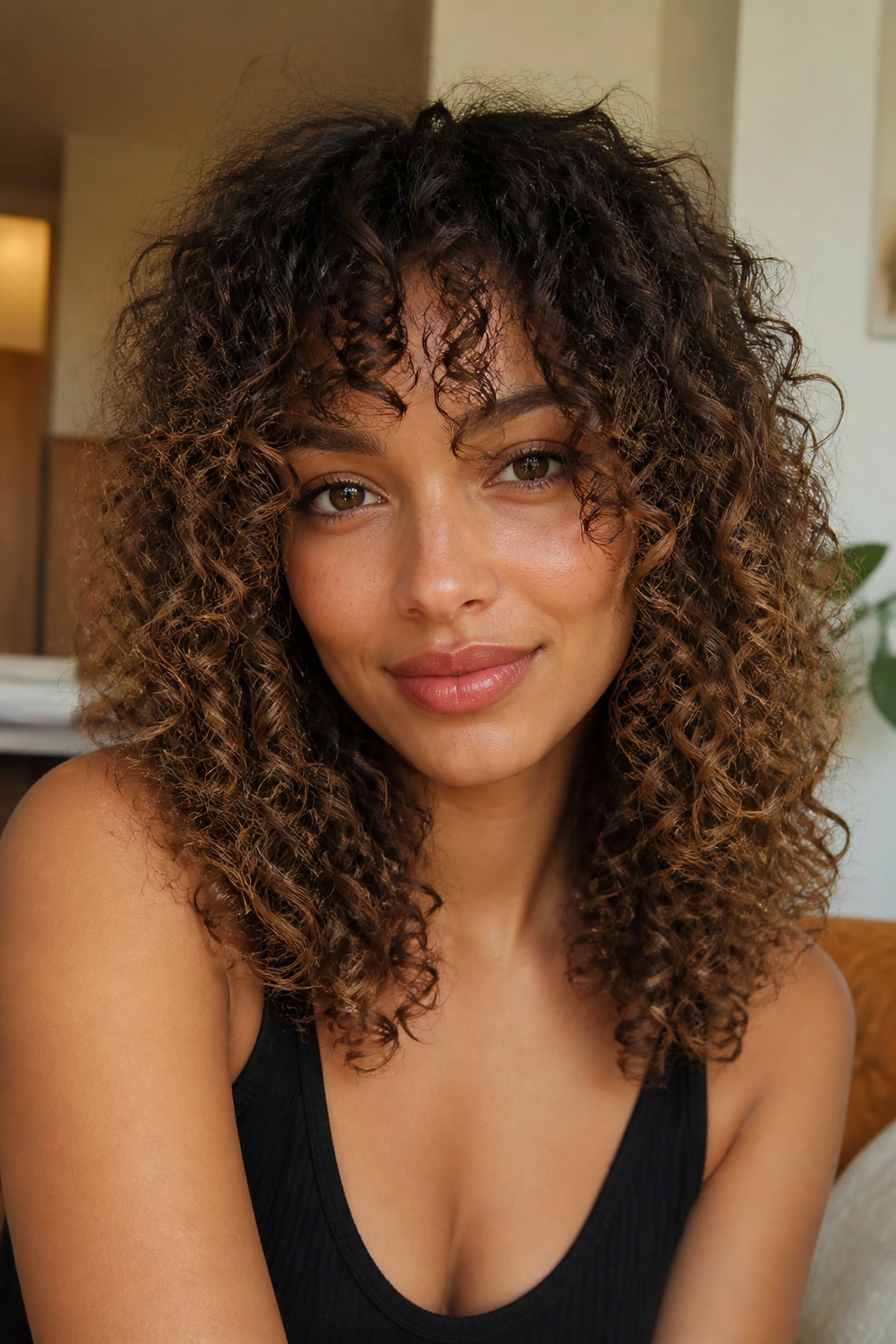
Oval faces give you a lot of room, but that does not mean every fringe will behave the same way. The reason bangs for oval faces and curly hair can be so satisfying is that the face already has balance, so the bangs do not need to force a new structure. They only need to add a frame.
The forehead is usually the main place to think about. A heavier bang can shorten the face visually, while a longer split or curtain fringe can keep the length open. Neither is wrong. They simply do different jobs. If your curls are wide, fluffy, or high-volume, a fringe with some opening in the middle often looks better than a solid block.
Cheekbone width matters too. Bangs that taper toward the temples can echo the shape of the face instead of pushing against it. That is why bottleneck, curtain, and face-hugging styles tend to be easy wins. They guide the eye outward without making the sides feel bulky.
One more thing: the cut should respect how curly hair dries. A face-framing fringe cut wet and left uncorrected is a gamble. Dry cutting, or at least checking the shape once the curls spring up, gives a better read. Curly bangs are not difficult because curls are fussy. They are difficult because curls are honest.
The Tools That Make Curly Bangs Easier to Live With
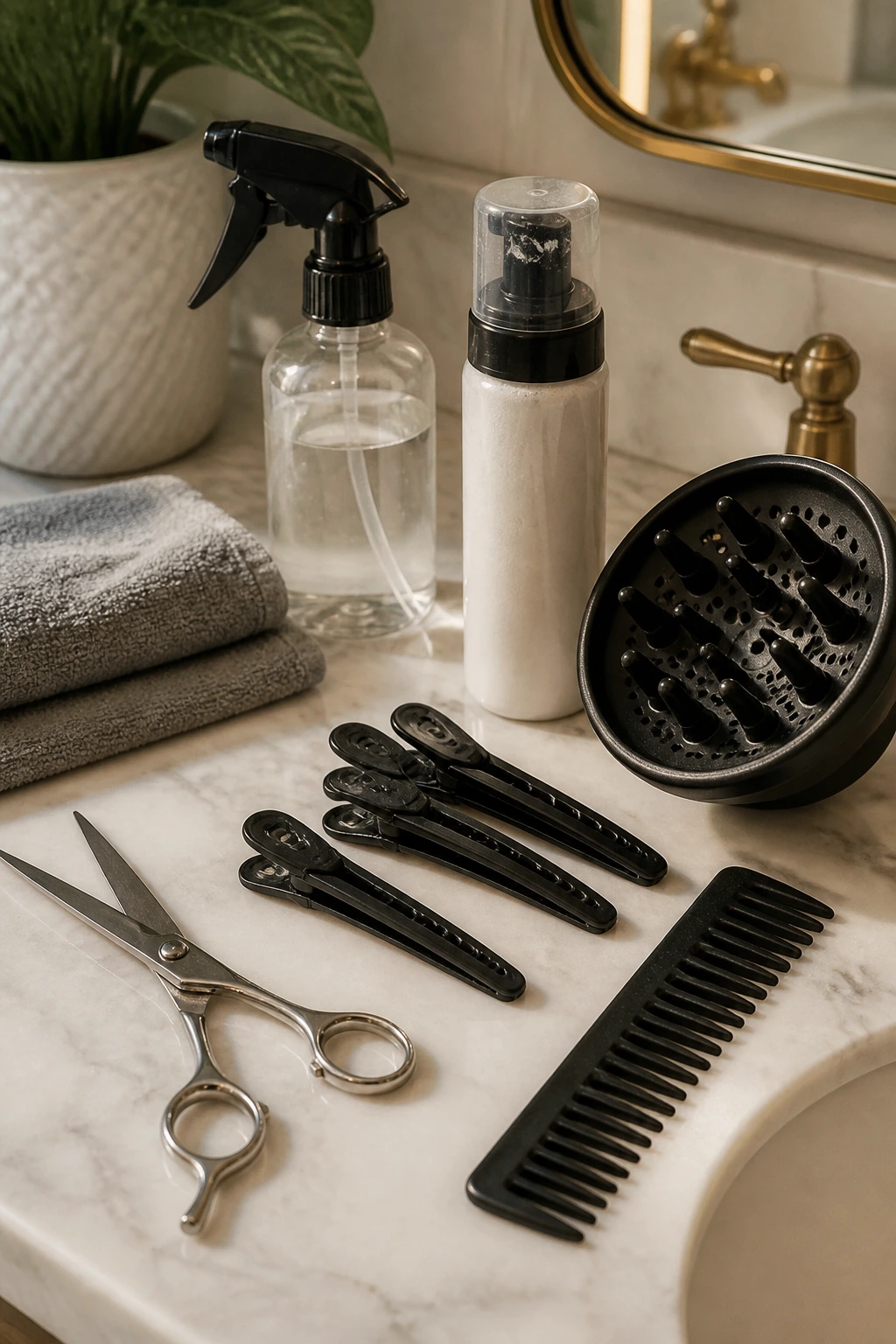
Curly fringe needs a small toolkit, not a bathroom stuffed with random bottles. The right few tools make the cut sit the way it should and keep the front from turning into a frizzy afterthought.
-
Sharp haircutting shears: Dull scissors chew the ends and make curly bangs frizz faster; a clean cut matters more than people think.
-
Duckbill clips or section clips: These keep the rest of the hair out of the way while you dry and shape just the front.
-
Spray bottle with water: A light mist wakes up the bangs on day two without soaking the whole head.
-
Microfiber towel or cotton T-shirt: Regular terry cloth roughs up the cuticle and can make the front puff; softer fabric keeps the curl definition cleaner.
-
Diffuser attachment: Low heat and low airflow help the bangs dry in place without blasting them sideways.
-
Wide-tooth comb or fingers: You need something gentle for parting and reshaping. A fine brush usually makes the front too smooth and too flat.
-
Lightweight mousse or gel: The front often needs a little support so the curls hold shape instead of collapsing onto the forehead.
What to Ask for at the Salon and What to Buy at Home
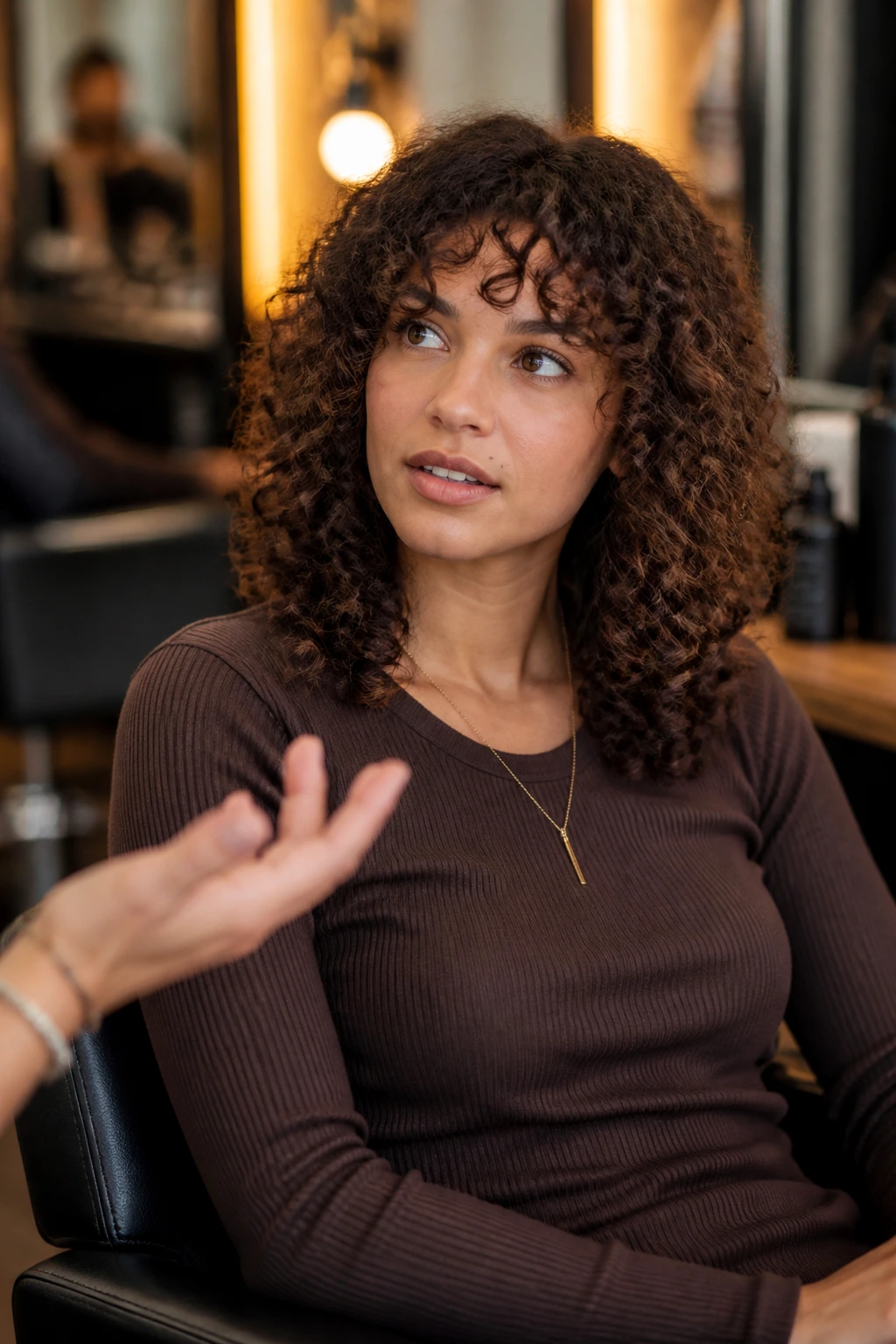
The salon conversation matters more than the product aisle. If you want curly bangs to work, bring photos, but bring the right photos: pictures of someone with a similar curl density and pattern, not just a similar face shape. A face shape reference without a texture match can get you into trouble fast.
Ask for a dry or curl-by-curl cut if the stylist offers it. That means they cut while the hair is in its natural state, or nearly so, so they can see where each curl sits. Tell them how much shrinkage you usually get at the front. If the front springs up two inches, say that out loud. People tend to understate it, then wonder why the bangs ended up halfway up the forehead.
At home, buy products based on how much hold your bangs need, not on how shiny the bottle looks. Loose curls often do better with mousse or a light cream; tighter curls may need a small amount of gel to keep the shape from puffing apart. Heavy oils tend to make front sections droop. Nice for ends. Not always nice for bangs.
If you wear glasses, tell the stylist. If you sweat near the hairline, say that too. If you want to tuck the bangs away on workdays, mention it. Those small facts shape the cut more than a vague request for “something soft.”
How to Wear Curly Bangs Without Fighting Them
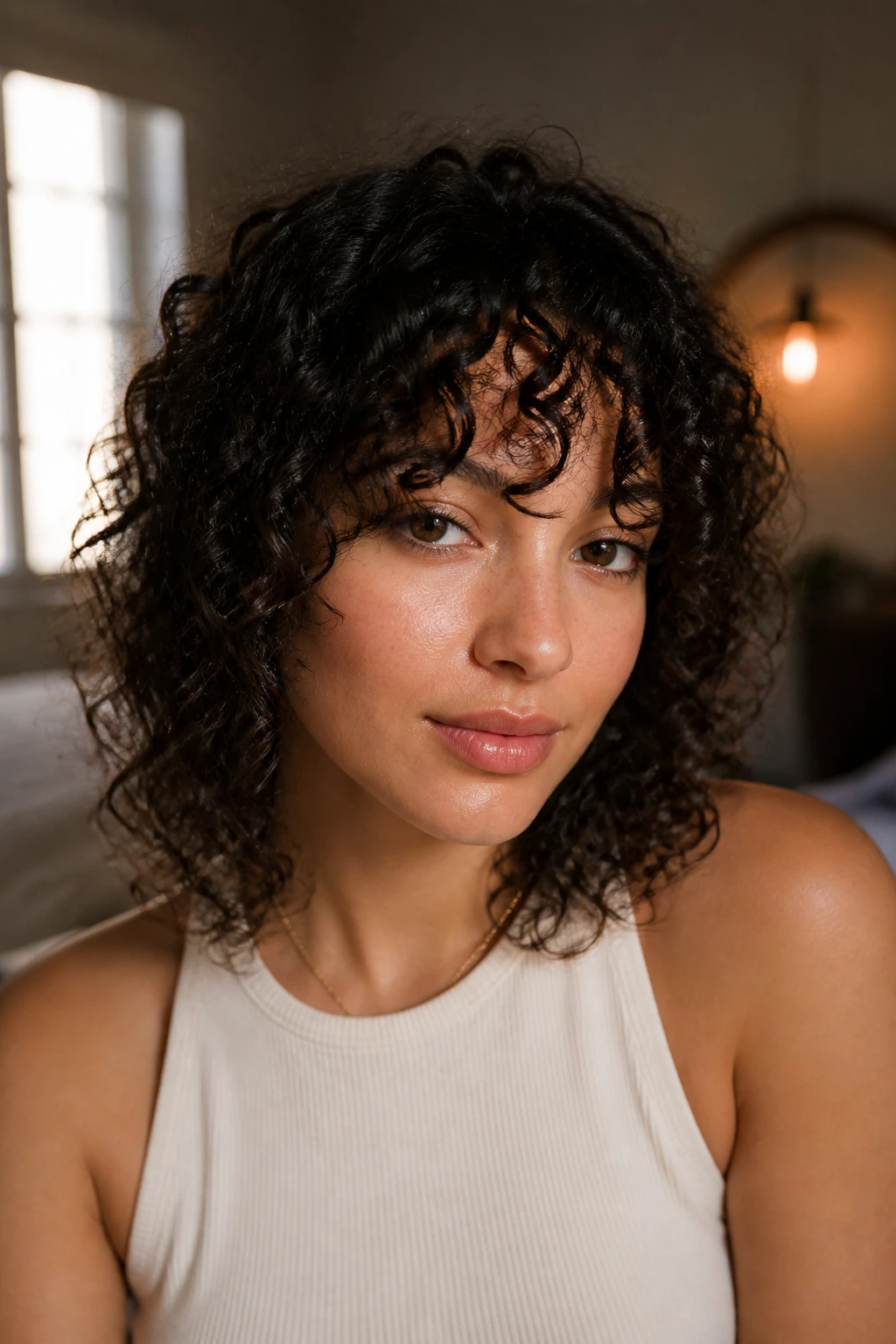
Styling: Start with the bangs, not the whole head. Wet the front section lightly, work in a small amount of product, then finger-shape the curls before diffusing or air-drying. The front needs its own attention because it dries faster and shows mistakes first.
Pairing: Curtain, bottleneck, and long split bangs look best with layers that continue around the face. Micro bangs, blunt fringe, and ringlet bangs pair better with short shags, pixies, or cuts that already have edge. Do not force one front shape onto a haircut that wants a different mood.
Length Balance: If the bangs are full, keep the rest of the front layers a touch lighter so the haircut does not feel top-heavy. If the fringe is airy, you can leave the side layers a little richer. That balance keeps the silhouette from turning boxy.
Finish: A tiny bit of frizz is fine. Actually, it is part of the charm. What you want to avoid is flatness at the roots and puffiness at the ends, because that shape makes curly bangs look stale before noon.
Little Tweaks That Make Curly Bangs Easier to Wear
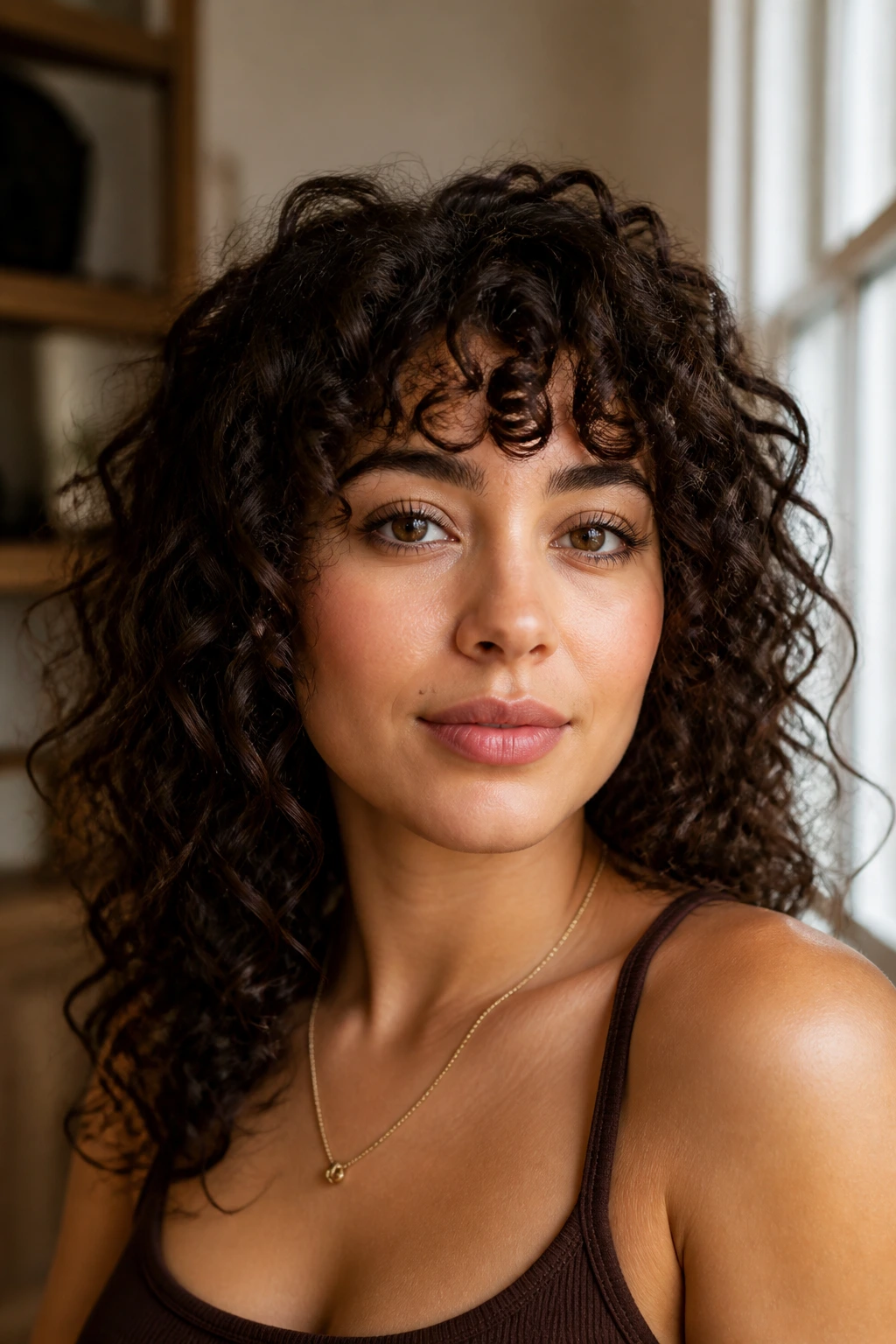
Shape Boost: Ask for the front to be cut a touch longer than the final target. That gives you room to trim after you see the curl spring, and it saves you from the classic too-short bang panic.
Humidity Fix: If your area turns the air into soup, lean toward longer fringe with separation, not short blunt bangs. The more compact the front, the more humidity shows up and changes the shape by midmorning.
Time-Saver: Keep a tiny spray bottle by the bathroom sink and refresh only the front section on day two. You do not need to reset the whole head. Usually the bangs are the part that needs the rescue.
Salon Shortcut: If the stylist is unsure, ask for the first cut to be conservative. You can always go shorter on a second visit. Growing out a bang you hate is a small daily annoyance; living through it is not worth the gamble.
Common Mistakes That Flatten the Shape
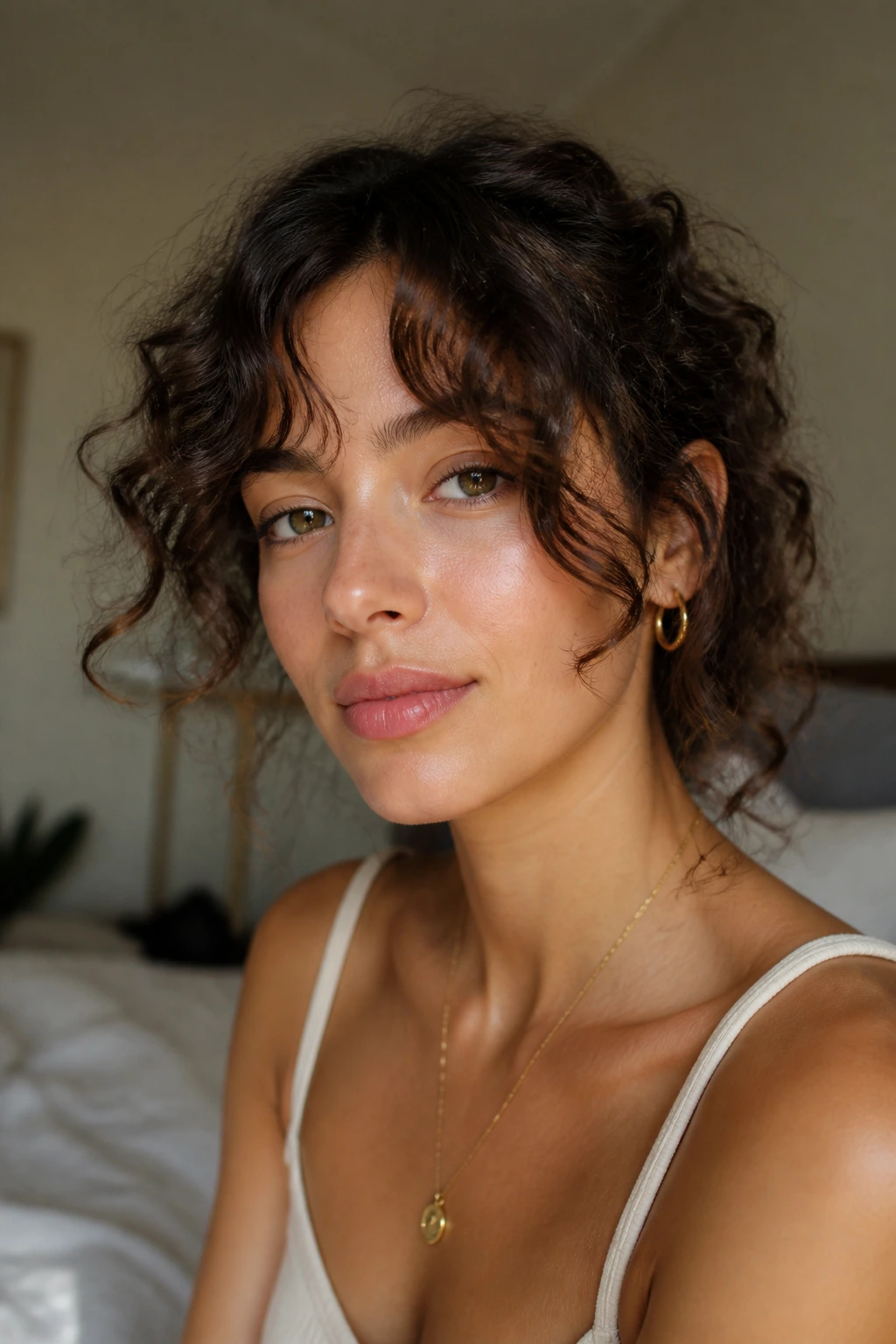
The biggest mistake is cutting curly bangs too short while they are wet. Wet curls lie down, and then they bounce up like they were insulted. The fix is dry cutting or, at minimum, leaving more length than feels comfortable at first glance.
Another common one is using too much product on the front. Heavy cream or oil can make the bangs separate into greasy-looking strings or sit too close to the forehead. If the fringe starts looking limp by midafternoon, you probably went too heavy. Scale back and use mousse or a light gel instead.
A third problem is forcing the same width across the whole forehead. Curly bangs often look better with a slight taper, opening at the sides or parting a little in the middle. A hard wall of hair can make an oval face look longer than it is.
Then there is ignoring the rest of the cut. Bangs do not live alone. If the sides are bulky, the fringe can feel trapped. If the layers are too sparse, the bangs look disconnected. The front should talk to the rest of the haircut, not sit there like an unrelated idea.
Variations for Different Curl Types and Routines
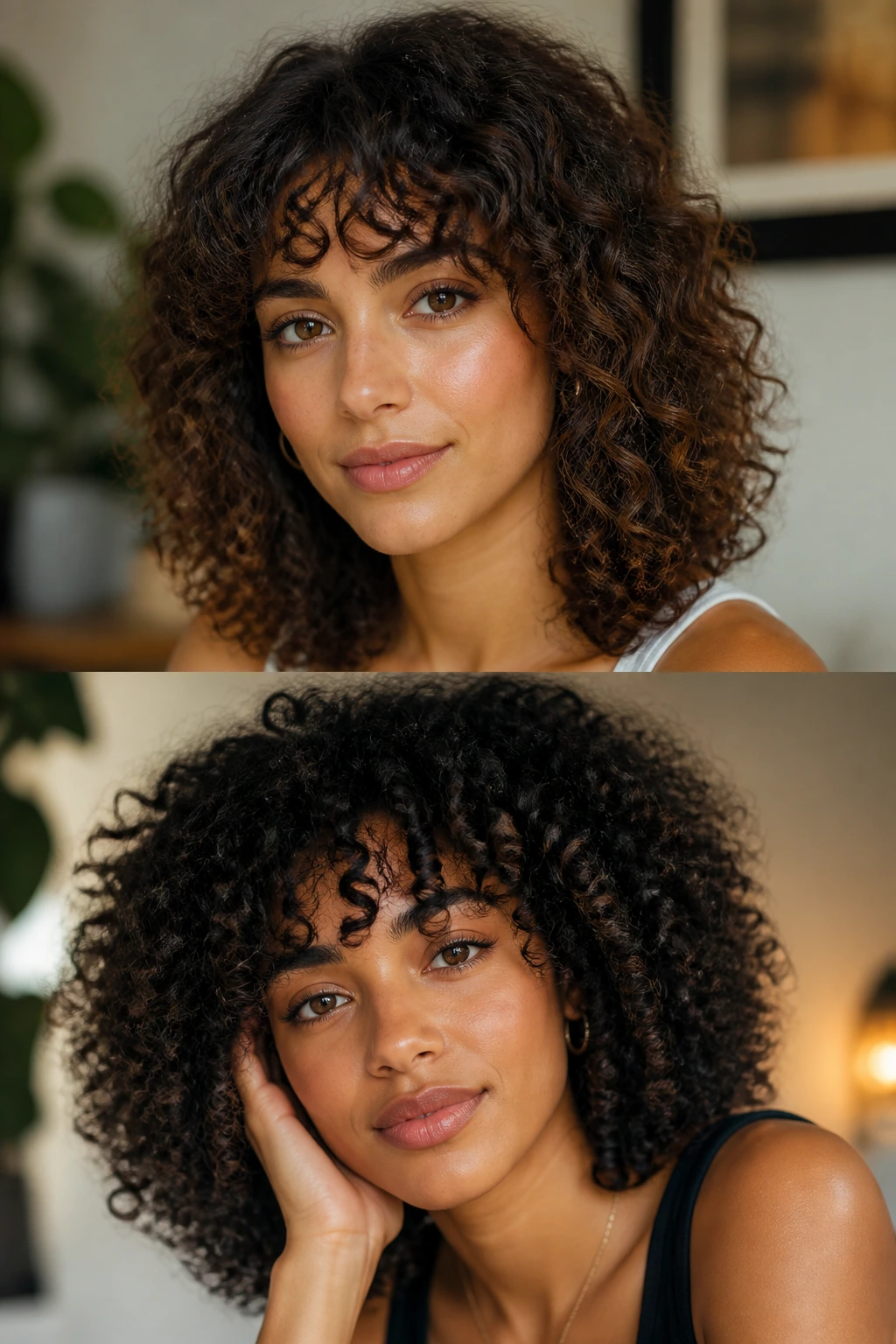
Loose Wave-Friendly Fringe: If your hair sits around 2C to 3A, choose curtain, bottleneck, or brow-skimming shapes. These hold their outline without needing a ton of product, and they are forgiving if the wave pattern shifts during the day.
Dense Curl Version: For 3B to 4A hair, go for tapered, ringlet, or halo shapes with a little extra length left in the front. The weight of the curl will help the shape settle, but only if the cut is not too blunt.
Glasses-Friendly Fringe: Keep the center just above the frame and let the sides open out. This avoids constant brushing against the lenses, which gets annoying fast.
Low-Maintenance Grow-Out Plan: Start with long split bangs or face-hugging fringe if you know you hate trim appointments. These styles move into layers more gracefully than micro bangs or blunt cuts.
Edgier Version: Pick micro bangs, wolf cut bangs, or point-cut fringe if you want the front to have a sharper shape. These carry more attitude, but they ask for more upkeep too.
Humidity-First Version: Choose piecey, split, or mixed-length bangs. They tolerate puffiness better because the shape is already a little broken up.
Keeping Curly Bangs Fresh Between Washes
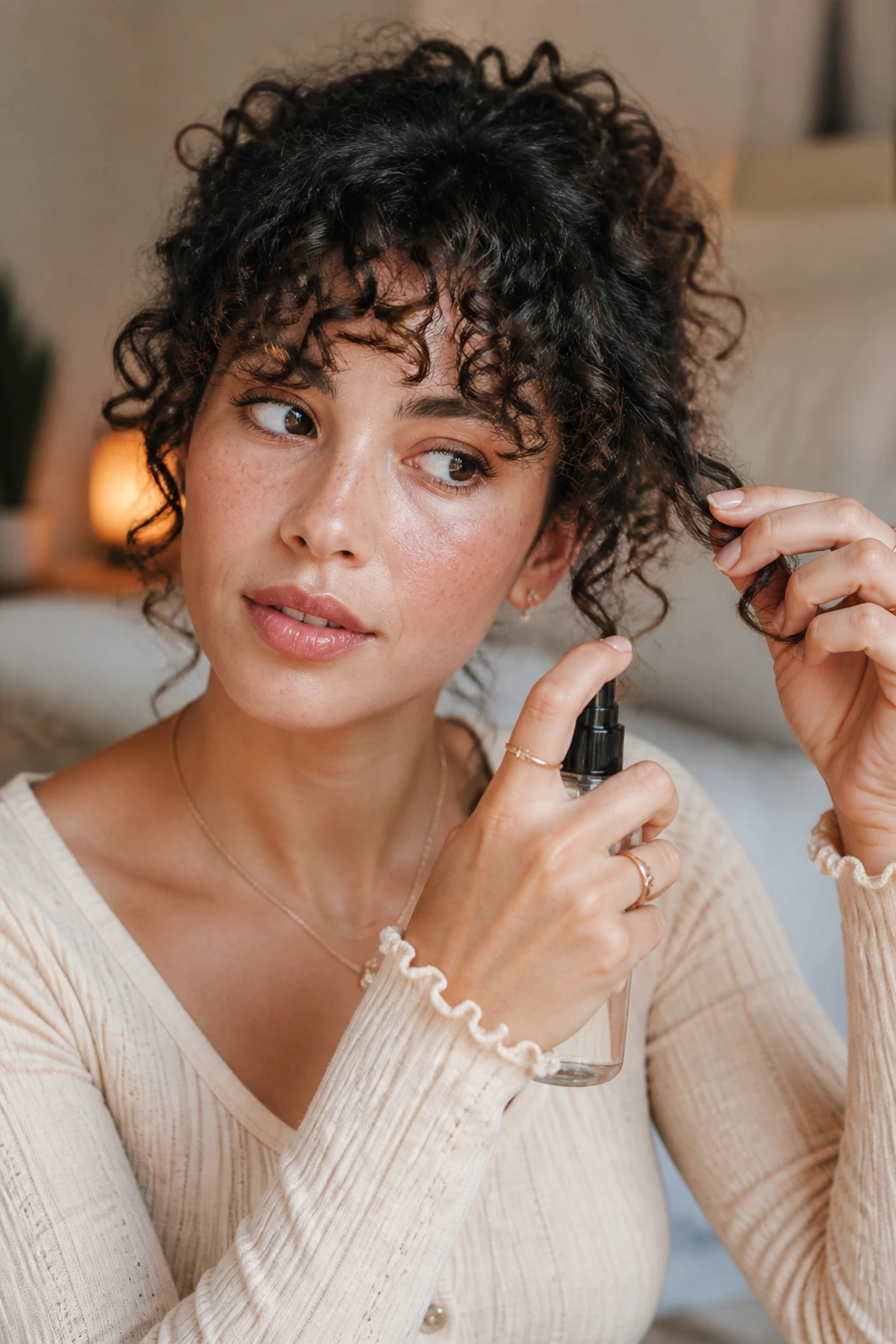
Curly bangs do not need a full wash every time they lose shape. Most of the time, the front can be revived with a light mist of water and a little finger shaping. The trick is to refresh the fringe before it gets so flat or frizzy that you have to start over.
For day two, separate the bangs from the rest of the hair, mist them lightly, and twist the front pieces around your fingers for a few seconds. Let them dry for a minute before touching them again. That tiny pause helps the curl re-form instead of collapsing into a wet blob.
Sleep matters too. A satin pillowcase or a loose pineapple clip can keep the front from getting smashed overnight. If the bangs are long enough, sometimes the easiest move is to let them fall to one side before bed and reset them in the morning. Shorter fringes need a softer touch, because they show every wrinkle from the pillow.
Trim timing depends on the style. Micro bangs may need reshaping every 3 to 4 weeks. Curtain, bottleneck, and grown-out fringe can stretch to 6 to 8 weeks, sometimes longer if you like them a little messy. If the front starts hanging in your eyes in a way that feels accidental, it is probably time.
Questions People Ask Before They Get the Cut
Should curly bangs be cut wet or dry?
Dry is better when the stylist knows curly hair, because shrinkage changes the final shape fast. Wet cutting can work for a rough map, but the finish should be checked dry before you leave.
Will bangs make an oval face look longer?
They can, if the fringe is too thin or too narrow. A fuller curtain, bottleneck, or side-swept shape usually balances the face better because it adds width where needed.
Which bang style is easiest if my curls shrink a lot?
Long curtain bangs, bottleneck bangs, and long split fringe are the easiest to live with. They give the curls room to bounce and still look intentional once they dry.
Can I wear curly bangs with glasses?
Yes, but keep the center length slightly above or just at the frame line. Fringe that sits too low will keep touching the lenses and frizz faster.
What if one side dries shorter than the other?
That happens all the time with curls. Try reshaping while the bangs are still damp, and if the difference stays obvious, ask for a tiny dry trim rather than trying to fix it with more product.
Are micro bangs a bad idea for curly hair?
Not bad, just demanding. They need regular trims and a curl pattern that springs predictably. If your front curls vary a lot, a longer fringe will be easier.
How do I grow curly bangs out without the awkward stage?
Blend them into face-framing layers early. Once the fringe reaches cheekbone length, ask the stylist to soften the corners so the bangs start reading like layers instead of a separate block.
A Fringe That Works With the Curl
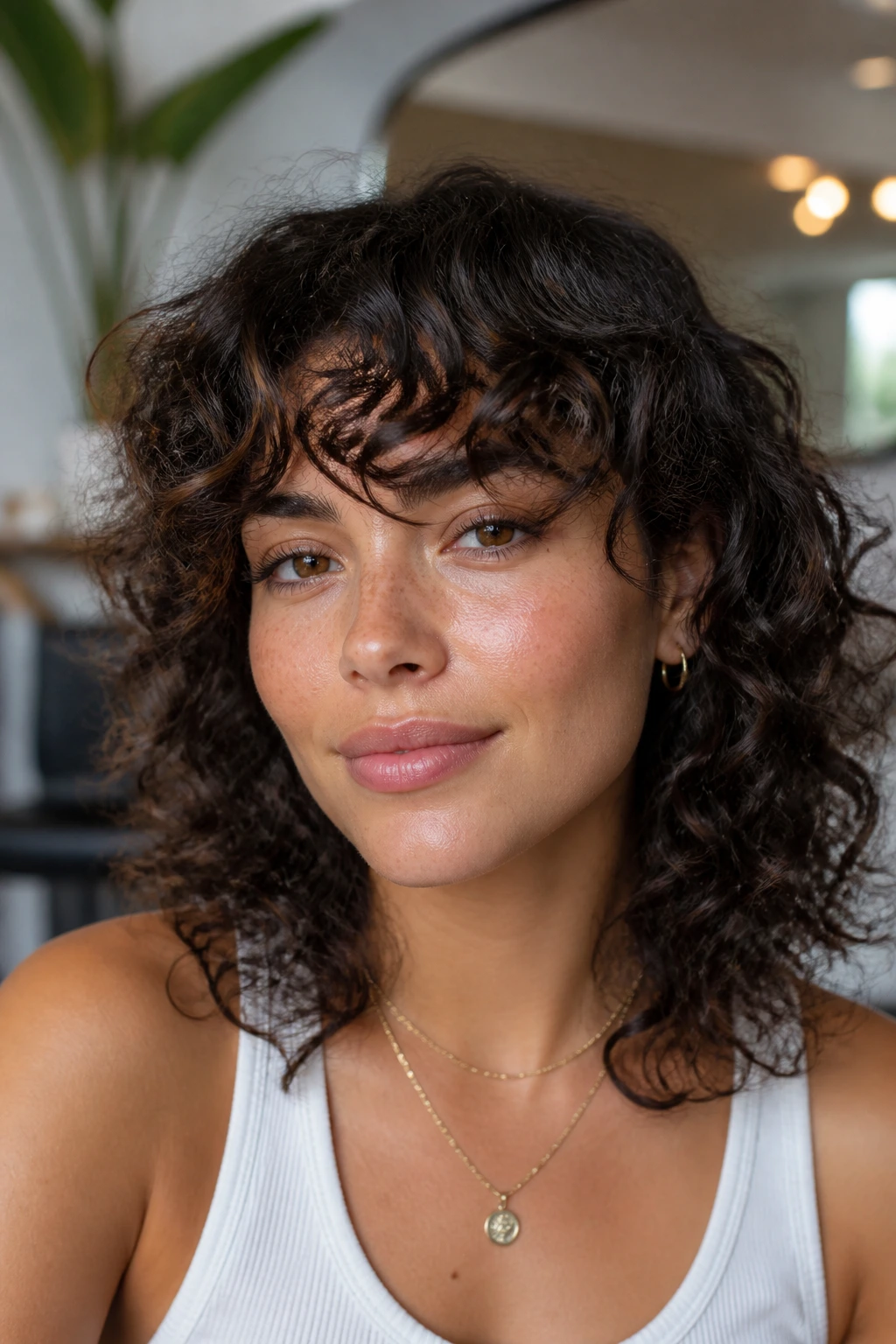
The best bangs for oval faces and curly hair do not try to tame the curl into something else. They let the pattern show up, then give it a shape that makes sense on your face. That is the whole trick, really. A good fringe should look like it belongs to the rest of the haircut, not like it was dropped on top as an afterthought.
If you treat shrinkage as part of the design, not a nuisance, the whole process gets easier. You stop asking the front section to do straight-hair jobs. You get a cut that moves, opens, softens, and grows out without making you hate your reflection on day twelve.
Choose the shape that matches your routine, not just your inspiration photo. The right fringe is the one you can actually live with when the mirror, the weather, and your morning patience are all having different opinions.