



Some bangs fight wavy hair. They puff at the cheekbones, split in the wrong place, and demand a flat iron every morning like they’re paying rent. Long layered bangs belong in the other camp. They move with the bend you already have, so the cut looks intentional when it’s air-dried, diffused, tucked behind one ear, or brushed forward with a little tension.
By the time a lot of women reach their forties, they’ve usually learned the difference between a fringe that flatters and one that turns into a maintenance hobby. The sweet spot is a bang that stays long enough to part, sweep, or pin back; soft enough to soften the face; and layered enough to keep wavy hair from collapsing into a heavy curtain across the forehead. That balance matters more than chasing a dramatic change.
The best versions don’t sit there like a strip of hair cut in isolation. They melt into the front layers, skim the cheekbones or lips, and grow out without the obvious shelf you get from a blunt, one-length fringe. That’s why the right long layered bangs can feel polished on a Tuesday, forgiving on a humid day, and still look like you meant them to be there when you’re ten weeks past a trim.
Why These Bangs Work on Wavy Hair After 40
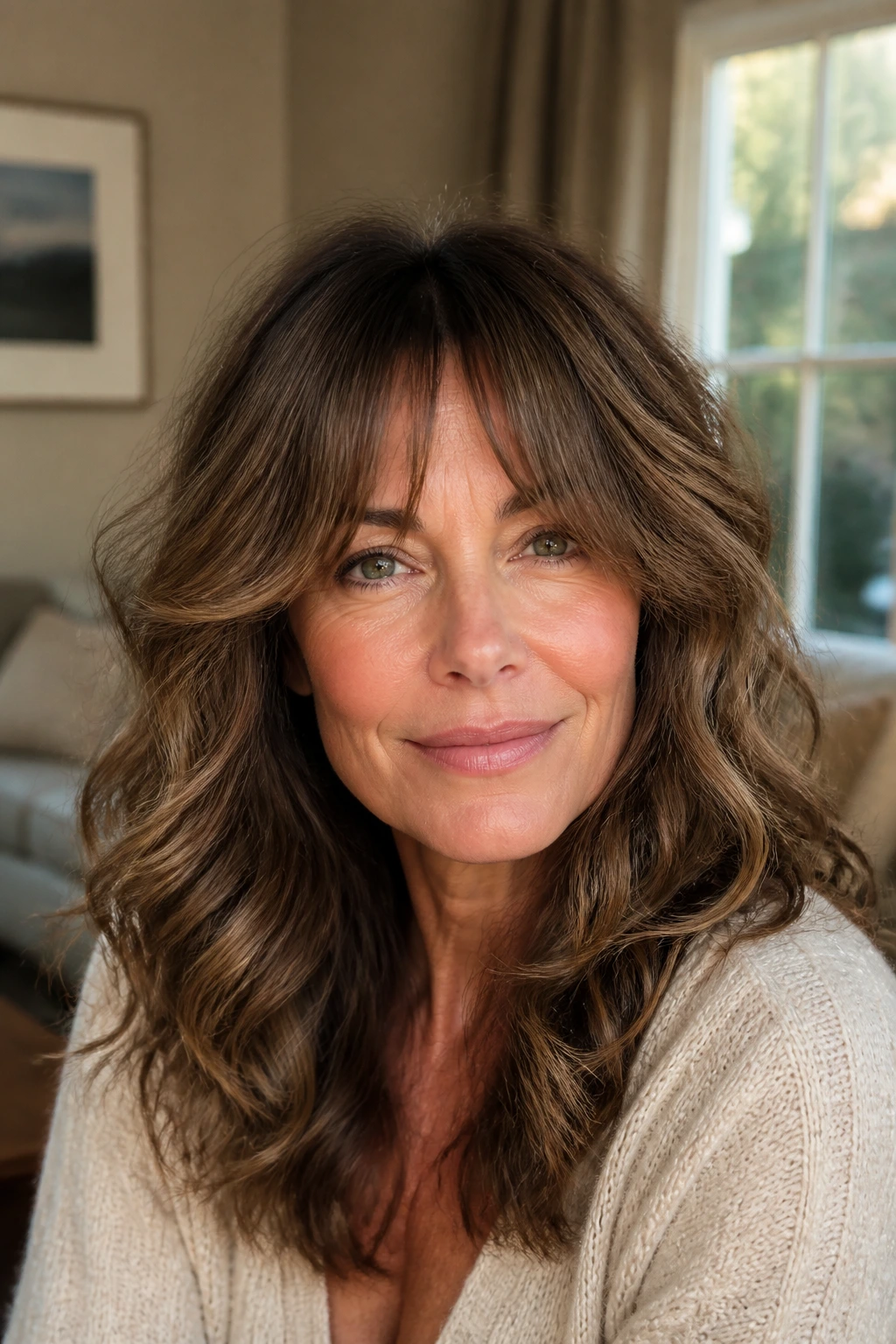
-
They respect the bend you already have: Wavy hair wants movement, and long layered bangs let the front pieces fall in a soft arc instead of forcing them into a straight line that never lasts past lunch.
-
They soften the face without hiding it: A fringe that hits around the cheekbone, brow, or lip line can ease the look of a high forehead, strong jaw, or a little forehead texture without covering the whole face.
-
They grow out in a civilized way: The longer the front pieces are, the easier they are to tuck, side-part, or fold into face-framing layers when the cut starts to lose its original shape.
-
They play nicely with glasses: Longer bangs can stop just above the frames, skim the outer corners, or sweep off to one side instead of sticking straight into the lenses.
-
They work with less fuss than blunt bangs: A blow-dryer brush, a dab of mousse, and a quick twist at the front usually go farther here than a full styling session.
1. Long Curtain Bangs That Split at the Cheekbones
These are the bangs that make wavy hair look like it was cut by someone who understands gravity. The center stays a touch shorter, then the pieces lengthen as they move toward the cheekbones, so the fringe opens instead of sitting flat across the forehead. On women over 40, that shape is useful because it frames the face without pinning everything to one hard line.
Why They’re So Reliable
The magic is in the split. When the shortest point lands around the bridge of the nose or just below it, the waves can sweep out naturally and land near the cheekbones, which is where a lot of faces benefit from movement. If your hair bends easily, this shape keeps the front from puffing at the root and then flipping away from your face in a weird little wedge.
Ask for the center to stay long enough to part cleanly, and tell your stylist you want the sides to blend into the front layers instead of hanging like two separate strips. Drying matters here. Wrap each side around a 1¼-inch round brush and direct the hair away from the center for the last 20 seconds of heat, then let it cool before you touch it.
- Best for: medium waves, oval faces, soft square jaws
- Skip the heavy oil near the root
- The longest pieces should still hit cheek level when dry
2. Bottleneck Fringe with Soft Temple Tapers
Bottleneck bangs are a smarter version of curtain bangs when you want a little more shape at the brow and a little less weight at the temples. They start narrow near the center, widen slightly over the eyes, then taper again as they meet the front layers. On wavy hair, that taper keeps the edges from ballooning out like a triangle.
The cut is especially kind to faces that need a little softness around the temples or a break from a strong forehead line. It also grows out in a way that looks deliberate, not accidental. Once it passes the brow, the shape slips into face-framing pieces and stops looking like “bangs,” which is nice when you don’t want a strict maintenance schedule.
If you wear them, keep the ends light. A pea-size amount of mousse on damp bangs is enough; heavy creams usually make the middle collapse while the sides get frizzy. And if your wave pattern is loose, dry them forward first, then bend the outer corners away from your face with your fingers.
3. Side-Swept Bangs That Brush the Brows
Side-swept bangs are the cut you reach for when you want softness without the commitment of a center split. They move diagonally across the forehead, so they’re good at disguising a cowlick, balancing a wider forehead, or breaking up a very straight front hairline. On wavy hair, the diagonal line gives the bend somewhere to land.
Why It Holds Up Better Than You’d Think
A good side sweep is longer than most people expect. The shortest point usually brushes the eyebrow, while the longest point lands at the cheekbone or just below it, which keeps the shape flexible. That length lets you tuck it behind the ear, flip it over, or let it fall across one eye on days when you want a little mystery and a little less effort.
This cut also hides a rough grow-out better than blunt fringe. If you’re six weeks out from a trim, the side-swept shape still reads as intentional because the motion is part of the design. A velcro roller at the front for ten minutes can give you the lift you need without making the fringe stiff.
4. Feathered Fringe with a Wavy Lob
Feathered bangs are made for the shoulder-grazing lob. The front pieces stay airy and separated, which keeps the cut from turning boxy when your waves dry into their natural shape. If your hair tends to puff around the cheeks, feathering the fringe gives you movement without loading weight at the front.
This is one of those cuts that looks better when it’s not too precise. The layers should feel soft around the face, not chopped into tiny bits. A little irregularity is useful here because it stops the fringe from forming that helmet-like edge that can happen when wavy hair is cut too bluntly.
Try styling with a lightweight mousse from roots to mid-lengths, then scrunch once and leave the ends alone. If you go back in with too much brushing, the feathers disappear and the whole thing gets fuzzy. The point is to show the wave, not iron it flat.
5. Shaggy Bangs with Collarbone Layers
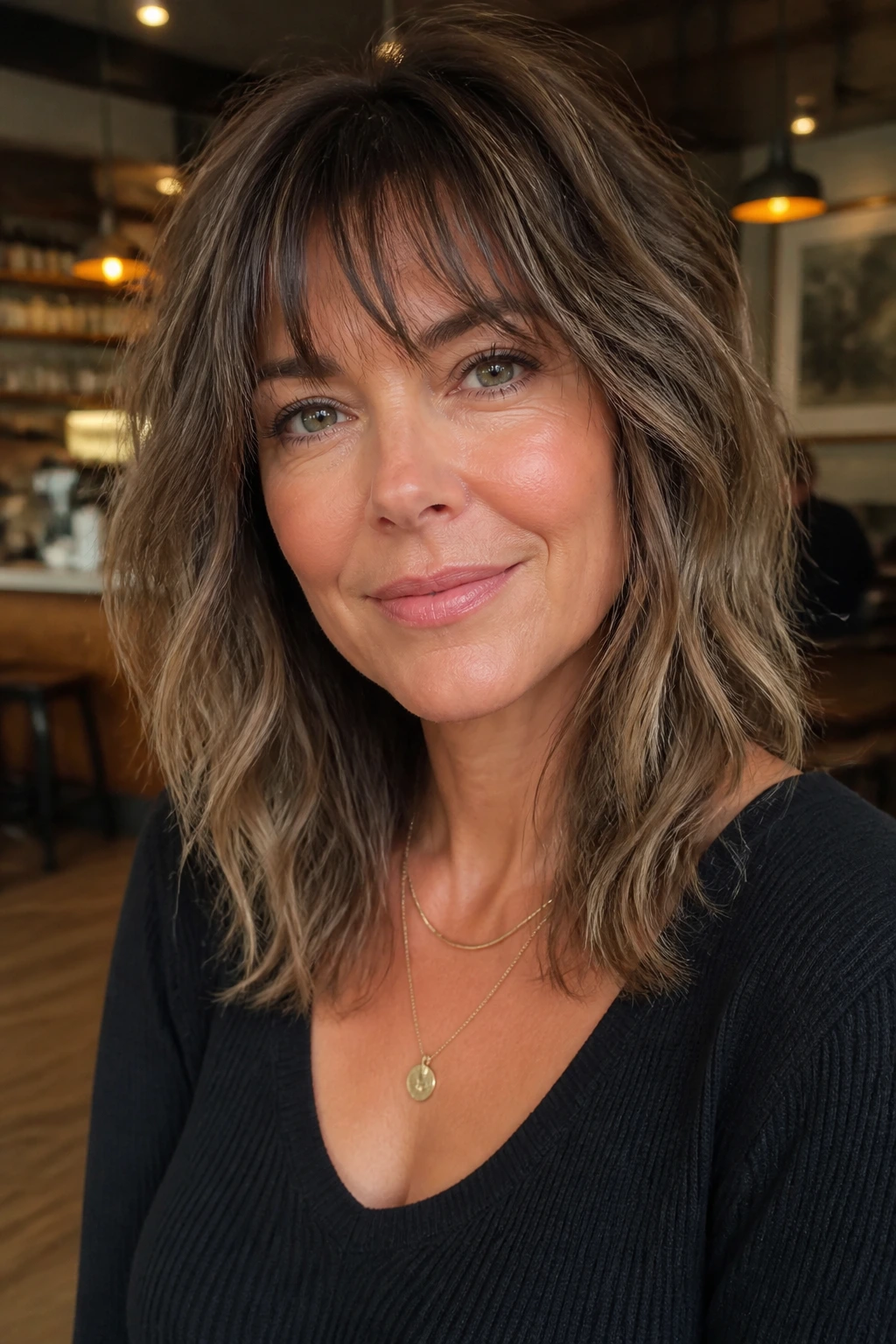
If you like hair that looks like it has somewhere to be, this is the cut. Shaggy bangs with collarbone layers build movement from the crown all the way to the face, so the fringe doesn’t sit there in isolation. On wavy hair, that matters. A disconnected bang can look pasted on; a shag lets everything blend.
What Makes It Different
The layers start doing the work before the hair reaches your shoulders. That means the fringe can be longer and still feel light, because the ends are chipped or point-cut instead of blunt. I prefer this on thicker waves, especially if the front area tends to swell when it dries.
Ask for the front to be connected to the layers around the jaw and collarbone. That makes the bang read as part of the whole cut, not a separate feature. And don’t over-style it. A diffuser on low, a touch of curl cream at the ends, and a finger-combed part usually gives you enough shape.
6. Piecey Center-Part Bangs
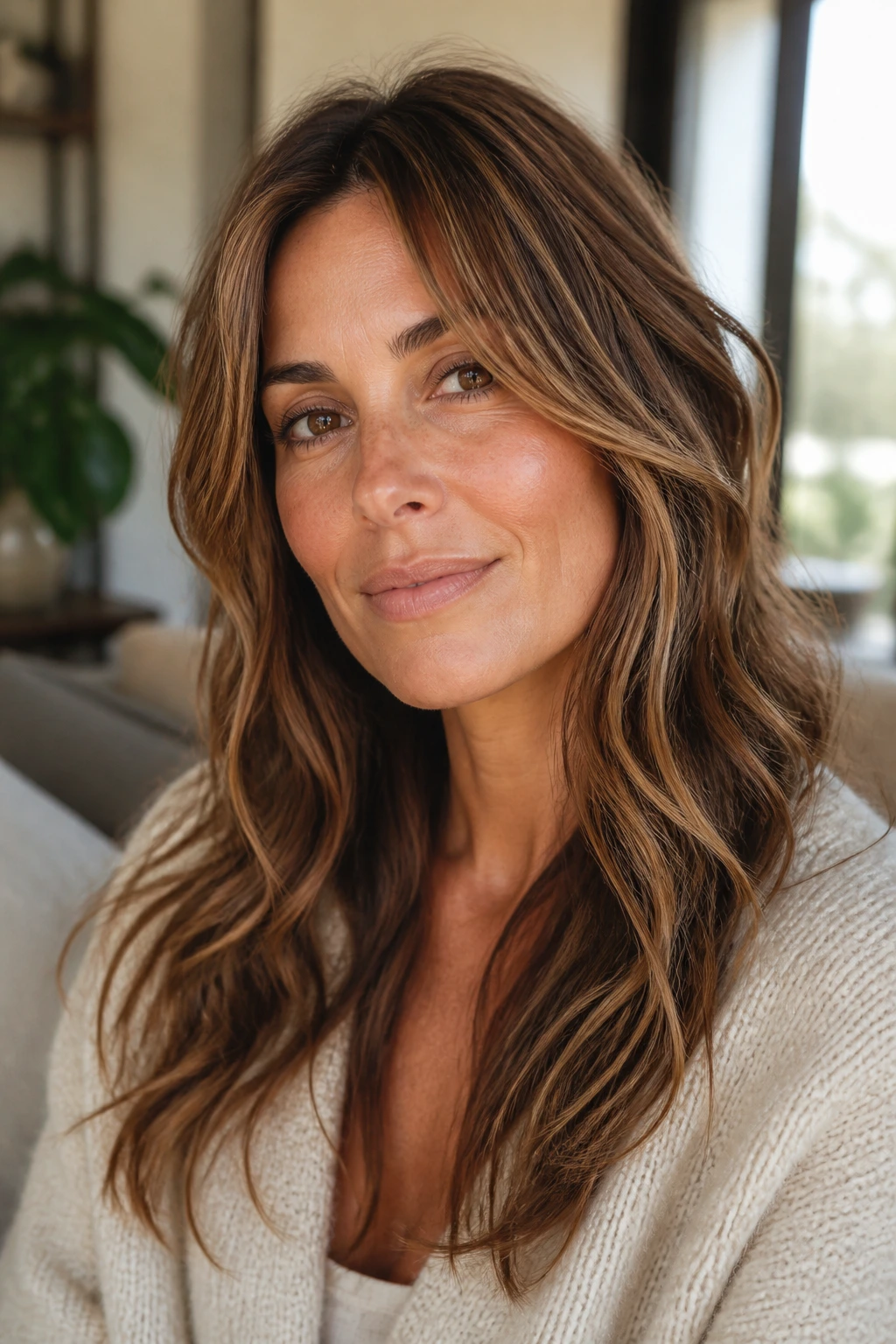
Piecey center-part bangs are the cool cousin of curtain bangs. Instead of one broad sweep, the front breaks into smaller sections that drape on either side of the part. That can be a blessing if your waves naturally separate into ribbons, because fighting that separation is usually a waste of time.
This look is especially good if you want movement around the eyes but don’t want a heavy veil over the forehead. The pieces should be long enough to bend around the cheekbone and still leave a little air between them. Too short, and they start bouncing upward in odd directions. Too long, and the center disappears into the rest of the hair.
Use a styling cream only on the ends, not the root. Then twist the front sections once while they dry. That tiny twist gives each side some direction without turning the bang into a curl pattern that has no business living there.
7. Rounded Fringe That Opens at the Temples
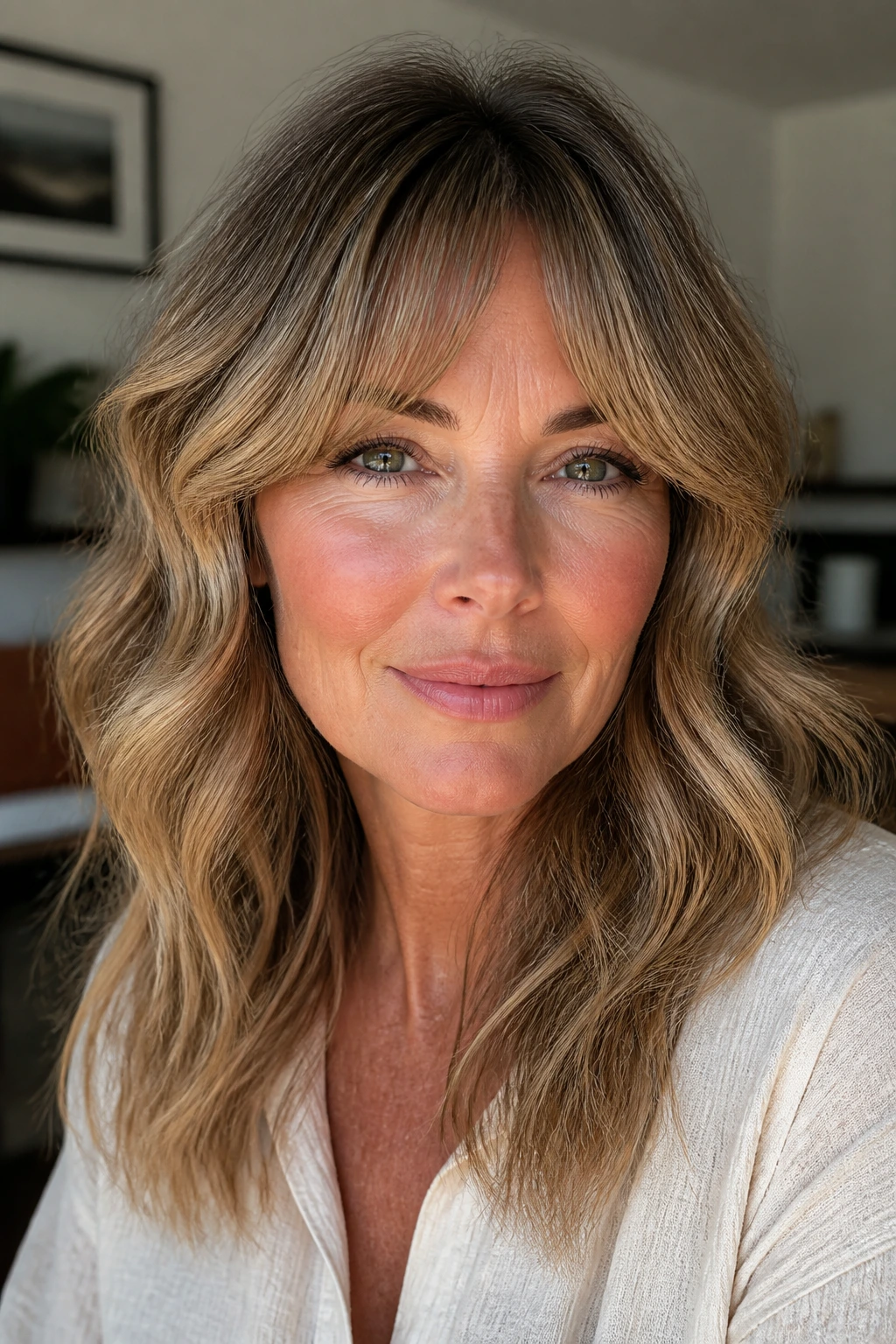
A rounded fringe is softer than it sounds. Think arc, not helmet. The middle sits slightly shorter, the sides lengthen toward the temples, and the whole shape opens the face instead of boxing it in. It’s a good move when your waves are medium to strong and you want the front to feel fuller without going heavy.
This cut works well on faces that want a little lift near the eyes or a gentler line over the brow. The roundness matters because it follows the wave pattern instead of chopping straight through it. On a dry cut, the stylist can see exactly how much spring your hair has before taking the length off.
Keep the blow-dry focused on the front root area first. If the roots dry flat, the round shape loses its shape fast. A medium round brush and a cool shot at the end help the curve stay in place without making the hair stiff.
8. Airy Wispy Bangs for Fine Wavy Hair
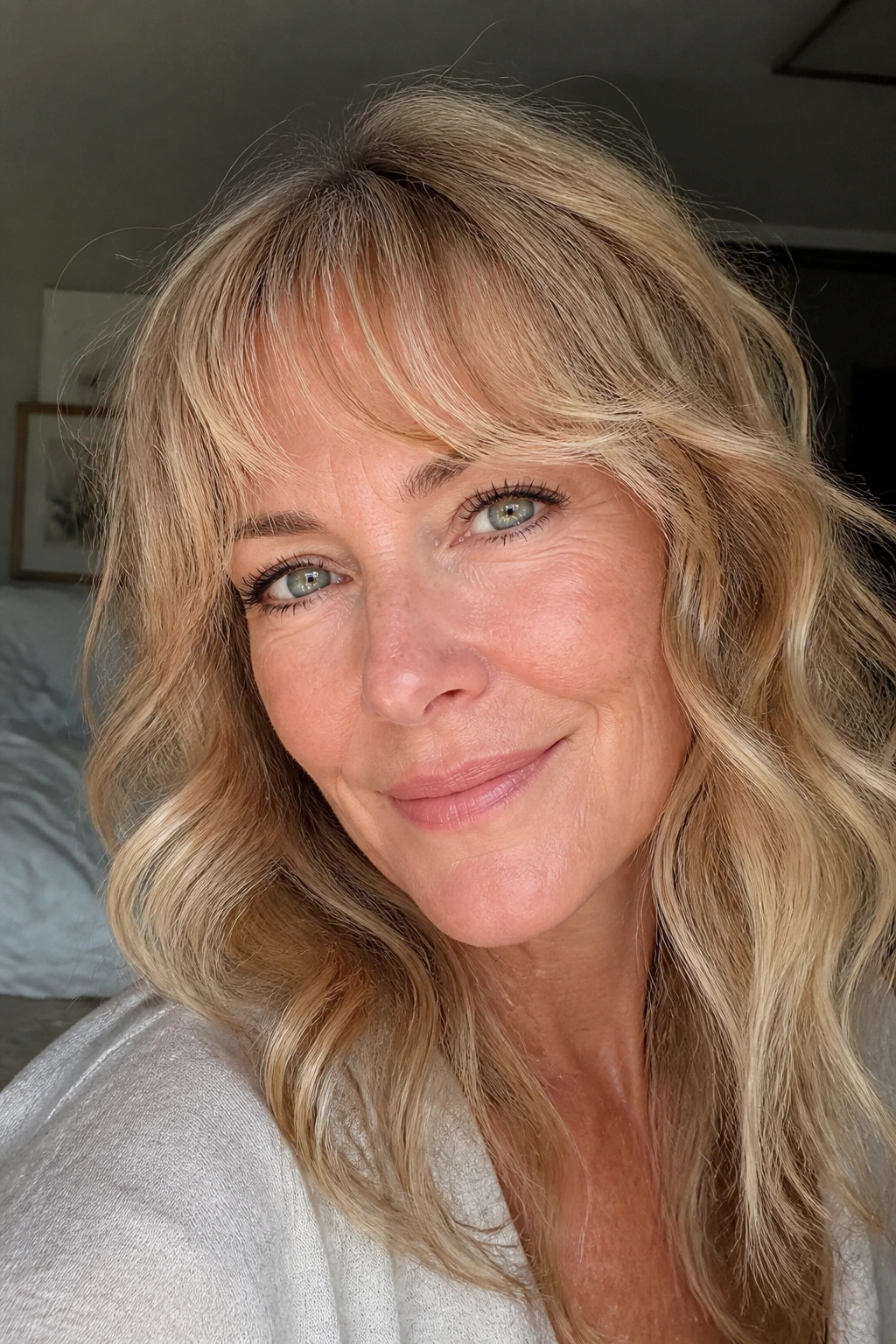
Fine wavy hair needs a light hand. If the front gets too much weight, it collapses, then splits, then clings to the forehead in the most unhelpful way. Airy wispy bangs avoid that trap by keeping the density low and the ends soft, so the fringe moves instead of stacking up.
The trick is not removing too much hair.
That sounds obvious until you watch a fringe get over-thinned and turn into see-through strings. The better version is delicately textured, with enough hair left to read as a bang but not so much that it sits like a solid panel. When cut well, wispy bangs can make fine waves look fuller because the line stays soft around the face.
Styling-wise, less is more. A small amount of root-lift spray at the front and a quick blast with a round brush is usually enough. Heavy creams tend to drag the fine texture down, and once that happens, the wispy charm disappears fast.
9. Thick-Wave Fringe with Internal Layers
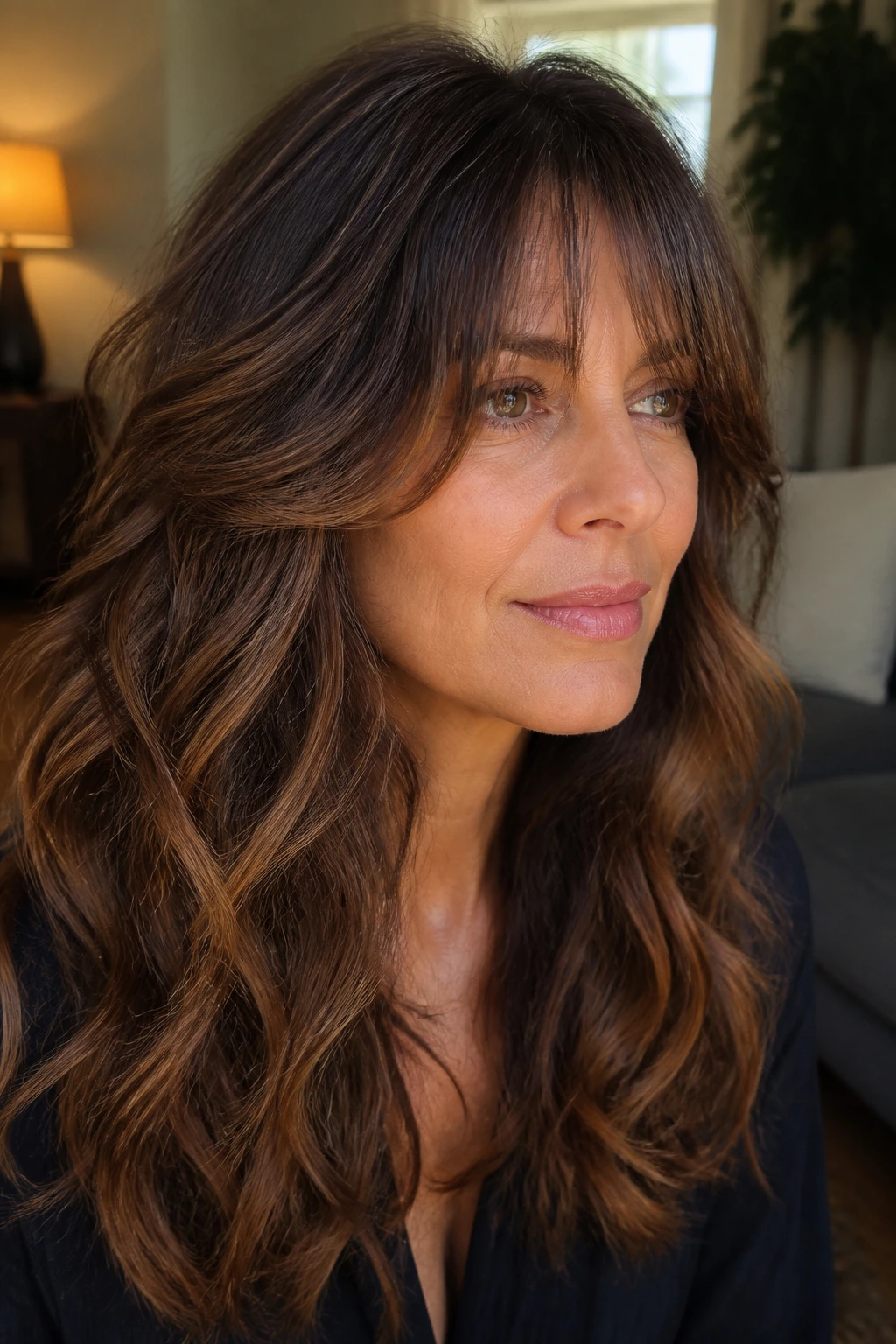
Thicker wavy hair can handle a fringe with more presence, but it still needs breathing room. Internal layers remove bulk from inside the bang, which keeps the front from building into a heavy wall. That’s the difference between a fringe that falls and one that sits there like a shelf.
This shape is useful if your wave pattern is strong, your hair takes a while to dry, or the front tends to swell wider than the rest. Internal layering lets the bend show without making the top line choppy. If your stylist point-cuts into the surface and removes weight underneath, the fringe stays softer and easier to style.
A round brush can still help, but don’t stretch the hair too hard while drying. Over-tension makes thick waves spring back into a puff once they cool. Use heat to set the direction, not to erase the texture.
10. Long Bangs with a Deep Side Part
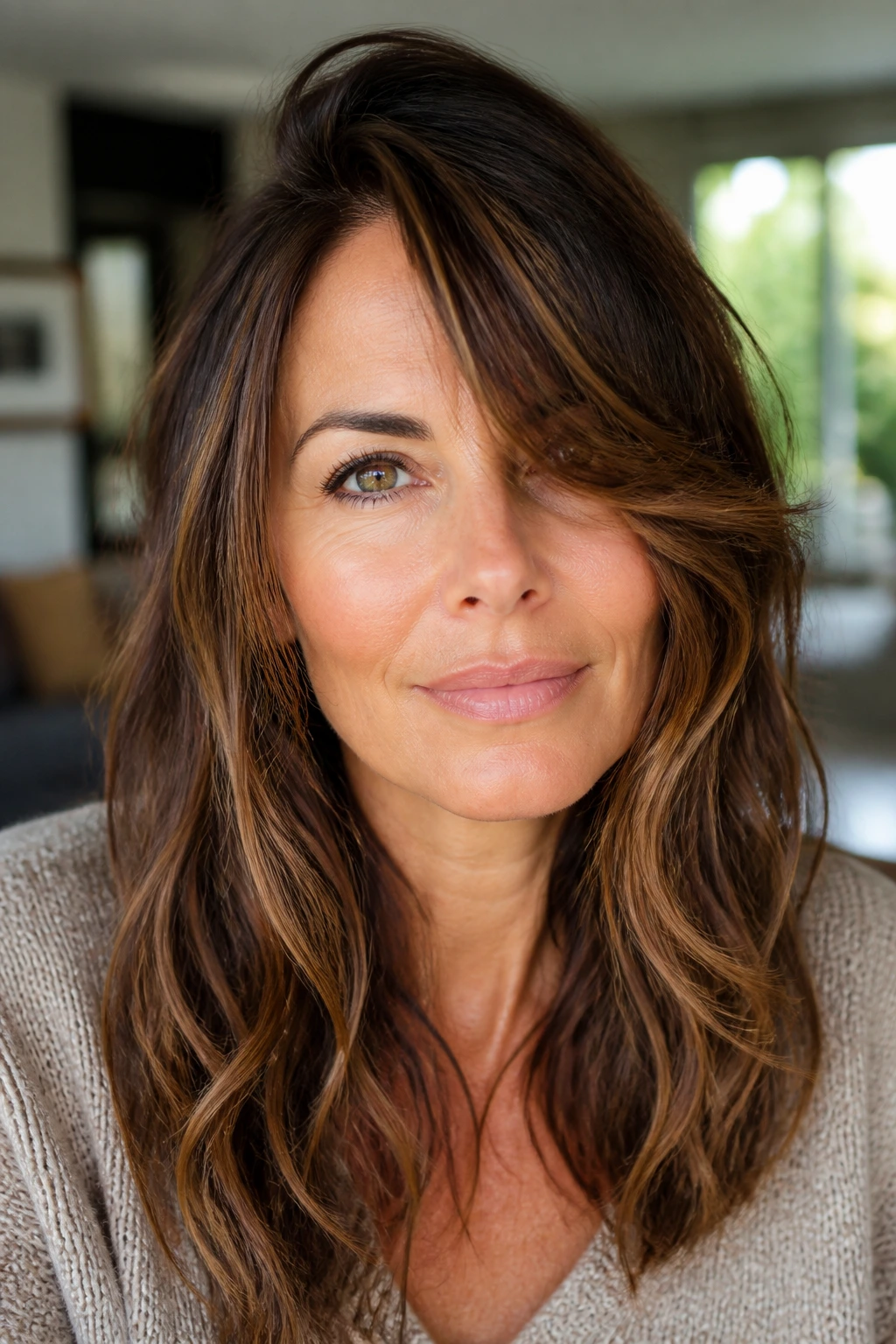
A deep side part gives long bangs a little drama without asking for a dramatic haircut. The extra sweep adds height at the crown and lets the fringe fall across the forehead in a long diagonal line. For women over 40, that can be a nice way to soften the face without drawing all the attention straight to the center.
It also helps if one side of your hair is naturally flatter than the other. The deeper part gives the roots a chance to lift, and that lift matters more than people think. A fringe that starts with some height looks fresher and less helmet-like, especially on wavy hair that tends to settle down as the day goes on.
If you try this, don’t overdo the product at the front. The part already creates structure. A touch of mousse at the roots and a light smoothing cream on the ends is enough.
11. Face-Framing Bangs That Start at the Nose
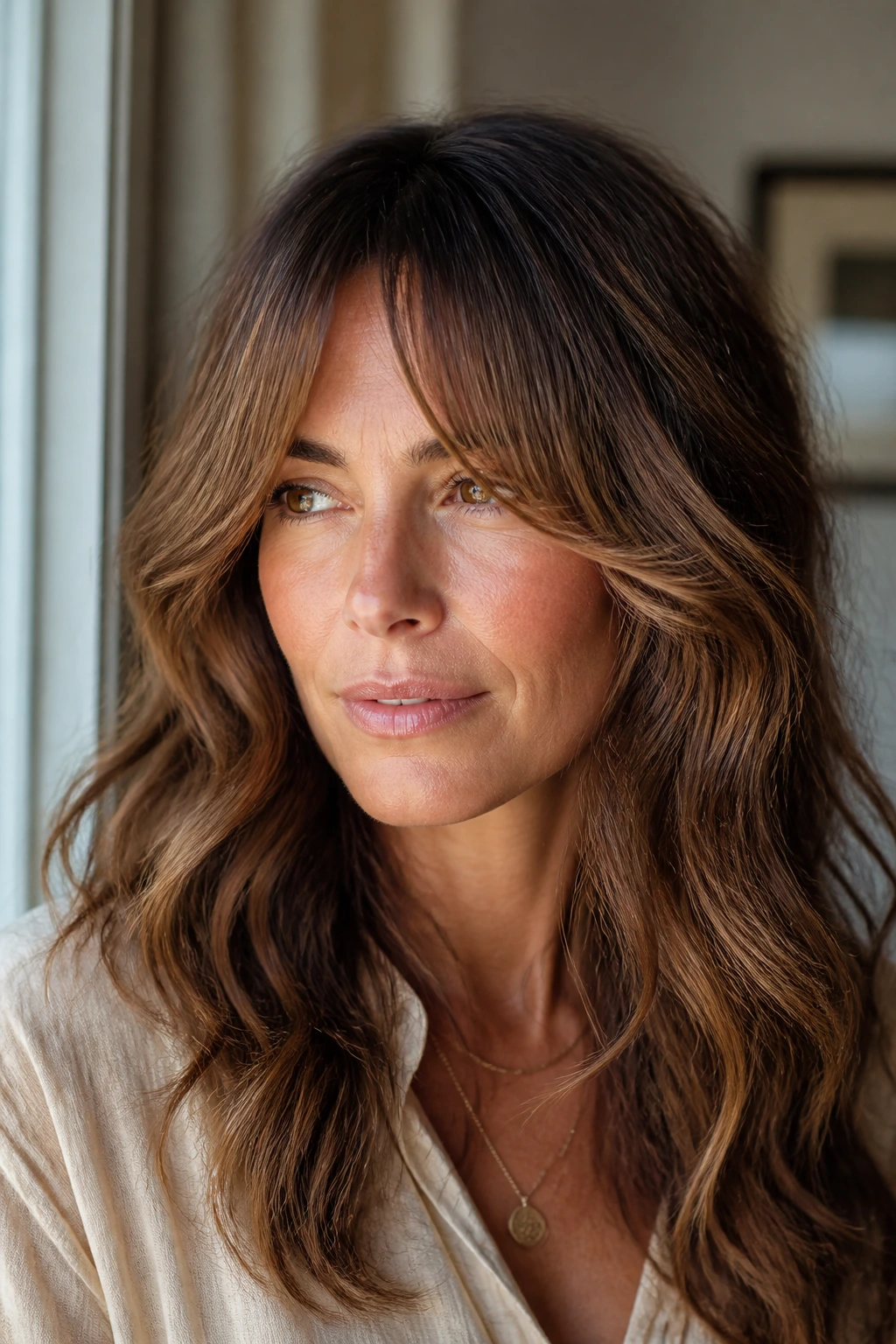
Not everyone wants a bang that looks like a bang. Some people want front pieces that begin around the nose bridge and melt into the rest of the hair, and this cut does exactly that. It’s the easiest place to start if you’re nervous about committing to fringe but still want the effect of shorter pieces around the face.
Why this is the safest “first bang” cut
The length gives you options. You can wear it parted down the middle, sweep it to one side, tuck it behind the ear, or blend it into waves on humid days when the front won’t behave. Because the shortest point starts low, the cut doesn’t box you in if your styling habits change or if you decide later that you want less face coverage.
It’s also one of the best choices when your hairline has a stubborn cowlick. Longer front pieces can be guided around the problem instead of being bullied by it. Ask for a soft point cut at the ends so the hair doesn’t form a blunt cliff across the forehead.
12. Long Layered Bangs with a Modern Shag
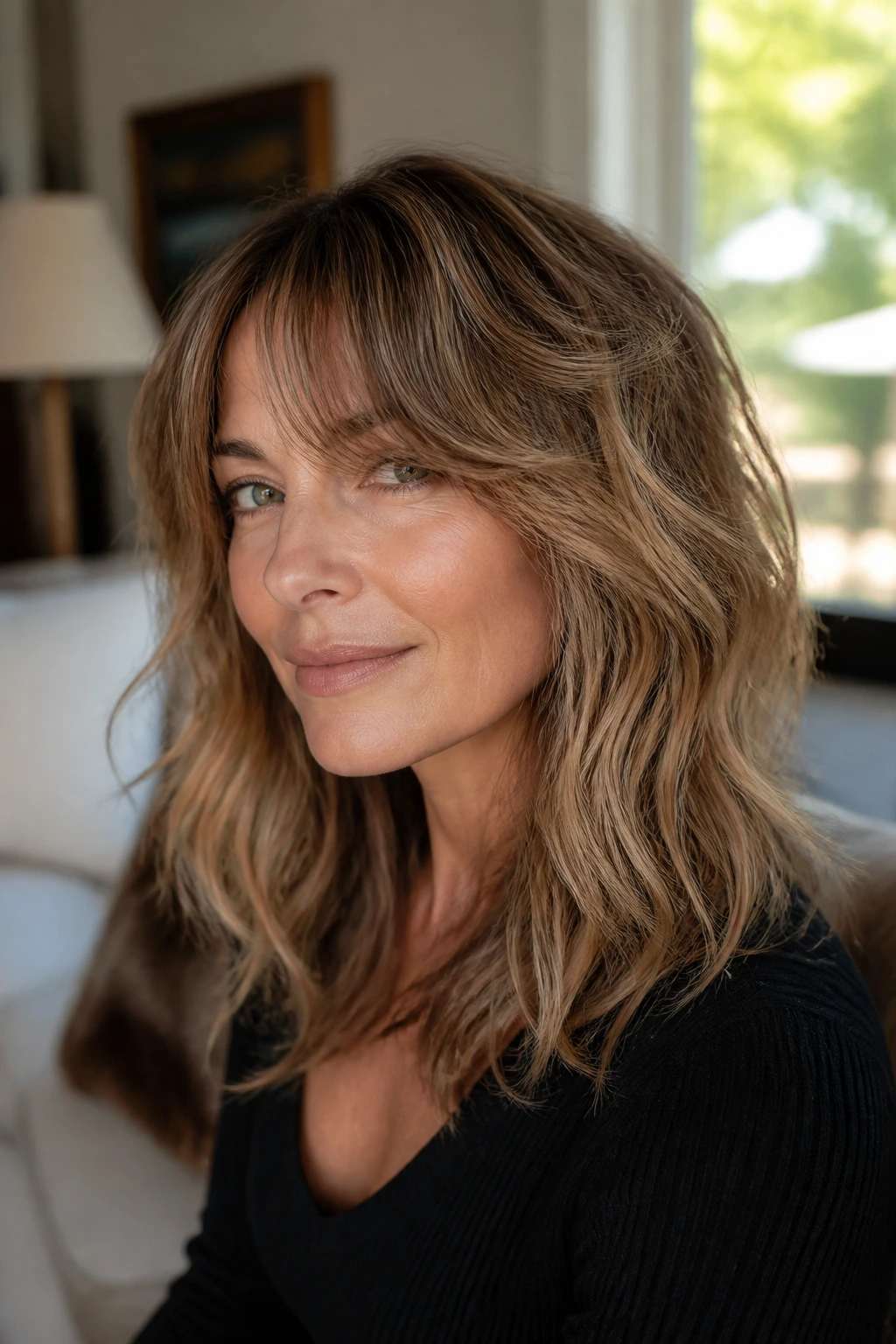
This is the cut for someone who likes texture and does not want the front to feel precious. Long layered bangs in a modern shag are built to move, with shorter crown layers supporting longer fringe pieces that sweep and separate on their own. Wavy hair tends to love this because the natural bend becomes part of the shape.
The key is balance. Too much layering and the front looks shredded; too little and the shag loses its lift. The right version sits somewhere between airy and messy, but not sloppy. I’d call it a controlled chaos cut, and that’s meant as a compliment.
Style it with a diffuser or a soft air-dry, then break up the front with your fingers once it’s almost dry. If you brush the fringe too early, it can clump and lose the separated texture that makes the cut work.
13. Glasses-Friendly Fringe That Curves Outward
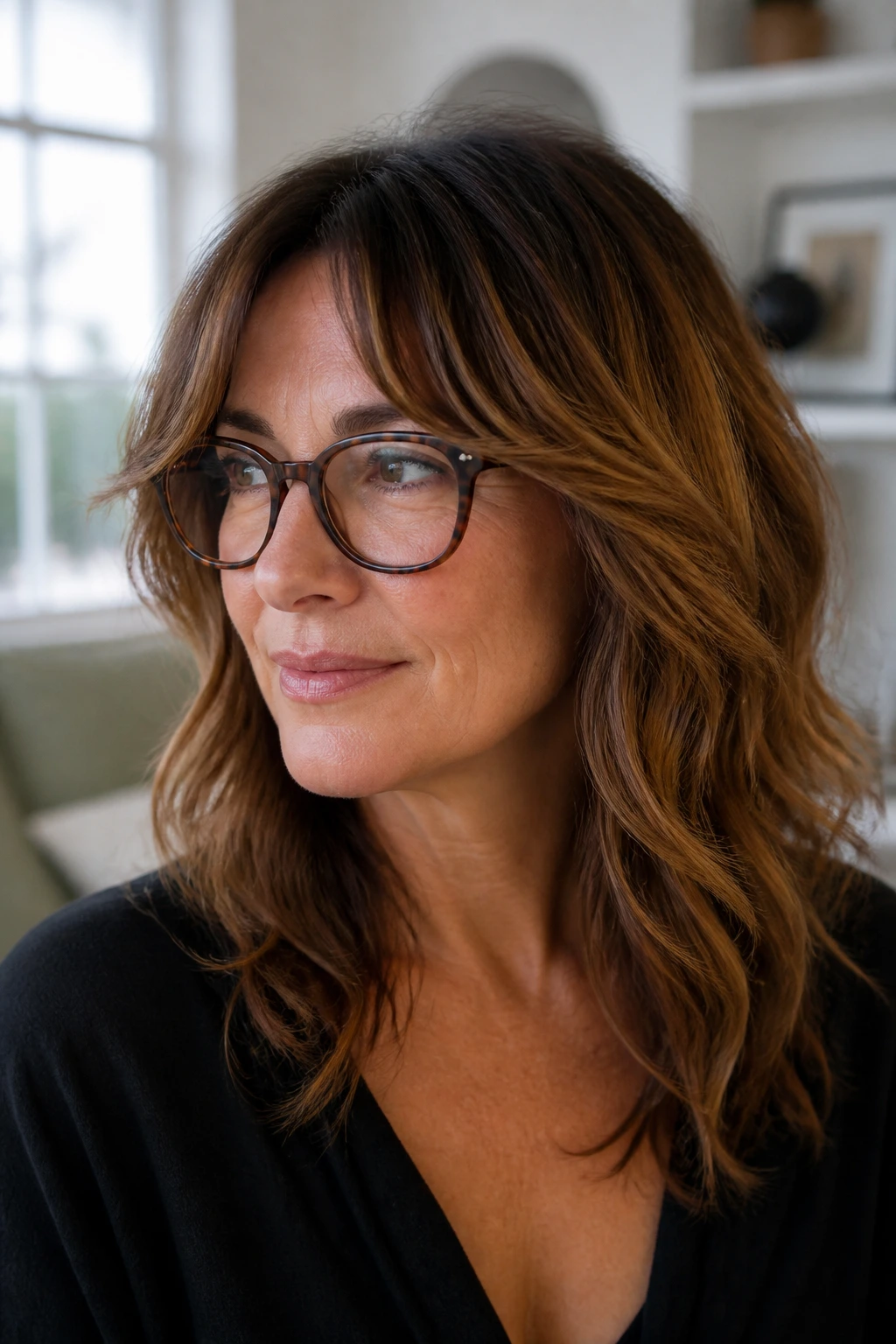
Glasses change everything. Bangs that look perfect on their own can turn into a lens-cleaning problem the second frames enter the picture. A glasses-friendly fringe curves outward at the ends so it clears the top of the frames instead of sitting on them, and that tiny detail saves a lot of frustration.
The best length usually sits just above the glasses or drops toward the outer corners of the eyes. The center stays soft; the sides sweep away from the frame line. That makes the fringe feel lighter on the face, which is useful if your hair is wavy and the front tends to build up in humidity.
If you wear larger frames, ask your stylist to check the cut with your glasses on. Seriously. The shape on a face without frames and the shape with frames can be two different haircuts, and it’s worth the extra minute in the chair.
14. Soft Arched Bangs with Shoulder-Length Waves
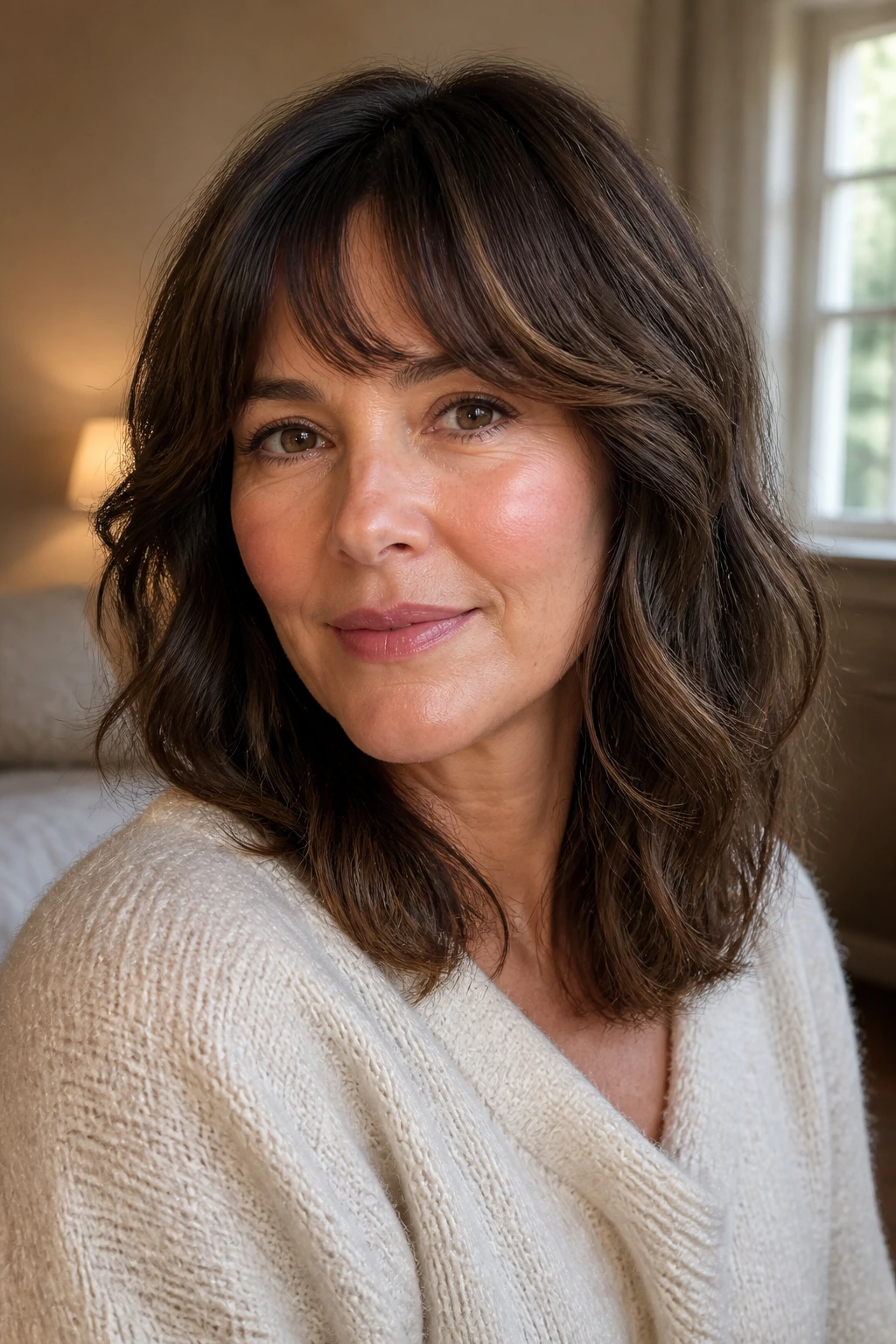
Soft arches are underrated. They give the front a gentle curve that’s slightly shorter in the middle and a little longer at the sides, which can narrow the look of a broad forehead or draw the eye down toward the cheekbones. Shoulder-length waves keep the whole thing from feeling too serious.
What I like here is the quietness of the line. It doesn’t shout “bangs,” but it still changes the shape of the face in a useful way. If your waves are loose, this is a particularly nice option because the arch keeps the fringe from separating too sharply at the center.
Dry the middle first, then work outward in small sections. If you start at the sides, the arch can lose symmetry fast and end up tilted without looking intentional. The goal is soft shape, not perfection. A little unevenness at the ends can make the whole cut feel more natural.
15. Razored Bangs for Dense Wavy Hair
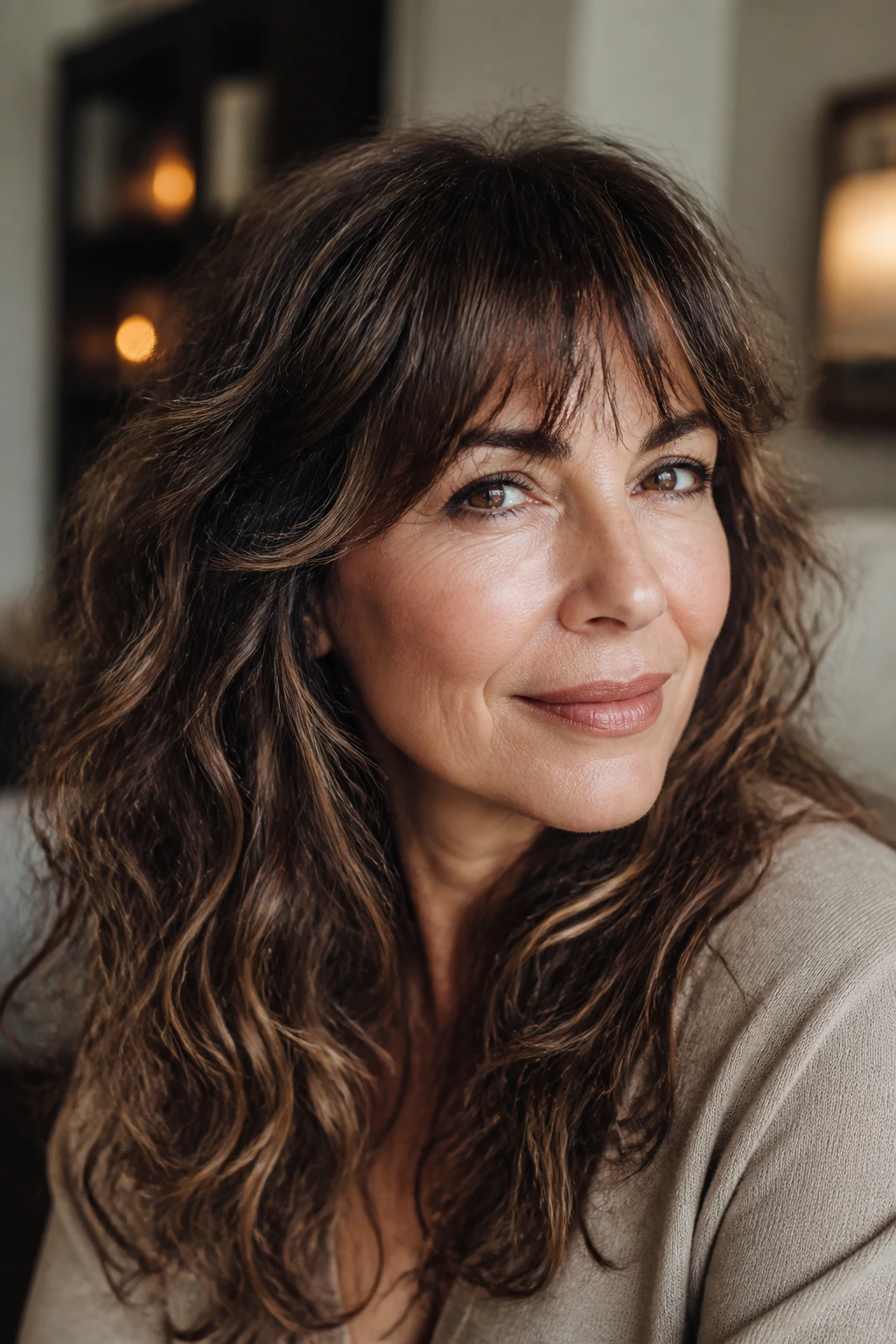
Dense wavy hair can carry a fringe, but it needs weight removed the right way. Razor cutting can soften the edges and create movement through the front, which helps the bangs stop feeling like a sheet. Done well, it gives you a lighter, more broken-up finish that still holds onto shape.
Done badly, it frays the ends and makes the front look fuzzy. So this is the one I’d reserve for a stylist who knows how wavy texture reacts when the blade meets it. The point is not to shred the hair. The point is to open it up so the wave pattern shows instead of fighting against a blunt line.
This cut is a good match if your front tends to feel heavy by midday. A razor-soft fringe can move with the rest of the waves, especially when the ends are kept long enough to tuck or sweep aside. It’s not the most low-maintenance option, but when the texture is right, it looks expensive in a very unbothered way.
16. Long Fringe with Invisible Layers
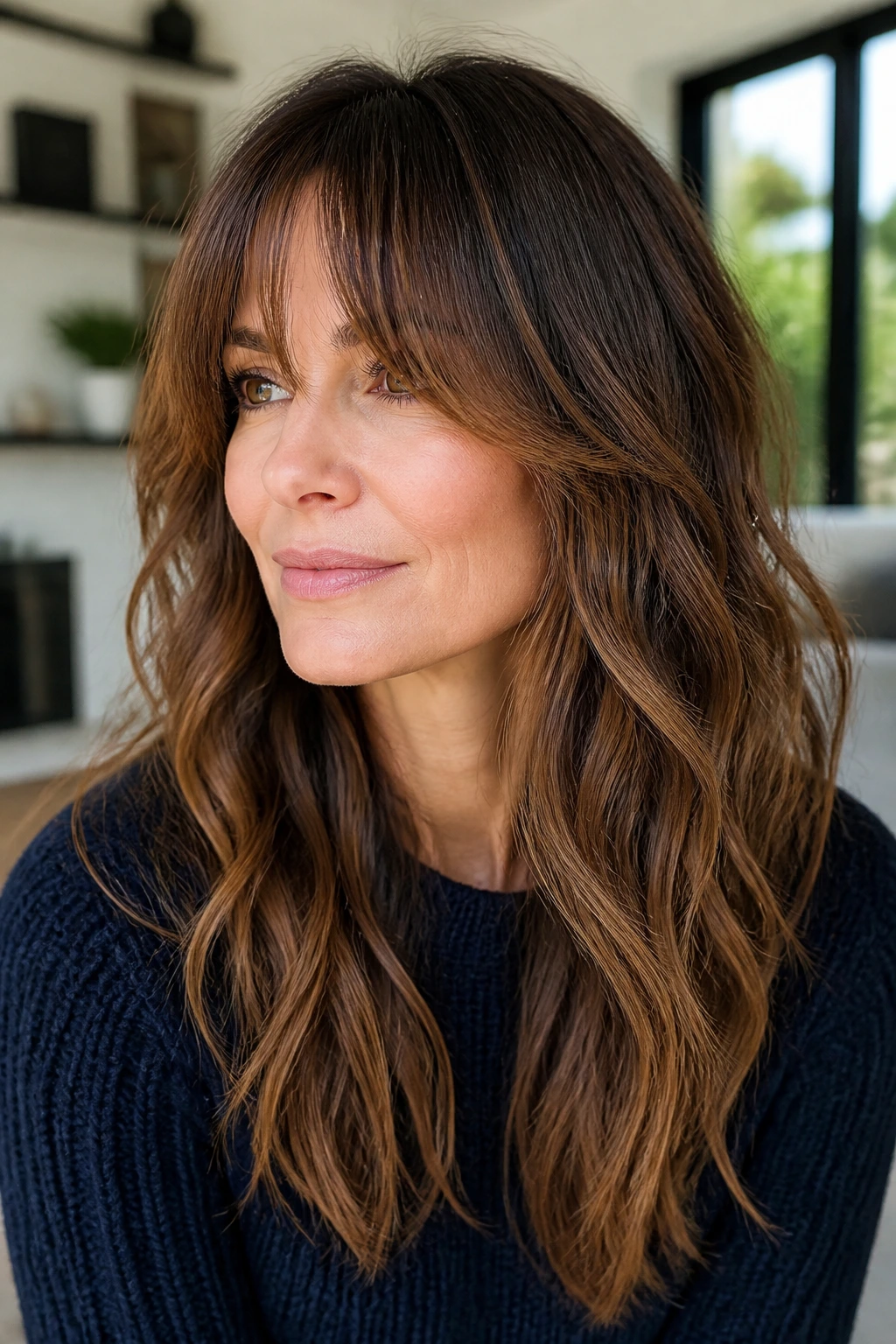
Invisible layers are a nice compromise for people who want polish more than obvious texture. The fringe looks smooth from the front, but hidden layers inside the bang keep it from getting thick and clunky. That makes it a smart choice if you like a cleaner shape around the face.
The cut gives wavy hair room to move without advertising the layering from across the room. Some people love visible choppiness. Some don’t. If you want your bangs to whisper instead of shout, this is the lane to be in.
A flat brush can be enough here if your wave pattern is soft. You’re not trying to sculpt every strand into place. You’re nudging the fringe into a gentle bend and letting the hidden layers do the quiet work underneath.
17. Jaw-Grazing Front Layers That Melt into Bangs

This is less of a separate bang and more of a front zone that behaves like bangs when you need it to. The shortest pieces sit near the cheekbone or jaw, then they taper back into the rest of the cut. On wavy hair, that gives you the effect of fringe without a hard front edge.
It’s a very practical option if you like to wear your hair up sometimes. Pull the rest back, and the front pieces still frame the face. Wear it down, and those same pieces act like long bangs that soften the jaw. That dual use is handy, especially if you don’t want to reshape your life around a haircut.
Ask for a soft connection from the front into the side layers. If the stylist isolates the front too much, the whole thing starts to feel like a separate section. Blending is the whole point.
18. Blowout Bangs with a Bouncy Round-Brush Finish
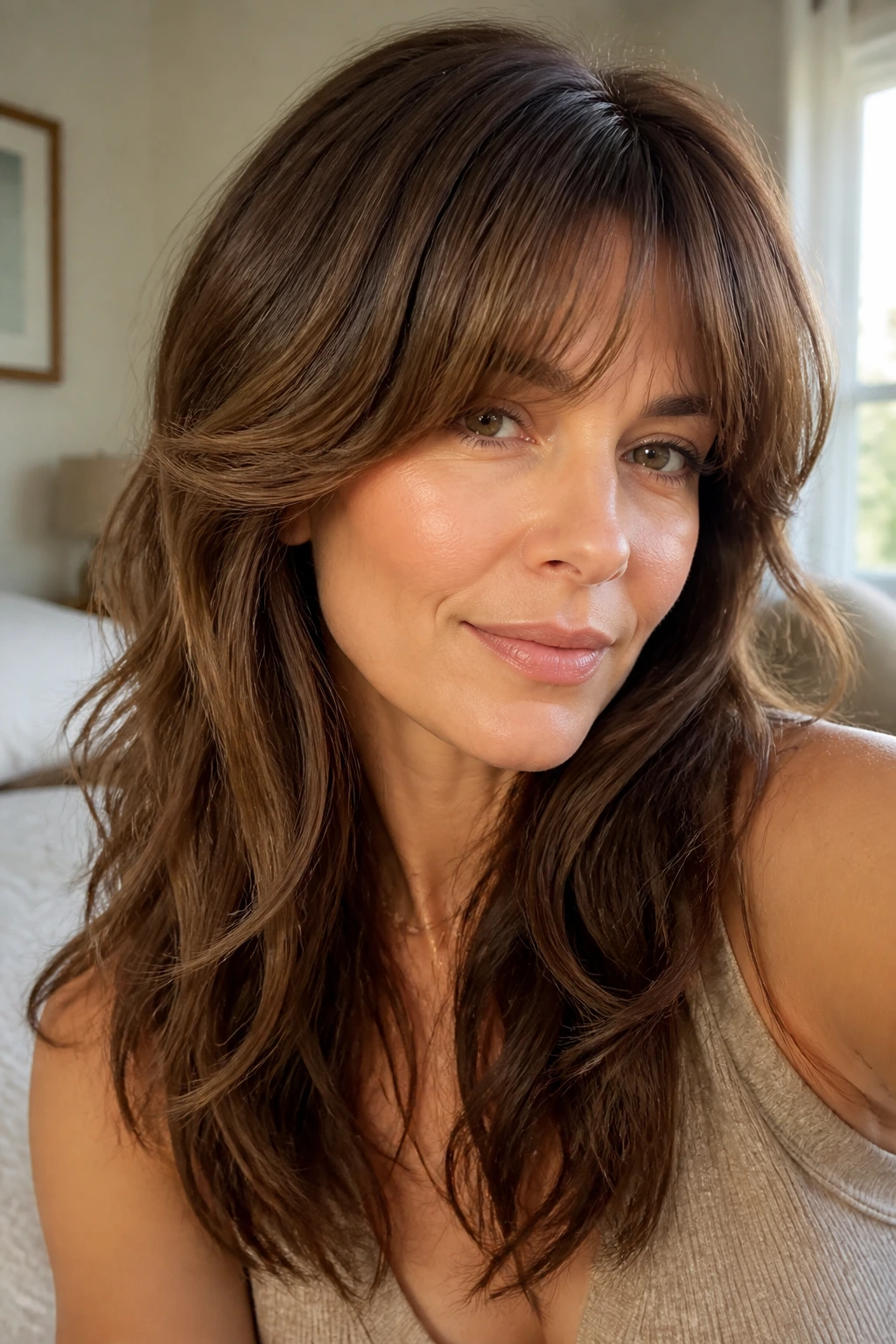
Some people want their bangs to fall naturally. Others want a little bounce and polish. Blowout bangs with a round-brush finish give you the second option without making the front feel stiff or overdone. On wavy hair, the trick is to set the root, smooth the bend, and leave enough softness in the ends.
This works best when the bang is long enough to wrap around a brush without getting crimped. Use a 1½-inch round brush, direct the hair forward first, then sweep it to the side or split it in the center while it’s still warm. The cool shot matters. It helps the curve stay put instead of collapsing half an hour later.
If your waves are coarse, a tiny bit of smoothing cream on the last inch or two can keep the ends from frizzing up. Skip heavy serum near the root. It flattens the lift you just worked for.
19. Tousled Bangs with a Mid-Length Cut
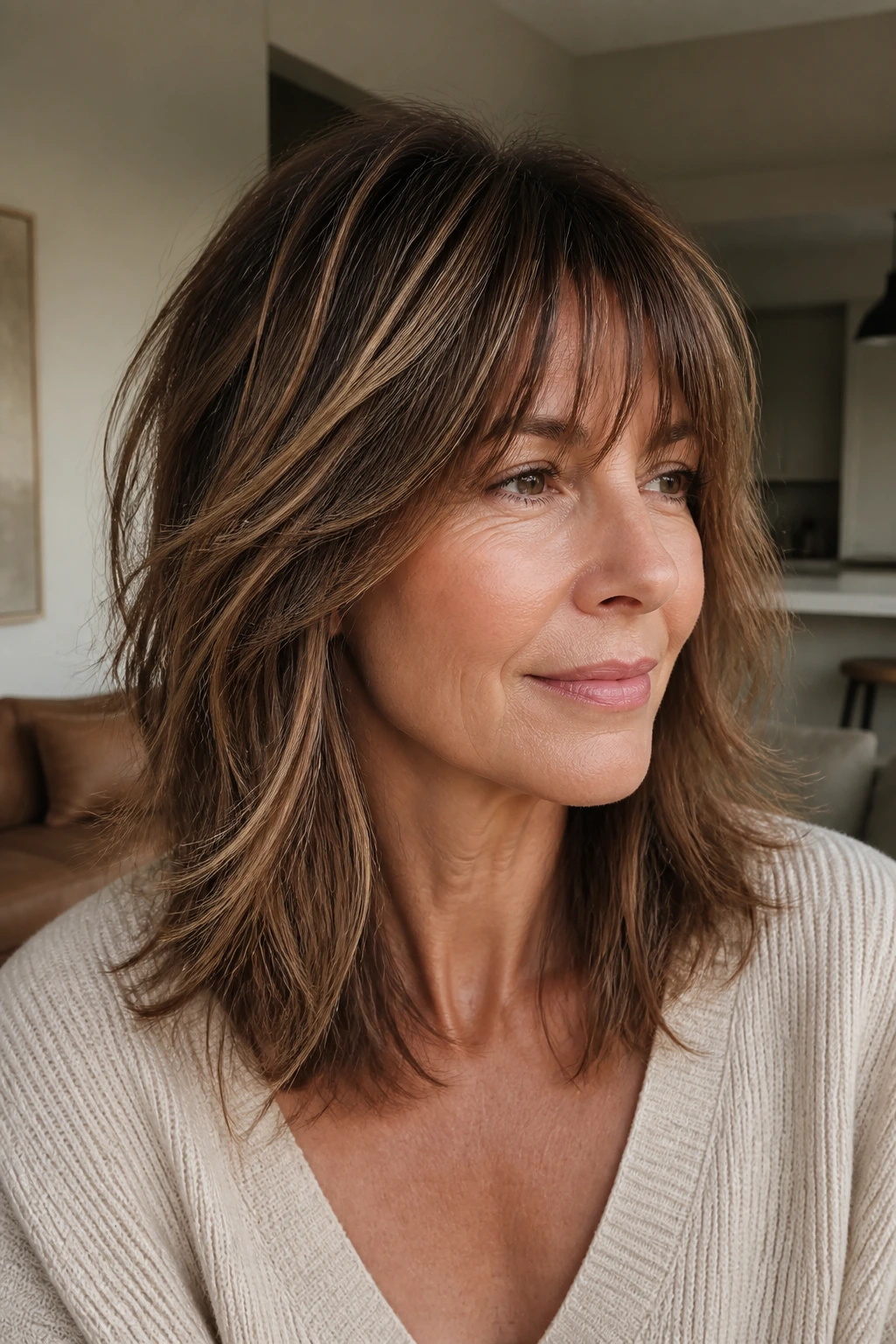
Tousled bangs are for people who’d rather have movement than precision. The fringe is long enough to shift around, and the mid-length cut underneath gives it somewhere easy to land. This pairing is especially good for wavy hair that dries with natural separation and a little bit of attitude.
The look should feel loose, not neglected. There’s a difference. A good tousled bang still has shape at the brow or cheekbone; it just doesn’t sit in one stiff line. That softness can make the face look more open and less over-framed, which is useful if you wear your hair down often.
A salt spray can work here, but use it carefully. Too much and the front can dry crunchy and sit away from the face in sharp little spikes. One or two sprays, then scrunch lightly and leave it alone.
20. Silver-Friendly Long Fringe for Natural Gray
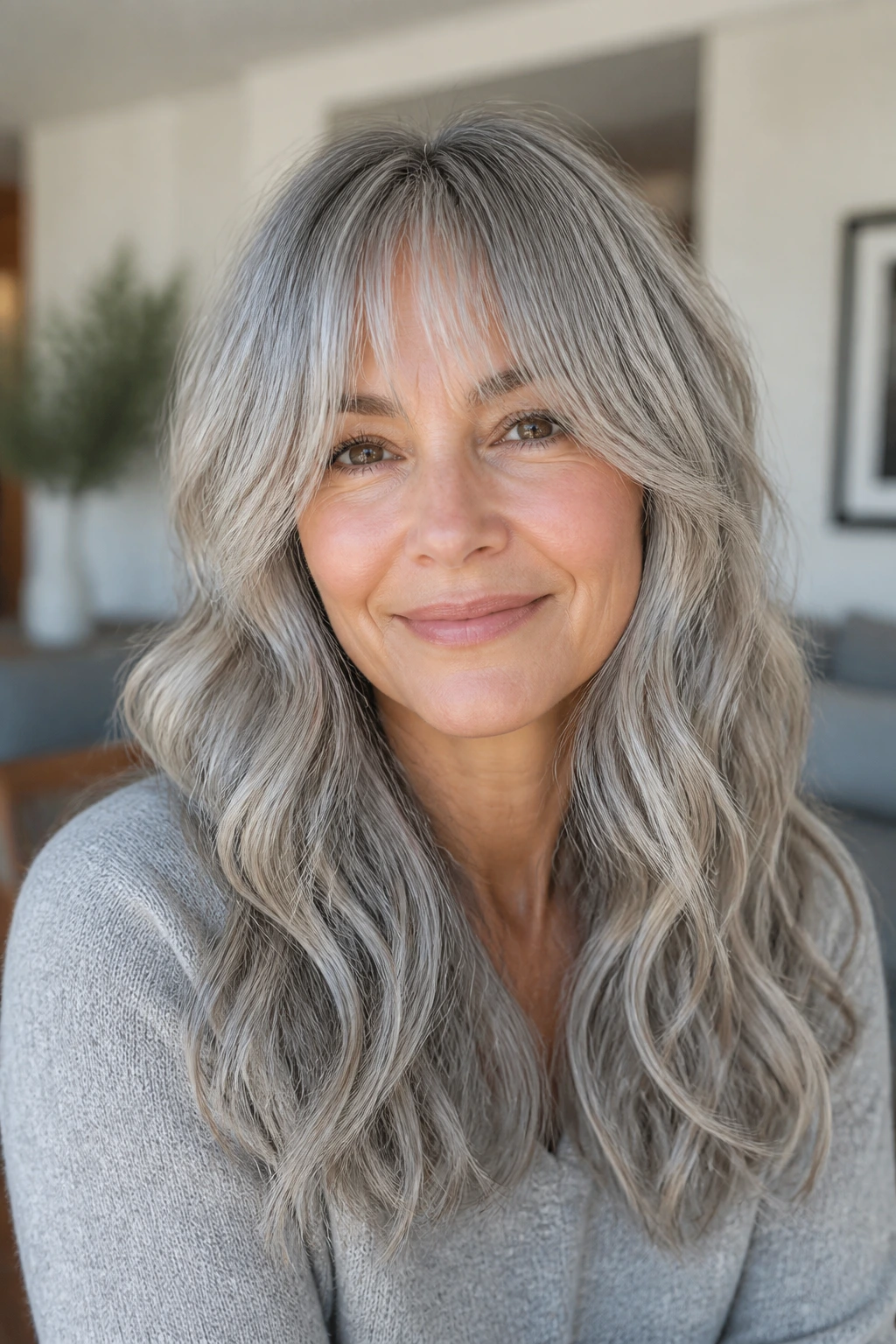
Gray hair often changes the texture in the front first. It can feel a little wirier, a little more reflective, and a little less willing to lie down the way it used to. A long silver-friendly fringe works with that change instead of fighting it, keeping the front soft and long enough to move around the face.
What matters here is softness at the ends. The front needs enough length to avoid standing straight up, which gray hairs sometimes want to do when they’re cut too short. A longer fringe also lets the silver catch light across the whole front section rather than turning into a hard stripe.
If you’ve got natural gray and wavy texture, a light cream or leave-in can help the front stay smooth without making it limp. Dry it with a brush or fingers, then stop touching it. That’s usually the best way to keep silver fringe from getting fuzzy.
21. Long Bangs with a Lob and Tapered Ends
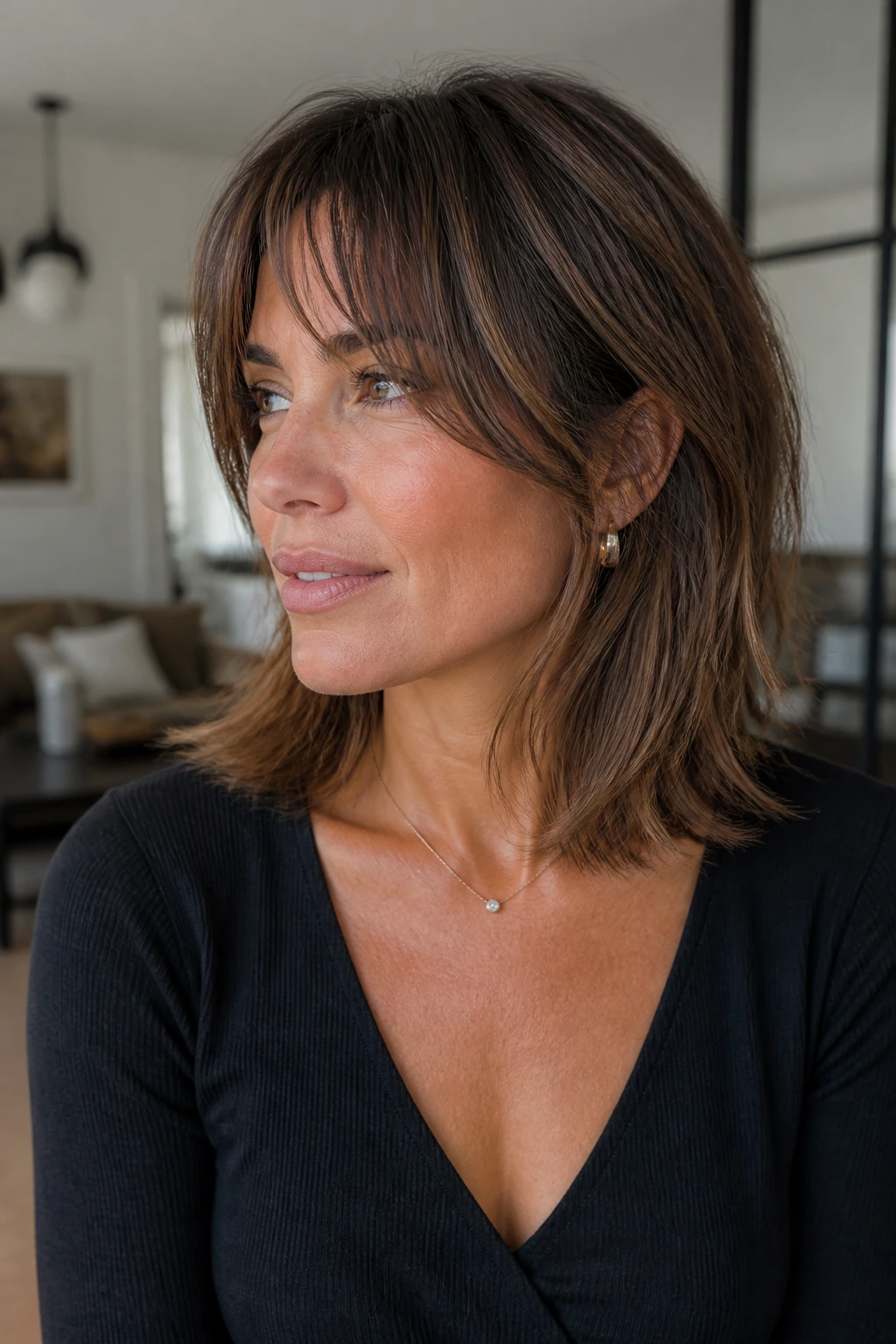
The lob is a workhorse, and long bangs with tapered ends suit it because neither part of the cut tries too hard. The ends taper softly toward the front, so the fringe feels like it belongs to the lob instead of hovering over it. That creates a nice line at the jaw and collarbone.
This is a strong choice if you like a shape that looks tidy from the front and easy from the side. The taper means the bangs can slip behind the ear or fall forward without creating a big block of hair across the forehead. On wavy hair, that flexibility is worth a lot.
Keep the blow-dry simple. A vent brush at the front root, a quick pass with a round brush at the ends, and you’re done. If you overwork it, the lob starts to look too polished and the wave loses its charm.
22. Low-Maintenance Grow-Out Bangs
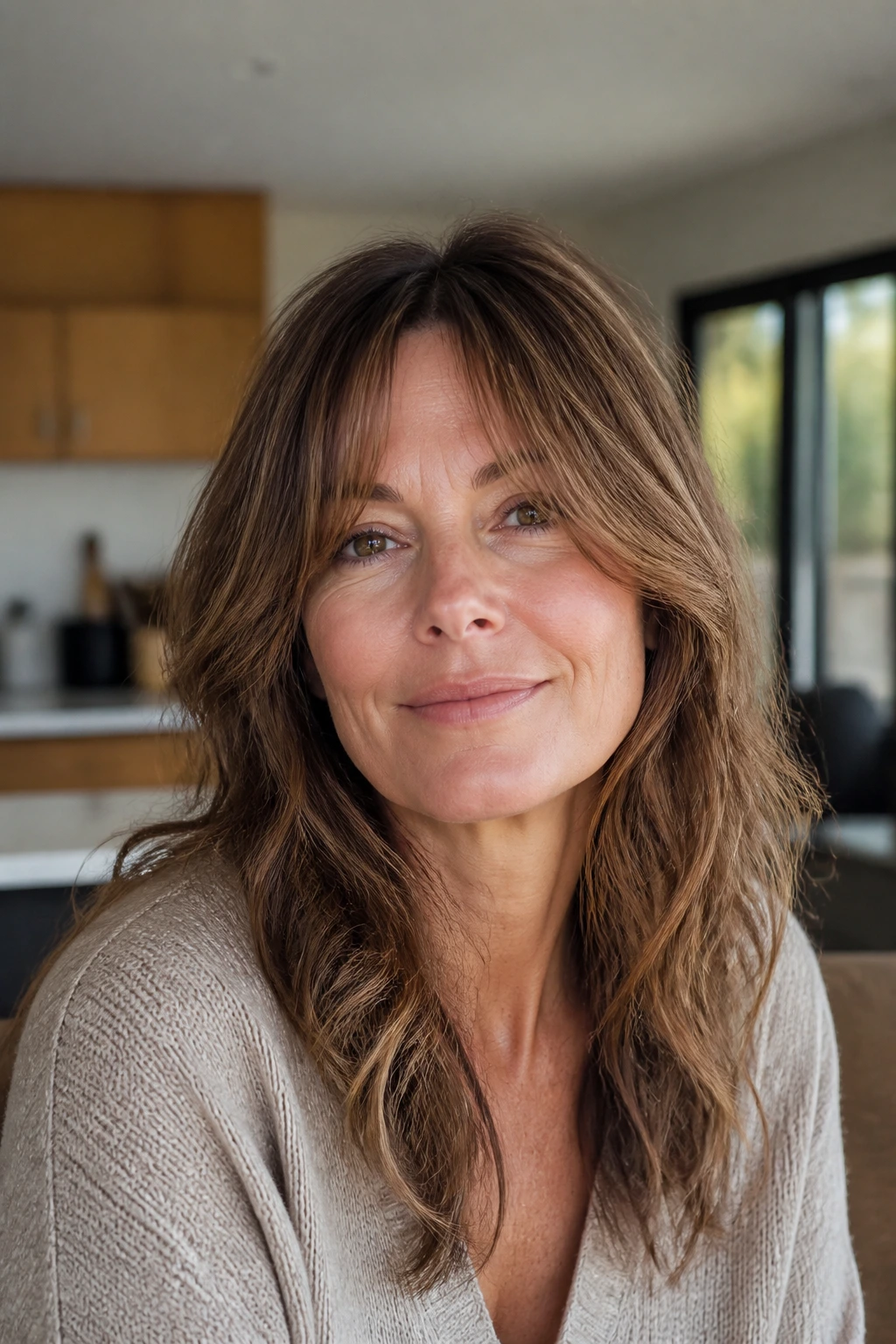
Not every bang needs to demand a six-week trim cycle. A low-maintenance grow-out fringe is cut with the next stage in mind, so it still looks good when it gets longer. That means the shortest pieces are not too short in the first place, and the sides are already connected to the front layers.
This style is a good fit if you want bangs but know yourself well enough to admit you won’t keep up with frequent trims. It also works for women whose hair changes from month to month because of humidity, color services, or just the general unpredictability of wavy texture. The shape stays forgiving.
The best part is the range. You can wear it parted, swept, pinned, or tucked behind one ear, and it still reads as a haircut rather than a grow-out emergency. That alone makes it worth considering.
23. Asymmetrical Fringe with Wavy Texture
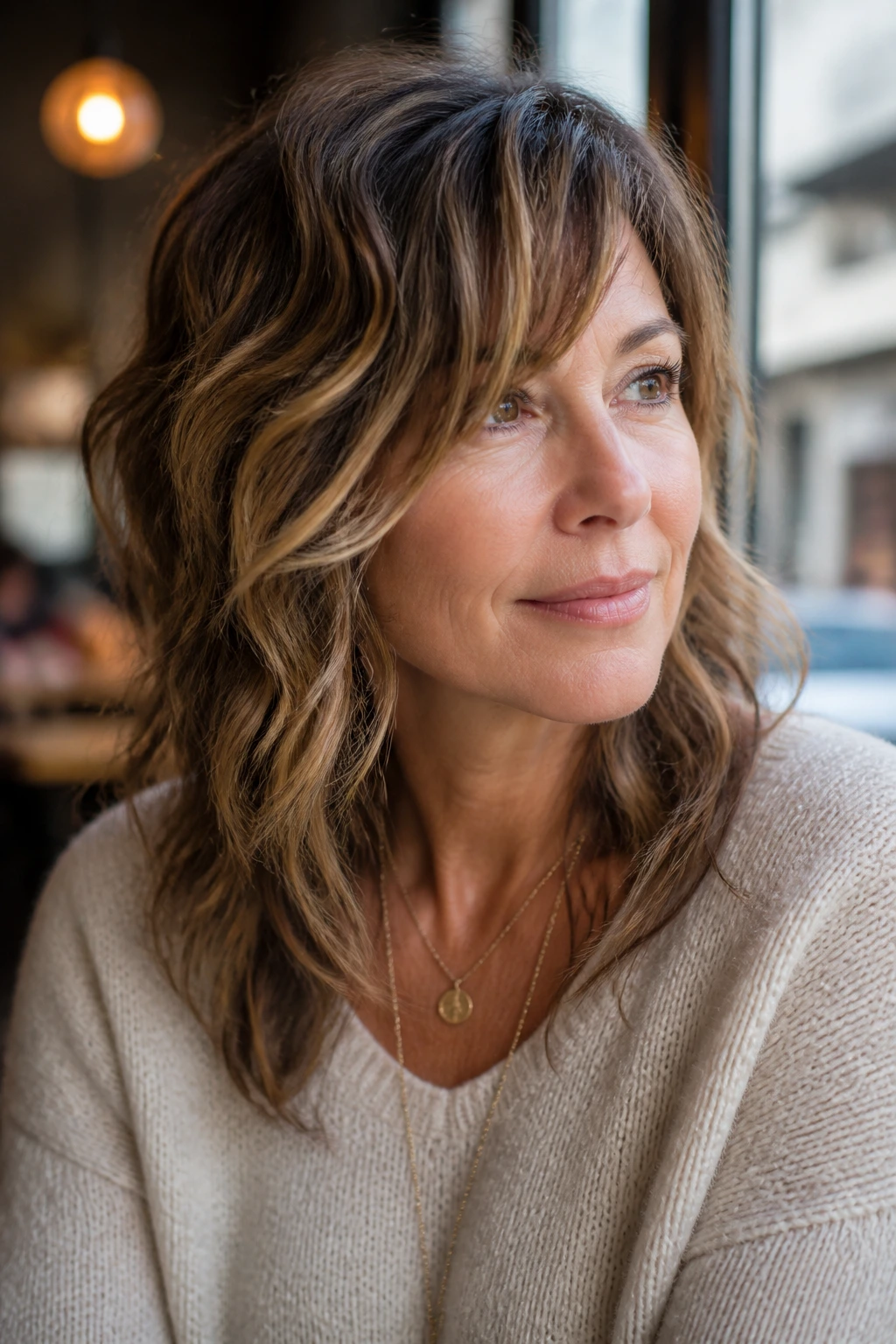
Asymmetrical fringe is a nice way to break up symmetry without making the haircut look fussy. One side stays a little longer, and the wave pattern does the rest. It can be very flattering if you have one side of the face you like to soften, or a cowlick that refuses to behave in the center.
The asymmetry should be subtle. A big, obvious angle can feel dated fast. A soft difference of an inch or so is usually enough, especially on wavy hair where the texture already creates movement. That slight imbalance can make the whole cut feel lighter and more modern.
If you go this route, pay attention to where you part your hair most of the time. The bang should work with that habit, not against it. Styling is easier when the shape already knows your part.
24. Curly-Wave Hybrid Bangs That Skim the Brows

Some wavy hair bends close enough to curls that a standard fringe cut turns into a surprise. A curly-wave hybrid bang skims the brows but leaves enough length for shrinkage, which is the real issue here. The hair looks long enough wet, then springs up as it dries, and suddenly the eyebrow line is way too exposed.
This style needs a dry check. A good stylist will cut conservatively, let the hair settle, and then refine the shape instead of cutting straight across and hoping for the best. That extra caution is not optional if your front pieces have a lot of spring.
Use a diffuser on low, or air-dry with the bangs clipped loosely forward for a while. The goal is to guide the bend, not flatten it. If you try to fight the curl-wave hybrid with a flat iron every day, the whole point disappears.
25. Long Layered Bangs Swept Back from the Crown
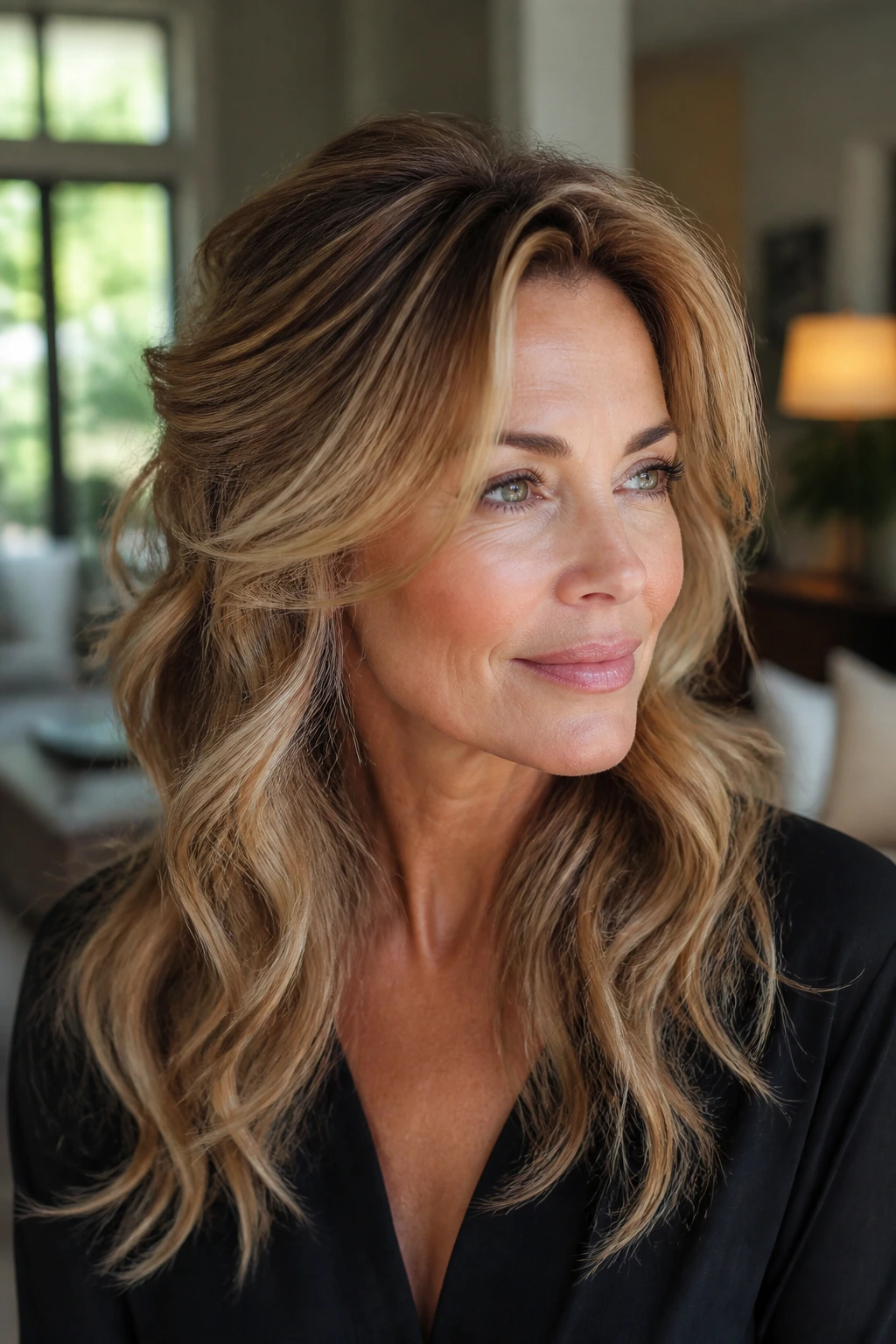
This is the most polished version in the bunch, and it works best when you want the face to feel open while still keeping a fringe in the mix. The bangs begin farther back at the crown, then sweep forward and away from the face. On wavy hair, that gives you lift at the root and a soft frame around the eyes.
It’s a quiet power move. The front doesn’t sit heavy, and the crown gets a little height, which helps a lot when hair starts to flatten near the top. If your waves are medium or loose, this shape can make the whole head look taller without looking teased.
Bring a photo that shows both the front and side view. That matters more than you’d think, because the crown placement is the whole point. If the cut starts too far forward, the sweep loses its lift and turns into ordinary fringe. Too far back, and you’re just growing bangs out by accident.
Why Long Layered Bangs Stay Kind to Wavy Hair
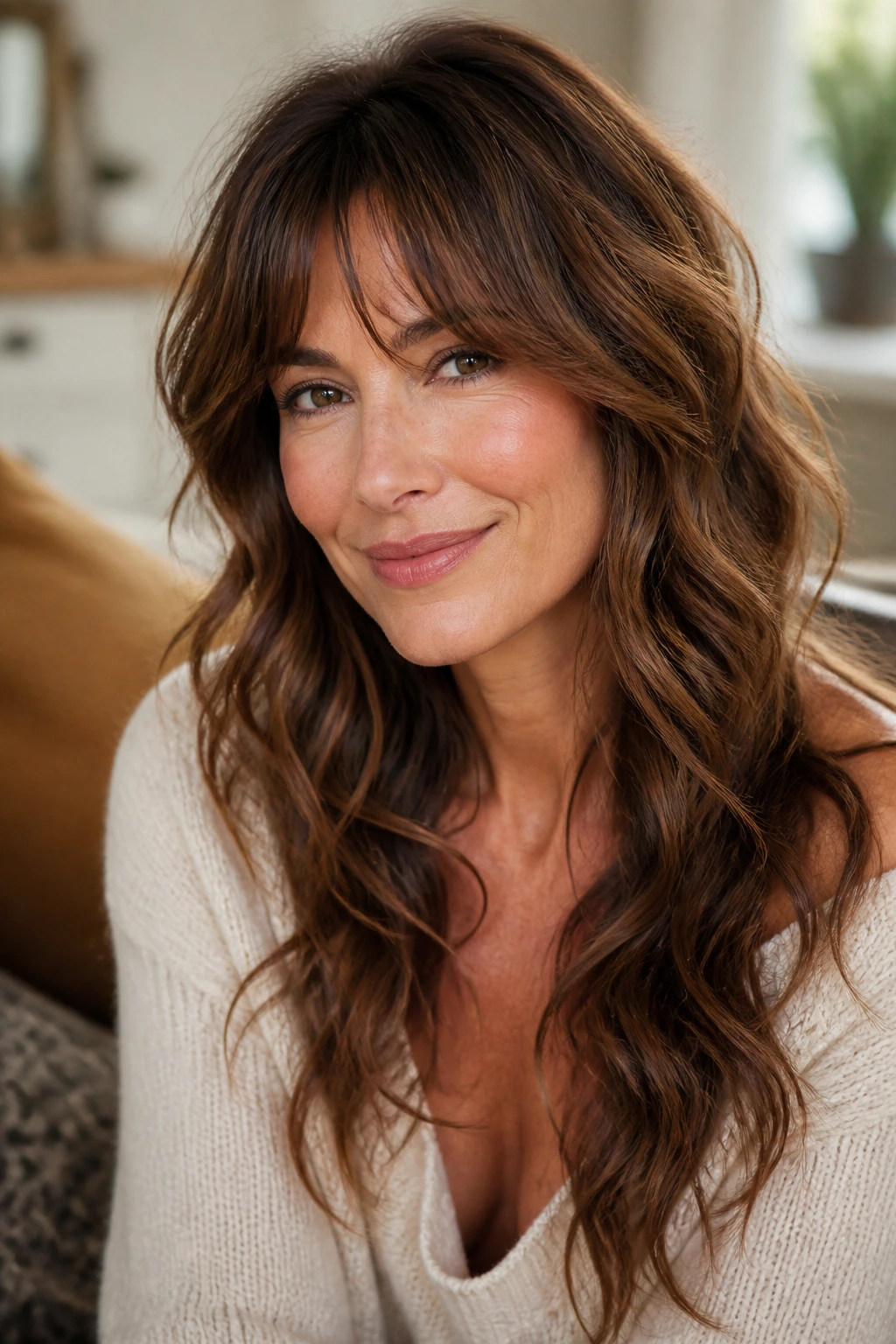
The reason this combination keeps coming up is simple: it lets the front do less and still look finished. Wavy hair already brings texture, bend, and a little unpredictability. Long layers give that movement a place to go, and the bangs tie the whole front section back into the face instead of letting it drift out on its own.
There’s also the grow-out factor, which matters more than most salon photos admit. A fringe that looks nice on the day it’s cut is fine. A fringe that still looks like a haircut six, eight, or ten weeks later is better. Long layered bangs do that because they can be tucked, split, swept, or pulled into the side layers without announcing every extra millimeter.
I’m also a fan of how they behave with real life. Glasses, humidity, day-two hair, a quick clip when you’re washing your face, the odd side part you decide on midweek — all of that still works. Short bangs are often a full-time relationship. Long layered bangs are more like a useful habit.
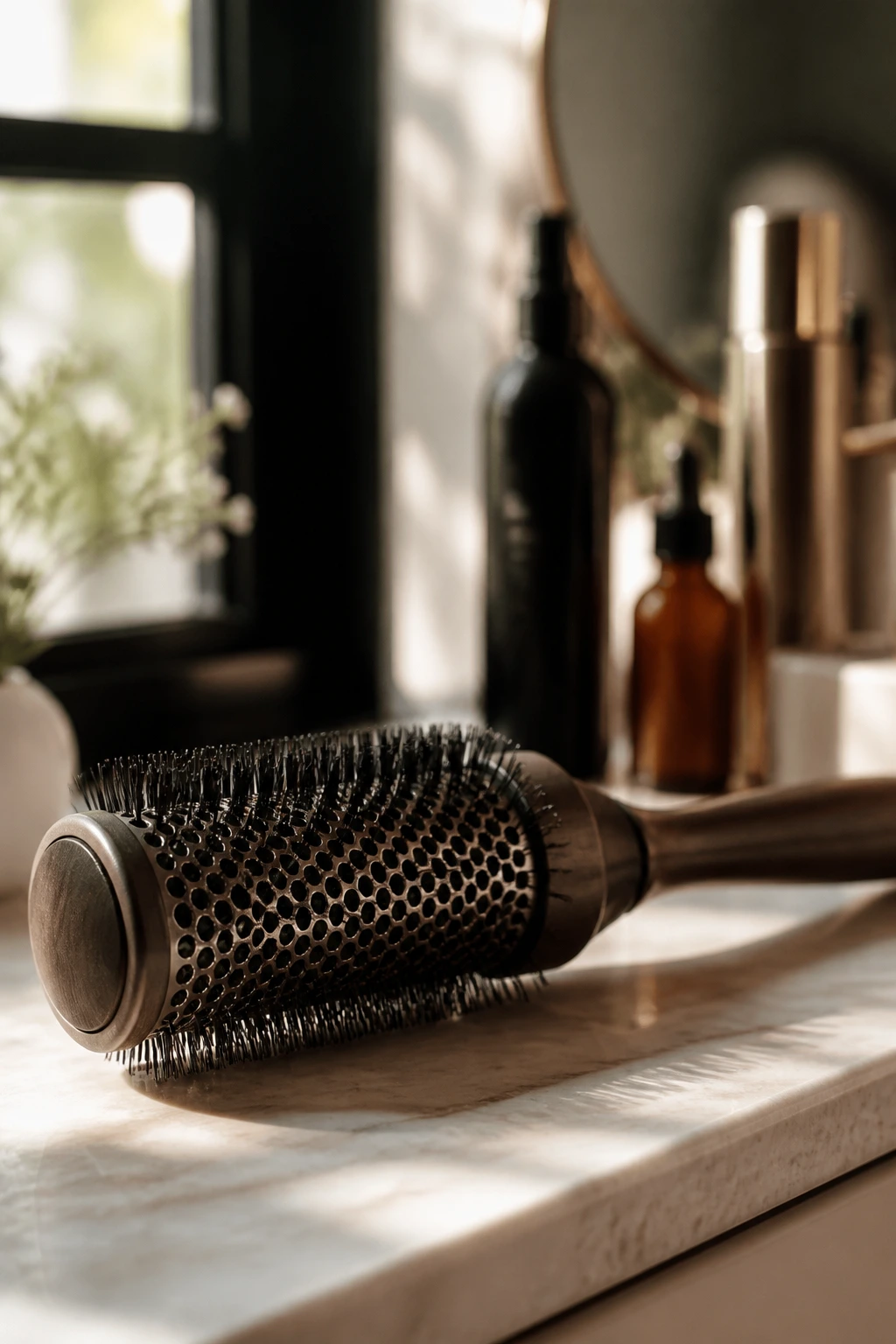
Essential Tools for These Looks
-
1¼-inch to 1½-inch round brush: This is the workhorse for bending the front away from the face without making the fringe stiff.
-
Blow dryer with a concentrator nozzle: The nozzle keeps the air focused, which helps the bangs sit where you put them instead of blasting every which way.
-
Tail comb: Useful for clean parts and for separating the front section from the rest of the hair without guessing.
-
Duckbill or sectioning clips: These keep the back hair out of the way while you dry the fringe in small, manageable pieces.
-
Lightweight mousse: A small amount adds grip to wavy bangs so they don’t collapse by noon.
-
Heat protectant spray: Especially helpful if you use a brush and dryer on the front every time you style.
-
Microfiber towel or T-shirt: Cuts down on frizz before you ever reach for the brush.
-
Small flat iron with rounded edges, optional: Handy for one stubborn bend or a cowlick, but not something you need every day.
What to Ask for at the Salon
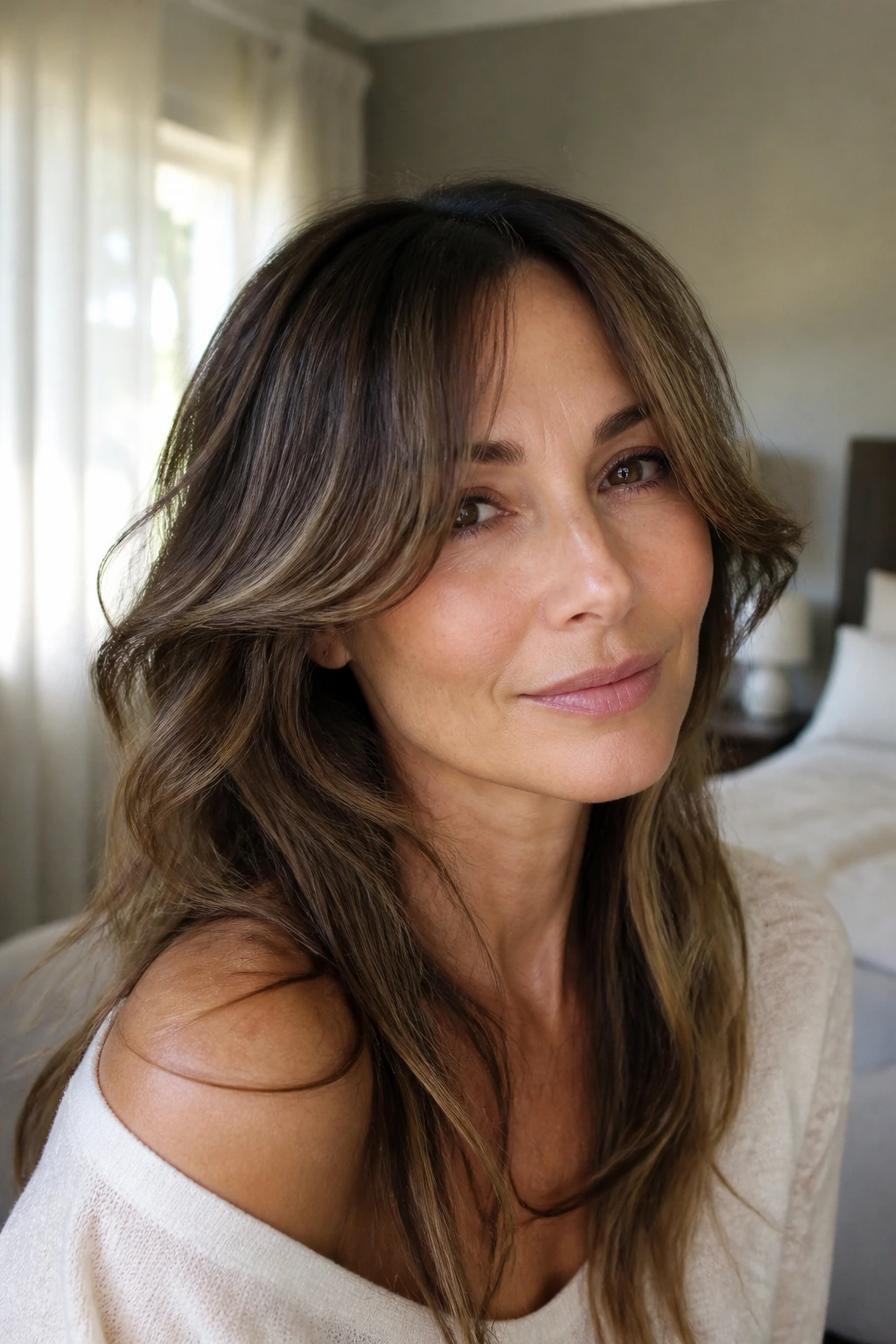
The best salon conversation is concrete. Bring photos, but also bring words. Tell your stylist where you want the shortest point to sit when the hair is dry, because wavy bangs often shrink more than people expect. If you love the look of a cheekbone-skimming curtain fringe, say so. If you want to tuck the front behind your glasses, say that too.
Ask for the fringe to be checked dry if your wave pattern is strong. Wet-cut bangs can look fine in the chair and then pop up an inch later, which is how people end up with surprise eyebrow bangs. If your hair is fine, ask for softness and movement rather than a lot of internal thinning. If it’s thick, ask where the weight should be removed so the front doesn’t swell into a block.
Product choice matters as much as the cut. Fine waves usually do better with mousse or a light root spray, while dense waves often need a little cream at the ends and a stronger blow-dry direction at the front. Heavy oils near the root tend to flatten the fringe. That’s a good way to lose the shape before you’ve left the house.
How to Style Them So They Sit Right
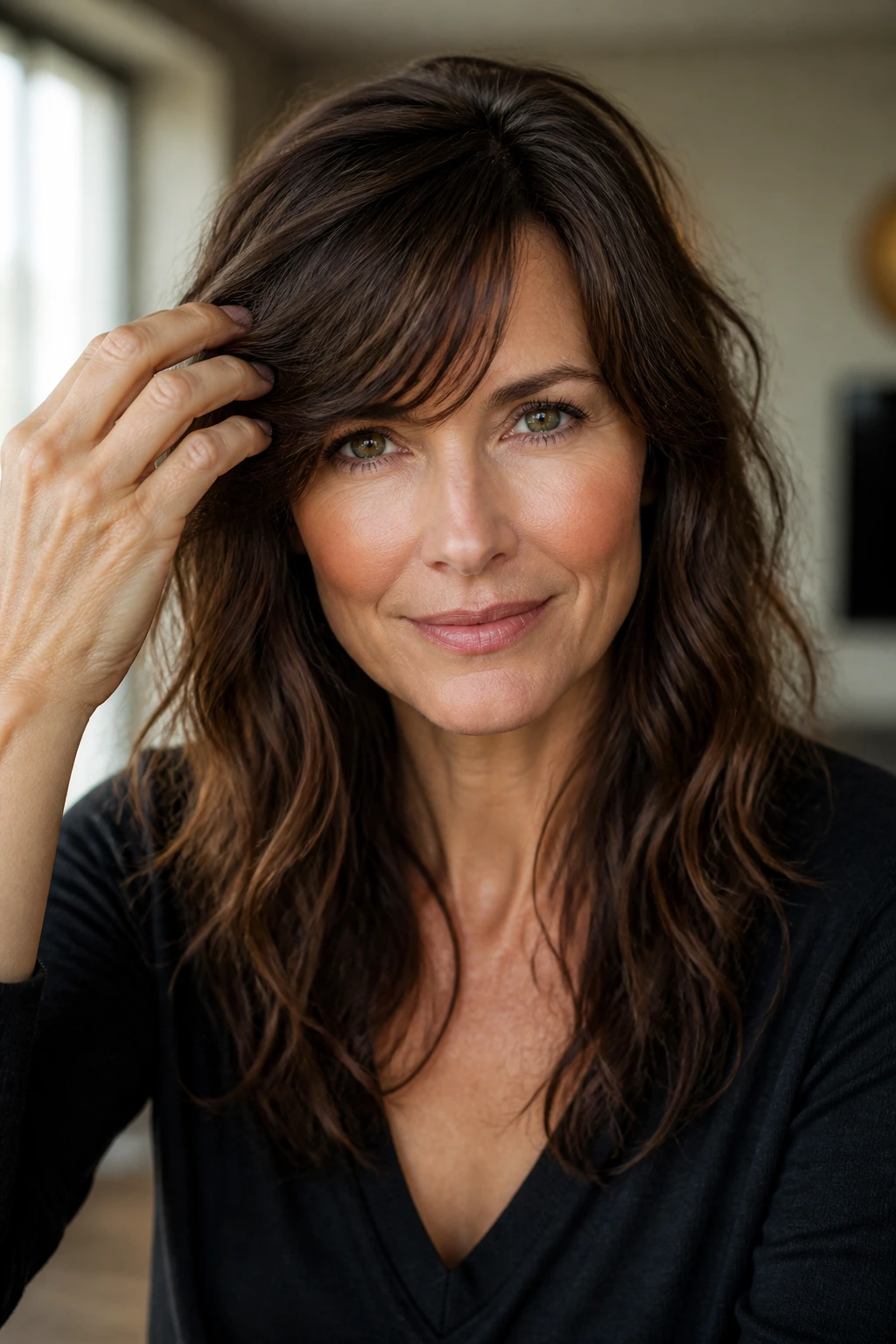
Drying Direction: Start the front while it’s damp, not soaking. Direct the bangs forward first, then push them into their final position — center, side, or split — once they’re about 70 to 80 percent dry.
Parting: Change the part only when the hair is warm or damp enough to obey. If you try to force a new part on fully dry waves, you’ll get a bend in the wrong place and spend the rest of the morning fixing it.
Product Pairing: Fine hair usually wants mousse or a root-lift mist. Thicker waves tend to prefer a small amount of cream on the ends. Skip the temptation to coat the whole fringe. That’s how bangs turn stringy at the bottom and flat at the top.
Finish: Let the front cool before you touch it more than once or twice. Cooling locks the bend in place. If you keep fussing, the wave pattern breaks apart and frizz steps in.
Glasses and Movement: If you wear frames, dry the fringe with your glasses nearby so you can check the clearance. The shape may need to be one quarter-inch longer than you first thought.
Small Tweaks That Change the Whole Shape
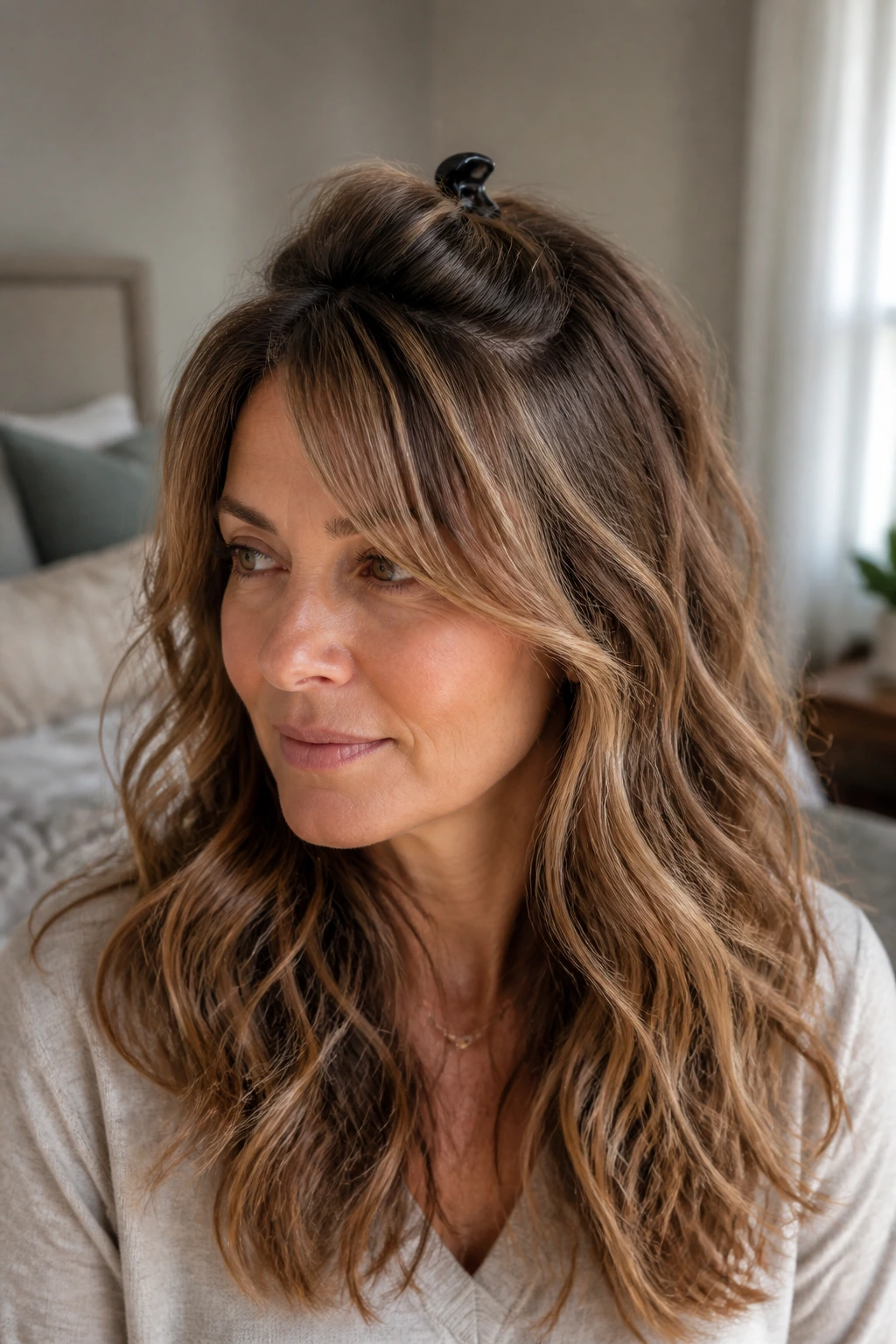
Root Lift: A little lift at the crown can transform a fringe from flat to flattering. Clip the front up for five minutes while it cools if your roots want to collapse.
Curve Control: If your waves flip out at the ends, wrap only the last inch around the brush and leave the rest alone. That keeps the bang soft without turning it into a full curl.
Texture Balance: Too much separation can look piecey in a bad way. Too little and the fringe reads heavy. Aim for a few visible strands and a soft whole shape, not perfect symmetry.
Face Softening: A couple of lighter pieces around the cheekbone can do more than a dramatic bang line. If you want the face to feel softer, ask for front layers that taper into the fringe instead of stopping bluntly at the jaw.
Gray Blending: If you’re growing in silver or salt-and-pepper strands, keep the front long enough to catch light instead of creating a hard line. That keeps the transition from looking striped.
Common Mistakes That Make the Fringe Fight You

-
Cutting the front too short on the first visit: Wavy hair springs up, and a short bang can jump from “fresh” to “way too high” in one drying session. Leave room for shrinkage and ask to refine after the hair is dry.
-
Thinning out the fringe without checking density: Over-thinning fine waves leaves gaps and frizz. On thick waves, it can create an odd see-through center with bulky sides. The fix is targeted weight removal, not random slicing.
-
Using too much serum near the roots: This flattens lift and makes the bangs separate into greasy-looking strands. Keep heavier products on the ends only, and use the smallest amount you can get away with.
-
Ignoring your natural part and cowlicks: A bang that fights your growth pattern will never sit quietly. Work with the part your hair wants, or choose a longer shape that can bend around it.
-
Blow-drying straight down and stopping there: That leaves the front limp and glued to the forehead. Dry the root first, then guide the fringe into its final direction while the hair still has some warmth.
Variations and Adaptations to Try
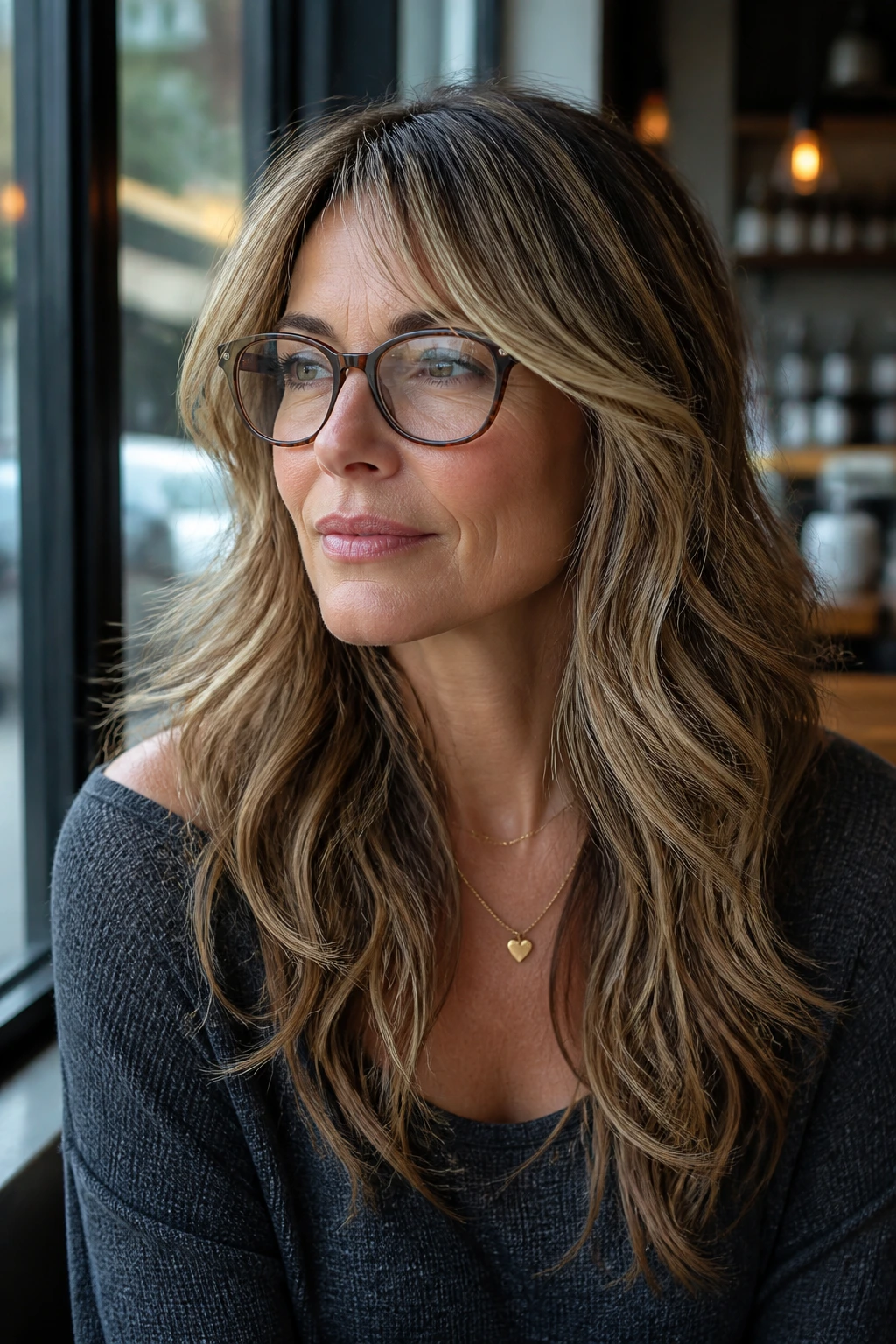
The Glasses-Safe Sweep: Keep the longest front pieces just above or just outside the frame line. This works when you want a soft fringe but refuse to spend the day pushing hair off your lenses.
The Fine-Hair Lift Cut: Ask for a lighter density at the front and a bit more root lift at the crown. It keeps fine waves from looking flat or see-through, which is the usual problem with bangs on finer texture.
The Thick-Wave Softener: Build internal layers into the fringe and remove weight from the middle, not the edges. That keeps dense waves from forming a heavy wall across the forehead.
The Gray-Blend Frame: Let the fringe stay long and soft so silver strands blend into the rest of the waves instead of forming a sharp line. This is especially useful if your natural color change is concentrated around the temples.
The Grow-Out Friendly Split: Cut the center long enough to part easily, then taper the sides into the face layers. It looks neat when fresh and still behaves when it’s grown out by a few weeks.
Maintenance, Grow-Out, and Trim Timing
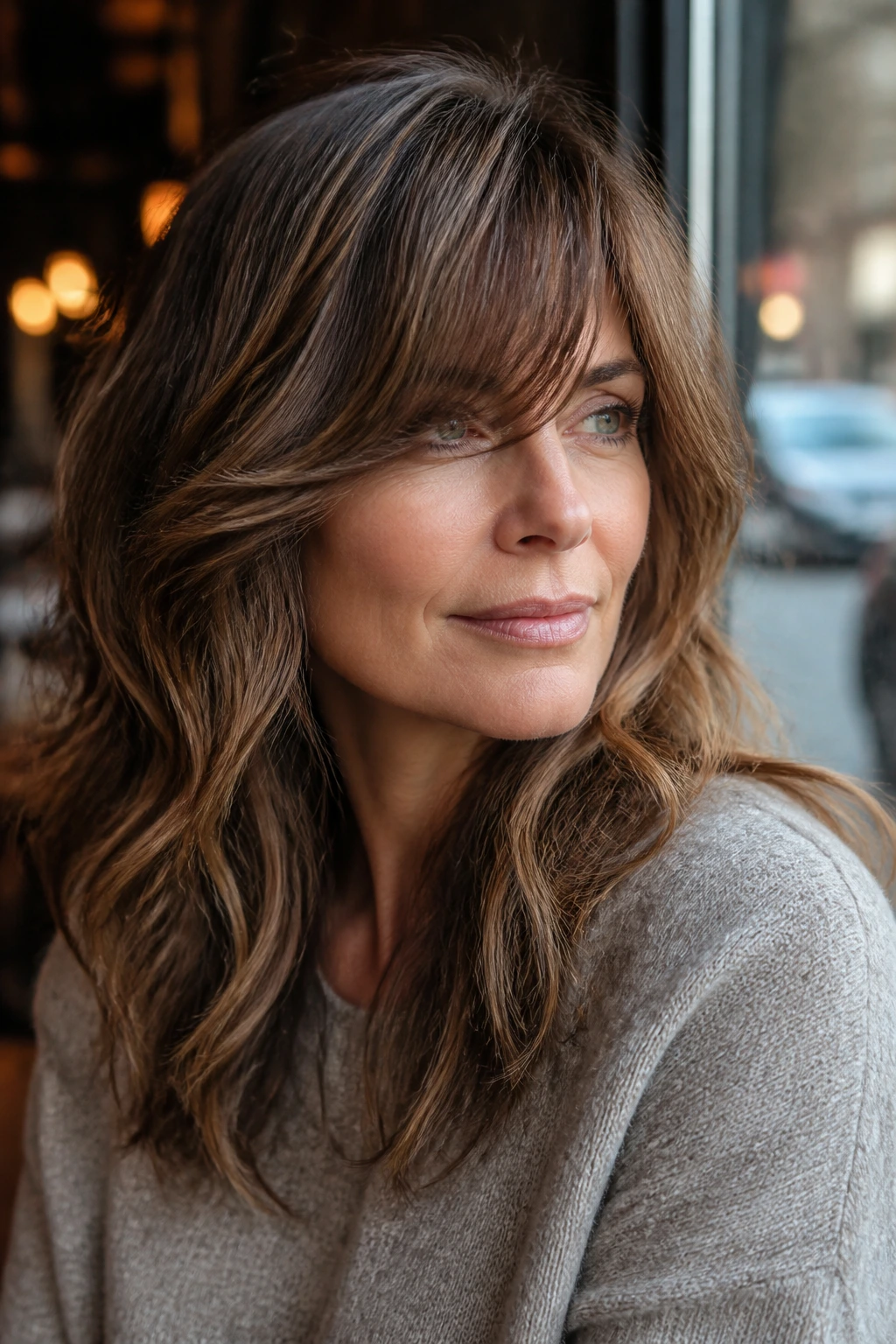
Long layered bangs are forgiving, but they still need attention. Most women with wavy hair do best with a fringe check every 6 to 8 weeks if they want to keep the original shape. If you like a more relaxed grow-out, stretch that a little and let the front become more of a face-framing layer over time. The cut won’t fall apart. It will just soften.
Between trims, dry shampoo at the roots can rescue a fringe that picks up oil from the forehead faster than the rest of the hair. Use it lightly and brush it through. If you pile on too much, the front gets chalky and starts behaving like dry paper instead of hair.
At night, a loose clip at the front or a silk pillowcase can keep the fringe from flattening into the wrong direction. In the morning, a quick mist of water and a 30-second brush reset is often enough. If your bangs are the type that frizz at the ends, a tiny bit of leave-in on the very tips can keep them from puffing while the rest of the wave stays intact.
Questions Women Ask Before They Cut Bangs
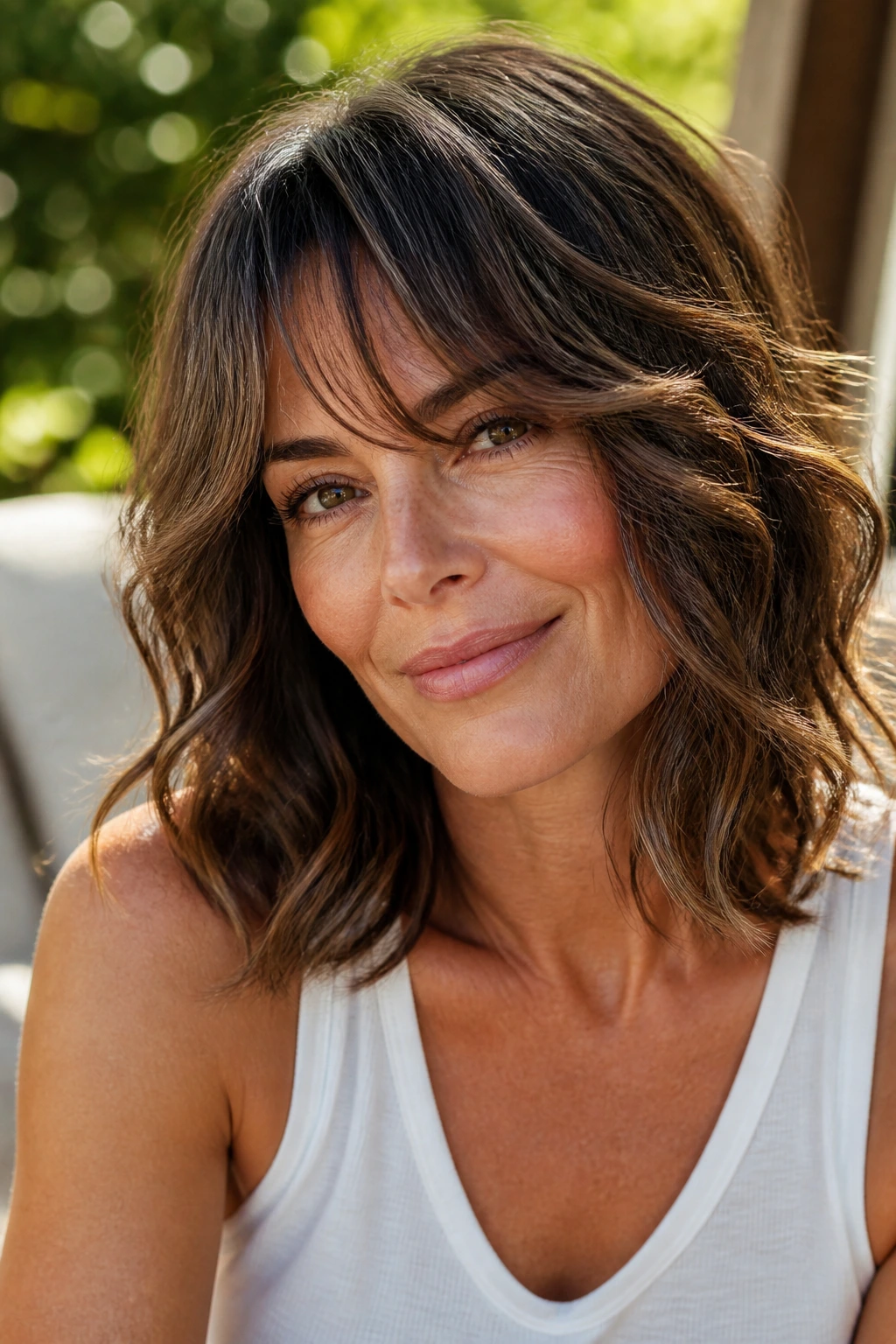
Will long layered bangs make my face look shorter?
They can, if they’re cut too blunt or too high on the forehead. The longer versions that split at the cheekbones or taper into the sides usually soften the face instead of compressing it.
Are curtain bangs better than side-swept bangs for wavy hair?
Curtain bangs give you more symmetry and easier grow-out, while side-swept bangs are useful if you wear a strong side part or want to hide a cowlick. The better choice is the one that matches your daily parting habit.
How often do long bangs need trimming?
Most need a tidy-up every 6 to 8 weeks if you want to keep the original line. If you prefer a softer shape, you can stretch that longer and let the fringe blend into the front layers.
Can fine wavy hair pull off long bangs?
Yes, but the density has to stay light. Too much hair at the front makes fine waves collapse, so ask for softness and movement rather than a thick, heavy panel.
What if my bangs split in the middle all day?
That usually means the center is either too long, too short, or being dried in the wrong direction. A little root lift and a more deliberate part usually fixes it; sometimes the answer is simply to embrace the split and make it part of the style.
Do I need heat styling every day?
No. Many long layered bangs only need a short round-brush pass or a quick finger dry. The more the cut respects your wave pattern, the less daily heat it needs.
Can I wear these bangs with glasses?
Absolutely. Just keep the longest pieces shaped to clear the frame line. Ask your stylist to check the cut while you’re wearing the glasses you use most.
What’s the easiest way to grow them out?
Let the front become a longer face-framing layer and stop chasing a perfect bang line. Once the pieces hit the cheekbones, they start behaving like part of the haircut instead of a separate project.
The Fringe That Moves With You
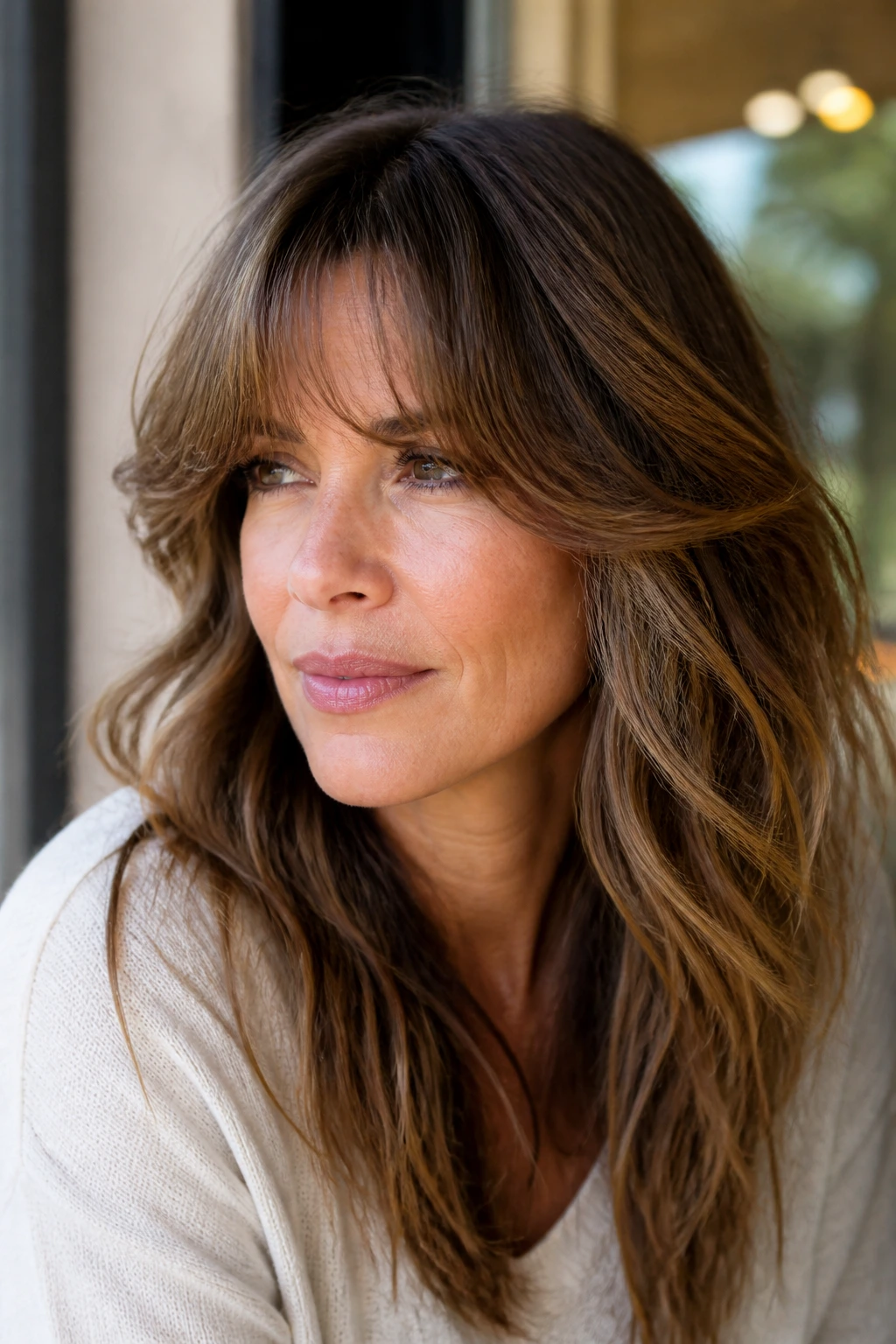
The best long layered bangs don’t ask you to become a different person in the morning mirror. They work with your part, your wave pattern, your glasses, your schedule, and the fact that hair has a habit of doing its own thing after lunch. That’s the real advantage here. The cut bends with you instead of arguing back.
If you’re bringing one of these shapes to a stylist, bring two things: a photo of the front and a clear idea of how much styling you’re willing to do. That’s usually where the right haircut starts. Not with a trend word. With a shape that fits your hair and your life, which is usually the part that matters most.