



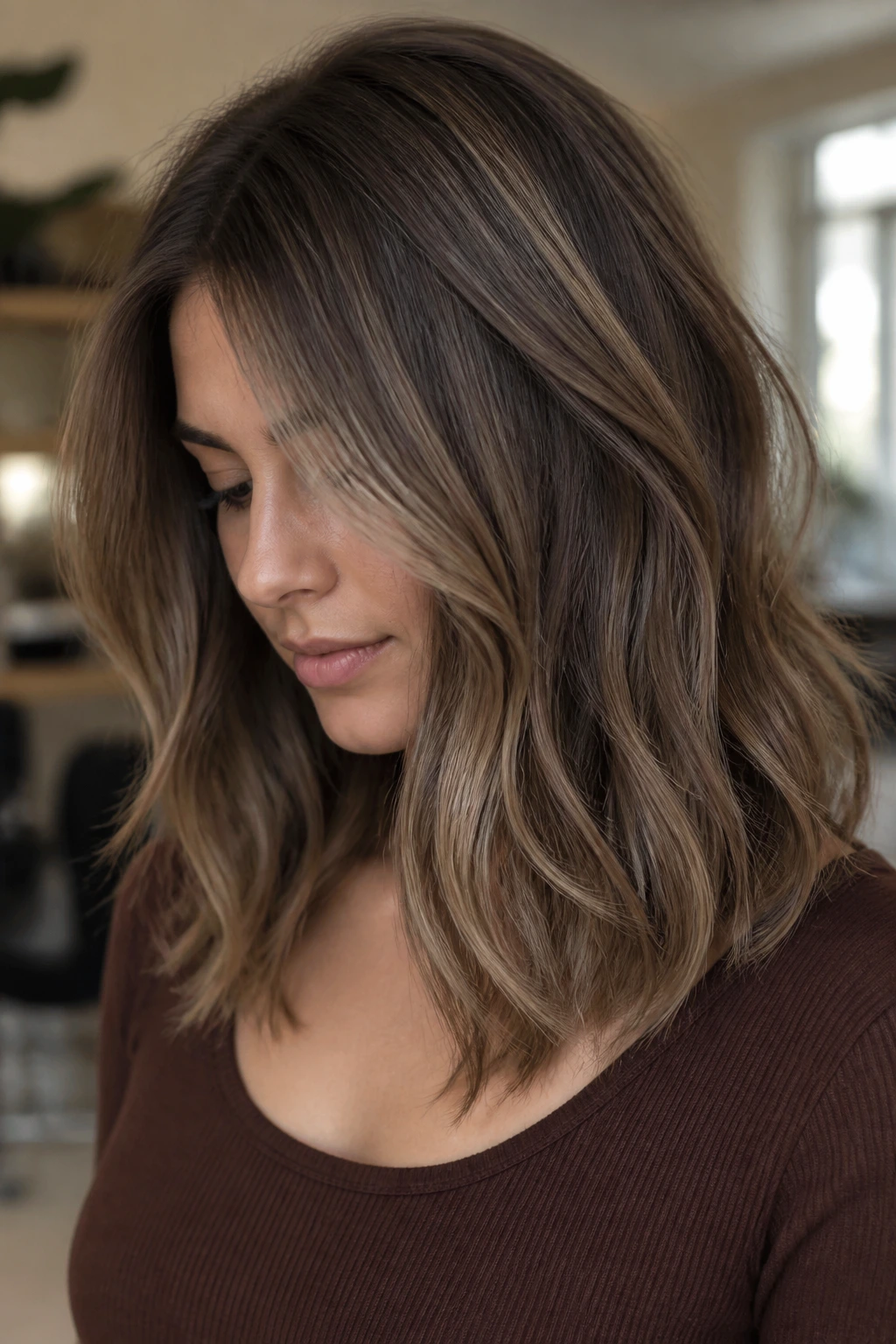
Caramel winter balayage looks best when the caramel is quieter than people expect. The shade should sit somewhere between toasted beige, soft toffee, and a little bit of smoked brown — not pumpkin, not copper, not that loud gold that fights with cool skin tones the second you step outside.
That mismatch is what sends so many people back to the salon with a face they don’t recognize. They asked for warmth. They got orange. They wanted dimension. They got stripes. And because winter light is flatter and cooler than the sunniest part of the year, those mistakes show up fast. A good caramel placement still brings life to the hair, but it does it with depth at the root, a controlled lift through the mids, and a finish that looks polished instead of sugary.
Cool skin tones usually do better when the caramel is buffered by ash, beige, mocha, or a smoky brunette base. The point isn’t to erase warmth. It’s to tame it enough that the color looks expensive, not brassy. That’s the sweet spot, and once you see it, you can’t unsee it.
Why These Shades Work on Cool Undertones
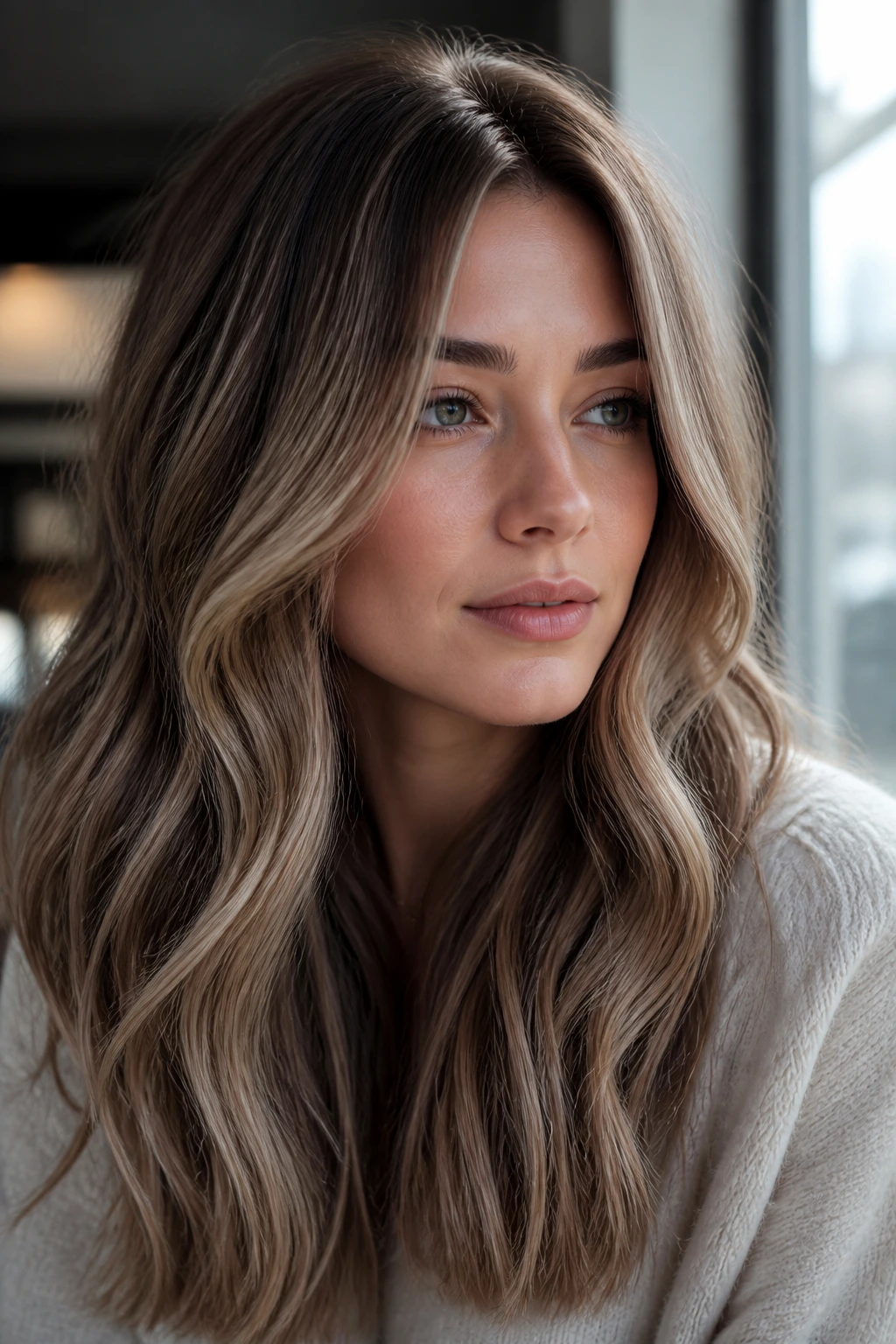
-
Beige beats yellow: Caramel with a beige or ash-beige base sits more cleanly against pink or blue undertones than bright gold ever will.
-
Depth keeps the face from going flat: Leaving the root deeper — usually a level 4 or 5 brunette — gives the lighter ribbons something to sit against, which matters a lot in dull winter light.
-
The grow-out is kinder: Hand-painted placement softens the line between natural hair and color, so you do not get that harsh stripe two inches from the scalp.
-
Cool skin gets brightness without glare: A caramel ribbon near the cheekbone can brighten the face the way a good lamp does, but without the yellow flash that can make cool skin look tired.
-
It works with winter clothes: Dark coats, wool scarves, and heavier knits can swallow hair color. A smoked caramel ribbon keeps the hair visible instead of disappearing into the outfit.
1. Smoky Caramel Ribbons Through an Espresso Base
A deep espresso base with smoky caramel ribbons is the safest place to start if you want warmth without losing the cool, clean feel around the face. The contrast is there, but it’s controlled. You get movement when the hair bends, not a loud strip of blonde that announces itself from across the room.
Why It Reads So Clean in Winter
The trick is keeping the lightest pieces one or two levels above the brunette base, not four. That means the caramel looks like a natural lift, not a hard color change. On cool skin, that difference matters. A ribbon that lands in the level 6 to 7 range usually looks soft and believable; push it too far and you are suddenly in honey territory, which is a different mood entirely.
Ask for ribbons that are a little wider at the mids and narrower toward the ends. That keeps the dimension visible when the hair moves, but it also prevents the color from looking choppy. I prefer this look on medium to long layers, because the cut gives the color something to fall over. One-length hair can swallow this placement if the painter gets lazy.
A loose wave shows it best. Straight hair can work too, but then the ribbon placement has to be cleaner. No shortcuts there.
2. Face-Framing Caramel Money Piece with a Shadow Root
Want the fastest way to make caramel work on cool skin without committing to a full head of lightness? Put the brightness where the eye goes first. A face-framing money piece, softened with a shadow root, gives you that hit of color around the face and keeps the rest of the hair grounded.
Why It Matters More Than a Full Head of Highlights
This is the look I’d point someone to if they’re nervous. You can keep the root in a level 4 or 5 smoky brown, then let the front sections lift to a beige caramel a touch lighter than the rest of the hair. Around the face, that little bit of warmth catches light without turning the whole head gold.
The shadow root does half the work. It prevents the front from looking like a disconnected stripe and gives the grow-out a softer landing. On cool skin, that softness is the whole point. The hair reads as dimensional, not frosted.
Keep the money piece from starting too high. If it begins right at the hairline and gets too bright near the part, it can steal attention in a way that looks dated fast. Better to start just behind the root at the temple and let the brightness bloom around the cheekbone instead.
3. Mushroom Caramel Balayage on a Long Layered Lob
Mushroom caramel sounds odd until you see it in the mirror. Then it makes sense. The base leans taupe-brown, the caramel stays muted, and the whole thing feels like a winter version of brunette dimension — soft, earthy, and much kinder to cool skin than classic golden balayage.
Long layers help here because they break up the color into visible panels. Without layers, the shade can look too seamless, almost muddy. With them, the smoky and caramel pieces move against one another, and you get the sort of quiet depth that doesn’t need a ton of styling.
What Makes It Different
The best mushroom caramel doesn’t look blond at any point. That’s the beauty of it. The contrast comes from tone, not brightness. If you’ve got fair cool skin, this is one of the easiest ways to wear caramel without it taking over your face.
A slight bend at the ends keeps the finish from falling flat. I’d avoid super-sleek styling with this one unless the glaze is perfect, because a too-straight finish can make the smoky base look heavier than it really is. A little curve keeps the hair alive.
4. Beige-Toffee Melt for Straight, Glossy Hair
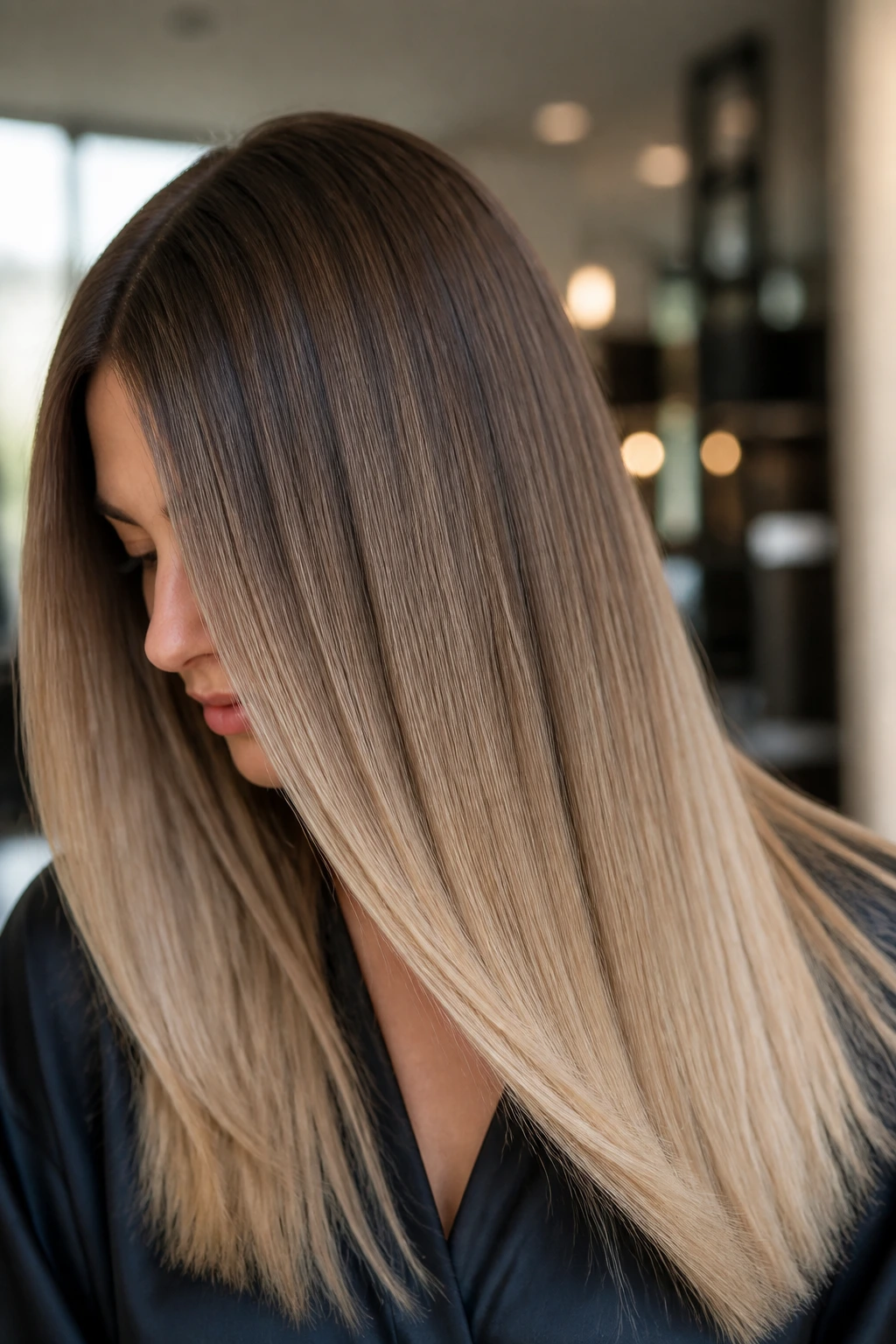
Straight hair shows every color shift. Every one. That’s why a beige-toffee melt has to be clean from root to tip, with no obvious line where the lightness starts. On a smooth blowout, this can look almost liquid — the kind of hair that still has movement even when it’s worn sleek.
Ask for a Soft Root Melt
The root should stay a shade or two deeper than the mids, then melt into a beige-toffee tone that skips the yellow side of caramel. If your colorist reaches for a bright gold formula, steer the conversation back toward beige and neutral. On cool skin, that little correction changes the whole read of the color.
This look shines on blunt cuts and one-length lobs because the smooth edge makes the color gradation obvious. You don’t need tons of layers here. You need precision. A messy blend can turn into a patchy blend on straight hair, and once you see that harshness, it is hard to unsee.
Finish with a lightweight serum on the mid-lengths and ends, not the root. The shine should look like hair, not like oil. That distinction matters more than people admit.
5. Caramel Ribbon Lights on a Curly Brunette Bob
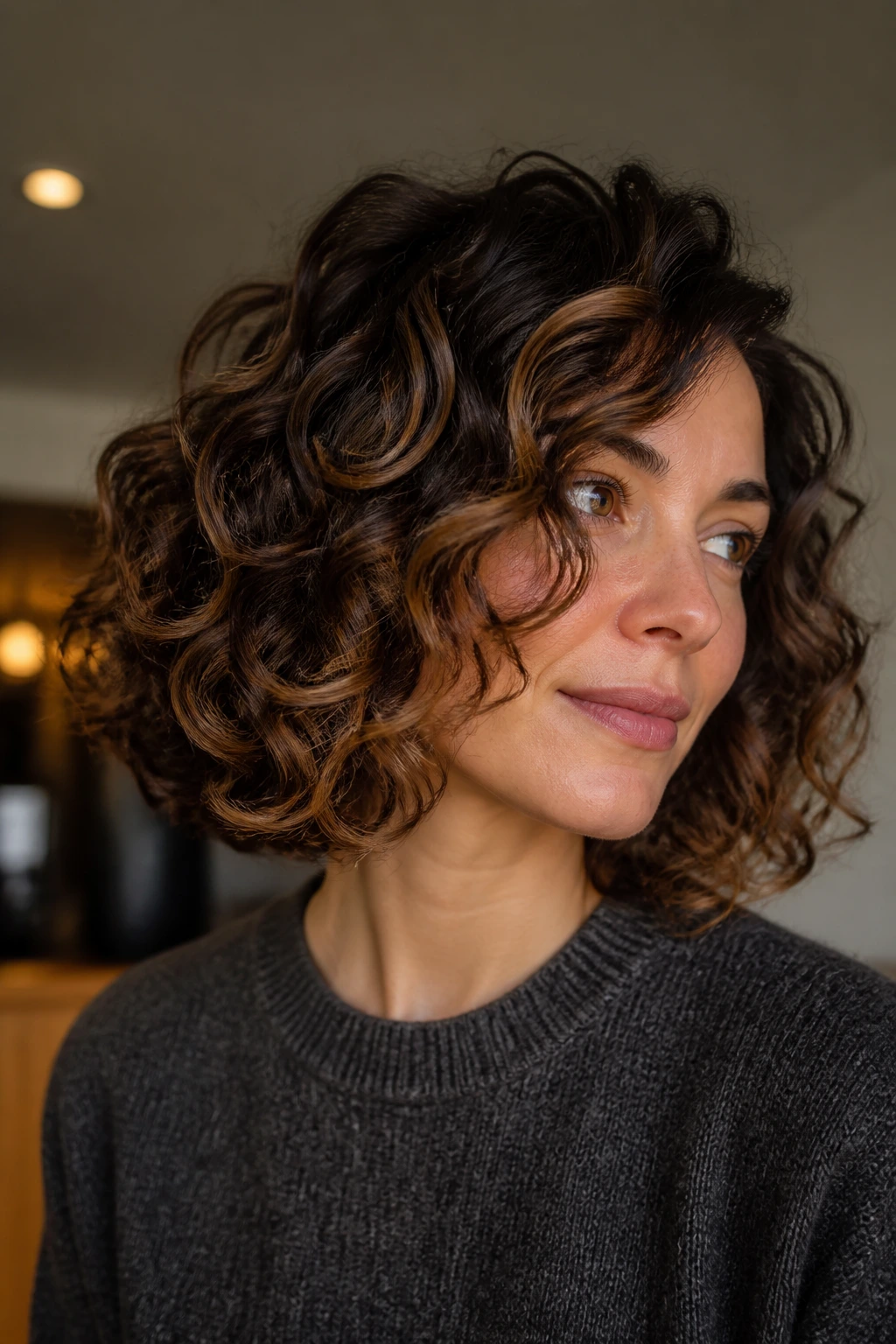
Curly hair changes the entire conversation. The curl pattern bends the light, so the caramel has to be placed with more generosity than it would be on straight hair. Thin, timid painting disappears inside the curl. Wider ribbon lights stay visible.
Why Curls Need Broader Placement
A brunette bob with curls can handle caramel beautifully if the lightness sits on the outer curve of the ringlet. That is where the eye catches it when the hair springs up. The base can stay rich and cool-toned, while the painted sections read as soft bronze-caramel instead of blonde.
The bob length helps because it keeps the color concentrated. Too much length and the curl can stretch the placement into nothing. Too little dimension and the hair can look like one dark helmet. This cut hits a sweet spot when it is shaped around the jaw and nape.
I like this look when the curls are worn natural or diffused. A pin-straight blowout can blur the placement and hide the work. The color wants motion.
6. Chestnut-Caramel Dimension with Soft Lowlights
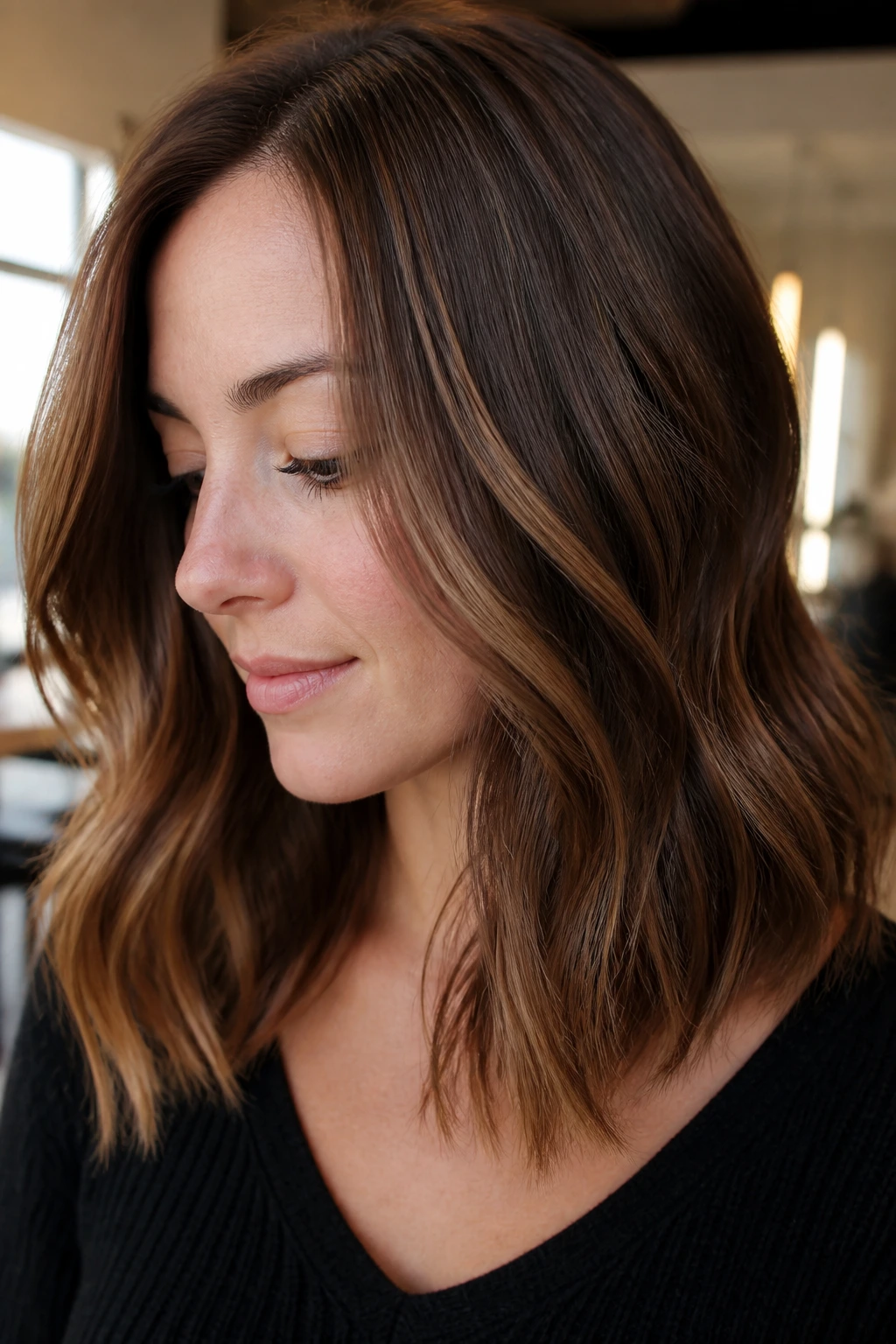
Not every caramel look needs to be lighter. Sometimes the smartest move is to go a shade richer and build in lowlights so the caramel has something to sit against. Chestnut plus caramel is a beautiful combination for cool skin because the warmth is softened by brown depth.
The lowlights matter more than most people expect. Without them, the caramel can drift too flat, especially if your natural color is already medium brown. With them, the hair keeps its shape in winter light. You see ribbons, not a wash of one-note color.
Best for Fine or Medium Hair
Fine hair often looks fuller when there are 2 or 3 distinct tones in the same panel. This combo gives that effect without needing obvious chunks. Ask for lowlights that are only slightly darker than the base, not near-black. You want depth, not a stripey repair job.
If your skin leans pink, this is one of the easiest caramel directions to wear. The chestnut buffer keeps the warmth from turning sour on the face. Simple. Effective. Understated in the right way.
7. Ashy Caramel Balayage with Curtain Bangs
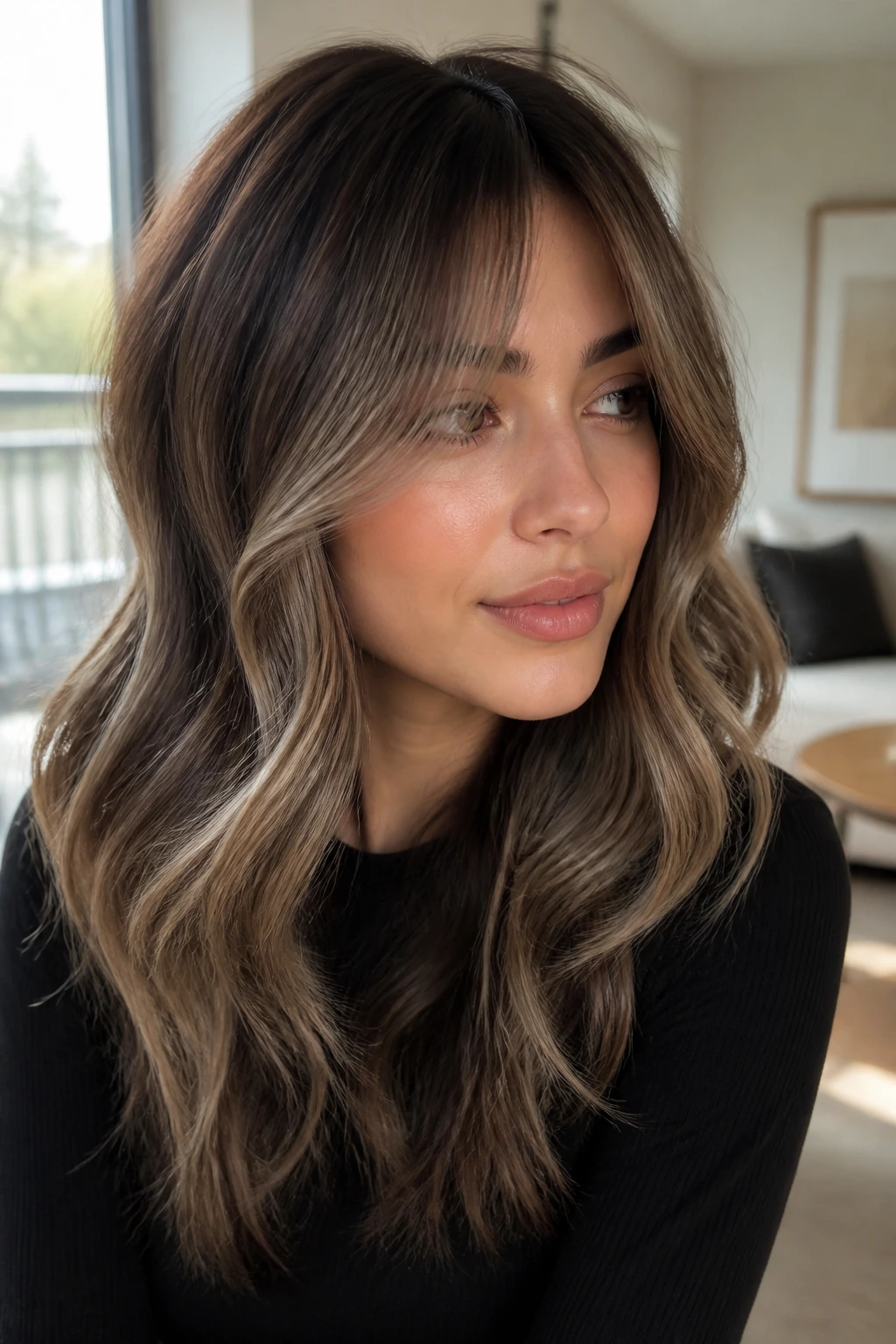
Curtain bangs change where the eye goes, and that makes color placement much more interesting. With this style, the caramel should live around the bang sweep and the front layers, then taper into softer ribbons through the rest of the hair. Ashy caramel keeps the whole thing calm enough for cool skin.
Why This Cut Loves This Color
Curtain bangs already frame the face, so they don’t need a loud highlight. They need a lift. A soft beige-caramel piece on either side of the part makes the bangs look more intentional, especially if the rest of the hair stays deeper at the crown.
This is one of those styles that looks expensive when it is slightly imperfect in the best way. The color does not need to be symmetrical from side to side. In fact, a tiny difference between the left and right front panels can make the whole thing feel more natural.
If your hair is medium density, this is a sweet spot. Too much thickness and the bang area can get heavy. Too little and the color may blur into the rest of the cut. Keep the bangs airy, and the caramel will do the rest.
8. Winter Bronde Caramel for Mid-Brown Hair
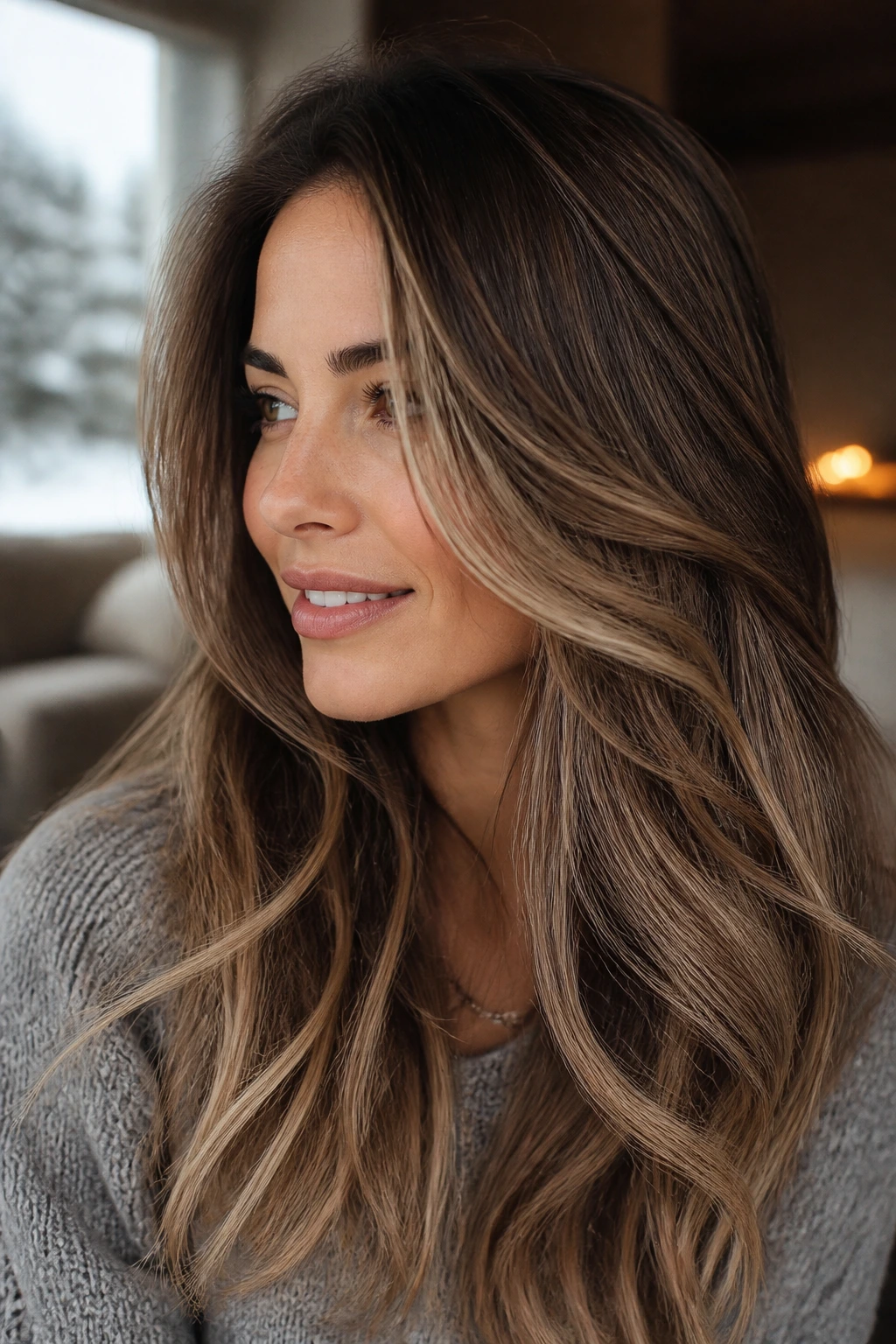
Bronde gets tossed around so casually that people forget it works best when the brown is still doing most of the talking. For cool skin tones, winter bronde caramel should feel grounded first and bright second. Mid-brown hair is a perfect base for it.
The color should sit in the beige-to-toffee lane, not the sunny blonde lane. That gives you lift around the face and through the ends, but it doesn’t erase the brown richness that keeps the style cool-weather friendly. On cloudy days, this is the kind of color that still looks intentional instead of washed out.
What to Tell Your Colorist
Ask for a few brighter pieces around the front, then lighter ribbons through the outer layers. Keep the underlayers deeper. That contrast makes the hair look thicker and keeps the caramel visible even when the hair is tucked behind a scarf or coat collar.
A good bronde caramel should not look like a half-step to blonde. It should look like brown hair with a better lighting plan. That is the whole game here.
9. Mocha-Caramel Sweep for Wavy Mid-Length Cuts
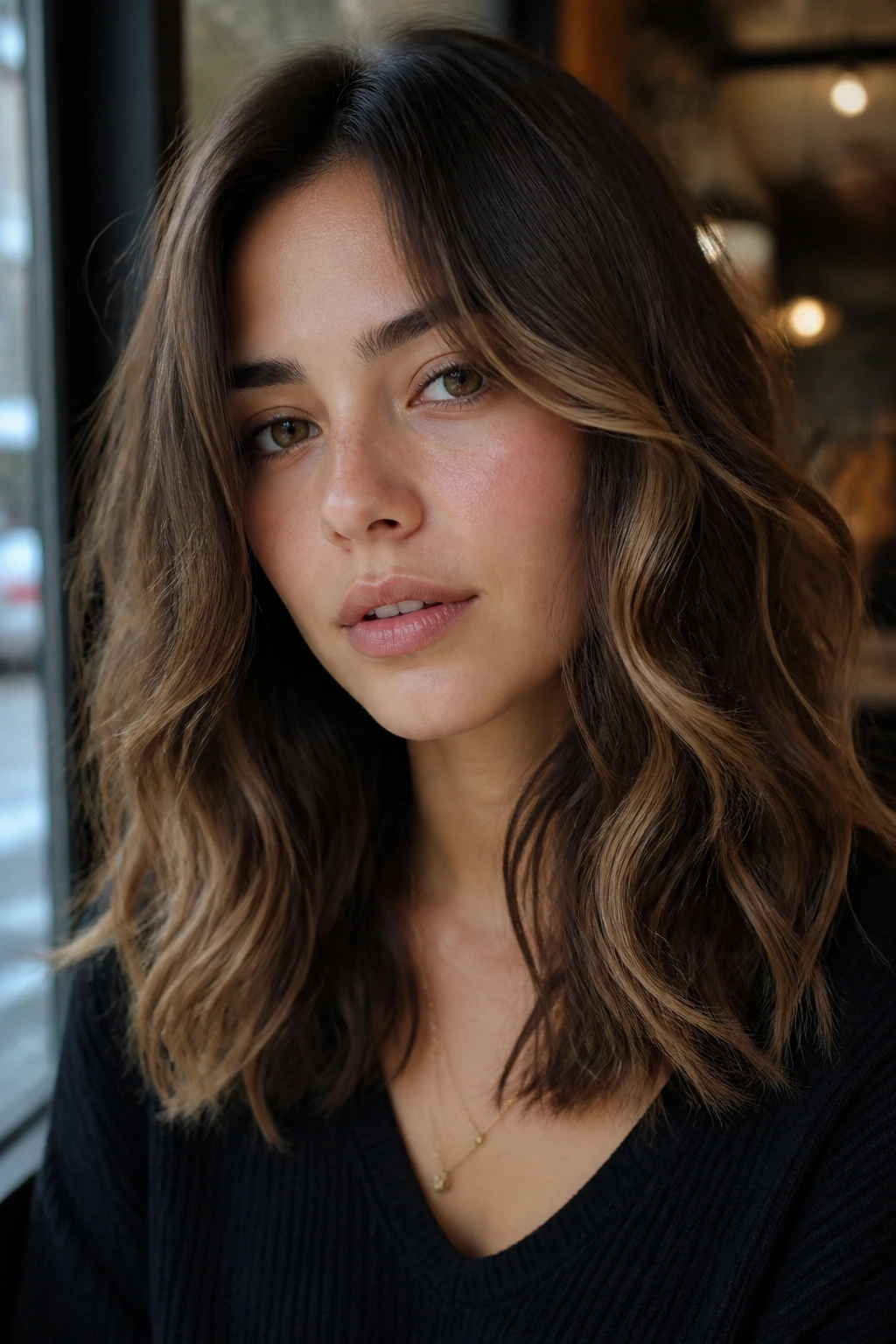
Wavy mid-length hair gives caramel balayage room to move. The bends in the hair break up the light, so even a subtle sweep of mocha-caramel can look dimensional without much styling. If you have cool skin and hate high contrast, this is a nice middle path.
A Soft Look with Real Shape
The base stays mocha or dark cocoa, then the painted pieces hover a few shades lighter in a muted caramel. Nothing shiny and yellow. Nothing too pale. The color should feel like a soft sweep running from the cheekbone down through the ends.
Mid-length cuts are underrated for this look because they show the gradient without dragging it out too far. Long hair can make the same placement feel stretched; shorter hair can make it feel abrupt. Mid-lengths keep the transition believable.
Waves are your friend here, but not curly-wand ringlets. A looser bend — the kind that starts around the ear and drops through the ends — gives the color room to show without turning it into a pattern.
10. Cool-Toffee Balayage for Black Hair
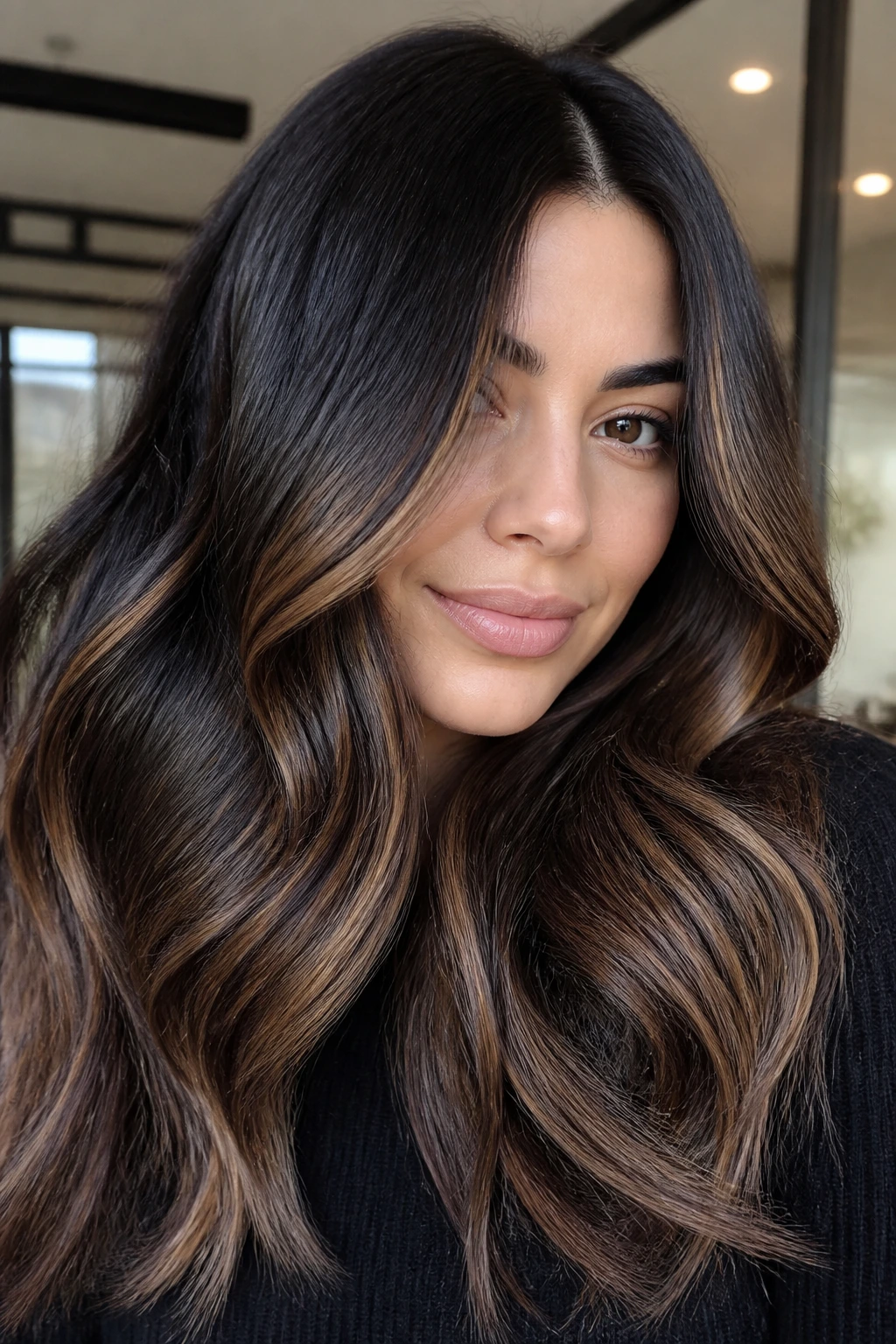
Black hair needs a different conversation. You cannot just drop in bright caramel and hope it works. The lift has to be careful, and the tone has to stay deeper than people expect. Cool-toffee balayage is the version that stays believable on cool skin and still gives black hair some light.
Why Less Lift Is Smarter Here
On very dark hair, caramel should usually sit around a level 5 or 6 to begin. That gives you rich toffee, not orange brass. The pieces can be concentrated around the face and through the mid-lengths, with the ends carrying a little more light. That keeps the overall look smooth.
This is not the place for chunky contrast. Black hair can handle dimension, but it needs finesse. If the painted sections are too wide or too warm, they jump out in a way that can feel disconnected from the base. A cooler toffee tone stays more elegant.
A gloss matters a lot here. The right gloss pulls the warmer notes back into line and gives the hair that polished finish that black bases deserve. Skip the gloss and the ends can look dry fast.
11. Smoky Caramel Ends on a Textured Shag
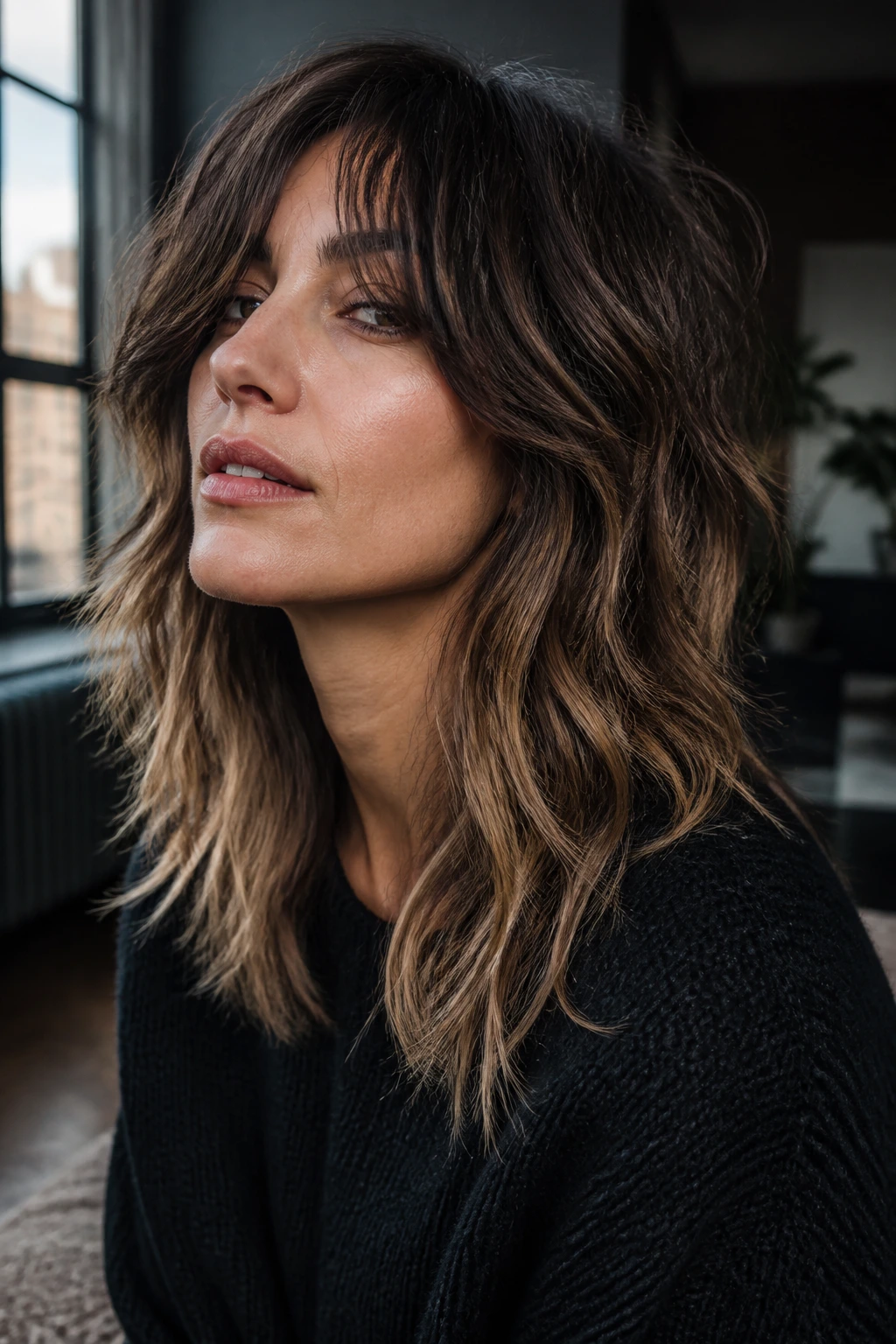
A shag cut already has attitude. It does not need help. What it needs is color that follows the choppy movement instead of fighting it, and smoky caramel ends do that job cleanly.
The Ends Carry the Story
With a shag, I’d keep the root shadow deeper and put most of the caramel on the ends and the underlayers. The texture of the cut lifts those pieces up when the hair moves, so the color flashes in and out instead of sitting there like a block. That is exactly what this shape wants.
The caramel should feel dusty rather than glossy — more smoked maple than candy. Cool skin tones get the most mileage out of that muted warmth because it avoids the hard yellow edge that can clash with pink undertones.
This is one of the few styles where rough texture helps. If you blow it out too neatly, the carved-up shape can lose some of its edge. A little bit of bend and a matte spray at the ends keep it interesting.
12. Caramel Halo Balayage for Long Curls
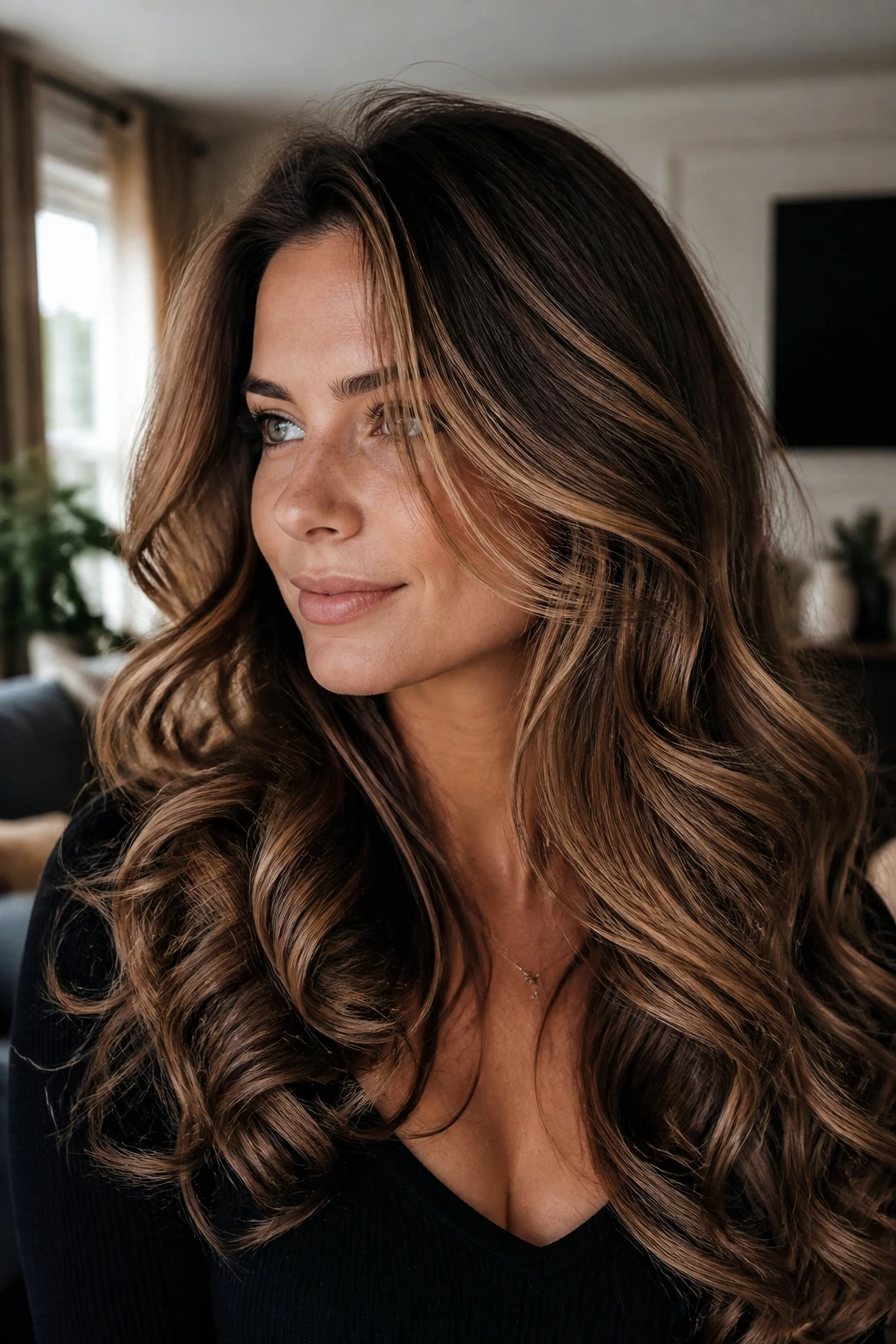
Long curls can swallow color if the placement is too timid. A halo balayage works because it concentrates the caramel where the curls naturally sit around the head — the outer surface, the crown, and the front pieces that curve toward the face.
Why the Halo Placement Works
This is not a full-head lightening map. It is a visibility map. The goal is to catch the areas that actually show when curls stack on top of one another. A cool beige-caramel halo gives the hair dimension from a distance and close up.
I like this especially for cool skin because the brightness stays controlled. The face gets a soft glow around the perimeter, while the back and inner layers keep more depth. That contrast gives the curls shape without turning them orange.
Let the curls do some of the work. Once the caramel is placed well, the ringlets separate enough on their own. You do not need to force definition with heavy products that make the hair stiff.
13. Glossed Caramel Babylights on a Soft Bob
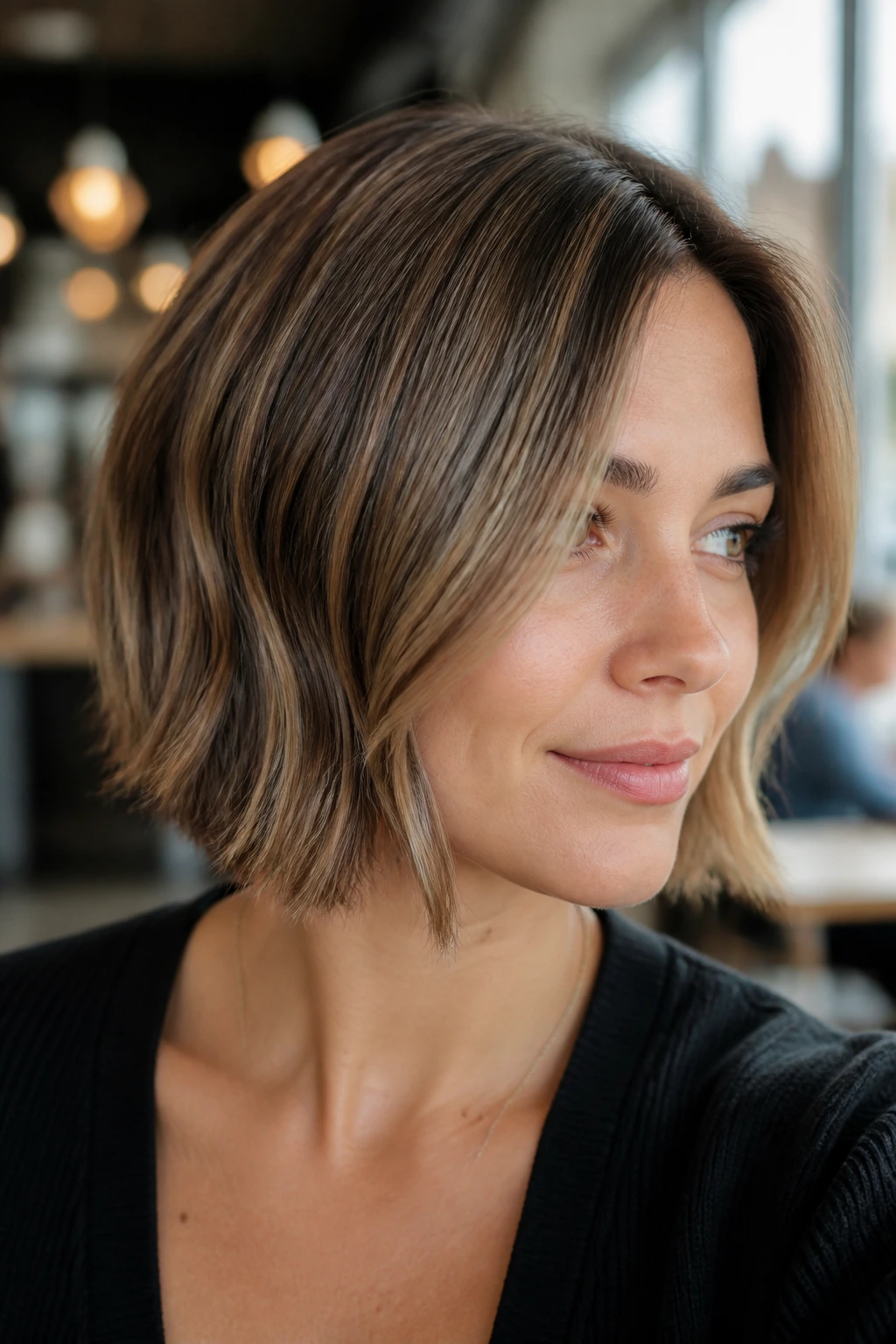
Babylights are the quiet ones. Tiny. Fussy. Worth it. On a soft bob, caramel babylights can look almost invisible at first glance, then suddenly the hair shifts and you notice all the movement packed into it.
Tiny Pieces, Big Payoff
This style is perfect if you want dimension without obvious contrast. The caramel should stay close to the natural base, just warm enough to read as beige-toffee in the light. That means the bob keeps its shape and the color enhances the cut instead of competing with it.
Gloss matters more than lift here. A neutral or beige gloss at the end keeps the shade from leaning too gold. On cool skin, that gloss finish is what stops a tiny highlight from reading brassy.
The cut should be soft at the ends, not razor-straight. A tiny bevel or bend helps the babylights catch light when the head turns, which is where this look comes alive. It is quiet. Not boring.
14. Beige Caramel and Cocoa Lows for Fine Hair
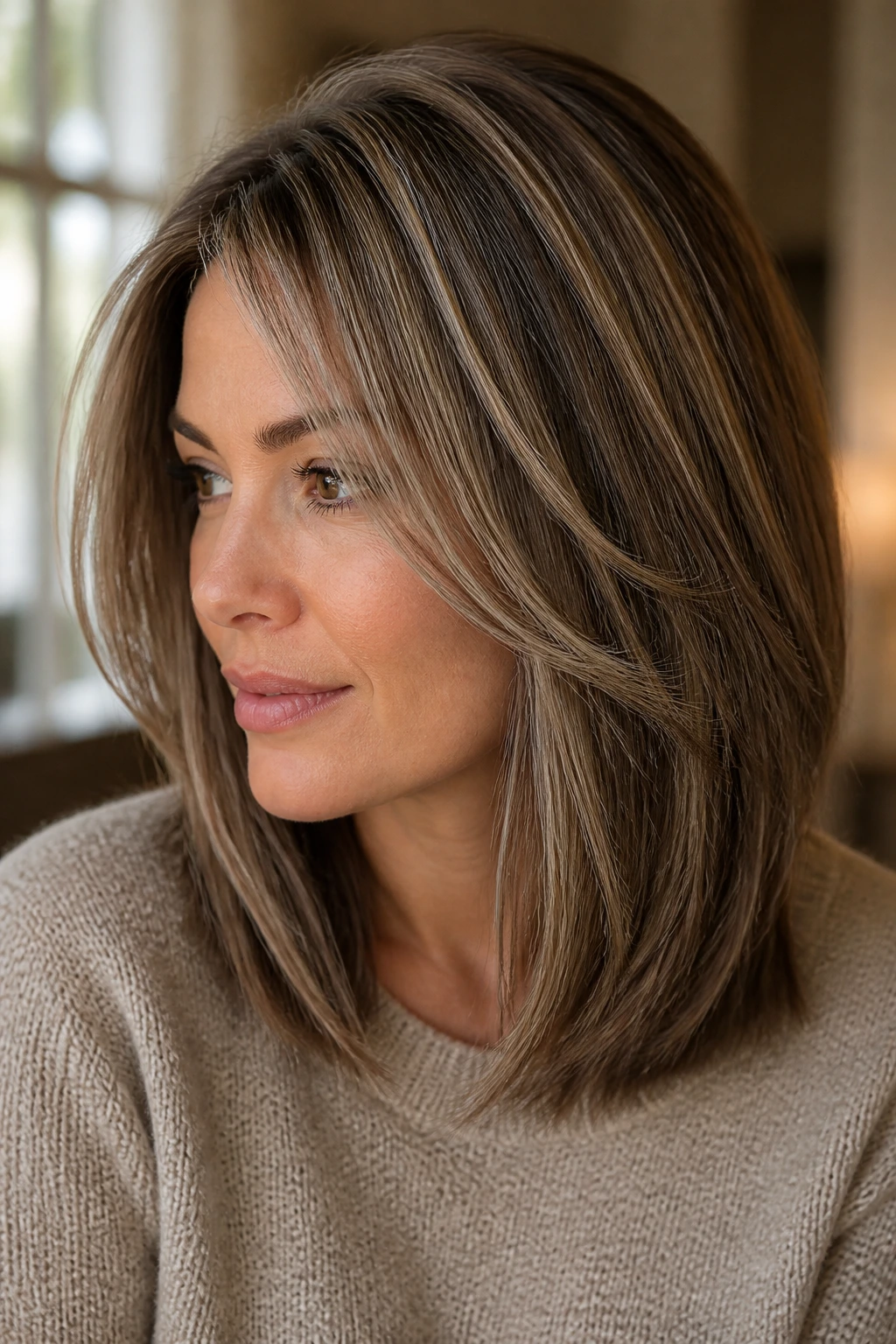
Fine hair needs structure. Not more brightness, necessarily. Structure. Beige caramel on its own can make fine hair look wispy if the pieces are too thin or too far apart. Add cocoa lowlights, and suddenly the whole style gains shape.
Why Depth Matters More Than Lightness
The cocoa lowlights make the caramel look brighter without using more bleach. That is the nice trick. You keep the overall tone cool-friendly and dimensional while avoiding the washed-out effect that fine hair sometimes gets from too much highlighting.
This look works best when the lighter pieces are placed where the hair naturally shifts — around the face, through the top layers, and on the ends that move. The lowlights go underneath and at the crown to keep the body in the style.
If your hair tends to separate into skinny sections, this is worth considering. It gives the illusion of thickness without looking heavy. And on cool skin, the beige-caramel side stays clean instead of yellowing up.
15. Cinnamon-Caramel Gradient for Shoulder-Length Layers
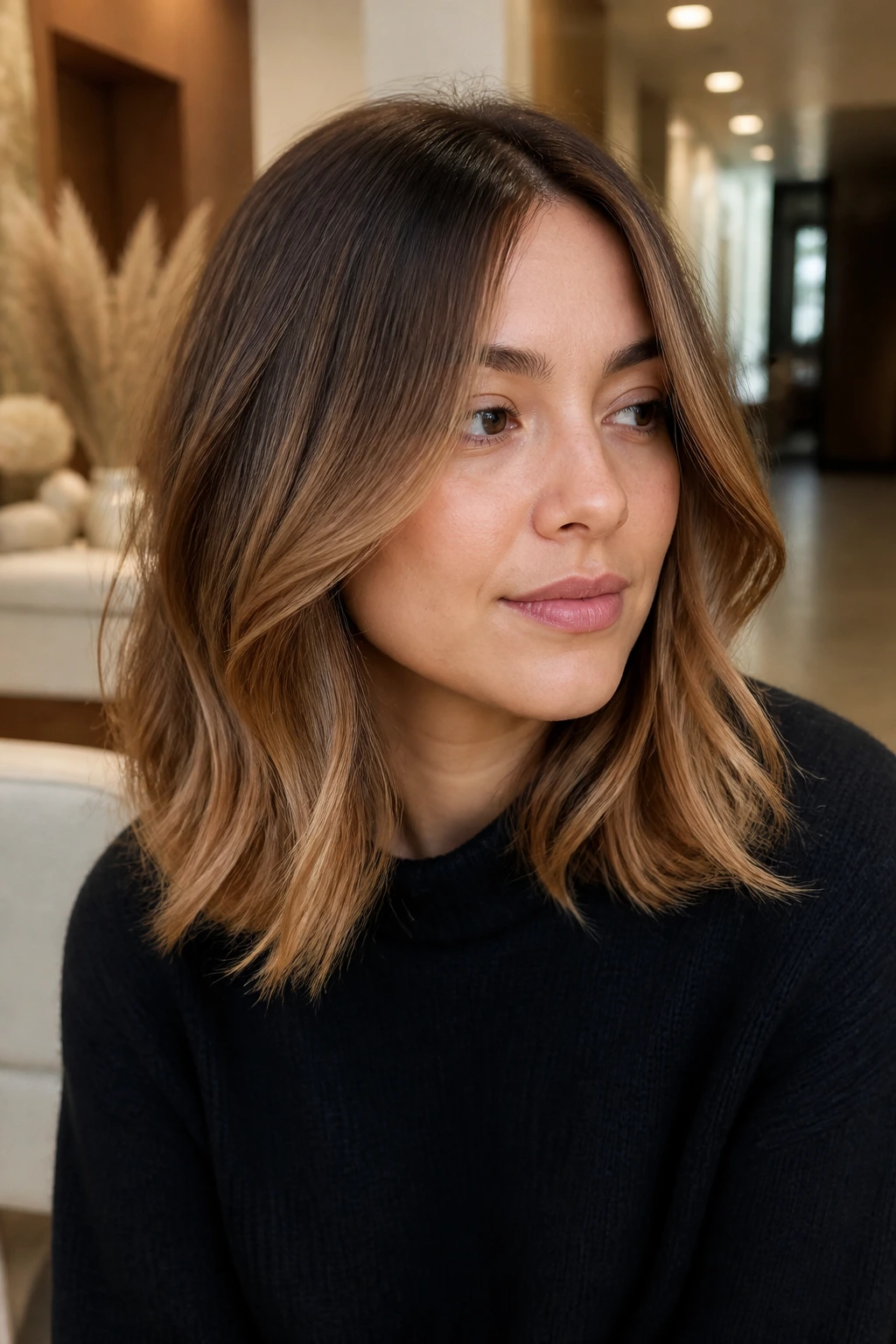
Cinnamon sounds warm, almost too warm, but the version that works for cool skin is muted and restrained. Think cinnamon dusted over cocoa, not a bright spice cabinet. On shoulder-length layers, that gradient can look rich and winter-appropriate.
The layered cut helps the color transition from deeper root to lighter ends without harsh break points. That matters because a gradient needs space. Shoulder-length hair gives just enough room to show the change without dragging it too far down the back.
A Good Fit for Movement
This is one of the easier caramel looks to wear if your hair is thick. The layers let the warmth sit in different places, which keeps the style from feeling heavy. If your skin is very cool, ask the colorist to keep the cinnamon note quiet and the beige note louder. That balance is what makes the whole thing work.
The ends can be a touch lighter than the mids, but not so light that they look sun-bleached. Winter color should feel plush. This one does, when it is toned well.
16. Soft Caramel Peekaboo Panels for Updos
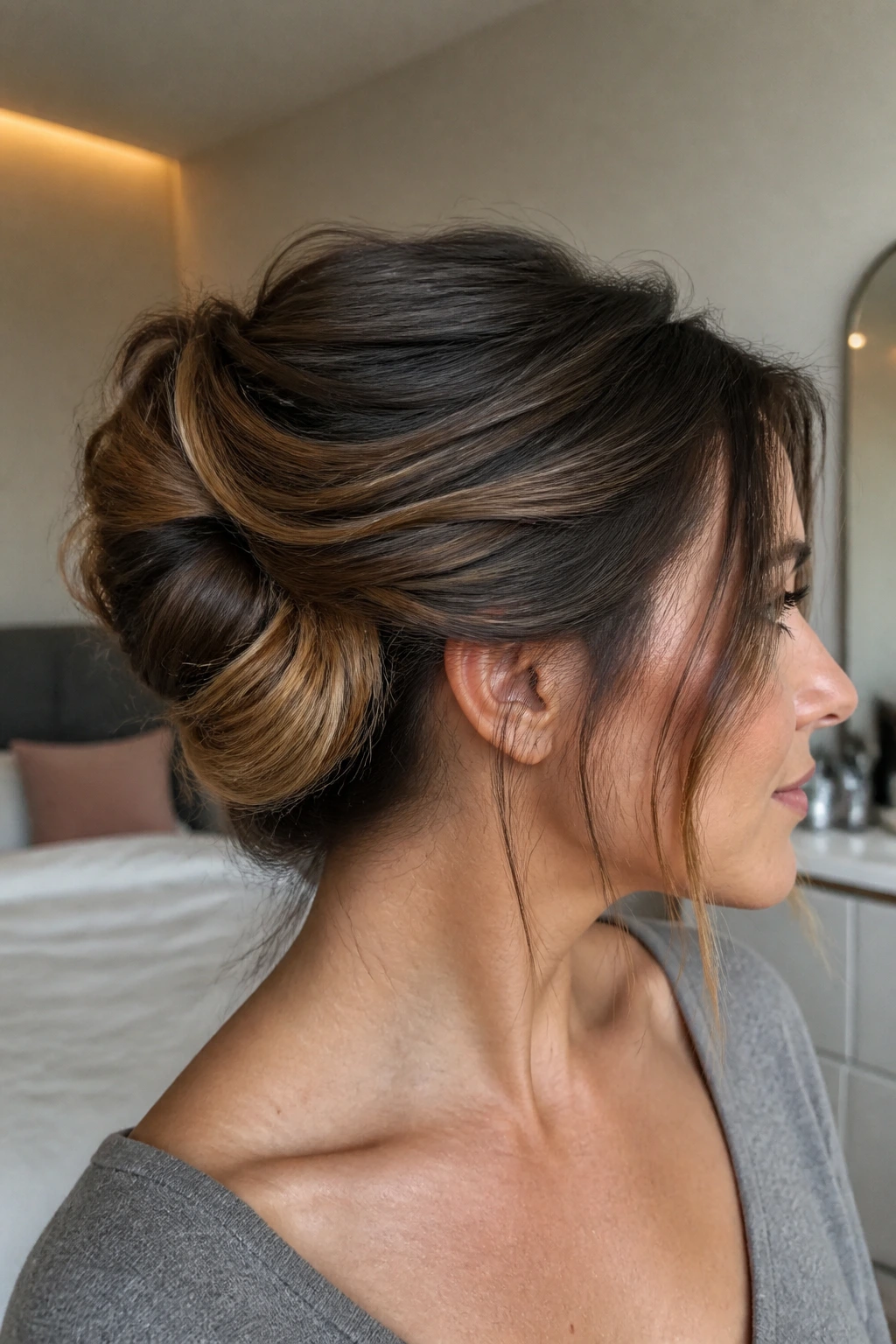
Peekaboo panels are the sleeper hit in a lot of salons. They stay hidden when the hair is down, then show up in buns, twists, and ponytails. For cool skin tones, soft caramel panels are a good way to get dimension without committing every visible layer to warmth.
Hidden Color, Visible When You Want It
This is a smart move if you wear your hair up a lot. You can keep the outer layer cooler and deeper, then paint caramel underneath so it peeks through when the hair moves. In a twisted bun, the color appears in ribbons. In a ponytail, it slides through the lengths. It is a small thing that changes how the whole head reads.
The best version stays beige and smoky. If the hidden panels are too bright, they can flash in a way that looks accidental. Softness keeps them chic. Yes, chic is a loaded word. Here it actually fits.
This option is also friendly if you work somewhere conservative and still want a little dimension. You get the fun of it without broadcasting it every second.
17. Rooted Caramel Dimension for Grey Blending
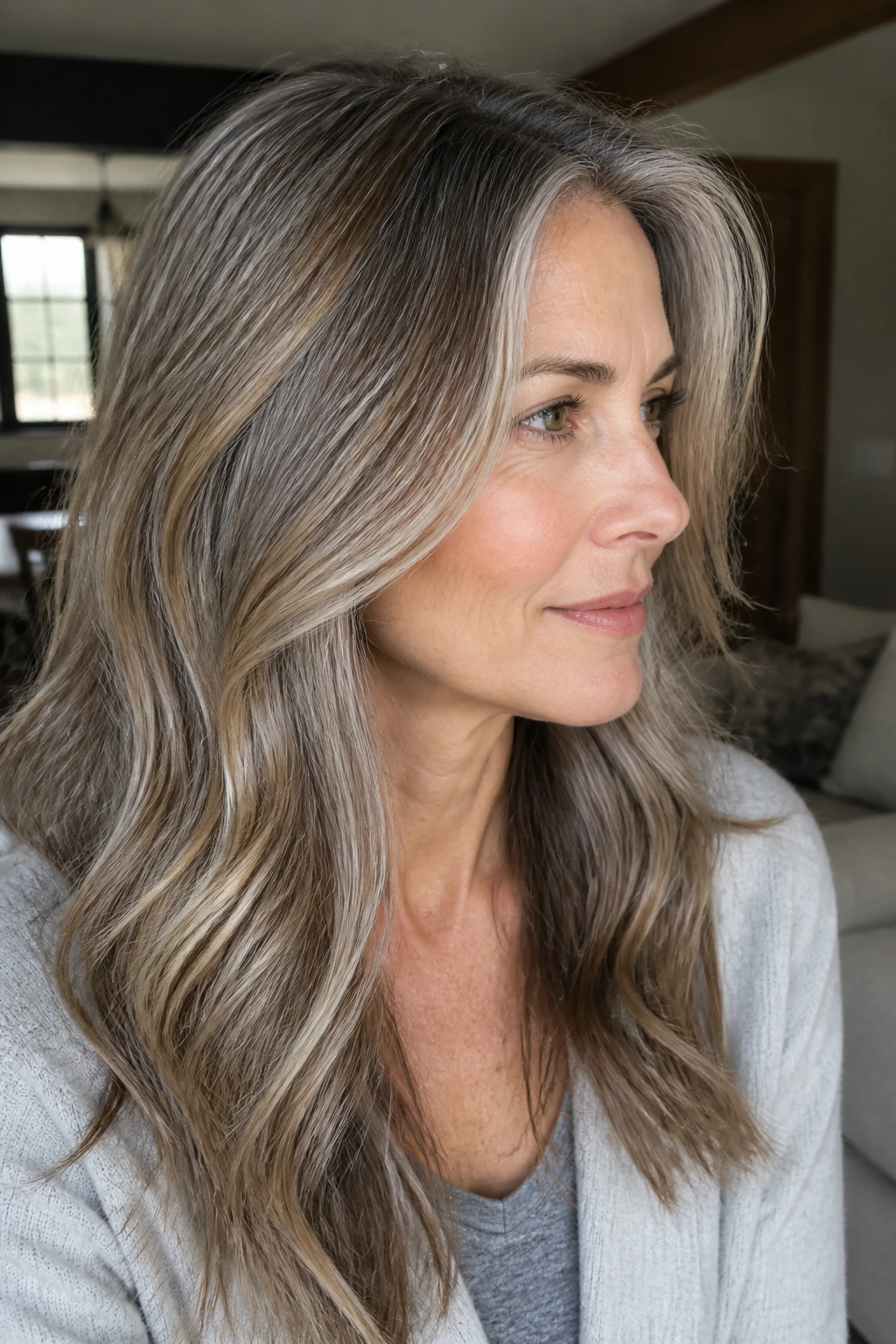
Grey blending is one of the smartest uses of caramel balayage because the shine and depth help break up the regrowth instead of covering it like paint. A rooted caramel dimension look keeps the natural silver transition soft, not obvious.
Why It Blends Better Than Flat Color
The root shadow matters a lot here. It gives the new growth a place to sit while the caramel pieces weave through the lengths and around the face. That makes the grey feel intentional, not like a problem that needs fixing every two weeks.
If your natural grey has a cool silver cast, caramel can actually make it look richer. The trick is staying away from red-orange formulas. Beige and mushroom-toned caramel work much better because they don’t fight the silver. They sit next to it.
This is one of those cases where less coverage can look better than more. Let some grey live. That honesty makes the hair look modern and far less rigid.
18. Cashmere Caramel Balayage with a Winter Gloss
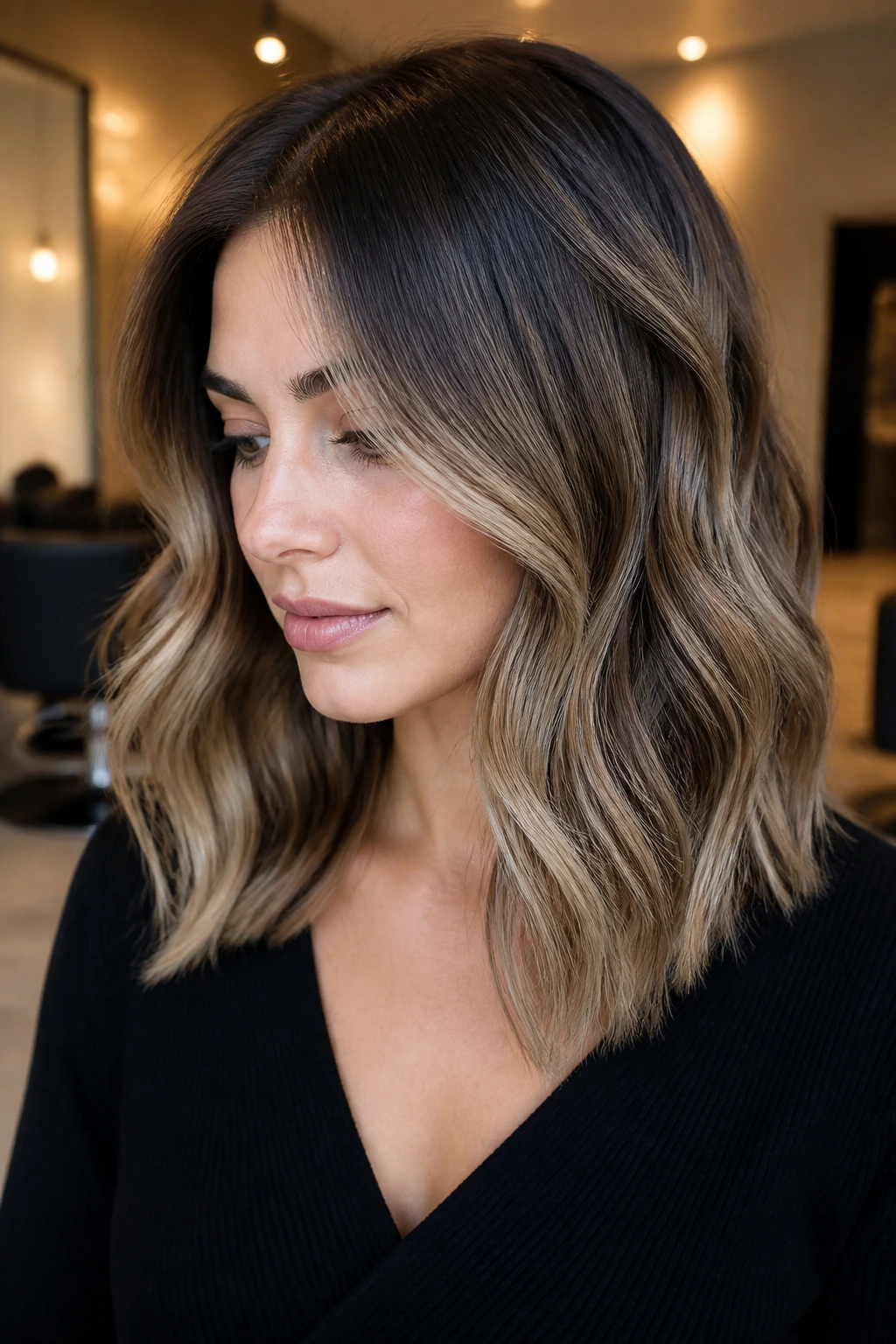
Cashmere caramel is the smoothest, softest version of the whole family. It is beige, a little smoky, and finished with a gloss that makes the hair look like it belongs under indoor light and cloudy daylight alike. If you want caramel on cool skin without any edge of brass, this is the look I’d bet on.
The Cleanest Version of the Shade
The base should stay cool brunette or deep neutral brown. Then the caramel comes in through hand-painted ribbons, usually concentrated around the front and outer layers. A clear or beige gloss seals the tone and keeps the finish polished.
This is the version that plays nicest with winter coats, silver jewelry, and makeup that leans berry, plum, or muted rose. It doesn’t shout. It just sits there looking expensive, which is honestly the best thing hair can do.
I like cashmere caramel most on layered cuts with movement. If the hair is too blunt and heavy, the softness gets trapped. Give it air. Let it swing. That is when the shade earns its keep.
Why Caramel Balayage Feels Better in Winter Light
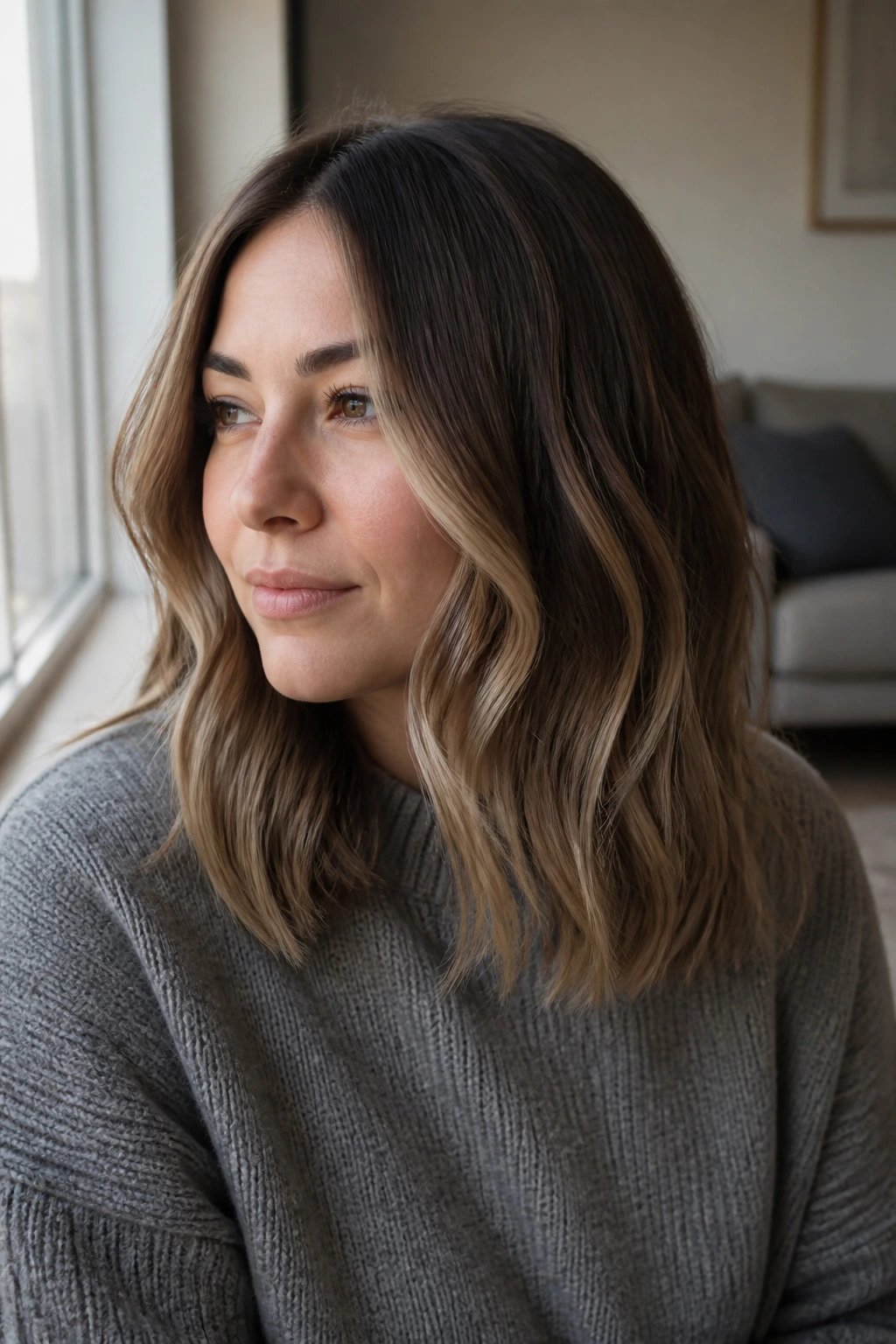
Winter light is unforgiving in a weirdly useful way. It strips away the flattering warmth you can get in bright sun and shows you exactly what your color is doing. That is why caramel balayage for cool skin tones has to be built with more restraint than summer-bright color.
A bright gold ribbon can look fine under warm indoor bulbs and then go loud and orange when you step outside. Beige caramel, smoky toffee, and ash-brown blends hold their shape better. They have enough warmth to avoid looking muddy, but not so much that they fight pink or blue undertones in the skin.
The other reason this style works is contrast. Heavy coats, scarves, and darker winter clothes can flatten hair visually. A good balayage keeps the ends alive and gives the face a little glow where the hair frames it. Not a fake glow. Just enough.
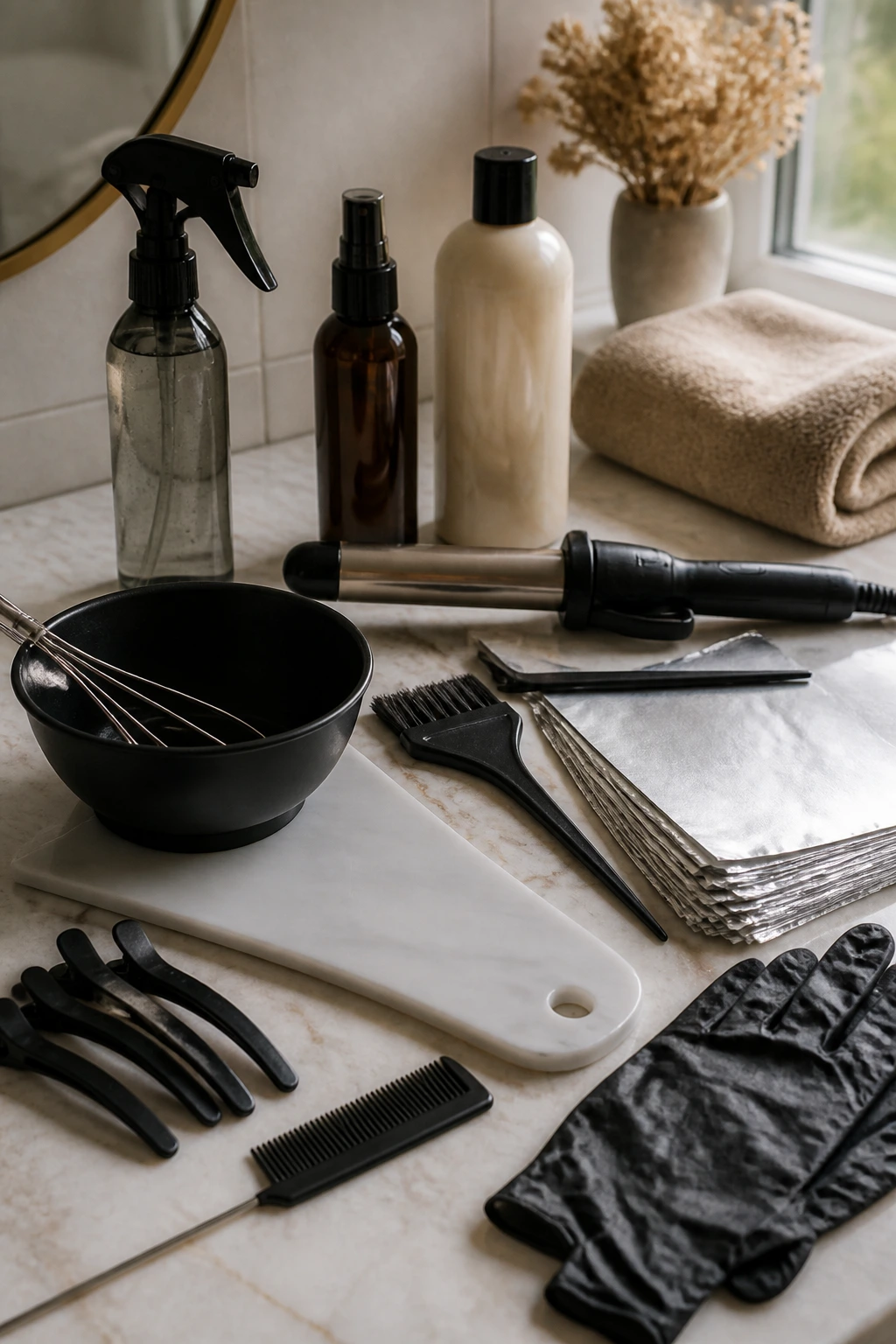
Essential Tools for the Chair and the Bathroom Shelf
-
Sectioning clips: These keep the hair organized so the painted pieces land where they should instead of bleeding into the wrong panel.
-
Tail comb: A fine tail comb makes clean partings and helps you isolate face-framing sections without grabbing too much hair.
-
Balayage board or foil: A board gives freehand control; foil gives more lift and a stronger result. Either can work, depending on how light you want the caramel to go.
-
Tint brush: A medium-width brush lets you feather the color into the hair so the blend looks soft at the edges.
-
Color bowl and whisk: Needed for mixing gloss, toner, or lightener evenly so the tone doesn’t go patchy.
-
Gloves: Not glamorous, but necessary. Lightener and toner stain, and your hands will hate you if you skip them.
-
Fine-mist water bottle: Useful for keeping sections damp during painting, especially if the hair is dry or porous.
-
Heat protectant: A must for styling, especially if you’re showing off the balayage with waves or a blowout.
-
1.25-inch curling iron or wand: This size gives a loose bend that shows dimension without turning the hair into tight pageant curls.
-
Sulfate-free shampoo and conditioner: These help the caramel stay softer for longer and keep the gloss from sliding out too fast.
-
Microfiber towel or soft cotton tee: Better than rough terry cloth for drying lightened ends that already want to frizz.
-
Purple or blue shampoo, used lightly: Optional, and only useful if brass starts creeping in. Overuse can dull the caramel faster than you think.
Choosing the Right Caramel Shade for Cool Undertones
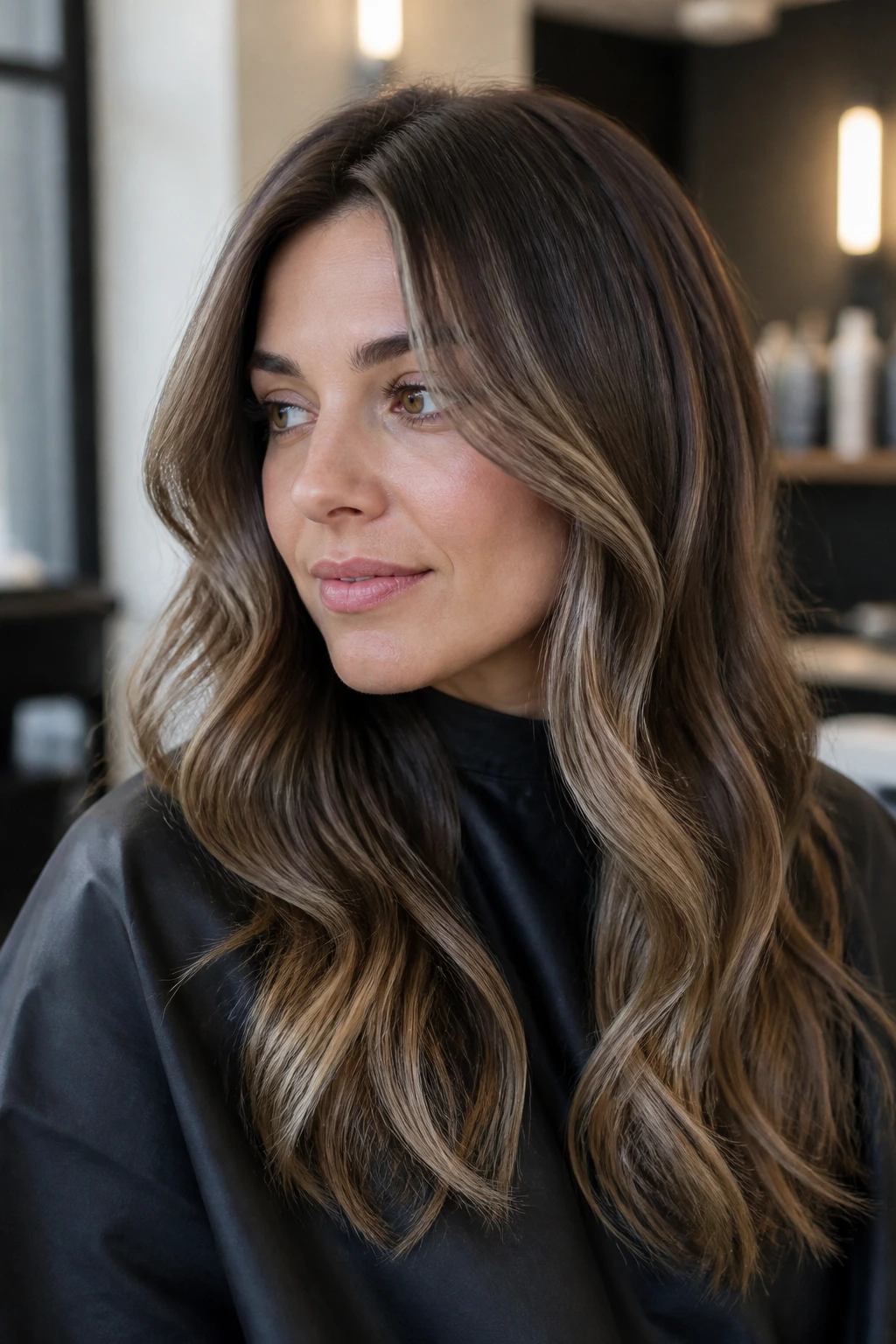
Cool skin tones usually need caramel with a beige, ash, mocha, or smoky base. That sounds technical, but it is actually simple when you are standing in a salon chair: avoid anything that looks like fresh honey, copper pennies, or bright apricot.
What to Ask For
Ask for caramel ribbons one to two levels lighter than the natural base if you want softness, or two to three levels lighter if you want more contrast. If your base is a level 4 espresso, a level 6 or 7 caramel usually lands better than a pale level 9 blonde piece. That spacing keeps the warmth in check.
Use words like beige caramel, smoky toffee, mushroom brown, or neutral caramel gloss. Those phrases matter. A colorist hears the difference between warm and controlled much faster than they hear “I want caramel.”
What to Avoid
Skip formulas that lean orange, gold-yellow, or red-copper unless you want a much hotter look than this article is about. Cool skin can handle warmth, but it wants the warmth to be buffered. Buffered. That is the whole point.
Bring reference photos that show the undertone, not just the cut. A picture of a loose wave with beige ribbons tells more truth than a dozen words about “softness.” And if the salon starts talking in broad strokes, ask where the toner sits on the beige-to-ash scale. That one question clears up a lot.
How Porosity Changes the Result
Highly porous hair grabs warmth fast. Sometimes too fast. If your hair has been lightened before, it may absorb the caramel a shade deeper or warmer than expected, which is why a gloss afterward matters so much. On virgin hair, the result usually reads cleaner and more even.
How to Wear the Color So the Dimension Shows
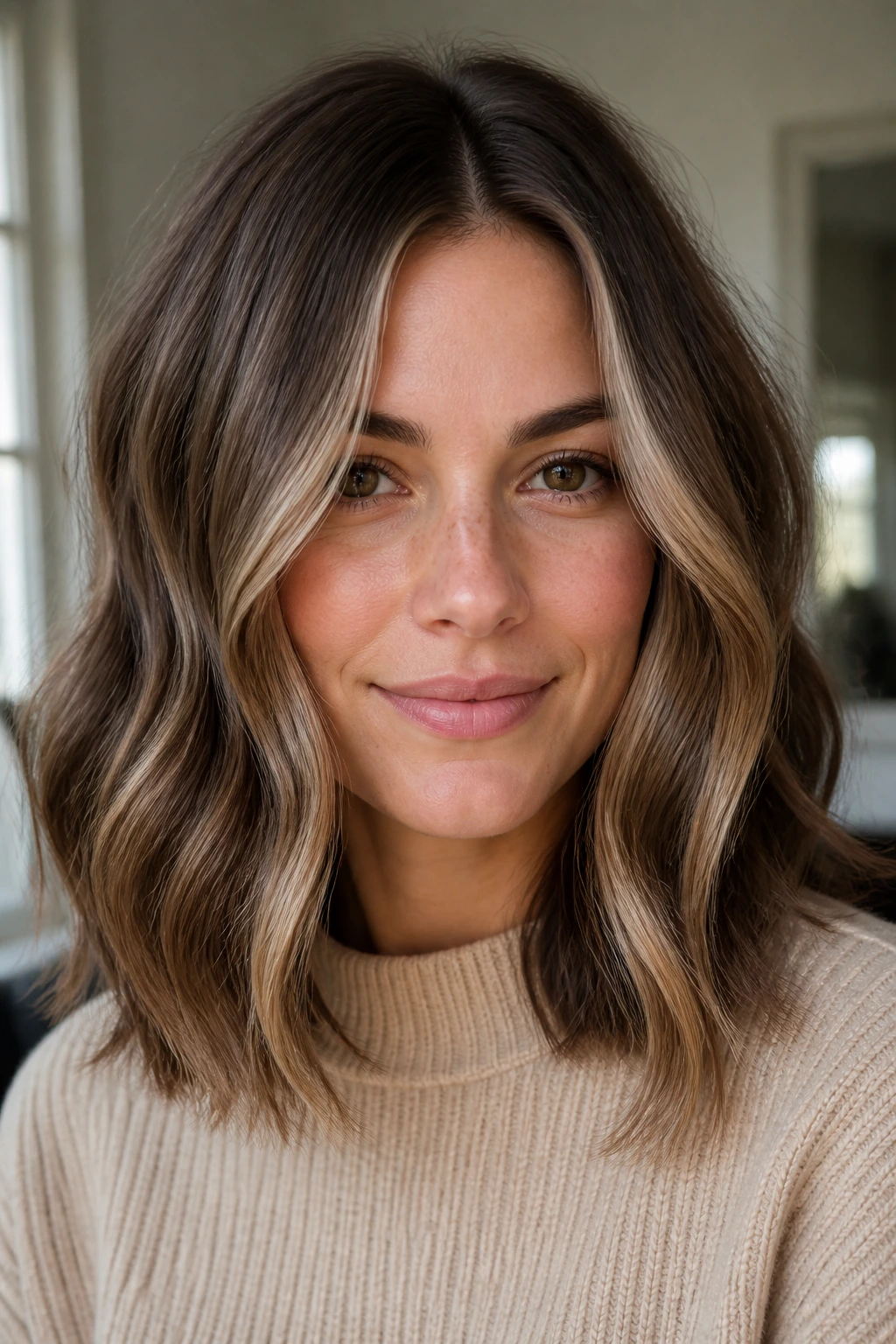
Caramel can disappear if you style it like an afterthought. A straight, flat finish with no parting change and no lift at the root will hide half the work. That is a waste. The color wants movement.
Presentation: Loose bends show the ribbons best. A center part gives symmetry and lets the front pieces frame the face evenly, while a soft off-center part can make the money piece feel more dramatic. If the hair is curly, let the curls fall naturally and separate them by hand instead of brushing them into frizz.
Pairings: Layered cuts, curtain bangs, long bobs, and textured shags all help. On the wardrobe side, charcoal, navy, black, deep olive, and soft plum tend to make beige caramel look cleaner against cool skin than bright orange or mustard ever will. Silver jewelry works with the tone too.
Scale: If you want subtle, ask for finer ribbons and a deeper root. If you want more contrast, ask for stronger face-framing pieces and brighter ends. Don’t mix those goals by accident. That is how people end up with a style that looks indecisive.
Finish: A small amount of shine serum on the ends or a light glossing spray gives the caramel a polished edge. Keep product away from the root unless you want the hair to fall flat. Flat roots kill dimension fast.
Color Boosters and Small Tweaks That Make a Difference
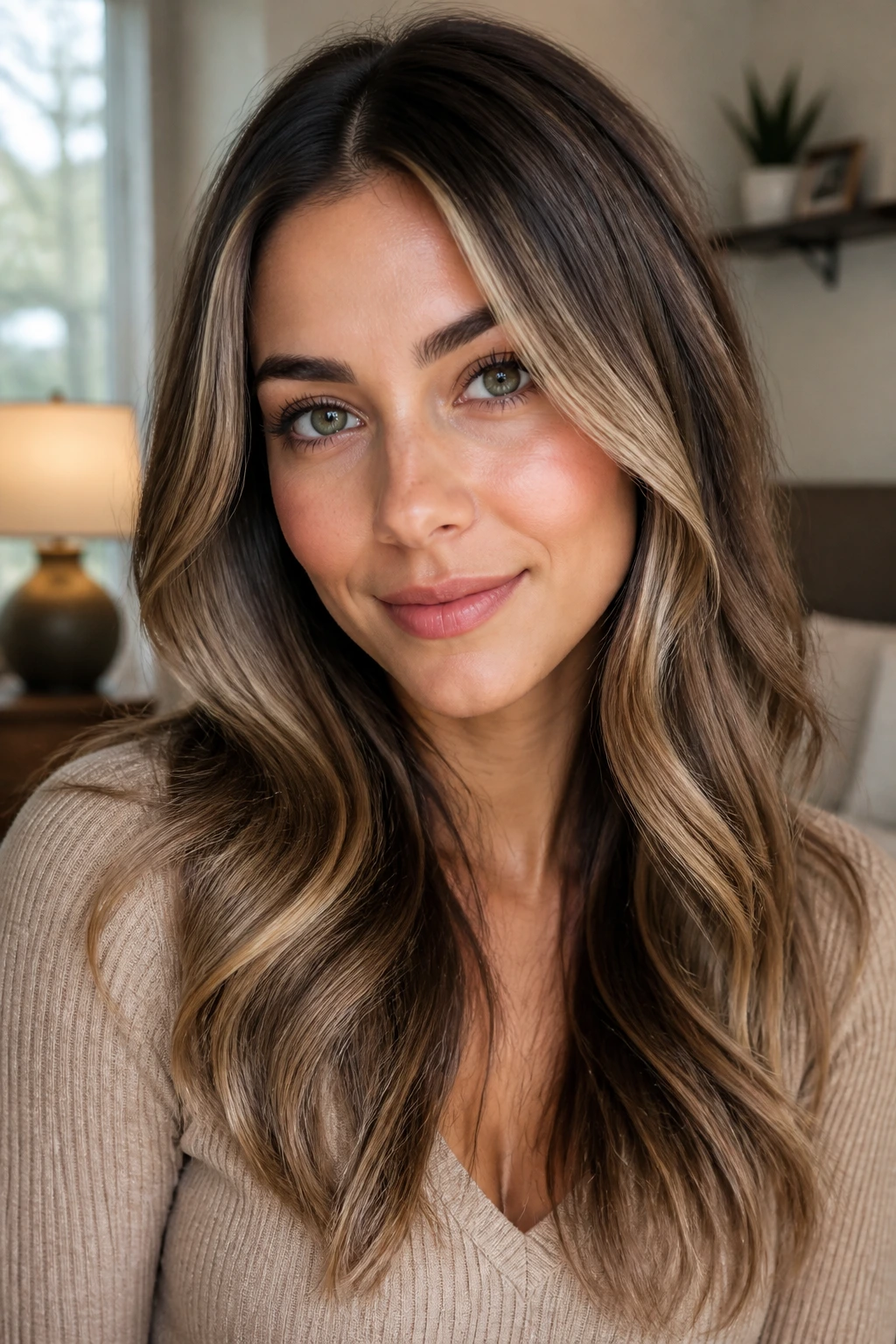
Tone Enhancement: A beige or neutral gloss every 6 to 8 weeks keeps the caramel from going too yellow. If your hair tends to warm up fast, this is the simplest fix and the least dramatic one.
Customization: Fine hair usually needs tighter, more numerous ribbons. Thick hair can take wider placement and still look soft. Curly hair wants bolder panels so the color stays visible when the curl springs up.
Face-Framing Lift: If your complexion needs a little more light near the face, ask for a brighter piece starting near the temple and tapering down. Keep it soft at the top and brighter through the cheekbone area.
Make-It-Yours: If you live in neutral makeup and dark clothing, a smoked caramel looks rich and clean. If you wear more rose or berry tones, a beige caramel will sit more naturally next to the face. Tiny choices. Big difference.
Pro Move: Ask the colorist to leave a few deeper strands in the same panel instead of saturating every section evenly. That irregularity gives the hair a more expensive, lived-in shape.
Common Mistakes That Push Caramel Too Orange or Too Flat
-
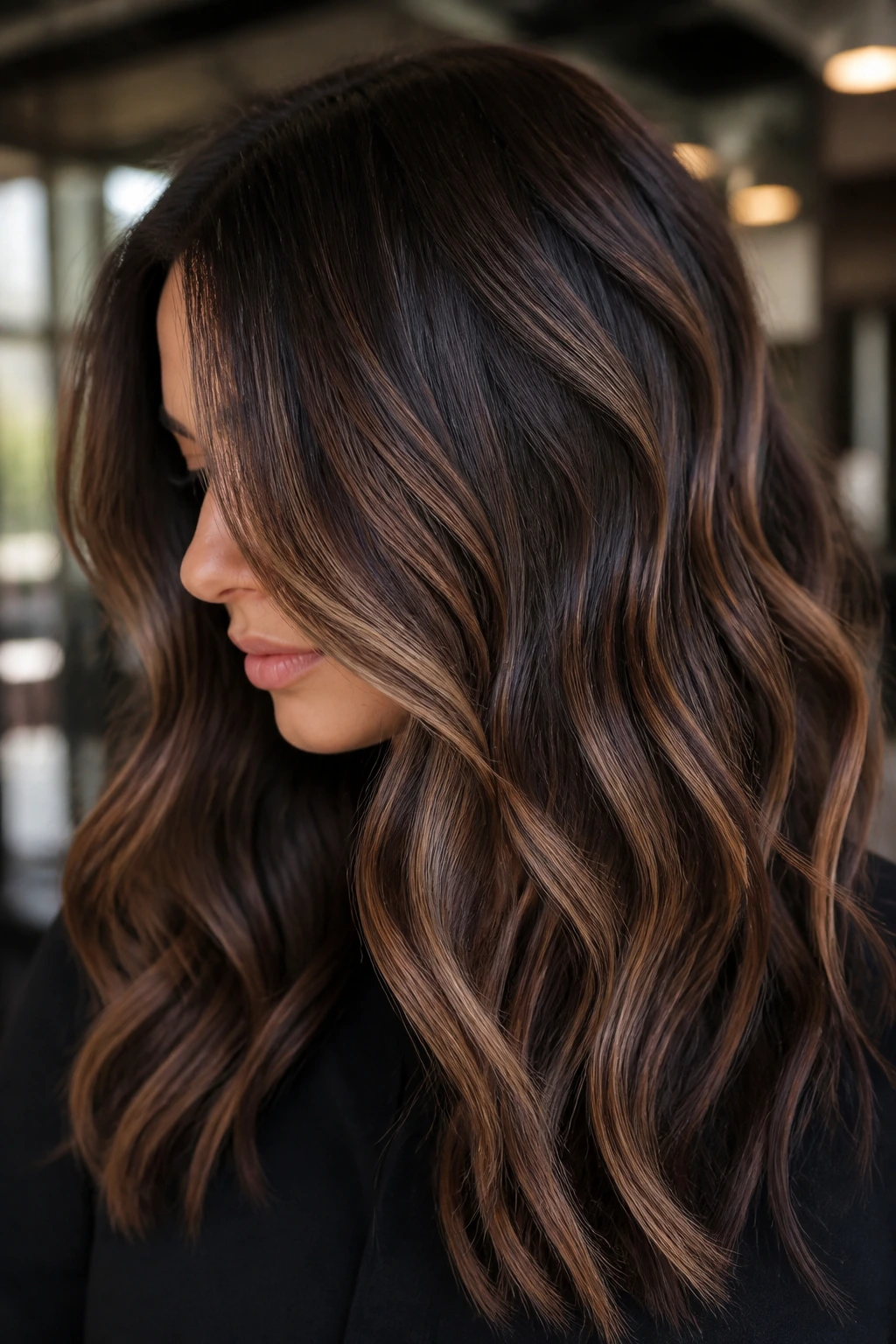
Asking for “caramel” without describing the undertone. The symptom is warm, orange-gold pieces that look louder than the rest of the hair. The fix is to say beige, smoky, neutral, or ash-beige out loud.
-
Lifting too far on dark hair. If the highlights end up too blonde, the warmth can turn bright and a little harsh against cool skin. Keep the lift closer to toffee or beige-brown unless you want a much stronger contrast.
-
Skipping a root shadow. That leaves the light pieces sitting on top like stripes, especially after a few weeks of growth. A deeper root melts the whole thing together and buys you more time between appointments.
-
Using purple shampoo on caramel like it’s blonde hair. Overdoing it can mute the warmth and leave the color dull or muddy. Use it only when brass shows up, and even then, lightly.
-
Ignoring the haircut. Caramel placement looks thin and scattered on a heavy cut with no movement. Layers, texture, or soft ends make the color show up the way it should.
-
Styling it too stiffly. Tight curls or helmet-smooth straightening can hide the placement. A soft bend or a loose wave keeps the ribbons visible.
Variations and Adaptations to Try
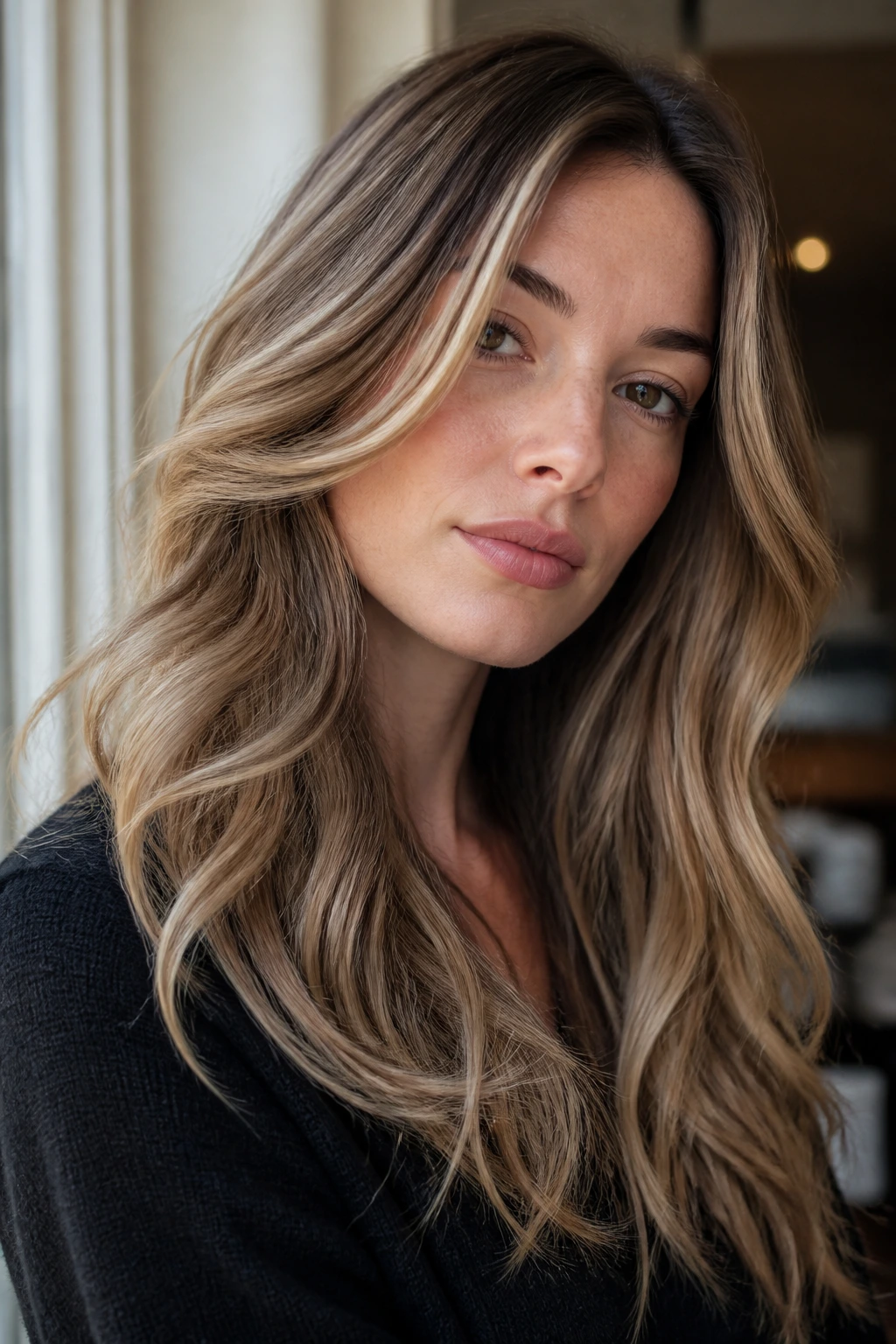
Cashmere Caramel: This version uses beige-heavy toning and very soft contrast. It suits fair to medium cool skin and anyone who wants warmth that whispers instead of shouts. The finish should look silky, not flashy.
Smoked-Toffee Melt: Here the base stays deep and the caramel stays more brown than blonde. It is a strong choice for dark brunettes who want movement without a big commitment to lightness. If your wardrobe leans black, gray, and navy, this one sits beautifully beside it.
Halo Caramel: Brightness stays around the crown and hairline, then fades quickly into a softer mid-length blend. That keeps the face bright while preserving depth everywhere else. It is a smart option if you wear your hair down more often than up.
Curly Ribbon Caramel: The placement is broader, and the colorist paints the outer curve of the curl rather than trying to make skinny lines. This keeps the highlights visible once the curls spring up. It also means you do not lose the effect on day two.
Grey-Blend Caramel: This version uses a root smudge and soft ribbons to blur silver growth instead of covering it aggressively. It works especially well if you want lower maintenance and you don’t mind some natural grey staying in the mix. The result feels modern and soft rather than heavily dyed.
Keep the Color Fresh Between Appointments
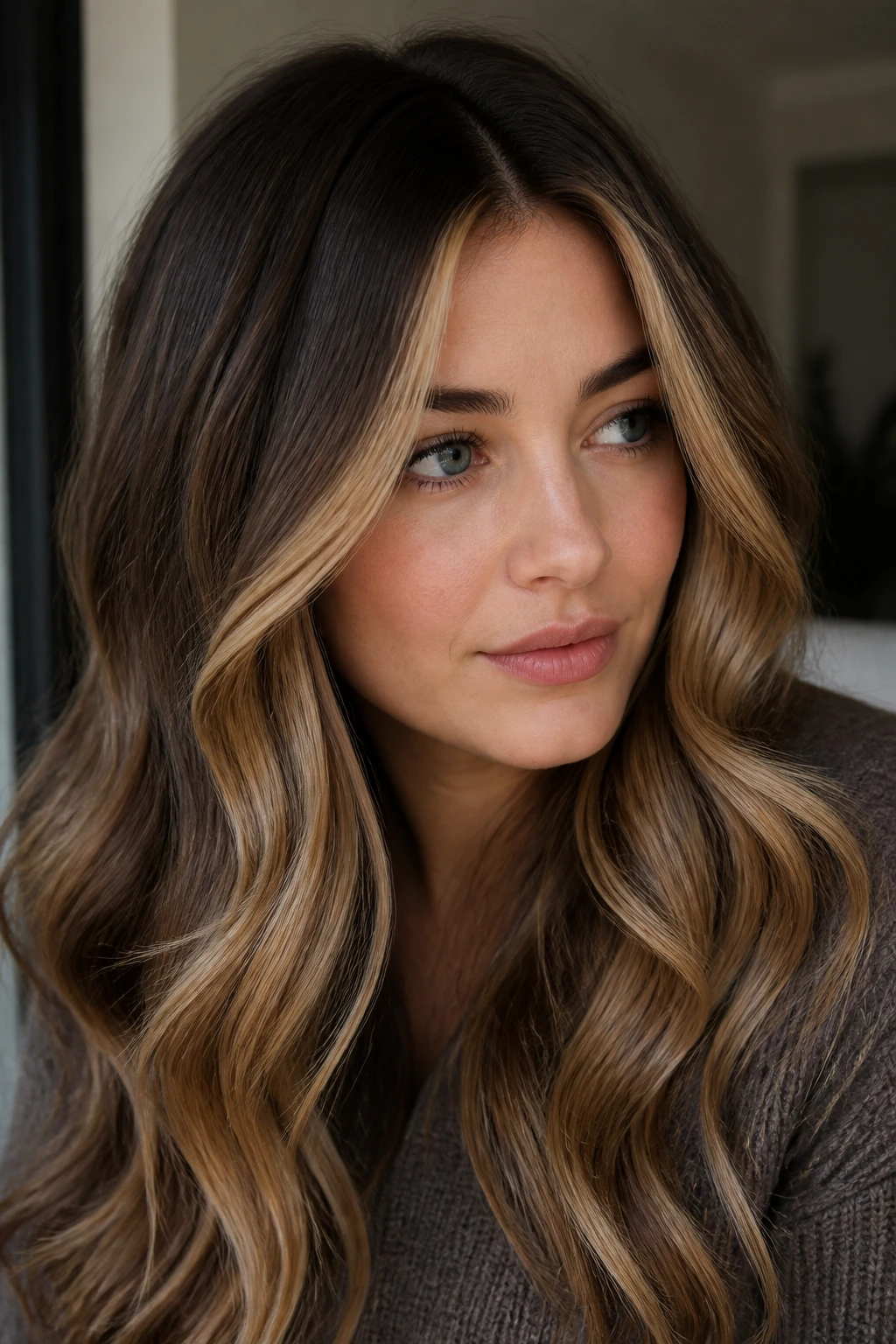
A caramel balayage can stay polished for a long time if you treat the gloss like part of the color, not an optional extra. Most people wait too long to refresh tone, then blame the original placement when the problem is really fade and buildup.
For a soft beige-caramel result, a gloss or toner refresh every 6 to 8 weeks keeps the warmth controlled. If you prefer a bolder, brighter face frame, you may want a touch-up closer to 8 to 10 weeks. Partial hand-painting or a toner-only visit can stretch that longer if the haircut still looks healthy.
Wash with lukewarm water, not hot. Hot water opens the cuticle too much and lets the tone slip out faster. Two or three washes a week usually works better than daily shampooing for keeping the caramel rich, especially if you use dry shampoo on the root between washes.
Use a heat protectant every time you blow-dry, curl, or flat iron the hair. Keep hot tools under 375°F unless your stylist tells you otherwise. A weekly deep-conditioning mask helps the ends stay smooth, and if your hair has been lifted a lot, a bond-building treatment every couple of weeks can keep it from feeling brittle.
Blue shampoo can help if the hair starts leaning orange, but don’t treat it like a weekly religion. Once every 1 to 2 weeks is usually enough for brunette-based caramel. More than that and the hair can go dull.
Frequently Asked Questions
Will caramel balayage look orange on cool skin tones?
It can, if the tone is too warm or the lift goes too light. The safer version is beige, smoky, or neutral caramel with a deeper root, which keeps the warmth soft instead of coppery.
How light should the caramel be for winter?
Usually one to three levels lighter than your base is enough. If you go much lighter, the color can start to read blonde and lose the moody winter feel that makes these looks work so well.
Can this work on black or very dark brown hair?
Yes, but the caramel has to stay deeper, closer to toffee than blonde. On very dark hair, it often looks best when the lightest pieces live around the face and ends instead of covering the whole head.
What should I say at the salon if I don’t want brassy highlights?
Say you want beige caramel, smoky toffee, or neutral warm brown, and tell them you do not want copper, yellow gold, or pumpkin tones. That gives the colorist a clearer target than “caramel” alone.
How often will I need to refresh it?
A gloss every 6 to 8 weeks keeps the tone clean, and a partial refresh every 10 to 14 weeks works for most low-maintenance versions. If your hair is porous or fades fast, you may want to tighten that schedule a bit.
Does caramel balayage work on curly hair?
Very well, as long as the placement is bold enough to show through the curl pattern. Thin painting can disappear once the hair dries, so wider ribbons and halo placement usually work better.
What if the color turns too warm after a few washes?
Use a blue shampoo lightly on brunette bases, or ask for a beige toner at the next gloss visit. If the warmth is only in a few spots, a short toner service usually fixes it faster than re-lightening the hair.
Is balayage better than foil highlights for this look?
Balayage usually gives a softer grow-out and a more lived-in finish, which suits winter caramel well. Foils can still be useful if you want more lift or more precision around the face, so the better method depends on how strong you want the contrast to be.
Soft Warmth, Not Brass
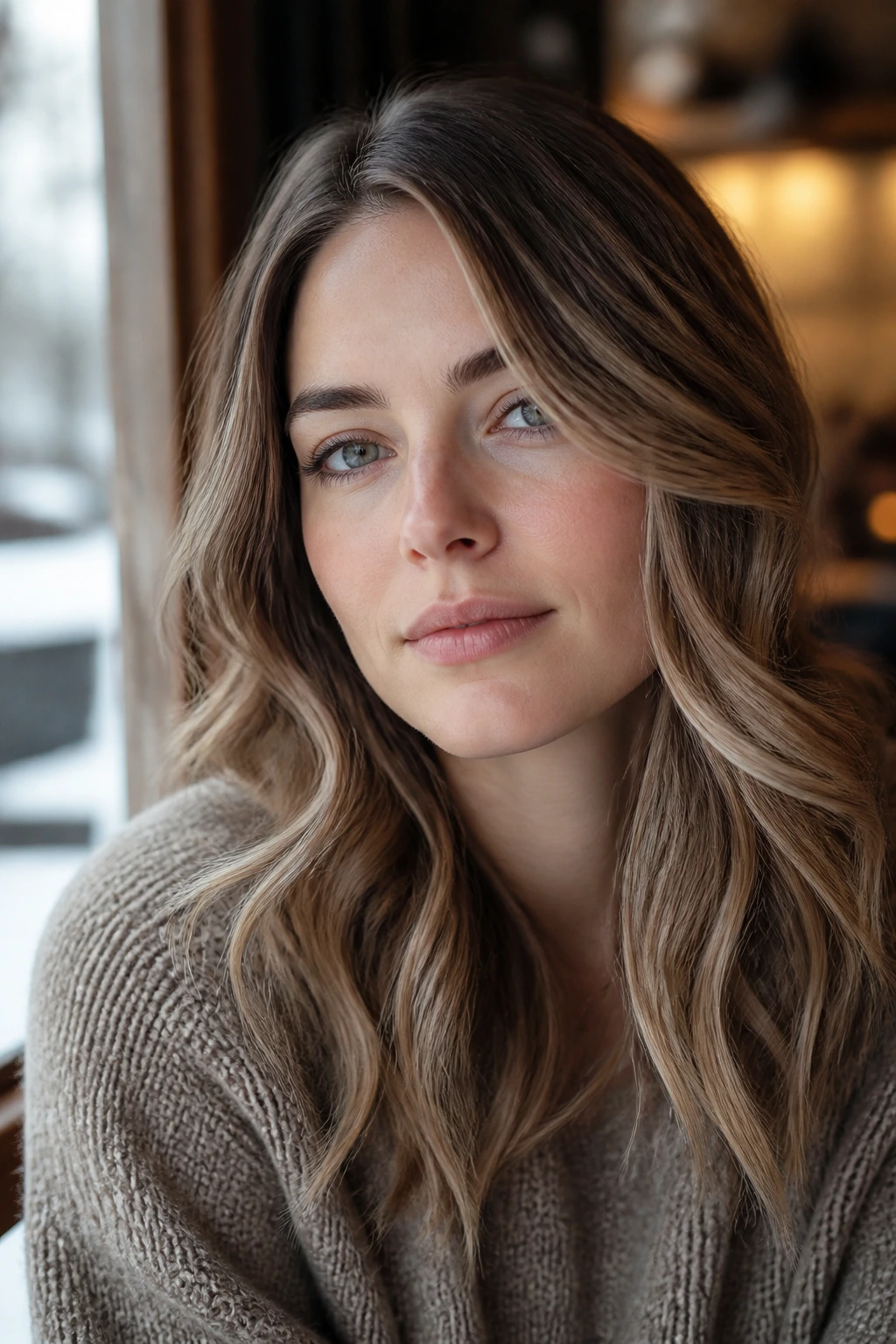
The best caramel balayage for cool skin tones doesn’t try to turn the hair blonde. It keeps the root grounded, lets the warmth live in the beige-to-toffee range, and gives the face a little light without fighting the undertone underneath it. That’s why it works so well in winter. The color has room to breathe.
If you want the cleanest result, think in terms of depth first and brightness second. That one shift changes how the whole style behaves in cloudy light, under indoor bulbs, and beside the dark coats most people end up wearing. The shade should look like it belongs there.
And when it’s done right, it doesn’t announce itself. It settles in. It moves with the hair, catches the eye at the cheekbone, and stays flattering long after the salon visit has faded from memory.