



A round face doesn’t need hiding. It needs direction.
That’s why side-swept part bangs for round faces with soft layers work so well when they’re cut with a little thought instead of a blunt rush. A deep off-center part sends the eye sideways and up, while soft layers keep the sides from puffing out right where the face is widest. The wrong fringe can sit there like a shelf. The right one moves. That motion matters more than people think.
I’ve seen this go wrong in a dozen tiny ways: bangs cut too short so they spring straight up, layers that end at cheek level and draw a ring around the face, a part placed exactly where the cowlick lives so the whole front section fights you before breakfast. The good versions are calmer, longer, and more flattering in a way you can actually feel when you look in the mirror.
Some of these cuts are polished. Some are piecey and undone. Some lean toward shaggy, some toward sleek, and a few are the kind of shape that makes you think, oh, that’s what my forehead was missing. Keep reading with your hair texture in mind, because the best version of this look is the one that works with your growth pattern, not against it.
Why You’ll Love This Collection
-
Diagonal lines do real work: A side-swept fringe cuts across the face instead of stopping at the widest point, which helps a round face look longer and more tapered.
-
Soft layers keep the shape from ballooning: Layers that start below the cheekbone or jawline add movement without building extra width right where you don’t want it.
-
These cuts are easy to tailor: You can go sleek, airy, shaggy, curly, or polished and still keep the same face-framing idea.
-
The grow-out is kinder: Side bangs usually blend into face-framing layers more smoothly than a blunt fringe, so you’re not trapped in a tight trim schedule.
-
They work with more textures than people assume: Straight hair can look crisp, wavy hair gets bend and lift, and curls can use the same idea with a softer carve.
-
The styling range is wide: A quick blow-dry, a round brush, or even an air-dried bend can give these bangs the shape they need.
1. Deep Side Part With Brow-Grazing Sweep
A deep side part is the old reliable for a round face, but only when the front section is left long enough to move. The bang should skim the brow on one side, then taper into a longer cheekbone sweep on the other. That diagonal line breaks up the face’s widest zone and gives the front of the haircut some charge. It looks especially good when the rest of the cut stays soft instead of over-layered.
Why it works
The trick here is length and restraint. Keep the shortest piece near the outer brow, not the middle of the forehead, and let the layers around the face drift down toward the jaw. You want the eye to travel, not stop. A blunt, short side bang tends to puff upward; this one bends. That bend is the whole point.
If your hair has a natural wave, this cut falls into place fast. Straight hair needs a little round-brush lift at the root, then a sweep across the forehead while the section is still warm. It’s a low-drama style with a clean outline.
2. Collarbone Layers With a Long Feathered Fringe
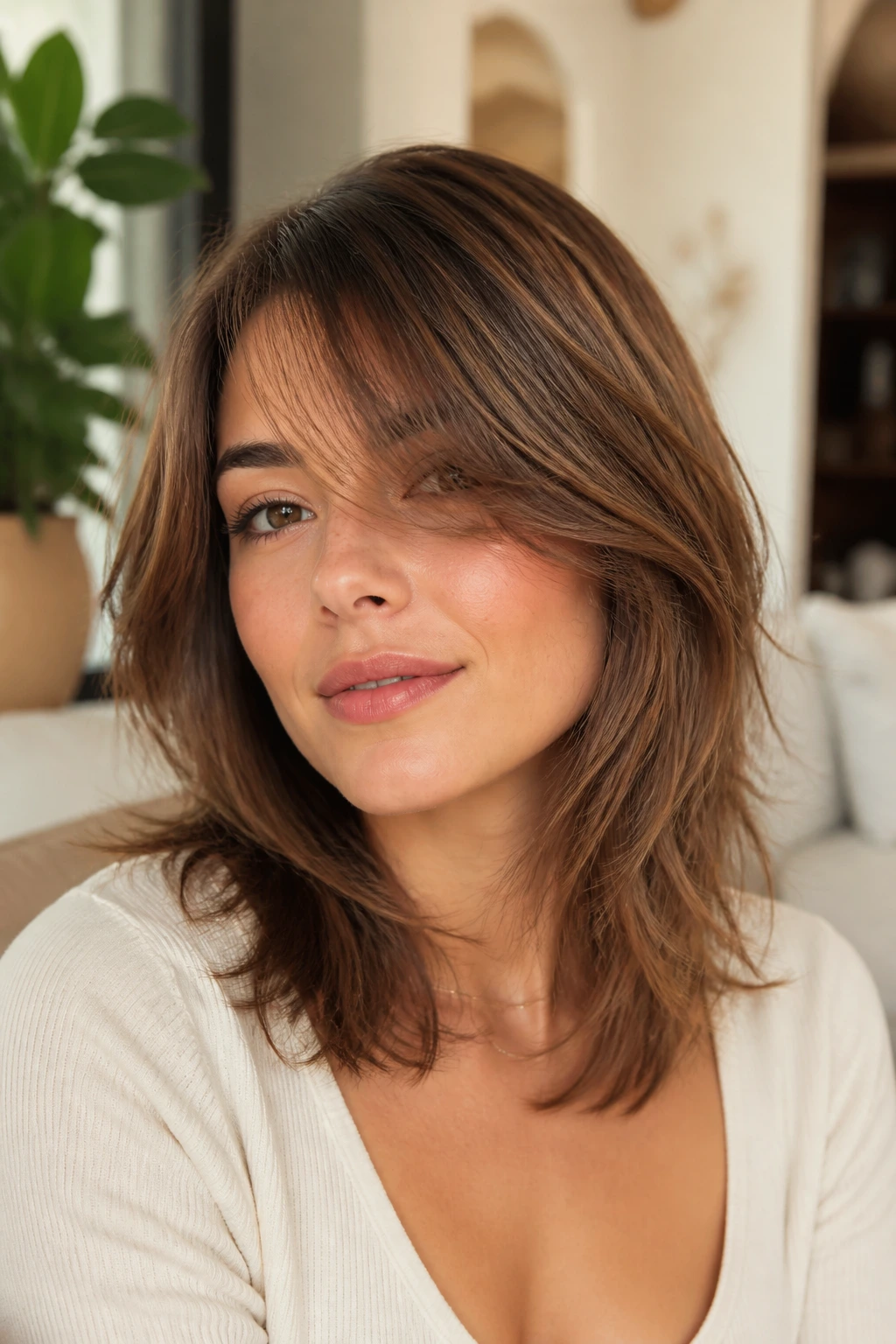
This is the version I’d hand to someone who wants movement without a big haircut personality shift. The length sits around the collarbone, so the hair hangs below the roundest part of the face, and the feathered fringe lands long enough to tuck or sweep. It feels lighter than a blunt lob, which matters when you want the cut to open the face rather than box it in.
The feathering should happen through the ends, not right up near the cheeks. That keeps the layers from turning fluffy at face level. Ask for a soft taper from the cheekbone down, and keep the fringe piecey, not stringy. Piecey is good; wispy and see-through is a different thing entirely.
This shape is especially nice if you like wearing hair half-up. The front still falls forward when you let it down, but it doesn’t collapse into your eyes the second you clip the back away.
3. Wavy Lob With a Cheekbone Sweep
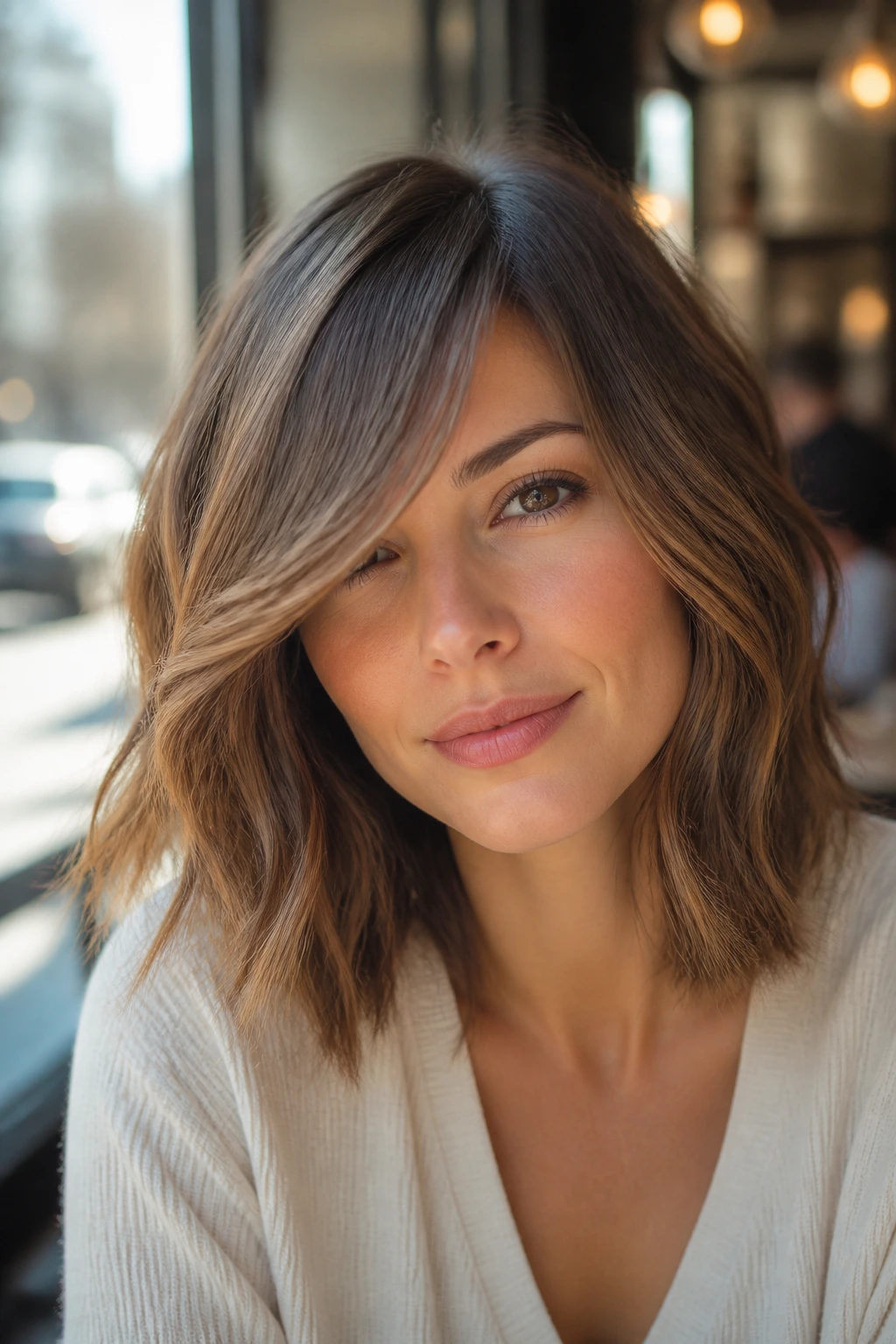
A wavy lob gives round faces some much-needed vertical movement, and the side-swept front section adds a clean line over all that softness. Think shoulder-skimming length, a little bend through the mid-lengths, and bangs that land right around the upper cheekbone. That’s the sweet spot for keeping the face from reading wider.
What makes it different
This one doesn’t need heavy layering. Too much cut-up texture can make wavy hair expand at the cheeks, which is the last thing a round face needs. Keep the interior fairly light and let the wave do the lifting. If your hair frizzes at the ends, a small amount of cream on damp hair will stop the shape from puffing out.
Best for: hair that has a natural bend but not much curl.
Style note: dry the fringe first with the nozzle pointed down and sweep it sideways while it’s still warm. That gives the front a cleaner drape.
4. Soft Shag With Airy Off-Center Bangs

A shag can be a disaster on a round face if the shortest layers sit too high. A soft shag, though, is a different animal. Keep the layers loose, keep the crown controlled, and let the bangs fall off-center with a light, broken edge. The point is movement, not volume for volume’s sake.
The best version has a bit of bend around the temple and a longer face frame that starts below the cheek. That keeps the width from stacking in the center of the face. I like this shape on hair that wants a little mess. It has enough edge to feel modern, but the soft layers stop it from turning into a triangle.
If your hair is thick, ask for interior debulking instead of aggressive razoring at the front. Too much slicing near the bangs can make them split and float in odd ways. Keep the fringe longer than you think.
5. Sleek Shoulder Cut and Piecey Side Bangs
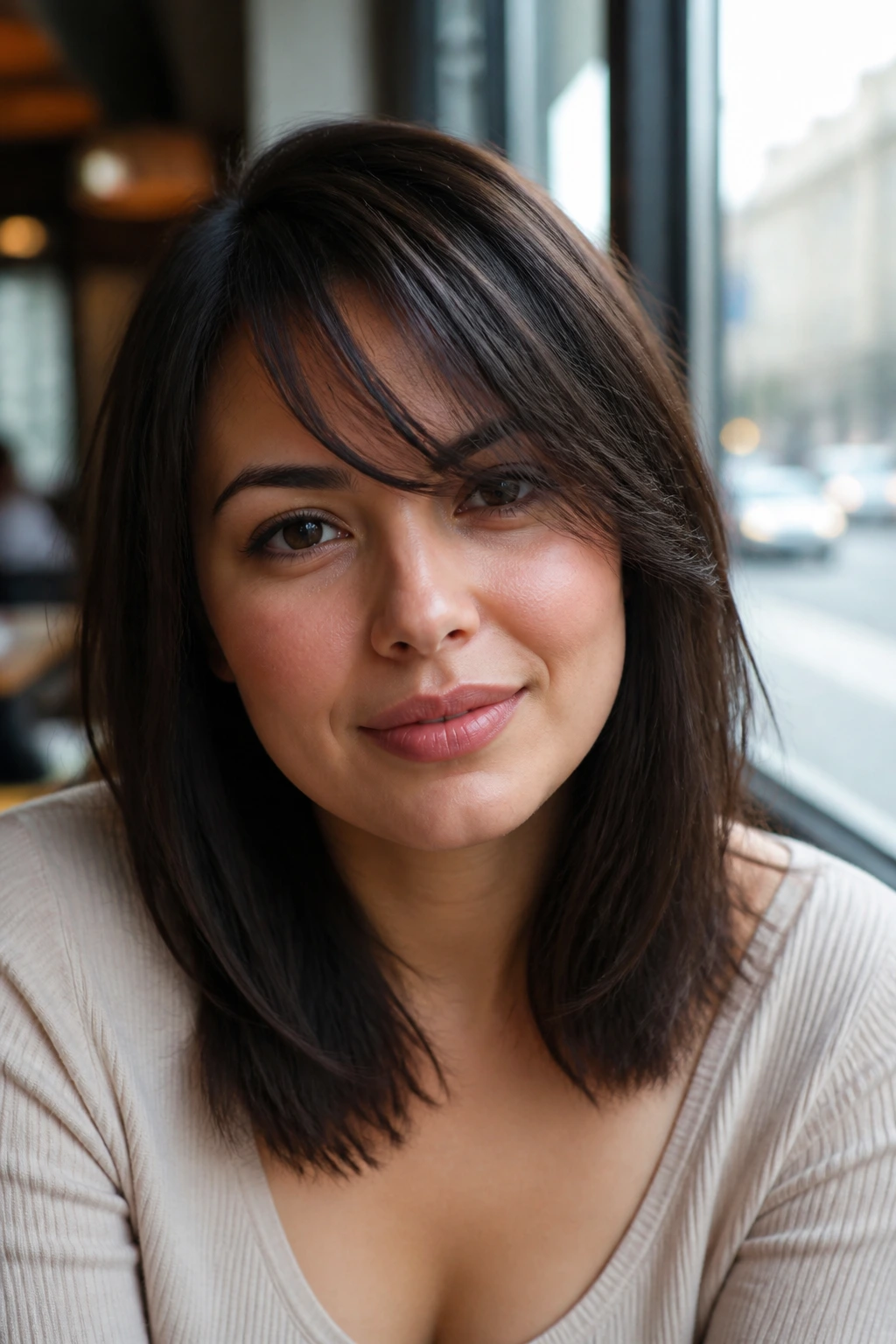
This is the haircut for someone who likes a cleaner finish. The shoulder length keeps the line below the cheekbones, and the piecey side bangs break up the front just enough so the cut doesn’t feel severe. It works especially well when the ends are beveled under a little, not turned into a stiff curl.
The side bang should be separated into two or three visible ribbons, not one thick curtain. That gives the forehead some air and avoids the solid bar effect that can make a round face look broader. A touch of serum on the ends keeps the whole thing from fuzzing out.
How to wear it
Tuck one side behind the ear and leave the bang forward. That asymmetry does a lot of quiet work.
A flat iron with rounded plates helps here, but use it lightly. You’re bending the front, not ironing the life out of it.
6. Rounded Lob With Face-Opening Layers
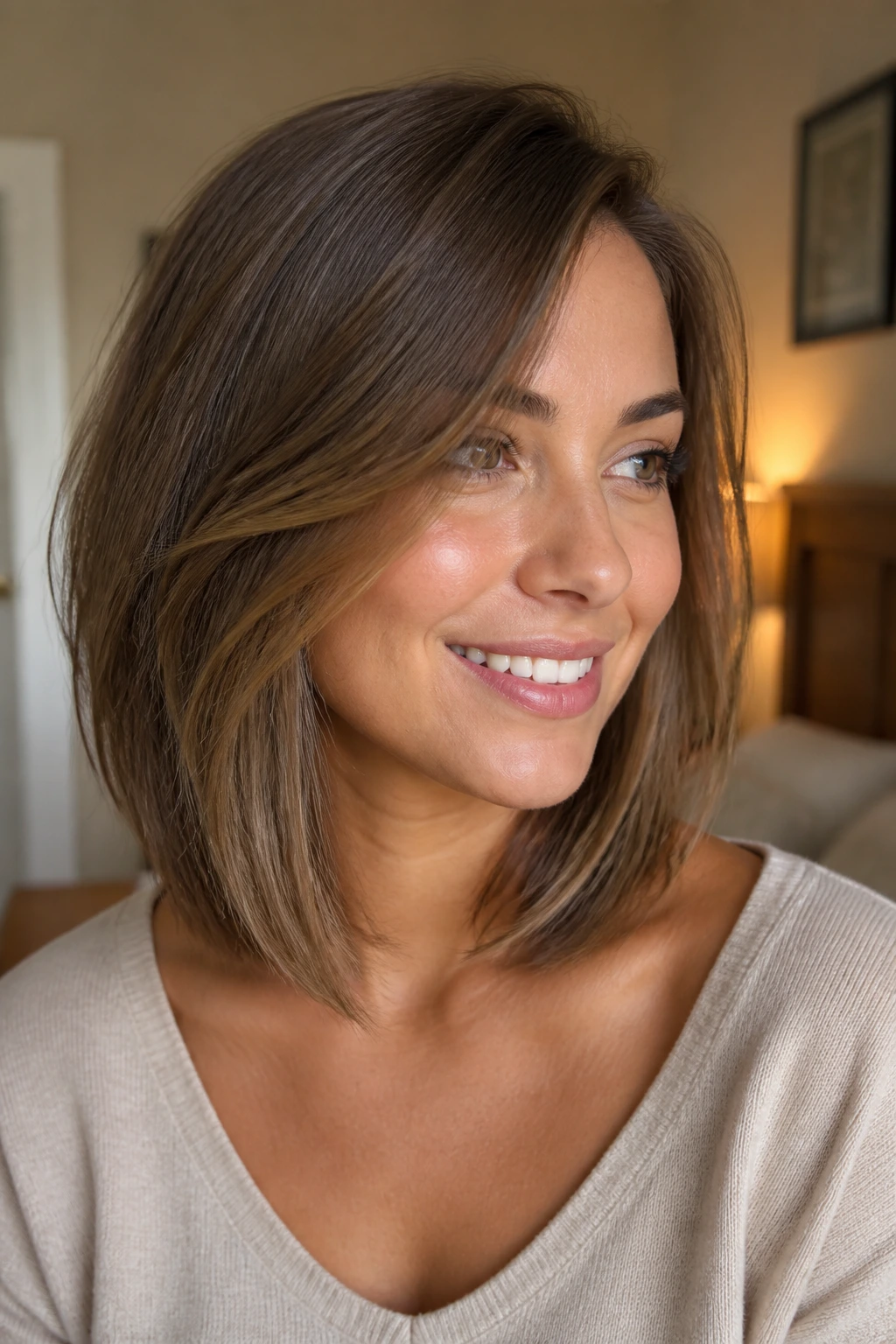
A rounded lob sounds, at first, like the wrong idea for a round face. It isn’t, if the rounding happens at the ends and not at the cheeks. The best version sits at the collarbone with longer layers that open around the jaw and a side-swept front that starts higher than the cheekbone and drops toward the mouth.
What makes this shape smart is the way it frames without enclosing. The layers should curve inward just enough to feel soft, then stop before they create a circular halo around the face. That’s the trap to avoid. When the front is cut too short, the eye gets stuck in the widest area.
This one is lovely on hair that holds a curl or bend. It gives the face a longer outline without looking rigid.
7. Curly Cut With a Diagonal Bang Arc
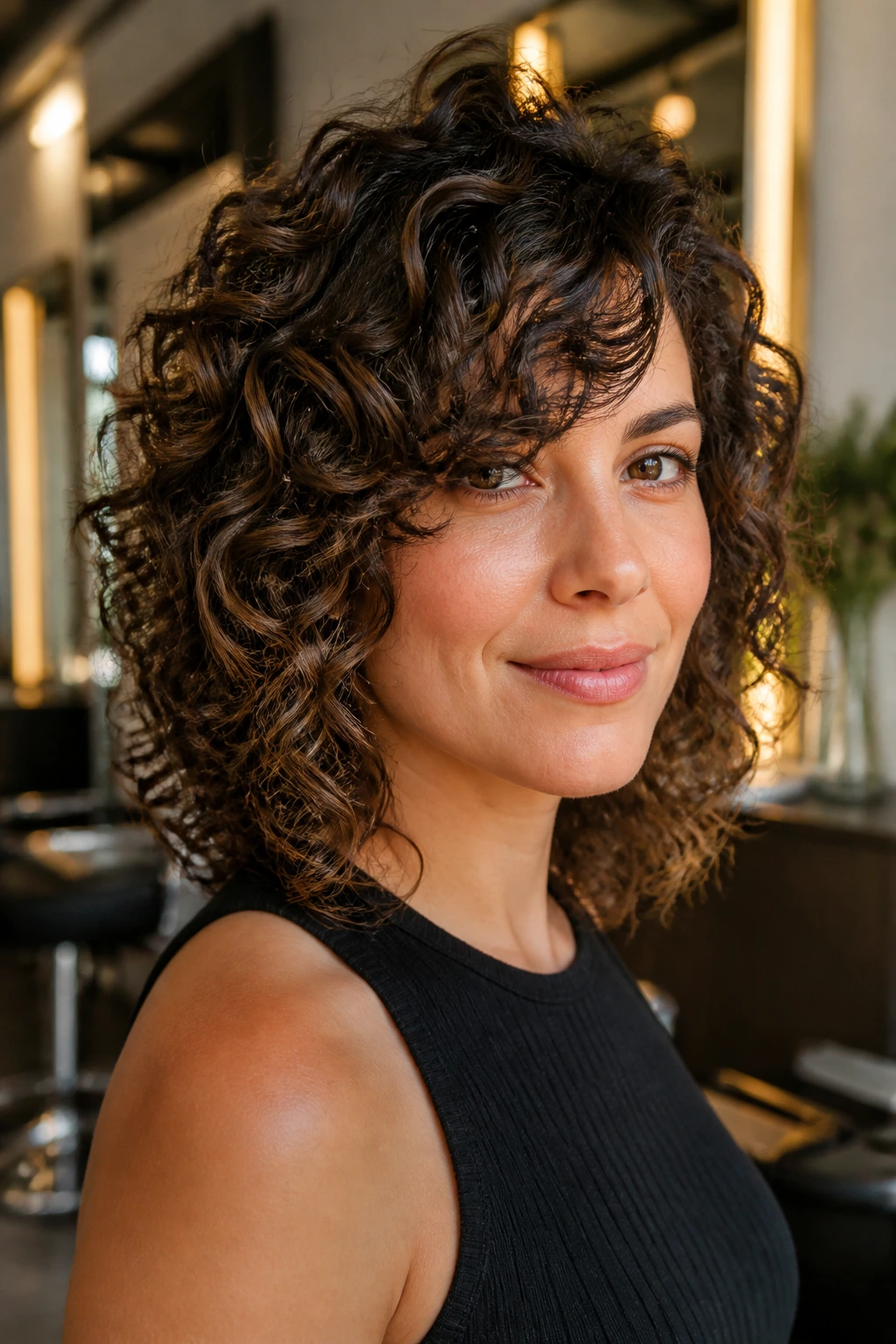
Curly hair deserves its own version of this look, because a round face with curls needs shape, not flattening. The bang should be cut on a diagonal arc so it sweeps across the forehead and joins the curls around the temple. You’re not trying to force the curl pattern into a straight line. You’re guiding it.
Why it works
Curly side bangs work when they’re longer than the eye expects. Short curly fringe can spring up and create width at the top of the face. Longer pieces, cut dry, fall into a softer arc and help the face look longer. The soft layers around the cheek should start lower, often around the chin or just below it, so the curl volume stays off the broadest part of the face.
Dry cutting matters here. Wet curls lie to you.
If your curl pattern varies from front to back, ask for the bangs to be cut in their natural state and checked again after they spring up. It saves a lot of bad surprises.
8. Long Layers and a Heavy-Easy Side Fringe
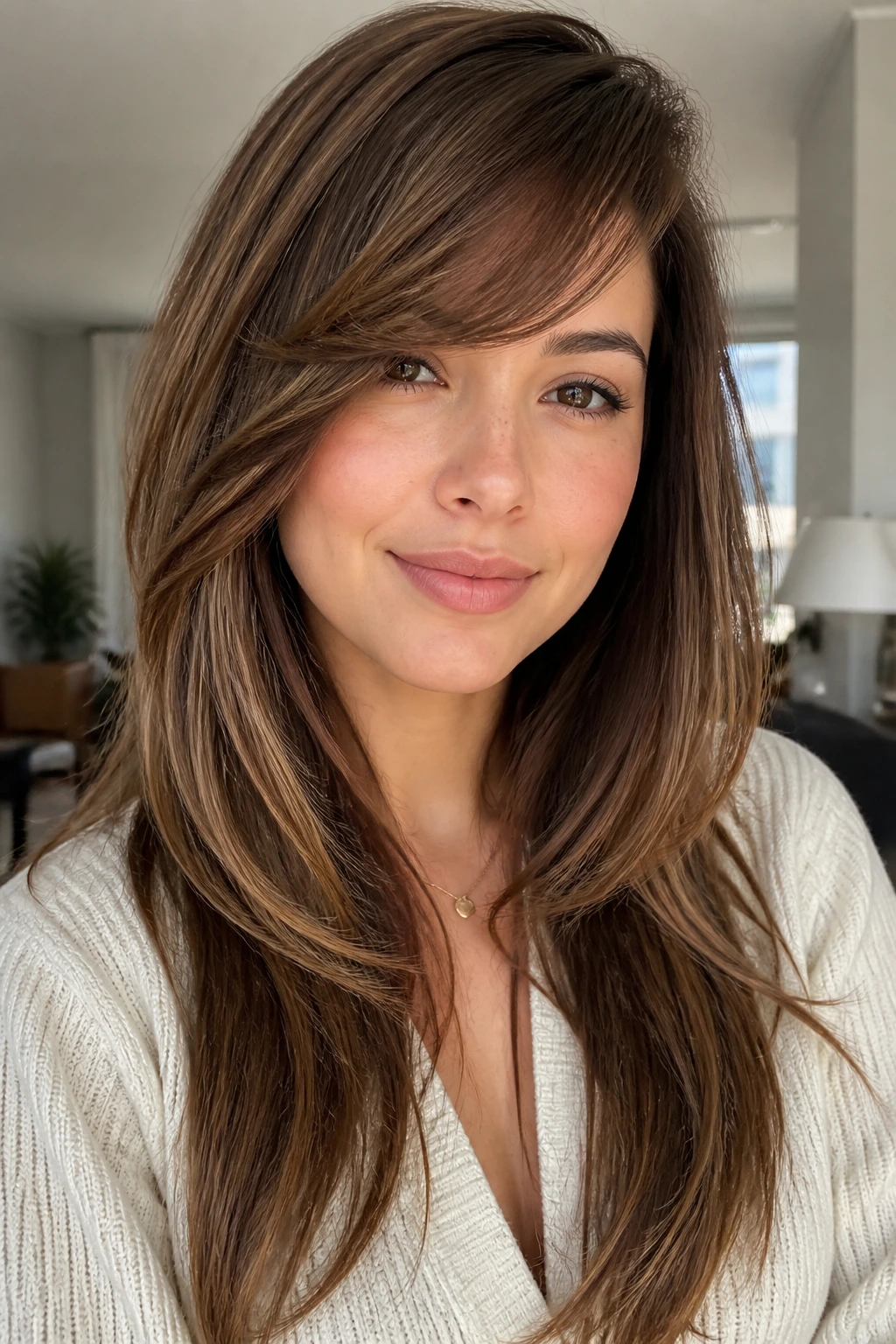
“Heavy-easy” sounds odd, but it’s a useful way to think about fringe. You want enough density at the root so the bang doesn’t look scrappy, then enough taper so it moves. On long layers, that side fringe becomes the front edge of the haircut, and the rest of the length stays soft and draped.
This is one of the best picks if you like keeping your hair long but still want the face to feel framed. The layers should begin below the chin, then slide down the body of the hair. If they start too high, the sides puff. If they start too low, the haircut can feel too plain.
This one suits straight or slightly wavy hair especially well. The longer length makes the round face look less centered, more elongated.
9. Blunt Bob Softened by a Side Sweep
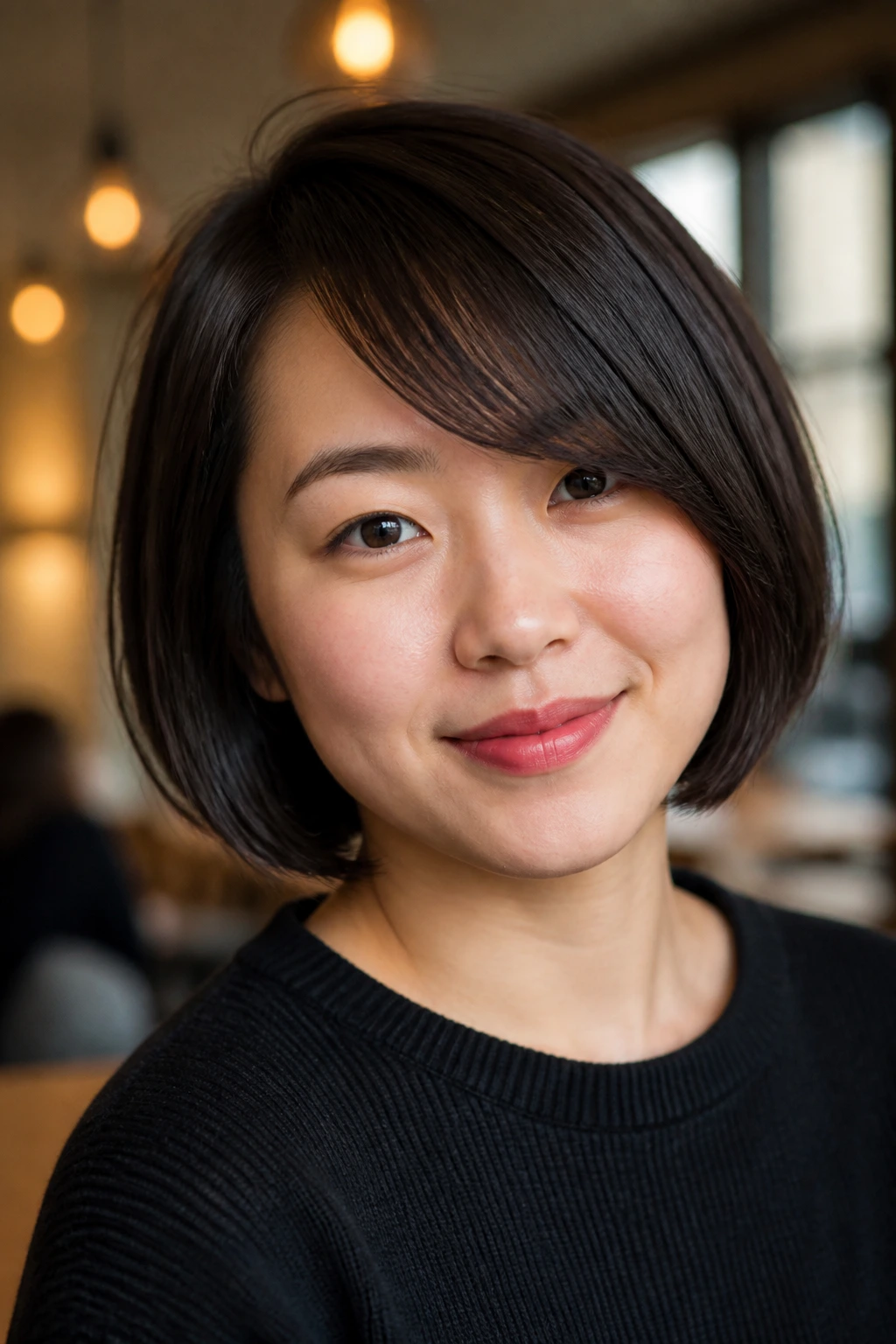
A blunt bob can be too boxy on a round face unless you soften the front. The side sweep does exactly that. Keep the line at the jaw or just below it, then add a long fringe that bends across the forehead and melts into the front corners. The contrast between the crisp bob and the soft bang is what makes this cut work.
If the bob is too short and hits right at the cheek, it can make the face feel fuller. Slide it a little lower. That extra inch changes the whole mood. A subtle under-bevel at the ends helps, too, because it keeps the outline from spreading outward.
Best for
- Straight hair that needs shape
- Fine hair that looks limp in longer cuts
- Anyone who likes a tidy line with one soft detail
A good bob with a side sweep should feel precise, not severe. That’s the balance.
10. Butterfly Layers With Lifted Side Part
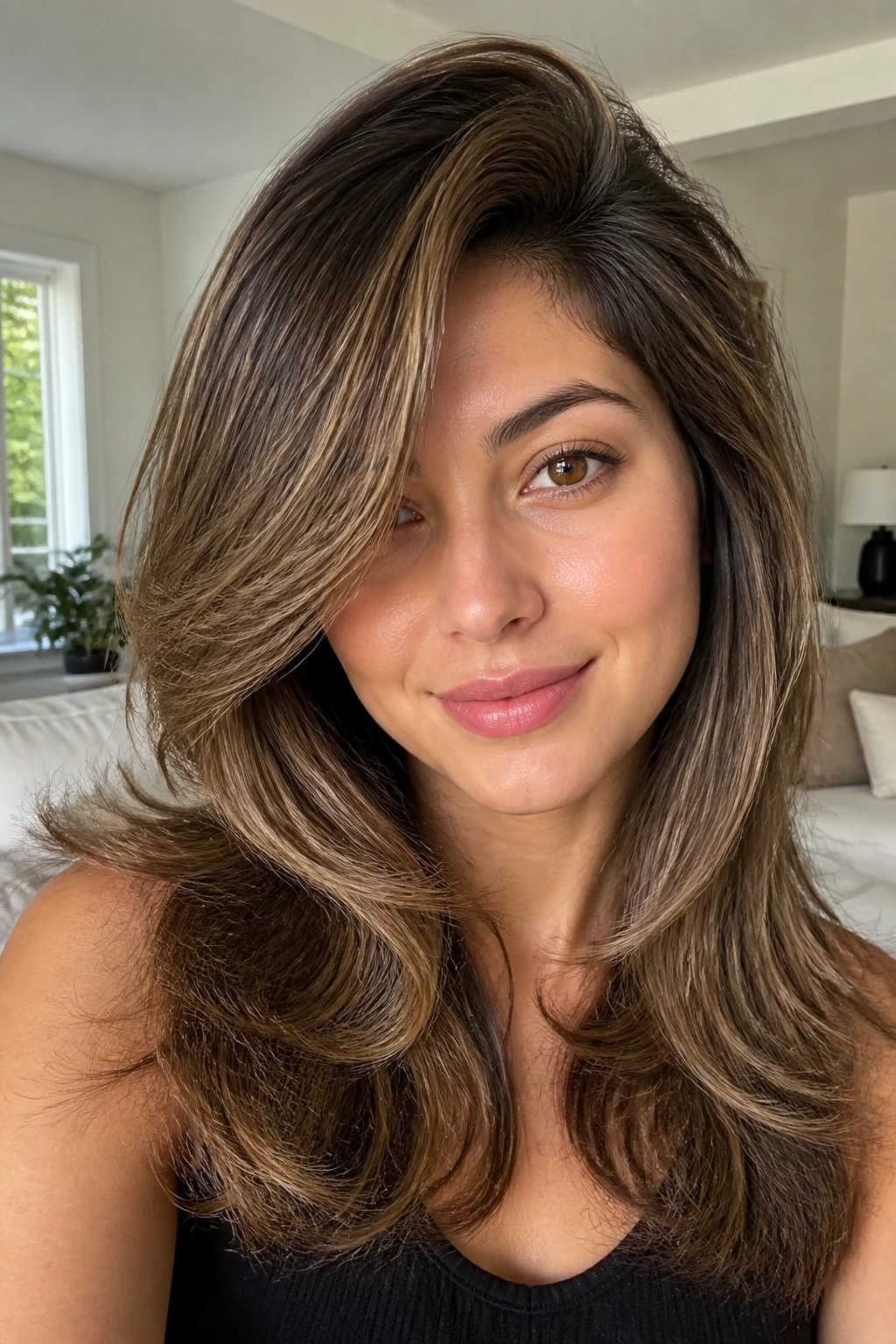
Butterfly layers are all about the illusion of fullness in the right place. On a round face, that means lift near the top and softness around the lower half. A lifted side part does both. It gives height at the crown, then lets the front pieces swoop diagonally into the rest of the cut.
The bang section should stay long enough to blend into the shorter face-framing pieces. If the shortest pieces sit too close to the cheek, the haircut starts to circle the face instead of stretching it. You want the layers to feel like they are opening the face, not decorating it.
This is a blowout haircut. It looks fine air-dried, but it comes alive when you put a round brush at the root and bend the front away from the face.
11. Razored Midi Cut With Loose Bang Pieces
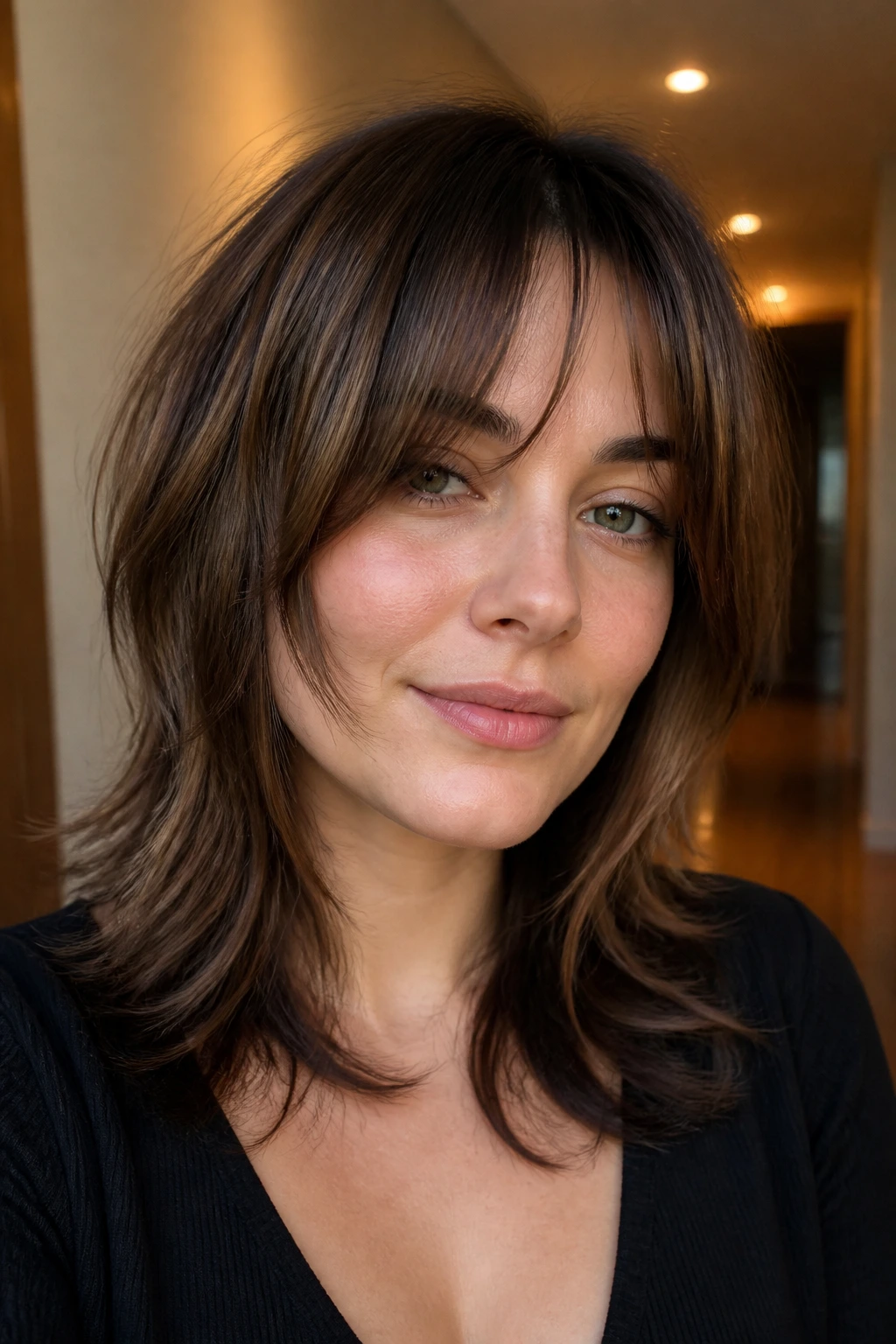
A razored midi cut has a certain looseness that works nicely on a round face, but only if the bang pieces stay controlled. Loose, not shredded. The front should fall in soft, irregular sections that sweep sideways and blend into longer layers around the lips and jaw.
I like this cut for hair that feels heavy but not coarse. The razor can take away bulk and create movement, yet if it’s overused near the bang line, the front can turn wispy in a thin, broken way. That look ages fast. Keep the shape clean, then let the edges fray a little.
This one lives somewhere between polished and undone. It’s not a sharp salon shape. It’s a haircut that looks better on day two, which, frankly, is where a lot of good haircuts live.
12. Air-Dry Wave Cut With Wispy Fringe
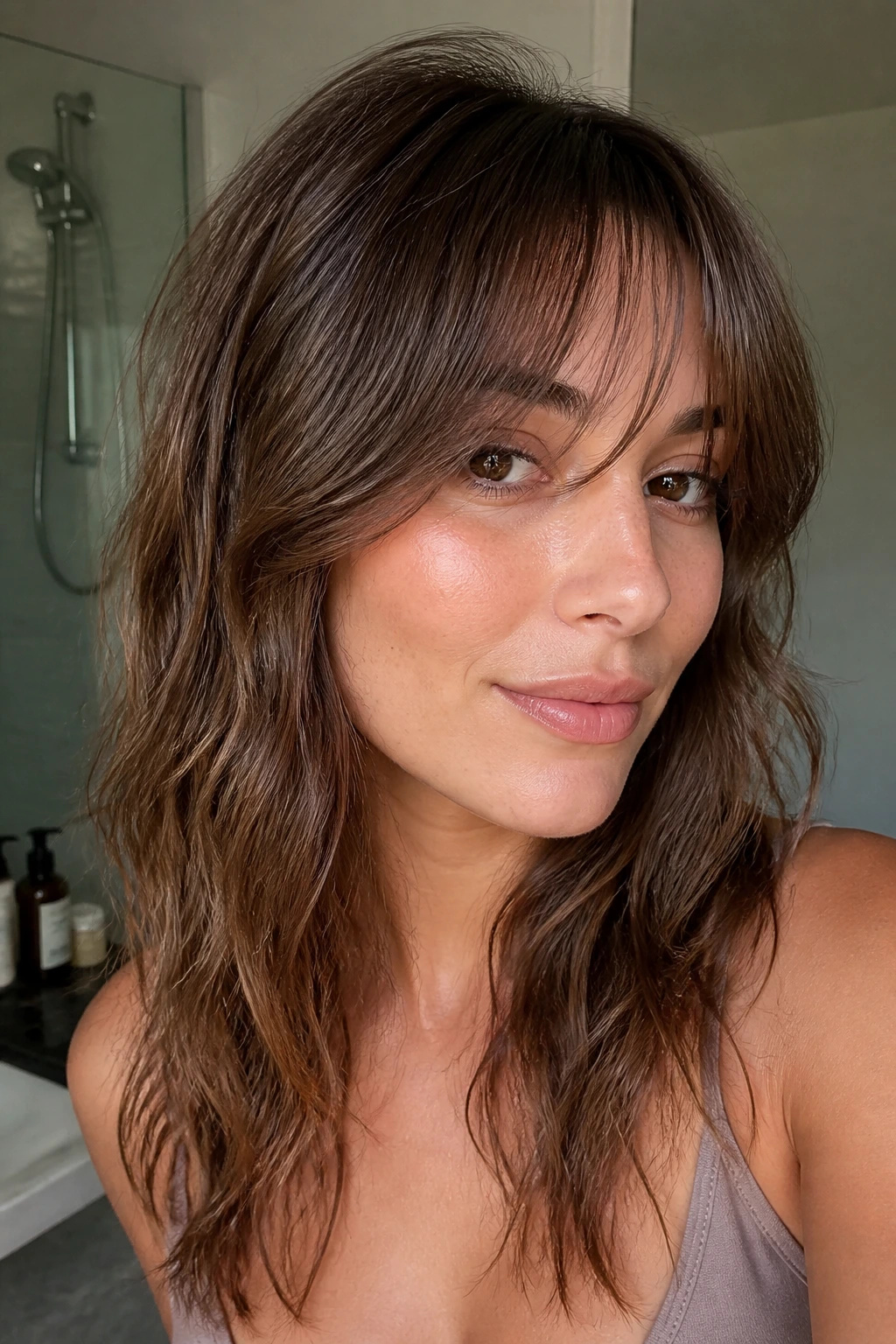
Air-dried hair needs a different kind of bang strategy. A wispy side fringe can look effortless, but only if the layers around it are cut to support the bend. Keep the fringe long enough to fall sideways as the hair dries, and ask for soft layers that encourage waves to collapse inward slightly rather than puff outward.
A little leave-in cream goes a long way here. Too much product makes the front hang in greasy strips. Too little and the fringe dries in a weird fan. I’d rather see this cut with a few bent pieces than with a perfect blowout that the hair can’t keep up with.
This one suits people who want movement but don’t want to spend twenty minutes on the front section every morning.
13. Chin-Grazing Layers With a Deep Swoop
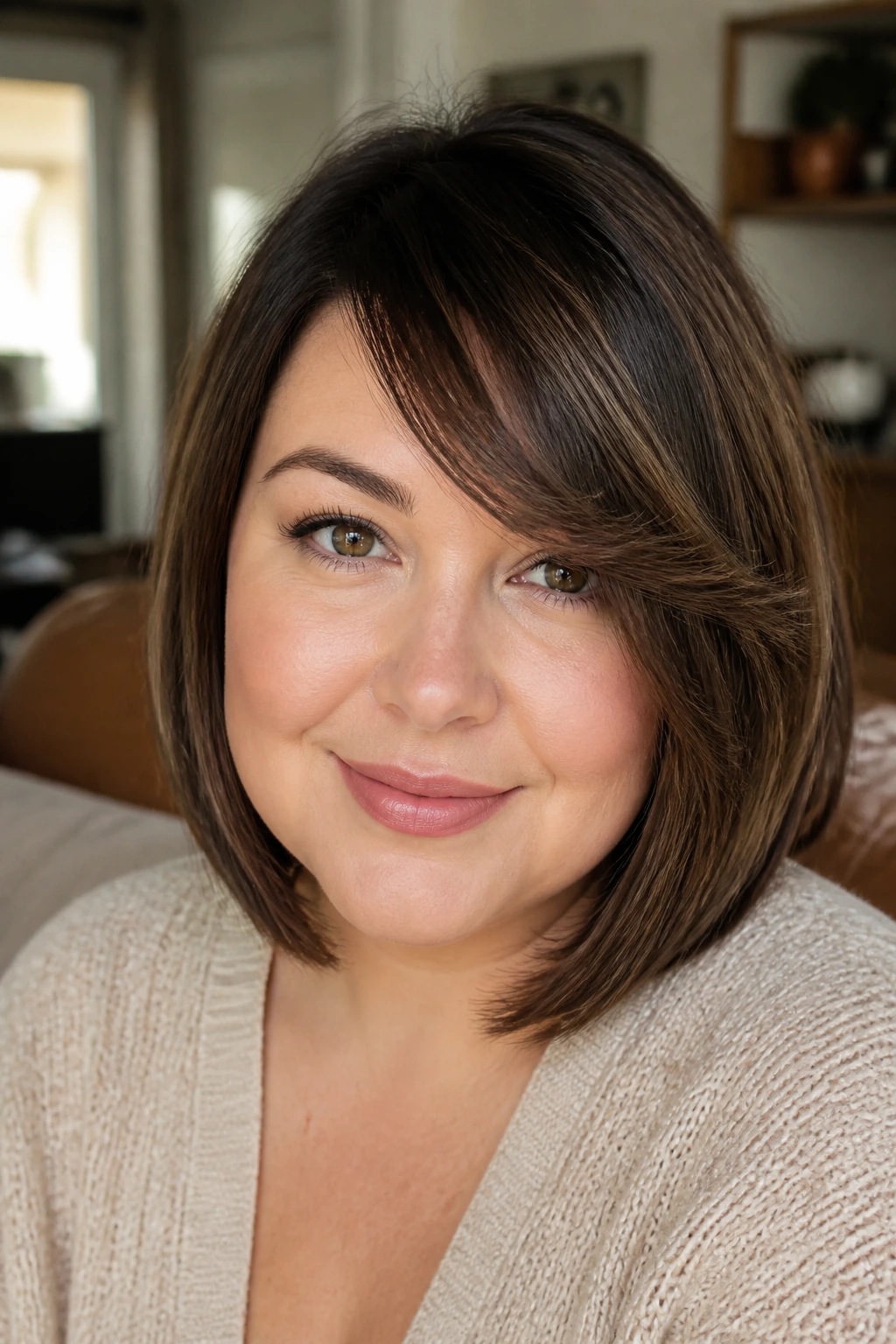
Chin-grazing layers do something sneaky and useful: they pull the visual frame downward. That’s excellent for a round face, especially when the side-swept bang starts near the temple and falls into a deep swoop across the forehead. The chin becomes the landing point, which gives the face a longer read.
The danger here is ending the shortest pieces at the cheek. Don’t. Let the front step past the widest zone and settle lower. The swoop should feel deliberate, like a line drawn from the forehead down toward the mouth. If your hair is straight, a light bend at the ends keeps the cut from looking too stiff.
This is one of the prettier options when you want softness without fuss. It has shape, but it doesn’t scream for attention.
14. Tucked-Ear Layers and a Swingy Bang
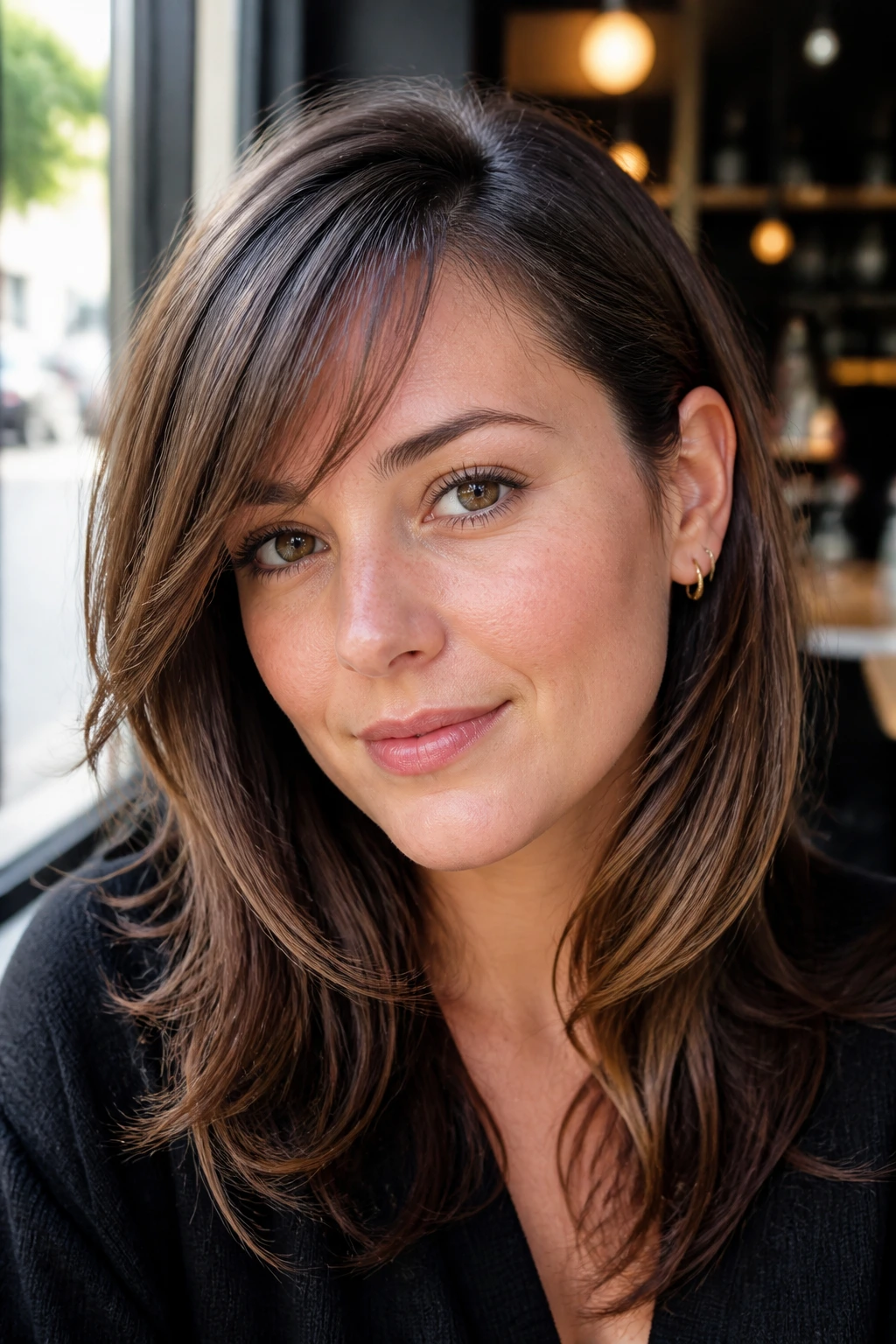
Tucking one side behind the ear is a small styling trick that changes how a round face reads. With swingy side bangs and layered lengths that fall just below the jaw, the look creates an asymmetry that keeps the eye moving. One side is open, one side is framed. That imbalance helps.
This cut is especially smart if you wear earrings or glasses. The tucked side makes room, while the bang side keeps the forehead from feeling too exposed. Keep the swingy piece long enough to brush the eyebrow, not sit on it. Short side bangs can spring in the wrong direction and fight the clean shape.
A little texture spray on the front ends gives the bang some separation. No crunch, please. Just movement.
15. Glam Blowout Layers With a Wide Part
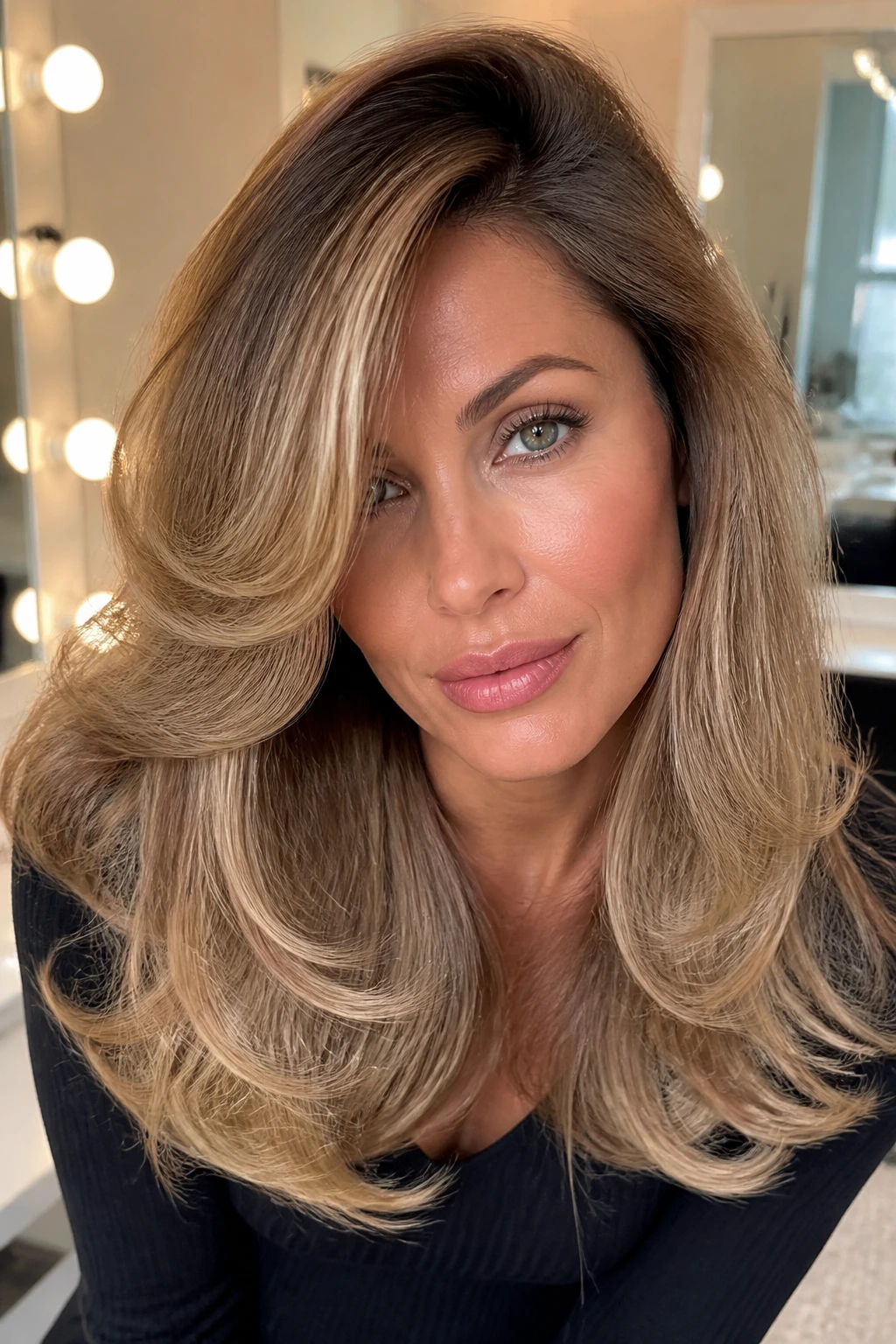
If you want a round face to look longer on purpose, a big polished blowout can do it. The trick is a wide side part and long layers that curve away from the cheekbones instead of hugging them. The bang is broad at the root, then softens into a sweep over the eye, the sort of shape that catches light on the curved edge and leaves the center of the face open.
This style is not shy. It works because the volume sits higher and farther out, not at the apples of the cheeks. That’s the whole game. If the roundness is concentrated at the top and the front stays smooth through the mid-face, the silhouette looks stretched.
A round brush, a good nozzle, and a cool shot at the end matter here. Skip the cool shot and the front falls flat by lunch.
16. Thick-Hair Shaping With Internal Layers
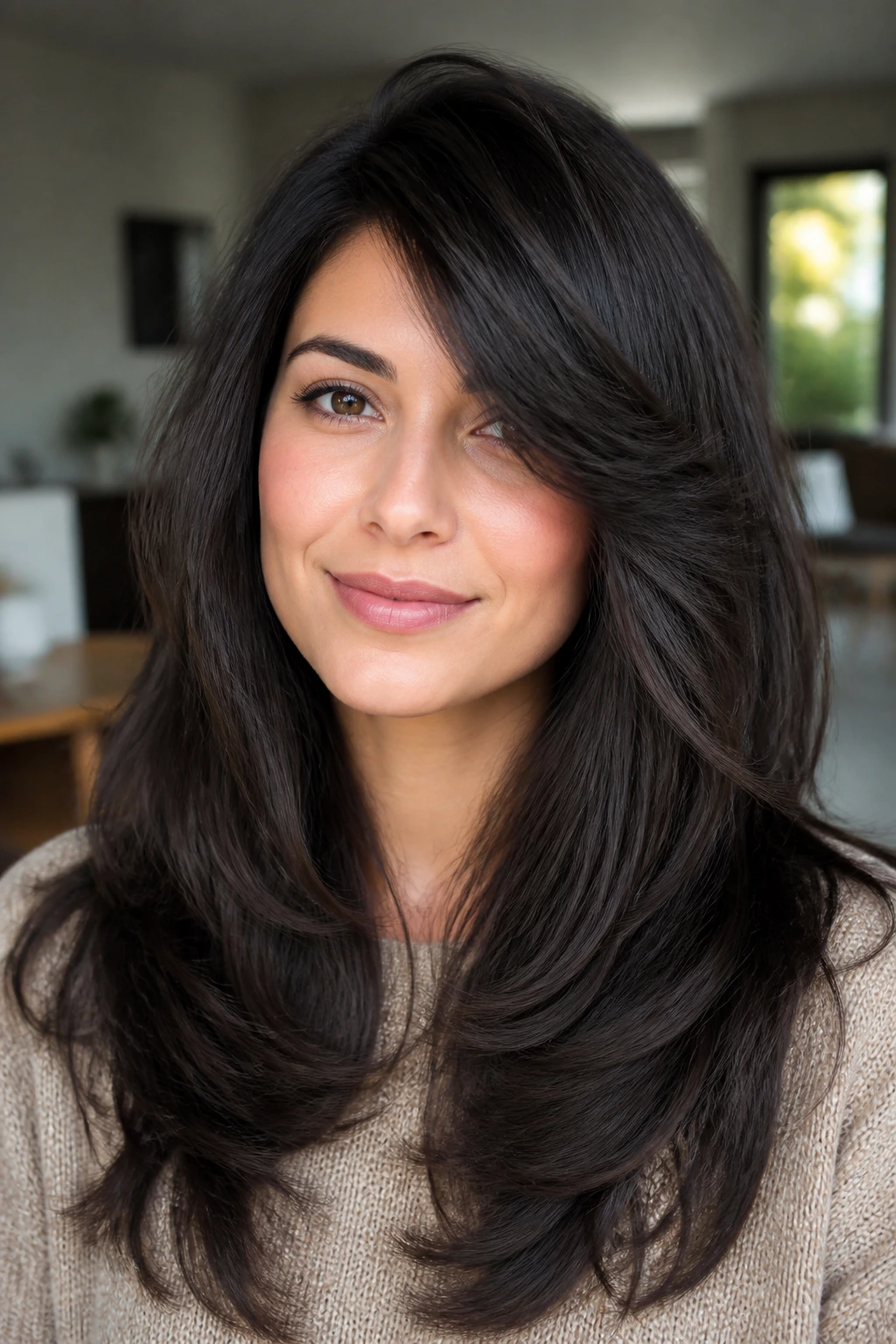
Thick hair can wear side-swept bangs beautifully, but only when the shape is carved from the inside out. Internal layers remove bulk without making the front look chopped to bits. The bang should stay full enough to sweep, while the rest of the cut loses weight through the mid-lengths.
The biggest mistake with thick hair is over-thinning the fringe. That leads to separation, frizz, and a bang that splits into two awkward curtains. Keep the front strong. Let the softness happen behind it. The side part can be deep or moderate, depending on your cowlick, but the sweep itself should stay long and controlled.
This cut looks expensive when it’s done well. It also grows out cleanly, which is a nice bonus when you’re dealing with a lot of hair.
17. Fine-Hair Lift With a Soft Side Veil
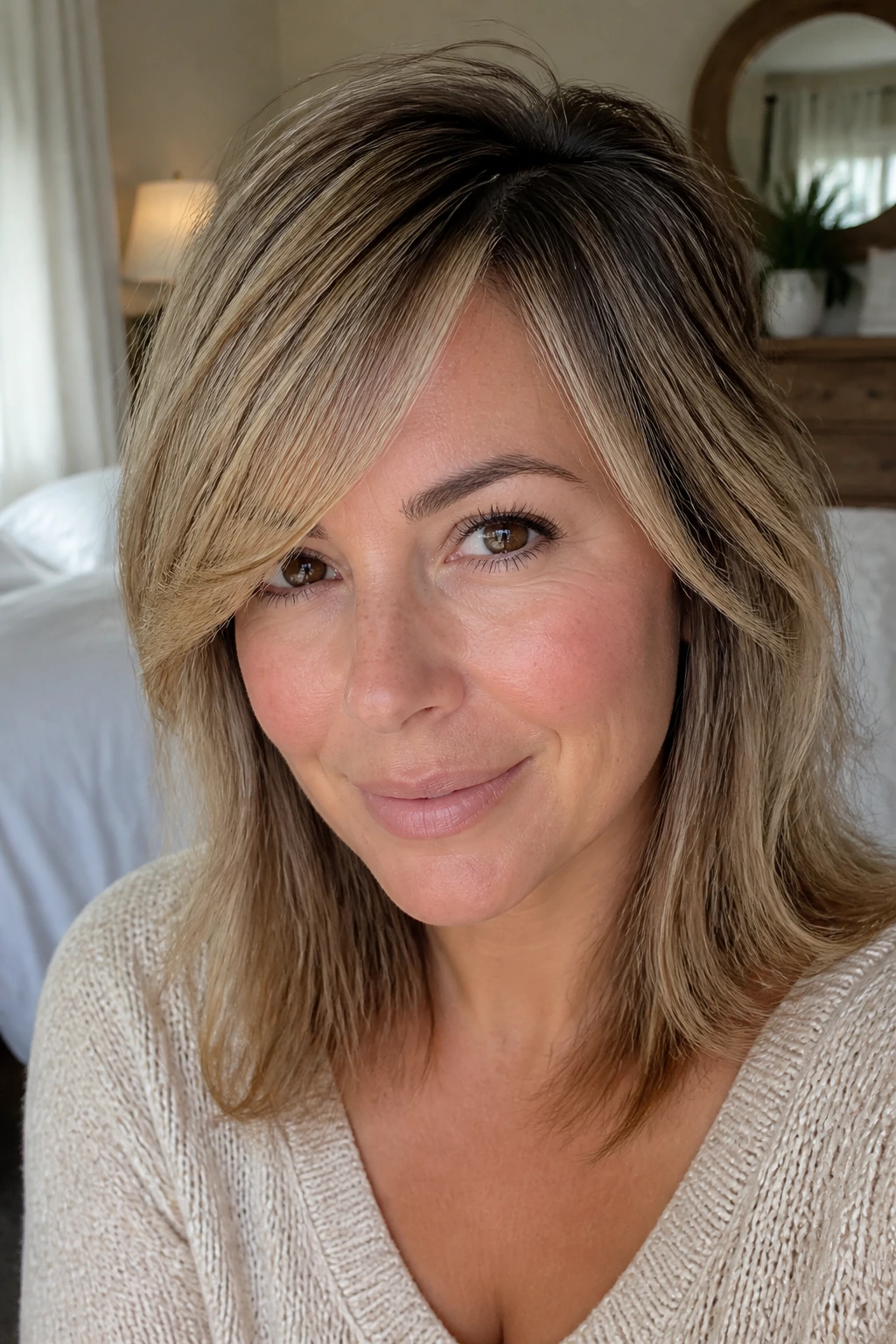
Fine hair needs a different promise. Not drama. Lift. A soft side veil gives the forehead coverage without weighing the front down, and the layers should be kept light enough to move but not so airy that they disappear. The part can’t be too deep, or the hair collapses against the scalp.
A root-lift spray at the front, applied before blow-drying, helps the bang hold its shape. The key is to dry the root up and over first, then let the ends fall into place. If you try to style fine fringe only after it’s dry, it usually just sits there and sulks.
This is a good pick when you want fullness around the face without a heavy haircut. It’s soft. It’s neat. It doesn’t need a lot of product to behave.
18. Curved U-Shaped Cut With a Light Fringe
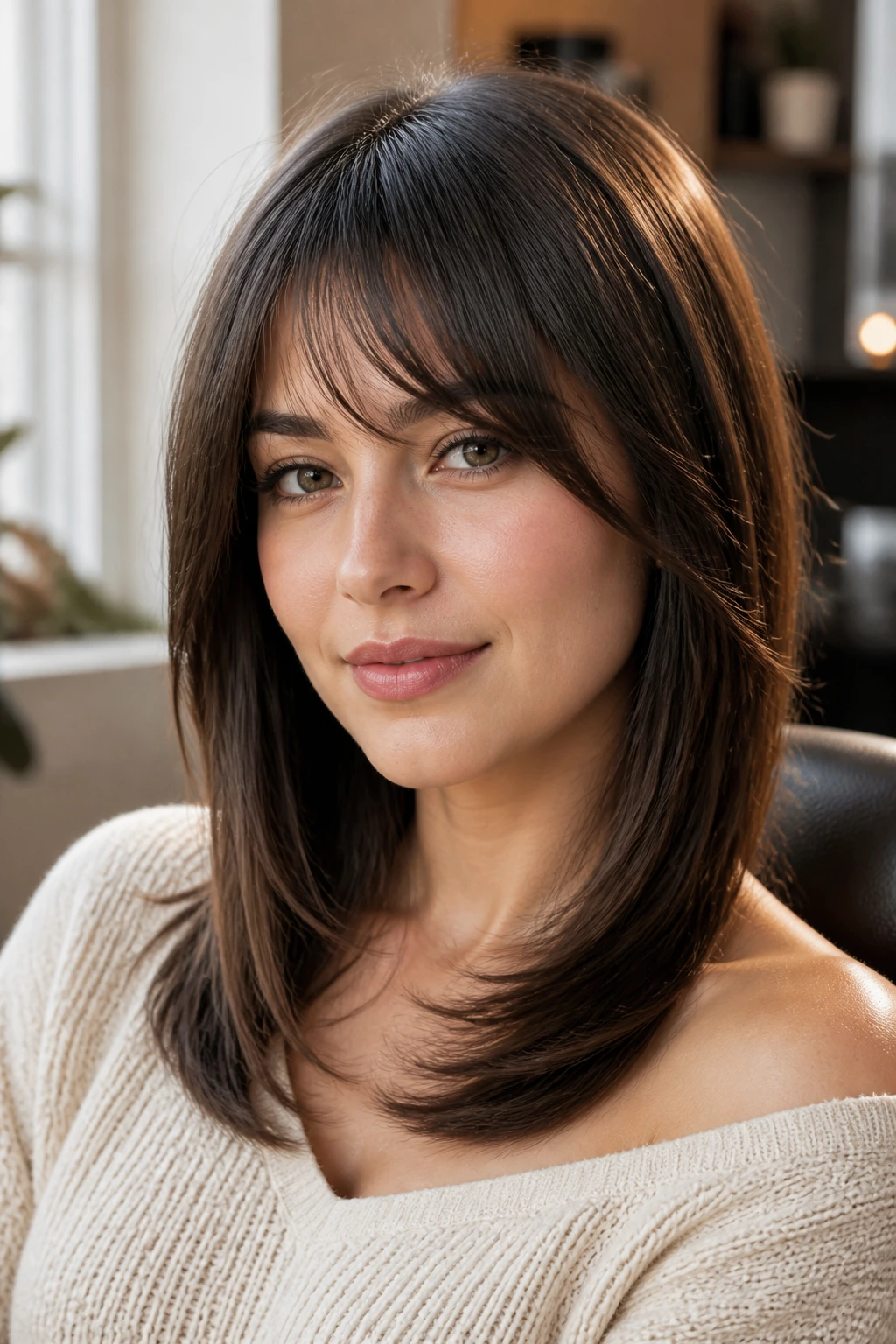
A U-shaped cut sounds subtle because it is. The back stays longer, the sides step up a little, and the light side fringe gives the front just enough presence. On a round face, the U shape helps because the longest length sits below the jaw, which keeps the outline from circling the face.
The fringe should not be too sparse. A few airy pieces are fine, but the line still needs enough density to sweep. I’d ask for the shortest bit to land near the outer brow and the longest around the cheekbone, with soft layers that curve toward the collarbone.
This is one of those cuts that looks calm in the best sense. No hard edges. No puffy corners. Just shape.
19. Modern Shag With Side Bangs and Shattered Ends
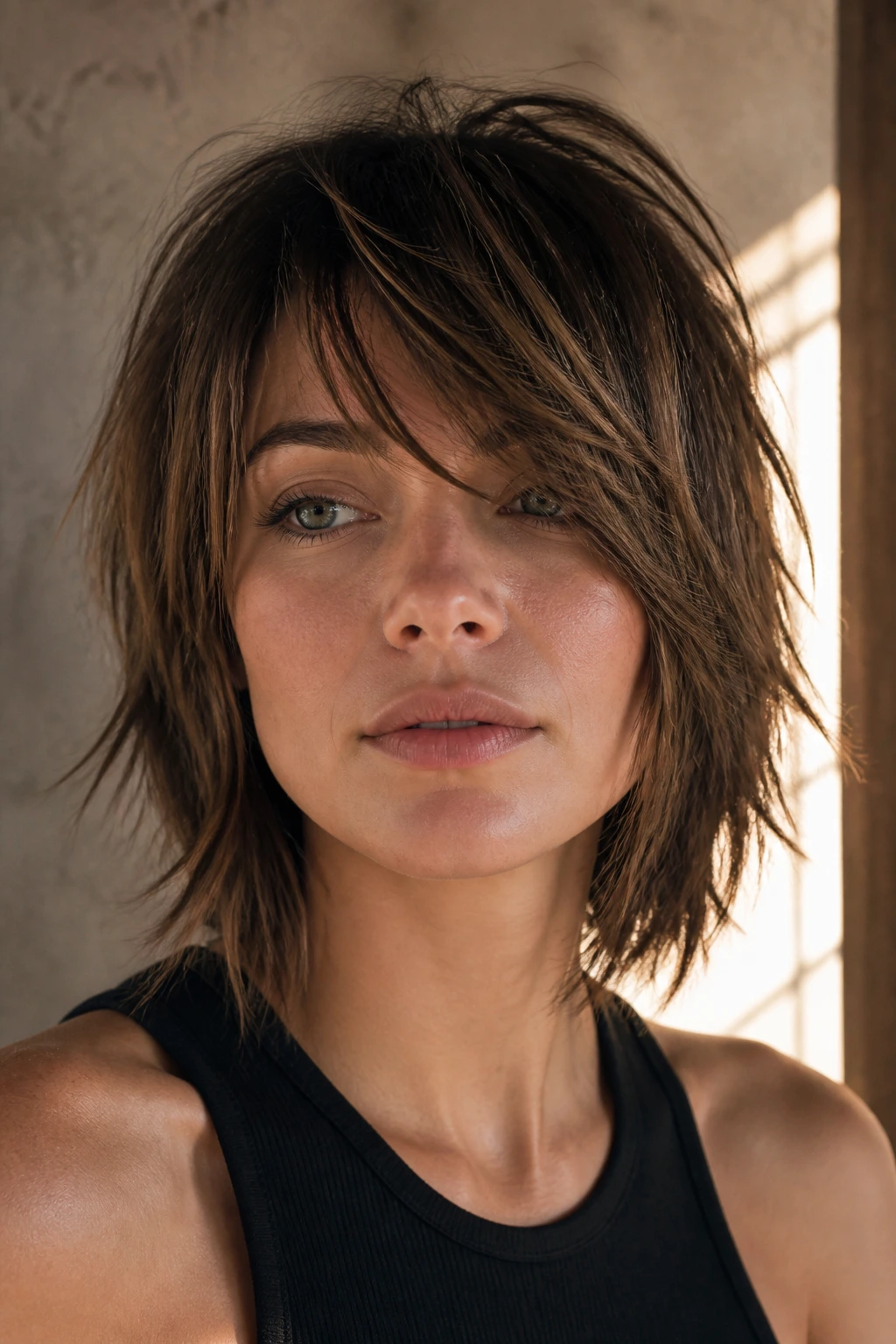
A modern shag can be gorgeous on a round face if the shattering happens at the ends, not right under the cheek. The side bangs should be longer and more directional, sliding across the forehead instead of flopping forward. The rest of the cut can be choppy, but the outline should still lean vertical.
What to watch for
Too much texture at the front can make the face look wider. Keep the shortest pieces away from the apple of the cheek. Let the layers break up around the jaw and neck instead.
This style loves dry texture spray and a bit of finger styling. It’s meant to look lived in, not polished to death. If you hate a haircut that needs a lot of brushwork, this one might be your lane.
20. Face-Framing Lob With Diagonal Bang Pieces
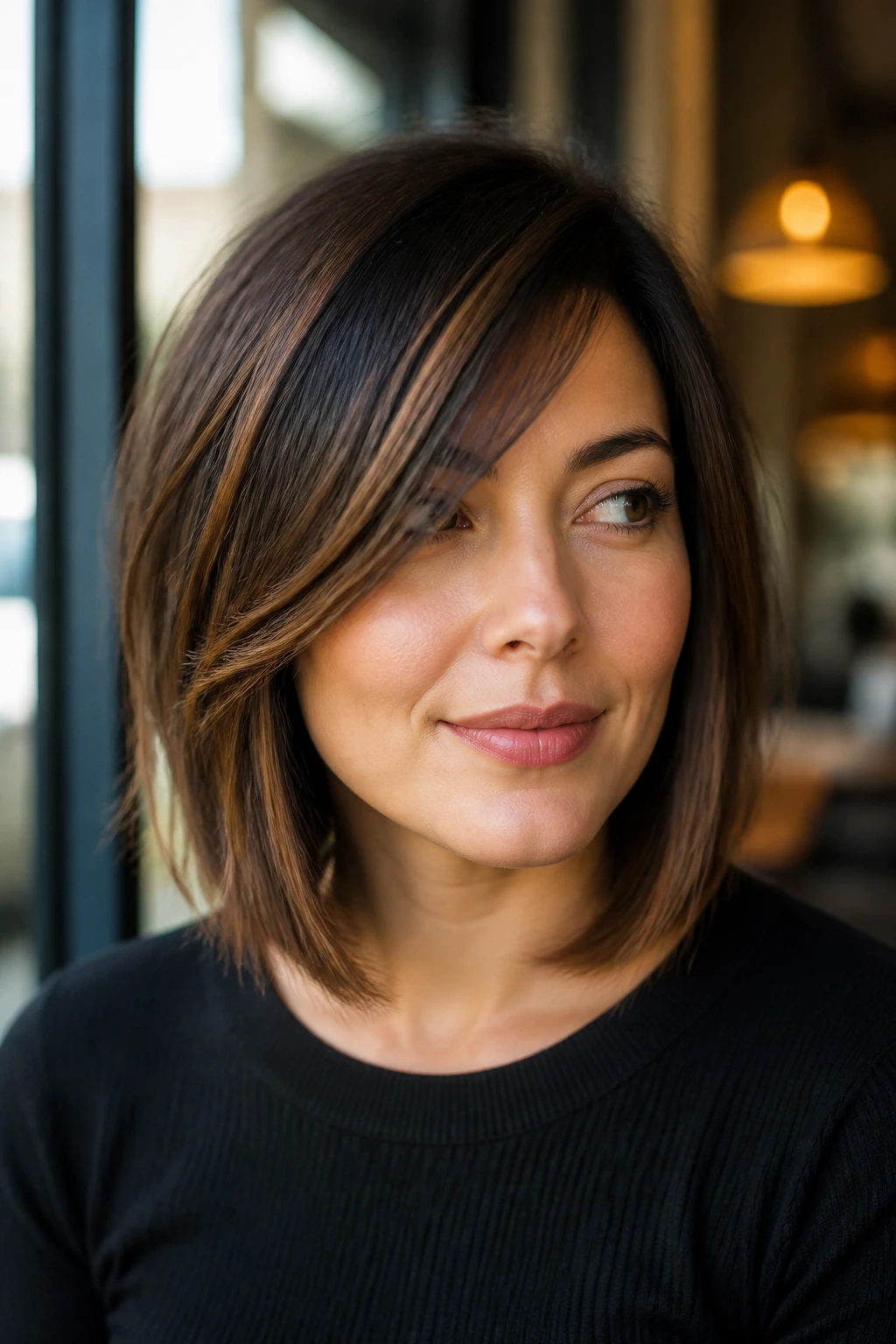
This is one of the safest, smartest shapes in the whole bunch. The lob gives a clean base, the diagonal bang pieces cut across the forehead, and the face-framing layers open down toward the chin. It’s easy to wear straight, waved, or bent under at the ends.
What keeps it from looking basic is the angle. The bang pieces should not be symmetrical. One side can sit a touch fuller, the other a touch longer, so the eye moves instead of parking in the center. That subtle asymmetry is flattering on a round face because it creates length without looking forced.
If you’re nervous about bangs, start here. It’s forgiving. It also grows out into decent layers, which saves you from staring at a weird in-between phase.
21. Soft Pixie-Bob With a Long Fringe Sweep
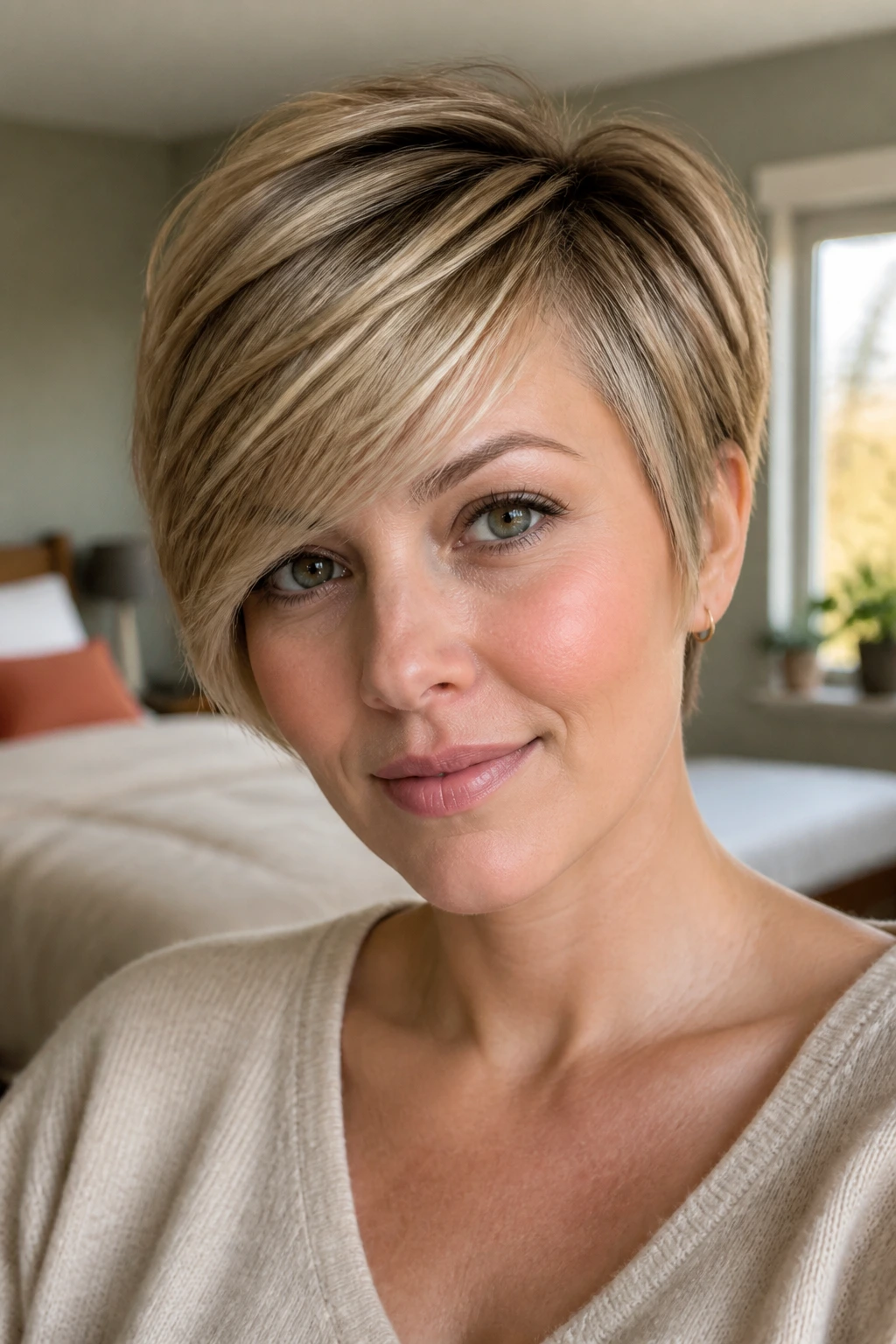
Short hair can work on a round face, but the front has to do the shaping. A soft pixie-bob with a long fringe sweep keeps the sides neat and the top elongated. The bang should be long enough to brush across the forehead and blend into the top layers, which stops the cut from feeling too boxy.
The back can be cropped a little shorter, but the crown should stay light and movable. That gives the illusion of height. Height helps. A lot. Especially when the face is full through the cheeks.
This is a cut for someone who likes a little edge and does not mind regular trims. It’s tidy in the morning, but it still has personality.
22. Spiral Curl Layers With a Stretching Side Part
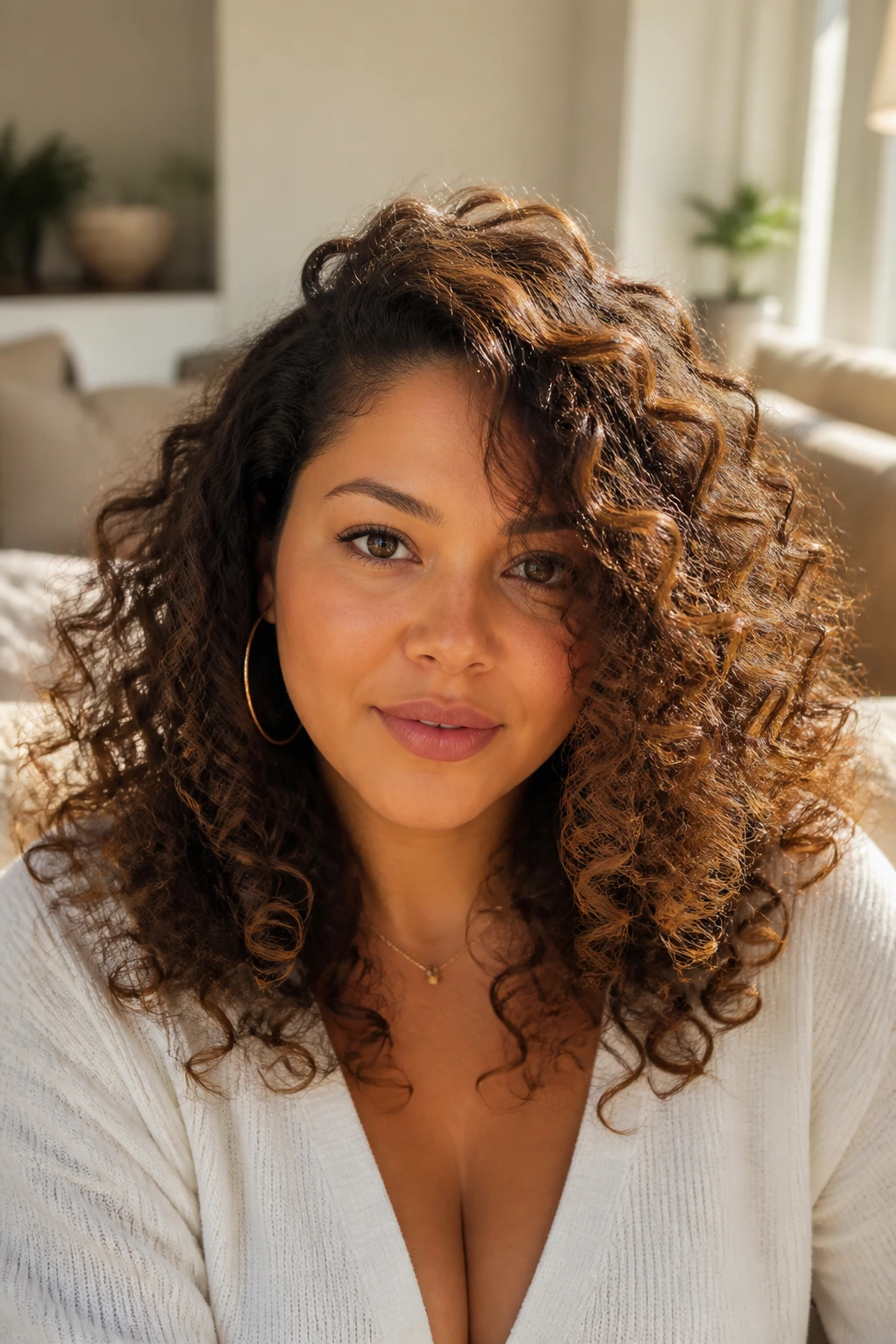
Curly hair with a round face looks best when the part and fringe stretch the shape a little. A side part that starts off-center and drifts back toward the crown gives the curls space to fall diagonally. The bang pieces should be longer, then layered into the front curls so they don’t spring up too high.
The layers need to respect the curl pattern. Too much cutting around the face creates a halo. Too little and the whole cut feels square. A good stylist will carve the shape so the curls sit lower around the cheeks and higher near the crown.
If your curls shrink a lot, cut the fringe longer than you think. Then revisit after drying. Curly bangs are a trust exercise.
23. Feathered Temple Sweep With Midlength Layers
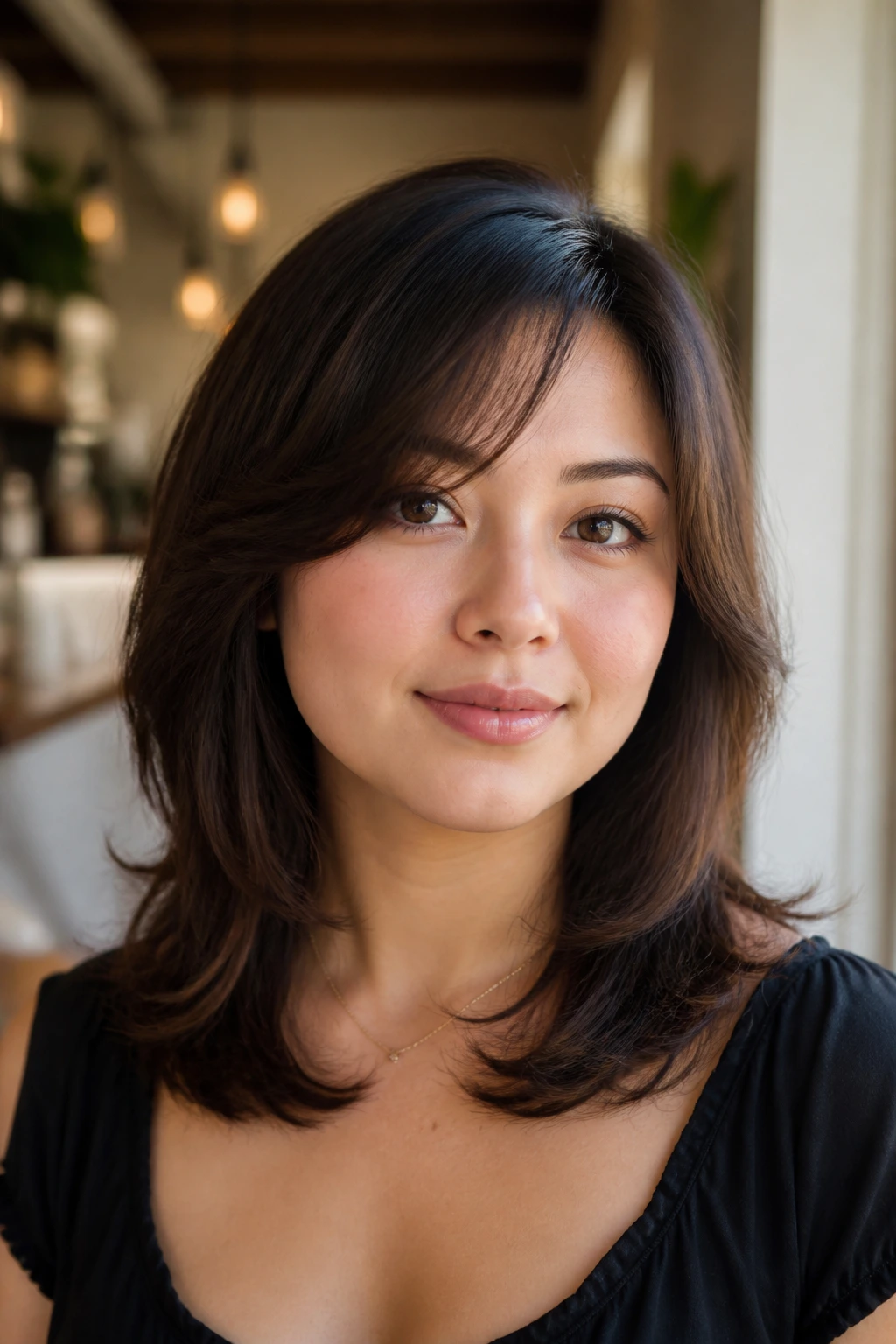
This one is more subtle than the flashier styles, and I like that. The bang begins near the temple, feathers softly across the forehead, and blends into midlength layers that skim the shoulders. The face stays open, but not bare. That balance matters on a round face, where too much facial exposure can make the features feel even fuller.
The feathering should be soft and directional, not frayed. Ask for a clean perimeter with textured ends. The goal is to make the front behave like a breeze moved it there, not like a razor attacked it.
It’s a nice choice for someone who wants a grown-up, wearable version of side-swept fringe. Nothing fussy. Nothing trendy-for-the-sake-of-it.
24. Carved Side Part and Polished Layers
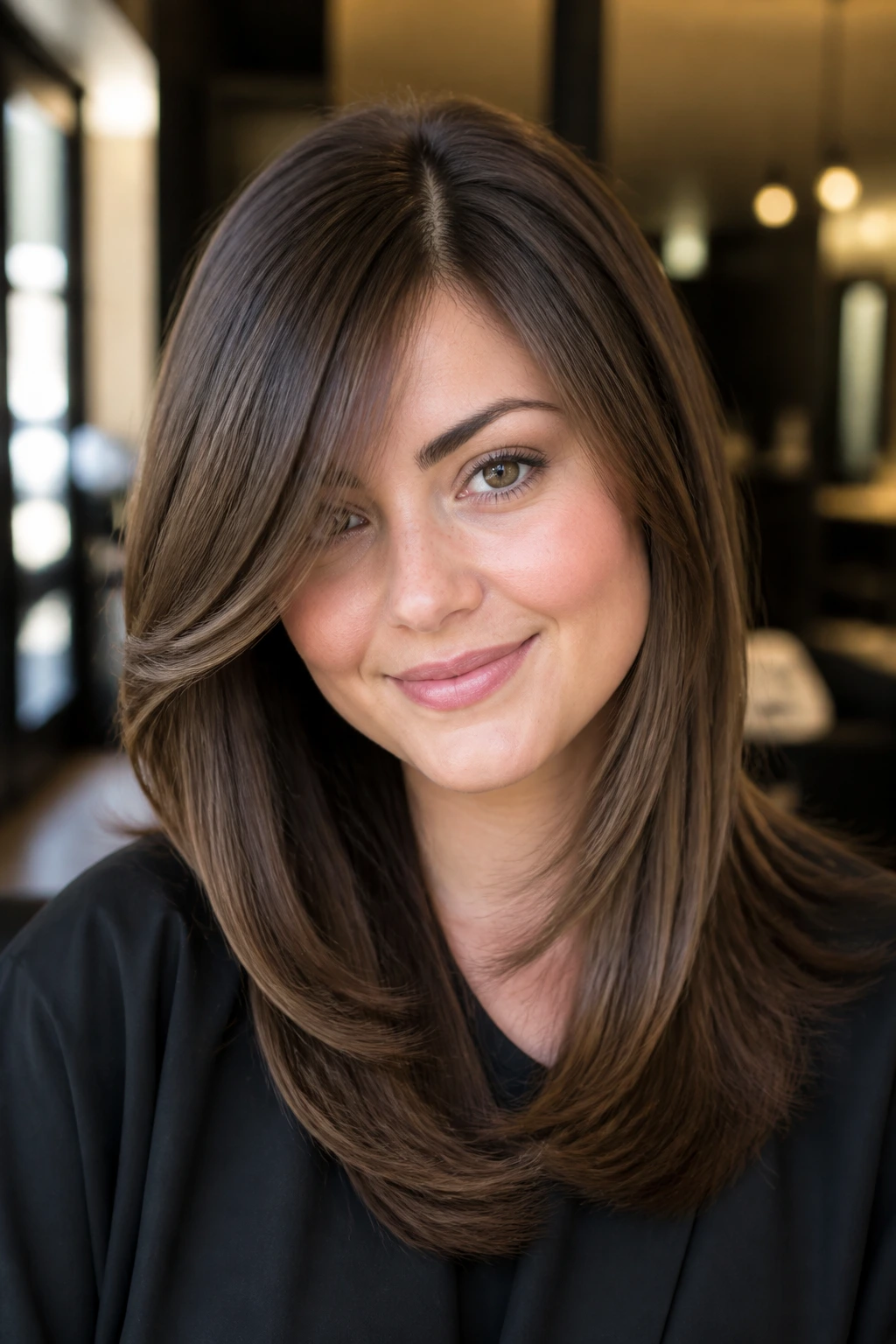
A carved side part gives this haircut structure from the start. The front section is directed across the forehead, the layers are polished and smooth, and the ends fall in a neat line below the cheek. On a round face, that polished control can be more flattering than loose texture because it creates a clean vertical read.
This version suits straight hair especially well. The bang should be cut long enough to skim the brow and then melt into the front layer. If the fringe is too short, the shape loses its elegance and starts looking perky. Perky is not the goal here.
A light smoothing cream and a flat brush are usually enough. You don’t need a lot of fuss to keep it looking intentional.
25. Long Cascading Layers With a Floating Bang
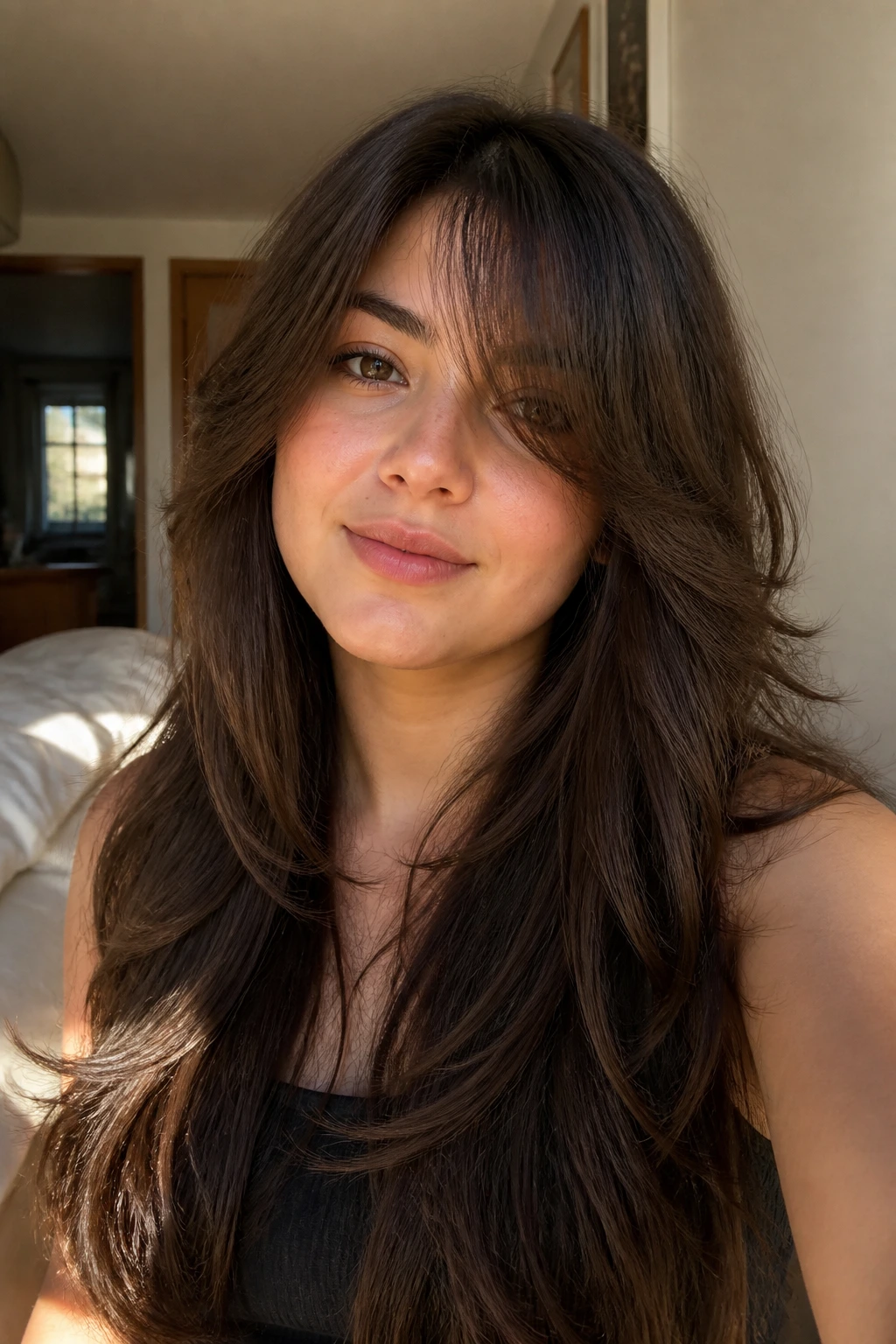
Long hair can swallow a round face if it’s one heavy curtain. Floating bangs fix that. The front pieces stay light and movable, almost suspended over the forehead, while the long layers cascade down well below the chin. The face gets framed, but the eye is pulled down the length of the hair, which is exactly where you want it.
Why this one lasts
Long layers give you room to shift the part, tuck one side, or wear the fringe with a bend. That flexibility matters when your face shape is fuller through the middle. The style doesn’t fight your hair’s natural fall; it works with it.
A lot of long-haired people think bangs mean commitment. Not here. This version can be pinned back, swept aside, or blended in once it grows a little. It’s the least fussy long-hair option on the list.
Why the Diagonal Line Flatters a Round Face
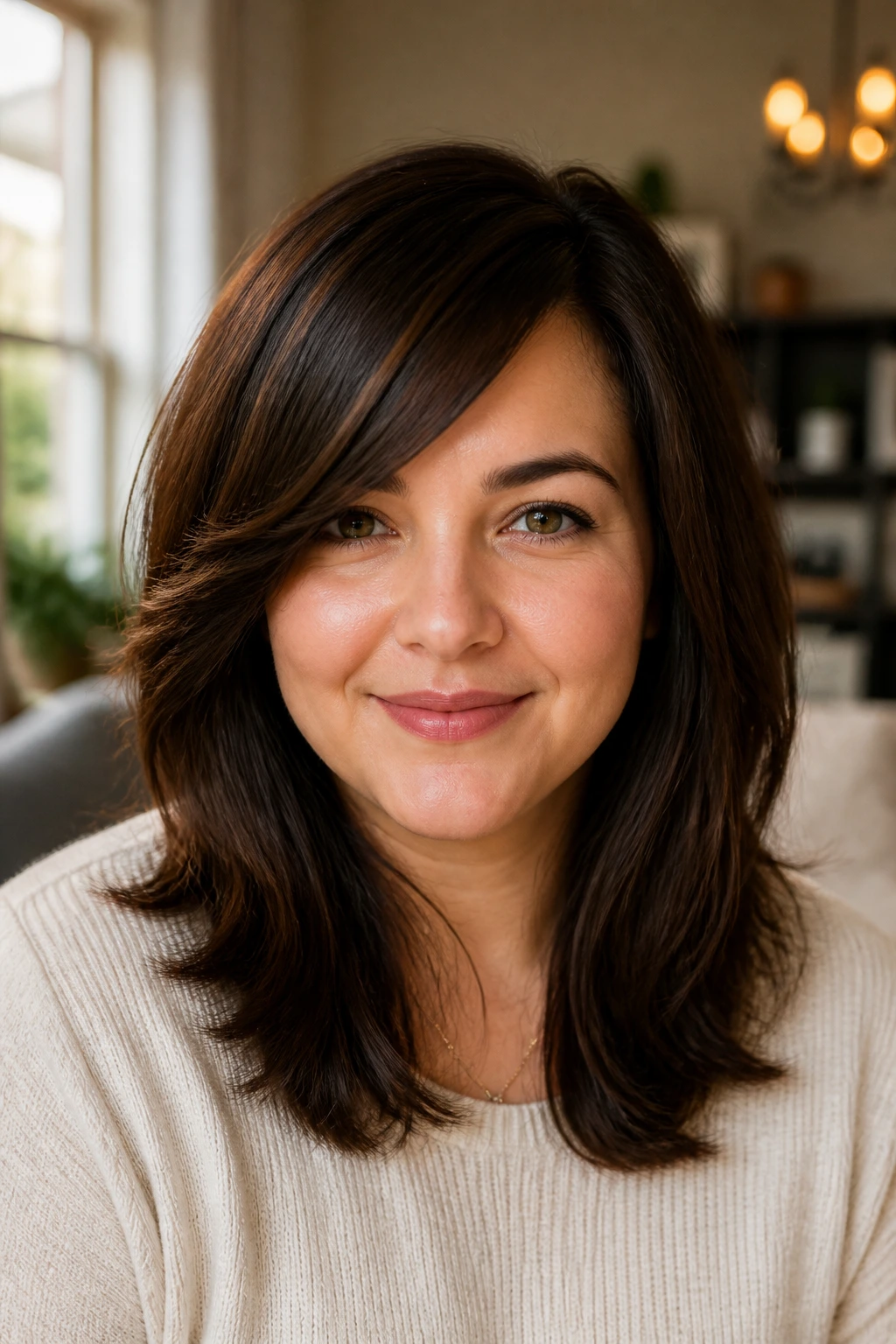
A round face usually has soft width through the cheeks and a shorter visual distance from forehead to chin. That doesn’t make the face hard to style. It just means the haircut has to create direction. A side-swept bang is good at that because it draws a diagonal across the forehead, which interrupts the roundness and keeps the eye moving.
Soft layers do a second job. They stop the sides from collecting bulk at cheek level. That’s the spot that gets people into trouble. A lot of cuts look fine standing still, then puff outward once the hair dries and the round face suddenly looks wider. Keep the volume lower, keep the front longer, and the shape reads cleaner.
The best part is that none of this has to look forced. A good side-swept fringe can feel casual, even a little undone. The shape is doing the work quietly.
Picking the Right Bang Length for Brow, Cheekbone, and Jaw
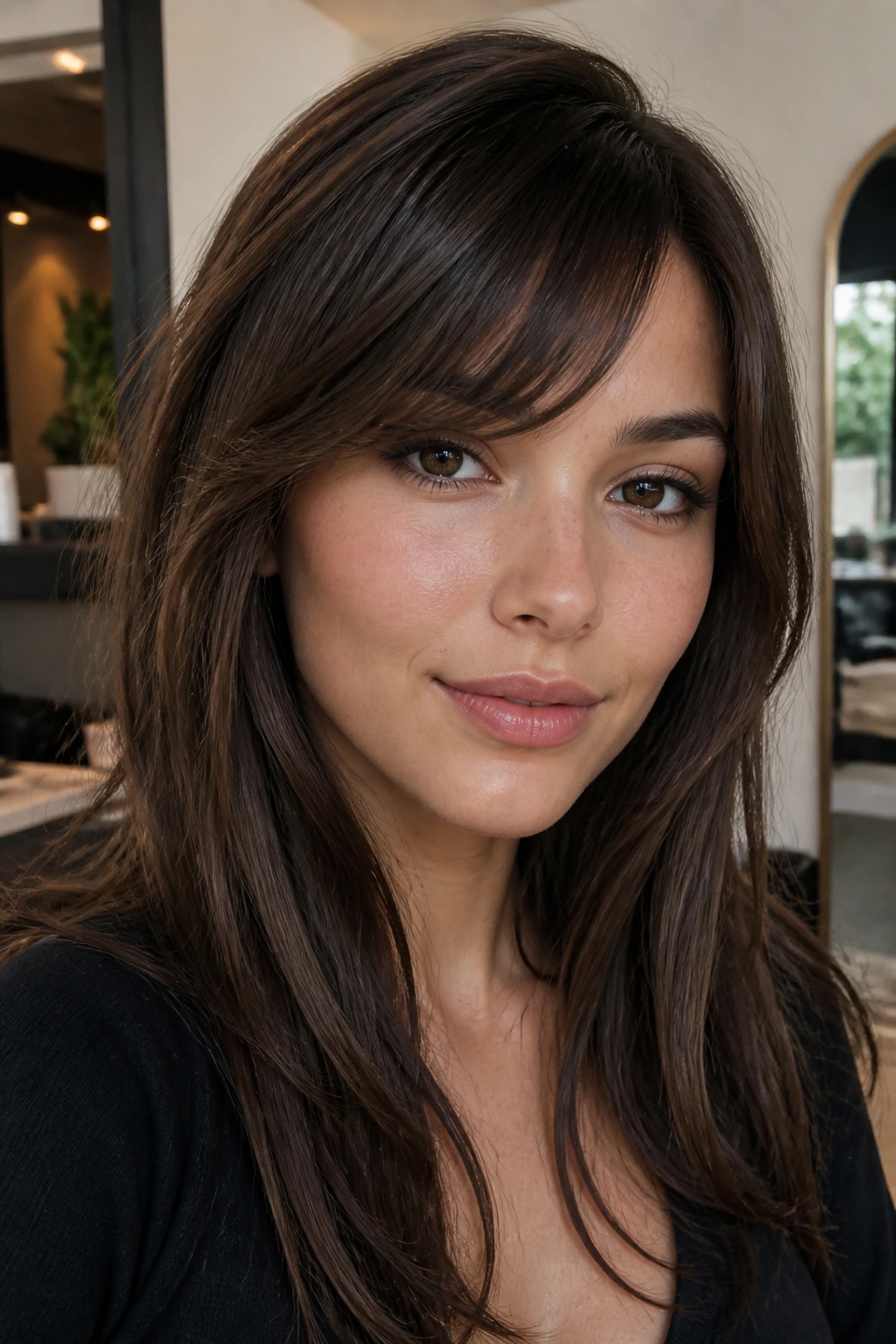
Bang length changes everything. A fringe that ends at the brow gives a different effect from one that lands at the cheekbone, and a cheekbone bang behaves differently again once it reaches the jaw. For round faces, I usually like the shortest point to stay near the outer brow or temple, then let the bang taper down. That keeps the center of the face open.
If your cheeks are very full, a bang that ends right there can outline the width you were trying to soften. It’s a funny little detail, but it matters. The safest landing zone is often the cheekbone or just below it. That gives the front section room to drape without sticking out.
Jaw-length front pieces can work beautifully on longer cuts, especially if you want more drama. Shorter pieces can work too, but only when they’re soft and move sideways. Hard, short, square bangs on a round face are usually a bad bargain.
Straight, Wavy, and Curly Hair Need Different Bang Behavior
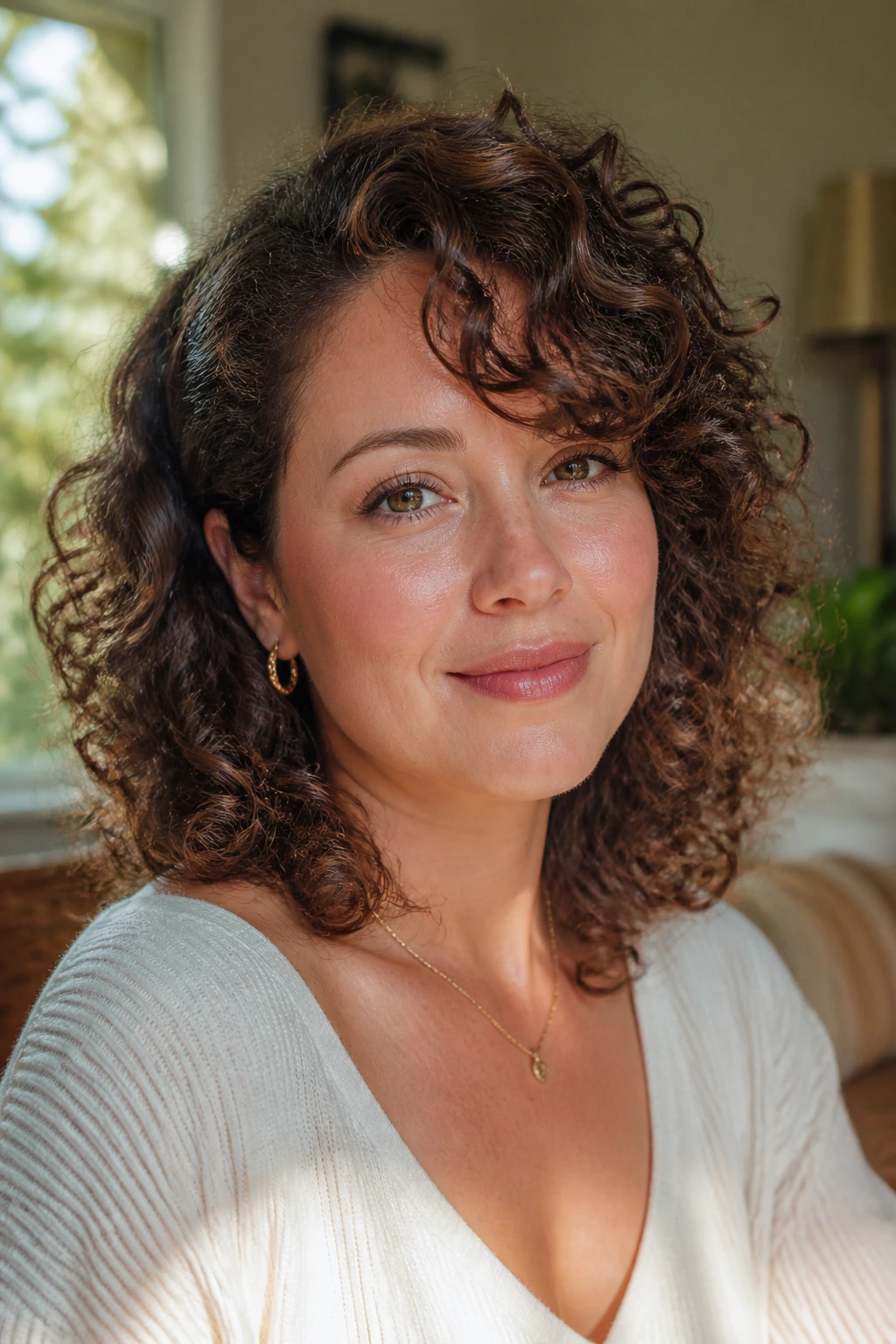
Straight hair shows every line, which is both a blessing and a trap. It can make a side-swept bang look crisp and clean, but it also means a bad cut sits there like a warning sign. The layers need a little bevel or bend so they don’t fall flat against the cheeks.
Wavy hair is often the easiest to work with because it already wants to move. The issue is puffing. Too much layering near the front and the wave spreads outward instead of down. Keep the front long enough to swing, and the shape stays controlled.
Curly hair needs the most patience. The fringe should be cut dry or nearly dry, and the stylist needs to respect shrinkage. If the curls spring up higher than expected, the face opens in the wrong place. Get the length right, and curls can give this look the softest, most face-friendly finish of all.
The Styling Routine That Keeps the Fringe Swept Instead of Puffy
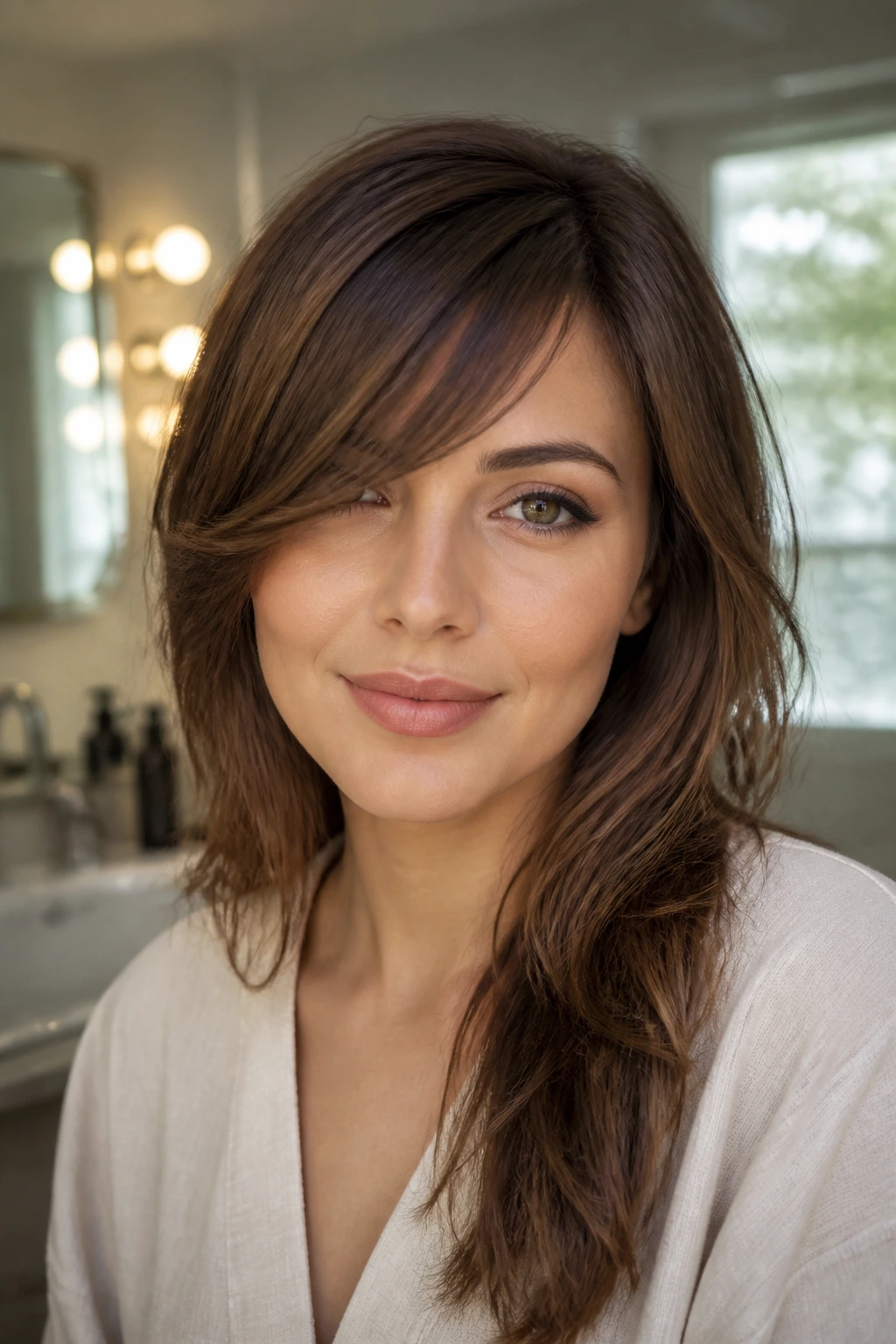
The front of the haircut sets the mood for the whole face. If the fringe dries the wrong way, the rest of the layers can’t save it. I’d start with a heat protectant and a small round brush or vent brush, then direct the bang across the forehead while the root is still damp. Hold it there for a few seconds with warm air, then finish with cool air to lock the bend.
Don’t overdo product at the front. A pea-sized amount of mousse or cream is enough for most hair types. Too much creates separation and weight, which sounds helpful until the bangs start clumping or collapsing.
And yes, if you have a cowlick, you’ll probably need to dry against it first. Annoying? A little. Worth it? Absolutely. The front section behaves much better when you teach it what direction to take before it has a chance to dry on its own.
Essential Tools and Products for These Looks
-
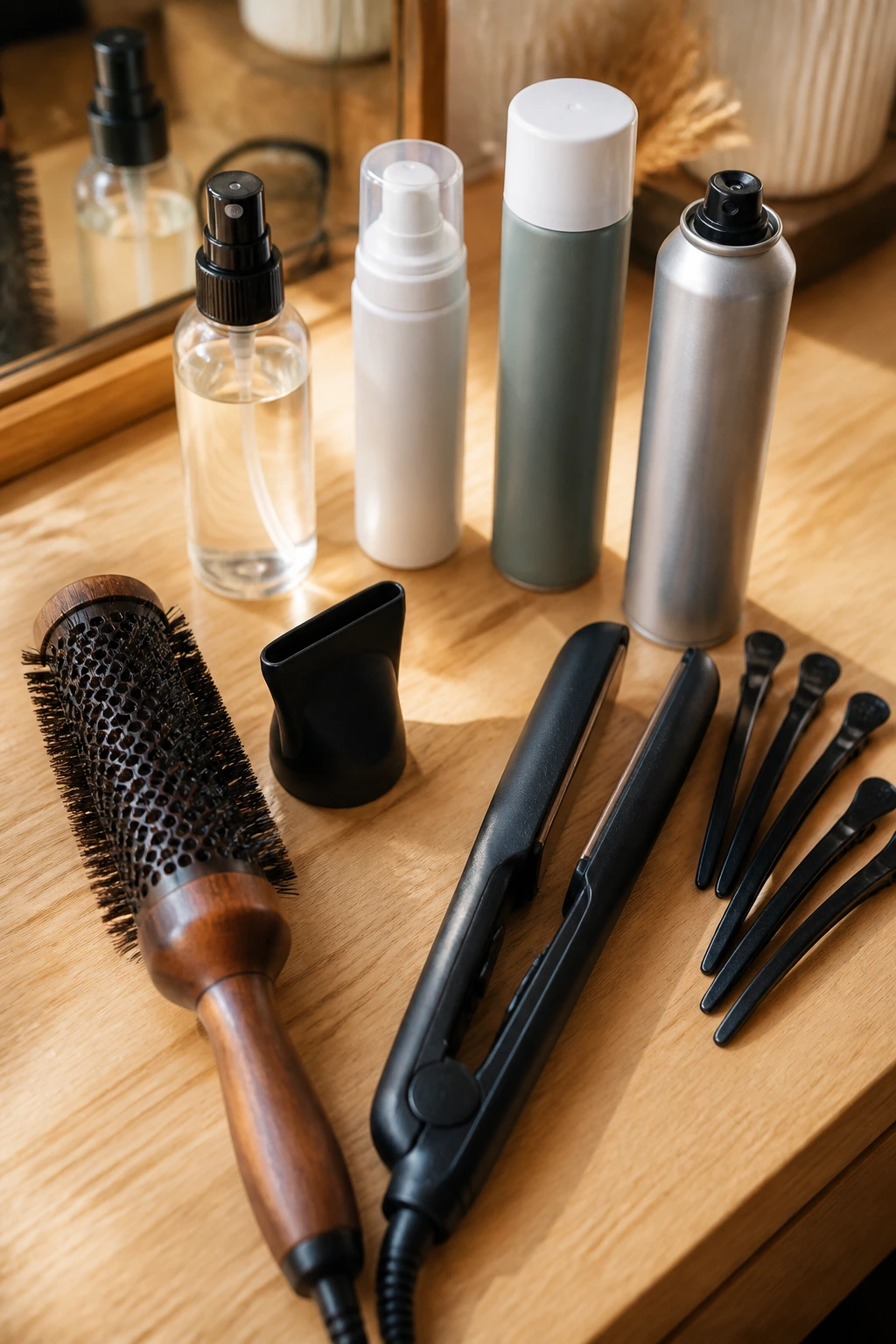
Round brush, 1 to 1.5 inches: Best for creating a soft bend in side bangs without making them curl into a tube.
-
Blow dryer with a concentrator nozzle: Directs airflow so the fringe sweeps where you want it instead of blowing apart.
-
Heat protectant spray: Keeps the front layers from frying when you touch them with a brush or iron every day.
-
Lightweight mousse or root-lift spray: Helps fine or flat hair keep a little lift at the root without turning sticky.
-
Flat iron with rounded edges: Useful for subtle bends on straight hair and for smoothing a stubborn front piece.
-
Dry shampoo: Good for fringe sections that get oily faster than the rest of the head. They usually do.
-
Texturizing spray: Best on piecey, shaggy, or airy cuts where you want separation instead of slickness.
-
Duckbill clips: Handy for setting the front while it cools, especially after a blow-dry.
What to Tell Your Stylist Before the First Snip
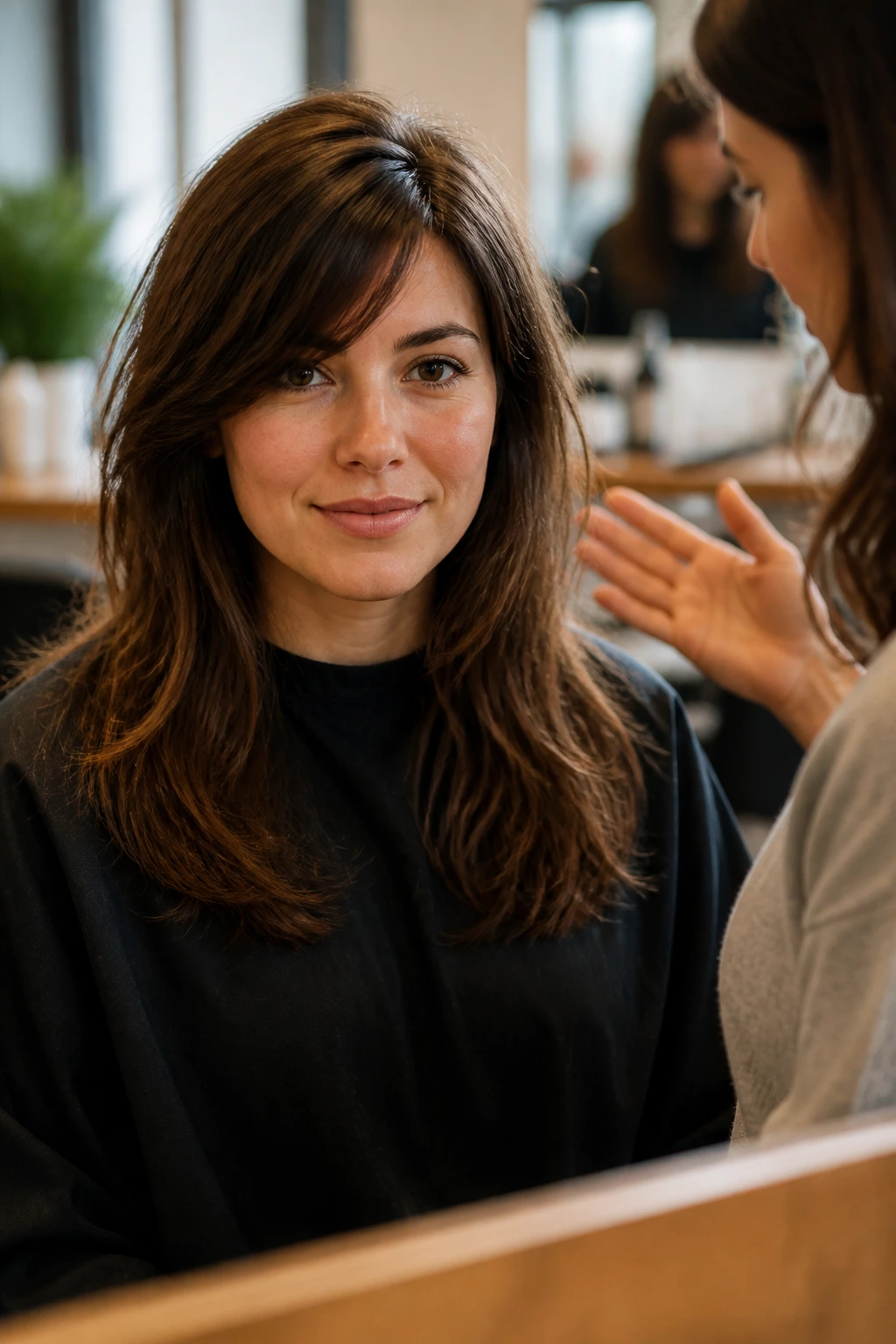
Bring photos. Two or three, if you can. One from the front, one at a slight angle, and one that shows the texture you actually want. Then say where your hair naturally parts, where your cowlick sits, and how much time you’re willing to spend on the front each morning. That last part matters more than people admit.
Ask for the shortest piece to land somewhere specific: outer brow, temple, cheekbone, or just below the cheek, depending on your face and hair density. Ask where the soft layers begin too. If the answer is “right at the cheek,” pause and rethink. A round face usually likes layers that start lower.
If you wear glasses or clip your hair behind one ear a lot, tell them. It changes the balance of the fringe. Small details like that can make a good haircut behave better in real life.
Small Tweaks That Make the Style Wear Better Every Day
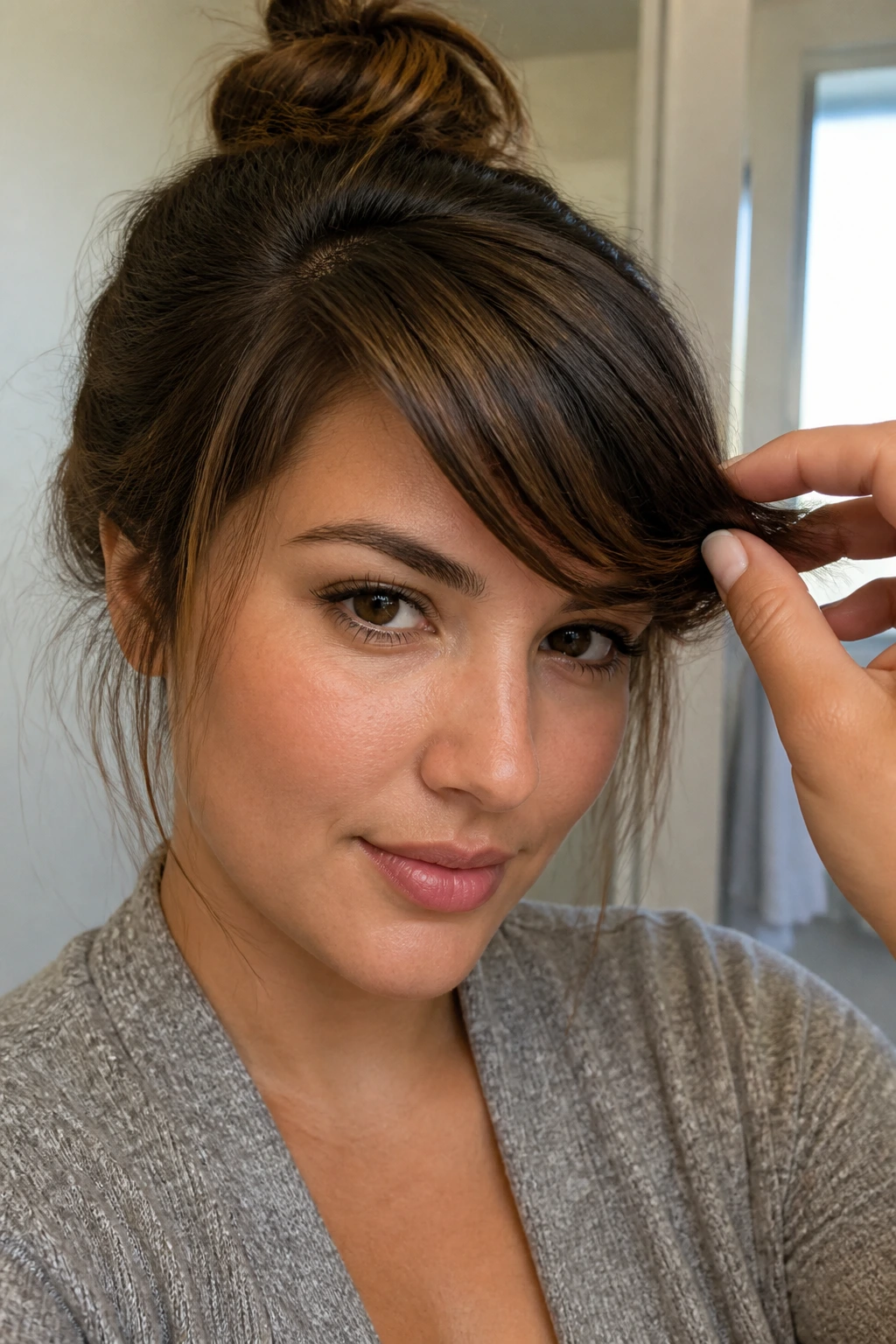
Root Lift: Dry the front section against the part first, then sweep it over at the end. That gives the bang a memory instead of a flop.
Texture Control: If your hair frizzes near the face, use a tiny bit of cream only on the mid-lengths and ends. Keep the roots light so the front doesn’t collapse.
Shape Memory: Clip the bang in the direction you want for five minutes while you do makeup or lotion. It sounds minor. It isn’t.
Make-It-Yours: If you have a stronger forehead swirl, move the part a quarter inch farther over and keep the bang slightly longer. Fighting the growth pattern is a losing game.
Common Mistakes That Add Width Instead of Length
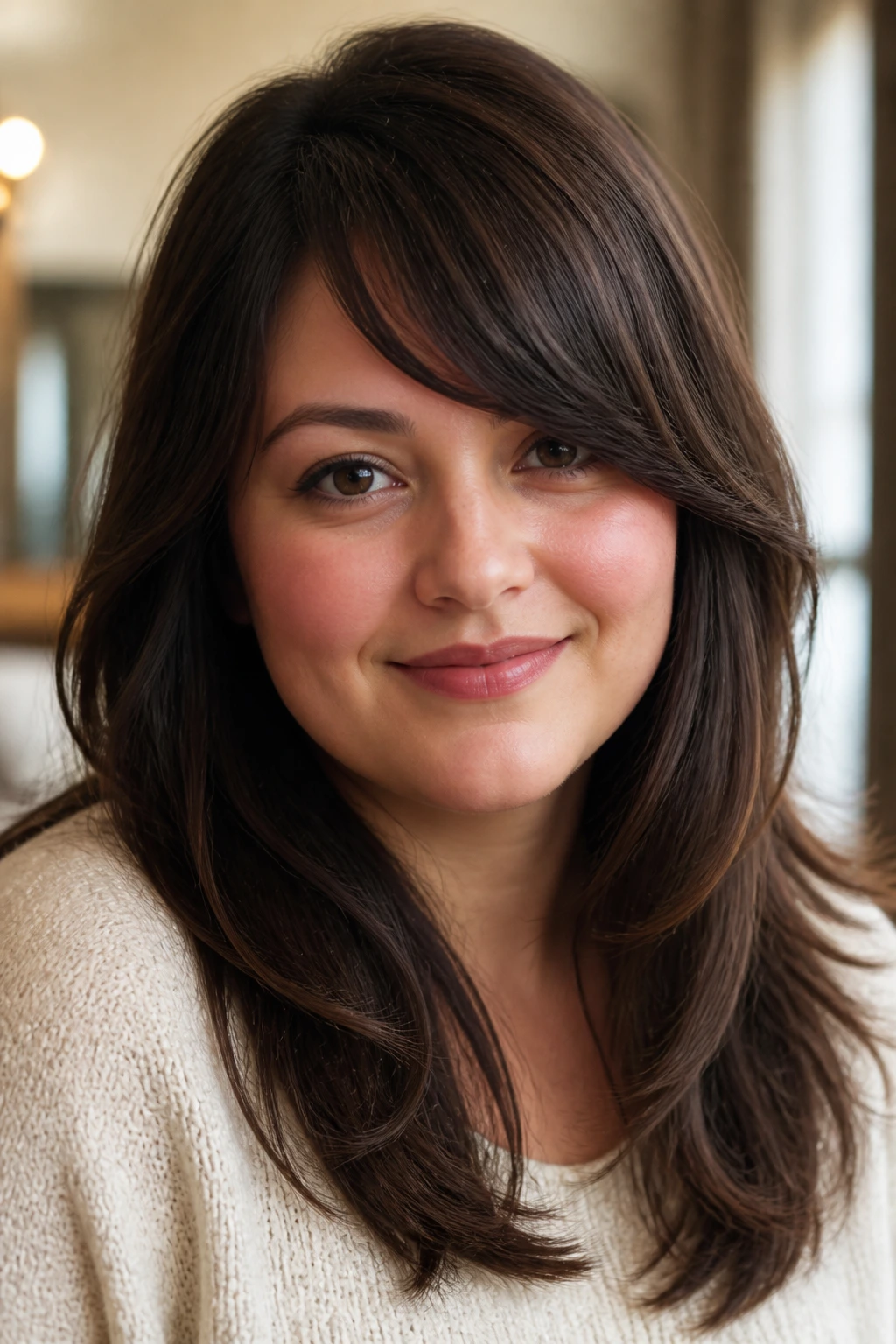
The most common mistake is cutting the side bang too short. Short fringe on a round face can spring upward and land right on the widest part of the forehead. It makes the face read broader, not slimmer. Leave the front a little longer than you think you need, then trim once you see how it falls.
Another one is stacking layers too high around the cheeks. The shape may look airy in the salon mirror, then puff outward after a wash or a humid walk. That’s where soft layers need discipline. Start lower, and keep the face frame moving downward rather than outward.
Over-thinning is a quiet mess, especially on fine hair. It can make the bang look see-through and split, which draws attention to the front of the face in the wrong way. If the hair is thin, use a clean blunt-ish outline softened at the ends instead of carving holes into it.
Variations and Adaptations for Fine, Thick, and Frizzy Hair
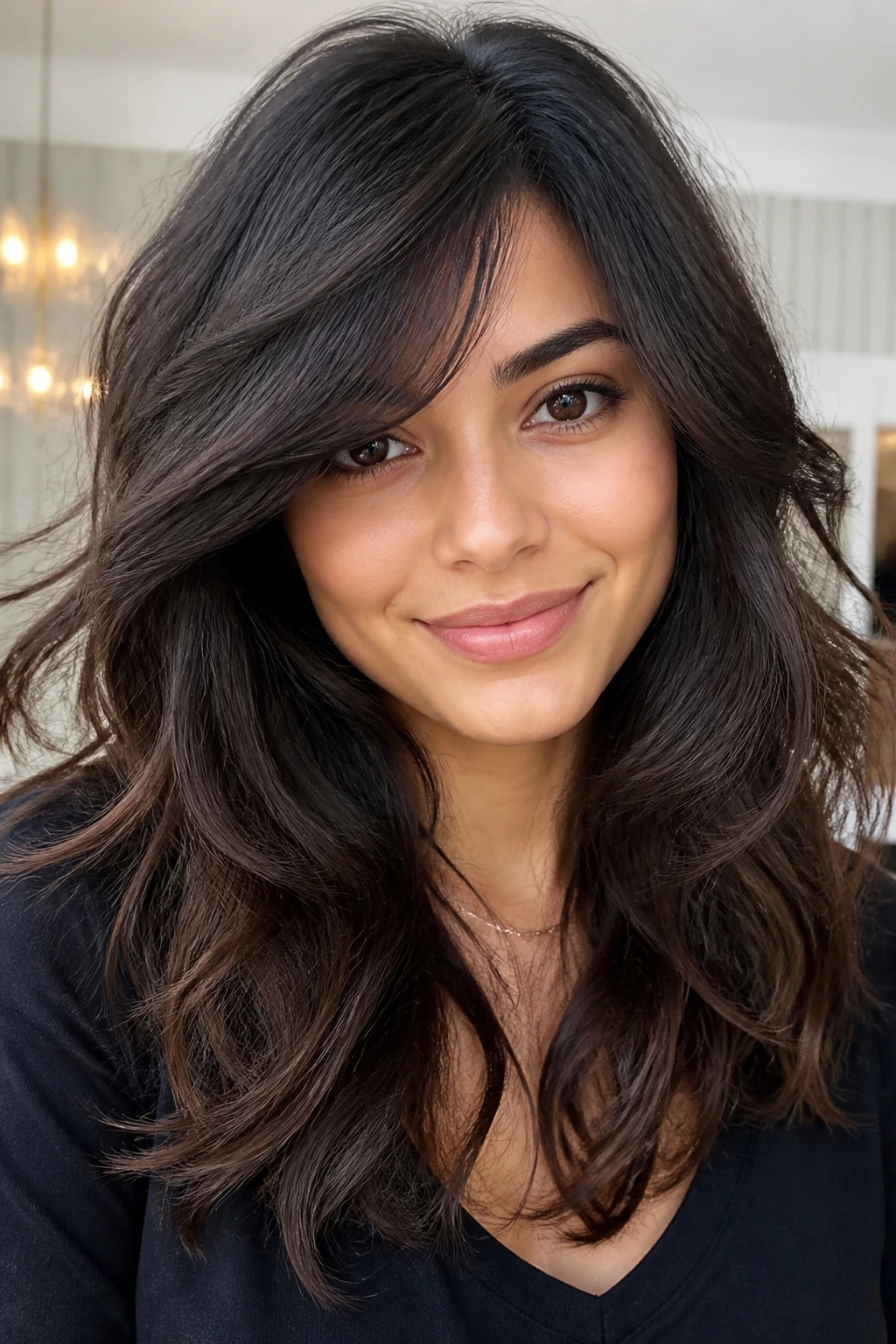
Fine-Hair Float: Keep the layers long and light, and ask for a fuller bang line with soft ends. Thin hair needs a shape it can actually hold.
Thick-Hair Control: Build internal layers and leave the fringe denser. Bulk should be removed under the surface, not hacked out of the front.
Frizz-Friendly Sweep: Use a smoother front with a little longer bang length so humidity doesn’t make the fringe spring away from the face. A touch of anti-frizz cream on damp hair helps, but don’t drown it.
Curly-Friendly Arc: Cut the bang dry and longer than you expect, then shape the diagonal sweep once the curls settle. That keeps the face frame from shrinking too high.
Low-Maintenance Air-Dry Version: Choose a longer side bang and layers that start below the cheekbone. The hair can dry naturally without collapsing into a triangle.
Trims, Grow-Out, and Keeping the Shape Between Appointments
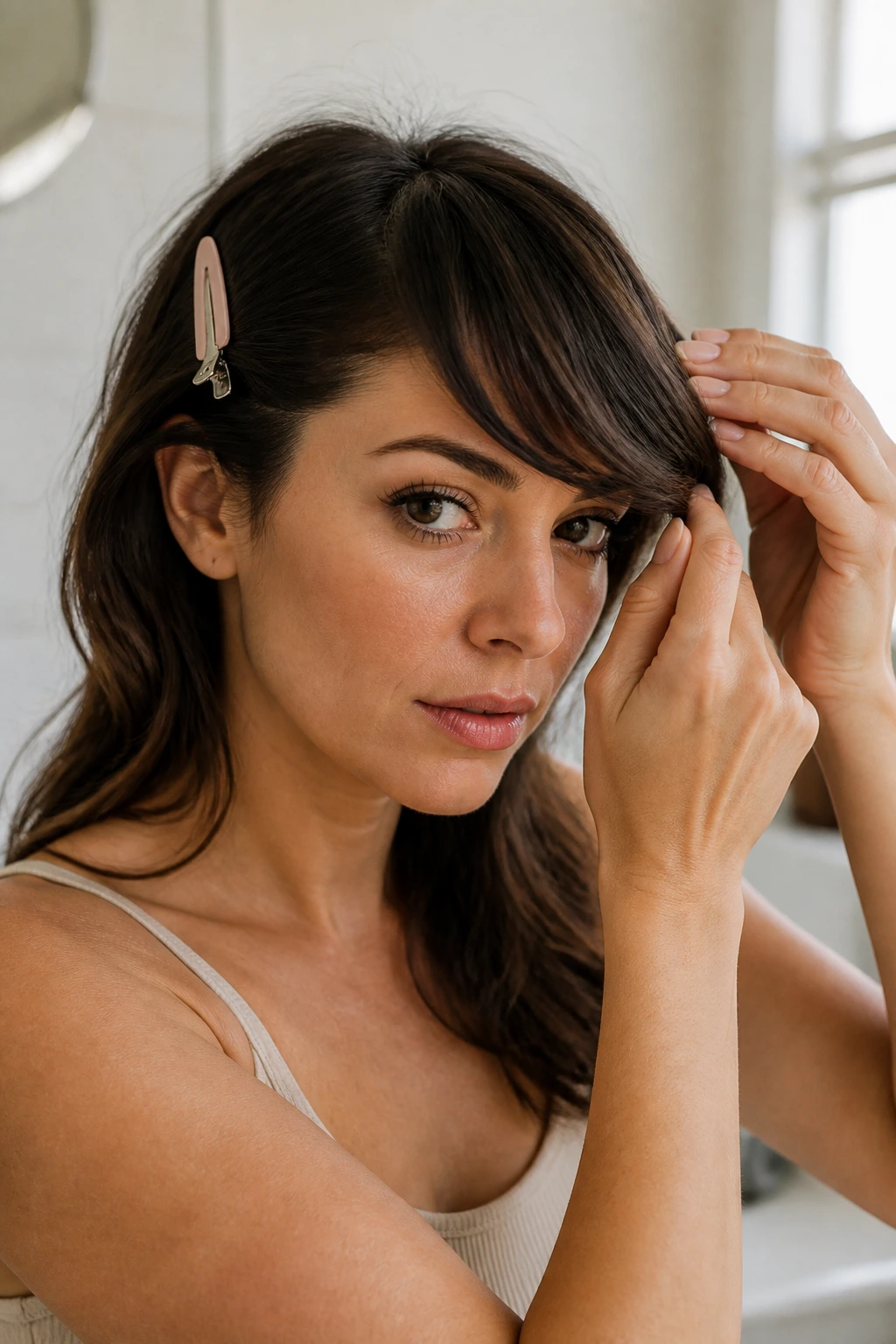
Side-swept bangs need more frequent trimming than the rest of the haircut. The fringe often wants a refresh every 3 to 5 weeks, especially if it starts poking into your eyes or losing the sweep. The layers can usually go longer, around 8 to 12 weeks, depending on how fast your hair grows and how sharp you like the outline.
When the front starts growing out, don’t panic. That’s the nicest part of this style. Side bangs melt into face-framing layers more gracefully than blunt fringe, so you can stretch the timing a bit if needed. Use clips, a deeper part, or a soft bend with a flat iron to keep the front behaving.
At home, wash or mist the bang area more often than the rest if it gets oily. The forehead gives away oil fast. A little dry shampoo at the root, brushed through after it sits for a minute, keeps the front from sticking together.
Frequently Asked Questions
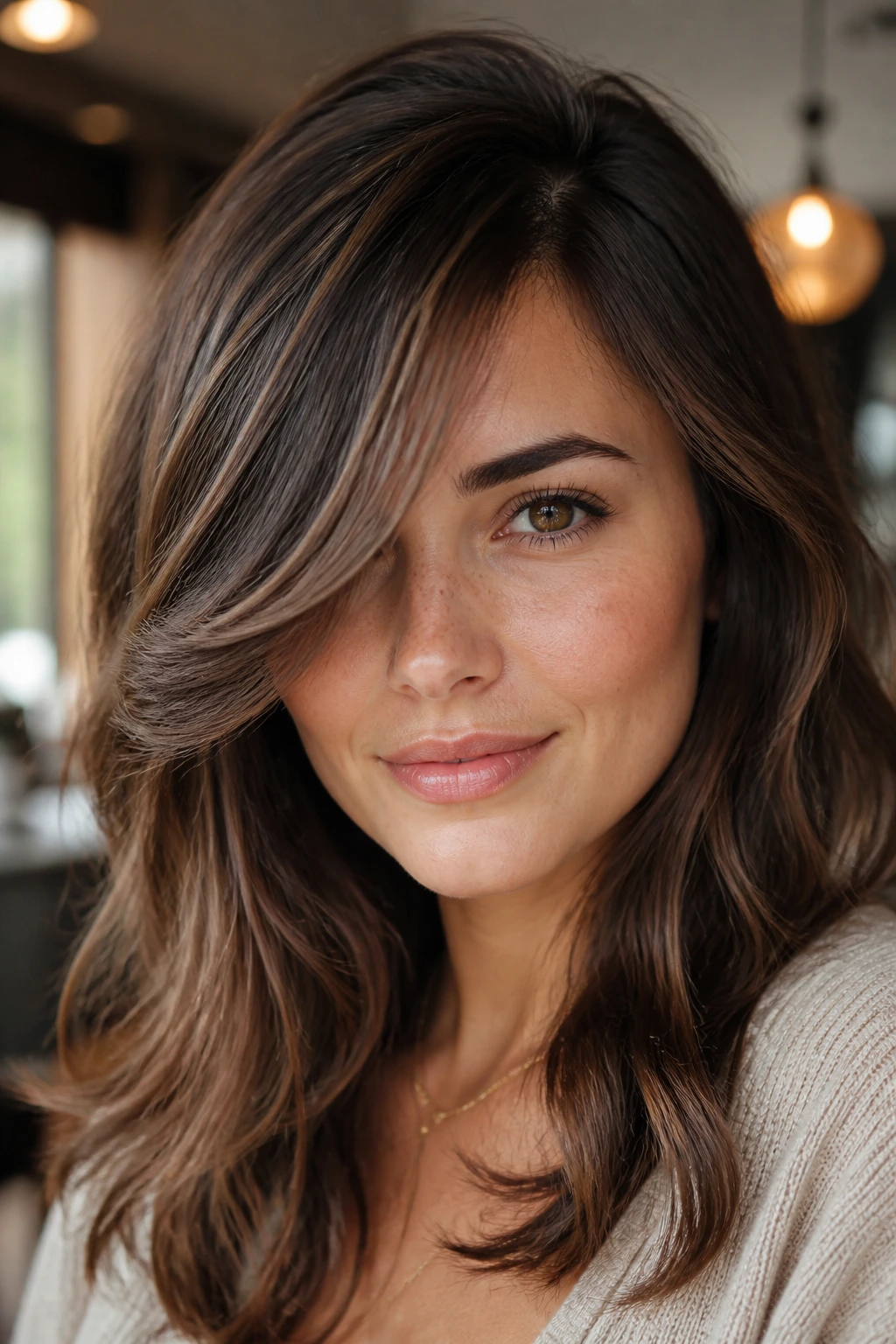
Will side-swept bangs make a round face look slimmer?
They can, if the cut is long enough and the part is placed off-center. The diagonal line breaks up the width of the face, while soft layers keep the sides from puffing out at cheek level.
Where should side bangs hit on a round face?
The safest spots are the outer brow, temple, or cheekbone. If they stop too high on the forehead or sit right at the apples of the cheeks, they can make the face look broader.
Do side-swept bangs work with curly hair?
Yes, and they can look fantastic when cut with curl shrinkage in mind. The fringe usually needs to stay longer than a straight-hair version, and it’s best shaped dry so the curl pattern is honest.
How do I deal with a cowlick in the front?
Dry the front in the direction you want before it sets. A nozzle, a small brush, and a few clips while the hair cools can save you from that stubborn flip that appears the second you leave the bathroom.
Are side-swept bangs hard to style every morning?
Not if the cut is right. Most versions only need a quick brush, a bit of heat at the root, and maybe a touch of texturizing spray. The longer the bang, the easier the morning usually gets.
Can I wear side bangs if my hair is very fine?
Yes, but keep the fringe a little fuller and the layers light. Over-thinning is what makes fine hair disappear at the front.
How often should I trim side-swept bangs?
Plan on every 3 to 5 weeks if you want the shape to stay crisp. If you like a softer, grown-out look, you can stretch it longer and let the fringe blend into the face frame.
What if my bangs fall into my eyes all day?
They’re probably too long at the shortest point or drying in the wrong direction. Ask for a slightly higher starting point at the part, then teach the front to sweep sideways while it’s still damp.
The Cut That Does the Quiet Work
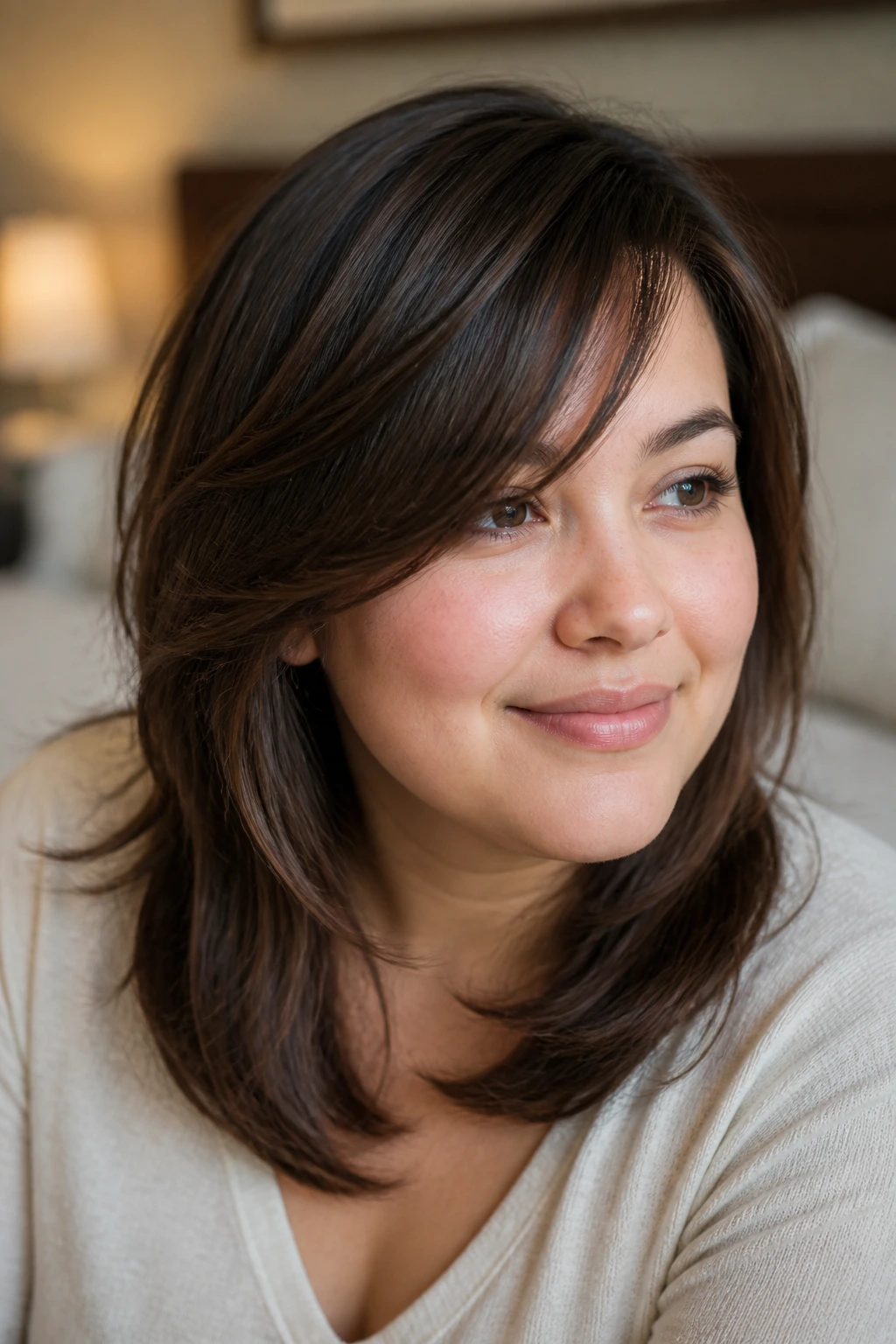
Side-swept bangs with soft layers are not loud hair. They don’t shout. They solve. That’s why they work so well on round faces: the line is diagonal, the weight stays low, and the shape makes the face feel longer without looking like it’s trying too hard.
If you’re hesitant, start with the gentlest version. Ask for a deeper side part, a longer fringe that lands near the cheekbone, and layers that begin below the widest part of the face. That combo gives you room to adjust later, which is worth more than chasing a dramatic snip on day one.
The best haircut is the one that behaves when you’re tired, busy, and not standing in ideal bathroom light. This is one of those cuts.