



A square face does not need to be softened into invisibility; it needs a fringe that breaks the geometry in the right places. That’s the whole trick with choppy bangs for short hair: they interrupt hard lines, add movement at the brow, and stop a cropped cut from reading like a helmet. A straight, heavy fringe can sit like a ruler across a strong forehead. Choppy texture, on the other hand, lets the eye move.
Short hair changes the stakes. There’s nowhere to hide a bad bang line, and there’s nowhere for a fringe to “settle in” if it was cut too blunt or too short. The best versions look a little broken, a little airy, and slightly imperfect in the way good hair always is. Not messy. Just lived in.
Square faces usually have strong jaws, broader foreheads, and a symmetry that can take a lot of structure. That sounds flattering, and it is. But it also means the wrong fringe can make the face look boxier than it really is. The styles below lean into softness without losing shape, which is why they work so well on short hair.
Why These Choppy Bangs Work on a Square Face
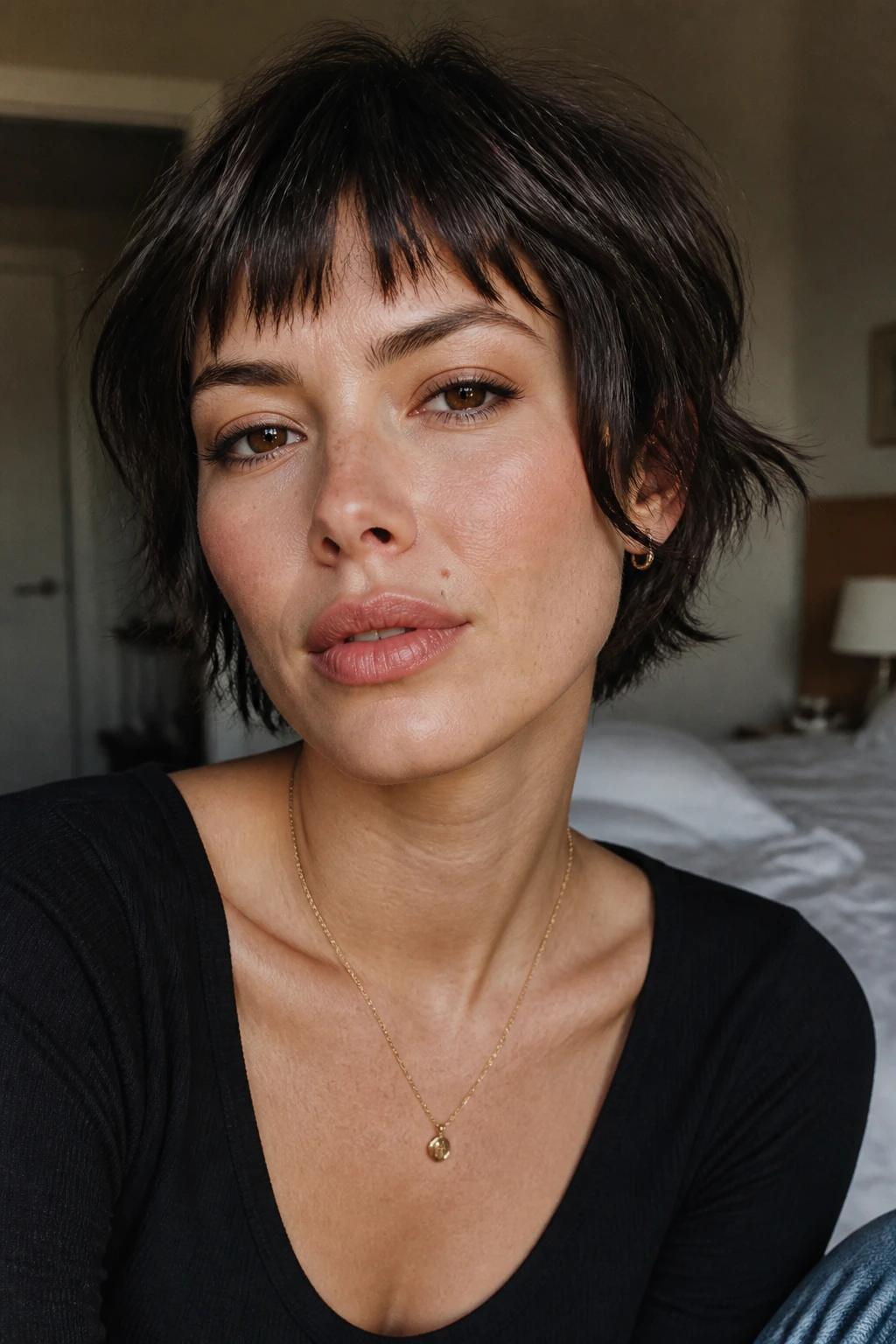
- They break the horizontal line: A choppy fringe cuts up the straight band that can make a square face look wider across the forehead.
- They keep short hair from feeling too rigid: On a bob, pixie, or crop, a little feathering at the front keeps the whole cut from turning stiff.
- They can be adjusted for texture: Fine hair, thick hair, straight hair, and waves all need a different kind of “choppy,” and that flexibility matters.
- They grow out better than a blunt bang: Uneven ends and longer corners blend into the rest of the cut instead of turning into a hard shelf.
- They play well with strong features: The fringe should frame the eyes and soften the jaw, not fight the face shape.
- They leave room for styling: A piecey bang can be swept, separated, bent, or tucked; a blunt line gives you fewer exits.
1. Side-Swept Choppy Bangs on a Jaw-Length Bob
A side-swept fringe is one of the easiest ways to soften a square face without changing the whole haircut. The diagonal line pulls the eye away from the width of the forehead and makes the bob feel less squared off. On jaw-length hair, that movement matters even more because the cut lands right where your face is widest.
Why it works here
The side sweep breaks symmetry in a good way. A square face already has strong structure, so you do not need more boxiness sitting across the forehead. Ask for point-cut ends and a slightly longer side that can skim the brow, then taper into the temple.
The best version is never heavy. It should move when you blink, not sit there like a curtain. A quick blast with a small round brush or even a flat brush and blow-dryer is usually enough.
Best for: straight hair, soft waves, and bobs that need a little bend at the front.
Skip if: your bangs always separate at the same spot and you hate fighting a cowlick.
2. Piecey Brow-Grazing Fringe on a Blunt Crop
This one has attitude, but it needs restraint. Brow-grazing choppy bangs on a blunt crop can look sharp and modern, yet the broken ends keep the cut from hardening the face. The trick is to leave enough air between the pieces that the fringe reads textured, not heavy.
The brow line is a smart landing point for square faces because it keeps attention high without chopping the face in half. If the fringe is cut a little shorter in the center and left a touch longer near the outer corners, it softens the straight line that a square face can sometimes make too obvious.
Styling note
Use a pea-sized amount of lightweight cream on damp bangs and twist them once while drying. That little twist keeps the pieces separated. Too much product, and the fringe turns stringy fast.
3. Curtain Bangs with Broken Ends on a Short Lob

Curtain bangs on short hair can be gorgeous on square faces when the ends are chipped, not rounded into a perfect shape. The center part gives the face some vertical space, while the longer sides fall along the cheekbones and jaw instead of sitting across the forehead.
What makes this version better than a full curtain bang is the uneven finish. A clean curtain fringe can look polished, but a square face often benefits from a little ragged softness near the outer edges. Think of it as a curtain that’s been lived in a bit, not a stage drape.
The lob length keeps the overall cut from feeling too busy. You get the movement of a fringe without crowding the face with layers everywhere. That balance is why this style keeps showing up in salons.
4. Soft Micro Bangs on a Cropped Pixie
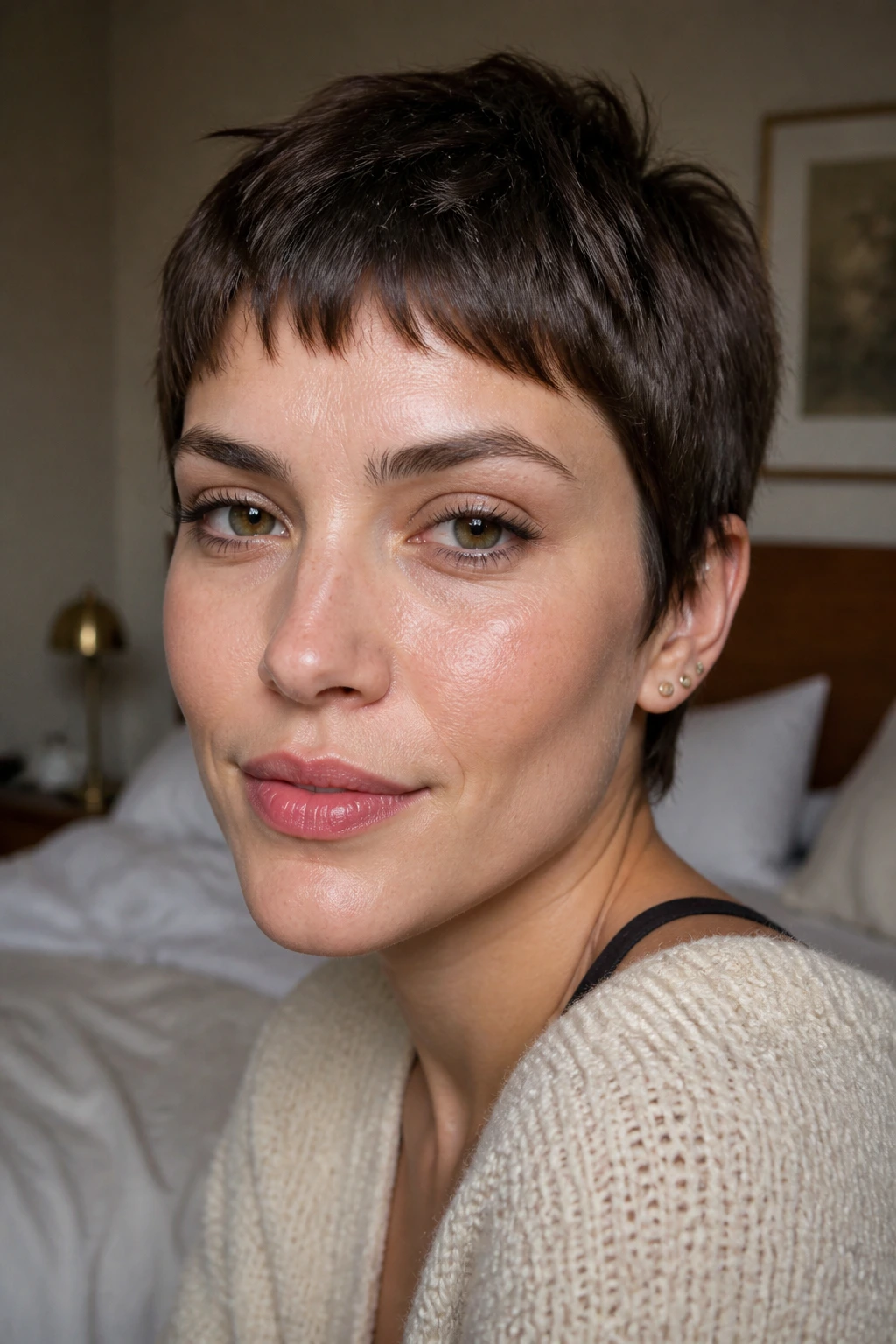
Micro bangs are risky if they’re cut straight and severe. Choppy micro bangs are a different animal. On a pixie, the short length shows off the face instead of boxing it in, and the uneven edge keeps the bang line from becoming too graphic.
The key is to leave the center slightly airy and the sides feathered into the temples. That creates a broken shape that complements a square face rather than mirroring its angles. If you like a little edge, this one has it.
A cropped pixie with micro fringe works especially well when the rest of the cut has soft texture on top. If the sides are too sleek and the fringe is too perfect, the whole thing can tilt severe. A bit of separation solves that.
5. Choppy Baby Bangs with Tapered Sides
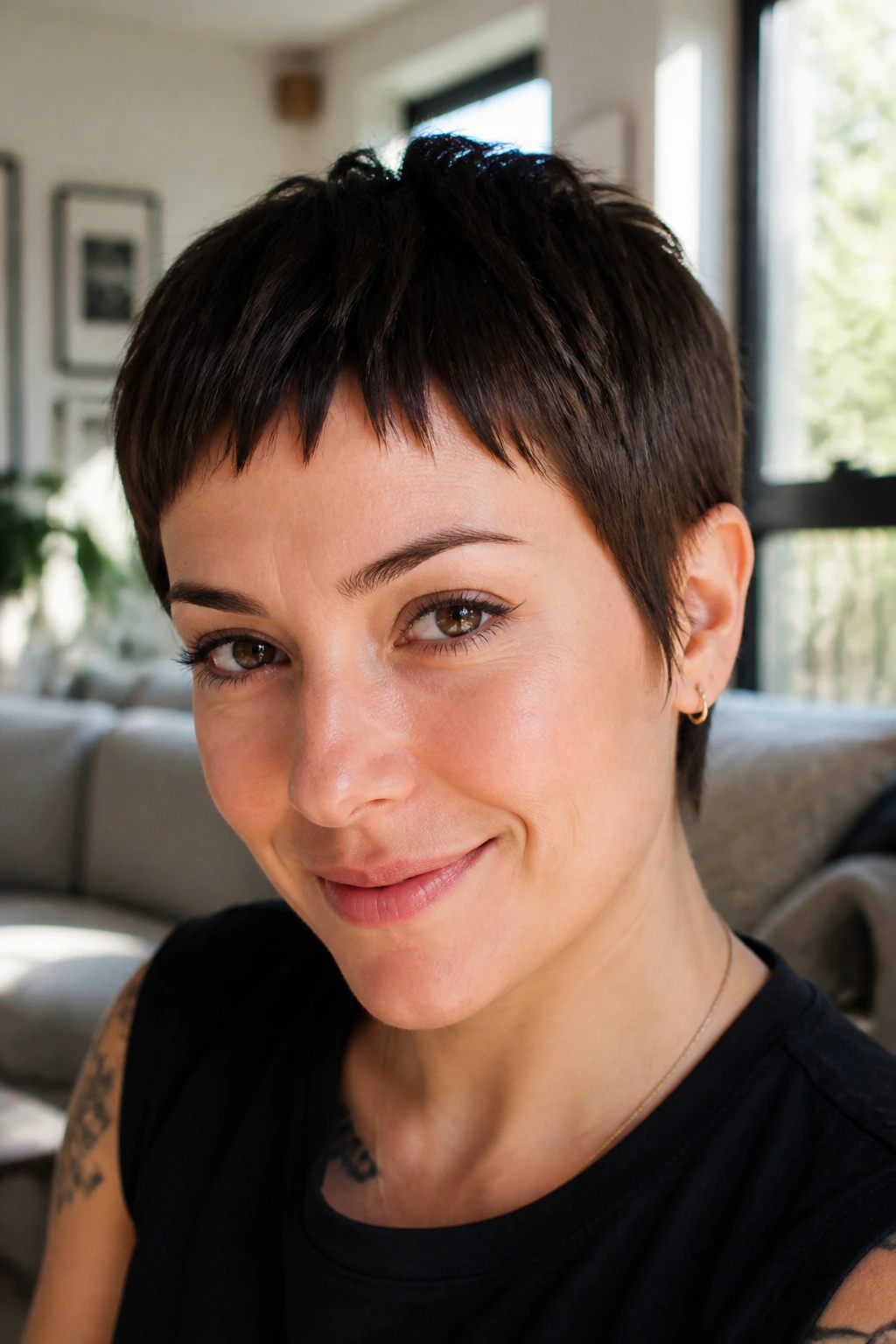
Baby bangs are not for everyone, and I would not pretend otherwise. On square faces, they need to be handled with care. The version that works best has a jagged edge in the middle and tapered side pieces that drop closer to the temples.
That extra length on the sides matters. It stops the fringe from acting like a hard bar across the forehead, which is exactly what a square face does not need. The result feels playful, but not costume-y.
Ask for this:
- a center that sits well above the brows
- soft, broken ends rather than a straight cut
- side pieces that blend into the front of the haircut
If you wear makeup heavily on the eyes, baby bangs can look striking. If you prefer a bare face, the broken texture keeps them from feeling too severe.
6. Feathered Bangs on a French Bob
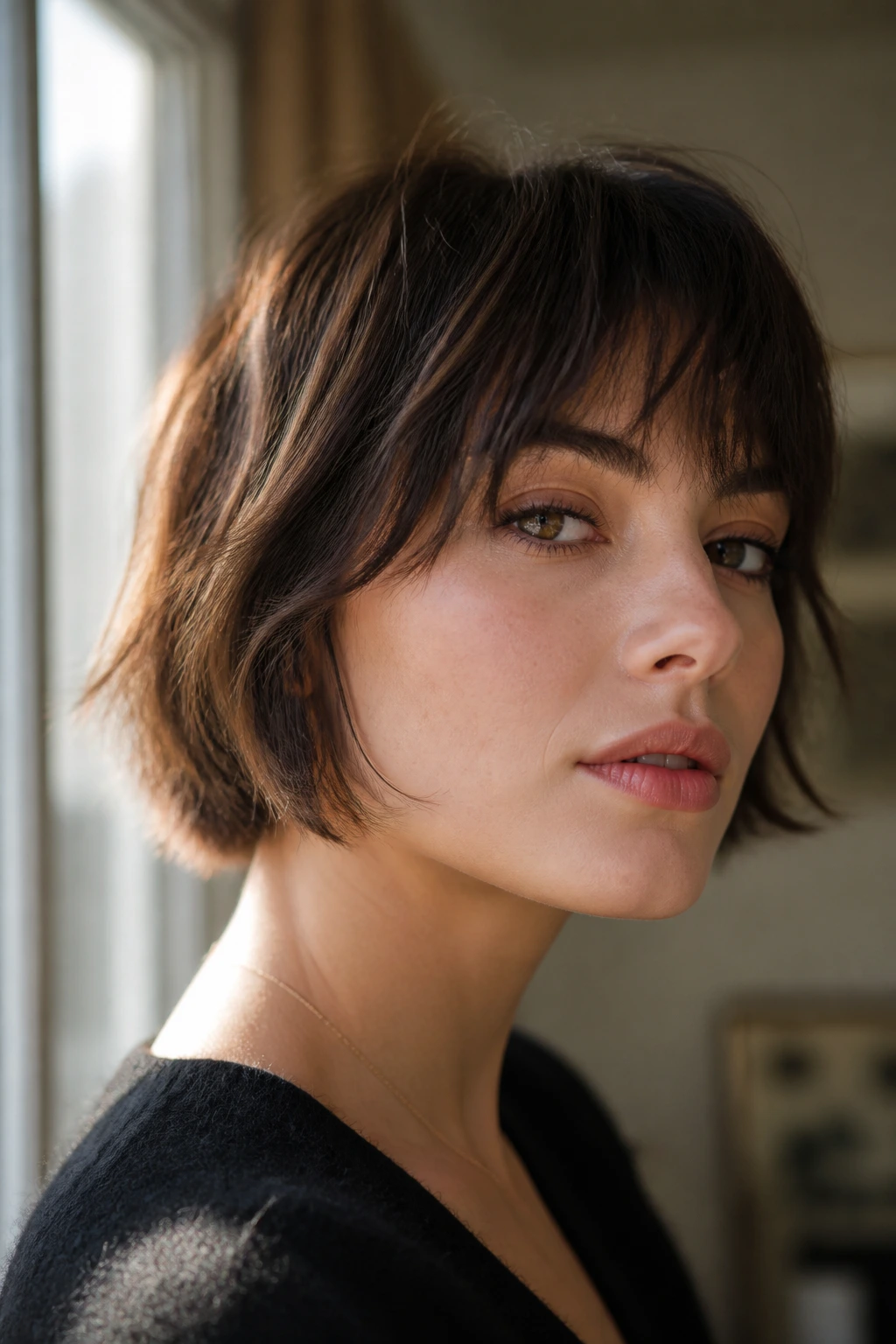
A French bob already has a certain shape to it, and feathered bangs keep that shape from getting too neat. On a square face, the softness around the brow line is doing a lot of work. The feathering matters because it keeps the fringe light enough to sit with the clean bob line below.
This is one of those cuts that can look expensive without trying hard. That’s not magic. It’s just the combination of a strong silhouette and a front edge that doesn’t feel stamped out. Ask your stylist for point-cut ends through the center and even lighter texturizing near the outer corners.
The real win is how it moves when you turn your head. The fringe should shift, not hold its position like cardboard.
7. Razored Bangs with Long Corner Pieces
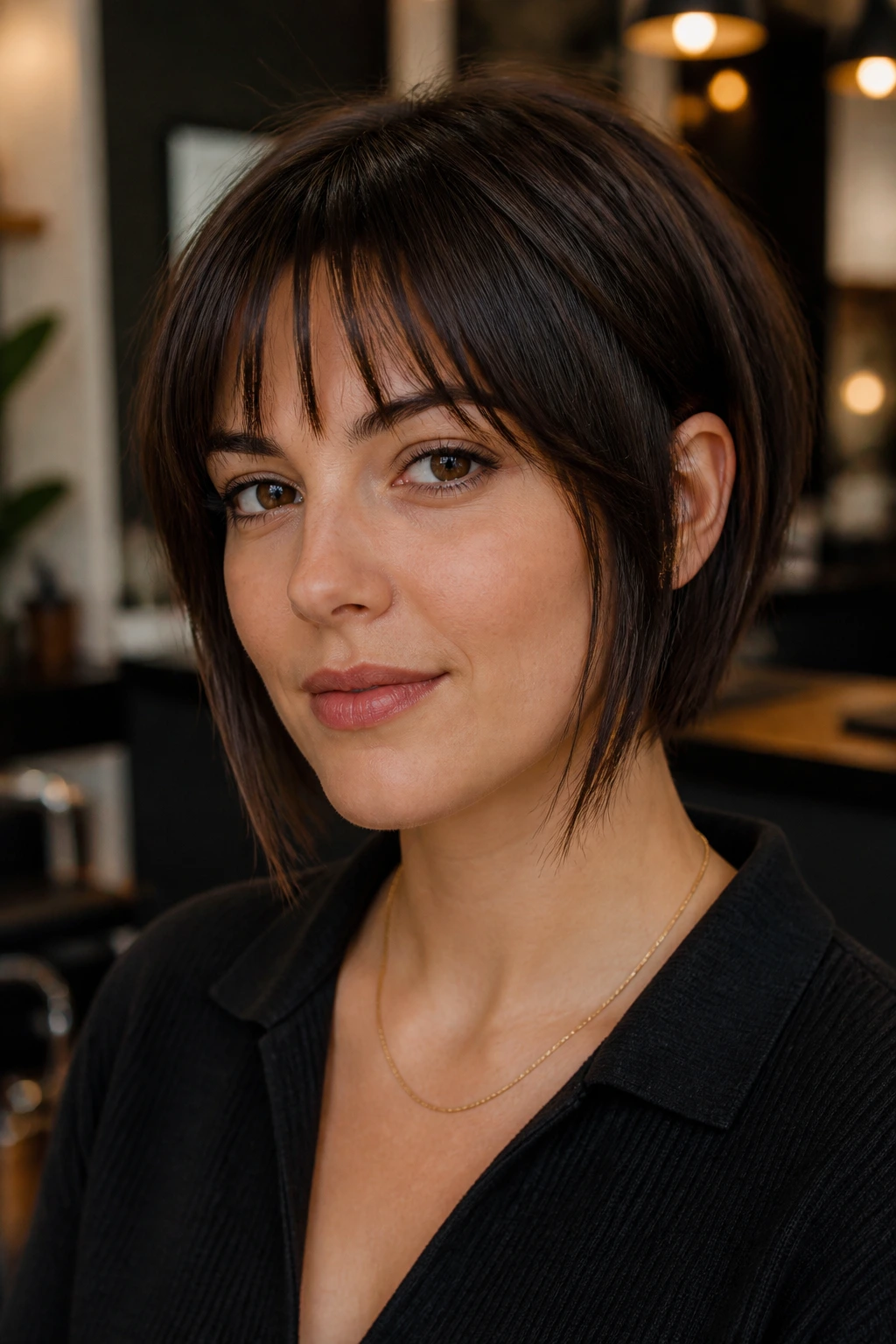
A razor cut can be beautiful here, but only if the fringe keeps its length at the corners. Those longer sides soften the width of a square forehead and create a little drift toward the cheekbones. Without them, the cut can feel abrupt.
This style works especially well on hair that already has some natural slip or wave. Razor-cut texture can look airy on fine hair and a little wild on thick hair, which is why the styling finish matters. Use a blow-dryer nozzle and guide the front forward first, then sweep the corners outward.
The long corner pieces are doing the face-shaping work. The center is just the opening move.
8. Bottleneck Bangs on a Wavy Bob
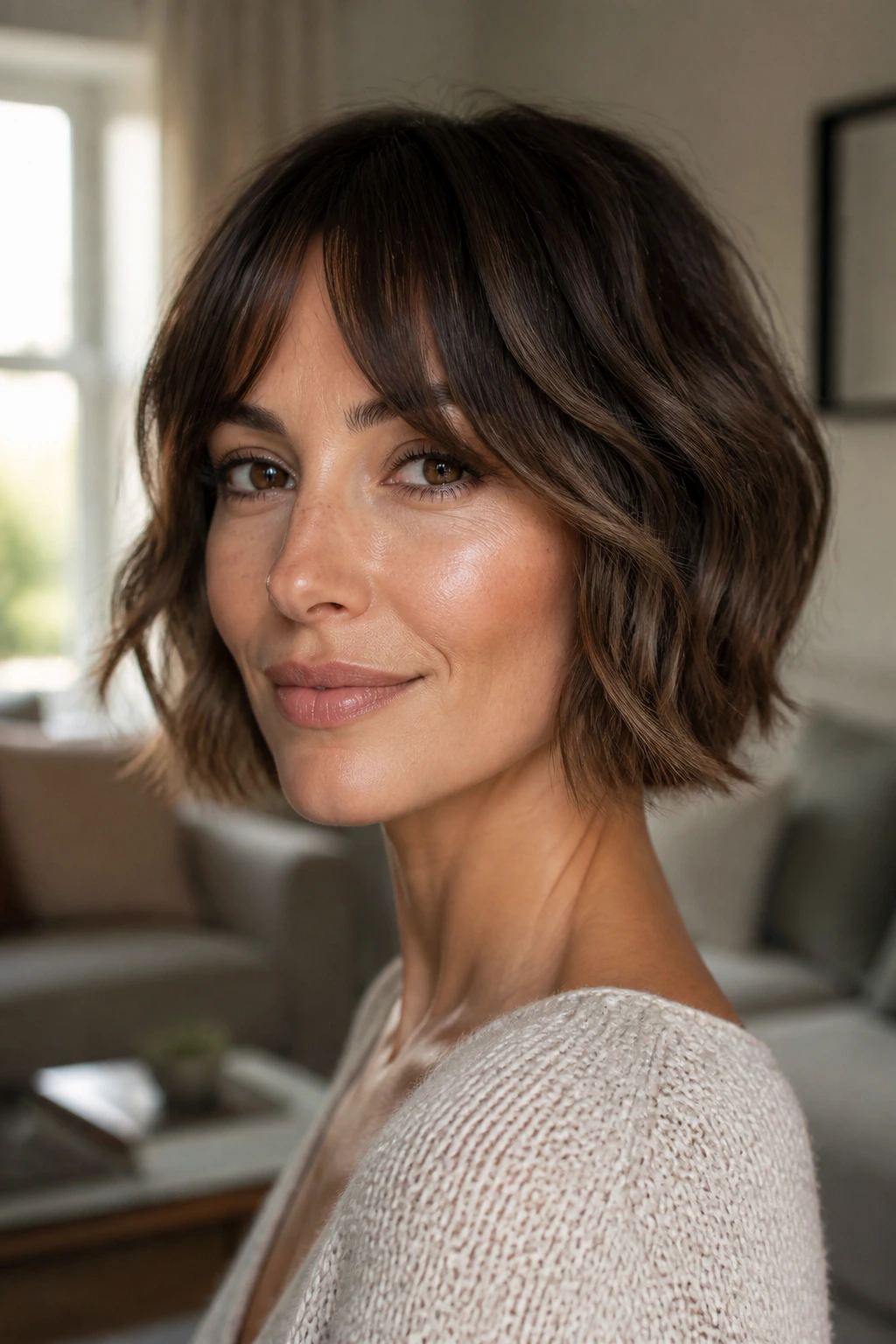
Bottleneck bangs are one of the smartest choices for square faces because they start narrow, open out around the brow, and then drift longer toward the sides. That shape mirrors the face in a softer way. On a wavy bob, the whole look feels relaxed without losing definition.
The choppy part comes from the broken edge, especially around the bridge of the nose and the temple area. That little irregularity keeps the bangs from reading as a full curtain. If your hair bends naturally, this cut almost styles itself after a quick rough-dry.
What to ask for
- narrower center section
- soft widening through the brow line
- pieces that land near the cheekbones, not the jaw
This one is especially good if you want movement without having to flat-iron your bangs every morning.
9. Asymmetrical Fringe on a Short Shag
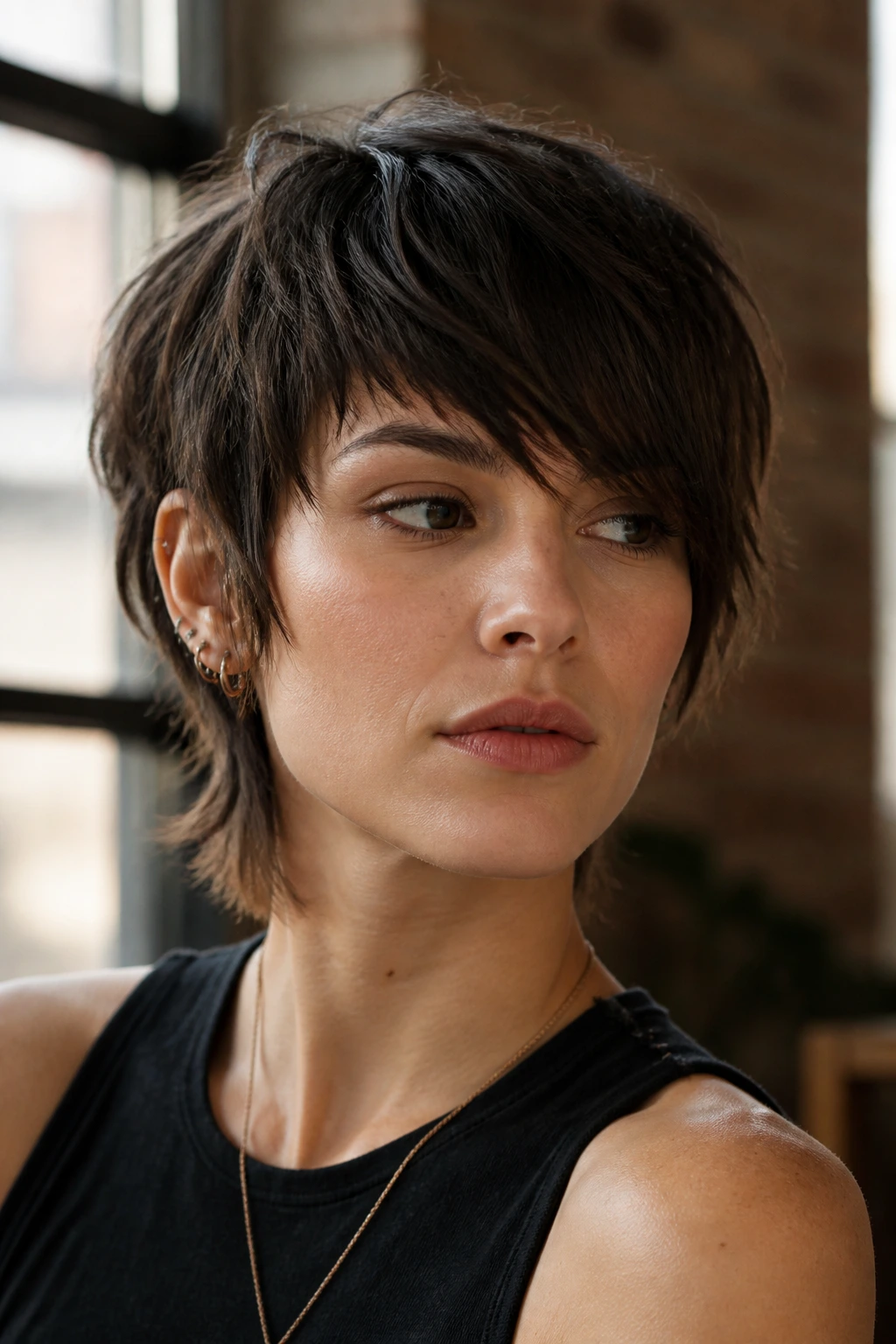
A shag is already built on uneven layers, so an asymmetrical fringe feels right at home. On a square face, the one-sided emphasis pulls the gaze off the center line and keeps the face from looking too square at the forehead. It also works beautifully with short, feathered layers around the ears.
The important part is not making one side dramatically longer just for drama. That can look fussy fast. Instead, keep one side just a little denser and let the shorter side taper into the rest of the cut. The fringe should feel like it belongs to the shag, not like it was pasted on top.
This cut has a little rock-and-roll energy. It’s not subtle. That’s fine.
10. Shattered Full Fringe on an Ear-Length Cut
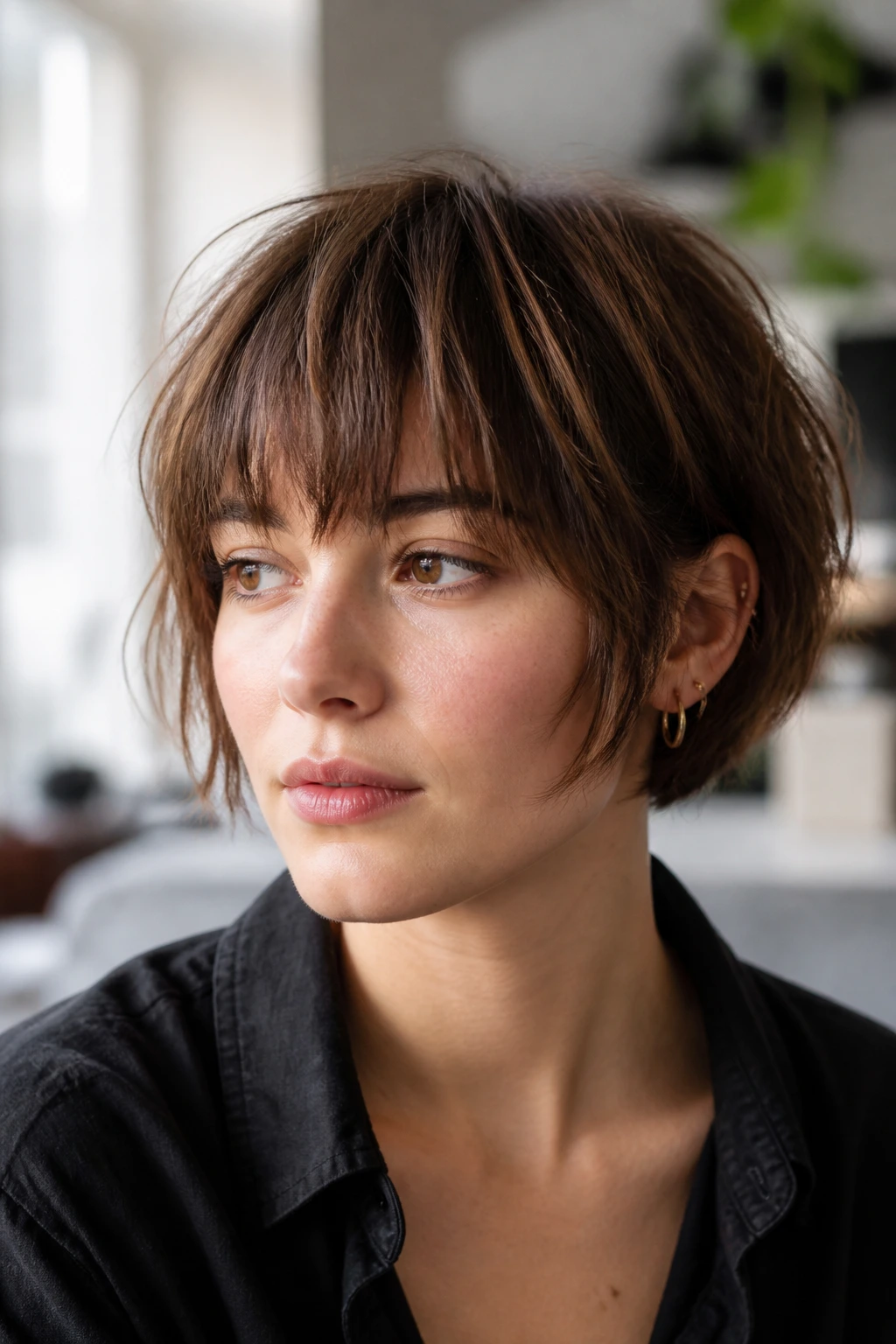
A full fringe can work on a square face if the edge is shattered enough to avoid looking like a wall. On an ear-length cut, that broken texture matters even more because the haircut itself is already short and close to the head. The bangs need to bring softness, not weight.
The word I’d use here is fragmented. You want pieces that sit at slightly different heights so the eye reads texture first and line second. If the bangs are cut too straight, the whole style can box in the face. If they’re too thin, they disappear.
This is a good choice when you want the drama of a full fringe but not the bluntness. Keep the roots lifted and the ends separated. That’s the difference.
11. Wispy Side Fringe on a Rounded Bob

Rounder bobs love a wispy side fringe because the softness keeps the haircut from looking overworked. For a square face, the diagonal line across the brow is enough to interrupt the strong angles without turning the front into a giant statement.
The fringe should be light enough that you can see bits of forehead through it. That transparency is what makes it flattering. A dense side bang can drag the face down, but a wispy one lifts it.
This style is especially good if your hair is fine and tends to go flat. A little dry shampoo at the root and a quick brush-through are usually enough to bring the texture back.
12. Textured Arched Bangs on a Chin-Length Bob
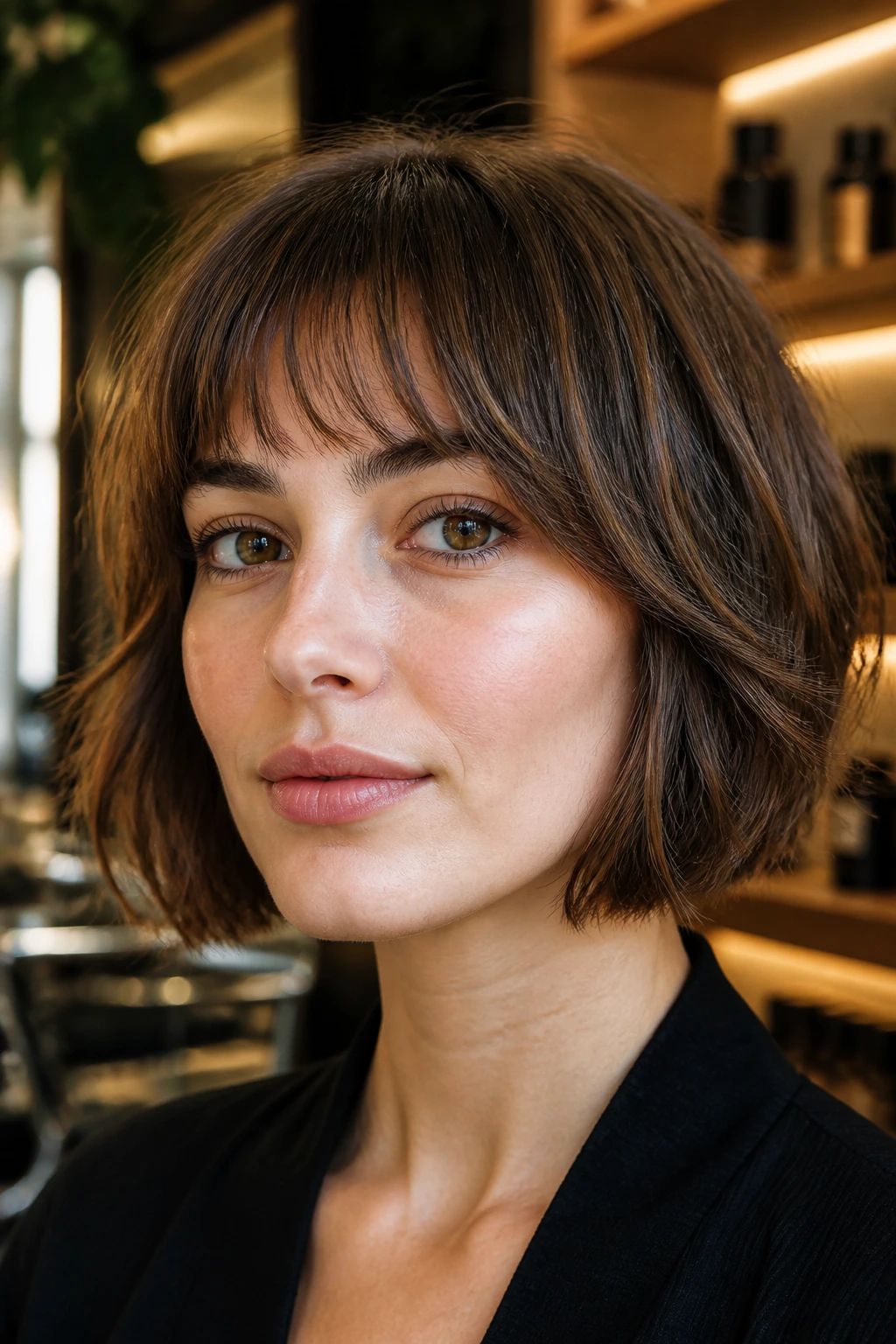
Arched bangs can be tricky on square faces because a perfect arch can look too neat. Textured arched bangs fix that problem by breaking up the curve. The shape still opens the face, but the uneven ends keep it from feeling formal.
A chin-length bob gives the fringe space to breathe. Without that bit of length below, the arch can feel crowded by the cheek and jaw. Here, the fringe creates a soft frame that lands just above the eyes and keeps the haircut looking deliberate.
If you wear your bob tucked behind one ear sometimes, this fringe gets better, not worse. The asymmetry adds life to the whole cut.
13. Choppy Bangs with Temple Length on a Pixie-Bob
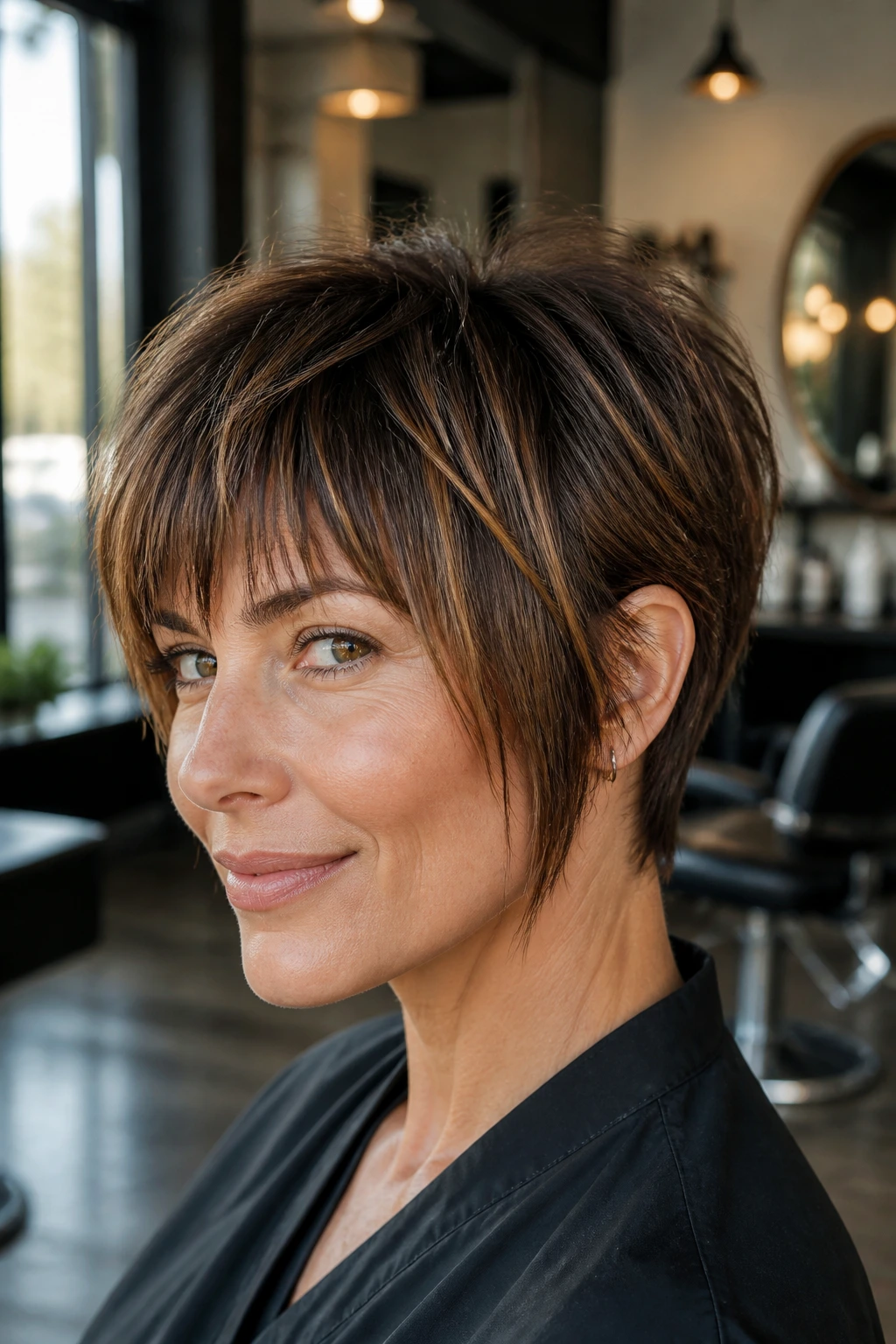
This is one of my favorites for square faces because it gives you control. The front can be broken and airy, while the temple pieces stay long enough to soften the edge of the jaw. A pixie-bob already has shape, so the fringe only needs to nudge it in the right direction.
The longer temple pieces are the real trick. They draw the eye downward and inward, which keeps the forehead from feeling wide. I’d ask for texture through the center and very soft tapering at the sides.
A good pixie-bob fringe should be easy to tuck, flip, or brush forward. If it only works one way, it’s too rigid.
14. Center-Parted Curtain Fringe on a Short Shag
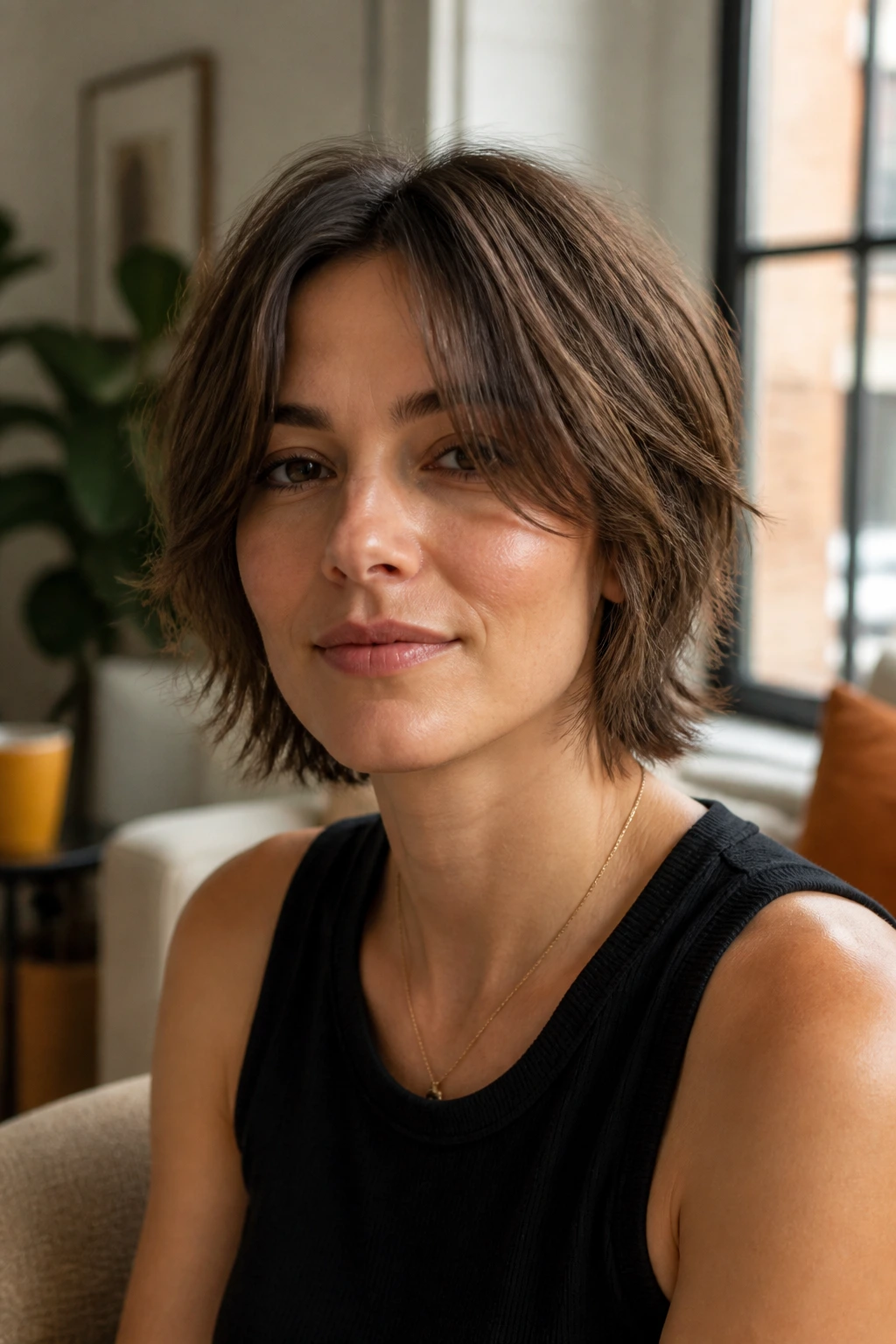
Why does this work so well on a square face? Because the center part creates vertical space, and the shag layers keep the cut from looking boxy. The fringe falls in two loose halves that hit around the cheekbones instead of forming a hard line across the forehead.
The choppy part is what saves it. Without broken ends, curtain bangs can become too tidy on a square face. With texture, they behave more like movement than shape. That’s the sweet spot.
How to style it
Rough-dry the roots first, then bend each side away from the face with a small brush or your fingers. Don’t try to make both sides mirror each other exactly. A little mismatch looks better here.
15. Piecey Bangs with Face-Framing Layers

Piecey bangs and face-framing layers belong together on short hair. On square faces, the combination breaks up the forehead width and keeps the jaw from reading too sharply. The bangs can sit short in the middle and melt into longer face-framing bits near the cheekbones.
This cut is useful if you want the fringe to feel connected to the rest of the haircut instead of sitting as a separate block. The layers around the face do the visual work, so the bangs themselves can stay relatively light.
If your hair is thick, this is a good way to remove bulk without sacrificing shape. If your hair is fine, it prevents the front from going see-through in a bad way.
16. Long Choppy Fringe on a Sleek Lob
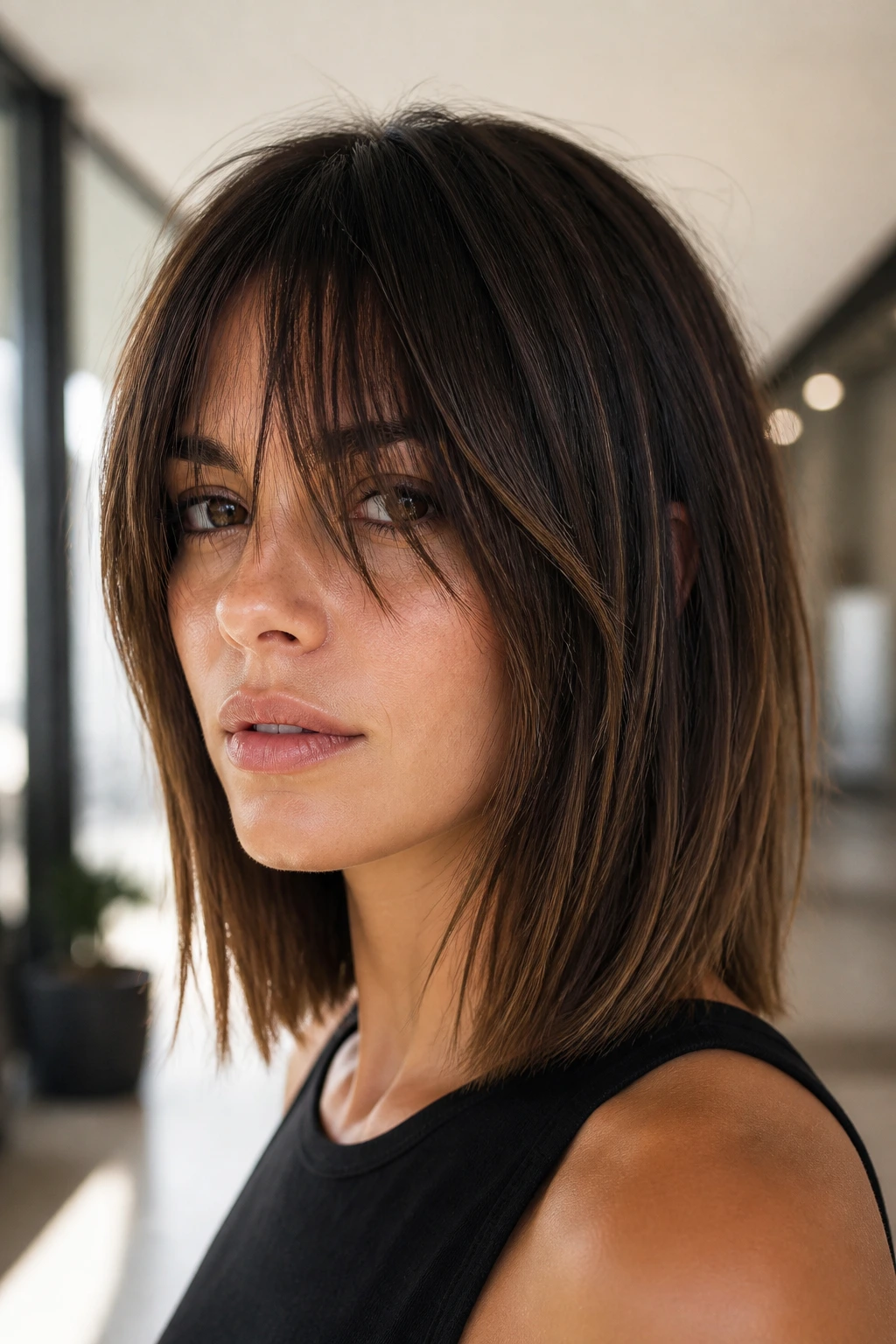
A sleek lob can look a little formal on a square face unless the front breaks it up. A long choppy fringe solves that. The length gives the face room, while the irregular ends keep the cut from turning blunt and stiff.
This is not the same as curtain bangs. The fringe can hang more forward and still sweep a bit at the sides, which makes it feel softer around the brow. If you like a polished look but want a little edge, this is the lane.
The best thing about it? It looks good even when it’s not perfectly styled. A slight bend, a bit of separation, and you’re done.
17. Airy See-Through Bangs on a Compact Bob

See-through bangs can be a nice choice if you want the idea of bangs without the heaviness. On a compact bob, the lightness keeps the face open and avoids crowding the forehead. Square faces benefit from that breathing room.
The choppy part is subtle here. You’re not going for a dramatic jagged edge. You’re going for softness, with little gaps that let skin show through. That alone can change the feel of the whole haircut.
This style works best when the bob shape itself is clean. The bangs bring the looseness; the cut underneath provides the structure.
18. Razored Fringe with a Tuckable Side on a Crop
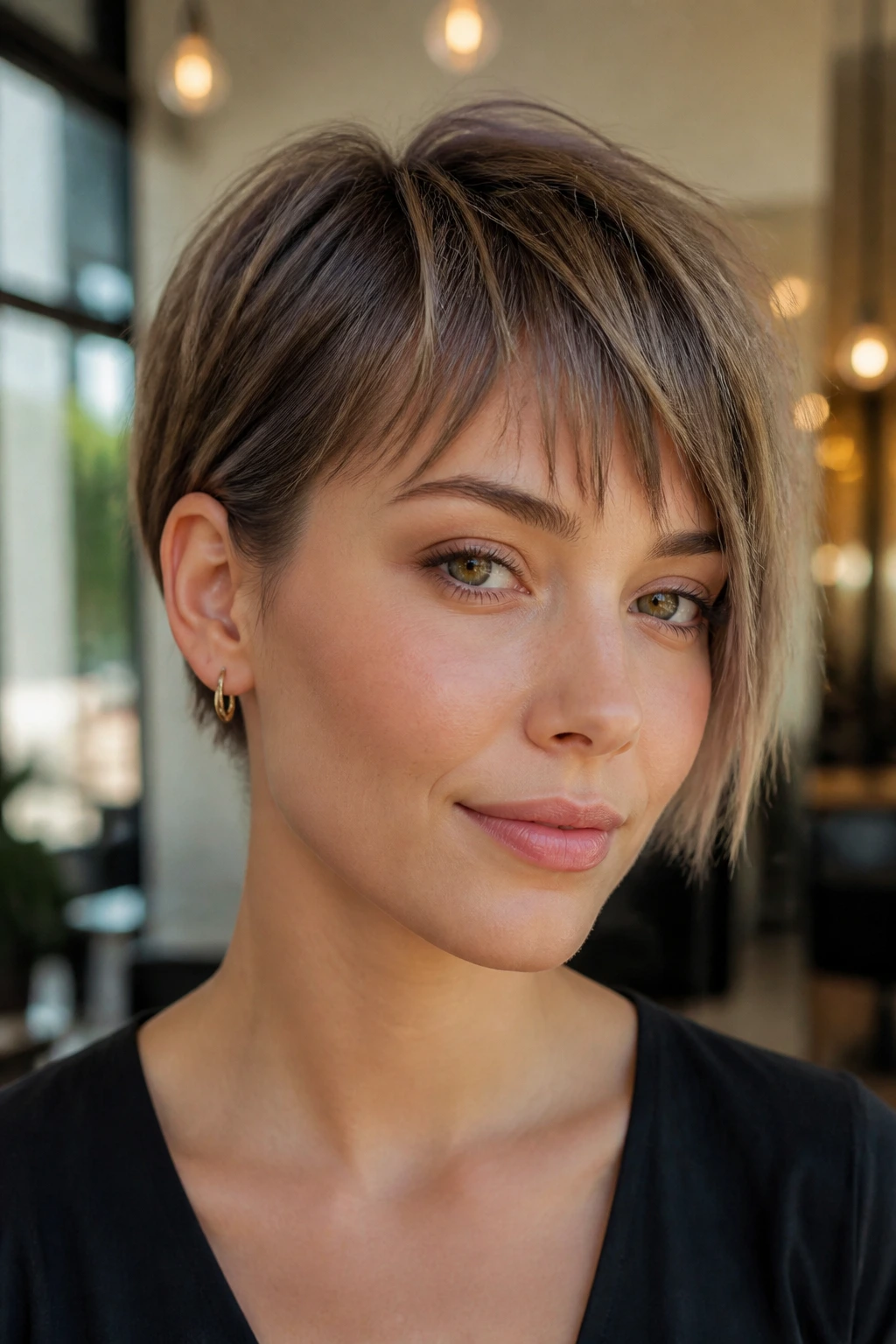
A tuckable side changes everything. It gives the fringe an escape route, which is useful on square faces because it means the cut can bend away from the width of the face instead of sitting dead center. The razored texture keeps it airy enough to move.
I like this option for people who wear earrings, glasses, or just like to shift their hair around during the day. One side can fall forward, the other can tuck back, and the whole thing stays interesting. The contrast keeps the crop from feeling too planned.
If your hair is dense, ask for internal texture so the fringe doesn’t balloon. If it’s fine, keep the razoring light so the pieces don’t vanish.
19. Choppy Bangs with Curved Corners on a Wedge Bob
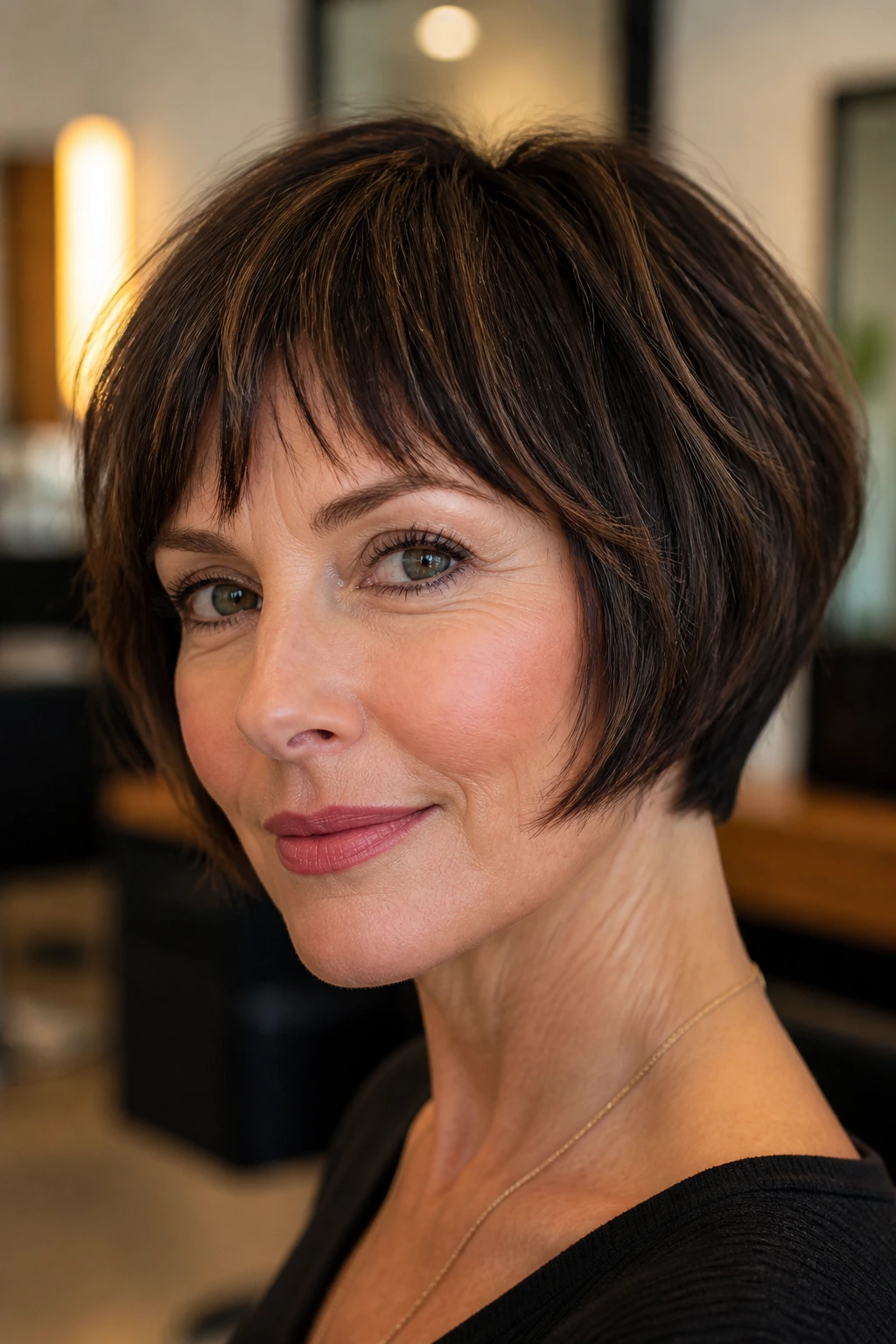
A wedge bob already has a strong line at the back, which means the bangs need to soften the front. Curved corners on a choppy fringe do that nicely. They guide the eye down toward the cheekbones and help the face feel a little narrower through the forehead.
The curve should be broken, not perfect. A smooth arc can look too manufactured next to the angular structure of a square face. Choppy ends keep the whole thing from turning into a helmet.
This is a smart cut if you like shape and don’t mind a little styling work. The fringe needs a quick pass with a brush or iron to keep the corners from flipping out in a weird way.
20. Disconnected Fringe on a Tousled Pixie
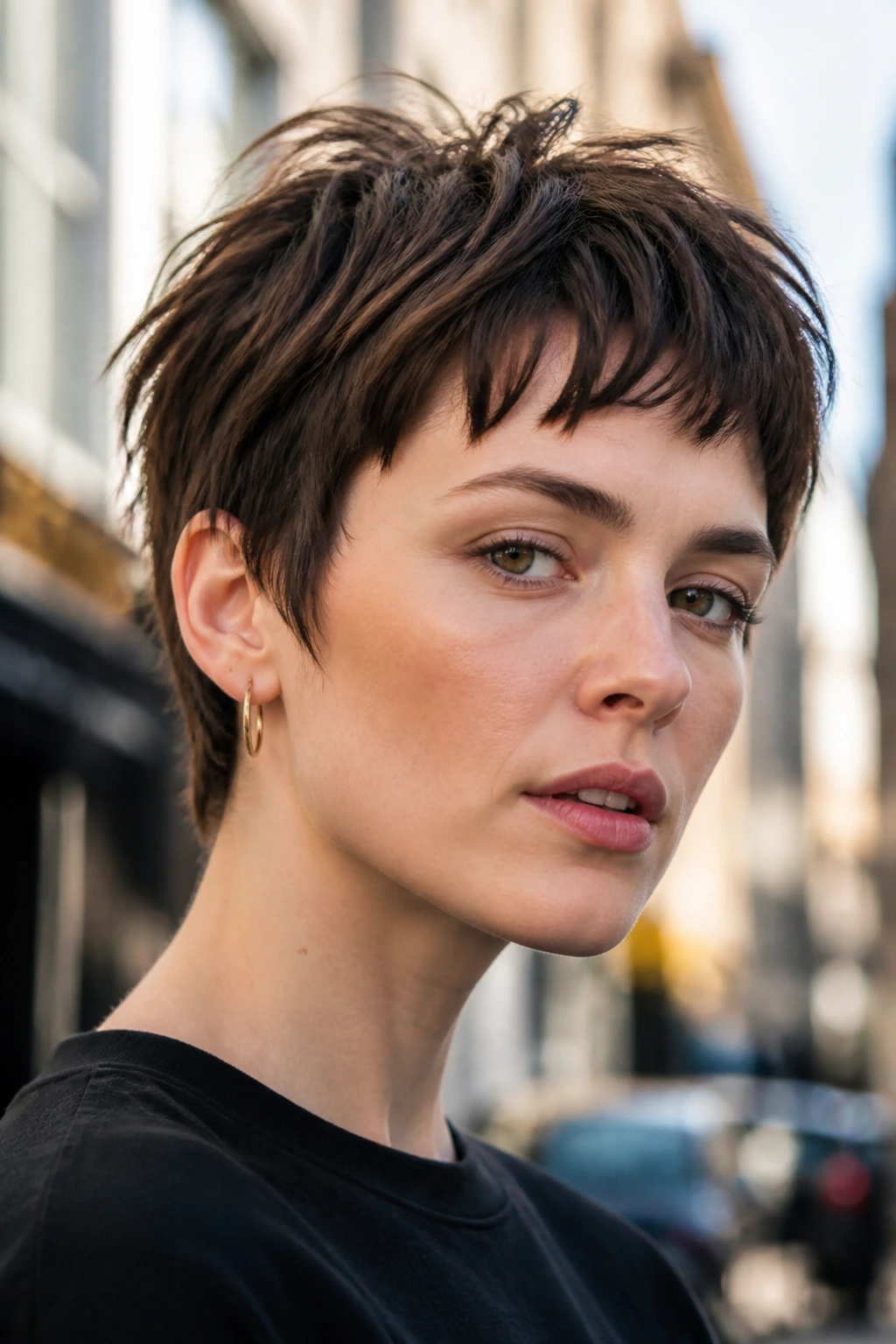
Disconnected bangs are all about contrast. The fringe sits apart from the rest of the pixie just enough to make the top look fuller and the forehead softer. On a square face, that disconnect prevents the cut from following the jawline too closely.
This style can look edgy in a good way, but only if the bangs keep some softness. Too much separation, and it starts looking accidental. Too little, and the whole point disappears.
Best for
- thick hair that needs shaping
- naturally wavy textures
- people who like a rough, undone finish
A tousled pixie with this fringe can go a full day without looking too styled, which is part of the appeal.
21. Soft Split Bangs on a Rounded Crop

Split bangs are not the same as full curtain bangs. On a rounded crop, the split opens at the center and falls away gently, creating a softer frame for square features. The face gets light around the middle, and the corners stay relaxed.
The word to keep in mind is soft. A harsh split with sharp edges won’t help much. But if the strands are feathered and a little uneven, the effect is almost like a small spotlight on the eyes.
This is a good bridge style if you’re growing out shorter bangs. It looks intentional even when it’s in that awkward middle phase.
22. Layered Fringe with Extra Width at the Temples

Extra width at the temples is one of those details that sounds tiny but matters a lot. On a square face, it shifts the fullness away from the center of the forehead and toward the outer edges, which softens the face shape without hiding it. The layers should be broken enough to stay light.
This is a particularly smart option if you have a fuller forehead and a strong jaw. The fringe doesn’t need to do all the framing by itself. The temple pieces help the whole haircut bend around the face.
If you wear your hair behind one ear often, this cut keeps looking good because the shape is built into the sides.
23. Grown-In Choppy Bangs on a Short Shaggy Bob
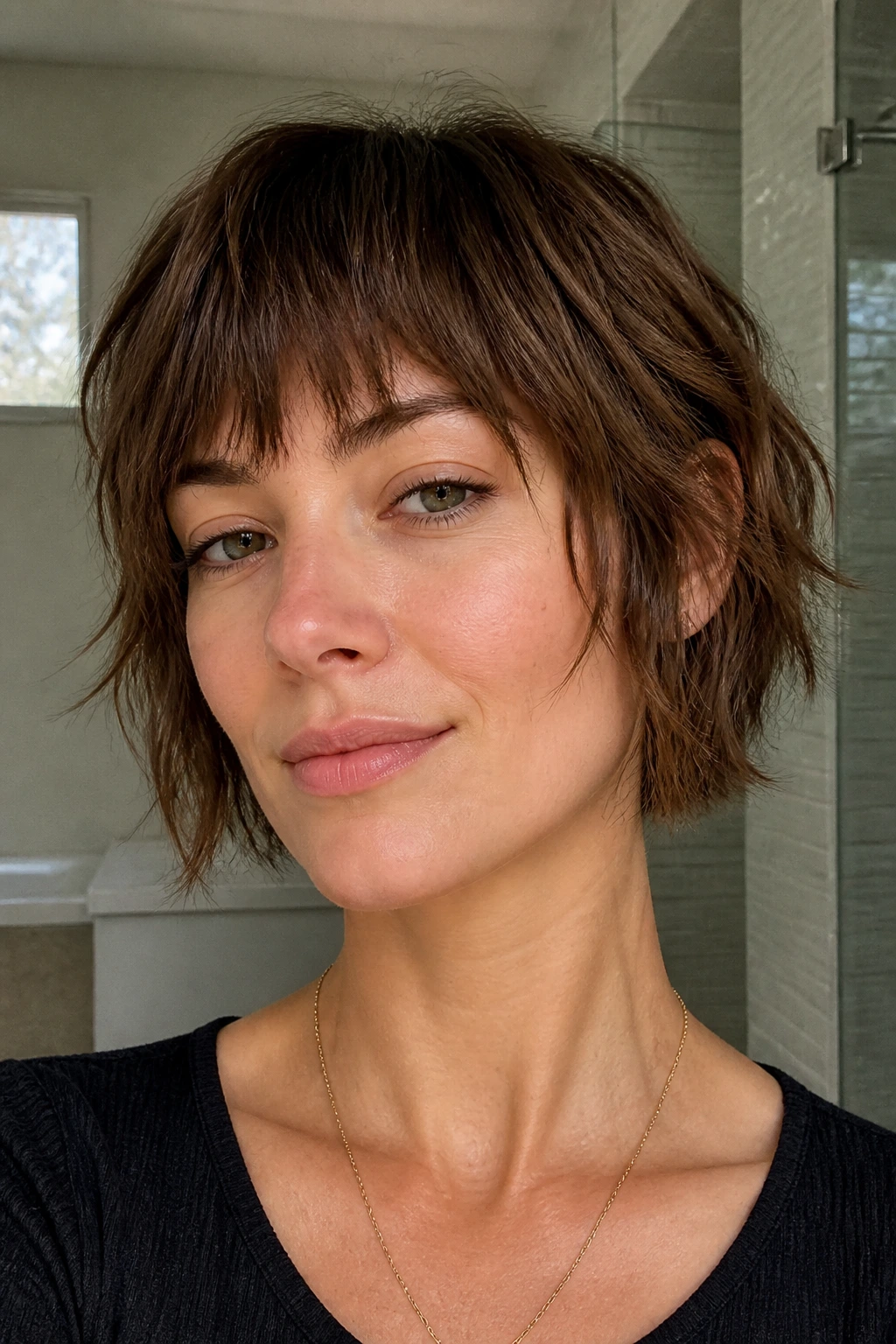
Not every fringe has to look freshly cut. Grown-in choppy bangs on a shaggy bob can be one of the most flattering options for square faces because the length is forgiving and the texture stays loose. The bangs can graze the brows, separate naturally, and blend into the layers.
That grown-in stage is where a lot of good fringe lives, honestly. It removes the hard edge and lets the haircut breathe. The trick is keeping the ends trimmed just enough so they stay piecey instead of floppy.
If you hate salon-fresh bangs that feel too perfect, this is your lane. It looks like hair, not architecture.
24. Piecey Fringe with Sideburn Detail
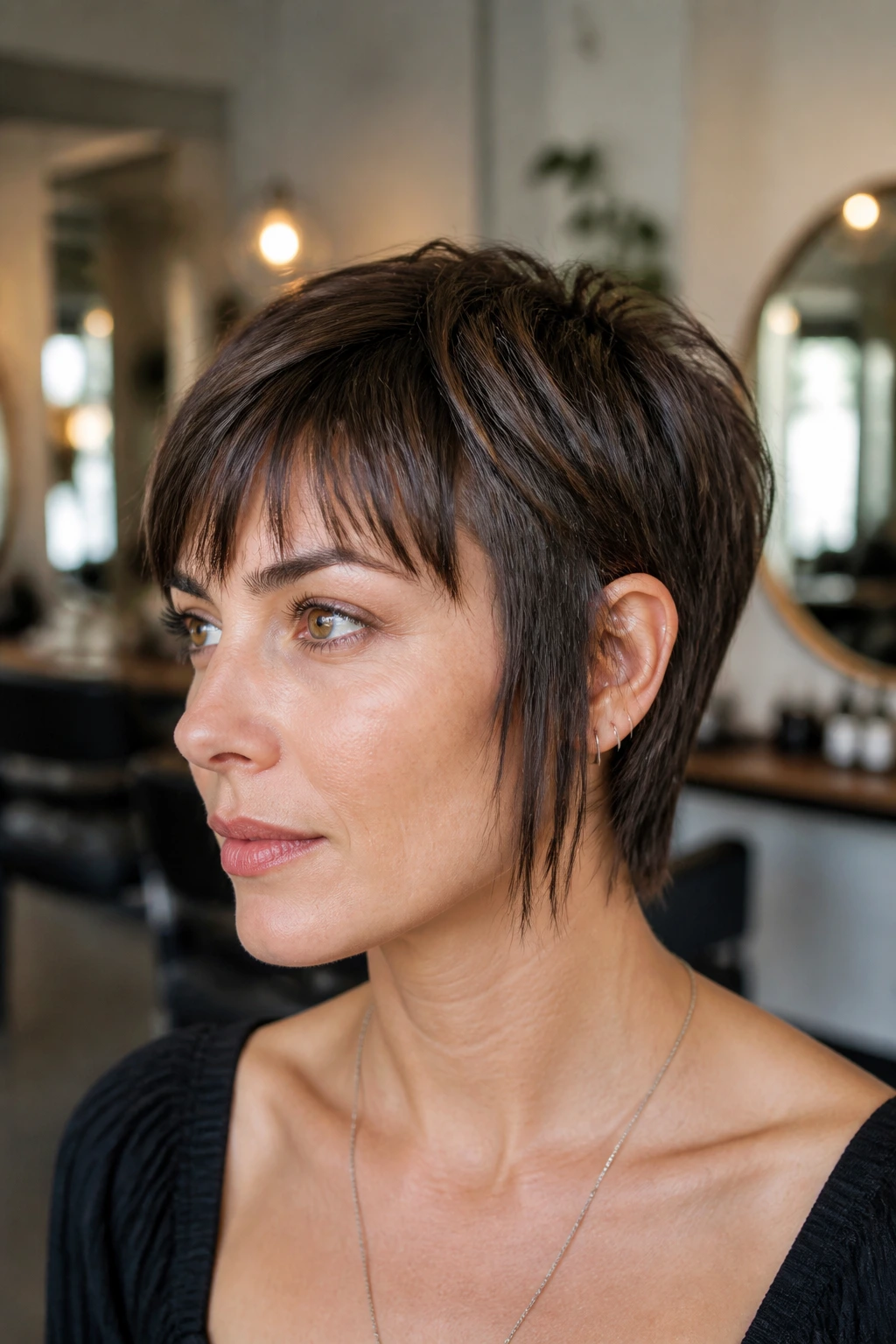
Sideburn detail changes the silhouette in a subtle but useful way. On a square face, those short pieces near the cheek and ear help draw the eye downward. That means the fringe doesn’t have to carry all the softness by itself.
The bangs themselves should stay piecey and slightly uneven, but the sideburns make the cut feel more finished. Without them, short hair can sometimes stop abruptly at the cheekbone and echo the face shape too closely.
This style is especially nice if you like to tuck hair behind the ears. The fringe remains visible, and the little side pieces keep the profile from going flat.
25. Razor-Cut Fringe with Soft Ends on a Textured Crop
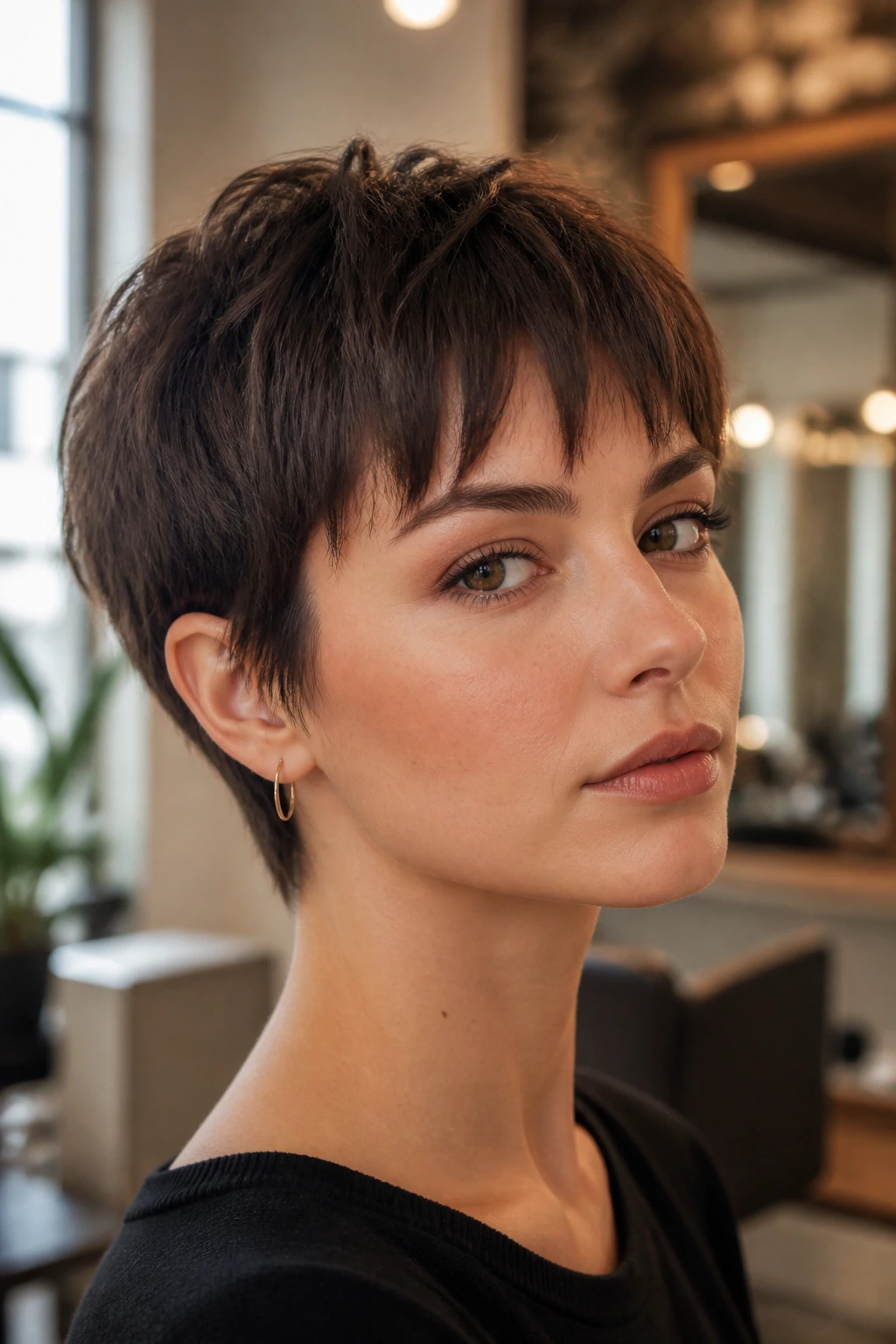
A razor-cut fringe can go wrong fast if the ends are too wispy. The version that works here keeps the softness at the tips but still has enough body to frame the eyes. On a textured crop, that balance keeps the face from looking too hard or too loose.
The cropped shape underneath does a lot of the heavy lifting, which is a relief. The fringe only needs to add motion across the brow and a little break at the center. If the cut is done well, it should look like the bangs belong there from the start.
This is one of the best choices for people who want short hair with a bit of edge but don’t want a severe bang line. It’s sharp in the right places and soft where it counts.
How to Style Choppy Bangs So the Texture Stays Visible

Choppy bangs only work if the texture survives the morning. A lot of people cut the right fringe and then flatten it with too much product or too much heat. That’s the fastest way to lose the point of the style. You want separation, movement, and a little bend, not a shellacked front section.
Start with damp bangs, not soaking wet ones. Waterlogged fringe takes longer to shape and often dries in odd clumps. Use a lightweight heat protectant, then direct the roots first. For side-swept and curtain styles, aim the dryer from side to side so the hair doesn’t set straight down the face.
A small round brush, a mini flat iron, or even your fingers can do the job. Pick one and stay gentle. If you overwork the front, the ends puff. If you underwork it, the fringe separates in the wrong place.
Best daily move: refresh the roots with a mist of water, clip the bangs forward for two minutes, then blow-dry just the front section again. That tiny reset is often enough.
Essential Tools for Short Bangs and Fringe
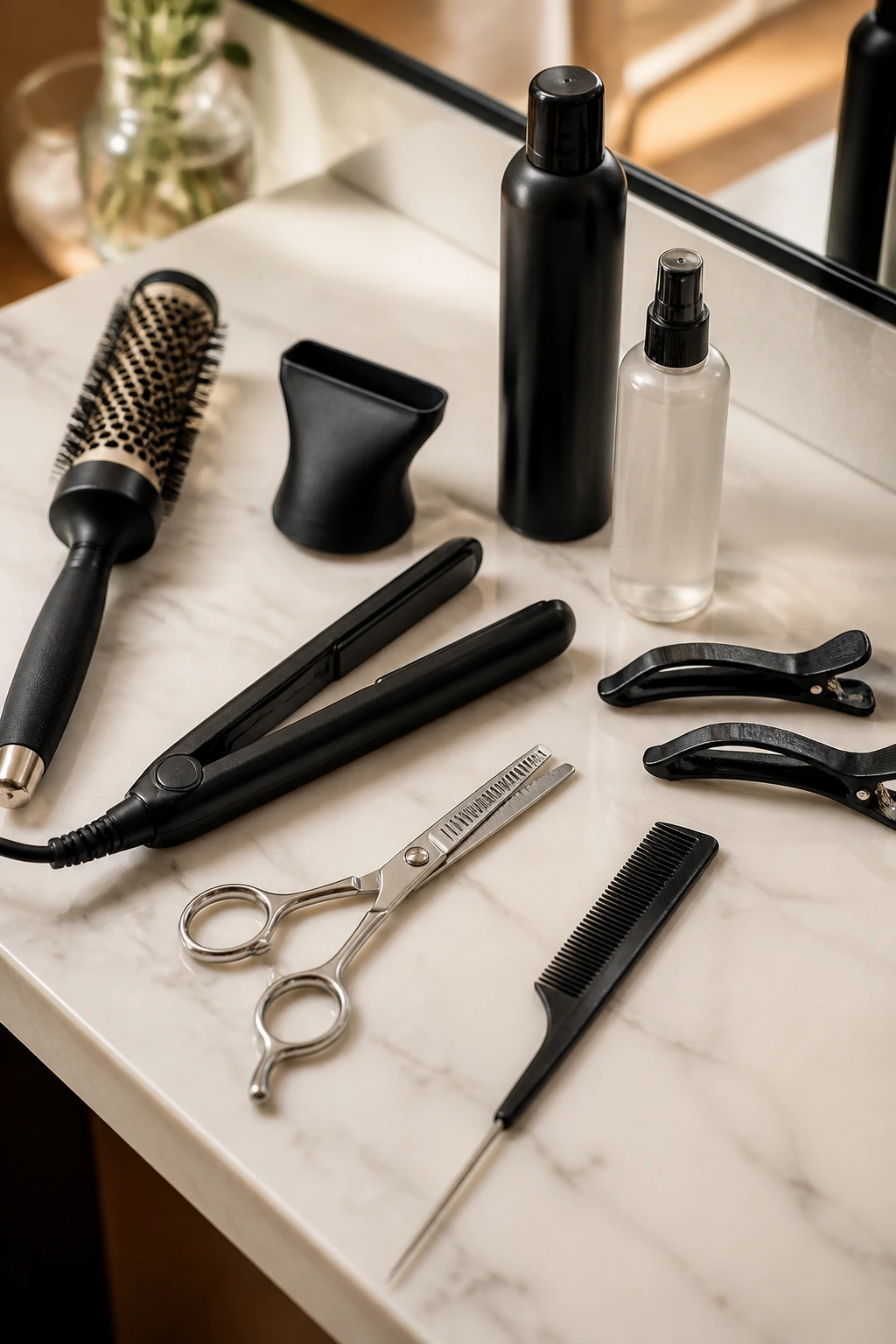
- Small round brush, 1 to 1.25 inches: Useful for bending short fringe without making it roll too much.
- Concentrator nozzle for your blow-dryer: Helps push the roots in the direction you want instead of blasting the bangs everywhere.
- Mini flat iron, 0.5 to 1 inch plates: Good for quick shaping, especially on piecey or side-swept styles.
- Texturizing shears: A stylist’s tool, but worth asking about if the fringe feels too solid.
- Tail comb: Makes parting, sectioning, and clean styling much easier.
- Lightweight heat protectant: Keeps short pieces from frying, which happens faster than people think.
- Dry shampoo: Saves bangs on oily foreheads and gives the front a little grit.
- Duckbill clips: Helpful for setting curtain pieces or holding the fringe in place while it cools.
How to Ask for the Cut Without Getting a Heavy Shelf
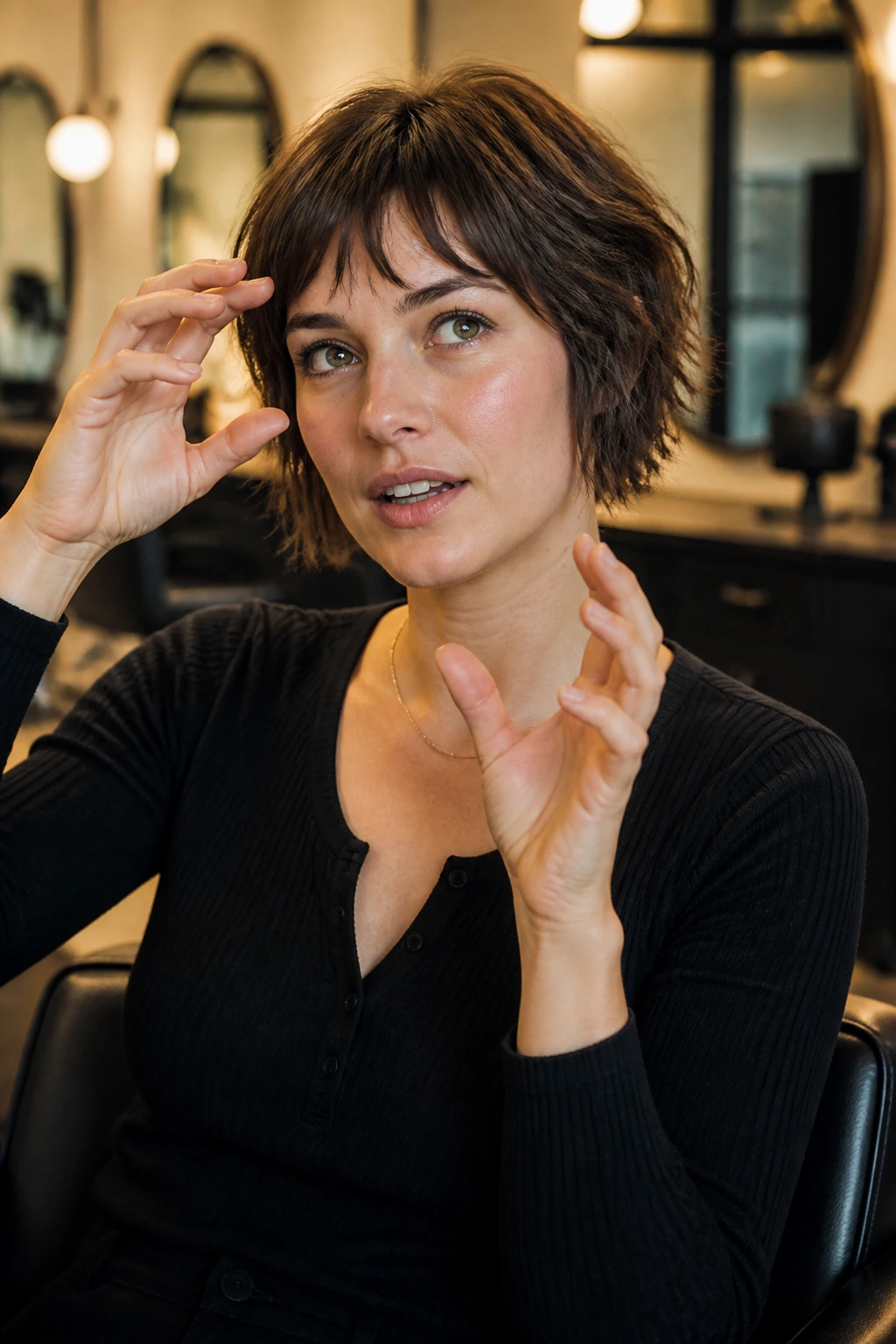
Bring photos, yes, but bring the right kind. The best reference is not a perfect studio shot with hair sprayed into place. You want a photo that shows the fringe moving, a little separated, and cut with some irregularity. That tells the stylist you want texture, not a line.
Use plain words. Ask for point-cut ends, longer corners, and soft weight at the temples if you want a shape that flatters a square face. If you say “choppy” without more detail, you can end up with thinning that feels accidental. There’s a difference between broken texture and over-thinned fringe.
Tell them how much styling you’re willing to do. A fringe that needs a flat iron every morning is a different animal from one that can air-dry into place. Be honest about that. Haircuts behave better when the plan matches your routine.
Common Mistakes That Make Square Faces Look Boxier
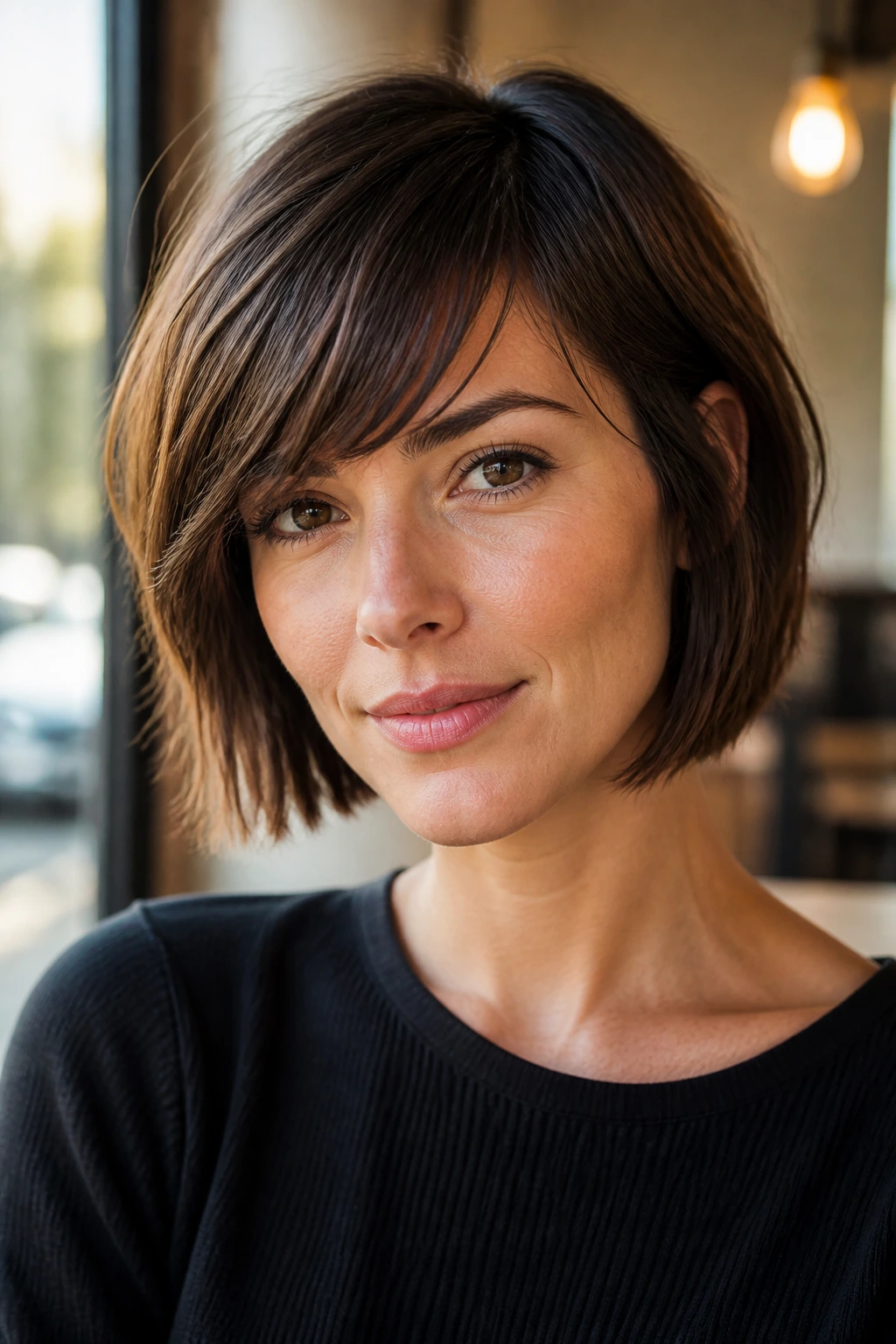
The biggest mistake is cutting the bangs too blunt and too wide. That creates a hard line that mirrors the forehead and makes the face look more square than it is. The fix is simple: keep the center a bit broken and let the corners sit longer.
Another common problem is ignoring the cowlick. Short fringe grows in different directions, and a stubborn swirl can split the bangs apart if it’s not cut with it in mind. A stylist who checks the growth pattern before cutting will save you days of frustration. If your bangs puff up in the middle, the hair was probably cut too short against the cowlick.
Overloading the front with product is a sneaky one. Heavy serum or thick cream makes choppy bangs clump and hang. Use the lightest amount that keeps flyaways down, then stop.
Finally, don’t let the side pieces get too short. On square faces, those corners are doing real shape work. If they disappear, the face can feel wider and the haircut loses its balance.
Variations and Adaptations Worth Trying

Softened for Fine Hair:
If your hair is fine, keep the fringe airy and avoid over-texturizing. Too many razor cuts can make the bangs disappear by midday. A light, brow-grazing shape with gentle piecey ends is usually enough.
Built for Thick Hair:
Thick hair needs internal removal, not just surface texture. Ask for weight taken out from underneath so the fringe doesn’t sit like a shelf. Long corners and temple pieces are your friends here.
Made for Waves and Curls:
Curly or wavy hair needs length left on top because the curl will spring up after drying. A choppy fringe can still work, but it should be cut to the hair’s shrinkage, not to how it looks wet. Dry-cutting often gives the best read.
Low-Maintenance Grow-Out:
If you hate trim appointments, choose styles with longer sides — bottleneck, curtain, or temple-length fringe. They blend into the haircut as they grow and don’t turn awkward as fast.
Sharper and Edgier:
For a bolder finish, go for micro bangs, disconnected fringe, or a razored crop. Just keep at least some softness around the temples so the square face still gets that broken line.
Maintenance and Grow-Out Between Trims
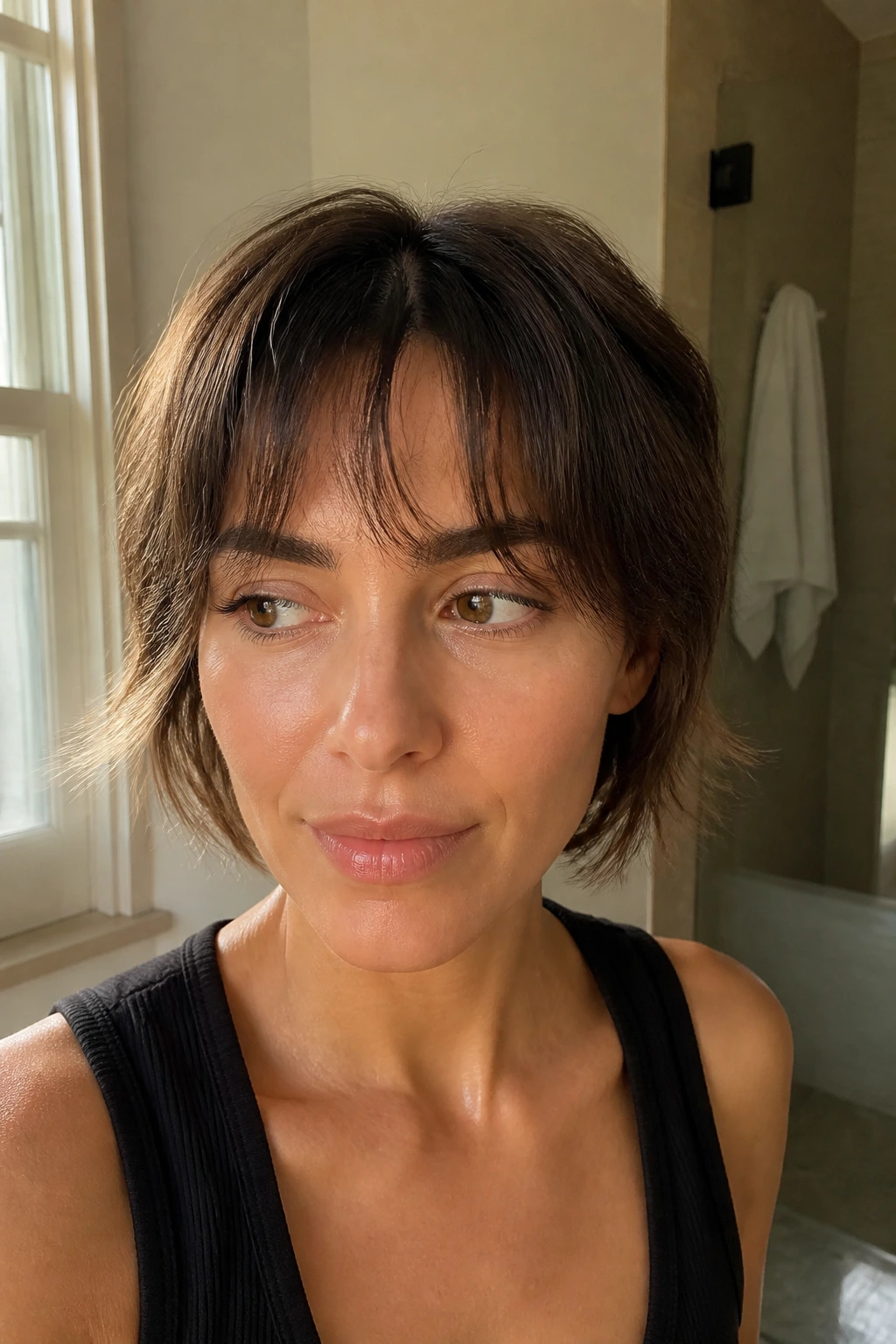
Short bangs grow fast. Faster than you want. Most choppy fringe needs a trim every 3 to 5 weeks if you want the shape to stay crisp. If you’re okay with a slightly grown-in look, you can stretch that to six weeks, but the line will soften more than you might expect.
Wash the front more often than the rest of the hair if your forehead gets oily. Bangs pick up oil, sweat, and skin products early in the day, and they show it. A quick sink wash or a mist-and-dry refresh can reset them without washing the whole head.
During grow-out, don’t fight the extra length too hard. A little bend at the sides can make the fringe look intentional while it’s getting longer. If it starts poking into the eyes, that’s not a styling failure. It’s just time for the scissors.
Frequently Asked Questions About Choppy Bangs and Square Faces
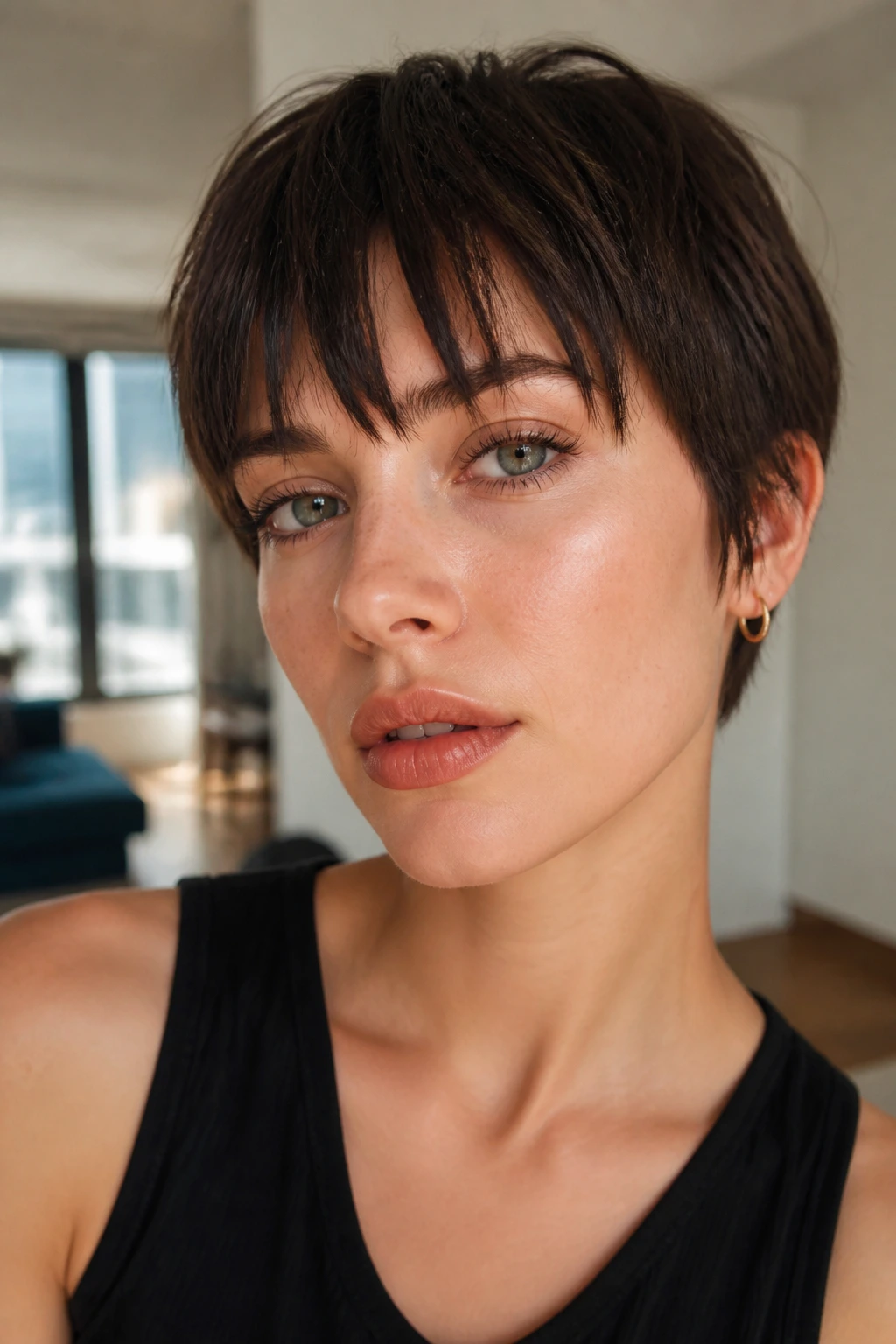
Do choppy bangs actually flatter square faces?
Yes, if they’re cut with softness at the corners and some movement through the center. The goal is to interrupt the straight forehead line, not to cover the face like a curtain. Texture matters more than sheer length.
Should square faces avoid blunt bangs altogether?
Not always, but a fully blunt, heavy bang is the least forgiving version. If you love the look, keep it lighter, shorter, or broken at the ends. The more rigid the line, the stronger the square effect.
Can I wear choppy bangs with glasses?
Absolutely, and many of the better versions work especially well with frames. Side-swept, bottleneck, and temple-length fringe keep the bangs from sitting right on the glasses line. That makes daily wear a lot less fussy.
Will choppy bangs work on thick hair?
They can, but the cut needs internal removal so the fringe doesn’t swell. Thick hair often looks best with longer corners and a bit of weight taken out underneath. That keeps the bang from ballooning.
What if my bangs split in the middle?
That usually means a cowlick or a growth pattern issue. Blow-dry the roots in the opposite direction first, then clip the bangs in place while they cool. If the split keeps returning, the cut probably needs more length or a different part.
Are micro bangs a bad idea for square faces?
No, but they’re a bold choice. If you go that short, keep the edges broken and the sides tapered so the fringe doesn’t look like a straight bar. A little softness changes everything.
How do I grow out choppy bangs without looking awkward?
Ask for the corners and temples to be blended into the side layers at each trim. That lets the fringe fold into the haircut instead of hanging as a separate chunk. Curtain-like shapes are the easiest to live with during grow-out.
Can wavy hair pull off these styles?
Yes, and in some cases wavy hair makes them better. The texture already gives the fringe movement, so the cut only needs to guide it. Just leave enough length for the wave to settle after drying.
The Fringe That Softens the Edge
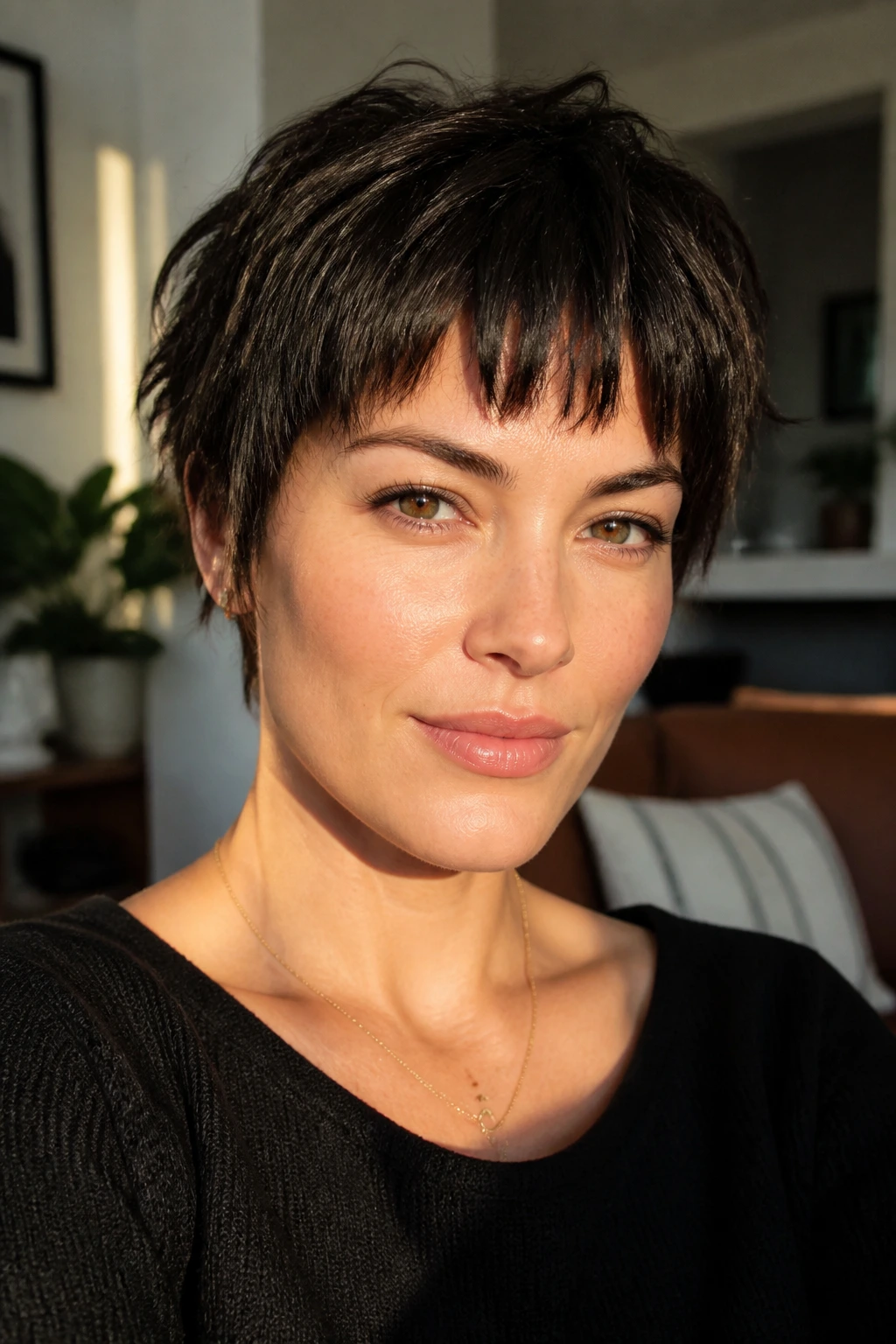
The best choppy bangs for short hair and square faces do not hide the face. They soften the hard lines, break the width at the forehead, and let the haircut breathe. That’s a different job, and it takes a different cut. A little texture, a little asymmetry, and a few longer corners are often enough to change the whole read of a short style.
If you’re bringing this to a stylist, ask for movement before you ask for length. That tiny shift in language usually gets you closer to the right result. And once the front is cut with some irregularity, the rest of the haircut has room to look relaxed instead of boxed in.