



Square faces do not need to be softened into something else. They need a little movement in the right place, and longer bangs for long hair and square faces do that better than almost any other front piece.
The trick is not to hide the face. It is to interrupt the hard lines. A fringe that splits, sweeps, or feathers at cheekbone level changes how the eye travels, and that matters more than people think. The wrong bang can make the forehead feel wider and the jaw look boxier. The right one trims the geometry down without making the haircut look timid.
Long hair gives you room to play with that shape. You can keep the fringe long enough to tuck behind an ear, long enough to blow dry with bend, long enough to grow out without a panic trim. And because square faces already have strong structure, the best fringe choices are usually the ones that add a curve, a diagonal line, or a broken edge rather than another straight line across the forehead.
Why These Longer Bangs Work on Square Faces
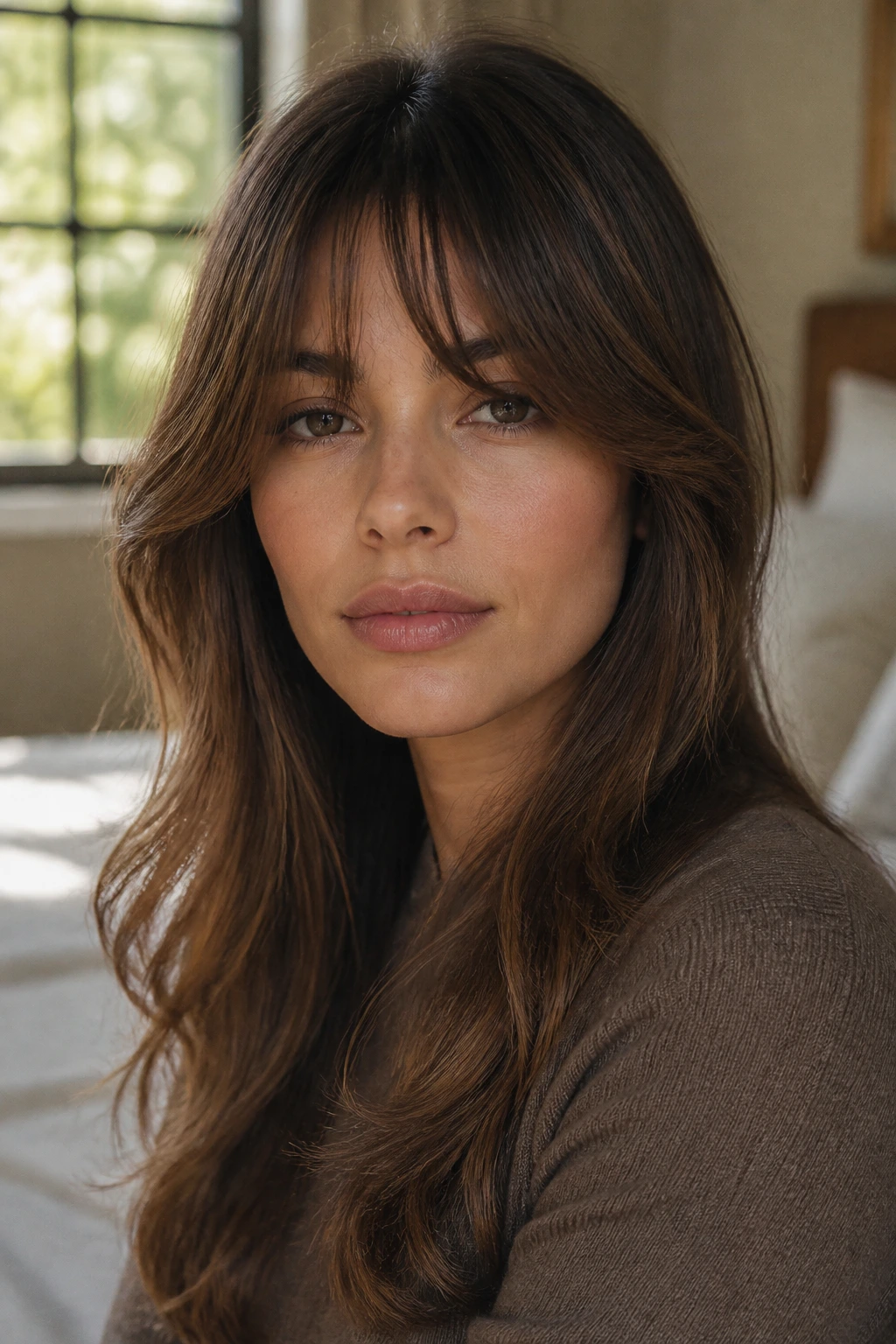
Soft edges beat hard bars. A square face already has clear corners at the jaw and a strong line through the forehead, so a fringe that lands bluntly across the brow can echo that shape in the wrong way.
Length gives the face room to breathe. When the shortest point sits around the eyebrow, nose bridge, or cheekbone instead of high on the forehead, the eye moves downward instead of stopping at one wide stripe.
Diagonal lines do a lot of the work. Side-swept and split bangs make the face read a little longer and a little softer, especially when the rest of the hair stays below the shoulders.
Texture matters more than thickness. A piecey edge or a feathered end keeps the front light. A dense, flat wall of hair can feel heavy fast on a square face, especially if the hairline grows straight across.
These cuts usually grow out in a useful way. That is the part I like most. A good longer fringe starts becoming face-framing layers instead of becoming a shape you need to regret.
1. Curtain Bangs That Split at the Cheekbones
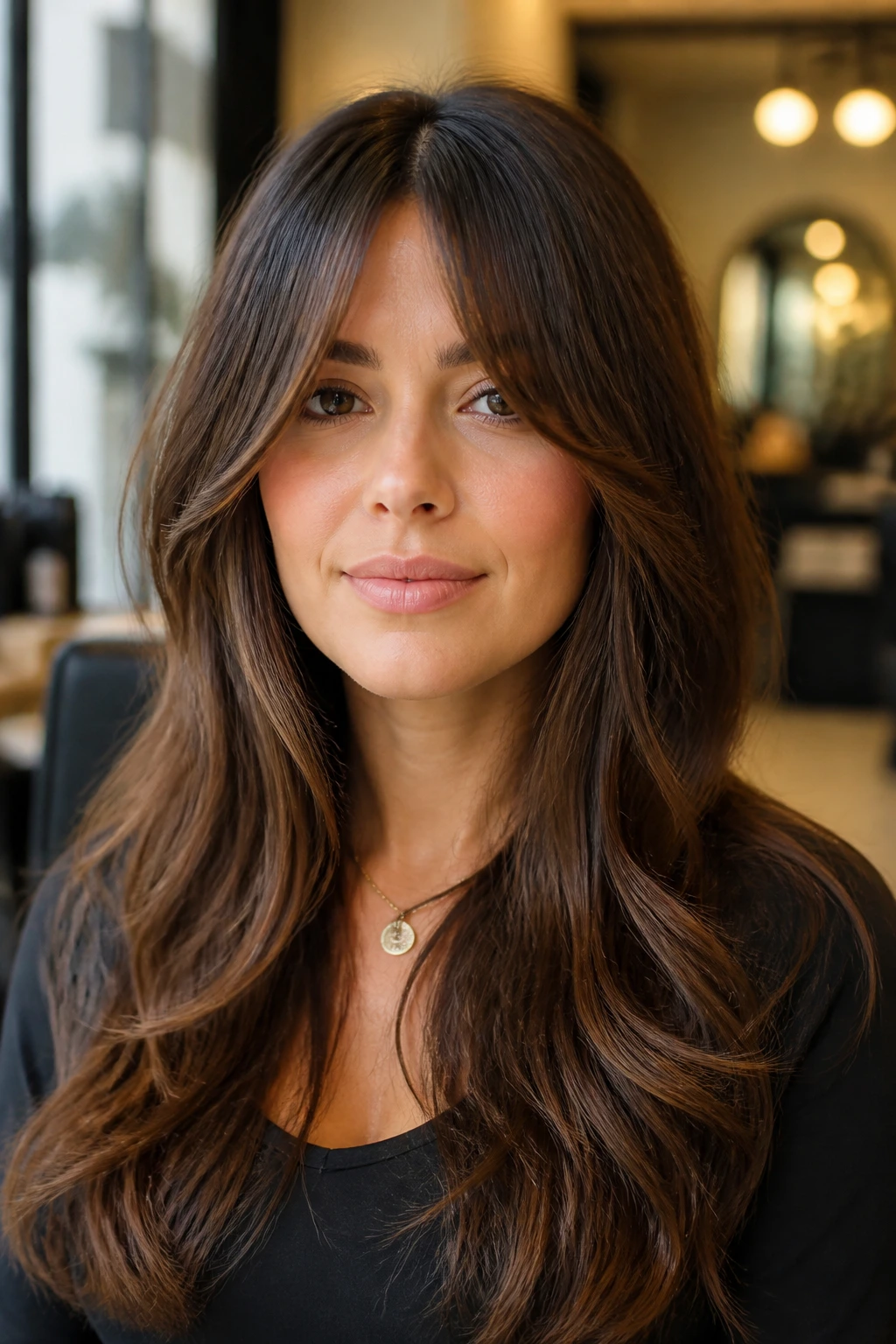
A good curtain bang is a little smug in the best way. It opens at the center, falls away from the face, and lets the cheekbones do the talking instead of boxing them in. On a square face, that split is the whole point. It breaks the forehead line and guides the eye down in a soft V.
Why the split matters
The shortest point should sit around the bridge of the nose or just below the brow, then slide longer toward the cheekbones. That longer outer edge is what stops the cut from feeling square. If the bangs are cut too wide, they start looking like a curtain rod instead of a curtain.
- Ask for the center to stay narrow.
- Keep the sides long enough to graze the outer cheek.
- Blow-dry forward first, then bend away from the face.
- Use a round brush, not a giant paddle brush, or the shape goes limp fast.
My favorite version leaves enough length to tuck the pieces behind the ears on a low-energy day. That tiny flexibility is why this fringe keeps working long after the trim.
2. Bottleneck Bangs with a Narrow Center
This cut is sharper than curtain bangs, but still soft around the edges. The center stays slim and short, then the length opens quickly near the temples, almost like the neck of a bottle widening into the shoulders. On a square face, that narrow center keeps the forehead from feeling broad, while the longer sides pull the shape downward.
It’s a smart choice if you like structure without a heavy curtain. The line looks deliberate, not fussy. And because the shortest hair sits right in the middle, the fringe can make the eyes feel more centered without flattening the face.
I especially like bottleneck bangs on long hair with layers that start below the chin. The fringe has a strong little shape of its own, then the rest of the hair keeps the whole thing from feeling top-heavy.
If you wear your hair straight, ask for the ends to be point-cut, not hacked blunt. That tiny bit of softness is what keeps the look from turning severe.
3. Side-Swept Fringe That Skims One Eye
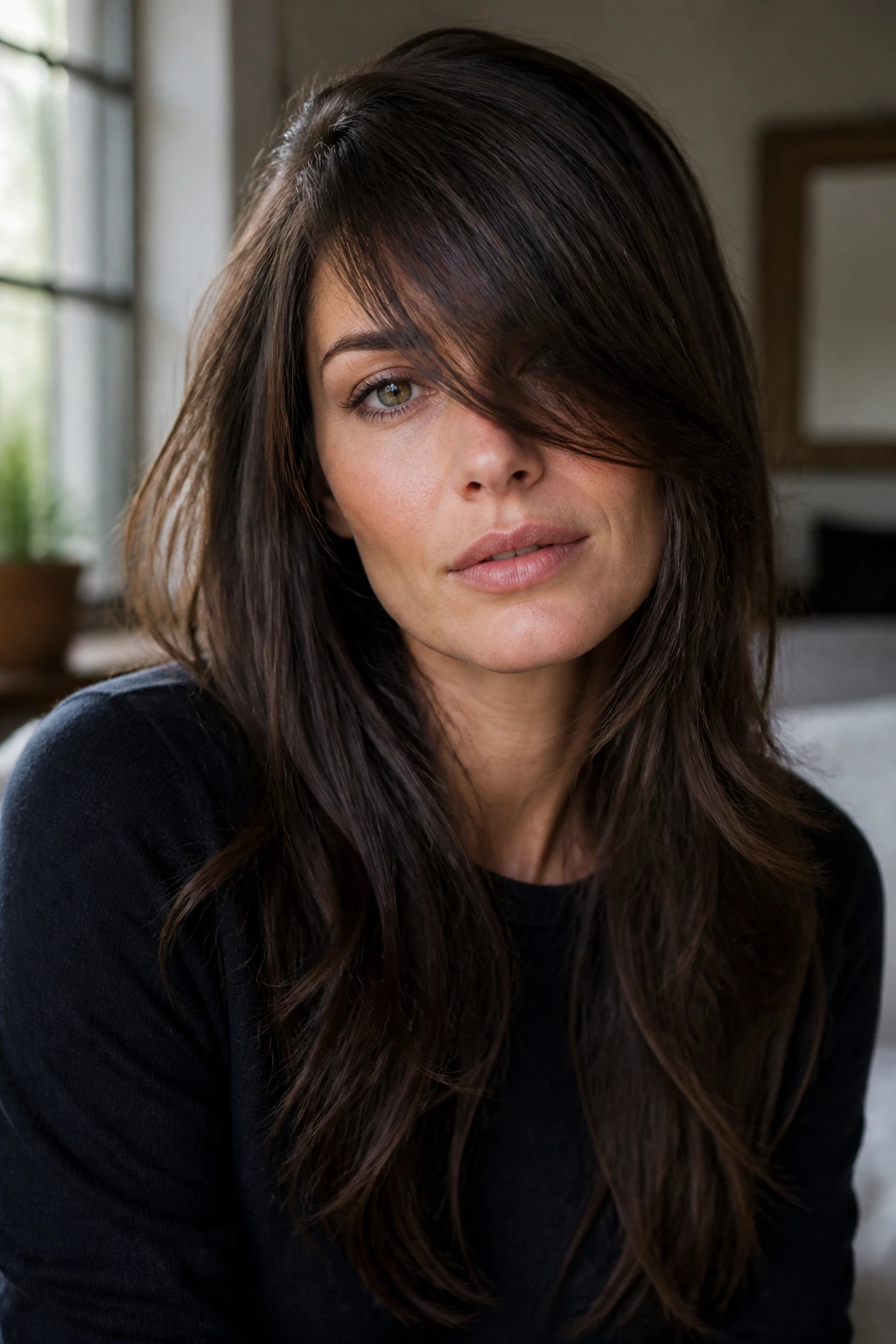
Can a side fringe soften a square face without looking dated? Yes, if it is long enough to move and loose enough to avoid that helmet-y swoop people used to cut in one chunk.
How it works
A deep side sweep creates a diagonal line, and diagonals are friendly to square faces. They break up the jaw-to-forehead symmetry and make the haircut feel less rigid. The trick is to keep the longest piece at or below the cheekbone so the fringe doesn’t stop too high.
- Best with a side part that already appears in your hair.
- Works well when the front is dried with a brush toward the opposite eye, then flipped back.
- Needs a little root lift or the whole shape collapses by lunchtime.
A side fringe is the one I’d pick if your hair refuses a center part. It lets the face stay open on one side and gives the square shape a bit of motion without asking for a dramatic cut.
4. Feathered Bangs That Melt into Long Layers
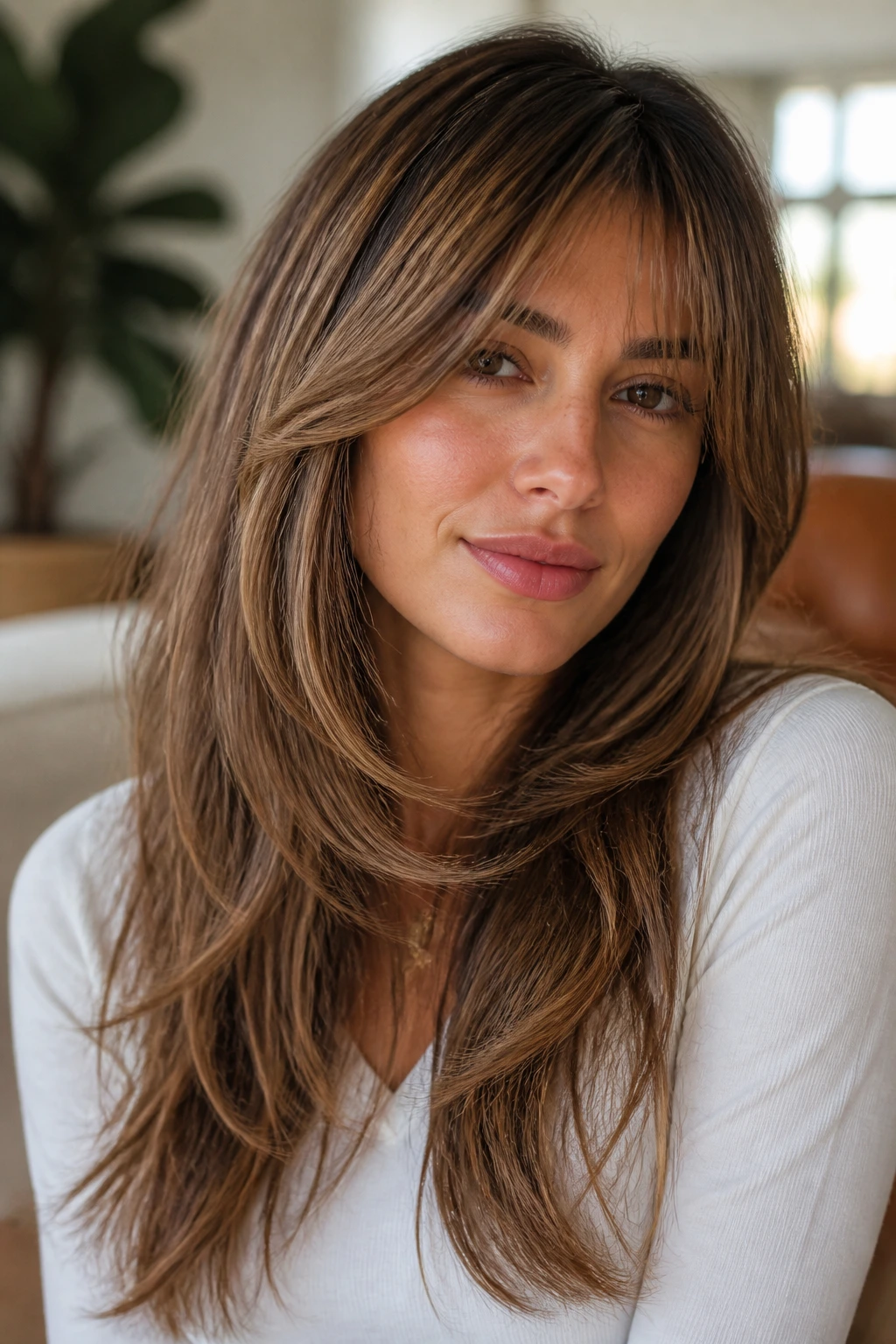
Some people do not want a distinct bang. They want the front of the haircut to look like the rest of the hair decided to lean forward a little. Feathered bangs do that job. The ends are light, the edge is broken, and the front pieces melt into long layers instead of announcing themselves.
That softness helps square faces because nothing stops the eye dead. The movement starts near the temples and keeps traveling, which is exactly what angular faces like. You get frame and lift without a hard line.
Where this cut shines
This shape is especially good if your hair is medium to thick and you already wear long layers. A razor or careful point-cutting can take weight out of the fringe so it doesn’t sit like a shelf.
- Ask for a feathered transition at the temples.
- Keep the center a touch shorter than the sides.
- Style with a small round brush and a low bend, not a full curl.
The best feathered fringe looks almost accidental in motion. That is the point.
5. Bardot Bangs with a Loose Blowout Bend
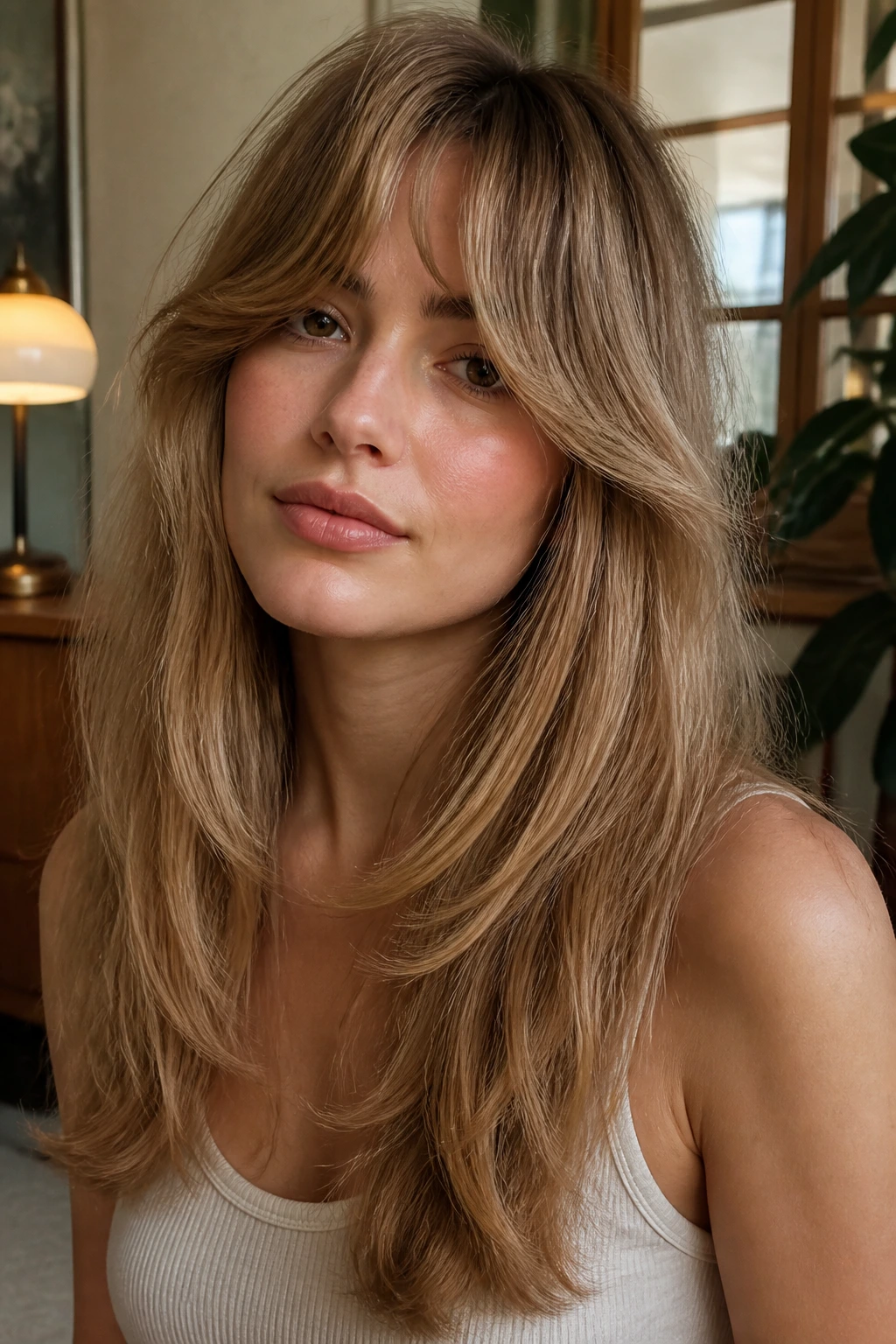
Bardot bangs carry a little more drama. They have fullness through the center, then softer sides that sweep away from the face. On a square face, that rounded energy matters because it takes the bite out of the jawline without hiding the cheekbones. The haircut feels old-school in a good way, but not stiff.
I like these best when the fringe has a bit of lift at the root and a loose bend through the ends. Too straight, and they can look heavy. Too curled, and they start competing with the long hair. The sweet spot is that brushed-out bend that looks like it took effort but not all afternoon.
If you wear long layers or a blowout shape through the rest of the hair, Bardot bangs can be one of the nicest options on the list. They need a round brush and a calm hand. Nothing heroic.
6. Arched Brow-Grazing Fringe
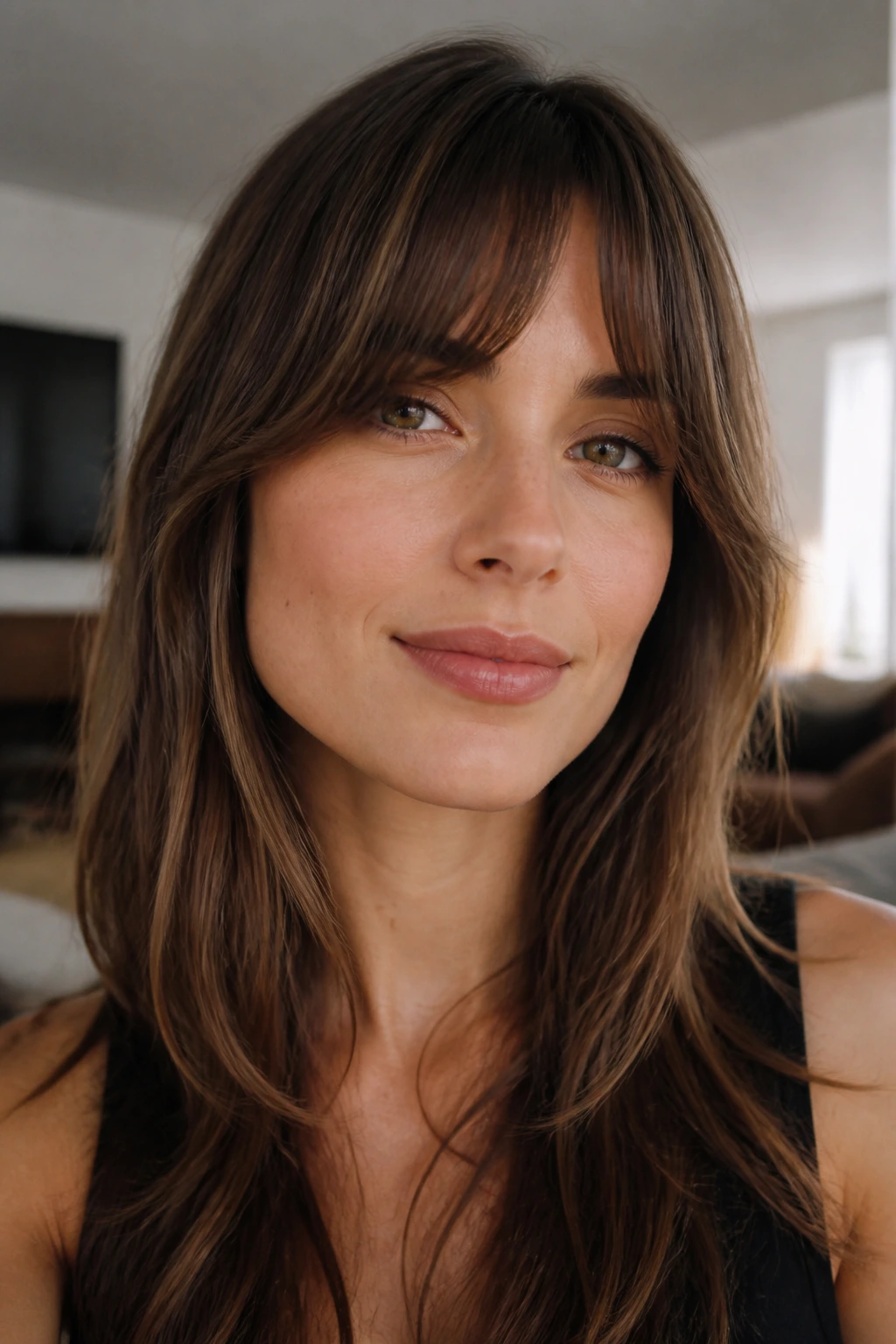
A straight-across brow line can make a square face feel even more angular than it already is. An arched fringe solves that by following the natural curve of the brow instead of fighting it. The center stays a touch shorter, then the line drops softly toward the temples.
That tiny curve changes the whole mood. It keeps the eye from running into a blunt wall, and it works especially well if your brows already have shape. The fringe almost mirrors them, which is a quiet but useful trick.
This cut is a solid middle ground if you want bangs that look polished but not severe. I would avoid making the arch too high; once it climbs too far, it starts reading as retro in a way that can feel costume-y. Keep it low, soft, and just curved enough to release the face.
7. Wispy See-Through Bangs with Room to Breathe
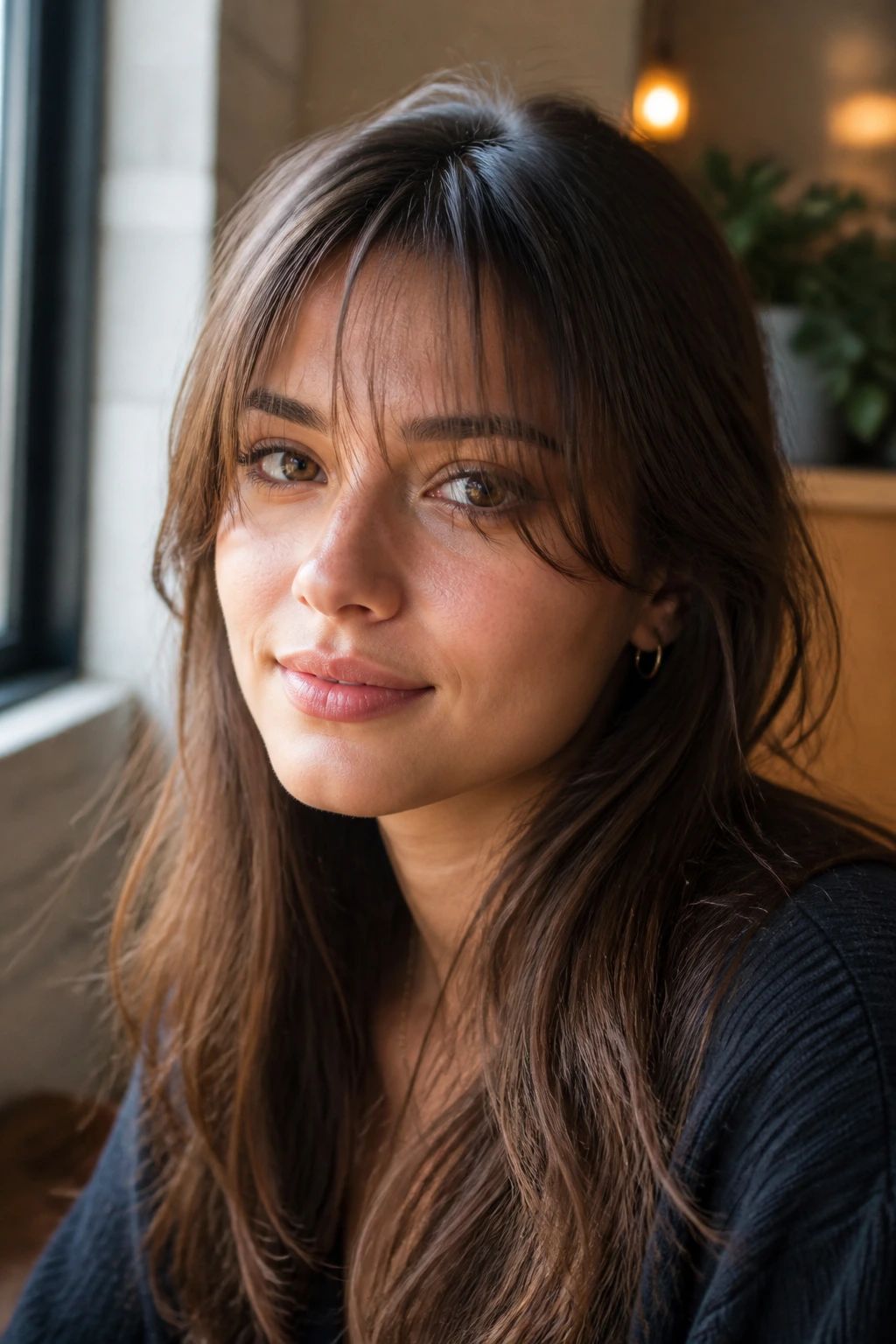
Do wispy bangs work on a square face? They do, as long as they are actually wispy and not just undercut bangs that look thin by accident.
What keeps them from falling flat
The density should stay light enough to show some forehead through the fringe. That transparency matters. It breaks the blocky feeling a heavier bang can create and keeps the face open.
- Keep the center soft, not clipped too short.
- Let the ends taper instead of sitting in one hard row.
- Use a touch of mousse or spray at the root so the fringe does not separate into strings.
I like this cut for people who want the idea of bangs without the weight. It’s especially good if you wear glasses or if your hair is naturally fine. The fringe sits there, does its job, and stays out of the way.
8. Shaggy Piecey Fringe for Air-Dried Texture
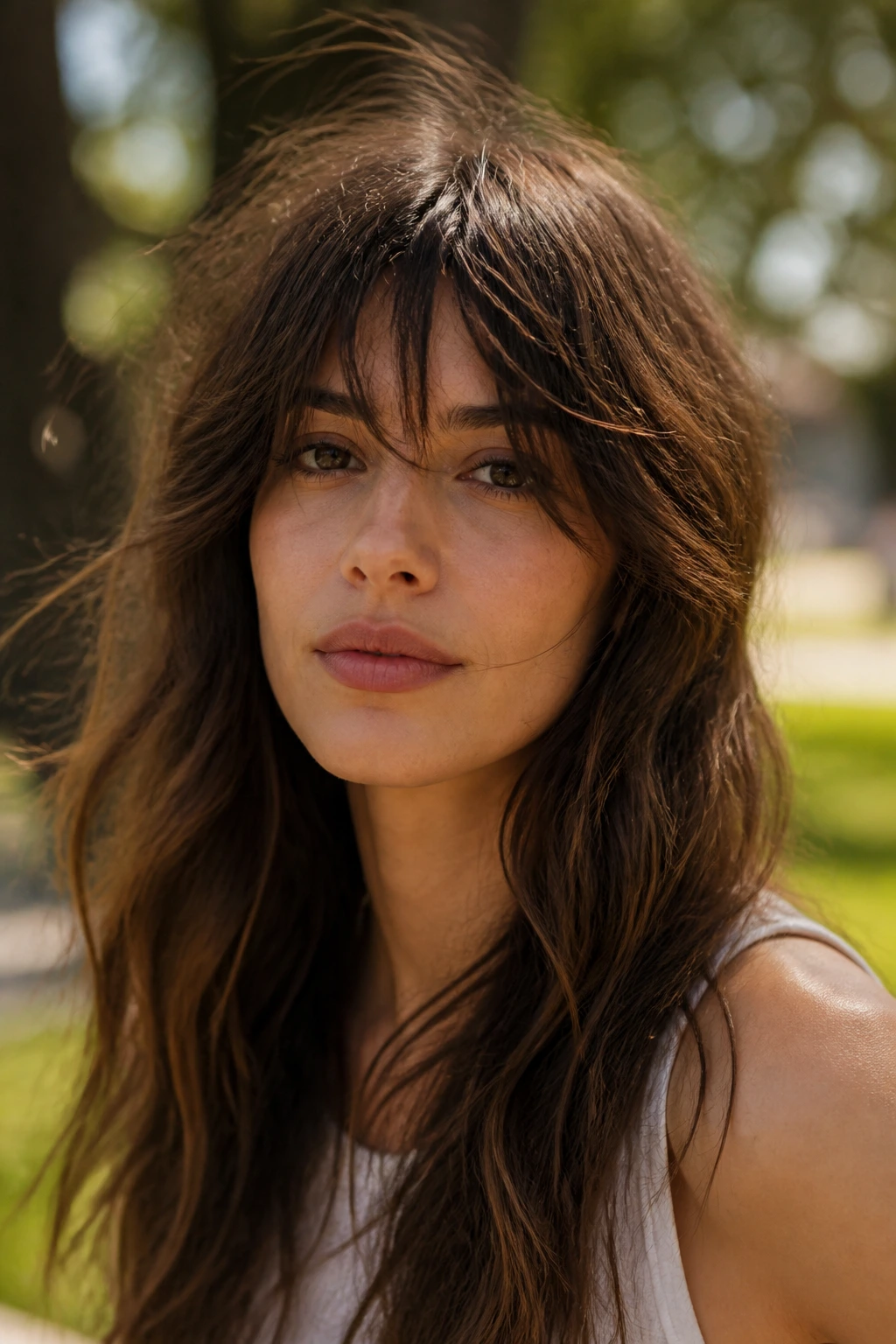
If your hair likes a little roughness, this is the bang shape I’d look at first. Shaggy fringe looks best when the ends are broken into pieces and the line is not too tidy. On a square face, that messiness is useful. It stops the front from reinforcing the same straight lines that the jaw already gives you.
This style works with a long shag, obviously, but it can also live on a longer layered cut with a slightly undone finish. Air-drying helps, and so does a small amount of cream rubbed only into the ends. Too much product, and the texture collapses into clumps.
Key details
- Shortest point should sit around the brow, not high above it.
- Ends need to stay irregular.
- A little flip at the sides keeps the fringe from sitting flat on the cheeks.
This one feels best when it moves. Still hair? Not the right vibe.
9. Choppy Textured Bangs
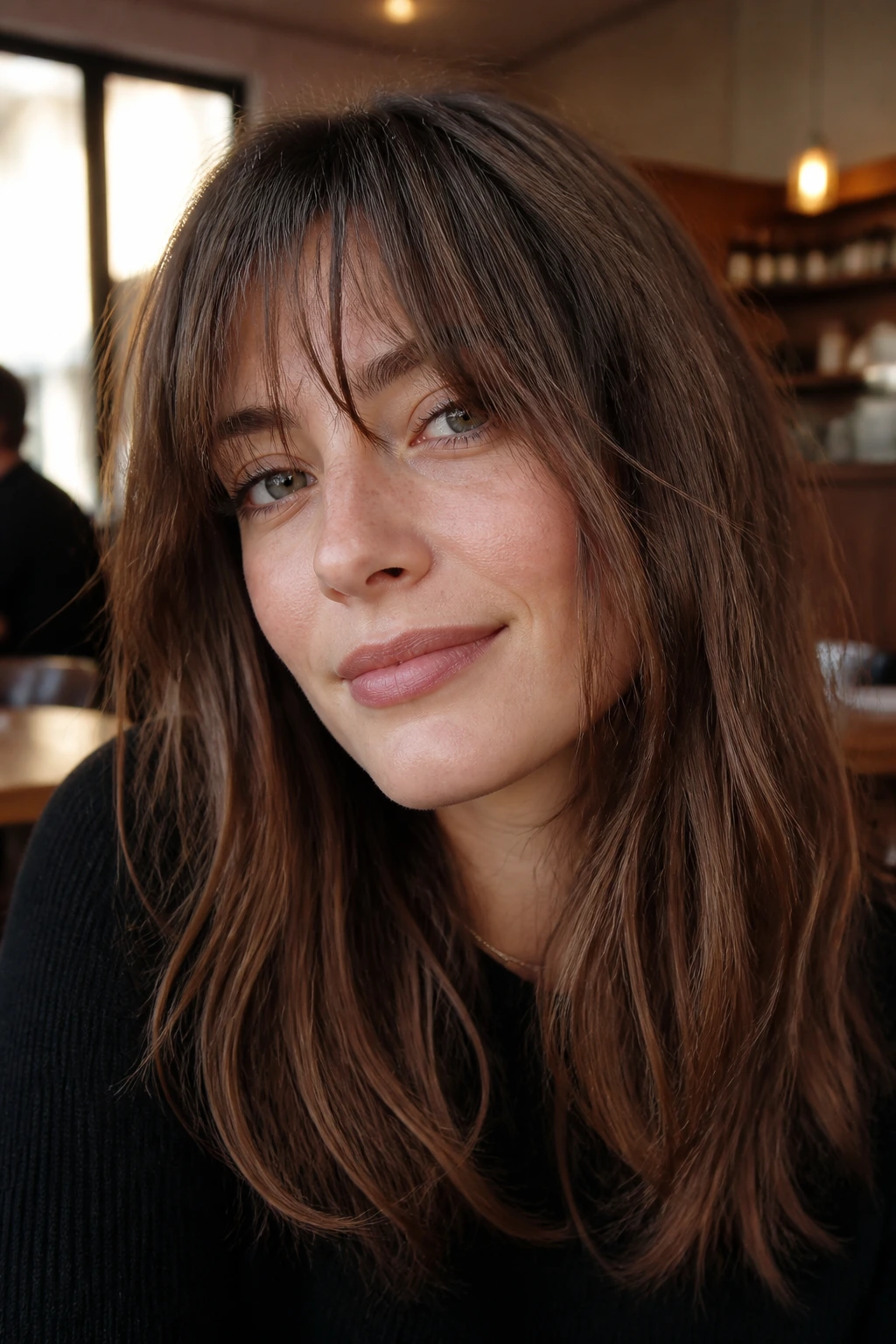
Choppy bangs are a cleaner version of shag fringe. The shape is still broken, but the edges are sharper and the pieces read more intentionally separated. That little bit of irregularity is what helps a square face, because a line that is too perfect can make the whole haircut feel like a ruler was involved.
I like choppy texture on straight or slightly wavy long hair. The cut gives the front some energy even when the rest of the length is worn down and simple. It also saves you from the too-solid effect that can happen with thick bangs cut evenly across.
A good choppy fringe should still have enough length to skim the brow or cheekbone. If it gets too short, the texture turns from cool to fussy. Leave space in it. That is where the softness lives.
10. Center-Part Fringe That Blends into Layers
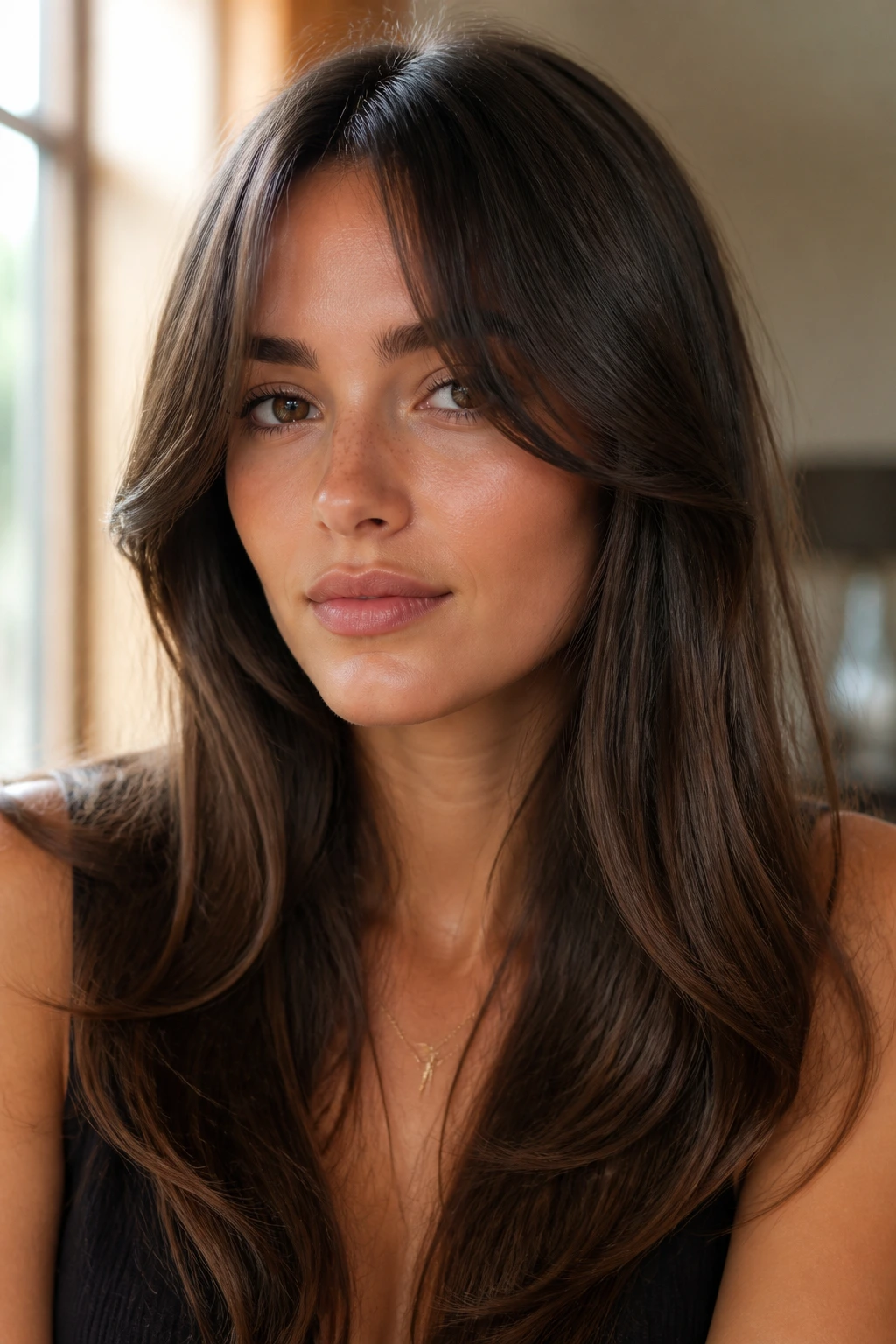
This is the quieter cousin of curtain bangs. The center part is there, but the fringe melts into the front layers more than it announces a split. On a square face, that gentle movement can be a relief. Nothing gets pinned to the middle of the forehead, and the front pieces slide down the sides in a way that softens the jaw.
It’s a good choice if you want your bangs to feel like part of the haircut instead of a separate feature. The line is less obvious, which means the grow-out stage is more forgiving. I find this especially useful on long hair that already has face-framing pieces; the fringe just joins the rest of the cut.
If you like to change your part depending on mood, this shape gives you room to do that without starting from zero each morning.
11. Crescent Bangs with a Soft Curve
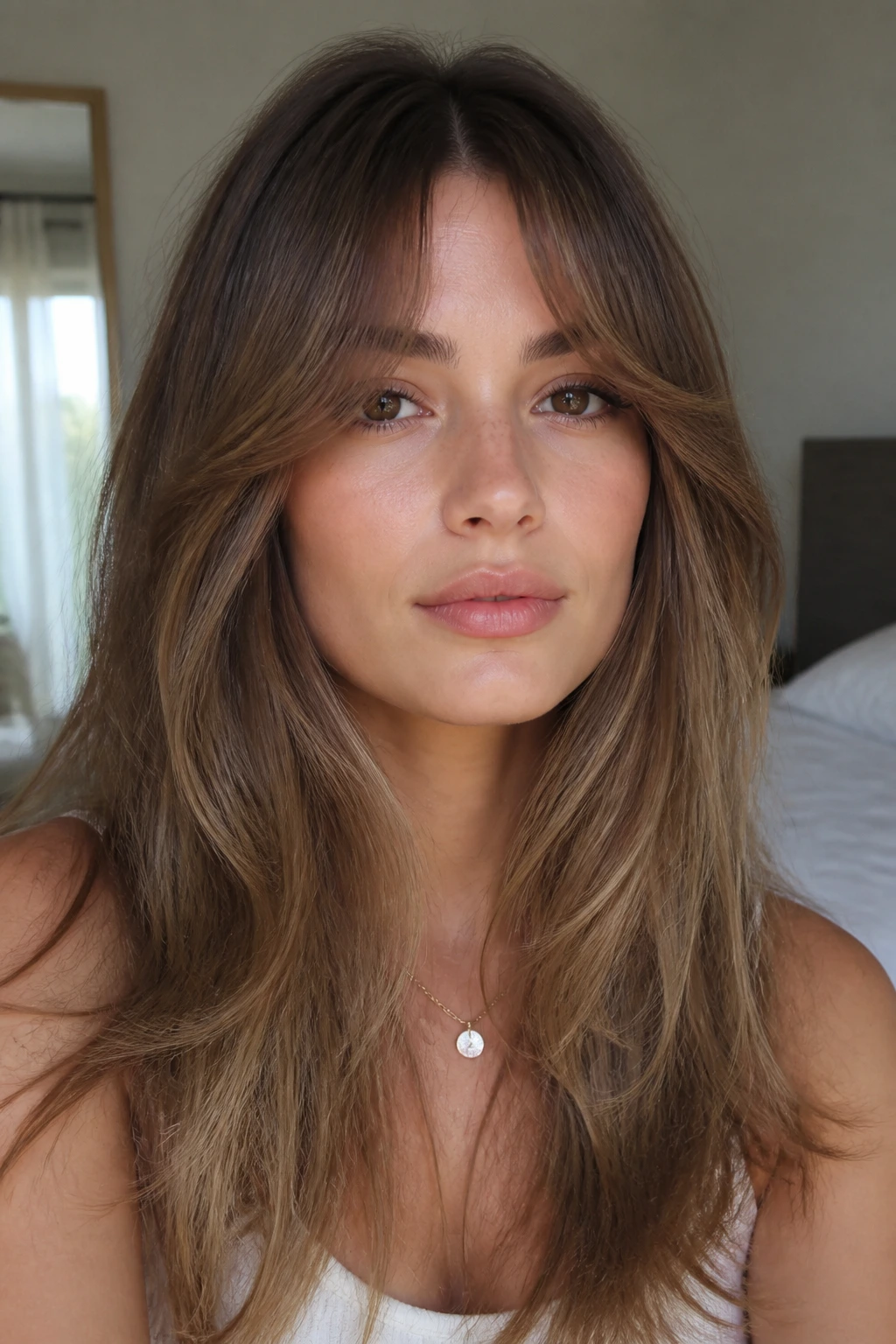
Crescent bangs have that gentle U-shape that sits a little shorter in the middle and longer at the sides. The curve matters. It mirrors the face enough to feel balanced, but not so much that it boxes anything in.
A square face usually benefits from that small arc because it softens the brow line while keeping the top of the face open. The outer pieces can blend into long layers, which helps the haircut feel connected instead of chopped into separate zones.
I would ask for this shape if you want something a little more deliberate than curtain bangs but softer than a blunt fringe. It can look almost sculpted when blow-dried well. Or messy, if that is more your speed. The shape is flexible that way.
12. Temple-Start Face-Framing Fringe
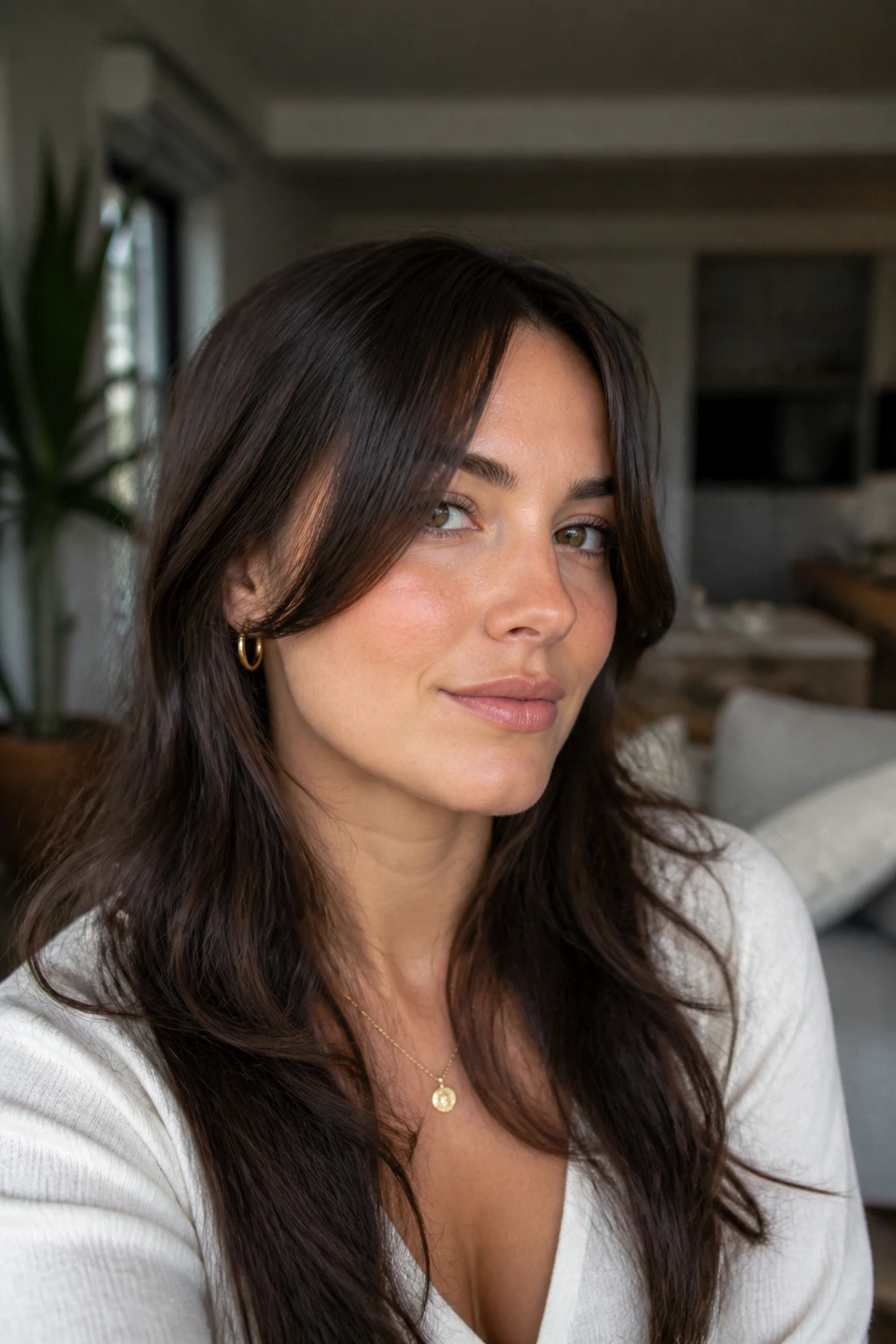
What if you want bangs, but not in the middle of the forehead? Start them farther out. Temple-start fringe leaves the center more open and puts the emphasis where square faces usually need it most: around the outer cheekbone and jaw.
Why this placement helps
The width at the temples breaks up the square outline without adding another horizontal band across the brow. The eye sees movement near the sides of the face, which makes the jaw feel less prominent.
- Good for people with a strong center cowlick.
- Good for hair that lifts naturally at the part.
- Good when you want the fringe to disappear into long layers quickly.
This is one of my favorite low-drama approaches. It looks custom, and it behaves better than a lot of trendier bangs.
13. Diagonal Side-Part Fringe with a Long Tail
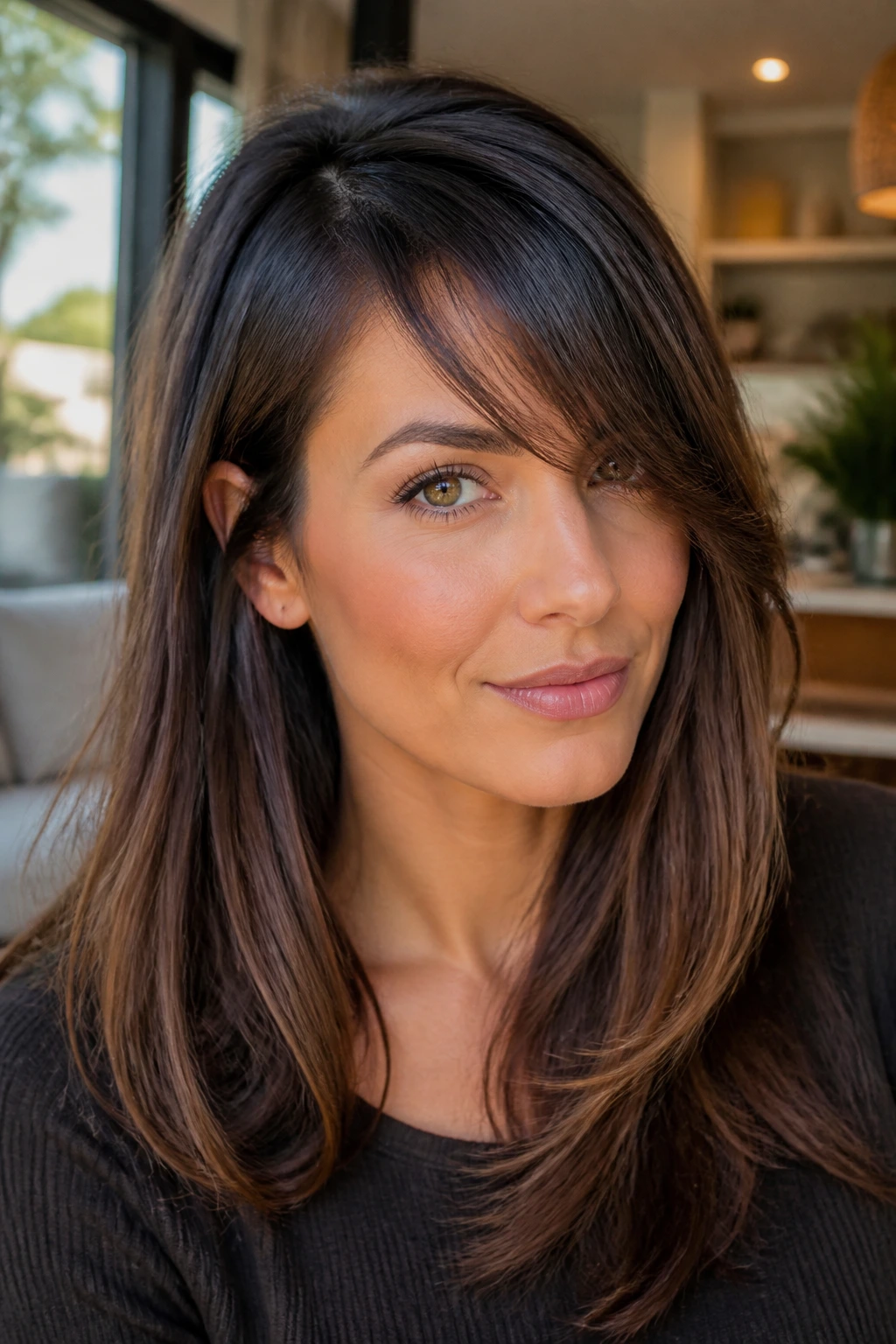
This one is all about slope. One side starts shorter, then the bang length stretches diagonally across the forehead before dropping into a long tail near the cheek. That slant gives square faces a softer read because it interrupts the symmetry and keeps the top of the face from feeling wide.
A diagonal fringe can also hide a stubborn part line. If your hair has a cowlick that refuses to stay centered, this shape can make peace with it instead of fighting it all morning.
I like it with long hair that already has movement through the ends. The fringe should feel like a sweep, not a chunk. If the line is too heavy, it loses the whole point. Keep it loose. Keep it angled. Let it move.
14. Layered Bangs Merged into Long Hair
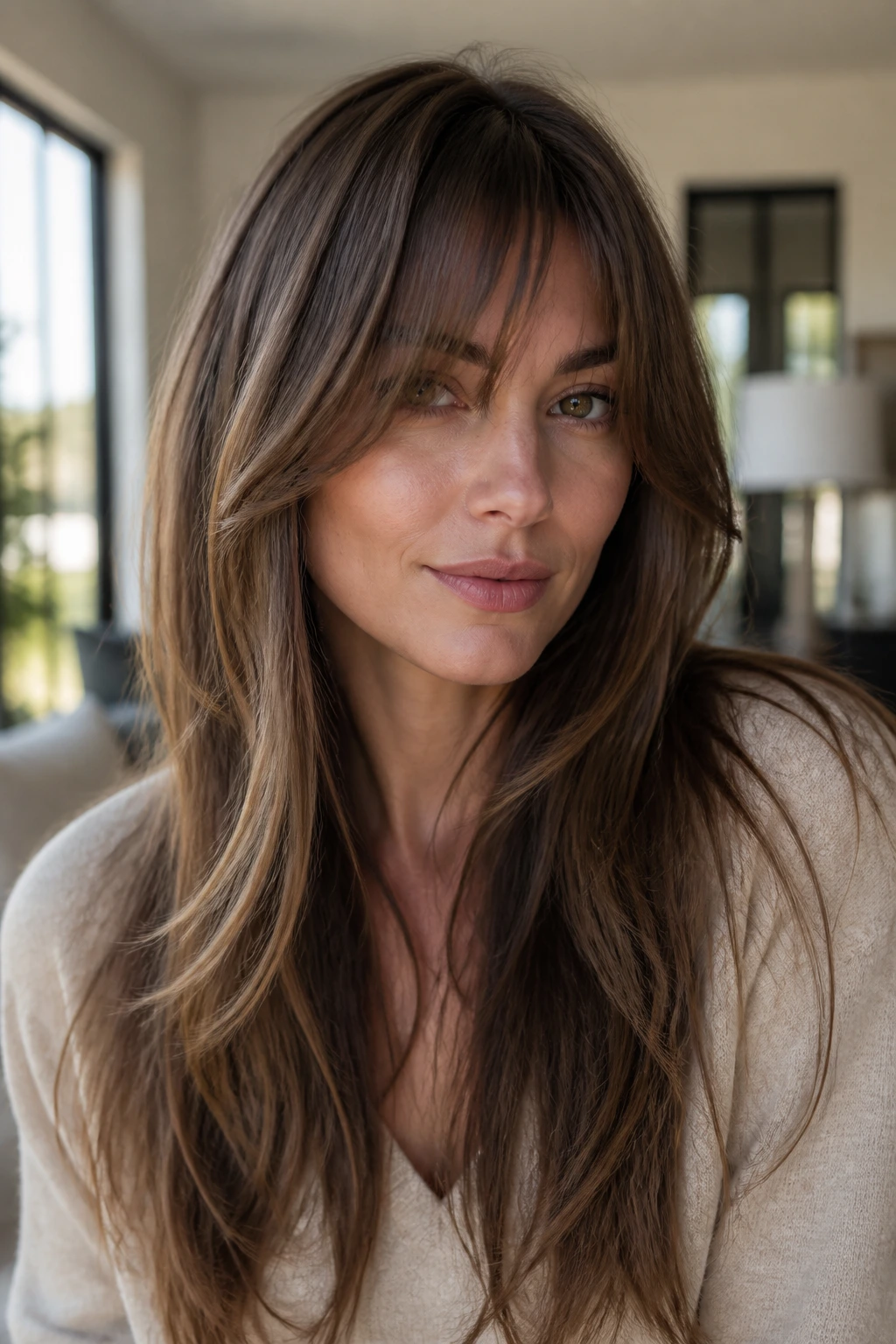
Some bangs are meant to be seen. These are meant to blend. Layered fringe that merges into the rest of the haircut can be a smart pick for square faces because it softens the front without ever creating a hard shelf.
The main thing here is connection. The shortest bits still frame the eyes, but the sides melt into the lengths, so the haircut feels long and vertical. That vertical line is useful on an angular face. It keeps everything from widening out too much at the temples.
This cut is also kind to people who want bangs but hate maintenance. You can push them to the side, wear them forward, or tuck them back. They do not fight you every morning. I appreciate a fringe with good manners.
15. Grown-Out Curtain Fringe
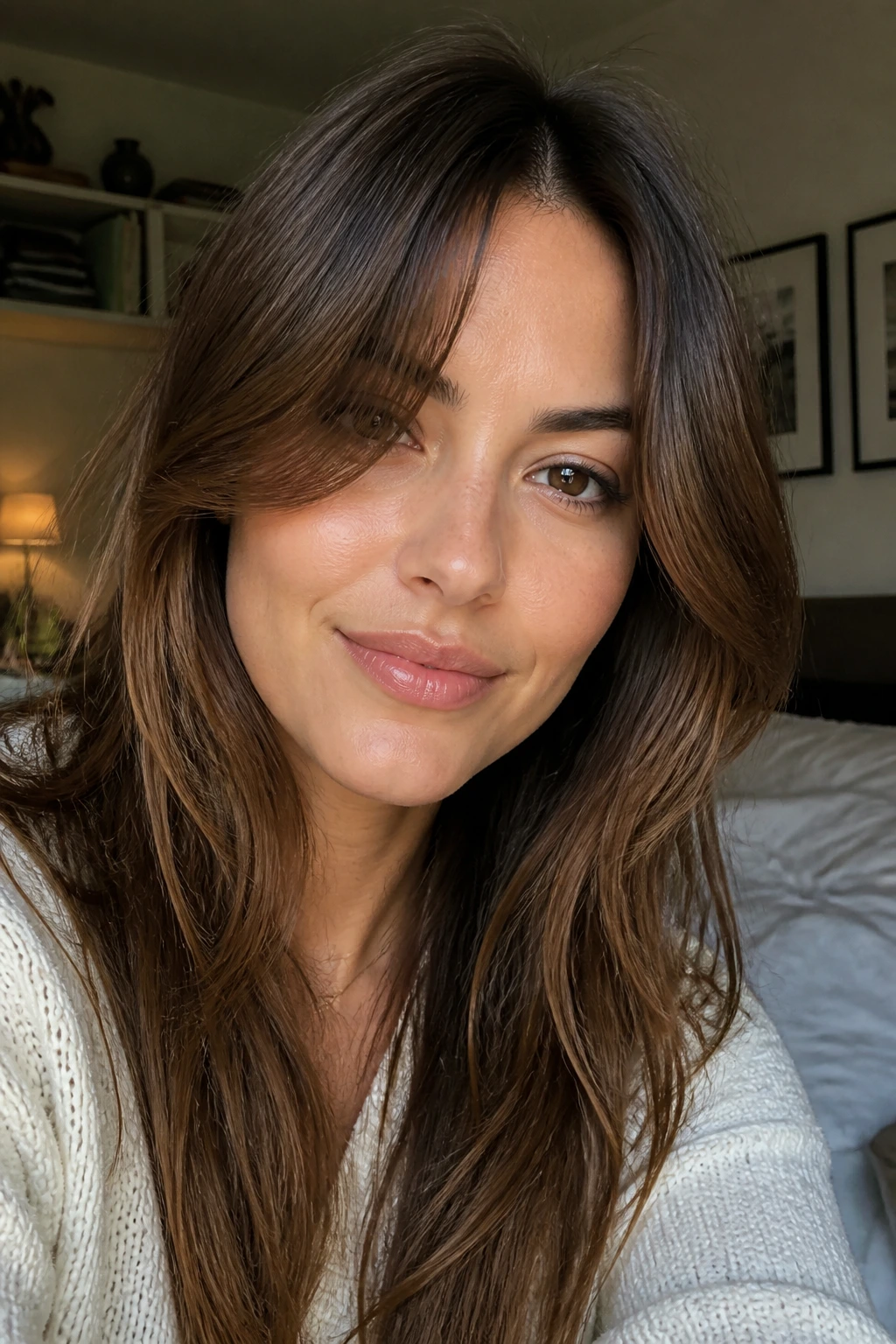
A grown-out curtain fringe is for the person who likes the feel of bangs but does not want a hard appointment schedule. The length sits low enough to brush the cheekbone, sometimes even the lip, and the center is long enough to split without effort. Square faces tend to wear this shape well because it looks soft by default.
It has a nice messy elegance to it. That sounds a little polished, but it really just means the cut looks better when the hair has some bend and a bit of lived-in movement. The ends are not meant to be precise.
If you are between bang lengths, this is where you land. It looks intentional while you wait for the next trim, which is not something every fringe can say.
16. Curly Curtain Bangs
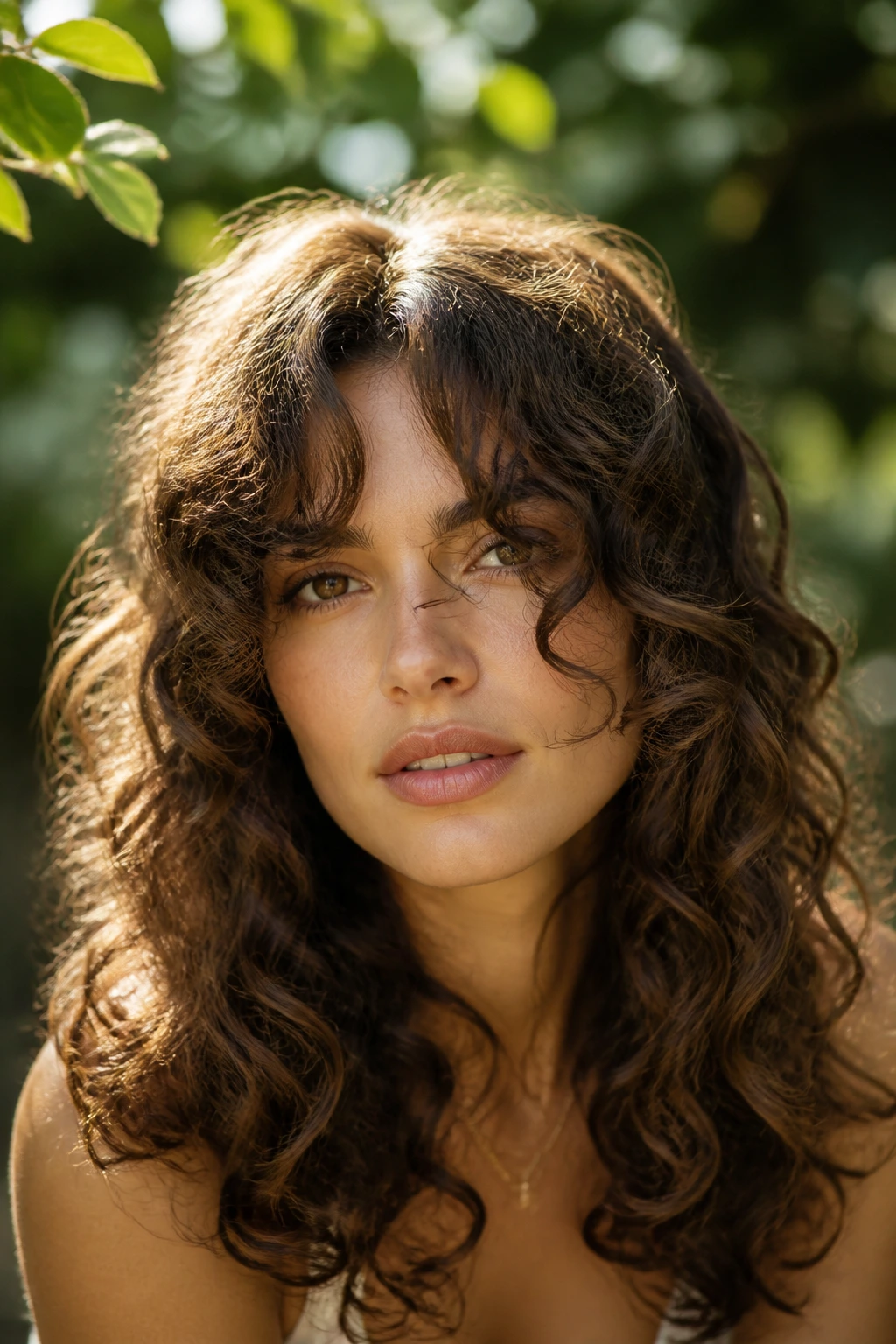
Curly hair needs longer bangs than straight hair, full stop. The curl spring pulls the length up, so what looks like a cheekbone-grazing fringe on paper may sit higher once dry. For a square face, curly curtain bangs can be gorgeous because the curve around the face softens the angles without flattening the texture.
What to ask for
Have them cut dry or mostly dry, and ask for extra length. That is not a luxury; it is math. The curl will bounce upward after the cut.
- Keep the center longer than you think.
- Let the sides drop into the face-framing layers.
- Style with curl cream, not heavy butter, or the fringe loses its shape.
The result should feel airy, not puffy. That distinction matters.
17. Thick-Hair Bottleneck Bangs
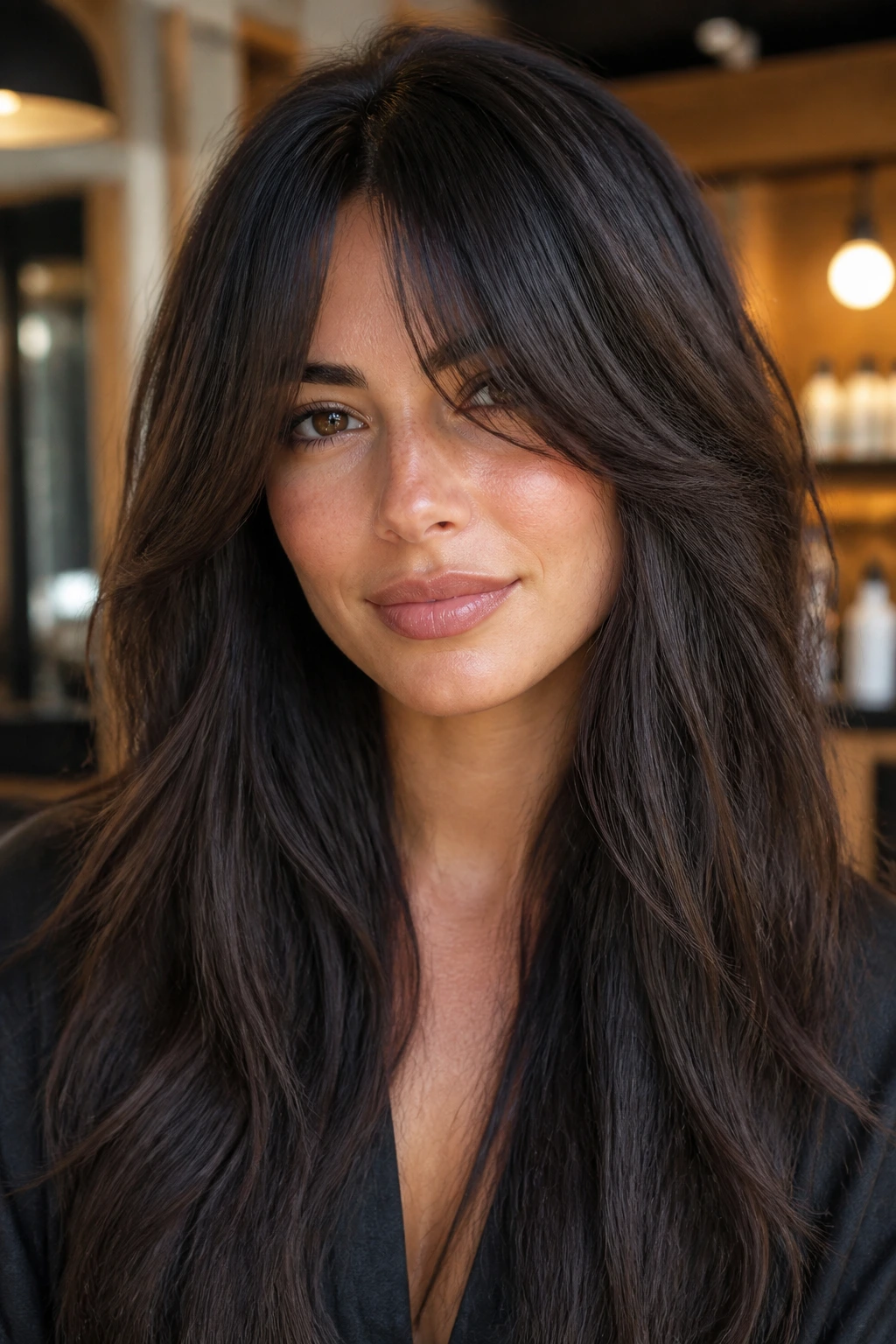
Thick hair can carry a more dramatic fringe, but it also loves to build weight in the wrong places. Thick-hair bottleneck bangs solve that by keeping the center narrow and taking the sides longer, where the density can spread out. On a square face, that stops the forehead from reading too wide.
What I like here is the structure. The shape looks clean, but not blocky, because the interior weight gets removed and the perimeter stays soft. You do not want a dense rectangle sitting above a strong jaw. You want a controlled opening at the center with enough fall at the sides to soften the face.
This style needs a stylist who knows how to thin from within, not just slash at the ends. If they reach for the thinning shears too fast, the fringe can frizz up at the edges. Ask for weight removal with restraint.
18. Fine-Hair Airy Fringe
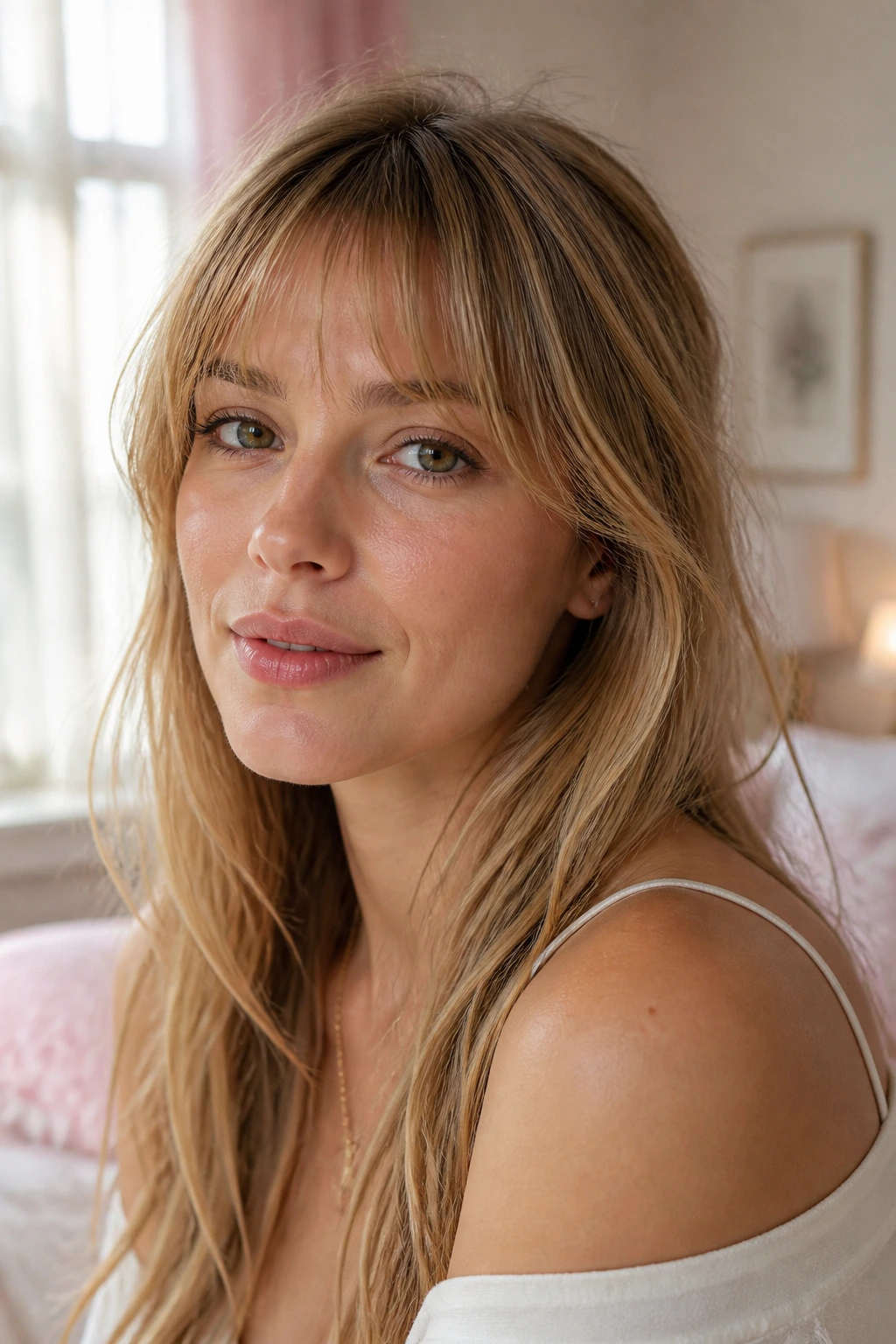
Fine hair needs a careful hand. Too much texturizing and the fringe looks see-through in the wrong way. Too little, and it lies flat against the forehead like a sticker. The sweet spot is a light airy fringe that keeps enough density to show shape, but not so much that it becomes a solid block.
On a square face, this lighter bang can be a relief. It does not add width. It just softens the front and gives the haircut a little frame.
Use a root spray or a very light mousse on damp hair, then blow-dry the fringe from side to side to build bend. That little movement keeps it from separating awkwardly down the middle. Dry shampoo helps on day two. Day three, maybe pin it back and move on with your life.
19. Soft Blunt Fringe with Tapered Ends
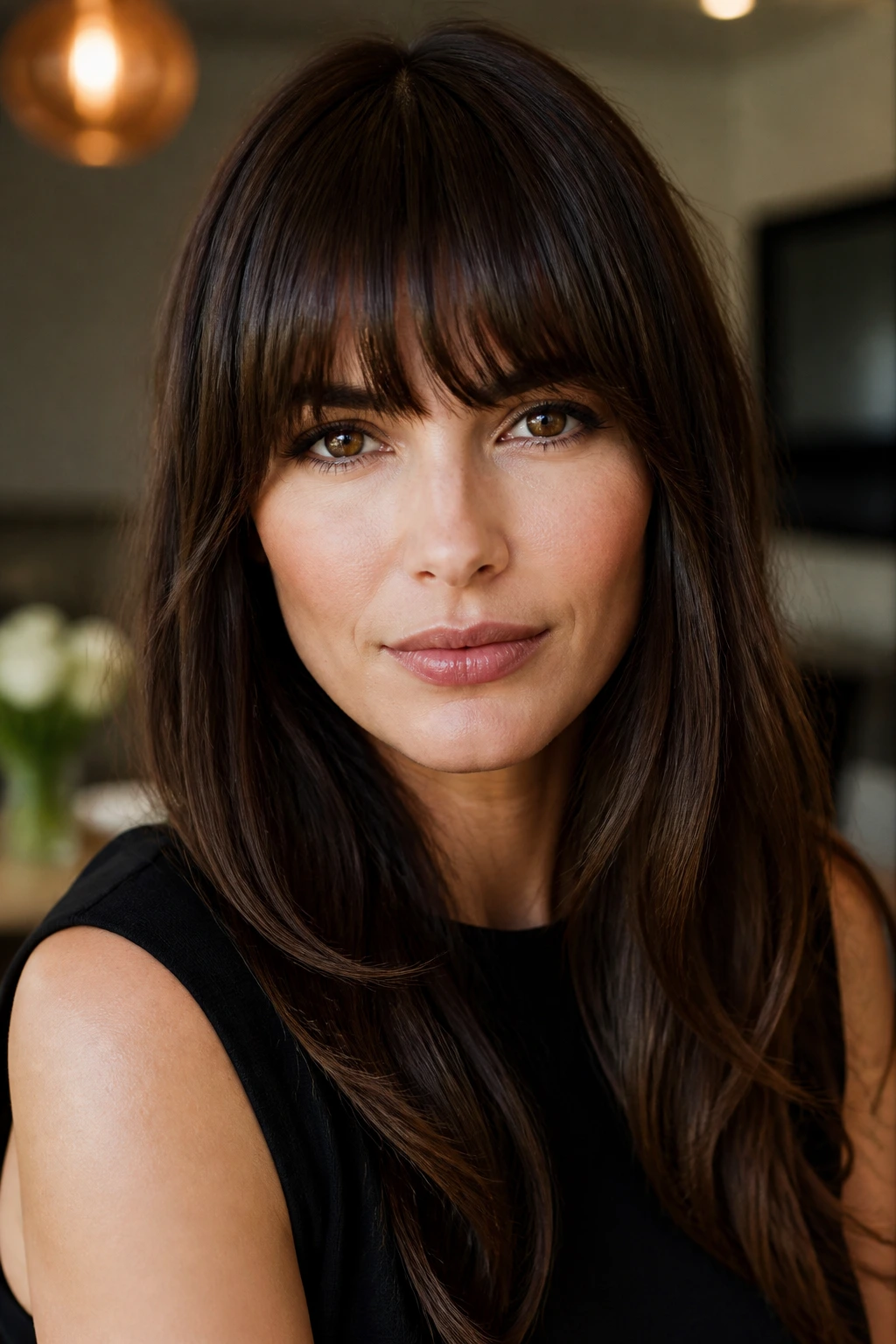
Blunt bangs are not automatically off-limits for square faces. The problem is a blunt edge with no softening. A soft blunt fringe with tapered ends keeps the line, but takes the harshness out of it. The ends should be beveled slightly and the center should not sit too high.
This works well if you like a stronger look and your long hair is sleek or polished. The key is that the fringe has to curve just enough to feel shaped, not cut with a box cutter. A tiny bit of bend around the brows makes a huge difference.
I would keep the fringe a touch longer than you think. Square faces usually look better when the top frame of the haircut does not shout at the jawline. Quiet edges. Strong shape.
20. Retro Blowout Bangs
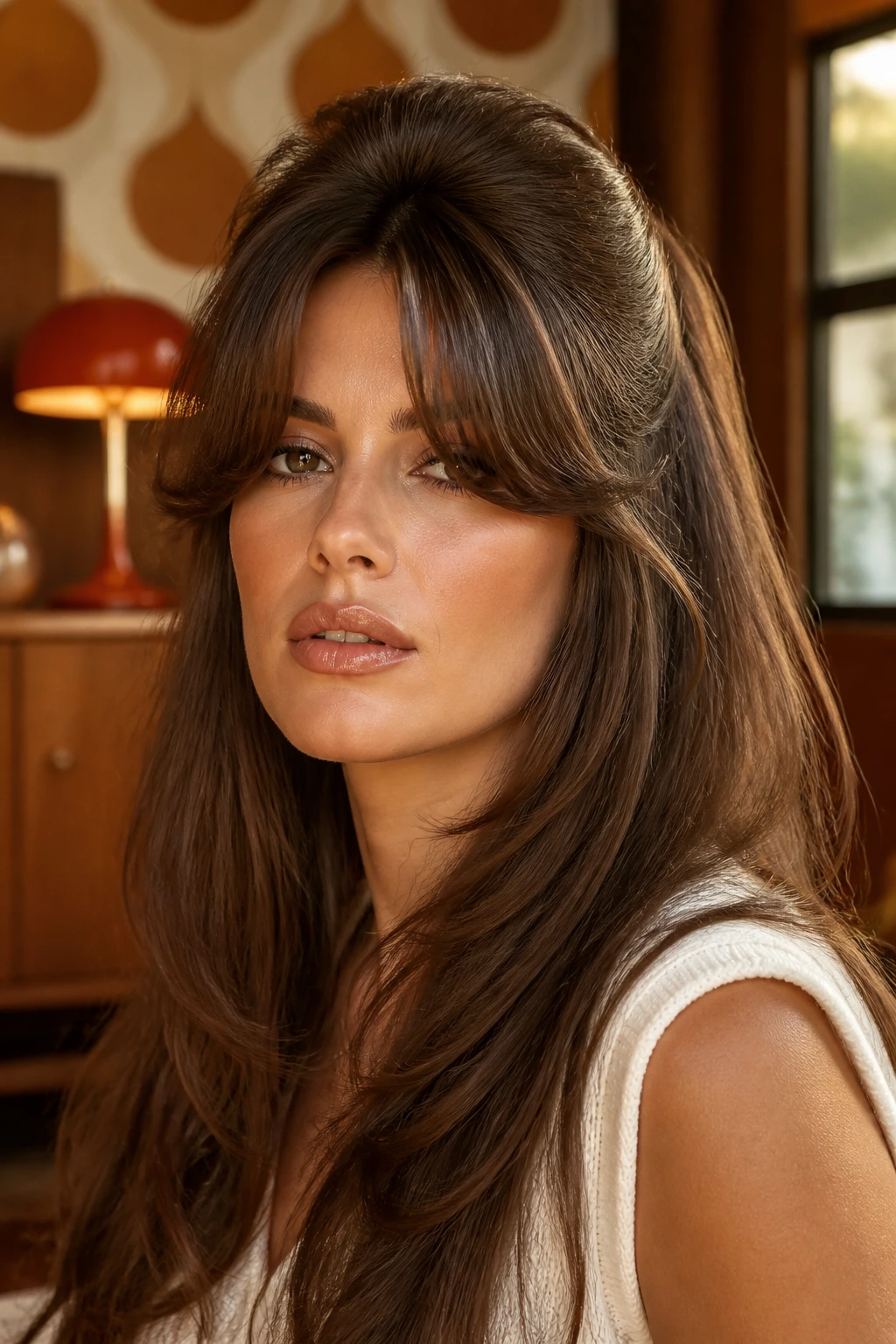
There’s a reason big blowout bangs keep coming back: they give the front of the haircut some lift. On a square face, that lift matters because it opens the forehead and keeps the fringe from lying flat in a way that makes the face look wider. The shape is glamorous, yes, but also practical if you like volume through the crown.
Styling notes that matter
Use a round brush, wrap the fringe forward first, then roll it away from the face at the ends. Let the roots cool in the lifted shape before you touch them.
- A nozzle on the dryer helps keep the cuticle smooth.
- A medium brush gives more bend than a huge one.
- A pin-curl clip at the crown can help the set last.
This style is not subtle. That is part of the fun.
21. Nose-Bridge Bangs
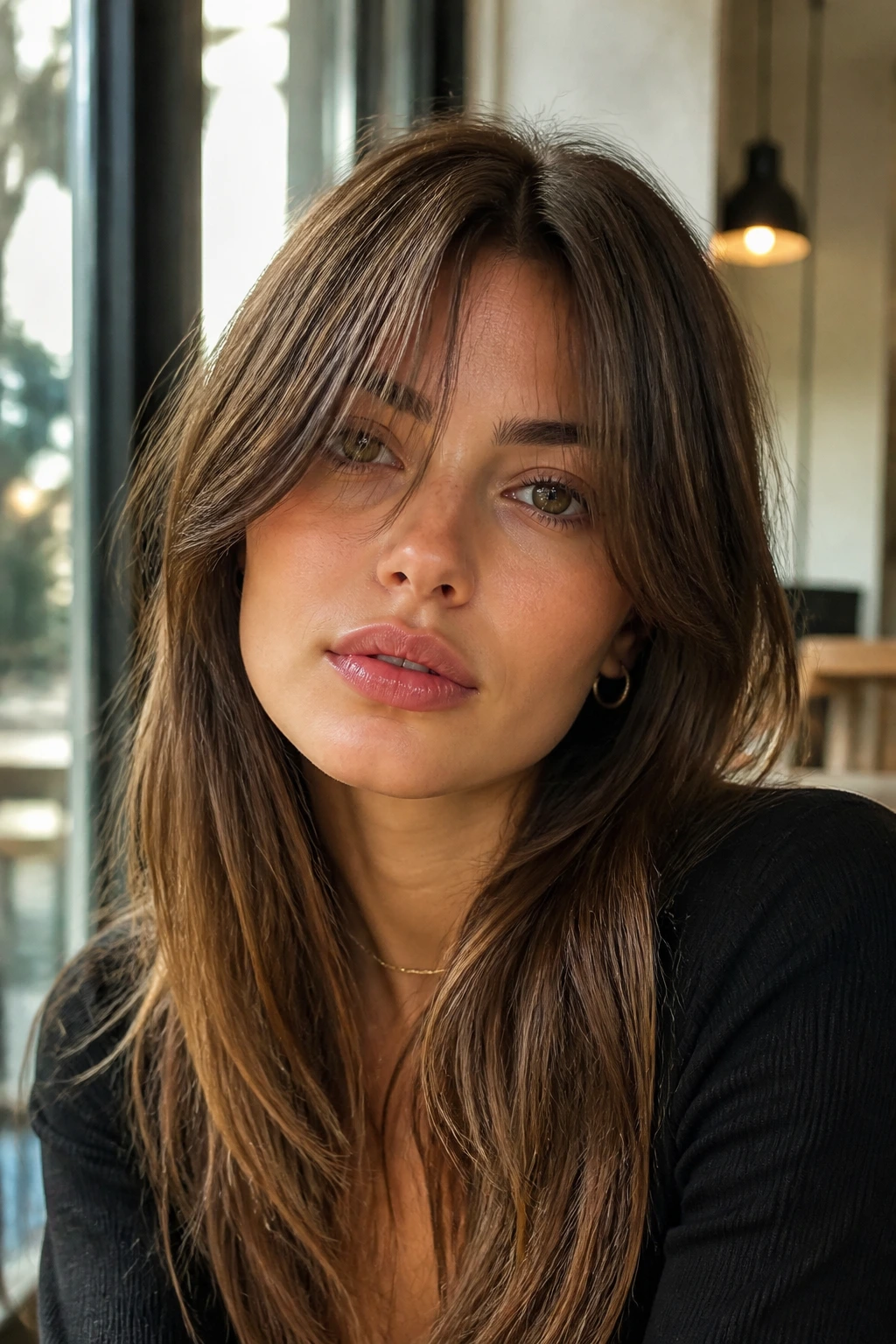
Where should a longer fringe actually land? One of the nicest answers is the nose bridge. That length creates a vertical pull through the center of the face, and square faces usually benefit from anything that lengthens the look of the front without adding width.
The cut can open in the middle or sweep slightly off-center. Either way, the length gives you options. It can be tucked, bent, pinned, or pushed aside on days when you are over it. That range is worth a lot.
I like nose-bridge bangs for people who are unsure about committing to a shorter fringe. They are close enough to feel intentional, but long enough to survive a bad hair day with a clip.
22. Rounded Full Fringe
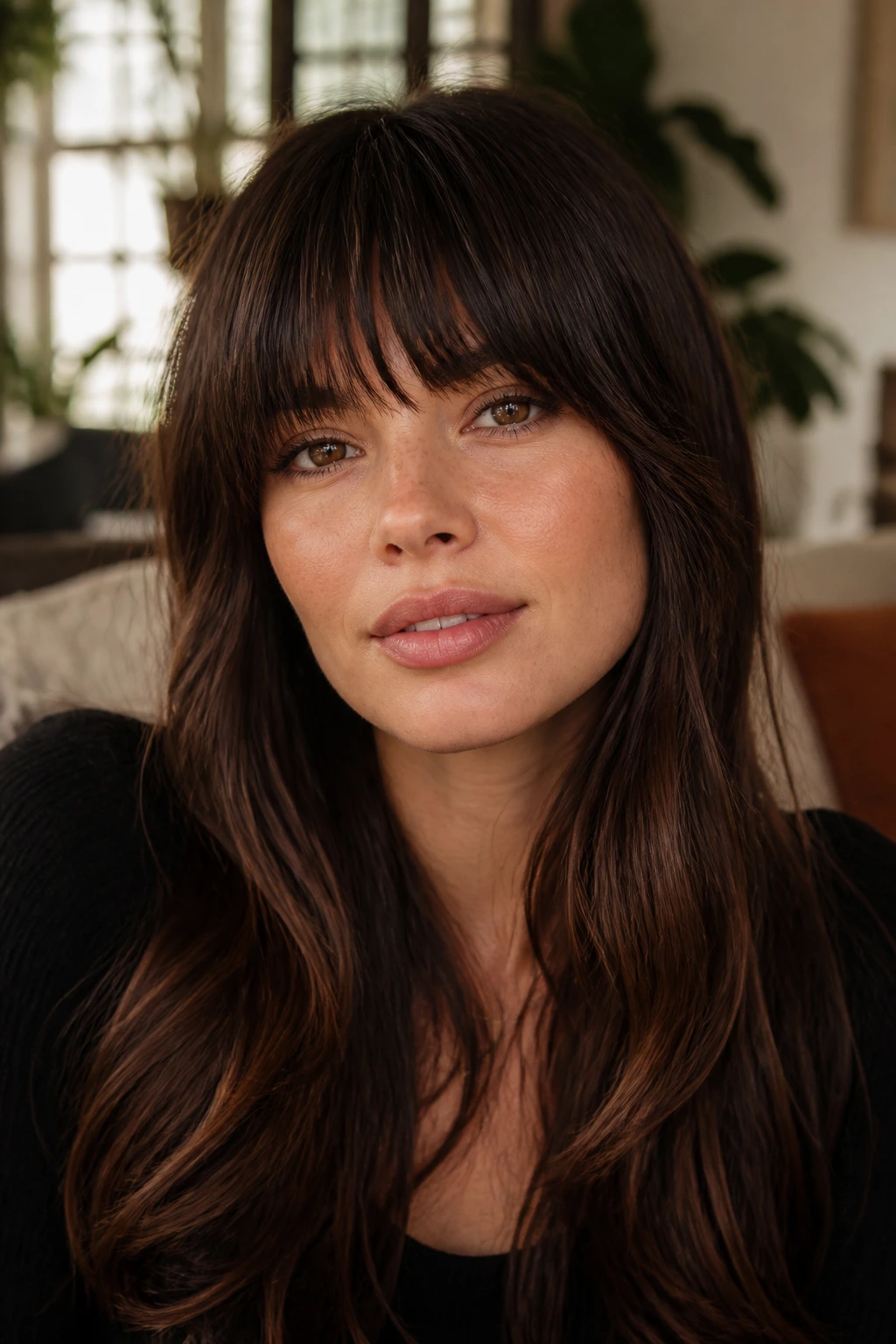
A rounded full fringe sounds heavy, but it does not have to be. The trick is shaping it in a soft arc rather than a straight shelf. On a square face, that curve can be useful because it rounds off the top of the haircut and keeps the jaw from feeling like the only strong line in the room.
This style suits long hair when the rest of the cut has enough movement to offset the density of the fringe. If the lengths are blunt too, the whole thing can feel boxy. If the lengths are layered, the bangs become a focal point instead of a block.
I would only do this if the fringe is cut with soft ends and the center is not too short. Otherwise, the shape tips from rounded to harsh very quickly.
23. Invisible-Layer Fringe
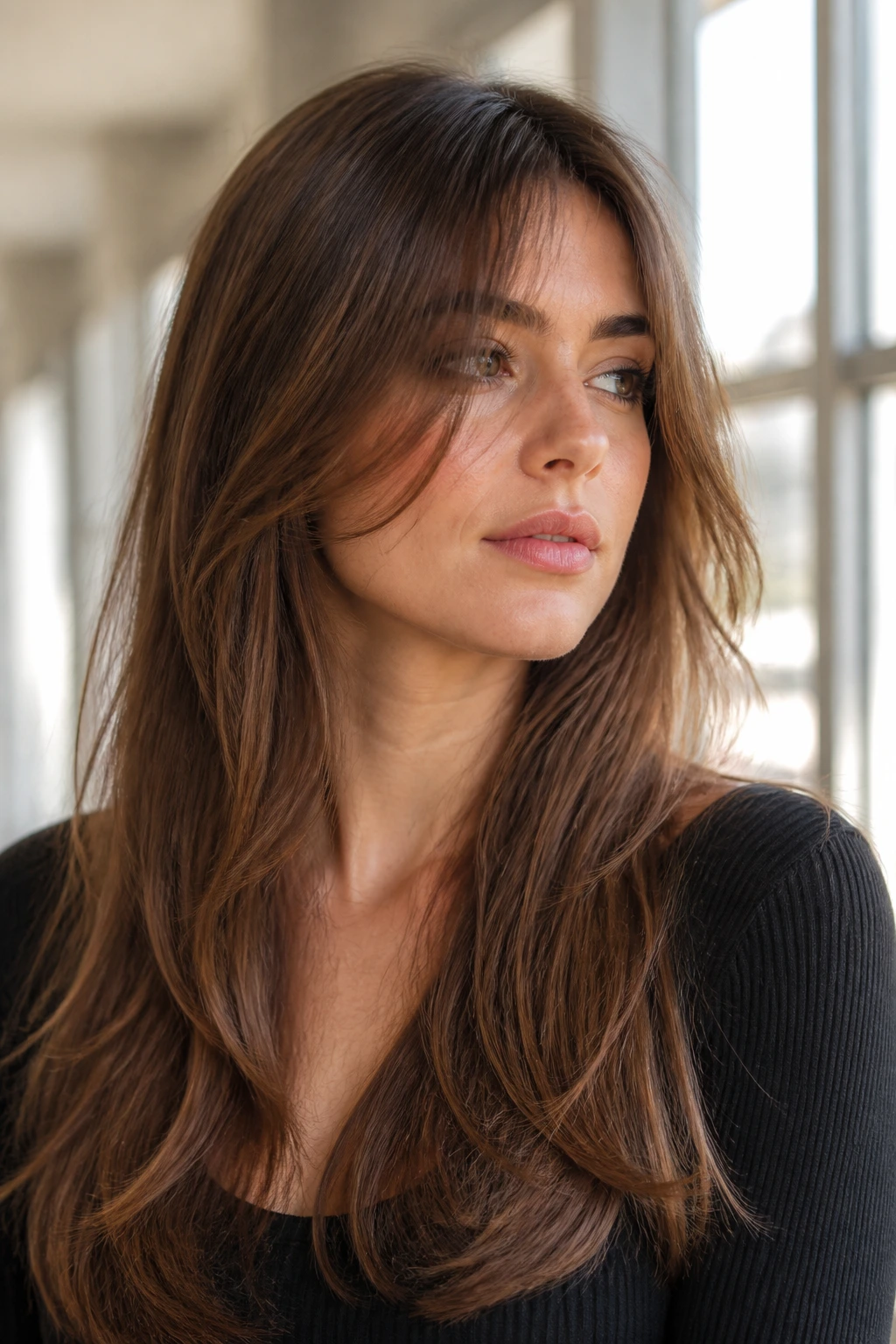
Invisible-layer fringe is for people who want bangs to do their job without looking like bangs. The front pieces are layered so they vanish into the rest of the haircut, which makes the shape feel airy and low-commitment. Square faces like that because the front gets movement without extra width.
This is a good option if your long hair already has shape through the mid-lengths. The fringe should feel connected to the haircut, not set on top of it. The best version moves when you turn your head, then disappears again. That little flicker is enough.
If you are afraid of a dramatic change, this is a smart first step.
24. Low-Maintenance Sweep-Away Bangs
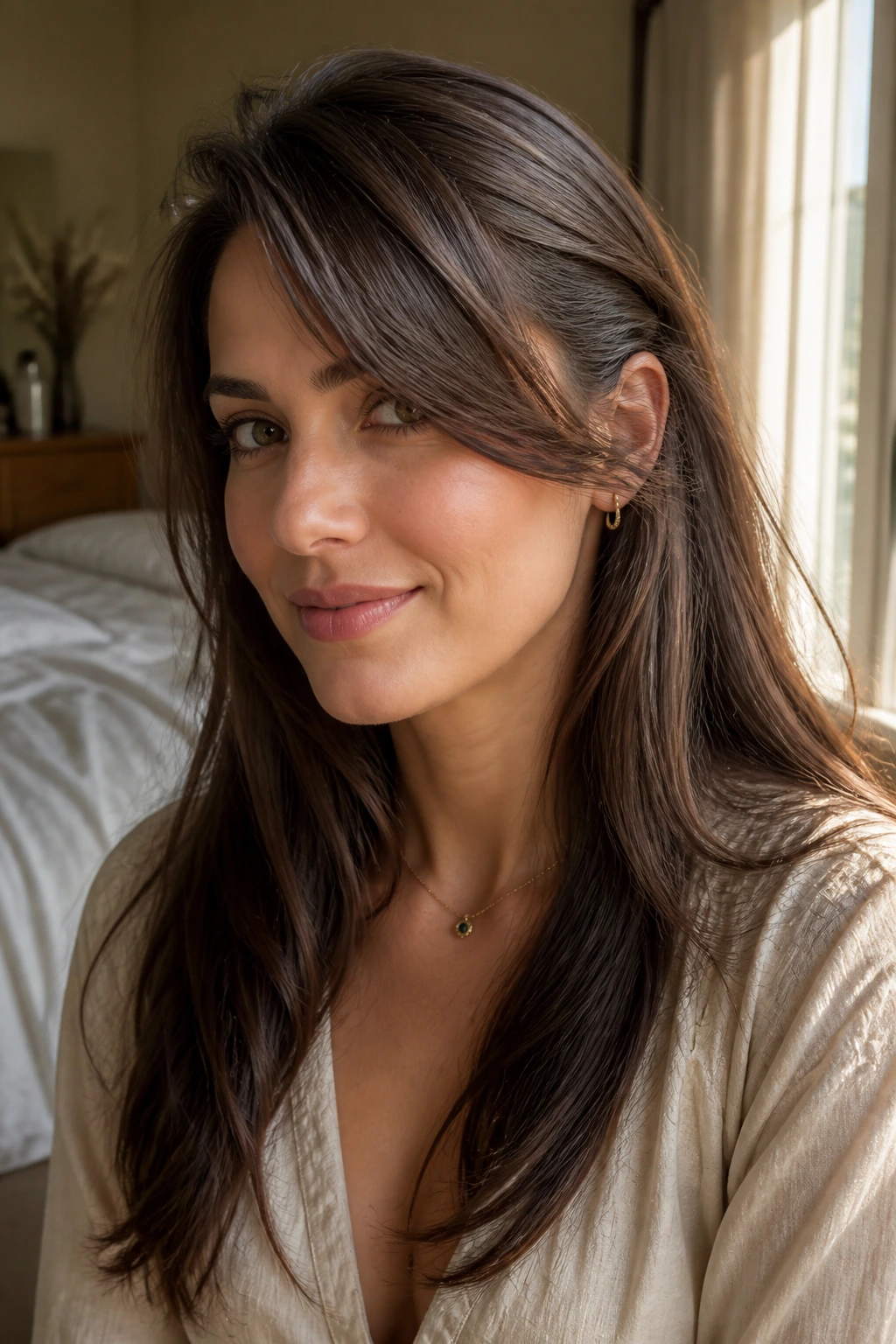
Some fringe styles ask for a brush, a dryer, and a prayer. This one asks for less. Sweep-away bangs are long enough to part easily, tuck behind one ear, or fall into a side shape when you do not feel like styling them. Square faces benefit from that soft diagonal motion, especially when the bangs land near the cheekbone.
This is the style I’d pick for someone who wants the face-framing effect without daily blow-drying. The cut should be long enough to survive a lazy morning and still look intentional by lunch. It helps if the longest piece reaches the outer cheek and the shortest piece does not sit too high.
The cut looks relaxed, not underdone. Big difference.
25. Glam Side Fringe with Movement
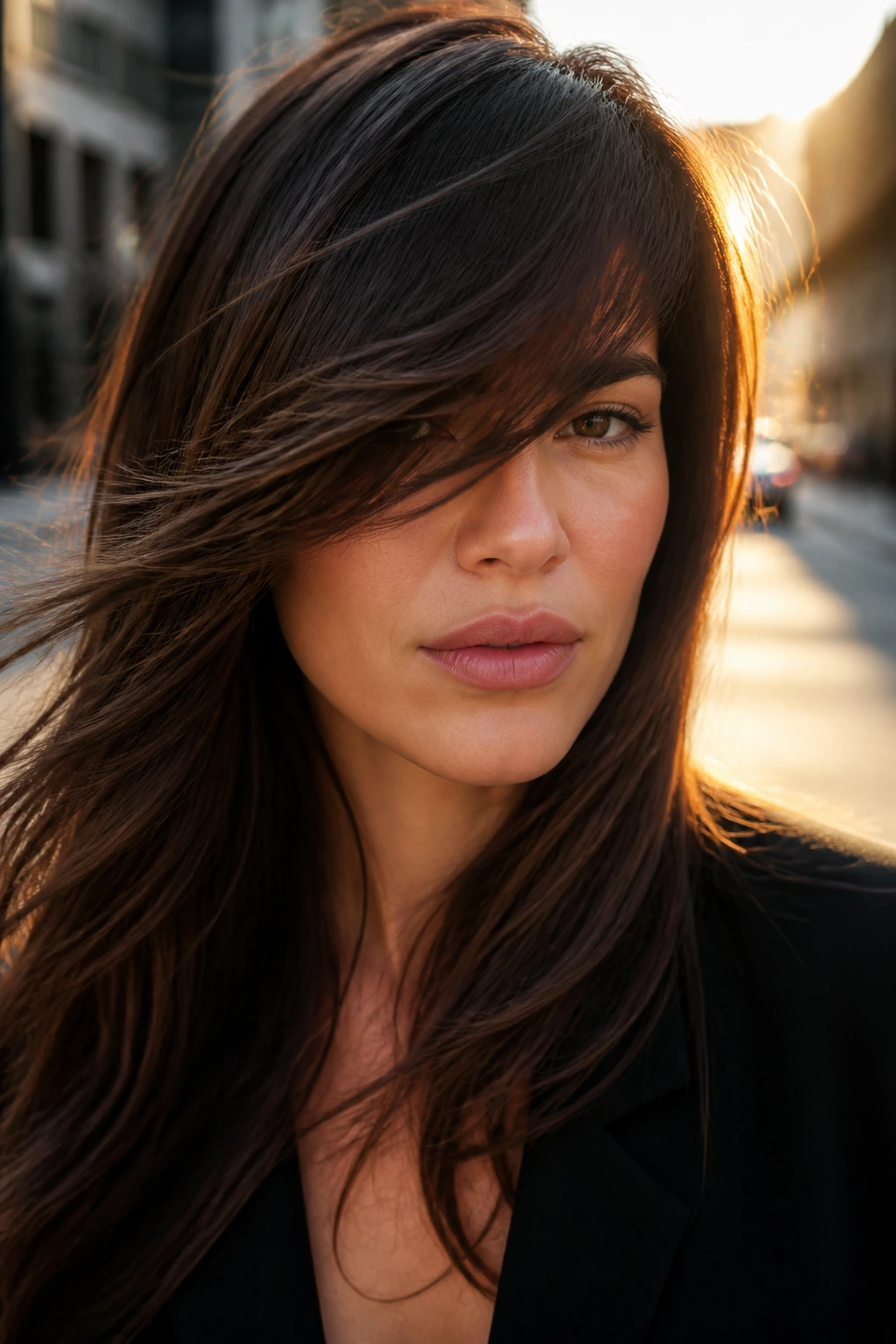
If you want the fringe to feel a little dramatic, this is the one. A glam side fringe has enough length to sweep across the forehead, enough curve to soften the square edges, and enough movement to keep the whole cut from feeling stiff. It can make long hair look polished without turning the face into a hard rectangle.
I like this shape when the side part is deep and the ends have a soft bend away from the face. It works with blowouts, loose waves, and even sleek lengths if the fringe has enough body. The diagonal line is doing the heavy lifting, so do not cut it too short.
This is the fringe that looks like it knows where the camera is, even if you are just going to the grocery store.
Why Longer Bangs Calm a Square Jaw Without Hiding It
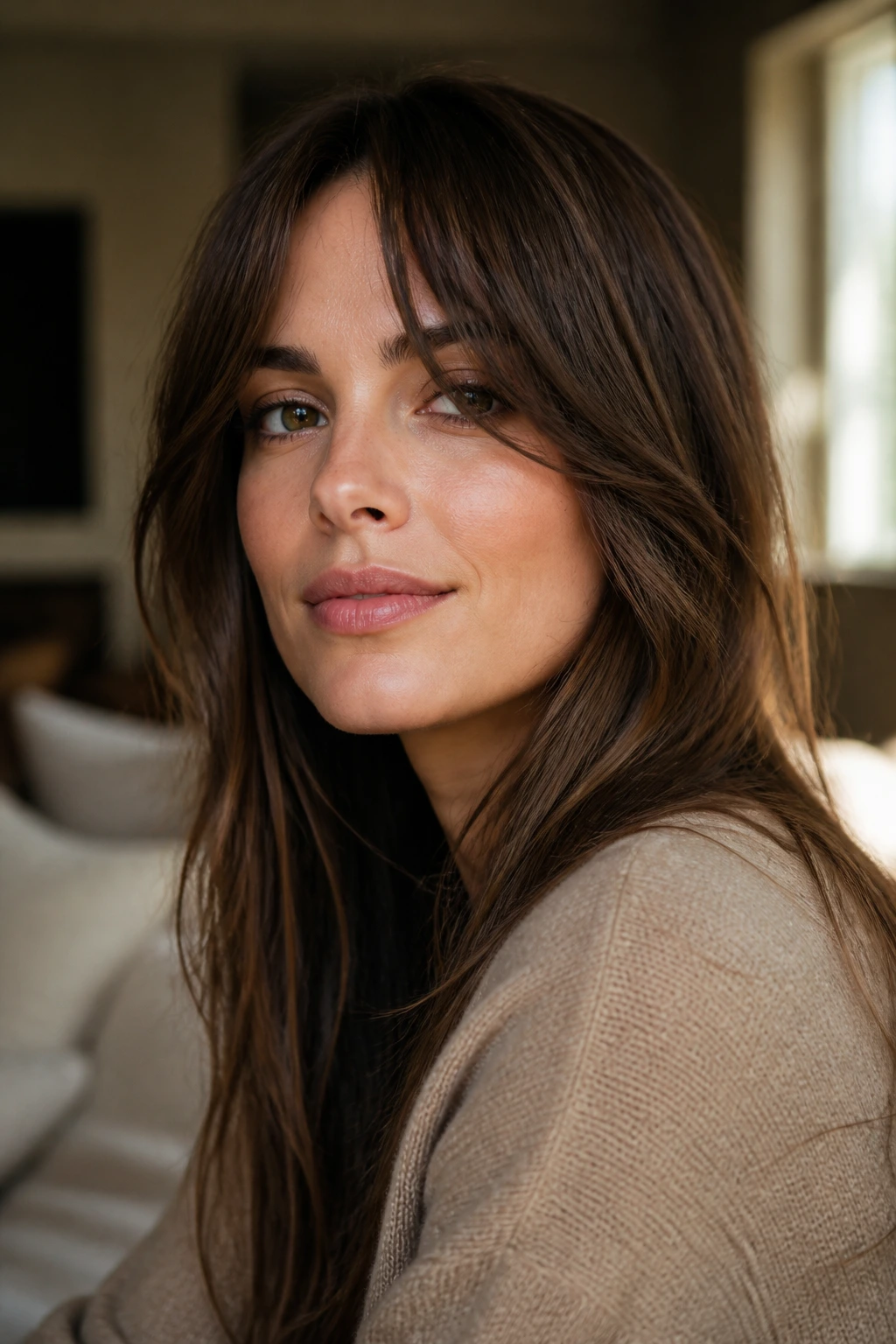
Square faces often look best when the haircut interrupts the straight lines instead of repeating them. That is the whole game. Longer bangs give you room to place that interruption at the cheekbone, nose bridge, or outer brow, where it softens the face without making the forehead disappear.
A short, blunt fringe can work on some square faces, but it needs more precision than people expect. If the line is too straight, too dense, or too wide, it can turn the upper face into another box. A longer fringe, by contrast, lets the shape move. It bends. It splits. It grows into the rest of the haircut instead of sitting there like a separate object.
The best part is the long-hair pairing. Length below the shoulders gives the front pieces somewhere to land, which is why these bangs look calmer on longer cuts than on short bobs. The overall silhouette stays vertical, and vertical is friendly here.
Tools That Make Bangs Easier to Cut and Style
- Haircutting shears: Real haircutting scissors matter; kitchen scissors chew the ends and make the fringe frizz up faster.
- Tail comb: This helps you section the front cleanly and place the part exactly where you want it.
- Sectioning clips: Keep the rest of the hair out of the way so you do not overcut the fringe by accident.
- Blow dryer with a nozzle: The nozzle directs airflow and keeps the front smoother while you shape it.
- Small round brush: A 1-inch or 1.25-inch brush gives bangs enough bend without turning them into a curl.
- Flat iron or mini iron: Useful for a quick curve at the sides, especially on very straight hair.
- Velcro rollers: Handy if you want lift at the root without a lot of heat.
- Light mousse or root spray: Helps the fringe hold shape instead of falling flat by midday.
- Dry shampoo: Best on day two or three when the front gets oily faster than the rest of the hair.
- Hand mirror with good light: Sounds obvious, but bad lighting hides uneven lengths until you are already outside.
What to Tell Your Stylist Before the First Snip
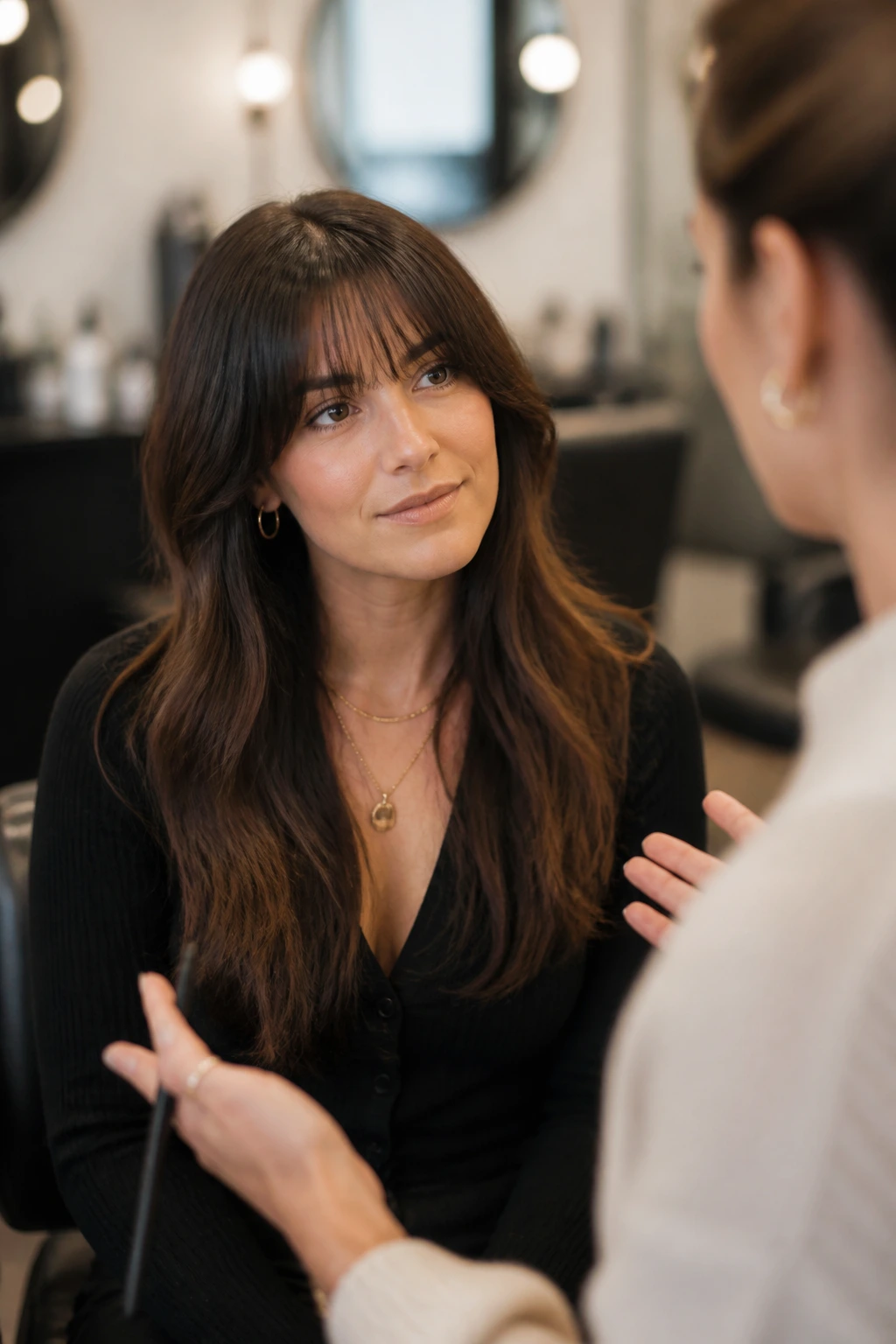
A good bang cut starts with a very boring conversation. That is the part I trust. Bring photos, yes, but bring photos that show the actual length you want, not just a mood board of celebrity hair under perfect lighting. Say where you want the shortest point to land. Say whether you air-dry, blow-dry, or fight your hair with a round brush every morning. That changes everything.
Bring photos that show the shape, not just the vibe
A stylist needs to see where the bangs hit the brow, cheekbone, or nose bridge. If the photo is all smile and flash and hair over one eye, it is not enough. Look for pictures where the fringe is straight on and where the hair moves.
Tell the truth about your styling routine
If you never use a brush, do not ask for a fringe that only behaves after a perfect salon blowout. If you live in dry shampoo and speed, say so. A longer fringe with softer edges will usually treat you better than a short precise cut.
Mention cowlicks, density, and parting habits
A strong cowlick at the front can push bangs apart in annoying ways. A dense hairline can make the fringe heavier than expected. A part that always wants to live on one side should be part of the plan, not an afterthought. Give that information early and the cut usually lands better.
How to Wear Them With Long Hair Every Day
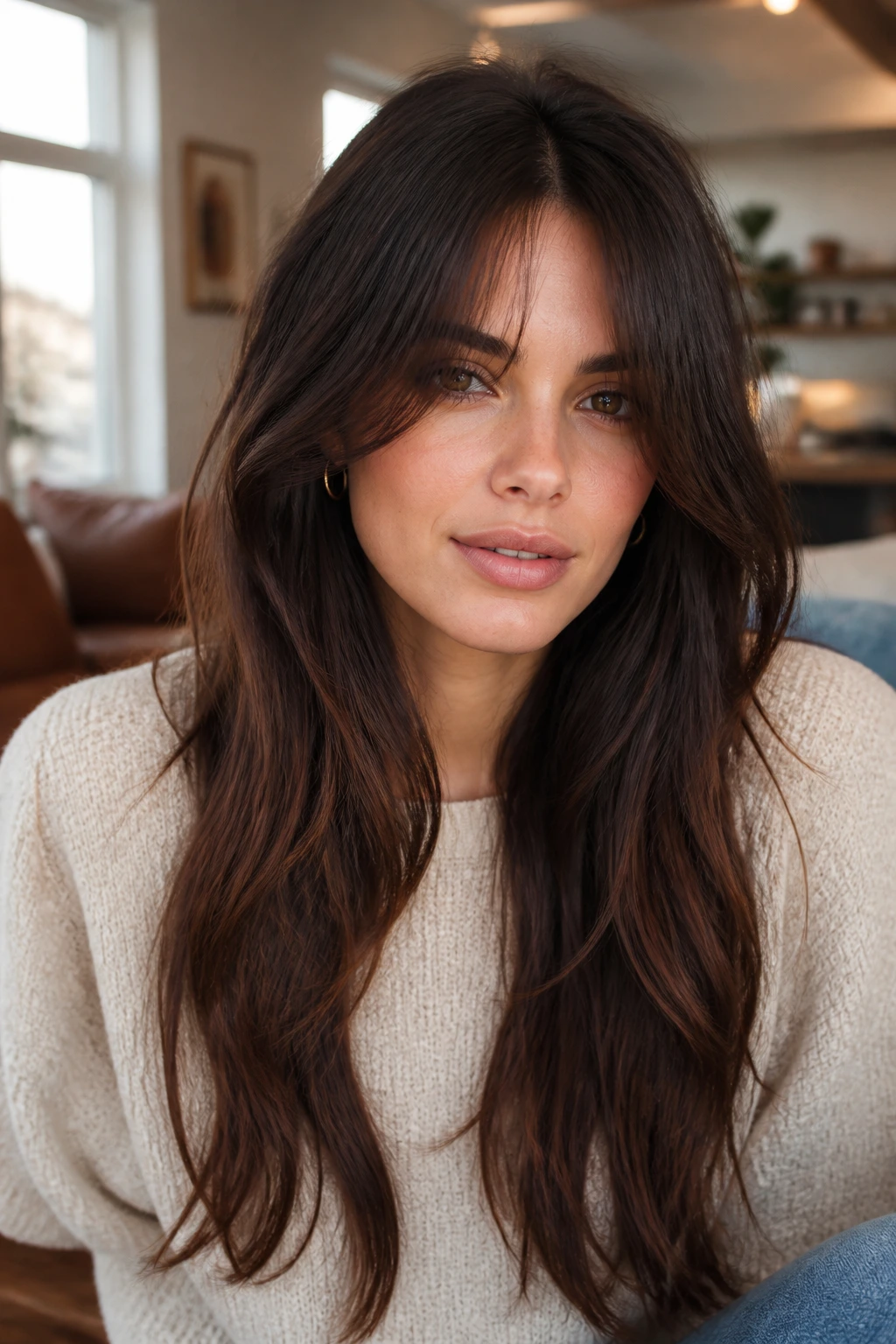
Parting: A soft center part works beautifully with curtain, bottleneck, and crescent shapes, while a deep side part gives diagonal fringe and sweep-away bangs a little more drama. If your face is very square, a part that sits exactly in the middle can look a touch rigid unless the fringe itself is broken and airy.
Styling: Start with the bangs first while they are still damp. Blow-dry them with a small round brush and keep the dryer angled down so the cuticle stays smooth; if you let the rest of the hair dry first, the front usually sets in the wrong direction and you spend twice as long fixing it.
Pairings: Long bangs look strongest when the haircut below them has a little movement too. Face-framing layers, collarbone pieces, or softly layered ends keep the fringe from feeling isolated. A one-length sheet of hair can make the bangs seem heavier than they are.
Finish: Use product with a light hand. A pea-size amount of cream on the ends or a touch of dry shampoo at the roots is enough for most of these shapes. Too much product pulls the fringe together and makes all that softness disappear.
Moods: Polished, messy, tucked behind one ear, clipped back on day three — these bangs can do all of it if the cut has enough length baked in.
Styling Moves That Make the Fringe Feel Personal
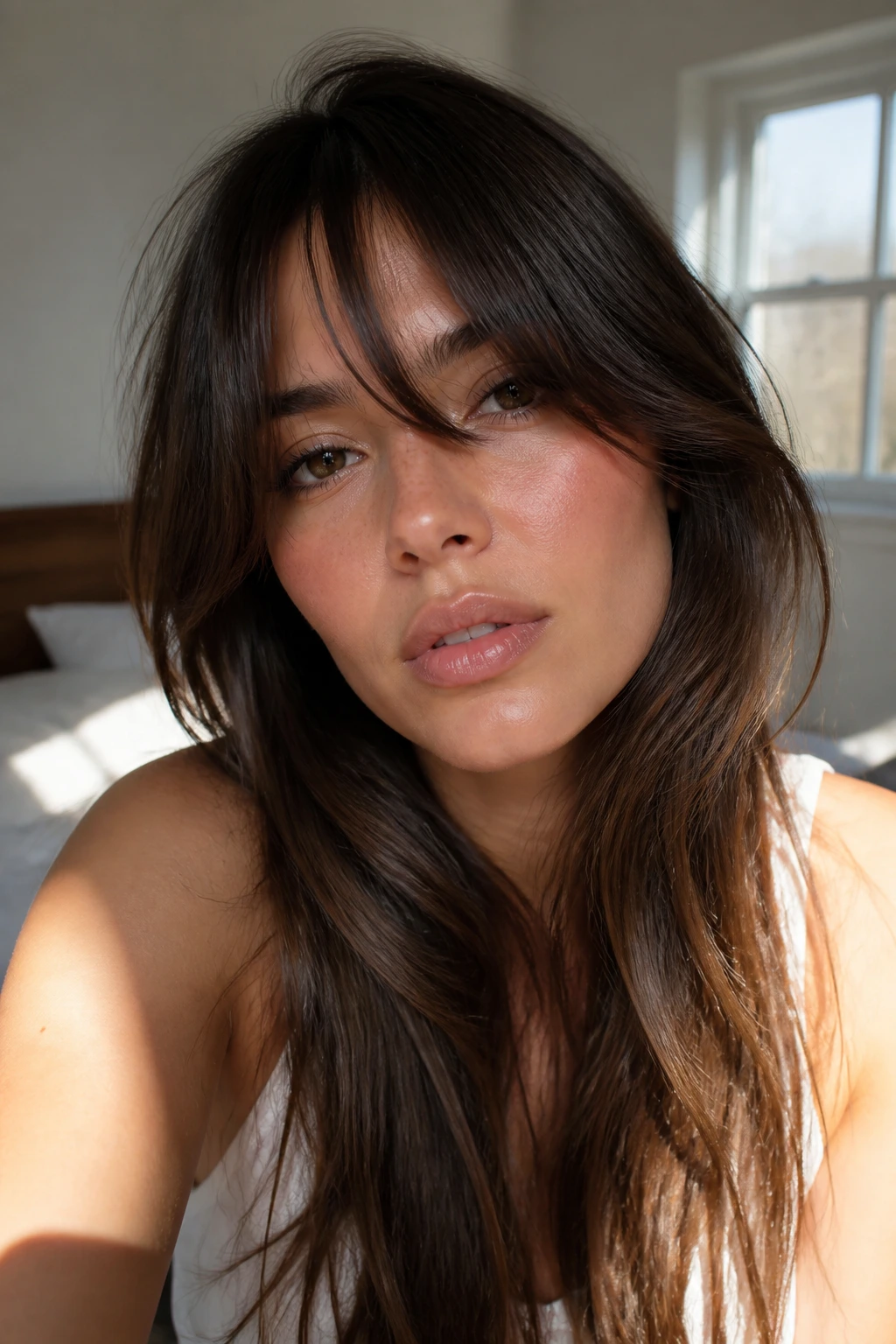
Texture Boost: If your hair is flat at the root, spray a little mousse or root-lift mist into the damp fringe and comb it through before blow-drying. The aim is not volume for its own sake; it is a bit of lift so the bangs do not glue themselves to the forehead.
Customization: Love a center part but want more softness? Keep the center narrow and let the outer pieces grow longer. Prefer a side part? Ask for one side to be just a hair shorter so the sweep has a clean drop over the brow.
Face-Framing Trick: The shortest point does not have to sit dead center. On a square face, moving that point a little higher on one side or a little lower near the outer brow can make the whole shape feel less boxy.
Make-It-Yours: If you wear glasses, keep the fringe longer so it can sit above the frame or slide to the side. If you go to the gym often, choose a cut that still looks decent after being pinned back. If your hair is color-treated, a little shine cream on the ends makes the layers read cleaner.
Keeping the Shape Between Trims
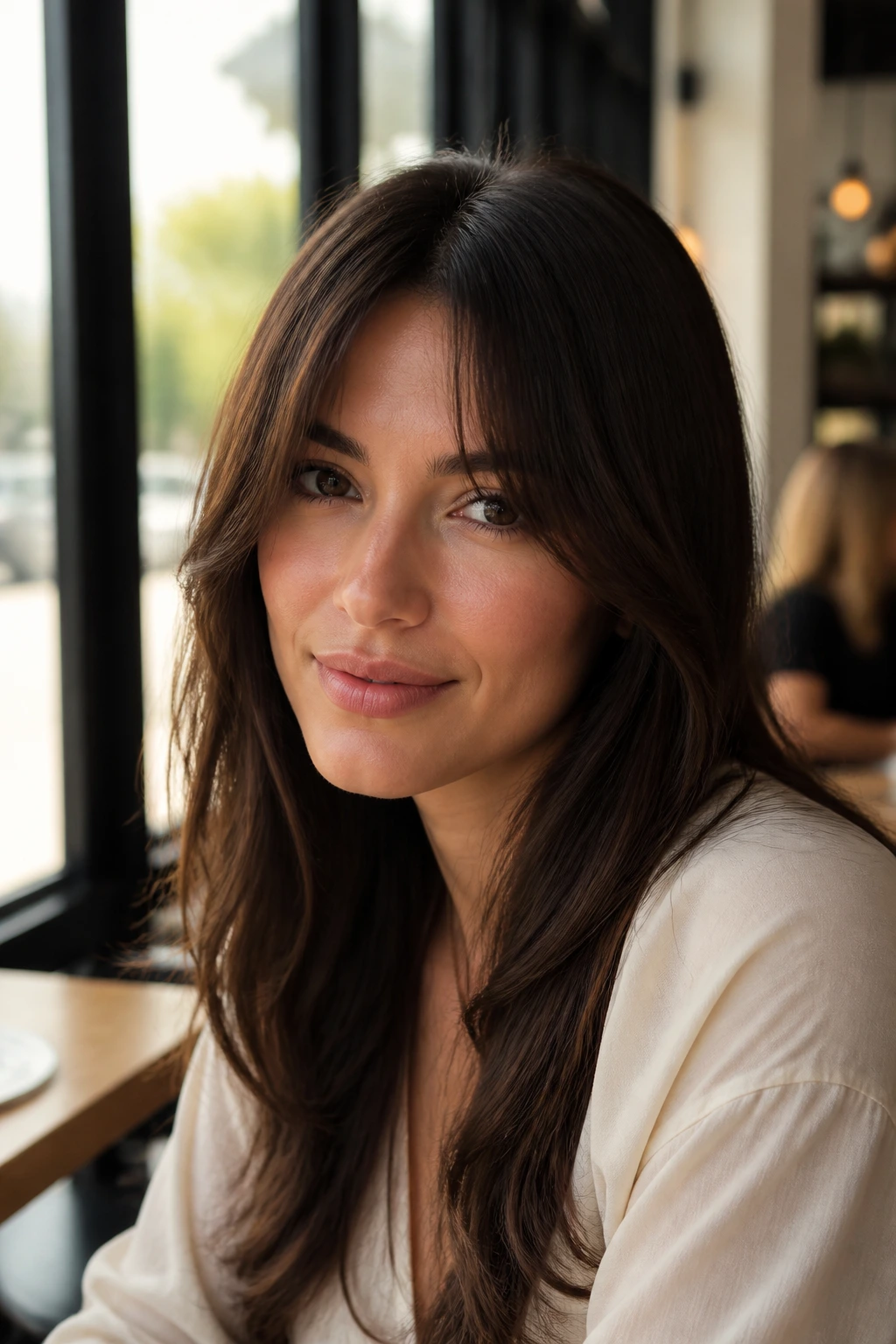
Bangs do not care about your busy schedule. They grow. Fast enough to matter, slow enough to annoy you. For most longer fringe shapes, a trim every 4 to 6 weeks keeps the line in place. Once the bangs start living around the cheekbone and blending into face-framing layers, you can usually stretch that to 6 to 8 weeks.
The first few days after a wash
Use the lightest possible product at the root. If the fringe is too soft, it will separate in weird little strands and the shape gets lost. A quick pass with a round brush and 60 to 90 seconds of warm air usually resets it.
Night care that keeps the front from kinking
If your bangs bend badly while you sleep, clip them in a loose twist or use a soft roller at the front of the hairline. A silk or satin pillowcase helps too, mostly because it reduces friction when the fringe rubs against your face.
When the bangs get oily faster than the lengths
That happens all the time. Dry shampoo at the roots, wait 20 to 30 seconds, then massage it in with your fingertips. Do not spray the whole fringe; that just creates a chalky, sticky mess.
Grow-out plan
When you want to grow them out, stop cutting the shortest point first. Trim the sides a little, keep the center longer, and let the pieces become part of the layers. That turns an awkward stage into a deliberate one.
Variations for Different Hair Textures and Commitments
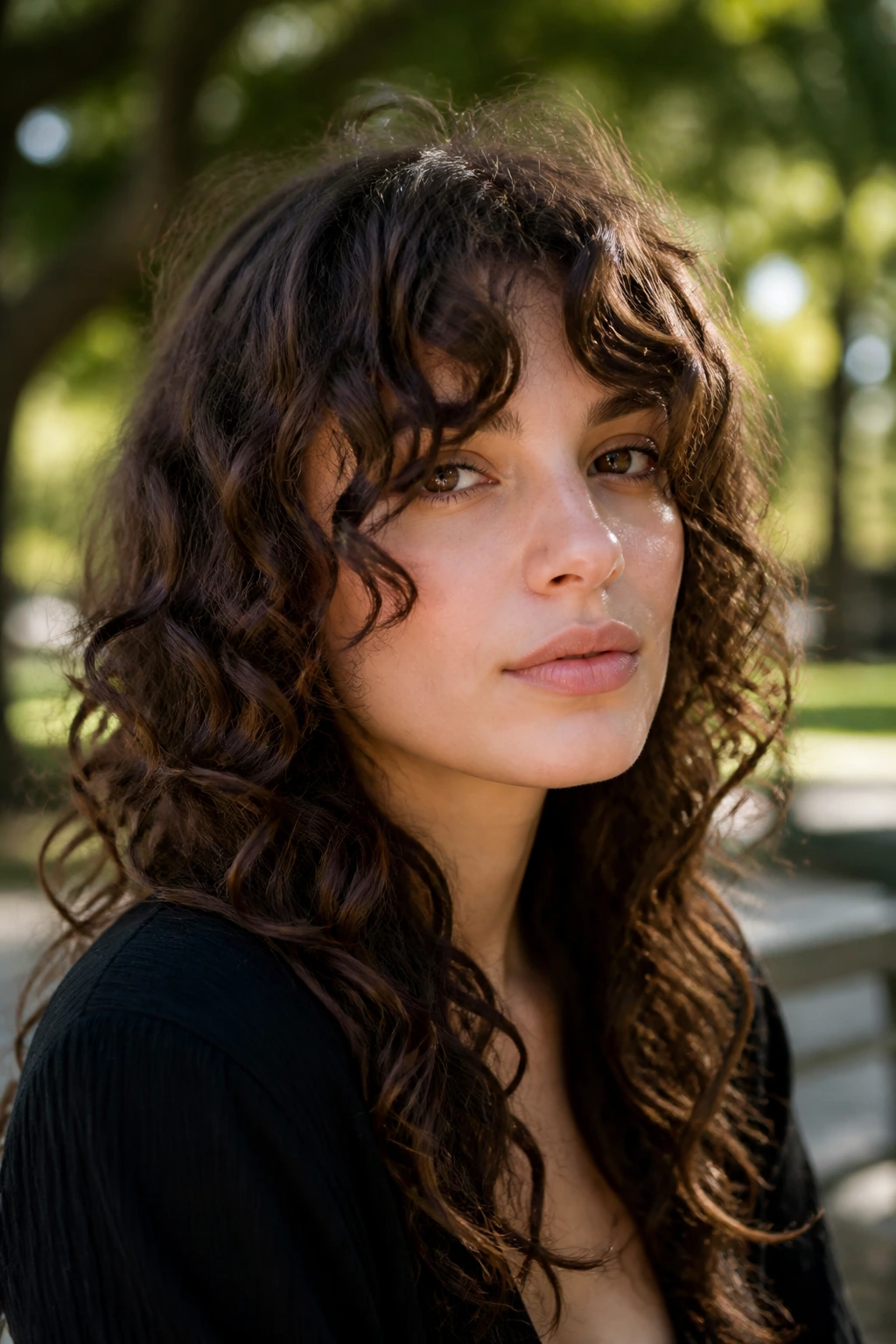
The Curly Curtain: Cut the fringe dry and longer than you think, then let the curl spring up around the cheekbone. This shape is good when you want a soft frame without fighting your texture every morning. Use a curl cream or lotion, not a heavy butter that drags the bangs down.
The Fine-Hair Veil: Keep the density light but not sparse, and avoid over-thinning the ends. A root spray and small round brush give the fringe enough lift to stay visible. This version works when you want softness without a heavy block across the forehead.
The Thick-Hair Soft Split: Remove weight from the inside of the fringe and keep the outline long. Thick hair can create a blunt wall fast, so the goal is to spread the shape out rather than chop it straight across.
The Grow-Out Blend: Let the bangs reach the cheekbones, then start nudging them into the front layers. This is the one I recommend if you want the look of fringe without needing a strict trim schedule.
The High-Drama Sweep: Push the part deep to one side and build a long diagonal fringe with a bend away from the face. It gives square faces a stronger angle up top while keeping the jawline softer.
Common Mistakes That Make Square Faces Look Boxier
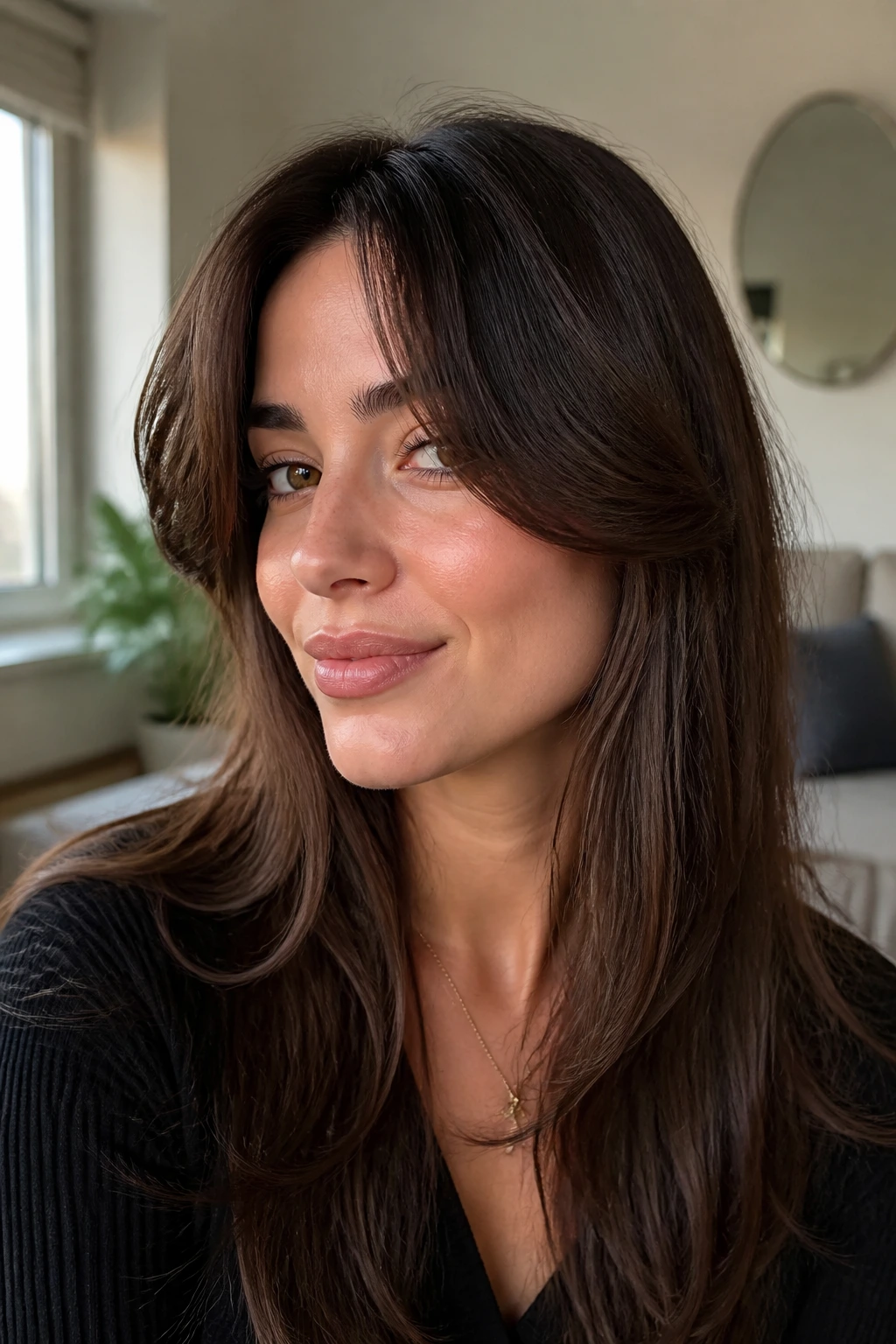
- Cutting the center too short. A fringe that sits high above the brow can make the forehead look wider than it is. Keep the shortest point lower and give the sides more length.
- Making the fringe too wide. If the bang starts too far out toward the temples, it can widen the face instead of softening it. The better move is usually a narrower center and longer outer pieces.
- Ignoring the hairline. A strong cowlick or side part can split the bangs in annoying ways. Plan around it instead of pretending it is not there.
- Over-thinning fine hair. A see-through fringe is not the same as a wispy fringe. If the hair is already fine, too much texturizing makes the ends look stringy.
- Leaving the long hair flat and lifeless. Bangs need a bit of support from the rest of the cut. Some layer, bend, or movement in the lengths keeps the whole style from feeling top-heavy.
- Styling only the ends and skipping the roots. The root is where the shape lives. If the roots collapse, the fringe loses its frame even if the ends look fine.
Questions People Ask Before They Cut Bangs
Will longer bangs make a square face look wider?
Not if the shape is chosen well. Longer bangs that split, sweep, or curve usually do the opposite by breaking up the forehead and guiding the eye downward.
Are curtain bangs or side-swept bangs better for square faces?
Curtain bangs are usually the safer starting point because they soften both sides of the face. Side-swept bangs are better if you already know your hair wants a strong part and you like a little more asymmetry.
Can I wear longer bangs if my hair is very straight?
Yes, but ask for texture at the ends so the fringe does not sit like a flat strip. A small bend with a round brush or mini iron usually keeps the shape from looking severe.
What if my hair is curly or wavy?
Ask for the bangs longer than you think you need and have them cut in a way that respects the curl pattern. Curly fringe tends to spring up after the cut, and a little extra length protects you from a too-short result.
How often should I trim longer bangs?
Most people need a shape refresh every 4 to 6 weeks. If the fringe is already blending into layers, you can stretch that a bit longer.
Can I cut this at home?
You can, but I would not start with scissors in a panic. Square faces usually look best when the shortest point and outer edges are balanced carefully, and that balance is easier to mess up than people think.
What if my bangs separate in the middle all day?
That usually means the center is too heavy or your part is too strong for the cut. A little root lift, a different part, or a softer bottleneck shape can fix it.
How do I grow the bangs out without the awkward stage?
Keep trimming the sides while letting the center get longer, then fold the pieces into your face-framing layers. That gives the grow-out a shape instead of a dead stop.
The Shape That Grows Gracefully
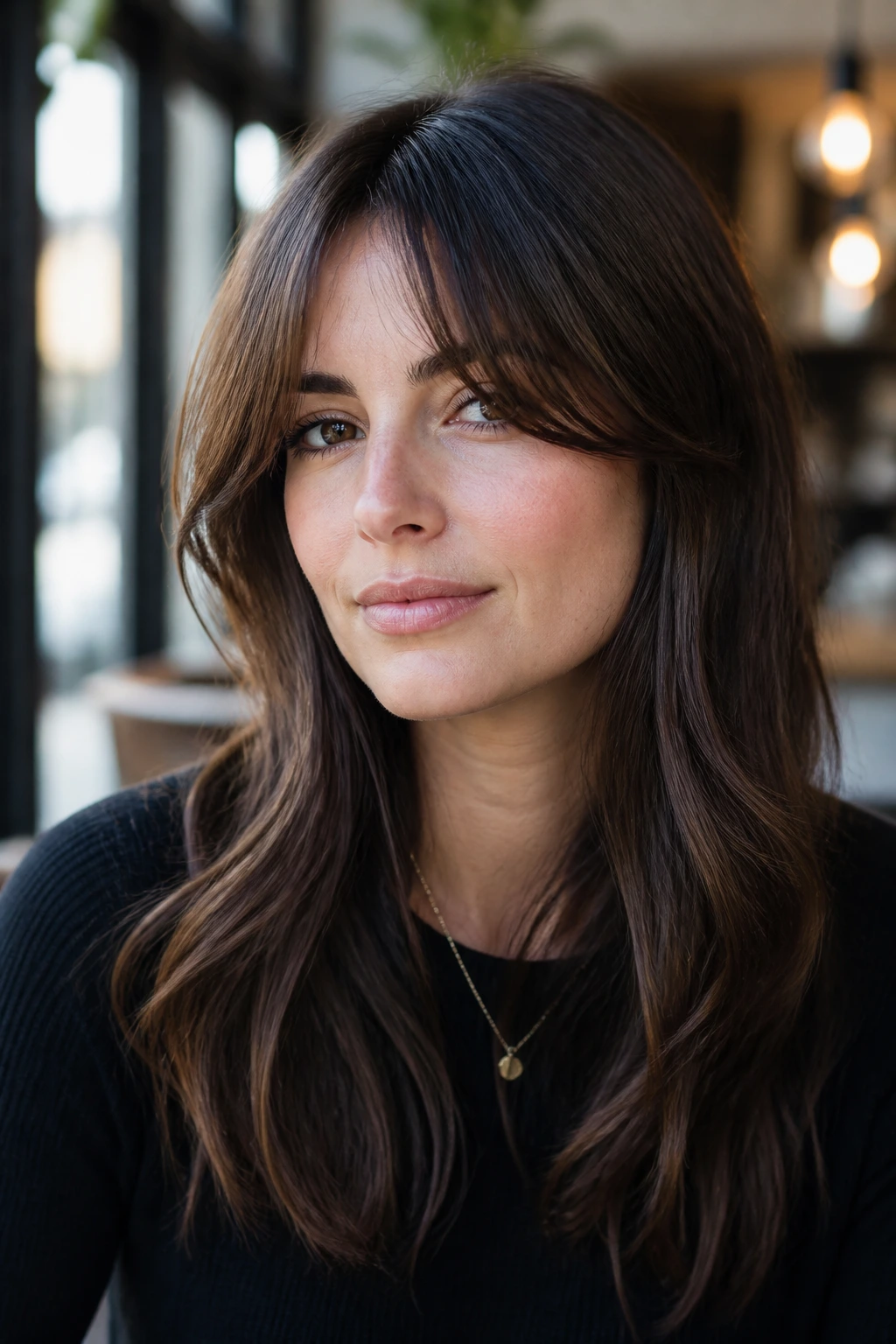
The best fringe for a square face is rarely the most obvious one. It is the one that softens the angles, keeps the forehead open enough to breathe, and still makes long hair feel intentional from the front.
That is why longer bangs keep winning. They split at the cheekbone, sweep across the brow, bend around the temples, and grow out with a little dignity. If you ask for softness at the edges and length where the face needs it most, the haircut keeps working long after the salon chair.