



Thick hair can make a bob look expensive, or it can make it look like a helmet that’s trying to escape the head. The difference usually comes down to where the weight sits, how clean the perimeter is, and whether the fringe has enough room to split and move. Straight medium bobs for thick hair with curtain bangs land in that sweet spot: long enough to keep the bulk from ballooning, short enough to show a shape, and soft enough around the face that the whole cut doesn’t feel stern.
The part that gets missed a lot? Thick hair doesn’t need to be thinned to death. It needs a plan. A good medium bob uses length as a counterweight, then lets curtain bangs break up the front so the style doesn’t read as one solid block from temple to temple. When the cut is right, the ends lie flat, the front swings open, and the shape keeps its lines even after a long day in humidity, office air, or a rushed blow-dry.
I keep coming back to this style because it solves the same three problems over and over: too much puff at the sides, too much heaviness at the front, and too much time spent wrestling with it in the mirror. The best versions look polished on purpose, not polished by accident. And there are a lot of ways to get there.
Why These Cuts Work So Well on Thick Hair
Weight control: Thick hair behaves better when the perimeter has a clear line. A blunt edge or a slight angle stops the ends from fanning out like a bell.
Curtain bangs do real work: They open the face without dumping extra bulk across the forehead. Split them at the cheekbone or lip, and they soften the whole cut fast.
Medium length keeps the shape grounded: Jaw-to-collarbone length is usually enough to stop the sides from puffing up, but not so long that the style loses the bob feel.
Straight styling shows the architecture: On thick hair, a smooth finish reveals the line of the cut instead of hiding it under texture. That’s where the payoff lives.
The grow-out is kinder: A medium bob with curtain bangs tends to blur out slowly, so you don’t get that brutal “one week cute, next week mushroom” problem.
1. Blunt Mid-Cheek Bob with Curtain Bangs
A blunt mid-cheek bob is the sort of cut that looks expensive without begging for attention. The perimeter lands right around the middle of the cheek, so thick hair has enough length to hang instead of flare. Curtain bangs soften the front just enough to keep the shape from feeling boxy.
The blunt line matters here. It gives thick hair a hard edge, which sounds severe until you see how much cleaner the silhouette becomes. On dense straight strands, a razor-heavy finish can turn fuzzy fast. A solid scissor line, though, keeps everything crisp and lets the bangs do the softening.
If you like a style that reads neat even after a long day, this is one of the safest bets in the whole bunch. Ask for the bang pieces to start around the cheekbone and slide longer toward the jaw. That keeps the front open and avoids the abrupt little shelf that happens when curtain bangs are cut too short.
2. Slight A-Line Bob That Stays Smooth at the Jaw
A slight A-line bob leans longer in front than in back, and on thick hair that tiny difference does a lot. The front pieces skim the jaw, while the back sits a touch higher, which keeps the nape from feeling overloaded. It’s subtle. Good. You do not want a dramatic wedge here.
The angle helps thick hair lie flatter at the sides because the front has room to drape instead of balloon. Curtain bangs add another soft break, especially when they’re cut long enough to fall into the cheek area rather than stopping above it. That little extra length prevents the front from looking chopped up.
This shape is especially nice if your hair swells at the ends when it’s blunt all the way around. The A-line takes some of that visual weight off the back without destroying the bob shape. Blow it smooth with a paddle brush, then bend the front pieces under just a little with a round brush. That tiny curve is enough.
3. Collarbone Bob with Invisible Layers
The collarbone bob is the easygoing cousin in the group. It still counts as a bob, but the extra length takes some pressure off thick hair and gives the cut more room to move. Hidden layers inside the shape keep the mass from bulking up, but they stay out of the perimeter so the ends don’t fray.
That “invisible” part is the trick. You want internal weight removal, not choppy layers that announce themselves every time you brush your hair. Thick, straight hair can get ragged fast if the surface layers are too short. Keeping the outside line clean gives the style its polish.
Curtain bangs are what make this length feel intentional instead of like a grow-out. They shorten the visual width at the forehead and steer attention back to the cheekbones. If you’re nervous about committing to a shorter bob, this is the soft landing spot. It also plays nicely with a quick blow-dry and a little serum at the ends.
4. Rounded Bob with Feathered Curtain Fringe
A rounded bob isn’t the same thing as a puffy bob. Done well, it curves inward just slightly at the ends, which helps thick hair sit close to the neck and jaw instead of sticking out. That rounded edge is useful when your hair has a lot of body and a stubborn little kick at the bottom.
The feathered curtain fringe keeps the front from looking heavy. Instead of one thick split bang, you get pieces that open like soft panels, which feels lighter around the face and looks good with the rounded shape behind it. The fringe should move, not hang there like a curtain rod.
This cut works best when the stylist keeps the outer line strong and softens only the interior. If the ends get over-texturized, the bob loses its shape and starts to poof where you least want it. A light bend with a round brush or a flat iron pass at the last inch gives the finish a neat, tucked look.
5. Boxy Bob with a Clean Perimeter
If your thick hair tends to swell, a boxy bob may be the answer you keep talking yourself out of. The word “boxy” sounds blunt for a reason: the silhouette stays more square than rounded, and that structure can make thick straight hair look controlled instead of oversized. It’s a strong shape.
Curtain bangs keep this from tipping into severity. They break the front line, then fall into the cheek area and soften the square feel enough that the cut still moves. Without them, the boxy bob can read a little too architectural, which is fine if you love that, but not everyone does.
I like this cut on hair that’s naturally dense from root to tip. It gives the weight somewhere to live. Ask your stylist to avoid aggressive thinning at the bottom edges. That’s the mistake that turns a good boxy bob into a fuzzy one. Keep the line solid, then let the bangs carry the softness.
6. U-Shaped Bob with Face-Framing Pieces
A U-shaped bob gives you a fuller back and longer front corners, so the shape opens around the face without collapsing in the back. Thick hair loves that structure because it distributes weight instead of stacking it all in one place. The result is smoother than a blunt bob and less fussy than a highly layered cut.
The face-framing pieces should be long enough to skim the jaw or cheekbone, not hang like separate strands. That matters. If they’re too short, the front can look disconnected from the rest of the haircut. Curtain bangs blend into those pieces and help everything feel like one shape, not three different ideas fighting for space.
This is a good pick if your hair gets triangular when cut straight across. The U shape keeps the outer line softer, but it still gives you a real bob, not a long layer situation pretending to be one. Straight styling is easy here because the shape already does the work.
7. Tucked-Under Bob with Longer Bangs
There’s something very clean about a bob that tucks under at the ends. On thick hair, that inward curve can stop the bottom from flipping in odd directions or spreading out wider than the head. The shape feels neat, almost tailored, and that helps the density look deliberate.
Longer curtain bangs are the right pairing because they keep the front from feeling too short compared with the tucked length. Start them around the nose bridge or cheekbone, then let them fall apart softly. That gives the whole style a little movement right where the eyes land.
This one is especially good if you like hair that can survive a long day and still look put together after a quick brush-through. A round brush at the ends is enough. Don’t overdo the curl. The point is a bend, not a set of ringlets pretending to be a bob.
8. Glassy Center-Part Bob
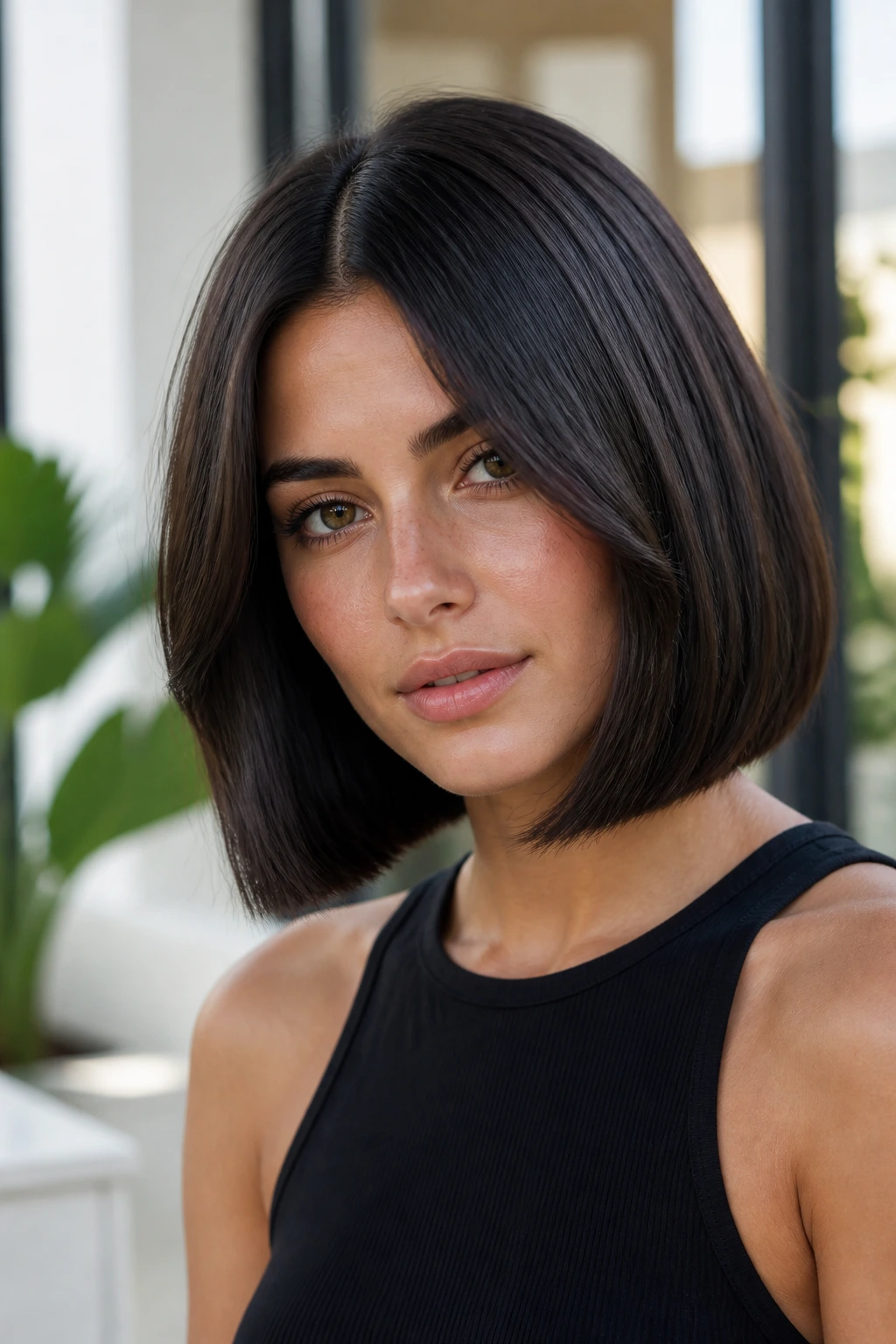
A glassy bob is all about shine and control. Thick straight hair is one of the best textures for it because the strands can hold a smooth, reflective surface when the cut is clean. The center part makes the curtain bangs split evenly and gives the style that tidy, modern feel.
The danger here is going too blunt at the bang line. Curtain bangs should still have a little movement, even in a glossy bob, or they’ll sit like a wall. Keep the shortest point around the bridge of the nose or the cheekbone, then angle the pieces outward so the center part opens the face instead of closing it off.
This is one of those cuts that looks simple in photos and takes a little more discipline in real life. A flat iron pass, a heat protectant, and a light serum are usually enough. If you put too much product on the roots, the shine turns greasy fast. Less is more here. A little less.
9. Neck-Grazing Bob with Light Front Pieces

When thick hair gets cut to the neck-grazing range, the shape suddenly feels lighter, but it still has enough length to move. That’s the sweet spot for people who want a bob without a full stop at the jaw. The nape stays neat, and the front can swing forward just enough to soften the profile.
The front pieces should stay light, not chopped short. Curtain bangs can do that job if they’re cut in a long, airy way and blended into the sides. If the bangs are too dense, the whole cut starts feeling front-heavy, which defeats the purpose of moving some weight out of the back.
This is the bob I’d pick for someone who tucks hair behind one ear a lot. The length still looks intentional when one side is pushed back, and the curtain bangs keep the face from feeling exposed. It has a casual polish to it. Not fussy. Never fussy.
10. Side-Part Bob That Still Uses Curtain Bangs
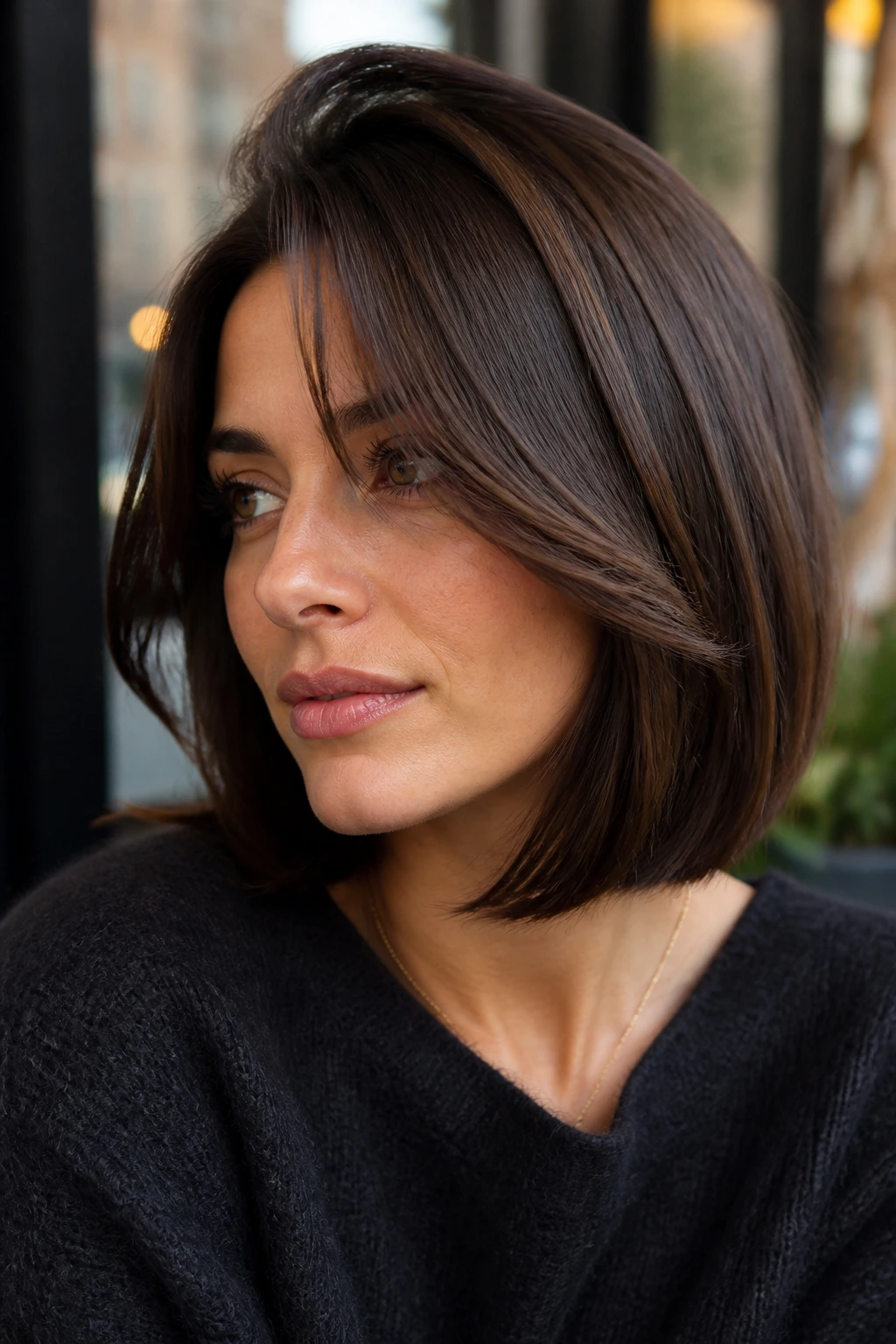
Yes, curtain bangs can live with a side part. They do not have to sit dead center every day. In fact, on thick hair, a side part can sometimes help the cut settle better because it shifts a bit of the density away from the widest point of the face. The bob still looks straight and clean, just less symmetrical.
What you want is a fringe long enough to fall across the forehead at an angle before splitting. That gives you a softer drape and keeps the style from looking too rigid. Thick hair often needs that little break in the front, especially if the hairline is strong or the forehead is narrow.
This version works well for people who dislike the feel of a strict center part but still want the softness of curtain bangs. It’s also handy on days when one side of the hair wants to sit flatter than the other. Let it be a little uneven. Hair is allowed to have a preference.
11. Softly Angled Lob

A softly angled lob is the grown-up, low-drama choice in the group. The front is just a touch longer than the back, which gives thick hair a line to follow without looking severe. It’s long enough to tuck behind the ears, short enough to keep the ends from turning into a blanket.
Curtain bangs help the lob feel like a deliberate cut, not just a long trim. They pull the eye upward and inward, which keeps the length from dragging the face down. Ask for the angle to stay subtle; too much slope and you lose the easy straight look that makes this cut work.
This is one of the easiest versions to maintain if your hair grows fast or if you don’t want to be in the salon every few weeks. The line stays friendly as it grows. And when the ends start to soften a little, the whole thing still looks fine. That’s a useful quality. Useful beats precious.
12. French Bob for Thick Straight Hair
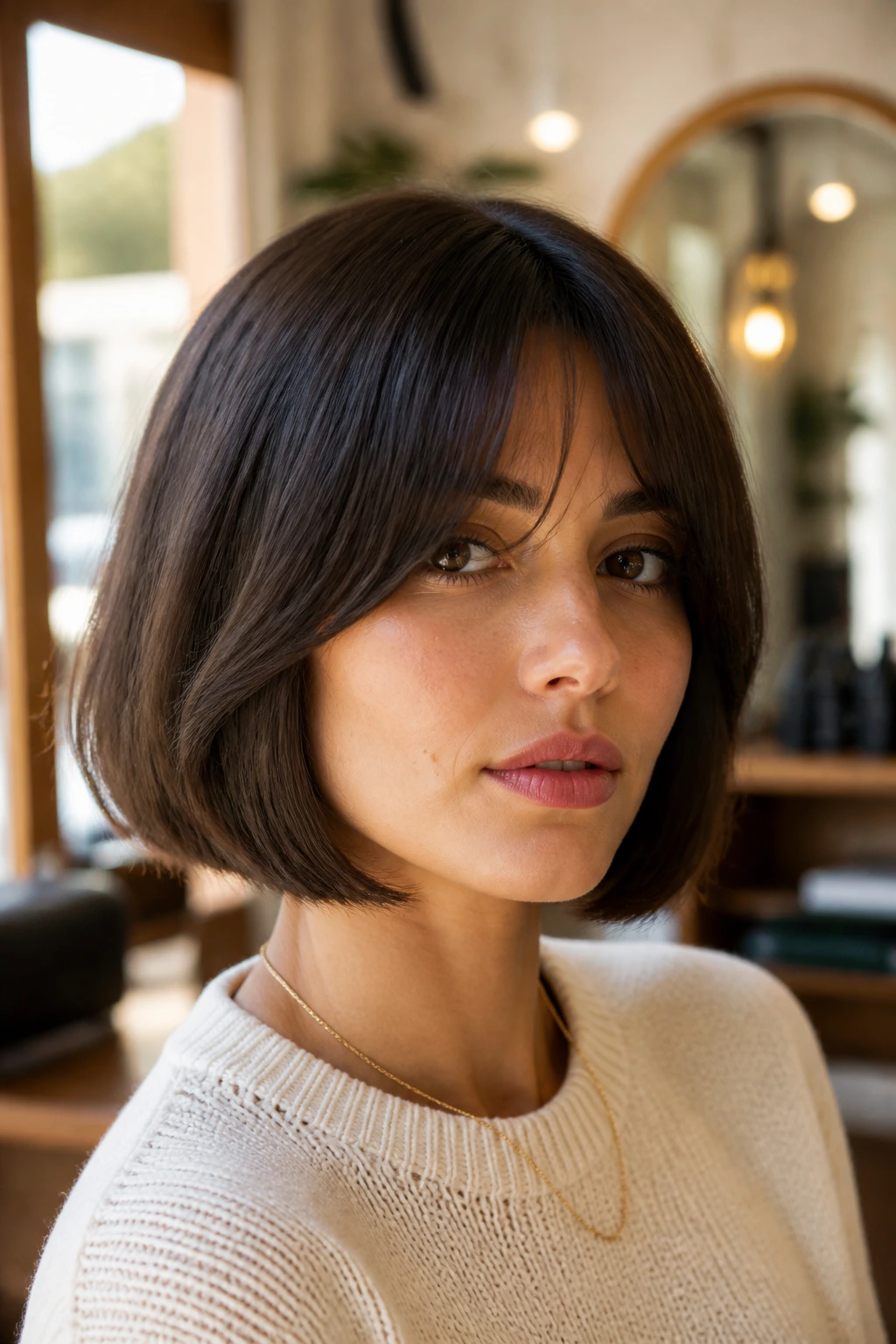
The French bob usually gets described as short and chic, but on thick straight hair it needs a small adjustment to stay practical. Keep it in the medium range, around jaw to upper neck, and let the fringe float instead of sit heavy. That keeps the style from becoming a helmet with bangs.
The charm here is the shape. French-inspired bobs look best when they feel slightly undone, and curtain bangs help with that without sacrificing polish. A tiny bend at the ends and a center or near-center part are enough. You do not need big volume at the crown.
This cut is strongest when the perimeter is precise and the bangs are not over-layered. The whole point is to keep the bulk under control while still showing off thick hair’s density. If your hair is coarse and straight, this version can look especially sharp because the strands hold a line so well. It has attitude, but not noise.
13. Chin-to-Clavicle Bob with Minimal Weight Removal
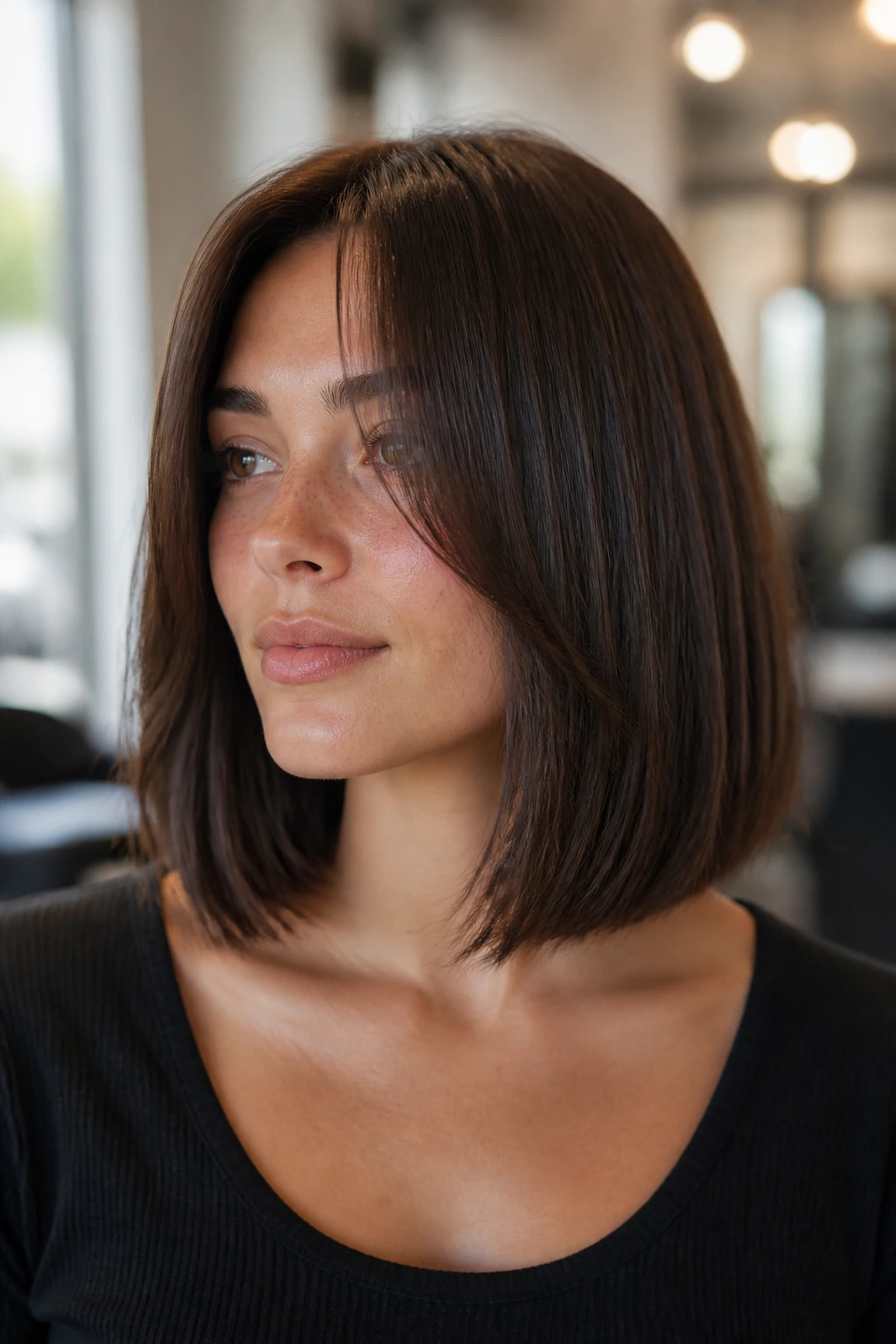
Some thick hair needs less texture, not more. A chin-to-clavicle bob with minimal weight removal keeps the mass intact but redistributes it through length. That means fewer short pieces sticking out and fewer ends that refuse to lie flat.
Curtain bangs are the part that makes the haircut breathe. They let you keep the bob strong through the sides and back while still getting softness around the face. If the stylist starts chopping too much into the interior, the cut can get cloudy. Keep the layers minimal and the outline clean.
This style suits thick hair that already behaves fairly well but just feels too bulky at the ends. The shape lands somewhere between polished and easy. It’s the kind of bob that looks good when tucked behind one ear, which is handy if you spend half the day pushing hair out of your face anyway.
14. Hidden-Undercut Bob for Dense Hair
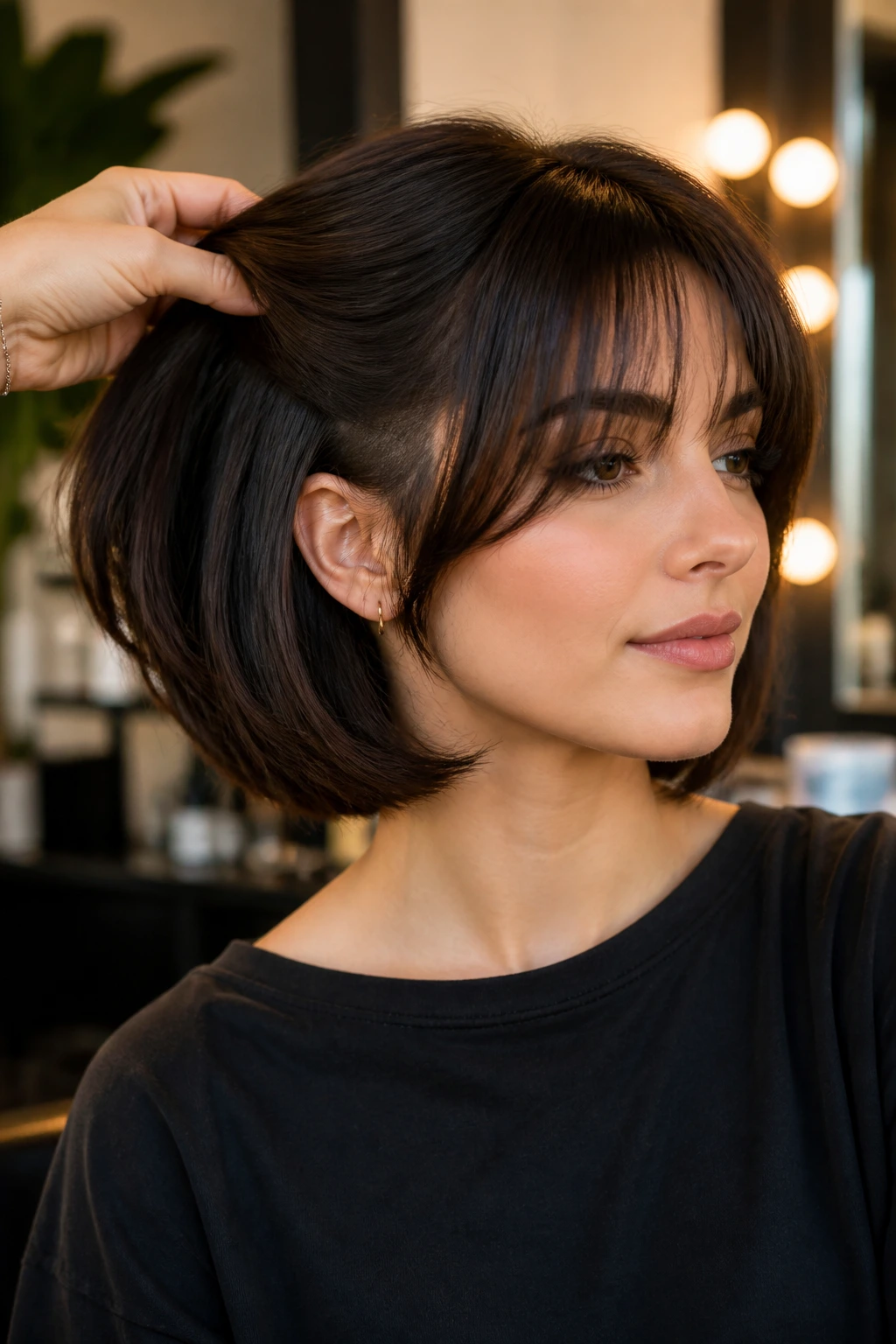
When the density is serious, sometimes the best fix is underneath where nobody sees it. A hidden undercut removes bulk from the lower interior of the hair, which lets the outer layer sit flatter and swing better. The visible cut still looks like a bob, not a shaved look. That’s the point.
Curtain bangs matter even more here because they give the top of the haircut a softer entry point. Without them, the reduced bulk underneath can leave the front feeling too abrupt. With them, the whole thing reads balanced. You get the clean line on the outside and the weight relief where it counts.
This is not the cut for someone who wants zero maintenance and zero salon communication. It does take a stylist who understands thick hair and knows how much weight to take out without creating a hollow shelf. But if your bob always turns into a triangle by noon, this is the sort of move that changes the whole relationship.
15. Blunt Perimeter Bob with Cheekbone Bangs
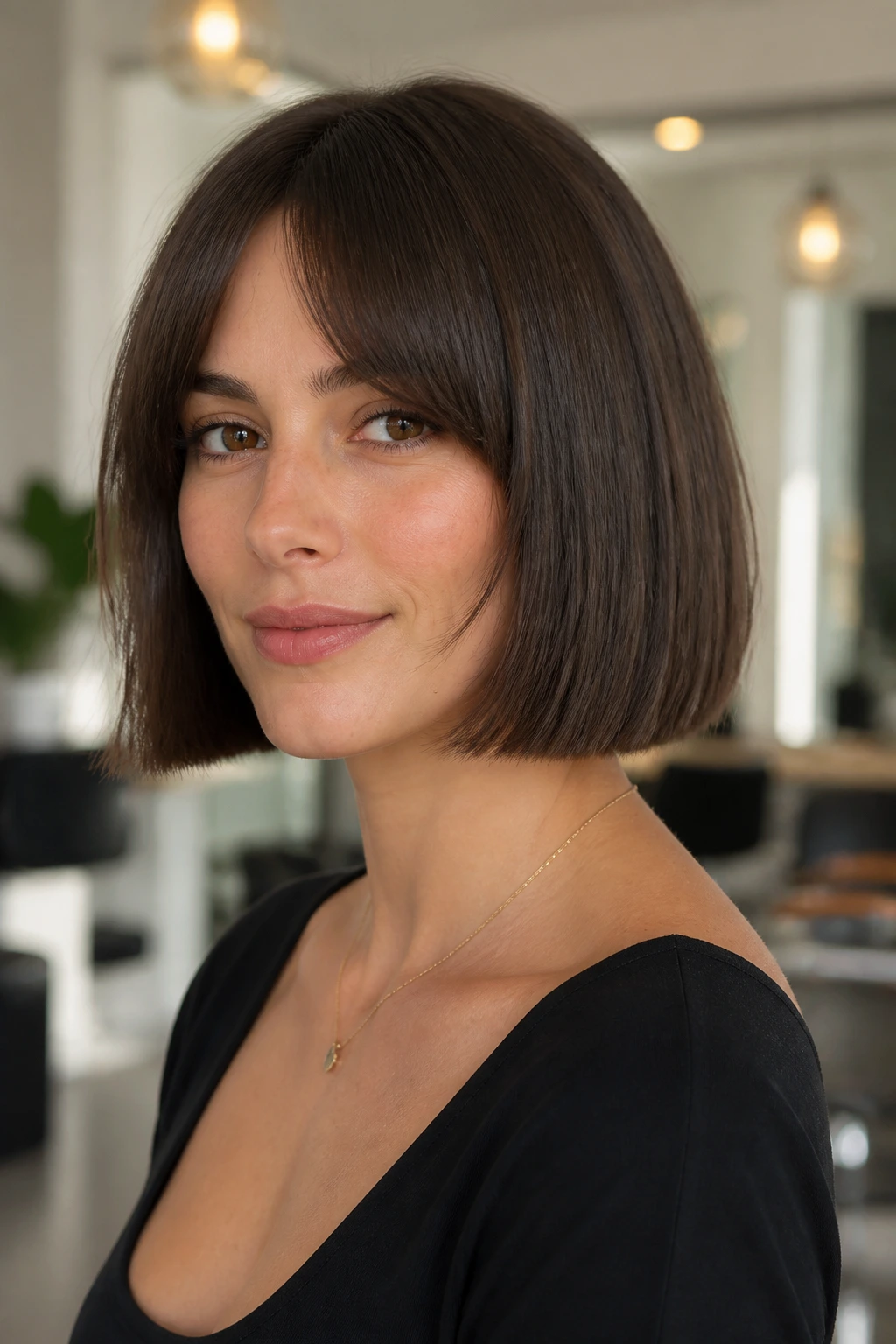
A blunt perimeter bob is all about the edge. The line sits evenly around the head, which gives thick hair a firm boundary and prevents the bottom from spreading too wide. Cheekbone bangs bring the softness back in, so the style stays clean instead of heavy.
This is one of my favorite matches for thick, straight hair because the blunt line makes the density look rich rather than bulky. The bangs should split and land right where the cheek starts to curve in. That’s a smart place to break the width of the face without pushing the fringe too far into the eyes.
If you like a neat haircut that still has movement at the front, this one delivers. It’s also good for people who air-dry sometimes, because the shape stays readable even without a full blowout. Keep the ends tidy, keep the bangs long enough to part naturally, and the cut does the rest.
16. Sleek Lob with a Narrow Face Frame
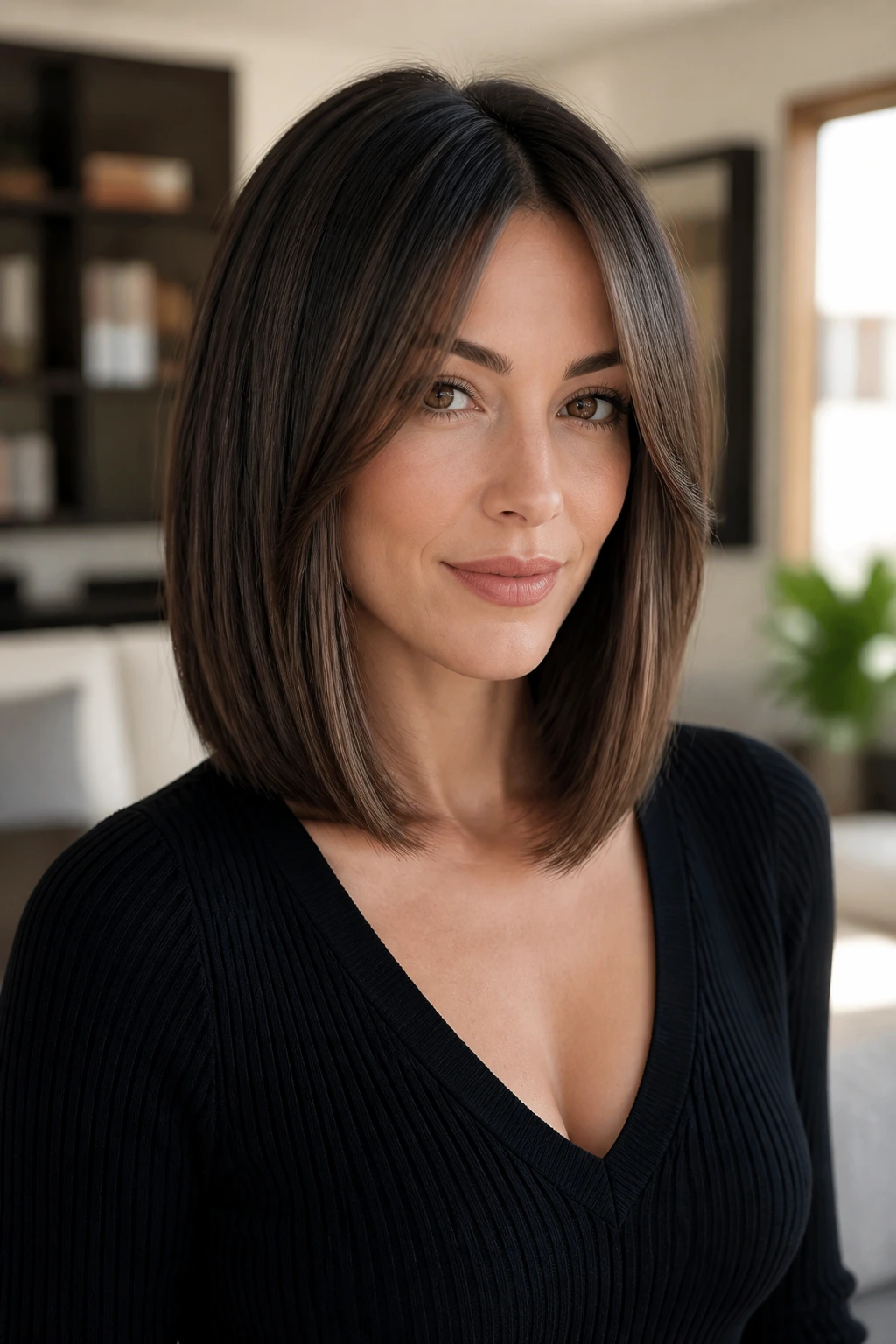
A sleek lob can make thick hair feel almost edited. The length gives the hair room, but the finish stays narrow around the face so the sides don’t come forward too hard. Curtain bangs should be longer here, almost like a soft frame rather than a true fringe.
That narrow frame is useful if your face gets swallowed by volume. It keeps the eye moving vertically instead of sideways. Thick hair can create width quickly, especially at cheek level, so a controlled front line makes a noticeable difference. A center part usually keeps the balance nicest.
I like this cut on hair that is straight with a little natural bend. You don’t need big styling, only a smooth blow-dry and a flat iron touch-up on the front pieces if they kick out. The look is clean. Almost spare. And that restraint is what makes it work.
17. Deep-Split Bob with Long Curtain Bangs
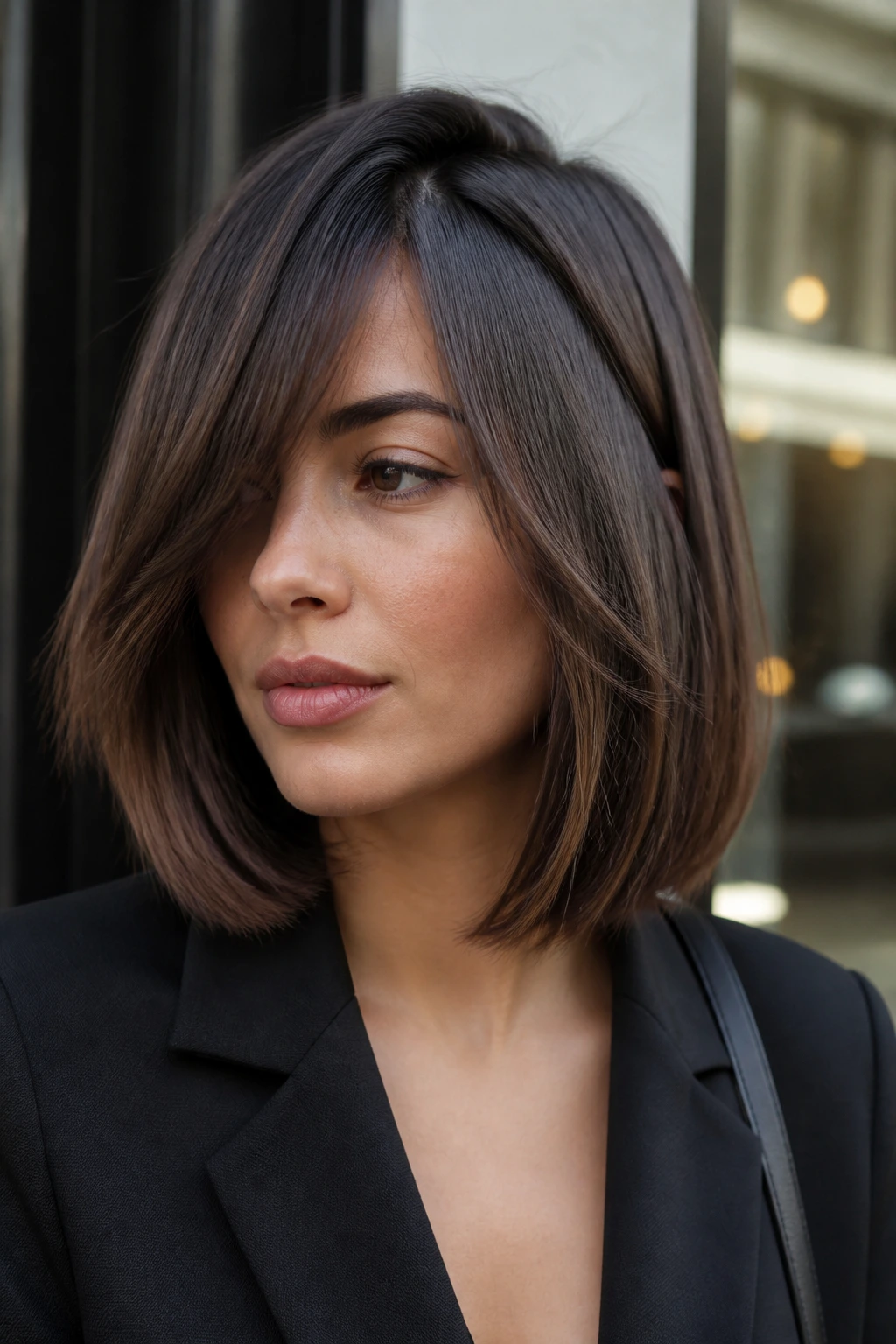
A deep split changes the whole mood of curtain bangs. Instead of a tidy center opening, the front parts farther off center, which gives thick hair a softer, less expected shape. The bob itself can stay straight and medium-length, but the fringe will feel looser and more face-skimming.
This is a good fit for people whose hairline naturally resists a dead-center part. Fighting the cowlick every morning is a bad trade. A deep split lets the bangs fall where they want to, then uses the length of the pieces to balance the asymmetry. The result feels personal without becoming fussy.
The cut works best when the stylist keeps the rest of the bob clean and lets the fringe carry the drama. A little bend in the front pieces helps the split look intentional. If you over-style it, the face frame can get too obvious. Keep it soft, and the whole thing feels more expensive.
18. Shorter Medium Bob with Full Ends
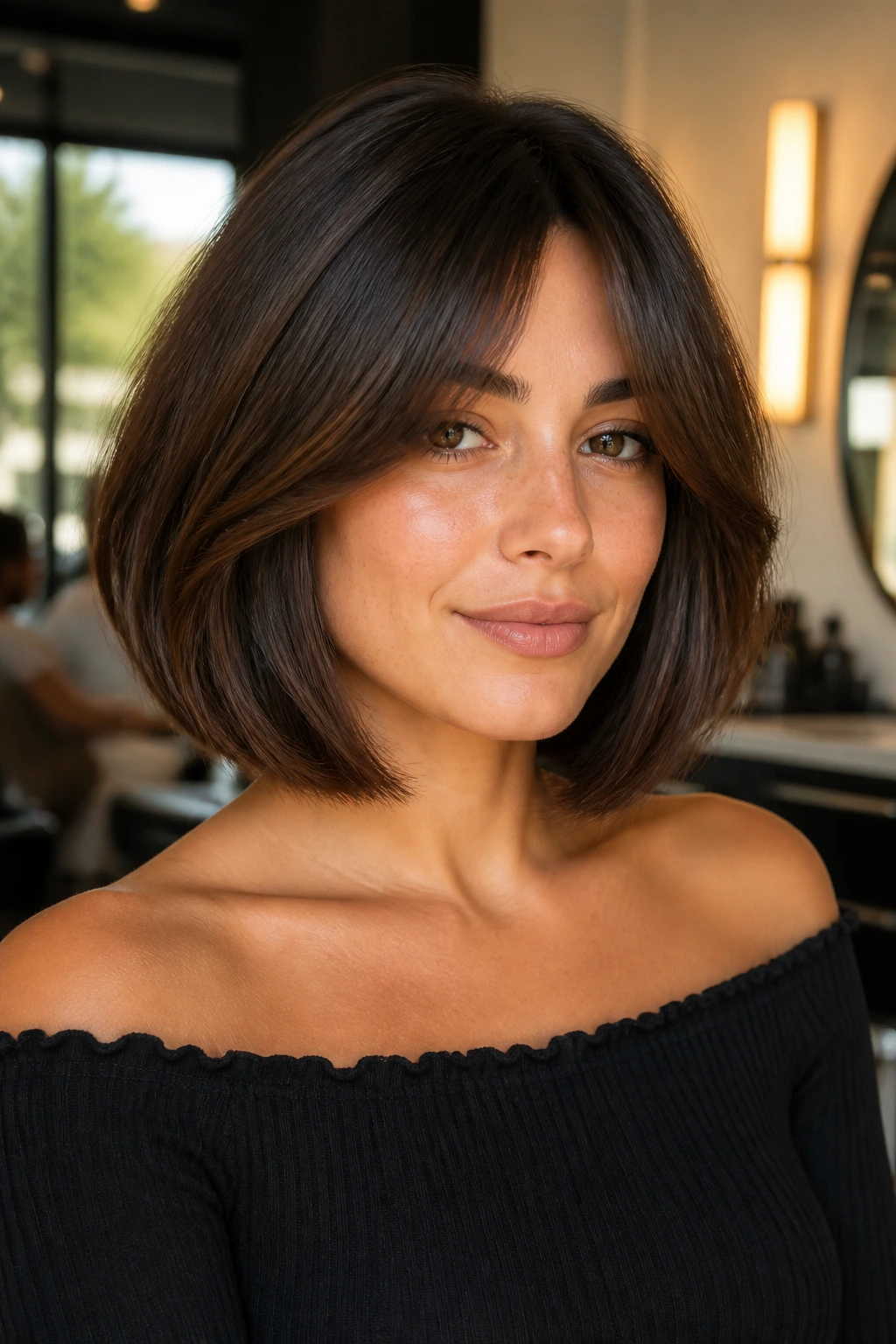
Some medium bobs sit closer to the jaw and carry a fuller, weightier end line. On thick hair, that fullness can be a good thing. It gives the hair a dense, plush look instead of a wispy one. The key is keeping the ends controlled so they don’t spread out like a fan.
Curtain bangs help balance that fullness by lightening the front visually. Without them, the cut can feel too packed around the lower face. With them, the bob keeps its body but doesn’t crowd the features. The result is especially nice if you want the haircut to feel substantial.
This version works for someone who likes a bob that reads clearly from across the room. It has presence. Just make sure the stylist doesn’t over-thin the underside, because that can create a see-through edge on top of all that density. Full ends are the whole point here. Don’t let them disappear.
19. S-Curve Bob with Beveled Tips
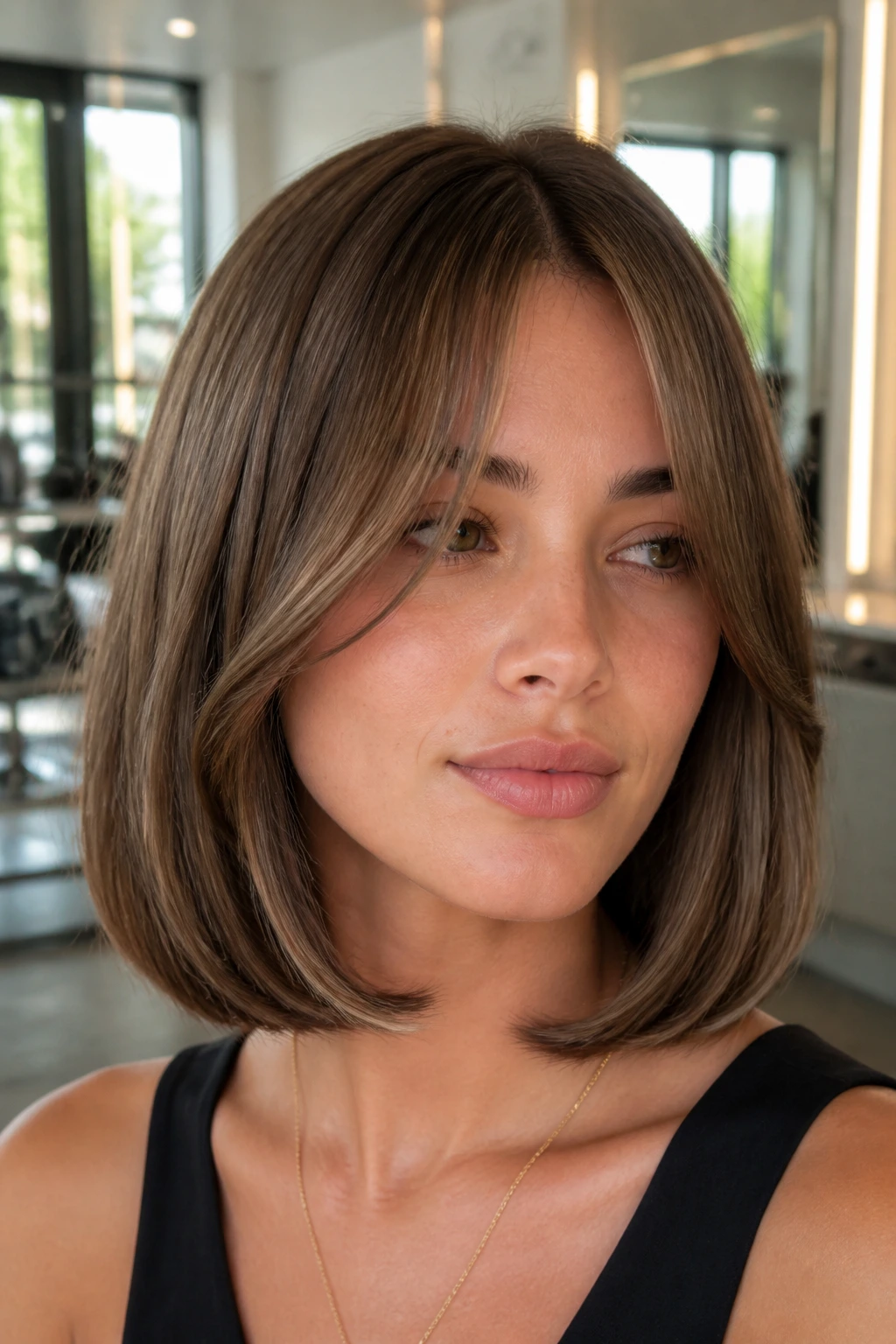
An S-curve bob gets its shape from a tiny bend inward and a tiny bend outward through the ends, which sounds subtle because it is. On thick hair, that soft curve stops the haircut from looking like a stiff board. It also keeps straight styling from feeling flat in a bad way.
The beveled tips make the bottom line sit neatly without looking chopped. That’s useful if your hair tends to kick out at the last inch. Curtain bangs add another bend around the face, so the whole cut feels fluid even when the hair is mostly straight.
This is one of those styles that seems low-effort but depends on a thoughtful cut. The bevel should be slight, not curled under like a 2000s blowout. Just enough to suggest shape. If you want movement without losing the straight-bob feel, this one is hard to beat.
20. Strategic-Debulking Bob for Heavy Hair
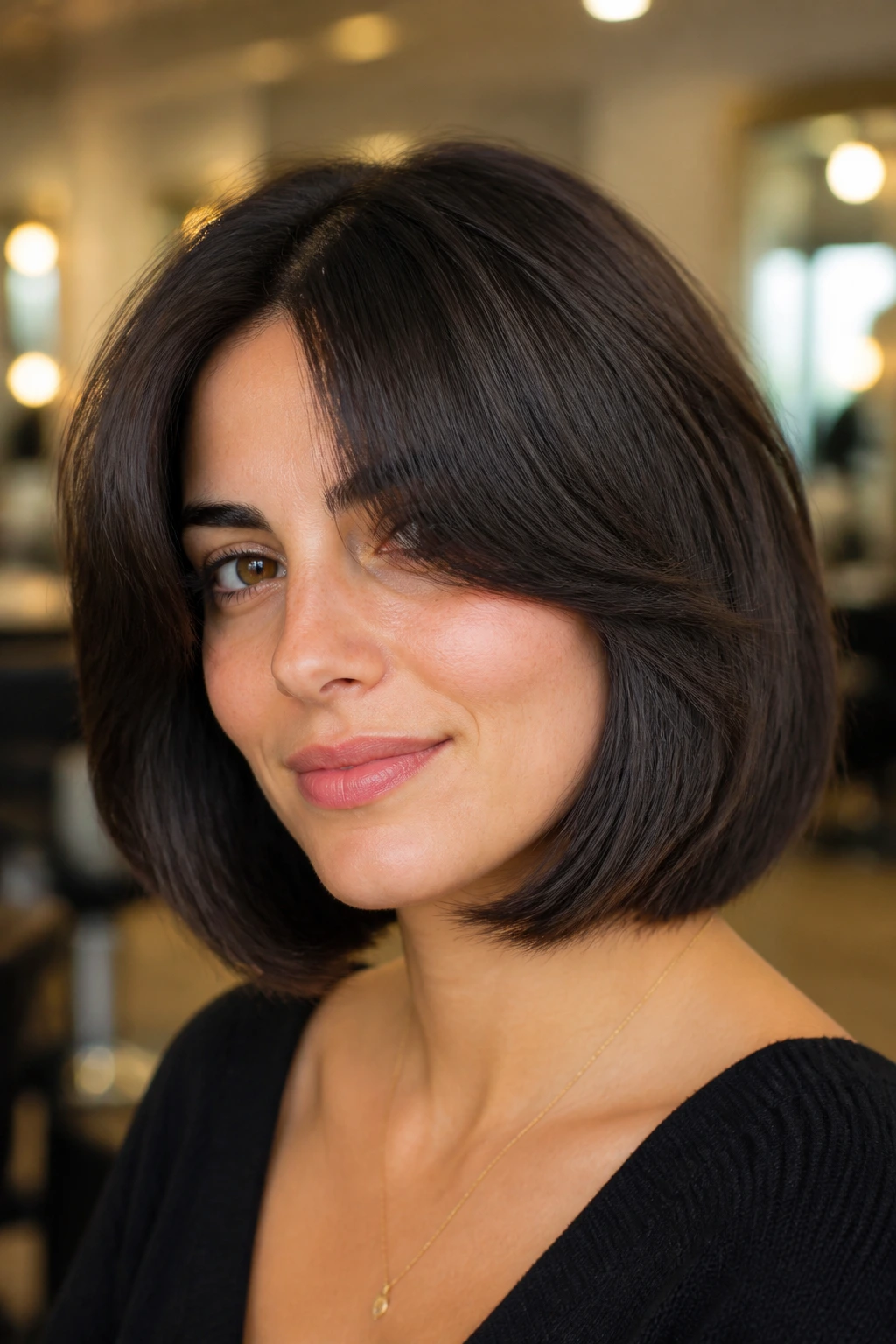
This is the cut for the person whose hair feels heavy enough to need its own zip code. Strategic debulking means removing weight where the hair stacks up, usually through the interior and underneath, while leaving the outer shape strong. You want the hair to move, not collapse.
Curtain bangs are important here because they keep the front from carrying all the visual mass. If the fringe is too heavy, the haircut can feel like it lives entirely around the face. A longer split fringe softens that pressure and gives the bob a little breathing room.
The trick is restraint. Too much thinning and the ends go fuzzy. Too little and the bob sits like a block. A good stylist will take out just enough internal weight to make the hair swing without making the perimeter look hungry. That balance is the whole game.
21. Shoulder-Skimming Bob with Tucked Sides
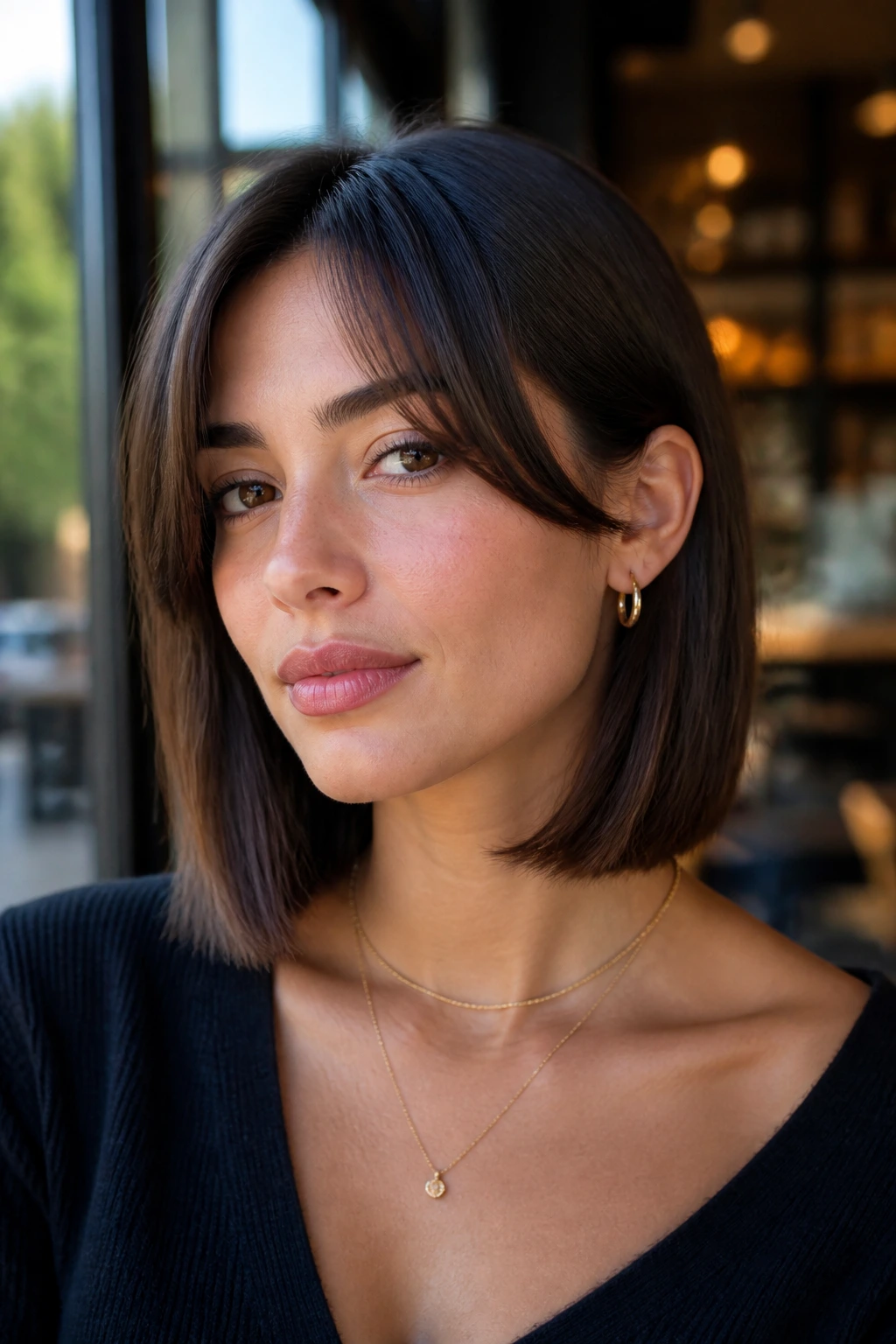
A shoulder-skimming bob is handy if you want a medium cut that can still be tucked behind the ears without losing shape. The sides should be long enough to graze the shoulders lightly, which keeps thick hair from poofing at the jaw. It gives you flexibility, which matters more than people admit.
The curtain bangs need to stay long enough to blend with the side pieces. That way, when you tuck one side back, the bang still does its job and the front doesn’t look chopped off. This is a solid choice for anyone who likes switching between polished and casual with no extra tools.
I’d call this one the commuter-friendly bob. It looks neat, survives a coat collar, and doesn’t panic if you clip one side back for an hour. The cut doesn’t need much drama. It needs to sit well and grow out without turning into a shape you have to apologize for.
22. Minimal-Layer Bob for Hair That Lies Flat

Not every thick-haired bob needs a lot of layering. If your hair already lies flat but feels dense, too many short pieces can make the shape bulky in odd places. A minimal-layer bob keeps the silhouette simple and lets the weight stay where it helps, not where it hurts.
Curtain bangs carry the softness so the rest of the haircut can stay disciplined. That’s the real advantage. When the fringe opens the face, the perimeter can be blunt and calm. You get movement at the front without stripping the body out of the rest of the hair.
This is a smart choice if your hair is thick but not especially wild. Think smooth, heavy, cooperative strands. They usually look best when the stylist barely touches the ends with texture. The less the shape is interrupted, the cleaner it looks. Some hair likes a quiet cut.
23. Pageboy-Inspired Bob with a Modern Finish
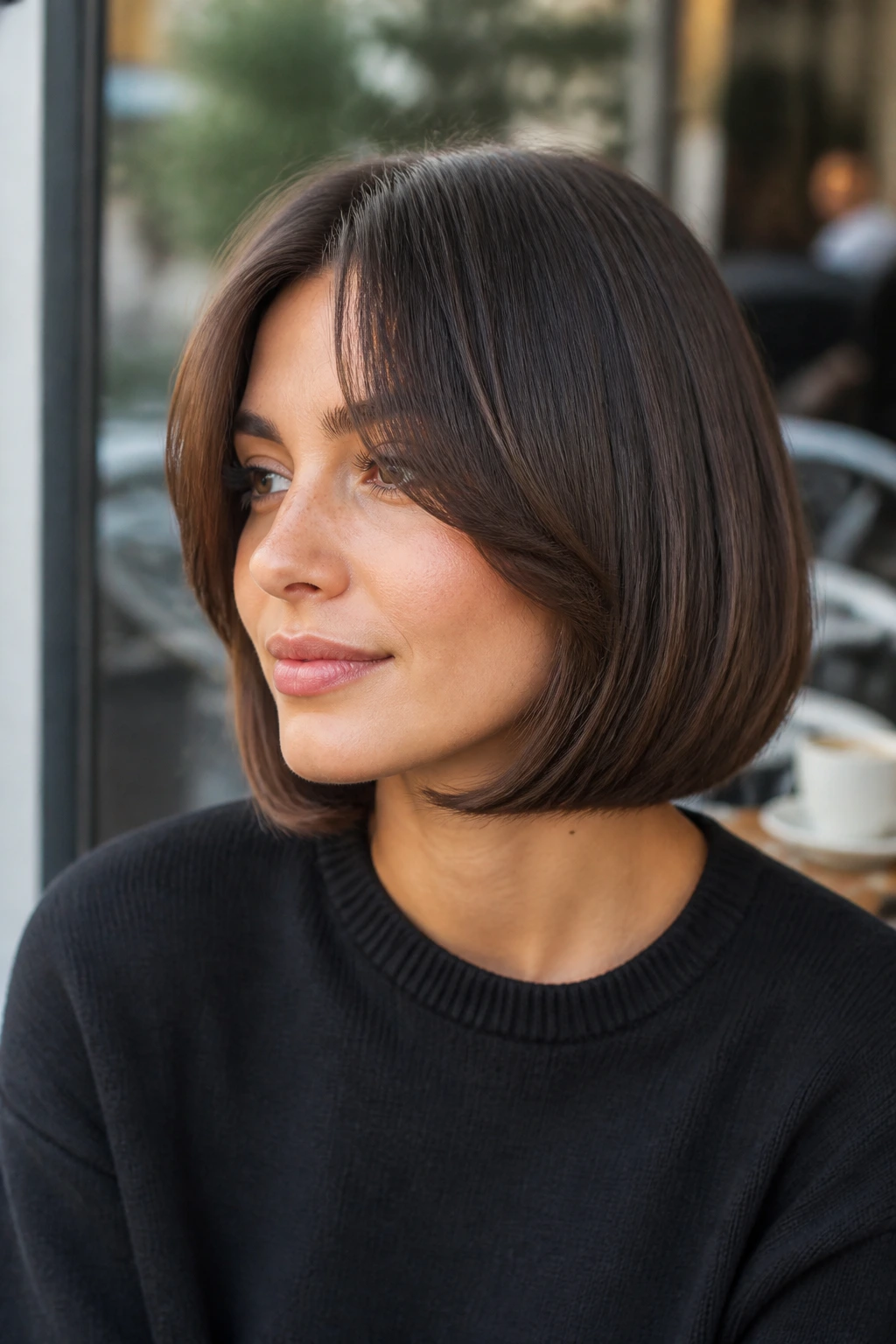
A pageboy-inspired bob sounds old-fashioned until you see it on straight thick hair with curtain bangs. Then it makes sense. The rounded undercurve hugs the head a little closer than a blunt bob, which can be useful if your hair tends to feel wide at the sides.
The modern part is the bang. Instead of a hard fringe, curtain bangs soften the front and keep the cut from looking costume-like. You still get that neat pageboy shape, but with enough face framing to feel current and wearable. The ends should look deliberate, almost polished by design.
This cut is especially good if you like the idea of a bob that has a slightly tucked, almost tailored finish. It does not need much volume at the crown. It needs smoothness and shape. That’s the whole appeal, really. A little retro, but not dressed up as nostalgia.
24. Razorless Textured Bob with Soft Ends
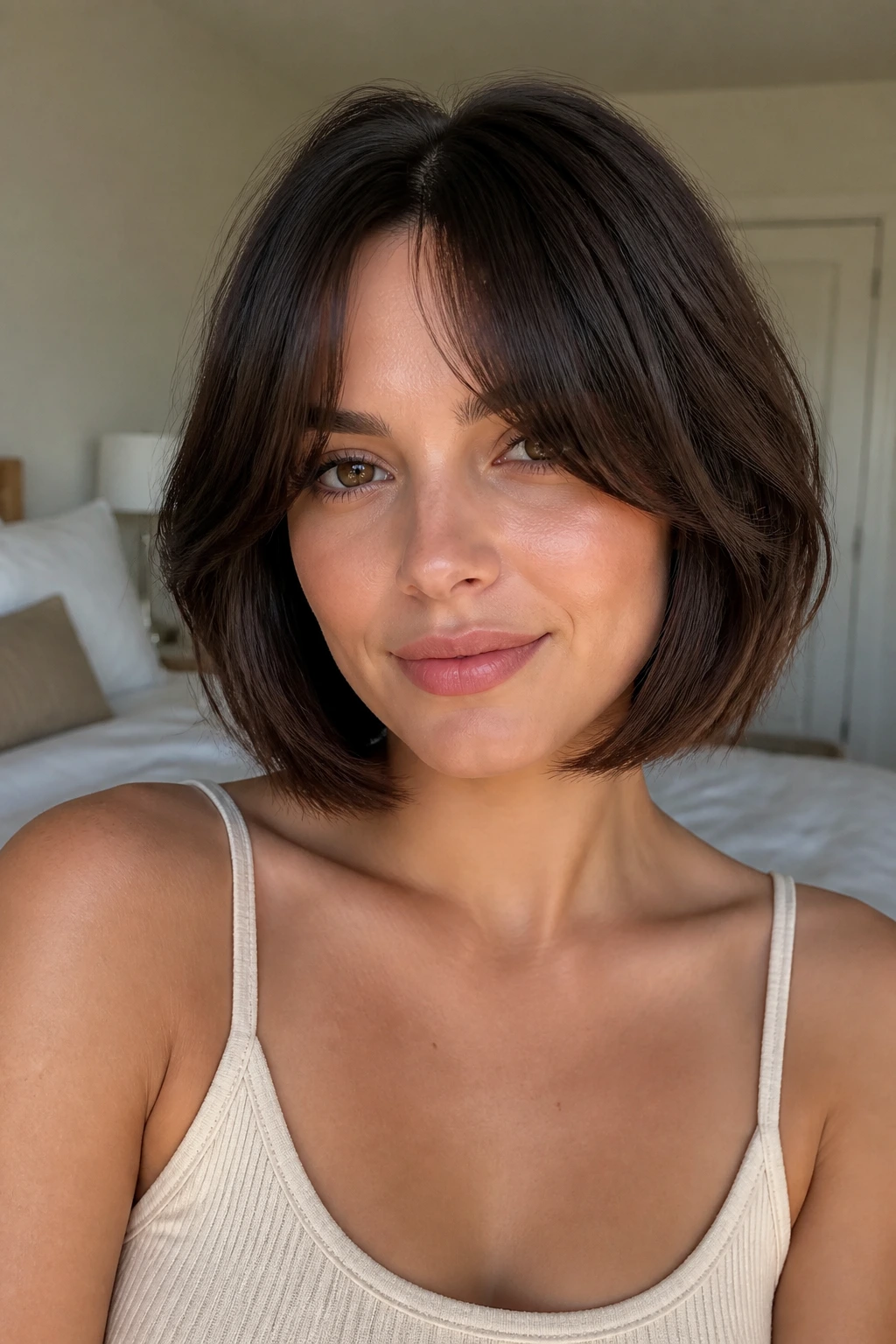
Texture doesn’t have to mean shredding the ends with a razor. In thick straight hair, a razorless approach usually looks better because the perimeter stays full and the finish doesn’t fray out. Light point cutting or small internal adjustments are enough to stop the bob from feeling like one heavy slab.
Curtain bangs are what keep the soft ends from reading too casual. They give the haircut a face-framing point of focus so the rest of the shape can stay relaxed. If the bangs are long and blended, the whole look has movement without losing the clean line.
This is a nice option if you want the bob to feel a little undone but still intentional. It’s less strict than the blunt styles and easier to air-dry into place. Just don’t confuse “textured” with “thinned out.” Those are not the same thing, and thick hair pays for the difference fast.
25. Refined Midlength Bob with Low Weight Line
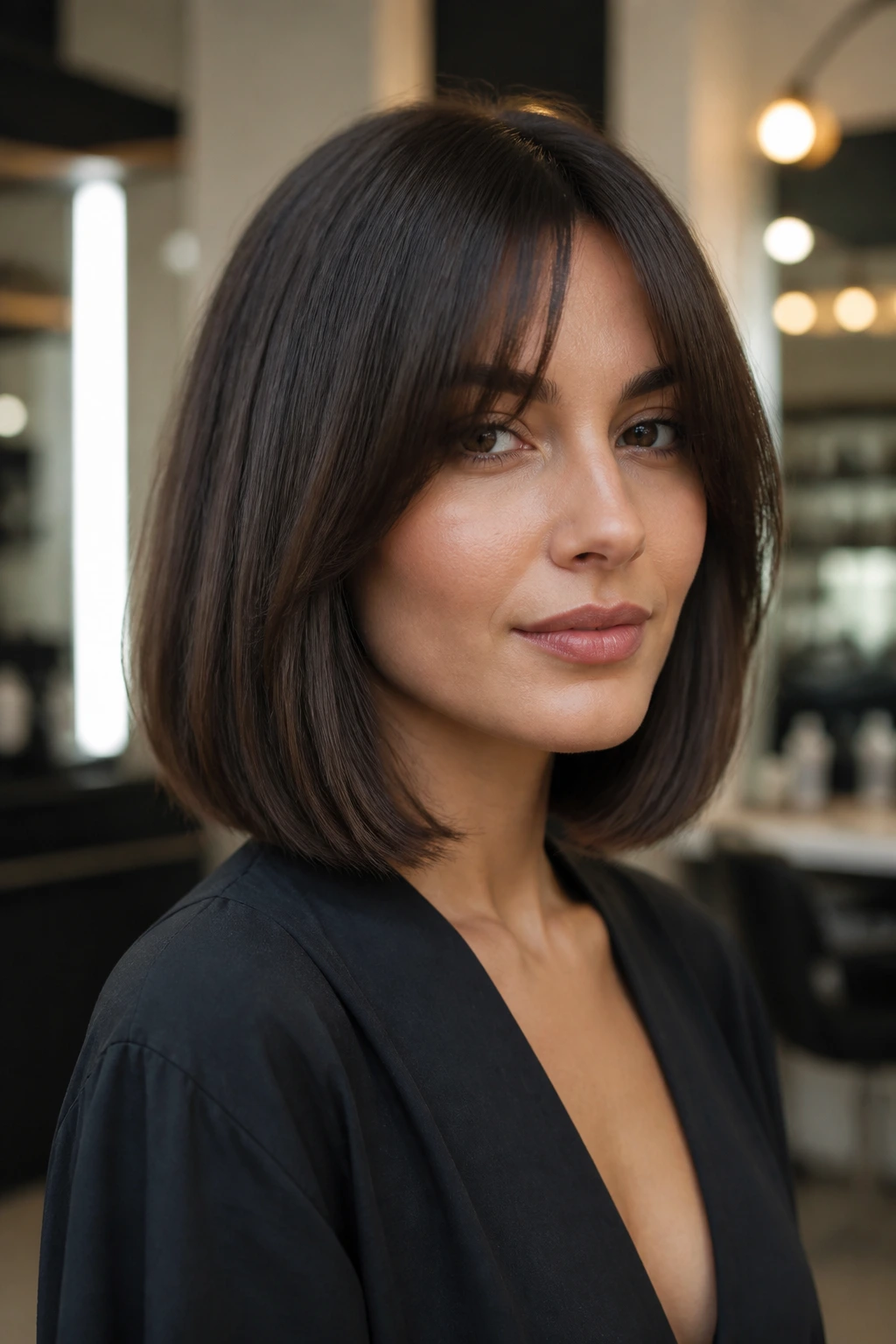
This final version is the polished one. The cut sits in the middle length range, but the weight line stays low so thick hair doesn’t puff at the sides or rise away from the neck. It’s the sort of bob that looks finished even when the styling is minimal.
Curtain bangs are the quiet detail that makes it work. They open the front and keep the haircut from becoming one straight wall of hair. The line stays calm, the face gets shape, and the whole style reads as deliberate rather than overworked.
If you’re the kind of person who wants a bob that can handle a dressy outfit one day and a plain T-shirt the next, this is a very smart cut to save. It has enough structure to look sharp and enough softness to stay friendly. That combination is harder to find than it should be.
Why the Medium Length Matters More Than People Think
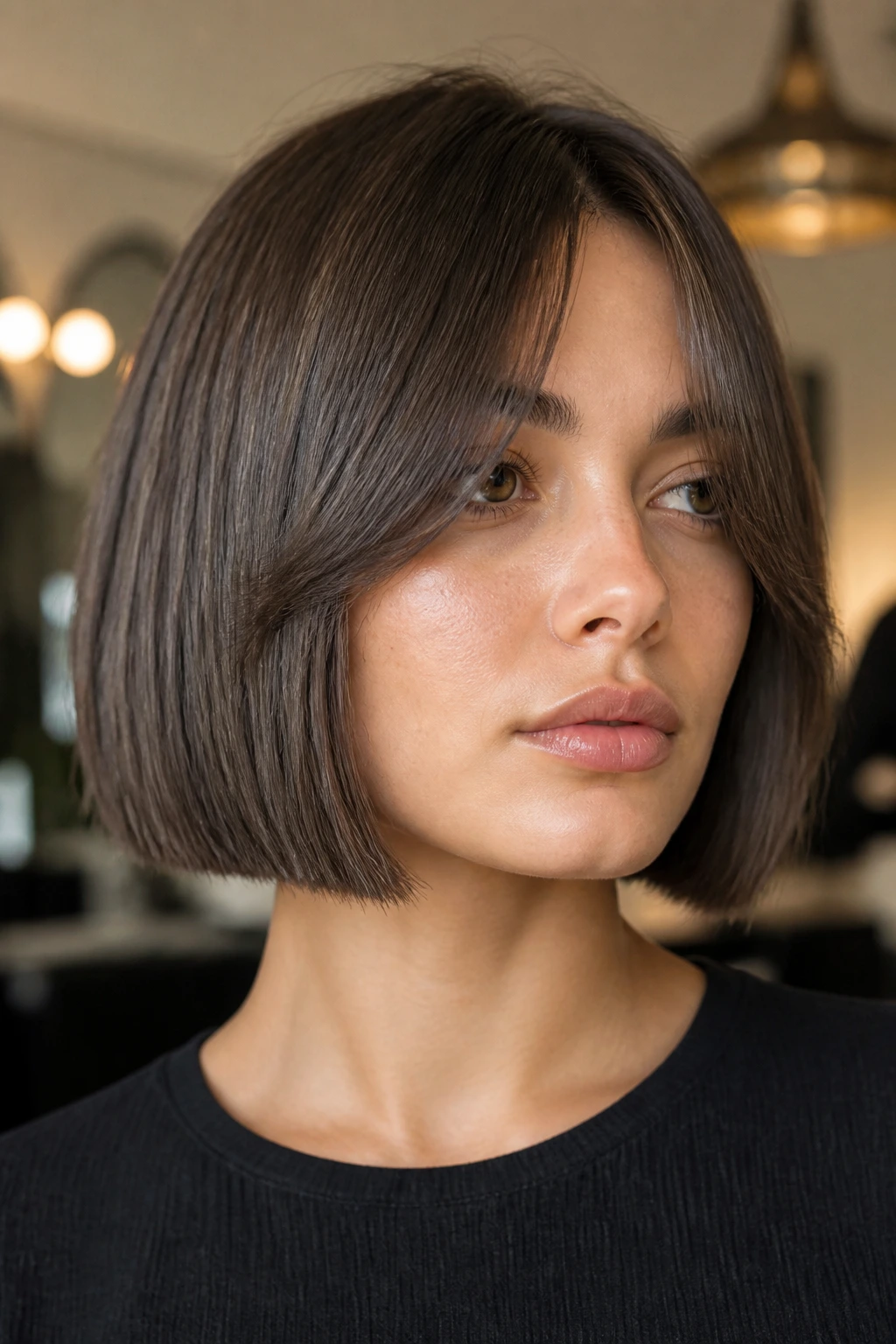
A medium bob gives thick hair a place to stop. That sounds obvious, but it changes everything. Shorter cuts can kick out. Longer cuts can swallow the face. Medium length—especially around the jaw, neck, or collarbone—keeps the weight in play without letting it run the show.
The other reason this length works is movement. Thick hair needs room to bend, but not so much that it becomes vague. A medium bob still shows the edges of the haircut when you wear it straight, which is part of the appeal. If the perimeter is clean, you can see the shape from the side, the front, and even in a bad bathroom mirror. That matters more than a lot of people admit.
Curtain bangs are the pressure valve. They take some of the density off the front line and create a soft break where thick hair tends to feel heaviest. Without that break, the cut can look blunt in the wrong way. With it, the bob keeps its weight but loses the stiffness.
How to Ask Your Stylist for the Right Shape
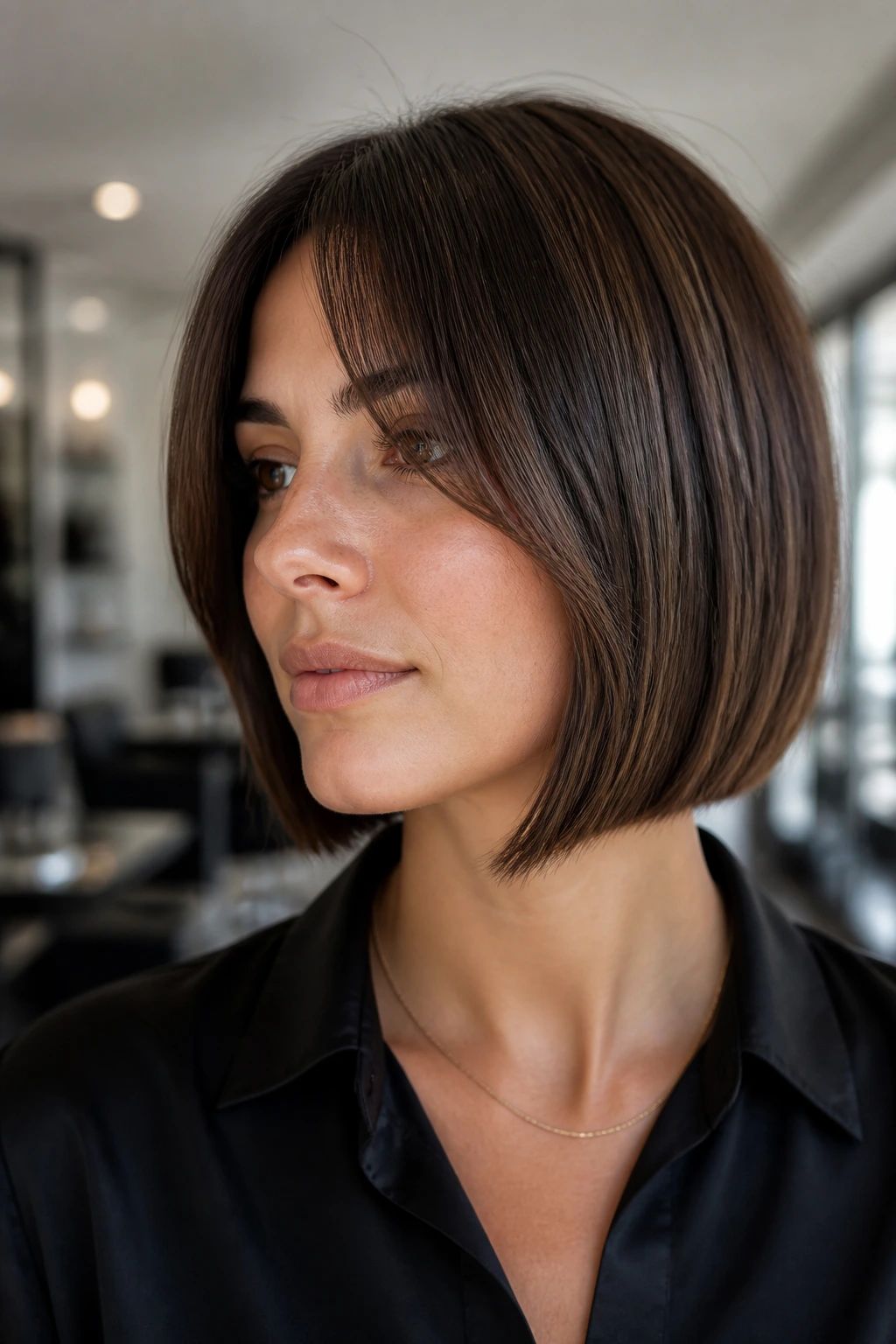
Bring photos, but talk in specifics. A picture of a bob is not enough on thick hair unless the stylist knows how the bulk behaves. Say where you want the perimeter to land, where your hair usually puffs up, and whether you want the ends to sit flat or bend inward a little.
A useful request sounds more like this: “Keep the outside line blunt, remove weight internally, and make the curtain bangs start around the cheekbone so they split softly.” That one sentence does more work than a dozen vague compliments. If you want an A-line, say how subtle. If you want length at the collarbone, say that too.
A few things I’d ask about in the chair:
- Perimeter: blunt, slightly angled, or rounded under
- Internal weight removal: light, moderate, or minimal
- Curtain bang length: cheekbone, nose, or lip
- Parting habit: center, offset, or flexible
- Styling routine: blow-dry, flat iron, or air-dry first
Thick hair rewards clarity. The more exact the brief, the better the cut.
Tools That Make Styling Easier at Home
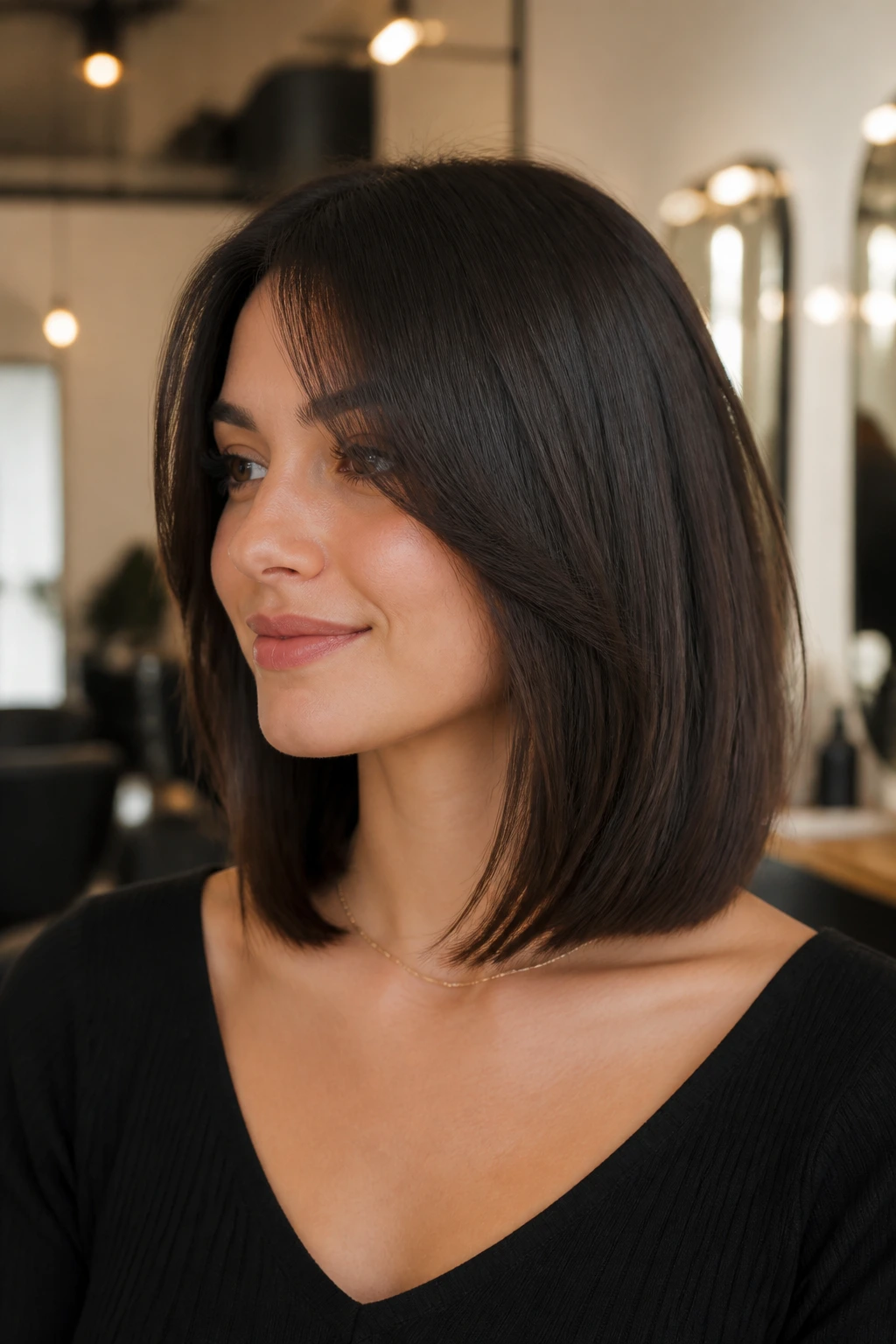
You do not need a suitcase of gadgets, but a few specific tools make a straight medium bob behave much better.
- Blow dryer with a nozzle attachment: The nozzle helps direct the air down the hair shaft so the cuticle lies flatter and the finish looks smoother.
- 1.5- to 2-inch round brush: Good for giving the curtain bangs a soft bend and tucking the ends under without making them curl.
- Paddle brush: Useful for rough-drying thick hair before you polish the shape.
- Flat iron with adjustable heat: Handy for the front pieces and the last inch of the ends when they kick out.
- Heat protectant spray or cream: Use it every time. Thick hair can mask heat damage until the ends start looking dry and brittle.
- Light smoothing serum: A pea-sized amount on the mid-lengths and ends is enough; too much and the style goes greasy fast.
- Sectioning clips: Not glamorous, but they save time when the hair is dense and you need control.
Smart Styling Moves for a Straight Finish
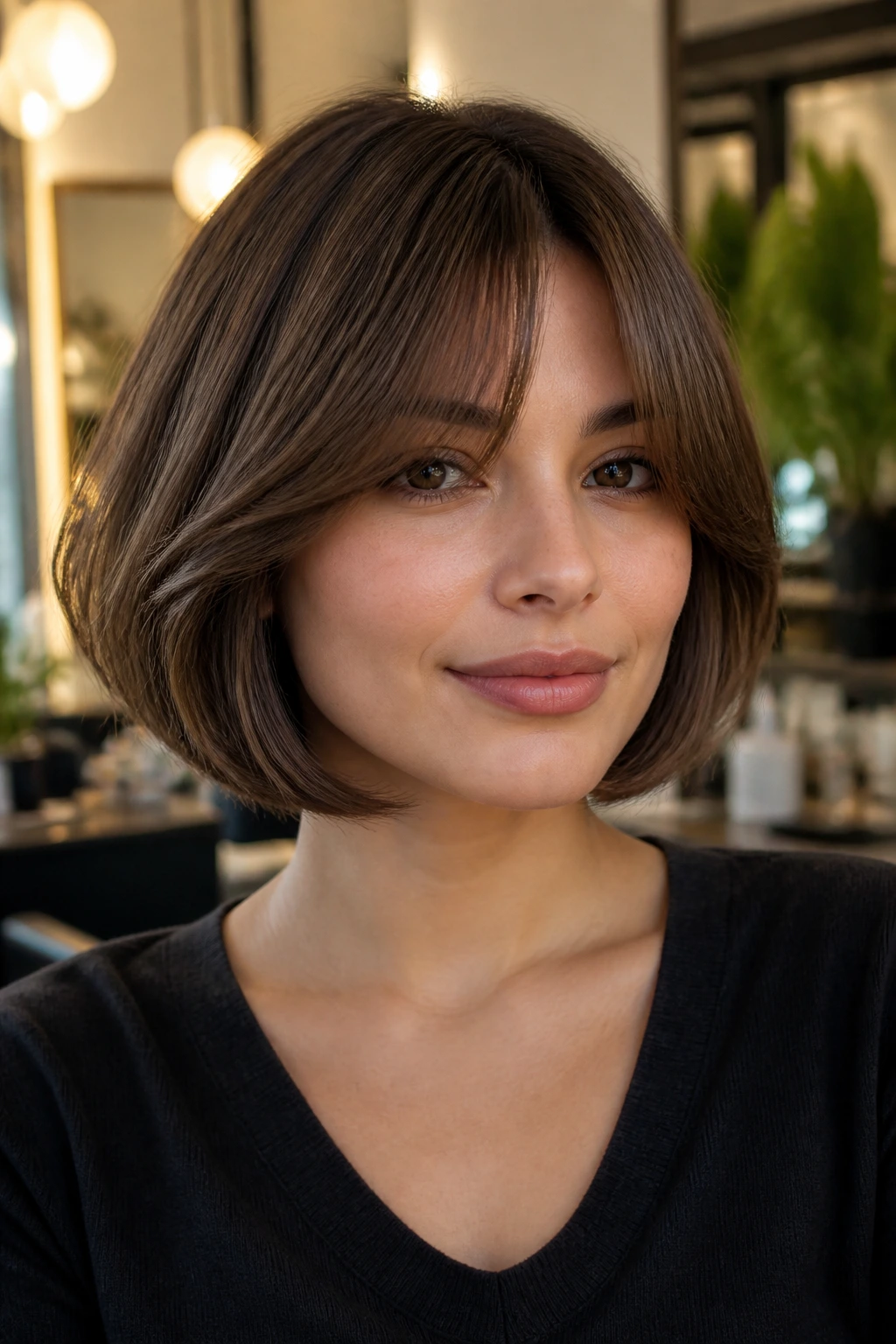
A good bob can be ruined by the way it’s dried. Start with the roots, not the ends. Rough-dry thick hair until it’s about 80 percent dry, then switch to the round brush or paddle brush to polish the shape. If you start styling too wet, you end up fighting steam, and the cut takes forever.
The curtain bangs need separate attention. Dry them first or at least give them their own section, because they set the whole mood of the haircut. Roll them slightly off the face, then release them so they fall open. If you drag them straight down, they can land heavy and stubborn.
Finishing the ends is where most people go wrong. You do not need a dramatic curl under. A small bend is enough. Sometimes I even prefer a flat iron on the last inch, tilted very slightly inward, because thick hair can look too bouncy with a brush round that is too big. The goal is clean, not puffy.
Mistakes That Turn a Thick Bob into a Triangle
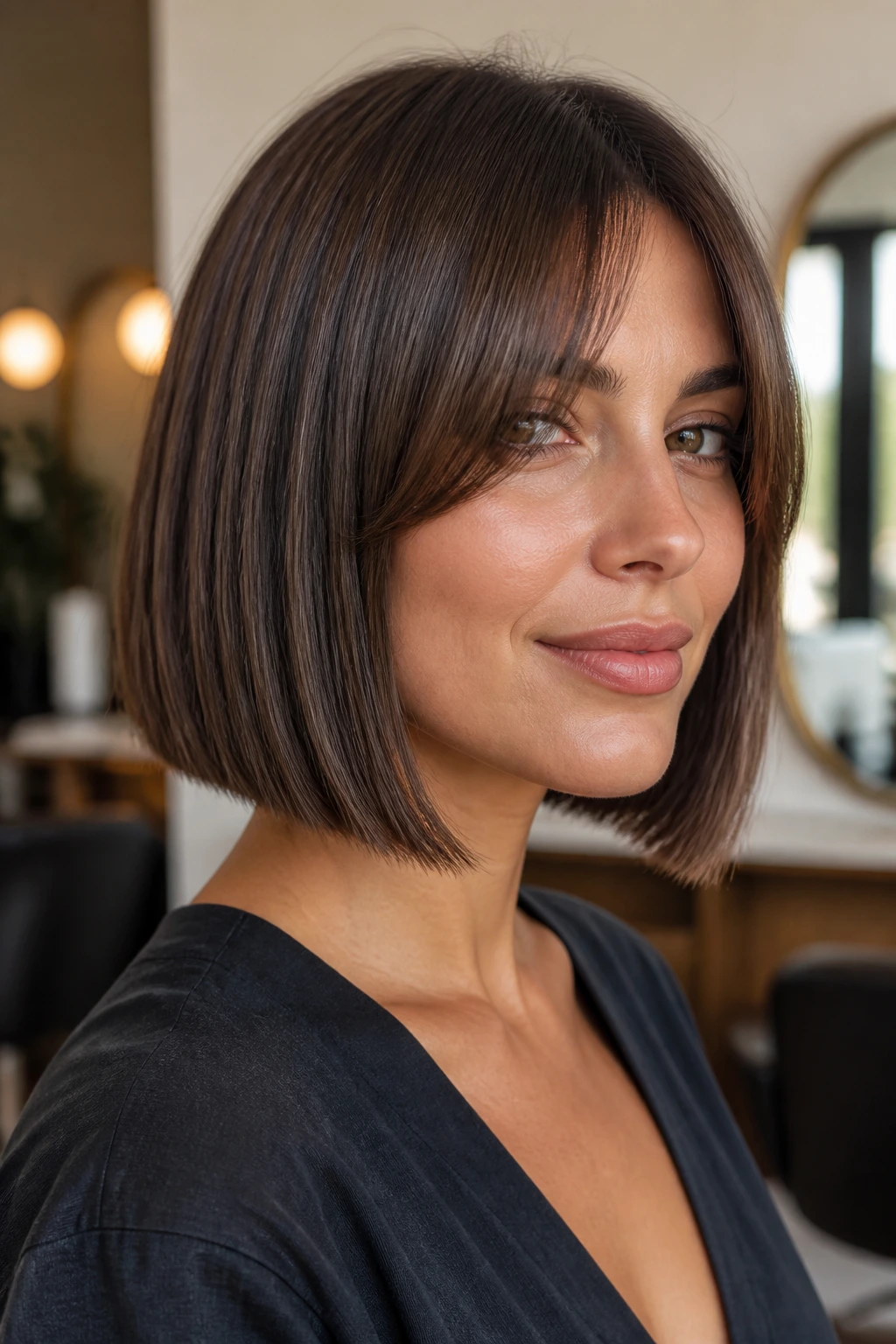
The triangle shape is the enemy. It happens when the sides bulk up faster than the ends can support them, and it shows up fast on thick hair. Too much weight left at the bottom can make the hair flare outward. Too much thinning can make it frizz at the edges. Both are annoying.
Cutting the bangs too short: Curtain bangs need length to split and soften. If they stop above the cheekbone, they can stick out like a separate haircut.
Fix: Ask for a longer starting point and adjust after styling, not before.
Using too much texturizing at the ends: Thick hair does not need to be shredded to move.
Fix: Keep texture internal, and leave the perimeter strong.
Blowing the sides outward: This is the fastest way to make the cut widen.
Fix: Direct the nozzle downward and bend the brush inward at the finish.
Skipping trims too long: A bob loses its line fast when the weight grows past the original balance.
Fix: Book trims before the shape starts shouting at you.
Flattening the curtain bangs with product: Heavy creams at the front make them clump and separate in odd places.
Fix: Use a light hand near the fringe and save richer product for the ends.
Variations and Alternatives to Try

The Airy Center-Split: Keep the bob blunt, but make the curtain bangs longer and lighter so they split almost automatically. This works if your hairline resists a neat center part and you want a softer front.
The Tailored A-Line: Add a touch more length in front and keep the back a little shorter. It’s a smart choice if your thick hair swells at the jaw and needs a shape that drapes instead of fans.
The Hidden-Weight Version: Ask for internal debulking and a clean perimeter. This is the one for dense hair that feels heavy even after a fresh wash.
The Collarbone Grow-Out: Let the bob sit a bit longer and keep the bangs cheekbone-length. That makes the style easier to maintain if you prefer fewer salon visits.
The Tuck-Friendly Cut: Leave enough length at the sides to tuck behind the ears without breaking the line. Ideal if you like switching between polished and casual in the same day.
How to Keep the Shape Sharp Between Appointments
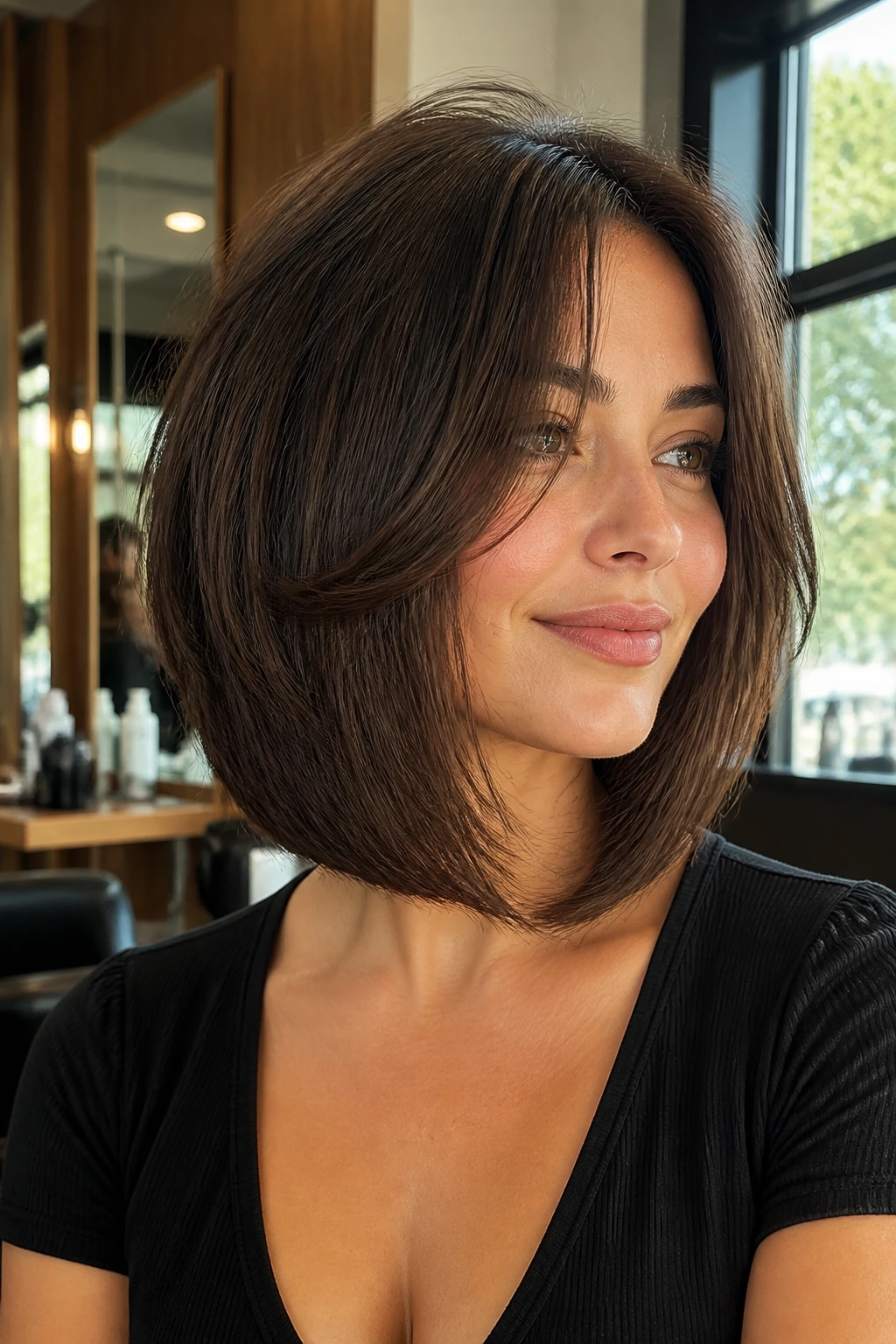
A straight medium bob on thick hair usually needs a trim every 6 to 8 weeks if you want the line to stay clean. Curtain bangs often need a quicker touch-up, closer to 3 to 4 weeks, because they show movement and grow into the cheeks fast. Wait longer and the fringe starts hanging instead of opening.
At home, keep the wash routine simple. Thick hair can handle a little spacing between washes, but the bangs usually need attention sooner because they sit on the face and collect oil faster. Dry shampoo can help, though I’d use it lightly. Too much and the front gets chalky, which looks worse than a greasy fringe.
A satin pillowcase or bonnet helps the ends stay smoother overnight. If the bob kicks out at the nape, mist the ends with water in the morning and use a quick pass of a flat iron or round brush. That tiny reset is often enough. No need to start from scratch.
Frequently Asked Questions
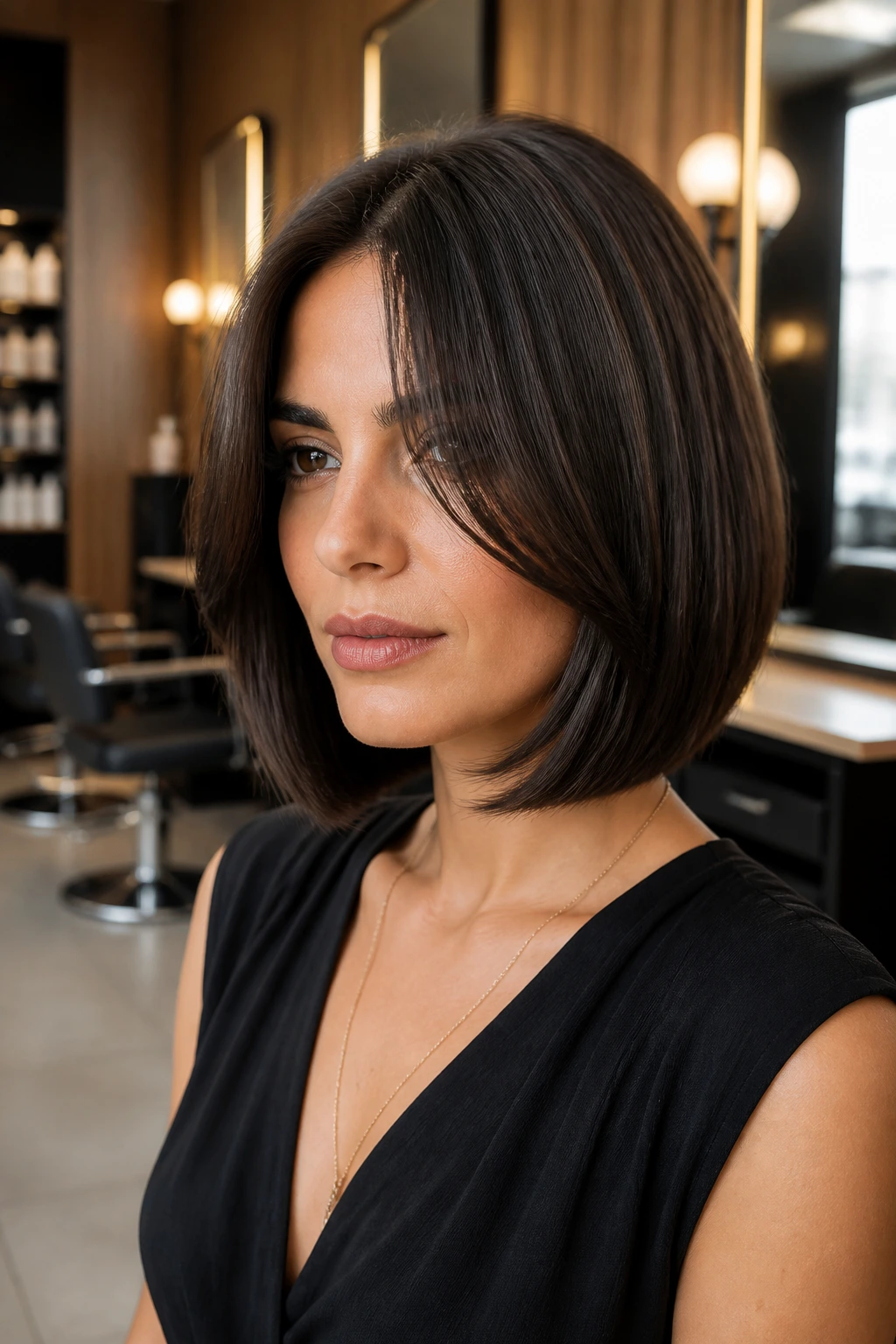
Are curtain bangs a good match for thick hair?
Yes, when they’re cut long enough to split and blend. Thick hair can make short bangs feel bulky, but curtain bangs remove some of that visual weight from the front and keep the face open.
Will a medium bob make thick hair look wider?
It can, if the ends are over-texturized or the sides are blown outward. A blunt or slightly angled perimeter keeps the silhouette controlled, which is why medium length works so well here.
What face shapes suit this cut best?
Most face shapes can wear some version of it, but the bang length and angle matter. Rounder faces usually do well with longer curtain pieces, while longer faces often look balanced with a bit more cheekbone width.
How do I stop the ends from flipping out?
Use a nozzle on the dryer, keep the brush angled slightly inward, and finish with a flat iron on the last inch if needed. Thick hair often flips when it’s dried too fast or cut with too much layering at the bottom.
Can I wear this cut without heat styling every day?
Yes, but the version you choose matters. The more blunt and controlled the perimeter, the better it will air-dry without collapsing into random volume.
Should thick hair be layered in a bob?
Sometimes, yes, but sparingly. Internal weight removal can help a lot, while heavy surface layers can make the shape fuzzy and too wide.
How often should curtain bangs be trimmed?
Usually every 3 to 4 weeks if you want them to keep opening at the cheekbone. If you like them longer and more blended, you can stretch that a little.
What if my bangs separate unevenly?
That usually means the part or the shorter side is fighting your natural growth pattern. Ask for a slightly longer fringe and a softer split, then set it while damp instead of forcing it dry.
The Shape That Holds Its Own

The best thing about straight medium bobs for thick hair with curtain bangs is how little they ask for once the cut is right. The shape does the heavy lifting. You get clean edges, a face frame that actually softens the face, and a length that doesn’t turn the whole style into a wrestling match.
If your hair has been feeling too wide, too heavy, or too demanding, this family of cuts gives you plenty of room to steer. Pick the blunt version if you like crisp lines, the angled one if you want movement, the collarbone length if you want a softer grow-out. There’s room here for a sharp bob and a practical life. That’s the useful part.