



A bob that drops straight down the sides can make a long face look even longer than it is. That’s the part people miss. The answer is usually not “go shorter,” it’s “change the shape”: add movement around the cheekbones, soften the forehead line, and give the ends something to do besides hang there like a ruler.
The best layered bob with bangs for long faces does a neat bit of visual editing. It pulls the eye sideways. Curtain pieces split around the nose, side bangs cut across the forehead on a diagonal, and the layers around the jaw keep the cut from reading as one narrow column. When the balance is right, the face looks fuller at the sides without the haircut feeling heavy.
Some versions are polished and neat. Others are shaggy, airy, and a little piecey around the edges. A few are built for fine hair that needs lift; a few are built for thick or curly hair that needs room to move. That range is the fun of it. Long faces do not need one haircut rule. They need shape, timing, and bangs placed in the right spot.
Why These 25 Cuts Work So Well on Long Faces
-
Side width changes everything: Layers that kick out around the cheeks and jaw pull attention away from vertical length and make the whole face read a little broader.
-
Bangs shorten the top half without boxing you in: Curtain bangs, bottleneck fringe, and soft side-swept pieces land in places that break up forehead height without looking harsh.
-
Texture beats a flat line every time: A bob with movement at the ends looks easier on a long face than a blunt, straight sheet of hair that just drops down.
-
Most of these cuts grow out gracefully: That matters. A shape that can survive a few weeks without turning awkward is worth more than a haircut that looks good only on day one.
-
They play well with different hair types: Fine hair can get lift, thick hair can lose bulk, and curls can keep their bounce when the layers respect the pattern instead of fighting it.
1. Curtain-Banged French Bob
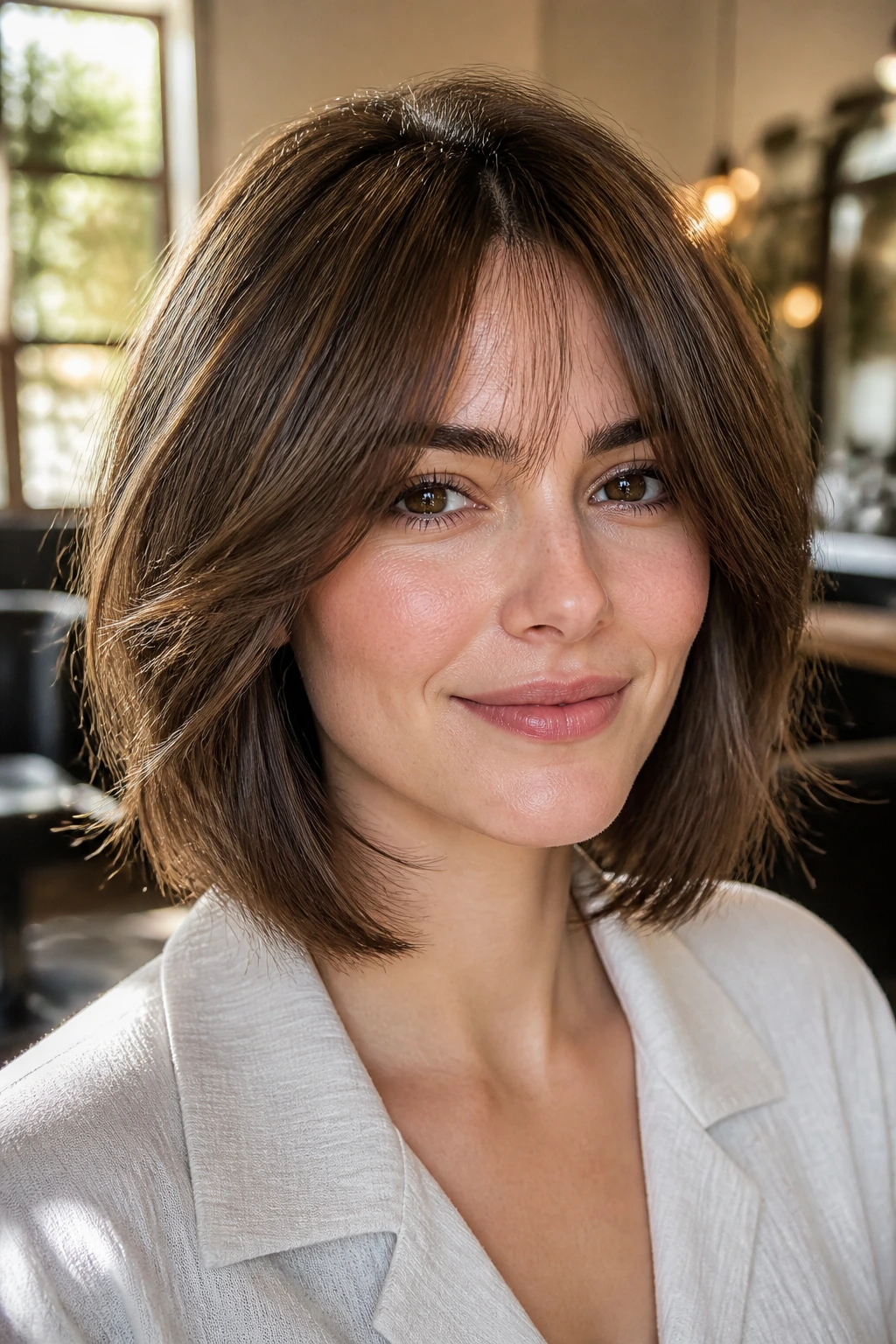
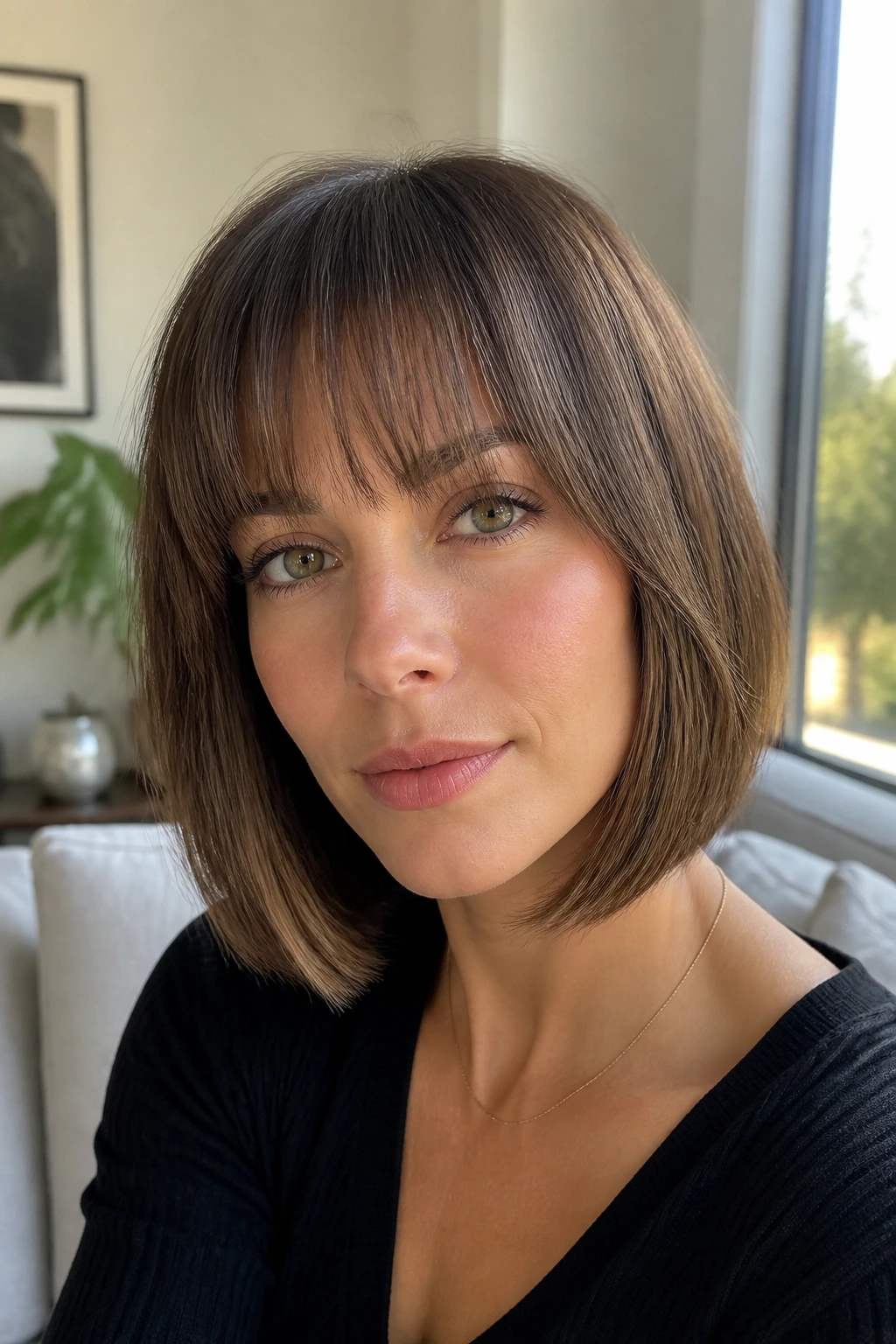
This is the bob I reach for when someone wants softness without losing edge. The curtain bangs split just off center and fall toward the cheekbones, which is exactly where a long face needs a little width. Keep the length around the chin or a touch below it, and the whole cut starts working like a frame instead of a strip.
What makes it sing is the loose finish. A slight bend through the mids, a bit of separation at the ends, and you’ve got hair that looks lived-in instead of sculpted. Ask for the shortest face-framing pieces to hit around the cheekbone, not right at the nose. That one detail changes the whole read.
Best for: straight to wavy hair that likes to hold a soft curve.
Styling note: use a 1-inch round brush on the bangs and a small wave in the front sections, then leave the rest a little undone.
2. Side-Swept Chin-Grazer
What if you want bangs but do not want the commitment of a full fringe? This is the answer. A side-swept bang cuts diagonally across the forehead, which trims the vertical line of a long face in the same way a strong diagonal line sharpens a drawing.
The chin-grazing length matters here. If the bob stops too high, the face can still feel stretched. A clean line at the chin, with the side fringe starting a little deeper than a center part would allow, gives you shape without weighing the haircut down. It also plays nicely with glasses, because the bang can slide to one side instead of crowding the frames.
A quick blow-dry with the nozzle pointed downward keeps the fringe from puffing up. Then bend the front pieces away from the face, just enough to make the sides feel wider.
3. Bottleneck Bang Lob
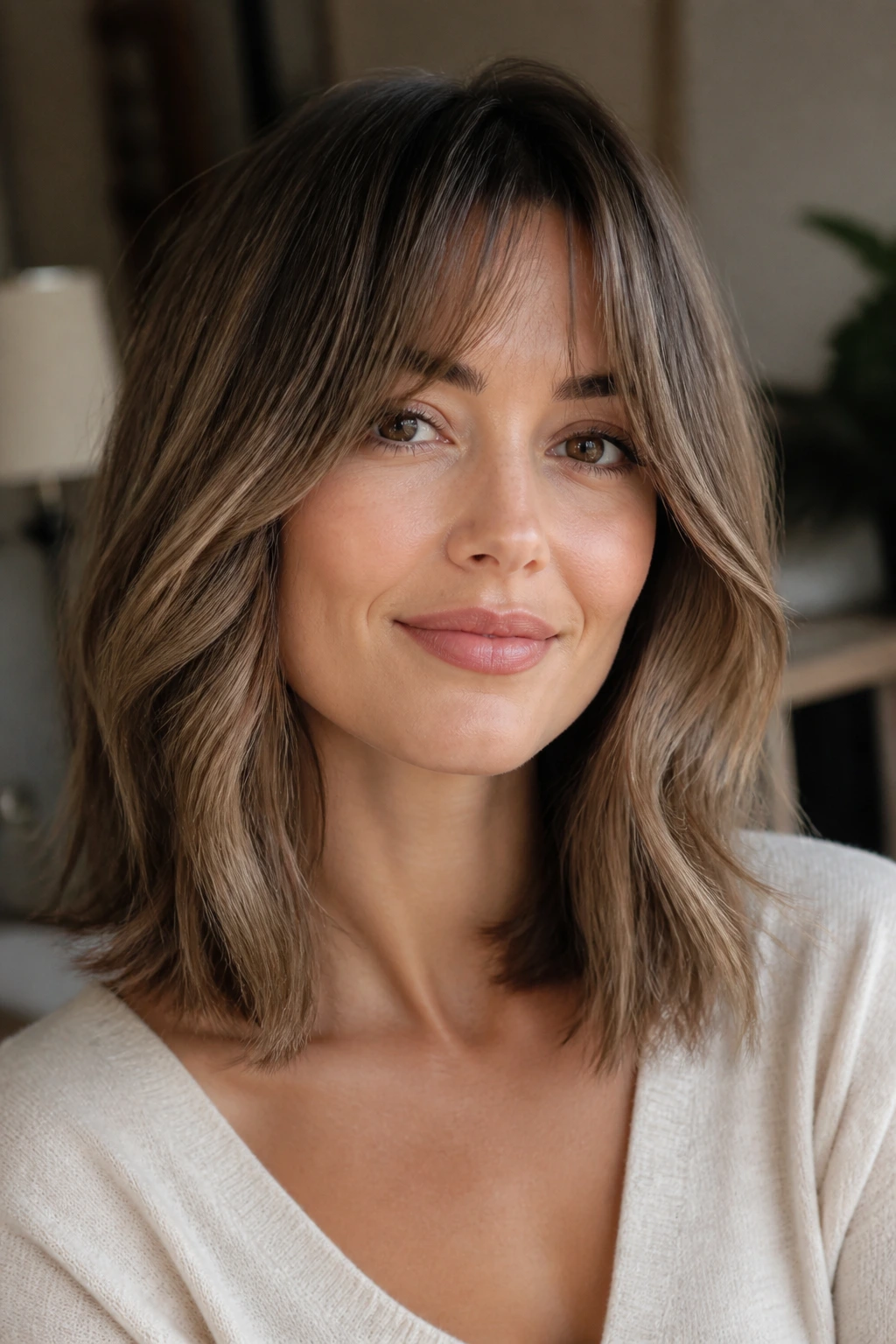
The bottleneck bang is one of those cuts that looks fussy on a hanger and smart on a real head. Shorter in the middle, longer as it reaches the temples, it does exactly what a long face needs: it softens the forehead and widens the eye line at the same time.
A lob gives the fringe more room to breathe. Shoulder-skimming length can be your friend if you do not want to go all the way to the jaw. The trick is keeping the layers subtle and concentrated around the front so the cut still has a clean outline. Too many random layers, and the shape starts to fray.
This one looks best with a loose bend, not a stiff curl. Use a medium-barrel iron or a round brush, then rake the bangs apart with your fingers once they cool. The finish should feel easy, not precious.
4. Feathered Flipped-Out Bob
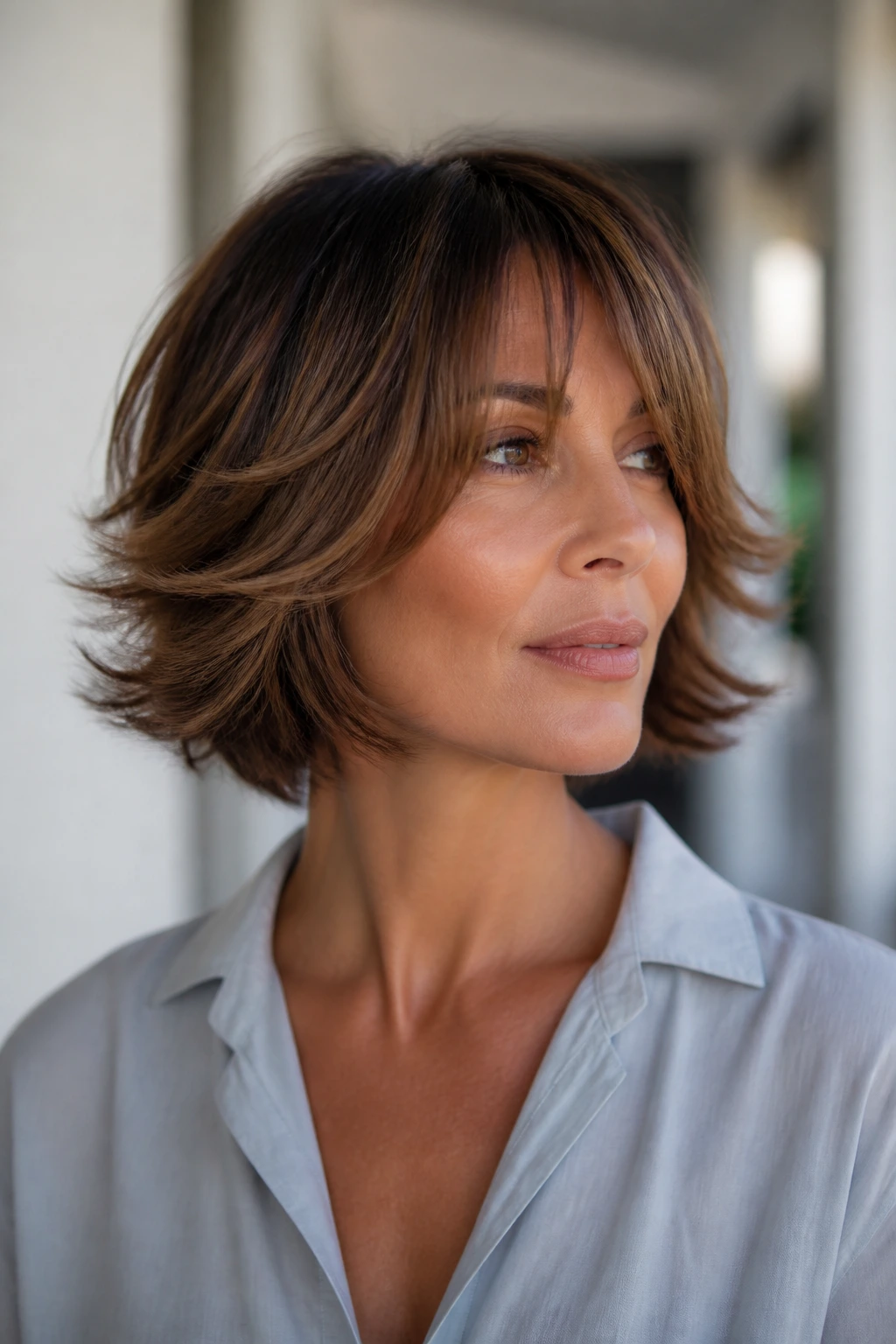
There’s a reason the flipped-out bob keeps coming back. Those outward ends add width where a long face often needs it most: near the jaw. Instead of pulling the eye straight down, the flip sends it sideways.
Feathering is the thing that keeps this cut from feeling dated or too salon-shelved. The layers should be soft, not razor-sharp, and the ends should move a little when you turn your head. Fine hair loves this shape because the flipping motion creates the look of body without asking for much density.
What to ask for
- Chin to jaw length, depending on how much you want your neck visible
- Light internal layers for movement
- Ends thinned just enough to flip out cleanly
A round brush and a touch of mousse at the roots will do most of the work. Skip heavy cream here. It smothers the movement, and then the whole point disappears.
5. Shaggy Bob with Short Curtain Fringe

This cut is a little rougher around the edges, and that’s the charm. The shaggy bob puts texture everywhere: through the midlengths, around the temples, and in the fringe itself. On a long face, that scattered movement keeps the eye from traveling in one uninterrupted line.
The short curtain fringe is the detail that makes it flattering instead of just messy. It opens in the middle, brushes the brows, and leaves a little softness on either side of the forehead. The effect is casual, but not accidental. If your hair has a wave, this shape can dry beautifully with a little curl cream and a diffuser.
If your hair is stick-straight, ask for more layering around the front and a little less on the crown. Too much volume up top can push the face longer, and nobody needs that.
6. Rounded Bob with Brow-Grazing Fringe
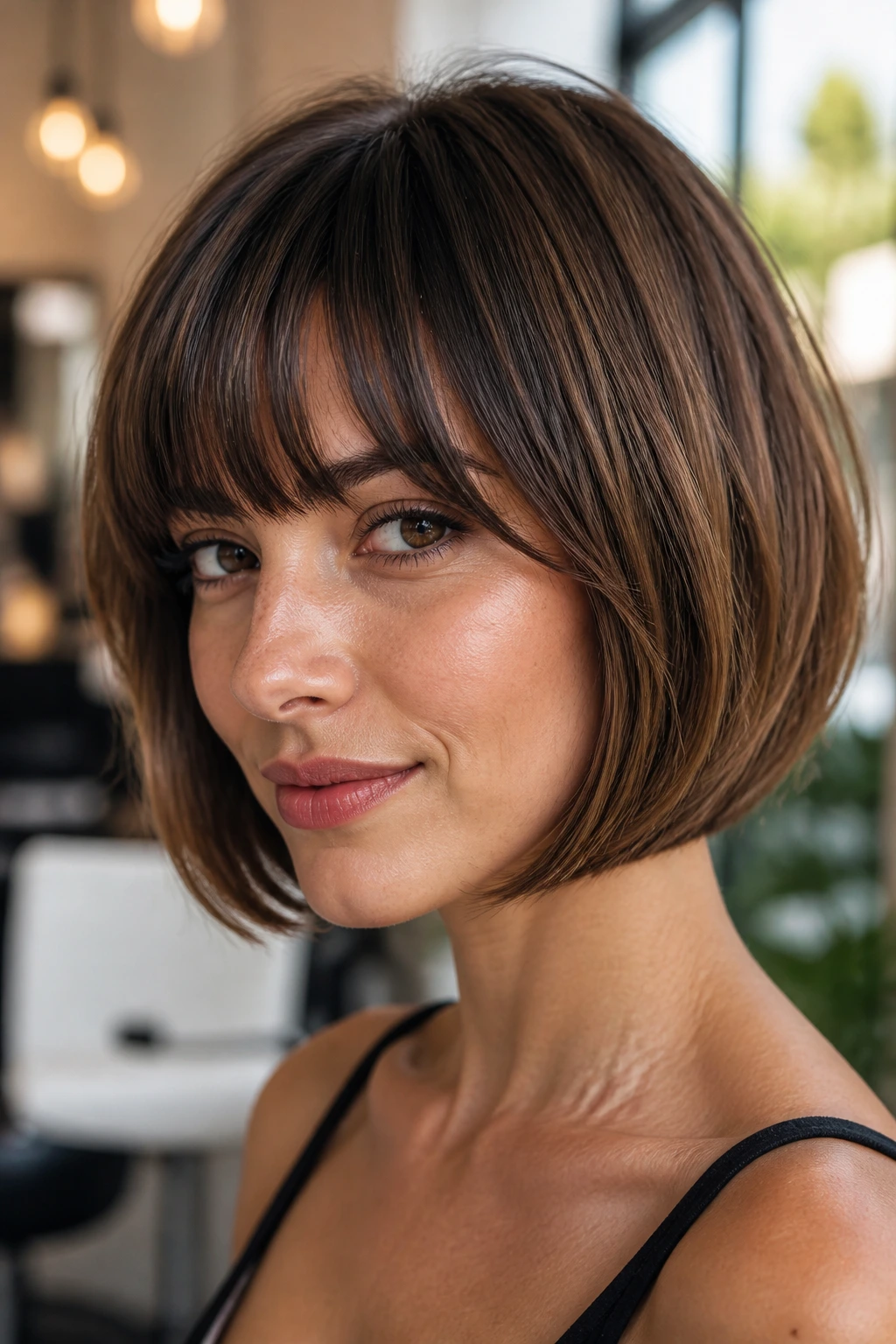
A rounded bob is a quiet fix for a face that reads long. The curve of the cut, especially when it wraps slightly inward at the ends, pulls width across the cheeks and jaw. Add a brow-grazing fringe and the forehead loses some of its visual length immediately.
The part people get wrong is the crown. They want height there because volume sounds flattering. Not here. For a long face, too much lift on top can make the face feel stretched again. Keep the fullness in the sides, where it changes the proportion in your favor.
This one likes a blow-dry with a small round brush and a light hand. Let the fringe skim the brow line, not sit an inch above it. That small difference can make the cut feel polished instead of overdone.
7. A-Line Bob with Soft Side Bangs
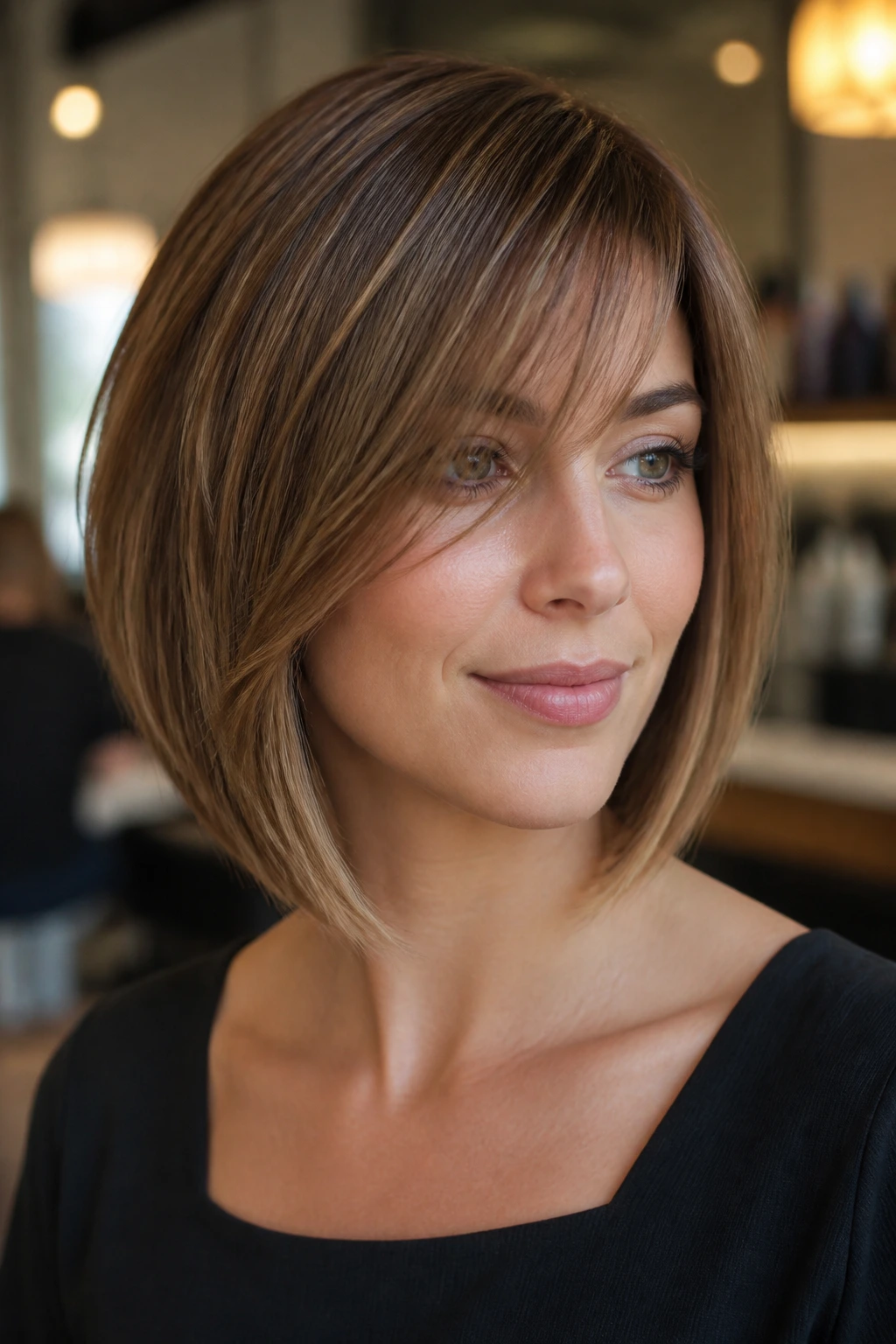
An A-line bob gives you structure, and structure can be useful on a long face if it’s handled with some softness. The longer front sections add width near the jaw, while the shorter back keeps the shape neat and lifted. Throw in side bangs and you get movement across the forehead without making the cut feel heavy.
This is the bob for someone who likes clean lines but does not want a hard, boxy outline. The side fringe should blend into the front length, not sit on top like an afterthought. That blend is what keeps the haircut from feeling chopped up.
I like this best when the layers are subtle and the ends are blunt enough to hold the shape. You want the geometry to be visible. Not severe. Just intentional.
8. Wavy Collarbone Lob with Airy Bangs
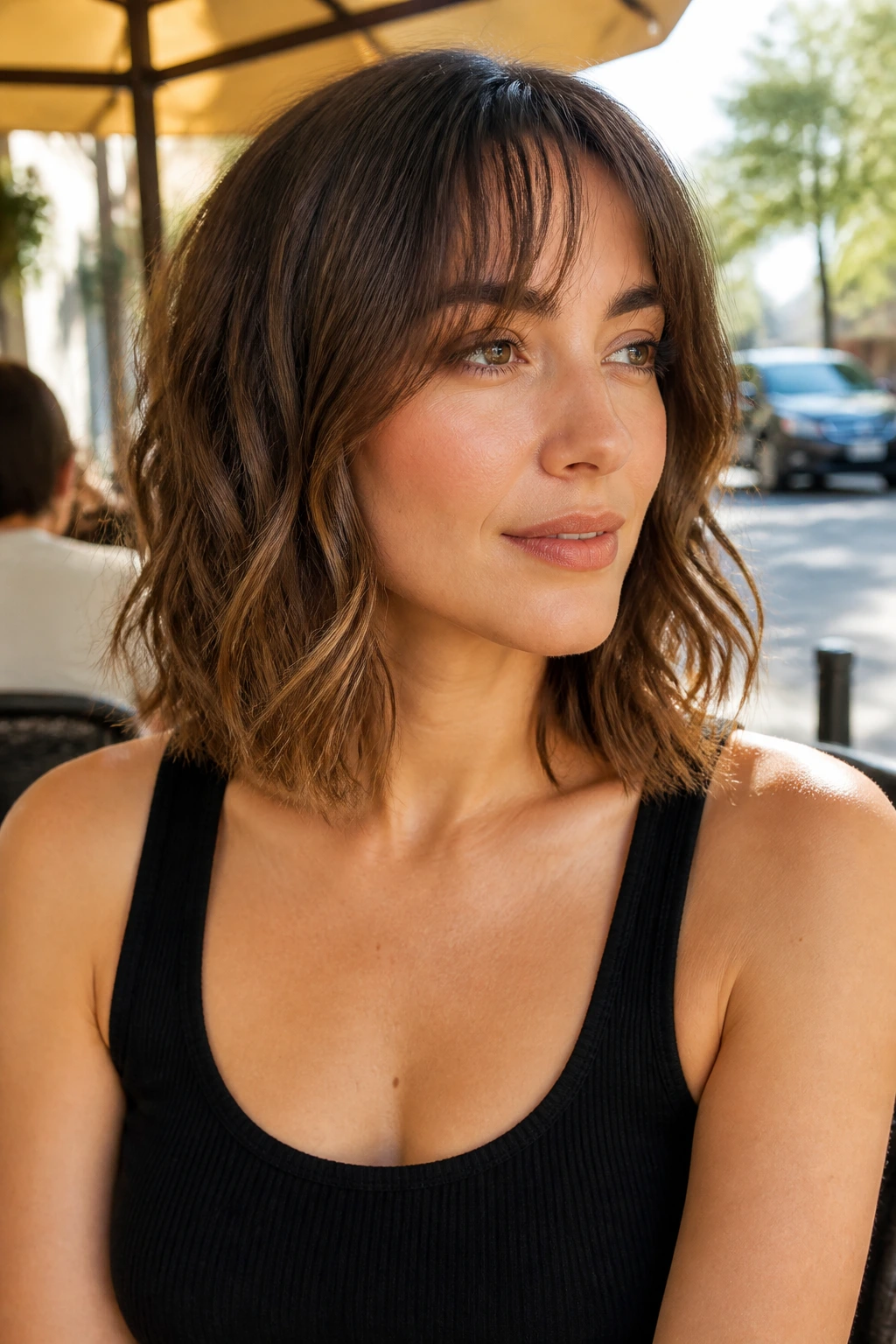
If your shoulders are where you like your hair to land, the collarbone lob is a safe bet. It gives a long face more horizontal presence without giving up the swing that makes longer bobs easy to wear. Airy bangs keep the forehead from taking over the whole picture.
This cut works especially well when the waves start a few inches below the roots. Flat roots plus airy bangs can look floppy; a little lift at the crown and a bend through the mids gives the shape some backbone. Keep the fringe piecey and light so it doesn’t collapse into the eyes.
It’s also one of the easier grow-out shapes on this list. The bangs can get longer and still look fine. The lob can drift past the collarbone and stay flattering. That kind of flexibility is worth a lot.
9. Piecey Jaw-Length Bob
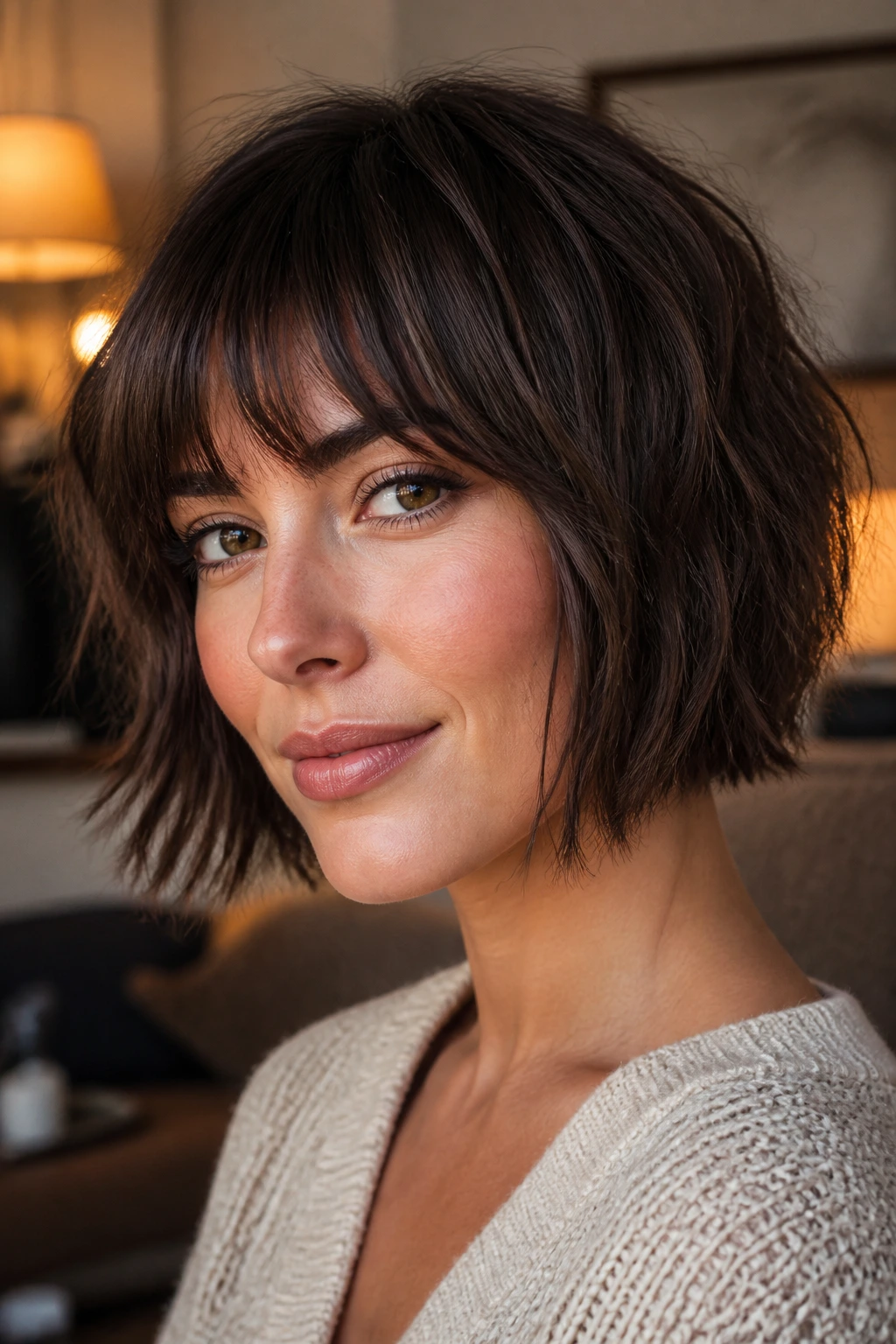
A jaw-length bob can be brilliant on a long face if it’s not too clean. The piecey finish breaks the silhouette into smaller sections, which keeps the eye from reading one long vertical line. The jaw length gives a direct hit of width exactly where it’s needed.
This cut likes texture. Lots of it. Ask for point cutting or light razor work at the ends so the pieces separate instead of sitting in one solid chunk. Thick hair especially benefits from this, because a blunt jaw-length bob on dense hair can turn into a heavy block.
The styling is easy if you don’t chase perfection. A little pomade on the very ends, a little shake at the roots, and you’re there. It should look like hair with movement, not hair that’s been frozen into place.
10. Layered Pixie Bob with Fringe
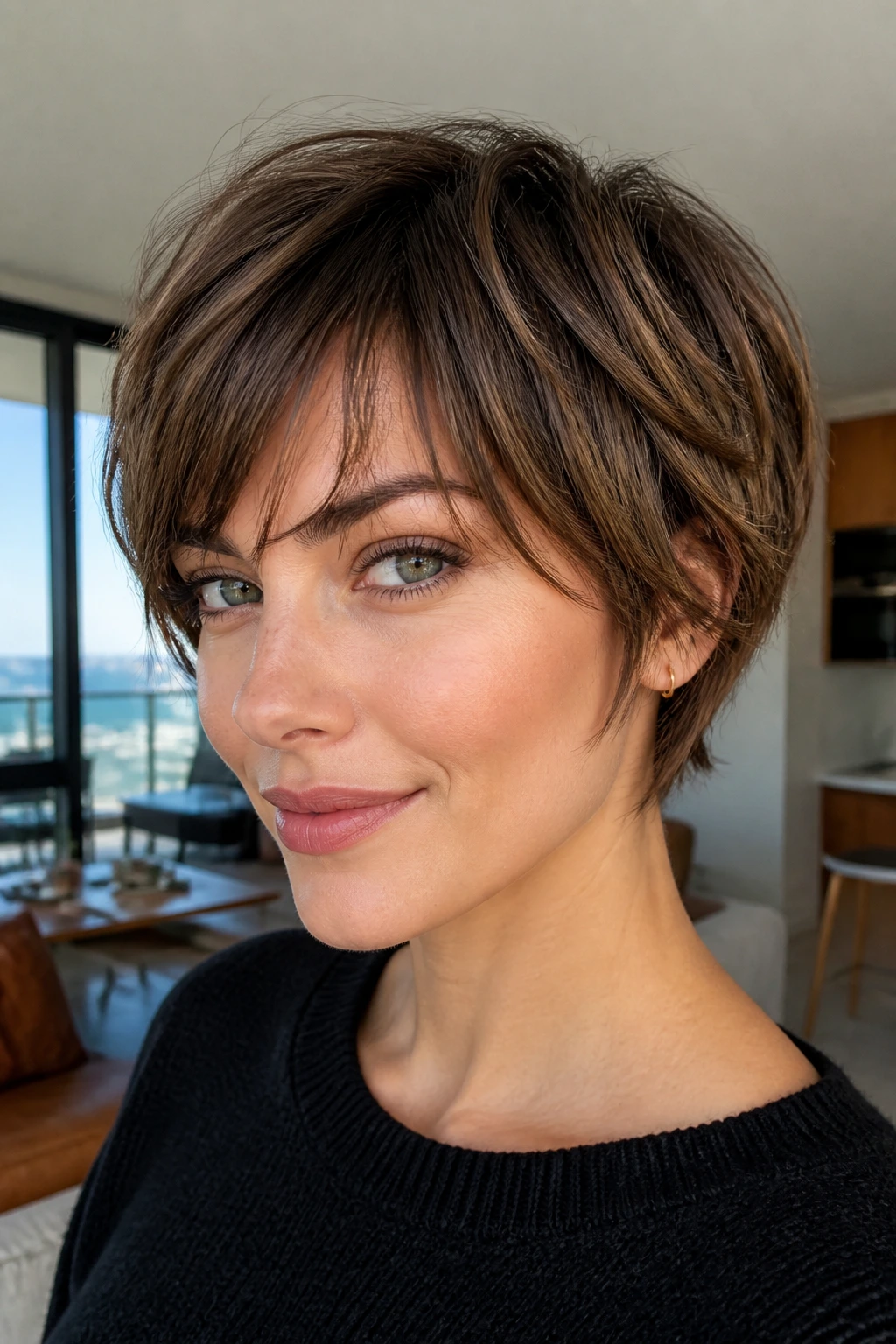
This one is for someone who likes a shorter, sharper shape. The layered pixie bob sits in that narrow territory between a cropped bob and a soft pixie, and on a long face it can work because it brings the focus up to the eyes and cheekbones. The fringe is doing a lot of heavy lifting here.
Keep the layers around the temples and ears a little fuller than you might expect. That side width is the whole game. If the top gets too tall and the sides too tight, the face can look taller, and the cut loses the thing that made it interesting in the first place.
I’d call this the most personality-heavy cut on the list. It looks best when it’s a little bit mussed. A dab of styling paste and a quick finger rake is usually enough.
11. Choppy Lob with Curtain Bangs
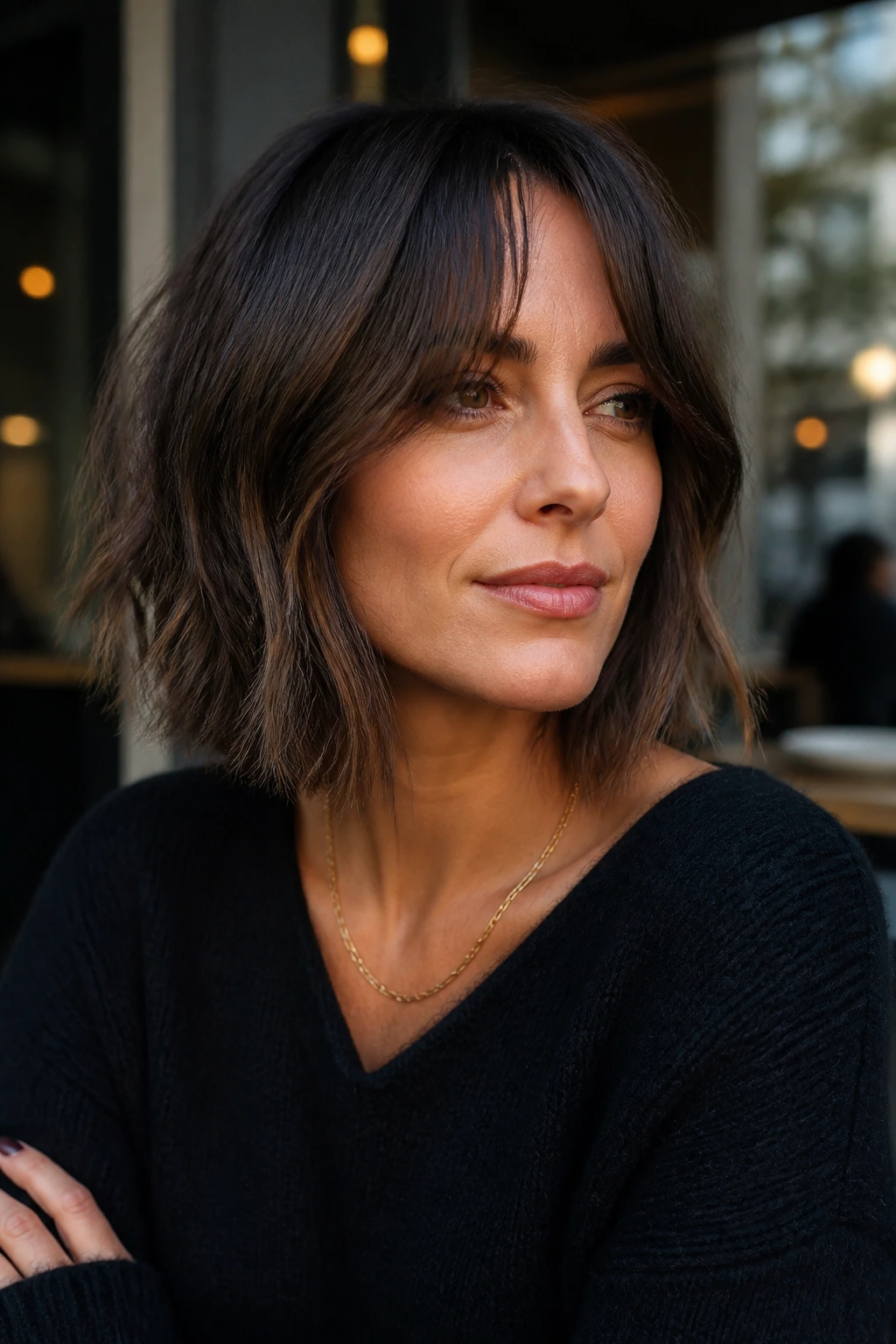
The choppy lob is a good choice when you want movement but still need enough length to tuck behind an ear or clip back on a lazy day. Curtain bangs soften the forehead, and the choppy mids keep the shape from becoming a plain shoulder-length sheet.
What it’s good at: making fine to medium hair feel fuller at the sides without turning puffy.
What to avoid: too many layers at the crown. That’s the mistake that makes the face look even longer.
How to wear it: dry it with a rough bend, then separate the ends with your fingers.
This one has a nice in-between quality. Not too short. Not too blunt. Just enough edge to keep it interesting.
12. Blunt Ends with Wispy Bangs
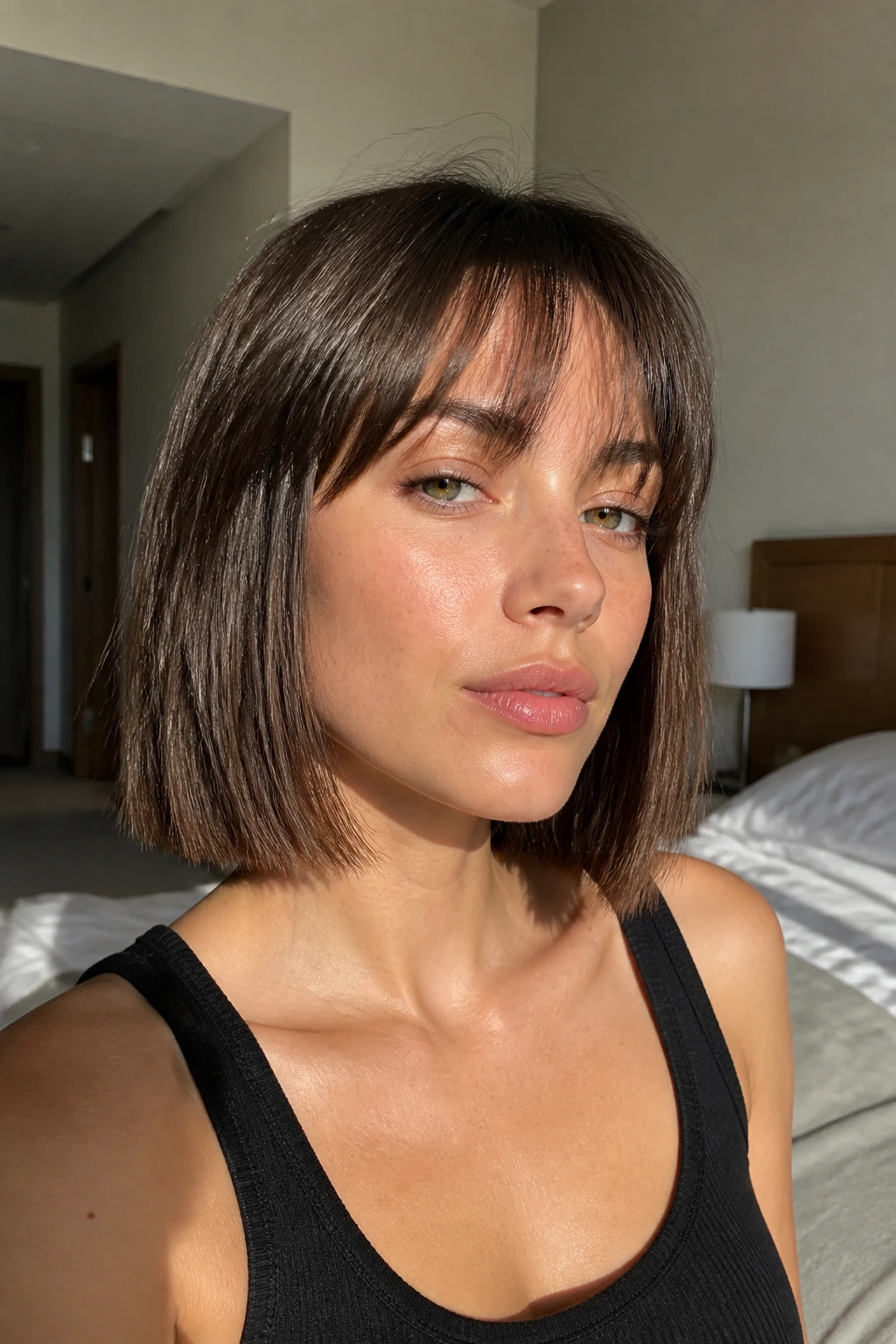
Blunt ends and wispy bangs sound like they should fight each other, but they don’t. The heavy perimeter gives the bob a clean base, while the airy fringe keeps the forehead from feeling boxed in. On a long face, that contrast can be smart.
The blunt edge adds width near the jaw because your eye stops at the line. Wispy bangs stop the front from feeling dense. If the fringe is cut too thick here, the whole style can get heavy very fast, so ask for a little transparency through the pieces.
I like this version on straight hair most of all. The line sits nicely, and the bangs can be brushed to one side or split lightly down the middle. It’s crisp without feeling stiff.
13. Asymmetrical Bob with Long Side Fringe
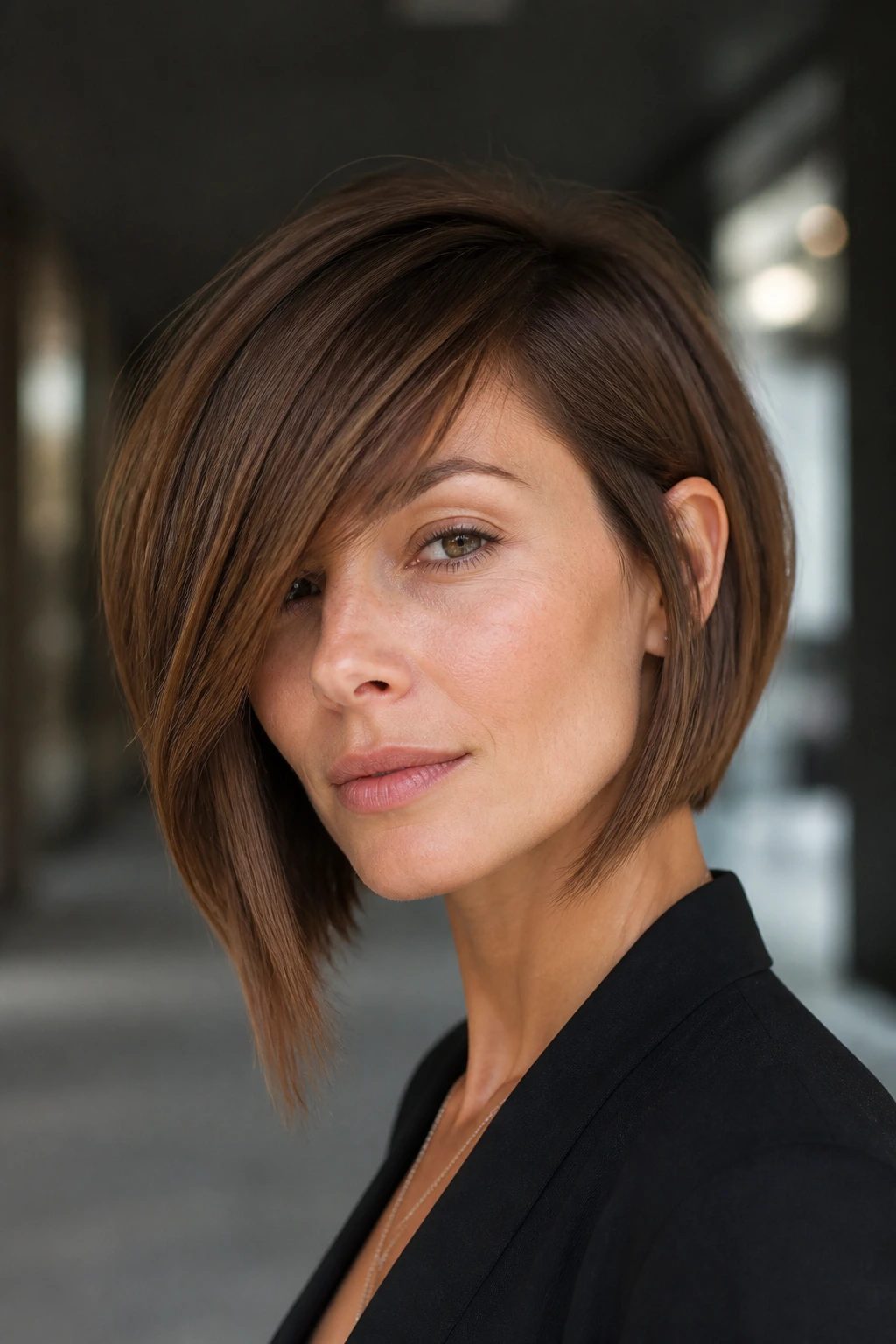
Asymmetry does a sneaky good job on a long face because it breaks the straight-down effect. One side sits a little longer, the fringe falls deeper on one side, and the eye keeps moving instead of dropping vertically. That motion matters more than people think.
If one side of your face feels longer or narrower, this cut can help balance that visually. The longer panel can sit near the jaw, while the shorter side keeps the shape from feeling heavy. A long fringe that sweeps across the forehead finishes the line with a diagonal.
This is not a fussy haircut, but it does need a neat edge. If the asymmetry gets sloppy, the whole thing loses its point. Ask for enough precision that the cut still reads intentional after a few weeks.
14. Curled-Under Pageboy Bob
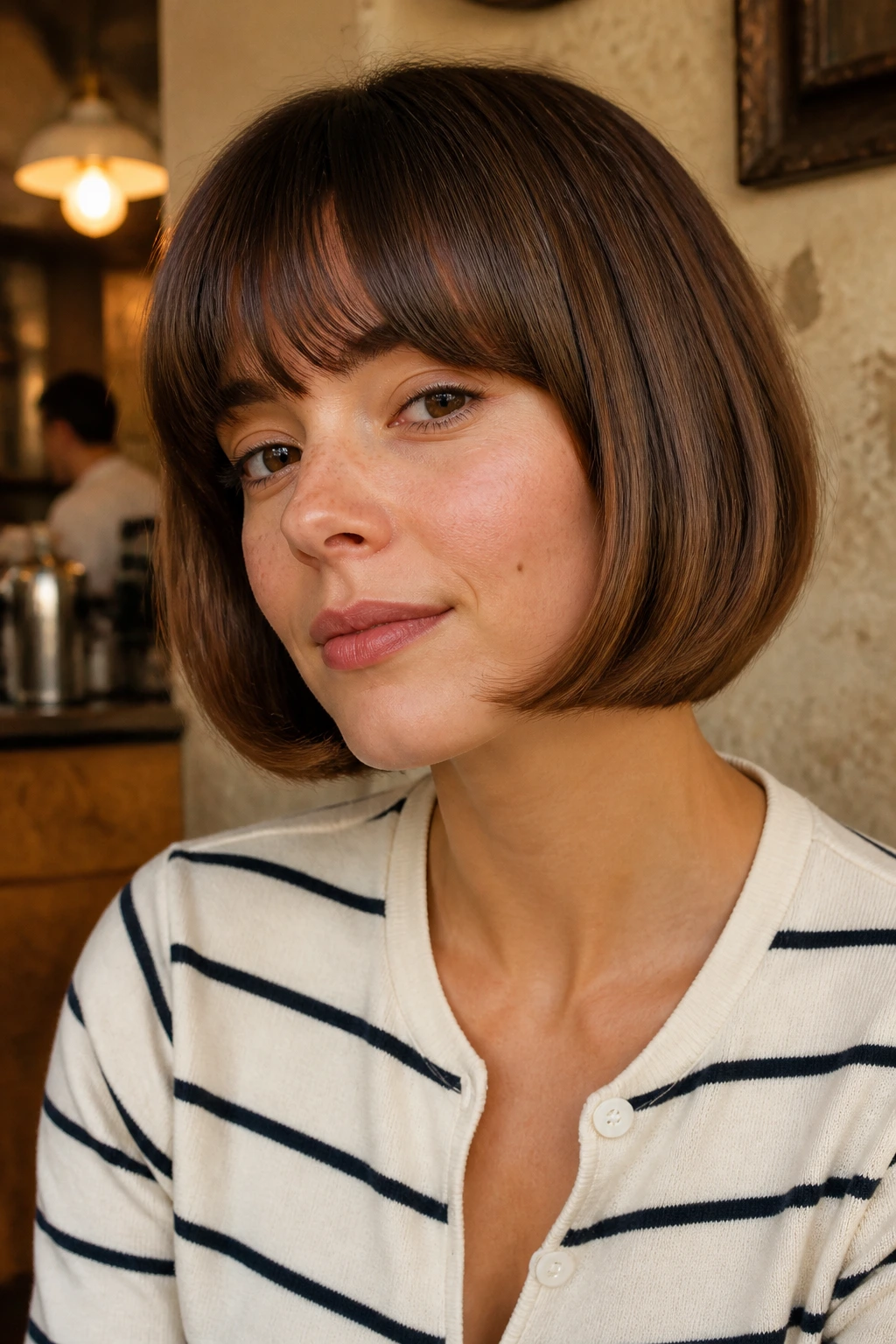
The curled-under pageboy has a vintage feel, and that curved-under edge is useful on a long face because it creates a soft horizontal stop under the cheekbones. The inward bend makes the hair feel fuller at the sides and shorter in visual length, which is exactly what this face shape tends to like.
The fringe should stay soft. Full, stiff bangs can make the cut feel costume-y fast. Instead, let the front pieces brush the brows or split slightly at the middle so the face doesn’t close in too much.
This style looks especially good on hair that holds a bend well. If your hair slips flat by noon, you’ll need a bit of setting spray or a quick pass with a round brush after drying. Worth it, though. The shape is tidy in a very satisfying way.
15. Modern Rounded Bob with Tapered Bangs
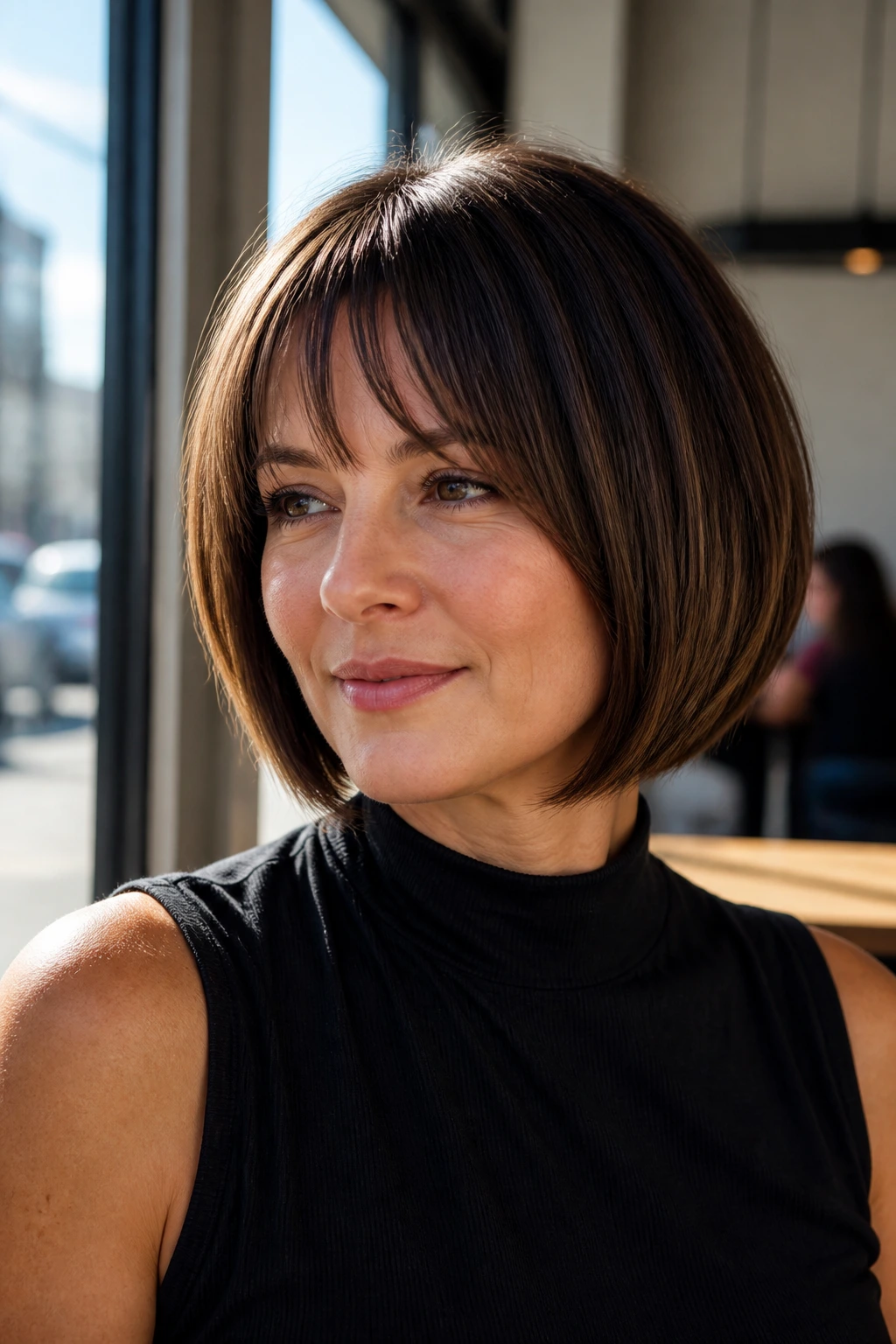
The modern rounded bob is all about balance. The silhouette curves around the head, so the eye sees width instead of long empty space on the sides. Tapered bangs soften the forehead without creating a blunt shelf across the face.
This cut works best when the shortest point of the bang sits around the center of the forehead and then lengthens toward the temples. That taper keeps the fringe from looking too blocky, which matters if your face already runs long. The sides should have enough body to echo the curve of the bob.
Styling note: blow-dry the bangs first, then let the lengths cool in clips for a few minutes. That makes the rounded shape hold longer. A little patience goes a long way here.
16. French Girl Bob with Soft Texture

A French girl bob is less about precision and more about quiet movement. On a long face, the soft texture matters because it keeps the haircut from looking like a ruler with bangs attached. The fringe can be brow-grazing or slightly split, but it should never sit like a stiff strip.
The magic is in the loose ends. They should look like they’ve been touched by air, not lacquer. This version is especially good if you dislike spending twenty minutes making hair behave. A quick bend with a flat iron, a little mist of texture spray, and you’re done.
It’s easy to over-style this cut. Don’t. The charm lives in the near-messy finish, and the softness at the sides is what makes it work on a longer face.
17. Neck-Length Bob with Side Bangs
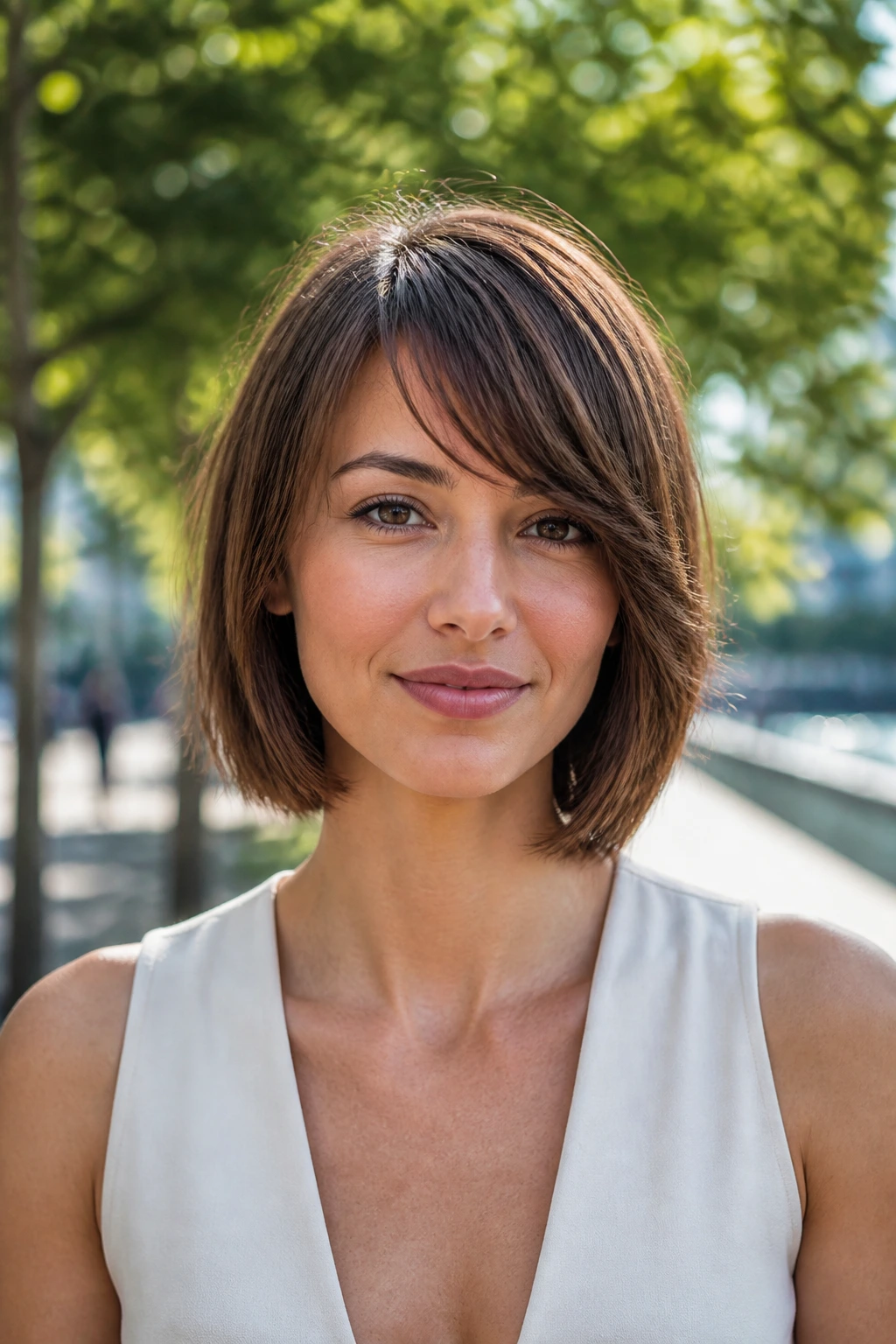
The neck-length bob is a nice middle ground if chin length feels too short and a lob feels too long. Side bangs cut across the forehead and keep the face from looking all vertical. The neck-length perimeter adds a little width right where the face starts to taper.
This is one of the more forgiving cuts on the list. It can air-dry without looking bad, and it can also be blown smooth when you want it neater. The side bang should be long enough to tuck behind the ear without leaving a hard line on the face.
Why it works
- The length is enough to show movement.
- The side bang breaks the forehead line.
- The cut still looks intentional when it grows a bit.
That last part is why people keep coming back to it.
18. Flippy Ends with Face-Framing Bangs
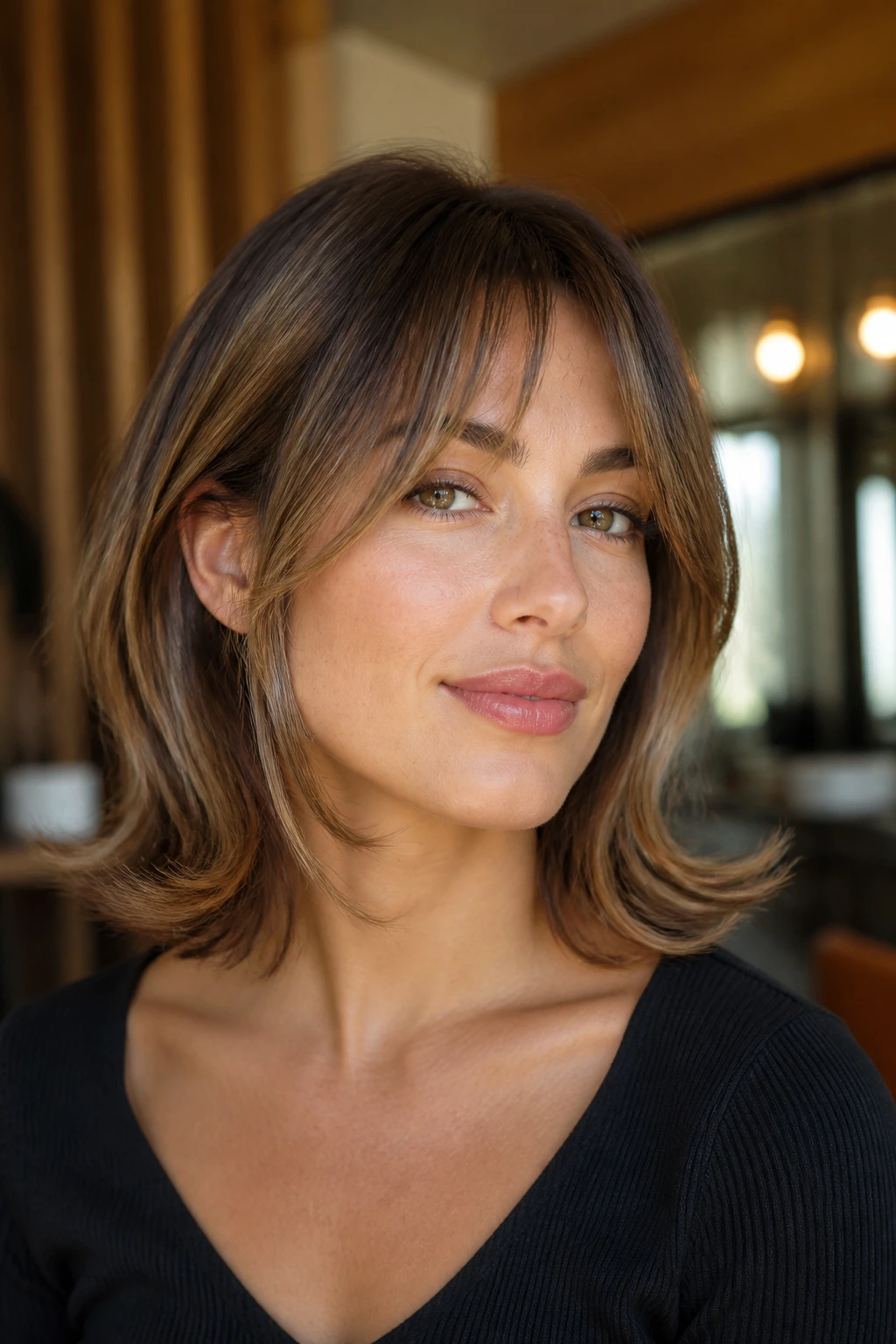
A flippy bob is one of the easier ways to make a long face look shorter without a dramatic chop. The outward-flicked ends add side motion, while the face-framing bangs soften the front. Together, they create a wider visual field around the cheeks and jaw.
I like this when the front layers start just below the cheekbone. Any higher and the flip can look a little too retro in a way that fights the face instead of balancing it. Any lower and you lose the lift that makes the shape interesting.
This cut does best with a blow-dry brush or a quick pass from a flat iron at the ends. You do not need a lot of curl. You need a clean bend and enough separation to keep the sides from collapsing.
19. Deep Side Part Bob with Lifted Bangs
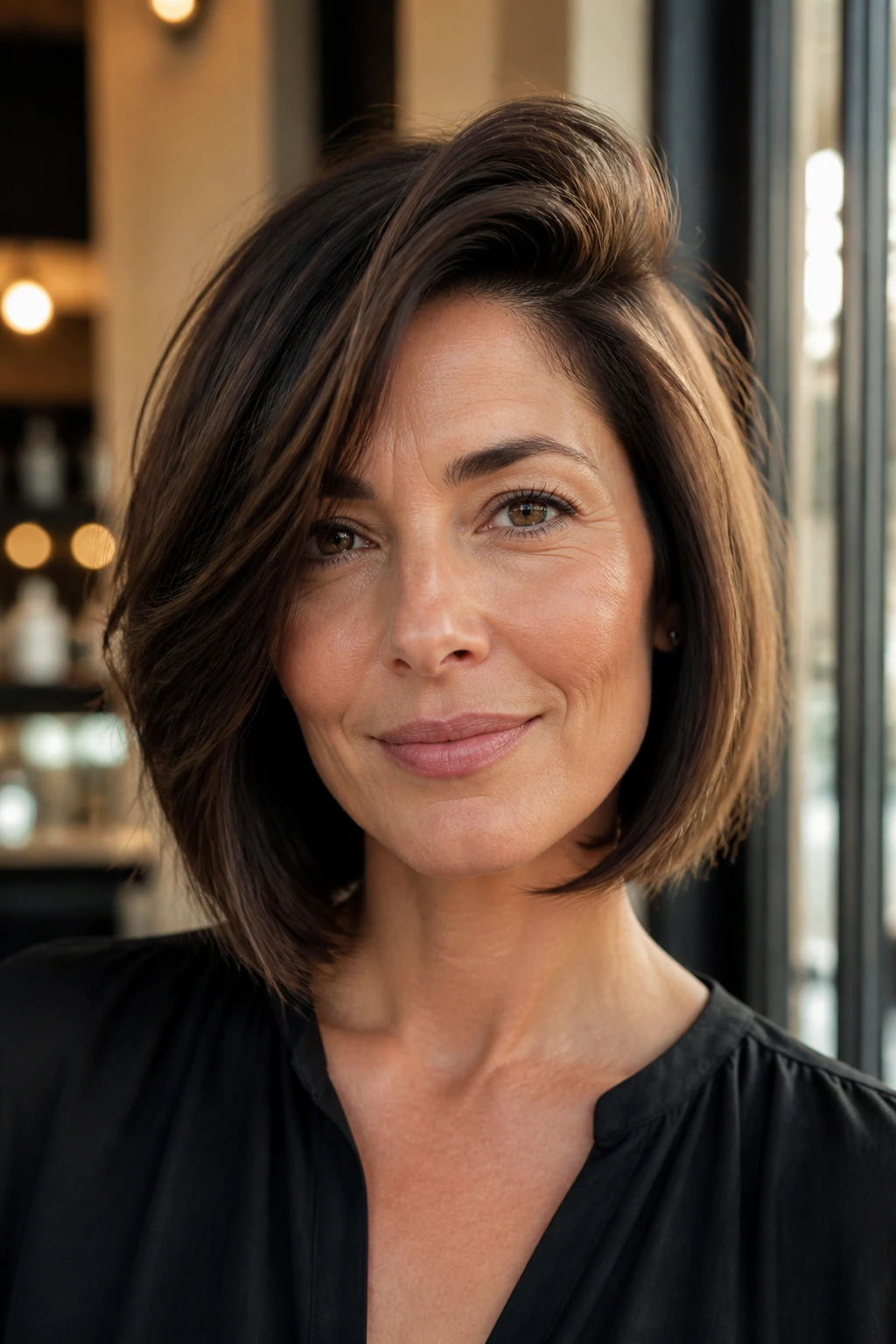
A deep side part can be a small change with a big effect. It breaks the straight vertical center line and creates a diagonal that shortens the read of a long face. Add lifted bangs that sweep with the part, and the shape gets even better.
The key here is volume on the heavier side, not straight-up height. If you build too much lift at the crown, you’ll undo the proportion you just fixed. Keep the fullness near the part line and the temple, where it creates width instead of length.
This is a very good option if your hair falls flat in the middle. A side part gives it some attitude. A lifted bang keeps the forehead from taking center stage.
20. Razor-Cut Bob
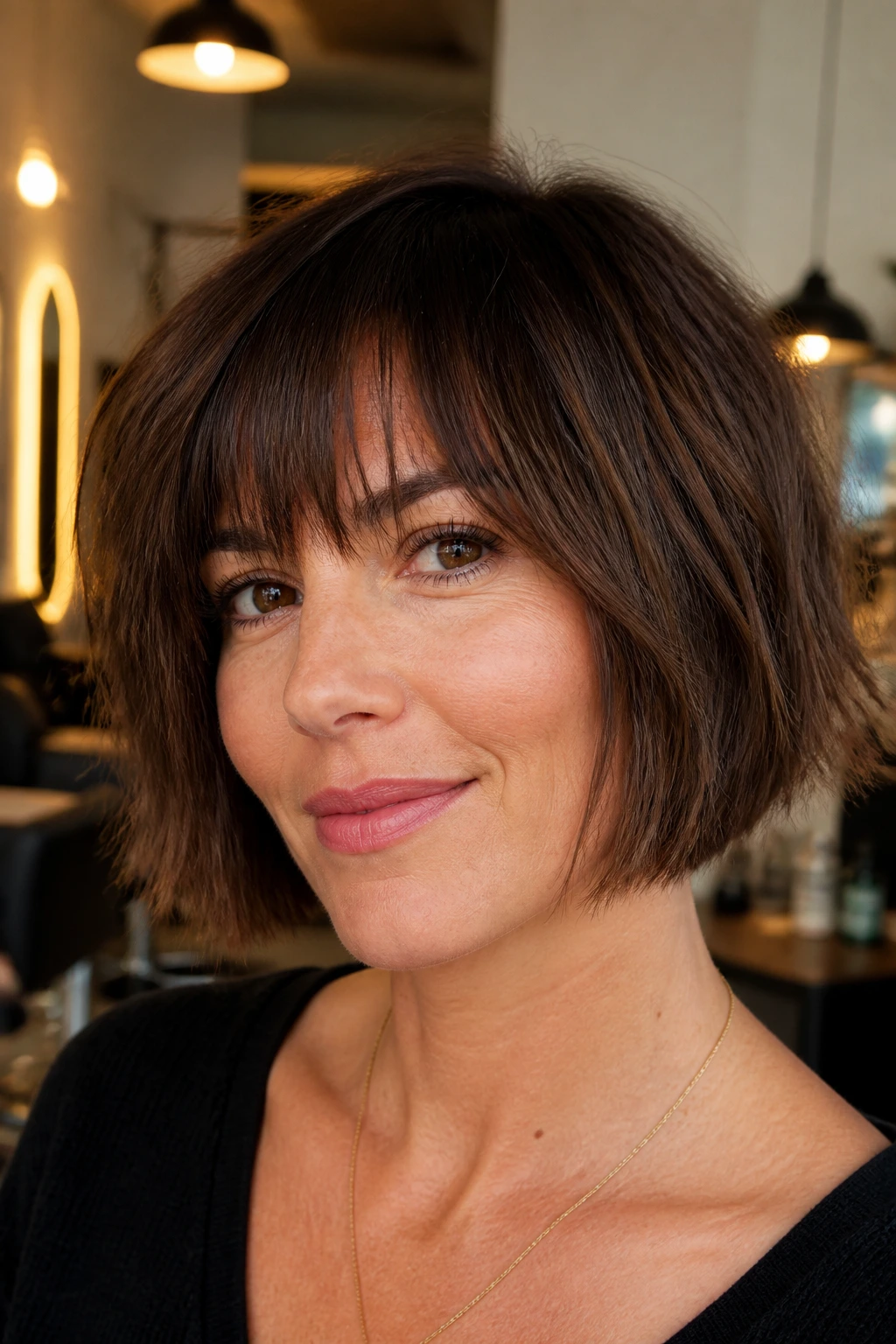
A razor-cut bob has a softer edge than a scissor-cut blunt bob, and that softness matters on a long face. The ends look lighter and more broken up, which helps the cut sit wider instead of flatter. If your hair is thick, this can be a relief.
The danger with a razor cut is over-thinning. Too much removal and the hair can separate in a way that feels wispy rather than airy. You want movement, not stringiness. A good stylist will keep the shape around the jaw strong enough to still feel like a bob.
This one likes product in small doses. A spray wax or light texture spray can give the ends a bit of grip without making them crunchy. The cut should move when you move, not sit there as a static shape.
21. Voluminous Blowout Bob with Curtain Fringe
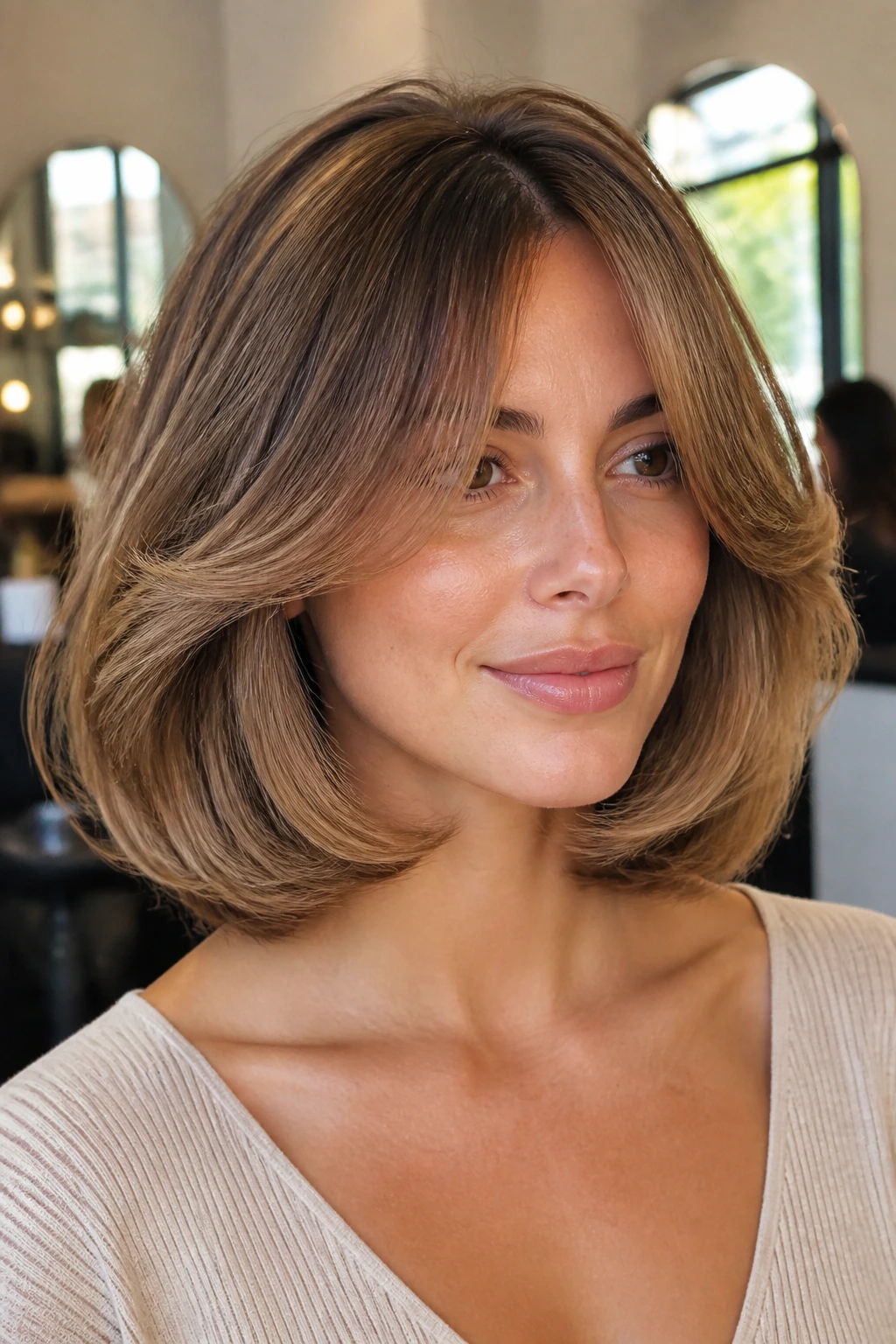
Here’s the trick with volume on a long face: put it on the sides, not straight up top. A blowout bob with curtain fringe does that well. The curtain pieces soften the forehead, and the rounded sides make the face look broader without looking bulky.
This style loves a big round brush and a little patience. Blow the bangs first, clip the top sections while they cool, then round the mids so the sides take on a soft curve. If you have fine hair, a root-lifting mousse at the temples gives you more shape where it counts.
A blowout bob can look too polished if every strand is in place. Leave a little bend in the front. That looseness keeps it from turning into prom hair.
22. Short Bob with Wispy Brow-Opening Fringe

A short bob can work on a long face when the fringe is handled carefully. The wispy brow-opening bangs give you forehead coverage without sealing off the top of the face. Because the fringe is light, it still feels airy rather than dense.
The bob itself should stop around the jaw or just above it, depending on your neck and cheekbones. Too short and the cut can get too boyish; too long and it starts drifting toward a lob. The right line makes the face feel a little wider, which is the whole point.
This is a sharper, more modern look. It suits someone who likes a little edge and doesn’t mind styling the fringe every morning. If the bangs are a bit uneven in the best way, even better.
23. Inverted Bob with Sweeping Fringe
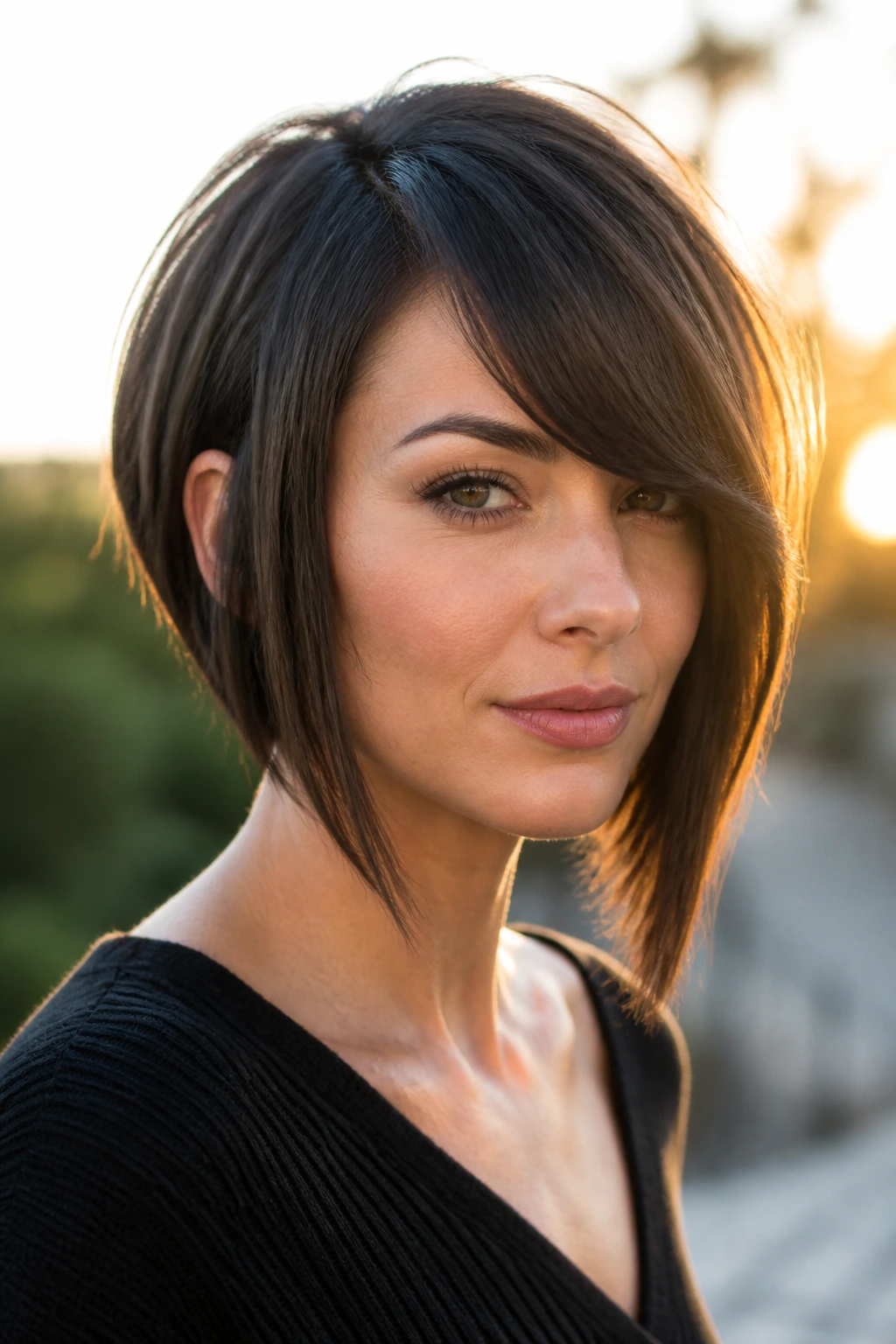
The inverted bob brings built-in shape: shorter in the back, longer in the front. On a long face, that longer front panel can help widen the lower half of the face while the sweeping fringe cuts across the forehead. It’s a strong silhouette, but it doesn’t have to feel severe.
This cut works best when the back is lifted enough to show the structure, but not so stacked that it becomes angular. The front should skim the jaw or just below, creating a clean visual stop. That sweep across the forehead softens the whole thing.
If you like haircuts that look deliberate from every angle, this one earns its keep. It has presence. It also grows into a very decent lob, which is more useful than people expect.
24. Curly Layered Bob with Curly Fringe
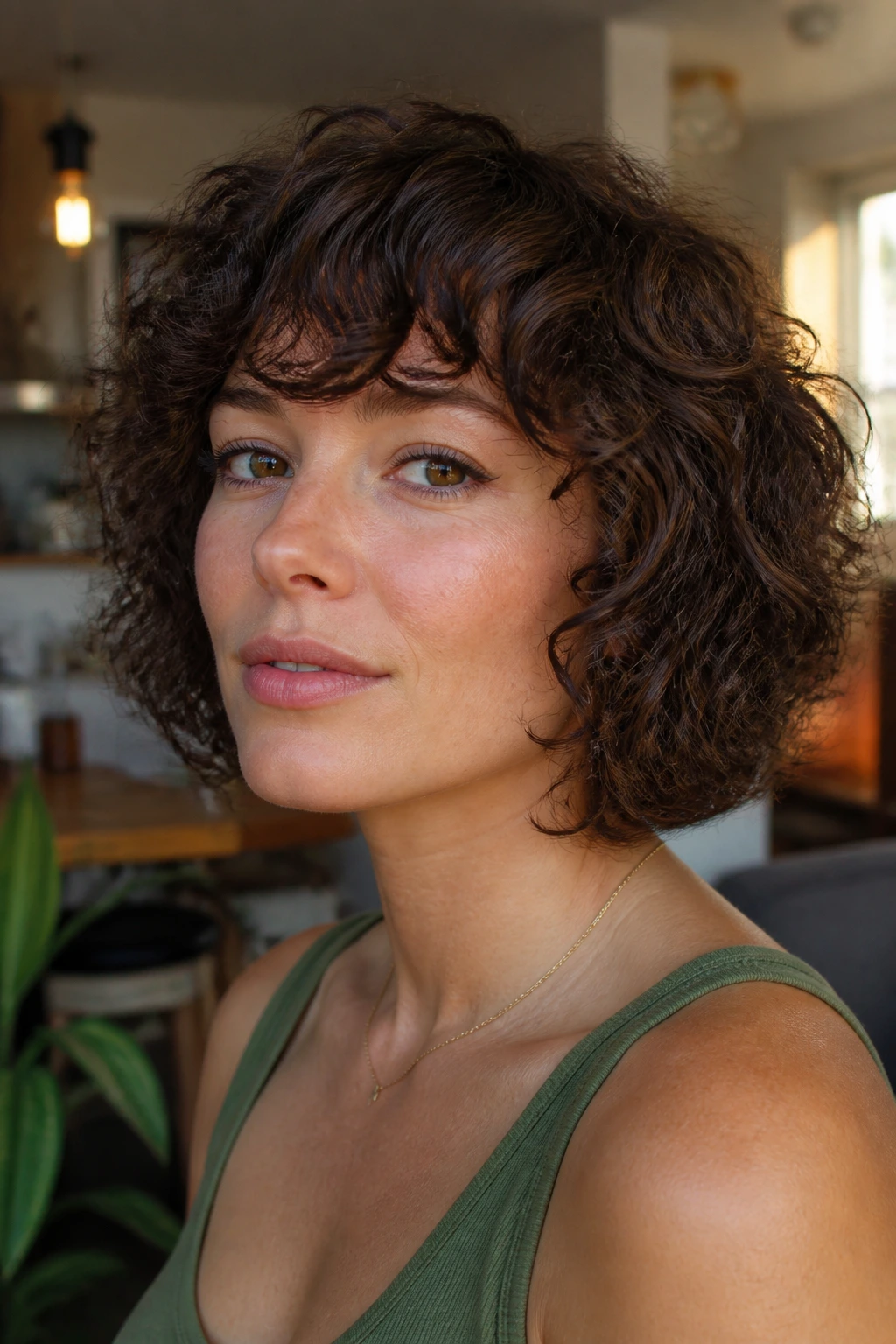
Curly hair needs its own rules, and this cut respects them. The layers should follow the curl pattern, not fight it, so the shape has movement without losing width at the sides. A curly fringe, trimmed to sit around the brows or just above, keeps the forehead from dominating the look.
The danger with curly bobs on long faces is over-rounding the top. If all the volume sits high, the face can still feel long. Ask for the fullest curl action around the cheekbones and jaw, where it does the most work.
Dry this cut with a diffuser or air-dry it with clips at the roots if your curls need support. And please, do not brush it out when it’s dry unless you want a whole different hairstyle. You know what happens.
25. Grown-Out Bob with Long Curtain Bangs

This is the easiest version to live with. The longer curtain bangs blend into the sides, so when they grow, the cut still looks intentional instead of overdue. On a long face, that soft front opening keeps the forehead from feeling exposed while the bob itself gives the sides enough body.
The grown-out length works best around the collarbone or just above it. That gives the hair room to move without pulling the face downward. If you’re the type who skips salon appointments a little too long, this shape is forgiving in a way that matters.
It’s also one of the better options if you’re not sure about bangs. Long curtain pieces can be pushed apart, pinned back, or nudged into a center part. Flexibility is the whole selling point here.
Why Layered Bobs and Bangs Change the Read of a Long Face
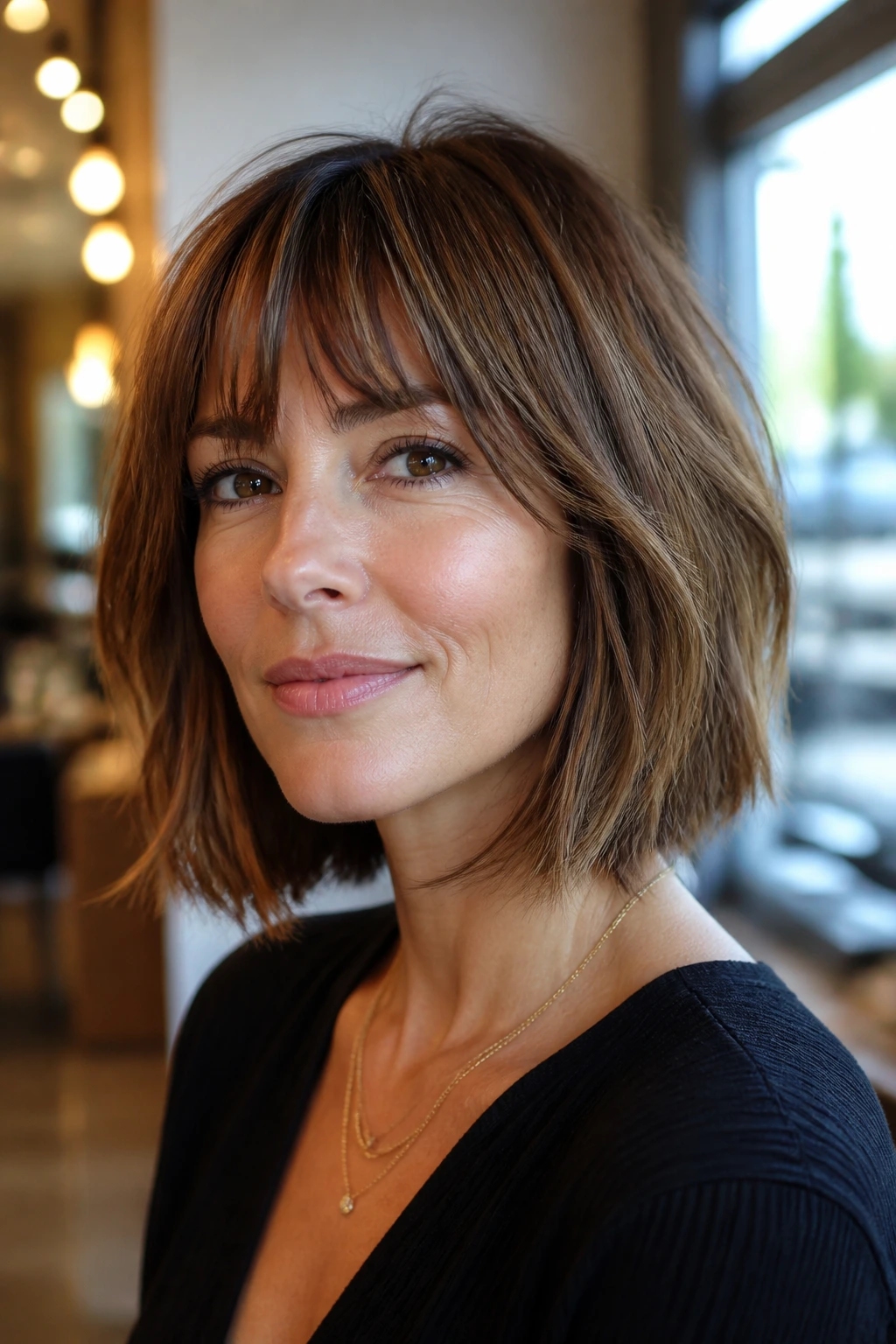
A long face isn’t a problem to hide. It’s a shape to balance. The haircut does that by changing where the eye stops and where it keeps moving. A blunt curtain of hair that falls in one line from crown to chin will usually emphasize length. A bob with layers and bangs does the opposite. It interrupts the vertical line, adds width at the sides, and puts motion right where the face needs it.
The placement matters more than the label. Curtain bangs help because they split the forehead and then drift toward the cheekbones. Side bangs help because they cut diagonally across the face instead of straight down it. Layers help when they’re placed near the jaw, temples, and cheekbones—not piled on top like extra height on a cake nobody asked for.
Texture plays a part too. A little bend, a bit of separation, or a soft inward curve gives the haircut a wider footprint. That wider footprint is what makes the face feel more balanced. It’s a small trick. It works because hair is visual geometry wearing a nice outfit.
Essential Tools for Styling These Cuts
-
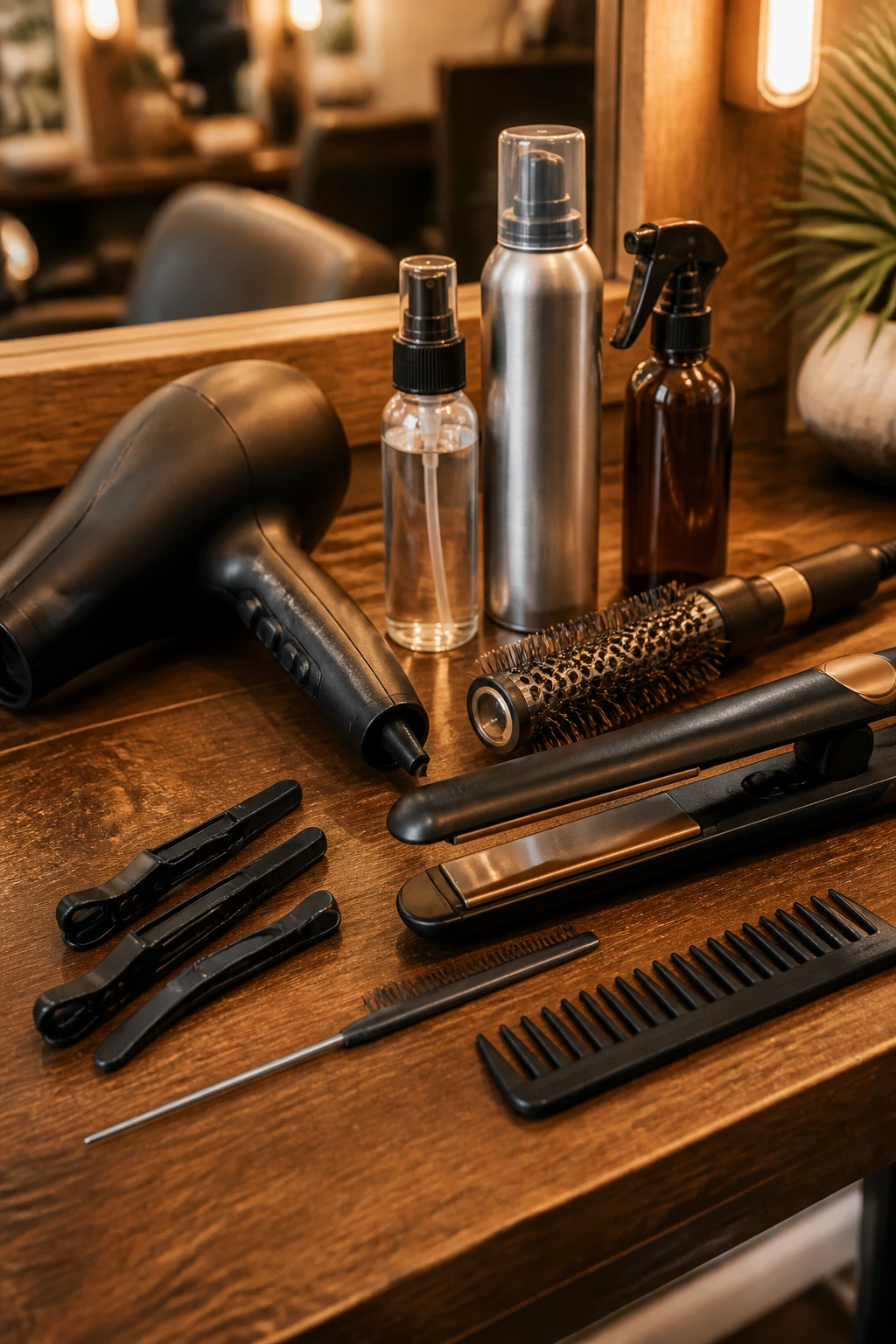
Blow dryer with a nozzle attachment: The nozzle helps direct air where you want it, especially on bangs that need to lie smooth instead of puffing out.
-
1-inch to 1.5-inch round brush: Small enough to shape curtain bangs and front layers, large enough to give the bob a soft bend.
-
Flat iron with rounded edges: Handy for quick flips at the ends, loose bends through the front pieces, and second-day bang fixes.
-
Texturizing spray: Use this on shaggy, piecey, or choppy bobs when you want separation without stiffness.
-
Volumizing mousse: Best at the roots and temples for fine hair that needs side lift.
-
Heat protectant: Non-negotiable if you blow-dry or use hot tools more than once in a while.
-
Duckbill clips or small jaw clips: Useful for setting the top and fringe while the rest cools, which helps the shape hold.
-
Tail comb: Makes it easier to carve a clean side part or section out curtain bangs before drying.
-
Wide-tooth comb: Better for curly or wavy versions than a brush that breaks up the pattern.
Small Styling Moves That Make the Shape Work Harder
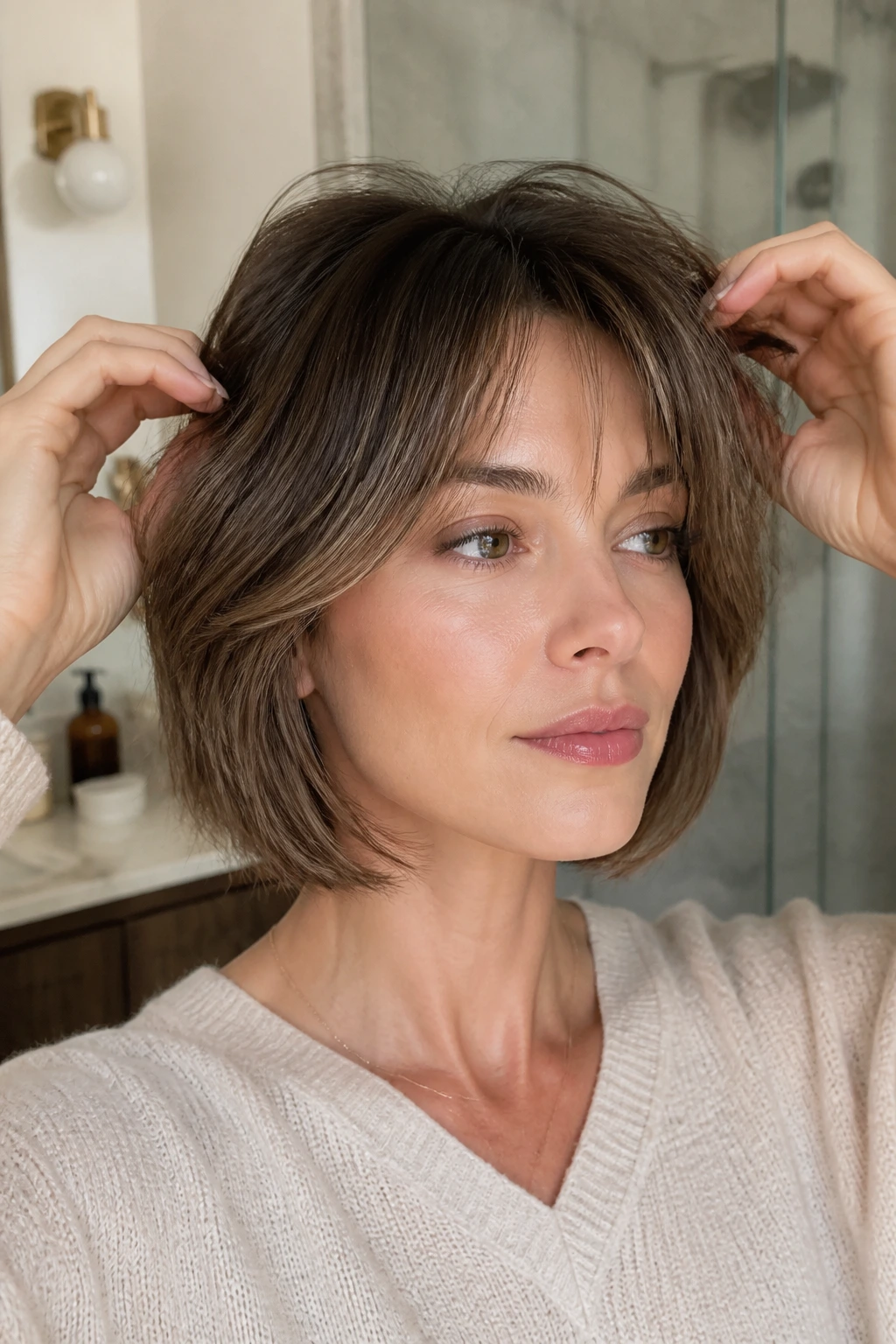
Root Lift: Keep the lift at the temples and outer crown, not straight up at the top of the head. That gives the face more width without stretching it taller. A blast of heat at the roots, then a cool shot for ten seconds, goes a long way.
Bang Direction: Dry bangs from side to side before settling them into place. That little back-and-forth movement stops them from splitting in one stubborn line and helps curtain fringe fall in a softer arc.
End Movement: Bend the front sections away from the face if you want width, or under if you want a more polished edge. Either way, the bend should happen near the jaw or cheekbone, not at the very bottom where it can look lazy.
Product Control: Use less cream than you think. Fringe picks up product fast, and the difference between soft and greasy is about half a pea-sized amount. Thin products beat thick ones here.
Trim Rhythm: Bangs need attention sooner than the rest of the cut. If the fringe starts brushing your lashes in a way that blocks your eyes, it’s time. Don’t wait until the whole shape feels sleepy.
Common Cutting and Styling Mistakes to Avoid

Too much height on top: This is the big one. A high crown can make a long face look even longer. Ask for lift at the sides instead of a skyscraper at the top.
Bangs cut too short and too sparse: Tiny fringe can look cool on the right person, but on a long face it can expose too much forehead and make the shape feel taller. Start longer. You can always trim up.
Layers placed only at the ends: That leaves the middle of the haircut flat, which does nothing for face balance. You want some of the shortest internal layers near the cheekbone or jaw.
Heavy creams on the fringe: Oily bangs separate badly and stick to the forehead. If your fringe looks stringy by noon, the product is too rich or too much.
No plan for growth: A cut that looks sharp for one week and awkward for six is not a win. Choose a bob that still makes sense when the bangs soften and the layers settle.
Ignoring texture: Straight, wavy, curly, and coily hair do not sit the same way. A stylist who cuts every version the same way is asking for trouble. Texture changes where the weight should sit.
Variations and Adaptations to Try
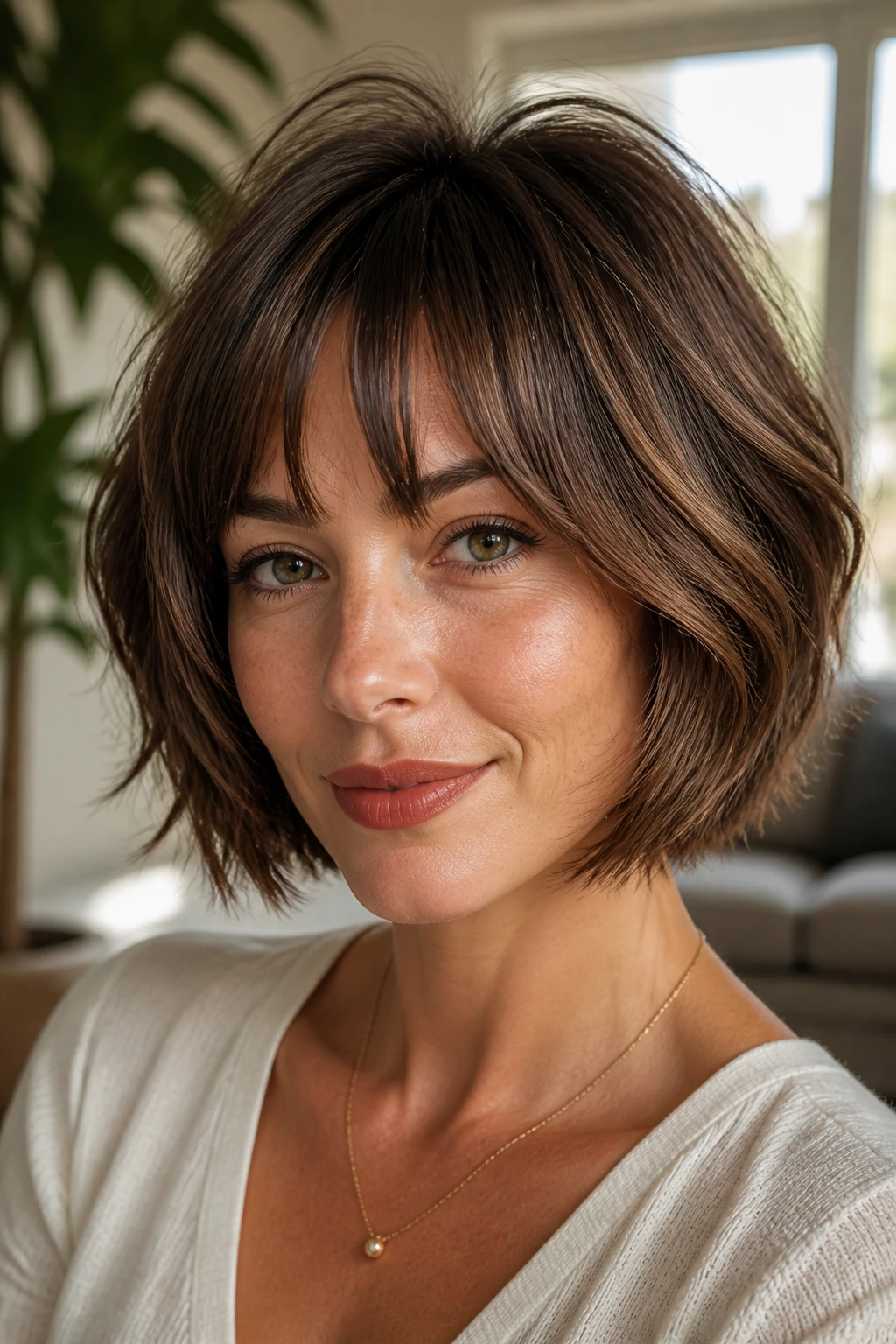
Fine-Hair Lift: Ask for softer internal layers, a side or curtain fringe, and very light texturizing at the ends. The goal is lift, not thinning. A mousse at the roots and a round-brush blowout keep the shape awake.
Thick-Hair Relief: Go for stronger debulking through the mids and jaw, plus bangs that are cut with enough density to hold their shape. Thick hair needs room to move or it turns into a wide block. A razor can help, but only if the stylist knows when to stop.
Curly Halo: Keep the layers mapped to your curl pattern and cut the fringe dry or mostly dry. The trick is to let the curls form a soft frame around the face without building too much height on top. Diffusing upside down is not always your friend here.
Glasses-Friendly Fringe: Choose side-swept or bottleneck bangs that can tuck neatly around the frames instead of fighting them. A bang that lands right on the glasses arms gets irritating fast. Slightly longer pieces are easier to live with.
Low-Heat Air-Dry Version: This is a lob or bob with soft face-framing layers and a fringe that can settle naturally. Use a leave-in cream on the mids, scrunch once, and leave the roots alone until they dry. Less touch equals better shape.
Grow-Out Friendly Cut: Pick a length that can become a lob, keep the bang long enough to split in the center, and avoid a hard perimeter line. If you know you skip trims, this is the one that stays polite while it grows.
Keeping the Cut in Shape Between Salon Visits
Bangs usually need attention before the rest of the haircut does. Plan on a trim every 2 to 4 weeks if you wear a fringe that sits near the brows. Curtain bangs can go a bit longer, but once they start hanging into your eyes all day, the shape stops reading as intentional.
The bob itself usually wants a shaping appointment about every 6 to 8 weeks. Thick hair may hold its line a little longer. Fine hair can lose its edge sooner because the layers settle faster. If your cut depends on a strong chin or jaw line, let it go too long and the balance starts to drift.
Wash day matters, too. Fringe gets oily first, especially if you touch it a lot or sleep with it on your forehead. A small hit of dry shampoo at the roots—not halfway down the strands—can buy you another day. At night, clip the bangs away from your face or use a silk pillowcase so they don’t get bent into one sad crease.
If you air-dry, leave the hair alone until it’s mostly dry. Constant fiddling breaks up the pattern and can make the sides go flat. If you blow-dry, finish with a cool shot. That one move helps the curve hold its shape instead of sagging by lunch.
Frequently Asked Questions

What bangs are best for a long face shape?
Curtain bangs, bottleneck fringe, and side-swept bangs are the safest bets because they shorten the visible forehead without creating a hard shelf across the front. Brow-grazing lengths tend to work better than super-short micro bangs if you want balance instead of drama.
Can a bob actually make a long face look shorter?
Yes, if the width sits in the right places. A bob that adds movement at the cheeks and jaw, plus bangs that break the forehead line, changes how the face reads from the front.
Are blunt bangs bad for long faces?
Not automatically. The problem is when blunt bangs are too short or too dense, because they can make the face feel taller or the forehead feel boxy. A softer, slightly longer blunt bang is much easier to wear.
Do layered bobs work on fine hair?
They do, as long as the layers are light and placed carefully. Fine hair needs lift and movement, not a bunch of choppy cuts that remove the little body it has. A round-brush blow-dry can make a huge difference.
What if my hair is curly or wavy?
Then the layers need to follow your pattern, not flatten it. Curly fringe and a layered bob can look excellent on a long face when the shape is cut to sit wider at the sides instead of taller on top.
How often should I trim this kind of cut?
Bangs often need a trim every 2 to 4 weeks, while the bob itself can usually go 6 to 8 weeks before it starts losing the intended line. If your haircut depends on precise cheekbone framing, don’t stretch the timing too far.
Will this kind of bob work if I wear glasses?
Yes, but fringe length matters. Side-swept bangs or longer curtain pieces tend to sit better with frames because they can move around the arms instead of stopping right on them. Very short fringe can fight your glasses all day.
How do I ask for this at the salon?
Bring photos, but also name the parts you want: where the bangs should hit, where the shortest face-framing pieces should fall, and whether you want the shape to sit at the chin, jaw, or collarbone. That detail matters more than saying “layered bob” and hoping for the best.
What if my bangs get oily fast?
That’s normal. Bangs sit on the skin and pick up oil faster than the rest of the hair, so a small amount of dry shampoo at the roots can help. If they still separate badly, the fringe may be too heavy or you may be using too much cream.
The Shape That Does the Work

The best layered bob with bangs for long faces is not the shortest one, or the trendiest one, or the one that looks the most styled on day one. It’s the one that changes the proportions in your favor. Width at the sides. Softness across the forehead. Enough movement at the ends that the haircut feels alive when you turn your head.
That’s why the same face shape can wear a curtain-banged French bob, a choppy lob, or a curly layered bob and get a different result from each one. The common thread is placement. Put the shape where the face needs it, and the cut does the rest.
If you’re choosing one, start with your texture first, then pick the bang style, then decide how short you actually want to go. That order saves a lot of regret.