



Straight hair and round faces can make haircut choices weirdly unforgiving. A long bob that lands in the wrong spot can add width right where you do not want it; one that sits a little lower, falls cleanly, and keeps the edges sharp can make the whole face look longer without trying too hard. That’s the game here. Placement matters more than hype.
A lob on straight hair has a particular personality. There’s nowhere to hide. Every line shows: the part, the angle of the front pieces, the density at the ends, even the way one side tucks behind the ear. That’s why the best versions are not the loudest ones. They’re the ones with clean geometry, a bit of movement, and enough length to slip past the cheekbones.
Round faces are broadest through the cheeks, softer at the jaw, and usually shorter from forehead to chin than people expect. So the haircut has to do a little work. The right long bob gives the eye a vertical path, not a horizontal one. And on straight hair, that effect is crisp, almost architectural.
Why These 25 Long Bobs Earn Their Keep
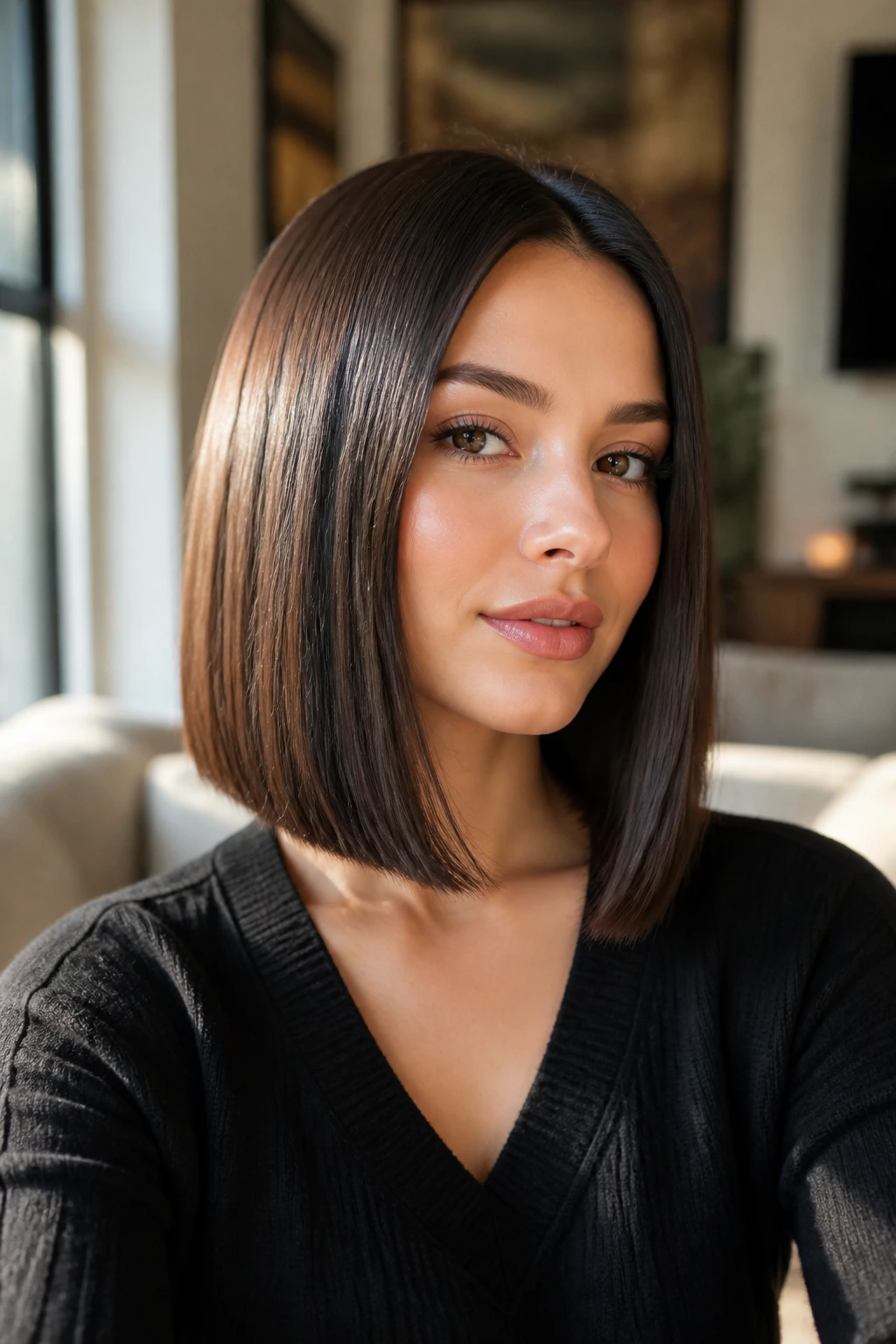
-
They shift the eye downward. A lob that lands at the collarbone or below the chin pulls attention away from the widest part of a round face and into a longer line.
-
They suit straight hair’s honesty. Sleek strands show the actual cut, which means blunt edges, subtle angles, and careful parting read clearly instead of disappearing into texture.
-
They grow out better than short bobs. An extra inch or two doesn’t wreck the shape; it usually just softens it, which is easier to live with between salon visits.
-
They can be polished or casual. The same cut can look sharp with a flat iron and a middle part, then relaxed with a tuck behind one ear or a slight bend at the ends.
-
They leave room for bangs, layers, or neither. That matters on round faces because the fringe choice changes the whole silhouette. One small change can be enough.
-
They work with the hair you already have. Straight hair does not need to be forced into some fake wave pattern to look deliberate. The cut can do the heavy lifting.
1. Collarbone Blunt Lob
A collarbone blunt lob is the cleanest place to start. The line drops just below the shoulders, hits around the collarbone, and stays one length through the ends. On straight hair, that kind of perimeter looks expensive in the plainest sense of the word: tidy, direct, no wasted motion.
For a round face, the blunt edge does two useful things at once. It keeps the widest point lower than the cheeks, and it gives the hair enough weight to hang in a smooth curtain instead of puffing out around the jaw. If your strands are fine, this is especially strong. If your hair is thick, ask for a tiny bit of internal debulking so the edge stays crisp.
This is the version I’d hand to someone who wants the lob to look like a haircut, not a compromise. It doesn’t rely on bangs or texture. It simply lands in the right place.
2. Off-Center Part Lob
Move the part half an inch and the whole face changes. That sounds fussy, but it isn’t. A slightly off-center part breaks up the symmetry that can make a round face look broader, and on straight hair it gives the front pieces a better angle as they fall.
What the Offset Part Changes
- It creates a little lift at the root without making the crown look teased.
- It sends one front section across the forehead, which adds a diagonal line.
- It keeps the hair from sitting like a helmet, which straight hair can do when the part is too rigid.
The cut itself can be simple — collarbone length, clean ends, no extra bulk at the sides. The part is what keeps it from reading flat. If you’ve always worn a dead-center part, this is one of the easiest ways to make a lob feel softer without changing the entire shape.
3. Cheekbone-Skimming Face Frame Lob
This one is all about the front pieces. The back can stay neat and fairly simple, but the pieces closest to your face should start below the cheekbone and fall past the jaw. That placement matters on a round face because it avoids placing the visual “widest point” right on top of the cheeks.
Why the Front Pieces Matter So Much
A short face frame is where a lot of good intentions go wrong. Hair that cuts in at cheek level can make the face feel fuller, even if the rest of the cut is lovely. Let the front pieces sit longer, and the line of the haircut starts to pull down instead of out.
This is a strong choice if you like wearing hair tucked back on one side. The long front pieces create a soft frame near the mouth and chin, which makes the whole cut look intentional when the rest of the hair is sleek.
4. Soft A-Line Lob
A soft A-line lob is shorter in back and a touch longer in front, but the angle should be subtle. Too much slope and you get something sharp enough to feel dated fast; too little and the cut loses its shape. The trick is a gentle diagonal that slides past the cheek and ends somewhere between the jaw and collarbone.
That front length is what helps round faces most. The eye follows the longer line forward, then down. Straight hair makes this cut especially satisfying because the angle stays visible. Wavy hair can blur it. Straight hair shows the shape immediately.
I like this cut for people who want movement without layers. It looks neat in daylight, and it still does something when you turn your head. Small detail. Big payoff.
5. Glass-Hair Lob
A glass-hair lob is the sleekest version in the bunch. The ends are blunt, the surface is shiny, and the finish is so smooth that the cut line almost looks lacquered. On straight hair, this style can look almost severe in a good way — sharp enough to lengthen the face, clean enough to feel modern without chasing trends.
The round-face benefit is simple: shine and smoothness keep the eye moving vertically. There’s less texture pushing out at the cheeks, less fluffy volume where you don’t need it. A middle part works well here if the front pieces are long enough. If not, shift the part a little off center and let one side fall forward.
Best for: anyone who likes a polished, controlled look.
Watch out for: overusing serum. Too much shine product can collapse the roots and make the hair sit even closer to the head than you want.
6. Invisible-Layer Lob
Invisible layers are the quiet workhorse of straight-hair lobs. Nothing choppy, nothing obvious. The weight is just removed underneath so the perimeter still looks full, but the hair moves a little more easily when you tuck it, blow-dry it, or let it fall naturally.
For a round face, this matters because visible layers can sometimes flare at cheek level. Invisible layers start below the face, so they don’t kick out where the face is widest. The result is a lob that feels lighter without losing that strong outer line.
This is the one I’d recommend to someone who keeps saying, “I want movement, but I do not want layers.” That’s fair. The answer is usually hidden structure, not visible chop.
7. Side-Swept Bang Lob
A side-swept bang lob has a little old-school charm, and I mean that as a compliment. The fringe sweeps across the forehead at an angle, which cuts the face diagonally instead of stopping it dead at the center. On a round face, that diagonal is useful. It makes the face feel slightly longer and takes emphasis off the widest cheek line.
Styling Note
Side-swept bangs work best when they’re light enough to move. Heavy, helmet-like bangs do the opposite and can shrink the face vertically. Keep them soft, not blunt. The rest of the lob can stay collarbone length with clean ends or a very small angle in front.
If you like hair that looks put-together with very little effort, this is a strong pick. A quick blow-dry with a round brush, a side flip, done. No drama.
8. Choppy Textured Lob
Choppy texture can work on straight hair, but only if the chop is controlled. Too much can make the cut look frayed. The good version uses pieced-out ends and a bit of irregularity to stop the lob from sitting like a rectangle.
That slight roughness helps round faces when the texture is kept low and mostly at the ends. You want separation, not puff. The shape should still fall below the cheeks. If the choppiness starts near the jaw, the face can look wider. That’s the trap.
A choppy lob suits people who like to run a little styling paste through the ends and call it a day. It has a relaxed, lived-in feel, but it still needs a clean baseline. Without that, it just looks unfinished.
9. Tucked-Behind-the-Ear Lob
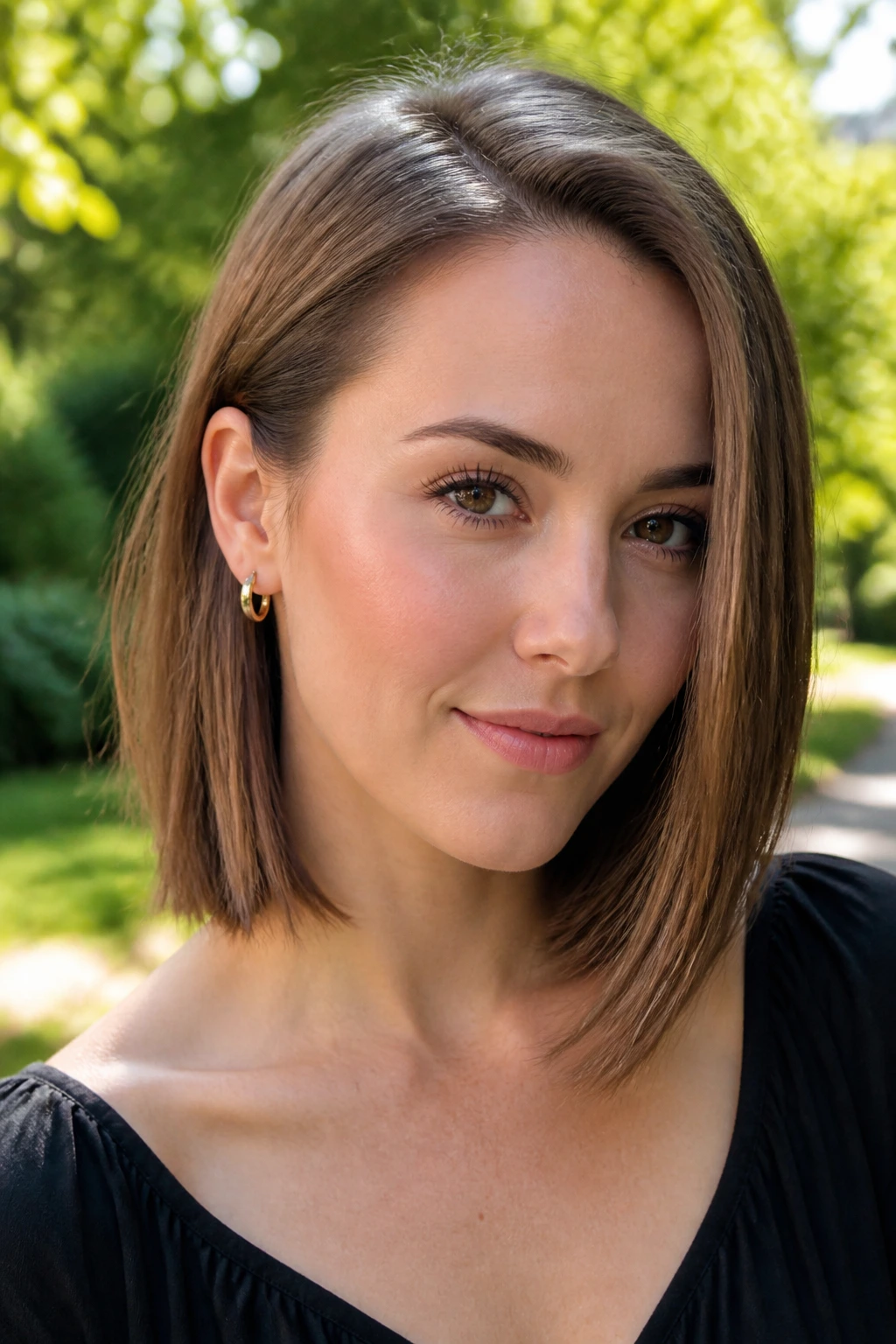
A lob that looks good tucked behind one ear is useful for a round face because it creates asymmetry on purpose. One side stays open, the other gets folded back, and the face stops reading as perfectly circular. Straight hair makes this especially easy because it tucks without fighting you.
The cut should have enough length at the front to stay tucked without springing out. That usually means the front pieces need to hit below the jaw, ideally toward the collarbone. The back can remain one length or gently angled.
This is one of those cuts that looks casual until you notice how much shape it has. It’s not messy. It’s controlled enough to work with earrings, glasses, and a sharp side part.
10. Curtain Bang Lob

Why do curtain bangs keep showing up with lobs? Because they open the face in the middle and then fall down the sides in a way that flatters straight hair better than most people expect. On a round face, that central opening gives you a vertical line right where you need one.
Curtain bangs should start high enough to create a soft center part, then blend into the lob without a hard step. The longest pieces need to skim past the cheekbones. Short curtain bangs that stop at cheek level are risky. They can widen the face faster than they soften it.
The nice part is how they grow out. Even when the fringe gets longer, it still reads as part of the shape instead of an awkward phase. That’s handy. Hair that gives you an easier grow-out earns goodwill.
11. Angled Lob with Longer Front Pieces
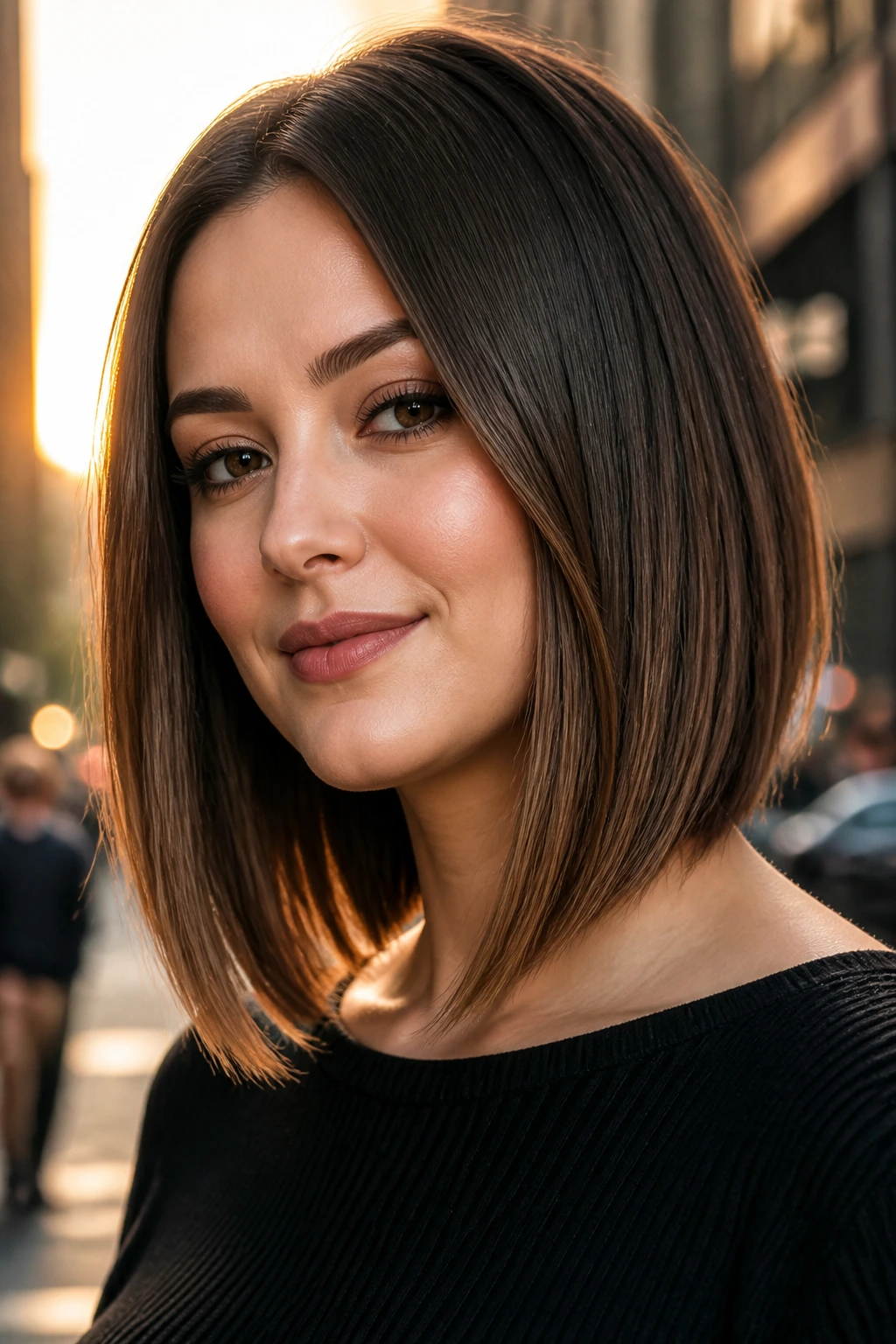
An angled lob is a blunt instrument in the best sense. The back is shorter, the front is longer, and the whole cut points the eye downward and forward. For straight hair, the angle reads clearly. Nothing blurs the line. That’s why this cut can be so satisfying on a round face.
The front pieces should not stop at the chin. That’s the mistake. They should pass it and aim more toward the collarbone so the shape keeps length in the visual field. If the angle is too subtle, the effect disappears. Too steep, and the cut starts to feel too “bob” instead of “lob.”
I like this for people who want the haircut to show up from the side as much as from the front. It has a little drama. Not a lot. Enough.
12. Feathered Ends Lob
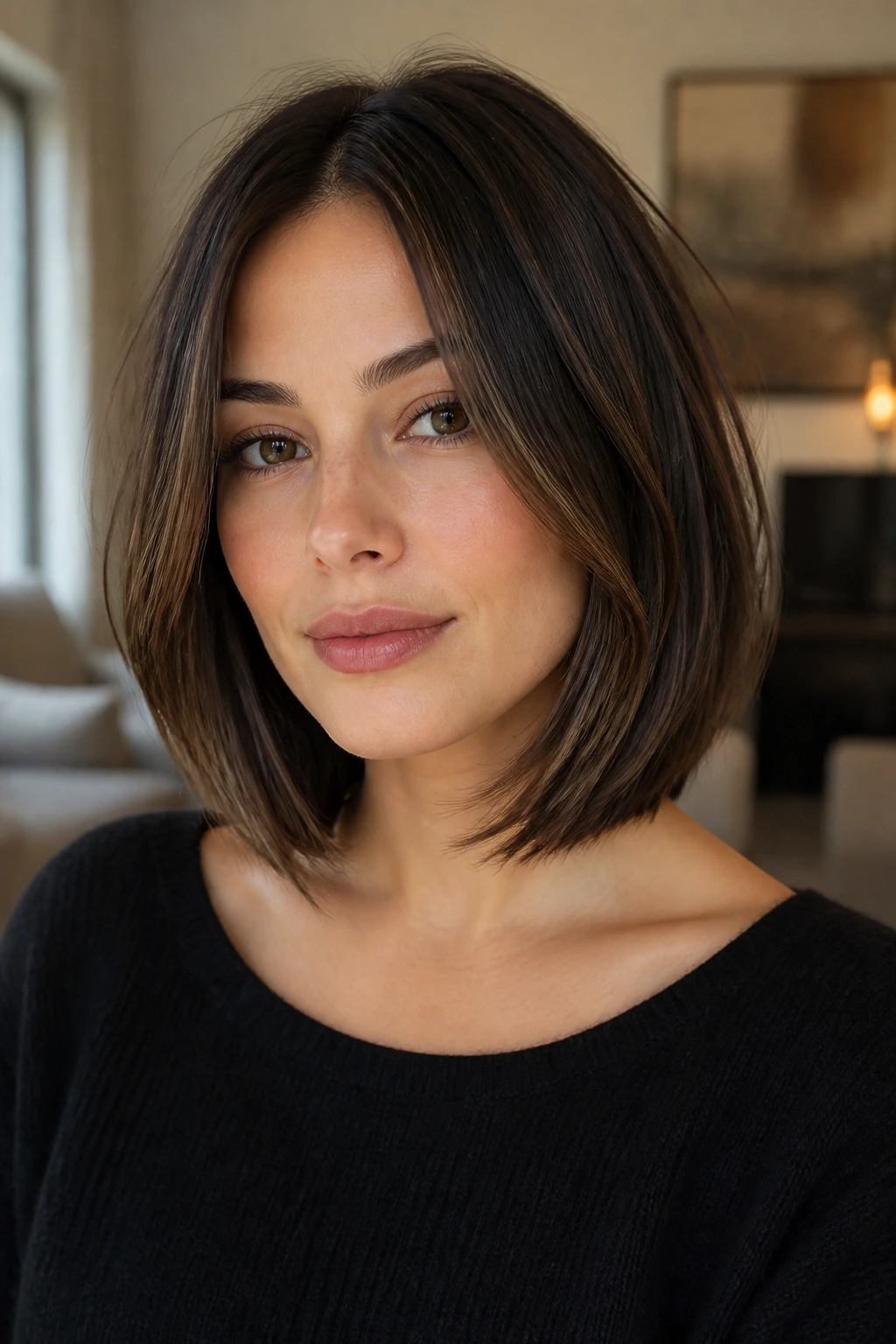
Feathering the ends softens a straight lob without turning it fuzzy. The cut lightens up at the bottom so the perimeter doesn’t feel blocky. On a round face, that softness can be useful if the hair is very dense and tends to sit like a sheet.
The key is where the feathering starts. It should stay at the bottom few inches, not creep up around the cheeks. Feather too high and the face gets wider, not slimmer. You want airy ends, not a layered halo around the jaw.
This is a good lob for someone who likes movement but gets nervous about heavy blunt lines. It feels less severe than a one-length cut, but it still looks clean. That balance is harder to get than people think.
13. Shoulder-Skimming Lob

A shoulder-skimming lob lives just a touch longer than the classic collarbone version. That extra length can be a relief if you want your hair to tie back, clip up, or sit comfortably under jackets without flipping out awkwardly. On a round face, the benefit is that the width of the face gets left behind entirely.
Because the hair is straight, this longer shape can still look deliberate. It doesn’t need curls or waves to hold interest. A clean line, a slight side part, and ends that don’t flip too hard are enough.
This is the safest pick for someone growing out a shorter cut. It doesn’t look like a compromise. It looks like a decision.
14. Razor-Cut Lob

A razor-cut lob can look beautiful on straight hair if the density can handle it. The razor softens the ends and creates a little separation, which keeps the hair from feeling too blunt or heavy. On a round face, that can work well as long as the texture stays at the bottom and not near the cheeks.
Here’s the catch: very fine straight hair can frizz if the razor is used too aggressively. Then the cut looks wispy in a bad way. So this version needs a light hand. If your stylist loves a razor, ask them to keep the shape controlled and the layers long.
Best when you want
- A softer edge than a blunt lob.
- Slight movement without obvious layers.
- A cut that doesn’t sit like one solid block.
It’s a cut with opinions. I respect that.
15. Subtle Underlayer Lob
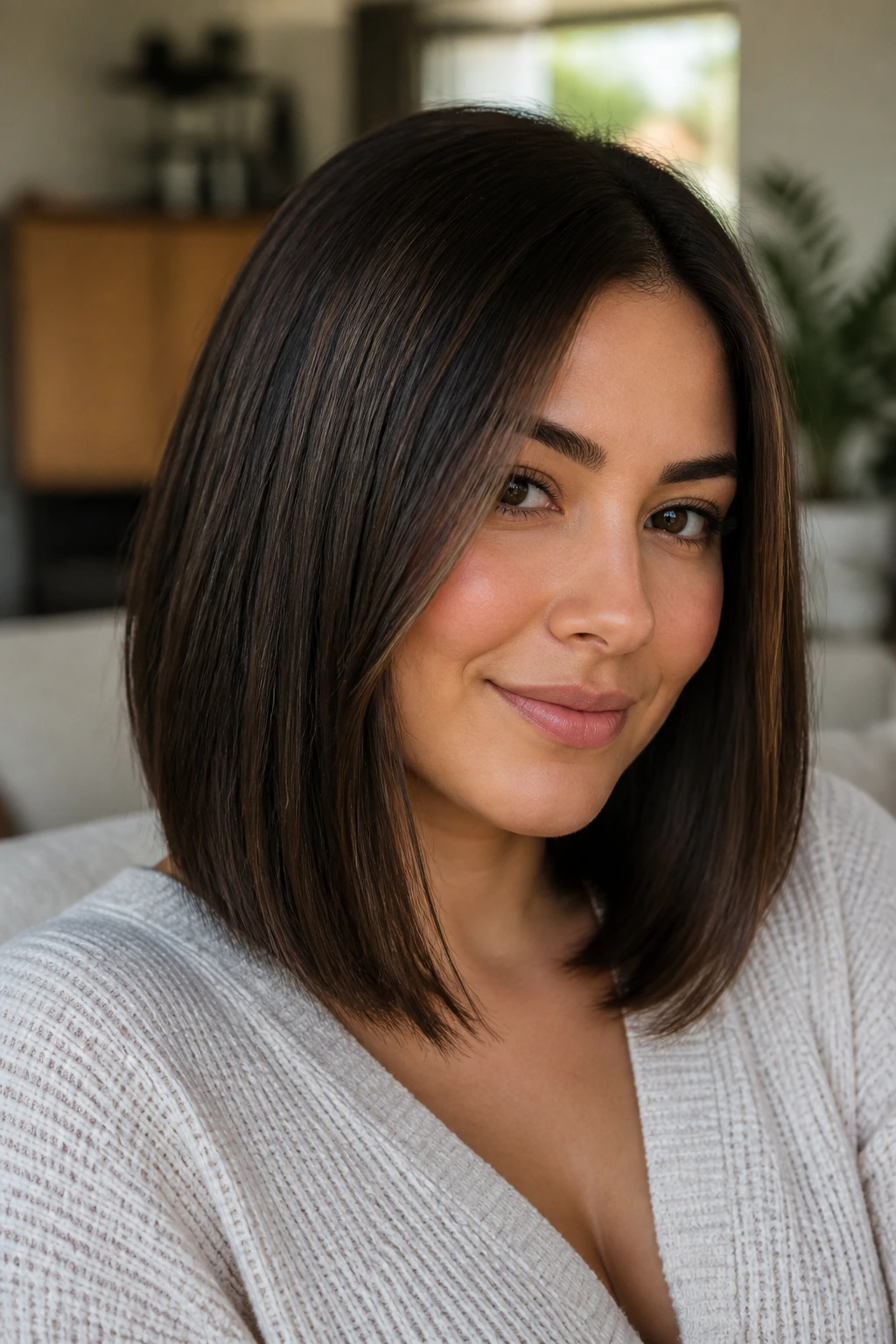
Subtle underlayers are the quiet fix for straight hair that feels too heavy. The outside line stays smooth and full, but some weight is removed beneath the surface so the lob does not balloon out at the sides. On a round face, that’s a useful trick because the shape stays narrow through the cheek area.
This cut is especially good if your hair is thick and straight. Thick straight hair can make a lob appear boxy fast. Internal weight removal keeps the outline clean while letting the hair bend more naturally around the face.
It’s not a flashy cut. It’s a smart one. Sometimes those are the best haircuts.
16. Deep Side-Part Lob

A deep side part does more than most people give it credit for. It creates height at the crown, pulls one side of the face open, and gives the lob a stronger diagonal line. On a round face, that vertical lift can make a huge difference.
The cut itself can be simple — even blunt — because the part is doing the shape work. Straight hair loves this setup because it lays cleanly over the head instead of puffing around the part. If your roots are flat, a little lift spray at the crown helps. Not at the sides. That’s where people go wrong.
This is the lob I’d call the easy fix. If your current cut feels too round, a deep side part can change the whole read of it in about ten seconds.
17. French-Girl Lob
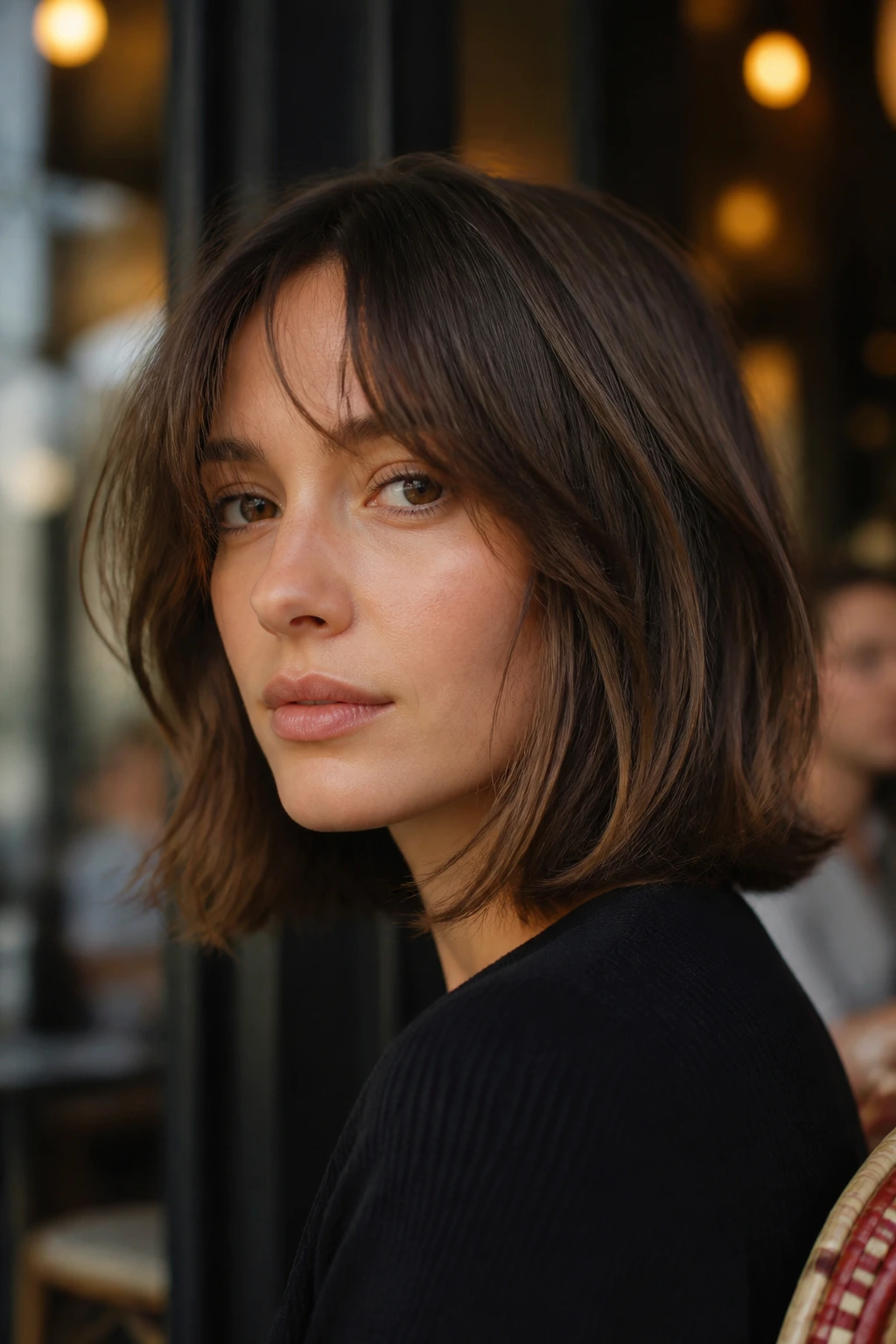
The French-girl lob is a little less polished, a little more relaxed, and that looseness can help round faces because it keeps the cut from feeling like a hard frame. Straight hair makes the style look cleaner than it does on rougher textures, which is useful. You get the soft feel without losing the shape.
A good version still needs length. The front should skim below the jaw. If you add fringe, keep it light and airy. Heavy bangs plus a rounded face can get crowded fast.
This cut looks best when it isn’t overworked. A quick blow-dry, a little movement in the ends, maybe a tuck or two. That’s enough. The charm is in the restraint.
18. Money-Piece Lob
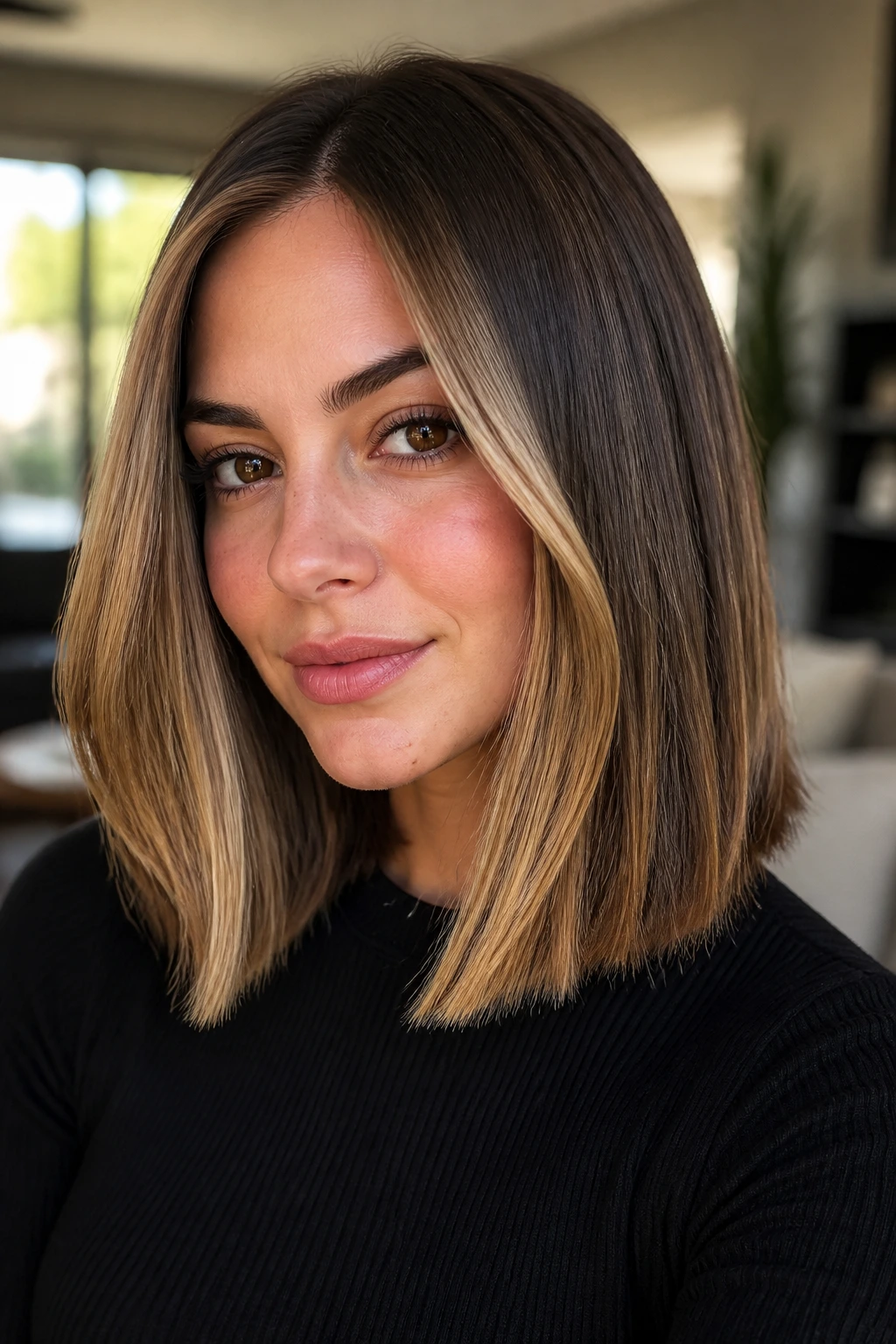
A money-piece lob uses brighter front sections to pull attention toward the face frame and away from the bulk of the cheeks. On straight hair, the color blocks show clearly, which makes the cut feel more deliberate even if the silhouette is simple. It’s a good option if you like a little visual lift without changing the actual haircut too much.
The brighter pieces should start below the temples and blend into the longer front sections. If they start too high or too wide, they can make the face appear broader. Narrower panels usually work better on a round face.
This one can be subtle or bold. A soft caramel, a pale beige, or a high-contrast ribbon near the front each changes the mood. The haircut stays a lob. The effect shifts a lot.
19. Graduated Lob
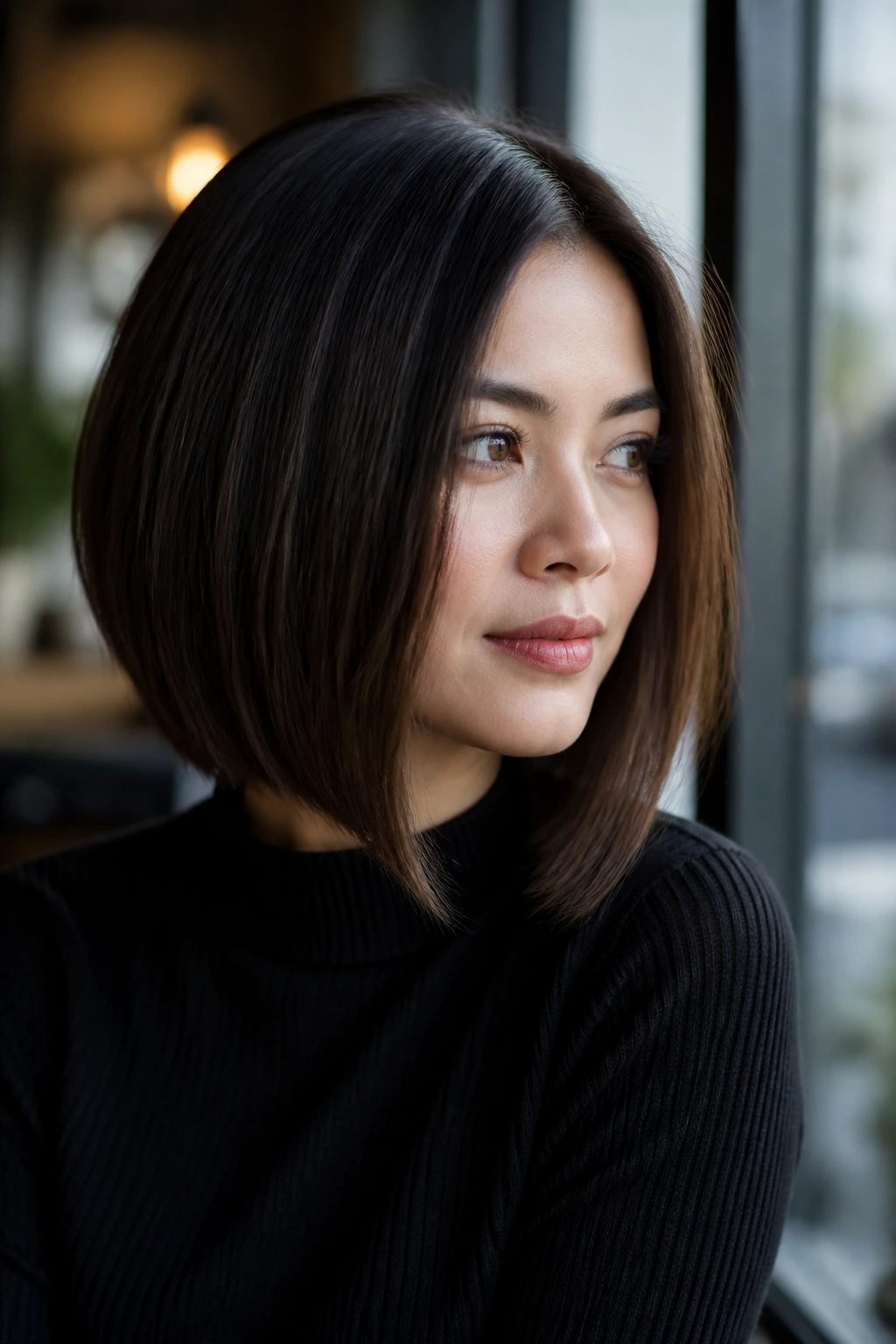
A graduated lob stacks a little more in the back and carries extra length through the front. Think of it as a smarter, softer version of the angled lob. On straight hair, the graduation gives structure without needing layers everywhere.
For round faces, the front length is the part that earns its keep. The back can be lifted slightly, but the front needs to stay long enough to stretch the silhouette. Keep the transition smooth. A harsh graduation can make the cut feel too square.
This is a good cut if you want the back to feel neat and the front to feel forgiving. It behaves well under a blazer collar, a scarf, or a tucked shirt. Little practical things like that matter more than people admit.
20. Blunt Lob with Wispy Fringe
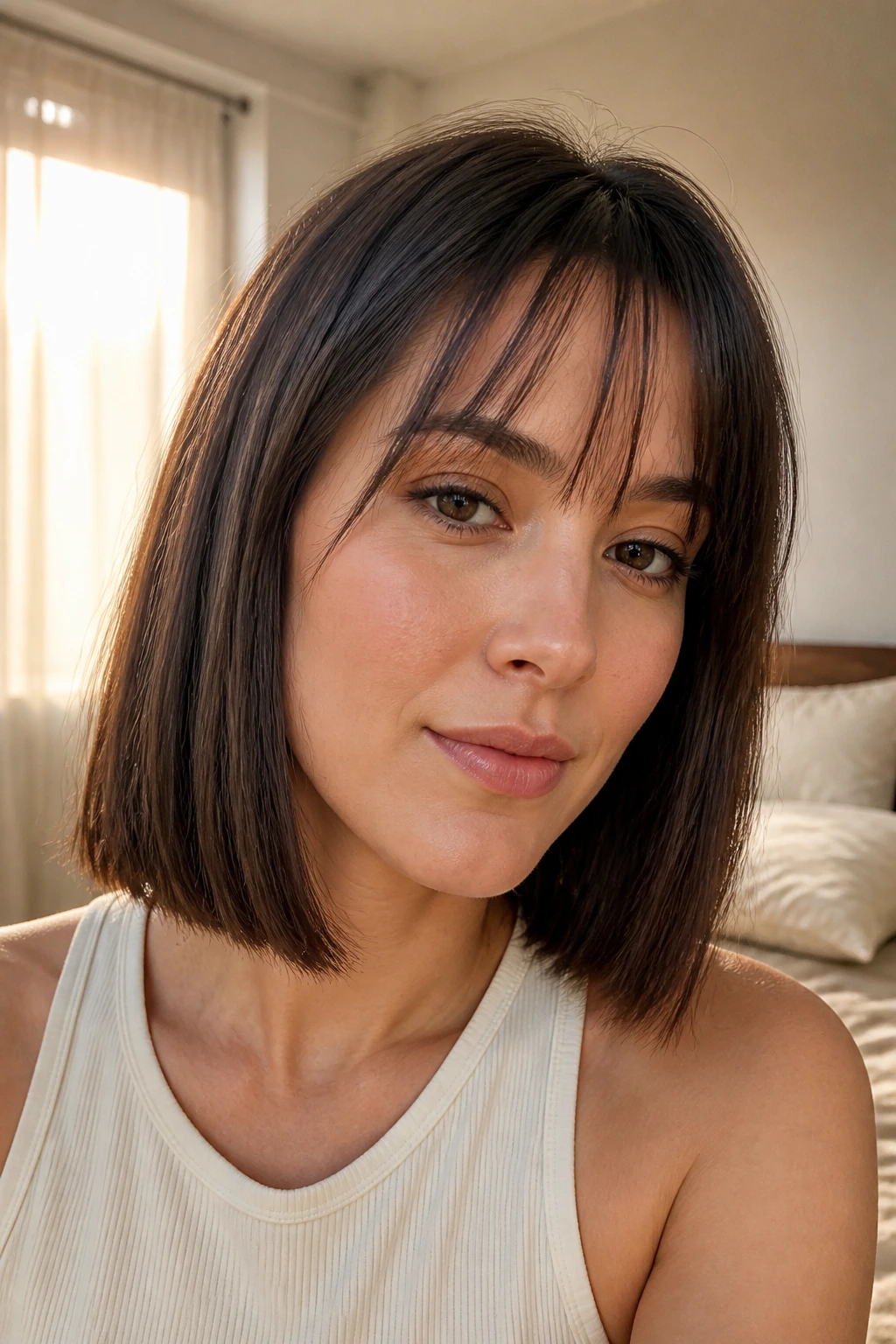
A blunt lob with a wispy fringe sounds simple, but the balance is touchy. The body of the cut stays full and clean, while the fringe breaks up the forehead with something softer than a heavy bang. On a round face, that softness can help if the fringe is kept light and the rest of the cut has enough length.
Keep the fringe light
A wispy fringe should not sit dense enough to form a shelf. It needs gaps, movement, and a little transparency. That way it frames the face instead of crowding it. The rest of the lob can be one length or slightly angled.
This cut works best on straight hair that is naturally smooth but not too flat. It has a little personality. It also grows out better than a blunt, heavy fringe, which is one less thing to babysit.
21. Air-Dry Lob
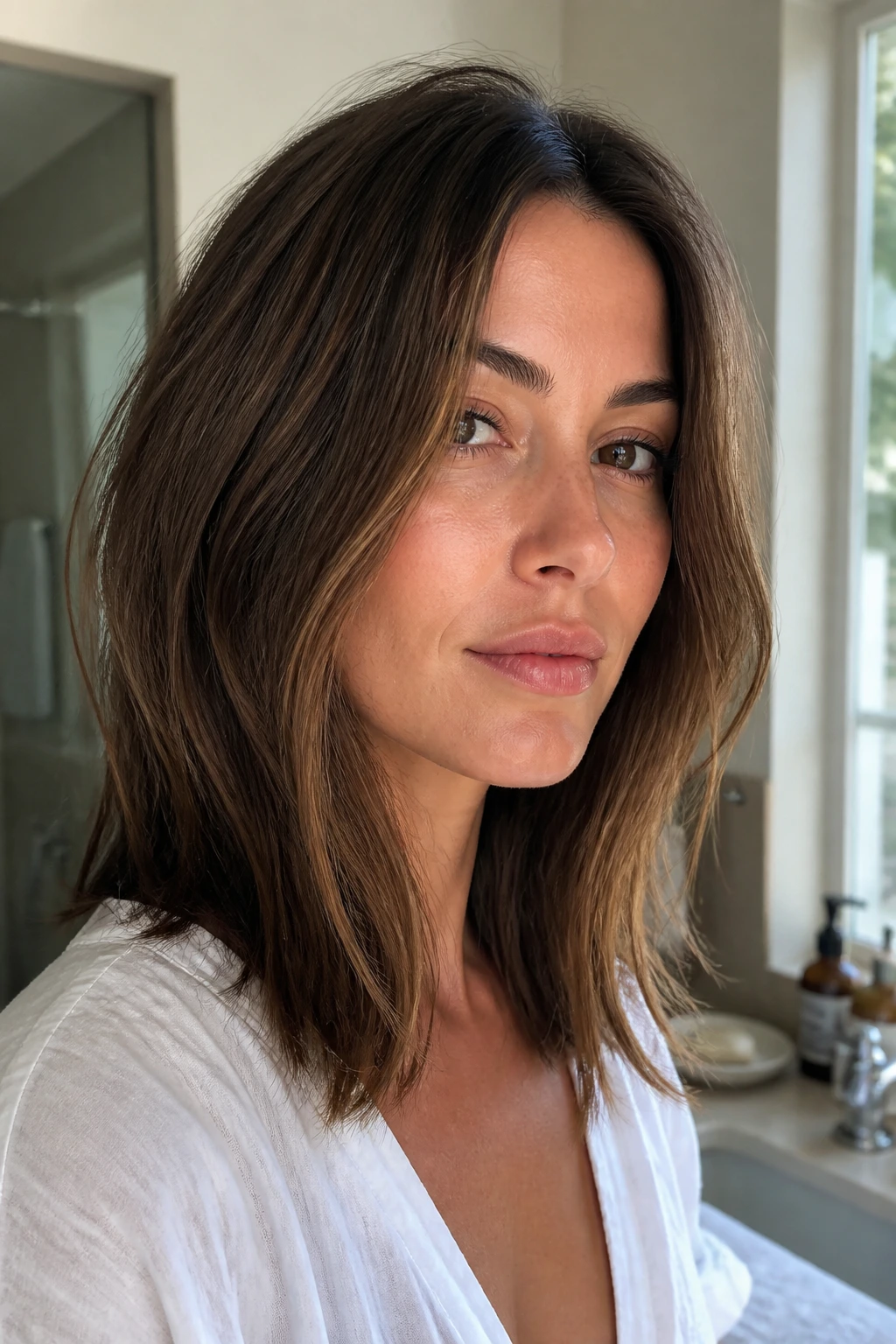
Can a round face wear an air-dry lob on straight hair? Yes, if the cut is built for it. The shape should be clean enough to hold on its own, with long front pieces and minimal layering so the hair doesn’t puff in strange spots while drying.
The best air-dry version is not the shortest one. It needs a little length and weight to stop the ends from flipping out at the jaw. A smoothing cream through damp hair helps, but the real work is in the cut itself. Get that wrong and you’ll spend every morning fighting it.
I like this option for people who want the lob to behave without a blowout. It’s the least needy version on this list.
22. Minimalist One-Length Lob
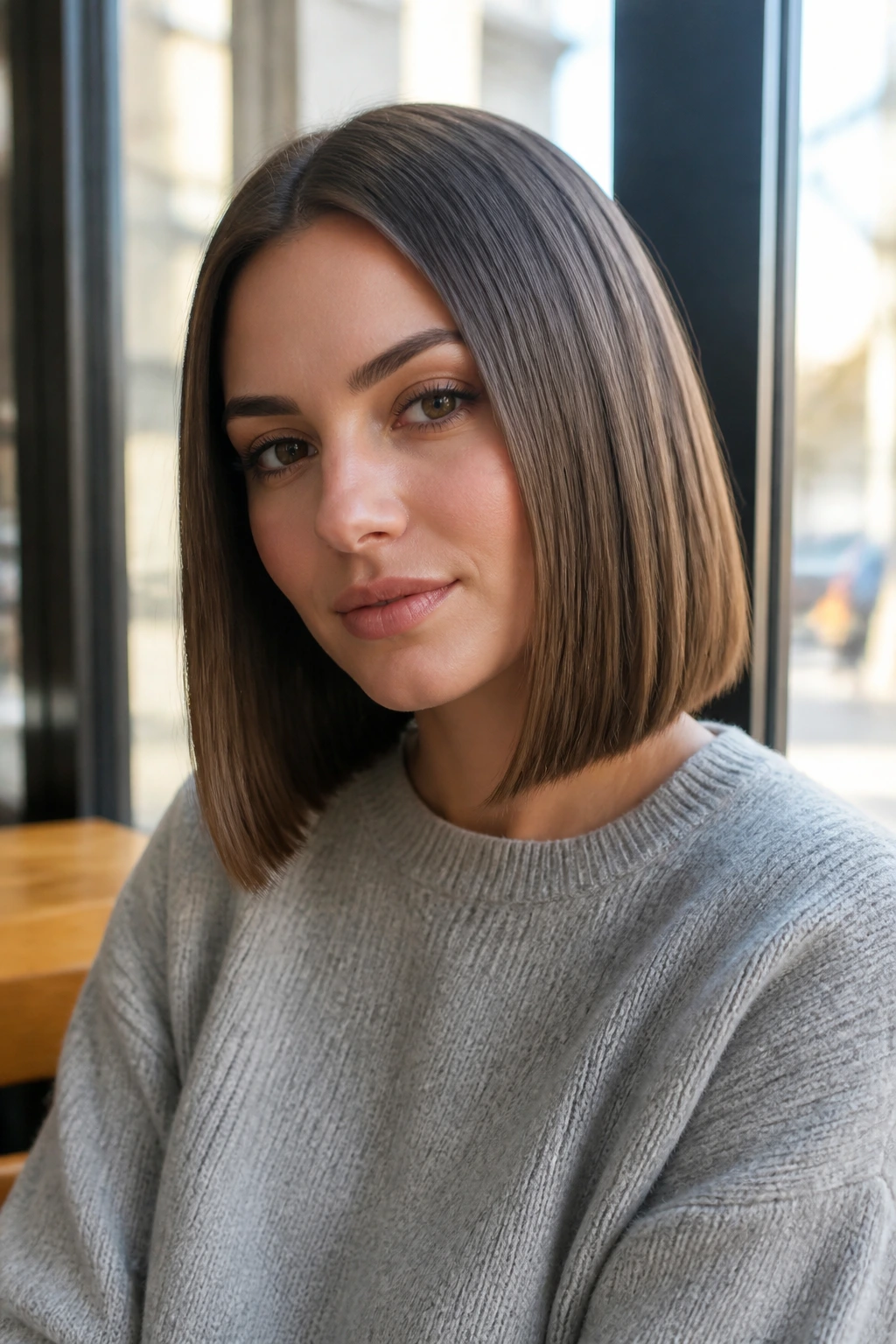
This is the no-nonsense lob. One length. Clean edge. No visible layers. Straight hair makes it look sharp, and on a round face the simplicity can be a relief because it doesn’t pile extra shape at the cheeks.
The beauty here is discipline. The ends have to be precise, and the line has to land below the widest point of the face. If it sits too short, the whole effect falls apart. If it sits right, the haircut feels calm and modern.
This is the cut for someone who hates spending time on hair and still wants to look like they made a decision. I have a soft spot for that.
23. Glossy Dark Lob
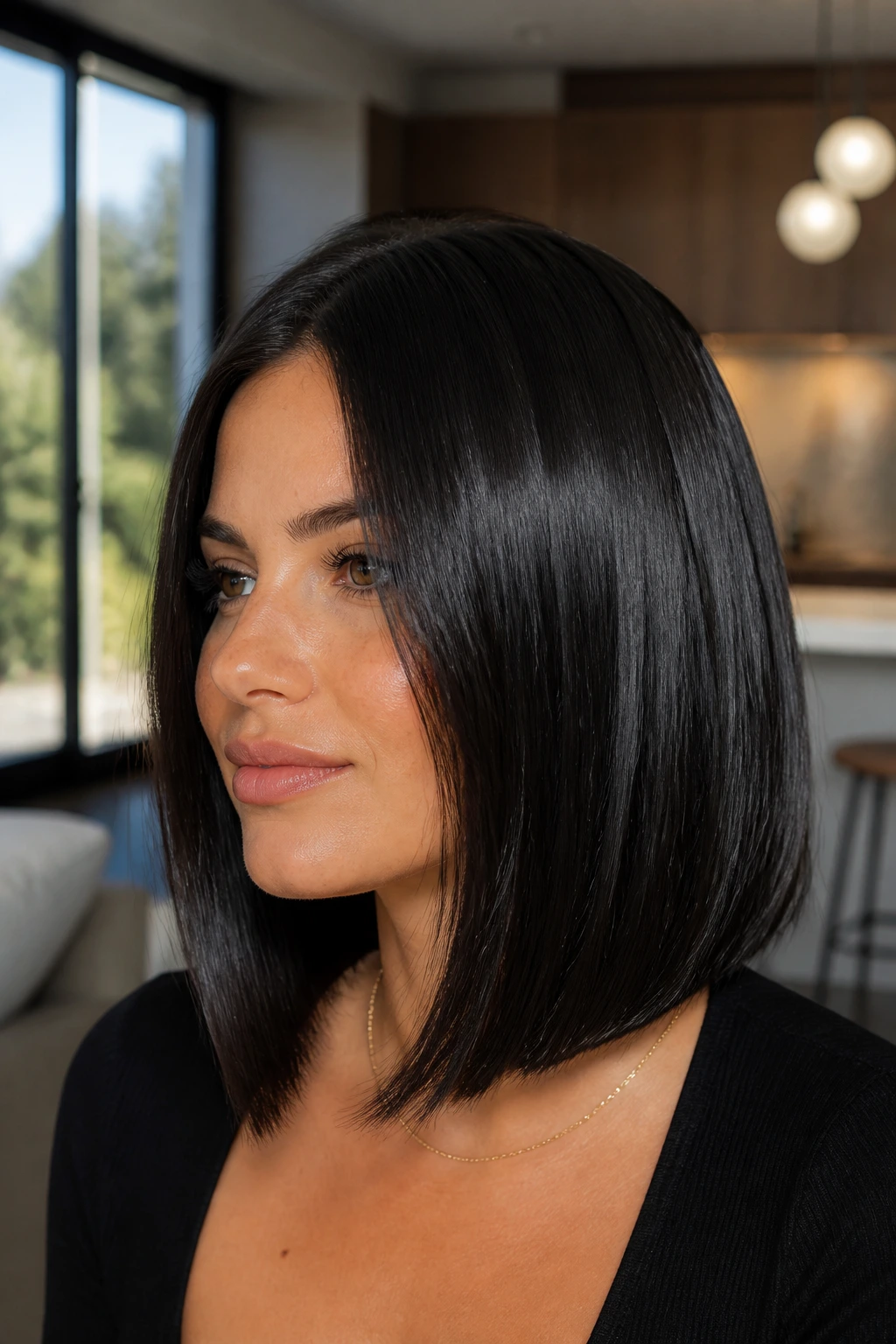
A glossy dark lob is all about contrast. Dark straight hair makes the edges look even cleaner, which can be a gift on a round face because the eye follows the strong outline instead of the cheeks. This cut does not need a lot of layering. It needs shine and shape.
If your color is deep brown, black, or a cool dark blonde, the lob line shows more clearly under light. That can make the face look narrower because the haircut reads as one long vertical block. The finish has to be smooth, though. Frizz steals the effect immediately.
This is the lob that looks best when it’s very deliberate. Nothing soft and fuzzy. Everything controlled.
24. Barely-Bent Lob
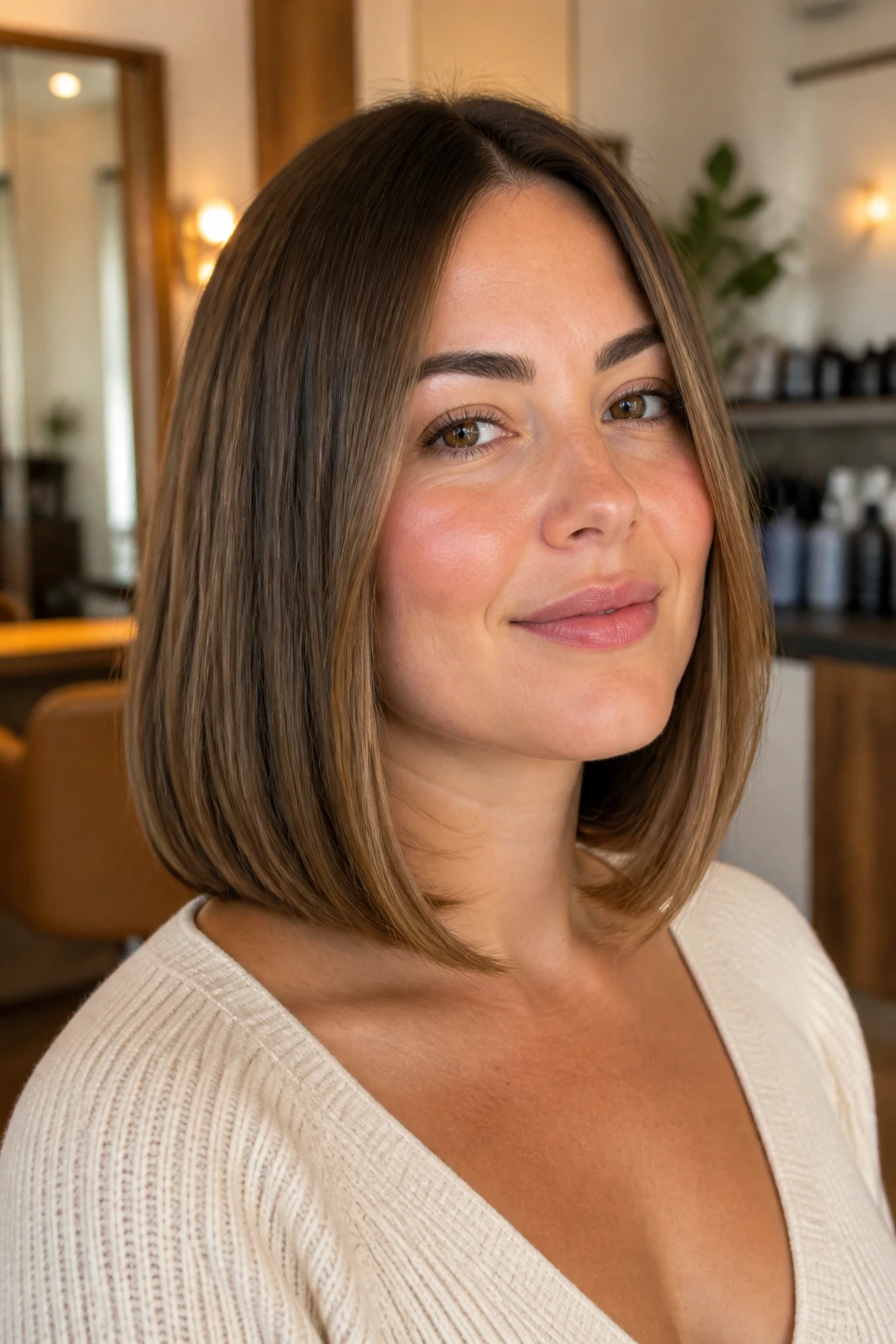
A barely-bent lob keeps the cut straight at the roots and mid-lengths, then adds the tiniest inward or outward bend at the ends. That little movement keeps the hair from hanging like a board, which is especially useful when straight hair is thick enough to feel heavy.
For a round face, the trick is not to bend the ends outward at cheek level. That can widen the silhouette. Keep the bend low, closer to the collarbone. A flat iron or a round brush can do it in seconds.
This is the cut I’d recommend to someone who wants a little life in the shape but doesn’t want waves. Just a hint. Enough to stop the line from going dead.
25. Airy Collarbone Lob with Long Curtain Fringe

The last cut on the list pulls a few of the best ideas together: collarbone length, light internal movement, and a long curtain fringe that opens the face at the center. On straight hair, that fringe falls cleanly and blends into the rest of the cut without much effort. On a round face, it gives you length where you need it and softness where you want it.
Why this one closes the list well
It works from every angle. The perimeter stays low enough to avoid the cheekbones, the fringe breaks the face in the middle, and the straight texture keeps the whole thing looking neat instead of overdone. If you want one lob that can go from office to weekend without changing shape, this is a strong finalist.
The only real rule is to keep the curtain pieces long. Short fringe pieces can widen the face faster than they help. Long ones fall better. Always do better.
Why Long Bobs Suit Straight Hair So Well
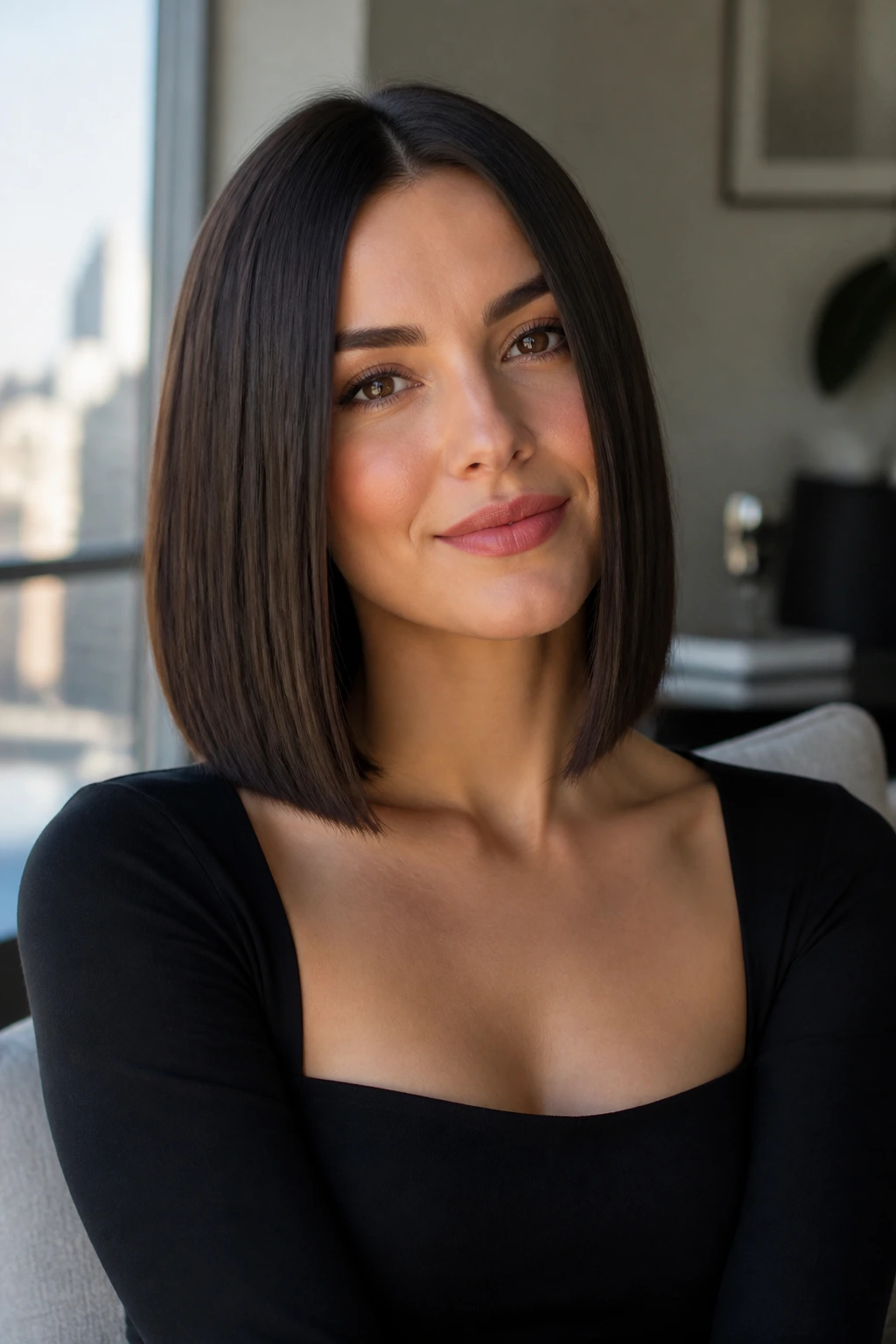
Straight hair and a lob have a friendly relationship when the cut is precise. Straight strands show the actual perimeter, which means blunt ends, soft angles, and controlled layering read clearly instead of disappearing. That’s useful on a round face because the haircut can create a visual line that travels downward, not sideways.
There’s another reason this pairing works: straight hair is easier to weigh down in the right places. A collarbone lob with a smooth edge can sit close to the face without puffing out around the cheeks. That makes the haircut look cleaner and, frankly, more expensive. Not because it costs more, but because it looks deliberate.
The worst thing you can do to straight hair is leave the shape vague. If the perimeter is soft, the layers are random, and the part is indecisive, the haircut reads flat. Or wide. Sometimes both. A long bob gives straight hair a target.
How to Pick the Right Lob Length for a Round Face
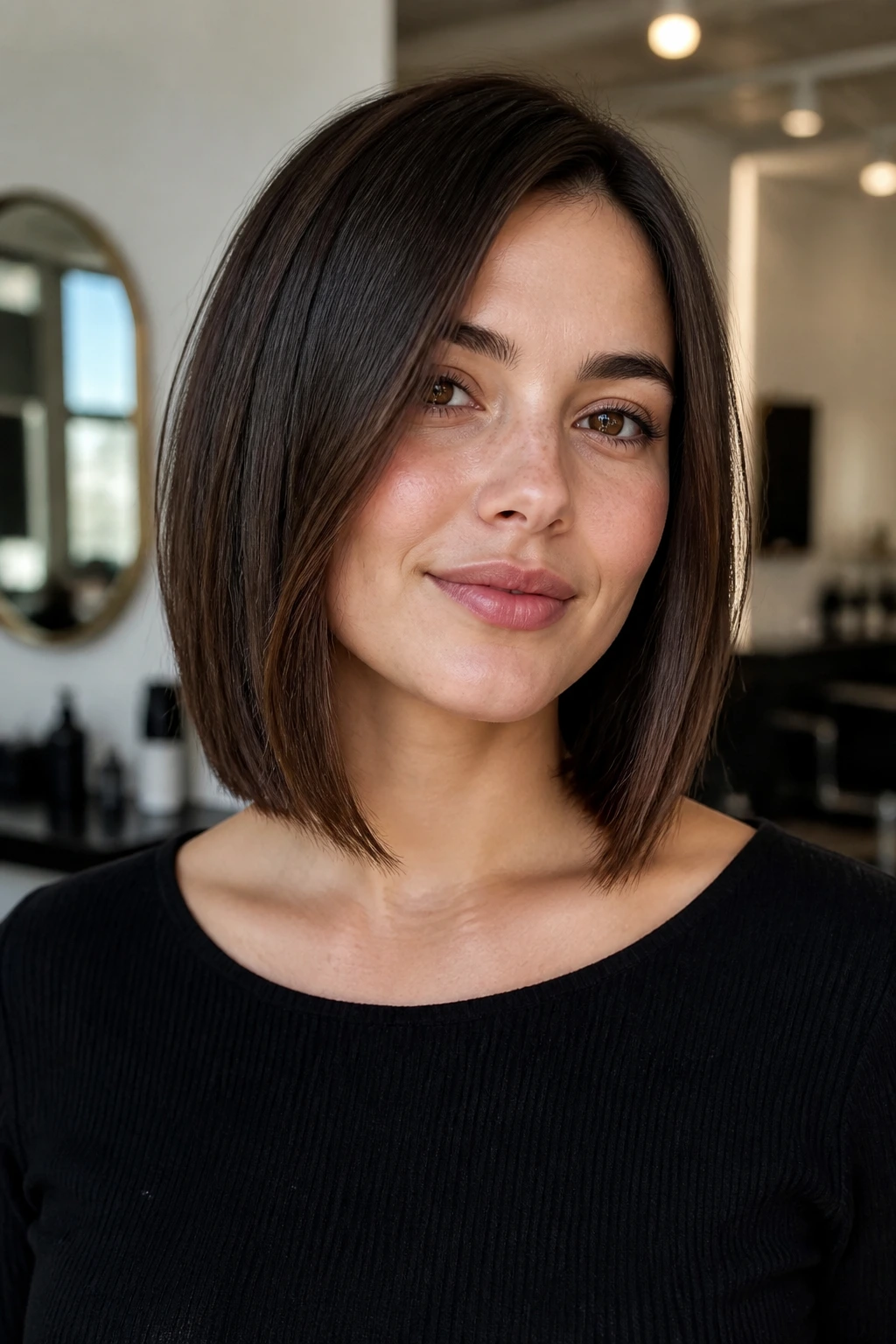
Length placement is the part that decides whether a lob flatters a round face or fights it. The safest zone is usually just below the chin and above the collarbone, or right at the collarbone itself. That puts the line below the cheek’s widest point without making the haircut drag downward.
If your face is very round, the front pieces should usually go longer than the shortest point in the back. That doesn’t mean dramatic angles. It means enough difference that the eye follows a soft diagonal. A sharp chin-length bob, by contrast, can stop the eye right where the face is widest. No thank you.
If Your Hair Is Fine
Go blunt or nearly blunt. Fine straight hair loses shape fast, and layers can make it look thinner. A one-length lob at the collarbone gives the illusion of density.
If Your Hair Is Thick
Ask for a clean perimeter with hidden weight removal underneath. Thick hair needs enough structure to avoid blooming out at the sides. You want movement, not bulk.
If Your Face Is Especially Full in the Cheeks
Keep the front pieces longer than you think you need. The line should skim past the cheekbones and move toward the jaw or collarbone. That extra length changes the whole read.
Tools and Products That Make Straight Hair Behave
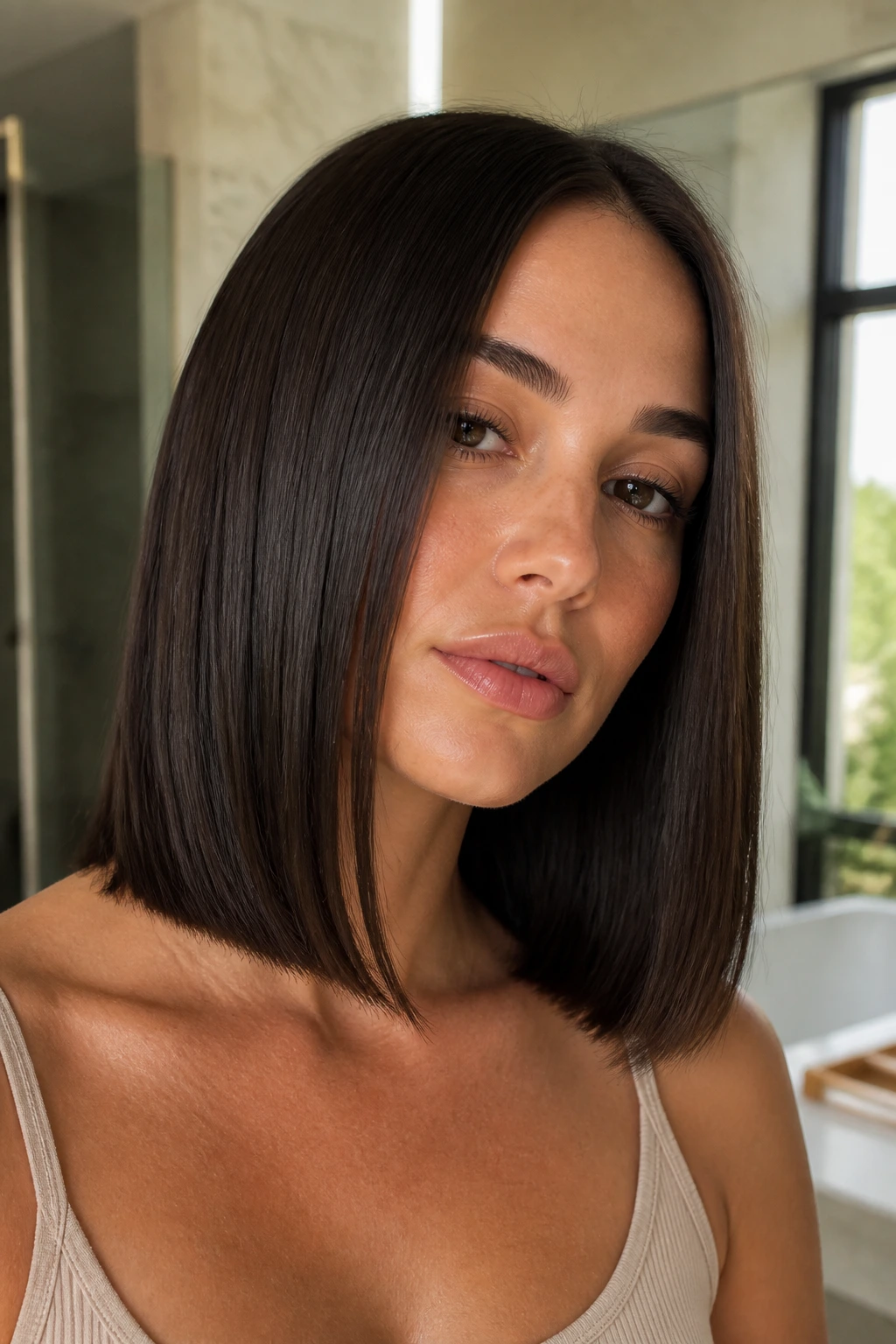
- Blow dryer with a concentrator nozzle: It keeps the airflow focused so the cuticle lays flatter and the lob looks smoother.
- Paddle brush: Best for straightening the mid-lengths without adding too much roundness at the ends.
- 1-inch flat iron: Useful for tiny bends, edge polishing, or fixing a stubborn flip at the collarbone.
- Heat protectant spray: Use it every time you heat style. Dermatology groups and salon pros keep repeating the same advice for a reason.
- Lightweight smoothing cream: Good for frizz control on straight hair that still gets fuzzy near the ends.
- Root-lifting spray or mousse: Apply at the crown, not the sides, if you need height without width.
- Dry shampoo: Helpful on day two when the roots start collapsing and the lob needs a reset.
- Sectioning clips: They make blow-drying faster and keep the front pieces from getting forgotten.
- Microfiber towel: A regular bath towel can rough up straight hair and make the ends fray before you even start styling.
How to Ask for the Cut at the Salon

“Long bob” can mean too many things. That phrase alone is not enough. Bring two or three photos that show the front, the side, and the back if you can. Straight hair needs visual proof because small differences in angle change the result a lot.
Use plain words. Tell the stylist where you want the ends to sit — chin, collarbone, shoulder — and whether you want the line blunt, slightly angled, or softly layered. If you have a round face, say you want to keep the volume away from the cheeks. That sentence matters.
You can also ask for this, almost word for word: “Keep the front pieces longer than the cheekbone, avoid heavy width at the jaw, and don’t stack too much volume at the sides.” That’s specific enough to be useful and vague enough to leave room for a professional to adjust it to your hair density.
Styling Moves That Keep the Face Looking Longer
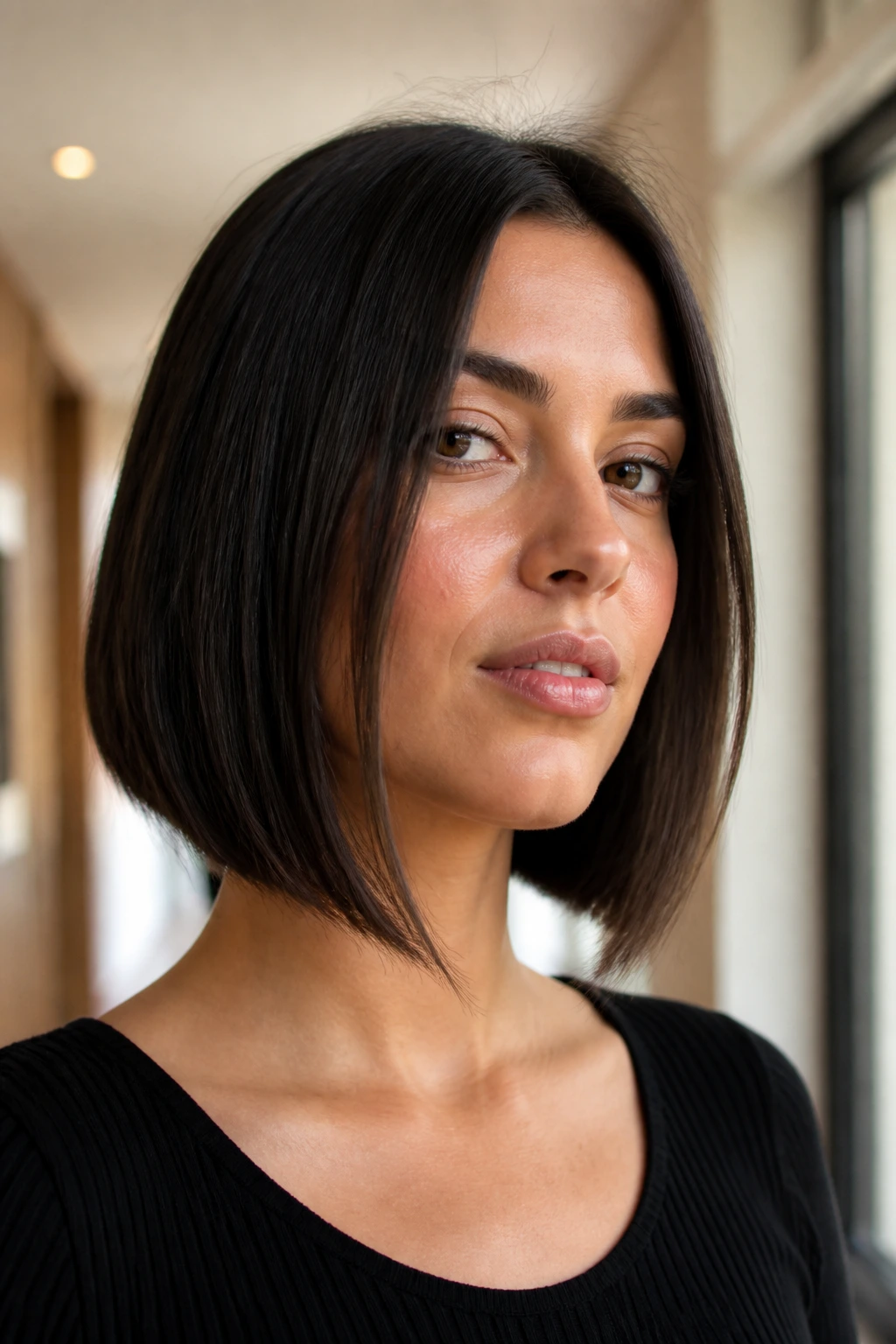
Parting: A slightly off-center or deep side part is the quickest way to stretch a round face. A dead-center part can work too, but only when the front pieces are long enough to create vertical lines beside the face.
Root Lift: Lift at the crown, not at the sides. Side volume can make the face look wider. Crown height opens the silhouette without adding bulk near the cheeks.
Ends: Keep the ends polished and low. A tiny inward bend at the collarbone is fine. A strong outward flip at the jaw is not. That’s one of those small details that changes the whole shape.
Finish: Use a light serum or cream on the mid-lengths and ends, not the root. Straight hair looks best when it has shine but still moves. A glossy finish should not turn greasy.
Common Mistakes That Make a Lob Look Wider
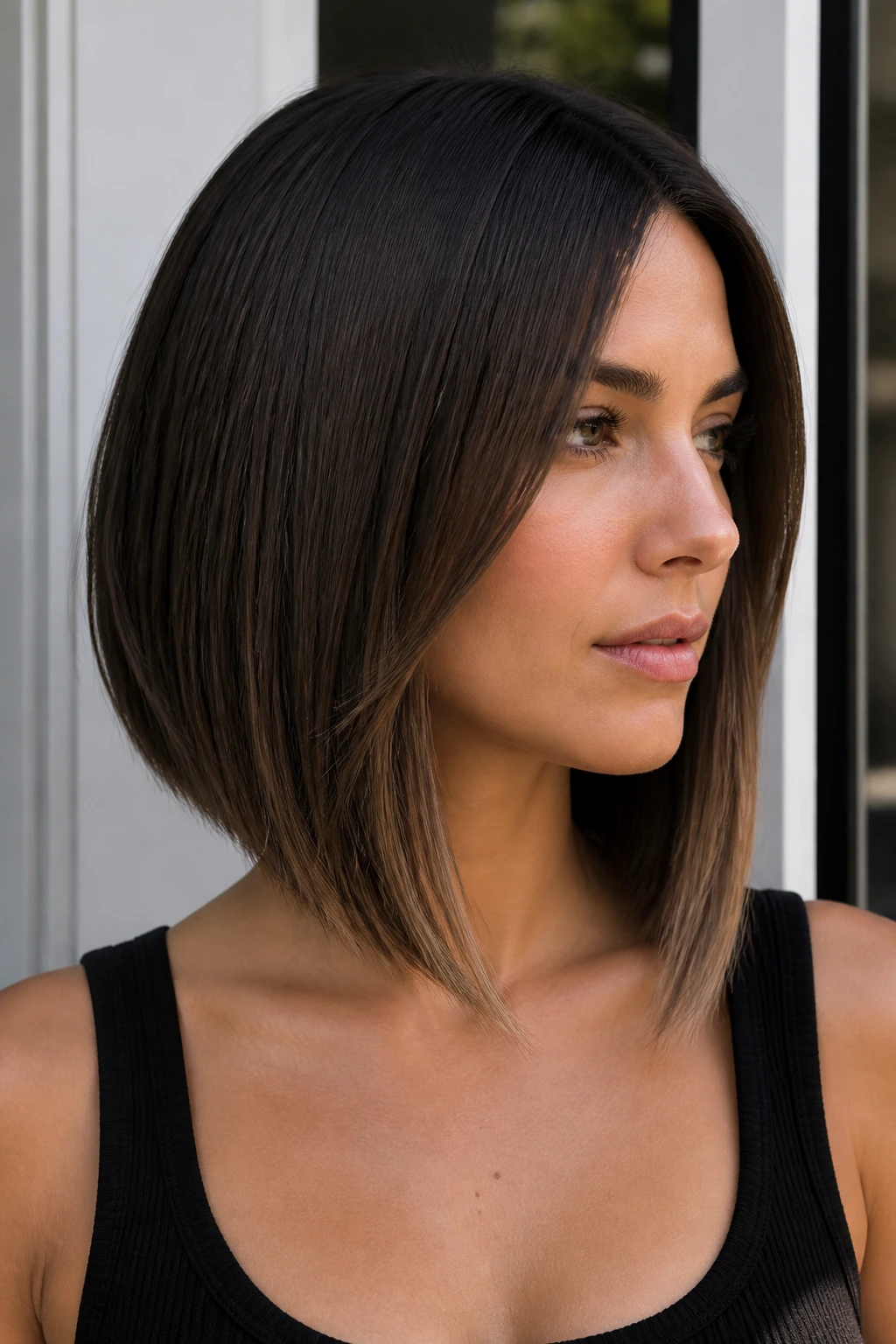
The biggest mistake is cutting the lob too short. Chin length can look cute on some faces, but on a round face it often stops too early and adds width where you already have plenty. The fix is boring but true: let the length pass the jaw.
A second mistake is piling layers or texture right around the cheeks. That creates a halo effect at the widest part of the face. Start layers lower, or keep them hidden underneath.
Heavy side volume is another one. People often try to create lift everywhere, then wonder why the cut feels rounder. Lift the crown instead. Leave the sides cleaner.
Skipping trims causes its own trouble. Straight ends start to splay when they grow too long, and a nice lob can turn boxy fast. Trim the shape before it goes fuzzy.
Variations and Adaptations to Try
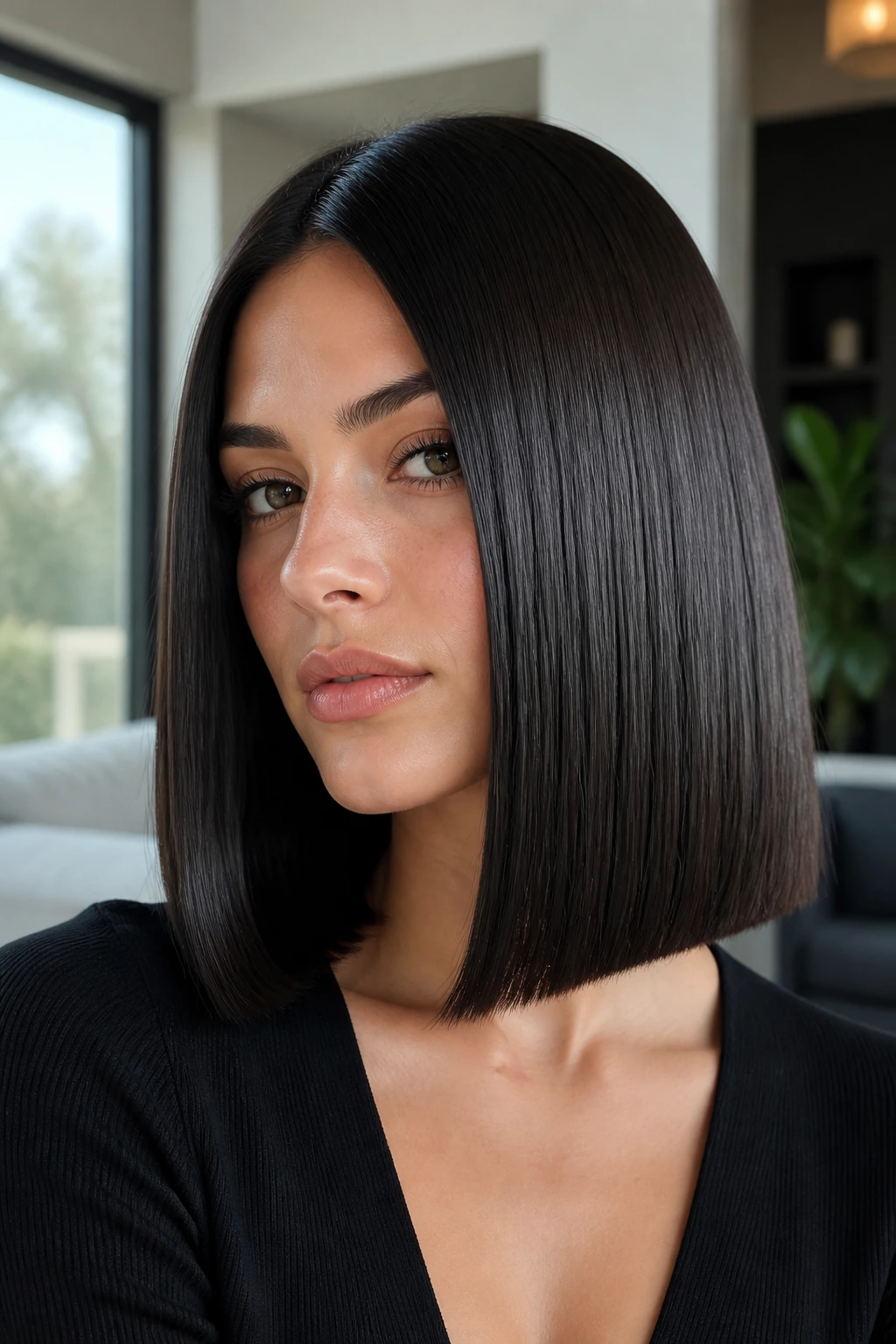
Fine-Hair Version: Keep the line blunt and avoid heavy layering. Fine straight hair needs the visual weight of a solid edge, especially at collarbone length.
Thick-Hair Version: Ask for internal debulking and a slightly longer front. That keeps the sides from ballooning while still giving the hair enough movement.
Bang-Friendly Version: Curtain bangs or long side-swept bangs are the safest fringe choices for a round face. They add shape without chopping the face horizontally.
Low-Heat Version: Choose a lob with a clean perimeter and minimal layering so it still looks good when air-dried. A little smoothing cream is enough for many straight textures.
Sleek Glam Version: Pair a one-length or angled lob with a flat iron and a strong shine finish. This is the version that looks sharp with a blazer, lipstick, and no extra fuss.
Softly Textured Version: Use a tiny bend at the ends and a whisper of piecey texture through the bottom third. Keep it low. Too much texture at the cheeks pulls the face wider.
Trims, Wash Days, and Day-Two Wear
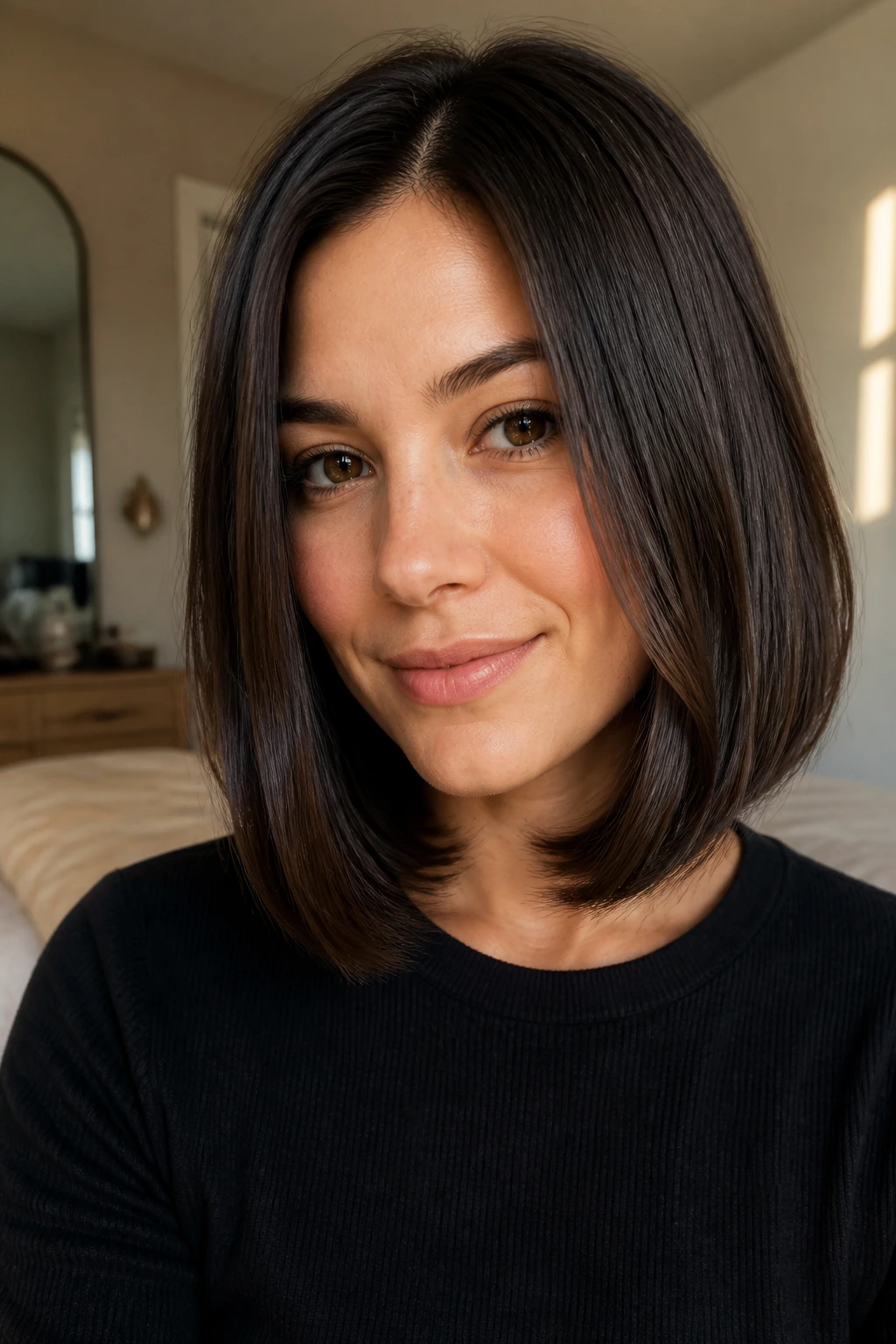
A blunt lob on straight hair usually needs a trim every 6 to 8 weeks if you want the line to stay crisp. A softer, layered version can stretch to 8 or 10 weeks, but once the ends start flipping in different directions, the shape is gone.
Day one is usually the cleanest. Day two can still look good if you use dry shampoo at the roots and smooth the front pieces with a flat iron or a round brush. The trick is not to overload the ends with product. Straight hair shows that immediately.
If you heat style often, use heat protectant every time. Not once in a while. Every time. That isn’t me being fussy; it’s the plainest way to keep the ends from getting dry and frayed. Sleep on a silk or satin pillowcase if you can. It cuts down on the little bends that make straight hair look messy by morning.
Frequently Asked Questions About Long Bobs for Straight Hair and Round Faces

What length of lob is most flattering on a round face?
The safest place is usually the collarbone or a little below it. That keeps the line under the cheeks and gives the face more vertical space. Chin-length lobs are the ones I’d treat with caution.
Is a blunt lob better than a layered lob for straight hair?
Usually, yes, if your hair is fine or medium. A blunt edge makes straight hair look fuller and cleaner. If your hair is thick, a few hidden internal layers can help the shape sit flatter without looking bulky.
Should round faces avoid a center part?
Not automatically. A center part can work if the front pieces are long enough to fall past the cheekbones. If the hair is shorter or the cheeks are very full, a slight off-center part often feels softer.
Do bangs make a round face look wider?
Short, heavy bangs can. Curtain bangs, wispy fringe, and side-swept bangs usually work better because they add a vertical break rather than a hard horizontal line. The length of the fringe matters as much as the type.
Can a long bob work without heat styling?
Yes, if the haircut is built for straight hair. Ask for a clean perimeter, minimal layers, and front pieces that fall below the cheekbone. Air-drying works much better when the cut is already doing the right thing.
How often should I trim a lob?
Every 6 to 8 weeks if the line is blunt and sharp, a little longer if the cut is softer. Straight hair shows blunt ends, so once they start fraying, the whole style looks tired fast.
What if my lob flips out at the ends?
That usually means the cut is a little too short, too blunt at the wrong angle, or not styled with enough directional drying. Blow the ends downward with a nozzle, use a flat iron for a tiny inward bend, and keep the length past the jaw.
Is a lob good if my face is very round?
Yes, but go longer and cleaner. Keep the front pieces below the widest part of the cheeks, and avoid adding puff at the sides. A collarbone lob with a soft side part is often safer than a chin-length shape.
What should I show my stylist?
Bring photos that show the side profile as well as the front. Then point out where you want the ends to sit and whether you want blunt, angled, or softly layered edges. Verbal descriptions help, but pictures keep everyone honest.
The Shape That Keeps Doing the Work
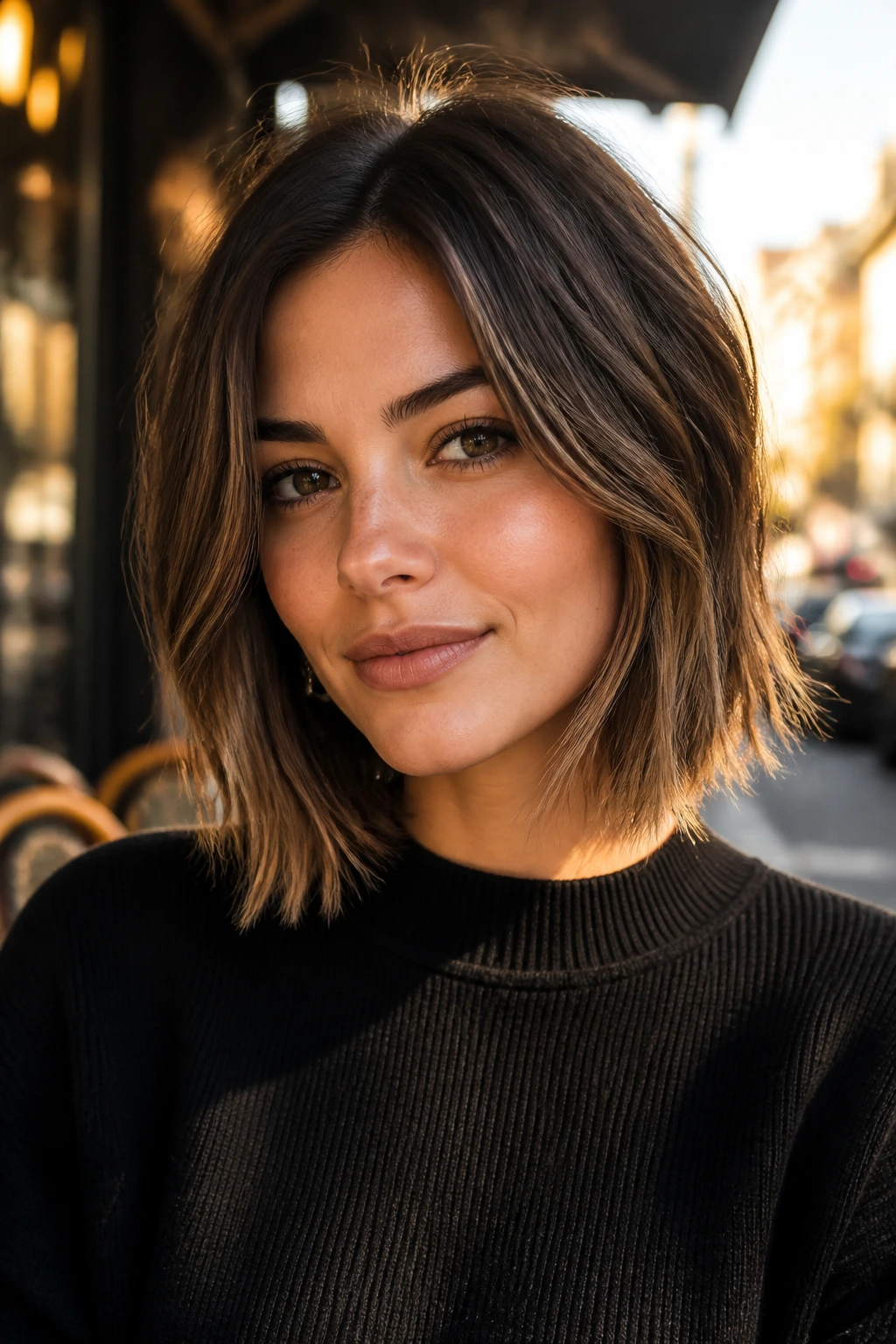
A good lob on straight hair does not need a gimmick. It needs placement, clean edges, and enough length to sit past the face’s widest point. That’s what keeps these cuts useful. They don’t just look nice in a salon mirror. They keep behaving when you tuck one side back, skip a wash, or let them air-dry on a rushed morning.
The best part is that there isn’t only one version that works. Some people need blunt weight. Some need a side part. Some need long curtain bangs or a little angle in front. The common thread is the same: the haircut should pull the eye downward, not push it sideways.
If you keep that one rule in mind, the rest gets easier. And the lob stops feeling like a safe compromise — it starts looking like the cut that was always supposed to be there.