



A fine-hair lob can go wrong in two annoying ways: too much length, and the ends start to look see-through; too little shape, and the whole thing sits there like a flat sheet. The best airy lobs for women over 40 with fine hair avoid both traps. They keep enough weight at the perimeter to look full, then add movement where the hair actually needs it.
That matters more than people admit. Hair can get a little less dense at the part, around the temples, and through the ends over time, and the wrong cut makes every one of those changes look louder than it is. A collarbone-grazing lob, with the right amount of layering and the right amount of restraint, can make fine hair look calmer, thicker, and easier to live with. Not bigger. Better shaped.
There’s a sweet spot here, and it’s not mysterious. You want a cut that still looks decent when you air-dry it, still behaves after a five-minute blowout, and still has enough line left in it after six weeks that you don’t feel like you need to hide it under a clip. That sweet spot comes in a surprising number of forms, and the 25 looks below cover the ones I trust most.
Why These Lobs Earn Their Keep
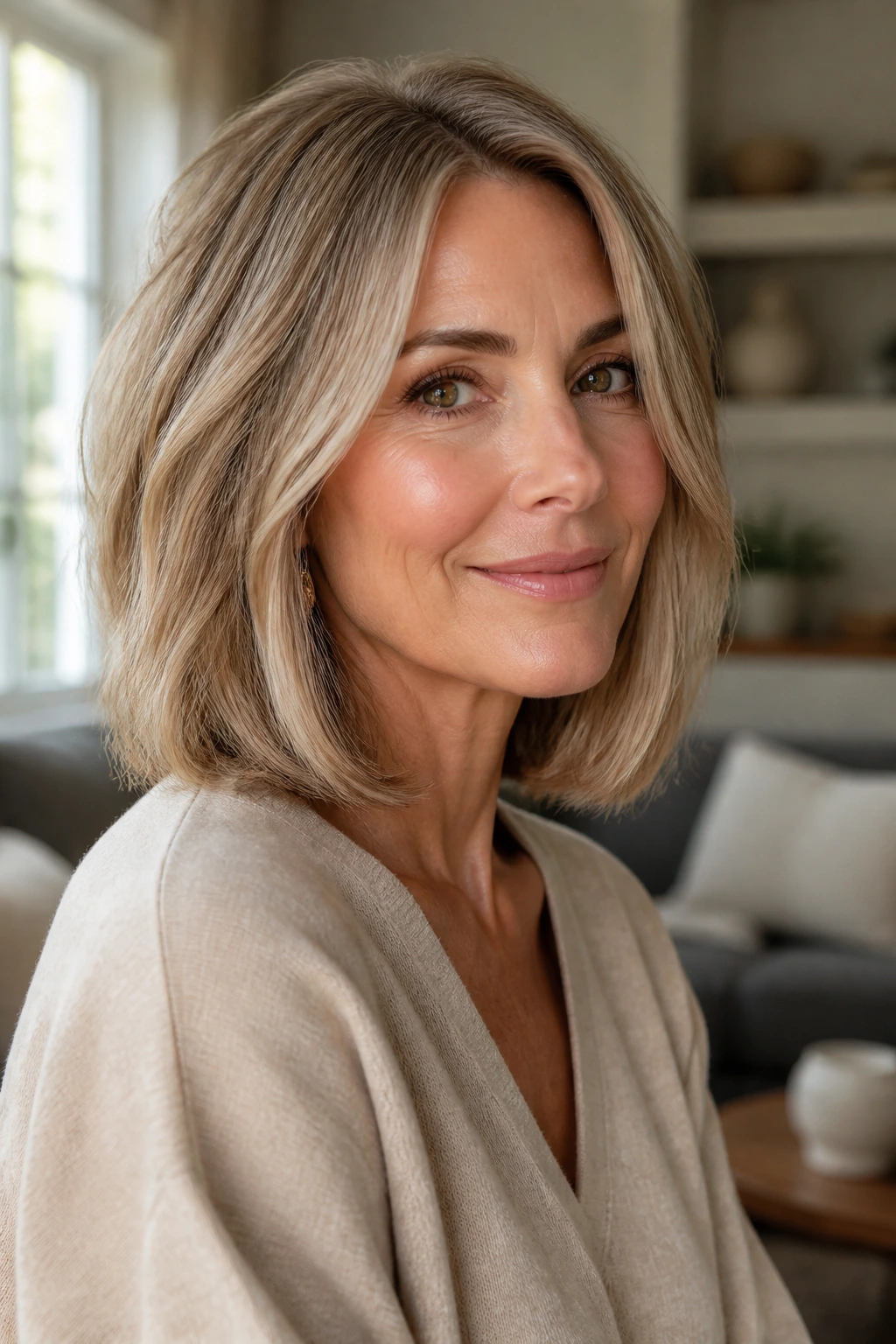
- They hold a fuller-looking edge: A collarbone length keeps the ends from thinning out into wisps the way longer fine hair often does.
- They give you shape without drama: The cut lands in that useful middle zone where hair can tuck, bend, wave, or swing without needing a daily styling ritual.
- They work with changing texture: If your hair has gotten finer, straighter, or a little more stubborn at the roots, a lob can handle that shift without fighting it.
- They play nicely with glasses and earrings: The length sits below the jaw and usually leaves enough room around the face to keep things open.
- They grow out cleanly: A good lob still looks like a haircut after several weeks, not a compromise you’re counting the days to replace.
- They’re easy to personalize: A side part, a fringe, a sharper edge, or a softer bend can change the whole mood without changing the length.
1. Feathered Collarbone Lob
A feathered collarbone lob is what I recommend when fine hair needs movement, but not too much haircut. The length sits right at the collarbone, where hair still has enough weight to look substantial, and the ends get just enough feathering to stop them from hanging stiffly.
Why it works
The trick is restraint. Ask for a blunt-ish perimeter with soft feathering only through the last inch or so, not a heavily layered chop that removes density. That keeps the outline clean while letting the ends move when you turn your head or tuck one side back.
A feathered finish also softens the face without stealing bulk from the sides. If your hair tends to collapse at the ends, this cut gives you a little bend and lift without making the shape fluffy.
Best for: straight to slightly wavy hair that needs a little motion.
Styling cue: blow-dry with a round brush, then twist the ends once while they’re still warm.
Watch for: too much thinning at the bottom; that’s how the ends start looking tired.
2. Side-Swept Volume Lob
A deep side part changes the whole story. Same length, same hair, different silhouette. The sweep creates lift at the crown and makes fine hair read as fuller before you’ve even picked up a brush.
The cut itself should stay soft and shoulder-skimming, but the part does the heavy lifting. I like this one for anyone who wants a little more presence around the eyes and cheekbones without adding obvious layers.
This lob is especially useful if your hair falls flat on top but still has decent ends. Move the part off-center, lift the roots with a mousse or root spray, and dry the front section away from the face. That tiny shift can make the whole cut look more awake.
3. Soft Razored Lob
Can a razor ruin fine hair? Absolutely, if somebody gets eager with it. Used sparingly, though, a razor gives the ends a light, broken finish that keeps a lob from looking blocky.
The key is where the razor lands. You want it only through the last bit of the perimeter, never hacked through the crown or interior where fine hair already needs help. The result is airy and slightly undone, but still neat enough to wear with a blazer or a plain T-shirt.
This version suits straight or slightly wavy hair that looks best when it has a little edge. If your ends puff out after a blunt cut, this can calm them down. If your hair is fragile or very dry, ask for point cutting instead. Same feel, less stress.
4. Curtain-Bang Lob
Curtain bangs plus a lob can be a very good thing, especially when fine hair around the temples needs a little help. The fringe opens at the center, skims the cheekbones, and blends into the rest of the cut instead of sitting like a heavy wall across the forehead.
The reason it works is simple: curtain bangs create a visual frame without eating up much density. On fine hair, that matters. You get softness around the face, but you don’t lose the clean line that keeps the lob looking full.
If you go this route, keep the bangs light and longer at the sides. Short, chunky curtain bangs can make fine hair look sparse fast. Dry them with a small round brush or a Velcro roller, then let the rest of the lob fall naturally. That little bend near the face does most of the work.
5. Blunt-Air Lob
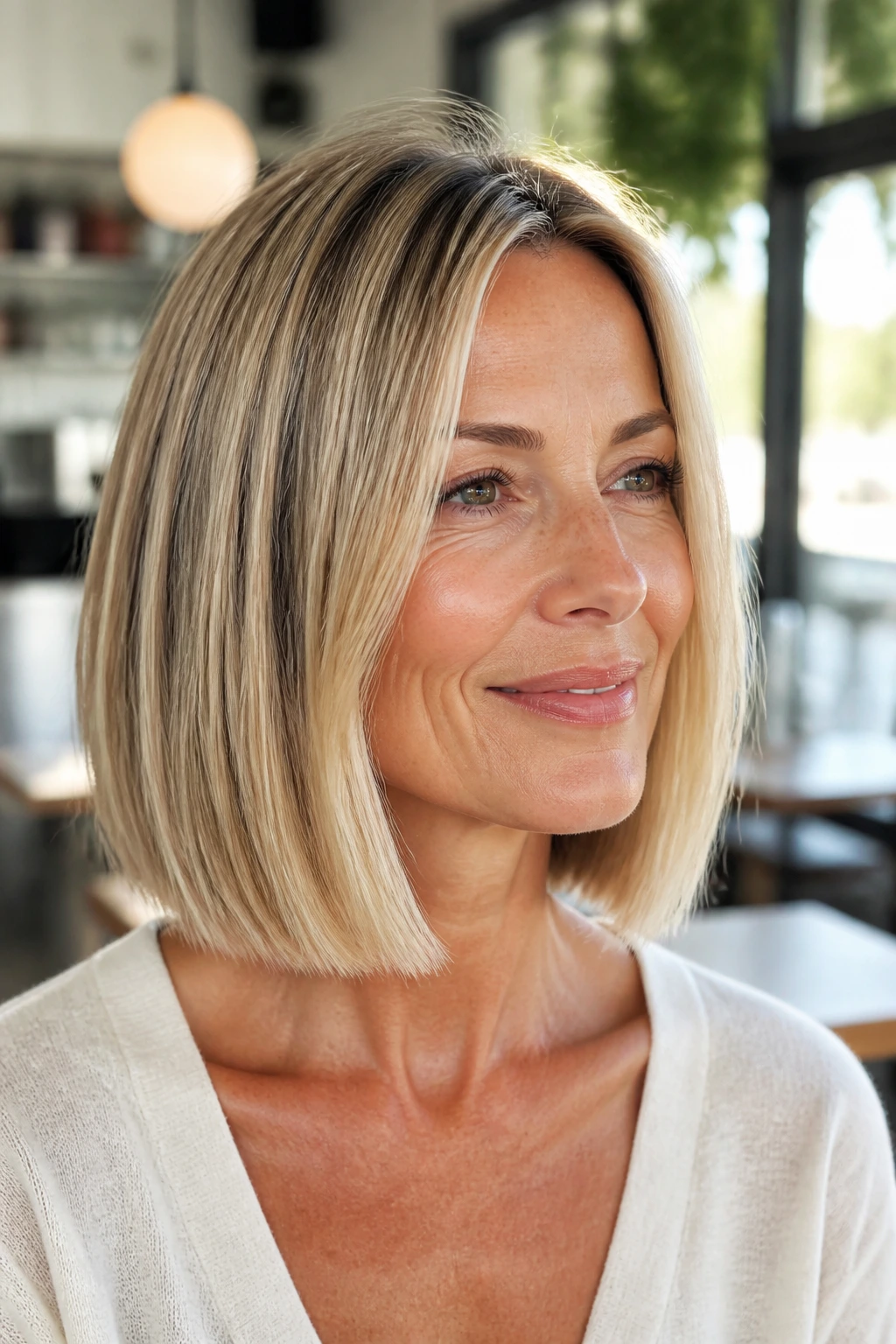
This is the cut I like when someone says, “I want it to look thicker, but I do not want to fool with it every morning.” A blunt-air lob uses a clean perimeter and just enough styling movement to keep it from feeling stiff.
The blunt edge makes fine hair read denser. The airy part comes from the finish: a soft bend at the ends, a little lift at the roots, maybe a side part or a barely-there bevel under the chin. No overlayering. No shaggy ends. Just a precise line with some life in it.
It’s a strong choice if your hair is naturally straight or close to it. A quick blow-dry with a nozzle, a round brush at the ends, and a touch of flexible spray is usually enough. If you like crisp, polished hair that still moves, this one earns its place.
6. Invisible-Layer Lob
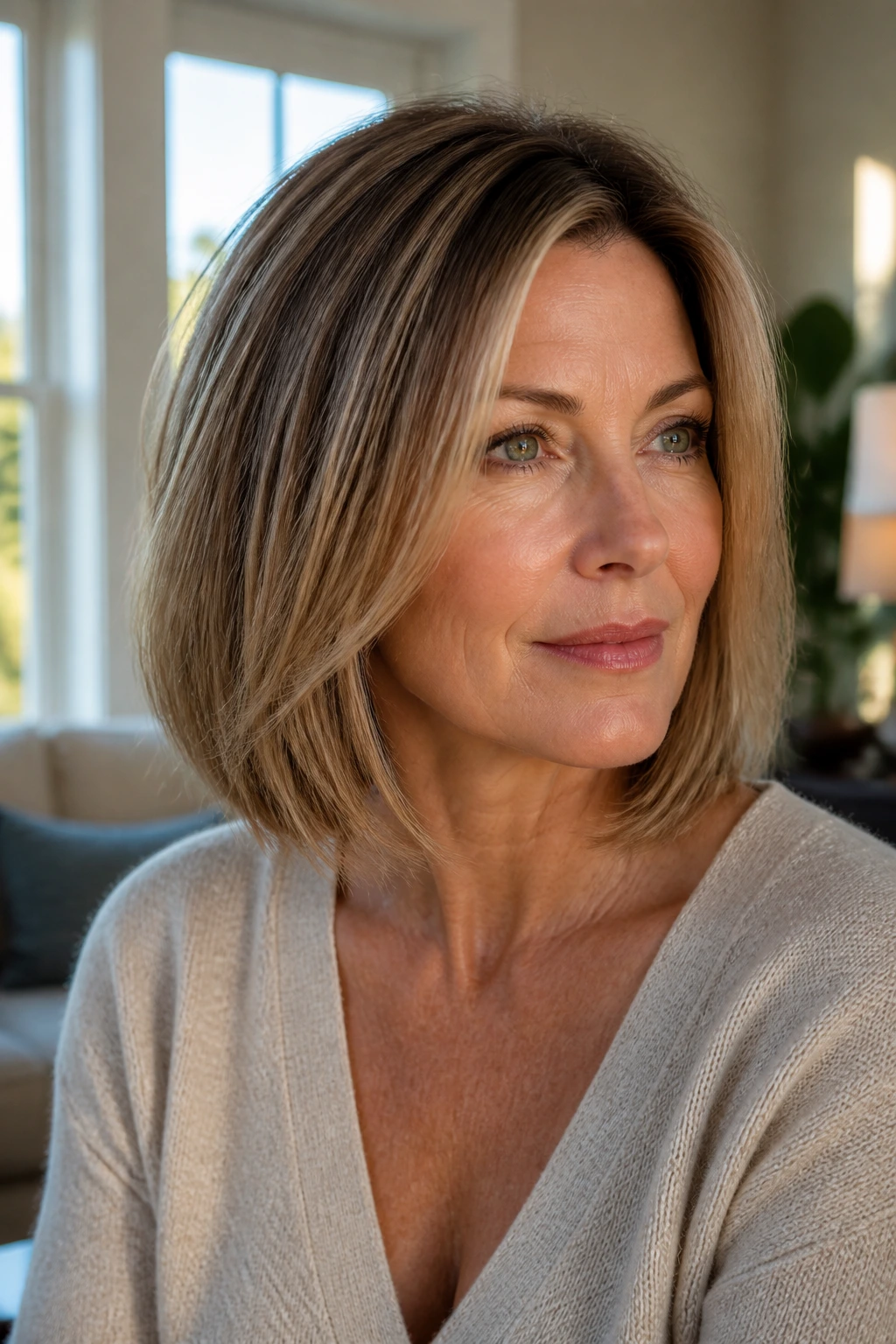
Invisible layers are the quiet workers of the lob world. You don’t see them screaming for attention, and that’s the point. They sit inside the haircut, just enough to stop the crown from lying like a board.
What you keep is the perimeter. What you remove is only a little weight in the interior so the top doesn’t collapse. Fine hair often looks best when the outline stays solid and the internal shape gets the lightest possible adjustment.
This cut is excellent if you want a simple shape that still has a bit of bounce when you walk. It also behaves well in a ponytail or clip because the front pieces don’t look choppy. Ask your stylist to keep the lowest layers long and soft. Too many short internal layers turn a fine-hair lob into a nervous little puff.
7. Wavy Center-Part Lob

A center part can be risky on fine hair if the cut is too long or too layered. But on a shoulder-skimming lob with soft waves, it gives a clean, modern line that can look surprisingly full.
The trick is to keep the wave loose and low. Think bends, not curls. If you curl too high up the strand, the shape shrinks and the ends lose their weight. Start the bend around mid-length and leave the last inch straighter so the tips still look solid.
This one works well for oval, heart, and longer faces. The middle part gives balance, and the wave breaks up any flatness around the crown. It’s a good option if you want something that looks styled without looking done to death.
8. Tucked-Behind-Ear Lob
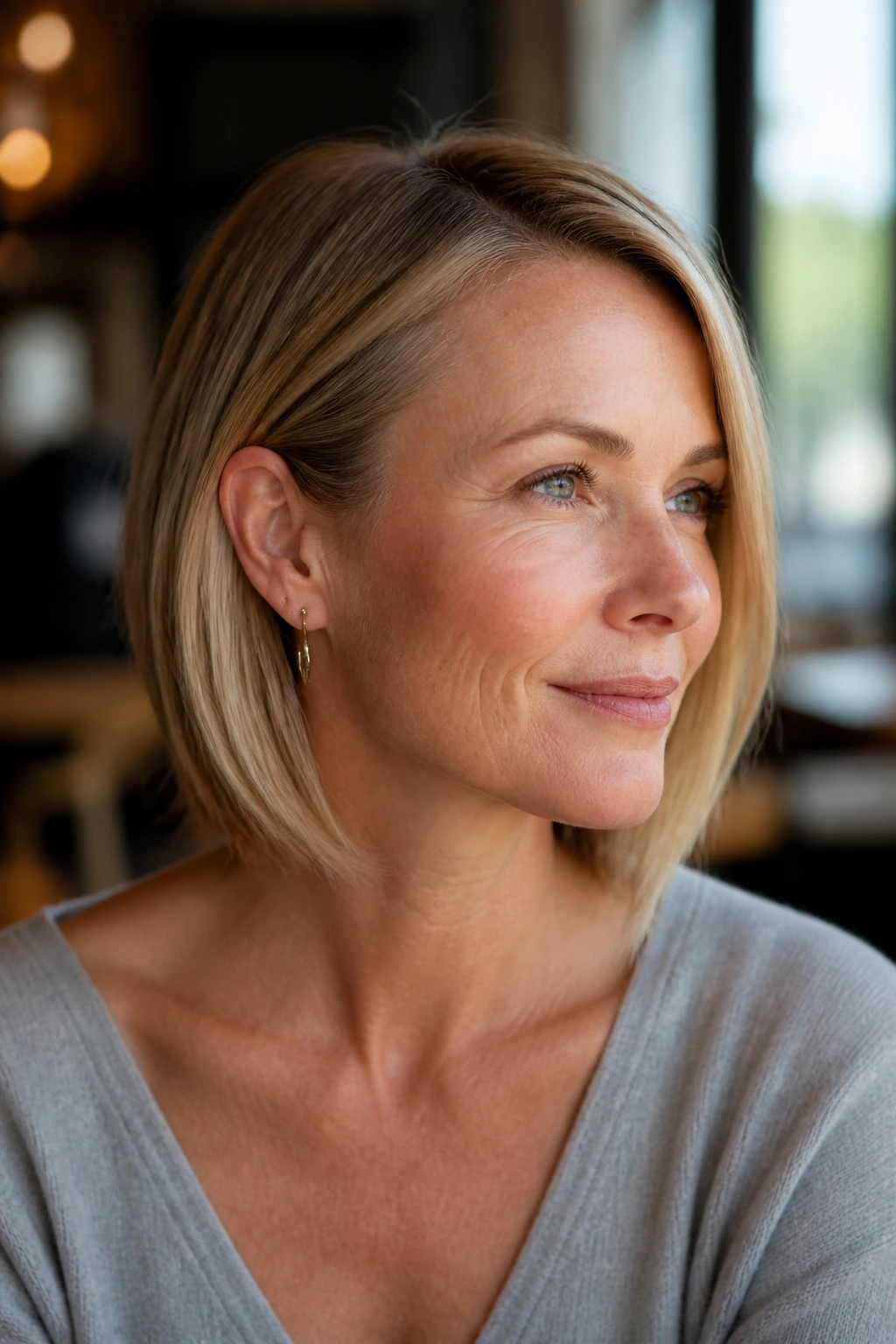
Some cuts are built for hairpins and clips. This one is built for a good tuck.
A tucked-behind-ear lob keeps enough length in front to skim the jaw, but the side sections are light enough to slip behind one ear without creating a strange hump. That’s useful if you wear glasses, big earrings, or just want one side of your face open and the other side soft.
I like this cut because it’s practical without feeling plain. You can wear it sleek, bend the ends under, or let it fall loose and use the tuck as a styling move rather than a habit. Ask for a clean baseline and a little extra softness around the face, not a choppy front section that sticks out when you tuck it.
9. Grown-Out Shag Lob

A full shag can be too much for some fine hair. Too many layers, and the shape starts to fray. A grown-out shag lob keeps the spirit of the shag—movement, soft breakup, a little edge—without the overlayered aftermath.
The length should still sit at or below the collarbone. The layers stay long, the ends stay piecey, and the top gets just enough lift to avoid a flat crown. This works especially well if your hair has a natural bend and you hate forcing it into a sleek shape every day.
It’s the sort of cut that looks better slightly imperfect. That’s the honest appeal. Scrunch it with mousse, rough-dry it, and let the pieces fall where they want. If you want a lob that can look a little lived-in but still polished enough for dinner, this is a safe bet.
10. Slight A-Line Lob
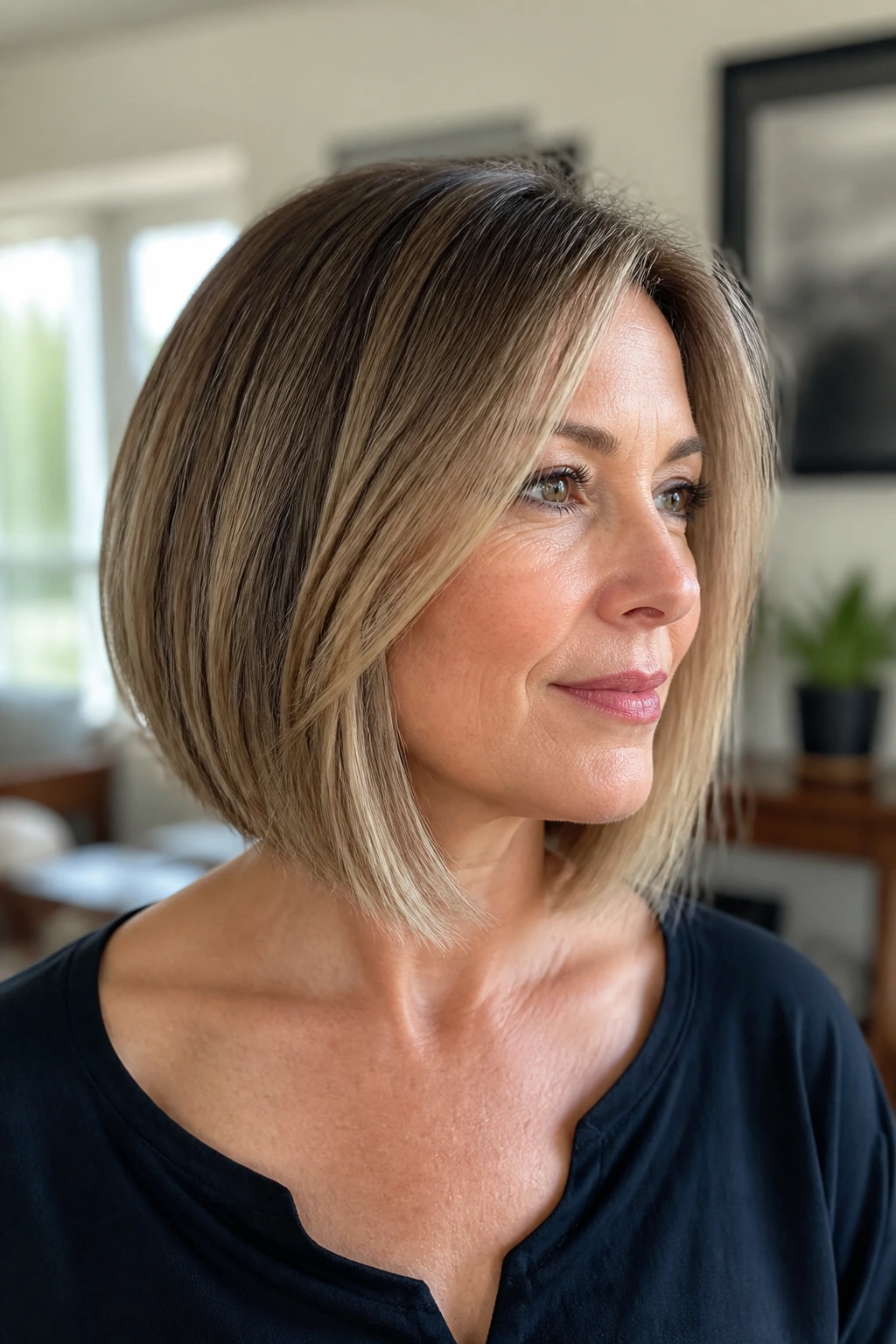
A subtle A-line gives fine hair a smart little trick: the front hangs a touch longer, which makes the face look framed, while the back stays a bit shorter and fuller.
Keep the angle gentle. The dramatic version from years past can look sharp in a way that fights fine hair. A slight A-line is more forgiving. The back gets a clean, compact shape, and the front pieces move a little more freely near the collarbone and jaw.
This cut suits anyone who wants structure more than texture. If your hair loses shape fast, the angle helps it hold a line longer. It also looks good with a side part or a tucked side, which is useful on days when you want the cut to do the talking.
11. Brushed-Out Wave Lob
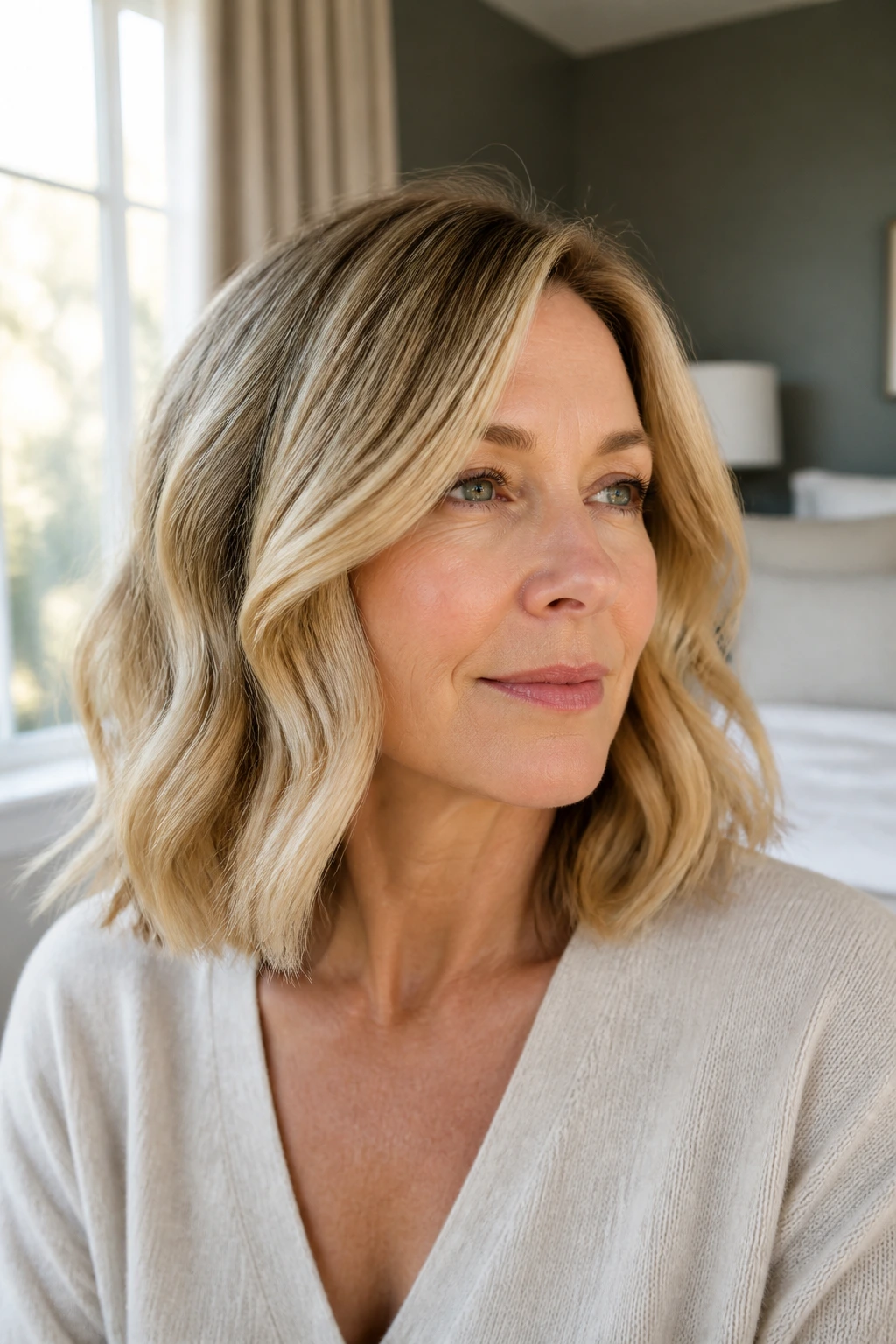
There’s a difference between curled hair and hair that has been waved, brushed out, and allowed to breathe. This lob is the second one.
Start with a 1-inch iron or a flat iron wave technique, but keep the curl loose and leave the ends mostly straight. Once the hair cools, brush it through gently so the bend relaxes into something soft and touchable. Fine hair often looks fuller after brushing out a wave because the strands separate into a wider shape.
This is the lob for people who like movement but don’t want ringlets. It works best when the cut is blunt enough to hold the bottom line, otherwise the wave can make the ends look ragged. A little texturizing spray at the mid-lengths helps, but skip the heavy stuff. Fine hair does not need to be weighed down in the name of texture.
12. Air-Dry Texture Lob

If your hair has even a whisper of natural wave, an air-dry lob can save a lot of time and still look intentional. The length gives the wave some weight, and the right cut keeps it from puffing out at the bottom.
The secret here is not trying to force uniformity. Use a lightweight mousse or foam through damp hair, rake it in with your fingers, then let the hair dry with a side or center part already set. Fine hair often looks better with a little irregularity than with a stiff, perfectly shaped finish.
This style suits anyone who wants the haircut to do most of the work. You may need to smooth the top with a dryer for 2 or 3 minutes, but the rest can live on its own. If your natural texture bends, this is one of the least fussy ways to keep it looking awake.
13. Bottleneck Bang Lob

Bottleneck bangs sit in that useful middle ground between a fringe and face-framing layers. They’re narrower at the center, then soften and widen as they move outward. On a fine-hair lob, they add shape without demanding a thick curtain of hair.
That matters because heavy bangs can steal density from the rest of the cut. Bottleneck bangs keep the forehead soft and the sides light. They also blend into the lob more easily, so the whole haircut feels connected instead of chopped into pieces.
If you wear glasses or have a higher forehead, this one can be especially flattering. Style the bangs with a small round brush, then let the rest of the cut stay slightly bent. You want movement around the face, not a fringe that hangs like a separate section.
14. Sleek Bump-Under Lob
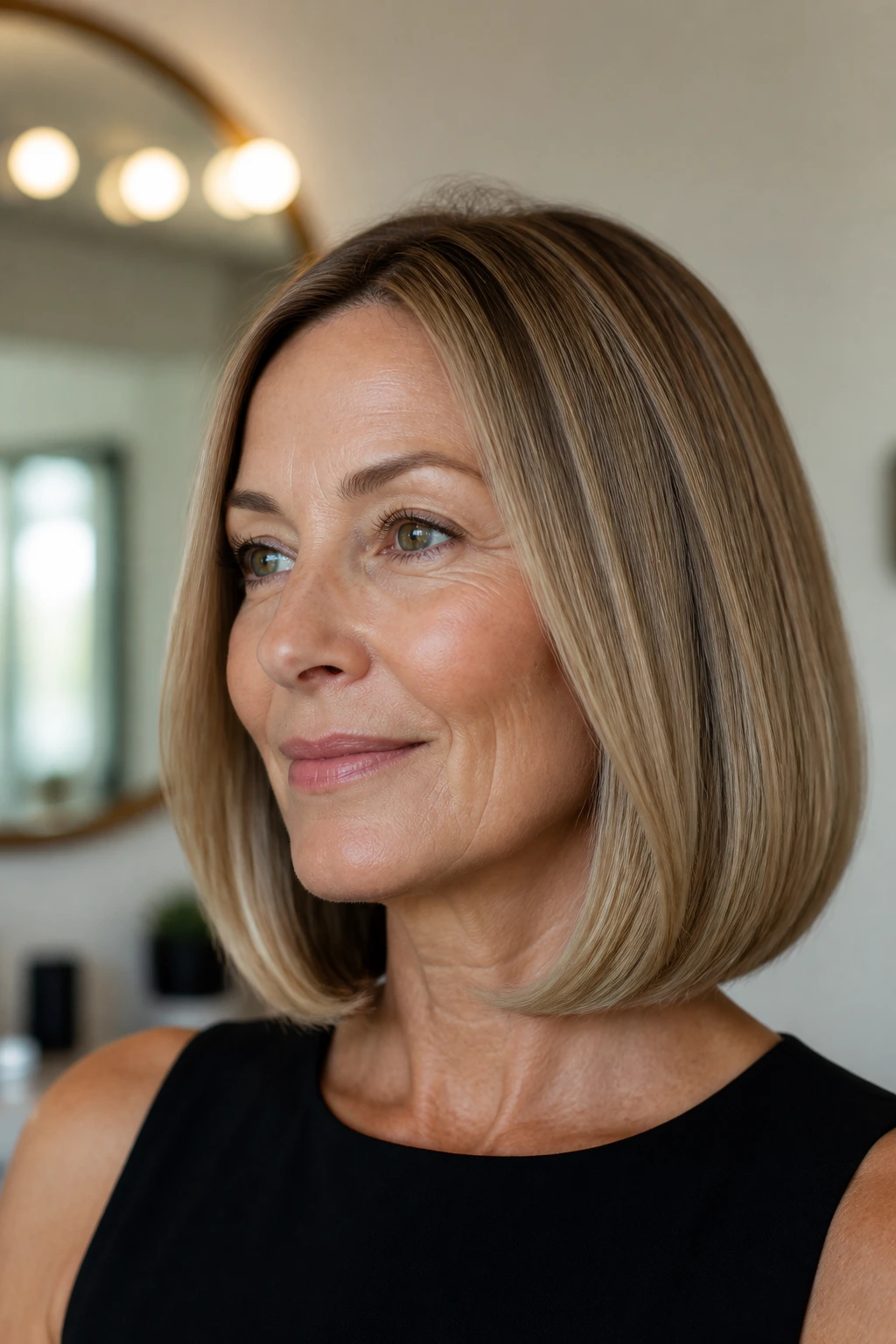
A sleek lob with a gentle bump under the ends has a clean, expensive-looking shape without needing much hair to begin with. The silhouette does a lot: smooth roots, a tidy line, and a soft turn under at the bottom.
This is one of my favorite options for fine hair that tends to frizz at the ends but isn’t especially textured elsewhere. A flat, shiny surface makes the strands read denser, and the under-curved ends keep the cut from looking harsh. Ask your stylist for a blunt baseline with a slight bevel, not a heavily rounded bob.
It’s a good weekday cut if you like order. A boar-bristle brush or round brush, heat protectant, and a flat iron pass at low to medium heat are usually enough. Keep the oil off the roots. Fine hair and too much shine product can start looking greasy before lunch.
15. Chin-Skimming Face-Framing Lob
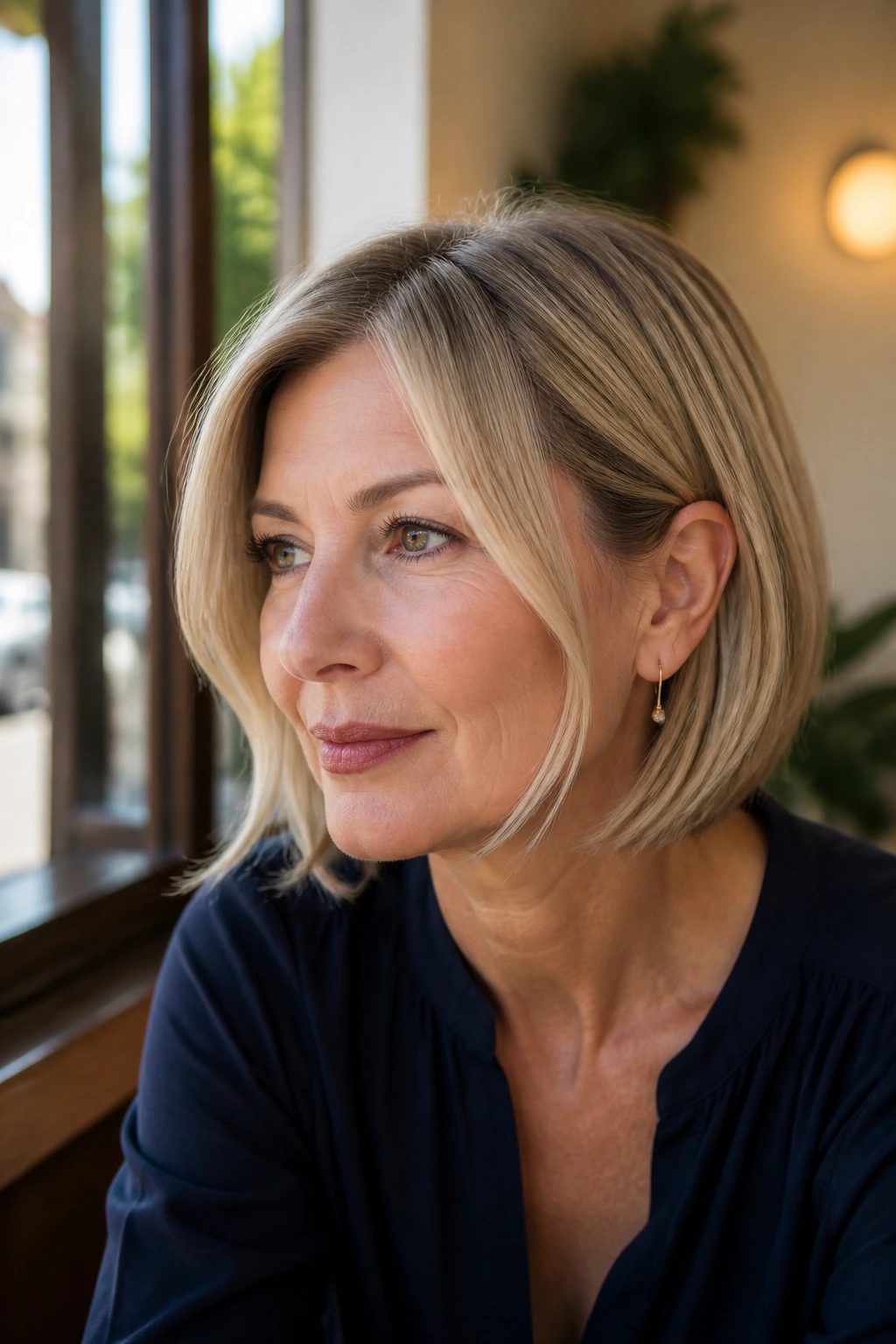
Sometimes the most useful thing a lob can do is carve out the face a little. Chin-skimming pieces do exactly that. They draw attention upward, soften the jawline, and keep the whole cut from feeling boxy.
The face-framing sections should start soft, not abrupt. If they begin too high, they can look stringy. If they begin around lip to chin level and taper gently into the rest of the lob, they give you shape without losing fullness. That balance is the whole game with fine hair.
This style plays well with round or square faces, and it’s nice if you wear your hair behind one ear some of the time. The front can move, the back can stay solid, and the haircut still looks deliberate from every angle. It’s understated, which is often exactly what works.
16. Soft Choppy Lob
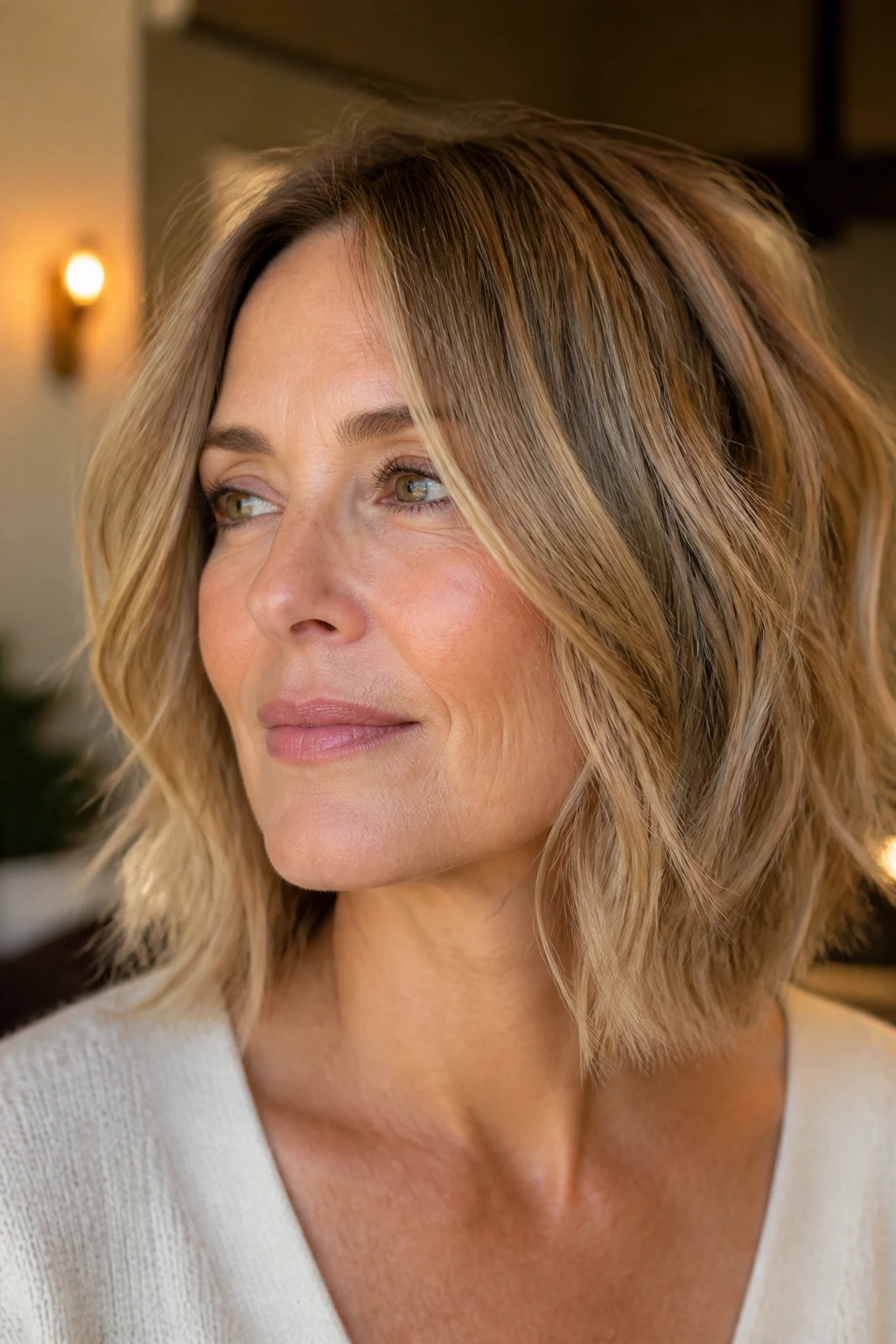
Choppy does not have to mean ragged. On fine hair, the best choppy lob keeps a clean outline and breaks up the ends just enough to add texture.
The cut should feel piecey at the bottom third, not shredded through the whole head. That means a light hand with the scissors and a clear refusal to over-thin the hair. The payoff is a shape that catches a little air and looks less like a curtain.
This one suits people who want some edge in the haircut and do not mind a touch of mess. It looks better with a little dry texture spray or a rough blow-dry than with glossy, pinned-down styling. If your hair tends to lie very flat, the broken-up ends can make it look fuller from a distance.
17. Deep Side-Part Lob
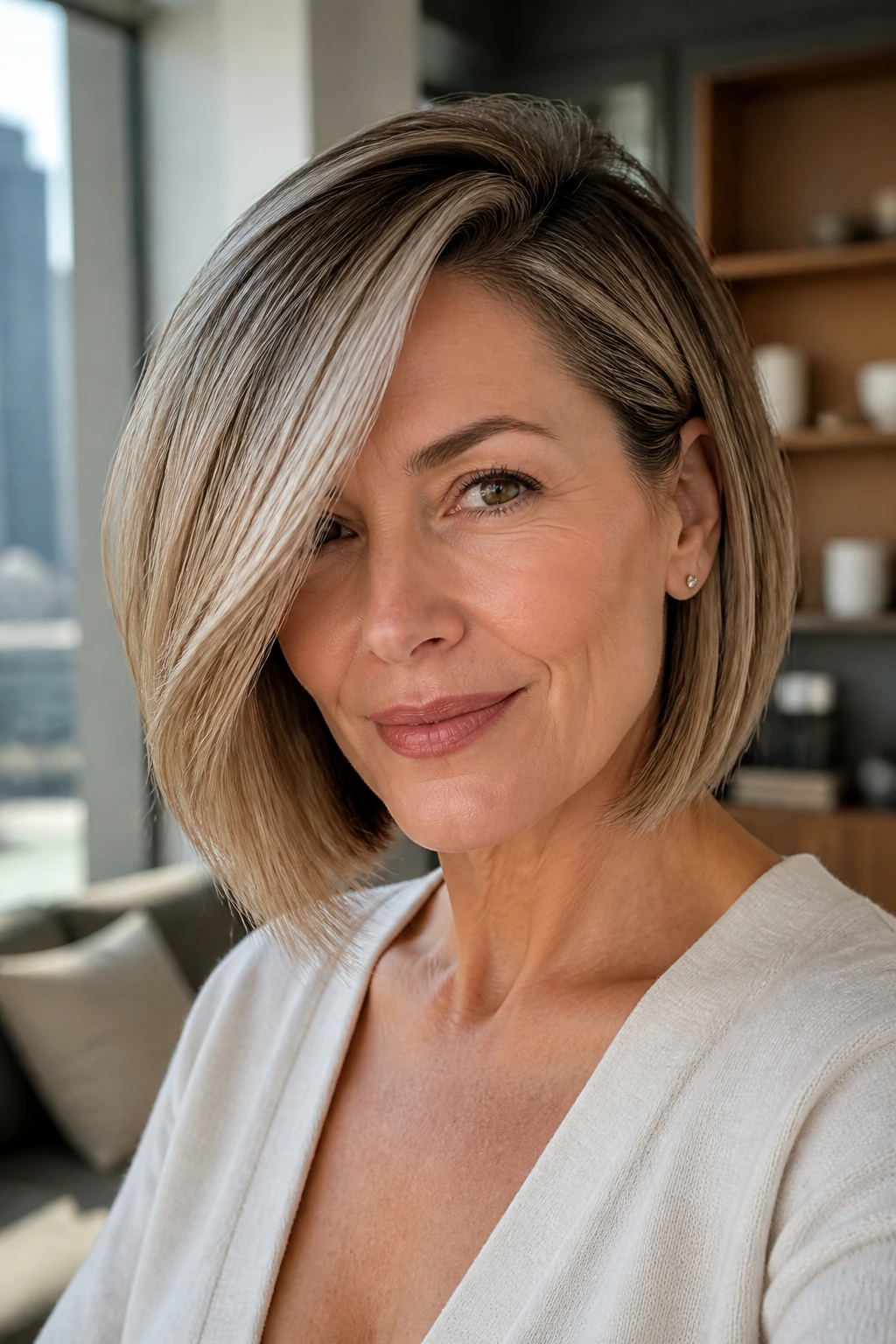
A deep side part gives a lob a little attitude, and that’s useful when fine hair needs the illusion of lift without a lot of extra cutting. The heavier side sweeps across the forehead; the lighter side opens the face.
This style is good if your hair falls flat in the same place every day. Shift the part, give the root a quick blast of heat in the opposite direction, and let the hair cool before you move on. That alone can make the crown look less sleepy.
It also works nicely for special occasions because the asymmetry feels intentional. One side can tuck back, the other can fall forward, and the whole look reads as styled without much effort. If you like a little drama but not a lot of hair, this is a tidy compromise.
18. Glossy Straight Lob
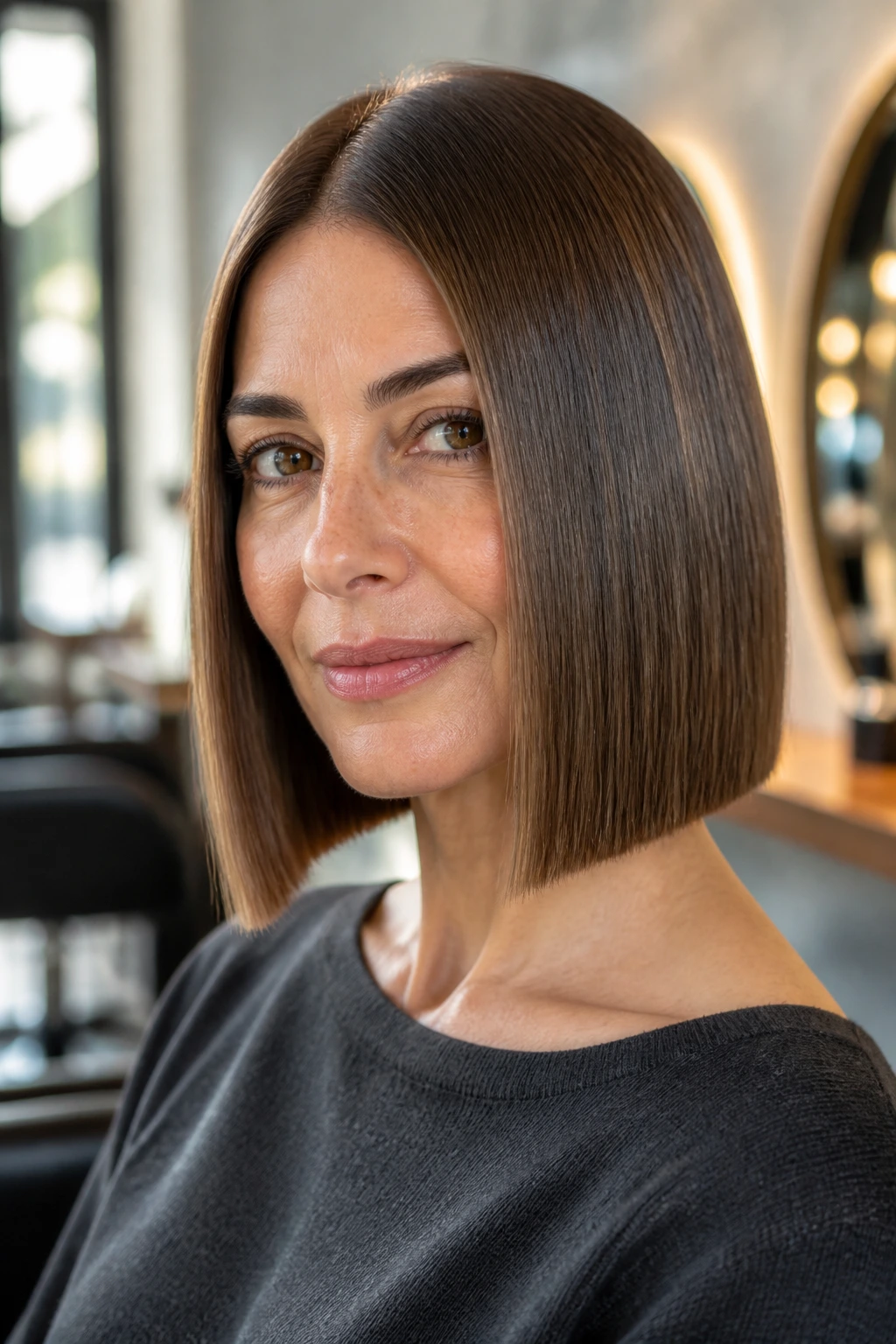
Straight hair gets a bad reputation for looking limp, but a glossy straight lob can look dense in a way loose layers never will. The shine helps, sure, but the main thing is the sharp shape.
Keep the perimeter blunt and the line clean. A center or slightly off-center part works well. If the ends are bevelled too much, the silhouette starts to lose weight, and fine hair needs all the visual mass it can get. A flat iron pass in small sections makes this cut look crisp, but stop before the hair starts to look glassy in a stiff way.
This is the lob for someone who likes a controlled finish. It looks good with a blazer, a knit top, or a plain white shirt because the cut carries the polish. Use only a small amount of serum on the ends. More than that, and the hair starts to separate.
19. Soft Parisian Lob

This version is less about precision and more about shape that looks casually chosen. The hair sits around the collarbone, moves a little, and never tries too hard.
The cut should have enough structure to avoid looking stringy, but not so much layering that it loses that easy swing. If you like a center part, keep it; if you like a side part, that works too. The style usually looks best when the ends bend a little and the front pieces fall in a relaxed way around the cheeks.
It’s especially nice if your hair has a natural wave or bends just enough to fake one. A quick rough-dry, a touch of cream only on the ends, and maybe one tucked side is plenty. The point is not to build a costume. The point is to let the hair sit in a way that feels effortless, even though a decent cut is doing the work.
20. Tousled Ends Lob

If the bottom of your hair tends to look wispy, tousling only the ends can help. Not the whole head. Just the lower section, where a little broken texture makes the shape feel fuller.
This is one of the easiest lob styles to wear because it doesn’t ask for perfect curl placement. You can bend the last 2 or 3 inches with a curling iron, then brush lightly through the ends so they separate. The rest stays smoother and keeps the cut from ballooning out.
I like this on hair that’s fine but not pin-straight. It gives movement without destroying the perimeter. If you want a version that looks a bit undone but still put-together, keep the root area smooth and reserve the texture for the lower half.
21. Micro-Layer Lob
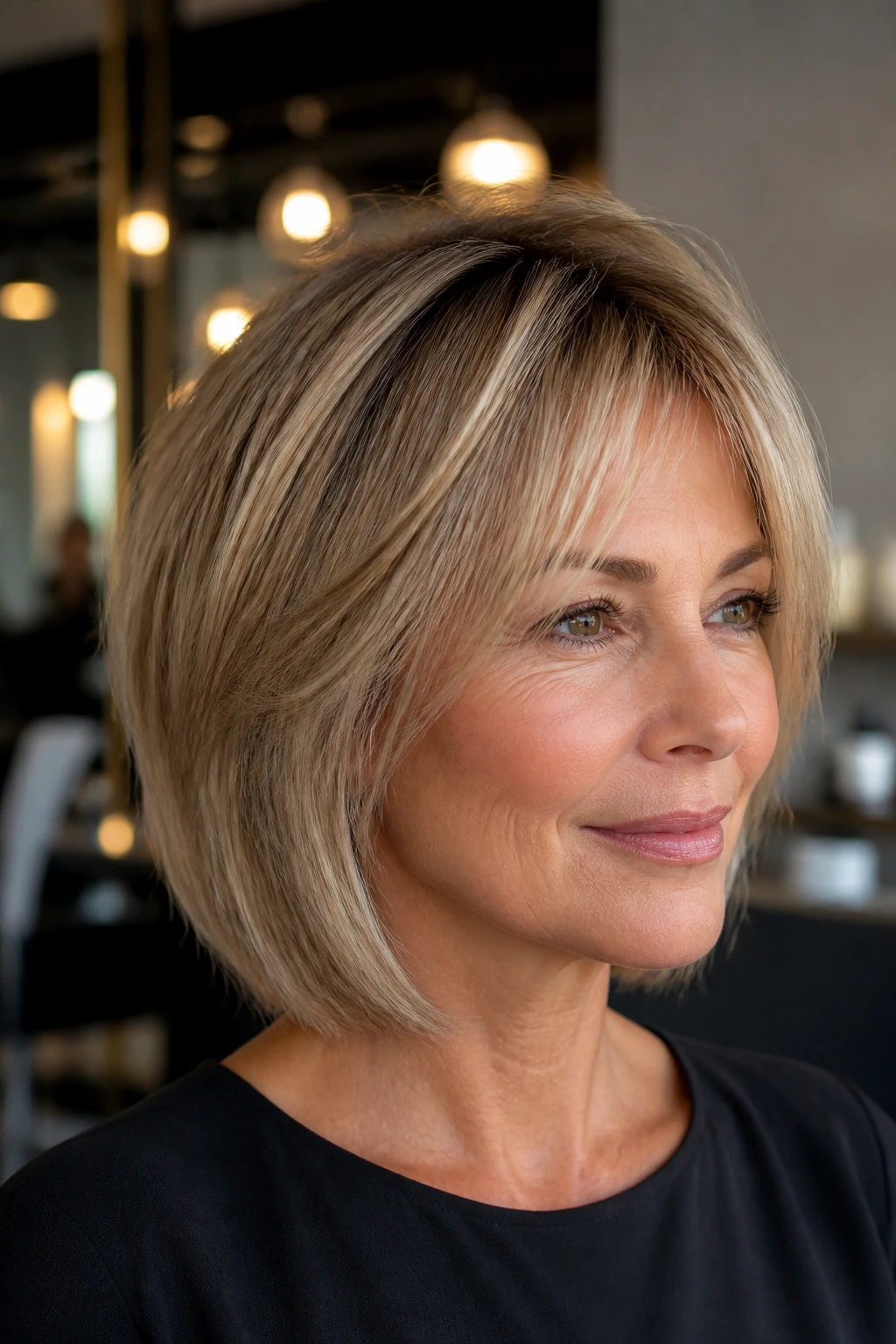
Micro-layers are tiny, controlled, and easy to mess up if someone gets too enthusiastic with the scissors. Done well, they add just enough lift to prevent fine hair from plastering itself to the head.
Ask for very short internal steps near the crown and a clean, dense perimeter at the bottom. That keeps the overall shape full while giving the top a little oxygen. It is a good fix for hair that falls flat at the crown but looks okay through the lengths.
This cut is not for someone who wants obvious texture. It’s for someone who wants the hair to behave better in a bun, a blowout, or a quick wave without shouting about the layers. If your stylist starts reaching for thinning shears, stop them. Fine hair usually needs precision, not enthusiasm.
22. Collarbone Flip Lob
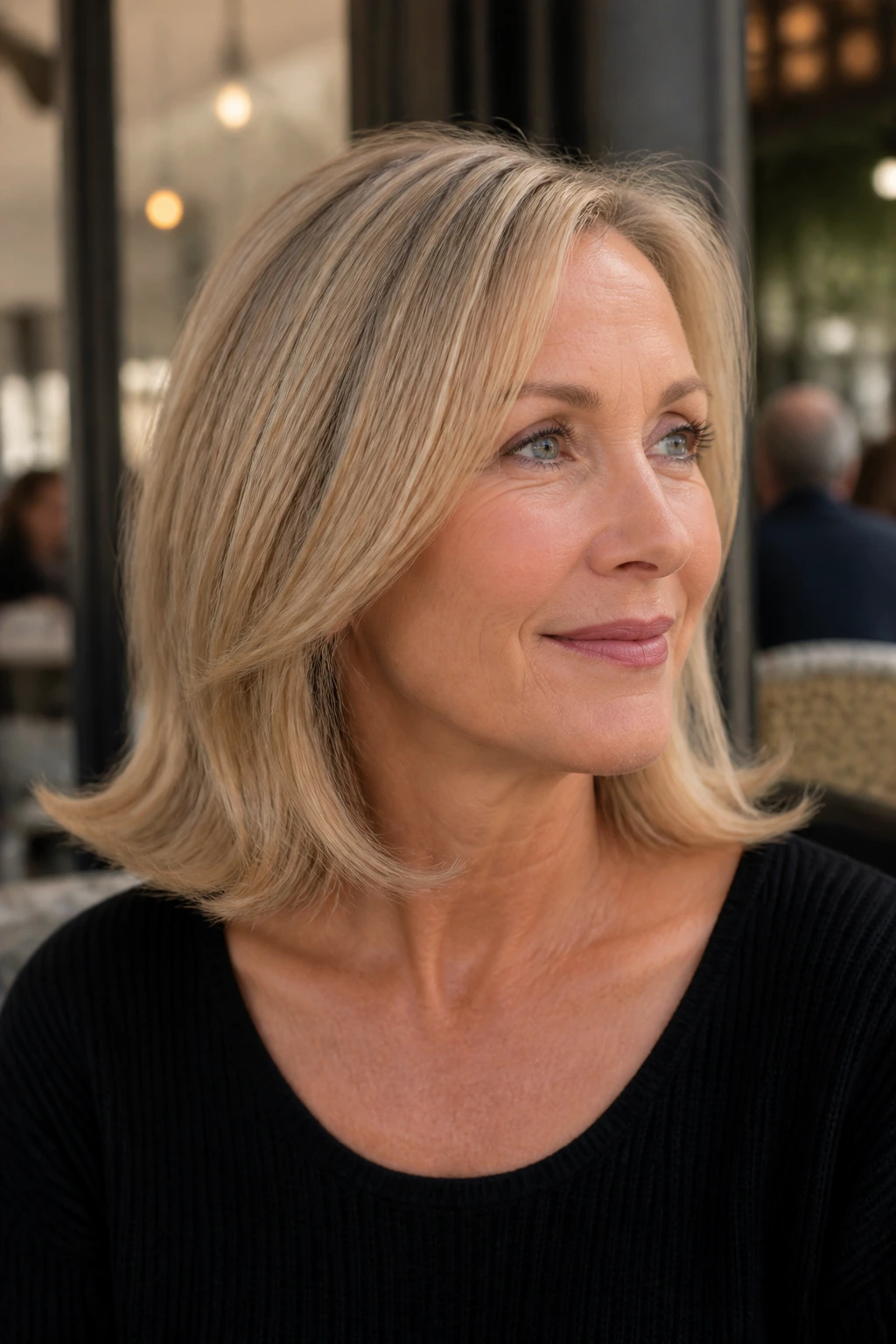
The little outward flip at the ends gives this lob some charm. It softens the line, adds movement, and keeps the haircut from feeling too serious.
What matters is the size of the flip. It should be light, not retro-costume dramatic. A round brush or flat iron flick at the last inch or so is enough. The rest of the hair stays smooth and solid so the ends don’t look skinny.
This style is especially useful if your hair wants to kick out on its own. Instead of fighting that bend, work with it. You get a shape that feels lively without asking for a lot of time in front of the mirror. Small change. Big difference.
23. Piecey Fringe Lob

A piecey fringe can soften the forehead while leaving enough hair around it to keep the cut full. That’s the crucial distinction: fringe, yes; dense curtain of hair, no.
Keep the pieces separated and light, especially if your hair density is on the lower side. Ask for a fringe that can fall apart a little when styled, not one that sits as a solid band. The lob underneath should remain clean and collarbone-length so the fringe has room to breathe.
This works well for anyone who wants a face-framing detail without committing to a heavy bang maintenance schedule. Dry the fringe first, while it’s still damp, and use a small brush or even your fingers to keep it soft. Too much product here will make the fringe stringy fast.
24. Rounded Volume Lob
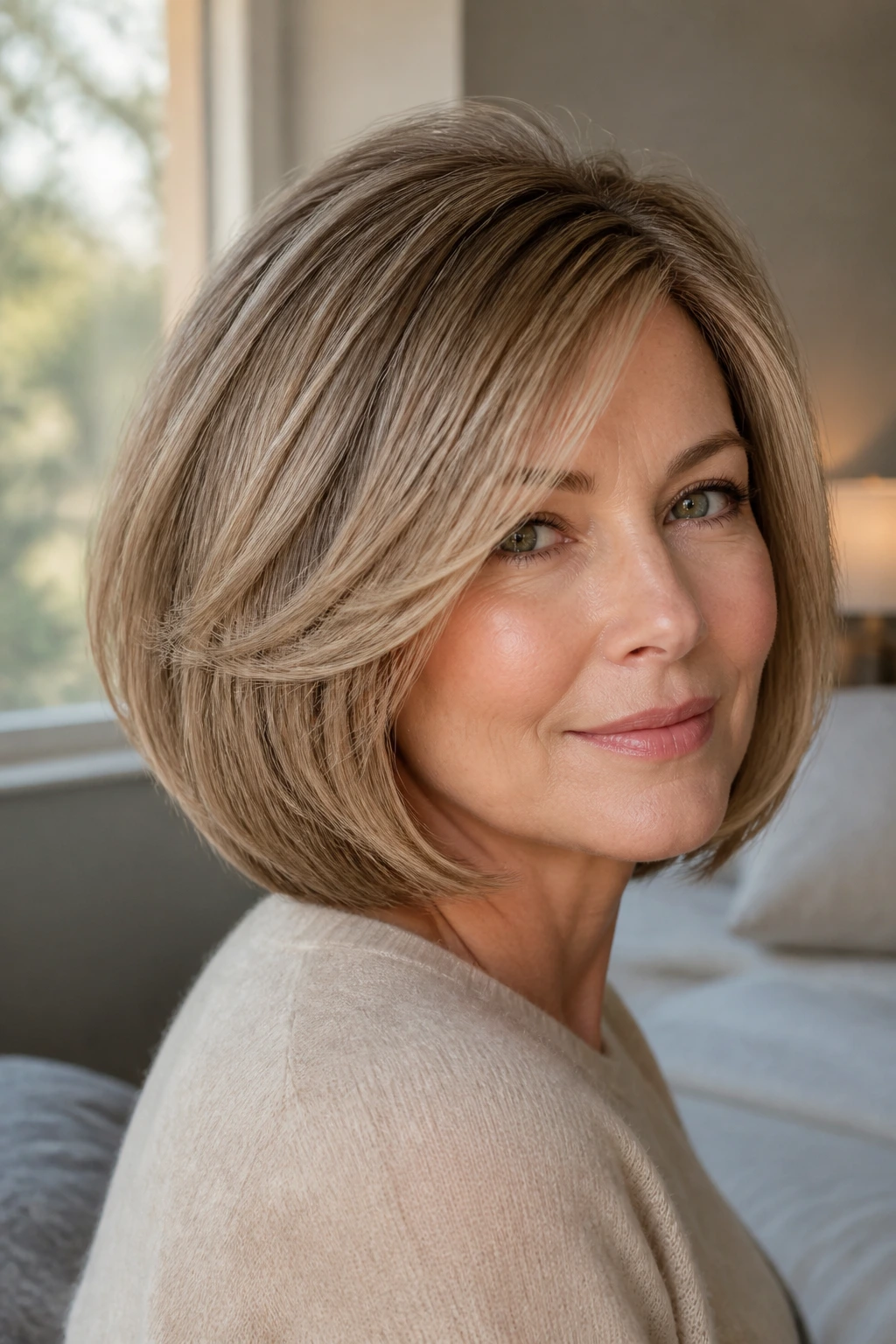
A rounded lob does not mean puffy in a bad way. It means the silhouette curves gently around the head, with a little lift at the crown and some fullness through the sides.
On fine hair, this shape can be a lifesaver because it gives the haircut a clear outline. You avoid the flatness of a straight fall, and you avoid the fraying that can happen when the ends are over-layered. The trick is a controlled curve, not a big round puff.
This style looks especially good if you want your hair to appear thicker in profile. The rounded shape gives the cut presence from the side, which is where fine hair often looks most see-through. Keep the styling loose, not over-sprayed, and the shape stays soft instead of helmet-like.
25. Nape-Tapered Lob
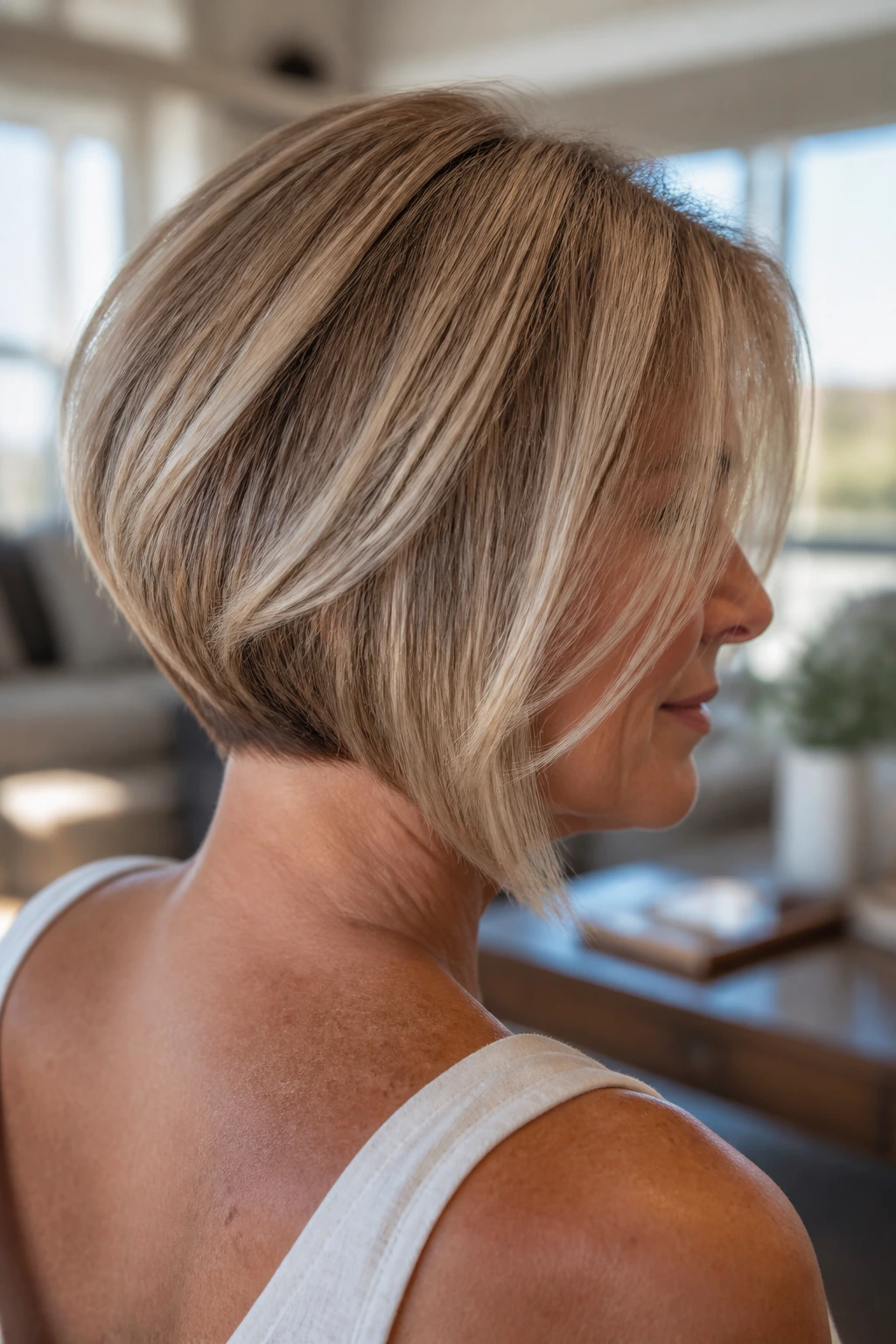
A nape-tapered lob keeps the back neat and slightly shorter while the front stays longer and lighter. That subtle taper helps the shape hug the head instead of flaring out at the shoulders.
It’s a smart choice if your hair gets bulky at the back but limp in the front. The taper gives the nape some tidy structure, while the longer front pieces keep the cut feeling like a lob, not a bob that gave up halfway. Ask for the taper to be subtle. Too much and you land in wedge territory, which is a different animal entirely.
I like this one for people who want a little polish with low fuss. It can be tucked, waved, or worn straight, and it tends to keep its line longer than softer, more heavily layered versions. If your hair holds shape badly, this cut gives it a better place to start.
Why the Lob Shape Beats a Heavy Cut for Fine Hair

A lot of fine-hair frustration comes from asking the hair to do too much. Long lengths pull the ends thin. Too many layers remove the little density you still have. A good lob sits in the middle and makes peace with the hair instead of bullying it.
That middle zone matters even more if you like movement. Collarbone length gives the ends enough body to look clean, and it gives the stylist room to build shape around the face without stripping the back bare. When the cut is right, you should be able to tuck one side, wave the ends, or wear it straight and still keep the outline.
There’s also a practical side people ignore. A lob is easier to keep looking like a haircut between salon visits. It grows out with some dignity. You can wear it sleek for work, a little bent for dinner, or air-dried on a busy morning, and the shape still reads as intentional.
The Styling Kit That Keeps a Lob from Falling Flat
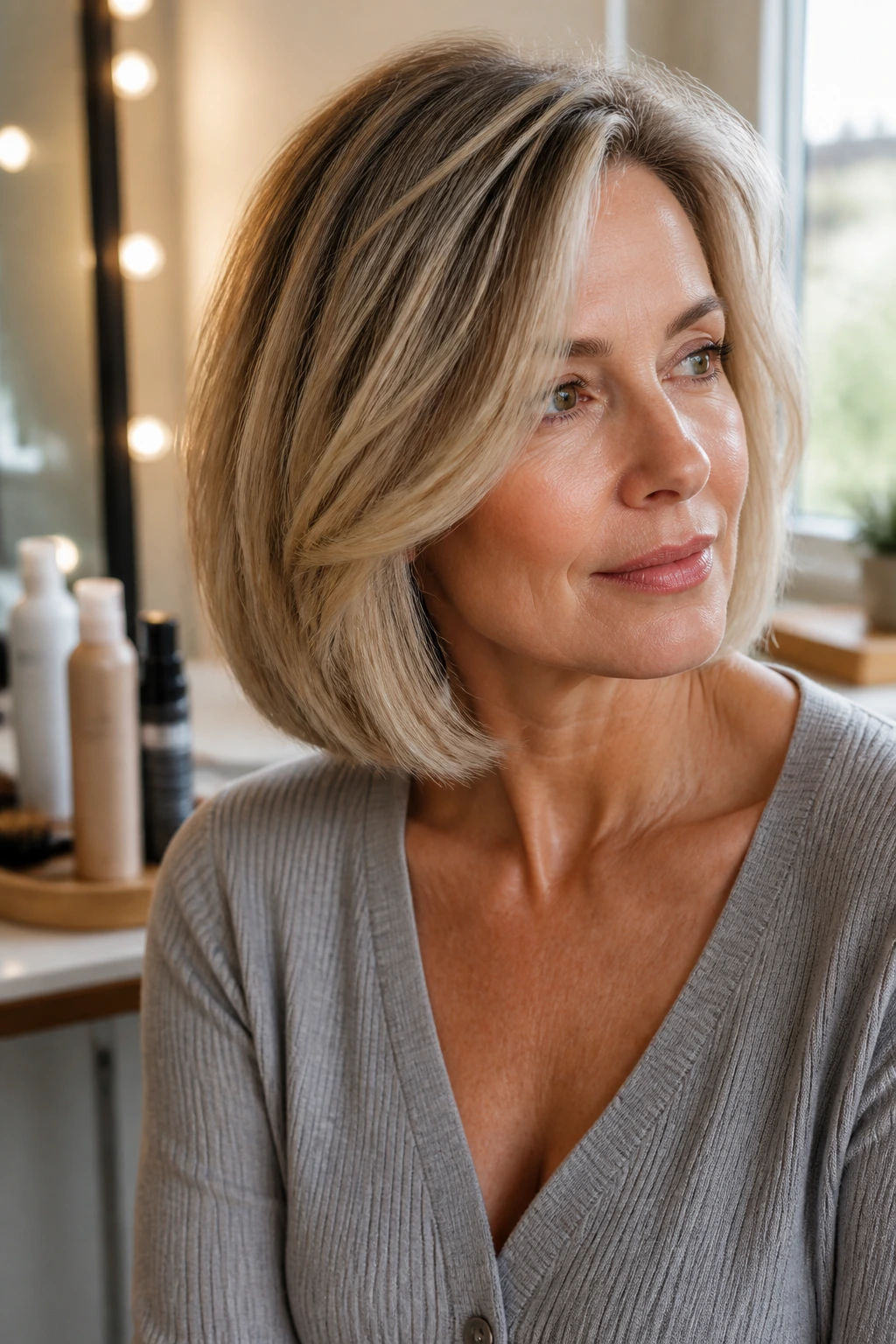
- Blow-dryer with a narrow nozzle: Gives you more control at the roots and keeps the cut from puffing up in odd places.
- 1-inch or 1.25-inch curling iron: Best for soft bends on fine hair; bigger barrels can make the wave disappear.
- Lightweight round brush: A medium brush helps lift the crown without stretching the ends too far.
- Root-lift mousse or spray: Put this near the roots only, where fine hair needs the help.
- Heat protectant: Fine hair burns faster than people expect, especially around the front sections.
- Flexible-hold hairspray: Keeps movement in the cut instead of freezing it into a shell.
- Dry shampoo: Useful on day two or three when the roots need a little grit.
- Velcro rollers: Old-school, yes, but they still give a lob nice lift while the hair cools.
How to Ask for the Right Lob at the Salon
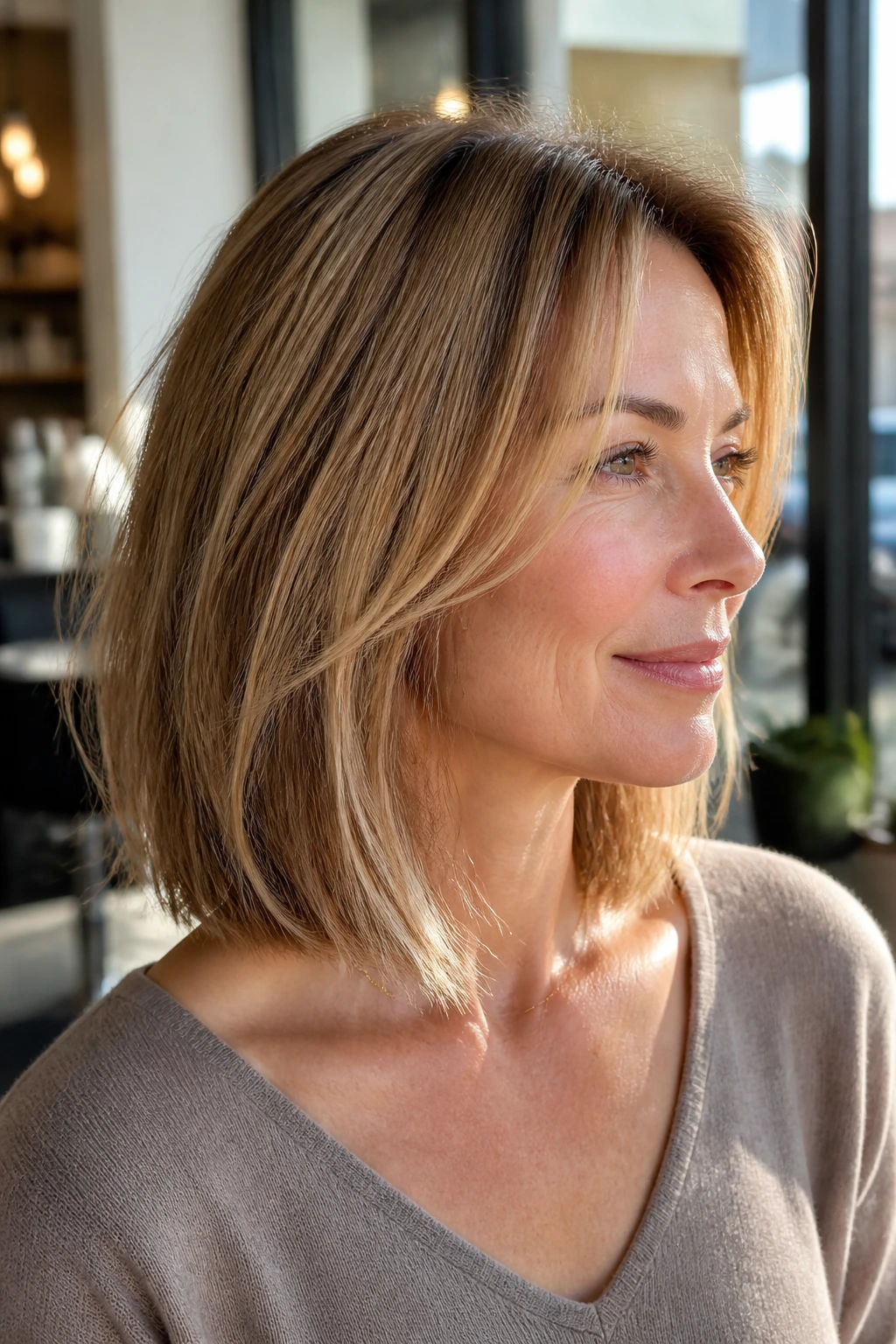
Bring photos, but bring the right photos. One picture of a front view is never enough. You want at least one side view and, if possible, a shot that shows the back length too. Fine hair changes a lot depending on whether the perimeter is blunt, beveled, or chipped away at.
Say the words out loud: collarbone length, full perimeter, minimal internal layering. If you want movement, specify where you want it—around the face, through the crown, or just at the ends. That keeps the conversation practical. Stylist language can drift into vague territory fast, and fine hair does not benefit from guesswork.
Tell your stylist how much time you actually spend styling. If the answer is five minutes, do not leave with a cut that only looks good after a round brush and two hot tools. If you wear glasses, part your hair on one side, or have a strong cowlick at the front, say so. Those details matter more than whatever mood board is on the wall.
How to Style an Airy Lob Without Flattening It
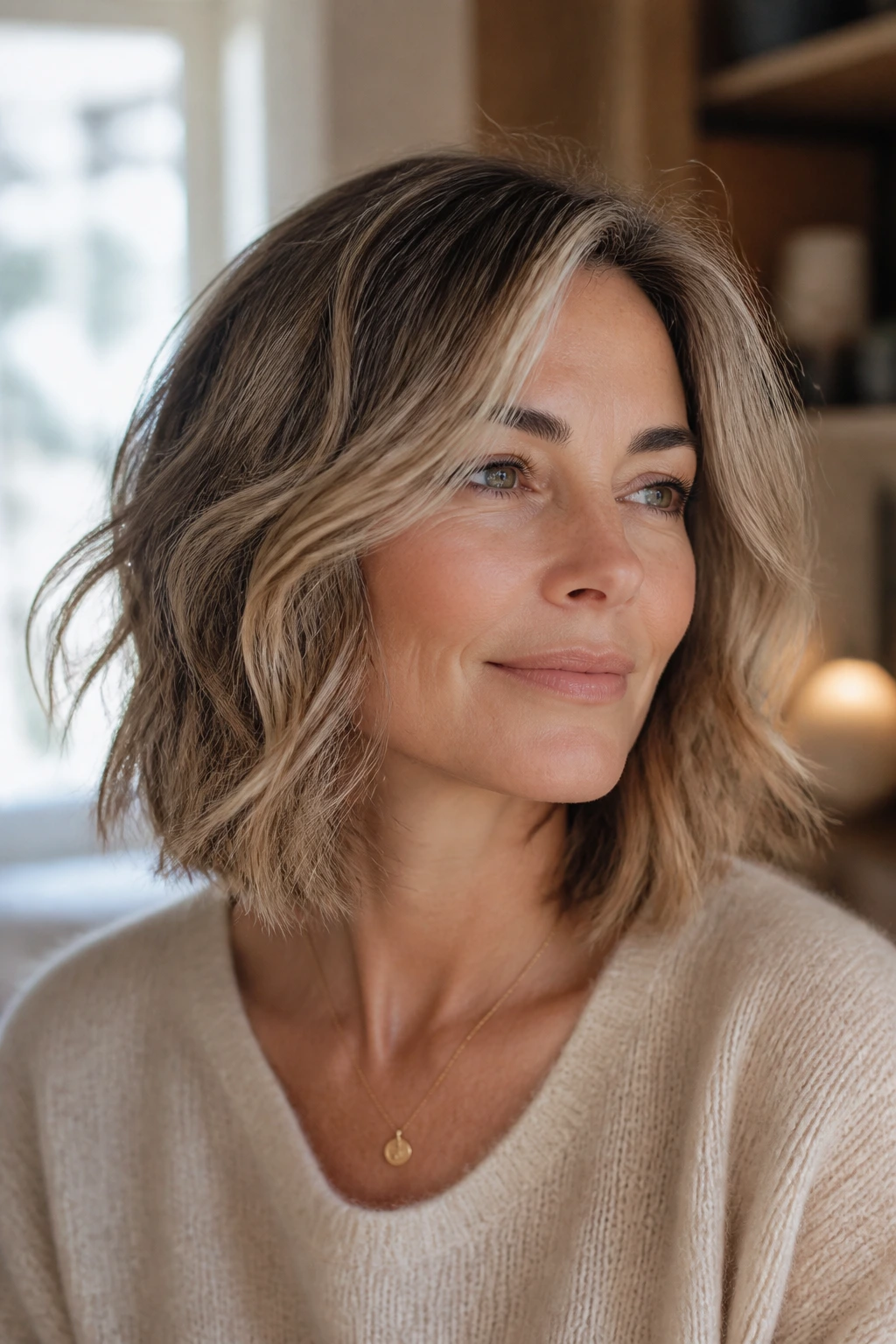
Root lift: Start with product at the roots, not the ends. Fine hair often gets weighed down because people put mousse or cream all over the length.
Drying direction: Blow-dry the front sections away from the face first, then let them cool before you touch them again. That little cooldown helps the hair hold the bend longer.
End shape: Keep the ends soft. A slight curve under, a small flip, or a loose wave is enough. If you curl the whole head into uniform spirals, the cut can shrink and lose its lob shape.
Finishing rule: Use less serum than you think you need. One drop rubbed through the bottom inch is usually plenty. If you can see the product sitting on the hair, there’s too much.
Extra Tweaks That Make a Big Difference
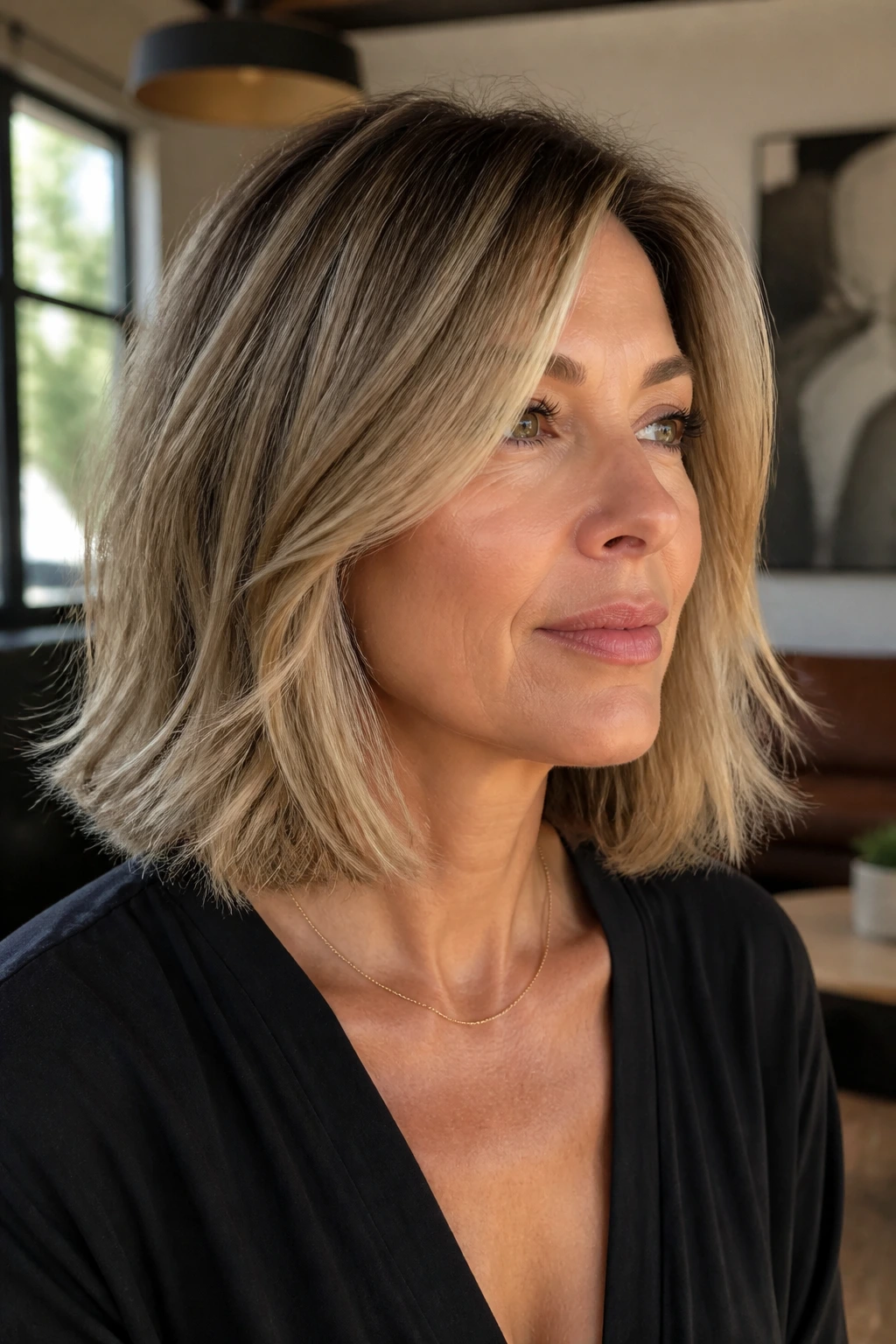
Color placement: A few fine highlights around the face or a soft lowlight through the underneath layers can make the cut look denser because the eye reads depth, not just one flat tone.
Part switching: Move the part every few days. Fine hair likes a little lift, and a static part can start to lie tired and narrow at the roots.
Accessory move: One tucked side, a slim clip near the temple, or a barrette just above the ear can give the cut a different silhouette without changing the haircut itself.
Low-effort polish: If your ends look dry, use a tiny bit of smoothing cream only on the last inch after styling. The goal is neatness, not shine overload.
Mistakes That Make Fine Hair Look Thinner
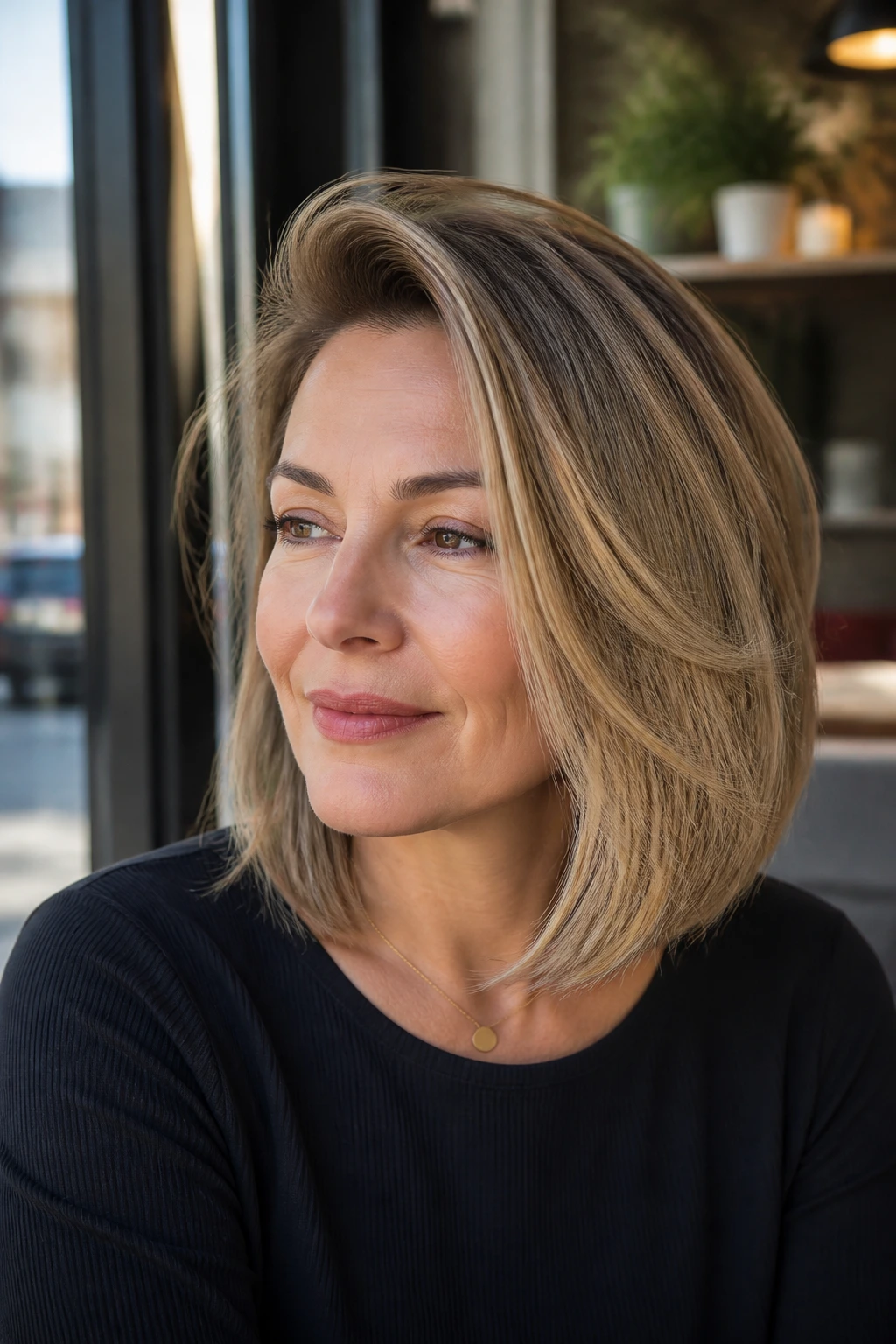
Too many short layers: The symptom is obvious: the perimeter gets wispy, and the hair looks lighter in a bad way. Fix it by keeping layers long and interior, not choppy at the ends.
Overusing thinning shears: Fine hair does not need to be “thinned out” unless it’s actually bulky in a specific spot. If the ends start sticking together or fraying, the haircut has been cut too aggressively.
Letting it grow past the useful zone: Once fine hair gets much longer than collarbone length, the ends can start looking sparse. Trim it before the line collapses.
Using heavy cream everywhere: Fine hair and rich products are a bad match. Keep conditioners and styling creams from mid-length to ends only, and use a lighter hand than you would with thick hair.
Curling every section the same way: That creates a round, puffy shape that can hide the lob’s line. Alternate directions or leave the ends straighter so the haircut still looks like a lob.
Variations and Adaptations to Try
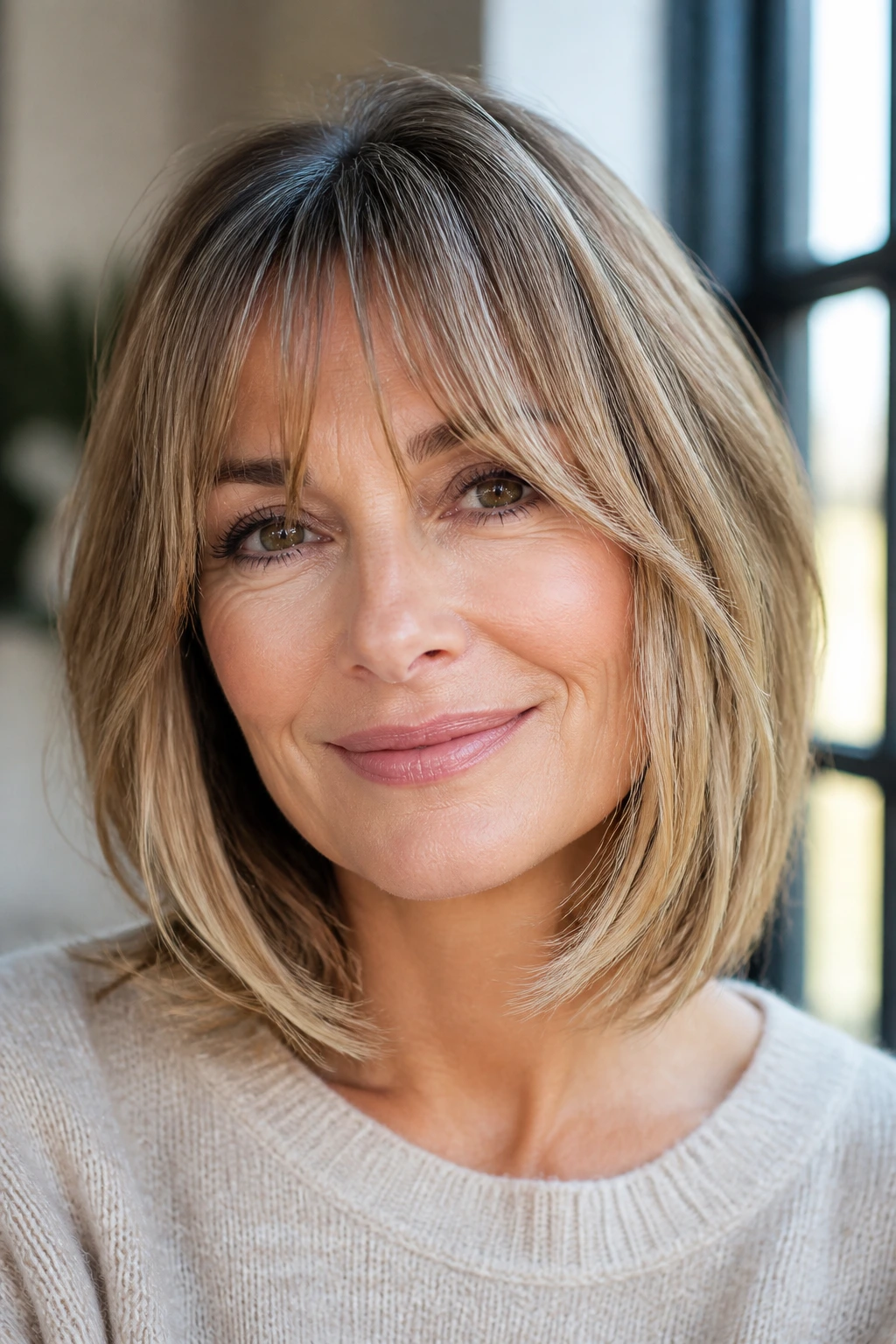
The Five-Minute Lob: Ask for a blunt collarbone cut with barely there face-framing. It’s built for quick drying, a side part, and a light spray at the roots. Good when you want the haircut to stay neat even on rushed mornings.
The Silver-Glow Lob: For gray or silver hair, a clean lob with soft movement can keep the color from looking heavy. A gloss treatment or shine spray helps the strands reflect light, and a blunt edge keeps the ends from looking fuzzy.
The Fringe-Forward Lob: If you want more face shape and less forehead, pair the lob with curtain or bottleneck bangs. Keep the fringe soft and longer at the sides so it blends instead of sitting on top of the haircut.
The Air-Dry Lob: This version leans into natural bend, with long internal layers and a perimeter that stays full. It works best when you scrunch in mousse and leave the ends a little straighter for density.
The Sleek-Meeting Lob: Clean center or side part, smooth finish, subtle bevel under. It’s the smartest choice for straight fine hair that looks best when it behaves and stays still.
The Weekend Wave Lob: Loose, brushed-out waves through the mid-lengths only. The crown stays smoother, which keeps the cut from turning into a puffball and lets the lob hold its line.
Keeping the Shape Between Salon Visits

Fine hair does not forgive neglect in the same way thicker hair sometimes does. A lob needs regular cleanup to stay full at the edge, and that usually means a trim every 6 to 8 weeks if you want the line to stay crisp. If you’re growing it out, 8 to 10 weeks can work, but the ends will need more help from styling.
Between trims, keep the root area from getting greasy and the ends from getting crunchy. Dry shampoo at the roots adds a little grit, while a pea-sized amount of leave-in or serum on the bottom inch keeps the perimeter from looking dry and split. If the ends start flipping in odd directions, a single pass with a flat iron or a round brush is usually enough to restore the shape.
Heat should be treated like a tool, not a habit. Fine hair holds up better when you use medium heat, smaller sections, and a proper heat protectant. One careful styling session does more than three rushed ones.
Common Questions About Airy Lobs for Fine Hair

Will a lob make fine hair look thicker?
Usually, yes, because the collarbone length keeps the ends from tapering into nothing. The key is not just the length, though—it’s the perimeter. A clean edge makes the hair read denser than a heavily layered style.
Should fine hair have layers in a lob?
Some, but not many. Long internal layers can add movement without stealing the outline, while short layers can make the ends look thin. If your hair is very fine, ask for subtle shaping rather than obvious layering.
Do bangs work with this cut?
They can, as long as they’re light. Curtain bangs, bottleneck bangs, and soft piecey fringe all work better than a thick, blunt bang that takes too much hair off the front.
What if my hair goes flat by noon?
Start with root product, dry the roots in the opposite direction from your part, and let them cool before touching them again. Flat hair often needs more lift at the crown, not more product on the ends.
Is a center part a bad idea for fine hair?
Not automatically. On the right lob, a center part can look clean and balanced. If the crown is thin, a slightly off-center part may give you a little more lift.
Can I wear this style with naturally wavy hair?
Yes, and wavy hair often wears a lob beautifully because the length keeps the wave from ballooning. Ask for long layers only if you need them, and leave some weight in the ends.
How often should I trim it?
Every 6 to 8 weeks if you want the cut to stay sharp. If you wait too long, fine hair can lose the very edge that makes the lob look full.
The Shape That Keeps Its Edge
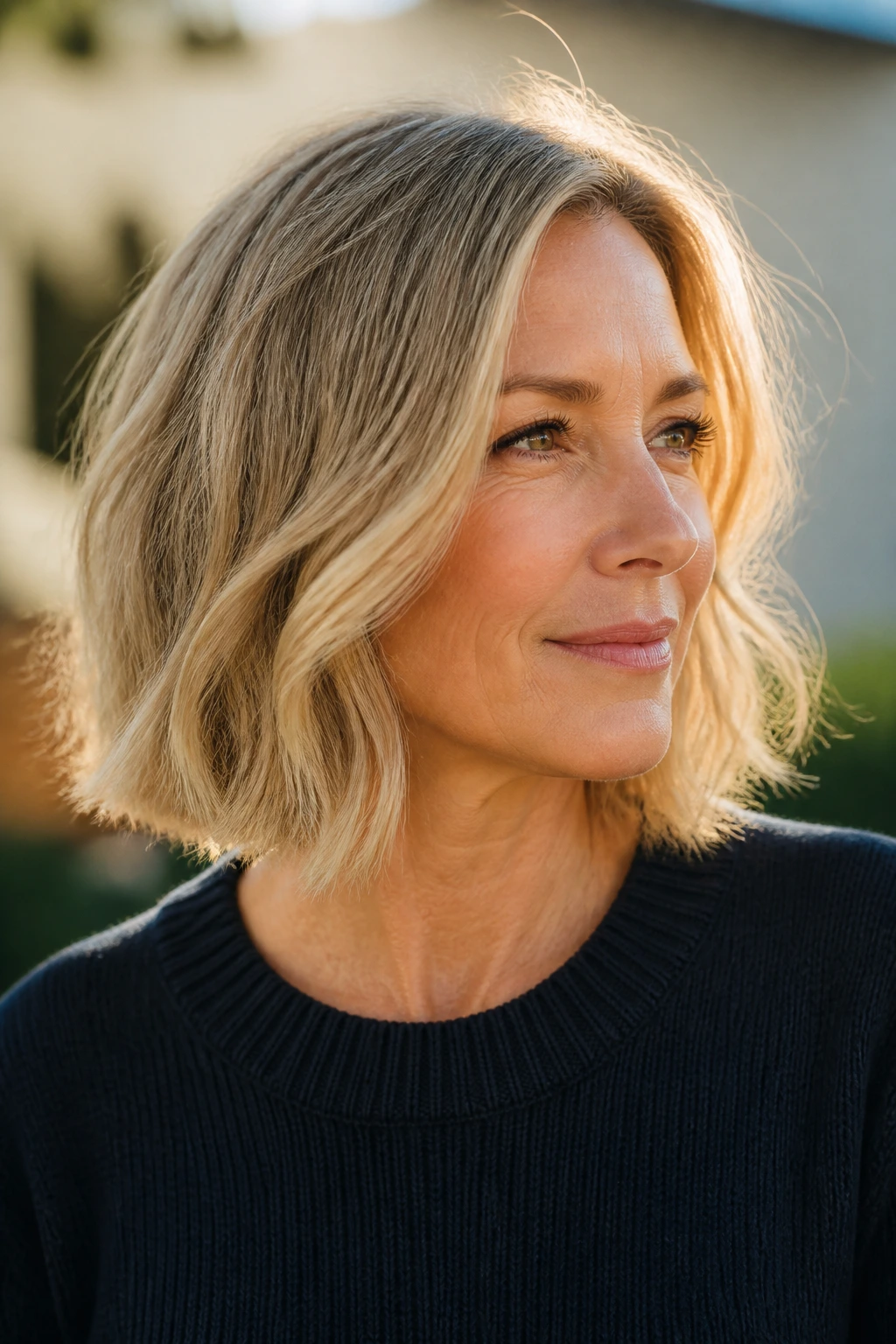
The nicest thing about a good lob is that it doesn’t fight the hair you already have. It uses length, line, and just enough movement to make fine strands look deliberate instead of fragile.
That’s why this cut keeps coming back. It fits real life. It tucks behind an ear, holds a wave, survives a rushed blow-dry, and still looks like somebody cared when you walk out the door. If you pick one of these versions and ask for the weight to stay where it counts, the haircut does the rest.