



A bob can do strange things to a face shape. Put the hemline right at the wrong point and a round face can look wider, shorter, and a little boxed in. Move that same cut half an inch, add loose curl instead of tight ringlets, and the whole look changes. The cheekbones come forward. The jawline gets a cleaner edge. The face reads longer, not rounder.
That’s why naturally wavy bobs for round faces with loose curls deserve more respect than they usually get. They’re not one-note cuts. The good ones build lift at the crown, leave air around the cheeks, and let the ends move instead of sitting like a helmet. The bad ones stop exactly at the widest part of the face and then puff out sideways. Tiny difference. Huge effect.
I’ve always liked bobs that look slightly better after they’ve lived a little — after the first bend drops, after the part shifts, after the ends soften. Round faces suit that kind of cut. They don’t need to be hidden. They need a shape that works with the natural wave pattern instead of fighting it.
Why These Bobs Work So Well on a Round Face
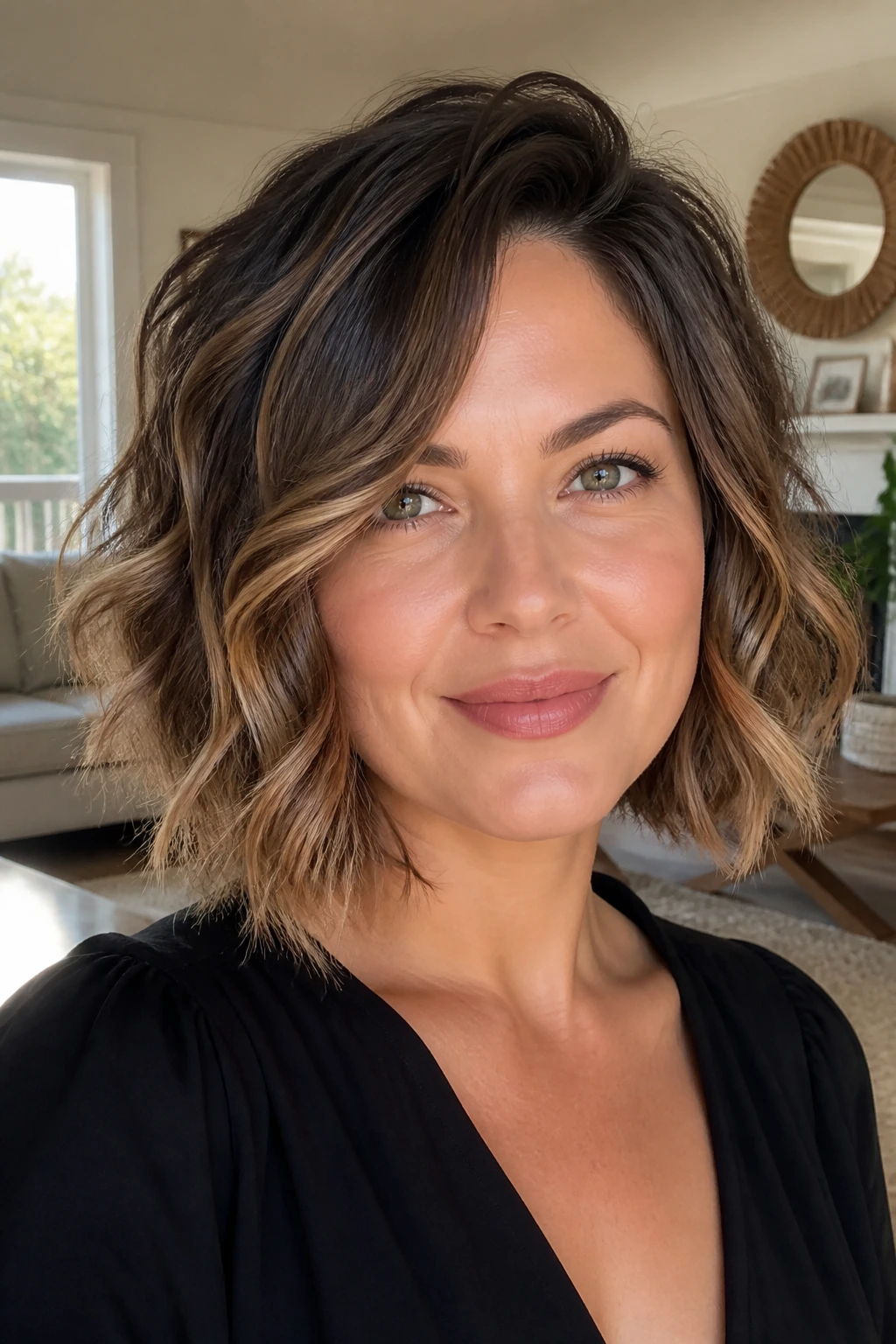
-
They create vertical lines: A side part, a longer front piece, or a collarbone-grazing length pulls the eye up and down instead of straight across the cheeks.
-
They leave room for movement: Loose curls and broken waves keep the outline from turning into a single round shape, which is where bob cuts can go wrong fast.
-
They lift the crown without teasing it to death: A little height at the roots does more for face length than a whole can of hairspray ever will.
-
They avoid the widest point of the face: The smartest versions sit above the chin or below it, but not parked right on the cheek line where the face is fullest.
-
They make texture do the heavy lifting: On wavy hair, you do not need a severe cut. You need a shape that lets the wave bend, then fall, then bend again.
1. Jaw-Grazing Side-Part Bob
A bob that sits just below the jaw is one of my favorite answers for a round face. It gives the cheekbones a clean frame without cutting the face off at its widest point, which is the mistake I see over and over again. Add a side part, and the whole cut picks up a slight diagonal line that feels longer and leaner.
Why It Flatters the Face
The side part creates lift at the crown, and the jaw-grazing length keeps the ends from puffing directly at cheek level. If your waves are loose, let them bend from midshaft to ends with a 1¼-inch curling iron, then rake them out with your fingers so they don’t look too done. The result should feel soft, not curled-to-death.
A tiny bevel on the ends helps. Not a flip. Just enough to keep the hemline from looking blunt and heavy.
Best styling note: keep the front pieces ½ to 1 inch longer than the back so the line angles forward a touch.
2. Collarbone-Length Wavy Lob
A collarbone lob is the easy one to recommend when someone says, “I want something shorter, but I don’t want my face to look wider.” That extra length matters. It gives loose curls space to fall, and it keeps the silhouette from building all its volume around the cheeks.
This is the cut I’d pick for anyone who likes their hair to air-dry in a bend and be mostly done. You can add a loose wave with a wand, then pinch the ends with a bit of cream or light oil so they don’t frizz out. The collarbone length also grows out gracefully, which is a nice bonus if you hate the feeling of a haircut that needs babysitting every three weeks.
If your hair is thick, ask for soft internal layering so the bottom doesn’t spread too wide.
3. French Bob with Soft Fringe

The French bob gets a lot of attention because it has attitude, but the version that works on a round face needs a softer hand. Keep it at cheekbone level or just under the ear, then let the fringe fall airy, not dense. A blunt mini fringe can make a round face feel more compact. A broken, piecey fringe opens things up.
The trick is texture. The bob should move when you shake your head, not hold a rigid line. I like this style best when the curls are loose enough that they bend around the face instead of sitting in uniform loops. It feels a little undone, which is exactly why it works.
How to Style It
- Use a small dab of mousse at the roots.
- Rough-dry to about 80 percent.
- Wrap only the ends and a few face pieces around a wand.
- Break up the fringe with your fingers before it sets.
4. Angled Bob with Longer Front Pieces

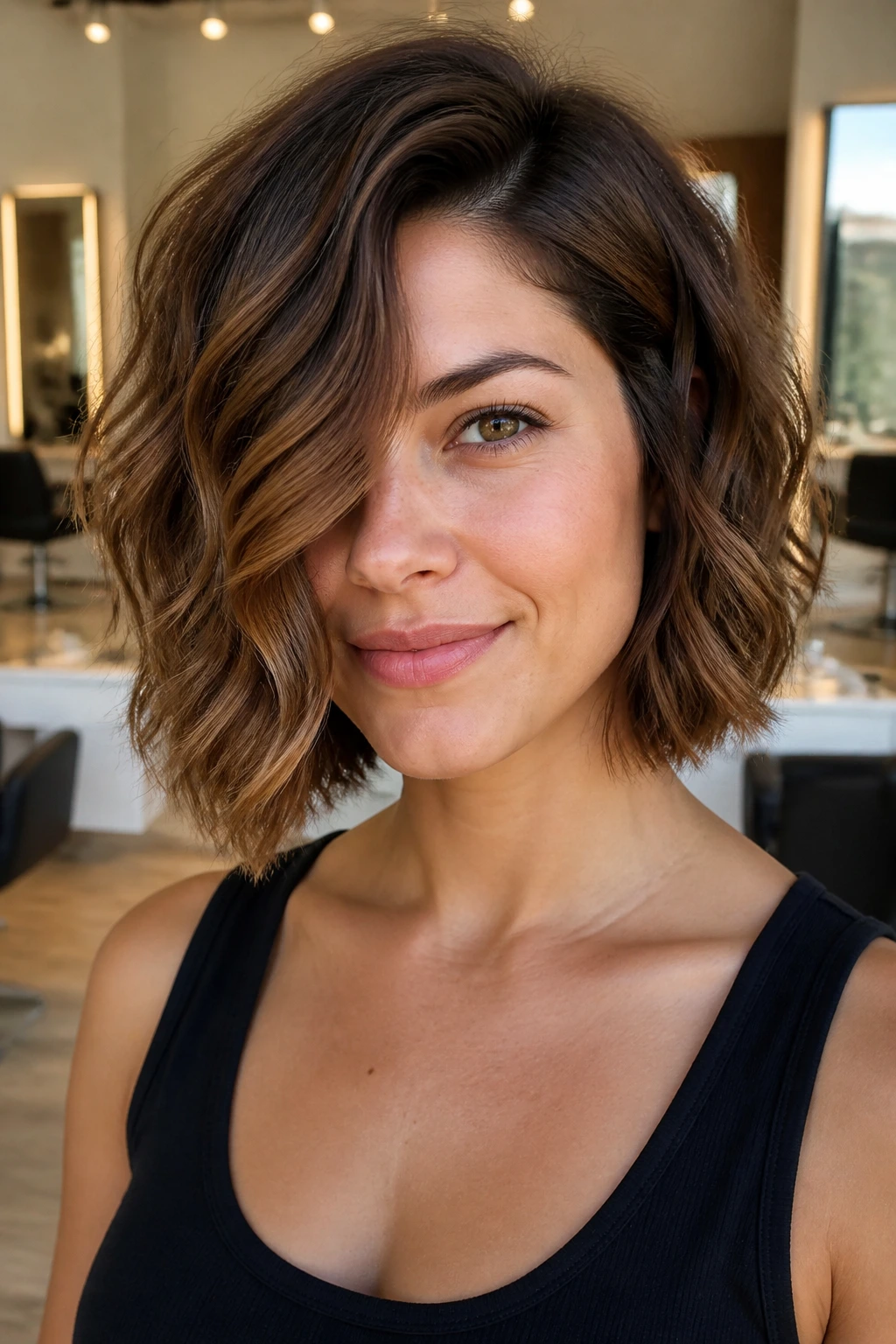
An angled bob is useful because it does the math for you. Shorter at the back, longer at the front, and suddenly there’s a forward sweep that makes a round face look less circular. It’s not a dramatic angle unless you want one. The best versions are subtle. The kind you notice in motion.
The front pieces should fall somewhere between the chin and upper neck, depending on your curl pattern. If your waves shrink up a lot when dry, leave the front a touch longer than you think you need. I’d rather see a bob land slightly too long than one that ends up grazing the jaw and ballooning at the sides.
This shape shines when the back is clean and the front is soft. Too much stacking in the back turns it into a mushroom. Nobody wants that.
5. Shaggy Bob with Curtain Bangs

This is the haircut for people who like a little edge without going full rocker. The shaggy bob gives you airy layers that keep the waves from forming one solid circle, and curtain bangs split the face right down the center in a way that feels long and open. On a round face, that separation matters.
Curtain bangs work best when they start around the cheekbone and sweep out toward the jaw. If they’re cut too short, they sit like a shelf. If they’re too thick, they swallow the face. Soft, feathered lengths do the job better than a heavy fringe ever will.
Use a diffuser if your curls clump hard at the roots. You want the top to stay lifted while the bangs dry with a little bend, not a curl cast.
6. Chin-Length Bob with Crown Lift
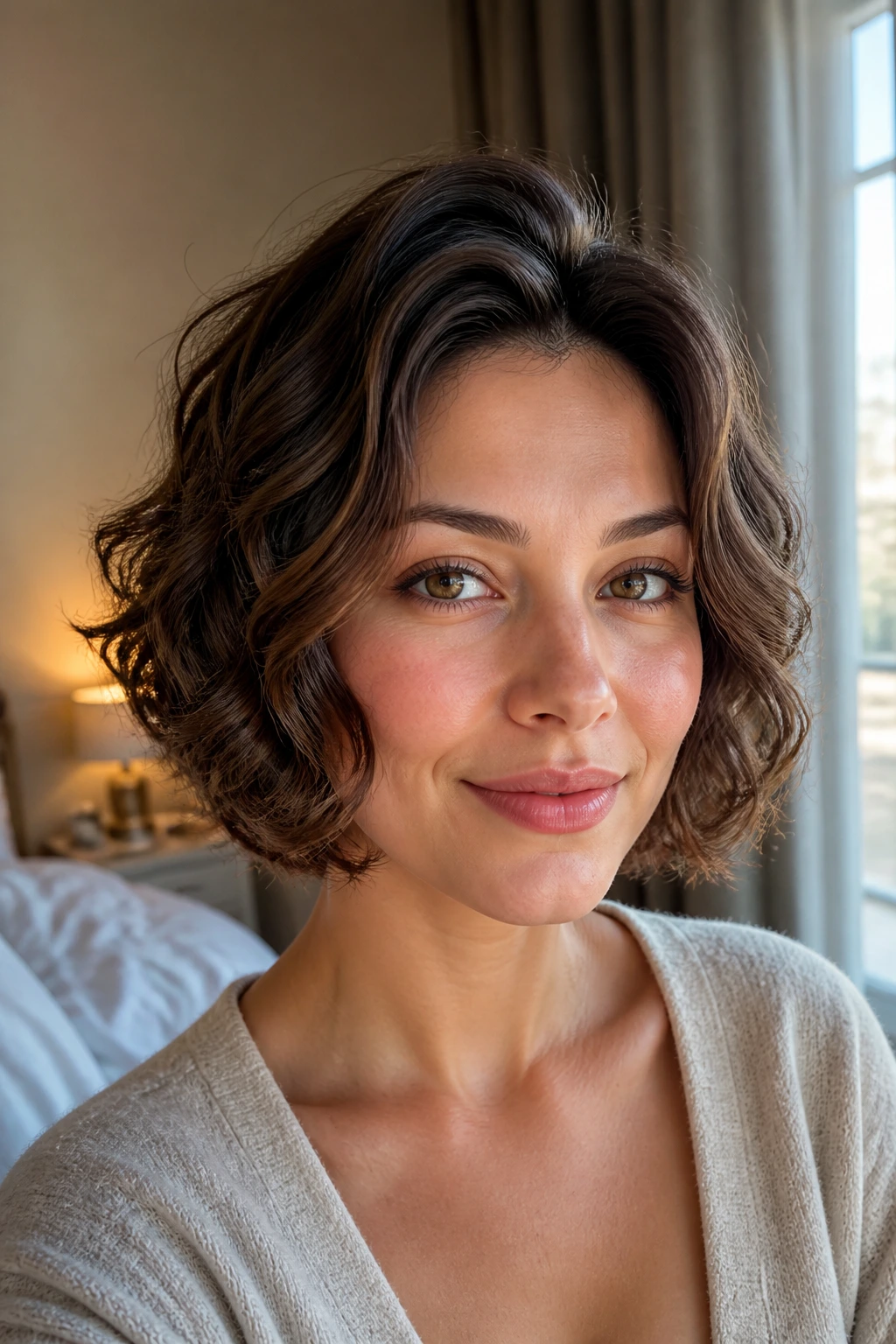
A chin-length bob can absolutely work on a round face, but it needs height at the top and softness around the sides. Straight across, it can be boxy. With crown lift, it gets that little bit of vertical stretch that changes everything.
The cut itself should sit just under the chin, then taper very slightly toward the nape. The loose curls should start below the cheekbone, not right at the cheeks, or you’ll widen the face in the place you’re trying to slim. That’s the whole game here.
This is one of those styles that looks best when you resist overworking it. A small amount of root spray, a quick blow-dry at the crown, and a few soft bends through the ends are enough. Leave some gaps. Dense curl everywhere makes the outline too round.
7. A-Line Bob with Loose Ends

The A-line bob is a little more polished than a shag, and that’s useful if you like structure. The back stays shorter, the front gets longer, and the shape tips forward in a clean line that flatters a round face without feeling severe. It’s a neat trick, honestly.
The loose ends are the part that matters. If you curl the whole head into uniform waves, the angle gets lost. Keep the top calmer and bend only the lower half of the hair, so the line still reads when you move. That little contrast between smooth crown and soft ends helps the cut look sharp rather than fluffy.
If your hair is dense, ask for the interior to be lightened a bit. Too much bulk under the surface makes the front pieces kick out.
8. Deep Side-Part Bob
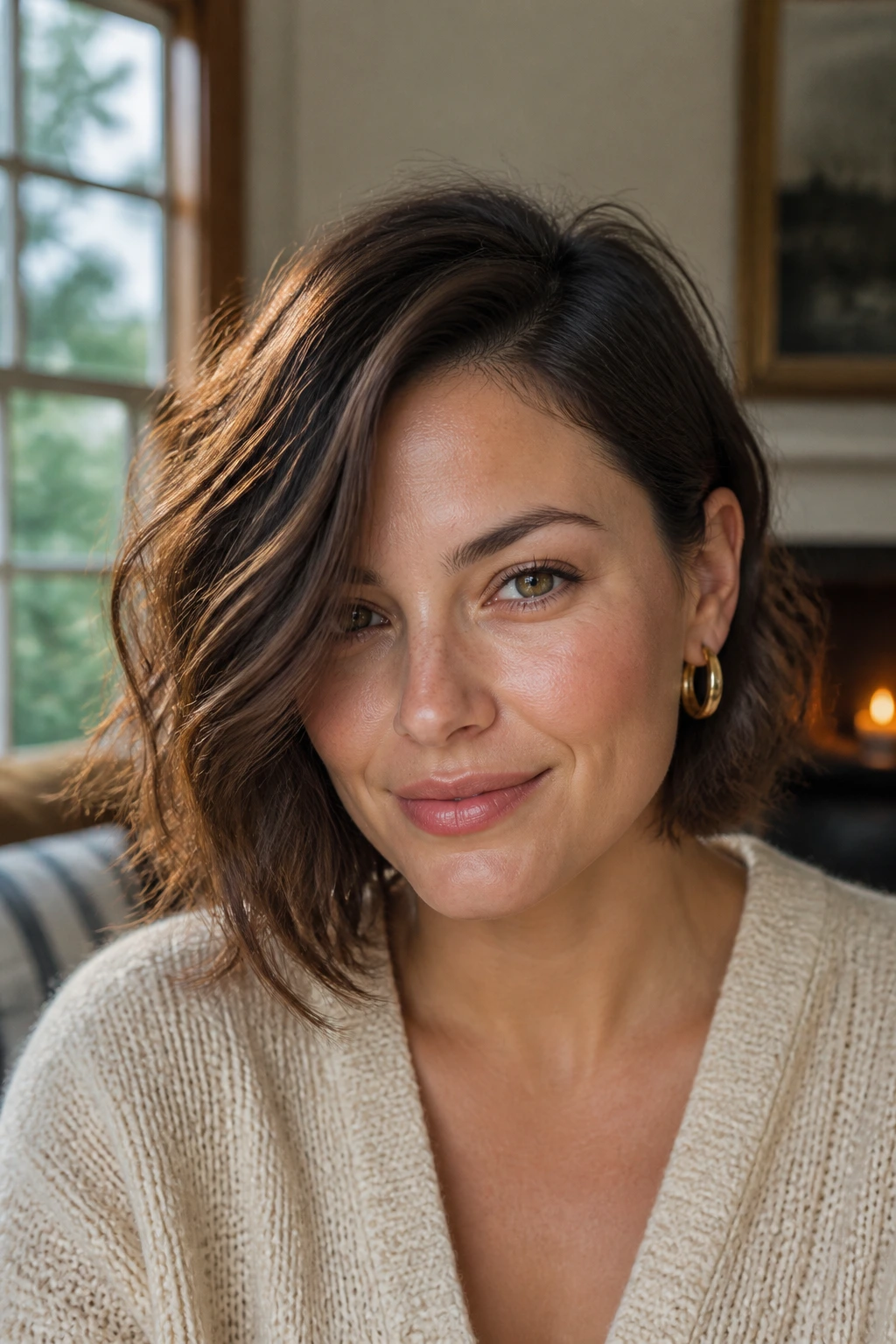
A deep side part is not subtle, and that’s why I like it on a round face. It pushes the weight to one side, which breaks up the symmetry that can make a face look fuller than it is. Even a simple chin-length bob can look more sculpted with this move.
The style works best when the heavier side is tucked slightly behind the ear and the lighter side falls forward in a soft wave. That creates a diagonal across the face. Diagonals are your friend here. They read longer than a straight horizontal line ever will.
If your hair falls flat fast, clip the heavy side at the roots for 10 minutes while it cools. Remove the clip after it sets, and you’ll get a little built-in lift without teasing.
9. Fine-Hair Curled Bob with Micro Layers
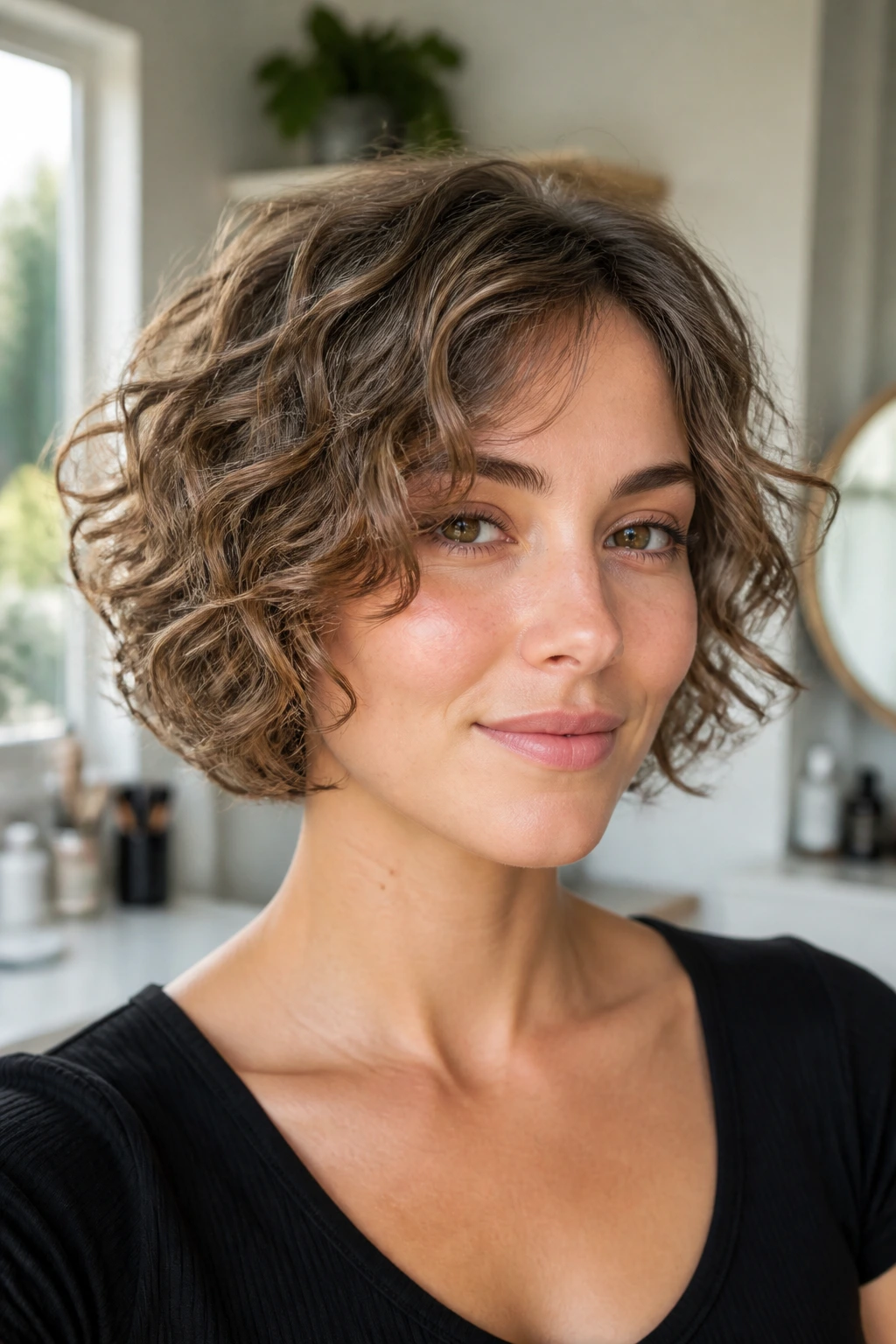
Fine hair and round faces need a careful hand. Too much layering and you lose what little density you have. Too little and the bob hangs flat, which can make the face look wider. Micro layers solve that middle ground.
Think of these as tiny internal cuts that remove bulk without breaking the outline. The shape still looks like a bob, but the curls can separate a bit instead of forming one heavy curtain. A loose curl pattern helps here because it adds the illusion of body without requiring a ton of product.
Keep the layers longer around the front and shorter only where the hair tends to collapse, usually at the nape. A mousse with a light hold beats a heavy cream every time on this type of cut.
10. Rounded Bob with Soft Volume

A rounded bob sounds risky for a round face, but the shape changes depending on where the volume sits. Put the fullness at the crown and upper back of the head, then keep the sides close enough to the face that they don’t puff outward. That gives you height without width.
This version looks best when the waves are soft and loose, almost brushed out. You want a cloud, not a curl cluster. There’s a difference, and it matters. The outline should feel airy, with the ends turning under just enough to keep the shape tidy.
A round brush at the roots helps if you’re blow-drying. Lift, bend, release. Nothing fussy.
11. Blunt-Edge Bob with Broken Waves

Blunt ends on a round face can be brilliant if the wave pattern breaks the severity. The key is not to over-layer the perimeter. Keep the edge clean, then use soft bends through the midlengths so the cut doesn’t turn into a block.
This style works because the blunt line gives the hair weight, while the broken waves keep it from feeling heavy. If you’ve got loose curls already, let them fall naturally and only touch up the face-framing sections. Too much curl uniformity will make the shape too circular.
I like this one for thicker hair. The blunt edge gives substance, and the waves stop it from looking like a shelf.
12. Tapered Nape Bob
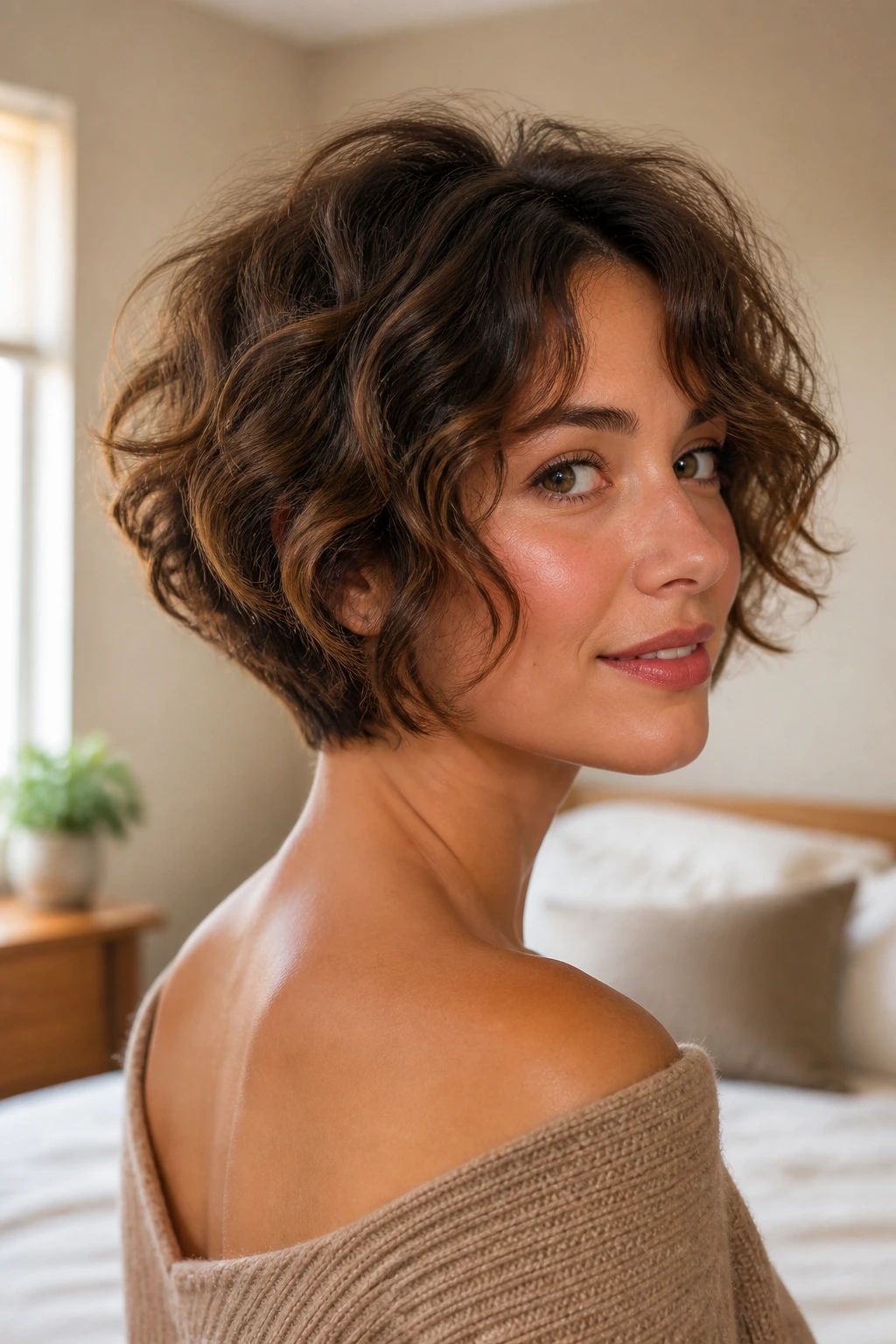
The tapered nape bob is one of those quietly smart cuts. It keeps the back close to the neck, which removes bulk where round faces do not need extra width, then lets the top layers bend forward softly. The whole look feels cleaner than a heavily stacked bob.
You’ll notice this cut has a little movement at the back when you turn your head. That matters. It keeps the line from looking stiff. Loose curls through the crown and sides keep the taper from feeling severe, and they add just enough softness to balance the sharper nape.
If your hair grows out fast at the neckline, this is a useful shape. It stays neat longer than a shaggy bob, but it doesn’t look fussy when it starts to move.
13. Subtle Asymmetrical Bob
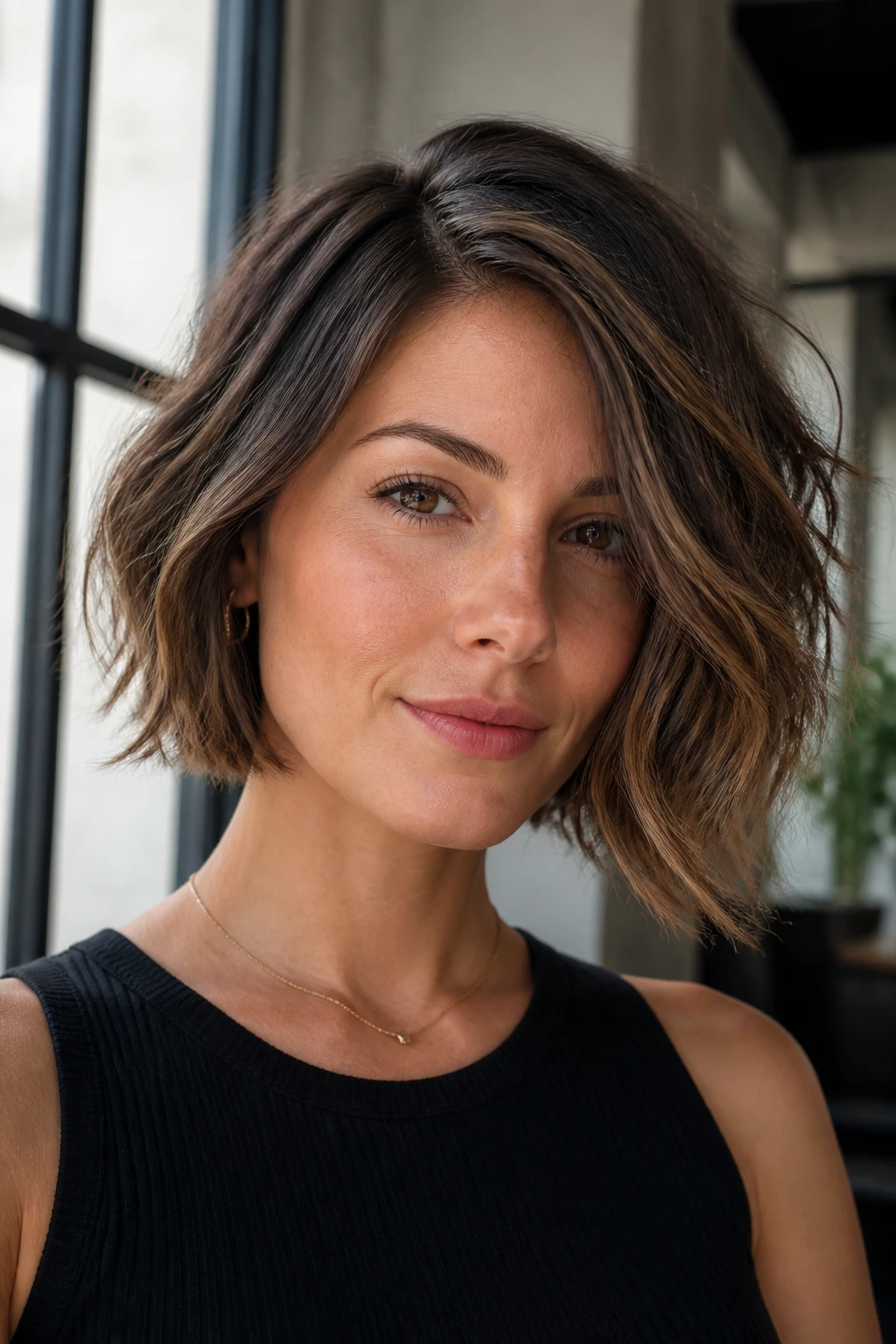
A subtle asymmetrical bob is for people who want the face to look a little longer without shouting about it. One side sits a touch lower than the other, maybe by half an inch to an inch. That tiny difference is enough to pull the eye diagonally across the face.
The asymmetry works best when the waves are soft and not too crunchy. If the curl pattern gets too defined, the imbalance can look accidental. You want intention here. Slightly longer on one side, a clean part, and loose movement through the lengths.
This cut is especially good if your face is round and your jawline is soft. The diagonal edge gives you shape without hard lines.
14. Airy Bob with Bottleneck Bangs
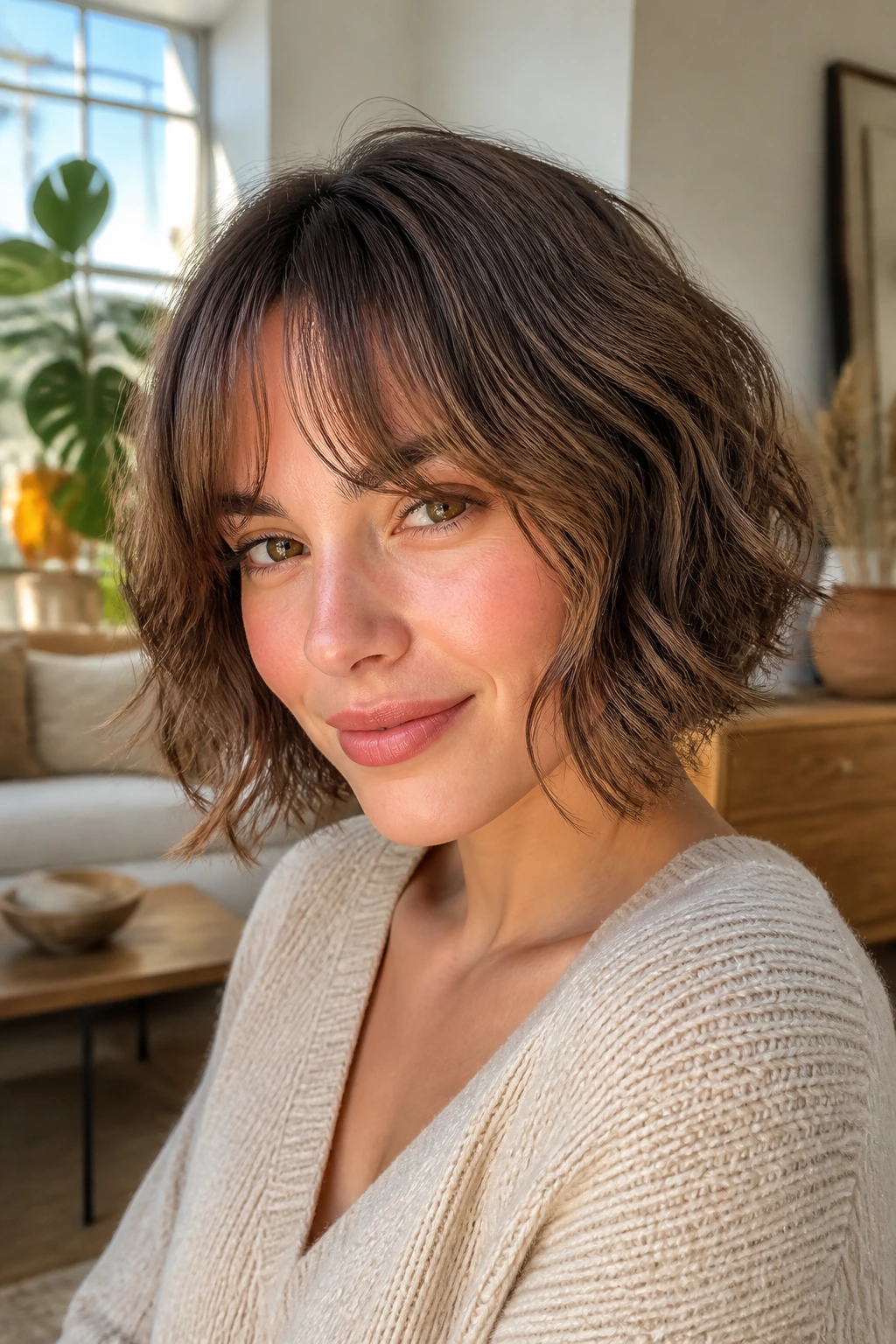
Bottleneck bangs are a clever middle ground between full fringe and curtain bangs. They’re shorter in the center, longer at the sides, and they open the face in a way that flatters round shapes without chopping the forehead in half. On a wavy bob, they feel light and modern.
The bob itself should stay airy. No heavy base. No thick, blunt curtain of hair around the cheeks. Let the bangs curve into the front lengths so the whole cut reads as one shape. If the wave pattern is loose, the fringe can be styled with a round brush or a tiny bend from a wand.
I like this cut when someone wants some face framing but hates the maintenance of heavy bangs. It gives just enough structure to matter.
15. Sliced Bob with Piecey Ends

A sliced bob has ends that look lighter and more separated, which is a nice change from the dense, full edge that can widen a round face. The texture is the point. The cut should move in little pieces, almost like the hair was lifted and cut to avoid one solid line.
It looks best when the waves are looser than curls and the ends are slightly irregular. A bit of texturizing spray can help the pieces sit apart. Don’t drown it in product. The finish should feel touchable, not crunchy.
This is one of the easiest ways to keep a bob from looking too tidy. Round faces often benefit from that little bit of mess.
16. Shoulder-Skimming Wavy Lob

Shoulder-skimming lengths are forgiving in the best way. They don’t stop at the cheeks, and they don’t force the face to carry the whole haircut. If you like loose curls, this length gives them room to drop in a long bend instead of bunching up.
The hair should skim the shoulders, not sit above them. That tiny difference changes the silhouette. If your waves bounce up when dry, ask your stylist to leave a bit of extra length so the finished shape lands where you want it. The front can still angle a touch longer for balance.
This cut works especially well if you like tucking one side behind the ear. It gives you shape without looking overstyled.
17. Tousled Bob with Invisible Layers
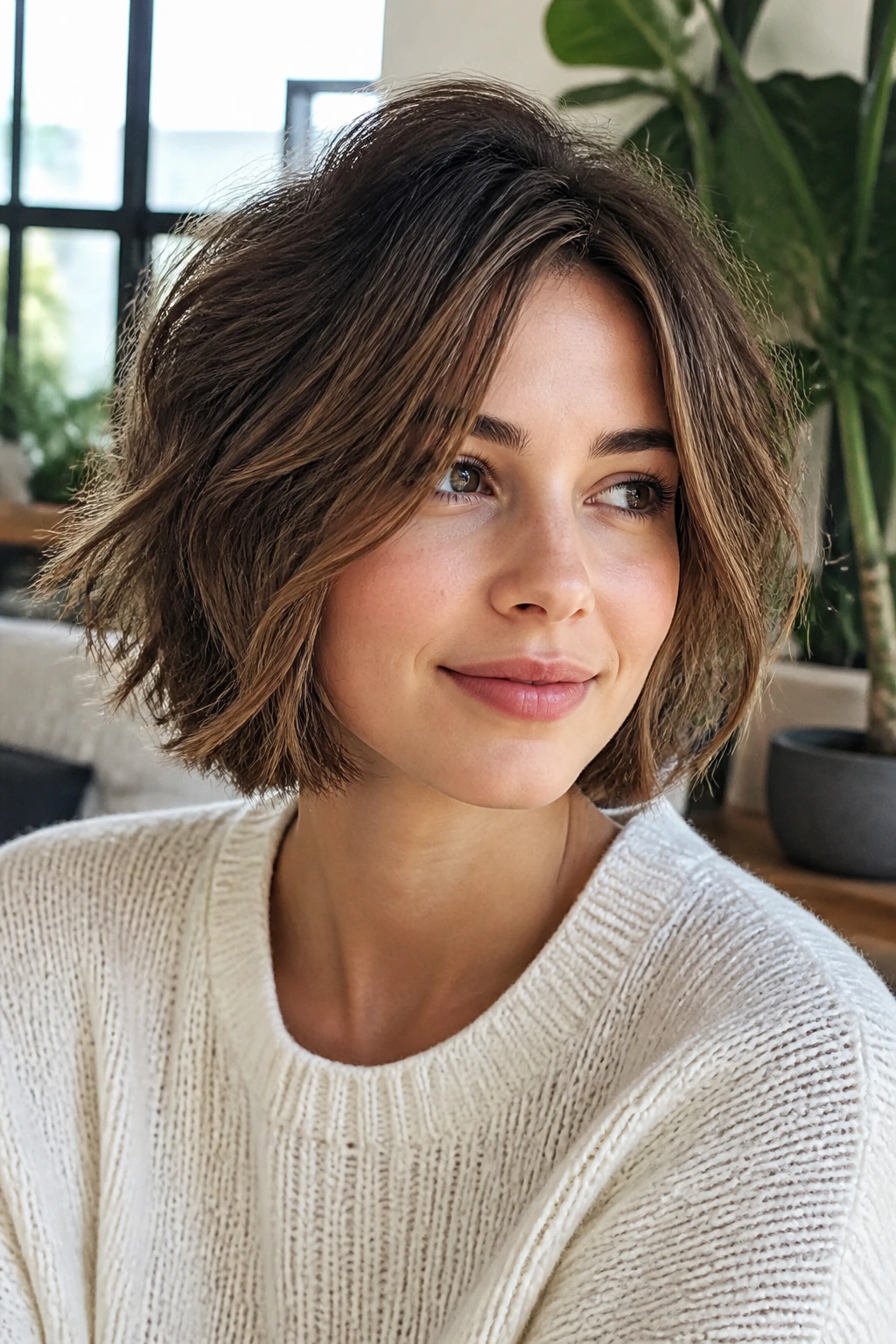
Invisible layers are the sort of thing people don’t notice, which is the point. They sit inside the cut and keep the hair from swelling out at the sides. On a round face, that hidden reduction in bulk can be the difference between a bob that floats and one that spreads.
The tousled finish keeps it relaxed. A few bends through the midlengths, a slight lift at the crown, and some separation at the ends are enough. You do not need a perfect wave pattern. In fact, perfection is the problem. A little irregularity stops the cut from feeling too round.
This is a good choice if you like to air-dry and move on with your day.
18. Cheekbone Bob with Long Fringe

A bob that lands around the cheekbone can be tricky, because that’s one of the widest zones on a round face. The fix is the fringe. Keep the front longer, soft, and swept away from the center so the hair frames the cheekbone instead of boxing it in.
The long fringe should graze the face, not sit flat against it. That bit of movement creates the long line you want. Loose curls in the ends help too, as long as they don’t bloom sideways. A soft bend downward at the front is better than a curl that turns outward at the cheek.
This cut looks especially good when one side is tucked back and the fringe falls loose on the other.
19. Stacked Bob with Loose Curl Set
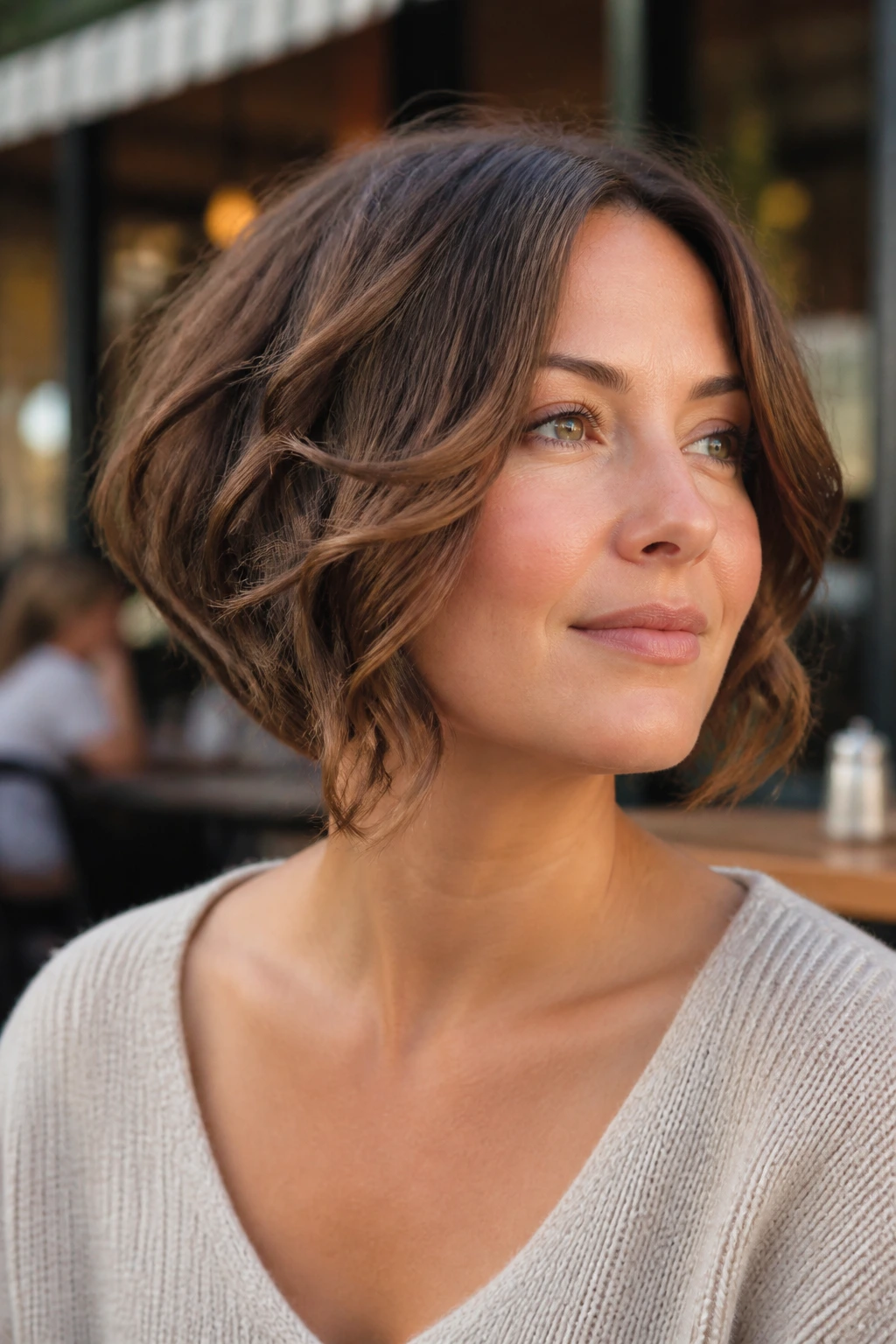
A stacked bob can work on a round face when the stacking is kept discreet and the curls are loose. Too much stacking, and the back balloons. Too much curl, and the sides puff. But a controlled version gives you lift at the back and a tapered feel through the neckline.
The idea is to build height where the head is naturally flatter, then let the front lengths stay soft. That shape adds structure without widening the cheeks. The curls should be brushed apart enough to show the layers, not locked into ringlets.
This is one of the more styled-looking options on the list. It’s good if you want the haircut to feel a little dressed up with very little actual effort.
20. Off-Center Part Bob

An off-center part is quieter than a deep side part, but it still does useful work. It keeps the face from reading too symmetrical, which can be useful on a round shape where balance sometimes turns into sameness. The slight shift makes the eye travel.
This version works best with shoulder-grazing or chin-skimming lengths and a soft curl pattern through the bottom half. Keep one side a little fuller and the other a touch sleeker. That unevenness is what gives the cut its shape.
If your hair insists on parting in one place, let it. Fighting the natural fall is a losing game anyway.
21. Soft Inverted Lob
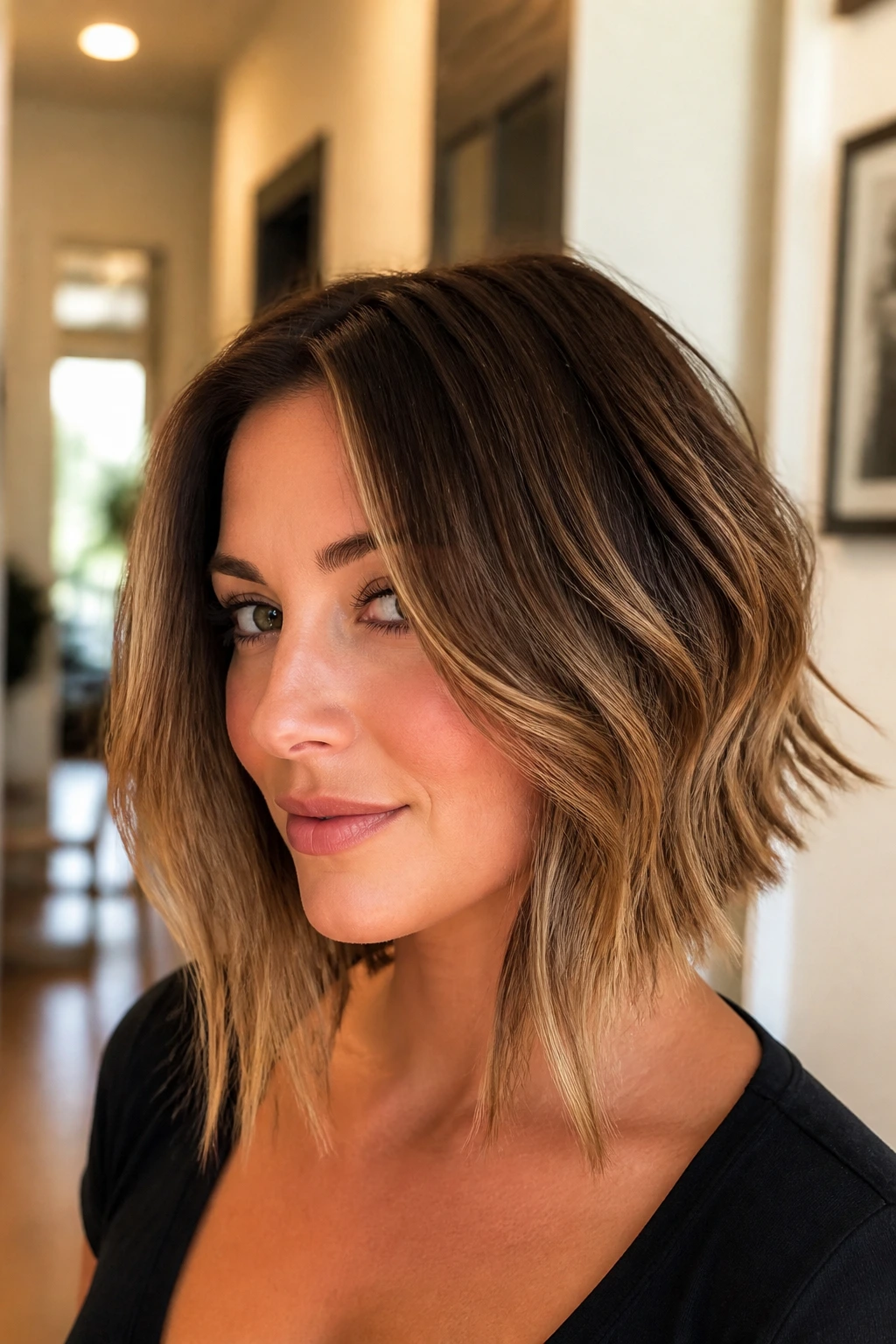
The soft inverted lob is a cousin to the A-line bob, but it usually feels a little longer and more wearable day to day. The back is shorter, the front drops lower, and the angle isn’t so sharp that it starts acting like a geometric shape. On a round face, that restraint helps.
Loose curls should follow the contour of the cut, not fight it. Bend the front pieces away from the face, then let the ends fall in soft waves. The line that runs from back to front gives you that subtle lengthening effect without turning the style severe.
This one’s a favorite for people who want structure without the maintenance of a dramatic cut.
22. Internal-Layer Bob
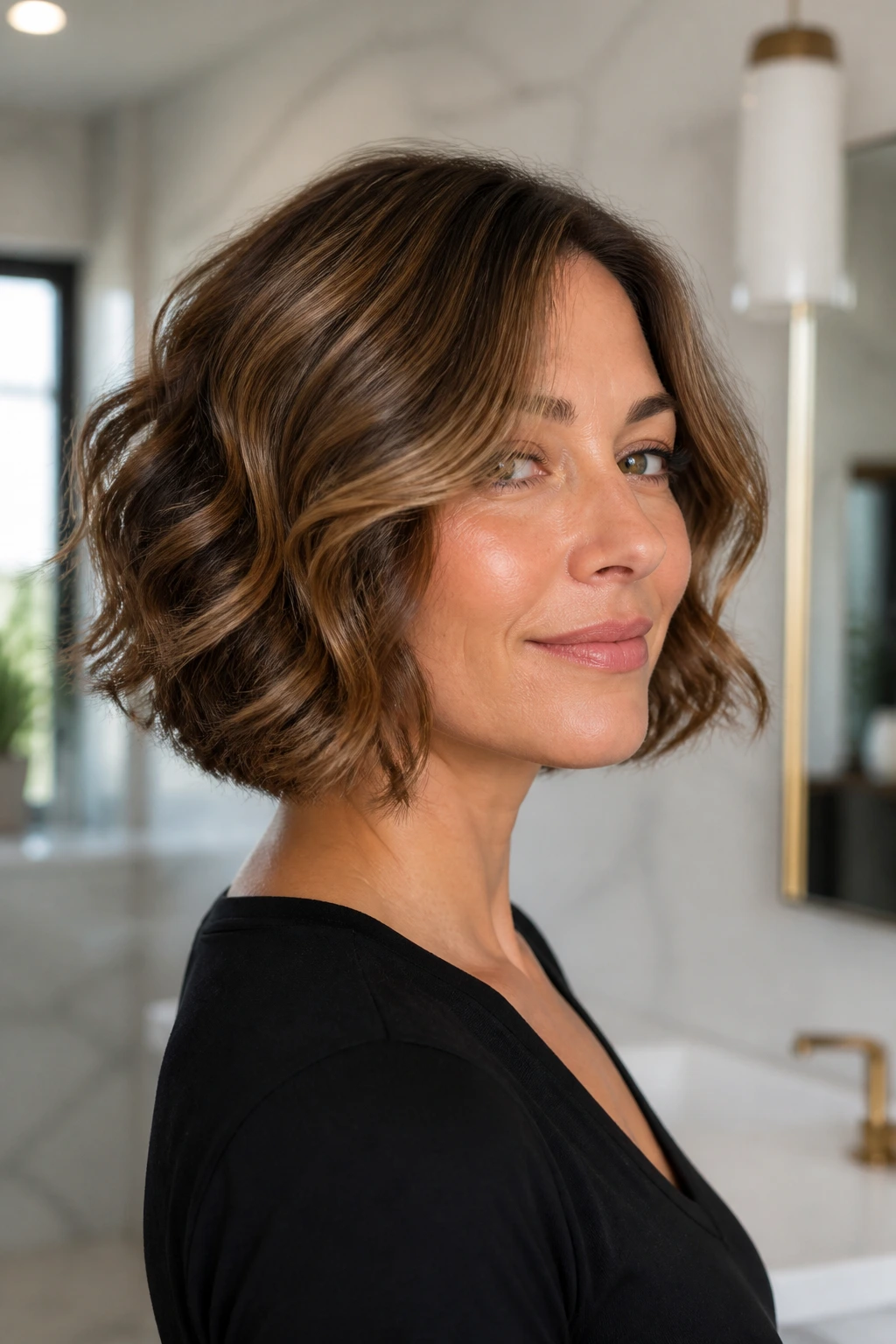
Internal layers are the unsung hero of wavy bobs. They strip out bulk where you do not want it while preserving the perimeter. That matters a lot on a round face, because the outer edge can stay sleek while the inside moves and breathes.
The cut is especially helpful if your waves are dense or your hair tends to flare at the sides. The surface looks smooth, but the inside keeps the bob from turning into a triangle. You get a cleaner line around the face and a lighter feel overall.
Use a low-heat diffuser or air-dry the roots, then encourage the ends to separate with a tiny bit of cream. That’s enough.
23. Chin-Length Bob with Side-Swept Bangs

Side-swept bangs are a classic for a reason. They carve a diagonal across the forehead, which gives a round face a little extra length, and they soften the transition into a chin-length bob. The shape feels friendly without being mushy.
The bangs should be long enough to blend into the front pieces. If they sit too short, they can add width right where you don’t want it. The bob itself should have loose movement through the ends so it doesn’t read as one flat, hard line.
This cut is a good answer for anyone who wants to keep hair off the face but still likes a bit of softness around the eyes.
24. Beachy Lob with Tucked Ends
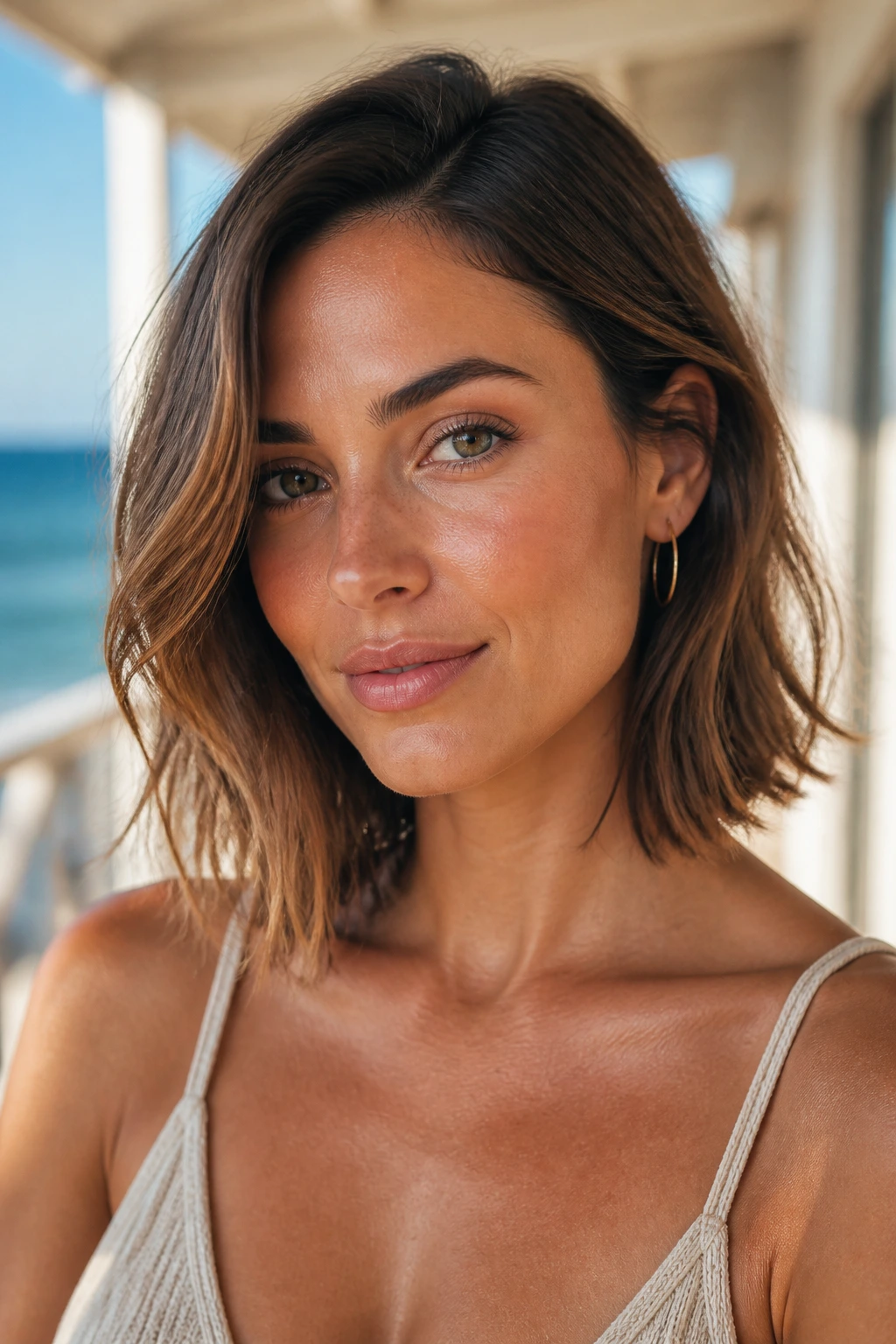
A beachy lob can get lazy fast, which is why the tucked-ends version is so useful. Keep the length near the collarbone, leave the wave pattern loose, and tuck one or both sides behind the ear so the face opens up. That little gesture makes the shape feel lighter.
The ends should look like they’ve naturally dried into a bend, not like they were all wrapped around the same barrel. A touch of wave spray helps, especially if your hair needs grit to hold the shape. I like this version when the weather is humid or the schedule is messy, because imperfect texture looks intentional here.
The tucked ends keep the style from expanding sideways. That’s the whole point.
25. Modern Shaggy Lob

A modern shaggy lob is the most forgiving cut in the bunch. It has enough length to balance a round face, enough layers to keep the sides from feeling bulky, and enough messiness to work with loose curls instead of demanding a perfect blowout. That combination is hard to beat.
What makes it modern is restraint. The layers should be soft, not choppy for the sake of it. The curls should fall in bends, not sausage-like spirals. The front pieces can be just a little longer so the face reads with more length, but nothing here should feel overbuilt.
If you want a cut that can survive air-drying, day-two styling, and the occasional rushed morning, this is the one I’d put on the shortlist.
What Makes a Wavy Bob Flatter a Round Face
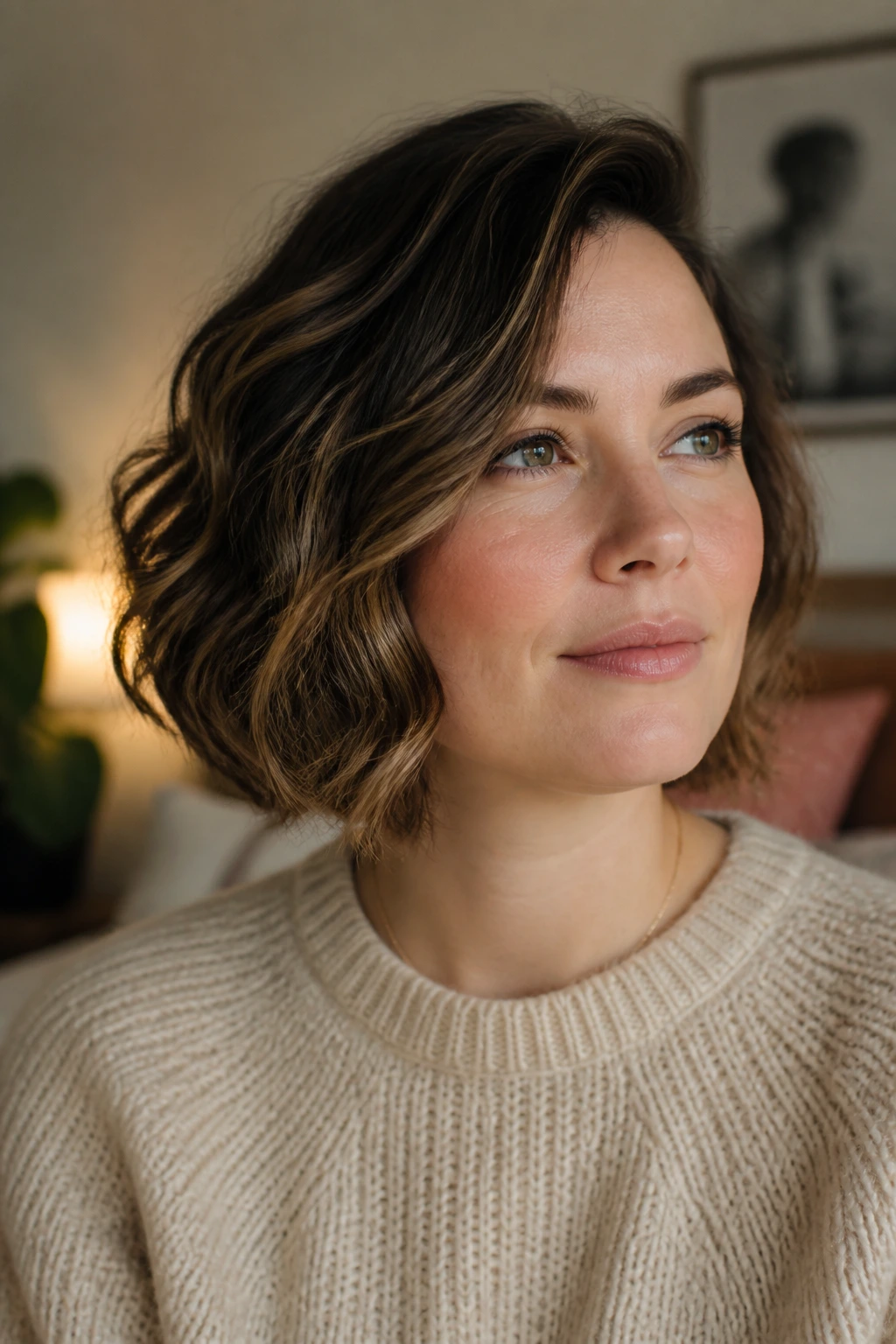
A flattering bob on a round face is mostly a lesson in direction. Hair that falls straight across the cheeks tends to emphasize width. Hair that moves diagonally, drops below the chin, or breaks up around the crown gives the eye somewhere else to go. That’s the whole trick, and it’s why some bobs look sharper on one person than another even when the cut lengths are similar.
Loose curls help because they create shape without forming a hard perimeter. Tight ringlets can make the sides feel fuller. Flat, straight hair can make the face seem wider if the cut is too blunt. Soft bends sit in the middle. They add movement, but they don’t build a circle around the face.
The other thing I pay attention to is where the volume lives. Height at the roots? Good. Puff at the sides? Usually not. A little lift near the crown stretches the profile. A little softness below the cheekbone keeps the bob from feeling boxy. That balance matters more than the exact haircut name.
Essential Tools for Styling Loose-Curl Bobs
-
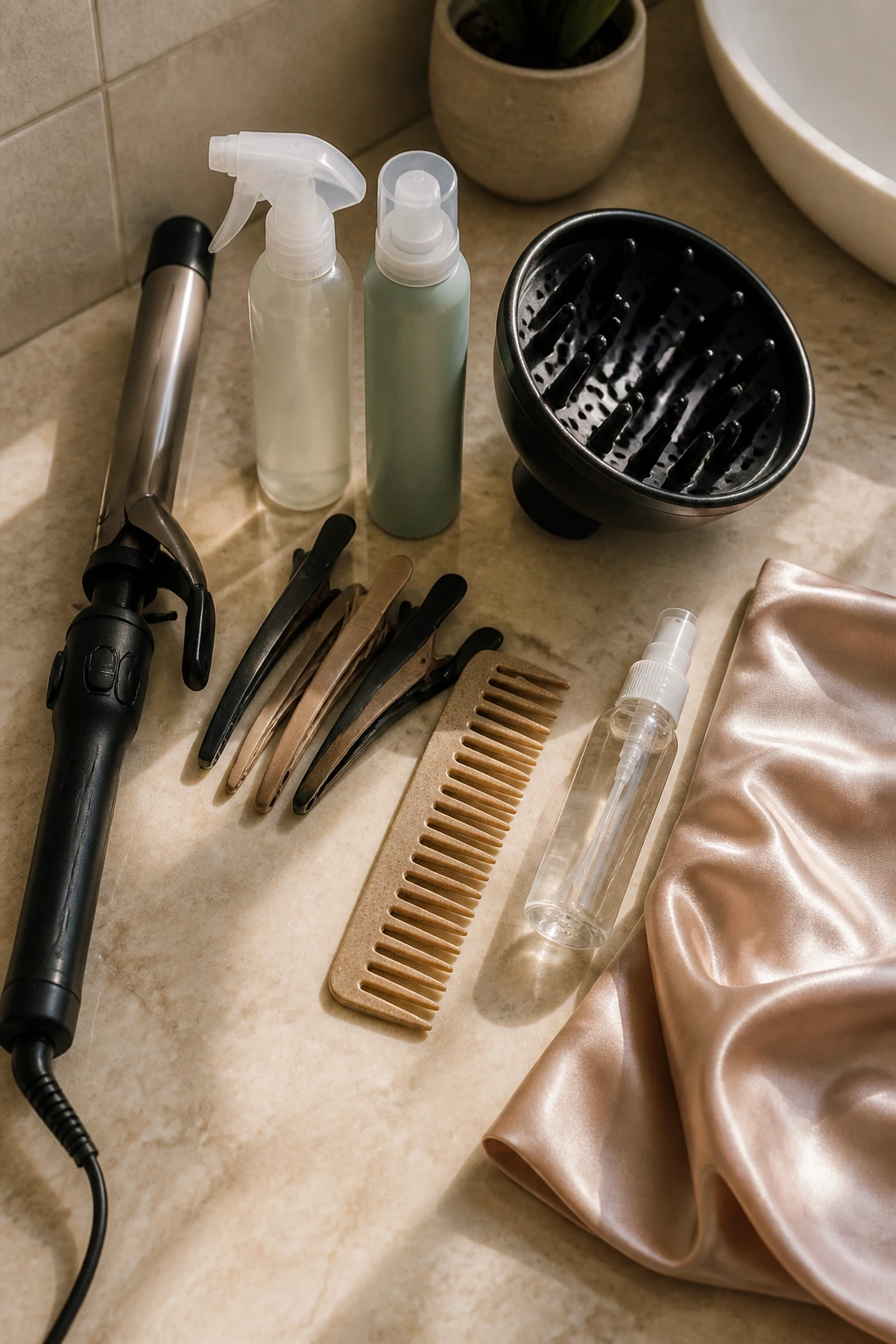
1¼-inch curling iron or wand: This barrel size gives loose bends instead of tight curls, which suits bob lengths better than a smaller iron.
-
Heat protectant spray: Use it before any hot tool, especially if the ends sit near the chin and get touched up often.
-
Root-lifting mousse: A golf-ball-sized amount at the roots gives the crown enough support to keep the face from reading flat.
-
Duckbill clips or sectioning clips: These help set the top while the lower layers cool, which keeps the shape from collapsing.
-
Diffuser attachment: Handy if you air-dry wavy hair and want the wave to keep its shape without ballooning.
-
Wide-tooth comb: Better than a brush for breaking up waves without turning the bob into a halo.
-
Light texturizing spray: A few misted passes can separate the ends and keep the style from looking too polished.
-
Silk or satin pillowcase: Not glamorous, but it cuts down on frizz and keeps the bob from getting crushed overnight.
What to Ask Your Stylist Before the First Snip
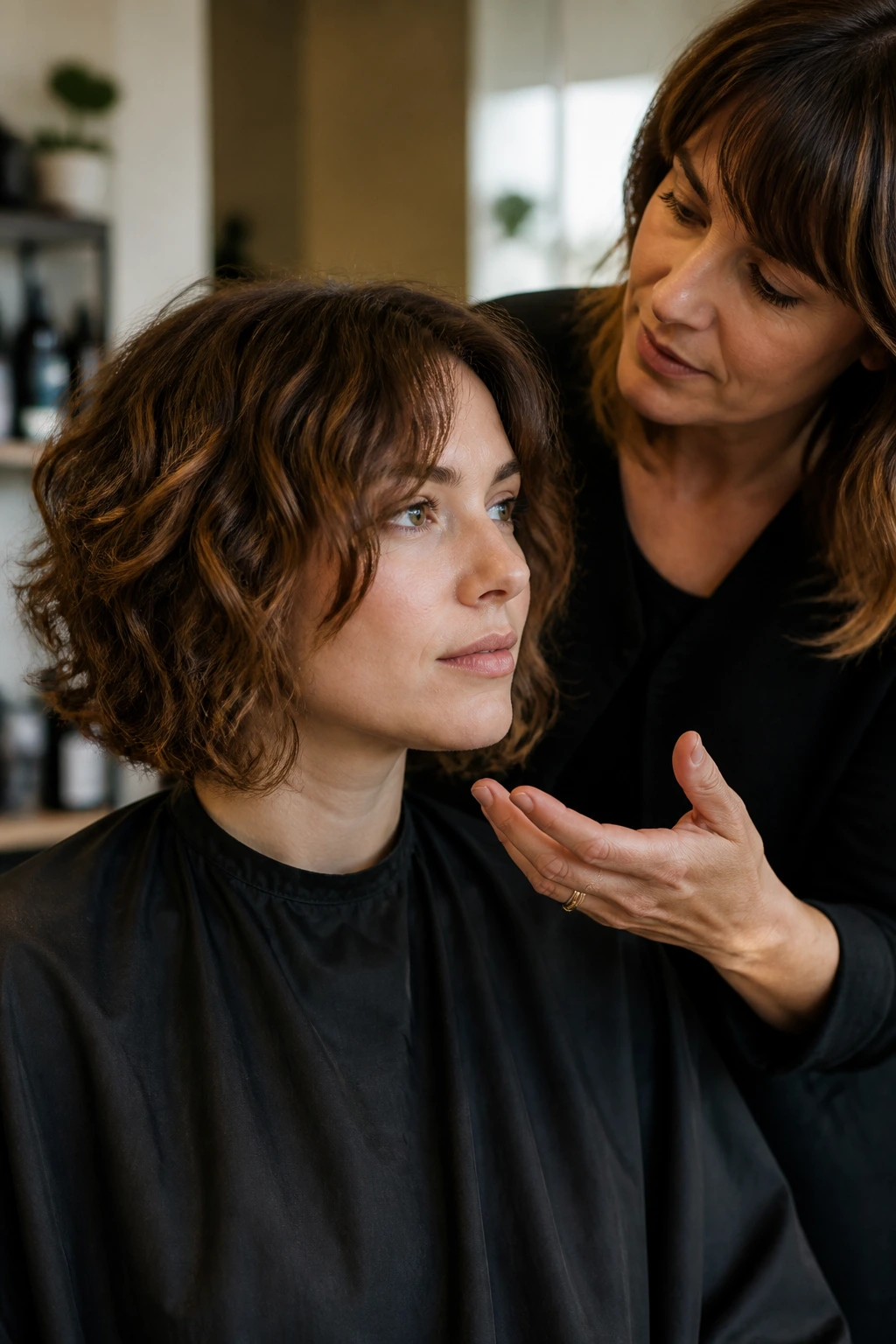
Say exactly where you want the longest front pieces to fall. “At the chin,” “just below the jaw,” or “at the collarbone” are better than vague words like short or medium. A bob is one of those cuts where half an inch changes the whole face shape, so specificity matters.
Ask for face-framing that starts below the cheekbone if your roundness sits high in the face. If the framing starts too high, it can widen the middle of the face instead of lengthening it. That’s a common miss, and I see it all the time in salon photos that looked better from the back than from the front.
Bring up your texture honestly. If your wave pattern expands when it dries, say so. If your hair goes limp after three hours, say that too. Your stylist needs to know whether to build the shape for air-drying, diffusing, or a quick wand pass. The same bob can behave like three different cuts depending on texture.
Also ask about internal layering versus perimeter layering. Internal layers reduce bulk without making the outline choppy, and that’s often the better choice for round faces. Perimeter layers can be lovely, but too many of them can widen the silhouette if the hair flips outward.
How to Wear These Cuts Day to Day

Air-Dried Texture:
Work a light mousse or curl cream through damp hair, scrunch the ends, and leave the roots alone until the hair is about 70 percent dry. That keeps the crown from flattening while the wave pattern forms on its own. Once dry, break the cast with a few drops of oil on the palms.
Diffused Waves:
Use the diffuser on low heat and low speed, and tip your head slightly to one side so the roots don’t dry in a flat sheet. The first five minutes matter most. If the roots set with a little lift, the whole cut looks better all day.
Sleeker Finish:
If you want a more polished bob, bend only the last 2 to 3 inches of hair with a wand and leave the top smooth. That keeps the face open while still giving the ends some movement. A middle part can work here if the crown has enough height.
Accessories:
A narrow barrette, a tucked-behind-one-ear look, or a small claw clip at the back can change the shape without changing the cut. On a round face, I prefer accessories that lift one side or open the cheekbone area. Big puffy headbands? Usually too much.
Extra Ways to Push the Shape
Root Lift First:
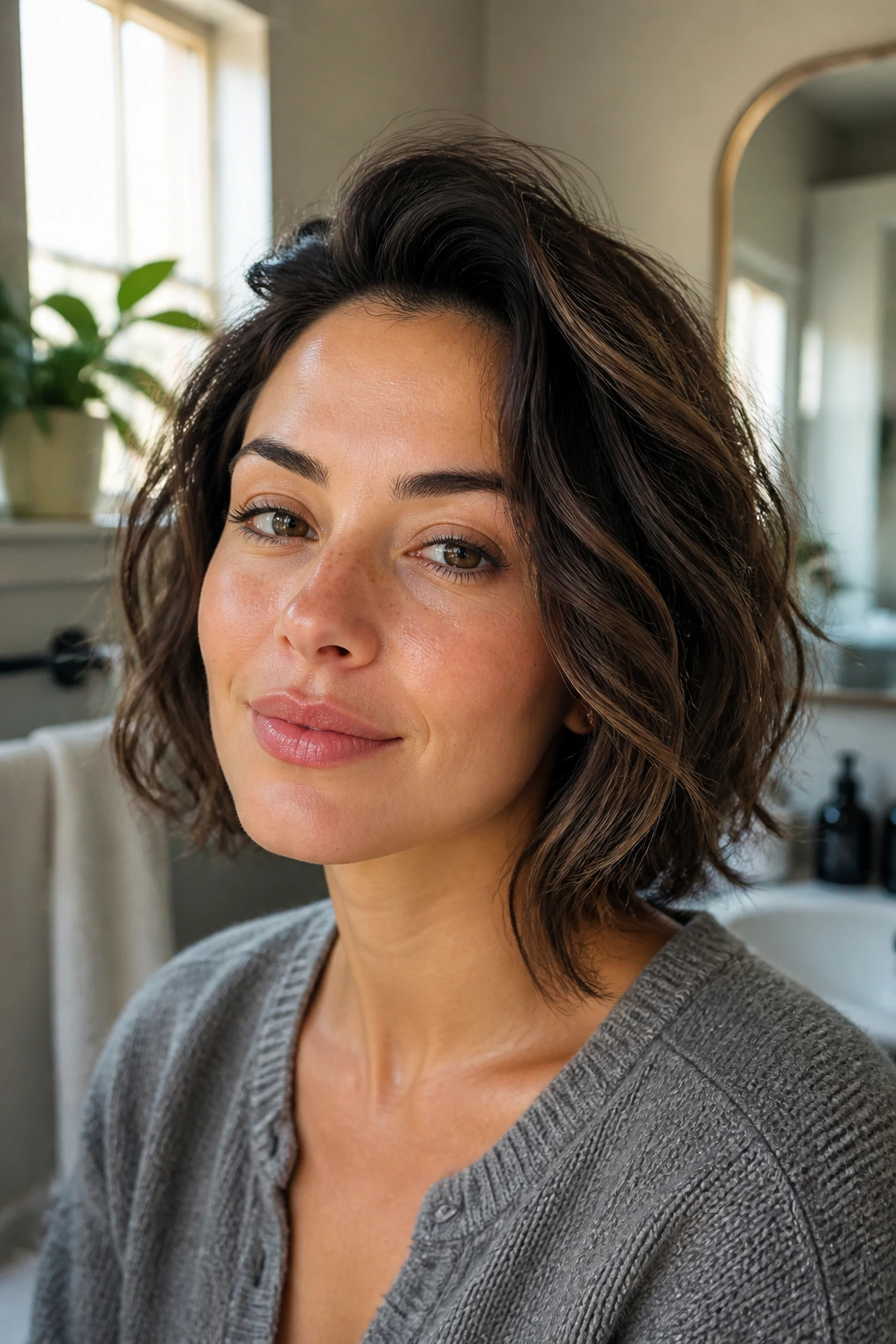
If the cut falls flat, start with the roots, not the ends. A small amount of mousse or root spray at the crown gives the face more length than extra curl through the bottom ever will. I use this trick on fine hair all the time.
Piecey Ends, Not Heavy Ends:
Loose curls look best when the ends separate a bit. A touch of texturizing spray or a tiny dab of cream on the last inch of hair can stop the bob from looking dense and round.
Keep One Side Open:
Tucking one side behind the ear changes the silhouette more than people expect. It carves a little negative space near the cheek and jaw, which is exactly what a round face benefits from.
Make-It-Yours:
If you prefer softer makeup and a gentler style, go with a collarbone lob and airy layers. If you like a sharper look, choose a more angled bob with a clean part and a bit more crown lift. The same texture can go either direction.
Keeping the Cut Fresh Between Trims
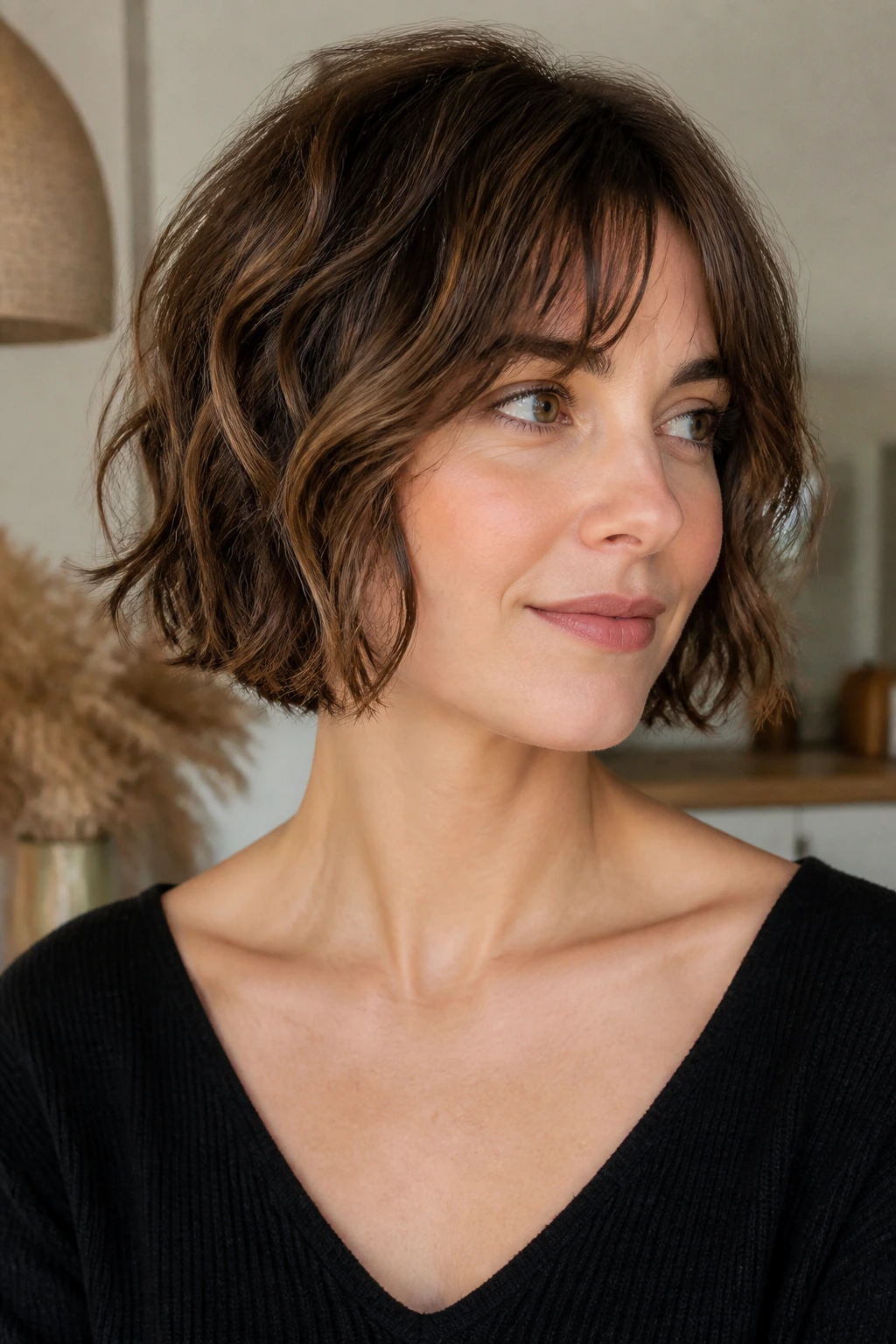
A wavy bob looks best when it’s trimmed on schedule. For chin-length versions, six to eight weeks keeps the hemline crisp and the side pieces from drifting too far into the jaw. Lobs can usually stretch to eight to ten weeks if the shape is still reading clean in the mirror. After that, the ends start to thicken and the whole cut can lose its line.
Wash frequency depends on the texture, but most loose-wavy bobs behave well with a wash every two to four days. Day two is often better than day one once the product settles and the wave loosens a little. Use a small mist bottle with water and a drop of leave-in to revive flattened pieces, then twist only the front sections if they need help.
Sleep matters more than people admit. A silk pillowcase helps, and so does clipping the top layer loosely at the crown if your hair collapses overnight. Don’t pile a bob into a high bun. It bends the ends in weird places and makes the cut look blunt in the morning.
Humidity is the wild card. On damp days, less product usually wins. Heavy cream and humidity make a bob swell sideways. A light mousse, a quick diffuse, and a touch of anti-frizz serum at the ends tends to hold better.
Variations and Adaptations to Try

Fine-Hair Lift-Up:
Keep the perimeter blunt and the layers minimal. Fine hair needs density at the ends so the bob doesn’t look wispy, and a little root spray will do more than heavy creams ever will. This version usually looks best at chin to jaw length.
Thick-Hair Release:
Ask for internal layers and a softer angle in front. Thick hair can take more shaping, but if the bulk stays at the sides, the face reads wider. Removing weight from the inside keeps the outline airy.
Low-Maintenance Air-Dry Version:
Choose a collarbone lob or shoulder-skimming bob and let the wave pattern do most of the work. A light leave-in and mousse are enough. This one is for people who want shape without daily hot tools.
Fringe-Free Version:
Skip bangs entirely and lean on a side part or off-center part instead. The face opens up faster, and the cut can feel cleaner. I like this option for anyone who hates fringe maintenance but still wants softness around the face.
Grow-Out Friendly Lob:
Start a little longer than you think. A lob that begins near the collarbone keeps its shape while growing and still flatters a round face even when the ends start drifting. It’s the sensible choice if you don’t want a sharp haircut cycle.
Common Mistakes That Flatten the Shape
-
Cutting the hemline exactly at the cheek: That’s the fastest way to widen a round face. The fix is simple: move the line either above the jaw or below it so the eye doesn’t stop at the fullest point.
-
Building too much width at the sides: Heavy layers or outward-flipping ends can make the hair balloon. Ask for internal shaping instead of choppy side bulk, and keep the wave loose.
-
Using curls that are too tight: Tight spirals can make the bob look rounder than the face itself. A 1¼-inch iron or a loose diffuser bend usually works better.
-
Leaving the crown flat: Flat roots erase the lengthening effect. Clip the crown while it cools, or use root spray before drying.
-
Choosing a heavy bang with no movement: Dense fringe can chop up the face and make it feel shorter. If you want bangs, go for side-swept, curtain, or bottleneck shapes.
Frequently Asked Questions About Wavy Bobs for Round Faces
What bob length is most flattering on a round face?
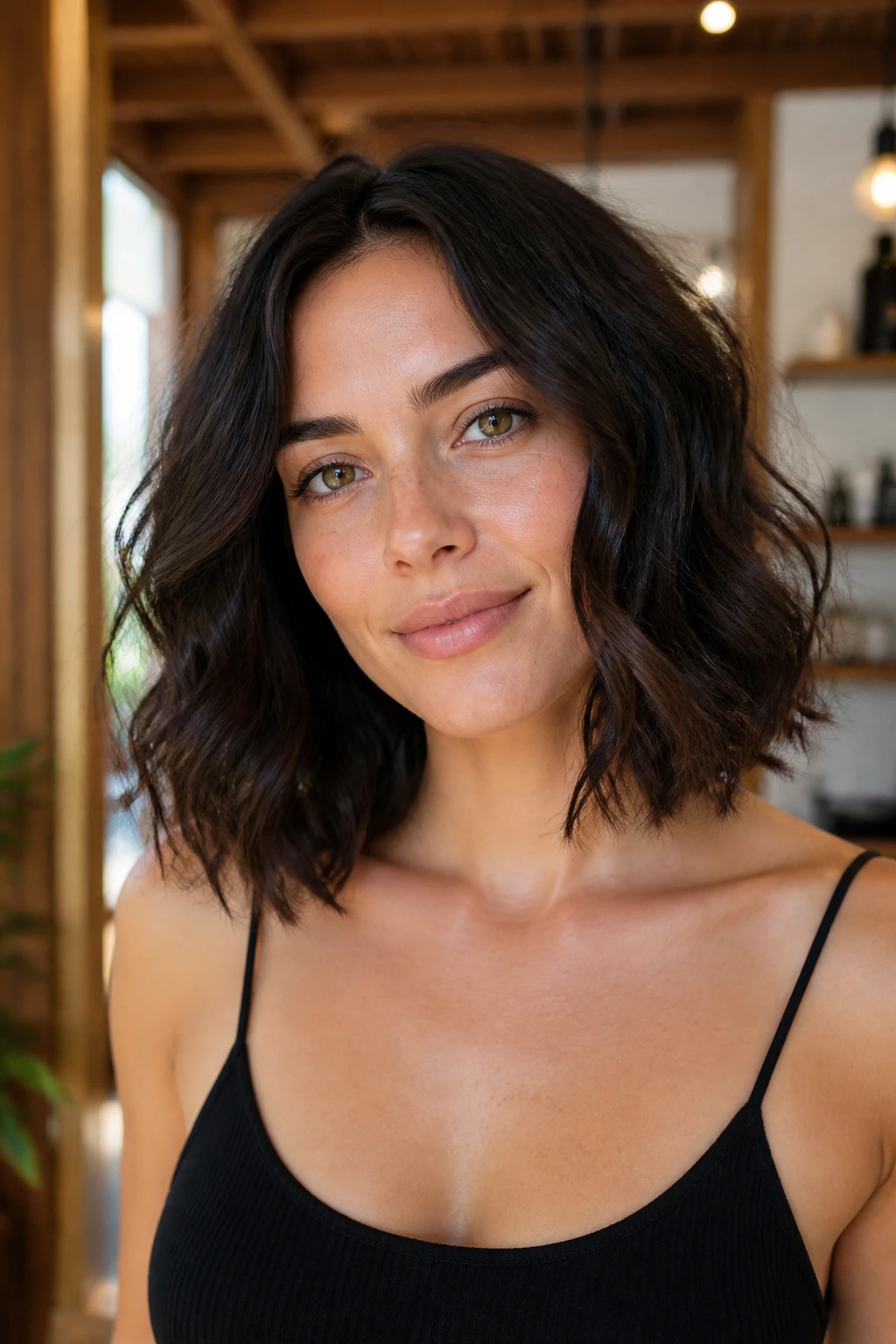
Jaw-grazing to collarbone length tends to work best because it avoids stopping at the widest part of the cheeks. If you like shorter cuts, keep some lift at the crown and avoid a blunt line that lands right on the jaw.
Can round faces wear a chin-length bob?
Yes, but the cut needs a little help. A side part, crown lift, and soft movement through the ends keep it from looking too boxy. Straight-across, chin-length bobs without shape are the ones that usually cause trouble.
Do bangs work with naturally wavy bobs?
They do, as long as they’re soft. Curtain bangs, bottleneck bangs, and long side-swept fringe usually flatter round faces better than a heavy blunt fringe. Loose wave in the fringe helps it blend instead of sitting like a shelf.
Should I ask for layers if my hair is wavy?
Usually, yes — but not too many. Internal layers remove bulk and help the waves move, while too much layering can make the bob puff out or look thin at the ends. The right amount depends on how dense your hair is.
What if my hair gets frizzy after air-drying?
Use a light leave-in and a small amount of mousse on damp hair, then stop touching it while it dries. Once it’s dry, break up the texture with a tiny bit of serum on your palms. Heavy creams can make frizz look bigger, not smaller.
Is a blunt bob a bad idea for a round face?
Not automatically. A blunt bob can work if the ends are softened by loose waves, the crown has some lift, and the length lands away from the cheek line. A blunt edge with no movement is the version that usually feels too wide.
How often should I trim a wavy bob?
Most bob lengths need shaping every six to ten weeks, depending on where the line sits. Shorter bobs need more frequent trims to stay clean, while lobs can stretch a little longer. Once the front pieces stop framing and start hanging, it’s time.
What parting is best if my face is round?
A side part or off-center part is usually the safest bet because it breaks symmetry and adds length. A center part can work too, but it needs crown lift and length below the chin so the face doesn’t read wider.
A Bob That Moves With You

The best naturally wavy bobs for round faces don’t try to hide the face. They shape it. They give the cheeks room, add a little height where it matters, and let the loose curl pattern do something useful instead of simply taking up space.
That’s the real difference between a bob that flatters and one that just sits there. One has direction. One has a little opinion. And once you find the length, part, and texture balance that fits your face, the whole cut starts doing quiet, steady work every time you shake it out.