



A shoulder bob on wavy hair lives or dies by two inches. Too short, and the bend at the ends can kick out like a little shelf. Too long, and the whole shape starts to hang there, heavy and sleepy, especially if the hair at the crown has thinned a bit with time.
That’s why shoulder bobs for older women with wavy hair keep showing up in good salons and on real heads, not just in inspiration photos. The length hits a sweet spot: enough weight to keep the wave civilized, enough freedom for movement, and enough structure to make silver strands, soft texture, and face-framing layers look intentional instead of accidental. I like this length because it doesn’t force the hair to pretend it’s something else.
There’s also a practical side people don’t talk about enough. Wavy hair at shoulder length can be a dream or a mess depending on where the layers land, how the perimeter is cut, and whether the stylist understands that waves change shape as they dry. A cut that’s a little too blunt can puff. A cut that’s too shredded can go stringy. The good ones sit in the middle and make the hair behave.
Why These Shoulder Bobs Work So Well on Wavy Hair
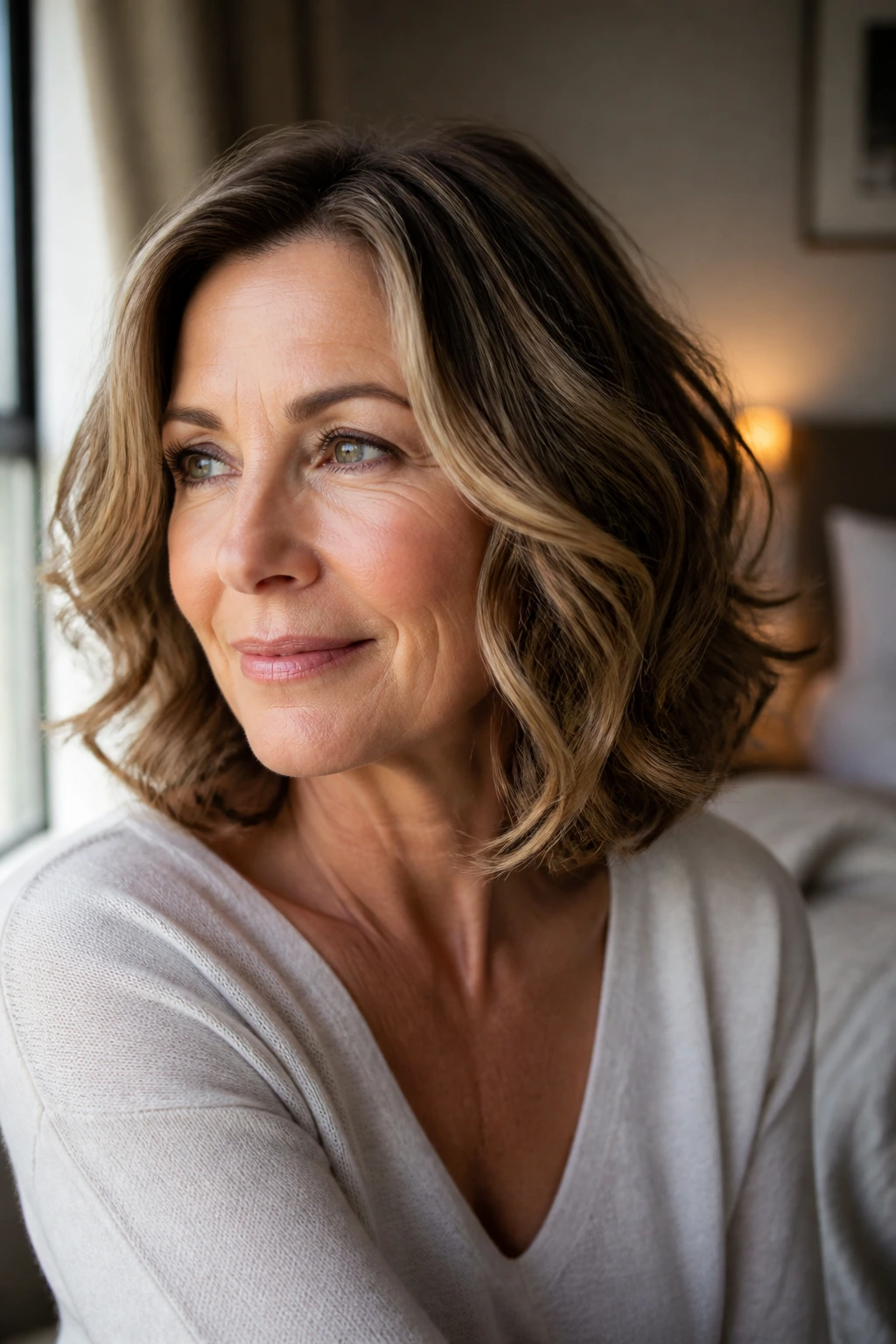
-
The length holds the wave without dragging it down. Shoulder-grazing hair keeps enough spring in the bend that the wave still shows up by lunchtime, not only right after styling.
-
The shape can soften the face without hiding it. A bob that lands around the collarbone or just above the shoulders can blur sharper lines at the jaw while still showing the neck and cheekbone.
-
They grow out cleanly. A bob that misses the shoulder by an inch or two usually keeps its shape longer than a chin-length cut that needs constant reshaping.
-
Silver and salt-and-pepper hair look sharper in this length. Gray strands can look wiry when the cut is too long and heavy; a cleaner bob gives the color more presence and less frizz.
-
You can wear them polished or loose. The same cut can be smoothed with a round brush, air-dried with mousse, or bent with a curling iron and still look like the same haircut.
1. The Soft Layered Shoulder Bob
This is the cut I keep coming back to when waves need shape but not drama. The layers start low, usually below the cheekbone, so the hair keeps a full outline while the ends still move. It’s the kind of bob that looks tidy in the mirror and relaxed in motion.
Why it works
The layering removes just enough weight to keep the wave from collapsing into a flat sheet. If your hair feels fuller at the back than at the sides, this shape evens things out without making the crown look skinny. I like it best on medium-density hair that needs a little air but not a full shag.
Best for: loose to medium waves, especially if the ends flip outward on their own.
Styling note: A small amount of mousse at the roots and a quick diffuse-dry keep the lift soft, not crunchy.
2. The Collarbone Lob with Curtain Bangs
A collarbone lob with curtain bangs is one of those cuts that looks easy because the structure is doing a lot of quiet work. The front pieces open away from the face, the bangs blend into the wave, and the length sits just long enough to feel feminine without dragging past the shoulders.
That’s the charm here. It gives older women a little framing through the front without locking them into a heavy fringe that needs daily wrestling.
What makes it different
Curtain bangs are forgiving on wavy hair because they can air-dry in a slightly imperfect way and still look deliberate. If your forehead feels like the widest part of your face, these bangs pull the eye down and out instead of straight across. They also work nicely with glasses, since the fringe can split around the frames instead of landing right on top of them.
3. The Angled A-Line Bob
If you want a clean outline, this is the one. The front sits a touch longer than the back, which gives the haircut a gentle point of view without turning it into a sharp wedge. On wavy hair, that angle keeps the sides from ballooning.
Who should try it
- Hair that puffs at the jaw
- Waves that look better with a little direction
- Women who like a sharper silhouette but not a severe one
The trick is not to overdo the angle. Too steep, and the haircut starts shouting. A subtle A-line, where the front just brushes the collarbone and the back sits an inch or so shorter, gives structure and keeps the wave from spreading sideways. It also makes the neck look longer, which is one of those small details people notice before they know why.
4. The Blunt Shoulder Bob with Light Ends
This one sounds stricter than it is. The perimeter is mostly blunt, which gives fine or thinning waves a stronger edge, but the ends get a little point-cut so they don’t sit like a board. That tiny softening matters.
I like this on hair that has lost some density over time. A very layered cut can make fine waves look wispy in the wrong way. A cleaner line gives the illusion of thicker hair, especially when the wave pattern is loose.
A side part helps this cut tremendously. It breaks up the straightness at the root, and the soft bend at the ends keeps it from looking helmet-like. If your stylist starts hacking away at the bottom to “create movement,” push back a little. This shape needs weight at the edge.
5. The Shaggy Shoulder Bob
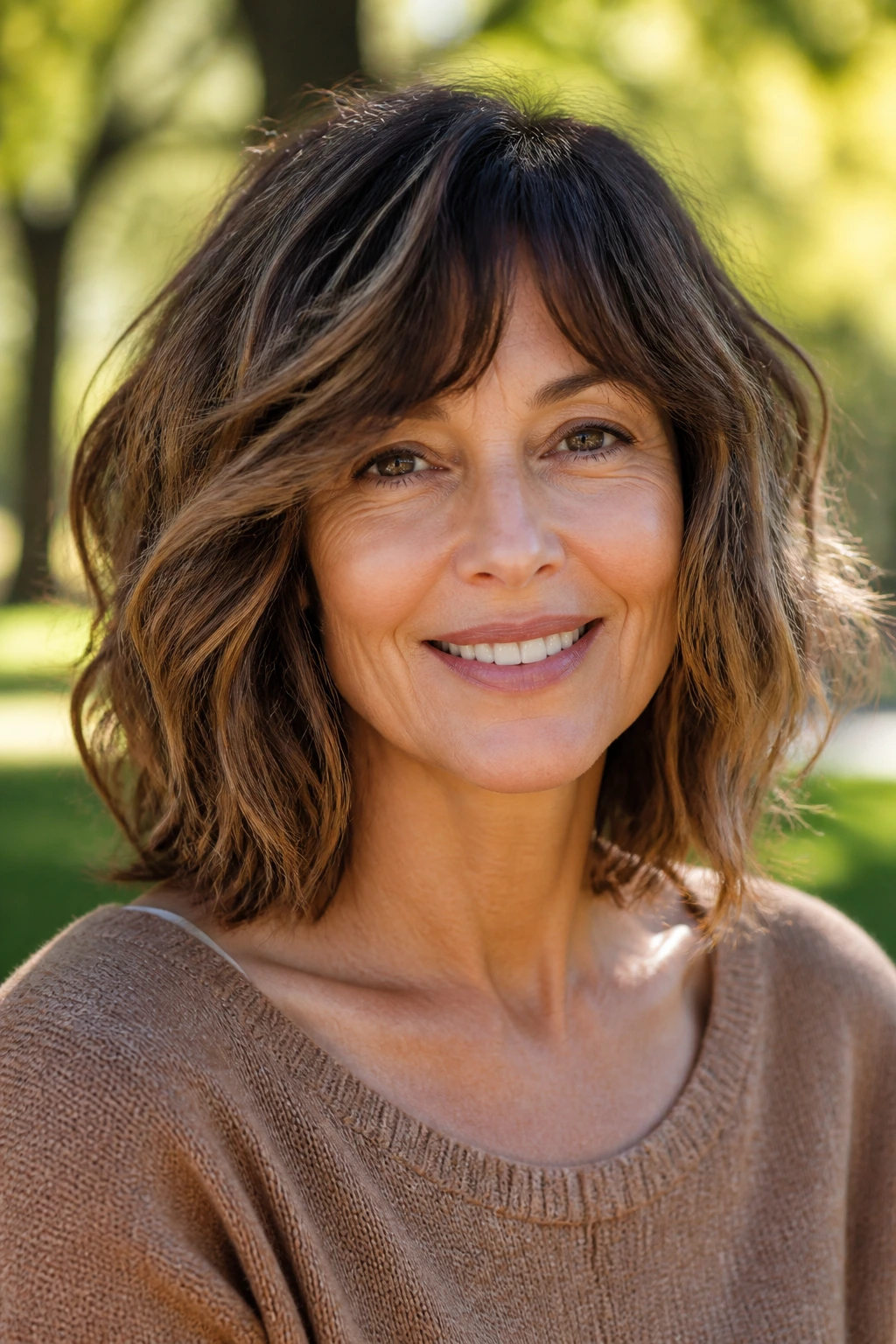
This cut has a little more attitude, but not the messier-than-thou vibe some shaggy styles pick up. The layers are built to let the wave stack lightly through the middle and feather out at the ends, so the haircut feels airy instead of choppy.
For thick wavy hair, it’s a relief. For hair that gets puffy in humidity, it can be a lifesaver because the bulk is removed in the right places, not just everywhere.
A good shaggy shoulder bob should still have a readable shape. You want movement, not random holes. If the layers are too short around the face, the front can start to disappear; if they’re too long, the cut loses the point. Ask for a softly razored finish only at the ends if your hair takes razor work well. Some waves love it. Some go frizzy the minute a razor appears.
6. The Side-Parted Wavy Bob
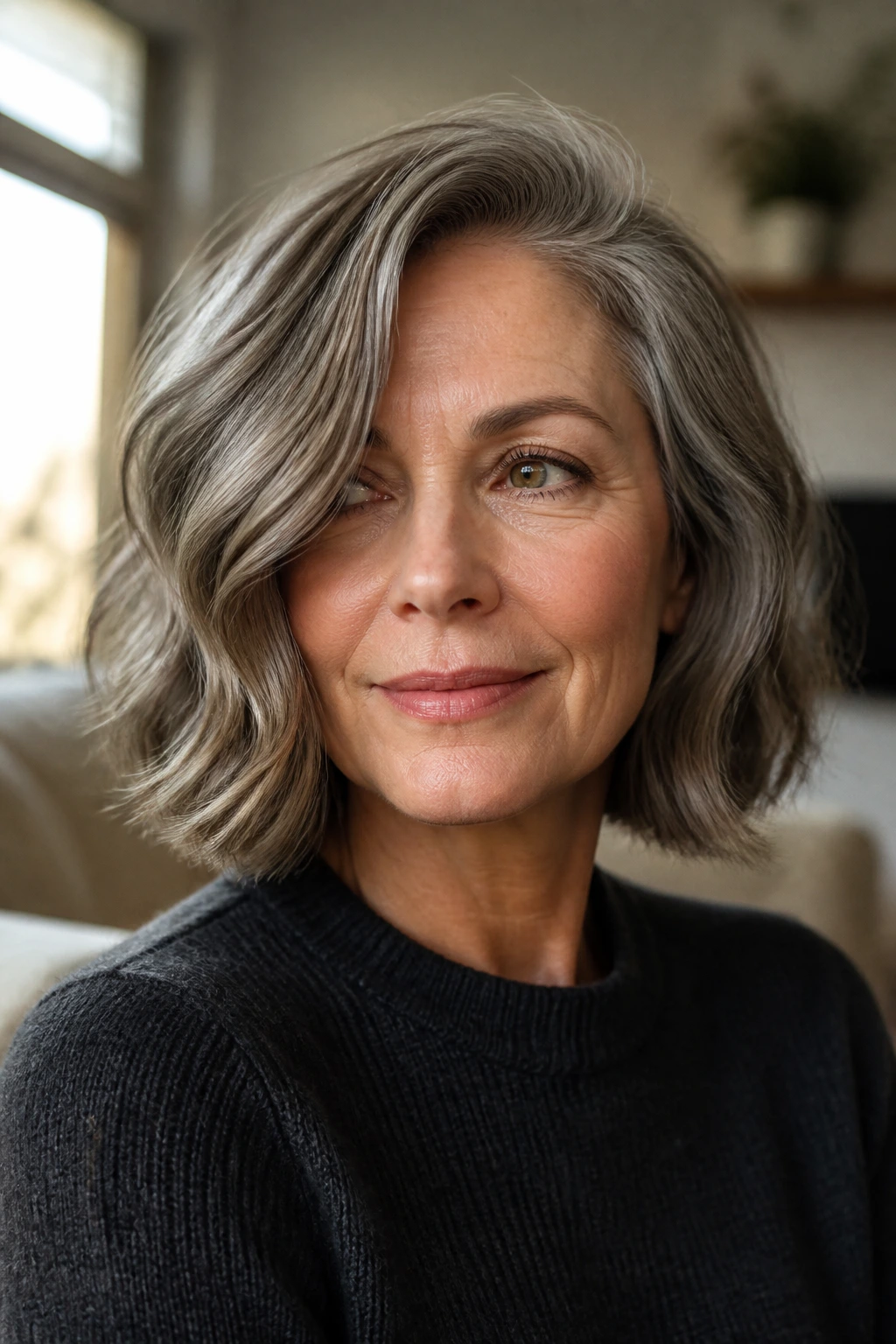
A deep side part changes everything. Seriously. The same shoulder bob can look flat with a center part and suddenly gain lift and sweep just by moving the part a few inches over.
This version works especially well if one side of your hair naturally falls flatter than the other. The longer arc across the forehead adds softness, and the extra height at the crown makes the whole style feel less pinned to the head. It’s also a neat trick when one eyebrow sits a bit higher or your face isn’t perfectly symmetrical. Hair rarely is, and that’s fine.
The side-parted bob is not trying to be cute. It’s trying to be elegant without effort, which is a better goal anyway.
7. The Silver-First Bob
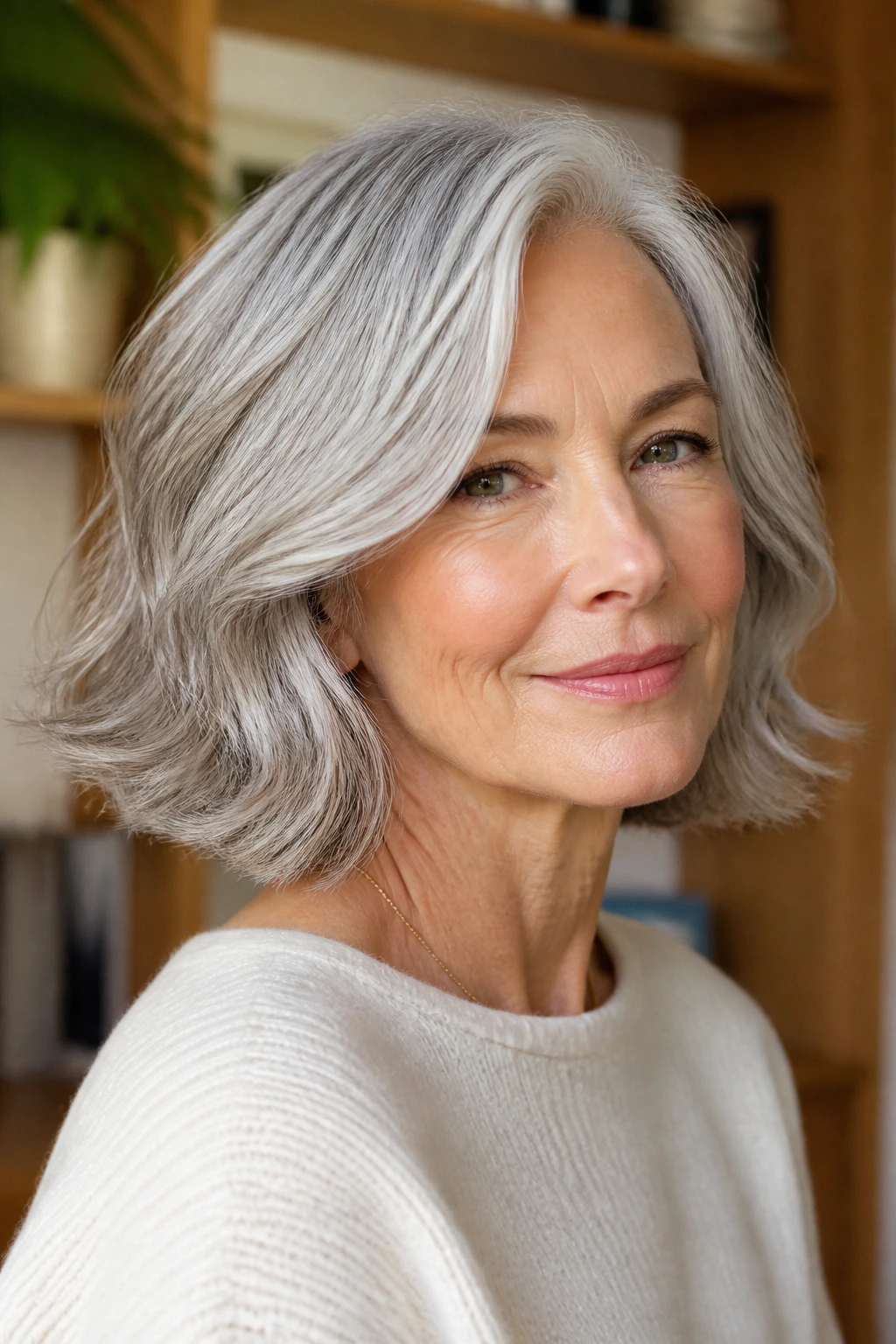
Gray hair can look spectacular in a shoulder bob, but only when the cut respects the texture. Silver strands often feel a little coarser, a little drier, and a little more reflective, so heavy layers can make the ends look see-through. A cleaner outline with soft internal movement gives the color a better stage.
The result you want
The silver should look luminous, not dusty. That means a shape with enough polish to show the shine and enough softness that the ends don’t feel sharp. A glossing cream or a light shine spray works better than piling on oil, which can flatten the crown and make gray hair look limp.
If your natural wave is uneven, keep the front slightly longer than the back. The hair will move, but the shape will still read clearly. This cut loves a good trim, though. Gray ends can get wiry fast if you let them hang too long.
8. The Rounded Bob with Face-Framing Layers
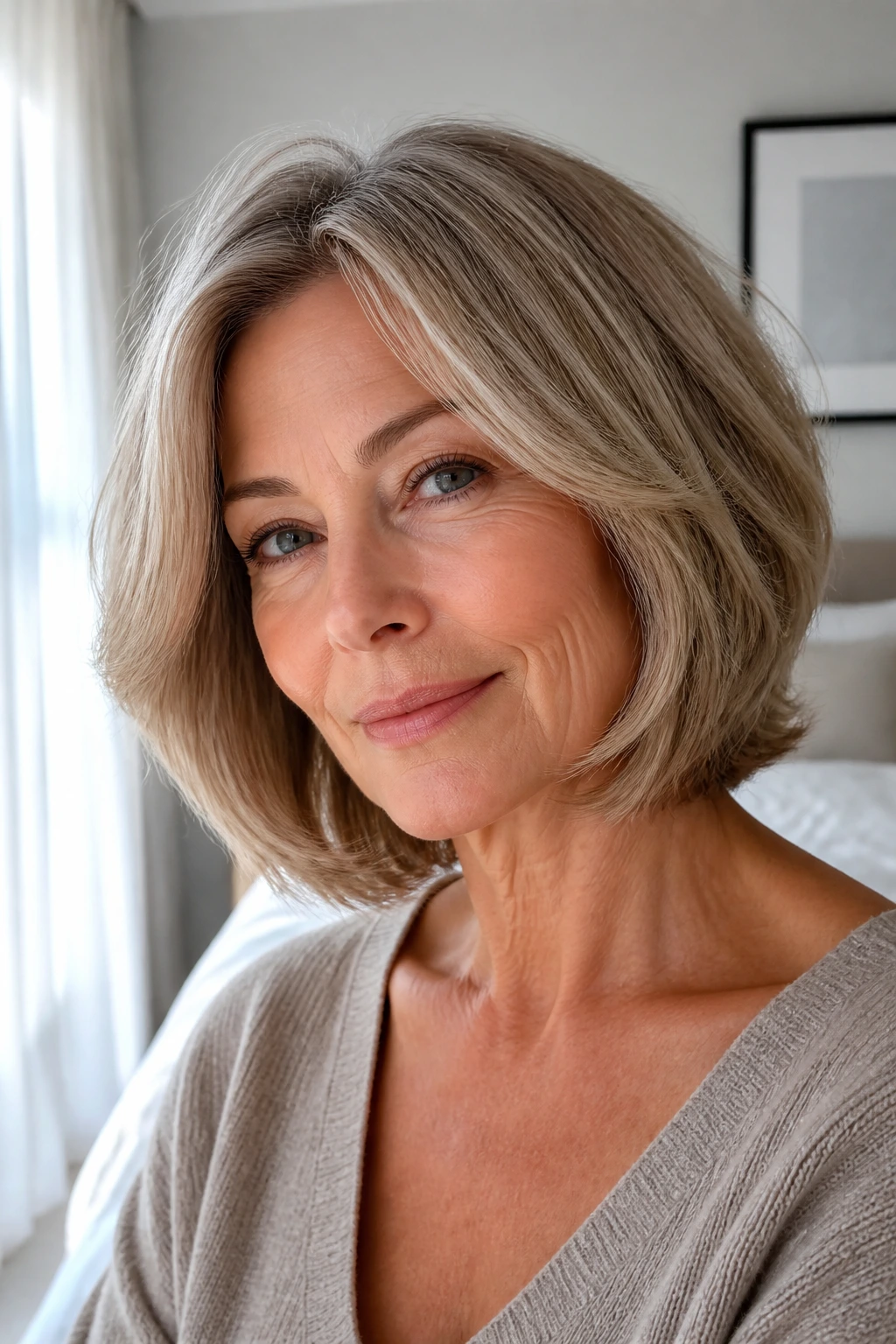
Does your hair tend to flare out at the sides? Then a rounded bob may save you some grief. The shape curves in gently around the head, with face-framing layers that nudge the front pieces toward the cheekbone instead of leaving them to swing wide.
That curve is the whole point. A rounded bob can make wavy hair look tucked in and shaped, not puffed up at the edges. It’s especially nice if your face is narrow or if you like a softer outline around the jaw.
What to ask for
- Long layers that begin below the cheek
- A curved perimeter, not a sharp square line
- Enough weight at the bottom to keep the ends from sticking out
This is one of those cuts that looks better with a little round-brush help at the front and a natural dry through the rest.
9. The Inverted Bob with Lift at the Back
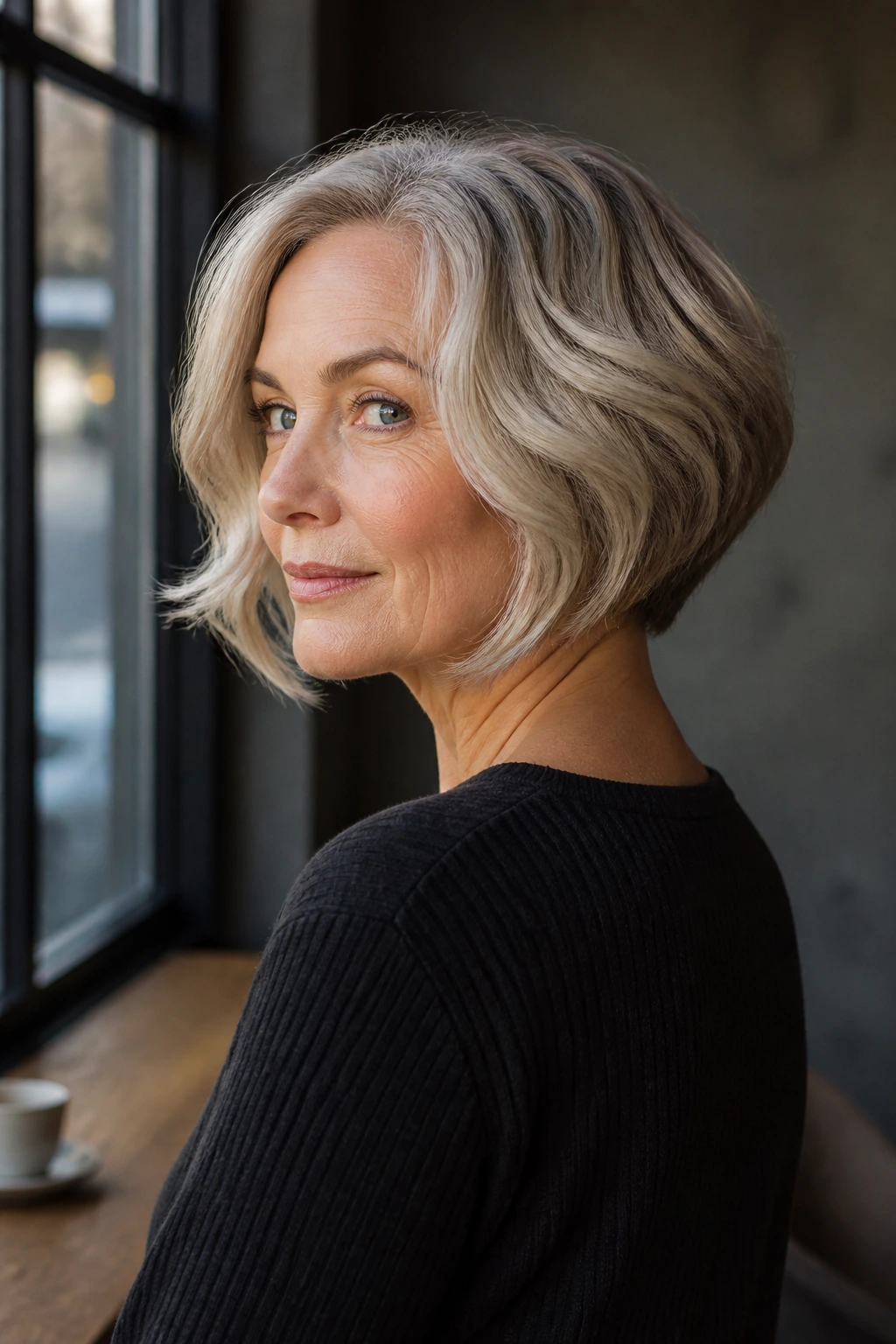
An inverted bob gives the back a little lift and leaves the front a touch longer, which can be a smart fix if your hair has started to lose some crown volume. The back stacks softly, so the cut doesn’t sit flat against the head.
The important word is softly. Nobody needs the old-school wedge that screams for attention. You want a modern version, with a gentle shift from nape to front and waves that fold over the shape instead of fighting it. It works beautifully on women who want the back of the haircut to feel neat while the front stays relaxed around the face.
If you wear earrings, this is a good one. The lifted back shows them off without forcing the whole haircut to look formal.
10. The Beachy Lob with Piecey Ends
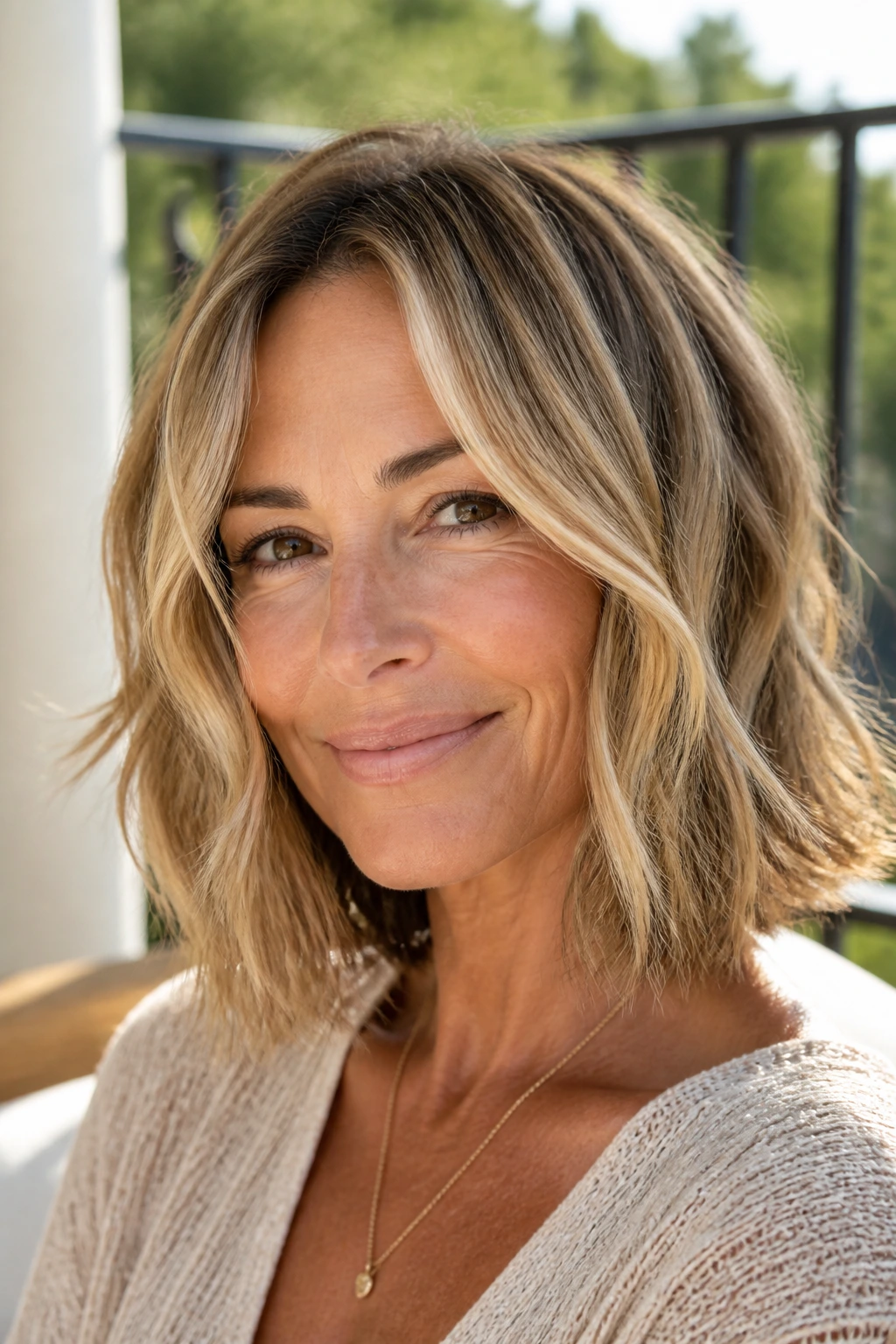
The beachy lob can look youthful in the wrong hands and quietly polished in the right ones. The difference is control. The best versions have piecey ends and touchable bends, not a full salt-spray explosion.
I’d use this on wavy hair that already has a little movement and doesn’t need much coaxing. A few bends with a 1-inch iron around the front pieces, then scrunching the rest with mousse, usually does the job. The ends should separate into soft ribbons, not fray into fuzz.
Quick reality check
This style is not for someone who wants perfection. It’s for someone who likes a little texture and doesn’t mind a few stray bends. If your hair tends to go poofy in humidity, keep the product light and focused on the lower half of the length.
11. The Deep Side-Sweep Lob
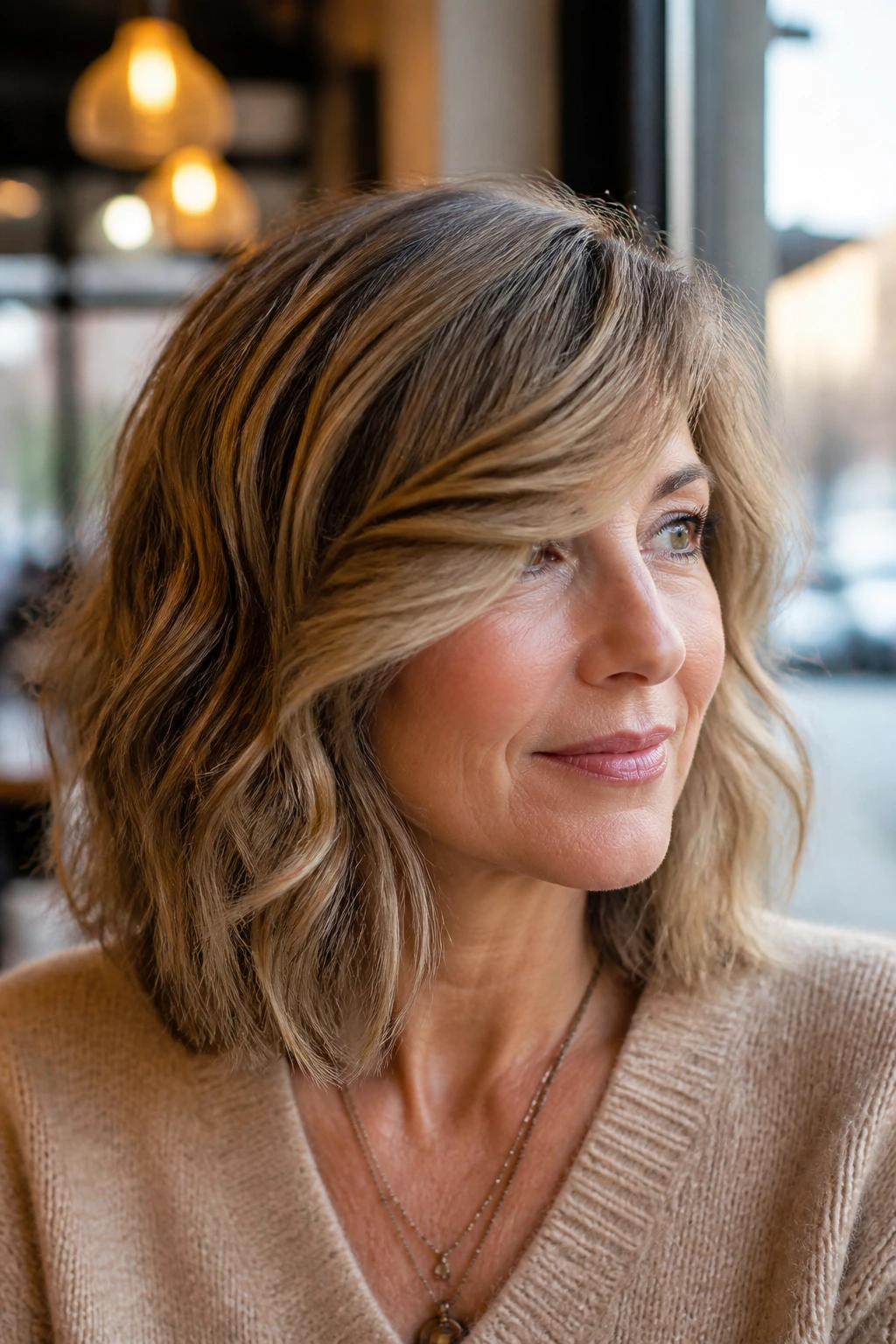
A deep side-sweep makes a shoulder-length cut feel instantly more considered. The front falls across the forehead in a soft arc, while the back keeps enough length to stop the style from looking too airy.
I like this on faces that need a little length through the front or on hair that has a stubborn cowlick near the part. The sweep gives you a way to work with that growth pattern instead of fighting it. It also looks good when the hair tucks behind one ear, which adds shape without making the haircut too neat.
The best deep side-sweep lobs keep the ends slightly curved under or softly bent out, not poker-straight. Wavy hair rarely looks best when every strand is ironed into obedience.
12. The Feathered Shoulder Bob

Feathering gets dismissed because of bad memories, and honestly, fair enough. But a feathered shoulder bob done well is not the same old airy helmet. Here, the layers are longer, the movement is softer, and the edges fall in a way that makes the hair feel lighter without stripping it bare.
This version is useful if your hair has gotten dense through the bottom but flat on top. The feathering removes enough bulk to keep the silhouette from widening while preserving lift at the crown. It also plays nicely with a slight wave because the ends can flick and bend without looking choppy.
If you like a cut that moves when you turn your head, this one is worth a close look.
13. The French-Girl Bob Grown Out

What I like about the grown-out French bob is that it has a little attitude but none of the fuss. It sits just past the jaw or grazing the neck, with a relaxed fringe or short front pieces that blend into the wave instead of sitting there like a fixed border.
Why it flatters mature features
The length keeps the face open, and the slightly undone finish keeps the haircut from feeling severe. On wavy hair, a grown-out French bob can look softer than a classic blunt bob because the texture breaks up the line. It’s a good choice if you want something chic but not precious.
A light styling cream and a finger-dry finish usually beat a full blowout here. If you try to smooth every wave away, the whole charm disappears.
14. The Air-Dried Natural Wave Cut
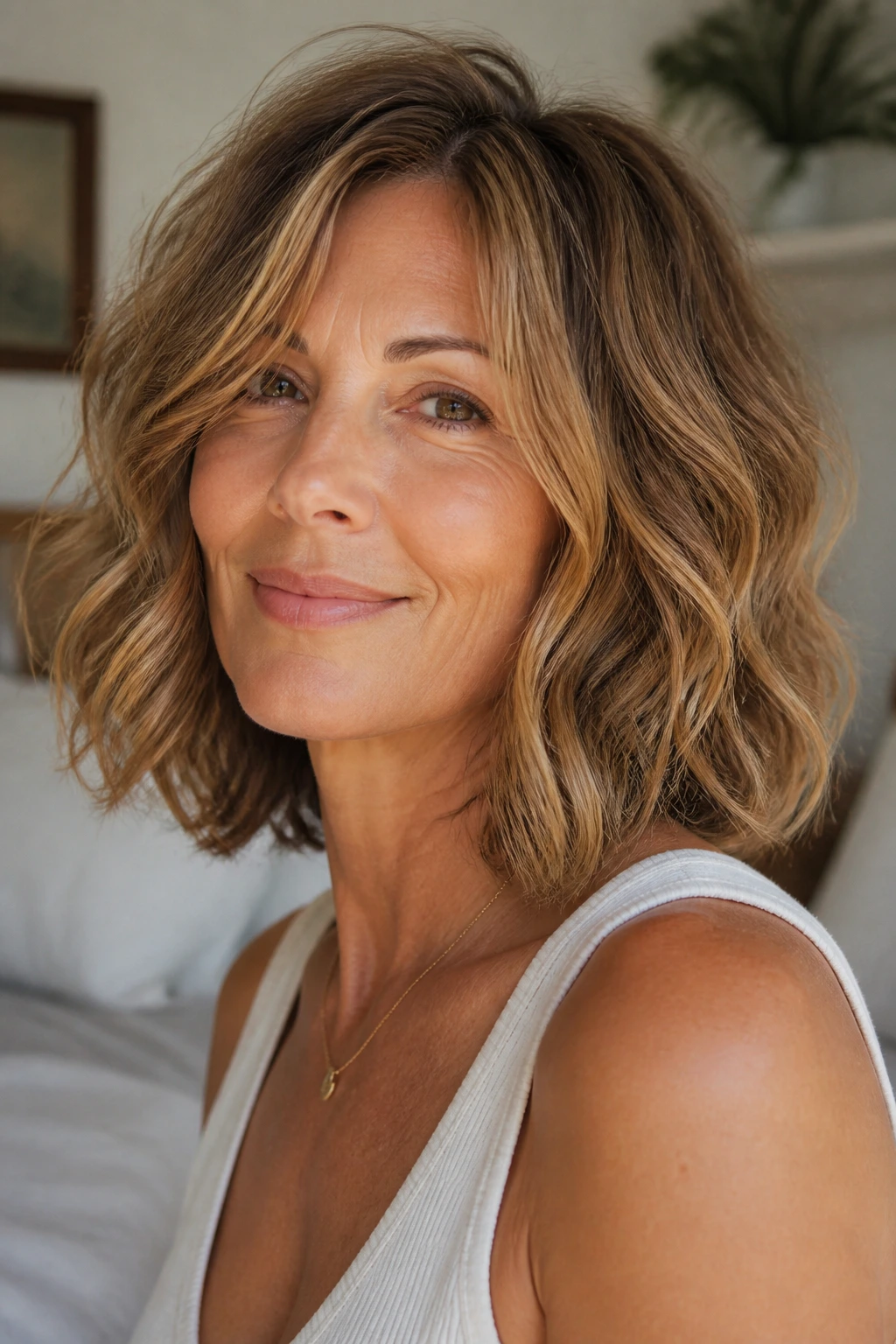
Some cuts are designed to survive a blow-dryer. This one is designed to survive a towel and a bit of patience. The perimeter is shaped so the waves can fall where they want, with just enough internal structure to keep the haircut from turning triangular.
That makes it a smart option for women who have better things to do than stand in front of the mirror for 30 minutes. If your wave pattern already has a natural bend, the right shoulder bob can make air-drying look intentional rather than lazy.
The key
You need a stylist who understands where your waves bend, where they stick out, and where they flatten. A dry-cut check at the end helps a lot. Wet hair can lie to you, and a shoulder bob that seems balanced when soaked may sit crooked once it dries.
15. The Razored Lob for Thick Hair
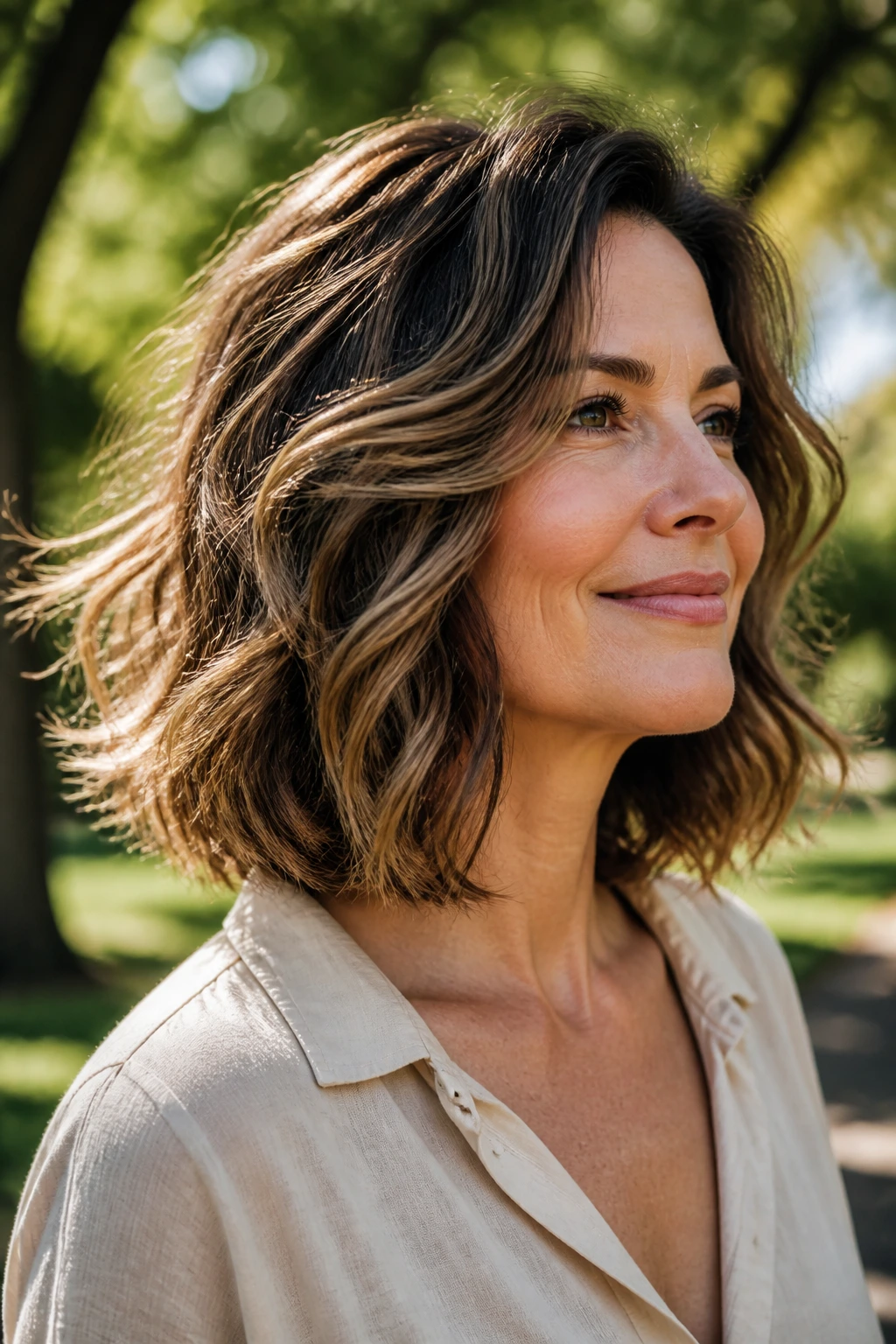
Thick wavy hair needs a different kind of respect. Not more chopping. Better shaping. A razored lob can remove bulk from the right zones so the cut lies closer to the head and doesn’t swell outward at the sides.
The trick is restraint. A razor should soften the ends and relieve weight inside the shape, not shred the whole thing into wisps. On dense hair, that internal softness makes the lob swing instead of puff. It’s also easier to tuck behind the ear, which matters more than people think when a haircut gets fuller as the day goes on.
Best for
- Dense waves that feel heavy at the bottom
- Hair that frizzes when too much weight is removed bluntly
- Anyone who wants movement without a layered mess
16. The Chin-and-Shoulder Hybrid Bob

This is the in-between cut people forget about, and it’s one of the most useful. The front pieces hover between the chin and the shoulder, which gives the face some frame without leaving the ends in awkward shoulder territory all the way around.
I like this for women who want to keep a little neck exposure but don’t want a chin-length bob that flips every which way. The wave has room to move, the collarbone gets a little show time, and the cut feels a touch more modern than a classic rounded bob.
It’s also kind to hair that’s lost a bit of bounce. The extra length through the front gives the wave a place to settle, instead of making it pile up at the jaw.
17. The Curtain Bang Lob
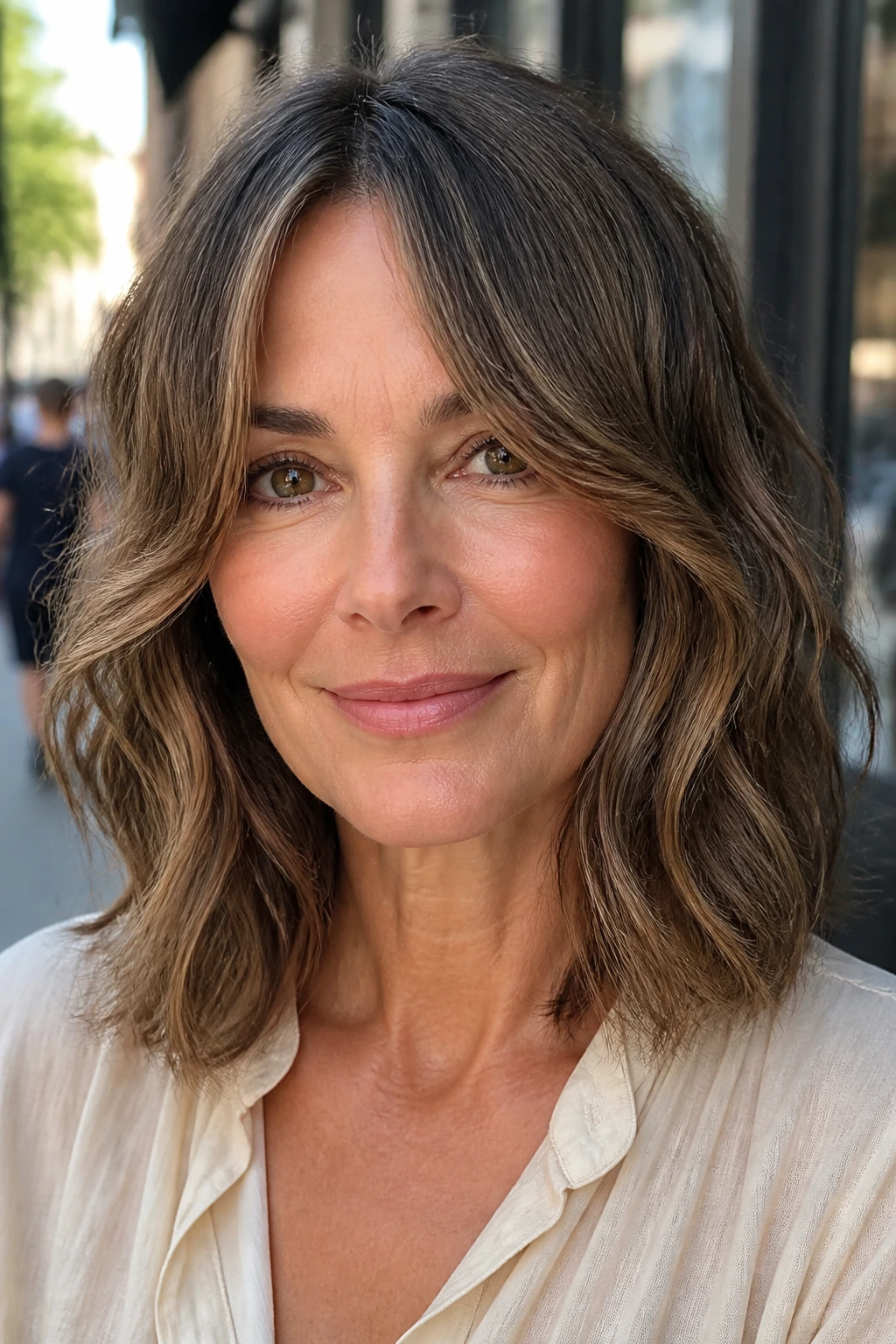
Curtain bangs with a lob can make the whole haircut feel more alive. The bangs part in the middle and fall into the sides, which means they don’t create that hard line across the forehead that some fringes do on wavy hair.
Why it’s such a good pairing
The lob gives the bangs somewhere to disappear. Without enough length, curtain bangs can look abrupt. With shoulder length hair, they melt into the front pieces and soften the whole silhouette. That makes this style especially good for women who want coverage around the forehead but do not want a heavy bang routine.
If your waves are strong, keep the bangs a touch longer so they bend instead of springing up. A little bend is charming. Too short, and they start acting like a totally different haircut.
18. The Soft C-Shape Bob

A C-shape bob curves gently toward the face, almost like the haircut is hugging the jawline without clinging to it. On wavy hair, that curved outline keeps the shape from looking boxy. It also works well if your face is long or narrow, because the width at the sides adds balance.
This is one of my favorite shapes for hair that wants polish but not stiffness. You can blow-dry the front under slightly and let the rest air-dry with a wave cream. The result should feel smooth around the face and looser through the body of the hair.
If your stylist cuts the front too straight, the C-shape disappears. The curve is the whole point, so it needs to be baked into the cut, not faked later with a round brush.
19. The Low-Maintenance Wash-and-Go Bob
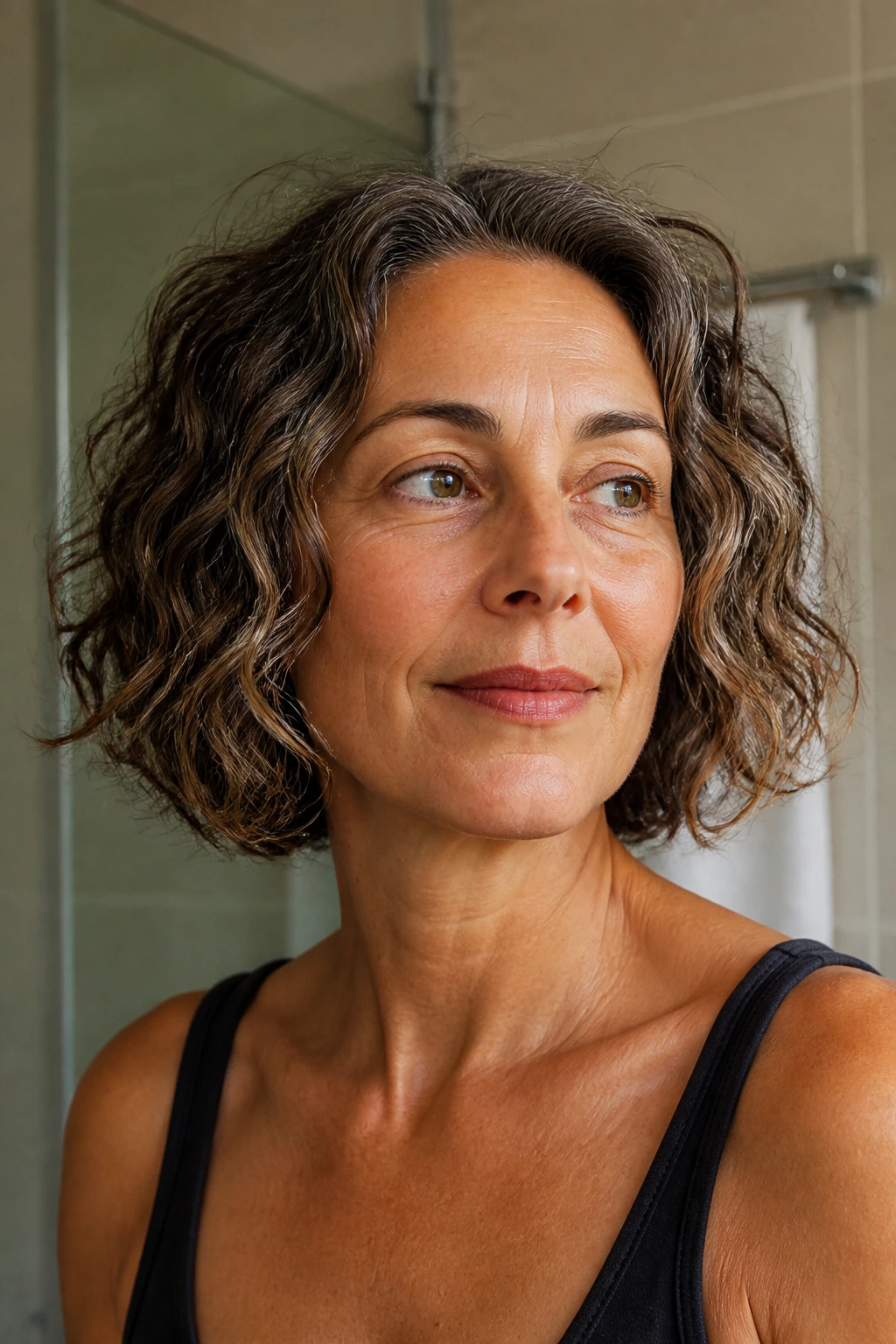
A good wash-and-go bob is less about doing nothing and more about doing the right small things. The cut has enough long layers to let waves clump naturally, but not so many that the pattern falls apart. It’s meant to be damp-styled, scrunched, and left alone.
I’d recommend this for women who want a clean shape but don’t love heat styling. A little leave-in, a little mousse, and a microfiber towel can do more than a drawer full of tools if the haircut is honest about the wave pattern. That honesty matters.
What makes it work
The perimeter should still hit the shoulders in a neat line, even if the texture is loose and imperfect. That contrast between shape and softness is what keeps the style from looking unfinished.
20. The Subtle Stacked Bob
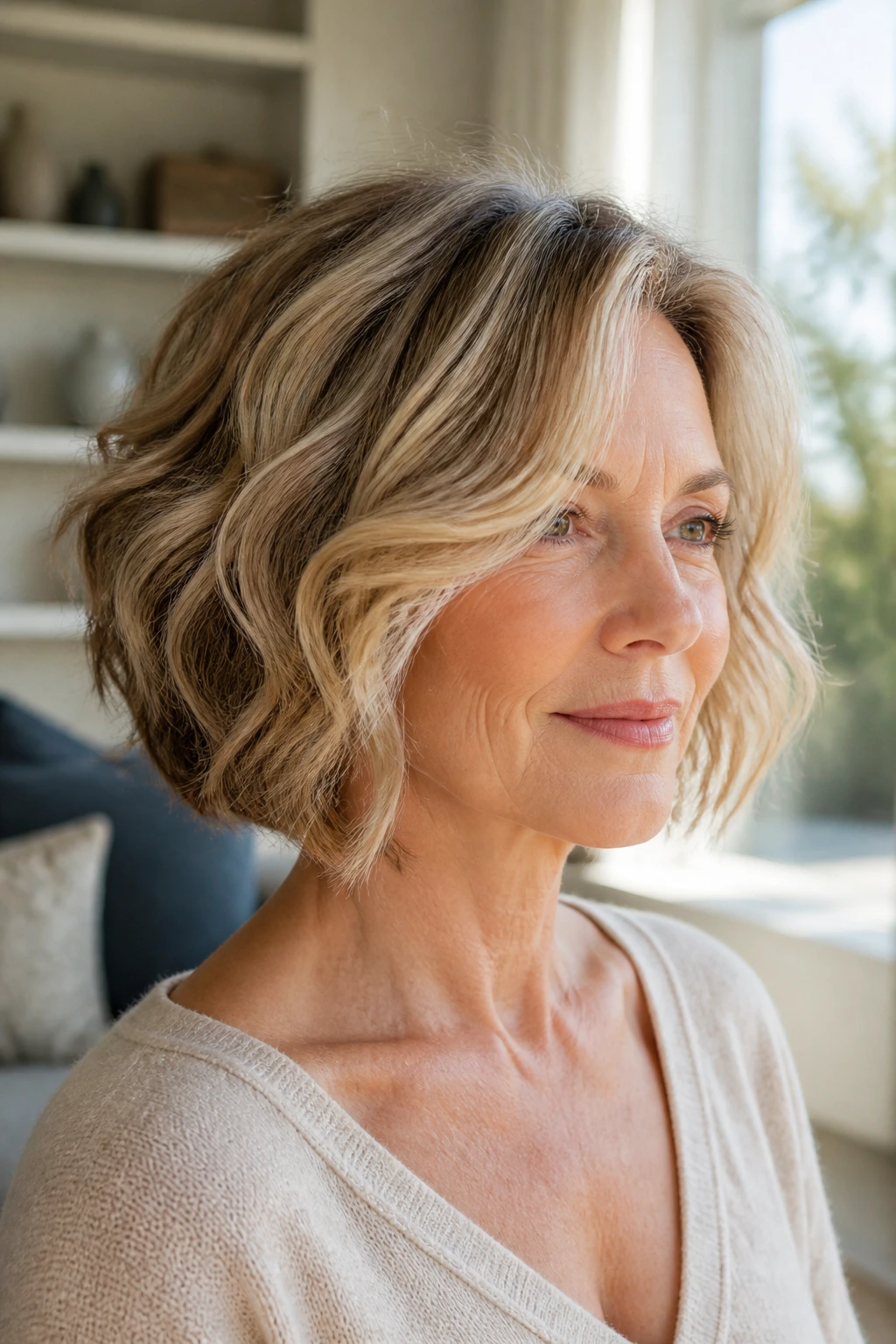
A stacked bob can get old fast if the back is too built up. Keep it subtle and it becomes a solid choice for wavy hair that needs a nudge at the crown. The back sits a little shorter, the front stretches toward the shoulders, and the line through the nape stays neat.
This is especially good if your hair tends to go flat behind the ears. The stack gives the back some lift, which helps the shape hold from every angle, not just the front. It’s one of those haircuts that can make a collar look cleaner too, because the neckline stays open.
If you wear your hair tucked behind one ear a lot, this cut has enough shape to survive that habit.
21. The Polished Blowout Bob

Some people want movement. Some want smoothness. This cut is for the second group, though it still keeps a wave-friendly length. The hair sits at the shoulders, but the styling leans toward a round-brush finish with soft bend at the ends and a controlled crown.
The big advantage here is that it can make wavy hair look deliberate for work, dinners, or any day you want a little more finish without tying it down. It also plays nicely with gray hair, which can look especially glossy when the top is smooth and the ends curve under.
Keep the heat moderate and the brush size fairly large. Tiny brushes can overflip the ends and make the style look dated. A 1.5-inch round brush is usually enough.
22. The Tousled Gray Lob
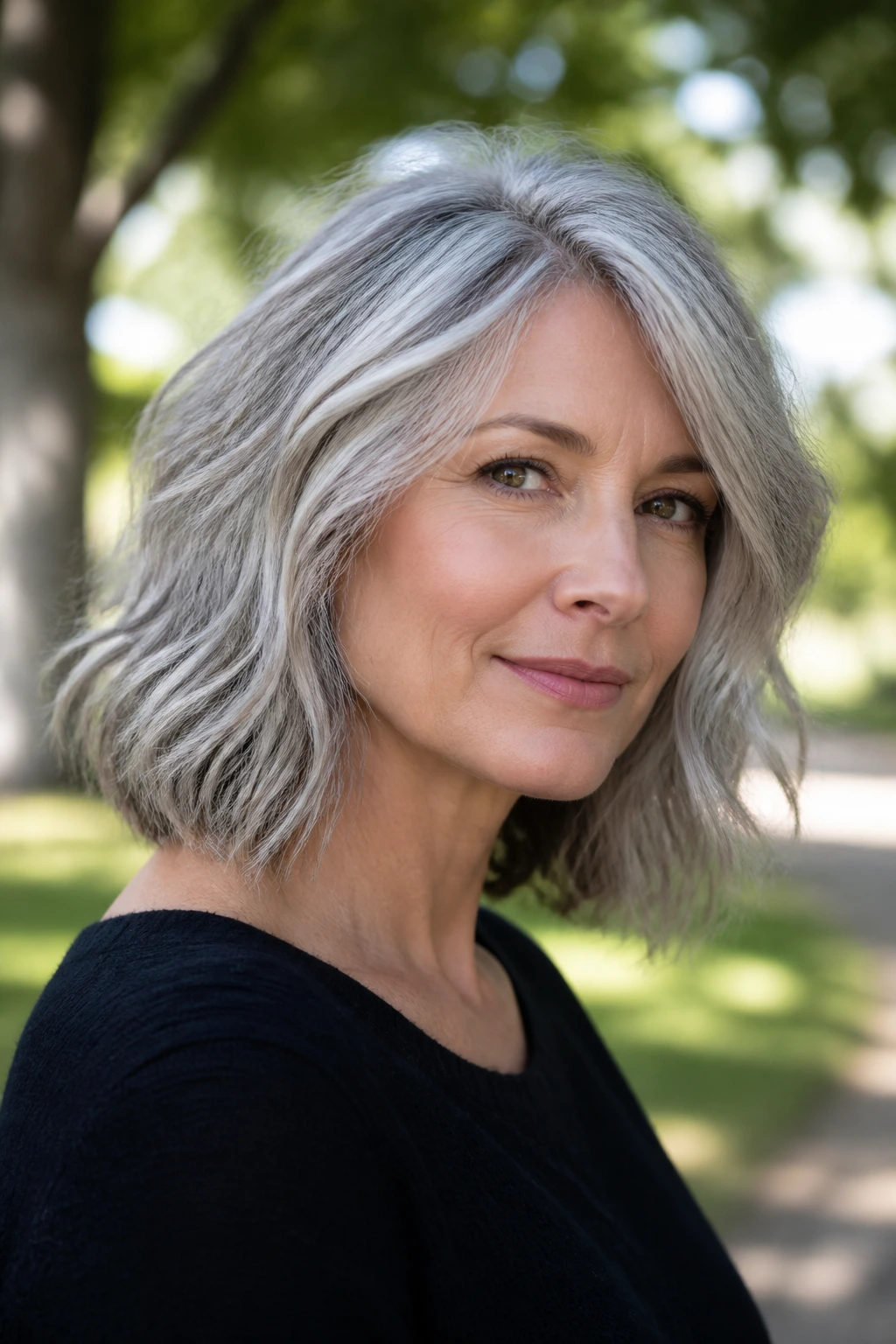
A tousled gray lob has texture, but it doesn’t rely on mess. The silver or salt-and-pepper color does some of the heavy lifting, and the cut lets the waves break in soft sections instead of one big block.
The texture balance
Too much layering and gray hair starts to look hollow. Too little and it can feel blunt in a way that shows every rough end. A tousled lob threads the middle by using enough internal movement to keep the hair lively while preserving weight through the bottom.
A light gloss spray helps here. Gray hair reflects light differently, and a little sheen keeps the strands looking intentional rather than dry. I’d skip heavy oils on this one unless the ends truly need it.
23. The Glasses-Friendly Bob

If you wear glasses every day, your haircut should make peace with them, not compete with them. A glasses-friendly bob usually sits a touch below the frame line or sweeps away from the temples so the hair doesn’t bunch up right where the arms of the glasses sit.
That matters more than people think. When the haircut crowds the frames, the whole look gets busy. When it opens around them, the face looks cleaner and the glasses become part of the styling instead of an obstacle.
A good version usually has:
- Softer front pieces that clear the cheek
- Side volume that doesn’t press into the frame
- A length that lands below the earpieces, not right on top of them
It’s a small adjustment, but it changes the whole feel of the cut.
24. The Work-to-Weekend Bob
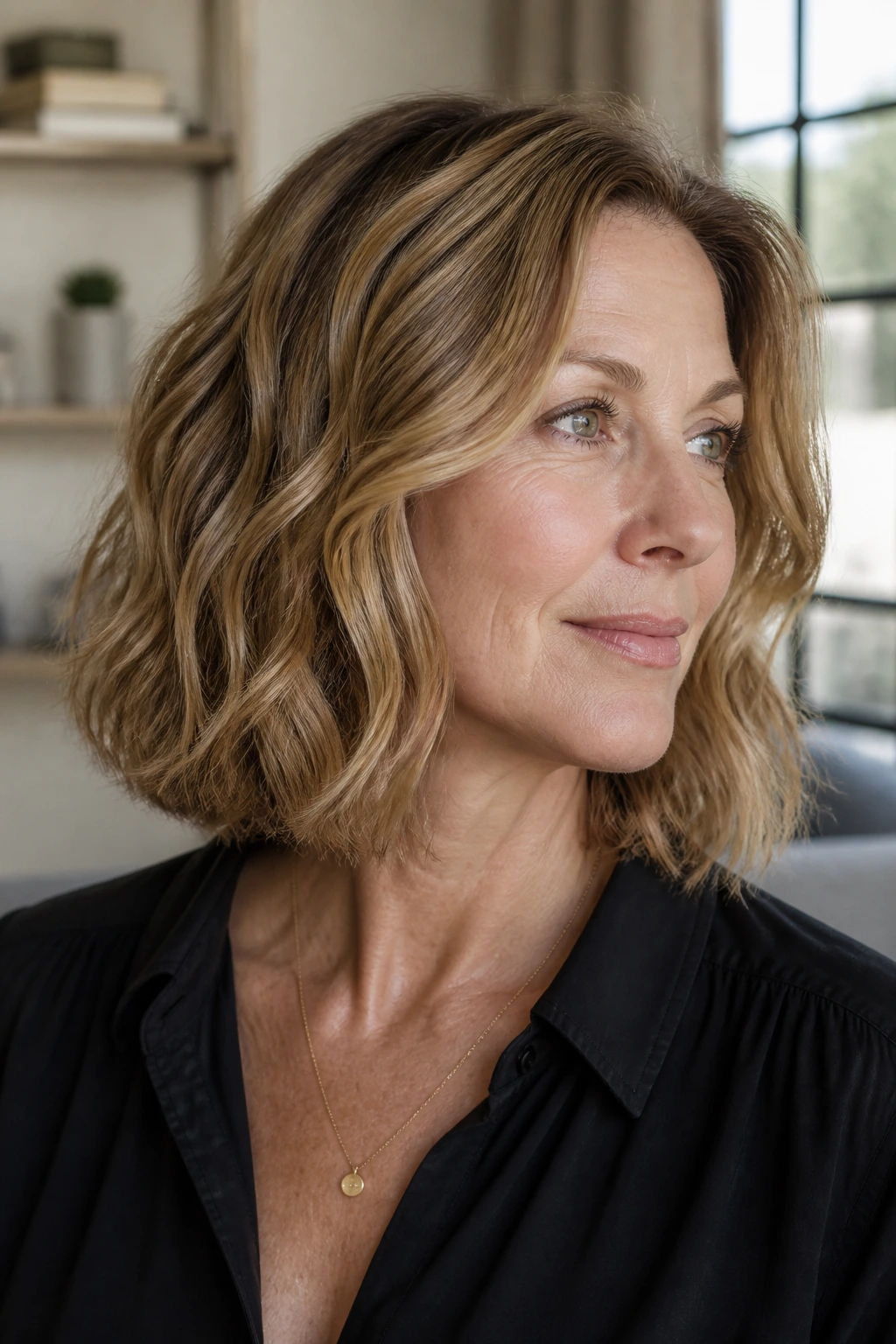
This is the haircut for women who want one shape that can behave in two different moods. Smoothed down with a blow-dryer, it looks neat enough for a blazer. Scrunched and bent, it loosens into an easy weekend bob that still keeps its outline.
That flexibility comes from the middle ground. The layers are long enough to move, but the perimeter stays clean. You can tuck one side behind the ear, add a side part, or rough it up with a bit of texture spray, and the haircut keeps up.
I like this one because it saves you from having to choose between polished and casual. Hair should not demand a costume change every morning.
25. The Sleek-Ends Shoulder Bob
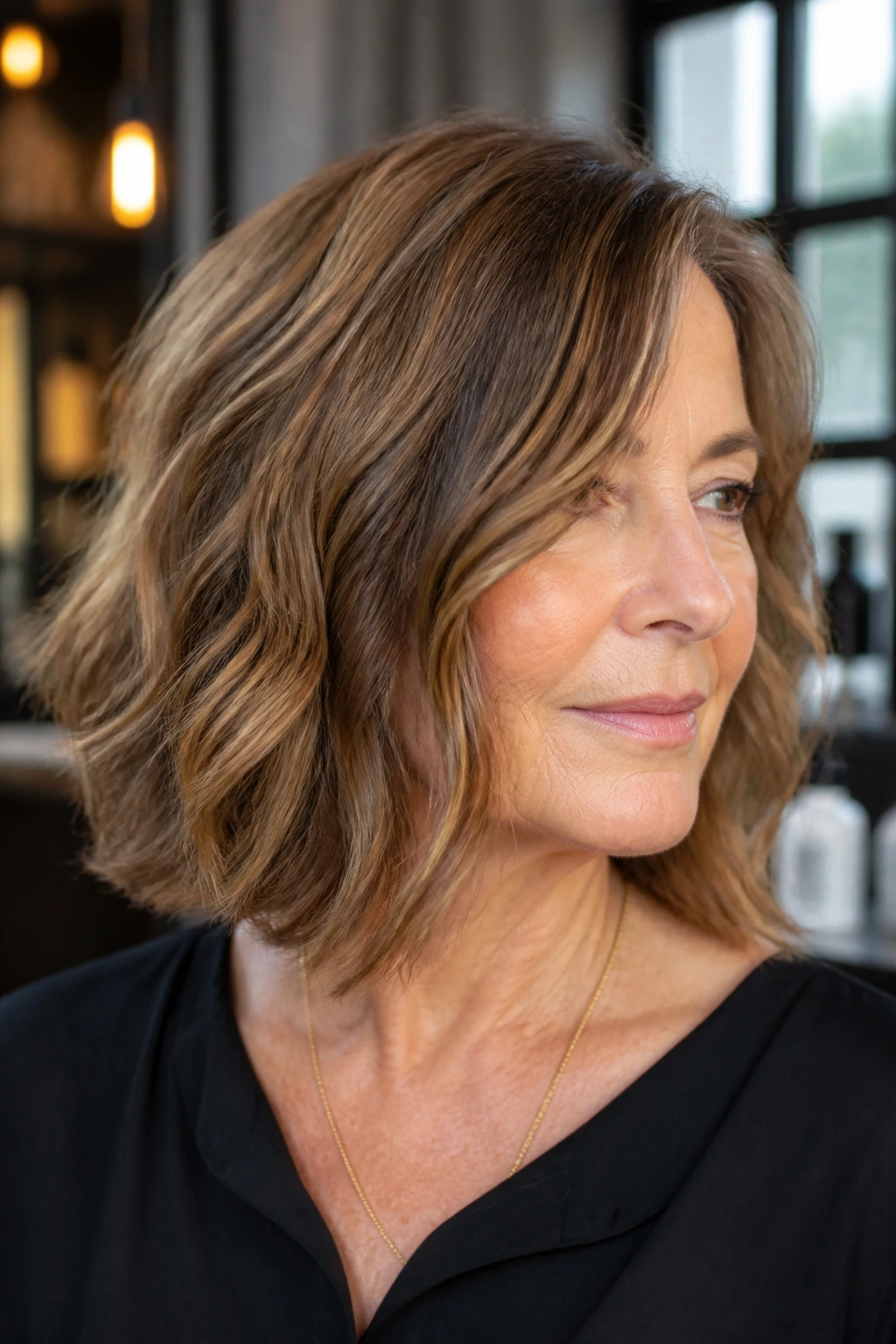
A sleek-ends bob is for the person who likes contrast: smoother through the top, a little bend at the bottom, and a sharp, tidy finish that still works with wavy texture. The ends are kept clean so the haircut doesn’t fray out at the shoulders.
It’s a strong choice if your waves are more pronounced from mid-length down but you want the overall effect to stay controlled. A light blow-dry at the roots and a flat brush through the ends can keep the outline crisp without flattening all the personality out of the hair.
My favorite detail here: the ends should move when you turn your head, but they should not wander. That balance makes the haircut look expensive without trying too hard.
How to Choose the Right Shoulder Bob for Your Wave Pattern
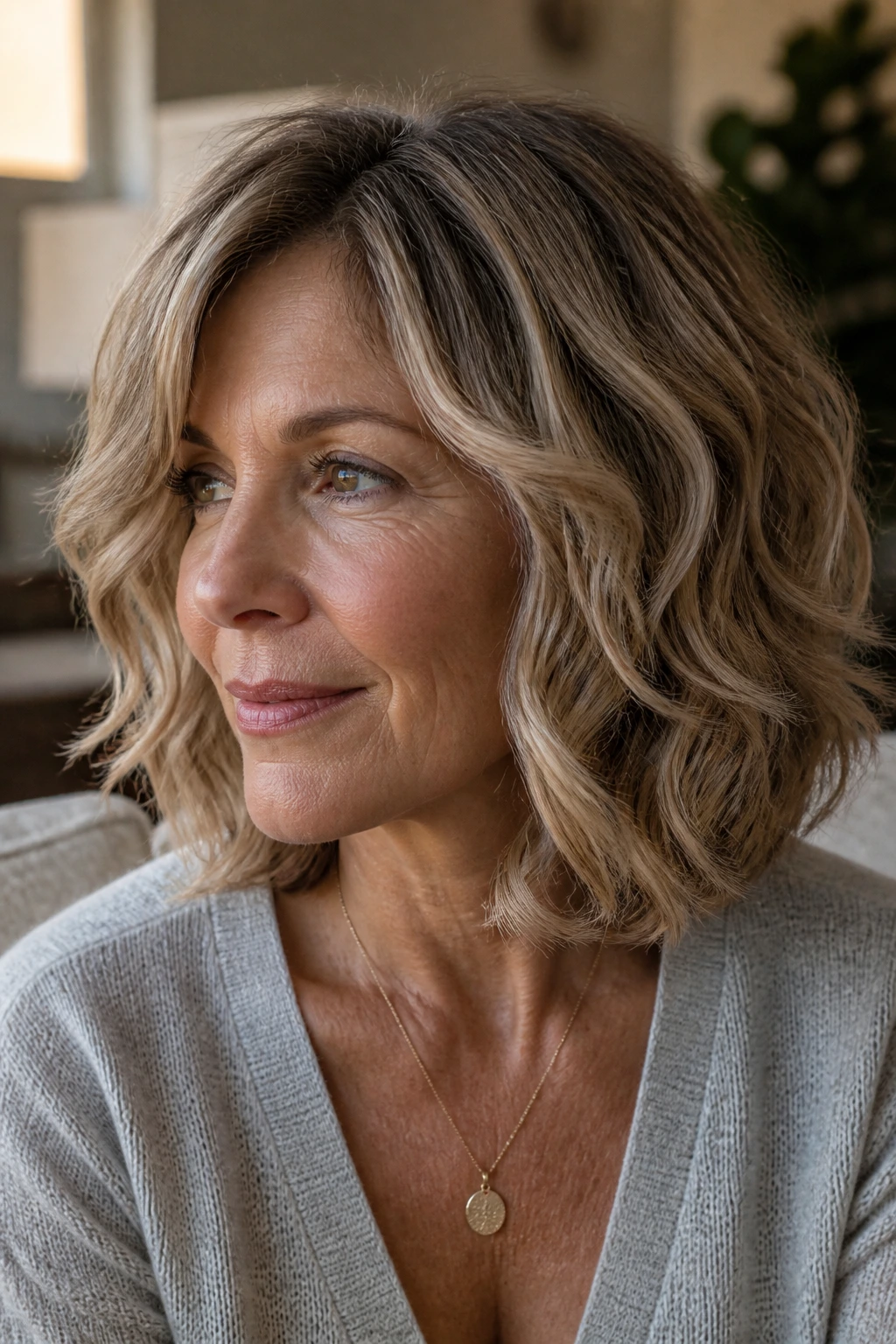
Waves are not all doing the same thing. Loose 2A hair needs help staying awake at the roots. Stronger 2C waves need room through the body so they don’t expand into a triangle. If your hair feels finer at the crown than it used to, a shoulder bob with a little weight at the bottom can keep the shape from becoming wispy.
The easiest place to start is density. Fine waves usually like cleaner lines, longer layers, and less texturizing. Thicker waves tend to behave better with internal shaping and a little removal of bulk underneath. If your hair is in that middle zone, look for a soft layered bob or a lob with face-framing pieces. Those cuts usually leave enough hair in play to keep the silhouette readable.
Face shape still matters, but not in the rigid way salon posters used to pretend it did. A bob that falls at the shoulder can make a round face look softer, a long face look a little wider, and a square jaw look less sharp. The trick is not forcing one formula. It’s matching the cut to the way your wave naturally bends.
Essential Tools for Styling Shoulder Bobs at Home
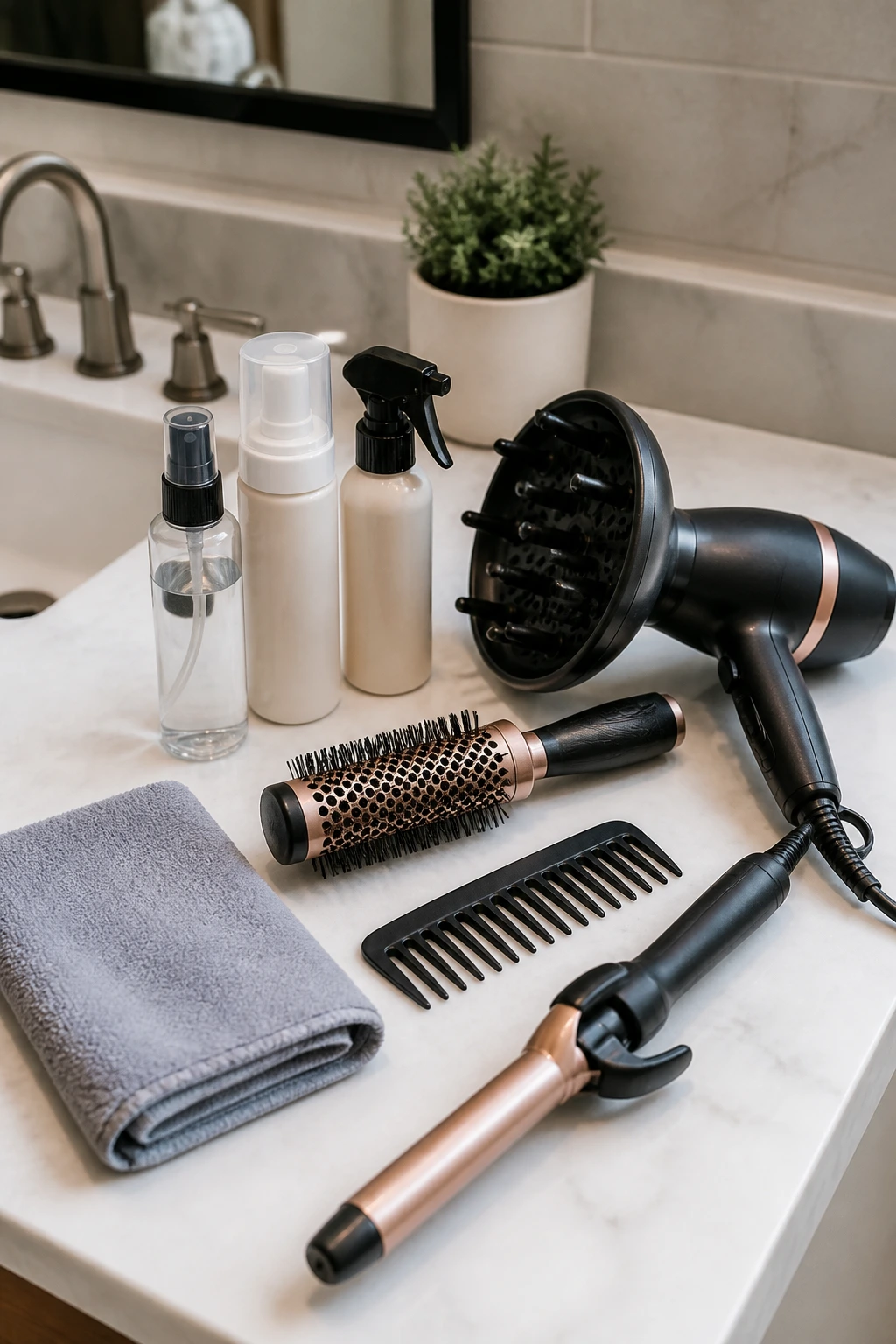
- Blow dryer with a diffuser attachment — This keeps the wave intact when you want volume without frizz.
- Medium round brush, about 1.5 inches — Best for smoothing face-framing pieces and bending the ends under.
- Wide-tooth comb — Safer than a brush for damp hair, especially if your waves tangle fast.
- Microfiber towel or cotton T-shirt — Cuts down on roughing up the cuticle when you squeeze out water.
- Light mousse or foam — Good for fine to medium waves that need lift at the root.
- Leave-in conditioner — Helpful if your ends feel dry or your hair has gone a little coarse with age.
- Heat protectant spray — Necessary if you use a curling iron or blow-dryer brush more than once a week.
- 1-inch curling iron or wand — Useful for softening only the front pieces or fixing one stubborn side.
Product Picks and Cut Notes That Matter for Wavy Hair
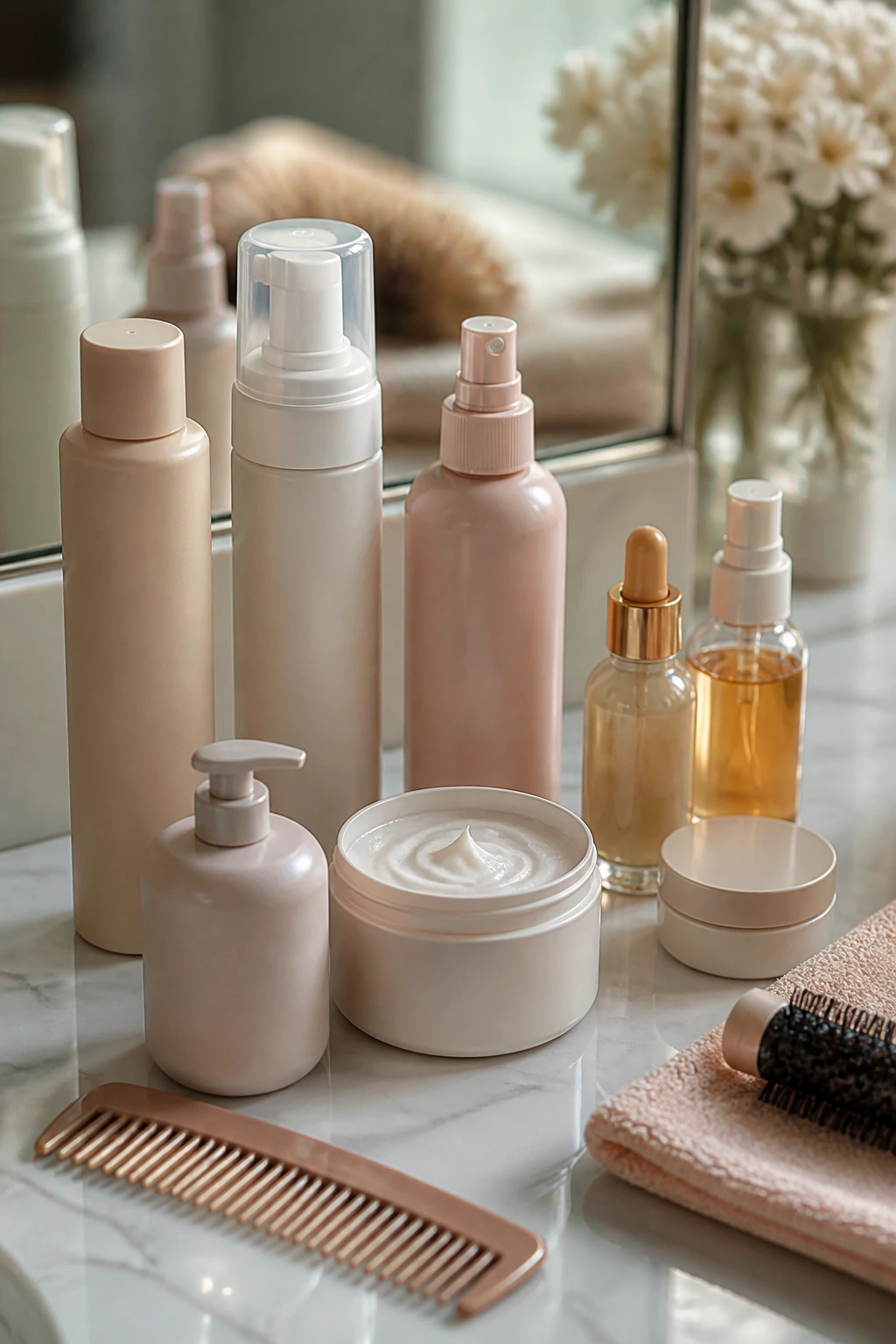
Product choice matters because shoulder bobs do not hide bad styling. They show it. A heavy cream can drag a fine wave down by noon. A dry spray can leave coarse gray hair looking dusty if you overapply it. I tend to recommend a light mousse at the roots, a pea-sized amount of cream through the mid-lengths, and a tiny drop of oil only on the last inch or two if the ends feel rough.
When you’re at the salon, ask for a cut that accounts for how your hair dries, not just how it looks wet. Wavy hair often looks shorter after it dries, especially if the wave is strong or the crown springs up. A stylist who knows this will usually leave the front a little longer than you think you need. That is a good sign, not a mistake.
If your hair is silver or salt-and-pepper, be picky about the finish. Gray hair can show every blunt edge, so a soft perimeter and a bit of shine product can make the difference between crisp and wiry. If your hair is thick, ask where the bulk should come out; if it’s fine, ask where the weight should stay. That is the real conversation.
How to Wear These Bobs With Real-Life Clothes and Accessories
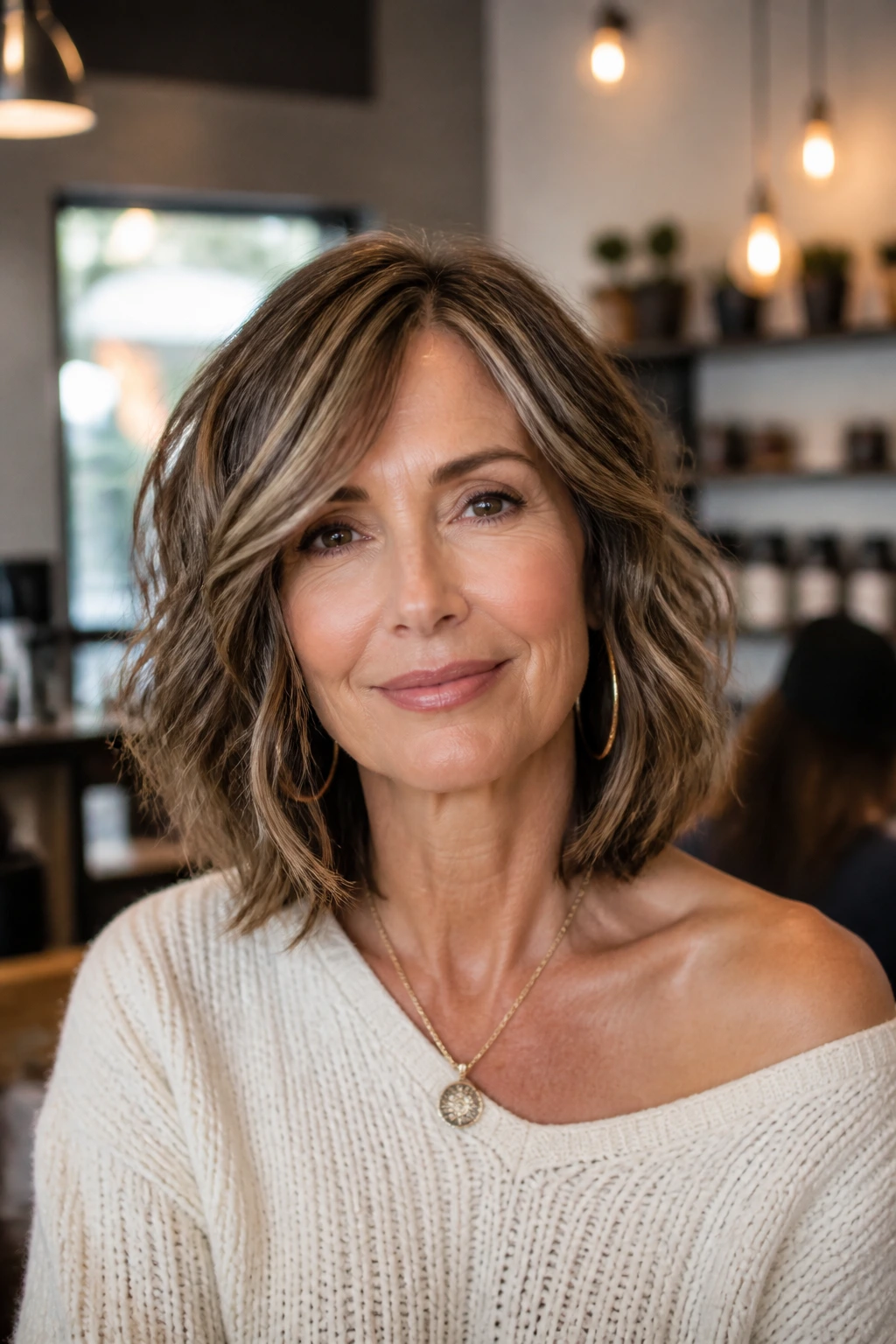
Presentation: A shoulder bob looks best when the ends land where your clothes stop fighting them. If you wear open necklines, let the front pieces skim the collarbone. If you live in sweaters, scarves, and high collars, keep the front just a touch shorter so the hair doesn’t disappear into fabric.
Accompaniments: Earrings matter more with a bob than with long hair. A medium hoop, a clean stud, or a small drop earring can frame the cut without crowding it. Glasses work well too, as long as the hair doesn’t sit right on the frame arms and create a little shelf at the temples.
Proportion: Petite frames often look balanced with a slightly shorter lob. Taller faces and longer necks can carry a little more length through the front. The goal is not some universal rule; it’s keeping the cut from overwhelming your shape or shrinking into it.
Finish: A softer, air-dried finish works for casual days. A smoother crown and bent ends read sharper for work or evening. The cut should change mood with the styling, not require a different haircut every time you change clothes.
Extra Styling Tricks That Add Lift and Shine
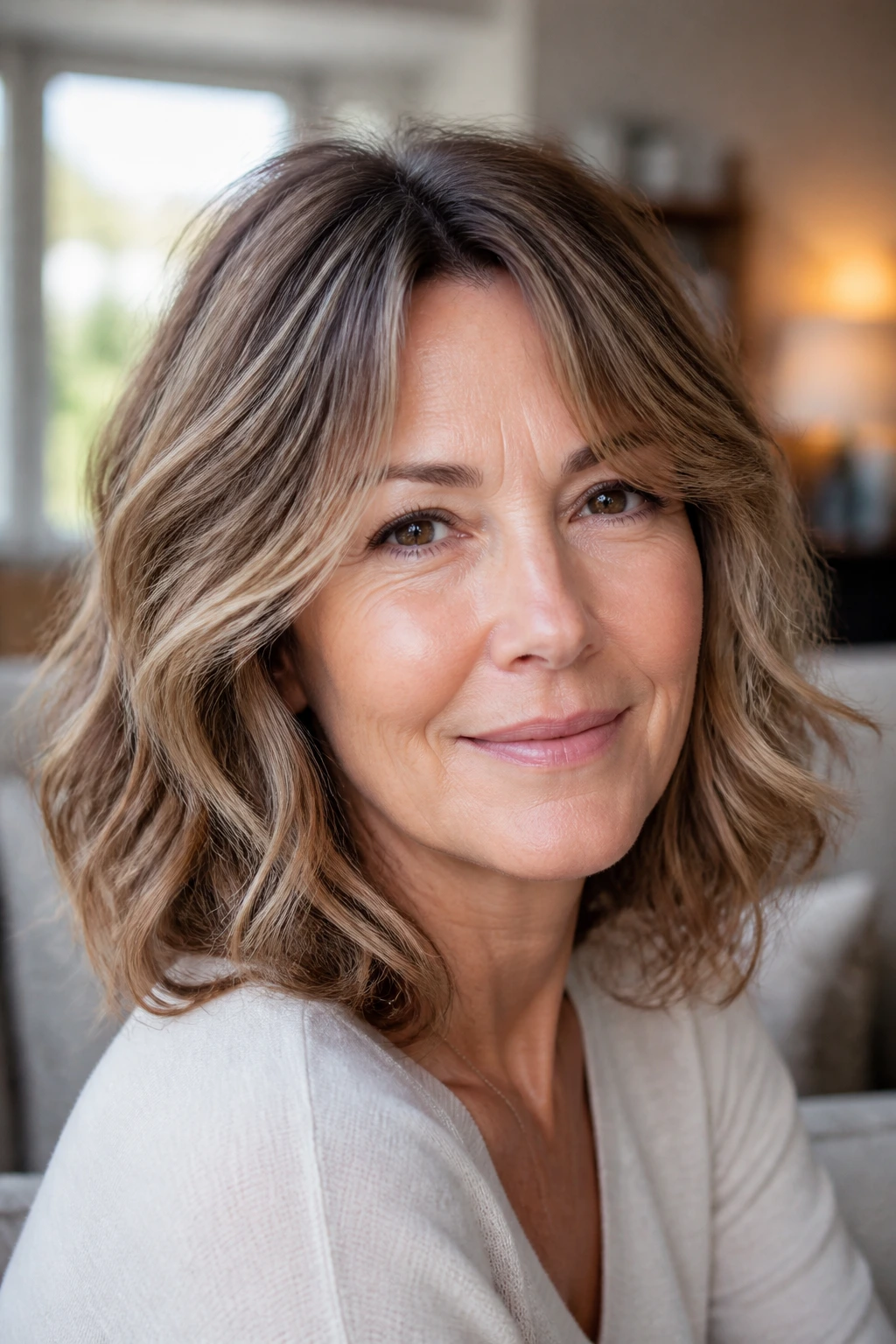
Crown Lift: Clip the top section up while the roots cool, even if you’re air-drying. Ten minutes of pinned lift can save you from a flat top that drags the whole shape down.
Texture Boost: Twist two-inch sections around your finger while they’re damp, then let them dry mostly alone. That keeps the wave pattern from turning fuzzy and gives you soft separation without a crunchy finish.
Face-Framing Softness: Bend the front pieces away from the face, not toward it. That tiny direction change keeps the haircut open and makes the cheeks look less boxed in.
Silver Shine: Use a glossy finishing spray or a very small amount of serum on gray hair, but stay away from heavy layers of oil. Too much weight makes silver ends look dull, not shiny.
Make-It-Yours: If you like a cleaner look, tuck one side behind the ear and keep the perimeter neat. If you want more edge, leave the front pieceier and let the wave break more naturally. The haircut should respond to your habits, not fight them.
Keeping the Shape Between Salon Visits
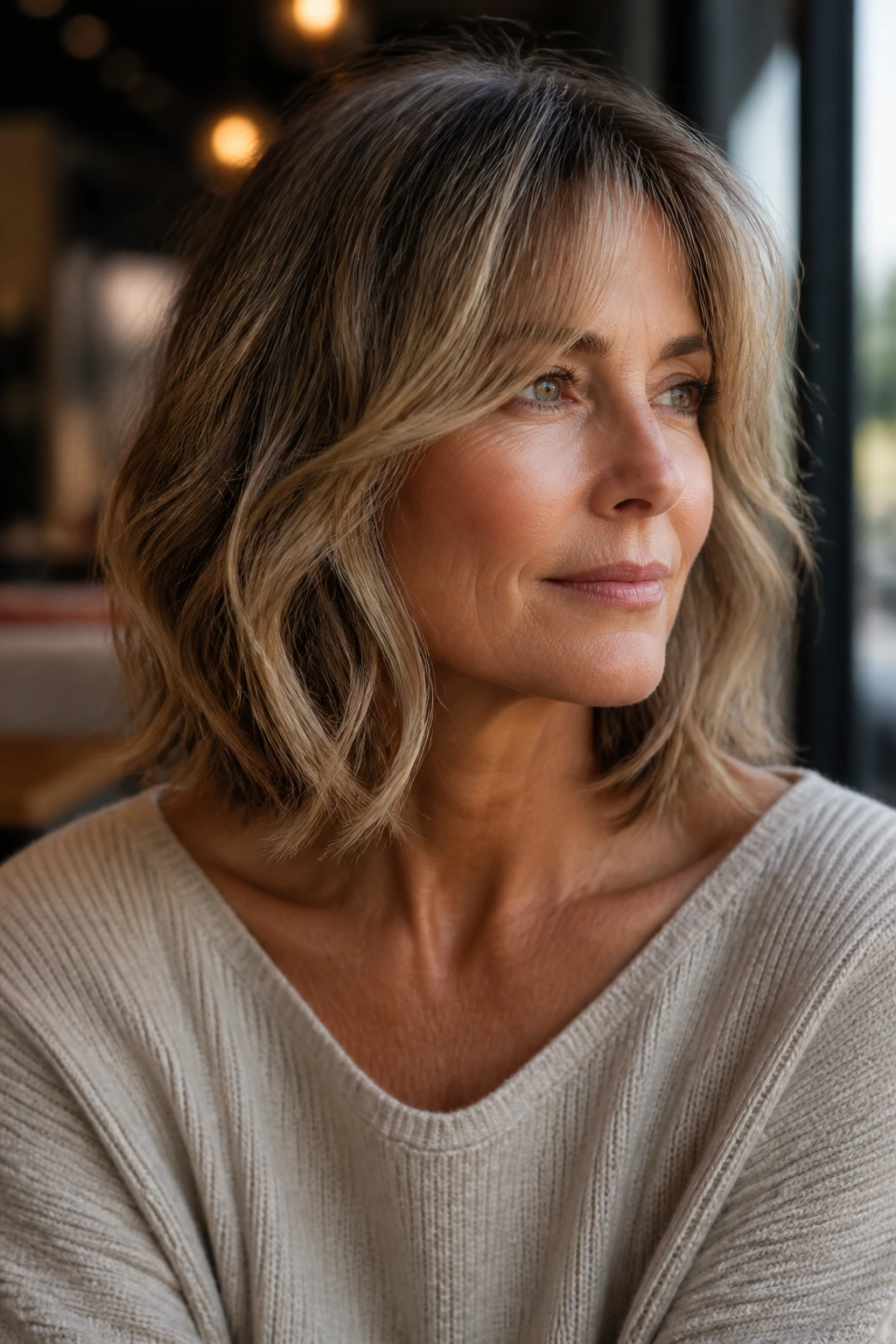
A shoulder bob can stay sharp for a good while, but not forever. Most wavy cuts like a trim every 8 to 10 weeks if you want the outline to stay clean. If you have bangs or curtain fringe, those may need a tiny dusting around the 4- to 6-week mark so they don’t drop into your eyes and start splitting in strange places.
At home, the fastest refresh is usually water, not more product. Mist the hair lightly, scrunch the wave back into place, and add a little mousse or foam only where the roots have gone flat. If the ends start feeling dry, a small amount of leave-in conditioner on damp hair can calm them down without making the crown collapse.
Sleeping matters too. A satin pillowcase or a loose clip at the crown can keep the waves from being crushed overnight. If you wake up with the ends bending in odd directions, a quick pass with a round brush or a wet finger twist around the face is usually enough. You do not need to start from scratch every morning.
Common Mistakes to Avoid With Shoulder Bobs for Older Women

-
Cutting it too short at the jawline. Wavy hair can spring outward there and widen the face. Ask for the front to land at the collarbone or just below the jaw if you want softness.
-
Over-layering fine hair. If the crown gets sliced too much, the top looks thin and the ends look choppy. Keep the layers longer and let the perimeter carry some weight.
-
Using heavy products on waves that need lift. Thick creams and rich oils can flatten the haircut by lunchtime. Switch to mousse or foam if the style feels sleepy by noon.
-
Ignoring your natural part and cowlicks. A cut can look perfect in the chair and lopsided at home if the part falls where your growth pattern fights it. Set the part while the hair is damp.
-
Skipping trims until the ends fray. Once shoulder bobs lose their edge, they start turning into an awkward grown-out shape fast. Dust the ends regularly so the line stays clean.
Variations and Adaptations to Try

The Fine-Hair Lift Version: Keep the layers long, the perimeter blunt, and the crown lightened only a little. This keeps fine waves from going see-through while still letting the hair move.
The Thick-Hair Control Version: Ask for internal shaping and a slightly narrower outline through the sides. That removes bulk where it swells and helps the bob sit closer to the head.
The Silver Gloss Version: Pair a soft bob with a shine spray, a cooler rinse, and a trim schedule that stays tight. Gray hair looks richer when the shape is crisp and the ends are healthy.
The Glasses-and-Frames Version: Leave the front a touch longer and sweep it away from the temples. This stops the hair from bunching into the frames and keeps the face open.
The Low-Heat Version: Choose a cut that looks good with air-drying, then add product only where the wave needs help. That’s the right move if you’re tired of round brushes and hot tools.
Frequently Asked Questions About Shoulder Bobs for Older Women with Wavy Hair
What shoulder length is most flattering for wavy hair?
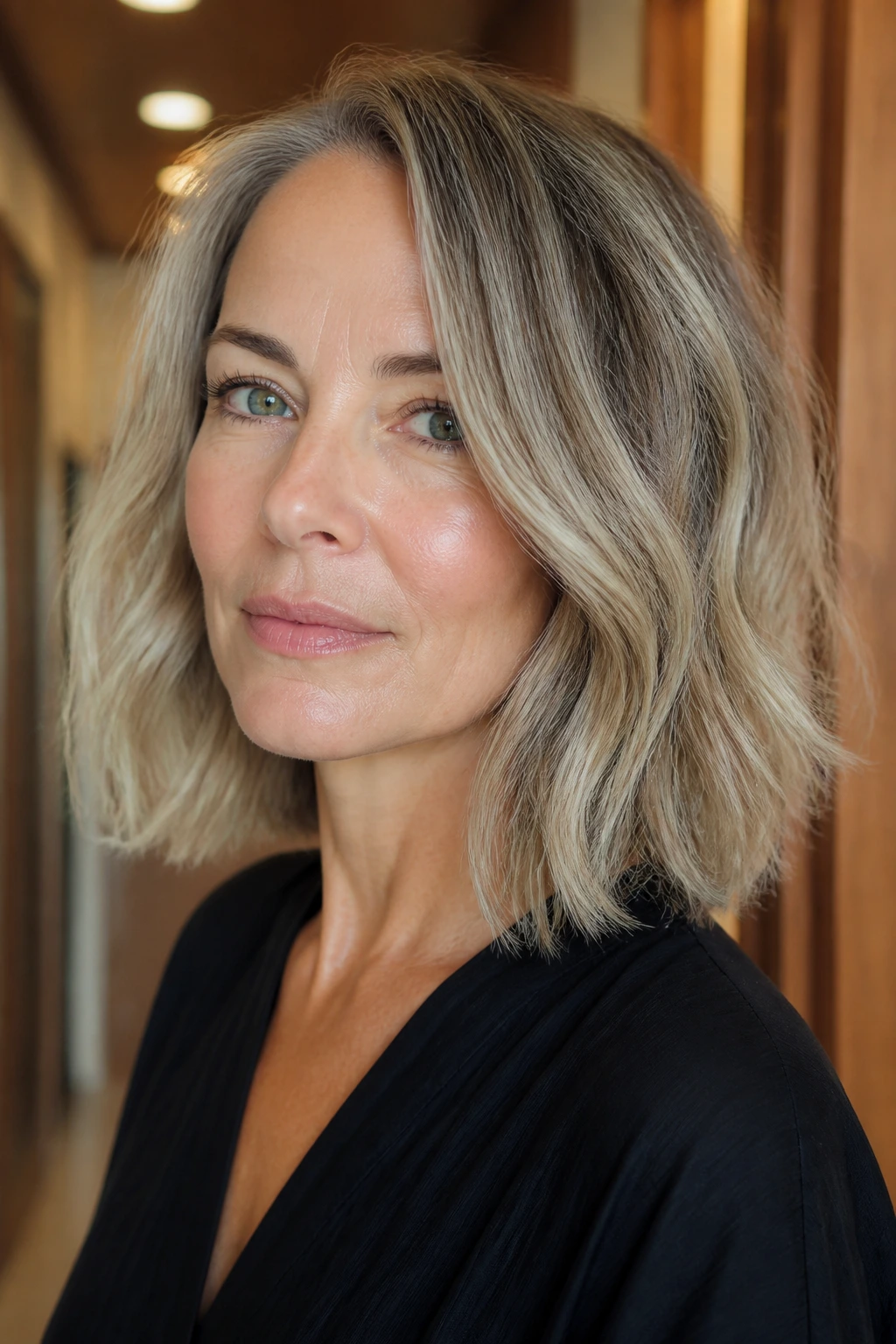
Usually, the sweet spot is just above the shoulders to just below the collarbone. That range keeps the wave from getting weighed down while still leaving enough length for movement and styling options.
Are layers better than a blunt cut for wavy hair?
Not always. Fine waves often look fuller with a cleaner outline and only light internal layering, while thicker waves usually need more shaping to remove bulk. The best choice depends on how much body your hair has before styling.
Should a wavy bob be cut wet or dry?
A good stylist often uses both. Wet cutting sets the general shape, while a dry check shows where the waves actually land once the hair shrinks and bends. That second check is where the haircut gets saved from surprise unevenness.
Can I wear a shoulder bob if my hair is thinning at the crown?
Yes, and this length can help. A bob with soft layers and a little root lift tends to disguise crown thinning better than very long hair, which can drag the density downward and make the top look flatter.
How do I keep the ends from flipping out?
Keep a little weight in the perimeter and use a round brush or blow-dry brush to bend the ends under while they cool. If the flip is caused by a strong wave pattern, a small amount of styling cream and a quick twist-dry at the bottom can help.
Does this haircut work with glasses?
Absolutely, but the front needs room to breathe. Ask for a length that clears the frame line and avoid heavy side pieces that sit right on the arms of the glasses.
Will a shoulder bob make my waves frizzy?
It can if the cut is too short, too layered, or styled with the wrong product. A shoulder-length bob usually works best when the hair has a bit of weight at the bottom and the styling stays light.
How often should I trim it?
Most shoulder bobs look best with trims every 8 to 10 weeks. If you wear curtain bangs or a strong face frame, a quicker clean-up can keep the shape from sagging into your eyes or jawline.
A Cut That Moves With You

The best shoulder bob does not fight your wave pattern. It gives it a shape to live in. That’s why these cuts work so well for older women with wavy hair: they make space for movement, they soften the face without hiding it, and they grow out with less drama than a sharper, more fussy haircut.
If your hair has been feeling too long, too flat, or too much like a compromise, this length is worth a real conversation with a stylist who knows waves. Bring photos, yes, but bring your daily life too — your glasses, your part line, your texture, your patience level. That’s where the good cut starts.
And once the shape is right, the rest gets easier. The hair starts doing a little more of the work for you.