



A straight bob can do a lot of quiet heavy lifting on thin hair and round faces. It gives fine strands a blunt edge they can actually hold, and it draws a cleaner frame around the face than soft, fluffy layers that fray out by lunch. I’ve always liked that about this cut: it doesn’t beg for volume it doesn’t have. It builds shape from the perimeter, which is exactly where thin hair needs help.
Round faces can wear straight bobs beautifully, but the details matter more than people think. A bob that ends at the fullest part of the cheeks can make the face feel wider. Shift the length a little lower, add a side part, or angle the front pieces forward, and the whole haircut starts pulling the eye down instead of out. Small change. Big difference.
The best versions also have a little attitude. Not crunchy texture. Not overdone layering. Just a sharp line, a smart length, and enough movement around the face to keep it from feeling boxy. That’s the sweet spot, and it’s why these 25 straight bobs keep coming back into style racks, salon books, and screenshot folders.
Why These 25 Straight Bobs Keep Thin Hair Looking Intentional

-
Blunt ends add visible weight: A clean hem makes thin hair look denser at the edge, which is where your eye reads fullness first.
-
Face-framing changes the whole shape: Even a half-inch of extra length in front can slim a round face more than a dramatic chop in the back.
-
Straight styling keeps the line honest: Wavy finishes can be lovely, but a straight bob shows the cut’s shape instead of hiding it behind texture.
-
Length placement matters more than “short vs long”: A bob that lands below the cheekbone often flatters a round face better than one that stops right at the widest point.
-
The right part creates lift at the crown: A center part is not the enemy, but a slight off-center part usually gives thin hair more height without looking fussy.
-
These cuts are salon-friendly and home-friendly: You do not need a ton of layering tricks or five hot tools. The shape does most of the work.
1. Chin-Grazing Blunt Bob
This is the cleanest place to start if your hair is fine and your face is round. The length kisses the chin, the hem stays blunt, and the whole cut reads as deliberate instead of wispy. I like it best when the front is a hair longer than the back, even if it’s subtle, because that little shift keeps the jaw from feeling boxed in.
Why it works
A blunt line makes thin ends look thicker, and the chin-level length gives a round face a crisp frame instead of a soft cloud. The key is to keep the line just below the widest part of the cheeks so the haircut doesn’t widen the face where you least want it.
If your stylist wants to add texture, ask them to keep it microscopic. You want movement, not holes.
Best details to request
- A blunt perimeter with barely any internal layering
- Length that lands at or just below the chin
- A slight forward tilt at the front if your cheeks are full
Styling note
A flat iron with rounded edges gives this cut the cleanest bend under the ends. One pass. Maybe two. More than that usually means the hair wasn’t cut sharply enough.
2. Collarbone Blunt Lob
Longer is not a cop-out here. A collarbone-length blunt lob gives thin hair room to look full while still keeping the edge strong enough to matter. On a round face, this length stretches the line downward and feels less puffy near the cheeks than a shorter bob.
The best version lands right at the collarbone or a whisper above it. Too short, and you lose the slimming effect. Too long, and the shape starts behaving like plain long hair with a blunt cut.
For straight styling, this is one of the easiest cuts to live with. It air-dries with less panic, and it usually survives a day with a quick root refresh and a brush-through.
3. Deep Side-Part Bob
A deep side part can do a lot for a round face. It opens one side of the forehead, adds lift at the root, and gives the whole cut a diagonal line that cuts through softness. On thin hair, that extra crown height matters more than people admit.
This version looks best when the bob itself stays straight and polished. If the part gets dramatic but the ends get fuzzy, the shape loses its edge. Keep the line clean, and let the part do the face-slimming work.
What to ask for
- A blunt or slightly angled bob
- Enough length to tuck one side behind the ear
- A part that starts a few inches off center, not at the temple
Why I like it
It’s one of the few bob shapes that adds lift without needing teasing. That’s useful. Thin hair hates being overworked.
4. Slight A-Line Bob
A subtle A-line bob is shorter in back and a touch longer in front, but the difference should be quiet, not cartoonish. Done well, it gives thin hair a fuller-looking body at the perimeter and helps a round face appear a little longer.
The trick is restraint. If the angle is too steep, the front pieces start competing with the face. If the angle is too flat, the cut turns into a basic one-length bob with less shape. Somewhere in the middle is the good stuff.
This is a strong choice if you want the neatness of a straight bob but need a little more movement near the jaw. It’s especially nice when you wear one side tucked and the other loose.
5. Invisible-Layer Bob
This is the bob for people who hear “layers” and immediately picture choppy, over-thinned ends. Invisible layers sit under the surface, so the top line still looks blunt while the shape gains a little lift inside. That’s a win for thin hair, which can get stringy fast if it’s cut too aggressively.
A round face benefits from the hidden structure because the bob doesn’t puff out at the sides. It stays sleek, but it doesn’t collapse against the head either. That balance is harder to get than it sounds.
Use this cut if your hair is fine but not limp. It keeps the look polished while letting the crown breathe a little.
6. Jaw-Length Power Bob
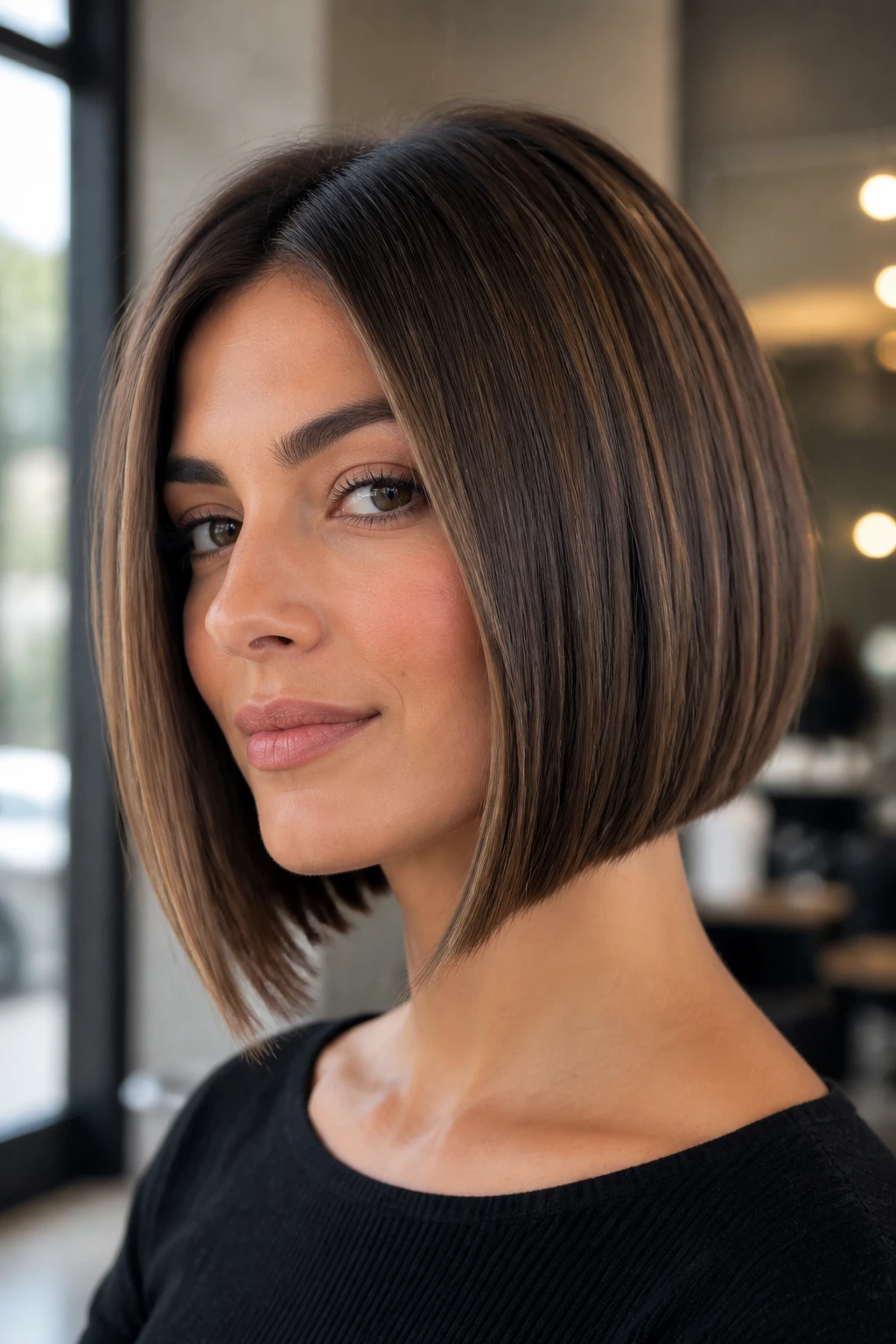
Jaw-length bob cuts can be tricky on round faces, but this one works when the line is sharp and the front pieces are kept a fraction longer than the jaw itself. The result feels bold, not bulky. There’s a difference.
The blunt edge gives thin hair a solid-looking outline, which is the whole game here. The face-framing should skim, not stop, at the jawline. That tiny bit of length keeps the shape from sitting on the cheeks like a box.
If you like earrings, necklines, and a strong hairline, this is a fun cut. It has presence. It also needs regular trims, because a jaw-length bob grows out fast and gets fuzzy even faster.
7. Paris Bob with Soft Ends
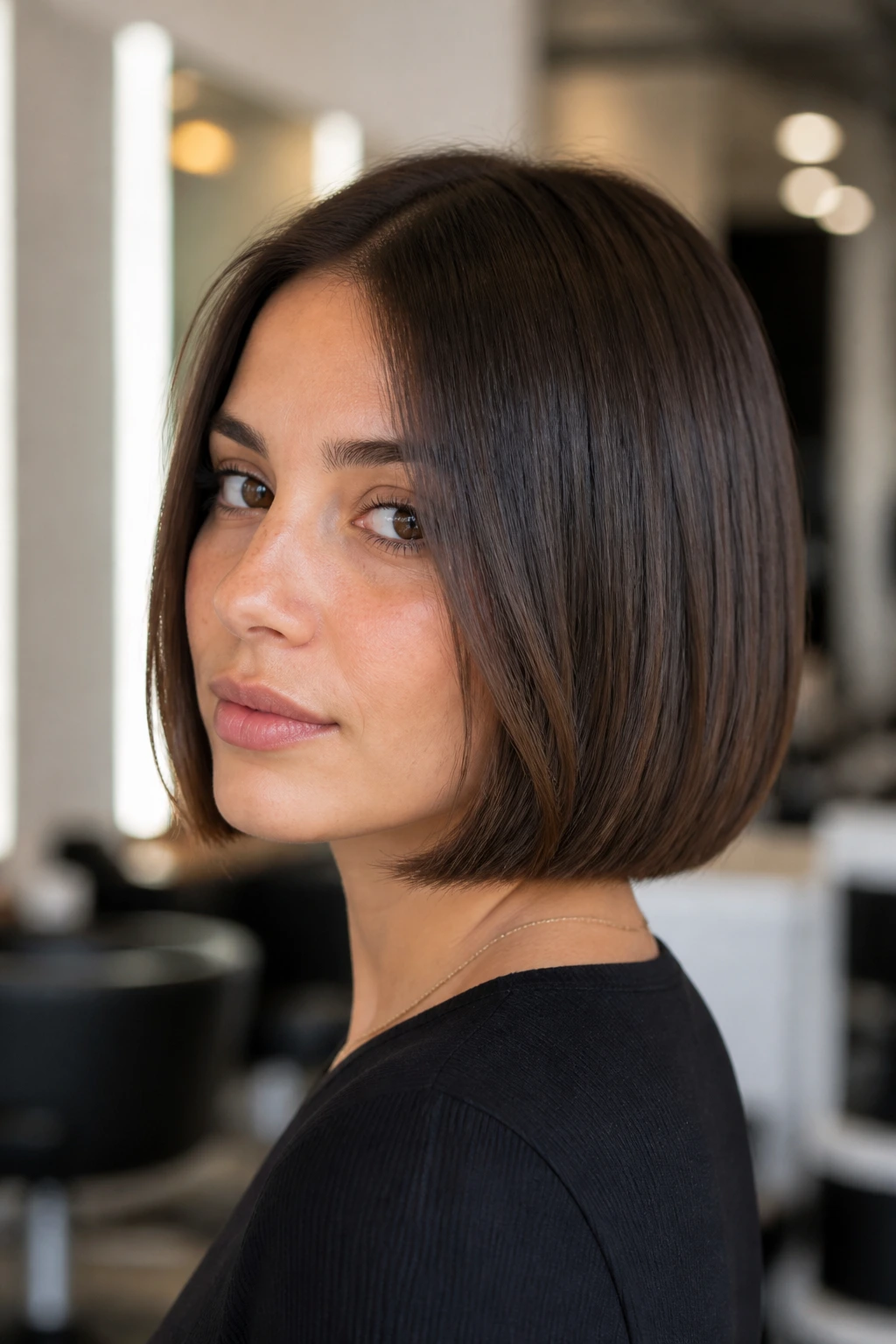
This one sits between a blunt bob and a softly beveled finish. The line stays straight, but the ends have the faintest bit of softness so the cut doesn’t feel too rigid around a round face. It’s a lovely option if you want polish without the hard-edged look of a glass bob.
Thin hair gets a little extra grace from the softer finish, because the ends don’t need to look razor-snapped to look neat. Just keep the shape clean at the perimeter. A little bevel at the last quarter-inch is enough.
I’d wear this with a side part or a slightly off-center part. Dead-center can make the whole thing too symmetrical, and symmetry is not always flattering when the face is already full and soft.
8. Tucked-Behind-Ear Bob
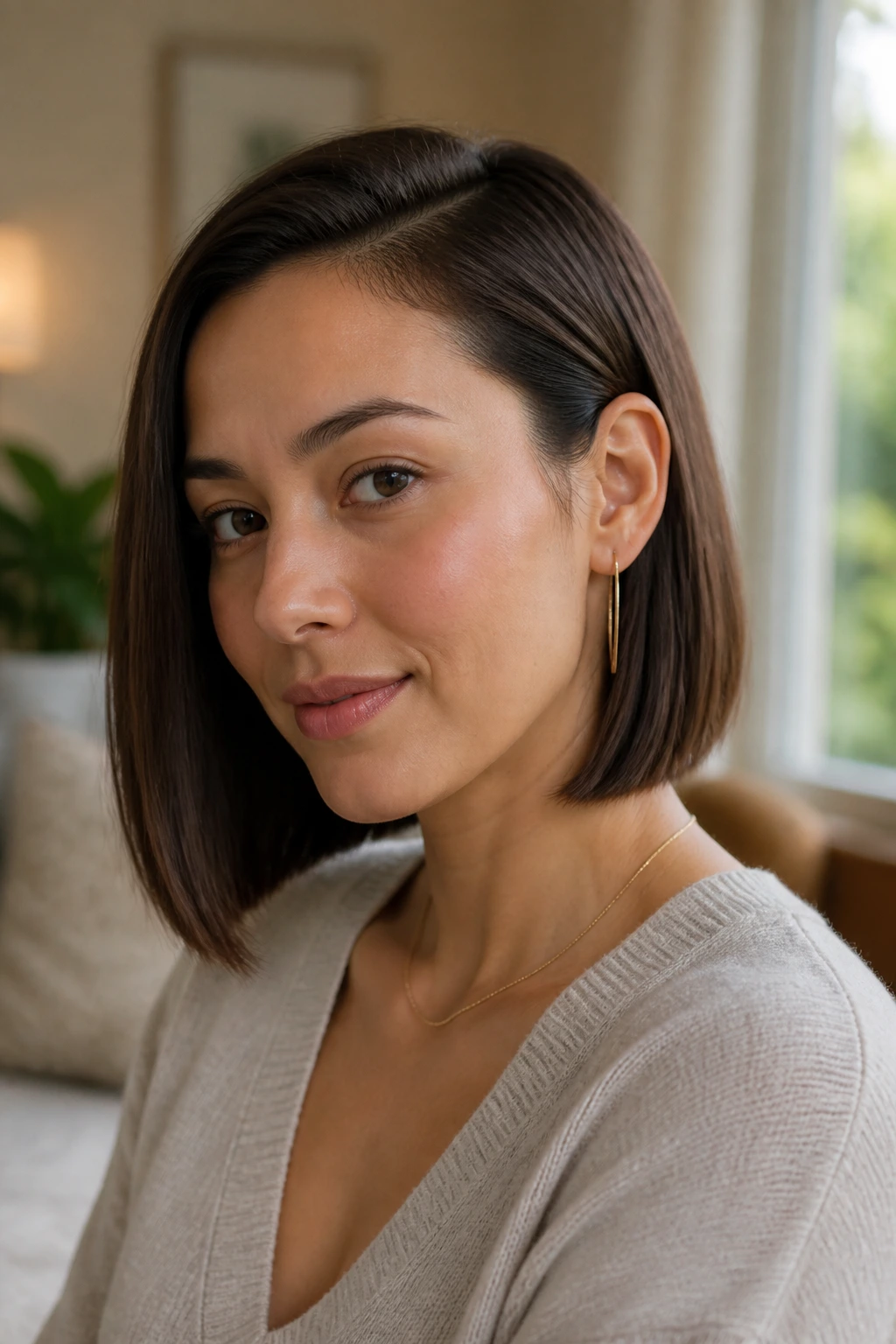
A tucked bob sounds simple, but it changes the whole read of the haircut. One side tucked behind the ear makes the face look narrower on the exposed side, while the straight, blunt side keeps the density where you need it. It’s low-drama, but it works.
For thin hair, the tucked side also helps show off a strong line instead of hiding it under too much movement. The trick is keeping enough length to tuck without the cut slipping out every five minutes. Usually that means a bob that sits at or just below the jaw.
This is one of my favorite everyday options because it looks polished even when the rest of the hair is barely styled. A little serum, a clean part, one ear tucked. Done.
9. Off-Center Part Bob
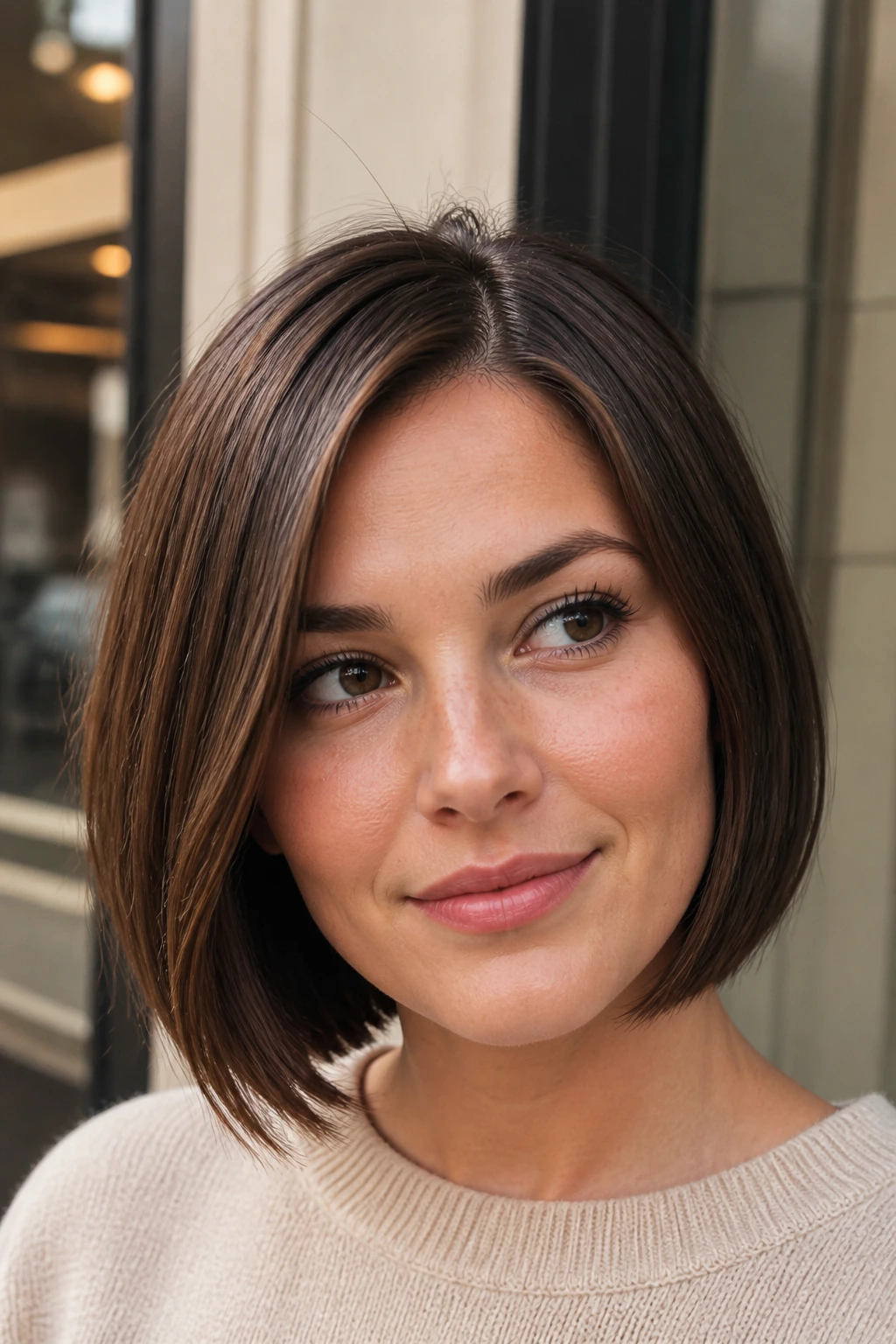
A slightly off-center part is the sleeper hit of bob haircuts for round faces. It keeps the haircut from feeling too round and too even, and it gives thin hair a bit more lift than a strict center part usually does.
What matters here is the part’s placement. You do not need a dramatic sweep. Move it an inch or so, let the front pieces fall where they want, and the face gets a softer diagonal line that draws attention downward. That downward pull helps the cut feel slimmer.
This is a good choice if you want something easy to style every day. It works with a flat iron, a blow dryer, or just a quick brush-through after air-drying.
10. Subtle Stacked Bob
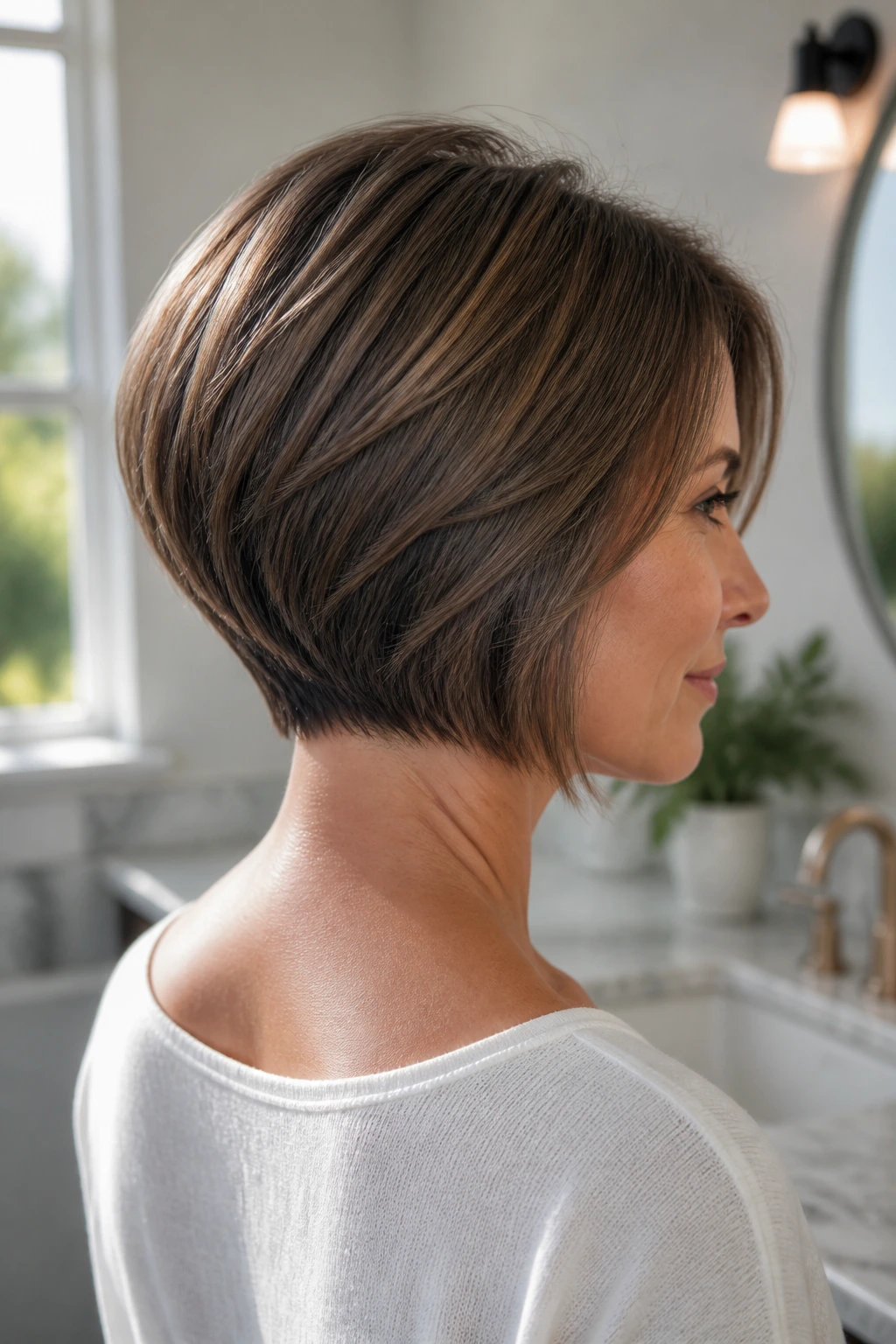
A stacked bob adds a touch of volume through the back without turning into a dated cone shape. The stack should be gentle, with the shortest layers sitting low at the nape and the top layer staying smooth. On thin hair, that little bit of lift can stop the style from hugging the head too tightly.
Round faces usually do better when the front stays longer and straighter. That way, the fullness lives at the back, not the cheeks. It’s a neat trick. One that people often overlook.
If your hair falls flat at the crown by noon, this is worth asking about. The cut does some of the work for you, which means less teasing and less product.
11. Curtain-Frame Bob

Curtain pieces can work beautifully with a straight bob as long as they stay long enough to skim the cheekbones and taper softly into the rest of the cut. They break up the roundness of the face without committing to full bangs, which is a nice middle ground.
Thin hair benefits because the front pieces create the illusion of shape, while the blunt back keeps the overall thickness where it counts. You get softness near the face and a dense-looking edge through the back. That combination is tough to beat.
Style tip
Blow the front pieces away from the face with a round brush or a flat iron bend. If they collapse straight down, they lose the whole point.
12. Side-Bang Bob
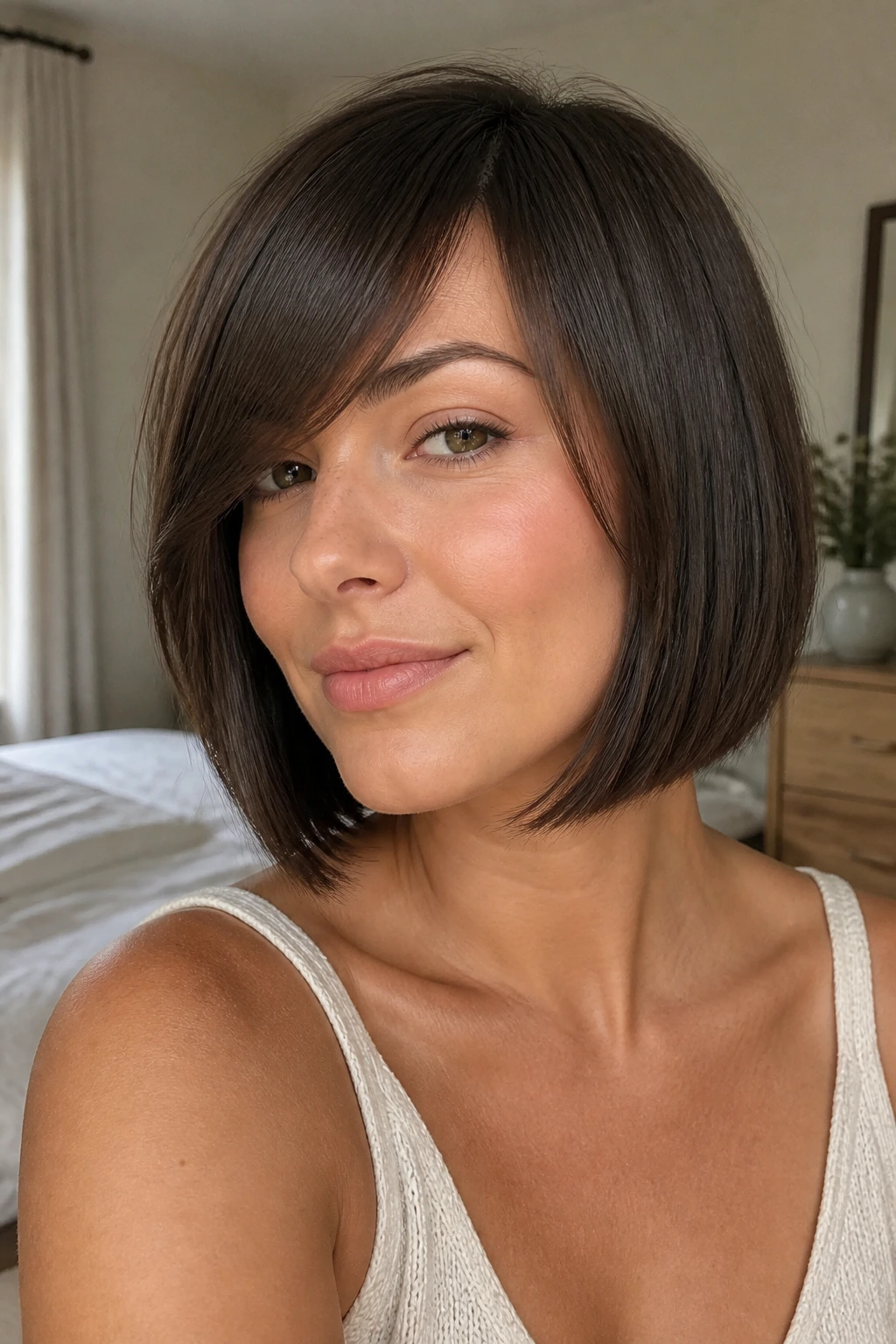
Side bangs are one of the most reliable ways to narrow a round face without losing the crisp line of a bob. The fringe should start long enough to sweep across the forehead and blend into the sides. Short, heavy side bangs can get bulky fast on fine hair. Long, airy ones tend to behave better.
I like this cut when the bob itself stays blunt and controlled. The fringe brings the softness; the perimeter brings the weight. That balance keeps thin hair from looking overcut.
If your forehead is short, ask for a longer side sweep that starts a little farther back. It keeps the whole face open instead of crowded.
13. Below-Chin One-Length Bob

A one-length bob that sits just below the chin is a quiet workhorse. It gives thin hair the strongest possible edge, and it avoids the problem of ending right at the widest part of the face. That extra fraction of length matters more than a lot of people realize.
The one-length shape also makes the hair look heavier at the ends, which is exactly what fine hair needs. No broken-up outline. No feathered ends that disappear in low humidity.
This is the haircut I’d recommend if you want the least fussy version of the straight bob. It’s sleek, it’s neat, and it grows out gracefully for a few weeks before it starts losing its clean line.
14. Glass Bob
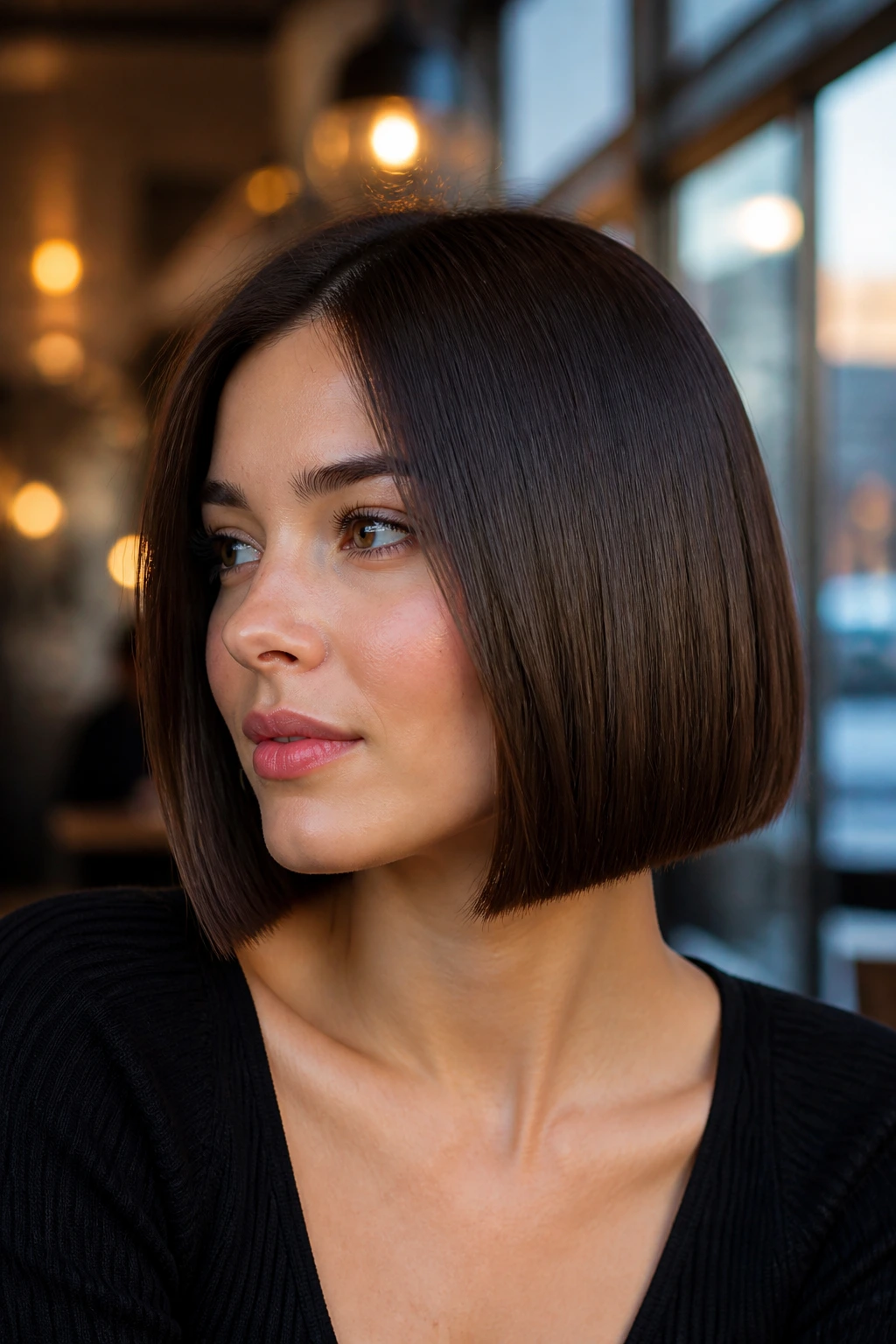
A glass bob is all about shine, straightness, and a perimeter so clean it almost looks drawn on. Thin hair loves this when the cut is precise, because the reflective finish makes the strands read as denser than they are. Round faces benefit too, since the sharp line adds structure right where softness tends to dominate.
The trick is not to chase perfection with too much heat. One good smoothing pass, a heat protectant, and a light serum at the ends is enough. If you keep ironing the life out of it, you’ll flatten the crown and the style will start hanging.
This one looks best when it’s trimmed often. Any fuzz at the hem shows immediately.
15. Soft Wedge Bob
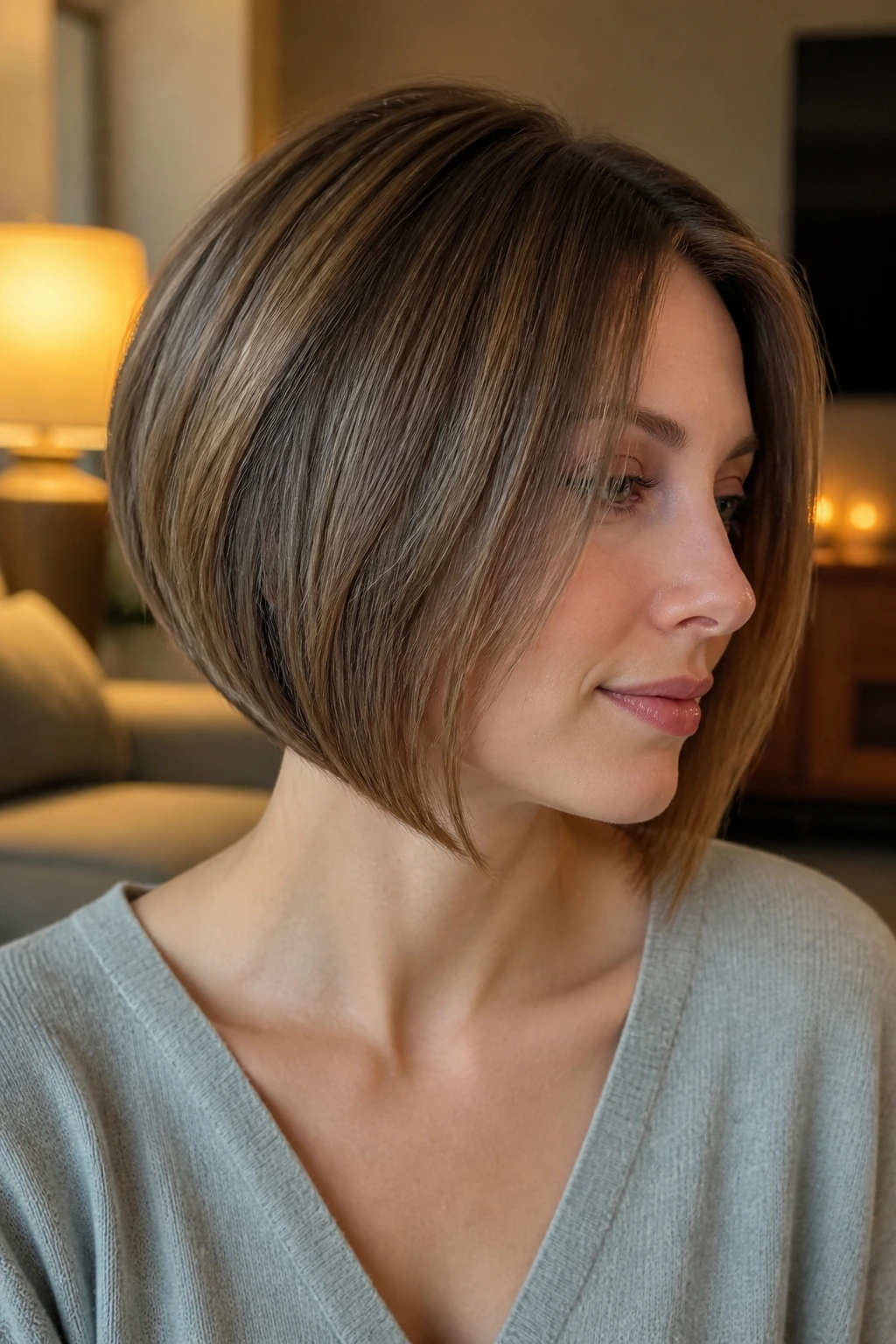
A soft wedge bob has a gentle rise at the nape and a clean, straight fall toward the front. It gives thin hair a little back-end lift without turning too angular. On a round face, the forward length helps elongate the line, which keeps the style from feeling squat.
It’s not a shouty haircut. Good. The shape does the talking, and it does it quietly. That’s part of the appeal.
This cut works especially well if your hair grows in a bit flat at the crown but you still want the overall finish to look sleek. Ask your stylist to keep the wedge understated, because too much stacking can make the back look dated fast.
16. Long Front Bob
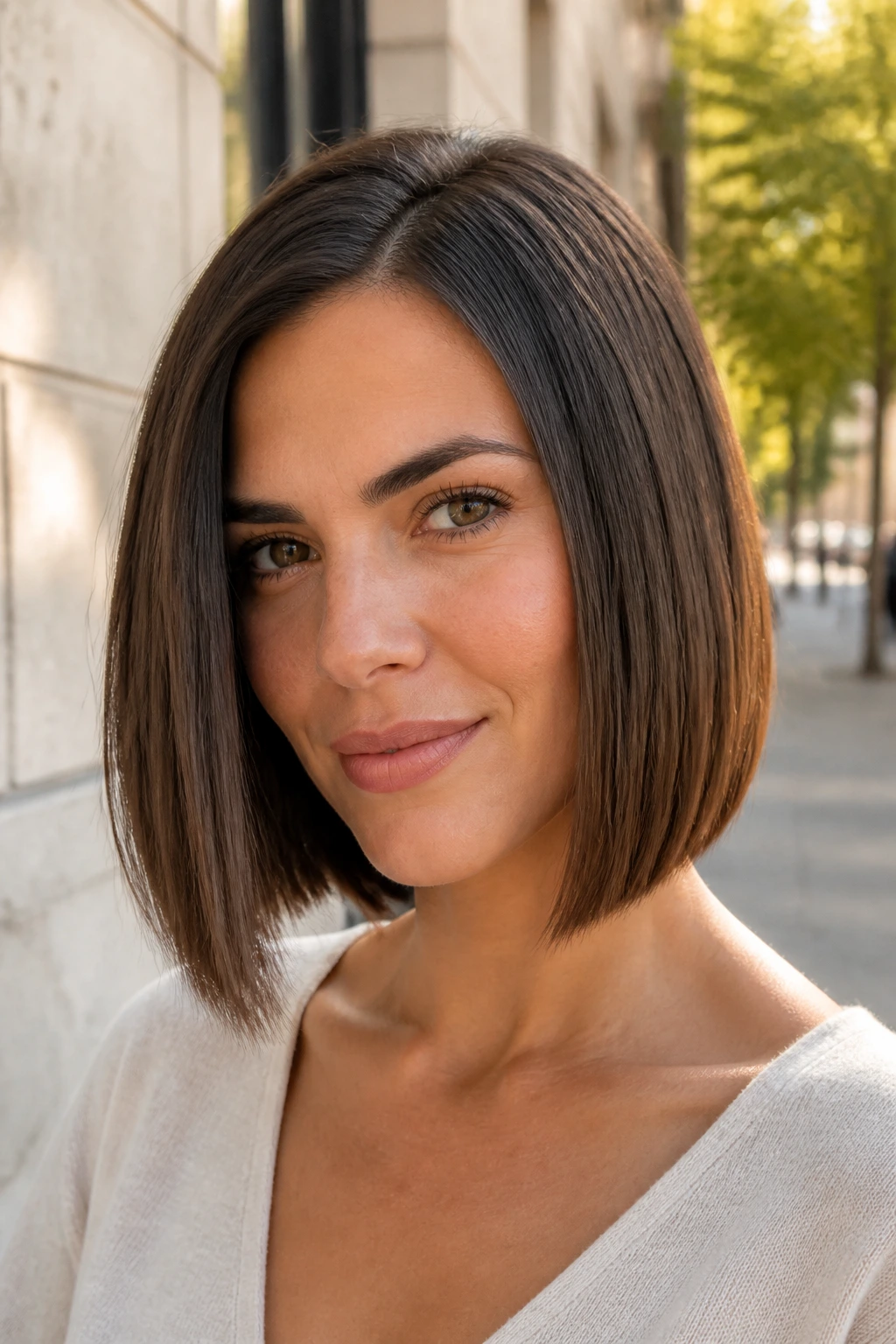
A long-front bob gives you the face-slimming effect of forward length without pushing the whole cut into lob territory. The front pieces graze the lower cheek or jaw, while the back stays a little shorter. That slope pulls the eye down and away from the widest part of a round face.
Thin hair gets a bonus: the front pieces look fuller when they’re longer, because the line has room to show up. Short front pieces can break apart too easily. Longer ones stay cleaner.
I’d choose this if you want a bob that feels sleek but not severe. It’s one of the easiest styles to tuck behind one ear and still look finished.
17. Textured-But-Straight Bob

This is not a messy bob. It’s a straight bob with just enough point cutting at the ends to stop the perimeter from looking like a ruler. On thin hair, a tiny bit of softness can help the cut move instead of sticking to the head. On a round face, that gentle movement keeps the line from feeling too boxy.
The key is moderation. If the ends look sliced to bits, the shape loses density. If they’re too blunt, the bob can feel heavy. Somewhere between those two is where this cut behaves best.
Wear it with a smooth finish and a slight bend under the ends. It still reads as straight. Just not stiff.
18. Micro-Fringe Bob

A micro-fringe bob is a bold choice, and it only works when the rest of the haircut stays very clean. The tiny fringe creates a horizontal line, so the bob underneath needs enough length and structure to keep the face from looking too open or too wide. For a round face, that usually means keeping the bob below the chin.
Thin hair can actually handle a micro fringe better than dense hair because it doesn’t pile up so much at the forehead. Still, this is not the low-maintenance option in the group. It needs regular trims and a strong styling routine.
If you like sharp shapes and a little edge, this is the one that feels most editorial. If you want easy mornings, skip it.
19. Floating Nape Bob
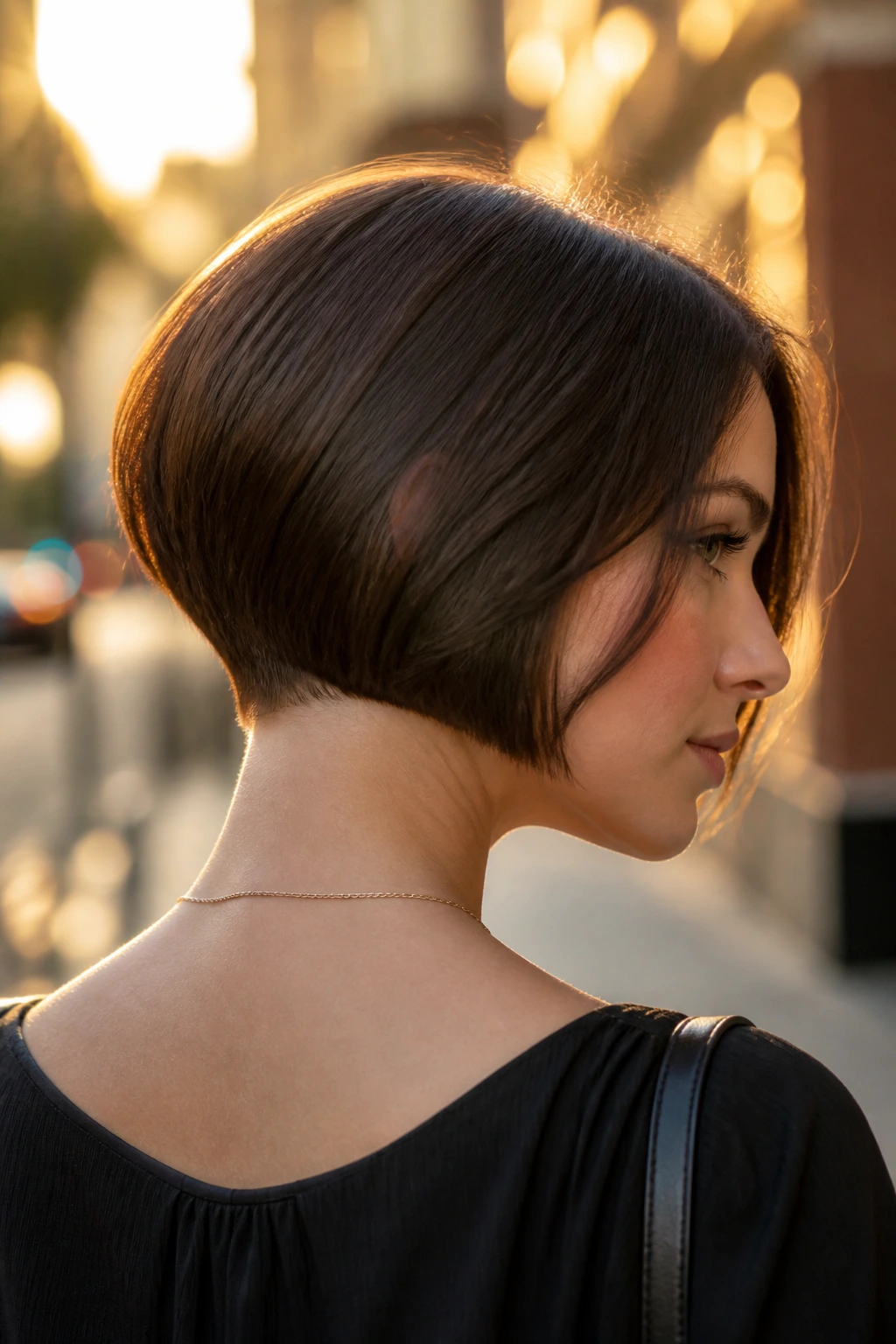
A floating nape bob sits lightly at the back and skims forward with a crisp, straight line. The back is short enough to show the neck, but not so short that the shape balloons out around the cheeks. That matters for round faces. You want lift, not puff.
Thin hair benefits from the airy nape because it keeps the back from looking heavy and flat at the same time. The line should still feel full at the edge. If the nape gets too tapered, the whole haircut loses its body.
This cut is especially good if you wear high collars, earrings, or simple necklines. It puts the shape right where it can be seen.
20. Shoulder-Skimming Straight Lob
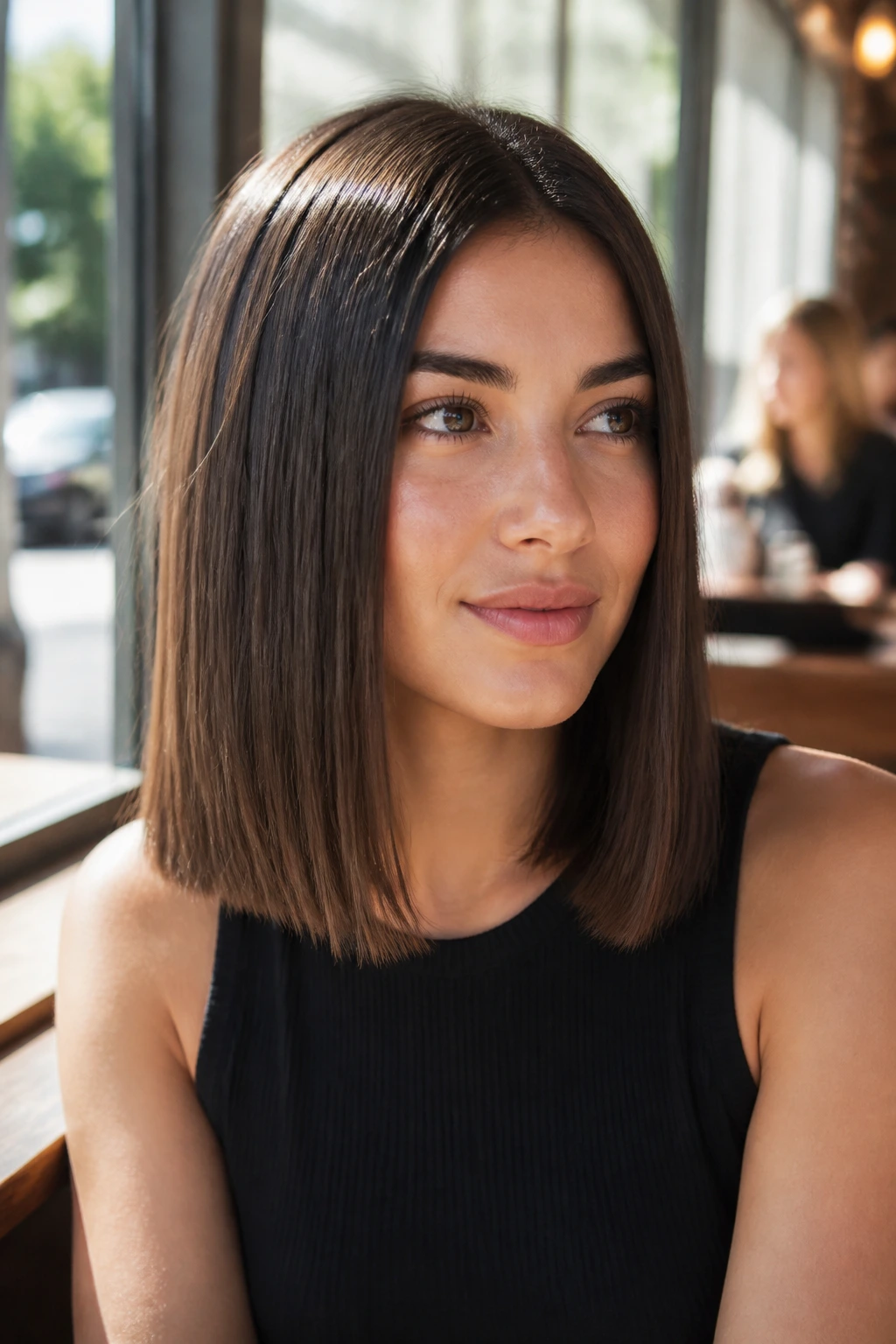
A shoulder-skimming lob is the safest bet in the stack, but “safe” is not the same as boring. On thin hair, the extra length gives the ends more presence, and on a round face, the longer line makes the face appear less wide. It’s the straight-bob version I recommend to people who want a clean shape without committing to jaw-length sharpness.
The best part is flexibility. You can wear it sleek, tuck one side, or give it a slight bend under the ends. It still reads as a bob. Just a longer one.
If your hair tends to split or thin out at the hem, keep this cut blunt and trim it often. Long, sparse ends look tired fast.
21. Asymmetrical Bob

An asymmetrical bob has one side slightly longer than the other, and that uneven line is useful on a round face because it breaks up the symmetry that can make the face feel fuller. It also gives thin hair a stronger shape, since the eye has a clear diagonal to follow.
The difference in length does not need to be dramatic. Even half an inch can change the feel of the cut. Too much asymmetry and the style starts shouting. Too little and you lose the point.
This works best when the finish is straight and sleek. The asymmetry should be visible in the line, not hidden in waves.
22. Face-Slimming Bob with Long Front Pieces
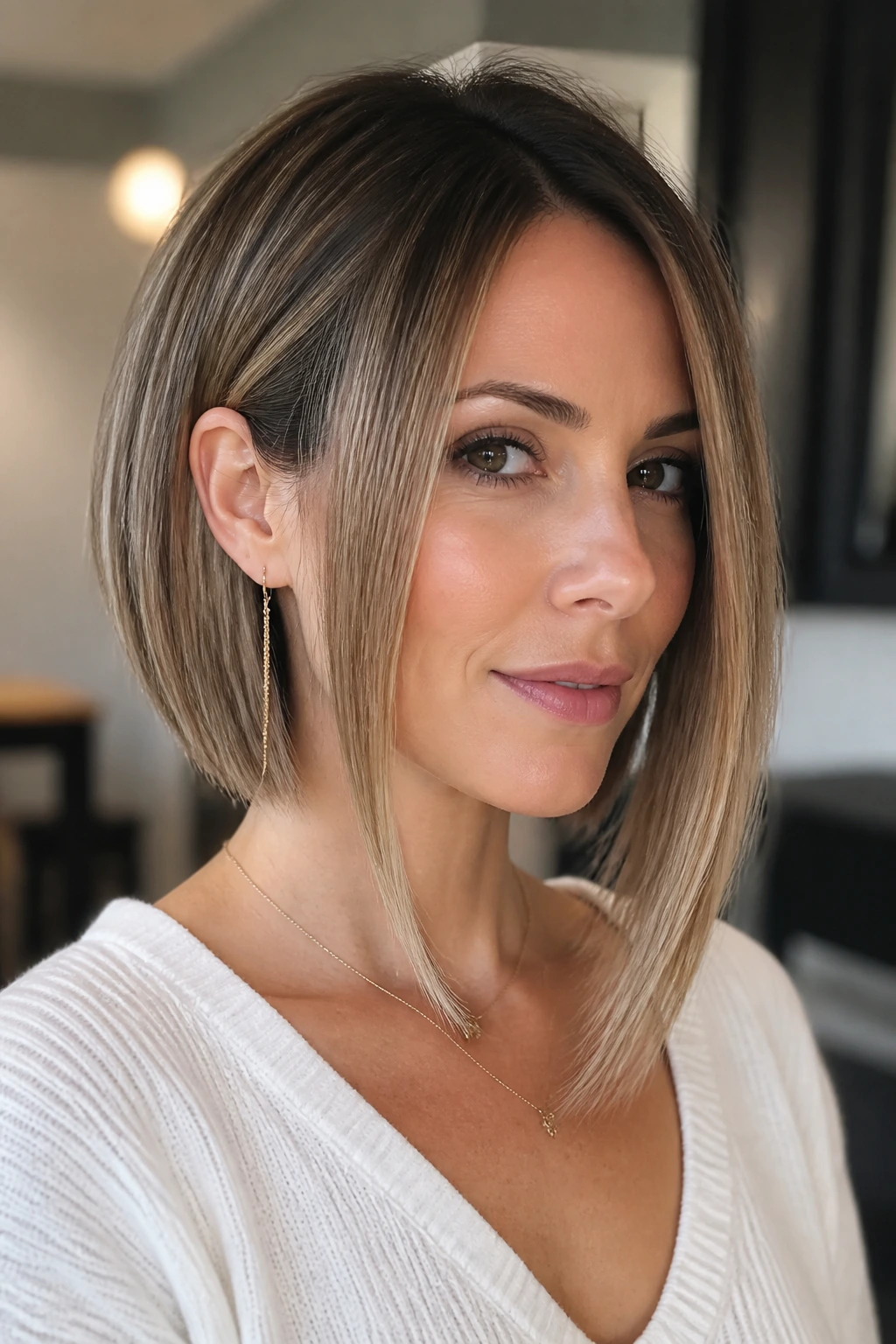
This is the bob for anyone who wants the jawline to look a little narrower without giving up the fullness of a short cut. The front pieces sit below the cheekbone and move toward the collarbone, while the back stays neat and compact. That creates a vertical pull that round faces usually like.
Thin hair benefits because the longer front pieces make the whole cut appear fuller than a cropped bob would. There’s more hair in view, so the density reads better. That’s one of those visual tricks that matters more than product ever will.
I’d choose this over a shorter chin-length cut if your hair is very fine around the temples. The extra front length gives you room to work.
23. Quiet Volume Bob

A quiet-volume bob is all about subtle lift through the roots and a straight, controlled perimeter. No teasing. No crunchy spray. Just enough shape at the crown to stop the haircut from lying flat against the head. For thin hair, that is often the difference between “cute bob” and “why does this look limp by noon?”
The round face benefit comes from the lift itself. Height at the crown visually lengthens the face, and straight sides keep the width from spreading out. It’s a neat little equation.
This style usually depends on a good blow-dry and a light root spray. If you skip the lift entirely, the cut can collapse into the cheeks.
24. Glossy Mid-Length Bob
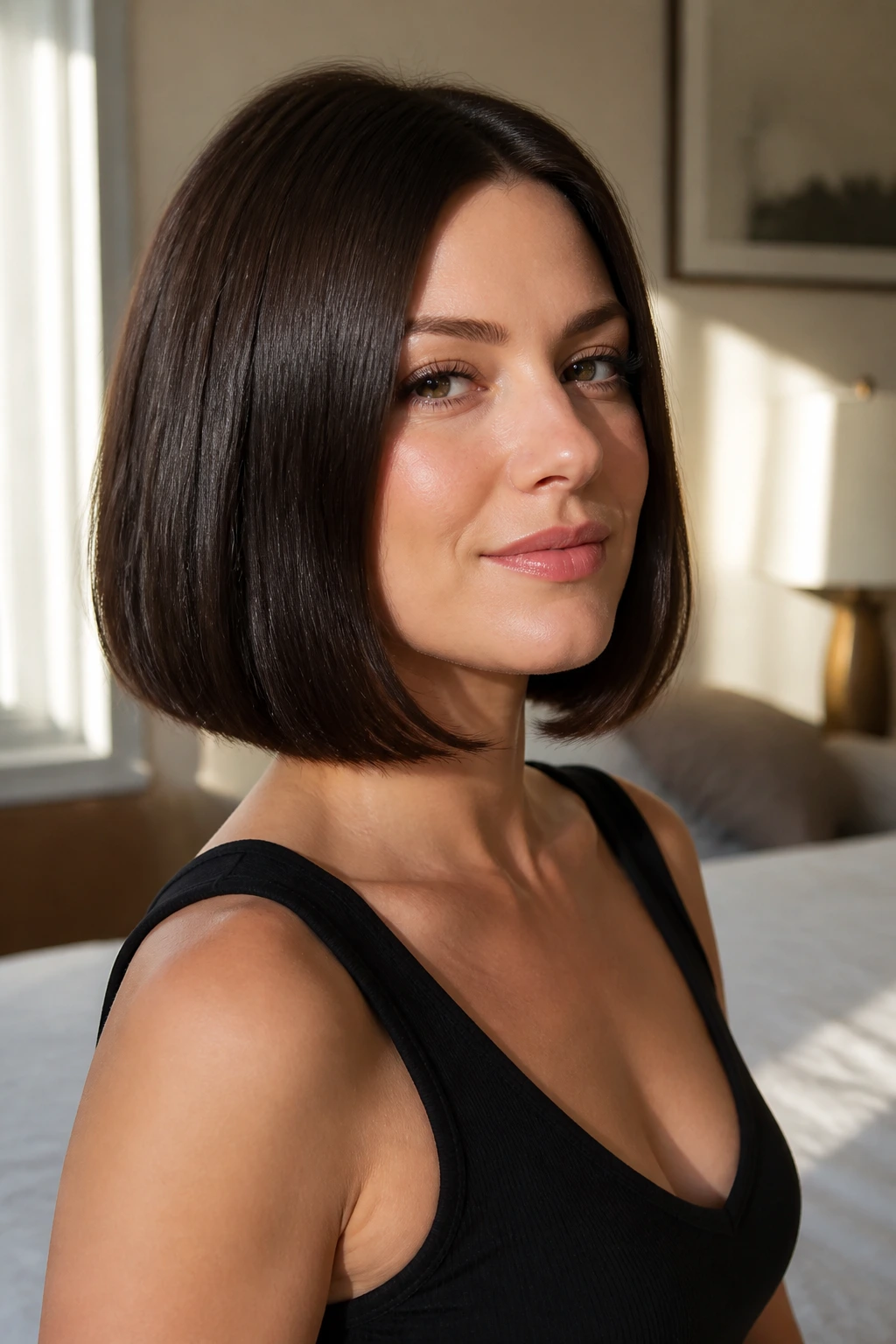
A glossy mid-length bob sits between a classic bob and a longer lob, and it’s one of the easiest lengths to wear with a round face. The cut gives fine hair a fuller-looking outline, while the length below the chin keeps the face from feeling pinched. Add shine, and the whole thing looks more expensive than it has any right to.
The real advantage here is balance. It’s long enough to tuck, short enough to hold shape, and blunt enough to make thin ends look denser. That’s a rare combination.
If you want a bob that works with a blazer, a tee, and a dinner out, this is the one. It doesn’t demand a costume.
25. Grow-Out-Friendly Bob
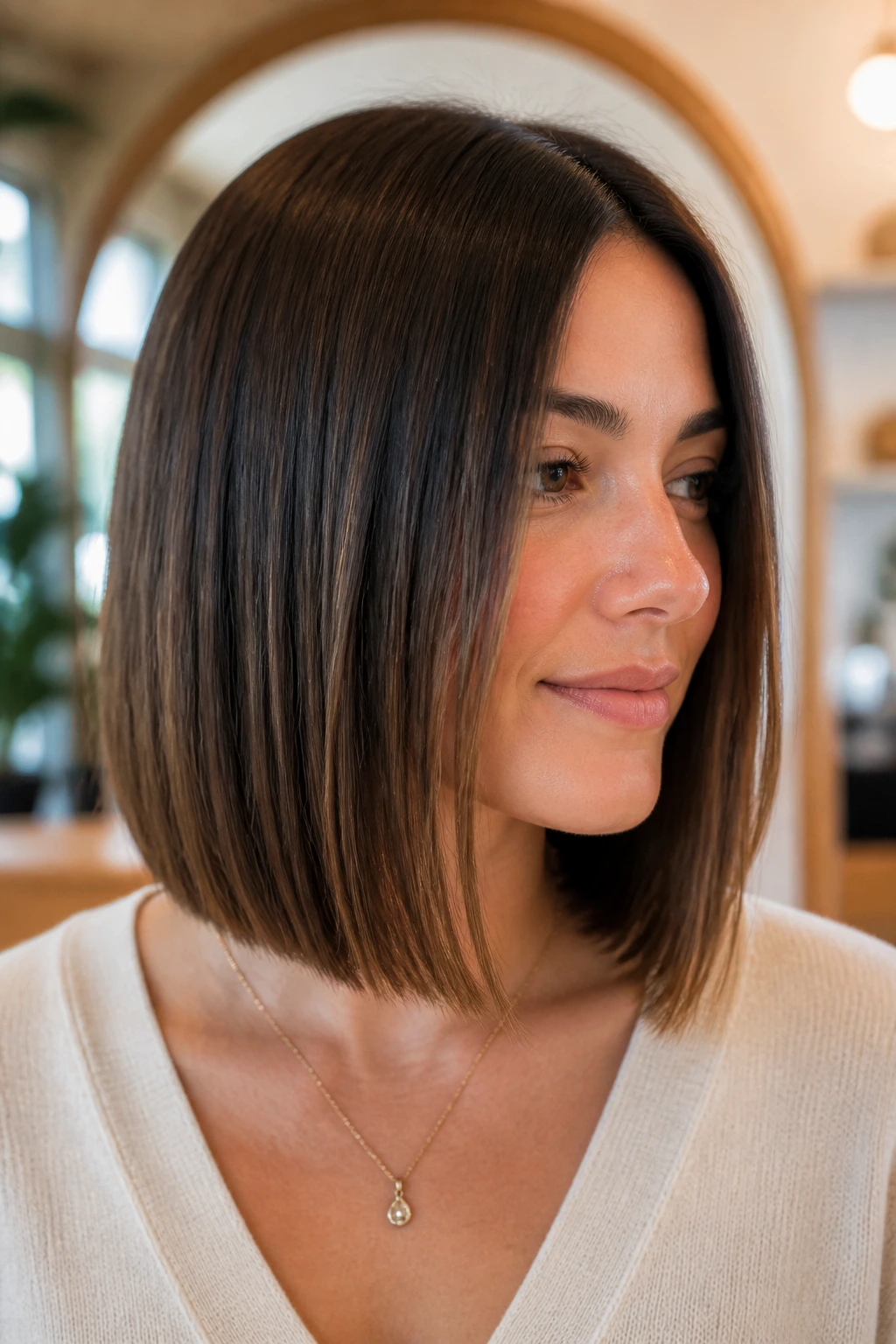
A grow-out-friendly bob is the cut you choose when you like a sharp bob but hate the awkward in-between stage. The length usually sits just above the shoulders, the perimeter stays clean, and the front pieces are left a touch longer so the shape keeps working as it grows. That’s smart for thin hair, because the ends stay looking full a little longer.
Round faces benefit from the forward length as the haircut stretches out. Instead of turning into a puffed-out triangle, it keeps a vertical line. Good planning matters here.
If you’re not ready for constant trims, ask for this version instead of a shorter jaw bob. It buys you time without sacrificing the shape.
Why Straight Bobs Do So Much for Thin Hair and Round Faces

A straight bob works here because it solves two different problems with one clean line. Thin hair needs visible density at the edge, and a blunt perimeter is the fastest way to fake that density without piling on products. Round faces need a shape that doesn’t sit exactly on the cheeks, and a smart bob length can quietly change how wide the face reads.
The part matters, too. A dead-center part can flatten the crown and exaggerate fullness at the sides, while a slight offset gives the hair a better fall and a little lift where it counts. That’s why the most flattering versions usually have one small asymmetry or one tiny angle somewhere. The haircut stays simple. The geometry is doing the work.
I also think straight bobs age better than heavily layered cuts on fine hair. Layers can be useful, but too many of them chip away at the ends until the haircut starts looking soft in a bad way. A straighter line keeps its shape longer between salon visits, which is worth more than people admit.
What to Tell Your Stylist in the Chair
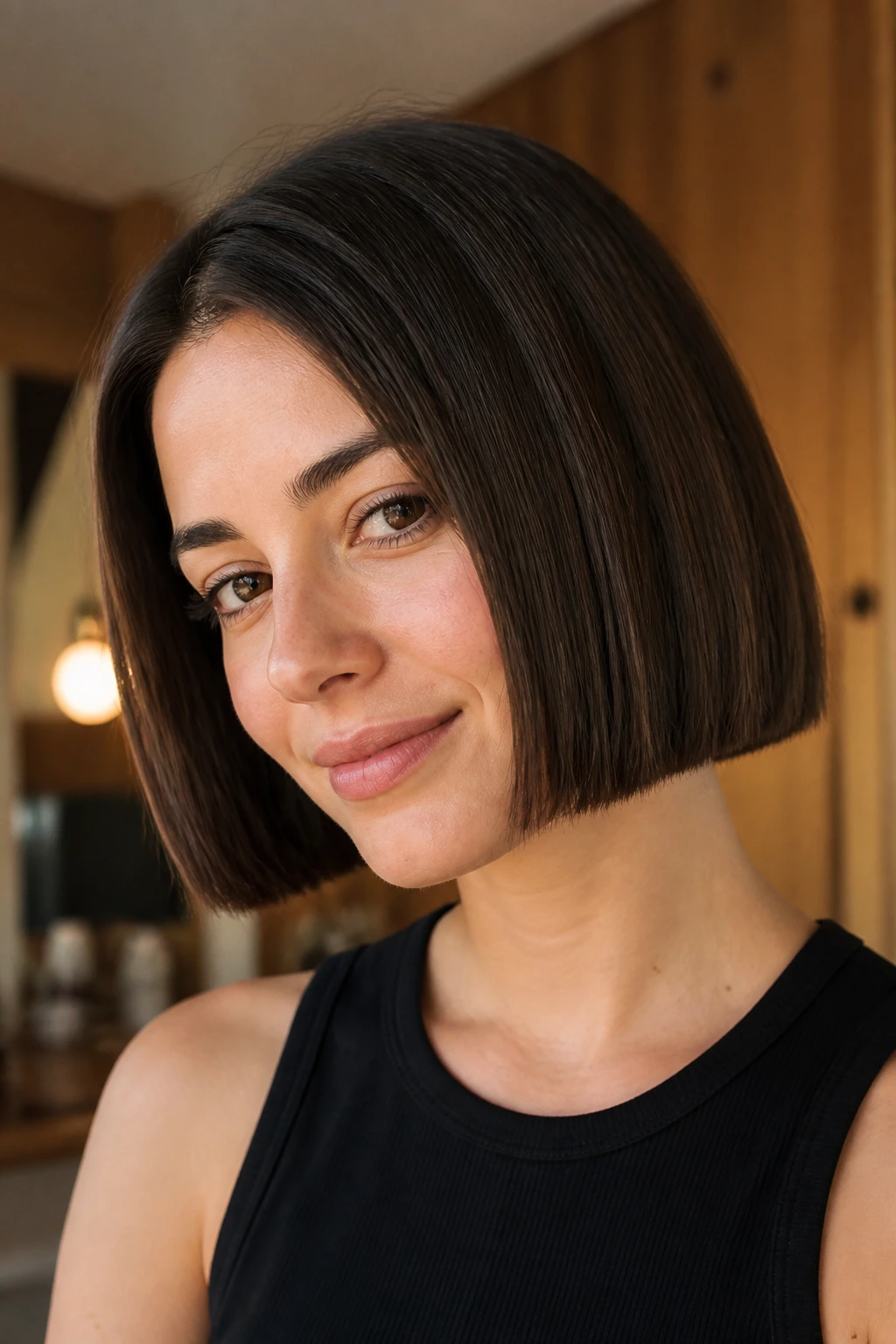
Be specific about where you want the length to land. “At the chin” and “just below the chin” are not the same request, and on a round face that small difference can change how wide the haircut feels. If your hair is fine, ask for a blunt perimeter first, then talk about internal texture only if the cut starts looking too heavy.
Bring up your parting habit before the scissors come out. If you never wear a center part, don’t let the cut be built around one. And if one side of your hair always collapses flatter than the other, mention that. Stylists can work with that, but only if they know.
A photo helps, though I’d still describe what you want in plain language. Say whether you want the ends sharp, the front longer, the crown lifted, or the finish smooth and polished. Four simple points. That’s usually enough.
Tools That Keep a Straight Bob Sharp
-
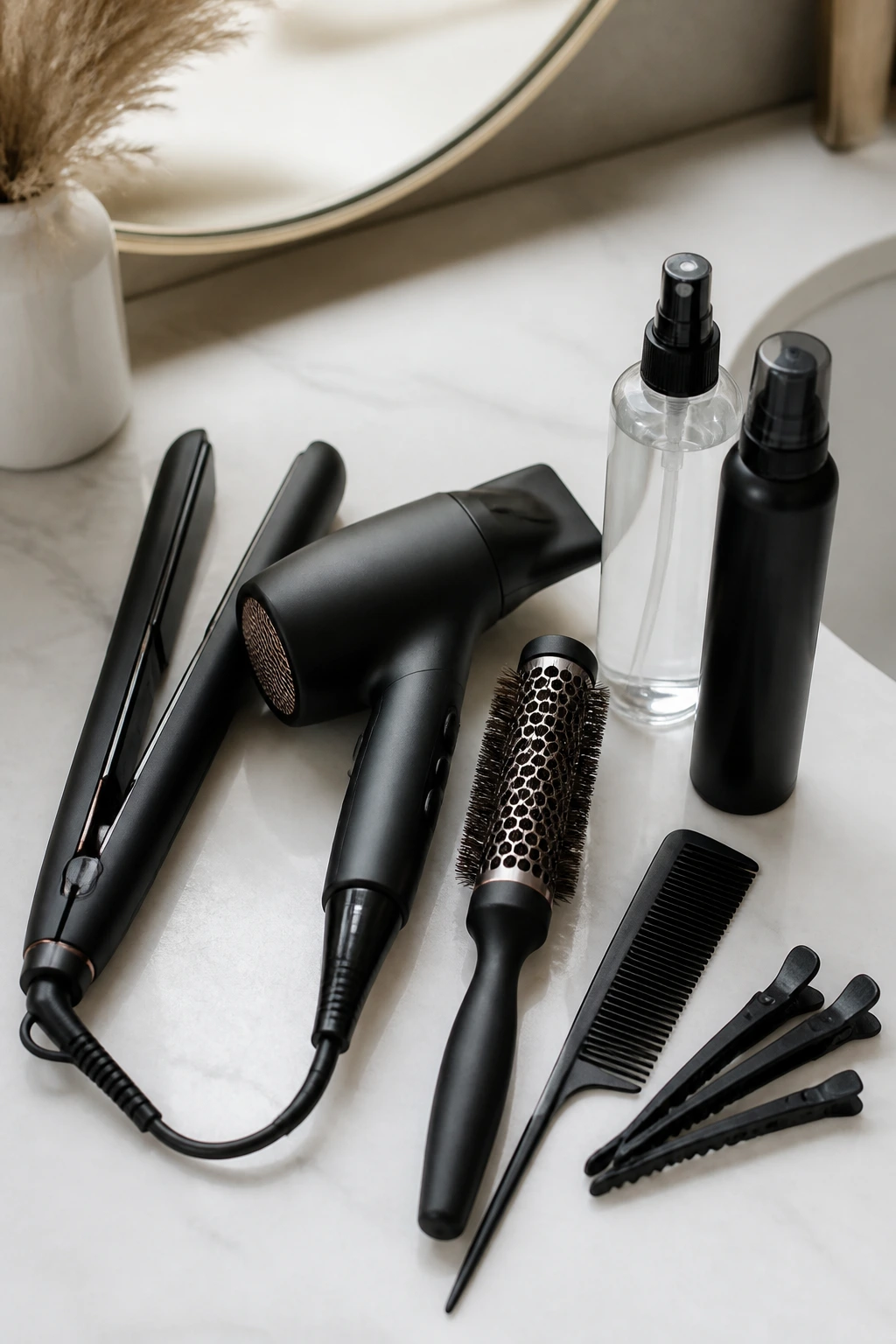
Flat iron with rounded edges: This gives the ends a slight bend without making the cut look stiff or puckered.
-
Blow dryer with a narrow nozzle: A focused airflow helps smooth the perimeter and keeps the crown from frizzing out.
-
Small round brush: Best for lifting the roots and directing the front pieces away from the face.
-
Heat protectant spray: Thin hair burns fast and loses shine fast, so this is not optional if you use hot tools.
-
Lightweight volumizing mousse or root spray: A little at the roots gives the cut lift without making the ends sticky.
-
Fine-tooth comb and sectioning clips: Useful when you want a really clean center or off-center part.
-
Light serum or finishing cream: Use one drop, not a palmful. Fine hair gets greasy in a hurry.
How to Style a Straight Bob Without Flattening It

Start at the roots. Seriously. If the crown goes flat, the whole bob looks tired, even if the hem is perfect. I like to blow-dry the roots first, lifting sections with a brush and directing the air up and away from the scalp. Once the root area is dry, the rest of the style behaves better.
Use less product than you think. Thin hair does not need a heavy cream or an oil slick to shine. A pea-sized amount of smoothing product through the ends is plenty, and anything more usually drags the shape down. If you need volume, use root spray before drying, not after.
For a straight finish, I prefer a flat iron to a round brush if the goal is polish. One pass, slight bend at the ends, and stop. If you keep going back over the same section, the hair starts to look fuzzy and overworked. That’s the moment a sharp bob turns sleepy.
Common Mistakes That Make the Cut Work Against You

The biggest mistake is cutting the bob at the widest part of the face. On a round face, that usually means the cheeks or just under them, and that placement can make the haircut spread outward instead of down. The fix is boring but effective: shift the length a little lower, or angle the front pieces forward.
Another problem is over-layering fine hair. People want movement, so they ask for more layers, and then the ends start looking ragged. Thin hair usually needs a stronger perimeter first, not a shredded one. If you want less bulk, ask for internal weight removal only where the hair actually bends out.
Skipping trim appointments is a third one. A straight bob loses its whole personality when the ends fray. Even a good cut starts looking soft at the hem after a few weeks. Book the trim before the shape collapses.
And please do not drown the roots in heavy cream or dry shampoo. That only makes the cut look dusty or flat. Light, targeted product beats a pile of it every time.
Variations and Alternate Directions to Try
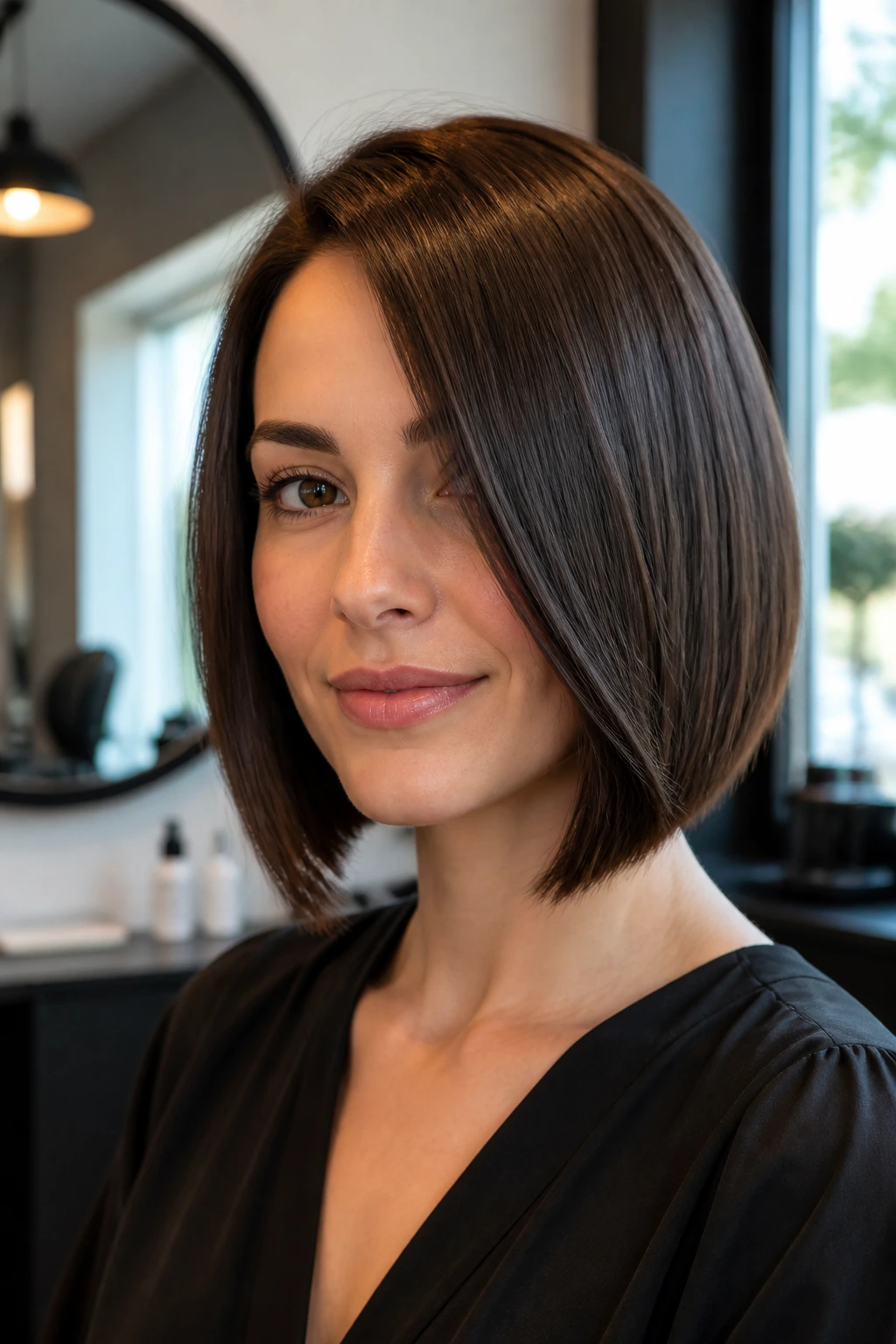
The Sleek Side-Sweep: Keep the bob clean and straight, then sweep the front to one side for a softer, more face-slimming line. This is a good move if you want less symmetry without changing the cut itself.
The Collarbone Swing: Let the length graze the collarbone and keep the front just a touch longer than the back. It’s one of the easiest ways to make thin hair look fuller without going short.
The Clean Bang Pairing: Add a long, light fringe or a side bang if your forehead feels too open in a straight bob. Just avoid heavy bangs that cut the face in half; those can make a round face feel shorter.
The Ultra-Polished Finish: If your hair is naturally straight, lean into shine and sharpness. This version looks best when the edges are precise and the flyaways are tamed, not when the cut is texturized to bits.
The Low-Maintenance Grow-Out: Ask for a bob that already has a little extra length in front. It buys you more wear between trims and stays flattering even when the line softens.
Maintenance, Trims, and Grow-Out

Straight bobs on thin hair usually look best with trims every 5 to 7 weeks. Stretch much past that and the hem starts to separate, especially if your hair grows fast at the nape. For a jaw-length or chin-length cut, that can change the whole balance of the face.
At home, wash or refresh the style based on your scalp, not the calendar. Fine hair often needs more frequent washing because oil shows faster, but over-washing can leave the ends brittle. Two to four days between washes works for a lot of people, though some need more frequent root refreshes. Use a lightweight dry shampoo at the roots, not through the lengths.
Sleep matters more than people think. A silk or satin pillowcase cuts down on roughness, which helps the bob stay smoother in the morning. If the ends flip out, a quick pass with a flat iron is usually enough. Don’t keep attacking it with more heat than necessary.
FAQ

Will a straight bob make my round face look wider?
Not if the length and part are chosen well. A bob that ends below the cheekbone, paired with a slight off-center part or forward angle, usually slims rather than widens.
Is a blunt bob better than layered for thin hair?
Usually, yes. A blunt edge makes the hair appear thicker at the ends, while too many layers can remove the visual weight thin hair needs.
Can I wear a center part with this haircut?
You can, but it works best when the bob has enough length to fall below the widest part of the cheeks. If your crown goes flat easily, a slight off-center part often looks better.
What if my hair flips outward at the ends?
That usually means the cut is a bit too short for your natural bend or needs a stronger bevel. A flat iron with rounded edges can help, but if the flip keeps coming back, ask for a softer angle at the next trim.
Does a straight bob work if my hair is very fine and sparse?
Yes, but keep the perimeter blunt and avoid aggressive thinning. A chin-grazing or collarbone length often gives very fine hair more presence than a super-short cut.
How do I keep the crown from going flat?
Dry the roots first with a nozzle attachment, lift sections at the scalp, and use a light root spray before styling. Heavy cream at the roots will usually make the problem worse.
Should I avoid bangs with a round face?
Not necessarily. Long side bangs and curtain pieces can work well. Heavy, blunt bangs are trickier because they can shorten the face unless the rest of the cut is long enough to balance them.
What’s the easiest version to maintain?
A shoulder-skimming blunt lob with a slight off-center part. It keeps its shape longer, grows out more gently, and takes less precision than a jaw-length cut.
A Clean Line That Does the Work
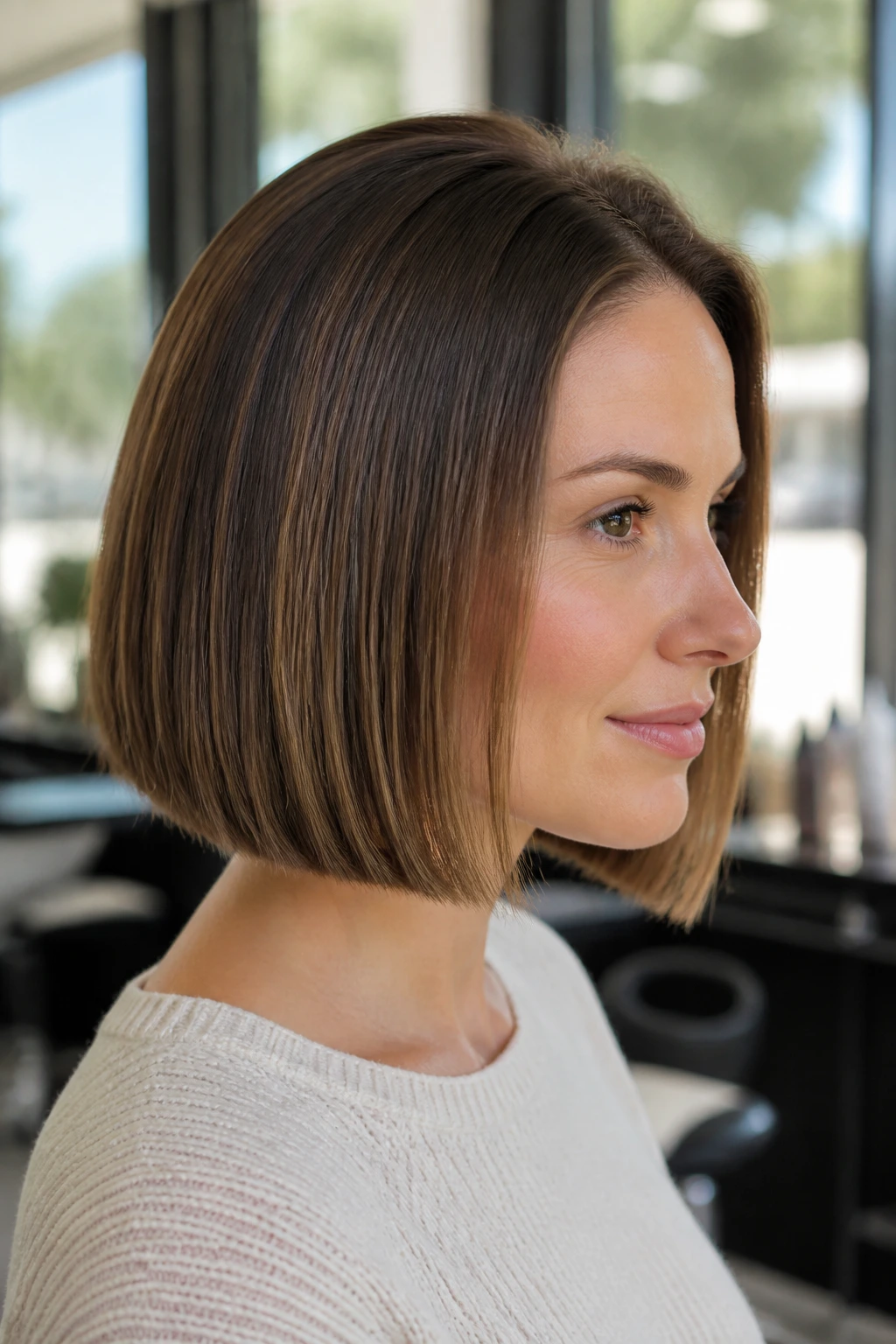
The best straight bob for thin hair and a round face is usually the one that looks almost plain at first glance and then keeps getting better the more you live with it. A good length. A firm edge. A part that gives the face room to breathe. That’s the recipe, if you want to call it one.
I’ll take a sharp, thoughtful bob over a busy one any day. It’s cleaner at the salon, easier in the mirror, and far more forgiving when your hair is fine and your face already has soft curves. Pick the line that gives you shape, then let the haircut do its quiet job.