



Short bobs for women with wavy hair live or die by one thing: whether the cut respects the wave pattern or tries to boss it around. Force a wave into a shape it doesn’t want, and you get puff at the sides, bent ends, and that annoying triangle silhouette nobody asked for. Give it the right length, a clean perimeter, and a little internal movement, and the whole thing suddenly looks intentional instead of accidental.
That’s the part I love about a good wavy bob. It doesn’t need much theater. A jaw-skimming line, a soft bend at the ends, a few pieces that fall forward at the cheekbone, and the haircut starts doing the work for you. Wavy hair has enough texture built in to make a bob look alive; the real trick is keeping the shape from collapsing into either a box or a mushroom.
And no, every wavy bob should not look “messy.” Some should be polished. Some should lean French and airy. Some should sit sharp at the jaw with a blunt edge. The right choice depends on density, face shape, how much time you want to spend with a diffuser, and whether your waves are loose and S-shaped or more compact and springy. The styles below cover the range, from barely-styled and breezy to sleek enough for the office but still soft around the edges.
Why These Short Bobs Work So Well on Wavy Hair

Wave-Friendly Shape: A short bob lets waves bend naturally without carrying so much length that they stretch out and lose energy halfway down the hair shaft. That shorter canvas keeps the shape visible.
Less Daily Fuss: When the cut lands around the jaw or chin, you usually need fewer passes with a wand or flat iron. A good mousse and a diffuser can do more than people expect.
Better Movement at the Ends: Wavy hair tends to puff when the ends are too heavy or too wispy. These cuts solve that by putting the weight where it belongs.
Face Framing Without Overthinking It: A bob can carve out cheekbones, soften a strong jaw, or make a round face look a little longer, depending on where the line sits. That’s why tiny length changes matter so much.
Easy to Personalize: Bangs, side parts, hidden layers, and undercuts all change the feel of a bob without changing the basic shape. One haircut can go soft, sharp, playful, or polished just by shifting the details.
1. Chin-Grazing French Bob
This is the bob that gets mentioned whenever people talk about chic hair, and for good reason. A chin-grazing French bob hits the face right where wavy hair looks most alive: around the jaw, where the wave can kick forward without ballooning out. It has enough length to tuck behind the ear, enough weight to keep the bend from frizzing into a cloud, and enough attitude to look deliberate even when you only scrunch it and go.
Why it flatters waves
The line sits close to the face, which makes the wave pattern read as shape instead of fuzz. If your hair has a loose S-wave, this cut gives it room to ripple. If your wave is tighter, the chin length keeps the silhouette compact and clean.
A side part makes it softer. A center part makes it a little more editorial. Either way, the cut works best when the ends are blunt or nearly blunt, not chopped into bits that stick out in different directions.
Best for: medium-density hair, oval faces, and waves that clump nicely with a little product.
Styling note: a pea-sized amount of curl cream plus a light mousse at the roots is enough for most days.
2. Soft Blunt Bob with Loose Ends
A blunt bob on wavy hair sounds risky until you see the right version. The trick is keeping the perimeter clean while letting the wave do the motion inside the shape. The result is a cut that feels structured at first glance but softens when the hair bends and settles.
What makes it different
This is not a heavily layered bob. It depends on a strong outline and a bit of internal texture, usually cut with a dry or nearly dry finish so the stylist can see how the waves move. If the ends are cut too aggressively, they flip and fight you. If the line stays tidy, the whole cut reads as polished without looking stiff.
I like this on hair that needs a little discipline. Loose waves, not curls. Medium to thick density. It’s also one of the easier bobs to wear with a blazer or a T-shirt, which sounds ordinary but matters more than people think.
Best for: women who want a sharper silhouette without losing softness.
Try this: diffuse until the hair is about 80% dry, then stop touching it. The ends settle better when you let them cool.
3. Layered Jawline Bob

If your hair sits heavy at the bottom, a layered jawline bob can save you from the dreaded triangle. The cut removes bulk from inside the shape, not from the perimeter, so the bob still looks full but doesn’t sit like a block. It’s one of the best short bobs for women with wavy hair that has a lot of body.
Who should consider it
Thick waves love this cut. So do women whose hair feels wide at the sides by afternoon. The internal layers let the wave stack softly instead of puffing out in one solid shelf. That means less helmet, more movement.
The key is restraint. Too many layers, and the bob turns stringy around the face. Too few, and you’re back where you started. Ask for softness through the mid-lengths and a clean outer line at the jaw.
- Shape: keeps the bottom from flaring outward.
- Texture: gives waves room to separate.
- Maintenance: needs trims every 6 to 8 weeks if the bulk returns fast.
4. Side-Part Bob with Long Fringe
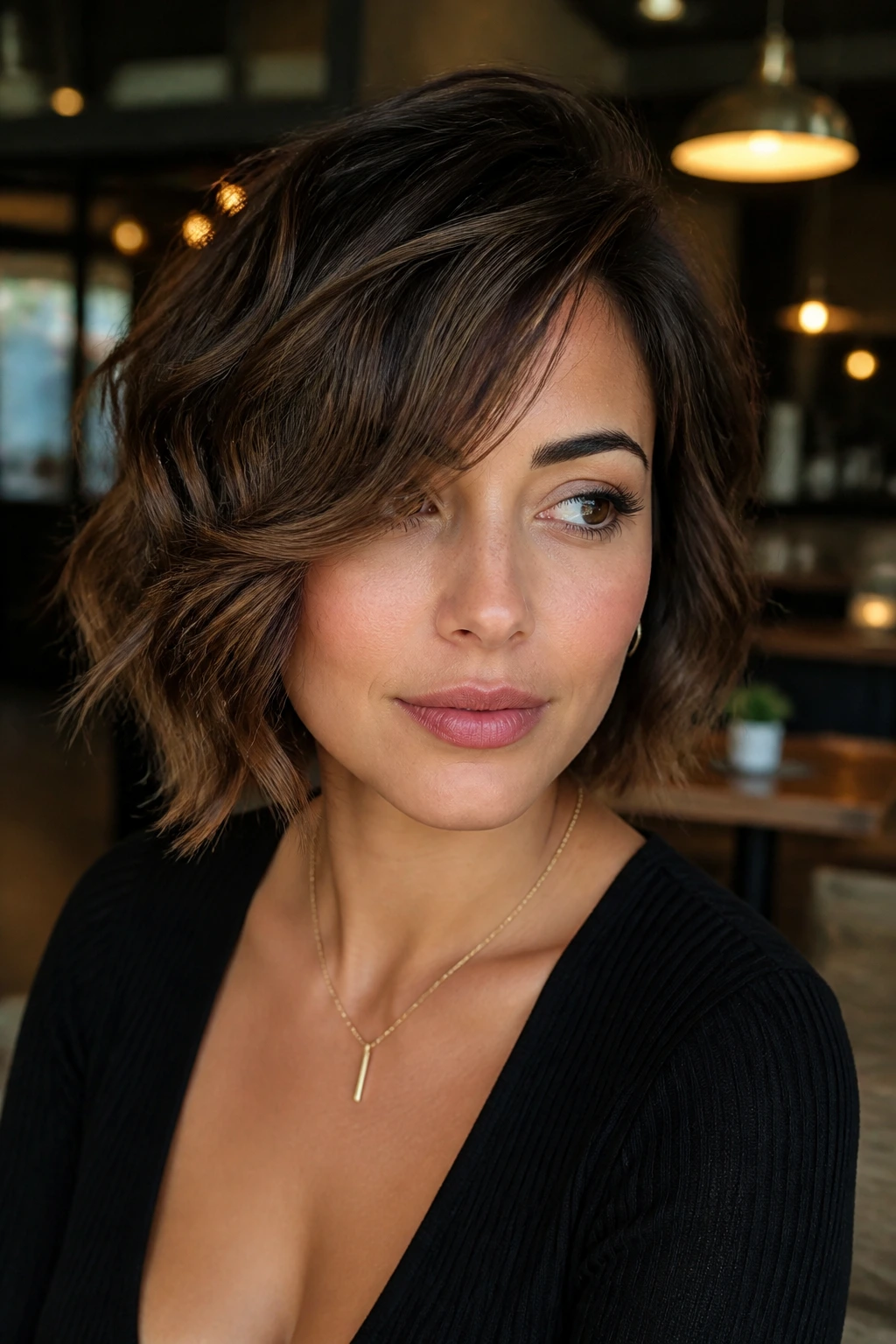
A deep side part changes a bob faster than a lot of people realize. On wavy hair, it builds lift at the front and gives the cut a little sweep instead of a dead-even split down the middle. Add a long fringe, and you get movement around the eyes without committing to full bangs.
This is especially useful if your waves fall flatter on one side or if you have a stubborn cowlick at the front. The longer fringe can be tucked, pinned, or worn loose, which makes the cut easy to live with on days when your hair refuses to behave.
Why the side part matters
It breaks up width. A center part can emphasize symmetry, which is nice on some faces and unforgiving on others. A side part shifts the eye diagonally and keeps the volume from gathering in the wrong place.
The fringe should land somewhere between the eyebrow and cheekbone, not in your eyelashes. If it’s too short, it fights the wave. Too long, and it just disappears into the rest of the bob.
5. Italian Bob

The Italian bob has a bit more body than the French version. It sits fuller, rounder, and often just under the jaw, with ends that feel substantial instead of wispy. On wavy hair, that fullness is a gift. It keeps the cut from looking too severe and gives the wave somewhere to land.
This is one of my favorites for women who want their hair to look expensive without being fussy. A quick rough-dry, a bit of root lift, and a soft bend at the ends are usually enough. The whole point is shape. Not perfection.
The texture sweet spot
The Italian bob loves medium-to-thick waves and hair that has a little natural shine. If your texture is very fine, you may need less layering so the bob doesn’t lose its body. If your texture is coarse, ask for soft internal shaping so the ends don’t stick out like little hooks.
A round brush at the crown and a diffuser at the sides can give it that rounded finish without flattening the wave. It’s a good cut if you want a bob that feels dressed up but still moves when you turn your head.
6. Curtain-Bang Bob

Curtain bangs and a short wavy bob have a kind of easy chemistry that saves a lot of bad hair days. The fringe splits softly in the center, falls away from the face, and blends into the rest of the cut instead of sitting on top of it like a separate object. That matters on wavy hair, where heavy straight-across bangs can shrink, puff, or split at the worst possible moment.
How it frames the face
Curtain bangs make the face look a little narrower through the forehead and cheekbone area. They also give the bob a built-in style point, even if the rest of the hair is just air-dried and finger-scrunched. A wave that lands in the bangs can look messy or charming depending on the cut; this version usually lands in the second camp.
Ask for the shortest point to hit around the brow or just below it, then let the sides drift toward the cheekbone. That little length difference is what makes them work with a bob instead of fighting it.
Useful if: you want face framing without the maintenance of blunt bangs.
Watch for: if your hairline has strong cowlicks, the center split may need a little training with a blow dryer.
7. Asymmetrical Bob

An asymmetrical bob adds interest without needing a dramatic color change or a complicated styling routine. One side is a touch longer than the other, usually by half an inch to an inch, and that slight imbalance makes wavy hair look modern fast. It also helps if one side of your hair naturally sits flatter or kicks out more than the other.
The cut works best when the difference is subtle. If it’s too dramatic, the bob starts looking like a style statement first and a haircut second. Keep the asymmetry soft, and the wave pattern does the rest.
Why waves and asymmetry get along
Waves already bring irregularity. The asymmetrical line turns that into design instead of chaos. It’s especially good for women who like a little edge but don’t want to lose the practicality of a short bob.
I’d choose this when you want something that looks purposeful from every angle. Tuck the shorter side behind the ear, leave the longer side loose, and you’ve got two different moods in one haircut.
8. Stacked Bob for Dense Waves
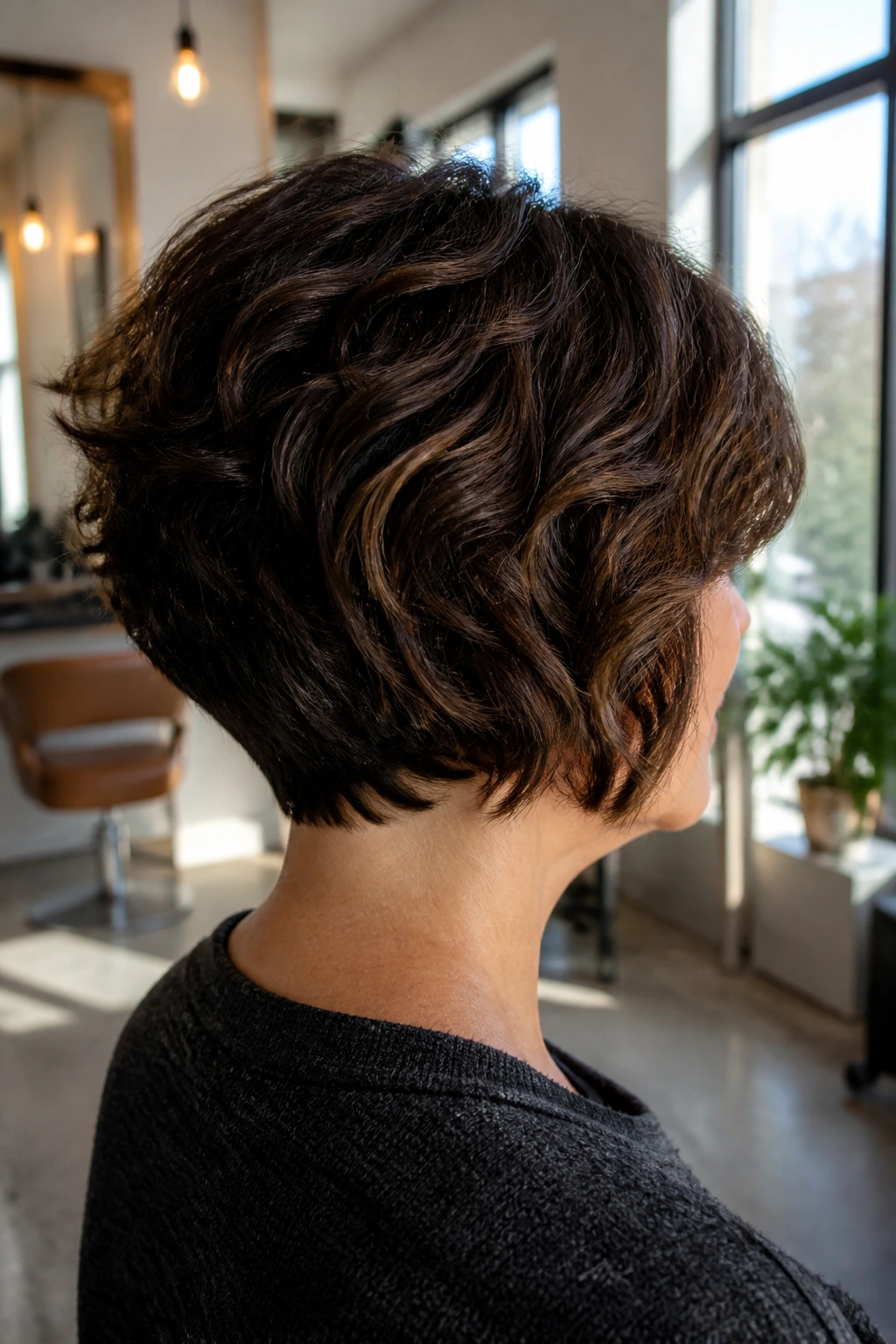
Dense waves can build into a heavy curtain if the cut keeps too much bulk at the nape. A stacked bob solves that by lifting the back and graduating the layers so the shape follows the head instead of puffing out from it. Done well, it gives you height at the crown and a clean curve underneath.
This is not a timid cut. It needs a stylist who understands where to remove weight and where to leave it alone. Too much stacking can make the back look old-fashioned or helmet-like. The sweet spot is a nape that lies close enough to the head to feel neat, with enough softness through the top to keep the wave moving.
Who it suits
- Thick, dense waves that refuse to stay compact.
- Hair that grows wide at the sides.
- Anyone who wants lift at the back without a lot of root teasing.
A little mousse at the crown helps the stack show up. So does drying the back first, while the hair is still damp enough to shape.
9. Air-Dry Texture Bob

Some bob haircuts need a round brush. This one doesn’t. The air-dry texture bob is built for women who want to wash, scrunch, and let the waves settle on their own. The cut usually has soft internal shaping and ends that aren’t too blunt, which helps the wave dry into loose pieces instead of one fuzzy mass.
The logic behind it
Air-drying works when the haircut already has a plan. If the layers are placed well, the hair falls into place with very little help. A diffuse blast at the roots can speed things up, but the body of the style should be able to finish in the air without collapsing.
This is the haircut I’d pick for busy mornings, humid weather, and anyone who hates fighting a hairdryer. Use a light leave-in and a mousse with a soft hold. Skip heavy creams that coat the wave too much; they can flatten the movement and make the ends look damp long after they’re dry.
10. Rounded Bob for Fine Waves

Fine waves need shape more than they need thinning. A rounded bob creates the look of fullness by curving the silhouette gently around the head and keeping the ends thick enough to catch light and movement. The result is a bob that doesn’t feel see-through at the bottom.
The styling trick here is lift at the roots. A little volumizing mousse at the crown, then a quick blow-dry with a round brush, gives the hair enough support so the waves don’t collapse against the scalp. If you cut too many layers into fine waves, they can start to look flimsy. A rounded outline keeps them together.
Best details to ask for
Ask for minimal texturizing and a soft curve through the perimeter. You want volume, not fray. A slight bend inward at the ends can make the hair look denser than it really is.
This is one of those cuts that looks especially good with a side part and a clean neckline. Simple. Clean. No need to overwork it.
11. Razored Bob

A razored bob gives thick or coarse waves a softer edge. Instead of a heavy blunt line, the stylist uses a razor or razor-like technique to lighten the ends and break up the mass. When the hair bends, those softer ends move with it instead of kicking out like little shelves.
The trade-off
Razor cutting can make a bob feel airy, but it can also expose frizz if the hair is damaged or extremely dry. That’s why this cut works best on healthy waves that already clump well. If your ends are rough, the razor will show it.
I like this bob when the goal is movement first, polish second. It’s not the strongest choice for a crisp, graphic line. It is a strong choice if you want the cut to breathe a little and don’t mind that the ends feel more relaxed than exact.
Styling note: use a light cream, not a sticky gel. The cut already has enough texture built in.
12. Bottleneck Bang Bob

Bottleneck bangs look narrow at the center and open wider as they move toward the cheekbones, and on a short wavy bob that shape makes a lot of sense. It frames the face without swallowing it, which is the usual problem with heavier fringe on wave-prone hair. The bangs guide the eye downward, then the bob takes over at the jaw.
What I like most here is the transition. The fringe doesn’t feel bolted on. It melts into the haircut, which is important when your texture has a mind of its own. If the bangs are cut too short or too thick, they lose that soft bend and start behaving like a separate haircut.
Styling tip
Dry the bangs first. Seriously. They’re the part most likely to misbehave. A small round brush or even your fingers and a quick blast of air are usually enough to set the shape before the rest of the bob gets diffused.
13. Inverted A-Line Bob
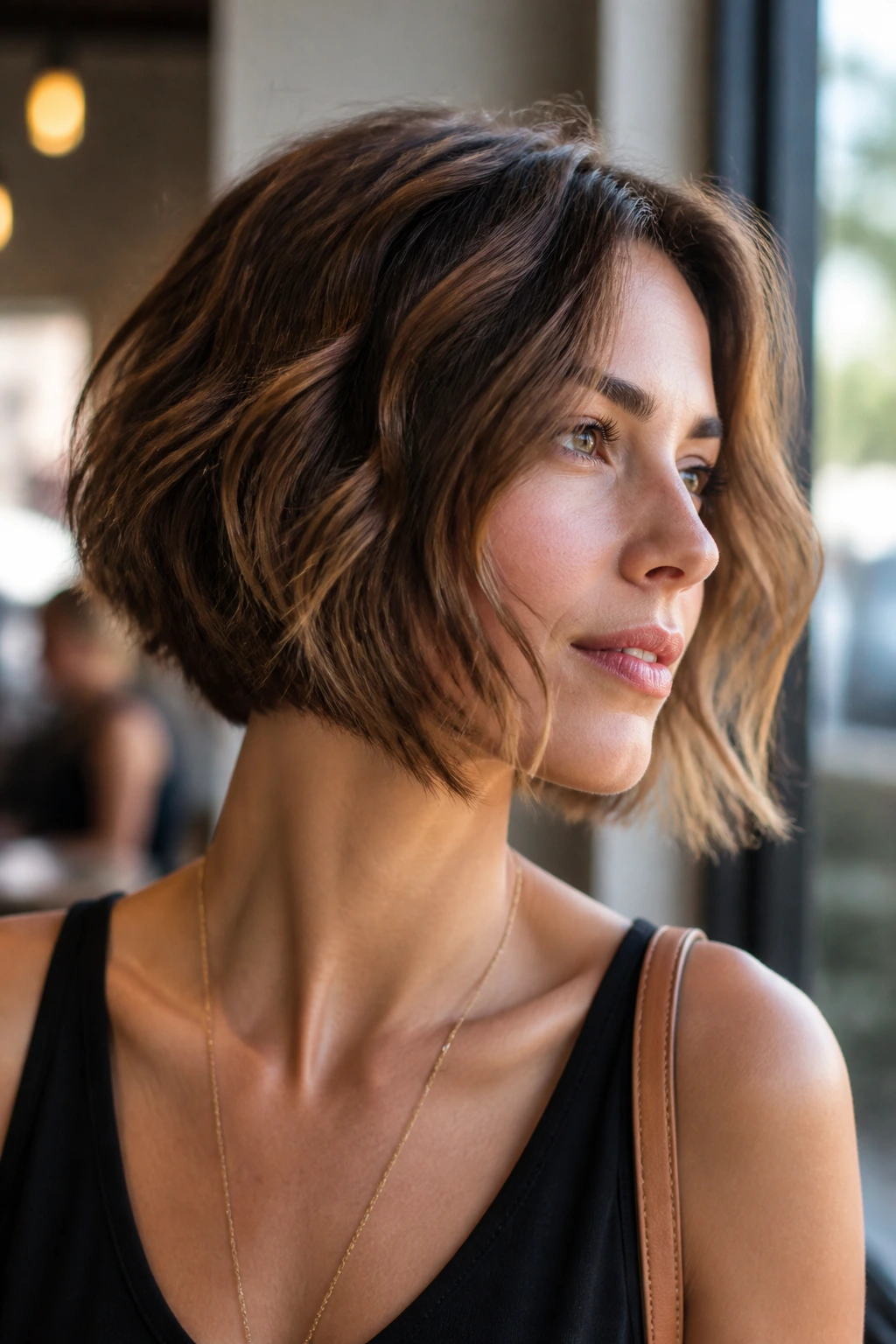
The inverted A-line bob is the clean geometry choice. Shorter in the back, longer toward the front, it gives wavy hair a built-in diagonal that makes the jawline look sharper and the neck look longer. The angle doesn’t need to be severe to do its job.
A softer inversion works best with waves. If the line gets too steep, the front can hang over the rest of the cut and create a heavy curtain. Keep the difference subtle, and the hair gets movement without losing structure.
This style is especially good if your hair tends to swell at the nape or if you like a little face-framing length without committing to a lob. It wears neatly with earrings, glasses, and a side tuck.
14. Piecey Bob with Disconnected Layers
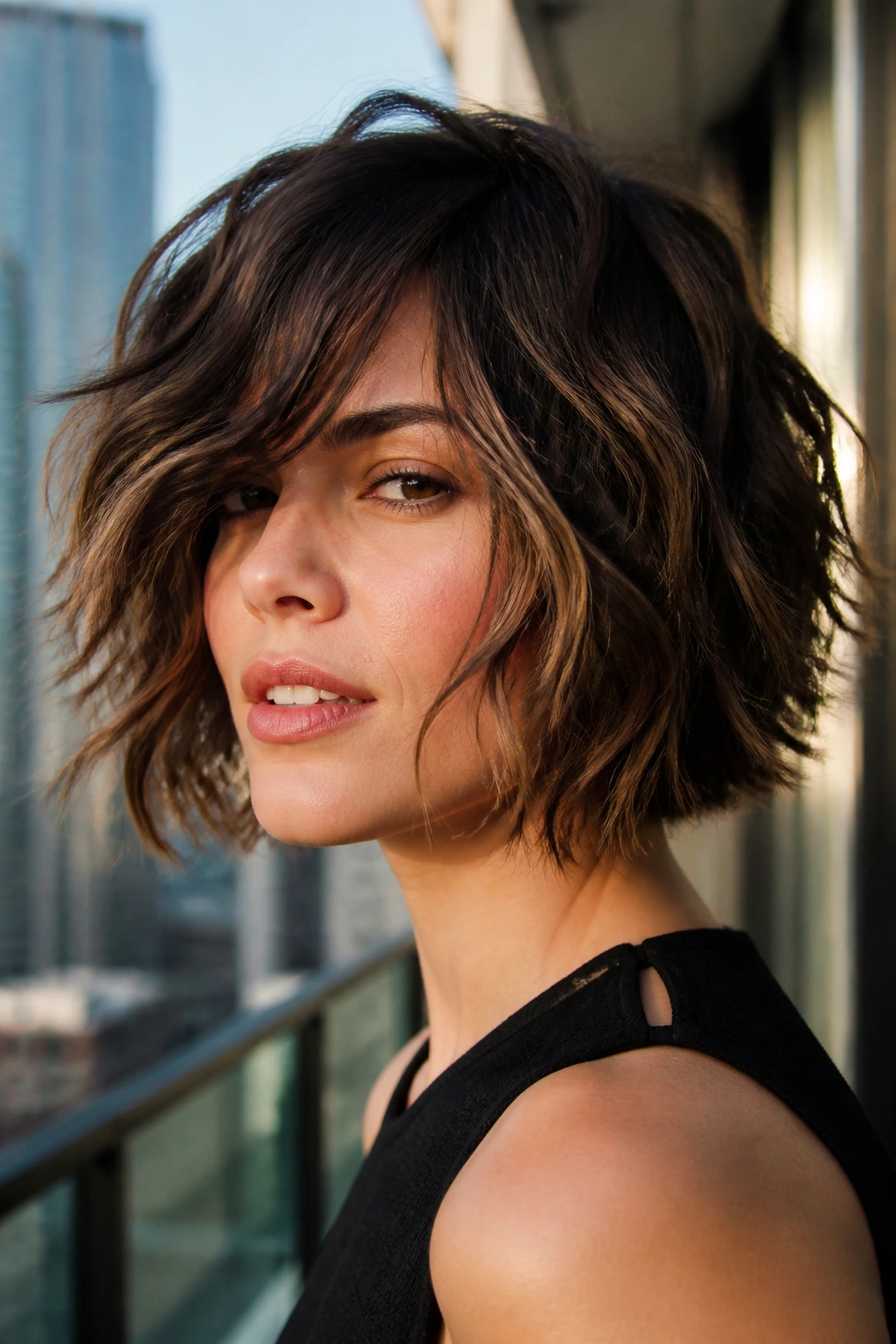
This is the bob for women who want their wave pattern to show in separate little ribbons instead of one smooth sheet. Disconnected layers break the hair into visible pieces, which can look sharp and modern when the wave is loose enough to separate naturally. It’s a strong pick if your hair tends to clump in chunky bends rather than soft ripples.
What to ask for
Ask for movement through the interior, but keep the perimeter readable. That sounds fussy, yet it matters. If the whole cut gets chopped into pieces, the bob loses its shape. If only the inside is textured, the wave gets room to show off while the outline still feels deliberate.
A salt spray can help this cut pop, but don’t drown it. Too much product and the pieces feel crunchy instead of airy. You want separation, not stiffness.
15. Deep Side-Part Bob

A deep side part does a lot of work in a short amount of time. It lifts one side, softens the forehead area, and makes the bob feel a little less symmetrical, which is useful if your waves are uneven or your face needs a bit of diagonal movement. The result is polished without being rigid.
Why it often looks better on wavy hair
Waves rarely fall in identical patterns on both sides. A deep side part gives the stronger side room to be dramatic while the quieter side stays tucked closer to the face. That imbalance can be a good thing.
It also helps on grow-out days, when the roots are oily but the ends still need some shape. A deep part with a bit of root spray can hide a lot more than people think. Not magic. Just smart placement.
16. Micro-Fringe Bob

A micro fringe changes everything. Cut short and straight across, or just slightly textured, it gives a wavy bob a sharper, more fashion-forward frame. On the right face, it looks crisp and striking. On the wrong one, it can feel abrupt, so this is a cut that rewards confidence and a little honesty about your styling habits.
The bob itself should stay simple if the fringe is that bold. Chin length or a touch shorter works well because it lets the bangs do the talking. Keep the wave controlled, not wild, or the whole thing can tip from editorial into chaotic in one humid afternoon.
Who should try it
Women with strong brows, defined eyes, or a shorter forehead often wear this well. It also suits people who don’t mind touching up the fringe more often than the rest of the hair. If you want a low-maintenance cut, skip this one. If you want a bob with a point of view, this one has it.
17. Feathered Bob
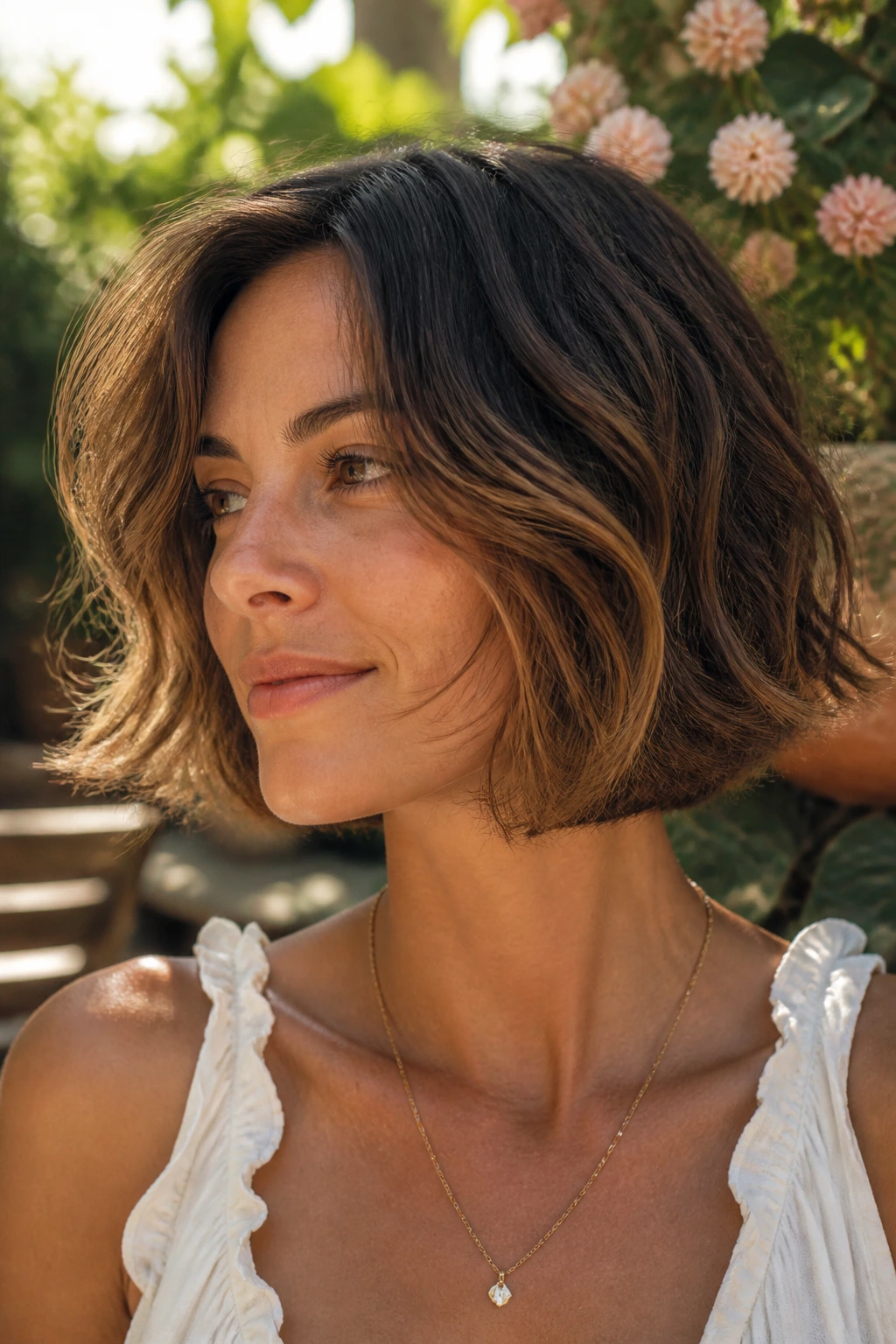
Feathering softens the edges of a short bob without erasing the shape. That’s the appeal here. The haircut still reads as a bob, but the ends flick and shift instead of sitting in one block. On wavy hair, that can make a huge difference, especially if the texture runs fine or medium and needs a little lift.
Why it works on lighter textures
Feathered ends stop the bob from sitting too heavy on the face. They let the wave fall through the length in a more relaxed way, which is useful if your hair tends to flatten after a few hours. This is also a good choice if you want the haircut to look softer around the jaw rather than carved.
A light blow-dry with a vent brush or round brush is usually enough to shape it. You do not need to smooth every bend out. The point is to keep the feathering visible.
18. Sculpted Bob
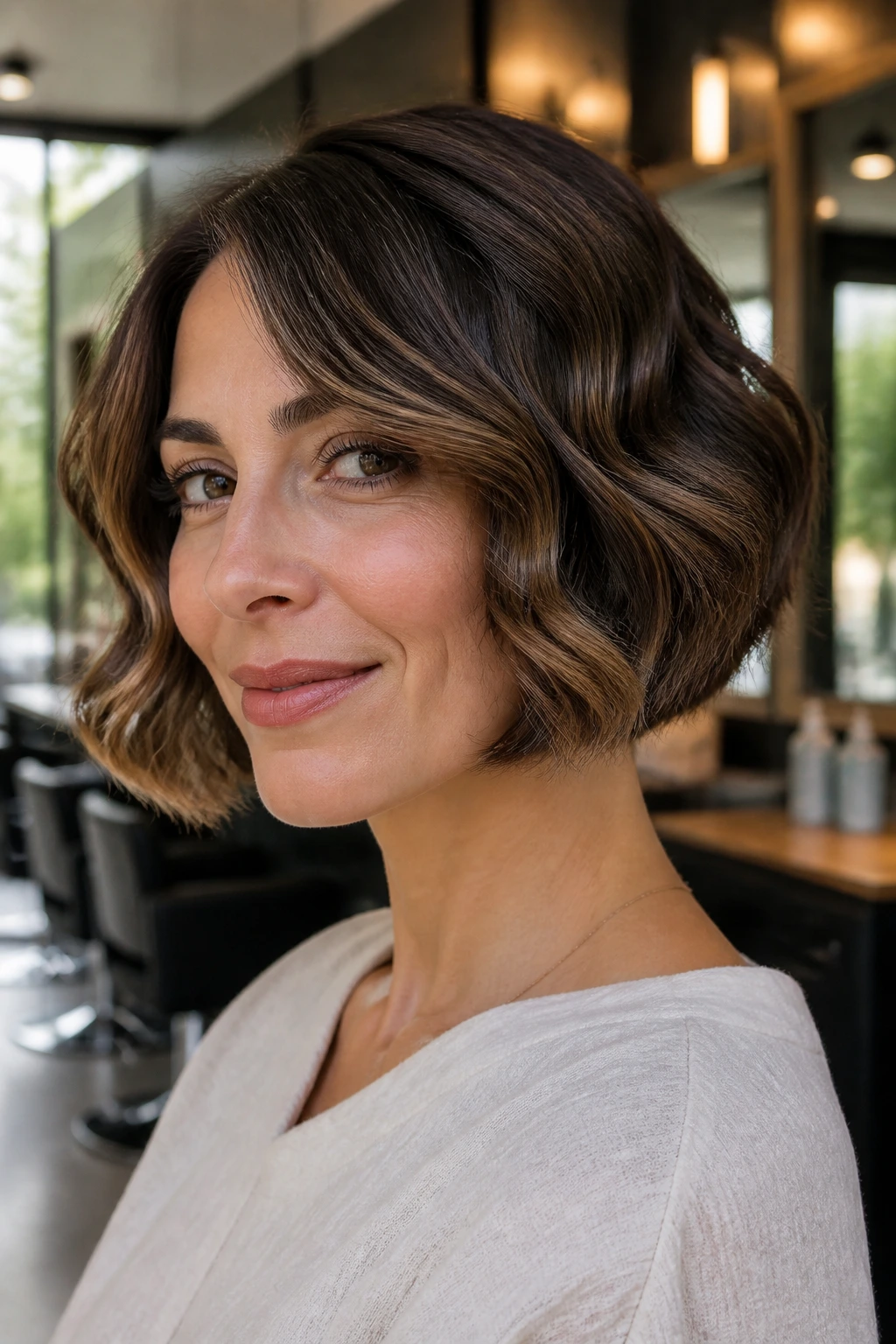
A sculpted bob is for the days when you want the wave pattern to look deliberate. The hair is shaped, not merely dried, often with a diffuser, a little gel or mousse, and a bit of pinching at the ends to define the S-wave. It’s a clean style, but not a flat one.
This cut works best when the wave pattern is consistent enough to hold shape. If your hair flips in several different directions, the sculpted look can become work. When it behaves, though, it gives a short bob a lovely sense of order.
Good details to remember
Start product application at the mid-lengths, then use the leftovers on the top layer and fringe. That keeps the roots from getting greasy too fast. And if the front pieces need extra direction, clip them in place while they cool after drying. That cooling stage matters more than people think.
19. Shaggy Bob
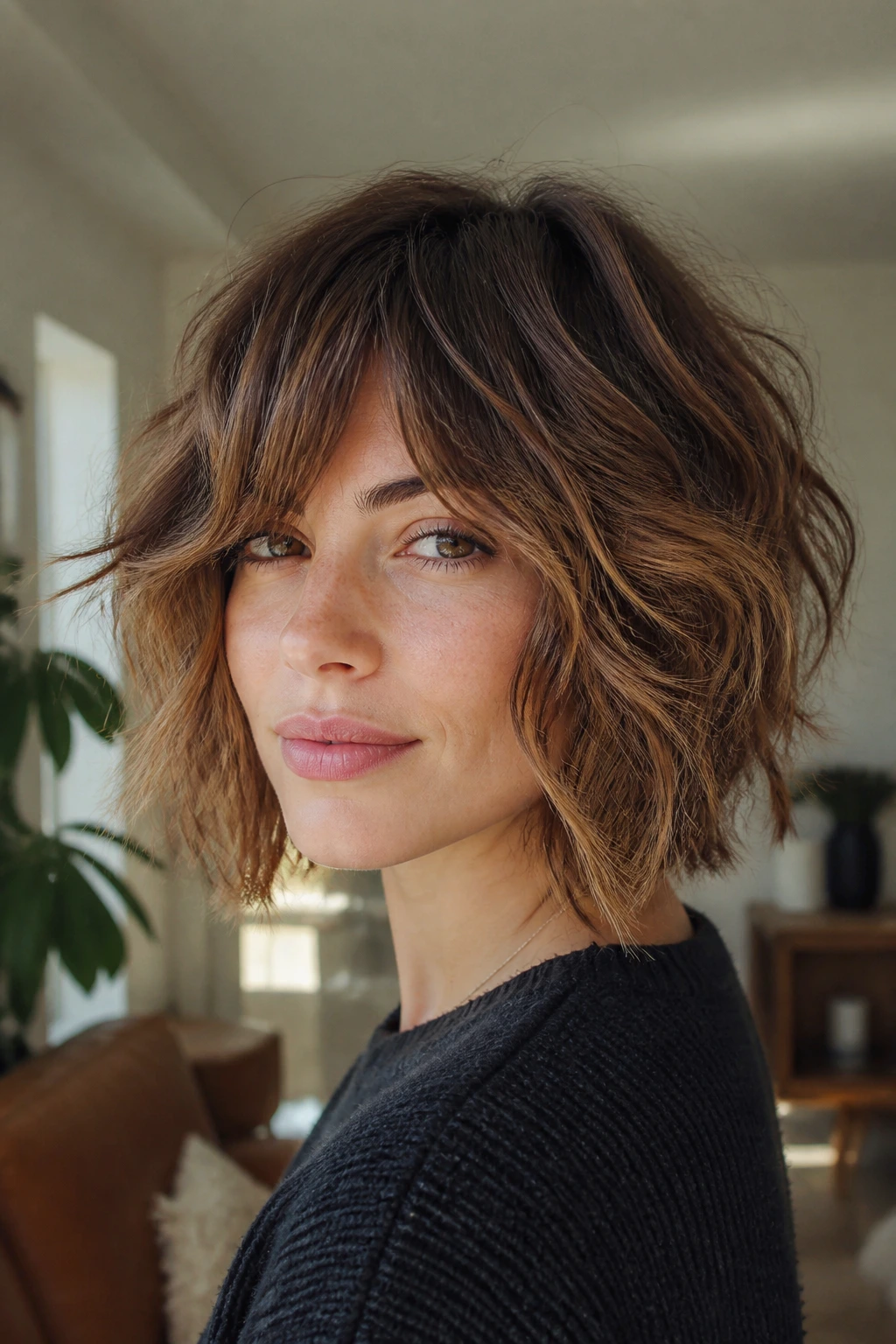
A shaggy bob is not neat, and that is the point. It has more layers, more movement, and a looser edge than the cleaner bob styles above. On wavy hair, the shape can look almost lazy in the best way, like it fell together with no drama at all.
Where it shines
This cut loves thicker waves and people who don’t mind a little texture around the face. It also pairs well with a relaxed wardrobe and natural makeup, though that’s more about the mood than a rule. If your hair tends to get puffy when you layer it too much, ask for softness rather than chunking.
It’s one of the few bob styles that can still look good when the styling is imperfect. Scrunch in product, diffuse for a few minutes, and leave some frizz alone. That fringe around the edges is what gives it life.
20. Hidden-Layers Bob
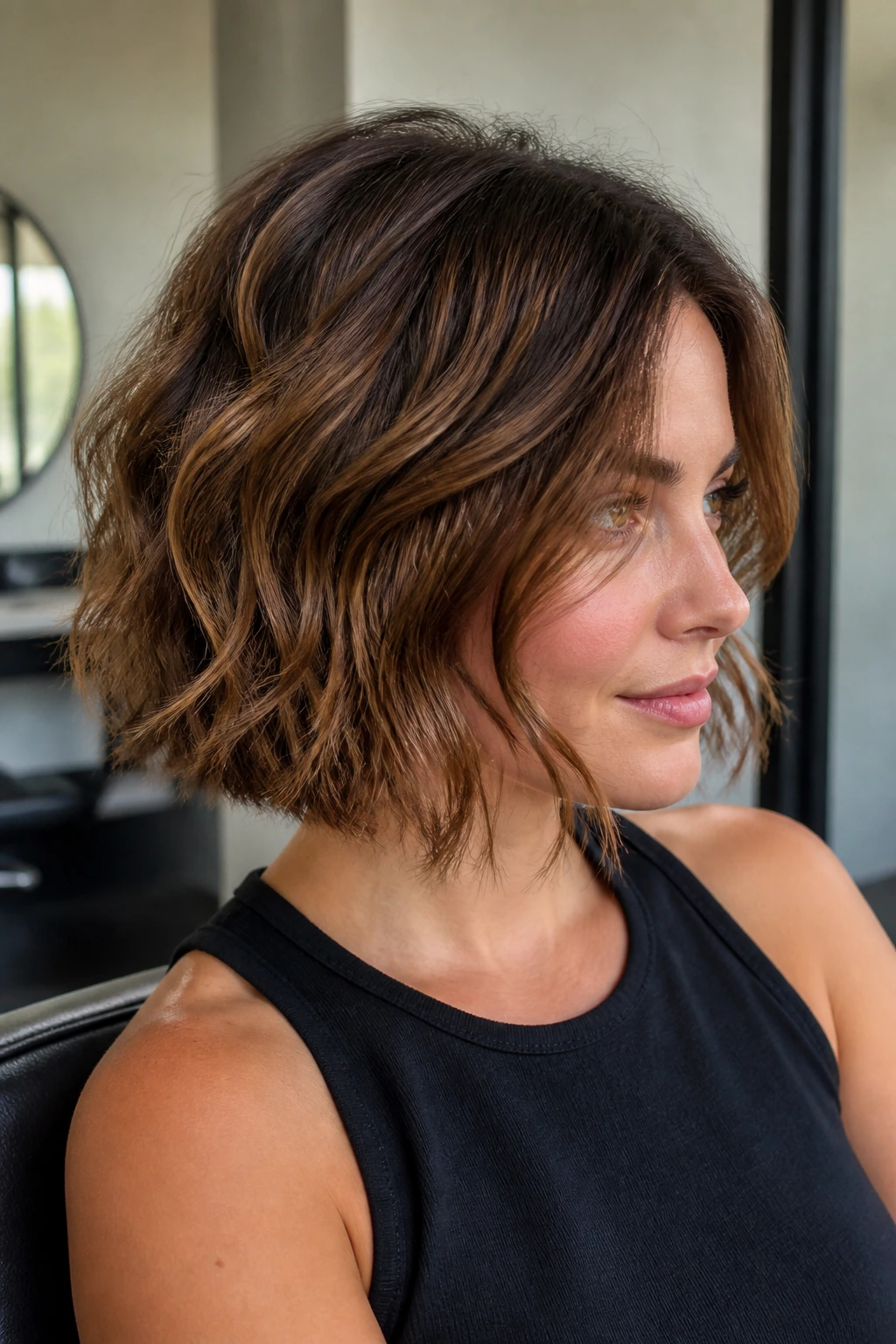
Hidden layers are the secret weapon for women who want a clean outer line but need the inside of the haircut to move. From the outside, the bob can look blunt or nearly blunt. Inside, the stylist removes weight so the wave doesn’t bulge out at the sides. It’s a nice compromise when you want shape and softness at once.
This is especially useful if your hair is thick but you like a sharper finish. The outer perimeter keeps the silhouette neat. The interior layers keep the head from looking too round or too wide. That balance is harder to get than it sounds, which is why this cut works best in a salon chair, not as a casual trim.
21. Jaw-Skimming Box Bob
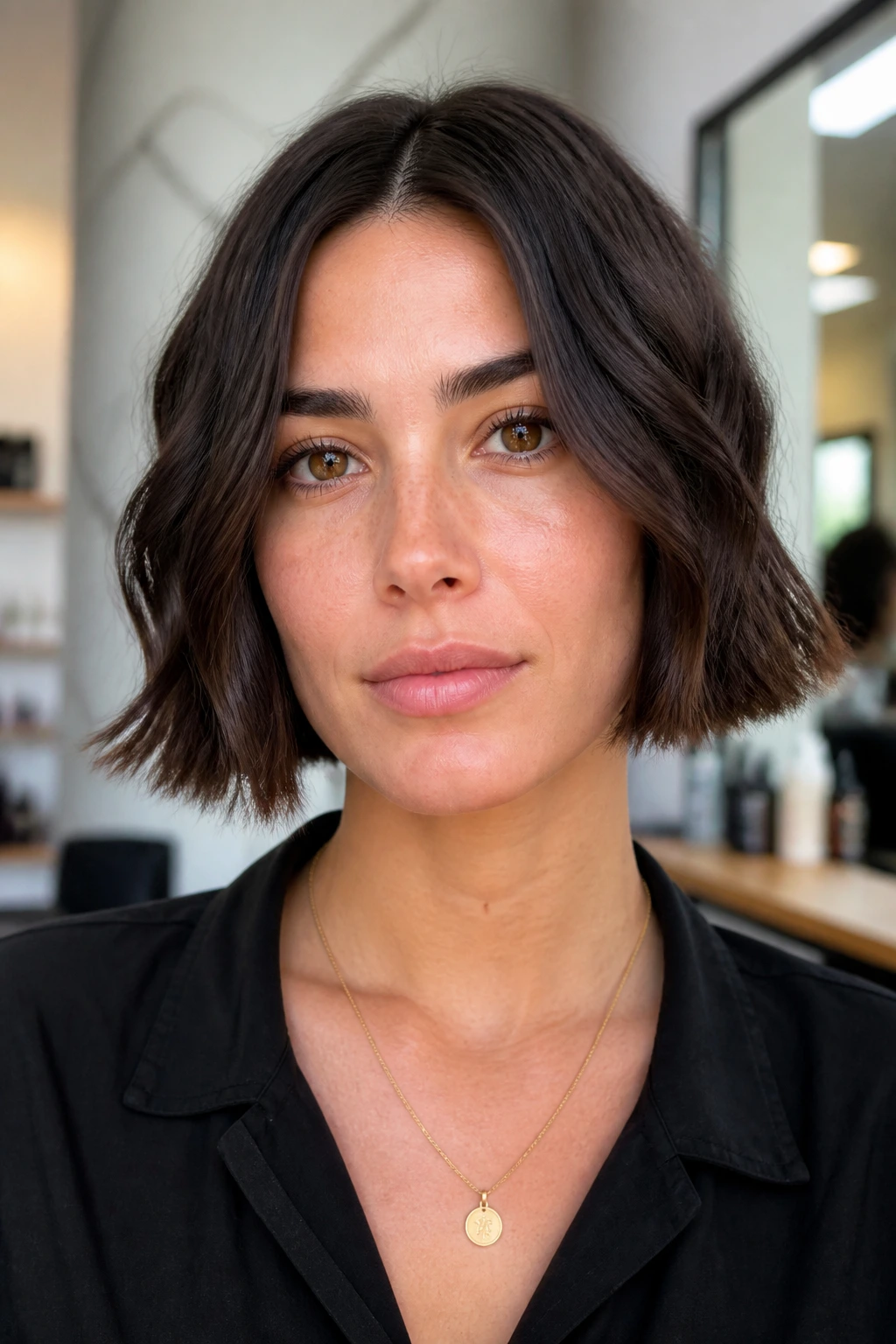
The box bob has a straighter, more graphic outline. On wavy hair, it sits close to the jaw and keeps its edges a little firmer than a rounded bob would. The effect is clean and compact, with just enough softness from the wave to keep it from feeling severe.
This cut is not for someone who wants a lot of movement at the ends. It’s for someone who likes a shape you can see from across the room. The waves give it life, but the line carries the style.
A small warning
If your hair flips outward at the nape or swells at the sides, this cut needs disciplined styling. A smoothing cream, a controlled blow-dry, and regular trims keep it sharp. Without that, the boxy shape can become a little too literal.
22. Tucked-Under Bob
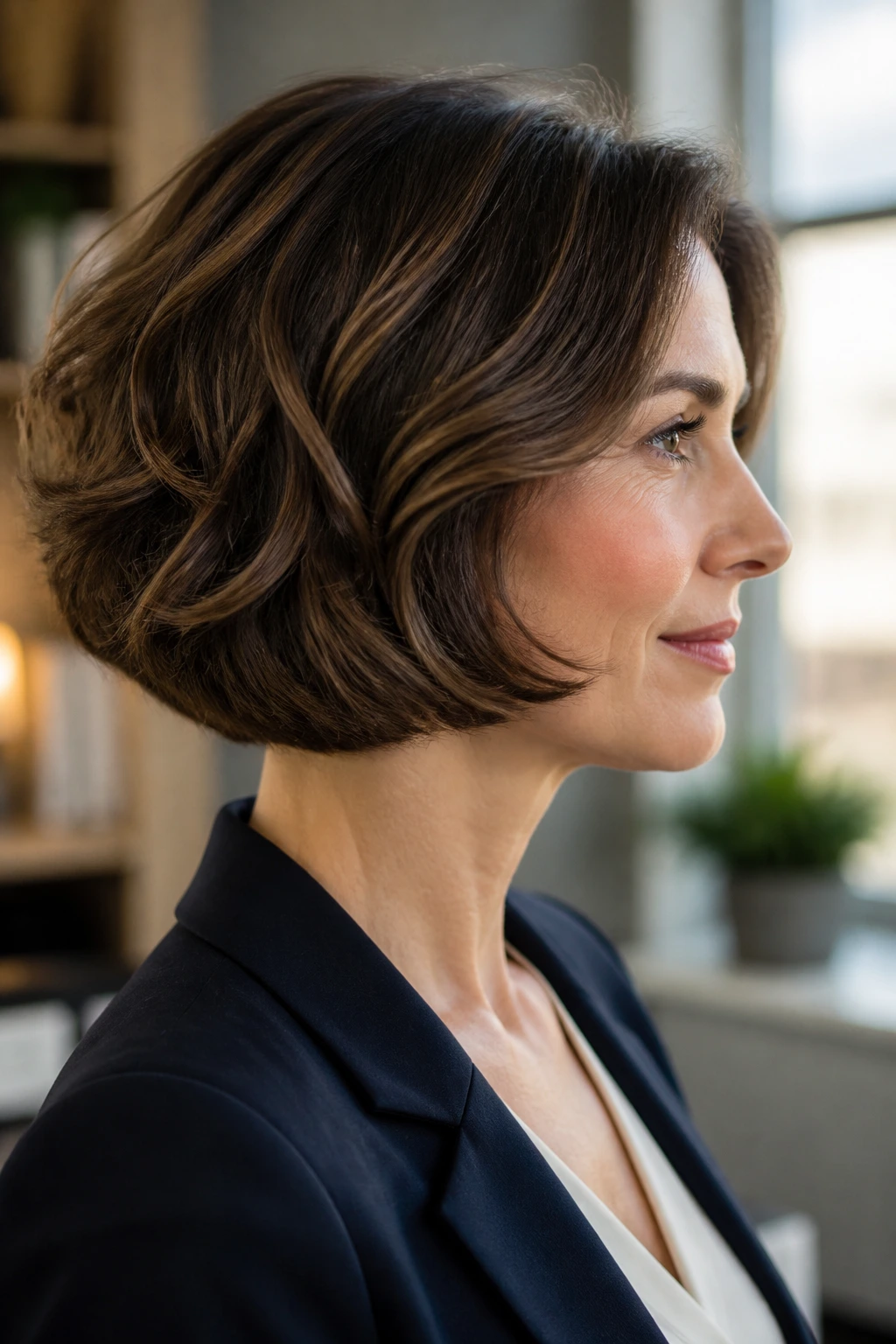
A tucked-under bob bends inward at the ends, which is a lovely thing for wavy hair when the goal is polish. It makes the haircut feel controlled without being stiff. The ends curve under the jaw instead of kicking away from it, which can be flattering on fuller faces or anyone who wants a cleaner neckline.
The styling trick
Use a round brush or a medium-barrel brush during drying, aiming the ends inward as they cool. A touch of heat set at the very end helps hold the curve. That final bend is what makes the cut feel finished.
This bob is a good match for office settings, formal events, or days when you want your hair to behave with your blazer. It’s not flashy. It just looks put together.
23. Grown-Out French Bob

Some people want the French bob, but not the commitment to a tight chin line. The grown-out version hits a little lower and gives the wave more room to move while staying short enough to feel bob-like. It’s a smart middle ground if you’re nervous about going too short.
The extra inch or so matters. It changes how the wave bends at the ends and gives the cut a more relaxed, lived-in feel. If your hair gets frizzy at jaw length, this slightly longer version can be easier to manage.
I’d call this the sensible sibling of the classic French bob. Same spirit. Less maintenance. Still sharp enough to feel like a decision.
24. Soft Undercut Bob
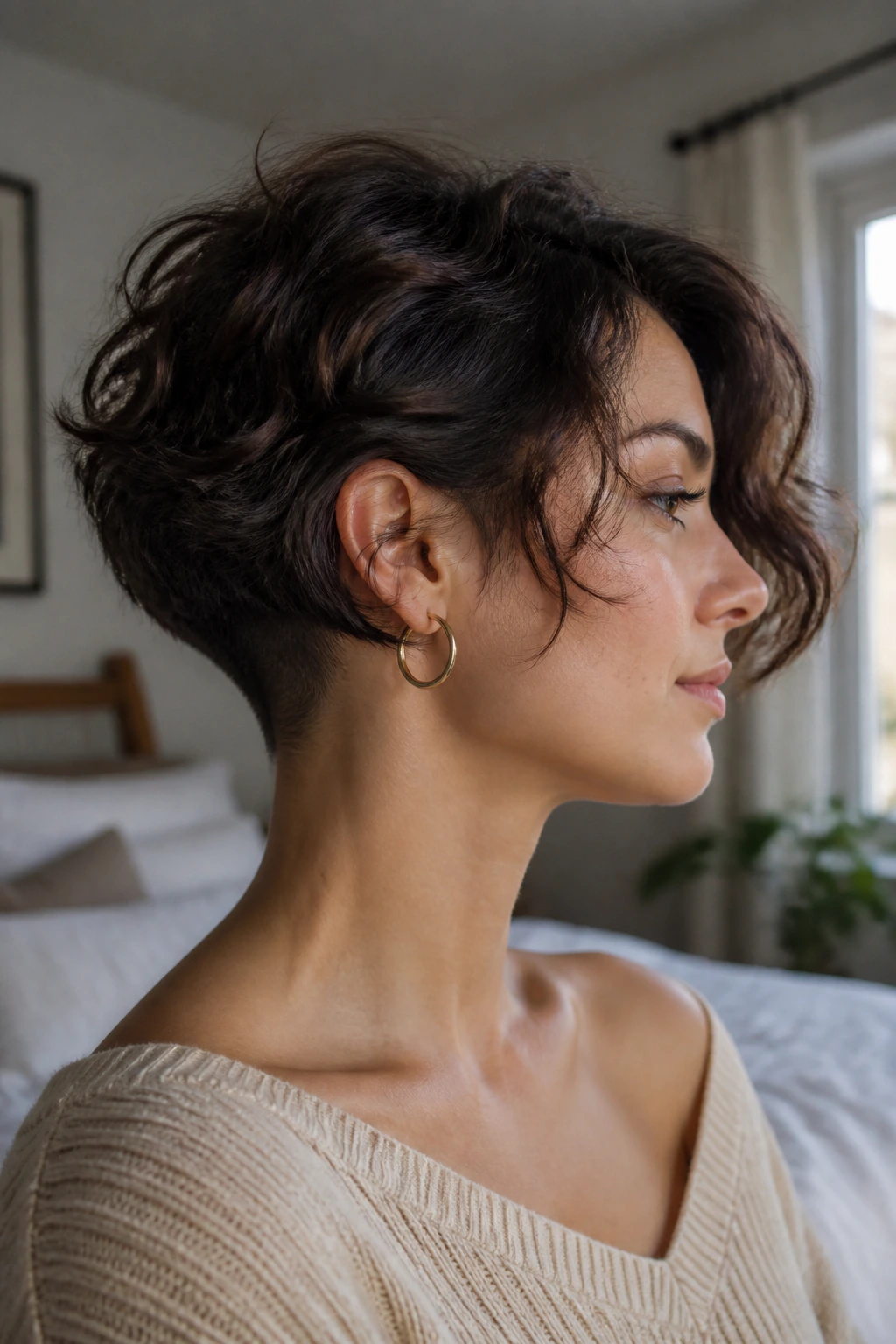
A soft undercut removes bulk from the nape and lower sides, but it hides the technical part underneath the top layer. That means you keep the shape of a bob while making thick waves sit closer to the head. It’s a quiet fix that helps a lot of heavy hair.
When it helps most
If your bob keeps blooming out at the back, or if the hair at your neckline feels hot and heavy, this cut can make a big difference. It also speeds up drying time, which is no small thing for dense waves. The top layer still reads as a bob; the undercut just clears out the clutter.
The key is subtlety. You want relief, not a visible contrast that turns the cut into a hybrid. Ask for hidden reduction, not a dramatic shave.
25. Tousled Face-Framing Bob

This is the bob for women who want movement around the cheeks and jaw without making the whole haircut shaggy. The face-framing pieces are a touch longer, and the rest of the bob stays short enough to keep the overall shape clean. On waves, that balance looks easy in a way that still reads as styled.
The texture should look touched, not overworked. A little scrunching at the front, a few bends around the cheekbone, and you’re there. If the front pieces are too heavy, they drag the whole cut down. If they’re too short, you lose the framing effect. That narrow middle ground is what makes this version so useful.
Best when you want: a soft jawline, easy styling, and a bob that grows out politely.
Why Short Bobs and Waves Play So Well Together

Wavy hair has a habit of changing the shape of a cut more than straight hair does. That can be annoying when the haircut is wrong. It can also be the whole reason the haircut looks good. A short bob lets the wave pattern show up before gravity drags it flat, and that’s why the shape often looks better at chin or jaw length than it does longer.
There’s also a practical side to this. Shorter hair dries faster. It needs less product. And when the line is good, the style tends to hold its shape with fewer touch-ups. I’ve seen too many people keep too much length because they’re afraid of going short, only to find their waves look better once the weight comes off.
The main thing to remember is that short bobs and wavy hair reward precision. A quarter inch at the chin can matter. So can the way the fringe falls, where the part sits, and whether the interior has been lightly shaped or left dense. Tiny choices. Big difference.
Essential Tools for Styling a Wavy Bob
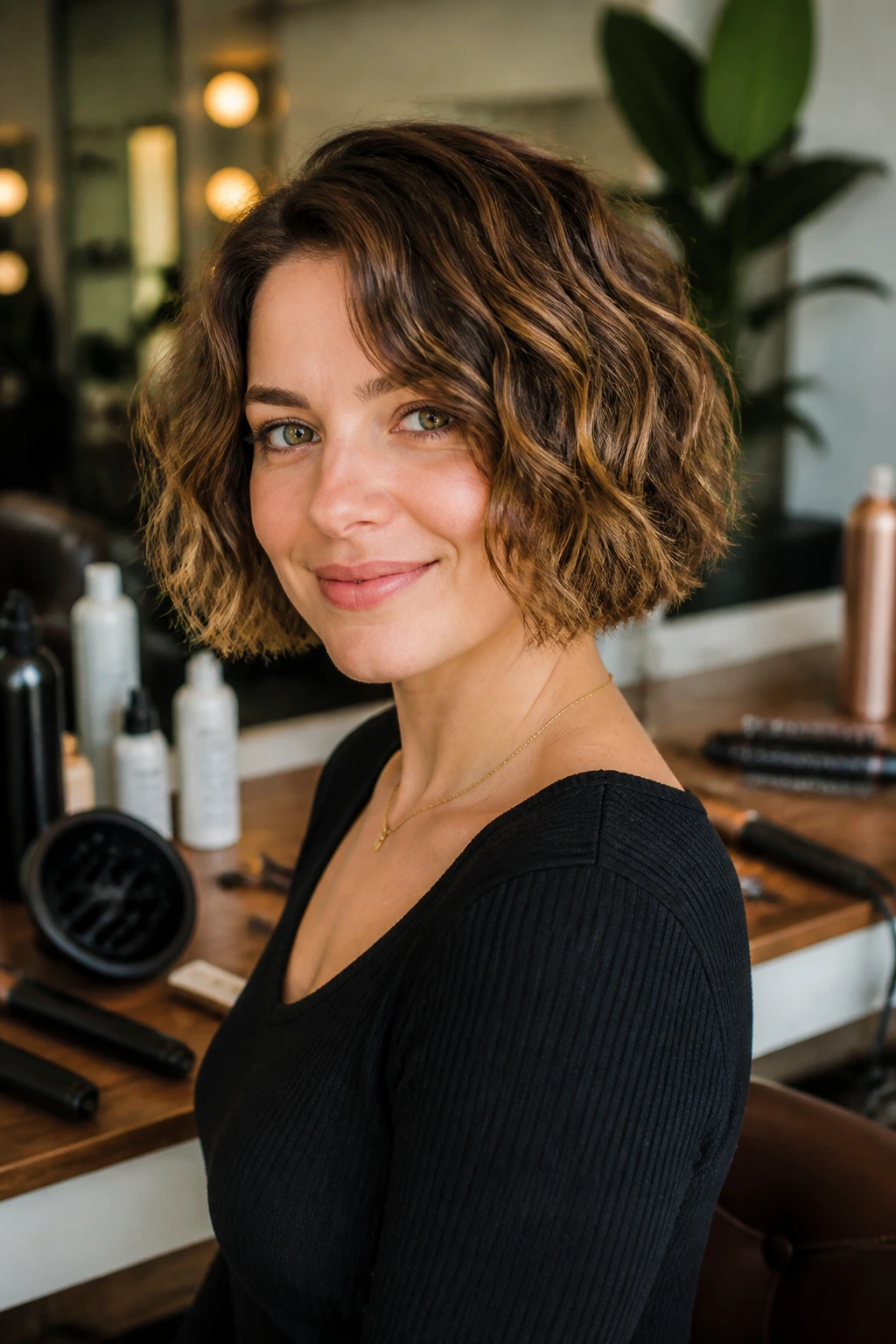
- Wide-tooth comb: Use it on wet hair to detangle without ripping apart the wave clumps.
- Microfiber towel or cotton T-shirt: These cut frizz better than a rough bath towel and help the wave keep its shape.
- Leave-in conditioner: A small amount through the ends keeps short bobs from looking dry or static-heavy.
- Light mousse: Great for root lift and soft hold; use it on damp hair, not dripping wet hair.
- Curl cream or wave cream: Best when you want definition without a crunchy finish.
- Sea salt spray: Useful for piecey, airy texture, especially on layered or shaggy bob cuts.
- 1-inch curling wand or flat iron: Handy for fixing one or two stubborn bends without restyling the whole head.
- Diffuser attachment: A good one matters. It speeds drying and helps waves set without blasting them apart.
- Round brush: Needed for tucked-under ends, rounded bobs, and smoother fringe.
- Duckbill clips or sectioning clips: Useful for pinning the front pieces while they cool into shape.
- Dry shampoo: A small mist at the roots on day two or three helps keep the bob from going limp.
- Sharp trimming shears: Only for tiny cleanups if you know what you’re doing; for anything major, leave the scissors alone and go to a stylist.
What to Ask for at the Salon When You Want a Short Wavy Bob
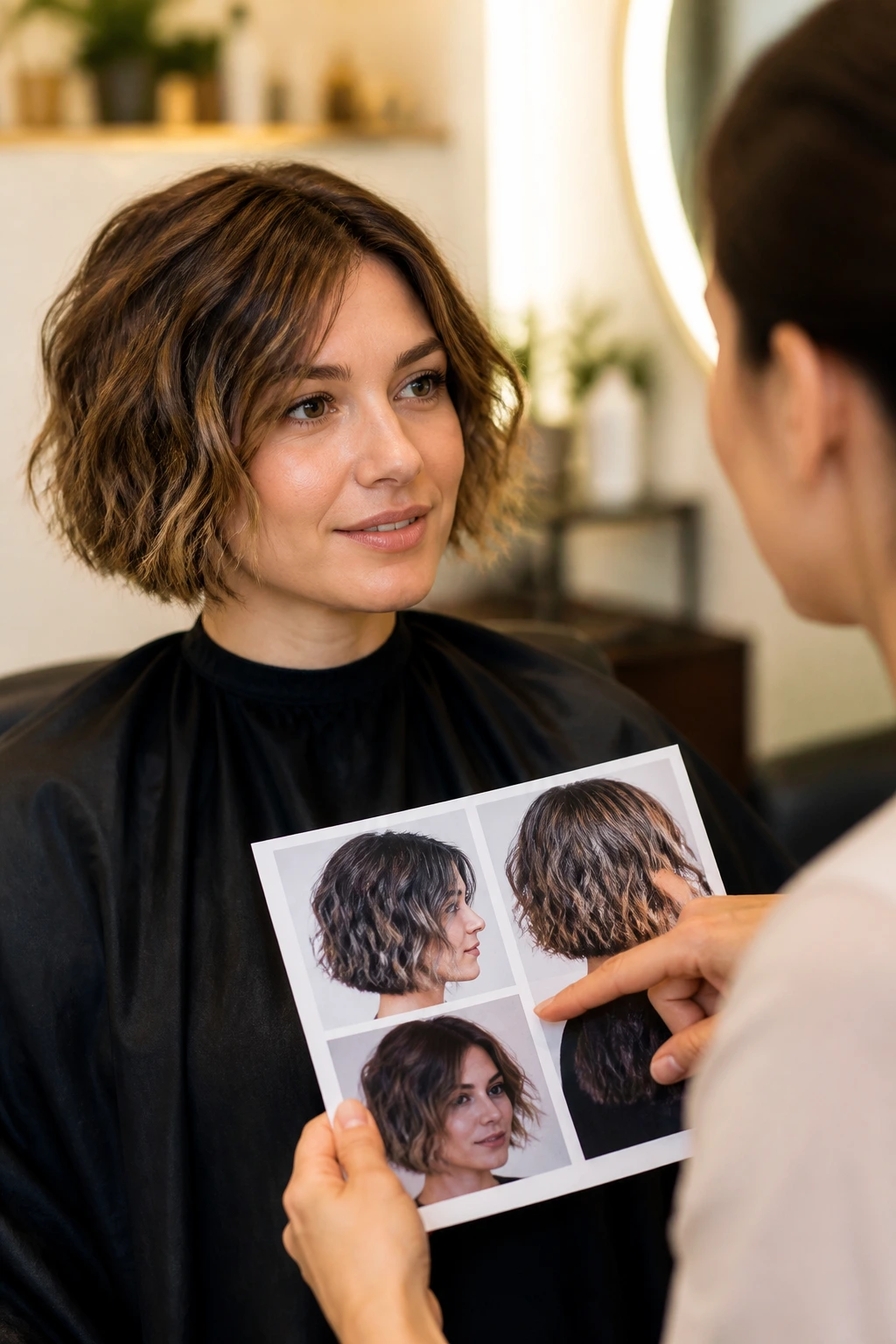
Most bad bob cuts start with vague words. “Short but not too short” is not enough. Neither is “something cute.” Bring 2 or 3 photos, then point to the exact part you like: the fringe, the jawline length, the back shape, the amount of layering. Hairdressers work better with specifics than with moods.
Tell the stylist how your hair behaves when it dries. Does it swell at the sides? Does one front section flip outward no matter what you do? Does the crown flatten while the ends stay wide? Those details matter because a bob for wavy hair is not just a cut — it’s a set of corrections.
Ask about the perimeter
If you want the line blunt, say blunt. If you want softness, say you want the ends textured but the outline intact. That distinction saves a lot of regret later. A lot of people leave the salon with a “bob” that was secretly thinned all over. That’s not the same thing.
Ask how they’ll cut it
Some stylists prefer to cut wavy bobs dry or partly dry so they can see the wave pattern. That’s often smart. Wet hair stretches, and a line that looks tidy when soaked can spring up shorter and wider once it dries. If your hair shrinks, say so before the first snip.
Ask where they’ll remove bulk
This matters more than most people realize. Removing weight from the wrong spot can make the bob flare out at the jaw. Removing it from the interior, under the top layer, usually gives better results. Don’t be shy about asking where the thinning or layering will happen.
How to Wear a Wavy Bob Without Fighting It

Presentation: Let the line do the work. A chin-length bob should sit close enough to the jaw that the wave can bend forward and frame the face, not disappear under it. If the ends are meant to be blunt, keep them visible; if they’re meant to be soft, don’t flatten them with too much smoothing cream.
Pairings: Fringe changes everything. Curtain bangs soften the forehead, side-part fringe adds lift, and micro bangs turn the whole haircut into a statement. Earrings help too. A clean bob makes studs look sharper and hoops look louder, which is a nice side effect if you like that kind of contrast.
Length: Shorter isn’t always better. If your wave pattern is wide or thick, leaving the bob a touch longer under the chin can stop it from ballooning. If your hair is fine, a tighter jaw-length line may give it more body. The ideal length is the one that keeps the silhouette visible after the hair dries.
Occasion: A polished bob with tucked-under ends reads one way. A shaggy or air-dried bob reads another. That’s part of the fun. You can keep the same haircut and change the mood just by how much bend you add at the front and how much polish you leave in the ends.
Practical Texture Tips That Make the Cut Sit Better
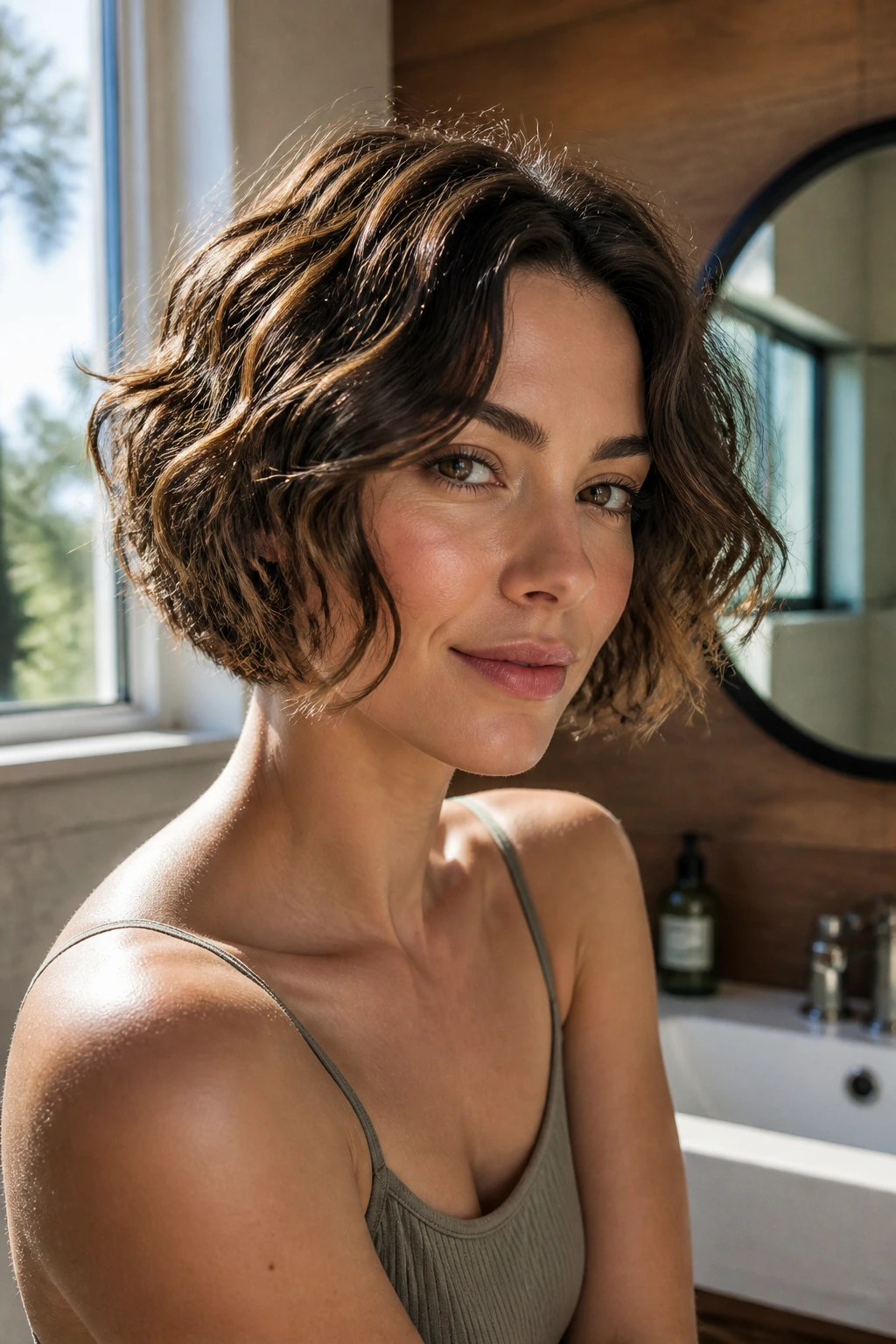
Texture Enhancement: Use mousse on damp roots, then a lighter cream from mid-length to ends. That combination gives short waves lift without making the ends greasy or stringy. If your hair gets fluffy in dry air, add a tiny bit of serum only to the bottom inch.
Time-Saver: Diffuse only until the roots stop feeling wet. Let the rest air-dry if you can. The hair does not need to be perfect before you stop handling it.
Pro Move: Clip the front pieces in the direction you want them to fall while they cool. That small trick helps with side parts, curtain bangs, and any bob that tends to flip away from the face.
Cost-Saver: A good cut often needs less product than a bad one. If you find yourself using half a palm of cream just to tame the shape, the haircut may be doing too much of the work in the wrong places.
Make-It-Yours: Fine hair usually likes less layering and more root lift. Thick hair often needs hidden weight removal or a stacked back. Coarse waves often do well with soft texturizing and a little serum on the ends. Match the cut to the hair you actually have, not the hair you wish you had on a humid Tuesday.
Common Mistakes That Make Short Bobs Go Wide

The first mistake is asking for too many layers. On wavy hair, that can create a fuzzy halo around the head and make the ends lose their shape. The fix is simple: keep the perimeter clean and ask for internal shaping instead of all-over thinning.
The second mistake is cutting the bob too short at the wrong place. A line that looks neat at the chair can spring up and sit above the jaw once it dries, which makes the face look wider. If your waves shrink, leave a little extra length and test where the bend lands when dry.
Another one: drowning the hair in heavy cream. Short bobs don’t need a thick coat of product. When the strands get overloaded, the waves clump poorly and the roots collapse. Start with a small amount, then add more only if the ends look dry.
People also forget that wavy bobs need trimming more often than longer cuts. Once the line starts growing past the jaw and the weight shifts downward, the shape changes fast. If the style looks off every morning no matter what you do, the haircut probably needs a trim, not a new product.
Variations and Adaptations to Try

The Air-Dry Bob: Best for women who want the least styling possible. Ask for soft internal shaping, then let the hair dry with a light mousse and leave-in. It’s the easiest version to live with, though it can look too casual for some wardrobes.
The Polished Blow-Dry Bob: Choose this if you like a smoother finish and don’t mind a round brush. The ends tuck under, the crown gets lift, and the whole cut reads more tailored. It works especially well for work settings or dressier outfits.
The Fringe-Forward Bob: Curtain bangs, bottleneck bangs, or a soft side fringe change the mood fast. This version is good when you want the haircut to frame the face more aggressively, especially around the eyes and cheekbones.
The Thick-Wave Release Bob: Built for density. Ask for hidden layers, maybe a soft stack at the back, and keep the outline controlled. The goal is to reduce bulk without turning the bob into a feathered mess.
The Fine-Wave Lift Bob: Best when the hair is flatter than you want it to be. Keep the cut rounded, avoid heavy thinning, and use a volumizing mousse at the roots. The bob should look fuller, not piecey.
The Low-Heat Bob: If you barely use hot tools, ask for a shape that dries well in the air. Minimal layers, clear perimeter, and a cut that behaves with scrunching instead of smoothing. That’s usually the safest route for people who like their routine short and sane.
Keeping the Shape Between Haircuts
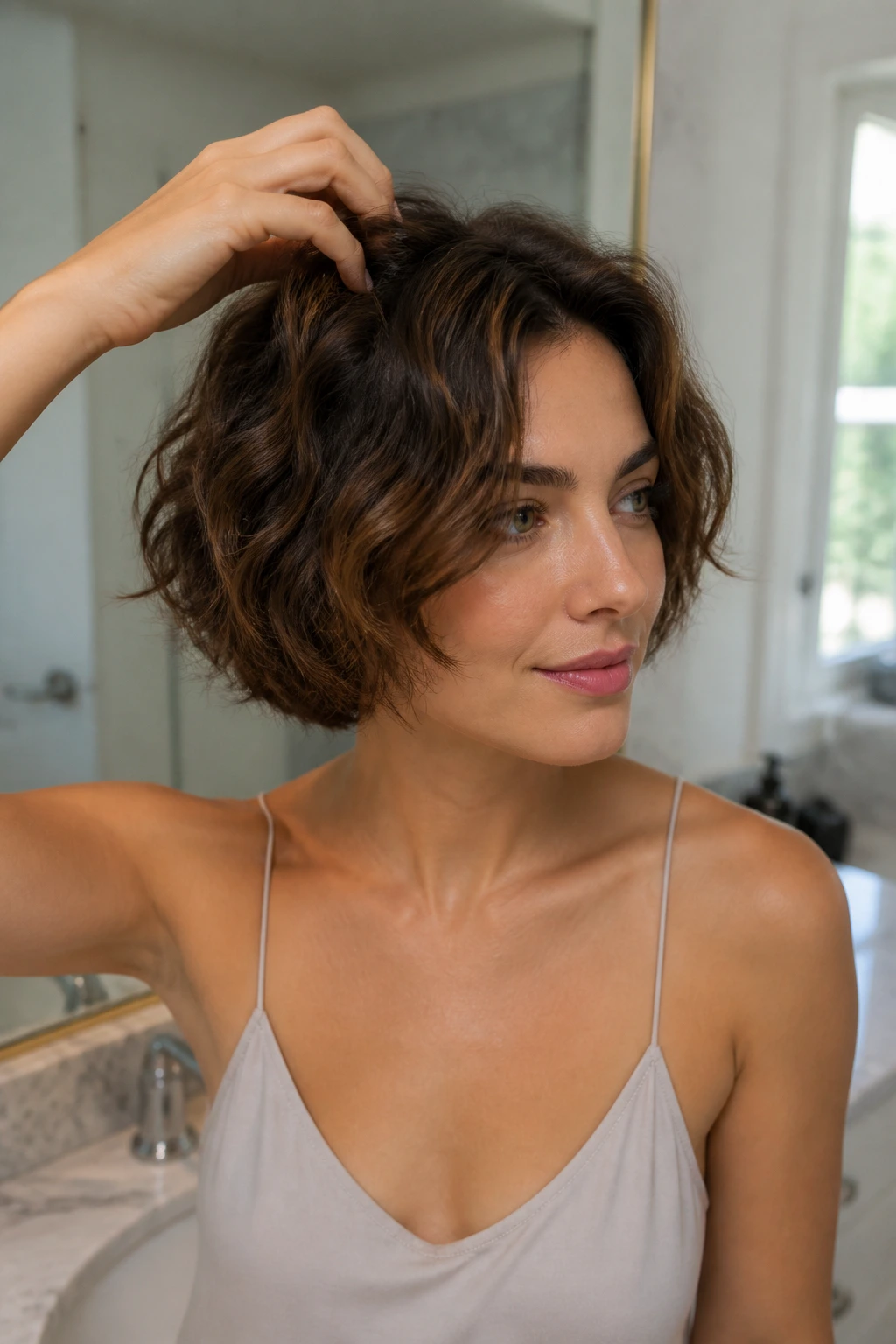
A short wavy bob usually looks best when it’s trimmed every 6 to 8 weeks. If your hair grows fast or the line sits right on the jaw, you may feel the shape slipping by week 5. That’s normal. Short hair shows growth more quickly, and waves exaggerate the change.
At home, the goal is not to fight every bend back into place. It’s to refresh the shape with as little drama as possible. A spray bottle with water, a small amount of leave-in, and a touch of mousse can wake up day-two waves in under 5 minutes. If the front pieces are behaving badly, dampen only those sections and re-dry them with your fingers or a small brush.
Sleep matters too. A silk or satin pillowcase cuts down on the roughness that makes bob ends fray overnight. If one side flattens while you sleep, clip the front pieces away from your face before bed or change your part slightly in the morning. Tiny moves. Big payoff.
If your hair starts to look dull at the ends, that’s usually a sign it wants a clean-up trim, not a full change of style. Bobs live and die by the outline. Protect that edge, and the cut keeps its shape much longer.
Frequently Asked Questions About Short Bobs for Wavy Hair
-
Will a short bob make my wavy hair poof out?
It can if the cut is too layered or too short for your density. A blunt or softly layered bob with weight kept at the perimeter usually controls the puff better than a heavily thinned shape. -
Are bangs a bad idea with wavy hair?
Not if they’re cut with the wave in mind. Curtain bangs, bottleneck bangs, and long side fringe tend to behave better than blunt straight-across bangs, which can shrink unevenly and split. -
What bob length is easiest for waves to wear?
Jaw length and just under the jaw are usually the easiest starting points. They leave enough length for the wave to bend while keeping the style short enough to feel like a bob. -
Should fine wavy hair have layers?
A few, yes. Too many layers can make fine waves look sparse. Ask for soft shaping and root lift instead of a choppy all-over layer job. -
Can thick wavy hair wear a blunt bob?
Yes, but it often needs hidden weight removal or subtle internal layers so the ends do not flare out. Thick hair looks best when the outer line stays clean and the bulk is managed from the inside. -
How do I keep a bob from flipping out at the ends?
A round brush or a quick pass with a flat iron at the ends can tame the flip, but the cut itself matters more. If it happens every day, ask for a softer perimeter or a little more weight at the bottom. -
Is an air-dry bob realistic for busy mornings?
Very. The haircut has to be right, though. If the shape is built for your wave pattern, a little mousse and scrunching can carry the style with almost no heat. -
What should I bring to the salon?
Photos, yes, but also a short list of what you like: blunt ends, side part, fringe, nape softness, jaw length. Hair photos help, but the note about how your waves dry is what saves you from a mismatch.
The Length That Lets Waves Breathe

A good short bob on wavy hair does something a flat, one-size-fits-all cut never does: it lets the wave show up without turning the whole head into a shape experiment. That’s why these cuts feel so different from one another even when the length is similar. A blunt chin line, a soft stack, a curtain-bang frame, a tucked-under finish — each one changes how the wave sits, how the jaw looks, and how much work you have to put in before breakfast.
The sweet spot is rarely the same for everyone. Some hair needs weight. Some needs release. Some needs a fringe. Some needs the perimeter left alone. But when the cut matches the texture, a short bob stops being high-maintenance and starts acting like one of the easiest shapes to wear.
And that’s the real reason people keep coming back to this length. It keeps its shape, it grows out in a readable way, and it gives wavy hair room to do what it already wants to do. Pick the version that fits your density and your routine, and the rest starts falling into place.