



A layered wavy bob with curtain bangs does a very specific kind of work. It gives the hair movement where you want it, keeps the ends from looking heavy, and softens the forehead without collapsing the whole face into one dark block of fringe. That matters even more when your hair has changed texture a little — gone a bit finer, a bit drier, a bit more stubborn about lying flat — because the right bob can make those changes look deliberate instead of annoying.
The sweet spot is usually somewhere between the jaw and the collarbone. Too short, and the wave can puff out like a triangle. Too long, and the shape starts acting like plain shoulder-length hair with a middle part. Curtain bangs are the balancing act in the middle: they open the face, skim the cheekbones, and grow out in a softer way than a straight-across fringe. Clean, but not severe. Soft, but not vague.
What makes this haircut interesting is how much room it gives you to cheat a little. You can lean polished, messy, airy, undone, silver, brunette, copper, or beachy without changing the whole architecture of the cut. The 22 looks below all live in that same family, but each one bends the shape in a different direction — and the details matter. Layer placement. Bang length. How much weight stays at the ends. Where the wave bends. All of that changes the mood.
Why These Layered Wavy Bobs Earn Their Place
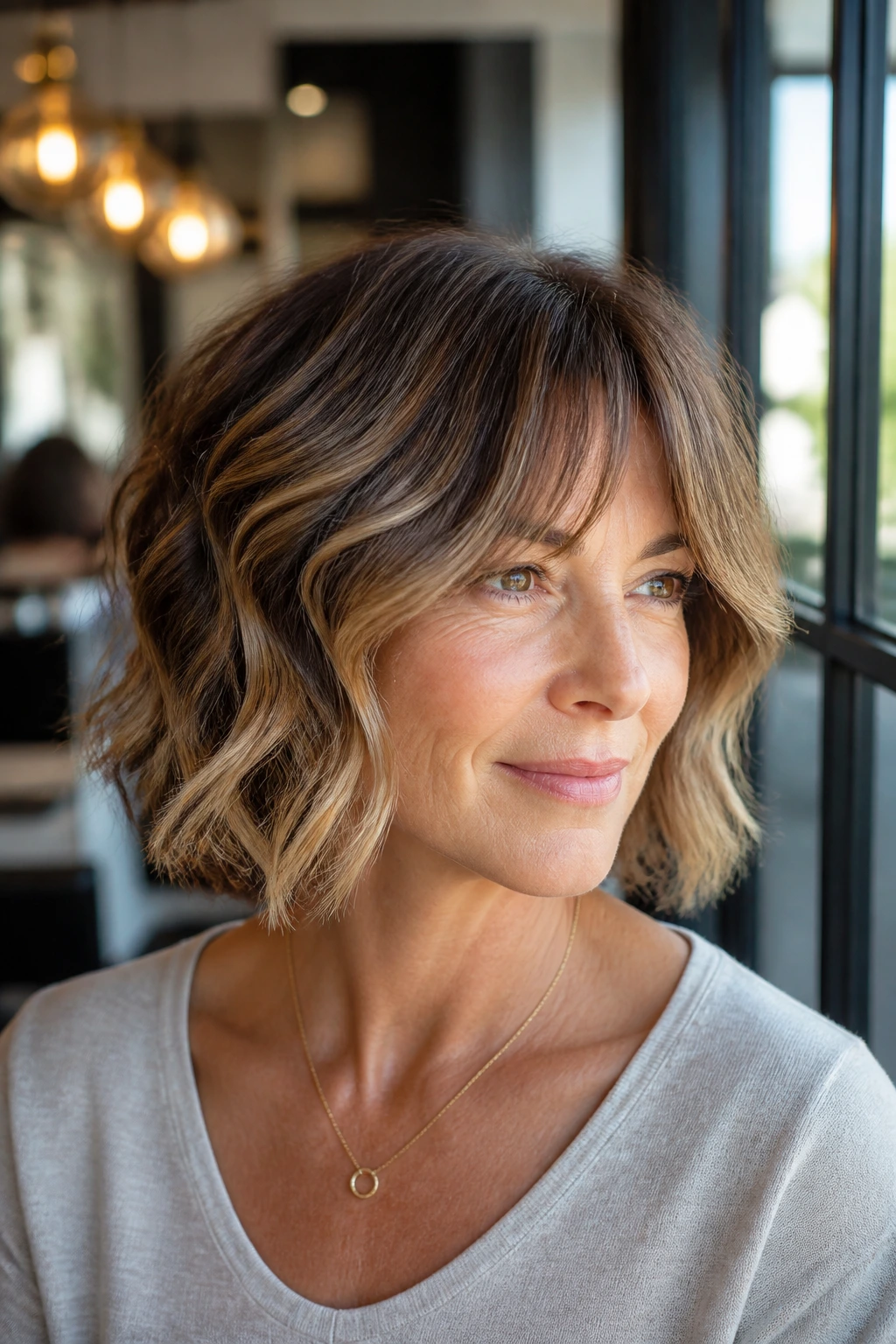
- They create movement where hair often goes flat: The layers keep the mids from sitting like a shelf, so the wave bends instead of ballooning.
- Curtain bangs soften the face without hiding it: A longer fringe that parts in the center and falls toward the cheekbones gives shape to the forehead area without boxing it in.
- They work with changing texture: If your hair has become finer, drier, or a little more wavy than it used to be, this cut leans into that instead of fighting it.
- They grow out better than blunt cuts: A layered bob with curtain bangs can go six to eight weeks before it starts looking rude, which is more than I can say for many sharper cuts.
- They fit a lot of styling habits: Air-dried, blown out, curled with a 1-inch iron, or rough-dried with mousse — the same cut can behave in all four lanes.
- They’re not one-note: Silver hair, brunette hair, copper hair, highlighted hair — the shape changes depending on color and texture, which keeps it from feeling tired.
1. Collarbone Wavy Bob with Long Curtain Bangs
This is the safest place to start if you want the look without a sharp jump in length. The ends graze the collarbone, the layers sit low enough to keep the body, and the curtain bangs begin around the bridge of the nose before opening out toward the cheekbones. It gives the wave room to bend.
Why it works
The collarbone length keeps enough weight in the cut so the waves do not puff out around the ears. That matters if your hair is medium to fine, or if the ends tend to fray when they get too short.
The long curtain bangs are the quiet hero here. They don’t land as a solid wall across the forehead, and they grow out into face-framing pieces if you skip a trim. Practical. Easy to live with.
Best for
- Oval faces that want softness
- Heart shapes that need a little width near the jaw
- Hair that waves more on day two than day one
Styling note: A 1.25-inch iron, wrapped away from the face for just 5-7 seconds, gives the bend without turning the whole cut into a curl set.
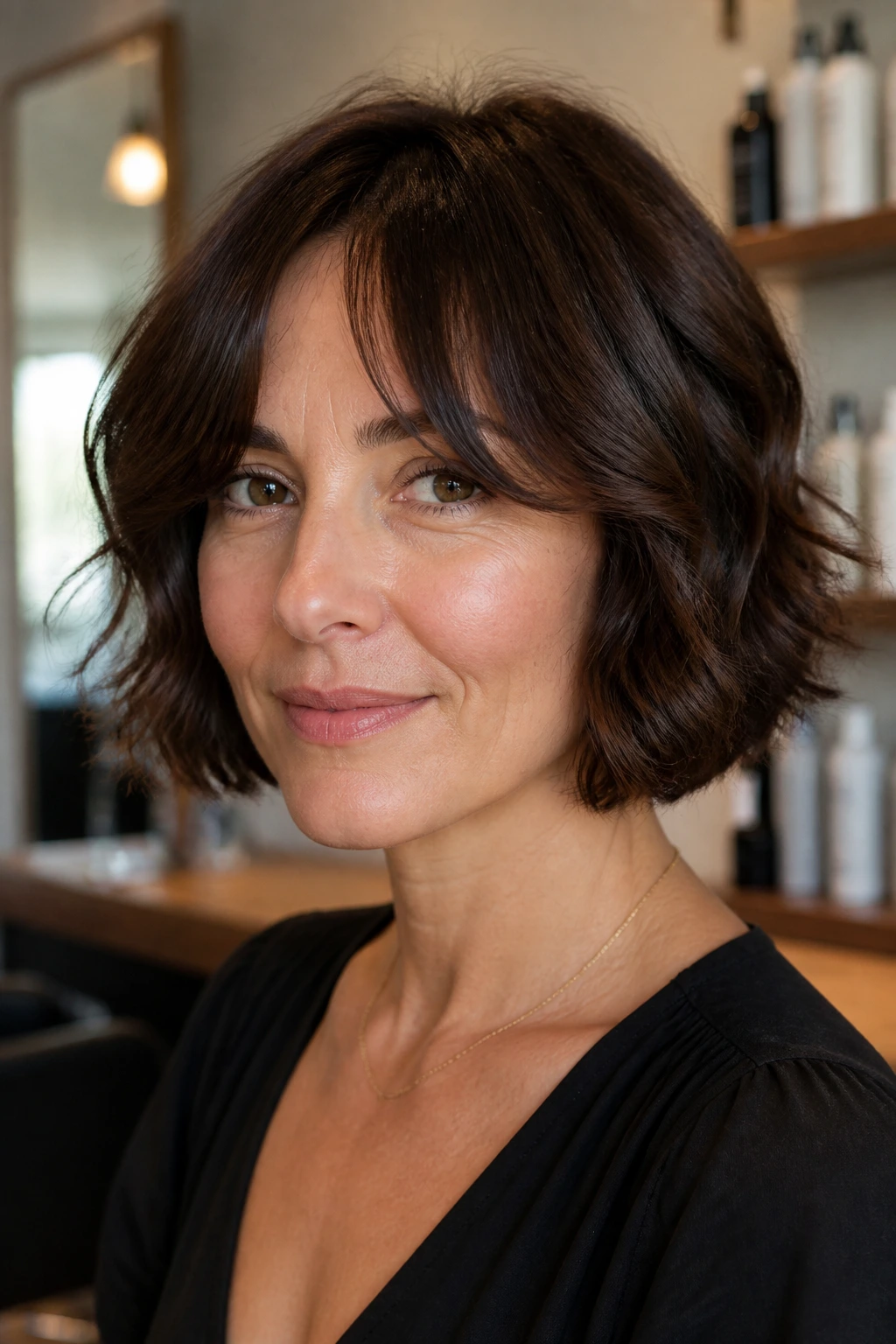
2. Chin-Length French Bob with Soft Waves
Shorter, cleaner, and a little more opinionated. This version sits around the chin, which makes the wave line read right away, and the curtain bangs stay soft so the cut does not become too severe. It has a neat little bite to it.
What makes it different
A chin-length bob can go boxy fast if the layers are too high or too blunt. The trick here is keeping the wave loose and the fringe longer than you think you need. Once the curtain bangs hit the cheekbone, the whole shape relaxes.
I like this version for people with dense hair, because the shorter length removes some of the drag without forcing the top into a puff. It also plays well with glasses. The bangs can tuck and move instead of fighting the frames.
Keep in mind
- Ask for soft internal layers, not a stacked back
- Keep the fringe longer at the center
- Blow-dry the bangs first so they do not dry in odd directions
3. Inverted Wavy Bob with a Tapered Nape
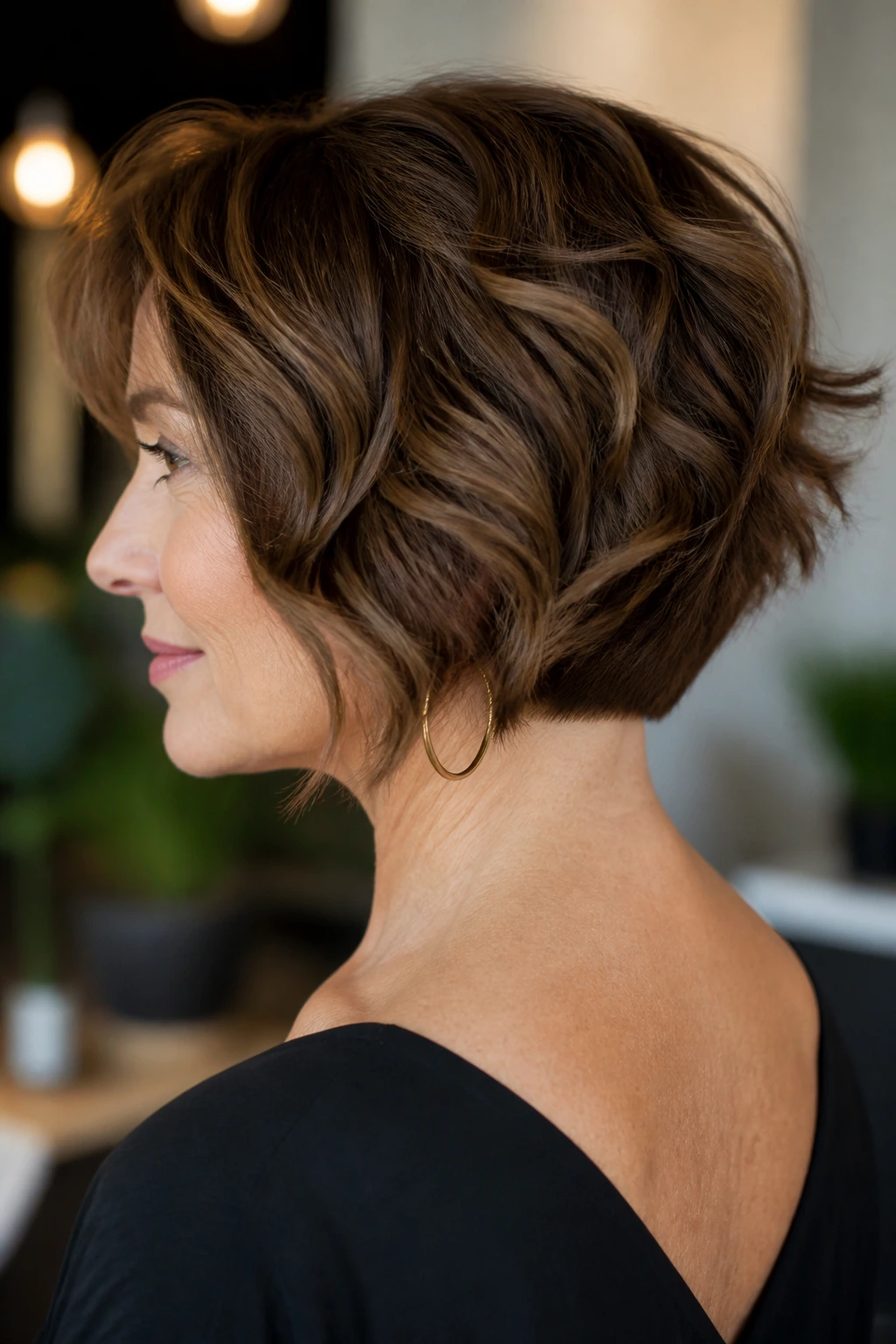
This one is for women who like a little shape in the back. The nape is shorter and snugger, while the front stays longer and swings forward around the jaw. Curtain bangs complete the line so it doesn’t look like two different haircuts arguing with each other.
The inversion helps the neck look longer. It also gives thick hair a place to sit instead of bulking up at the sides. That’s the whole point. If your hair always feels heavy by noon, this version removes some of the load without making it choppy.
Where it shines
- Round or square faces that benefit from a forward angle
- Thick, straight-to-wavy hair
- Anyone who likes the back neat but not severe
Watch the balance: If the front is too long and the back too short, the cut starts feeling dated. Keep the contrast modest.
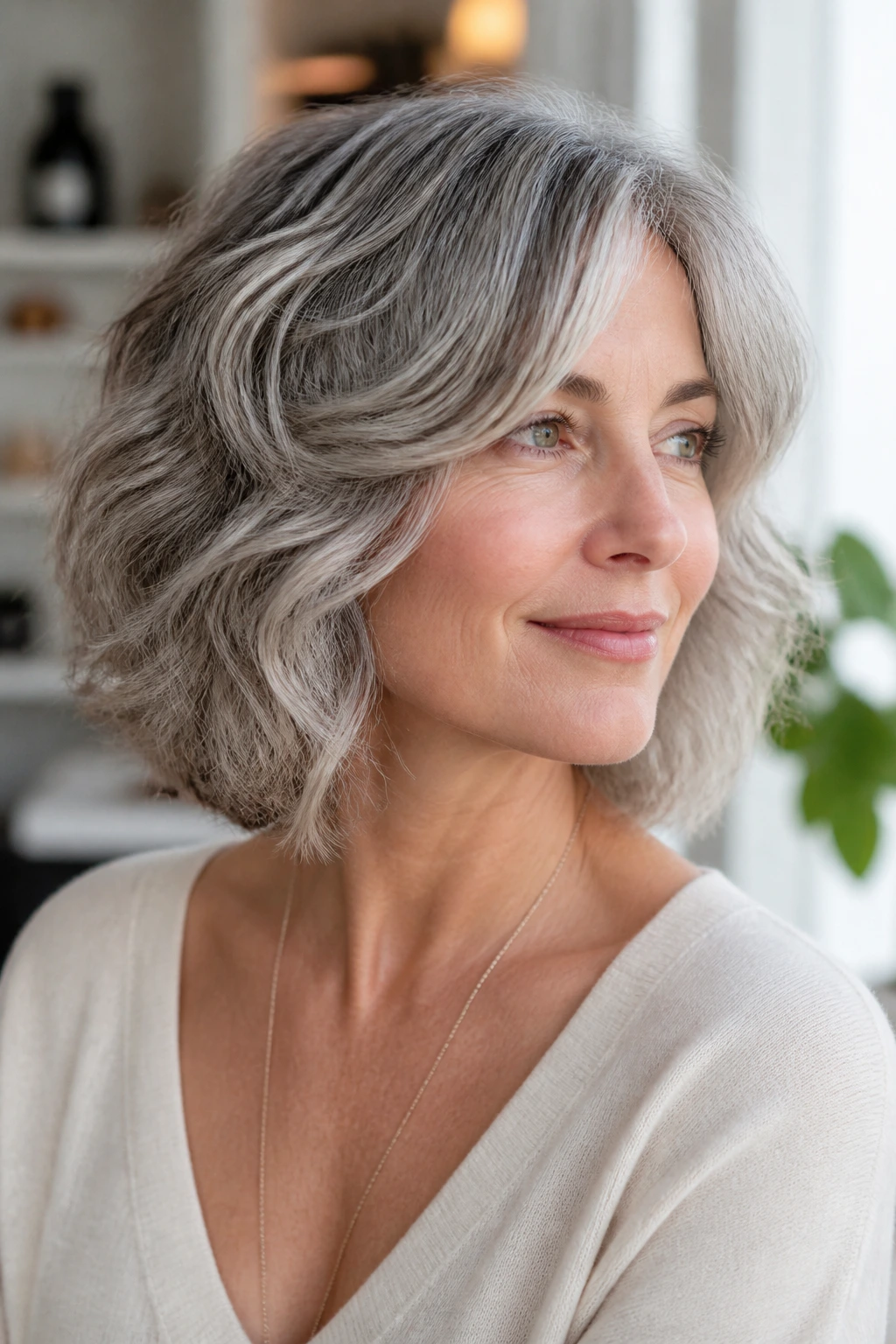
4. Feathered Silver Bob with Airy Curtain Bangs
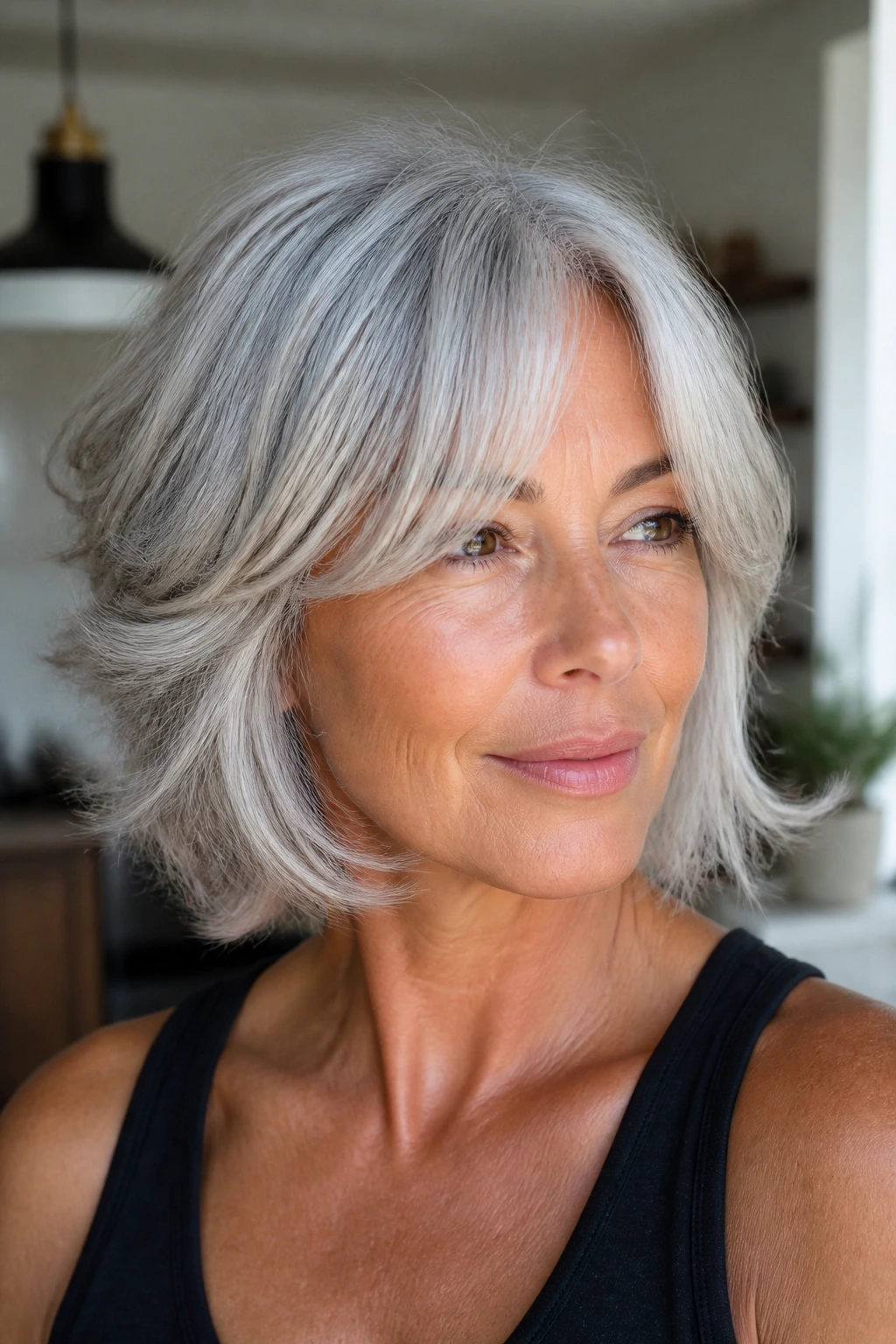
Silver hair loves movement, and this cut gives it room to breathe. The feathered layers keep the shape light around the face, while the curtain bangs soften the forehead and break up the brightness of a full silver or salt-and-pepper head of hair.
The reason I like this on gray hair is simple: silver can look flat if the line is too hard. Feathering stops that. The ends move, the light catches different planes, and the bob reads as textured instead of helmet-like.
Good details to ask for
- Soft point cutting at the ends
- Bangs that start longer in the center
- No heavy over-thinning near the crown
If you color your gray hair, keep the toner cool but not icy. Too much ash can make the whole thing feel washed out. A little warmth around the face — even barely there — keeps it alive.
5. Tousled Lob with Invisible Layers
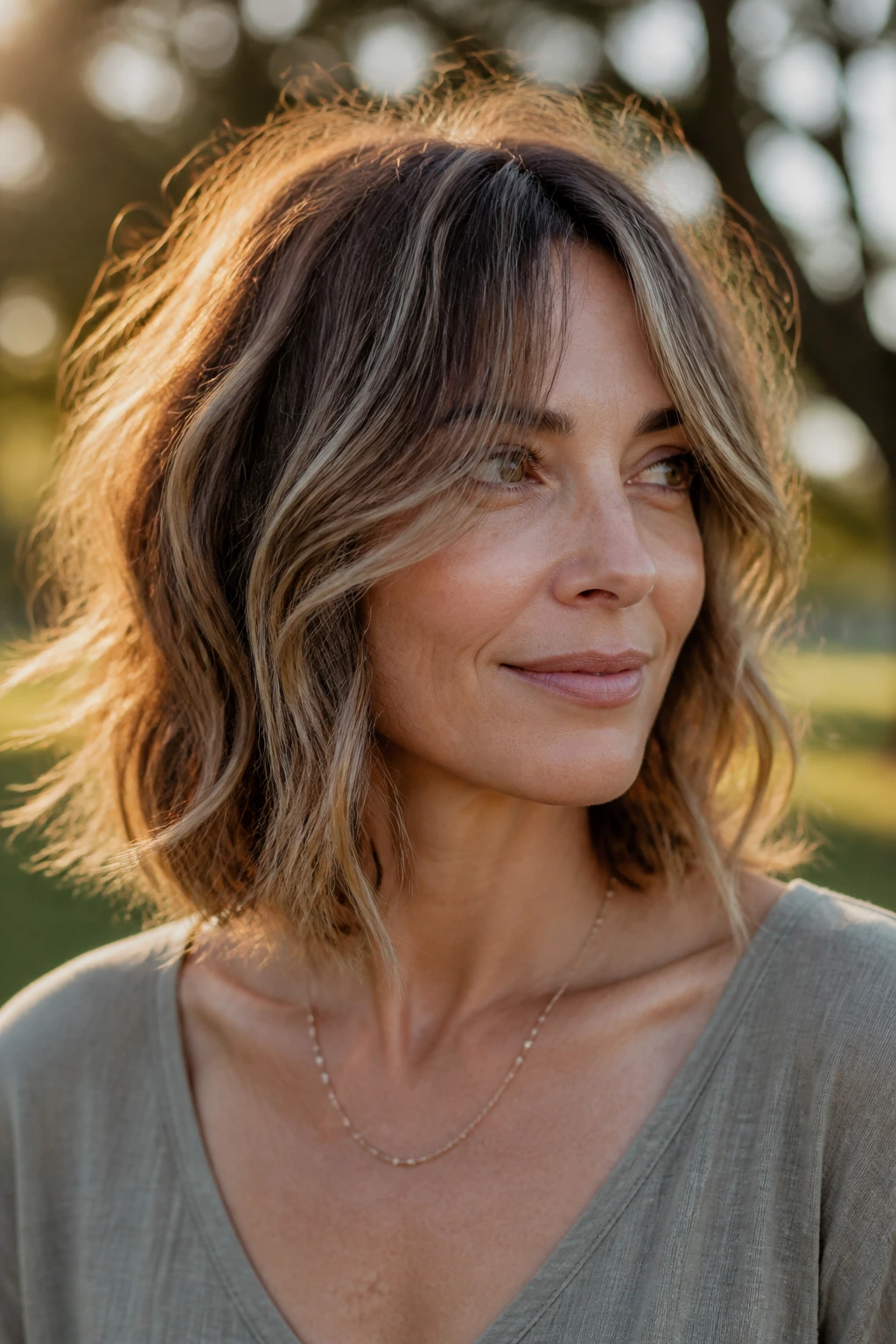
This is the cut for someone who wants a bob, but not a strict bob. The length sits closer to the collarbone, and the layers are tucked inside the shape instead of shown off. That keeps the outline smooth while still letting the wave move around.
Invisible layers are a good call for fine hair because they give lift without breaking the surface into little jagged pieces. On thicker hair, they stop the lob from lying like a slab. Either way, it stays soft.
Why people keep coming back to it
- It air-dries well with mousse
- It doesn’t demand perfect styling
- The curtain bangs blend into the sides instead of sitting apart
A light scrunch with a microfiber towel, then a dab of curl cream through the mids, is often enough. Don’t overwork it. That’s how the shape gets frizzy instead of easy.
6. Rounded Bob with Cheekbone-Skimming Fringe
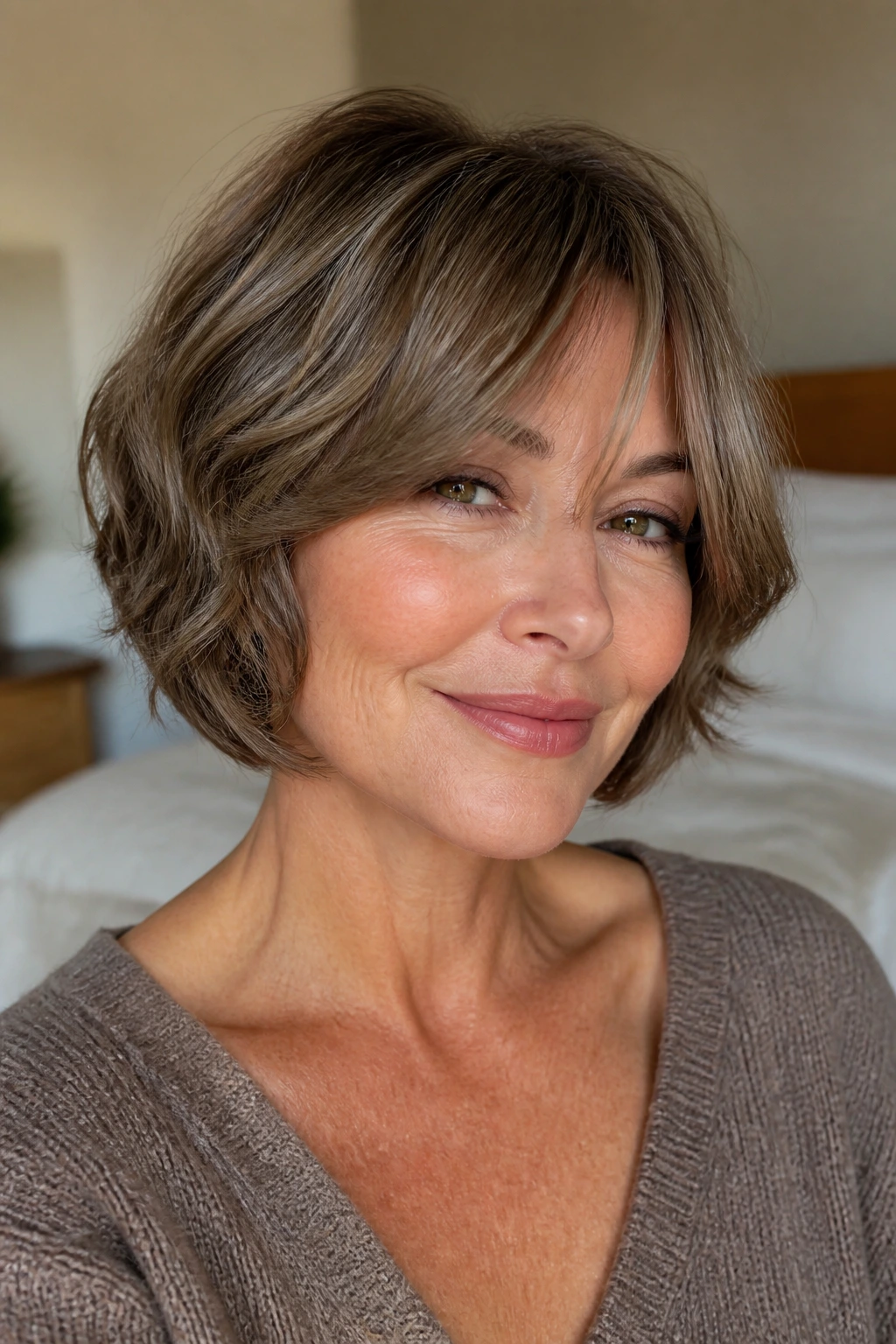
A rounded bob gives you a gentle curve that sits closer to the head through the sides and opens just enough at the bottom to keep the waves from looking stiff. Add curtain bangs that graze the cheekbones, and the whole face gets a soft frame.
This works especially well on longer faces or narrow jawlines, because the curve adds a little width right where the eye wants it. It’s also good if your hair grows out with a slight bend already. You’re not starting from zero.
Why it feels polished
The rounded shape is doing the work, not the product. You can still wear it messy, but the cut itself gives the outline some order. That means less fight with a blow dryer on busy mornings.
A small warning: If you have very thick hair, the curve needs internal weight removal. Otherwise it can turn into a mushroom shape. No one wants that.
7. Deep Side-Part Wavy Bob with Swept Curtain Bangs
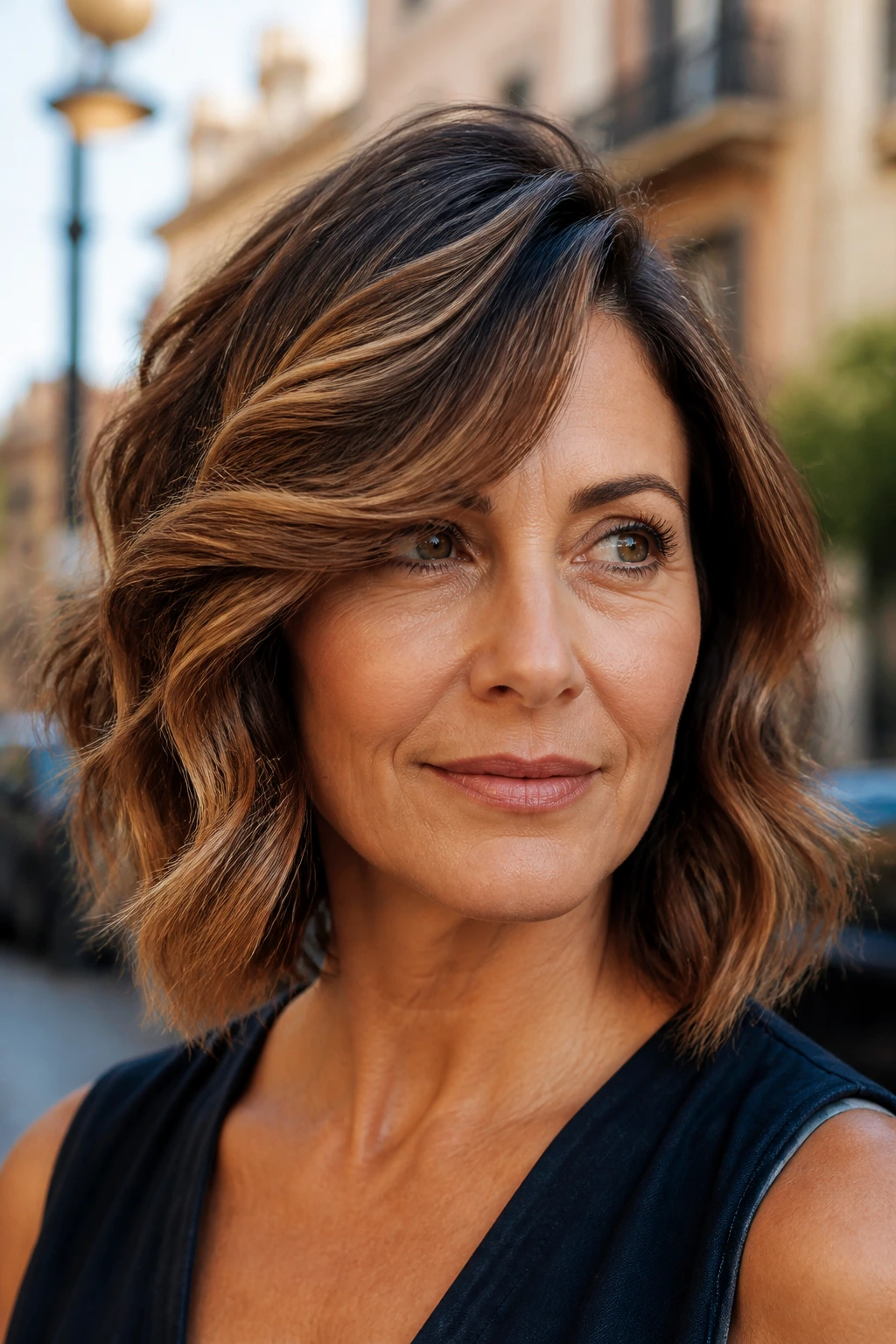
Not everyone likes a dead-center part. Some heads simply don’t. A deep side-part bob keeps the curtain-bang idea but pushes the opening a little off-center, which can be kinder to cowlicks, stubborn growth patterns, and foreheads that don’t want a full middle split.
The side part also gives the waves a little extra lift on one side. That’s useful if your hair tends to collapse at the root. One shift, and the whole cut looks less flat.
Best use case
- Hair with a strong natural part
- Anyone who wears one side behind the ear
- Faces that need more height at the crown
The bangs should still fall long enough to graze the cheekbones. If they’re too short, the side part can make them look chopped off. Keep them soft. Keep them moving.
8. Stacked Bob with Piecey Ends
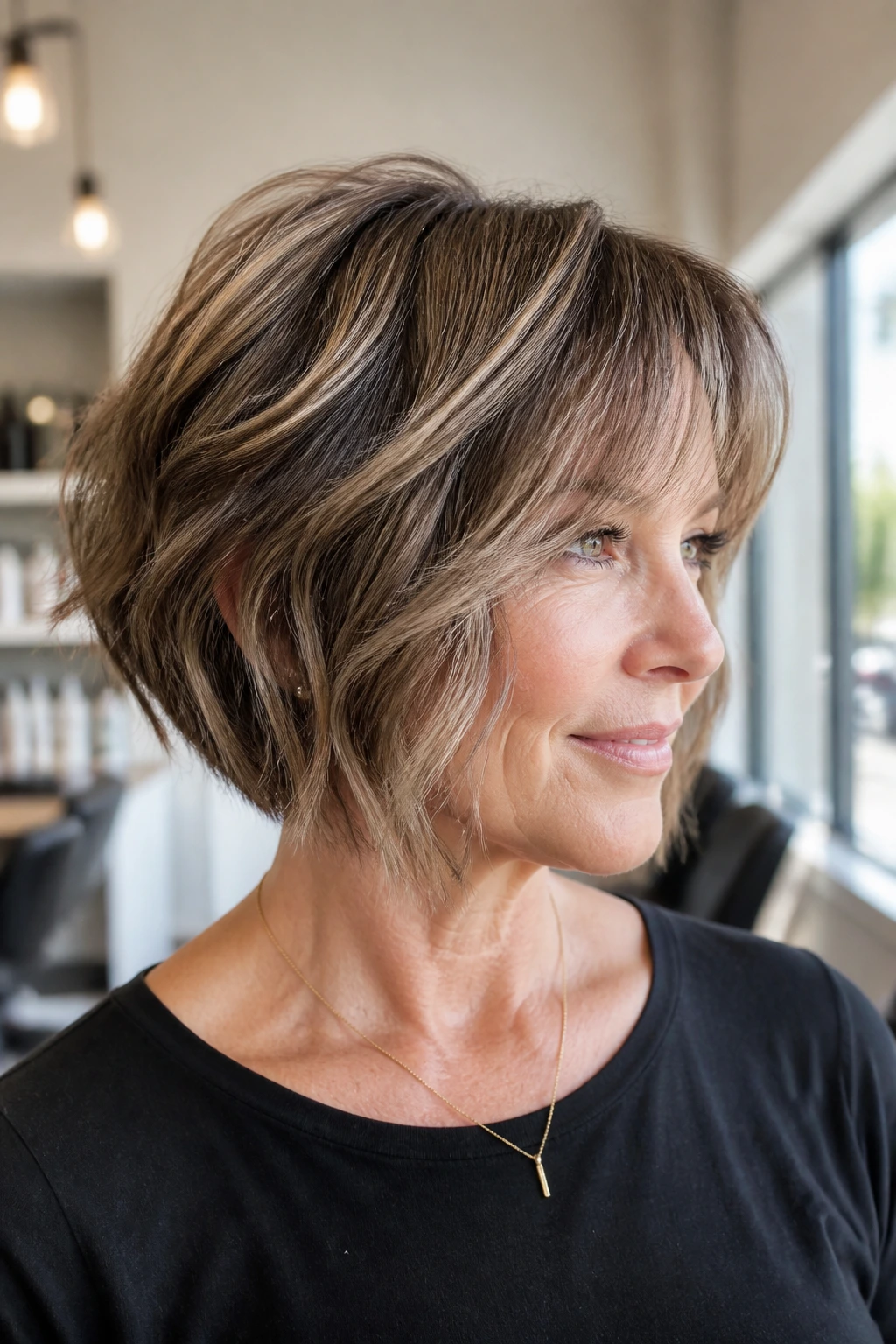
This is the more structured sibling in the family. The back sits slightly shorter and more layered, which builds lift through the crown, while the ends are softened into piecey waves so the whole thing doesn’t feel too rigid. Curtain bangs keep it from getting too architectural.
Stacked bobs can go old-school fast if the graduation is too sharp. Here, the waves break that up. The result is cleaner at the nape, lighter at the sides, and still touchable.
Who should consider it
- Fine hair that needs body at the crown
- Shorter necklines that look better with lift
- People who like a little shape with their movement
A round brush or Velcro roller at the crown makes a big difference. So does not loading the back with too much cream. Keep the product on the mids and ends. The root needs to stay awake.
9. Copper Wavy Bob with Air-Dried Texture
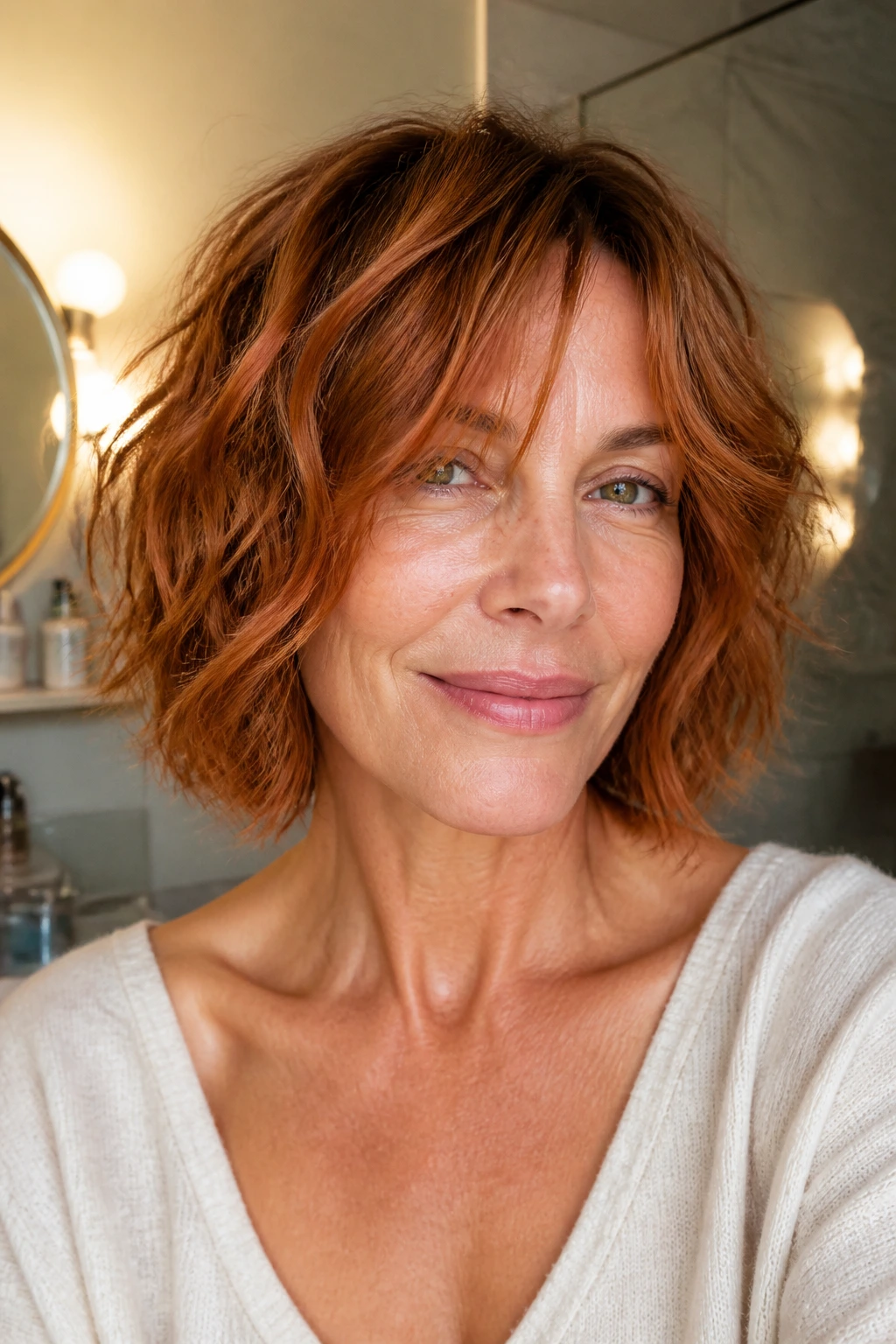
Color changes a bob more than people expect. Copper, auburn, and warm cinnamon tones catch the movement in layered waves, and curtain bangs give the color a place to frame the face instead of disappearing into the rest of the cut.
Air-dried texture is part of the charm here. A little frizz in a copper bob can look rich instead of sloppy, especially when the waves are intentionally loose. The trick is clean, glossy color and soft ends.
Why it stands out
The warmth around the face pulls light upward. That can be useful if your hair has gone dull or flat under cooler dye formulas. Copper wakes the whole cut up.
- Use a color-safe shampoo
- Ask for face-framing highlights one shade lighter
- Keep bangs a touch longer so they don’t shrink up too much
This one does not like heavy oils near the roots. They make copper look greasy faster than most shades. Use a pea-sized amount only on the ends.
10. Blunt-End Bob with Barely-There Layers
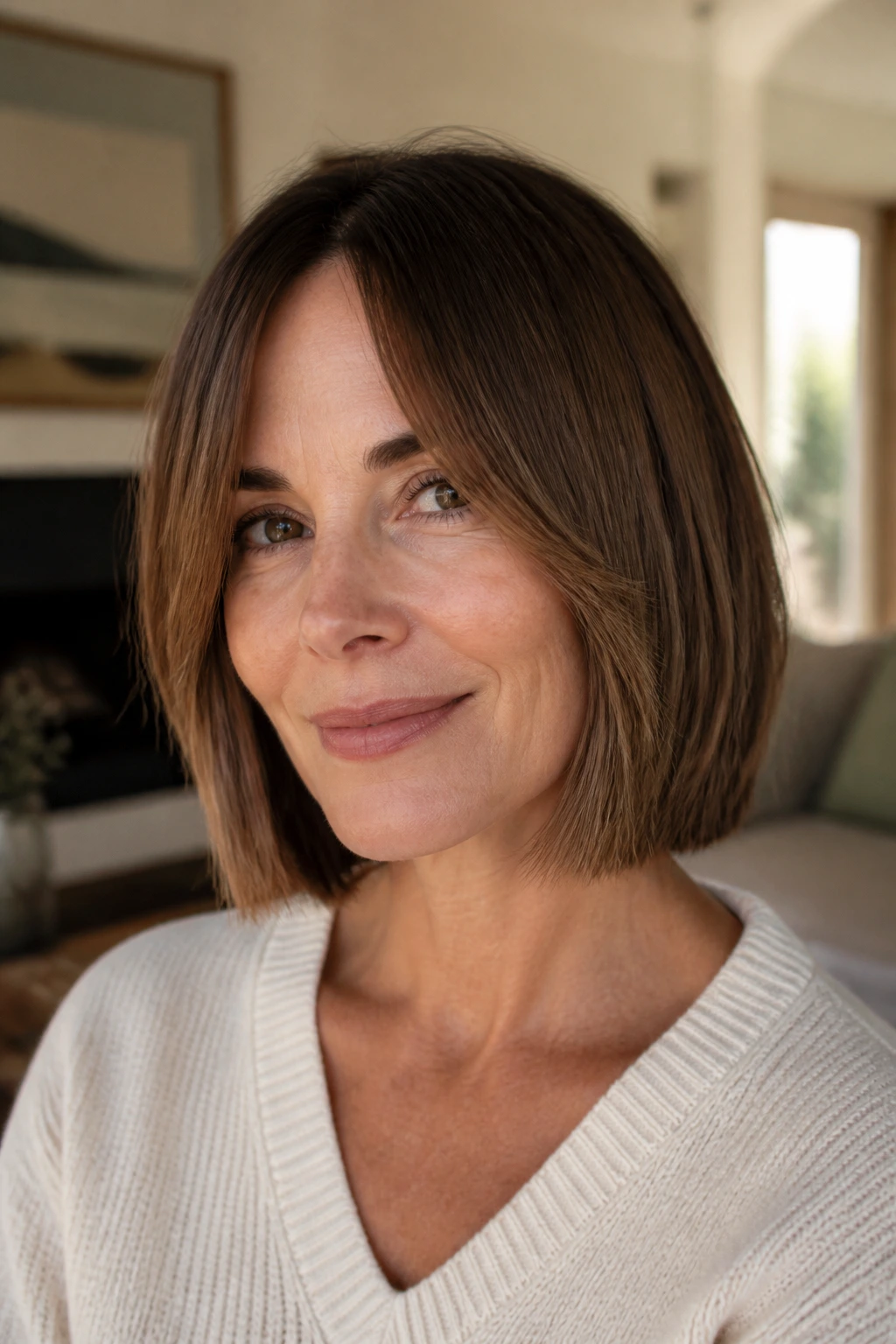
A blunt end does not have to mean a hard, lifeless cut. In this version, the line stays clean at the bottom, but the interior has just enough layering to let the waves move. That gives you the density of a blunt bob with a little more air inside it.
It’s especially useful if your hair is medium thickness and you want it to look fuller at the perimeter. Curtain bangs soften the front, so the bottom edge doesn’t feel too strict. The contrast is what makes it work.
What to ask for
- A blunt outline at the hem
- Low internal layers only
- Curtain bangs that blend into the cheek line
I prefer this on hair that already has a decent bend. If your hair is pin-straight and refuses to wave, you’ll spend too much time trying to create texture from scratch. If it already moves a bit, this cut gives it structure.
11. Asymmetrical Wavy Bob with Long Fringe
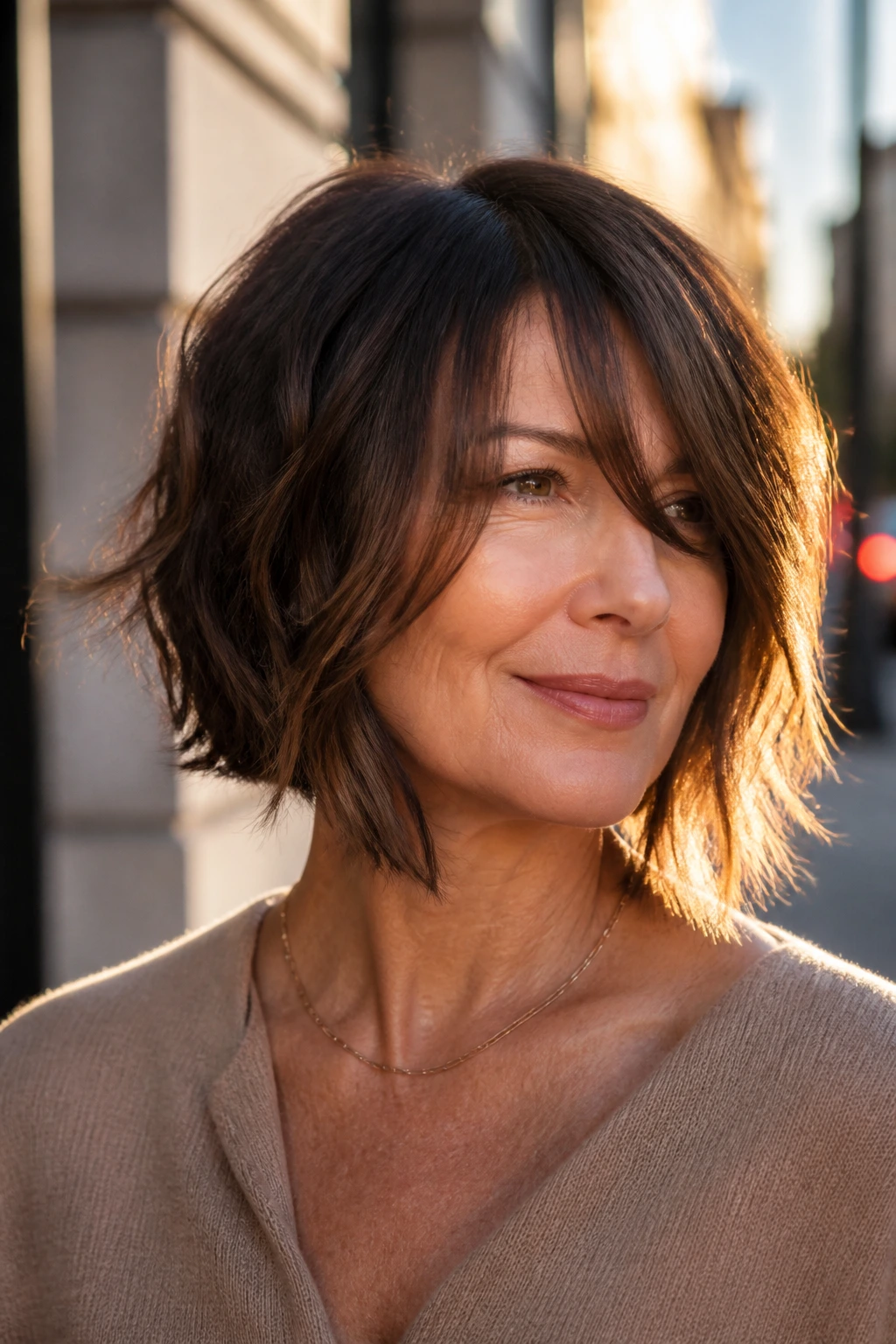
A subtle asymmetrical bob — one side longer than the other by an inch or so — gives the whole shape some edge without making it fussy. Curtain bangs keep the face balanced, which matters because asymmetry can turn theatrical fast if the fringe is too sharp.
This is a good cut for someone who wants a little tension in the silhouette. Not loud. Just enough to make the eye move. It also helps if one side of the face feels stronger or if your jawline is slightly uneven.
A practical note
Keep the asymmetry soft. We’re not doing a dramatic editorial chop here. The best versions look like the cut bends naturally, not like it was measured with a ruler and a grudge.
Best with
- Straight-to-wavy texture
- Medium density hair
- A side part or a loose center part
12. Beachy Lob with Long Face-Framing Layers

This is the “I want waves without trying too hard” option, and I say that with affection. The lob length keeps the shape relaxed, while the face-framing layers begin higher near the cheekbones and drift down toward the collarbone. Curtain bangs sit right in the middle of that movement.
The whole cut feels lived-in. That’s the appeal. It can be styled with a curling wand in 5-minute sections, or air-dried with a salt-free mousse if your hair already has some bend.
Why it suits a busy routine
- It forgives imperfect styling
- Day-two hair often looks better than day one
- The layers don’t need to be refreshed constantly
A soft wave pattern works better than tight curls here. If the waves are too uniform, the cut loses its breezy shape and starts feeling stiff. Leave the ends a little straighter for the nicest result.
13. Glossy Wavy Bob with Internal Layers
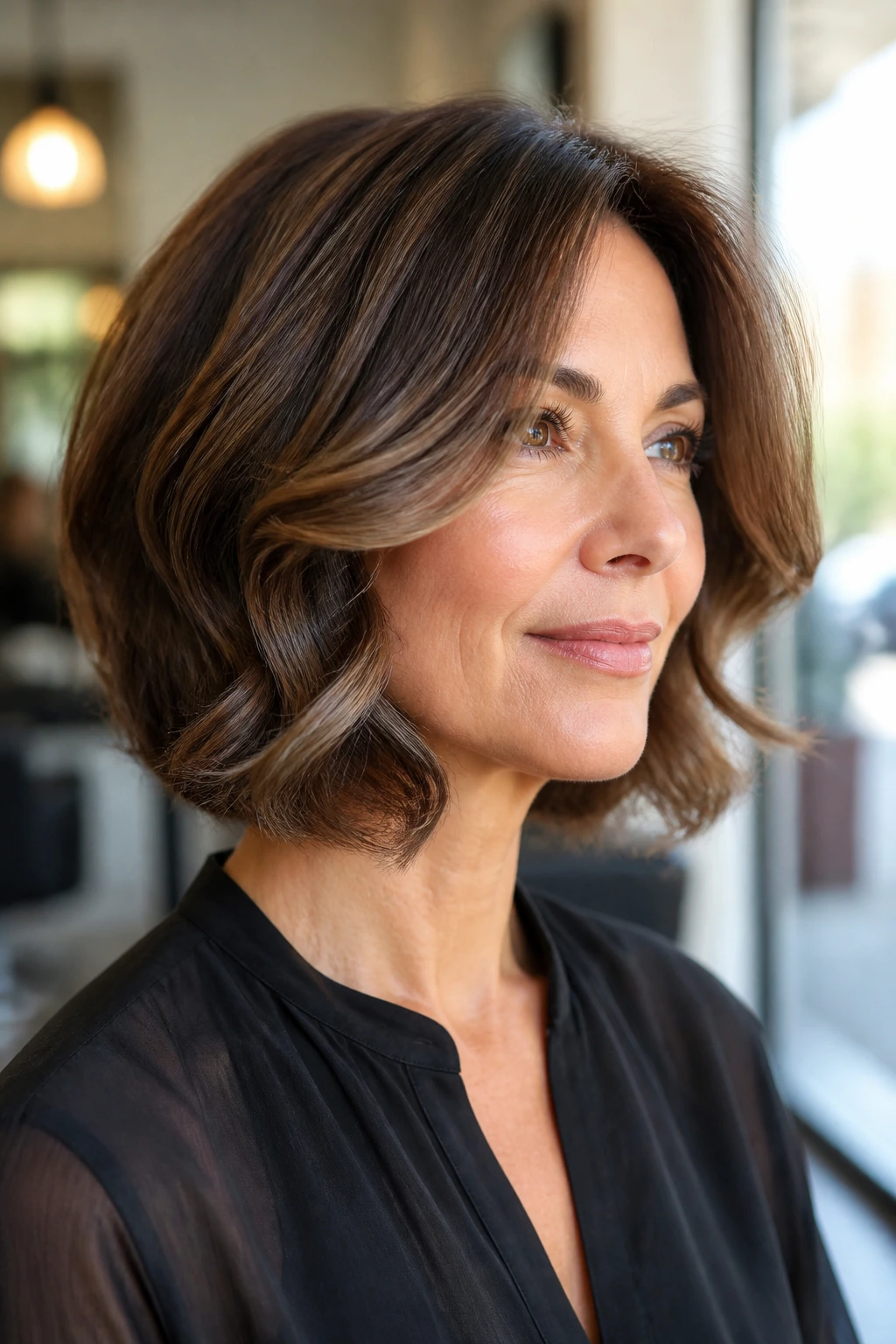
Some layered bobs are intentionally rough. This is not one of them. The internal layers are there to keep the hair from collapsing, but the surface stays smooth and shiny. Waves are brushed into a soft, polished bend rather than a broken-up texture.
This cut is especially good for medium-density hair that wants movement but not chaos. Curtain bangs are kept sleek and long enough to fold away from the face. It’s a good salon day cut, if that makes sense — the kind that looks neat without looking stiff.
Use this if you want
- Shine over grit
- Soft movement, not piecey separation
- A style that plays well with smoothing cream
A blow-dryer nozzle matters here. So does finishing with a cool shot. That one last blast helps the fringe sit where it should instead of floating in a random direction for three hours.
14. Shaggy Razor Bob with Soft Curtain Bangs
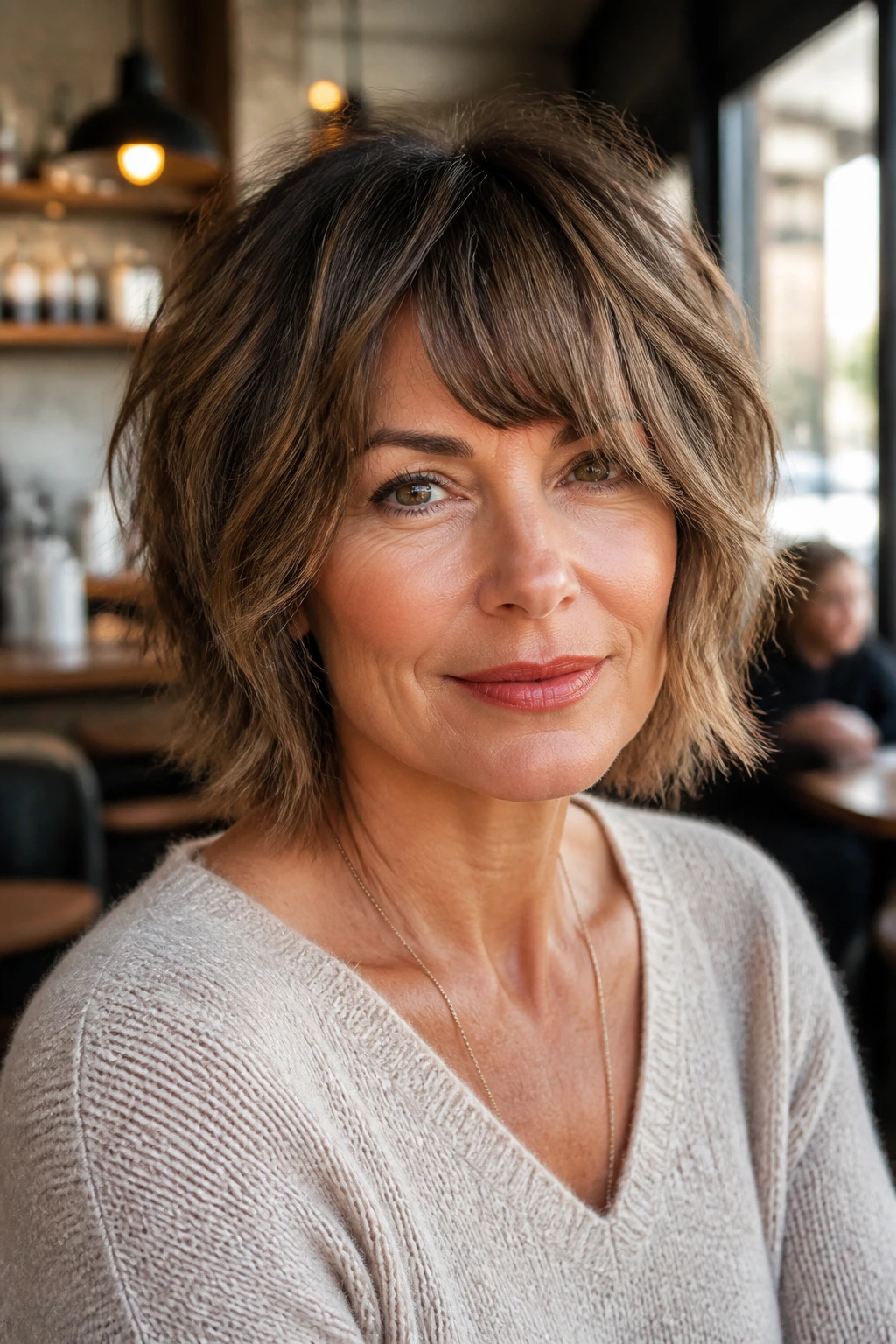
This is the edgier version of the group, but it does not have to look messy. Razor-cut layers create a softer, lighter edge through the ends, and the curtain bangs blend into the rest of the shape so the cut reads as one piece instead of separate parts.
Thick hair loves this. Coarse hair often does too. The razor takes out weight and gives the wave a place to break, which matters if your hair tends to sit like a block. The result is loose, a little wild, and not at all precious.
What makes it useful
The razor finish lets the hair move without needing a ton of heat styling. That’s the real win. You can rough-dry it, twist in a few pieces, and go.
Skip this if your hair is very fine and fragile. Razor cuts can look wispy in the wrong way on weak strands. For strong hair, though? It’s a good one.
15. Salt-and-Pepper Bob with Brightening Face Frame
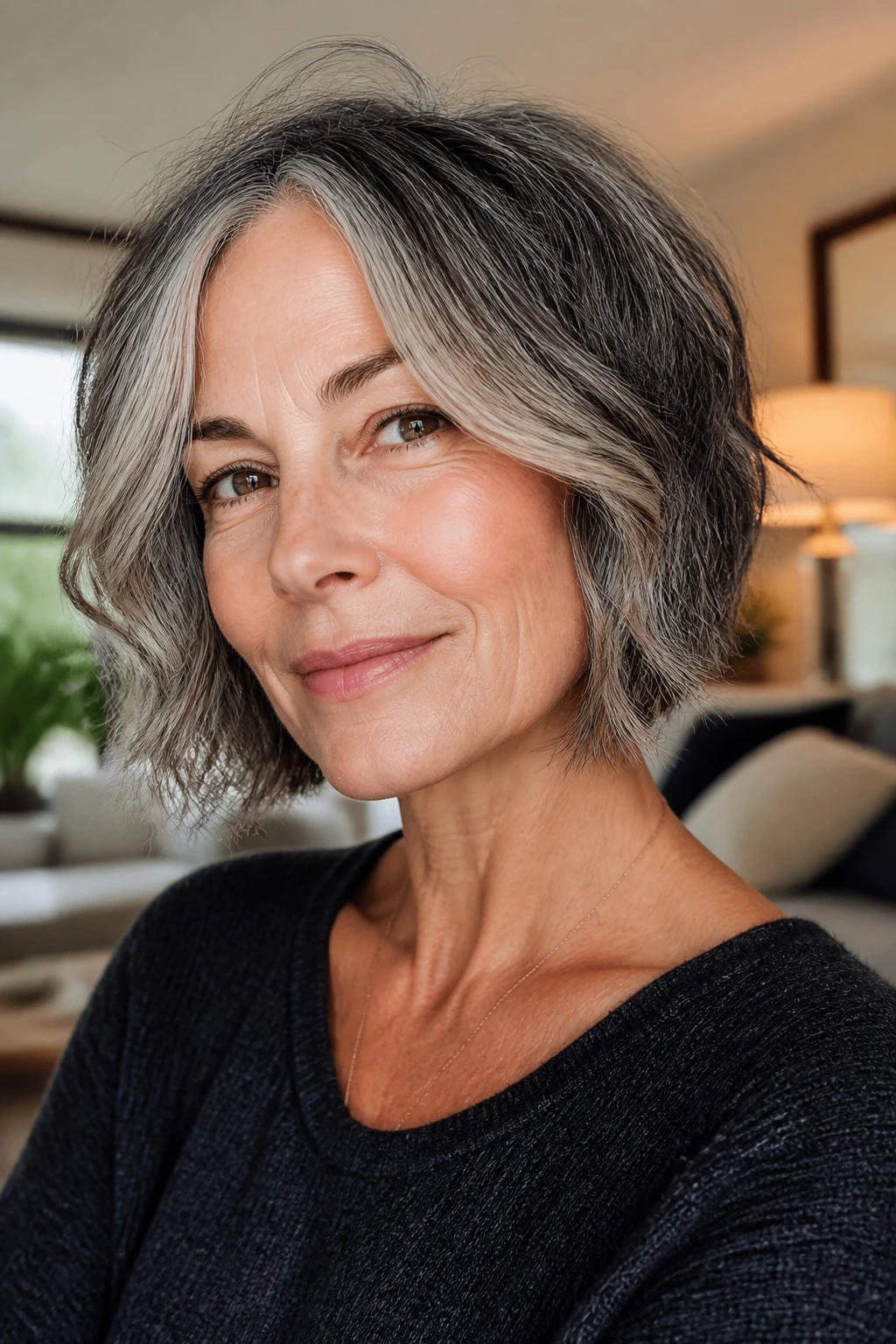
A salt-and-pepper bob is one of the easiest places to let natural gray grow out without surrendering shape. The layered waves give the color contrast, and the curtain bangs draw the eye to the face instead of the root line.
I like a few brightening pieces around the front in this cut — not chunky highlight stripes, just subtle lighter threads where the bangs open. It keeps the gray from looking flat, especially if the base color is deep brown or dark blonde.
Good details to consider
- Keep the front a touch lighter than the back
- Use a gloss or toner to keep the silver clean
- Let the waves stay soft, not over-curled
This style works because the shape carries the color. You don’t need much else. That’s the quiet advantage.
16. Curved-Under Bob with Bouncy Curtain Bangs
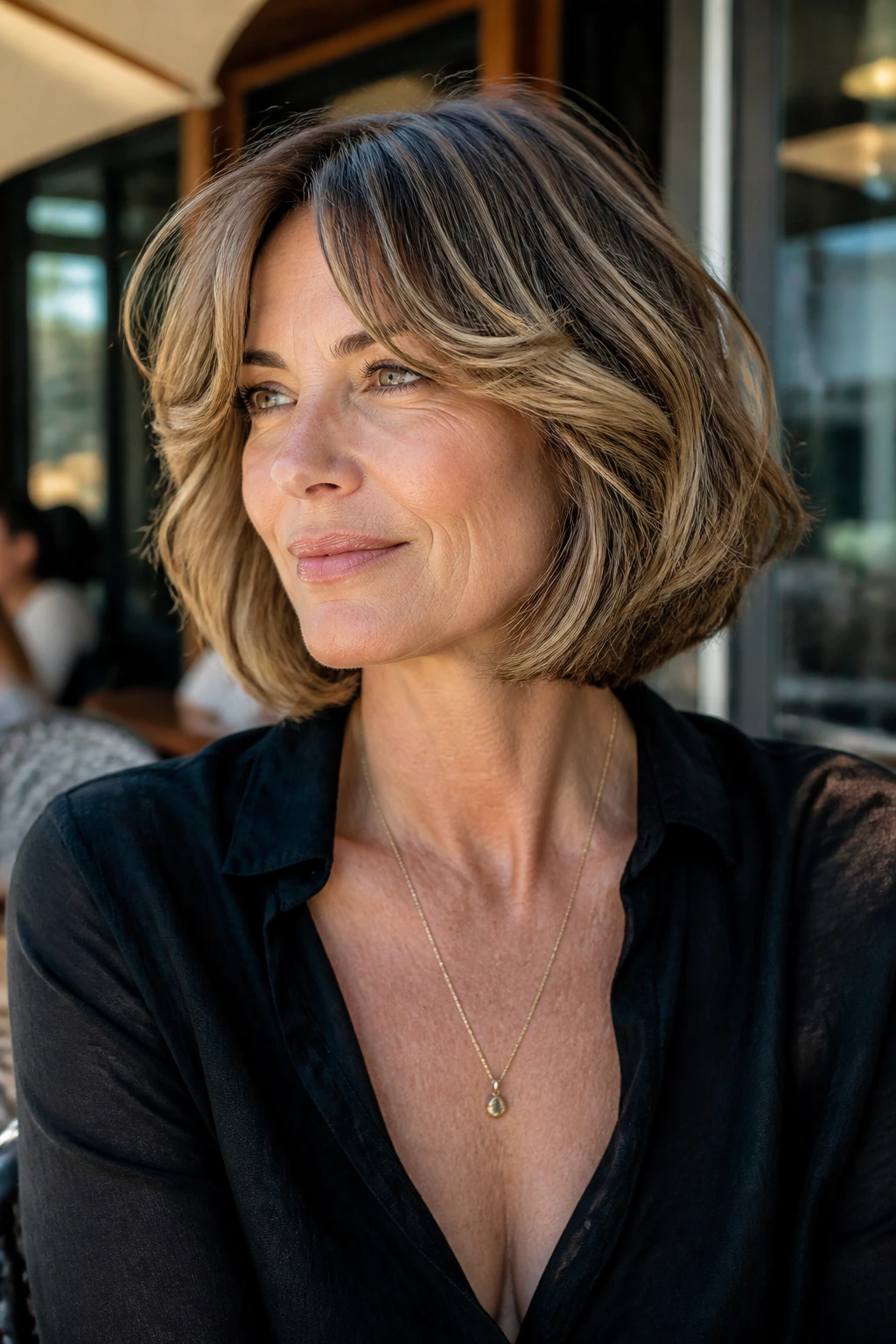
This bob curves gently under at the ends, which gives it a tidy outline without turning it severe. The curtain bangs are shaped to bounce away from the face, not lie flat against it. That little lift changes the whole mood.
It’s a good choice if you like structure but not stiffness. The curve at the bottom keeps the silhouette clean, and the waves break up the polish just enough. Think neat, not hard.
Best when you need
- A cut that behaves in humidity
- A shape that feels good with earrings and glasses
- A bob that still looks intentional after a long day
Use a medium round brush under the ends and a smaller brush through the fringe. If both sections get the same treatment, the whole thing starts to look overworked. Separate them. That’s the trick.
17. U-Shaped Bob with Long Flowing Layers
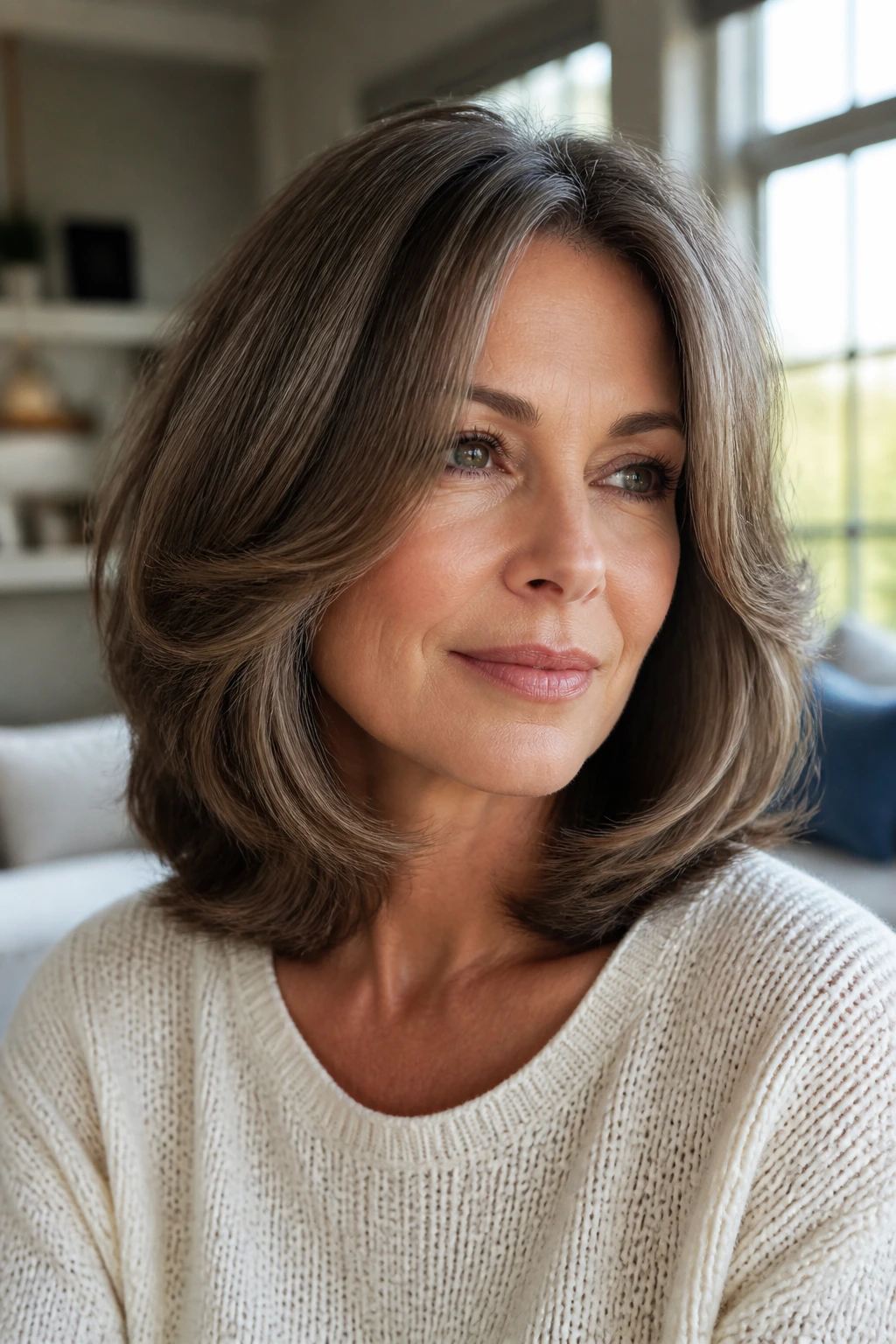
The U-shape gives a softer outline than a straight blunt cut. The back sits a little shorter, the sides fall a little longer, and the layers follow that curve so the wave has somewhere to go. Curtain bangs complete the flow from forehead to cheekbone.
This shape is forgiving on medium-to-thick hair. It removes bulk without making the front look disconnected. You get movement, but also enough length around the face to keep the style graceful.
Why it’s a favorite
The curve keeps the bob from reading as a line. That matters if you wear your hair wavy most days, because waves already make the silhouette lively. A U-shape gives that movement a frame instead of fighting it.
A stylist who understands weight distribution matters here. The shape depends on where the layers are cut, not just how short the bob is.
18. Wedge Bob with Soft Texture
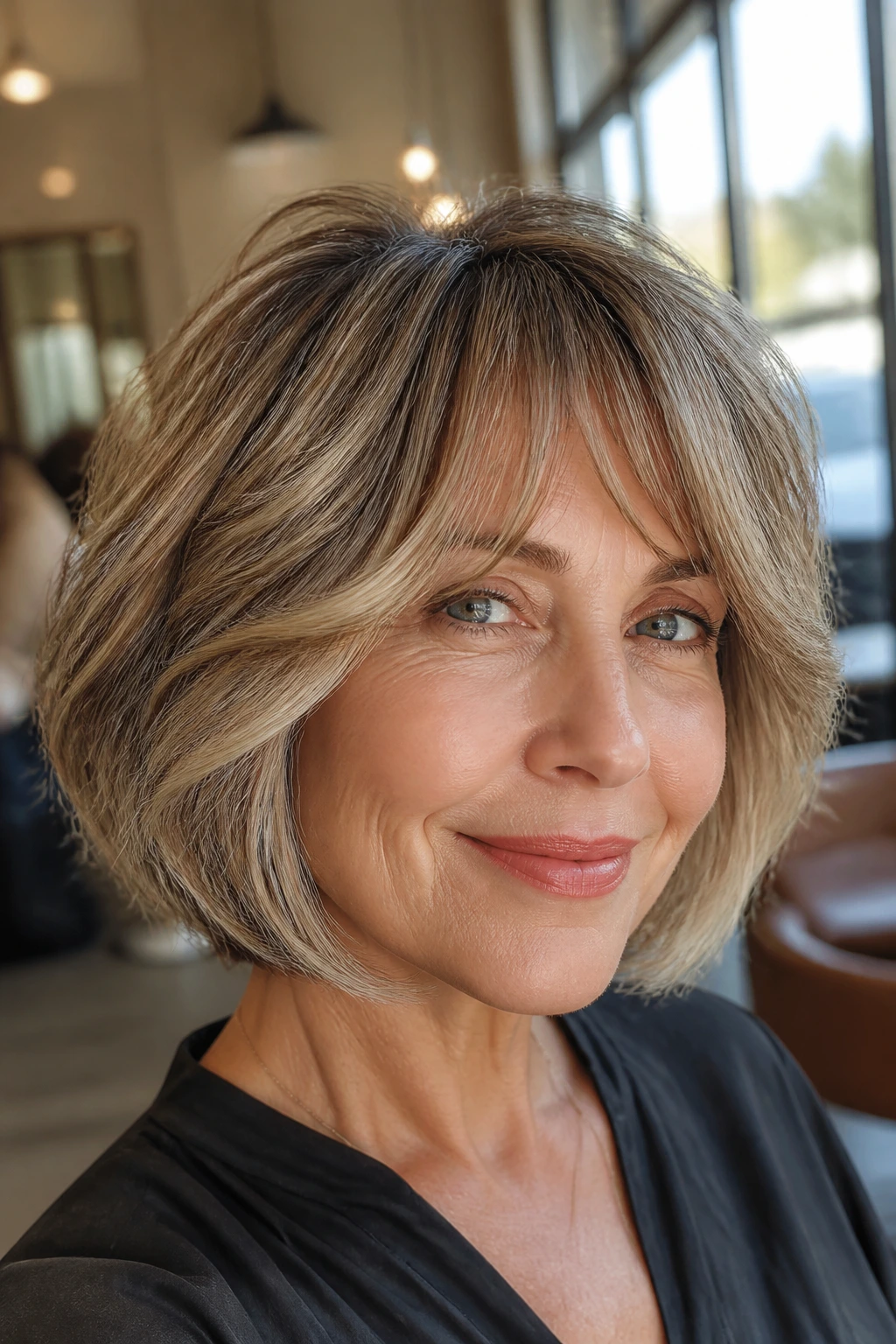
A wedge bob can sound strict, maybe even a little old-fashioned, but the soft-texture version changes the story. The nape is tighter, the shape lifts toward the crown, and the waves loosen the edges so it feels current rather than frozen in one era.
Curtain bangs are the thing that softens the geometry. Without them, the wedge can feel severe. With them, the cut opens up and moves.
Good match for
- People who like a little structure at the back
- Fine hair that benefits from crown lift
- Shorter face shapes that can handle a little height
If you choose this one, ask for soft perimeter edges. A sharp wedge plus stiff styling is where it goes wrong. Texture is the point. Texture saves it.
19. Blonde Bob with Rooty Dimension
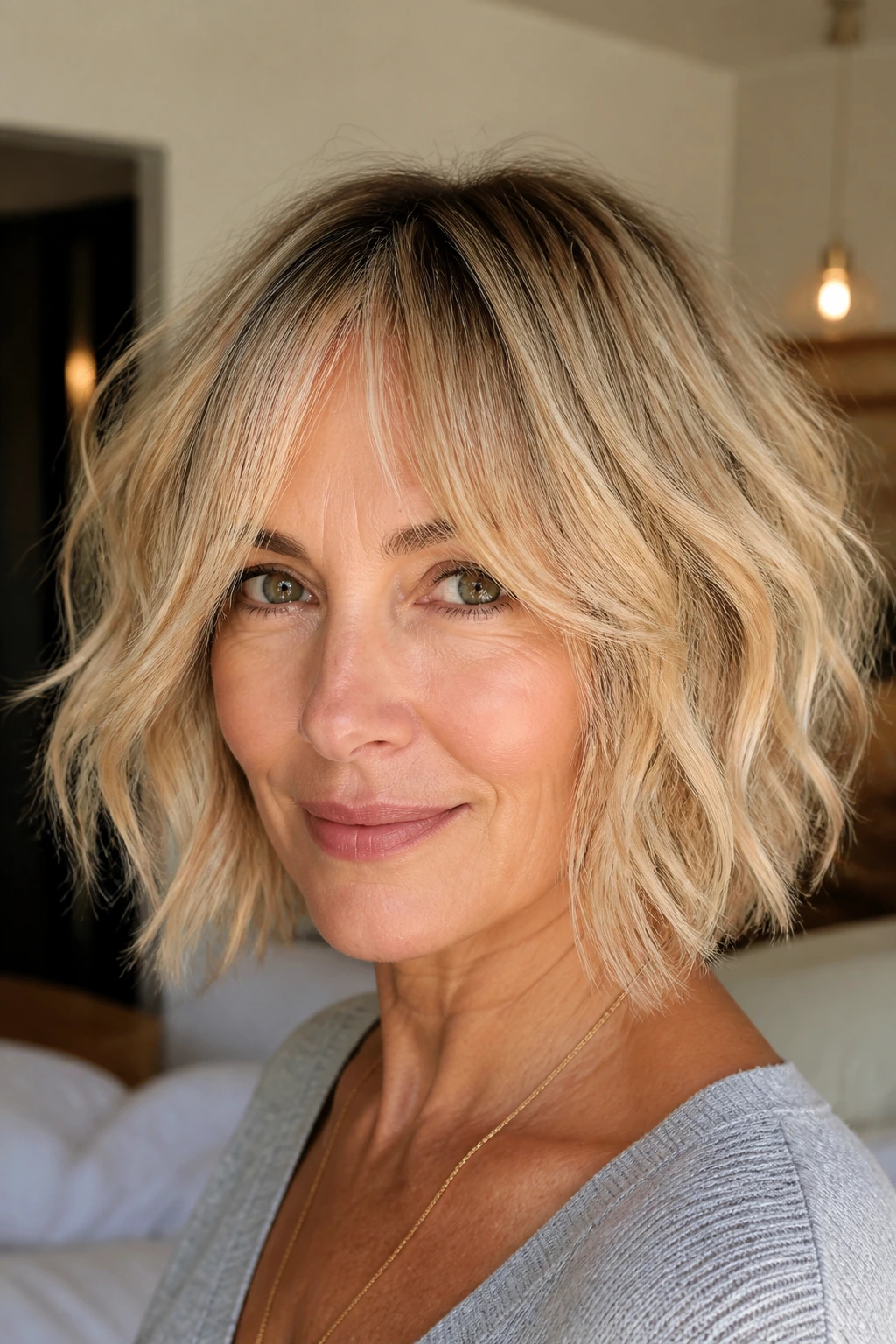
Blonde hair looks best in a layered wavy bob when the color has some root depth. That darker base at the scalp keeps the cut from washing out, and the curtain bangs give the face a bright frame without needing a solid platinum sheet of color.
The dimension matters. Lighter ends, deeper roots, a few warm and cool pieces mixed together — those are the details that make the waves show up. Flat blonde can make a bob disappear. Rooty blonde makes it move.
Why it works so well
The layers pick up the different tones. A single-color blonde can look a little stuck when it’s wavy, but dimension turns each bend into a visible shape.
- Keep the roots slightly darker
- Use a gloss to maintain shine
- Avoid too much toner if the hair starts looking chalky
This is one of those cuts that looks more expensive when it isn’t overprocessed. The color should feel lived-in, not shellacked.
20. Thick-Hair Bob with Weight-Removing Layers
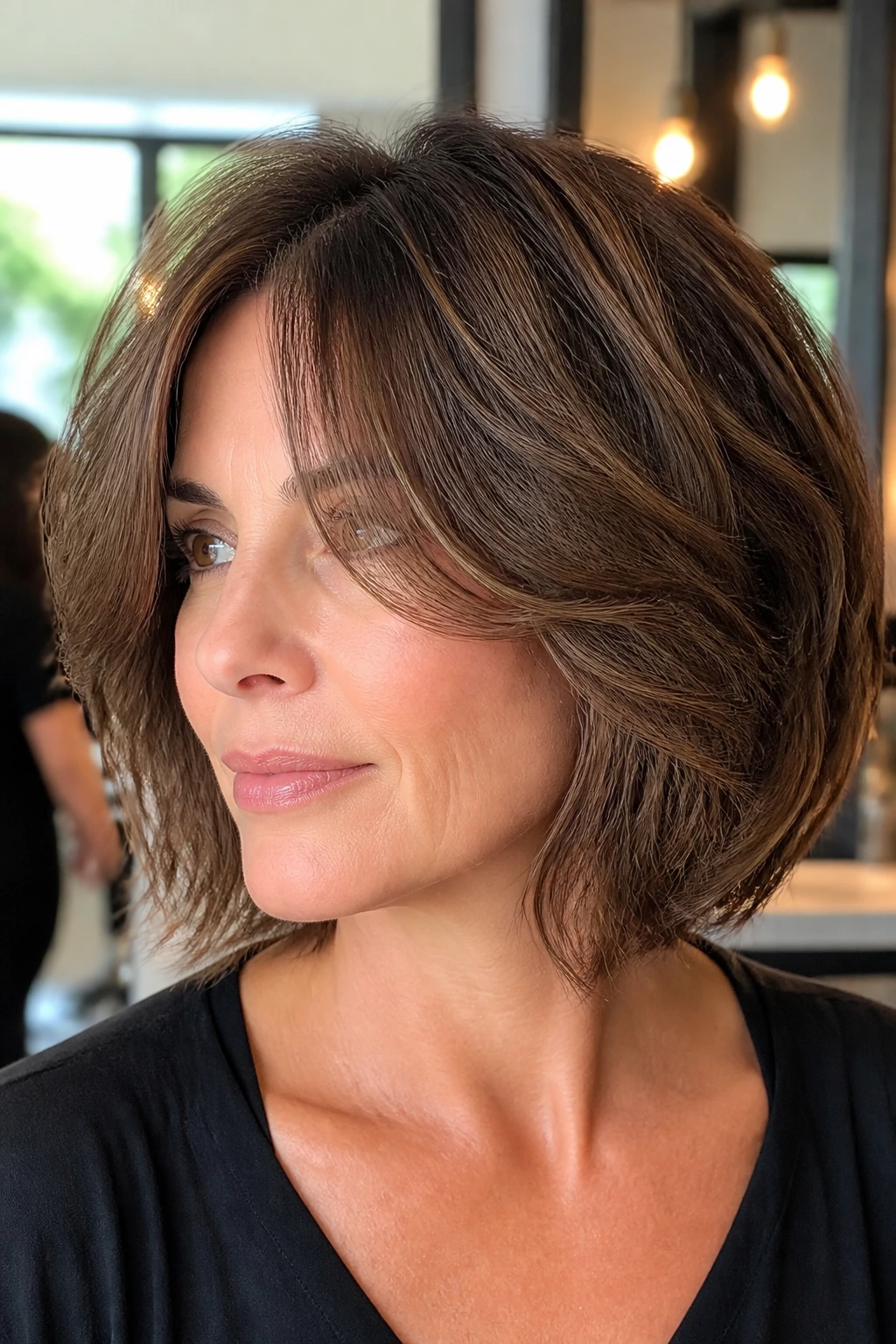
If your hair is thick enough to form its own weather system, this is the bob you want. The layers remove bulk from the mids and lower the chance that the ends will kick outward. Curtain bangs soften the front, so the whole cut feels lighter around the face.
The cut depends on good internal shaping. Not all thinning is helpful — some of it just makes the ends frizzy. Ask for weight removal where the hair stacks up, not through the surface where you need strength.
The useful part
A thick-hair bob can feel like a relief when it’s cut well. You should notice less time drying it, less arm fatigue with the brush, and less of that wide triangle shape that thick hair loves to form.
Better with
- A medium-to-long bob length
- Longer curtain bangs
- Smoothing cream on the mids only
21. Fine-Hair Bob with Root Lift and Wispy Bangs
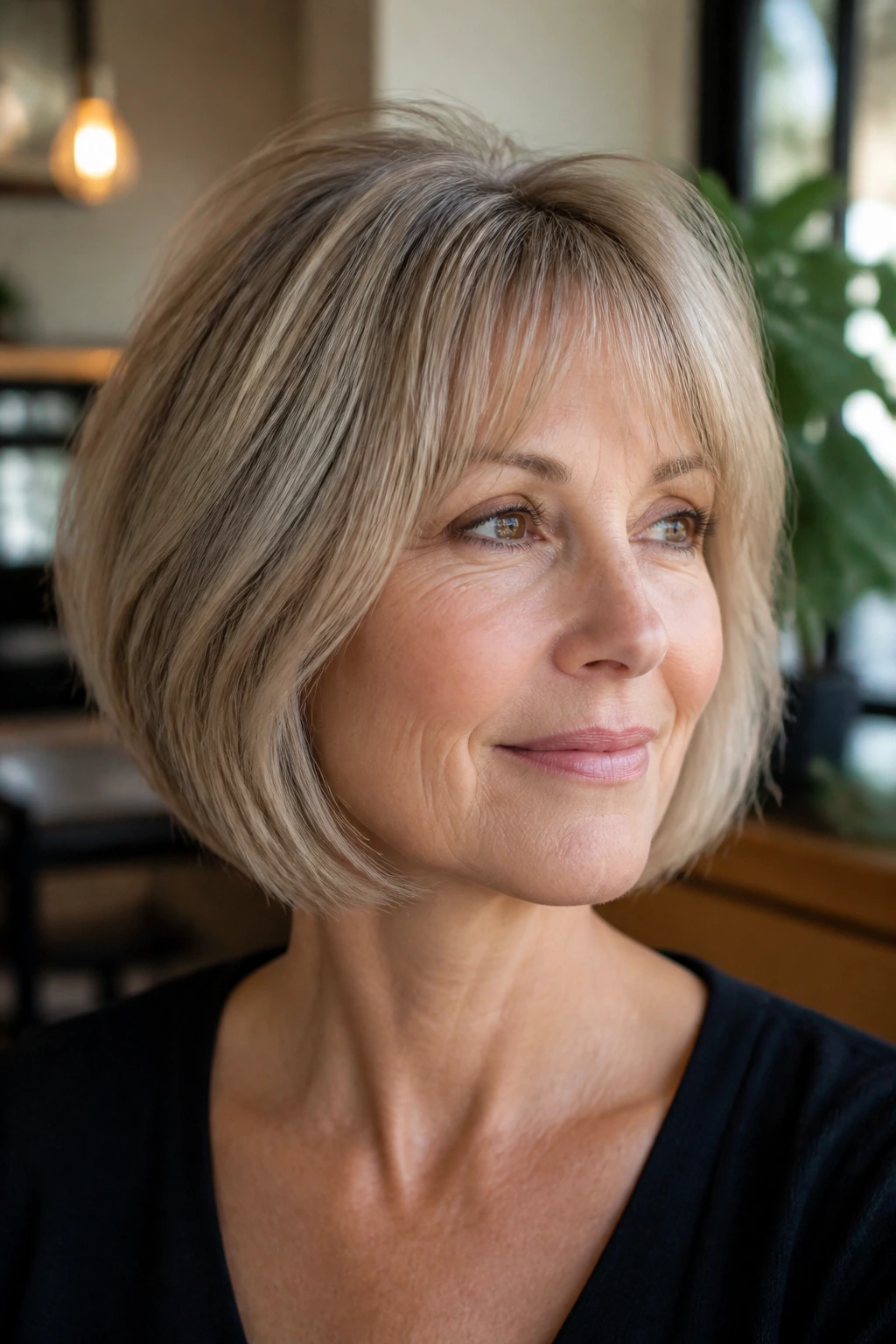
Fine hair needs a careful hand. Too many layers and the ends look frayed. Too little and the style goes flat by noon. This version keeps the layers low and uses curtain bangs that are soft, not skinny, so the front still looks full enough to matter.
Root lift is the real game here. A quick blow-dry at the scalp, a round brush at the crown, and a light mousse before drying can change the whole shape. The bob should look airy, not sparse.
What to ask for
- Layers that begin below the chin
- A gentle bang curtain, not a choppy fringe
- A blunt enough perimeter to keep the hem looking full
If your hair is fine, avoid overloading it with oil. One drop through the ends is enough. More than that, and the cut loses the little bit of bounce it has.
22. Natural Wave Bob with Curly Curtain Bangs

This is the most honest version in the group. If your hair already waves or curls on its own, let it do that. The bob is shaped to support the movement, and the curtain bangs are cut longer so they can shrink up without becoming too short.
I prefer this cut with a dry-cut or curl-aware approach, because waves and curls do not behave like straight hair pretending to be wavy. The bangs should open softly, not hang like a separate curtain in front of the face.
Best for
- 2A to 3A texture
- Humid climates
- People who’d rather diffuse than flat-iron
A curl cream, a light gel, and a diffuser on low heat are usually enough. The goal is not perfect symmetry. The goal is shape that follows the hair instead of fighting it.
Why Layered Wavy Bobs and Curtain Bangs Work So Well After 40
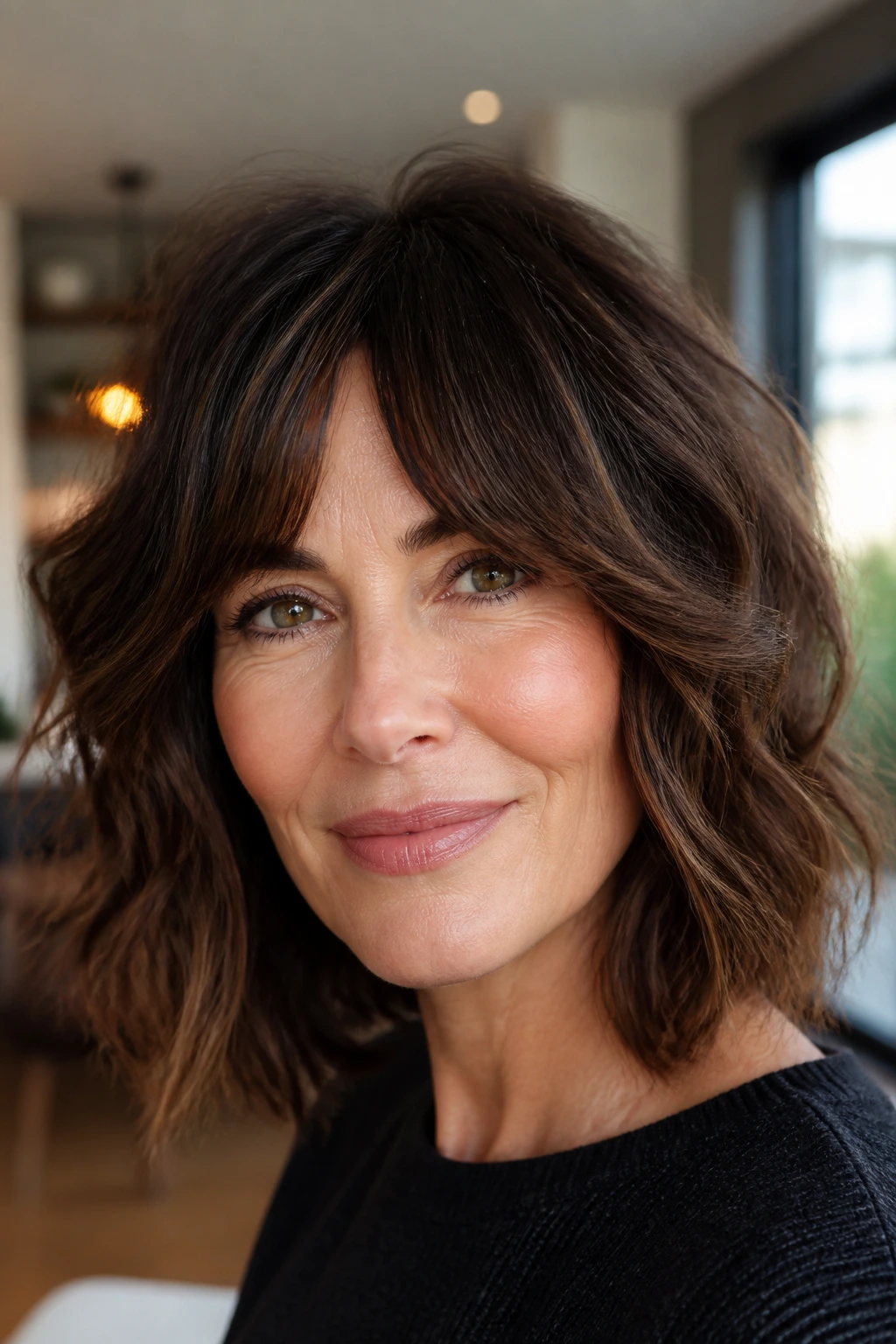
A lot of the best bob advice gets stuck on age, and that’s the wrong lens. The real question is what the hair is doing, how much time you want to spend styling it, and whether the cut can carry a little texture without collapsing. Layered wavy bobs handle those jobs better than blunt, one-length styles because the shape has some air in it.
Curtain bangs are part of that trick. They break up the forehead area, but they also keep the front of the haircut from looking too heavy. That matters if your hairline is changing, if you wear glasses, or if your hair has lost some density near the temples. The bangs don’t need to be dramatic. They just need to land in the right place and move away from the face instead of sitting like a shelf.
Layer placement is the difference between a bob that feels alive and one that feels like a haircut you have to manage all day. Put the layers too high and the ends can get fluffy. Keep them too low and the whole style can go flat around the crown. The sweet spot is usually somewhere between the cheekbone and chin, depending on hair thickness.
That’s why these cuts keep showing up in different forms. They work with changing texture, they grow out without a meltdown, and they can be made softer, sharper, fuller, or looser without starting over from zero.
How to Ask Your Stylist for the Right Version
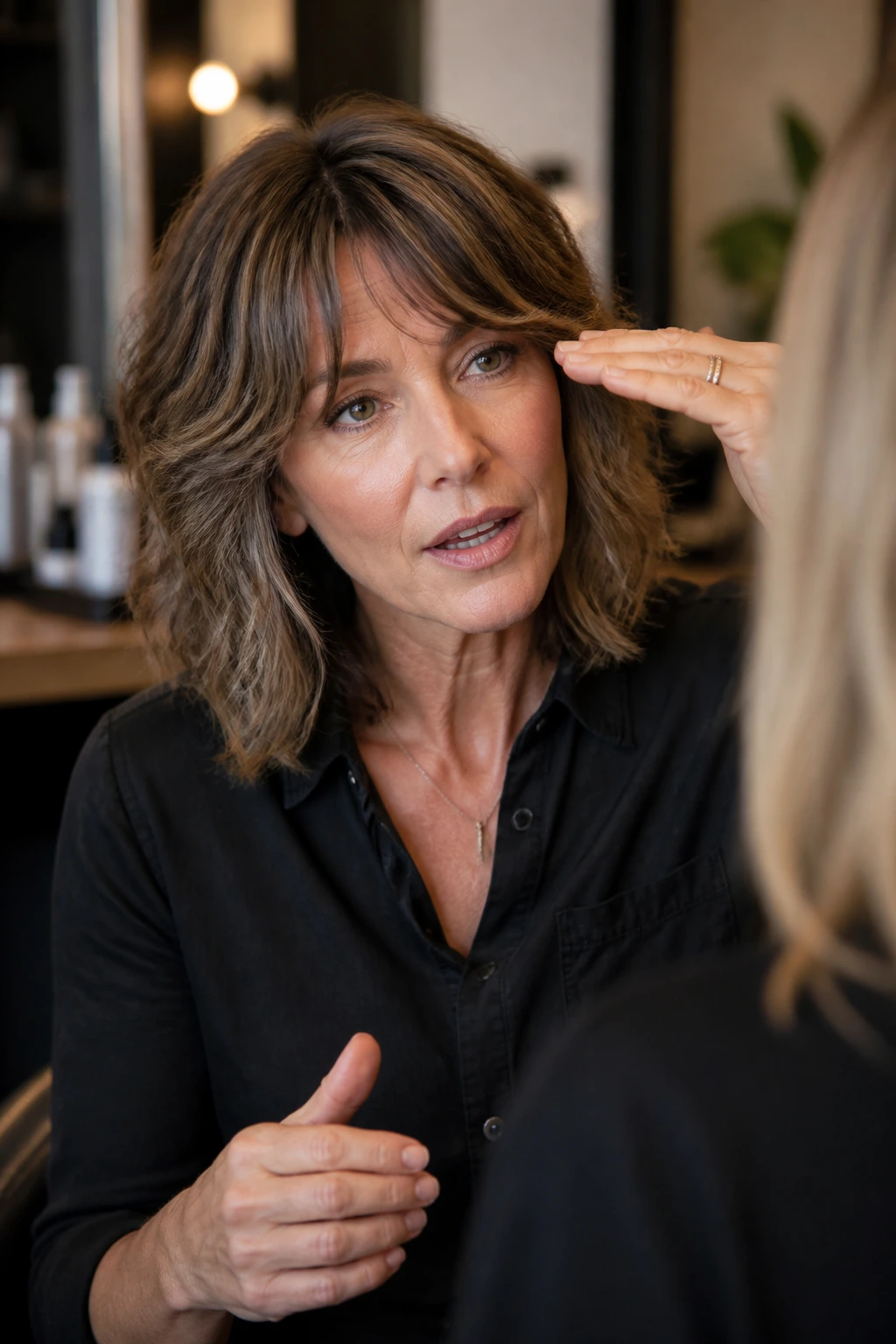
The most useful thing you can say at the salon is not “I want a bob.” Everyone says that. What helps is describing where you want the weight, where you want the fringe to fall, and how much styling you’re willing to do.
Bring two photos if you can: one from the front and one from the side. The side view matters more than people think. That’s where you’ll see whether the layers are stacked, hidden, or sliced away. A bob that looks airy from the front can still be bulky from profile.
Good phrases to use
- “I want the length to hit around the jaw or collarbone.”
- “Keep the curtain bangs long enough to open at the cheekbones.”
- “I want movement, but not a lot of short layers on top.”
- “Please keep the ends full.”
- “My hair needs weight removed, not thinned out everywhere.”
If your hair is wavy, say that plainly. If it’s straight but bends with a blow-dry, say that too. Those are different cuts. A good stylist will hear the difference right away.
The Tools, Products, and Clips That Make Styling Easier
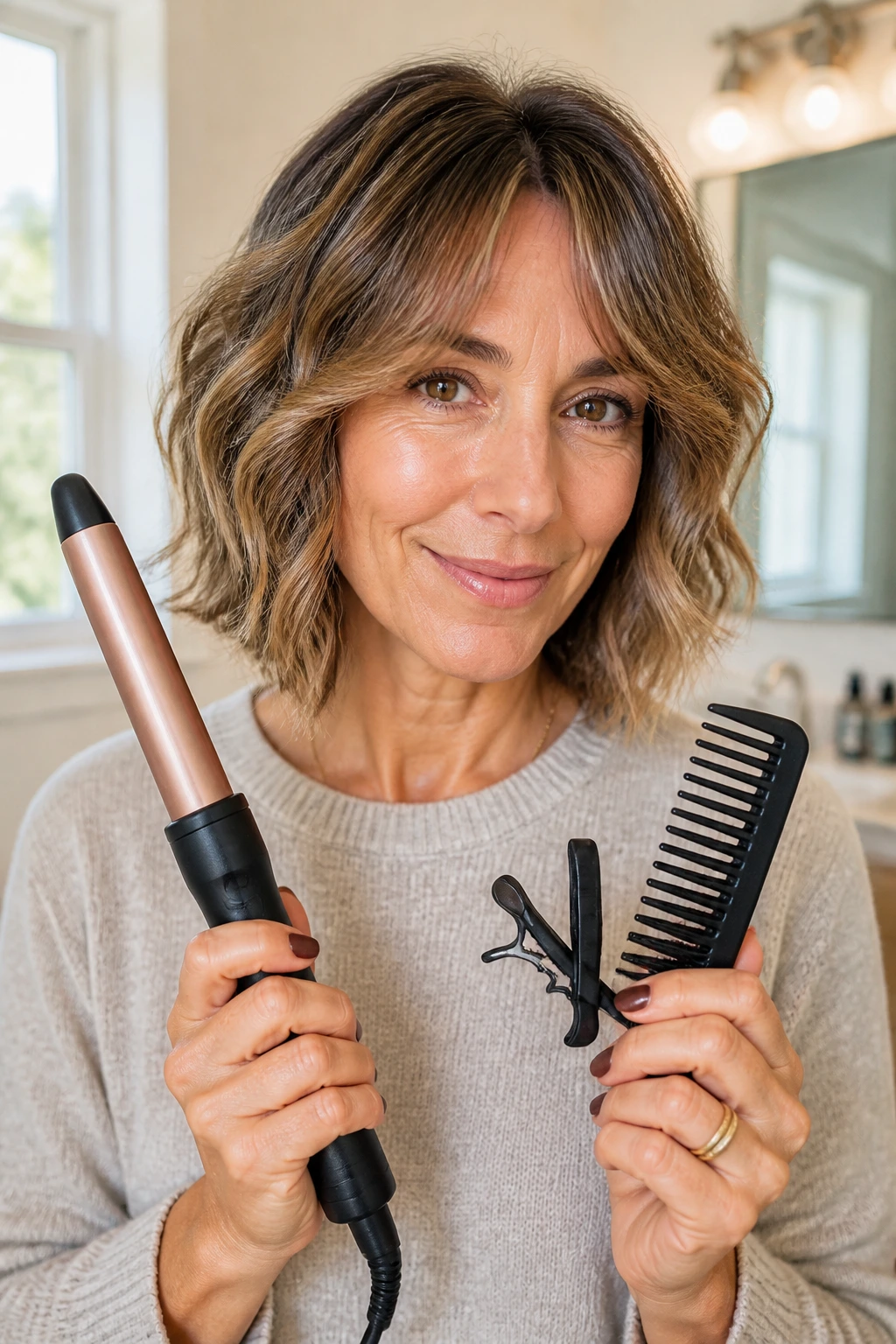
You do not need a drawer full of gadgets. You do need the right few things, because layered wavy bobs with curtain bangs show every shortcut.
- 1-inch or 1.25-inch curling iron or wand: Best for shaping loose waves without turning the bob into curls.
- Blow dryer with a nozzle attachment: Directs airflow so the curtain bangs lie where you want them.
- Small round brush: Useful for lifting the fringe and smoothing the face frame.
- Wide-tooth comb: Good for distributing curl cream or mousse through damp hair without breaking up the wave.
- Sectioning clips: Handy when you want the bangs and crown to dry separately.
- Heat protectant spray: Non-negotiable if you use a hot tool more than once a week.
- Volumizing mousse: A small amount at the roots helps fine hair hold the shape.
- Texturizing spray: Good on the mids and ends after styling, especially for pieces that need separation.
- Light smoothing cream or serum: Use sparingly on thick or frizz-prone hair; too much kills the wave.
One thing I would skip? Heavy waxes near the fringe. They make curtain bangs stick together like little ropes. Not cute. Not useful.
How to Style a Layered Wavy Bob at Home
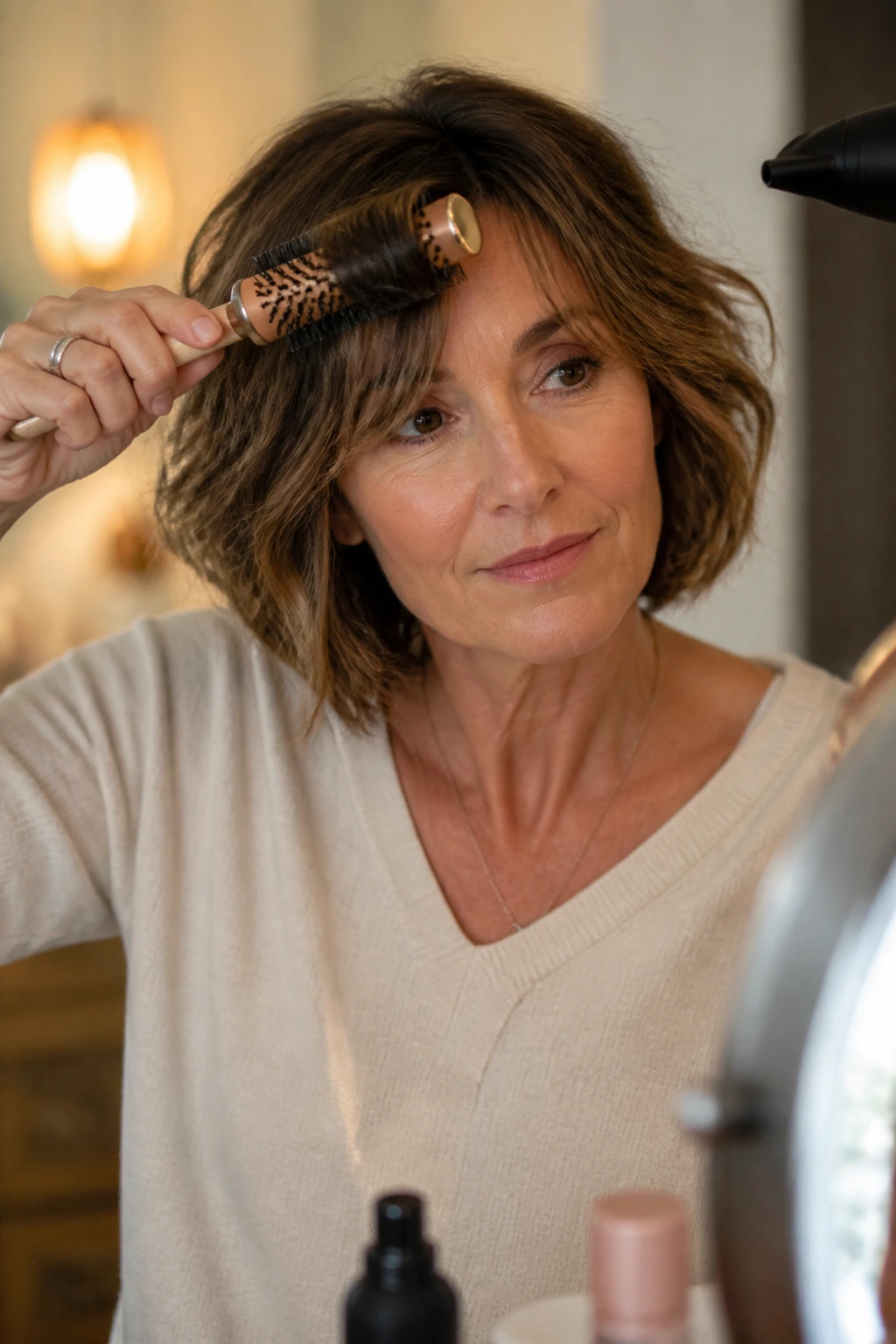
A wavy bob can look intentionally soft or accidentally sleepy. The difference is usually where you put the effort. Not everywhere. Just in the right places.
For a blow-dry finish: Start with the bangs. Dry them first, away from the face, then let them fall and re-dry if needed. Work the crown next. If the top is flat, the whole bob looks dragged down, no matter how nice the waves are underneath. Use a medium round brush and bend the front pieces off the face, not under it.
For an air-dried finish: Put mousse into damp roots and a small amount of cream on the mids. Scrunch once or twice, then leave it alone. If you keep touching the hair while it dries, the wave separates into frizz. A microfiber towel helps. So does patience, which is annoying but true.
For day-two hair: Mist the ends lightly with water, twist 2-inch sections around your fingers, and hit them with a low-heat diffuser for a minute or two. That wakes the wave back up without forcing a full restyle.
For the bangs: Curtain bangs should move. If they sit too straight, use a round brush or velcro roller for 5 minutes while they cool. If they separate too much, a tiny bit of cream on the fingertips is usually enough.
Common Mistakes That Flatten the Shape
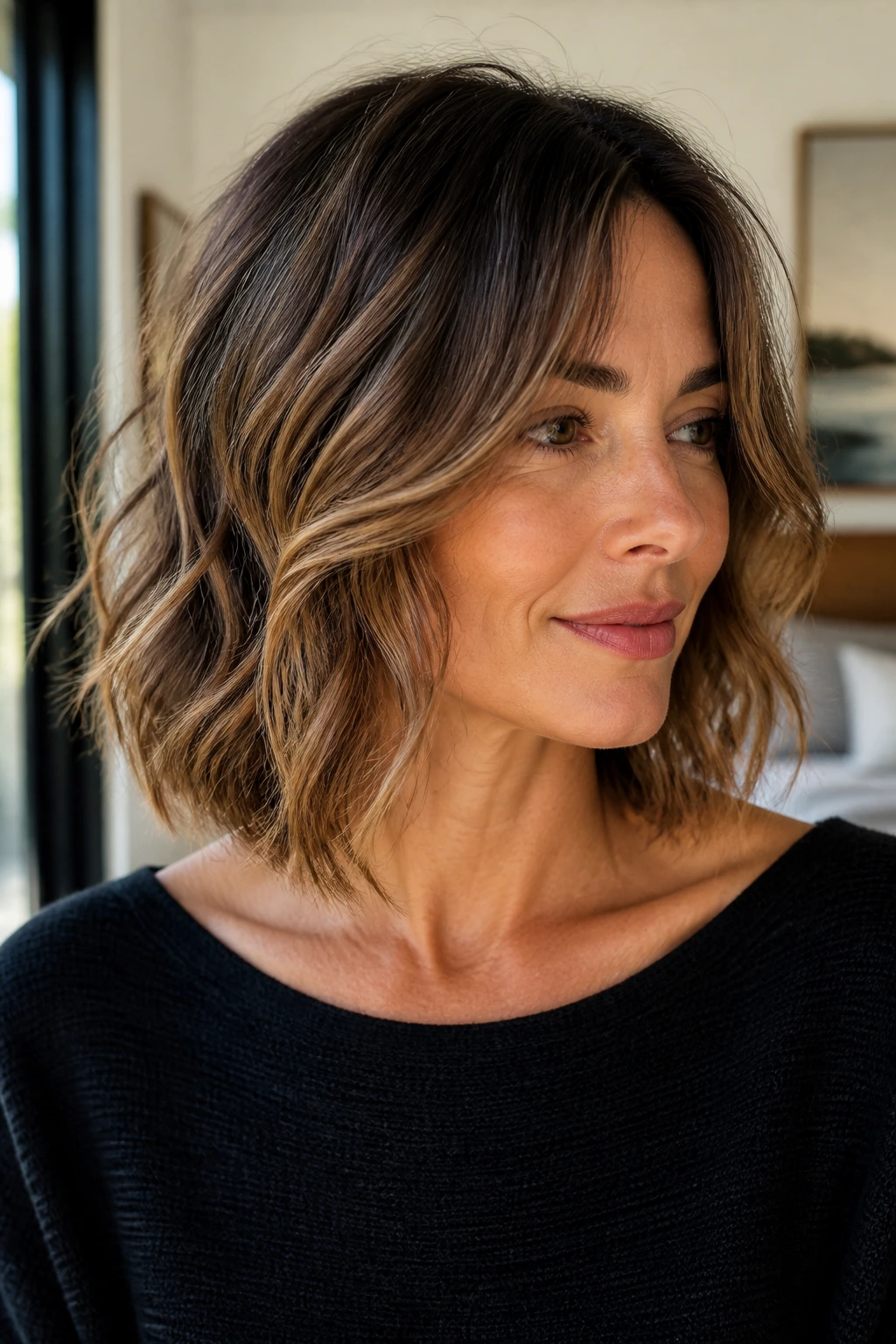
A layered bob can go wrong in very predictable ways. The good news is that most of them are fixable.
- Layers cut too high: This makes the top puff out and leaves the bottom looking thin. Ask for lower layers if your hair already has volume.
- Curtain bangs cut too short: Short fringe on a wavy bob can spring up and lose the soft opening around the cheekbones. Keep the center longer than feels necessary.
- Too much product at the roots: A big dose of cream or oil near the crown drags the cut down and makes the wave collapse. Keep richer products on the ends.
- Over-round-brushing the whole head: If every piece is blown under in the same direction, the bob loses movement and starts feeling helmet-like. Leave some of the ends loose.
- Ignoring trim timing: Curtain bangs grow fast. If they drop into your eyes and get constantly pushed aside, they stop looking like a design choice.
Ways to Adapt the Cut for Fine, Thick, Gray, or Curly Hair
Some versions of this haircut are about shape. Others are about restraint. That distinction matters.
The Fine-Hair Lift Edit: Keep the layers low, the perimeter full, and the curtain bangs soft but not wispy. A root-lifting mousse plus a quick round-brush lift at the crown usually does more than extra cutting ever will.
The Thick-Hair Weight-Removal Edit: Ask for internal debulking and keep the length a little longer, around the chin or collarbone. The goal is motion, not feathering everything into fluff.
The Gray-Blend Glow-Up: Use face-framing brightness — either soft highlights or a gloss — so the curtain bangs open the face. Silver and salt-and-pepper hair look sharper when the front has a touch more dimension.
The Curly-Wave Hybrid: Let the bangs stay longer and cut the bob dry if your wave pattern shrinks a lot. A wavy bob cut wet on curly hair often ends up shorter than anyone expected.
The Glasses-Friendly Fringe: Ask for bangs that clear the frame line and split cleanly at the center. That keeps the hair from sitting on top of your lenses or building a little shelf right where you do not want one.
Keeping the Bob and Bangs in Shape Between Trims

This haircut stays nice when it gets a little maintenance. Not a lot. Just enough.
Plan on a trim every 6 to 8 weeks if you want the bob to keep its line. The bangs usually need attention sooner — around 4 to 5 weeks if they’re hitting your lashes or falling into your eyes. If you’re growing the style out, you can stretch longer, but the shape will soften faster.
Overnight care matters more than people think. A satin pillowcase helps reduce the little dents that show up in the bangs and the top layers. If your hair kinks easily, clip the curtain bangs back loosely before bed or split them to the sides with a soft pin. Do not bend them tight. That leaves a crease that takes too long to shake out.
If you color your hair, keep up with glosses or root touch-ups according to how visible your regrowth is in the front. The bang area is the first place color drift shows up because everyone sees it at eye level. A good trim schedule keeps the cut sharp; a good color schedule keeps the front pieces from looking disconnected from the rest.
Practical Styling Moves That Make This Cut Easier
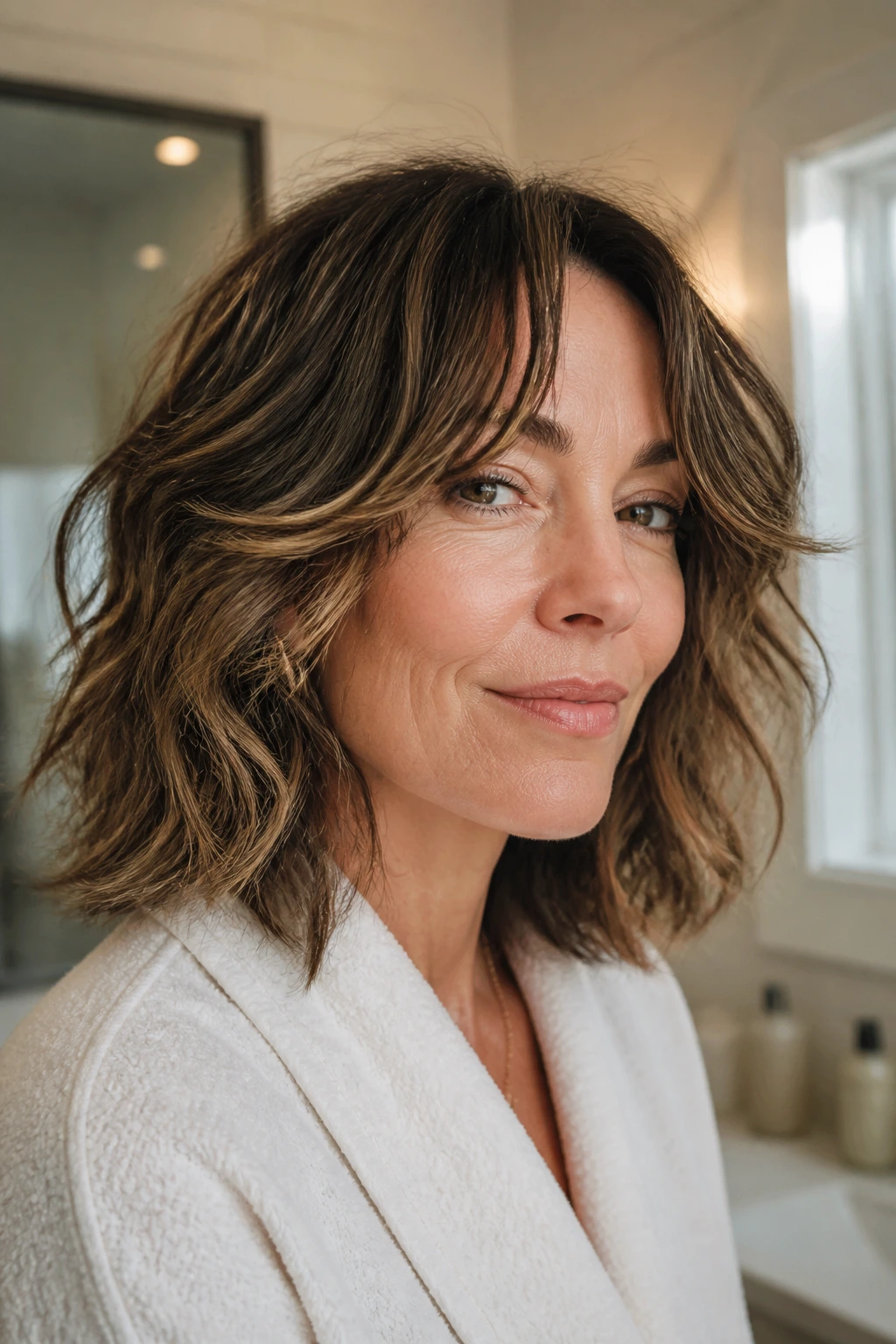
The best thing you can do for a layered wavy bob is simplify the routine. Not strip it down to nothing. Simplify it.
Start with the fringe: Curtain bangs set the tone for the whole cut, so dry them first or at least give them their own attention. If they’re wrong, the whole style feels off.
Use less product than you think: Wavy bobs punish overuse. A little mousse, a little heat protectant, a little texture spray — enough to support the shape, not enough to glaze it.
Keep the wave direction loose: Alternate away-from-face and toward-face bends if you curl with an iron. That keeps the bob from turning into a row of identical noodles.
Choose one finish and stick to it for the day: Soft and airy, or smooth and glossy. If you try to force both at once, the hair often lands in the awkward middle.
Let the cut do the work: A bob with good layers and well-placed bangs should look decent with minimal effort. If you’re spending 45 minutes every morning, the cut may be too demanding.
Frequently Asked Questions
Will curtain bangs work if I wear glasses?
Yes, but the length needs to be right. Ask for the bangs to skim the cheekbones and open away from the bridge of the nose, so they don’t fight the frames. The wrong length can sit right on top of your glasses and make the whole cut feel crowded.
What’s the best bob length if my hair is fine?
Usually chin to collarbone is the safest range. Too short, and fine hair can lose weight at the ends; too long, and it starts to look flat. A low-layered lob with curtain bangs often gives the best lift-to-length ratio.
Can I wear this cut if my hair is very thick?
Absolutely, but the layers need to remove weight in the right places. Ask for internal shaping, not all-over thinning, or you can end up with frizz at the ends and a bulky crown. Thick hair is good at holding shape when it’s cut well.
How short can curtain bangs be before they stop working?
Shorter than eyebrow length is where the trouble starts for most wavy bobs. Once the bangs sit too high, they lose the soft opening and begin to look separate from the rest of the cut. Longer is usually easier to live with.
Can this haircut be air-dried only?
Yes, especially if your hair already has some wave. Use mousse or curl cream on damp hair, scrunch once, and leave it alone while it dries. The key is not to touch it too much while it’s setting, or the shape gets fuzzy.
How often should I trim the bangs?
Every 4 to 5 weeks is a good rule if you want them to keep their length and opening. If you like a softer, grown-in look, you can stretch longer. Just know the center piece may start covering your eyes sooner than the sides.
What if my hair flips out at the ends?
That usually means the hem is too blunt for your texture or the layers are sitting in the wrong spot. A slight bevel with a round brush, or a softer point-cut edge, usually solves it. If the flip is wild, the cut probably needs weight adjusted.
Do layered wavy bobs work on naturally curly hair?
They can, as long as the cut respects shrinkage. Keep the curtain bangs longer than you would on straight hair, and ask for the bob to be shaped on dry hair if your curl pattern is tight. The goal is a frame that follows the curl, not one that ignores it.
The Shape That Keeps Moving
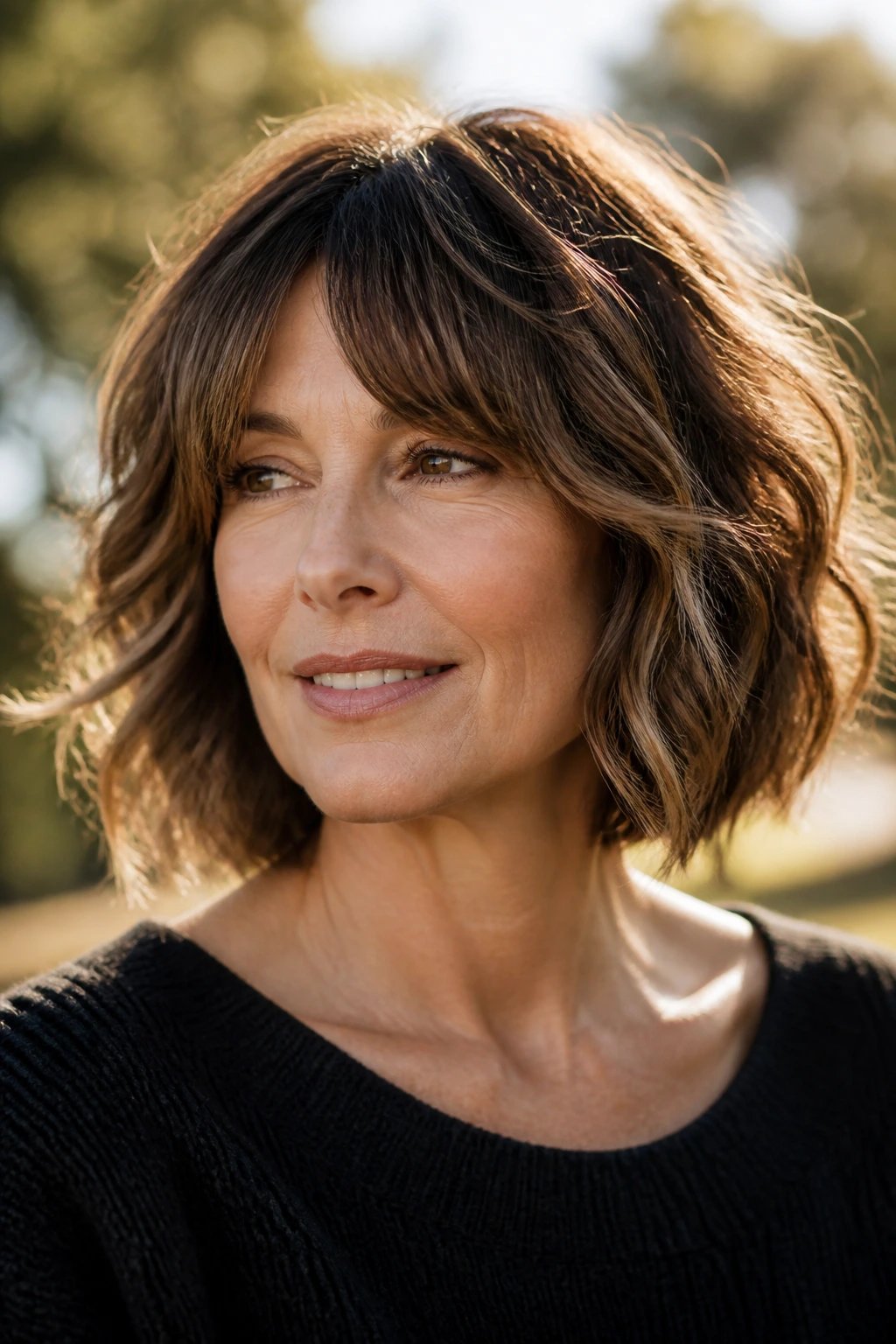
The reason these layered wavy bobs with curtain bangs hold up so well is simple: they leave room for the hair to be itself. That sounds obvious, but it’s where a lot of bad cuts go wrong. They try to force the wave into a shape that was meant for straight hair, or they cut the fringe too blunt and then act surprised when it won’t move.
A good bob after 40 does not need to hide anything. It needs to work with the hair you have, the face you have, and the amount of time you actually want to spend in front of the mirror. That’s why some of the best versions are soft around the edges, a little longer than expected, and built with enough layers to keep the outline from going heavy.
If you bring one of these shapes to a stylist, don’t ask for the whole thing at once. Pick the one that fits your texture, then adjust the fringe and layer placement to suit your hair. That’s where the good versions live — in the details, not the label.