



A straight bob on a round face can go one of two ways: crisp and flattering, or boxy and wider than you wanted. The difference usually comes down to three things that people talk around too much: where the length lands, how hard the front line is, and how bright the face-framing pieces are. Straight bobs for round faces with money piece highlights work when they pull the eye upward and downward at the same time, instead of letting the haircut sit in one flat horizontal band.
The money piece is doing more than “adding brightness.” On a round face, those lighter front strands can carve out cheekbone space, sharpen the jaw a little, and keep a blunt cut from feeling heavy. But placement matters. Too wide, and it turns into a stripe. Too high, and it can look disconnected from the rest of the bob. The sweet spot is usually just off the hairline, with the lightest part around the cheekbone or eye line and a softer fade through the midlengths.
The 25 looks below lean into that balance in different ways. Some are short and sharp, some skim the collarbone, some keep the front corners longer, and some use a softer color melt so the face frame does the talking without shouting. If you’ve ever loved a bob in theory and felt a little betrayed by it in the mirror, the shape probably just needed better geometry.
Why These Bobs Earn a Spot on the Shortlist

- Face-Lengthening Fronts: The best versions don’t stop dead at the widest part of the cheek; they land a little below it, which gives the face a cleaner vertical line.
- Money Piece Placement: A bright front panel works here when it starts near the part and softens as it drops, so the color frames instead of stripe-marking the face.
- Straight Shape, Not Flat Shape: A real bob has movement in the edges even when it’s worn sleek, usually through a slight bevel or tucked finish.
- Easy Color Maintenance: A face frame is cheaper and less time-consuming to refresh than full-head lightening, especially if you keep the root area deeper.
- Works With Fine or Thick Hair: The right bob can make fine hair look denser at the ends and can remove bulk from thicker hair without turning it fluffy.
- Round-Face Friendly Angles: Side parts, longer front corners, and controlled asymmetry all help break up the widest point of the face without making the cut feel fussy.
1. Chin-Grazing Blunt Bob with a Narrow Center Money Piece
A chin-grazing blunt bob is a blunt instrument in the best sense: clean, graphic, and very deliberate. On a round face, the trick is to let the line sit at the chin rather than above it, then keep the money piece narrow so the front doesn’t swell into a bright curtain.
The color should start just off the part and drift forward with a soft edge, not a hard stripe. I like this cut best when the ends are pressed straight with just a hint of bend under the jaw. It makes the lower face look a touch longer without losing the tidy, polished feel that makes a blunt bob so appealing.
What makes it work
The narrow front highlight creates a slim vertical line near the cheeks, which keeps the eye moving. A center part can still work here because the chin-length cut adds structure where round faces often need it most.
2. Deep Side-Part Bob with Sweeping Face-Frame Highlights
A deep side part changes the whole mood of a straight bob. Instead of reading as symmetrical and broad, it throws one side forward and creates a long diagonal across the face, which is exactly why it flatters round shapes so well.
The money piece should be heavier on the front side and lighter near the temple, almost like a ribbon that starts bold and gets airy as it falls. That contrast gives the bob some drama without needing curls or waves to create movement. If you wear glasses, this one is particularly good; the side part keeps the cut from fighting the frames.
Best detail to ask for
Ask for the front pieces to skim just below the cheekbone on the heavier side. That small change keeps the shape from cutting across the widest part of the face.
3. Jawline A-Line Bob with a Bright Front Panel
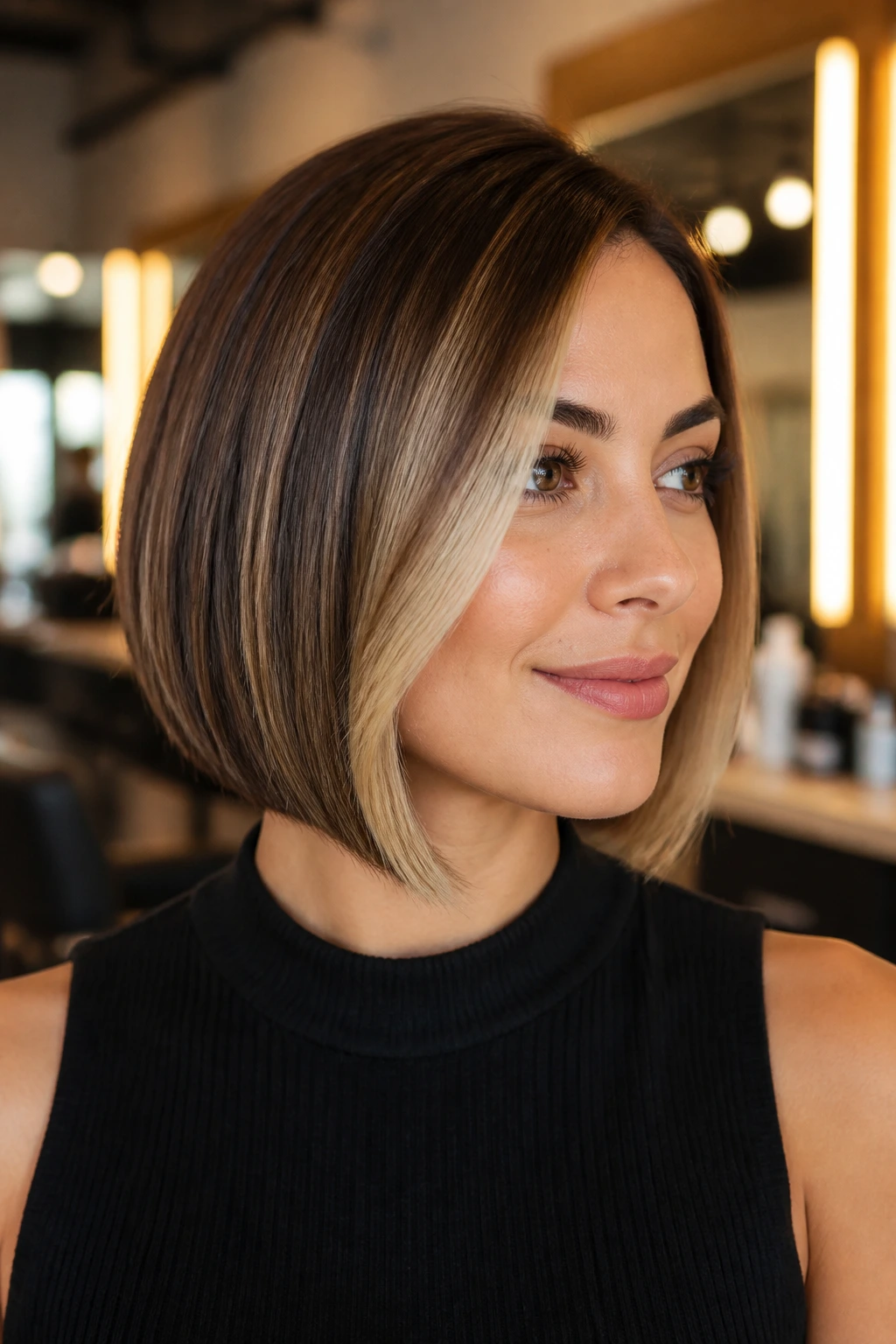
The A-line bob is one of my favorite shapes for a round face because it does the face-slimming work quietly. The back sits a touch shorter, the front falls longer, and that angle naturally narrows the lower face without looking severe.
With money piece highlights, this cut becomes sharper around the cheek and softer at the edges. The front panel should be bright enough to show against the base color, but not so pale that it steals attention from the cut itself. Think “refined frame,” not “striped front.”
The best version keeps the ends sleek and controlled. If the line frays or flips too much, the angle gets lost. A flat iron pass and a light serum usually handle it.
4. Collarbone Lob with Long, Satin-Straight Ends
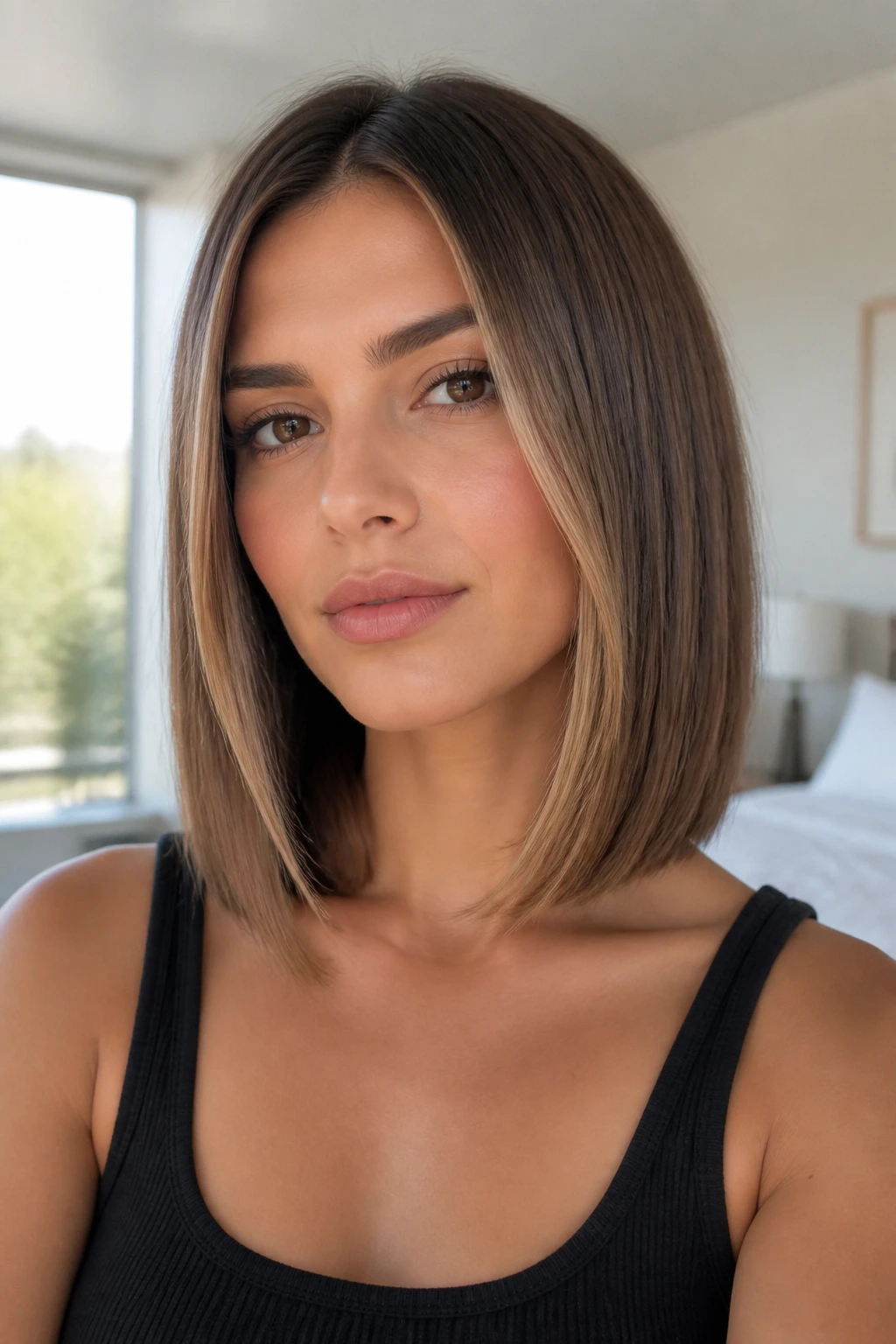
A collarbone lob is the safety net of this whole category. If you like the bob idea but don’t want anything that feels too short or too severe, this length gives you room to move and still keeps the face open.
The money piece works here because the extra length lets the light pieces taper naturally past the cheeks. That soft taper matters on a round face. A bright front panel that ends at the jaw can look abrupt; one that slides toward the collarbone feels longer, leaner, and more expensive-looking in a quiet way.
Small styling note
Keep the ends blunt enough to look intentional. If the perimeter gets too feathery, the lob loses the clean line that makes it good on rounder faces in the first place.
5. Boxy French Bob with a Soft Money Piece

A boxy French bob sounds strict, and honestly, it is. That’s why it works. The silhouette lands short and neat, but the money piece softens the edges so the cut doesn’t feel like a helmet.
On a round face, I’d keep the front just grazing the jaw instead of sitting higher. The highlight should be delicate and diffused through the first inch or two near the part, then brighter around the eyes. That placement keeps the cut from widening the face across the cheeks.
This is one of those cuts that looks better when it’s a little imperfect. A tiny bit of bend at the ends or a tucked side gives it life. Too much polish, and it goes stiff fast.
6. Asymmetrical Bob with One Longer Front Corner
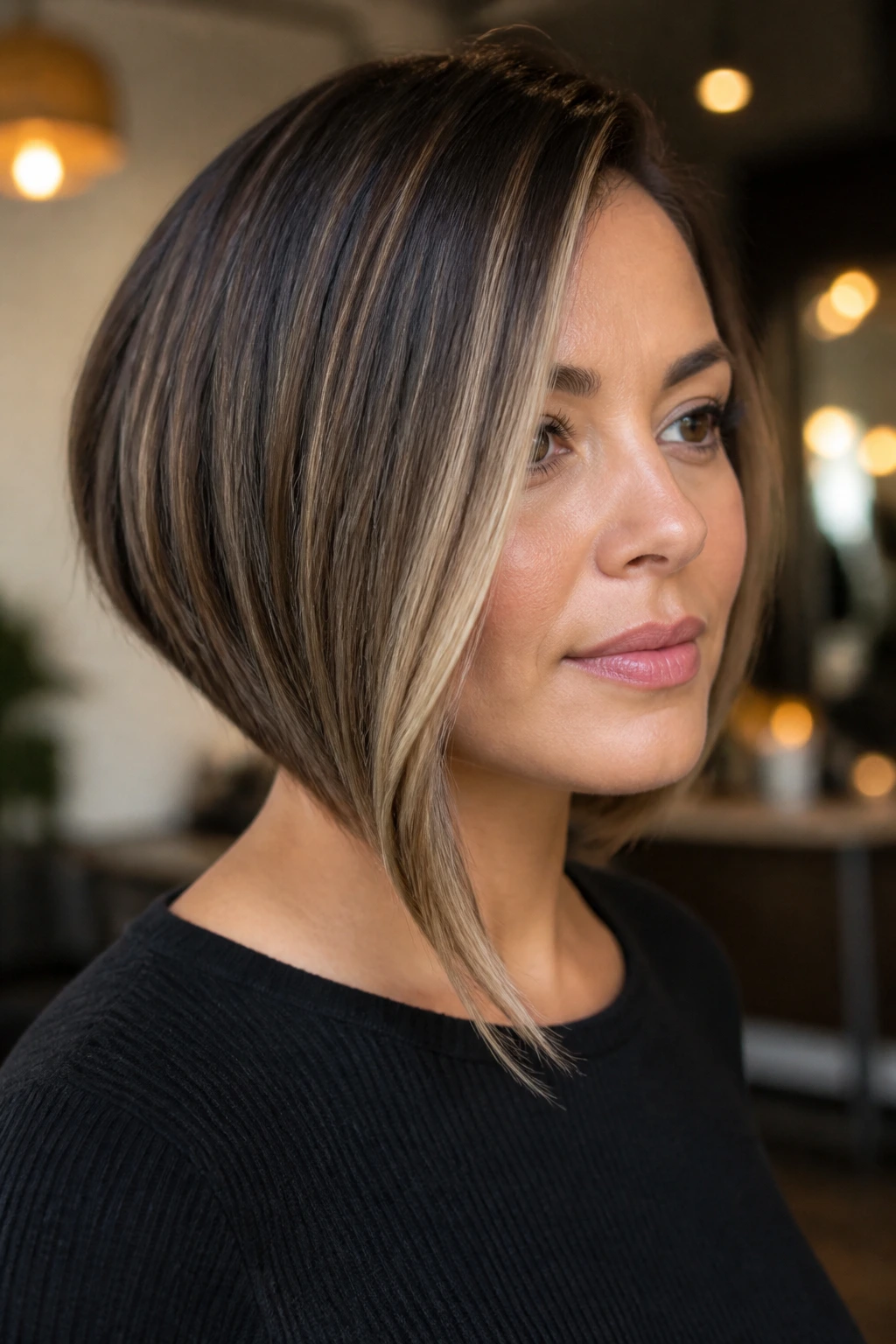
A little asymmetry goes a long way on a round face. When one front corner is longer than the other by even half an inch to an inch, the cut stops reading as a perfect circle and starts pulling the eye diagonally.
The money piece should follow that longer side, not fight it. I like a brighter streak on the longer front corner, with a softer companion highlight on the shorter side so the whole cut feels balanced. That mismatch creates interest without looking choppy.
This is a good choice if you want a bob that feels modern but not loud. It photographs well in motion, but more important, it gives the face a longer line every time you turn your head.
7. Glass-Hair Bob with Ultra-Clean Edges
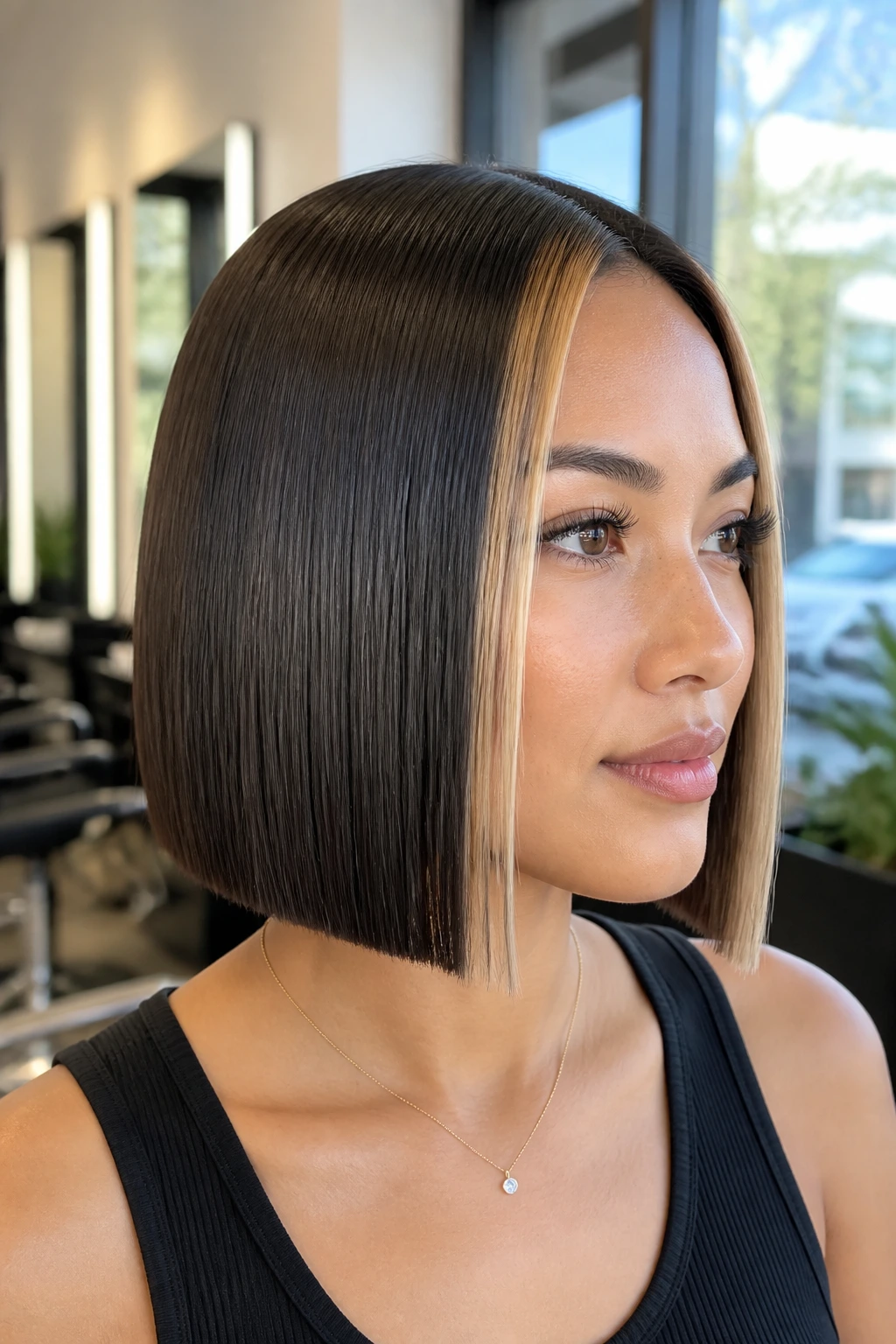
Glass hair is unforgiving, which is exactly why it’s so good when it’s done right. The straight bob becomes a single, shiny sheet, and the money piece adds just enough contrast to keep the front from disappearing into the rest of the cut.
For round faces, the edge needs to sit slightly below the widest cheek point. That keeps the line from cutting across the face like a ruler. The highlight should be narrow, clean, and bright enough to catch light near the part without blooming into a thick streak.
This style rewards strong styling habits. If your blow-dry is rough or your flat iron passes are uneven, the whole effect breaks. When it’s smooth, though, it looks sharp in a way that feels expensive without trying too hard.
8. Tucked-Behind-the-Ear Bob with Hidden Dimension

Not every flattering bob needs to show off both sides equally. Tucking one side behind the ear creates a built-in asymmetry that helps round faces look a little leaner, especially when the untucked side carries the brighter money piece.
The front highlights should be brightest where they peek from behind the cheekbone, then softer toward the temple. That peekaboo effect is useful because it keeps the color from reading as a loud face stripe. It feels more like light landing where it should.
This cut is underrated for everyday wear. It keeps hair off the face, which many round-face clients like, but still leaves enough shape in front to frame the jaw. Clean, easy, and not boring. Rare combination.
9. Curved-Under Bob with Cheekbone-Lifting Highlights
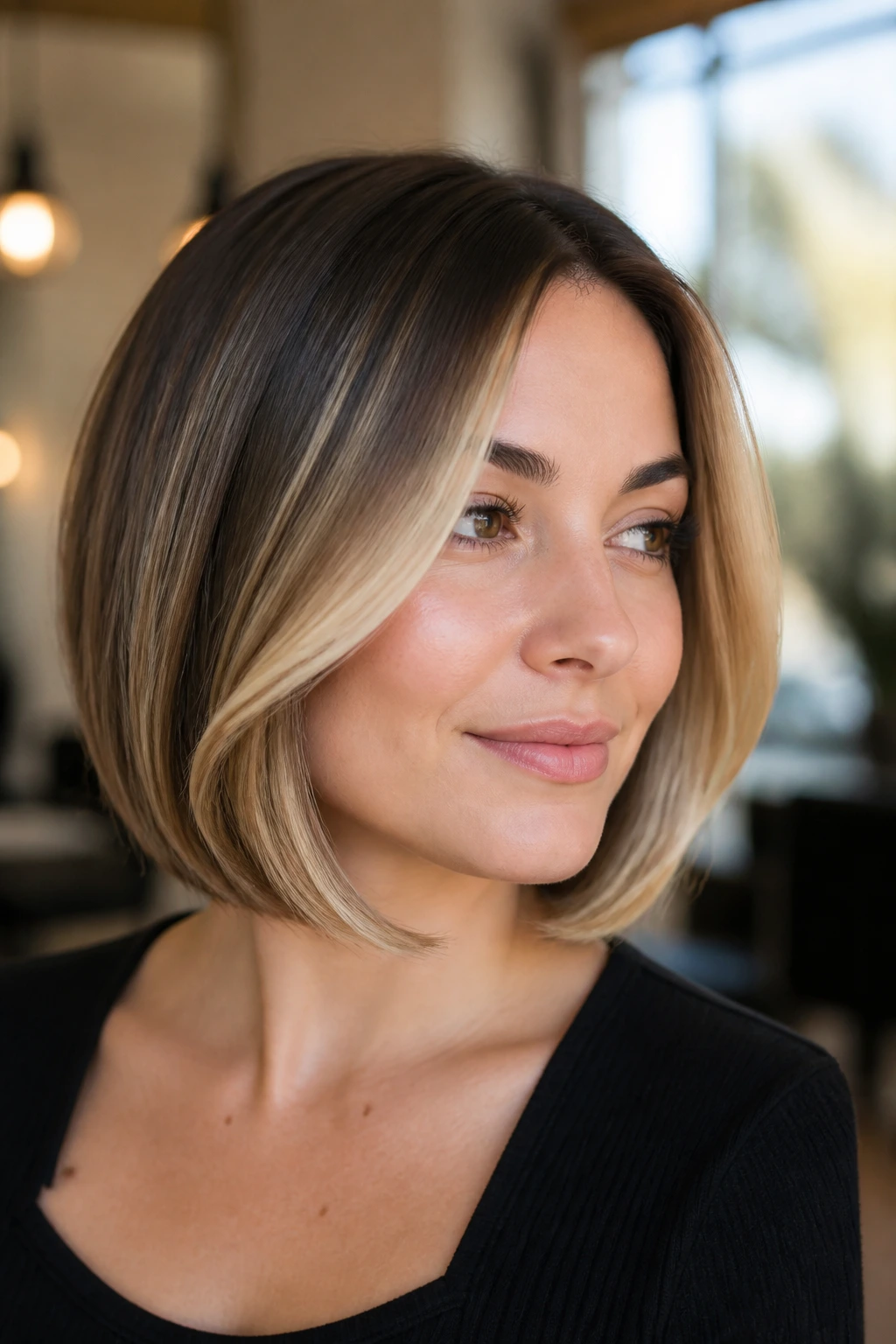
A slightly curved-under bob gives round faces a little lift at the perimeter. The ends bend inward just enough to hug the jaw, which keeps the silhouette neat instead of boxy.
The money piece should be placed to point toward the cheekbone, not sit directly in front of it. That tiny angle matters. A bright line that leans inward visually lifts the midface, while a straight-down panel can just flatten things.
What to ask your stylist for
- Front pieces that graze the cheekbone rather than stop at it
- A soft bevel through the ends, not a full curl
- Brightness concentrated at the front 2 inches, then diffused
- A toner that keeps the highlight from turning too yellow against the base
10. Micro Bob with a Thick Hairline Frame
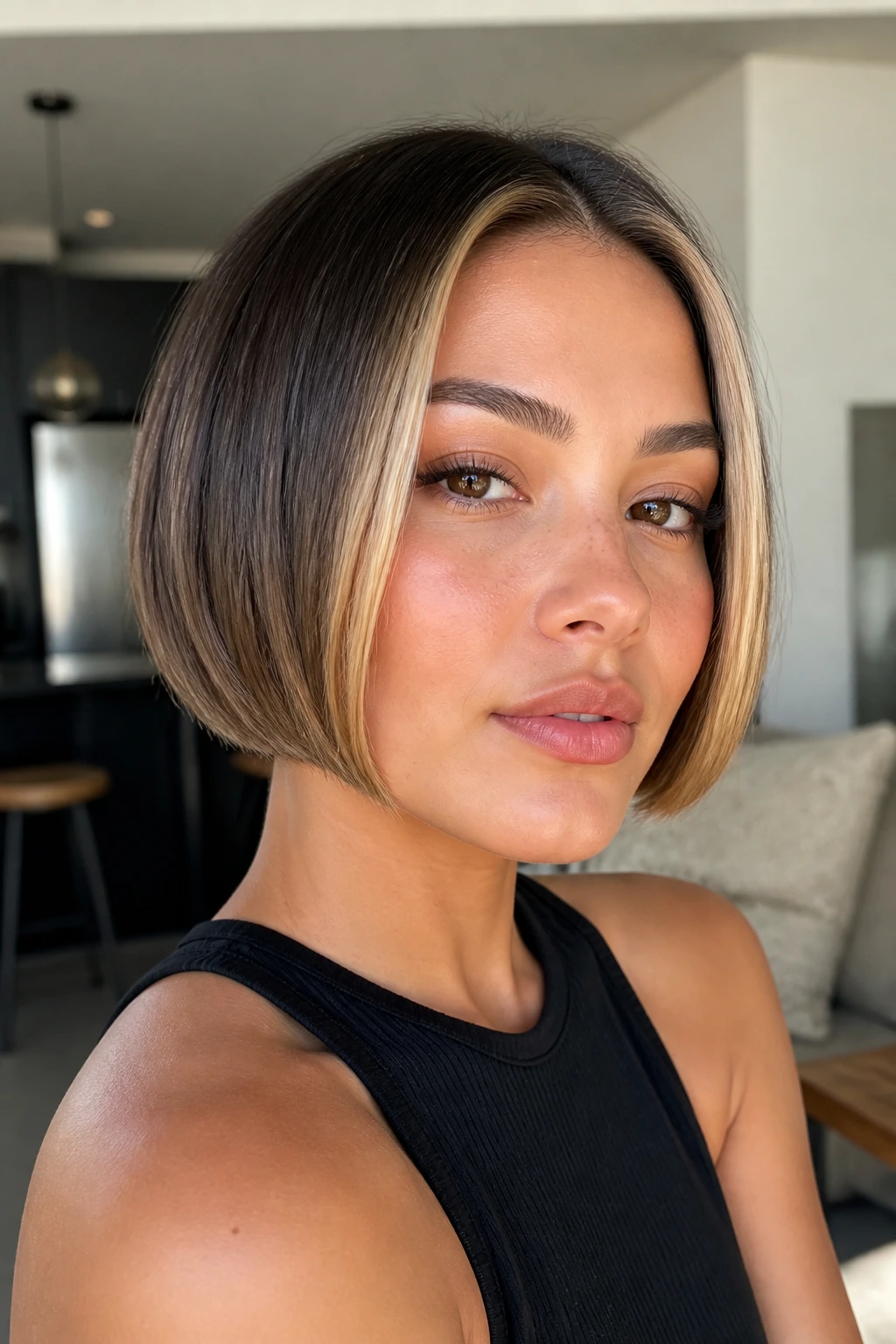
A micro bob is brave territory. Short hair means every millimeter shows, which is why the shape needs clean lines and a thoughtful money piece to keep it from feeling too blunt against a round face.
The bright front frame should be slightly thicker here than on longer bobs. Short cuts need a bit more color weight near the face or they can disappear. I’d keep the base tone deeper underneath and let the lighter pieces sit at the hairline and around the eyes.
This one is best if you like a strong look and don’t mind regular trims. Every 4 to 6 weeks is not overkill with a cut this short. Skip the extra styling fluff. The whole point is the line.
11. Layered Bob with Airy Ends and a Feathered Money Piece
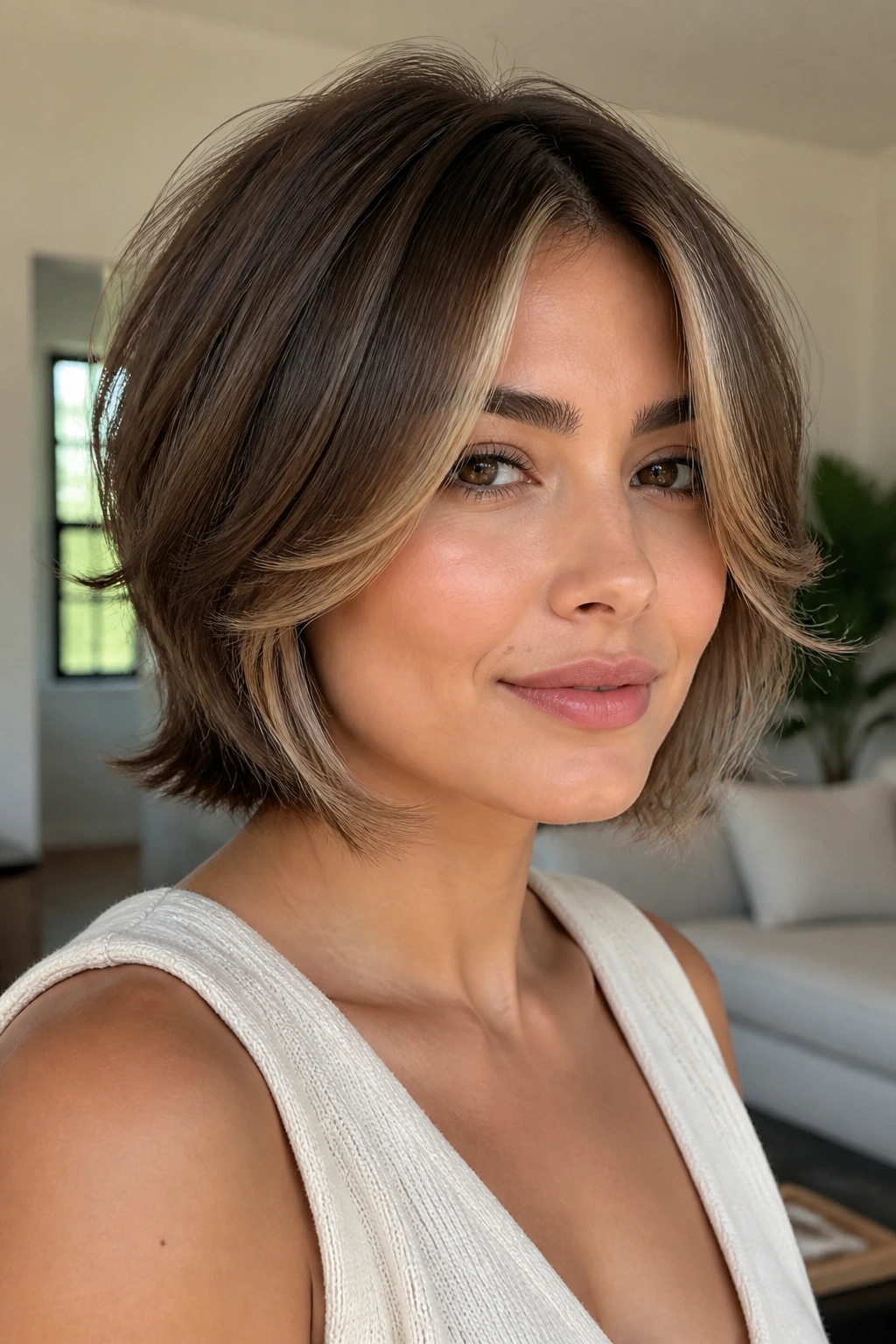
Layers and round faces can be tricky, but in a straight bob they work when the layers stay light and mostly internal. You’re not trying to create shag territory here. You’re trying to remove bulk so the ends sit cleanly.
A feathered money piece helps because it softens the front without making the bob fluffy. Keep the lighter strands a shade or two brighter than the base and let them blend through the first few inches. The face frame should feel breezy, not stripey.
This version is especially good for thick hair that tends to puff out at the sides. The cut gives the shape some breath, and the highlight keeps the front from looking heavy. Both matter. Neither can do the job alone.
12. Graduated Bob with a Strong Nape
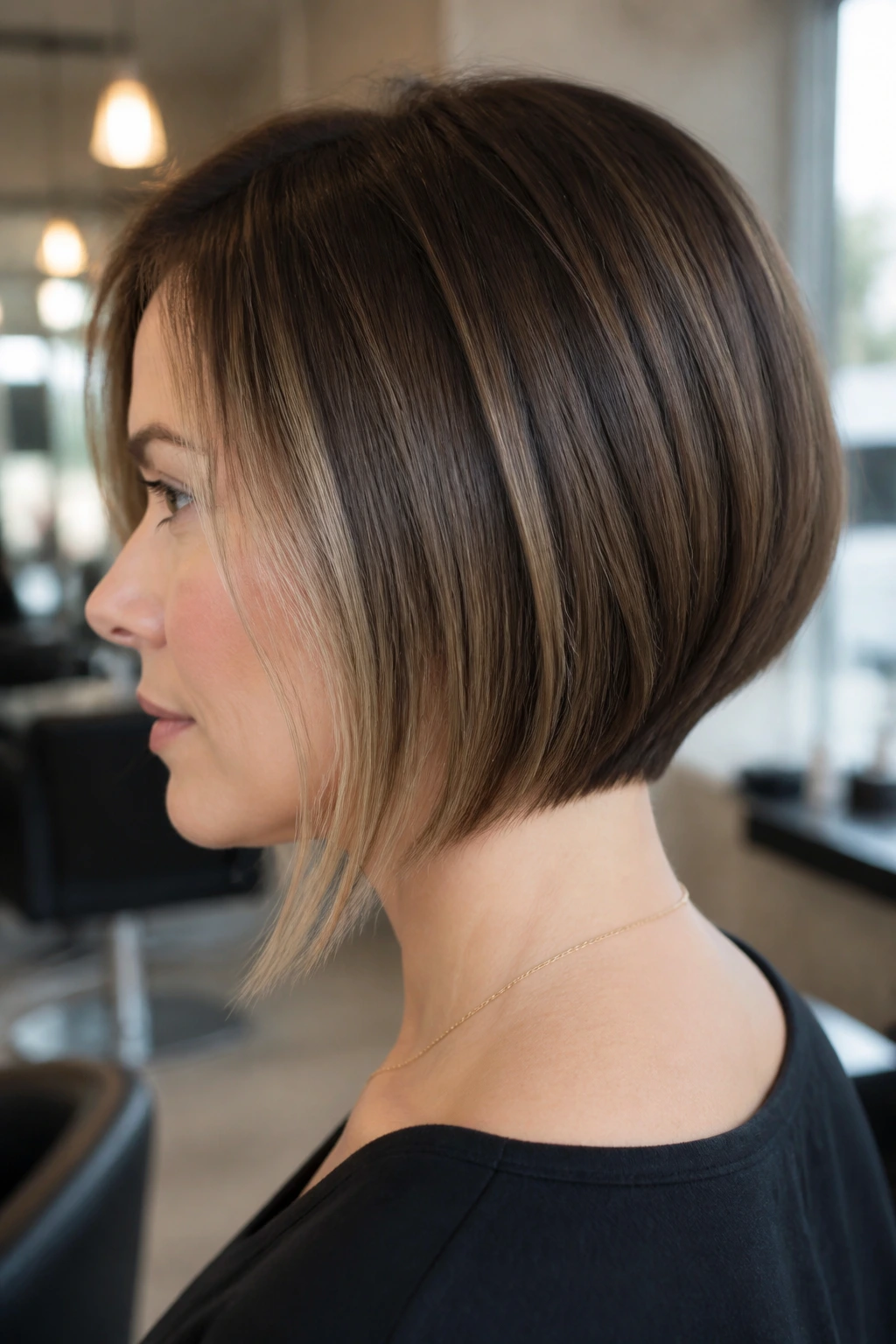
A graduated bob stacks the back slightly and leaves the front longer, which gives round faces a more structured outline. The nape sits clean and compact, while the front corners pull the eye forward.
The money piece should stay controlled here. Too much brightness in the front can fight the sleek shape. A slim highlight that starts near the part and frames the cheekbone is enough to wake up the cut.
This is one of the easiest bob shapes to keep looking neat after a blow-dry. The back naturally wants to sit in place. If you like a haircut that still looks intentional on day three, this is a solid option.
13. Blunt Bob with Curtain-Style Front Pieces
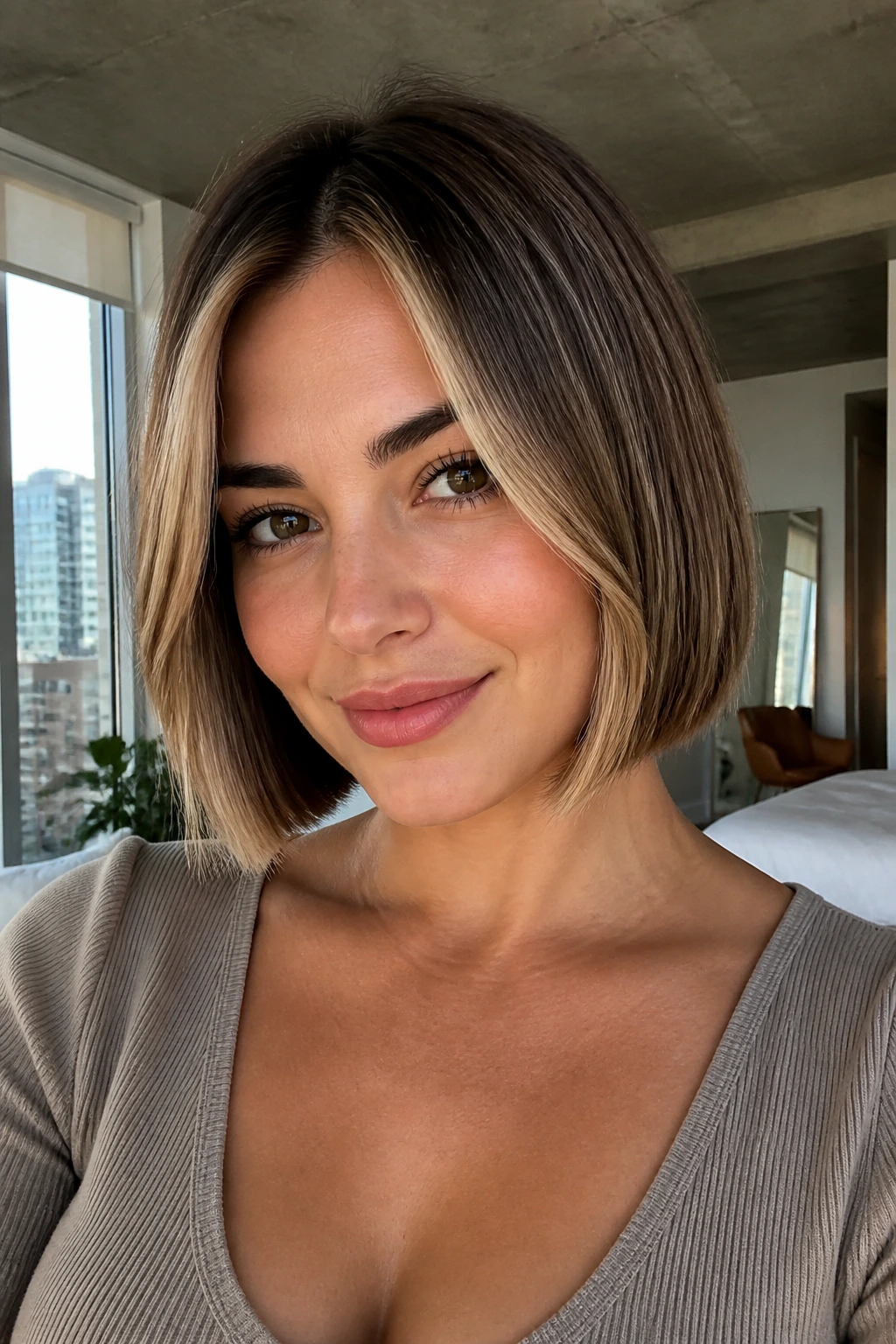
Curtain-style front pieces on a straight bob are a smart compromise for anyone who wants softness without losing the bob’s clean line. The middle stays blunt; the front opens away from the face a little.
That opening is what helps a round face. The money piece follows the curtain shape, brighter near the part and softer as it falls. It gives the illusion of width at the temples and length through the lower face, which sounds backward until you see it in a mirror. Then it makes sense.
Keep the front pieces long enough to hit the cheekbone or just below it. Too short and the frame gets choppy. Too long and the whole look loses definition.
14. Shoulder-Skimming Bob with Cool-Toned Brightness
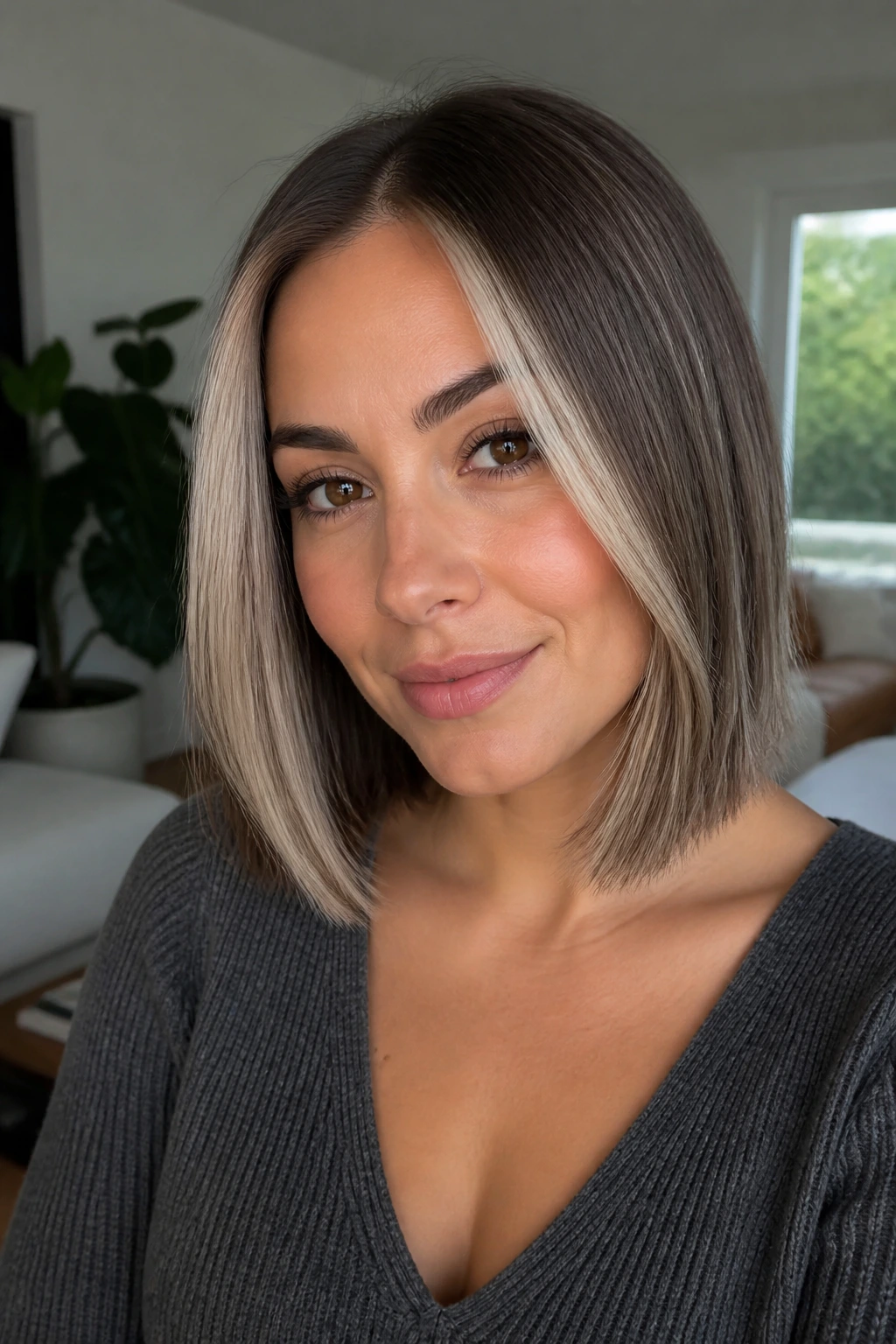
A shoulder-skimming bob is basically the long, polished cousin of the chin bob. It works when you want face-framing structure without committing to a shorter cut, and it’s especially kind to fuller cheeks because the length keeps everything from bunching at the jaw.
The money piece can go cooler here—beige, ash, or a cool pearl tone—because the extra length gives the eye more room to travel. The front highlight shouldn’t be the loudest part of the head. It should just sit there and do its job while the cut stays smooth.
If your hair is naturally straight, this is a low-drama option. Blow-dry the ends under, keep the roots flat, and the whole shape reads sleek instead of limp.
15. Sleek Lob with a Soft Root Shadow
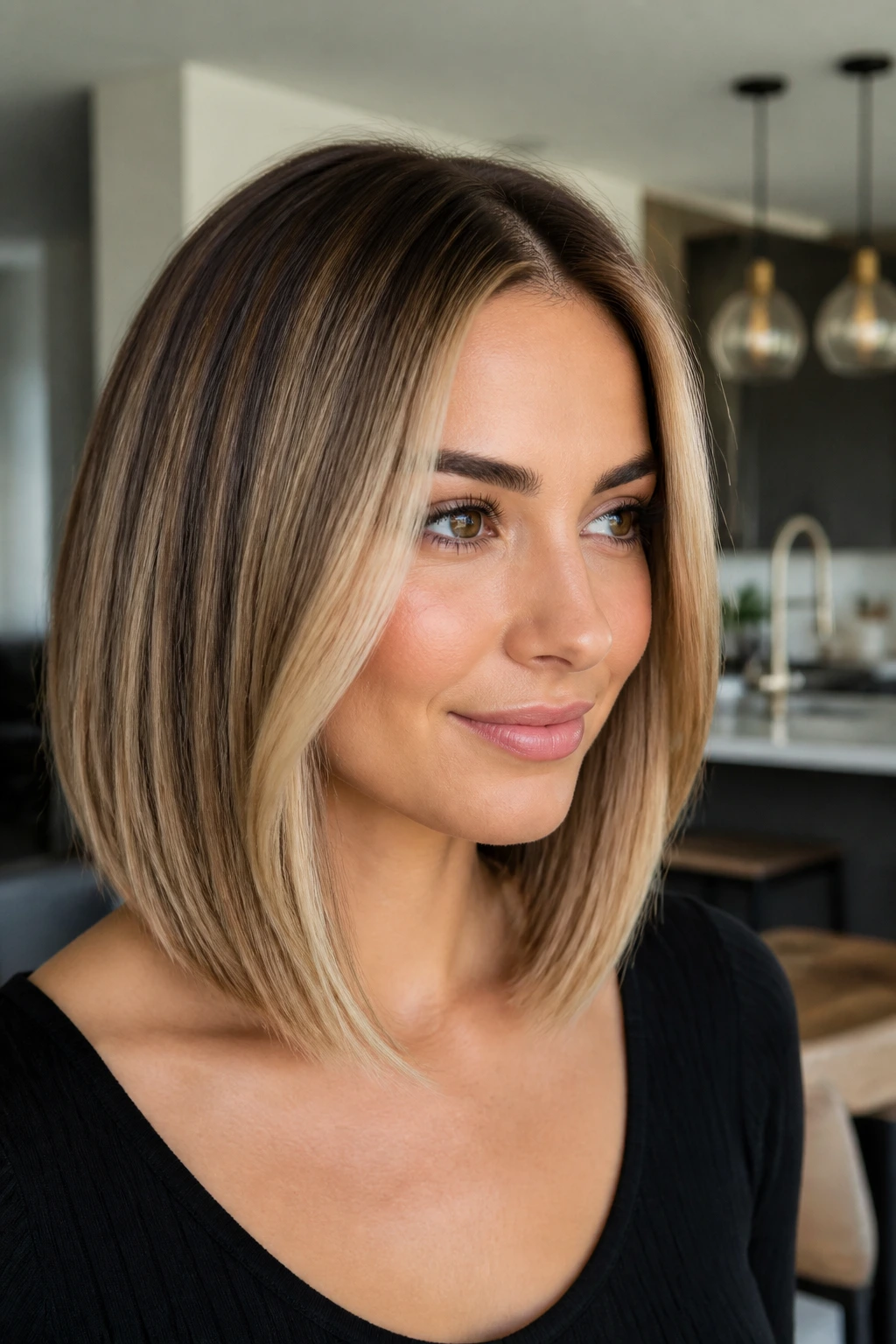
A root shadow is one of the easiest ways to make a bright money piece look expensive instead of overprocessed. The darker root softens the contrast at the part, which is useful on a round face because it prevents the eye from getting stuck in one bright block near the cheeks.
The lob itself should be clean and straight, with the front slightly longer than the back. That tiny angle matters. The color at the front can be brighter, but the transition should look smooth from root to face frame.
Why I like this one
It grows out better than a high-contrast blonde panel. If you hate constant tone maintenance, this is the version to ask for.
16. Razored Bob with Soft Ends and a Pale Face Frame

A razored bob gets a bad reputation because too much razor work can make hair fray. But when it’s handled lightly, it can take the edge off thick, blunt-looking hair and give the bob a more touchable finish.
The money piece should stay pale but not icy. On a round face, a too-white front panel can look harsh against soft features. A creamy blonde, beige brunette, or soft copper frame usually looks richer and sits more naturally against the cut.
This is the cut for someone who wants movement without a lot of curl. The ends should still be straight enough to hold the bob shape, but they don’t need to feel rigid. That balance is the whole game.
17. Side-Swept Bob with a Longer Temple Slice
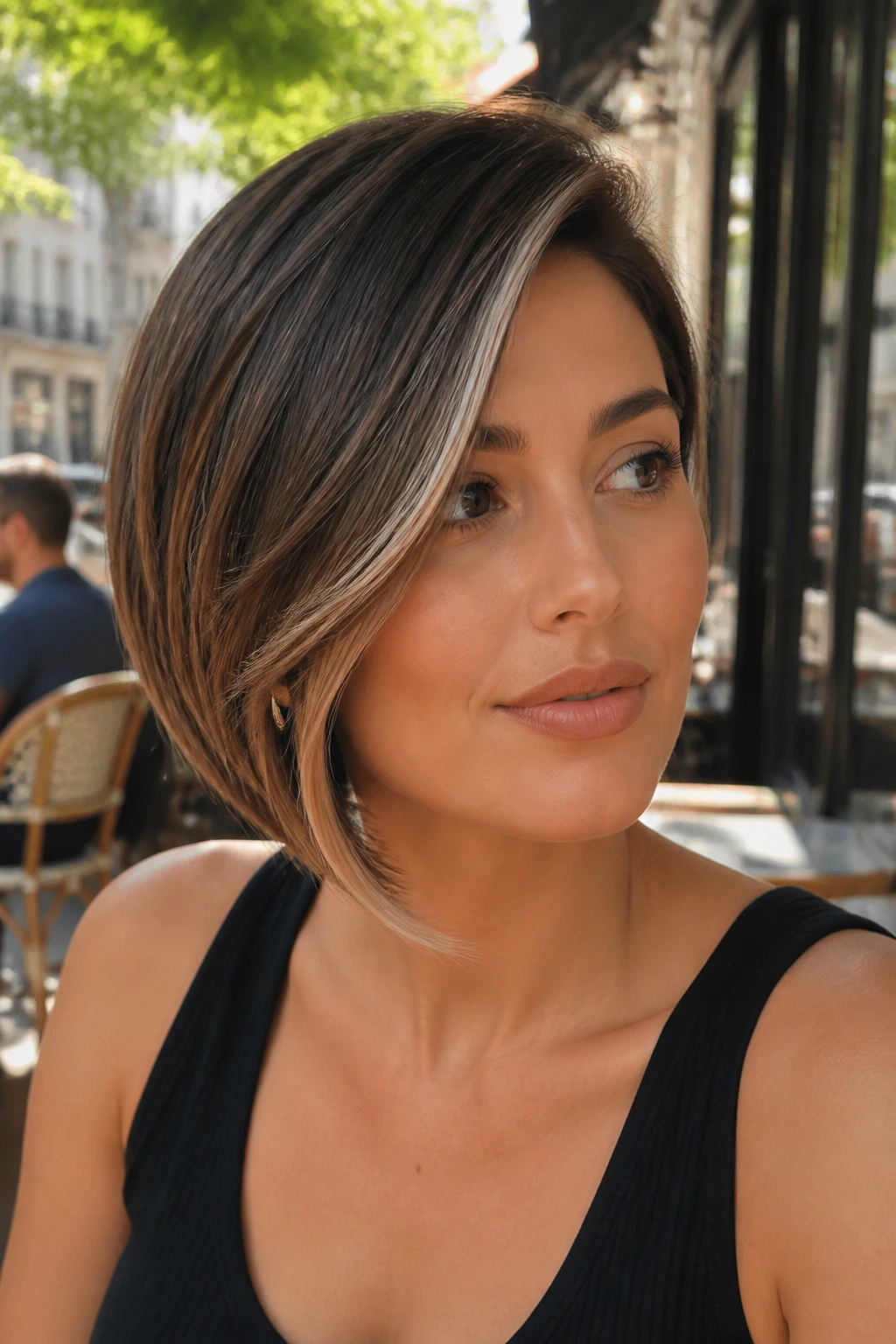
A side-swept bob brings the eye across the face instead of straight at it, which is one reason it flatters round shapes so well. The longer temple slice becomes a visual line that cuts through width.
The money piece should sit on the swept-over side, where it can show at the temple and cheekbone without getting lost. This style looks especially good when the highlight begins a little higher than the other versions. The sweep needs brightness to read.
If your hair falls flat in front, use a round brush for the first two inches at the roots and then straighten the lengths. That little root lift gives the side part room to hold.
18. Center-Part Bob with Thin, Delicate Highlights

A center part can work on a round face, but the bob has to earn it. The length usually needs to sit at the jaw or lower, and the money piece needs to stay slim so the part doesn’t become a bright strip down the middle.
The delicate highlight line should live at the front corners more than directly at the part. That way the center part opens the face without widening it. It’s a quieter look, and I think that’s the appeal—it doesn’t try to fake angles it doesn’t have.
This one is good if you like symmetry and clean lines. Just don’t overload the front with light pieces. Less is better here.
19. Angled Bob with a High-Start Money Piece
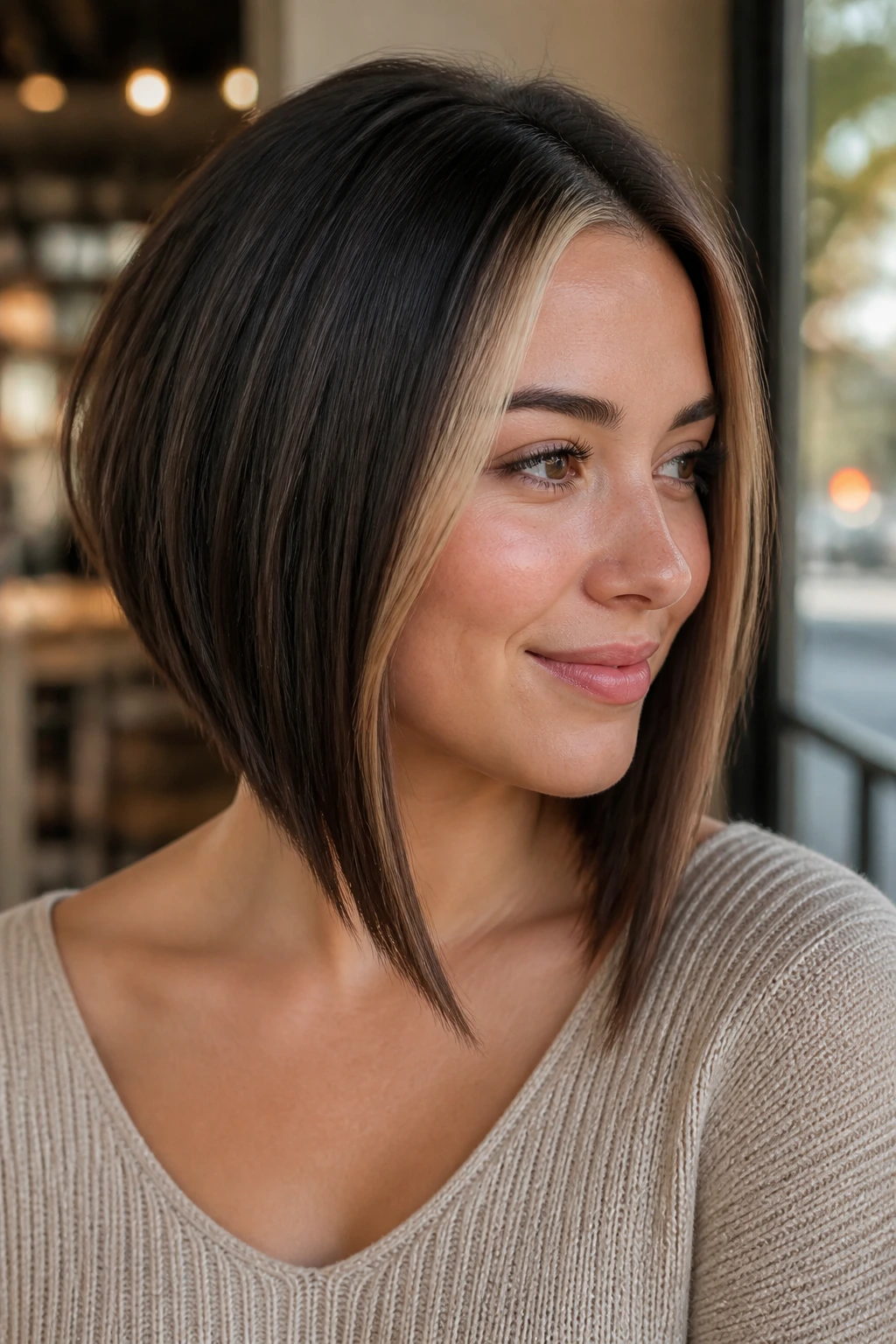
A higher-start money piece can look chic when the angle of the bob is doing enough work on its own. The cut should be shorter in back, longer in front, and clean enough that the eye follows the diagonal immediately.
Starting the front highlight a bit higher near the part adds lift. On a round face, that lift matters because it draws attention to the upper third of the face first, then lets the angled cut carry the rest downward.
This is one of the more striking options on the list. It has personality. If you like your hair to look deliberate rather than soft-edged, this is a strong contender.
20. Structured Brunette Bob with Caramel Fronts
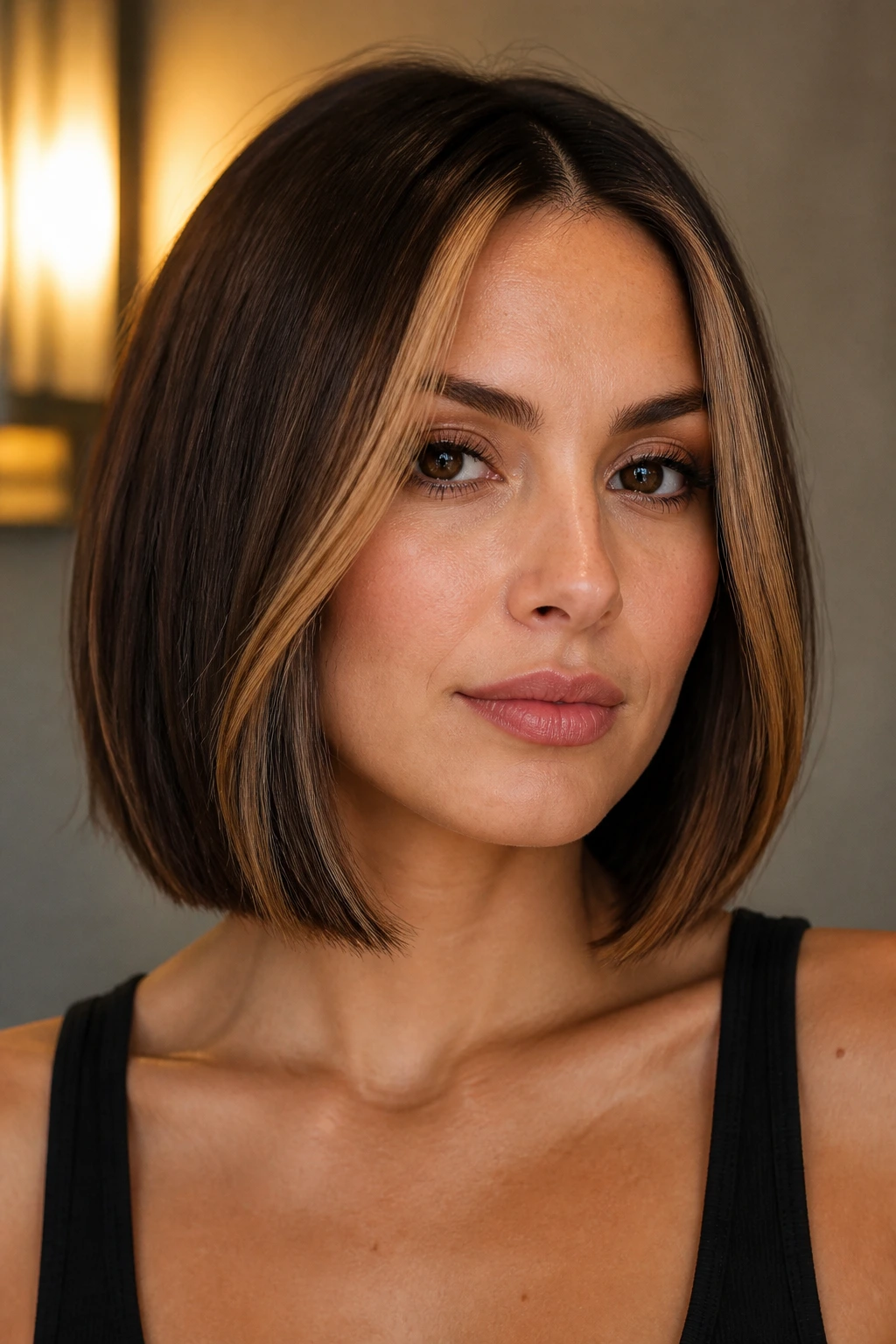
Brunette bobs get overlooked in these conversations, which is a shame, because dark hair can make the blunt line read even sharper. Add caramel around the face and you get contrast without the upkeep of full blonde lightening.
The money piece should be warm enough to stand out but not so orange that it fights the base. Honey, caramel, and chestnut-toned ribbons work well because they soften the cheeks while keeping the shape grounded.
This is a good cut if you want dimension without going light all over. It’s also easier to wear when your wardrobe leans neutral. The hair does the talking.
21. Chin-Length Bob with Longer Front Corners

A chin-length bob can be risky on a round face, but the longer front corners change the math. Instead of stopping right at the widest part of the face, the cut keeps sliding down a touch and creates a cleaner frame.
The money piece should be placed so it begins around the temple and finishes near the jaw corner. That gives the eye a built-in path to follow. It’s a little trick, but it works.
This is one of the most face-shaping cuts in the group. It feels tidy, not fussy. And when the front corners are measured well, it can make the whole face look more oval.
22. Jaw-Length Bob with a Gentle Bend at the Ends

A jaw-length bob needs a little bend or it can sit there like a shelf. A round face can wear that length, but only if the perimeter is soft enough to avoid a boxy effect.
The money piece should be gentle, almost blended into the side lengths rather than carved out hard. You want brightness, not contrast that chops the face in half. A soft beige blonde or warm sand tone keeps the front alive without shouting.
This is a nice everyday cut for people who want the hair off the shoulders and the styling time kept short. One pass with a flat iron, a slight inward turn, done.
23. Pixie-Bob Hybrid with a Bright Hairline Strip
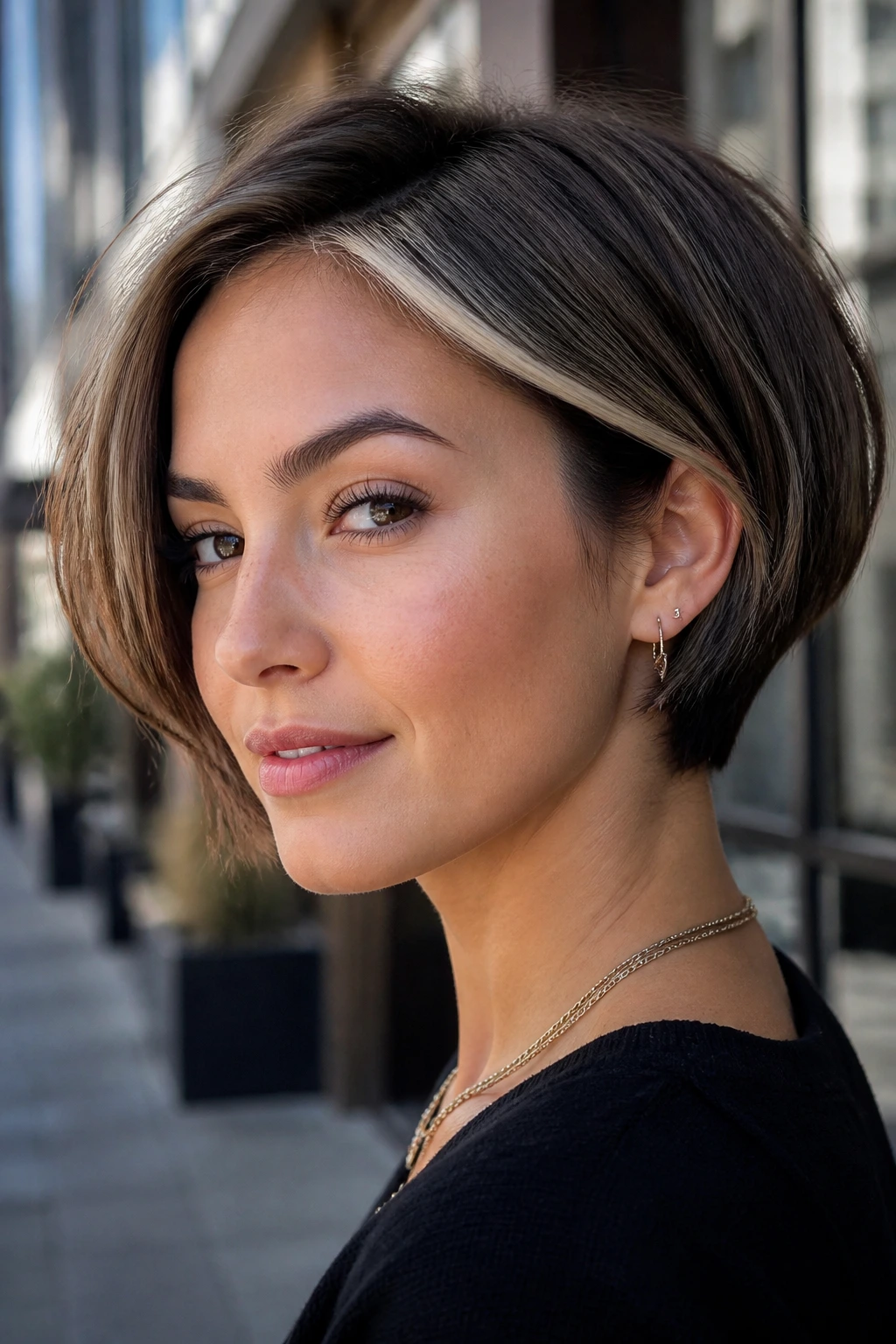
This is for the person who likes short hair but still wants a bit of bob shape in front. The back stays cropped, while the front carries enough length to frame the face and hold a money piece.
The bright strip at the hairline should be thin and placed carefully. Too much color on a short cut can make it look busy. A narrow, clean frame near the temples and forehead gives the face enough lift without overcrowding the haircut.
It’s playful, and it has attitude. If you’re tired of hair sitting on your neck but not ready for a full pixie, this is a smart middle ground.
24. Long Blunt Bob with Dimension Underneath
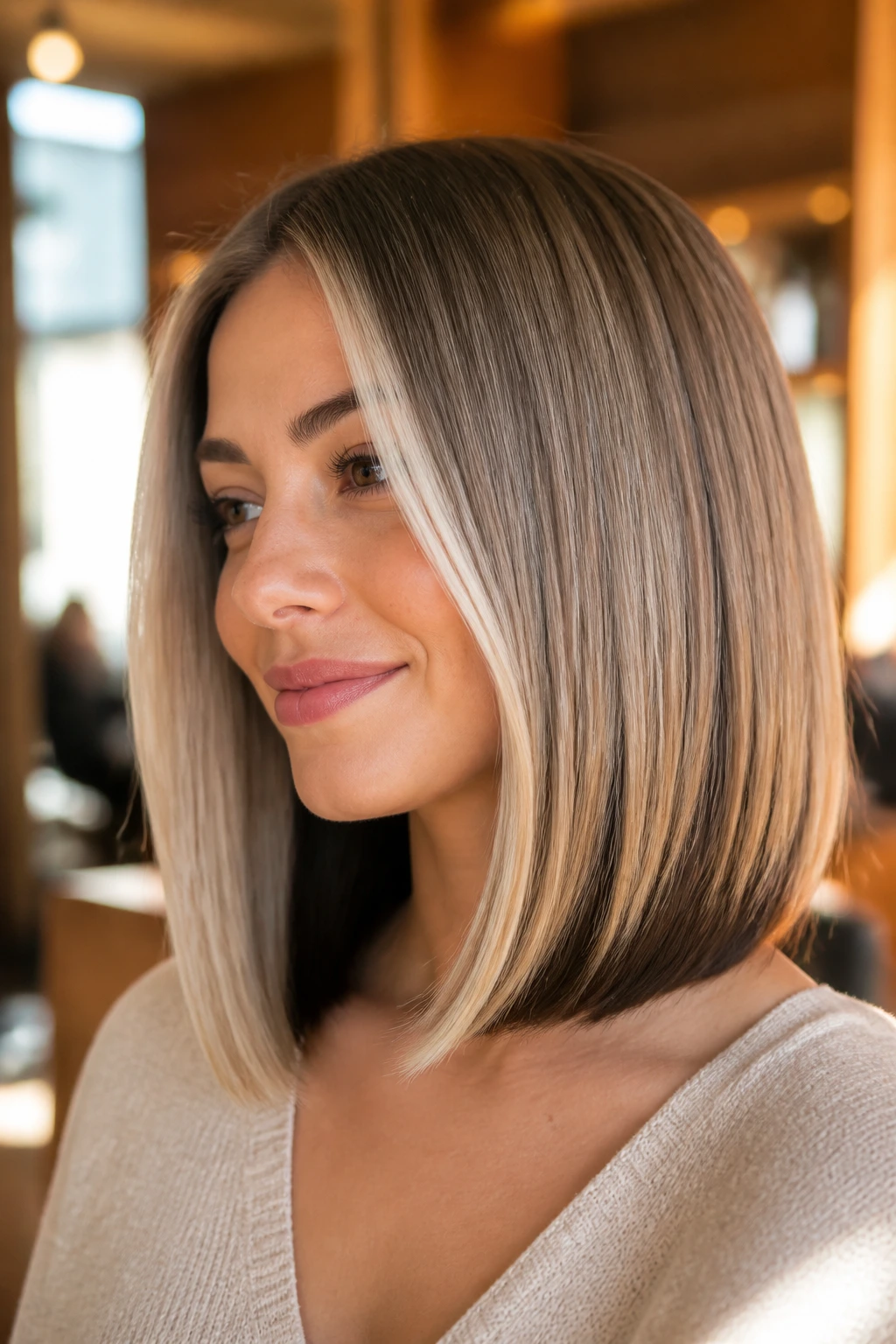
A long blunt bob sounds plain until you add dimension under the top layer. That hidden contrast gives the hair depth without changing the surface line, which is ideal for someone who wants the top sleek and the color work to stay subtle.
The money piece can be brighter, while the underneath stays deeper. That contrast keeps the face frame from looking one-note. On a round face, the longer length also helps stretch the silhouette downward.
This cut behaves nicely with straight styling. The top layer lies smooth, the lower tone peeks through when you move, and the whole thing looks more expensive than the effort suggests.
25. Low-Maintenance Bob with a Soft Beige Face Frame

Not everyone wants a bob that demands a flat iron every morning. A low-maintenance version can still be polished if the line is clean and the face frame is soft enough to grow out gracefully.
Beige money pieces are a smart choice because they sit between warm and cool, which makes them easier to live with. The highlight reads fresh without turning brassy too fast, and the softer contrast means the grow-out doesn’t look abrupt.
This is the kind of bob I’d point someone to if they want a neat shape, a flattering front, and less salon drama. It’s not the loudest option. That’s the point.
The Subtle Geometry That Makes the Cut Work
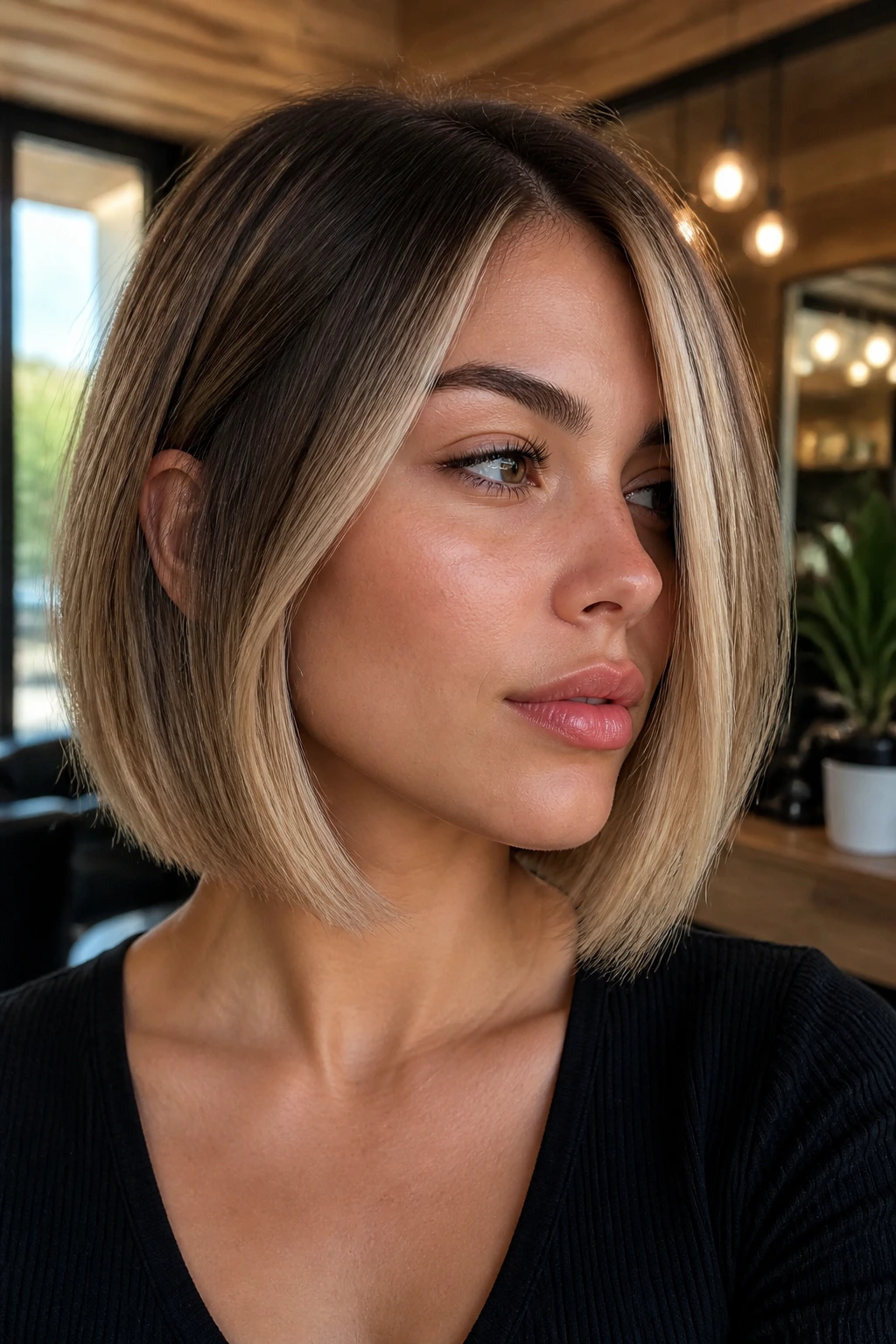
Round faces usually need one thing more than anything else: a break in the circle. Straight bobs can do that with angles, corners, and parting choices, but the money piece is the part that keeps the front from feeling closed in. If the highlight lives too wide or too blunt, it can widen the face instead of shaping it. If it’s narrow, slightly off-center, and tapered through the ends, it starts to behave like a light line that pulls the eye where you want it.
The other piece people miss is density. A chin-length bob with thick ends can feel heavy on a round face, while a slightly longer bob with a tight perimeter can feel lean even if the hair is full. That’s why salon language matters. Ask where the front should fall in relation to the cheekbone, jaw, and collarbone. Those landmarks matter more than vague words like “short” or “sassy.” Haircuts live in inches.
A good money piece also has a shadow around it. Not a harsh one. Just enough depth at the root and through the underside to keep the bright front from turning into a flat stripe. That contrast gives the style its shape, and it’s one of the reasons these cuts look better when they’ve been thought through instead of copied from a photo and left there.
What to Tell Your Stylist Before the Scissors Come Out
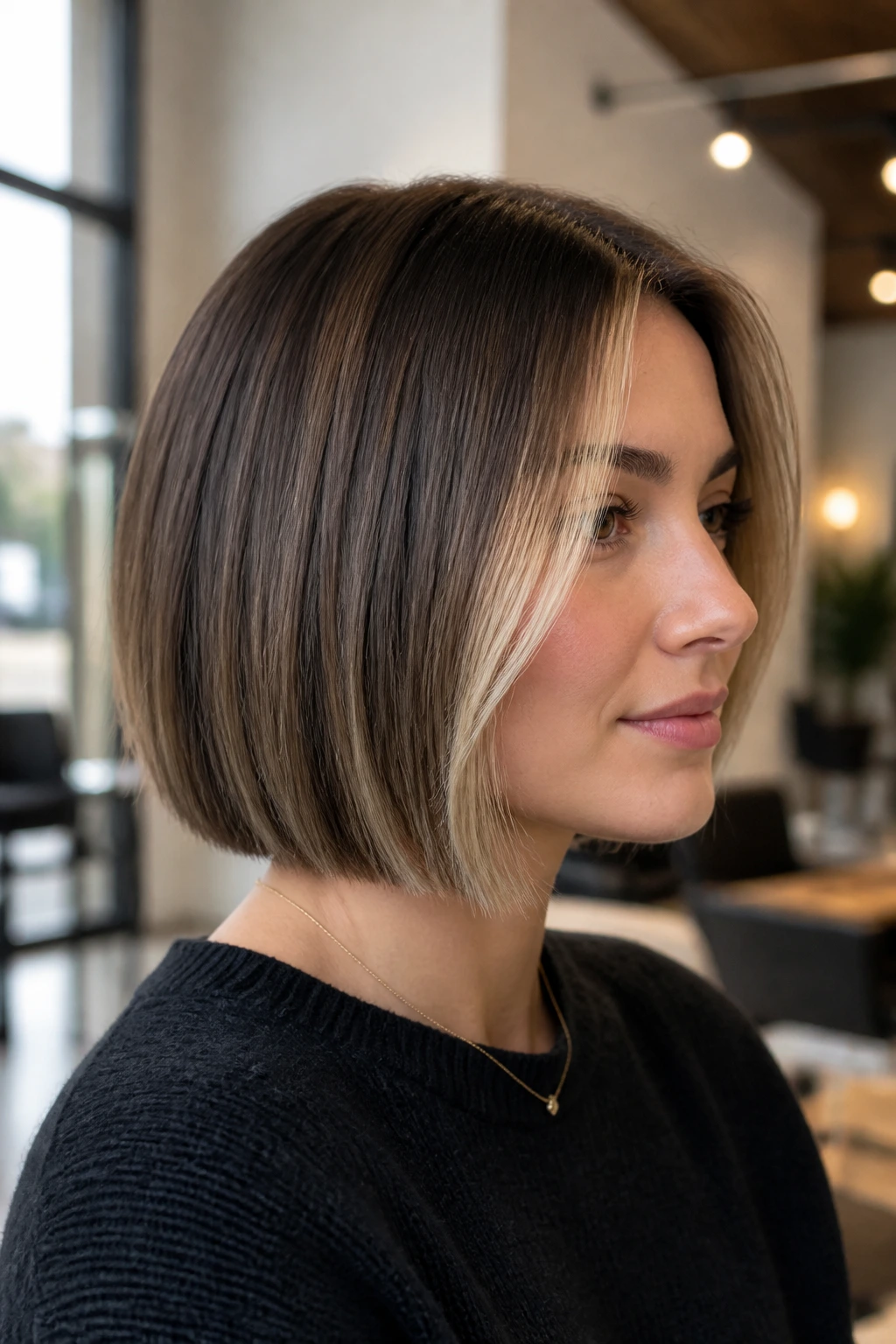
Bring photos, yes. But also bring measurements. Seriously. Point to where you want the front to land: chin, jaw, or collarbone. Tell your stylist whether you want the part to live in the middle, slightly off-center, or deep to one side. Those details change the entire read of the cut.
Ask for the money piece to be placed with your face shape in mind, not just your hair color. On a round face, the brightest section usually looks best when it starts close to the part, softens through the temple, and ends somewhere around the cheekbone or jaw. If the front panel is too thick, it can overpower the cut. Too thin, and you lose the face-framing effect.
Use these words
- “Slightly longer in front” if you want the face stretched a bit
- “Soft bevel at the ends” if you want the bob to move
- “Narrow face frame” if you want a cleaner highlight panel
- “Keep some depth underneath” if you want the money piece to stand out without looking stripey
The Styling Routine That Keeps the Shape Clean
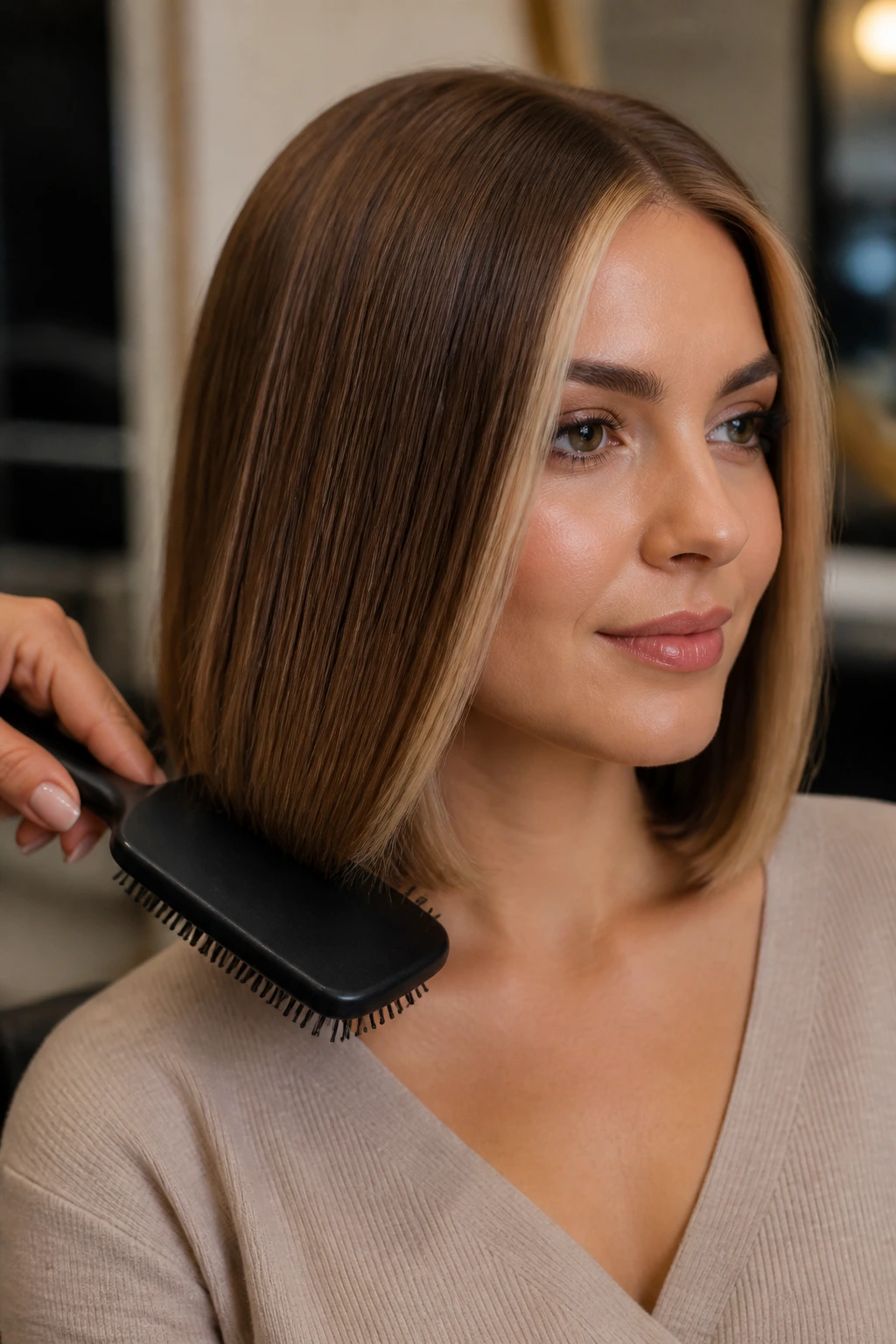
A round face bob needs clean styling, but it does not need to look stiff. Start with a smoothing blow-dry using a nozzle and a paddle brush if your hair is fine, or a round brush if you need a little bend under the ends. Keep the root area flat and control the front corners so they don’t puff out at cheek level.
Flat iron only the top layer if you want that sleek finish. The bottom pieces don’t always need the same amount of heat, and overworking them can make the whole cut look limp. One or two passes at a moderate heat setting is usually enough if the hair has been blow-dried well. And use heat protectant. Not optional.
If your money piece is blonded, a purple shampoo every 7 to 10 days can keep brass from building up. If it’s brunette with caramel or beige tones, a color-safe gloss or conditioner helps the front stay bright without turning dull. Little things, but they add up fast.
Common Mistakes That Make This Cut Work Against You

The first mistake is cutting the bob too short at the widest part of the face. A bob that ends right at the cheek can make the face look wider, especially if the line is blunt and the front is heavy. Move the length a little lower, or angle it forward.
The second mistake is making the money piece too thick. A bright panel that covers too much of the front can look striped and harsh, which is the opposite of what you want. Keep it narrow, then blur the edges with a softer tone underneath.
The third mistake is flattening every strand equally. Straight does not mean lifeless. If the ends are pinned flat and the front has no bevel, the cut can look like a lid sitting on the face. A tiny inward curve, a side part, or a tucked side fixes that fast.
The last one is choosing a highlight tone with no relationship to the base. A very cool blonde on a warm brunette bob can look disconnected. A soft caramel, beige blonde, or smoke-toned frame tends to blend better and age better between salon visits.
Variations That Change the Mood Without Losing the Shape
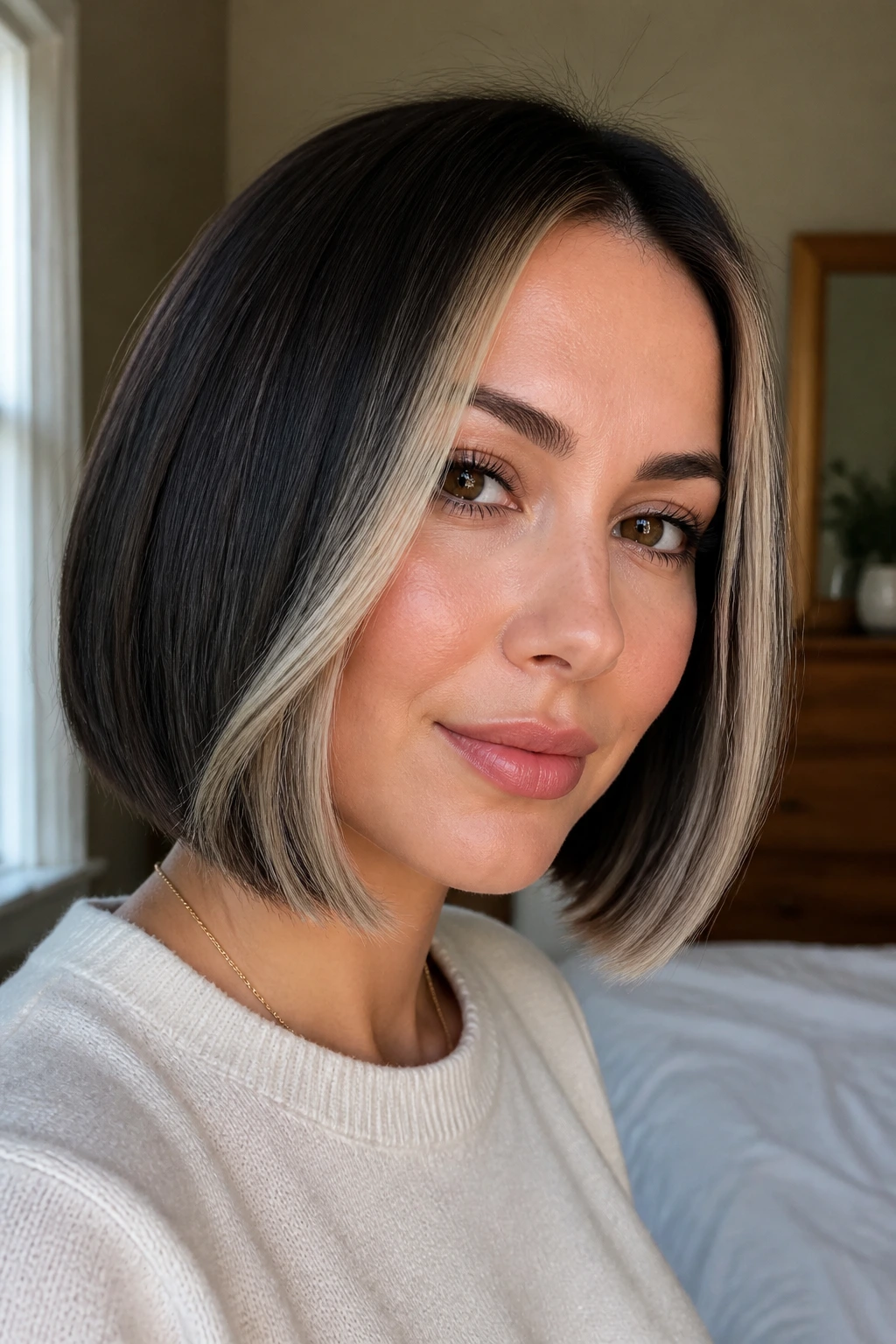
- Cool-Contrast Bob: Ask for an ashier money piece against a darker base if you want crisp edges and less warmth around the cheeks.
- Warm Caramel Frame: Use honey or caramel highlights for brunettes who want softness instead of stark contrast.
- High-Drama Side Part: Shift the part deeper and concentrate brightness on one front side for a more editorial finish.
- Soft Grow-Out Version: Keep the root shadow darker and blend the face frame so the color lasts longer between toners.
- Thicker-Hair Release: Add hidden internal debulking if your bob feels too dense at the jaw. The silhouette stays sharp, but the sides stop puffing out.
The Tools That Make Styling Easier
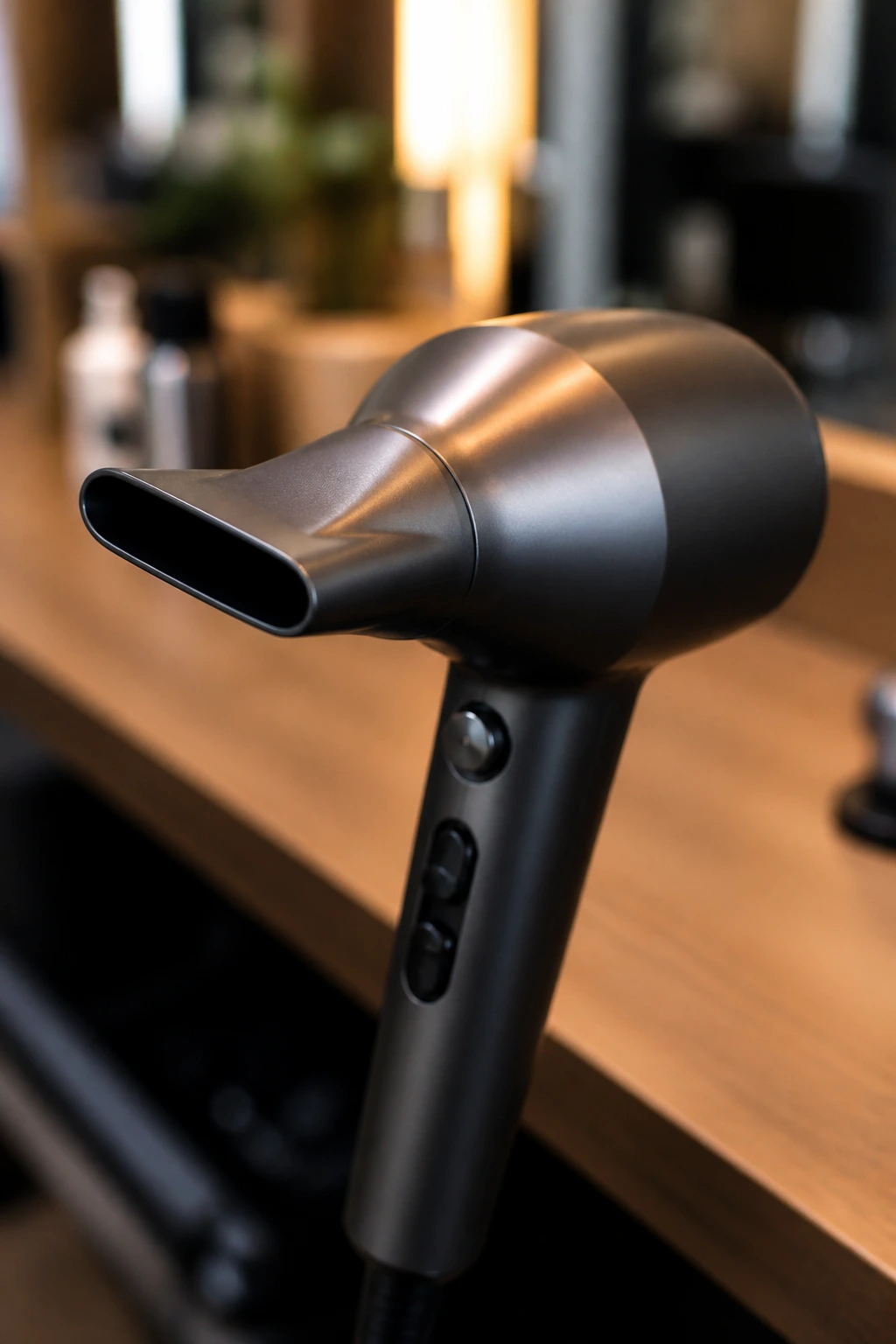
- Blow dryer with a nozzle attachment — Keeps the air focused so the bob dries smooth instead of frizzy.
- Paddle brush — Best for a sleek, flat finish on straight bobs.
- 1 to 1.5-inch round brush — Useful if you want a soft bevel under the ends.
- Flat iron with rounded plates — Gives you a straight finish without a hard kink at the edges.
- Sectioning clips — Make it easier to keep the money piece clean and separate while styling.
- Fine-tooth comb — Helps create a precise part and smooth the front.
- Heat protectant spray or cream — Non-negotiable if you use heat at all.
- Color-safe shampoo and conditioner — Keeps the front highlights from dulling too fast.
- Purple shampoo or toning mask — Helpful for blondes, silver beige tones, or cool front pieces.
- Light serum or finishing cream — A tiny amount on the ends keeps the bob glossy without weighing it down.
How to Keep the Cut and Color Looking Fresh
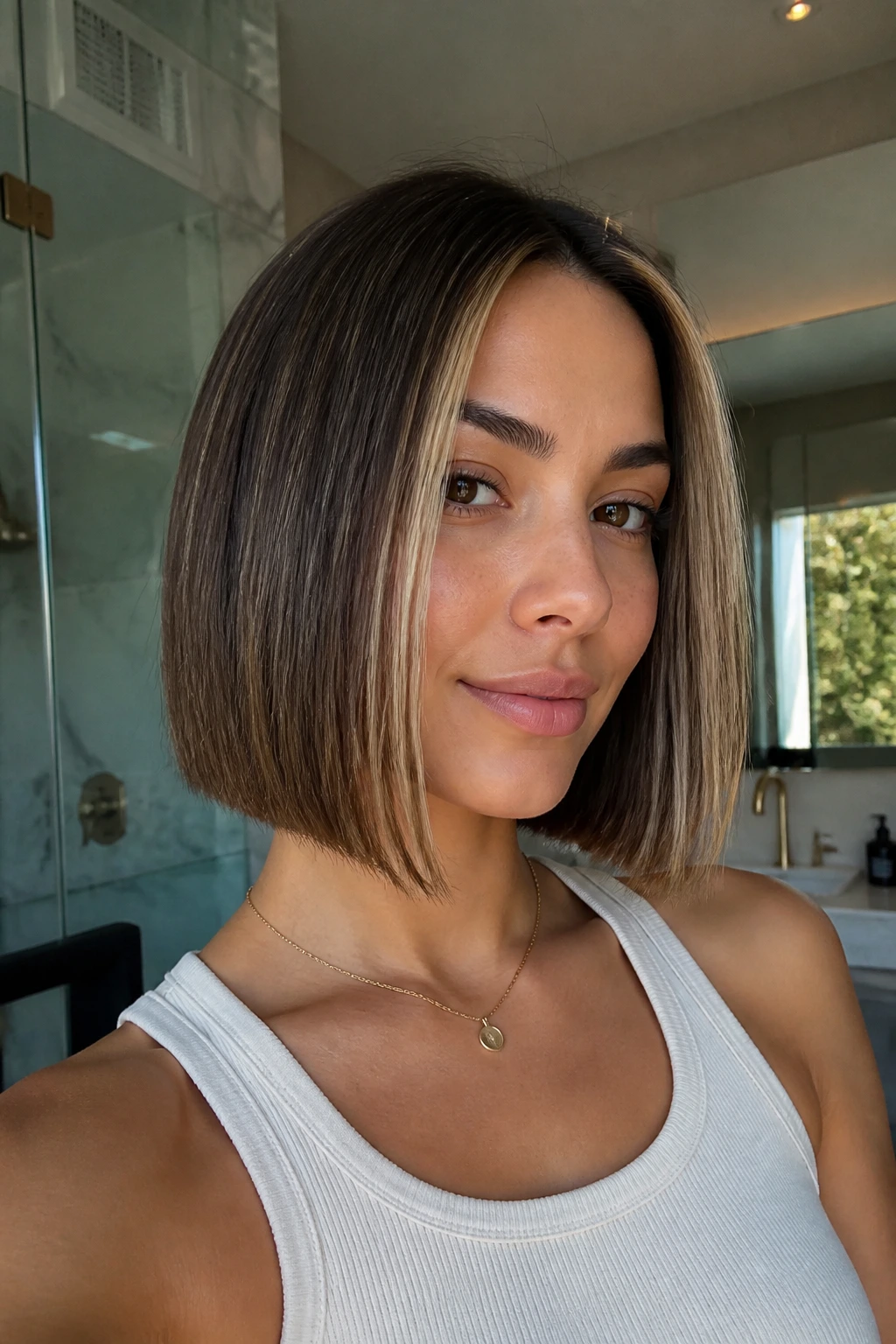
Straight bobs are honest haircuts. They show growth fast. Plan on a trim every 6 to 8 weeks if you want the shape to stay clean, and sooner if the front corners start losing their line. Shorter versions, like the micro bob or chin-length bob, can need a dusting even earlier.
Color upkeep depends on the contrast. A bright blonde money piece usually wants a toner refresh every 4 to 6 weeks if you want it to stay clean and not turn yellow. Brunette versions with caramel or beige fronts can stretch longer, especially if you use a gloss or color-depositing conditioner once or twice between salon visits.
Sleep matters more than people admit. A silk or satin pillowcase helps the front pieces stay smoother, and a loose clip at the crown can keep a blunt bob from bending in weird places overnight. If the ends flip badly in the morning, one quick pass with a flat iron on the lower inch usually solves it.
How to Serve the Style to Your Face Shape

Presentation: Keep the front pieces visible. Tuck one side behind the ear or part slightly off-center so the money piece shows instead of disappearing into the rest of the hair.
Accompaniments: For a softer round face, a bob like this pairs well with side-swept brows, small hoops, or a neckline that isn’t too crowded. Hair and accessories should not fight for attention.
Portions: Shorter bobs need more frequent trims and tighter styling. Longer bobs give you more room to move, but the face frame still needs upkeep so it doesn’t collapse into the rest of the cut.
Beverage Pairing: A sleek bob always feels sharper when the rest of the look is clean too—think minimal makeup, defined lashes, and a lip that doesn’t compete with the highlight at the front.
Additional Tips That Make the Difference
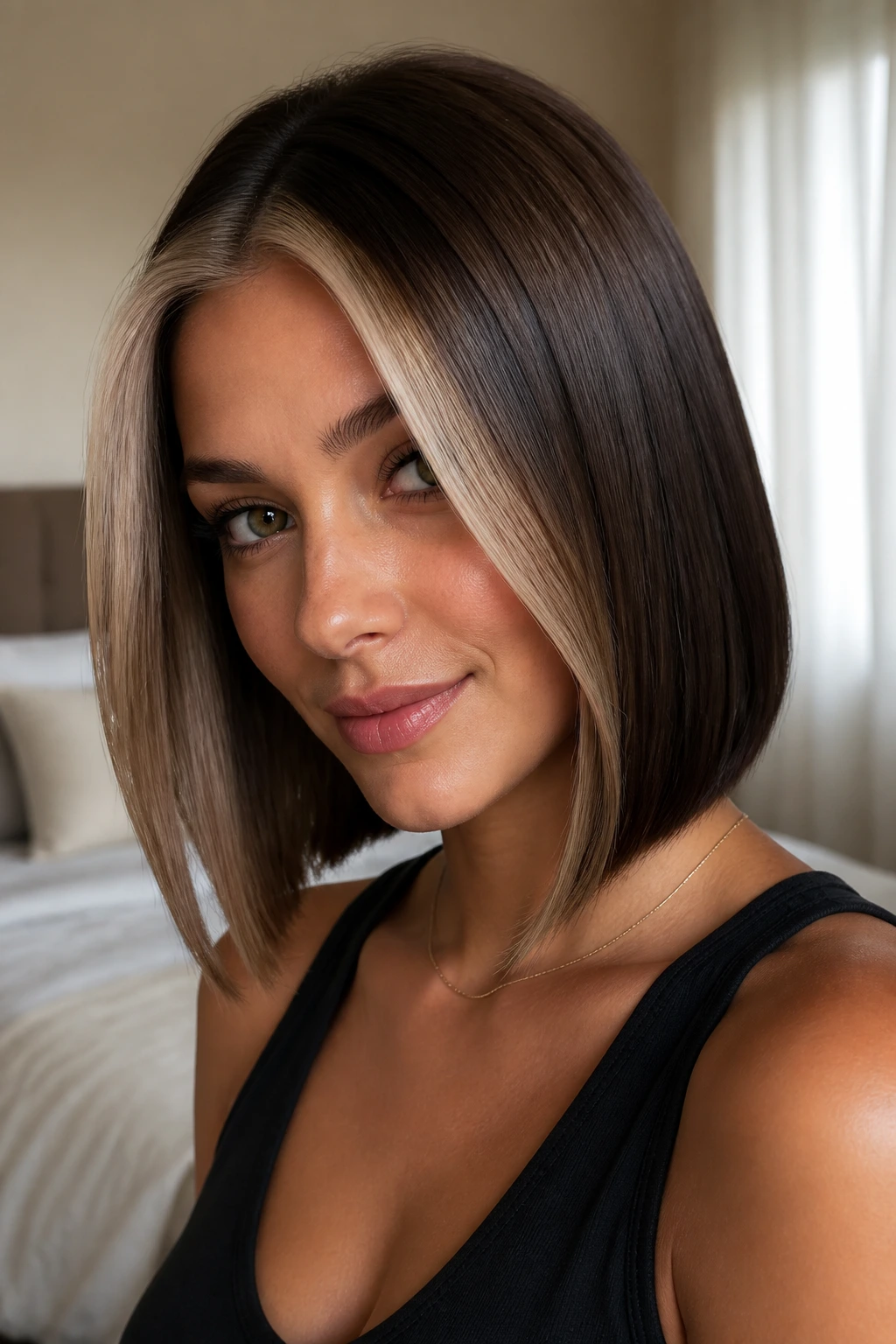
Flavor Enhancement: If you want the money piece to look richer, ask for a gloss between the bright front and the base. That little layer of tone makes the highlight look more expensive and less raw.
Customization: Fine hair usually looks best with a thinner money piece and a more precise perimeter. Thick hair can take a stronger front panel and a more pronounced angle in the cut.
Serving Suggestions: A slightly tucked side, a soft bevel at the ends, or a narrow ear tuck can make the face frame show better. Tiny styling changes matter more here than they would on longer hair.
Make-It-Yours: If you wear your hair curly on some days and straight on others, keep the front a little longer than you think you need. That gives you room when the hair shrinks or bends differently after washing.
How to Avoid the Usual Problems
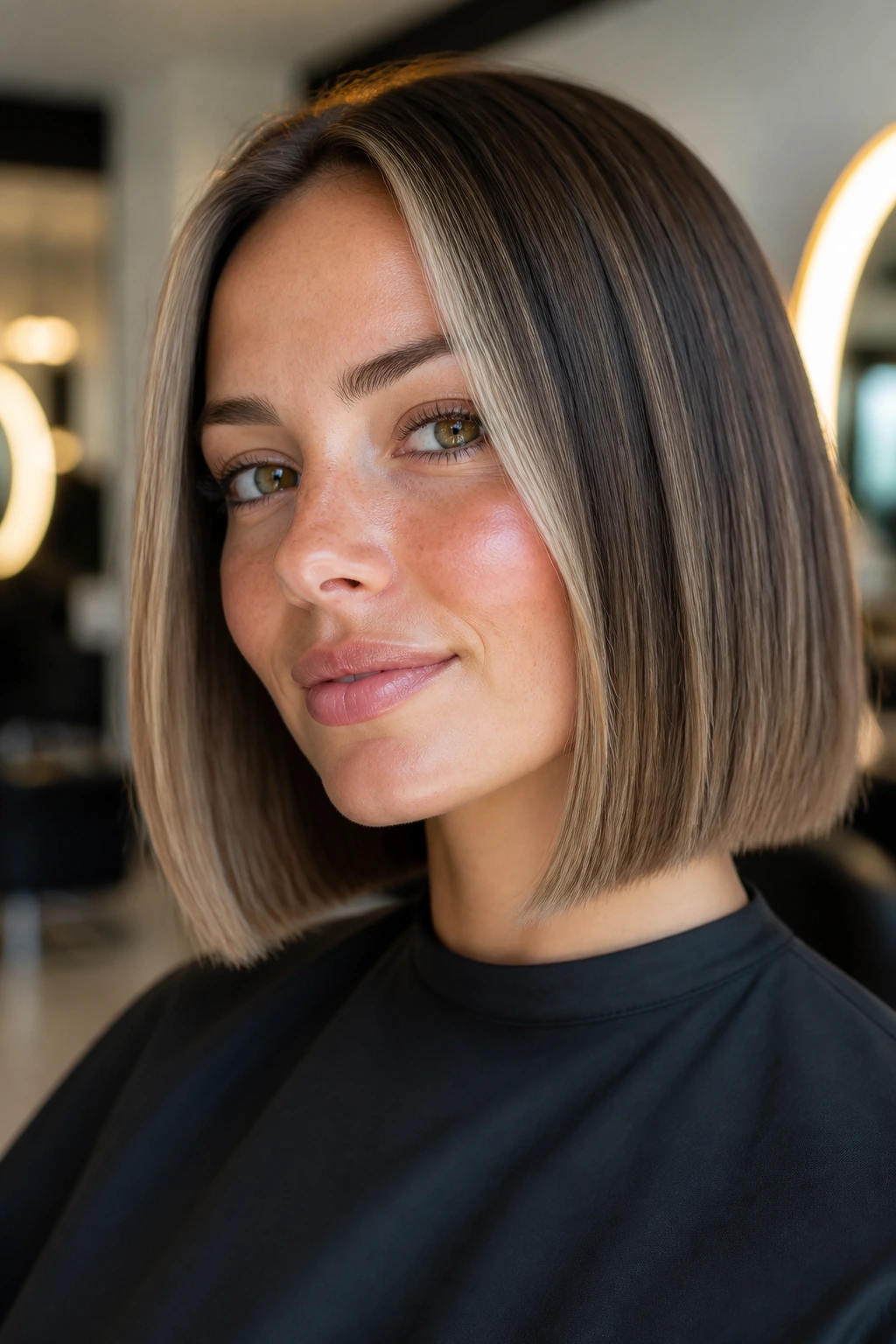
Cutting the bob too high: A lot of round-face bobs go wrong because they stop at the cheek. If the line sits too short, the face looks broader. Shift the length down a notch and the whole thing relaxes.
Making the money piece too wide: A thick front stripe can look dated fast. Keep the frame narrow and let the color soften as it moves back through the part.
Ignoring the part: A center part and a deep side part do not behave the same on a round face. Try both before you commit. One may give you the vertical line you need while the other makes the cut feel heavier.
Leaving the ends too blunt or too fluffy: The ends should be clean, not puffy. If they balloon out, the face looks wider. If they’re too hard, the cut feels severe. A light bevel usually lands in the right place.
Choosing the wrong highlight tone: The face frame should work with your base color, not against it. Warm brunette bases often like caramel or beige, while cooler bases can take ashier light pieces without looking muddy.
Frequently Asked Questions

Can a straight bob make a round face look wider?
Yes, if the length stops at the wrong place or the ends are too blunt and heavy. The fix is usually to keep the front a touch longer than the jaw, add a side part or angle, and place the money piece so it pulls the eye vertically instead of sideways.
Where should the money piece start on a round face?
Usually near the part and slightly off the hairline, then it should soften as it falls toward the cheekbone or jaw. You want brightness that frames the face, not a solid front stripe that lands all at once.
Is a center part bad for round faces?
Not necessarily. It works best with a longer bob, a slim money piece, and enough length in front to keep the face from looking boxed in. If the cut is chin-length and very blunt, a center part can make the widest part of the face feel broader.
Do these bobs work on fine hair?
They do, and fine hair often looks thicker in a blunt or slightly beveled bob. The main thing is to keep the highlight placement precise and avoid too many choppy layers, which can make the ends look thin.
What if I don’t want bleach in the front?
Ask for a softer face frame using gloss, balayage, or a level-lightening service that stays within your natural range. You can still get brightness and shape without a harsh blonde strip.
How often should I trim this kind of bob?
Every 6 to 8 weeks is a safe rhythm for most lengths, and shorter versions may need upkeep closer to 4 to 6 weeks. Once the front corners lose their line, the bob stops doing the face-slimming work you paid for.
Can I wear this with thick, puffy hair?
Yes, but you need a controlled perimeter and some internal removal of bulk so the sides don’t flare out. A good stylist will keep the outer shape clean while thinning only where it helps the bob sit flat.
Which is better for a round face: blunt or angled?
Angled usually gives more built-in slimming because it draws the eye downward and forward. Blunt can still work if the length is right and the money piece adds a vertical line near the face.
Keeping the Shape Sharp
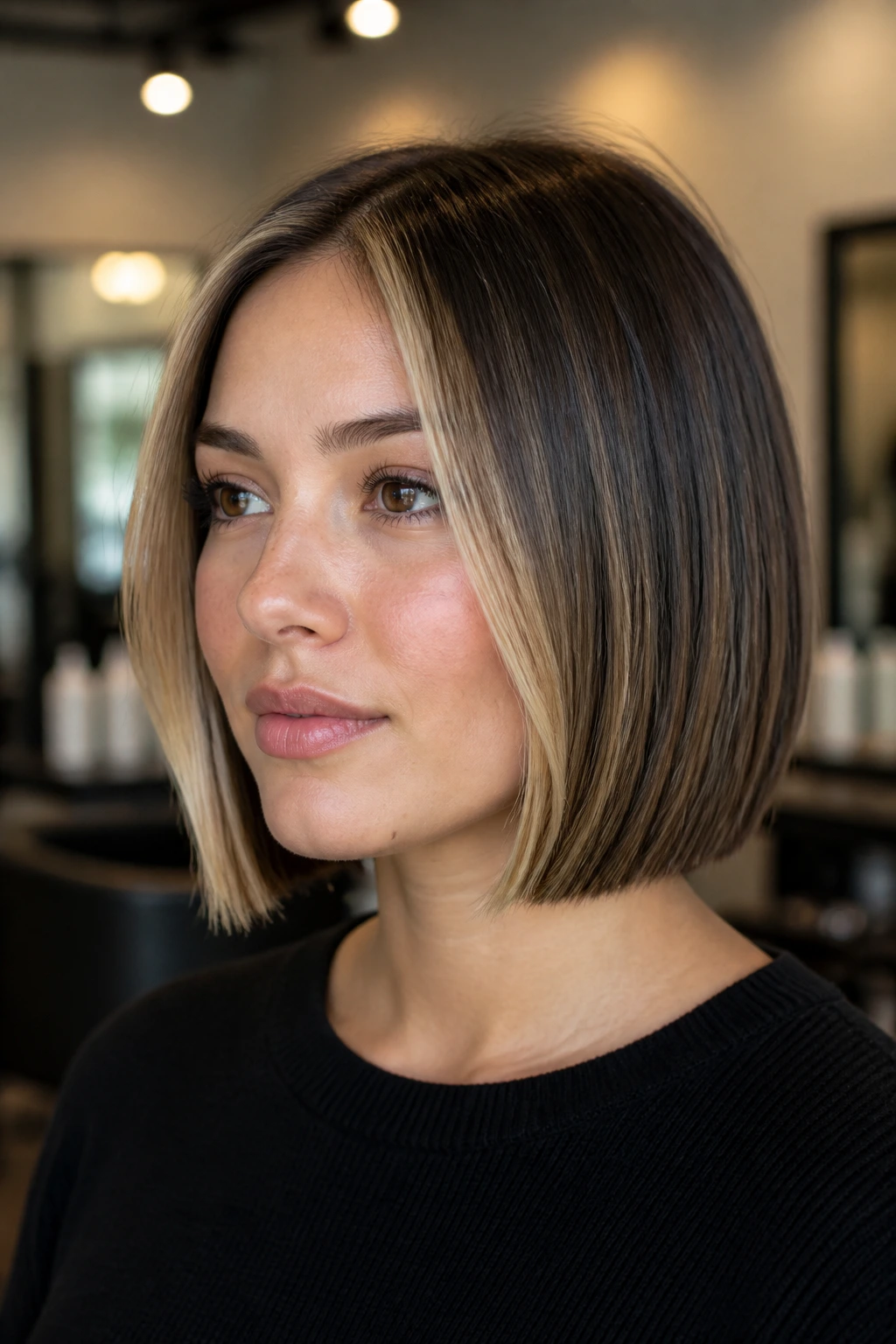
A good bob on a round face is not about hiding the face. It’s about giving it structure. The right length, the right part, and the right money piece can turn a simple straight cut into something that looks intentional every day, even when you’ve barely touched it.
What I like most about these versions is how much control they give you without demanding a dramatic haircut. You can go short or long, bold or soft, cool or warm, and still keep the same basic face-framing logic underneath. That’s the part worth paying attention to at the salon.
If you bring your stylist one clear length goal, one parting preference, and one note about how bright you want the front to read, you’re already ahead of most haircut conversations. The rest is inches, tone, and a little discipline with the flat iron.