



Grey lowlights can look expensive on tan skin when the brown underneath stays deep and the placement leaves some warmth showing through. Too much icy silver, and the face goes flat. Too much brown, and the whole thing disappears.
That balance is the whole trick behind low lights grey dark brown hairstyles for tan skin. The dark brown gives the hair a grounded base, while the grey comes through as smoke, graphite, pewter, or mushroom rather than hard silver stripes. Done well, the color reads soft in indoor light and sharper outside, which is exactly why these looks feel lived-in instead of costume-y.
I like this color family because it has range. A few ribbons can whisper. A full veil can turn dramatic. And if the placement is smart, tan skin gets that cool contrast without losing the warmth that makes it glow in the first place.
Why These Shades Work So Well on Tan Skin
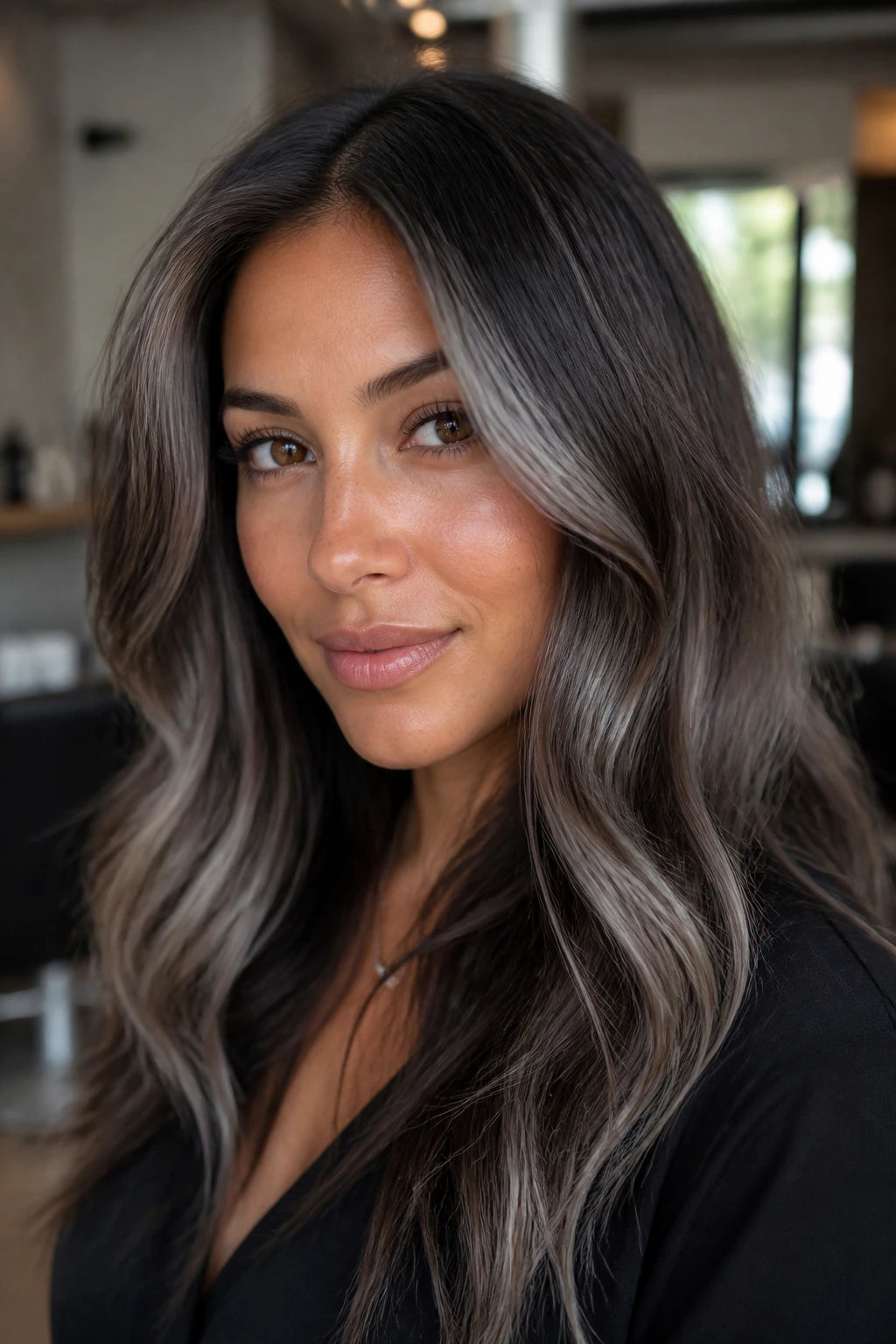
- The brown keeps the grey from going chalky: Dark brown acts like an anchor, so the grey lowlights look smoky instead of pale and thin.
- Tan skin can hold both warmth and coolness: That gives you room to wear graphite, mushroom, greige, or pewter without the hair fighting the face.
- Lowlights add depth without brightening everything: If your hair already has lighter pieces, grey lowlights carve shape back into the cut instead of making the whole head look frosted.
- The grow-out is softer than all-over silver: When the roots stay close to your natural dark brown, the regrowth line doesn’t scream for attention.
- Movement matters here: Waves, bends, curls, and layers make the grey appear and disappear, which is what keeps the color from looking heavy.
- Placement changes the mood fast: Put the grey near the face and it reads edgy; hide it underneath and it reads polished and private.
How Grey and Dark Brown Read Against Tan Undertones
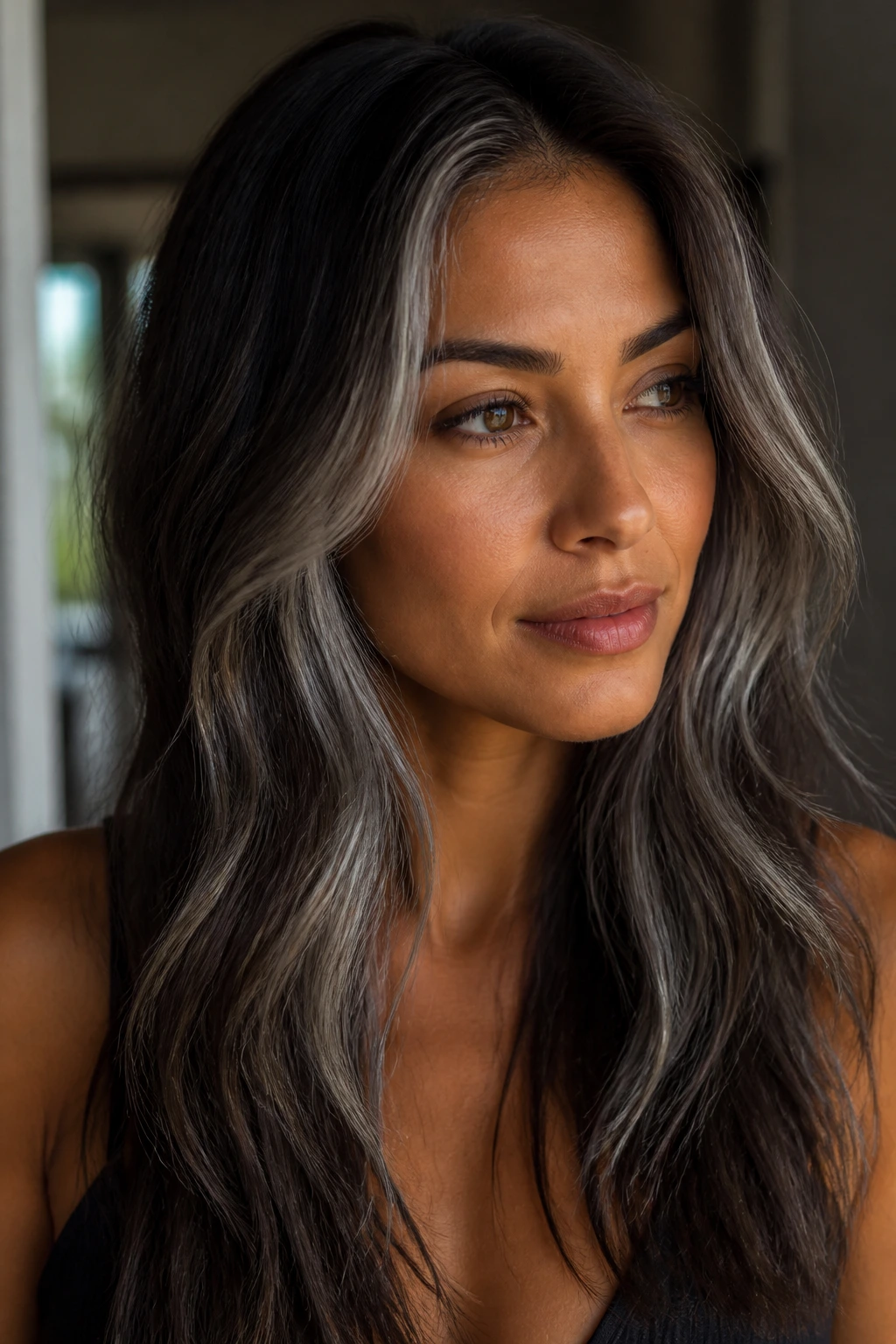
Tan skin is not one thing. Some people run golden, some sit olive, and some land in a true neutral middle. Grey lowlights behave differently on each one, and the wrong shade can look flat even if the haircut is good.
Golden Tan Skin
Golden undertones usually like mushroom grey, soft greige, and muted ash-brown better than bright silver. Those shades keep the warmth in your skin from getting washed out. If the grey is too blue, it can fight the face and make the hair look colder than the rest of the look.
Olive Tan Skin
Olive-tan skin can carry a little more graphite and charcoal. That tiny green-gold cast in the skin makes smoky grey look sleek instead of icy. I’d still avoid a hard steel finish unless the rest of the hair has a deep brown base to soften it.
Neutral Tan Skin
Neutral tan skin gets the easiest ride. You can wear a wider range of grey tones, from pewter ribbons to cooler silver-brown. The safest move is to keep one tone dominant and let the other play support, because a 50/50 split often looks busy.
What to Ask Your Colorist for Before the First Foil
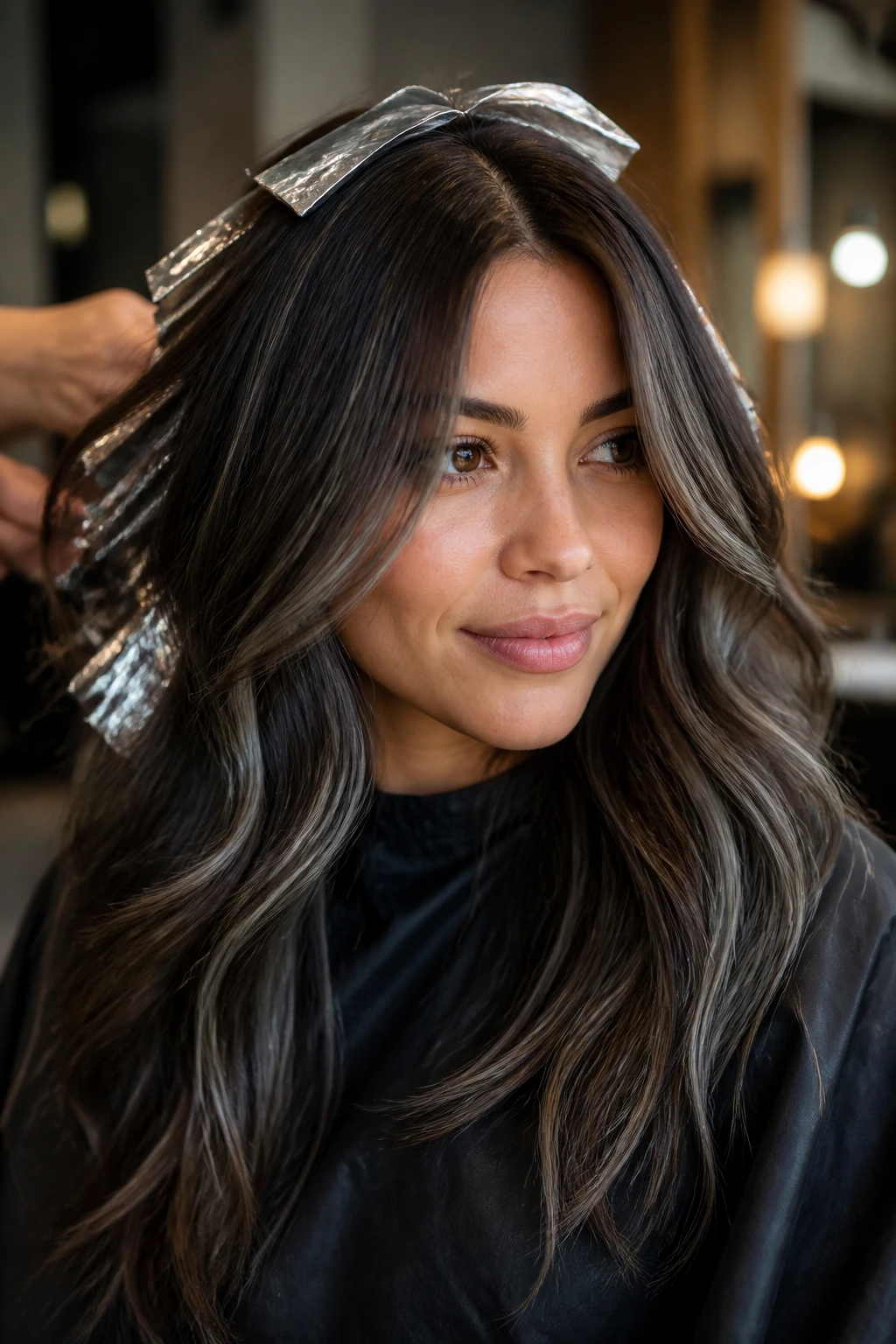
A good grey lowlight service is more about tone control than about “going grey.” That sounds obvious, but it gets missed all the time. Ask for a dark brown base with smoky lowlights one to two levels deeper, not chunky silver streaks.
A few useful phrases help a lot: mushroom brown, graphite lowlights, pewter ribbons, greige dimension, and soft root shadow. If you want contrast around the face, say so. If you want the grey hidden until you curl or tuck the hair, say that too. Placement matters more than people think.
Bring photos shot in indoor light and daylight. Grey lowlights can look completely different once they leave the salon chair, and a photo taken under bright white bulbs tells only half the story.
1. Mushroom Lob With Smoke Ribbons
This is the look I’d hand to someone who wants grey without the drama of silver. A collarbone lob with dark brown roots and smoke-grey ribbons through the mid-lengths gives you movement without loud contrast. On tan skin, the softer grey reads polished, not cold.
Why It Works
The lob shape keeps the color in motion, which matters because grey lowlights can look heavier when the hair is too long and straight. Ask for thin ribbons placed just under the top layer, plus a soft root shadow. The brown root keeps the face warm; the grey adds edge only when the hair swings.
Best For
- Medium-density hair that can hold a bend
- Tan skin with golden or neutral undertones
- Anyone who wants a low-maintenance grow-out
My Take
Skip chunky strips here. Fine placement beats bold placement on this cut every time.
2. Loose Waves With Charcoal Ribbons
Ever notice how a wave makes color look richer than a flat sheet of hair ever could? That is the whole point here. Charcoal lowlights woven through loose, brushed-out waves make dark brown hair look deeper and more dimensional, especially on warm tan skin.
The best version keeps the grey tucked into the middle of the wave pattern, not sitting on the surface like stripes. When the bend opens and closes, the charcoal flashes in and out. That little movement is what saves this style from looking painted on.
If your hair falls straight, you can still wear it. Use a 1.25-inch iron, wrap away from the face, and brush the waves once they cool. Don’t make them too perfect. The messier the bend, the better the grey reads.
3. Face-Framing Grey Money Pieces
This one works because it controls where the eye lands. Two or three cool grey money pieces around a dark brown base can sharpen tan skin in a really clean way, especially if the rest of the hair stays rich and soft.
What Makes It Different
The face frame does the heavy lifting, so the rest of the lowlights can stay subtle. Ask for the front pieces to start around the cheekbone or jaw, not right at the hairline, unless you want a bolder striping effect. That tiny shift changes the mood fast.
Styling Note
A middle part gives this look a sleek, editorial feel. A side part softens it and lets the grey blend more into the rest of the hair. Either way, keep the finish glossy. Matte products can make the grey look dull instead of smoky.
4. Blunt Bob With Smoky Underlayers
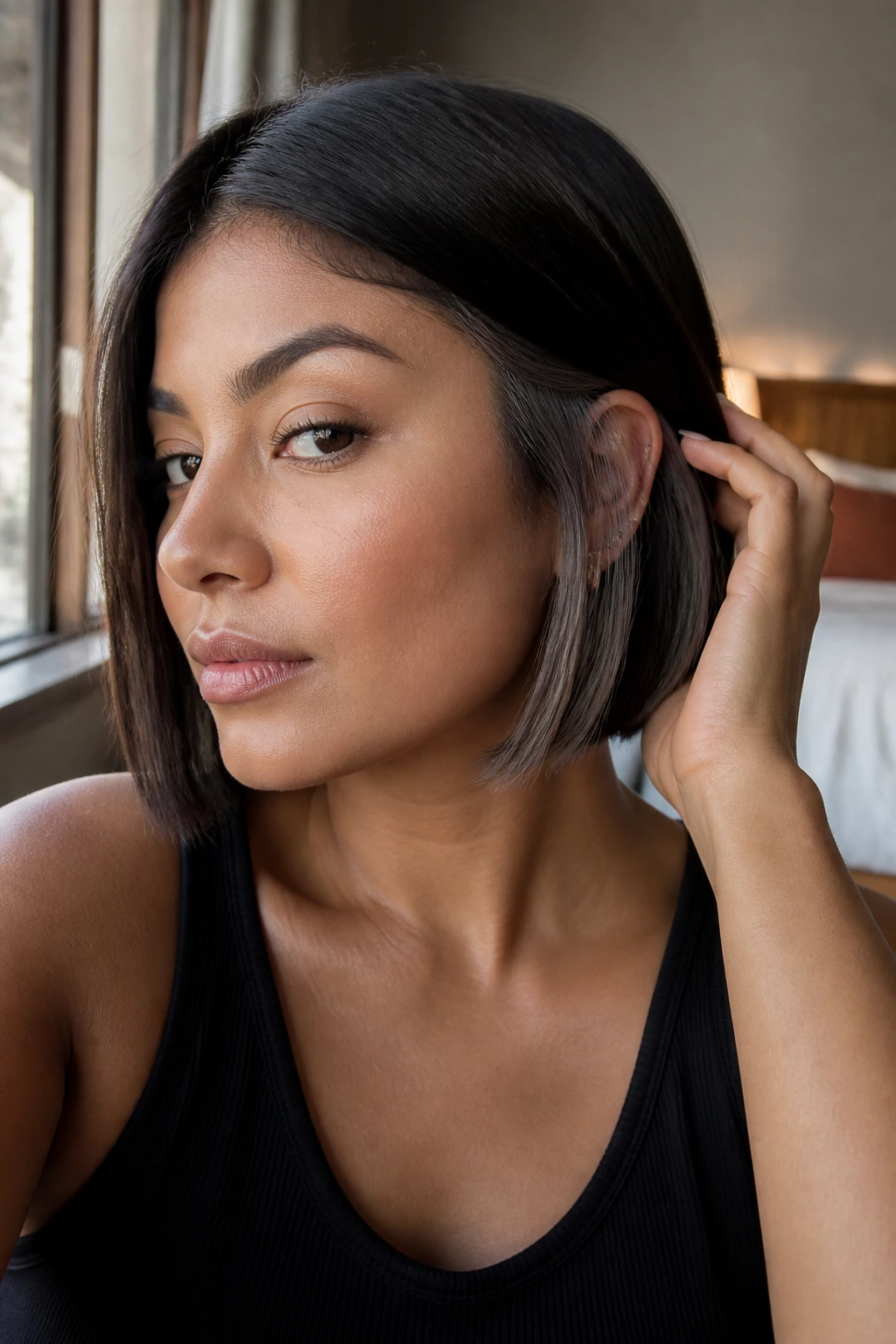
A blunt bob can turn a little severe if the color is too flat. Smoky underlayers fix that. The top stays dark brown and clean, while the grey lowlights live underneath, peeking out when the bob tucks behind the ear or bends at the jaw.
That hidden placement is a smart move for tan skin because it keeps the face warm and the hair interesting. You get contrast without the harshness of surface-level silver. And with a blunt line, that balance matters a lot.
I especially like this on fine to medium hair. The cut looks fuller when the underlayers shift tone, and the grey creates depth where a single-process brown can go limp.
5. Curly Chocolate Coil With Pewter Ribbons
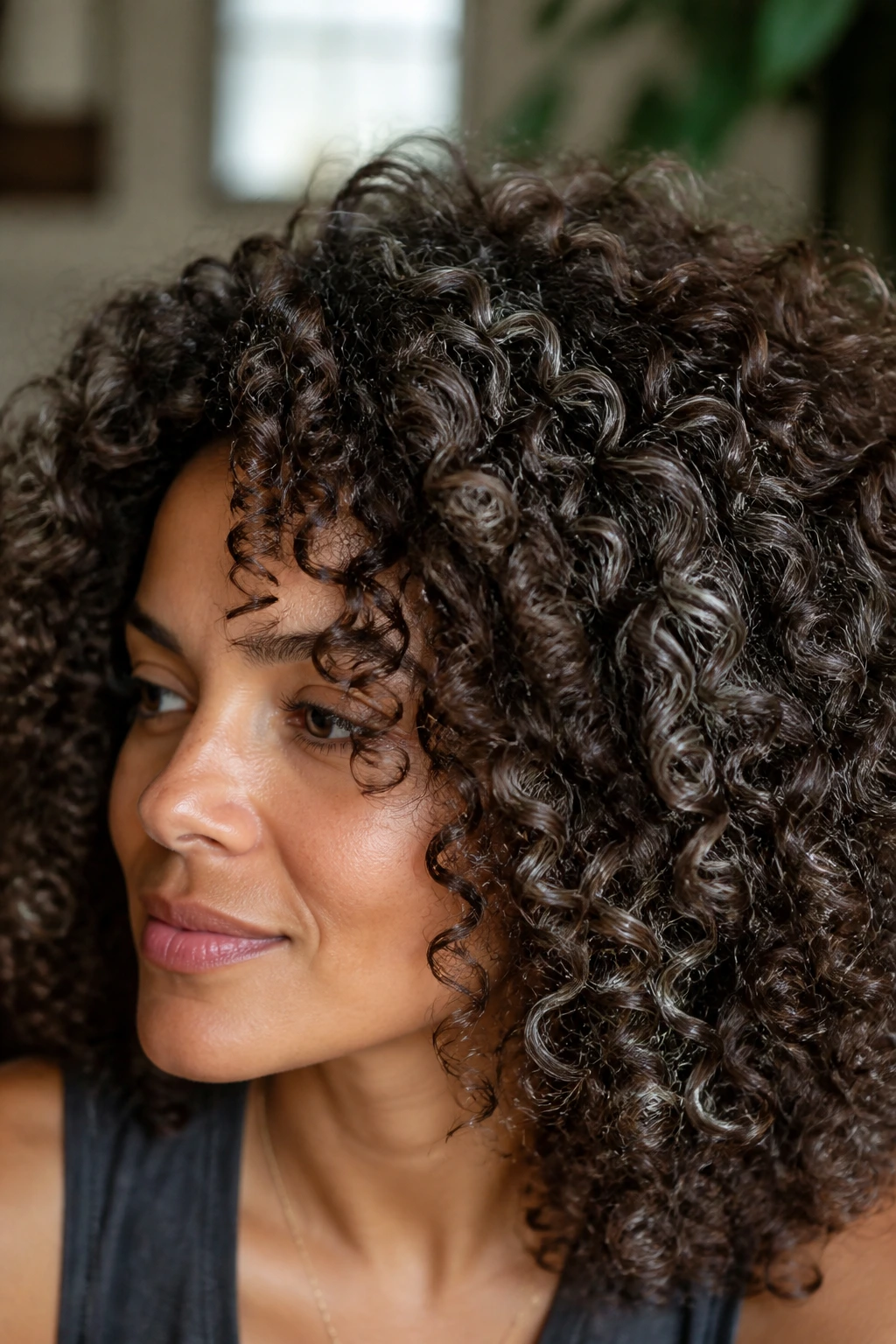
Curly hair loves dimension, but only if the color placement respects the curl pattern. Pewter ribbons painted through chocolate coils keep the shape from turning into one dark block. On tan skin, that mix looks rich and a little moody in the best way.
The key is width. Don’t scatter the lowlights too thinly through curls or they disappear. Give them enough room to live inside the curl family, especially around the crown and outer ringlets. You want a ribbon, not a streak.
Curl-Specific Tip
Diffusing upside down can make the contrast pop, but stop before the hair gets frizzy. A curl cream with a little shine will keep the grey from reading dry.
6. Long Layers With Ash Balayage
Long layers are the place where ash lowlights can really stretch out. Instead of one obvious color block, you get soft shifts from dark brown into smoky ash, and the effect feels feathered rather than painted. Tan skin handles that quietly cool blend well, especially if the ash stays muted.
Balayage works best here because the colorist can place the grey lower through the mid-lengths and ends. That keeps the root area rich and wearable. If the lowlights start too high on long hair, the whole thing can go heavy.
Best For
- Hair that already has natural movement
- People who want a softer grow-out line
- Anyone who wears their hair down most of the time
A small gloss every few weeks keeps the ash from turning dusty.
7. Side-Parted Shoulder Cut With Grey Ends
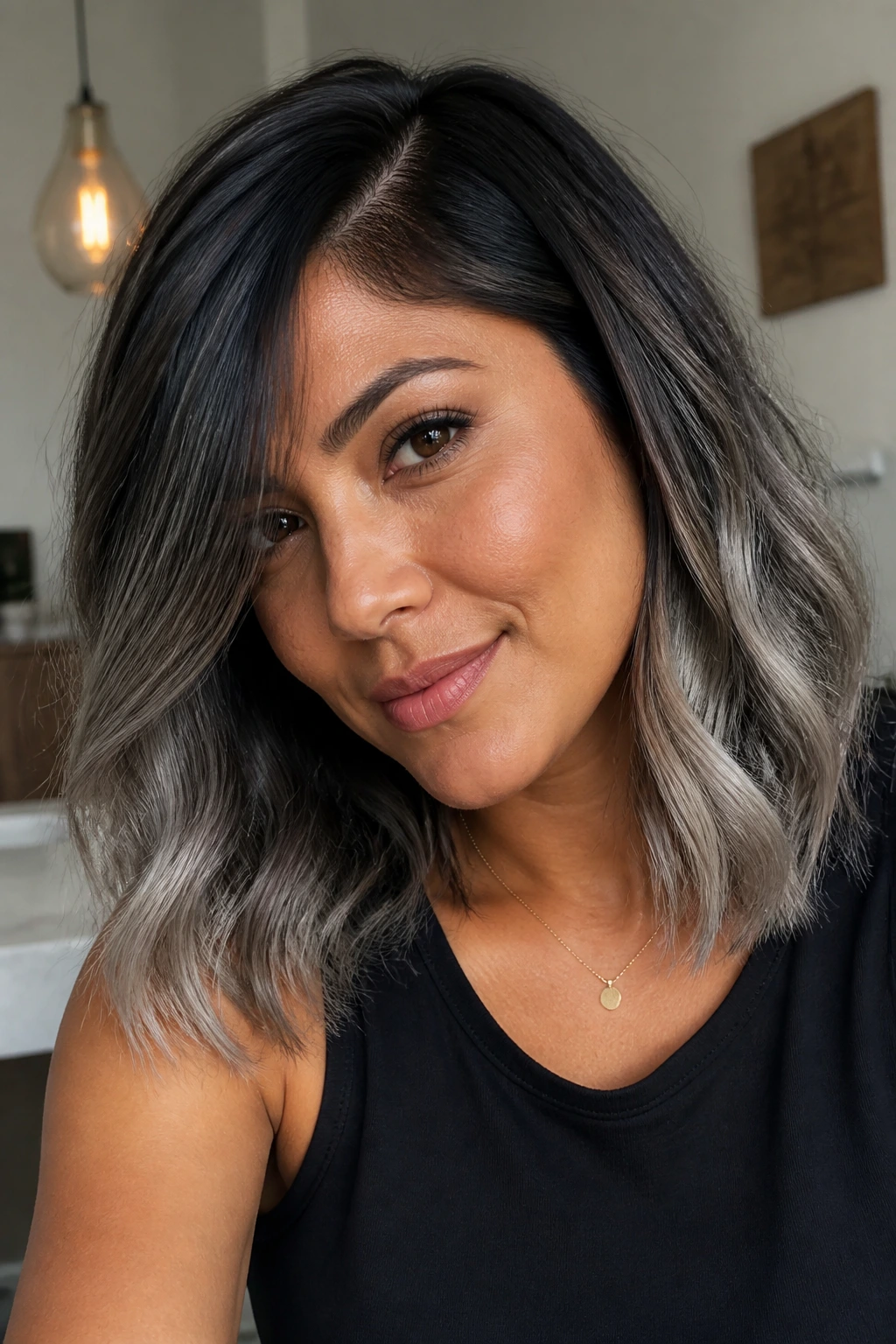
A side part changes the entire personality of the color. On a shoulder-length cut, grey ends read sleek and deliberate when the hair falls over one side, especially if the base is a warm dark brown and the lowlights only show at the edge.
This is one of those styles that feels a little more polished than playful. The color is subtle when the hair is tucked behind the ear, then becomes obvious as soon as the ends flick outward. That makes it a good choice for people who like a controlled amount of contrast.
If your face is round or soft, the side part gives the grey room to create a slim line. If your face is more angular, the bend at the ends softens everything.
8. Feathered Shag With Smoke-Toned Layers
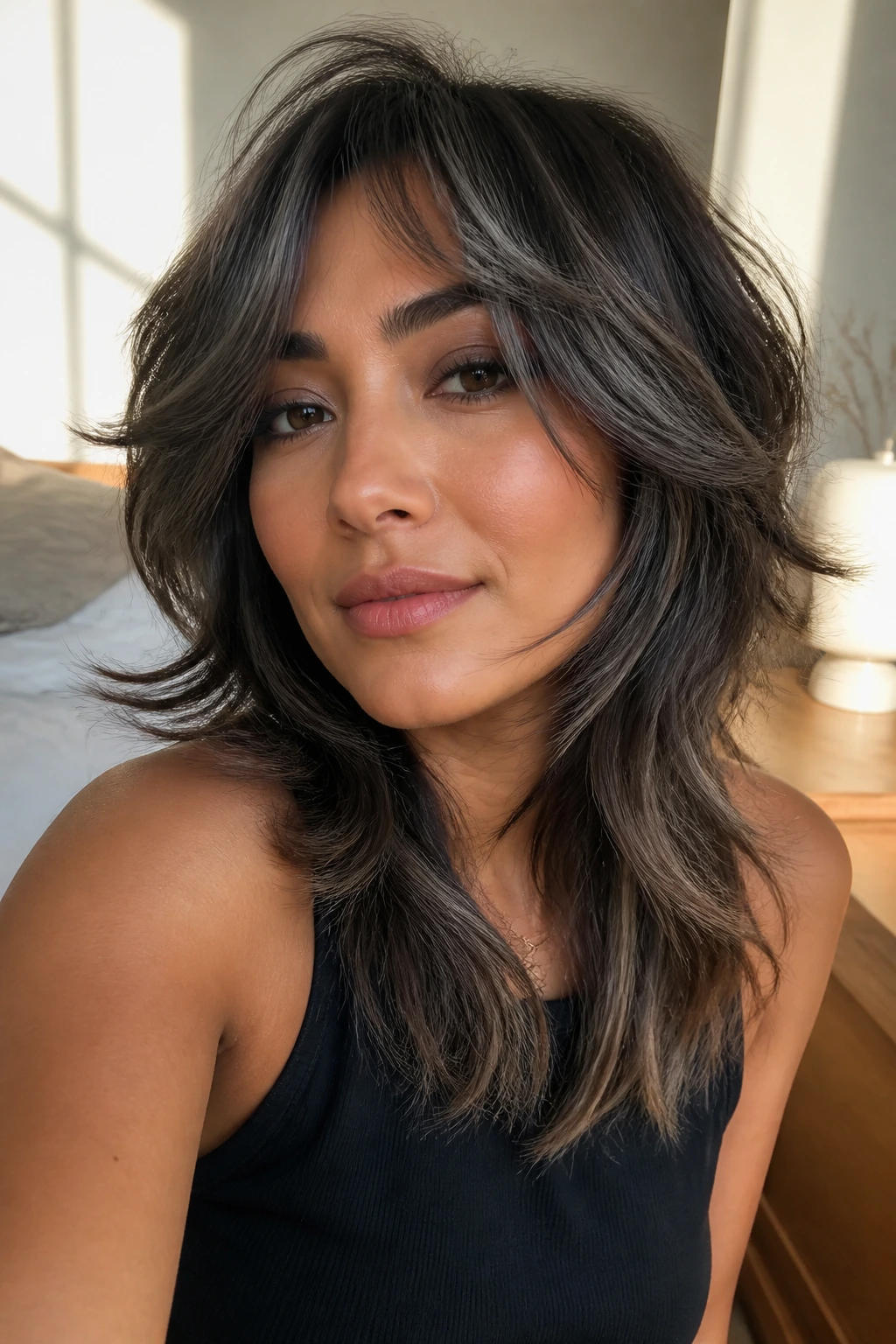
A shag cut can handle more contrast than a blunt shape because the layers break everything up. Smoke-toned lowlights running through feathered pieces make the haircut look airy instead of heavy, which is a nice fit for tan skin when you want dimension without a hard edge.
The beauty of this cut is that it never sits still. The fringe, the crown, and the ends all move in different directions, so the grey lowlights keep showing up in new places. That randomness is what makes it feel modern.
Use a lightweight mousse or texture spray here. Heavy cream can clump the layers together and bury the smoky effect.
9. Pixie Cut With Charcoal Crown Detail
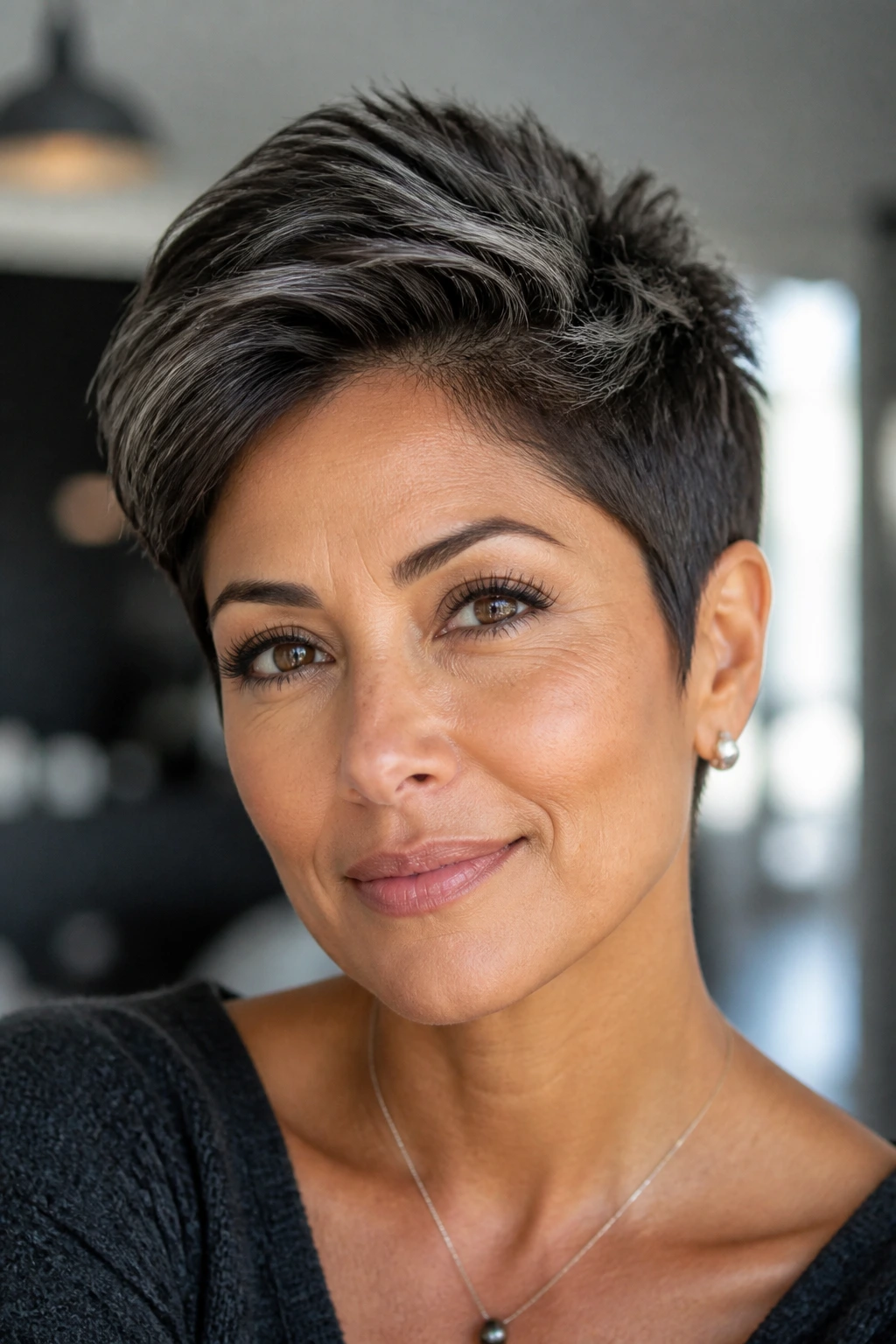
Short hair can wear grey lowlights better than people expect. On a pixie, charcoal at the crown creates instant lift and structure, especially when the sides stay dark brown and close to the head. The result is crisp, not harsh.
Why It Flatters Tan Skin
The short length keeps the grey near the face, but not so much that it overpowers it. That balance is useful on tan skin because the color can stay cool without stealing the warmth from the complexion.
A pixie like this needs careful placement, though. Too much grey on the top can look dusty. Too little and the haircut loses shape. I’d ask for soft, broken-up sections, not solid panels.
10. Wolf Cut With Streaked Graphite Ends
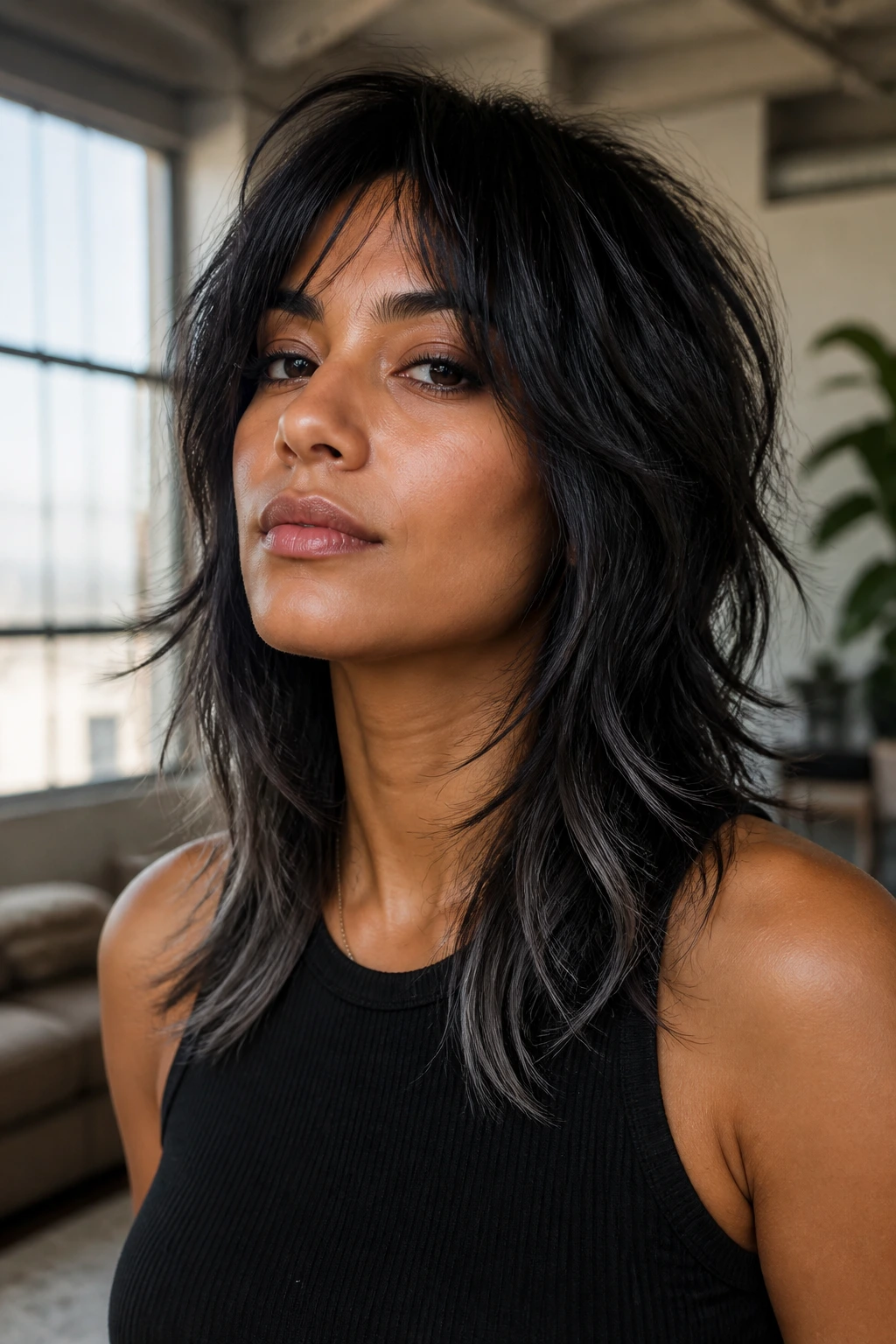
The wolf cut has enough texture to keep graphitic lowlights from feeling too neat. That’s the appeal. The layers are choppy, the ends are uneven, and the grey can live in the longer pieces without making the whole cut look static.
This is one of the more dramatic options in the whole set. It suits tan skin best when the graphite is balanced by a dark espresso base and a little shine at the crown. If the hair is too matte, the grey can tilt flat and a little dry.
I like this look on medium to thick hair. Thin hair can wear it too, but the lowlights need to stay wispy and broken up, or the cut loses air.
11. Chestnut Curls With Silver Silk Ribbons
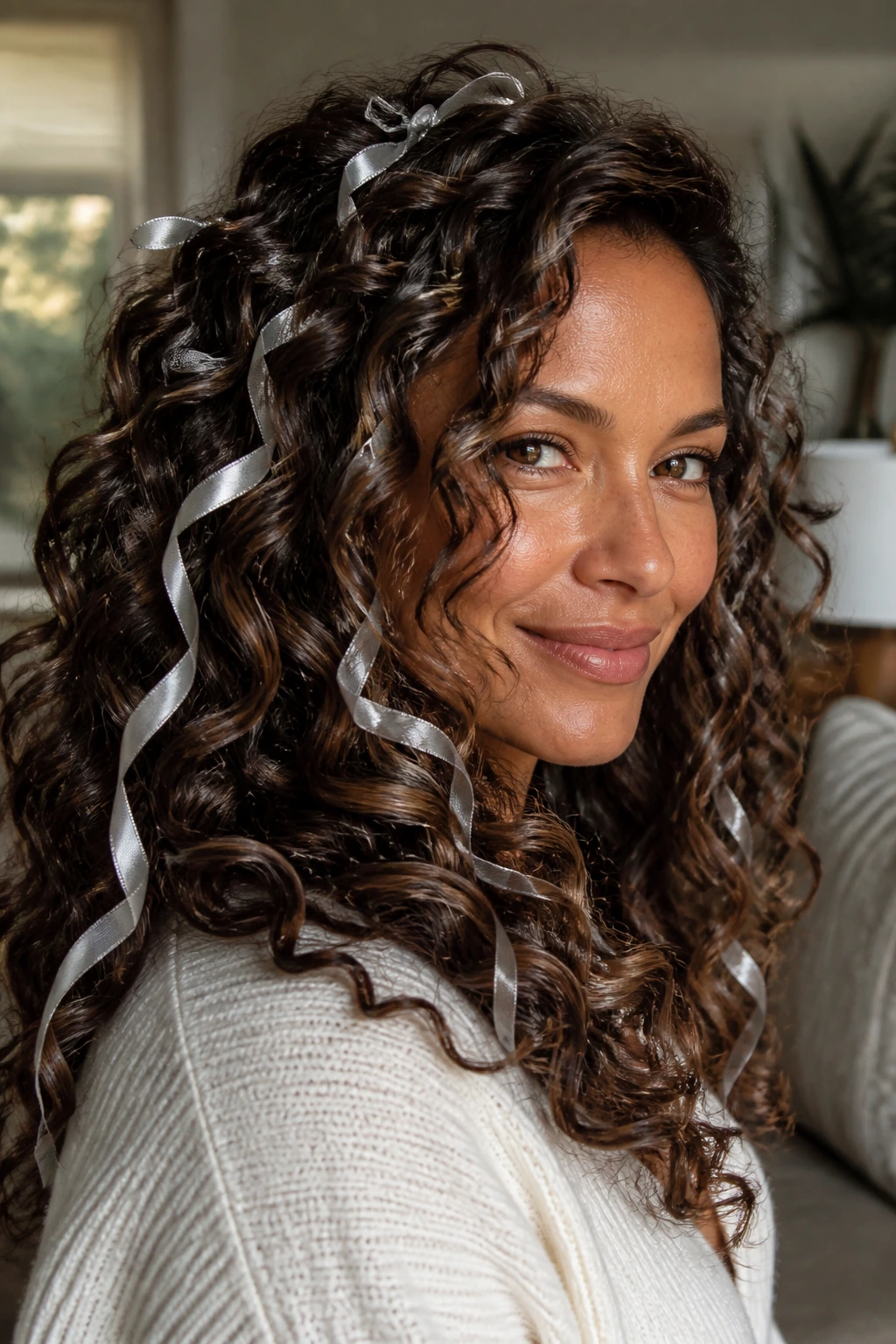
Chestnut is a smart base for grey because it keeps the whole head from feeling cold. Silver silk ribbons through chestnut curls give you contrast that still feels warm enough for tan skin. The color looks especially good when the curls are separated, not brushed into one mass.
The Mechanism
The chestnut underneath acts like a buffer. It softens the silver and keeps the finish in the smoky family instead of the icy one. That’s why this version reads more luxurious than stark platinum-gray work.
Best Use
Wear it with defined curls, a side part, or a half-tuck. If you flatten the curls too much, the ribboning disappears. And that would be a shame, because this one lives and dies by movement.
12. Straight Mid-Length Cut With Taupe Veils
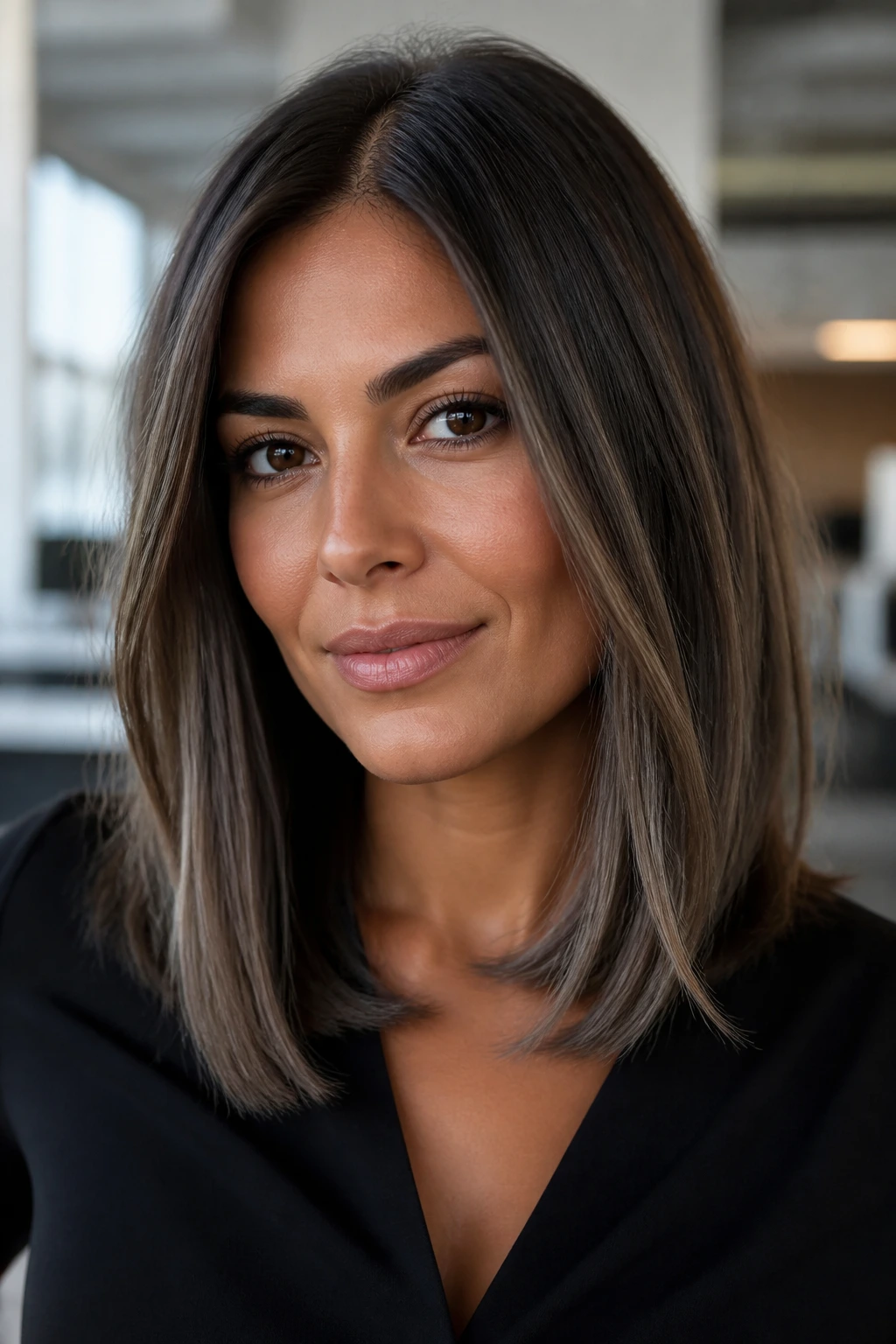
Straight hair can make lowlights look either sleek or dead. Taupe veils solve that problem by staying soft and muted rather than dark and muddy. On a mid-length cut, the result is subtle dimension that shows up best under natural light.
This style is a good fit if you want something office-safe but not boring. The taupe sits close enough to grey that it gives the hair coolness, yet it keeps enough brown in it to flatter tan skin. I’d avoid high-contrast panels here; they fight the clean line of the cut.
A flat iron can sharpen the look, but use it sparingly. A tiny bend at the ends keeps the color from reading too severe.
13. Deep Brunette Waves With Espresso Panels
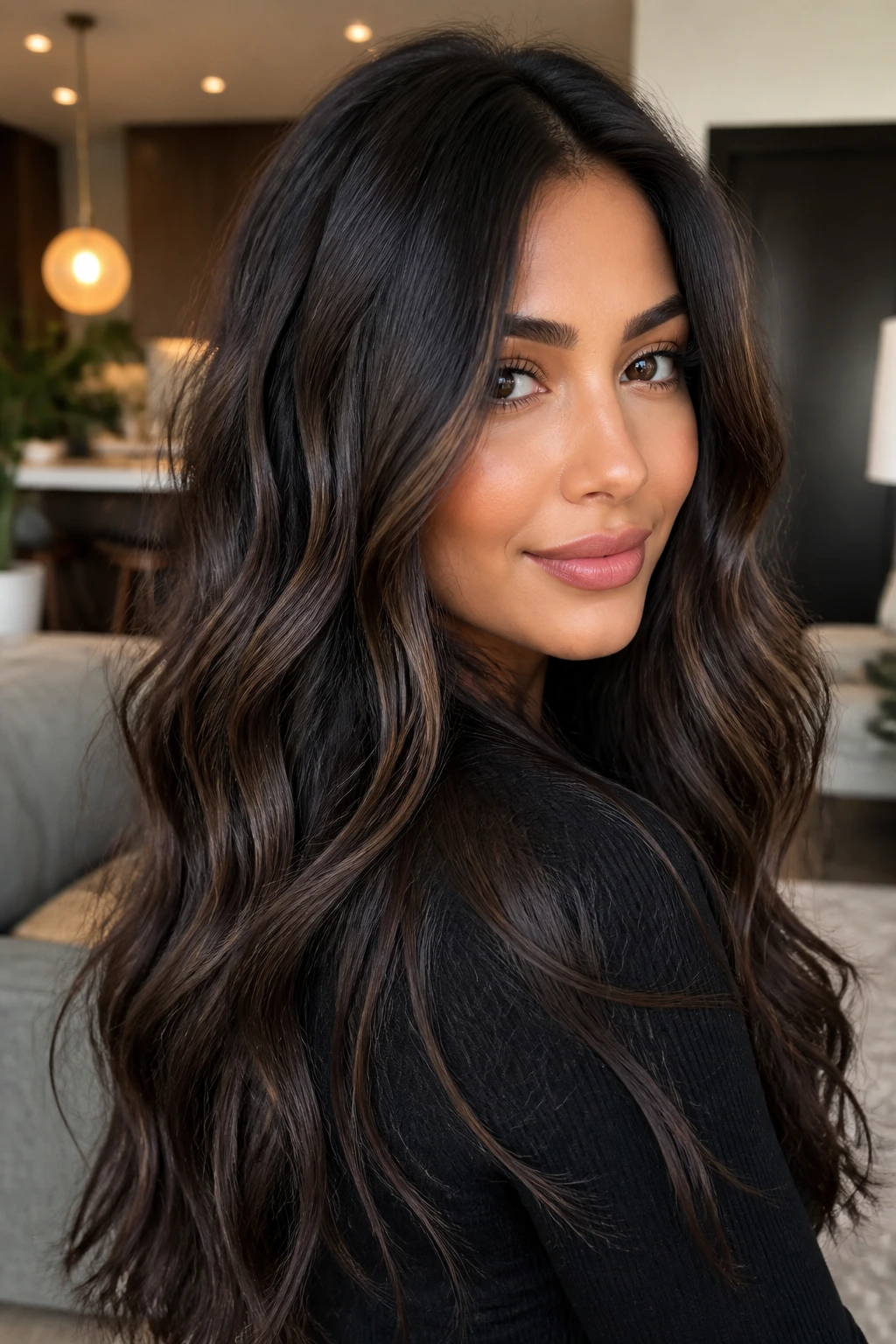
Not every grey-inspired look has to shout. Deep brunette waves with espresso panels are the quiet side of this trend, and that’s what makes them so wearable. In some light, the lowlights nearly disappear. In other light, they sharpen the wave pattern and add depth.
This version is ideal if your tan skin leans warm and you want grey influence without obvious silver. The espresso panels act like shadow rather than color, which keeps the overall look rich. It’s a good bridge for anyone who wants to test the waters before going cooler.
A gloss finish matters here. Without it, the dark tones can flatten out and lose the sheen that makes them feel intentional.
14. Half-Up Style With Hidden Grey Lowlights
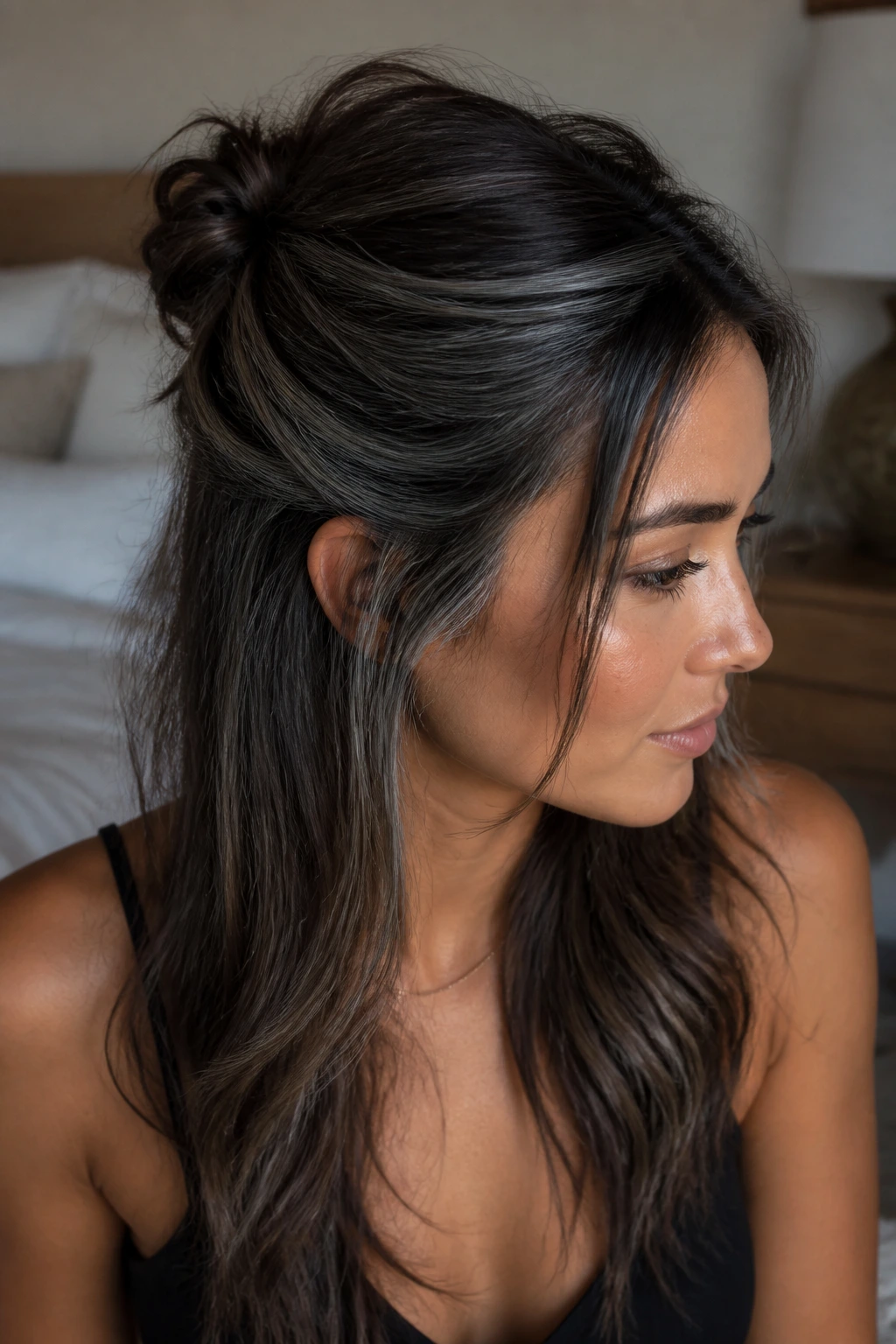
What I like about this style is the reveal. When the hair is worn down, the grey lives under the top layer and stays subtle. Pull it half-up, and the lowlights suddenly show around the crown and the sides, which gives the whole style a little surprise.
That hidden placement is excellent for tan skin because it keeps the face framed in brown while letting the grey appear on your terms. It also works nicely for people who need their hair to look conservative some days and a little more expressive on others.
If you wear clips or small barrettes, choose dark metal, tortoiseshell, or brushed gold. Those finishes make the cool tones feel more deliberate.
15. Collarbone Flip With Ash Brown Contrast
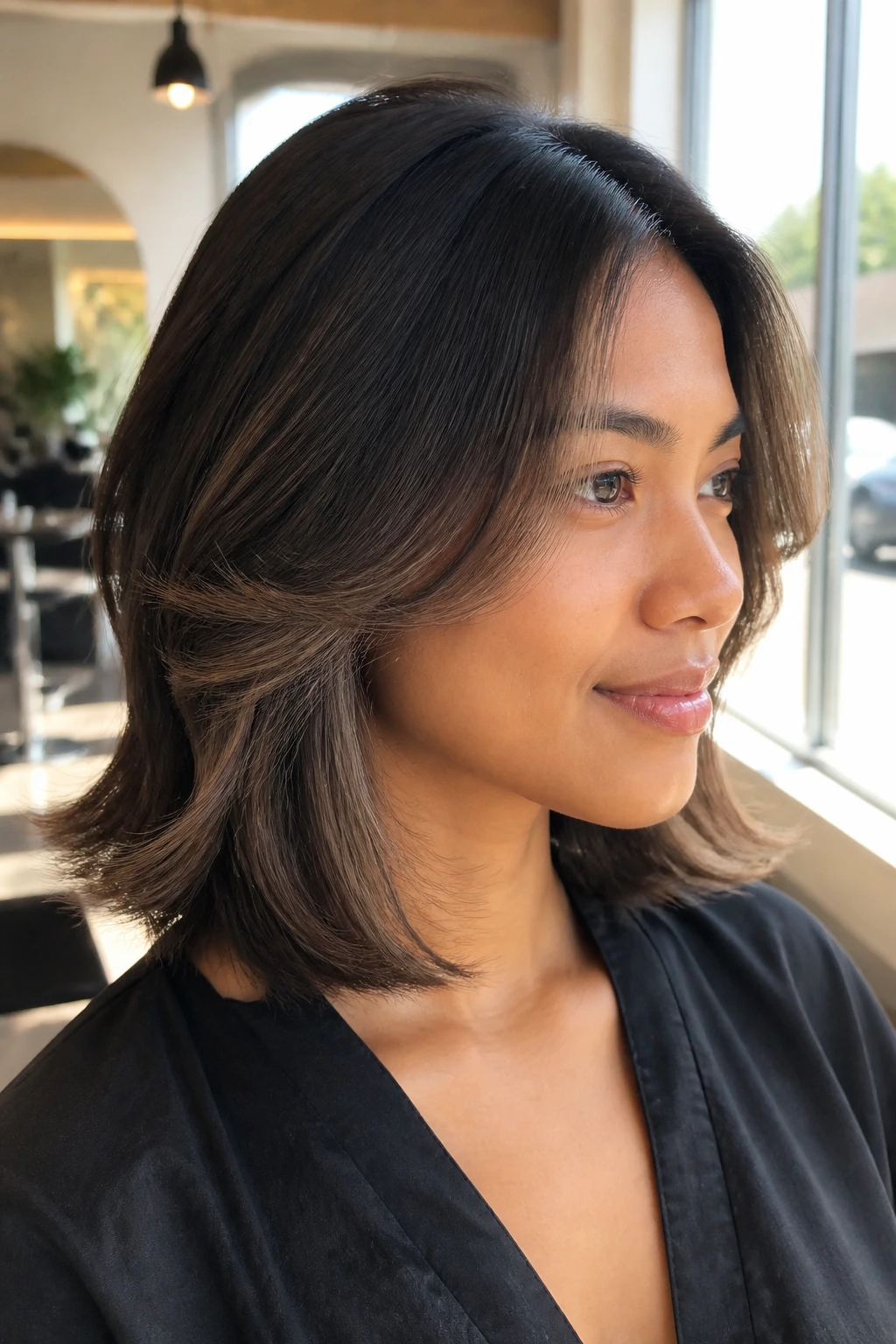
A collarbone cut with flipped ends gives ash brown lowlights a chance to move. The flip exposes the underside of the hair, and that’s where the contrast becomes visible. On tan skin, the combo feels bright enough to wake up the face without pulling too icy.
This is a cut that likes a round brush and a little heat. The trick is to flip the ends away from the face just enough to reveal the smoky pieces, not so much that the style turns retro in a costume way. Keep the ash soft, almost suede-like.
If your hair has lots of natural volume, this style can handle a slightly deeper lowlight. Thin hair needs a lighter hand.
16. Layered Blowout With Slate Face Frame
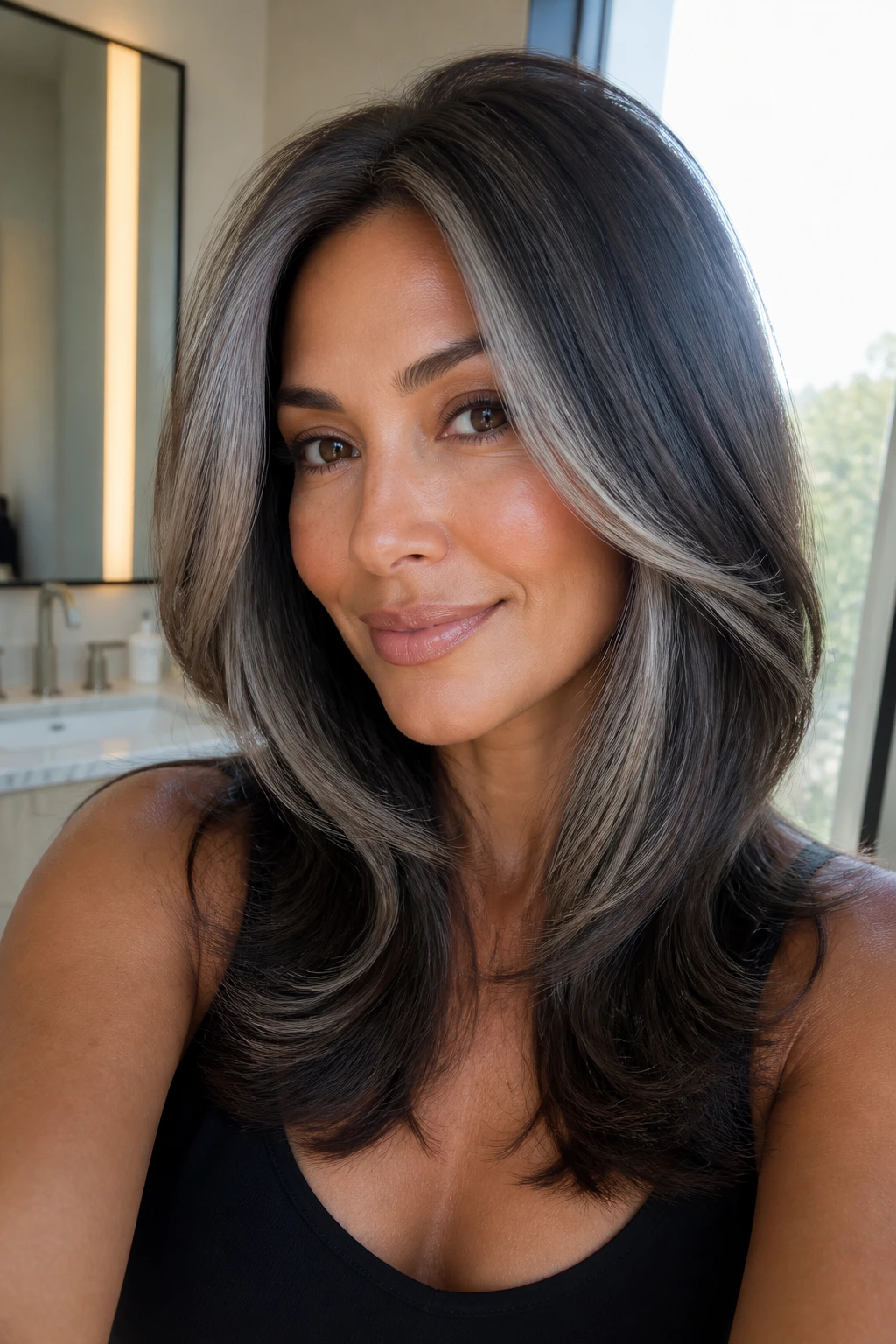
A good blowout does more for grey lowlights than people give it credit for. The movement around the face lifts the slate pieces and keeps them from sinking into the brown base. On tan skin, that frame can sharpen cheekbones and make the color feel expensive without being loud.
Why It Works
Blowouts create soft, separate sections, which is exactly what lowlights need. Ask for the slate pieces to sit around the face and crown, then keep the rest of the dimension scattered through the lower layers. That way the hair still has contrast when it settles back down.
Finish Note
A light serum on the ends is enough. Too much oil will darken the grey and take away the contrast you paid for.
17. Braided Style With Grey Threading
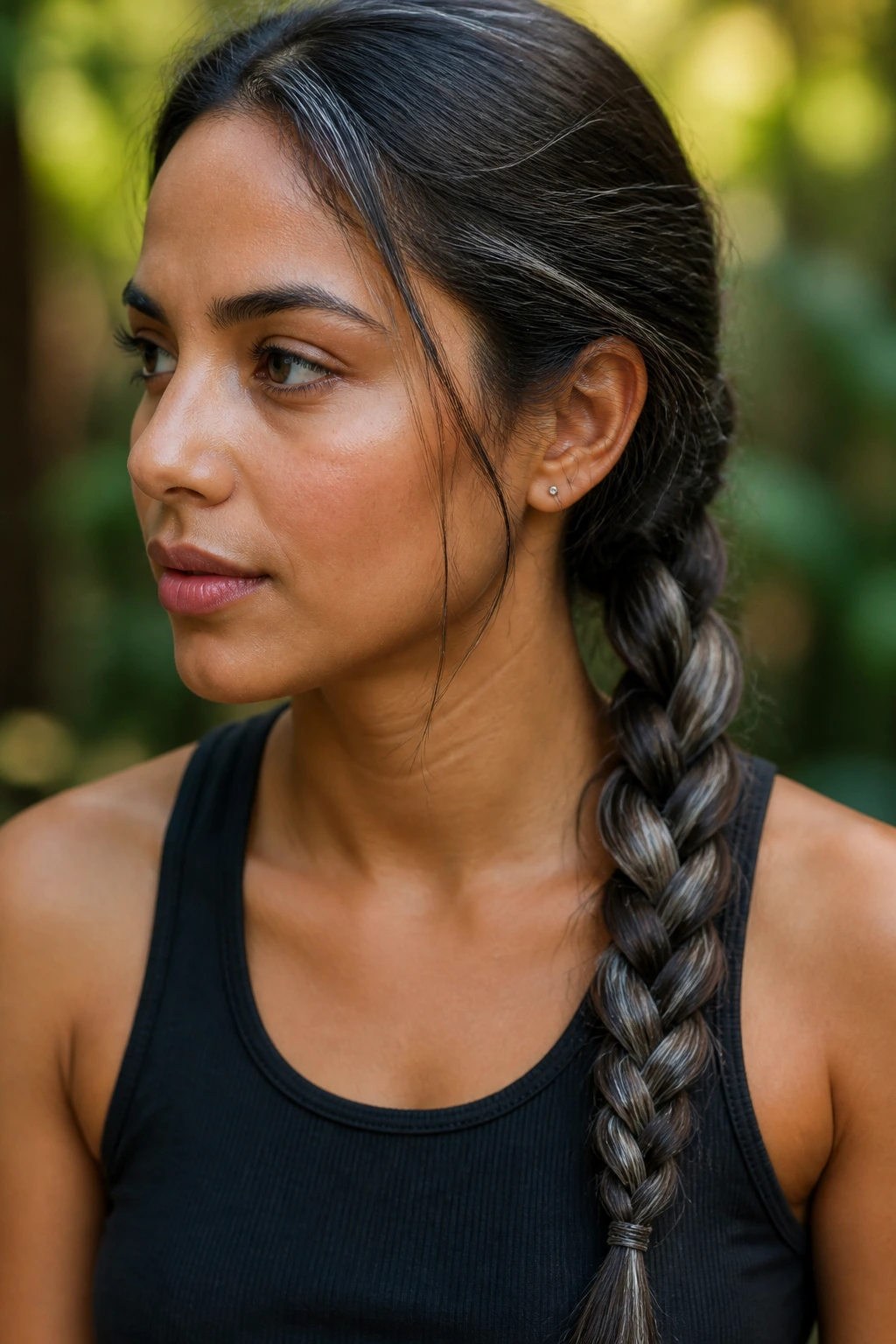
Braids are underrated for color work because they turn placement into pattern. Grey threading through a dark brown braid gives tan skin a strong but controlled contrast. You notice the detail in the weave, which is much more interesting than a single flat stripe.
This works with one braid, two braids, cornrow accents, or even a loose plait with a few face-framing pieces left out. The important part is that the lowlights are placed where the braid can reveal them as it twists. If the sections are too chunky, the effect gets heavy fast.
Braids also buy you time between washes. That matters when you’re trying to keep the grey from dulling with frequent shampooing.
18. Tousled Midi With Peekaboo Smoke
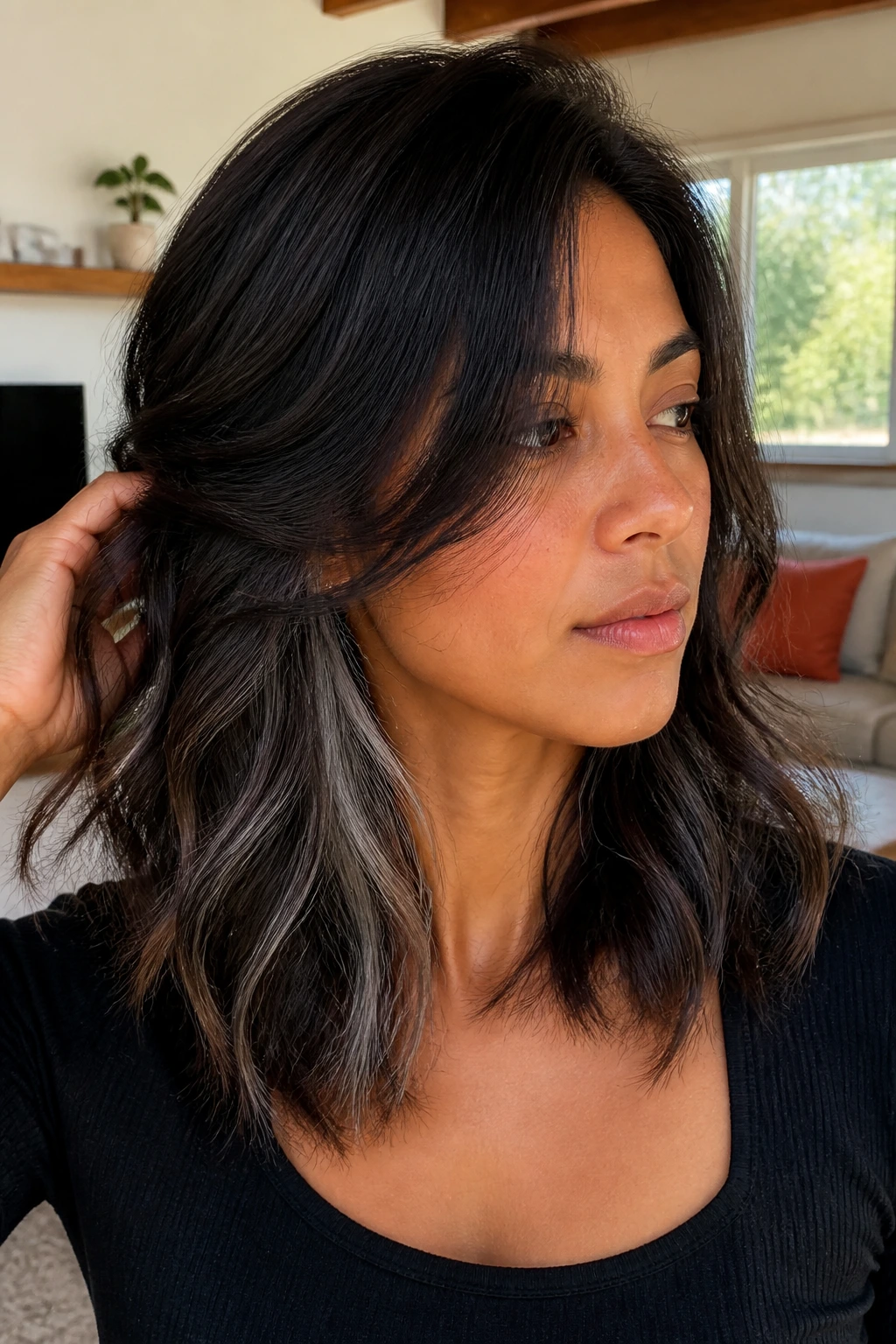
Peekaboo smoke lowlights are for people who like the idea of grey but do not want to see it every second of the day. The color stays mostly under the surface, then slips out when the hair is tucked, lifted, or bent. On tan skin, that creates a nice little contrast without any harshness.
The midi length is useful here because it gives the underlayers enough space to show. A little wave helps, too. Straight, flat hair can hide peekaboo color almost completely, and that would waste the whole point.
If your life calls for a more conservative finish, this is one of the safest choices in the list.
19. Curtain Bangs With Pewter Ends
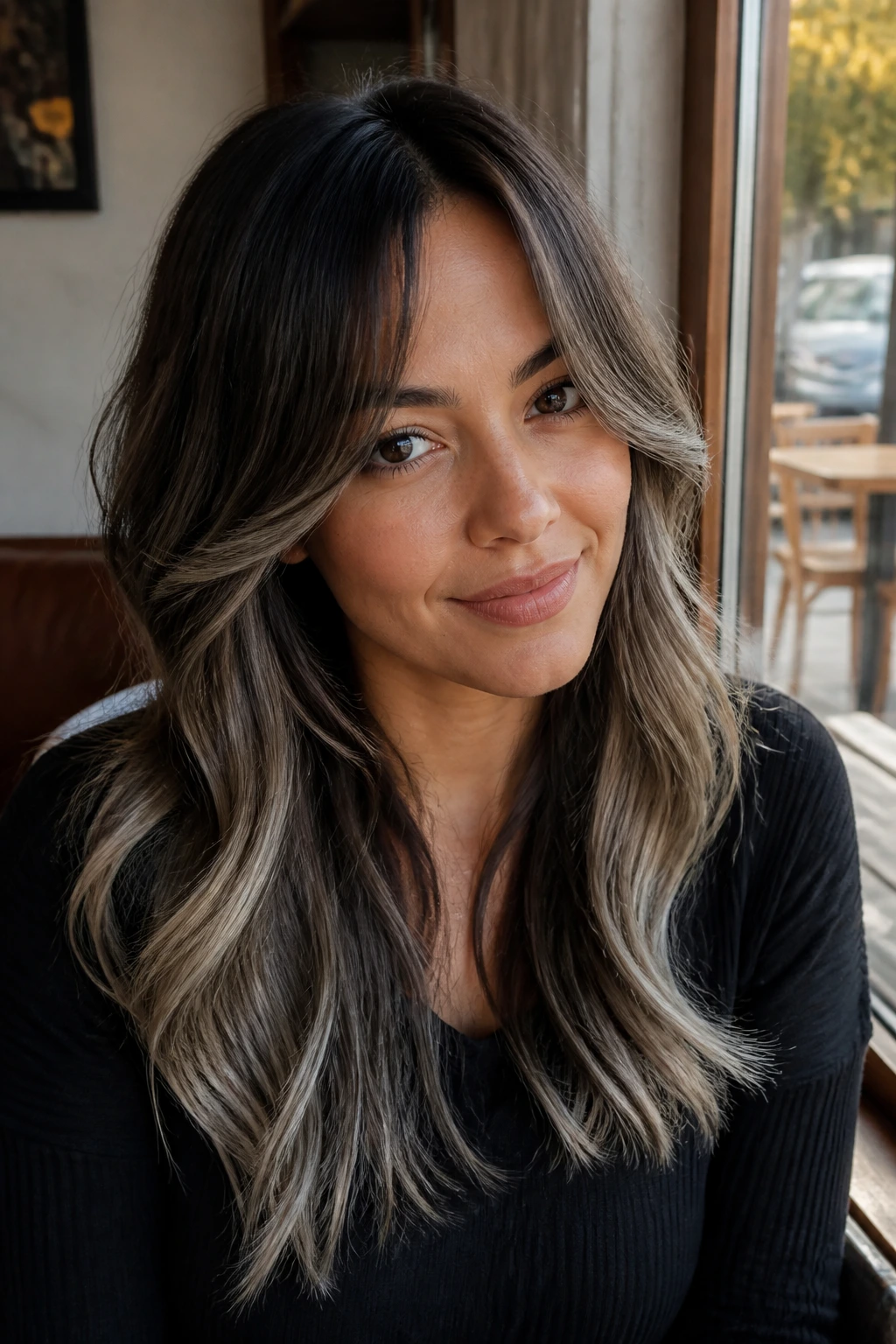
Curtain bangs can make grey lowlights feel softer right away. Pewter ends keep the fringe from looking too dark or too silver, and the split shape of the bangs draws attention to the eyes and cheekbones instead of the hair color alone.
What to Watch For
Bangs and cool tones can go muddy if the front is too dense. Keep the pewter light enough to read smoky. Heavy ash on the bangs can drag the face down, especially on tan skin with warm undertones.
The rest of the hair can stay dark brown with just a few lowlights through the sides. That keeps the bangs as the main feature, which is usually the smartest move.
20. Angled Lob With Greige Dimension
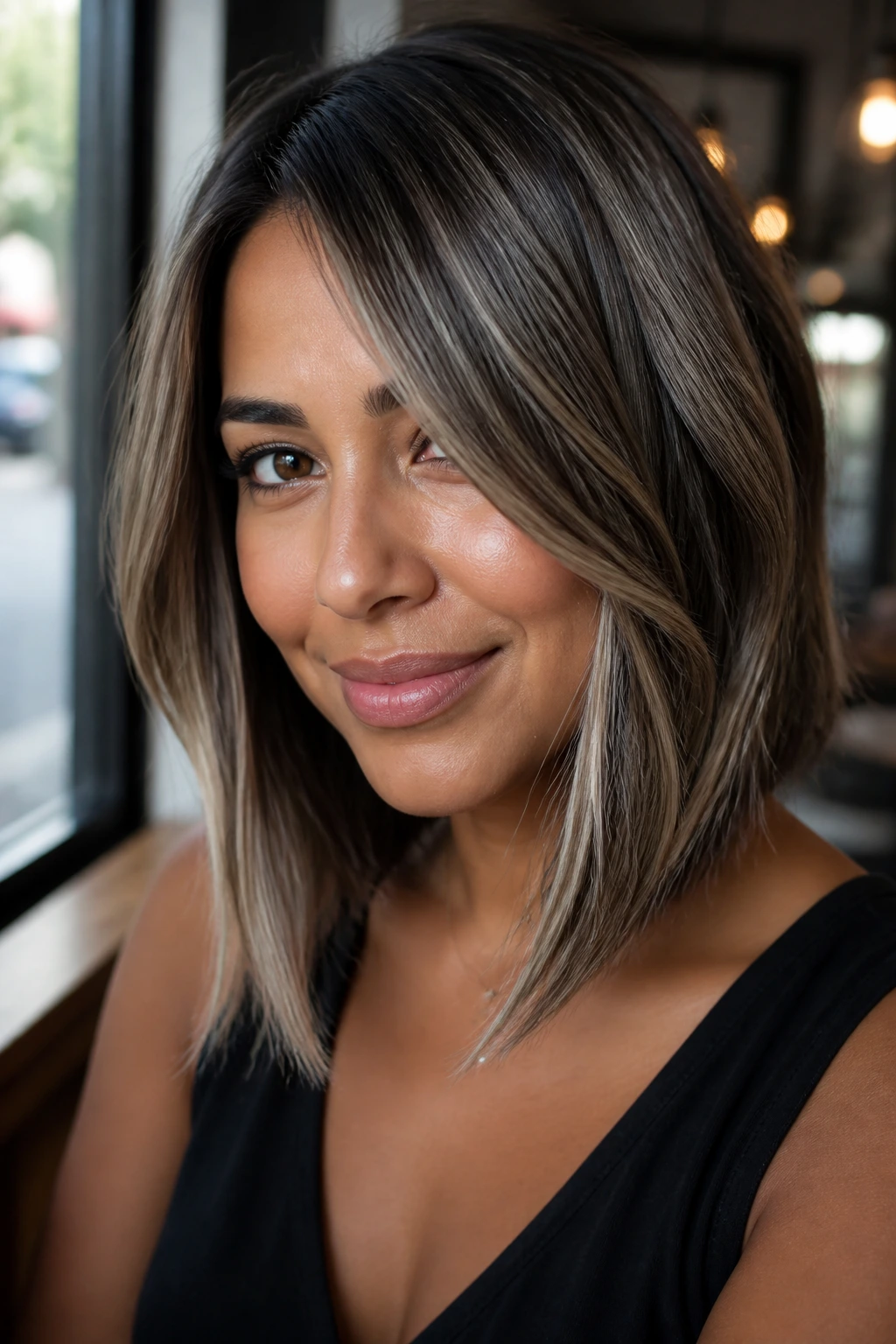
Greige is one of the best colors for tan skin because it sits in that middle zone between grey and beige. On an angled lob, it adds enough coolness to sharpen the cut without turning the hair icy. The longer front pieces make the tone shift even more obvious.
This cut works especially well if you want something that looks deliberate from every angle. When the front swings forward, the greige reads more pronounced. When the hair tucks back, the darker brown reclaims the shape. That kind of flexibility is valuable.
I’d keep the lowlights fine rather than chunky here. An angled lob already has structure; the color should support it, not compete with it.
21. Curly Shag With Silver Mist
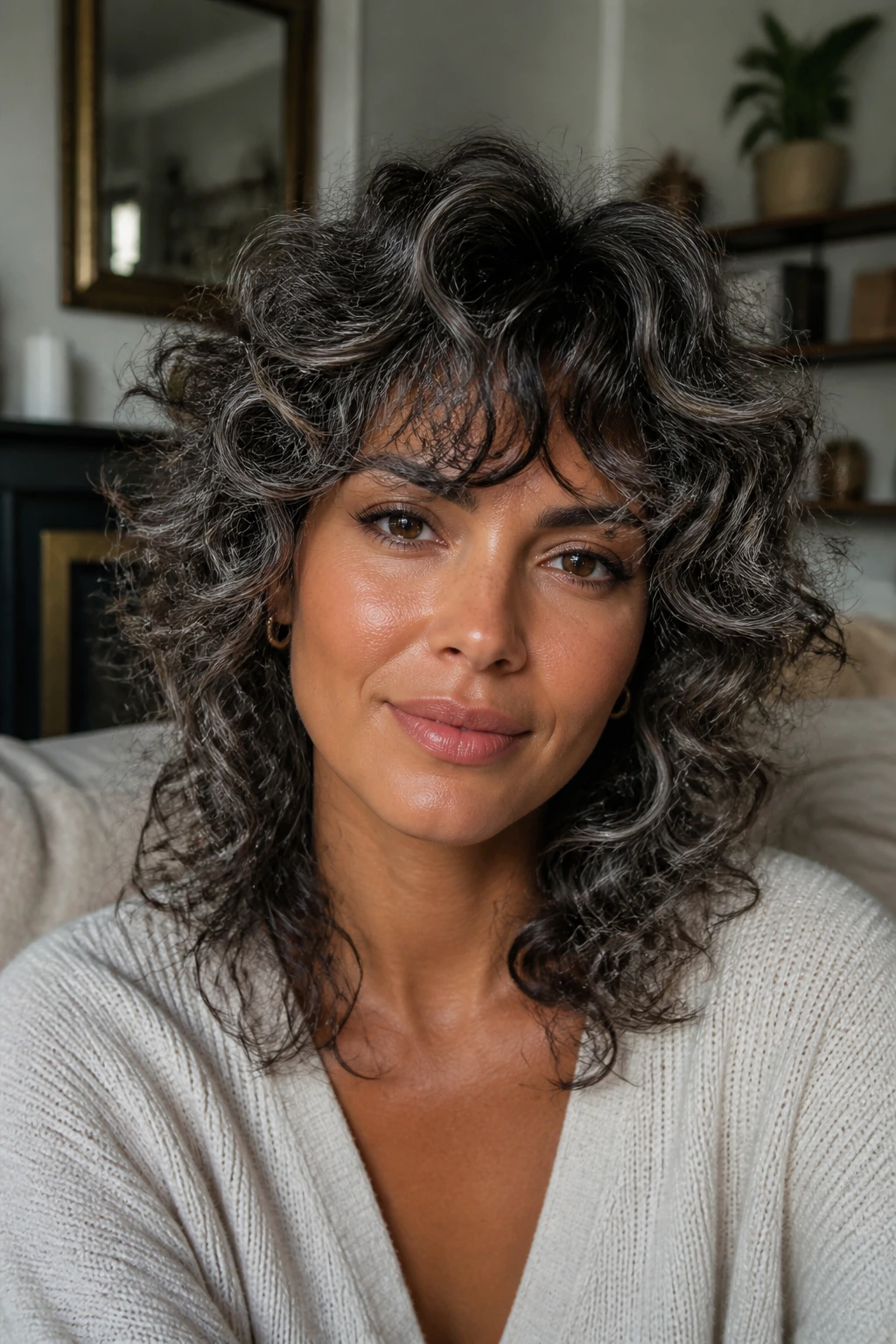
A curly shag gives silver mist room to breathe. The layers stop the curls from clumping into one dark mass, and the grey lowlights float across the top and outer ringlets instead of sinking underneath. On tan skin, that softens the contrast and keeps the finish airy.
This style is good for people who want texture first and color second. The grey should feel like a whisper across the curls, not a hard line. If the curls are tight, widen the ribbons a bit so they don’t disappear into the pattern.
My Favorite Part
The color changes as the curls dry. That little shift from damp to fully set makes the mist tone feel alive instead of static.
22. Low Ponytail With Grey Slices
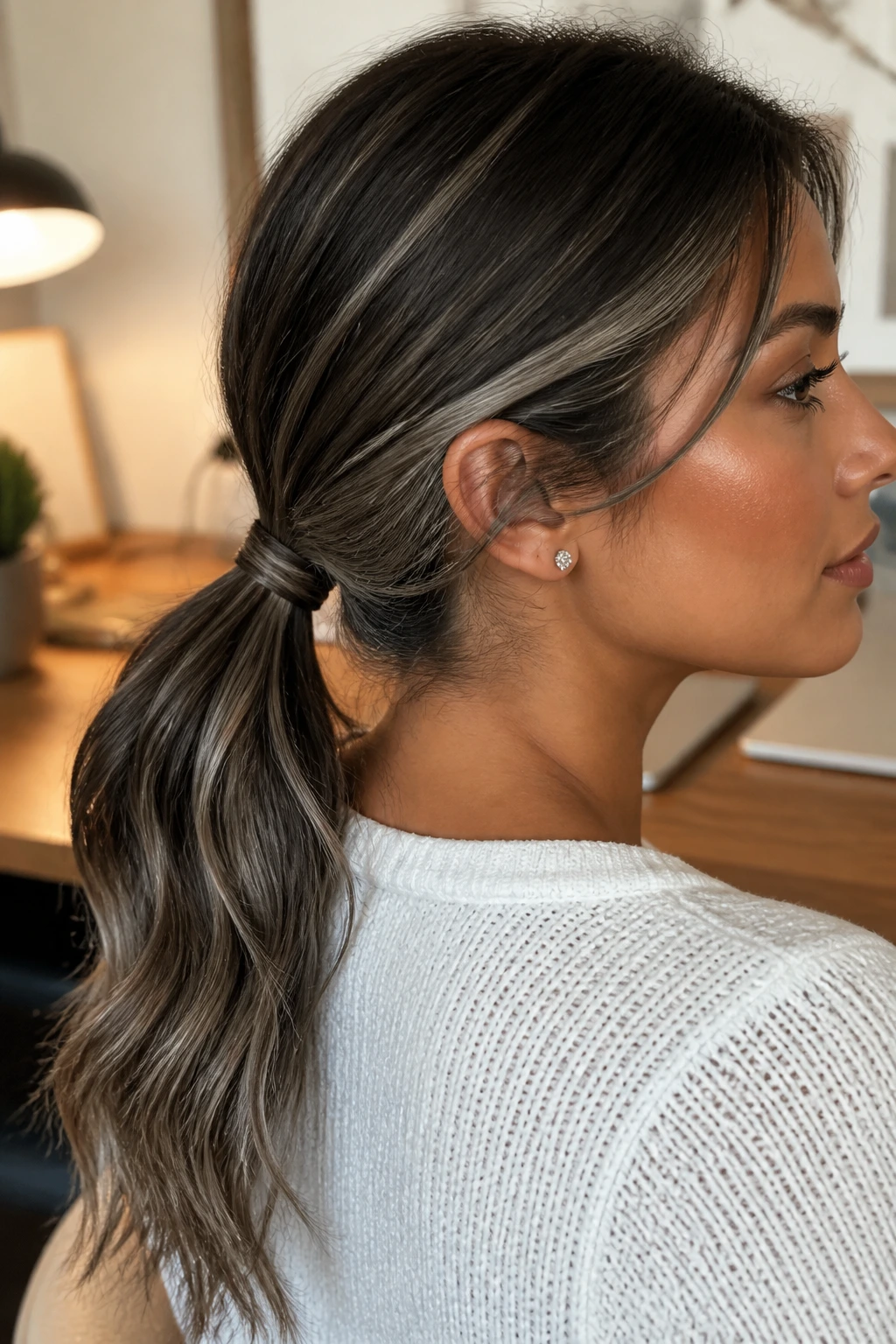
A low ponytail is not boring if the color underneath has something to say. Grey slices through dark brown hair make the ponytail look intentional, especially when the nape and side sections are left a little more dimensional. Tan skin benefits here because the face stays open and warm while the ponytail carries the cool tone.
This is a good everyday option. You can wear it smooth for work or loosen a few front pieces for a softer finish. The lowlights show more when the ponytail is wrapped with a strand of hair instead of a plain elastic, so use that trick if you want the style to feel finished.
23. Soft Undercut With Cool Smoke Detail
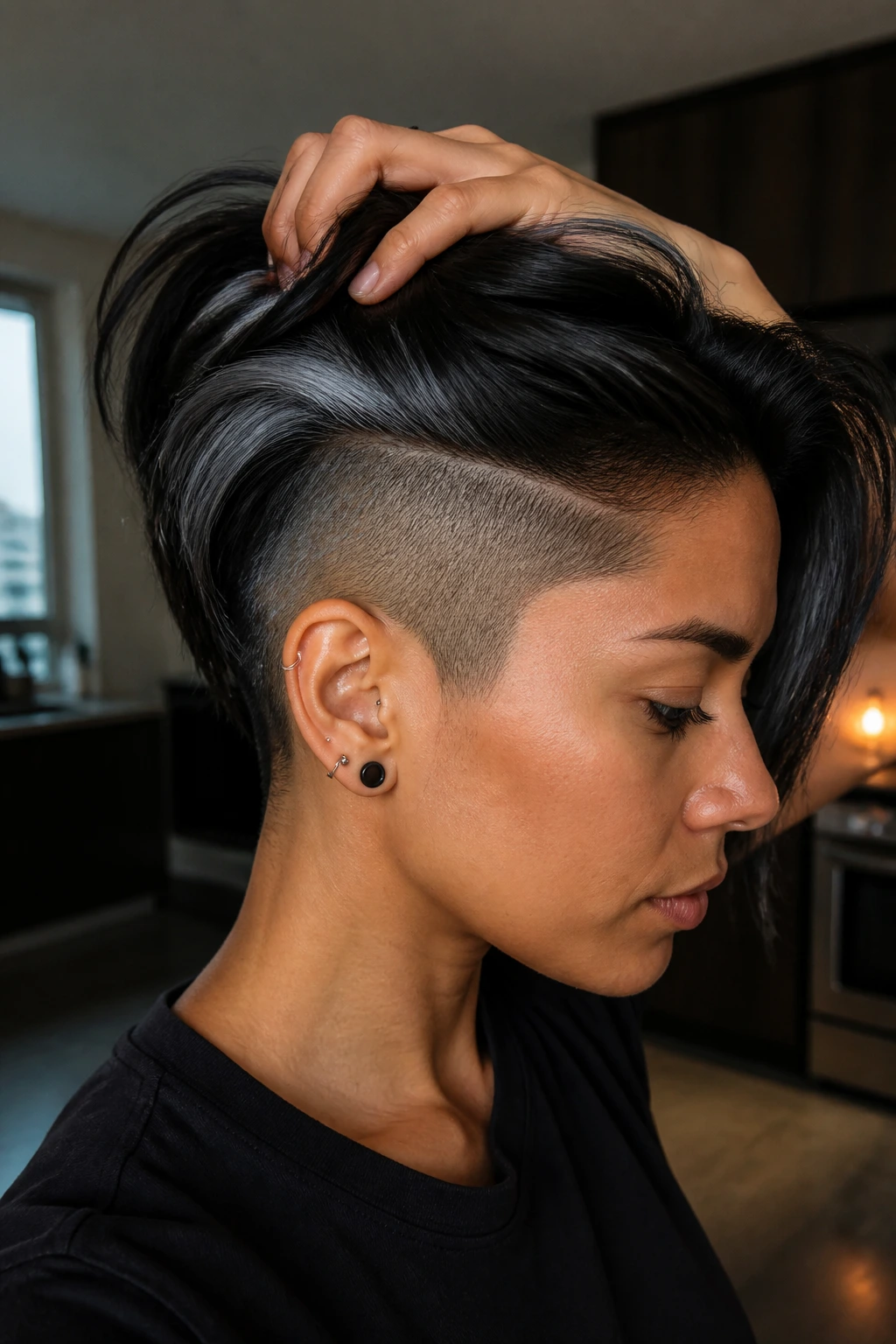
An undercut can look harsh if the top and sides are the same shade. Cool smoke detail solves that by giving the hidden area a smoky tone that peeks through when the hair is lifted. On tan skin, the contrast feels edgy without turning harsh.
This style is for someone who likes a little surprise. Most of the time the grey sits under the curtain of darker hair. Then the head moves, the top lifts, and the smoke shows. That flicker is what makes the cut fun.
If you wear your hair up often, this is one of the more practical bold options. The color does not need to be visible all the time to matter.
24. Glossy Straight Hair With Steely Underlights
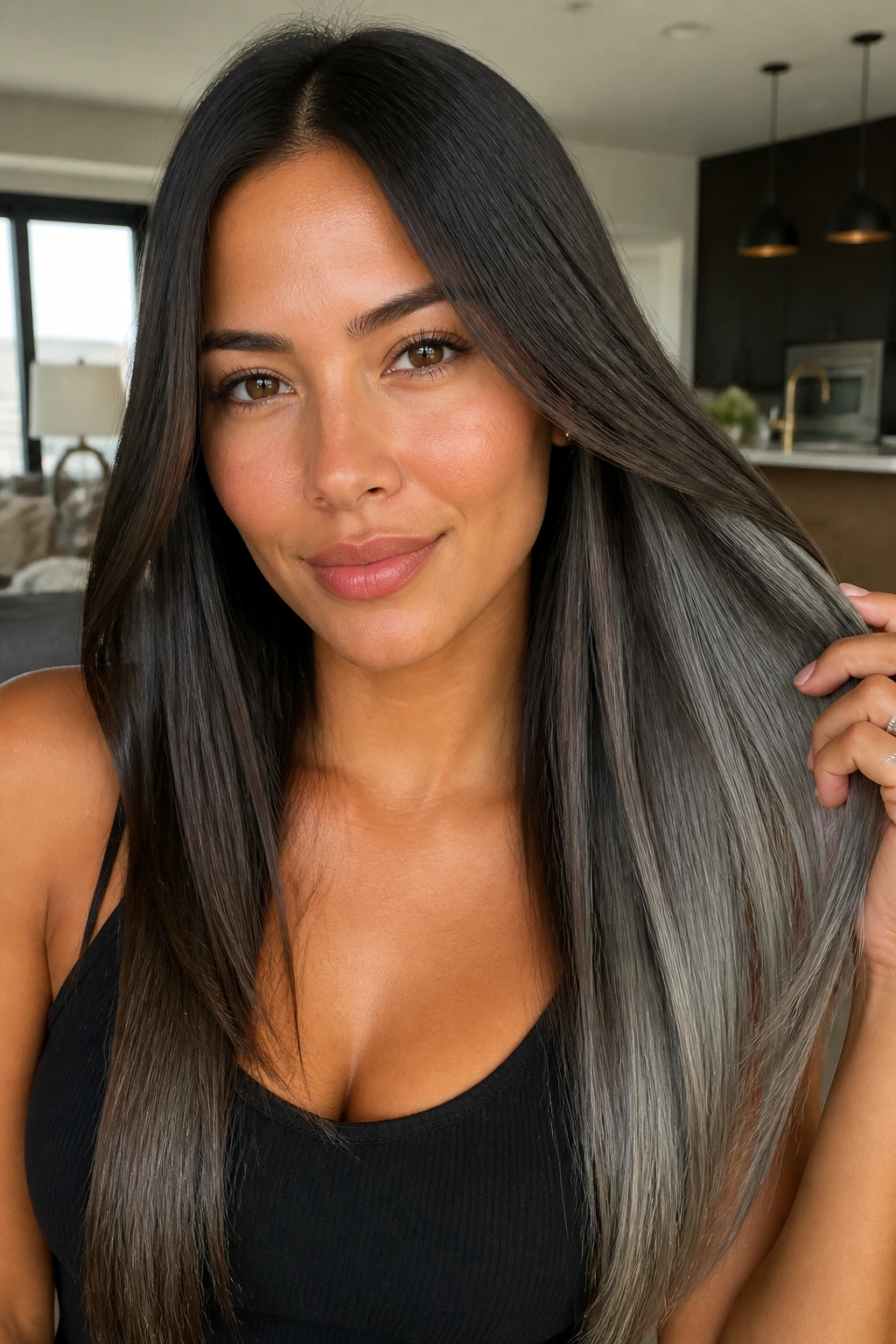
Straight hair shows every color choice, which is why glossy steely underlights can look so sharp here. The dark brown top layer keeps the look grounded, while the grey lives underneath and flashes through with motion. On tan skin, that contrast stays crisp as long as the finish is shiny.
A glossy straight style needs careful maintenance. Heat protectant is non-negotiable. So is a smoothing serum that does not weigh the hair down. If the hair gets puffy, the underlights blur, and the whole look loses its edge.
This is a strong choice for anyone who likes minimal styling but wants the color to do the work.
25. Wraparound Layers With Grey Melt
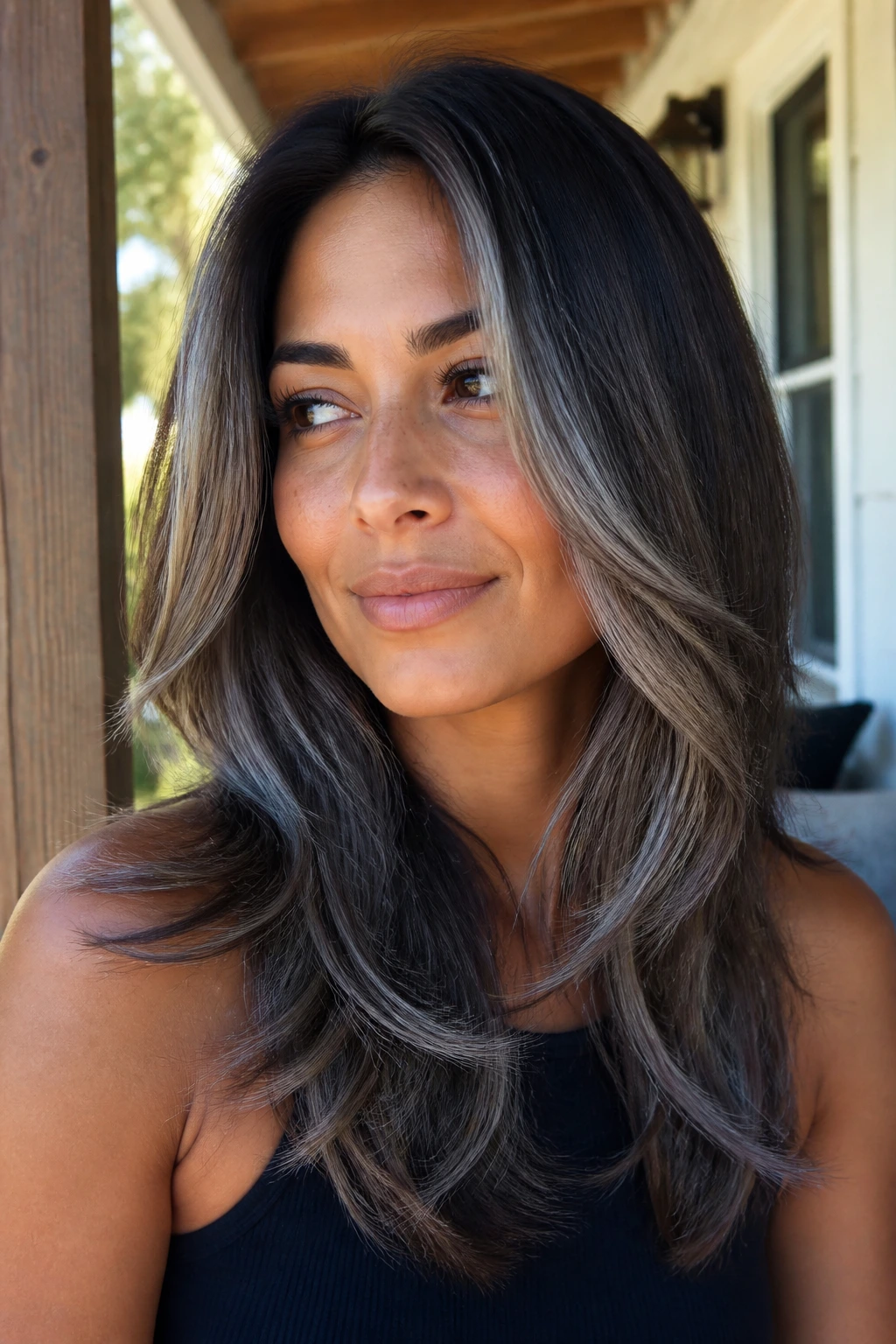
This is the one that feels the most balanced to me. Wraparound layers with a grey melt through dark brown hair give tan skin a soft frame, plenty of movement, and no obvious hard lines. The color shifts from brown to smoke in a way that feels easy to wear.
Because the layers wrap around the face and shoulders, the grey can show up where you want it and disappear where you don’t. That makes it one of the most versatile lowlights on the list. It works down, tucked, pinned, and half-up, which is more useful than a lot of flashier options.
If you are unsure where to start, start here. It is the safest bridge between subtle brunette depth and cooler grey contrast.
Small Tweaks That Make the Grey Read Better
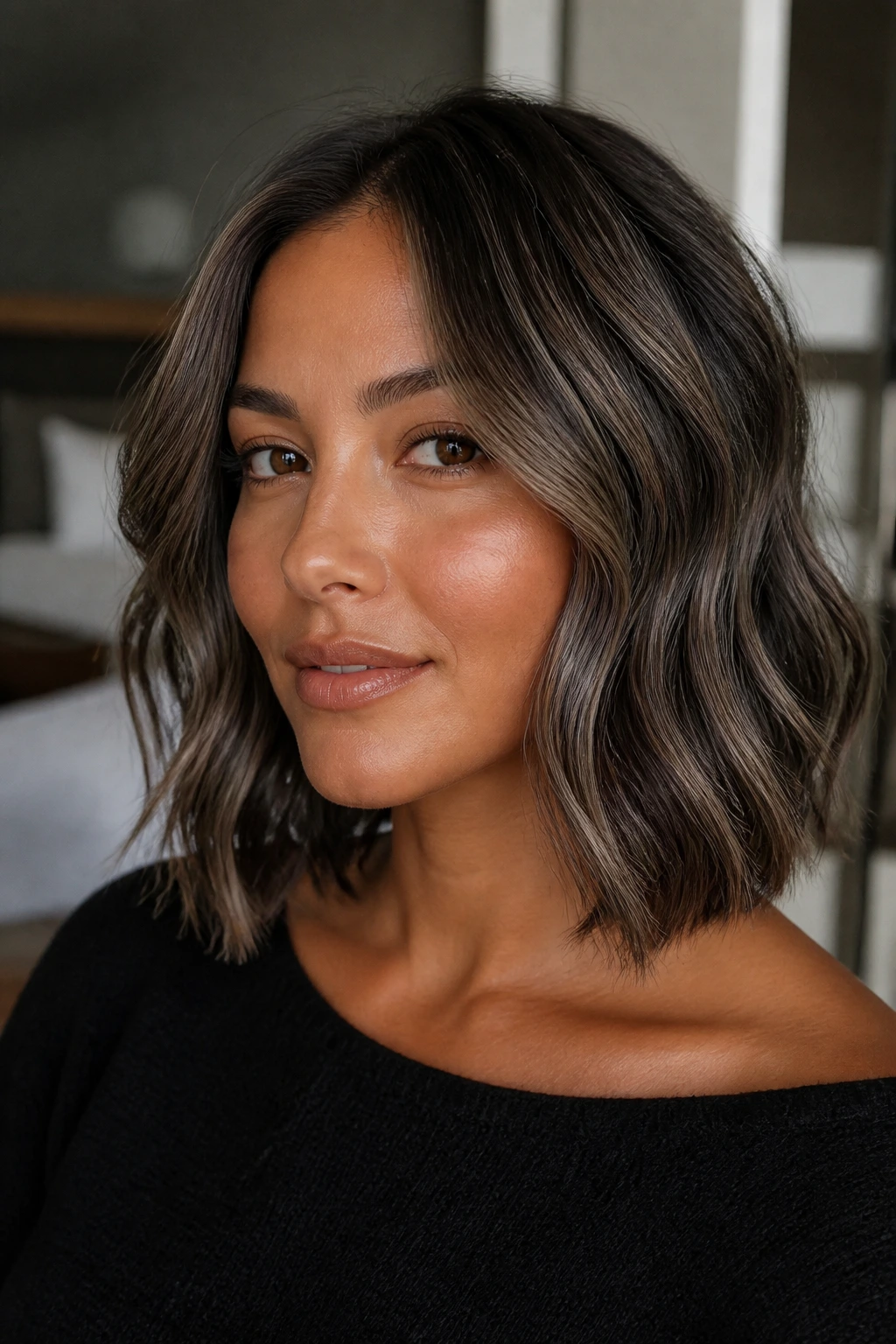
Gloss Boost: A clear or beige gloss every 4 to 6 weeks keeps grey lowlights from looking dusty. If the tone starts to lean flat, the gloss brings back the smoky shine without making the hair brighter.
Customization: Ask for the grey to sit in different places depending on your cut. Face frame for bone structure, underlayers for hidden contrast, or crown pieces if you want lift. The same color formula can look completely different just by moving it a few inches.
Styling Suggestion: Loose bends, soft waves, and polished blowouts show the grey best. Pin-straight hair can work, but it needs shine. Dry, rough texture makes smoky tones look dull.
Make-It-Yours: If your skin runs warm, choose mushroom, greige, or ash-brown over blue-grey. If your skin runs cooler, graphite and pewter can handle a little more edge. For curly hair, keep the ribbons wider. For fine hair, keep them thin and scattered so the head does not look striped.
Tools That Keep the Color Clean and the Style Intentional
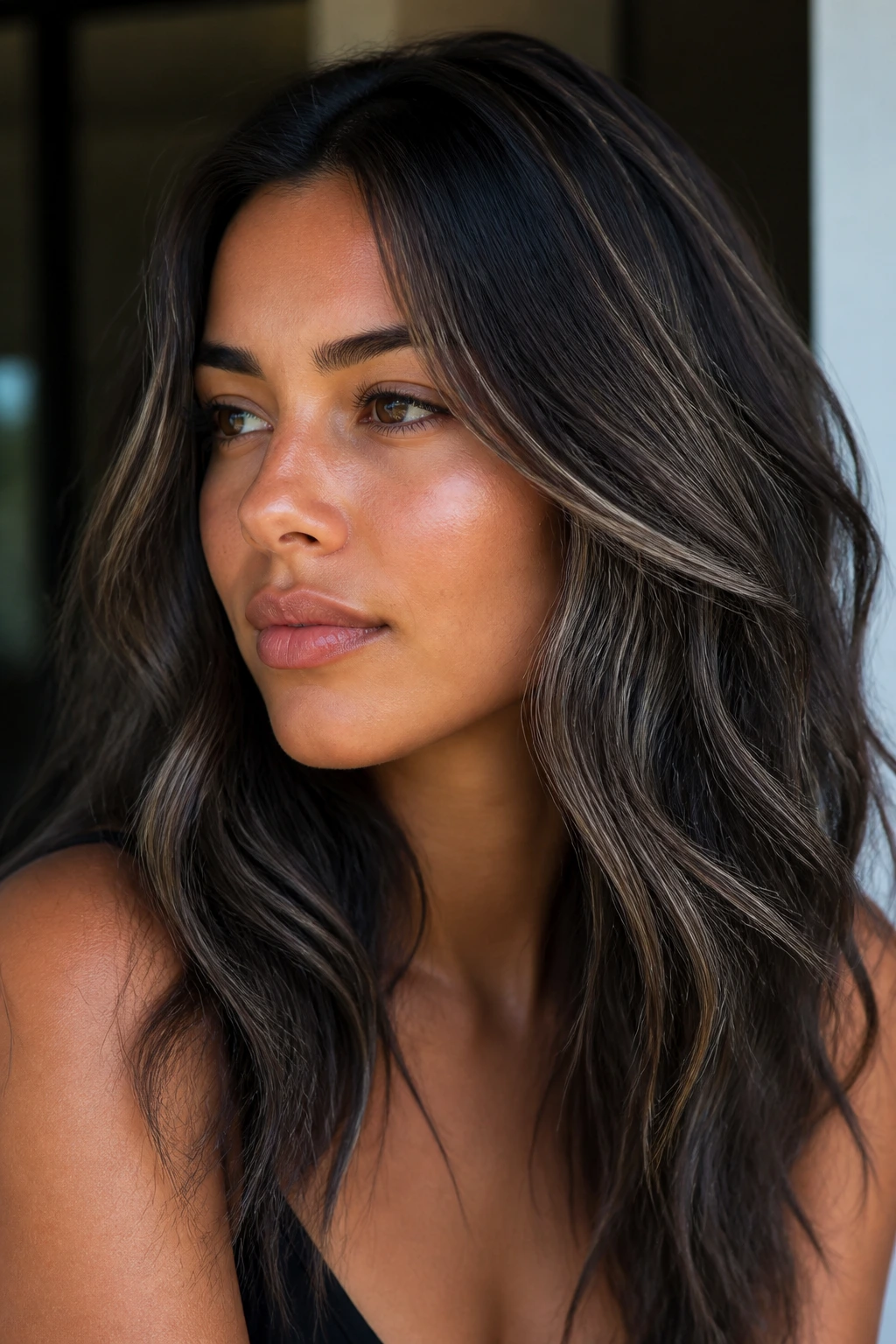
- Tail comb: Useful for clean sectioning, especially if you’re placing lowlights near the part line.
- Color clips: Hold layers out of the way without leaving heavy dents in the hair.
- Tint brush and bowl: Good for glosses, toners, or root-smudge touch-ups.
- Foils or balayage board: Foils give sharper placement; a board is better for softer painted ribbons.
- 1.25-inch curling iron or wand: Creates bends that let grey lowlights show without looking overdone.
- Round brush: Helps with blowouts and makes smoky dimension look smoother.
- Heat protectant: Keep this near the front of the shelf. Heat dulls grey tones faster than most people expect.
- Sulfate-free shampoo: Helps the dark brown base and grey lowlights stay richer between washes.
- Purple or blue shampoo: Use it sparingly if brassiness shows up; too much can make grey look flat or muddy.
- Satin pillowcase: Cuts down friction, which matters more than people think when the color depends on shine.
Choosing the Right Grey and Brown Products
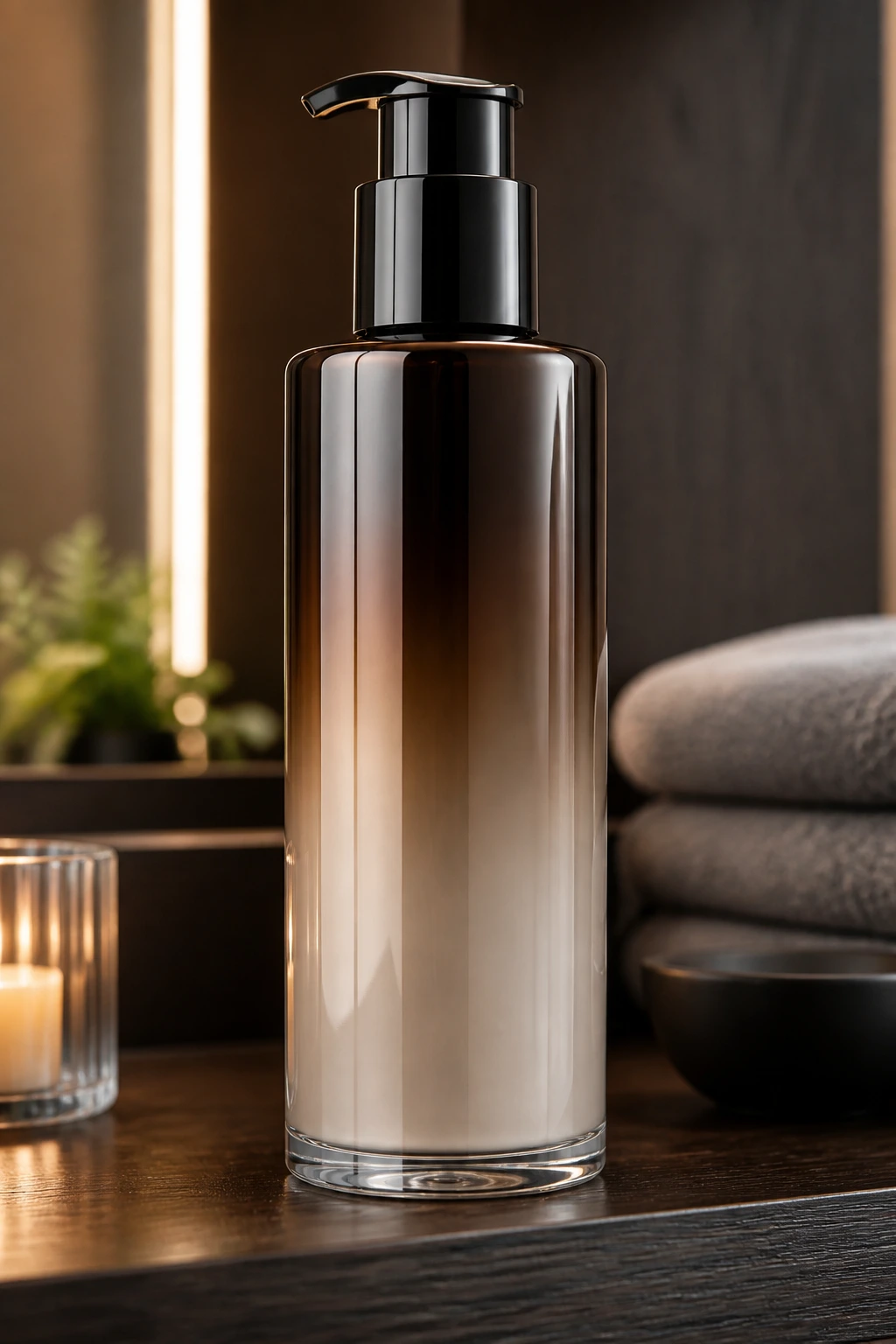
The smartest product choices start with the base. If your hair is naturally level 4 or 5 dark brown, a smoky demi-permanent lowlight or gloss usually looks softer than a permanent, inky black formula. A lot of people go too dark because they want drama, then wonder why the grey disappears. That’s the wrong problem to solve.
Look for words like ash, smoke, mushroom, graphite, pewter, and greige. Those tones keep the cool side of grey without tipping into a blue tint. If a formula leans too blue or violet, tan skin can start to look a little tired next to it.
Porous hair needs extra care. Grey tones grab fast on porous ends, so the hair can go dark or dull before the roots do. If that sounds like your hair, ask for a softer gloss on the ends and a more controlled application around the crown. That one adjustment saves a lot of trouble later.
How to Wear These Looks So the Dimension Shows
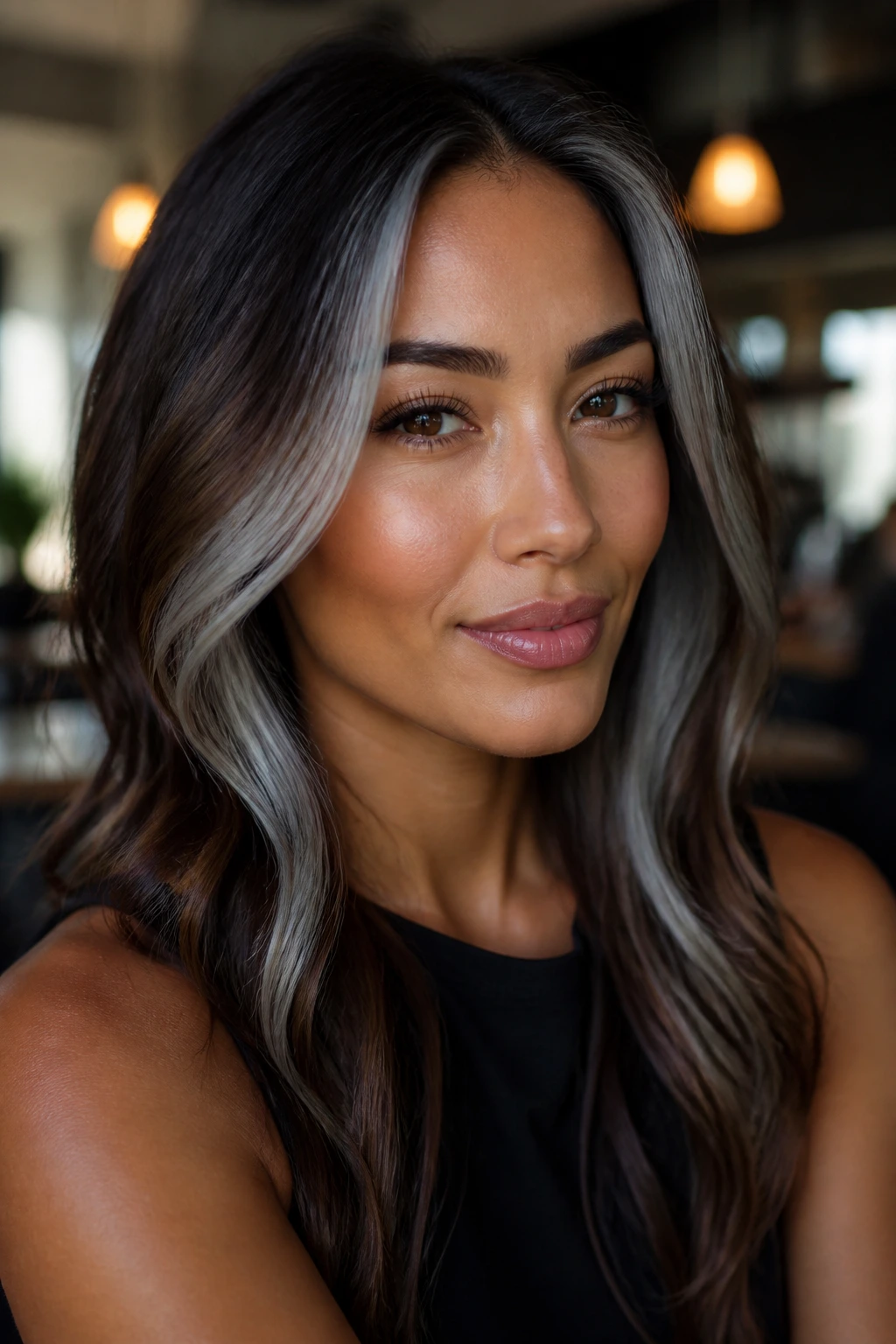
Presentation: Wear the color with movement. Loose bends, soft curls, a polished blowout, or a tucked-behind-the-ear finish all show grey lowlights better than a flat, untouched sheet of hair. The goal is not perfect symmetry. The goal is to let the smoke pieces catch in different places as the head moves.
Pairings: Tan skin usually looks best with gold jewelry, tortoiseshell clips, cream tops, camel shades, olive, charcoal, and soft black. Those colors echo the grey-brown mix without fighting it. Bright, icy whites can work, but they need balance somewhere else in the outfit or makeup.
Intensity: If you want subtle, keep the grey hidden in the mid-lengths and underlayers. If you want bolder, bring it closer to the face and crown. That single choice changes the whole mood more than adding another shade ever will.
Best Finish: Shine matters. A little gloss or serum keeps grey from looking chalky, especially on tan skin where the contrast should feel smooth rather than dry.
Keeping Grey Lowlights Fresh Between Salon Visits
Grey lowlights are forgiving, but they still need a little housekeeping. Wash 2 to 3 times a week if you can. Hot water strips tone faster than people expect, so lukewarm water is the safer default. If your hair pulls brassy, use a purple or blue shampoo once every 10 to 14 days, not every wash. More is not better here; too much can turn smoky grey into a dull lavender cast.
For tonal refreshes, plan on a gloss or toner every 4 to 8 weeks, depending on porosity and how fast your hair fades. If your hair is high porosity or lightened in spots, the grey will soften faster. If it is healthy, dense, and dark, the tone can hold longer.
At night, a satin pillowcase or loose braid cuts down friction. That matters because rough cuticles make grey look dusty. If the hair starts to feel dry at the ends, use a light leave-in or serum, not a heavy cream that clogs the shine. And if chlorine or hard water turns the grey a little greenish, a chelating shampoo once in a while can clear the film without wrecking the color.
Common Mistakes to Avoid With Grey Lowlights
- Going too blue, too fast: Blue-grey can fight tan skin and make the face look cooler than you want. Ask for smoke, graphite, or mushroom instead, then push cooler only if the first result feels too warm.
- Using chunky placement everywhere: Thick stripes near the part line can look dated fast. Softer ribbons and broken panels give the hair depth without turning it into zebra print.
- Ignoring the haircut: Grey lowlights only look good when the cut moves. A flat, one-length sheet of hair can bury the dimension. Layers, bends, and soft texture help the color breathe.
- Overwashing the tone away: Sulfate-heavy shampoo and hot water fade grey quickly. If the tone is slipping, slow down the wash cycle before you blame the color formula.
- Letting porous ends grab too much pigment: The ends can go muddy before the roots do. A good stylist will adjust the formula or placement so the lowlights do not disappear into the driest parts of the hair.
Variations and Alternatives to Try
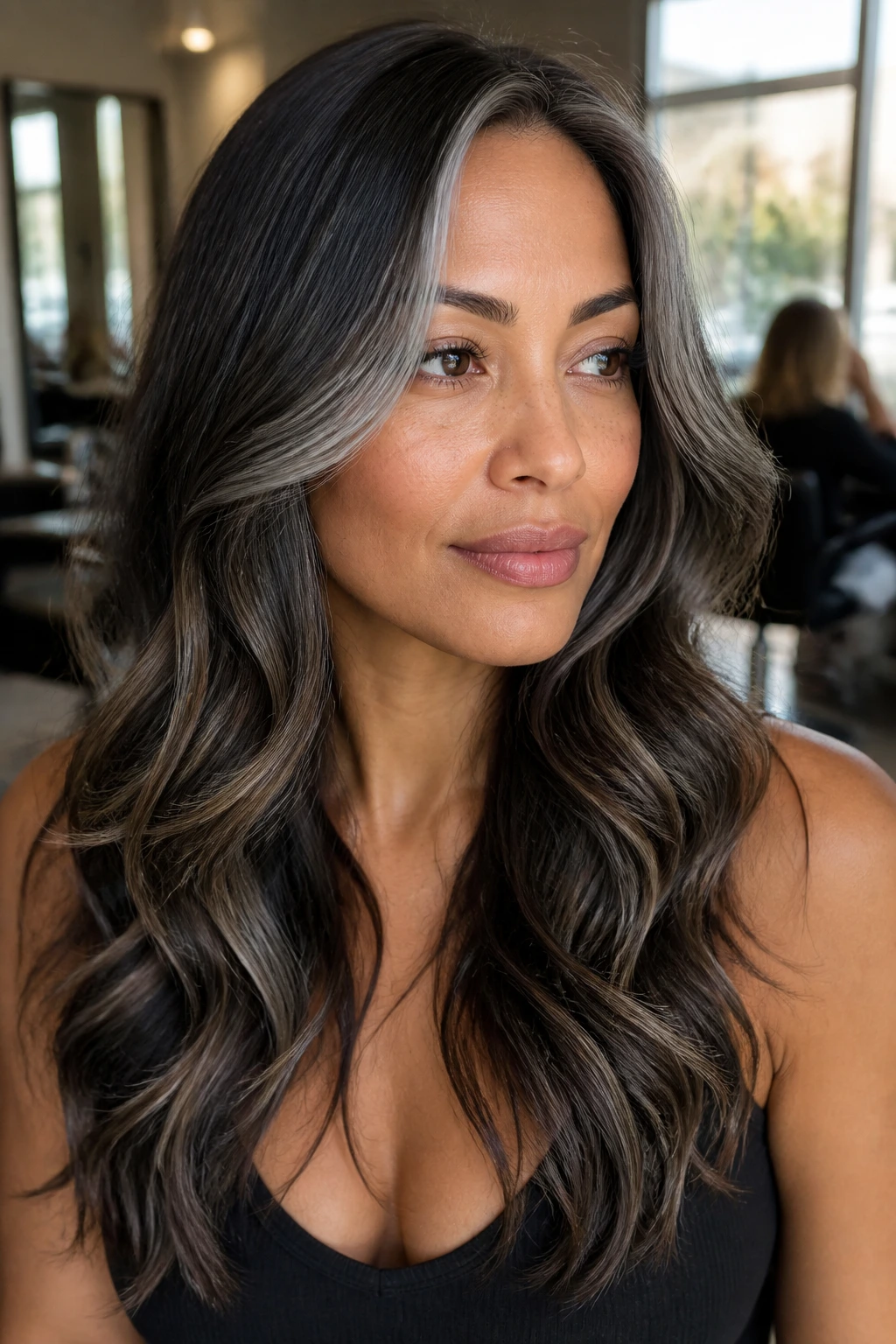
Soft Mushroom Blend: This version keeps the grey close to beige and taupe. It is the easiest wear if your tan skin leans warm and you want something gentle.
Graphite Face Frame: Dark graphite near the face gives a sharper look without changing the whole head. It works well if you like contrast but do not want to commit to full silver.
Hidden Peekaboo Smoke: Place the lowlights underneath the top layer so they only show when the hair moves, lifts, or gets tied up. It is the quietest option in the bunch.
Curly Ribbon Mapping: Instead of scattering color randomly, follow the curl pattern with wider ribbons. That makes the dimension show in spiral shape, which is better for textured hair than thin striping.
Cool Greige Melt: If pure grey feels too hard, a greige melt softens the shift from dark brown to smoky light brown. It is especially good for tan skin that wants the cool tone without the stark edge.
Frequently Asked Questions
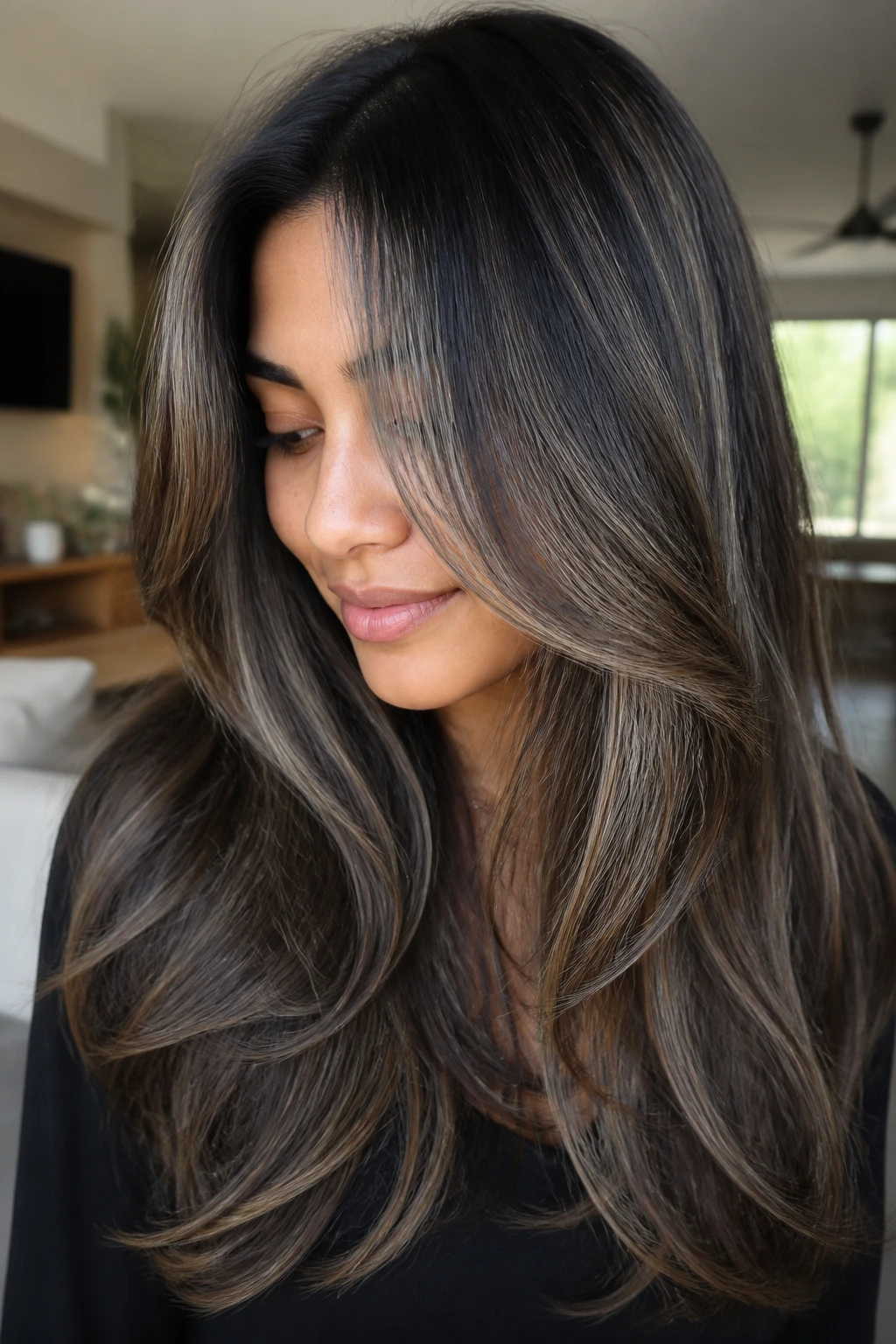
Will grey lowlights make tan skin look dull?
Not if the tone is chosen well. Tan skin usually looks better with smoky grey, mushroom, or greige than with pale silver, because the brown base keeps the face warm.
Do grey lowlights need bleach?
Sometimes, but not always. If your hair is already light enough or if the grey is more of a smoky brown overlay, a demi-permanent gloss may be enough. Darker hair usually needs some lift if you want a true grey read.
How often do I need to refresh the color?
Most people need a gloss or toner every 4 to 8 weeks, depending on porosity and how often they wash. The haircut and your heat-styling habits change that timeline more than people expect.
Are these looks better on straight hair or curly hair?
Both can work. Straight hair shows the placement cleanly, while curls turn the lowlights into ribbons and depth. The one thing curly hair needs is wider placement so the color does not vanish inside the texture.
What if the grey turns muddy or greenish?
That usually means product buildup, chlorine, or too much cool pigment layered over porous hair. A clarifying or chelating wash can help, and a warmer gloss can bring the tone back into balance.
How do I ask for this at the salon?
Use simple words: dark brown base, smoky grey lowlights, soft root shadow, and the placement you want around the face or underlayers. Bring photos that show the color in both bright daylight and indoor light.
Can I keep this look subtle for work?
Absolutely. Ask for hidden lowlights, peekaboo placement, or a soft greige melt. The color can stay private until you tuck the hair, curl it, or pull it half-up.
Will the grey lowlights work if my hair is already dyed dark brown?
Usually yes, but the existing dye matters. If the brown is very flat or very warm, the grey may need a toner or a few lighter pieces to show up cleanly. A good colorist will test a section first if the history is messy.
The Shade That Keeps Its Shape
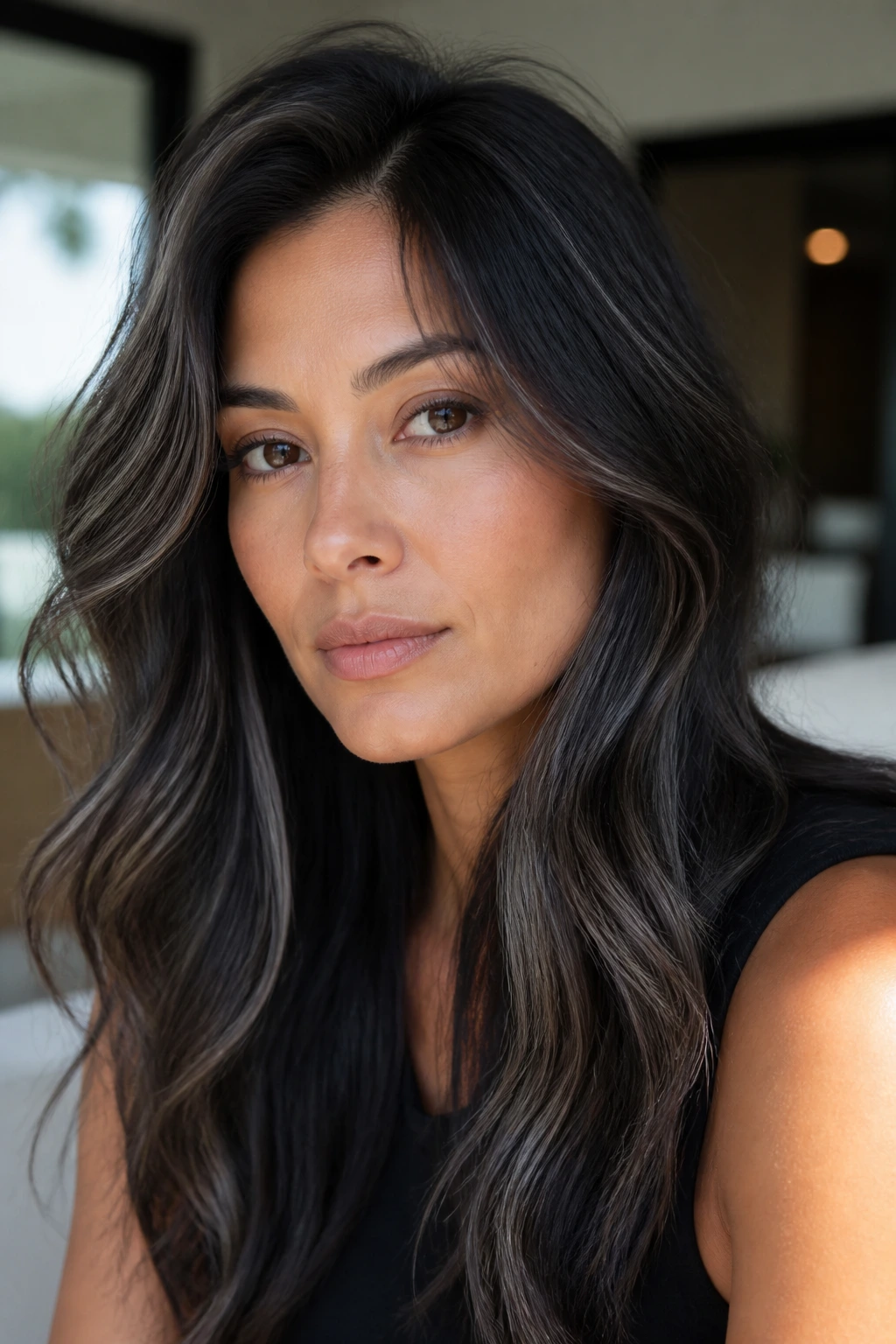
Grey lowlights on dark brown hair work because they do not try to do everything at once. They shape the cut, cool the tone, and leave enough warmth in the base for tan skin to stay alive. That’s the part a lot of people miss. The brown is not the backup singer here. It is the whole reason the grey can sing at all.
If you want the safest entry point, start with mushroom, greige, or hidden smoke and let the placement do the talking. Once you see how the color sits against your skin in daylight, you can move bolder with the next appointment.