



Jumbo box braids can go blunt in a hurry. Put the same length across the whole head and the style starts to read like a block; shift the front two rows into a softer curve, and the same braid size suddenly has shape.
On Black hair, that front line does more than look pretty. It tells the eye where the braid set begins and ends, and it decides whether the style feels heavy at the hairline or balanced enough to wear all day.
Face-framing layers are the reason one set of jumbo braids can read polished on Monday, sharp on Friday, and relaxed on Sunday. Some people want cheekbone-length curtain pieces. Some need a side sweep that narrows the forehead. Others want almost no obvious layer at all, just enough front movement to keep the style from feeling boxy.
The 25 looks below lean on that idea in different ways. Some are soft and airy, some are dramatic, some keep the face open, and some use color, cuffs, or parting to make the front layer do more of the work. If the last braid set you wore felt close but not quite right, the fix is probably sitting in the first three inches around your face.
Why the Face Frame Changes the Whole Set
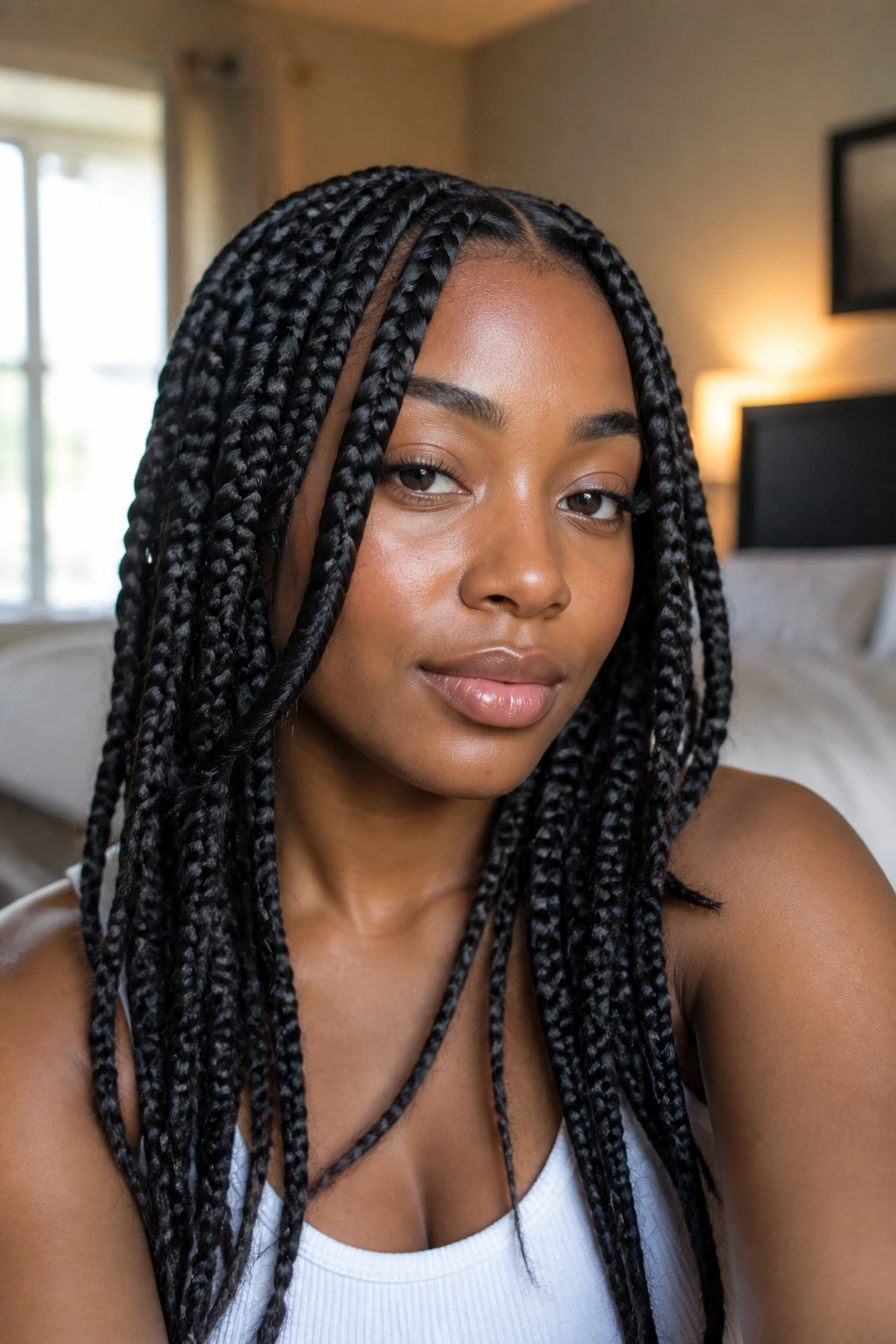
Cheekbones, jawlines, and hairlines all get treated differently once the front pieces are planned on purpose. That’s the whole trick. A braider can use the same braid size through the crown and still make the set feel lighter by changing the front rows, trimming the outer pieces a little shorter, or shifting the part so the eye doesn’t run straight down the middle.
The front rows usually carry the visual weight. If they’re too thick, the braids crowd the face. If they’re too short, the style can look chopped. The sweet spot sits somewhere between the two, and it changes with the shape of your face, the length of the braids, and how much of your forehead you want to show.
Parting Changes the Mood First
A center part gives the face frame symmetry, which makes face-framing layers look calm and deliberate. A deep side part does the opposite. It pushes one side forward and makes the front pieces feel more like a sweep than a curtain.
Weight Matters More Than Most People Think
Jumbo braids look best when the load is balanced. The front should not feel heavier than the back, and the back should not drag so much that the front pieces collapse. That’s why a braid set with layers often feels easier to wear than an even-length set of the same size. The shape does some of the work for you.
Front Length Is Not a Guessing Game
Chin length, jaw length, and collarbone length all read differently once the braids are in motion. Chin-skimming pieces soften a hard line. Jaw-length layers sharpen the profile. Collarbone layers feel quieter and give you more room to tuck, pin, or flip one side behind the ear without losing the frame.
Why These Braids Work So Well With Face-Framing Layers
- The silhouette changes fast: A face frame at the cheekbone makes jumbo braids read softer, while a jaw-length frame sharpens the line of the face.
- The install can feel lighter at the front: Slightly slimmer front braids reduce pull where hairlines are most sensitive.
- The same set wears in more ways: Down, half-up, low bun, and side-swept all look different when the front pieces are planned.
- Length stops being a gamble: You can go shoulder-length, mid-back, or waist-length and still keep proportion under control.
- Accessories make more sense: Cuffs, beads, and color streaks sit better when the front frame is already doing the shaping.
1. Chin-Skimming Curtain Layers on Jumbo Box Braids
The front pieces land right at the chin, and that one choice changes the whole attitude of the style. Instead of a hard wall of braids, you get a clean curtain line that moves when you turn your head.
Why It Works
- The chin length breaks up a wide forehead without hiding the face.
- The shorter front pieces keep the eyes from getting lost in too much braid.
- The shape stays visible even when you wear the rest of the braids down your back.
Best move: ask for the two front braids to sit a touch slimmer than the rest, or the curtain effect gets buried.
A style like this feels good on round and heart-shaped faces because it gives the cheeks room without swallowing them. It also plays nicely with big hoops and a plain middle part. Nothing fussy. Just shape.
2. Shoulder-Length Rounded Frame Box Braids
Shorter braid sets have their own kind of confidence. Shoulder length lets the front layers do the talking, and it keeps the whole install from feeling heavy around the ribs or lower back.
That rounded front shape is especially useful if you do not want braids brushing your jacket collar every five minutes. The face-framing layers can start around the jaw and curve inward just enough to soften the edges of the cut. It looks tidy, which sounds boring until you actually wear it and realize how much easier it is to live in.
I like this version for people who want a clean everyday braid set that still has movement. It does not fight scarves, glasses, or earrings. It just sits there and behaves.
3. Deep Side-Part Jumbo Braids with a Long Sweep
Want the face frame to look intentional instead of tacked on? Go deep with the side part and let one front section sweep across the forehead.
That long sweep changes the whole mood. It adds asymmetry, which is handy if you want to soften a very square face shape or take some attention away from a wider forehead. The trick is to keep the sweeping piece light enough that it folds instead of flopping.
How to Wear It
- Tuck the heavier side behind one ear when you want the part to show.
- Let the sweeping braid hit at the cheekbone or just below it.
- Keep the rest of the braids a little straighter so the front sweep stands out.
This look reads bold without needing extra color or accessories. That’s the part I like most. The part itself becomes the detail.
4. Waist-Length Braids with Feathered Front Pieces
If your braid set reaches the waist, the front should not act like an afterthought. Feathered front pieces solve that problem by softening the first few rows while the rest of the braids keep their full length.
The feathering matters because long braids already bring a lot of visual weight. A blunt front on top of that can look stiff. By thinning the outer front braids a little and letting them fall a touch longer than the chin, the set stays graceful instead of boxy.
This one works well when you want length but still want to see your face in the mirror. And yes, that matters more than people admit. Braids should frame your features, not hide them.
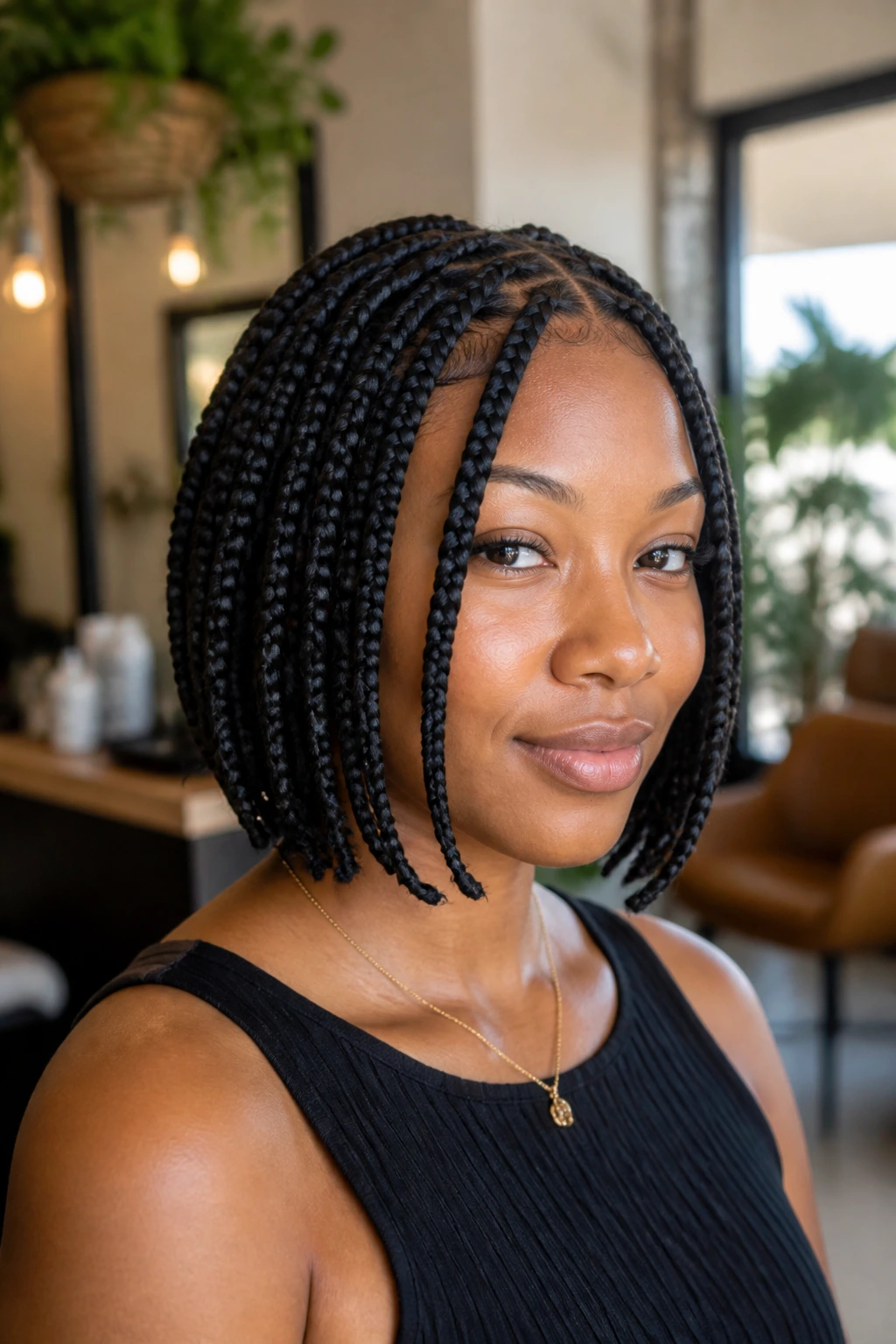
5. Lob-Length Jumbo Box Braids with a Crisp Angle
A braid lob sits around the collarbone to upper chest, and the front frame gets a little sharper here. The angle keeps the style from turning puffy at the bottom.
What I like about this shape is the clean line it creates near the jaw. You get the structure of jumbo braids without the extra bulk of a long install. If your hair is thick at the roots or your edges get irritated easily, a lob-length set with a controlled face frame can feel a lot easier to live with.
It also photographs in a plain, honest way. No tricks. No extra fluff. Just a neat shape with a front line that bends where it should.
6. Extra-Long Braids with Cascading Front Panels
Long braids need a front that can keep up. If the install goes past the waist, the face frame has to earn its place or the whole thing turns into a curtain of hair with no shape.
Cascading front panels work because they create a slow drop from temple to cheek to chest. That gives the eyes a path to follow instead of a sudden wall. The front panels can be slightly thinner and a shade shorter than the main body of the braids, which keeps them from fighting the length behind them.
This style suits people who like a dramatic braid moment and do not mind a longer install session. It is not subtle. That is the point.
7. Triangle-Part Braids with Slim Front Corners
Triangle parts always change the energy. They break up the regular grid of box braids, and the face-framing layers look sharper because of it.
What to Ask For
- Triangle sections through the crown for a lifted look.
- Slimmer front corners so the hairline does not feel crowded.
- A soft taper at the temples so the front can fall naturally.
The triangle shape gives the top of the head a little more texture, which is useful if you want jumbo braids to feel less rigid. I’d choose this version when the usual square parting starts to feel predictable. It has a little more bite.
8. Boho Braids with Curly Face-Framing Strands
Curly face pieces change the whole texture story. Straight jumbo braids can look very clean, almost severe. Add a few curled strands at the front and the style immediately feels looser around the cheeks.
That does not mean you need a full boho install. A couple of curled front pieces are enough, especially if the rest of the braids stay neat and thick. The contrast matters. Straight lengths in the back, soft movement in the front. That split is what keeps the look from getting too busy.
This version works when you want a braid set that feels a little less polished and a little more lived-in. The curls should look intentional, not fuzzy. So keep the number of loose pieces small and place them on purpose, usually around the temples or just outside the cheekbones.
9. Half-Up Jumbo Box Braids with Loose Side Layers
Can jumbo braids work in a half-up style without looking bulky? Yes, if the face-framing layers are doing their job.
The front pieces stay down while the top section gets pulled into a ponytail or a small bun. That leaves the face open and gives the style two personalities at once. Down in front, lifted at the crown. The braid set keeps its shape without dragging everything back off the face.
How to Wear It
- Pull the top half up only after the front pieces are left free.
- Let the side layers fall before tightening the tie.
- Keep the back smooth so the front frame still stands out.
This is the kind of style that works for errands, workdays, and anything where you want your hair out of your eyes without losing the braid shape.
10. Classic Black Braids with Invisible Layering
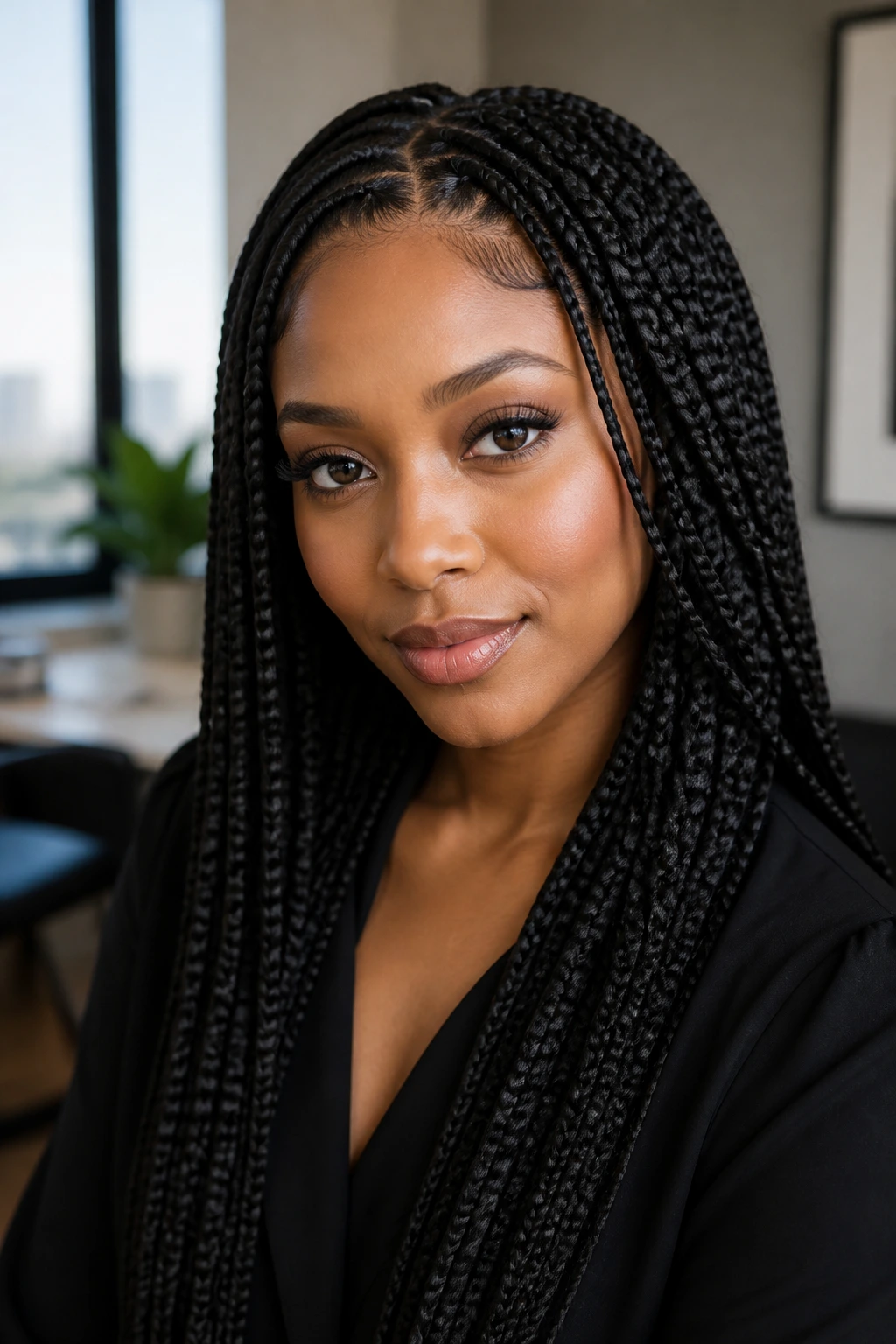
Sometimes the best layering is the kind nobody notices at first glance. Classic black braids with a subtle front frame are all about that quiet shape.
The difference here is in the balance. The braids stay mostly even, but the front rows are just a bit softer, a bit lighter, and maybe an inch or two shorter than the rest. Nothing dramatic. No obvious curtain effect. Still, the face looks cleaner because the eye gets a place to rest.
I reach for this version when the goal is low drama and clean lines. It works in professional settings, on simple makeup days, and with outfits that already have a lot going on. The hair doesn’t compete. It just behaves.
11. Auburn Braids with a Warm Face Glow
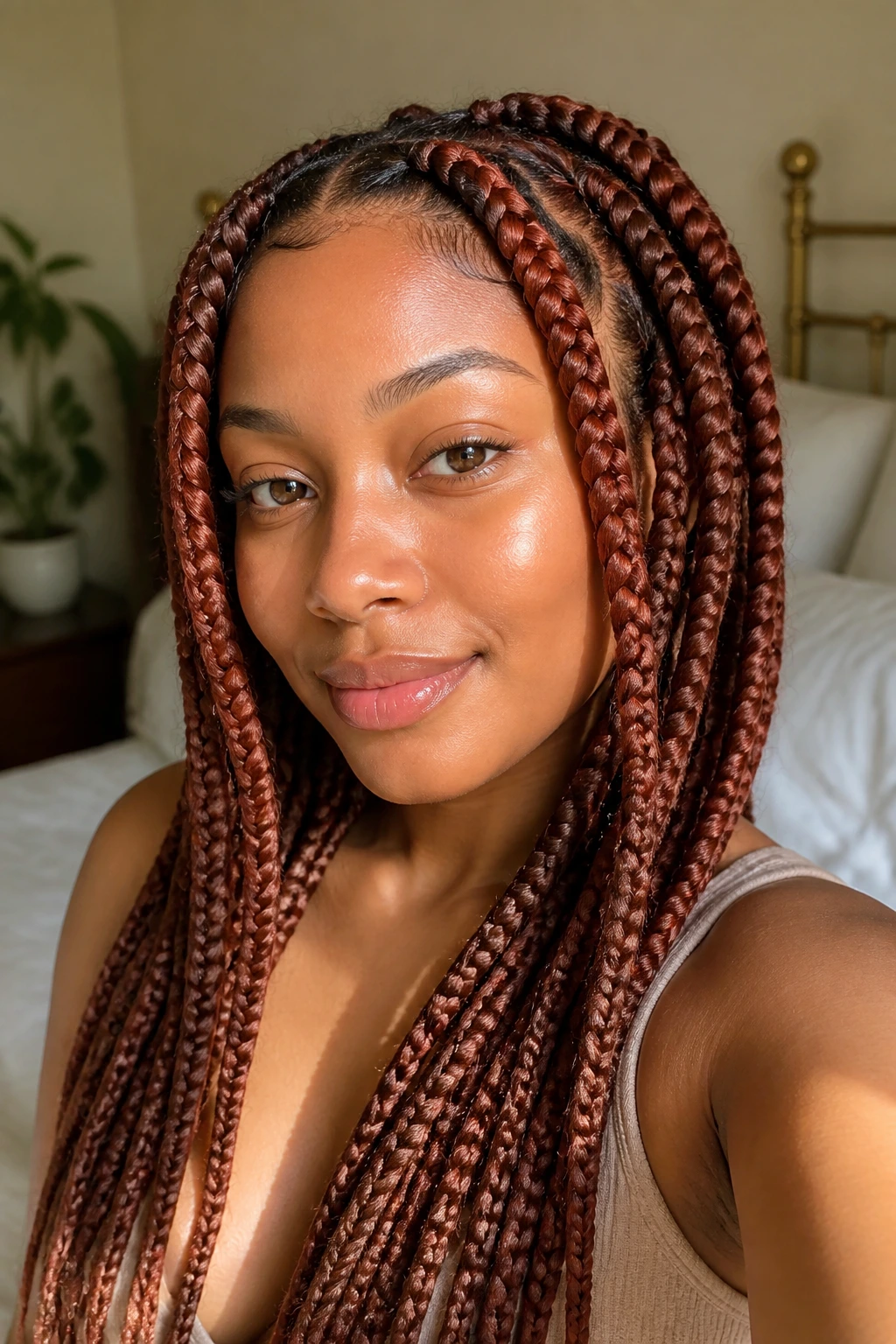
Color changes the face frame as much as length does. Auburn braids warm up the skin near the face, and the front layers catch that color first, which makes the whole style feel brighter.
The trick is to keep the face-framing pieces slightly more visible than the back so the warm tone has somewhere to land. That can mean a center part with front pieces at the cheekbone, or a soft side sweep that lets the auburn show right where the light hits. Not loud. Just enough to lift the face.
This style works best when you want the braid set to do double duty: protect the hair and make the complexion look a little more awake. The color does a lot of work on its own, so the shape should stay clean.
12. Honey-Blonde Braids with Lighter Front Accents
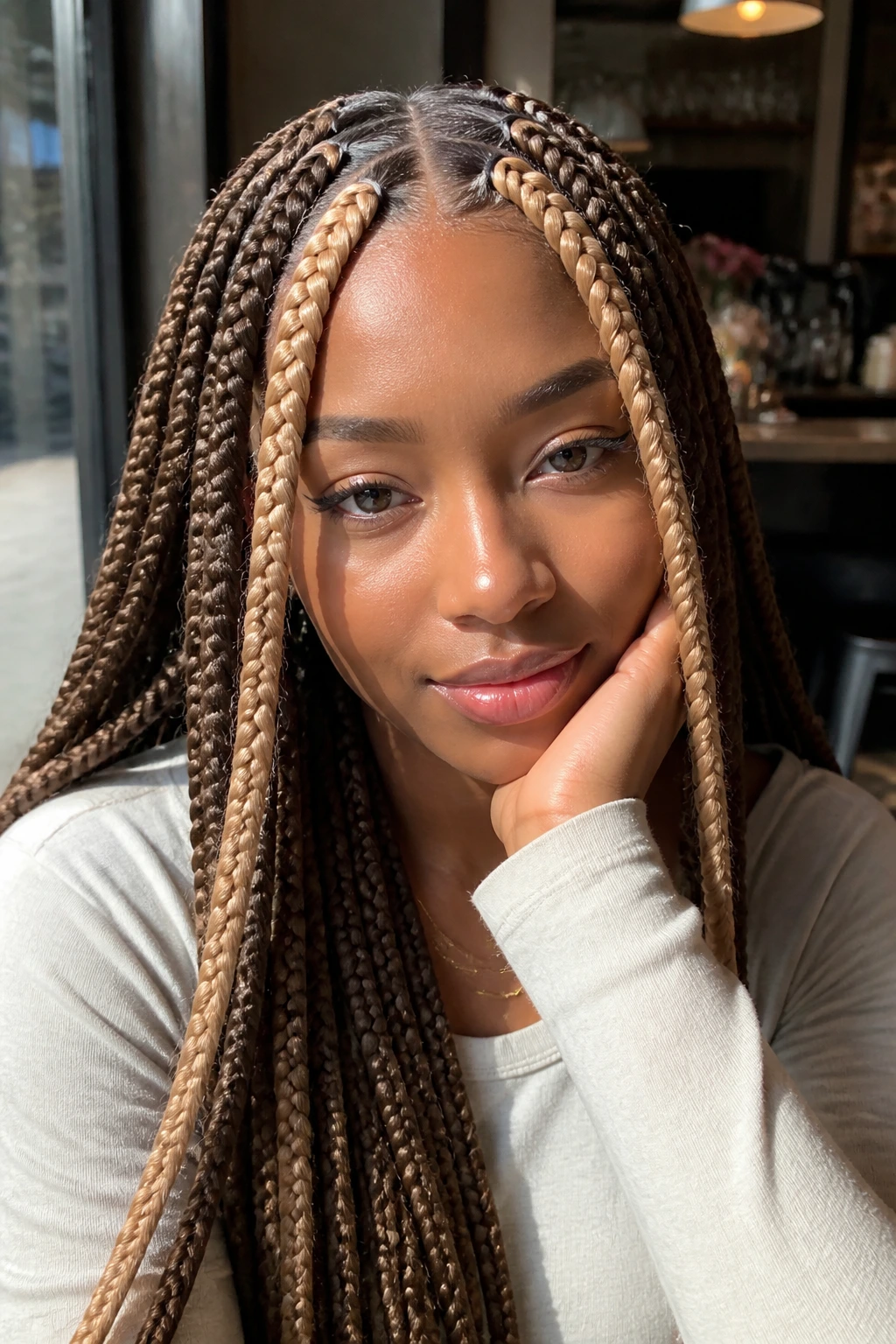
Honey-blonde front accents act like built-in highlights. They pull attention straight to the face without needing a full head of light color.
That makes this style a smart choice if you want contrast but do not want the whole set to go blonde. A few lighter braids at the front can brighten the forehead, cheekbones, and eyes, especially with a middle part. It’s a cleaner option than scattering color everywhere.
I like this more than random streaking because it gives the front layers a job. They frame the face and create a little light at the same time. That’s tidy. And tidy usually wears better.
13. Gold-Cuffed Braids with a Clean Center Frame
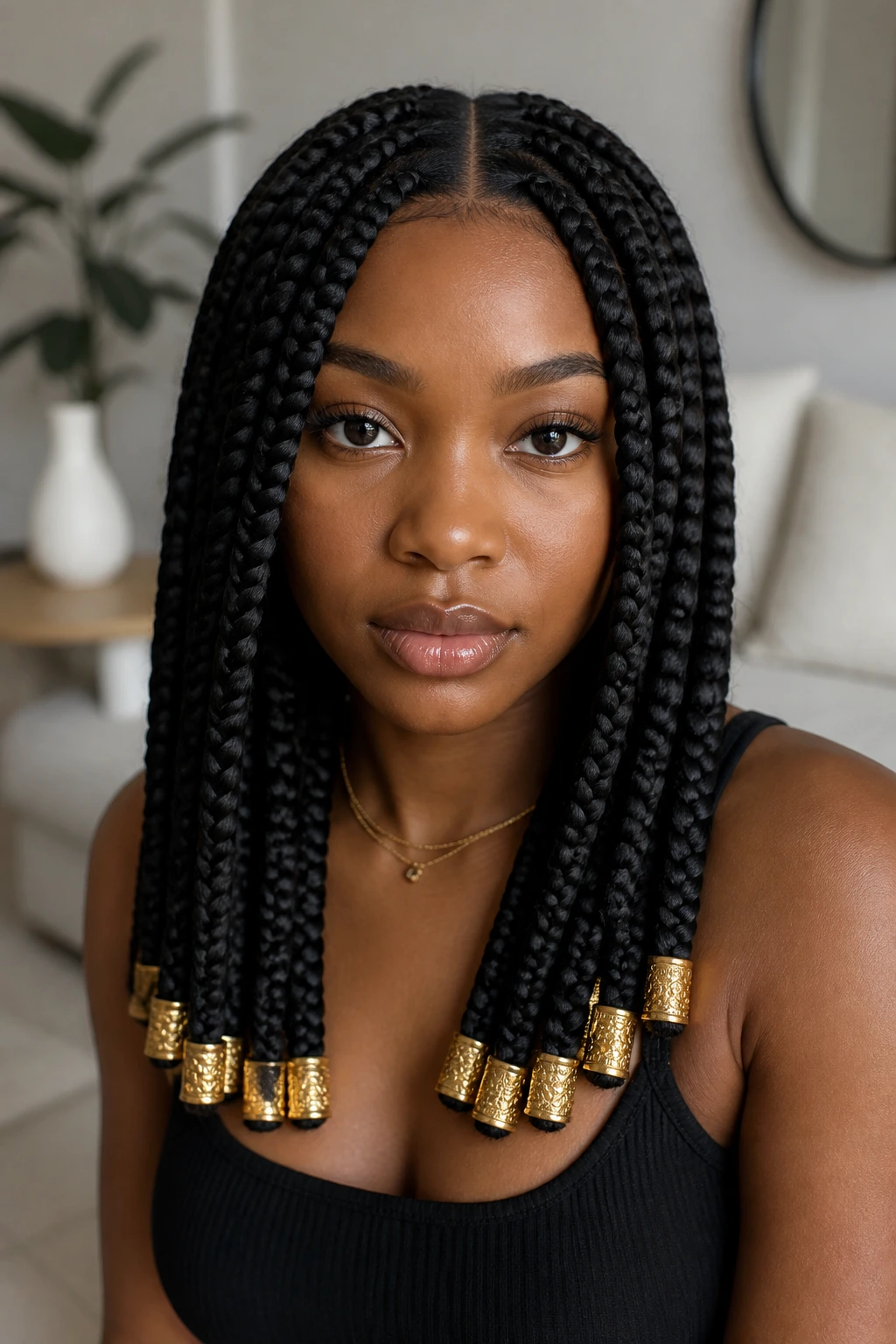
Gold cuffs can look cheap fast if they’re scattered without a plan. Put them at the ends and keep the front frame clean, and they suddenly make sense.
The center part gives the style a strong spine. Then the face-framing layers stay smooth and uninterrupted so the cuffs become the accent, not the whole point. This is the kind of set that looks best with straight, glossy clothes and simple jewelry. The braid set already has enough detail.
Where the Cuffs Go
- Place them lower on the braid, not packed around the hairline.
- Keep the front two or three braids free of too much hardware.
- Let one cuff sit near the shoulder line so it catches the eye when the head turns.
That balance keeps the style from tipping into costume territory.
14. Braids with Beads at the Front Corners
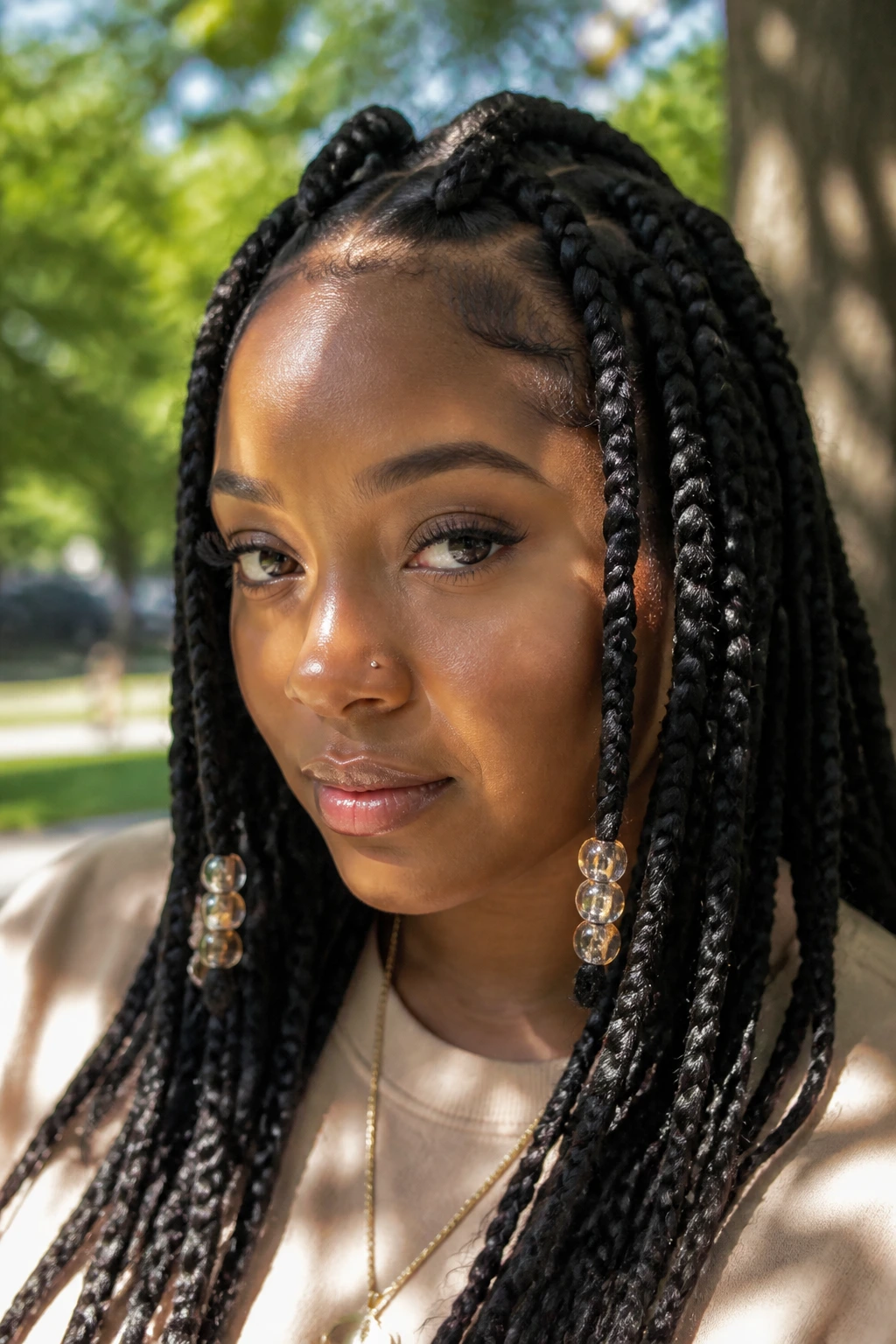
Beads at the front corners can be sharp or messy. The difference is restraint.
A pair of beaded braids near the temples gives the face frame a little rhythm, especially when the rest of the set stays clean and thick. The beads should sit on just a couple of front pieces, not every braid in sight. Too many and the face gets crowded. Two or four and the shape has a focal point.
This style works well if you like sound, movement, and a little nostalgia in your braid set. It’s a strong choice for weekends, photos, or any day when plain braids feel too quiet. The face frame should still read first. The beads are the punctuation.
15. Tapered Crown Braids with Lighter Front Pieces
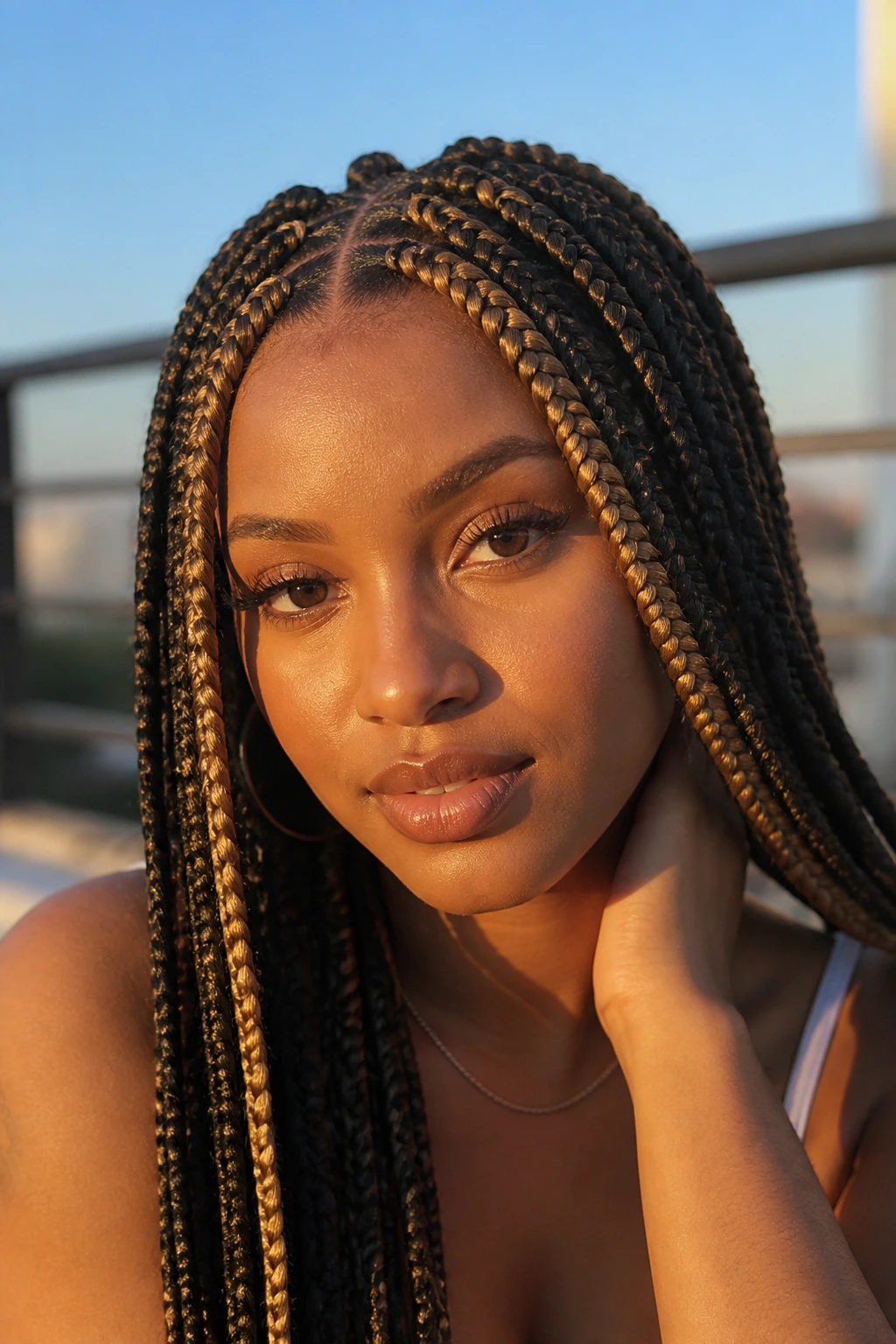
Why does a tapered crown feel so different from a flat top? Because it changes the weight before the braids even hit the face.
The top braids sit a little narrower, which makes the head shape read cleaner. Then the front pieces stay light, so the eye travels from a slimmer crown down to a soft face frame. The whole thing feels balanced. You don’t get that helmet effect that shows up when every section is the same size.
This style is good for people who want jumbo braids but don’t want the bulk everywhere. It’s also kind to the hairline. Less weight at the temples usually means less grumbling by the end of the day.
16. Braided Bob with Long Temple Strands
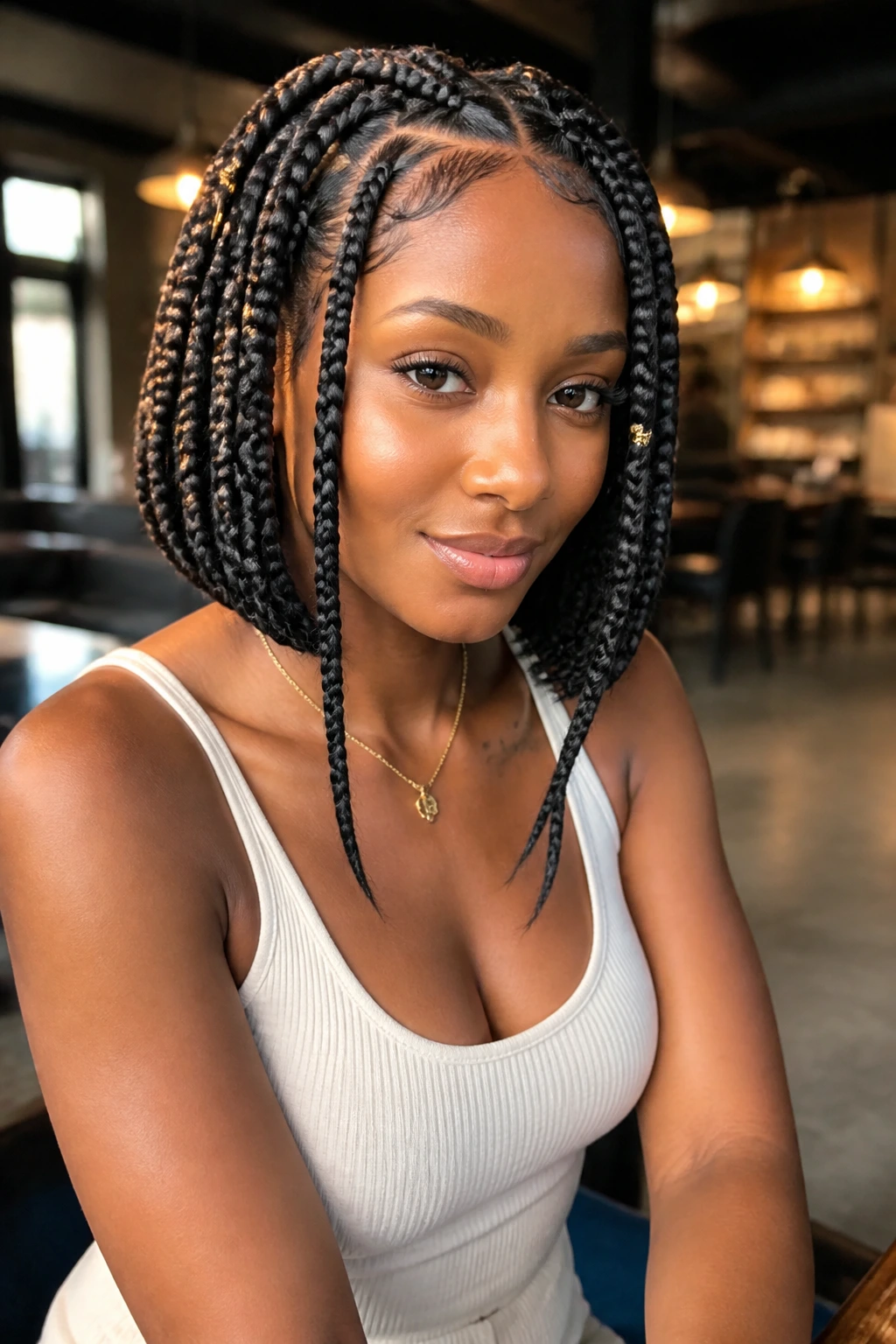
A braided bob can look sharp on its own, but the temple strands are what stop it from feeling too square.
The shorter body gives the shape a neat, compact feel, while the front pieces reach a little longer and soften the side of the face. That contrast is the whole point. If the bob ends around the jaw or collarbone, the temple strands can skim lower so the face frame still shows even with the shorter length.
I’d choose this version for hot weather, busy mornings, or anyone who hates braids brushing the back of a chair. The look is tidy. The front strands keep it from turning severe.
17. High Ponytail Braids with Dropped Layers
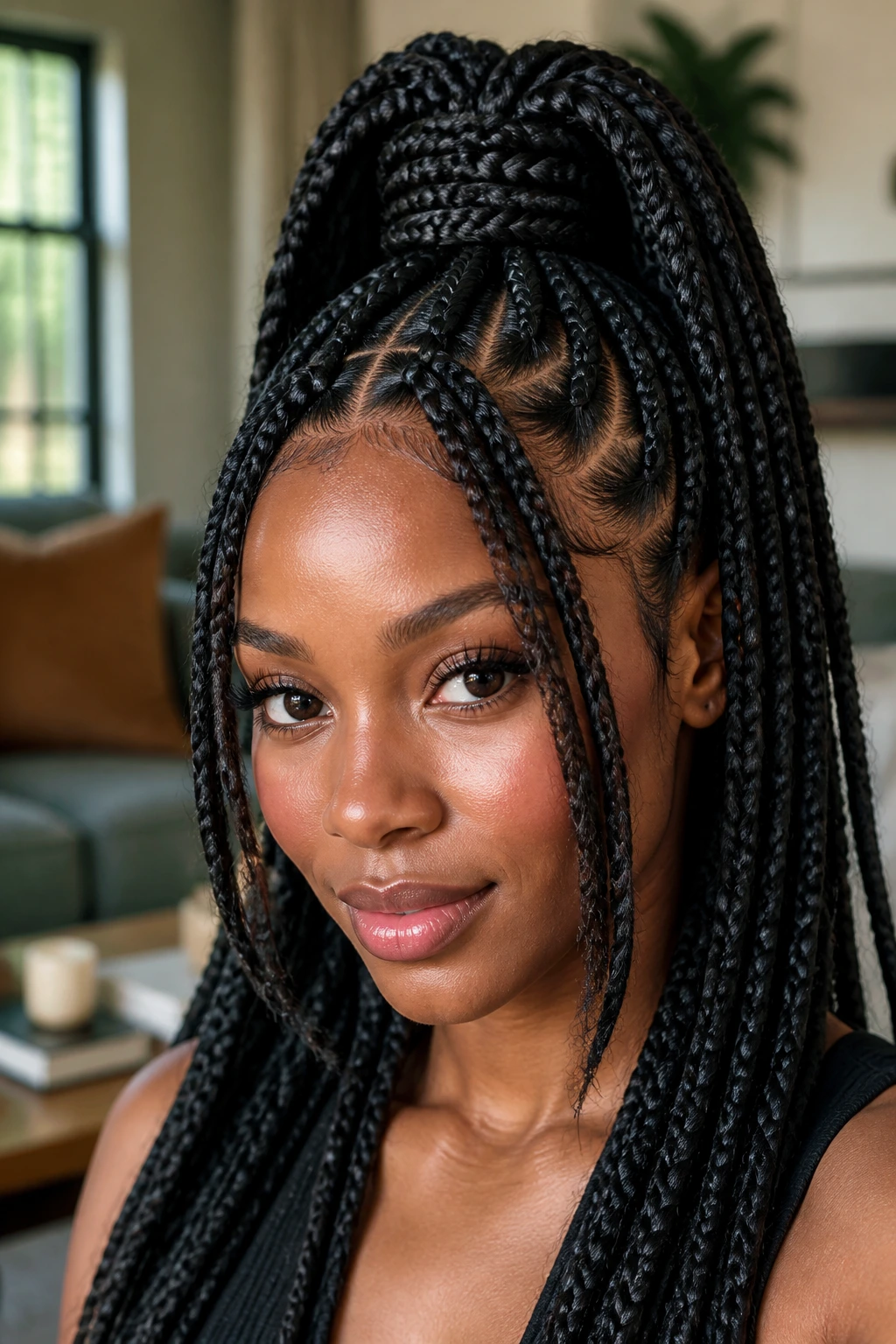
High ponytail braids can pull the face back hard, which is why the dropped layers matter so much.
Leave the front pieces free, and the ponytail suddenly stops feeling like a gym-only style. The layers around the cheeks and temples soften the lift at the crown and keep the face from looking too bare. It also gives the ponytail more movement. A tight lifted style with no front pieces can feel severe in a hurry.
This one works when you want your forehead open but still need some softness near the eyes. It’s useful on days when the braids need to stay out of your neck and off your shoulders.
18. Low Bun Braids with Two Soft Front Pieces
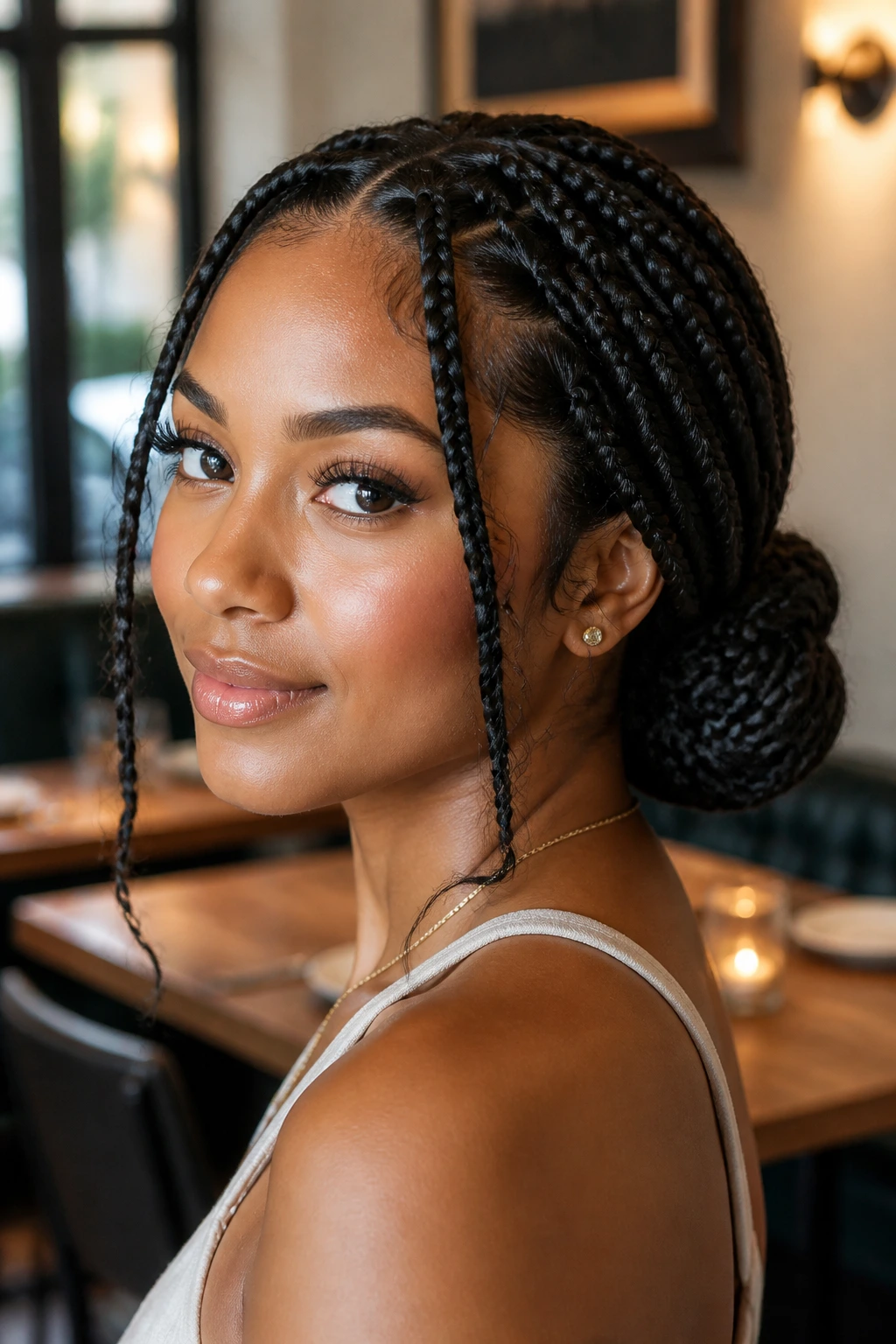
A low bun is clean. Two soft front pieces keep it from looking too strict.
That’s the whole appeal. The bun sits at the nape, the braids are gathered low, and the front layers remain loose enough to frame the face without fighting the updo. You can wear this to a formal event, a dinner, or anywhere you need the hair off your neck but still want a little movement around the cheeks.
Best Use
- Let the front pieces stay slightly longer than the bun line.
- Keep the bun smooth so the face frame has room to show.
- Add one or two cuffs at the ends if you want a touch of shine.
The style reads polished, but not stiff. That matters.
19. Side-Flip Braids with Long Arc Layers
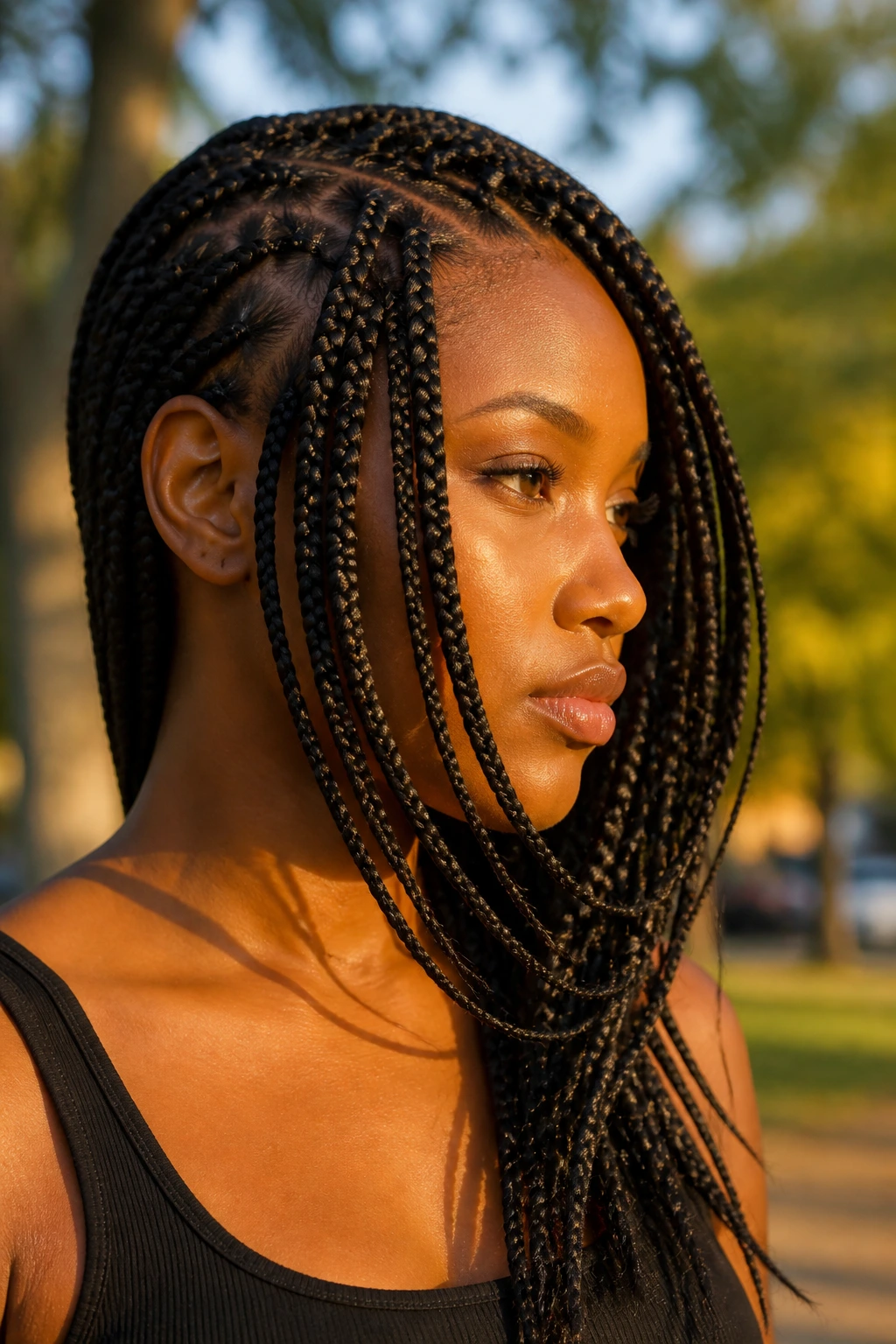
A side flip is not just a part. It’s the direction of the whole look.
When the front pieces arc across the face instead of dropping straight down, the braids feel more fluid. This works especially well if you like wearing one side tucked behind the ear and the other side loose. The long arc layer follows the shape of the cheekbone, which gives the set a little motion even when you’re standing still.
How to Ask for It
- Request a deep part that starts higher than usual.
- Keep one front section a little longer so it sweeps instead of hangs.
- Ask for the ends to land just below the chin or near the collarbone.
The result is softer than a blunt side part and more interesting than a center line.
20. Shell-Accent Braids with a Soft Fringe
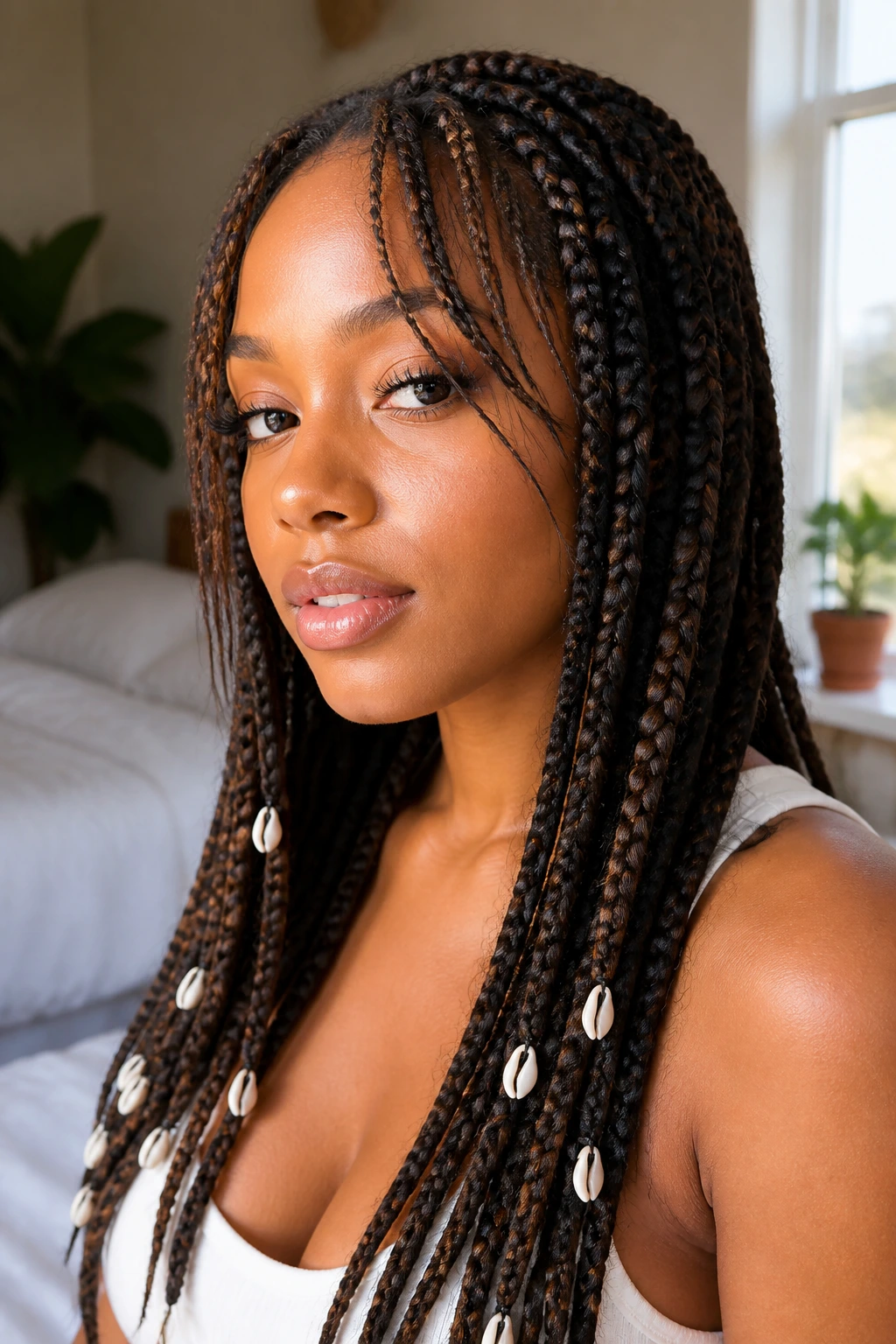
Shells work best when the front stays quiet. That’s the rule.
A soft fringe around the face gives the braid set a gentle frame, while the shells bring in texture and a bit of travel energy. I would not crowd the hairline with too many accents here. The front pieces should stay light, because shell details already draw the eye. Put the shells lower on the braids and let the fringe do the close-up work.
This style is for anyone who wants a little personality without turning the whole head into a decoration. It’s playful. Still wearable. That balance is harder to get than people think.
21. Sharp Middle-Part Braids with a Rounded Front
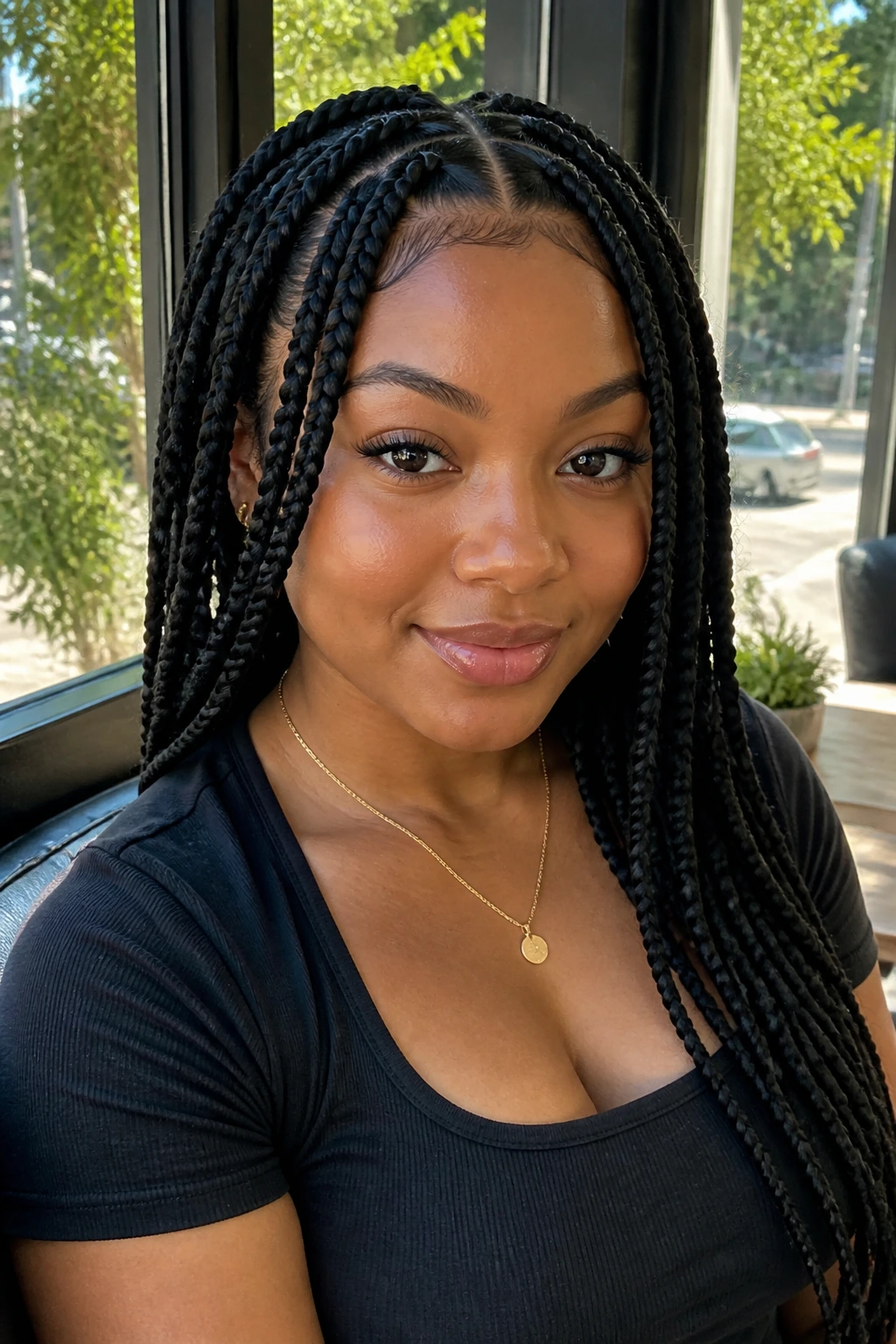
Want the cleanest possible contrast? Keep the middle part sharp and soften the front edges.
The straight part gives the style structure. The rounded front pieces keep it from feeling too rigid. This is one of my favorite braid shapes for Black hair because the center line can be crisp while the face still gets a curve. It’s a neat mix of geometry and softness.
Where the Curve Belongs
- Start the front pieces just below the temples.
- Let them bend in toward the cheek, not straight down.
- Keep the back braids straight so the curved front reads clearly.
The whole style looks balanced in photos and in motion. Nothing fights itself.
22. Curved-End Braids with a Face-Skimming Line
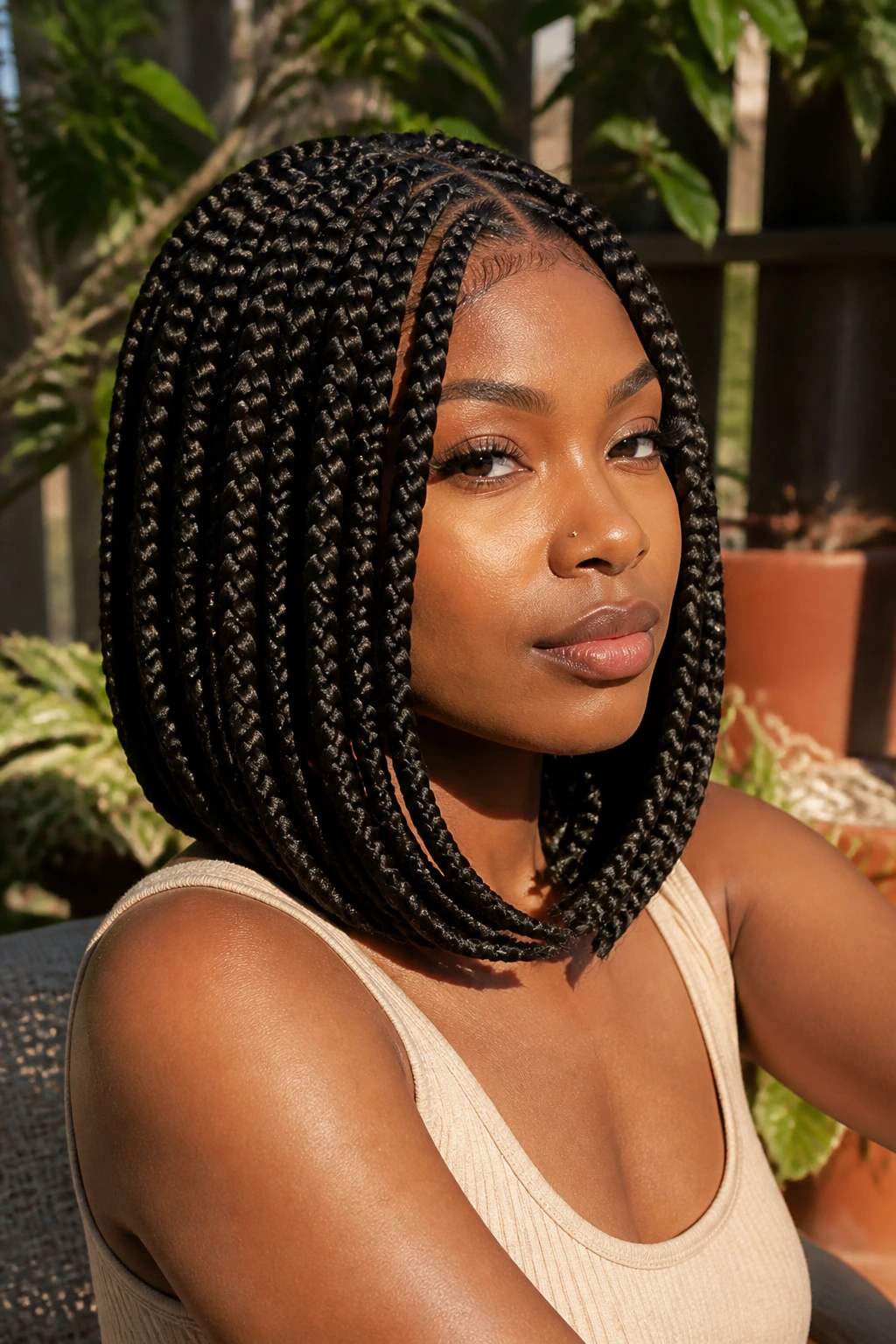
Curved ends are underrated. They make the braid set feel finished instead of cut off.
When the ends bend inward a little, the face-framing layers get a soft echo at the bottom. That matters more than it sounds. The eye reads the curve at the face and then sees the same language at the ends, so the whole style looks planned. It is a small detail with a big payoff.
This version works well if you like a slightly romantic braid set that still feels firm at the roots. It also flatters longer faces because the curve helps close the vertical space a bit.
23. Long Curtain Front Braids with Micro Baby Hairs
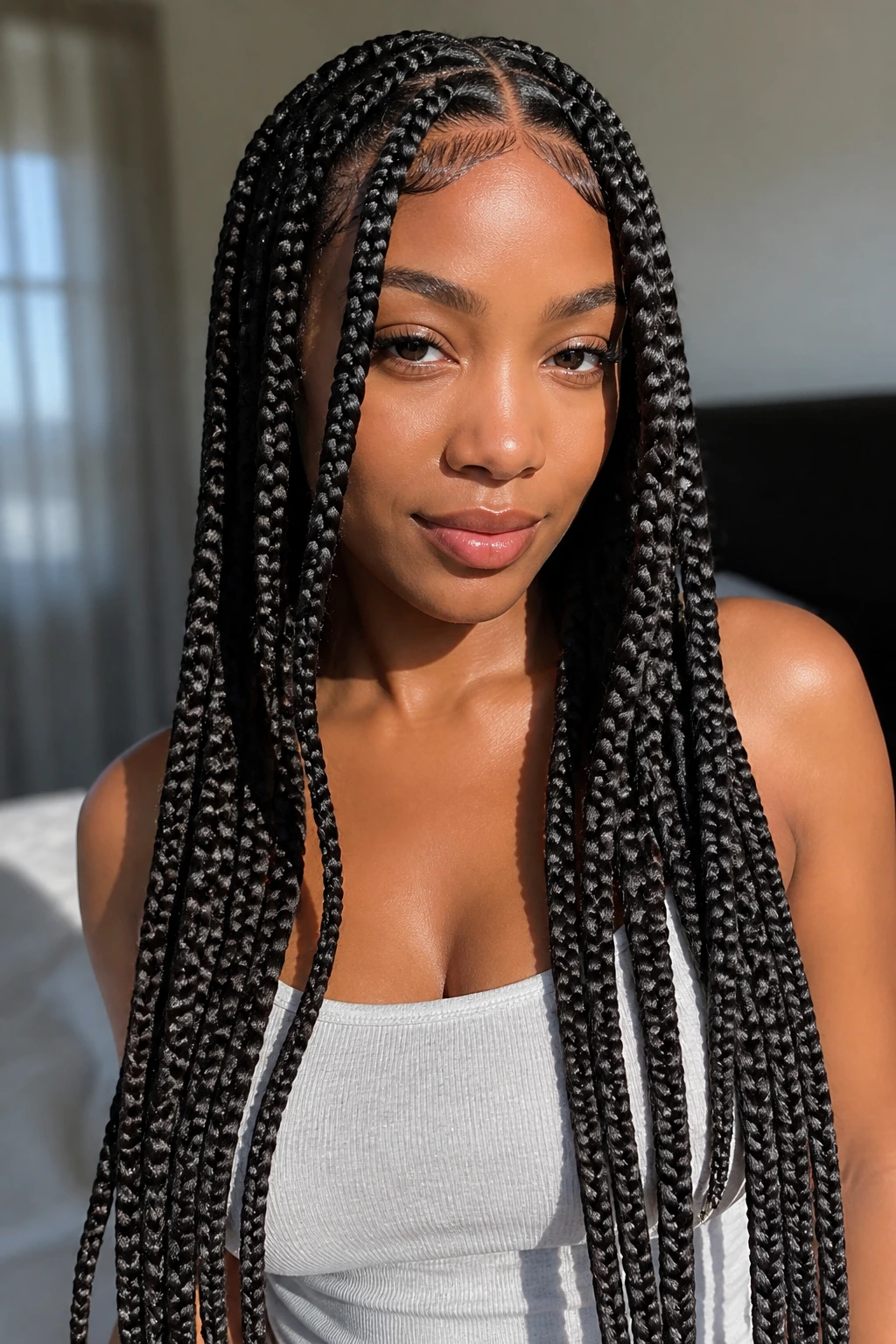
A long curtain frame gives you the softness. Micro baby hairs give you the edge control.
That combo can look really clean when it’s handled lightly. The curtain pieces fall close to the face, usually from around the cheekbone to the chest, while the baby hairs stay minimal and neat. I like that restraint. The front frame should be the star, not a pile of swoops and gel.
This style suits people who want a polished finish without losing movement. It also works if you wear glasses, because the long curtain pieces can slide around the frames instead of crowding them.
24. Angled Collarbone Braids with Tucked-In Sides
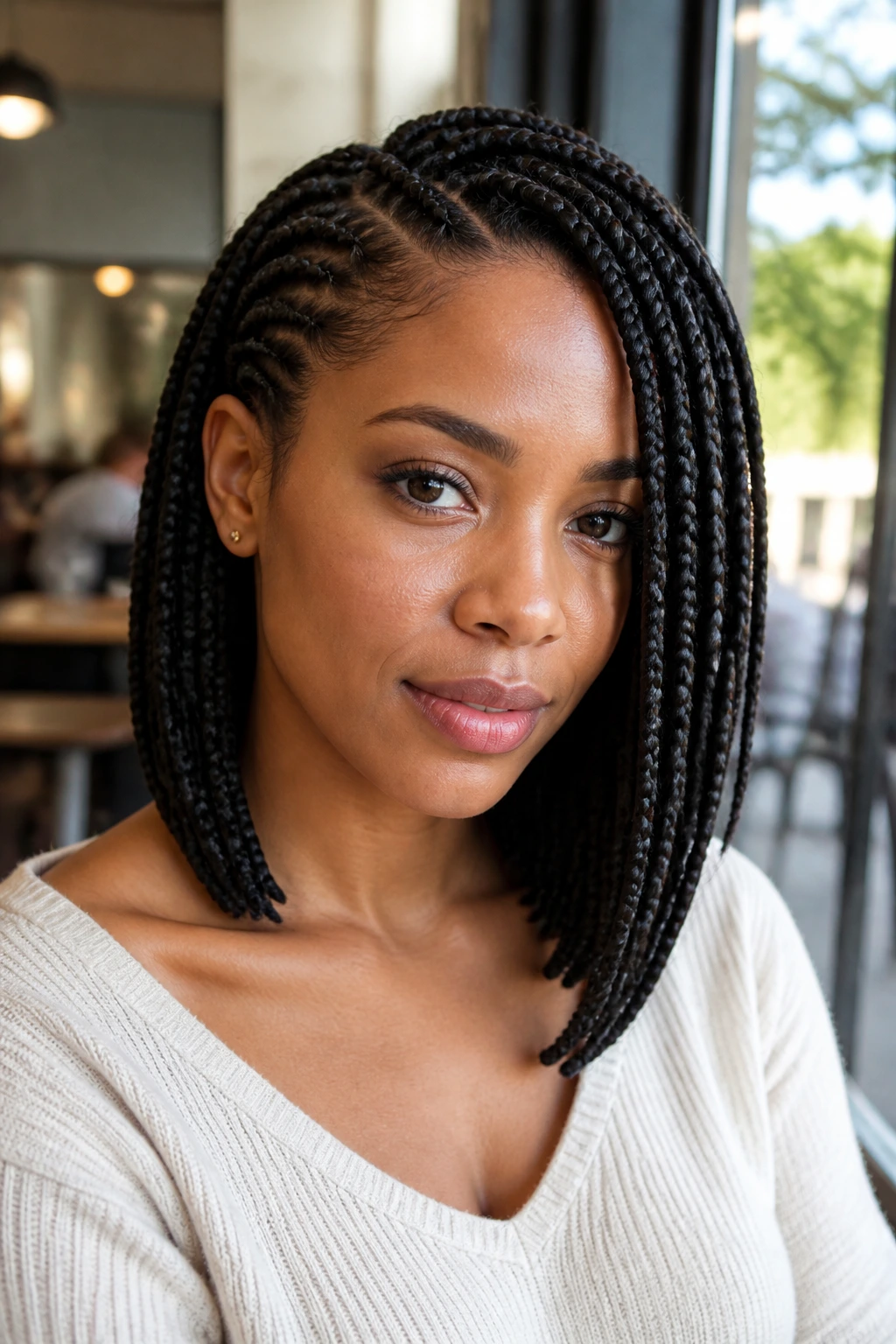
An angled cut changes the whole shoulder line. That’s why this one feels so clean.
The braids sit a little longer in the center and shorter at the sides, which creates a collarbone-grazing angle. The face-framing pieces can tuck behind the ears on one side and fall forward on the other. That gives you more ways to wear the style without changing the install.
This is a strong pick if you like a braid set that looks neat with blazers, collars, or big earrings. The angle keeps the hair from puffing out at the sides. Simple. Sharp. Easy to live in.
25. Center-Part Halo Braids with the Lightest Frame
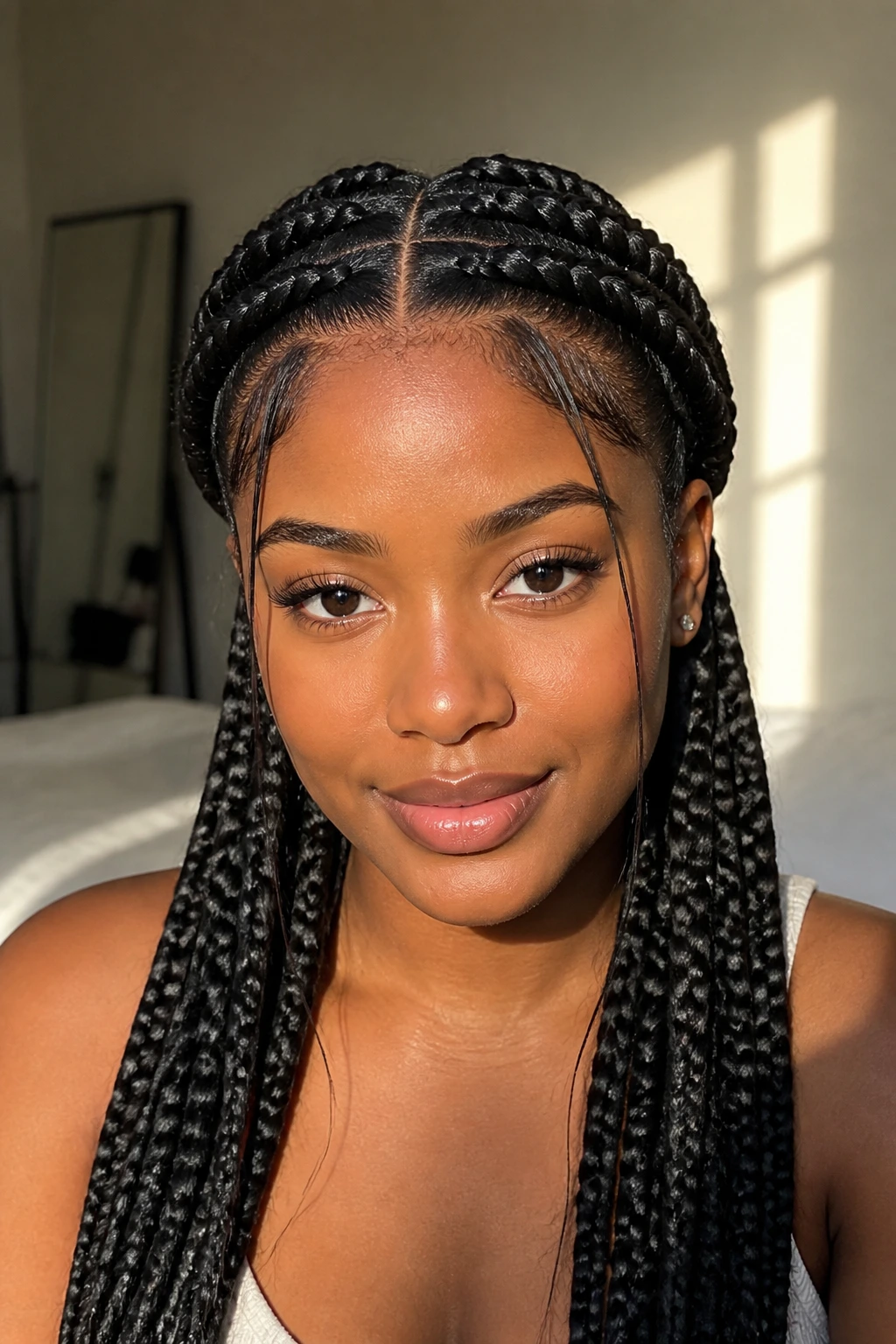
The most balanced braid sets usually look like they were barely touched. That’s what makes a light halo frame work.
The center part stays clean, the front pieces sit close to the face, and the rest of the braids carry the bulk. It is the quietest version in the list, but it can be the prettiest if you want the braids to feel polished rather than styled to death. The face frame should be soft enough to move, not so obvious that it steals the whole installation.
Why It Lands So Well
- The center part keeps the braid set symmetrical.
- The light frame prevents the front from feeling thick.
- The shape works with glasses, hoops, scarves, and bare skin alike.
If you want one set that does the most across the most outfits, this is a strong ending place.
How Face-Framing Layers Are Built Into Jumbo Box Braids
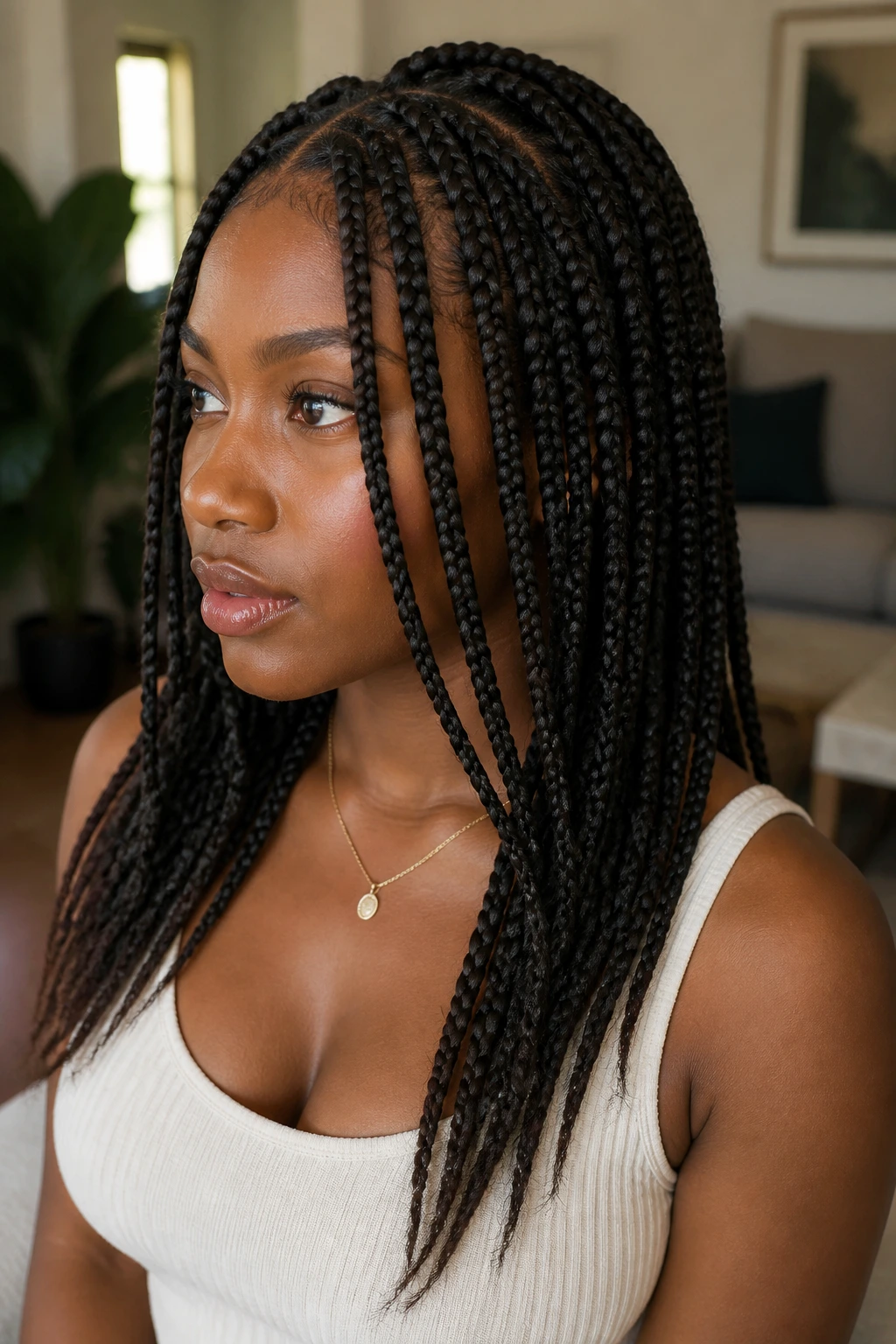
Face-framing layers on jumbo box braids are not random pieces hanging around the forehead. They’re planned into the install. That usually means the front sections are made a little shorter, a little thinner, or a little more angled than the rest of the braid set so the shape lands where the face needs it.
The Parting Comes First
A clean part gives the frame its structure. Some styles need a center part. Others need a deep side part or a slight off-center split that lets one side fall lower than the other. If the part is messy, the layer will look accidental.
Braid Size Should Change Near the Hairline
The front braids do not have to match the body braids exactly. In fact, they usually should not. Slightly smaller front sections reduce weight at the temples and let the face frame move instead of hanging like a rope. That tiny change makes a bigger difference than most people expect.
Length Needs a Purpose
The best face-framing layers are placed on purpose. Chin length softens. Jaw length sharpens. Collarbone length keeps things quiet and wearable. Once you know the mood you want, the length choice gets much easier.
What to Buy and Prep Before the Appointment
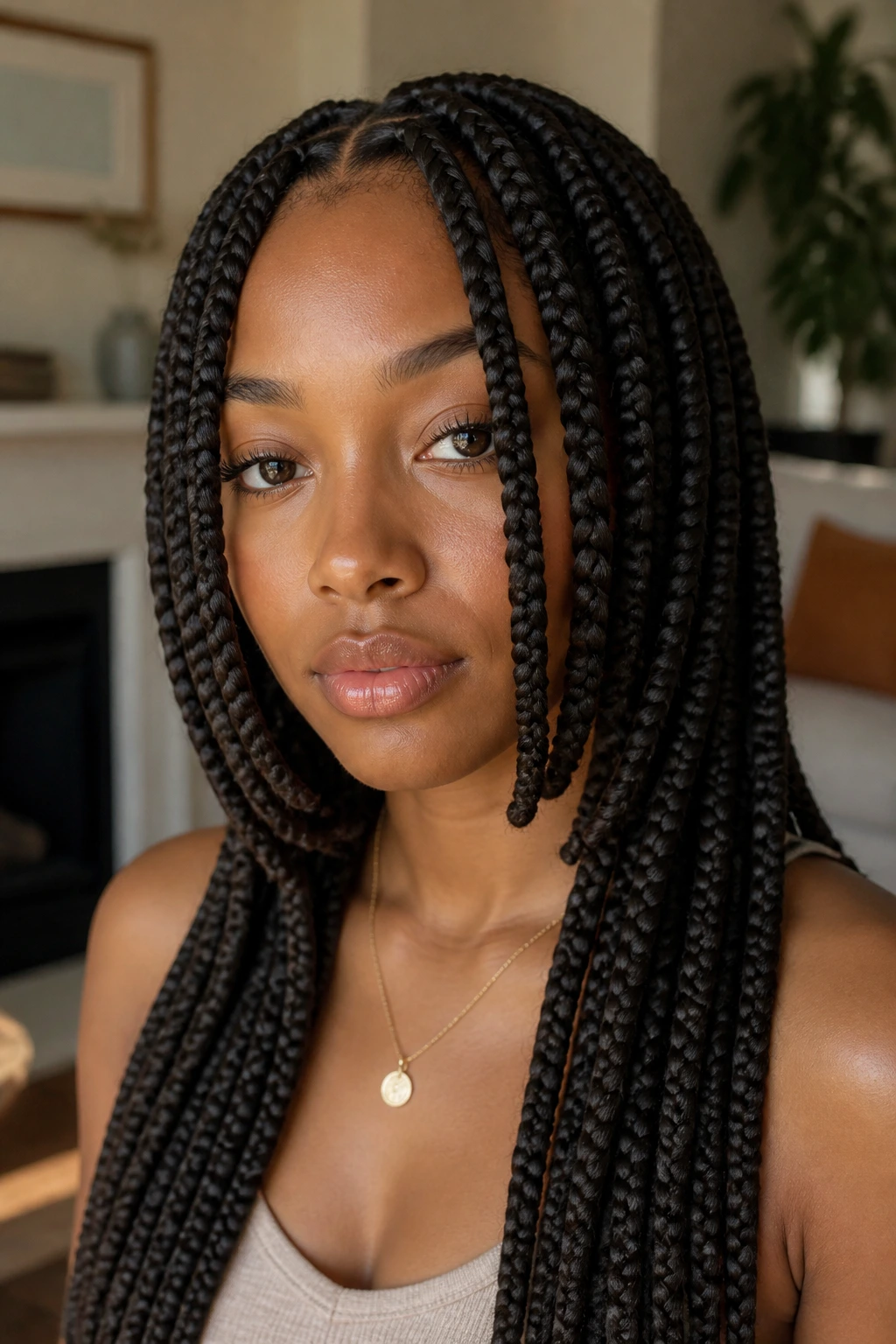
The hair itself matters, but so does what you do before the braider starts sectioning. Clean, stretched, fully dry natural hair gives the braid set a better base, and it makes the front layers sit neater from day one.
Hair to Look For
- Pre-stretched synthetic braiding hair: saves time and helps the ends seal more smoothly.
- A matte or low-shine finish: reads softer around the face than extra-glossy fiber.
- Pack count that matches length: shoulder-length usually needs fewer packs than waist-length, which can eat through hair fast.
- Color blends if you want dimension: two tones can make the face-framing pieces stand out without dyeing anything.
Prep Before You Sit Down
- Wash and fully dry your hair.
- Detangle well, then stretch it with heat or banding if that’s part of your routine.
- Tell the braider which side you part on most often.
- Bring reference photos that show the front, not just the back.
A photo of the back helps. A photo of the hairline helps more.
Essential Equipment for These Styles
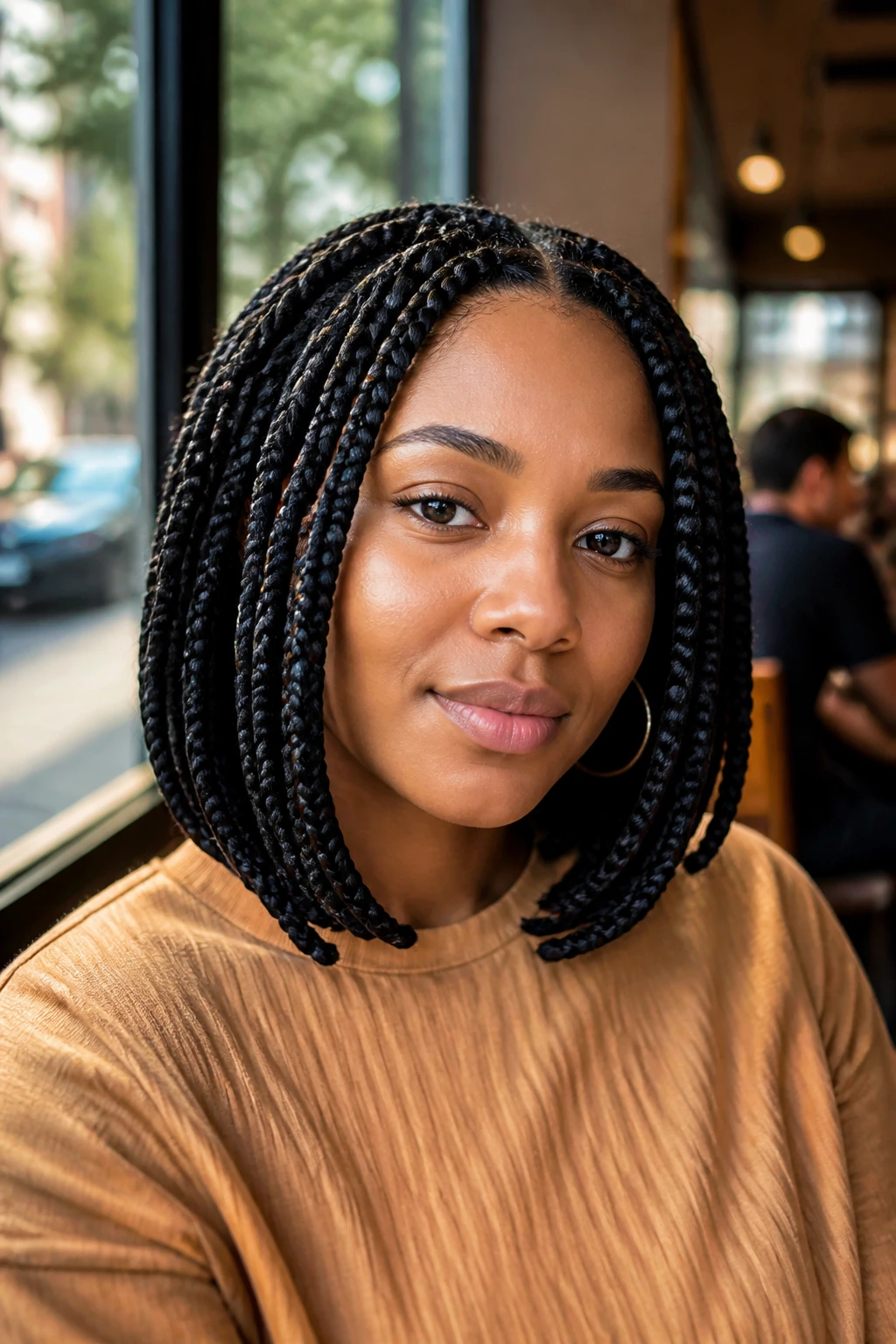
- Rat-tail comb: for crisp parts and clean front sections.
- Hair clips: to keep the back rows out of the way while the front frame is shaped.
- Pre-stretched braiding hair: smoother ends and faster install time.
- Edge brush: useful for softening the hairline, not for forcing it flat.
- Foam mousse: helps the braid set settle and keeps flyaways down.
- Satin scarf or bonnet: protects the front pieces overnight, which is where frizz shows first.
- Braid spray or light oil mist: keeps the scalp from feeling dry between refreshes.
- Hair cuffs or beads: optional, but handy when the front frame needs a little finish.
- Small scissors: for stray fibers only; do not use them to improvise layers mid-install unless you know exactly what you’re cutting.
Smart Hair Shopping and Prep Tips
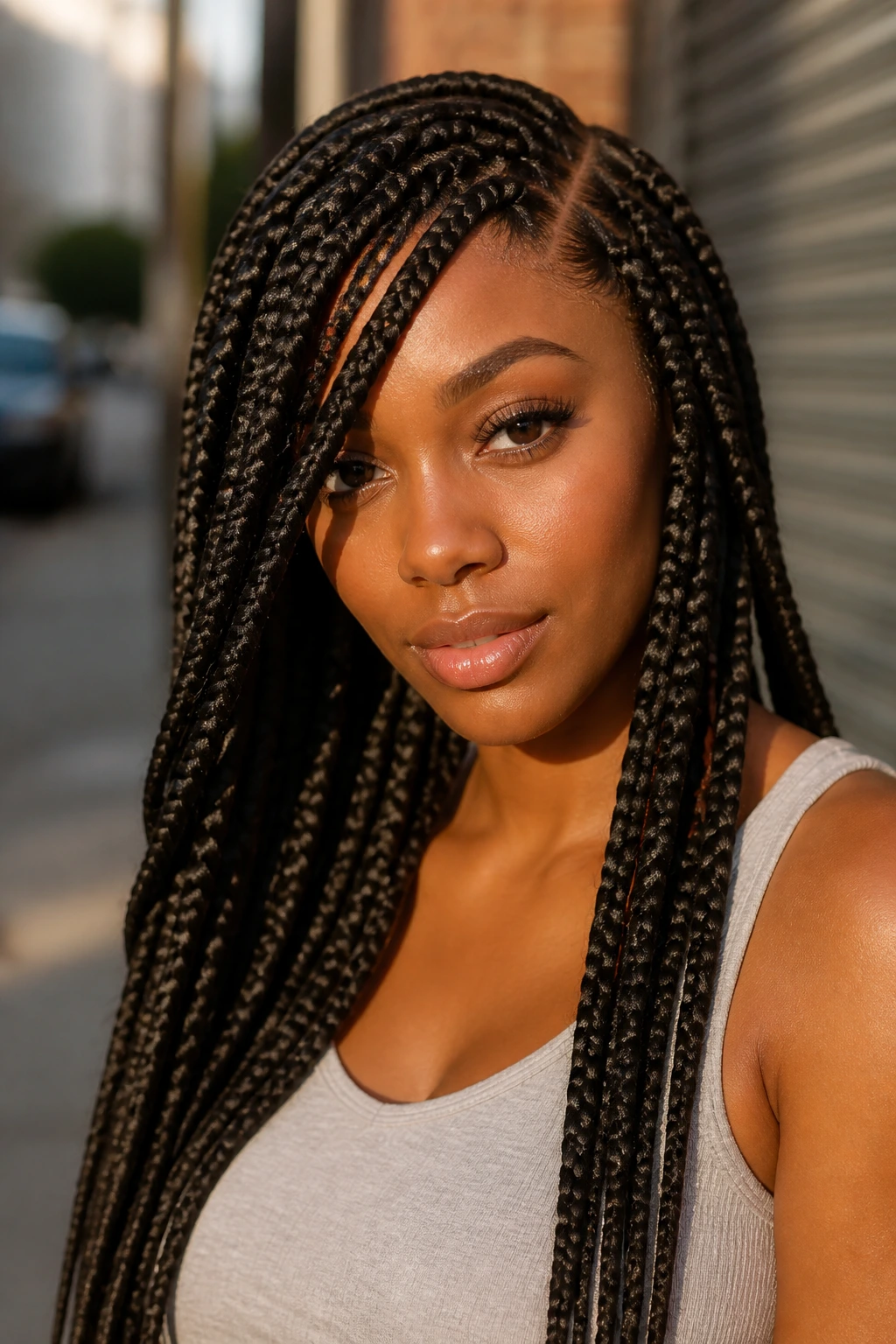
Start with the install you actually want to wear, not the braid you saw on a mood board. Shoulder-length jumbo braids need less hair and less sitting time. Waist-length or longer sets need more packs, more patience, and a little more scalp awareness because the weight shows up fast.
If you want the front frame to feel soft, choose hair that isn’t too glossy. Extremely shiny synthetic hair can make the face-framing layers look sharp in a way you may not want. A slightly matte finish usually reads better in daylight.
Color is another easy win. If you want a brighter frame but do not want a full-color set, mix in one lighter bundle at the front only. Honey, auburn, and soft brown blends can brighten the face without making the whole style loud.
For people with delicate edges, ask for wider sections at the crown and a gentler tension at the temples. That matters more than length. A beautiful braid set that hurts is not a win.
How to Wear Face-Framing Layers in Real Life
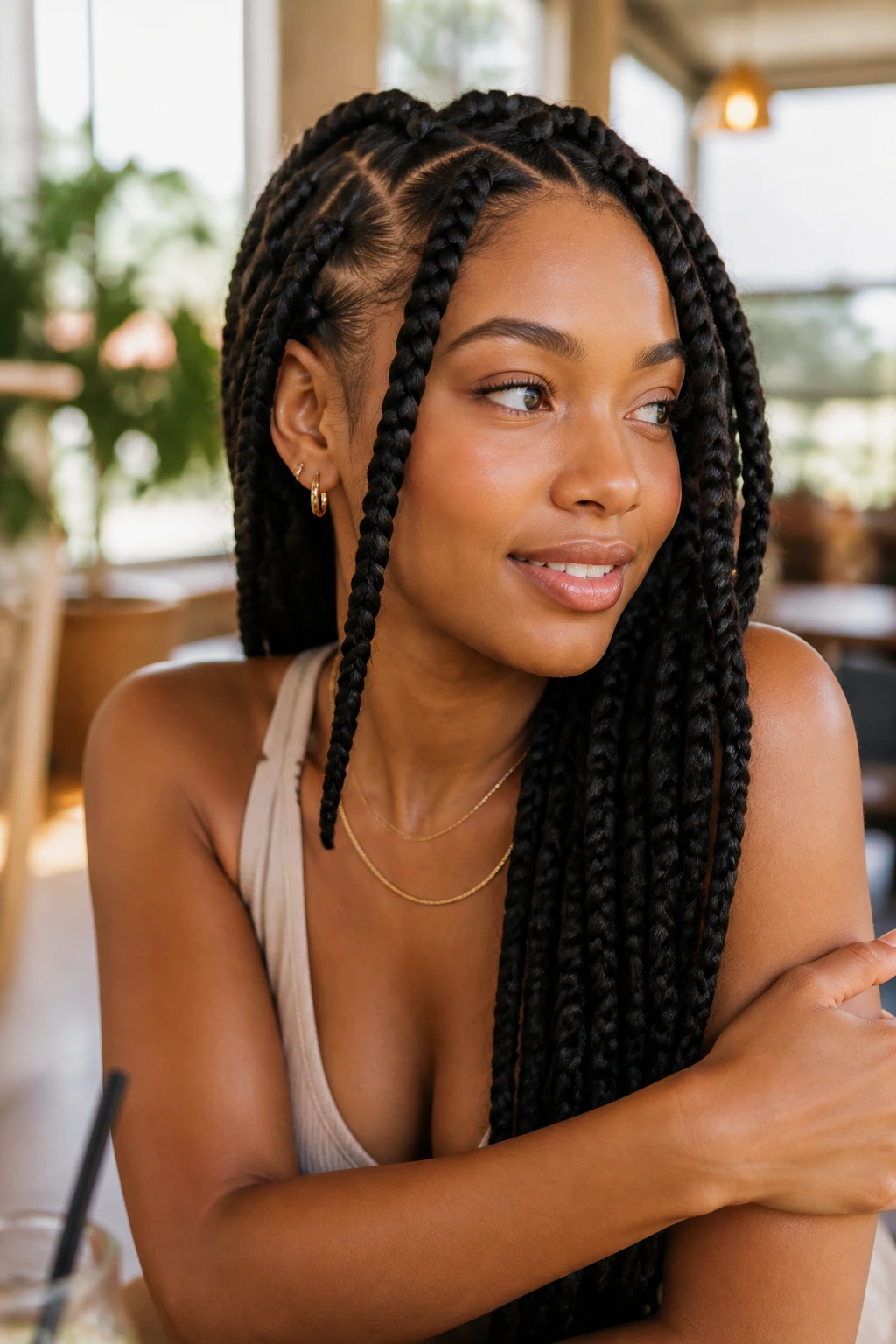
Presentation: Keep the part crisp and let the front pieces fall first. If you want the set to read softer, tuck one side behind the ear and let the other side stay loose. A clean neckline helps the face frame stand out.
Accompaniments: Hoops, a simple chain, a satin-lined cap, and a top with a clean collar all work well. Big turtlenecks can hide the shape; scoop necks and open collars let the braid frame stay visible.
Portions: Think in braid count and length, not a vague “full” or “small” set. Twelve to sixteen jumbo braids usually feel thick and bold. Eighteen to twenty-four braids read a little lighter and move more easily around the face.
Beverage Pairing: Install day calls for cold water, mint tea, or ginger tea. Long sitting sessions get a little easier when you are not dehydrated and cranky.
Additional Styling Tips and Finishers
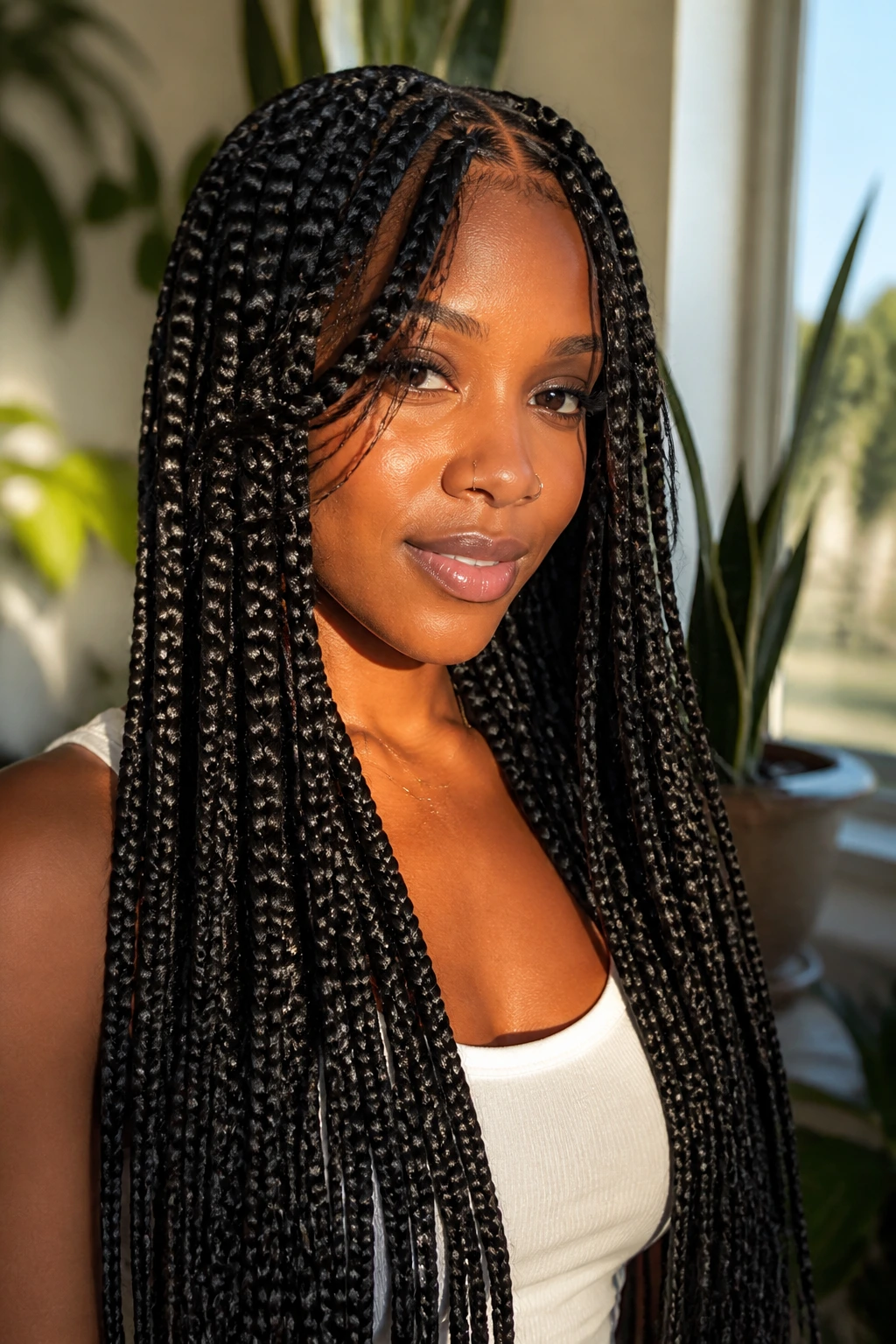
Shape Refinement: If the face frame is doing too much, ask for the front pieces to sit an inch lower or have the outer edges thinned a touch. That tiny adjustment can calm the whole style down without changing the install.
Customization: Color accents work best when they stay near the front or the ends. A single warm-tone braid on each side is enough to shift the mood. You do not need six colors fighting for attention.
Finish: Foam mousse is your friend, especially around the front pieces. A light pass smooths the braids, settles flyaways, and keeps the face frame from looking frizzy on day two.
Make-It-Yours: If your edges are sensitive, ask for looser tension around the temples and a less aggressive part. If your hair is dense, you can carry a slightly fuller front frame. If your hair is fine, keep the front pieces lighter and shorter so the look stays balanced.
Make-Ahead, Night Care, and Refreshing
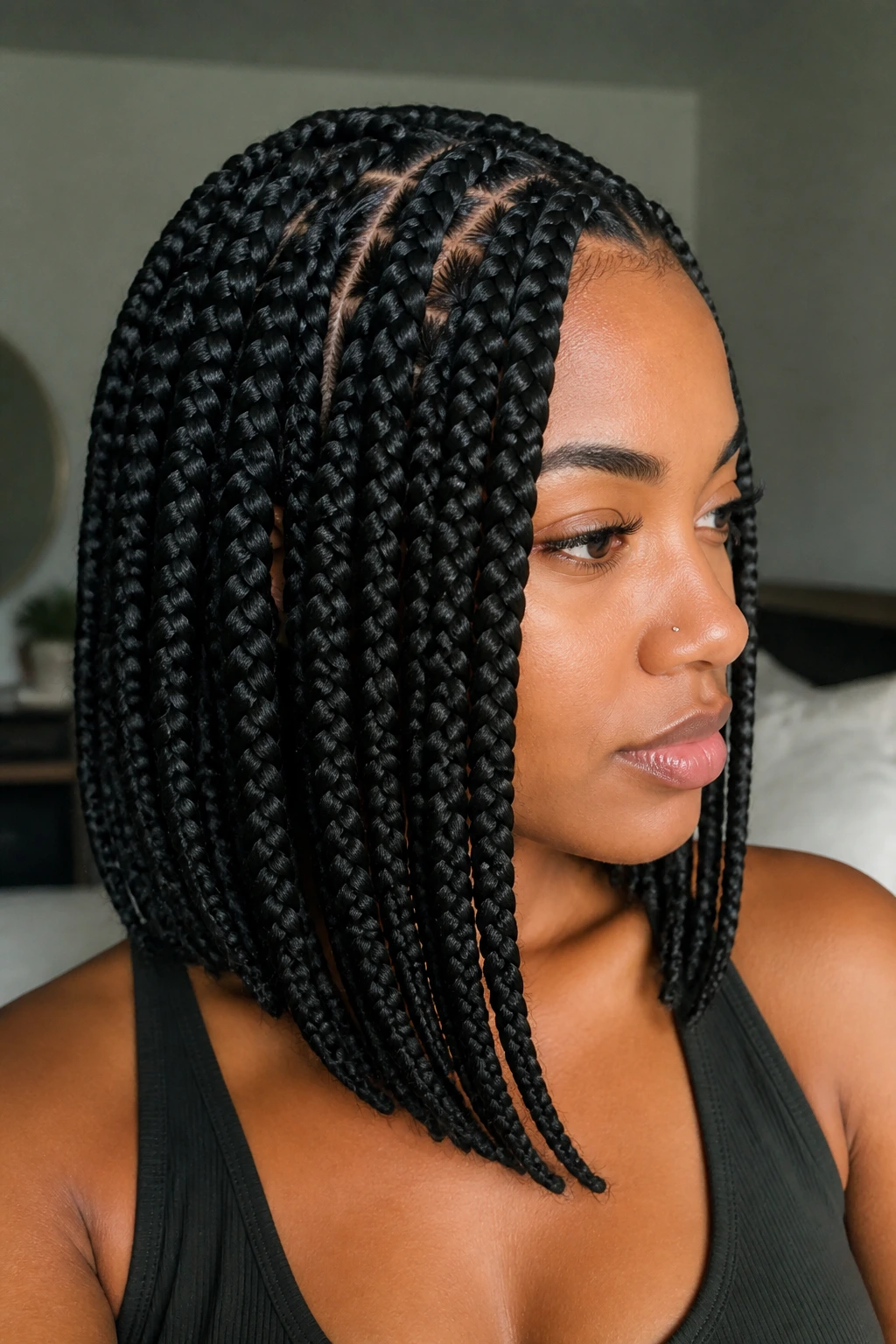
Braids like this usually wear best for about 4 to 6 weeks, sometimes a little longer if the install is light and the scalp stays calm. After that, the front pieces start to get fuzzy first, and that’s often the signal to take them out rather than push the set too far.
At night, wrap the braids with a satin scarf or wear a bonnet that actually covers the front frame. That front section rubs the most against pillows, collars, and hoodie seams. If you sleep with the face pieces loose, they frizz faster than the rest of the style.
A small amount of mousse every few days keeps the front from looking rough. Scalp oil should stay light and targeted; too much makes the braids look greasy and can drag buildup into the parts. If you want to wash the scalp, keep it gentle and focused, then dry the roots fully so the install does not stay damp under synthetic hair.
If the front pieces start to curl out or look tired before the rest of the braid set, refresh those sections first. That is where the eye goes anyway. The back can wait a little longer.
Variations and Adaptations to Try
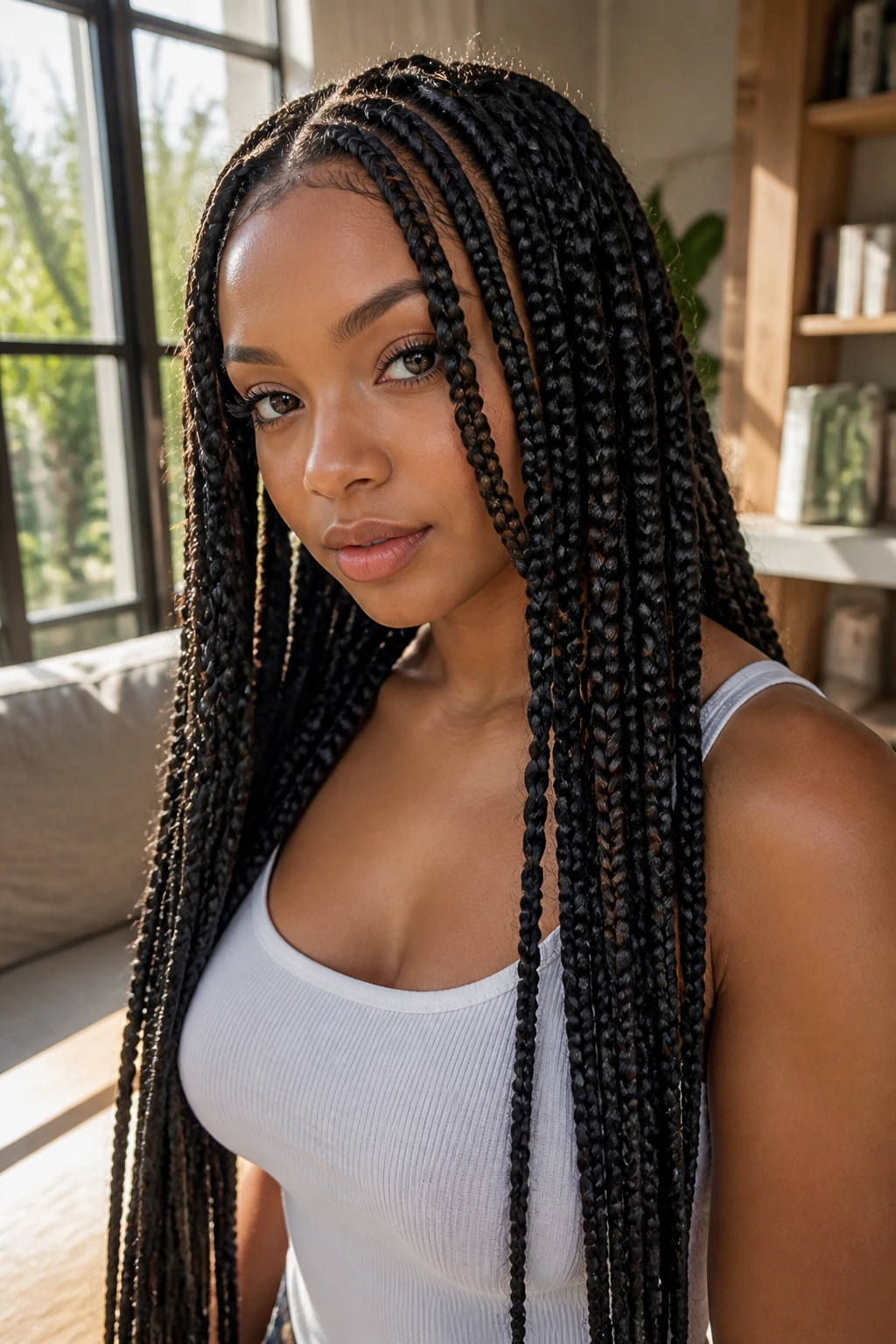
Curtain Sweep Softener: Keep the front pieces chin length and the center part dead straight. This version suits round and heart-shaped faces because it opens the cheeks without giving up softness.
Side-Flip Drama: Push the part deep and let one front section sweep across the forehead. It works when you want the braids to feel stronger and a little less symmetrical.
Color-Glow Frame: Add honey or auburn hair only to the front rows. The rest of the braid set can stay dark, which gives you brightness right where the face needs it.
Boho Finish Frame: Leave two or three front pieces with a loose curl pattern while the rest stay straight. That small texture shift keeps the front from feeling too stiff.
Low-Tension Everyday Set: Choose shoulder-length braids, fewer sections, and a light front frame. This is the one for people who wear braids to live in, not just to show off.
Common Mistakes to Avoid
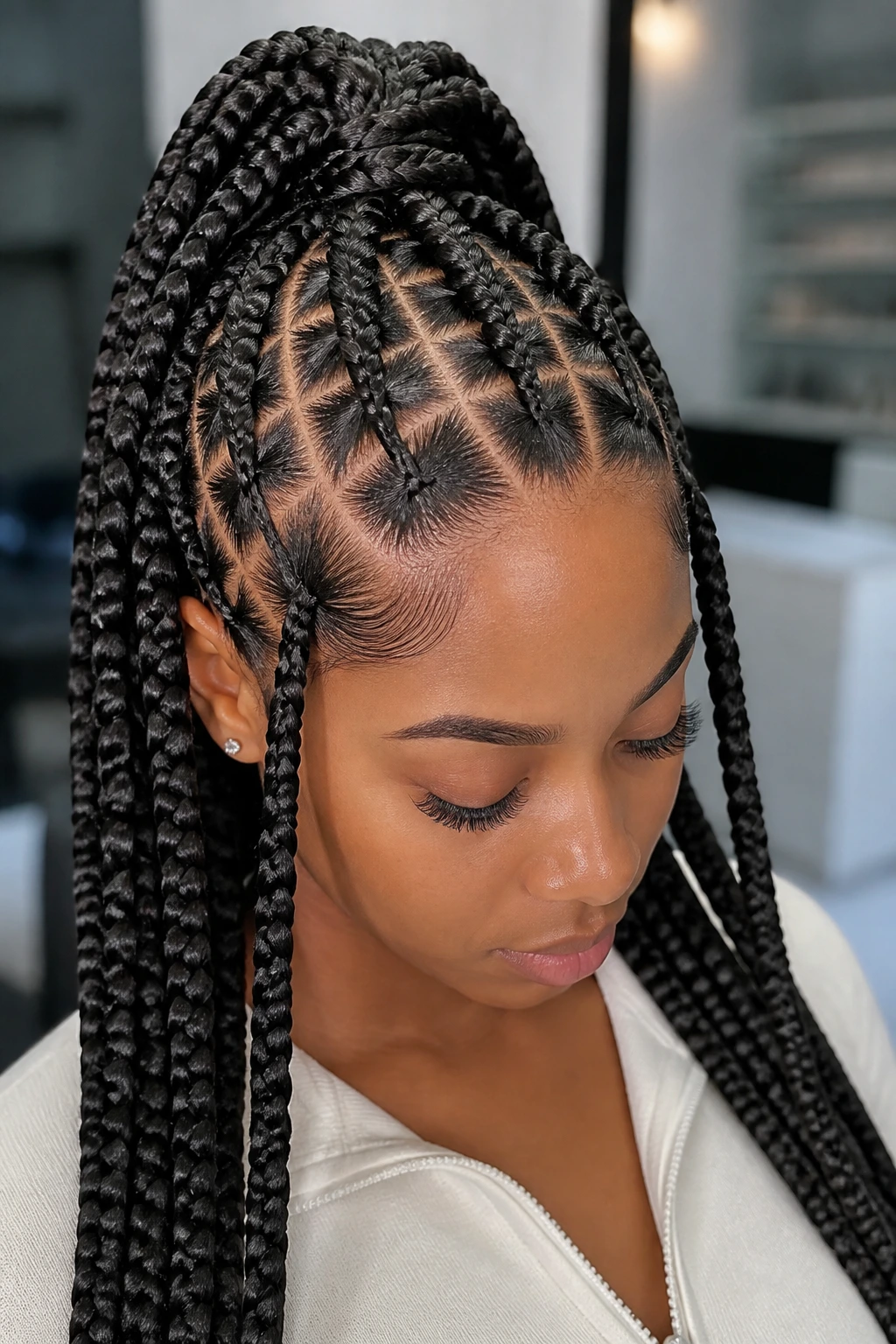
- Making the front pieces as thick as the back braids: The face frame disappears and the braid line looks bulky. Fix it by trimming the front sections slimmer before installation.
- Cutting the front too short: Chin and jaw lengths are not the same, and a too-short front can stick out instead of laying down. Ask the braider to leave more length, then adjust later if needed.
- Loading the temples with too much weight: If the front rows are heavy, the braids pull where the hairline is weakest. Use lighter sections around the face and save the thickest braids for the crown and back.
- Crowding the hairline with beads or cuffs: The accessories start fighting the face frame. Keep the front clean and place the hardware lower down.
- Skipping nightly protection: The front pieces frizz first. Wrap them every night or the clean shape goes soft fast.
- Choosing length before proportion: Waist-length looks great on some heads and too much on others. Match the length to your neck, shoulders, and how much movement you want.
Frequently Asked Questions
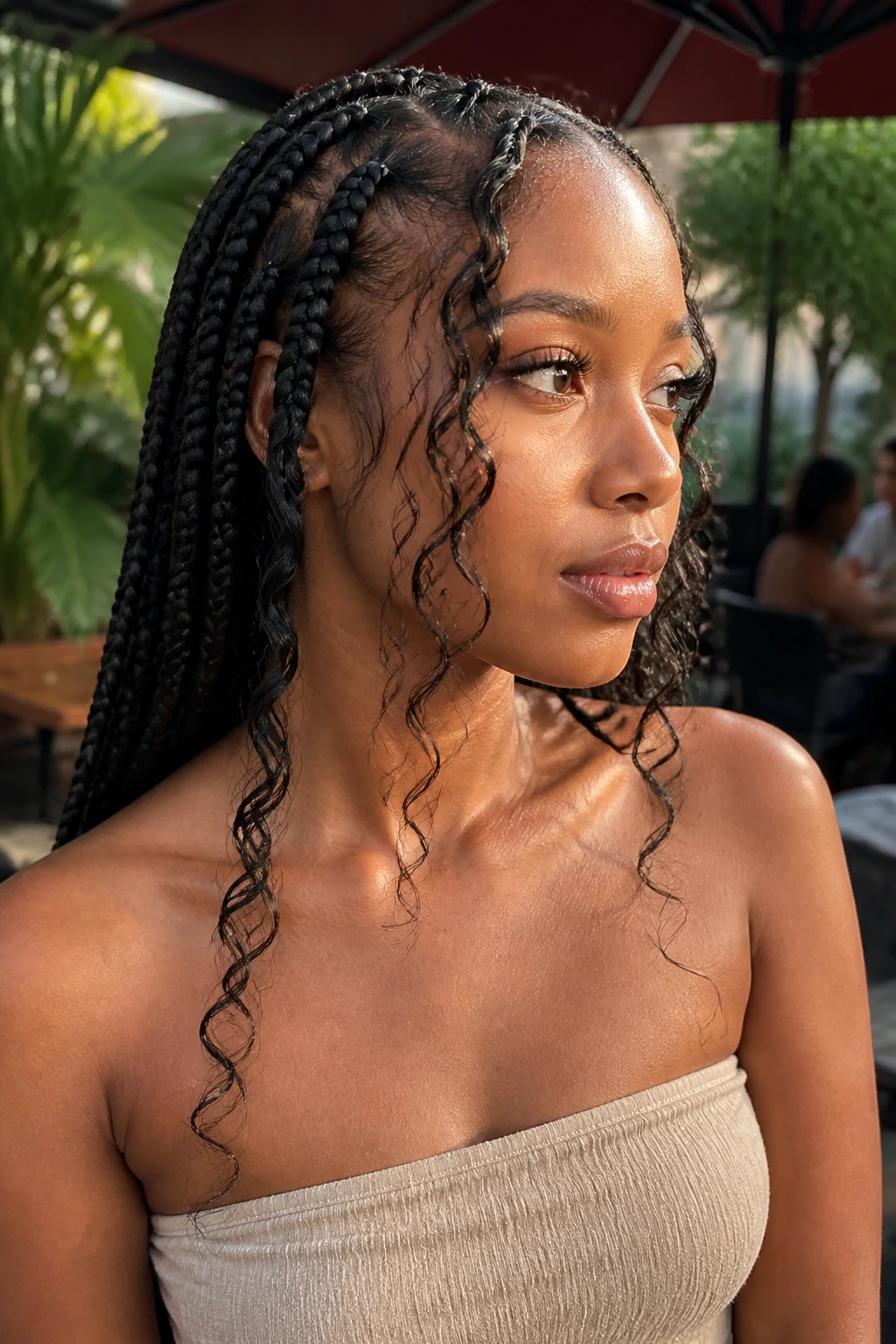
How many packs of hair do jumbo box braids with face-framing layers usually need?
Shoulder-length sets often land around 4 to 5 packs, while longer installs may need 6 to 8 packs depending on braid size and fullness. The front layers use the same hair pool, so it’s smart to bring one extra pack if you want more length or a fuller curtain frame.
Are face-framing layers still protective?
Yes, if the install is not tight at the hairline and the front pieces are installed with enough room to move. Protective styling stops being protective when the temples feel sore by day two.
Can this look work with knotless braids?
It can, and the front often looks even softer because the root is slimmer. The same idea applies: lighter front sections, clean parting, and a length that matches your face shape.
What if the front pieces keep frizzing first?
That’s normal. The front gets touched, tucked, and slept on more than the rest of the set, so it wears faster. A satin wrap at night and a light mousse refresh usually helps, but if the frizz turns into tangling, the install may be past its useful life.
How short can the face-framing layers be?
Short enough to shape the face, but not so short that the braids stick out from the head. Chin length and jaw length are safe starting points for most people. Brow-length pieces can work, but they need careful sectioning or they look abrupt.
Can I wear jumbo box braids like this in a bun or ponytail?
Yes, and the layers usually make updos look better because the front pieces stay loose. Just avoid yanking the crown too tight. A smooth updo with loose face pieces usually looks better than a sculpted knot that pulls at the temples.
What face shape does this style suit best?
That’s the lazy answer nobody needs. Chin-length frames soften round faces, side sweeps help with wider foreheads, and collarbone layers are easy to wear on almost anyone. The real question is where you want the eye to land.
Do accessories change the way the face frame reads?
They do. Beads and cuffs draw the eye, so the front layer should stay cleaner when the accessories are heavy. If the braids already have color or hardware, the face frame can be simpler and the style still feels finished.
The Shape Lives in the Front
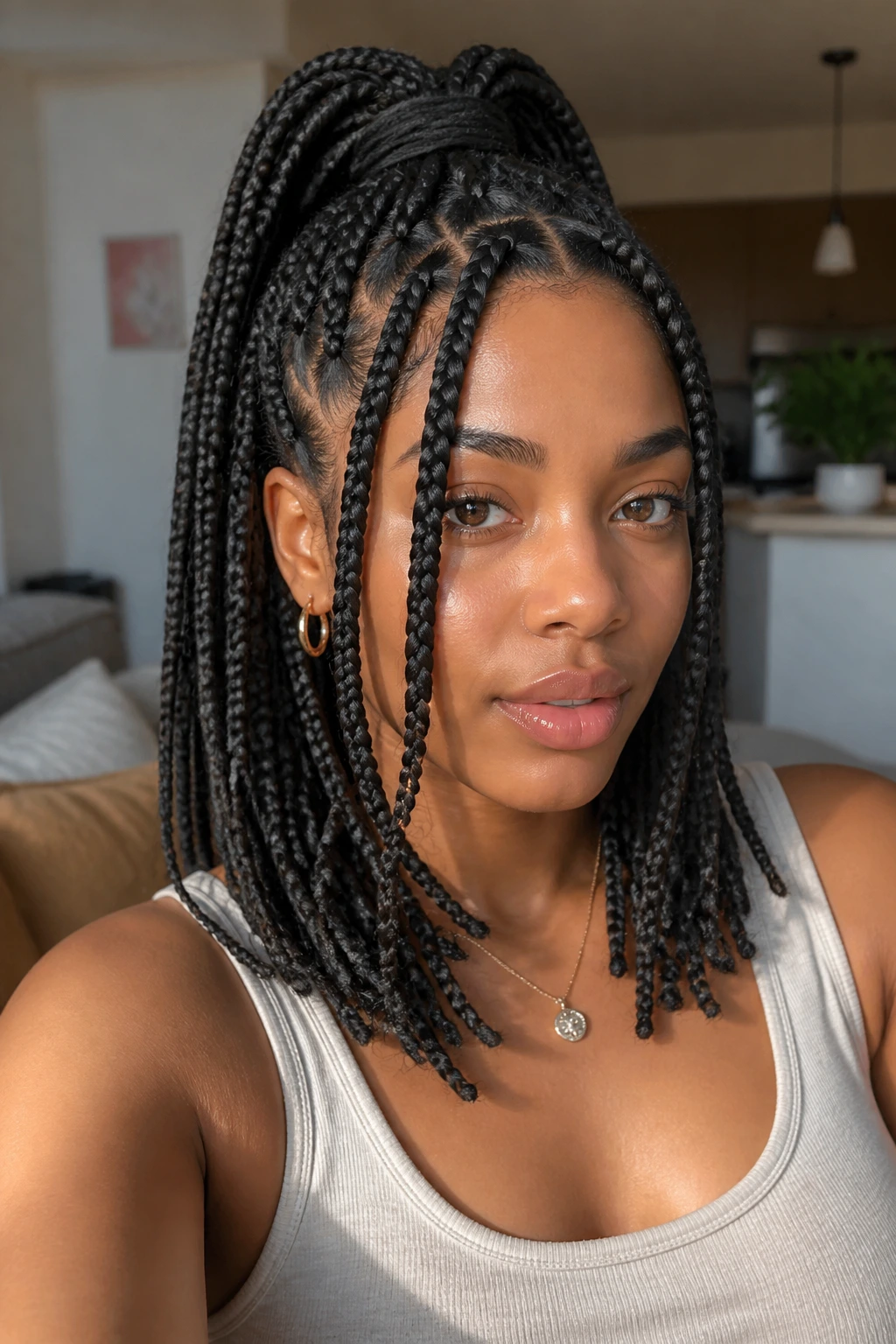
Jumbo box braids do not need more braid size to feel better. They need a front frame that knows what it’s doing. That can mean a chin-skimming curtain, a side sweep, a soft bob, or a barely-there halo around the face. The braid pattern still matters, but the front is where the style gets its character.
The nicest thing about face-framing layers is how practical they are. They soften harsh lines, help the braids sit better on Black hair, and make long installs feel easier to wear. If you choose one of these looks with your own face shape, hairline, and daily routine in mind, the braids stop feeling like a block of hair and start feeling like a shape that belongs on you.