



Round faces do not need hiding. They need direction.
That’s why curly bangs for round faces with money piece highlights work so well when they’re handled with a little nerve and a lot of precision. The fringe breaks up width. The face-framing color pulls the eye vertically. And when the curl pattern is left to do its own thing instead of being forced into a flat little helmet, the whole shape feels lighter at the cheeks and longer through the center.
The catch is the same one that trips up a lot of salon photos. Curly bangs shrink. Money pieces can go stripey. A front section that’s too wide or too bright can make the face look broader instead of slimmer, especially when the curl springs up and sits right at the widest part of the cheeks. I prefer highlight placement that starts narrow at the roots and softens as it drops past the cheekbone. That tiny shift changes everything.
So the styles here lean into the stuff that helps round faces most: diagonal lines, cheekbone-length pieces, a little asymmetry, and color placed where it frames rather than flattens. Some looks are soft and wearable. Some are louder. All of them give you a way to wear curly bangs without feeling like you’ve bet the whole haircut on a single, fragile fringe.
Why These 25 Looks Earn Their Place
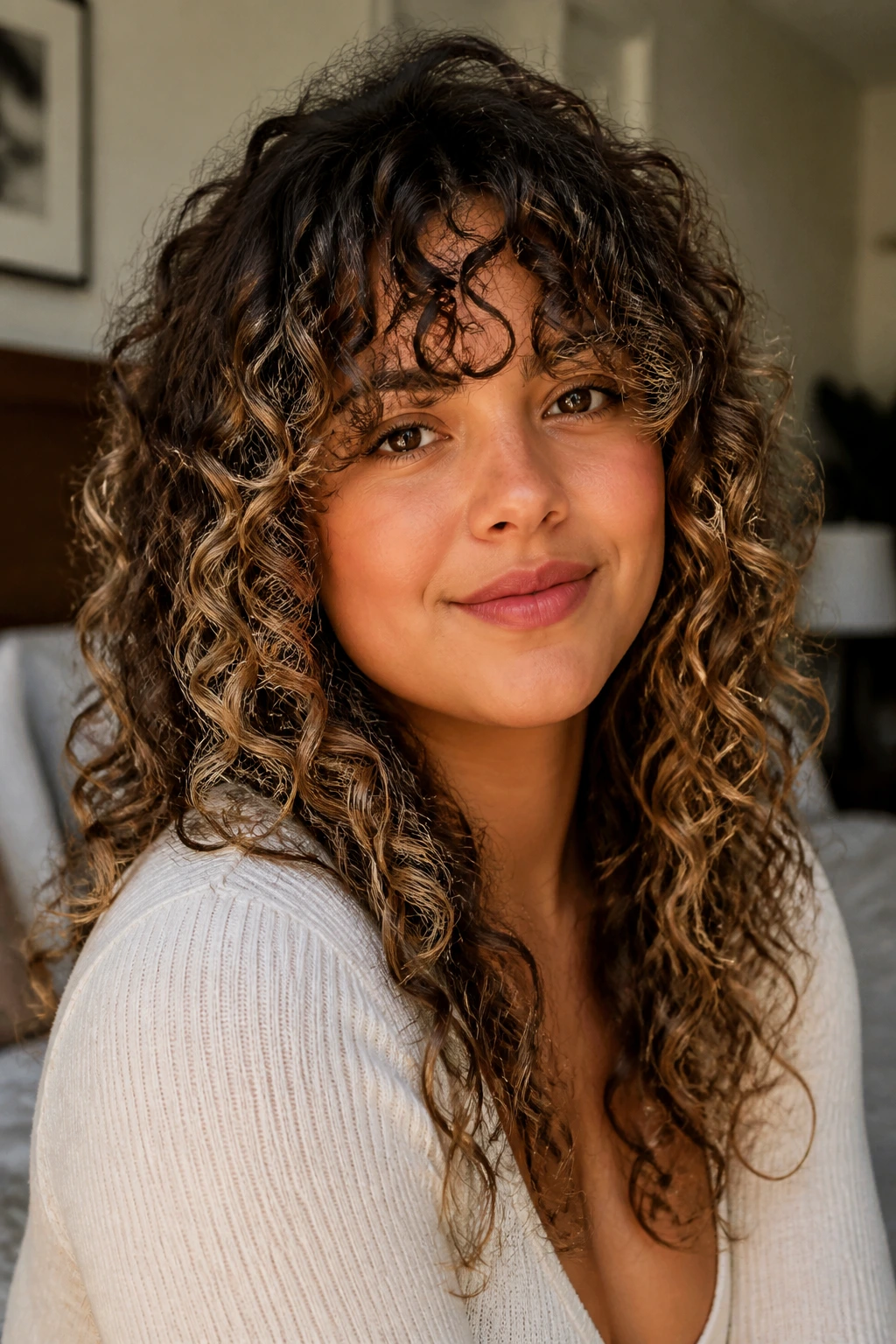
-
Length Where It Counts: Curly bangs that land at or below the brow in the mirror usually sit a touch higher once they dry, which keeps the front from cutting the face in half.
-
Money Pieces That Pull the Eye Up: A lighter strip near the part and temple gives your curls a vertical line, and that matters more on a round face than a chunk of brightness sitting at cheek level.
-
Shape Without Hard Edges: Soft curves, side parts, and shaggy layers stop the front from turning boxy. That’s the real trick here.
-
Works Across Curl Types: Loose waves, springy ringlets, and tighter coils can all wear this idea well if the cut respects shrinkage.
-
Color That Does Real Work: Face-framing highlights can make the bangs read lighter and airier, even when the rest of the hair stays deep brunette, copper, or black.
1. Long Curtain Curly Bangs with Caramel Money Pieces
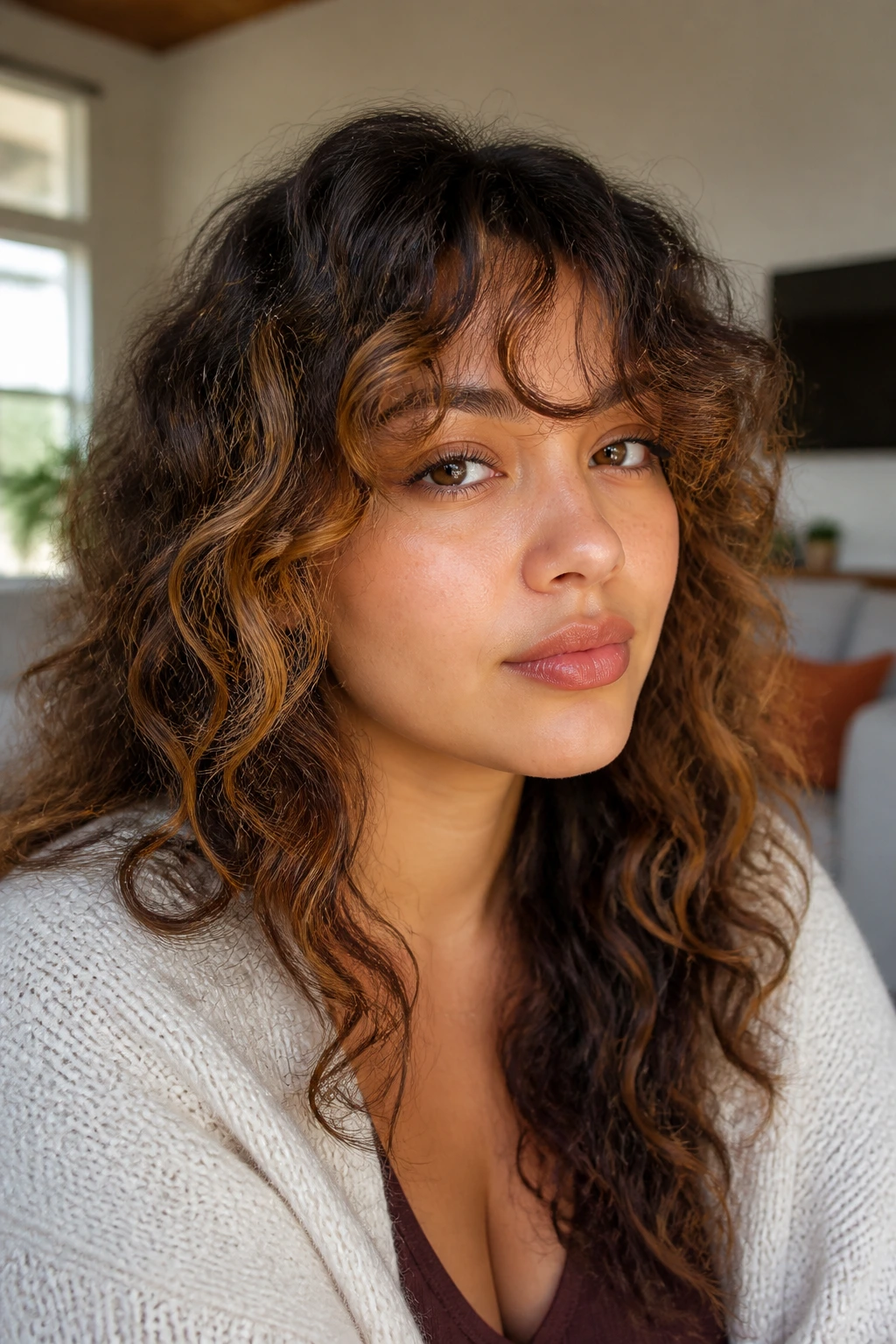
This is the safest place to start if you want movement without a dramatic chop. The bang opens in the middle, skims the brow, and falls longer at the outer corners, which makes a round face look a little more oval without pretending it’s not round. The caramel money piece should stay narrow at the roots and widen only as it passes the cheekbone.
Ask for the fringe to be cut dry or nearly dry, with the outer pieces left long enough to tuck behind the ear if needed. That gives you room to live with the haircut instead of babysitting it. A soft curl cream and a light mousse are usually enough; heavy butter will make the bangs droop before lunch.
2. Brow-Skimming Ringlets with Bright Blonde Face Frame
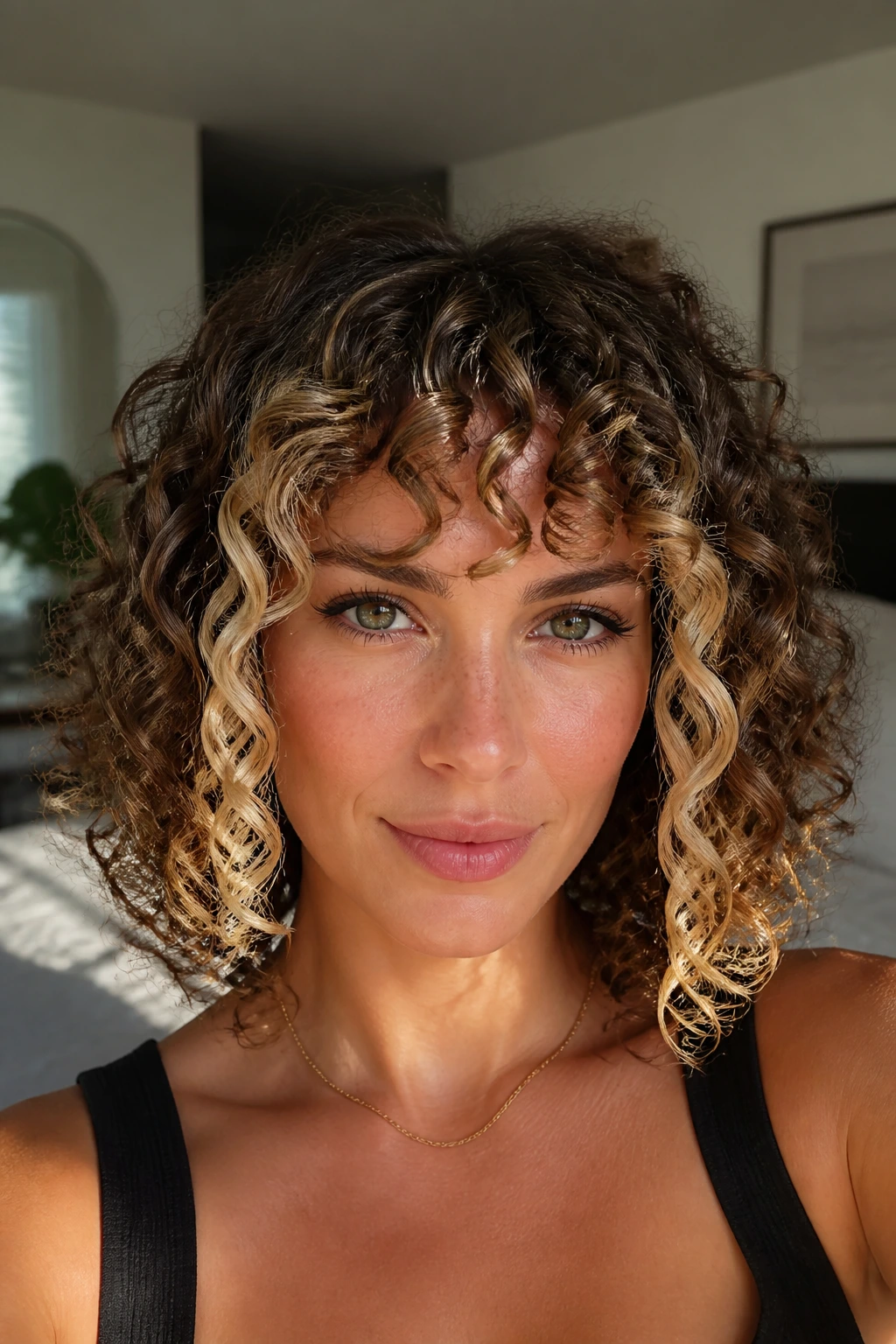
If you like a little drama, this one has it. The ringlets sit just above the brows, but the bright blonde panels stay skinny at the hairline and sweep down beside the eyes, which keeps the front from reading like one big bright block. On a round face, that slim frame does more than a wide highlight ever could.
The cut works best when the stylist follows the curl pattern instead of forcing a straight fringe line. I’d ask for point-cut ends and a tiny bit of extra length in the middle, because those curls will bounce up once they dry. Use a diffuser on low heat and stop around 80 percent dry; the last bit of air-drying gives the ringlets their shape.
3. Side-Swept Curly Bangs with Honey Ribbon Highlights
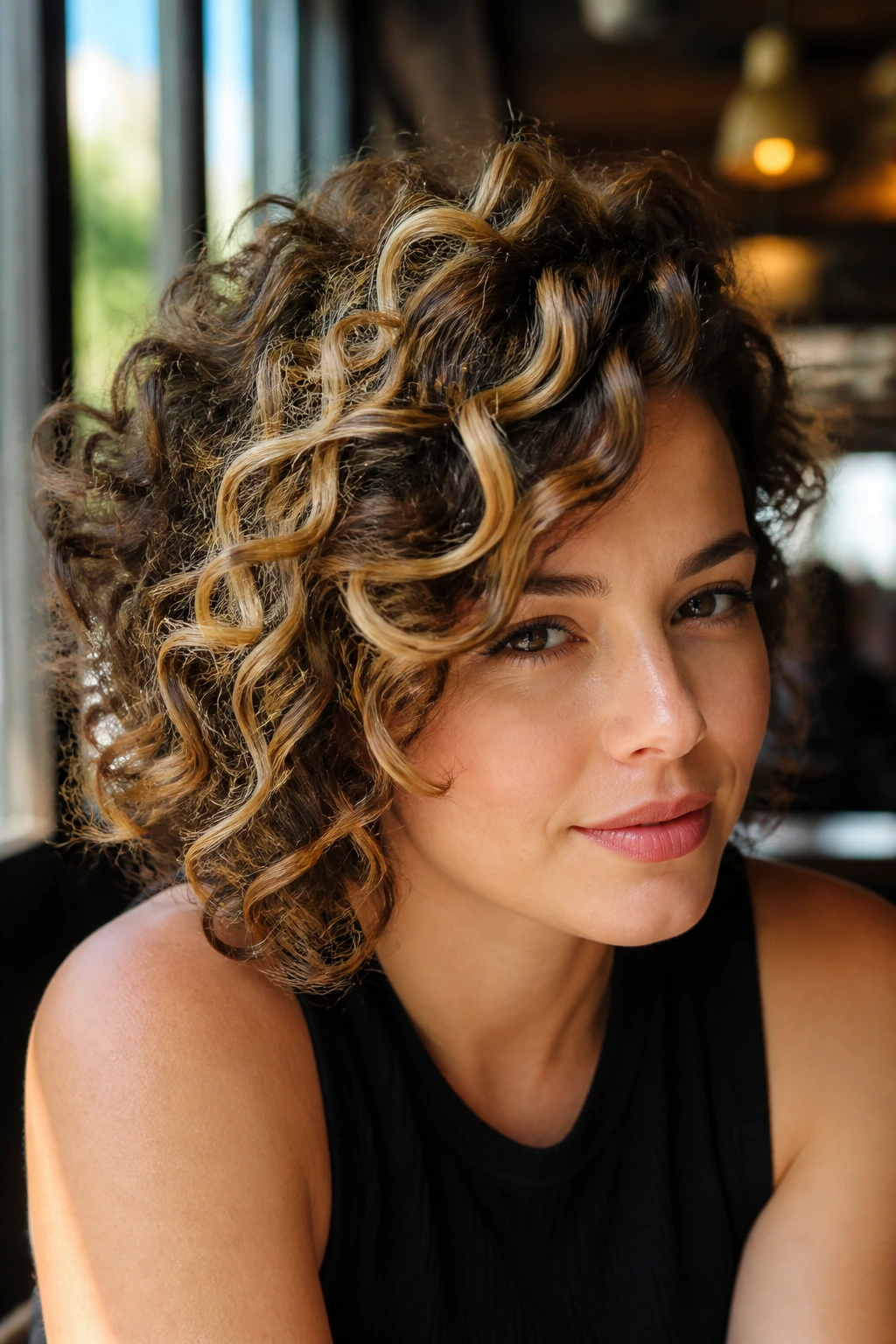
A side-swept fringe is an underrated move on a round face. It creates a clean diagonal from the part to the cheekbone, and the honey ribbons keep the front soft instead of severe. This is the look for people who want bangs but do not want the full commitment of a straight-on fringe.
The trick is to keep the heavier part of the bang on the longer side, not the shortest side. That longer fall breaks up width and gives the curls somewhere to land. A deep side part makes the money piece feel intentional, especially if the lighter pieces stay clustered around the temple rather than spreading across the whole hairline.
4. Shag Cut with Airy Curly Bangs and Beige Money Piece
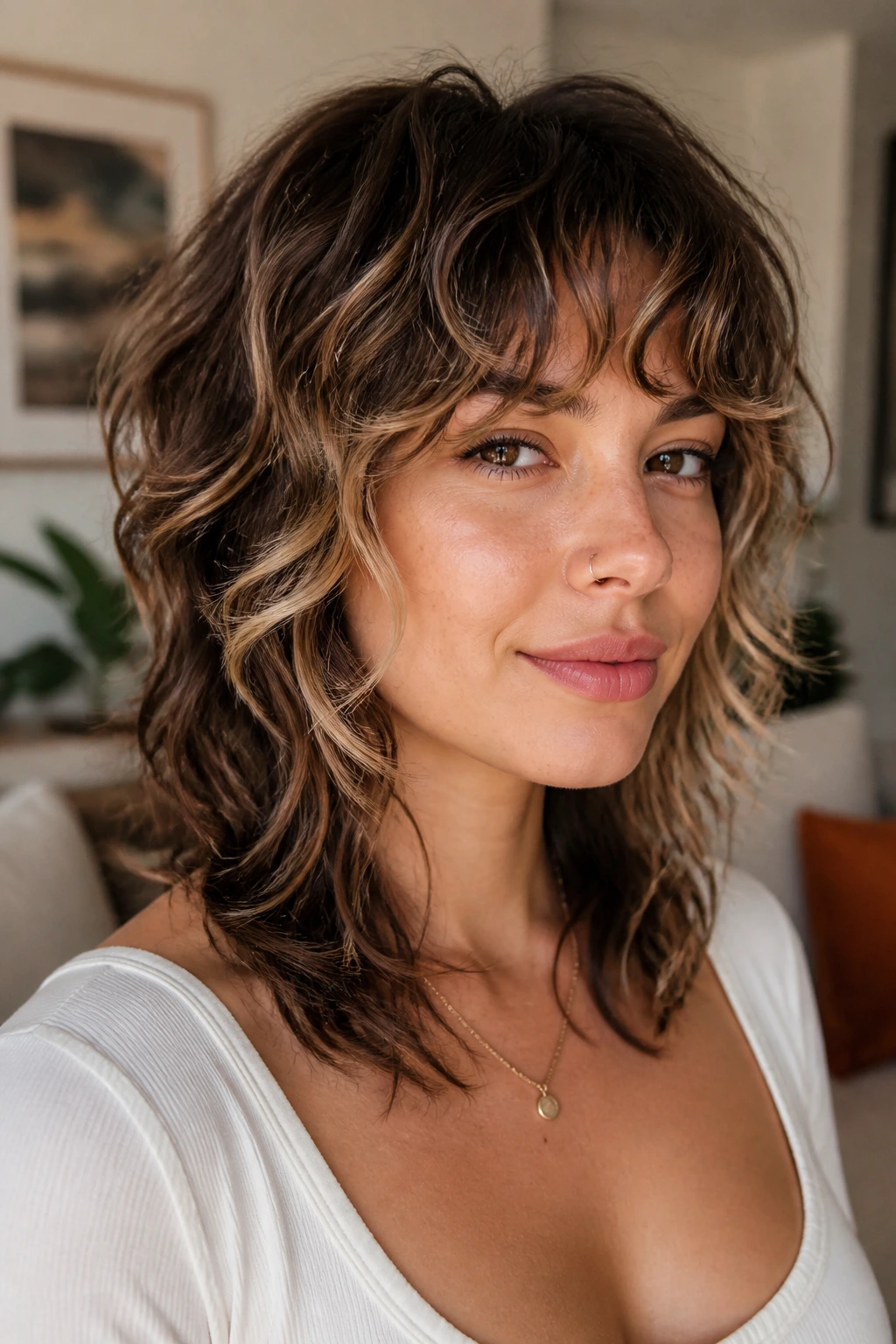
A shag changes the whole conversation. Instead of one heavy front section, you get layered curls, scattered movement, and bangs that blend into the rest of the cut instead of shouting at you from the forehead. Beige money pieces work here because the cut already has texture; you don’t need aggressive contrast.
This is one of my favorites for round faces because the layers keep the sides from puffing out in one circle. The bangs should sit a touch longer at the temples, almost like they’re melting into the face-framing layers. If your curls are 2A through 3B, this shape usually cooperates without much fuss.
5. Chin-Length Curly Fringe with Copper Front Panels
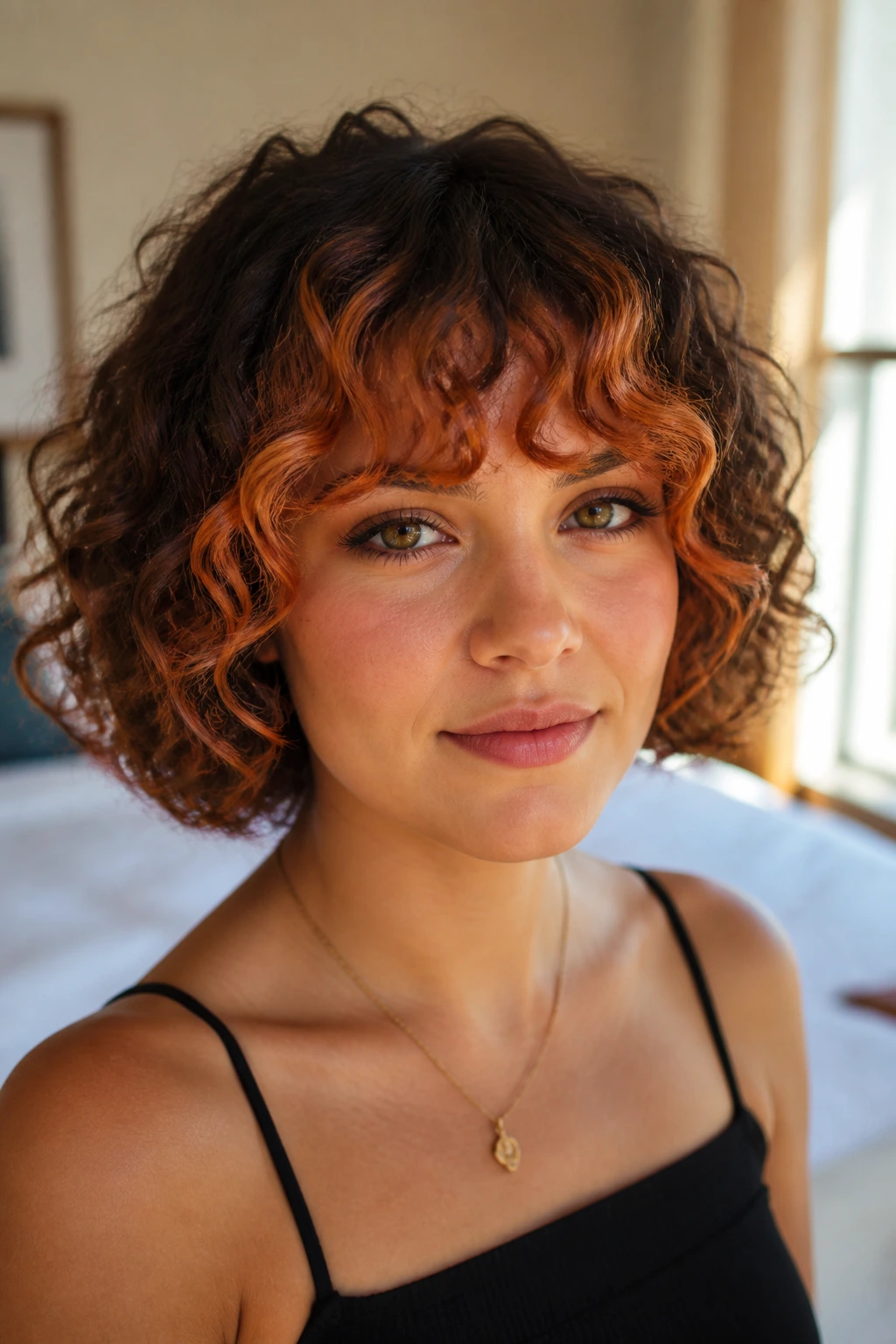
Chin-length fringe sounds bold, and it is, but it’s also one of the better ways to create vertical lines on a round face. The curls land below the widest part of the cheeks, so the eye moves down instead of outward. Copper front panels make the shape look warm and vivid, especially on darker bases.
This look works best when the color is painted in thin, deliberate slices rather than a blunt front streak. Think two narrow pieces near the part and a soft veil along the temple. The fringe itself should be shaped with enough room to spring, because if the curls sit too tight against the cheeks, the whole cut can get crowded fast.
6. Asymmetric Bob with Deep Side Bang and Ice Blonde Pieces
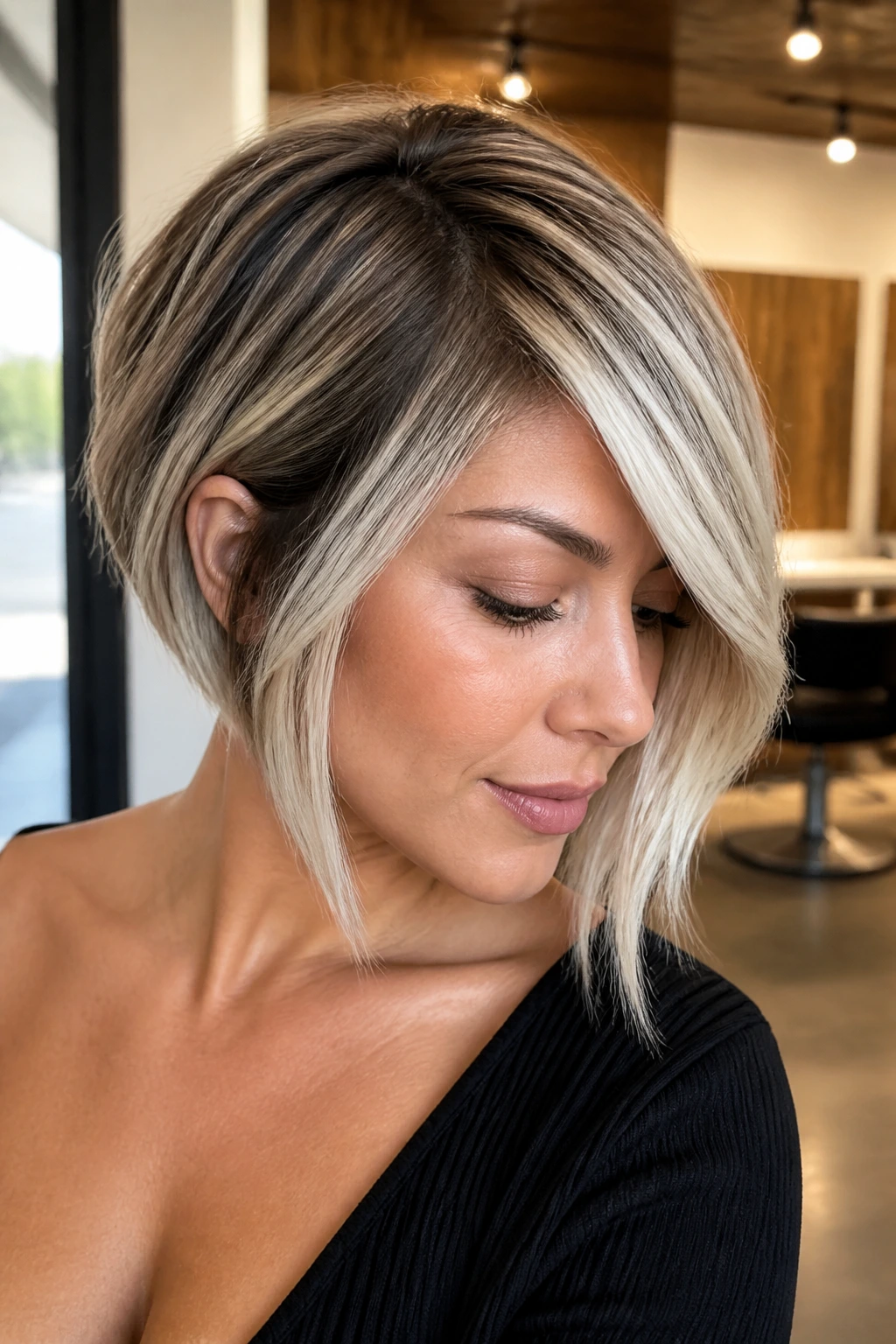
One side shorter, one side longer. That imbalance is exactly why this bob flatters a round face. The deep side bang pulls the eye across the forehead and down the longer edge of the cut, while the ice blonde pieces keep the front from disappearing into the rest of the hair.
I like this on curls that have enough memory to hold shape but not so much bulk that the bob turns into a mushroom. The side with the highlight should start near the part and fall just past the cheekbone. If the blonde is too wide, it loses the sleek little strip that makes the haircut feel sharp.
7. Shoulder-Length Spiral Bangs with Toffee Highlights
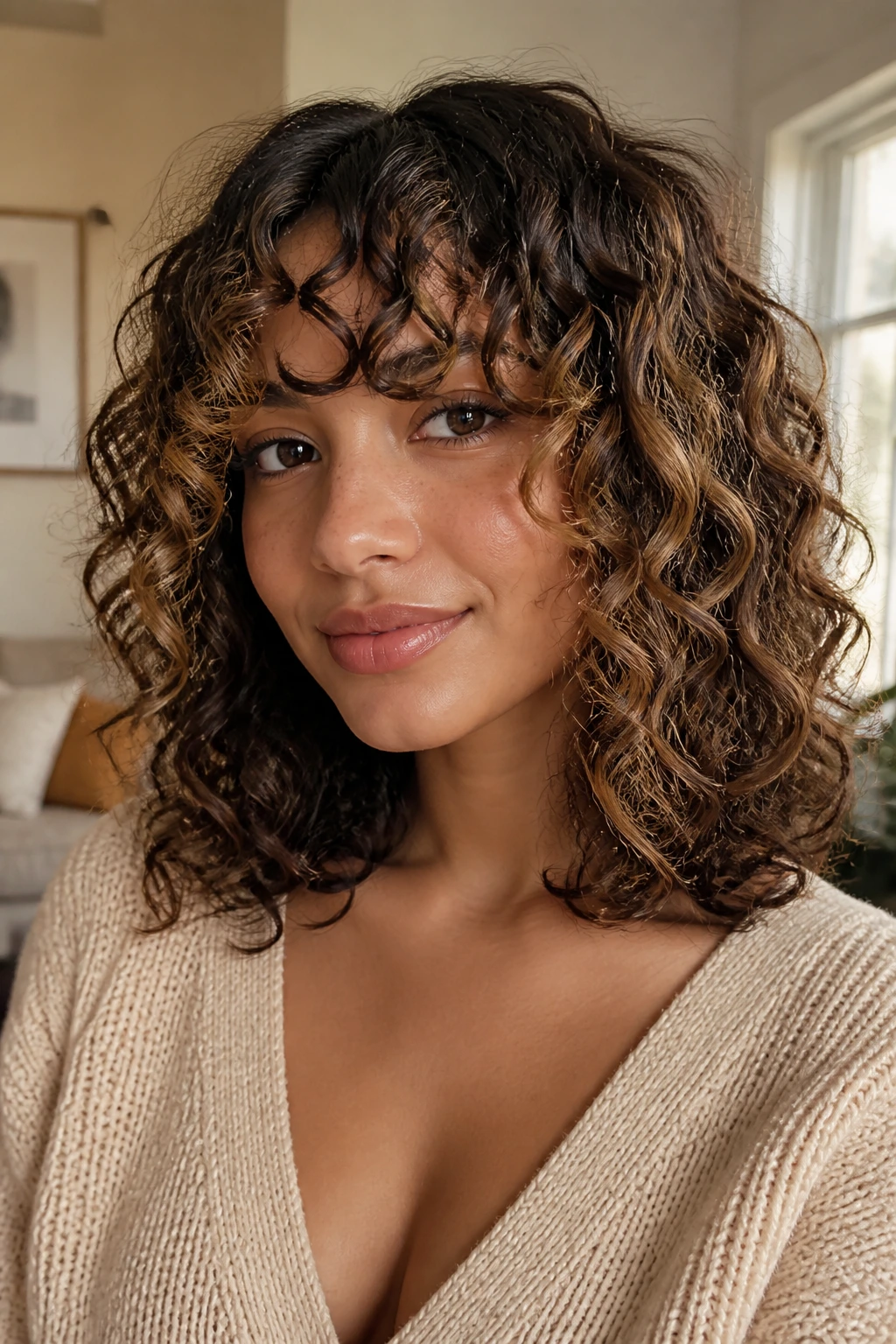
Shoulder length is a sweet spot for curls, and spiral bangs at this length have enough body to look intentional rather than accidental. The toffee highlights soften the front without screaming for attention, which is useful if you want the bangs to frame the face instead of steal the whole show.
The best version has bangs that float around eyebrow to eye level when dry, then touch the cheekbones with the outer curls. That shape narrows the center of the face a bit and keeps the eyes moving. It’s also a good option if you like putting your curls up half the time, because the front pieces still do their job when the rest is clipped back.
8. Curly Wolf Cut with Soft Platinum Framing
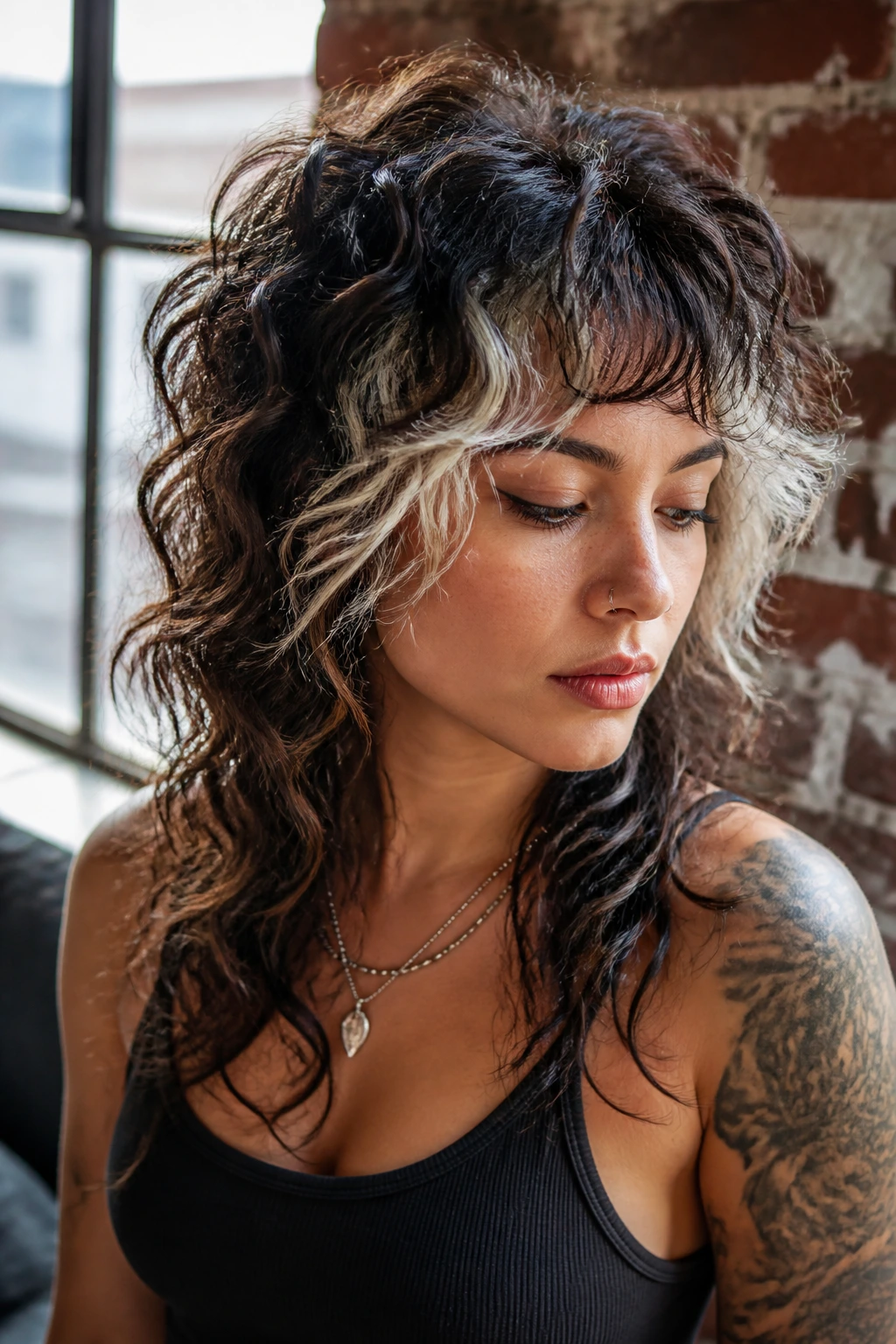
The wolf cut brings the edge. Tons of texture, short crown layers, and a longer perimeter mean the face gets framed from above and below instead of just across the cheeks. Soft platinum money pieces give the front a pale streak of light without turning the whole look into a bleach job.
This one flatters round faces because the crown volume draws the eye upward. That matters. If the top is too flat, the face can look wider by default. Ask for the shortest pieces to stay above the cheekbone and the money piece to feather into the layers rather than stopping like a hard line at the front.
9. Rounded Afro Bangs with Bronze Face Frame
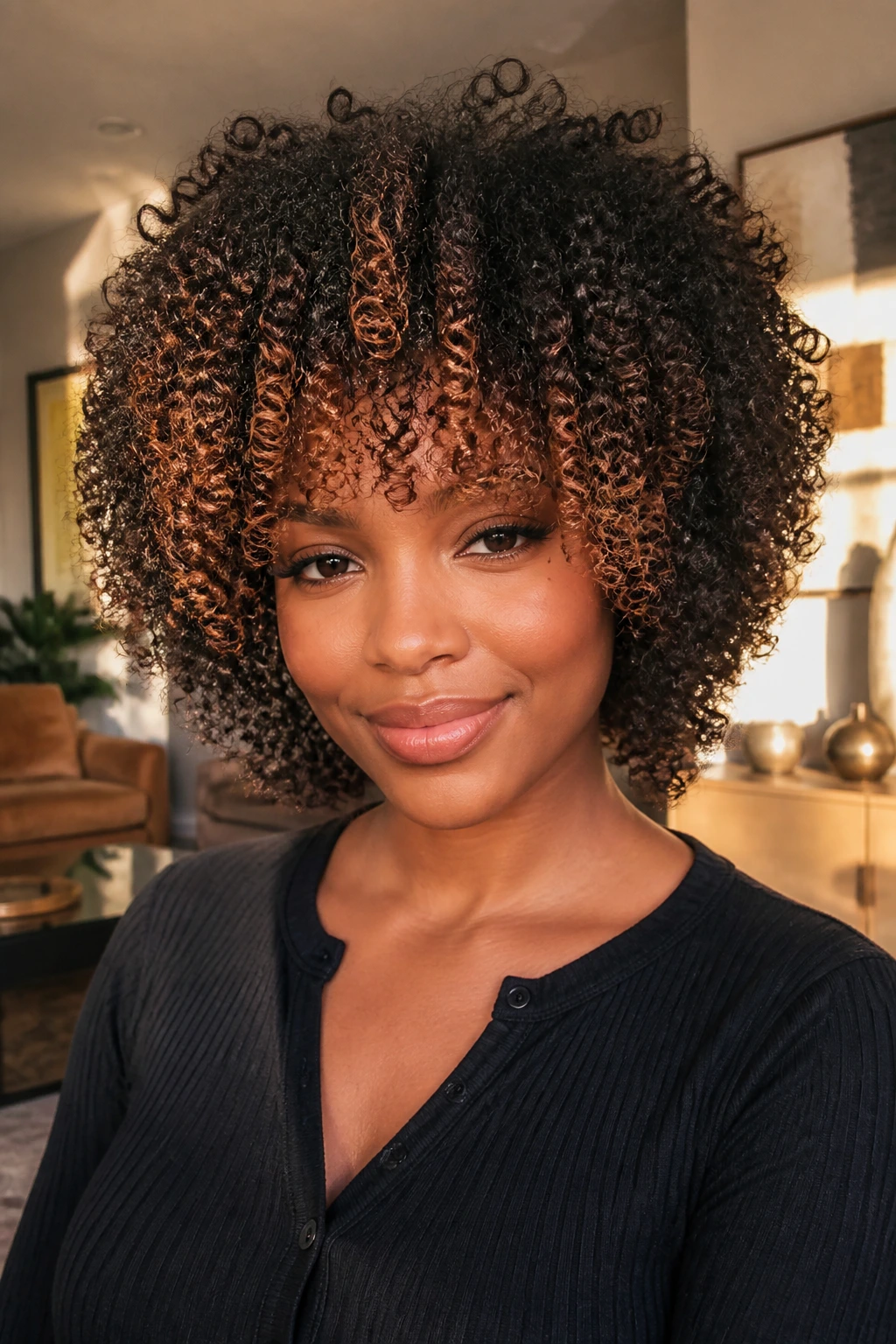
Rounded afro bangs can be gorgeous on a round face when they’re shaped with intent. The goal is not a perfect circle. The goal is a halo with a little lift at the crown and slightly longer front curls that fall toward the brows, not straight across them. Bronze face-framing color warms the skin and keeps the front lively.
A stylist who understands shrinkage is non-negotiable here. The bangs should be cut dry, with the front edge left a bit longer than feels comfortable in the chair. Curly hair lies, especially when it’s damp. Bronze or honey money pieces work better than a thick blonde slab because the shape already has enough presence.
10. Tapered Pixie with Mini Curly Fringe and Lightened Temples
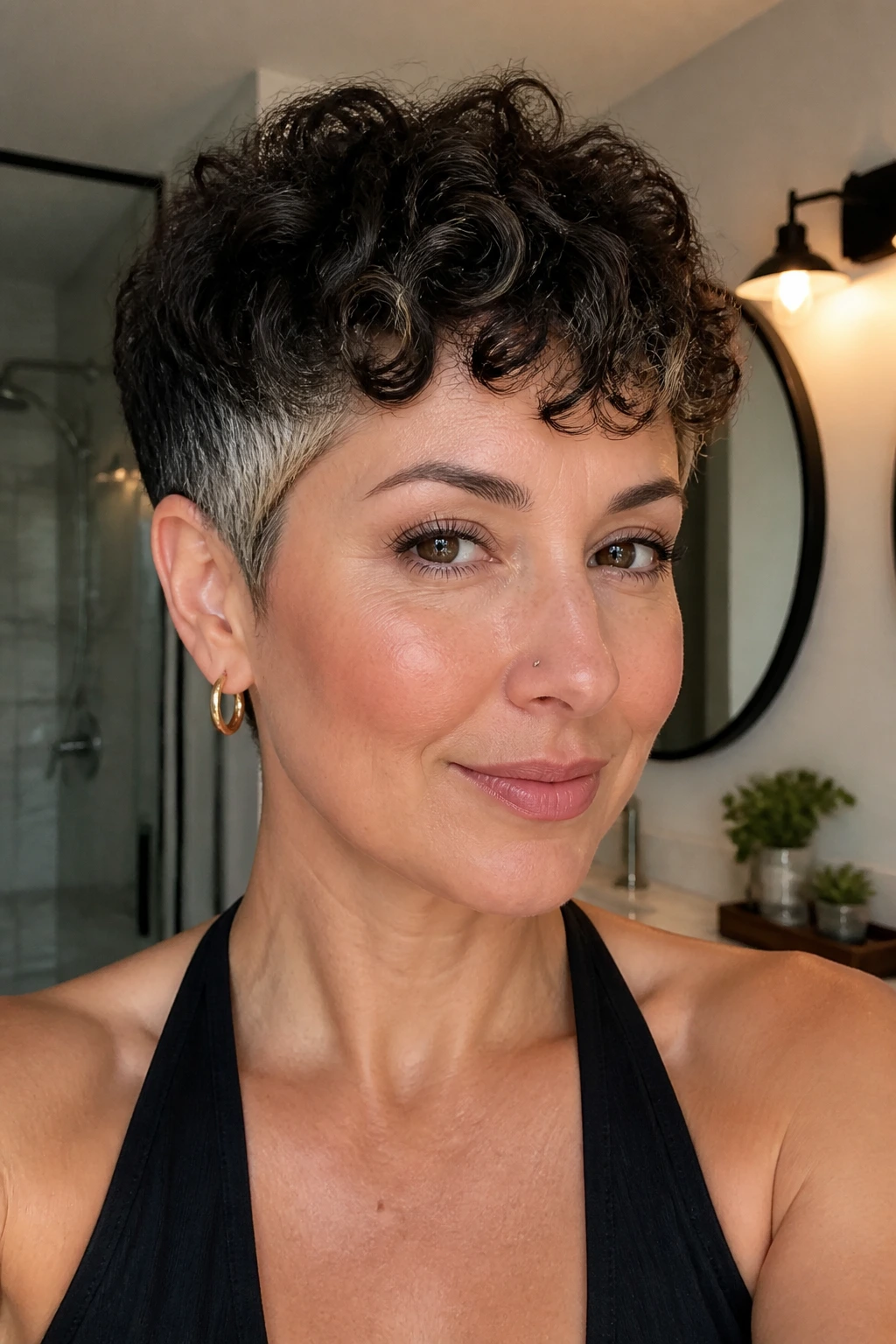
Short hair can work on a round face when the shape is tapered, not boxed. This pixie keeps the sides close and lets the curls on top fall forward in a tiny fringe that breaks up the forehead. Lightened temples add just enough contrast to make the eyes read upward.
I like this version on tighter curls and coils because the texture creates its own architecture. The fringe should be short enough to rest above the brows but long enough to twist softly when styled. If you’re someone who gets bored with hair fast, this is the most wearable short option in the whole group.
11. Long Layered Curls with a Center-Part Money Piece
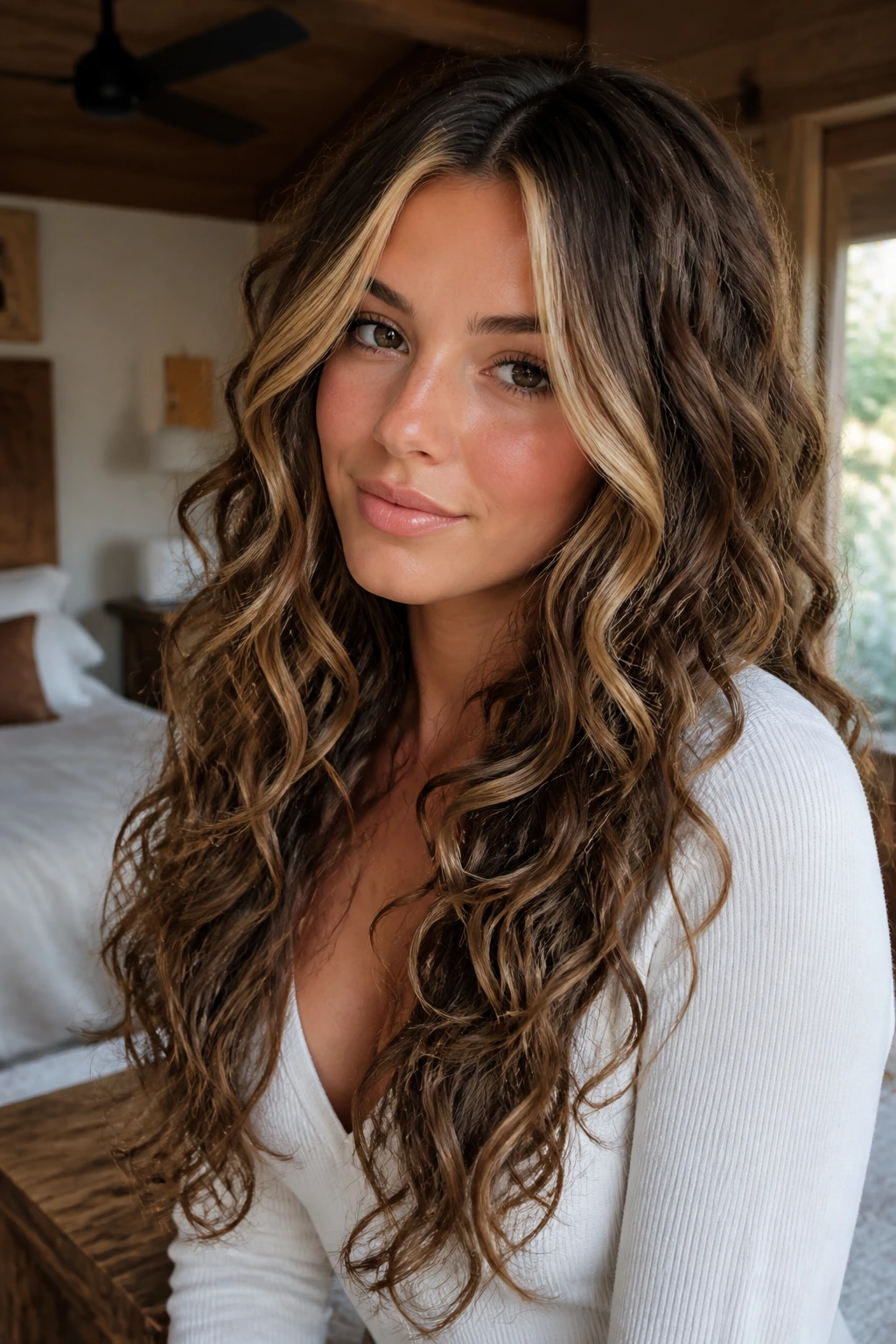
Not every face-framing highlight needs a fringe to do the work. A long layered cut with a center part can still flatter a round face if the money piece starts narrow at the roots and drops in a clean line beside the cheekbones. The length gives the face a vertical frame, and the curls keep it from feeling flat.
The bangs here are more like a soft front veil than a blunt strip. They blend into the layers, which is useful if you want to grow the style out later. I’d ask for the lightest pieces to be placed around the eyes and upper cheeks, not across the entire front, so the look stays elegant instead of wide.
12. French Bob with Choppy Bangs and Sunkissed Front Strips
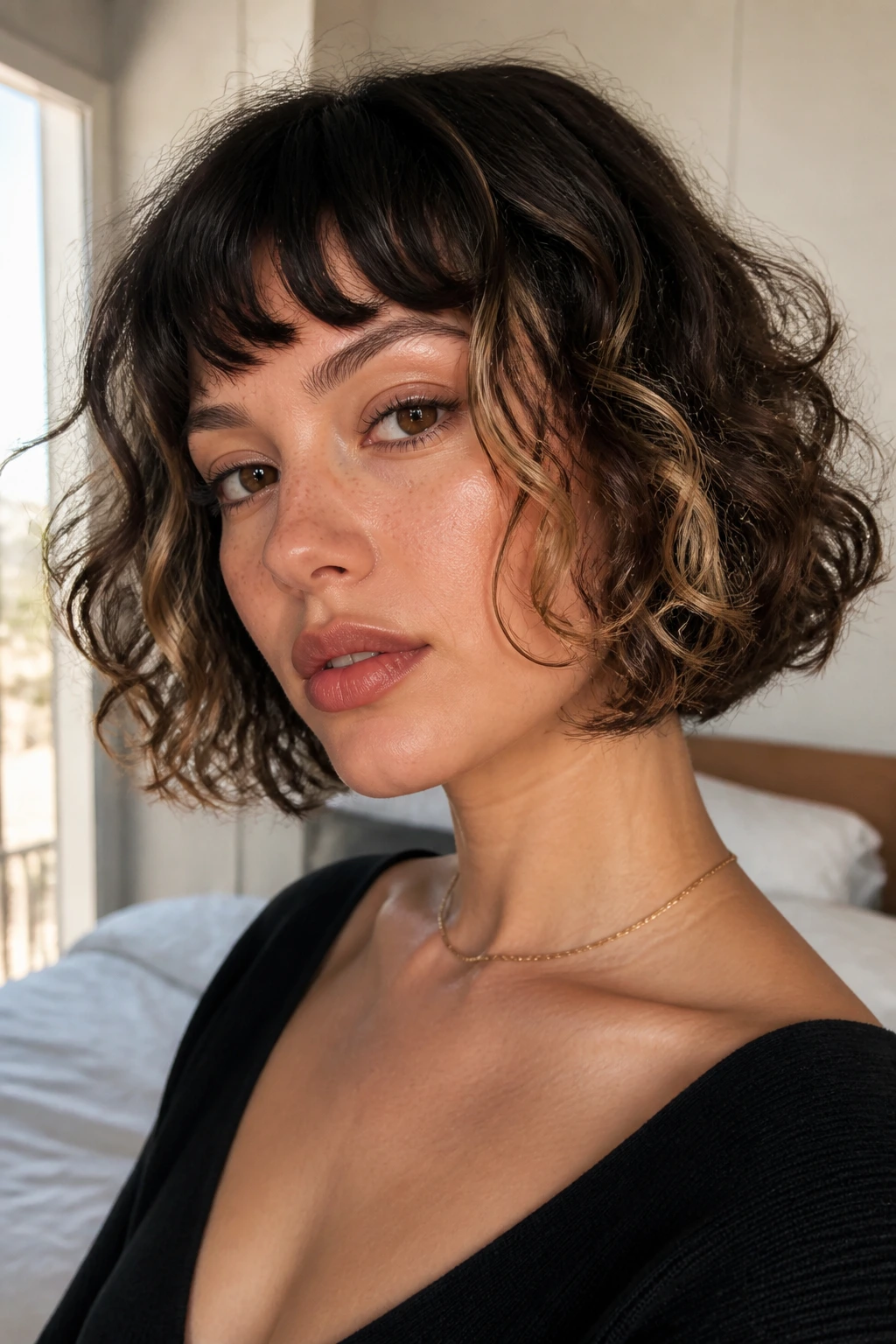
A curly French bob has attitude, but it also does something smart for round faces: it keeps the shape compact while the choppy bangs interrupt the curve of the face. The sunkissed front strips make the fringe feel airy instead of heavy.
The cut should sit around jaw length or a touch below it, never right on the widest point of the cheek. That little drop matters. If you go too short, the bob can bloom outward. With the right length, though, it gives you that loose, textured, slightly undone look that curls do so well when they’re not overworked.
13. Coily Bangs with Cinnamon Highlights
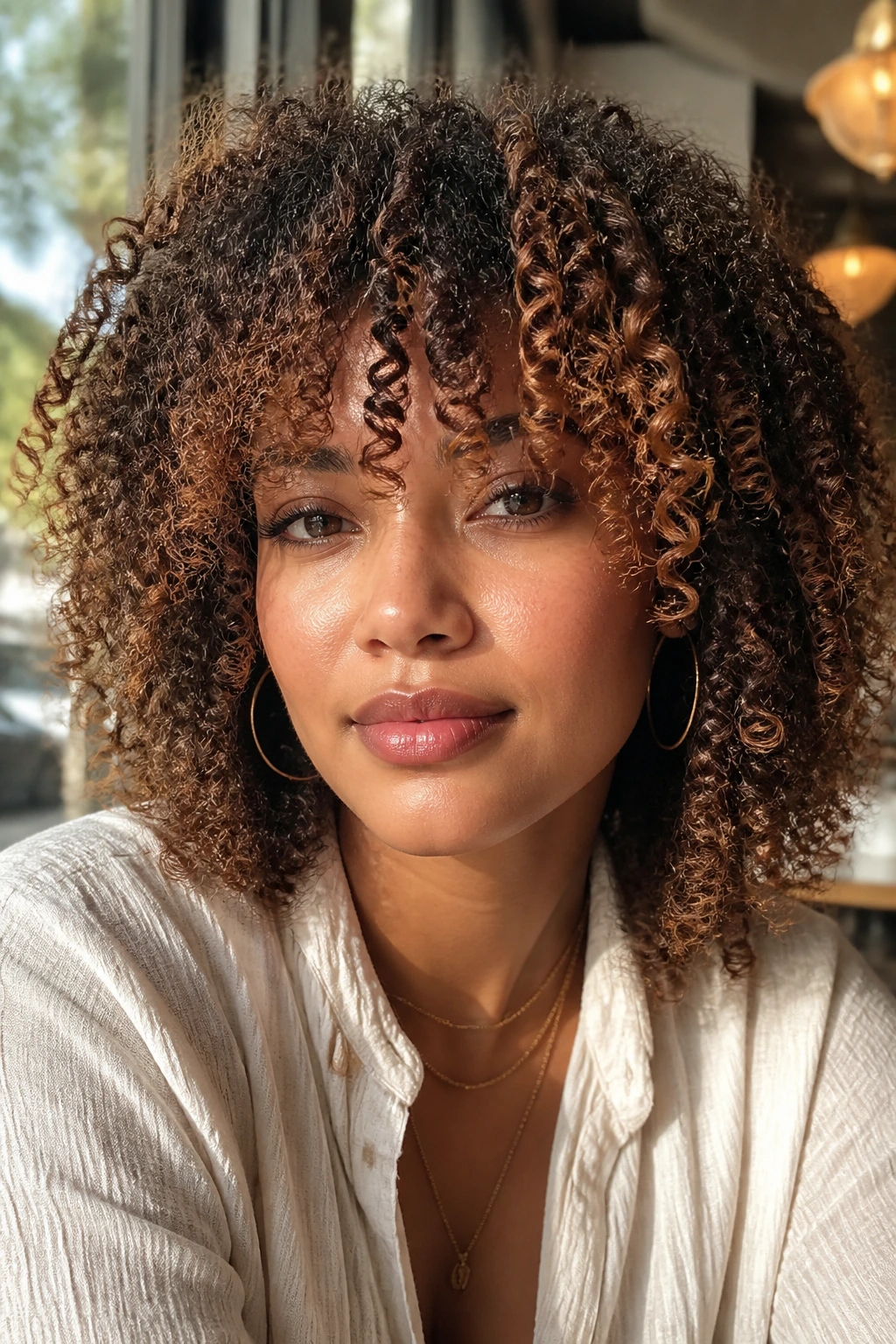
Coily bangs can be striking, especially when the front is cut with enough room for shrinkage and the cinnamon highlights are placed in thin, warm ribbons. On a round face, the trick is to let the coils form a soft vertical curtain rather than a dense wall.
The color should be broken up with a little depth underneath. Otherwise the front can look like one bright patch. I’d ask for the highlight to sit mostly around the top layers and the first inch or two of the face frame, leaving some darker roots and side pieces to keep the shape grounded.
14. Voluminous Lob with Feathered Front Pieces
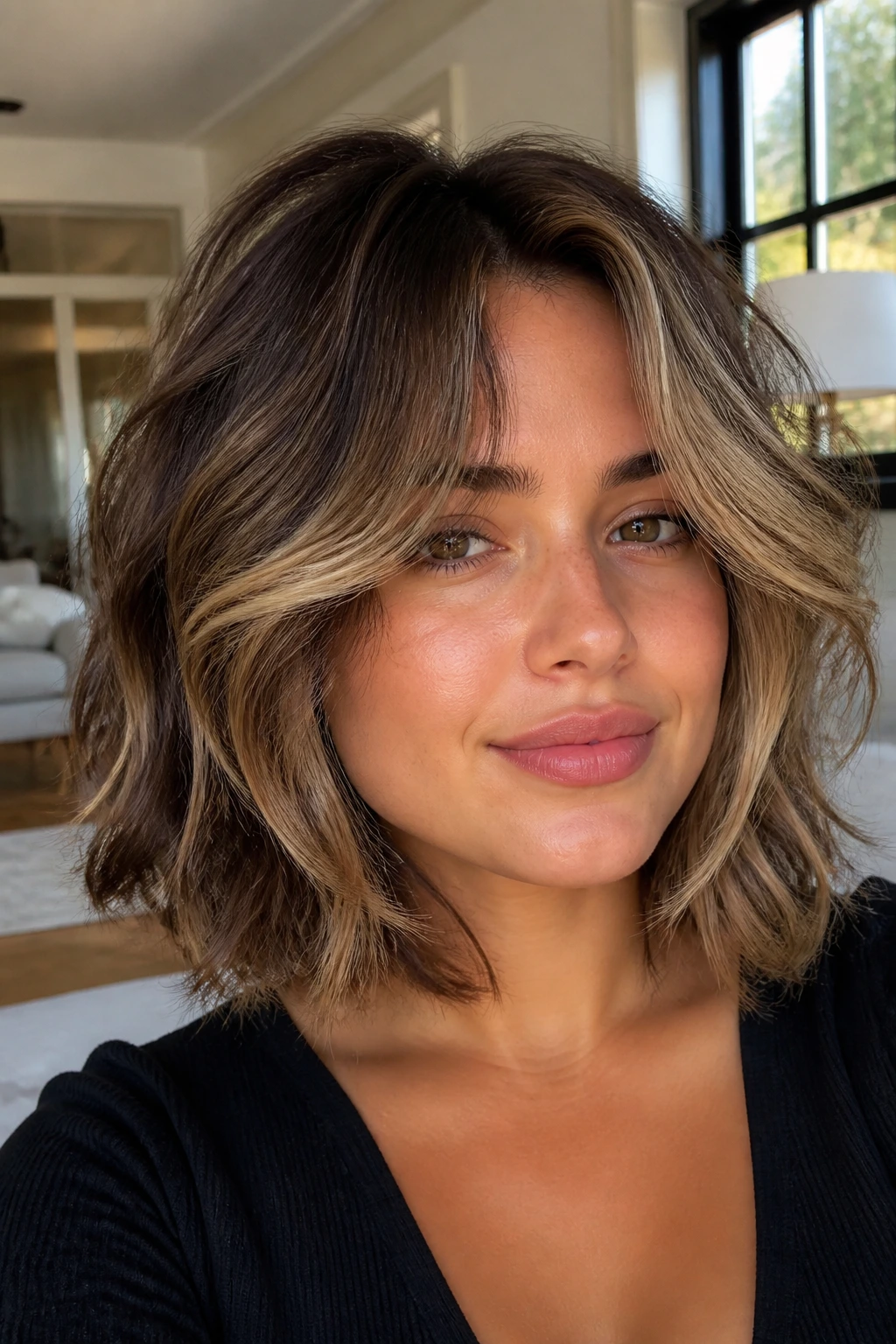
A lob with feathered front pieces gives you a polished outline without flattening the curls. The front should angle down from the part and finish below the cheekbone, which helps a round face look longer through the center. Feathered money pieces keep it soft.
This is one of those cuts that looks expensive without trying hard, mainly because the line is controlled and the curl pattern still gets to breathe. It’s also forgiving on mornings when you don’t want to restyle the whole head. A little mist of water, a squeeze of leave-in, and the front wakes back up fast.
15. Glamorous Lengths with Bright Cheekbone Panels
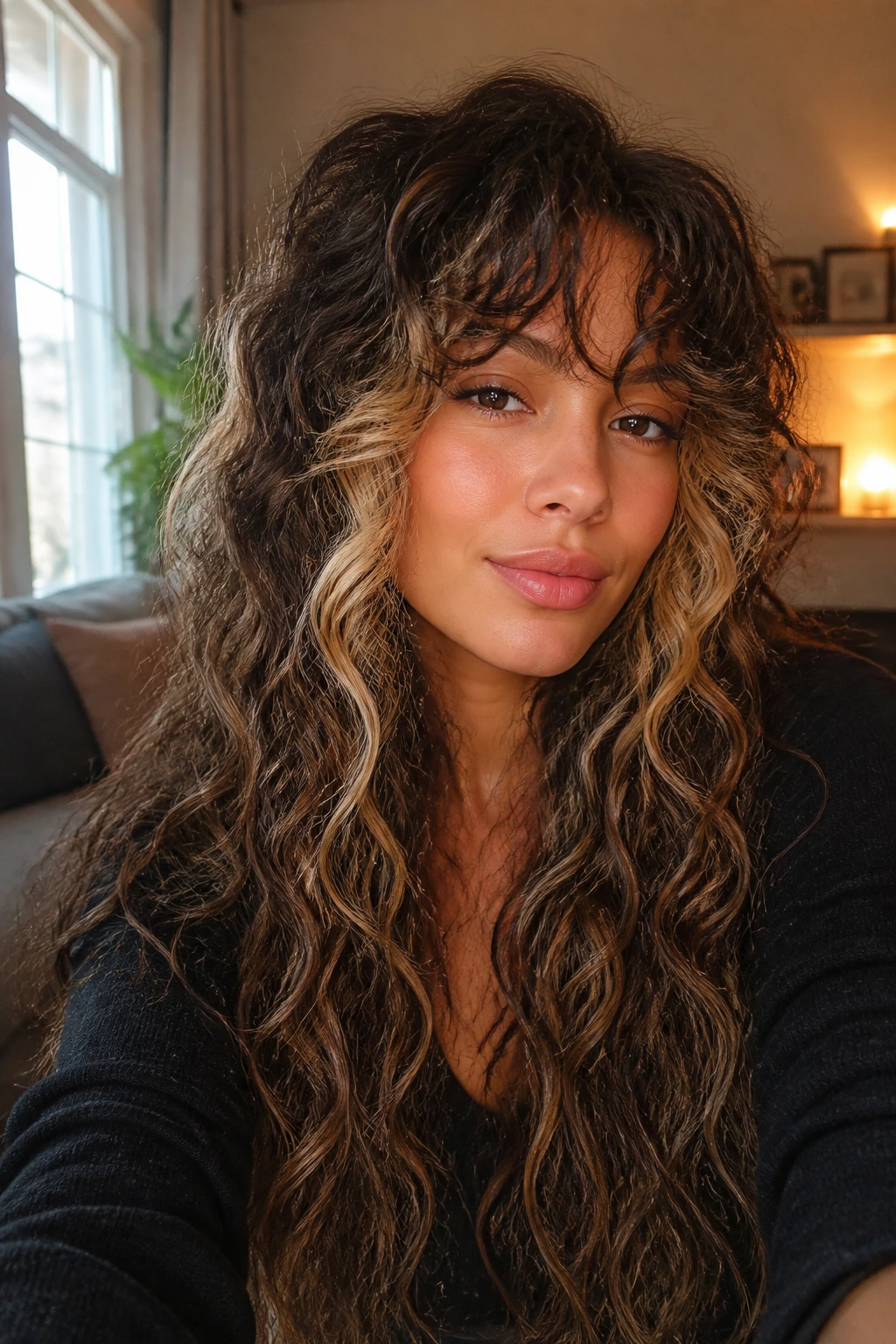
If you want the front to announce itself from across the room, this is the move. Long curls plus bright cheekbone panels create a strong frame that pulls the eye down the length of the face. On a round face, that long line is doing serious work.
The highlight placement matters more here than the cut. Keep the brightest part just beside the cheekbone, then soften it through the mids so it doesn’t stop like a hard stripe. That gives you the glamour without the cartoon effect. I’d keep the bang area a little longer than you think, because length is what stops the face from feeling boxed in.
16. Messy Mullet with Temple Lights

A curly mullet sounds like a rebellion, and sometimes it is. But the shape is secretly useful for round faces because it gives height at the crown, movement at the temples, and length in the back. Temple lights sharpen the front and keep the style from collapsing into one soft blob.
The fringe here should be broken and piecey, not dense. That messier front line helps the face look less circular. If you like hair with personality and you don’t mind a little edge, this one has real staying power. It also grows out better than most people expect, which is nice because this cut can be a commitment if you fight it.
17. Face-Framing Layers with Burnt Caramel Money Piece
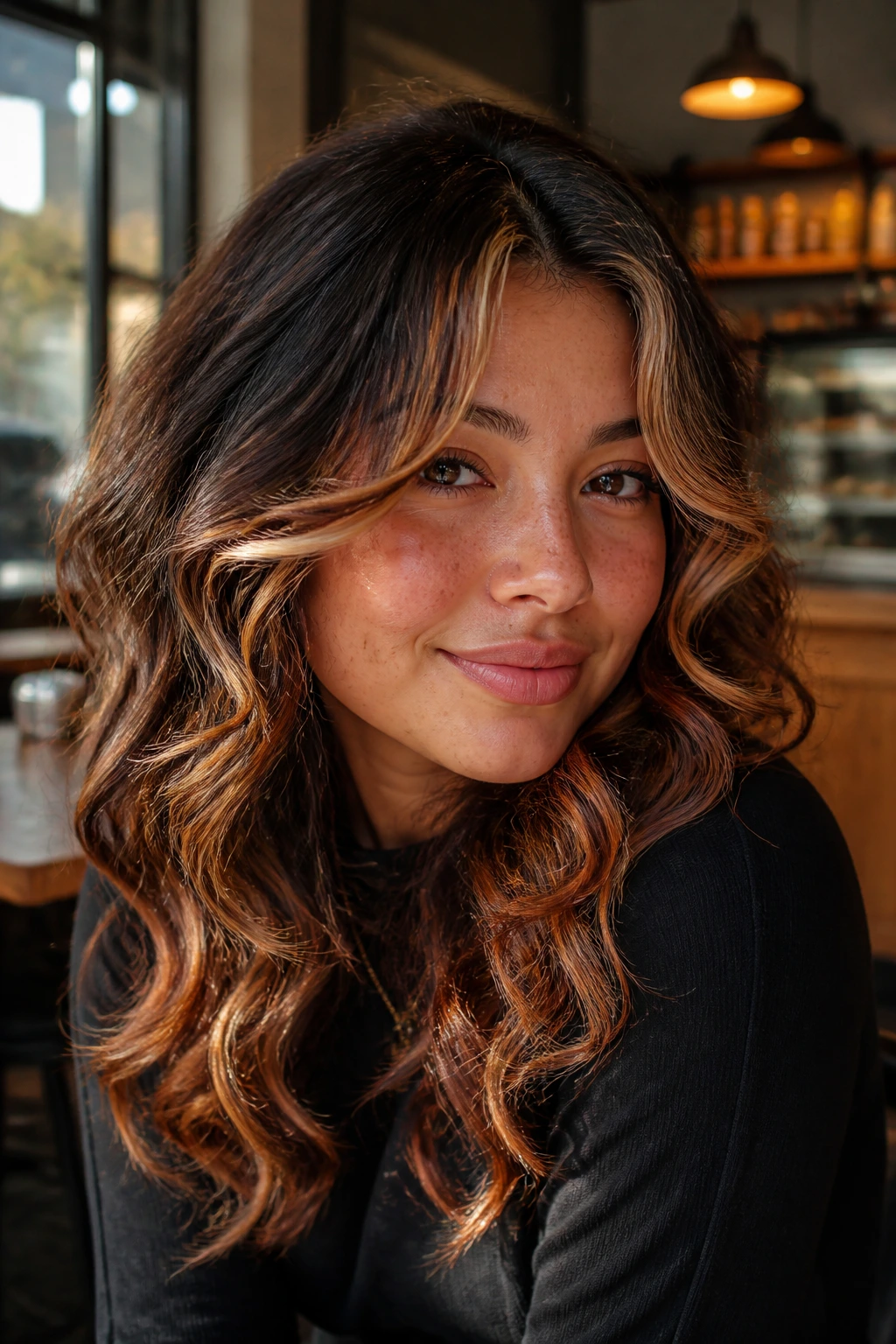
This is the low-drama option that still changes the face. The bangs are blended into long face-framing layers, so there’s no hard break across the forehead. Burnt caramel money pieces add warmth and lift without screaming for attention.
I like this look because it’s easy to wear on workdays and still looks finished when the curls get a little wild. The money piece should begin around the temple, then sweep down past the cheekbone with enough softness that it doesn’t read as a stripe. If you want a haircut that grows out gracefully, start here.
18. Short Springy Cut with Skinny Highlight Streaks
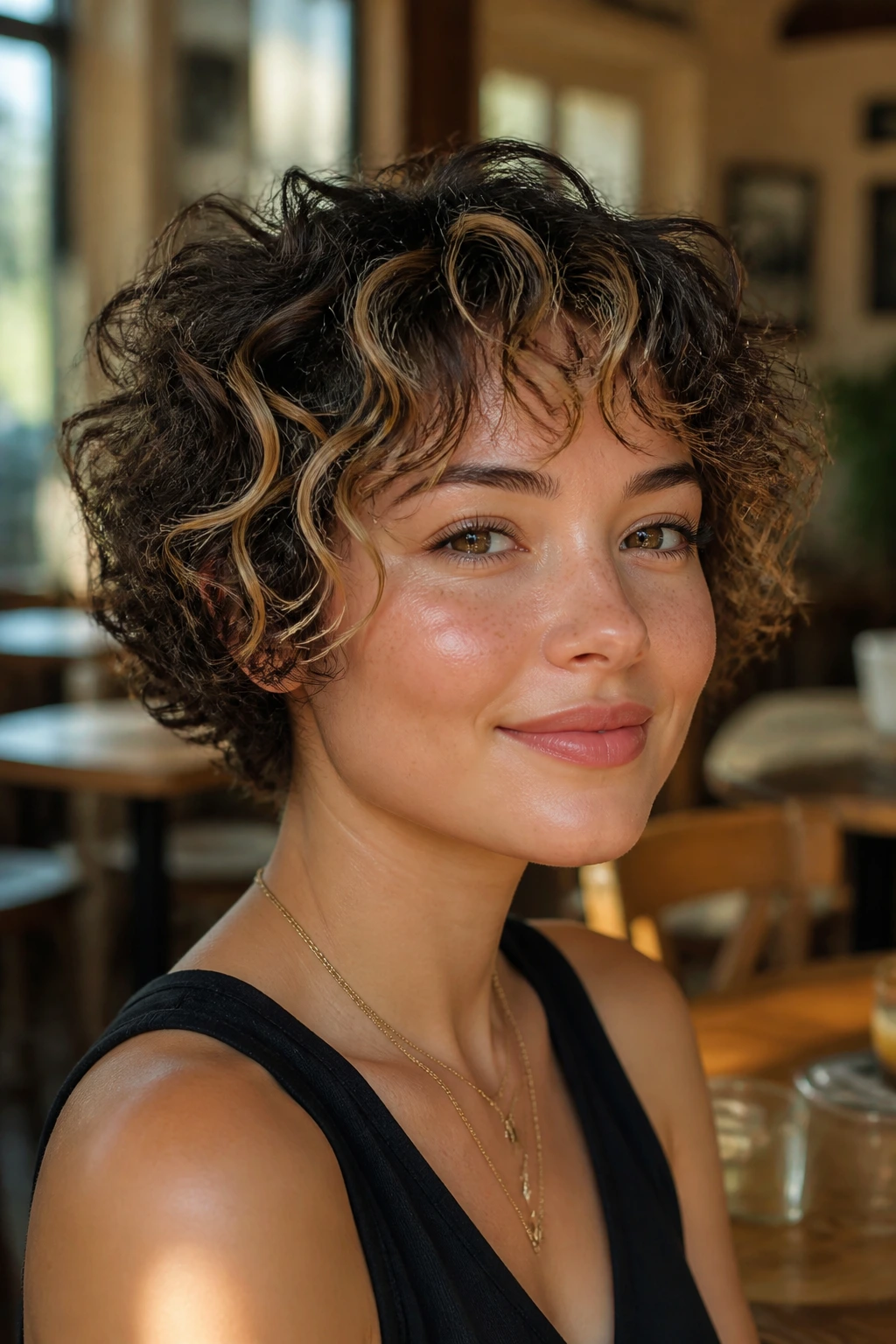
Short springy curls need a careful front shape, and skinny highlight streaks are the right scale. Big panels can overwhelm the cut. Thin pieces near the part and a light touch at the temple keep the fringe lively without turning it into a spotlight.
This is a good choice for finer curls because the layers add bounce while the bangs keep the forehead from feeling too open. Ask for a little extra length in the center and more lift at the roots. The result is playful, yes, but also practical. The shape stays readable even after a windy walk or a long day.
19. Soft Spiral Shag with Ash Beige Money Piece
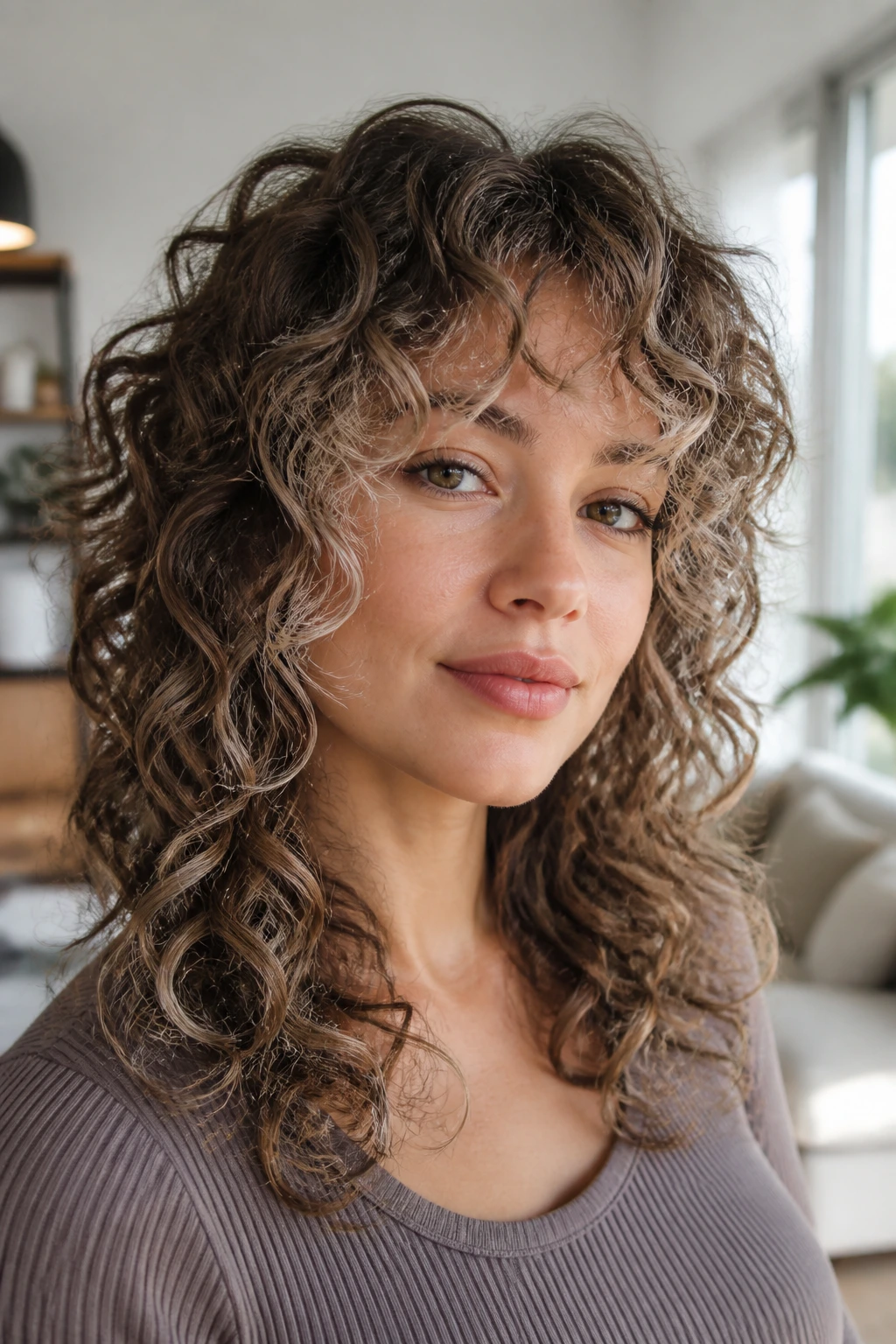
Ash beige money pieces have a cooler, quieter feel than honey or copper, and they make a spiral shag look more modern. The shaggy layers keep the sides from ballooning, which matters on a round face, and the soft fringe pulls the eye inward.
This works especially well if your curls tend to swell at the ends. The front should be sliced in a way that leaves movement rather than a single heavy curve. I’d keep the lightest strands close to the face and avoid spreading them too far back toward the crown. Once the color wanders too far, it loses the framing effect.
20. Big Curly Halo with Warm Blonde Front Arc
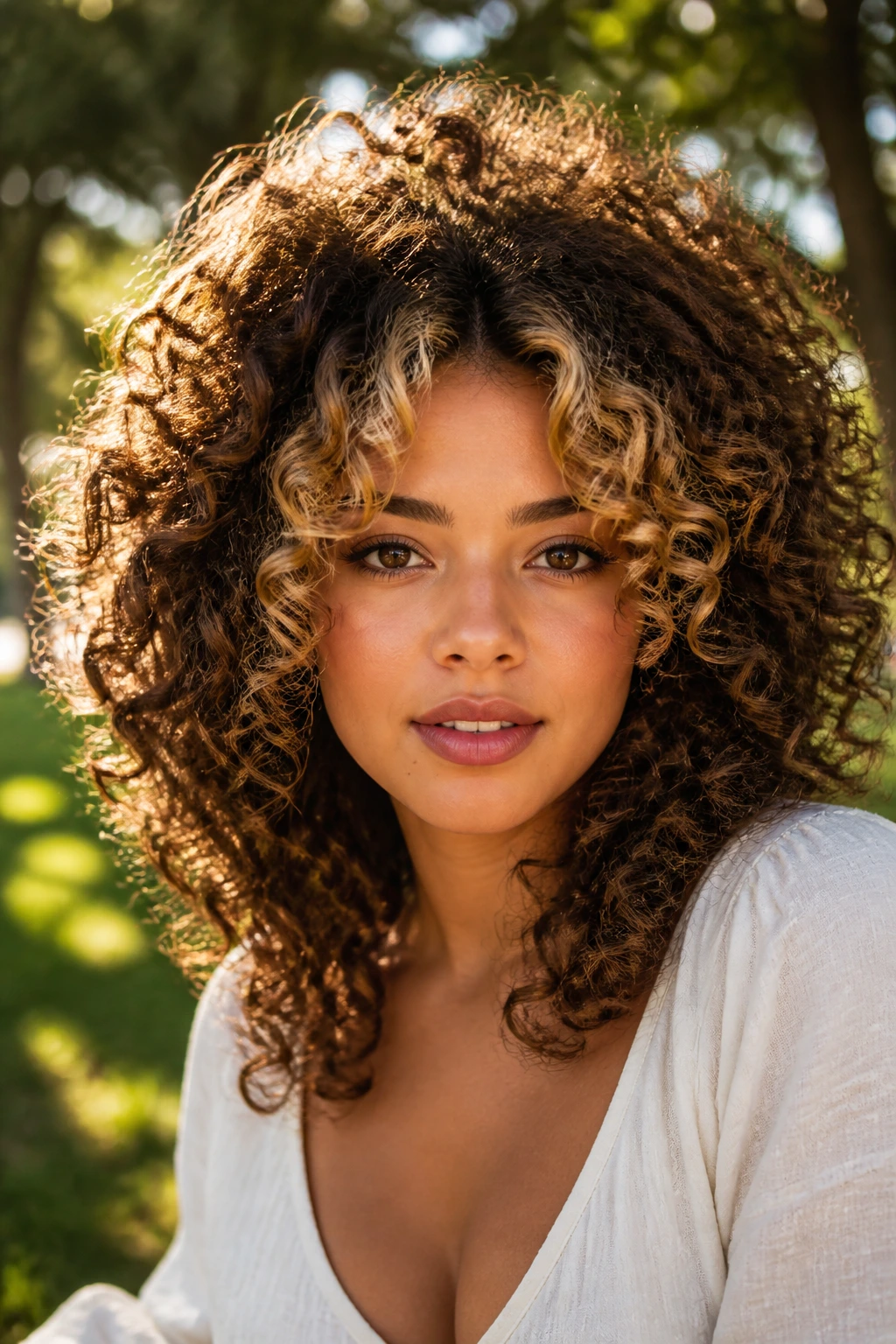
A big halo cut can be gorgeous on a round face if the front is shaped with an arc rather than a blunt line. The warm blonde money piece should follow that curve, starting at the part and bending gently toward the temples. You want lift, not a horizontal shelf.
This style thrives on volume at the top and soft narrowing near the cheeks. It’s one of the few looks where bigger hair can still flatter a round face, because the height changes the proportions. Keep the front pieces long enough to tuck and twist, since that flexibility helps on days when the curls are acting extra.
21. Waterfall Layers with Ribbon Highlights
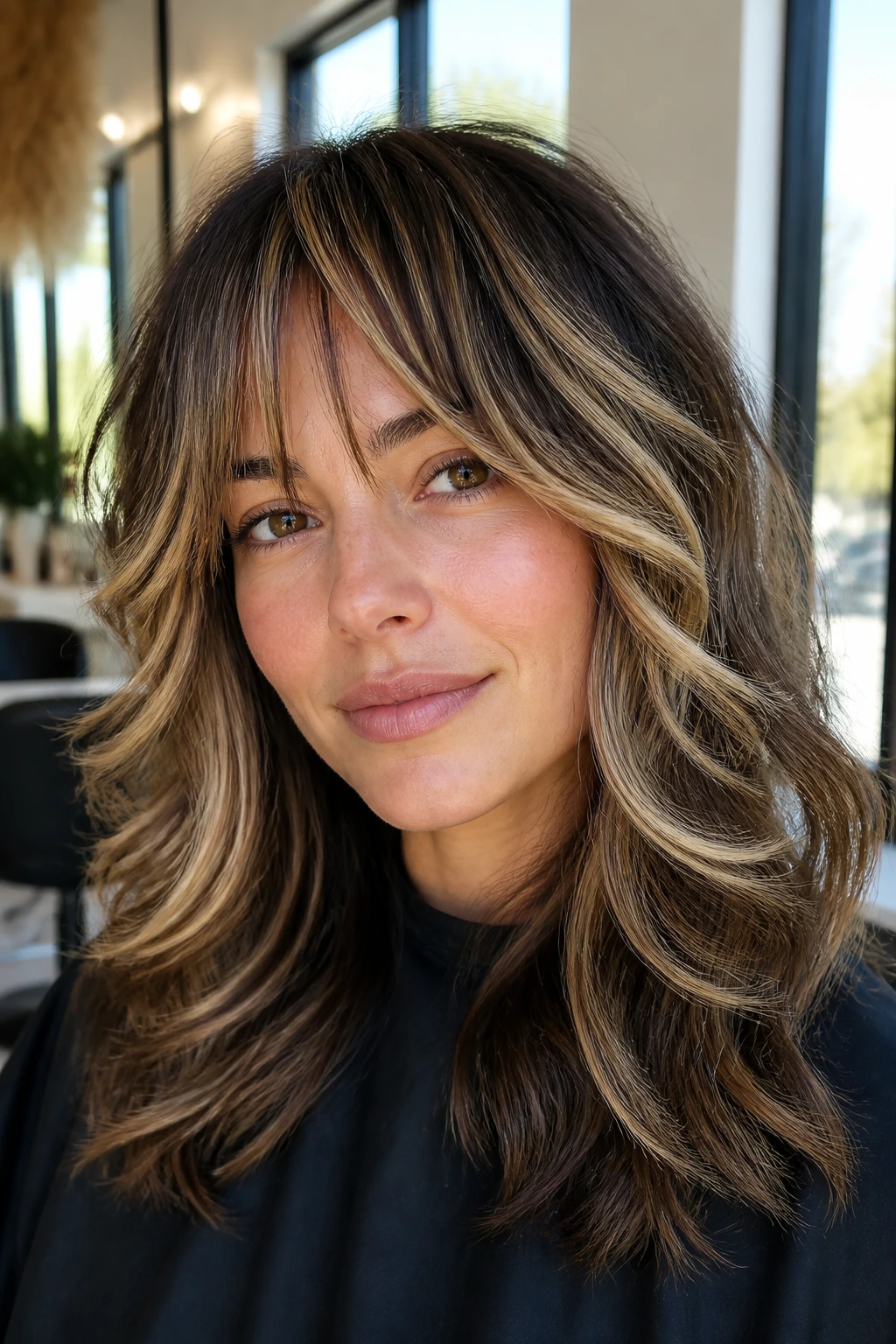
Waterfall layers sound romantic because they are, but they’re also practical. The lengths drop in steps, which keeps curls from forming one wide frame around the face. Ribbon highlights woven through the front create movement without turning the money piece into a thick, obvious block.
This is a strong choice if you want the bangs to blend into the haircut rather than stand apart from it. The front pieces should fall at different lengths, with the shortest sitting around the eye and the longest drifting toward the jaw. That unevenness is what saves a round face from looking too full at the sides.
22. Rounded Mid-Length Cut with Auburn Face Frame
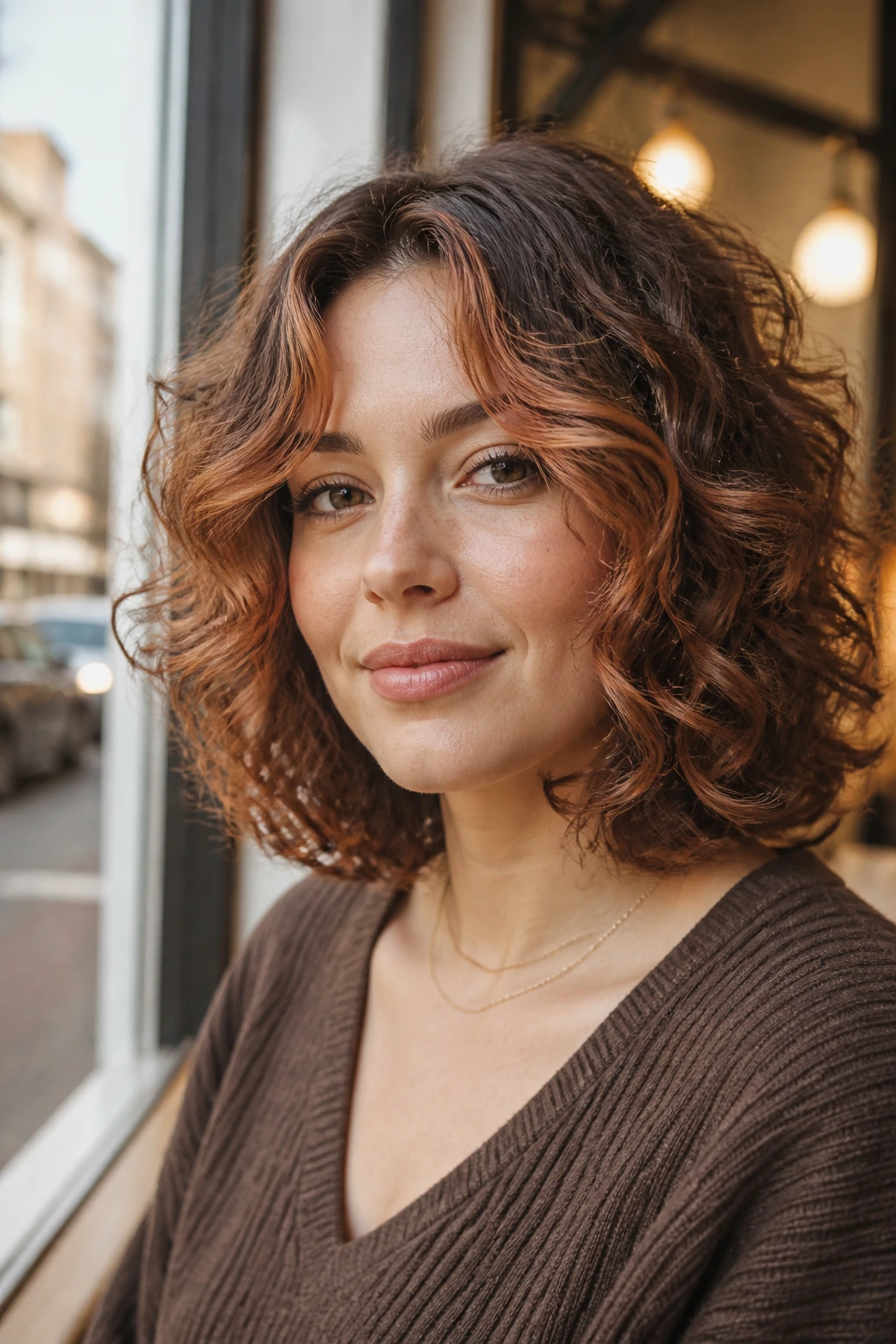
A rounded mid-length cut can work beautifully when the bangs are kept airy and the auburn face frame gives the front a warm lift. The cut should not be too symmetrical. A little off-balance at the part makes the face feel less circular and more sculpted.
Auburn is one of those shades that brings warmth without the hard contrast of blonde, which can be easier if you don’t want to maintain light pieces every few weeks. The money piece can be painted in a soft veil that starts subtle at the root and glows stronger near the cheek. I like this for people whose curls already have a rich texture and don’t need a loud color story.
23. Tousled Shoulder Crop with Dimensional Bronze
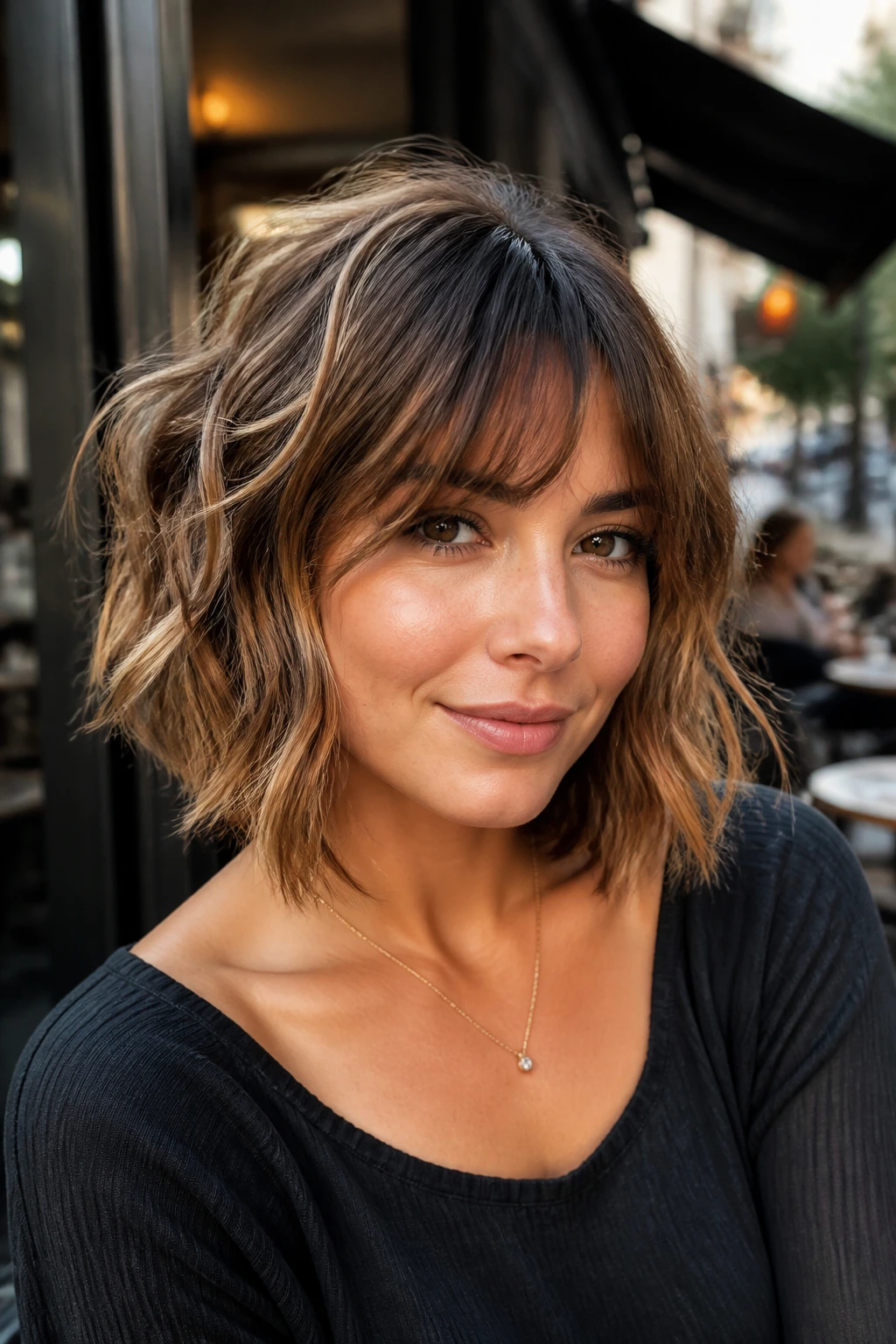
A tousled shoulder crop is one of the easiest shapes to live with because it gives you enough length to tuck, clip, or scrunch, while the bangs still add definition at the front. Dimensional bronze makes the front look thicker and more layered, especially if your natural color is somewhere in the brunette family.
On a round face, shoulder length is long enough to narrow the overall outline without dragging the look down. The bangs should sit a bit shorter in the center and longer at the sides, almost like a curly curtain that got ruffled on purpose. If you’re trying to avoid the high-maintenance blonding cycle, this is a smart lane.
24. Tight Coil Bangs with Blonde Pop and Dark Root
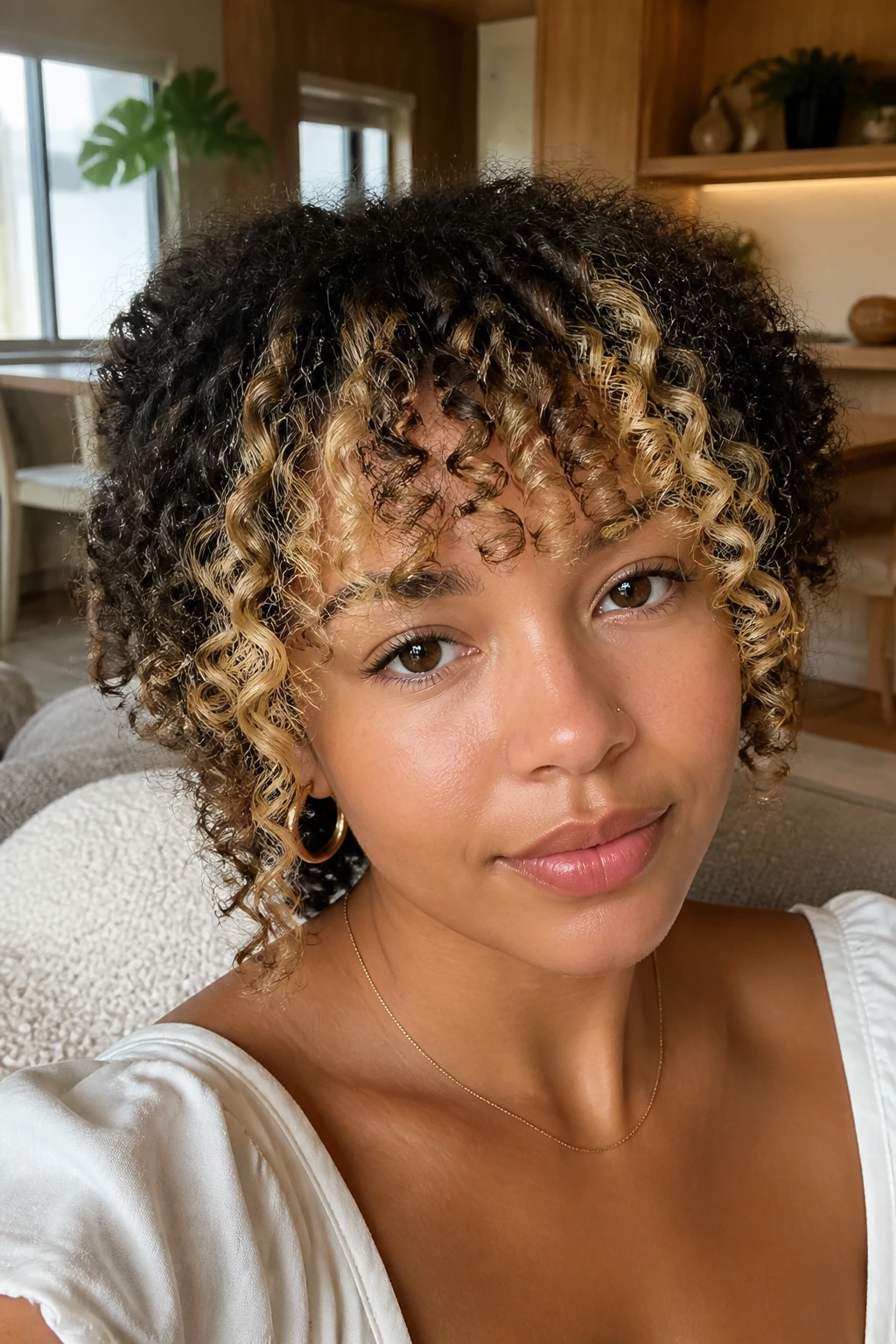
High contrast can be brilliant here if it’s handled narrowly. Tight coil bangs with a blonde pop near the front create a sharp frame, while the dark root keeps the highlight from widening the face. The front should be thin and deliberate, not a big bright blanket.
This one works best when the stylist respects density. Coils can take up space fast, so the bang should be shaped with room between the pieces. A dark root also helps the money piece grow out with less fuss, which is handy if you don’t want the front looking skunky between appointments. The blonde should sit like an accent, not a spotlight.
25. Elegant Curly Fringe with Sunlit Balayage
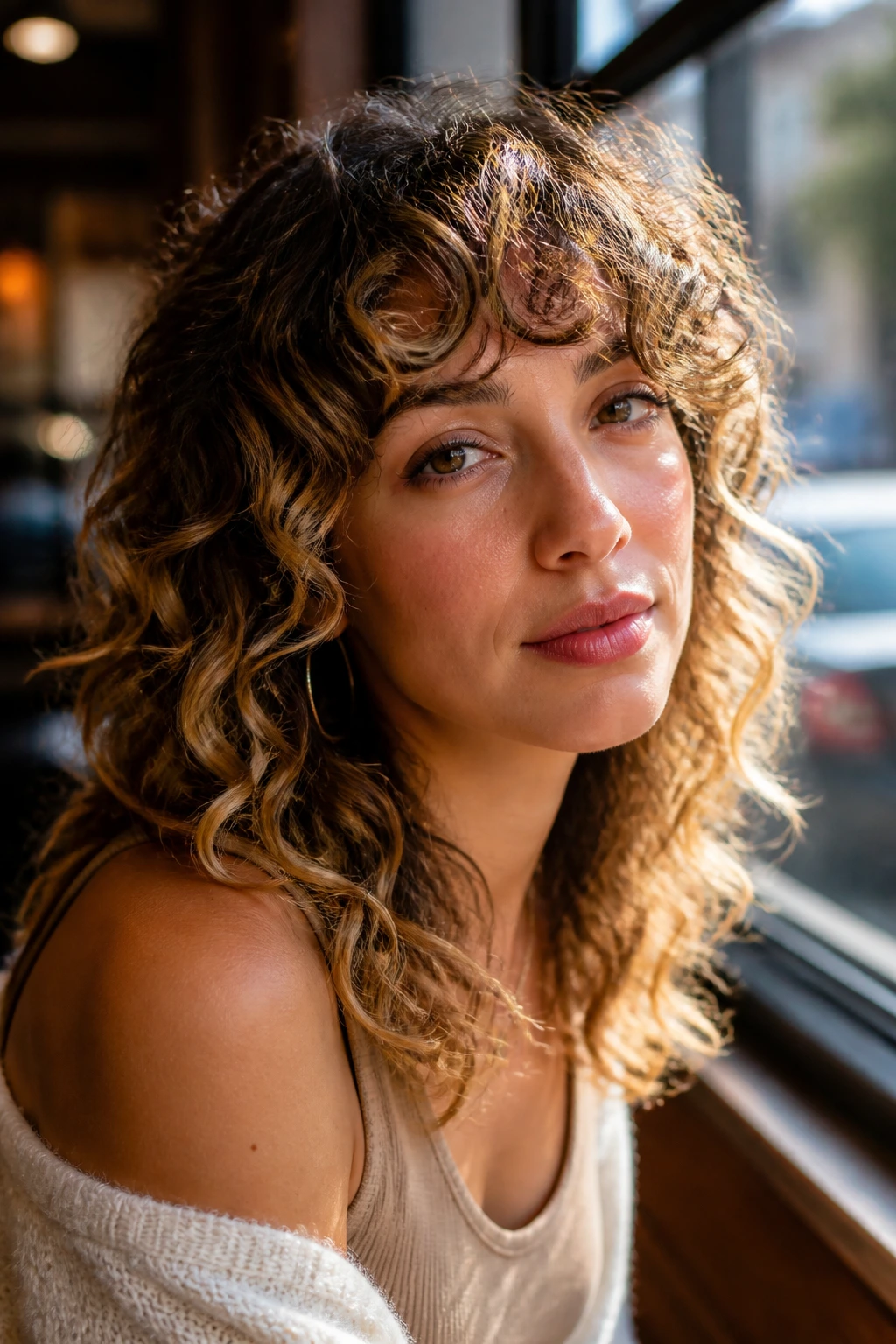
This is the polished version of the whole idea. The curly fringe stays soft, the balayage stays diffuse, and the money piece blends into the front so naturally that it looks like light doing what light does. On a round face, that matters because the shape needs softness more than it needs drama.
I’d choose this if you want curly bangs that can move from casual to dressed up without a big restyle. The fringe should be long enough to split and sweep, and the lightest paint should concentrate around the first inch or two of the hairline before fading into the mids. It’s understated in the best way: enough brightness to frame, not enough to fight the curl.
How Curly Bangs and Money Piece Highlights Shape the Face
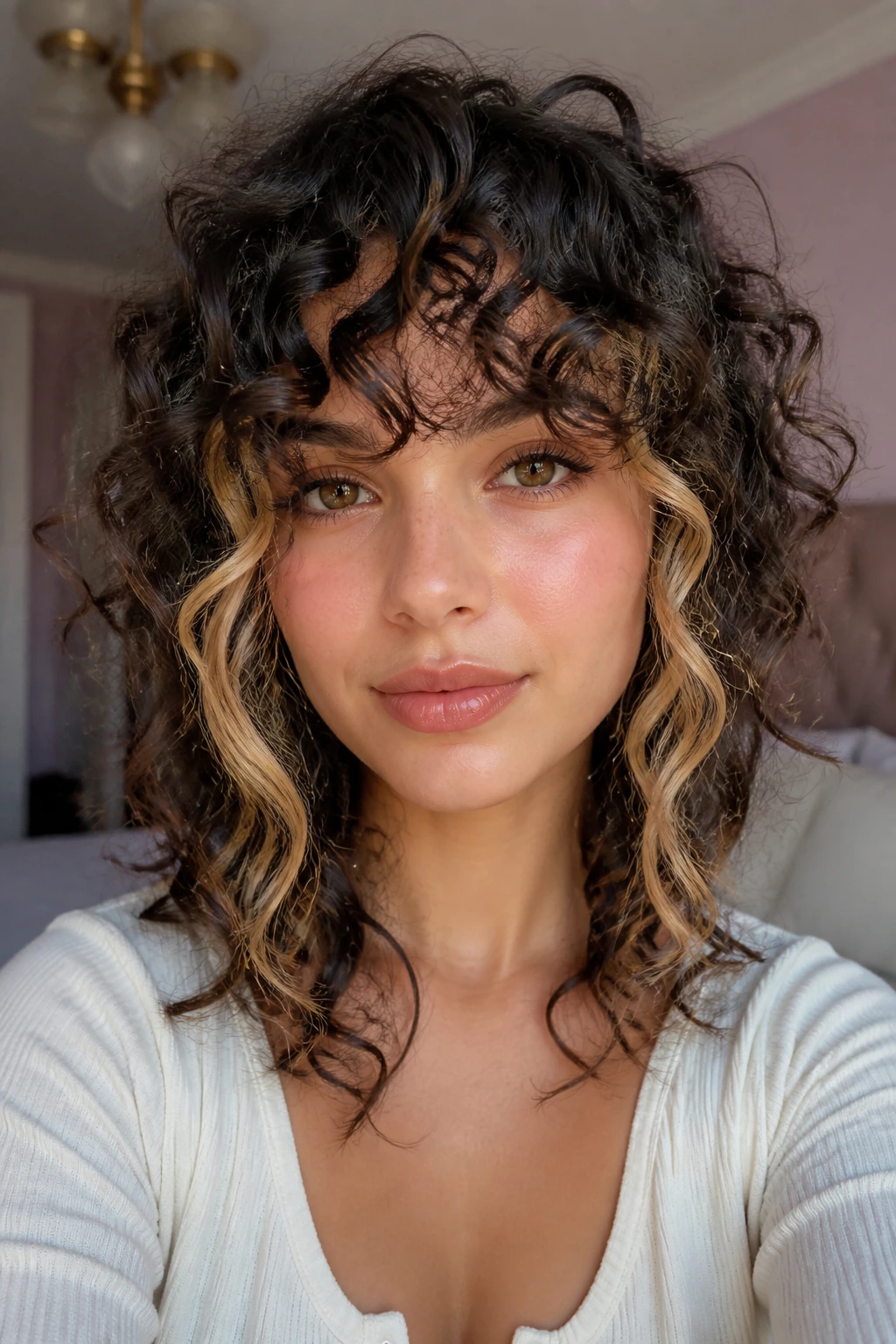
Round faces usually look best when the hair creates a little more length than width. That doesn’t mean everything has to be long and straight. It means the front needs angles, drop, and movement that travel downward instead of spreading straight across the widest part of the cheeks.
Curly bangs help because they interrupt the forehead line and bring texture right where the eye starts. Money piece highlights help because they brighten the edges of the face and create a visible path from the part to the jaw. Put those two things together, and you get a haircut-color combo that does real face-shaping work.
The sweet spot is usually a bang that lands a bit lower than your first instinct. Curly hair rises. A lot. If your curls spring one inch, cut for that. If they spring two, cut for that. The money piece should usually stay narrow at the top and soften as it moves down, because a thick bright panel at the cheeks can widen the face fast.
What to Tell Your Stylist Before the First Snip
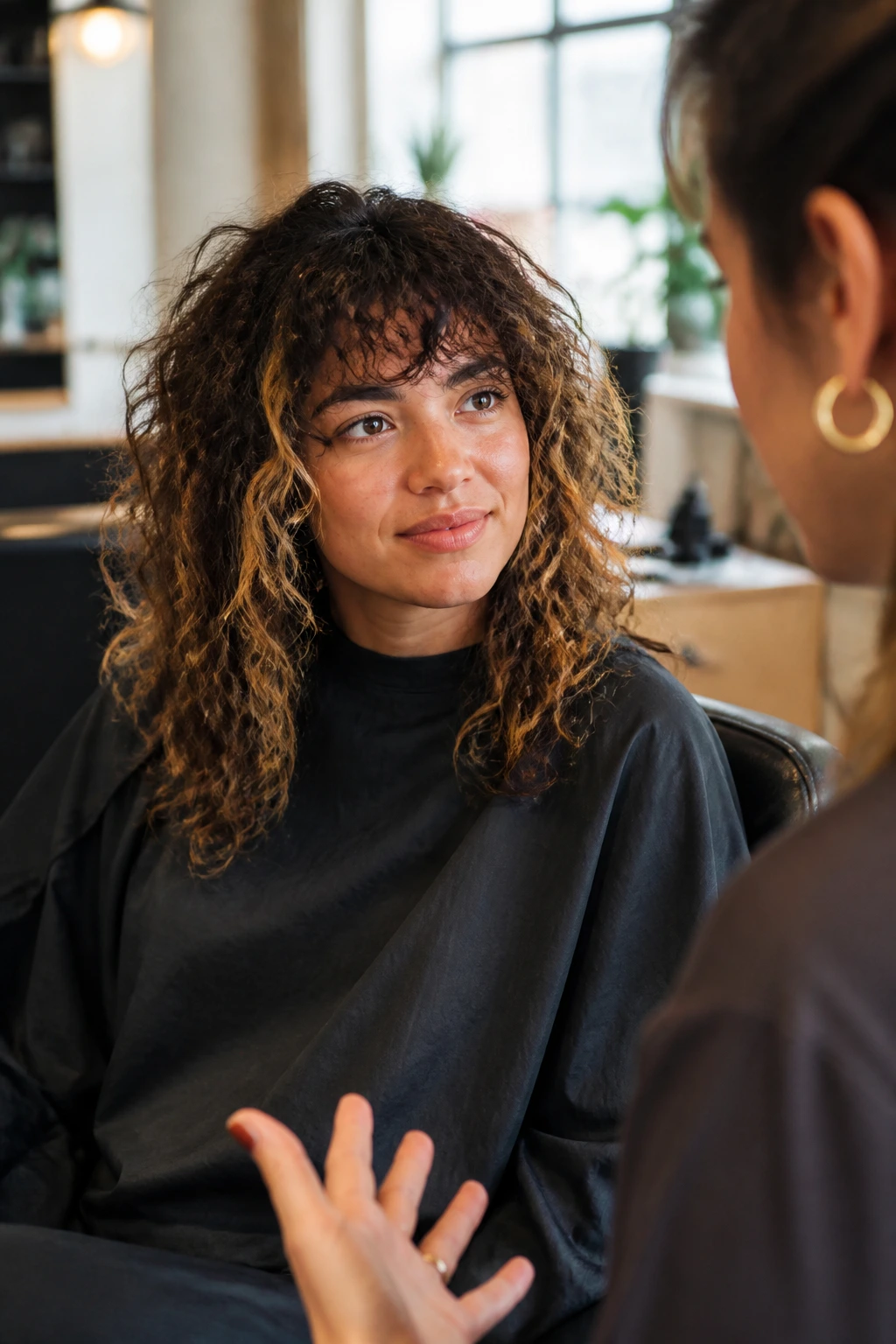
Bring photos, but bring a few. One for the bang shape, one for the color placement, one for the overall vibe. Stylists can read the intent much faster when they see that you want a curly curtain fringe with a soft highlight, not a blunt bang with random blonde pieces.
Shrinkage matters: ask for the fringe to be cut dry or cut longer than the mirror suggests, especially if your curl pattern tightens after wash day. If your hair stretches when wet and springs up tight when dry, say that out loud. Don’t assume the chair conversation covers it.
Placement matters even more: tell them where you want the lightest pieces to sit. I usually like money pieces to start around the part, stay narrow at the roots, and hit the cheekbone or slightly below. If you want less maintenance, ask for a softer root and a more blended transition into the front layers.
Contrast is a choice: high-contrast blonde against dark curls looks sharp, but it also shows regrowth sooner. Warm caramel, cinnamon, and bronze are friendlier if you want to stretch time between salon visits.
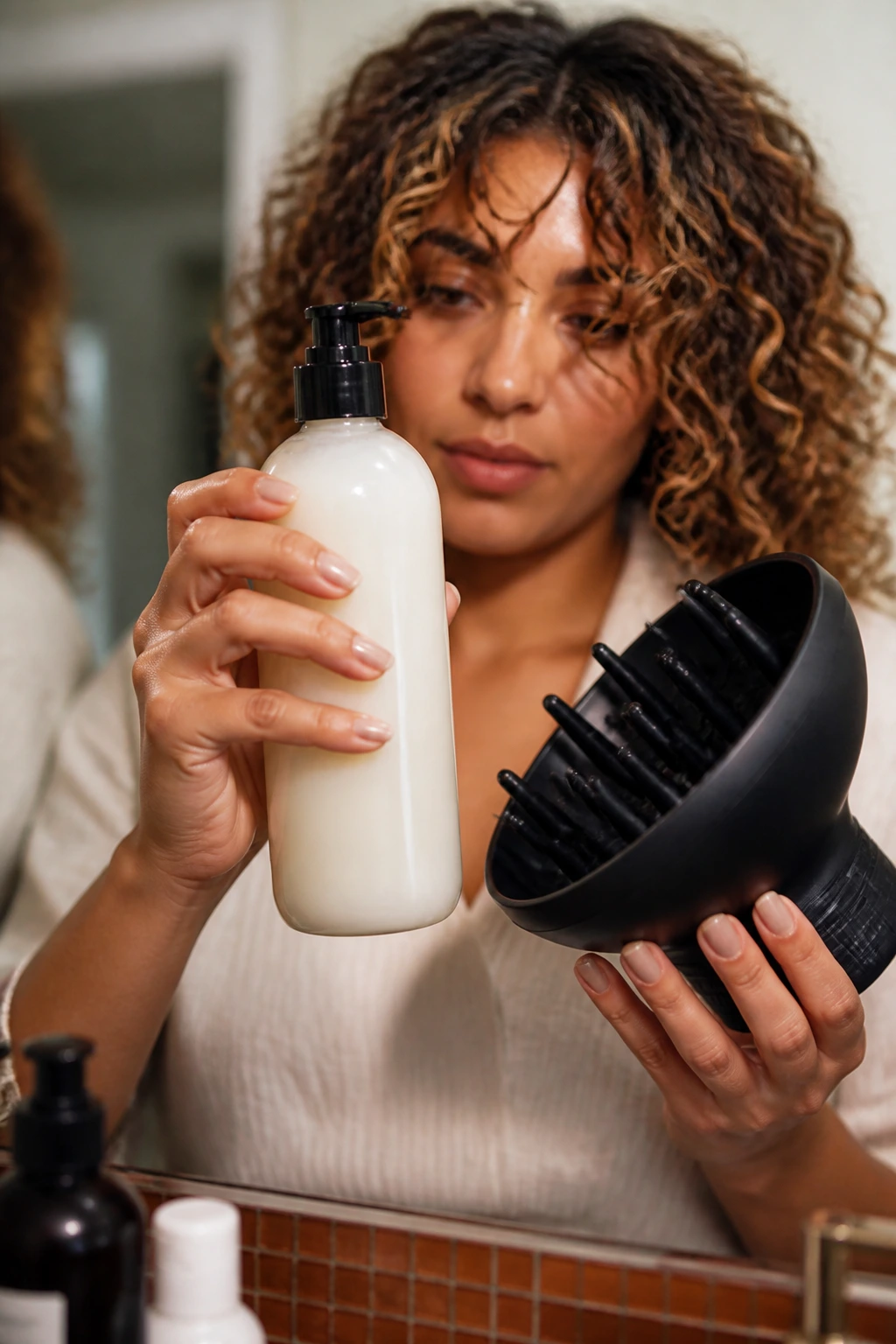
The Tools and Products That Keep the Front Pieces in Shape
-
Diffuser attachment: This keeps the curls in the bangs from blasting apart under direct heat, and it helps the front dry with more lift at the root.
-
Microfiber towel or cotton T-shirt: Regular bath towels rough up the curl pattern; a softer wrap cuts frizz before styling even starts.
-
Wide-tooth comb: Use it when the hair is wet and coated with conditioner or leave-in, not after the bangs are half-dry and tangled.
-
Small clips or duckbill clips: These are useful for setting the bang direction while the roots dry. A tiny clip at the front can change the way the fringe falls.
-
Curl cream or lightweight leave-in: You want slip and shape, not a heavy coat that drags the bangs down.
-
Mousse or foam: This is especially handy at the roots of curly bangs, where a little lift keeps the front from collapsing.
-
Heat protectant: If you diffuse or touch up with a dryer, spray it on every time. The money piece is the part everyone notices first, and dry ends show damage fast.
-
Color-safe shampoo and conditioner: Face-framing highlights fade quickest where the water and heat hit hardest, so the front needs a gentle wash routine.
Styling the Fringe So It Stays Lifted, Not Flat
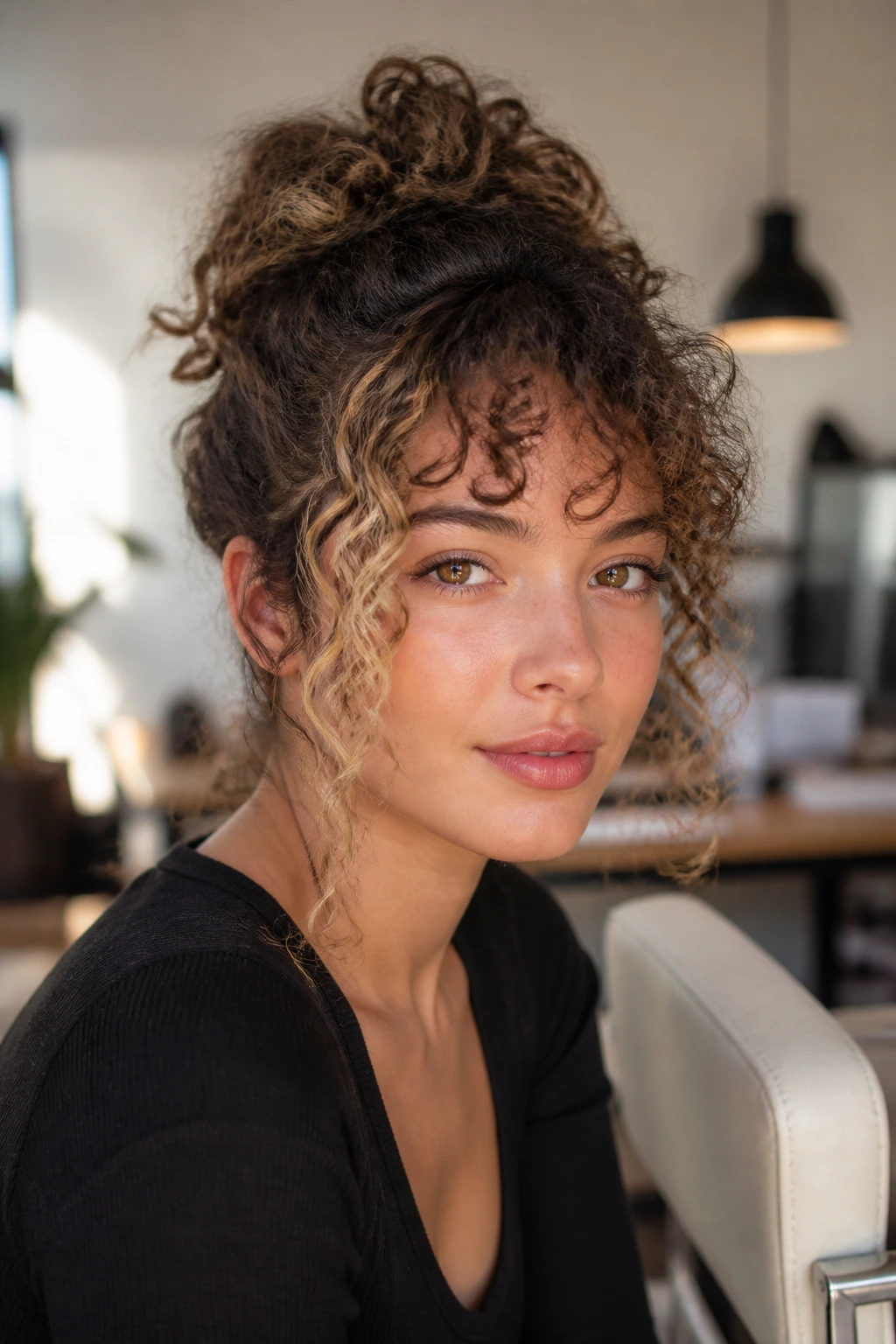
Start with wet hair. Not damp. Wet. Curly bangs behave better when they’re set from the beginning instead of rescued halfway through. Work a small amount of mousse or foam into the root area, then smooth a pea-sized amount of curl cream through the lengths of the fringe and the money piece. Too much product near the forehead makes the front collapse.
Clip the bang area forward or slightly to the side while you diffuse the rest. That little hold helps train the curl pattern and keeps the roots from drying in a flat, brushed-down shape. When you do diffuse, keep the dryer on low heat and medium airflow. High heat can make the money piece frizz faster, and it’s usually the front that shows it first.
When the hair is about 80 percent dry, stop fussing. Seriously. Let the curls settle, then separate only the pieces that need it. If you want a softer finish, rub one drop of serum between your palms and tap the money piece lightly, not the whole fringe.
Keeping the Color Bright Without Drying Out the Curl
Money piece highlights age best when they’re treated like the most delicate part of the haircut, because they are. The front gets sunscreen, sweat, water, and heat more often than the back. A color-safe cleanser helps, but the bigger difference is how often you wash. Two to three times a week is kinder to bright front pieces than daily shampooing.
For blondes, a purple shampoo once every 7 to 10 days is usually enough if the tone starts leaning yellow. Don’t overdo it. Curly hair doesn’t need the extra dryness, and the purple cast can look muddy if you leave it on too long. For copper or caramel money pieces, a gloss or color-depositing conditioner every 2 to 4 weeks helps keep the front rich.
Trim the bangs every 4 to 6 weeks if you want the shape to stay clean. The color can stretch a little longer, but the cut will tell on you fast. Once the bangs start touching the lashes or puffing over the brows in an awkward way, they stop flattering the face shape and start fighting it.
Common Mistakes That Make the Face Look Wider
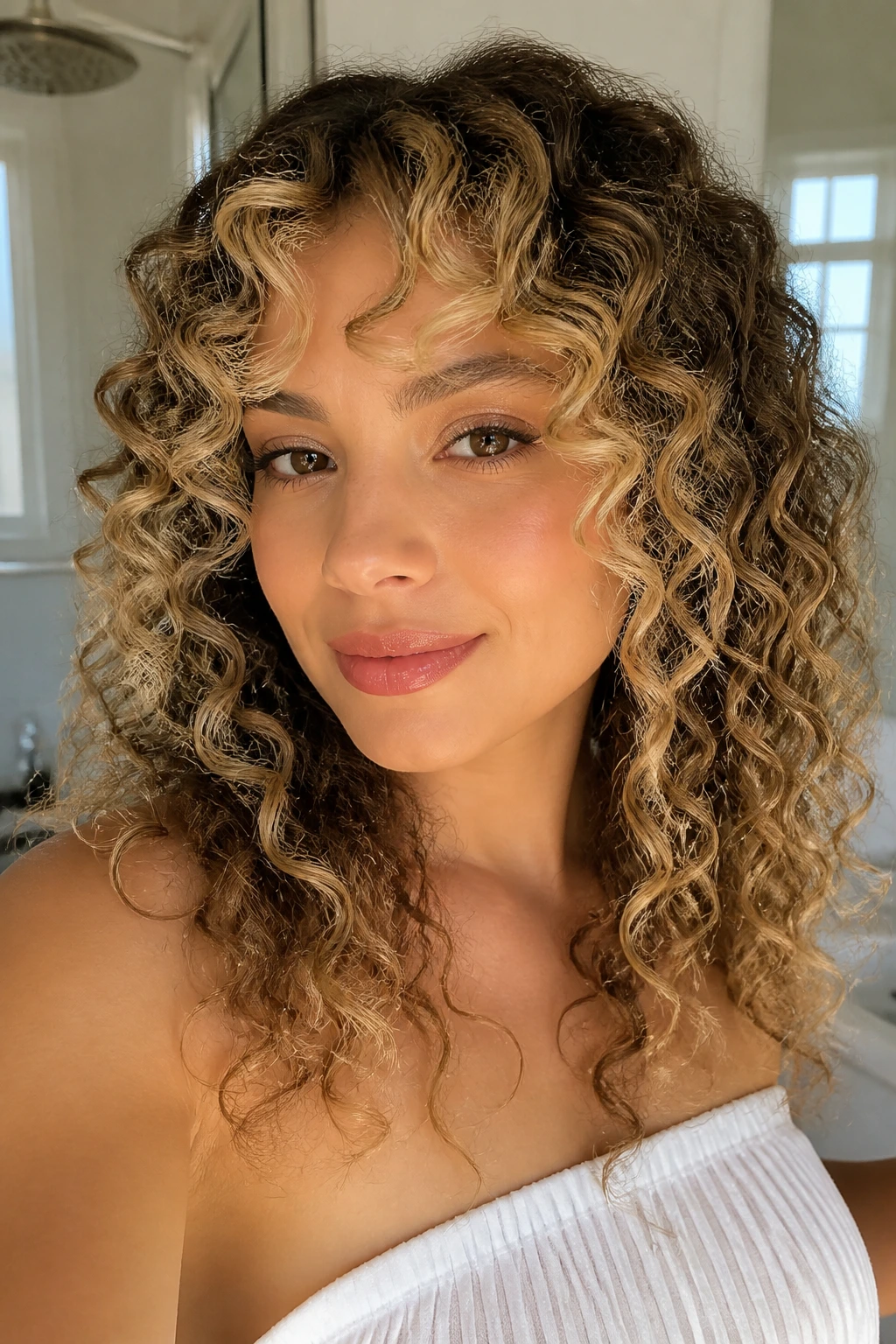
The biggest mistake is cutting curly bangs too short while they’re wet. The curl springs up, the fringe sits too high, and the face can look wider because there’s no length left to create a vertical line. The fix is simple: cut longer, let the hair dry, then refine.
Another problem is making the money piece too thick. A wide blonde panel at the cheeks can create a bright horizontal band right where a round face already has fullness. Ask for a narrower root area and a softer blend into the mids so the brightness frames instead of blocks.
Heavy product is another culprit. If the bangs sit greasy, flat, or sticky, they lose the airy movement that makes the shape work. Use less cream than you think, and save the richer masks for the ends, not the front.
And then there’s the all-over same-length issue. When the bang, side pieces, and cheek pieces all hit in one line, the face gets boxed in. The cure is layered length, not perfection. A little unevenness reads better than a clean circle.
Fresh Variations When You Want a Different Mood
Soft Honey Frame: Keep the cut the same, but swap bright blonde for honey or light caramel. The result is warmer, easier to grow out, and friendlier if you hate salon upkeep every few weeks.
High-Contrast Halo: Pair dark roots or deep brunette with a bright front panel and a curly fringe that sweeps longer at the sides. This version gives the most drama, but it needs a careful hand so the highlight doesn’t turn into a wide stripe.
Copper Coil Accent: On coils and tighter curls, copper or cinnamon money pieces can look richer than blonde because they echo the curl’s texture instead of fighting it. The warmth also photographs softly, which helps the front stay dimensional.
Dimensional Brunette Blend: Add lowlights through the sides and keep the money piece subtle. That’s the move if you want the bangs and face frame to look thick, not bright. The shadow under the highlight keeps the face from reading too round.
Questions People Ask Before They Commit
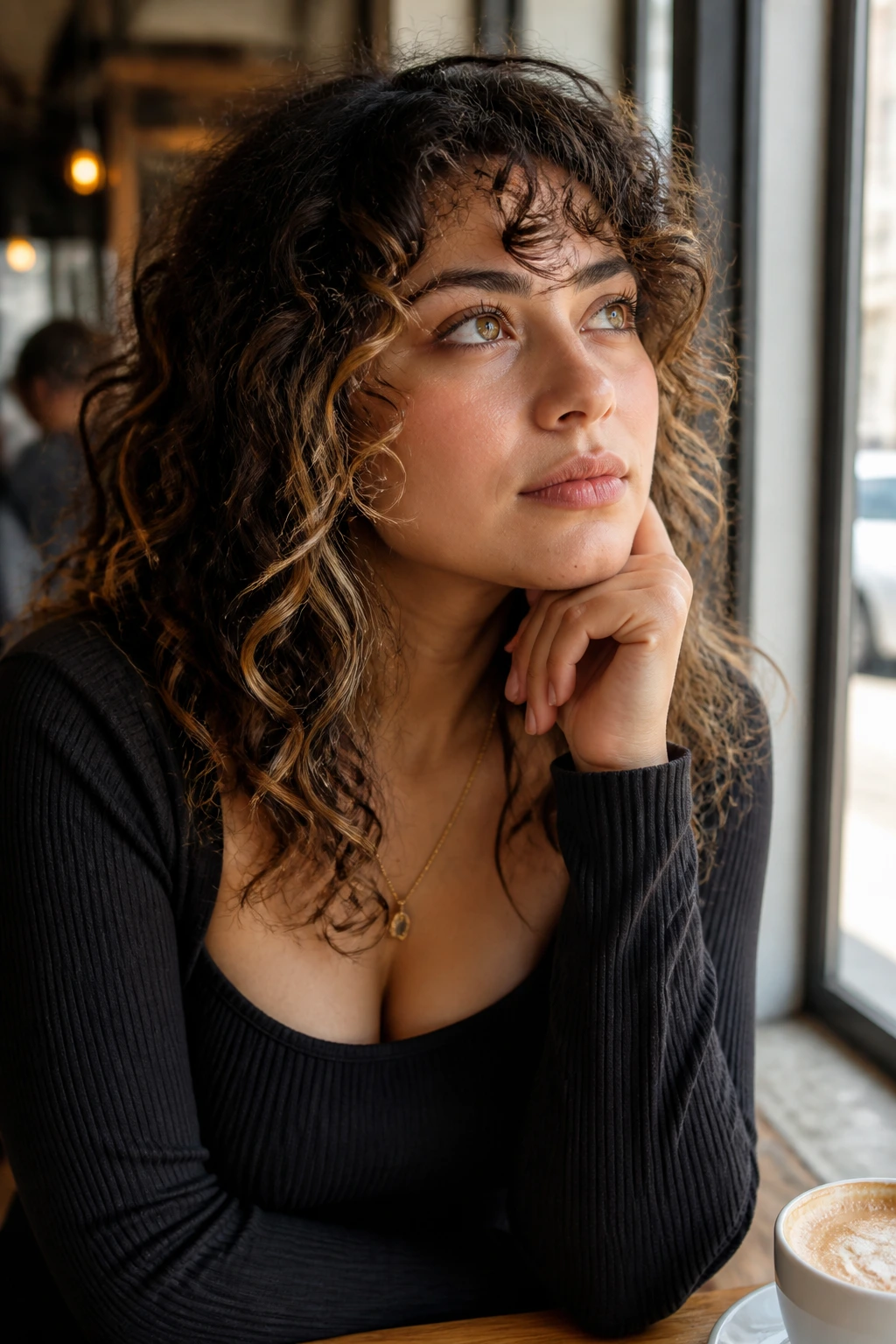
Do curly bangs work on a round face?
Yes, if the shape is built to add length rather than width. Curly bangs that are longer at the sides, soft at the center, and cut with shrinkage in mind can make the face look more balanced.
Should the money piece start right at the roots?
Usually not. A little softness at the root keeps the highlight from looking like a hard stripe, and it grows out better. I prefer the brightest part to sit around the part and temple, then drift down the cheekbone.
How short should curly bangs be cut?
Longer than you think. Most curl patterns spring up at least a little, and some spring up a lot. Your stylist should cut with the dry shape in mind, not the wet length in the chair.
Can this work on coily hair?
Absolutely. The trick is density control and shape. Thin, well-placed front pieces and a careful highlight panel can look stunning on coils, especially when the color is placed in narrow ribbons instead of a big block.
What if the bangs puff out too much?
Use less product at the roots, diffuse on low heat, and ask for more length next trim. Puffiness usually means the cut is too short or too heavy at the front edge.
Do I need bleach for money piece highlights?
Not always. Brunette and red hair can take warm caramel, copper, or bronze tones with less dramatic lightening. If you want a pale blonde frame, though, lightening is usually part of the process.
How often should I trim curly bangs?
Every 4 to 6 weeks is the sweet spot for keeping the shape tidy. If you wait much longer, the front can lose its face-framing job and start swallowing your eyes.
Can I wear this with a middle part?
Yes, and a middle part often looks the best with money piece highlights because it gives the face a clean vertical line. If your curls fight the part, train them while wet with clips for a few minutes.
The Looks Worth Saving
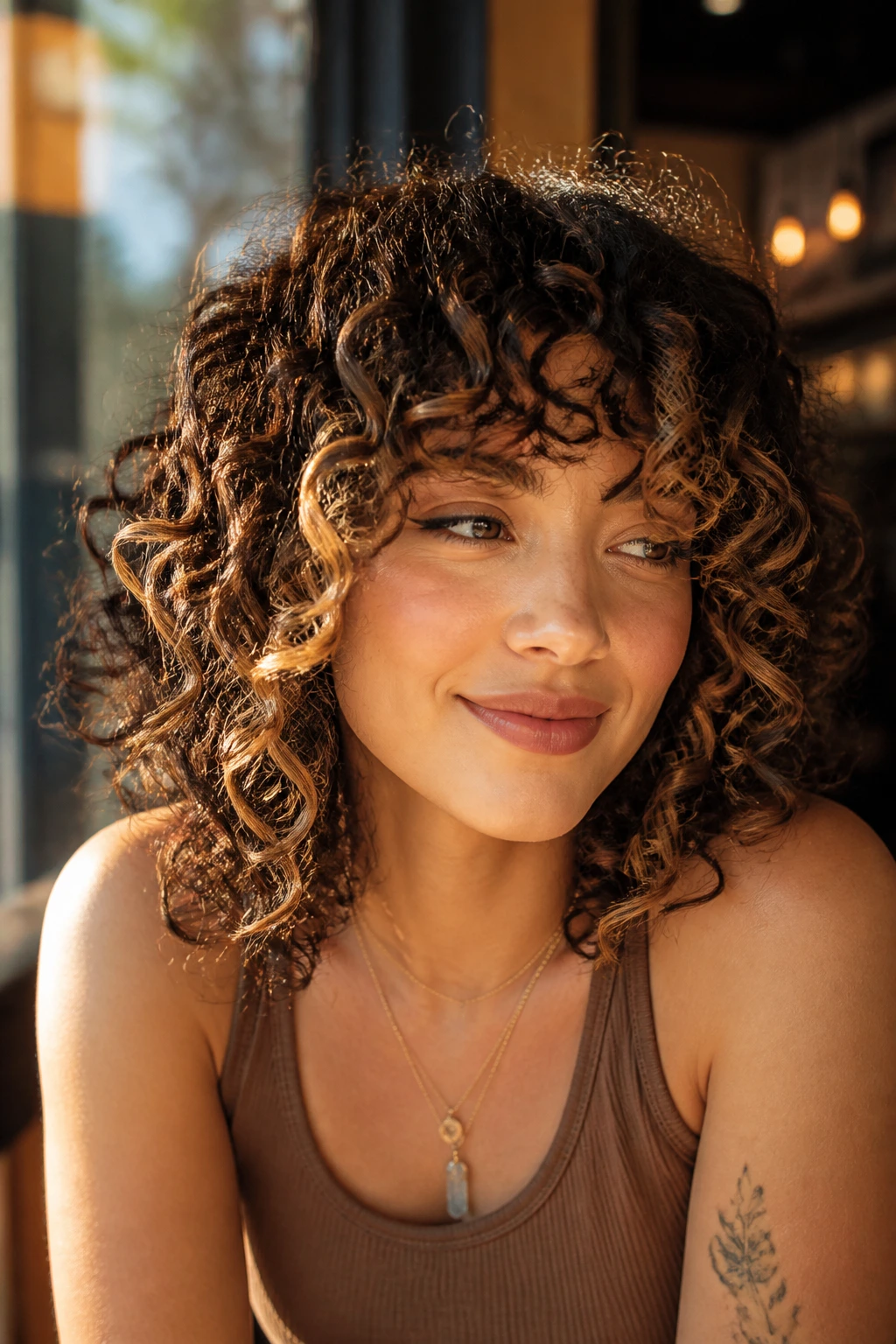
The nicest thing about this whole group is that it gives you options without losing the point. Curly bangs can be soft or sharp, short or long, dramatic or low-key. Money piece highlights can whisper, or they can announce themselves. On a round face, the smartest versions are the ones that keep movement going downward and outward in a controlled way.
If you save one idea from all this, save the placement rule: keep the front pieces a little longer than you think, keep the bright sections narrow near the roots, and let the curl pattern do the rest. That’s where the good versions live. Not in the perfect salon photo. In the version that still looks right when the curls dry, spring up, and start living their own little life.