



Thin hair with lowlights can look expensive the second the shape does some work for you. The wrong move is usually more product, more teasing, more smoothing. That tends to leave fine strands looking sticky and smaller than they are.
The better trick is a style with a little bend, a little asymmetry, and enough lift at the crown that the darker ribbons underneath can show through. That matters even more on days when you’ve put sunscreen along the part and hairline, because slippery roots flatten fine hair fast. You want movement that can survive a hat, a breeze, and a second-day refresh without turning stiff.
I like styles that look a little better when they’re not perfect. A blunt, shellacked finish can make thin hair look paper-thin. A soft side part, a twist, a braid, or a tucked end usually does more for the eye than a mountain of mousse ever will.
Why These Hairstyles Earn Their Spot
- Root lift does the heavy lifting: Thin hair needs air at the crown, and these styles create it with parts, twists, and small pins instead of heavy creams.
- Lowlights get room to show: Darker ribbons read best when the hair bends or overlaps, which is why soft waves and braids show more depth than a flat sheet of hair.
- SPF-friendly parts matter: A few of these looks leave the hairline open, so sunscreen can sit on skin without turning the whole style greasy.
- They survive hats and humidity better: Low buns, tucked ends, and side braids stay more believable after a brim or a warm afternoon than tall, fussy shapes.
- They keep product light: Fine strands usually look fuller with mousse, dry shampoo, and a touch of spray; if a style needs a helmet of lacquer, it’s the wrong style.
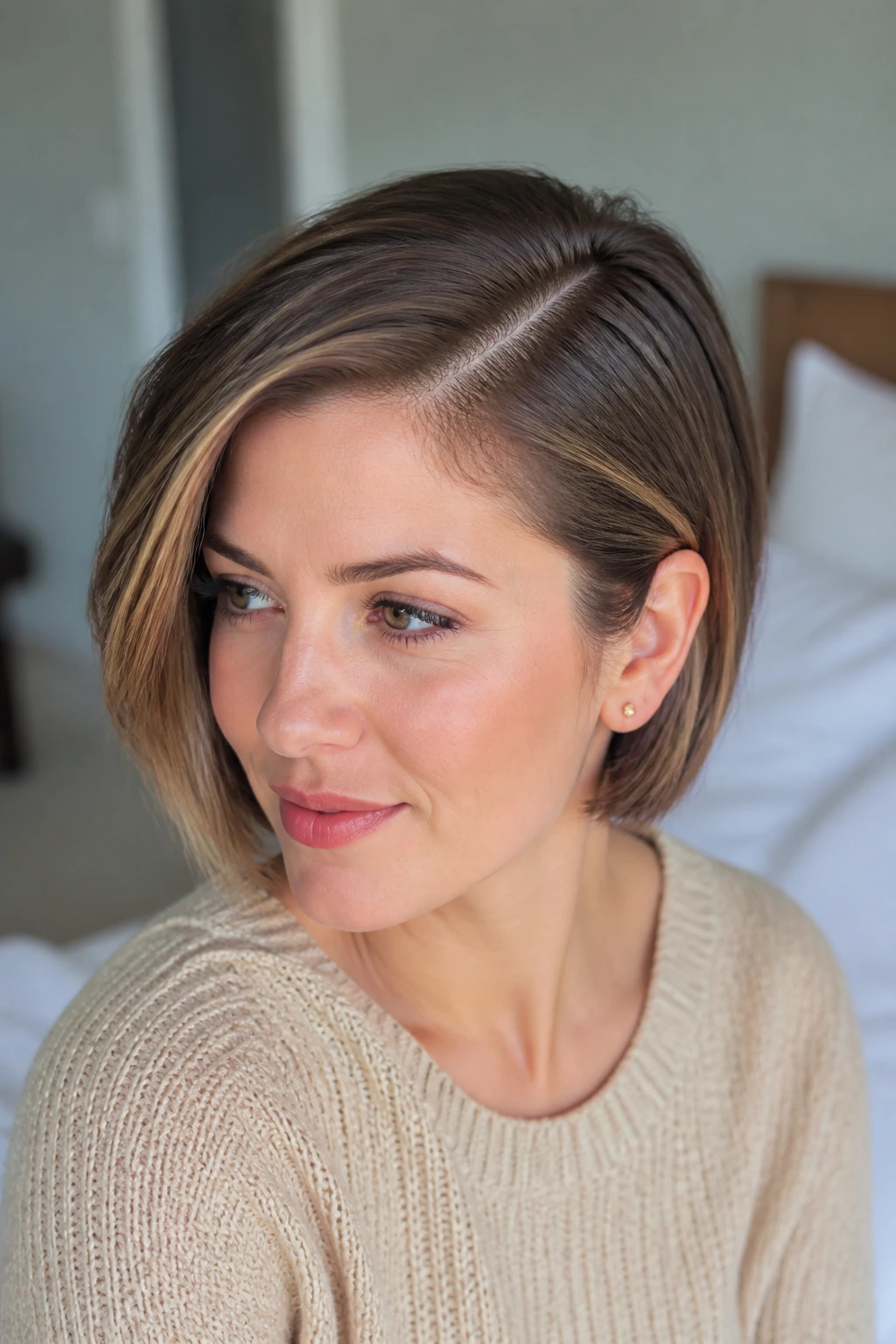
1. Deep Side Part with Tucked Ends
A deep side part is one of those moves that looks small and does a lot. It shifts the root line, breaks up scalp visibility, and lets the lowlights on the heavier side look deeper because the hair is lying in layers instead of one flat plane. Tucking the ends behind one ear keeps the whole thing clean and gives the illusion of density where thin hair usually gives up.
If you wear sunscreen along your part, this is especially useful. The hair stays off the forehead, the part stays visible, and the style doesn’t need a lot of product to hold its shape. A quick blast of cool air at the roots after blow-drying helps the lift stay put.
2. Soft S-Waves on a Collarbone Lob
Why does a collarbone lob always look fuller than hair that hangs straight? Because the bends interrupt the eye. A soft S-wave catches light on the top of the hair and leaves the lowlights showing in the troughs, which makes thin hair read as layered and alive instead of stringy.
Wrap 1-inch sections around a wand, leave the last inch or so out, then brush the curls into an S-shape once they’re cool. That slight irregularity matters. Best on fine hair: a light mousse on damp lengths. Watch the roots: keep texture spray off the scalp or the whole style can go dull and gritty.
3. Crown-Lift Half-Up Twist
When the top section keeps collapsing by lunchtime, pin only the crown and leave the lower half loose. That single move gives you height where thin hair needs it most, and it keeps the lowlights in the bottom layers visible because you’re not hiding them under a full updo.
Twist two small sections from the temples back toward the center, then secure them with a pin or a tiny elastic hidden underneath. Pull the twist up half an inch after pinning so it doesn’t sit tight against the head. Loose is the point. Tight half-up styles look tidy; this one looks fuller.
4. Low Ponytail with a Teased Crown
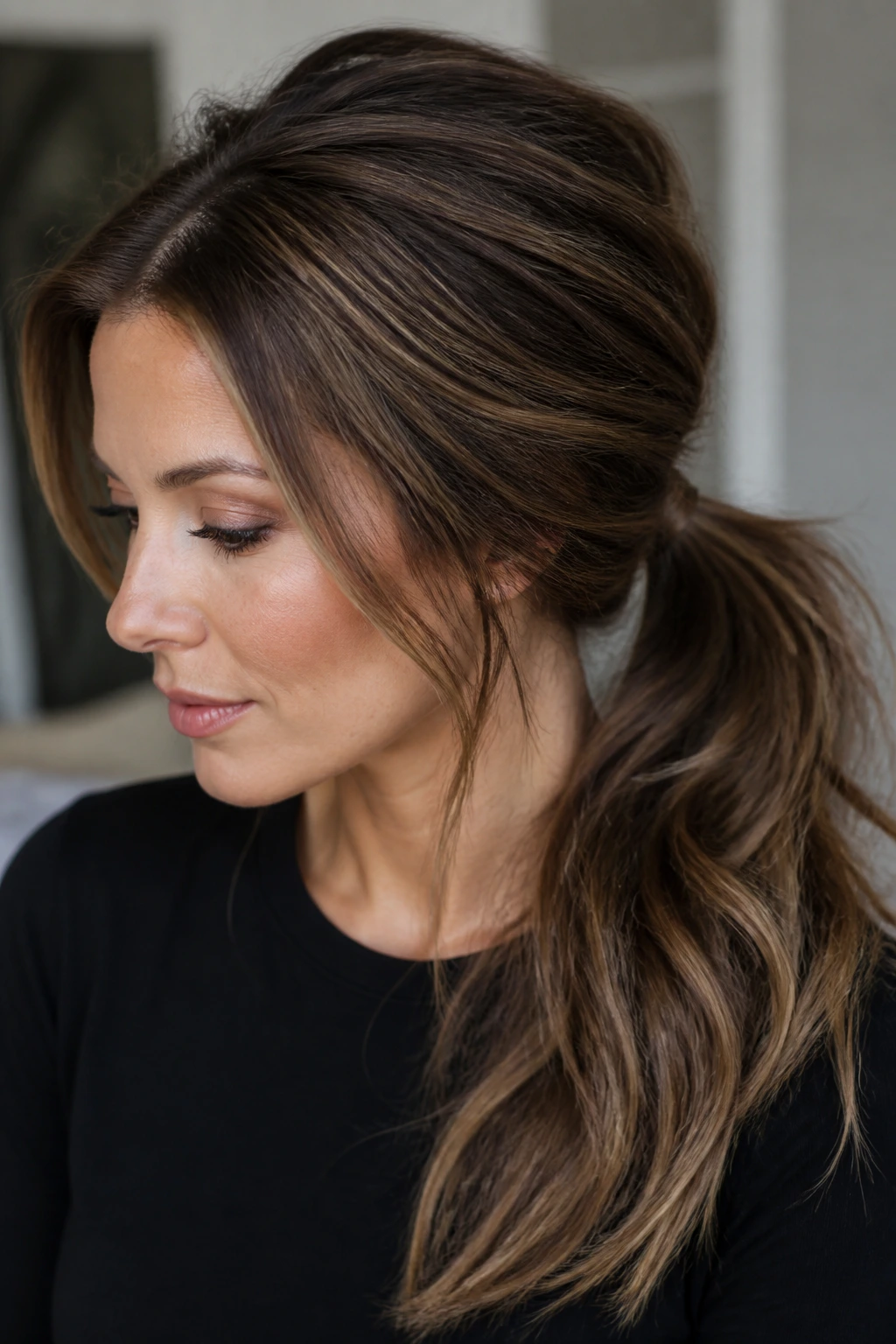
A sleek pony can make thin hair look smaller. A low ponytail with a little crown lift does the opposite. The teased section at the back of the head gives you the shape, and the lowlights show in the length where the ponytail falls over your shoulder.
Use a tail comb to lift a one-inch section at the crown, backcomb it twice, then smooth only the top layer over it. Secure the pony low and wrap a small strand around the elastic if you want it polished. Keep the pony slightly loose. A pony pulled too tight tends to expose the scalp line.
5. Mini Claw-Clip French Twist
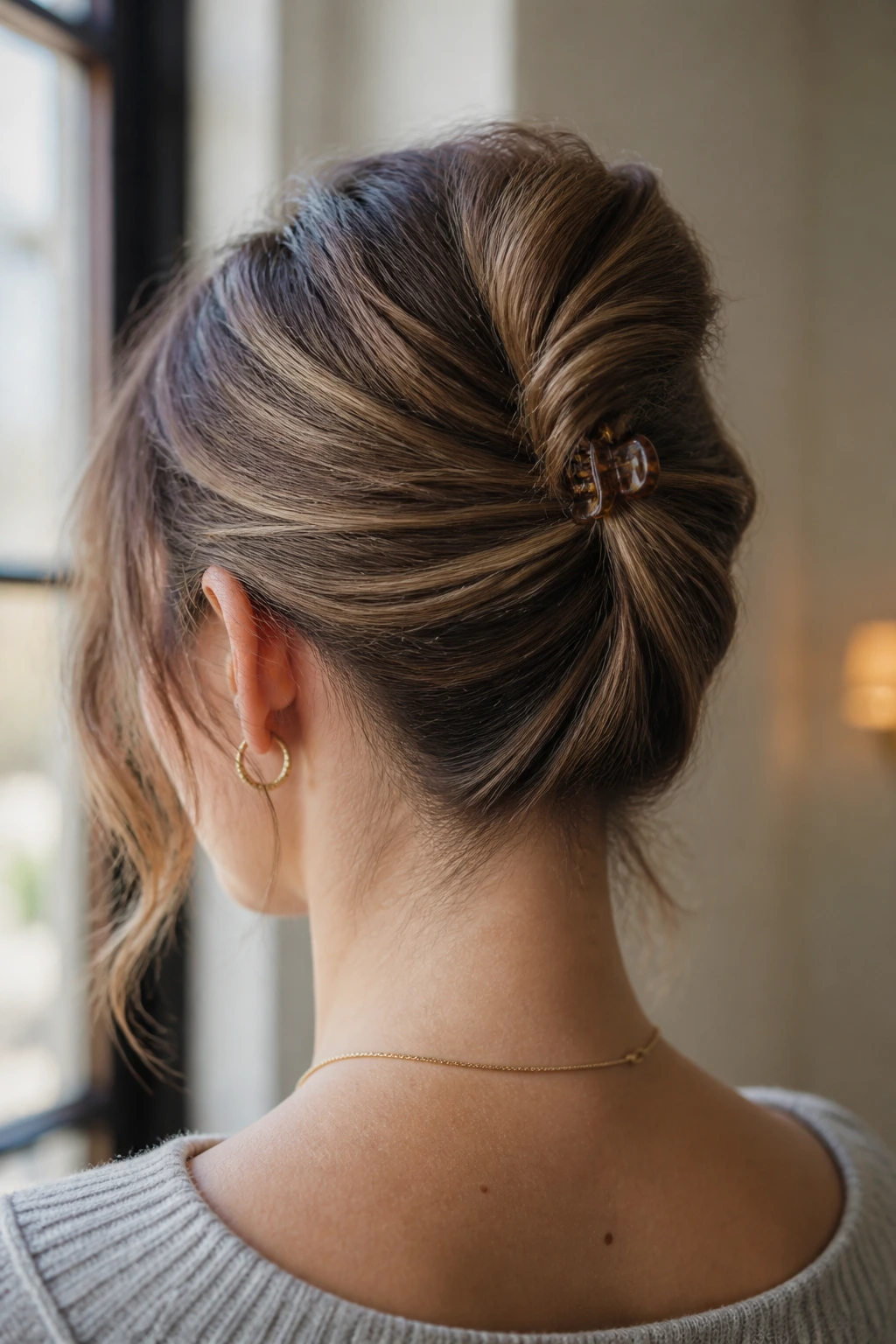
A full French twist can swallow thin hair if the clip is too big or the twist is too tight. The mini claw-clip version is lighter, faster, and better for short to mid-length hair. It keeps the nape open, which is useful when sunscreen is sitting on the neck, and the folded shape creates a little shadow that makes lowlights look deeper.
Gather the hair, twist upward, tuck the ends in, and clamp it with a small claw clip that grips close to the head. Let a few pieces fall around the ears if the style starts to feel severe. The soft edges matter more than people think.
6. Piecey Pixie with Swept Fringe
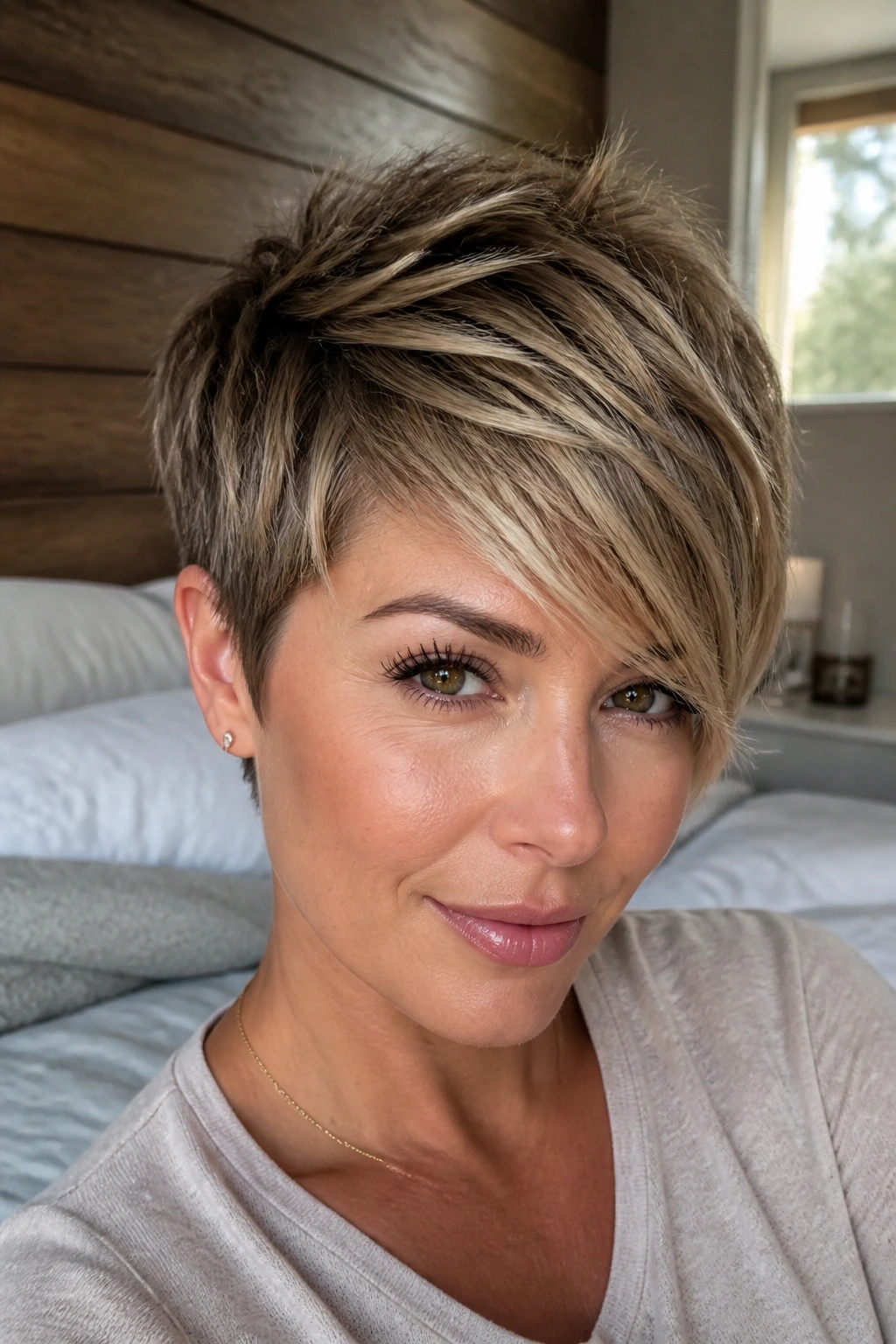
A pixie is not automatically thin-hair friendly. A piecey pixie with a long, swept fringe is. The shorter sides keep the shape neat, while the fringe and top layers give you enough surface for lowlights to show as texture instead of color bands.
Use a pea-sized amount of paste or cream on dry hair, then pinch the ends rather than coating the whole head. Sweep the fringe across the forehead and let the crown stay a little messy. That mess is doing real work here. It keeps the cut from lying flat and gives the lowlights around the temples some depth.
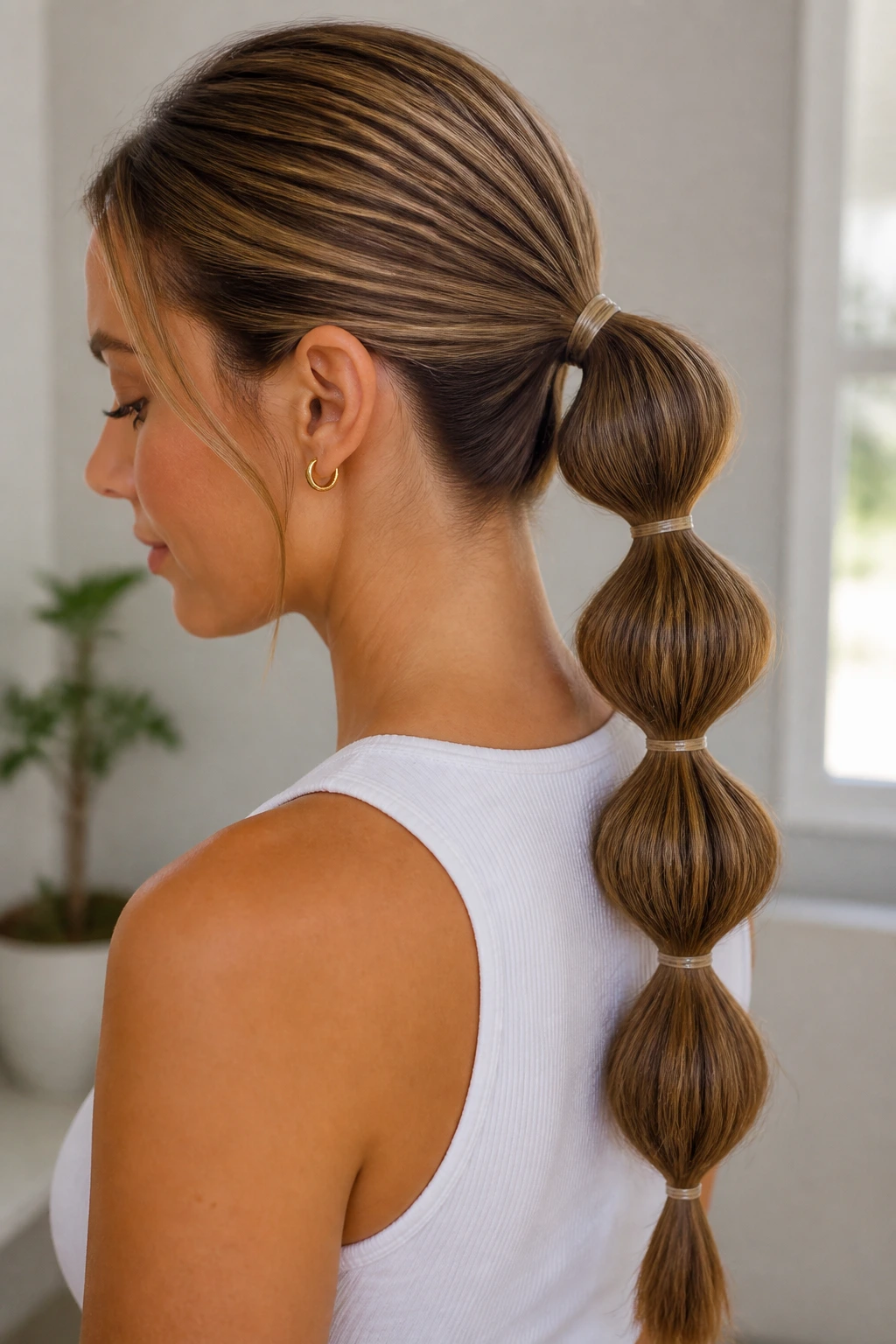
7. Bubble Ponytail on Fine Lengths
A bubble ponytail is one of the easiest ways to fake body on thin hair. The elastic bands break one long line into sections, and each bubble catches the light differently, which makes the lowlights read as shadow instead of streaks.
Tie the hair into a low or mid-height ponytail, then add clear elastics every 2 to 3 inches down the length. Gently pull each section outward until it looks rounded, not bloated. If your hair is very fine, mist each section with texture spray before you start. A little grip helps the bubbles stay open.
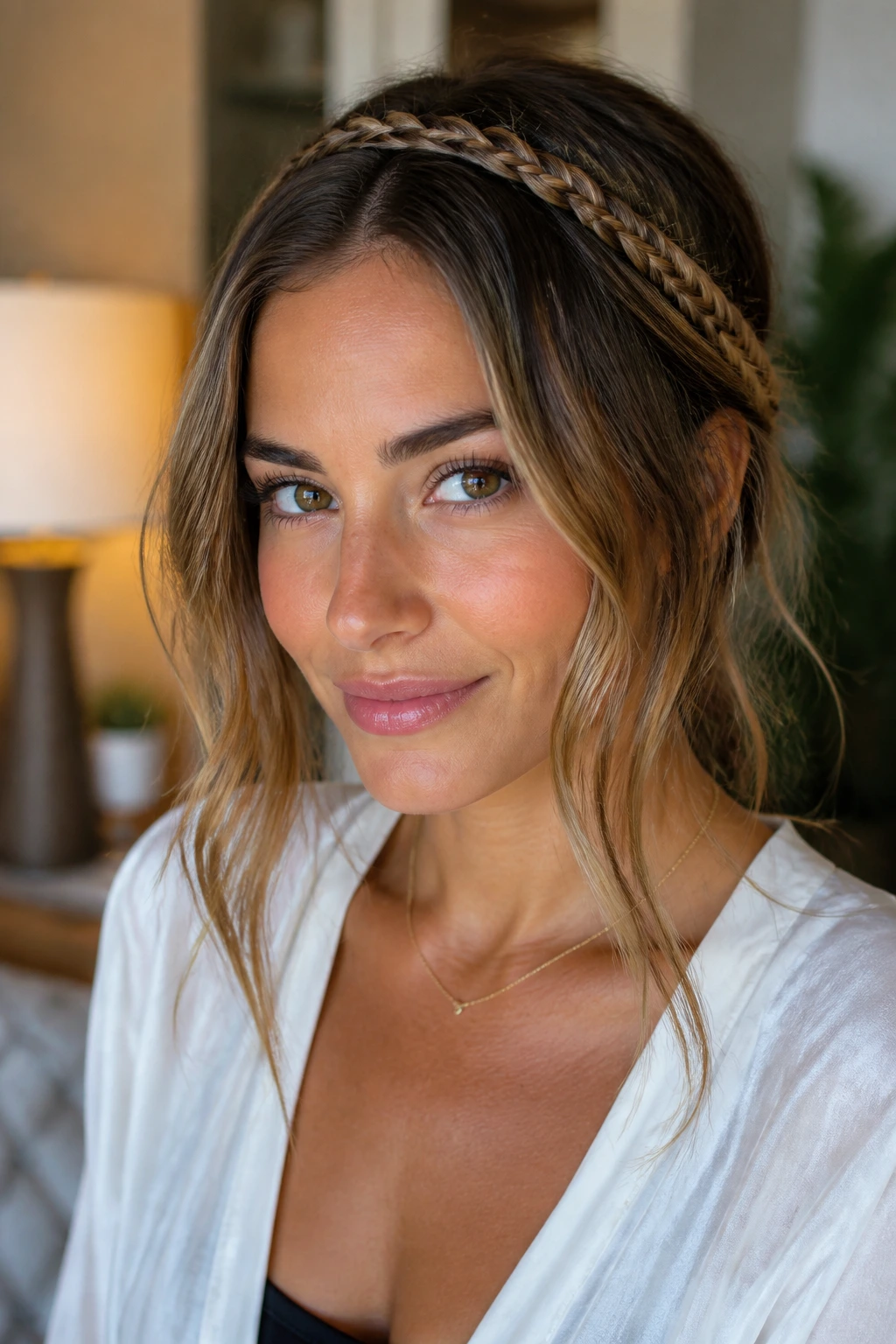
8. Braided Headband with Left-Out Ends
If you want your hair off your face without losing length, a braided headband gives you the best of both. Braid a small section from one temple across the top of the head to the other side, then pin it discreetly and let the rest hang loose. The braid acts like a frame, and the loose length keeps the lowlights visible.
This one is good on days when sunscreen is sitting heavily around the temples. The braid keeps hair from sticking to skin, but you still get a soft outline around the face. If the braid feels too neat, tug it wider with your fingertips. Thin hair usually looks better with a little air in the plait.
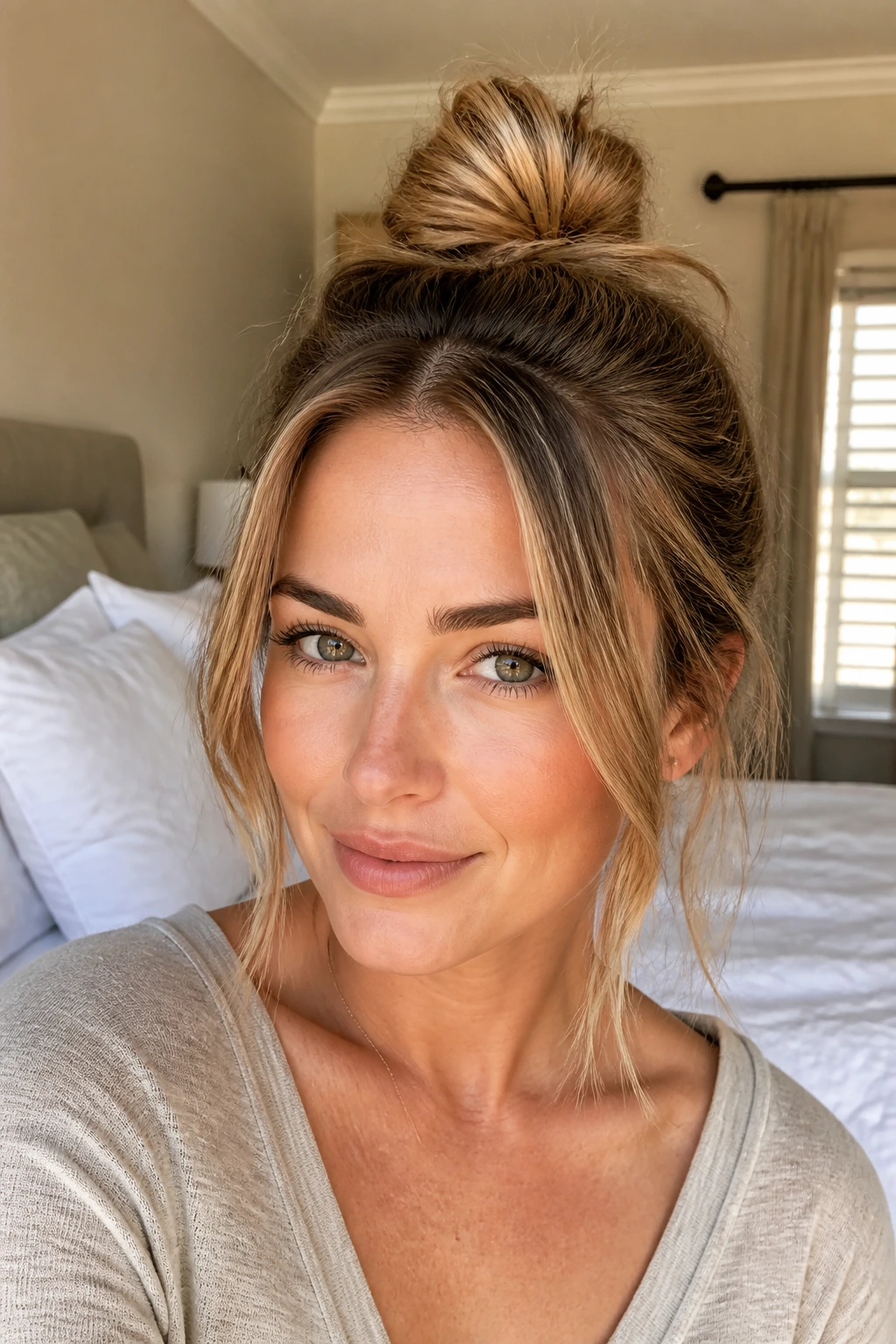
9. Messy Top Knot with Face-Framing Pieces
A top knot can be a disaster on fine hair if it’s too big and too tight. A small, messy knot placed slightly high on the head is a different story. It gives the crown lift, shows off the lowlights in the wrapped section, and leaves the face-framing pieces free to soften the whole thing.
Don’t smooth the sides flat. That’s the trap. Leave a little movement around the temples, twist the knot loosely, and let the ends poke out on purpose. The style should look like you gathered the hair, not like you fought with it.
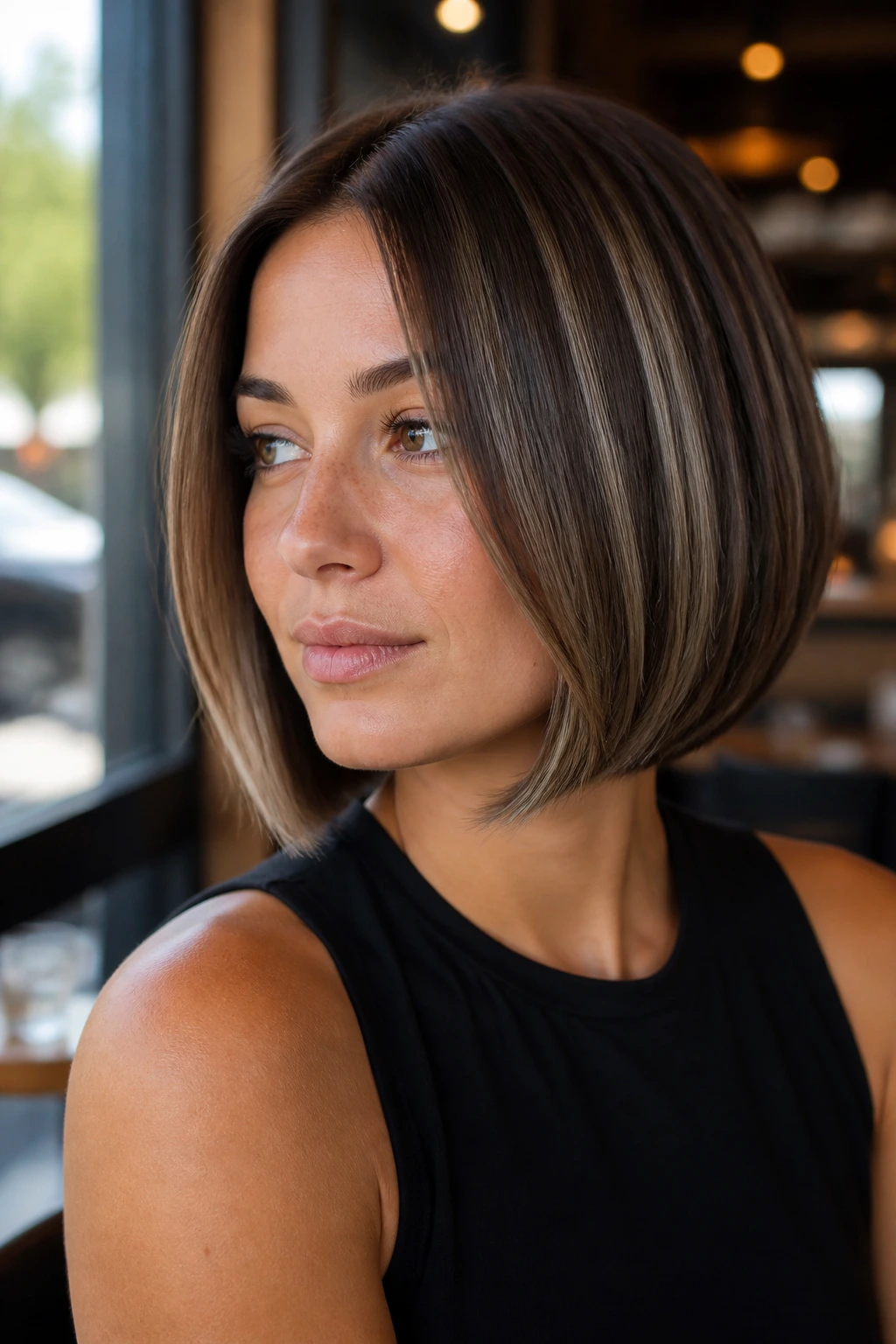
10. Blunt Bob with a Slight Bevel
A blunt bob is one of the few cuts that can make thin hair look denser without much styling at all. The clean edge at the bottom creates a solid line, and a slight bevel under the ends keeps the shape from looking boxy. Lowlights are useful here because they darken the interior and make the perimeter look fuller.
Ask for the ends to sit at jaw level or just below it, then use a round brush or flat iron to curl the last half-inch under. That tiny bend matters more than a dramatic flick. It stops the cut from looking sharp in a way that can expose how fine the hair is.
11. Rope-Braid Low Ponytail
A rope braid is easier than a three-strand braid and often looks better on thin hair because the twist creates a smoother, thicker shape. Pull the hair into a low ponytail, split it into two sections, twist each section in the same direction, then wrap them around each other in the opposite direction.
The lowlights show up in the spiral like little bands of shadow. That’s the whole appeal. Secure the end with a clear elastic and loosen the braid a touch by tugging at the outer edges. Too tidy, and it turns narrow. A little looseness makes it look fuller and more relaxed.
12. Side Braid Draped Over One Shoulder
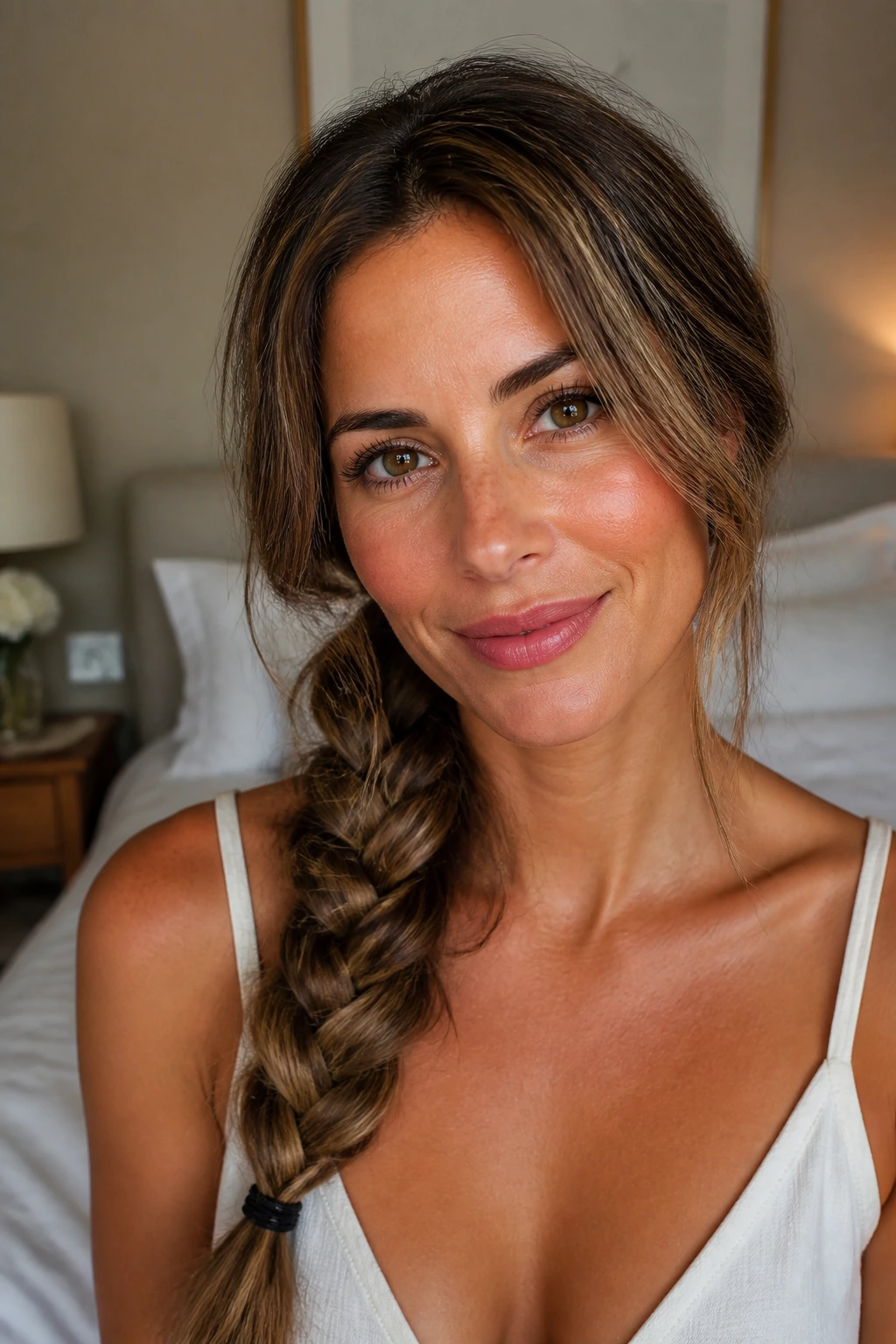
Why does a side braid look better on thin hair than a braid down the back? Because the diagonal line gives the eye something to follow, and the braid sits on top of the shoulder where you can see the pattern. The lowlights break up the weave, which adds depth that straight hair often hides.
Start the braid lower than you think, around the collarbone or just under the ear, and keep it loose enough to pancake later. If the braid begins to look skinny, widen each loop gently with your thumbs. That small move can change the whole read of the style.
13. Double Mini Buns Half-Up
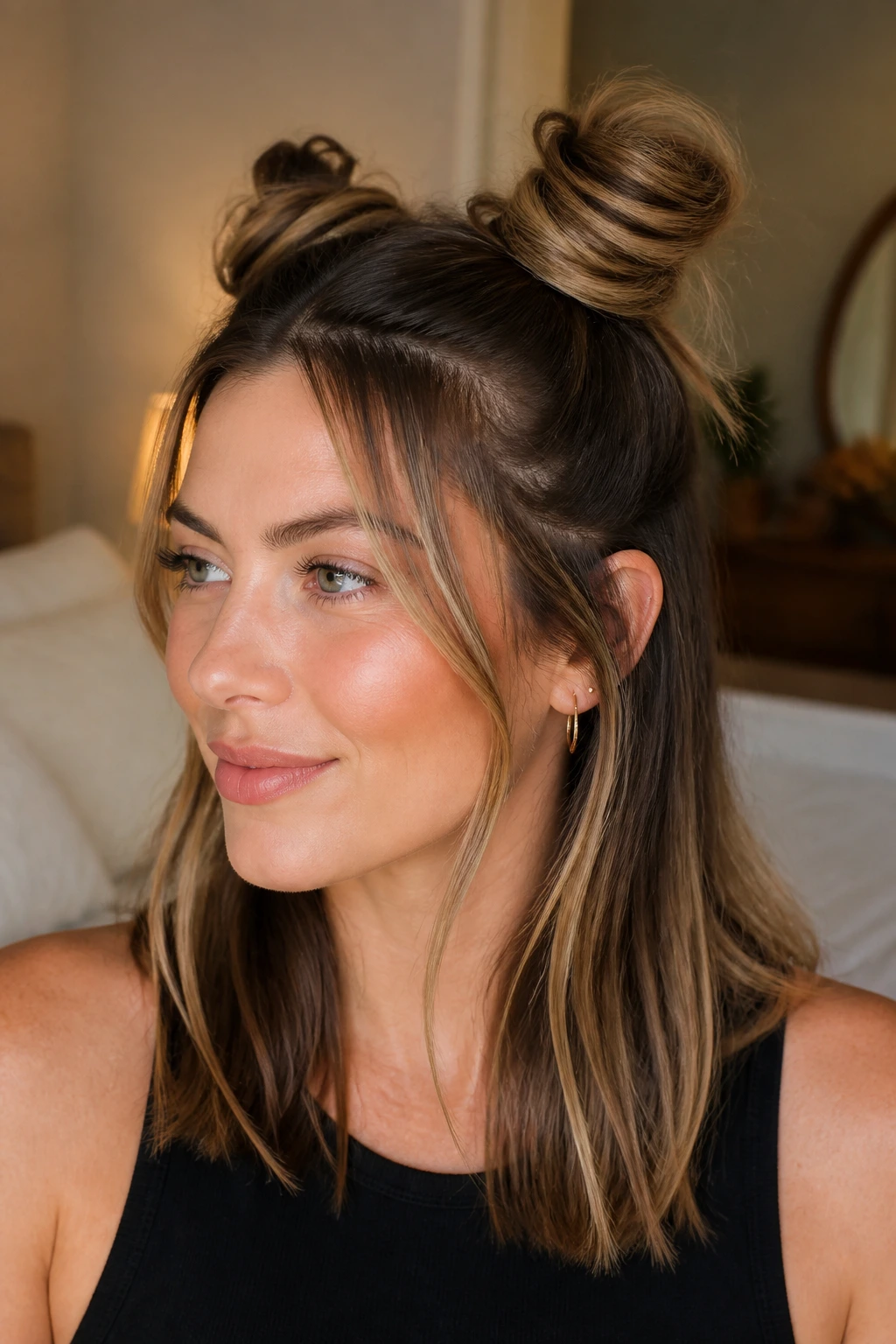
Double mini buns are playful, but they also solve a real problem: thin hair at the crown can look flat, and two small buns create the lift without asking for a lot of hair. Leave the lower section down so the lowlights still show through the back.
Part the top section from temple to temple, make two tiny ponytails, and twist each one into a bun. Secure them with small elastics or pins. Keep the buns low and close to the head. If they sit too high, the style starts to look like a costume instead of a real haircut.
14. Soft Chignon with Loosened Edges
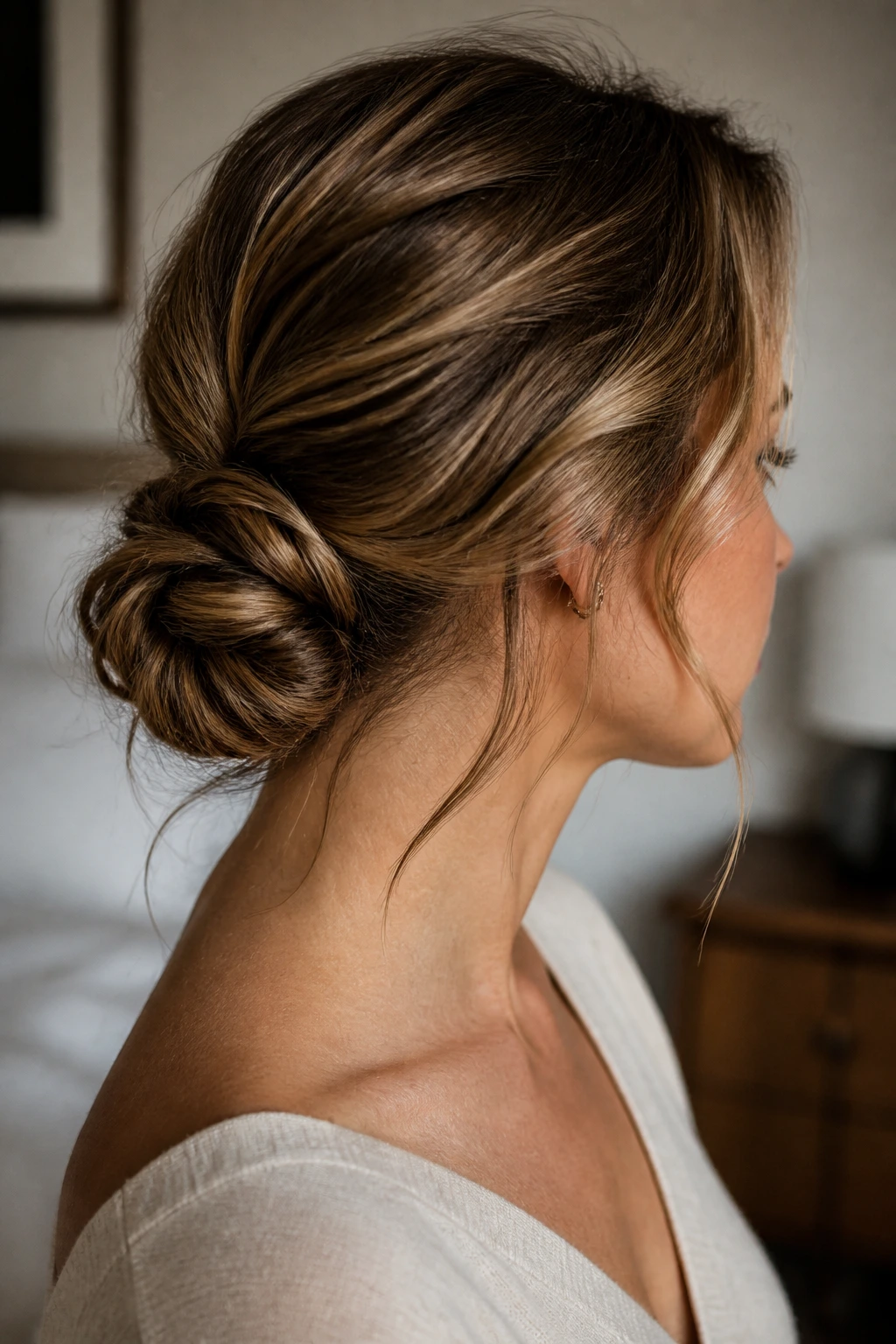
A soft chignon is the grown-up answer when you need your hair up but don’t want it to look sparse. Pull the hair into a low twist at the nape, fold the ends under, and loosen a few edges so the bun doesn’t look pinched. The shadow inside the twist makes lowlights look richer.
This style works well when you’ve already put sunscreen on the neck and shoulders. Nothing sticks. Nothing gets in the way. Pin it with U-pins or long bobby pins and leave a few wisps around the ears. Those wisps stop the bun from looking like a tight knot on a small head.
15. Heatless Pin-Curl Set
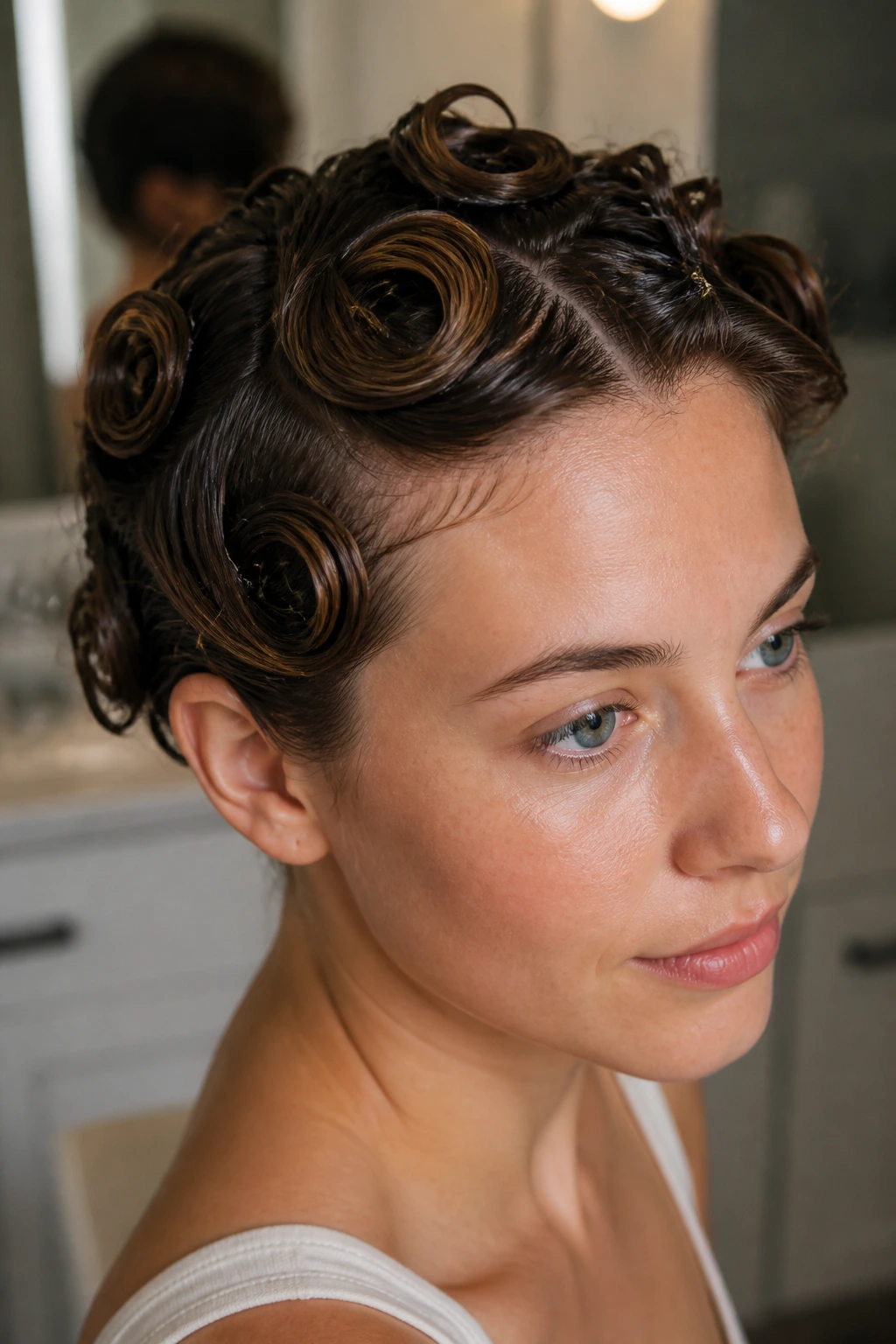
Pin curls are one of the best ways to fake density without hot tools. Set damp hair in 4 to 6 curls, clip them flat to the head, and let them dry fully before taking them down. The result is a soft, irregular wave pattern that gives thin hair more surface area for the lowlights to show.
The trick is not making the curls too perfect. Leave a little variation in size, and don’t comb them hard once they’re out. Separate with your fingers, mist with a light spray, and stop there. If you touch them too much, the curl pattern collapses and the hair goes flat again.
16. Curtain-Bang Blowout
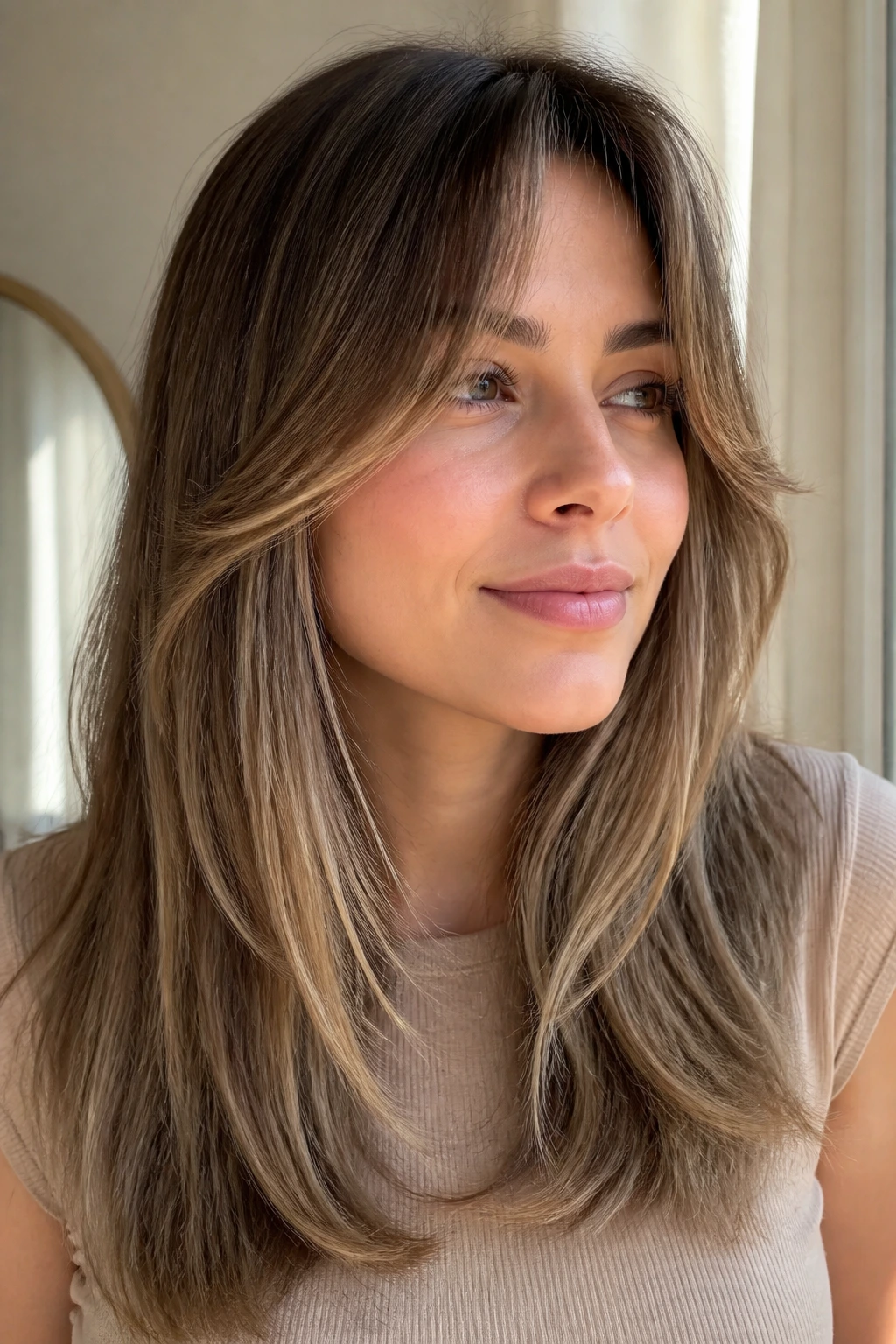
Curtain bangs can do more for thin hair than a lot of people expect. They break up the forehead, add movement around the face, and draw the eye to the lowlights at the cheekbone instead of the scalp. A smooth blowout on the bangs and front layers gives the rest of the style a stronger frame.
Wrap each side away from the face with a round brush or a large roller, then let it cool before you touch it. That cooling time matters. It sets the bend. If the bangs fall too neatly, they can expose the sparseness at the hairline. A little softness keeps the whole cut looking fuller.
17. Tucked-Under Bob
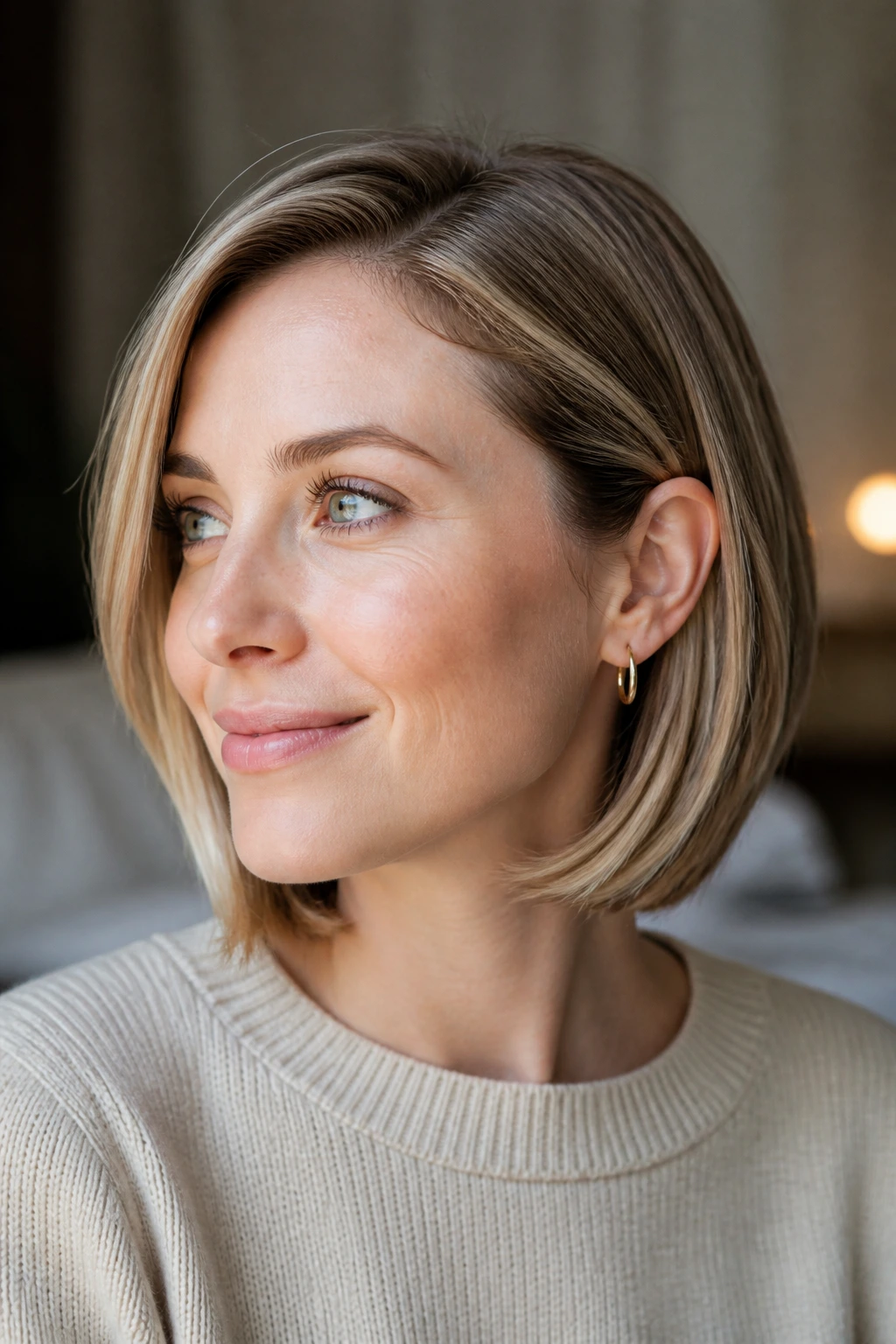
A tucked-under bob is quietly useful. It keeps the ends compact, makes the perimeter look solid, and lets lowlights hide inside the curve instead of stretching out into a thin line. On straight or slightly wavy hair, the shape looks neat without needing much effort.
Use a round brush or a flat iron to sweep the ends under by half an inch to an inch, depending on the length. Then tuck one side behind the ear if you want more asymmetry. That small shift keeps the style from feeling too uniform. Uniformity is the enemy of movement in fine hair.
18. Scarf-Wrapped Low Ponytail
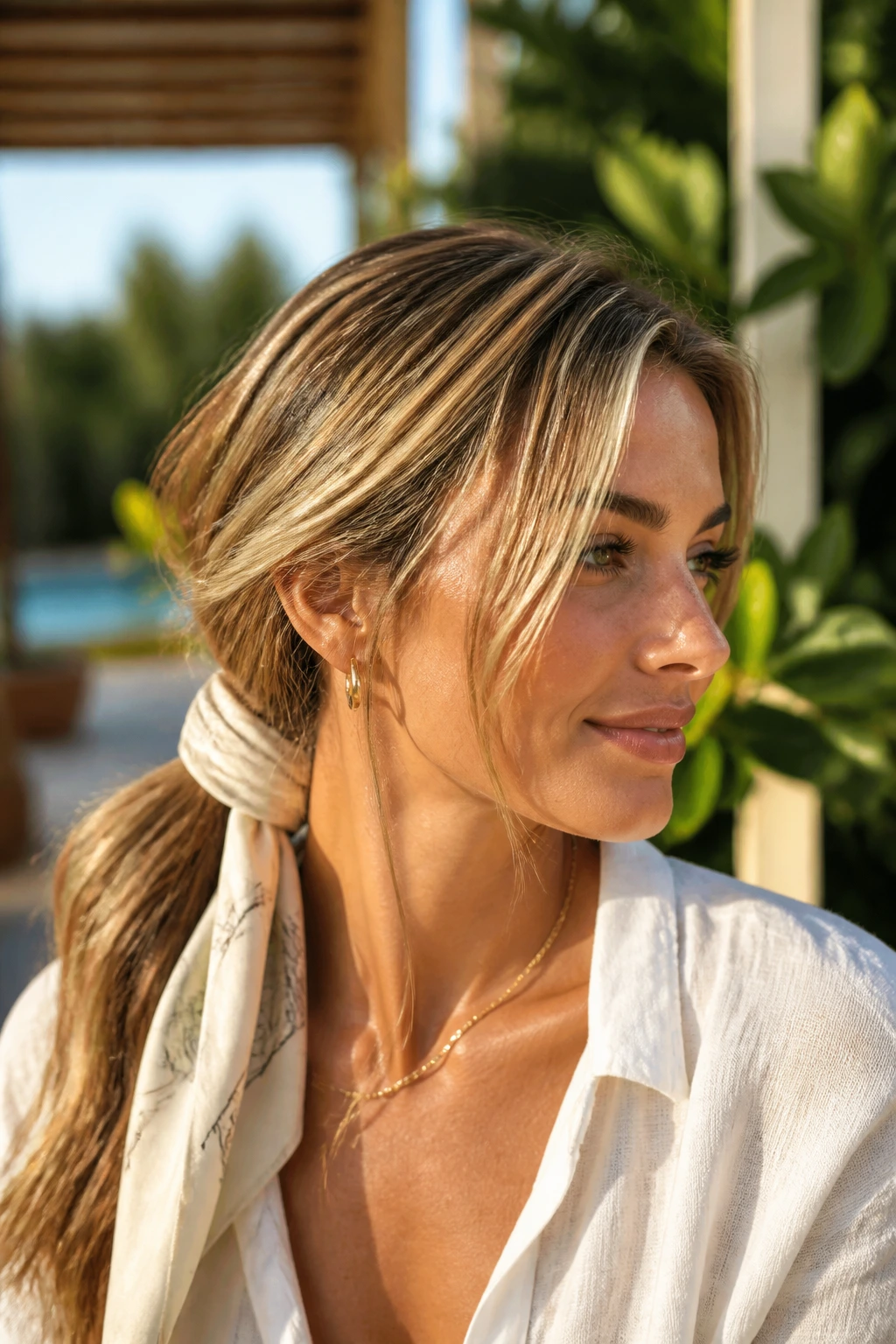
A scarf-wrapped ponytail is one of the easiest ways to make a simple style feel finished. It also solves a practical problem: if sunscreen is on the neck and behind the ears, you want hair that stays off that skin. A low ponytail does the job, and the scarf hides the elastic without adding much weight.
Choose a light scarf, not a bulky one, and tie it around the base of the ponytail after securing the hair. Leave the pony a little loose so the lowlights in the length still show. If the scarf keeps slipping, pin it under the pony before tying the knot. Tiny pin, big difference.
19. Halo Twist Around the Hairline
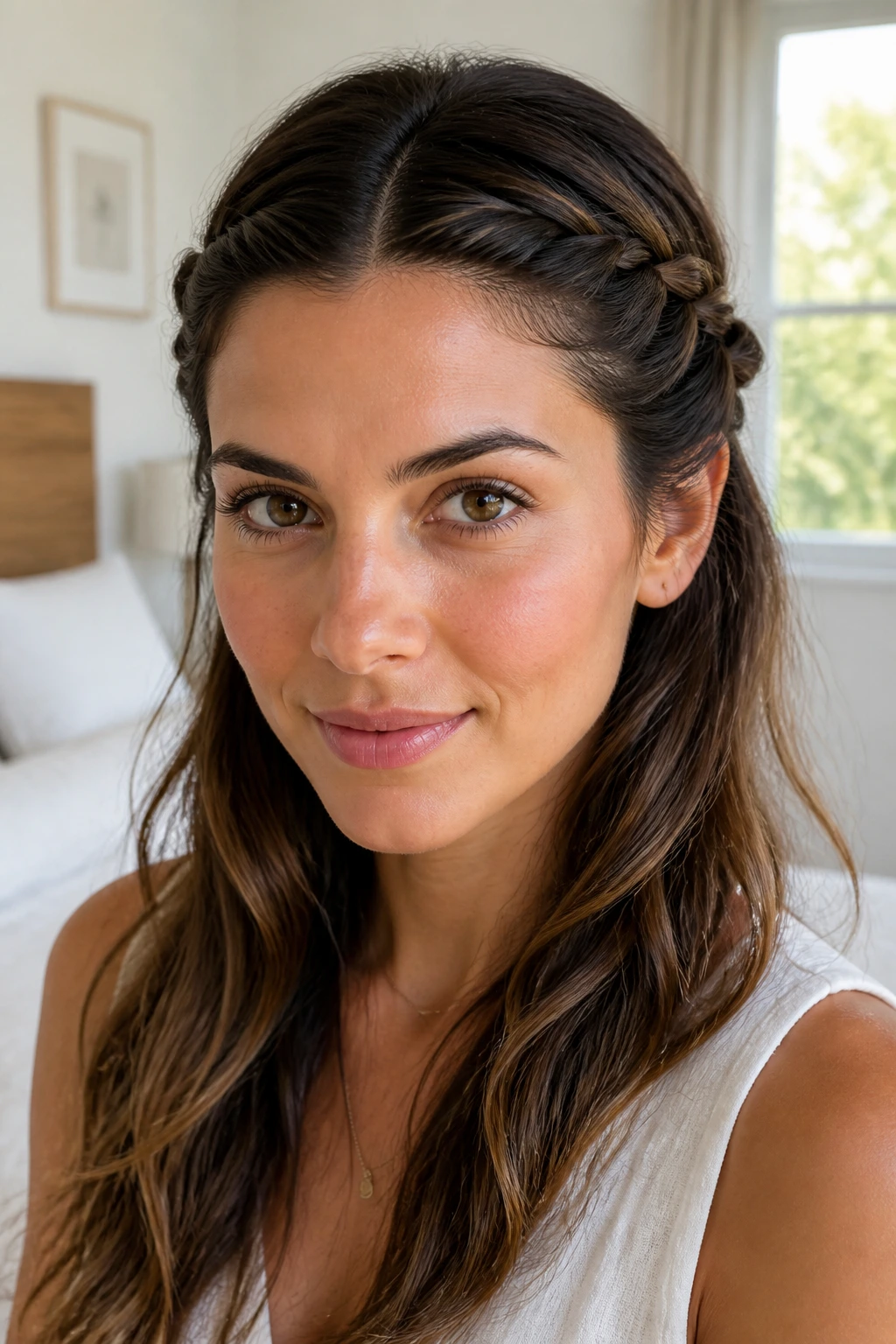
A halo twist is useful when you want the hairline clear but don’t want a full updo. Twist small sections along the temples and pin them back so they meet at the back of the head, leaving the lower hair loose or lightly tucked. The style creates a soft frame and makes the crown look fuller because the front sections are controlled.
It’s also one of the better styles for SPF-heavy days. The hair is off the skin, the temples stay open, and you don’t get flyaways sticking to sunscreen. If you have very fine hair, keep the twists small. Big twists can swallow the front section and look bulky in the wrong way.
20. French Twist with a Soft Crown
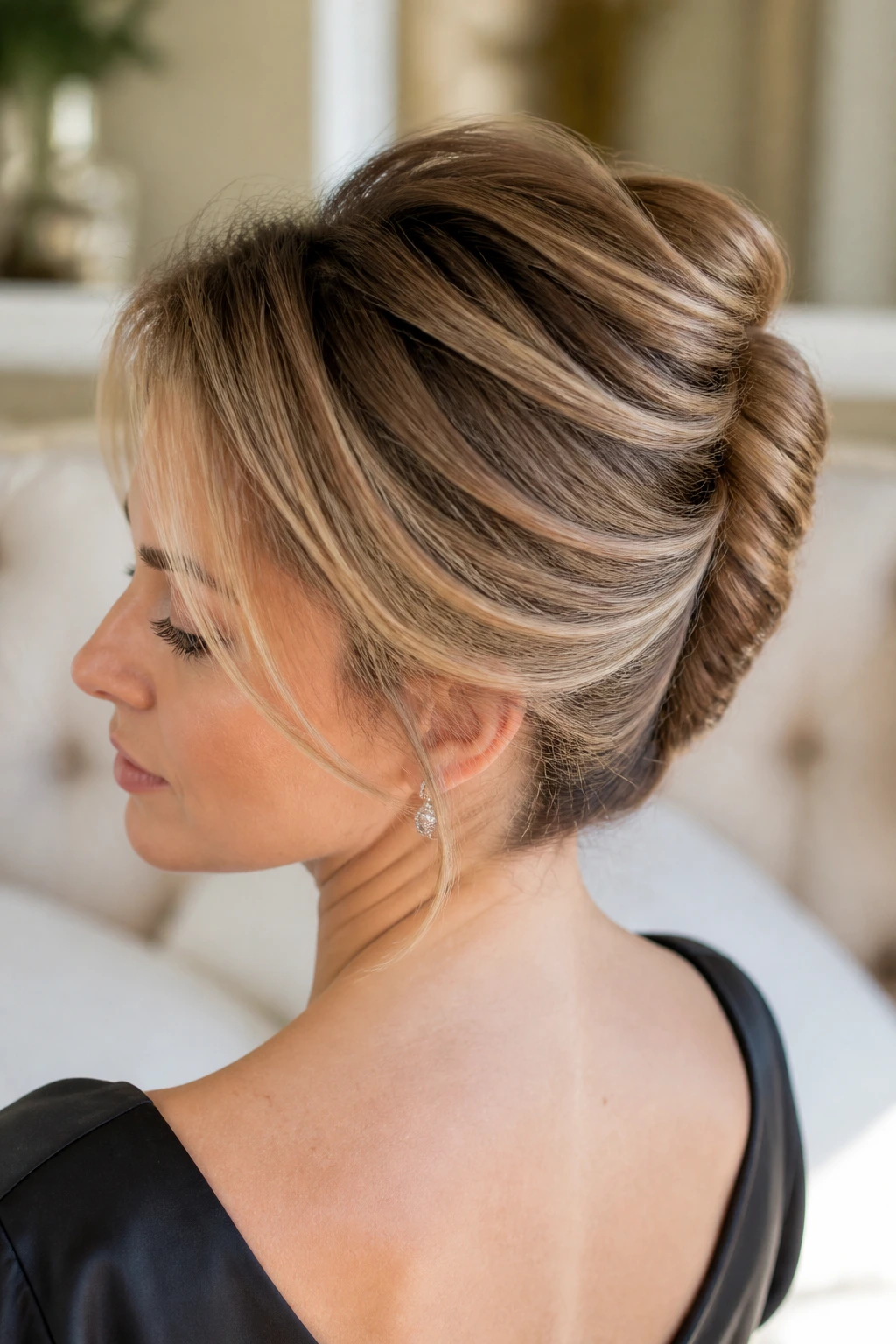
A classic French twist can work on thin hair if you leave a little lift at the crown before you roll it. That lift gives the style room, and the lowlights inside the twist create depth that a smooth finish alone won’t give you. It’s one of the most polished options here, but only if it stays soft.
Gather the hair slightly off-center, pinch the crown up with one hand, and roll the length upward before pinning it into place with U-pins. Don’t crush the top flat. That’s what makes the style look narrow. A little height at the crown keeps the whole head shape balanced.
21. Fishtail Side Braid
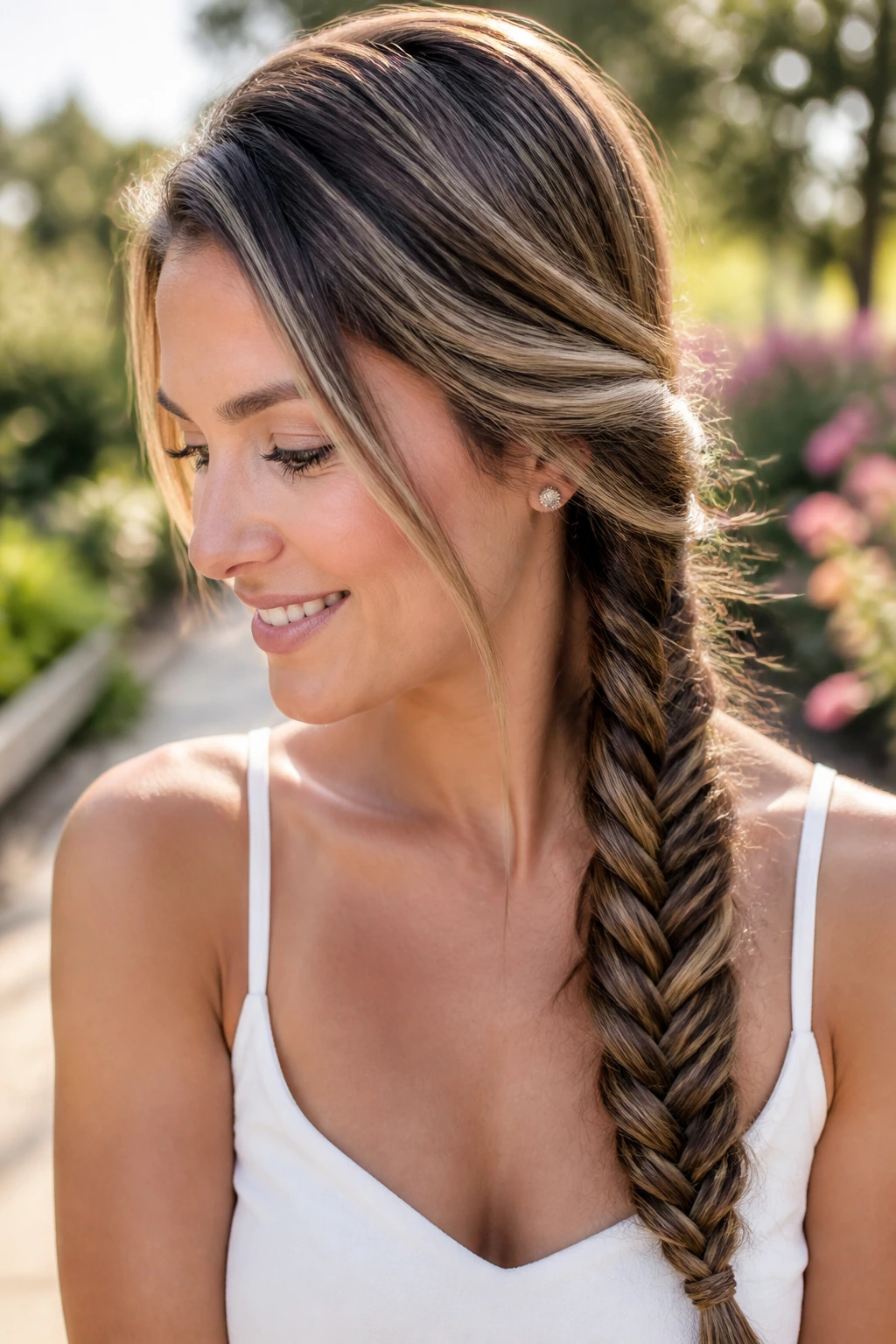
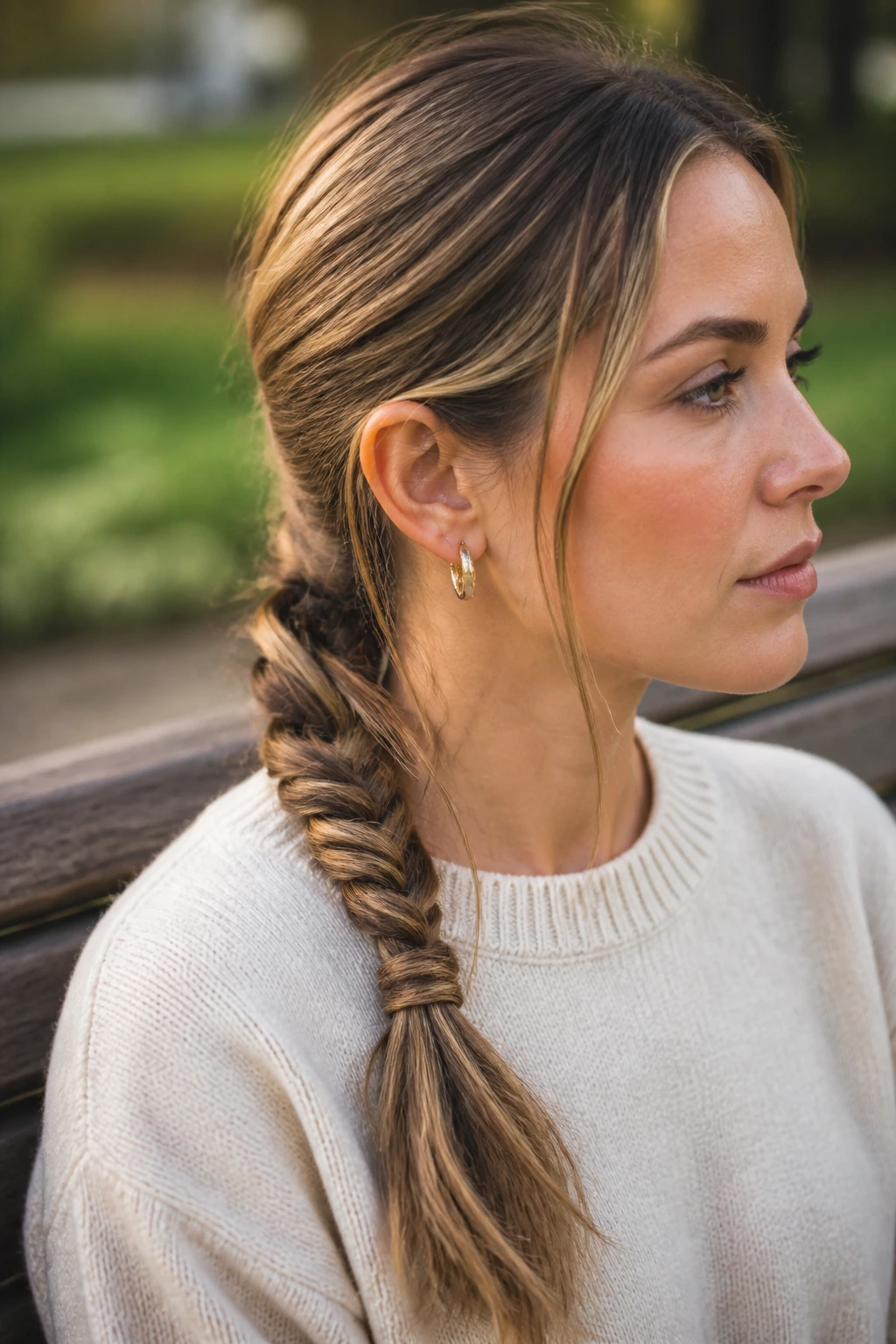
A fishtail braid looks complicated, but the real reason it works on thin hair is the pattern. The tiny crossovers create a lot of visual texture, and the lowlights show through every narrow section. Worn over one shoulder, it turns a simple braid into something with real depth.
Start with two sections, take a small piece from the outside of one section, and cross it over. Repeat slowly. Once it’s secured, pull the edges wider with your fingertips. The braid should look soft and slightly pulled apart, not stiff. A too-tight fishtail can end up looking thinner than the hair is.
22. Sleek Lob with Flipped Ends
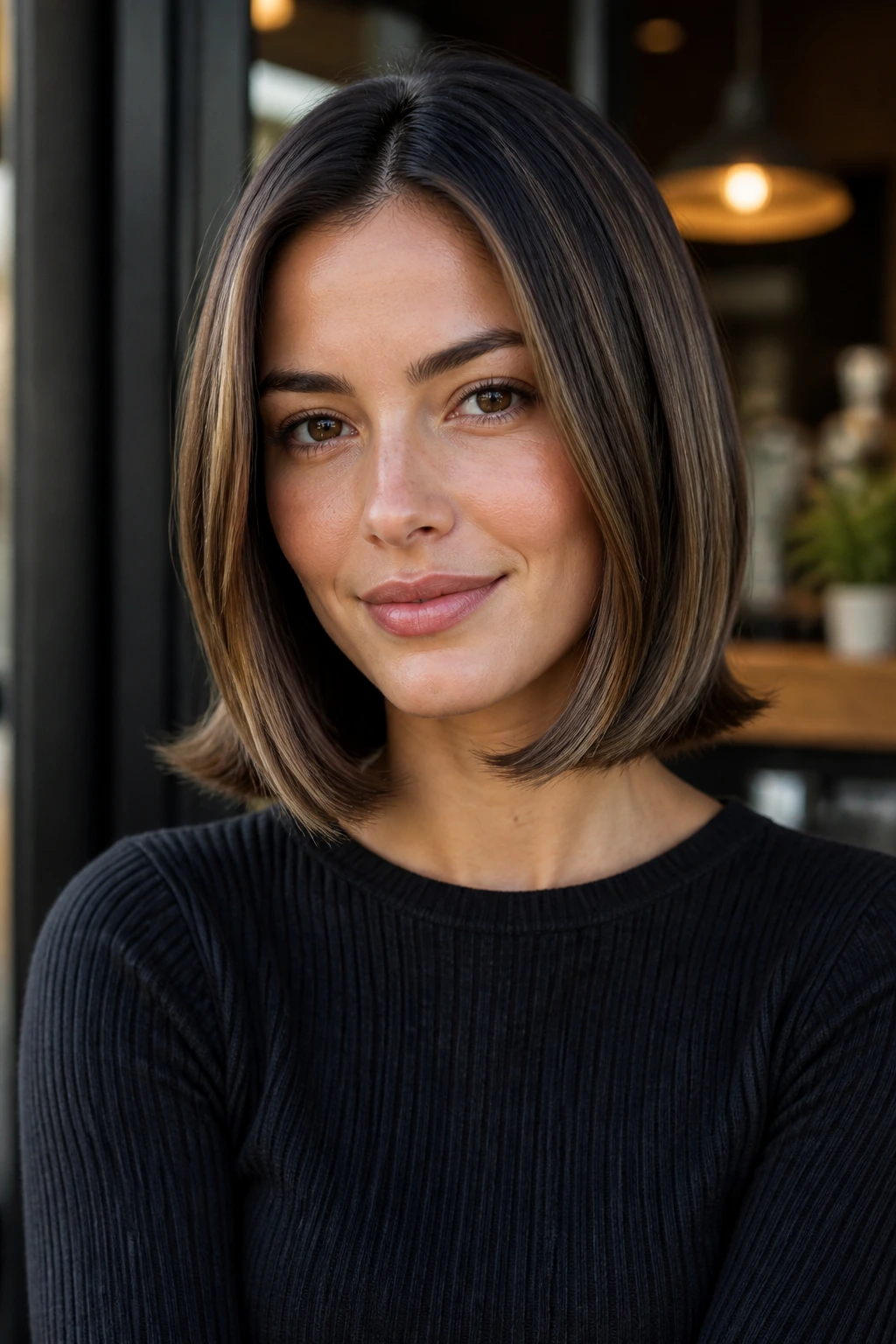
A sleek lob with flipped ends is a good answer for people who want clean lines but don’t want flat hair. The surface stays smooth, which makes the lowlights look glossy, while the flip at the ends adds a tiny bit of lift so the cut doesn’t hang dead straight.
Use a flat iron or round brush to turn the last inch or so outward. Keep the rest of the hair smooth and close to the head. That contrast is the point. If the whole style gets puffy, it loses its shape. If it stays too straight, the lowlights disappear into one narrow line.
23. Pinned-Back Wave Clips
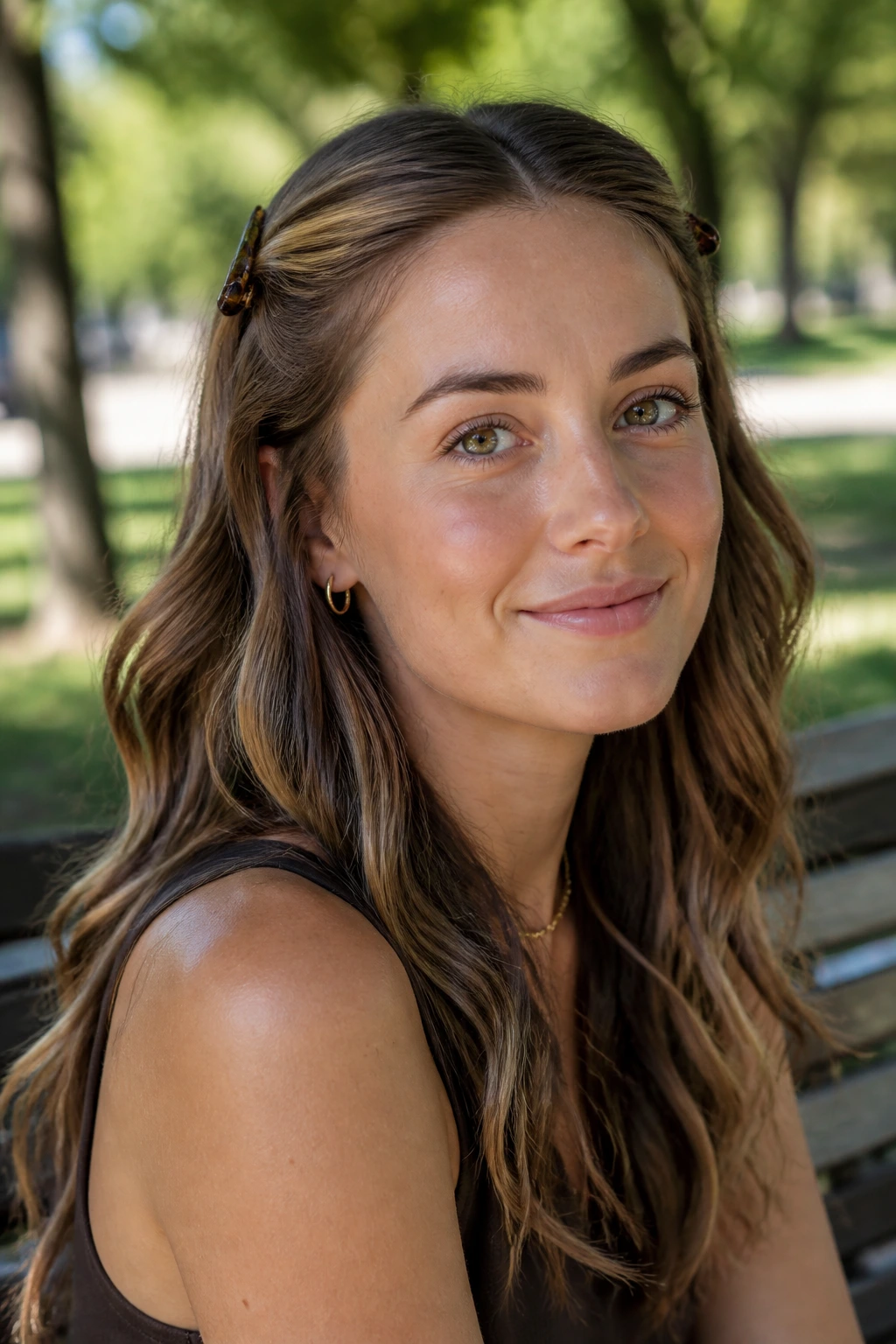
A pair of small clips can do more than people admit. Pinning back the sides of soft waves opens the face, keeps hair off sunscreen at the temples, and lets the rest of the length fall loose so the lowlights are visible. It’s quick, low-fuss, and easy to redo if the clips shift.
Pick clips that grip close to the head instead of heavy decorative ones that slide out. Pin back only the section near the ears and leave the top and back loose. That leaves enough motion for the waves to show. Too much pinning starts to flatten the whole shape, and thin hair really doesn’t forgive that.
24. Jaw-Length Bob with Inner Layers
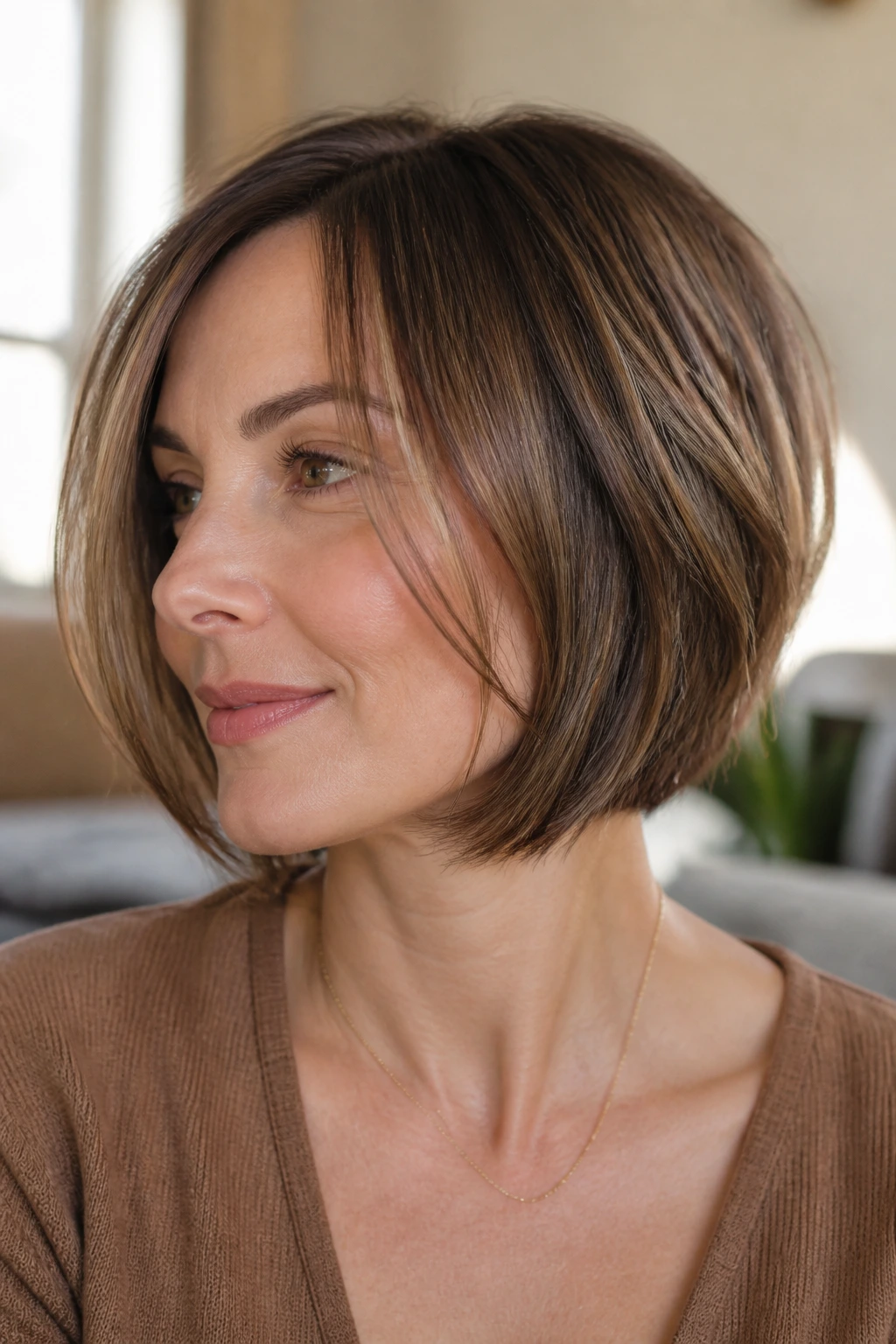
A jaw-length bob with inner layers is one of the smartest cuts for fine hair because the outside line stays full while the inside layers remove weight where you need movement. The result is a bob that swings a little instead of hanging like a sheet. Lowlights work here because they sit inside the cut and create shadow under the top layer.
Ask for hidden internal layers, not choppy ends. The perimeter should stay blunt enough to feel dense. If your stylist goes too heavy on the texture, the bob can start to fray at the edges. Keep the structure strong, then add movement with a quick bend at the bottom.
25. Half-Up Ponytail with a Lifted Crown
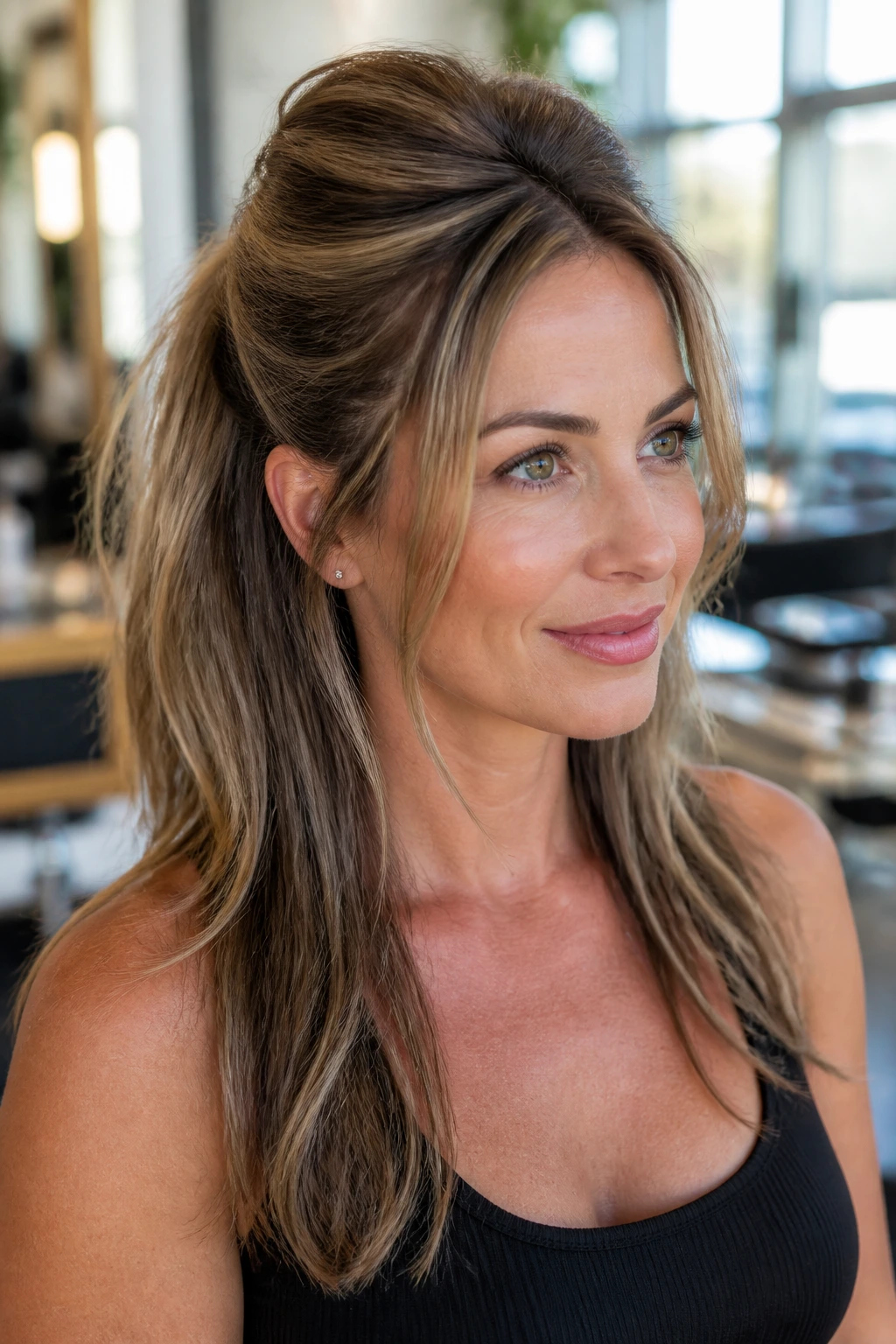
What if you want something easy that still looks styled? Pull up only the crown, leave the lower half loose, and keep the elastic small. A lifted half-up ponytail gives thin hair height at the top, keeps the lowlights in the loose length visible, and avoids the flatness that a full pony can bring.
Take the top section from temple to temple, tease the back of it once or twice, then secure it a little higher than the natural crown. Pull the top gently so it sits rounded, not tight. That softness matters. A hard pull exposes the scalp; a soft lift looks fuller and easier on the eye.
What Thin Hair Needs Most: Shape, Not More Product
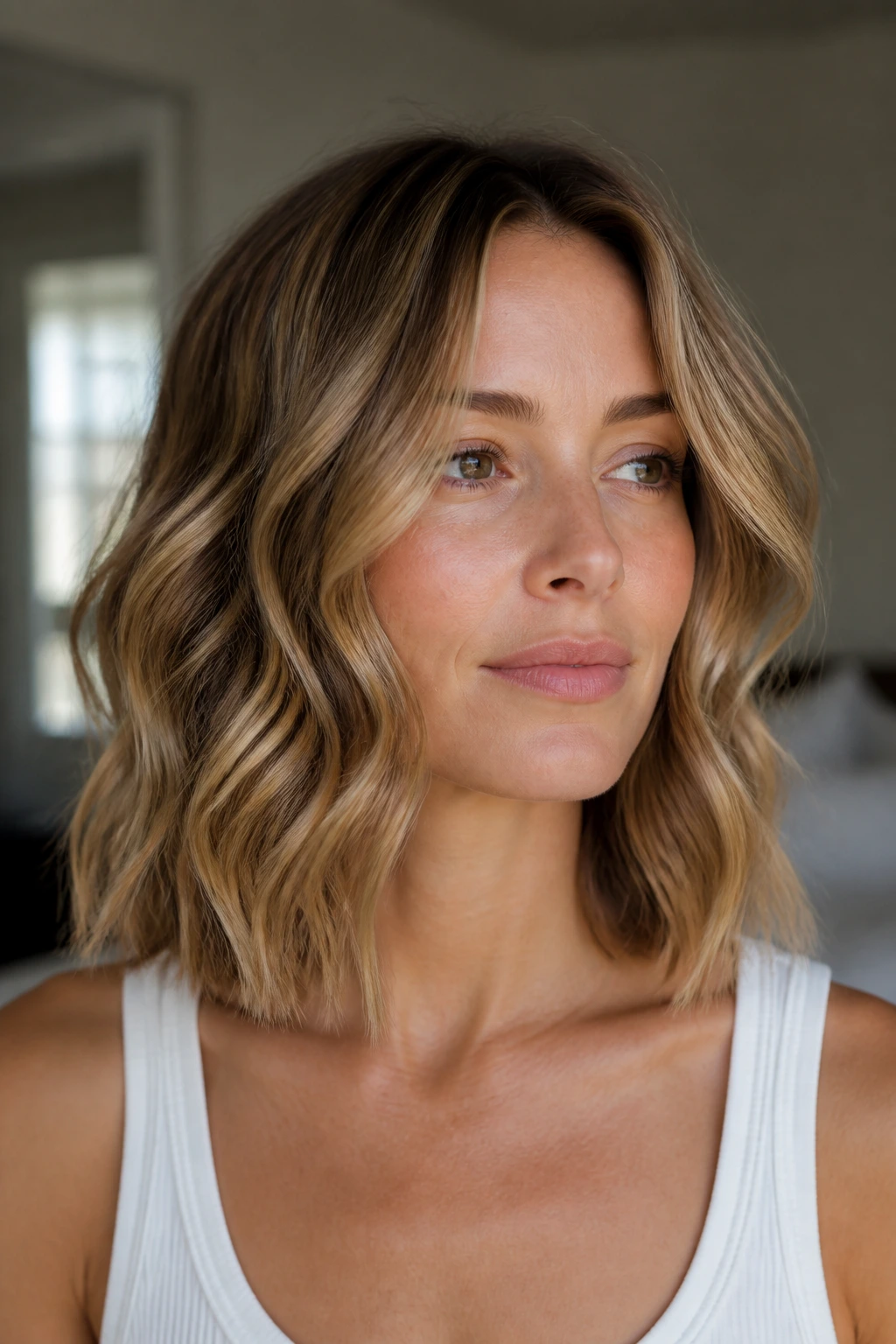
Thin hair usually doesn’t need another thick cream or a heavy root spray. It needs a shape that gives the eye a few places to rest. A side part, a twist, a braid, or a soft bend makes the lowlights look intentional because the hair has angles and shadows instead of one flat shine.
Sunscreen can complicate that a little. When SPF sits on the hairline or part, the roots can get slick, and slick roots are the enemy of volume. That’s why styles with lift at the crown, or styles that keep the face-framing hair off the skin, hold up better in real life. They keep the hair from collapsing into the scalp before lunch.
I’m also a fan of styles that don’t panic if they get a little messy. Fine hair often looks better on day one after it has moved around a bit. A braid loosens. A twist softens. A wave drops a half-inch. Good. That small shift usually makes the lowlights look deeper, not worse.
What to Ask For at the Salon and What to Buy at Home
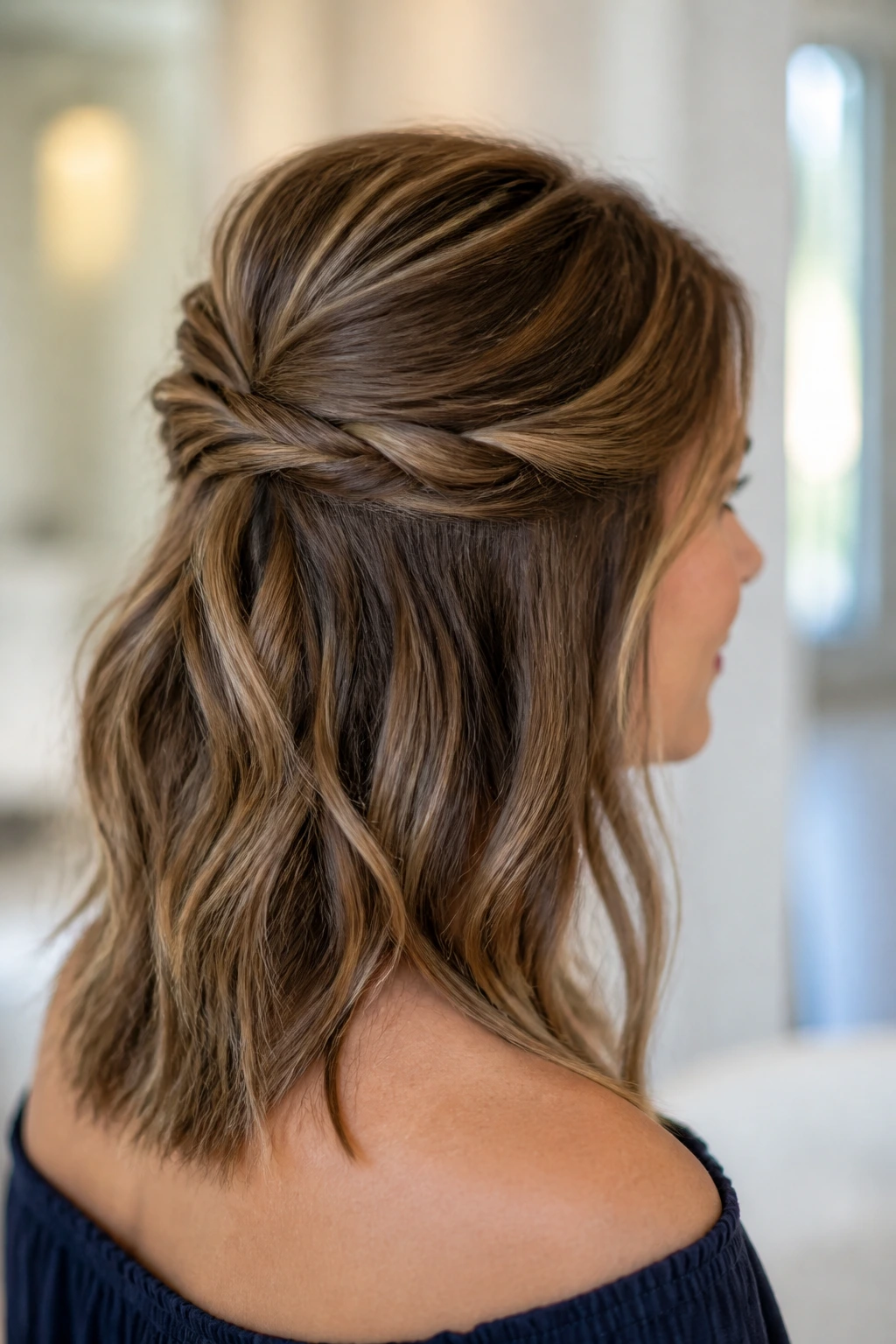
If you’re getting lowlights on thin hair, ask for fine placement, not chunky ribbons. Micro-weaves or babylight-sized slices tend to look softer and more natural on fine strands because they add depth without breaking up the hair into obvious stripes. I’d also ask for the darker pieces to sit under the top layer, around the nape, and behind the ears, where they create shadow without stealing brightness from the surface.
Shade choice matters too. A brunette who wants softer dimension usually does well with cocoa, chestnut, or mushroom brown tones. Blondes often look good with beige-brown or smoky caramel lowlights that are only one or two levels deeper than the base. Go too dark and the contrast gets harsh fast. On thin hair, harsh contrast can read as sparse, not dimensional.
At home, buy the products that help hair stay airy. Lightweight mousse gives structure before blow-drying, dry shampoo buys you a second day of lift, and a texturizing spray can make braids and buns hold without turning them crunchy. A UV-protectant hair mist is useful if your hair spends time in direct sun, and a color-safe shampoo helps keep lowlights from fading muddy. Skip the heavy oils near the roots. They’re too much for fine hair, and they’ll flatten the whole point of the style.
Tools That Actually Help Fine Strands Hold a Style
- Tail comb: Lets you redraw parts cleanly and lift a small crown section without tearing at fine strands.
- 1-inch curling wand or iron: Gives a soft bend instead of a bulky curl, which is usually the right scale for thin hair.
- Small clear elastics: Best for bubble ponies, half-ups, and mini braids because they disappear in fine hair.
- Bobby pins with a decent grip: Use the crimped kind or the ones with a little tension; flimsy pins slide right out.
- Duckbill clips: Helpful for setting root lift while hair cools after blow-drying.
- Lightweight mousse: Adds memory and shape before heat, and it tends to work better than thick cream on fine hair.
- Texturizing spray: Gives braid and twist styles some hold; use it on mid-lengths, not the scalp.
- Dry shampoo: Great for day two and also good on clean hair if you need a little grip at the roots.
- Silk scarf or pillowcase: Keeps overnight friction low, which matters when the hair is already fine and prone to flattening.
How to Wear These Looks with Sunscreen and Sun Hats
Scalp first: If you apply sunscreen along the part, hairline, or temples, give it a few minutes to settle before you finish styling. A wet or greasy root can break the hold on fine hair fast, so let the SPF sink in before you pin, twist, or brush.
Hat days: Low buns, side braids, tucked bobs, and low ponytails sit better under a brim than tall crowns do. If you know you’ll be wearing a hat, keep the volume lower and save the big lift for no-hat days. A high crown under a cap tends to flatten into a strange ridge.
After the sun: If the roots start to look shiny, tap in a little dry shampoo and wait a minute before brushing. Don’t keep adding oil or leave-in cream near the hairline. That’s how a decent style turns stringy by midafternoon.
Color care: Sun can make lowlights look warmer or duller faster than people expect. A UV spray or a hat helps, but so does keeping the style off the neck and face when the sun is strong. Hair that isn’t soaked in sweat and sunscreen tends to hold its shape longer.
Small Styling Tweaks That Add More Lift Without Crunch
Root lift: Blow-dry the roots in the opposite direction of your part for 20 to 30 seconds, then flip the part back once the hair cools. That tiny reset gives fine hair a little lift without requiring a mountain of spray.
Texture: Curl only the middle of the hair and leave the ends straighter. On thin hair, that contrast makes the length look thicker because the eye sees a fuller outline instead of a skinny, uniform rope.
Finish: Use your hands or a soft brush to smooth only the top layer. Leave the interior a little messy. The hidden mess is what keeps the style from going limp.
Color boost: Put the most visible bends where the lowlights sit. Waves and braids show off darker ribbons far better than straight ends do, so work the texture where the color has something to show.
Common Mistakes That Make Thin Hair Look Flatter
- Using heavy cream at the roots: This is the fastest way to kill lift. Fine hair gets limp before the style even sets, so keep rich products away from the crown.
- Making every style too tight: Tight ponytails, tight braids, and tight buns expose scalp and shrink the silhouette. Leave a little slack and the hair reads thicker.
- Going too dark with lowlights: Dark ribbons that are too deep can look harsh on thin hair. Ask for a softer step down in color so the hair still looks dimensional.
- Smoothing the crown too hard: A perfectly slick top makes the head look smaller. A tiny bit of root lift gives the style space to breathe.
- Ignoring the hairline after sunscreen: If SPF is sitting thick at the temples, hair will slip. Let the product settle, then pin or twist the front sections back.
- Brushing out waves too soon: If curls are still warm, they’ll stretch into limp bends. Let them cool first or the whole style drops.
Adaptations for Different Lengths and Textures
Short-Crop Edit: If your hair is above the chin, lean on the pixie sweep, mini claw-clip twist, or pinned-back wave clips. These styles keep the shape compact and stop short fine hair from looking unfinished.
Wavy-Hair Version: If you already have a loose wave, skip the iron and work with what’s there. A bit of mousse and a gentle scrunch is enough. Overstyling wavy fine hair usually makes it look frizzy instead of fuller.
Straight-Hair Version: Straight hair often needs one extra bend to wake up the lowlights. A 1-inch wand, Velcro rollers at the crown, or a light set of pin curls will give you more visual depth without forcing a curl pattern that doesn’t belong.
Humidity-Rescue Version: If the air is thick and damp, choose braids, twists, or a low bun with loose edges. They hold better than fully blown-out styles, and they don’t need as much rescue spray by midafternoon.
Hat-Day Version: For days under a cap or brim, go low and soft. A tucked bob, low pony, or scarf-wrapped style keeps the head shape clean and avoids the flattened crown that happens when a hat smashes a tall style down.
Keeping the Style Alive Overnight and Through the Week
Most of these styles look best on day one, but several hold up fine into day two if you treat them gently. Braids, buns, and pinned styles can often be refreshed in 5 to 10 minutes with a mist of water, a touch of dry shampoo at the roots, and a couple of new pins. Heatless pin curls usually need a full set the night before and can be worn for a day or two after if you don’t run a brush through them.
If you sleep on thin hair without protection, it tends to flatten. A silk pillowcase helps, and a loose silk scarf can keep twists and waves from getting mashed. That matters even more if you’ve used sunscreen or sweat around the hairline, because the roots can already be a little heavy.
For color upkeep, lowlights usually stay sharper if you use color-safe shampoo and skip scorching hot water at the scalp. If the darker pieces start to turn dull or brassy, a gloss or toning service can bring them back into line before the whole look feels muddy. The styles in this article depend on shadow. Keep the shadow clean.
Questions People Ask Before They Book the Appointment
Do lowlights make thin hair look thicker or thinner?
Done well, they make thin hair look thicker because they create shadow and break up the scalp line. The key is soft placement and a shade that isn’t too dark.
What haircut works best with lowlights on fine hair?
Blunt bobs, collarbone lobs, jaw-length bobs, and soft pixies usually work well because they keep the outline strong. Heavy layers can look airy in a bad way if the hair is already sparse.
Should thin hair use a middle part or a side part?
A side part often gives finer hair more lift at the crown and hides a little scalp. A center part can still work if your hair has density and you style the roots with some body.
Can I wear sunscreen without ruining my hairstyle?
Yes, but let the sunscreen settle before you finish styling. If the hairline gets slick, keep the front sections pinned back, tucked, or braided so they don’t stick to the skin.
Which style here is easiest for beginners?
The low ponytail with a lifted crown, the pinned-back wave clips, and the deep side part are the least fussy. They give the most return for the least skill.
How do I keep braids from looking tiny?
Braid the hair a little loosely, then widen the outer edges with your fingers after you tie it off. That small adjustment makes the braid look fuller without destroying the pattern.
Are tight buns bad for thin hair?
Not bad, but they can expose the scalp and pull the silhouette narrow. A softer bun with loosened edges usually looks better on fine strands.
How often should lowlights be touched up?
Whenever they start to fade into a flat brown or yellow tone, usually before the dimension disappears completely. A gloss or refresh often brings them back without needing a full color change.
Soft Shape, Real Dimension
The nicest thing about lowlights on thin hair is that they do part of the visual work before the styling even starts. Once the cut or style has a little movement, the darker pieces stop reading as streaks and start reading as depth. That’s the whole trick. Shadow, lift, and a little slack around the face.
If you want the easiest place to begin, pick one style that matches your day, not your fantasy. A deep side part, a soft wave lob, or a low ponytail with a lifted crown will usually give you the most shape for the least fuss. Keep the product light, keep the crown alive, and let the lowlights do what they’re good at.
The next time your hair wants to lie flat, give it one small bend, one small twist, or one small part change before you reach for another can of spray.