



A stacked inverted bob on curly hair can look razor-clean or puffed up in the wrong places, and babylights are often the difference between the two. The cut gives you shape; the color gives you definition. Together, they turn a curly bob from a single dark mass into something that shows off every bend, coil, and turn.
The back is where the whole thing lives or dies. If the nape is too long, the stack disappears and the silhouette turns boxy. If it’s too short or too aggressively layered, curls can spring up like a stubborn little helmet. Babylights help because they sketch the outline of the haircut in fine threads instead of harsh stripes, so the curl pattern still looks like curl pattern — just better behaved.
What makes these 25 stacked inverted bobs for curly hair with babylights worth a close look is how much room they give you to adjust. Some lean sleek and polished. Some lean soft and airy. Some keep the front grazing the jaw, while others let the length hang a little longer and take the pressure off shrinkage. The details matter more than the label.
Why These Curly Bob Ideas Deserve a Spot on Your Shortlist
-
The stack builds shape without begging for straightening: A curly bob with a lifted back keeps the nape from collapsing flat, even when the curls dry looser than expected.
-
Babylights stop the cut from reading as one dark blob: Fine highlights catch on the bends of the curl and make the layers visible from the first row to the back row.
-
You can tune the shape to your curl density: Dense curls need less bulk at the back; finer curls usually need more careful stacking so the haircut doesn’t look sparse.
-
The grow-out is kinder than a blunt bob: When the front stays longer and the babylights are woven softly, the style can stretch an extra few weeks without looking neglected.
-
There’s room for warmth, cool tones, or a strict natural finish: Caramel, mocha, beige blonde, copper, and low-contrast brunettes all work here if the placement respects the curl pattern.
-
It behaves better in humidity than a flat straight bob: A little lift and dimension make frizz look intentional instead of accidental.
1. Honey-Mocha Nape Stack
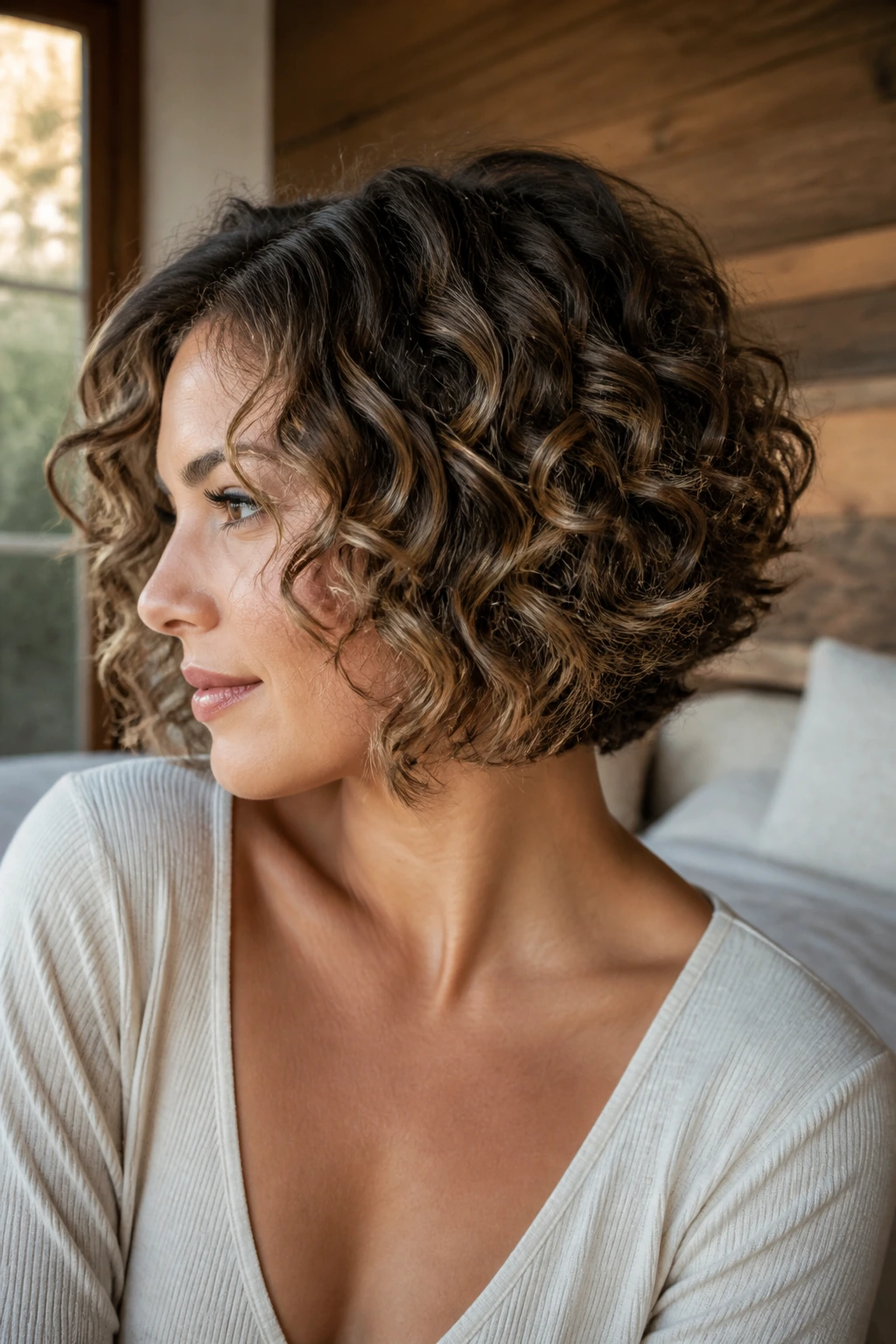
This version is the workhorse of the bunch. The back sits close to the neck, the front angles down softly toward the jaw, and the babylights sit in a honey-mocha ribbon that keeps the brown base from going flat. On medium curls, it has a tidy shape without feeling stiff.
What I like here is the restraint. Too much light in the back would blow the whole illusion apart; too little and the stack disappears after one humid afternoon. Ask for babylights concentrated around the crown, temple, and the outer layer of the front pieces. That way the curls catch the light where the eye lands first.
A cut like this works best when the stylist leaves enough length in the front for shrinkage. If your curls bounce up an inch or more, the jawline should be your visual target, not your final dry length. That tiny bit of planning saves a lot of regret.
2. Copper Ribbon Angle
Copper babylights change everything. They warm up dark curls fast, and on an inverted bob they create a little flicker through the front angle that reads lively without turning loud. The back stays stacked and dark, so the copper never feels scattered.
This one suits curl patterns that hold a clean spiral or a loose S-wave. The brightness wants movement. If the hair is too heavily layered, the copper threads can break apart and look stripey instead of fine. Keep the lights thin, keep them around the face and top half, and let the nape stay mostly shaded.
The shape itself should be a touch longer in the front than the classic chin bob. Copper has a way of pulling attention forward, and a longer front keeps the whole cut from feeling too sudden. It’s a good choice when you want a bob that looks deliberate from every angle.
3. Champagne Ringlet Bob
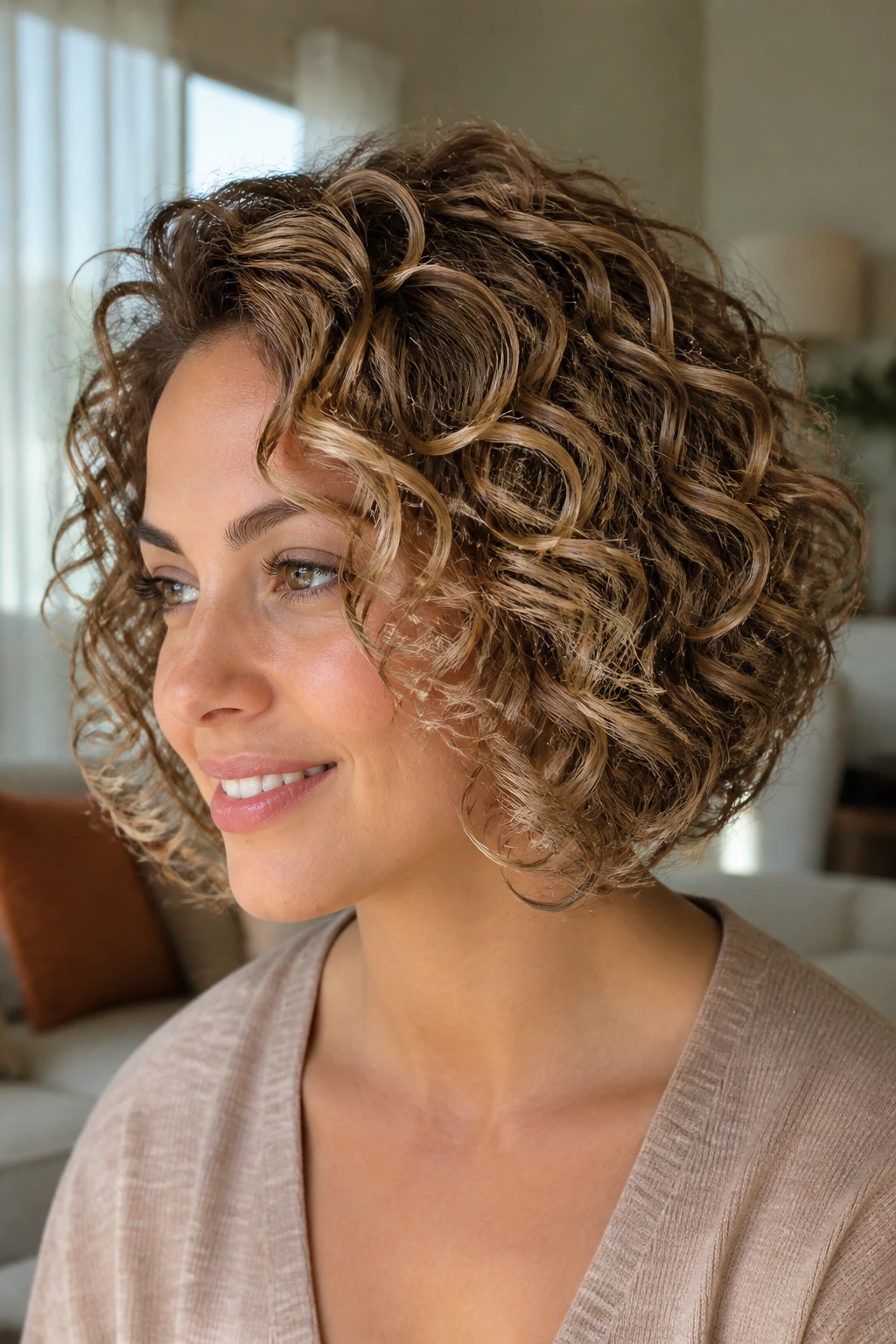
Champagne babylights on a dark base can look almost delicate when the curls are tight and springy. This cut depends on precision: stacked at the back, rounded through the middle, with a front line that brushes the chin instead of stabbing into it. The light pieces sit in the surface layers so each ringlet flashes a different tone.
Where the brightness belongs
- Keep the finest babylights near the part line and temple.
- Leave the underlayer darker so the curl mass keeps its depth.
- Use a beige-blonde toner rather than a chalky pale one.
- Ask for soft ends, not blunt corners.
That last point matters. Champagne tones look odd when the shape is harsh. The sweetness of the color wants a little curve. On ringlets, that curve can be tiny, almost invisible, but it keeps the bob from feeling hard-edged.
4. Mushroom Brunette Stack
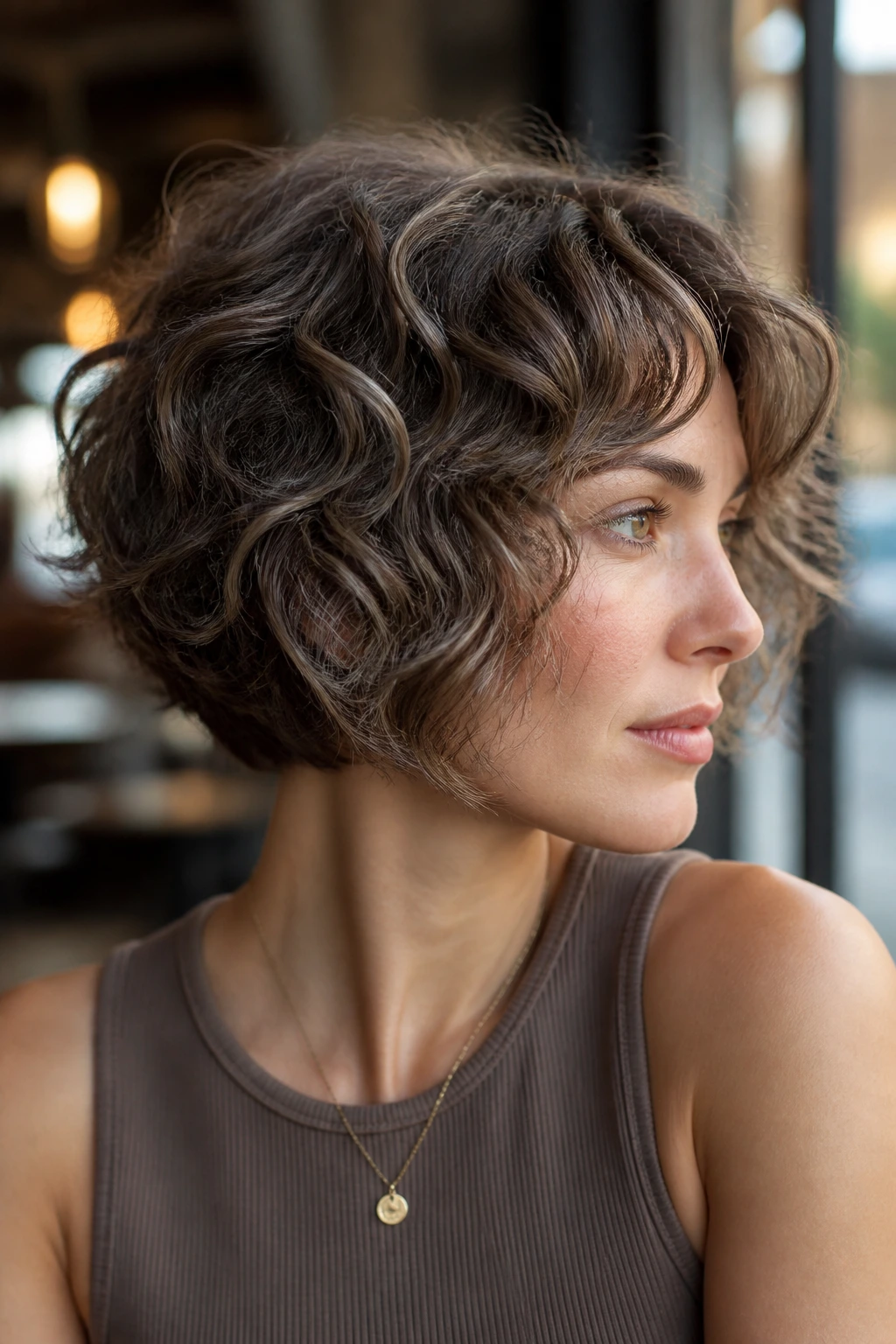
Cool brunettes are underrated. A mushroom-brown base with ash babylights can make curly hair look expensive in the plainest, least fussy way possible. The stacked back gives the silhouette a little spine, while the ashy dimension keeps the curls from reading heavy.
This is the cut I’d point to when someone wants polish but not warmth. The babylights should be subtle enough that you notice the shape before you notice the color, then the color reveals the shape second. That delayed effect is the whole trick.
It also works nicely on thicker curls because the cooler tones tame visual bulk. The back should be layered enough to rise, but not so much that the crown becomes airy and thin. If the curls are dense, the stylist can leave more weight in the internal layers and let the color do some of the lifting.
5. Caramel Face-Frame Inversion
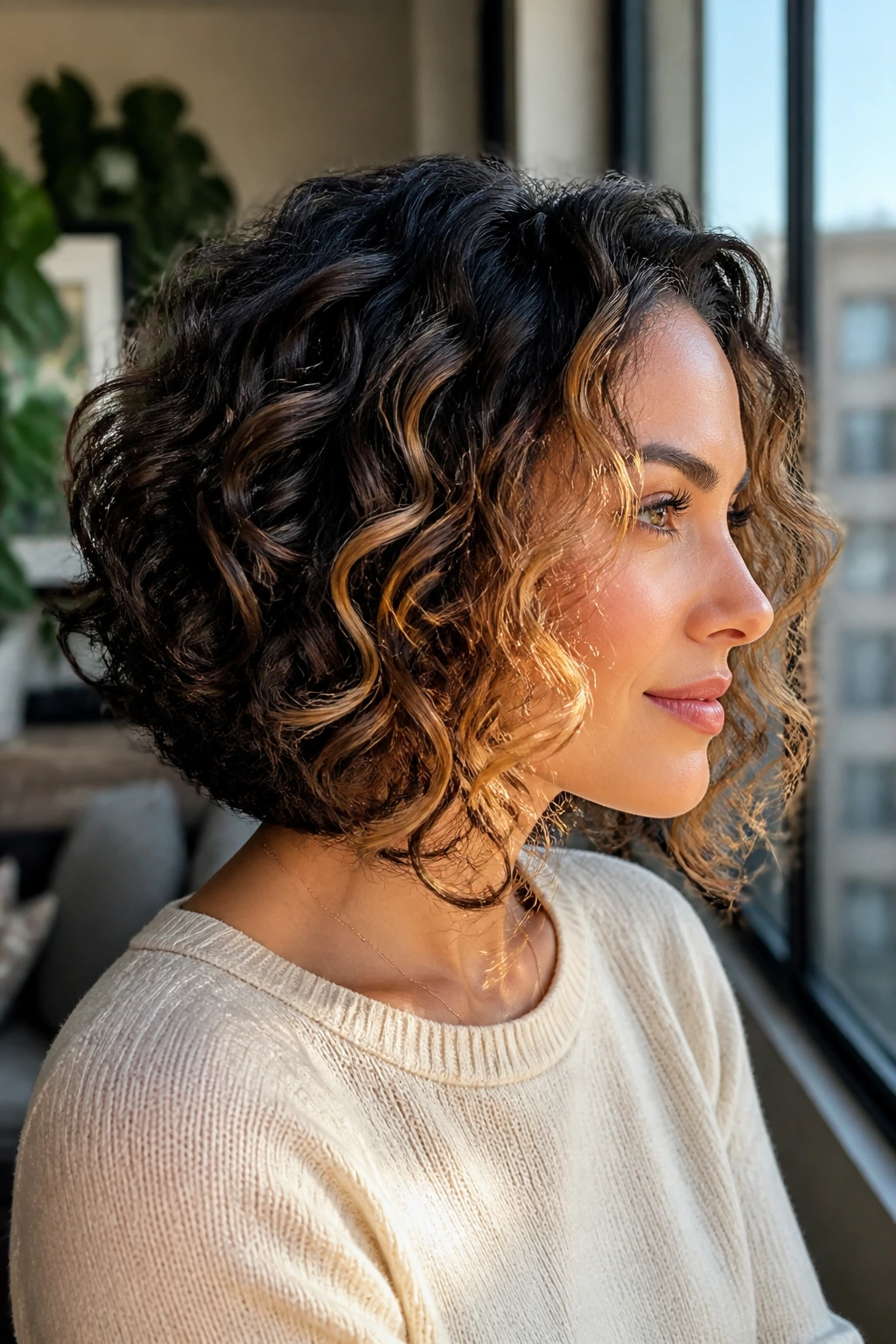
Caramel babylights around the face are a clever move when you want the bob to feel softer. The back can stay darker and more stacked, while the front gets those warmer threads that brighten the cheeks and jaw. It’s a good cheat for anyone who wants a curly bob to feel a little friendlier.
The angle should be noticeable here. Not dramatic in a sharp-edged, photo-shoot way — just enough to show the transition from short back to longer front when the curls settle. The face-framing pieces should start where the cheekbone begins to matter. Too high and the cut can look patchy; too low and the brightness gets hidden.
This is one of those styles that benefits from a side glimpse. When the curls swing forward, the caramel catches on the outer curve and makes the bob look fuller than it really is. Nice little trick. Nothing flashy.
6. Deep Side-Part Lift Bob
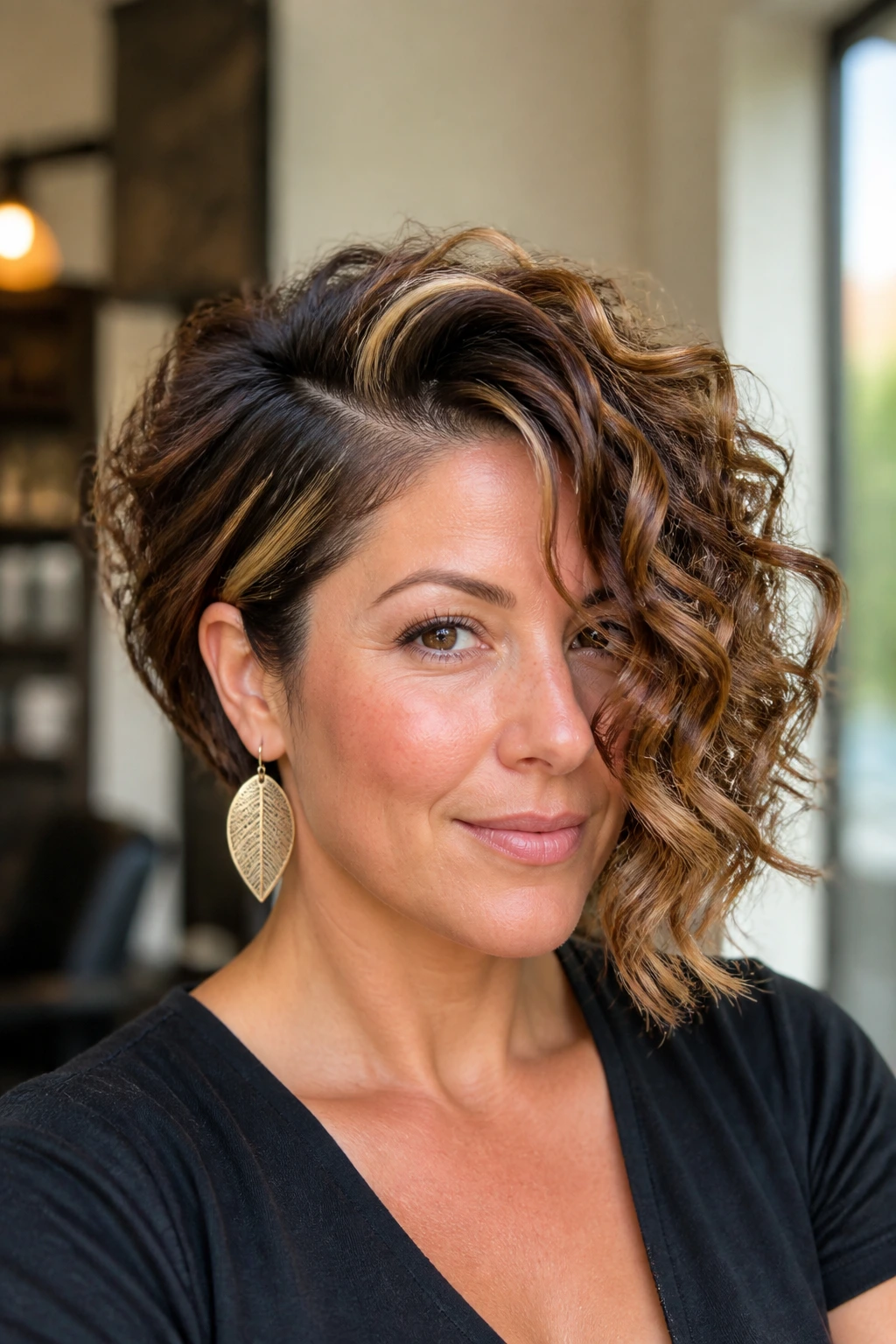
A deep side part changes the mood of an inverted bob immediately. The shorter side lifts at the root, the longer side drapes, and the babylights can be woven more densely on the visible side to exaggerate the swing. The result is a bob that looks more sculpted than symmetrical.
If your curls tend to fall flat at the crown, this shape earns its keep. A side part gives one side permission to rise, and the stack in the back stops the whole thing from sliding into a triangle. Keep the front longer on the heavier side by a good inch or two; that extra drop helps the cut keep its angle after the curls dry.
I like this version on people who wear glasses or bold earrings. The asymmetry gives those accessories something to play against. And yes, it still works with babylights — especially when the lights are concentrated along the part and the front ridge of the haircut.
7. Curly Fringe Stack
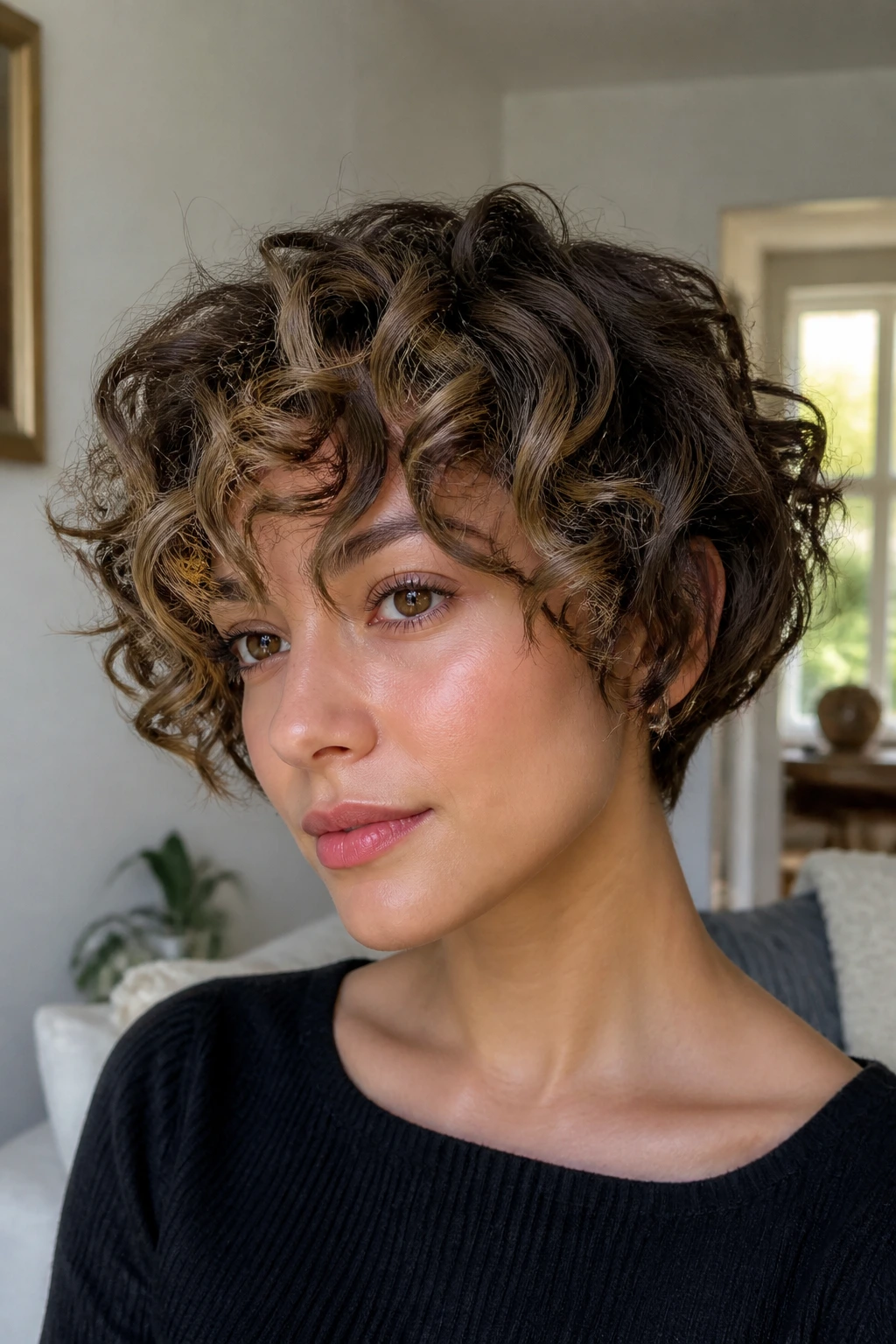
Curly bangs are not for the timid, but they’re excellent on the right bob. A stacked inverted shape with a fringe can look playful and sharp at the same time, especially when the babylights sweep across the bangs in tiny, woven threads. The trick is balance: the fringe should echo the curl pattern, not fight it.
The back stays compact, almost tucked in, while the front pieces blend into the fringe so the transition doesn’t feel chopped. I’d avoid a heavy, opaque bang here. It needs space to move. If the curls are tight, a shorter fringe that lands above the brows can work; if they’re looser, a curtain-style curl fringe is easier to live with.
This one has a little attitude. Not a bad thing. Just a bob that knows it’s interesting.
8. Rounded Nape Bob
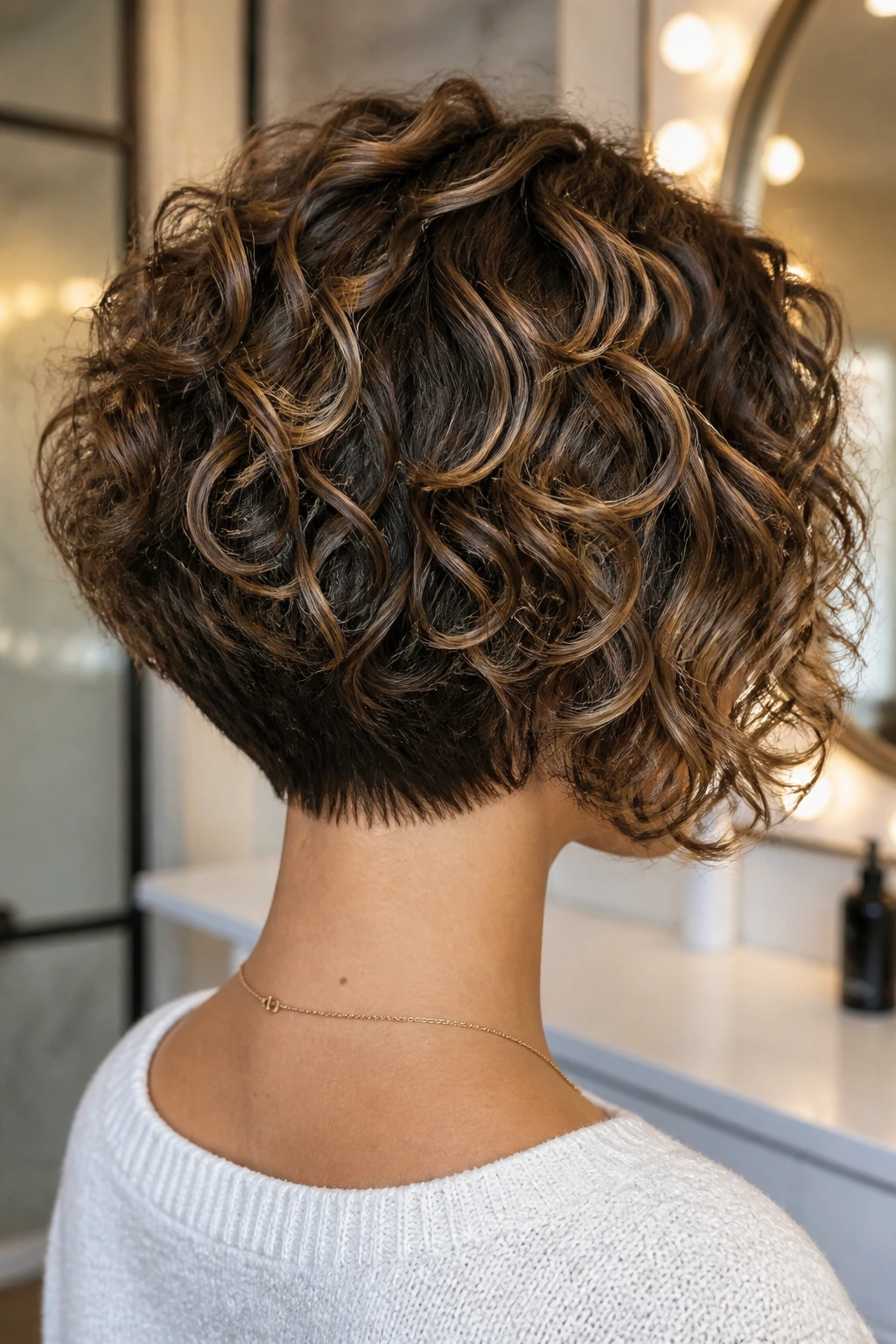
A rounded nape makes the back of the head look cleaner, and on curly hair that matters more than people think. Instead of letting the back puff outward at the base, the stack follows the natural curve of the skull. The babylights then trace that curve and make the shape obvious even when the curls are loose.
This version is especially useful for dense hair that likes to expand. Too much bulk in the nape turns a bob into a mushroom cap fast. A rounded stack removes that risk. The front can still be angled, but the back line should feel tucked, not choppy.
It’s also a strong choice for anyone who wears the hair behind one ear a lot. The silhouette stays tidy on the exposed side. Small thing. Makes a big difference.
9. Bronze Glow Shoulder Bob
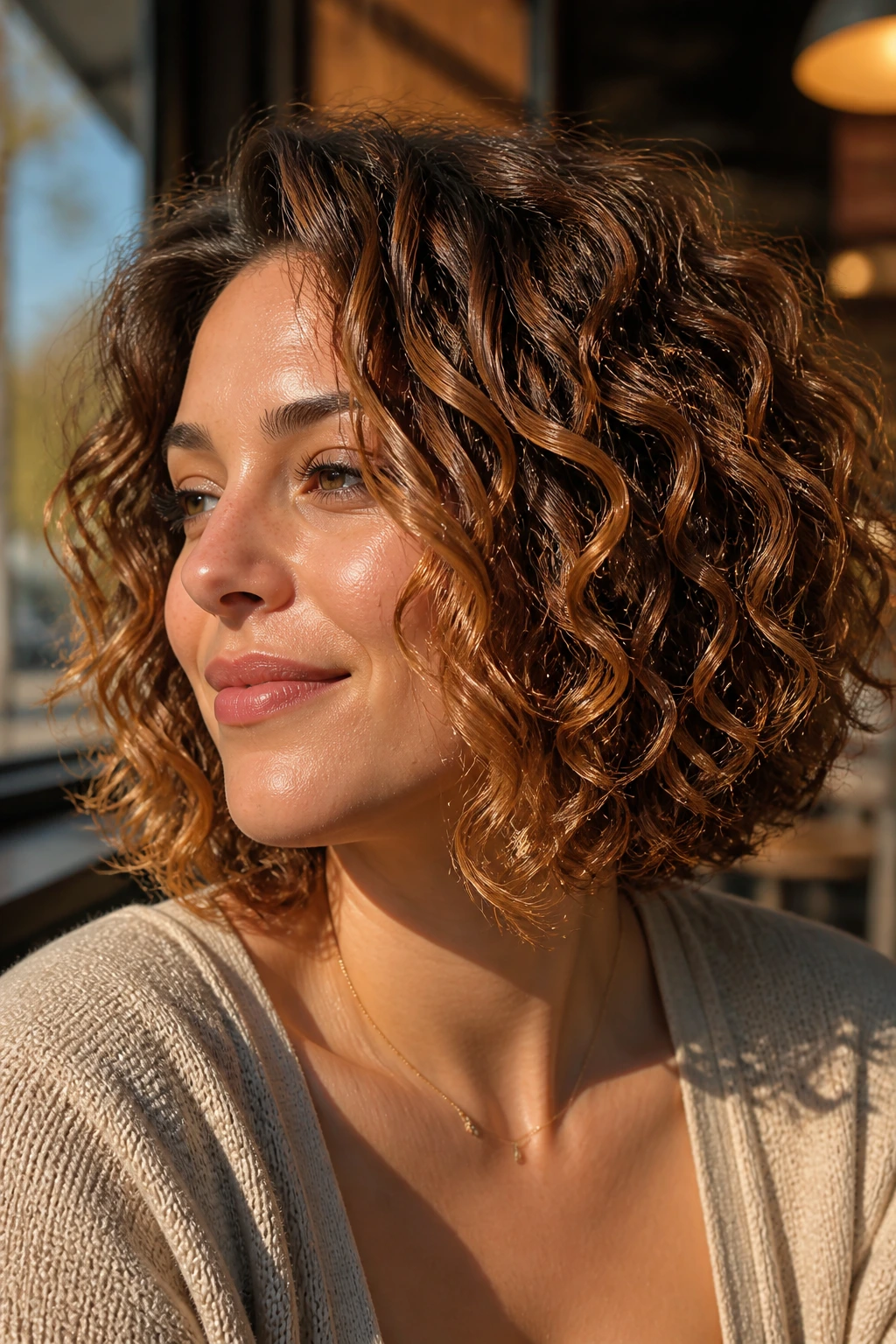
A shoulder-skimming inverted bob is a nice compromise when you want the stacked shape without going too short. Bronze babylights give the curls warmth and movement, and the extra length in front makes the style easier to grow out. This is the low-drama option that still has shape.
Unlike a chin-length bob, this one doesn’t demand constant styling just to look intentional. The curls can air-dry with a little more natural looseness, and the longer front prevents the cut from suddenly shooting up too high when humidity kicks in. Keep the stack modest; if the back gets too short, the shoulder length up front starts looking disconnected.
Best of all, bronze tones flatter a wide range of bases. On dark brown hair, they read rich. On medium brown, they read sun-warmed. That’s enough to keep the style from going sleepy.
10. Cherry Cola Curl Bob
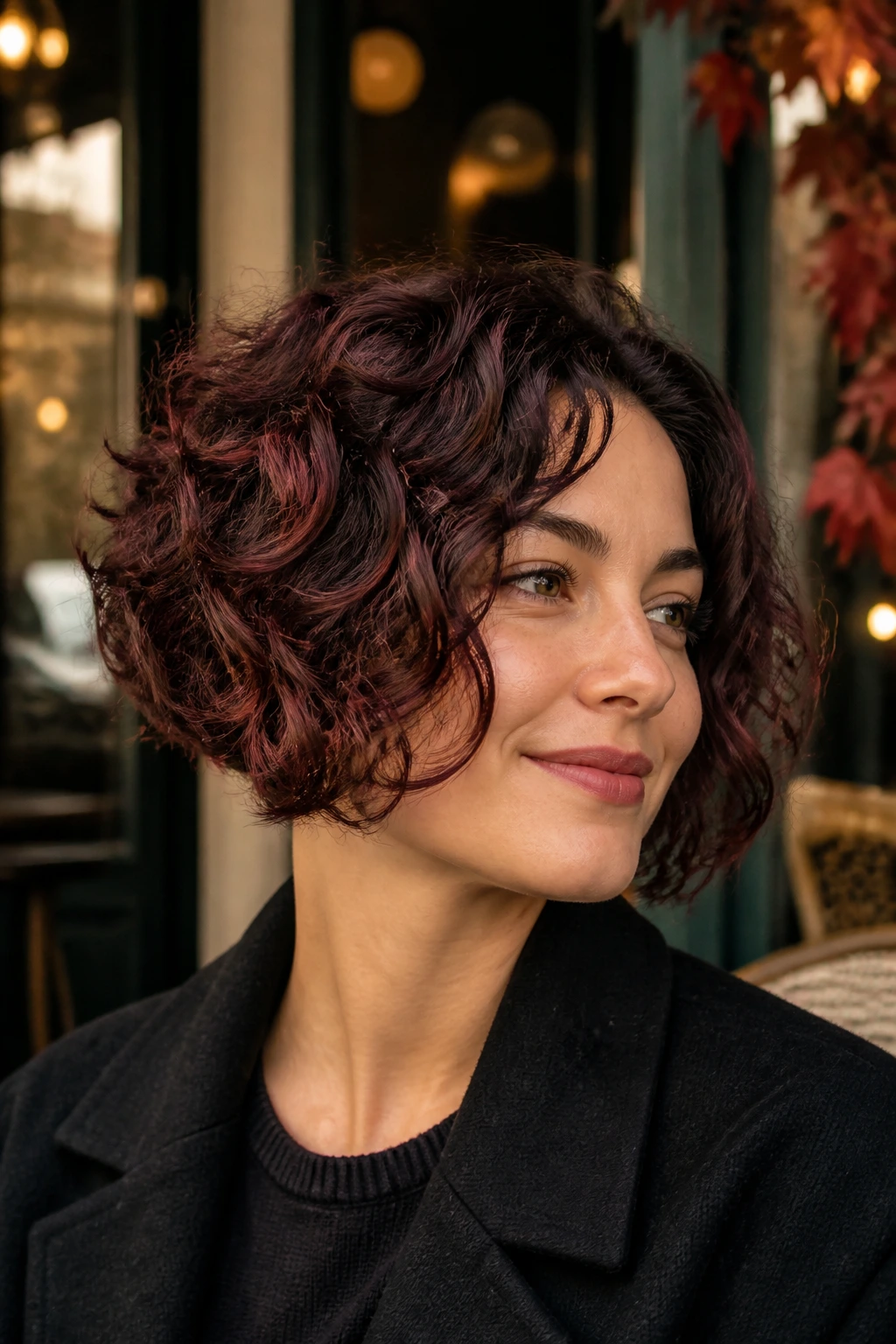
Cherry cola babylights are for anyone who wants depth with a little edge. The red-violet threads sit against a darker base and catch along the stacked layers like tiny flickers. On curly hair, that color looks especially good because the movement breaks up the pigment and keeps it from feeling flat.
The bob itself should stay slightly shorter in the back and slightly longer around the face, but the real star is the contrast. You want the babylights to be fine, not chunky. Thick red panels tend to take over curly cuts. Small ribbons of color do the better job.
This is a good pick for fall-friendly wardrobes, dark denim, black sweaters, and all the things that make rich reds look more expensive. The style does not need extra accessories. The color already does the talking.
11. Pearl Beige Babylight Bob
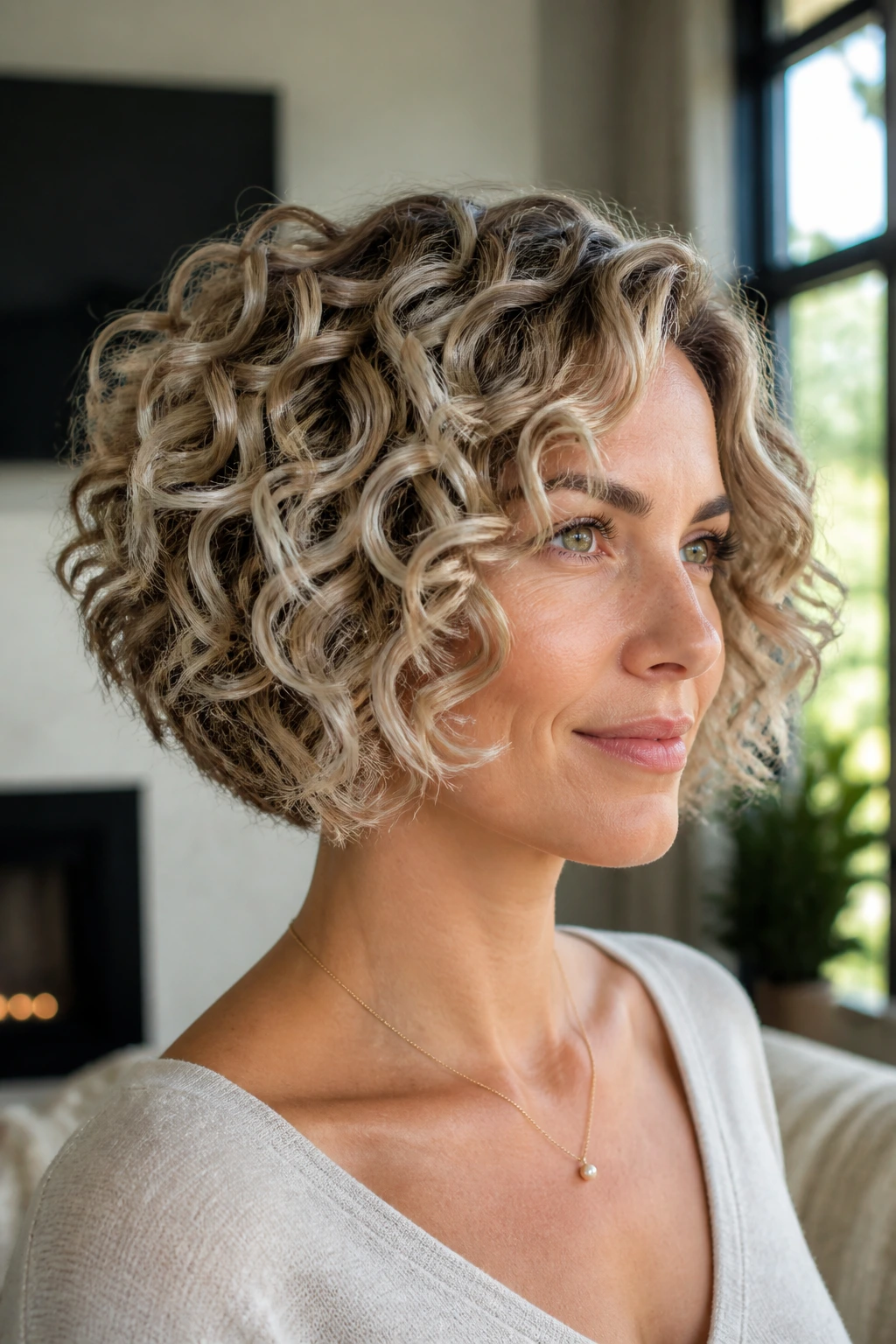
Pearl beige is a cooler, softer lightening choice that keeps curly hair from veering brassy. On a stacked inverted bob, those tiny beige babylights can make each curl look separate without creating harsh contrast. The effect is smooth, almost creamy, which suits finer curl patterns especially well.
What makes it different
- The color should lift only a few levels, not jump straight to pale blonde.
- The babylights work best when they’re clustered around the outer surface.
- A cooler toner keeps the curls from turning yellow between appointments.
- Fine or medium density hair usually handles this shade better than very dense hair.
If the cut is too layered, pearl beige can expose every gap in the curl pattern. So the stylist needs to keep enough weight in the back to hold the bob’s line. I’d call this one understated only if understatement comes with a good blow-dry or a careful diffuse finish. Otherwise it can look a touch too soft.
12. Tapered Crown Volume Bob
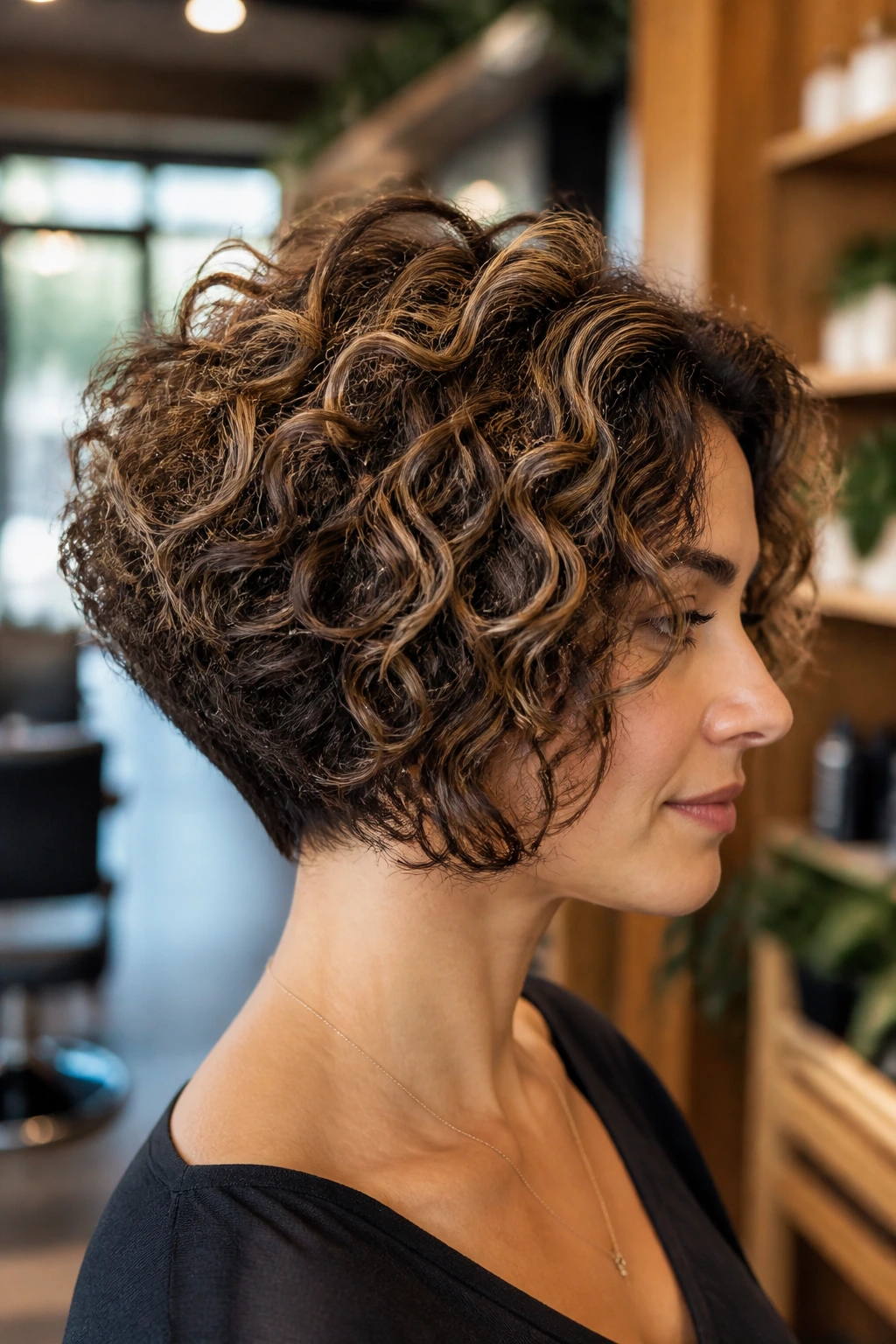
Some curls collapse at the crown and bulge at the sides. This cut fixes that by tapering the upper back and keeping the crown a little shorter than the lower layers. Babylights near the top help reinforce the lift, because the eye sees the bright crown and reads volume even before the curls finish drying.
The shape needs a careful hand. Too much removal at the crown and the style looks thin; too little and the stack gets swallowed. The length in the front can stay moderate, but the whole point is upward energy at the back of the head. I like this on medium-to-thick curls that lose their shape overnight.
Use this as the “my hair keeps sitting low” answer. It won’t solve everything. It does fix the silhouette better than a straight-across bob ever will.
13. Spiral-Defined Precision Bob
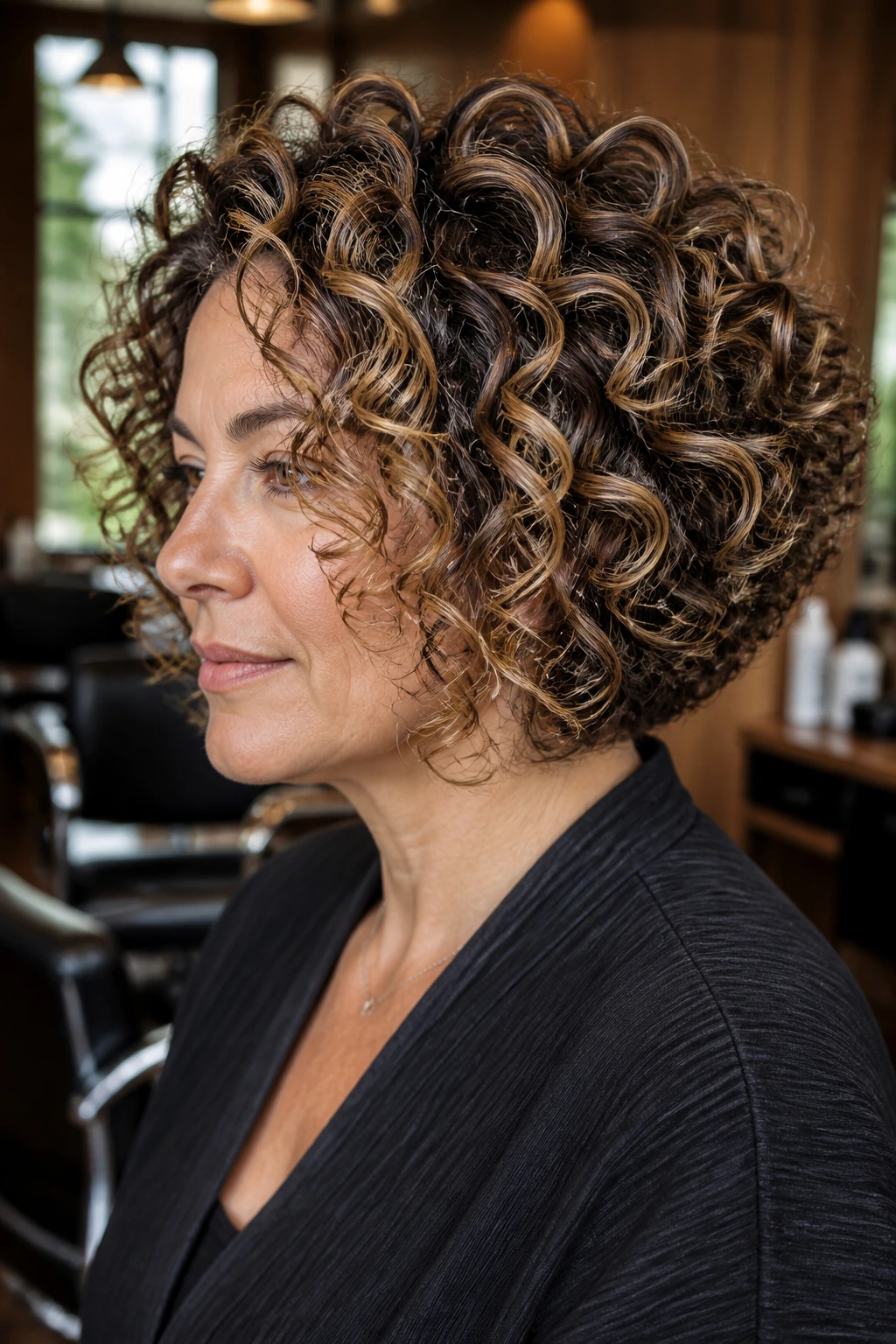
Why do some curly bobs look messy while others look deliberate? Usually the answer is precision. This version is cut to respect defined spirals, with a stacked back that rises cleanly and babylights placed to outline each curl cluster. It’s a neat, shape-forward bob, not a fluffy one.
The front pieces should be balanced, not dramatic. Think crisp contour rather than sharp angles. On tight spirals, the babylights can sit in tiny woven sections that brighten the curl ring without disrupting the pattern. That’s the part many stylists get wrong — they highlight the hair like it’s straight, and then the curls hide the good parts.
This cut is best for hair that naturally forms distinct pieces. If the curls are very soft or easily stretched, the precision can get lost. When it works, though, it looks tailored in a way most bobs only pretend to be.
14. Shadow-Root Bronde Bob
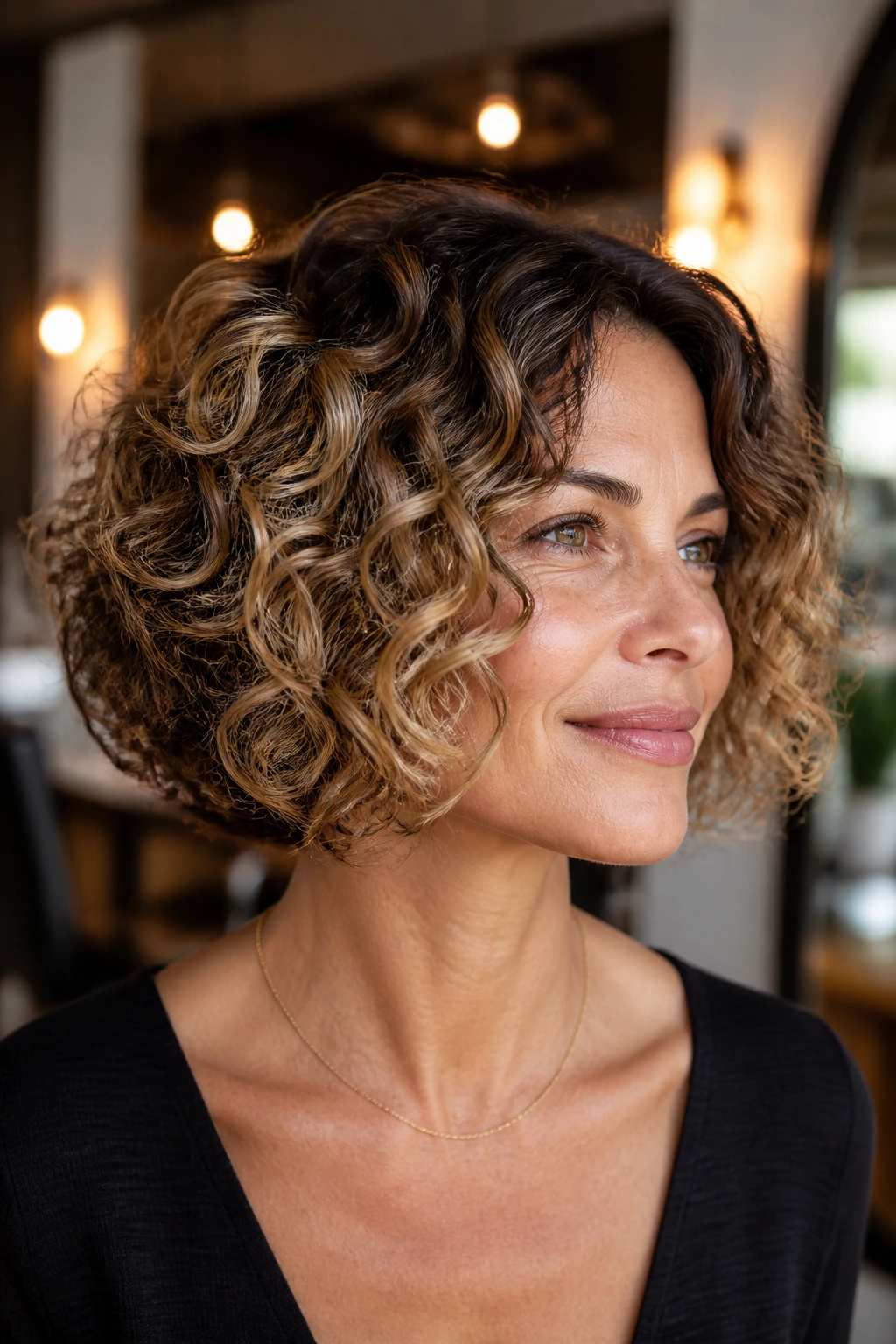
A shadow root gives a curly inverted bob breathing room. The darker base near the scalp makes the babylights around the mids and ends look softer, and bronde tones keep the whole haircut grounded instead of bleachy. The stack reads through the color, not because of it.
I like this on people who hate obvious grow-out lines. The root melt makes appointments less urgent, and curly texture hides the transition even more. Keep the babylights finer toward the top and a touch heavier through the outer front pieces. That keeps the face from disappearing into darkness while the back holds its depth.
This is the version that can survive a busy week, a forgotten wash day, and a little styling laziness. That’s not a small thing.
15. Feathered Inverted Bob
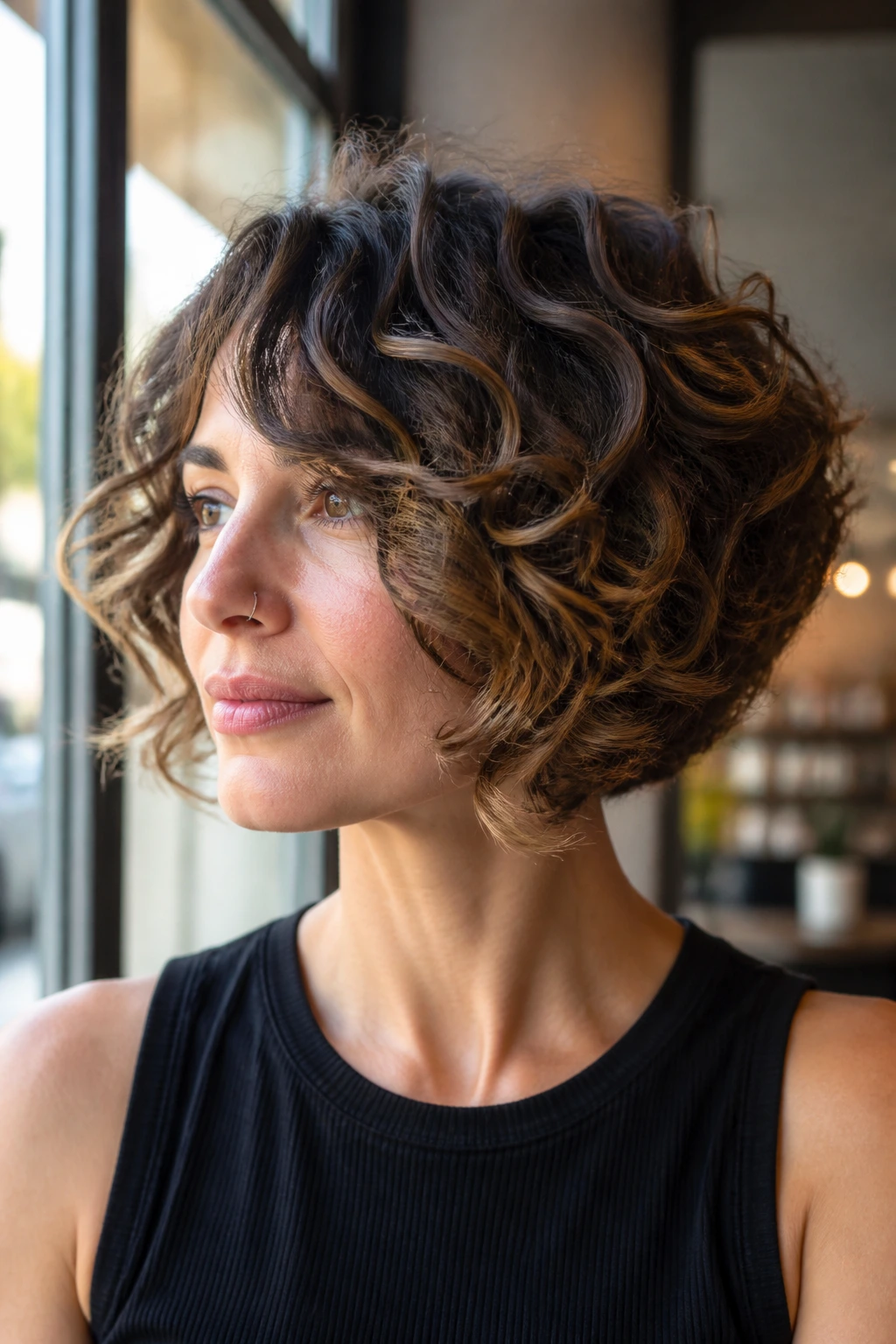
Feathered ends change the personality of the cut. Instead of a compact, rounded edge, the curl tips look airy and a little broken up, which keeps the silhouette from becoming too structured. Babylights near the ends make each feathered piece stand out without adding weight.
The style suits looser curls and waves that can stretch easily. On tighter curls, feathering needs a lighter hand or the back can lose its body. Ask for soft internal layers, not razor-thin removal. The goal is movement, not thinness.
A feathered bob is nice when you want the stack to feel relaxed. Less “formal haircut,” more “hair that happened to fall into a good shape.” I’m a fan of that kind of imperfection.
16. Black Cherry Glassy Bob
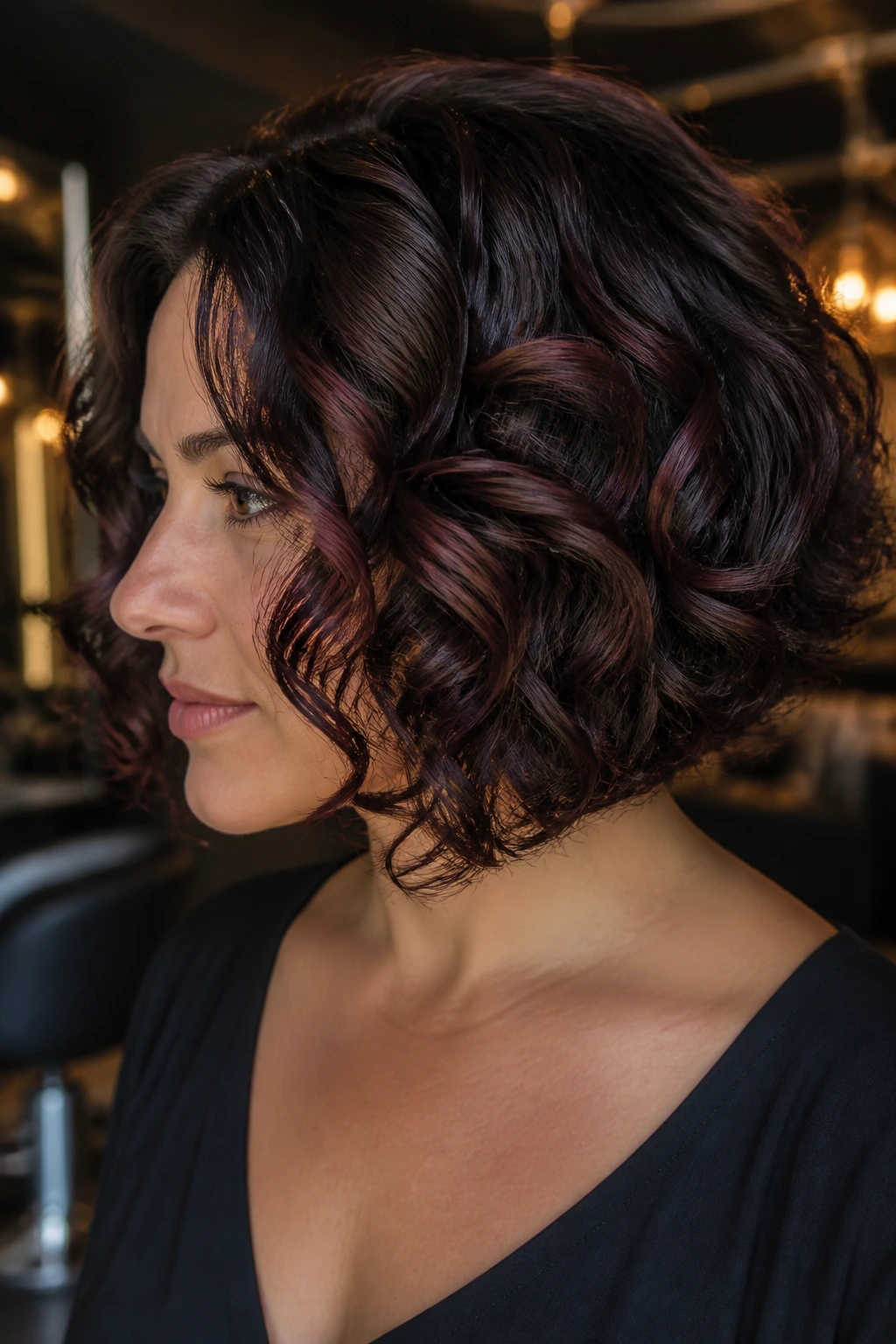
Black cherry babylights on a deep brunette base create a glossy, almost liquid look. The stacked inverted shape gives the color a frame, and the curls keep the red tones from overpowering the whole head. It’s dark, rich, and a little moody in a good way.
This cut benefits from shine. A lightweight serum on the outer layer, a careful diffuse dry, and a trim that keeps the back clean all matter here. If the ends fray, the cherry tone loses its edge fast. The babylights should be subtle enough that they reveal themselves only when the curls separate.
This is one of the best choices for someone who likes darker hair but wants a little more than plain brown. It feels finished without screaming for attention.
17. Sunlit Cinnamon Stack
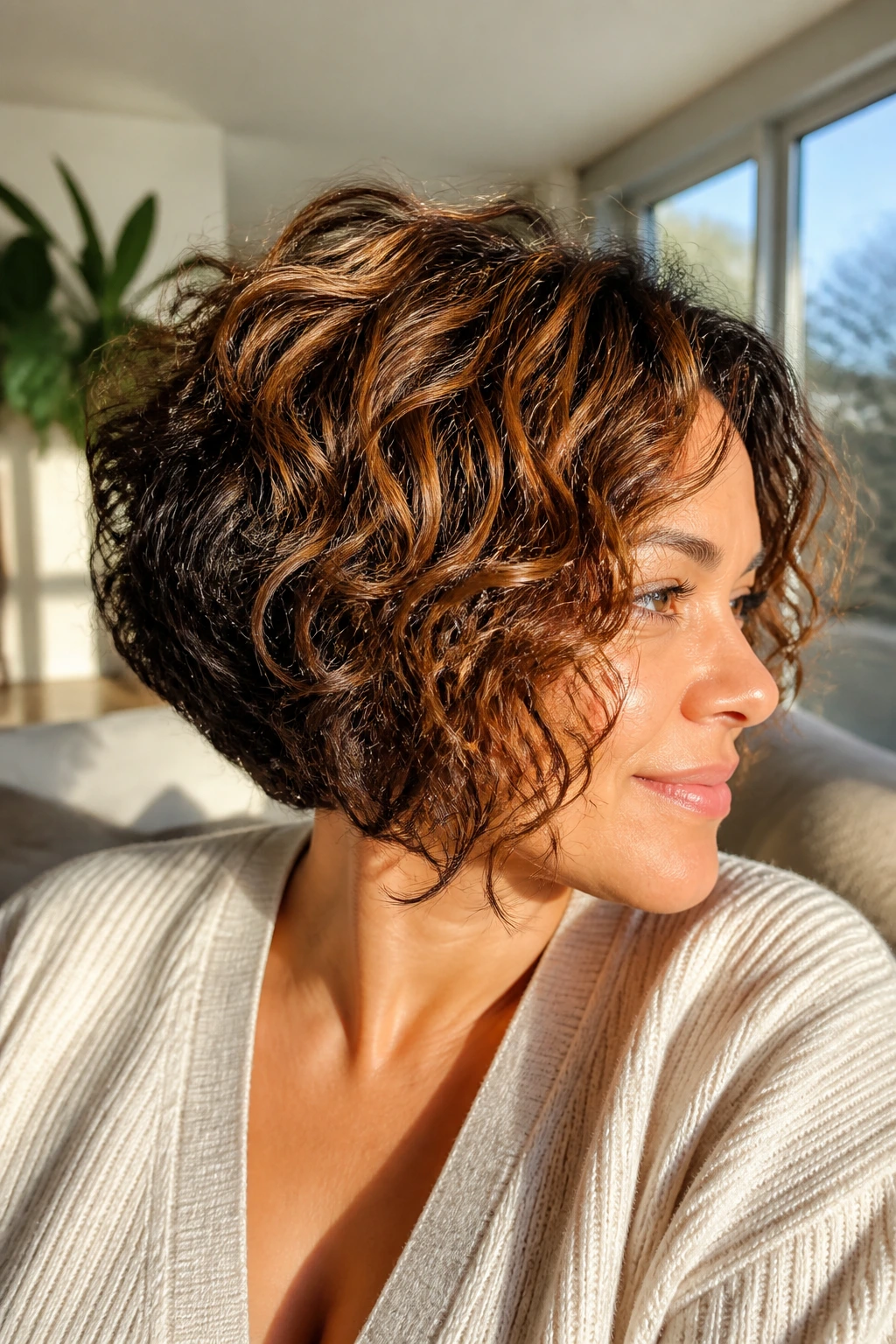
Sunlit cinnamon babylights look like a short trip outdoors has already happened, even when the color is fully salon-made. On curly hair, cinnamon threads warm up the stack and make the front angle glow a little when the head turns. The back should stay darker so the shape has contrast.
Quick style notes
- Keep the babylights fine through the crown and slightly more visible around the temples.
- Pair the color with a soft side part if you want extra lift.
- Use a curl cream that doesn’t dull the color finish.
- Trim the nape before the bob starts to swell outward.
This version loves movement. A bob like this looks better when the curls are separated enough to show the color play, not sprayed into one solid sheet. If you want warmth without going copper, this is the sweet spot.
18. Curly Lob-Stack Hybrid
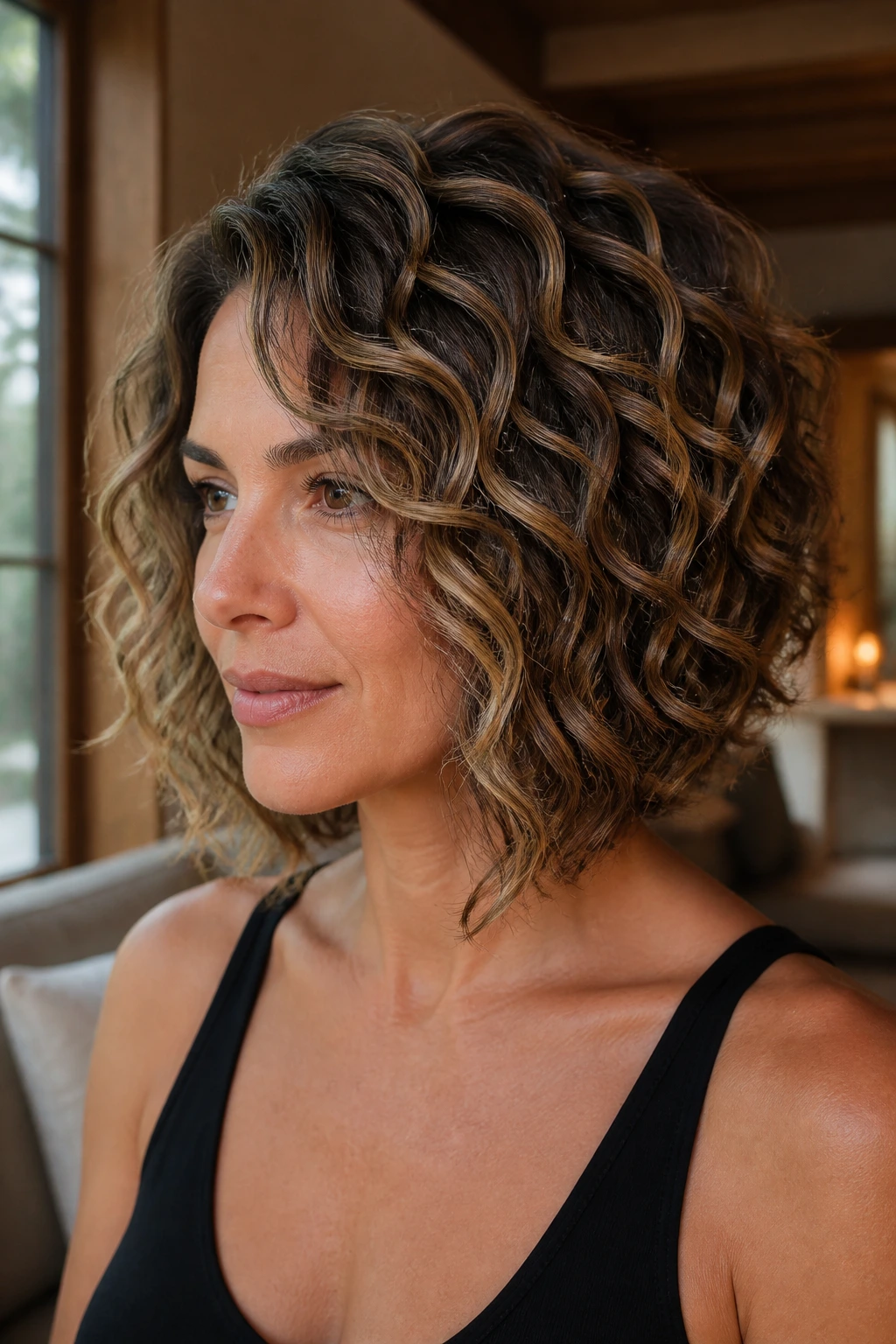
If you’re nervous about going short, this is the compromise that behaves. The back is stacked enough to give shape, but the front stays long enough to brush the collarbone. Babylights sit mostly through the mid-lengths, which keeps the style dimensional without shortening the visual line.
It’s a smart choice for looser curls, newer bob wearers, and anyone who wants less daily styling drama. The extra length gives you room to refresh a bent curl pattern with a quick scrunch or diffuser pass. The bob still looks intentional, even when you haven’t touched it in a day.
I prefer this version when someone wants to test the waters before committing to a tighter bob. It’s not timid. It’s strategic.
19. Smoky Quartz Curl Bob
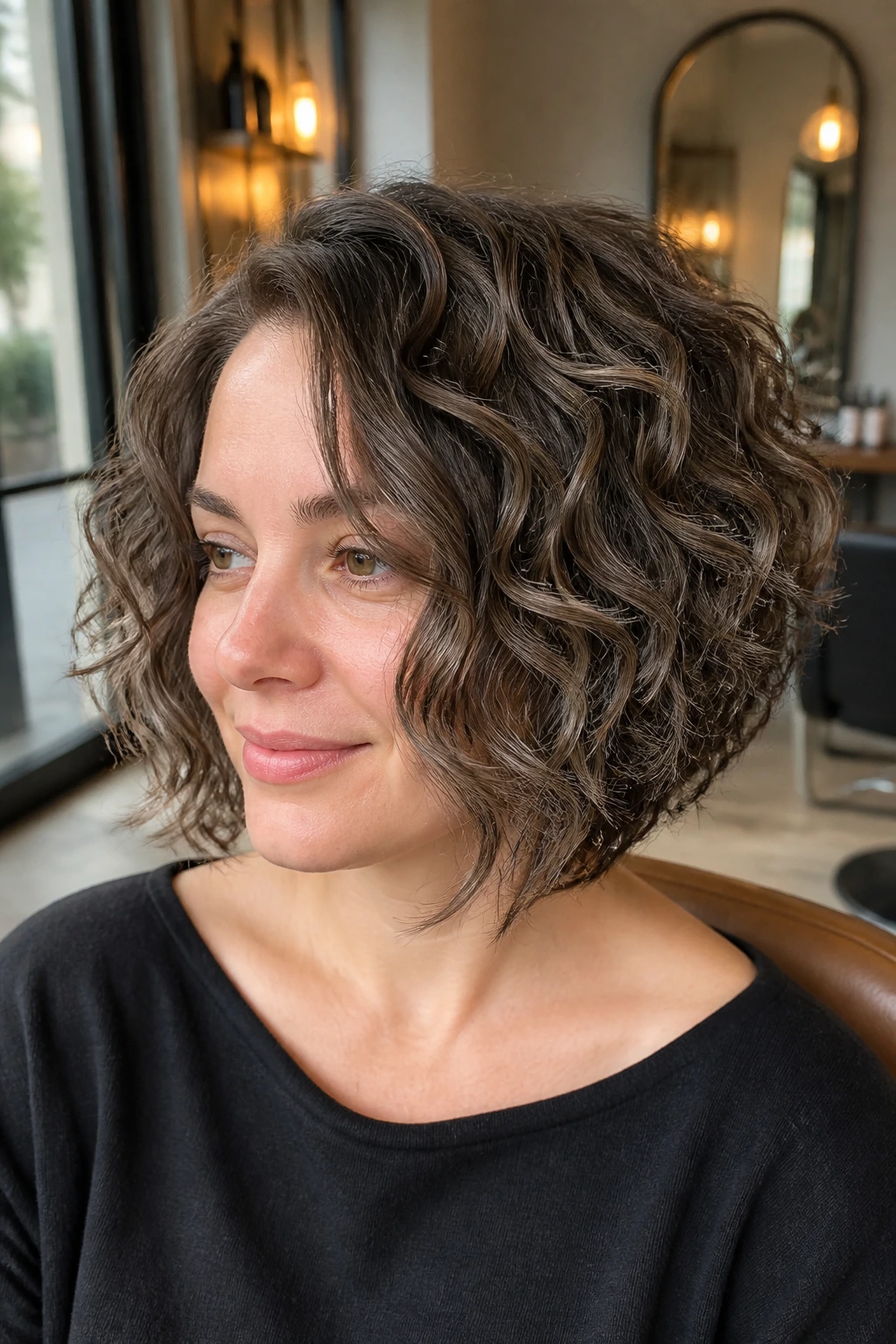
Smoky quartz is for the person who wants color that whispers. Think muted brunette, soft taupe, a few cool babylights, and a stacked shape that keeps the haircut from disappearing into the shade. On curls, those cooler ribbons look best when they’re scattered, not packed.
This one works on medium-density hair with a little natural movement. It won’t fight the curl pattern, but it does ask for a decent styling routine so the layers stay visible. If the hair is too oily or too heavy with cream, the whole effect slips under its own weight.
The appeal is subtle, which means the cut has to be strong. A good nape line and clean front angle matter here more than in brighter looks. No hiding.
20. Soft Shag-Inspired Inverted Bob
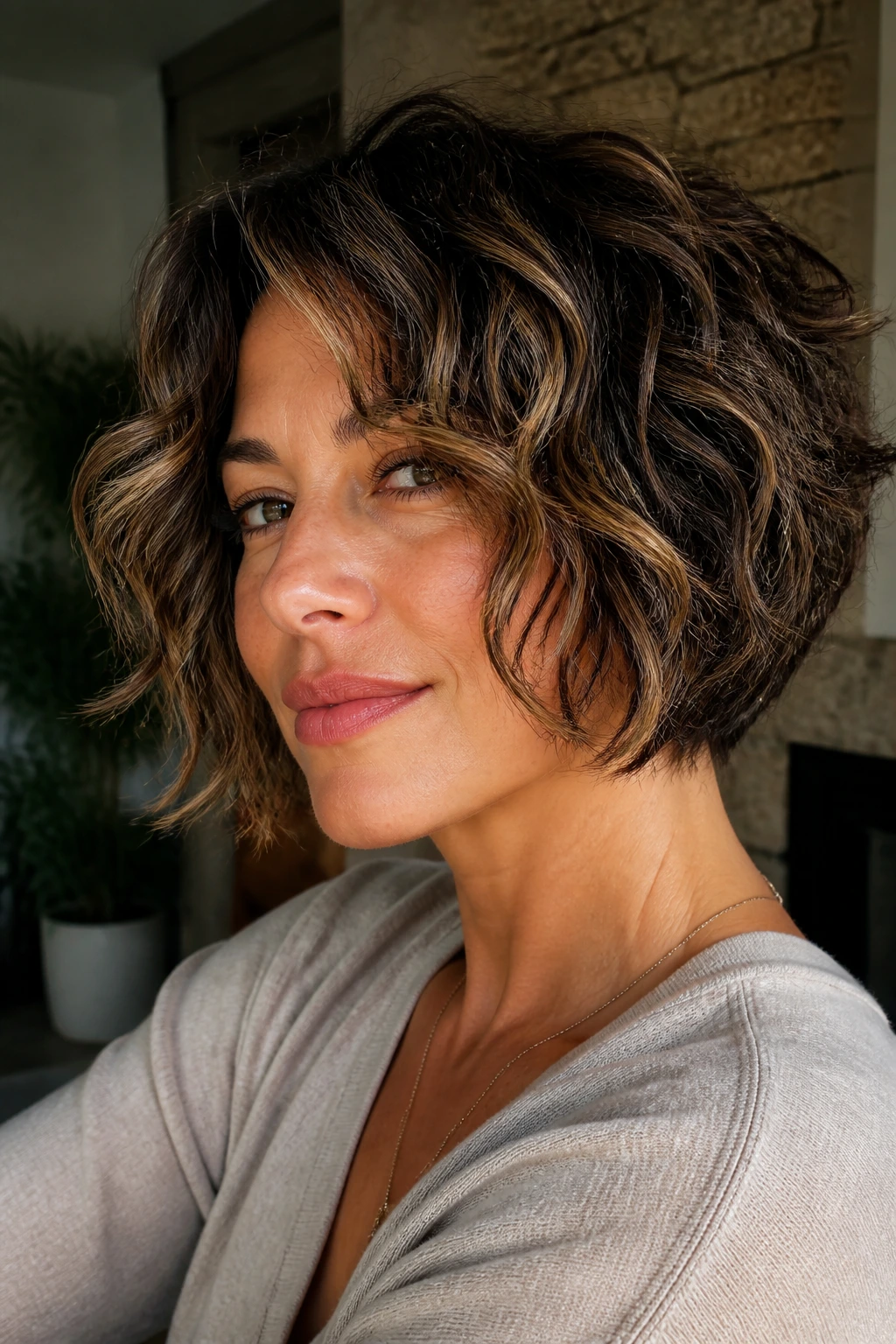
A shag-inspired bob keeps the stacked silhouette but loosens the rules a bit. The layers are airier, the front pieces are more broken up, and the babylights can be placed in a looser pattern that follows the messy texture rather than fighting it. This is the cousin of the neat inverted bob — the one with a little music in it.
It’s especially good for curls that like to frizz in a halo rather than a defined ring. The shag influence keeps the top from looking too shaped and the ends from looking too heavy. You still want the back shorter than the front, but not in a severe way.
This is one of the easiest looks to wear with minimal fuss. And yes, that matters. Hair shouldn’t need a spreadsheet.
21. Micro-Babylight Halo Bob
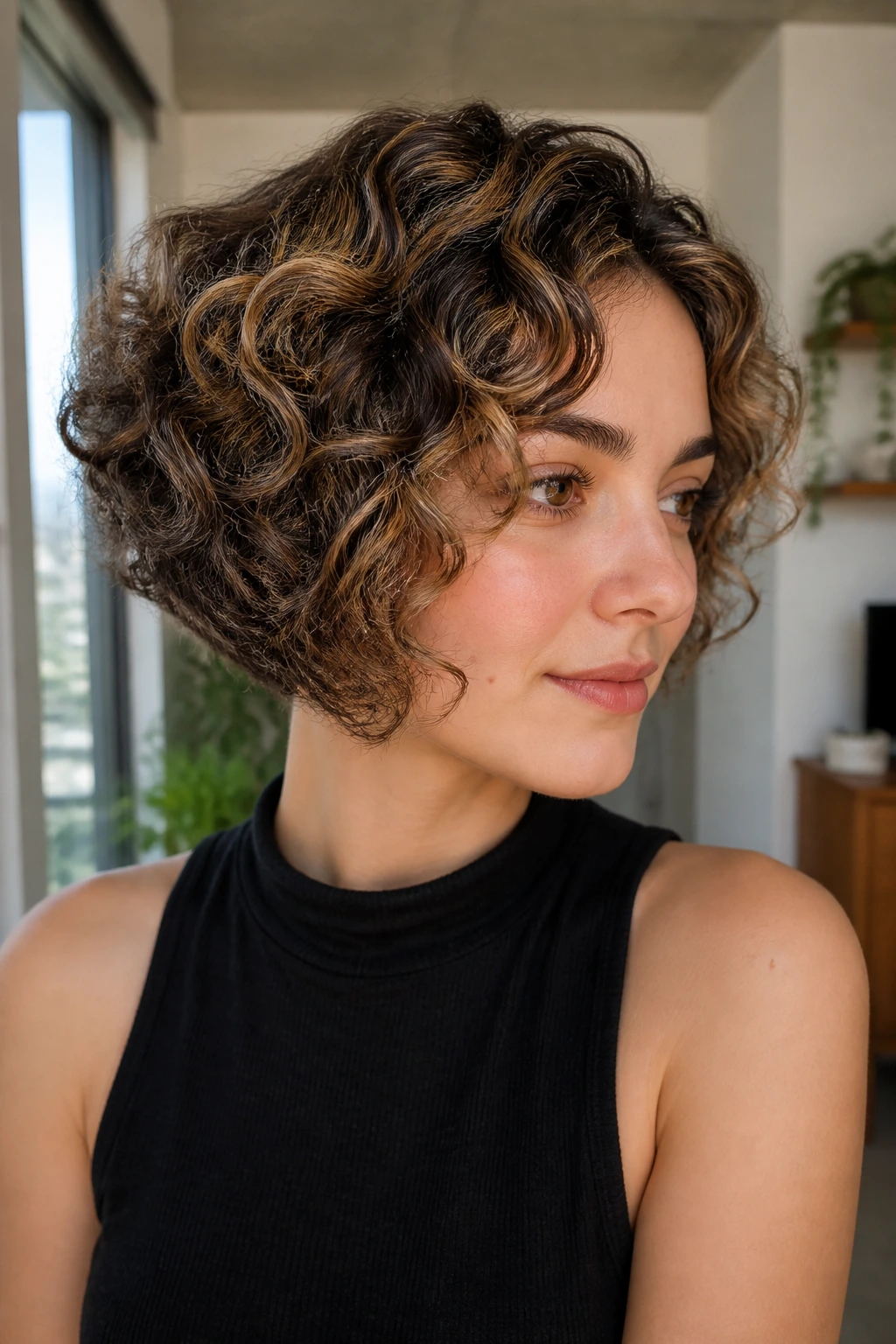
Here the color is almost the point. Micro-babylights are placed across the crown, hairline, and outer layers so the curls get a faint halo effect instead of obvious streaks. The cut remains stacked and inverted, but the lightness around the perimeter gives the bob a lifted feel.
The key is restraint. If the highlights get too chunky, the halo turns into stripes and the whole style loses its elegance. Fine curls especially benefit from this approach, because the tiny weaves don’t interrupt the natural curl clumps.
If you’ve ever wished your curly bob looked brighter without looking highlighted, this is the one to bookmark. It’s quieter than it sounds, which is exactly why it works.
22. Narrow Nape, Wide Front Bob
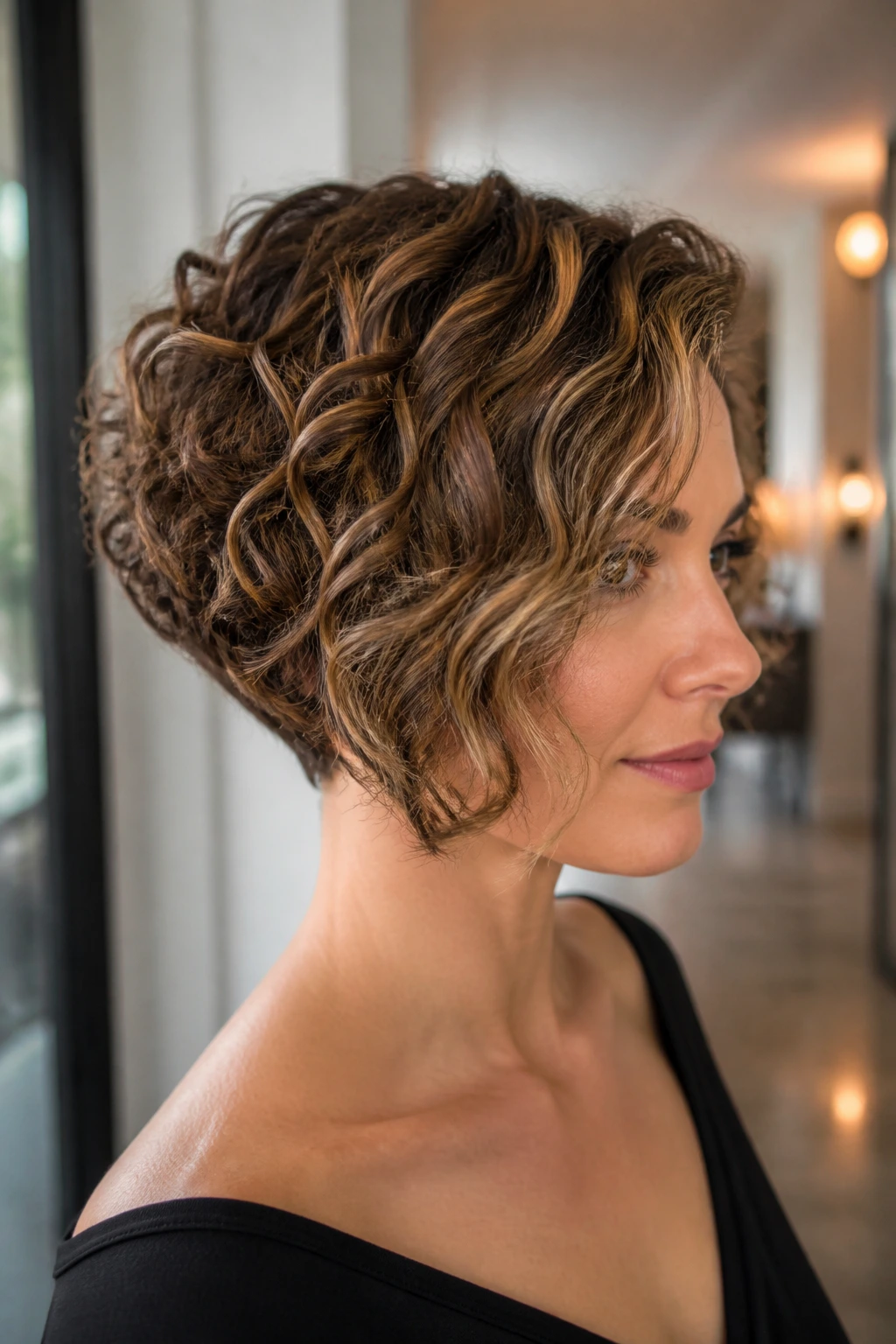
This version leans into contrast. The nape is kept narrow and snug, while the front opens wider and longer to create a strong A-line. Babylights run more heavily along the front panel, so the angle reads at a glance. It’s a flattering shape for people who like their hair to frame the cheeks.
The front has to be calibrated carefully. Too much width and the bob becomes triangular; too little and the whole point of the inversion disappears. A few longer face pieces can soften the edge and keep the cut from feeling severe.
I’d choose this when the goal is visible structure. Not softness. Structure.
23. Grown-Out Tousled Stack
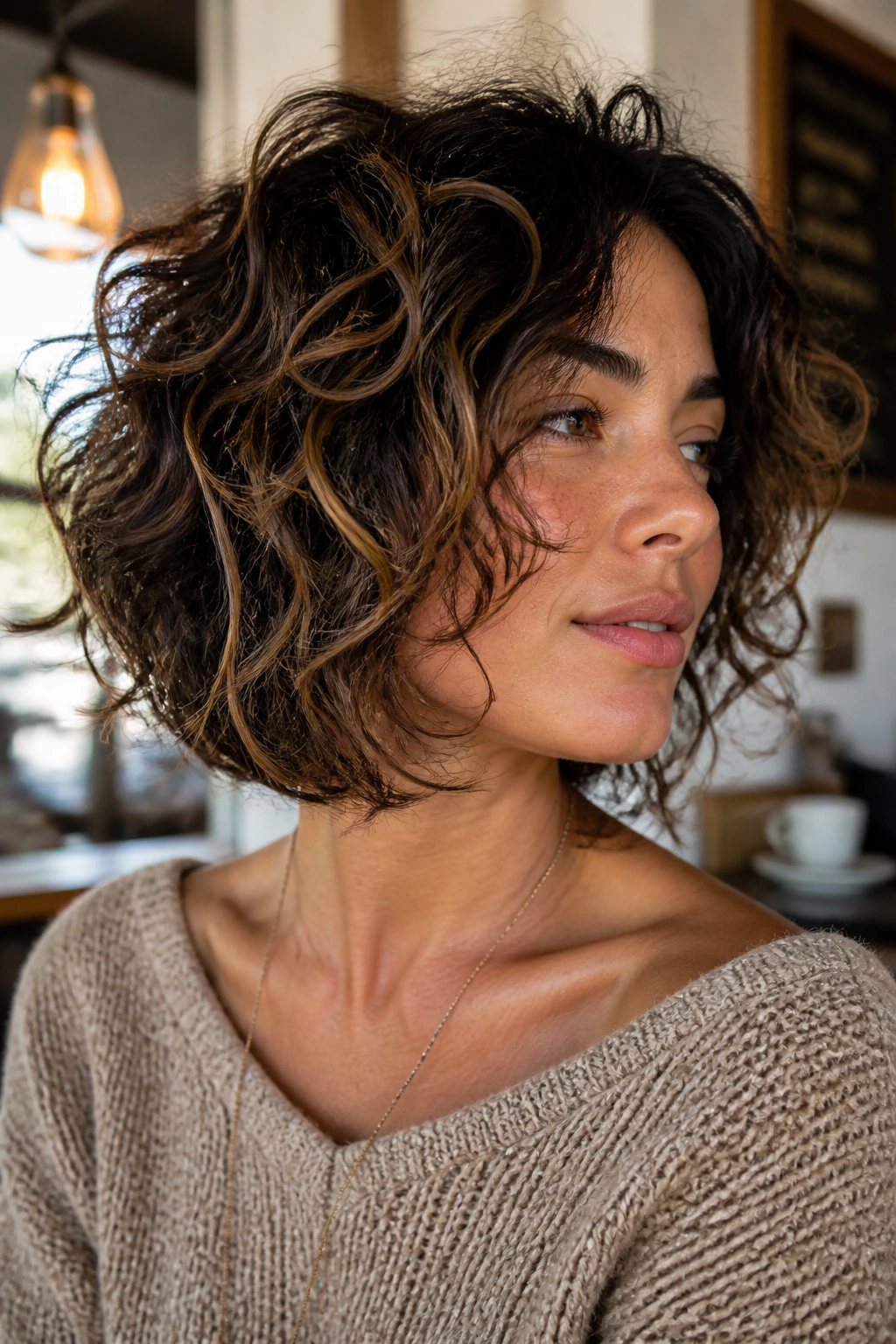
A grown-out stacked bob is not a failure state. It can look excellent when the shape is still there, just relaxed. Babylights help a lot here because they keep the grown-out layers from blending into one heavy curtain. The trick is to keep the stack obvious enough at the nape while letting the front wander a little.
This version suits people who don’t want a fixed salon shape every six weeks. The curls can land a little differently each day and still look deliberate. A side part, a touch of mousse, and a diffuser can bring the silhouette back in minutes.
It’s the easiest version to live with if your schedule doesn’t care about hair appointments. Which, for most people, is the actual reality.
24. Platinum-Edge Curly Bob
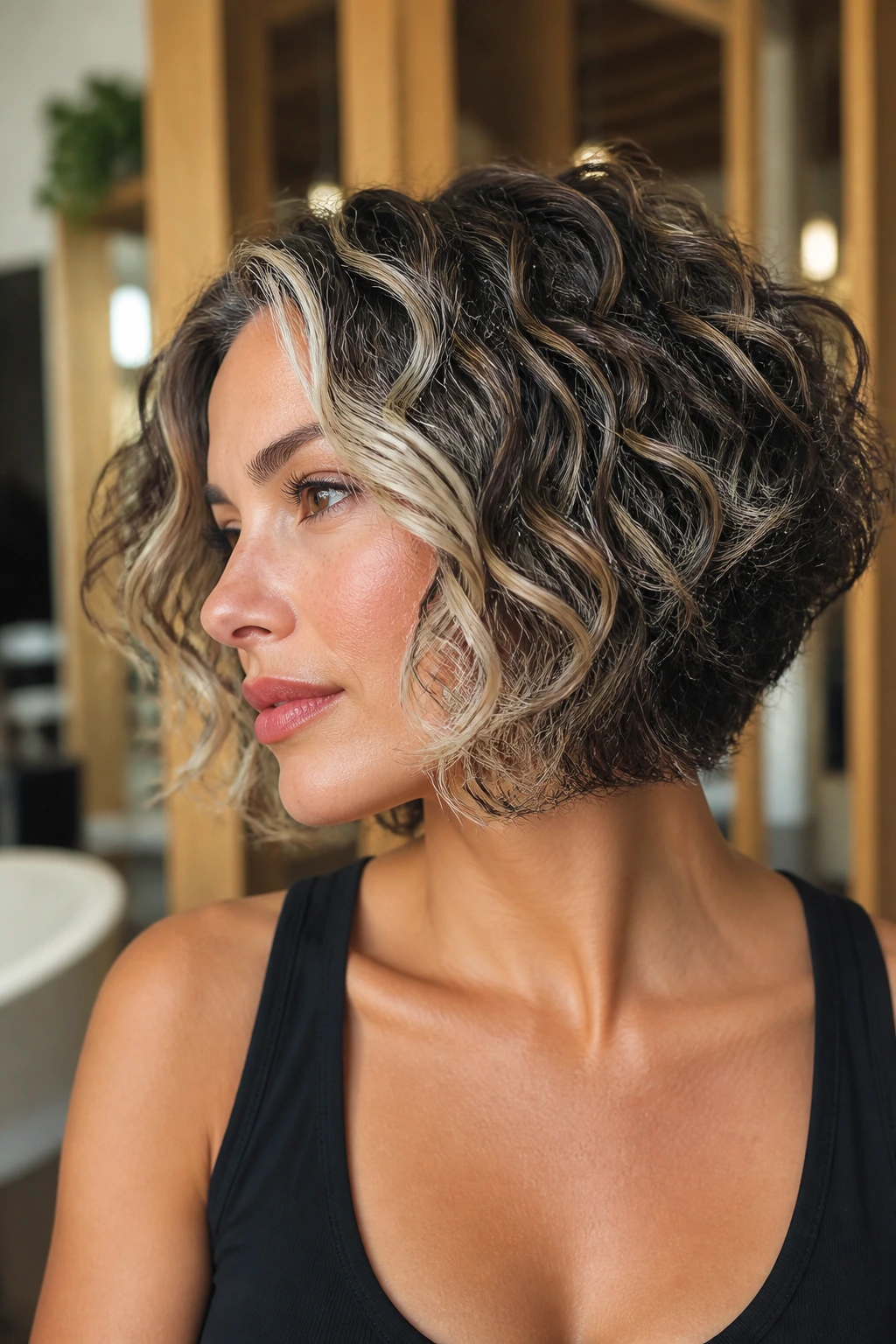
A platinum edge on curly hair is high-contrast territory. The stacked bob gives the light color somewhere to sit, and the babylights along the top and front make the lighter pieces feel intentional rather than random. This works best when the base is deep enough to hold the contrast.
The risk, of course, is dryness. Curly hair that’s pushed this light needs more moisture and more careful handling. Keep the lightest pieces away from the most fragile ends and leave some depth underneath so the haircut doesn’t look fried out.
This is the bolder end of the spectrum. If you want people to notice the haircut before they notice the outfit, this is your lane.
25. Everyday Polished Curl Stack
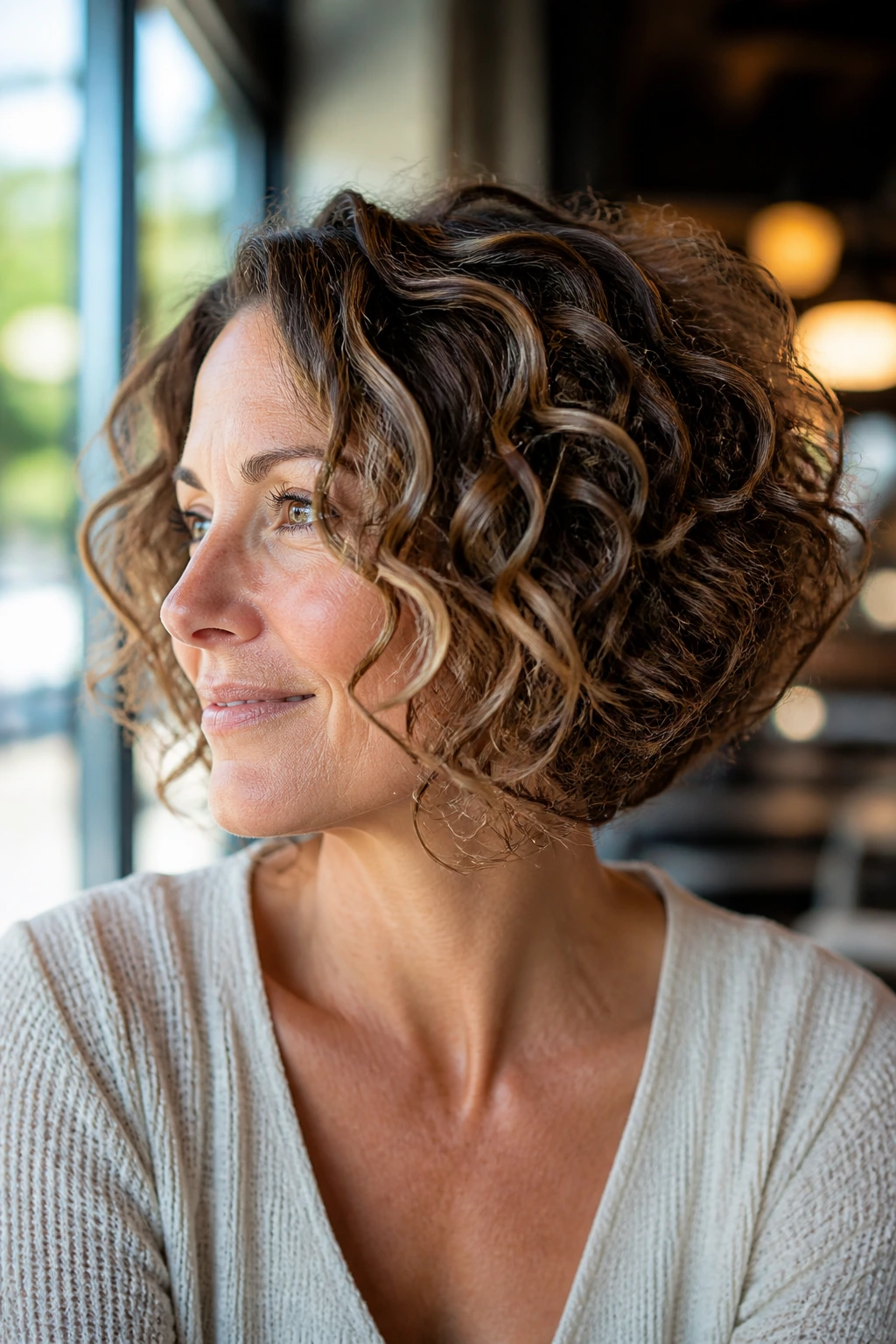
This is the bob I’d recommend for someone who wants the style to behave on a workday, on a travel day, and on a lazy Sunday with equal grace. The stack is clean but not severe, the front pieces are long enough to tuck or twist, and the babylights are soft enough to avoid hard maintenance.
It’s a practical cut, which sounds boring until you realize how rare that is with curly hair. The shape stays visible, the color doesn’t scream for attention, and the grow-out is forgiving if the appointment gets pushed back a bit. Keep the layers balanced, keep the lights fine, and don’t let the nape grow shaggy.
That’s the quiet win here. It looks put together even when you didn’t spend much time on it.
Why Stacked Inverted Bobs and Babylights Work So Well on Curly Hair
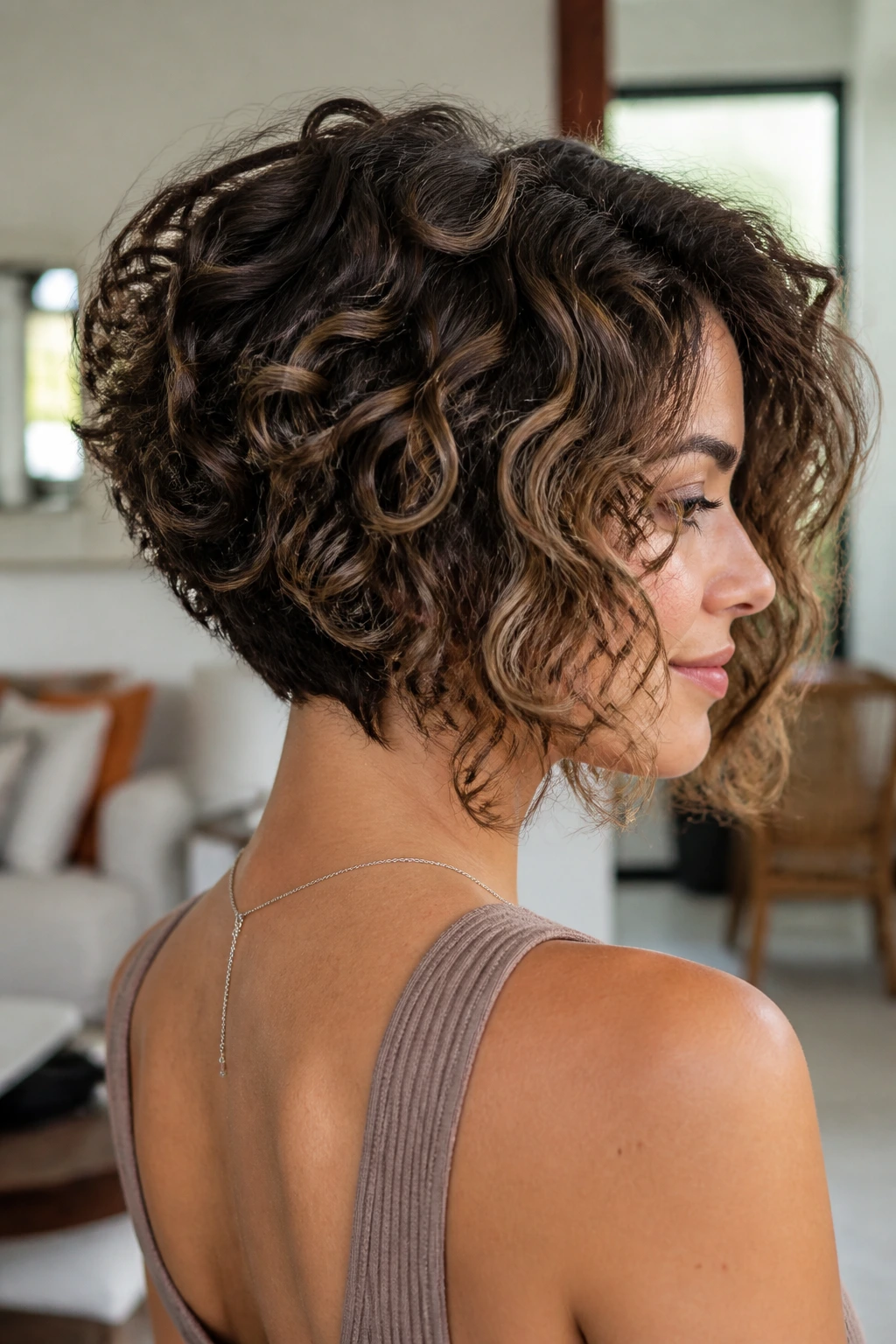
Curly hair doesn’t behave like a sheet of fabric. It moves in clumps, shrinks upward, and changes outline the minute it dries. That’s why a stacked inverted bob matters so much: the shorter back gives the curls a place to rise, while the longer front keeps the silhouette from turning into a round puff. The shape is doing the heavy lifting before you add any styling.
Babylights make the cut read correctly. Fine, woven light pieces interrupt the dark mass just enough to show where the layers begin and end. On curly hair, that detail is gold. Broad highlights can look stripy when the curl pattern breaks them up, but babylights follow the bends more naturally and keep the whole style softer.
The best versions use both shape and color to manage shrinkage. The cut creates architecture. The babylights draw the eye through that architecture. If either one is off, the whole look starts to wobble.
Essential Tools for Styling and Color Care
-
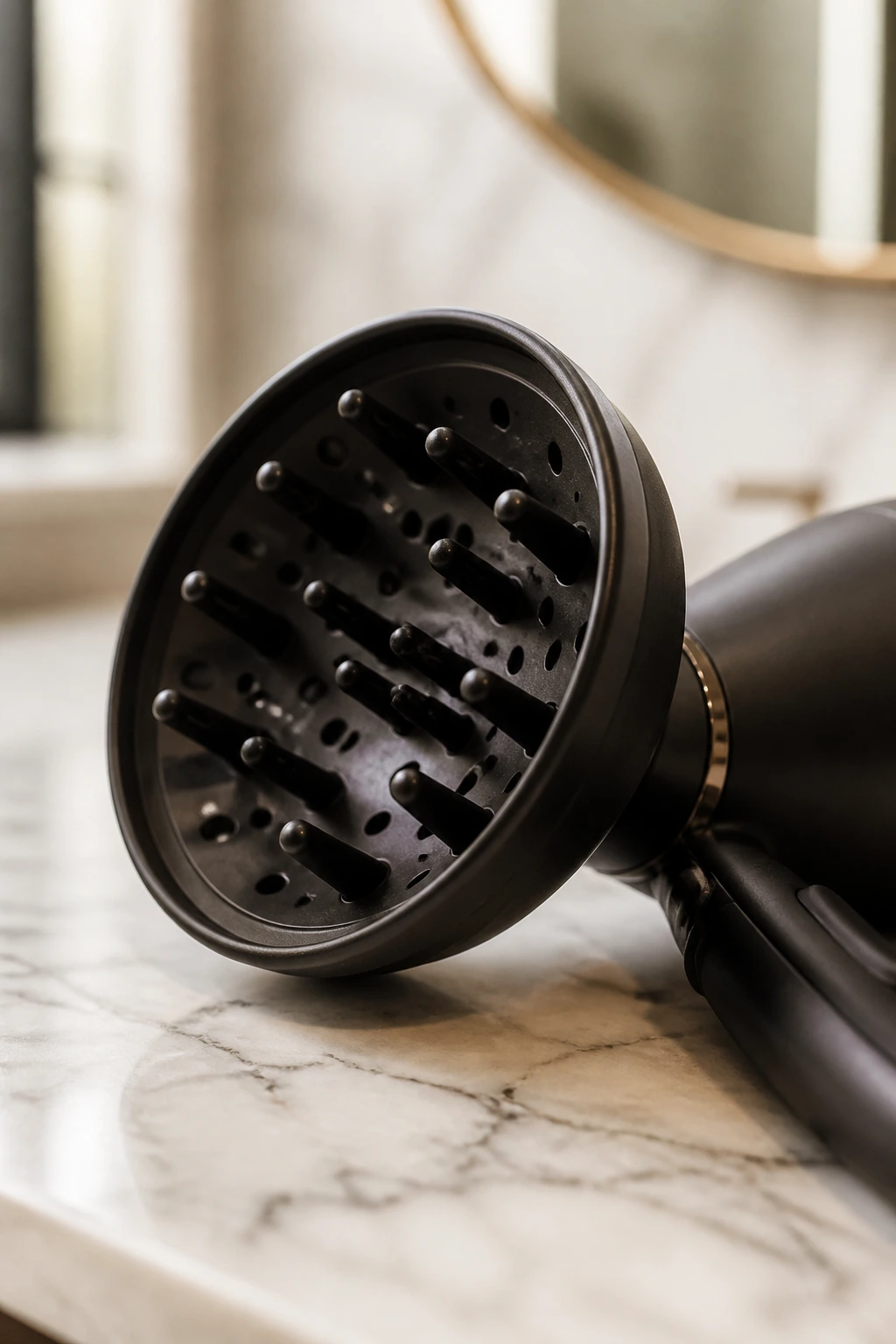
Diffuser attachment: Speeds up drying while keeping curls intact and helps the stacked back hold its lift.
-
Microfiber towel or cotton T-shirt: Blots water without roughing up the cuticle or puffing the curl pattern.
-
Wide-tooth comb: Good for distributing conditioner and leave-in through wet curls without breaking up the clumps.
-
Duckbill clips or sectioning clips: Handy when you’re drying the crown or setting the front pieces in the direction you want.
-
Curl cream or leave-in conditioner: Adds slip and helps the curls sit together instead of frizzing into the babylights.
-
Flexible-hold gel or mousse: Gives the bob a cast or soft hold so the stack doesn’t collapse as it dries.
-
Color-safe shampoo and conditioner: Keeps babylights from fading too fast and stops the ends from feeling stripped.
-
Lightweight toning mask: Useful if your highlights drift too warm or brassy between salon visits.
-
Satin pillowcase or bonnet: Reduces the flattened back-of-head look that can ruin a good stack overnight.
-
Hand mirror: Sounds basic, but it saves you from missing the nape and the back angle when you refresh the cut.
How to Ask for the Cut and Color Without Getting a Misread Bob
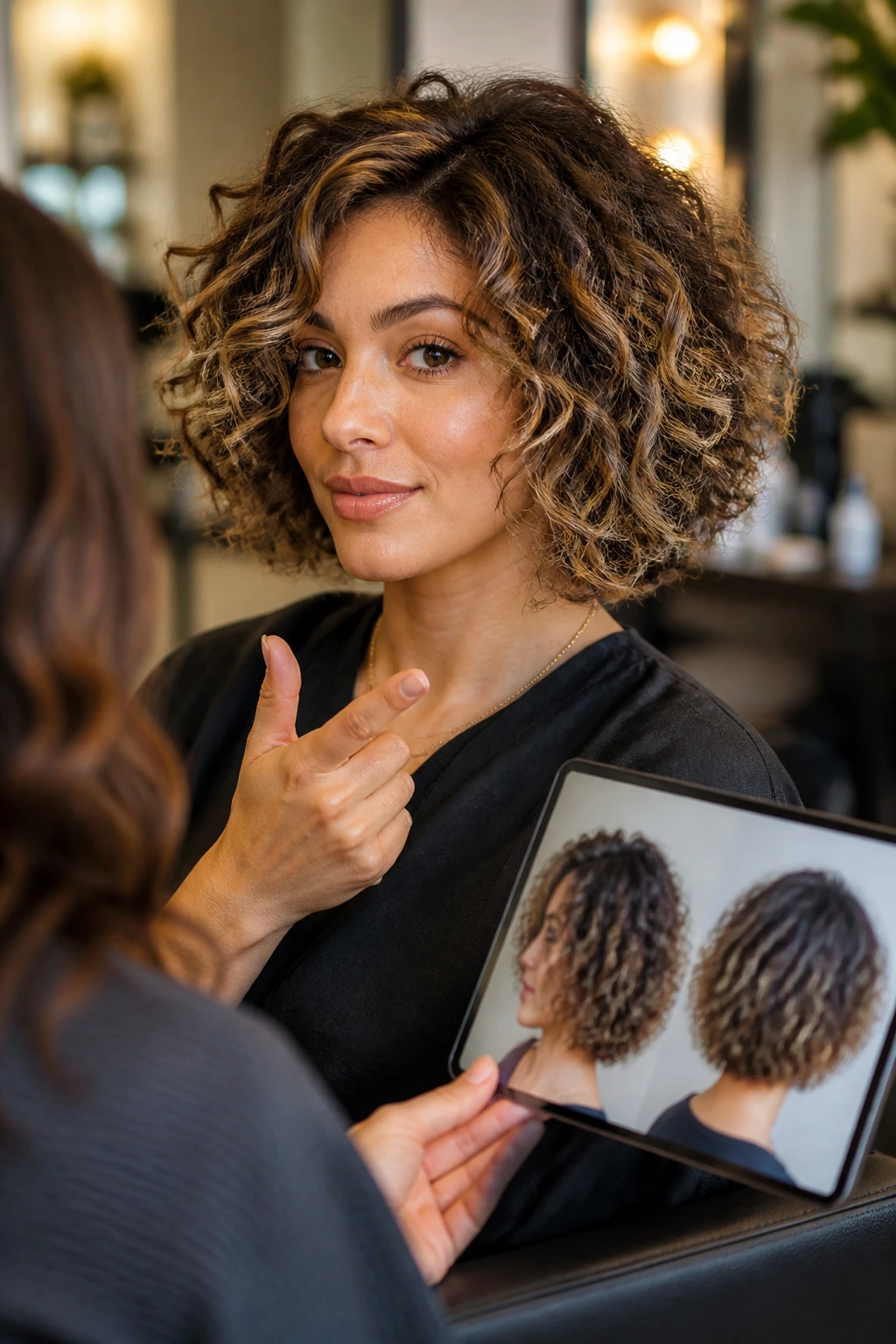
Bring photos, yes, but bring the right photos. One should show the silhouette you want from the side or back. The other should show the babylight placement you like — not just the color. A lot of salon confusion happens because people hand over a pretty picture and expect the stylist to guess the structure.
Say out loud that your hair is curly and that shrinkage matters. That part matters more than the Pinterest shot. If your curls spring up 1 to 3 inches after drying, the cut has to be shaped with that in mind. Ask for the back to be stacked in a way that supports the curl pattern, not one that removes so much weight the ends float away.
Babylights should be discussed like a placement plan, not a blanket color service. Ask for fine, woven highlights around the crown, part line, and face frame, then decide how much brightness you want underneath. On curly hair, the underlayers often need less light than the surface. That keeps the bob dimensional instead of busy.
How to Style the Cut So the Stack Stays Visible
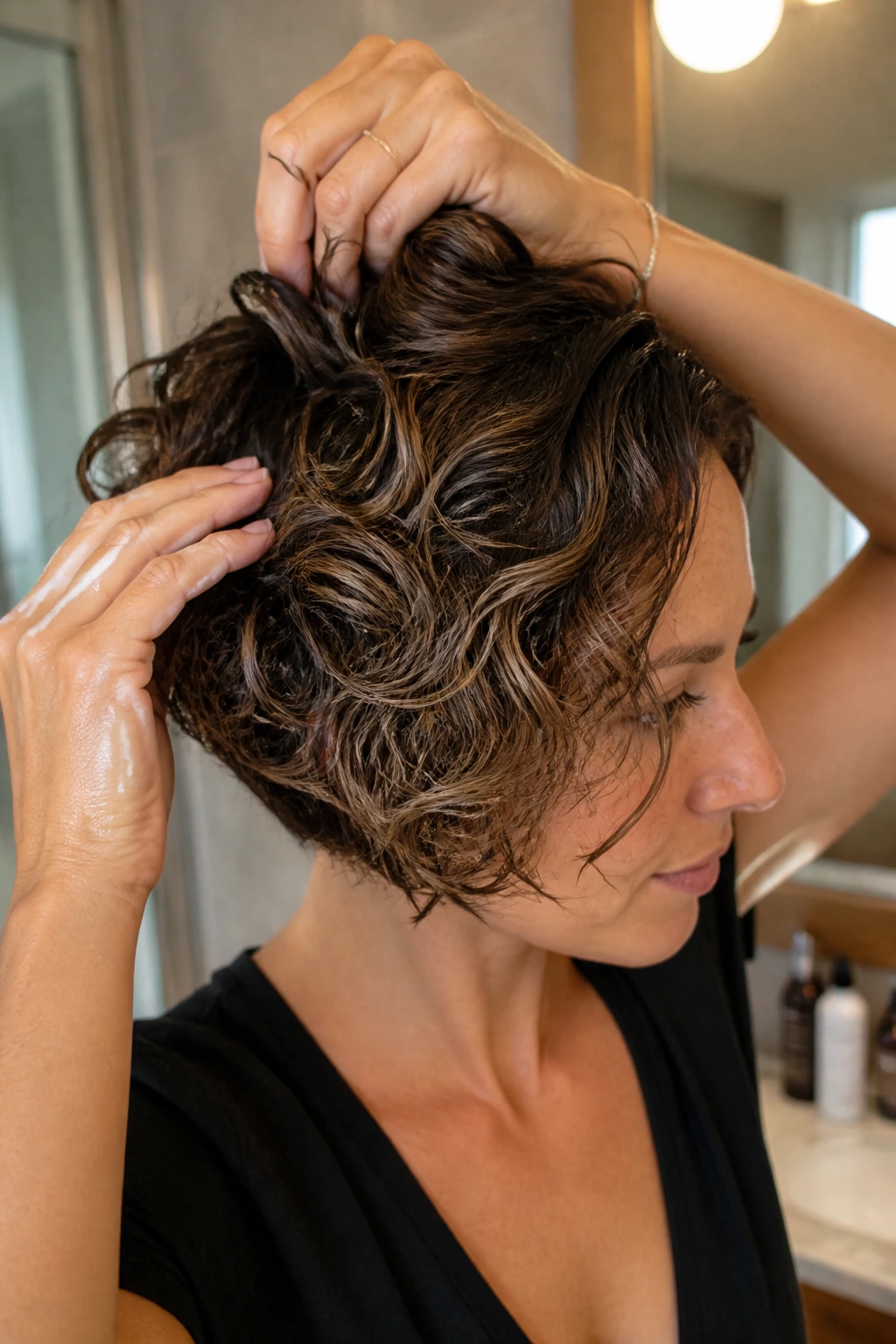
A curly inverted bob needs root support. If you pile on heavy cream from scalp to ends, the back will flatten and the whole stack gets swallowed. Use a small amount of leave-in from mid-length to ends, then layer on a gel or mousse that gives hold without crunching the curls into stiff little shells.
Drying method matters. Start by blotting, not rubbing. Then either air-dry with clips at the crown or diffuse on low heat, moving the diffuser in and out instead of blasting the same spot for 10 minutes straight. The goal is to preserve the curl clumps and keep the nape lifted.
Best for air-drying: Fine to medium curls that don’t lose shape quickly.
Best for diffusing: Dense curls, tighter spirals, or anyone who wants the stack to sit visibly off the neck.
Best for refresh days: A light mist of water, a pea-sized dab of leave-in, and a 3- to 5-minute diffuse pass just at the roots and front pieces.
If the front starts to flip in an odd direction, twist the damp pieces around your fingers before drying. That tiny move keeps the angle clean.
Keeping the Nape, Tone, and Curl Pattern in Shape
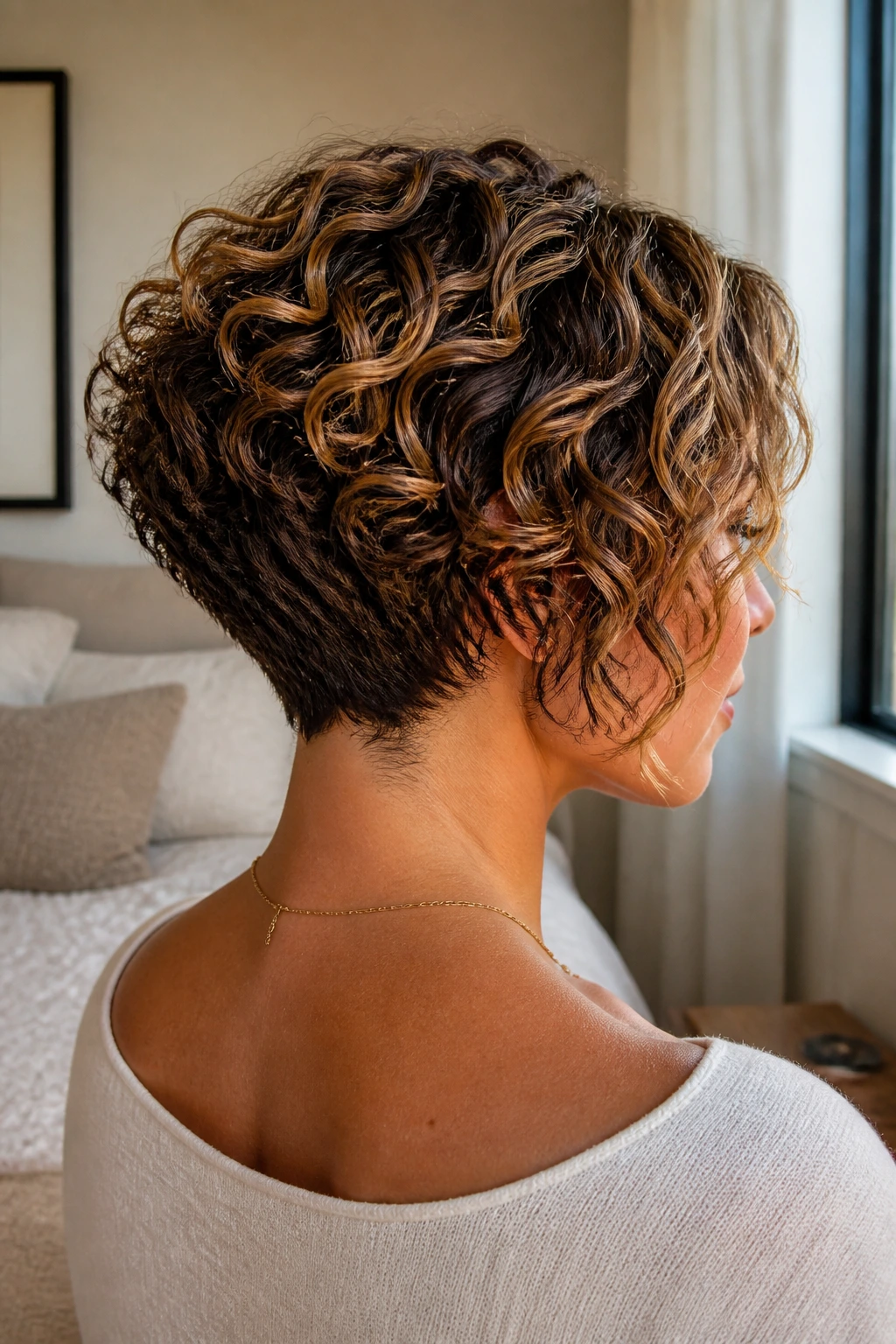
The nape grows out first, and it shows. Once the back starts touching the collar in a way it wasn’t meant to, the stack loses its lift. For most curly inverted bobs, a trim every 8 to 10 weeks keeps the outline honest. If the shape is longer and softer, you can stretch it closer to 12 weeks.
Babylights need their own schedule. If the tone is warm and sun-kissed, a gloss or toner every 6 to 8 weeks may be enough. Cooler blondes or ash browns often need toning a touch sooner if the water in your area runs mineral-heavy. Hard water is rough on highlights. It leaves a film, and the curl pattern feels it too.
At home, use a clarifying wash every 2 to 4 weeks if your stylers leave buildup. Too much residue makes curly bobs sag. Too little moisture makes them frizzy. The sweet spot sits in the middle, and the haircut looks better when the roots are clean without being stripped.
Common Mistakes That Make the Style Look Heavy
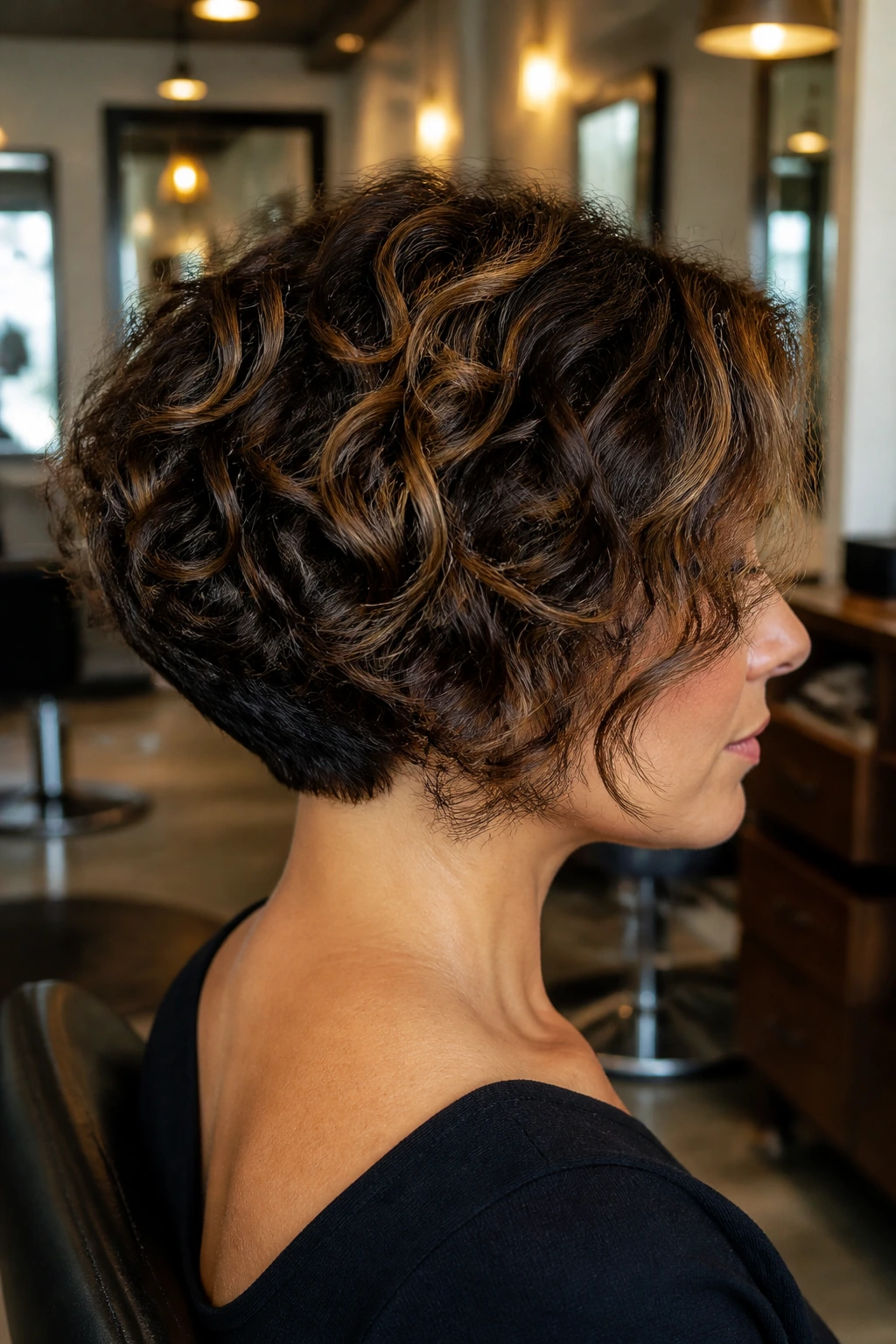
The first mistake is cutting the front too short without respecting shrinkage. On curly hair, that often turns a chic inverted bob into a puffed-up triangle. The fix is simple: build the front a little longer than you think you need and let it settle after drying.
Another one is using highlights that are too chunky. Thick streaks slice through the curl pattern and make the hair look broken up instead of dimensional. Babylights should be fine enough that the curl itself becomes the design.
Heavy creams can wreck the shape too. If the back looks limp by midday, the product is usually the culprit. Use lighter layers of styling product and keep the richest moisture for the ends.
The last big mistake is skipping nape trims. The stack is not a “set it and forget it” haircut. Once that back line grows out, the shape turns blunt fast. A little upkeep keeps the whole thing honest.
Variations and Adaptations to Try

The Softest-Off Shoulder Version: Keep the front grazing the collarbone and the back only moderately stacked. This is the one to choose if you want a bob that can drift longer without losing its shape.
The High-Contrast Brunette-and-Blonde Mix: Use a dark base with fine beige babylights concentrated around the crown and face frame. It gives curly hair a striped-free brightness that still shows up in photos.
The Low-Heat, Low-Fuss Shape: Ask for more internal structure and less aggressive layering, then style with mousse and air-dry. Good for curls that hate daily diffuser time.
The Warm Copper Curve: Add copper babylights only to the front and top surface. The back stays deep, which makes the angle look sharper and the color look richer.
The Tight-Coil Sculpted Bob: Keep the bob a touch longer than you would for looser curls and have it cut with the coil pattern in mind. This version usually needs less razor work and more careful shaping.
Frequently Asked Questions
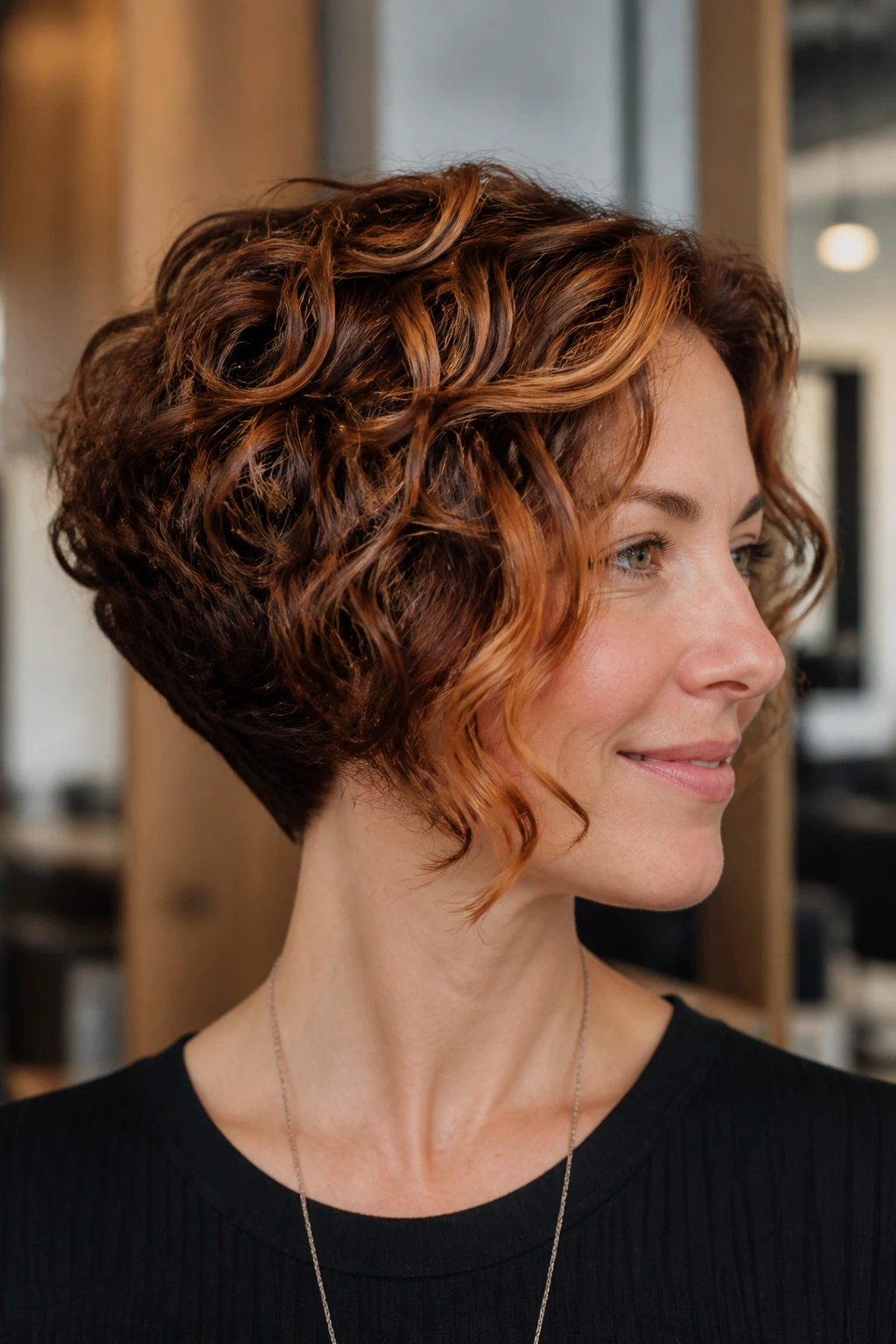
Do babylights work on very tight curls?
Yes, but they need to be woven fine and placed with the curl pattern in mind. If the highlights are too chunky, they can disappear into the coil or look patchy when the hair shrinks. Tight curls usually look best with subtle dimension around the surface and hairline.
How short can the back go before a curly inverted bob looks too big?
That depends on density and shrinkage, but the back usually needs enough length to avoid standing straight out from the nape. If your curls spring up a lot, leaving a little more length in the back helps the stack sit close instead of blooming outward.
Should curly inverted bobs be cut wet or dry?
A smart stylist will often use both. Dry cutting shows the real curl pattern and shrinkage, while wet shaping helps refine the line. If someone only cuts curly hair wet and never checks it dry, the finished shape can surprise you in a bad way.
Can fine curly hair wear this style without looking sparse?
Absolutely, as long as the layers are controlled. Fine curls usually need a softer stack, not a heavily shredded one, and the babylights should stay subtle so the hair doesn’t look see-through.
How do I keep the babylights from turning brassy?
Use color-safe shampoo, keep heat low, and bring in a toner or gloss when the highlights start leaning yellow or orange. Hard water can speed up brassiness, so a shower filter helps more than people expect.
Will this haircut work if my curls are uneven or grow in different directions?
Yes, but the cut should be planned around that. Uneven curl patterns usually look better with a little extra length and careful face framing, so the style doesn’t depend on every strand behaving the same way.
What if my bob keeps flipping out at the ends?
That usually means the front is too blunt or the layers are sitting in the wrong place for your curl type. Ask for a softer angle at the front and check whether a tiny twist while drying helps the pieces settle inward.
How often should I refresh the color?
Babylights can stay pretty for a while if they’re fine and softly placed, but tone usually needs attention every 6 to 10 weeks depending on how light or cool the color is. The haircut itself may outlast the tone, which is good news if you like low-contrast grow-out.
The Shape That Keeps Paying Off
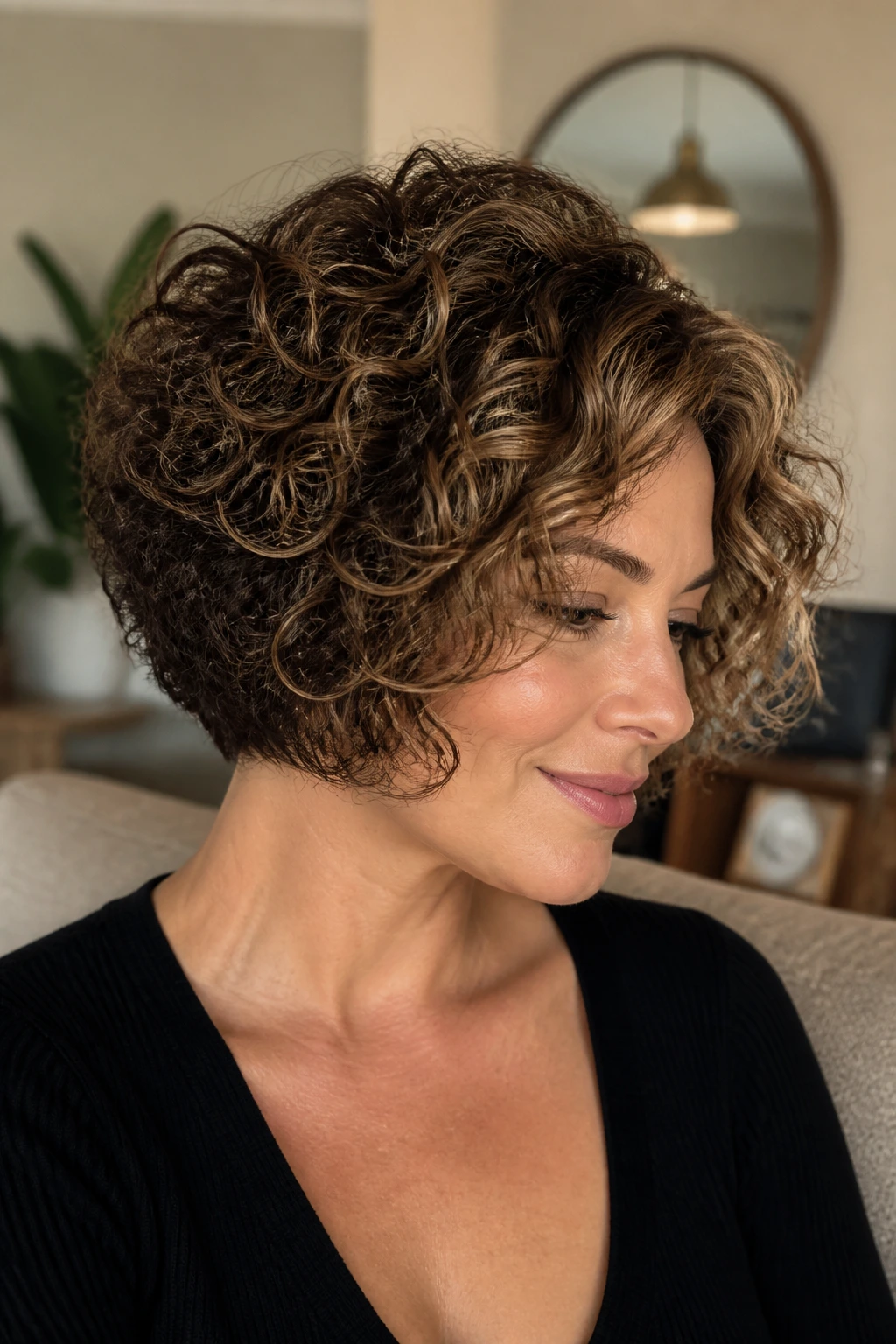
A stacked inverted bob on curly hair gives you something rare: structure without stiffness. Add babylights, and the haircut stops reading as one solid shape and starts showing you the curl pattern instead. That’s the real trick here. Not brightness for its own sake. Clarity.
The best versions are the ones that respect shrinkage, density, and the way your curls actually fall when they’re left alone. A good stylist can build that into the cut. A good color plan can keep it visible for weeks. Put the two together and the bob keeps its character long after the salon mirror is gone.
If your curls have been fighting blunt bobs for years, this is the shape that gives them somewhere to go.