



A heavy fringe can do strange things to a round face, especially when thick hair decides to puff out and announce itself all at once. The wrong bang line sits like a shelf. It cuts straight across the forehead, widens the cheeks, and turns morning styling into a small daily argument with your mirror.
Soft bangs for round faces and thick hair work because they do the opposite. They break up width, keep the front light, and leave enough movement that the cut bends instead of bulking up. That last part matters more than most people admit. Thick hair has memory; if you cut it blunt and short, it often springs right back with a little helmet shape you did not ask for.
What you want is shape without heaviness. A little center opening. A diagonal line. Ends that feather out around the cheekbone, lip, or jaw instead of stopping dead at the brow. That’s the sweet spot, and it’s where the best versions of this fringe live.
Why These Shapes Work So Well

- Face-Slimming Lines: Diagonal and center-split bangs create vertical movement, which softens the widest part of a round face instead of boxing it in.
- Weight Control: These cuts remove bulk from thick hair so the fringe falls with a bend rather than a shelf.
- Easy Grow-Out: Longer sides and tapered ends blend into layers, which means you are not trapped in an awkward month-long grow-out.
- Styling Flexibility: Most of these shapes can be worn with a round brush, a quick bend from a flat iron, or just a finger-dried finish.
- Salon-Friendly Options: You can ask for these without gambling on a super-short fringe that needs perfect daily styling.
- Less Forehead Wall: A little skin showing through the front keeps the cut airy and keeps the face from looking wider.
1. Cheekbone-Grazing Curtain Bangs
This is the classic for a reason. The center opens softly, the sides fall toward the cheekbones, and the whole shape pulls the eye downward instead of across. On thick hair, that longer side length keeps the front from puffing into a solid block.
What to ask for
- A center part with the shortest pieces landing just below the brows.
- Longer outer pieces that hit at the top of the cheekbone or a touch lower.
- Point-cut ends, not a blunt line.
I like this option for anyone who wants movement without drama. It looks finished with a round brush, but it doesn’t fall apart if you air-dry and finger-comb it after. Easy to live with. That counts.
2. Bottleneck Fringe With Tapered Ends
Bottleneck bangs are a little narrower in the middle and a little wider as they move outward, which is exactly why they flatter a round face. They give you softness at the center, then stretch the shape toward the temples where thick hair can carry the weight.
Ask your stylist to keep the center light and the outer corners longer. If the fringe gets cut too straight across, it loses the tapered effect and starts acting like a blunt bang with a trendy name. No thanks.
This one feels polished, but not stiff. I especially like it on dense hair that tends to swell around the forehead; the taper keeps the front from looking too broad.
3. Deep Side-Swept Bangs
A deep side part can be a lifesaver when your hair wants to do its own thing. The diagonal line slices across the forehead and creates a long, clean angle that makes a round face look a little leaner. Thick hair helps here, because it gives the sweep enough body to stay in place.
Why it works
The line is doing the flattering work. It interrupts the width of the cheeks and gives the eye a clear path from temple to jaw. That’s a small thing on paper and a big thing in a mirror.
If your cowlick pushes your fringe one way already, this is often the least annoying choice. You’re working with the hair instead of fighting it.
4. Feathered Wispy Fringe
Feathered bangs are all about air. The ends are point-cut and lightly broken up, so the fringe looks soft instead of dense. On thick hair, that broken edge keeps the front from feeling like a curtain dropped too low over the face.
This shape is best when you want forehead coverage without weight. It suits round faces because the wisps create little gaps of skin and movement, which stop the front from reading as one wide line.
Don’t confuse feathered with sparse. You still want enough hair in the bang to look intentional. The trick is removing bulk inside the section, not making it look like three hairs and a prayer.
5. Long Swing Bangs
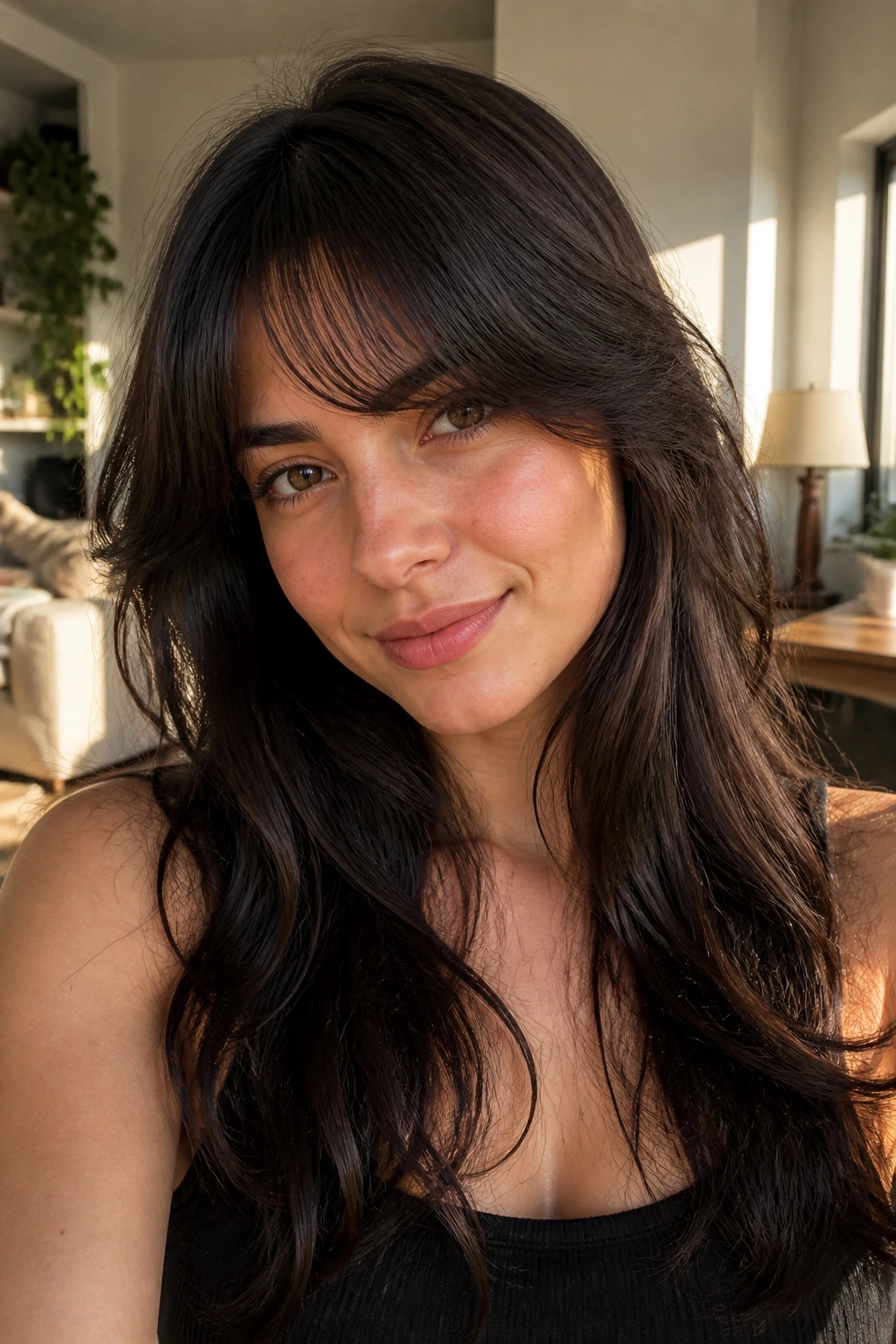
Swing bangs move. That’s the whole point. They start shorter near the center and drift longer toward the sides, then flip softly away from the face when you brush them out. On a round face, that sideways motion creates a longer shape without feeling severe.
I love this one for thick hair because it bends instead of collapsing. You can blow-dry it with a medium round brush and get a soft curve in under five minutes. Not a science project. Just a decent fringe with a little bounce.
If you like to wear your hair half-up, these sit nicely around the temples instead of disappearing into the elastic.
6. Invisible Face-Framing Layers
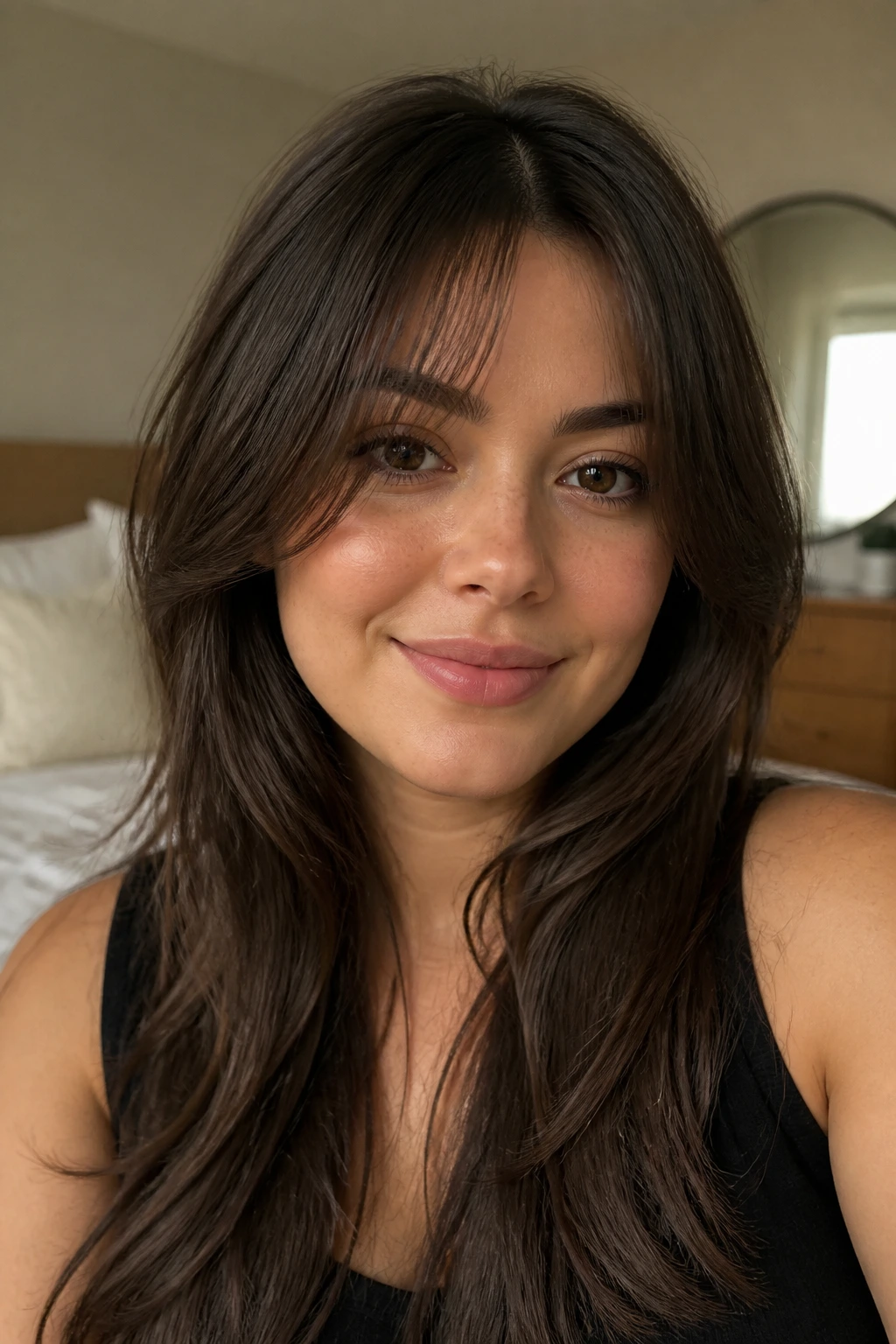
These barely count as bangs, which is exactly why some people end up loving them. The front pieces start high enough to feel like a fringe, then dissolve into longer face-framing layers. For round faces, that soft diagonal is flattering without being obvious.
Best for
- Anyone nervous about a full bang commitment.
- Thick hair that needs weight removed near the front.
- People who want the option to tuck the pieces behind the ears on busy days.
This is the quietest choice in the list, and sometimes that’s the smartest move. If you want softness without a hard line, start here.
7. Soft Shag Fringe

A shag fringe brings a little attitude, but it doesn’t have to look messy. The front is broken into pieces that blend into the layers around the face, which means thick hair gets movement instead of bulk. Round faces benefit because the shaggy texture pulls attention upward and outward.
This style loves a little bend and separation. A bit of mousse at the roots, a rough blow-dry, and a touch of texturizing spray at the ends usually does the job.
I’d choose this if your hair has natural volume and you don’t want to spend ten minutes making the bangs sit exactly right. The whole point is to look a bit undone. Controlled undone. There’s a difference.
8. Arched Brow-Grazing Bangs

Arched bangs follow the shape of the brow rather than cutting straight across it, and that curve can be very kind to a round face. It softens the forehead line and gives the face a little lift at the center. Thick hair needs the arch to be light, though, or it turns into a helmet with a pretty shape.
Keep the corners a bit longer than the middle. That keeps the arch open and stops the fringe from becoming too boxy around the temples.
This is one of those cuts that looks best when the styling is not fussy. A quick bend under with a small brush is enough. Too much curling makes it feel dated.
9. Airy See-Through Bangs
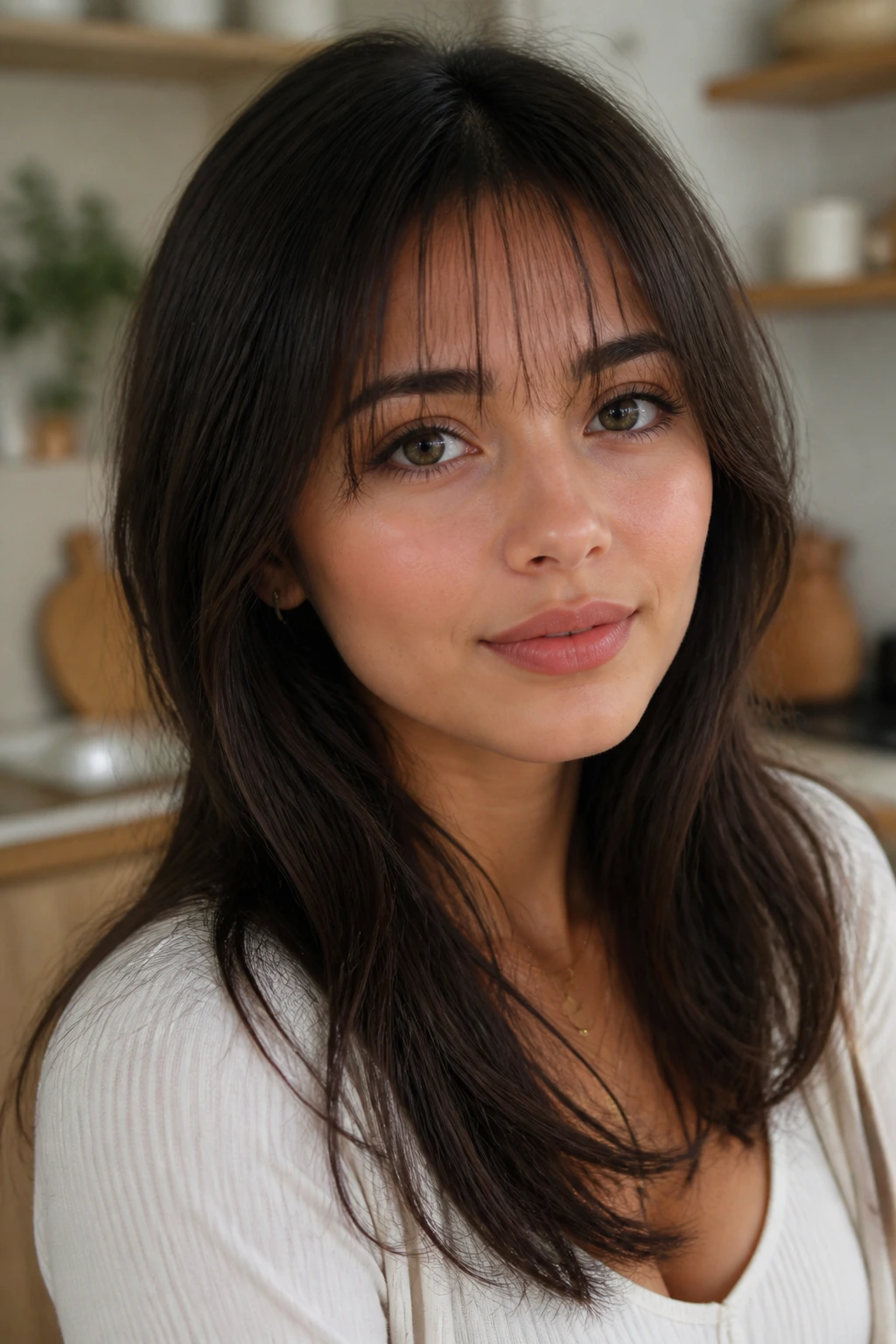
See-through bangs can work on thick hair, but only if they’re cut with restraint. The idea is to leave space between the strands so the forehead doesn’t disappear under a solid block of hair. On a round face, that transparency helps keep the shape light.
You do need a stylist who knows how to remove weight without shredding the ends. Over-thinning makes thick hair frizzy, and frizzy bangs are a special kind of annoyance.
I like this version best on straight or slightly wavy hair. If your texture is coarse and puffy, ask for a longer length than you think you need. Short see-through bangs on thick hair can look cute for about ten minutes, then swell.
10. Grown-Out Blunt Bangs With Rounded Corners

Already have blunt bangs? Don’t panic. The fix is often to soften the corners and let the middle sit a touch longer. That turns a heavy line into something round-face friendly without starting over.
The rounded corners matter. They stop the bang from cutting straight across the widest part of the face, and they give the front a little bend around the eyes and cheekbones.
This is one of my favorite salvage cuts. It’s practical, it’s flattering, and it saves you from a full grow-out if you’re tired of a dense front section.
11. Chin-Skimming Curtain Bangs
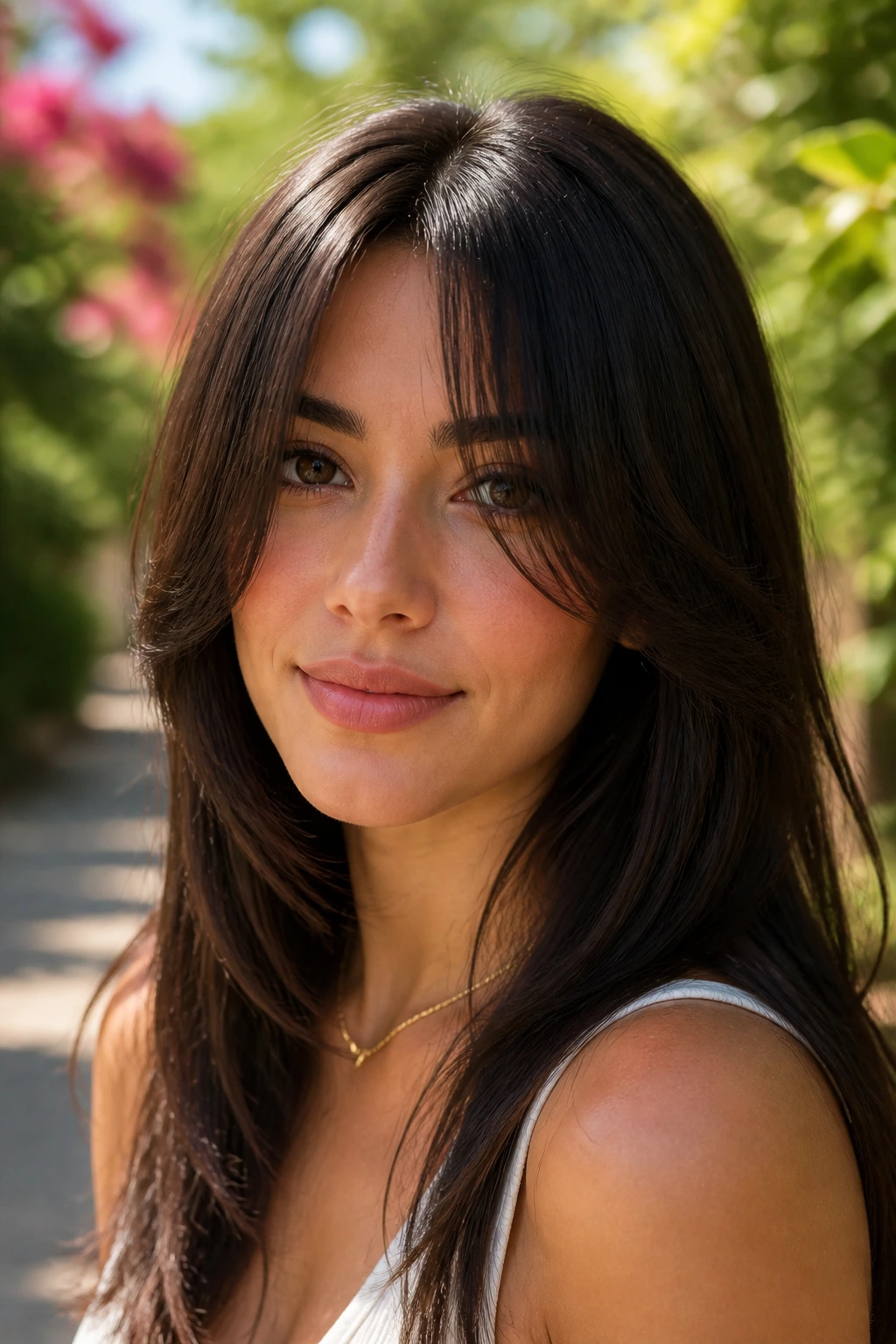
Long curtain bangs that graze the chin are one of the most forgiving shapes for a round face. They stretch the face visually, and thick hair helps them fall with enough body that they don’t look wispy in a sad way.
Why they’re so useful
The extra length gives the eye something to follow. Instead of stopping at the brow and widening the middle of the face, the fringe drifts down beside the cheeks and jaw.
If you wear your hair in a blowout, this is the one that gives the most payoff. The ends curve softly away from the face and make the whole cut look deliberate.
12. Side Curtain Bangs With a Middle Split
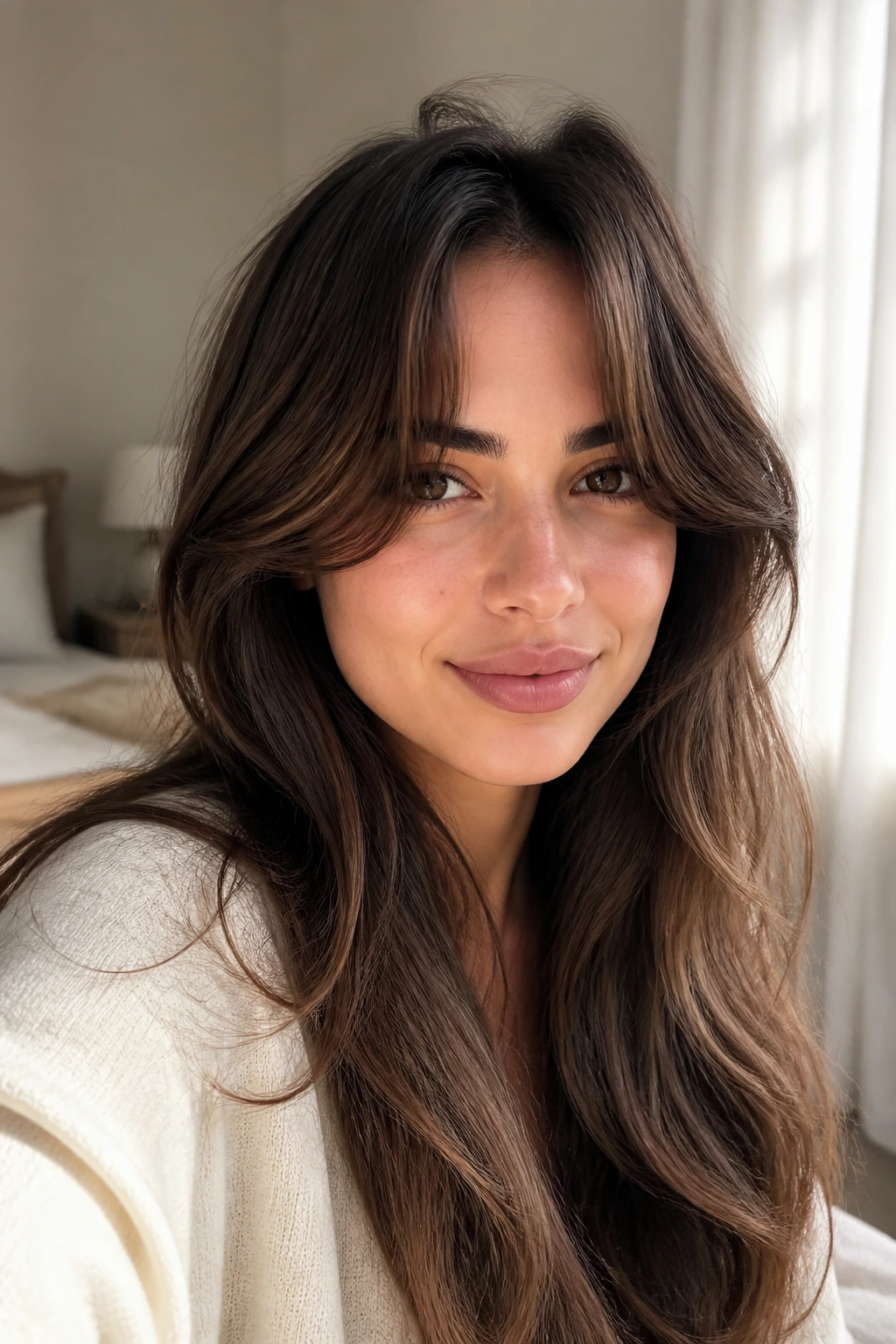
This one sits between a curtain bang and a side sweep. The split is still there, but it’s a little looser and more shifted to one side. That slight imbalance is flattering on round faces because it breaks symmetry just enough to slim the front.
Thick hair gives the split a nice shape, but you’ll want to keep the center piece light. If the center gets too bulky, the whole thing starts to look like a folded fan.
It’s a smart option if you change your part a lot. You can wear it closer to the middle one day and sweep it wider the next.
13. Razor-Soft French Fringe

A French fringe can be gorgeous on thick hair when it’s cut with a soft hand. The blade or shears need to remove enough weight that the front moves, but not so much that the ends look shredded. On a round face, that softness keeps the forehead from feeling boxed in.
This style likes a little bend and a little inconsistency. Not chaos. Just enough unevenness that the fringe looks relaxed instead of stamped into place.
I’d skip this if your hair is very coarse and prone to frizzing at the ends. For smoother thick hair, though, it has that easy, lived-in feeling that a lot of people chase and rarely get.
14. Layered Diagonal Bangs
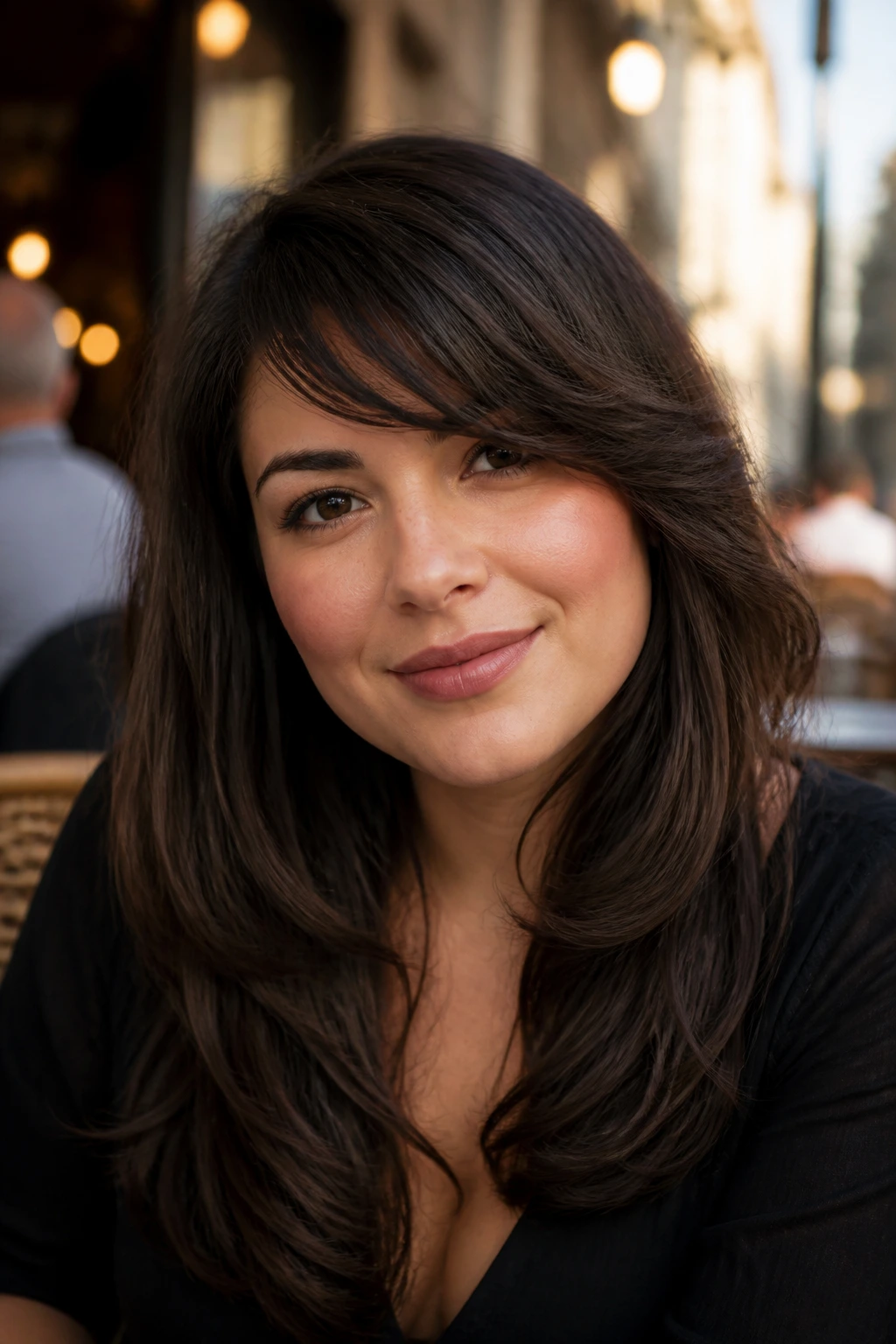
Think of this as a more sculpted side sweep. The line starts higher on one side and falls diagonally across the forehead, which gives a round face a leaner profile. Thick hair is a big help here because the diagonal has enough body to stay visible.
How to style it
- Blow-dry from the part downward and across the forehead.
- Use a medium brush to keep the bend soft.
- Finish with a pea-sized touch of light cream on the ends only.
This is one of the more structured looks in the list. It looks polished with very little daily effort, which is nice if you like your bangs to behave.
15. Piece-Y Blowout Bangs
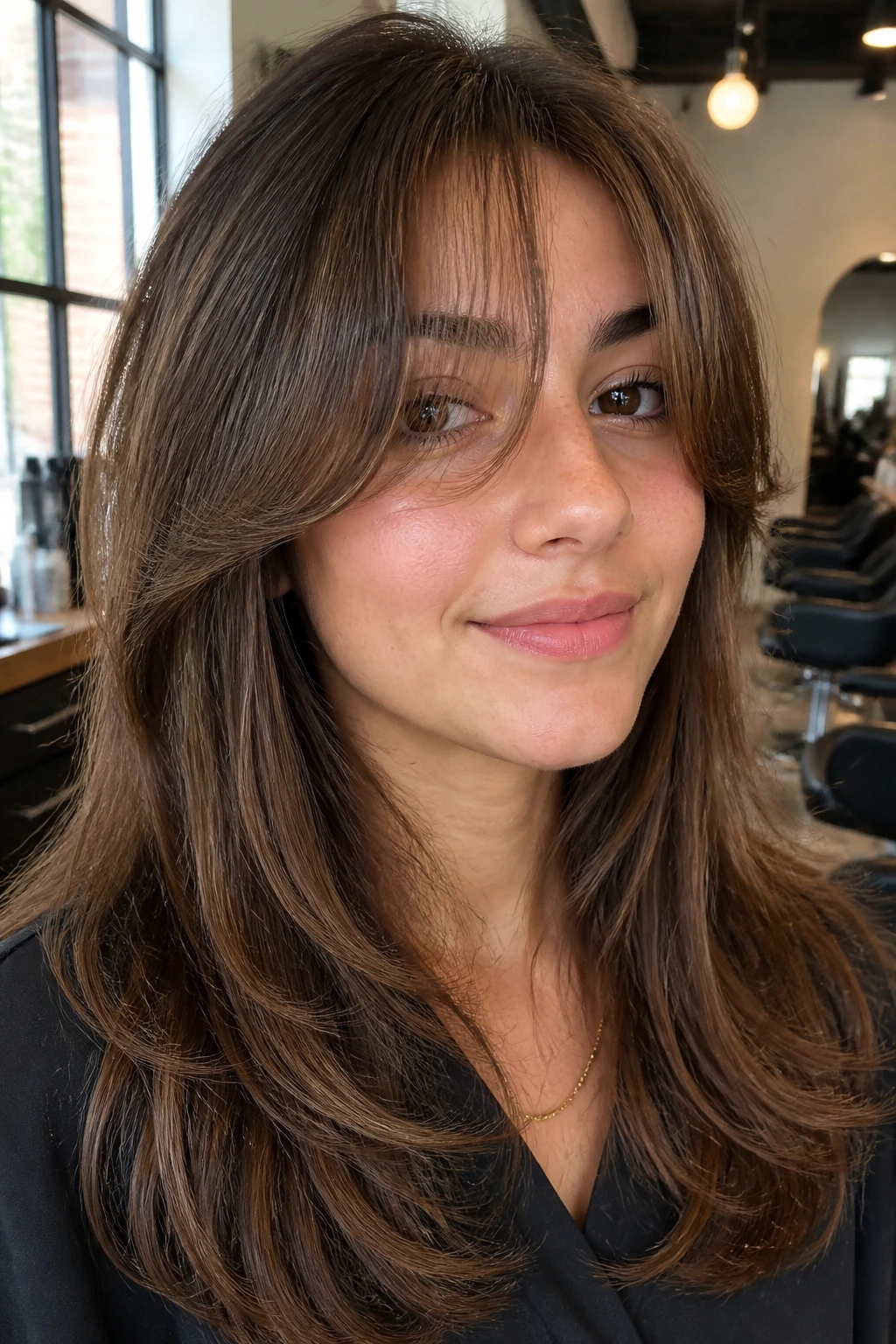
If you want bangs that look salon-finished, this is the one to keep in mind. Piece-y blowout bangs are styled so the front separates into soft strands rather than one solid sheet of hair. On thick hair, that separation is the difference between movement and bulk.
The shape works on round faces because the little gaps between pieces keep the forehead from reading wide. It gives the face vertical rhythm, which sounds fancy and looks easy.
A round brush, a quick flip away from the face, and a light mist of flexible spray are usually enough. Heavy hairspray kills the effect. So does touching them too much. Yes, people always touch them too much.
16. Long Layered Fringe for Curls
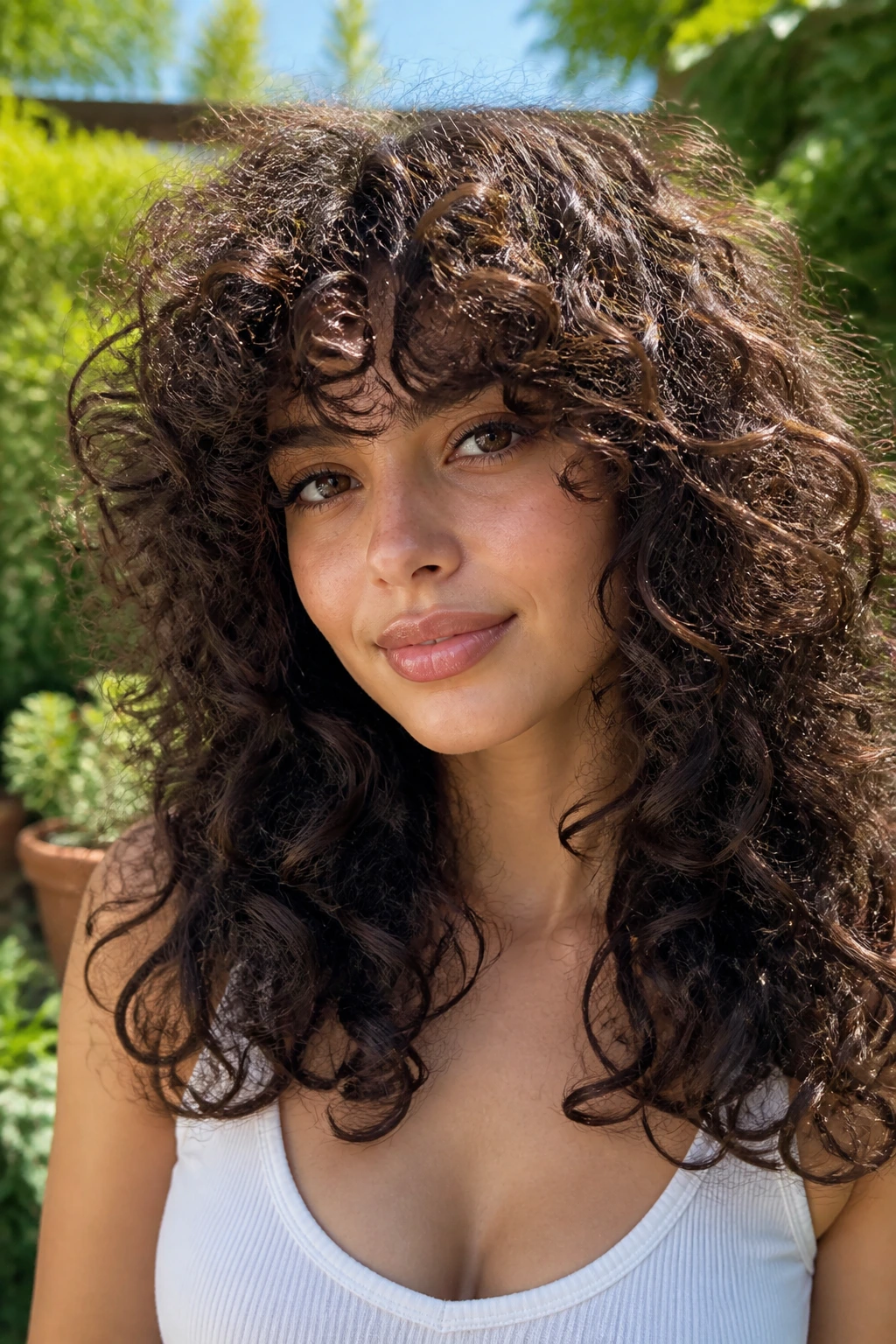
Curly thick hair can wear bangs, but the cut has to respect shrinkage. A long layered fringe gives curls room to spring up without ending too far above the brow. On a round face, the longer length helps stretch the shape and keeps the front from closing in.
The best version is cut dry or almost dry, with the curls worn in their natural pattern. If you cut curly bangs wet and too short, they can jump upward in a way that makes the face look rounder, not slimmer.
This fringe feels soft and alive. It’s not about perfect symmetry. It’s about giving the curls a path so they frame the face instead of sitting like a cap.
17. Soft Bottleneck Bangs With Crown Volume
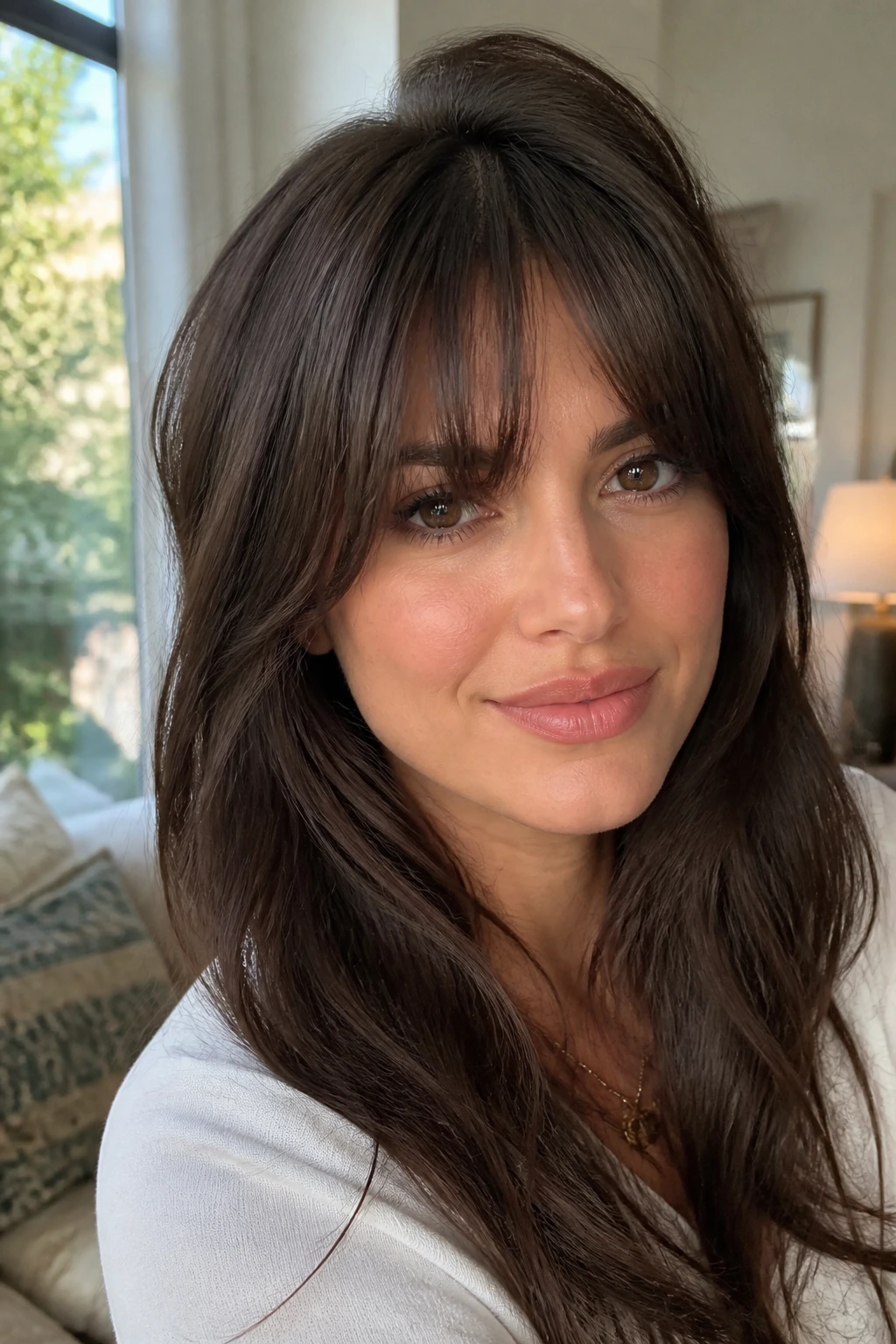
A little lift at the crown makes bottleneck bangs look cleaner on a round face. The height at the top adds length, and the tapered center keeps the fringe from covering too much forehead. Thick hair gives you enough body to make that shape hold.
I like this version when the front area tends to fall flat by noon. A bit of root lift spray at the roots and a quick blast with the dryer helps the shape stay open.
This style is a quiet workhorse. It doesn’t scream for attention, but it makes the whole face look a touch longer and the front section feel lighter.
18. Wavy Split Fringe
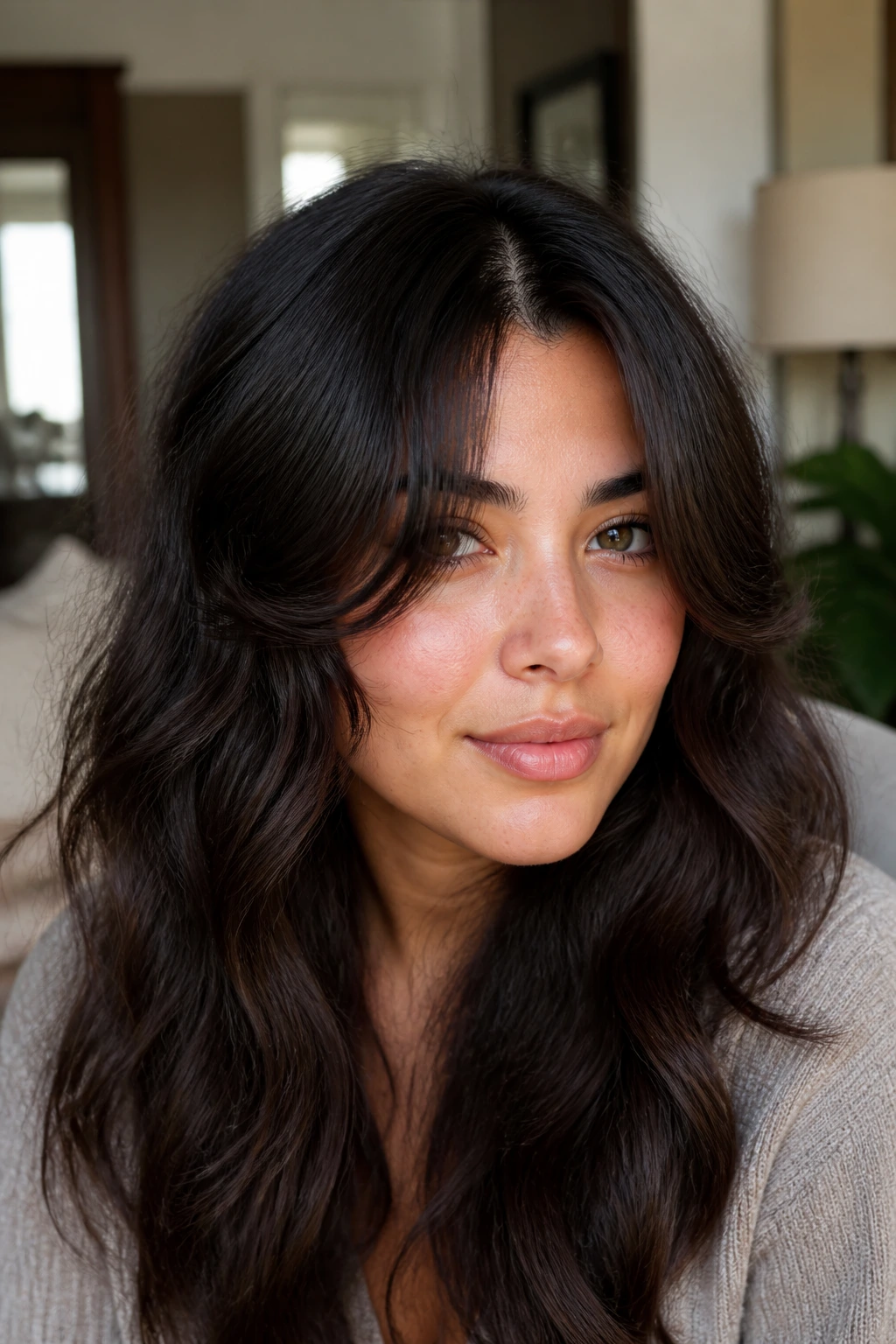
If your hair bends on its own, lean into it. A wavy split fringe opens at the center and lets the waves fall into two soft pieces, which is lovely on a round face because it keeps the forehead from feeling crowded. Thick hair gives the split enough weight that it still looks like a real fringe.
Best styling move
Twist each side once while damp, clip it for five minutes, then let it dry with a loose bend. That gives the waves a little direction without making them stiff.
This is a good choice for people who hate a perfectly smooth bang. It has a bit of motion, a bit of air, and no hard line.
19. Textured Lob Bangs

Not every flattering fringe needs to sit at the brow. Textured lob bangs blend into a long bob or shoulder-length cut and use the front layers to frame the face. For round faces, that length is useful because it keeps the eye moving downward.
Thick hair works well here because the front can be sliced into soft layers that sit with natural weight. You’re not asking the hair to behave like a short fringe. You’re asking it to frame.
This one is ideal if you want bangs that feel connected to the haircut instead of bolted on. That coherence matters more than people think.
20. Asymmetrical Soft Fringe

A little asymmetry goes a long way on a round face. One side sits longer, the other side lands a touch shorter, and the uneven line creates shape without looking severe. Thick hair helps because the fringe has enough density to keep the asymmetry from disappearing.
I’m partial to this on people who wear a side part most of the time. The cut can follow the part instead of fighting it, and that saves you from spending your mornings wrestling a fringe into place.
It’s also one of the easier ways to make bangs feel modern without going edgy. Soft, not sharp. Different, not loud.
21. Tapered Peekaboo Bangs
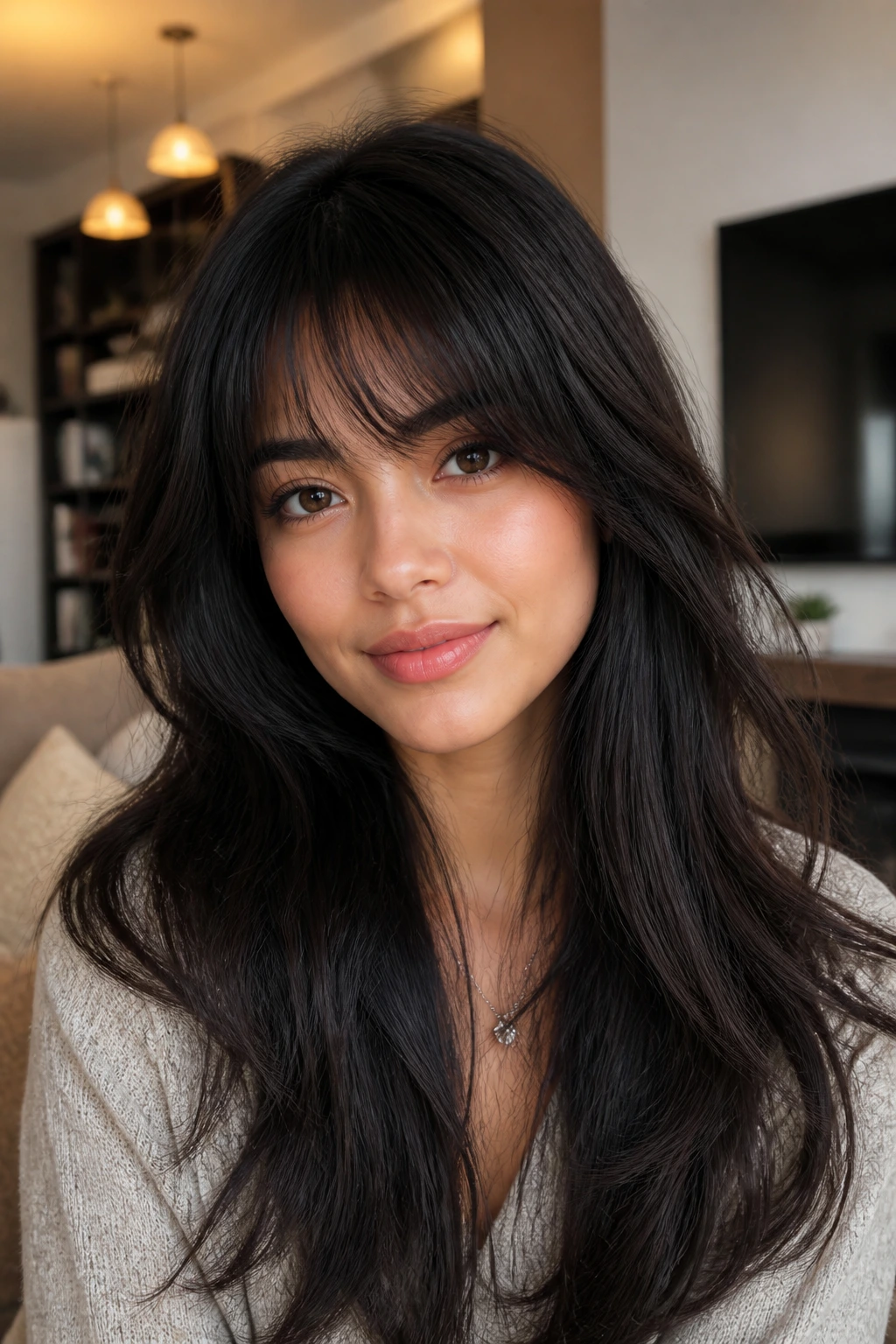
Peekaboo bangs hide under the top layer and only show themselves when the hair moves. They’re a nice choice if you want a little forehead softness without committing to a full curtain. On thick hair, the tapered ends keep the front from getting bulky.
This is the low-drama option for people who want the idea of bangs more than the maintenance of bangs. You still get face framing. You just get it in a quieter way.
I’d call this a good bridge style. If you’re unsure about fringe, this gives you enough front presence to test the waters without going all in.
22. C-Shape Fringe
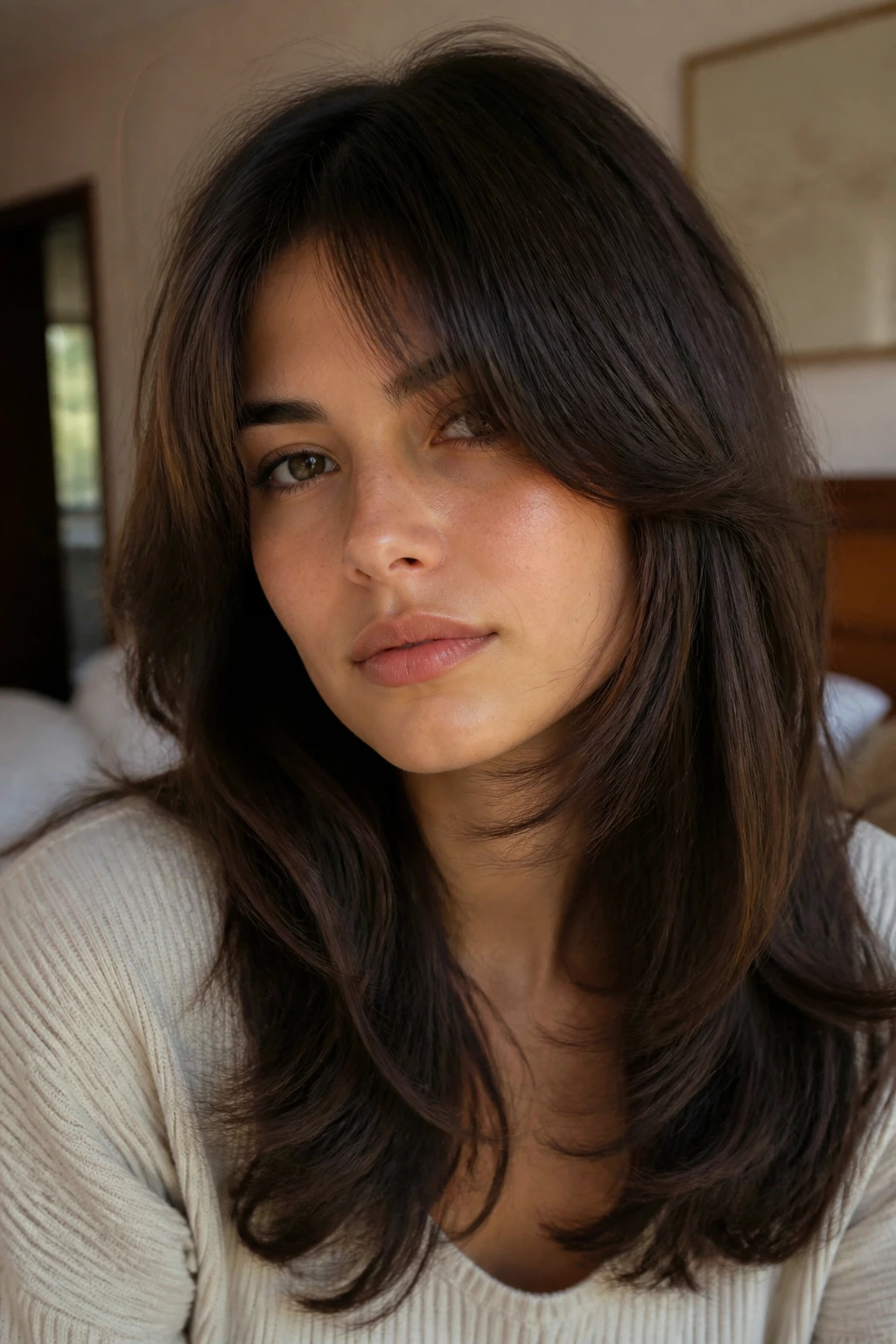
A C-shape fringe curves inward around the face, almost like the front section is hugging the cheeks. That shape is flattering on round faces because it creates a soft inward frame rather than a wide horizontal band. Thick hair gives the curve substance so it doesn’t collapse.
What makes it different
The front doesn’t split sharply like a curtain bang, and it doesn’t sweep hard like a side bang. It sits in the middle, with a smooth bend that feels gentle and controlled.
This one looks especially good with layers around the cheekbones. The fringe and the layers work together instead of competing.
23. Shattered Brow Bangs

Shattered bangs are broken into tiny pieces across the brow, but they still need length and softness to work on a round face. Think of them as a textured line, not a chopped-up mess. On thick hair, the shattered effect helps remove bulk and keeps the fringe from feeling heavy.
The danger here is going too short. If the pieces land high on the forehead, the shape can look choppy in the wrong way. Keep the shortest bits around brow level and leave the corners longer.
I like this when someone wants movement without a lot of styling time. A quick finger-dry and a little spray are enough. No elaborate brush work required.
24. Long Face-Framing Fringe With Side Blend
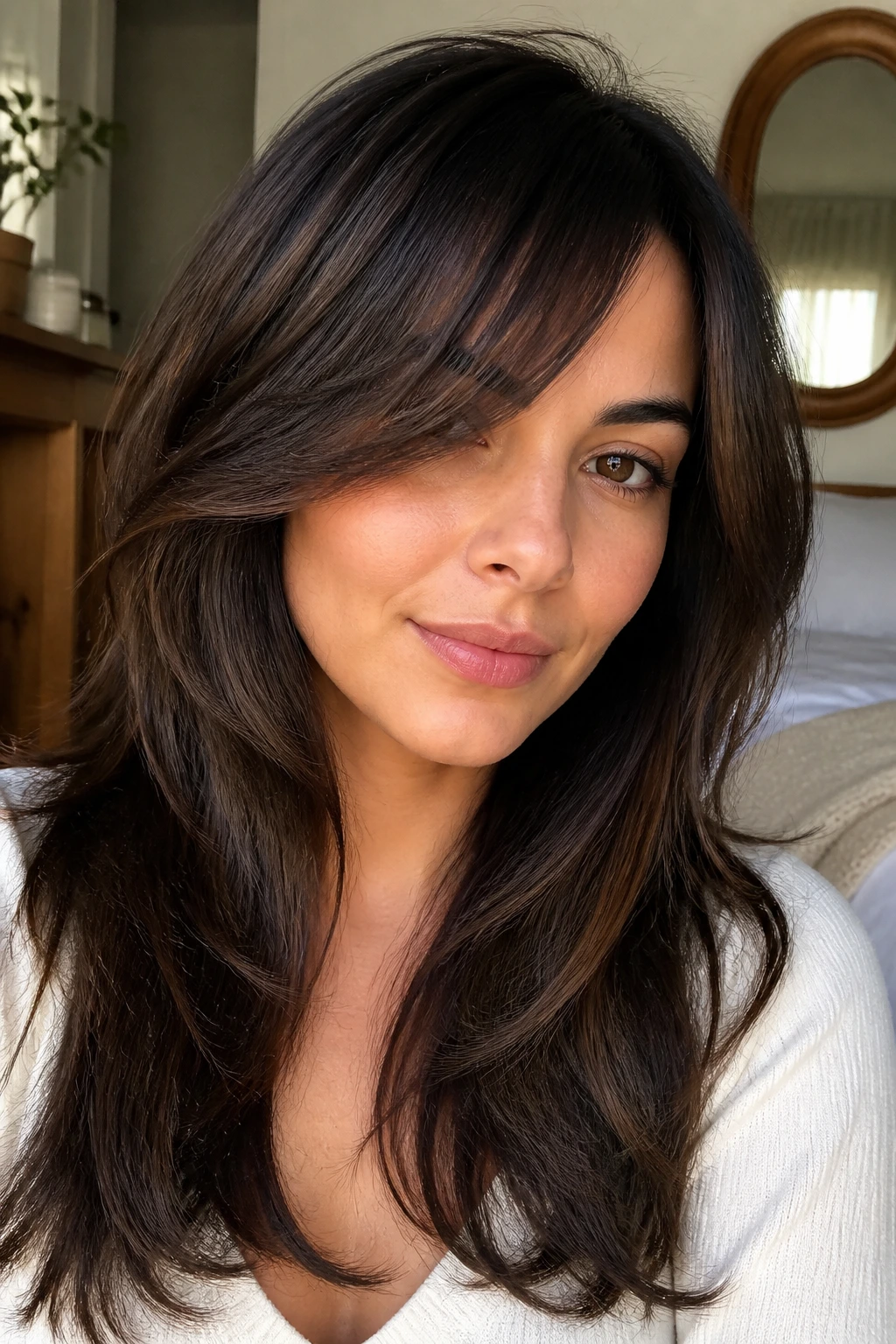
This is one of the easiest options if you want softness first and bangs second. The front layers start high, blend into the side pieces, and never make a hard stop. On a round face, that long diagonal framing creates length where it counts.
Thick hair benefits because the front can carry enough weight to lie well, but the layered edges keep it from becoming puffy. It’s the kind of shape that looks more expensive than it is. I know that sounds annoying. It’s still true.
If you like wearing your hair down most days, this is probably one of the safest picks in the entire list.
25. Grow-Out Friendly Half Curtain Bangs
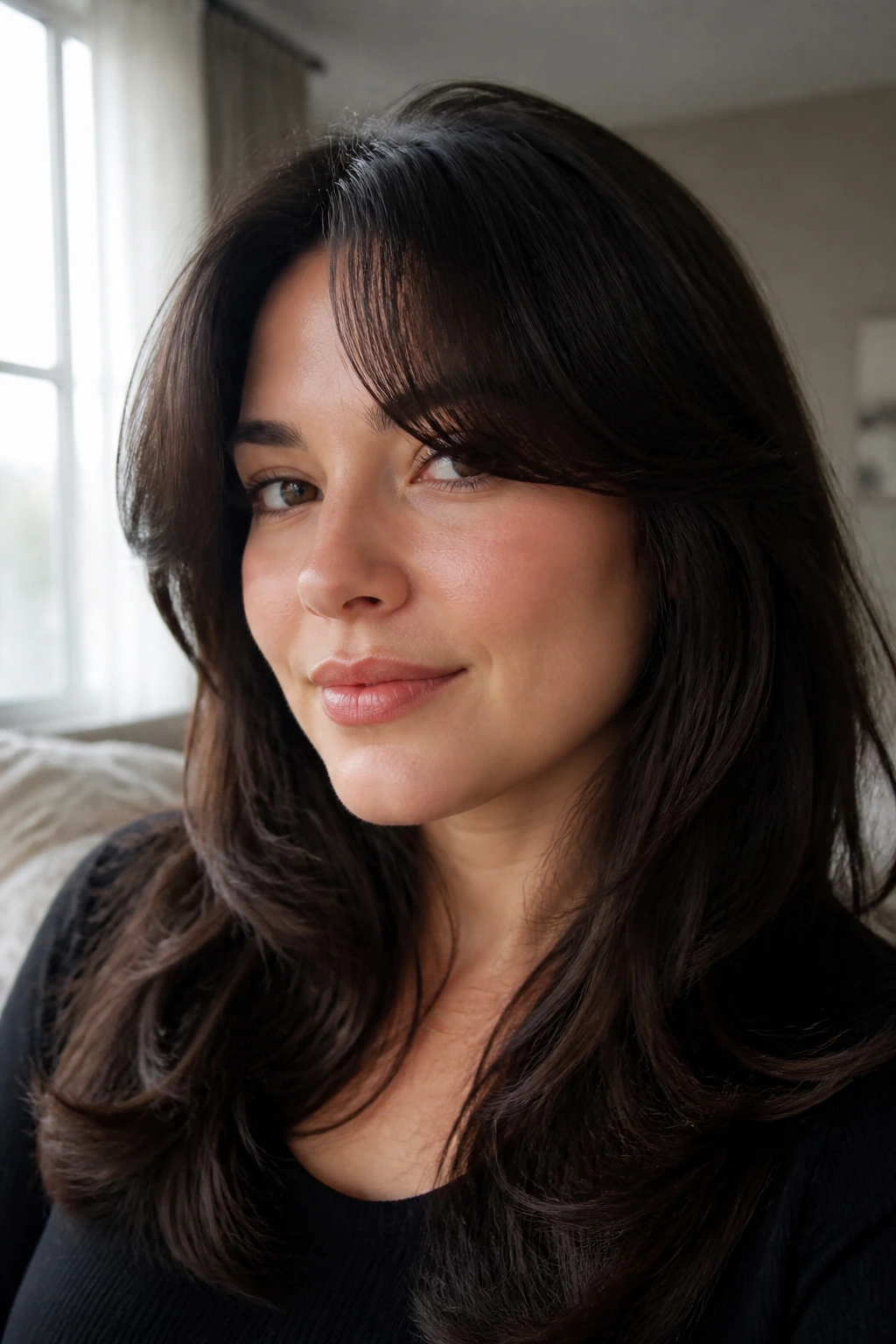
Half curtain bangs split the difference between a real fringe and a grow-out stage. The center is shorter, the sides stay long, and the overall shape blends quickly into the rest of the hair. For round faces and thick hair, that longer outer edge is a gift.
This is the one I’d send to anyone who keeps saying, “I want bangs, but I don’t want to be stuck with bangs.” Fair enough. The grow-out is smooth, the styling is forgiving, and the face-framing effect is still there.
It also behaves well with thick hair that likes to swell at the temples. The long sides give that fullness somewhere to go.
Why Soft Bangs Work on Round Faces and Thick Hair

Round faces have soft width through the cheeks, which means a fringe has to do a little geometry work. A blunt line that cuts straight across the forehead can make the face look shorter and wider. Soft bangs avoid that by creating vertical movement, diagonal lines, or a center opening that pulls the eye down instead of across.
Thick hair changes the game even more. Dense strands carry their own weight, and when they’re cut too short or too blunt, they often puff up into a front shelf. That’s not a flaw in your hair. It’s just physics with a blow-dryer. The answer is not to hack the fringe thinner and hope for the best. The answer is to remove weight in the right places so the bangs bend, separate, and settle.
The smartest versions of this cut keep a little forehead visible. A touch of space makes the front feel lighter. It also stops the bangs from becoming a single solid block that sits too low on the face. I like longer center sections, tapered outer corners, and a little movement at the cheekbone or jaw. Those details matter more than the name of the bang.
And yes, styling matters. Soft bangs do not need perfect styling, but they do need direction. A quick dry with a nozzle, a brush bend, and a little cooling time makes thick fringe behave much better than air-drying it into a question mark.
Tools That Make Bangs Easier to Cut and Style
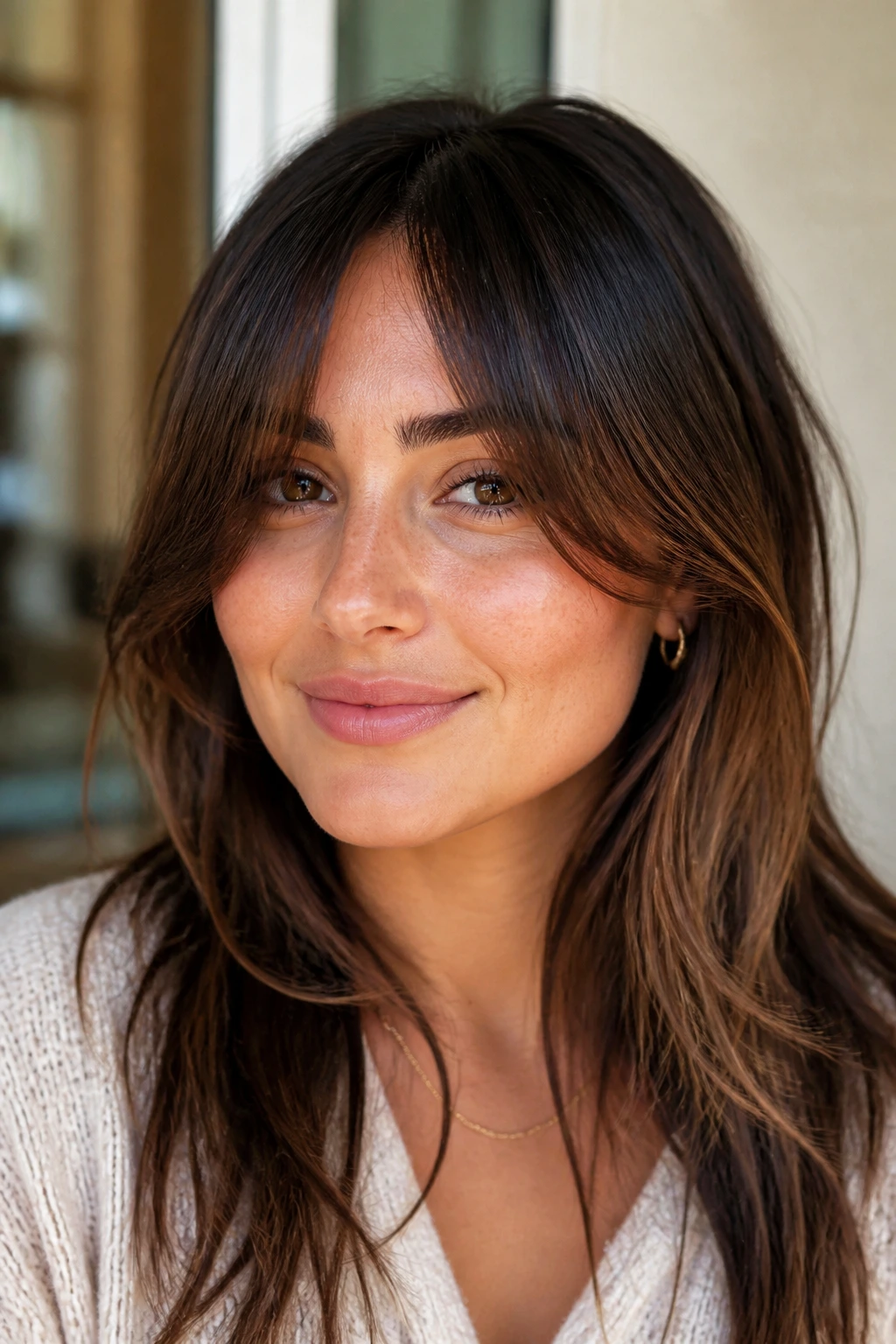
- Tail comb: This helps section off a clean fringe and keeps the part line neat when you’re deciding where the bangs should start.
- Sharp hair shears: If you trim at home, dull scissors chew thick ends and leave the fringe frayed.
- 1 to 1.5-inch round brush: Small enough to shape the bang, big enough not to make it curl too tight.
- Vent brush: Good for a faster dry when you don’t need a full salon blowout.
- Blow dryer with concentrator nozzle: The nozzle directs air at the roots so the fringe doesn’t puff in every direction.
- Duckbill clips: Useful for setting curtain splits while the bangs cool.
- Heat protectant spray: Thick hair can take heat, but the front pieces still need protection.
- Light mousse or root-lift spray: A little at the roots helps soft bangs hold their shape without going flat.
- Mini flat iron: Optional, but handy for smoothing a stubborn bend or flipping the ends slightly away from the cheeks.
- Dry shampoo: Good for the forehead area, which tends to get oily first.
- Velcro roller: Old-school, yes, but excellent for setting a soft curve while you do the rest of your makeup.
How to Style Soft Bangs Without Flattening Them
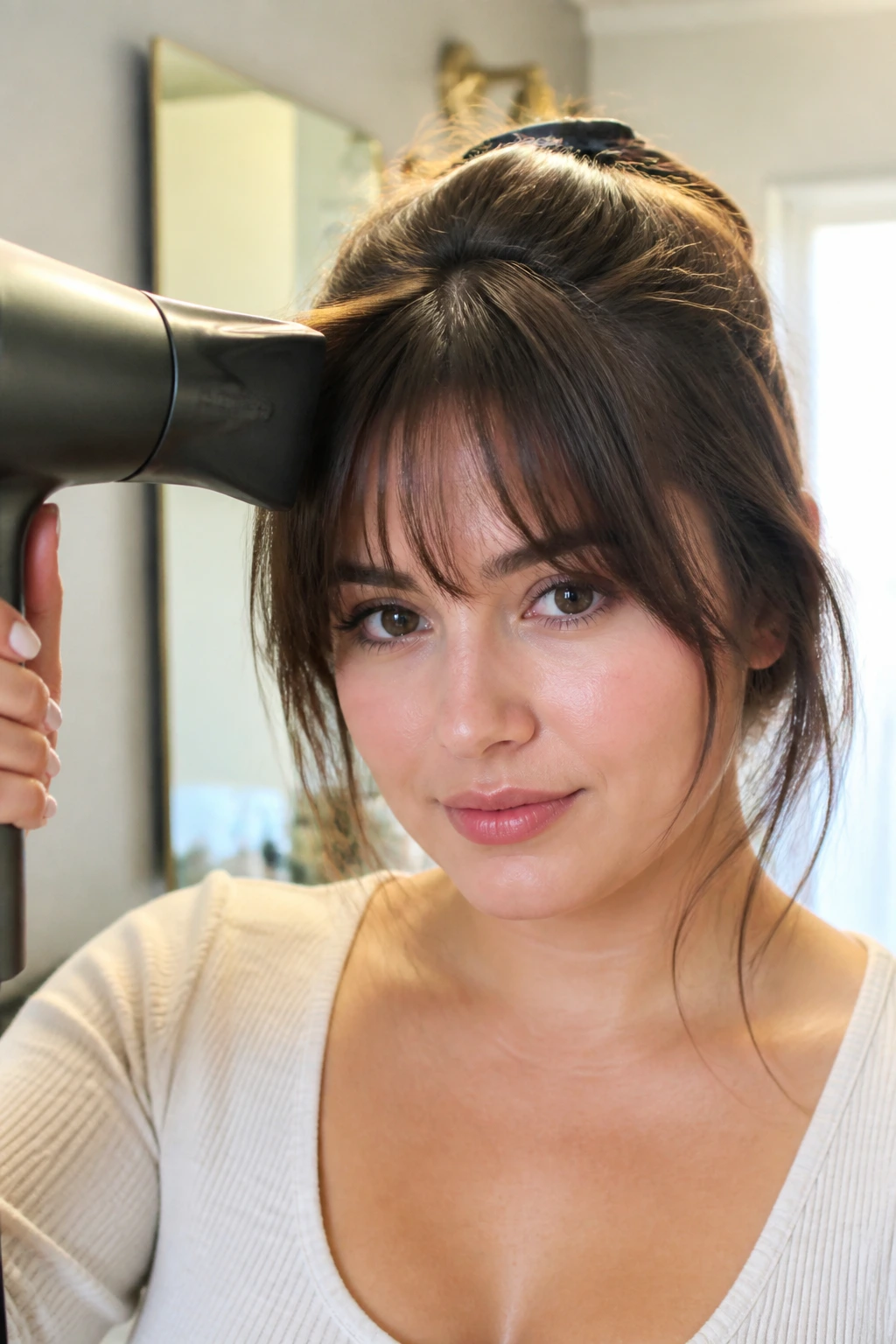
Start the front first. Seriously. If you dry the rest of your hair and leave the bangs until the end, the front often dries in the wrong direction and fights you for the rest of the day. Clip the back away, work the bangs while they’re still damp, and give the roots a little lift with the dryer nozzle.
For curtain or split styles, brush the fringe away from the face first, then roll it back toward the cheeks. That sounds fussy, but it only takes a few passes. The point is to teach the hair a curve before it sets. With thick hair, the shape sticks better when it cools in the position you want.
Use less product than you think. A pea-sized touch of cream on the ends is enough for most fringes. Put heavy serum on thick bangs and they turn stringy by lunch. Put too much spray at the roots and the front collapses into sticky pieces. Both are bad.
If you want the fringe to stay airy, cool it in place for thirty to sixty seconds after blow-drying. That pause is not optional. Warm hair still moves. Cool hair remembers.
The Most Common Bang Mistakes on Round Faces
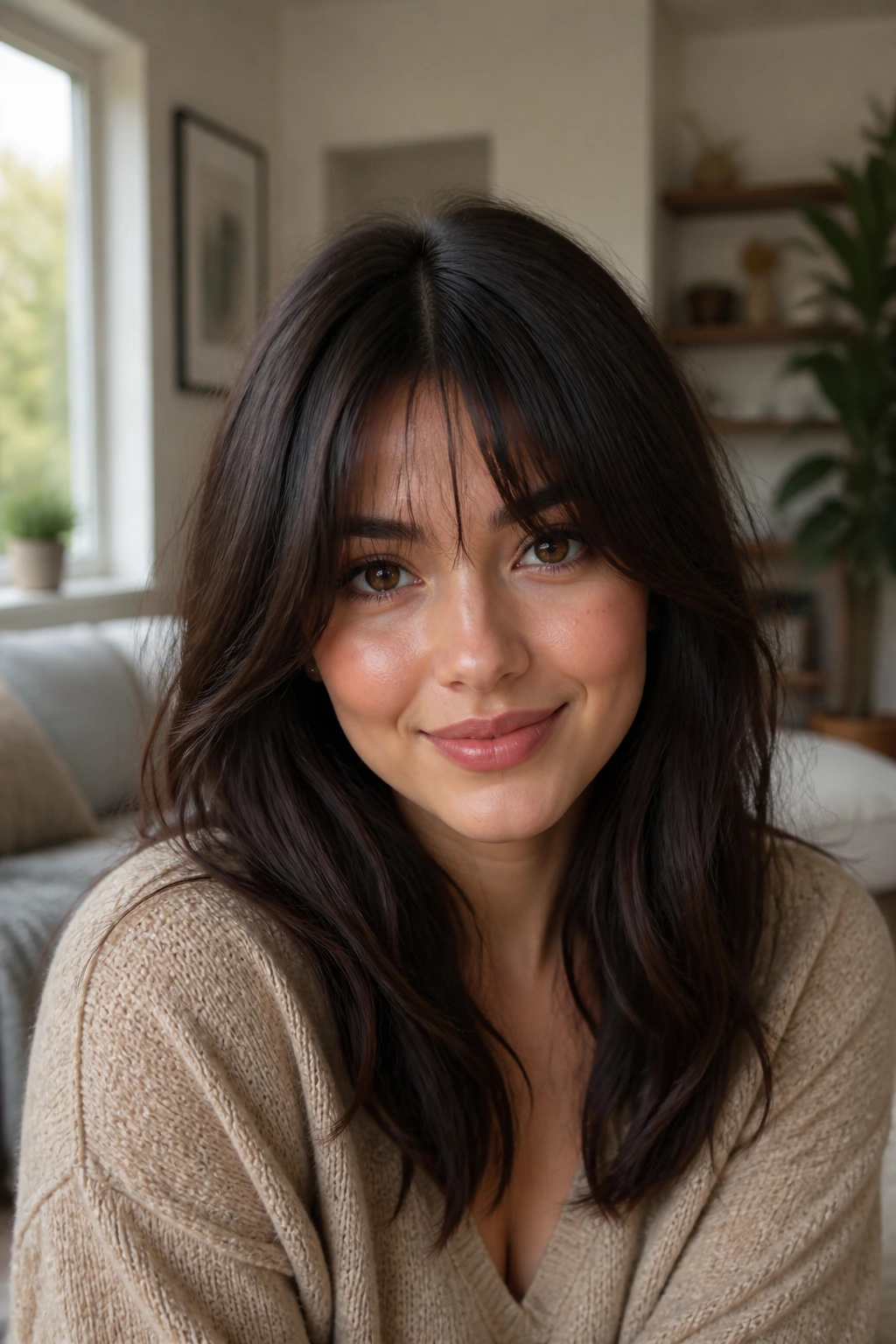
The first mistake is cutting the fringe too short. On a round face, a short bang can land right at the widest visual point and make the face look fuller. The fix is simple: keep the center a little longer than you think you need, then let the sides taper below it.
The second mistake is over-thinning thick hair with aggression. If the front gets shredded, it can frizz out and separate in ugly little gaps. Ask for weight removal in controlled sections, not a full attack with texturizing shears.
The third mistake is ignoring the natural growth pattern. If you have a cowlick or a strong part, the bang needs to work with it. Otherwise you spend every morning brushing it down, and by noon it’s back to its old tricks.
The fourth mistake is putting too much styling cream or oil on the front. Bangs live near the face. They get oily fast. Heavy products make them limp, and limp bangs on thick hair look dirty long before they actually are.
Variations for Curls, Glasses, and Low-Effort Days

Curly Halo Fringe: Keep the fringe long enough to account for shrinkage, then let the curls form their own soft curve. This works best when the stylist cuts it dry or nearly dry so the true length is visible.
Glasses-Ready Sweep: Ask for the shortest pieces to sit above the frames and the outer pieces to clear the temples. That way the bangs frame the glasses instead of disappearing behind them.
Air-Dry Curtain: A longer curtain shape with lightly clipped center pieces. Twist the front once while damp and let it dry that way. It’s the least fussy version in the bunch.
Low-Maintenance Grow-Out Blend: Start with a half curtain or face-frame shape, then keep the corners long. It blends into layers fast, which makes future trims less painful.
Coarse-Hair Soft Sweep: If your strands are thick and rough, keep the bang longer and use a vent brush or flat iron only on the ends. That keeps the front from puffing into a broad block.
Keeping the Shape Between Salon Visits
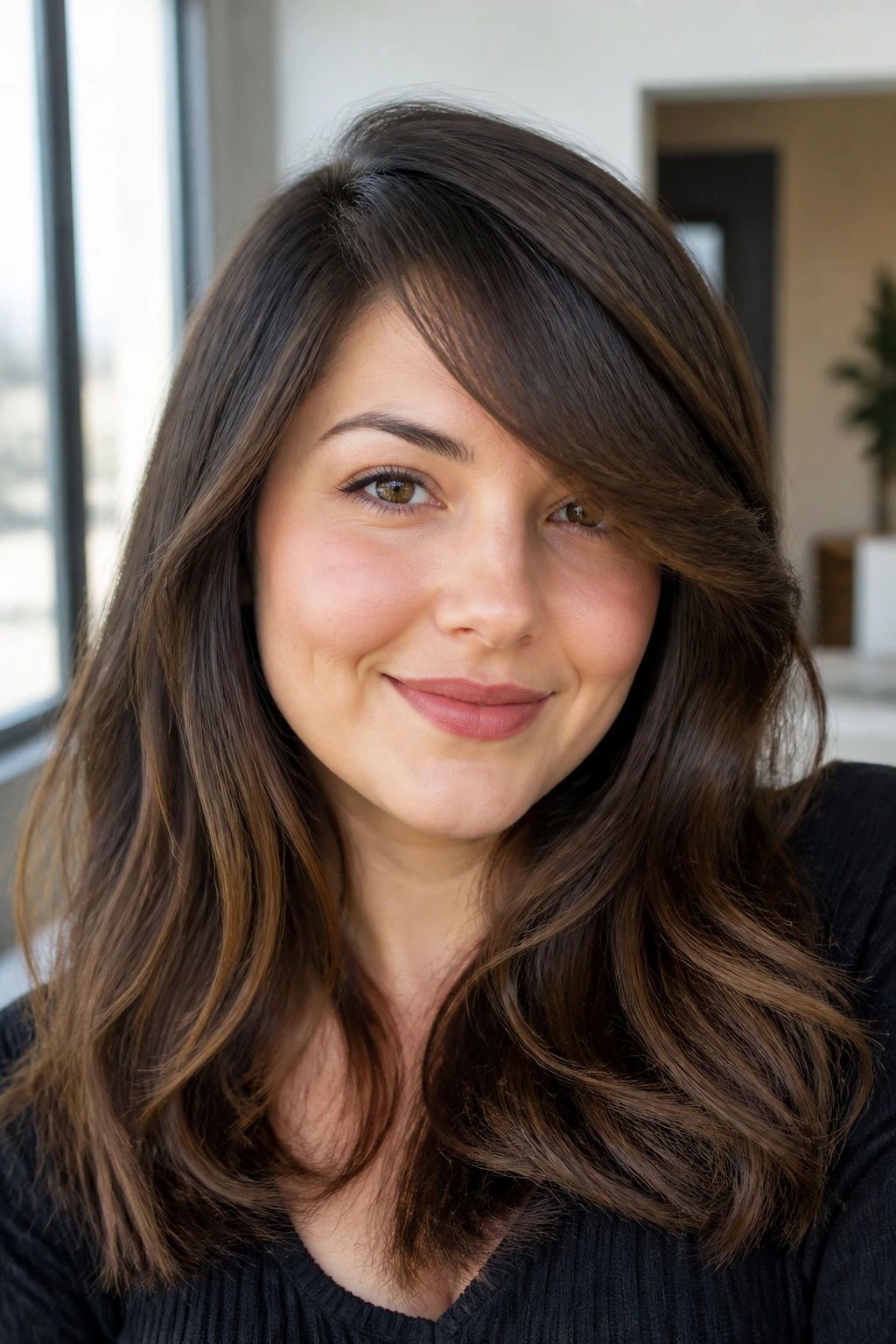
Soft bangs don’t need constant attention, but they do need a little care. If you wear them daily, plan on a trim every 5 to 7 weeks. Softer, longer fringe can stretch to 7 or 8 weeks, but once the ends start landing in your eyes all day, the shape stops reading as intentional.
Wash the front more often than the rest of your hair if it gets oily. A quick sink rinse or a spot wash every 1 to 2 days is often enough. Thick hair can hide oil in the lengths, but bangs never get that luxury. They show everything.
At night, clip the front away from your face or set it in a loose Velcro roller for a few minutes before bed if it tends to kink. Morning cowlicks are easier to prevent than to fix. If the bangs wake up flat, mist them lightly, re-dry the roots for 60 to 90 seconds, and reshape the ends with your fingers.
Dry shampoo helps, but use it at the roots only. Spraying the lengths turns soft bangs dusty and weird. Not a good look.
Questions People Ask Before They Sit in the Chair
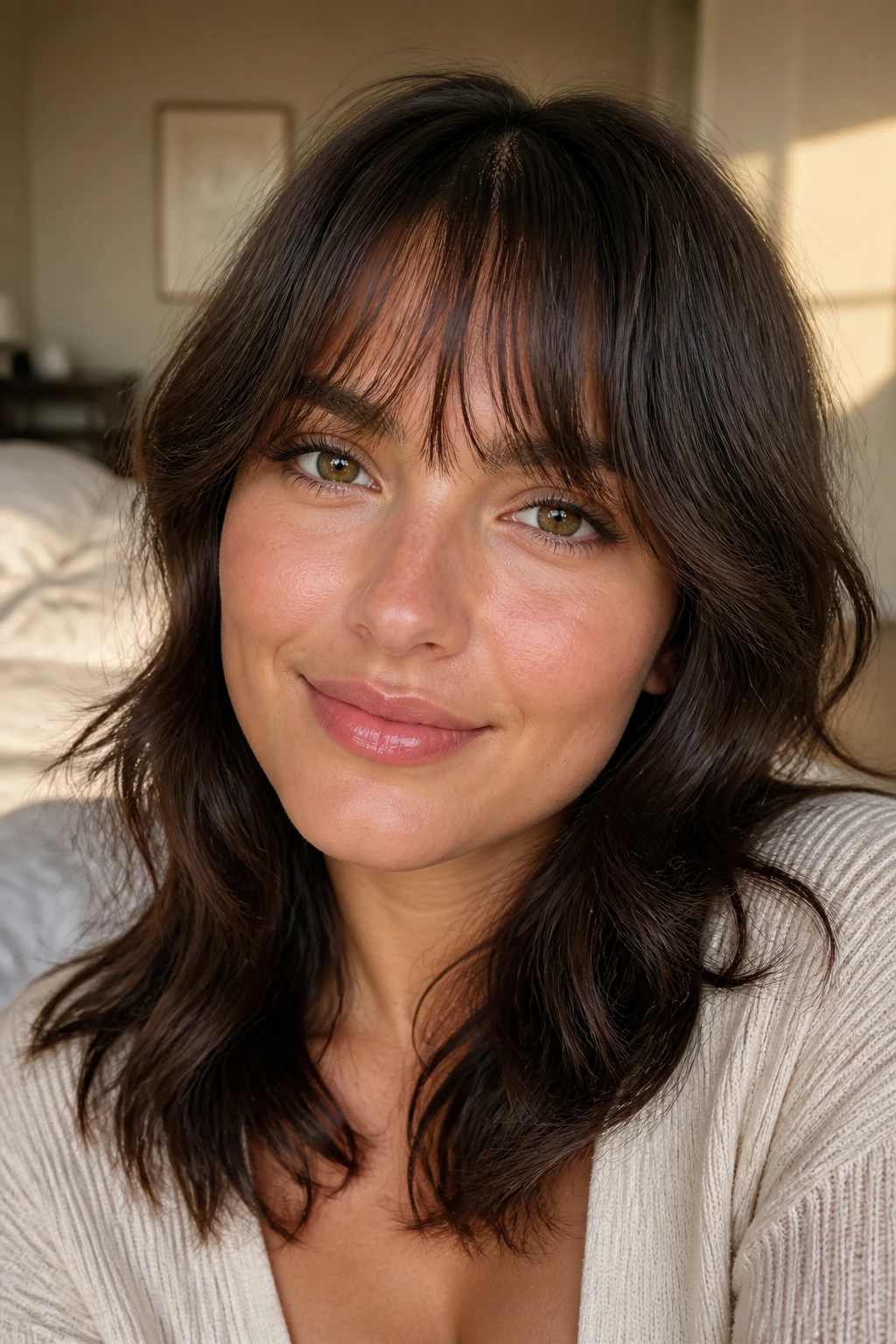
Are soft bangs actually good for round faces?
Yes, when they create vertical or diagonal lines instead of a blunt horizontal one. The soft edge helps lengthen the face visually, especially when the bangs open at the center or taper at the sides.
Will thick hair make bangs too bulky?
It will if the fringe is cut blunt and short. Thick hair needs internal weight removal and a little extra length so the front can bend instead of standing up like a shelf.
Which bang length is the safest starting point?
Just below the brow at the center, with the sides drifting down toward the cheekbones. That gives you room to trim shorter later, which is much easier than trying to grow out a bang that was cut too high.
Can I wear bangs if I have a strong cowlick?
Yes, but the bang shape has to respect the cowlick’s direction. Side-swept, curtain, and half-curtain shapes usually behave better than a straight-across fringe.
Do soft bangs work with glasses?
They can, as long as the shortest pieces sit above the frame line or just graze it. If the fringe lands smack on the glasses, it gets awkward fast.
How often should I trim them?
Most people need a trim every 5 to 7 weeks if they wear the bangs full-time. If they’re a grow-out style, you can push that a little longer.
What if my bangs separate in the middle all day?
That usually means the center is too heavy or the roots are being dried in the wrong direction. Re-wet the front, dry the roots forward first, then shape the split on purpose instead of letting it happen by accident.
Should thick bangs be thinned a lot?
No. A little weight removal helps, but too much thinning gives you frizz and uneven gaps. Ask for soft internal debulking and point-cut ends, not a shredded finish.
A Softer Frame Up Front
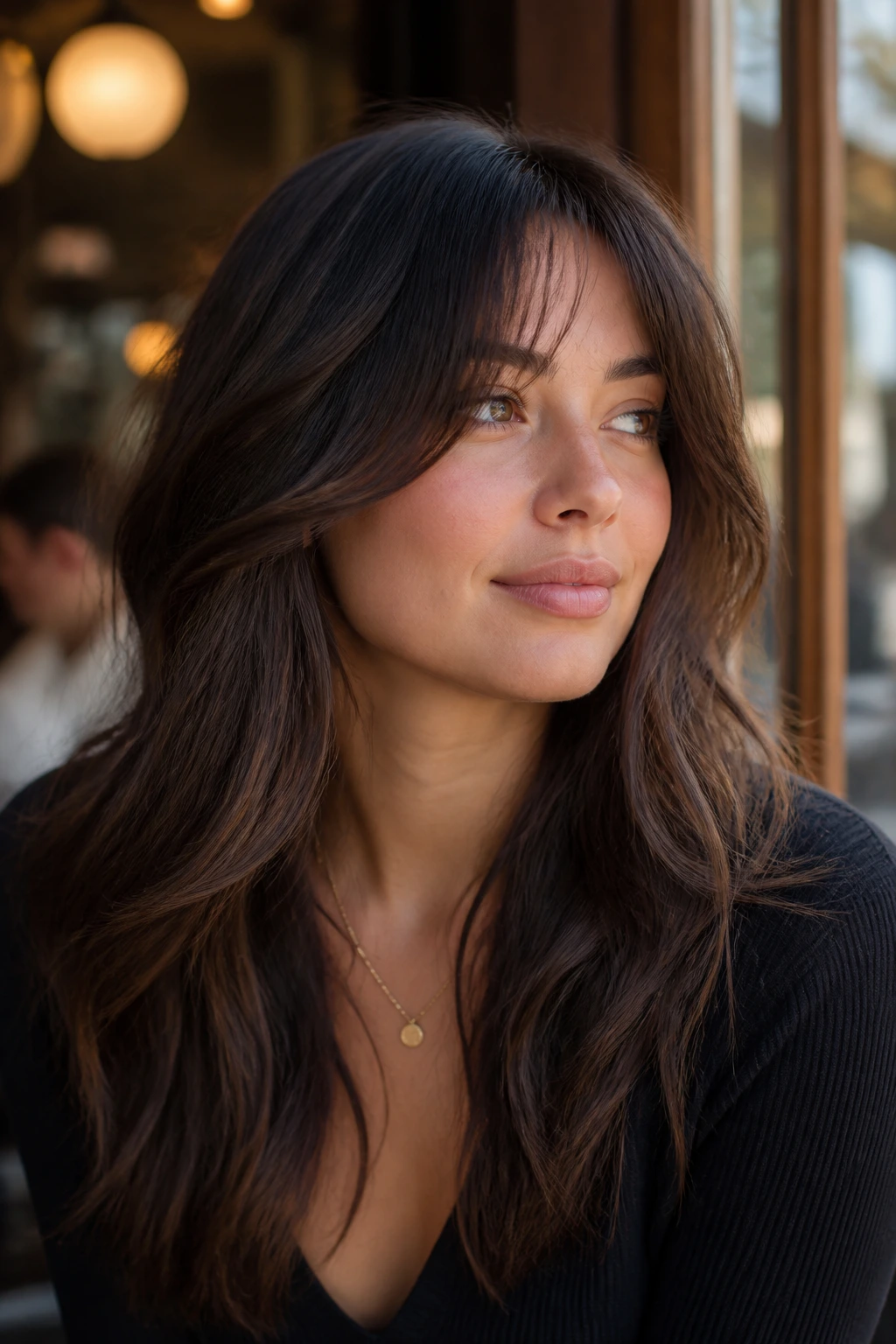
The best fringe for a round face and thick hair does not fight the hair you have. It uses the weight, then trims it down in the right places. That’s why the shapes with longer sides, soft centers, and a little movement keep winning. They make room for your face instead of boxing it in.
If you’re unsure where to start, go with a curtain, bottleneck, or long side sweep. Those three are forgiving, flattering, and easy to adjust at the next trim. Bring a photo, ask for a little more length than you think you need, and let the bangs settle before you decide they’re “too much.” Thick hair has a habit of changing its mind after the first blow-dry.
Pick the shape that gives you softness without extra bulk, and the front of your haircut will start doing the quiet work it’s supposed to do.