



Round faces do not need to be hidden; they need angles that feel soft, not severe. Long wispy hairstyles for round faces work because they keep the eye moving — down through the length, across a light fringe, and back up through the crown — instead of stopping it at the cheeks, where a face already has enough width to deal with.
The wrong fringe usually fails in one of two ways. It lands too blunt across the widest part of the face, or it ends too short and fluffy, so the whole front reads wider, not longer. A better cut starts its shortest pieces around the bridge of the nose or inner brow and lets the sides taper below the cheekbone, where the face can use a little interruption.
That is why wispy bangs are such a useful tool. They can be curtain-like, side-swept, broken up with razor work, or paired with layers that start at the chin, collarbone, or chest. The 22 looks below all do the same basic job — create length, soften width, and keep the front light — but they do it in different ways, which matters a lot once you factor in texture, density, and how much time you actually want to spend in front of a mirror.
Why These Bangstyles Belong on Round Faces
-
They stretch the face vertically: Long front pieces that drop past the cheekbone pull attention downward, which is exactly what a round face needs when the midface is the widest point.
-
They break the circle without hard lines: A wispy fringe gives you interruption and movement, but not the shelf-like edge that can make the face look wider.
-
They keep the cheek area from feeling boxed in: The best versions skim, split, or taper right where a blunt cut would stop and shout.
-
They work with the grow-out phase: Soft bangs usually look intentional longer, which means fewer awkward weeks between salon visits.
-
They give texture a job to do: Straight, wavy, and curly hair all have a version of this shape that can be styled without fighting the natural bend.
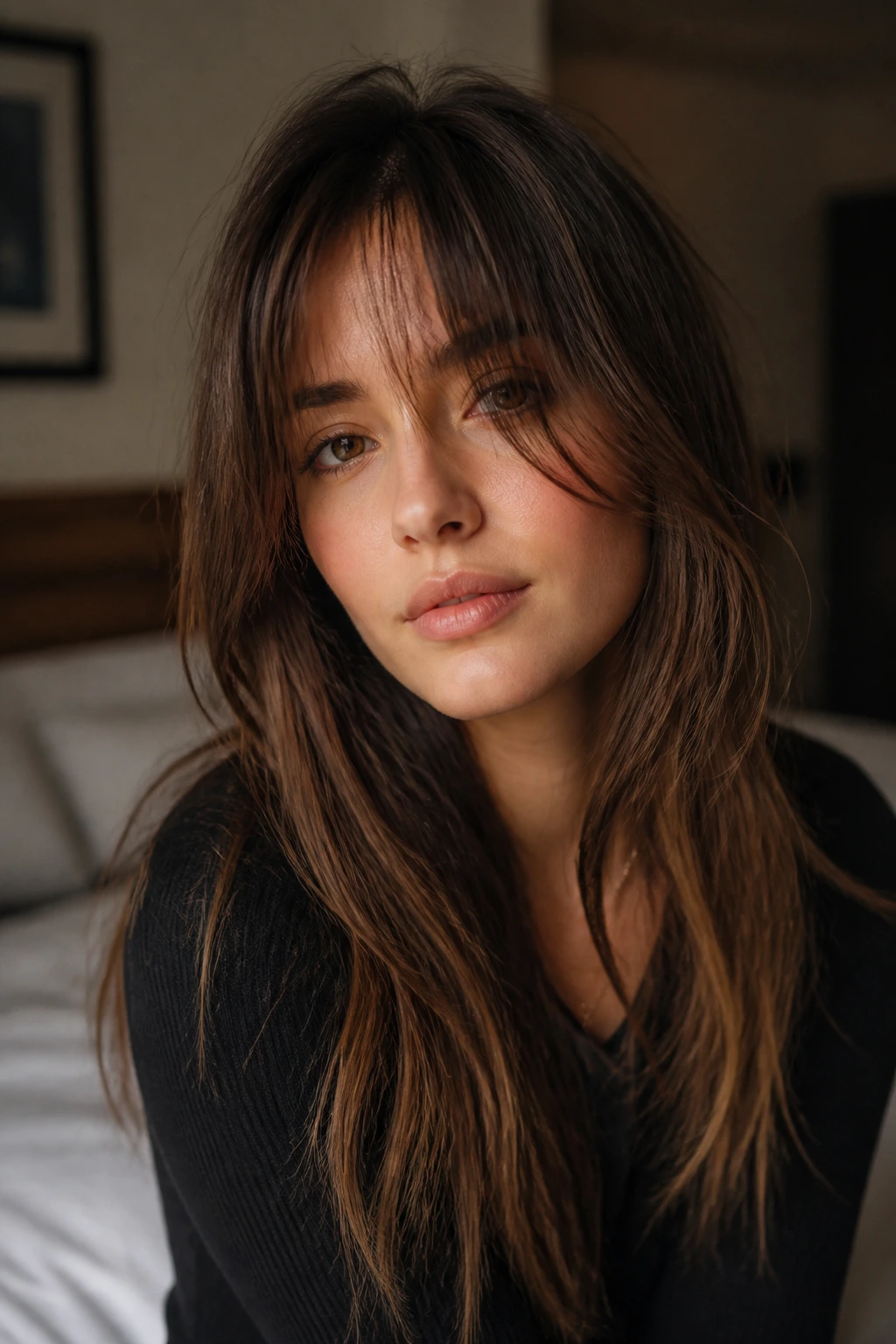
1. Curtain Bangs That Split at the Cheekbones
Curtain bangs are the obvious place to start, but only if they’re cut with a little restraint. The best version begins shorter in the center — usually around the bridge of the nose — then opens gradually so the longest pieces hit near the cheekbone or just below it. On a round face, that split does the heavy lifting. It creates a clean vertical line in the middle, then lets the side pieces pull the eye down.
Why this version works
I like this shape because it does not try to shrink the face. It simply gives the face somewhere else to go. If the fringe is too dense, you lose the airy effect. If the side pieces are too short, the bang stops at the widest part of the face and the whole thing feels boxy.
Pair it with long, blended layers that start below the chin, not at the jaw. That keeps the shape from flaring out where the face already curves. A medium round brush and a quick bend away from the face are enough. No drama. No stiff, helmet-ish ends.
2. Side-Swept Feather Fringe Over Long Waves
A side part can do what contouring powder tries to fake. It breaks symmetry, and on a round face that diagonal line is gold. A long, feathered fringe swept from a deep side part creates a slope across the forehead, then lets the rest of the hair fall in soft waves that keep the shape from feeling severe.
The magic is in the angle. If the fringe is too short, it puffs up and widens the face. If it’s too heavy, it drops flat and loses the airy feel. Ask for a fringe that starts around the brow and tapers toward the cheekbone, with the longest side blending into the first face-framing layer.
This style is especially good when you want something flattering without committing to a center-part curtain bang. It feels a little more polished, a little less obvious, and it’s easy to tuck behind one ear when you want the front even lighter.
3. Bottleneck Bangs With Feathered Ends
Why do bottleneck bangs keep showing up in good round-face haircuts? Because the shape is narrow where the forehead is, then opens around the eyes and cheekbones, which is a much smarter path than a flat, straight-across fringe. The middle stays soft and small. The sides flare just enough to shape the face.
How to wear it
The sweet spot is usually a center section that sits between the brows and a side length that brushes the top of the cheekbone. That means the fringe feels light, not chopped, and it still gives you a clear frame. It also grows out well, which matters more than most people admit. Nobody likes a bang that looks messy after two trims.
This one works best with slightly undone styling. Think a bend from a small round brush, then a little finger separation after it cools. If you rake it too much, the pieces clump and the whole effect disappears.
4. Long Shag Layers With Broken Fringe
Picture a cut that has movement everywhere and a little attitude in the front. That is the long shag. On a round face, the broken-up fringe keeps the eye from hanging out at the cheeks, and the internal layers keep the hair from falling into one solid curtain.
This shape is excellent if your hair tends to get bulky. The shag removes weight in the mid-lengths, which stops the sides from ballooning. A soft, piecey fringe at brow level or just below it adds the final bit of shape, but the real work happens in the layers behind it.
Use this if you like hair that looks better when it isn’t too perfect. A little roughness is part of the charm. Too much smoothing, and the whole thing goes limp. A touch of texturizing spray at the ends gives the shag its spine.
5. Butterfly Cut With Airy Curtain Fringe
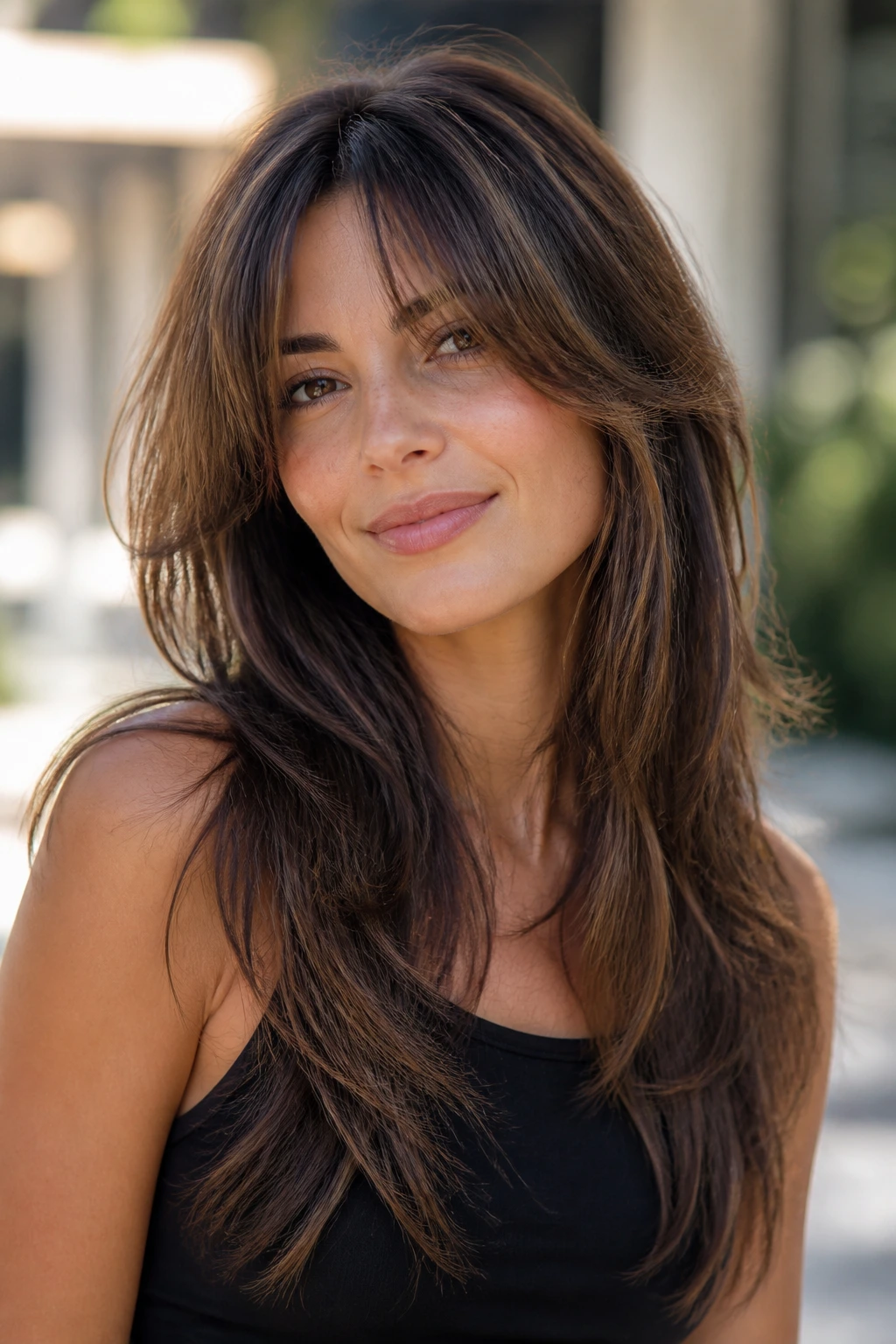
The butterfly cut is one of the smartest long shapes for a round face because it creates two stories at once: volume at the crown and length below the shoulders. The shorter top layers lift the hair away from the cheek area, while the lower lengths keep the silhouette long and lean. Add an airy curtain fringe, and the front opens instead of closing in.
I prefer this cut on hair that can hold a bend. Straight hair can still wear it, but wavy hair gives the feathered top layers a softer fall. The fringe should not be thick and heavy. It should float. That means point-cut ends and a little room between pieces.
If you blow it out, use a medium round brush and curl the front away from the face. If you air-dry, twist the front pieces once while damp so they settle into a gentle curve instead of sticking straight down.
6. Off-Center Part With Crescent Layers
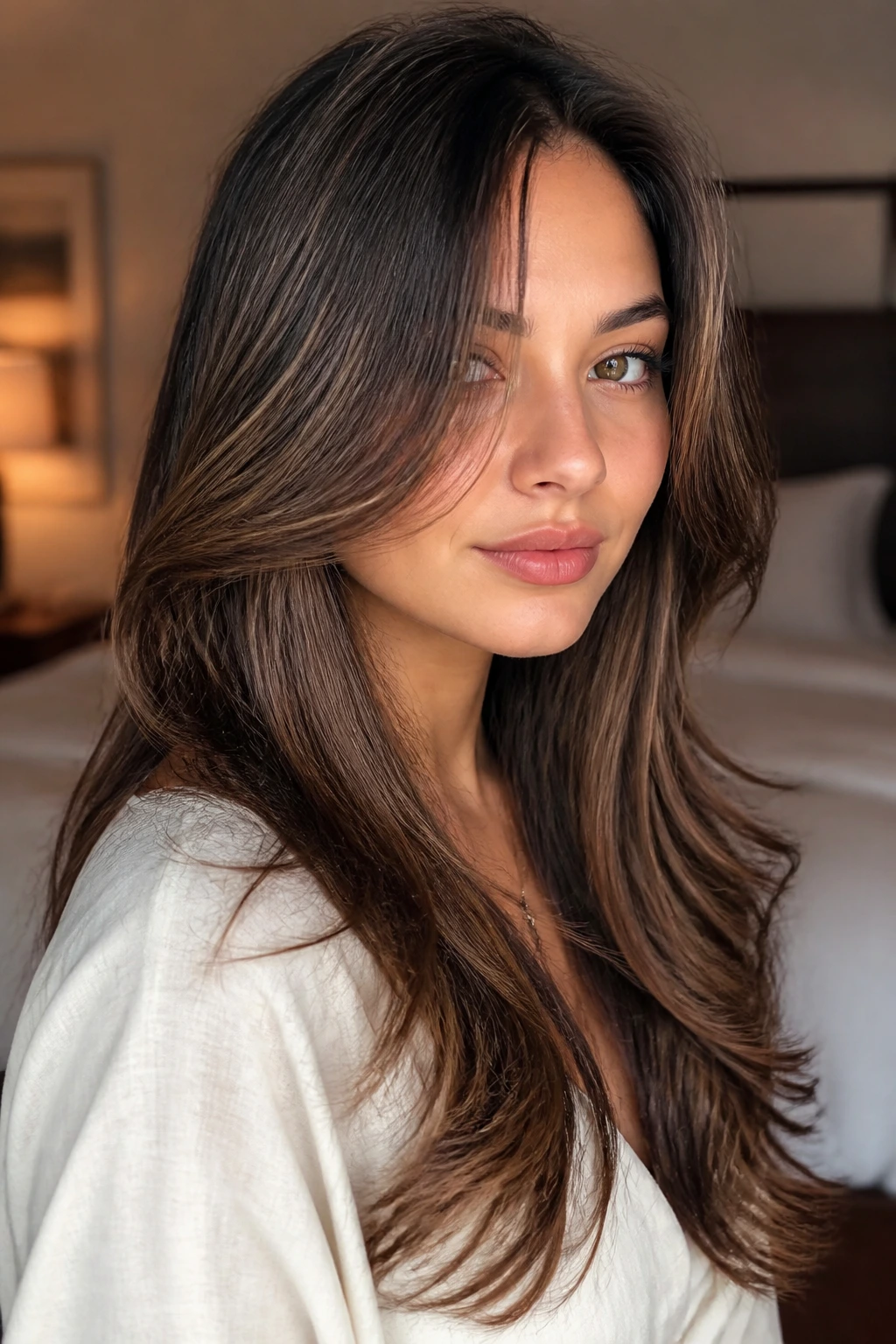
A dead-center part is not the only way to create length. An off-center part can do the same job while feeling less expected. On a round face, it shifts the visual line just enough to stop the width from reading as the main event. Pair it with crescent-shaped face-framing layers, and the whole cut starts to arc around the face rather than sit on top of it.
What to ask your stylist for
Ask for long layers that begin below the cheekbone and curve toward the jaw. That crescent shape matters. Straight, blunt face-framers can cut the face in half. Curved ones guide the eye around it.
This is a good choice if you want softness but don’t want obvious bangs. The front can be styled forward, swept back, or tucked loosely behind one ear. It gives you more room to play, which I always appreciate.
7. Sleek Straight Lengths With Narrow Center Fringe
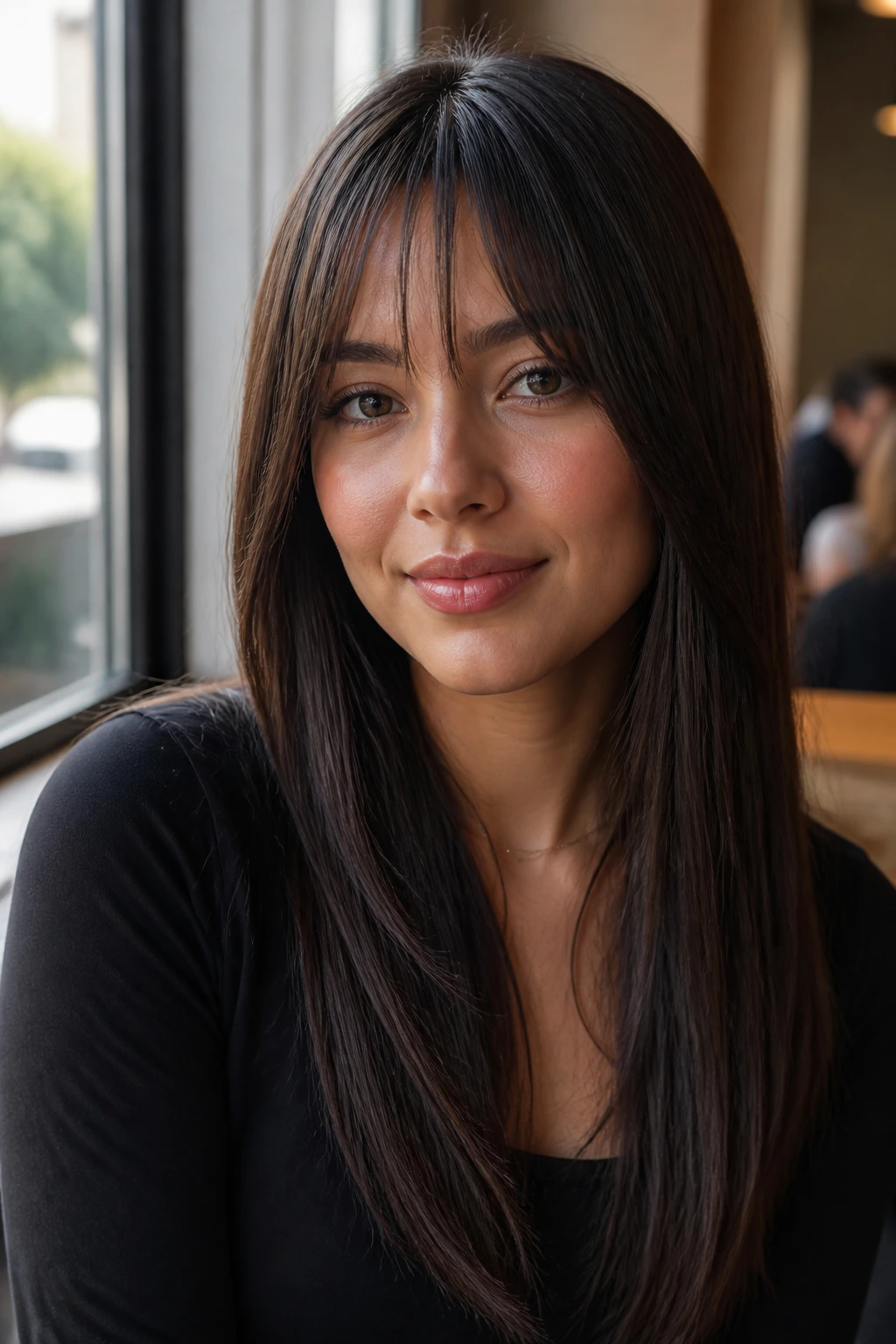
Straight hair can flatter a round face beautifully, but only if the front is kept narrow and light. A full, heavy fringe can flatten the face shape into something wider. A slim center fringe, cut to graze the brows and taper at the edges, does the opposite. It makes the face read longer because the line in the middle stays open.
What makes it different
This style depends on control. The straight lengths act like a clean frame, and the wispy fringe adds just enough interruption to keep the look from turning severe. The key is to avoid too much density through the center of the bang. You want a veil, not a wall.
It’s a good match for fine hair, too. Fine strands often lose shape when heavily layered, but a sleek length with a narrow fringe keeps the outline crisp. A flat iron pass over the fringe only — not the whole head — is usually enough.
8. Loose Curls With Elongated Fringe

Can curls wear bangs on a round face? Absolutely, if the fringe is long enough to respect shrinkage. Curly hair needs length in the front, often more than people expect, because a curl that looks like cheekbone length when wet can spring up to the brow once it dries. That’s why elongated curtain pieces or side-fringe curls work better than a short, blunt line.
The face-framing pieces should be cut dry or at least checked dry before the final snip. That part matters. A curly fringe that sits right on the forehead in the chair can turn into a tiny puff once it dries, and nobody needs that surprise.
I like this look because it keeps curls from widening the face at the sides. The fringe opens the forehead, and the front lengths continue the vertical line. Add a little curl cream only where it’s needed. Too much product at the front can make the bangs stringy.
9. Razor-Cut Long Layers With a Soft Bang Veil

Thick hair can eat a round face for breakfast if the cut is too blunt. Razor-cut layers help by removing weight from the ends so the hair moves instead of sitting as one heavy curtain. Pair that with a soft bang veil — airy pieces that skim the brow and split lightly at the center — and the front stays light enough to flatter the face.
This one is not for everyone. If your hair is already damaged, a razor can make it feel rough at the ends. But on strong, dense hair, it can be a lifesaver. The result is less bulk at the sides and more swing through the lengths.
A tiny bit of smoothing cream on damp hair is enough. Skip anything too rich at the roots. You want the front to stay clean and separated, not oily and stuck together by noon.
10. Deep Side Part With Sweeping Fringe
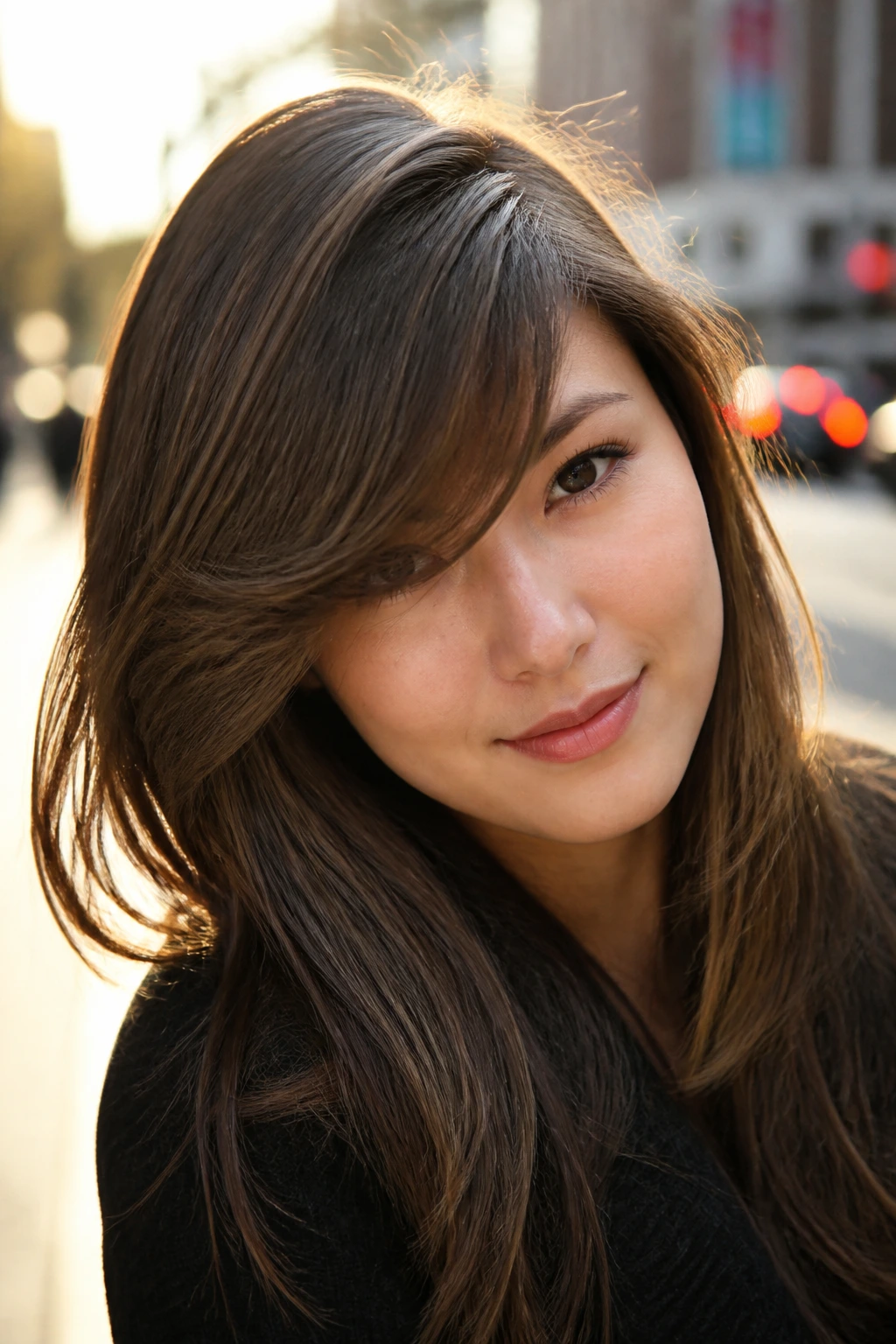
A deep side part is one of the easiest shape tricks in hair. It lifts the crown, creates asymmetry, and sends the front diagonally across the face. On a round face, that diagonal is doing more work than a centered part ever will, because it interrupts the broadest part of the face and keeps the eye traveling.
The fringe should follow the part, not fight it. Sweep it from the heavier side toward the opposite cheek, with the longest pieces hitting around the cheekbone. That gives you a soft slash of hair across the forehead and a slimmer line overall.
I like this with a root-lifting spray and a quick blow-dry at the crown. The top should not lie flat. If it does, the whole look collapses into the cheeks. A little height at the part fixes that.
11. U-Cut Layers With Brow-Skimming Wisps
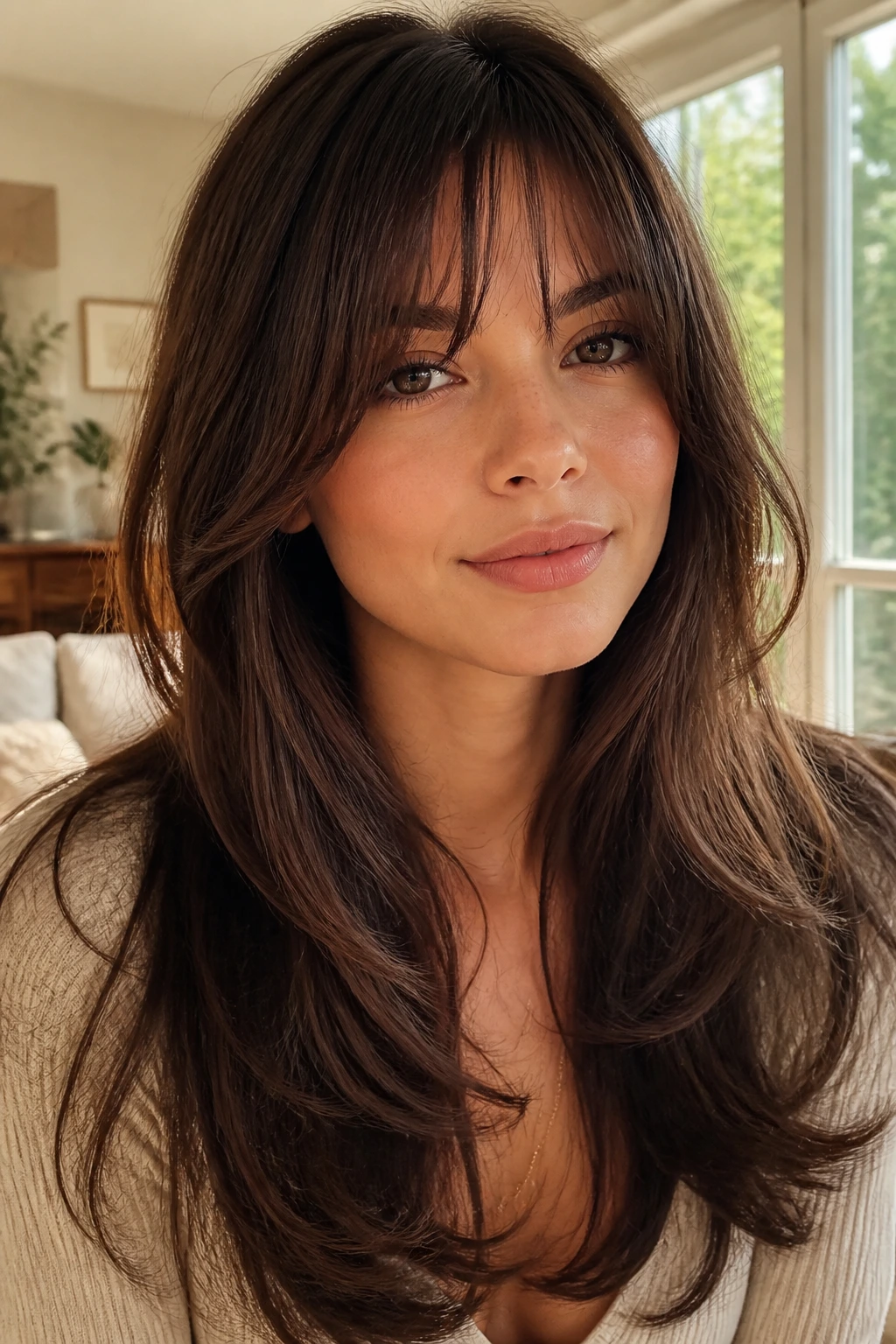
A U-shaped cut keeps the back long and full while softening the front enough to avoid a heavy wall of hair around the face. Add wispy bangs that skim the brows, and the whole silhouette feels balanced without getting stiff. On a round face, the U shape helps because it keeps the length visible even when the front pieces fall forward.
This is one of my favorite choices for people who want long hair to look deliberate, not just long. The curve of the U is subtle, but it stops the ends from looking blunt and boxy. The wispy fringe adds lightness, especially if the hair is thick or naturally full.
If you wear it straight, the face-framing pieces should stay a little longer than you think. If you curl it, start the wave below the cheekbone so you do not puff the sides out. That small detail changes everything.
12. Air-Dried Texture With Broken Fringe
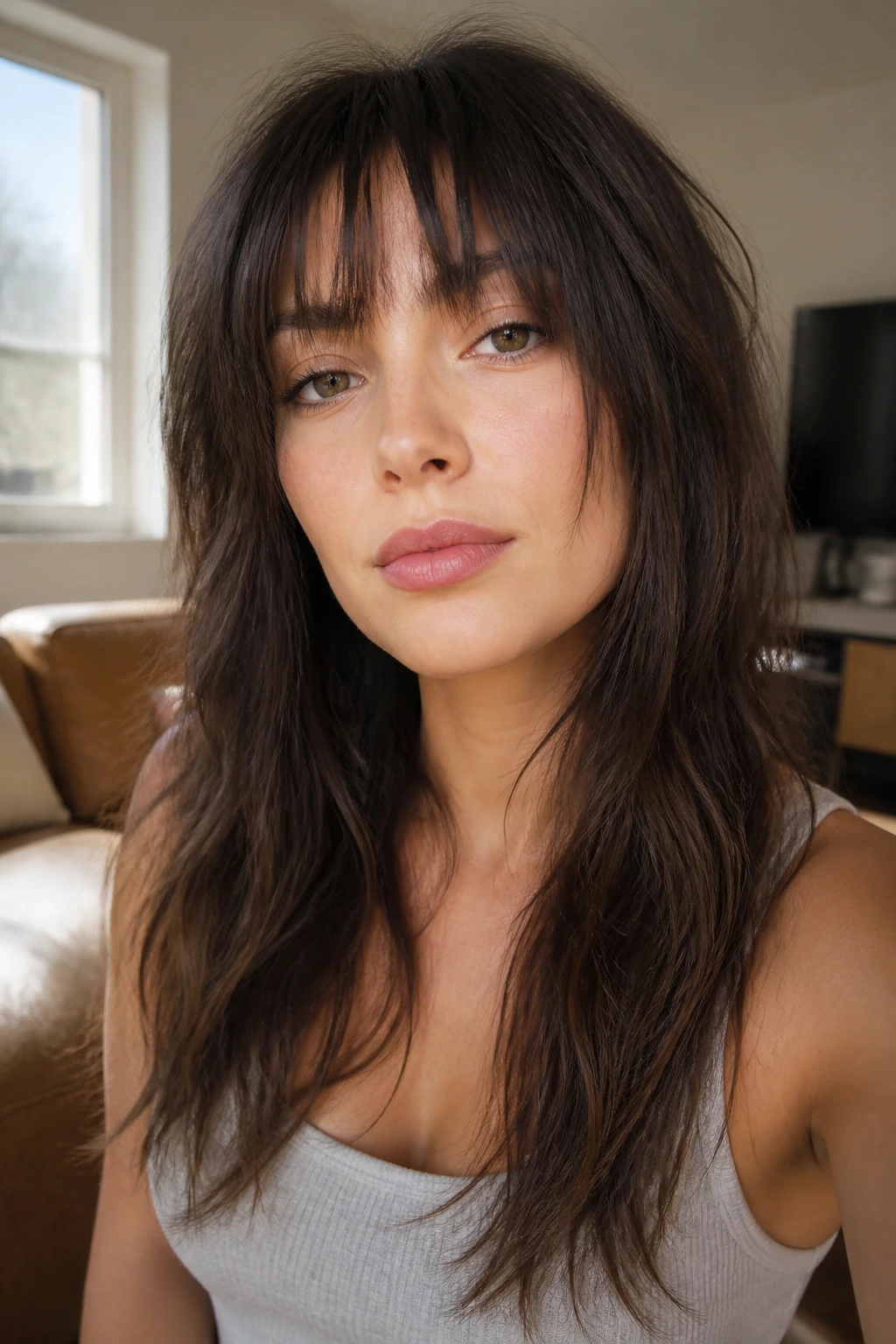
Do you want a cut that looks finished without a blowout? This is the one. Air-dried texture works best on round faces when the fringe is broken up, not cut as a solid block. The front pieces should separate naturally, with the shortest point somewhere around the brow and the longest bits drifting down toward the cheekbone.
This style lives or dies by the cut. If the bangs are too short, they can spring up and widen the face. If they’re too dense, they drag the eye across the forehead. A little point cutting and a little patience while the hair dries are worth it.
A pea-sized amount of mousse at the roots and a light cream on the ends usually does enough. Then leave it alone. Over-touching air-dried hair is the fastest way to ruin the shape.
13. Half-Up Lengths With Wispy Face Tendrils
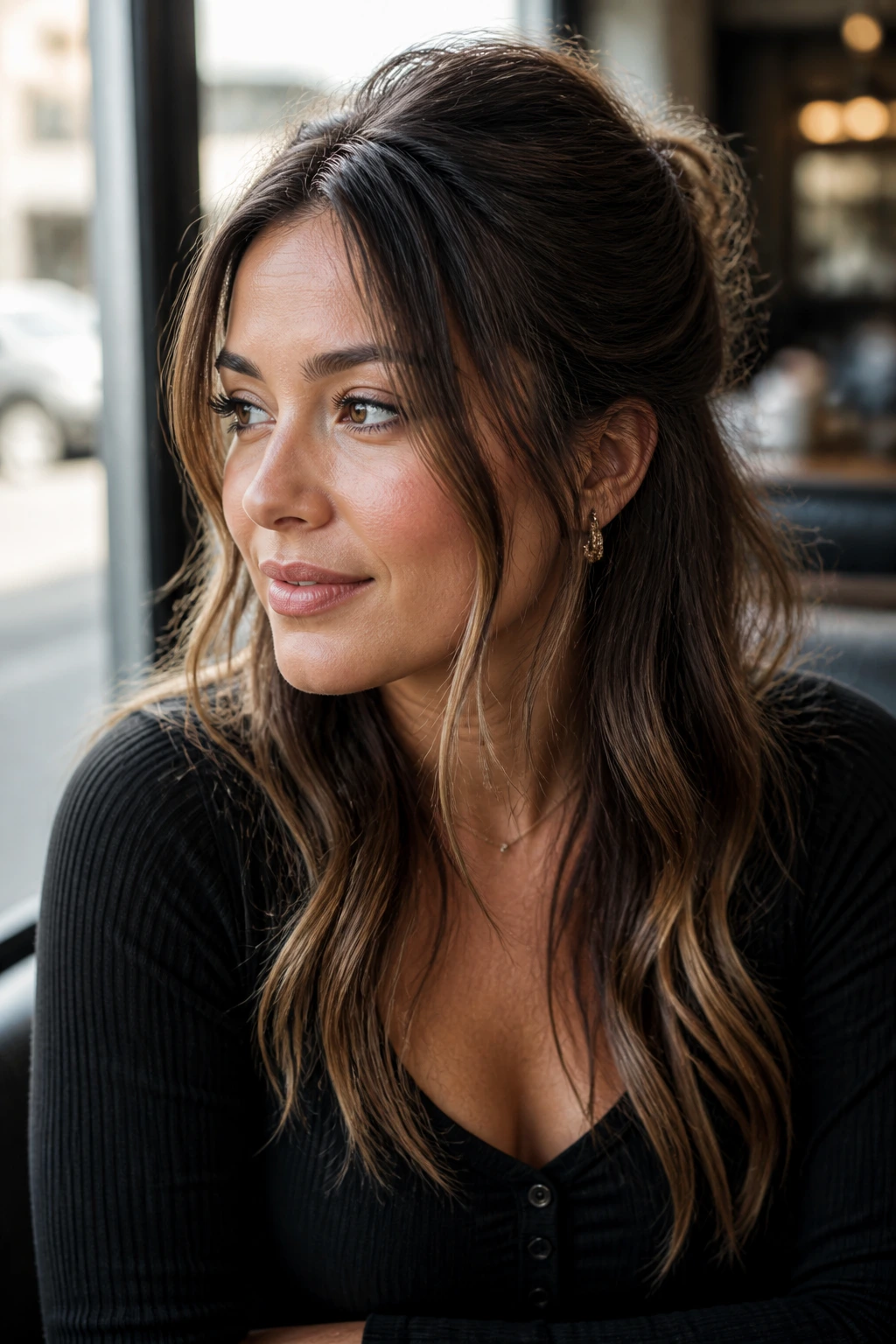
Not every flattering fringe has to be a permanent cut. Sometimes the smartest move is a half-up style with wispy tendrils left out in front. On a round face, those two pieces beside the cheeks create a long frame even if the rest of the hair is pulled back.
The tendrils should not stop at the cheekbone’s widest point. Let them fall a little lower, around the jaw or just below. That keeps the face line moving downward. If the hair is waved, the tendrils should be softly bent, not curled tight. Too much curl can make them bounce back and shorten.
I reach for this when the roots are flat but the ends still have life. It makes second-day hair look intentional. A small amount of dry shampoo at the roots and a quick bend of the front pieces is often enough.
14. Long Wolf Cut With Elongated Fringe
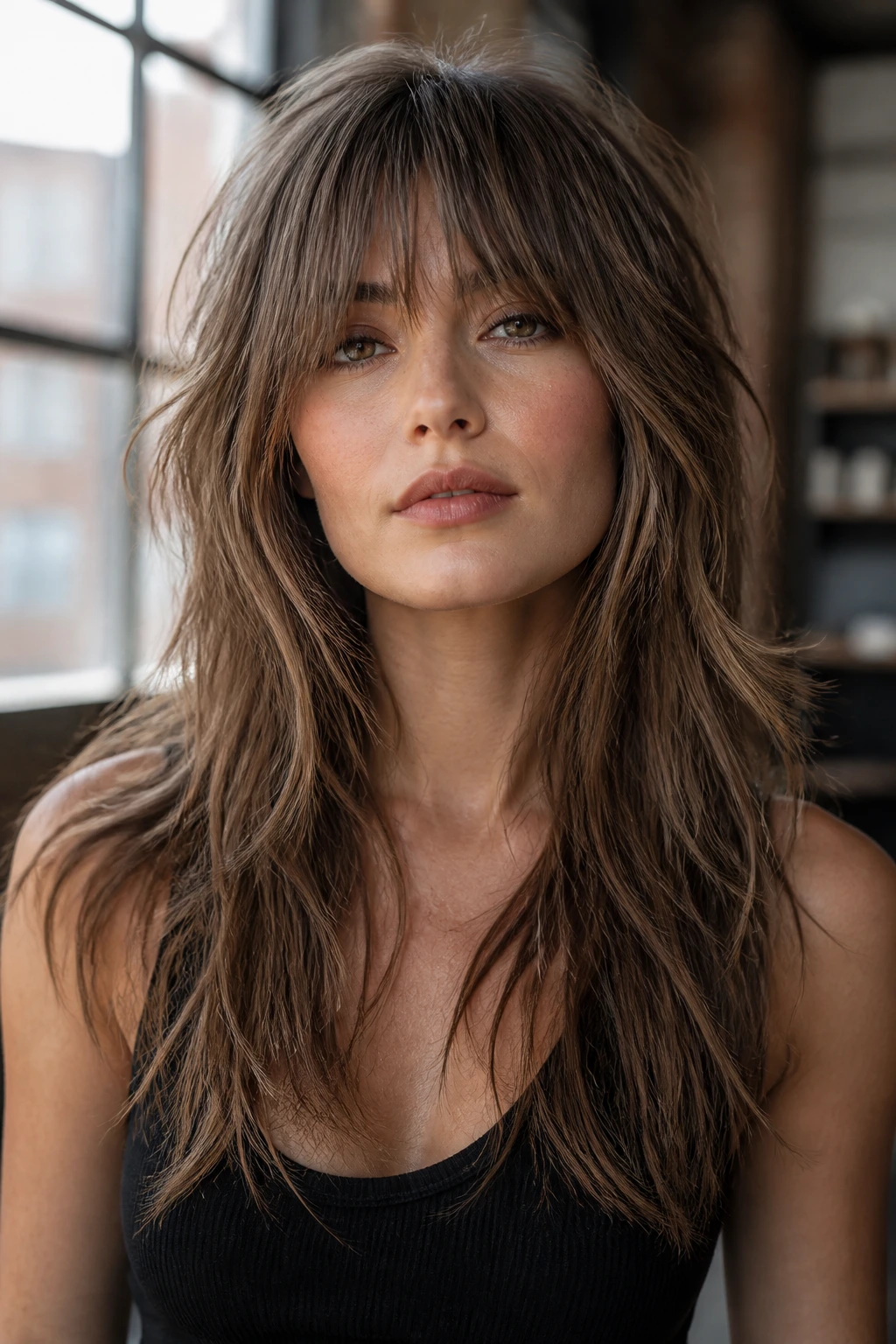
Unlike a classic shag, the wolf cut keeps a little more bite through the crown and a more tapered, disconnected feel through the lengths. On a round face, that extra crown height matters. It adds lift above the cheeks and keeps the silhouette from feeling like one smooth circle.
The elongated fringe is the part that makes it work. Keep the front long enough to graze the brows or cheekbones, then let the layers fall away in a messier, more independent way than a standard shag. It reads edgy, yes, but the real reason it works is movement. The hair never sits as one wide shape.
Best for thick or medium-thick hair. Fine hair can wear it too, but it needs careful layering so it doesn’t go stringy at the ends. Use a matte styling cream sparingly. Too much shine kills the texture.
15. Polished Blowout Layers With Parted Fringe
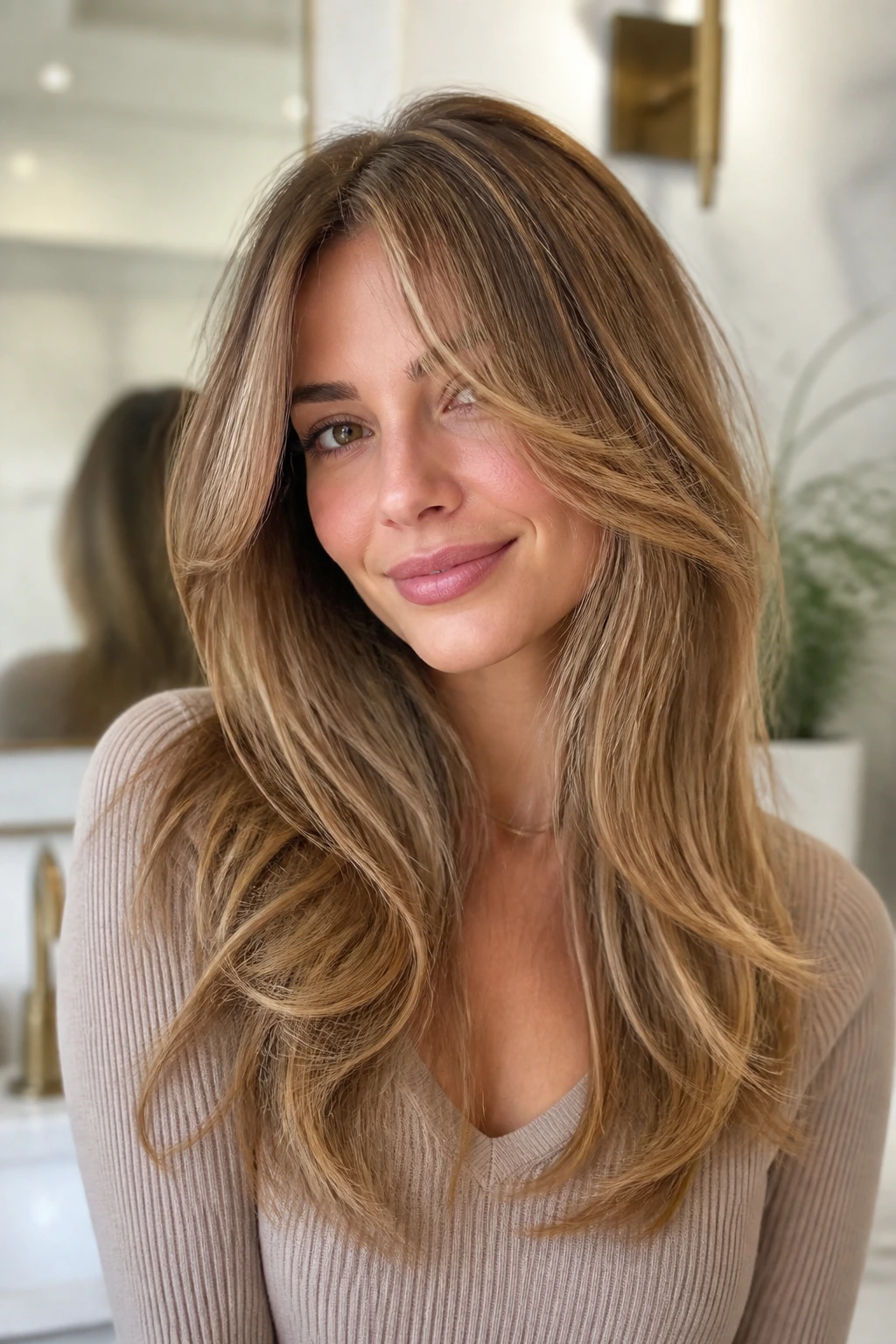
There’s a reason a good blowout keeps showing up in salon chairs. It creates height at the crown, softness at the ends, and enough bend around the face to make a round shape look longer. Add a parted fringe — curtain-like, but a bit sleeker — and the result is refined without feeling stiff.
The salon finish that still feels soft
The part should not be glued to the center line. Let it open just enough to show a small slice of forehead. Then direct the front pieces away from the cheeks with a round brush or large rollers. That outward sweep is what keeps the face from reading wider.
This is the style I’d pick for anyone who likes a clean outline and does not mind a bit of styling time. Heat protectant matters here. So does letting the front cool in place before you touch it. If you brush it too soon, the bend collapses and the bang loses shape.
16. Blunt-ish Lengths Softened by Airy Bangs

A blunt line can work on a round face if you’re smart about the front. Long, one-length hair gives the outline structure, and the airy bang breaks up the hard edge before it can box the face in. I like this when the hair is fine or medium and needs a little visual density through the ends.
The trick is not to overdo the fringe. The bangs should be see-through enough that you can still read the forehead behind them. A little separation at the edges keeps the look from turning heavy. If the fringe is too packed, the cut starts to feel like a helmet, and that’s the opposite of what you want.
It’s a cleaner, more modern look than layered styles, and it can be surprisingly flattering because the softness is concentrated where the face needs it most — right at the front.
17. Collarbone-Climbing Layers With Cheekbone Bangs
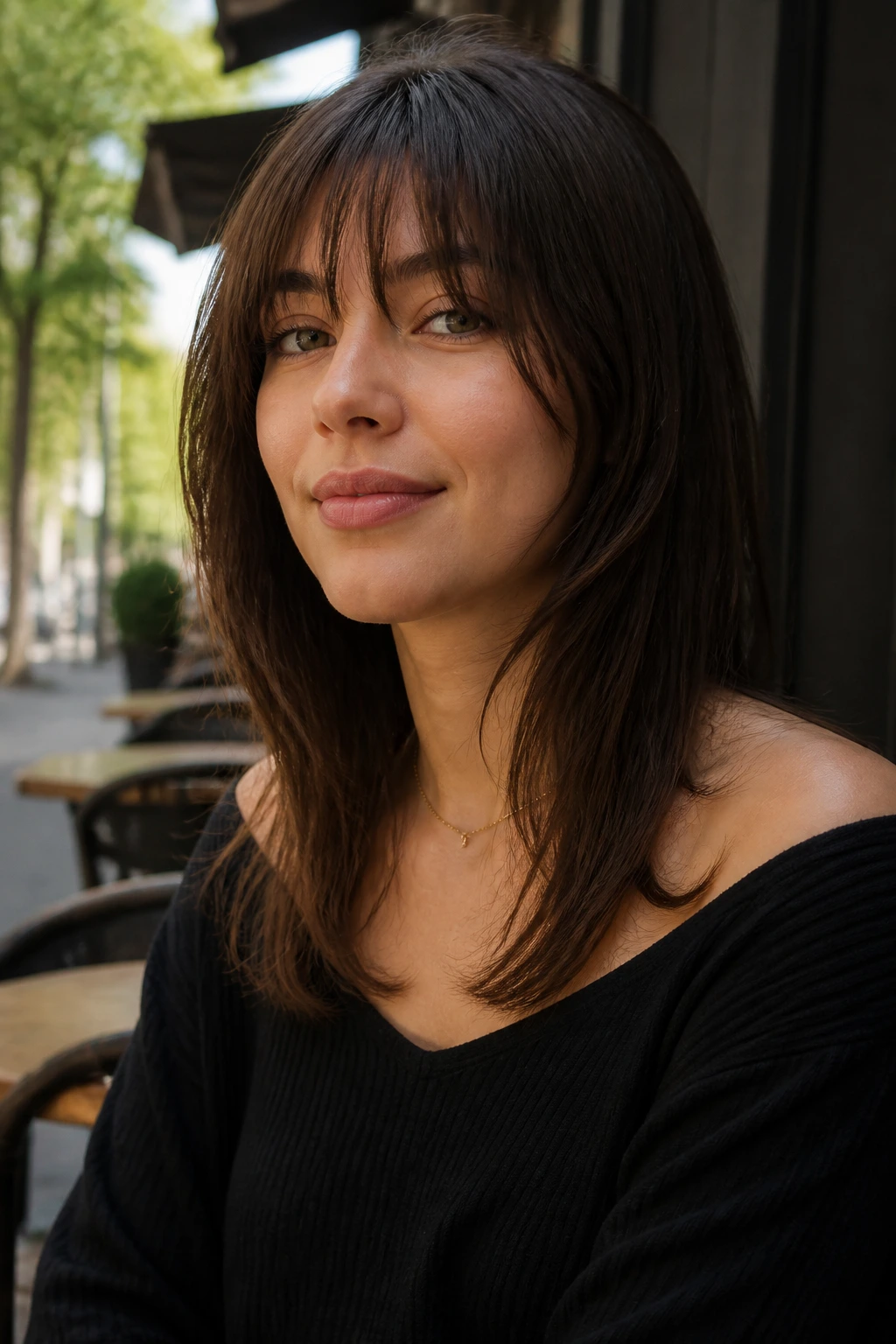
A collarbone length front line gives a round face some breathing room. It keeps the shortest layers long enough to fall below the widest part of the cheeks, then lets the back carry the rest of the length. Add cheekbone bangs, and the cut opens the face without losing the long silhouette.
This is the kind of shape that looks expensive even when it isn’t trying hard. The front pieces should skim the cheekbones and then disappear into longer layers, not stop abruptly at the jaw. That merging is what makes the style feel soft instead of sliced.
If you are growing out shorter layers, this is a solid landing place. It gives the hair structure while it’s in that in-between stage, and the bangs keep the front from feeling flat. A light blow-dry under the ends helps the shape settle.
18. Long Curls With a Side Feather Fringe
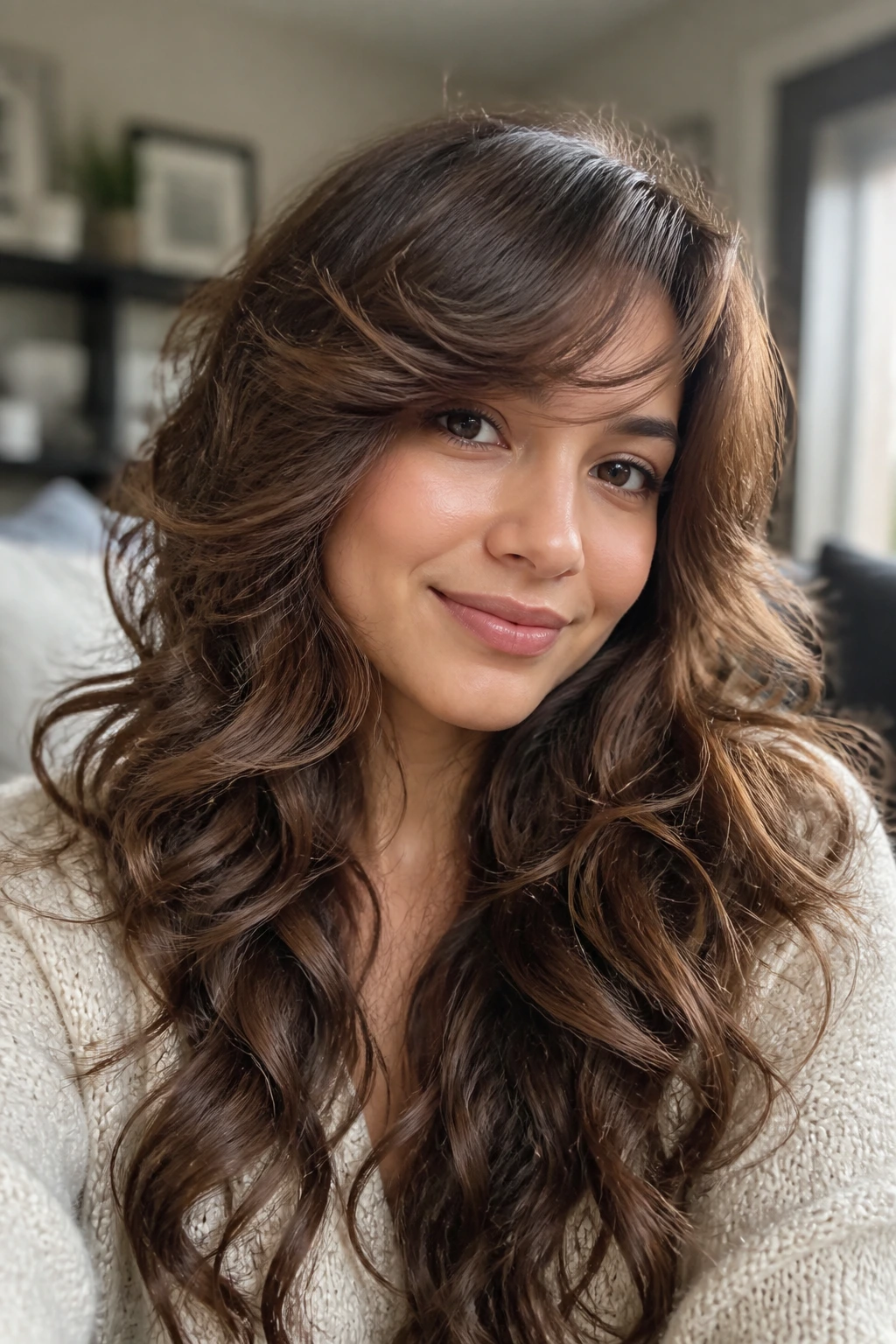
Curly hair with a round face can go wide fast if the cut is too short in front. A side feather fringe prevents that by directing the curl pattern diagonally. It gives the curls somewhere to fall without creating a halo around the widest part of the face.
What to watch for
Cut the fringe longer than you would on straight hair. That part matters, because shrinkage is real and it shows up hard in the front. Ask for the curl pattern to be checked dry, then softened with point cutting rather than chopped blunt.
This look works especially well if the curls are medium to loose. The side fringe can blend into the first curl ring and make the whole front feel lighter. A tiny bit of gel on the bang area is fine. Too much, and the curls clump into a heavy strip.
19. Barely-There Bang Veil With Long Straight Lengths
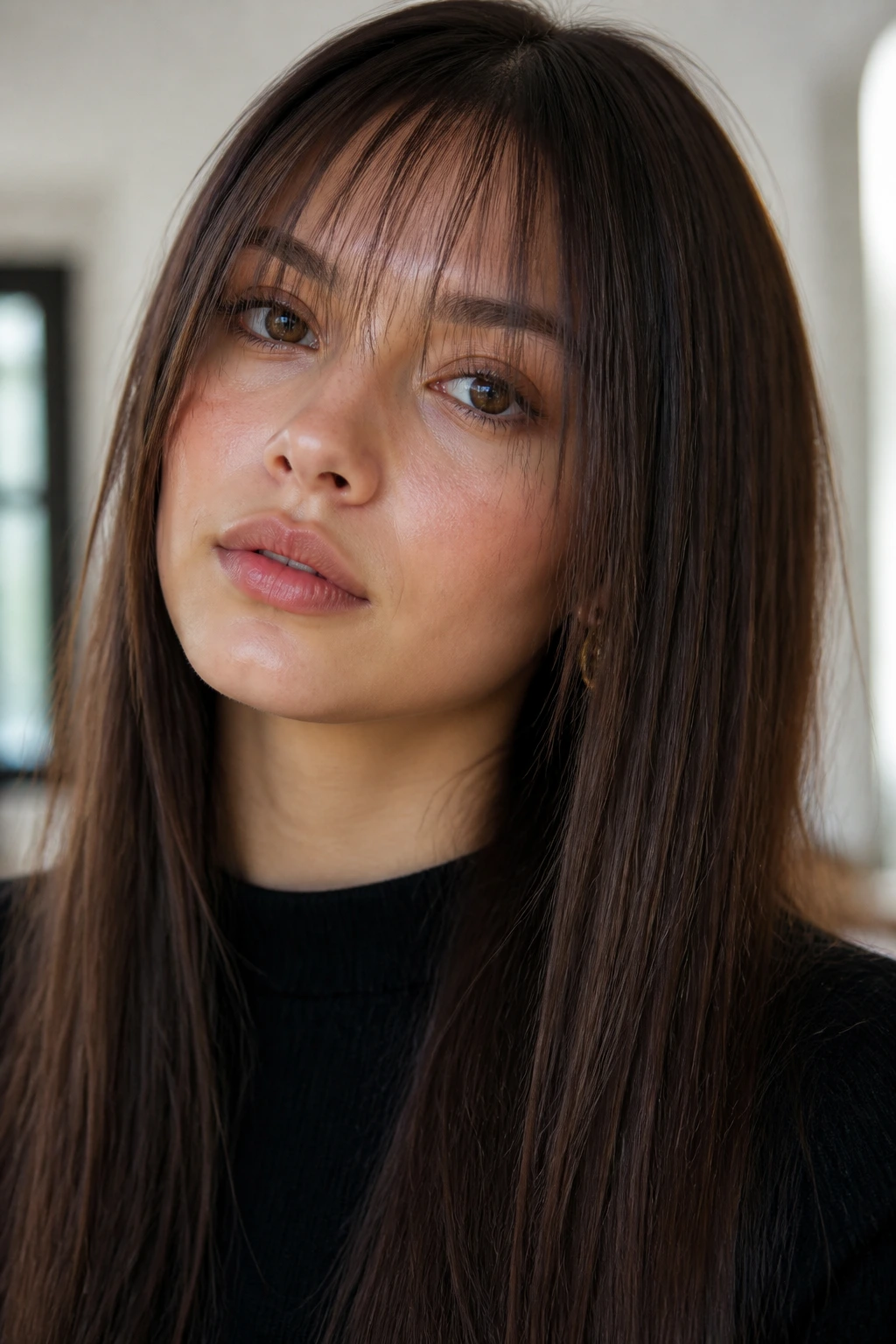
A full fringe is not the only option. A bang veil — those thin, whispery pieces across the forehead — can be enough to soften a round face without changing the whole cut. Because the fringe is so light, it does not cut the face in half. It just gives the front a little movement.
This is a good match for long, straight hair that you want to keep sleek. The lengths carry the vertical line, and the veil at the front keeps the face from feeling too open. It’s especially nice if you like minimal styling. A small round brush or even a quick bend from a blow dryer will do.
The catch is maintenance. Sparse bangs need trimming before they grow too long and lose their airy shape. If you let them hang around too long, they stop being a veil and start looking like an overgrown mess.
20. Thick-Hair Layers With See-Through Bangs
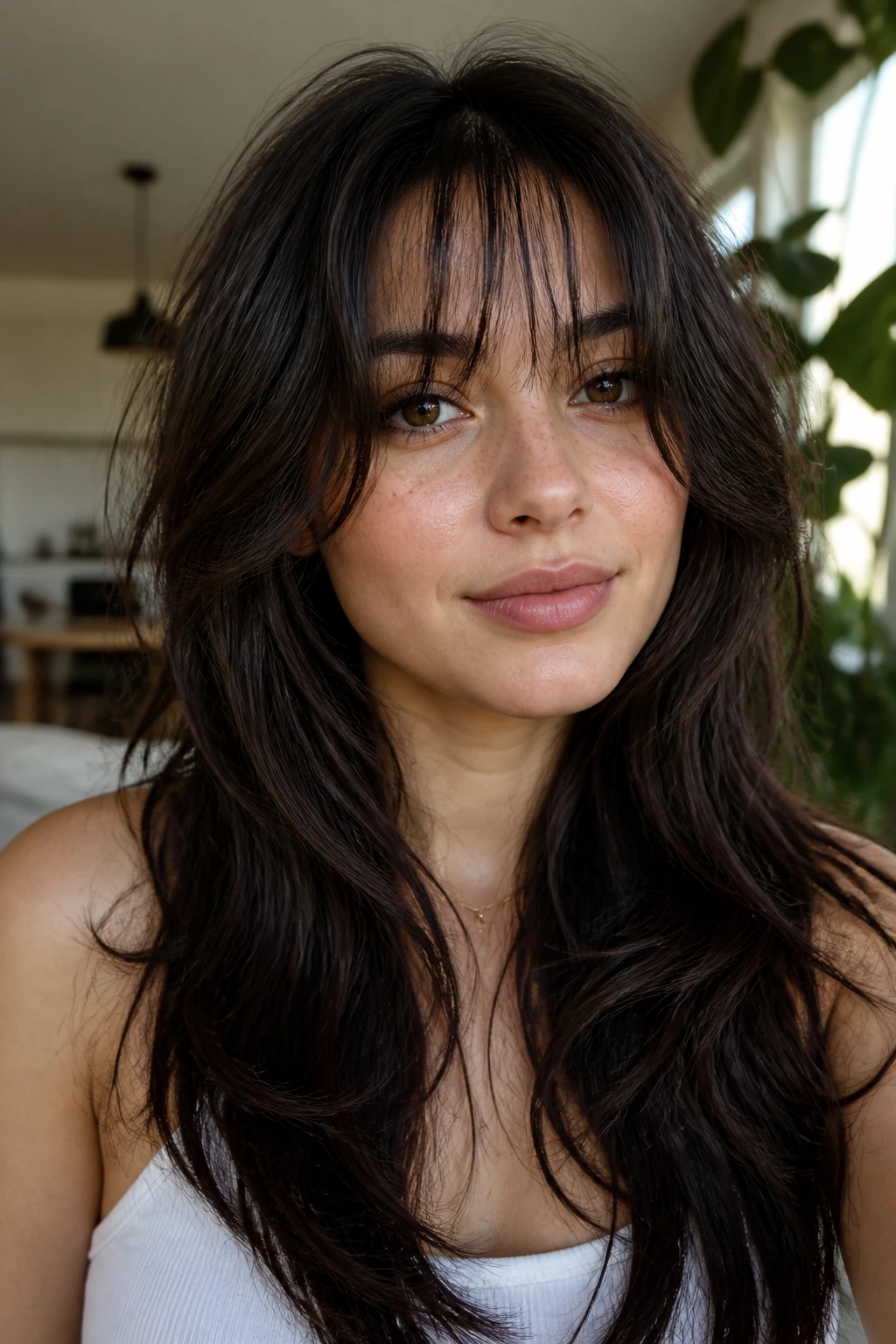
Thick hair loves to grow out into a triangle if nobody gets brave with the scissors. On a round face, that triangle can make the cheeks look wider and the jaw feel heavier. Internal layers and see-through bangs solve that by removing bulk from the middle and keeping the front light.
Why this cut matters
The fringe should be thin enough to show the forehead through it. Not sparse in a sad way. Sparse in a deliberate, airy way. That gives the face an opening without adding a chunky line where you don’t want one.
A stylist who knows thick hair will usually reduce weight underneath rather than over-thinning the visible top layer. That keeps the cut soft without creating frizz. If the hair is coarse, a smoothing cream on the mids and ends helps the layers settle. Skip heavy oils at the roots. They flatten the shape, and thick hair does not need help doing that.
21. Messy Mermaid Waves With a Crescent Fringe

Why do some beachy waves flatter a round face and others make it look wider? Placement. If the wave starts too high and too wide at the cheekbones, the face gets swallowed by fluff. If the wave starts a little lower and the fringe curves like a crescent, the whole look feels longer and more directional.
The crescent fringe is the quiet hero here. It opens in the center, then arcs down and away from the face. That little bend keeps the forehead from feeling boxed in. The waves below should be loose and separated, not brushed into one big blanket.
I like this style with a salt spray that has a dry finish rather than a sticky one. You want bends, not crunch. If the ends are too puffy, the face loses its clean frame. A few defined pieces around the collarbone fix that fast.
22. Glossy Long Layers With Airy Bangs and Soft Ends
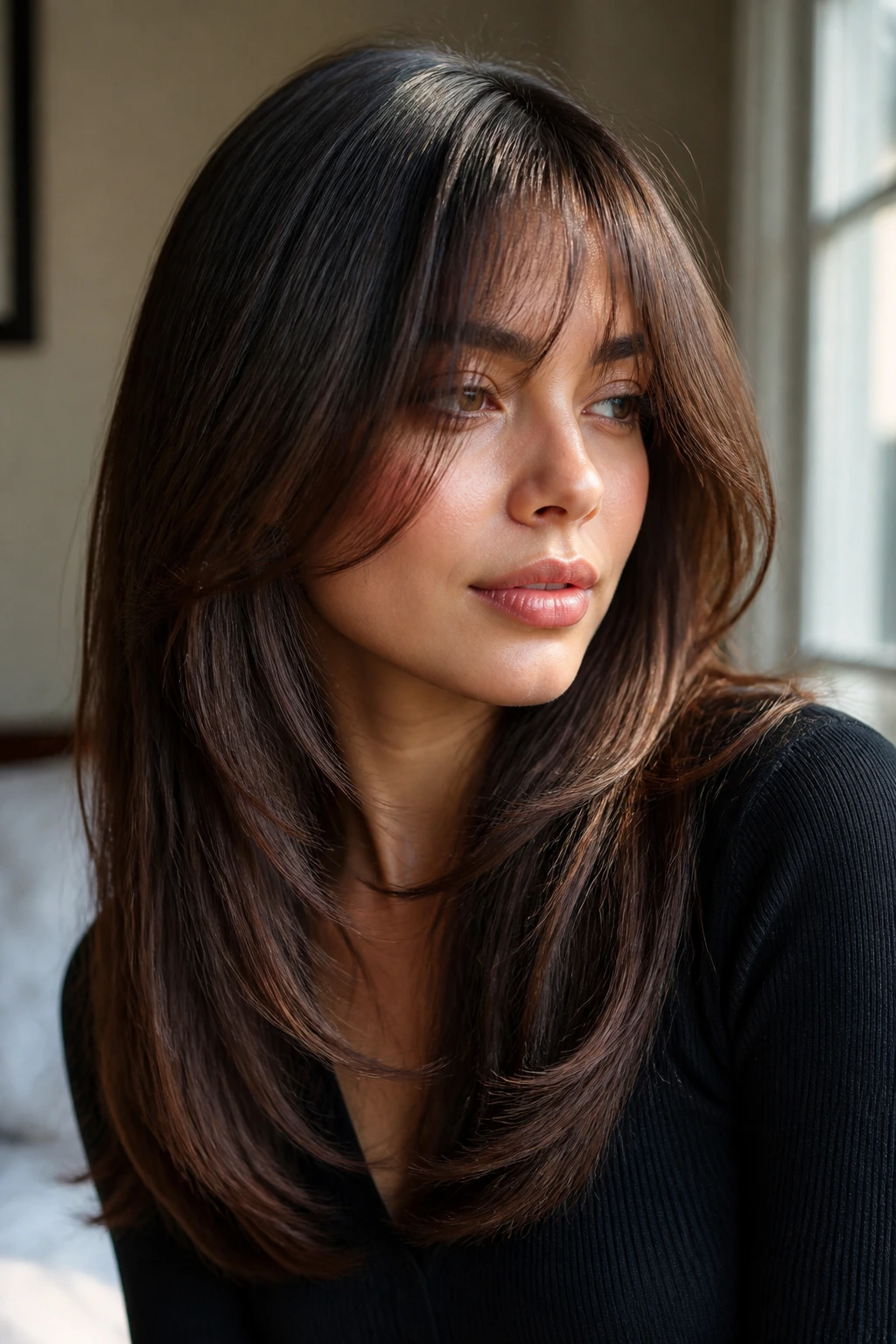
This is the polished version of the whole idea. Long glossy layers keep the shape elegant, while airy bangs make sure the front never turns heavy. The ends should taper softly so the hair moves when you turn your head. On a round face, that motion matters more than most people think.
The bangs are the real hinge point. Keep them feathered enough to separate, and let the longest pieces land somewhere around the cheekbone or lower. That gives the front a light frame without dragging attention straight across the face.
I would pick this style for anyone who wants long hair that looks intentional in daylight, not just under salon lighting. A smoothing cream, a round brush, and a quick pass with a large-barrel iron if you want bend — that’s enough. The shape does the work.
Why Wispy Fringe Changes the Geometry of a Round Face
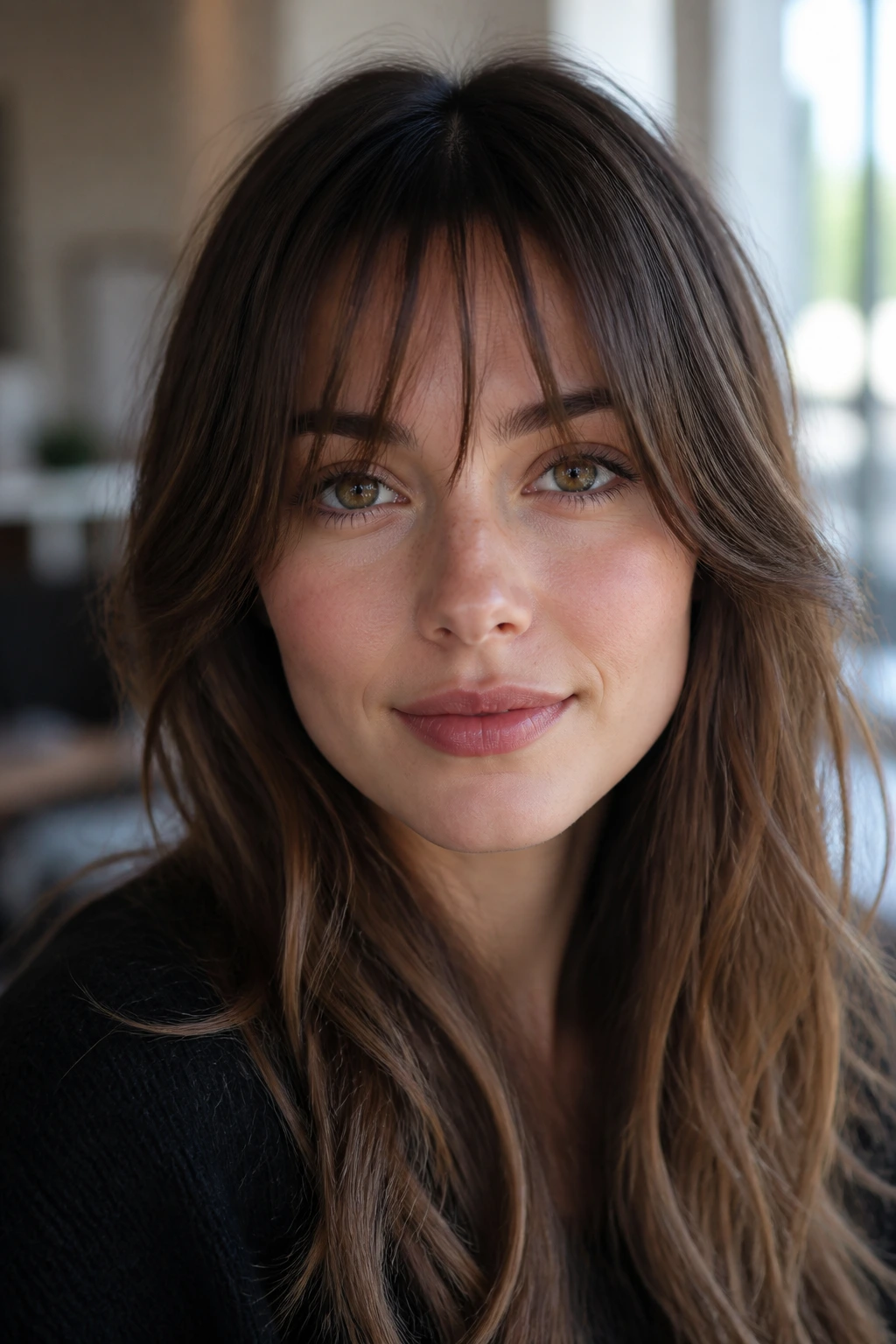
A round face is not a problem to fix. It is a shape to work with. The best long wispy hairstyles for round faces do not fight fullness at the cheeks; they redirect it. That means the most useful lines are the ones that travel vertically, diagonally, or in a soft curve that opens the forehead and skims the side of the face.
One blunt line across the brow can stop everything in place. A wispy fringe does the opposite. It gives you movement at the front, lets the layers breathe, and keeps the haircut from turning into one wide block. That is why I keep coming back to the same idea: the fringe should frame, not fence in.
Texture changes the math, too. Straight hair needs enough feathering to avoid heaviness. Wavy hair needs the front pieces to be cut a little longer so they do not spring too short. Curly hair needs the whole front checked dry, because shrinkage can undo a good plan in about ten minutes. If the cut respects the texture, the round face looks softer and longer without trying too hard.
Essential Tools for Styling Wispy Fringe
-
A small round brush: Best for bending the fringe away from the face without creating a hard curl.
-
A medium round brush: Useful for curtain bangs and long layers when you want that softer salon curve.
-
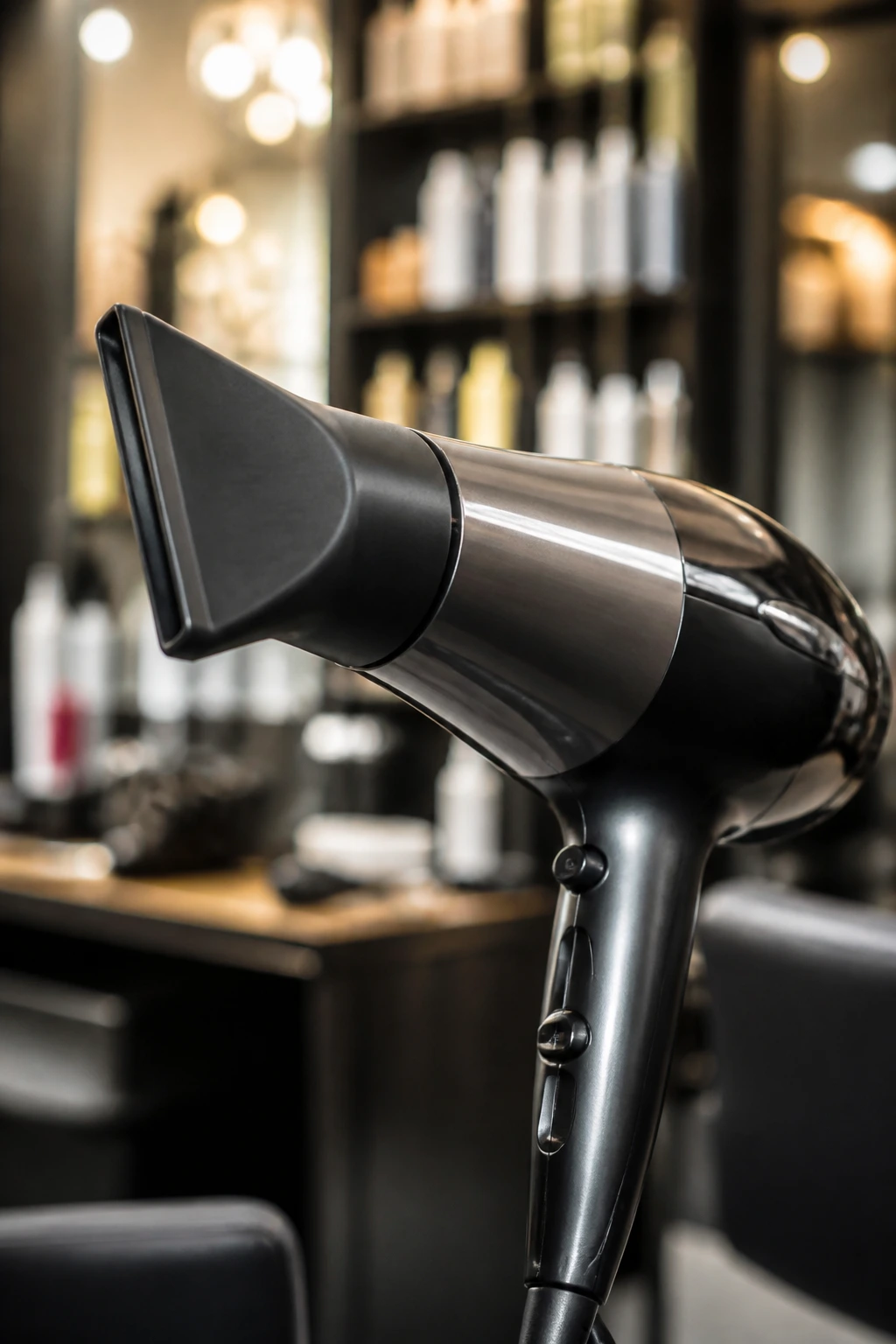
A blow dryer with a nozzle attachment: Helps aim the airflow so the bangs do not puff out in every direction.
-
Heat protectant spray: Worth using every time you style with a dryer, flat iron, or curling iron. Fringe lives right at eye level, so heat damage shows fast.
-
Lightweight mousse: Good for air-dried styles and wavy hair that needs a little hold without crunch.
-
Texturizing spray: Best on shag, wolf, or piecey fringe styles when you want separation at the ends.
-
Small flat iron: Handy only for the fringe and face-framing bits. A pass over the front can fix weird bends in seconds.
-
Velcro rollers or duckbill clips: Nice for setting the fringe while it cools. That cooling step is what locks the shape in.
How to Ask for the Cut and Keep It Soft
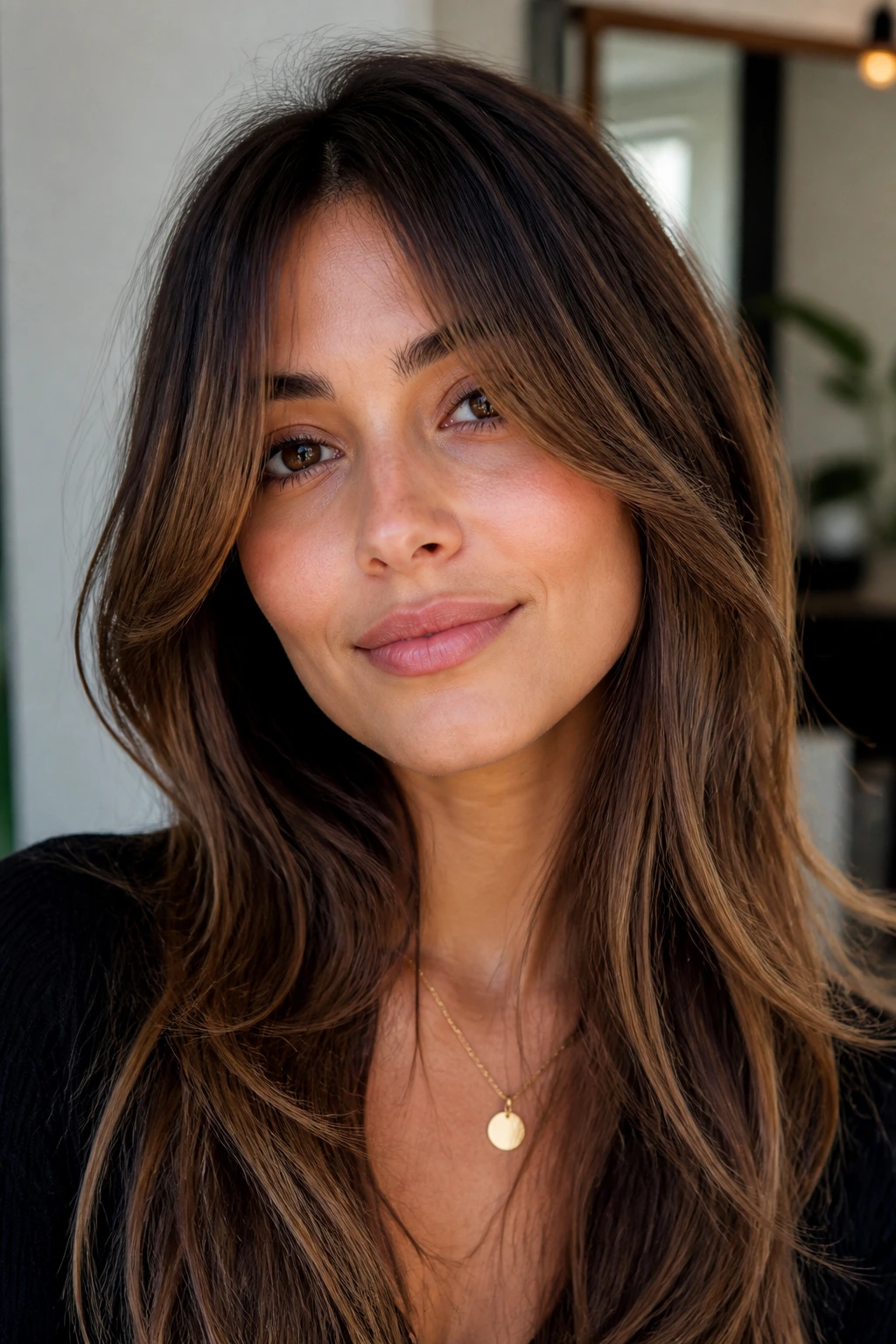
Bring photos, but bring two or three, not twenty-seven. Hairdressers need a target, not a scavenger hunt. Point to the fringe length you want at the center, the longest side pieces you like, and where the layers should start — cheekbone, chin, collarbone, or lower. Those details matter more than the overall mood of the photo.
At the salon: Say whether you want the bangs to split in the middle, sweep to one side, or sit as a light veil. Also mention how much styling you’ll actually do. A fringe that needs a round brush every morning should be cut differently from one that has to behave after air-drying and a finger comb.
At home: Dry the fringe first if it gets curly or cowlicky, then style the rest. That keeps you from overworking the front while the lengths are still wet. A cool shot at the end is not fancy fluff; it keeps the bend from collapsing.
For face shape: Ask for longer pieces around the cheekbone and jaw, not a straight shelf at the widest point of the face. That one change often makes the cut read softer by a mile.
Common Mistakes That Make Wispy Bangs Work Against You
-
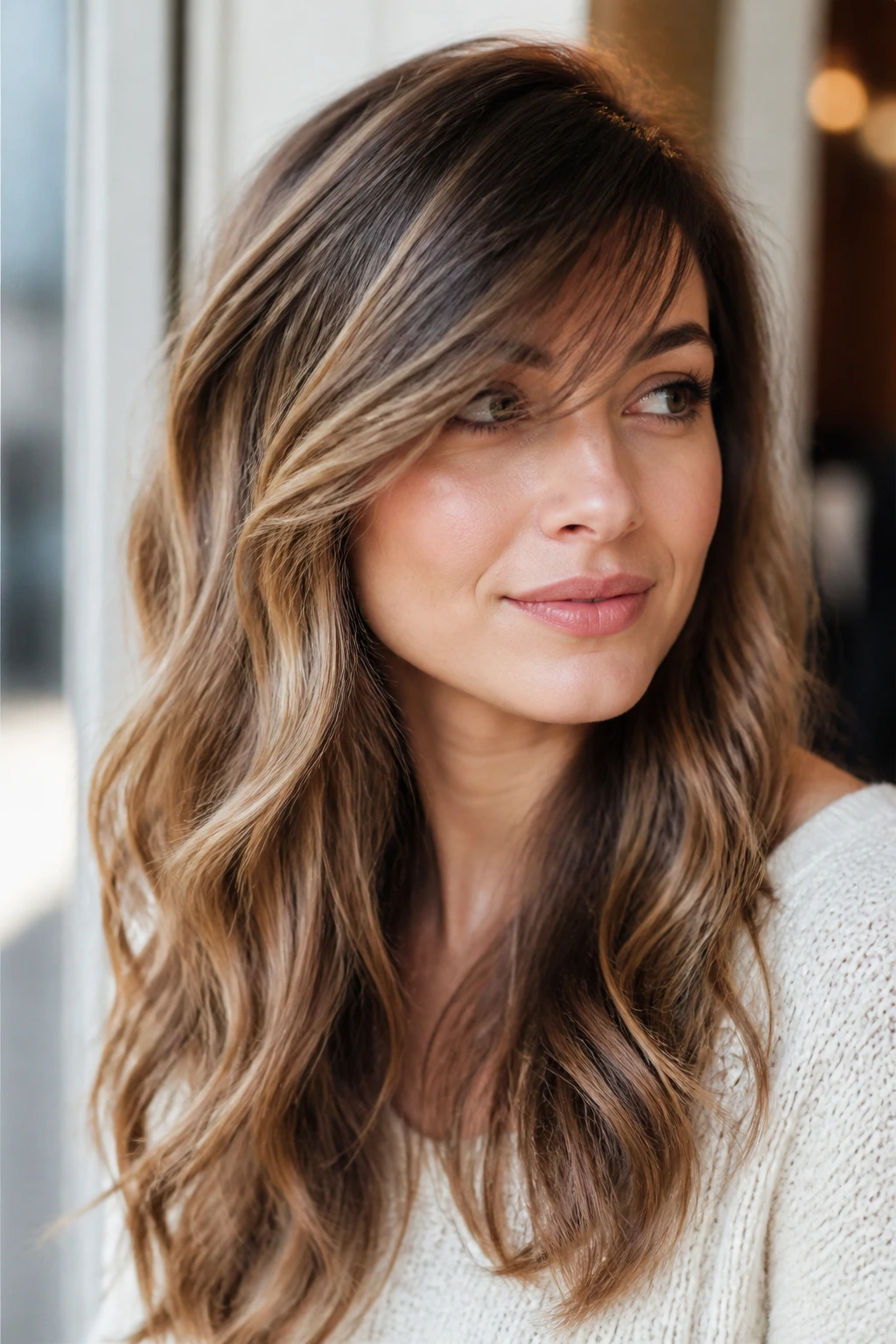
Cutting the fringe too short: Short wisps can pop up and widen the face instead of slimming it. Keep the shortest point a little longer than you think, especially if your hair has wave or curl.
-
Making the sides too dense: When the front pieces are packed with too much hair, the fringe becomes a curtain wall. Thin them out so the forehead still shows through.
-
Stopping the layers at the jaw: That is a classic mistake on round faces. The hair lands right where the face is already widest, which adds visual width instead of length.
-
Ignoring the crown: Flat roots make a round face look broader. A little lift at the top changes the whole balance.
-
Styling the fringe too hard: Too much spray, too much heat, too much brushing. The whole point is softness. If it looks shellacked, you missed the assignment.
Variations for Straight, Wavy, and Curly Hair
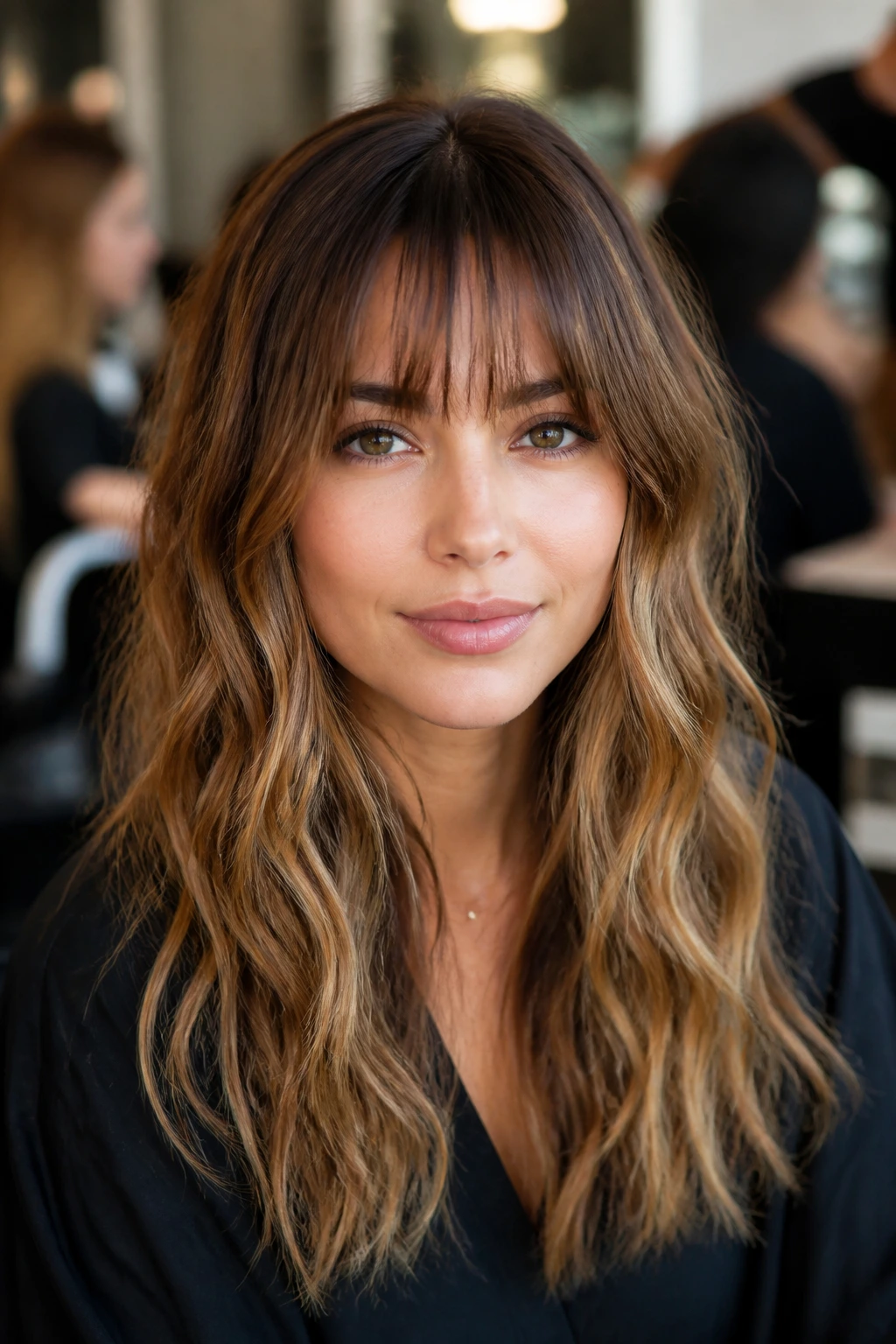
Feather-Light Straight Hair: Keep the fringe narrow and the layers long. Straight hair can expose every blunt line, so softer ends and a little bevel near the face make the cut feel lighter.
Air-Dry Wavy Shape: Ask for the fringe to be left a touch longer and the face-framing pieces to begin below the cheekbone. That lets the wave form without springing up into a puff.
Curly Frame Cut: Cut the fringe dry or nearly dry, then build the face shape around the curl pattern itself. The bangs should be long enough to shrink comfortably, not fight the curl.
Thick-Hair Weight Removal: Internal layering and point cutting keep the front from becoming a triangle. This version is better when you want movement but hate the feeling of bulky hair on your cheeks.
Polished Blowout Version: Use longer curtain pieces, a round brush, and a smooth finish through the ends. This is the sleekest reading of the trend, and it tends to suit people who want hair that looks a little more done.
Keeping the Shape Between Trims
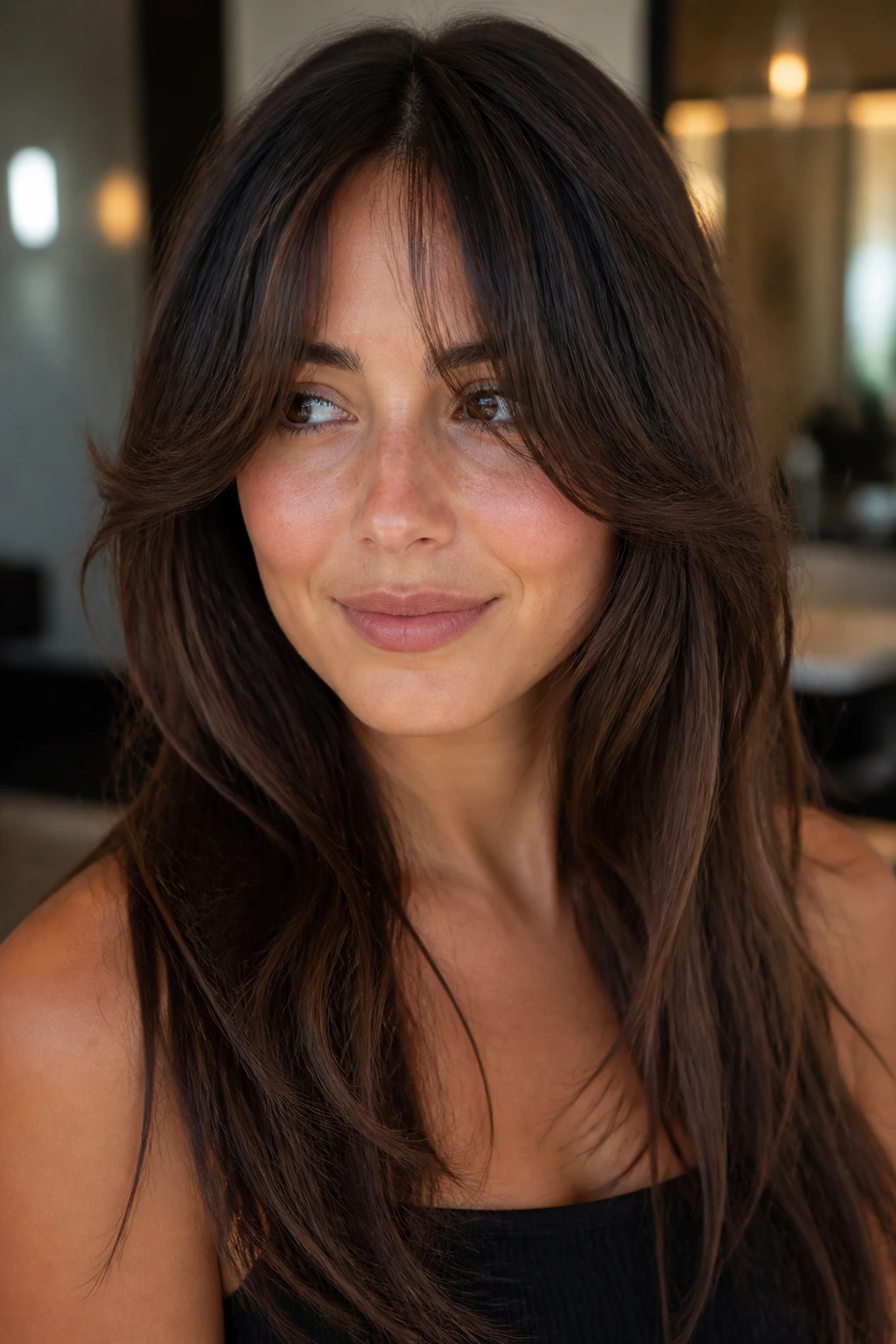
Wispy bangs need a little maintenance, but not the kind that eats your life. Plan on a fringe trim every 4 to 6 weeks if the bangs are short and airy, or every 6 to 8 weeks if they sit longer and blend into face-framing layers. The shorter the fringe, the faster the shape changes.
Wash the front more often than the rest if your roots get oily. Bangs sit against the forehead, collect skin oil, and go limp fast. A quick sink wash or a tiny bit of dry shampoo at the roots can rescue them between full washes. Use the smallest amount possible; too much powder turns wispy bangs dusty.
At night, it helps to clip the fringe loosely to one side or sleep on a silk pillowcase so the front does not bend into a weird crease. In the morning, a damp brush, a quick blow-dry, and a cool shot are usually enough to put the shape back where it belongs. If the ends start to split or look stringy, trim day is overdue.
Frequently Asked Questions About Wispy Bangs on Round Faces

Are wispy bangs good for round faces?
Yes, when they’re cut long enough to create vertical movement instead of sitting as one short block. The best versions open at the center or sweep diagonally so the face looks longer, not wider.
What bang length flatters a round face most?
The sweet spot is usually around the brows in the center and down toward the cheekbone at the sides. That shape gives the forehead some openness while guiding the eye downward.
Can curtain bangs work on a round face without making it look bigger?
They can, if the center stays light and the side pieces drop below the cheekbone. Curtain bangs fail when they’re too thick or too short at the sides.
Do wispy bangs work with curly hair?
They do, but they need to be cut with shrinkage in mind. Curly fringe should usually be longer than straight fringe and checked dry before the final shape is set.
How often do I need to trim them?
Shorter wispy bangs usually need a trim every 4 to 6 weeks. Longer fringe that blends into layers can stretch to 6 to 8 weeks if you don’t mind a softer grow-out.
What if my bangs separate too much during the day?
That’s often a product issue. Use less oil near the roots and a tiny bit of mousse or light spray for hold. If they still split, the fringe may be too thin and needs a small reshaping.
Should I avoid blunt bangs if I have a round face?
Not always, but blunt bangs are trickier. If you want the front full, the rest of the haircut needs enough length and layering to keep the face from feeling boxed in.
How do I style wispy bangs without heat?
Set them while damp with clips, let them dry in the direction you want, then separate with fingers. A tiny amount of lightweight cream can help, but heavy product will flatten the airy finish.
A Softer Frame
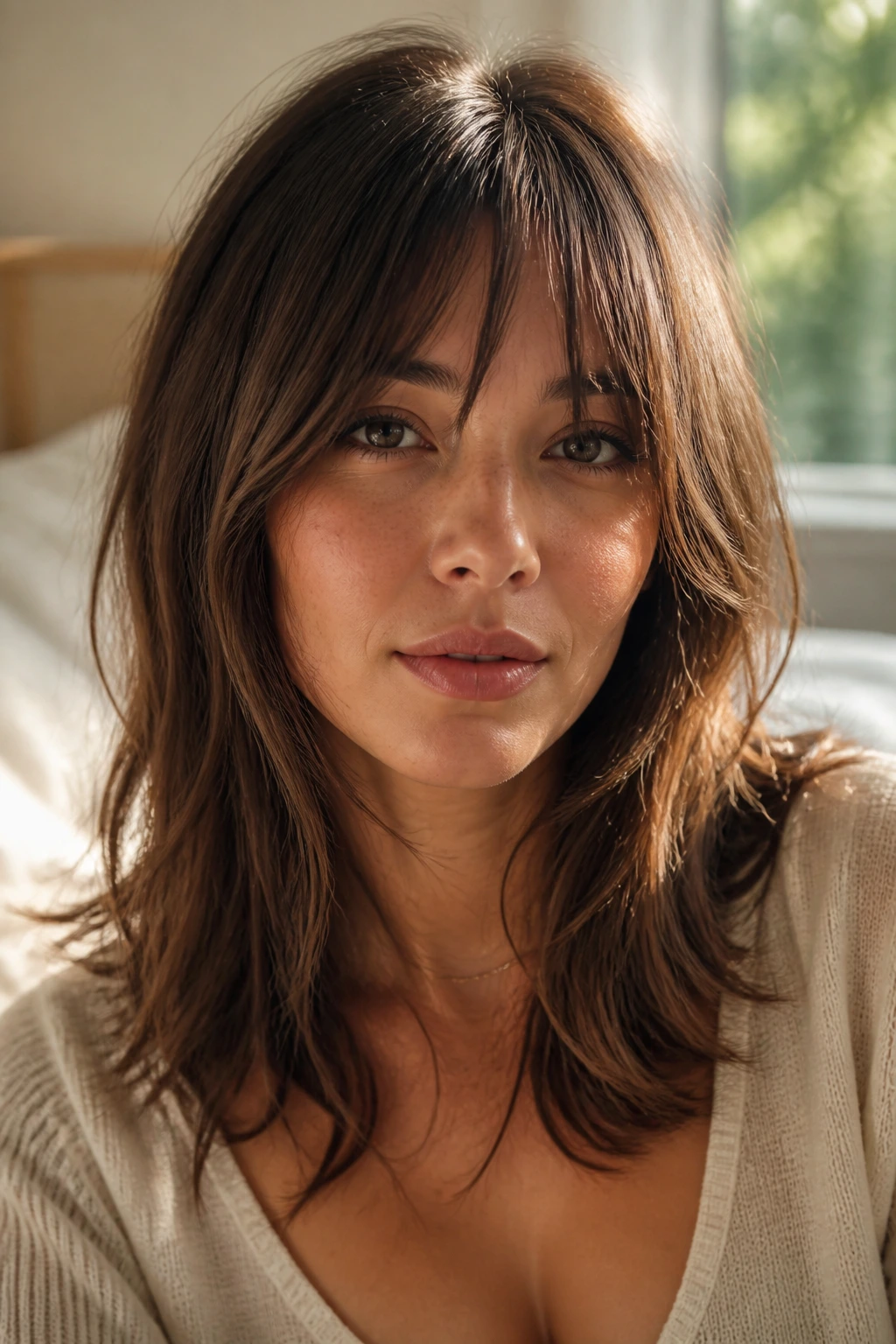
The best bang styles for round faces do one simple thing well: they frame the face without stopping the eye. That might mean a curtain fringe that opens at the cheekbones, a side sweep with a clean diagonal, or a feathered veil that disappears into long layers. Different shapes, same goal. Less width at the cheeks. More movement everywhere else.
What I love about these cuts is how forgiving they are. They don’t require a perfect blowout to work, and they don’t collapse the second you tuck one side behind your ear. They bend with your texture, which is exactly why they look better in real life than in a flat photo.
If you’re choosing your next cut, start with the shape that fits your texture and your morning routine, not just the one that looks dramatic on a salon mood board. The right wispy fringe should make your face look a little longer, your hair feel a little lighter, and your mirror a little less annoying.