



Longhair bangs for round faces and thick hair can look soft, sharp, and expensive, or they can swell at the sides, sit too straight across the forehead, and make the whole haircut feel heavier than it should. The problem usually isn’t the idea of bangs. It’s the shape, the weight left in the front, and where the shortest piece lands on the face.
Round faces need a little vertical movement. Thick hair needs room to move without puffing out into a shelf. Put those two things together, and the sweet spot is rarely a blunt line cut straight across the brow. The better versions open at the center, sweep diagonally, or break into pieces that let the eye travel down instead of across.
That’s why the best longhair bangs for round faces and thick hair are less about “bangs or no bangs” and more about placement, density, and grow-out. A good fringe can slim the cheeks, soften a broad forehead, and still leave you enough length to tuck, part, pin, or blow dry in a dozen different ways. A bad one does the opposite by lunch.
Why These Fringe Ideas Earn Their Place
- They shorten the width, not the height: The strongest styles here create diagonal or vertical lines, which keeps the face from reading wider at the cheeks.
- They respect thick hair’s weight: These cuts leave enough hair in front to look full, but they remove bulk where the fringe would otherwise push out.
- They still work on day three: Long bangs are kinder than short ones when you do not want to style them every morning.
- They grow out cleanly: A fringe that blends into cheekbone or jaw-length pieces is easier to live with than a hard, blunt line.
- They give your stylist room to adjust: You can keep the same general shape and still change the shortest point, the part, or the amount of texture.
- They look intentional with long hair: The front pieces connect to the rest of the cut instead of sitting there like they belong to a different haircut.
1. Curtain Bangs That Start at the Cheekbone
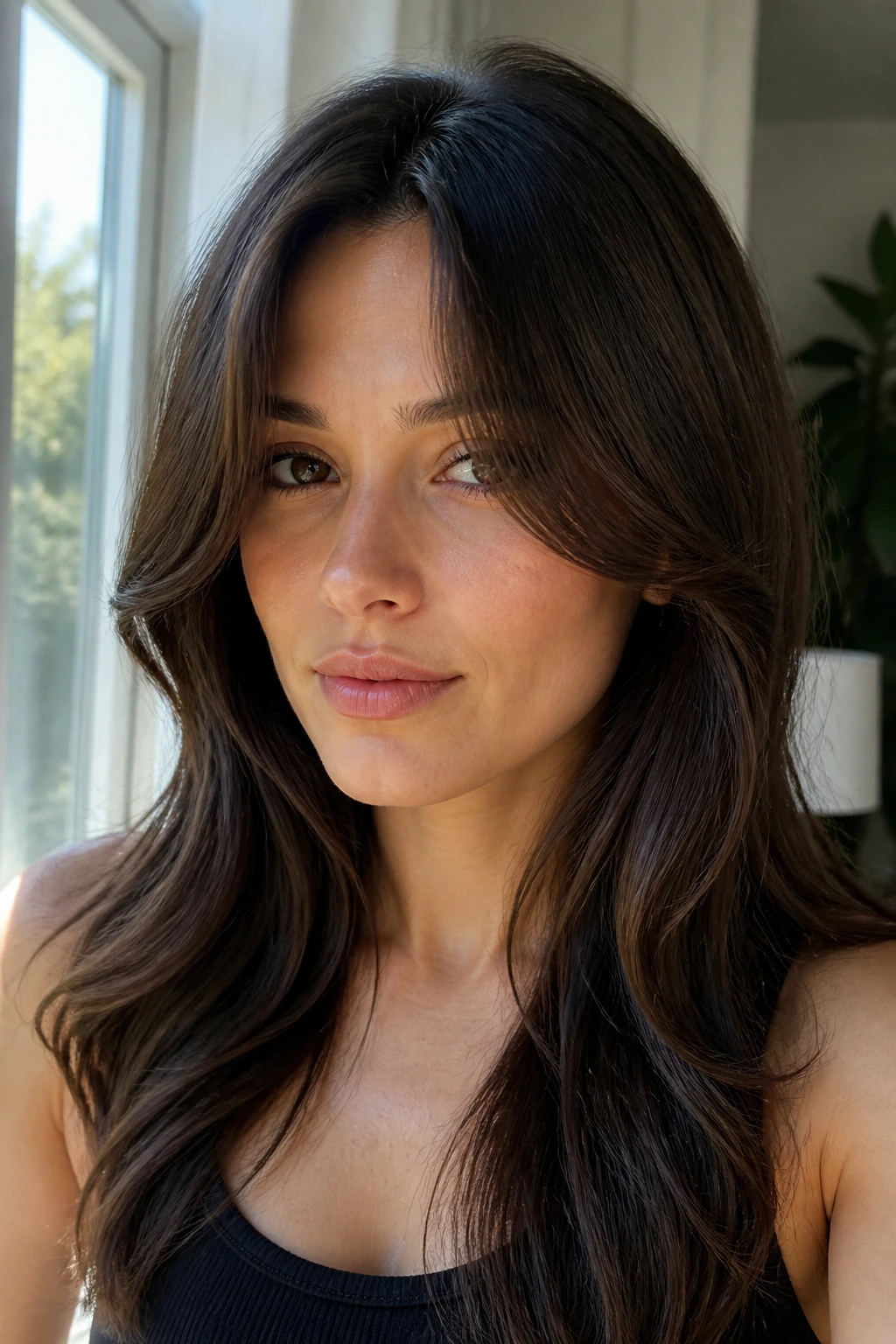
Curtain bangs are the safest place to begin if you want long bangs and you are dealing with a round face plus thick hair. The center stays long enough to avoid that chopped-off look, while the sides open around the cheekbone and melt into the rest of the hair. That shape gives you the lengthening effect people usually want, but without a harsh edge at the forehead.
The key is placement. I like curtain bangs best when the shortest point hits somewhere between the bridge of the nose and the top of the cheekbone, then drops into longer side pieces. If your hair is dense, ask for internal weight removal so the fringe lies close to the face instead of hovering out like a curtain in a drafty hallway.
Styling matters here. Blow the front forward first, then split it with a center part and direct each side away from the face using a round brush or large roller. That tiny bend is what keeps the bangs from flattening into a sad, sleepy middle part.
2. Deep Side-Swept Fringe With a Long Diagonal
A deep side-swept fringe is one of the easiest ways to make a round face look longer without sacrificing softness. The line travels from a higher point on the forehead down toward one cheek, which gives the eye a clear path to follow. Thick hair likes this shape because the weight is spread across one side instead of sitting in a dense block.
What makes this version work is the angle. A short side-swept bang that stops too high on the face can look abrupt, especially when hair has a lot of body. Ask for length that reaches the brow or just below it on the heavier side, with the longest pieces brushing the upper cheek.
Best for:
- Hair that already parts to one side
- Thick, straight strands that need direction
- Anyone who wants bangs but not daily symmetry
A little root lift at the part helps here. Use mousse at the scalp, then blow dry the fringe across the forehead and off to the side. The result is softer than a blunt bang and less fussy than a true curtain fringe.
3. Bottleneck Bangs That Narrow at the Center
Bottleneck bangs are one of my favorite answers for round faces because they do something smart: they start narrow in the middle and open wider toward the edges. That shape mimics the neck of a bottle, which is where the name comes from, and it works because it creates a slimmer center line before drifting into longer face-framing pieces.
Thick hair gives this style more body, which is good up to a point. The trick is keeping the center light enough that it does not sit in one heavy slab. Ask your stylist for a soft interior shape and a longer perimeter around the temples. That keeps the fringe from widening the face at cheek level.
This cut looks especially good when the bangs are dried with a small round brush, not a giant one. You want bend, not curl. If the ends flip too hard, the whole thing turns playful in a way that can fight the face shape. A little movement is enough.
4. Wispy Fringe That Breaks Up Heavy Density
Wispy fringe can work beautifully on thick hair, but only if the density is handled with some discipline. The point is not to make the bangs look thin and scrappy. The point is to break up the front so you do not get a curtain of hair sitting straight across a round face.
The best version uses point-cutting and careful removal of bulk underneath, not aggressive thinning right at the ends. That difference matters. Too much texturizing can leave the fringe frayed and fuzzy, especially if your hair is coarse or puffy in humidity. A light, airy front looks intentional; a shredded one looks like the cut went sideways.
Ask for: long wispy pieces that land at the brow or just above the lash line, with the sides left longer so the shape keeps moving toward the jaw. If you wear glasses, this is one of the easiest fringe types to live with because it does not crash into the frames every time you blink.
5. Feathered Bangs That Melt Into Long Layers
Feathered bangs have a slightly old-school feel in the best way. They are soft at the front, broken up at the ends, and blended into the rest of the haircut instead of sitting on top of it. On thick hair, that feathering keeps the fringe from becoming a little wall of weight.
Round faces benefit from the way feathered ends soften the cheek area. The face still gets framing, but the line is loose enough that it does not add width. I especially like this on long layered hair because the bangs can flow right into face-framing layers at the cheek and collarbone.
This is not a “wash and forget” shape. It likes a blowout, even a quick one. Use a round brush, roll the bangs away from the face, and finish with a cool shot so the bend holds. Skip heavy cream near the roots. You want movement, not a slick front.
6. French-Inspired Bangs With Soft, Uneven Ends
French bangs, or Birkin-style bangs if you prefer that label, sit in a sweet spot between polished and lived-in. They are usually a little longer, a little softer, and a little less exact than a classic straight fringe. That looseness helps round faces because the eye never gets stuck on one blunt line.
Thick hair makes this style richer, but it also makes the front heavier if the cut is too full. Ask for a soft center section with lightly broken ends and longer side pieces that drift into the face frame. I would not let someone cut these too short on the first pass. With dense hair, shorter usually means puffier.
Styling note
Dry the bangs forward first, then brush them slightly apart at the center. A tiny bend is the point. If you over-style them into a perfect swoop, you lose the casual shape that makes this fringe work.
7. A Split Fringe That Follows Your Natural Part
A split fringe is for the person who likes bangs in theory but does not want to wrestle with them every morning. Instead of forcing all the hair to the center, the cut respects a natural or slightly off-center part and leaves enough length to split and fall on both sides. For round faces, that opening at the forehead helps stretch the look of the face without making the haircut feel severe.
This style is especially kind to thick hair because the fringe does not need to be ultra-short to do its job. In fact, the longer the front stays, the easier it is to tuck a few pieces behind the ear or let them graze the cheekbones. That softness takes pressure off the widest part of the face.
I like this on people who wear their hair down most days and occasionally pin the front back. It gives you bang energy without locking you into bang maintenance.
8. Long Shag Bangs With Built-In Movement
Long shag bangs are where things get a little more interesting. They do not try to behave like a neat, polished fringe. They move, they separate, and they usually have a bit of bend built right into the cut. For thick hair, that movement is a gift because the front does not have to hold a perfect line to look good.
Round faces often look best with this kind of broken-up texture because the eye is drawn along the layers instead of across the cheeks. The shag gives the haircut some vertical lift and keeps the front from feeling too boxy. If your hair is wavy, this can be one of the easiest shapes to live with.
What to ask for
- Longer pieces around the temples
- A softer center, not a hard straight fringe
- Internal layering so the bangs fall instead of puffing
The trick is not to over-style it. Rough dry the roots, then twist a few front pieces around your fingers while they are still damp. That gives the cut enough direction without turning it into helmet hair.
9. Rounded Bangs With Longer Corners
Rounded bangs can be tricky on round faces if they are cut too short and too full. But when the center is soft and the corners are left longer, the shape actually works in your favor. The curve gives a little polish, and the longer sides stop the fringe from cutting off the face too abruptly.
This is a good option for thick hair because the cut can handle density. You do not need to remove all the weight; you just need to shape it so the middle sits a touch higher and the corners glide outward. The fringe should look like it belongs to the rest of the haircut, not like a separate piece dropped on the forehead.
I would avoid a hard semicircle here. That can make a round face feel even rounder. The softer the arc, the better.
10. Razor-Cut Piecey Fringe for Straight Thick Hair

Razor-cut bangs can be excellent on straight, thick hair because the blade removes enough bulk to stop the fringe from sitting like a shelf. The result is piecey, separated, and slightly irregular at the ends, which gives the face some breathing room. On a round face, that little bit of breakup keeps the front from feeling too solid.
This style needs a careful hand. A razor can make the ends look soft, but on porous or frizz-prone hair it can also make them catch the air and fluff up. If your hair tends to swell in humidity, ask for point-cutting or a dry cut instead of an aggressive razor pass.
The payoff is a fringe that moves. You can wear it with air-dried waves, a flat-ironed bend, or a round-brush finish. It does not need to be perfect to work.
11. Grown-Out Curtain Bangs That Stay Low-Maintenance
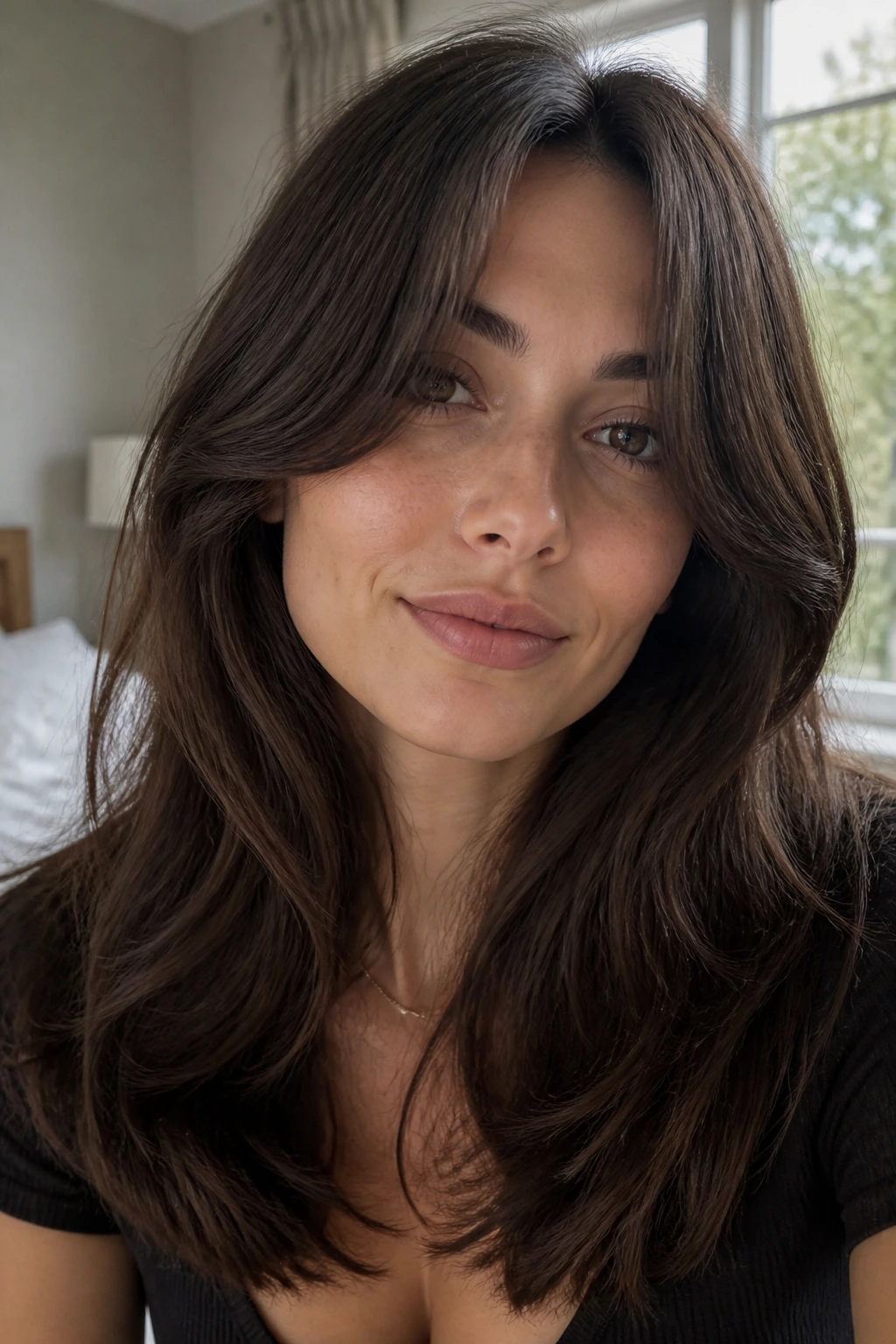
Grown-out curtain bangs are what happens when you want the shape of bangs but not the hard edge of a fresh cut. They start long enough to part in the middle, and they blend so gradually into the side layers that they almost look like a front layer rather than a bang. For round faces, that softness is useful because it keeps the forehead open and the cheeks framed.
Thick hair makes this look fuller, which is exactly why the length matters. If you start too short, the front can balloon out. If you keep it longer, it falls with the rest of the haircut and still gives shape when you tuck one side behind the ear.
This is the fringe version I suggest to people who are nervous about committing. You can keep it long, trim it in small amounts, and let it morph into face-framing layers if you change your mind.
12. Side-Parted Fringe With Built-In Volume
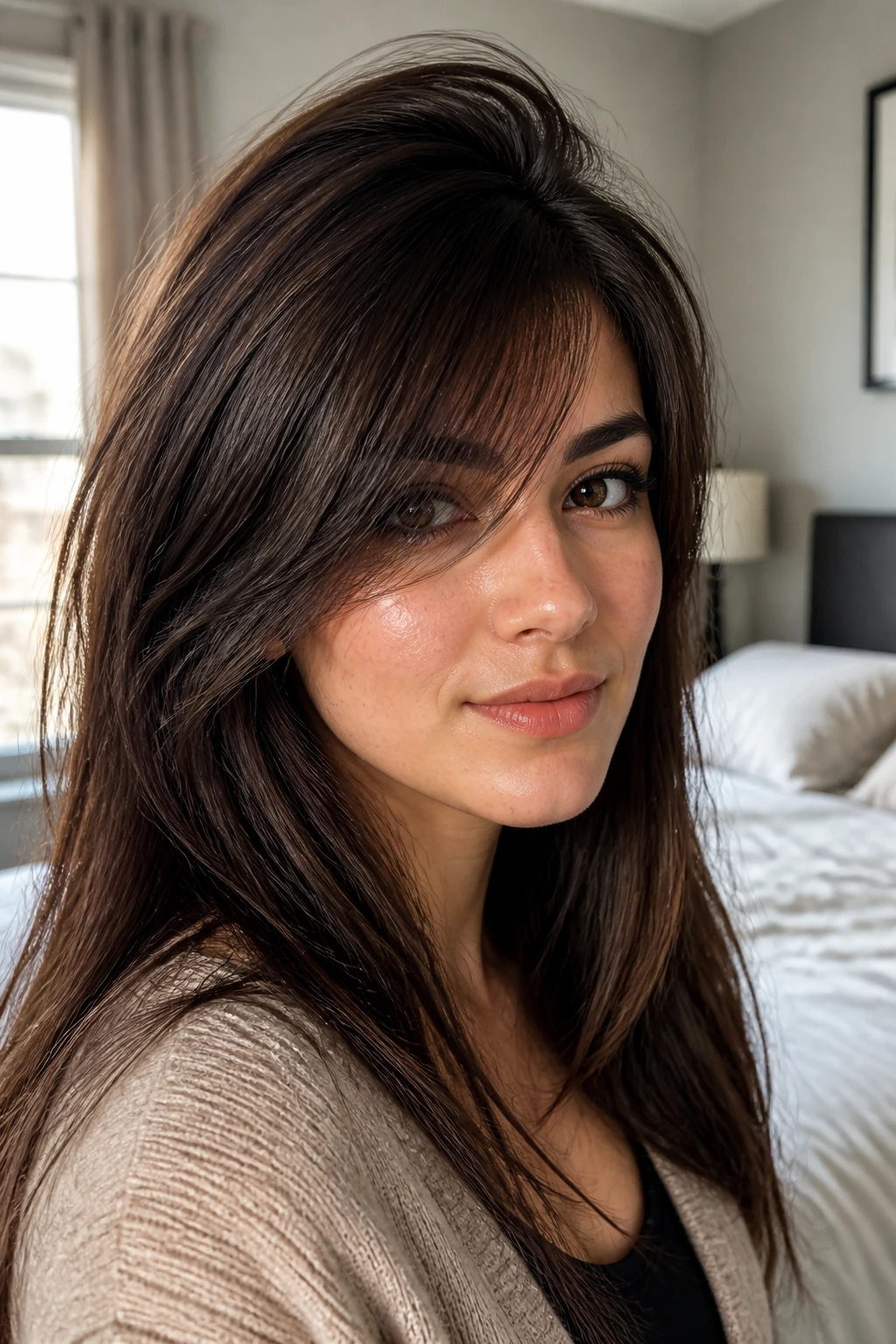
A side-parted fringe is not the same thing as a basic side-swept bang. This version is lifted a little higher at the root and shaped so the volume lives near the part, not in a heavy lump across the forehead. That lift helps round faces because it creates height where the face needs it most.
Thick hair gives this style real staying power. The front can hold a bend, and the part can stay put if you dry it in the right direction. I like a root mousse here, especially if the hair wants to fall flat at the crown. A little lift at the part changes the whole silhouette.
The important detail is length. Keep the fringe long enough that it can skim the brow and then sweep across the upper cheek. Too short, and it turns into a triangle. Too full, and it starts to fight the face.
13. Curly Fringe With Long Tendrils
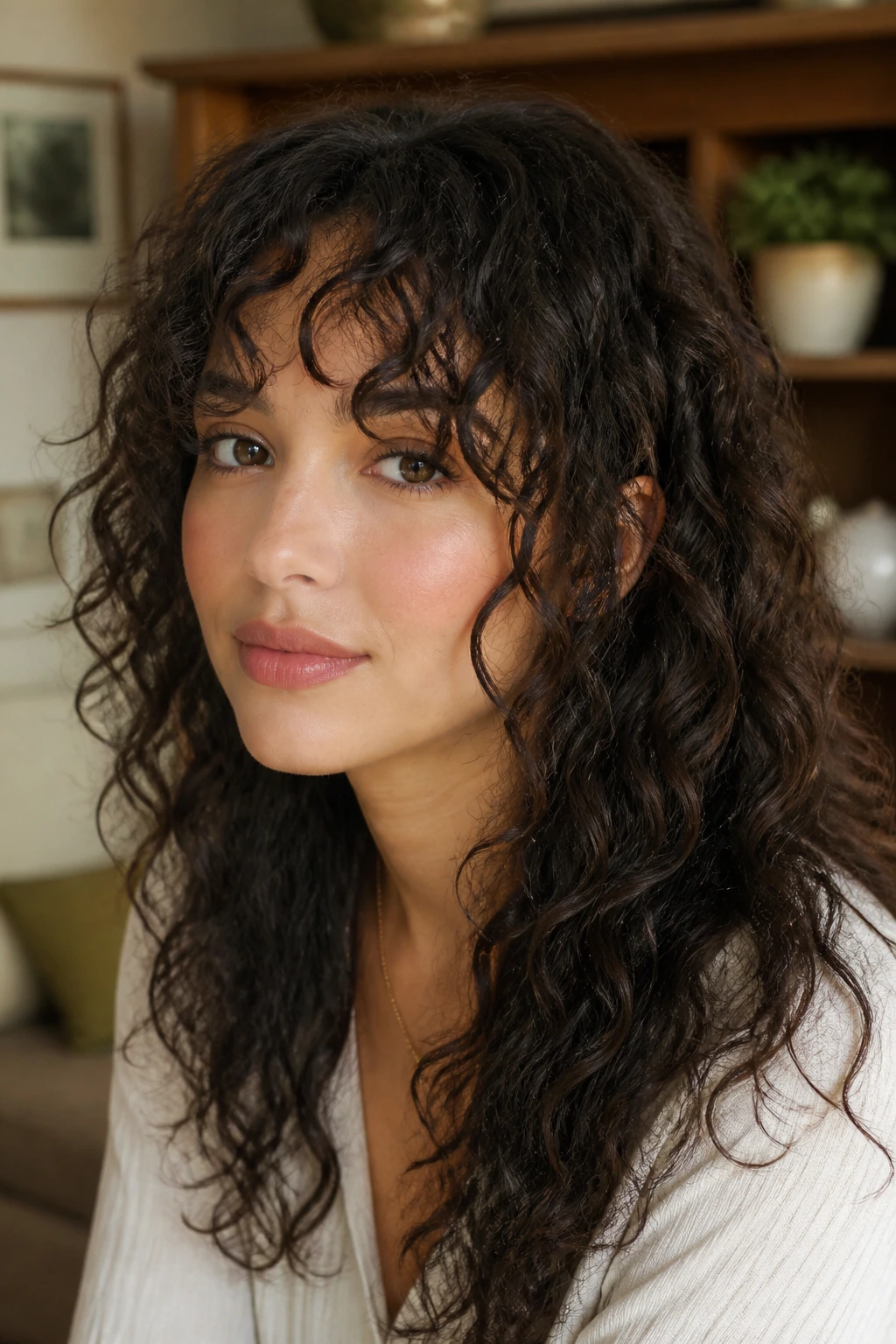
Curly bangs are a different animal, and they should be cut like one. On thick curly hair, a long fringe with tendrils around the face can be gorgeous because it softens the roundness of the face without forcing the curls into a straight line they do not want. The shape is gentle, touchable, and easy to blend into long layers.
The big mistake is cutting curly bangs the same way you would cut straight hair. Don’t. Curly hair shrinks, and thick curls can spring up more than you expect. Ask for a dry cut or at least a curl-by-curl check, with the longest pieces preserved near the cheekbone and jaw.
Styling notes
Use a light gel or cream, then diffuse on low heat or air dry with the curls guided away from the cheeks. If the front gets too short, the face can read wider. Keep the tendrils long enough to skim past the cheekbone and you keep the line flattering.
14. Wavy Bottleneck Bangs That Bend Softly

Wavy hair loves a bottleneck bang because the shape already wants to bend. The shorter center gives a little forehead opening, while the longer sides ride the wave and drift into the rest of the haircut. On a round face, that middle opening and side softness help the cut feel airy rather than wide.
With thick hair, the wave pattern can make the front look fuller than it is, so the stylist has to be careful not to leave too much bulk in the center. Ask for the density to be reduced underneath, not just at the ends. That keeps the fringe from splitting into awkward chunks when it dries.
I like this style because it behaves in messy real life. You can twist the front while damp, let it dry, and get a shape that looks deliberate without needing a brush and a blow dryer every morning.
15. Blowout Bangs With a Gentle Under-Curl
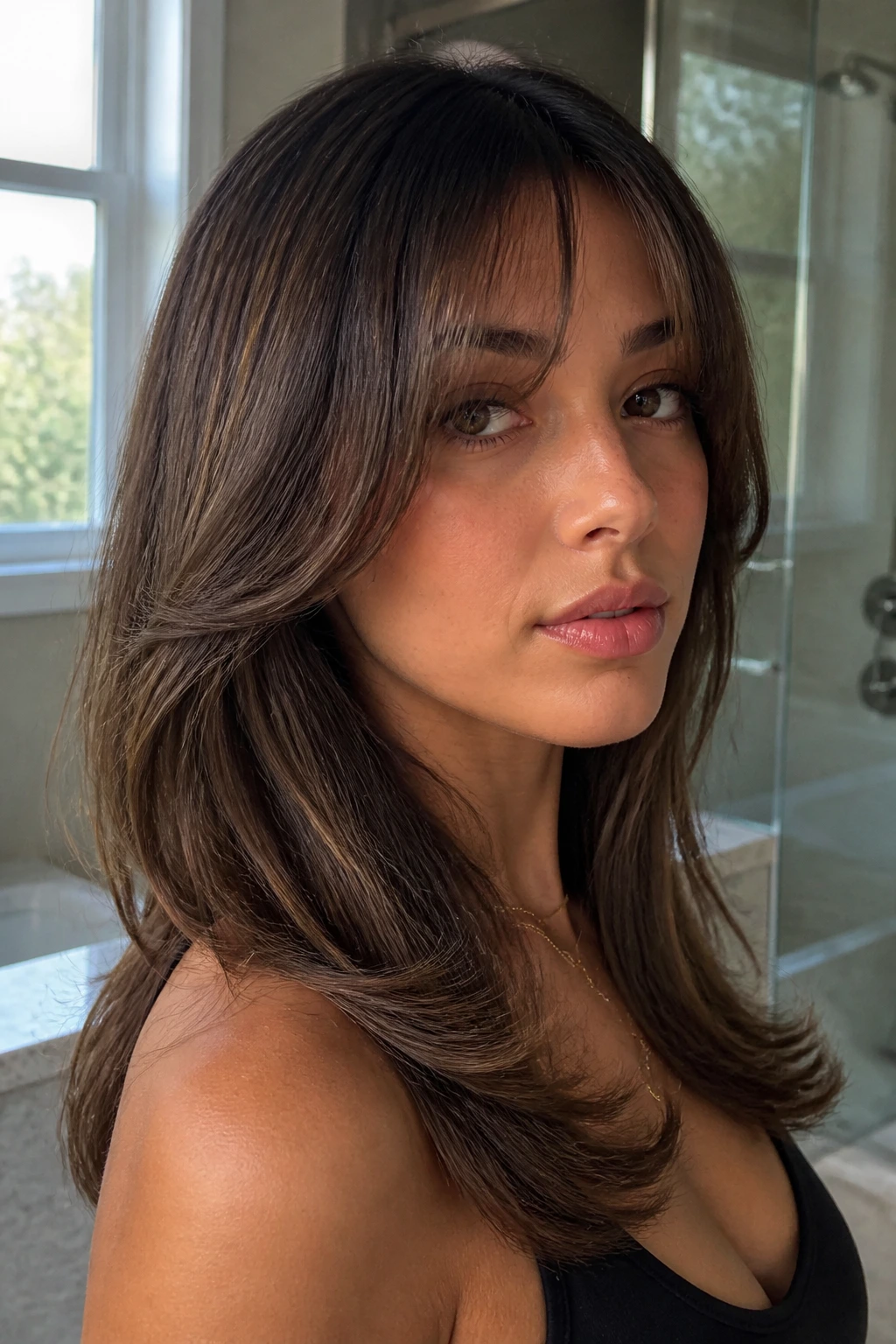
If you like a polished finish, blowout bangs with a gentle under-curl are hard to beat. The front is long enough to move, but the ends are trained to bend inward just enough to hug the face. On round faces, that curve should be soft, not round in a matching way. The goal is to frame, not echo.
Thick hair works well here because it holds a blowout longer than fine hair does. Still, the cut needs to be light enough at the ends to move. Ask for soft layering through the front so the fringe does not stand away from the forehead when you use a round brush.
A 1.25-inch brush is usually enough. Roll the bangs under, release them, and let them cool before touching them again. That cooling step matters more than people think.
16. Retro Swoop Bangs With a Big Sweep
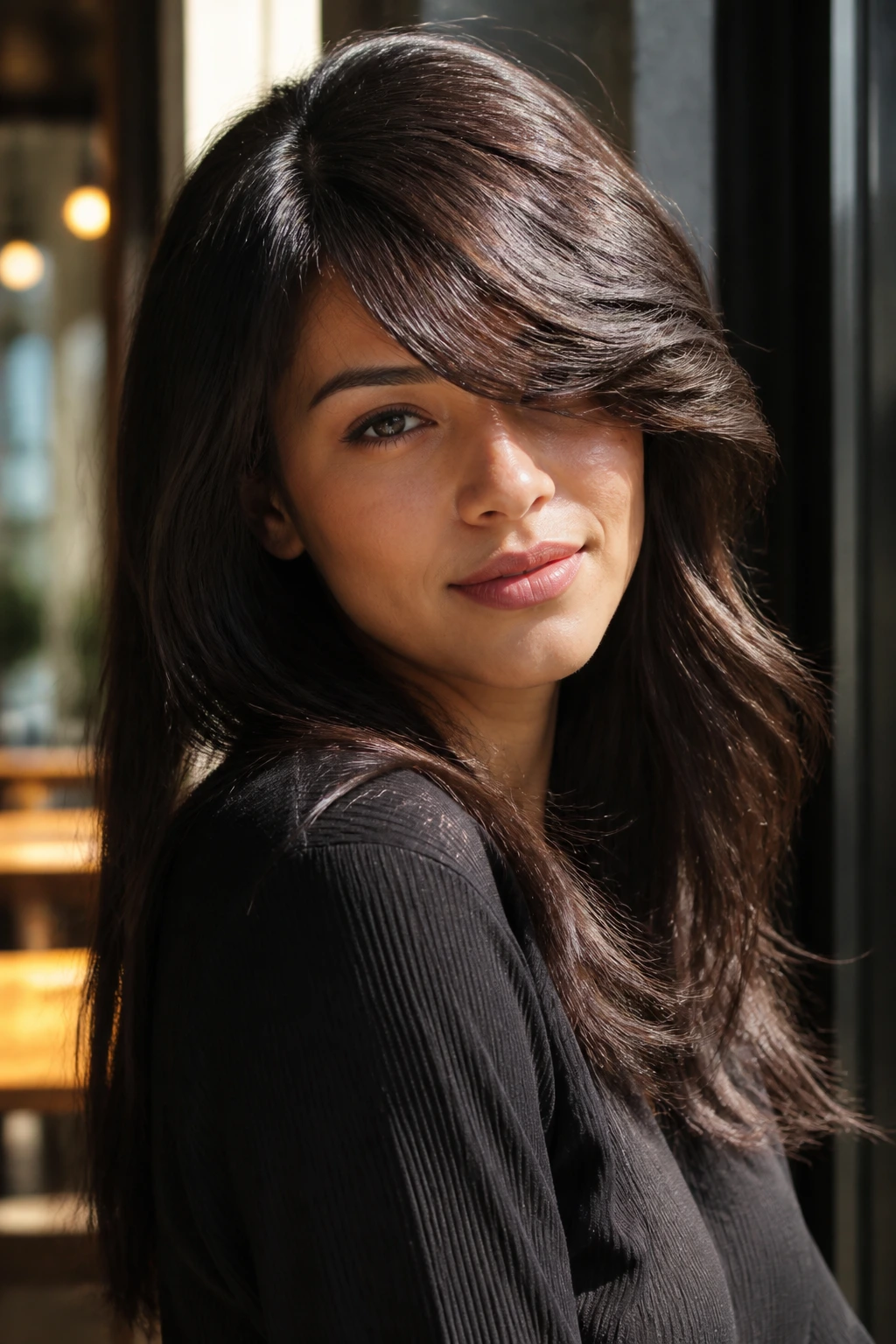
Retro swoop bangs bring drama, but in a controlled way. The front is swept across the forehead in one obvious line, then lifted and curved toward the side. On a round face, that long diagonal can be flattering because it adds length and a little attitude at the same time.
This works best when the bangs are not too short. Thick hair gives the swoop enough body to stay visible, but the cut needs to keep the ends light so they do not collapse or spring outward. I like this look with long layers because the hair around the face can keep echoing the sweep.
You will need a round brush or a flat brush with some tension at the root. If you have a strong cowlick, this style can still work, but only if the part and direction are cut to match the growth pattern. Fighting the cowlick usually ends in a fight you lose.
17. Face-Framing Bangs That Blend to Chin Length
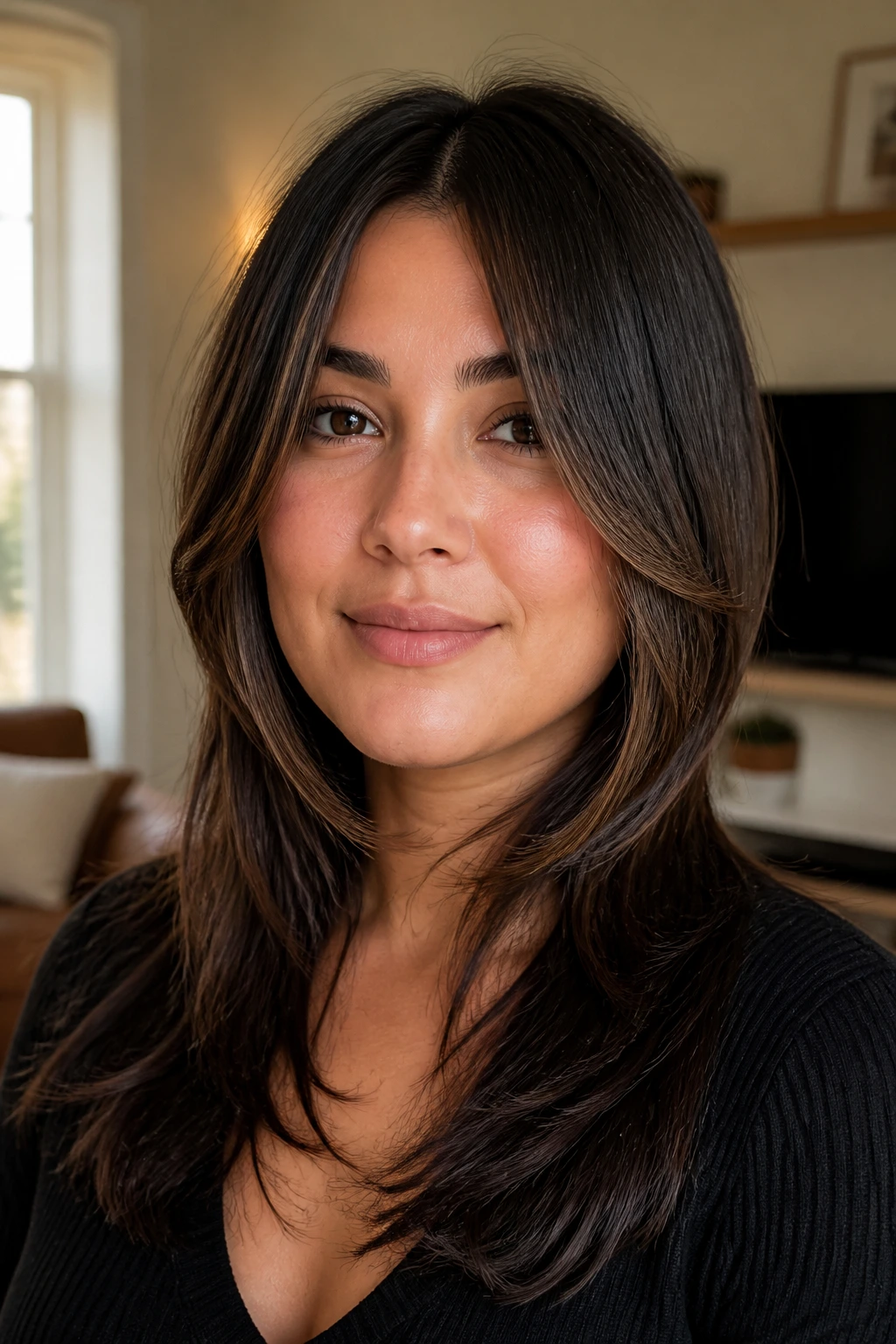
Sometimes the best bang is barely a bang at all. Face-framing front pieces that start near the nose or cheekbone and fall all the way to the chin can give a round face the slimming effect people want without any hard fringe line. Thick hair likes this because the front still has substance, just not a block of it.
This shape is especially useful if you wear your hair in a middle part. The shorter inner pieces open the face, while the longer outer pieces keep the width under control. It also gives you a clean grow-out path. If you get tired of bangs, these pieces simply become layers.
I would call this the most practical option for people who want the look of bangs more than the daily labor of bangs. It is subtle, but not boring. There’s a difference.
18. See-Through Bangs That Keep the Forehead Light
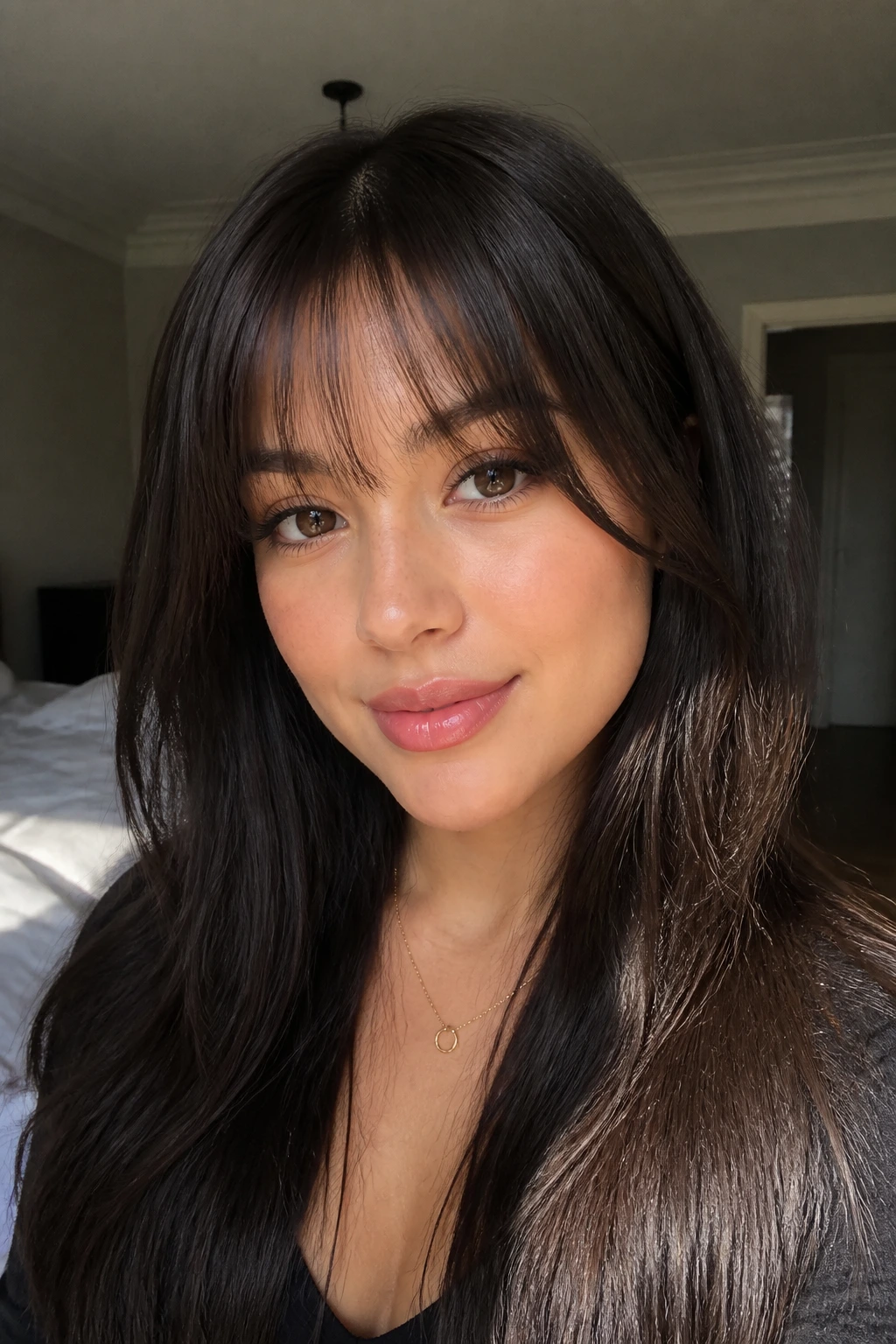
See-through bangs are intentionally airy, which is why they can work on thick hair better than you might expect. Instead of a dense sheet across the forehead, you get a lighter veil with space between the strands. On a round face, that keeps the front from adding bulk at the exact place you do not want it.
The mistake is making them too sparse without cleaning up the shape. Then they look stringy. What you want is controlled transparency: enough hair to soften the forehead, not enough to block it. The edges should still be shaped and intentional.
These bangs usually do best when kept around brow length or just under it, with a little pieceiness through the middle. If your hair is coarse, a touch of lightweight cream can stop the ends from floating away.
19. Choppy Fringe With an Uneven Edge

Choppy fringe has more attitude than polish, and that can be a good thing on thick hair. The uneven edge breaks up the density and keeps the front from feeling like a solid mass. On a round face, the irregular line also helps the eye move around instead of stopping dead at the brow.
This is not the fringe for someone who wants symmetry. It looks best when the texture is a little rough and the pieces are not all the same length. Ask for point-cutting and internal layering, especially if your hair sits heavy at the forehead.
A small amount of texturizing spray can help on day two. Too much product, though, and the piecey effect turns into crunchy separation. You want movement, not stiffness.
20. Long Wolf Cut Bangs With Edge

Wolf cut bangs bring a more undone shape to the front, and they make a lot of sense when thick hair is part of the equation. The disconnected layers keep the front from becoming bulky, while the longer pieces at the sides pull the eye downward. That downward movement is the whole point for a round face.
This cut is less about neatness and more about energy. It works best when the bangs blend into a shaggy perimeter, so the front never feels isolated from the rest of the haircut. If your hair has wave or curl, even better. The texture helps the shape settle into place.
You do need a little confidence for this one. It is not sleek. It does not try to be sleek. That is why it works.
21. Long Diagonal Fringe That Cuts Across the Face
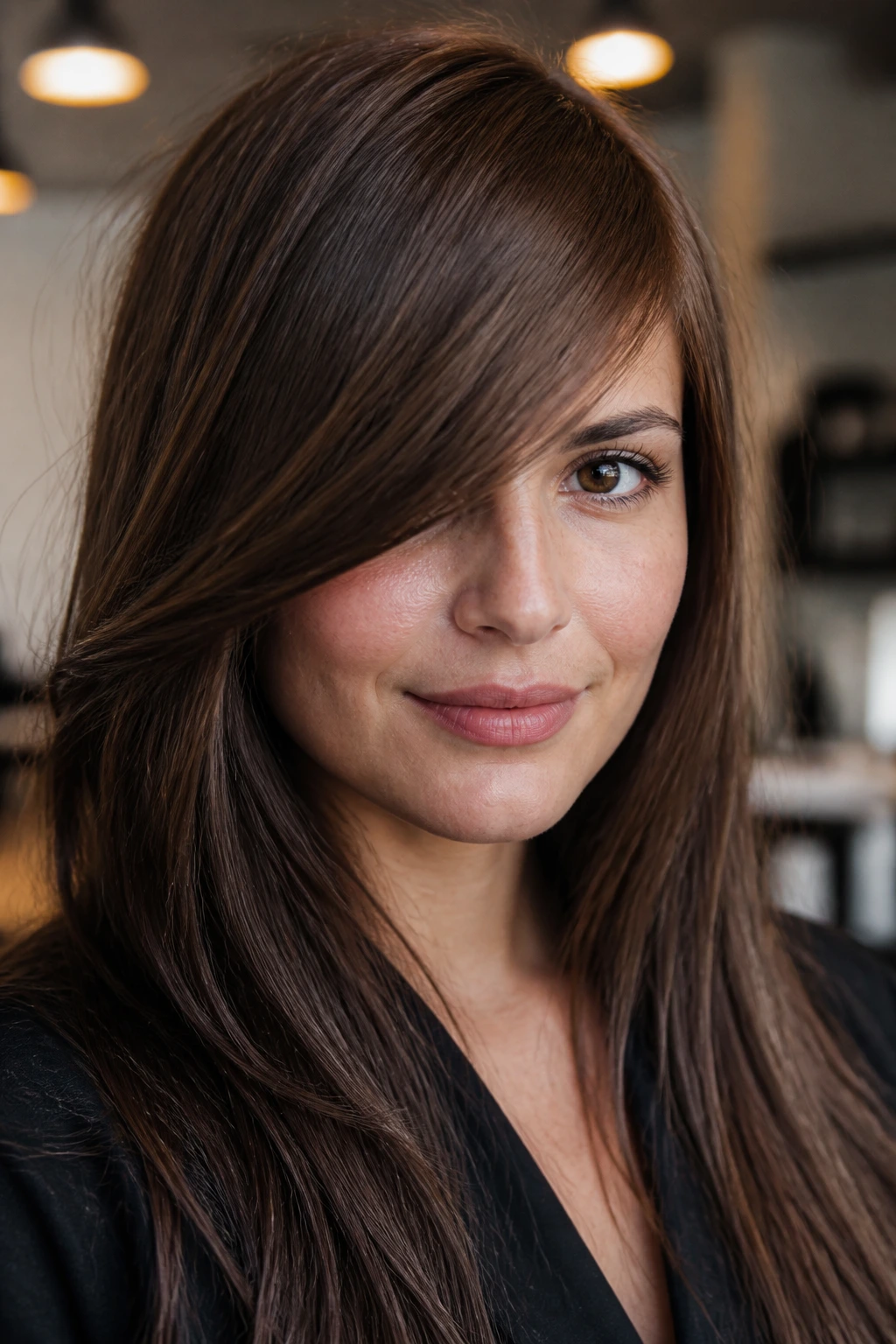
A long diagonal fringe is one of the most face-slimming shapes on this list because it cuts across the forehead in a strong line that never lands flat on the cheeks. The diagonal makes the face look longer and the haircut look more deliberate. Thick hair gives that line enough body to hold its shape.
The important part is where the line ends. Let it fall somewhere around the cheekbone or just below. If it stops too high, it loses the slimming effect and starts to feel abrupt. If it goes too short, it can widen the face by sitting right at the broadest point.
This style pairs well with straight hair, blowouts, and smooth layers. It can be sleek or loose, but the direction should stay clear. That’s what gives it its shape.
22. Soft Arched Bangs That Lift the Center

Arched bangs are easy to get wrong, so the soft version is the one I’d trust. The center sits a little shorter, and the corners stretch longer toward the temples. That arch lifts the face visually and keeps the line from feeling heavy on a round shape.
Thick hair helps this fringe hold its curve, but only if the stylist removes enough weight to prevent a blocky front. You want an arc, not a shelf. The shortest point should still be long enough to bend and move, not poke straight out from the forehead.
This is a quiet option. Not flashy. But it can make a haircut look more finished than a plain straight fringe ever will.
23. Blended Fringe for Thick Straight Hair
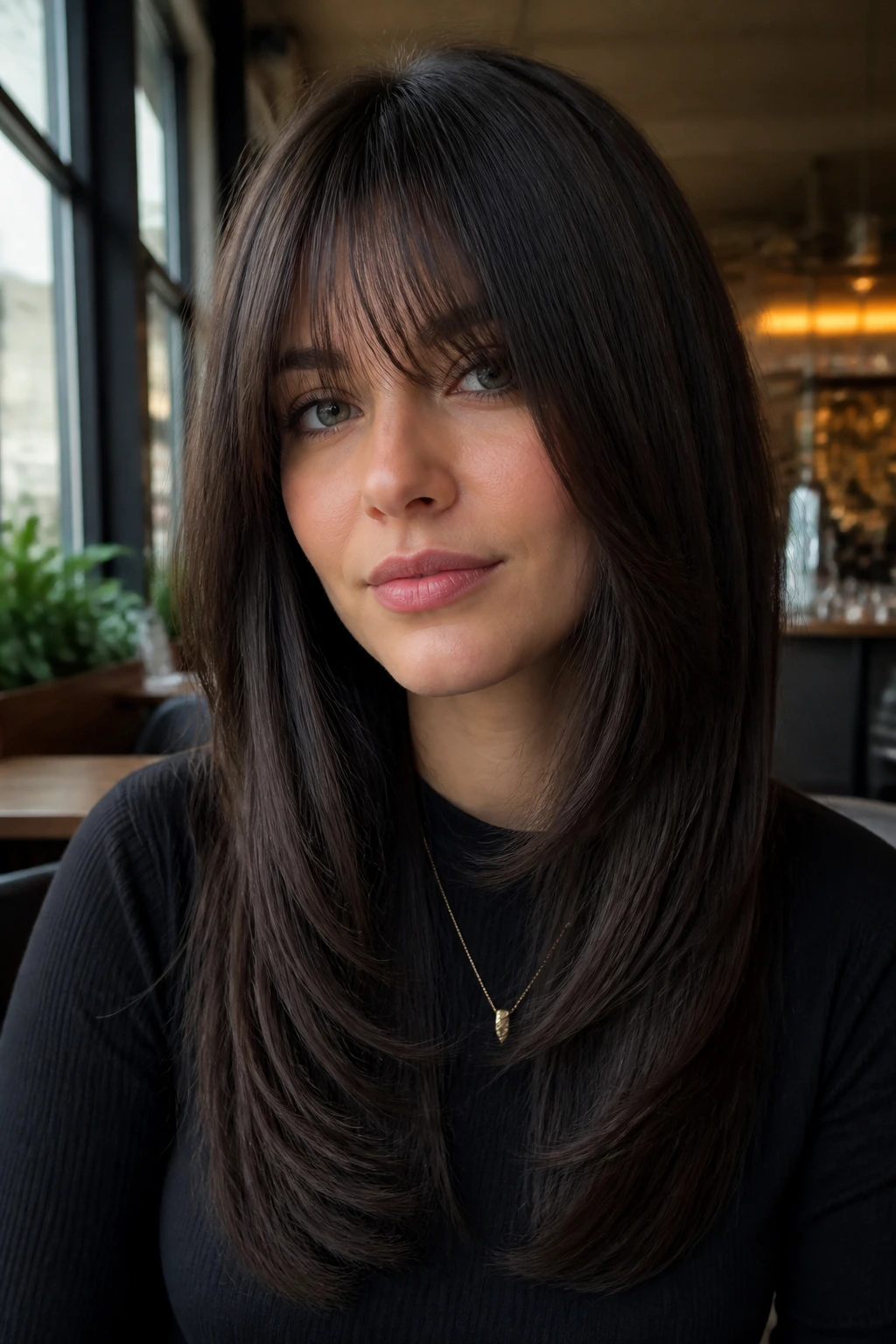
Blended fringe is for people who want the front to disappear into the rest of the haircut a little more. On thick straight hair, that can be a smart move because a blunt fringe often looks heavier than intended. Instead, the front pieces flow into long layers and create shape without a hard edge.
Round faces benefit from the softness. The hair frames the face without boxing it in. I like this especially when the longest front pieces are cut to hit the cheek or jaw, because that keeps the eye moving downward.
The key here is precision. The cut has to be intentional or it just looks like you skipped the bang. Ask for a blend that is visible when styled forward, but still loose enough to tuck behind the ear.
24. Comma Bangs With Ends Turned In
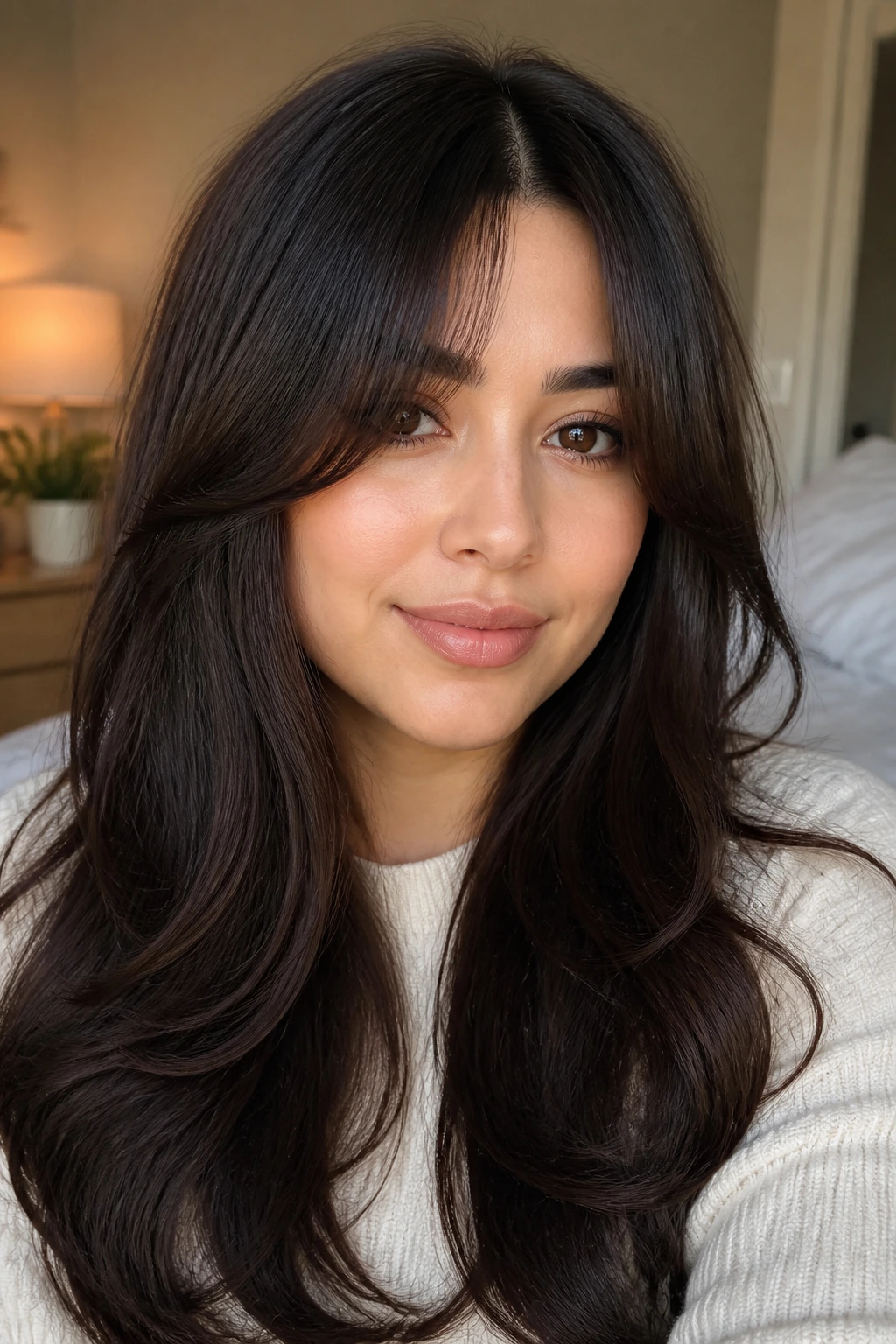
Comma bangs have a gentle curve at the end, like a little comma, which gives the fringe a neat but soft finish. They tend to work well with thick hair because the body of the hair helps hold the curve. On a round face, the turned ends create a clean line that frames rather than widens.
This style does ask for regular styling. A round brush, a small flat iron bend, or a quick roller set can all do the job. The goal is not a hard curl. It is a controlled inward turn that keeps the front tucked close to the face.
I like comma bangs when someone wants a slightly polished look without the full commitment of a rounded blowout. They are tidy, but not stiff.
25. Long Fringe With Hidden Underlayers
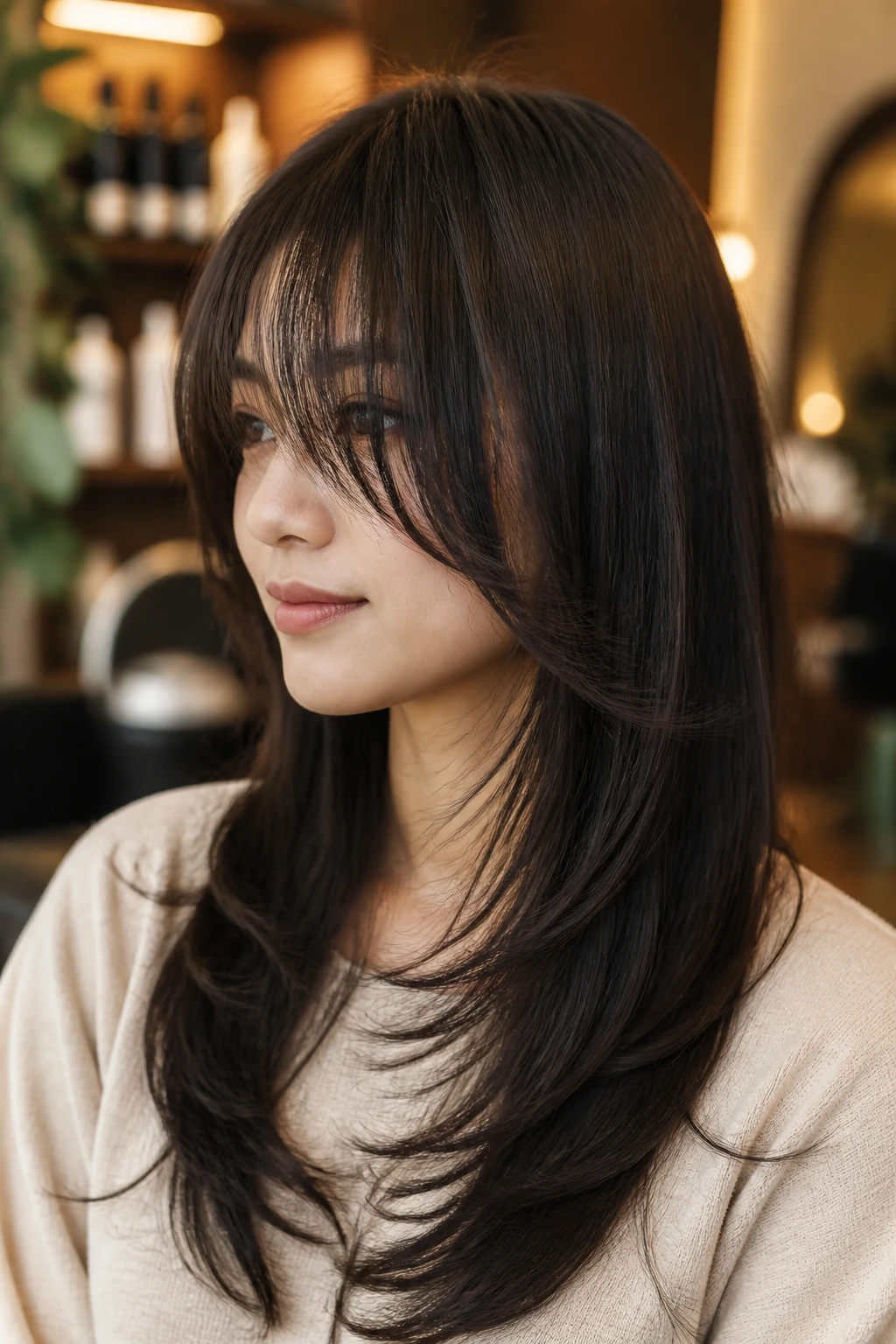
This is the most useful “secret weapon” style in the whole list. The surface layer looks like a dense, long fringe, but the underneath is carefully thinned so the bangs fall close to the face instead of puffing out. On thick hair, that hidden shaping is what keeps the front from swallowing the forehead.
Round faces do well with this because the bangs still have enough mass to frame the features, yet the weight is controlled enough to avoid a wide, boxy shape. The effect is soft and deliberate. If you like having bangs but hate looking like you have bangs, this is the one.
Ask for internal debulking, not a blunt thin-out at the ends. That distinction matters more than most people realize. The cut should feel lighter when the hair moves, not shredded when it sits still.
Why the Right Fringe Shape Matters More Than the Bang Length
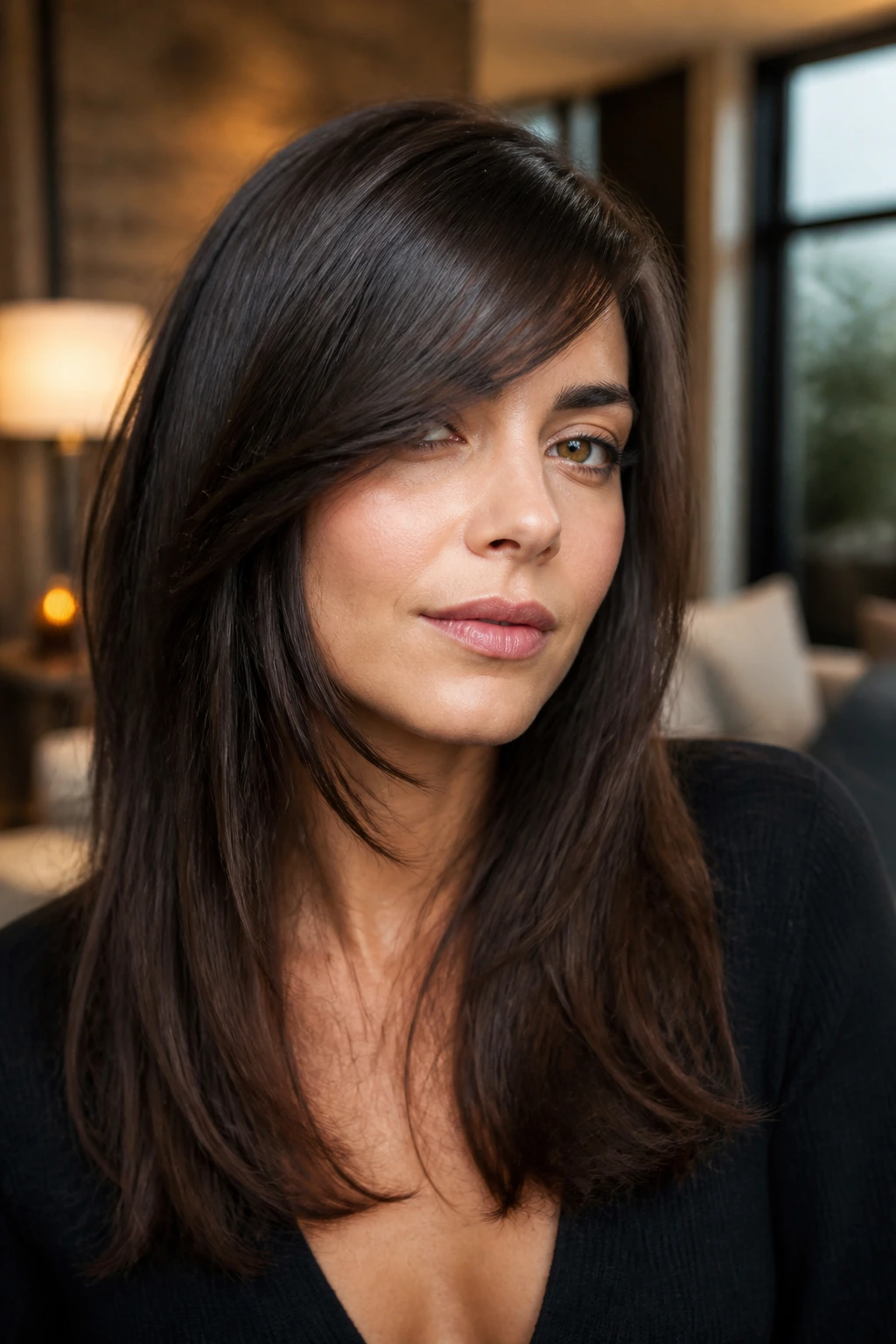
Round faces and thick hair change the rules a little. A bang that looks flattering on fine, straight hair can sit completely differently once there is more density and a naturally softer face shape underneath it. That is why length alone is not the answer. Placement, weight, and movement do most of the work.
With a round face, you usually want the front to create a line that goes somewhere other than straight across. A diagonal, a center opening, or a longer side piece gives the eye somewhere to travel. Thick hair helps with volume, but it also means the front can swell outward if the cut leaves too much bulk in the wrong place.
The best fringe shapes use that thickness without letting it take over. They are cut so the hair falls close to the forehead, then opens around the cheekbone or jaw. That little bit of controlled space is what keeps the haircut from feeling heavy. And if you have ever had bangs that looked fine when you left the salon and puffy by the time you got home, you already know why this matters.
How to Wear the Fringe With the Rest of Your Haircut
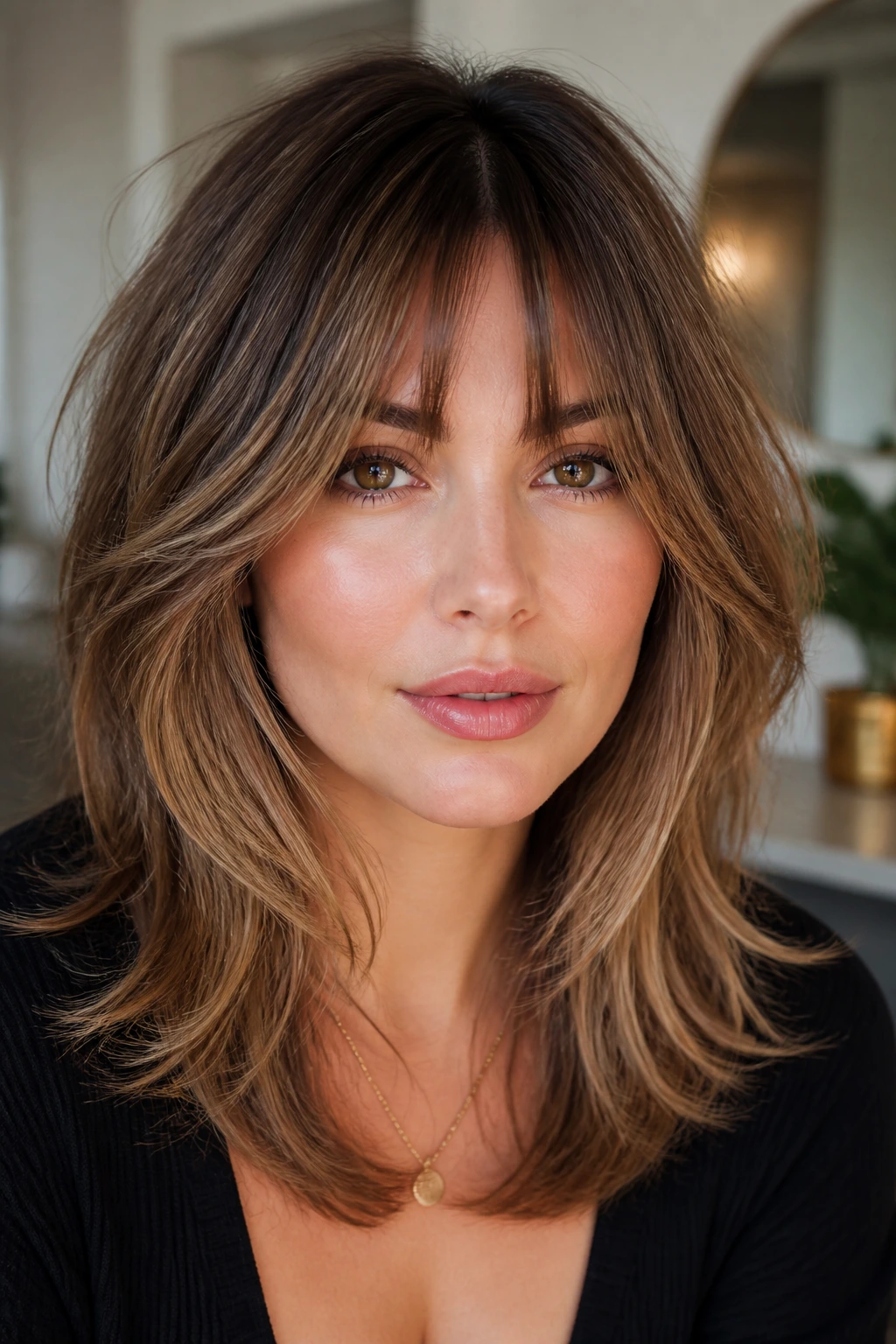
A good fringe does not live alone. It has to sit inside the rest of the haircut and make sense with the length, layers, and texture around it.
Layer Placement: Keep the first face-framing layer near the cheekbone or jaw so the bangs can blend instead of stopping dead. On thick hair, that connection keeps the front from looking like a separate helmet.
Parting: If your hair naturally splits off-center, use it. Fighting the part usually makes the fringe puff or separate in the wrong spots. A slight offset often flatters round faces more than a strict middle part.
Texture Match: Straight bangs on wavy hair and airy bangs on coarse hair often need different styling plans. The cut should match the way your hair behaves when it’s not being bullied into shape.
Finish: A small bend looks better than a stiff curl. The goal is movement that hugs the face, not a front that stands away from it.
The Tools That Keep Long Bangs Behaving

- Blow dryer with a concentrator nozzle: The nozzle helps aim airflow where you need it, which matters when the fringe wants to split or puff.
- 1 to 1.5-inch round brush: Big enough for bend, small enough to shape the front without turning it into a curl.
- Sectioning clips: Use them to keep the rest of the hair out of the way while you dry the fringe first.
- Tail comb or fine comb: Useful for clean parting and for redirecting cowlicks before the hair sets.
- Heat protectant spray: Thick hair can hold heat longer than fine hair, so don’t skip this if you use a dryer or iron.
- Lightweight mousse or root lift spray: Helps the bangs keep their shape at the roots instead of sliding flat.
- Dry shampoo: Not just for greasy roots; it also gives fringe a little grip on day two.
- Velcro roller or large roller set: Good for curtain, Birkin, and blowout styles that need a little memory.
- Flat iron with narrow plates: Helpful for tiny bends or a soft swoop, especially if the hair resists round-brush styling.
What to Tell the Stylist Before the First Snip
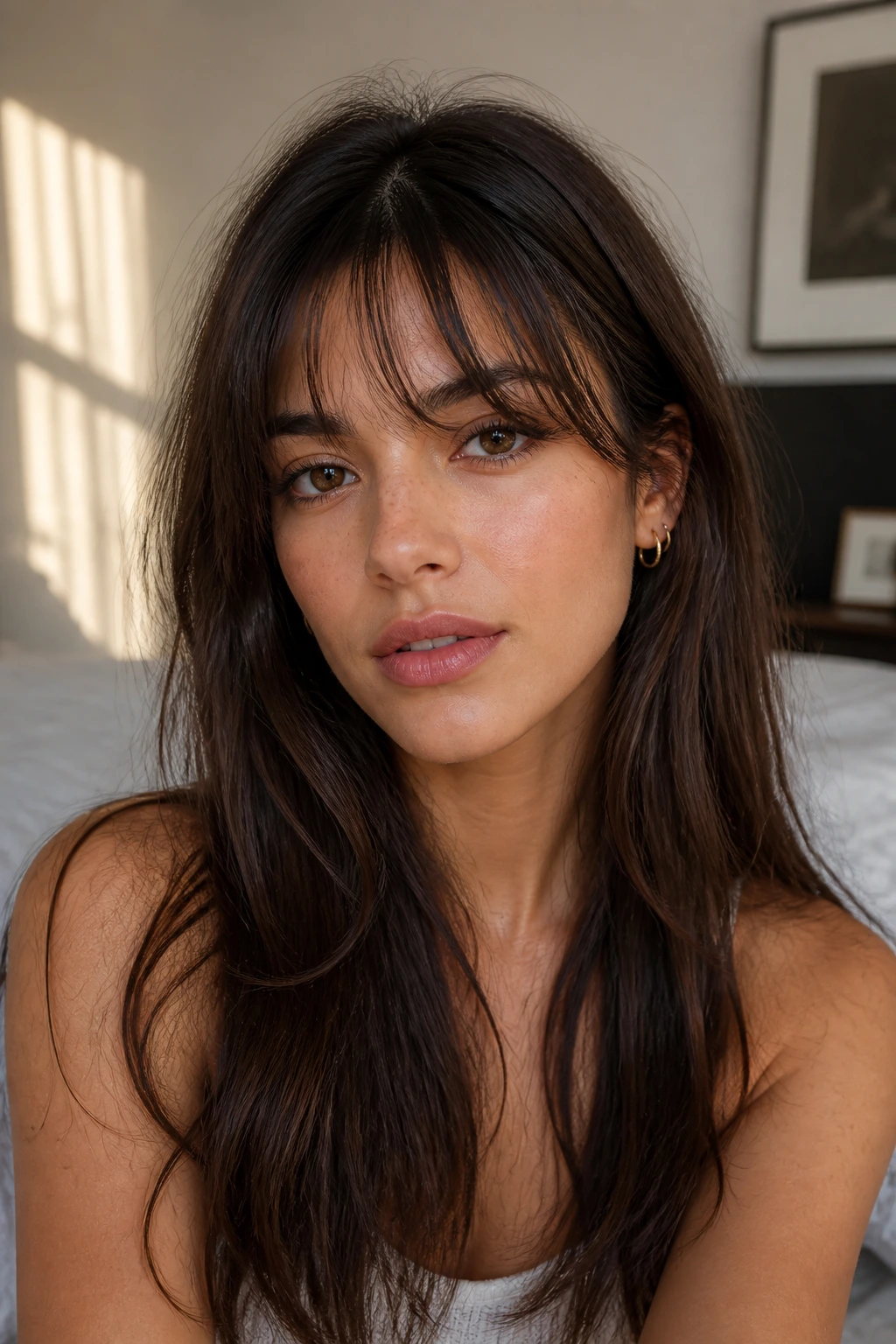
Bring photos, but bring the right photos. A picture of a style on fine straight hair will not translate cleanly onto thick hair, and a fringe on an oval face can land very differently on a round one. I would bring at least two images: one for shape and one for texture. That gives the stylist something useful instead of something impossible.
Say where you want the shortest point to land. Cheekbone? Brow? Lash line? Those details matter more than the style name. “Curtain bangs” can mean five different things in five different chairs, and one stylist’s soft curtain is another stylist’s heavy center split.
Also mention how much daily styling you are willing to do. If you want air-dry hair, say that. If you’ll use a round brush, say that too. A good stylist can adjust the internal layering, the density, and the edge so the fringe fits your routine instead of borrowing half your morning.
How to Style Long Bangs on a Normal Morning
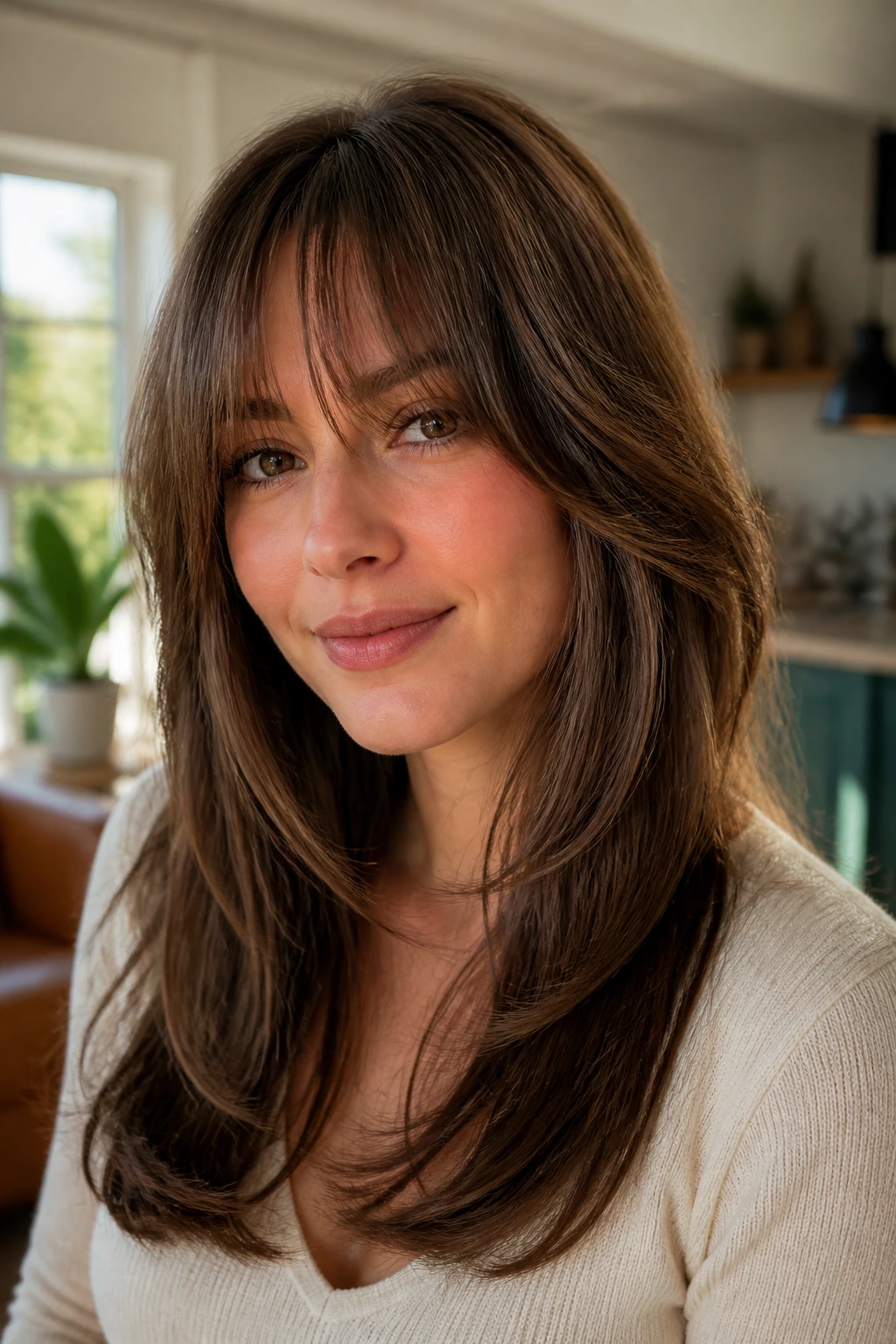
The fastest way to ruin a good fringe is to dry it the wrong way. Thick hair usually needs the bangs shaped first, before the rest of the hair gets heavy and warm and starts lying on top of them. Start with damp bangs, not soaking wet ones. Wet hair takes too long and invites puff.
Blow-Dry Direction: Pull the fringe in the opposite direction of how you want it to sit, then swing it back into place. That little bend helps the roots lift instead of collapsing flat.
Heat Level: Medium heat is usually enough. High heat can make thick hair frizz at the ends before the roots are set.
Product Load: Use less product than you think. A pea-sized amount of cream or a light mist of spray is usually enough for the front. Too much and the bangs separate in greasy little strings.
Second-Day Rescue: Dry shampoo at the root, then a quick hit of the blow dryer on cool. If the fringe has gone flat, roll it around a brush for 30 seconds and let it cool before touching it again.
Common Mistakes That Make Bangs Puff Out or Sit Wrong
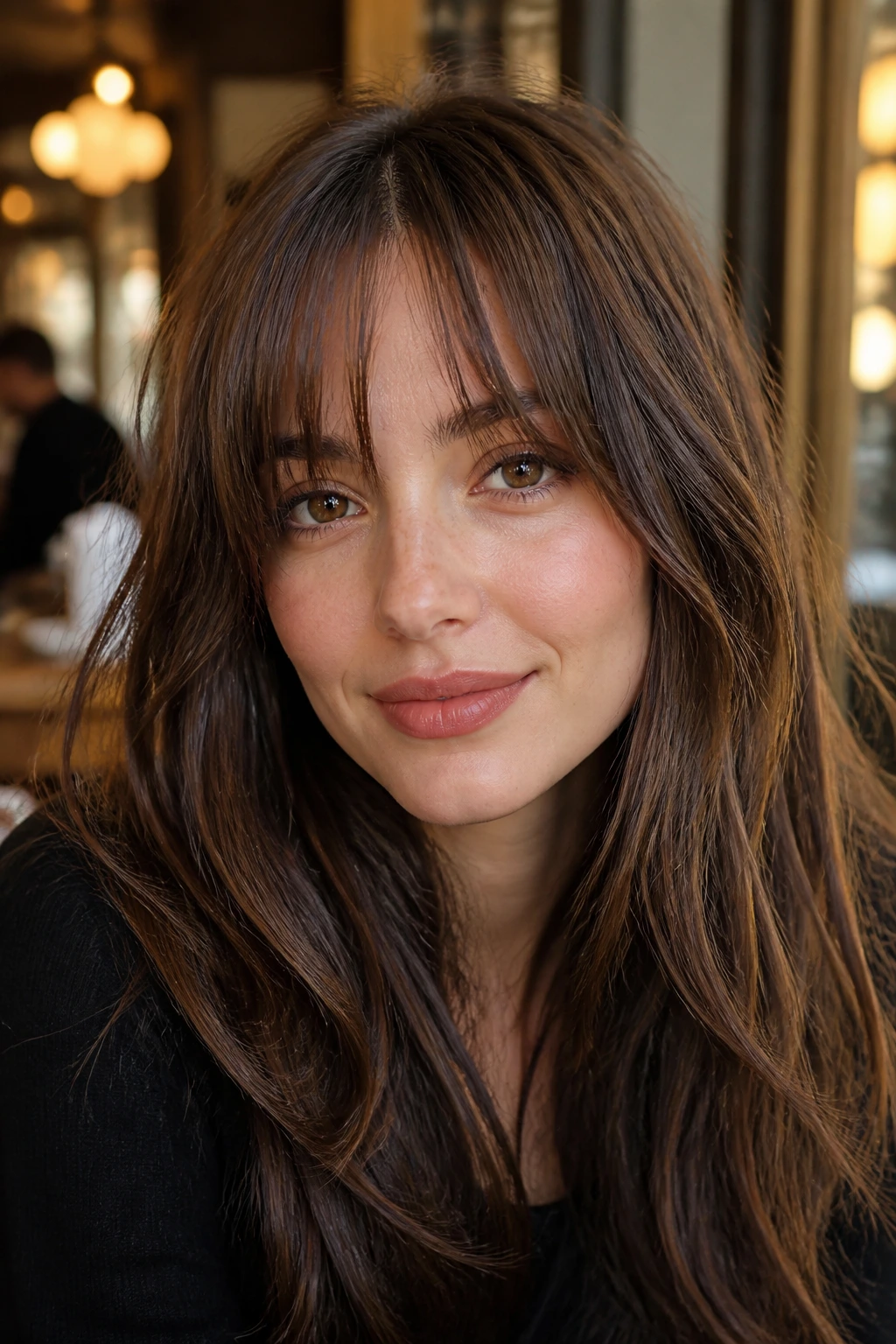
- Cutting the shortest point too high: If the front starts too high on the forehead, round faces can look wider and the bangs can feel severe. Keep the shortest piece lower unless you have a very specific reason not to.
- Leaving too much bulk in the middle: Thick hair without internal weight removal often turns into a front shelf. The fix is a softer center with controlled density underneath.
- Using too much cream or oil: Bangs get greasy fast. A heavy product makes them clump and separate, which looks messy in the wrong way.
- Styling them straight down from wet: That usually sets the fringe flat and then flips the ends awkwardly once it dries. Redirect the hair as you dry it.
- Ignoring the cowlick: If your hair splits at the front, the bangs need to be cut with that growth pattern in mind. Fighting it every day is a bad trade.
- Cutting to match someone else’s face shape: A fringe that looks short and playful on a long face can land as wide or heavy on a round one. The face shape matters.
Ways to Adapt the Same Fringe Idea
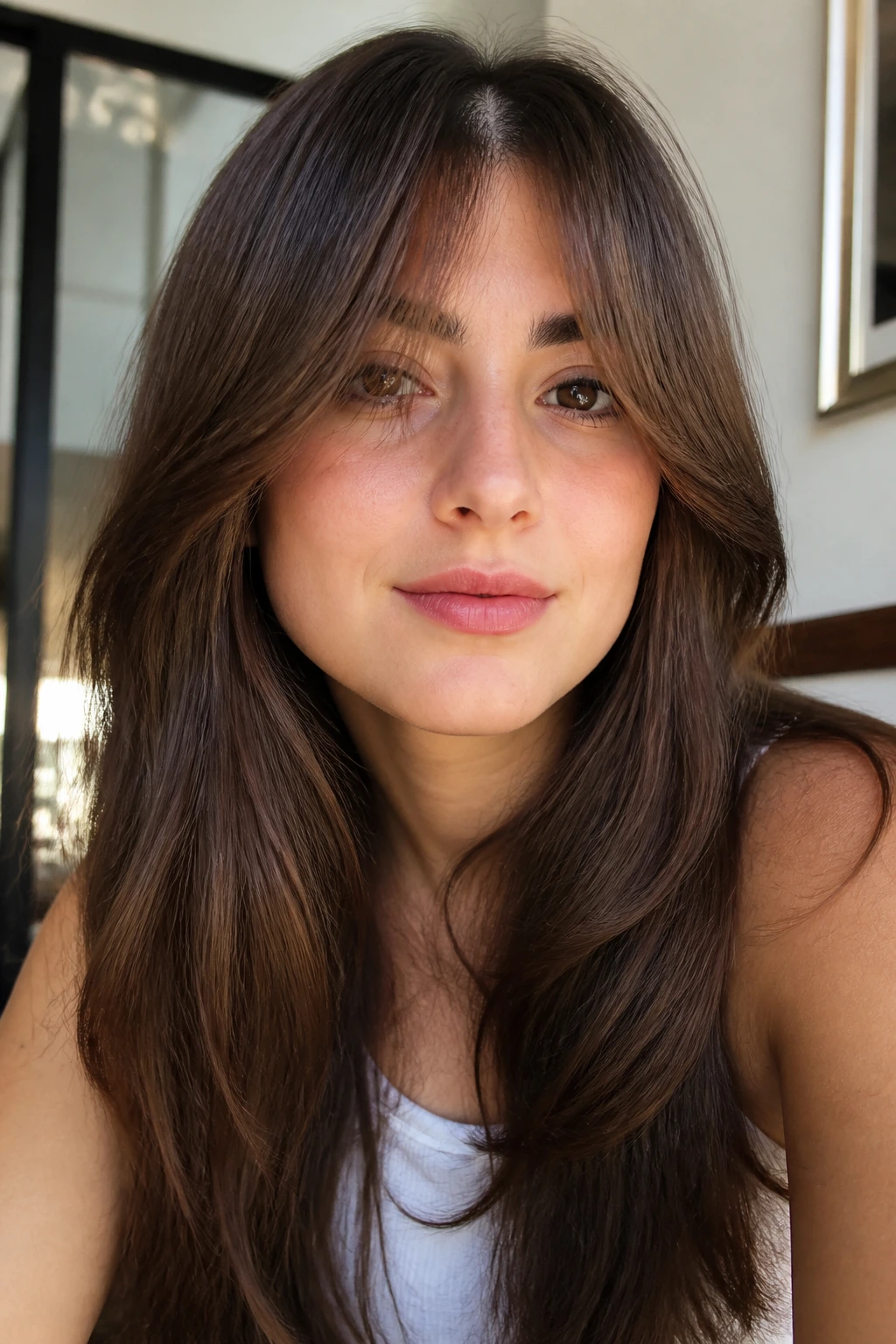
The Low-Maintenance Version: Keep the same shape, but ask for longer lengths and softer edges so the bang grows out into face-framing layers instead of turning blunt.
The Blowout Version: Add more weight at the center and keep the sides long. This gives you a polished round-brush look that holds its shape through the day.
The Air-Dry Version: Ask for more texture and less precision at the edges. Wavy hair and humid weather usually behave better when the fringe has some natural breakup.
The Curly Version: Cut the bangs dry, curl by curl, and preserve more length than you think you need. Curly hair shrinks, and round faces need that extra drop.
The Sleek Version: Keep the fringe longer and more connected to the side layers. A flat-iron bend or brushy blowout will keep the line clean without making it severe.
Keeping the Shape Between Trims

Long bangs are forgiving, but they still need maintenance if you want them to keep flattering your face. For shorter curtain or bottleneck shapes, a trim every 4 to 6 weeks keeps the shortest point from drifting too low into your eyes. Longer, blended fringe styles can usually go 6 to 8 weeks before they start losing their shape.
Wash the fringe area more often than the rest of the hair if your scalp runs oily. A quick sink wash or a blast of dry shampoo near the roots helps more than people expect. Bangs sit on the face, so oil shows fast.
At night, clip the fringe loosely away from the forehead or sleep on a satin pillowcase if you can. Friction flattens the front and creates those odd bends that make morning styling annoying. If humidity is part of your life, keep a small round brush and a travel-size dry shampoo near the bathroom sink. That tiny routine saves you from cutting them too early out of frustration.
Questions People Ask Before They Cut the Fringe

What bang length is most flattering on a round face?
The safest length usually lands between the brow and the cheekbone, because that range keeps the eye moving downward instead of across the widest part of the face. If you want something softer, longer face-framing pieces that start near the cheek and end near the chin work even better.
Are curtain bangs better than side-swept bangs for thick hair?
Curtain bangs are easier to wear if you want a middle part and a softer front, while side-swept bangs are stronger if your part naturally falls to one side. Thick hair can handle either, but the one that matches your growth pattern will be easier to style.
Can thick hair have blunt bangs?
Yes, but they need careful debulking or they can sit like a heavy wall. On a round face, a blunt fringe usually looks better when it stays long and slightly textured rather than cut short and sharp.
Should bangs be cut wet or dry?
For straight hair, either can work. For wavy or curly thick hair, a dry cut is usually safer because shrinkage changes everything once the hair dries.
How do I stop my bangs from puffing out?
Remove bulk in the right places, dry the bangs first, and use less product than your instincts tell you to use. Puff usually comes from too much density plus the wrong drying direction.
What if my cowlick splits the front?
Do not try to beat it into submission with a stronger product. Ask for a longer, softer fringe that can move with the growth pattern, then dry the hair in the direction it naturally wants to go.
Can I wear long bangs with glasses?
Absolutely. In fact, longer fringe styles often work better with frames because they sit above or around the glasses instead of crowding them. Wispy, curtain, and side-swept shapes tend to be easiest.
How long does it take for bangs to grow out?
Long bangs can transition into face-framing layers fairly quickly if the cut was done well. The awkward stage is shorter when the fringe already has length at the sides and not just in the center.
The Fringe That Grows Out Gracefully
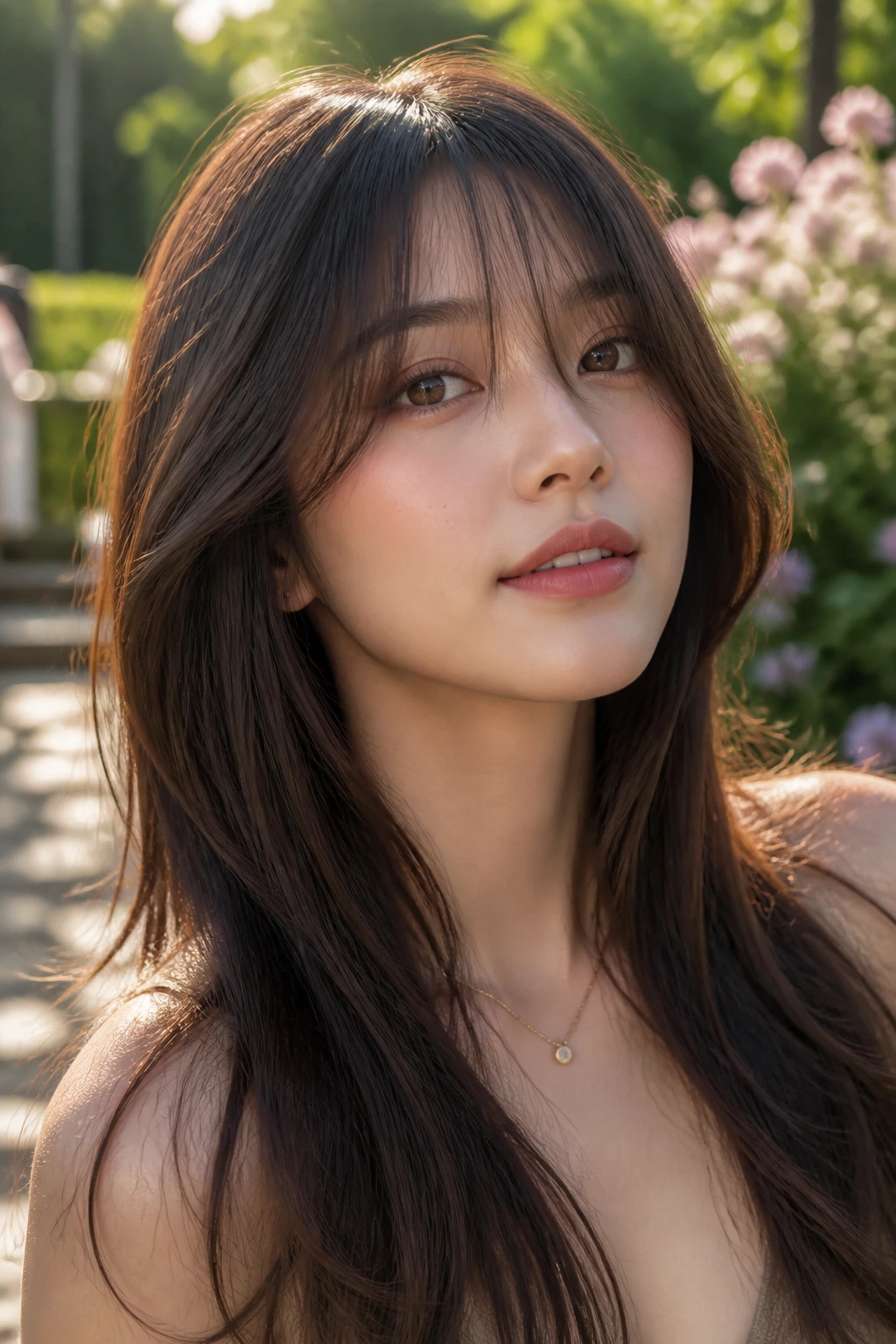
The nicest thing about long bangs is that they do not have to stay bangs forever. If the shape is cut with a round face and thick hair in mind, it can soften into layers, sweep into a part, or fall back into the rest of the haircut without looking like an accident. That’s the real luxury here.
A good fringe should make your hair easier to wear, not harder. If it takes endless coaxing, the cut is probably fighting your texture or your face shape. The stronger choices in this list do the opposite: they work with thickness, open up the forehead, and leave enough length that you still feel like yourself when the bangs are clipped back.
If you’re sitting between “I want bangs” and “I don’t want regret,” start with the longer shapes first. They give you room to adjust, and room is usually what thick hair and round faces need most.