



A round face does not need to be hidden. It needs lines that interrupt the circle.
That is where chunky bangs for long hair and round faces earn their keep. A thick fringe can carve out space at the forehead, pull attention to the eyes, and keep long lengths from turning into one smooth, unbroken sheet. Wispy little strands often vanish against long hair. Chunky bangs have enough presence to matter.
The trick is placement. Too short, and the fringe can make the upper face feel boxy. Too heavy across the widest part of the cheeks, and the cut starts working against you. The styles below solve that in different ways: some split in the center, some sweep hard to one side, some hang blunt and strong, and some look better with a little mess in them. That range matters because round faces are not one-note, and neither is long hair.
Why This Collection Looks Better on Round Faces
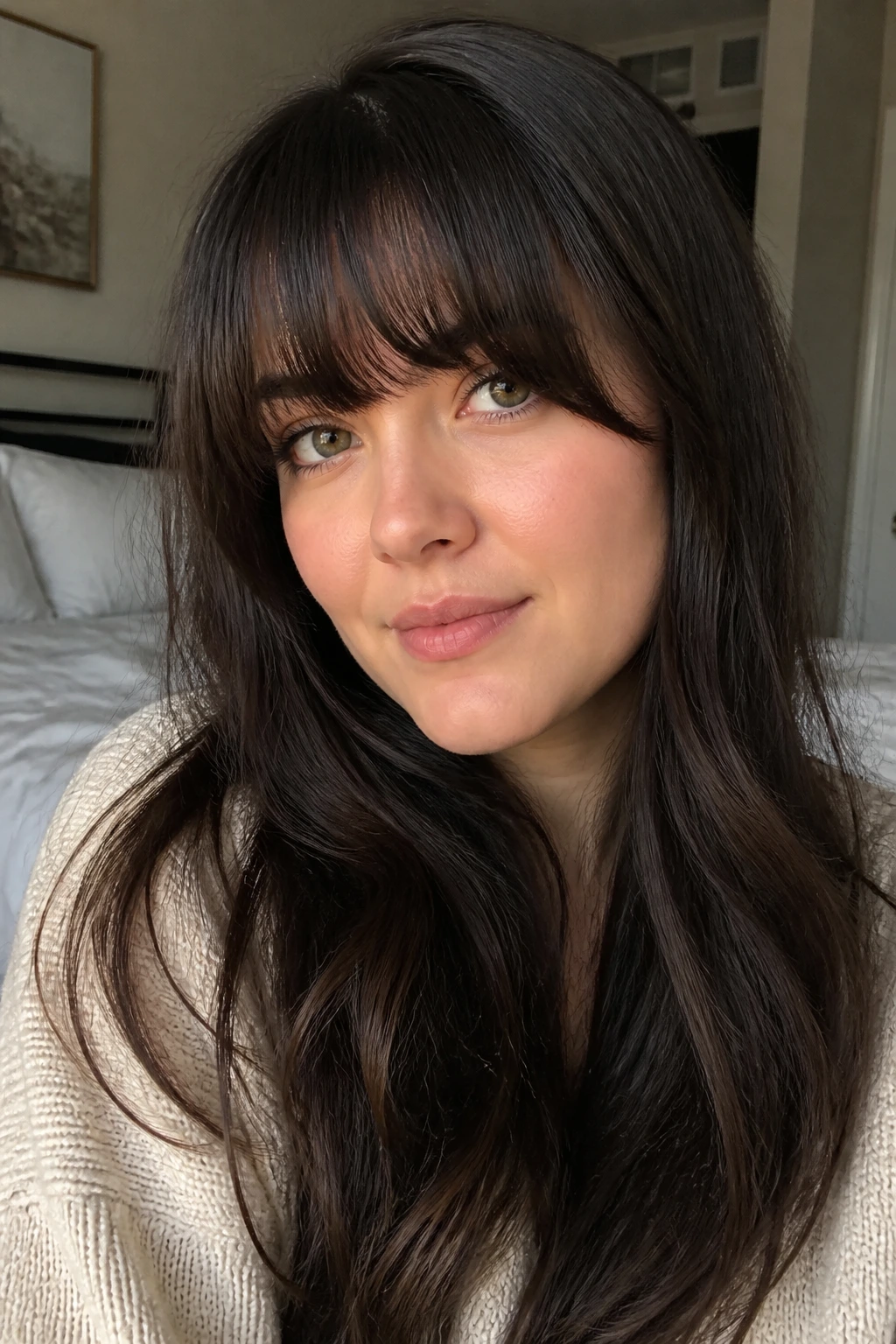
- It breaks the horizontal line: A chunky fringe interrupts the widest part of the face, so the eye stops moving side to side and starts moving up and down.
- It keeps long hair from disappearing: Heavy bangs give long lengths a front focal point, which keeps the whole cut from reading as one long curtain.
- It works with cheekbones instead of fighting them: The best versions skim the brow, temple, or cheekbone area, which gives the face some shape without squeezing it.
- It gives you room to style around density: Thick, piecey, or layered fringe can be blown forward, swept aside, or split down the middle depending on the day.
- It grows out with less drama: Many chunky fringe shapes turn into face-framing layers instead of becoming a weird in-between stage you have to hide under clips.
- It can be cut for different hair textures: Straight, wavy, thick, and even some curl patterns can wear these bangs if the weight and length are handled with care.
1. Bottleneck Chunky Bangs
Bottleneck bangs are the quiet overachiever here. They sit tighter in the center, then open out toward the temples, so the fringe gives shape without drawing a hard line straight across the face. On a round face, that little taper matters more than people think.
The center section usually lands around the brows, while the side pieces drop closer to the cheekbones. That staggered length creates a narrow-to-wide rhythm that pulls the eye down the face instead of letting it stop at the widest point. On long hair, the shape feels finished rather than heavy.
Best of all, this is one of the easier chunky styles to grow out. Once the center gets a little long, it blends into layers instead of becoming a blunt problem. If you want bangs that look deliberate on day one and still make sense a month later, start here.
2. Heavy Curtain Bangs With a Center Gap
A center gap can do a lot of work for a round face. Heavy curtain bangs split in the middle, then drape outward in two thick panels, which creates a vertical opening right where a round face needs one. It’s the opposite of a straight-across wall.
The key is weight. These are not airy little curtains that disappear by lunchtime. They need enough density to hang with purpose, especially when your hair is long and the rest of the cut has volume. The inner edges should be soft, not choppy, so the split looks natural instead of forced.
I like this shape for anyone who wants a face-framing fringe without committing to a blunt bang. It plays well with waves, a round brush blowout, and even a rough dry if your hair has a bend to it. The middle part can shift slightly off-center too, which helps if your face is fuller on one side.
3. Brow-Skimming Blunt Fringe
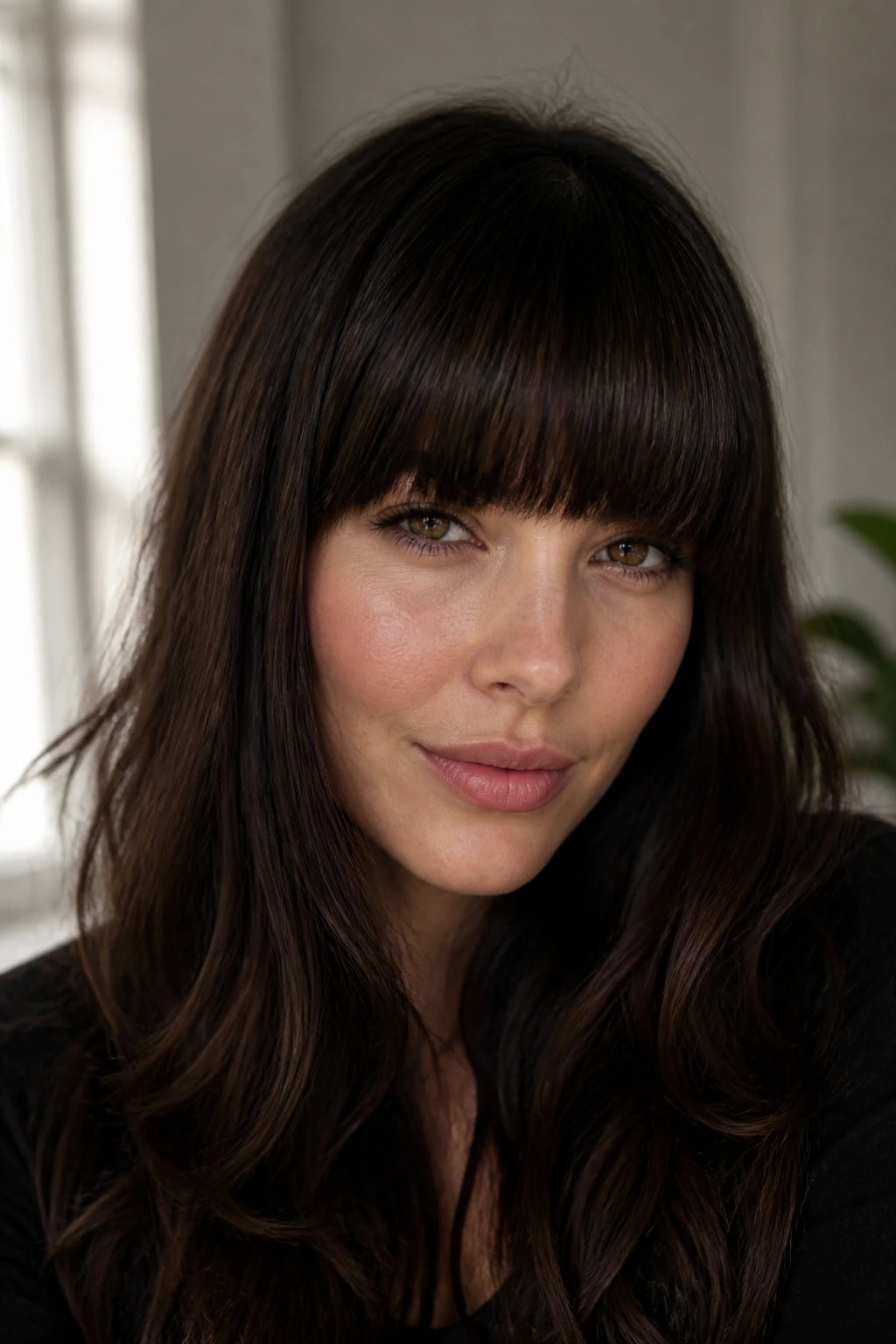
A blunt fringe can absolutely work on a round face, but the details have to be right. The line should skim the brows, not sit halfway up the forehead like an afterthought. That brow-level placement keeps the eye near the top of the face and avoids widening the cheek area.
What makes this version “chunky” is density. The fringe should feel solid, with enough fullness to hold a clean line, but the ends can be beveled just a touch so they don’t look like a stiff shelf. On long hair, that contrast looks sharper than a wispy bang ever could.
This is a better choice if your hair is naturally thick or straight. Fine hair can wear it too, but the fringe has to be cut with care so it doesn’t split into see-through pieces. Keep the rest of the hair soft and long around the face, or the bang will carry all the weight and the look can tip too hard toward boxy.
4. Side-Swept Chunky Bangs
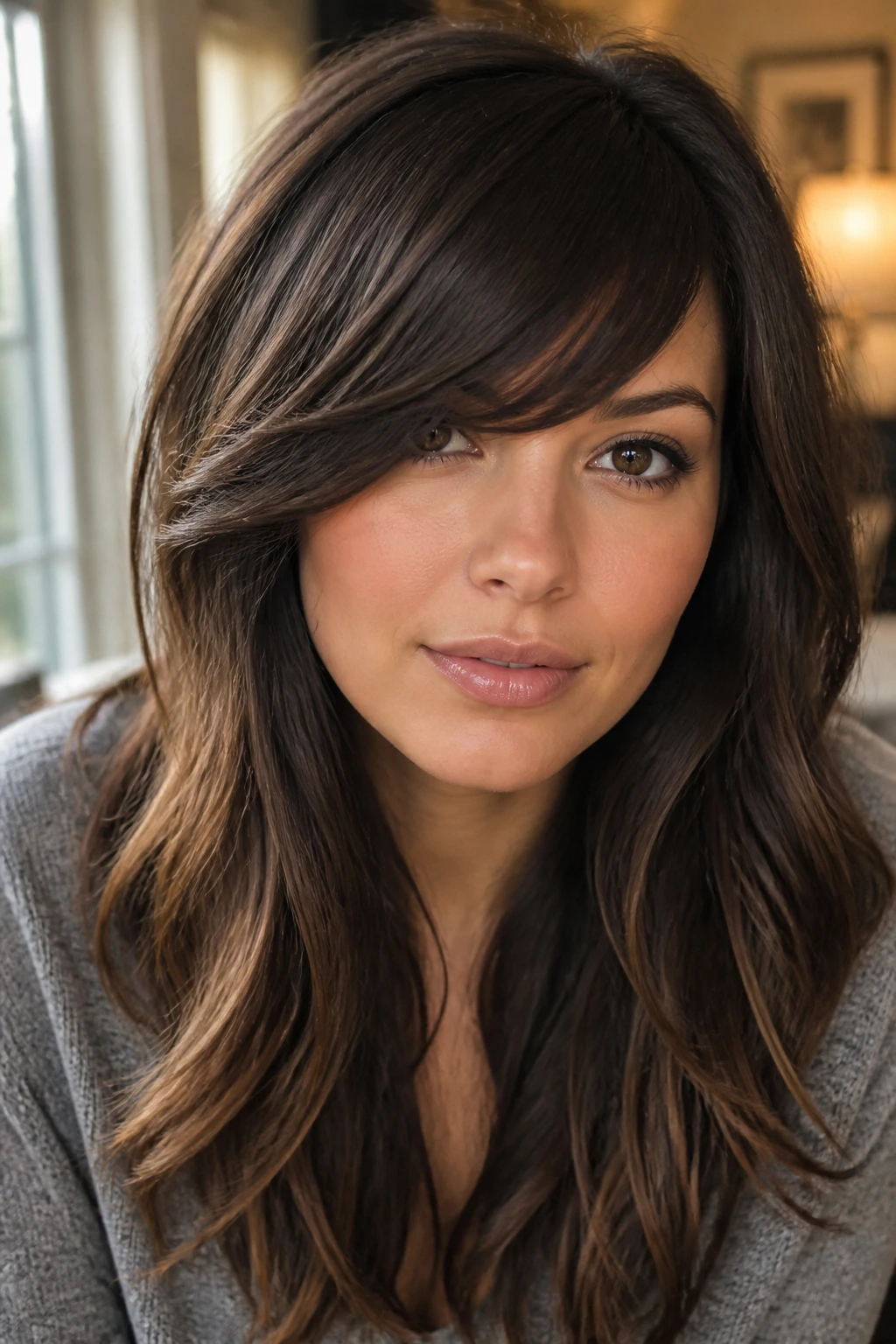
A side-swept bang is one of the cleanest ways to break up a round face. The diagonal line cuts across the forehead and cheek area, which gives the face a longer look without forcing anything too severe. It’s the kind of shape that quietly does its job.
The trick here is thickness. A thin side bang can look tired fast, especially against long hair. A chunky version gives you more surface area, more movement, and a better chance of keeping the style in place after a blow-dry or a few hours of wear.
This shape also likes long layers. If the fringe blends into face-framing pieces on the same side, the cut feels balanced instead of lopsided. Use a medium round brush and direct the bang away from the face as it dries, then let the ends tuck under just a bit. That bend keeps the style from collapsing into a flat side panel.
5. Grown-Out Fringe That Blends Into Layers
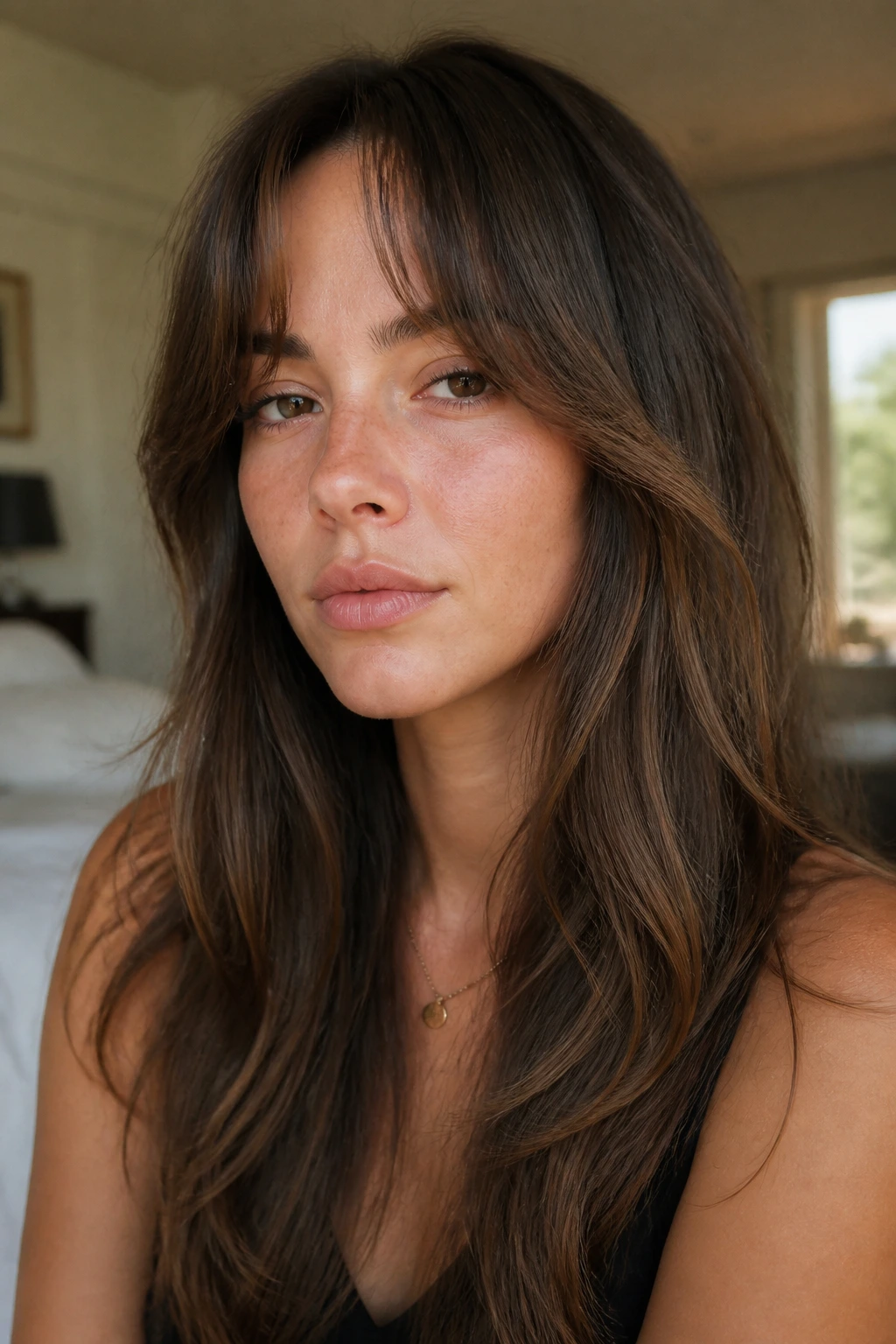
Sometimes the best fringe is the one that looks like it’s halfway grown out on purpose. This version starts as chunky bangs, then fades into long front layers that sit around the cheekbones and jaw. On a round face, that gradual shift is useful because it keeps the front of the cut moving.
There’s a nice softness to this shape. It doesn’t shout. It stretches the face in a subtle way, especially when the longest pieces hit just below the cheekbone and the shortest pieces still land near the brows. Long hair gives this style room to breathe; short hair would make it feel unfinished.
If you hate the idea of a strict trim schedule, this is a smart place to live. The fringe can be tucked behind one ear, swept into a low ponytail, or blown forward for a fuller look. It’s one of the few bang shapes that looks better a little messy than overworked.
6. Choppy Piecey Fringe

A piecey fringe is what you want when you like bangs with some air between the strands. The separation stops the fringe from turning into one flat band across the forehead, which matters on a round face because flat weight can widen the look fast.
The chop should be deliberate, not shredded. You want chunks that still feel connected, especially in the center, where the fringe needs enough mass to register as bangs. On long hair, that broken texture keeps the front of the style light enough to move with the rest of the length.
This is a good fit for wavy and textured hair, but straight hair can wear it too if you use a bit of dry texture spray or a small amount of wax on the ends. The final effect should look separated in a clean way, not stringy or dry. Big difference there. Huge, actually.
7. Rounded Fringe With Soft Corners
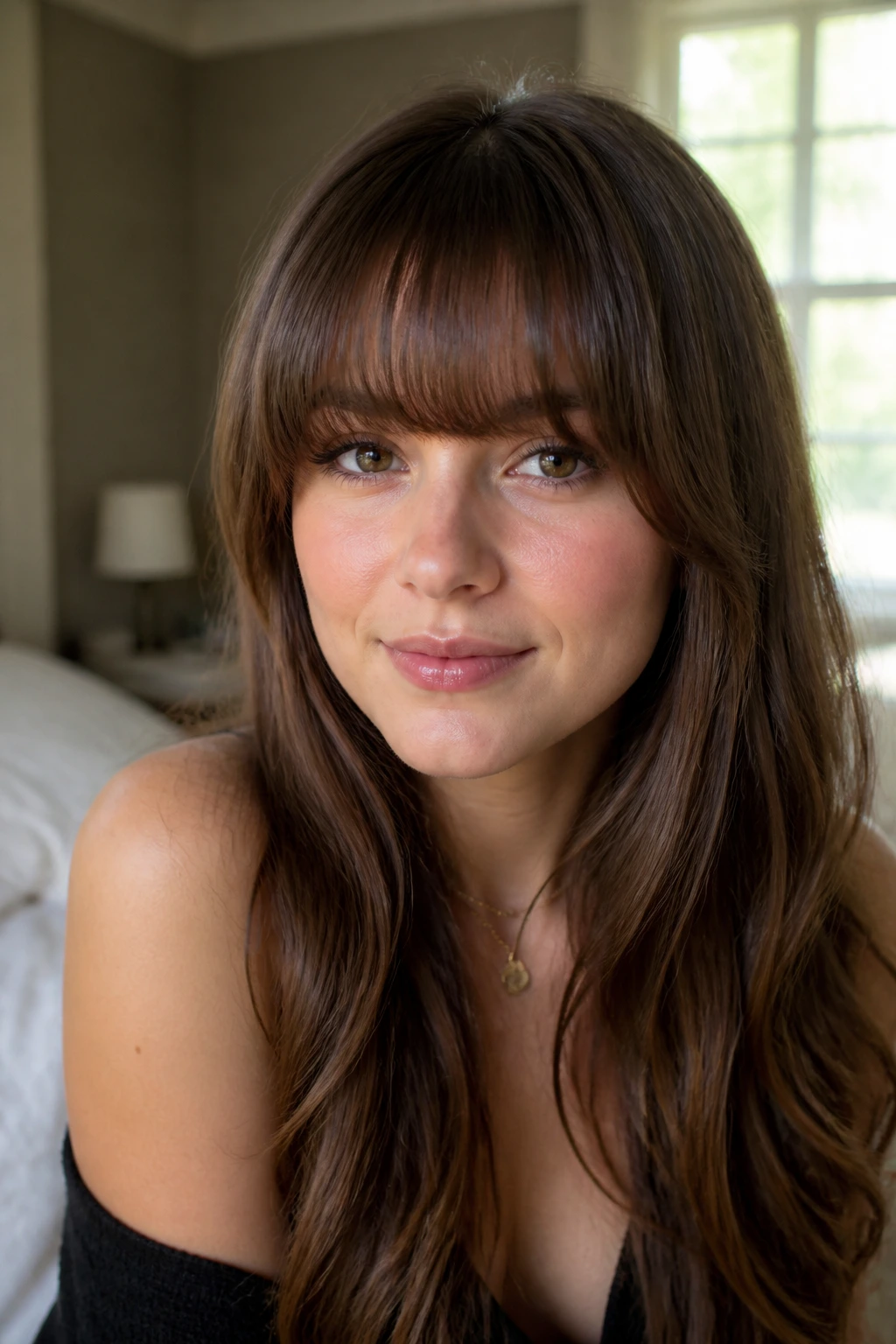
A rounded fringe can sound risky on a round face, but the soft corners are what save it. Instead of a hard line, the shape arches slightly in the middle and drops a little longer at the edges. That gives the face a gentle frame without mirroring its roundness too closely.
The outer corners matter most. If they hit around the temples or just past them, the bang helps narrow the face visually. If they stop too high, the whole style can feel puffed up and short. Long hair helps by giving the fringe a calm backdrop; the rest of the cut doesn’t compete.
This is a nice choice if you like polished hair but don’t want anything severe. Blow-dry it with a small round brush and keep the root lift modest. Too much height at the center can make the shape look helmet-like. A little curve is enough.
8. Long Arched Bangs
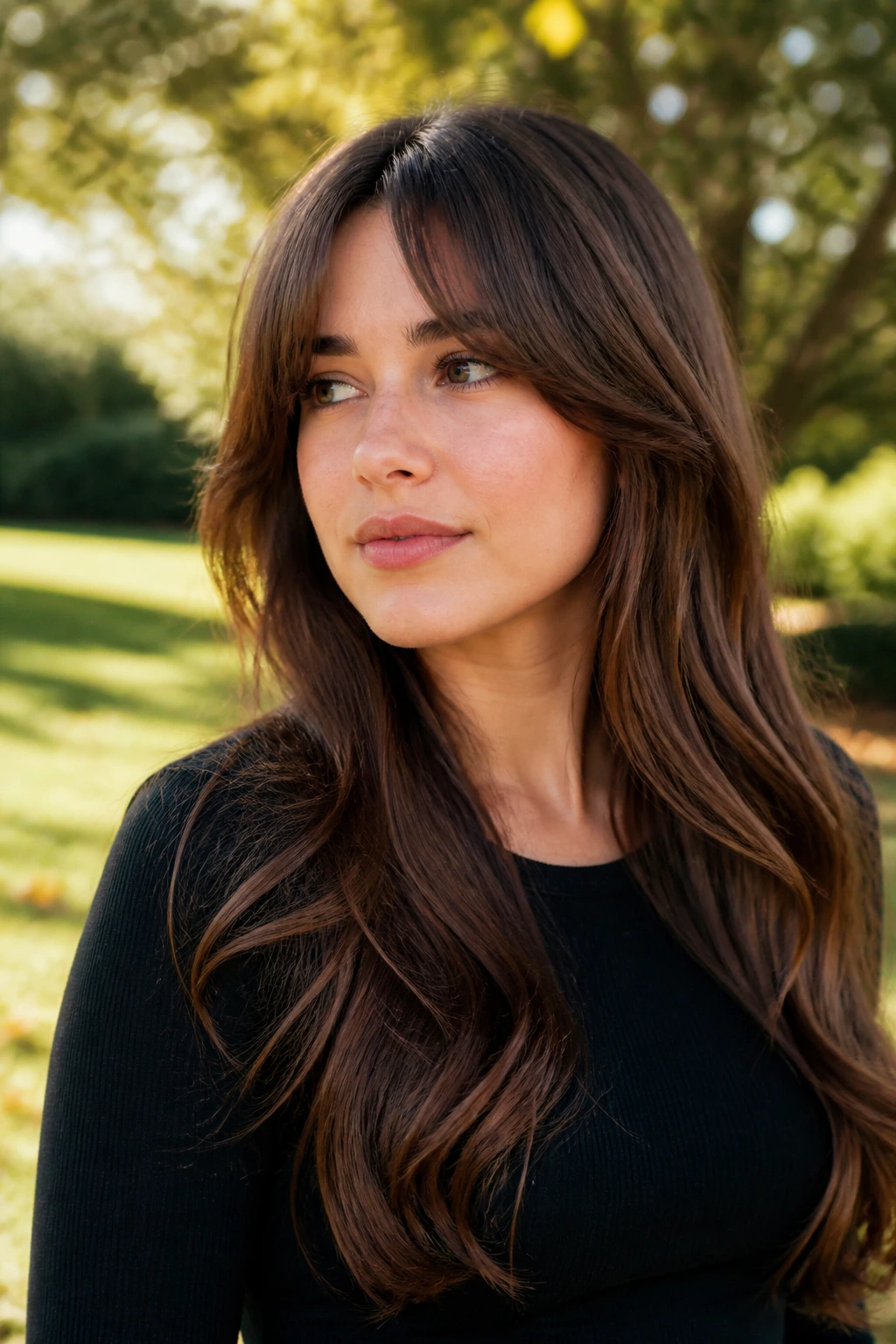
Long arched bangs bring height without looking dramatic for the sake of it. The center sits a little shorter, then the sides fall longer in a smooth arch, which gives the face a lifted look. Round faces usually benefit from that slight vertical push.
The arch also makes the fringe easy to blend into long hair. Once the edges reach the cheekbone area, they start behaving like face-framing layers instead of a separate bang. That’s one reason this shape works so well with waves and blowouts; the transition feels natural.
This style is especially useful if you’re nervous about commitment. You get the effect of bangs without a hard stop. If they feel too present, tuck the sides back or pin them loosely. The cut still holds its shape when you wear the middle down.
9. Deep Side-Part Fringe
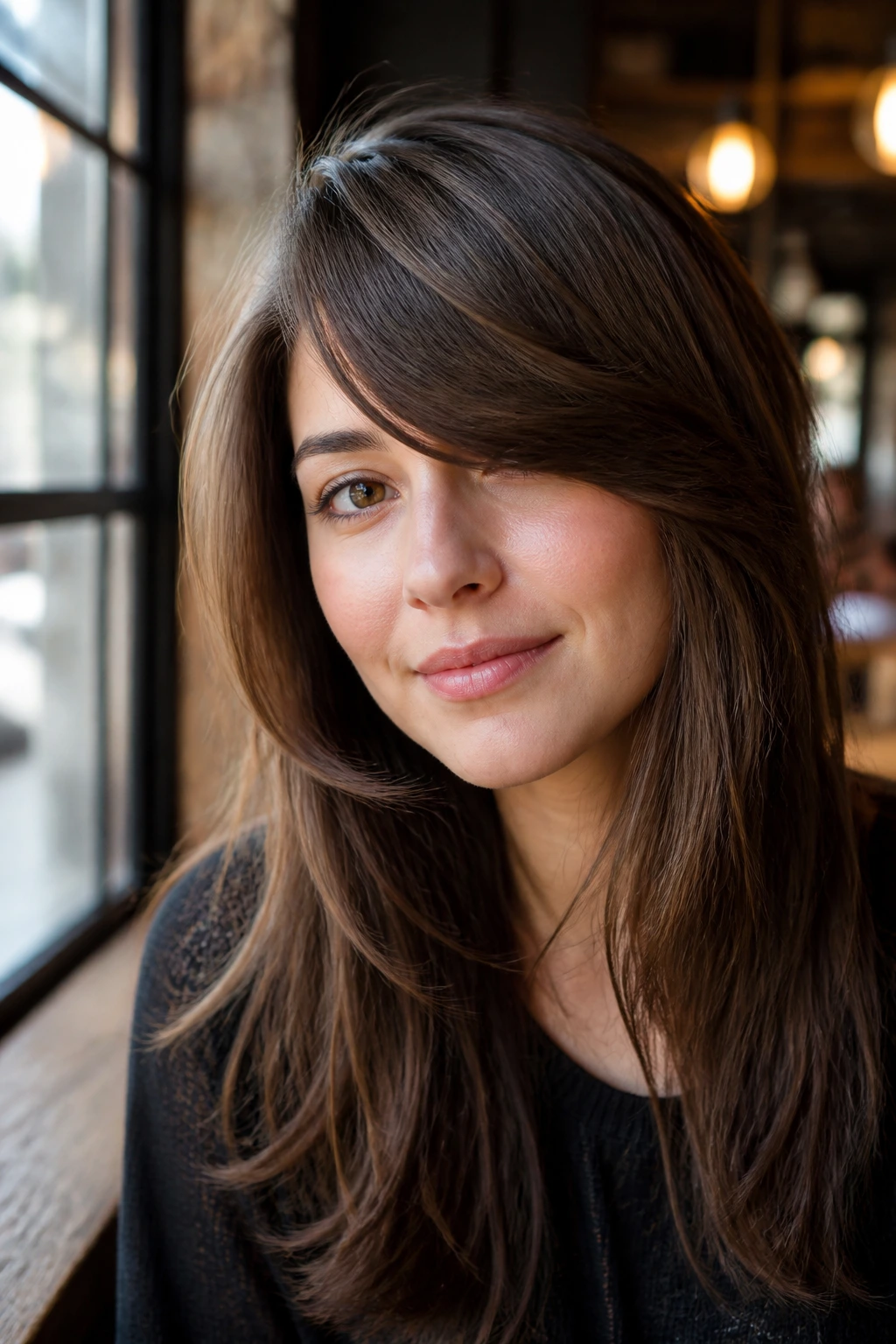
A deep side part changes the whole mood of chunky bangs. Instead of dividing the forehead evenly, it sends the fringe sweeping across one side, which instantly adds diagonal movement. That diagonal line is one of the simplest ways to stretch a round face visually.
The best version has enough density to stay put. Thin side-swept bangs drift around and lose shape fast. A chunky version can be brushed over, pinned, or encouraged with a hot brush so the front remains full. Long hair gives the side part something to anchor to, which keeps the look from collapsing.
This style suits people who change their part often. On some days, you can push it farther over for a dramatic sweep. On others, let it sit softer and closer to center. That flexibility is useful, but the cut still needs enough length near the temple to avoid looking abrupt.
10. Shaggy Chunky Bangs
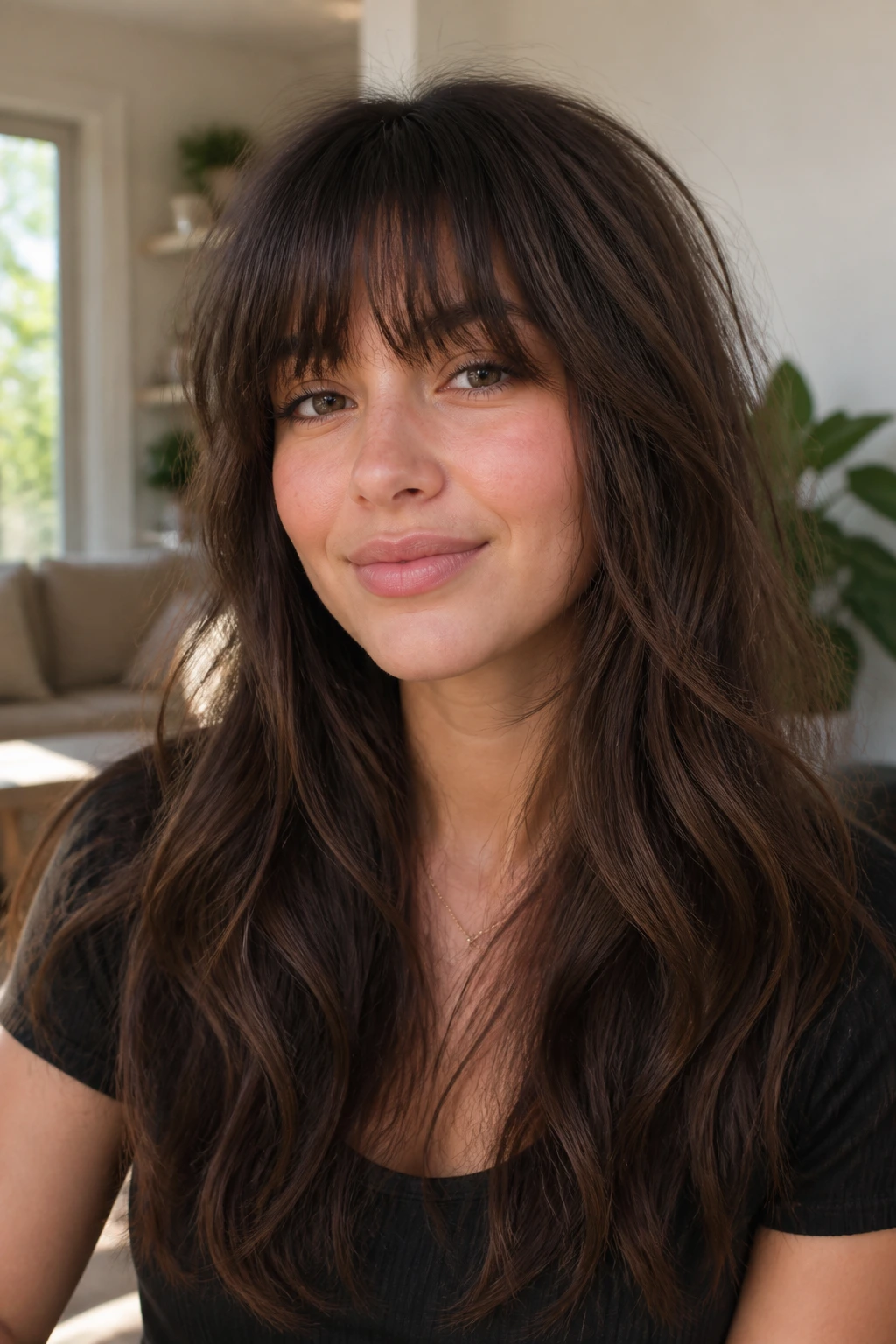
Shaggy bangs are a little rough around the edges, and that’s the point. The broken texture keeps the fringe from sitting too cleanly across the face, which can be a problem on round faces if the line gets too neat. The looseness breaks up the shape.
These bangs often work best with lots of long layers through the rest of the cut. That way, the fringe feels part of the whole hairstyle rather than a separate add-on. A shaggy bang can hit at brow level in the center and feather out quickly toward the sides, which gives the face room.
If your hair has some natural wave, this shape is easy to live with. If it’s straighter, use a bendy blow-dry and leave the ends a little imperfect. The roughness is not a flaw here. It’s the reason the fringe doesn’t overwhelm the face.
11. Feathered Fringe With Airy Ends

Feathered bangs bring some softness to a chunkier cut. Instead of a blunt edge, the ends are lightly thinned so they move and separate, but the fringe still has enough body to show up against long hair. That balance keeps the look from getting too dense.
For a round face, feathering is useful because it reduces width at the edges. The bang can still sit full in the middle, where you want the most impact, while the sides taper out gently. That little taper makes the face look a bit longer and the forehead less boxed in.
This is a smart choice for thicker hair that tends to swell when it dries. Feathering removes some of that bulk without turning the fringe wispy. You still need a good trim line, though. Too much thinning and the bang starts to separate in odd places, which is a mess you do not want.
12. Split Bangs With Long Temple Pieces
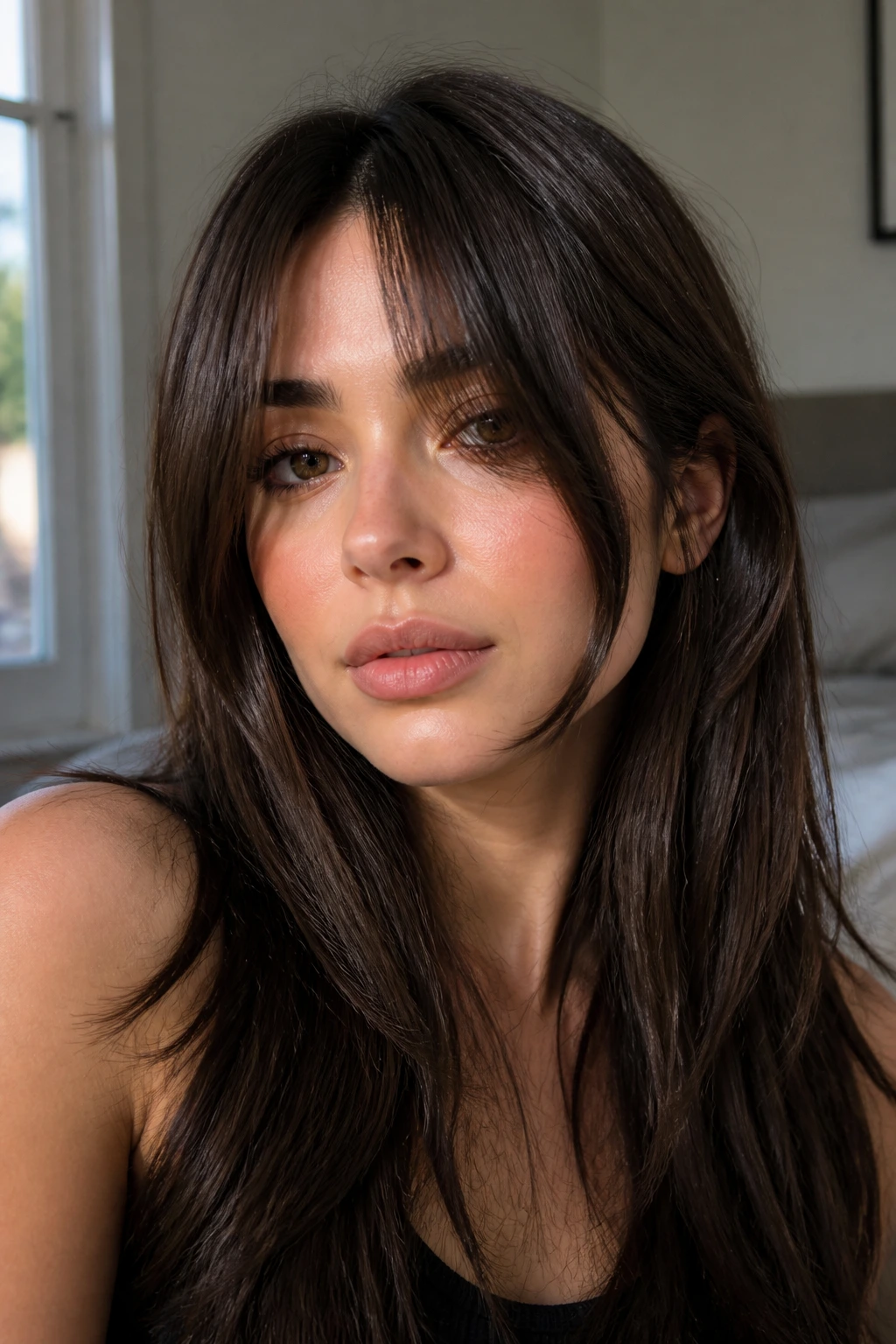
Split bangs give you a built-in escape hatch. The middle opens just enough to show a sliver of forehead, while the temple pieces stay long and thick enough to skim the sides of the face. On a round face, that open center is a useful visual break.
What makes this version feel chunky is the side weight. The fringe should not vanish into a fine curtain. Each half needs enough density to hold its own shape, especially when you move. Long temple pieces also help the cut blend into the rest of the hair instead of stopping at the brow.
This style is a good bridge between bangs and layers. If you want something that can be styled down or tucked away, it gives you that option without looking like a compromise. A center split with heavy sides reads soft, but it still gives the face structure.
13. Retro Blowout Bangs
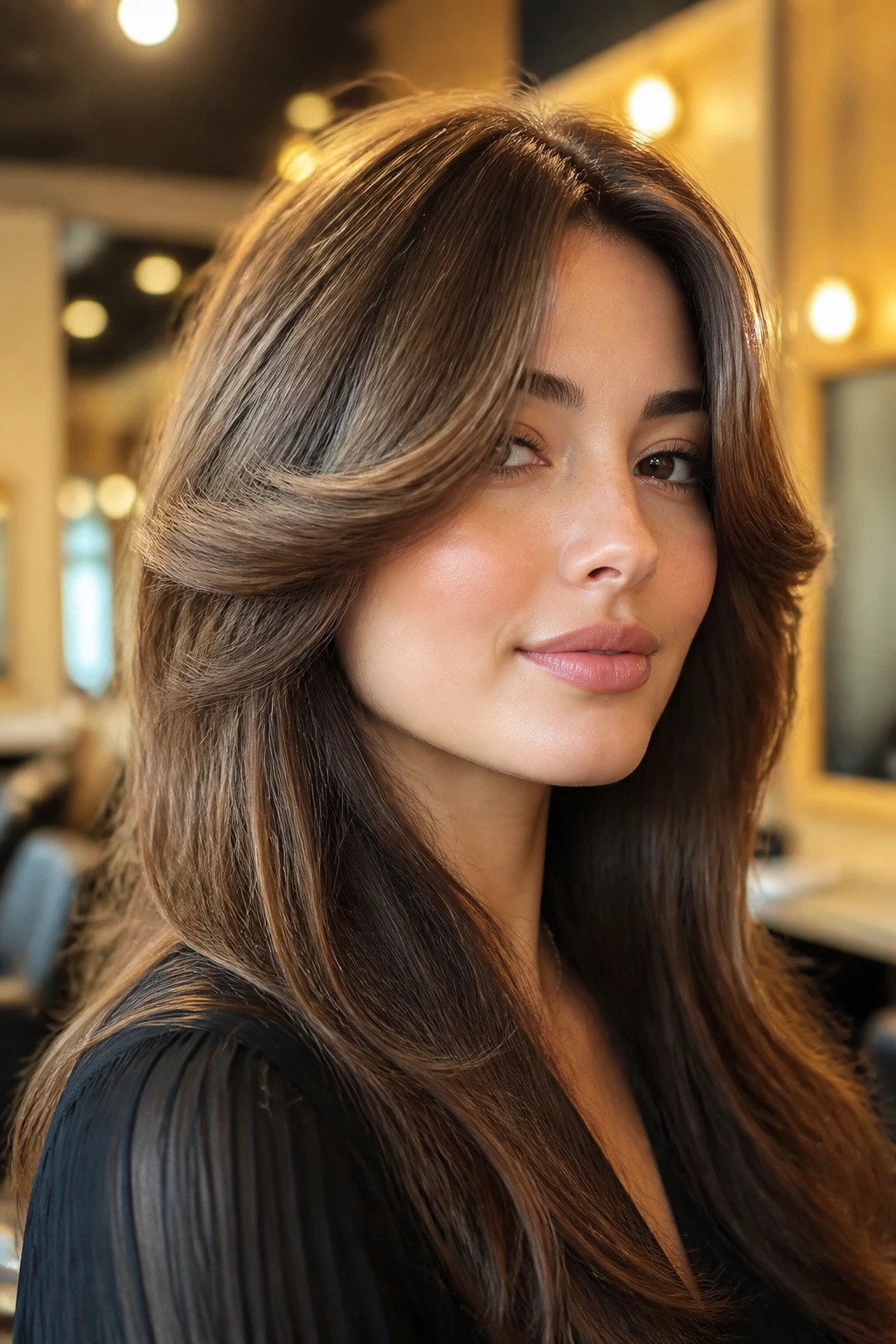
Retro blowout bangs are big, curved, and a little theatrical in the best way. They sweep away from the face with a smooth bend, which can make a round face look longer by lifting the eye upward before it moves down the length of the hair. The volume sits in motion, not bulk.
The fringe should feel polished, not stiff. Think round brush, root lift, and a curved end that turns away from the cheeks. That shape matters because hair that bends outward around the face can either open it up or widen it. Here, the curve stays controlled and narrow enough to do the first job.
I like this with long layers and glossy finishes. It looks especially good when the bangs are thick enough to hold shape, since very fine fringe tends to collapse under the blowout. A little hairspray at the roots goes a long way. Too much and you lose the swing.
14. Layered Fringe With Chin-Length Sides
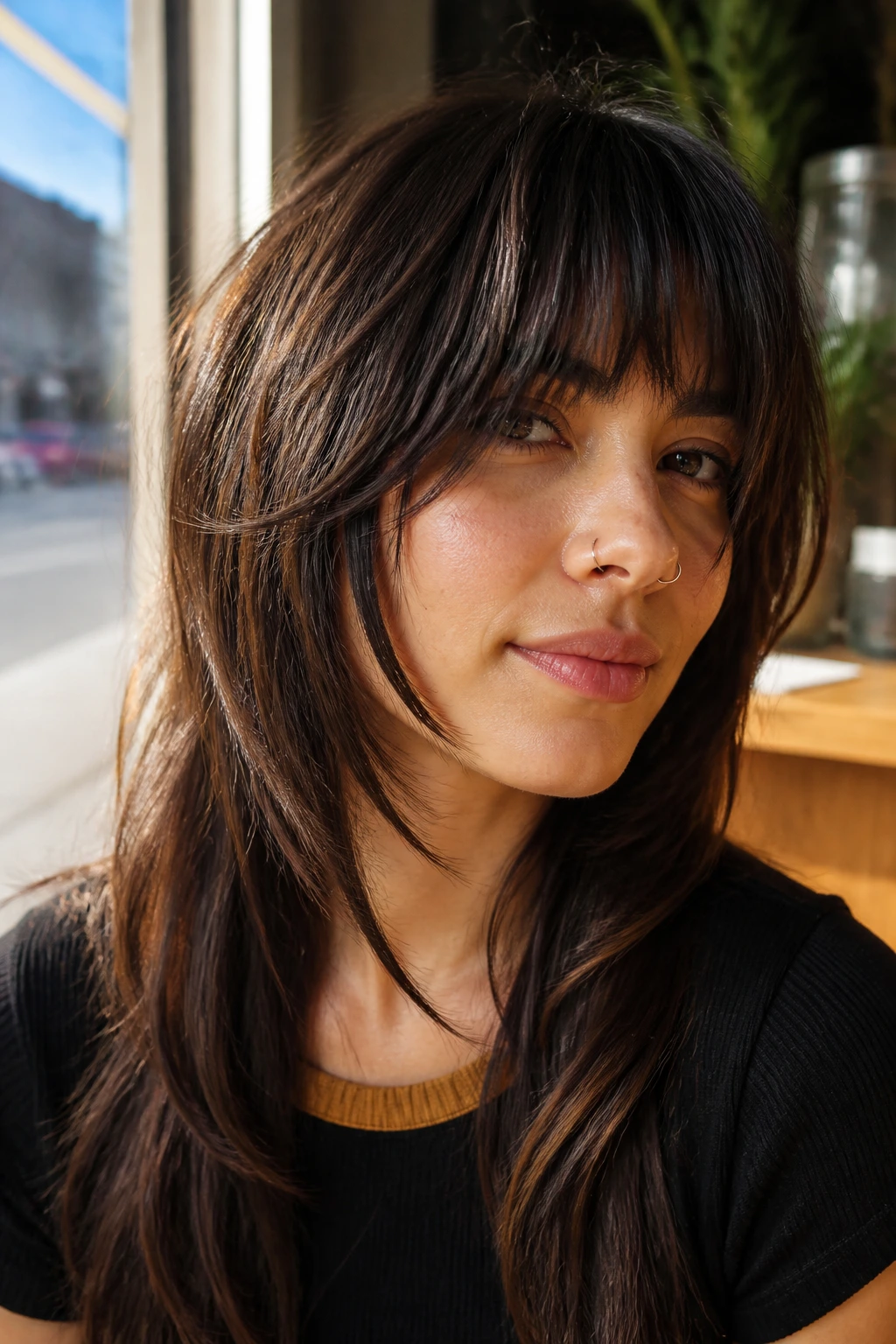
This one is all about the sides. The bangs themselves can sit full and chunky, but the front layers fall all the way to the chin, which gives the face a longer frame. That length is useful on round faces because it keeps the eye moving below the cheeks.
The layered transition prevents the bang from looking chopped off. Instead of stopping at the brow and sitting there, the fringe feeds into longer pieces that touch the jawline. Long hair makes that transition feel earned rather than stretched.
If you wear your hair in waves, this is one of the easiest shapes to maintain. The front pieces can curl back slightly, which softens the face without adding width. Keep the bang dense enough to stand on its own, and let the chin-length side pieces do the longer-framing work.
15. Curved Fringe With a Soft Bend

A curved fringe with a soft bend is for people who want shape without a lot of drama. The bang arcs gently from the center toward the sides, almost like a shallow smile across the forehead. That curve can flatter a round face because it opens the middle while pulling the ends outward.
The important part is restraint. The curve should be there, but not so exaggerated that it starts echoing the roundness you’re trying to soften. Long hair helps because the rest of the style can stay vertical and calm while the fringe does the shaping at the top.
This is a good cut if you wear your hair loose most days. It sits nicely under a medium round brush and can be refreshed quickly with a hot tool. If you like controlled shapes that don’t scream for attention, this one tends to behave.
16. Razor-Soft Heavy Fringe
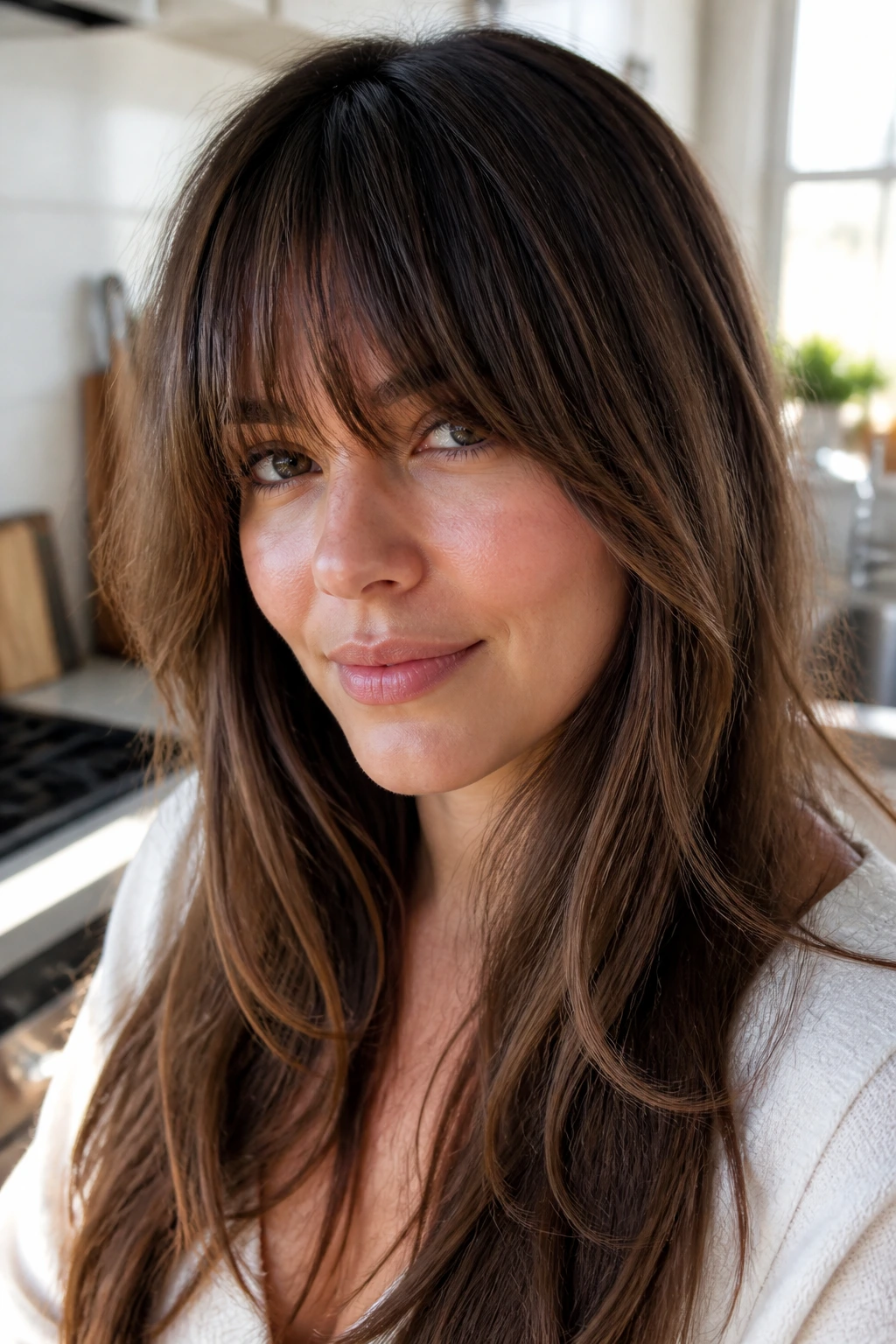
A razor-soft heavy fringe keeps the weight but removes the blunt stiffness. The ends are cut with a bit of slide or razor work so they move, which matters on long hair because a solid wall of bangs can crowd a round face fast. Here, the fringe stays full without feeling boxed in.
This cut is especially useful for thick hair. Removing just enough edge softness stops the bang from sitting like a shelf, while the density still gives the face a strong frame. The sides can stay slightly longer to avoid cutting the cheek area off too sharply.
It’s not the easiest fringe to cut, and that’s the point. The balance between weight and softness takes a careful hand. If it’s done well, you get a bang that looks rich and heavy but still has some swing in it. If it’s done badly, it looks frayed. There’s no middle ground.
17. Wavy Piecey Bangs

Wavy piecey bangs are one of the most forgiving choices on this list. The wave breaks the line of the fringe, and the pieces keep the forehead from being covered in one solid block. On a round face, that scattered texture stops the shape from feeling too wide.
The real advantage is that the bangs can change shape as the rest of the hair moves. When the waves are loose, the fringe softens. When you push the roots forward a little and let the ends separate, it feels thicker again. Long hair gives that movement somewhere to land.
This is a strong option for natural texture. It can be air-dried with a little mousse, then broken apart with your fingers once it’s set. If you fight the wave too hard, the bang loses the character that makes it work. Better to guide it than flatten it.
18. Center-Parted Chunky Bangs With Long Sides
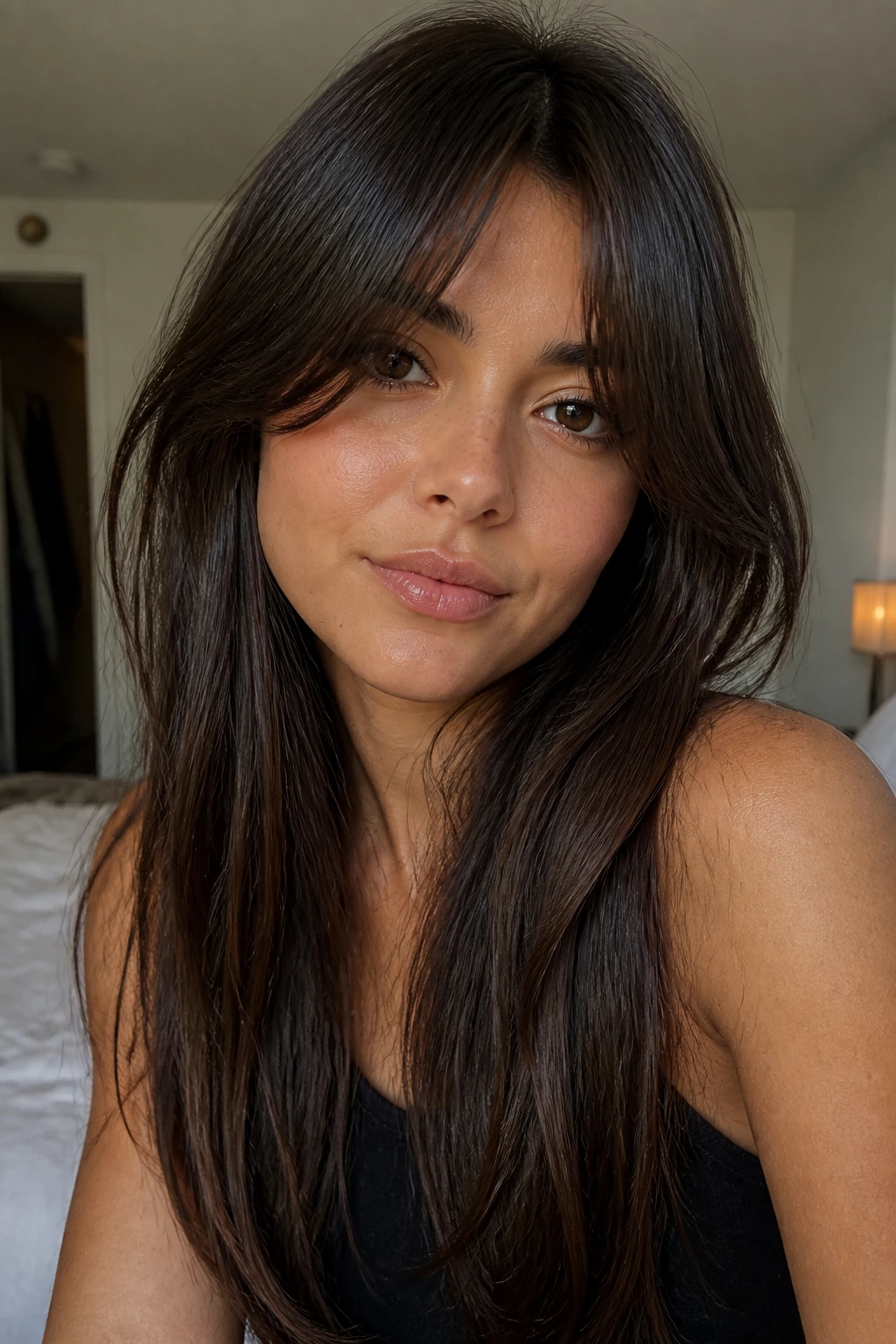
A center part does not have to mean skinny curtain bangs. With enough density, you can split chunky bangs right down the middle and leave long side pieces that skim past the cheeks. That shape gives a round face a clear vertical opening and a stronger frame at the sides.
The look works because the middle break stops the forehead from becoming one broad surface. The long sides keep the line from puffing out at the widest part of the face. On long hair, the combination feels clean and modern without being severe.
This is a good choice if you like symmetry but still want some softness. It tends to photograph well when the sides are curled under slightly, though I’d rather say it simply holds its shape better when the ends have a bend. Straight across and dead flat is the mistake here. Keep the movement.
19. Voluminous Swoop Fringe
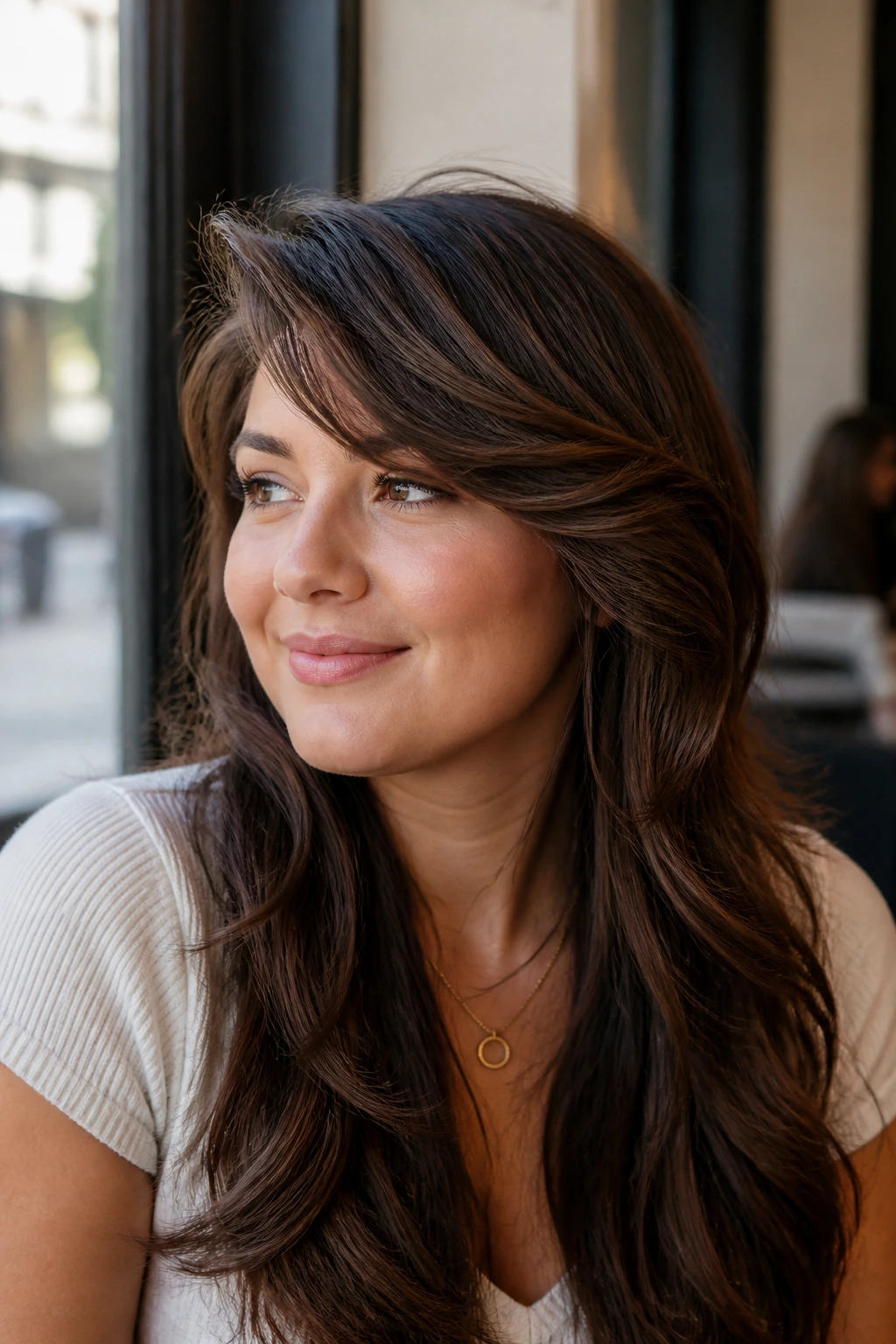
A swoop fringe is all about direction. The bang lifts at the root, then slides across the forehead in one thick, elegant arc. That movement can slim a round face because it sends the eye diagonally instead of letting it rest on the widest part of the cheeks.
The volume should be concentrated near the roots and crown, not out at the tips. If the ends puff too much, the fringe starts to widen the face instead of narrowing it. Long hair gives the swoop room to feel intentional, since the rest of the length can stay soft and flowing behind it.
This one is a good match for a blow-dry person. A round brush or hot brush makes the shape easy to keep. It also pairs well with a slight side part if you want the swoop to feel less formal. The cut has to be thick enough to hold the sweep, though. Thin hair loses the arc.
20. Short Chunky Bangs With Longer Side Pieces
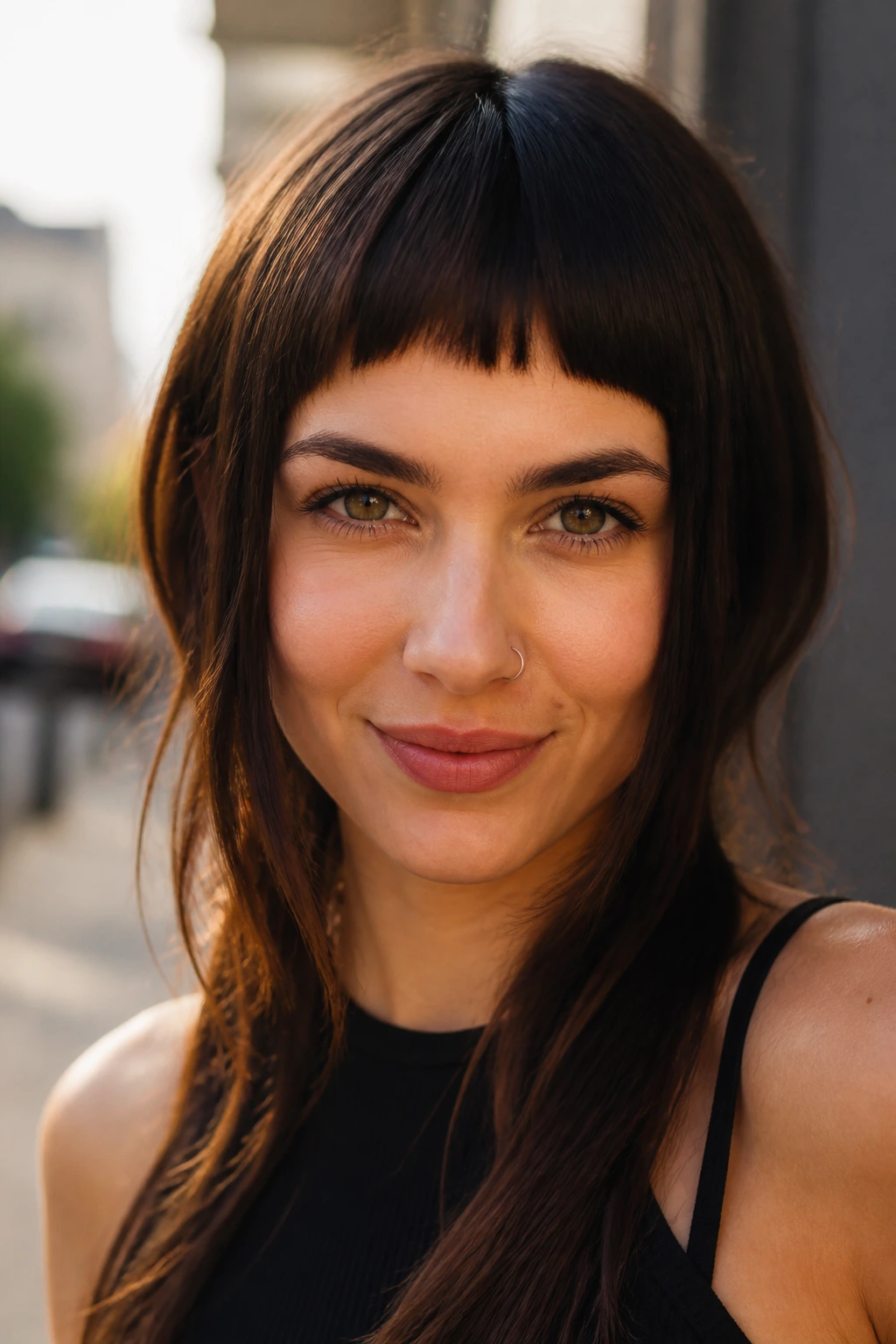
Short bangs can work on a round face when the sides are left long enough to soften the edges. The trick is contrast. The center lands high enough to make a statement, while the side pieces keep the face from feeling too exposed or too wide.
This is the boldest choice in the list, and it is not for anyone who wants to fade into the background. On long hair, the short fringe creates a real break between the face and the length, which can be striking in a good way. But the surrounding pieces need to be there. Without them, the cut goes hard and flat.
If you like fashion-forward hair and you’re comfortable with maintenance, this is the one that reads strongest. It needs regular trims. It also needs a face-framing plan, or it starts to look like a bang with no context. Context matters here. A lot.
21. C-Shaped Bangs
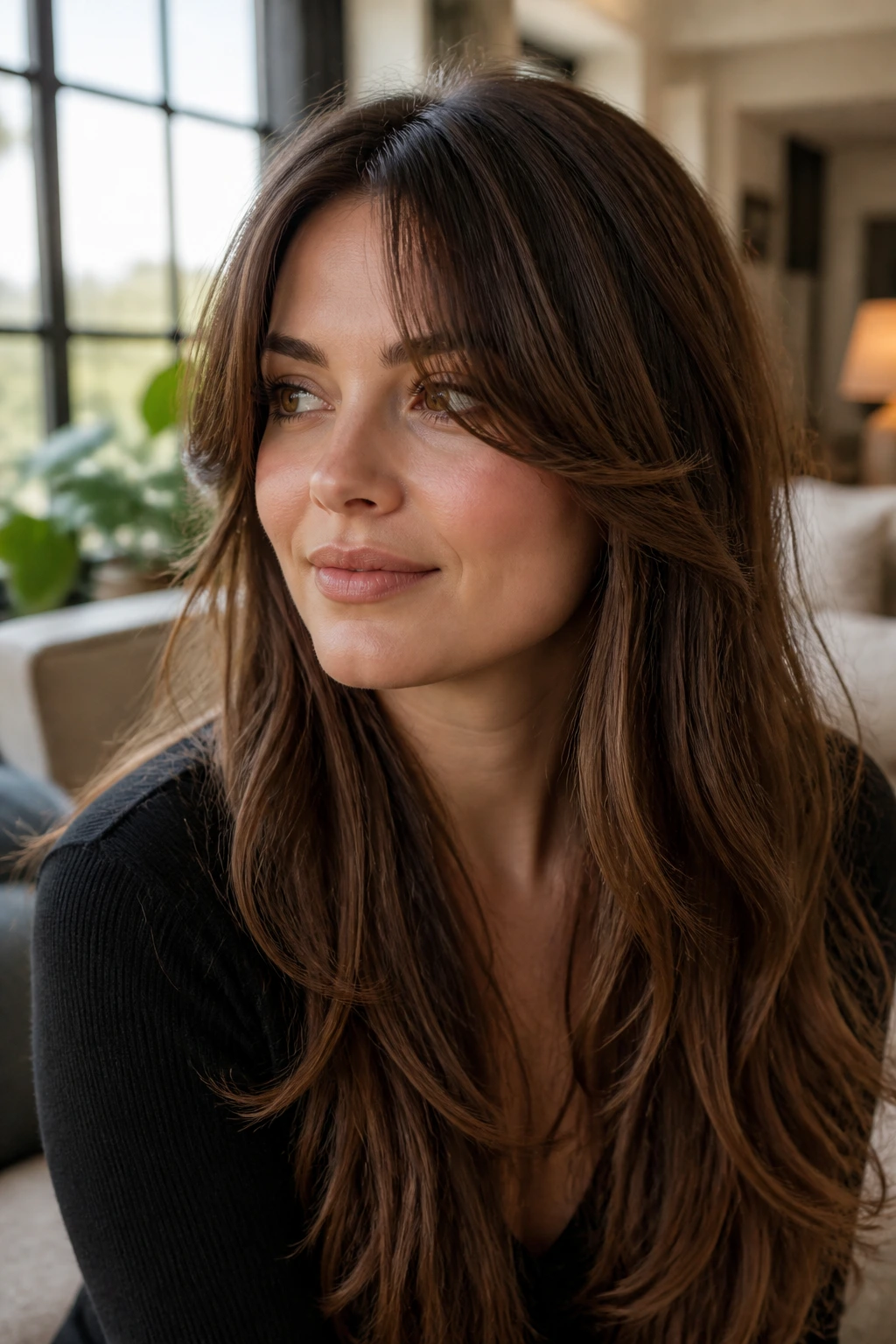
C-shaped bangs curve around the forehead and temples in a soft letter-C shape. That curve is flattering on round faces because it opens the center while guiding the sides downward, which adds length without drawing a harsh line across the face.
The shape works best when the curve starts a little higher in the center and dips down as it moves outward. Too much curl at the sides and the bang can flare. Too little and you lose the face-framing effect. Long hair helps anchor the curve so it doesn’t float away from the rest of the cut.
This is one of those styles that looks more expensive than difficult. It isn’t magic. It just respects the face shape. If your hair naturally bends under or you like a polished blow-dry, the C-shape can become a very easy habit.
22. Hidden-Layer Fringe
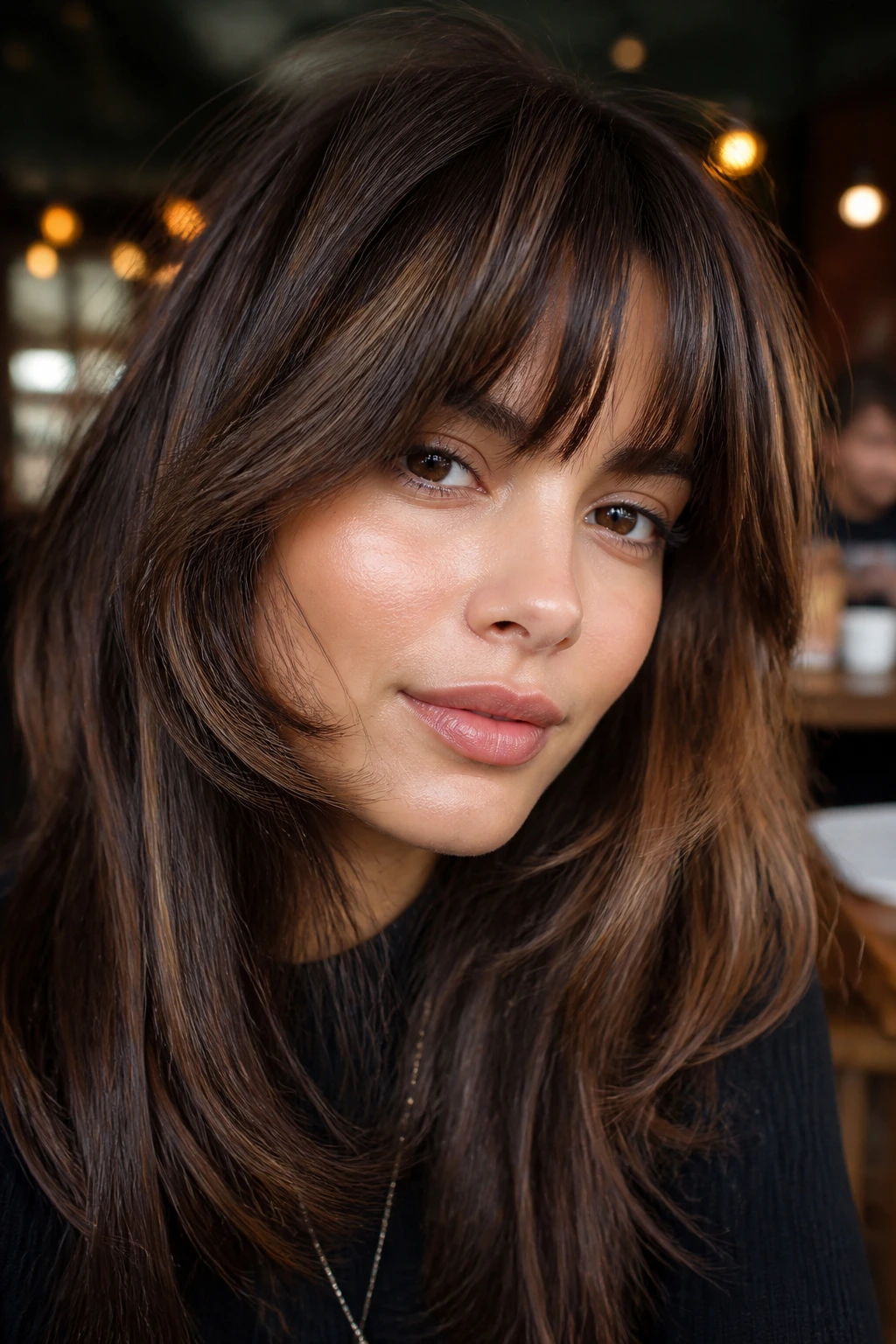
Hidden layers inside the fringe are for people who want weight without the helmet effect. The surface still reads chunky, but the inside has been thinned or stacked in a way that lets the bangs move. On a round face, that internal movement keeps the fringe from sitting as one wide block.
This is a strong option for dense hair. If the fringe is too thick all the way through, it can spread across the forehead and widen the face visually. Hidden layering trims that bulk from the inside, so the outside looks full while the shape stays softer around the temples.
It’s a good cut if you want bangs that behave in wind, humidity, and all the other annoying things hair does outside the salon chair. You still need to style them, but they won’t fight you quite as much. That’s worth something.
23. Brushed-Forward Fringe With Big Ends
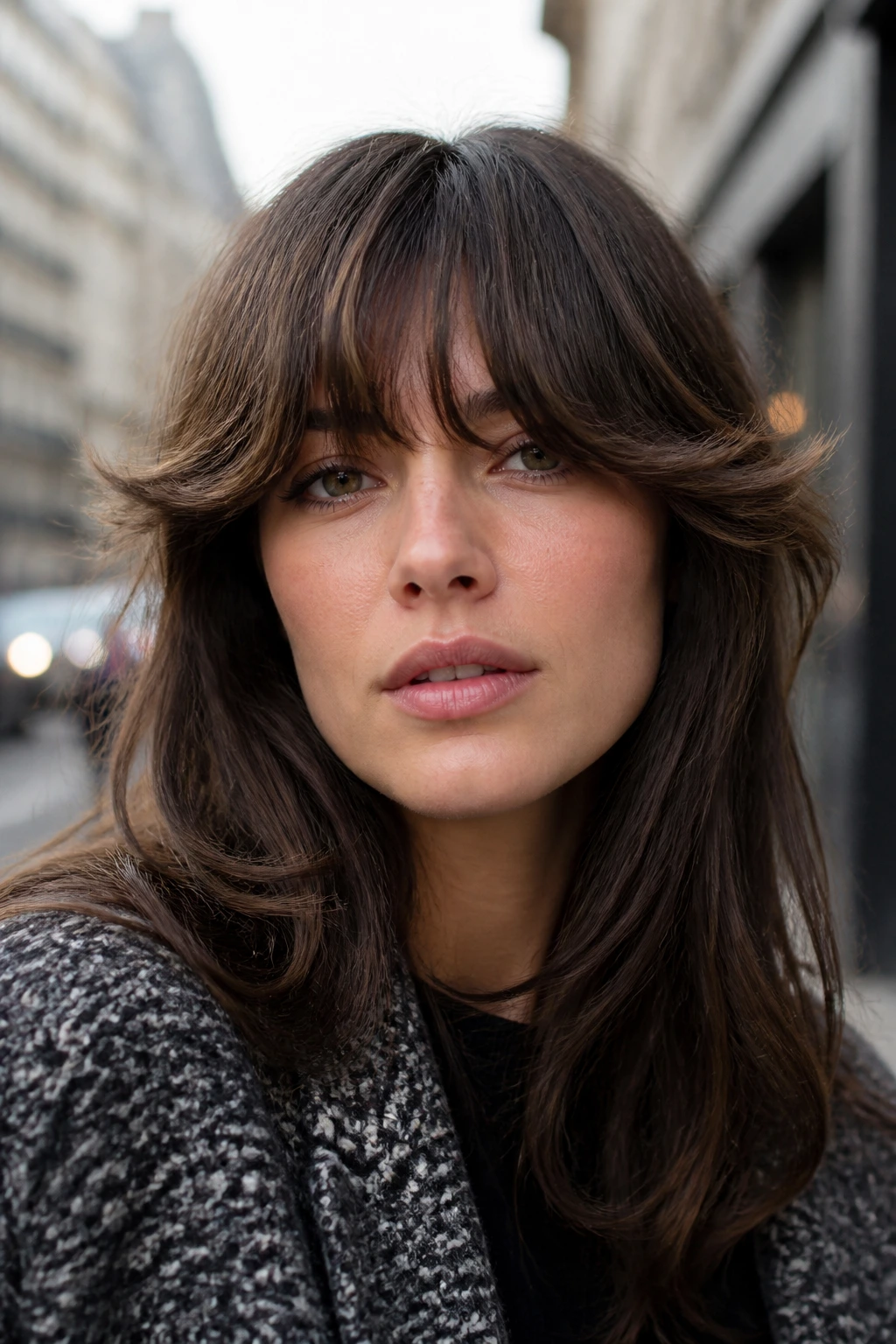
Brushed-forward bangs are blunt in attitude, not necessarily in shape. The roots come straight toward the face, then the ends kick out slightly or curl under with a larger bend. That forward push makes the fringe feel thick enough to matter on long hair.
For a round face, the forward motion works because it shortens the forehead visually without adding width at the sides. The bigger end shape should be controlled, though. If the ends puff too much, the fringe gets rounder and the face can follow it. A clean bend is better than a big bubble.
This style tends to suit thicker hair and a decent blow-dry routine. It’s strong, noticeable, and a little old-school in the best way. If you want bangs that read as a feature instead of a background detail, this shape has enough presence.
24. Tousled Off-Center Bangs
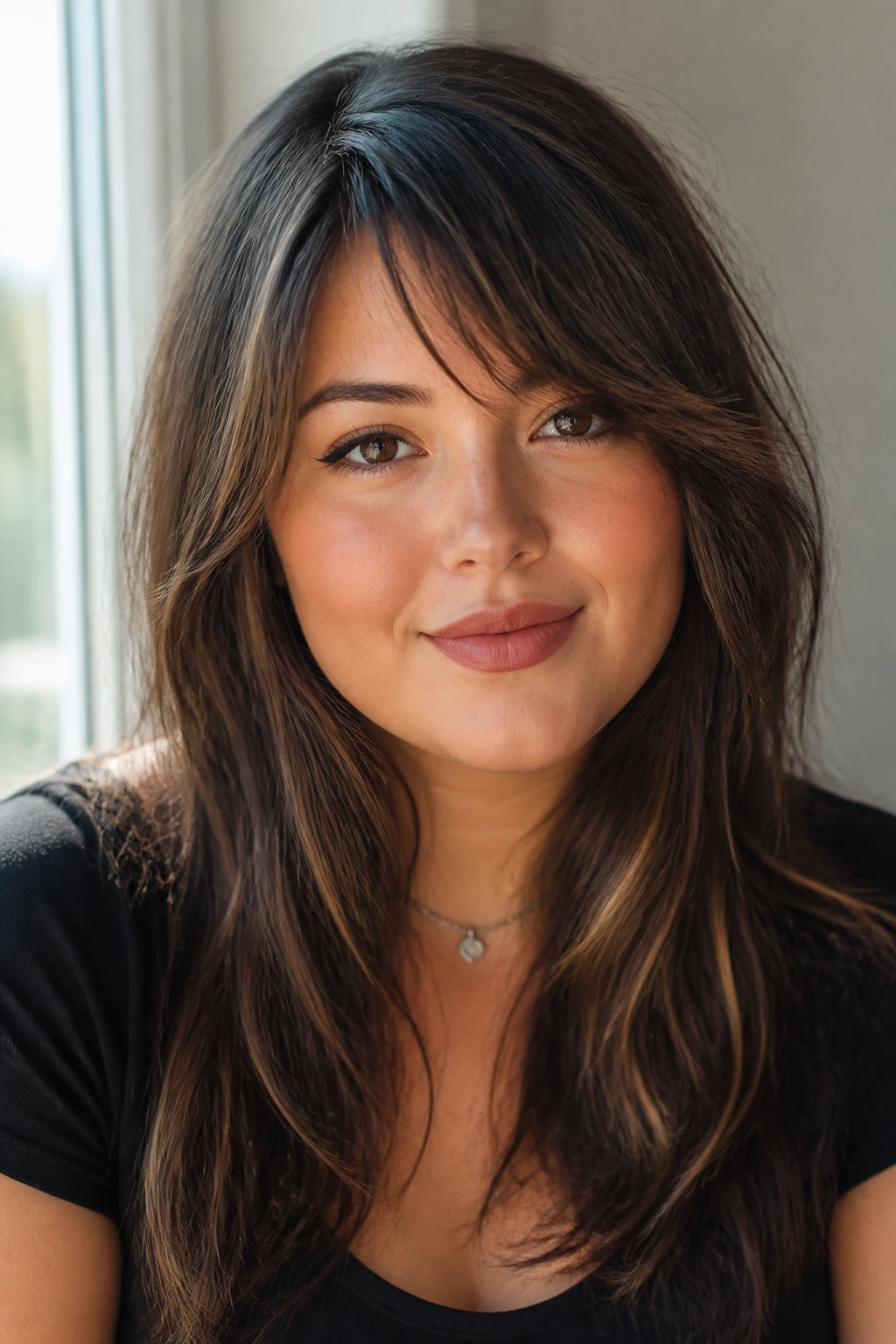
An off-center fringe gives you movement without the symmetry that can sometimes make a round face feel even rounder. The bang starts near the middle, then drifts slightly to one side, which creates a subtle diagonal and keeps the style from feeling locked in place.
The tousled finish matters. These bangs should look lived-in, not ignored. A little texture at the ends keeps them from clumping, and long hair helps the fringe feel part of the overall cut instead of a standalone feature. That loose connection is what makes the style wearable day after day.
If you hate neat hair, this is a good lane. It can be finger-styled fast, and it tolerates some natural bend or wave. The key is to keep enough density at the center so the fringe still reads as chunky. A flimsy off-center bang loses the point.
25. Dramatic Full Fringe With Long Waves
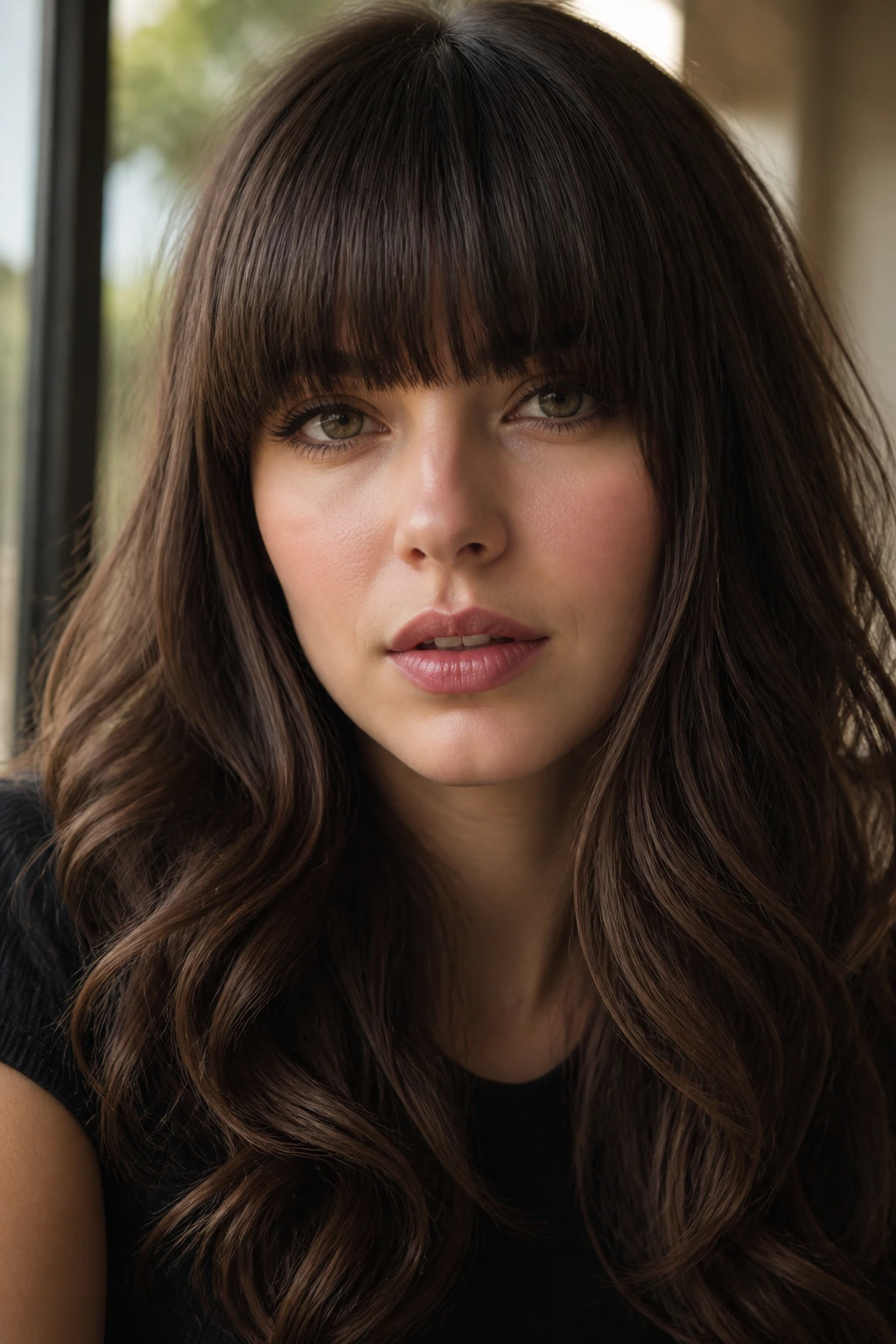
A full fringe with long waves is the statement option. The bangs are thick, straight, and present, while the rest of the hair moves in soft waves that pull the shape downward. On a round face, that contrast can look striking because the fringe defines the top and the waves lengthen the body below.
This cut needs balance. The bangs should be heavy enough to hold their own, but the lengths around the face need to stay soft so the whole thing does not turn square. The waves help by breaking up the outline once the hair drops below the chin. That’s where the face starts to feel longer.
It’s a strong look if you like hair that reads from across the room. It’s also a little unforgiving if the cut is off by even half an inch. So if you want the drama, give it proper trim attention and some styling time. This one is not meant to be thrown together in five minutes.
What Makes Chunky Bangs Work on Round Faces
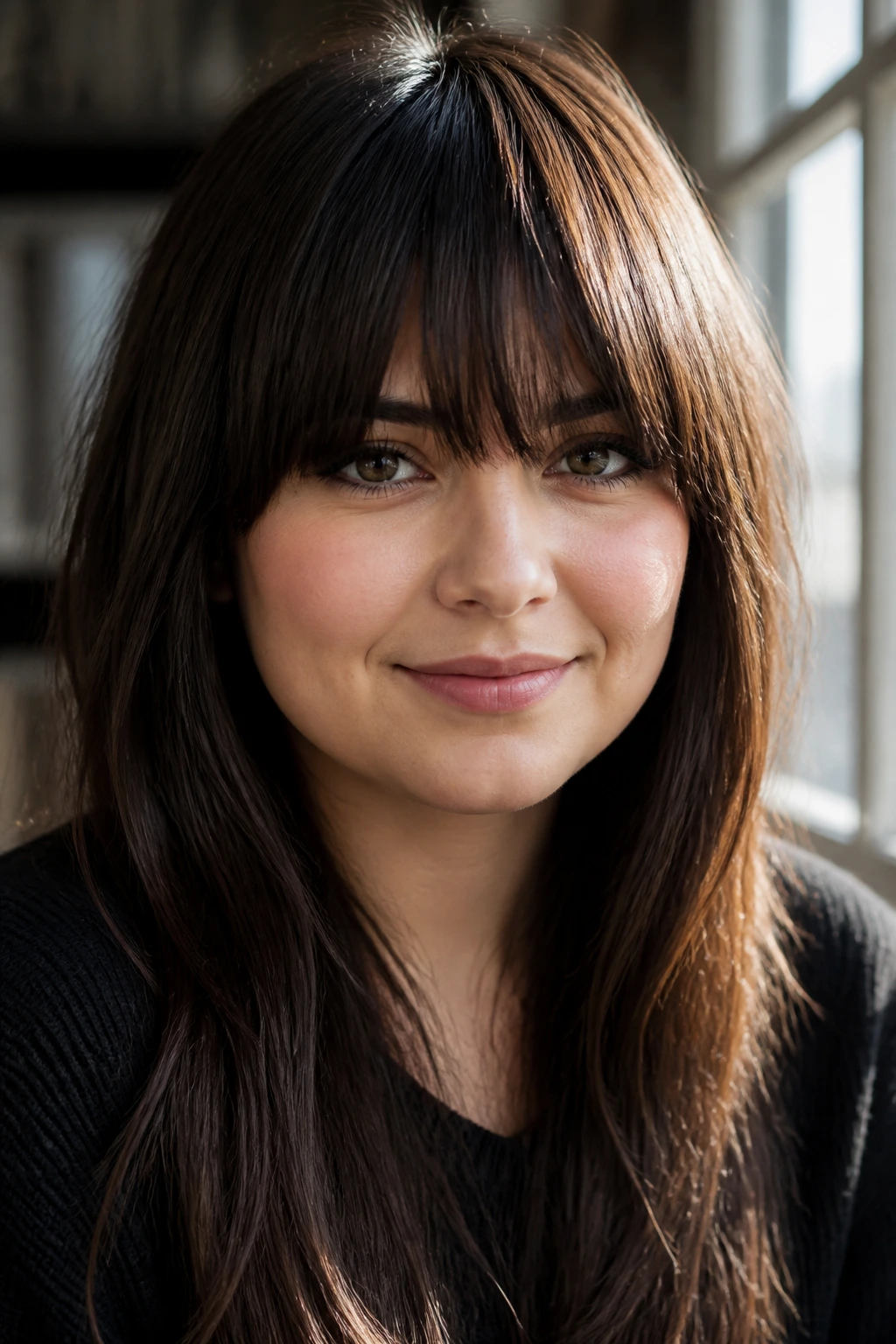
Round faces usually need a little vertical tension. Not harshness. Tension.
Chunky bangs create that tension when they keep the eye moving instead of letting it park on one wide band of hair. A center gap, a side sweep, a longer temple piece, or even a soft arch can all do the job as long as the fringe does not stop dead at the cheeks. The face wants movement; the bang has to give it.
The easiest way to think about it is this: stay away from shapes that widen the cheeks or create a straight horizontal shelf. Better choices skim the brow, taper at the temples, or bend diagonally across the face. Long hair helps because it gives the bangs a longer runway. The fringe can be thick without becoming the whole story.
Styling Tools That Keep the Fringe in Shape
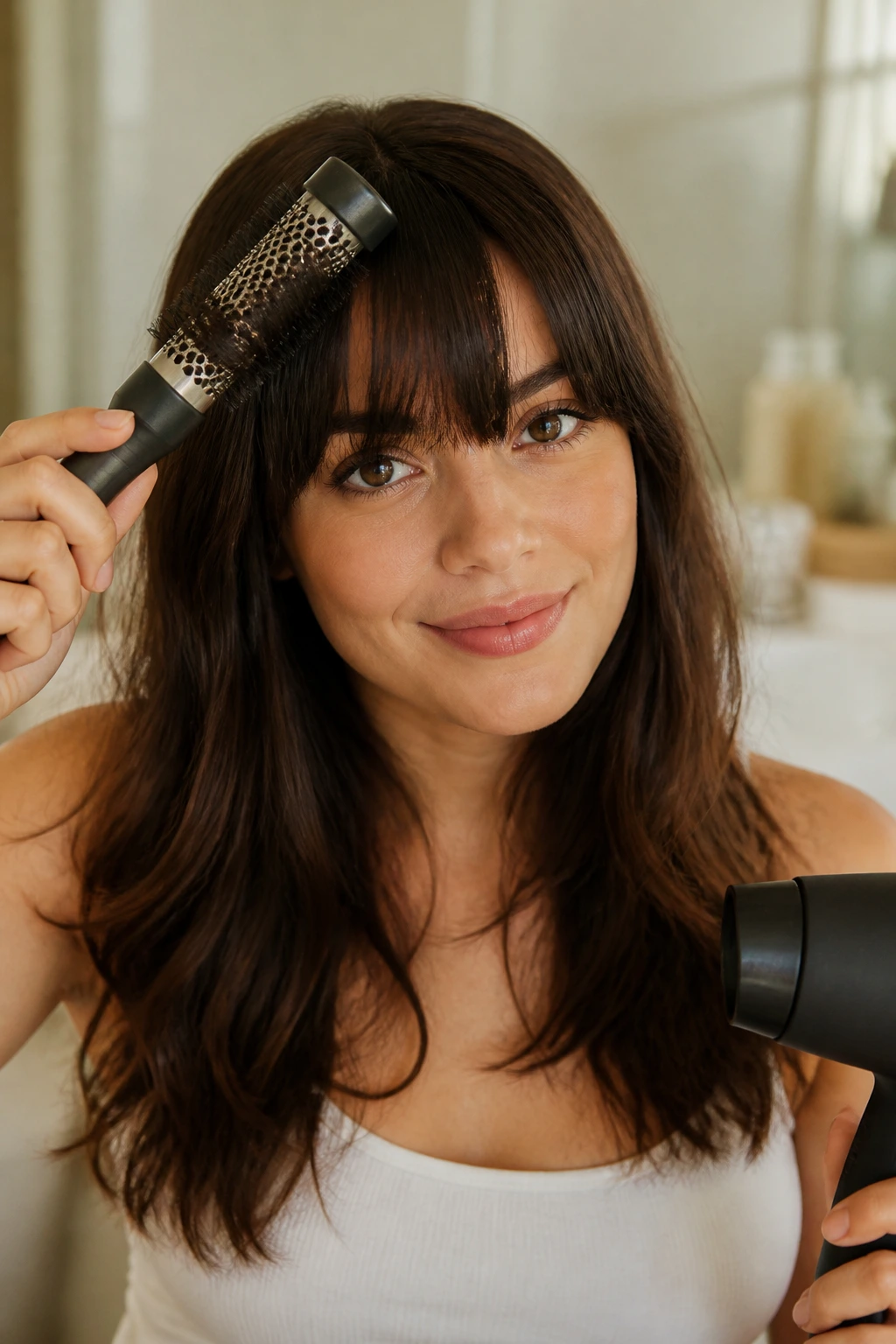
- Small round brush, 1 to 1.5 inches: This gives you bend at the roots without making the fringe too fluffy.
- Blow dryer with a nozzle: The nozzle helps aim the airflow so the bangs dry where you want them instead of splitting randomly.
- Fine-tooth comb: Useful for sectioning the fringe and checking whether the center is sitting too flat.
- Duckbill clips: These hold side pieces out of the way while you dry the bangs first.
- Heat protectant spray: A fringe gets touched by heat more often than the rest of the hair, so this is not optional.
- Dry shampoo: Best for oily roots near the forehead, especially if your bangs get greasy by midday.
- Texturizing spray or light wax: Use this on piecey or shaggy styles to keep the chunks separated without making them sticky.
- Flat iron or hot brush: Handy for a quick bend when the brush-and-dryer routine is too fussy.
How to Ask for the Cut at the Salon
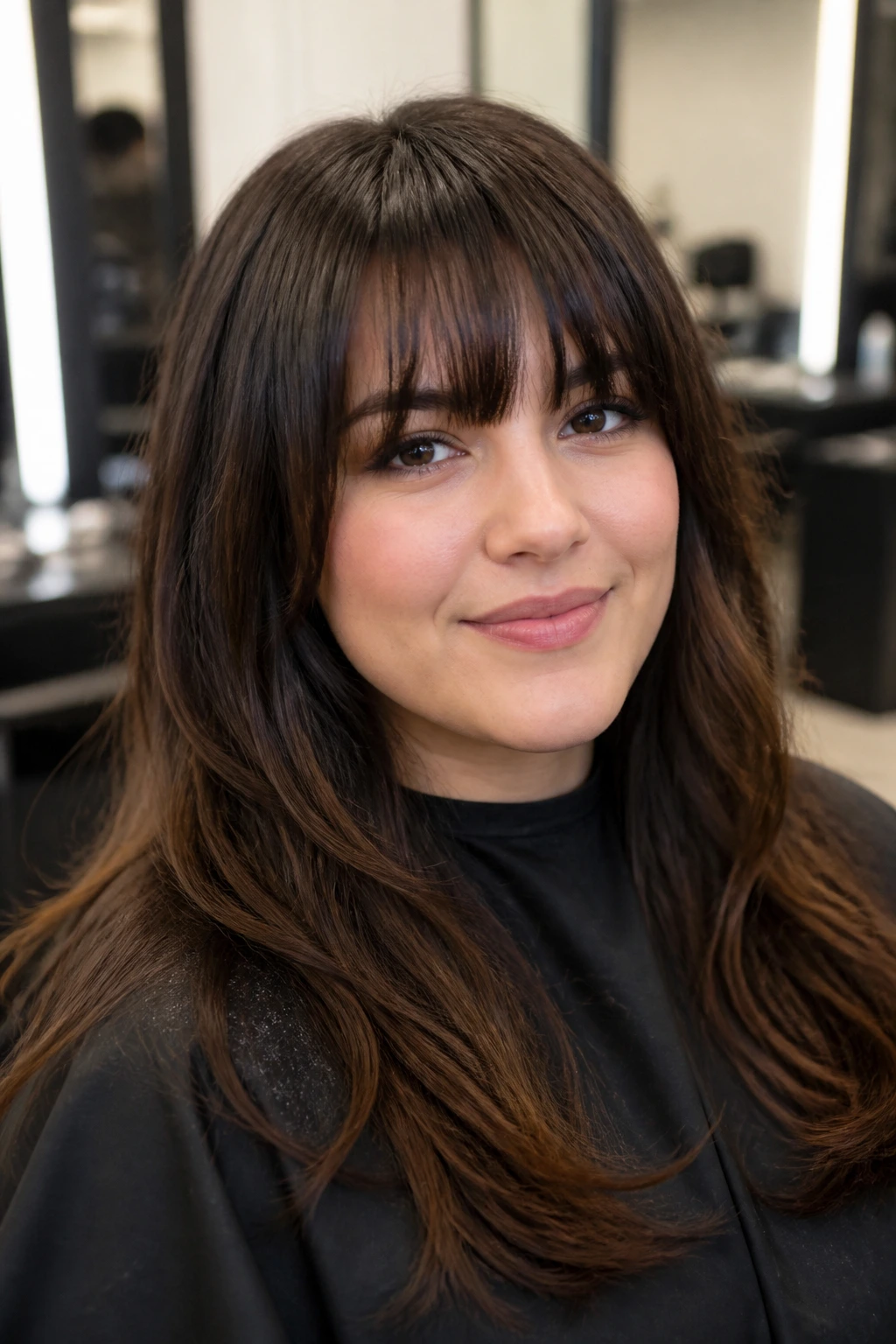
Say the shape out loud. Don’t just say “chunky bangs” and hope the stylist reads your mind.
Bring photos that show the front, side, and a grown-out version if you can find one. Then point to where you want the shortest part to land — brow, upper brow, or a touch below — and where you want the sides to end. For round faces, that side length matters more than people realize. Temple pieces that skim the cheekbone can change the whole cut.
Mention your hair texture and your cowlicks. A thick fringe on a strong cowlick needs different handling than the same shape on straight, obedient hair. If your hair is dense, ask about internal layering so the bangs keep their weight without sitting like a block. If your hair is fine, ask for enough bulk to keep the fringe visible after it dries.
Daily Styling Moves for Chunky Bangs
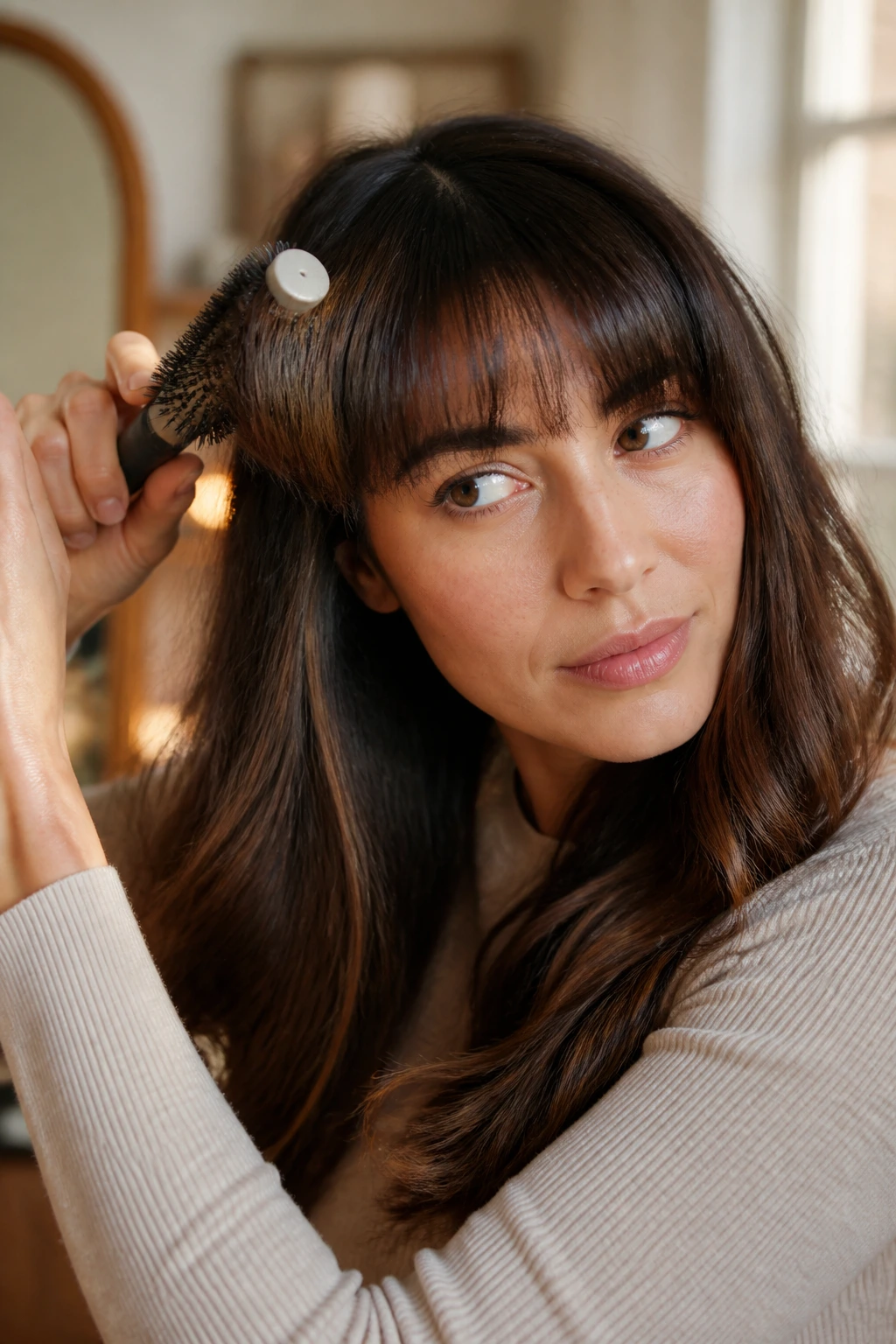
Dry the fringe first. Always. Bangs left to air-dry while the rest of the hair gets styled are the ones that end up separated, bent weirdly, or stuck to the forehead.
Use a round brush or hot brush to lift the roots forward, then guide the ends into the shape you want. For curtain or split styles, push the center apart while the hair is still warm. For blunt or rounded shapes, smooth the ends under just enough that they sit instead of flare. A cool shot at the end helps the shape hold.
If the bangs puff up too much, mist the roots lightly with water and re-dry them. If they go flat, clip them at the root while they cool. Tiny fixes. That’s the game. Fringe is never a set-it-and-forget-it part of long hair, and pretending otherwise usually ends in a hat or a headband.
Common Mistakes That Make Bangs Look Wide or Flat

The biggest mistake is cutting the fringe too straight across the full width of the face. That creates a shelf effect, and on a round face it can make the forehead look shorter while the cheeks look wider. A little taper at the sides fixes a lot of that.
Another problem is over-thinning. If the bangs lose too much weight, they stop reading as chunky and start looking separated in a tired way. You want texture, not see-through patches. The solution is usually better placement, not more shredding.
Heat misuse causes trouble too. Blasting the fringe upward with too much round-brush lift can create puff where you wanted shape. And too much oil or serum at the ends makes bangs collapse against the skin. Keep products light at the roots and use them sparingly at the edges.
Variations and Alternatives to Try
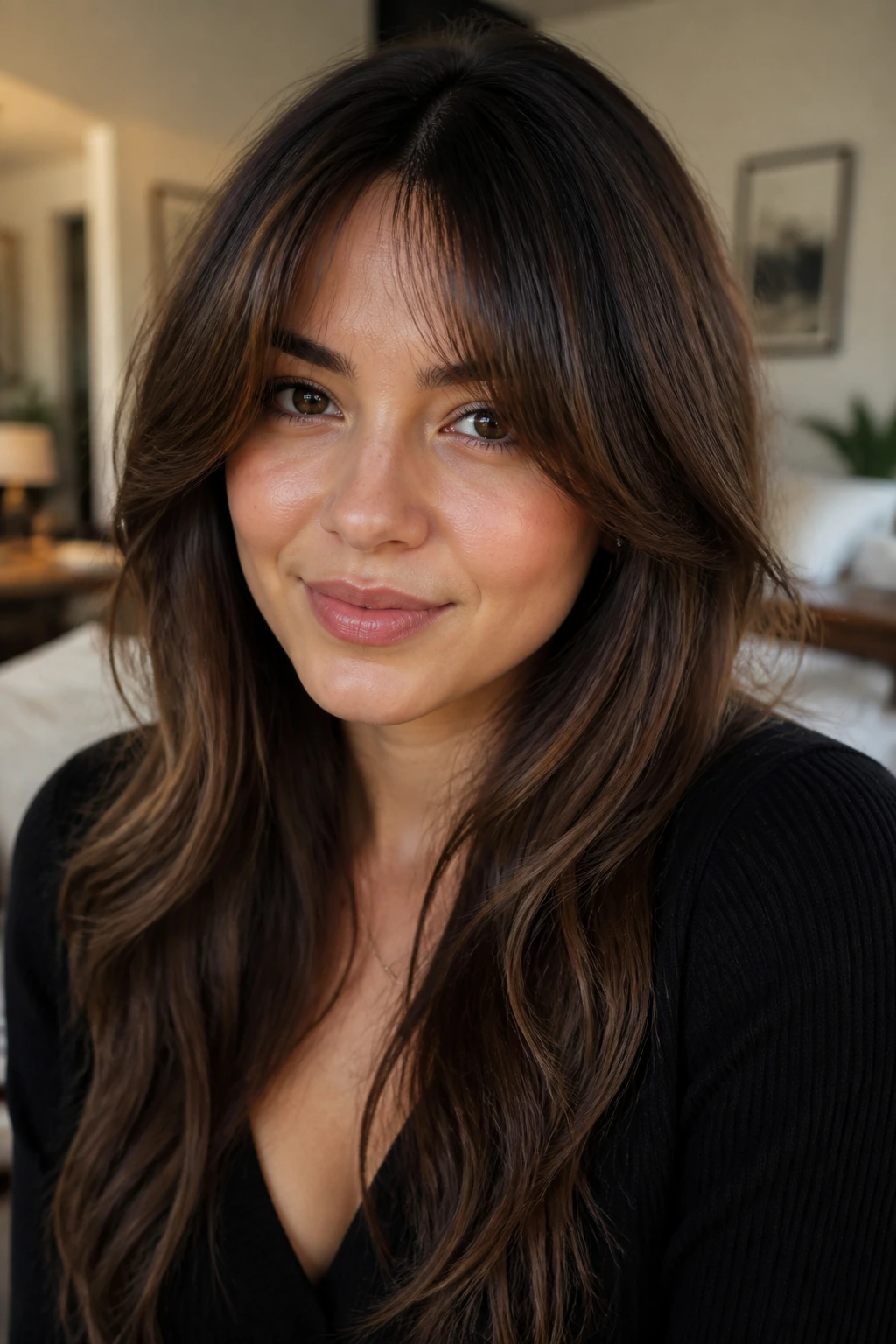
Soft Curtain Hybrid: This blends bottleneck bangs with a looser curtain split. It’s the easiest entry point if you want something face-framing but not dramatic. The center stays open, and the sides can grow into layers with almost no awkward stage.
Thick Straight-Across Version: Best for dense hair that can hold a line without splitting. The trick is to keep the corners a touch longer so the fringe doesn’t end abruptly at the temples. It looks strongest with polished long hair and minimal frizz.
Shagged-Out Fringe: This version leans into choppy texture and uneven movement. It suits wavy hair, air-dried hair, and anyone who doesn’t want to spend ten minutes fighting a brush every morning. The fringe stays full, but it never sits too neatly.
Curly-Friendly Chunky Bangs: Cut longer and drier, then let the curl spring up. Round faces often look good with curly fringe when the shape is controlled at the temples and left softer in the middle. The bangs need room to shrink, or they will jump way too high.
Low-Maintenance Grow-Out Fringe: This one starts heavy at the center and stretches into long face-framing sides. It works if you want bang energy without being trapped by trims every few weeks. The cut looks intentional even when it’s a little overgrown, which is rare and worth having.
Keeping the Shape Between Trims
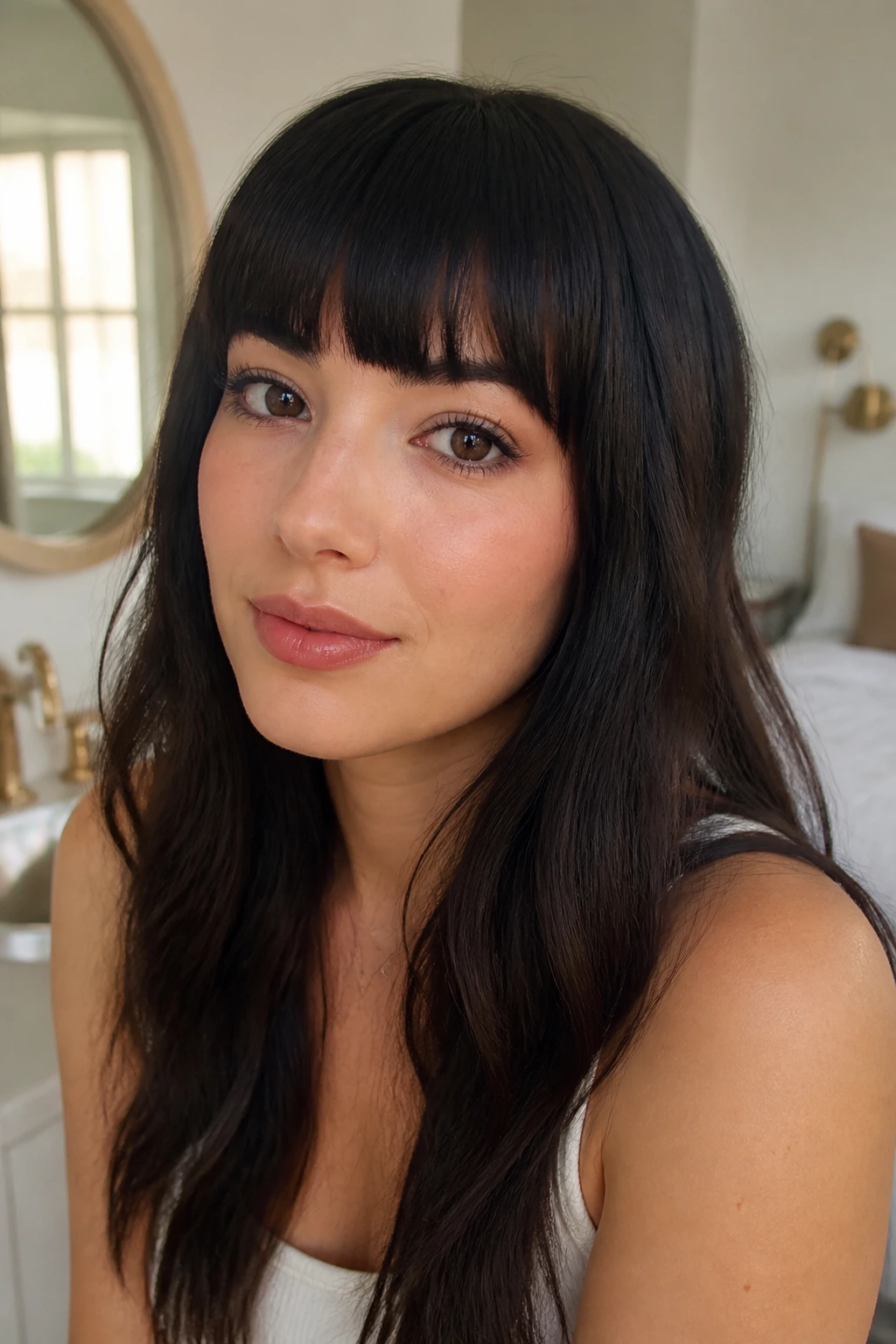
Bang trims usually need more attention than the rest of the haircut. Plan on tidying the fringe every 3 to 5 weeks if you want the shape to stay crisp. If you like a more grown-out look, you can stretch that a bit longer, but the center will start dropping into your eyes.
Wash or refresh the bangs more often than the rest of the hair if your forehead gets oily. A quick rinse, a little dry shampoo at the root, or even a damp towel and a blow-dry can reset them. At night, clip the fringe loosely off your face or tuck it into a soft roller if you want to keep the bend.
Long hair can usually wait a little longer between full cuts. The bangs cannot. That’s the tradeoff. The upside is that a good fringe changes the whole silhouette, so those small touch-ups pay you back every time you wear your hair down.
Questions People Ask Before They Cut Fringe
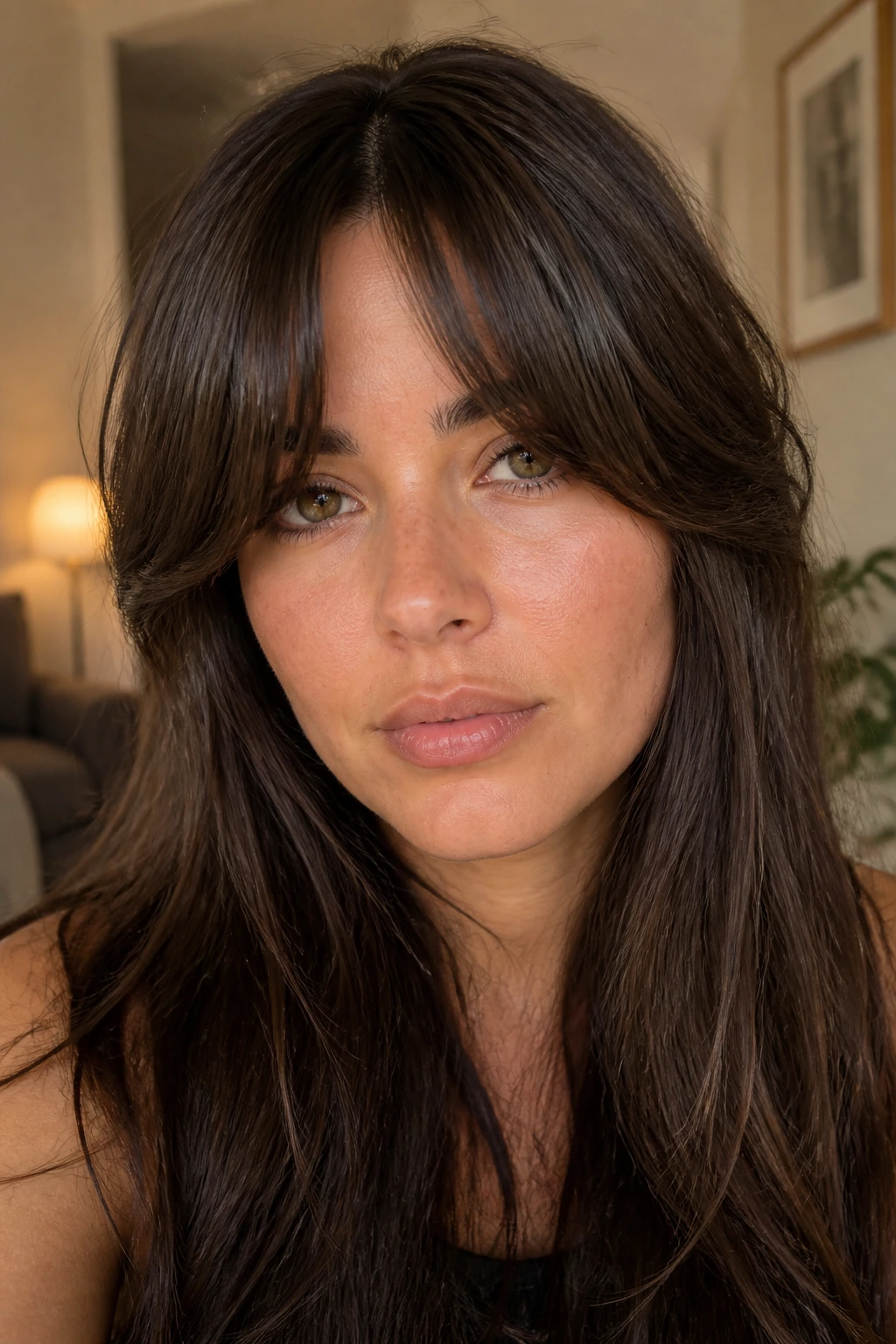
Do chunky bangs make a round face look wider?
They can, if they’re cut too short or too straight across the widest part of the face. The better versions use side length, diagonal movement, or a center gap to keep the eye moving downward. Placement matters more than the word “bangs.”
Can fine hair wear chunky bangs?
Yes, but the cut has to keep enough density at the center. Fine hair usually needs a little help from root lift, dry shampoo, or a blow-dry routine so the fringe doesn’t split and disappear. A blunt or bottleneck shape often works better than a heavily thinned one.
How short should the shortest part be?
Most round faces do well with a center piece near the brows or just below them. Shorter than that can be sharp and cute, but it also needs more precision because the face is on display. Longer centers are easier to live with if you’re unsure.
Can I wear chunky bangs with glasses?
Yes, but the fringe has to clear the frame. Brow-skimming or curtain shapes usually sit best because they don’t pile into the lenses. If your glasses are bold, leave a little more space above the frame so the cut doesn’t feel crowded.
What if I have a strong cowlick?
Tell the stylist before the first snip. Cowlicks can push bangs apart or send them sideways, so the cut usually needs to start a bit longer and be trained with heat and clips. Ignoring the swirl is how people end up blaming the bang for a problem the hair already had.
How do I grow them out without looking awkward?
Let the sides get longer first, then split the center and sweep the fringe into face-framing layers. Bottleneck and curtain shapes grow out more gracefully than blunt ones, which is why those cuts get recommended so often. A deep side part can buy you extra time too.
Do these bangs work on wavy or curly hair?
They do, but the fringe should be cut longer and with the natural bend in mind. Curly hair shrinks after drying, so the shortest point needs more room than straight hair does. Dry-cutting or styling the curls the way you wear them helps the shape land where it should.
The Fringe That Does the Most Work

The best thing about chunky bangs on long hair is that they do more than cover the forehead. They redirect the whole face. A good fringe can shorten a wide-looking brow, sharpen a soft jawline, or give long lengths a clear starting point so the haircut doesn’t drift into sameness.
A round face needs structure, but it does not need harshness. That’s the sweet spot these styles live in. Pick the one that fits your density, your texture, and your patience for styling, because the right fringe should make the rest of your hair easier to wear, not harder.