



Long bangs for Black women with fine hair work best when they move a little. Not a helmet. Not a heavy curtain that sits like a lid on the forehead. The sweet spot is a front section that looks soft in the chair, then wakes up once it’s blown forward, wrapped, or finger-set.
Fine hair changes the math. The strand itself is thinner, so a blunt bang can go see-through fast if too much weight gets removed or if the front is cut too wide. And Black hair brings its own range of textures and habits — a silk press, a stretched twist-out, a loose curl, a sew-in, a wig install — so the best fringe is the one that knows how to live with the rest of the style instead of fighting it.
The smartest cuts borrow shape from the sides, keep the shortest pieces near the brows or cheekbones, and leave enough length to tuck, bend, or sweep when the front starts misbehaving. Once you know that rhythm, the whole thing gets easier.
Why These Long Bangs Stay Useful on Fine Hair
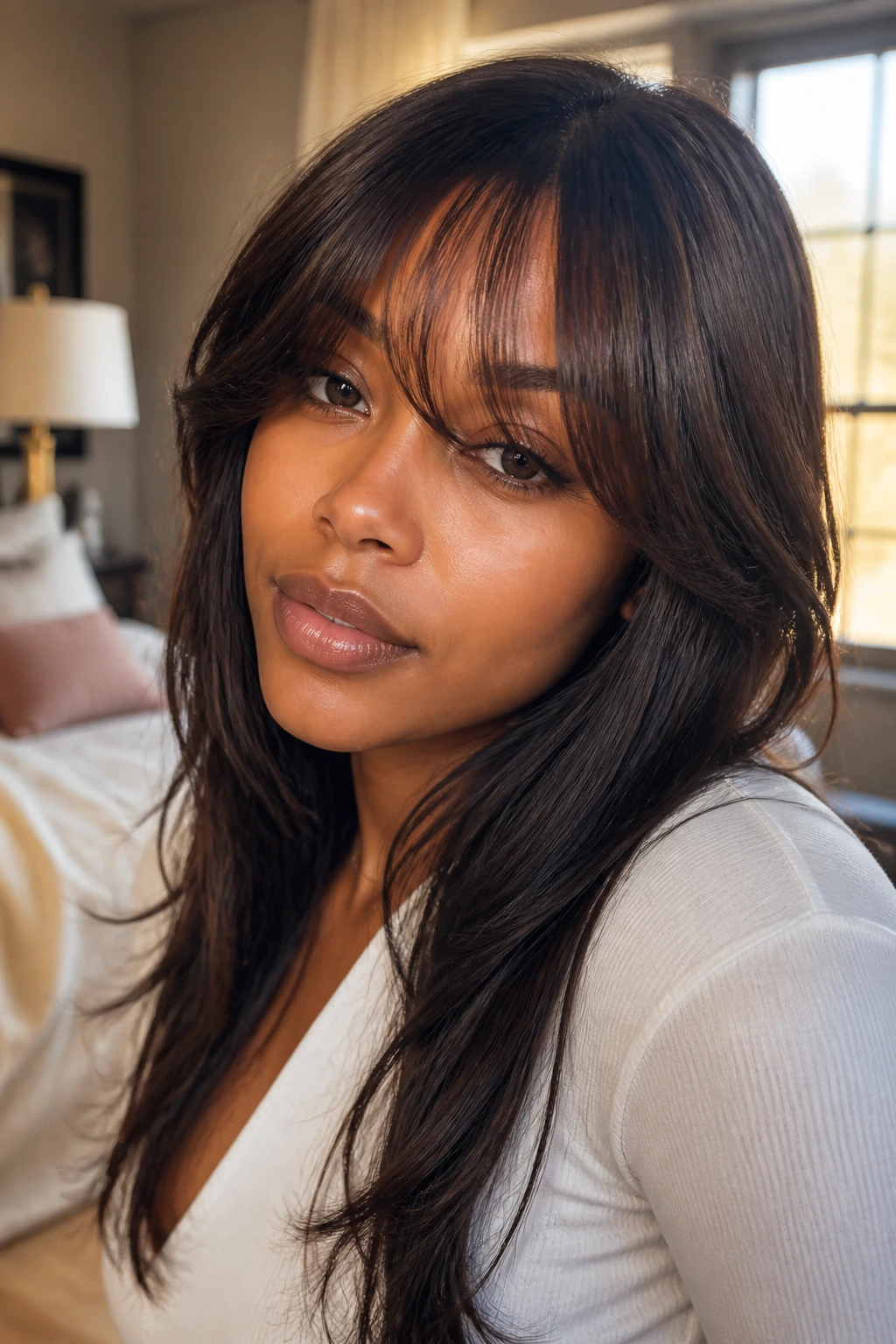
-
They work with movement, not against it: A long fringe can fall, split, and recover without exposing every gap at the hairline the way a heavy straight-across bang often does.
-
They make density look intentional: Soft diagonal lines and center openings give the front a fuller read, even when the actual strand count is modest.
-
They play well with different textures: These styles can live on natural coils, stretched curls, relaxed hair, silk presses, sew-ins, wigs, and clip-ins without looking like the hair is wearing a costume.
-
They grow out better: Long bangs buy you time. A trim that looks crisp on day one can still look decent three weeks later, which matters when the front of the hair is the first place to flatten.
-
They hide the rough spots: Cowlicks, a delicate hairline, or slightly uneven growth patterns are easier to blur with a long fringe than with a blunt line.
-
They leave room for styling changes: You can part them, pin them, sweep them, or tuck them behind the ear when you want your face uncovered for a day.
1. Curtain Bangs That Split Cleanly at the Center
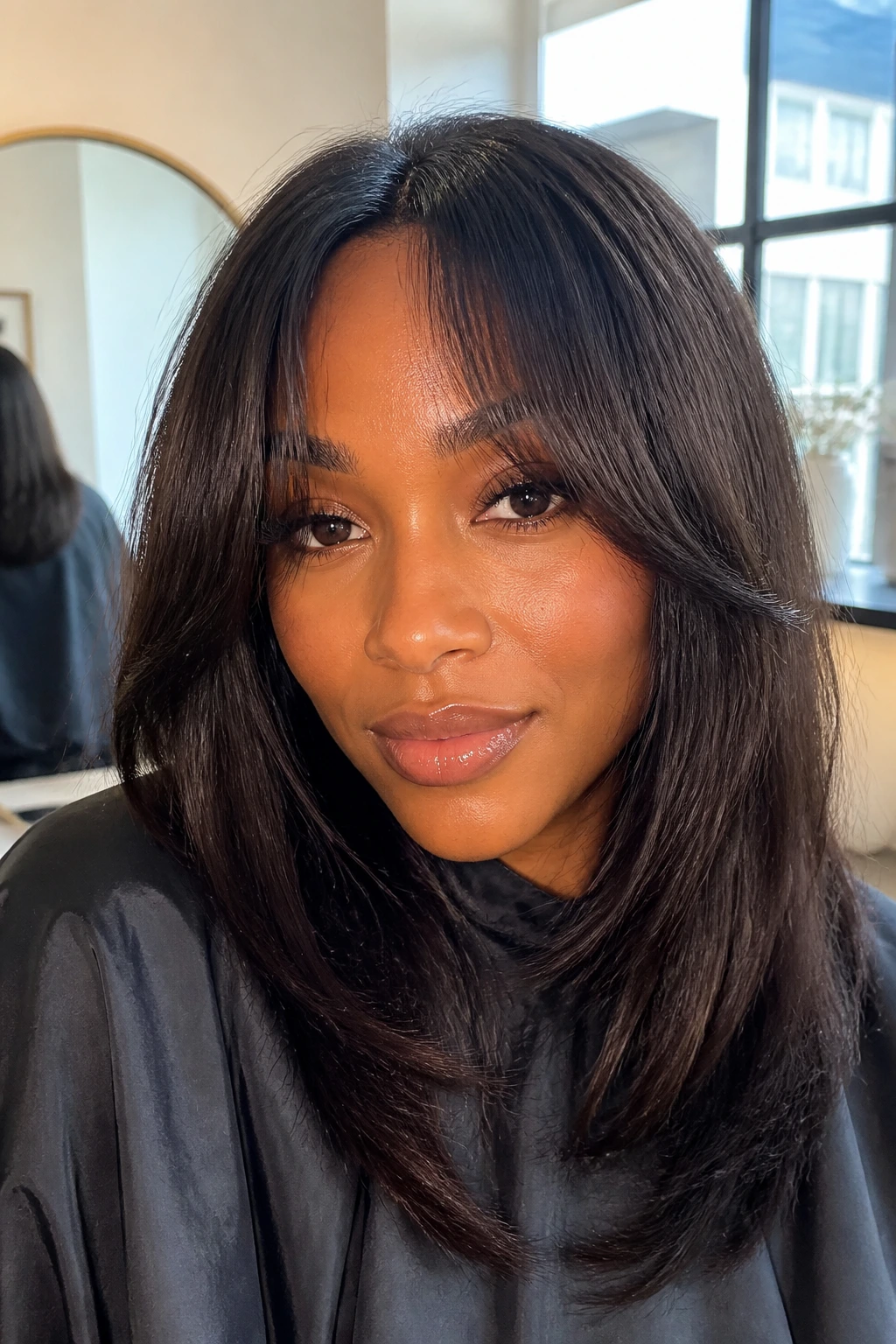
The cleanest version of curtain bangs on fine Black hair is the one that looks almost too soft in the chair and then settles into place once it’s blown forward. The shortest point usually sits right around the brow, maybe a touch below, and the side pieces drift down toward the cheekbones so the front never looks boxed in.
Why it works for fine strands
A center split breaks up a flat front and gives the eye two lines to follow instead of one heavy block. On finer strands, that matters. You get movement without asking the fringe to hold more weight than it can manage.
Best when: your forehead feels wide, your hairline is delicate, or your style needs to grow out gracefully for a few weeks. If you wear your hair straight, a silk press, or a stretched twist-out, these bangs stay friendly instead of stubborn.
Styling note: blow-dry the front in two directions at first, then finish by pushing each half away from the part with a round brush. Do not over-direct the roots straight down or the fringe will separate and expose scalp.
2. Deep Side-Swept Fringe With a Long Arc
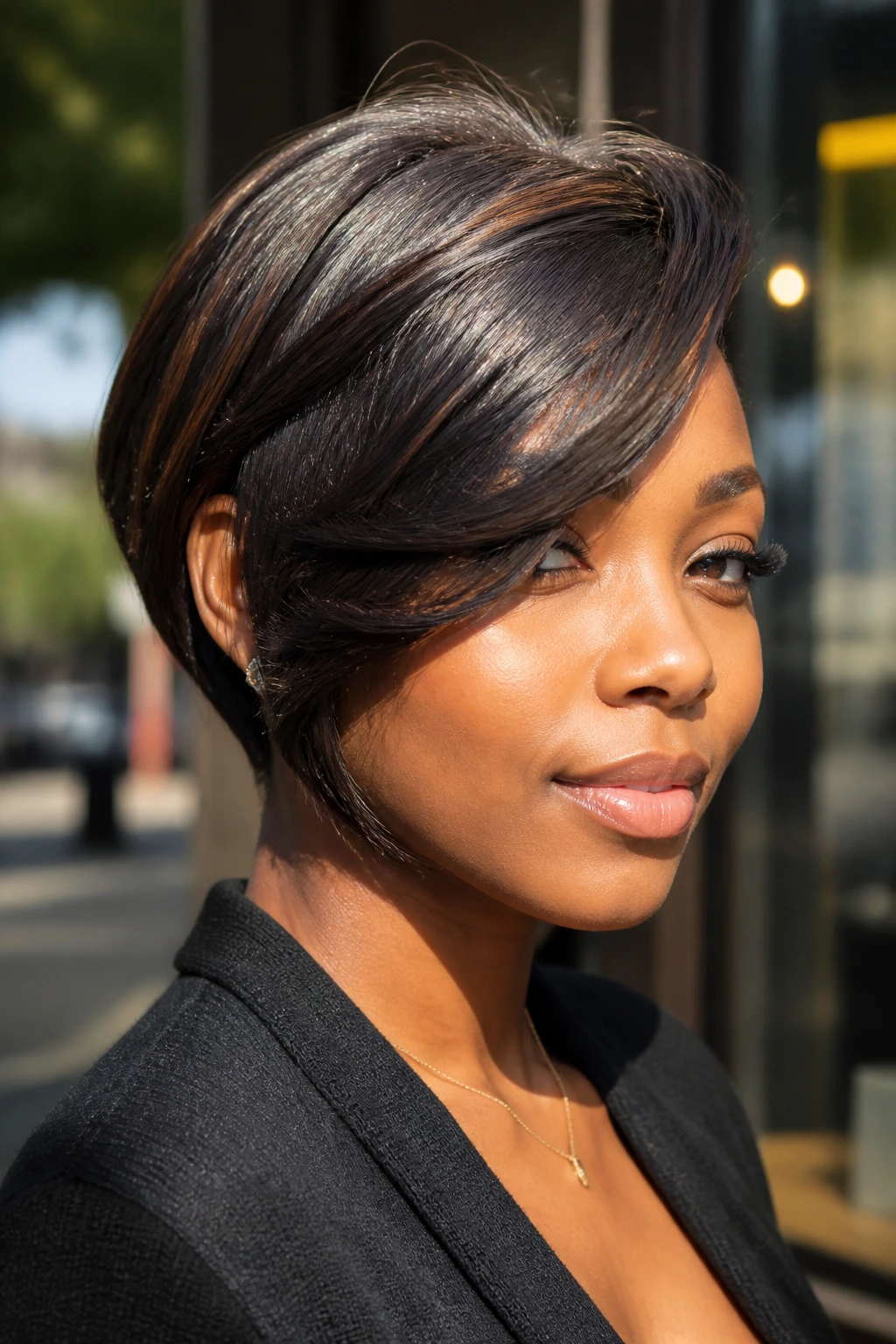
A deep side-swept fringe does more for fine hair than a chunky straight-across bang ever will. The diagonal line creates the sense of density where you want it most, and the longer sweep can hide a cowlick, a soft widow’s peak, or the small gaps that show up when the front is too wide.
Keep the part one eyebrow off center, not buried near the crown. That tiny shift keeps the hair from lying like a curtain and gives the style a little lift at the root.
I like this one when the face needs softness but not too much forehead coverage. It’s also the easiest bang to pin back halfway if your day changes and you want the front off your face by lunch.
3. Bottleneck Bangs That Narrow Near the Brows
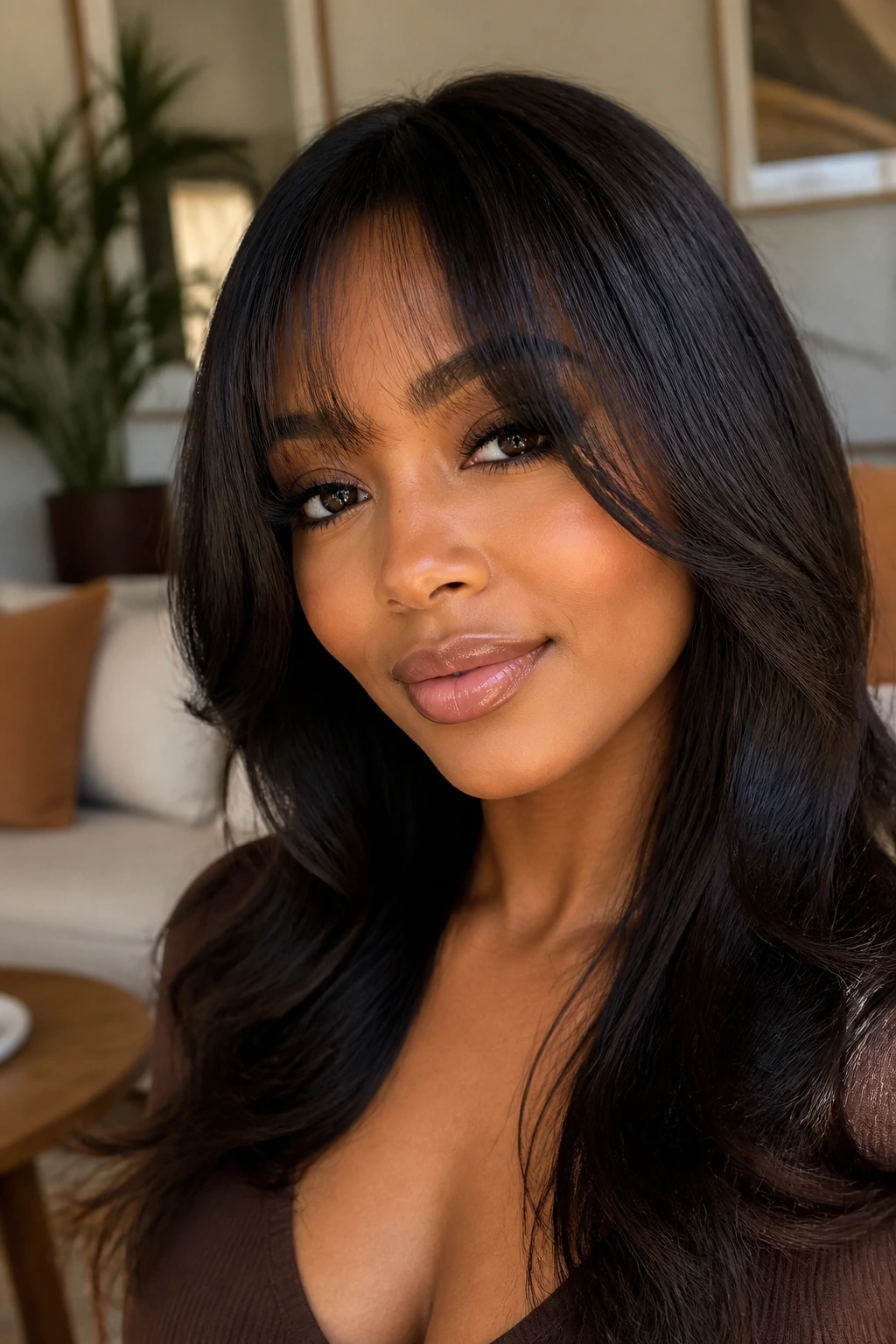
Why do bottleneck bangs keep showing up on fine hair? Because they narrow in the middle and spend their fullness where the face can actually use it. The center stays light, almost airy, while the sides widen just enough to frame the cheekbones.
That shape is a gift when the front of the hair is fine but the rest of the head has decent density. You avoid the heavy, flat shelf that a thick bang can create. You also dodge the see-through look that happens when too much is removed from the middle.
How to wear it
Ask for a soft dip in the center, then longer pieces that graze the cheek. On a silk press, one bend from a flat iron is enough. On natural texture, stretch the front first so shrinkage doesn’t pull the shortest pieces too high.
4. Feathered Blowout Bangs With Soft Ends
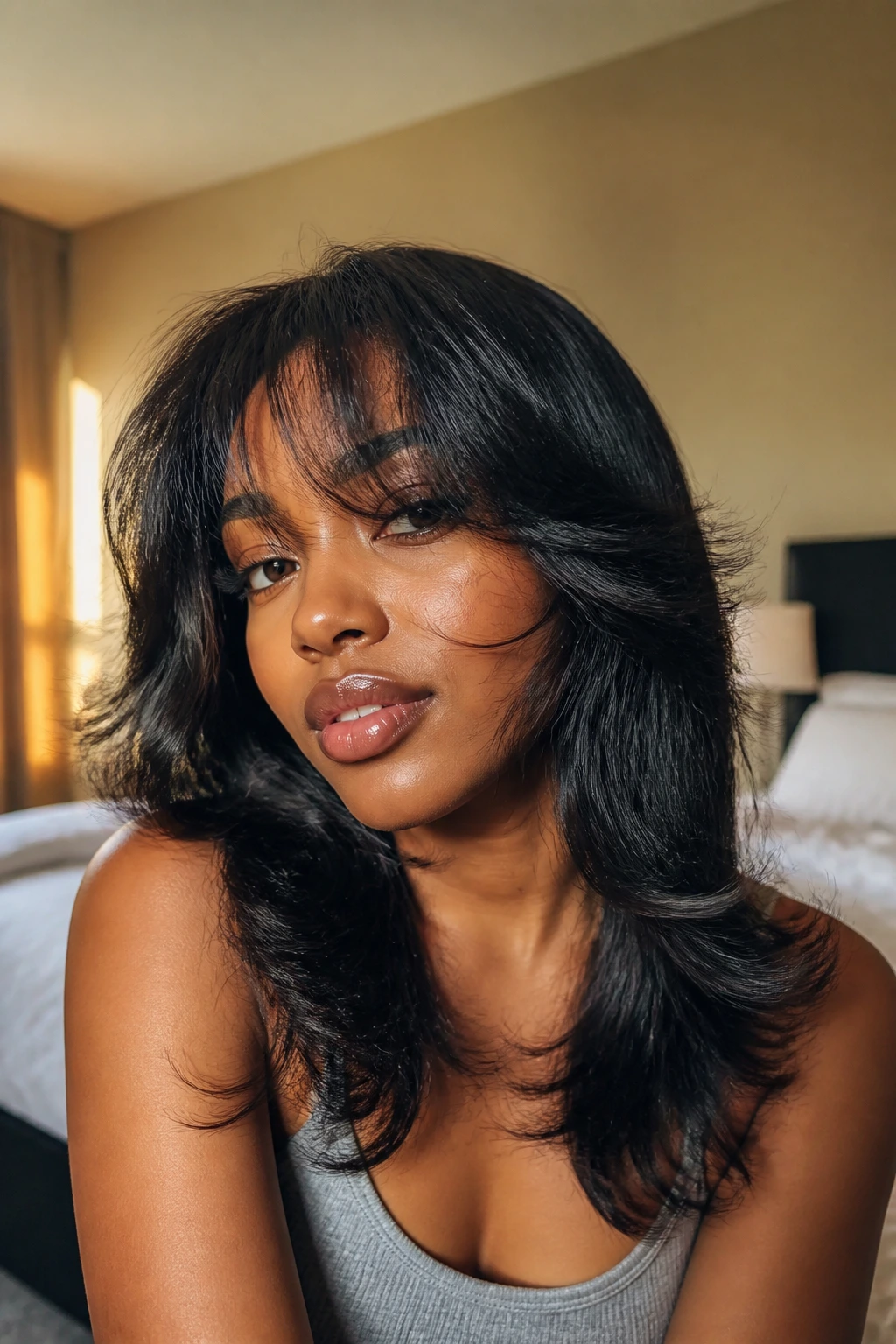
Feathered bangs are for people who like the old salon blowout feel but do not want the front to sit hard and blocky. The hair is cut long enough to sweep, then feathered so the ends move instead of clumping together. On fine strands, that softness is doing a lot of work.
The trick is to keep the front light at the ends and fuller at the root. A round brush, low heat, and a nozzle attachment can shape the hair without frying it flat. If the front is curled too tightly, it starts to look small; if it’s left completely straight, it can fall limp by noon.
A feathered fringe also gives you some forgiveness on off days. It looks intentional even when you don’t spend long on it. That matters more than people admit.
5. Chin-Grazing Face Framing That Acts Like Bangs
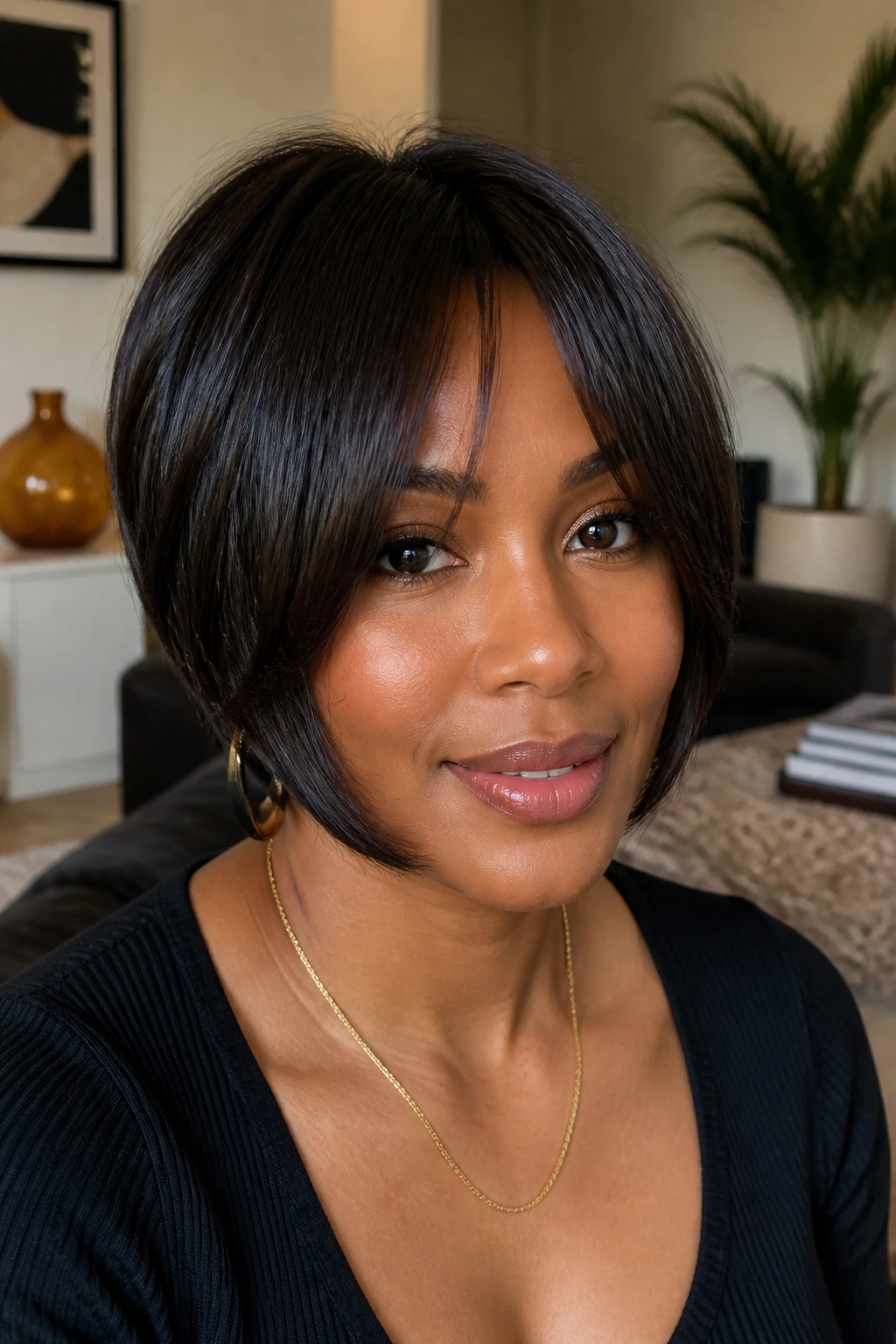
Sometimes the smartest “bang” is not a bang at all. Chin-grazing face-framing layers can give the same softening effect at the forehead and temples without leaving a full front section to fight with every morning.
This is the move for anyone who likes shape but hates commitment. The shortest pieces still skim the face, but the cut feels like a longer haircut with a fringe effect. Fine hair usually behaves better this way because the weight sits farther down, where the strands can hold it.
It’s especially handy if your front swirl does whatever it wants or if you wear your hair up a lot. The pieces can tuck behind the ears, fall beside the cheeks, or blend into a low ponytail without looking like a mistake.
6. Razor-Soft Silk Press Bangs
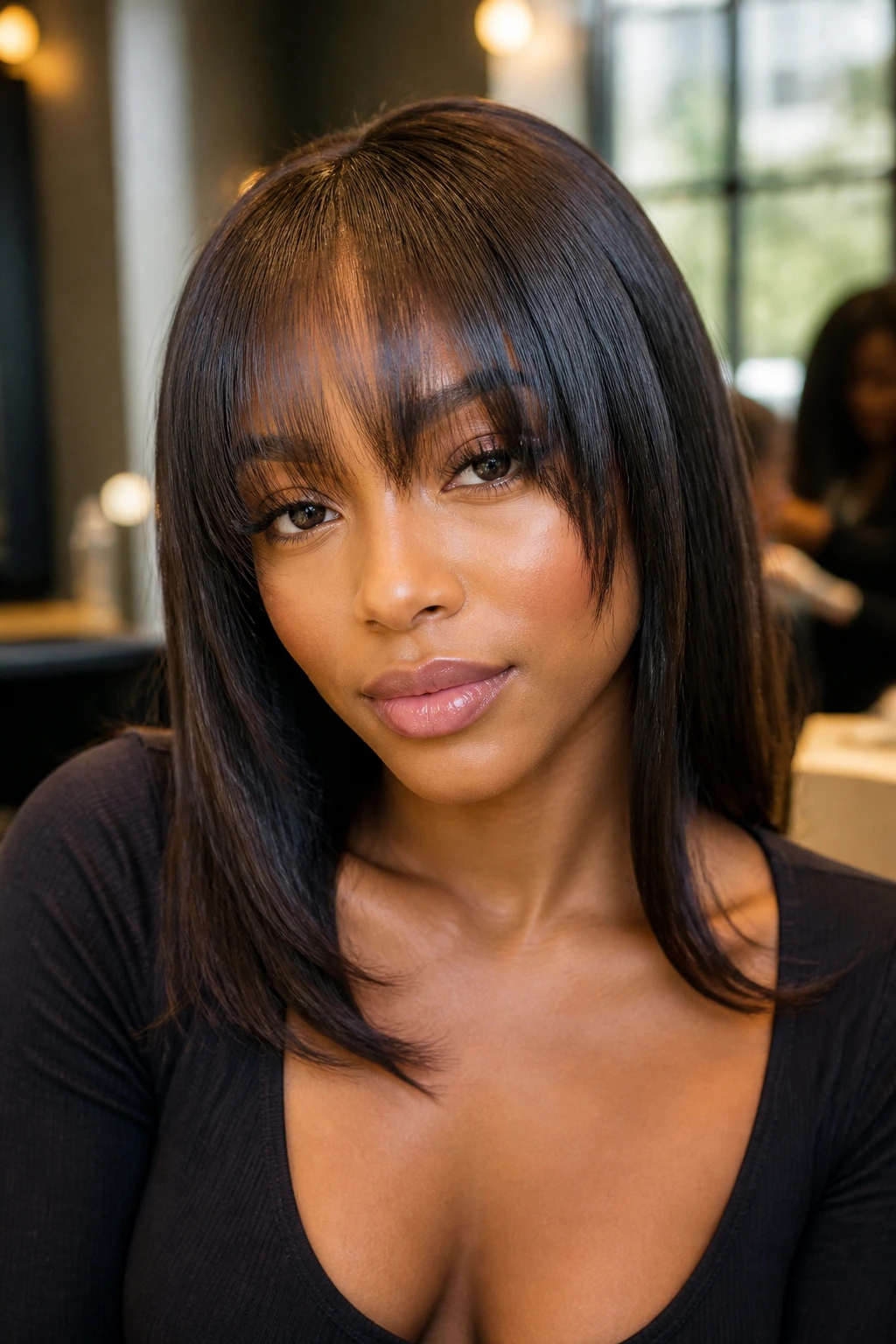
Unlike blunt straight-across bangs, razor-soft fringe gives fine hair room to breathe. The ends are lightly textured so the front doesn’t sit like a board, and the line around the forehead reads soft instead of severe. On a silk press, that can be the difference between polished and stiff.
This cut needs a careful hand. Too much razor work and the fringe turns whisper-thin at the tips, which is not flattering when the front already has less density. I prefer a gentle point-cut finish or light slide cutting over anything aggressive.
Wear it with heat protectant, a one-inch iron, and a low pass at the roots. One pass. Not five. Fine hair shows damage fast, and bangs sit in the most visible spot on the head.
7. Stretched Curly Bangs With Room to Shrink
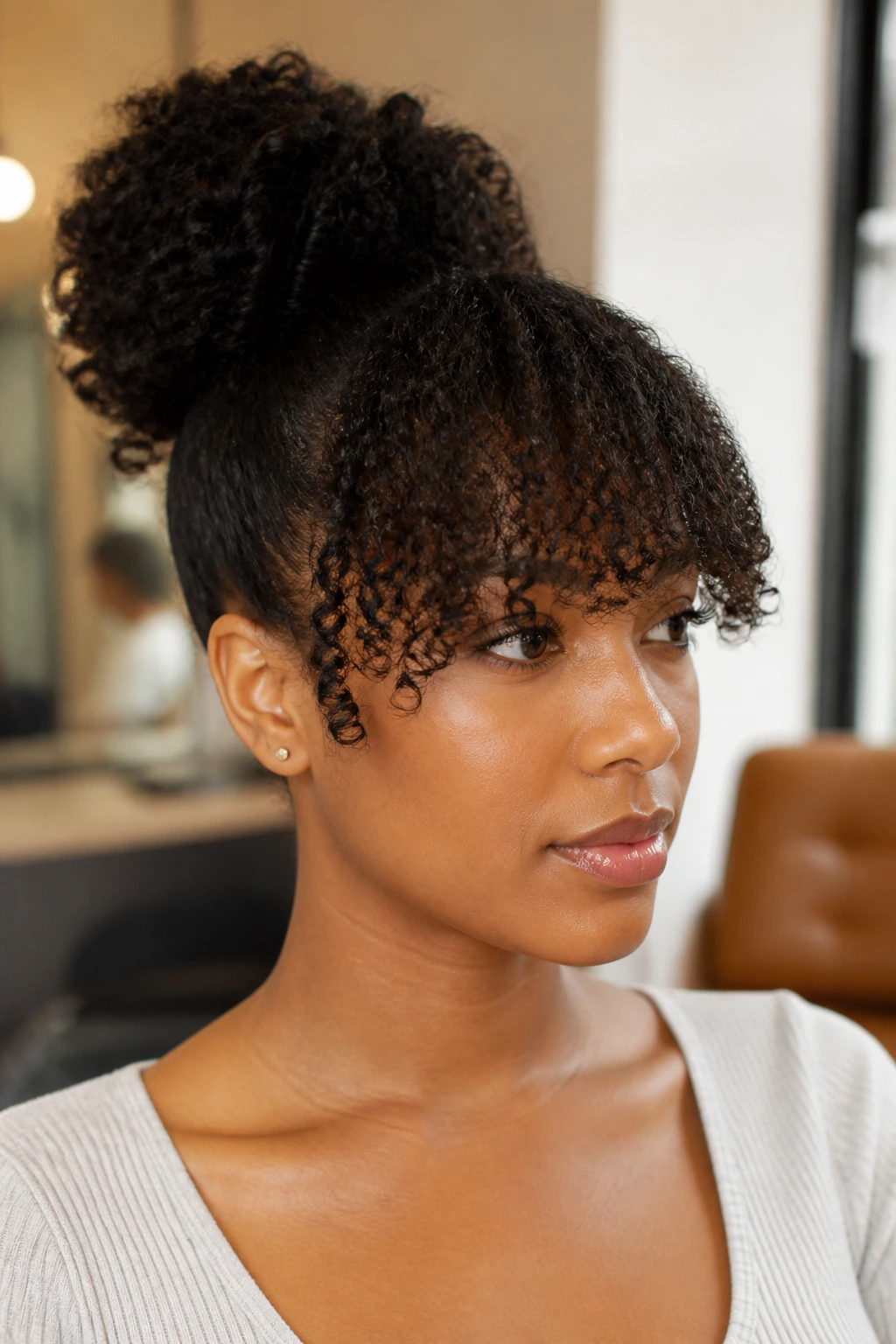
Can curly bangs work on fine hair? Yes, if you stretch the front first and let the curls clump instead of forcing them to stand alone. The bang section looks fuller that way, and the shrinkage stays predictable instead of springing up like a surprise.
Banding, large twists, or a diffuse blow-dry on low heat can all stretch the front without flattening it. I would keep the shortest pieces slightly longer than you think you need; fine curly hair often looks shorter once it dries. That small cushion matters.
How to wear it
Finger-coil only a few front pieces if the curl pattern is loose. If the front is tighter, leave the coils soft and separated rather than sculpted. The goal is movement at the brow, not a row of tiny springy dots that disappear into the rest of the hair.
8. Twist-Out Bangs With Soft Separation
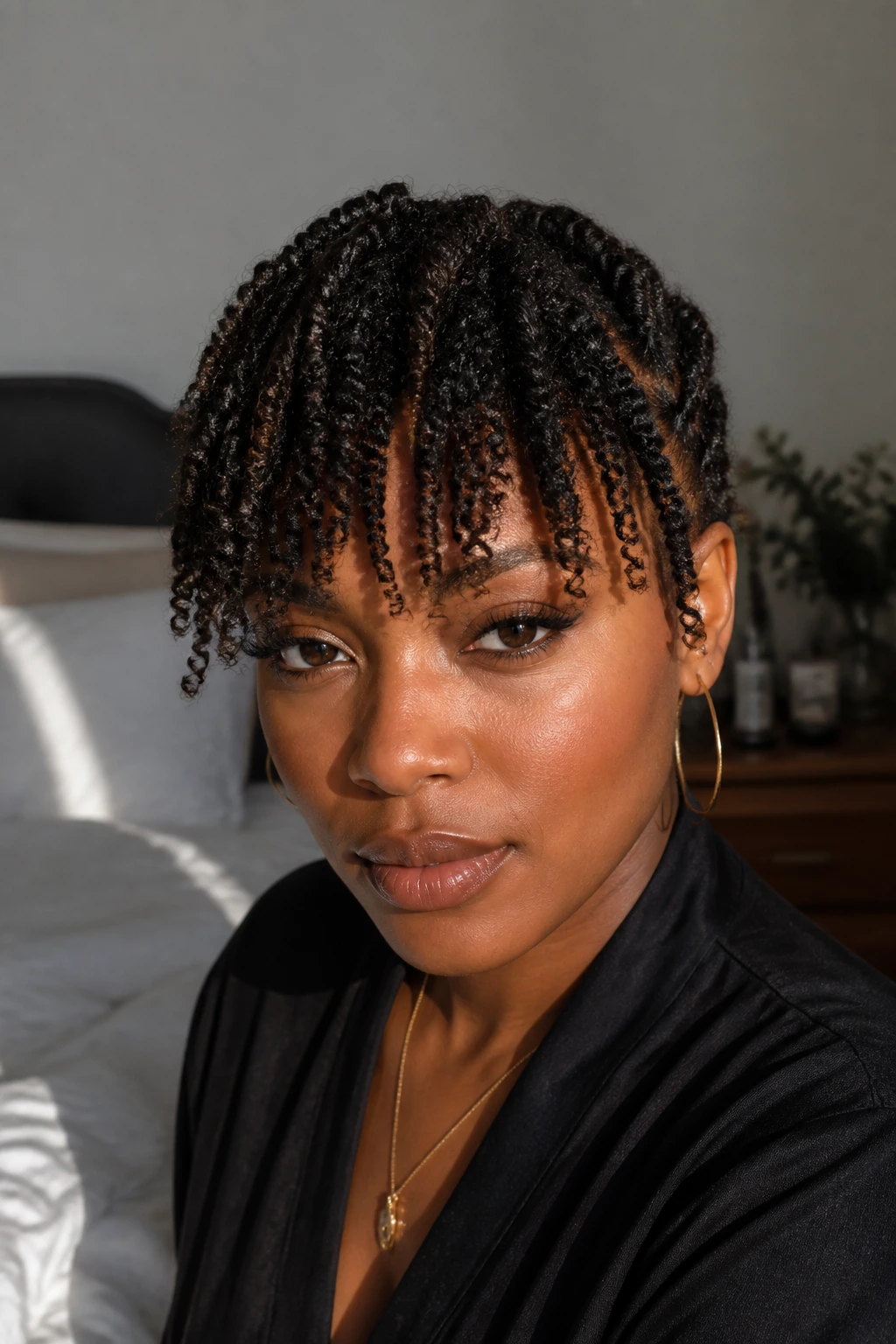
A twist-out is one of the safest ways to fake fullness at the front. The twists give the hair a memory, the unraveling creates separation, and the bang reads fuller than it looked when it was still damp. That is a good trade on fine hair.
Use small to medium twists near the hairline and stop the pattern near the temples so the front doesn’t widen too much. You want the bang section to fall forward, not spread sideways and steal density from the rest of the cut.
The real trick is patience. If the front is even a little damp when you take the twists down, it goes fuzzy and loses shape fast. Let it dry all the way, then separate with oiled fingertips, not a brush.
9. Roller-Set Bangs With Root Lift
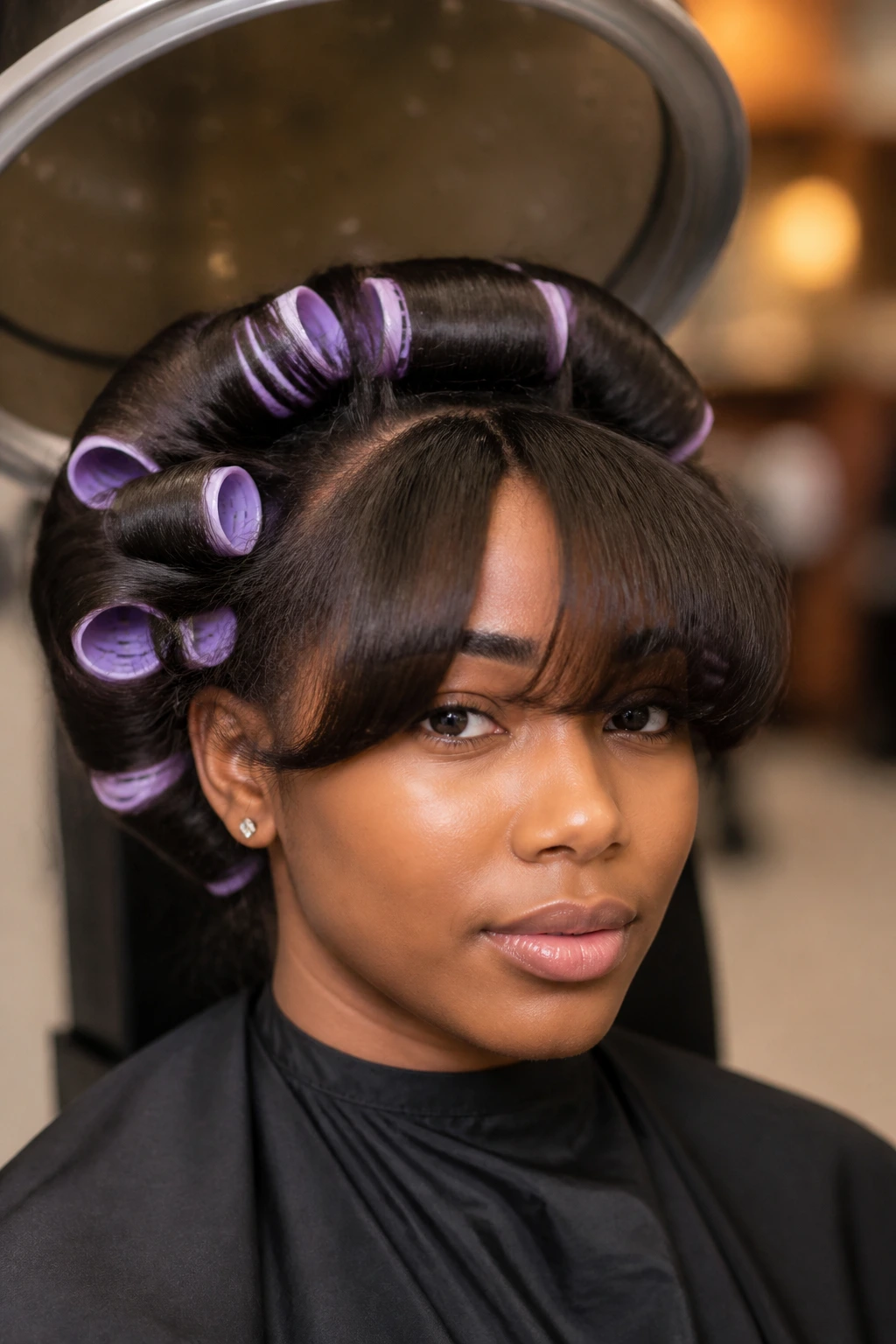
What makes rollers so good for bangs that keep lying flat? They put the root on a little shelf before the hair cools, and that lift is half the battle on fine strands. The curl at the ends is nice, but the shape at the scalp is the part that saves the look.
Use magnetic rollers or foam rollers if the hair is short in the front. A hooded dryer helps, but a well-secured wrap and a long dry time can work too. Bigger rollers create a softer bend; smaller ones create more curl, which can start to look busy on a narrow bang.
How to use it
Roll the front away from the face, not straight down. Let the hair cool completely before taking the rollers out. If you separate too soon, the front collapses and the ends puff in the wrong direction.
10. Bangs That Sweep Into a Ponytail
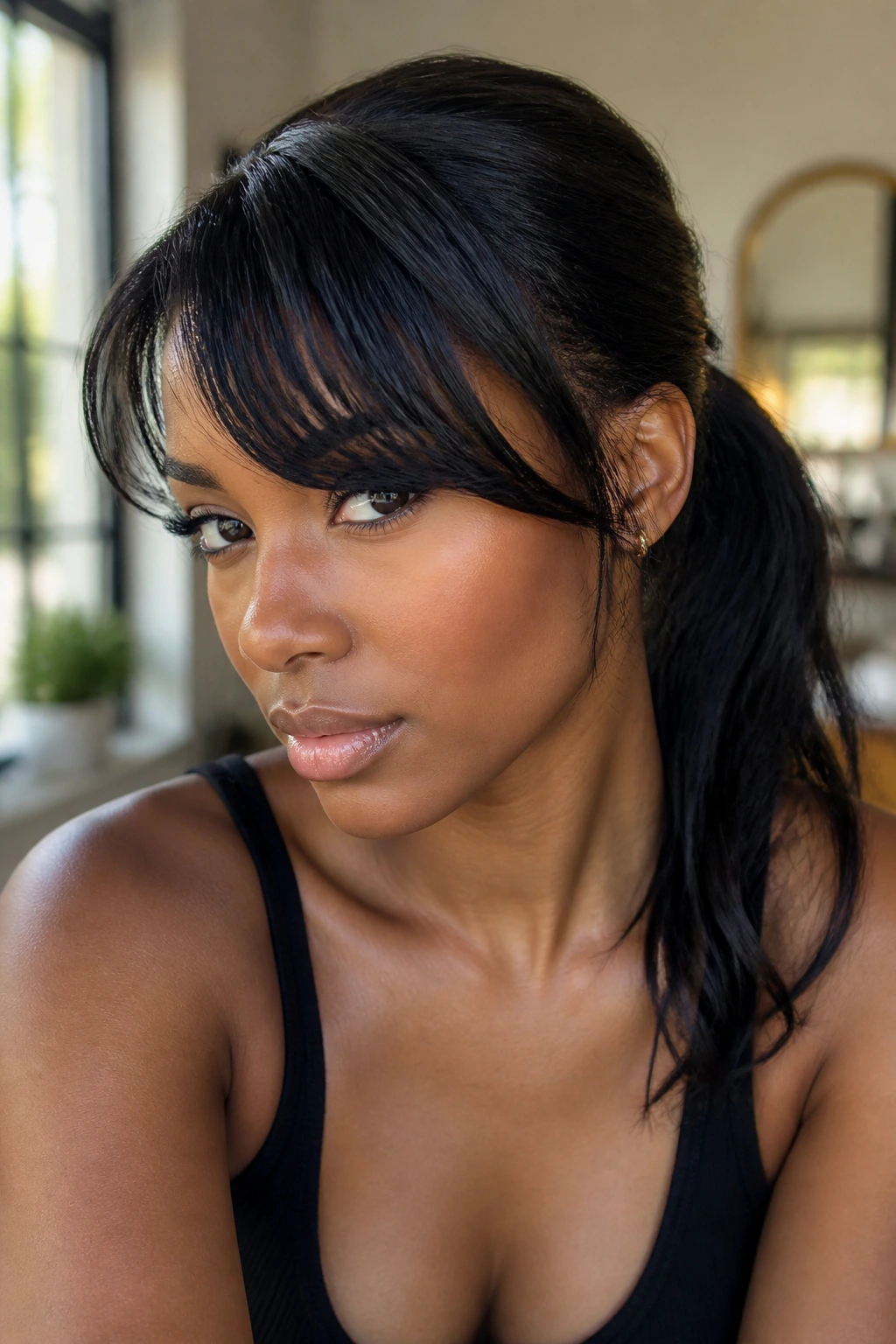
If you live in ponytails or puffs, the front should cooperate instead of looking like a separate haircut. Bangs that sweep into the ponytail solve that problem by starting at the hairline and angling the front pieces into the rest of the style.
The front gets brushed forward first, then directed to the side or center depending on the part. That keeps the face framing soft while the rest of the hair stays pulled back. Fine hair benefits from this because the style does not need a thick front section to read finished.
A little mousse at the roots helps here, but use it sparingly. Too much and the front gets crunchy. Too little and the bang floats away from the ponytail like it never got invited.
11. Invisible Front Layers That Disappear Into the Cut
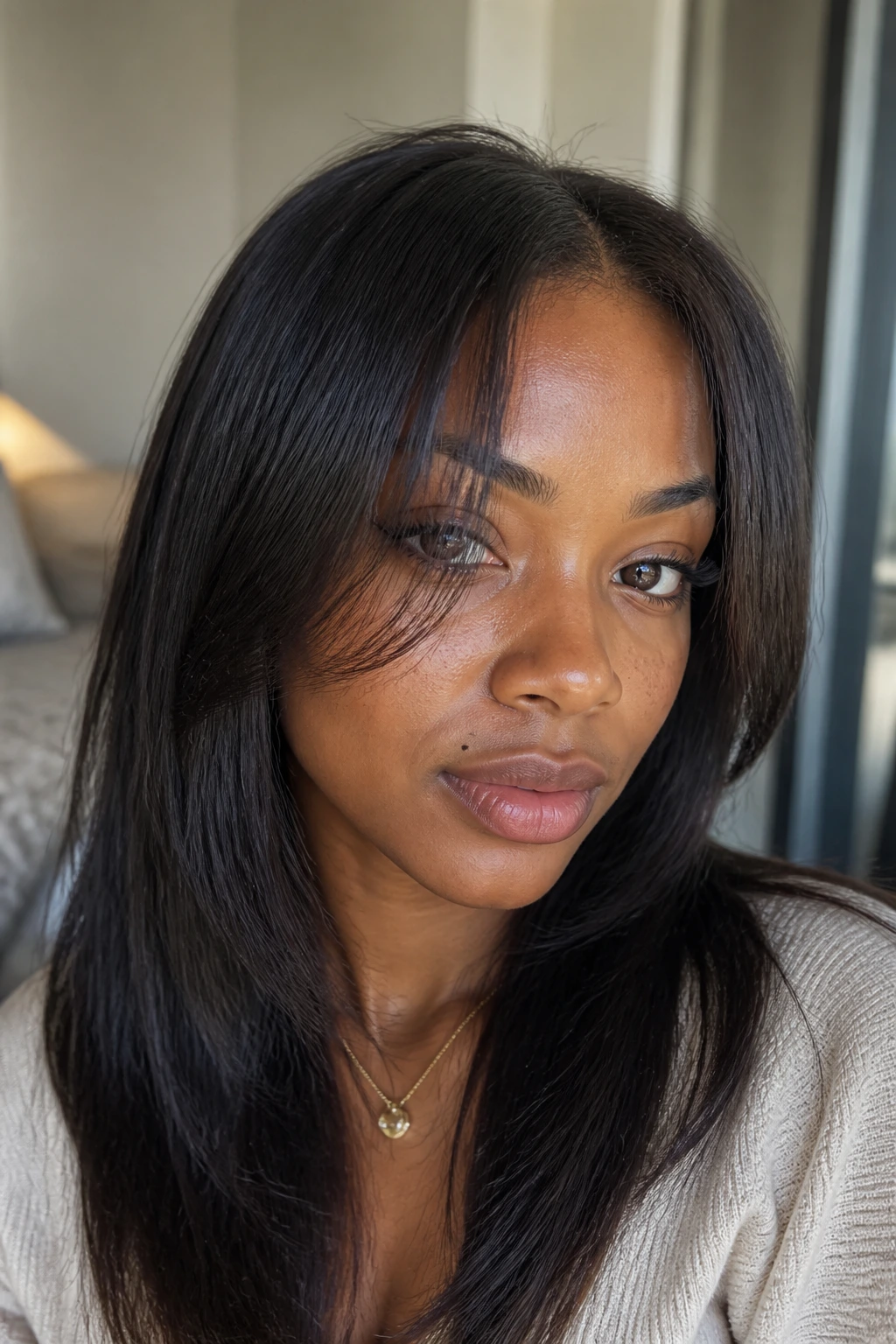
Invisible layers are for anyone who wants the bang effect without the obvious bang line. The front is cut so the shortest pieces barely announce themselves, then the layers slip into the rest of the haircut. On fine hair, that can be a lifesaver.
This style looks especially good when you wear your hair down often. There’s shape around the face, but nothing feels trapped or overbuilt. It also gives a little movement when you tuck one side behind the ear or flip the part the other way on the next wash day.
It does need maintenance. Because the cut is subtle, it loses shape before a louder fringe does. A quick trim every six to eight weeks keeps the front from drifting into a random grow-out.
12. Middle-Part Halo Bangs
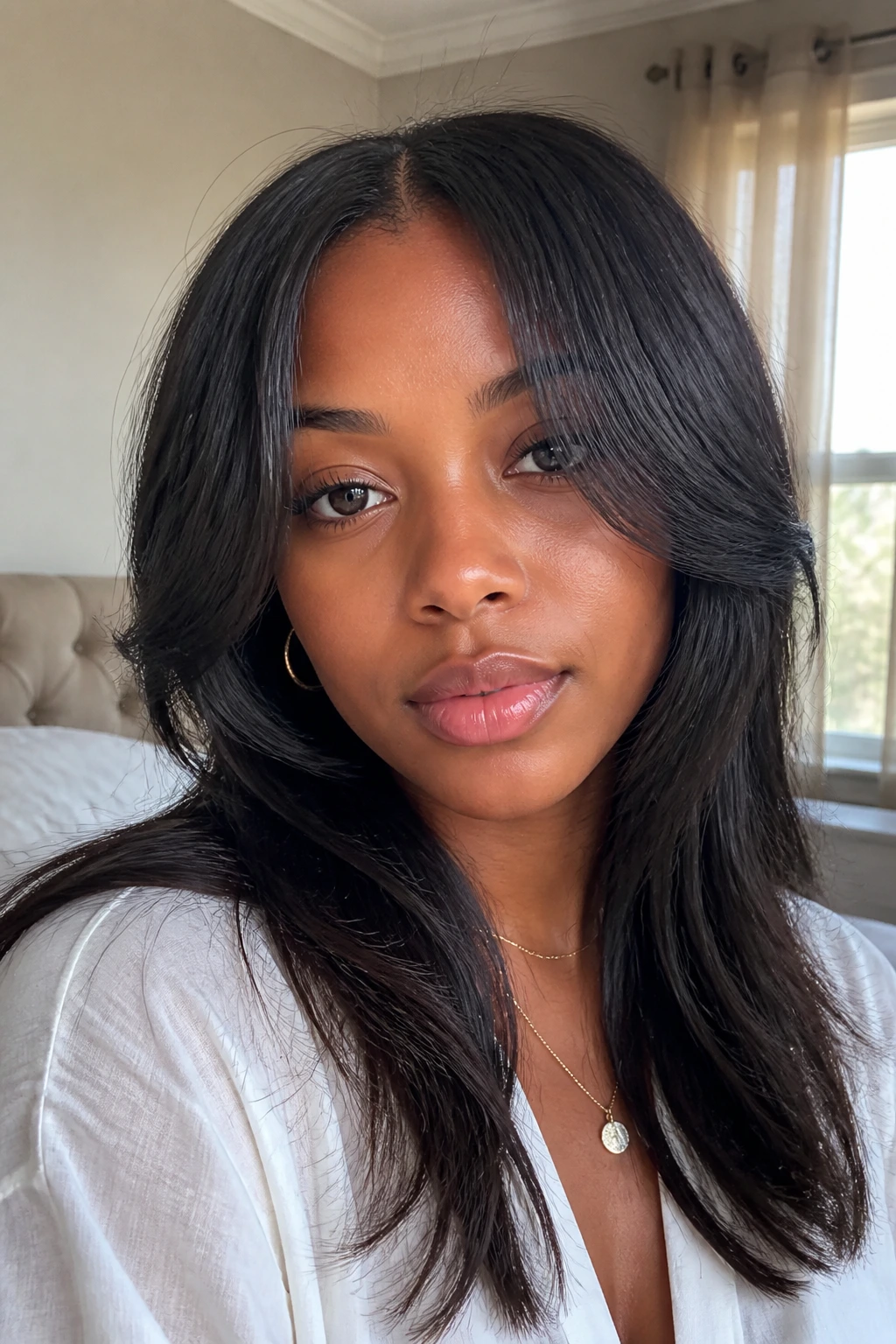
Middle-part halo bangs are like curtain bangs with a softer arc and a little more circle around the face. The shortest pieces sit near the brows, then curve outward toward the temples and cheekbones. That curve matters on fine hair because it keeps the front from looking narrow and stringy.
Compared with a straight curtain fringe, this version makes the face look wrapped in a soft frame. It’s a nice choice when the forehead is wider or when you want the bangs to connect to the rest of the length instead of stopping in the middle of the face.
I would reach for a 1.25-inch iron or large velcro rollers to build the bend. Keep the root lift close to the part; once the shape starts halfway down the strand, it looks like an afterthought.
13. Wig Bangs That Protect the Hairline
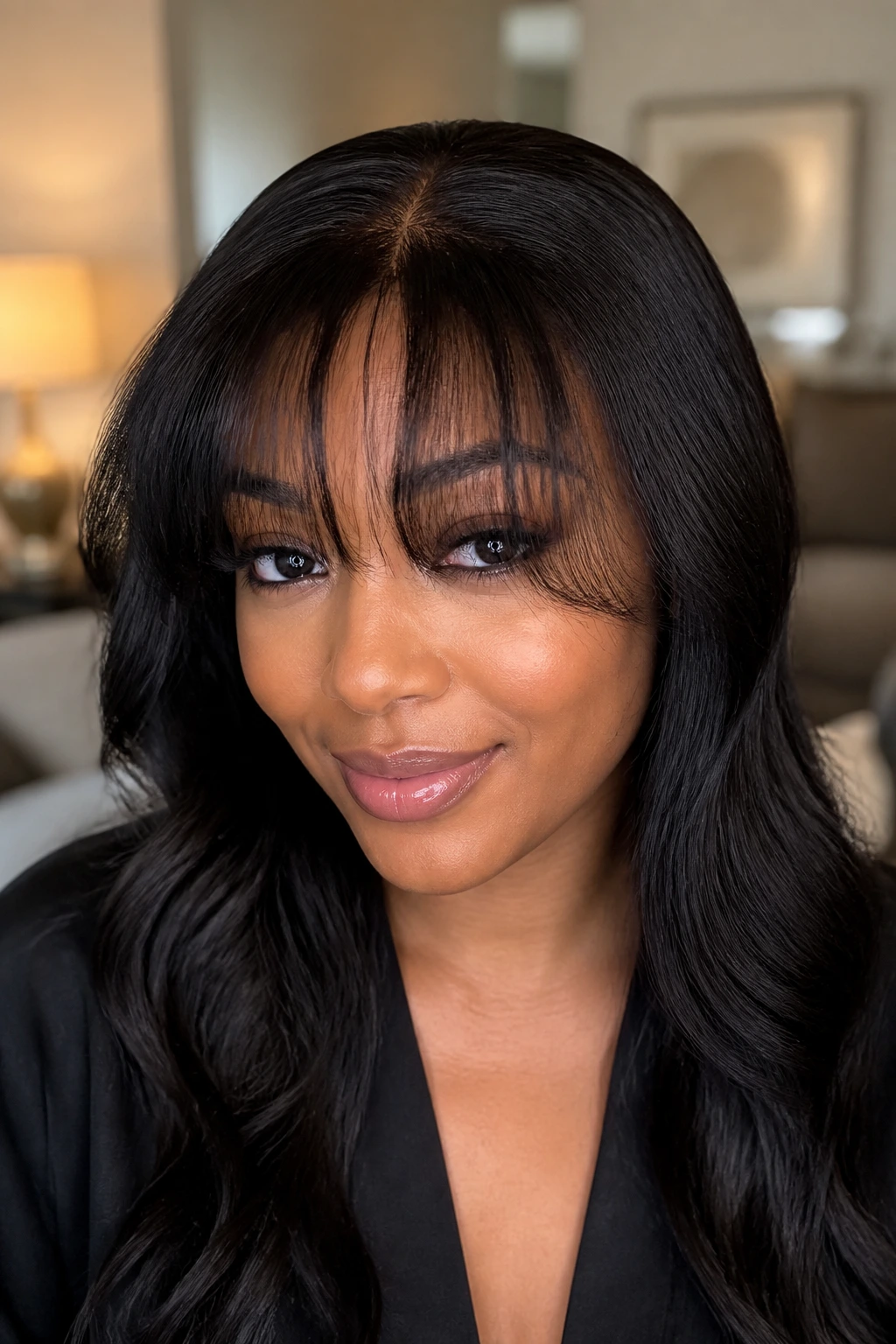
If your hairline needs a break, a wig with a soft bang is safer than trying to force your own edges into daily styling. The right wig bang should sit lightly, with enough space at the front so the lace or cap does not press too hard against the hairline.
Choose a lighter density in the bang area. Dense wig bangs can look stiff and get heavy fast, especially on smaller faces. A pre-plucked hairline and a slightly longer fringe help the whole thing read natural instead of pasted on.
What to ask for
Look for bangs that start a bit farther back and can be trimmed once the wig is on. That lets you customize the length without overcutting. A soft elastic band or adjustable strap is kinder than a tight glue-heavy setup if you plan to wear the piece often.
14. Sew-In Bangs With Leave-Out at the Front
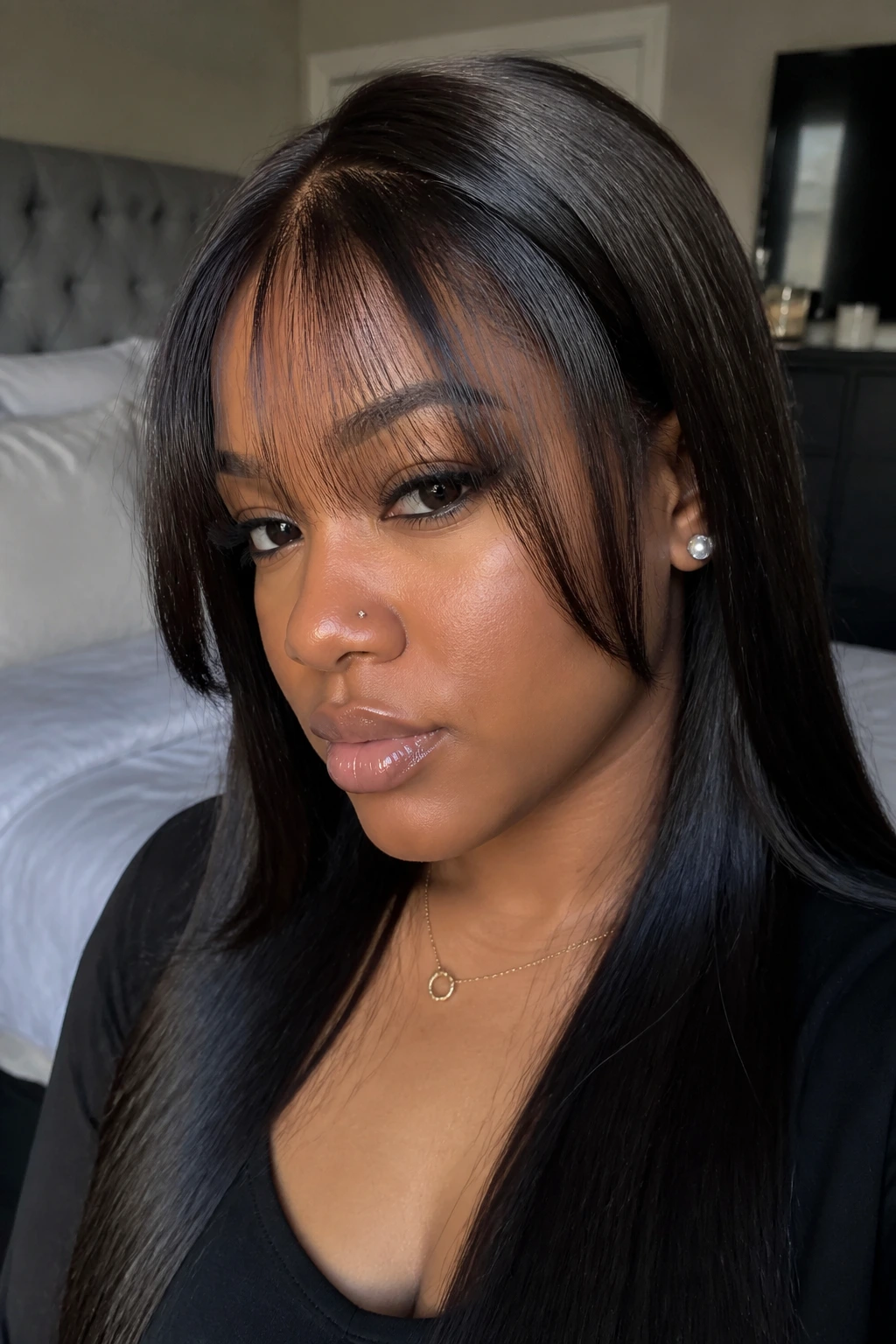
A sew-in can build the fullness that fine hair sometimes lacks at the front, but the leave-out has to be handled with care. Too much leave-out and the blend gets frizzy. Too little and the bang looks like it belongs to a different head.
The best version is usually a small front section that’s flat-ironed or stretched to match the install. Keep the leave-out narrow and shape it into the bang instead of trying to cover half the forehead. That gives you density without making the front bulky.
This is one of those styles where the install matters more than the finish. A good braid foundation, a flat base, and a bang section that sits forward without tension will save you a lot of daily fuss.
15. Clip-In Bang Pieces for Instant Fullness
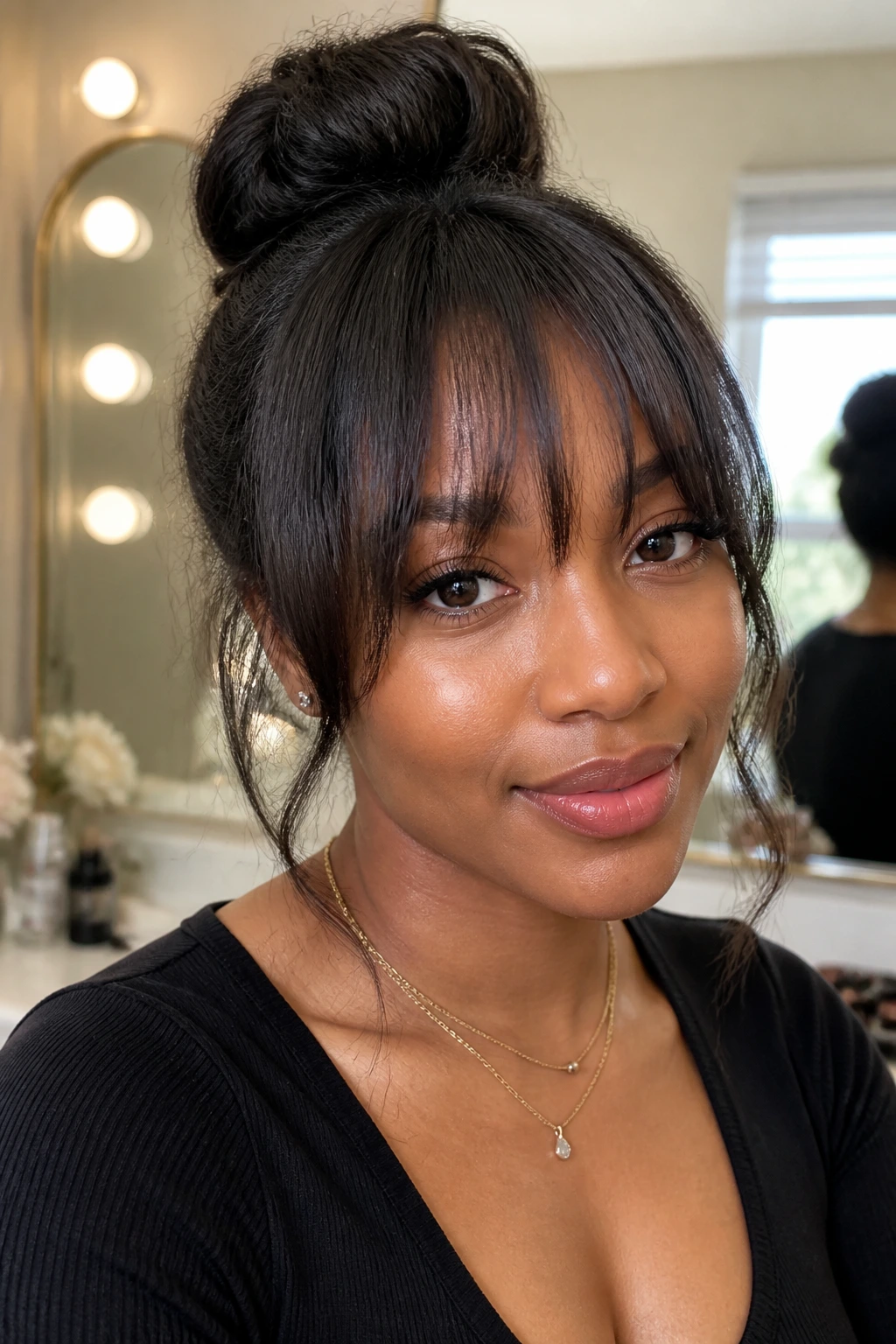
Can you fake long bangs without a cut? Absolutely. Clip-in bang pieces are the quickest answer when the front needs help only on certain days. They also keep fine hair from taking extra stress when you’re not ready for scissors.
The best ones have a narrow base and lightweight clips that disappear into your own part. Human hair pieces blend better than shiny synthetic ones, especially if your hair is heat-styled or has a soft texture. A bad match shows immediately around the brow.
How to place them
Clip the piece a half inch behind the hairline, then cover the attachment with your own front layers. A little root lift under the piece helps it sit flush. If the bang piece is too dense, trim it in tiny snips — not a big chop — until it sits with your face instead of crowding it.
16. Temple-Tapered Bangs That Don’t Crowd the Face
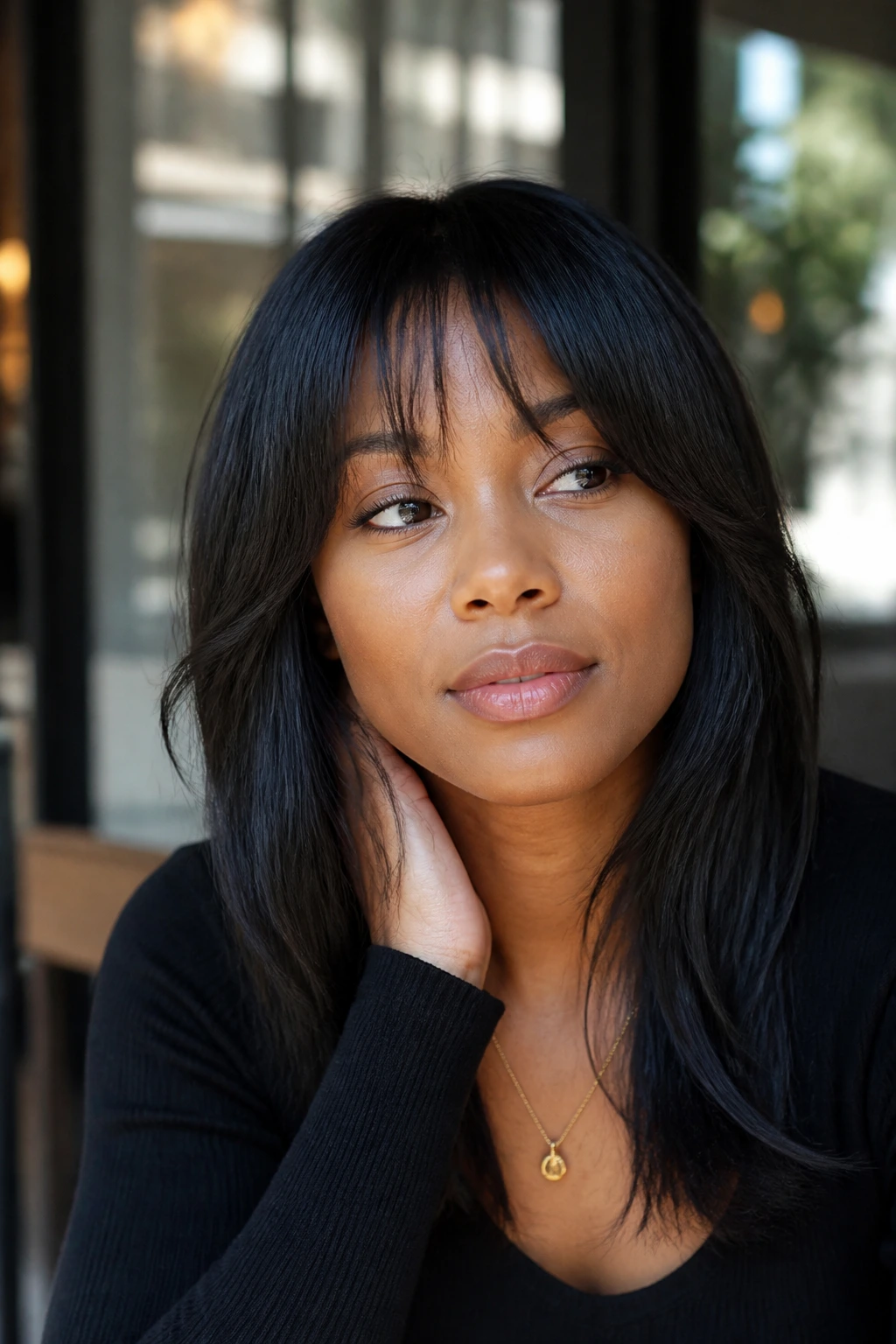
Why do the temples matter so much? Because that’s where a lot of fringe either blends gracefully or starts to feel boxy. Temple-tapered bangs stay slightly shorter in the center and lengthen as they approach the sides, which is kinder to fine hair than a uniform wall of hair across the forehead.
This shape is especially good if your face is round, square, or framed by glasses. The longer temple pieces narrow the face without stealing too much hair from the middle. It’s subtle. That’s the point.
The cut also grows out in a calmer way. The center can be tucked or pinched back, while the side pieces continue doing the softening work. That means fewer mornings spent wrestling with the same one stubborn section.
17. C-Curve Bangs With a Flat-Iron Bend
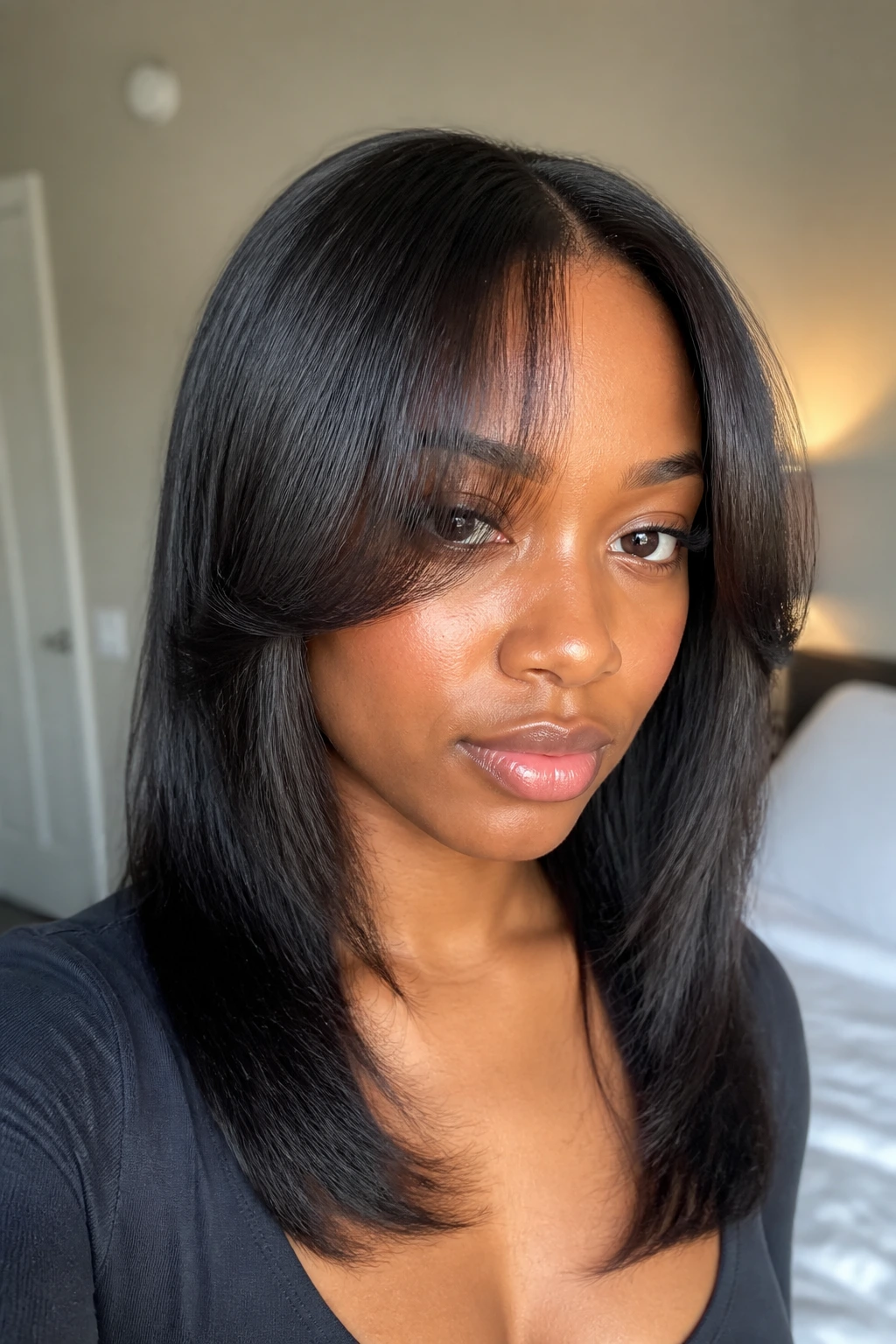
A C-curve bang is what you wear when you want polish without stiffness. The front falls forward, then bends in a loose C at the ends so the shape hugs the face instead of hanging straight. On fine hair, that small bend can make the whole style feel more alive.
Use a one-inch flat iron and create one smooth arc at the end, not a full curl. If you overdo the bend, the bang can look shorter than intended and reveal too much forehead. One pass is enough if the hair is cleanly sectioned and dry.
This style likes a little serum on the ends and nothing heavy at the roots. A greasy front kills the movement fast. Keep the shine at the tips, where it reads as healthy, not oily.
18. Bangs That Sit With Braids or Cornrows
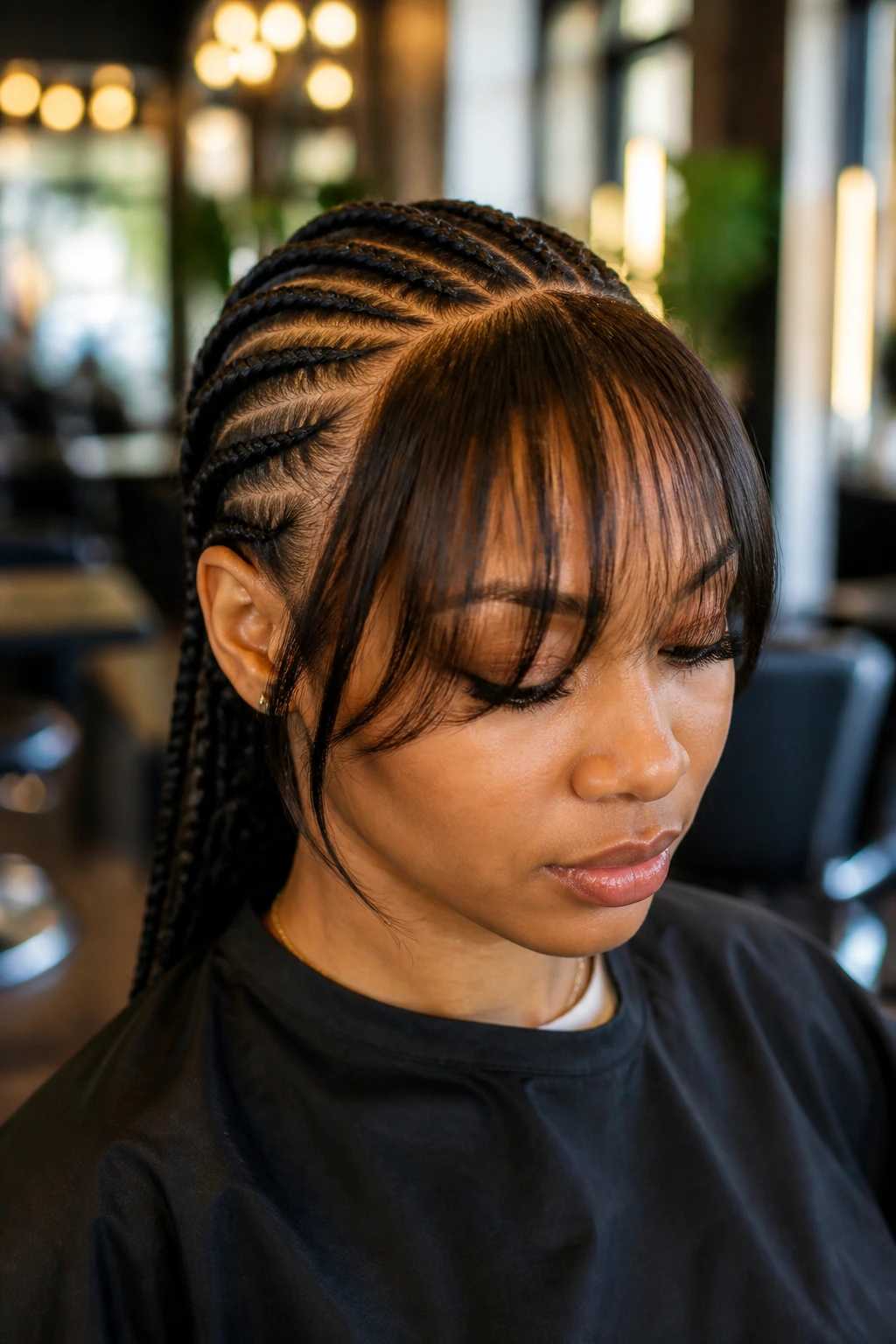
Unlike loose bangs, this version keeps the front intentional when the rest of the hair is braided, twisted, or cornrowed. You can leave a small front section out, shape it into a fringe, and let the braids do the rest of the heavy lifting. It’s a neat solution when you want face framing but still want the protection of a braided style.
The bang section should stay slim. Too much leave-out can get frizzy and pull the eye away from the braids. If the rest of the style is tight, the fringe should be soft enough to balance it — not another piece competing for attention.
I like this on medium or long braids where the front fringe can move. A side sweep usually works better than a blunt center piece here because the diagonal line blends more naturally with the braided parts.
19. High-Puff Bangs With a Soft Front
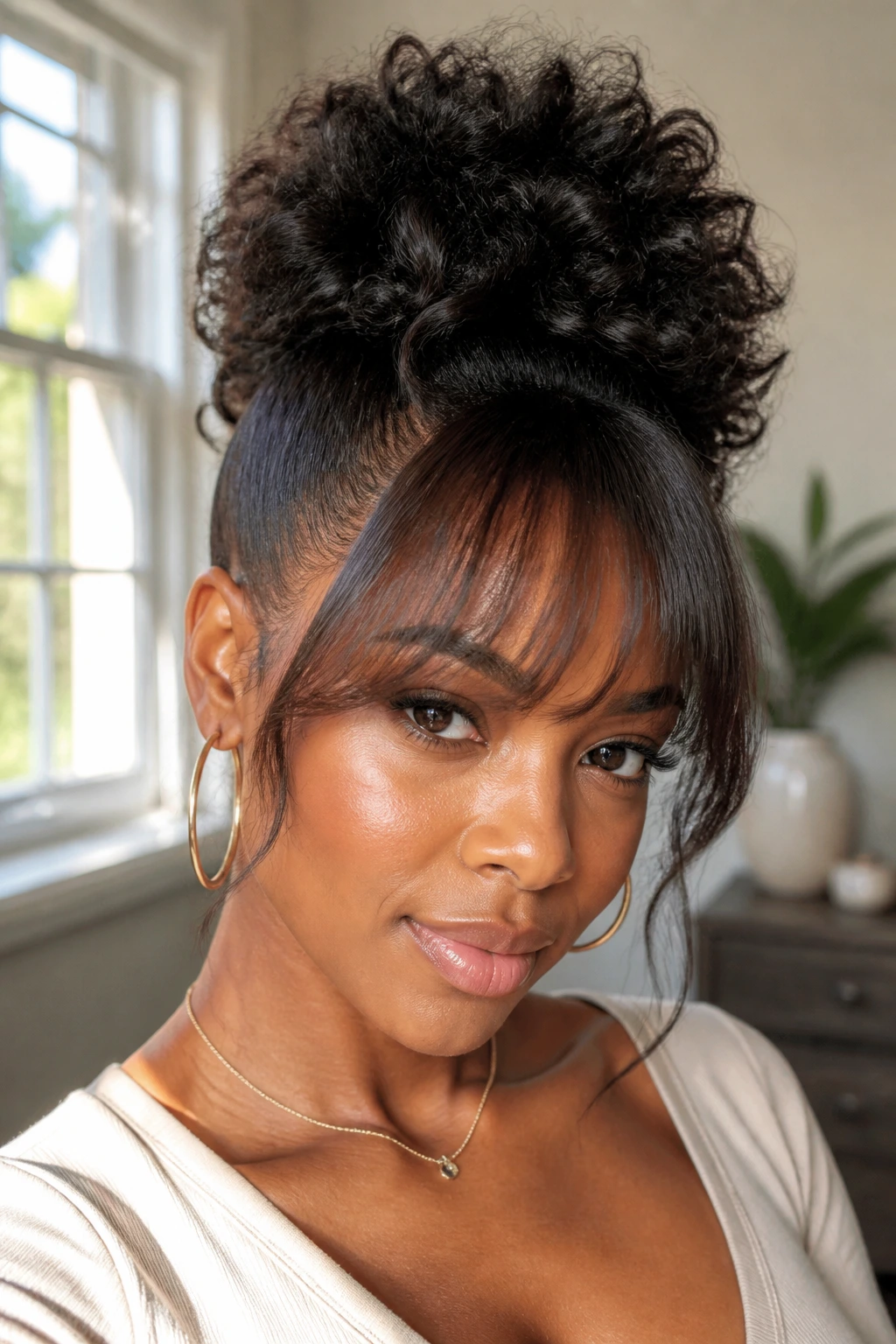
A high puff looks sharper when the front is not slicked back to the scalp. A soft bang in front gives the style a little air and keeps the puff from reading like a strict bun with volume on top. That softness matters more when fine hair is involved because the front can disappear fast if it’s over-gelled.
Leave the bang section stretched, brushed forward, or lightly curved with a denman-style brush before gathering the puff. The puff sits at the crown, and the front falls in a loose frame. If the edges are tight and shiny but the bang itself is soft, the contrast looks clean.
Use gel on the perimeter only if you need hold. The bang should stay touchable. Once it’s too slick, it starts clinging to the forehead and loses the whole point.
20. Low-Puff Bangs With a Loose Fringe
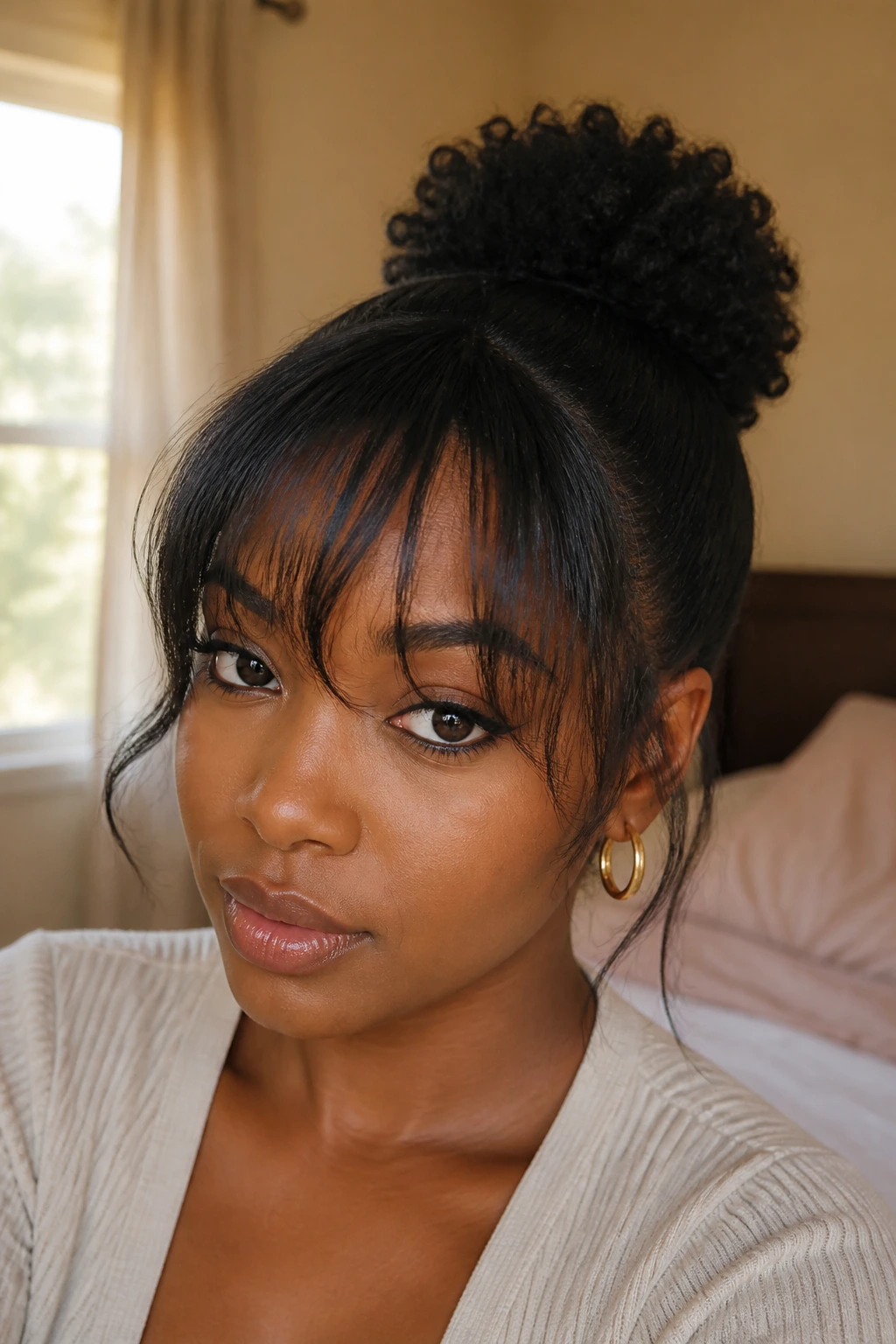
Want something calmer than a high puff? A low puff and a long fringe keep the profile soft and avoid pulling the front tight. It’s a comfortable style, and fine hair usually behaves better here because the tension stays low.
The fringe can be center-parted, side-swept, or just loosely brushed forward. The low puff sits close to the nape or mid-head, so the front does more visual work than the back. That’s useful if your strands are fine and you want the face to carry the style.
A satin scrunchie is kinder than a tight elastic. It holds the puff without biting into the hair. That little choice can save the front from a sad, flattened bend the next morning.
21. Glasses-Friendly Long Bangs

If you wear glasses, the bangs need to stop before the frame starts arguing with them. Long bangs that sit just below the brow or sweep diagonally toward the cheekbone are the easiest fix. They keep the front from snagging on the temples every time you turn your head.
A soft side part usually behaves better than a hard center part here. It keeps the fringe from piling directly on top of the frames. If your glasses are thick or square, a little curve in the bang helps break up the lines.
How to wear it
Keep the bang light enough to skim the frame, not press into it. If you’re cutting for glasses, test the shape with your frames on. That sounds fussy. It isn’t. It saves you from trimming the front too short and living with a permanent eyebrow situation.
22. Cheekbone-Grazing Wispy Bangs
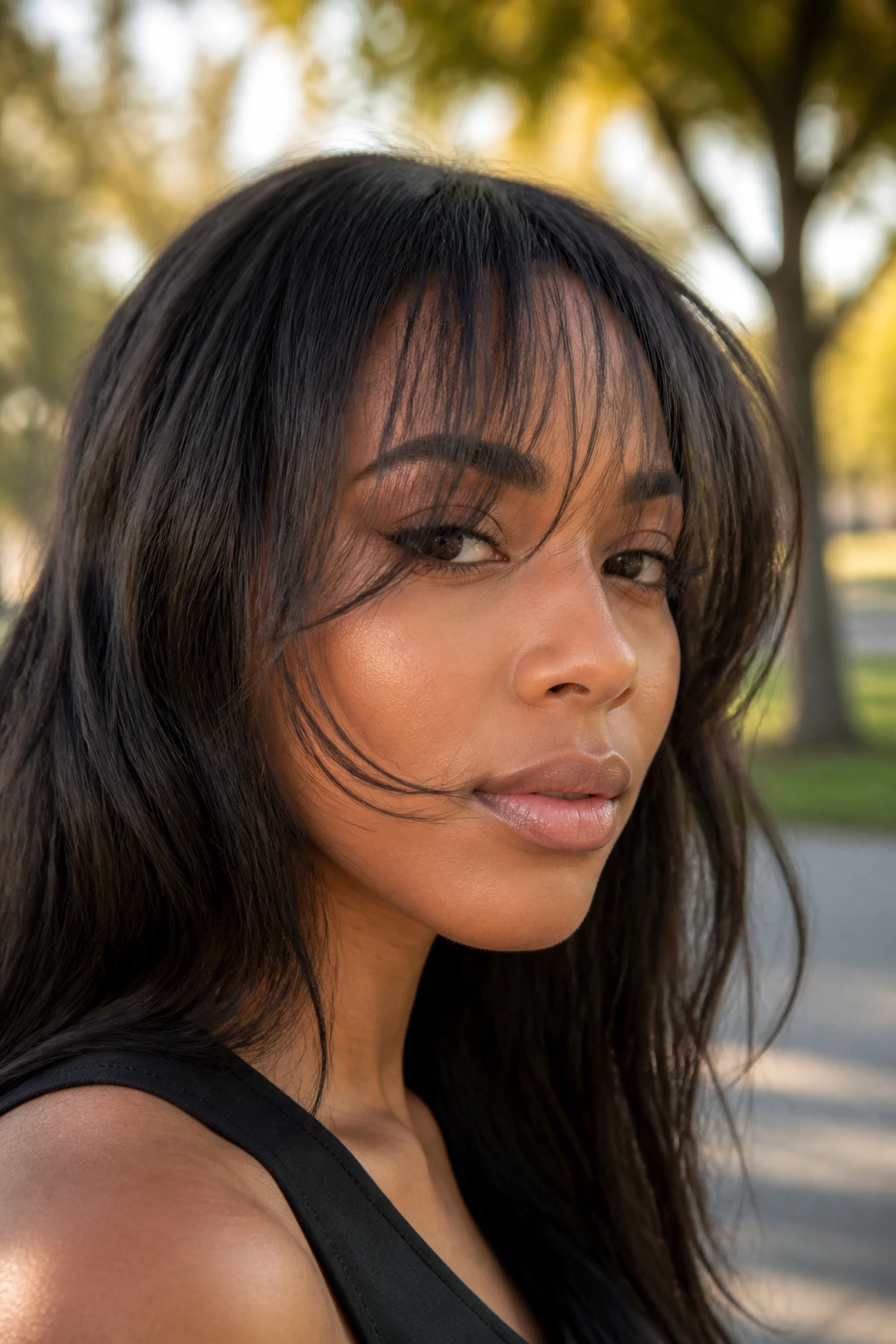
The lightest bangs in the batch are often the smartest. Cheekbone-grazing wispy bangs give the face softness without asking the front to behave like a full curtain. They’re especially nice when fine hair needs movement more than it needs coverage.
The key is to keep the strands separated, not over-layered. The pieces should land near the cheekbones or just above, with enough length to tuck or sweep away. If they’re cut too thin, they vanish; if they’re cut too heavy, they stop being wispy and start looking tired.
This style looks best with a touch of volume at the root and a quiet finish at the ends. A tiny amount of pomade or serum on the tips is enough. Anything more and the fringe loses that airy edge that makes it work.
How to Keep Long Bangs for Black Women with Fine Hair from Falling Flat
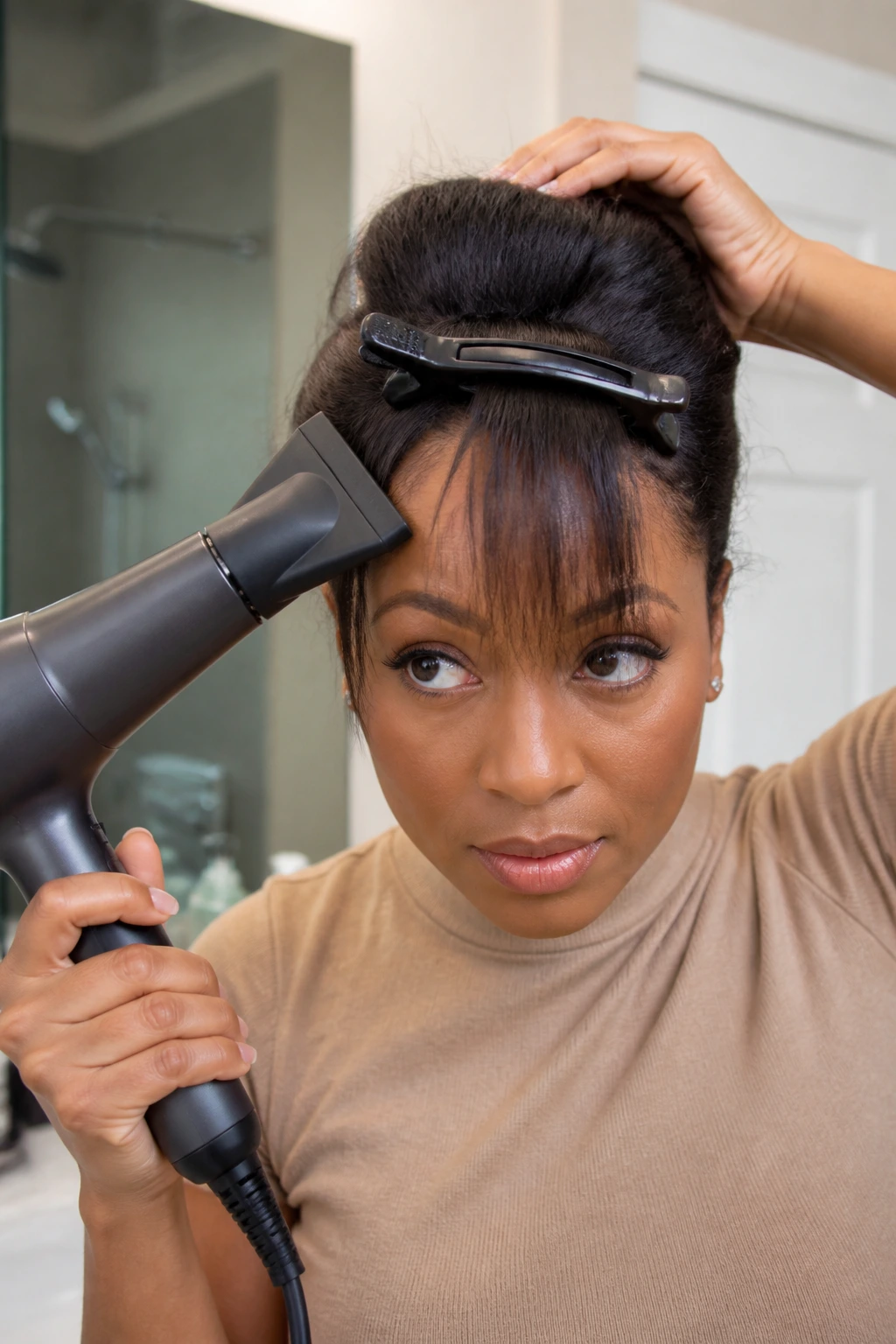
A fringe on fine hair needs a little discipline. Not much. Just enough.
The front section should be dried all the way before you touch it too much. Damp bangs collapse, split, and separate in ugly ways, especially if the hairline runs oily. If you use rollers, clips, or a round brush, let the section cool before you mess with it. That pause is doing more work than people think.
-
Start the lift at the root: Blow-dry the bang with the nozzle aimed up and away from the scalp for the first few passes. Once the root has direction, the rest of the strand behaves better.
-
Use less product than your hand wants to grab: Fine hair needs mousse, light foam, or a small drop of serum. Heavy butter, thick cream, and a big dab of oil make the front stringy by noon.
-
Clip the bang while it cools: A duckbill clip or a velcro roller at the front keeps the shape while the strand sets. Ten minutes is enough to help; thirty is better if your hair holds heat slowly.
-
Trim for the way you wear it, not for the photo: A silk press bang and a twist-out bang do not need the same length. Cut with your real routine in mind.
-
Respect the cowlick: If the front wants to split left, stop fighting it for the sake of symmetry. Work with the natural fall and let the shape shift a little.
What Usually Goes Wrong With Long Bangs for Black Women with Fine Hair
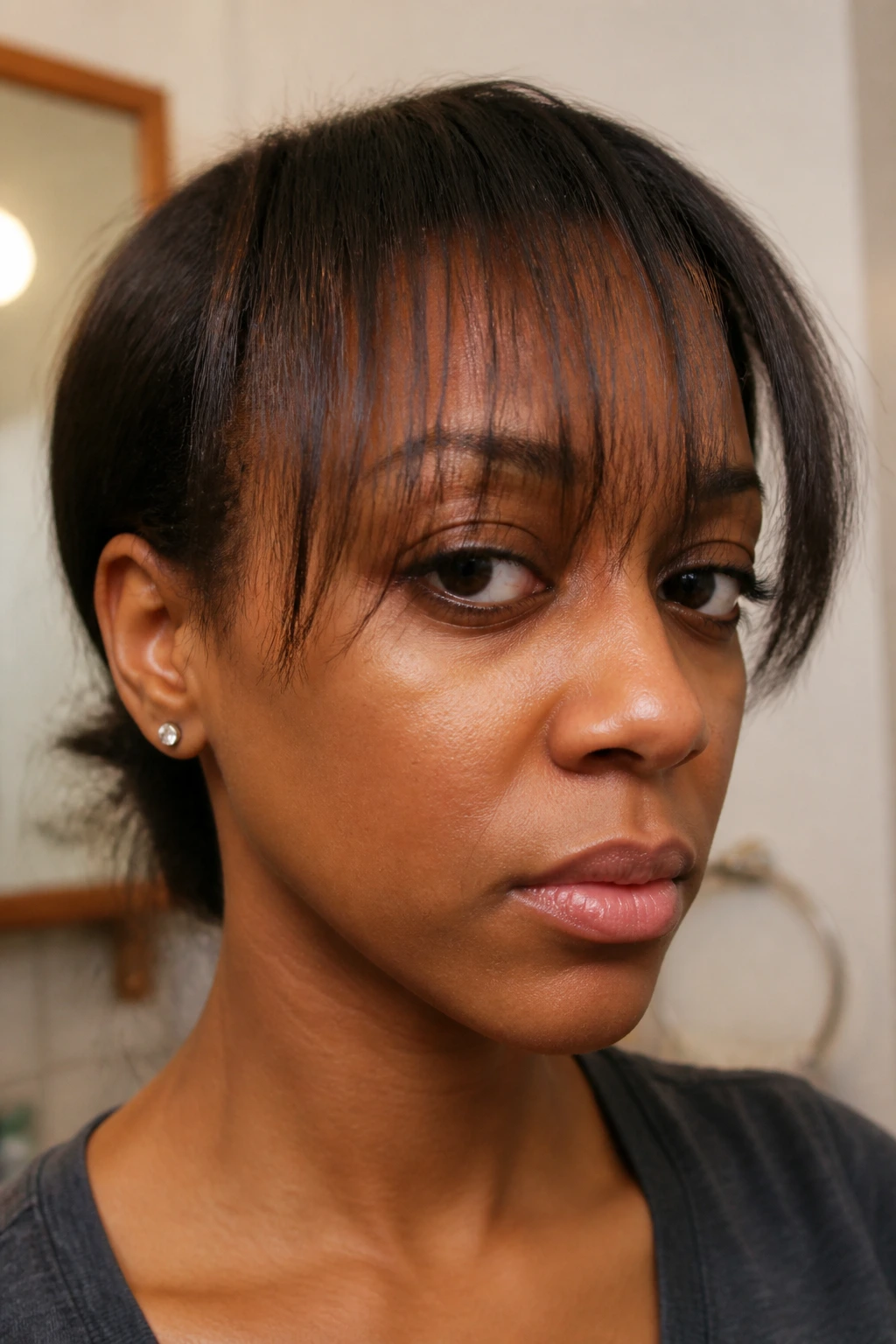
The first mistake is cutting the front too blunt and too wide. The bang looks full in the chair, then it dries and turns into a thin panel that shows every gap. The fix is a narrower front section and a softer line at the ends.
Over-thinning is another one. A stylist can take too much out with texturizing shears or a razor, and the front ends up wispy in the worst way — see-through, weak, hard to style. Ask for softness, not extra removal.
Product overload causes a lot of trouble too. Fine hair drinks oil from the front of the face and from the air, so the bang gets greasy faster than the rest of the style. If the fringe separates into little shiny strings, there’s too much product on it.
Shrinkage is the sneaky one. Curly or coily bangs can look right when wet and then jump two inches shorter once dry. Cut them longer, stretch them first, or you’ll spend the next week trying to grow back what was never there.
One more: ignoring the part. If the section starts too far back, the bang competes with the rest of the crown and collapses. Keep the front zone clean and small. It helps the fringe stand up and move instead of disappearing into the top layers.
Variations and Alternatives to Try
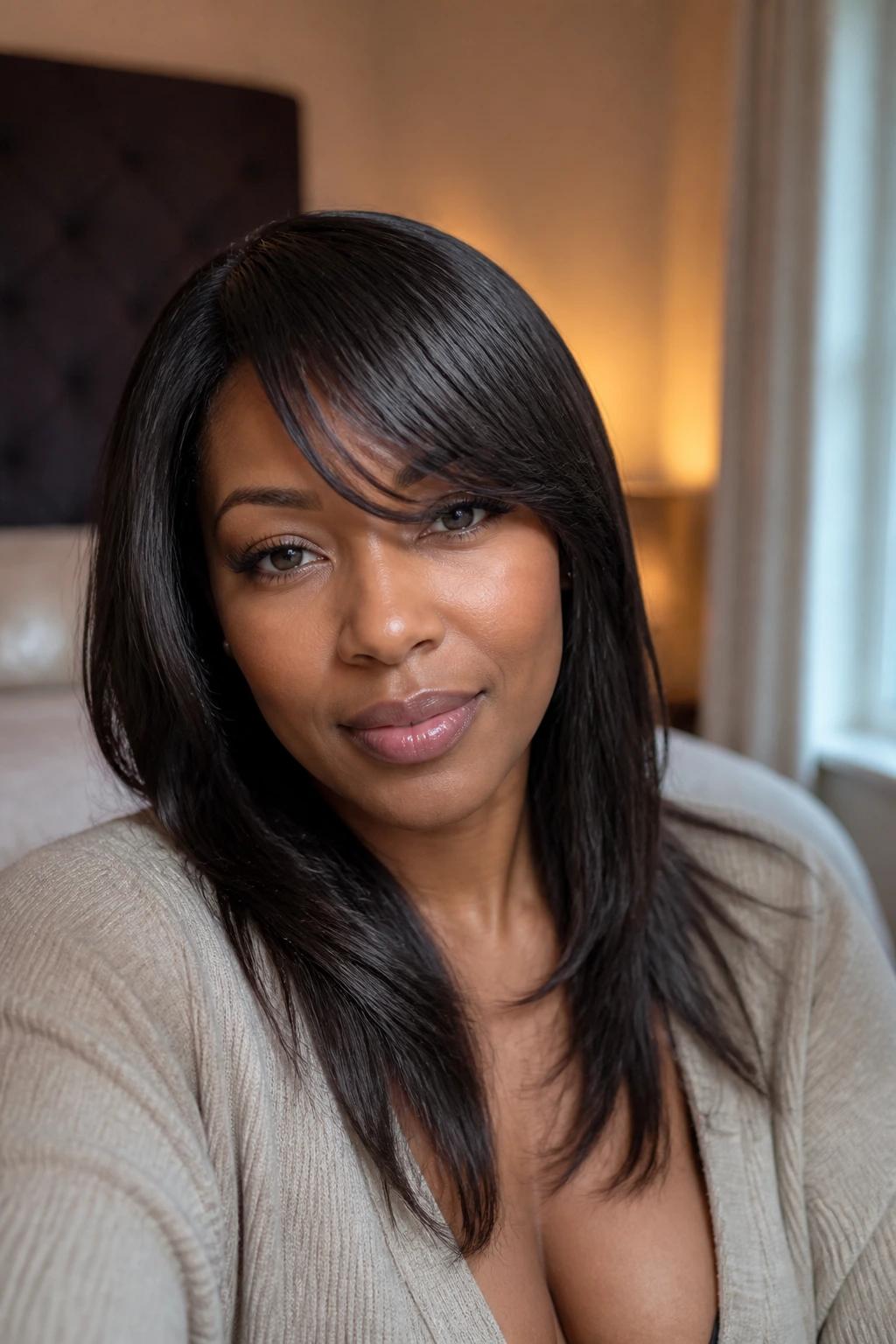
Heatless Front Set: Use flexi rods, banding, or a scarf wrap to set the front without hot tools. This works well if your fine hair gets limp fast under heat or if you want the bang to stay softer and springier.
Silk-Press Edition: Keep the fringe long enough to bend with a flat iron or round brush, then finish with a light serum. This version is best when you wear straight styles most often and want the front to sit neat without looking stiff.
Protective-Style Fringe: Pair a small leave-out bang with braids, twists, or a sew-in so the front softens the style without wrecking the protective part of it. The bang should stay small and easy to refresh, not treated like the main event.
No-Cut Commitment Version: Clip-in bang pieces and fringe toppers give you the shape without scissors. They’re smart if you’re testing the idea, growing out a bad cut, or wearing different looks from week to week.
Extra-Soft Grow-Out Version: Ask for a longer center and slightly more length around the temples. That gives you a fringe that still reads as bangs, but it survives the awkward stretch between salon visits much better than a blunt shape.
Essential Tools for Styling These Bangs
-
Tail comb: Clean parts matter here, and a tail comb gives you the control to keep the bang section small and tidy.
-
Blow dryer with concentrator nozzle: Direct airflow helps the front hold shape instead of puffing in random directions.
-
Round brush, 1 to 1.5 inches: Best for bending the ends under or away from the face without creating a hard curl.
-
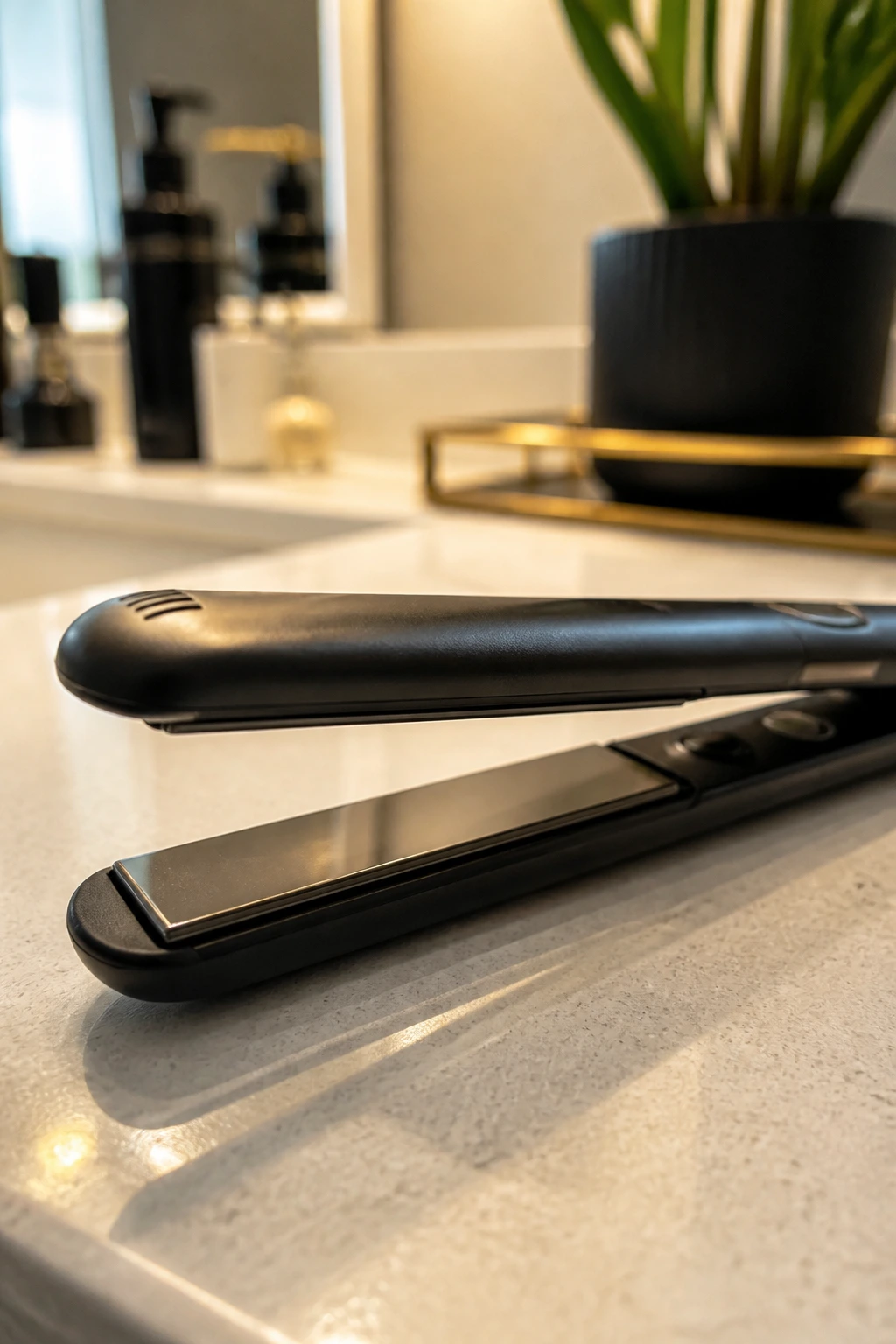
Flat iron, 1 inch: Useful for silk press bangs, C-curves, and quick touch-ups at the front.
-
Velcro or foam rollers: These add root lift and help fine hair remember a shape while it cools.
-
Duckbill clips: Small but useful for holding the front up while it sets.
-
Light mousse or wrap foam: Good for soft hold without the crunchy, greasy look.
-
Heat protectant spray: Non-negotiable if you use hot tools on the front.
-
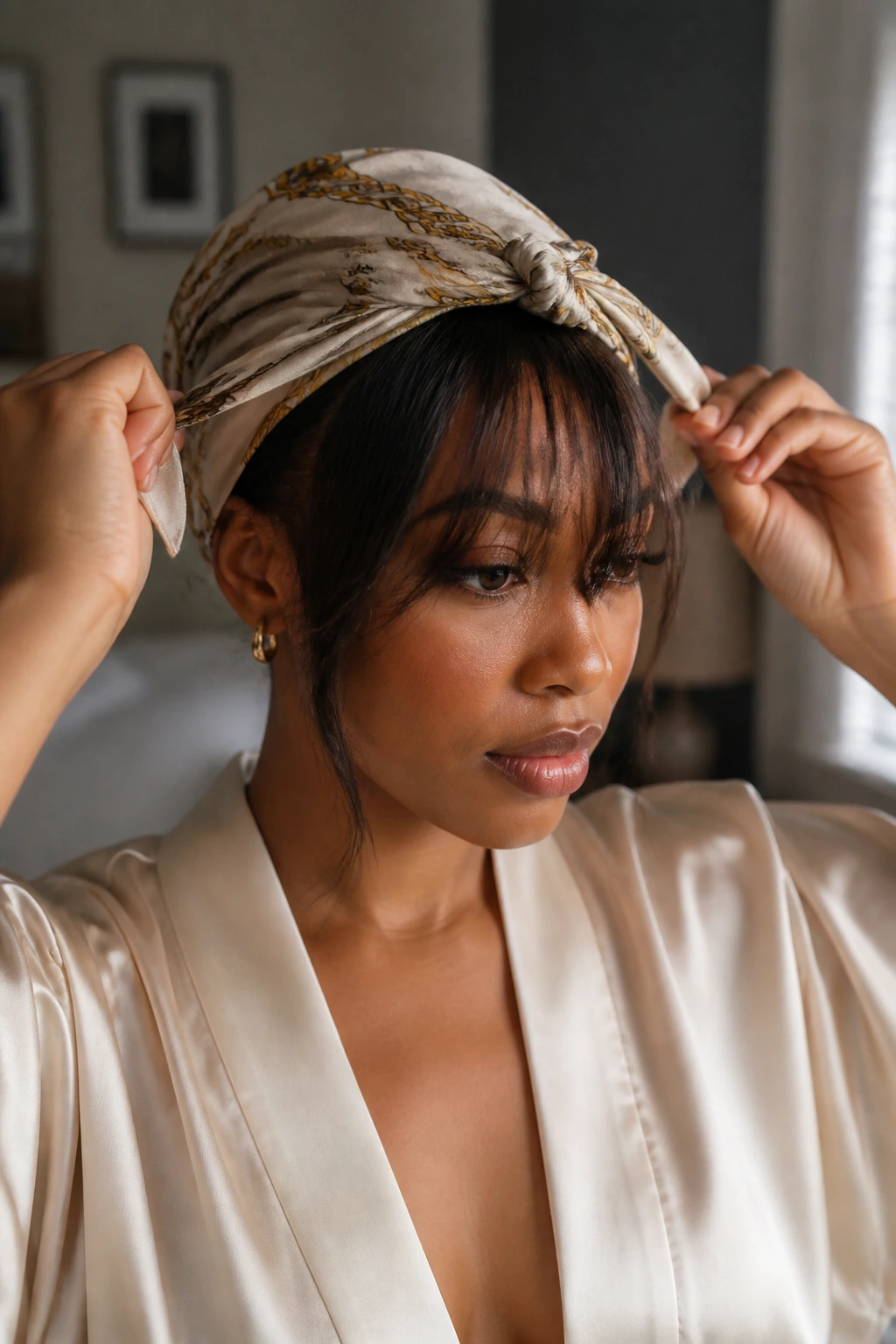
Satin scarf or bonnet: Keeps the bang from getting crushed overnight and helps the front stay smooth.
-
Wide-tooth comb or soft brush: Better than yanking through the front with a stiff brush that breaks up the shape.
How to Keep Long Bangs for Black Women with Fine Hair Fresh Between Washes
The front gets old first. That’s just how it goes. Skin oils, sweat, makeup, and the simple act of touching your forehead will wear on a bang faster than on the rest of the head, so a light refresh schedule saves a lot of frustration.
Nightly reset
Wrap the bangs loosely with a satin scarf or pin them with a soft roller if you want the bend to stay. If your front curls or waves, keep the shape loose; tight wrapping can flatten the strand and leave a dent by morning. A few bobby pins at the side can keep the fringe from sliding around while you sleep.
Midweek refresh
A little dry shampoo at the roots can help if the front looks oily, but don’t spray it across the ends. That leaves a powdery haze that shows up fast on dark hair. If the bang just needs shape, a quick pass with a round brush or a warm flat iron on low heat is enough.
Trim rhythm
Straight or silk-pressed bangs usually need a trim every four to six weeks if you want them to keep the same line. Curly or stretched bangs can go a bit longer, often six to eight weeks, because the shape is less exact. If you’re wearing a no-cut or clip-in version, refresh the attachment points and clean the piece every one to two weeks so buildup doesn’t make it slip.
Frequently Asked Questions
How do I know which long bang style will work best for my fine hair?
Start with the way your hair naturally behaves. If it separates easily, a side-swept or curtain shape usually works better than a blunt line. If your front has good density but fine strands, you can take on a fuller look, but if the hairline is sparse, a soft layered fringe is the safer bet.
Should bangs be cut wet or dry on Black hair with fine strands?
That depends on texture and how much shrinkage you have. Curly or coily front sections often need to be cut stretched or dry so the final length is honest. Straight or relaxed hair can be cut wet, but the stylist still needs to leave room for the front to settle.
What if my bangs separate and show my scalp?
That usually means the section is too wide, the roots are too oily, or the front has been over-directed too hard. Narrow the bang zone, use less product near the scalp, and blow-dry the roots in the direction you want them to sit. A light root clip while the hair cools can help a lot.
Can I wear long bangs with a wig or sew-in?
Yes, and sometimes that’s the easiest route. Wigs and sew-ins can build front density without stressing your own hairline, which is useful if your hair is fine or fragile. Just keep the bang piece lightweight and make sure the install base sits flat.
How often should I trim long bangs?
Silk press or straight styles usually need shaping every four to six weeks. Curly, twisted, or stretched bangs can go longer, but once the front starts falling into your eyes or losing the face-framing effect, it’s time. Small trims are better than dramatic ones.
Are blunt bangs a bad idea on fine Black hair?
Not always, but they’re the hardest to keep looking full. A blunt bang needs enough density to read solid, and fine hair can lose that look fast if the cut is too wide or too thin. If you love the idea, keep the fringe narrow and let a stylist soften the edges.
How do I keep bangs from frizzing in humidity?
Use the lightest smoothing product you can get away with, then dry the front completely before you step out. A scarf wrap for the first few minutes after styling helps lock the shape in. Heavy oils usually make the problem worse because they attract more puff.
What should I tell my stylist if I want long bangs but not a big commitment?
Ask for face-framing front pieces that start around the brow and blend into the cheekbones. Say you want enough length to tuck the bangs away when you change your mind. That gives you wiggle room instead of a hard line you have to live with for weeks.
The Fringe That Moves With You
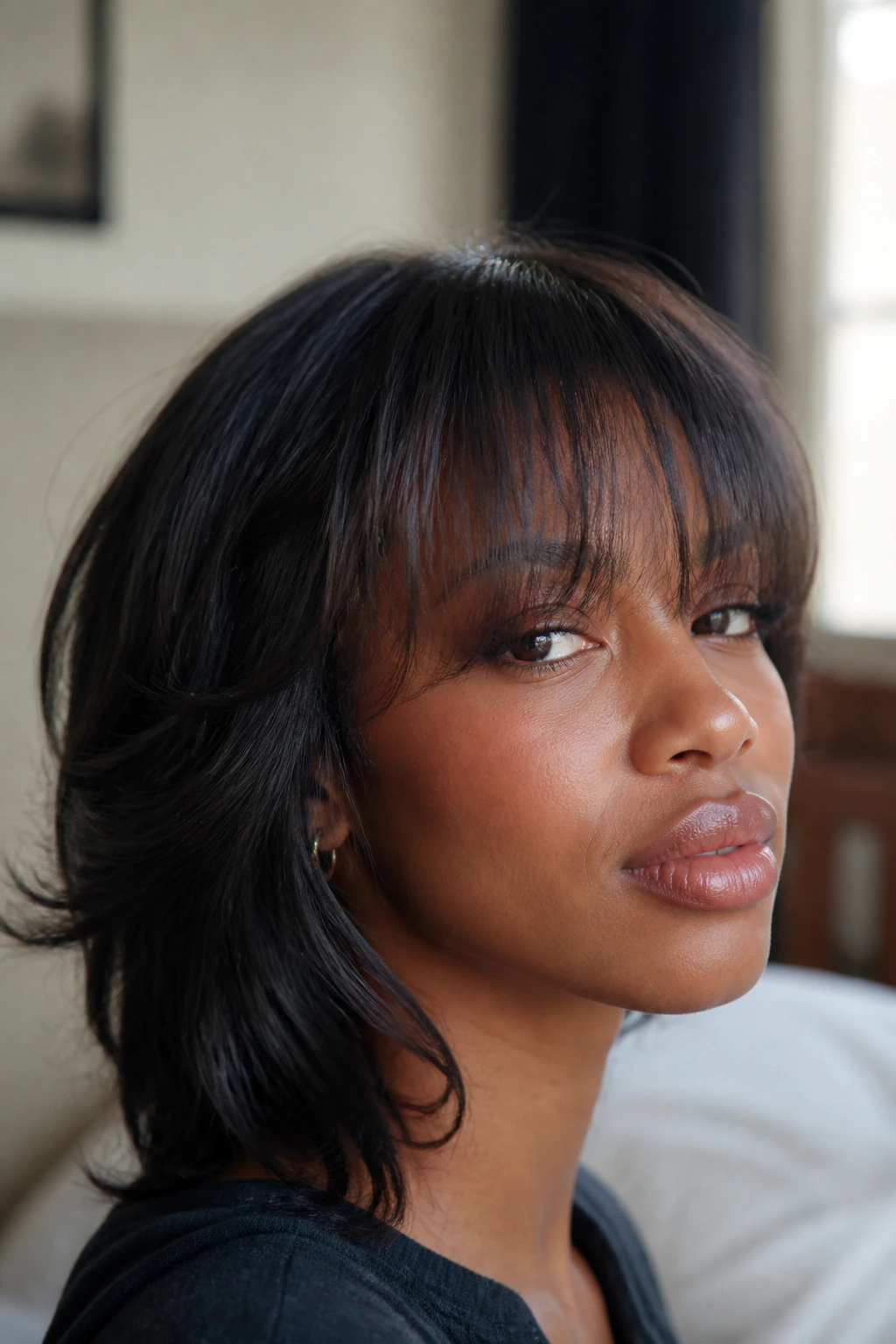
The best long bangs on fine Black hair are never the loudest part of the haircut. They’re the pieces that bend, sweep, and settle without demanding a perfect morning every day. That’s why the soft, layered, center-split, or side-swept versions usually win out over anything heavy and blunt.
If one thing matters most, it’s this: let the fringe follow the hair you actually have, not the hair you wish you had. A good bang can make fine strands look considered, light, and alive. A bad one just sits there and tells on itself.
Pick the version that respects your texture, then trim and style it from there. The shape will do the rest.