



Fine hair can look polished in a bob or it can look a little too honest. One blunt perimeter and the whole shape suddenly has purpose; one extra half-inch of wispy layering and the ends start reading thin. That’s why black bobs for fine hair and oval faces are such a smart pairing when the cut is built with restraint. The dark color gives the line more visual weight, and an oval face gives the cut room to sit without fighting the features.
The sweet spot is rarely the shortest crop in the room. It’s the bob that lands exactly where your jaw, chin, and neck work together instead of competing. On fine hair, that usually means a clean edge, a controlled part, and enough movement near the crown to stop the style from collapsing by lunch. On black hair, especially deep espresso or jet-black shades, a crisp outline can look almost tailored.
Some of these bobs are sleek and severe. Some are soft and airy. A few lean into texture, because texture is often what keeps fine hair from going flat and forgettable. The trick is knowing which version gives your hair more presence without stealing density from the ends.
Why These Black Bobs Work So Well on Fine Hair and Oval Faces
-
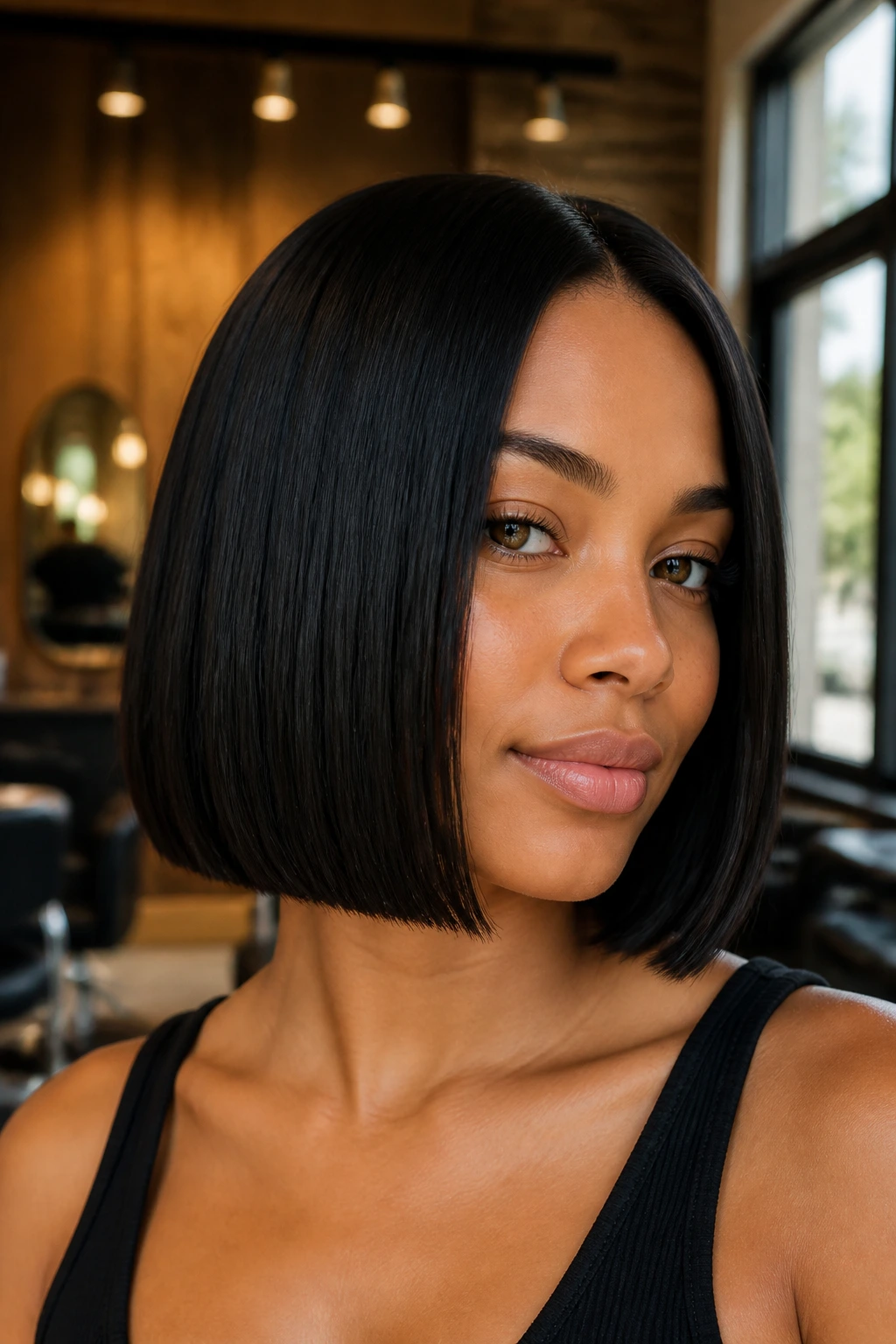
The perimeter does the heavy lifting: A blunt or softly beveled edge makes fine strands look fuller because the eye reads one clear line instead of scattered ends.
-
Oval faces can carry more shapes than most: You can wear chin length, collarbone length, a side part, or a fringe without throwing off the balance of the face.
-
Black hair shows shape fast: Dark color makes bevels, parts, and tucked ends stand out, so even a simple cut looks deliberate.
-
Shorter lengths keep the ends from looking stringy: Once fine hair drifts too far past the shoulders, the lower half can start to look see-through.
-
Styling takes less drama than you think: A root-lift spray, a round brush, or a flat iron bend can change the whole mood in ten minutes.
-
These cuts are easy to personalize: Bangs, layers, and part placement can change the vibe without wrecking the density you’re trying to protect.
1. Chin-Length Blunt Bob for Instant Density
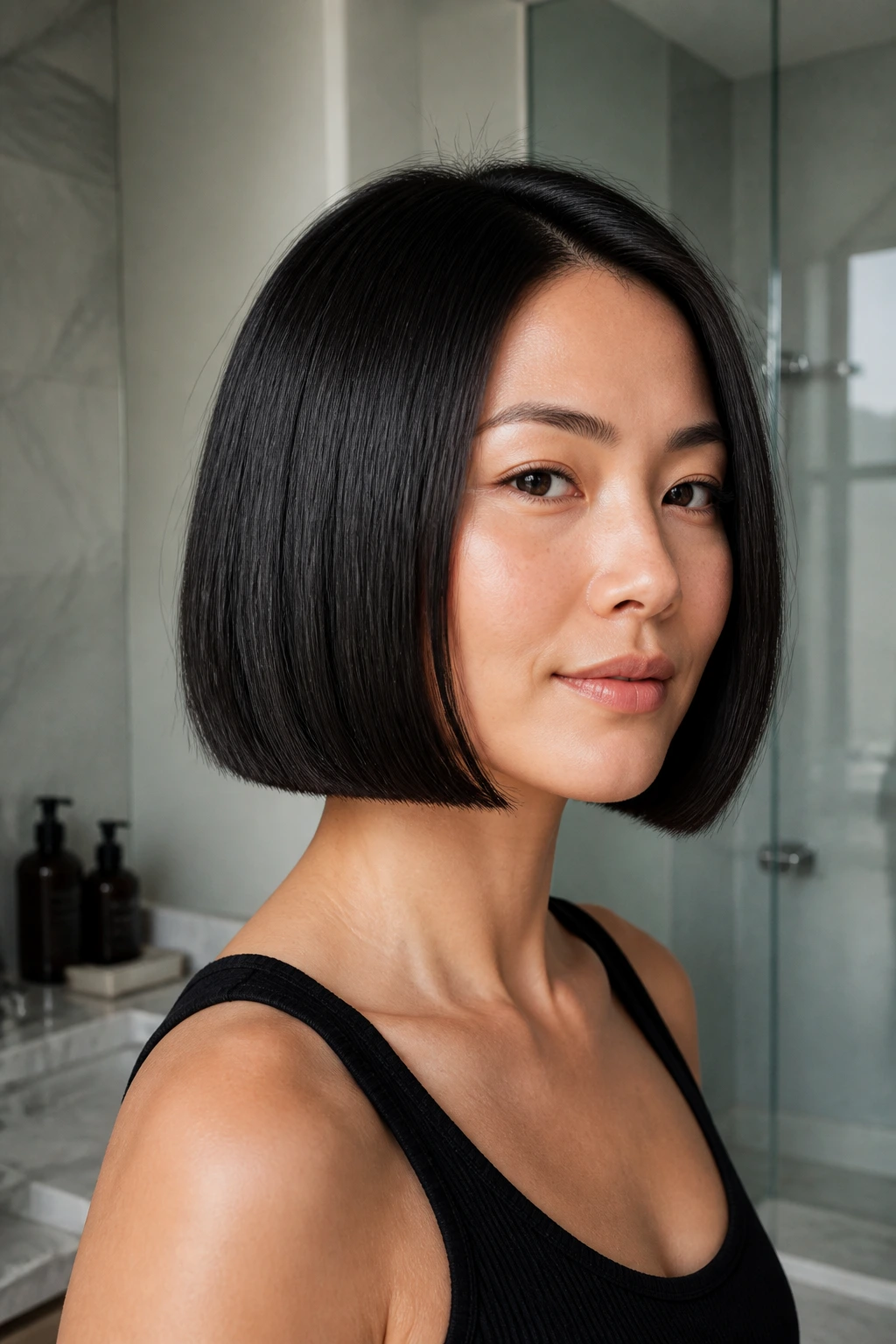
A chin-length blunt bob is the oldest trick in the book for a reason: it makes fine hair look like it borrowed a few extra strands. The clean bottom line sits right at the jaw, which is one of the best places for an oval face because it frames the face without crowding it. On black hair, the edge looks especially sharp.
What makes it work:
The blunt cut removes the see-through ends that make fine hair look tired. Keep the length right at the chin or just below it, and ask for minimal thinning. Too much texturizing here is a mistake; it turns a strong shape into a soft whisper.
Styling note:
A center part gives this bob a cool, graphic look. A slight side part adds lift at the root and softens the symmetry if you want less severity.
Best when:
You want the easiest possible cut to style with a round brush or flat iron bend, and you don’t want layers eating up the bulk you already have.
2. Side-Part Sleek Bob With a Little Lift
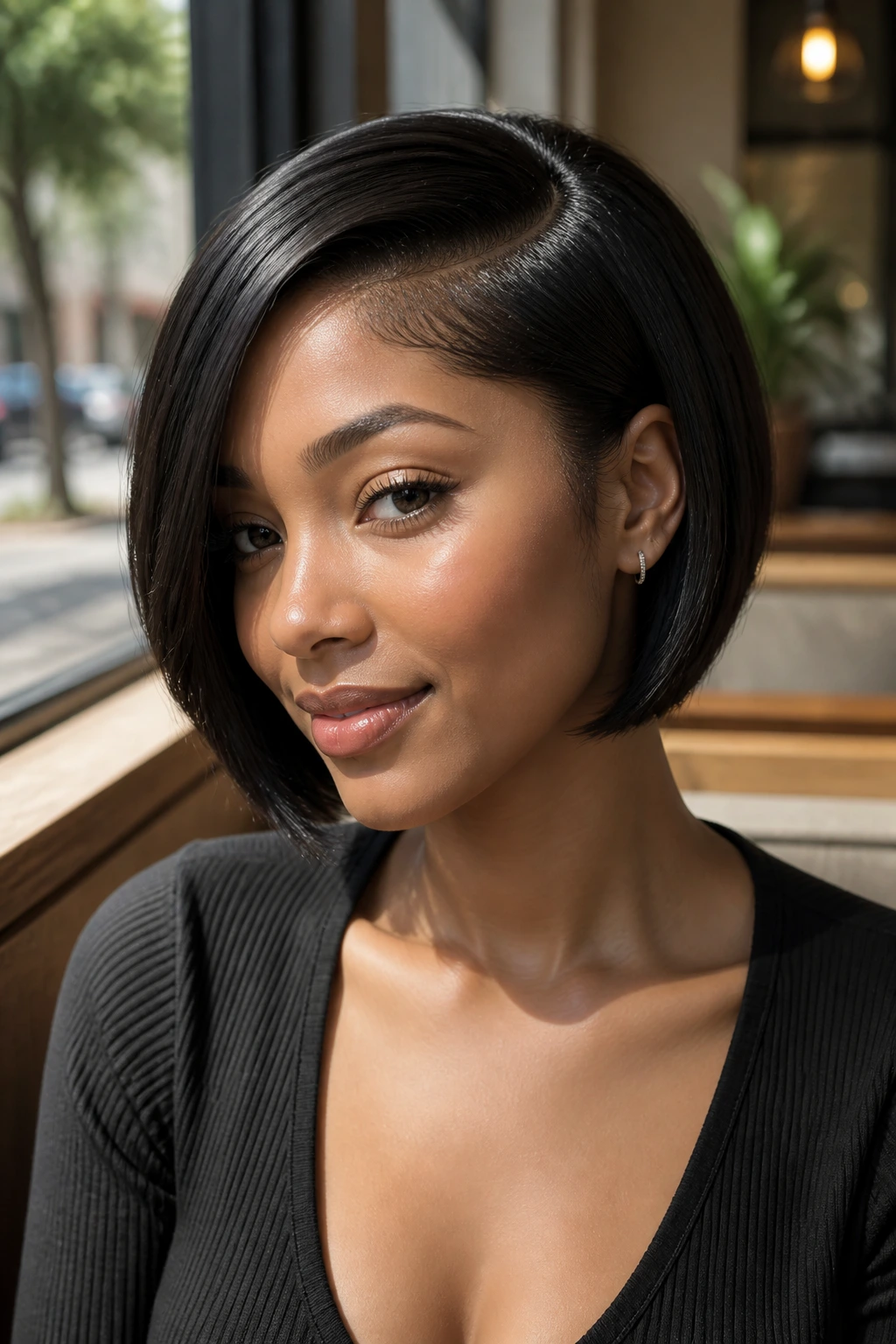
A deep side part changes everything. It pushes one side up at the root, gives the front a little sweep, and keeps the bob from sitting too neatly on the face. Fine hair loves this because the lift happens at the scalp, where you need it most, not in the ends where you can’t afford to lose weight.
The shape works especially well on oval faces because the diagonal line draws the eye across the face instead of straight down it. That slight angle gives the style movement without making it messy. Use a light mousse at the roots and a flat brush if you’re blow-drying; the goal is lift, not fluff.
If you hate a flat crown, this is the bob to ask for first. It’s tidy, but not stiff.
3. Soft A-Line Bob That Keeps the Back Tidy
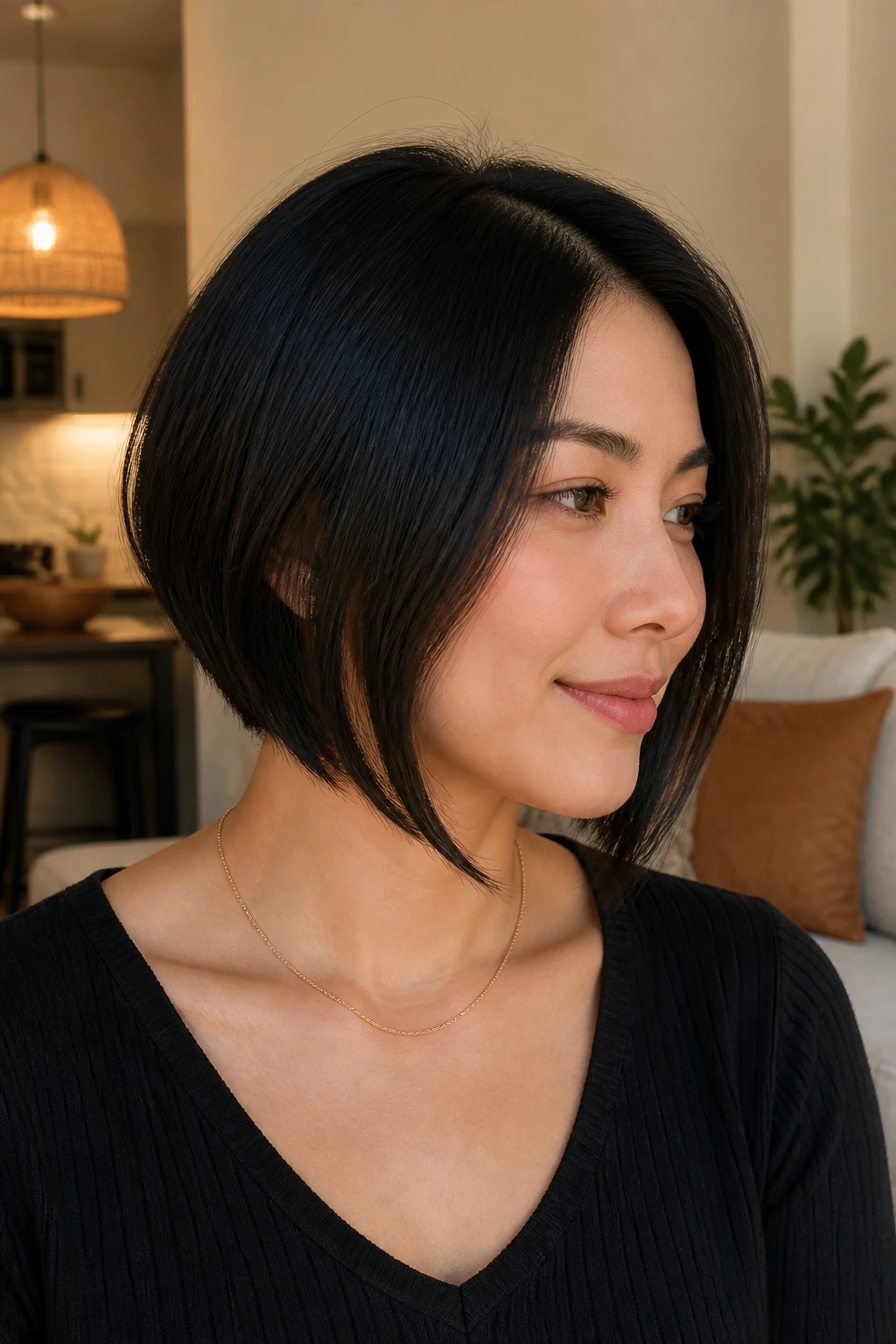
An A-line bob is shorter in back and a touch longer in front, and that tiny difference does a lot of work. The back gets a little lift, while the front skims the face in a way that flatters an oval shape without making the whole cut feel boxy. Fine hair benefits because the stacked structure in back creates the illusion of density.
Why it’s a smart choice:
The angled perimeter makes the hair look intentional even when it’s not freshly styled. If your hair lies flat at the nape, this cut gives the back some shape without needing a dramatic undercut or heavy layering.
Ask your stylist to keep the angle subtle if you want something polished rather than sharp. Too much front length can start to drag the shape downward, and that defeats the point.
4. French Bob With a Micro Fringe
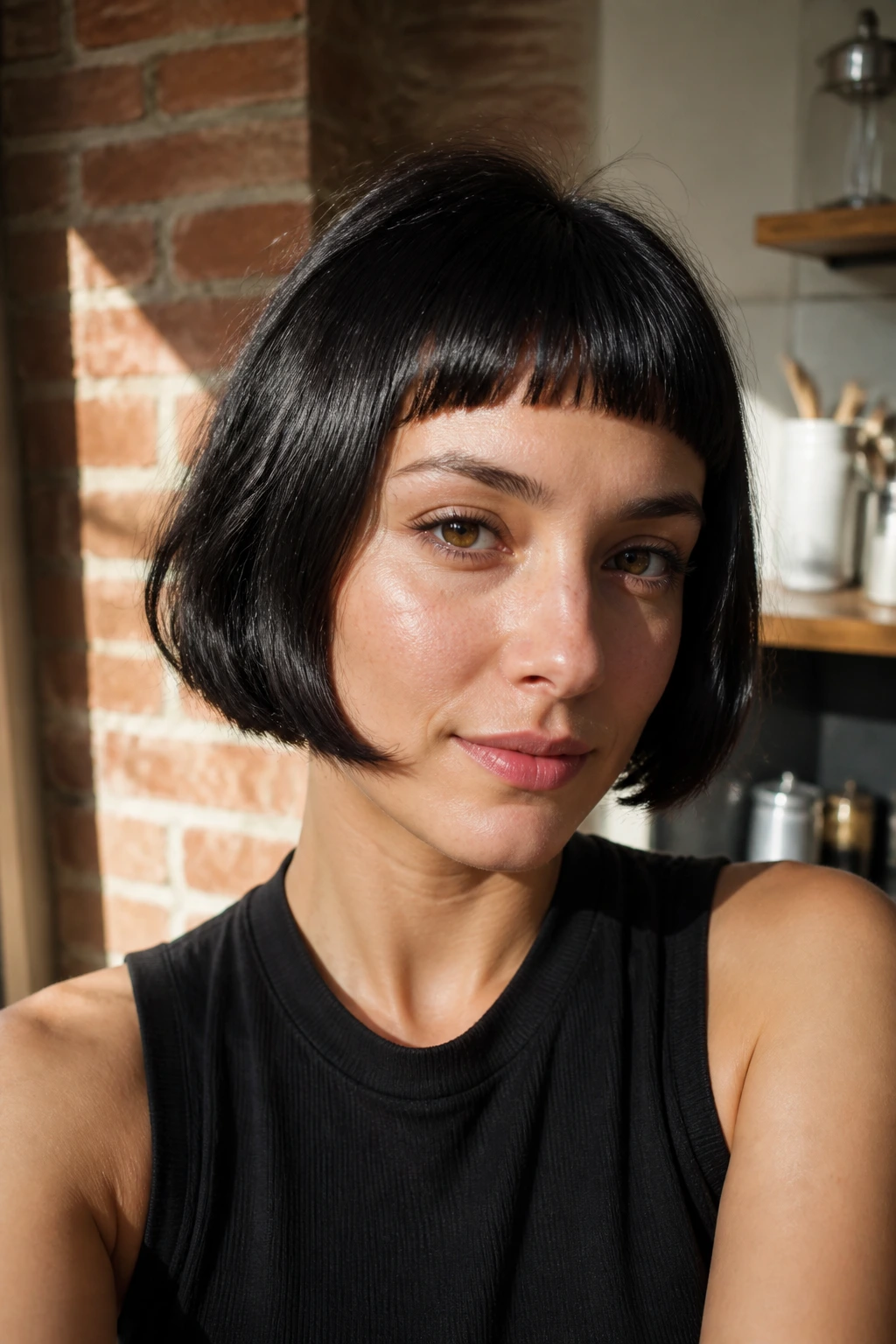
A French bob brings that cheeky, jaw-skimming feel that looks expensive even when the styling is minimal. Add a micro fringe and you get a tiny bit of attitude up front, which helps balance an oval face without swallowing it. On fine black hair, the blunt fringe can look fuller than longer bangs because there’s less space for the hair to separate.
This one works best when the fringe is cut with precision. Too sparse, and it looks accidental. Too heavy, and it can take over the face. The rest of the bob should stay soft and short, usually around the jawline, with just enough movement to avoid helmet territory.
Use a small round brush or even your fingers and a little styling cream. The charm is in the shape, not the fuss.
5. Tucked-Behind-the-Ear Bob That Opens the Face
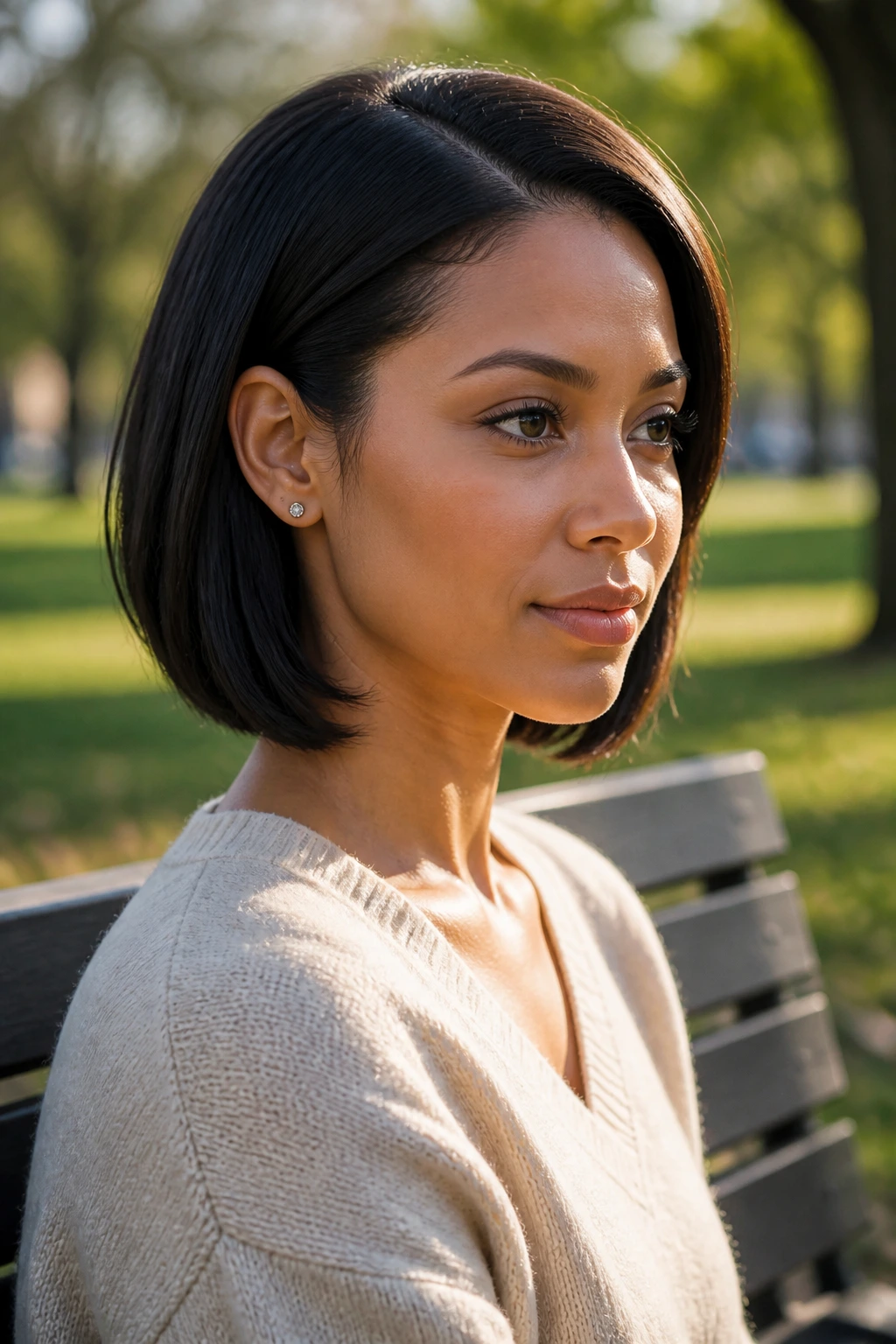
Sometimes the best move is just to show more face. A bob that can tuck neatly behind the ears gives an oval face a cleaner frame and stops fine hair from hanging too limp around the cheeks. The tuck also makes the hair look a touch shorter and denser, because you’re seeing more of the perimeter at once.
This style is quietly useful. It looks polished for work, but it also takes thirty seconds to fix after a windy commute. The cut itself should land around chin to jaw length, with ends that curve in slightly so they don’t stick out when tucked.
One small detail matters here: keep the area around the ears a little lighter, not razor-thin. If the hair is too heavily thinned there, the tuck starts showing gaps.
6. Rounded Bob With a Gentle Under-Curve
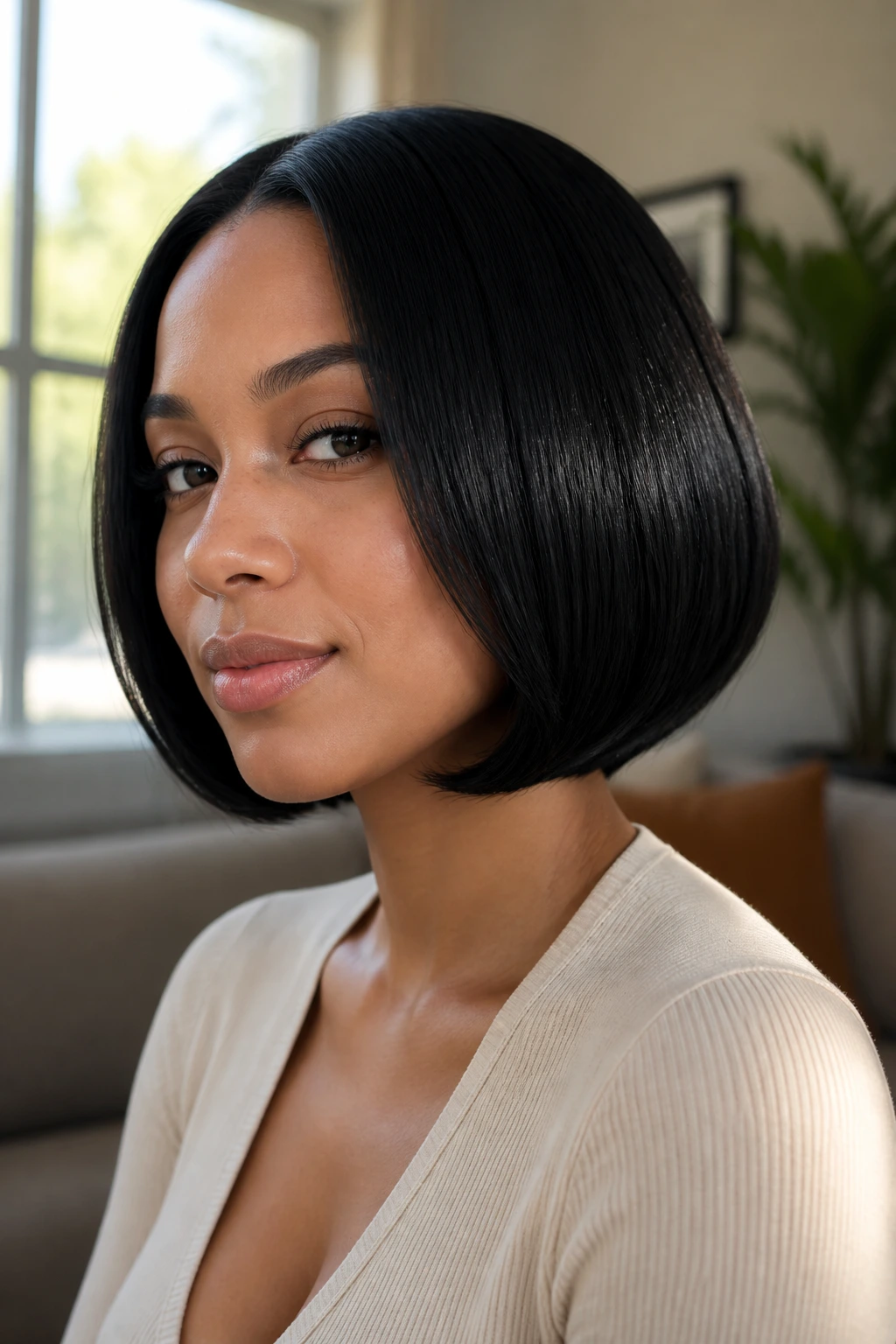
A rounded bob curves softly under the jaw instead of hanging straight. That slight bend can be done with a blow-dryer brush, a round brush, or a quick pass of a flat iron with the wrist turned inward at the ends. Fine hair likes it because the curve gives the whole shape more body.
On oval faces, the rounded edge keeps the look soft and friendly. It doesn’t sharpen the jaw, which is useful if your face already has balanced proportions and you want the hair to feel easy rather than architectural. Black hair makes the curve show up clearly, especially under daylight.
If your ends tend to flip out, this is worth asking for. A good rounded bob works with the hair instead of arguing with it.
7. Invisible-Layer Bob That Keeps the Bulk Where You Need It

Invisible layers are the quiet heroes of fine hair. They sit inside the haircut, not on the outside, so the surface still looks full while the interior gets just enough movement to stop the bob from falling flat. That’s the balance you want.
The best version of this cut still has a solid perimeter. The layers should never be chopped so high that the bottom line loses weight. A stylist who understands fine hair will keep the internal layers subtle and leave the ends looking dense.
This bob works especially well if you like a smoother finish but need a little movement near the crown. It’s one of those cuts people mistake for “low effort,” when really it’s just well built.
8. Asymmetrical Bob for a Sharper Angle
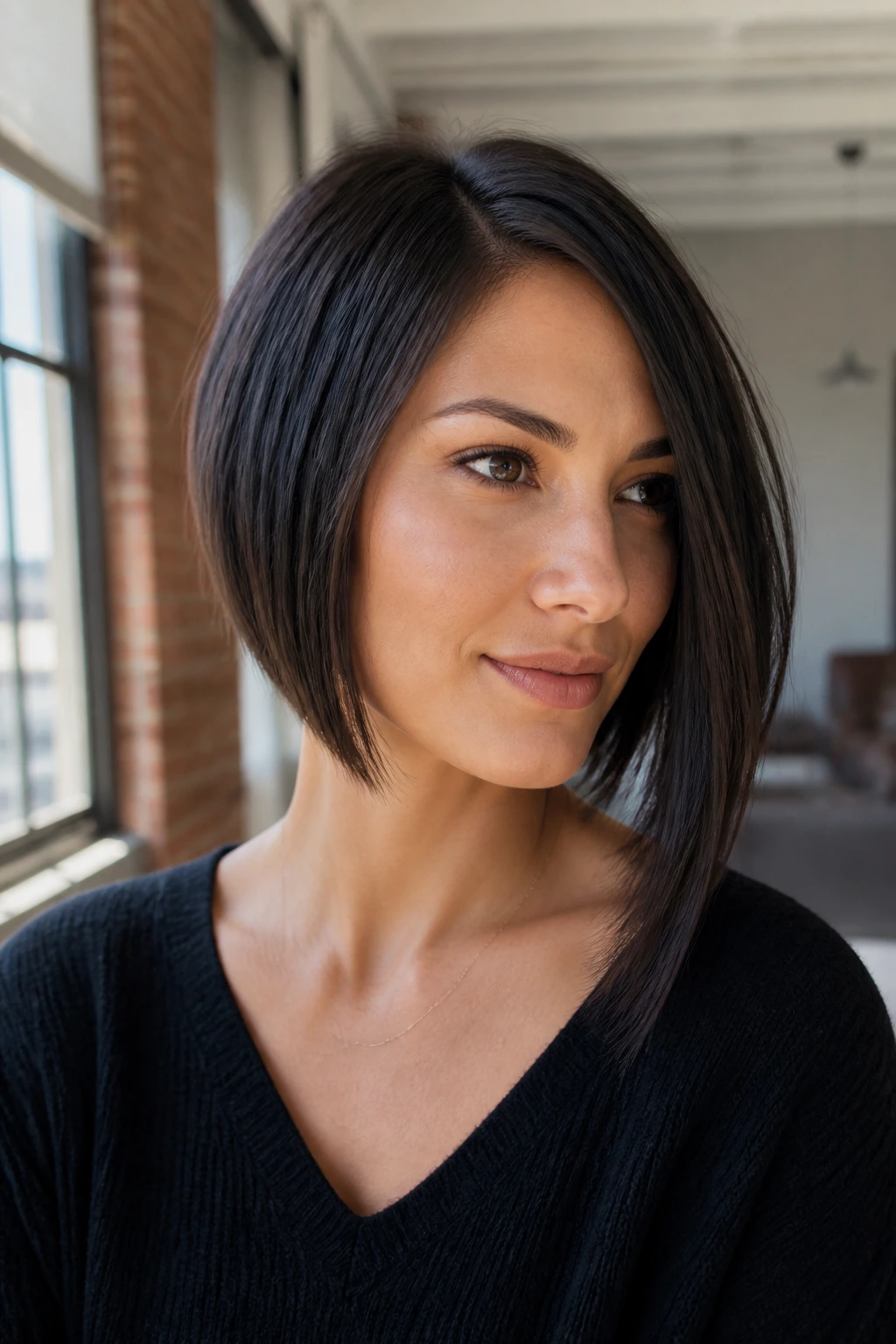
An asymmetrical bob has one side a bit longer than the other, and that tiny imbalance does something useful: it keeps the eye moving. Fine hair benefits because the shape feels styled even when the texture is simple. Oval faces can wear it without looking crowded, since the asymmetry creates interest instead of width.
Keep the difference subtle unless you want a stronger fashion statement. A dramatic asymmetrical line can look gorgeous, but it also needs better maintenance. If you prefer something that grows out with less drama, ask for one side only a half-inch to an inch longer.
This is the cut for someone who likes structure. It has edge, but not chaos.
9. Collarbone Bob That Slides Into Lob Territory
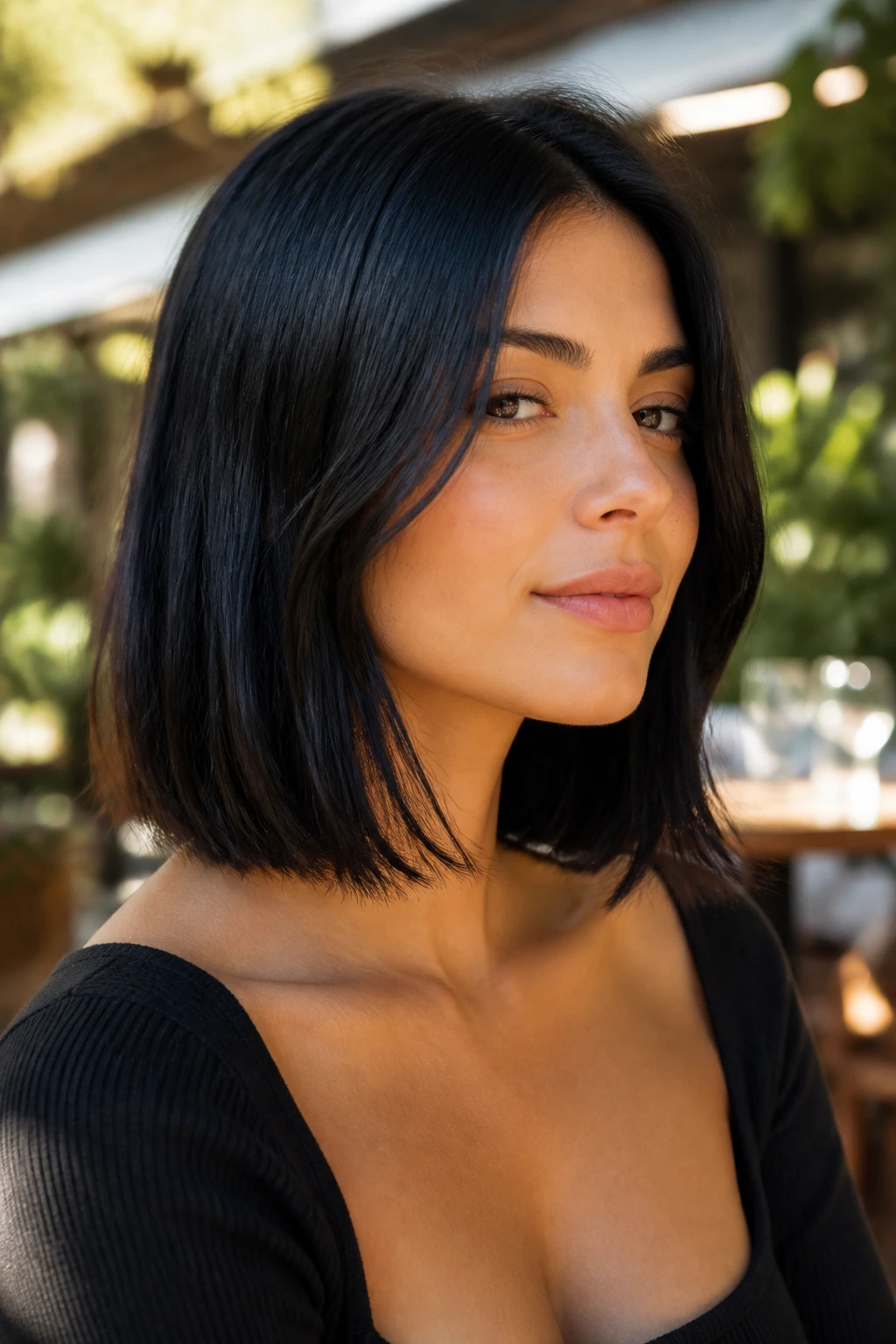
A collarbone bob gives fine hair a little more length while keeping the overall look compact. It’s a smart middle ground if you want the bob shape without committing to a chin-length crop. On oval faces, the extra length can skim the neck in a flattering way and avoid the “too short for my outfit” problem.
The danger with this length is letting it go flat. So the styling has to do a little work: root lift at the crown, a bend at the ends, and a part that doesn’t sit dead center every single day. The cut should still have a perimeter, even if it’s a softer one.
If your hair is thin at the ends, this is often the longest you should go before it starts losing its bob identity.
10. Feathered Bob With Just Enough Air

A feathered bob can go wrong fast if it gets too wispy. Done right, though, it gives fine hair movement without making the ends disappear. The layers should be light, almost floating, and concentrated enough to keep the haircut from looking heavy.
For oval faces, feathering around the cheekbone can soften the line and make the whole cut feel lighter. Black hair shows the movement clearly, which is useful when you want texture without a lot of curl. A blow-dry with a medium round brush helps the ends separate just enough.
Skip this if you like a hard line. Choose it if you want the bob to move when you turn your head.
11. Glass-Straight Bob With High Shine
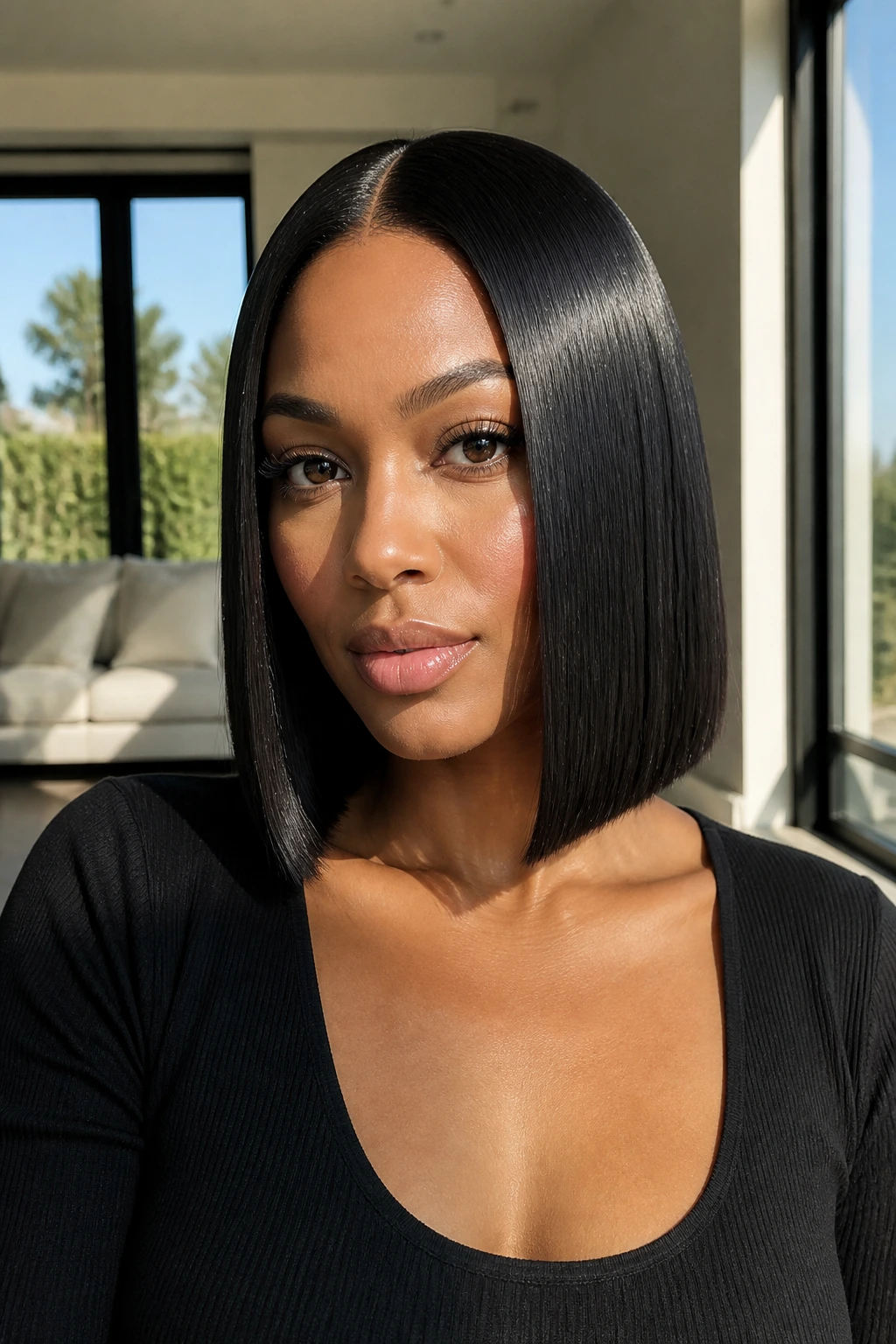
A glass bob is all about shine, and black hair takes to that look beautifully because the color reflects light in a crisp, almost lacquered way. Fine hair benefits because the smoother the surface, the denser the cut looks. There’s nowhere for thin ends to hide, so the line has to be clean.
This style is best when the cut itself is simple. No heavy layering, no broken outline, no fuzzy ends. Use a heat protectant, a flat iron on controlled sections, and finish with a light serum only on the last inch or two.
It’s a little high-maintenance, yes. But when it works, it looks deliberate in a way that airier styles never quite match.
12. Rounded Bob With a Side Sweep
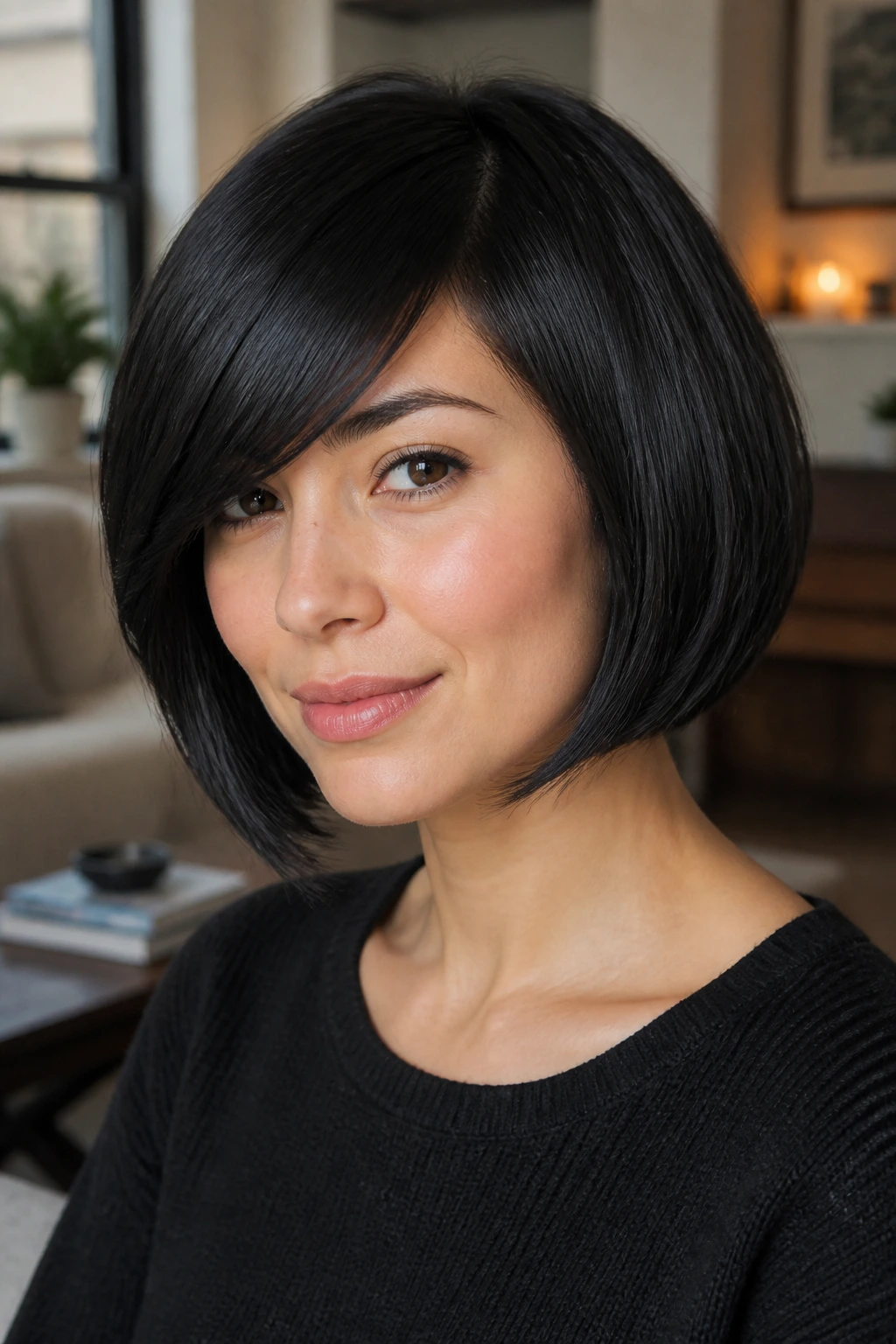
A side-swept front section gives a rounded bob a softer, more wearable edge. Fine hair often needs that little sweep because it adds the illusion of fullness without asking for huge volume. On oval faces, it also keeps the style from sitting too evenly around the head.
This is a good cut if you like movement but don’t want obvious layers. The sweep should start around the eyebrow or temple and fall into the cheekbone. That keeps the face open and avoids hiding too much of the oval shape you’re trying to flatter.
If you wear glasses, this one can be a favorite. The side sweep gives the frames room.
13. Choppy Bob With Lightweight Texture
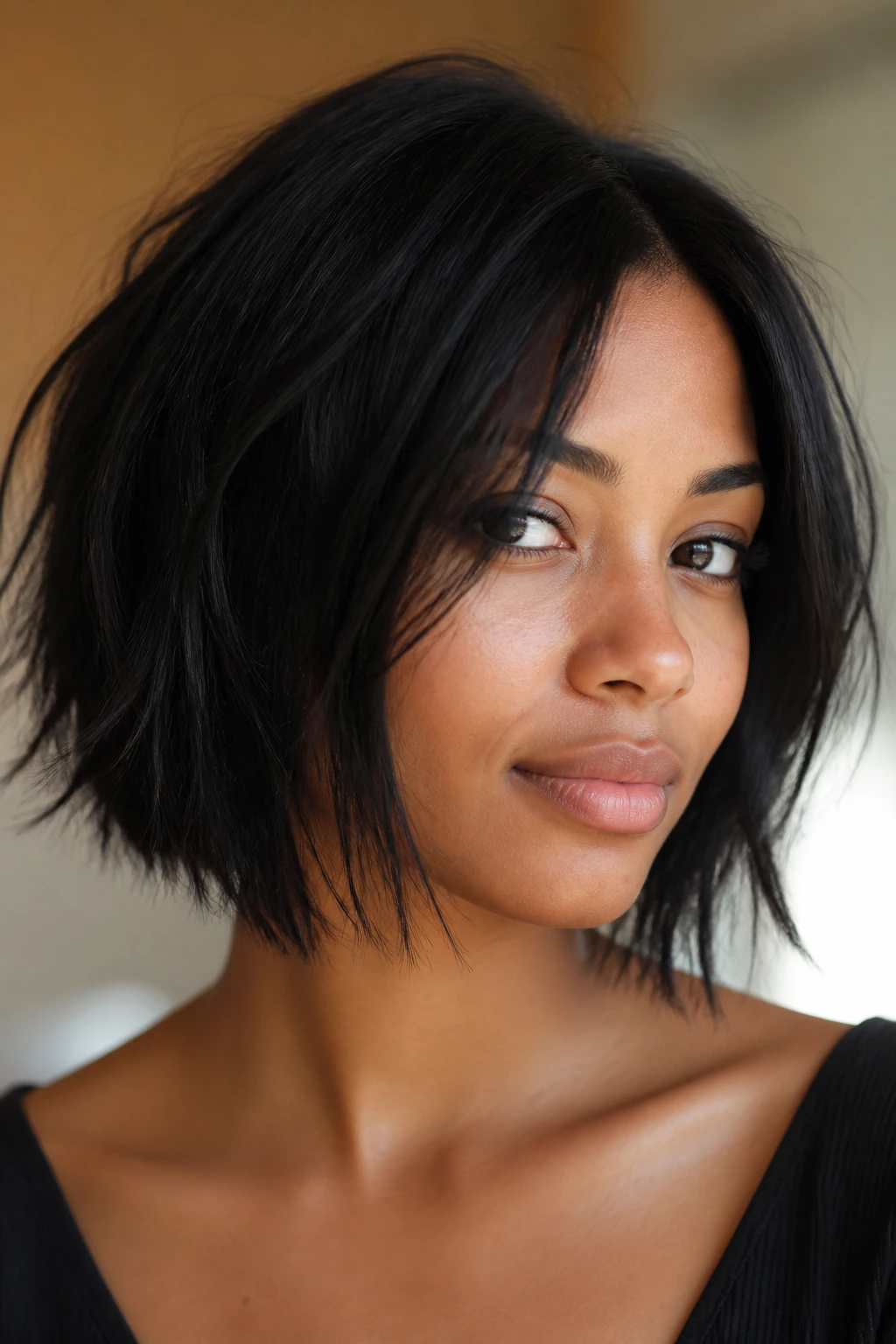
A choppy bob isn’t about roughness. It’s about breaking up the shape just enough to keep fine hair from lying too flat against itself. The trick is controlled texture, not random hacking. The perimeter still needs to read as a bob.
On black hair, choppiness shows up in the way light hits the ends, so keep the texturizing subtle. A little dry texture spray at the roots and a bit of separation through the mid-lengths can stop the style from feeling too neat. Oval faces can wear this cut easily because the movement doesn’t fight the proportions.
If your hair gets oily fast, this is a good one. Texture hides a day-two root better than sleek styles do.
14. Soft Bang Bob That Frames the Brows
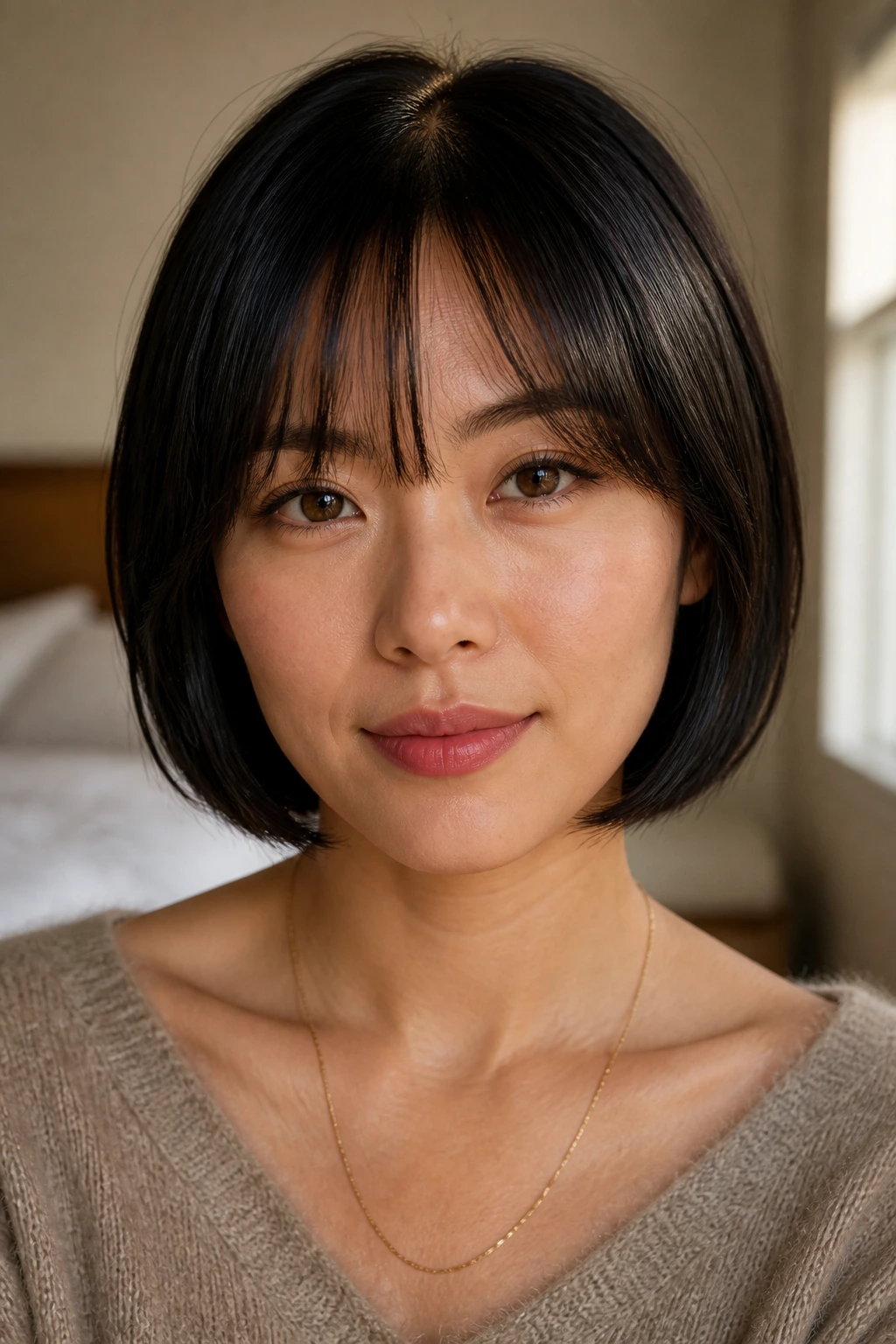
Bangs change the whole personality of a bob, especially on fine hair. Soft bangs, curtain bangs, or wispy fringe can give the front of the haircut more presence without stealing too much density from the sides. On an oval face, that frame can be lovely because it breaks up the length just enough.
The key is softness. Heavy blunt bangs on fine hair can separate too quickly unless your hair is very cooperative. A light fringe that blends into the side pieces is usually safer and easier to wear day to day.
This cut shines when the bob itself stays clean and the fringe does the talking. Keep the rest of the shape simple.
15. Stacked Nape Bob for a Lift at the Back
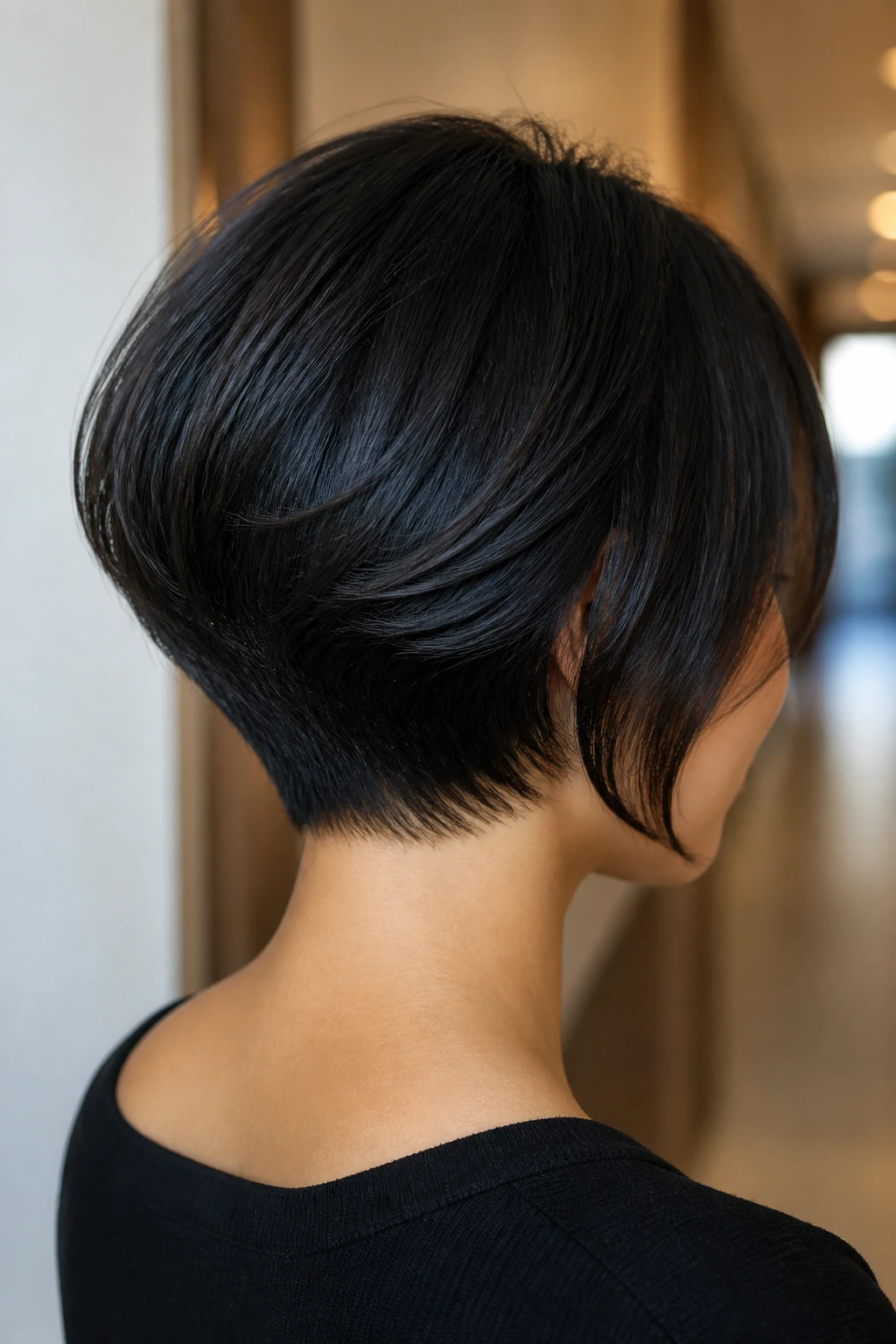
A stacked bob builds weight and lift at the nape, which makes fine hair look fuller from the side and back. The graduation is the whole point here. Instead of dragging the back flat, the haircut uses shorter layers underneath to support the top layer.
Oval faces can handle this shape well because the front still has room to soften around the jaw. The best version is not too dramatic; you want lift, not a wedge. If the stack is overdone, the back can get bulky in a way that feels dated.
This is one of my favorites for hair that needs structure more than movement. It holds its shape longer between washes than softer cuts do.
16. Deep Side-Part Bob With a Long Front Sweep
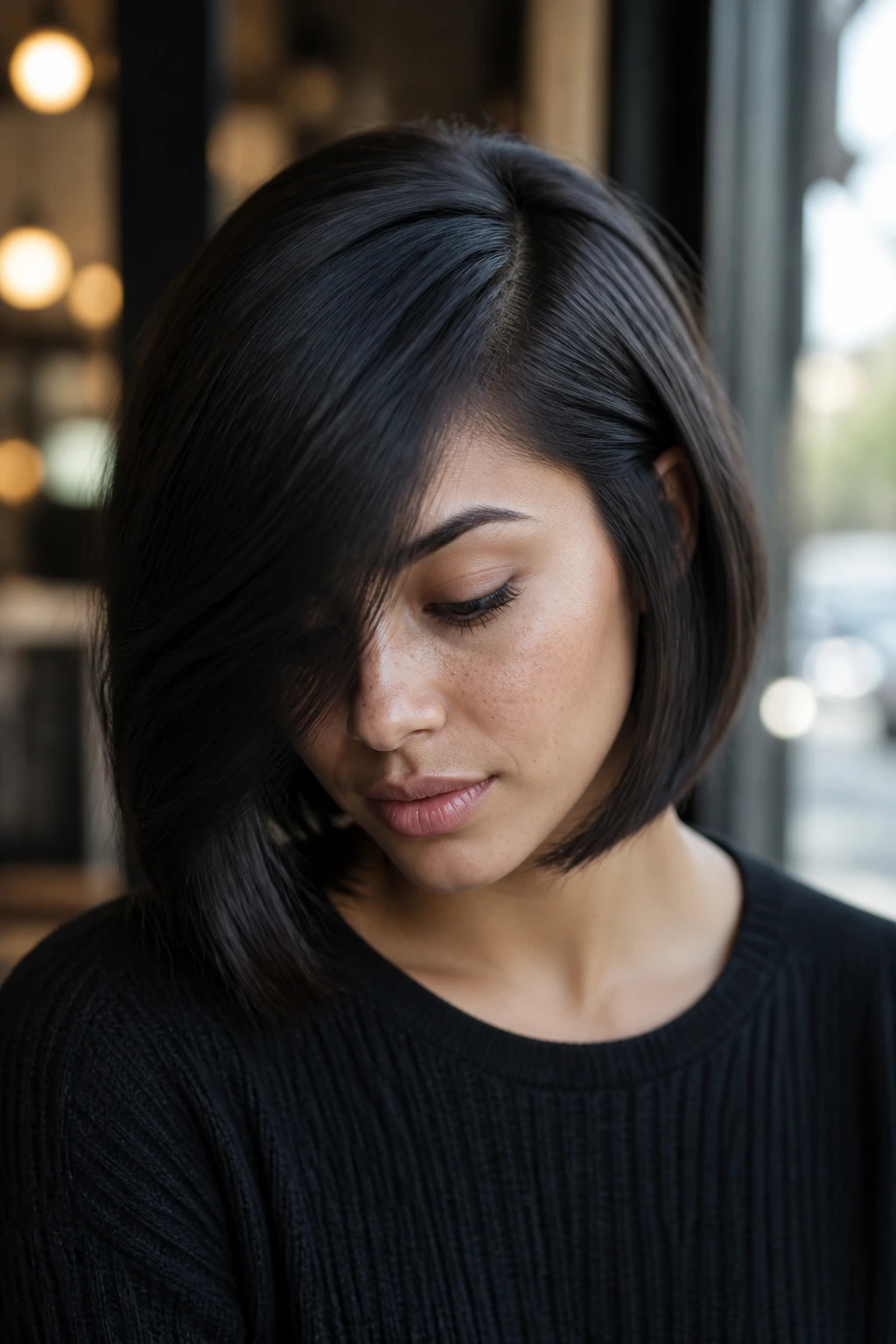
A deep side part makes fine hair look like it has more roots. That’s the real magic here. The front sweep falls across the face in a way that gives an oval face a little asymmetry, and the contrast between lifted root and sleek side lengths keeps the bob from feeling limp.
This style works especially well if you want a quick fix before styling. You can change the whole silhouette with a comb and a little root spray. A longer front piece helps too, especially if the bob sits around the jaw or just below it.
Flat roots ruin this cut. So if you choose it, actually commit to the lift at the scalp. Small effort. Big difference.
17. Sleek Black Bob With a Center Part
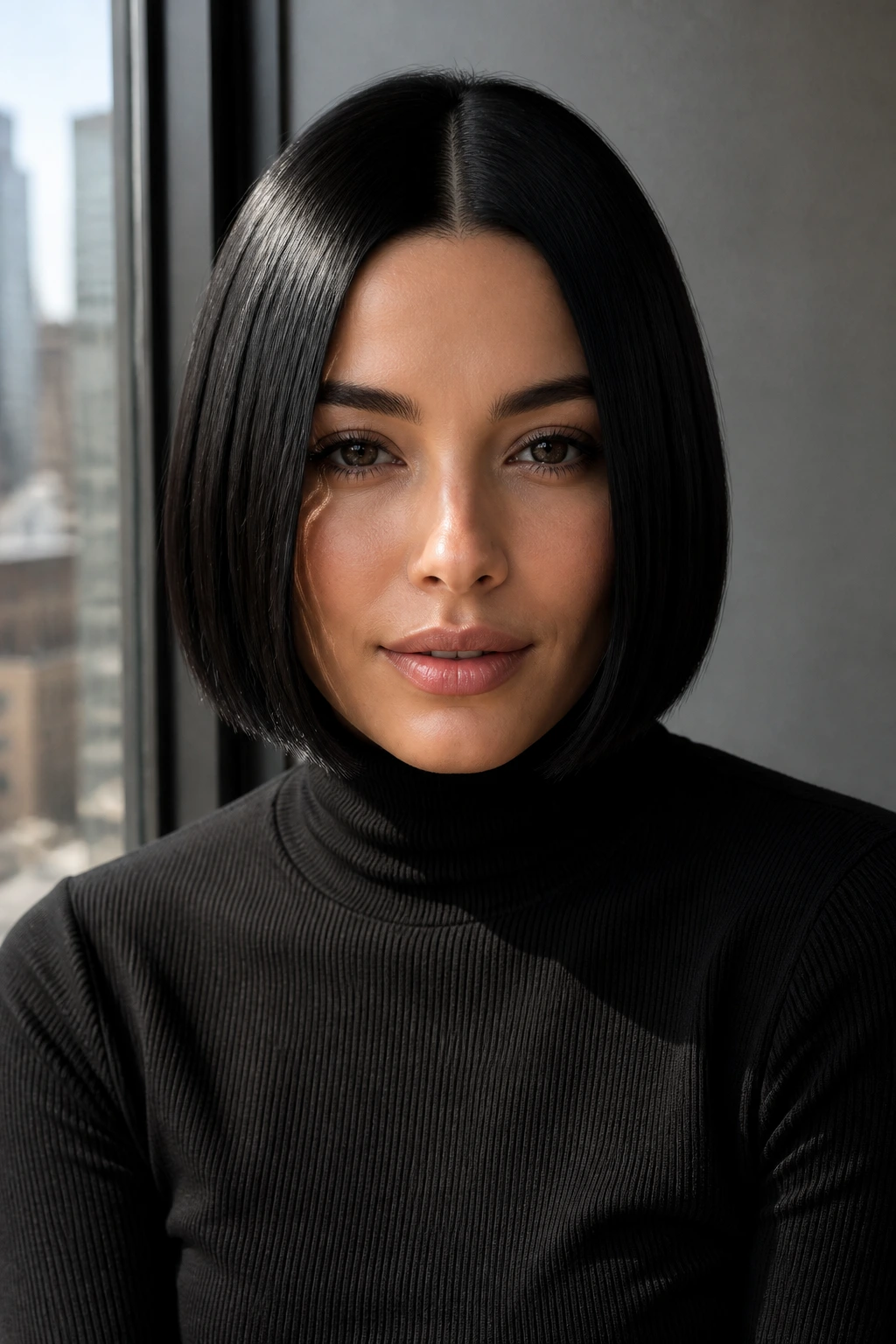
A center part can be unforgiving on some face shapes, but oval faces usually have enough balance to carry it. On fine black hair, a center-parted sleek bob looks crisp and deliberate, especially when the ends are cut evenly and fall right at the jaw or a touch below.
The trick is keeping the part precise and the crown smooth. A middle part that wanders or splits unevenly makes the whole style look less polished. Use a fine-tooth comb, then seal the finish with a lightweight serum or shine spray.
This is the bob for someone who likes symmetry and doesn’t mind a little regular upkeep. It’s plain in the best way.
18. Airy Curved Bob for Natural Movement
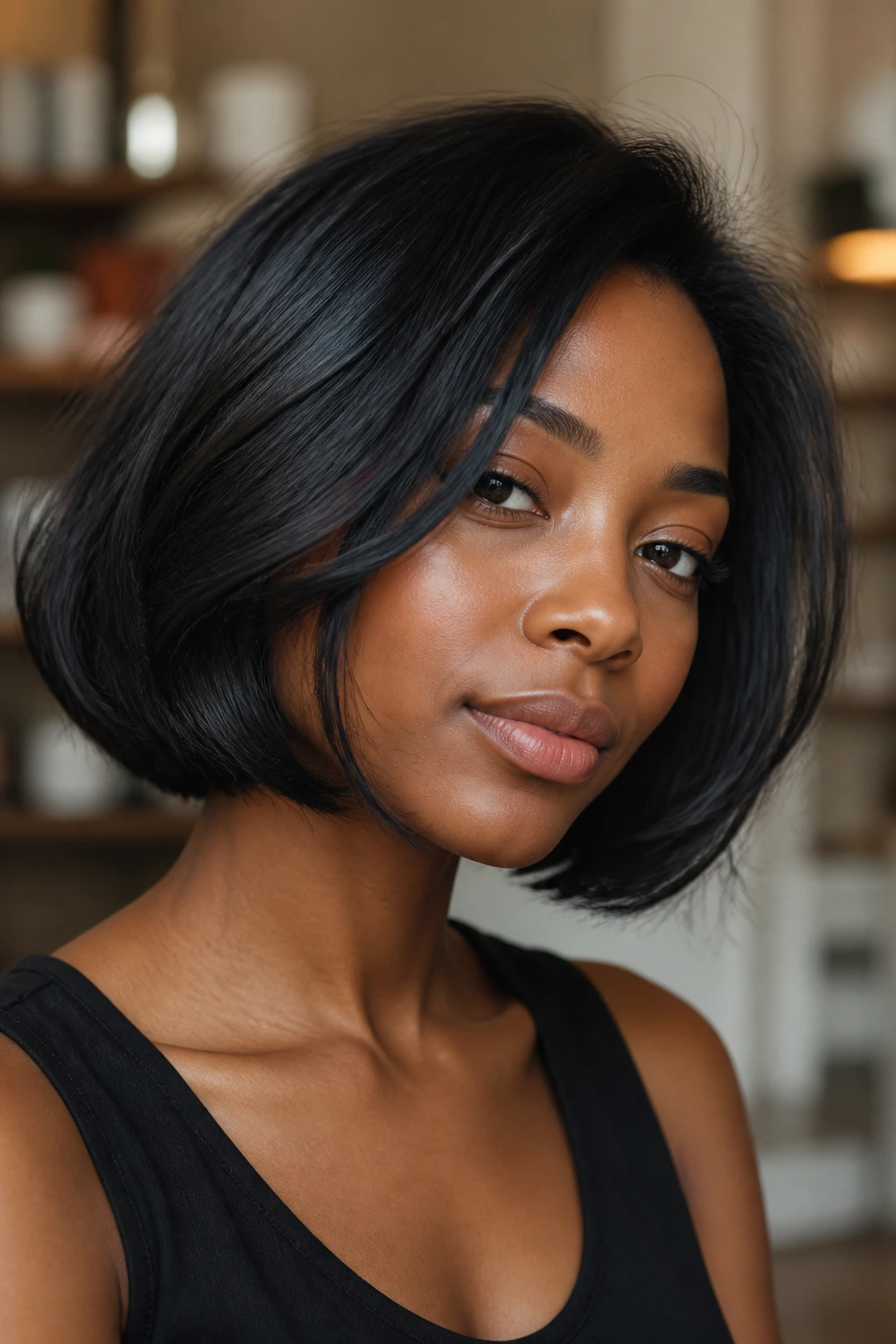
Some bobs need to look perfect. This one doesn’t. An airy curved bob works with your hair’s own bend, especially if fine strands tend to turn slightly under or out. The shape lands around the jaw, but it never feels frozen in place.
On an oval face, the loose curve keeps the cut relaxed and open. Black hair makes the movement visible, which is useful because the style doesn’t rely on a heavy shape to stand out. A diffuser or a low-heat blow-dry can help if your texture is a little wavy.
Choose this if you want a bob that won’t fight your mornings. It’s one of the least fussy versions here.
19. Curtain-Bang Bob With a Soft Face Frame
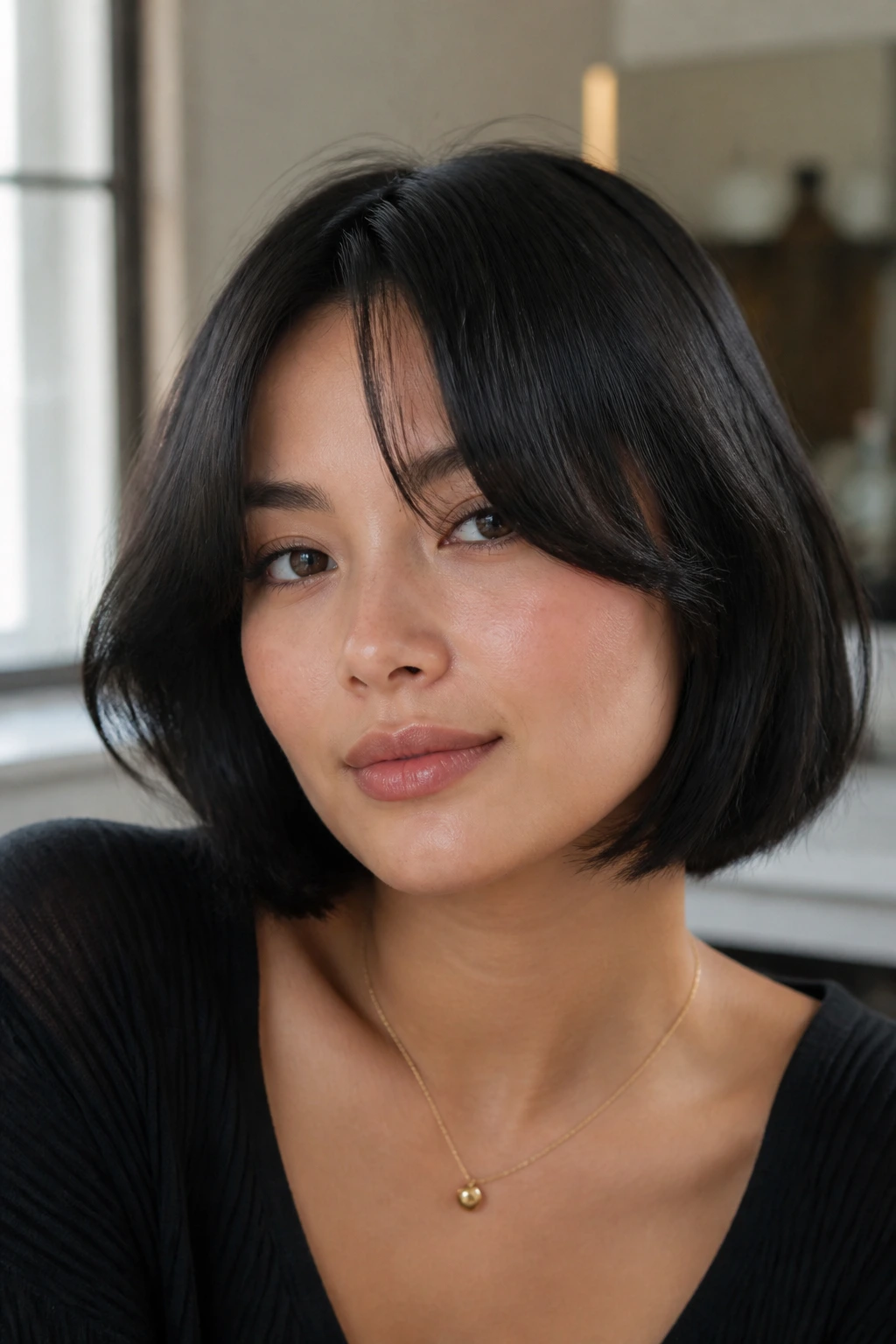
Curtain bangs can do a lot for a bob when the hair is fine. They open in the center, fall away from the cheeks, and add a little softness without turning the front into a solid curtain. For oval faces, that means movement around the eyes and cheekbones without changing the face shape too much.
The bob underneath should stay clean. If the layers get too chopped, the fringe and the cut start competing with each other. Keep the curtain pieces long enough to blend into the jaw-length or collarbone-length bob, and style them with a round brush or a blowout brush.
This is one of those looks that’s forgiving on grow-out. The fringe keeps evolving, which helps.
20. Low-Bulk Lob With a Clean Edge

Not every fine-hair bob needs to sit at the jaw. A low-bulk lob gives you more length while still keeping a blunt or slightly beveled edge that reads full. On oval faces, this cut can soften the whole look without hiding the shape of the jaw.
The part here matters more than you’d think. A center part keeps it sleek; a soft side part gives the crown some lift. What you do not want is a heavy, shaggy lob with too much internal thinning. That can make the bottom edge look sparse fast.
This is the sensible choice for anyone growing out a shorter bob. It keeps the shape alive instead of drifting into a plain shoulder cut.
21. Tapered Bob With a Narrower Nape
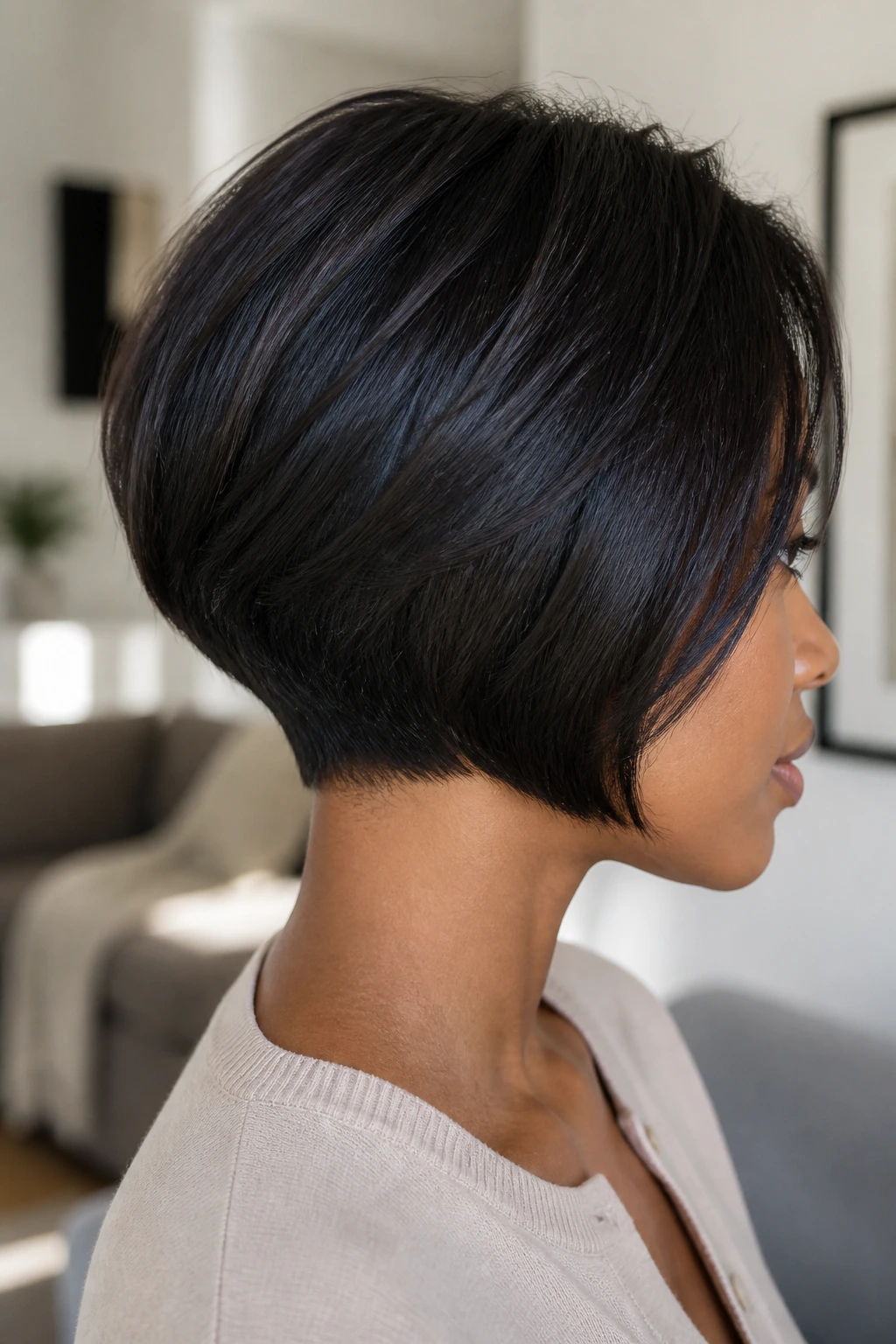
A tapered bob narrows gently toward the nape and builds slightly fuller toward the crown. Fine hair benefits because the cut creates shape where the hair naturally wants to collapse. The back looks neater, the sides sit closer to the face, and the overall line feels intentional.
Oval faces can wear a taper without losing balance, especially if the front pieces stay a touch longer. This is a very clean-looking cut. It’s not loud. It just works in the way a well-cut jacket works.
If you hate hair puffing out at the neck, this shape is worth asking about. It keeps the outline close.
22. Rounded Blowout Bob With Bounce
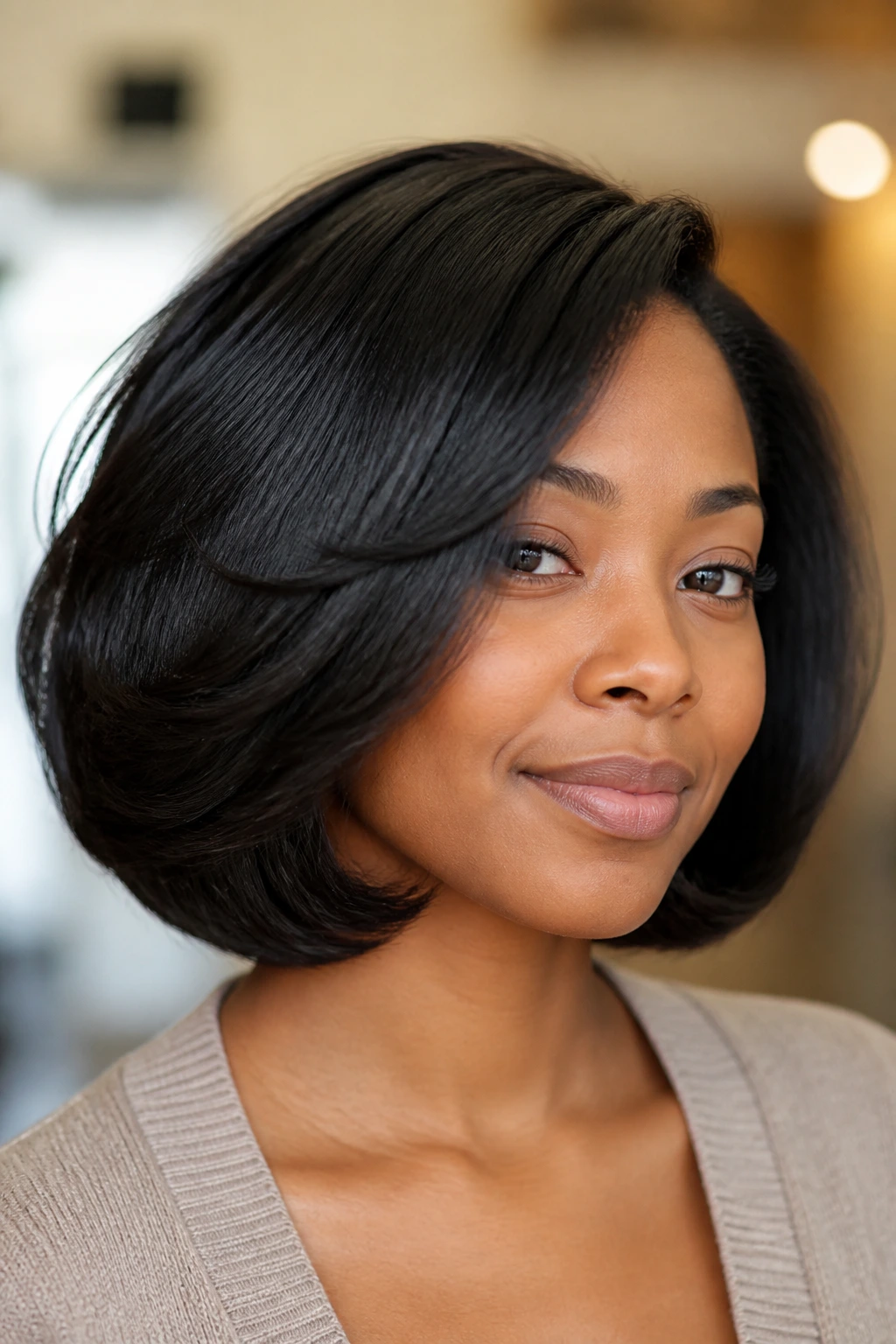
A round-brush blowout changes the mood of a bob instantly. Fine hair often benefits because the roots get lift, the ends turn under, and the whole style feels fuller without needing teasing or heavy product. Black hair takes on a soft, glossy look that feels polished but not stiff.
The cut itself should support the blowout. A blunt line or gentle layers will hold the curve better than a heavily shredded perimeter. If your ends tend to flip oddly, a slightly longer bob usually behaves better than a very short one.
This style is worth the extra ten minutes when you want the hair to look finished. The bounce is the point.
23. Ruffled Air-Dry Bob for Easy Texture
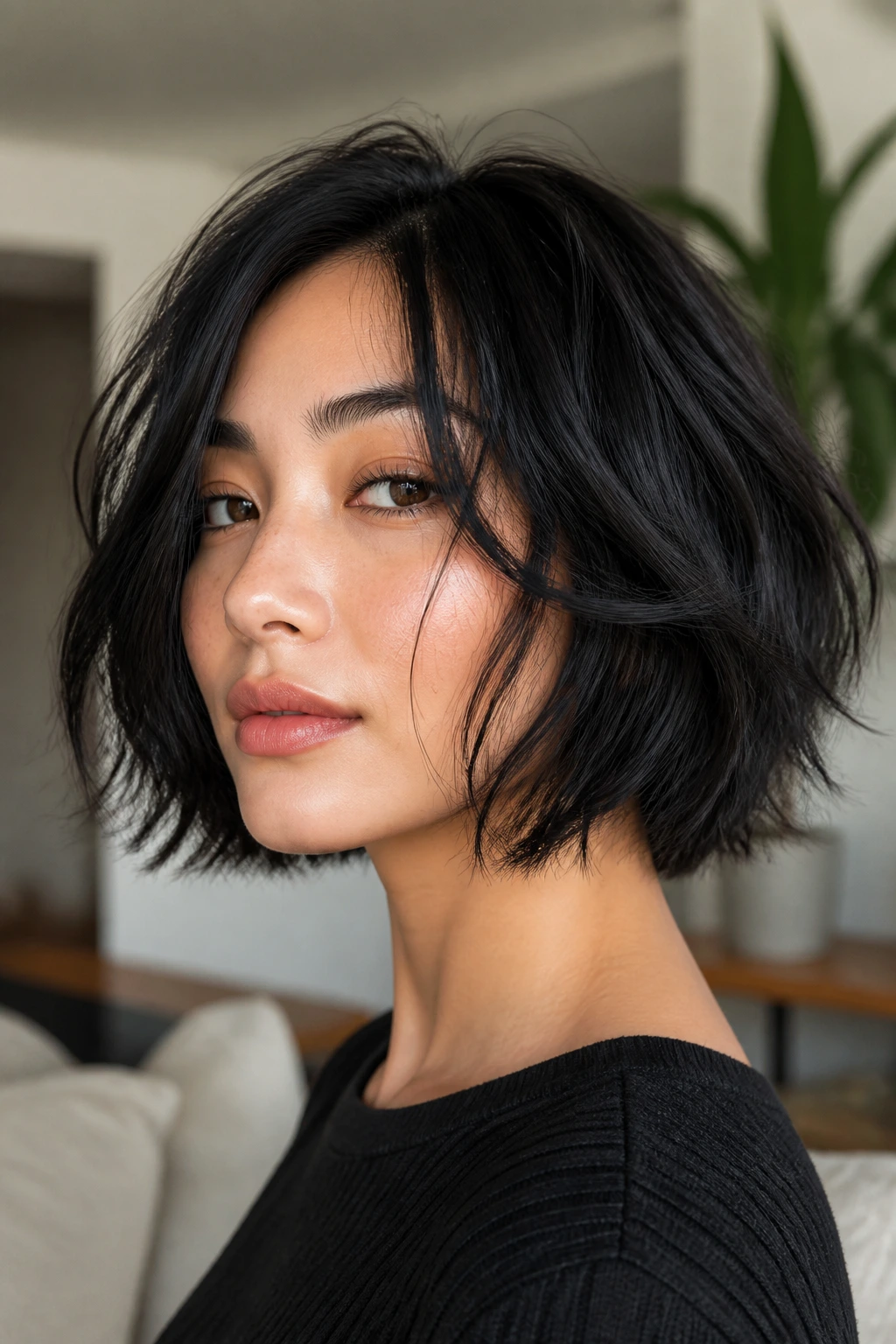
An air-dried bob can be excellent on fine hair if the cut is shaped for it. The trick is not to fight every wave or bend. Let the texture stay a little ruffled, and keep the perimeter clean enough that the style still looks like a bob instead of a mid-grow-out compromise.
On oval faces, this softer finish keeps the look relaxed and open. A light leave-in conditioner and a small amount of mousse can help the hair dry with some grip instead of collapsing into nothing. Black hair makes the movement visible, even when the texture is subtle.
This one is for days when you want less polish and more ease. It still needs shape, though. No skipping that part.
24. Blunt Bob With a Slightly Undone Finish
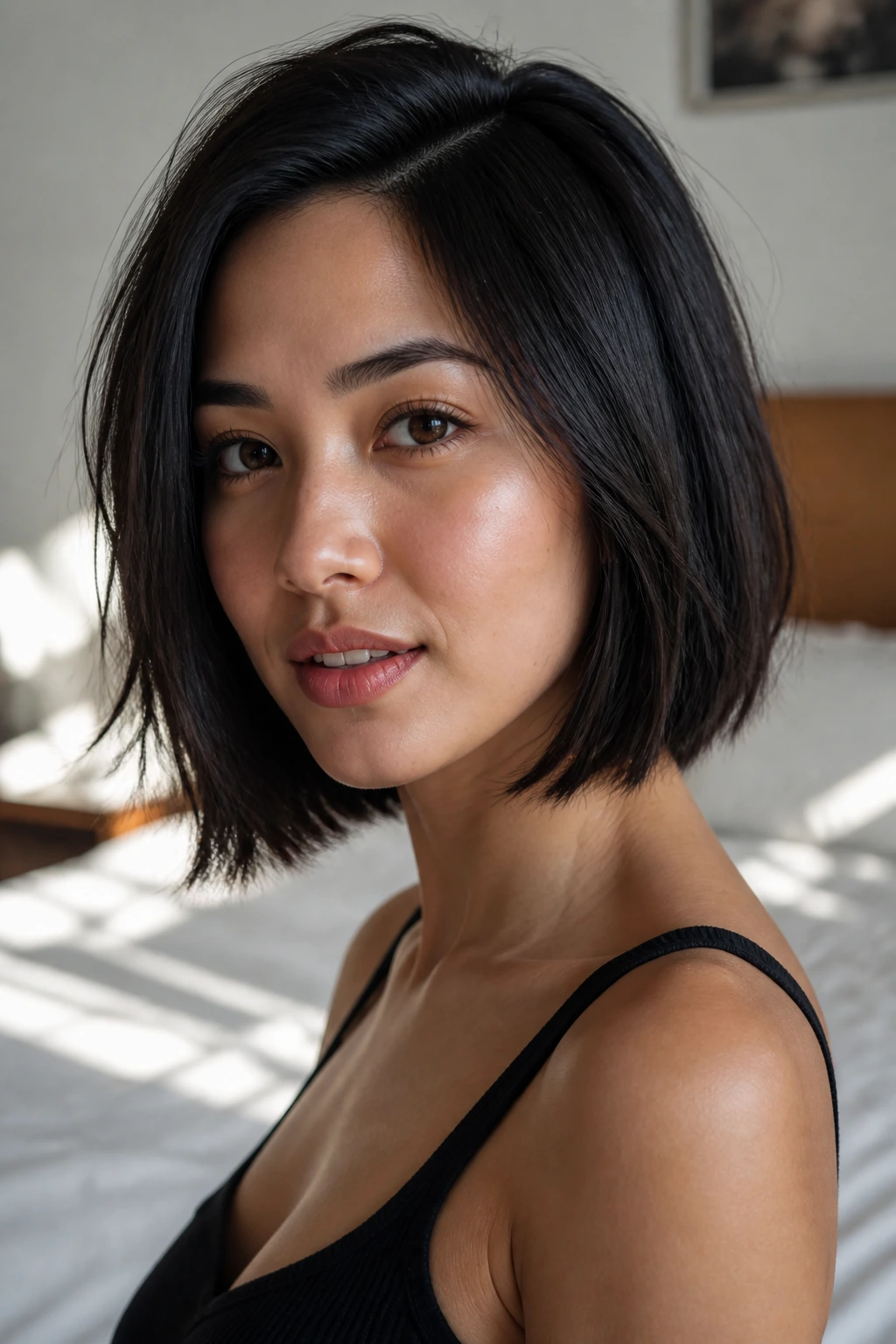
A blunt bob does not have to look severe. A tiny bit of separation at the ends, a touch of texture through the crown, and a side part that isn’t too rigid can make the whole thing feel softer while keeping the density advantage. Fine hair needs that balance.
Oval faces suit this because the clean perimeter defines the lower half of the face without making it look boxed in. Black hair gives the blunt edge enough visual weight that you don’t need a lot of extra styling to make it stand out.
A light texture spray is enough here. Too much product turns a clean bob greasy fast, and that’s a waste of a good cut.
25. The Everyday Bob That Grows Out Gracefully
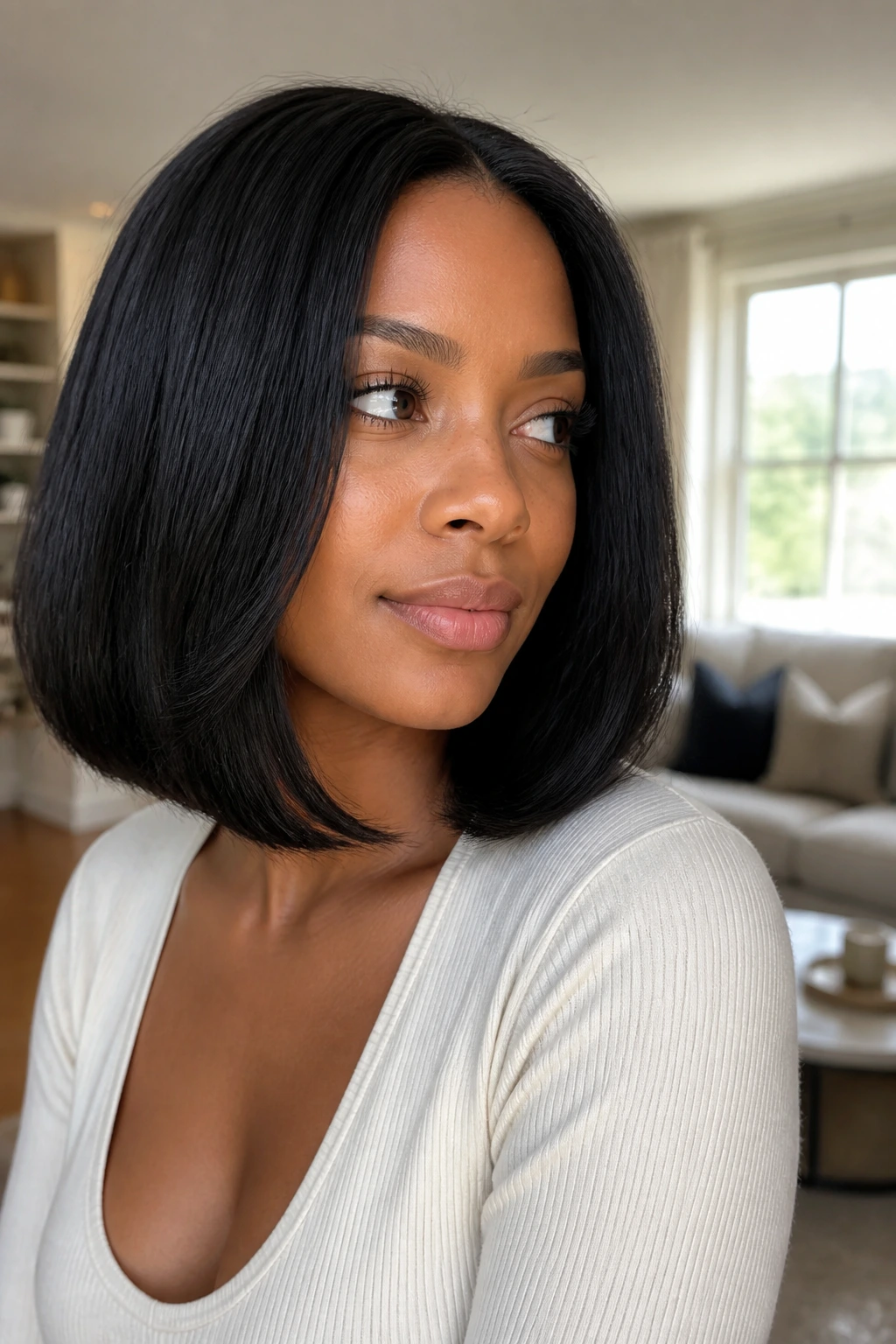
The best bob for fine hair is often the one that still looks decent three weeks after the salon visit. A slightly longer, softly beveled black bob with enough structure to hold its shape is hard to beat for that reason alone. Oval faces can take the extra length without losing the face-framing effect.
Keep the cut polished at the ends and avoid over-thinning the interior. A graceful grow-out matters more than a dramatic first day. When the shape survives the second, third, and fourth wash, that’s when the cut earns its place in your routine.
If you want one bob to wear often, not just once, this is the version to ask for. It’s the least fussy and maybe the smartest.
What Makes a Bob Look Full Instead of Flat
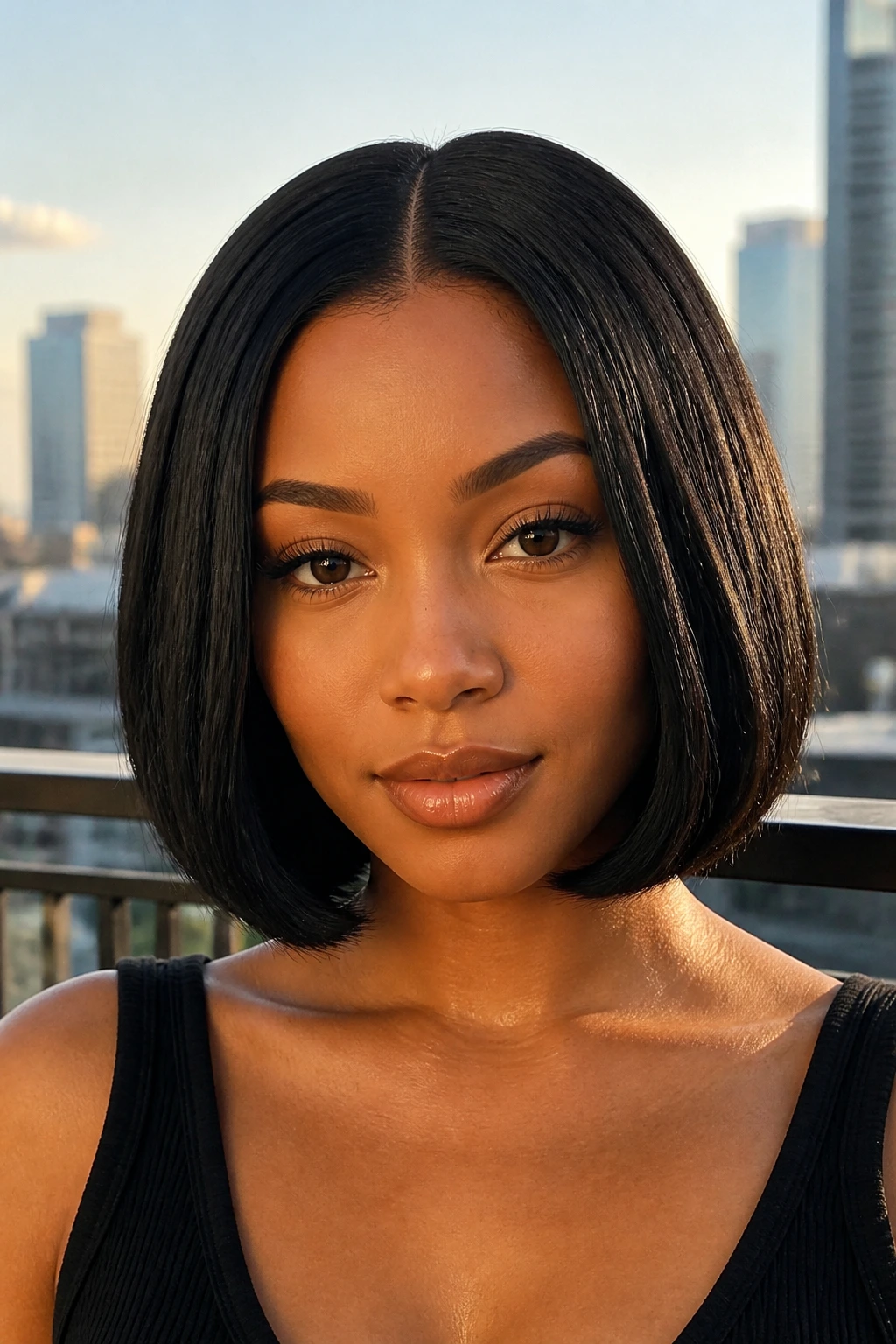
Fine hair lives or dies by the perimeter. If the ends are blunt enough, the bob looks denser from across the room; if the ends are wispy, the cut loses its backbone and starts reading thin no matter how much you style the roots. That’s why black bobs often look especially strong when the bottom line is clean. Dark color and clean geometry are a good match.
Oval faces give you room to play, but they also make bad proportions more obvious. A bob that sits too low can drag the face down. One that sits too high with too much thinning can make the head look top-heavy. The sweet spot is usually jaw to collarbone, depending on how much density you actually have.
I’d take a blunt edge over heavy layering almost every time for fine hair. Not because layers are bad, but because most fine hair does not need extra holes punched into it.
Tools and Styling Gear That Earn Their Keep
-
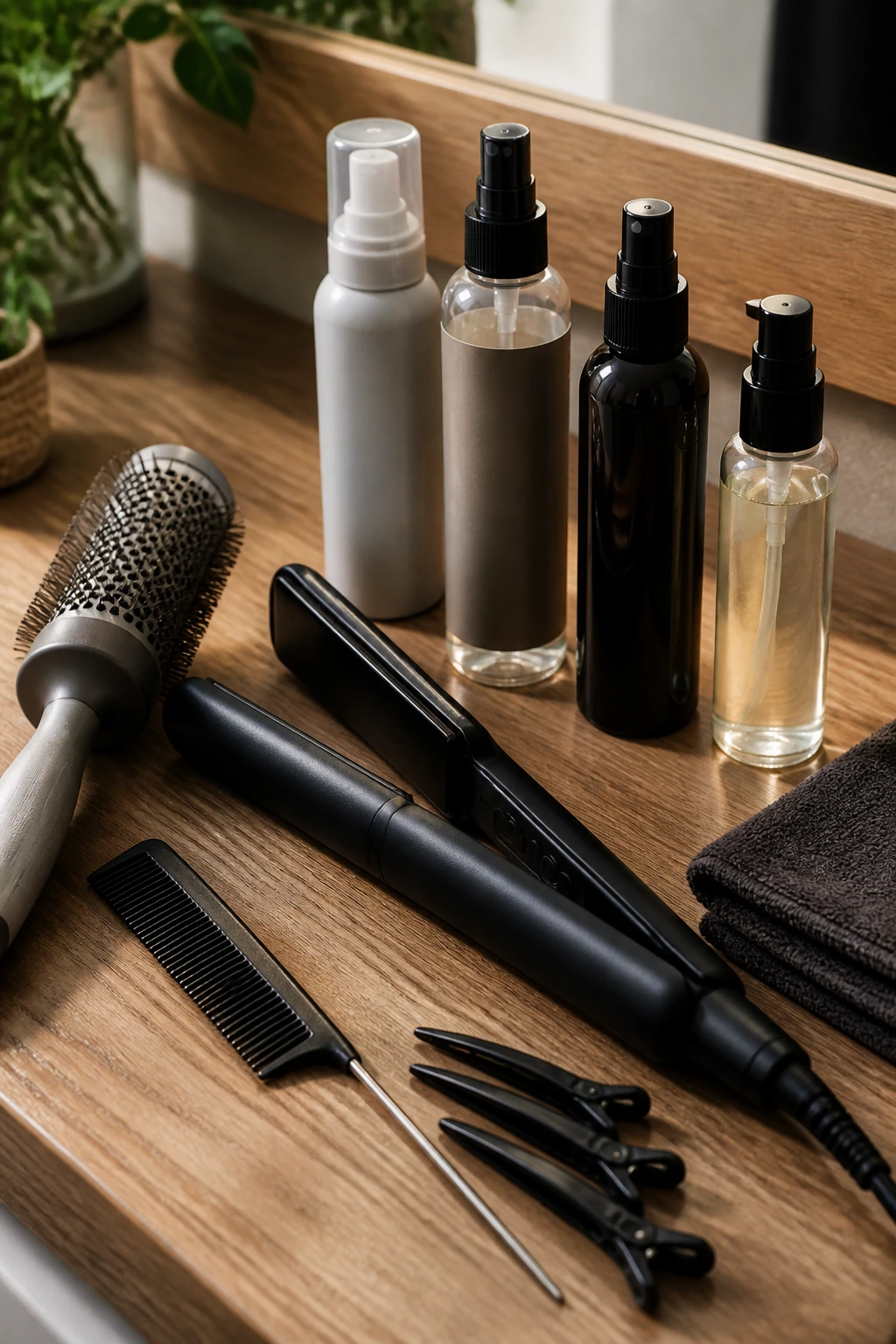
Fine-tooth tail comb: Useful for clean parts, especially if you want a center part or a sharp side part.
-
Blow-dryer brush or round brush: Gives the ends a bend and adds root lift without making the hair look puffed up.
-
1-inch to 1.25-inch flat iron: Best for a polished bob, a soft bevel, or a tiny inward turn at the ends.
-
Lightweight mousse: Adds body at the roots without the sticky feel that can make fine hair collapse later.
-
Heat protectant spray: Non-negotiable if you’re using hot tools on black hair, especially if the bob is blunt and the finish matters.
-
Root-lift spray: Helpful for side parts and crown volume; apply close to the scalp, then blow-dry upward.
-
Shine serum or spray: Use a tiny amount on the mids and ends to keep black hair looking glossy, not greasy.
-
Sectioning clips: Make styling easier and keep the top layers out of the way when you’re working the bottom line.
-
Microfiber towel or T-shirt: Better than a rough bath towel for blotting moisture out of fine hair after washing.
How to Wear These Bobs With the Rest of Your Look
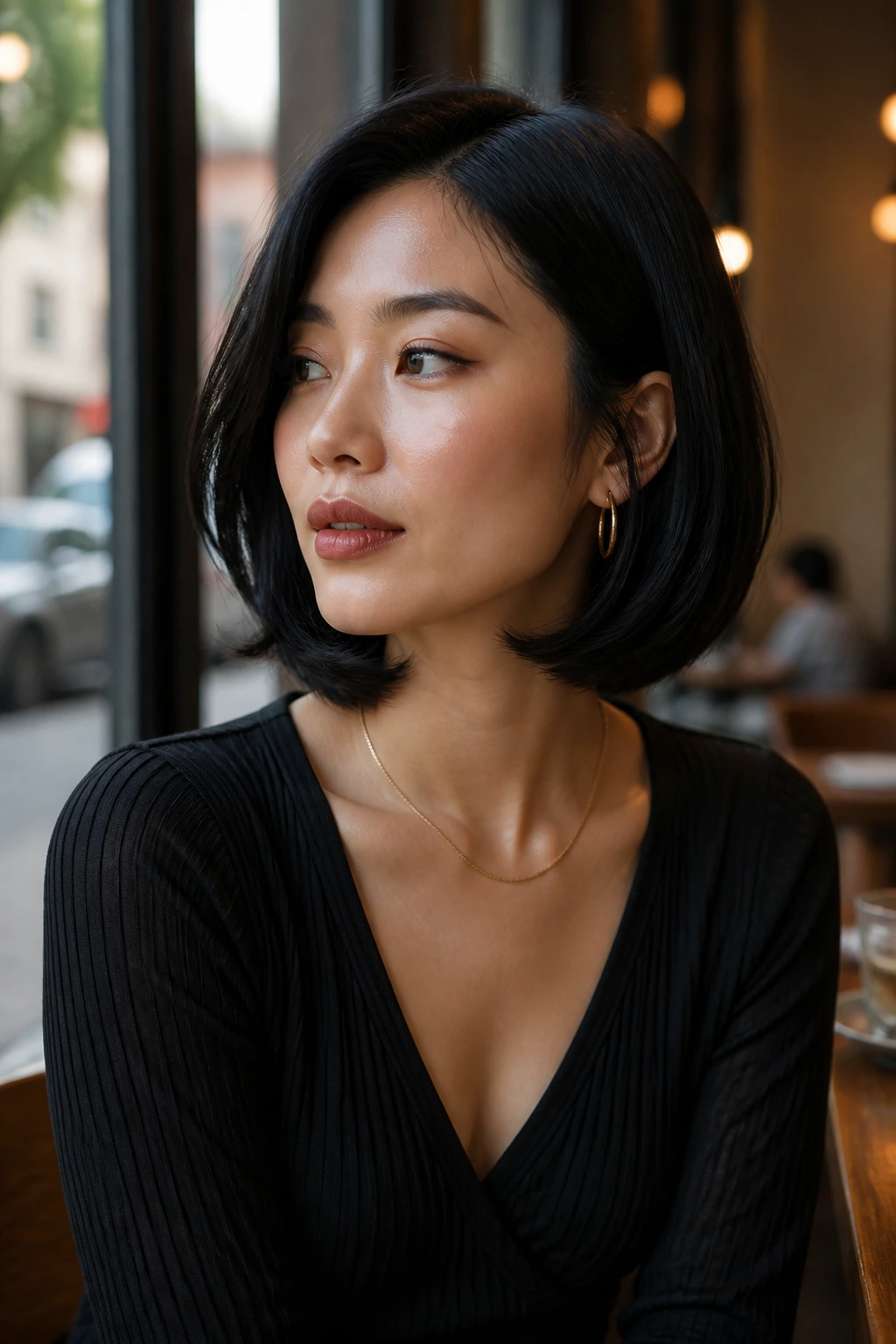
Frame: Keep the part where the haircut wants it. A center part gives you symmetry; a deep side part gives you lift and a little drama. If the face-framing pieces hit right at the cheekbone or jaw, the whole look tends to feel balanced fast.
Pairings: Small hoops, sharp collars, and simple necklines work especially well with shorter bobs because they let the cut stay visible. Glasses are not a problem here; they just need a bob with enough lift at the temples so the frames and hair do not fight for the same space.
Scale: If your hair is very fine, keep the length within the chin-to-collarbone zone unless you have enough density to support more. Longer is not automatically better. Sometimes it’s just more hair with less shape.
Finish: Sleek for a sharper look, softly bent for something friendlier, airy for days when you want the bob to move. Black hair shows shine so well that a small amount of serum can do more than a thick styling cream ever will.
Extra Tips That Make These Bobs Look Better in Real Life
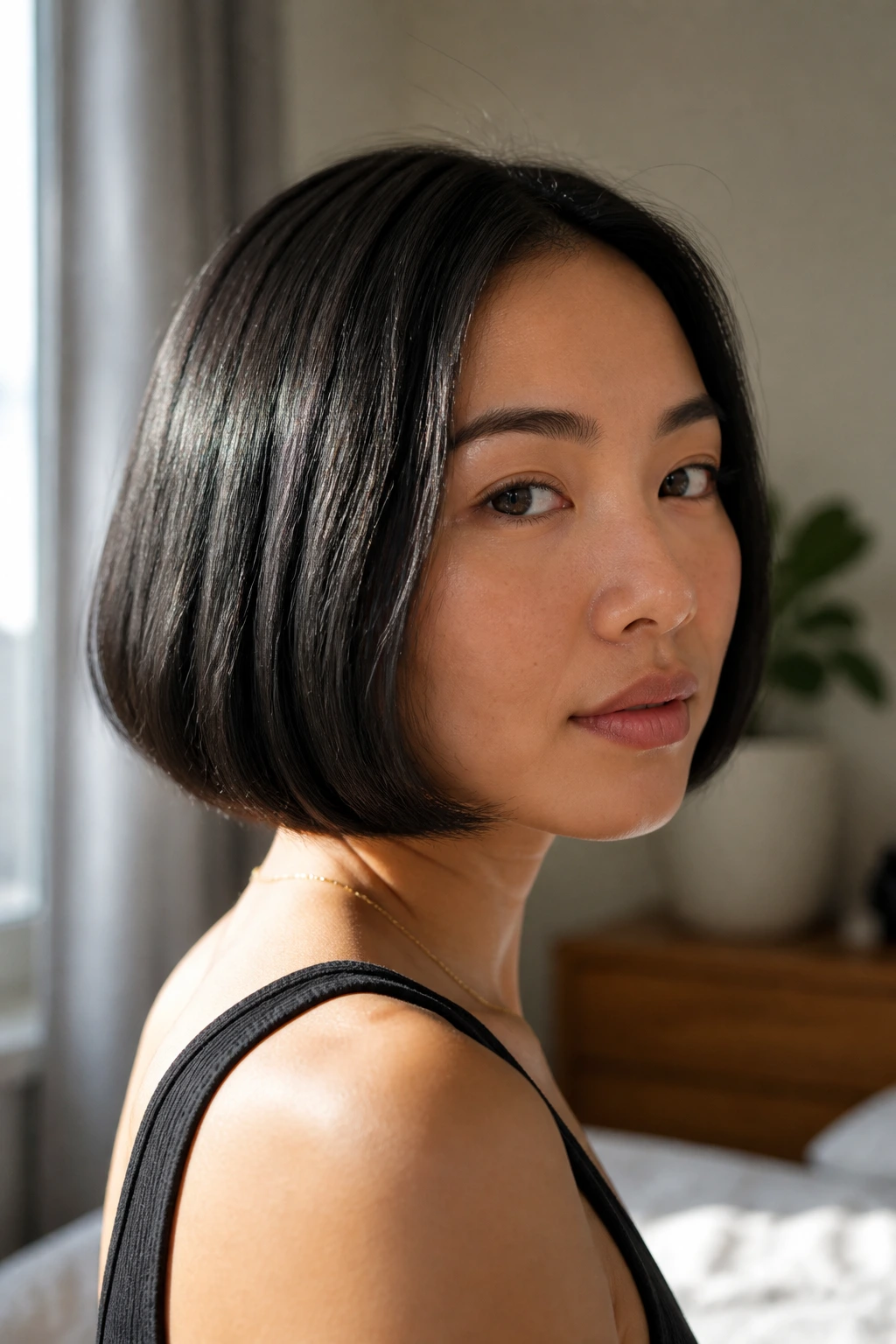
Shine boost: Use a pea-sized amount of serum, then rub it between your palms before touching the ends. If you can feel product on your fingers, you’ve probably used too much.
Root lift: Blow-dry the crown in the opposite direction of your part for the first 30 seconds. That little twist gives fine hair more staying power than stacking product on top of flat roots.
Customization: If the bob feels too plain, add a soft fringe or a slight side sweep instead of chopping in more layers. Shape changes often help more than texture changes.
Make-it-yours: If you like low effort, choose a length that still sits well after sleep and day-two bends. If you prefer polished hair, go shorter and keep the edges sharper so the cut does the work for you.
Small detail, big payoff: Tuck one side behind the ear and leave the other forward. That simple asymmetry can make a basic bob look styled without a lot of time.
Common Mistakes That Make Fine-Hair Bobs Fall Flat
The biggest mistake is over-layering. It sounds helpful, but fine hair rarely needs its ends thinned out from every angle. The symptom is easy to spot: the bob looks airy at the salon and sparse by the second wash.
Another common problem is cutting the bob too long. Once fine hair drops past the point where the perimeter can hold, the shape starts to disappear. The fix is a shorter length or a stronger blunt line.
Heavy creams cause trouble too. They weigh down the root area and leave the ends stringy. Use lightweight products instead, and keep anything rich away from the scalp unless your hair is very dry.
Skipping the part is another quiet mistake. A bob with no clear part can look bulky at the crown and weak at the sides. A center part, side part, or off-center part gives the style structure.
And finally, too much heat on the ends will wreck the clean line you’re trying to protect. If you use a flat iron every day, keep the temperature controlled and use heat protectant every single time.
Variations and Adaptations to Try
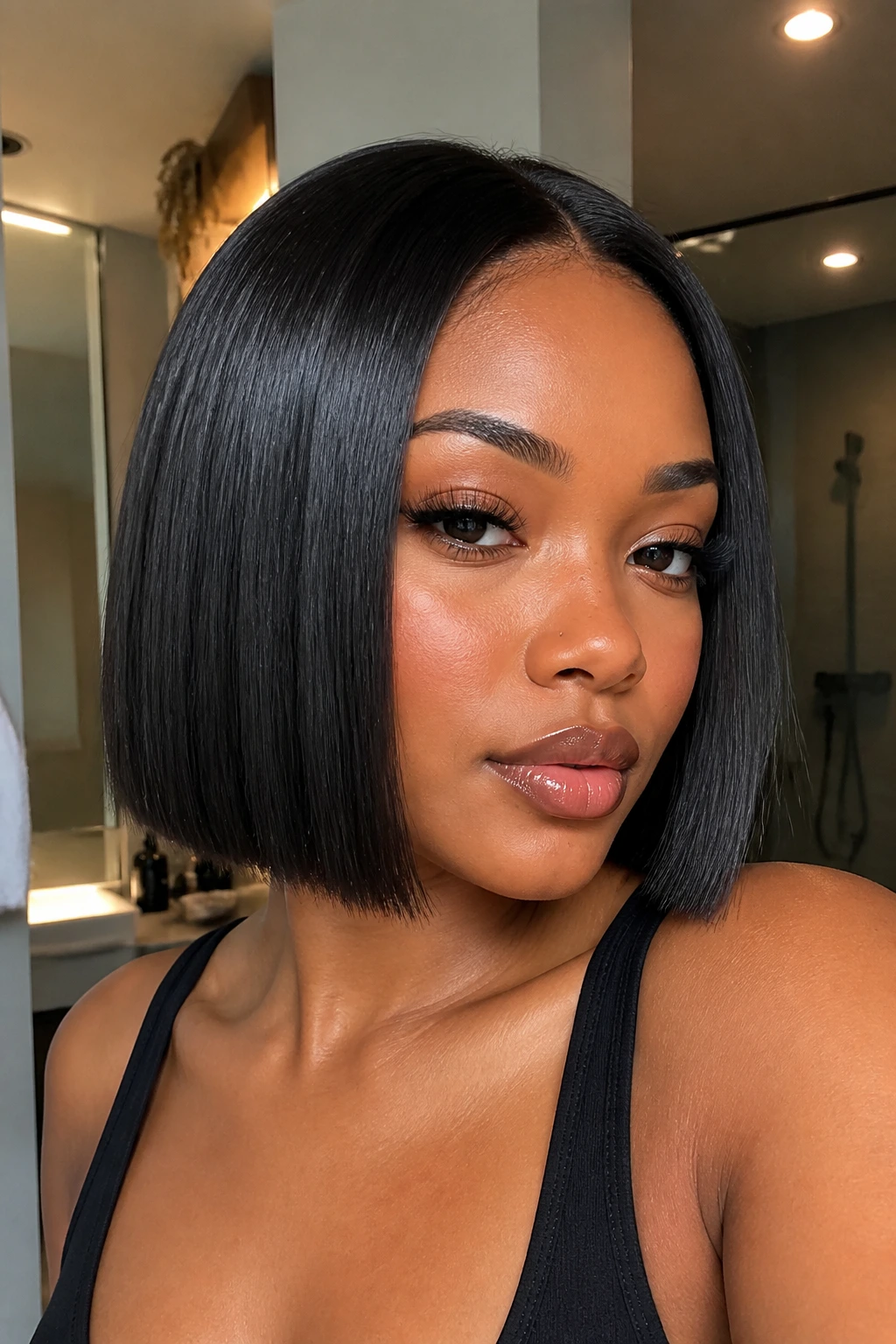
The Silk-Press Sleek Bob:
Best if you want a smooth, mirror-like finish. Keep the perimeter blunt and use a flat iron only where needed so the ends stay full instead of wispy.
The Curly Coil Bob:
This version works when the hair has natural bend or coil. The bob should be cut dry or near dry so the shape respects the curl pattern instead of collapsing it.
The French Fringe Bob:
A shorter fringe changes the whole mood fast. Ask for softness through the bangs so they blend instead of sitting like a separate piece on top.
The Grow-Out Lob:
If you want less salon upkeep, move the length to the collarbone and keep a clean edge. It grows out with more grace than a very short crop.
The Blowout Bob:
Round-brush volume at the roots and a soft bend through the ends make this one feel fuller. It’s the best option when you want body more than sharpness.
Keeping the Shape Between Wash Days
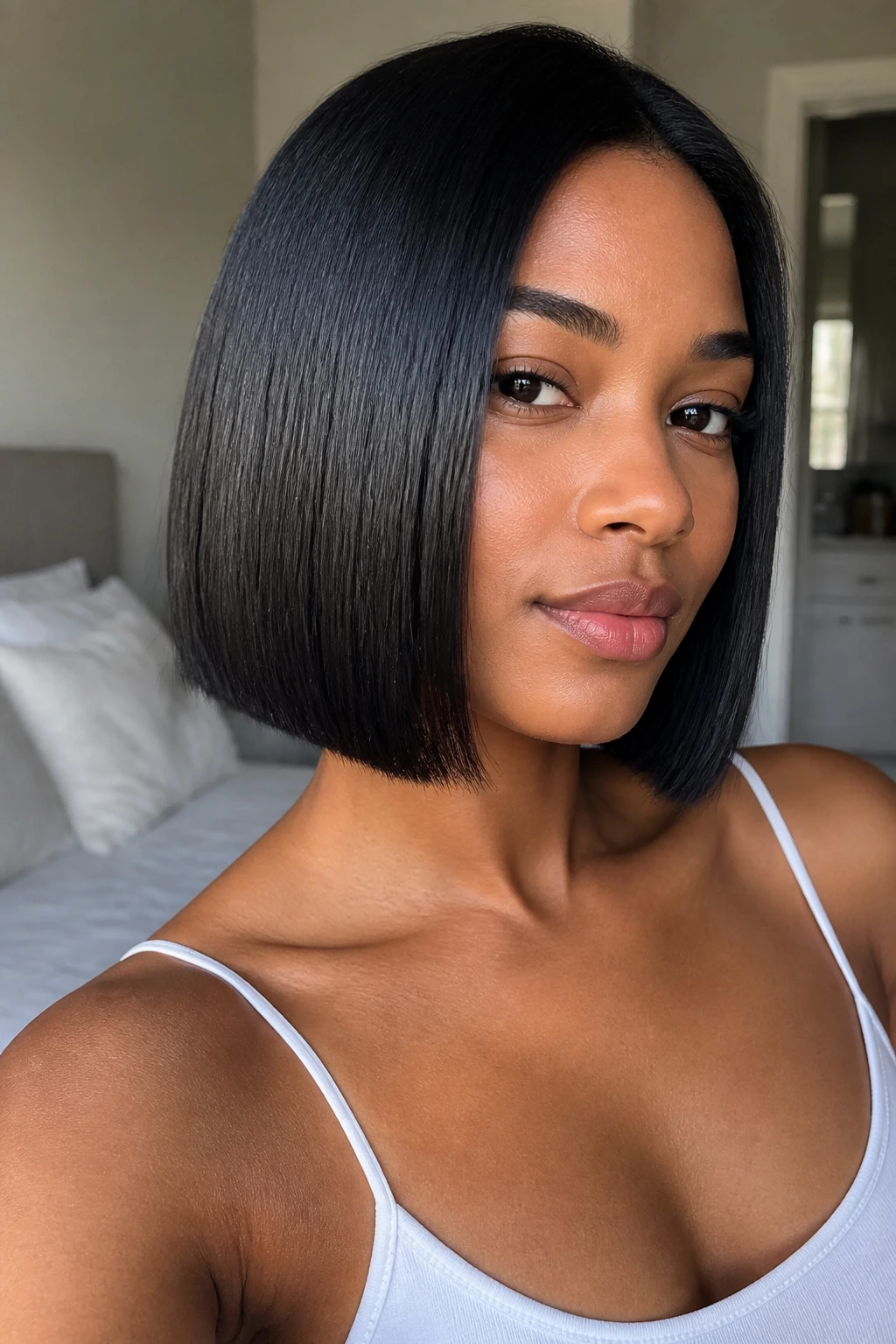
Fine hair usually needs a lighter hand between washes, not more product. A small mist of water at the roots, a quick blast with a blow dryer, and a touch of root spray can revive the cut without smothering it. Black hair shows oil at the roots fast, so the trick is controlling shine, not eliminating it.
Plan on trims every 6 to 8 weeks if you want the blunt shape to stay crisp. If the bob has softer layers or a longer lob shape, you can often stretch that to 8 to 10 weeks. Once the ends start looking translucent, the haircut has already lost some of its strength.
At night, a silk or satin pillowcase helps more than people expect. It keeps the ends from roughing up, which matters a lot when the whole point of the cut is a clean outline.
Questions People Ask Before Getting a Bob

Will a bob make fine hair look thinner?
Not if the cut is built well. A blunt or softly beveled bob often makes fine hair look denser because the perimeter has more visual weight than longer lengths.
What length is best for an oval face?
Jaw length to just below the chin is the safest sweet spot, though collarbone length works too if you want a softer, longer feel. Oval faces can wear both without trouble.
Are bangs a bad idea with fine hair?
Not if they’re soft. Heavy bangs can separate too fast, but curtain bangs or wispy fringe can add shape without stealing too much bulk.
How do I stop my bob from flipping out at the ends?
Ask for a smoother bevel at the cut line and use a round brush or flat iron to direct the ends inward. A little smoothing serum helps, but the haircut matters more than the product.
Can I wear this style air-dried?
Yes, if the cut has enough structure. Air-dried bobs work best when they keep a clean perimeter and your natural texture has some bend.
What if my hair goes flat at the crown?
Use a root-lift spray on damp hair and blow-dry the roots in the opposite direction of your part for a few seconds. That small move can change the shape more than adding more layers.
Do black bobs need more shine products?
Usually not much. Black hair already reflects light well, so a tiny amount of serum or shine spray is enough. Too much will make the bob look oily instead of glossy.
How often should I trim it?
Shorter bobs need more frequent trims, usually every 6 to 8 weeks. Longer lob versions can go a little longer, but once the ends look thin, the cut stops doing its job.
The Shape That Carries the Cut
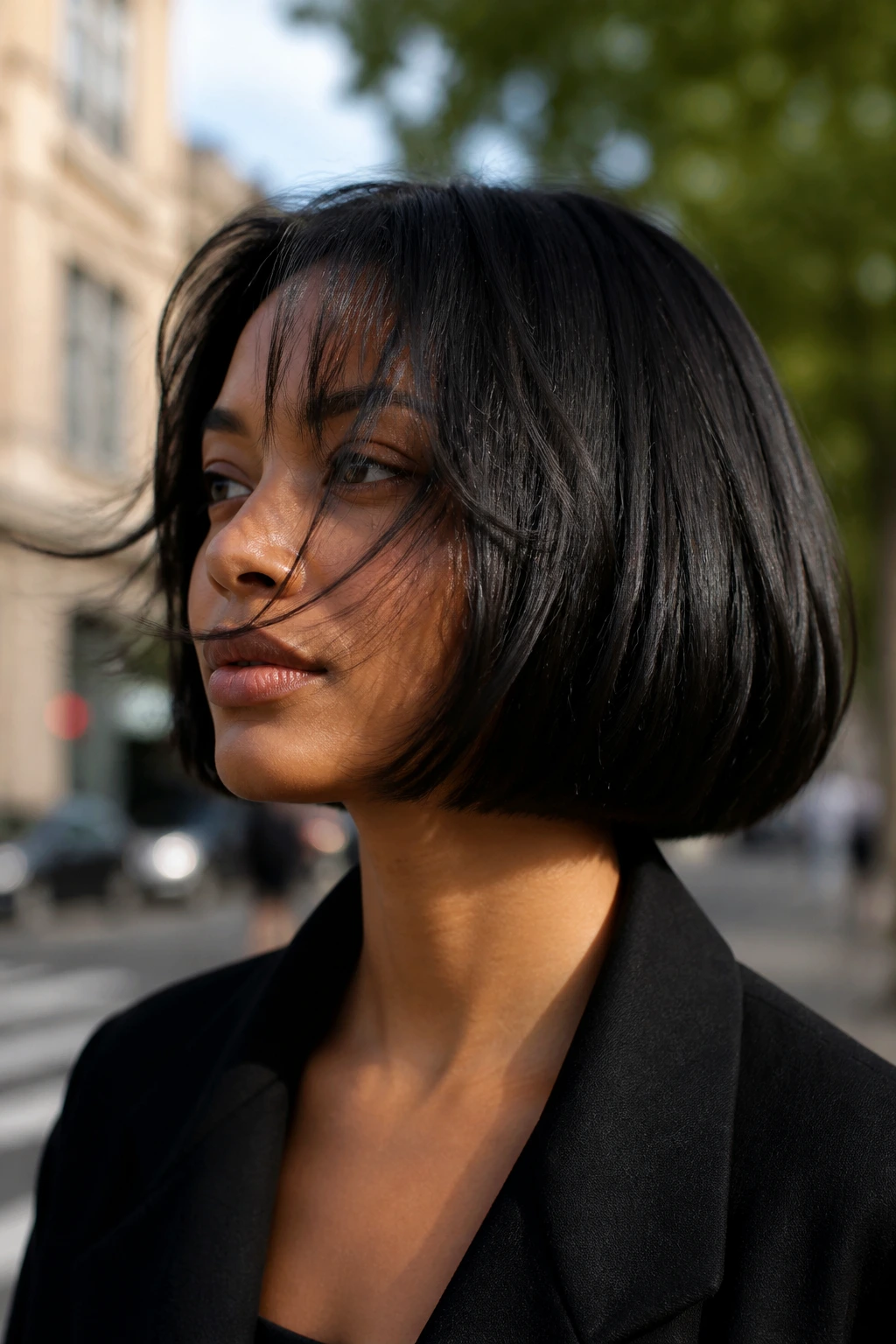
The best black bobs for fine hair and oval faces are the ones that respect the line. Keep the perimeter honest, keep the layers controlled, and let the face shape do some of the work. That’s the part people miss when they chase volume everywhere except the one place that actually matters: the outline.
A good bob doesn’t need a lot of decoration. It needs enough structure to hold its own on a windy day, under fluorescent light, after a long commute, and on the morning after you forgot to style it. That’s the real test.
If you choose the right length and keep the edge clean, the rest becomes much easier.