



The cut matters more than the bleach. Fine hair can look flat in platinum blonde if the shape is lazy, but the right bob gives it backbone, edge, and a little swing at the ends. Platinum blonde bobs for fine hair with side-swept bangs work because they build the illusion of density where fine strands usually give up the fight: through a clean perimeter, a controlled front fringe, and a color placement that doesn’t turn the whole head into one pale, see-through sheet.
That’s the part people miss. Platinum isn’t the problem. Over-layering is. So is a blunt, heavy bang that eats half the front hairline or a grow-out that starts looking striped after a few weeks. The smartest versions of this look keep the ends crisp, keep the crown from collapsing, and let the bangs sweep instead of sit like a block. That little diagonal in the front does a lot of heavy lifting.
The 18 looks below cover the full range, from sharp micro-bobs to softer lob lengths, from polished blowouts to air-dried texture, from cool-white ice to root-shadow blondes that buy you some breathing room between salon visits. Same family, different personalities. Some are neat and tailored. Some are a little undone. All of them make fine hair look more deliberate than it usually does.
Why You’ll Love This Collection
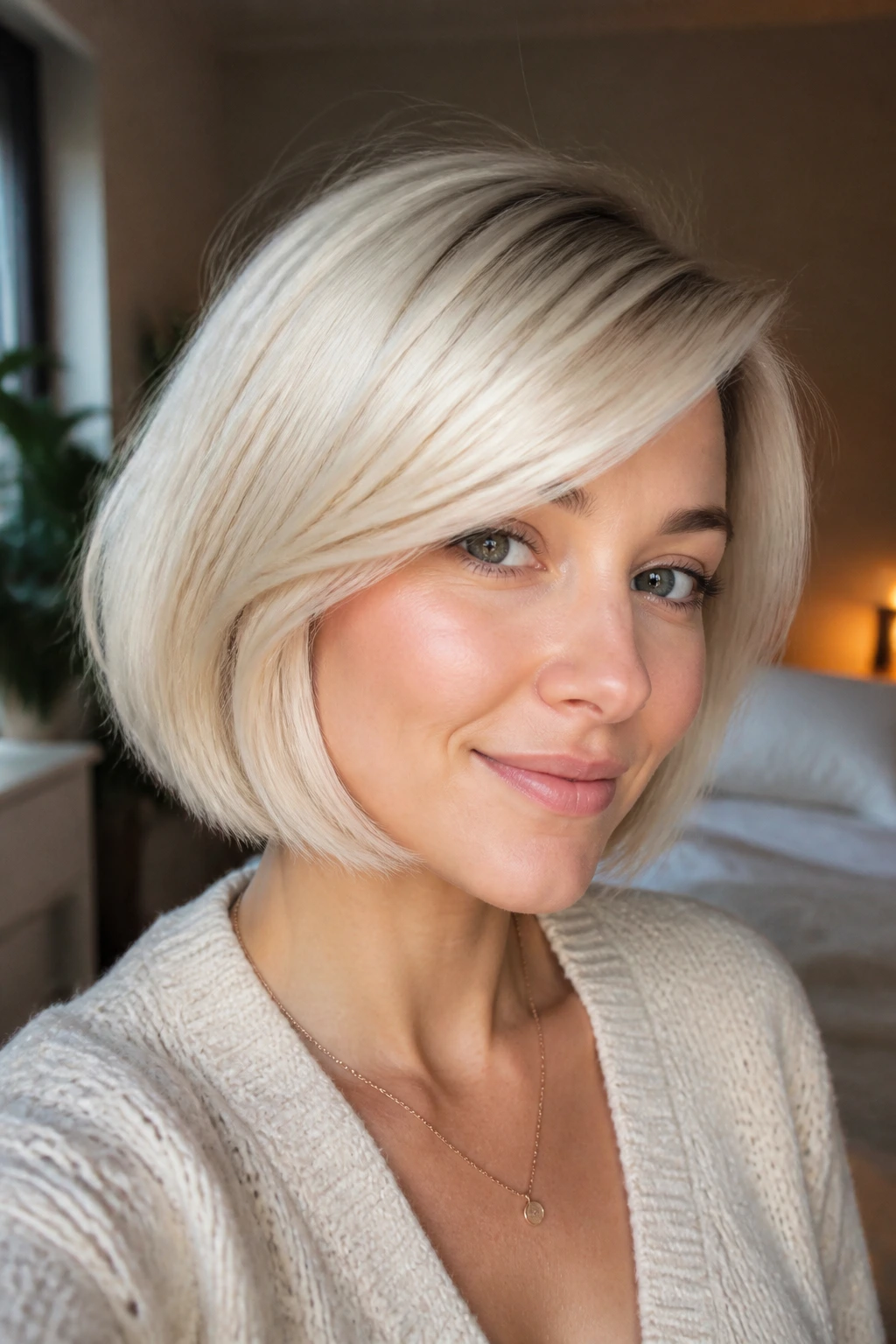
- Density without bulk: A strong perimeter keeps fine hair from fraying at the ends, which is the fastest way a blonde bob starts looking flimsy.
- Side-swept bangs soften the front: That diagonal fringe breaks up a wide forehead line and keeps the cut from reading too severe.
- Platinum looks brighter in a clean shape: Icy color shows off every edge, so a good bob line makes the blonde look expensive instead of washed out.
- You can wear these straight or bent: Most of these cuts still make sense after a quick round-brush blowout or a light pass with a flat iron.
- Grow-out is easier than it looks: A root shadow, a slightly longer front, or a soft fringe can stretch the time between salon visits without the whole shape falling apart.
1. Micro-Blunt Platinum Bob with a Soft Side Sweep
This is the cleanest version of the whole family. The line sits close to the jaw, the ends are blunt, and the side-swept bang lands just long enough to skim the temple instead of cutting off the face. On fine hair, that blunt edge is doing real work. It makes the outline read thicker, even if the individual strands are soft and slippery.
Why it works: A micro-blunt bob keeps the perimeter full, which is exactly what fine hair needs when it’s been lightened to platinum. The soft side sweep adds movement at the front without taking density away from the bottom line. If your hair tends to collapse by midday, this shape holds up better than a heavily layered cut because it gives the eye a solid frame.
Best for: Straight to slightly wavy hair, especially if you like a polished finish and don’t mind trims every 4 to 6 weeks.
Styling note: Blow-dry with a small round brush and flip the front away from the face. That bend in the bang is the whole point.
2. Angled A-Line Blonde Bob with Swooping Bangs
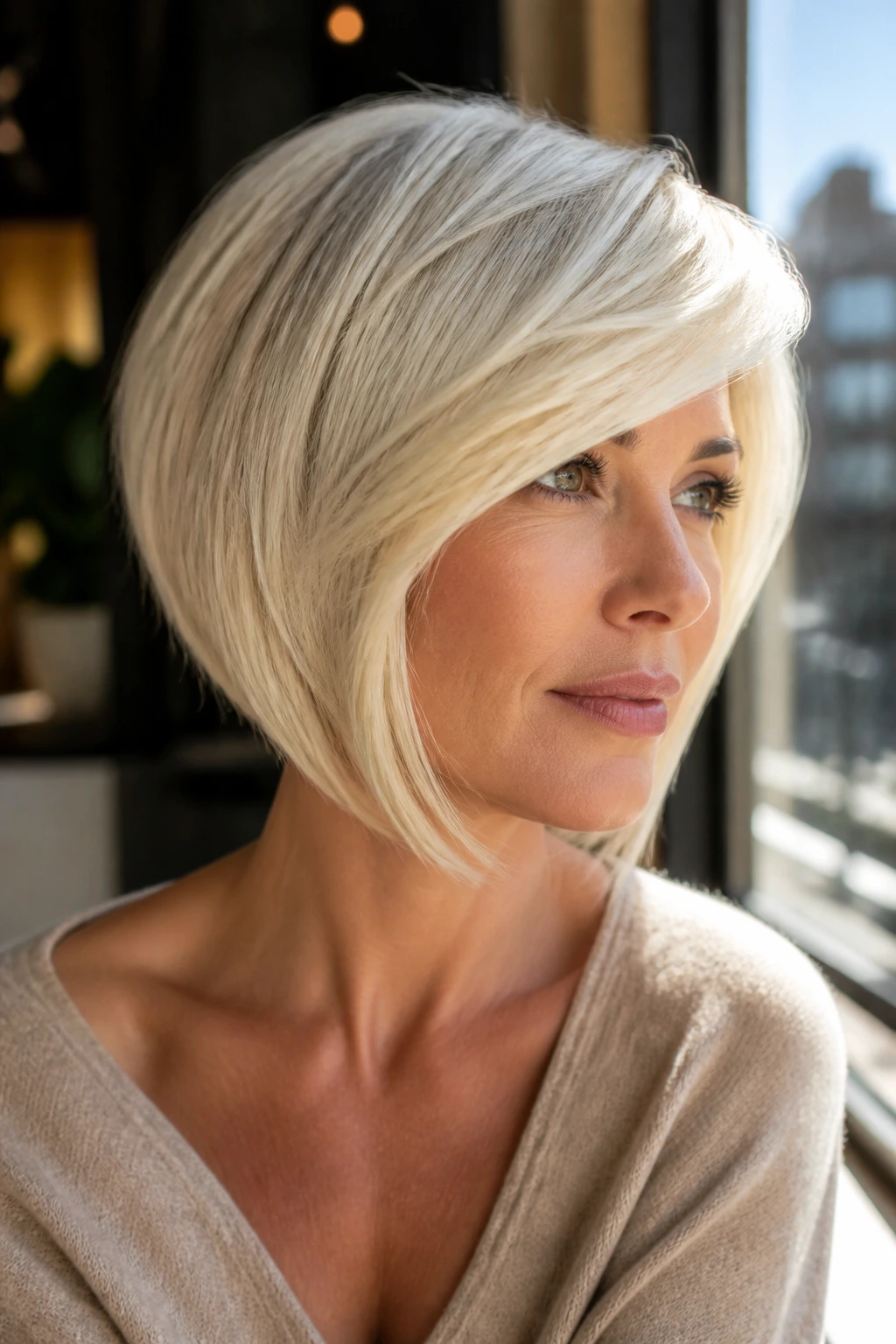
An A-line bob gives fine hair a little length in front without dragging the whole cut down. The back sits shorter and tidier at the nape, while the front lands an inch or two lower near the chin. Side-swept bangs make the angle feel softer, which matters if you don’t want the cut to look too geometric.
The trick here is restraint. Don’t ask for a dramatic wedge unless your hair has enough density to support it. A mild angle, especially on platinum hair, looks more expensive because it moves when you turn your head. That little swing in the front catches the light and keeps the cut from going helmet-shaped.
3. Feathered Chin-Length Bob in Icy Platinum

This one has movement, but not the fluffy kind that eats fine hair alive. The ends are softly feathered right at the chin, and the side-swept bang blends into the front layers instead of sitting on top like a separate piece. It’s a good answer for hair that needs lightness around the face but still needs a solid base.
Why the feathering matters
Feathering at the very ends gives the bob a little air without stripping away the shape. That’s the key difference between “soft” and “wispy.” A wispy cut can look nice for about ten minutes. A feathered bob still looks decent after the wind, a commute, or a long day at a desk.
If you wear glasses, this cut is especially good. The bangs slide past the frame instead of crashing into it, and the chin-length perimeter leaves enough room around the cheeks.
4. Piecey French Bob with a Long Side Fringe
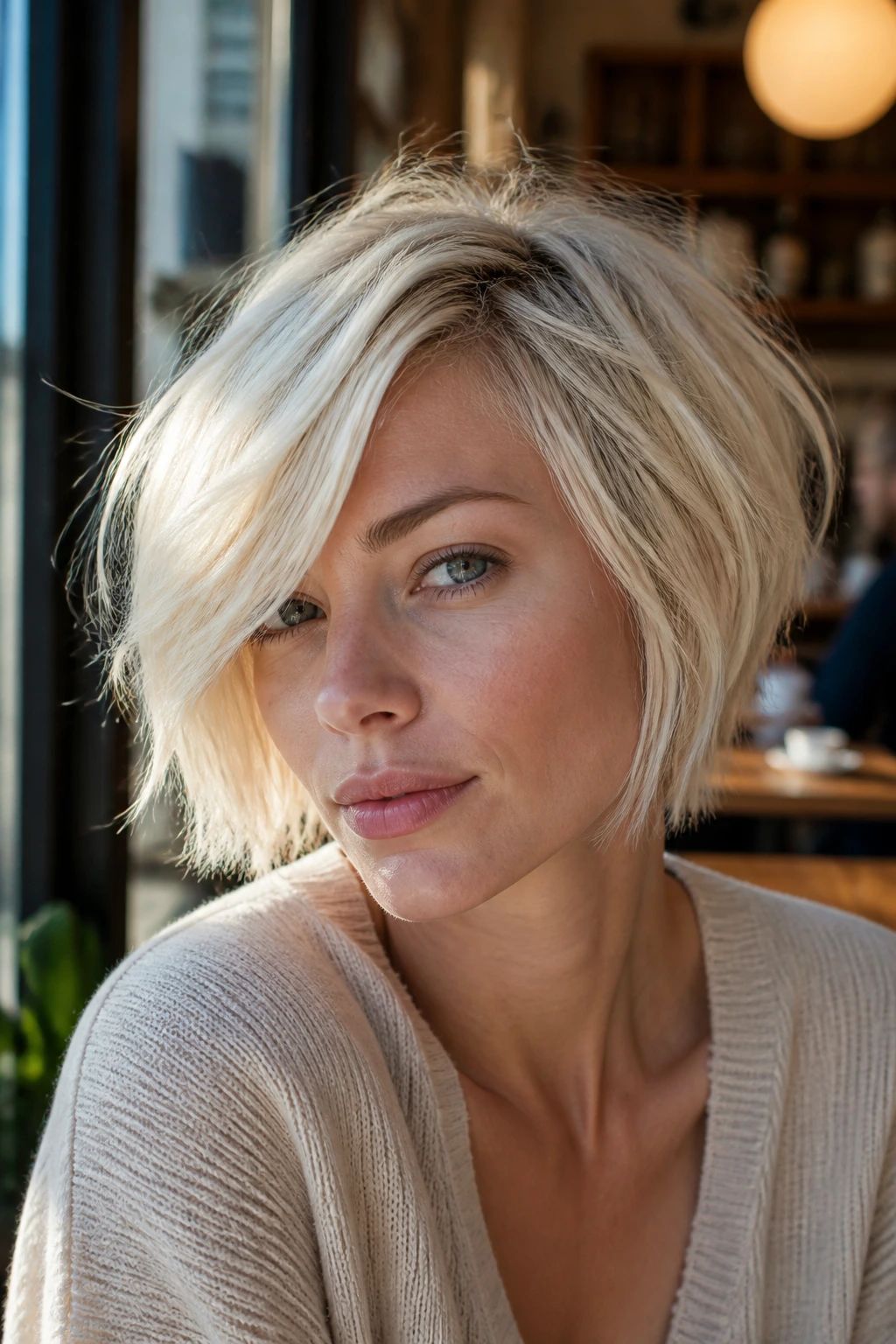
This version has a little attitude. The bob sits shorter, the texture is broken up just enough to avoid stiffness, and the side fringe feels like it was swept there on purpose rather than carefully arranged. It’s not a heavy shag. It’s a crisp little cut with loose ends.
A French bob on fine hair can go wrong fast if the layers get too enthusiastic. Keep the inside minimal and the outside line clean. Then use a pea-sized bit of matte paste or a light texturizing spray at the ends. The result is chic in that very specific way that looks easy and still took some attention.
5. Collarbone Platinum Lob with Side-Swept Bangs

When fine hair feels too fragile for a short bob, a lob buys you room. The extra length at the collarbone gives the hair more swing and keeps the front from sticking flat against the cheeks. Side-swept bangs stop it from looking like a plain one-length cut that just happened to get lighter.
This is the most forgiving cut in the collection. If you’re not sure how short to go, start here. You can wear it tucked behind one ear, bent under at the ends, or rough-dried with a little mousse and still have enough shape to look intentional.
6. Rounded Tucked-Under Bob with a Deep Side Part
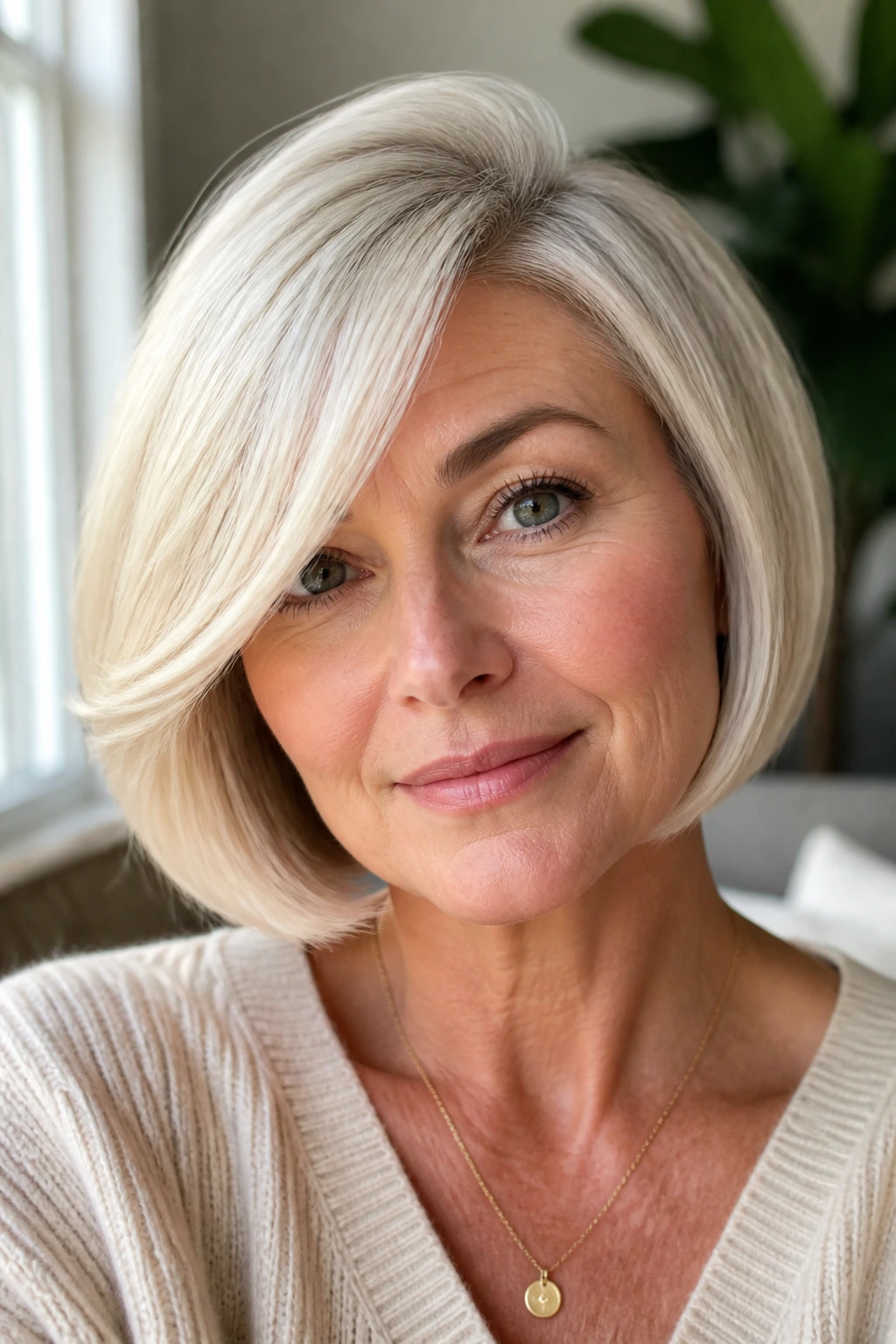
There’s something old-school about a bob that curves in under itself, and I mean that in the best way. The rounded finish creates width through the middle, which is useful if fine hair tends to lie too close to the head. A deep side part gives the fringe direction and keeps the shape from going flat across the forehead.
The styling is old-fashioned in the nicest sense. A round brush, a dryer nozzle, and a 1.25-inch brush will do most of the work. Turn the ends under slightly at the jawline and pin the bang away from the face for a minute while it cools. That cool-down step matters. Hair keeps its memory when it sets.
7. Air-Dried Textured Bob with Wispy Sweep
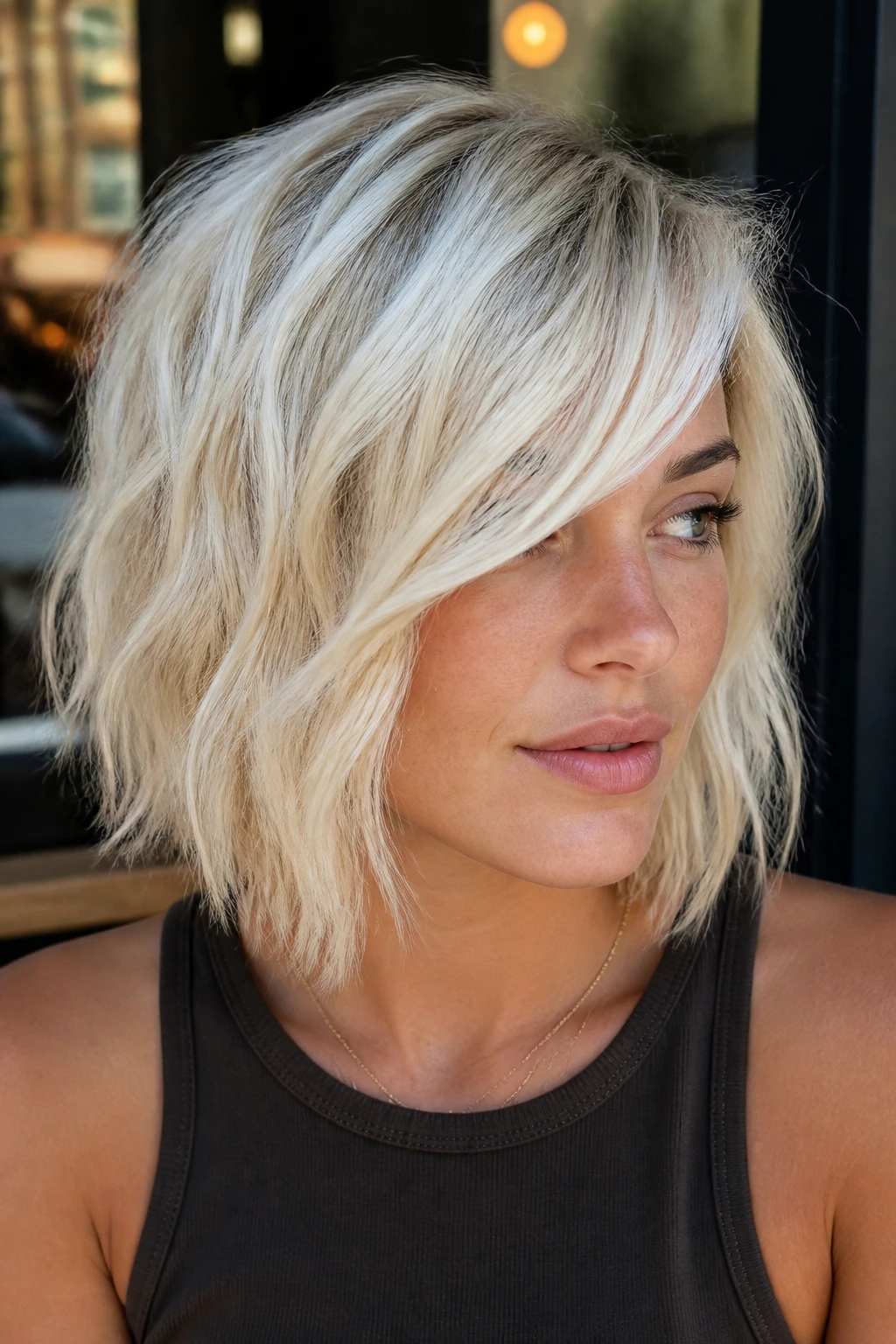
Not every platinum bob needs a blowout. If your fine hair has a little natural wave, this air-dried version gives you movement without making the ends feel sparse. The side-swept bangs stay softer and a touch longer, which helps them blend into the rest of the cut instead of splitting open.
What to ask for
- A blunt or only lightly layered perimeter
- Soft internal texture at the midlengths, not the ends
- A long fringe that can sweep across the forehead
- Enough length to air-dry without puffing out at the sides
The best part is how it looks on days when you do almost nothing. A little curl cream or lightweight mousse goes a long way. Heavy cream does not. That’s where people lose the shape.
8. Side-Part Shag Bob in Pearl Platinum
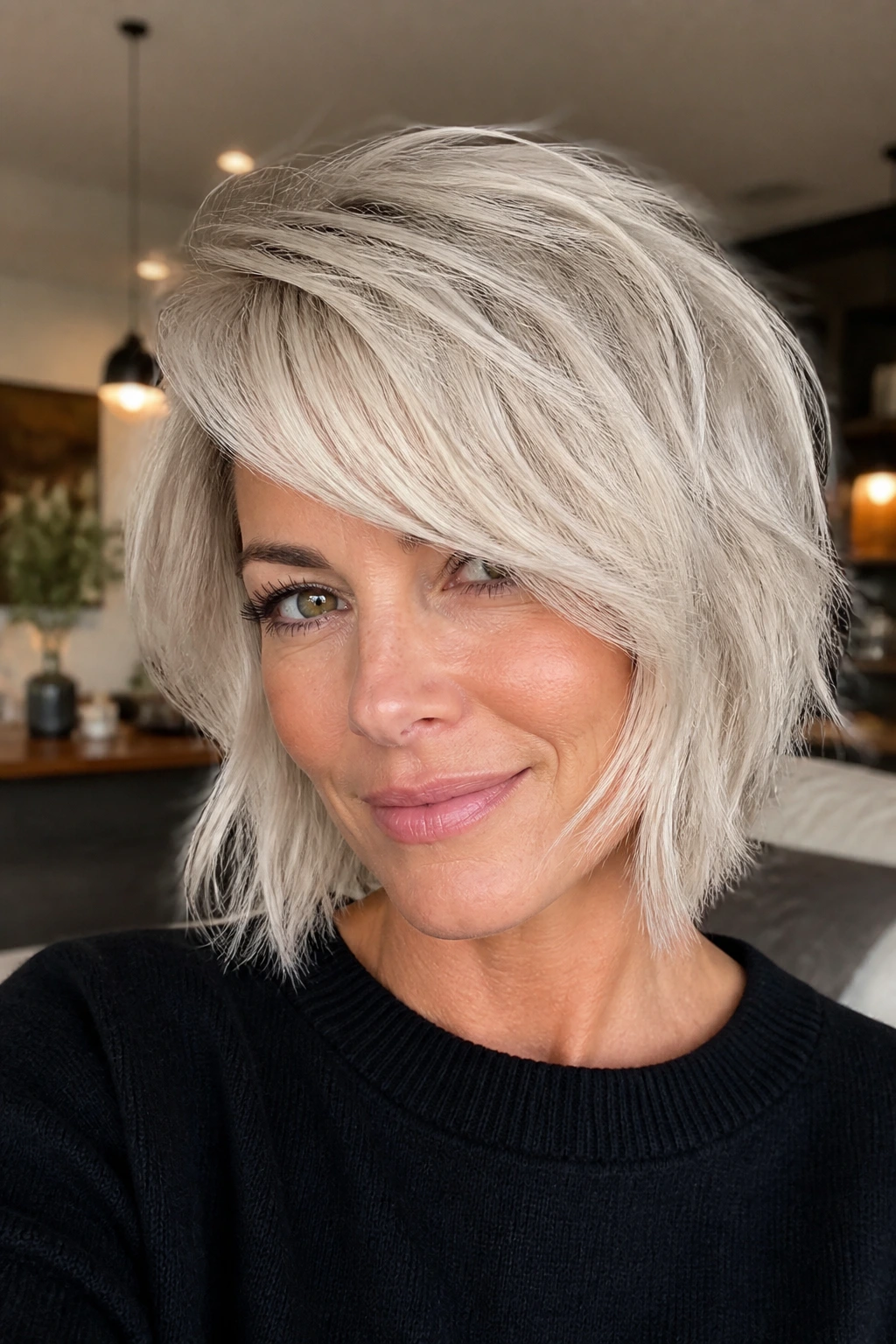
This is the most lived-in cut in the group, and it works because the layers are used with some discipline. The crown gets lift, the sides get broken up, and the side-swept bang melts into the shag rather than sitting on top of it. Fine hair can wear a shag beautifully when the layers are kept long enough to preserve movement.
The pearl-platinum tone is worth a mention too. It softens the edge of the chop, so the whole haircut doesn’t look jagged. If your hair leans flat at the roots, this is one of the few shapes that can give you height without turning puffy at the bottom. Keep the ends polished. That’s what separates a chic shag bob from a tired one.
9. Stacked Inverted Bob with a Smooth Fringe
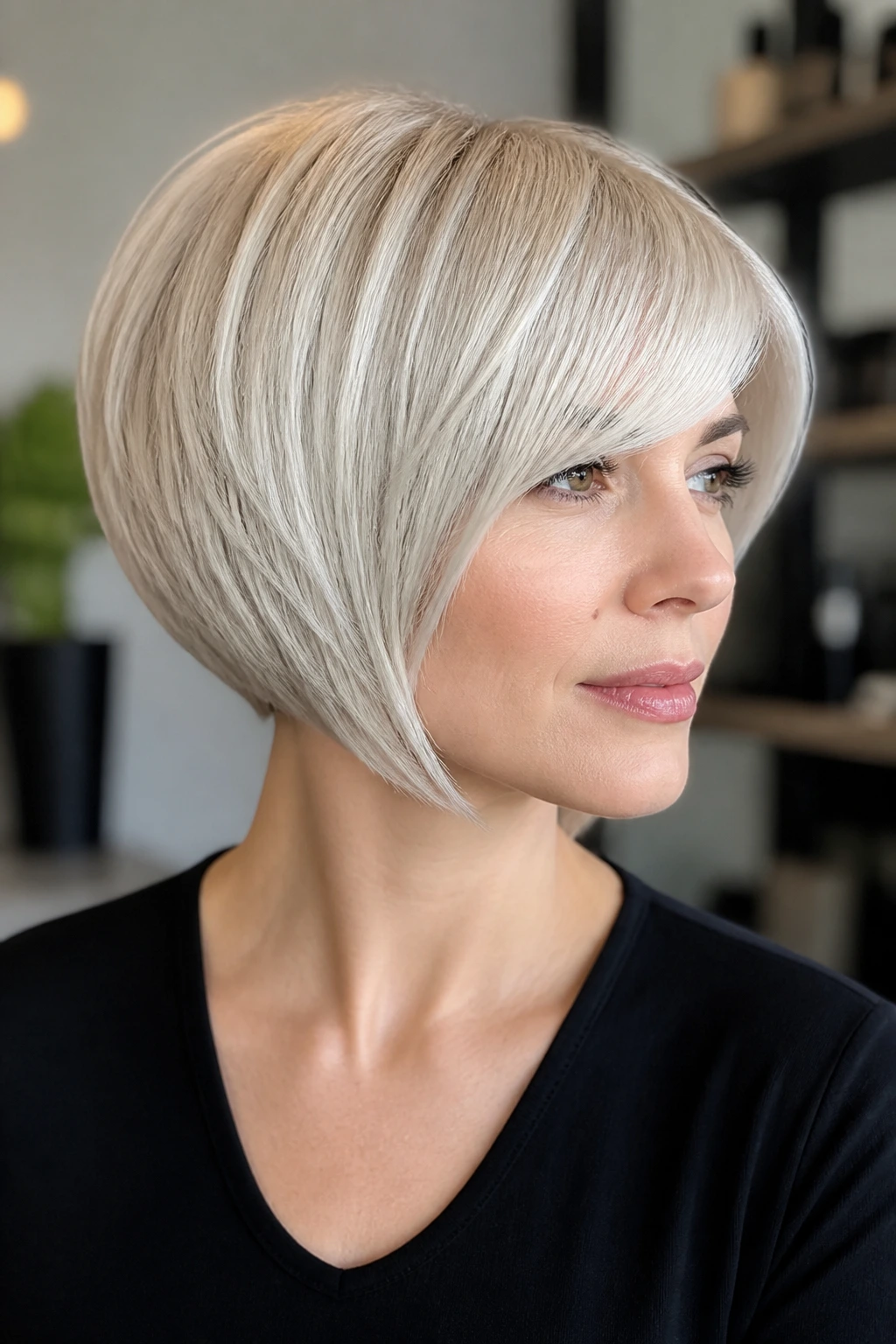
A stacked bob gives the back some lift, which is useful when fine hair sits close to the neck and refuses to cooperate. The inverted line keeps the front longer, and the side-swept fringe smooths the transition from crown to face. Done well, it has a tidy curve and a little structure without feeling stiff.
The stacking should be subtle. If the back is cut too short or too aggressively layered, platinum fine hair can start to show the mechanics of the haircut in a way that isn’t flattering. You want support, not a stair step. Ask for lift at the crown and a clean, rounded silhouette through the nape.
10. Glassy Polished Bob with Side-Swept Bangs
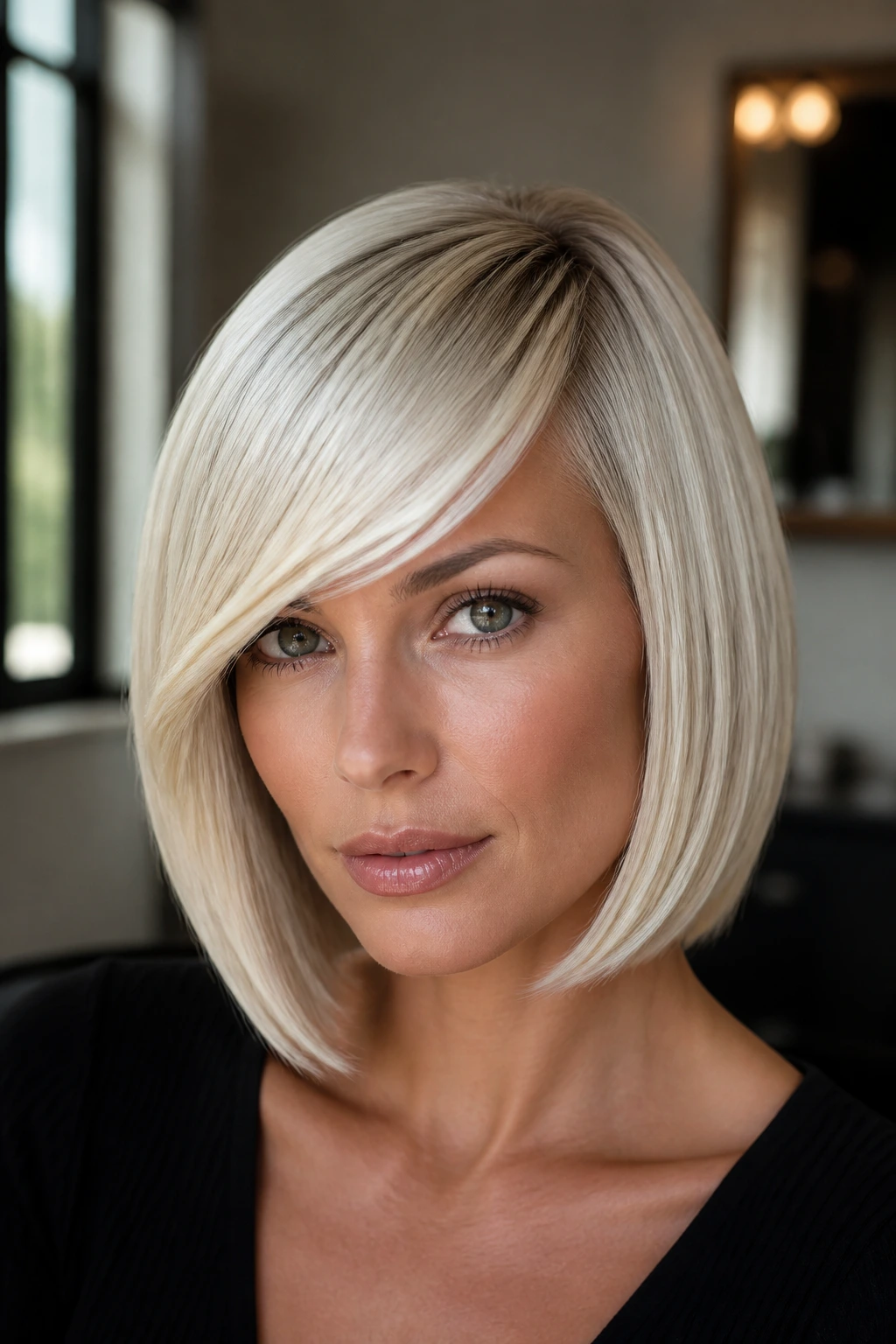
This is the one that looks expensive when the cut is sharp and the blonde is clean. Everything is smooth, reflective, and neat. Side-swept bangs keep the front from reading too severe, which matters because a glassy bob can look severe very quickly on a narrow face.
It’s a strong choice if you like the look of straight hair and don’t want a lot of visible texture. Use a heat protectant, flatten the surface with a flat iron if needed, and finish with a light serum on the ends only. The ends should gleam, not look oily. Big difference.
11. Tousled Beach Bob with Soft, Grown-Out Bangs
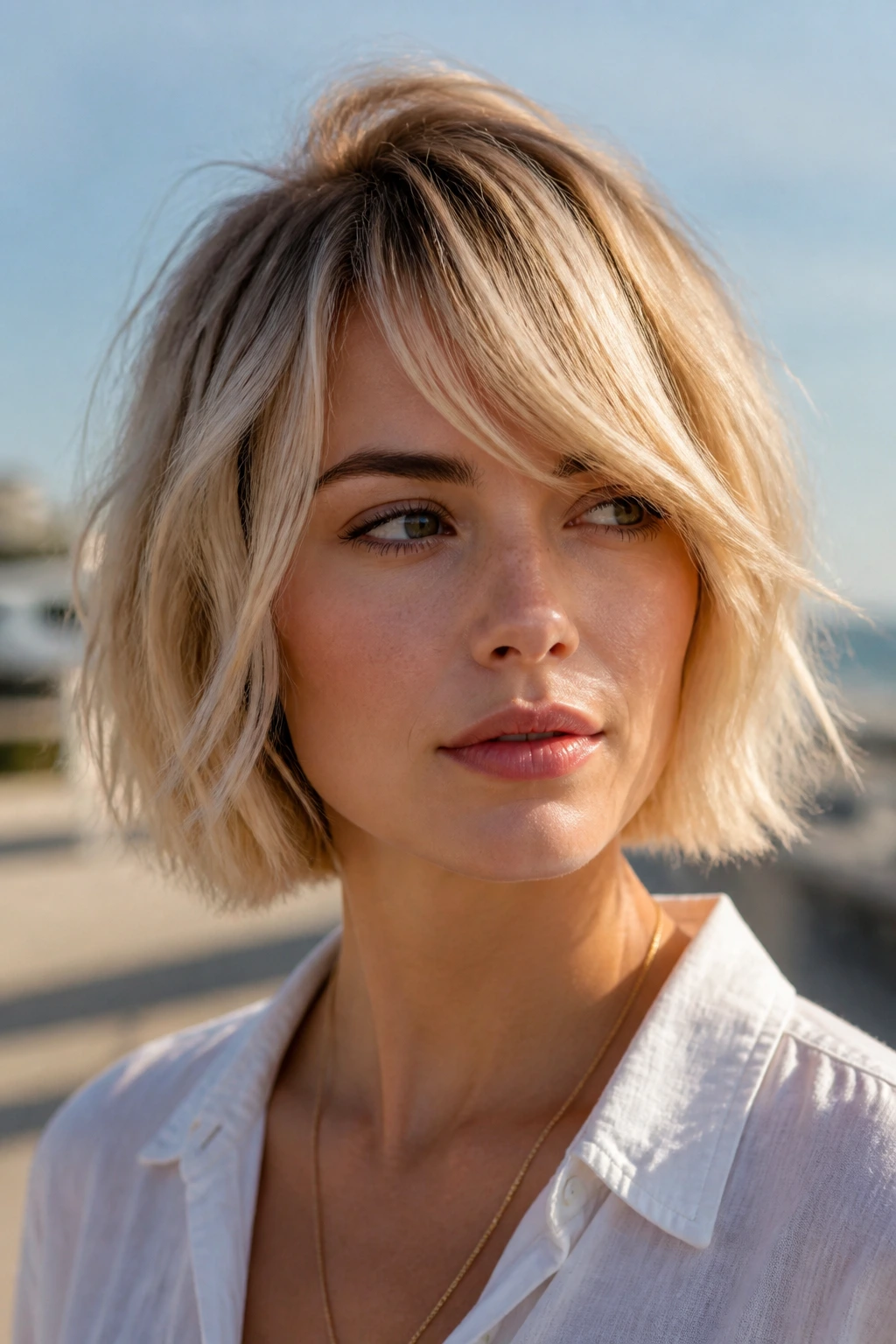
This cut has a looser mood. The texture is bent and piecey, the bangs are long enough to feel relaxed, and the whole shape looks like it would still make sense after a long day. Fine hair often takes to this style because a little grit from the styling product gives the strands more grip.
Avoid the temptation to overload it with salt spray. One or two sprays, then scrunch. That’s enough. Too much and the platinum starts to look dull and dry, which is a terrible trade. A one-inch iron can add a lazy bend to the ends if your hair dries too straight on its own.
12. Jawline Bob with Delicate Sides and Face Framing
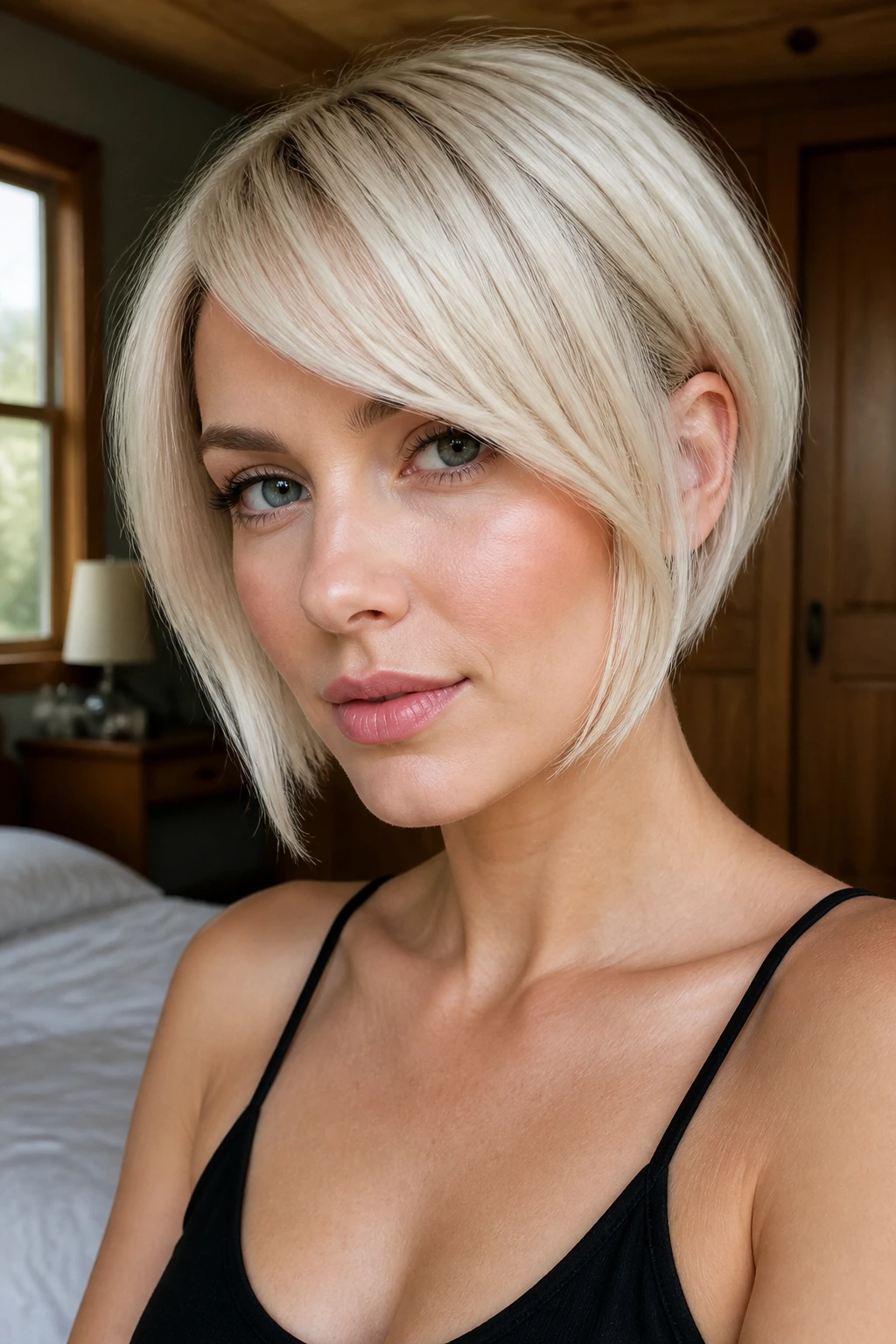
If you want the haircut to sit right at the jaw and show off the line of the face, this one earns its place. The side pieces stay delicate, the fringe sweeps across the brow, and the perimeter lands in a place that makes the jaw feel more defined. On fine hair, that kind of placement can do a lot with very little actual bulk.
What I like here is the restraint. There’s no need for busy layers. A clean edge with soft face-framing sections is enough. The whole point is to make the face look sculpted while the hair still feels light. It’s a neat trick, and on platinum hair it reads even cleaner.
13. Root-Shadow Platinum Bob with a Long Sweep
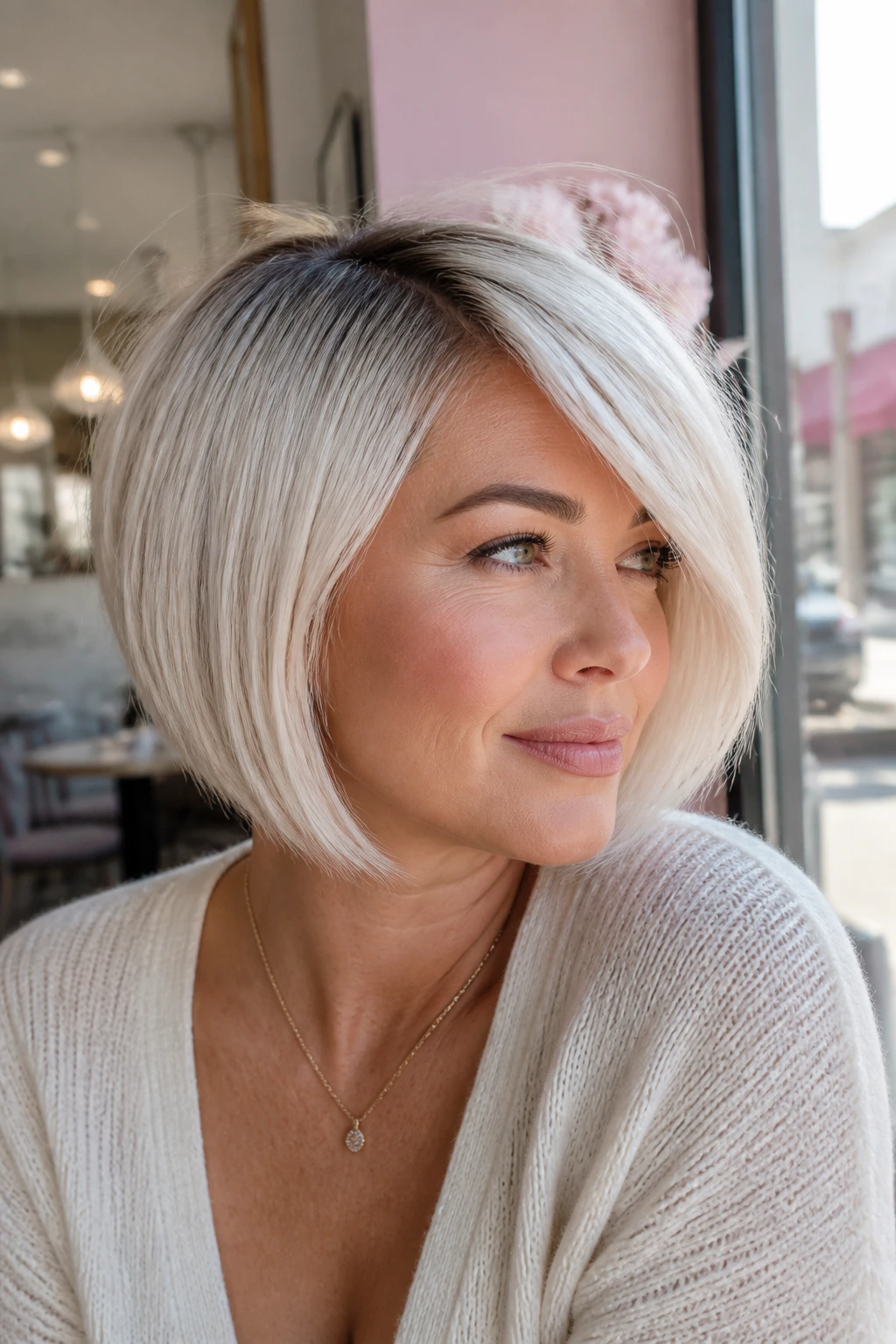
This is the smartest low-maintenance blonde in the bunch. A soft root shadow, usually just a shade or two deeper than the lengths, gives the bob depth right at the scalp. Fine hair benefits from that visual depth because a one-tone platinum can sometimes show too much scalp in bright light.
The long side sweep matters here because it keeps the grow-out from looking abrupt. The fringe can blend into the darker root zone, which makes the line between natural color and blonde less obvious. If you don’t want to live at the salon, start here. It buys time without making the cut look dull.
14. Curved U-Shape Bob with a Soft Bang Arc
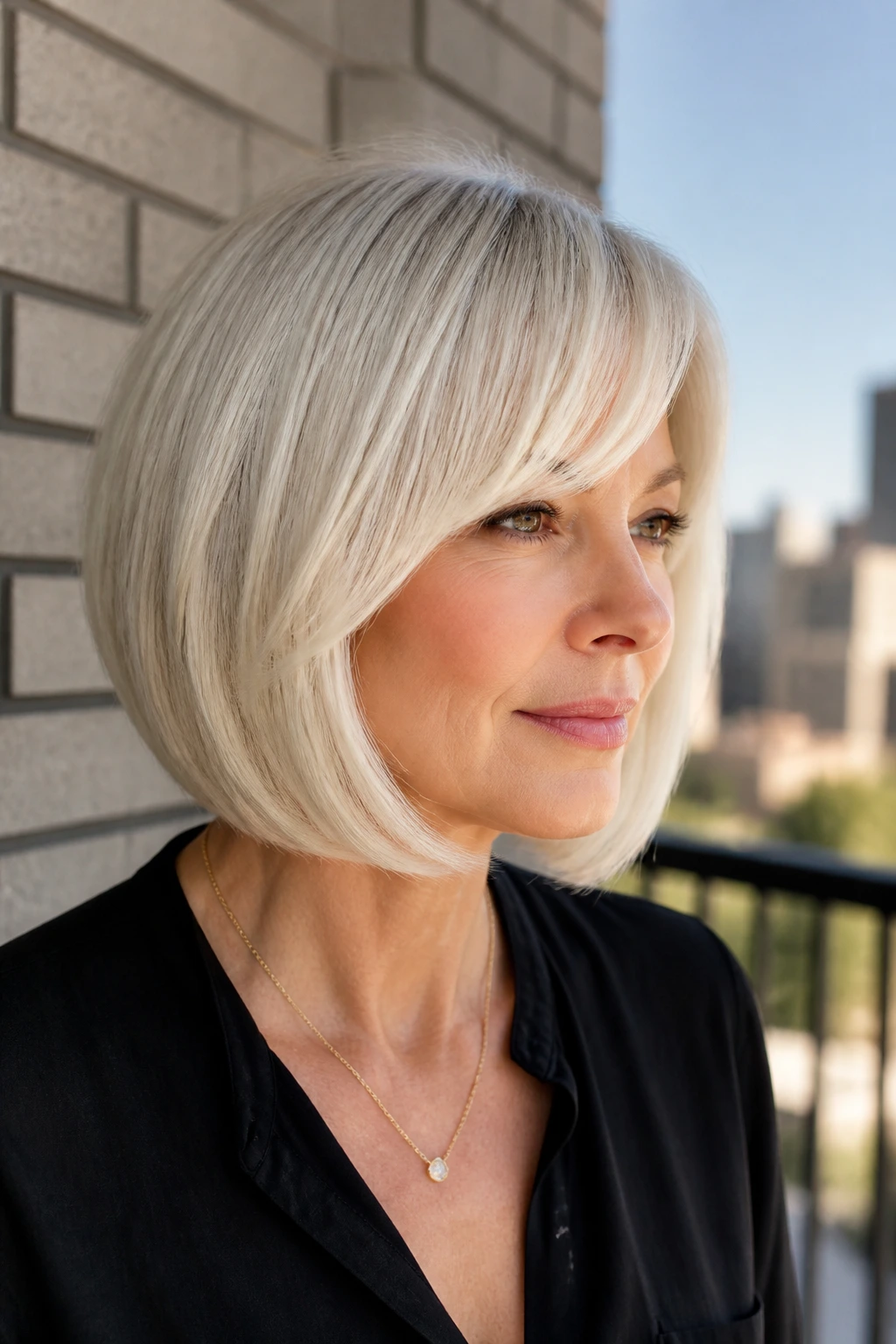
A U-shape gives you a gentle dip in the back and a little extra length at the front corners. That curve keeps fine hair from looking boxy, which is a real problem with blunt cuts that are too rigid. The soft bang arc follows the same idea: no hard edge, no harsh line, just a quiet bend that frames the eyes.
What makes it different
The U-shape keeps the perimeter full while giving the front some movement. It also works well if your hair grows faster at the nape and you want the shape to stay neat between cuts. The outline is subtle in the mirror, but it changes the whole feel of the bob once it’s moving.
15. Lightly Razored Bob with Piecey Ends
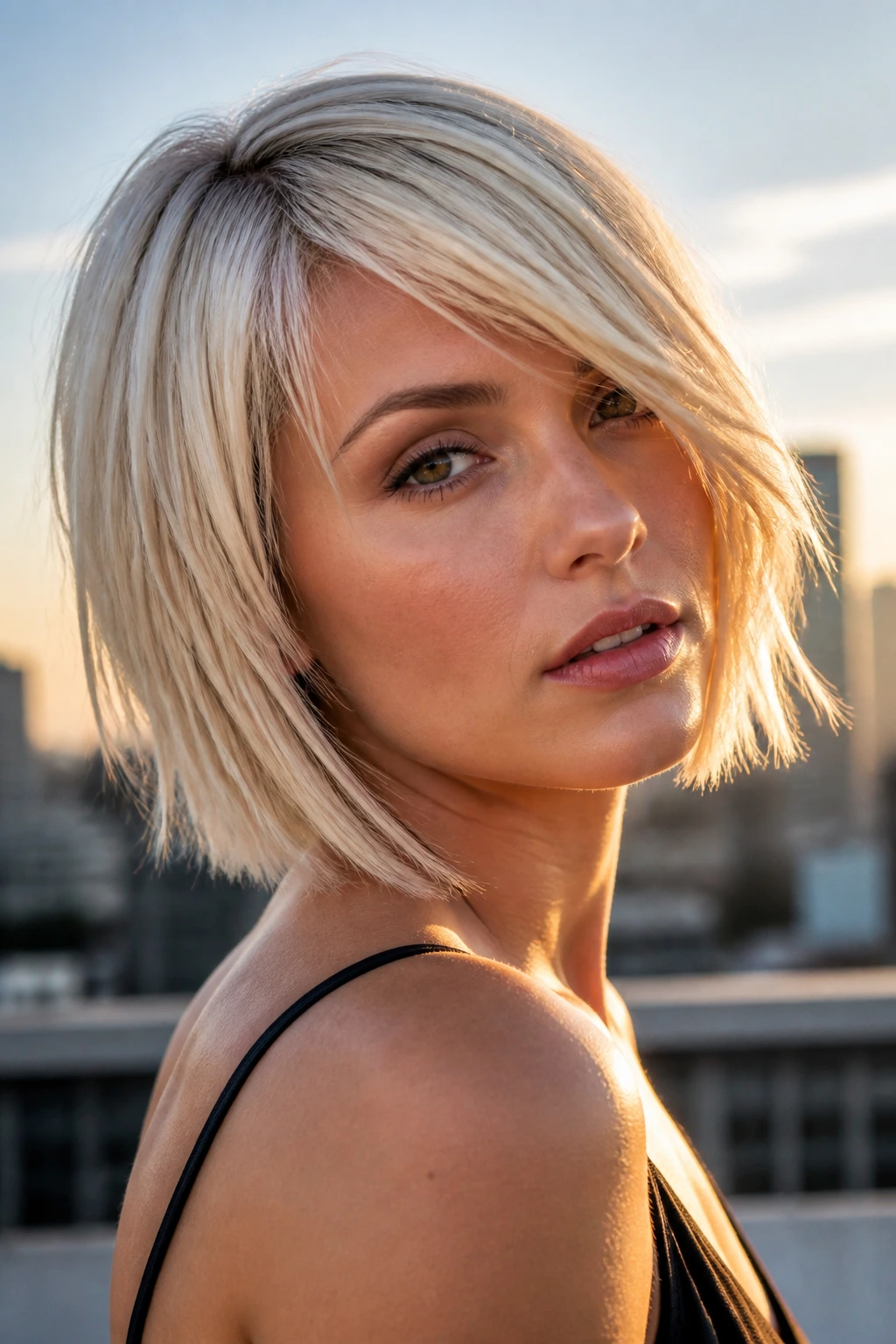
Razor cutting can go badly on fine hair if somebody gets enthusiastic and removes too much weight. Used lightly, though, it can make the ends move in a sharper, more separated way. That’s useful if your hair is silky and refuses to hold a bend.
The key is “lightly.” I mean the kind of razor work that just softens the last half-inch or so, not a full-on shred. Pair it with a side-swept bang that stays a little longer so the front still has enough body. This is the more edgy option in the lineup, but it needs a careful hand.
16. Ear-Length Mini Bob with a Long Side Fringe
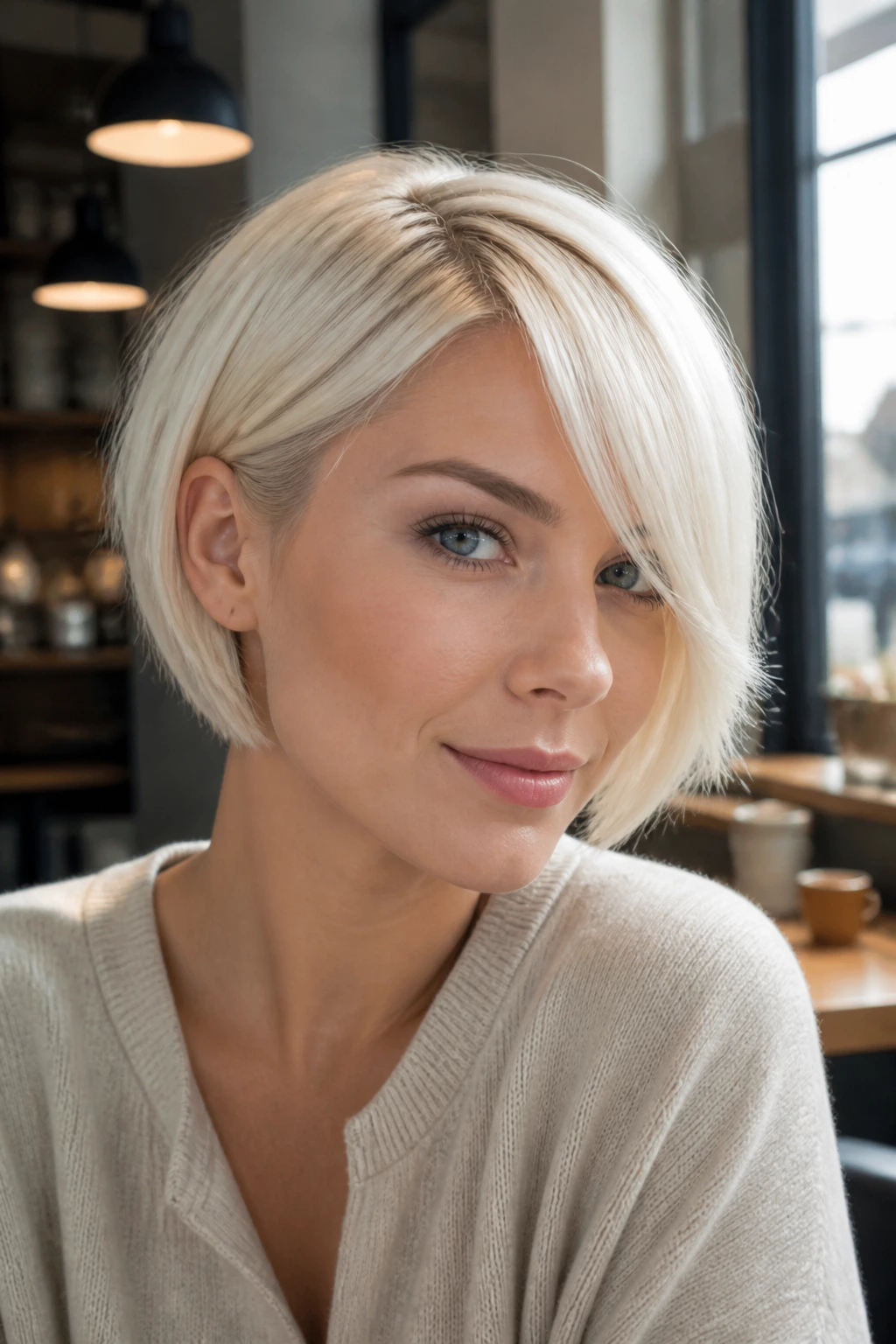
Short bobs can look fantastic on fine hair because the line sits where the hair still has strength. An ear-length bob gives the illusion of thickness fast, especially if the edge is blunt and the side fringe is long enough to soften the cheek. It’s a sharp cut. No hiding that.
The reason the long fringe matters is balance. Without it, the short bob can feel too severe, especially in platinum. With it, the whole cut gets a little movement and a more flattering diagonal line across the face. You will need regular trims, though. There’s no way around that.
17. Bubble Bob with a Bend and Side Sweep
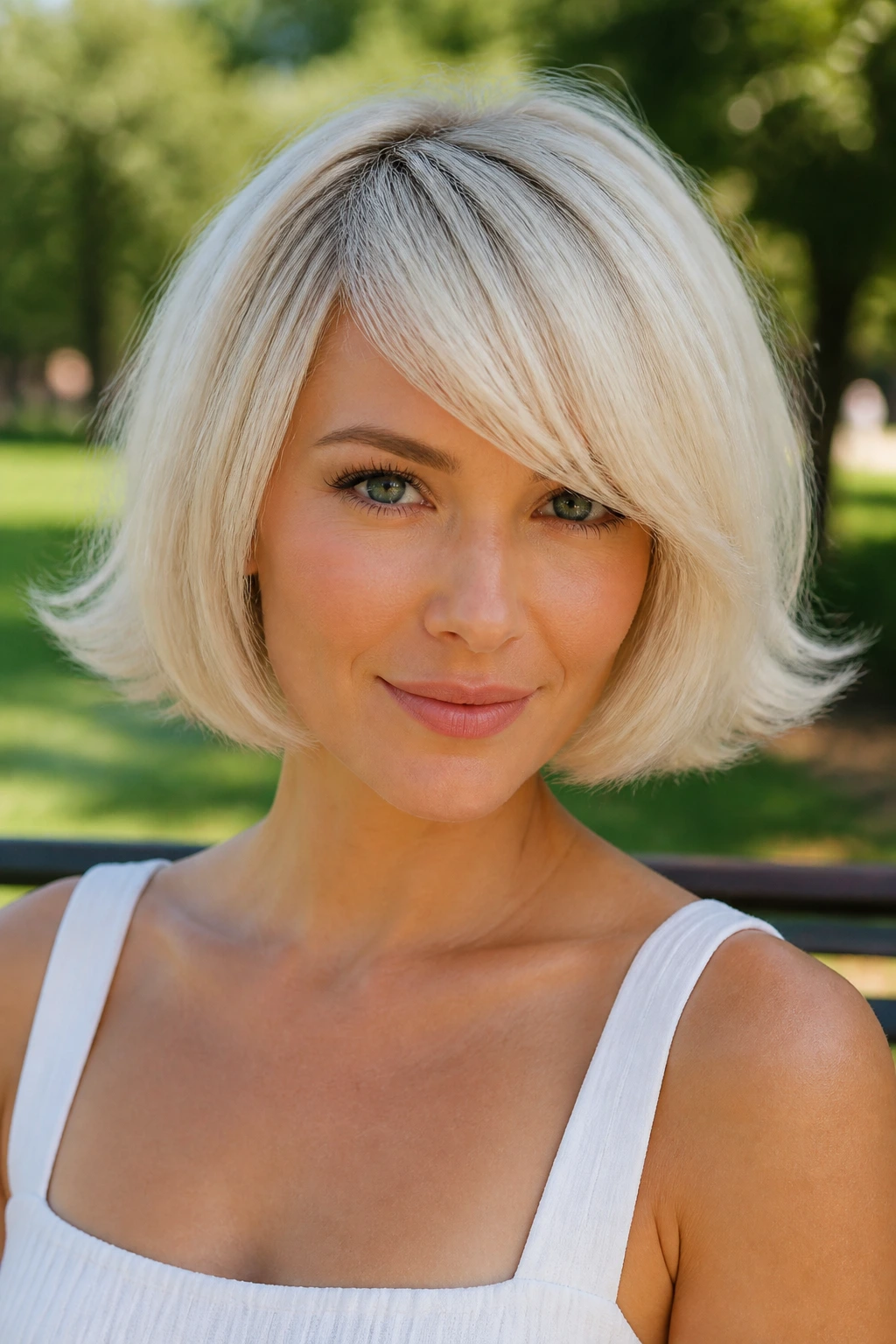
This is the rounder cousin of the classic bob. The silhouette curves softly outward at the sides and in at the ends, which gives fine hair a fuller read without adding actual bulk. The side-swept bangs stop the shape from becoming too retro or too round.
It looks especially good when the ends are curved under with a brush and the crown has a touch of lift. The blonde color helps the curve show up. Darker hair can make this style feel heavier; platinum keeps it airy. If you like a neat finish but hate flat hair, this one’s worth a look.
18. Sleek Side-Swept Lob with Hidden Volume
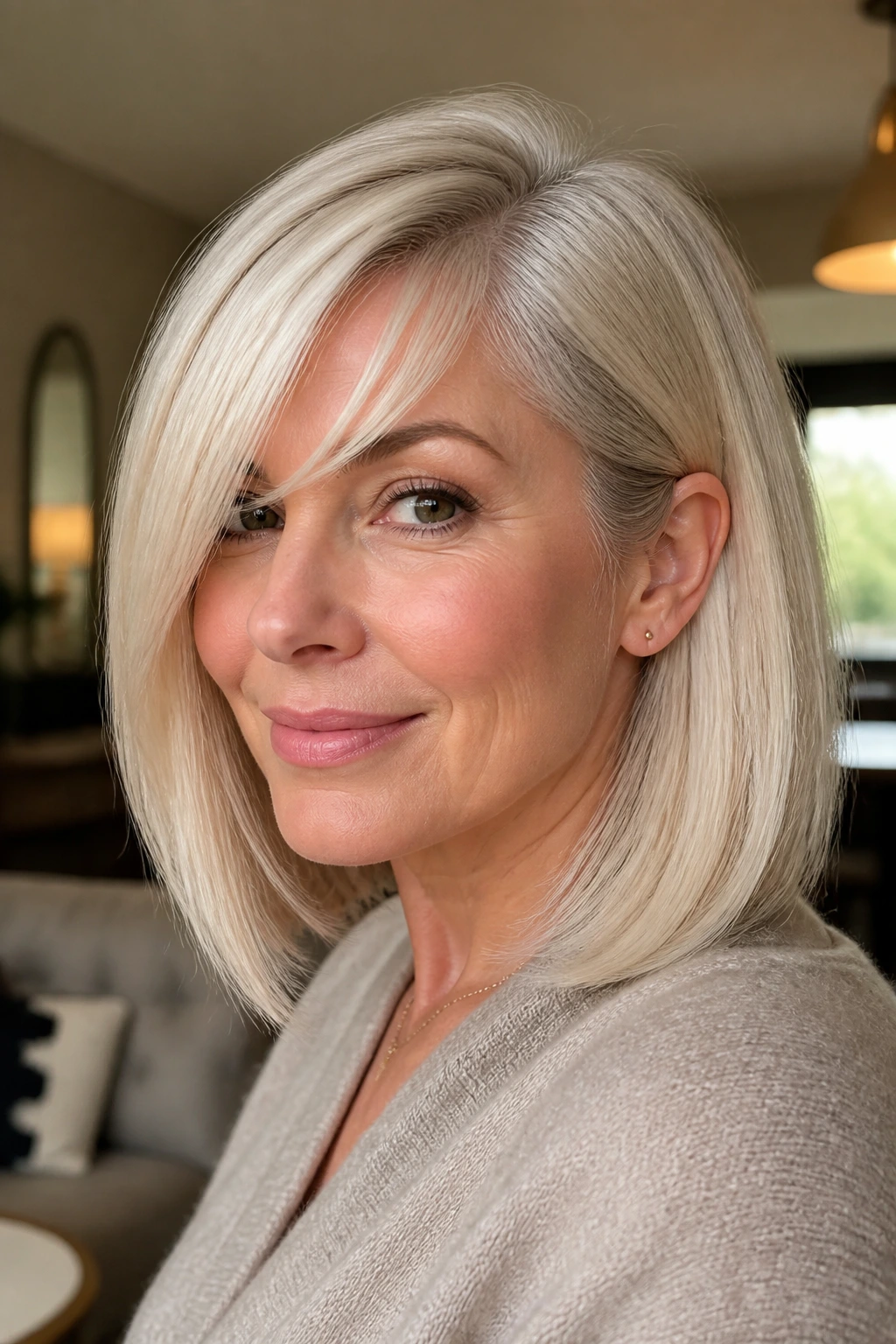
The lob gives you the most length, and that matters if you want to tuck hair behind the ear, pin it back, or wear it with softer clothes. On fine hair, hidden volume at the crown is the secret. The cut should sit smooth on the outside while giving you a bit of lift underneath so the shape doesn’t cling.
This version is the safest all-around choice. It’s long enough to grow out gracefully, short enough to avoid dragging the hair down, and versatile enough for straight, bent, or softly waved styling. The side-swept bangs keep it from feeling plain. That little front movement is doing a lot more than people give it credit for.
Why Platinum Blonde Bobs and Side-Swept Bangs Work So Well on Fine Hair
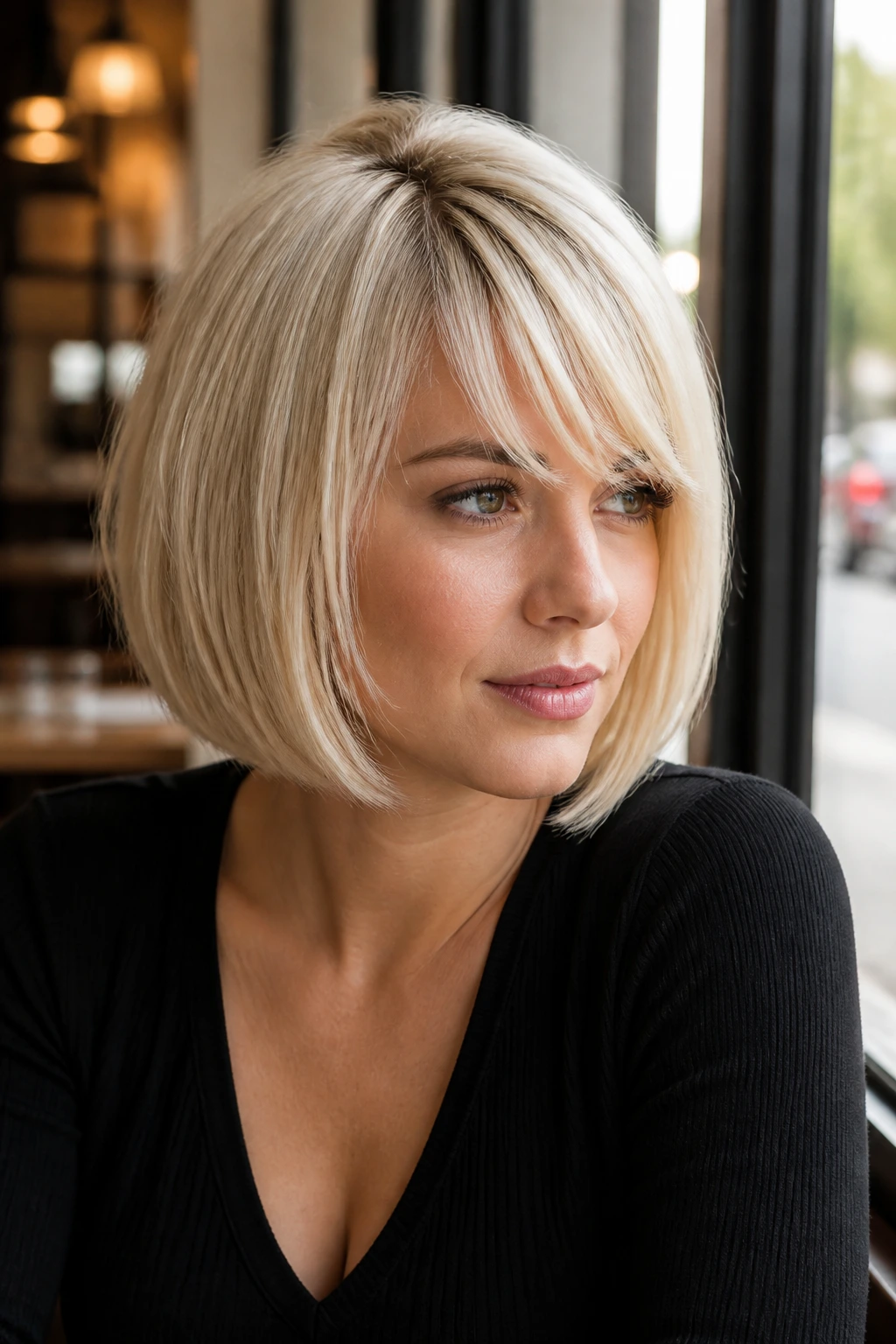
Fine hair needs clean architecture. That’s the short version, and it’s the one most salon conversations skip over. If a bob has too many short layers, the perimeter thins out and the ends start to look see-through. If the blonde is taken too pale without enough depth at the root, the scalp can show through even more.
A platinum bob with side-swept bangs solves both problems when it’s cut with discipline. The blunt or softly angled edge gives the illusion of thickness. The side sweep breaks up the front so the style doesn’t feel harsh, and it also helps balance the face when the hair itself doesn’t have much natural body. Fine hair loves a controlled shape. It does not love chaos.
The other advantage is color contrast. Platinum reads as light and airy, which sounds lovely until the ends get too soft and the whole shape disappears. A good bob gives the blonde a frame. It creates a line the eye can follow, and that line is what makes the haircut look intentional instead of accidental.
How to Ask for the Cut and Color Without Getting a Surprise
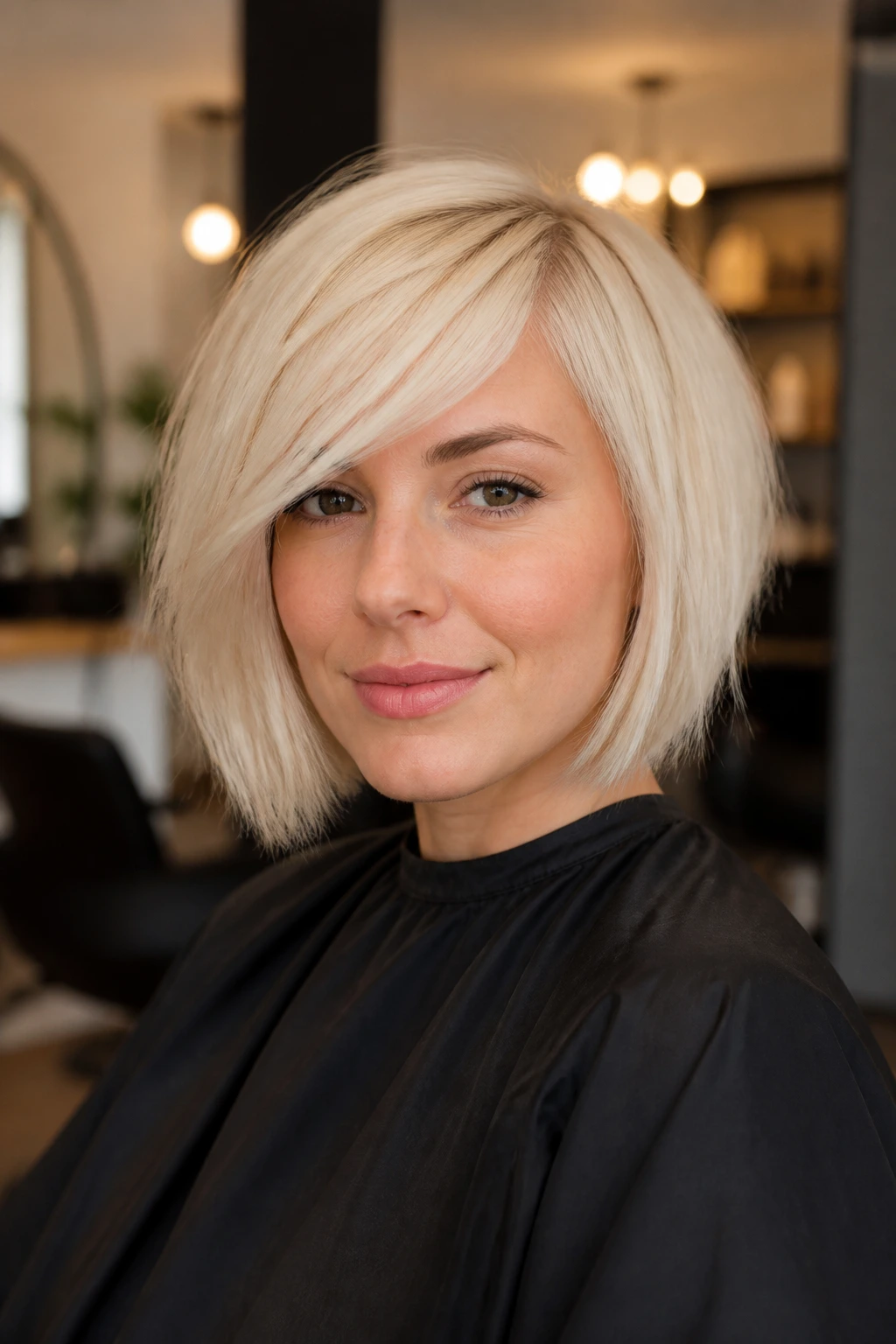
Bring photos. Not just one. Bring two or three that show the same bob from the front and the side, because the shape changes a lot once the head turns. Tell your stylist you want to keep the perimeter full and avoid heavy thinning through the ends. That sentence alone can save you from a haircut that looks pretty in the chair and limp a week later.
For the bangs, ask for a side-swept fringe that starts long enough to tuck into the rest of the cut. On fine hair, overly short bangs can split and expose the forehead in a way that feels awkward. Longer side-swept pieces are easier to style, easier to grow out, and kinder to the overall balance of the bob.
Color-wise, a platinum result usually looks better with some root depth. It can be a soft shadow root, a smudged root, or just a cooler base that gives the blonde a place to live. If your hair is fragile, ask about bond support during lightening and plan for toner maintenance. Platinum is not a one-and-done color. It’s a relationship.
The Tools That Actually Matter When You Wear This Cut
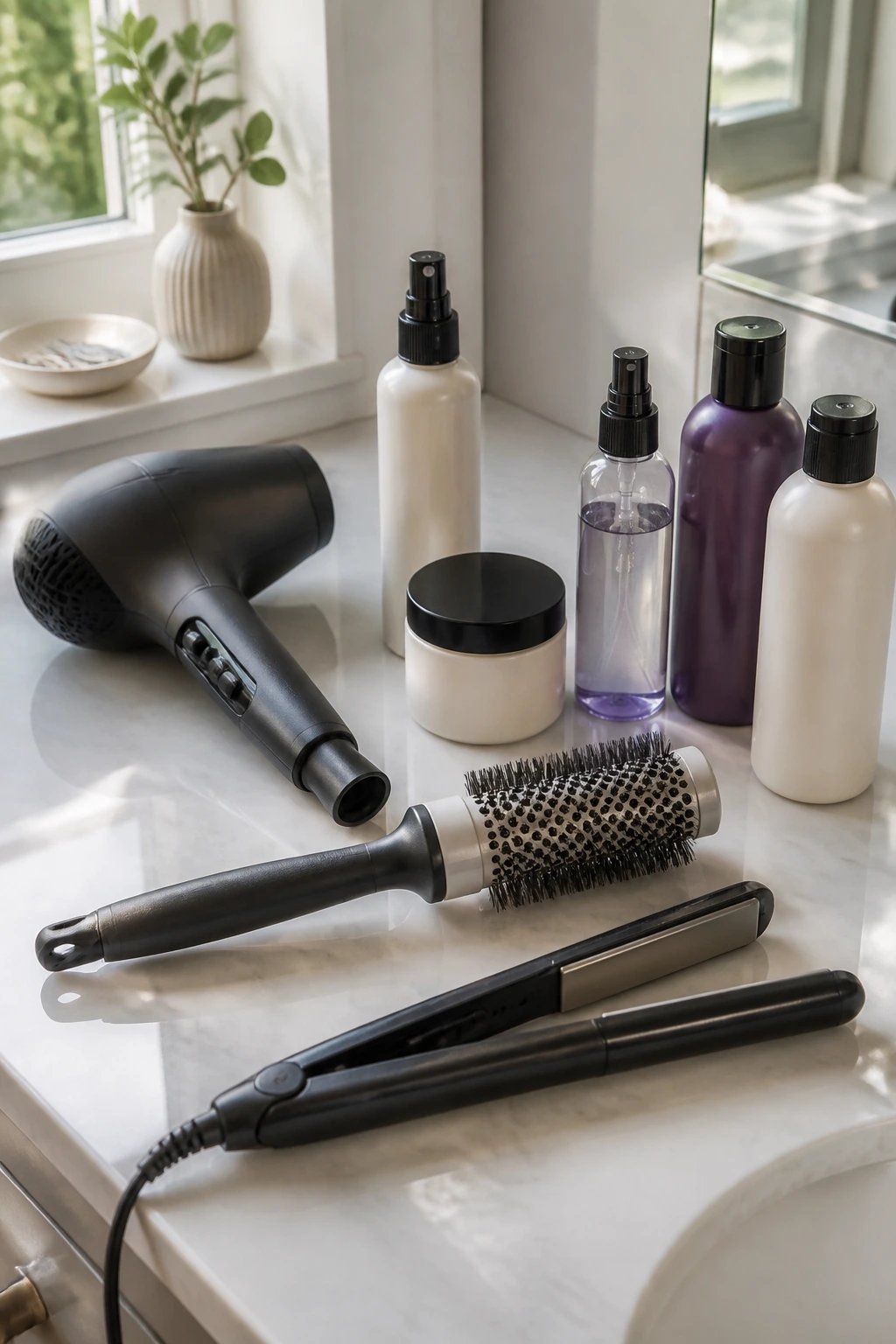
A bob like this does not need a drawer full of gadgets. It needs the right few tools used well.
- A blow dryer with a nozzle: The nozzle matters because it directs the air and keeps the surface smoother.
- A 1- to 1.25-inch round brush: This size gives fine hair a bend without overfluffing the ends.
- A flat iron with adjustable heat: Useful for polishing the fringe or adding a tiny turn at the ends.
- A heat protectant spray: Fine hair shows heat damage fast, especially once it’s been lightened.
- Volumizing mousse or root spray: A small amount at the roots helps the crown stand up instead of lying plastered down.
- Texturizing spray: Use this only when you want piecey separation. A little goes a long way on platinum.
- Purple shampoo: Good for keeping brass out of pale blonde, though it should not replace regular moisturizing care.
- Color-safe conditioner or mask: Platinum hair dries out. That’s not drama; that’s chemistry.
How to Style These Bobs on a Normal Morning
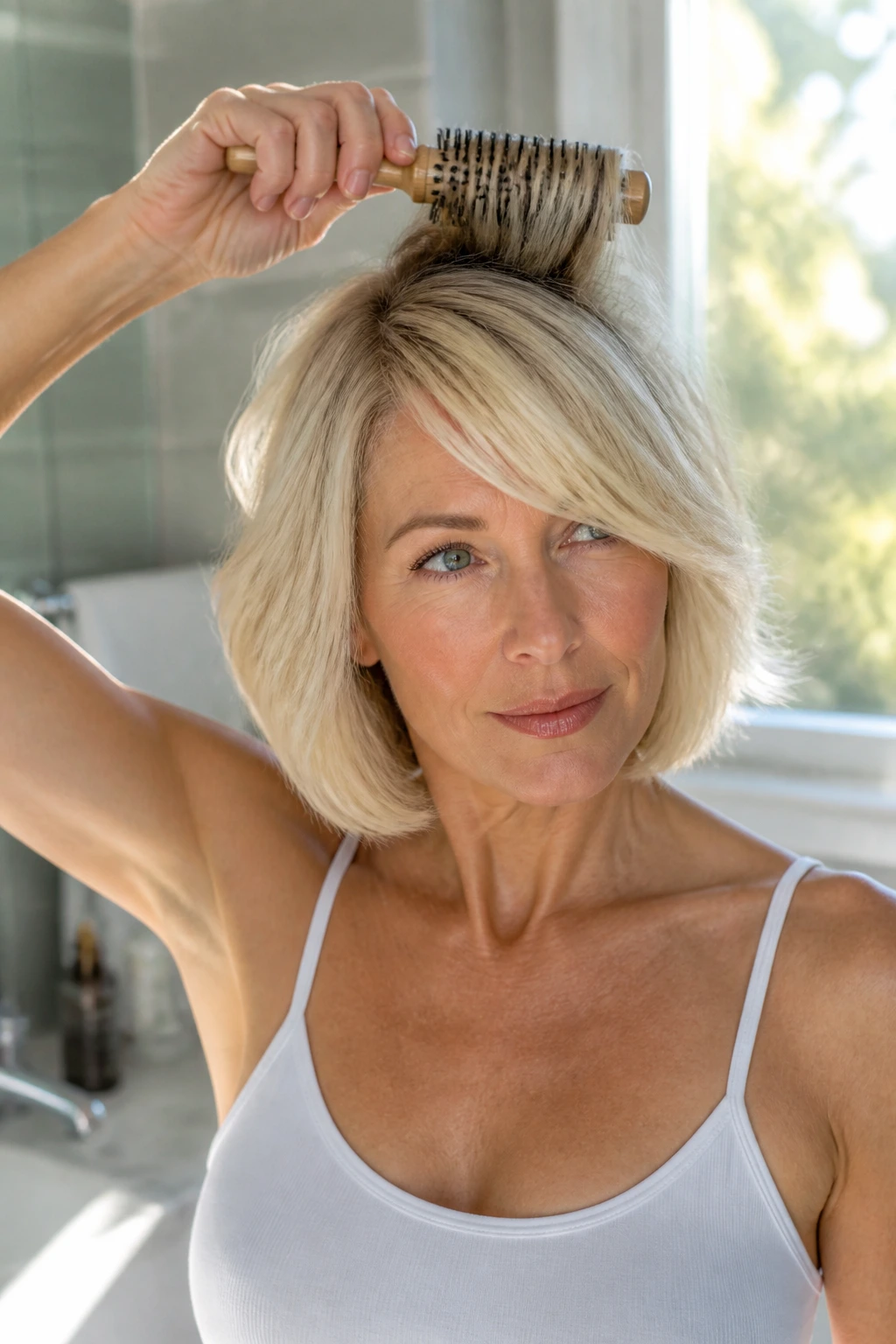
Start with a light prep product on damp hair. If your hair is very fine, a mousse at the roots and a small amount of smoothing cream on the midlengths is usually enough. Too much product is how you lose the shape before you even pick up the dryer.
Blow-dry with the nozzle pointed down the hair shaft if you want a smoother finish. Use the round brush to lift the roots and give the ends a slight turn under or away from the face, depending on the cut. For side-swept bangs, dry them in the direction you want them to sit, then clip them for a minute while they cool. That small cooling step keeps the sweep from collapsing immediately.
If you’re air-drying, work product through with your hands, then resist touching it while it sets. Fine hair gets stringy fast when you keep fussing with it. Once it’s dry, you can pinch in a little texture at the ends or bend a few face-framing pieces with a flat iron. That’s enough. You do not need to rebuild the whole head.
Extra Tips for More Volume, Shine, and Hold
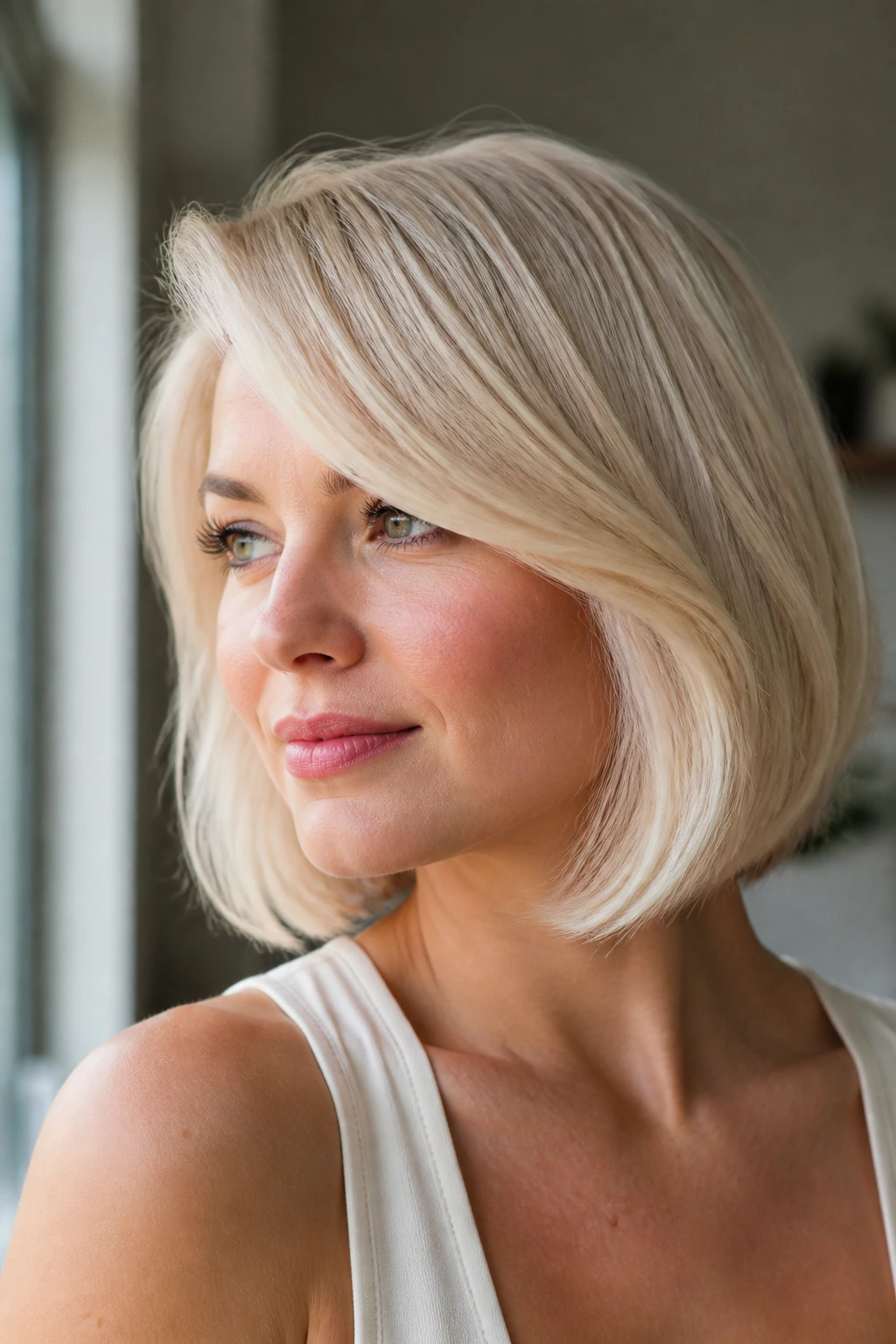
Root Lift: Use mousse or root spray only at the first two inches near the scalp. If it creeps down the hair, the lengths get stiff and the bob loses its swing.
Shine Without Grease: A drop of lightweight serum on the ends is usually enough for platinum hair. Put it on your palms first, then smooth it only from midlength to tip.
Lasting Bang Shape: Side-swept bangs hold better when they’re dried in the opposite direction first, then swept back across the forehead. A tiny clip while they cool helps too.
Texture That Stays Clean: If you want piecey movement, spray texturizer under the top layer, not all over the surface. That keeps the blonde from looking dusty.
Make-It-Yours: If your hair is stick-straight, add bend with a flat iron only at the front corners and ends. If it’s wavy, let the natural wave do most of the work and just refine the outline.
Common Mistakes That Flatten the Shape
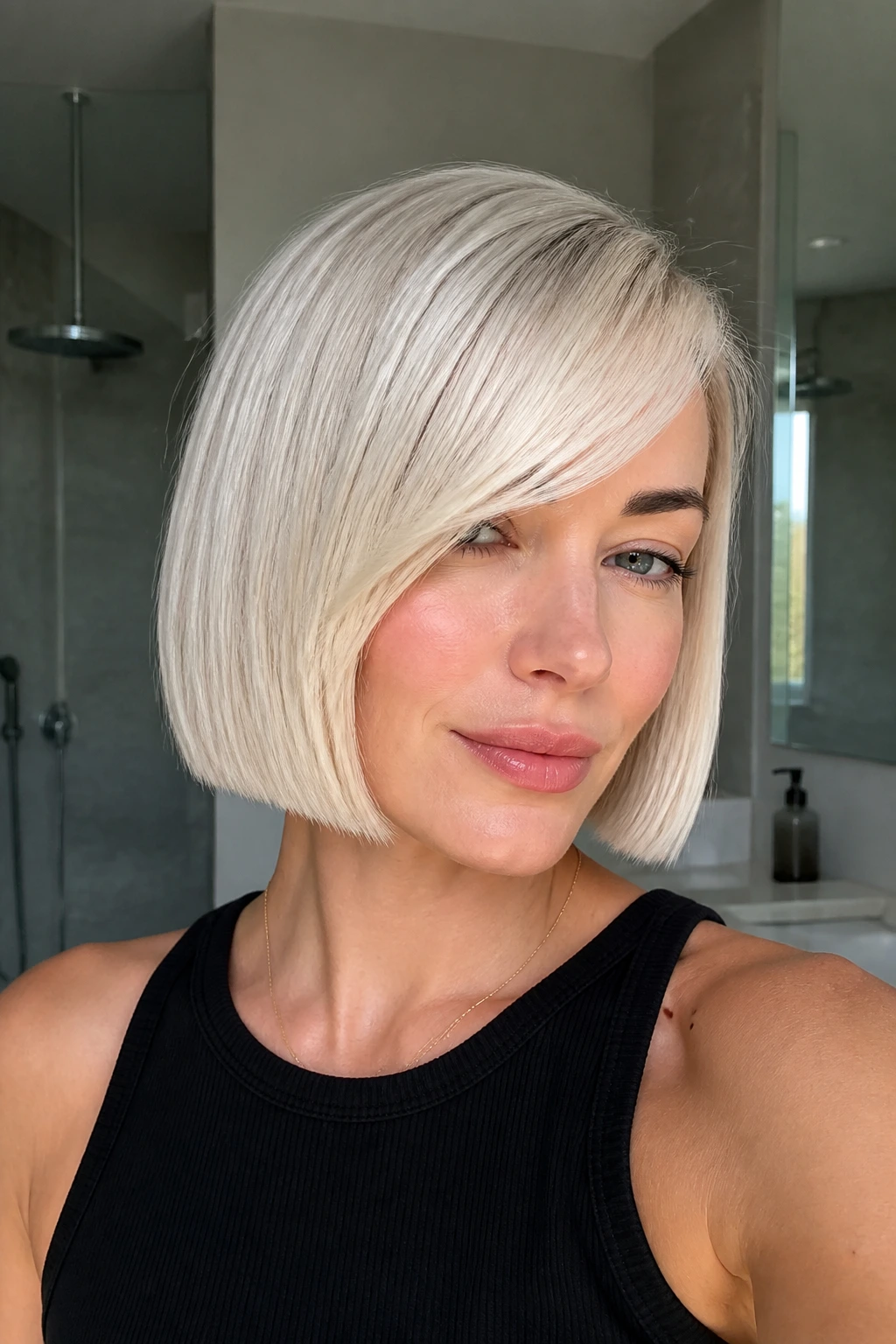
Over-thinning the ends: This is the big one. Fine hair can’t afford to lose too much perimeter, or the bob starts to look stringy. Ask for bluntness at the edge, and keep internal layering light.
Toning the blonde too often with purple shampoo: Purple shampoo is useful, but too much of it can leave pale blonde looking dull and dry. Use it sparingly, then follow with moisture.
Cutting the bangs too short: Side-swept bangs need length to sweep. If they’re cut too high, they split open and take the softness out of the front.
Using heavy oils everywhere: Fine platinum hair gets weighed down fast. Keep oils and rich serums on the ends, not the roots.
Skipping regular trims: The shape of a bob lives or dies by the bottom line. If the ends start to fray, the whole cut loses that fuller look.
Variations and Adaptations to Try
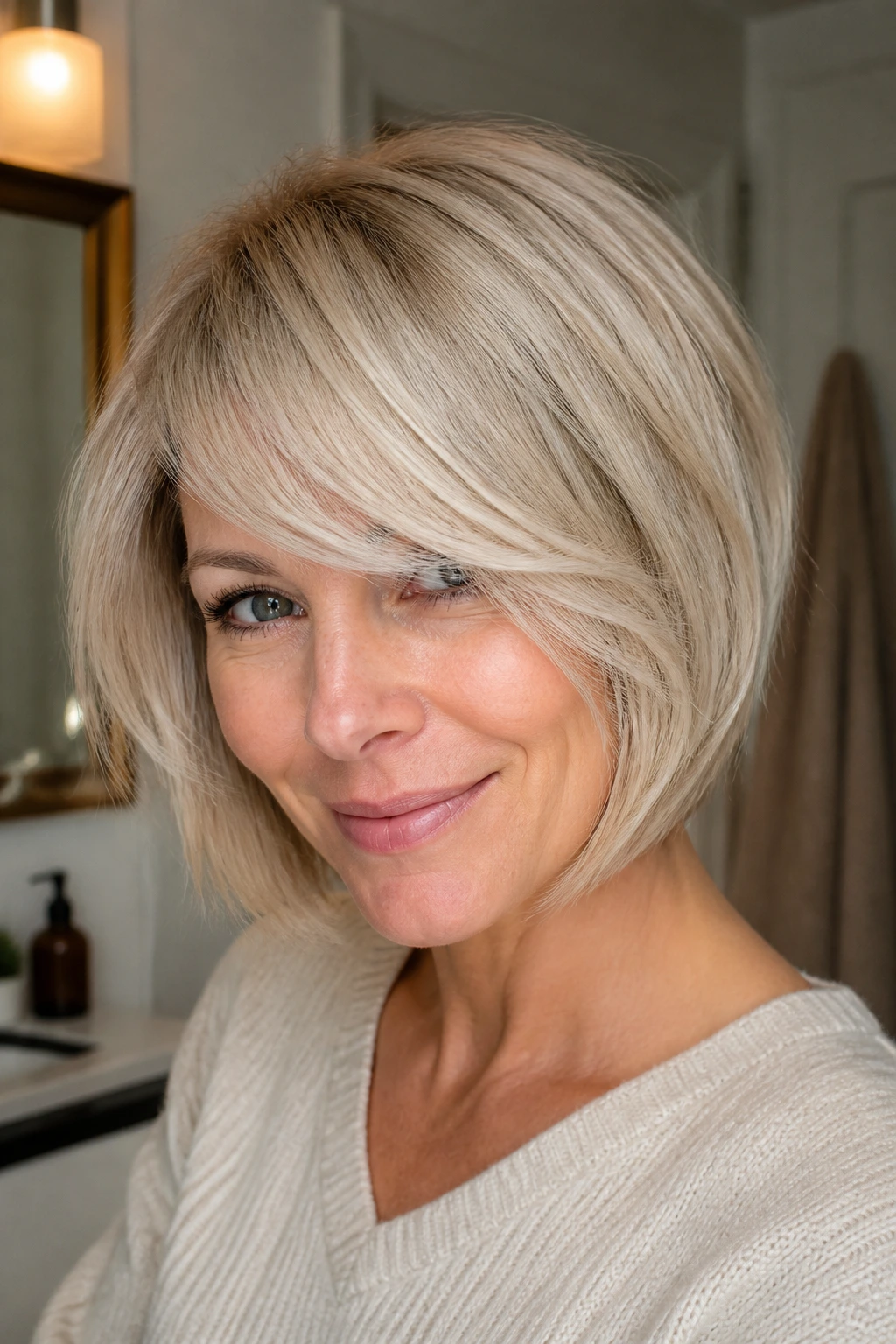
Soft Beige-Platinum Bob: If bright white blonde feels too stark, ask for a beige-platinum tone with a little warmth. It still reads icy, just less severe against pale skin.
Curly-Pattern Bob: If your fine hair has a loose wave or curl, keep the perimeter strong and let the bangs sweep longer than you think they should. Short fringe and fine curls have a messy relationship.
Low-Maintenance Root Shadow: Keep the roots a shade or two deeper than the lengths so regrowth blends instead of shouting. This works especially well on longer bobs and lobs.
Shorter Crop with Longer Fringe: If you want a more modern edge, cut the body shorter and leave the side-swept bang the longest piece. That keeps the front soft even when the rest of the cut is sharp.
Cool-Ice Finish: For a crisp, almost silver look, ask for a cooler toner and keep brass under control with occasional purple shampoo. Pair it with a smooth blowout so the color and shape match.
Maintenance, Toning, and Grow-Out Care
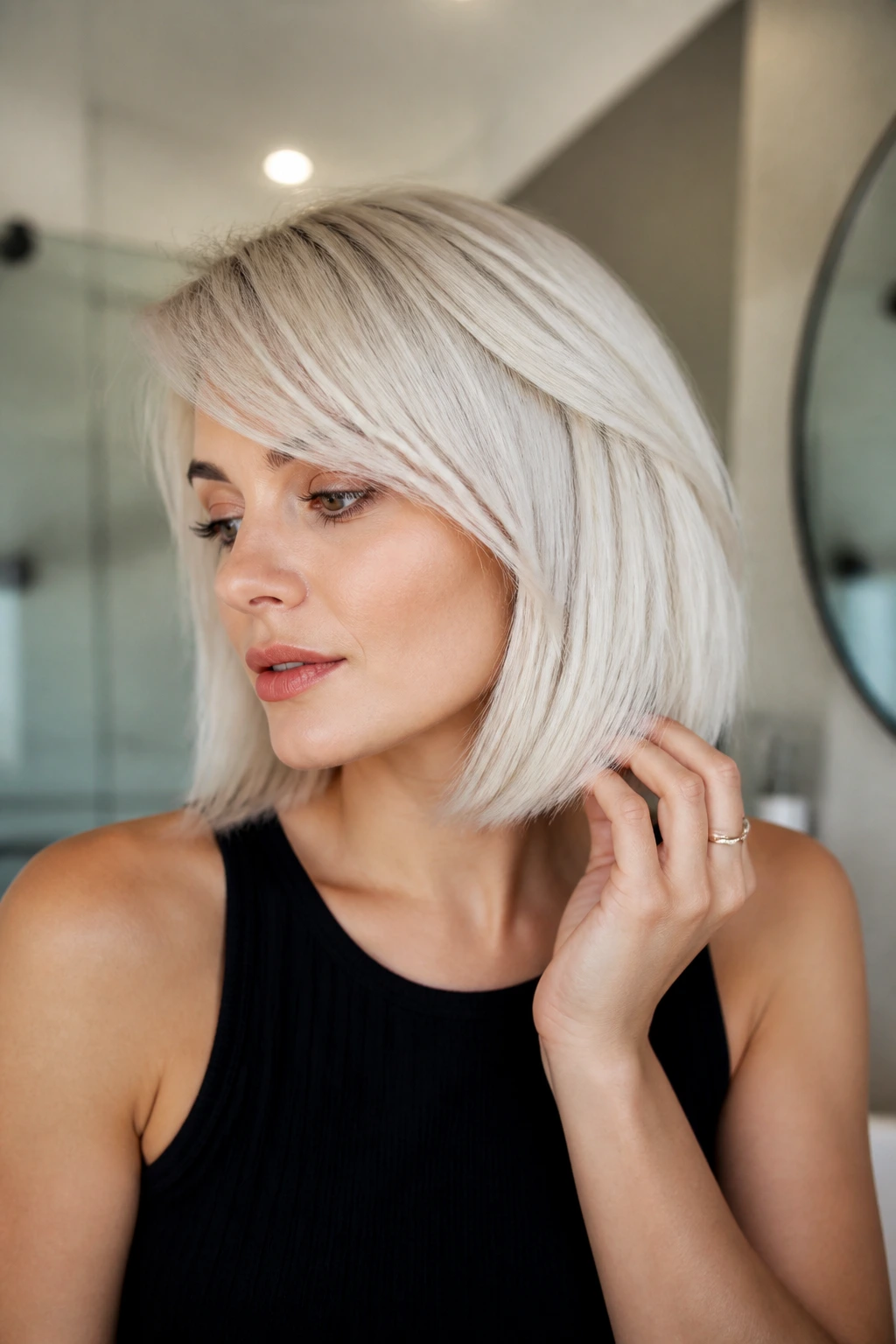
A platinum bob on fine hair needs regular attention, but not a ridiculous amount if the cut is planned well. Most sharp bob shapes need a trim every 4 to 6 weeks to keep the line crisp. Lobs can stretch a little longer, often 6 to 8 weeks, because the extra length hides grow-out better.
Tone the blonde when it starts looking yellow or dull rather than on a fixed panic schedule. That usually means using purple shampoo once a week, not every wash. If the hair feels dry or rough, step back from toning products and lean on a moisturizing mask instead. Platinum can take on a brittle feel fast once it’s overprocessed, and fine hair shows that faster than thick hair does.
At home, dry shampoo is useful at the roots, but don’t let it build up into a chalky film. A clarifying wash every couple of weeks can help, especially if you use mousses and sprays. And if the bang area starts separating in odd directions, wash just the fringe in the sink. A small reset beats a full shampoo on the whole head.
Frequently Asked Questions
Will platinum blonde make fine hair look thinner?
It can, if the cut is too layered or the blonde is pushed to one flat tone with no depth. A blunt or softly angled bob, plus a bit of root shadow, usually gives more visual density than a dark, over-thinned cut ever will.
Are side-swept bangs better than curtain bangs for fine hair?
Often, yes. Side-swept bangs can stay lighter and easier to direct, while curtain bangs sometimes split apart and reveal the forehead too much if the hair is very fine. If you want softness without too much daily styling, side-swept usually wins.
How short should a fine-hair bob be?
Jaw length and just above the shoulders are the sweet spots for most people. Ear-length can look striking, but it needs more regular trims and a confident shape. Collarbone length is the safest if you want movement without giving up fullness.
Can I air-dry this kind of bob?
Yes, but the cut has to be right. Air-drying works best when the perimeter is kept solid and the fringe is long enough to sweep instead of puff. A touch of mousse helps the shape keep its memory while it dries.
How often should platinum hair be toned?
Only when the color starts turning warm or muddy. For many people, that means using purple shampoo once a week and getting a toner refresh at the salon when the blonde loses its cool edge. Over-toning leaves hair flat and dry.
What if my hair is too fragile for full platinum?
Ask for a platinum look with a softer root and a slightly deeper base, or lean into highlights and pale panels instead of full saturation. A good bob still gives the impression of brightness even if every strand isn’t pushed all the way to white.
What’s the best way to keep side-swept bangs from sticking up?
Dry them in the direction you want them to fall, then clip them in place for a minute or two while they cool. If they keep bouncing up, the section may be too short or too thick for your hair texture, and it’s worth adjusting the cut.
The Shape That Keeps Its Line
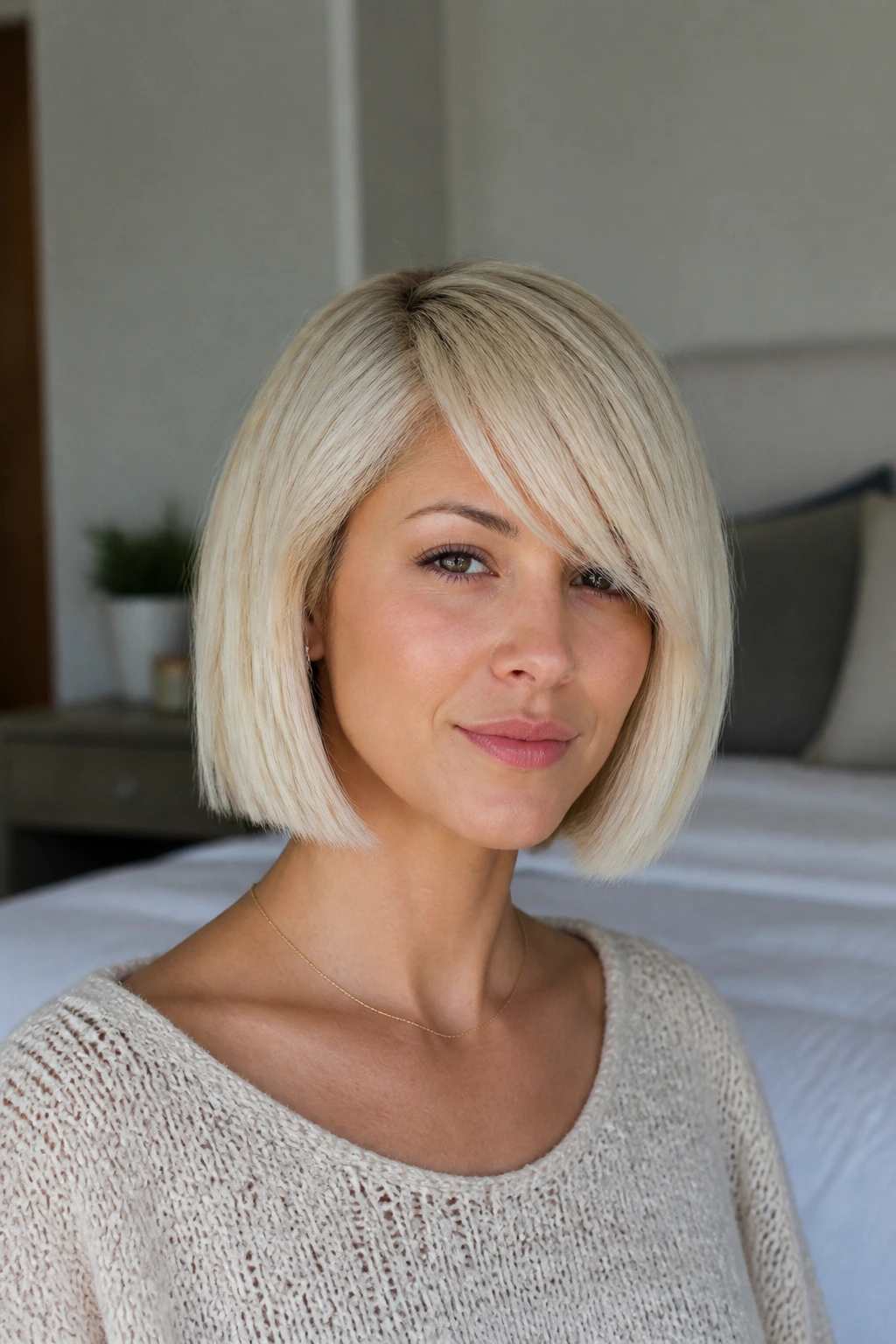
A good platinum bob on fine hair is never just about the color. The color gets the attention, sure, but the line is what makes it look deliberate. Side-swept bangs soften the front, blunt or softly angled ends keep the bottom full, and a little root depth can save you from the flat, washed-out look that makes so many blonde cuts feel disappointing.
The nicest part is how flexible these shapes are. You can wear them sharp, bent, airy, or polished. You can keep them short and neat or let them drift into lob territory and get a little more ease out of the same idea. If fine hair has been making you think you need more length to look fuller, these cuts prove the opposite can be true.
Pick the one that matches how much styling you’ll actually do, not the one that looks fanciest on a screen. That’s the cut you’ll keep liking after the first wash, the second wash, and the grow-out that always tells the truth.