



Round faces and curly hair do not need a punishment cut. They need a French bob that stops at the right place, leaves enough movement around the jaw, and lets the crown breathe. French bobs for round faces and curly hair work because the shape can sharpen the face without stealing the curl pattern’s bounce.
The part people get wrong is length. A curl that looks polite when it’s wet can spring up a full inch or two when it dries, and that little bounce changes everything. Cut the bob too high, and the cheeks take over. Cut it too low, and the whole point of the style disappears into a generic shoulder-length shape.
What makes this haircut so interesting is that it can be soft without being shapeless. A good French bob on curls has a clean perimeter, a little cheekbone drama, and just enough irregularity to keep it from looking carved by a ruler. Some versions lean sharp and cropped, others drift toward a lob, but the same rule keeps showing up: the strongest lines sit away from the widest part of the face.
Why These French Bobs Earn Their Keep

- They slim the middle of the face: A bob that lands at the jaw or just below it pulls the eye down instead of letting it sit on the cheeks.
- They respect curl shrinkage: These cuts are chosen with real curl bounce in mind, so the finished shape does not pop up into a box.
- They keep the style lively: French bob shapes look best when the curls can break into pieces, not when every strand is forced into one heavy curtain.
- They give you options at the salon: Some versions are sharp and cropped, others are longer and safer, so you can match the cut to your curl density and appetite for upkeep.
- They work with air-drying and diffusing: That matters more than it sounds. A bob that only looks good with a flat iron is not doing you any favors.
1. Jaw-Skimming French Bob with Air-Dried Ends
This is the classic shape most people picture first: a clean bob that kisses the jawline, with the ends left soft enough for curls to bend instead of buckle. On a round face, that jaw-skimming line is doing real work. It gives the lower face a clearer edge without swallowing the cheekbones.
Why it flatters a round face
The trick is placement. If the shortest pieces sit right at the widest part of the cheeks, the cut can feel busy. Bring the line down to the jaw, and the eye sees a longer path from cheekbone to neck. That’s the difference between “cute” and “why does this suddenly look balanced?”
- Best for 2C to 3A curls that have a defined bend but not a ton of shrinkage.
- Ask for the length to sit at the jaw in the finished shape, not when the hair is wet.
- Keep the perimeter clean, not razor-thin.
- Air-dry with a small amount of curl cream and let the texture break naturally.
Pro tip: If your curls spring up a lot, ask the stylist to leave the front pieces half an inch longer than the back. That tiny bit of extra length keeps the line from jumping too high once it dries.
2. Curly French Bob with Curtain Bangs
If you want the bob to do some face-slimming without going severe, curtain bangs are the move. They open in the middle, skim the temples, and fall away from the cheeks in a way that round faces usually welcome. On curly hair, they look especially good when the fringe is cut to bend around the eyes instead of sitting like a flat sheet.
What I like about this version is the softness. It has enough fringe to create shape near the top of the face, but it does not build a hard horizontal line across the forehead. That matters on a round face because hard horizontals can widen the look if they sit too low.
Tell your stylist to start the curtain pieces around the cheekbone, then let the outer ends graze the jaw. If the fringe is cut too short, you lose that easy sweep. Too long, and the bangs start blending into the bob with no definition at all.
3. Deep Side-Part French Bob
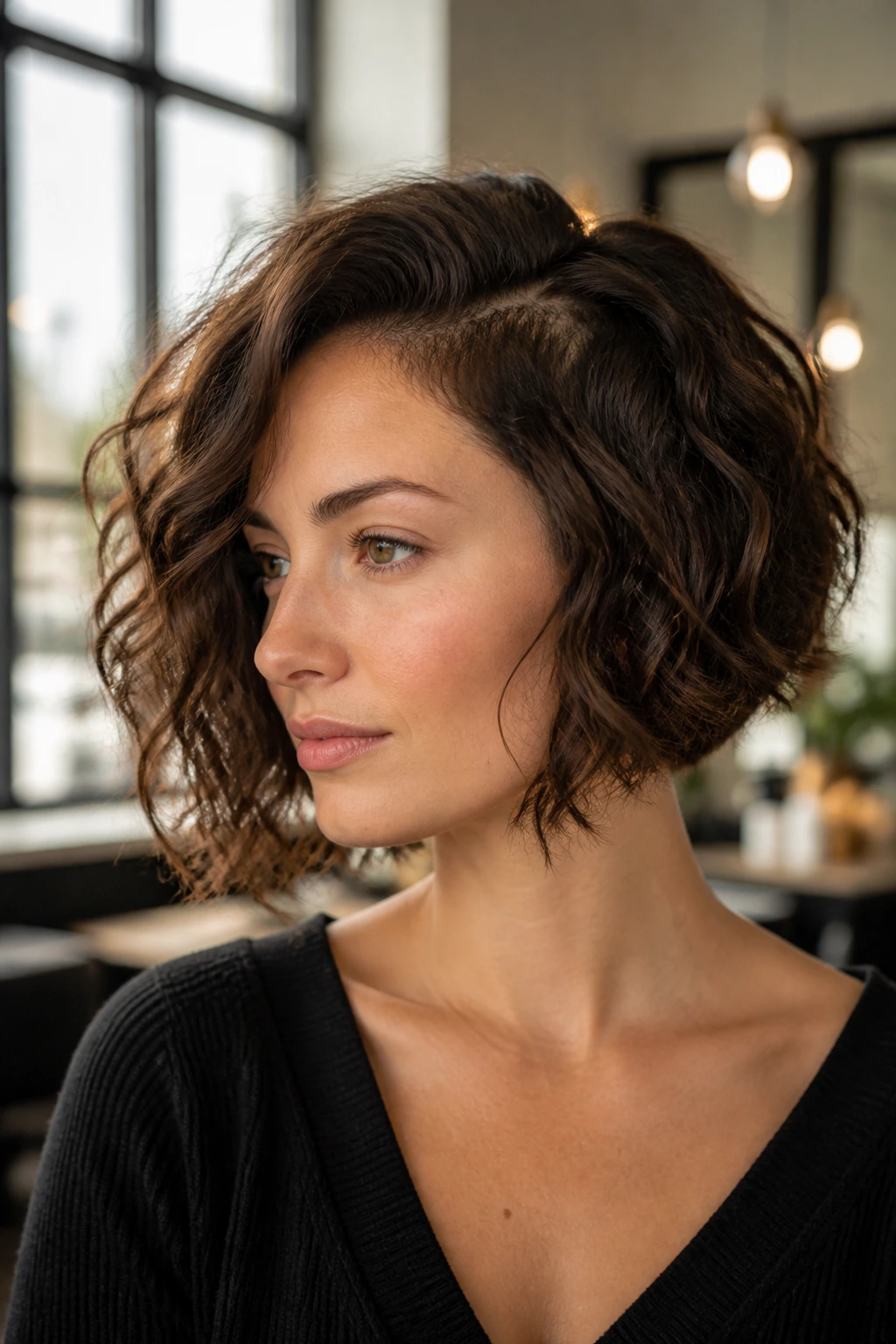
A deep side part is one of the fastest ways to change the whole mood of a bob. It throws the weight to one side, makes the face look longer, and gives curly hair a little built-in lift at the crown. For round faces, that diagonal line is a gift. Straight down the middle can work too, but the side part brings more motion and more shape.
What makes it different
The side part changes where the fullness lands. Instead of widening the face evenly, it builds a line that cuts across the cheek in a more angular way. That diagonal is why this version looks especially good on dense curls that need a bit of structure.
- Works well when the bob lands between the jaw and upper neck.
- Use a light mousse at the roots so the lifted side does not collapse by noon.
- Keep the heavier side from growing past the chin if your face is already full in the cheeks.
- This is the bob I’d pick for a day when you want the cut to look a little more deliberate.
A side part also gives you one of the easiest styling tricks in the whole lineup. Tuck the lighter side behind one ear, leave the other side loose, and the face opens up without needing any extra heat.
4. Chin-Length French Bob with Invisible Layers
People hear “layers” and picture choppy ends. That’s not what this cut needs. Invisible layers sit inside the shape, where they remove bulk without announcing themselves. The perimeter still reads as a bob, but the inside has room for the curls to move.
For round faces, chin length is a sweet spot when the hair is dense. It creates a little more vertical line than a jaw-grazer, which can help if the cheeks are the widest part of the face. The risk, of course, is going too puffy. Invisible layers solve that by letting the curls stack without building a shelf.
This is one of the more forgiving French bob variations if your hair dries wide. It has enough structure to stay neat, but it does not rely on a blunt edge that can puff out at the ends. Ask for weight removal below the crown, not random slicing through the surface.
5. Shaggy French Bob for Tighter Curls
A shaggy French bob earns its keep when your curls are tighter and denser, the kind that love to collect volume at the sides if nobody respects their shape. This version keeps the overall bob outline, then breaks up the interior so the hair does not turn into one big round cloud.
The cut works because it gives the curls room to stack in different lengths. That keeps the line from feeling heavy, and it lets the face stay visible instead of getting buried. On a round face, the shag element also helps create movement around the jaw and neck, which stops the whole shape from reading too wide.
What to ask for: a bob that ends near the jaw or just below it, with interior layers concentrated where the bulk lives. Skip aggressive thinning at the very bottom. That’s how you get frizz at the ends and a weak silhouette.
6. Micro French Bob with Cheekbone Fringe
This one is bolder, and I like it best on curls that have a neat spring and not a ton of shrinkage. The micro French bob sits higher, usually above the jaw, and the fringe lands near the cheekbone. It is sharp. It has opinions.
That said, on a round face, this cut needs balance. You do not want the shortest pieces sitting exactly where the face is widest. Keep the fringe soft and let it angle toward the temples. When that happens, the cut gives the face a lift instead of making it look shorter.
How to wear it without losing the shape
Use a diffuser on low heat, then stop before the hair is bone-dry. A little dampness keeps the ends from fraying into a halo. If your curls are very springy, this cut can look a touch shorter than expected, so bring a photo and ask the stylist to account for shrinkage.
7. Soft Rounded French Bob

This is the French bob for someone who likes a little curve in the shape but does not want a hard edge. The perimeter follows a gentle arc, almost as if the bob were wrapping itself around the jaw rather than cutting across it. On round faces, that sounds risky, but the soft rounding can actually work because it keeps the silhouette from feeling boxy.
The key is restraint. The curve should be subtle, not a full circle. You want the curl pattern to soften the line, not have the haircut mimic the face too closely. That little distinction matters more than people think.
This is also a strong choice if your curls are mixed in size. A soft rounded shape absorbs variation better than a severe blunt cut, so the whole bob looks intentional even when a few curls misbehave.
8. Blunt French Bob for Loose Waves

Blunt sounds scary on curly hair, but on loose waves or softer 2B-2C texture, it can look crisp in the best way. The trick is density. If the hair is fine to medium and the wave pattern is loose, a blunt French bob gives the ends enough weight to swing instead of frizz.
For round faces, I prefer this one when the length is just below the chin. That keeps the perimeter from sitting right on the cheek line. It also gives you a cleaner vertical read, especially if you tuck one side behind the ear.
A blunt edge only works when the hair is hydrated. If the ends are dry, the line can look fuzzy in a hurry. A light leave-in and a small amount of oil on the very ends keep the bob from puffing out.
9. Tapered Nape French Bob
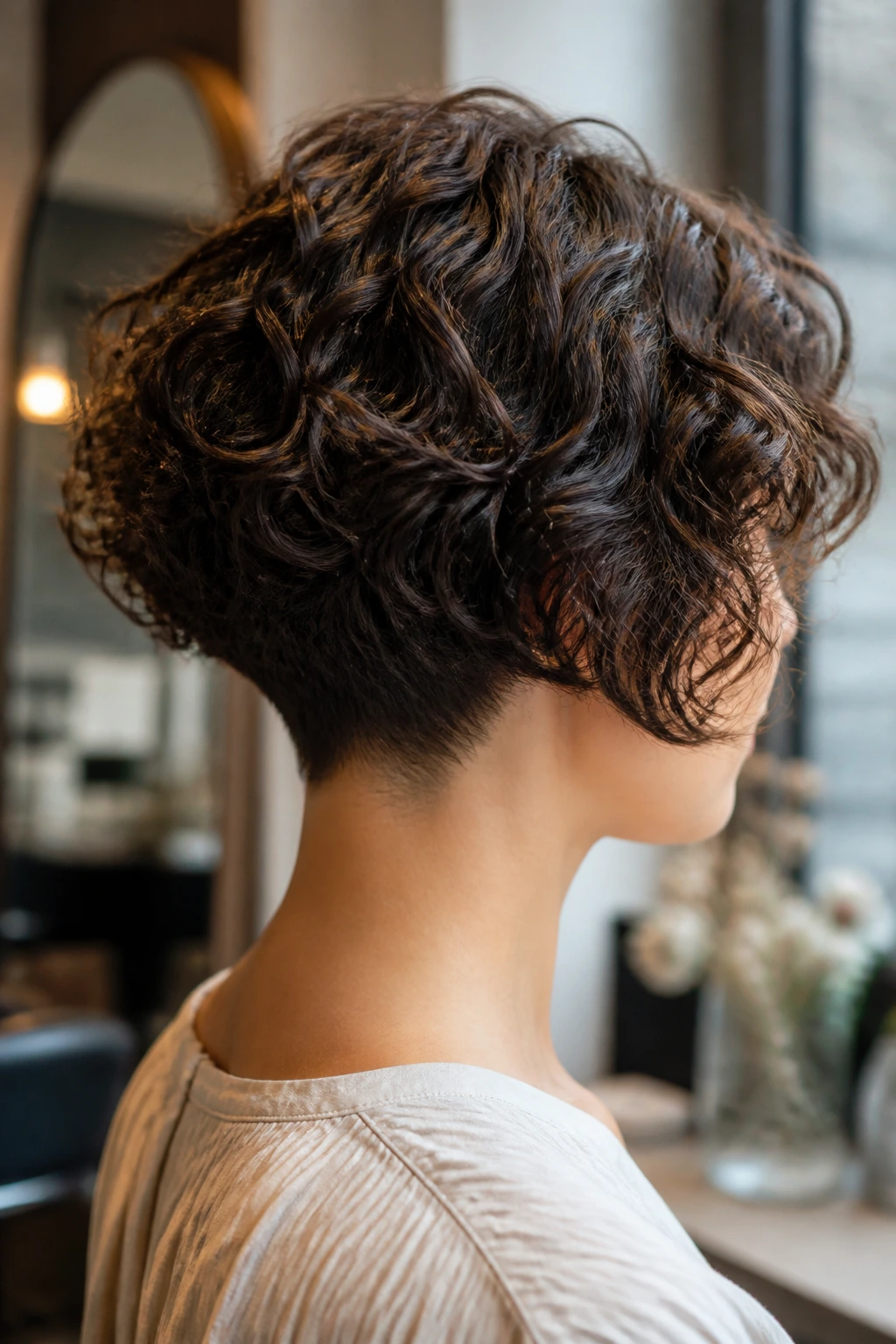
A tapered nape gives the bob a cleaner back view and keeps dense curls from ballooning at the neckline. That sounds like a small detail, but it changes the whole haircut. Instead of sitting as one block, the bob narrows slightly at the nape and builds back out around the sides where you want the movement.
That taper is especially useful on round faces because it removes visual bulk from the back of the head. The head looks a little longer. The face looks a little leaner. Nothing dramatic. Just enough.
If you wear your hair up in a clip half the time, this is a strong option. It still looks neat when the bottom layer peeks out, and it grows out without turning into a mushroom.
10. French Bob with Bottleneck Bangs
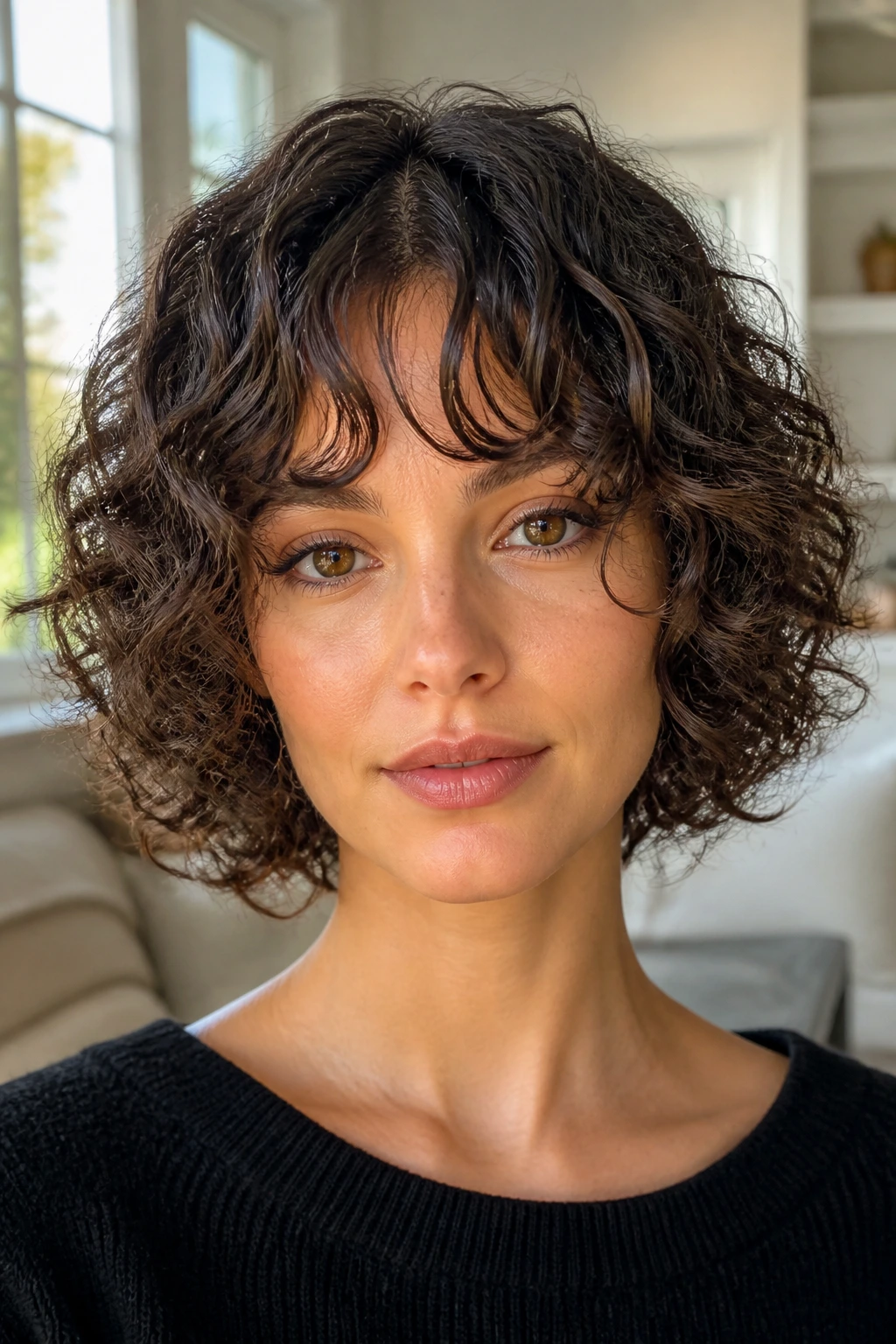
Bottleneck bangs are one of my favorite fringe choices for a round face because they open the center of the forehead and widen only where they need to, near the cheekbones. That shape creates a soft vertical line in the middle and a bit of width higher up, which is far kinder than a blunt bang that chops the face in half.
On curly hair, the bangs need to be cut with shrinkage in mind. The shortest point should land well above the brows when the hair is wet if the curl is tight. The outer pieces can blend into the bob at the temples, which helps keep the whole thing airy.
This cut is a good match for anyone who wants fringe without looking boxed in. It gives you movement near the eyes, but the rest of the bob stays open.
11. French Bob with Long Side Fringe

A long side fringe is the easy answer when you want a bob to lean softer and more directional. It sweeps across the forehead, cuts a diagonal line over the cheek, and gives a round face one more angle to work with. That angle matters. It breaks up the circular feel that full cheeks can create.
The fringe should start somewhere around the temple and fall long enough to brush the cheekbone. Short side bangs can look a little fussy on curls. Longer ones give the hair room to bend naturally.
I like this version when the bob itself is simple. If the cut has too many moving parts, the side fringe can get lost. Keep the body of the bob clean and let the fringe do the talking.
12. Ringlet-Defined French Bob
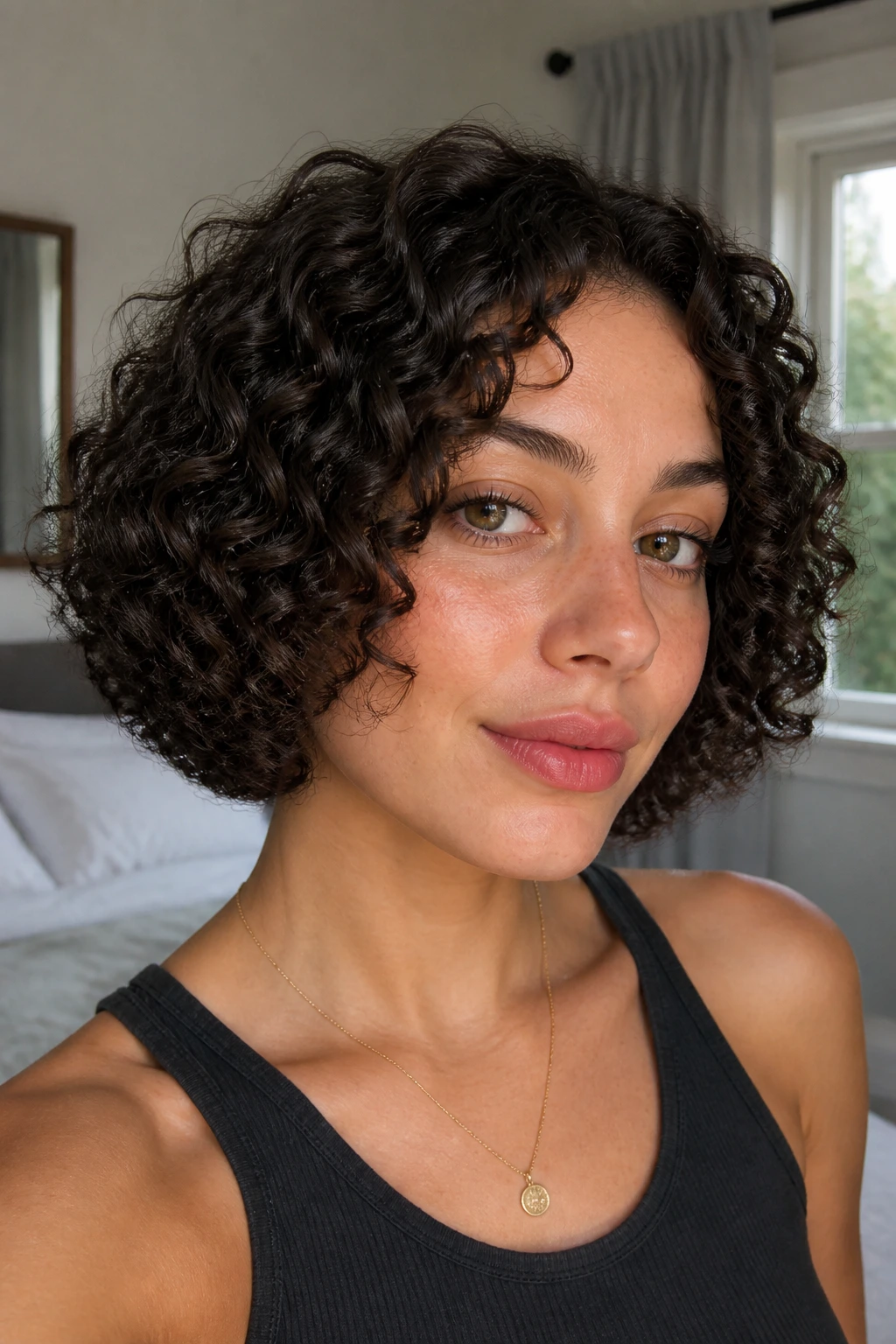
If your curls make neat little spirals, this is the cut that lets them show off without turning the whole head into a puffball. A ringlet-defined French bob is usually cut curl by curl, often dry, so the stylist can see exactly where each spiral wants to live. That matters more with ringlets than almost any other pattern.
The part most people skip
The perimeter should follow the curl, not fight it. When the shape respects the ringlets, the bob lands with more clarity around the jaw and less random volume at the sides. On a round face, that definition creates a cleaner outline, which is half the battle.
Ask for minimal thinning and no heavy razoring through the bottom. Ringlets already have plenty of movement. What they need is a shape that keeps that movement from ballooning outward.
13. Collarbone-Grazing French Bob
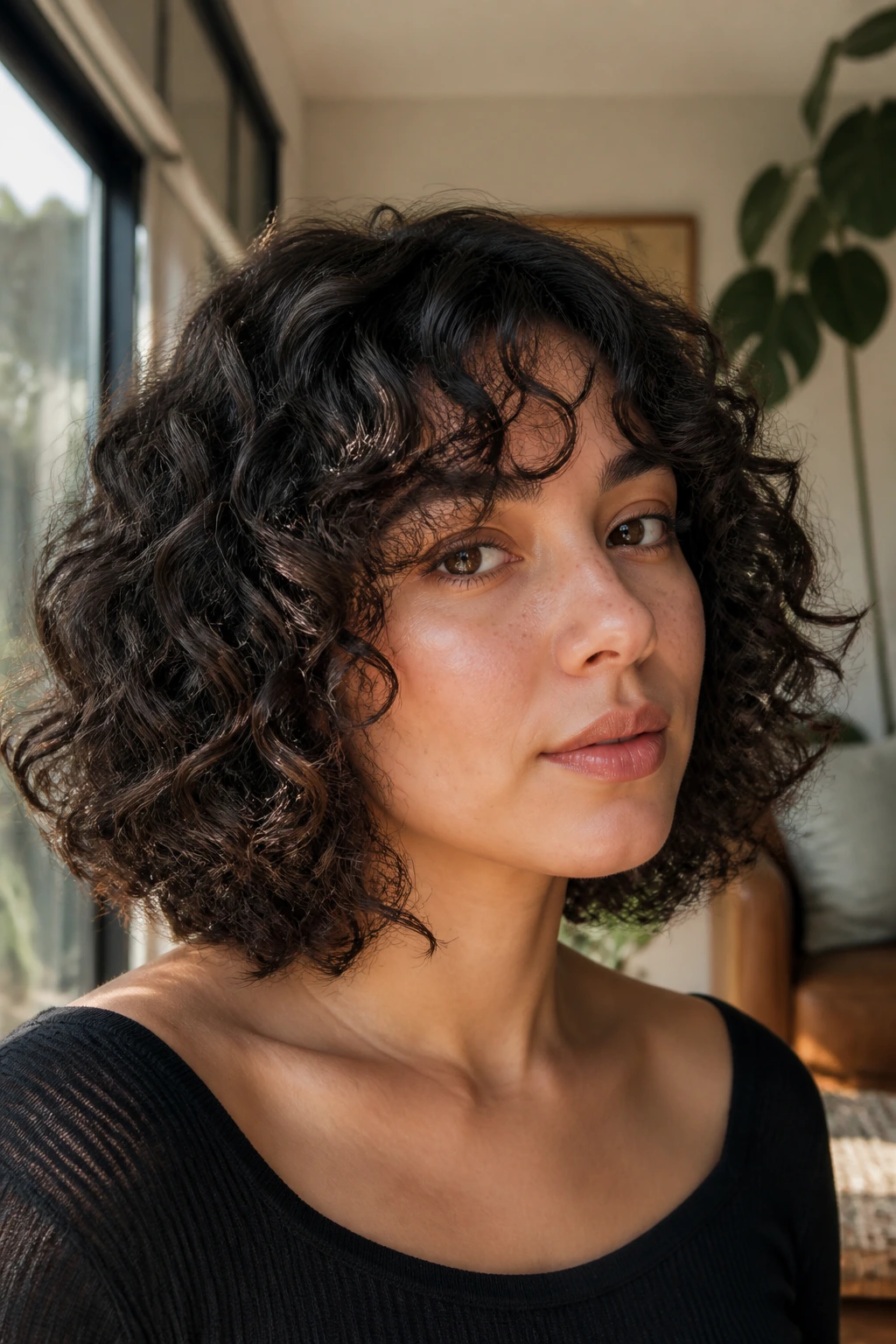
This is the safer, longer cousin of the classic French bob, and I reach for it when someone loves the idea of a bob but does not want to gamble on a shorter crop. The collarbone length gives curly hair room to spring up while still keeping the face framed. On a round face, the extra length adds a little more vertical line, which can be useful if the cheeks are full.
It also buys you flexibility. You can wear it tucked, clipped, diffused, or air-dried, and it still reads as a French bob because the shape is clean and the ends are not dragged into one blunt rectangle.
Honestly, this is the cut I’d recommend to anyone nervous about shrinkage. It keeps the spirit of the bob without making you nervous every time the weather changes.
14. Tousled French Bob with Piecey Ends

Piecey ends work best when you want the bob to feel lived-in instead of polished. This version keeps the perimeter soft and slightly broken up, which is useful on fine curls or loose waves that need a little help showing texture. On a round face, the scattered ends stop the bottom line from feeling too neat and too wide.
The trick is not to confuse piecey with frayed. You still need a clear shape. The difference is that the ends separate into smaller curl families instead of hanging as one heavy sheet.
What to watch for
Too much cream will collapse this style. A small amount of mousse or a light gel gives the curls enough hold to stay defined, while a touch of scrunching breaks the ends apart after they dry.
15. Center-Part French Bob

A center part can work on a round face when the bob itself is doing enough shape work. That’s the catch most people miss. If the length is too short or the edges sit too wide, the center part can make the face feel broader. If the bob is a little longer and the curls fall in soft vertical lines, the middle part can actually lengthen the look.
How to make it behave
Keep the perimeter below the jaw or just at it, and let the front pieces skim the cheeks instead of ending there. That gives the eye a longer path down the face. On curly hair, a center part also helps the curl pattern fall symmetrically, which can be satisfying when you want the style to feel calm instead of messy.
This is a neat choice for people who hate fussing with part placement every morning.
16. French Bob with a Slight A-Line

A tiny A-line — nothing dramatic — can be a round-face saver. The front sits about half an inch to an inch longer than the back, so the hair naturally draws the eye forward and down. That angle gives the face more length without making the cut look angled in an obvious, fashion-editor way.
The best part is how well it works with curls that expand at the sides. If the front pieces are a touch longer, they can frame the cheekbone instead of ending at the widest spot. You still get a bob. You just get a bob with a little strategy built in.
Ask for the back to stay compact at the nape. If the back is too full, the A-line loses its point and starts to look like an accident.
17. French Bob with Baby Bangs

Baby bangs are not the easy choice, and that is exactly why they can look interesting. On a round face, they work best when the bob itself is a little longer, so the short fringe has something to balance against. If both the bob and the bangs are cropped too high, the face can start to feel compressed.
This is one of those styles that depends heavily on curl behavior. Tight curls will bounce the fringe up fast, sometimes more than you expect. Loose waves give baby bangs a softer edge and a little less risk.
I would only choose this if you like a bit of drama and you are willing to trim the fringe more often. It’s not a set-it-and-forget-it move.
18. Wet-Look Curly French Bob
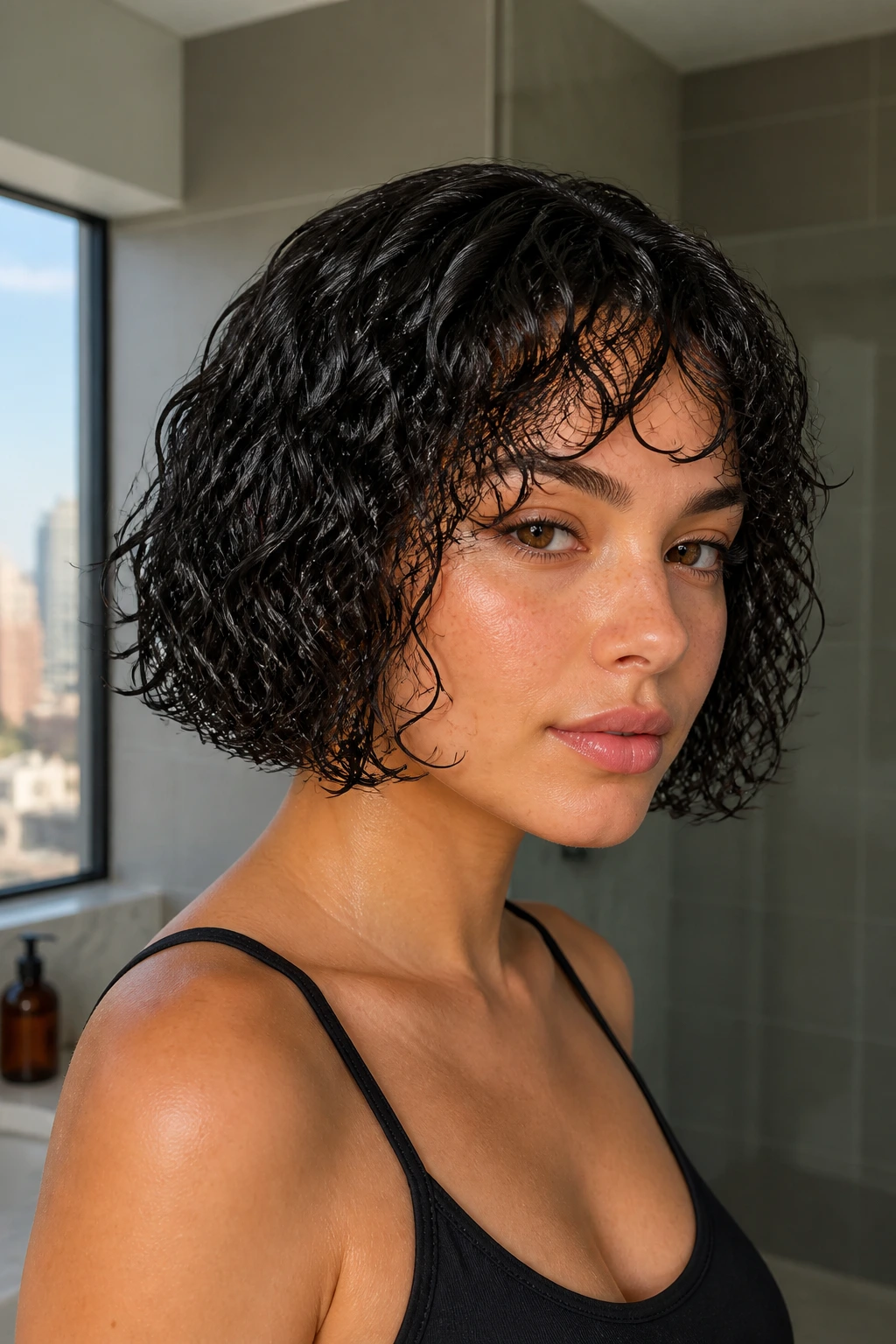
A wet-look finish can be a smart way to wear a French bob on a round face because it keeps the top sleek and the sides controlled. The shine draws the eye upward, and the defined clumps of curl keep the ends from exploding outward. It’s a strong evening look. It also photographs in a very specific, deliberate way, which is why stylists still reach for it.
The key is gel, not heavy cream. Work the product through soaking-wet hair, comb the crown flat, then encourage the curl groups with your fingers. Once the cast forms, you can either leave it crunchy or break it with a drop of oil.
This version is less about haircut shape and more about finish. Still, on a round face, the sleek root-to-curl contrast does a lot of quiet lifting.
19. Diffused Volume French Bob

Some curly bobs need more lift, not less. If your roots collapse and your curls gather at the sides, diffusing can save the shape. The goal is to build height at the crown while keeping the perimeter controlled, so the face gets length without the silhouette going wide.
Why this matters on round faces
Height at the top changes the whole read of the face. It pulls attention upward and gives the bob a little extra air above the cheeks. That does more for balance than many people expect.
- Start with a mousse at the roots.
- Hover-diffuse on low heat until the hair is about 70% dry.
- Clip the crown for the last few minutes if it tends to fall flat.
- Don’t scrunch the sides into a puff before the shape sets.
This is the bob for people who like body but not bulk.
20. Razor-Soft French Bob
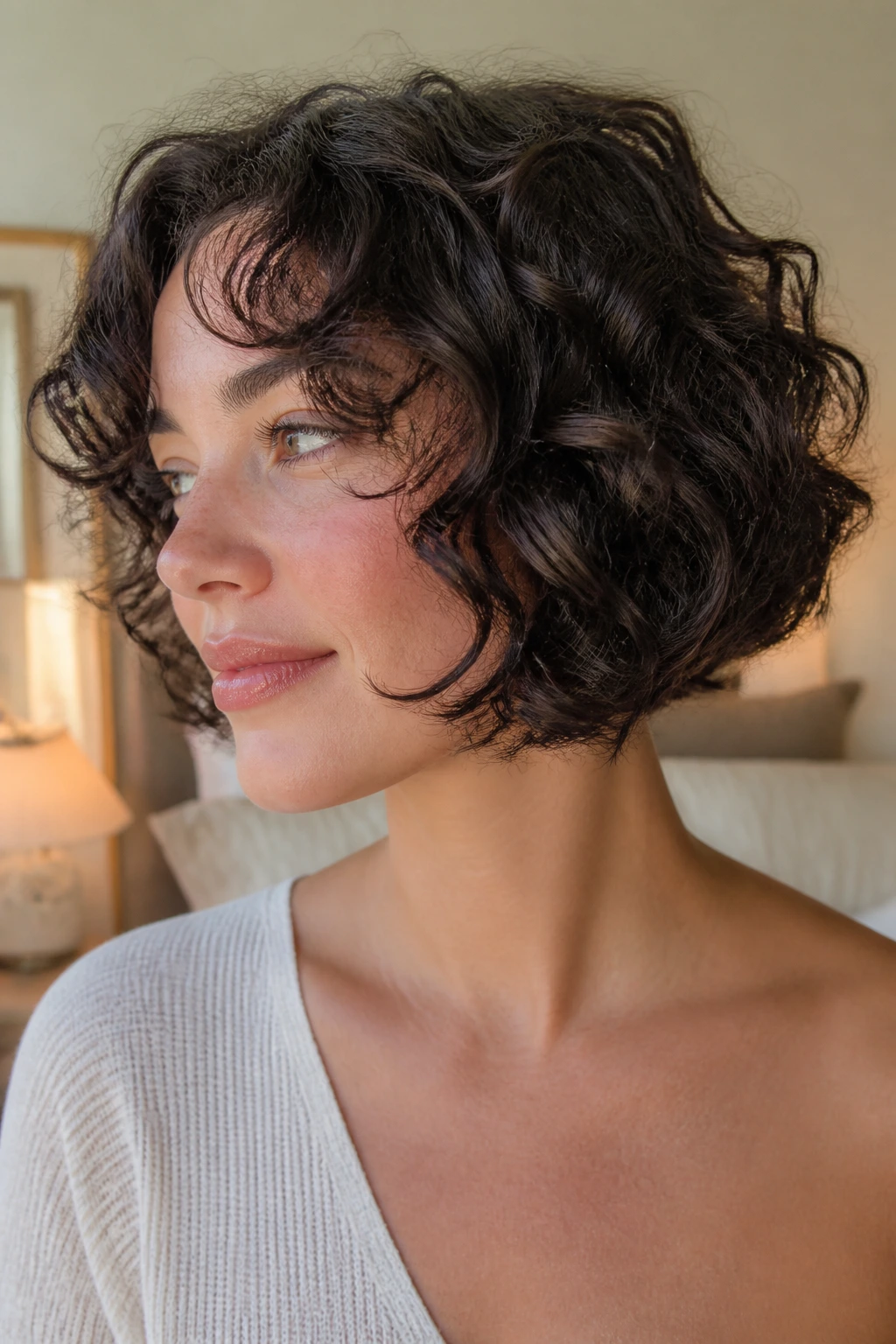
Razor-soft does not mean shredded. It means the ends are softened enough to move, but not so much that the outline collapses. On curly hair, that balance is tricky. Too much razor work and the ends frizz; too little and the bob can feel rigid.
For round faces, a soft edge helps because it keeps the cut from drawing a hard circle around the cheeks. The perimeter still has shape, but it does not feel blocky. If your hair is coarse or dense, this can be a very good compromise between blunt and shaggy.
Ask for the ends to be softened lightly, not aggressively sliced. The difference shows up after the first wash, especially when the curls dry into their natural clumps.
21. Side-Tucked French Bob

This one is less about the cut and more about how you wear it, and that’s part of its charm. Tucking one side behind the ear opens the face, exposes the jawline, and gives the bob a little asymmetry without touching a pair of scissors. On a round face, that exposed side is useful because it creates a cleaner edge.
The untucked side should still have enough length to skim the cheek. That contrast between open and closed is what makes the look feel deliberate. If both sides are tucked, you lose the whole point.
I like this for second-day curls, especially when the hair has a little bend but not a full fresh-wash bounce. It takes 30 seconds and changes the silhouette more than some people expect.
22. Curly French Bob with Face-Framing Crescents
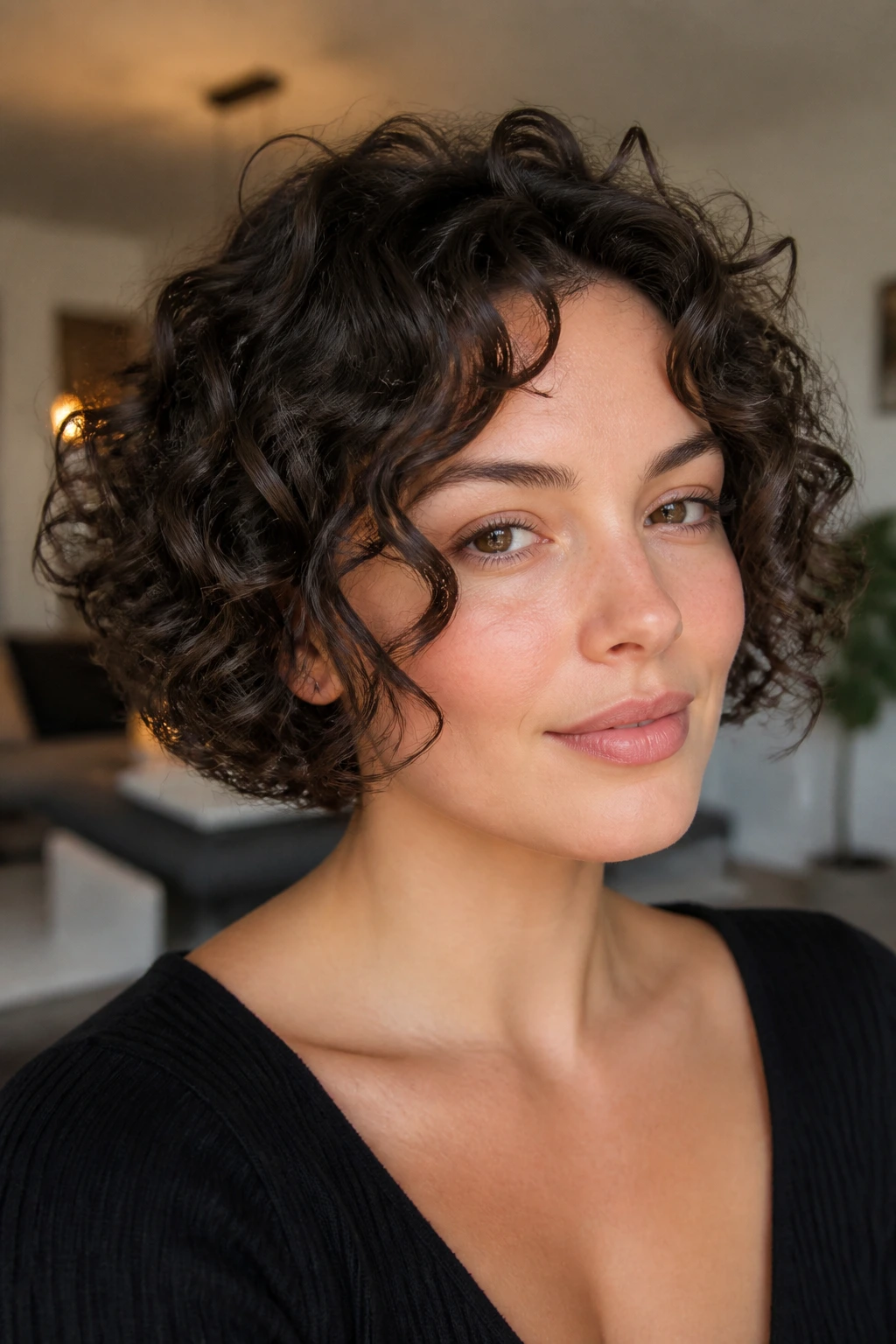
Think of this as a bob with little crescent-shaped pieces curving around the cheeks instead of straight face-framing layers. Those arcs are softer on a round face because they don’t stop bluntly at the widest point. They move around it.
The crescent pieces should start near the temples and taper down toward the jaw. If they’re too short, the shape can widen the cheeks. If they’re too long, they disappear into the rest of the cut and stop doing their job.
This version shines when you want the face to look more oval without changing the whole haircut into a long style. It’s subtle, and that’s the point.
23. French Bob with Hidden Undercut
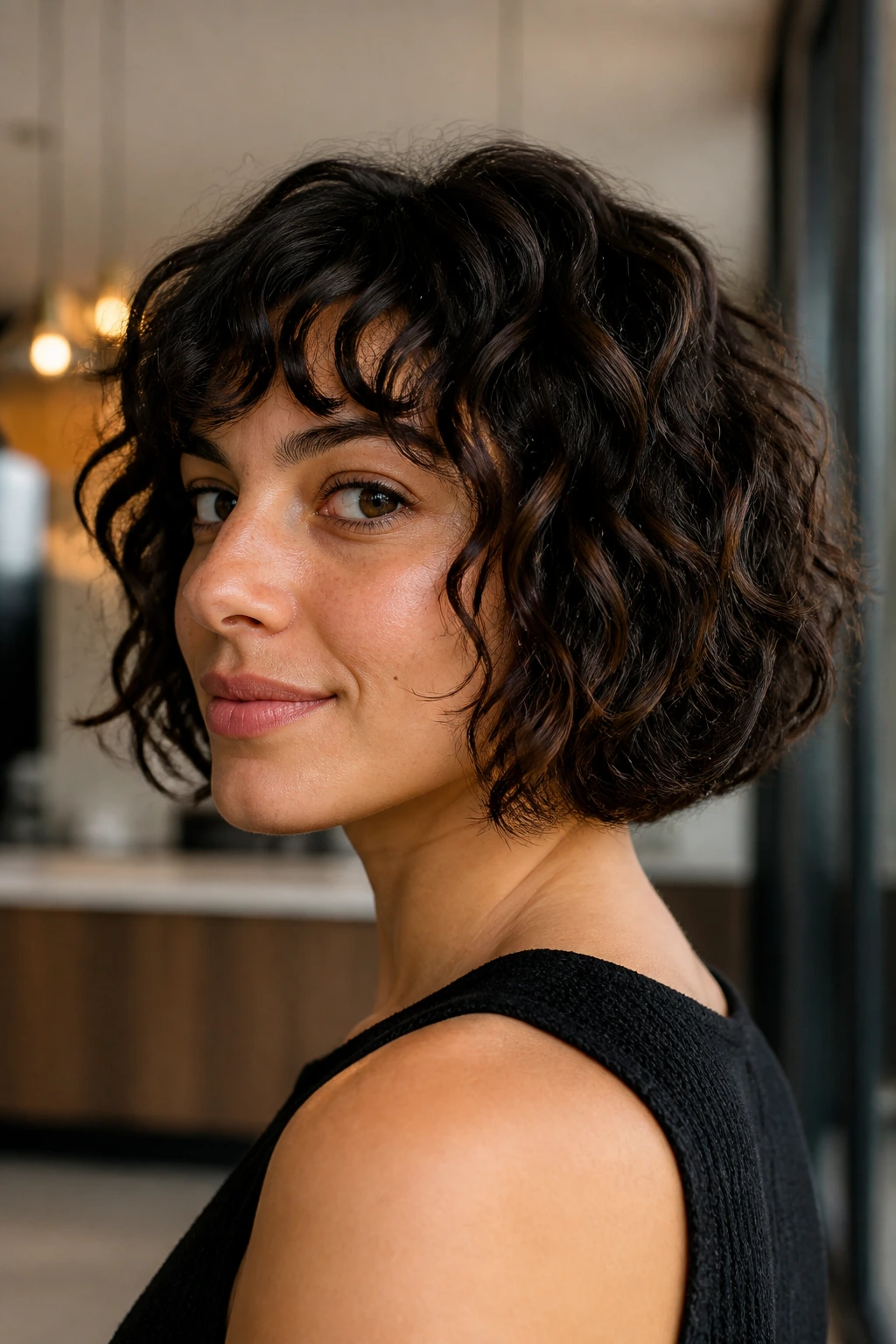
A hidden undercut is the secret weapon for dense curls that refuse to stay compact. It removes weight underneath the top layer, usually at the nape or behind the ears, so the bob can sit closer to the head. On a round face, that controlled shape keeps the sides from ballooning outward and stealing the lines from your jaw.
Who should consider it
If your hair takes forever to dry or puffs out the second humidity appears, this is worth discussing with a stylist who knows curly cuts. The top layer still looks like a bob. The undercut just makes the whole thing easier to live with.
It is not for everyone. Fine curls can lose too much body if you remove too much underneath. Dense curls, though, tend to love it.
24. Salt-Spray French Bob for Loose Texture

Loose texture gives a French bob a different personality. Less polished, more breezy. Salt spray helps create that piecey, slightly rough finish without forcing the hair into stiff clumps. On round faces, the broken-up texture can stop the width from feeling too uniform, which is part of why this version works.
The important part is restraint. Salt spray on curly hair can dry things out fast, so keep it light and use a leave-in underneath. The goal is separation, not straw.
I’d choose this version for hair that already has some wave and does not need much coaxing. It looks better when the ends have movement, not when they are overbuilt.
25. Grow-Out Friendly French Bob Lob

This is the version I recommend to cautious people, busy people, and anyone who hates feeling trapped by a haircut after six weeks. A French bob lob sits longer — often somewhere around the collarbone — but keeps the clean internal shape that makes the style feel intentional. It still flirts with the bob idea, just with a little more breathing room.
For round faces, that extra length matters. It adds a vertical line, gives the curls room to settle, and makes the face look a touch longer without hiding the cheekbones. The lob is also the easiest place to start if you’re unsure how short you want to go.
It grows out gracefully, which is its main selling point. That matters more than it gets credit for.
Why French Bobs and Curly Hair Work So Well on Round Faces

The shape relationship here is the whole game. Round faces usually benefit from lines that create length, not extra width, and curly hair gives you those lines for free if the cut respects the pattern. A French bob can do that because it sits high enough to show the neck and low enough to keep the curls from piling on the cheeks.
The best versions avoid ending right at the fullest point of the face. They move either a little above it, a little below it, or off to one side. That tiny shift changes how the eye travels. Instead of circling the cheeks, it goes down, diagonally across, or upward toward the crown.
Curl shrinkage is the other piece people ignore. A bob that looks sensible when wet can turn into a very different animal once the curls spring up. I like to tell people to think in terms of the dried shape, not the wet length. If you know your curl pattern jumps, ask for the finish line to be placed lower than you think.
Dense curls need weight removal in the right places. Loose curls need perimeter control. Fine curls need shape without over-thinning. Same haircut name, different mechanics. That’s why a French bob works so well when it’s tailored, and why it falls apart when someone treats all curly hair like it behaves the same way.
What to Ask for at the Salon So the Shape Lands Right
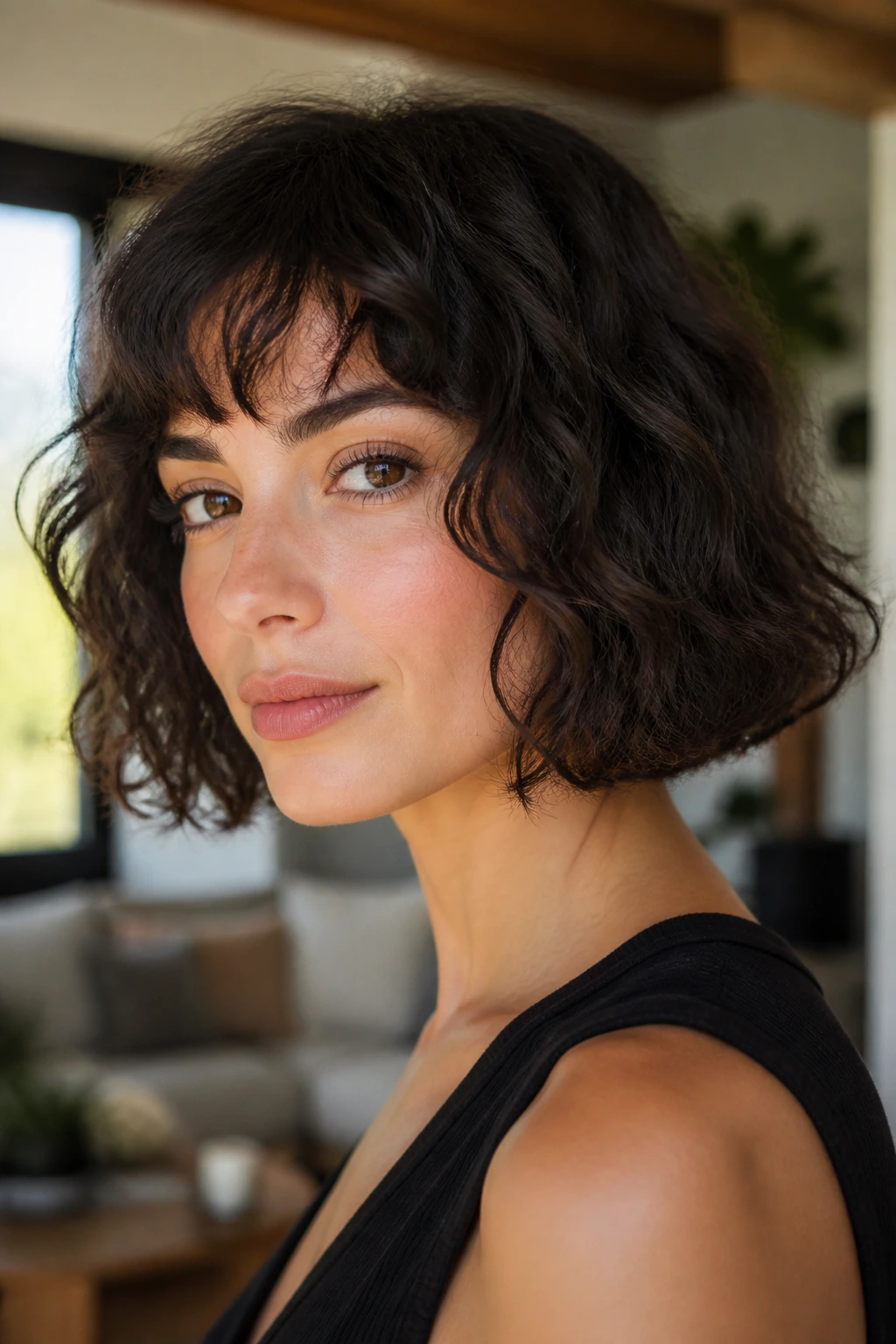
Bring pictures, yes, but bring words too. Photos only show the target. They do not tell a stylist how high your curl shrinks or how much volume you carry at the sides. A good French bob consultation is full of specifics: where the length should sit, where the fringe should open, and how much weight needs to come out.
Ask for the shortest pieces to land between the top of the jaw and just below the chin in the finished shape if you want a safer version. If you want it shorter, say so plainly and ask how much curl shrinkage they expect. That conversation matters more than the inspiration photo on your screen.
For dense curls, mention bulk removal through the interior, not heavy texturizing at the ends. For fine curls, ask for light layering and a strong perimeter so the cut does not go wispy. If your stylist cuts curly hair dry, even better; if they cut wet, ask them to check the shape after drying so the bob doesn’t surprise you later.
One more thing. Tell them how you actually wear your hair. Side part? Middle part? Air-dry only? Diffuser on weekdays? That changes everything.
The Tools That Make Curl-Friendly Bob Styling Less Annoying
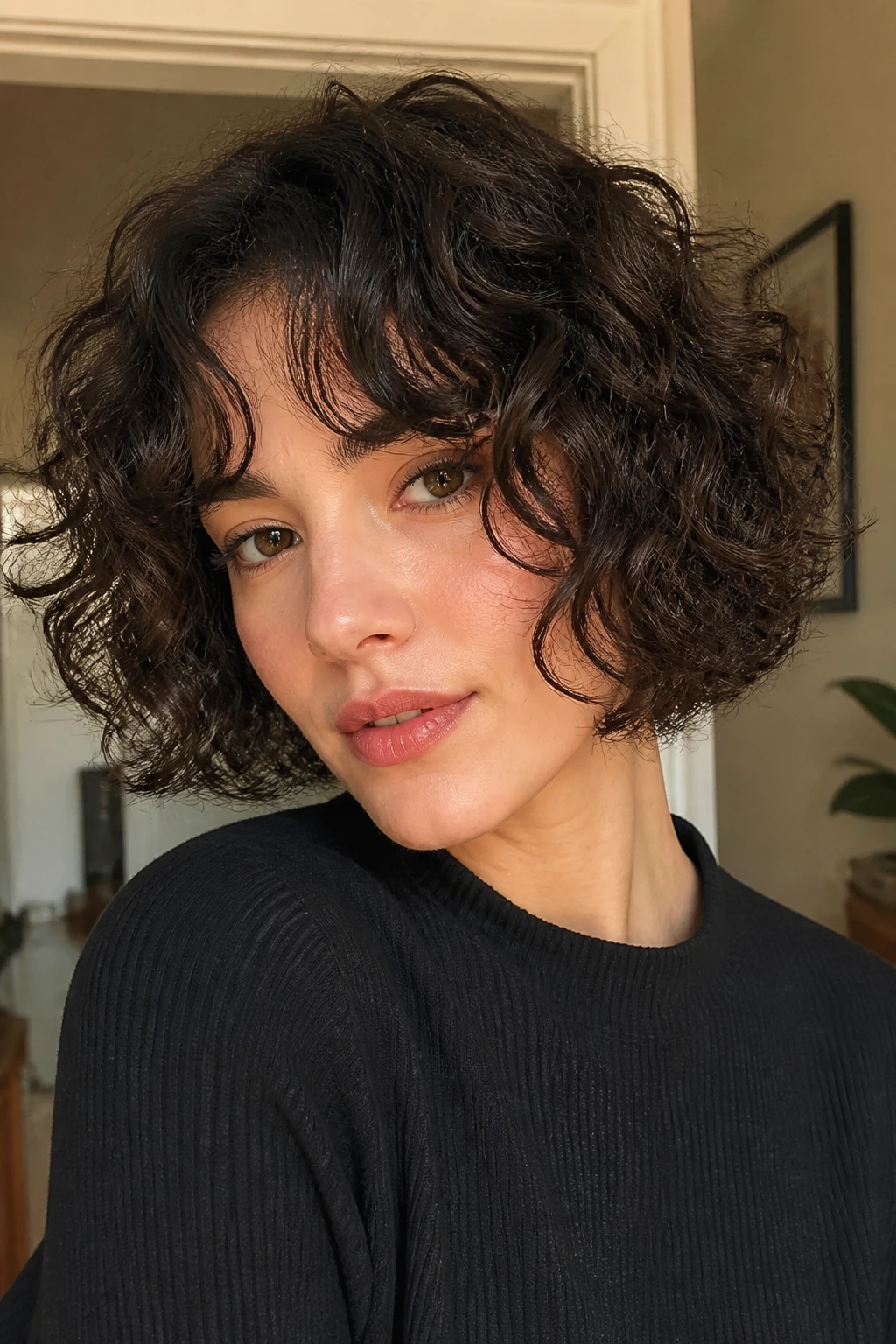
- Wide-tooth comb: Good for detangling in the shower without ripping apart curl clumps.
- Microfiber towel or cotton T-shirt: Cuts down on rough drying and helps the curls keep their shape.
- Duckbill clips: Useful for lifting the crown while the roots cool or dry.
- Diffuser attachment: The easiest way to dry a bob without blasting it into frizz.
- Spray bottle with water: Handy for day-two refreshes and reactivating product at the ends.
- Light mousse or foam: Gives root lift without weighing down the bob.
- Curl cream or leave-in: Best for softer curl patterns that need a little slip and control.
- Light gel: Helps hold definition in tighter curls or for a wet-look finish.
- Satin bonnet or pillowcase: Keeps the perimeter from getting smashed overnight.
I’m not fussy about brands here. I am fussy about weight. Heavy products can make a French bob slump at the crown and widen at the sides, which is the opposite of what you want.
Styling Moves That Keep the Shape Lean and the Curl Pattern Clear
Root Lift: Start product at the roots only if your hair is fine or flat at the crown. A grape-sized amount of mousse, worked through the top section, is often enough. Too much cream up there drags the whole bob down.
Definition: Scrunch from the ends upward with your hands, then stop touching it. Seriously. The more you poke at curls while they set, the more likely they are to separate into fuzzy little clouds.
Frizz Control: If the outer layer tends to puff, smooth a tiny bit of leave-in over the surface once the hair is mostly dry. Not soaking wet. Not bone dry. Just at that halfway point where the curl is set but still a little flexible.
Fast Refresh: On day two, mist the ends, twist the front pieces around your fingers, and clip the crown for 10 minutes while they reset. That tiny reset often brings the bob back better than a full wash.
Finish: If you want softness, break the gel cast with one drop of oil. If you want hold, leave the cast alone. There’s no prize for over-touching it.
Common Mistakes That Make a French Bob Puff Out or Flatten Down
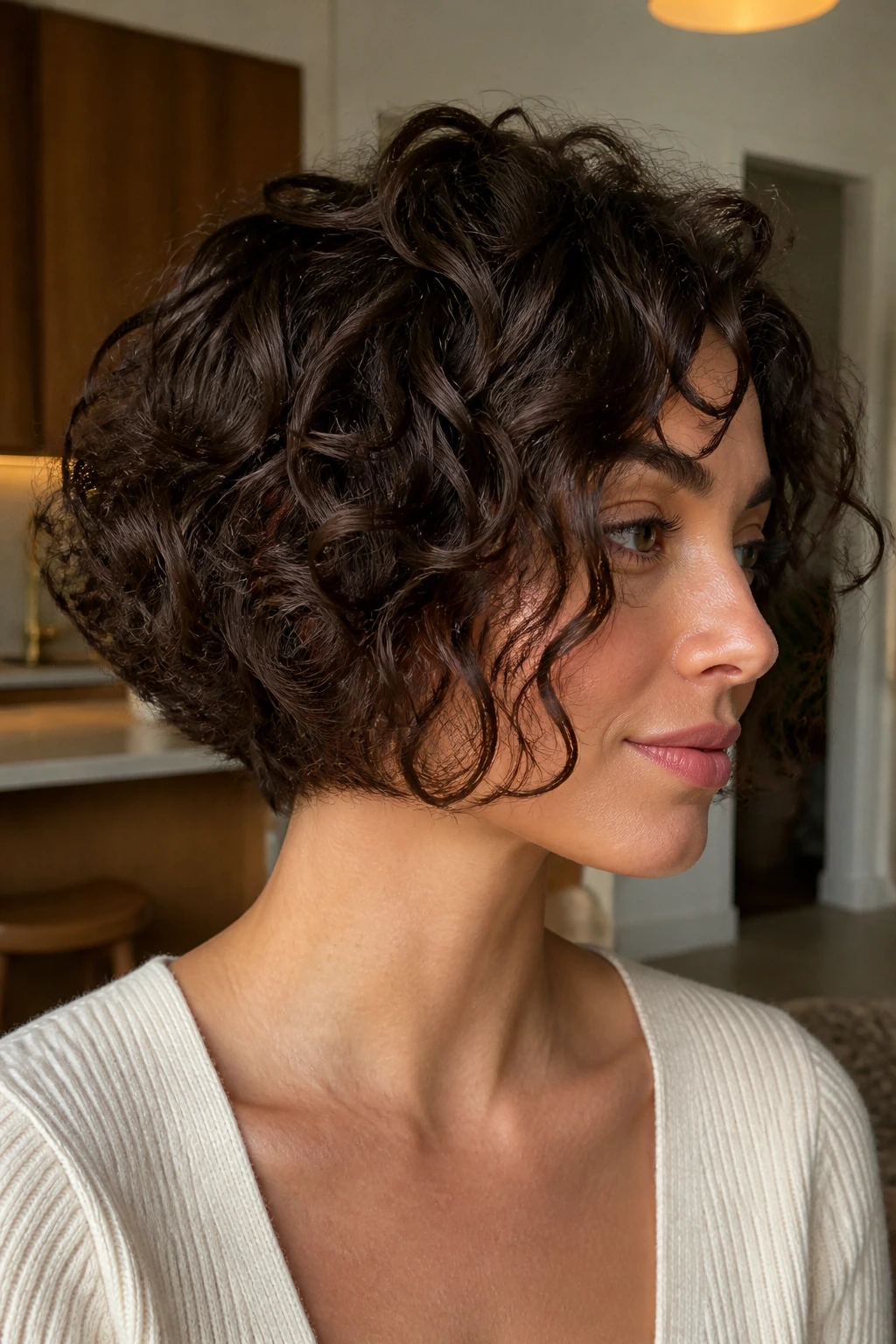
The first mistake is cutting the bob too short at the cheeks. On a round face, that can make the face look wider because the eye stops exactly where it should keep moving. The fix is simple: shift the shortest point lower or create a diagonal front piece that opens the face.
Another one is over-thinning the ends. A lot of people think curly hair needs lots of texture removal, then wonder why the bob turns frizzy at the bottom. What you usually need is weight removal inside the cut, not a shredded perimeter.
Heavy products are a quiet problem. A thick curl butter can make the crown collapse and the sides swell, which gives you the exact mushroom shape everyone fears. Use lighter product near the top and save the richer stuff for the driest ends only.
Bangs can go wrong fast if they are cut too short for the shrinkage pattern. Short fringe plus springy curls equals surprise. If you’re unsure, leave the fringe longer and trim again after the first wash.
Skipping trims is another trap. French bobs depend on a clean line. Once the shape blurs, the cut starts looking like an in-between grow-out instead of a haircut with a point of view.
Variations and Adaptations to Try

The Soft Paris Crop: This is the gentlest version, with a jaw-length line and no sharp bangs. It suits people who want the bob effect without feeling cropped too close to the face.
The Curly Lob Shift: Stretch the length to the collarbone and keep the interior light. It is a smart choice if you want room for shrinkage or you’re growing out a shorter bob.
The Fringe-Forward Version: Add curtain bangs, bottleneck bangs, or a long side fringe, then keep the rest of the cut clean. This works when you want the face to look longer but still want some softness up top.
The Dense-Curl Release: Ask for hidden weight removal and a compact nape. That version is made for thick curls that widen fast at the sides.
The Low-Fuss Air-Dry Cut: Keep the perimeter clean, avoid heavy layering, and style only with leave-in plus mousse. This is the one for people who want the haircut to behave without a full styling routine every morning.
Keeping the Cut in Shape Between Appointments
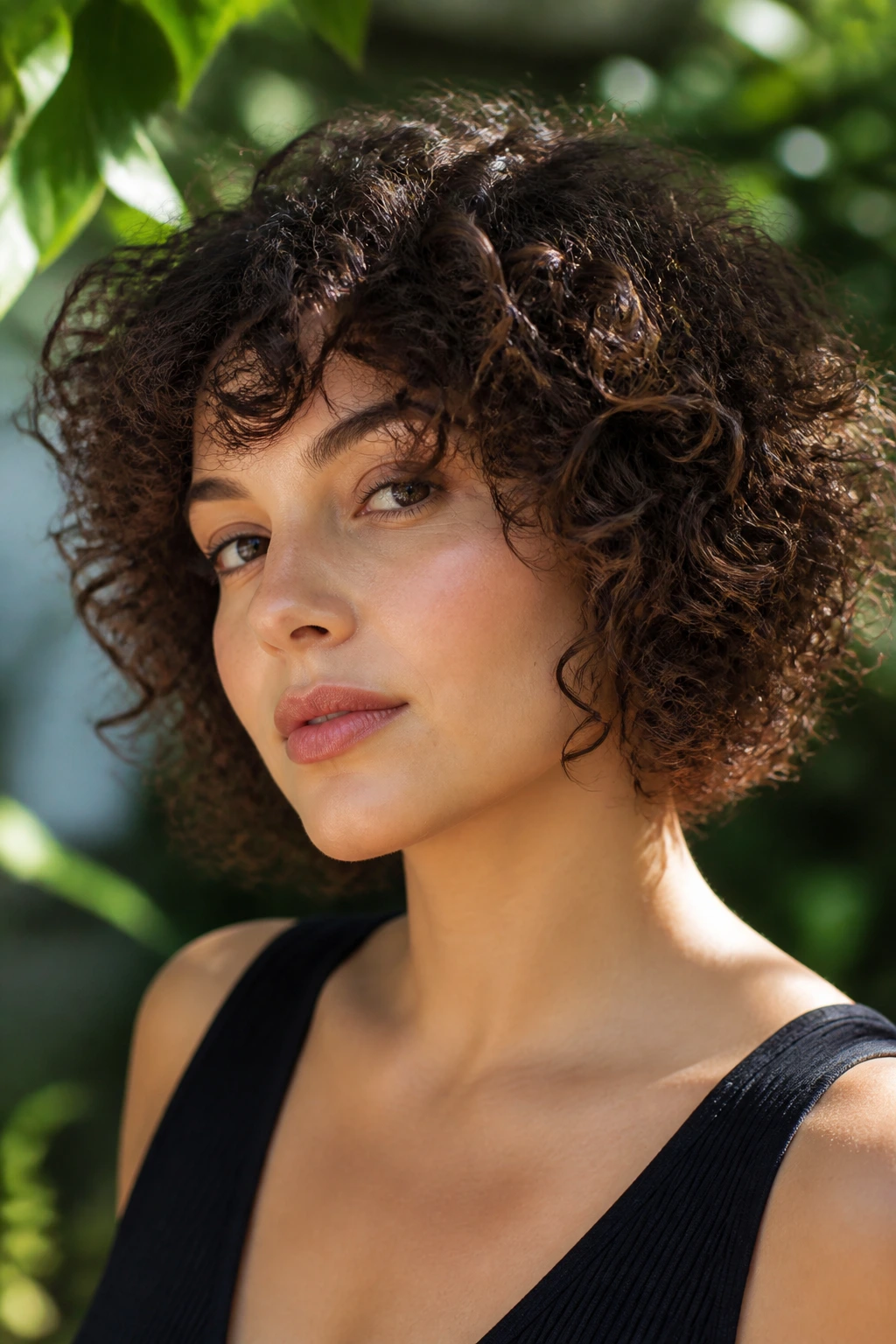
A French bob looks its best when the ends stay crisp and the curl pattern stays hydrated. For most people, that means a trim every 6 to 8 weeks if the bob is short, or every 8 to 10 weeks if it leans lob-like. Dense curls sometimes hold the shape a little longer, but the fringe usually tells on you first.
At home, refresh the bob by misting the front and bottom layers with water, then adding a small amount of leave-in or mousse where the curl looks tired. Don’t soak the whole head unless you’re starting over. The bob usually only needs help around the perimeter and crown.
Sleep matters more than people admit. A satin bonnet or pillowcase keeps the sides from puffing out overnight, and a loose pineapple can keep the curl pattern from getting mashed flat. If you wake up with one side dented, mist that side alone and clip it back into place while you get dressed.
Growing it out is easy if the shape was cut well to begin with. A good French bob should move into a lob without looking awkward, which is another reason I favor slightly longer versions for people who like low drama.
Frequently Asked Questions
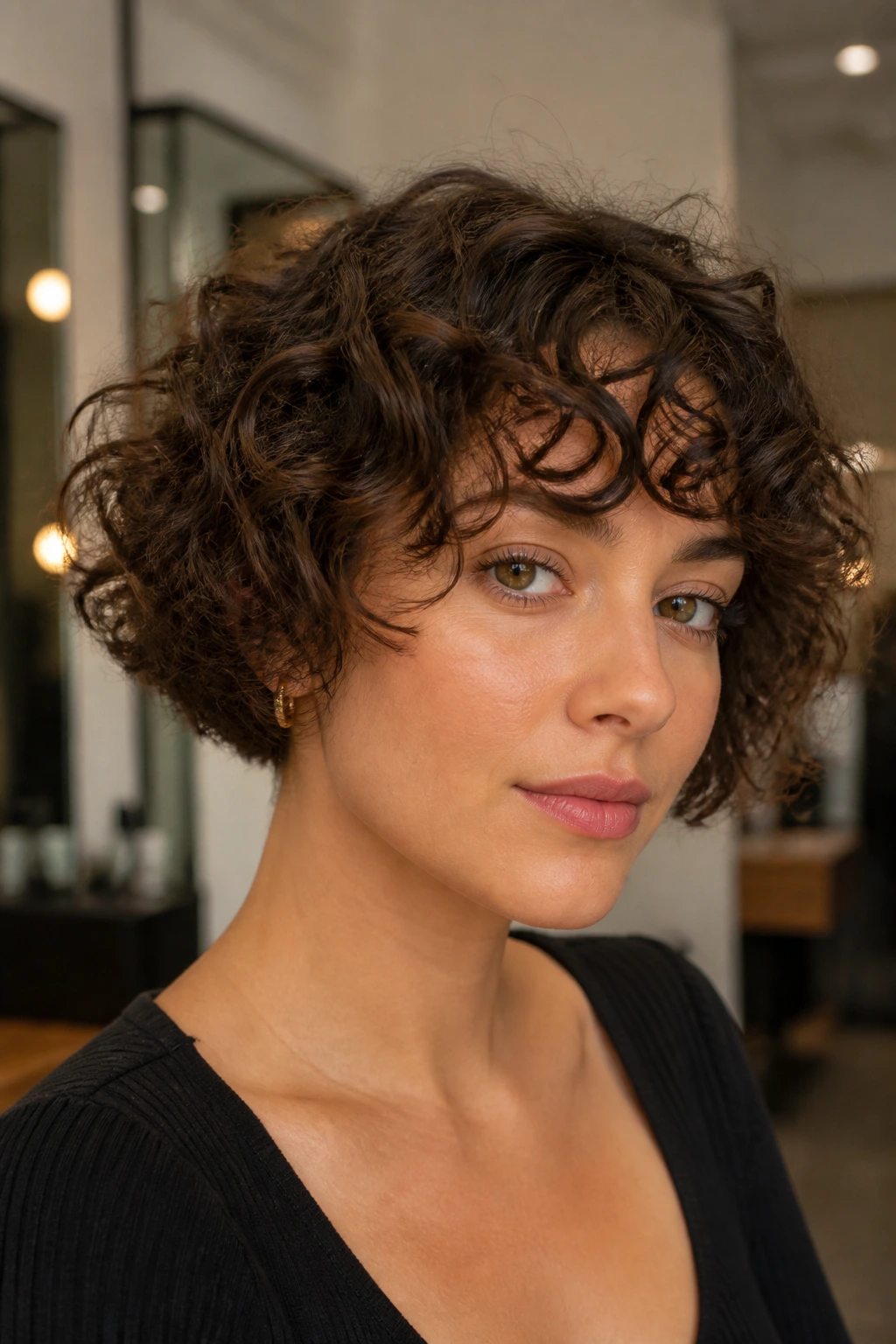
Will a French bob make a round face look wider?
It can, if the shortest pieces sit right at the cheeks and the sides puff out. The safer versions keep the line at the jaw, below the chin, or slightly longer in front so the eye moves down instead of across.
Should curly hair be cut wet or dry for a French bob?
Dry cutting or at least a dry check is often better because curl shrinkage changes the final length. Wet cutting can work, but only if the stylist knows curly hair well and plans for the finished shape, not the wet one.
Do curtain bangs work on round faces with curls?
Yes, as long as they open at the center and start around the cheekbone, not the brow. That shape adds softness without making a blunt horizontal line that shortens the face.
What if my curls are very dense and wide?
Ask for interior weight removal and a tighter nape, not heavy thinning at the ends. Dense curls usually need structure more than they need to be thinned into frizz.
Can fine curly hair wear a French bob?
Absolutely, but the cut needs a cleaner perimeter and less internal slicing. Fine curls do better with shape and body at the bottom, not too many layers that make the ends disappear.
How do I stop the bob from puffing out on day two?
Use a spray bottle to re-wet only the outer layers, then add a small bit of mousse or leave-in and clip the crown for 10 minutes. Day-two puff usually comes from dryness and friction, not from the haircut itself.
Is a lob safer than a chin-length bob for curly hair?
Safer, yes. A lob gives you more room for shrinkage and usually grows out more gracefully, especially if you’re still learning how your curls behave in shorter shapes.
What should I tell the stylist if I want something low-maintenance?
Say you want a French bob that air-dries well, keeps its shape for several days, and does not rely on heavy styling. Then ask for a clean perimeter, gentle interior shaping, and a length that won’t bounce too high once it dries.
The Bob That Knows Its Angle

A good French bob on a round face is not about hiding anything. It’s about choosing where the line lands and letting the curls do the rest. When the cut respects shrinkage, keeps the jaw in play, and leaves enough movement for texture to breathe, the whole look gets sharper without turning stiff.
That’s what makes this family of cuts worth keeping on your radar. Some versions are cropped and cheeky, some are soft and shoulder-skimming, and some sit right in the middle. The point is not to force one shape on every curl pattern. The point is to pick the version that makes your face look a little longer, your curls look a little freer, and your mornings look a little less complicated.
If your curls have been waiting for a bob with actual judgment, this is the place to start.