



Professional haircuts for work with soft layers have one very specific job: they need to look calm under office lighting and still move when you turn your head. That sounds simple until you’ve spent a morning fighting a blunt cut that sits like a shelf, or layers that puff out the second you step outside. The sweet spot lives between those two extremes. Clean outline. Gentle movement. Face-framing pieces that do something useful instead of flopping around like an afterthought.
Soft layers are the reason a haircut can feel polished without looking stiff. They take the edge off a strong shape, but they don’t shred the perimeter into little wisps that need constant rescuing. A good work haircut should behave at 8:30 a.m., survive a commute, and still look intentional after a long meeting, a coat collar, and a desk fan that somehow points directly at your forehead.
I keep coming back to this kind of haircut because it solves a problem that comes up over and over again: people want hair that reads neat, not severe; flattering, not fussy. A few inches in the right place can change the whole mood of a cut. The wrong layers make hair look busy. The right ones make the shape easier to wear.
Why These Soft-Layered Work Cuts Keep Their Shape

-
They soften the outline without wrecking the geometry: A blunt edge still gives you structure, while the softer interior keeps the cut from looking hard or boxy.
-
They frame the face where it matters most: Cheekbone, jaw, and collarbone lengths do a lot of the visual work, so the haircut looks styled even when it’s barely touched.
-
They’re easier to refresh between wash days: When the layers are long and controlled, you can smooth the front pieces with a brush or flat iron in minutes instead of rebuilding the whole head.
-
They move well under jackets and collars: That matters more than people think. A cut that collapses the second a blazer hits it is not doing its job.
-
They scale up or down with styling: The same cut can look sleek, softly bent, or tucked-behind-the-ear sharp depending on how much heat and product you use.
1. The Invisible-Layer Lob That Skims the Collarbone
This is the haircut I recommend to people who want polish first and personality second. The outline lands right around the collarbone, which is the most forgiving length in the book if you wear blazers, sweaters, or button-front shirts. The layers live inside the cut, not all over the surface, so the shape stays clean when hair is still.
Why It Works
A collarbone lob gives you enough length to tuck, twist, or smooth behind one ear, but it doesn’t drag the whole silhouette down the way longer hair sometimes does. Ask for the front to stay blunt and for the internal layers to start below the chin. That keeps the cut from splaying out at the sides.
- Best for: fine to medium hair that needs movement without losing body.
- Ask for: a blunt perimeter with soft internal point-cutting, not obvious stacked layers.
- Style note: a 1.25-inch round brush bends the front nicely in 5 to 7 minutes.
- Tiny but useful detail: if your hair flips outward at the ends, a quick pass with a flat iron on the last 2 inches fixes it.
Best tip: keep the shortest face-framing piece no higher than the jaw if you want this cut to read professional instead of playful.
2. The French Bob with Feathered Cheekbone Pieces
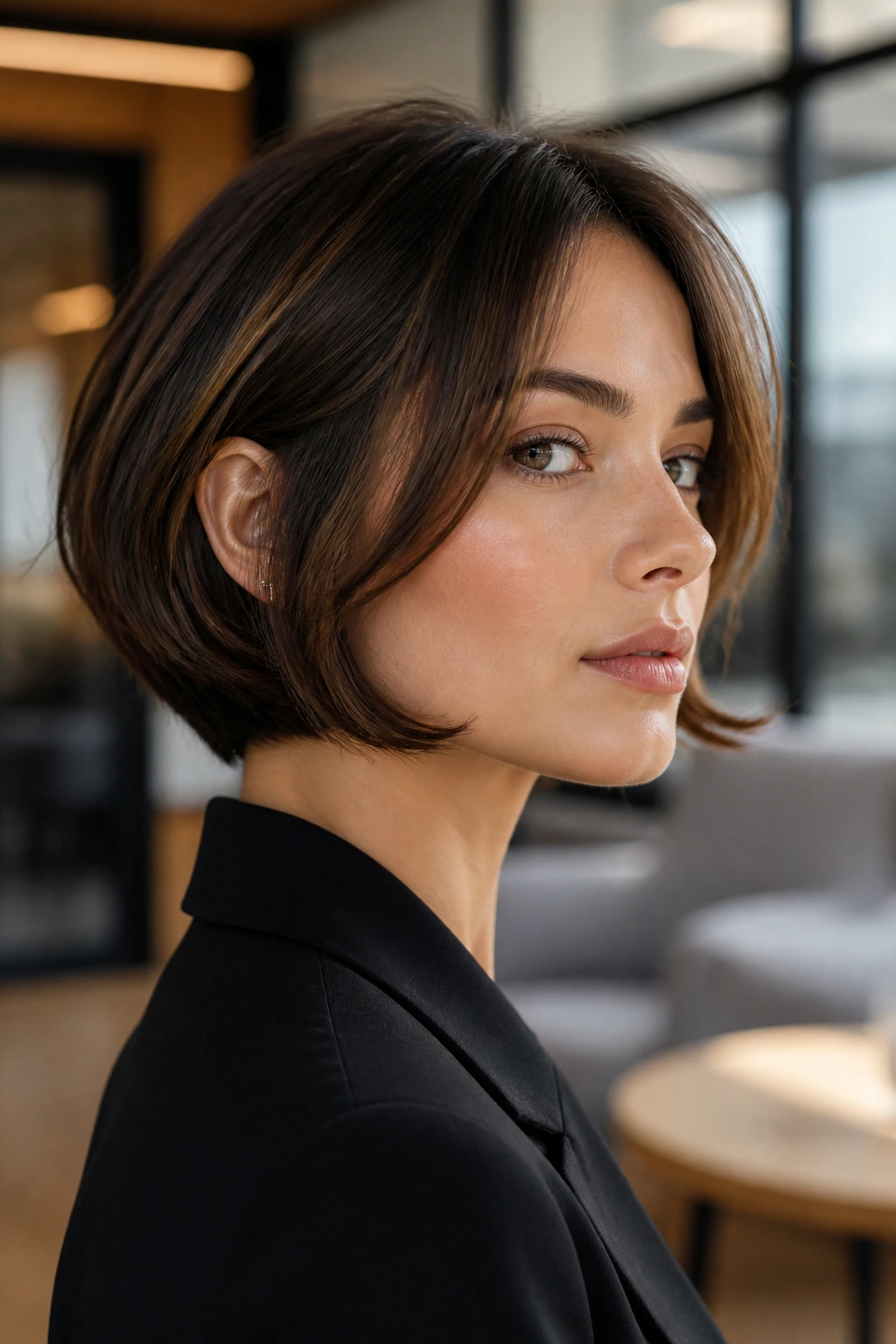
A French bob at work sounds bold until you see how neat it can look when the line is clean and the face-framing is soft. The haircut sits around the jaw, sometimes just below it, and the cheekbone pieces keep the whole thing from feeling blunt in a cold way. It has a little attitude. Not too much.
The reason this cut works in a professional setting is simple: it shows the neck, sharpens the jawline, and doesn’t need length to look finished. If you wear earrings, this one is especially good because the shape around the face keeps the focus on your features, not on a giant cloud of hair.
Best styling move
Tuck one side behind the ear and leave the other side loose. That small asymmetry keeps the bob from feeling too perfect, which is often what makes short hair look fussy. A soft bend through the ends is enough; if you curl it too much, you lose the crispness.
This cut suits people who like short hair but do not want a stacked or heavily layered bob. It’s cleaner. Less noise. More line.
3. The Long Blowout Cut with Soft Face-Framing Ribbons
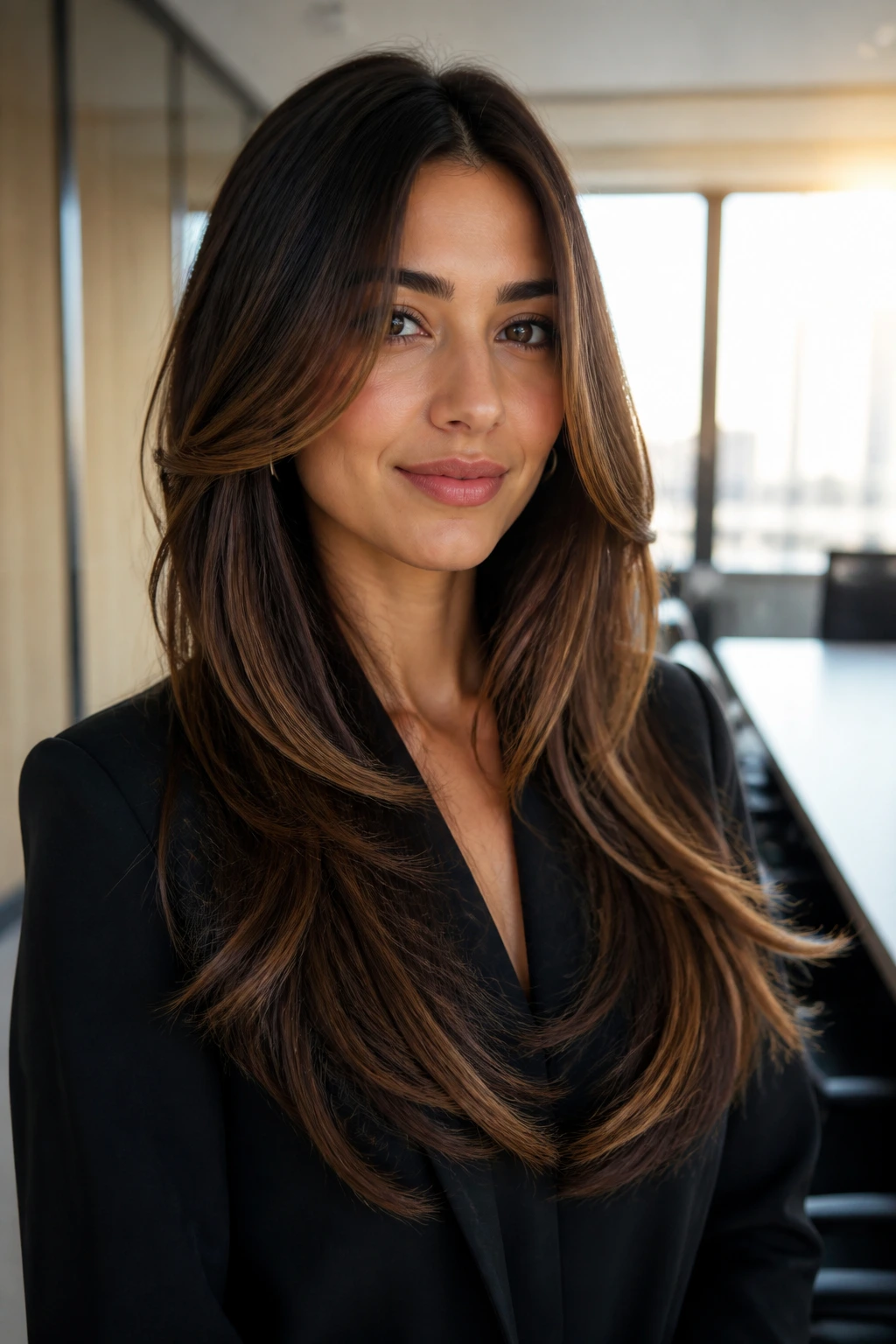
Why do some long cuts look sleek in a conference room and others just look heavy? Usually it comes down to where the layers begin. When the front pieces start around the cheekbone and the longer layers drop through the mid-lengths, the whole cut gets lift without losing weight.
How It Stays Neat
This shape is built for a round-brush finish. The front pieces should fold away from the face, then skim back toward the shoulders instead of hanging straight down like curtain cords. That subtle curve makes the haircut read styled even if the rest of your hair is left alone.
Use it if you want long hair that still fits under a blazer collar without becoming a tangled mess. It works especially well on hair that has some natural bend, because the layers follow the movement instead of fighting it.
What to ask your stylist for
- Soft layers that begin below the chin
- Face-framing pieces that start near the cheekbone
- A perimeter that keeps enough weight at the ends
- No razor thinning on the front if your hair is fine
The cut needs balance. Too many layers and it turns fluffy; too few and it falls flat. The middle ground is where it shines.
4. The Clavicut with a Gentle Center-Part Sweep
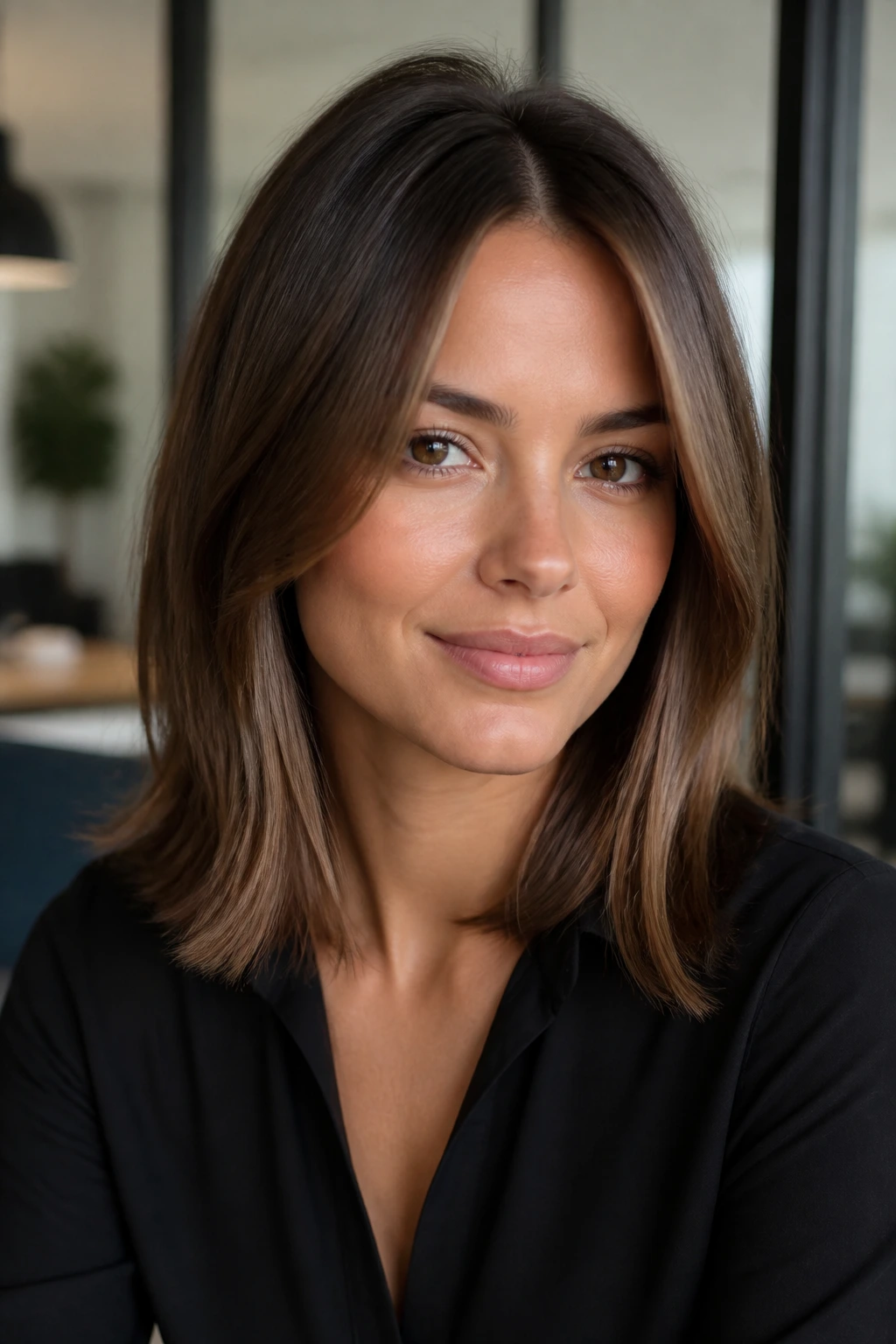
A clavicut is one of those quietly useful lengths that never seems to shout for attention. It hits right at the collarbone, which gives the front a clean line and keeps the shoulders from swallowing the whole shape. With a center part and soft sweep around the face, it looks modern without trying too hard.
This is the haircut I’d send to anyone who wants low drama and good behavior. The outline stays smooth, and the face-framing pieces can be just long enough to soften the cheek without creating a separate bang section. That matters. Separate bang sections can turn into daily maintenance if you’re not careful.
The best version of this cut has a little internal movement but no obvious layering on the surface. That’s what keeps it office-safe. It looks like the hair simply falls well. Which, honestly, is the whole point.
5. The Deep Side-Part Shoulder Cut with Rounded Layers
A deep side part changes the mood of a shoulder-length cut faster than another inch of layering ever will. It gives you instant lift at the crown and lets the hair fall in a softer curve across the face. If your hair tends to collapse by noon, this is worth paying attention to.
The rounded layers should curve toward the jaw, not kick out at the ends. That shape makes the haircut feel controlled, which is exactly what you want under a work dress code that leans conservative. The part does a lot of heavy lifting here, and I mean that in the best way.
If you have a square jaw or broad forehead, this cut is particularly kind. The side sweep softens the upper half of the face without hiding it. And if you keep the ends polished, it reads as deliberate rather than dated.
6. The A-Line Bob with Subtle Internal Movement
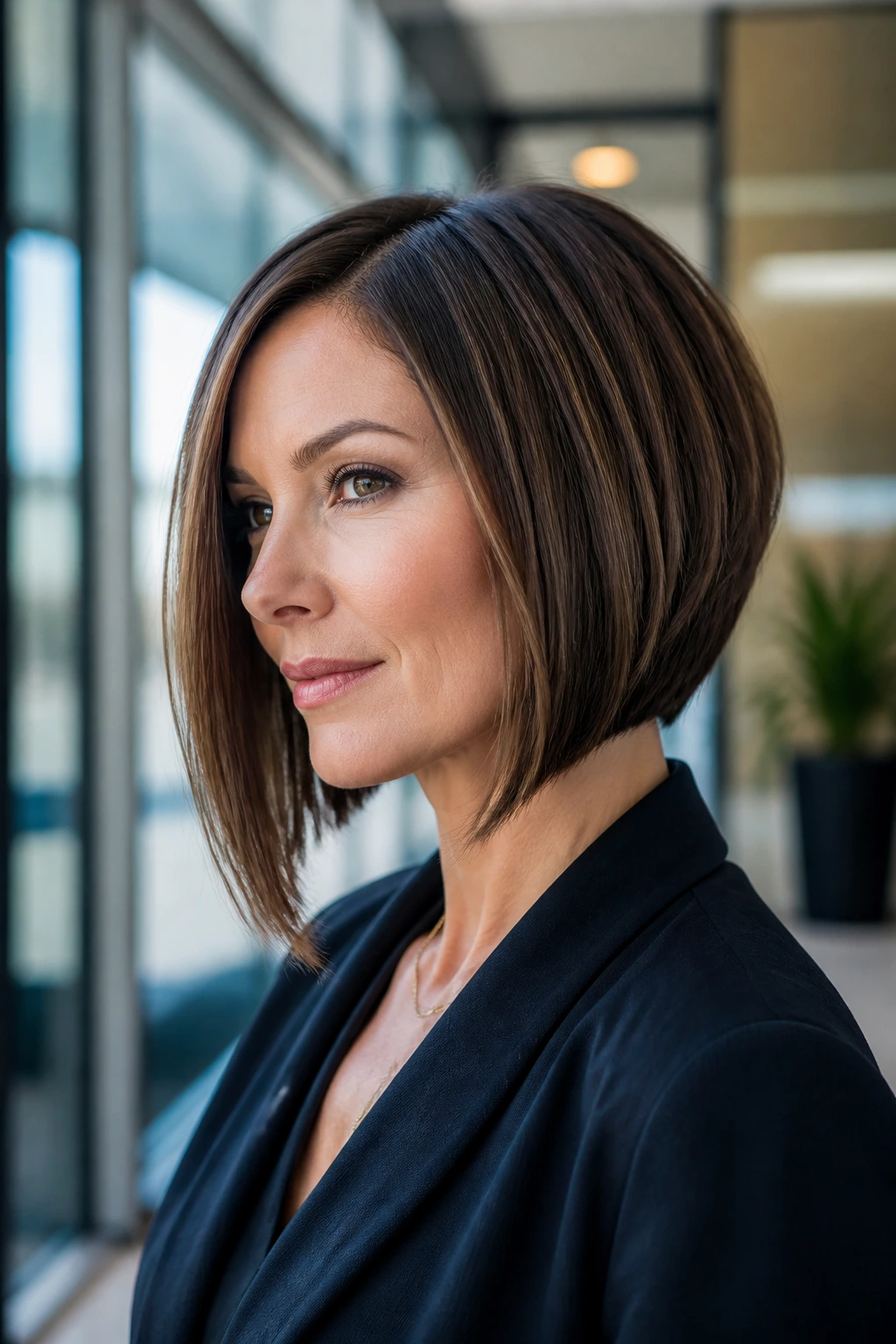
An A-line bob can look sharp enough for a boardroom and soft enough for a Friday that somehow starts with three back-to-back calls. The back sits a bit shorter, the front holds onto more length, and the angle gives the neck a cleaner line. That alone can make a blazer or high collar look better.
What saves this cut from looking severe is the internal movement. You do not want chunky layers or a dramatic stack. You want the inside of the shape to release just enough weight that the ends fall smoothly instead of sticking out like a shelf.
This is one of my favorite options for straight hair that tends to sit flat. It gives the illusion of fullness at the front while keeping the back tidy. A straight pass with a flat iron and a little bend under the ends is often all it needs.
7. The Office-Friendly Shag Lite with Clean Ends

A shag at work? Yes, but not the wild version people picture when they hear the word. The office-friendly version keeps the crown soft, the layers long, and the ends clean. It gives you texture without making your hair look chopped to pieces.
The trick is restraint. You want enough layering to break up density, especially around the face, but the bottom line should still feel intentional. That keeps the cut from drifting into weekend-only territory. If your hair has a natural wave, this shape can be a gift because it lets the texture do the talking while the silhouette stays orderly.
What makes it different
The best shag-lite cuts are quiet at the ends and fuller through the top third. That gives movement around the crown and cheeks without turning the bottom into a feathered mess. Use a lightweight mousse on damp hair and scrunch only the front if you want to keep the office polish.
8. The U-Shaped Long Cut with Soft Curtain Pieces
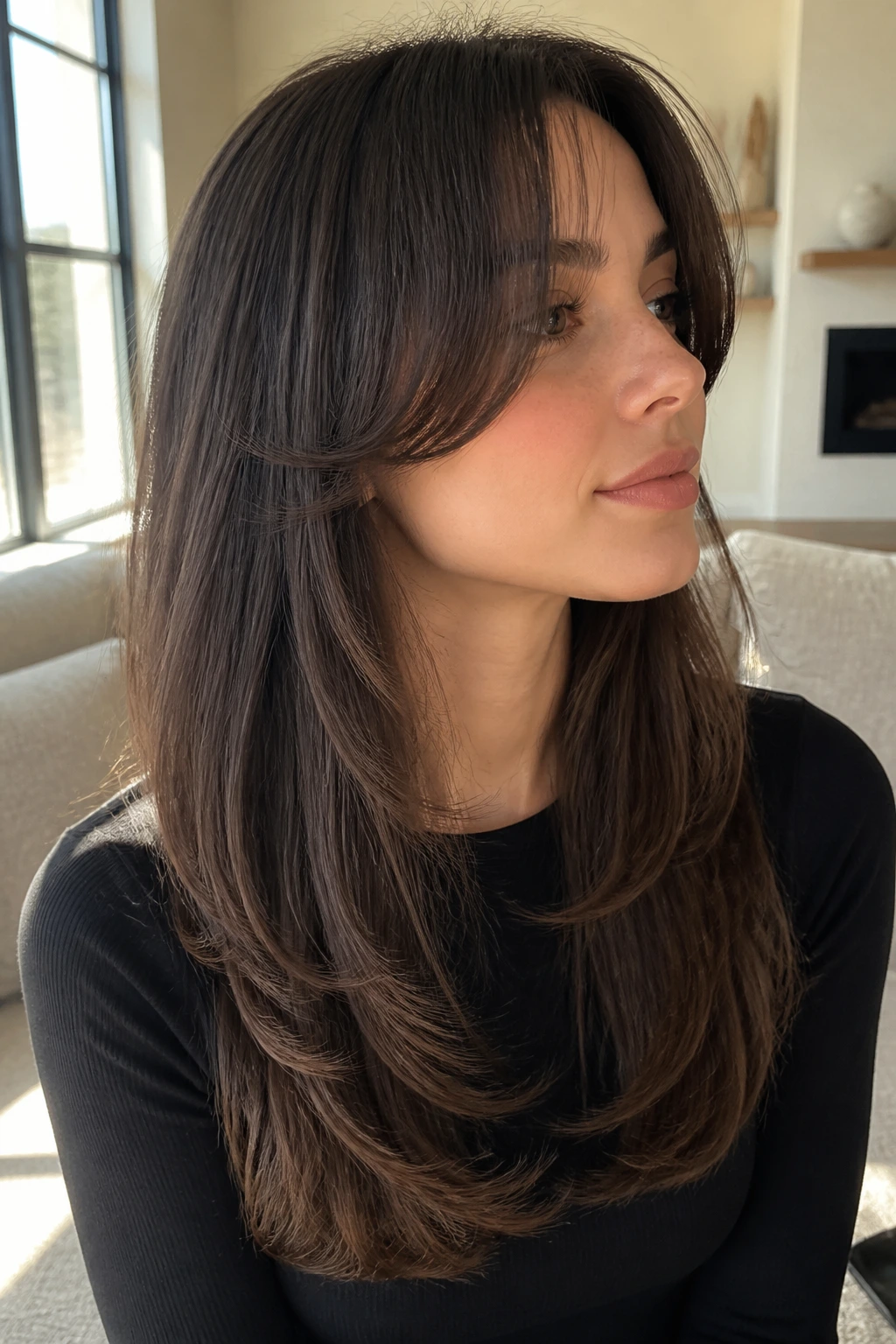
This is a smart choice if you love long hair but hate the flat, one-note look it gets when the perimeter is too straight. A soft U-shape gives the back a gentle curve, while the curtain pieces frame the face and keep the whole cut from feeling dragged down.
The U is doing something practical here: it lets the hair keep weight where it needs it and removes only what’s necessary. That matters on thick hair, where too much layering can create a frizzy pyramid. Long, blended pieces around the face keep the shape sleek even when the rest is left air-dried.
It’s also one of the better options if you wear your hair up often. The front pieces still fall around the cheekbones when you pull the rest back, which makes a simple clip or low ponytail look finished instead of bare.
9. The One-Length Bob with Hidden Internal Layers

A one-length bob with hidden internal layers is the haircut equivalent of a sharp white shirt: simple, clean, and a little more polished than it looks at first glance. The perimeter stays solid, which gives the bob its discipline, but the internal layers keep it from ballooning out.
This is especially good for coarse or dense hair that wants to spread wide. Instead of slicing the surface into obvious layers, the shape is adjusted underneath. That keeps the top line smooth and the ends heavy enough to tuck under neatly.
If your work environment leans formal, this cut is one of the safest bets in the bunch. It pairs well with tailored clothes because it has the same visual logic: straight lines, clear shape, no extra clutter. A clean center part makes it feel even more deliberate.
10. The Bottleneck Bang Lob

Bottleneck bangs are having a long run for good reason. They start narrower at the center, open up around the brow, and melt into the rest of the cut instead of sitting there like a separate piece. On a lob, that shape softens the forehead and gives the haircut a little edge without turning it into a fringe-heavy style.
The professional part comes from the blend. You want the bangs to disappear into the front layers by cheek level, not stop abruptly. That makes them easier to grow out, too, which is never a bad thing if you don’t want a haircut that argues with your calendar every three weeks.
This cut is kind to people who wear glasses because the center stays light and the sides avoid bulk. It also works well if you want a face-framing effect without committing to full curtain bangs. Clean, subtle, and not needy. Rare, honestly.
11. The Tamed Wolf Cut for Straight Hair
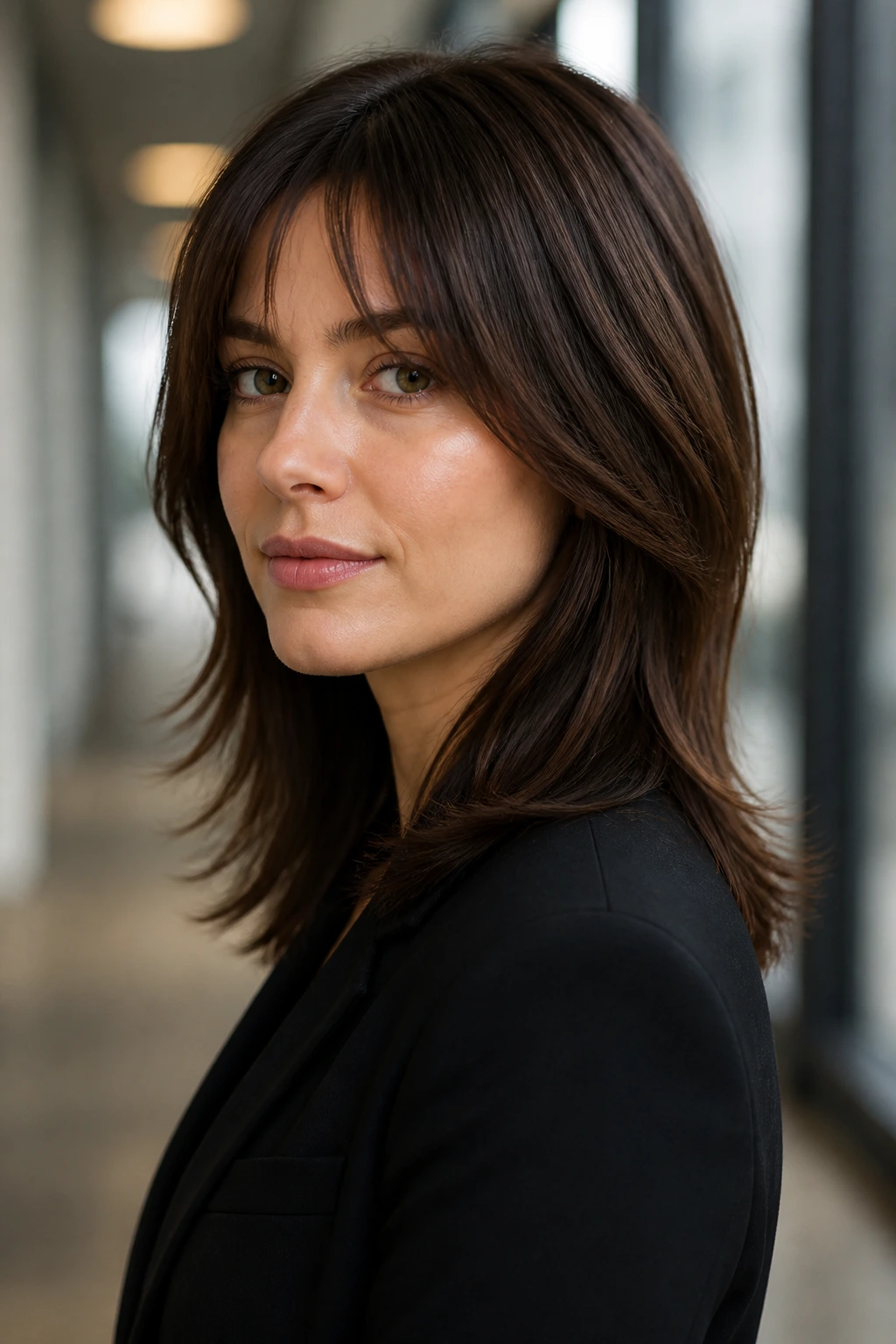
A wolf cut can be too much for work if it’s left wild, but the tamed version earns its place. The crown still has lift, the layers still create movement, and the perimeter stays long enough to keep the whole thing grounded. On straight hair, that contrast can look sharp rather than shaggy.
The key is avoiding aggressive texturizing at the ends. You want a visible shape, not shredded edges. The top can carry some height, especially at the crown, but the rest of the cut needs enough weight to stay smooth under a jacket or scarf.
This is best for someone who likes a little attitude in a haircut but needs it to behave by lunch. A smoothing cream on the mids and a bend at the front sections are usually enough to keep it on the right side of office-appropriate.
12. The Center-Part Long Layer Cut
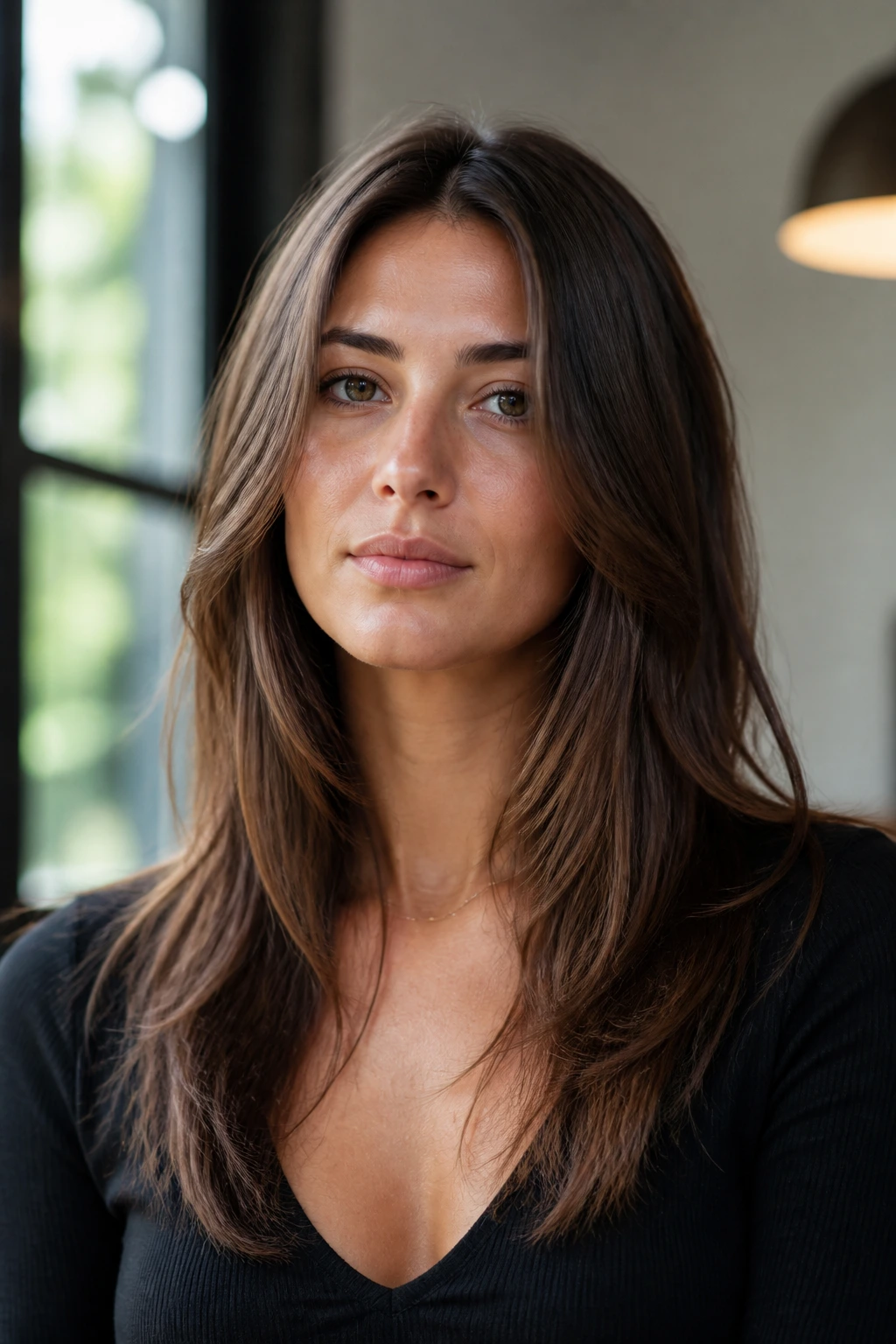
A center part on long hair can look very polished when the layers are placed with care. The front pieces should start low enough that they soften the cheek and jaw, but not so high that the hair looks chopped. The back should keep enough length to preserve a strong line.
This cut is especially good if your face is oval or long and you want the hair to fall in a balanced way on both sides. The symmetry helps the whole style read calm. There’s no drama in the shape, which is exactly why it works.
How to wear it
A wide-tooth comb and a light smoothing serum are usually enough on day one. On day two, a quick pass with a large brush around the face can bring the layers back into line without restyling the whole head. If your hair tends to split at the part, a root-dry with a nozzle helps more than piling on product.
13. The Graduated Lob with Polished Lift

A graduated lob gives you a touch of structure at the back without crossing into old-school stacked bob territory. The nape sits slightly shorter, which creates lift, and the front drifts longer so the outline stays soft. It’s a useful middle ground if you want more body than a blunt lob gives you.
Fine hair often loves this shape because the graduation creates the illusion of density at the crown and back. The trick is keeping the layers subtle. If the back gets too high and the front too thin, the cut starts looking dated fast.
I like this cut for people who want their hair to look finished with minimal effort. A round brush under the back and a smooth bend around the face is enough. The shape does the rest.
14. The Side-Swept Pixie-Bob with Soft Edges
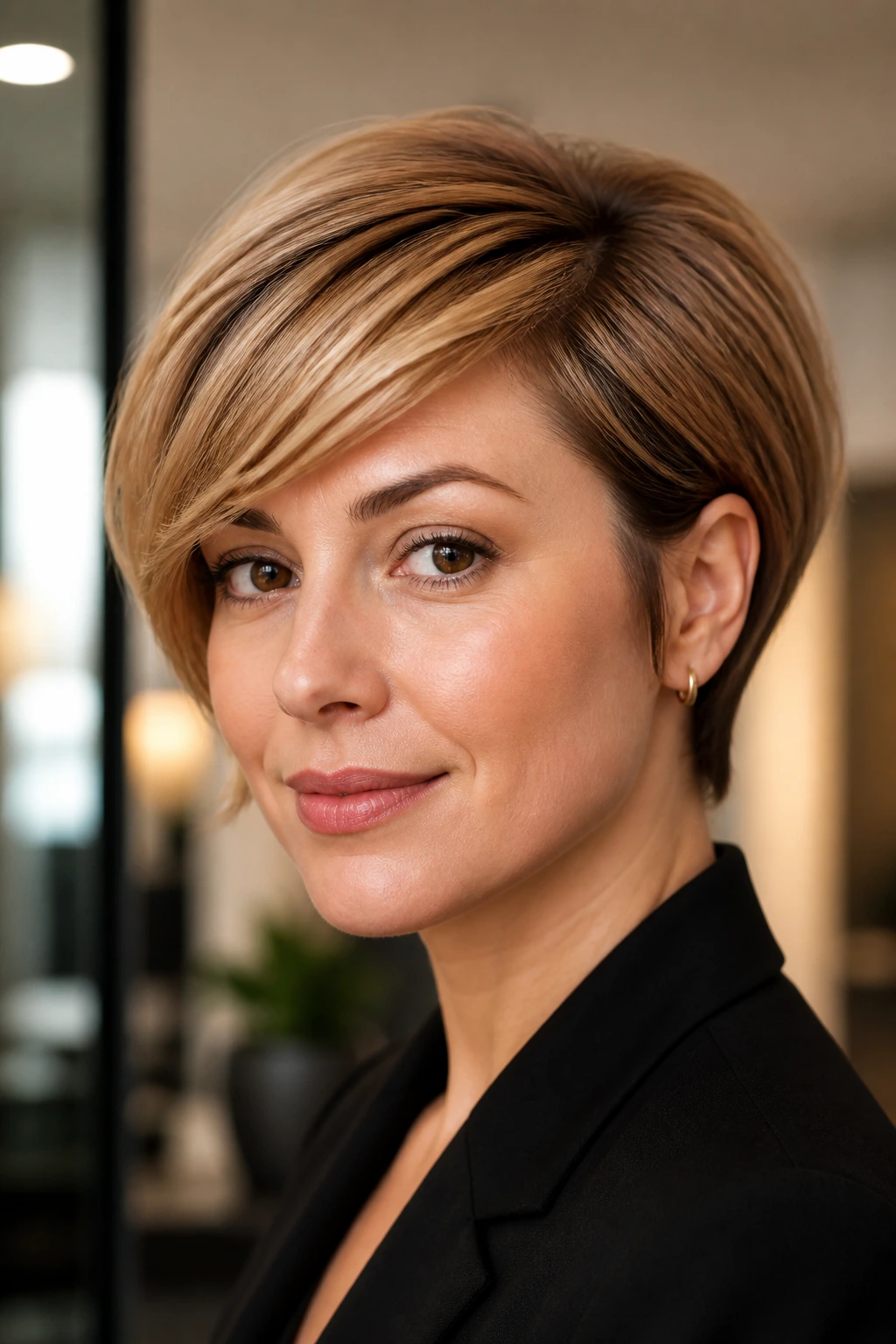
Short hair can absolutely read professional, but only when the shape has a plan. A side-swept pixie-bob keeps the nape short, the top a little longer, and the fringe soft enough to sweep across the forehead instead of standing up on its own.
The appeal here is speed. This cut can be styled in minutes with a little mousse and a quick blow-dry or even a rough dry plus a small round brush at the front. The side sweep gives it a more tailored finish than a true pixie, which makes it easier to wear in a formal office.
It also works well with earrings and structured clothes. The open neckline and soft edge around the face keep the look crisp. No fluff. No helmet. Just shape.
15. The Long Hair Cut with Face-Framing Ribbons
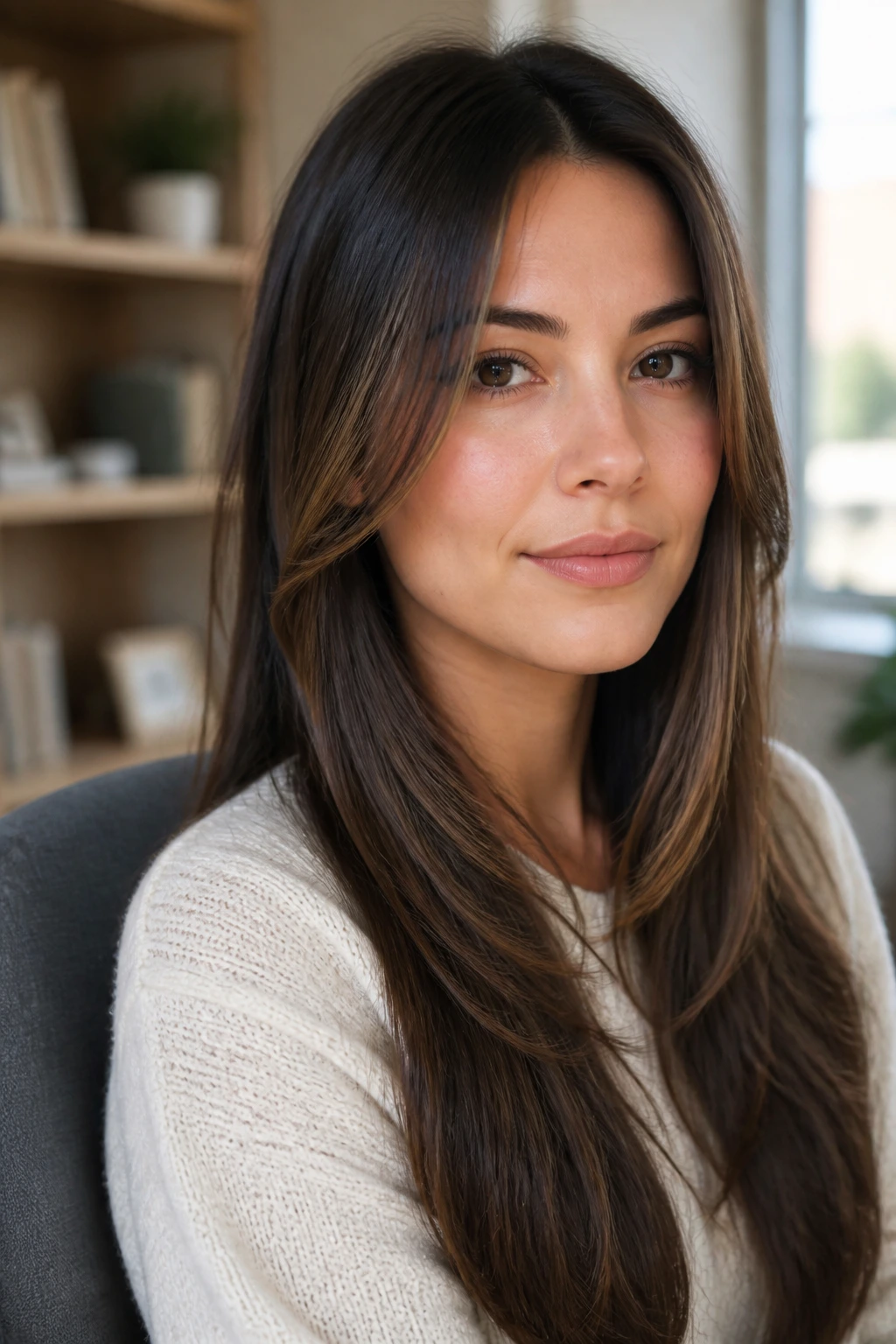
Long hair gets heavy fast if the only shape happens at the bottom. Face-framing ribbons solve that by giving the front a little movement without stripping length from the rest of the hair. The best version starts the shortest piece around the cheekbone or lip and blends slowly down.
This is the haircut for someone who wants to keep the ponytail length but still have something happening around the face when the hair is down. It’s also kind to people who wear a lot of sweaters and structured collars, because the front pieces keep the hair from looking flat against the clothes.
The danger is over-layering. Once the front pieces become too short, the haircut stops feeling sleek and starts feeling busy. Keep the ribbons long enough to tuck behind the ear. That’s the real test.
16. The Rounded Shoulder-Length Cut with Chin Layers
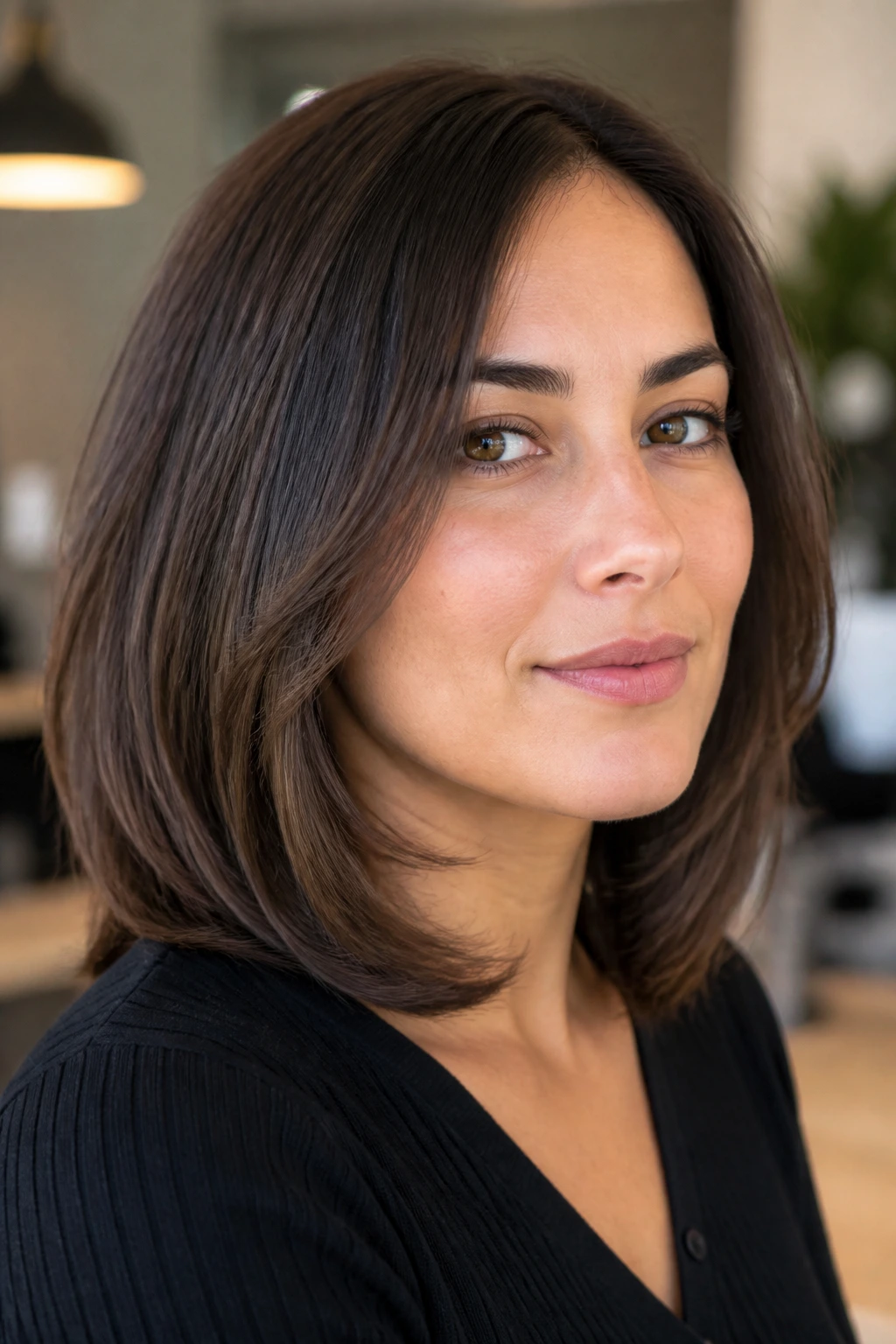
A rounded shoulder-length cut softens the whole profile. Instead of hanging straight and flat, the ends curve inward a little, which makes the hair feel more tailored. Chin-length layers help shape the front and take the hard edge off a square jaw.
This is one of those cuts that looks especially good from the side. The curve at the perimeter gives the haircut a sense of movement even when it’s blow-dried smooth. If you wear a lot of collared shirts or necklaces, the rounded shape keeps the hair from fighting the neckline.
Best for
- Medium to thick hair that needs shape, not more volume
- Faces that benefit from softness around the jaw
- People who prefer a tidy, polished outline over a dramatic one
If you want a haircut that feels quietly expensive without looking fussy, this is a strong place to start.
17. The Blunt Midi Cut with Micro-Textured Ends
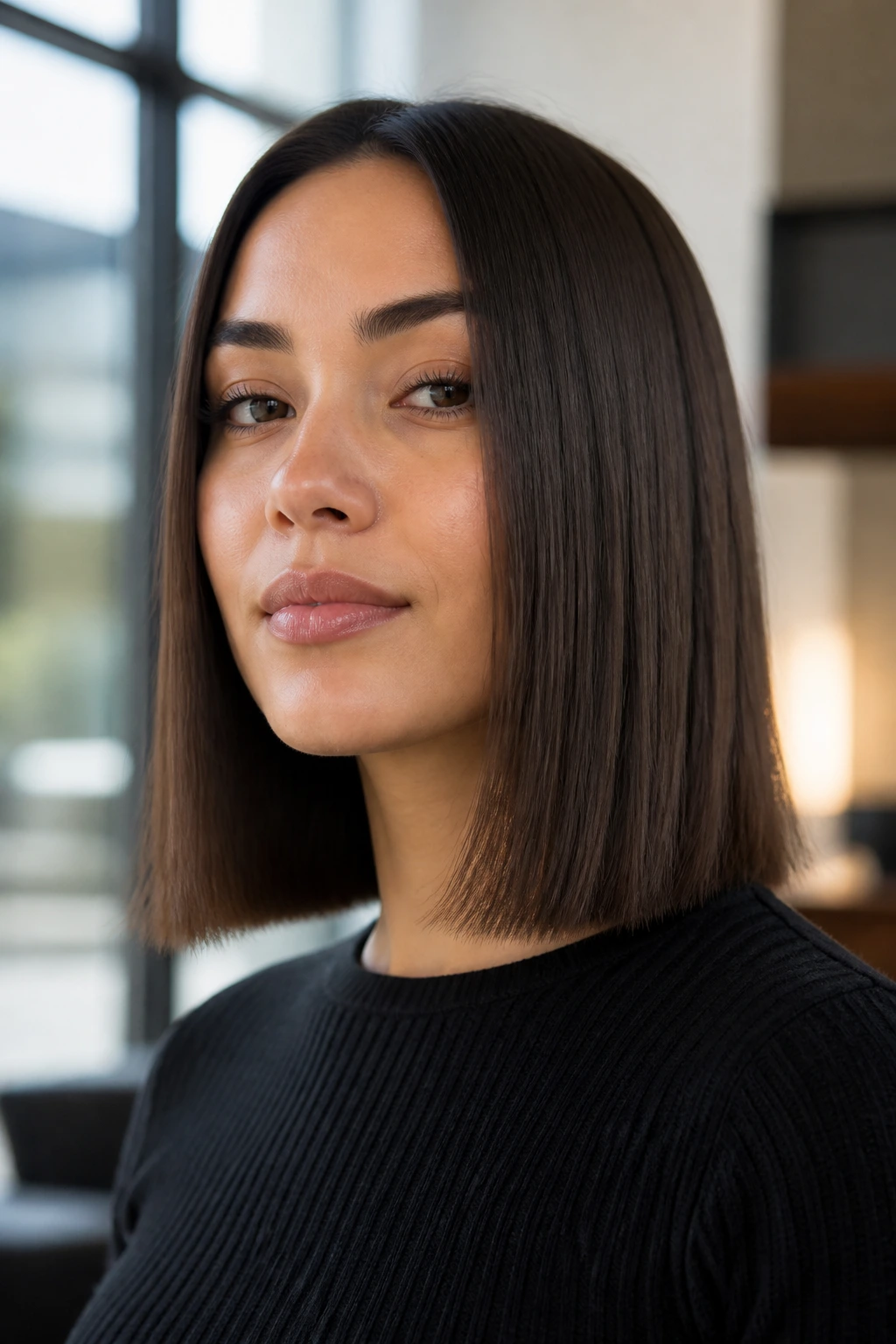
A midi cut can go wrong in a hurry if the ends are too sharp or too thin. The version I like keeps the perimeter blunt, then uses tiny touches of texturizing at the very ends so the line moves instead of sitting like a board. The result is neat, not harsh.
This cut suits straight hair especially well because it keeps the glassy finish intact. On wavy hair, it needs a little more styling, but the shape still helps the style hold together. The key is that the texturing stays microscopic. You should not be able to see the layers from across the room.
It’s a good choice for anyone who likes a modern outline and does not want a lot of face-framing drama. The shape is the statement. Everything else stays quiet.
18. The Tapered Bob with Ear-Length Frame
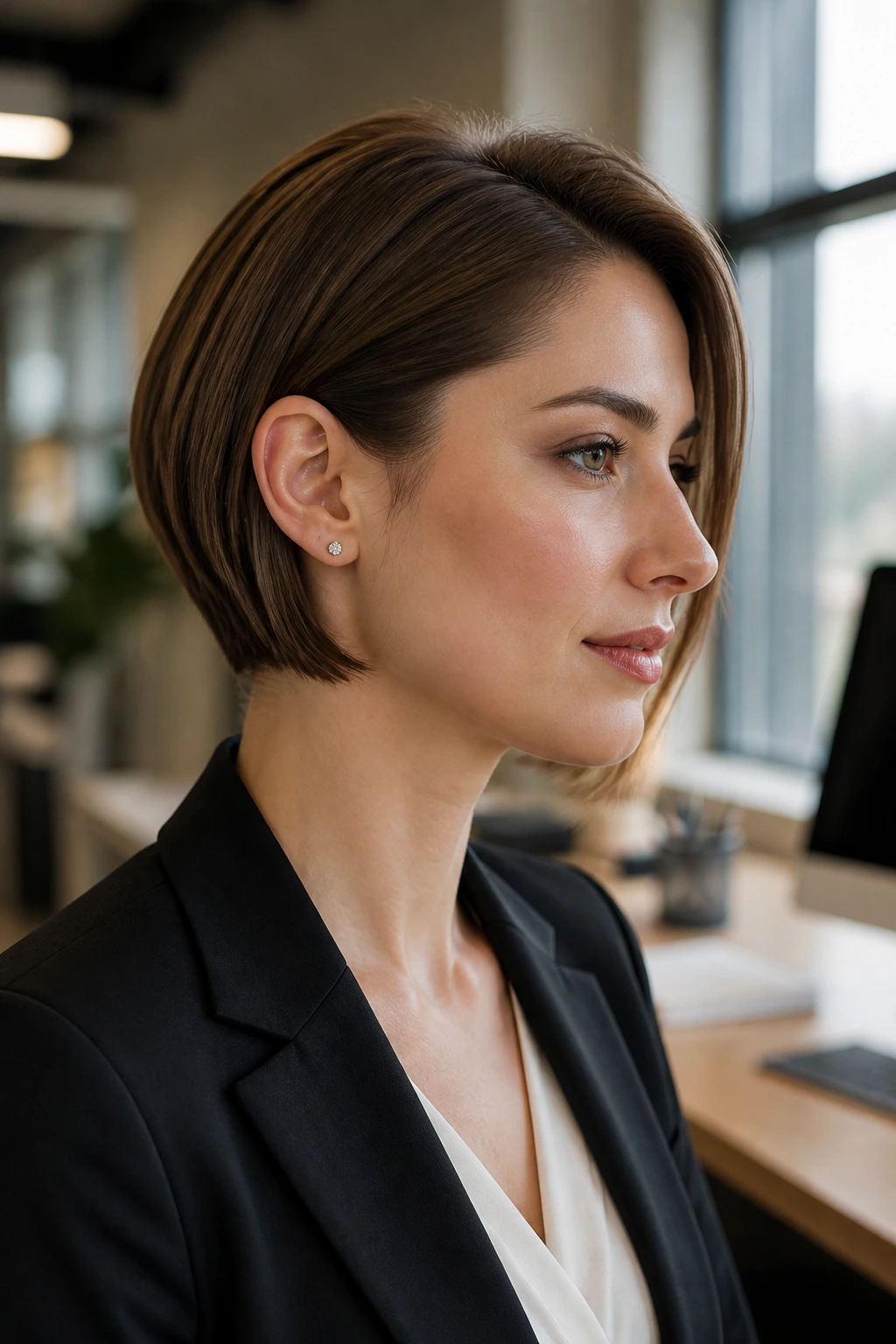
A tapered bob has a cleaner silhouette than a round bob because the sides narrow slightly toward the jaw. When the front pieces are cut to skim ear length, the haircut becomes easy to tuck, twist, and smooth behind the ear. That little bit of structure makes a big difference.
This is one of my favorite office cuts for people who wear glasses or small earrings. The hair sits close enough to the face to feel neat, but the taper keeps it from looking square. A side part makes the shape softer; a center part makes it sharper.
Why it’s useful
- The nape stays neat under collars
- The ear-length frame opens the face
- The cut dries fast
- It holds a smooth bend with minimal effort
If you like short hair but don’t want a severe line, the taper is the part that keeps it friendly.
19. The Thick-Hair Shape Cut with Weight Removal
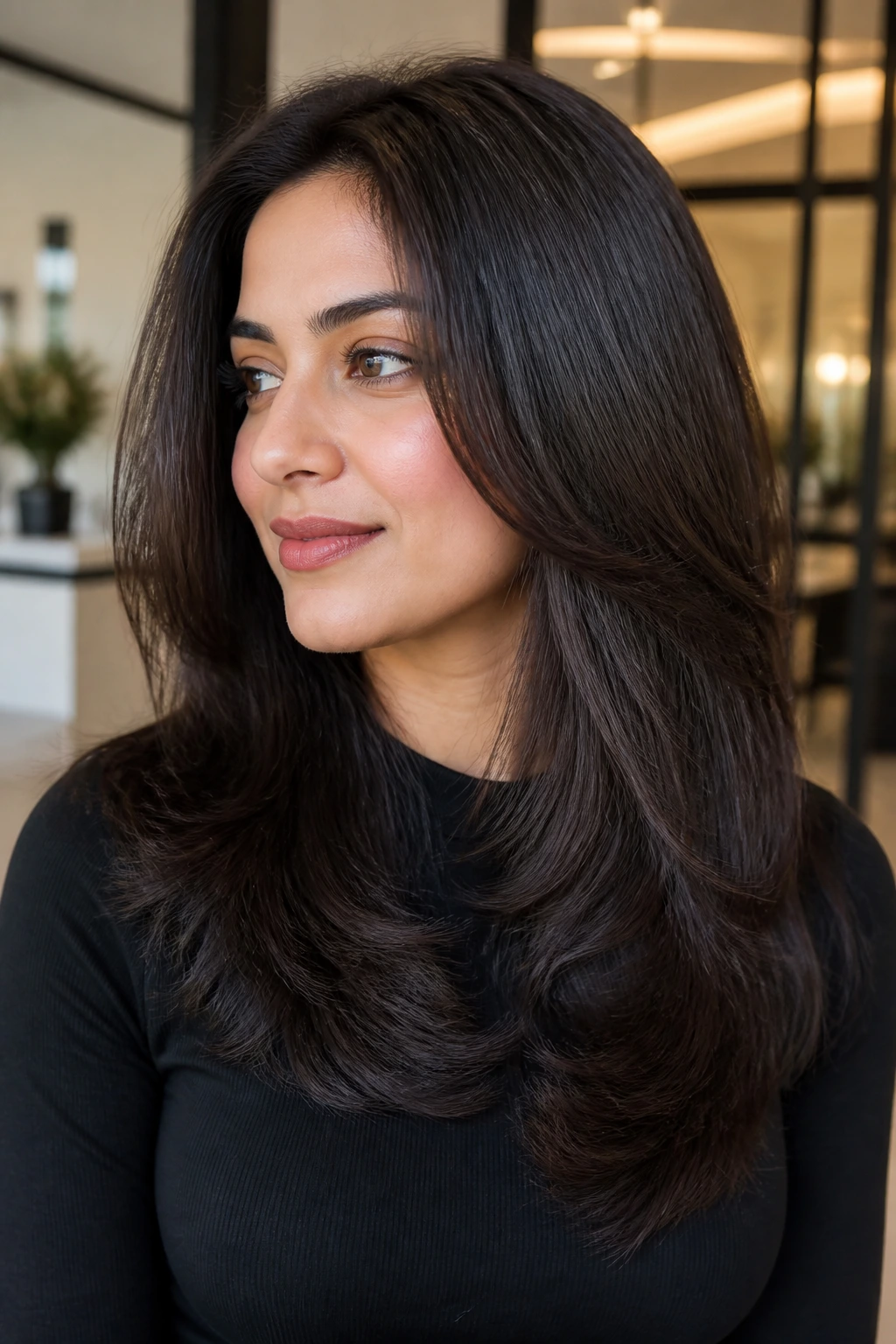
Thick hair has its own agenda. Leave too much weight in the wrong spots and it turns into a triangle. Take too much out and it frizzes up. The best work haircut for dense hair is a shape cut that removes bulk from the inside while keeping the outline intact.
Longer layers work better than aggressive short ones here. The front should still frame the face, but the main goal is controlling volume so the cut sits closer to the head. A well-executed shape cut can cut styling time in half because you’re not fighting a bulky midsection all morning.
This is one of those cuts where technique matters more than trend. Ask your stylist to keep the perimeter full and do the weight removal underneath, where it won’t make the ends look thin. That detail changes everything.
20. The Curly Shoulder Cut with Soft Layer Mapping

Curly hair needs a different kind of respect. You do not want layers hacked in because they look balanced wet. You want the shape mapped to how the curls actually sit once they dry. On a shoulder-length cut, that means soft layers that follow the curl pattern and keep the outline controlled.
The office-friendly part comes from the shoulder length and the tidy frame around the face. The curls still live. They’re just guided. When the cut is done well, the shape looks purposeful instead of puffy, which is a very different thing.
Use a diffuser if you want lift at the roots, but don’t over-dry the ends. A little leave-in and a light gel cast can keep the curls smooth enough for work without making them crunchy. That balance is the whole game.
21. The Fine-Hair Volume Bob with Minimal Layers

Fine hair usually does better with less layering, not more. A blunt bob with only a few internal layers at the crown gives the hair room to move while keeping the ends full. That makes the cut look denser and more expensive than it really is.
The danger with fine hair is over-thinning. Once the bottom starts looking wispy, the whole haircut loses authority. Keep the edges solid, lift the roots with a small round brush, and let the shape do the volume work.
This cut is a smart pick if you want a clean, work-ready outline that doesn’t need a lot of extra styling. One pass of root spray and a bend through the front can be enough. Simple counts here.
22. The V-Cut with Long Angled Face Framing
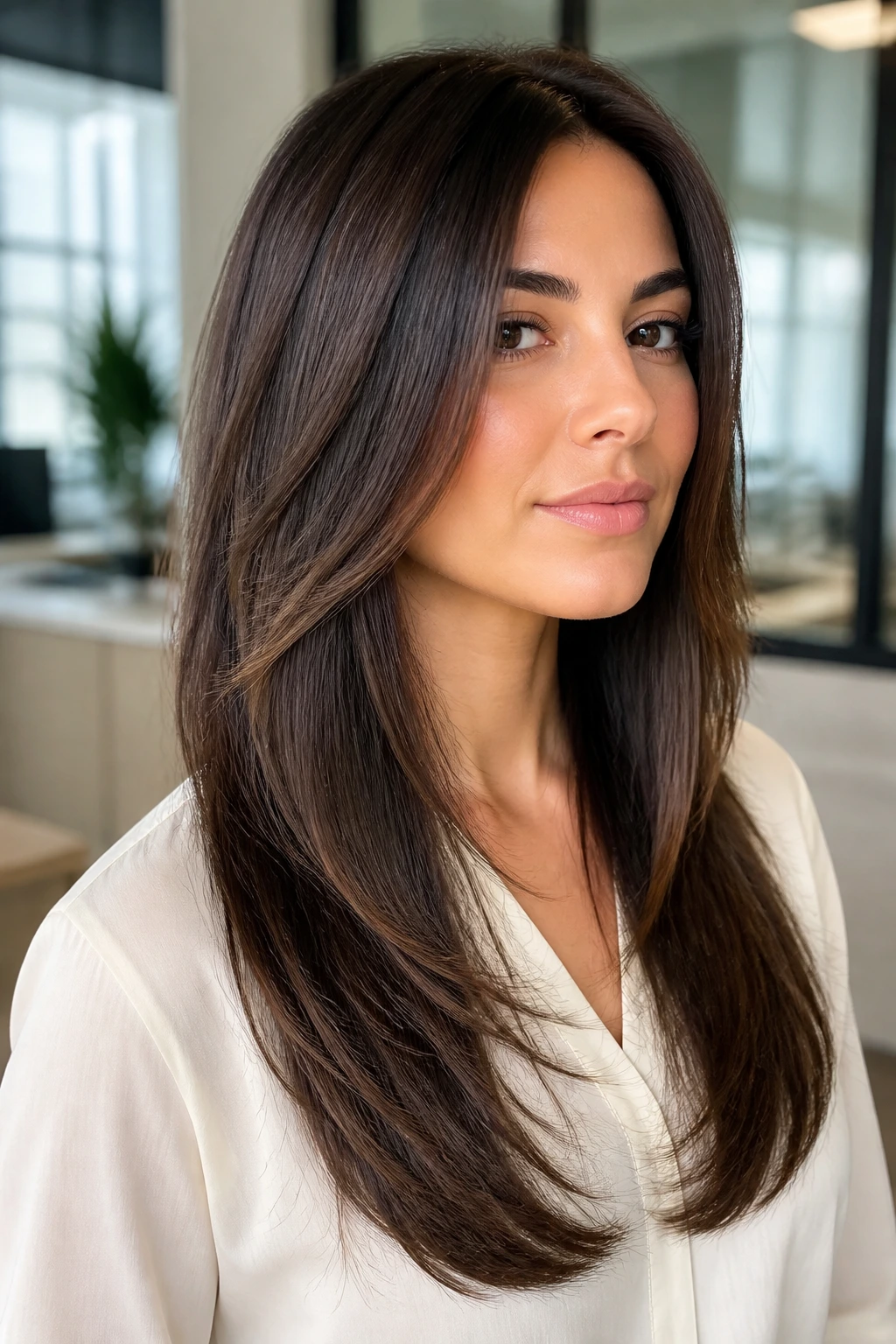
A soft V-cut is useful when you want long hair to feel lighter at the back without losing length. The angled front pieces draw the eye down along the face, while the back tapers into a gentle V instead of a blunt curtain. It adds movement without making the whole cut look layered for the sake of it.
This shape is especially nice on long, thick hair that tends to spread out. The angle gives the length a purpose. It also looks good when worn half-up because the front framing pieces keep the style from becoming severe or bare.
If you like your hair long but want it to feel more styled at work, this is one of the cleanest ways to get there. The angle is subtle enough for a conservative office and strong enough to show in photos and meetings.
23. The Low-Drama Asymmetrical Lob

Asymmetry can look loud if it’s pushed too hard. Keep it low-drama, and it becomes one of the easiest ways to make a lob feel current without losing professionalism. One side sits a touch longer, the other just a bit shorter, and the difference should be visible only when you look.
Why bother? Because the slight imbalance gives the haircut movement even when the hair is straightened smooth. It also works well if you wear one side tucked back a lot, since the longer front piece keeps the shape from disappearing.
What to watch for
The asymmetry should be measured in inches, not in moods. If the difference is dramatic, the cut starts fighting with work clothes. Keep it subtle, keep the layers soft, and let the line do the talking.
24. The Collarbone Cut with Side Bang Blend
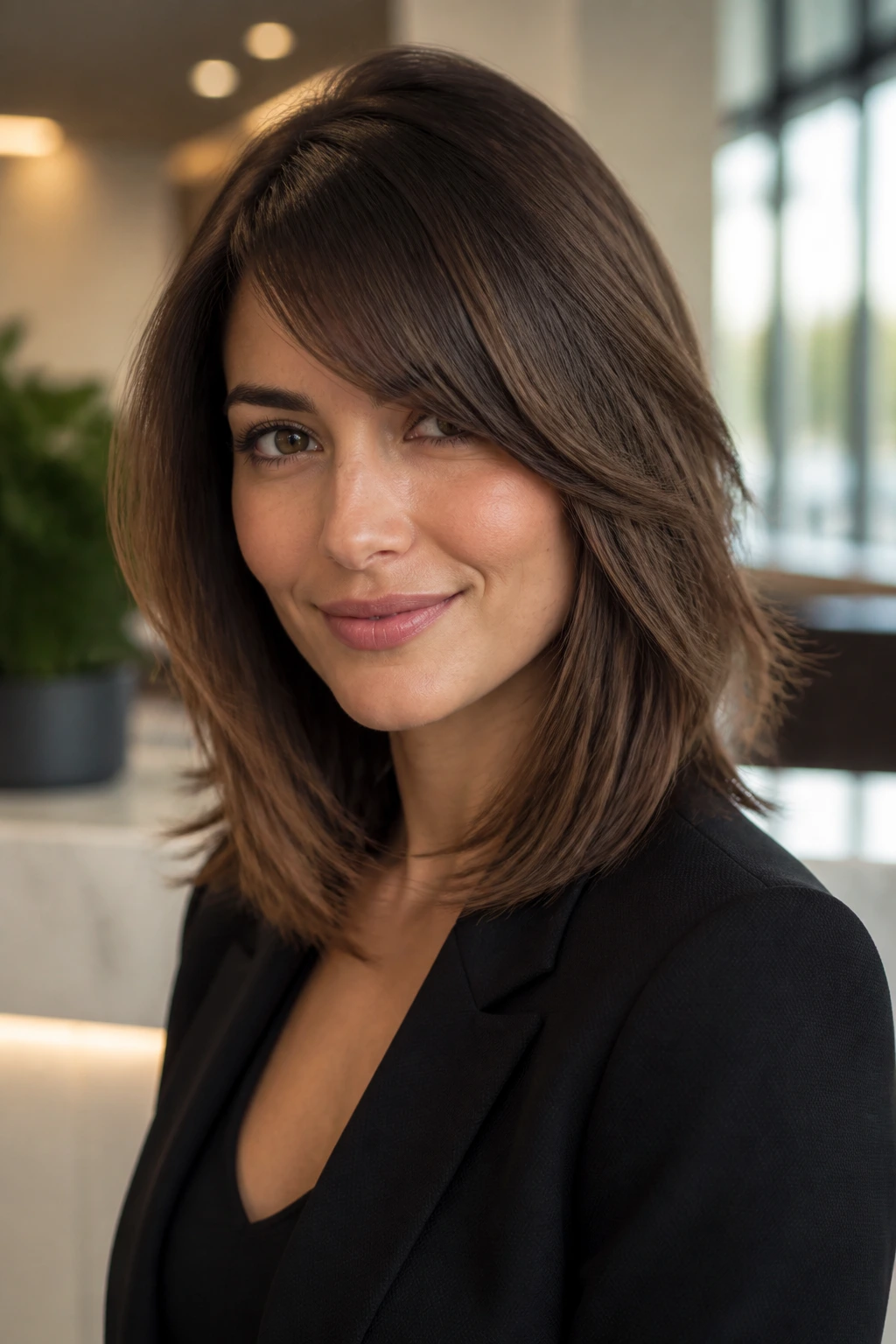
Side bangs can be tricky in a workplace setting. Too short, and they demand styling every morning. Too heavy, and they sit on the face like a curtain. The blend version solves that by letting the fringe sweep into the side layers instead of living as a separate block.
On a collarbone cut, this creates a very nice face frame. The hair opens up around the eyes and temples, then falls back into a smooth perimeter. It’s one of the best choices for people with a cowlick at the front or a forehead they want to soften without going full fringe.
This cut works because it looks intentional from every angle. The side bang is not a decoration. It’s part of the shape. That’s why it wears so well.
25. The Power Blowout Cut with Soft Perimeter Layers
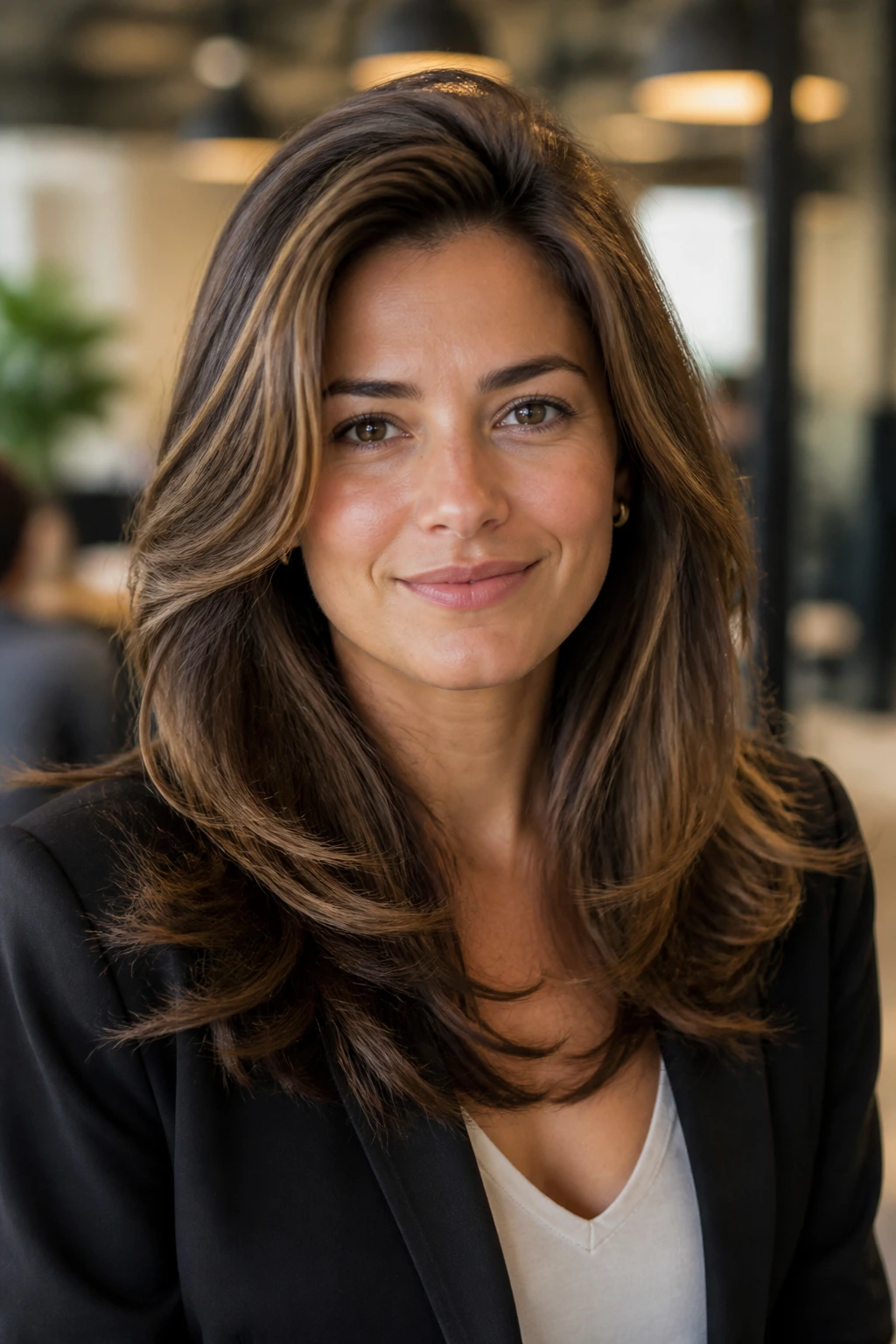
Some cuts look best with a little lift, and this is one of them. The power blowout cut uses soft perimeter layers and a shape that responds beautifully to a round brush. The result is smooth, bouncy, and just structured enough to look like you put in effort.
I like this cut for anyone who enjoys that full, airy finish around the front and crown. It can lean shoulder length or a little longer, but the perimeter needs to stay soft so the volume doesn’t turn bulky. A good blowout brings the shape to life; a bad one makes the layers seem floaty. That’s the line to watch.
This is a strong final option if you want a haircut that looks assertive without going sharp. It’s polished. It moves. It doesn’t ask for much beyond a brush, a dryer, and a steady hand.
Why Soft Layers Read as Polished Instead of Fussy

Soft layers work in an office because they reduce visual noise. That sounds abstract, but it’s easy to see in a mirror: a cut with too many short layers starts breaking apart into separate pieces, while a cut with longer, blended layers stays together as one shape. That single shape is what reads as neat.
The outline matters more than most people think. If the perimeter sits well at the jaw, collarbone, or shoulders, your hair keeps its structure even when you move. Soft layers only help when they support that outline. If they start competing with it, the haircut gets fussy fast.
Where the layers should start
For conservative work settings, I usually prefer layers that begin below the chin. That keeps the front from popping out in a way that feels too trendy or too busy. On longer hair, the safest sweet spot is usually the cheekbone to collarbone zone. That’s enough to frame the face without turning the haircut into a shag.
Soft layers also play nicely with collars, blazers, and straight necklines. The hair can sit on top of them or tuck under them without looking lumpy. That small practical benefit saves a lot of frustration.
The Tools That Keep These Cuts Smooth
-
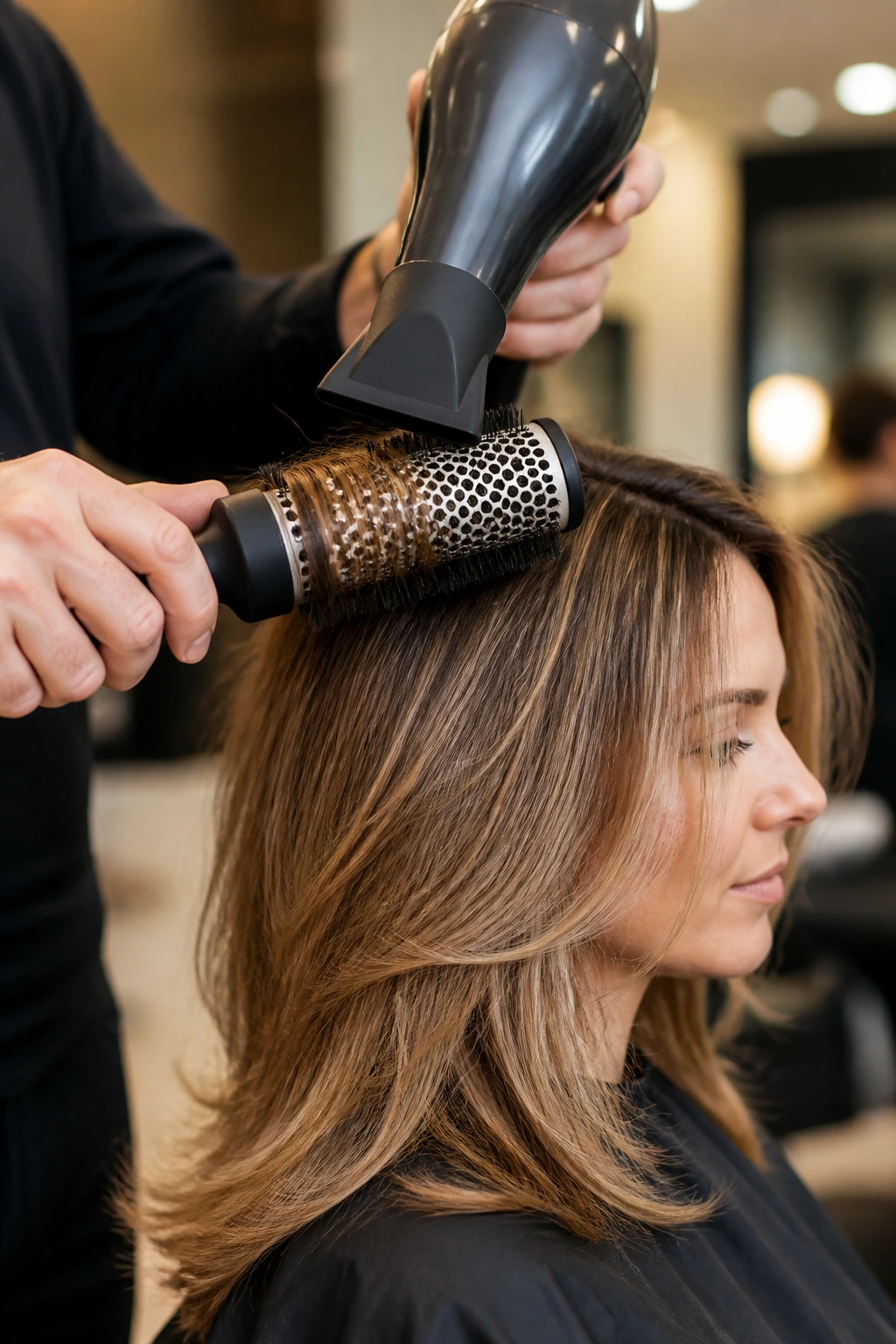
Blow dryer with a nozzle attachment: The nozzle matters more than the dryer itself because it directs air where you want it and keeps the front pieces from fluffing out.
-
1.25-inch round brush: This is the workhorse size for most collarbone and shoulder-length cuts. It gives a soft bend without turning the ends into tight curls.
-
Flat iron with rounded edges: Useful for polishing the front pieces and fixing a flip at the ends. Rounded plates help you bend instead of crimp.
-
Heat protectant spray: Do not skip this if you use hot tools more than once or twice a week. The cut only looks good if the ends stay smooth.
-
Light mousse or root lift foam: Best for fine hair, graduated bobs, and styles that need lift at the crown without stiffness.
-
Smoothing cream or serum: A pea-sized amount through the mids and ends controls frizz without turning the hair greasy.
-
Sectioning clips: Not glamorous. Very useful. They keep the front pieces controlled while you smooth the back.
-
Tail comb: Great for making a crisp part and directing layers exactly where you want them.
What to Ask for at the Salon and Which Products Matter at Home
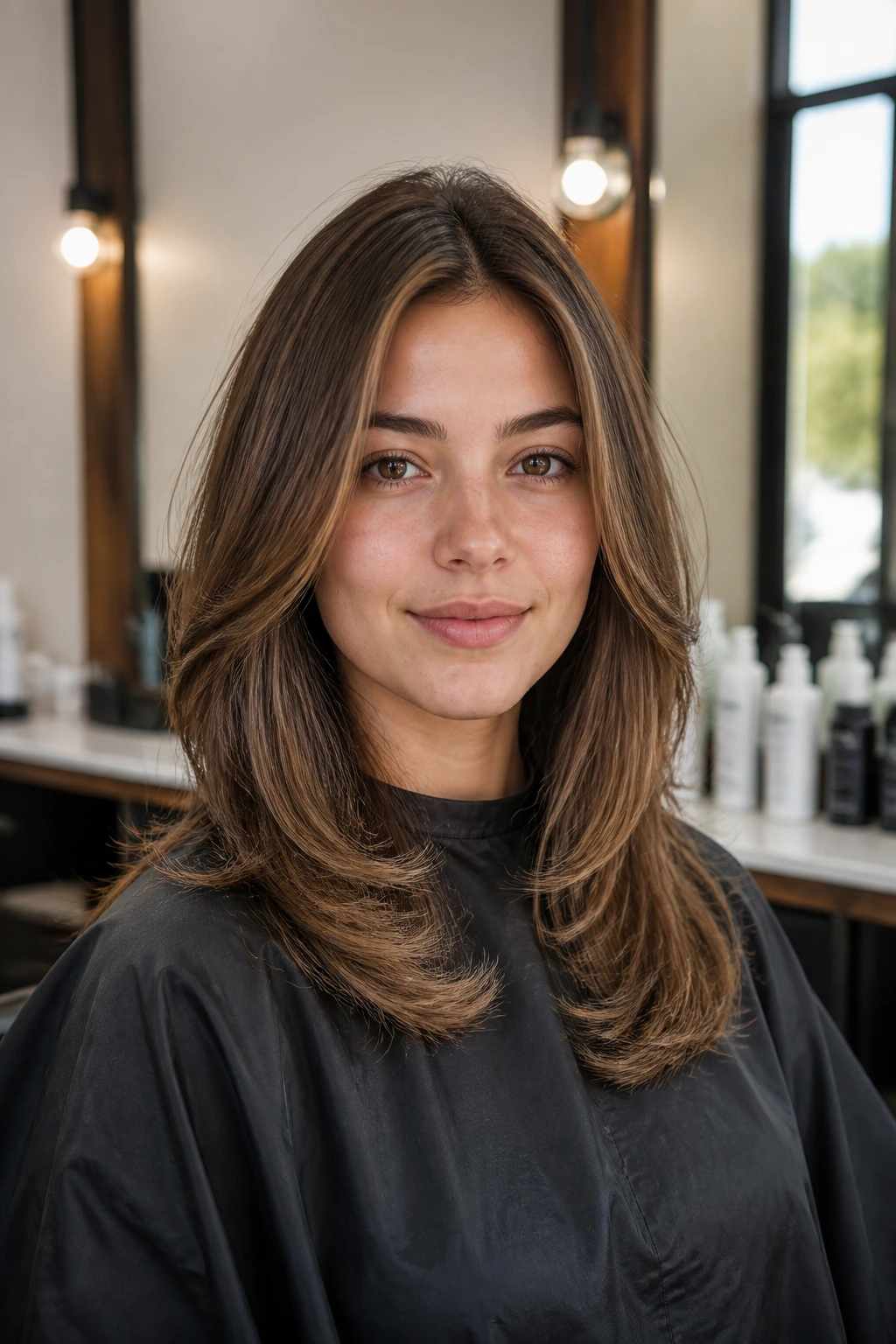
A good cut starts with a clear sentence, not a vague gesture at your own head. Bring reference photos that show the front, side, and back view if you can find them. A style can look safe from the front and wildly different from the profile, and the profile is where a lot of work hair either succeeds or fails.
Ask where the shortest face-framing piece will sit. That one question cuts through a lot of confusion. If you want polished and conservative, you’re usually looking at jaw level or below. If you want more movement and don’t mind a little softness around the face, cheekbone is often the limit I’d reach for.
The product side is simpler than most shelves make it look. You need a heat protectant, one smoothing product, and either a root lifter or a light texture spray depending on your hair type. Fine hair likes foam or mist. Thicker hair usually wants a cream with a little hold. Heavy oils can make soft layers collapse, and that’s a shame because the haircut was doing the work before the product got involved.
How to Wear These Cuts From Desk to Dinner

Presentation: Keep the front pieces smooth and let the shape do the talking. A center part, a tucked side, or a gentle bend under the ends all look sharp with a collarbone, jaw, or shoulder length cut.
Accompaniments: Crisp shirts, simple earrings, structured blazers, and clean necklines all make these cuts look more intentional. A haircut with soft layers tends to look best when the clothes around it aren’t fighting for attention.
Portions: If you want the cut to stay low-maintenance, keep the shortest face-framing piece at the jaw or lower. If you like more movement near the eyes and cheekbones, go a little shorter, but do it with a plan and not on a whim.
Beverage Pairing: Black coffee, plain tea, or sparkling water keep the whole mood clean. Sticky syrups and oversized iced drinks are the enemies of smooth front pieces, which is a tiny detail until you’ve spent ten minutes fixing one side in a restroom mirror.
Small Styling Moves That Make the Shape Look Intentional
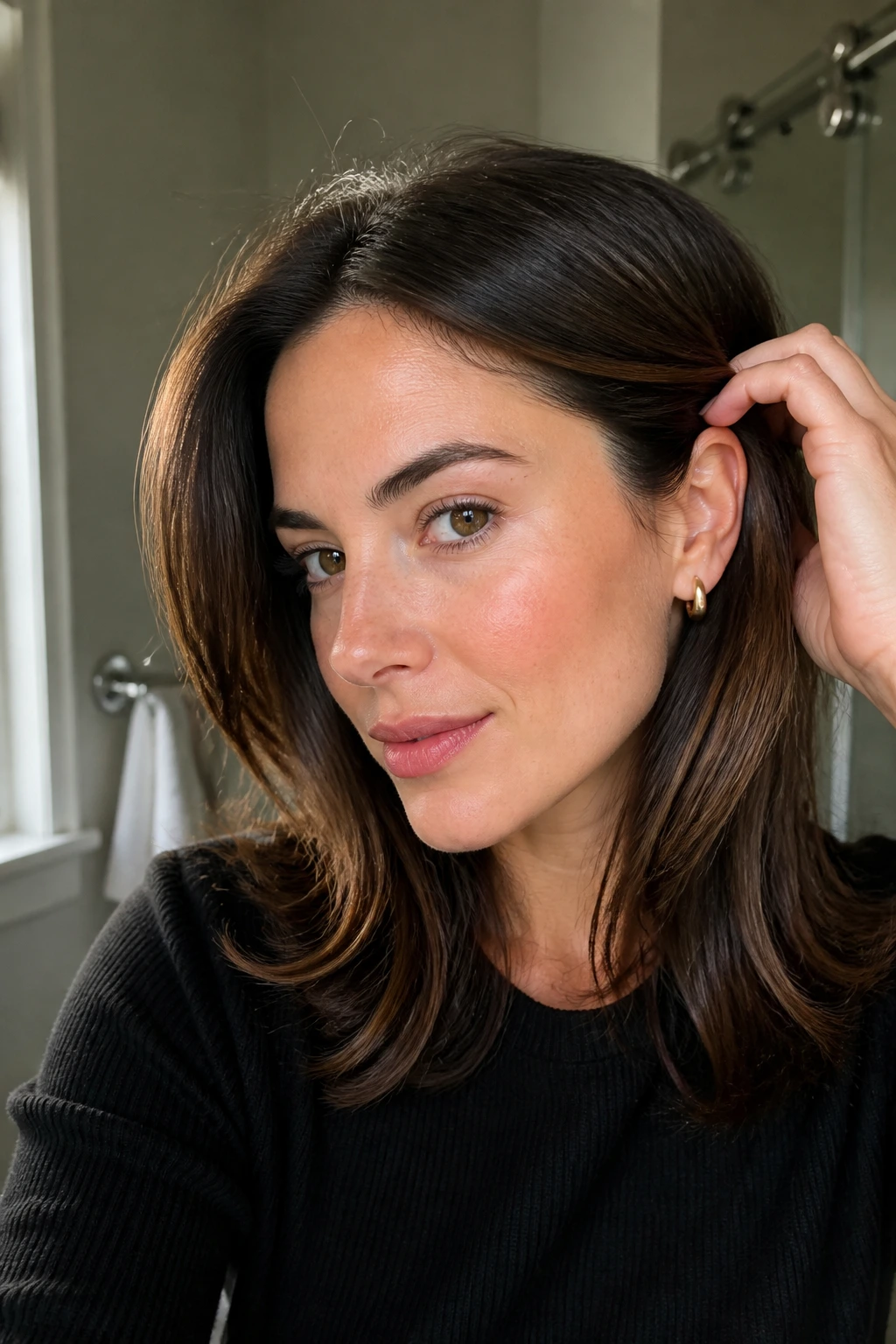
Flavor Enhancement: One drop of shine serum on the very ends can make a layered cut look finished, but only if you keep it off the roots. Roots do not need help shining.
Customization: Shift the part by half an inch when you want the haircut to feel new without touching the shape. That tiny move changes the balance around the face more than people expect.
Serving Suggestions: Tuck one side behind the ear, clip the front with a plain barrette, or bend just the face-framing pieces away from the cheeks. Those are small moves, but they make soft layers look deliberate.
Make-It-Yours: Fine hair should lean on mousse and root lift, not heavy cream. Thick hair usually needs smoothing cream at the mids and a little extra heat at the ends. Curly hair often looks best with leave-in and gel, then a diffuser only on the roots and frame.
Keeping the Shape Between Washes
Soft layers tend to hold up better than aggressive layers, but they still need a little care if you want them to look work-ready on day two or day three. Dry shampoo belongs at the roots only. If you dust it through the ends, the hair gets rough, and rough ends are where a polished cut starts to fall apart.
For bobs and lobs, a trim every 6 to 8 weeks keeps the perimeter clean. Longer layered cuts can often stretch to 8 to 10 weeks if the face-framing pieces are still sitting where you want them. Fringe or bottleneck pieces usually need attention sooner, around 4 to 6 weeks, because they show growth faster than the rest of the cut.
A small reset routine
Mist the front sections lightly with water, brush them forward, then dry them with a round brush or a nozzle attachment for 2 to 3 minutes. That small reset often fixes what a full wash would have fixed, without starting over. At night, a silk pillowcase or a loose low tie keeps the front from bending into weird angles.
If the ends start flipping out, don’t attack the whole head. Smooth only the bottom 2 inches and leave the rest alone.
Variations and Adaptations for Different Hair Types and Dress Codes
The Fine-Hair Fullness Version: Keep the perimeter blunt and the layers minimal, especially around the crown. Fine hair gains more from a strong outline than from extra slicing, and the best version of this look usually feels denser the moment it dries.
The Thick-Hair Control Version: Ask for internal weight removal, not surface thinning. The goal is to keep the cut close to the head and stop the sides from ballooning out under humidity or a coat collar.
The Curly Office Version: Shape the cut where the curls live, not where they look longest when wet. Longer face-framing pieces and shoulder-length perimeter lines keep curls tidy enough for work while still letting them bounce.
The Conservative Corporate Version: Keep everything below the cheekbone and avoid short fringe. A blunt line with soft interior movement reads much more formal than obvious layers sitting on top of the haircut.
The Creative-Office Version: Add bottleneck bangs, a soft asymmetrical line, or a slightly more visible graduation at the back. These details bring personality without tipping the haircut into something that feels weekend-only.
Mistakes That Make a Work Haircut Look Messy
The first mistake is asking for layers too high around the face. When the shortest pieces sit above the cheekbone, the haircut starts to split apart visually, and you spend the rest of the week trying to tuck it back into place. The fix is simple: keep the shortest face frame lower unless you’re ready for a more styled look.
The second is over-thinning fine hair. It feels like a smart way to reduce bulk, but it often leaves the ends soft and hungry-looking. Fine hair needs structure more than it needs texture.
Another common miss is ignoring how the hair behaves when you wear collars, glasses, or a part on the other side. A beautiful salon blowout can tell lies. Ask how the haircut sits when it’s air-dried and when it’s tucked behind the ear. If it falls apart in those two tests, it’s not the right cut.
And then there’s the daily styling mismatch: choosing a haircut that only looks good after 25 minutes with a round brush when you actually have 6. That gap between fantasy and routine is where most hair regrets live.
FAQ

Which of these haircuts is the easiest to style before work?
The collarbone lob, the blunt midi cut, and the one-length bob are the easiest trio. They need the least rebuilding because the shape is already doing most of the work.
Can soft layers still look professional on short hair?
Absolutely. A French bob, a tapered bob, or a side-swept pixie-bob can look very polished when the outline stays clean and the fringe is controlled. The key is shape, not length.
Are curtain bangs or bottleneck bangs office-friendly?
Yes, if they’re cut long enough to blend into the rest of the haircut. Short fringe can feel high-maintenance, but longer fringe that sweeps into the face frame usually behaves much better.
What should I ask for if I want to keep as much length as possible?
Ask for “long layers starting below the chin” or “soft internal layers with a blunt perimeter.” Those phrases tell the stylist you want movement without sacrificing the outline.
What if my hair is fine and flat—should I avoid layers?
Avoid heavy layers, yes. Tiny internal layers or a graduated lob can give you lift without making the ends see-through, which is the real danger on fine hair.
Do these cuts work on curly or wavy hair?
They do, but the layer placement has to follow the texture. A curly cut should be shaped in a way that respects the curl pattern; otherwise, the layers can spring up unevenly and get too wide.
How often will I need trims to keep the cut looking sharp?
Most work-friendly cuts stay clean with trims every 6 to 8 weeks. Fringe usually needs more frequent attention, while longer soft layers can stretch a little farther if they’re not losing their shape.
What if the ends flip out every time I blow-dry?
That usually means the brush angle or the cut line is off. Smooth only the last 2 inches with a flat iron or round brush, and if it keeps happening, ask your stylist to soften the perimeter so it sits under instead of out.
The Quiet Power of a Good Cut

A strong work haircut does not need to be loud to matter. It needs a shape that stays put, a face frame that flatters without fuss, and enough softness in the layers that the whole thing moves when you do. That’s the difference between hair that merely gets out of the way and hair that actually helps the rest of your look.
If you’re choosing among these cuts, bring reference photos that show the front, side, and back. Then point to the part you care about most: the jawline, the collarbone, the fringe, or the way the ends sit under a blazer. That’s where the useful conversation starts.