



Thin hair and a butterfly haircut are a better match than most people expect. The cut earns its keep by shifting movement up toward the cheekbones, temples, and crown while leaving enough length at the bottom to keep the outline from going wispy in daylight. That matters more than people think. A lot more.
The face-framing layers do the heavy lifting here. When they’re placed well, they create a soft flare around the face, the kind that makes a blowout look fuller even when the hair itself isn’t packing much density. When they’re placed badly—too short, too shredded, too eager to “remove bulk” from already fine ends—you get the opposite: a hollow top and a see-through hemline that looks tired the second you step outside.
The trick is choosing a butterfly shape that respects thin hair instead of fighting it. That means keeping the perimeter honest, keeping the shortest layers in the right place, and using styling moves that create lift without roughing up the cuticle. Some versions are soft and barely there. Some are more dramatic and feathery. A few lean into curtain bangs or a side part. All of them live or die by placement.
Why These Butterfly Cuts Work So Well on Thin Hair
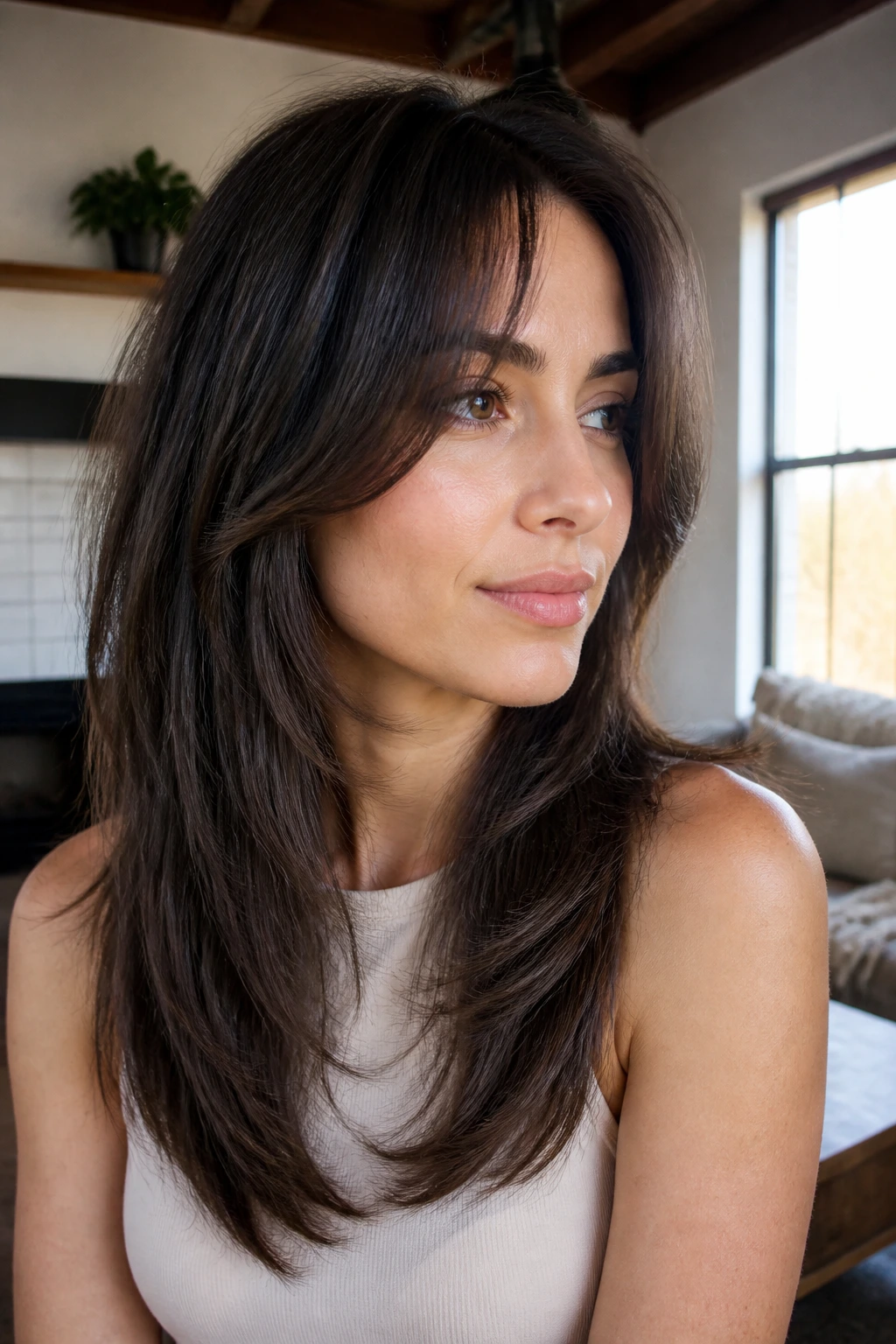
- They keep the ends looking full: The longest layer stays intact, so the hair doesn’t lose its outline at the bottom where thin hair usually starts to look translucent.
- They give the face a frame without chopping the whole head up: The shortest pieces sit near the cheekbones, lips, or chin, which pulls the eye forward instead of exposing the scalp line at the crown.
- They style fast with simple tools: A round brush, a blow dryer, or even a flat iron bend can make the layers read clearly without a lot of product.
- They grow out with less drama: The layers soften as they grow instead of turning into a hard shelf line, which is a mercy if you hate frequent trims.
- They work with bangs or without them: Curtain bangs, bottleneck bangs, and long side pieces all blend into the shape, so you’re not locked into one front finish.
- They suit more than one length: Shoulder-grazing cuts, mid-back hair, and longer lengths can all carry the butterfly structure if the perimeter stays strong.
1. Collarbone Butterfly with Soft Curtain Pieces
This is the safest place to start if your hair feels fine and a little fragile. The collarbone hemline keeps enough weight at the bottom to avoid that see-through, feathery edge that thin hair can develop when it’s over-layered. Around the face, the curtain pieces open gently from the cheekbone down, which gives shape without stealing too much density from the sides.
Why it works on thin hair
Keep the shortest pieces around lip or cheekbone level, not shorter, unless your hair is unusually dense at the front. That one decision protects the shape. A blunt-ish collarbone outline underneath gives the cut a fuller look from the back and side.
Best for: straight to softly wavy hair that needs lift but not a big style commitment.
Styling note: a 1.25-inch round brush and a cool shot at the end help the curtain pieces float away from the face instead of sticking flat.
Tip: If your hair collapses near the temples, ask for slightly longer face pieces there and let the shorter shape sit a touch lower in the middle.
2. Long Butterfly Cut with Cheekbone Layers
Want to keep your length and still make the front feel alive? This is the version. The bottom stays long enough to read as a full curtain, while the upper layers start around the cheekbones and create that lifted, airy swing that gives the butterfly cut its name.
Unlike a standard long-layer haircut, this version leaves a clearer divide between the top movement and the bottom length. On thin hair, that separation matters. It creates the illusion of more hair because the top can move without destroying the line below it.
What to ask for
- Shortest face frame at cheekbone level
- Longer internal layers that blend downward
- Minimal texturizing at the very ends
The worst thing you can do to this cut is thin out the hemline too much. Keep the ends looking like a clean line, not a scraped feather. That’s where the fullness lives.
3. Shoulder-Grazing Butterfly Lob
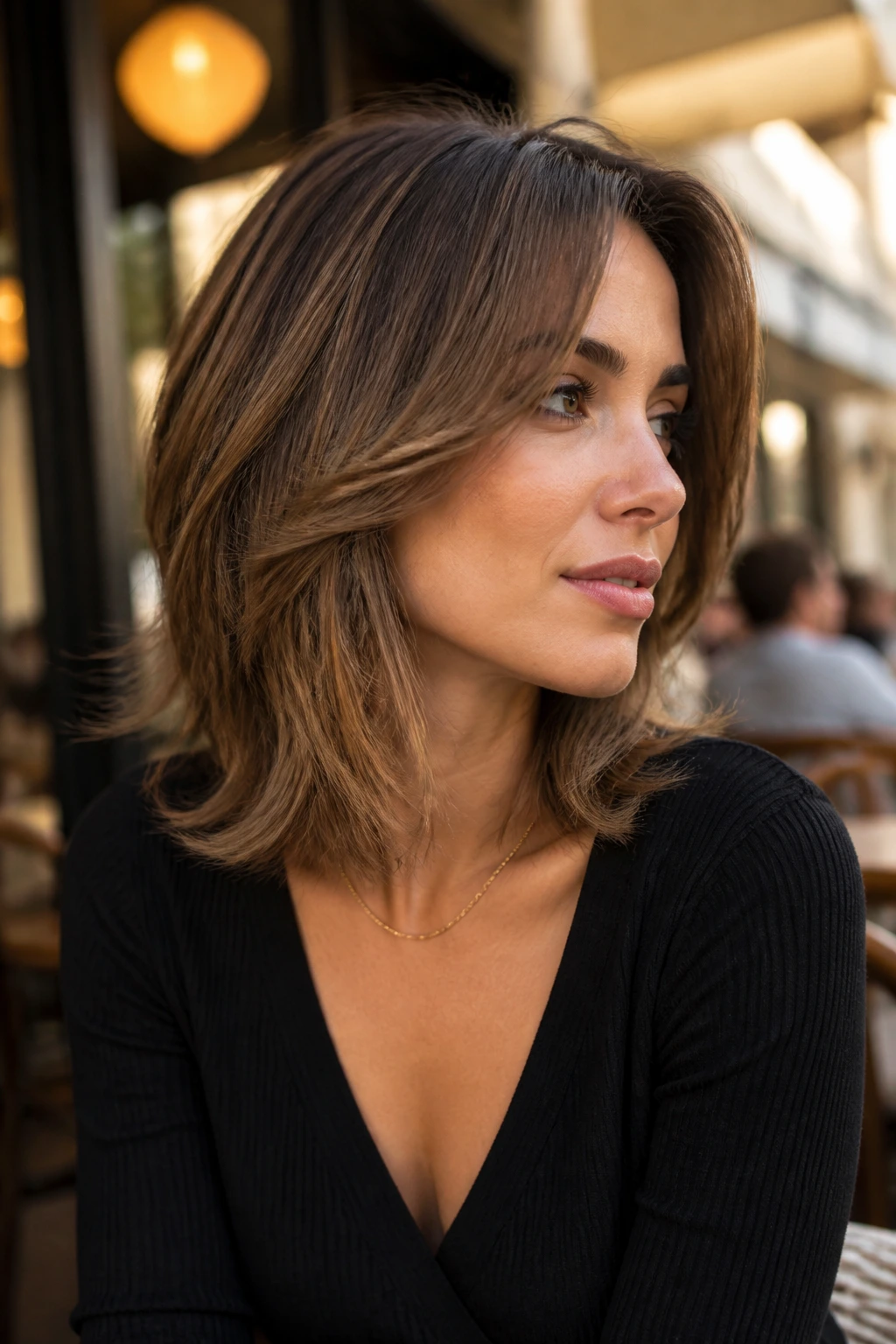
A shoulder-length butterfly lob has a little more backbone than longer versions. The shorter overall length gives thin hair a denser look, and the face-framing layers add movement without forcing the whole head into a shaggy finish. This is one of my favorite options for hair that goes limp when it gets too long.
The sweet spot is the shoulder or just below it. That length gives enough swing for the face frame to show up, but not so much weight that the hair drags itself flat by noon. If you wear your hair straight, the lob can look sharp and tidy. If you bend the ends under with a brush, it gets even better.
Works especially well for: hair that has some wave but not enough body to support long layers.
Small warning: keep the crown layering soft. A lobster-style deep cut at the top can expose more scalp than you want.
4. Blunt-End Butterfly with Hidden Interior Layers
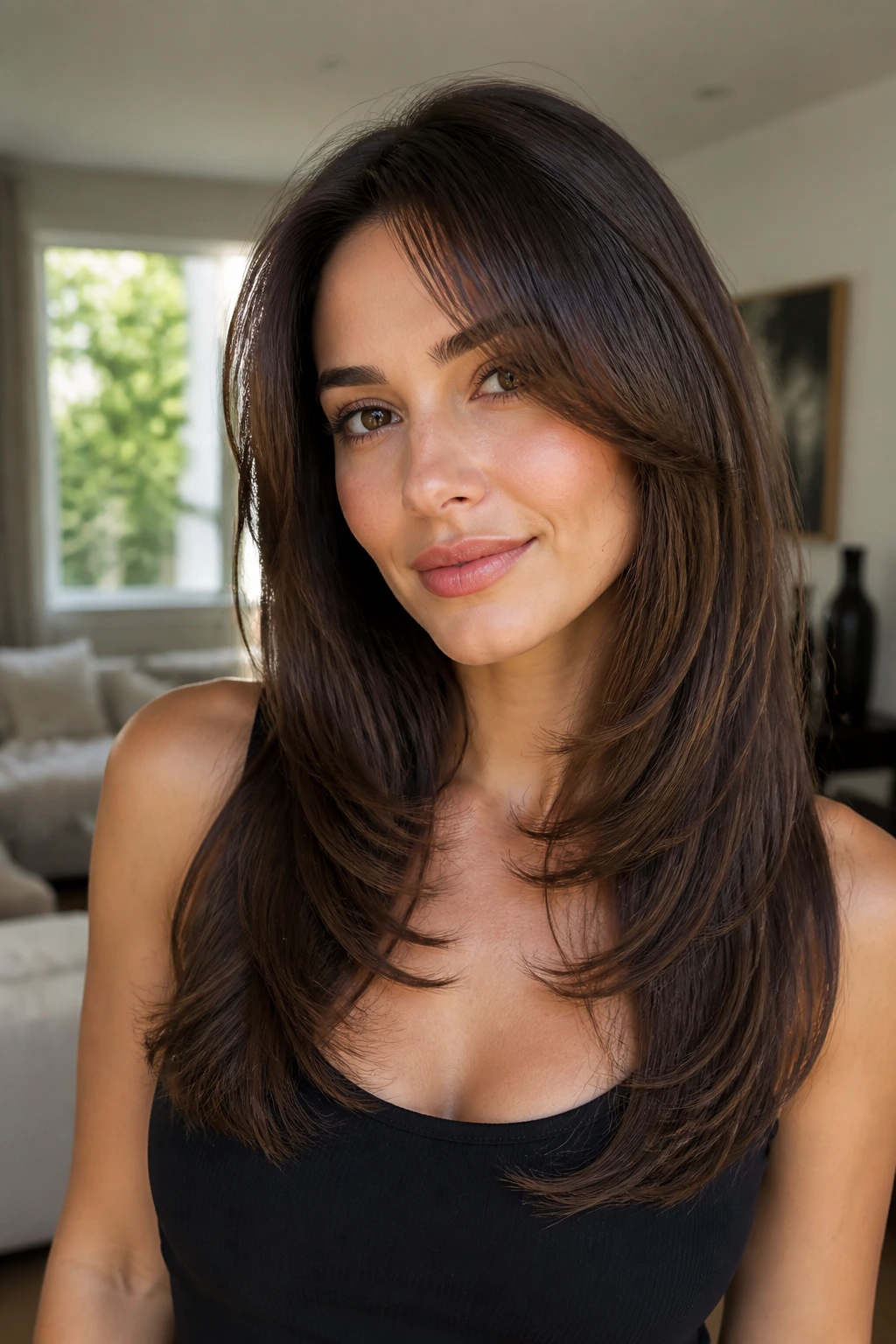
This is the version for people who want movement in the front but still want the back to look thick. The perimeter stays blunt, usually at the collarbone or just above the shoulders, while the layers hide inside the shape. From the outside, the cut looks fuller. From the front, it still bends and lifts.
That hidden structure is the whole point. Thin hair often looks sparse when every layer is obvious, especially in daylight or under overhead lights. A blunt end keeps the outline strong. The butterfly pieces give it personality.
How it looks in motion
The front pieces sweep back from the face. The hemline stays calm. That contrast is what makes the cut look expensive without requiring much styling.
If you hate the idea of seeing every layer you paid for, this is probably your cut.
5. Subtle Butterfly Cut for Straight Fine Hair
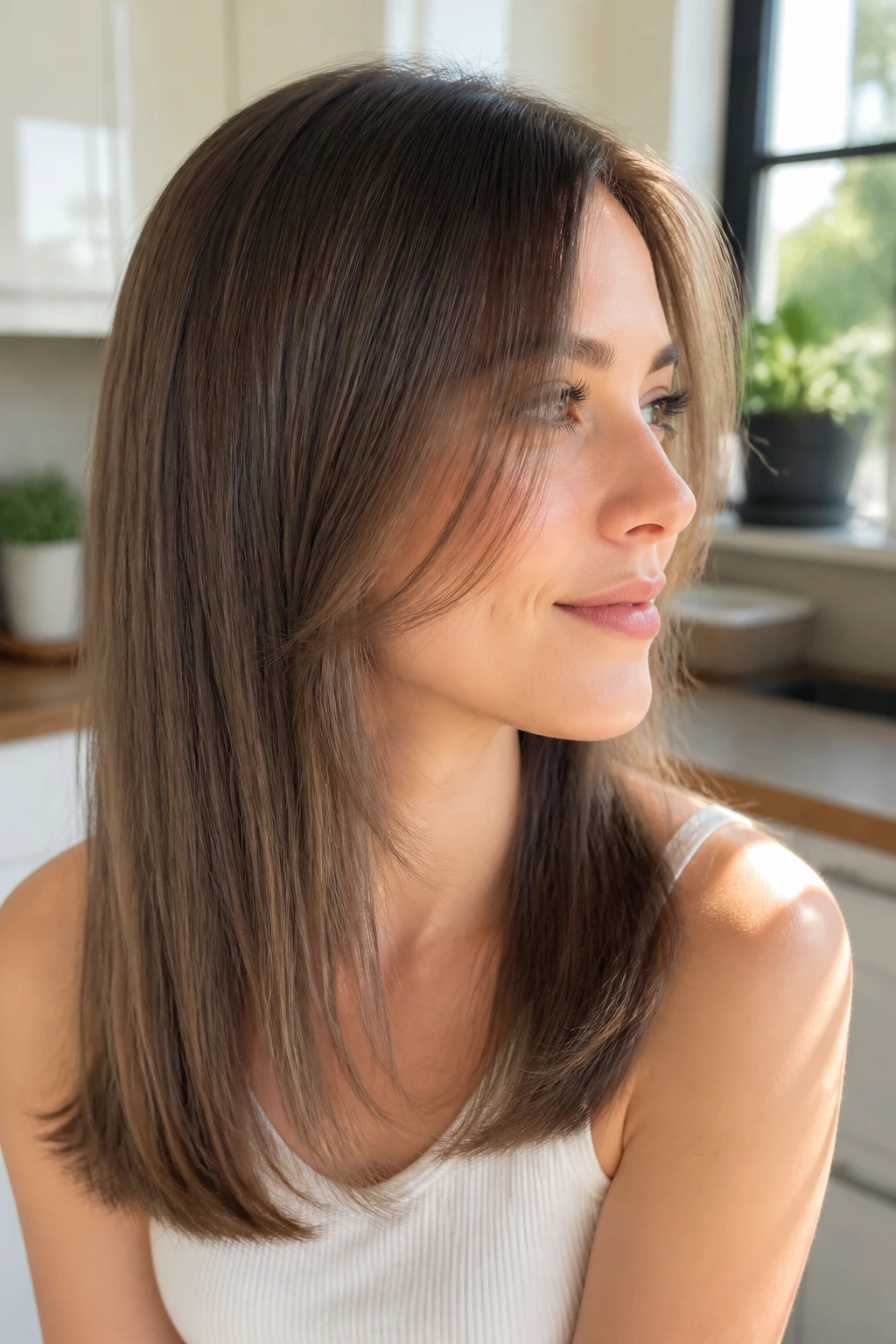
Straight fine hair can be picky. It shows every line, every blunt edge, every overdone snip. So the best butterfly version for it is barely layered at all—just enough separation to create movement at the cheek and jaw, not so much that the shape breaks apart.
The key is restraint. Ask for a soft, gradual transition from the shortest face-framing piece to the longer back lengths. If the difference between layers is too dramatic, straight fine hair will expose it. A subtle version gives you a little bend around the face and keeps the rest smooth.
Styling move: use a flat iron to add a tiny bevel to the front pieces and the bottom two inches. Nothing dramatic. Just enough curve to catch the light and make the cut look deliberate.
6. Bottleneck Bang Butterfly
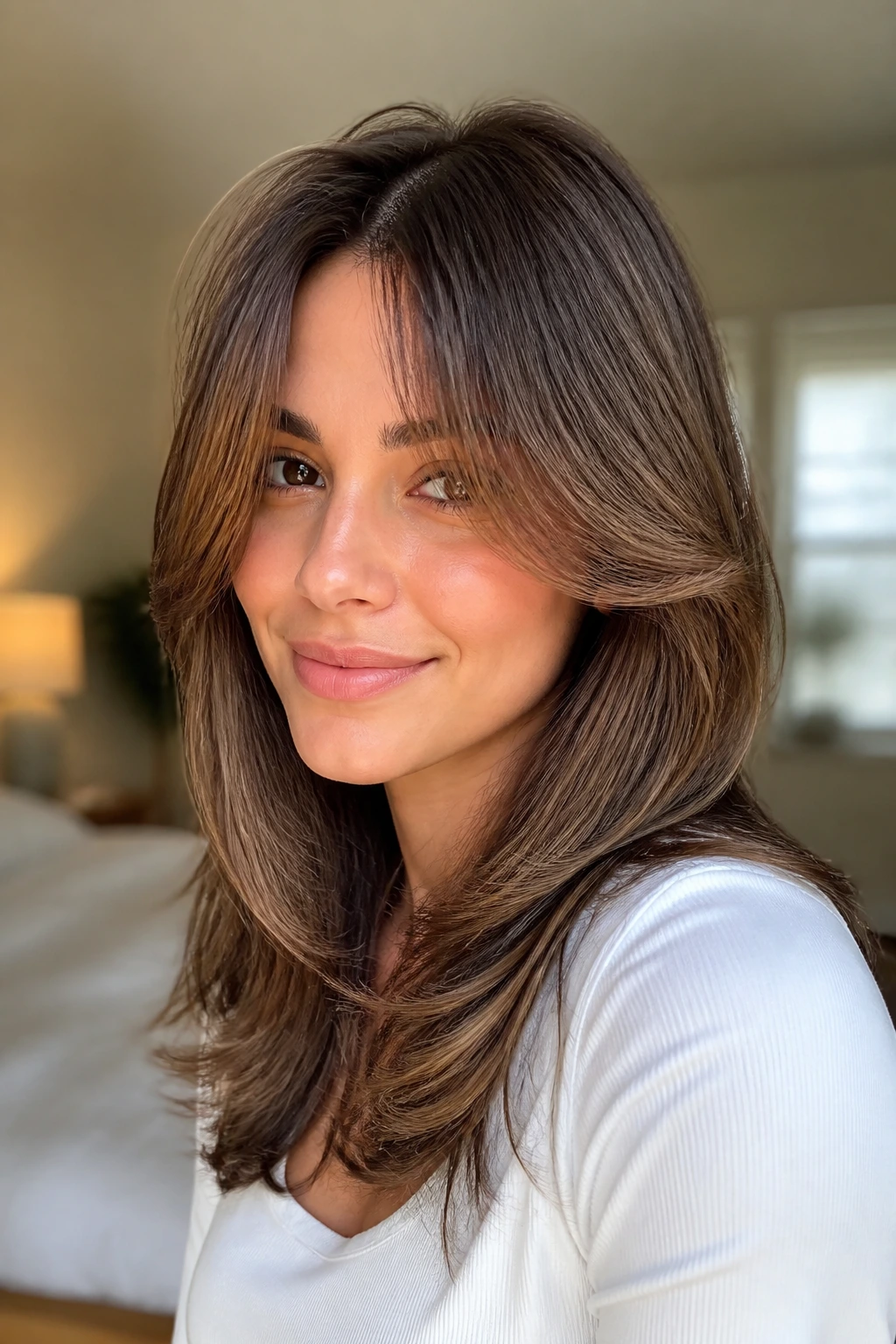
Bottleneck bangs are a smart pairing for thin hair because they give shape at the front without swallowing the whole forehead in dense fringe. They start narrow at the center and widen toward the cheekbones, which fits the butterfly haircut’s face-framing idea beautifully.
This version works best when the bangs are cut long enough to tuck into the sides. On thin hair, a heavy blunt bang can feel like too much all at once. Bottleneck bangs spread the weight out, so the front looks airy instead of boxed in.
Good for: long faces, high foreheads, and anyone who wants the front of the cut to feel more finished.
Watch out for: cutting the center too short. If the middle sits high on the forehead but the sides are sparse, the balance goes off fast.
7. Deep Side-Part Butterfly with Long Wings
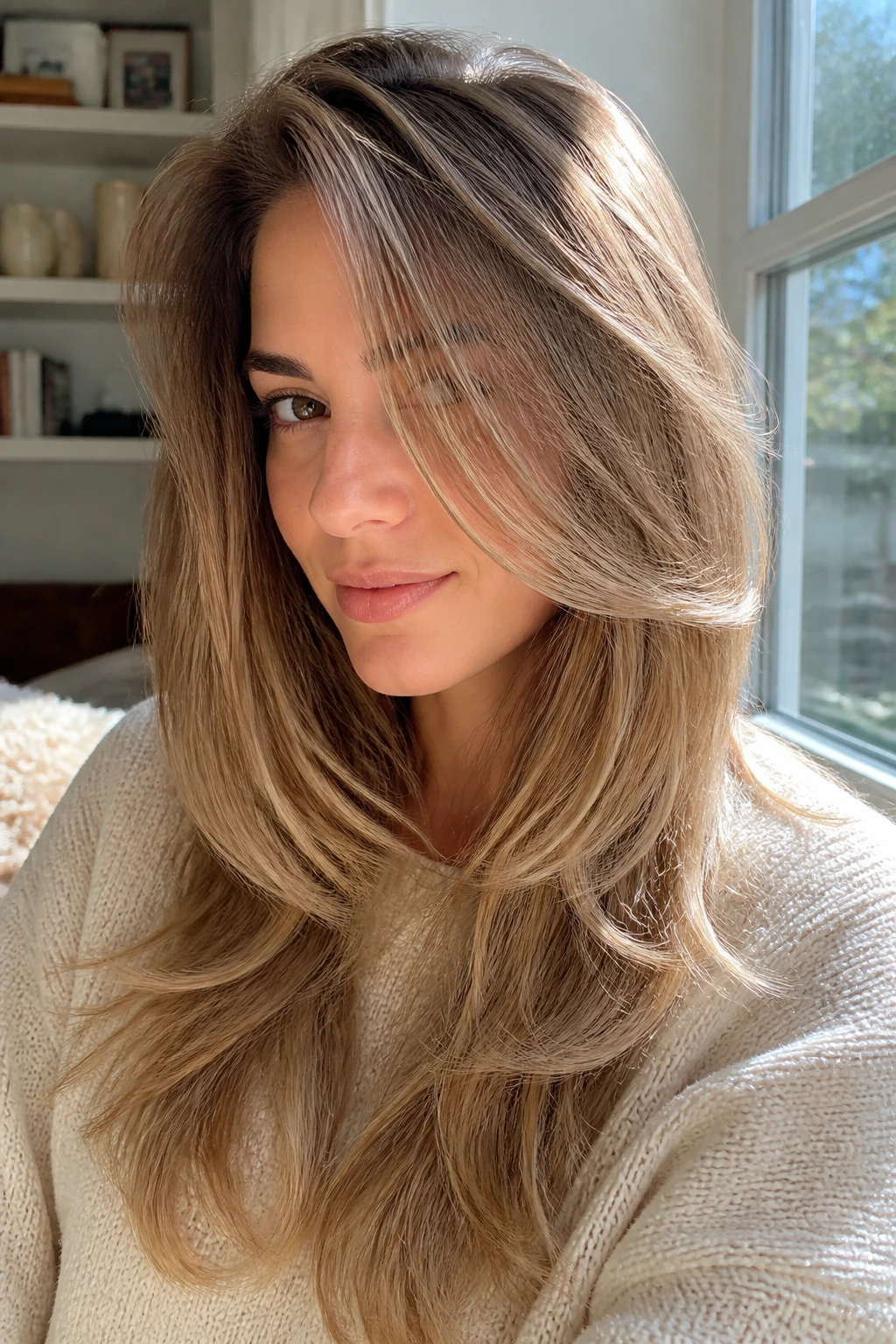
A deep side part can make thin hair look more alive than a stack of products ever will. It lifts one side at the root, pulls the face-framing layers into a soft diagonal, and gives the whole cut more movement from the first glance.
This version is especially useful if your hair naturally falls flat in a center part. Don’t fight the part if it won’t stay put. Let the cut work with your growth pattern instead. The long wings—those side pieces that sweep across the cheek—give the butterfly shape a little drama without requiring extra length.
If your roots are stubborn, clip the heavy side up while it cools after blow-drying. That tiny habit makes a bigger difference than people think.
8. Feathered Butterfly Cut with Flipped Ends
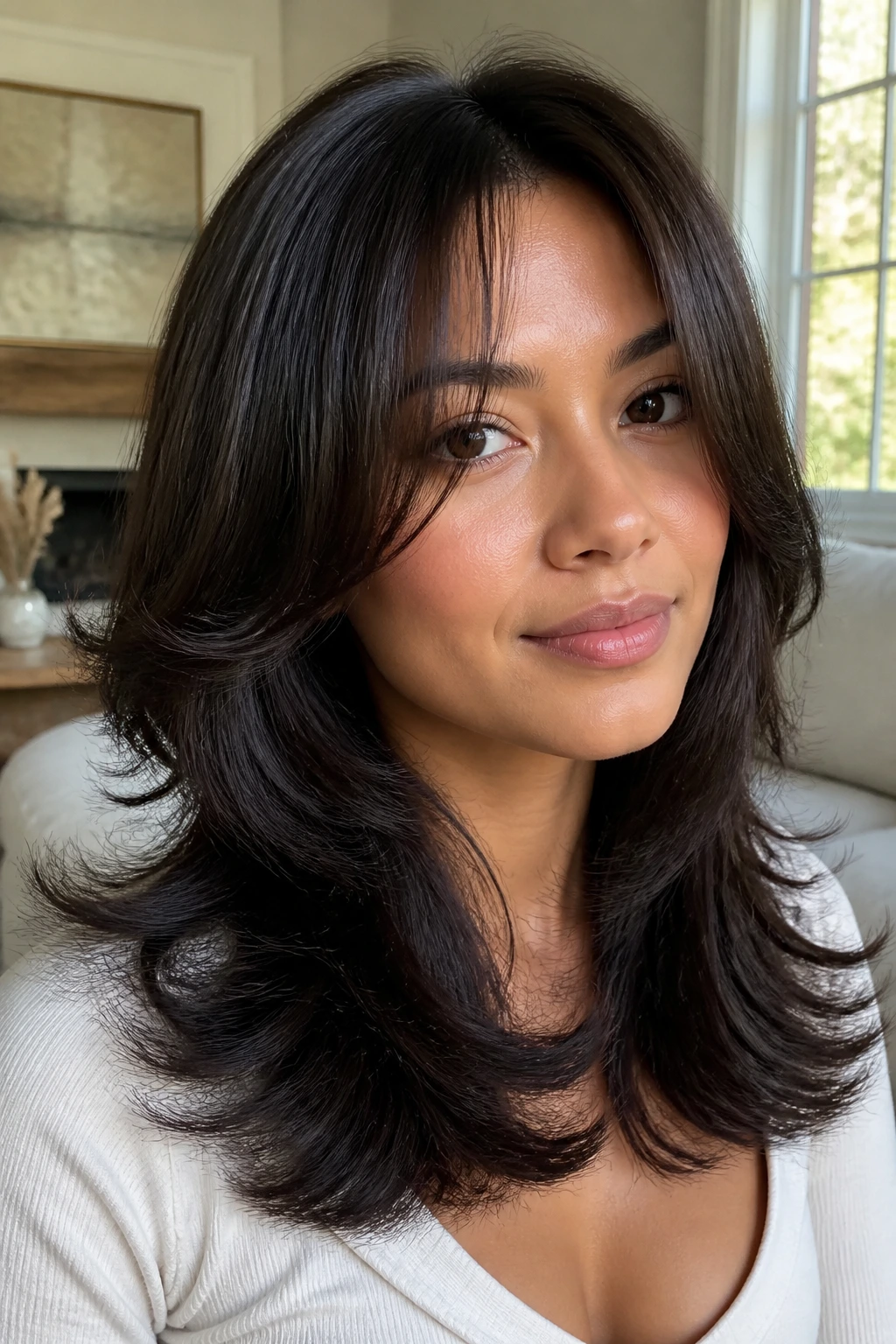
This one leans into movement. The layers are feathered around the face and then turned slightly outward at the ends, so the shape has a soft, lifted edge instead of a flat drop. It gives thin hair some bounce without making it look overstyled.
A feathered finish works best when the perimeter is still strong. You want softness at the top and sides, not a shredded tail. The flip at the bottom should feel airy, not retro-cosplay unless that’s your thing. I prefer a small, modern bend—just enough to show that the hair was shaped on purpose.
Style note
Use a round brush or a flat iron to turn the ends away from the neck by half an inch to an inch. That’s usually enough.
9. Butterfly Shag with Light Texture
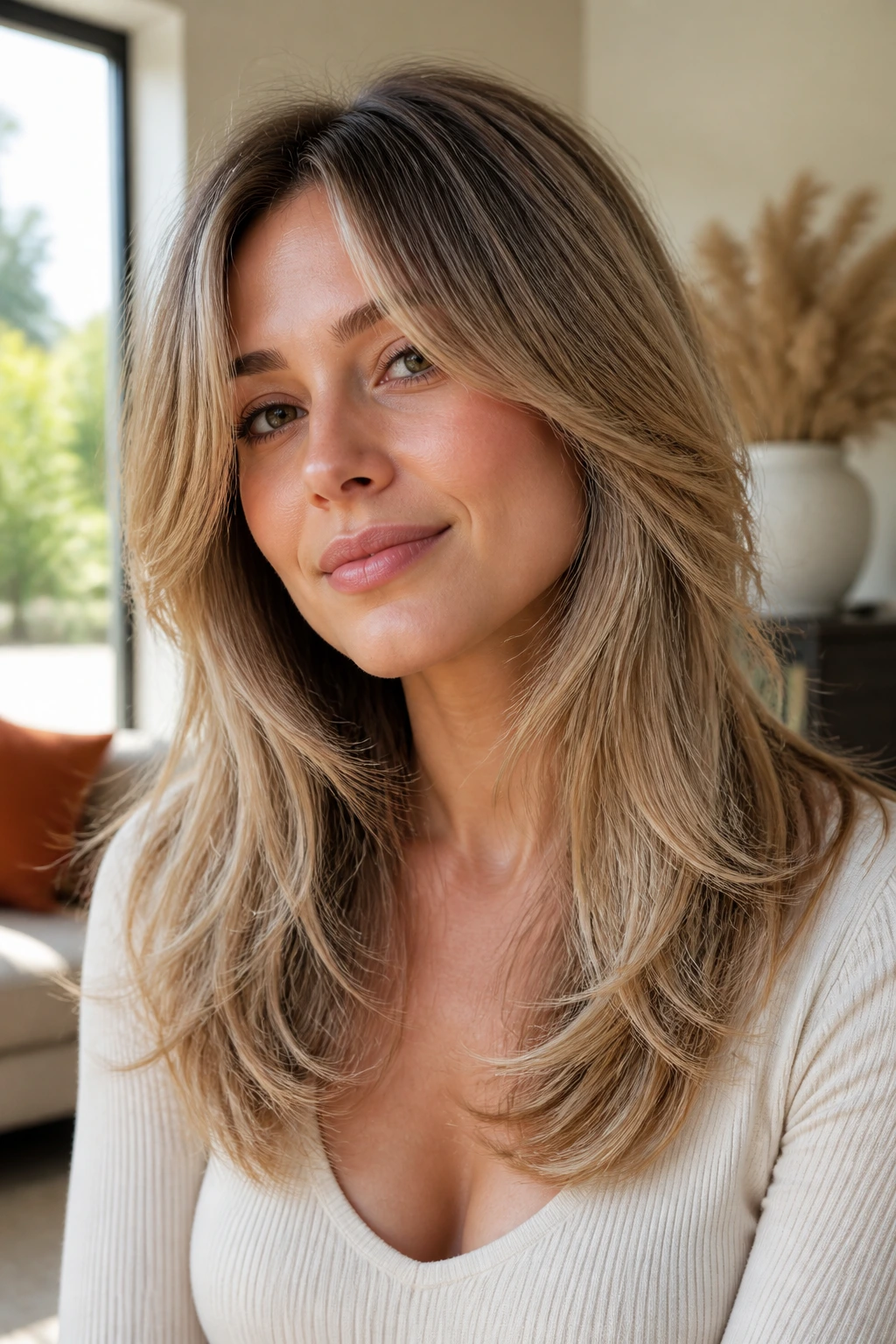
This is the messier cousin in the family, and thin hair can wear it well if the layers stay controlled. A butterfly shag keeps the face frame, but it adds a little more texture through the mids so the hair doesn’t hang in one flat sheet. It’s best when your hair already has some wave or can hold a little grit.
I would not push this into heavy choppy territory. Thin hair doesn’t need to be stripped down to the bone. The best version keeps a solid edge and uses texture spray or a light mousse to separate pieces after styling.
If your hair gets limp at the crown but frizzy at the ends, ask for a soft shag influence rather than a full shag. That distinction matters. A lot.
10. Wispy Fringe Butterfly for Narrow Faces
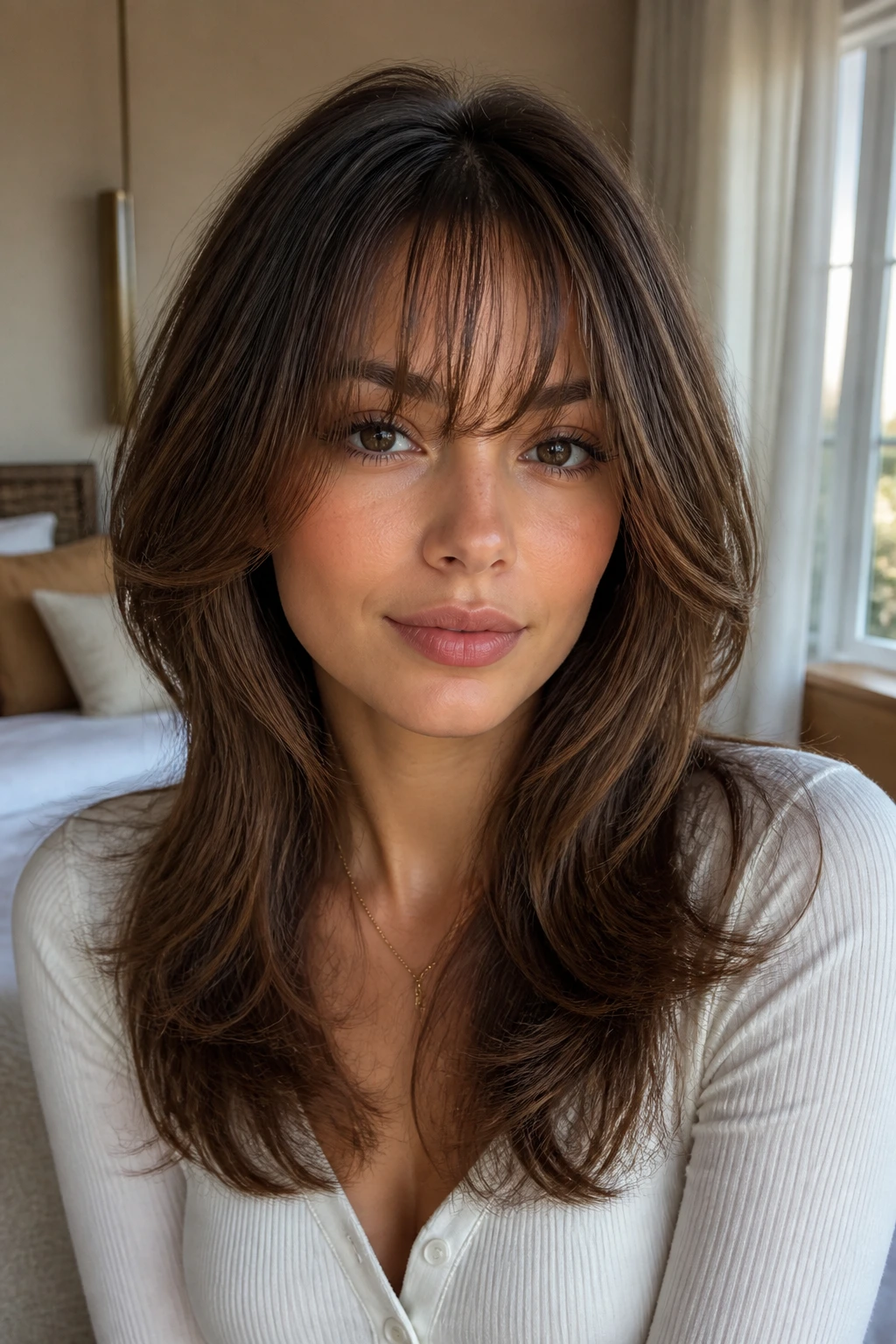
A wispy fringe can be a nice fix for a narrow face that needs width in the front. The fringe should stay light, not dense, and the butterfly layers should flow out from it instead of competing with it. The whole cut feels softer when the front doesn’t turn into one solid curtain.
This is one of those cuts that looks casual even when it’s carefully built. Thin hair often benefits from that. Heavy bangs can eat up too much density, but a wispy fringe gives you the feeling of fullness right where people notice first—around the eyes and cheekbones.
Keep the fringe piecey enough that it can separate when dry. If it clumps into one line, it loses the point.
11. Center-Part Butterfly with Ribbon Layers
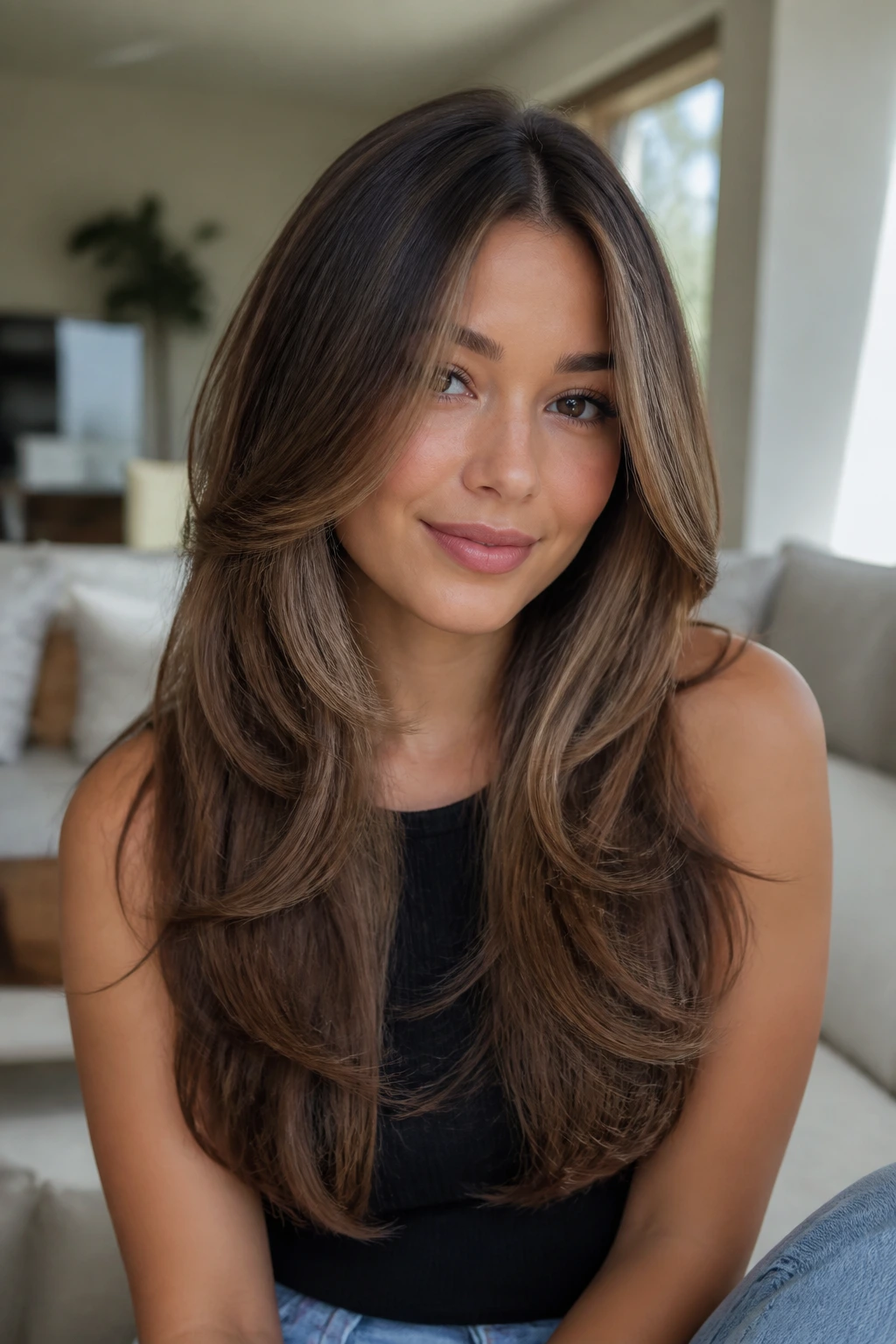
A center part makes a butterfly cut feel cleaner and a little more polished. Ribbon-like layers on either side of the face can narrow the outline in a nice way, which is useful if your hair is thin but you want the front to look intentional rather than airy by accident.
The ribbon idea matters. You don’t want a pile of short bits. You want long, smooth sections that bend around the face and then disappear into the longer lengths. That makes the cut read as full, not chopped.
This version is especially good for oval and heart-shaped faces. It keeps the symmetry calm and gives the hair a soft swing when you turn your head. Simple. Effective.
12. Wavy Butterfly Cut with Airy S-Bends
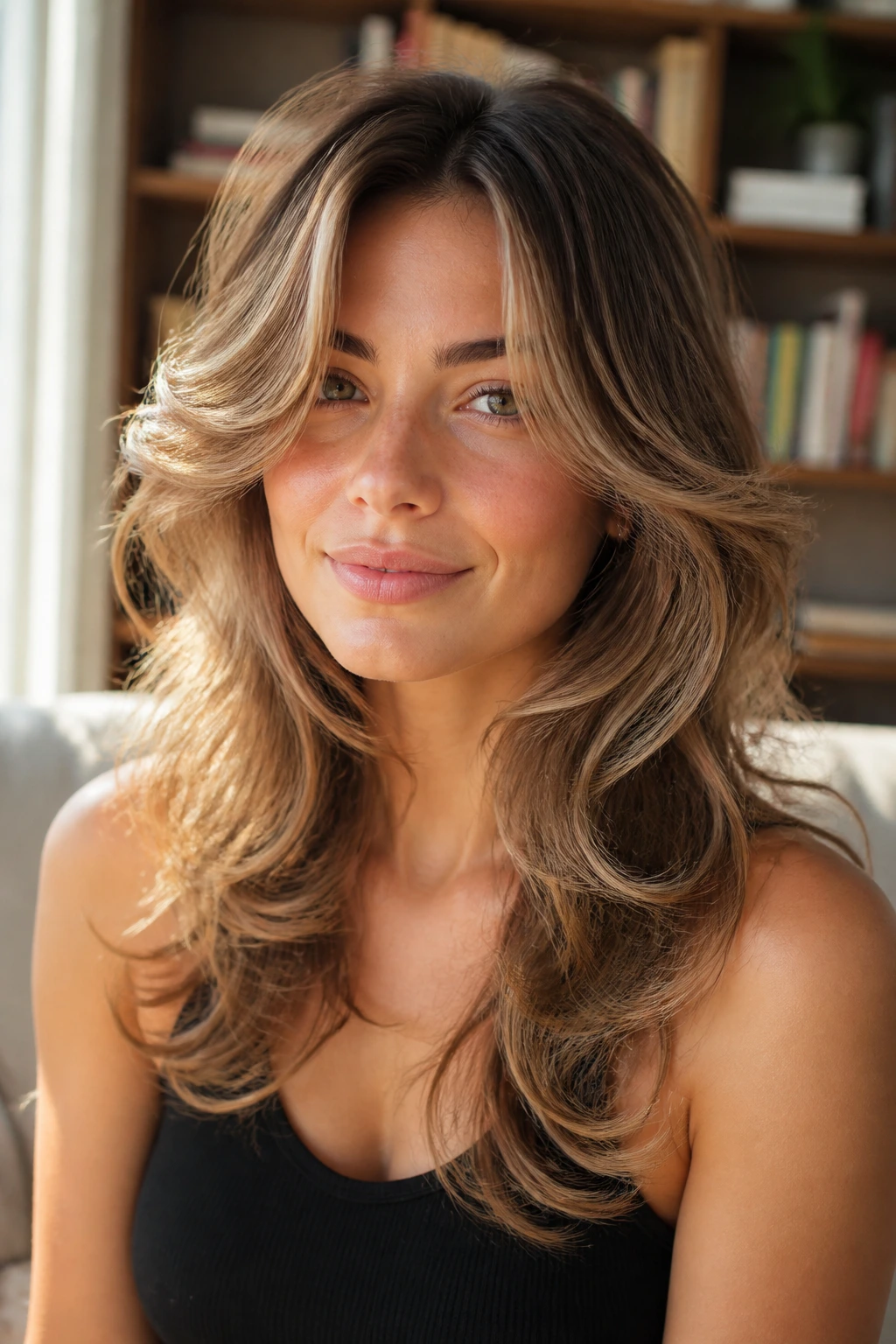
If your hair naturally forms loose waves, use them. Don’t flatten them into submission and then wonder why the cut feels lifeless. The butterfly shape gives wavy hair a place to sit: shorter pieces around the face, longer layers through the ends, and just enough separation to make the waves show.
An S-bend finish looks especially good here. You’re not chasing ringlets. You’re encouraging those long, soft curves that make thin hair look fuller because they create more visible surface area. A diffuser on low heat or a couple of bends with a 1-inch iron can do the job.
I like this version for people who hate “done” hair. It looks relaxed, but the shape is doing real work.
13. Straight-Sleek Butterfly with Underlayers
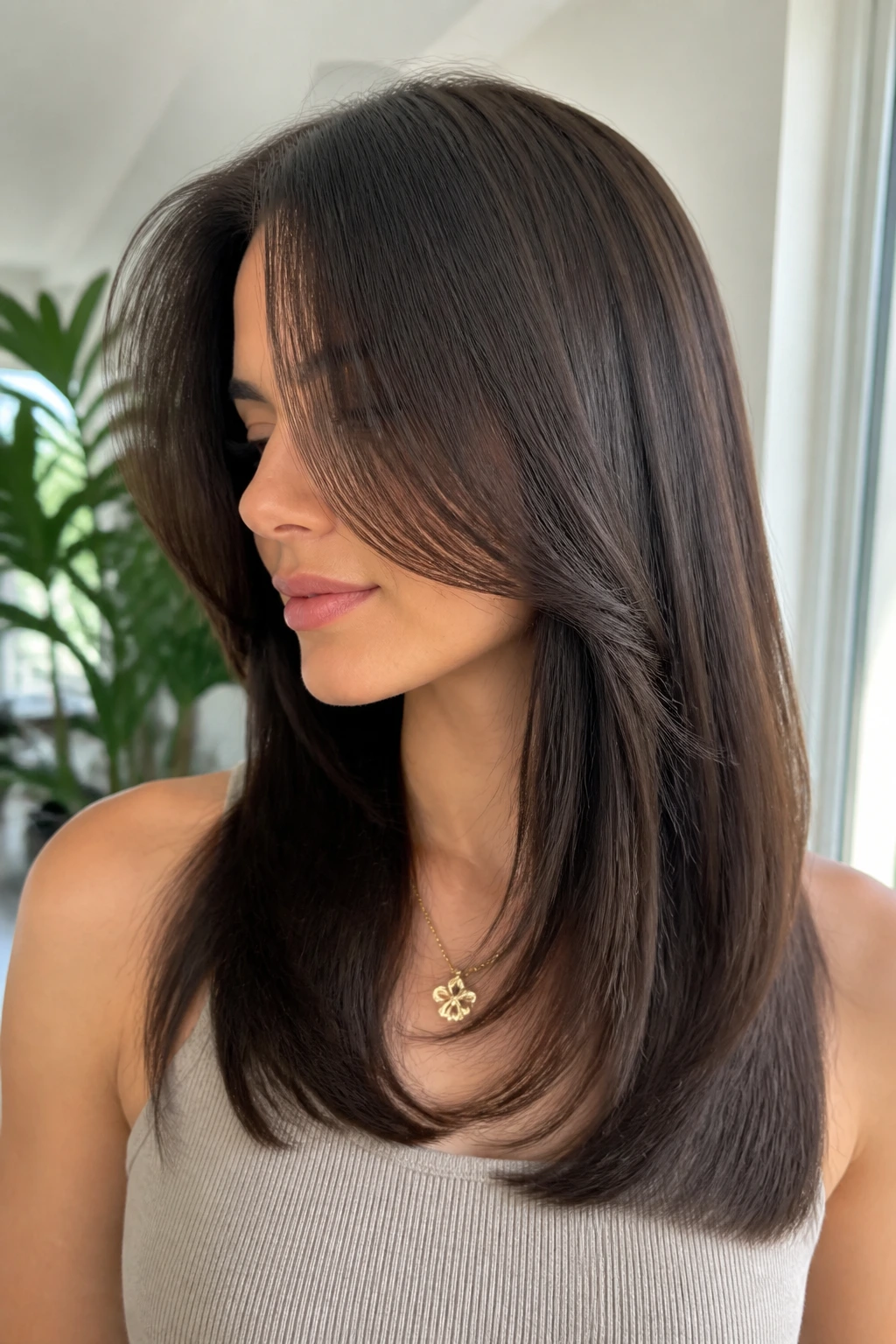
Some people want movement without visible fluff. This is the answer. The top layers stay long and smooth, the underlayers carry the shape, and the finish stays sleek from the part down. It’s the quietest butterfly cut in the bunch, and it can be one of the smartest for thin hair.
The idea is simple: keep the upper surface polished, then let the underlayers create lift when the hair moves. That prevents the cut from looking choppy in bright light. It also works well if you wear your hair tucked behind the ears most of the time.
A flat iron with rounded edges helps here. Run it through the mid-lengths and give the front pieces a soft inward bend. That’s enough. You do not need to curl the whole head to make this shape visible.
14. Face-Framing Butterfly for Glasses Wearers

Glasses change the whole game. Face-framing pieces that are too short can fight with frames, brush the lenses, or split awkwardly right above the temples. A better butterfly cut for glasses keeps the shortest pieces a bit lower—usually around cheekbone to mouth level—so the hair falls around the frames instead of into them.
This version has a practical elegance to it. You get movement near the face, but the styling doesn’t require constant tucking or pushing back. That’s the real test of a good haircut when you wear glasses: does it stay out of the way without looking like you tried to remove it?
If your frames are thick, keep the layer edge a little softer. Sharp layers next to a strong frame can make thin hair look fragmented.
15. Low-Maintenance Butterfly with Long Side Bangs
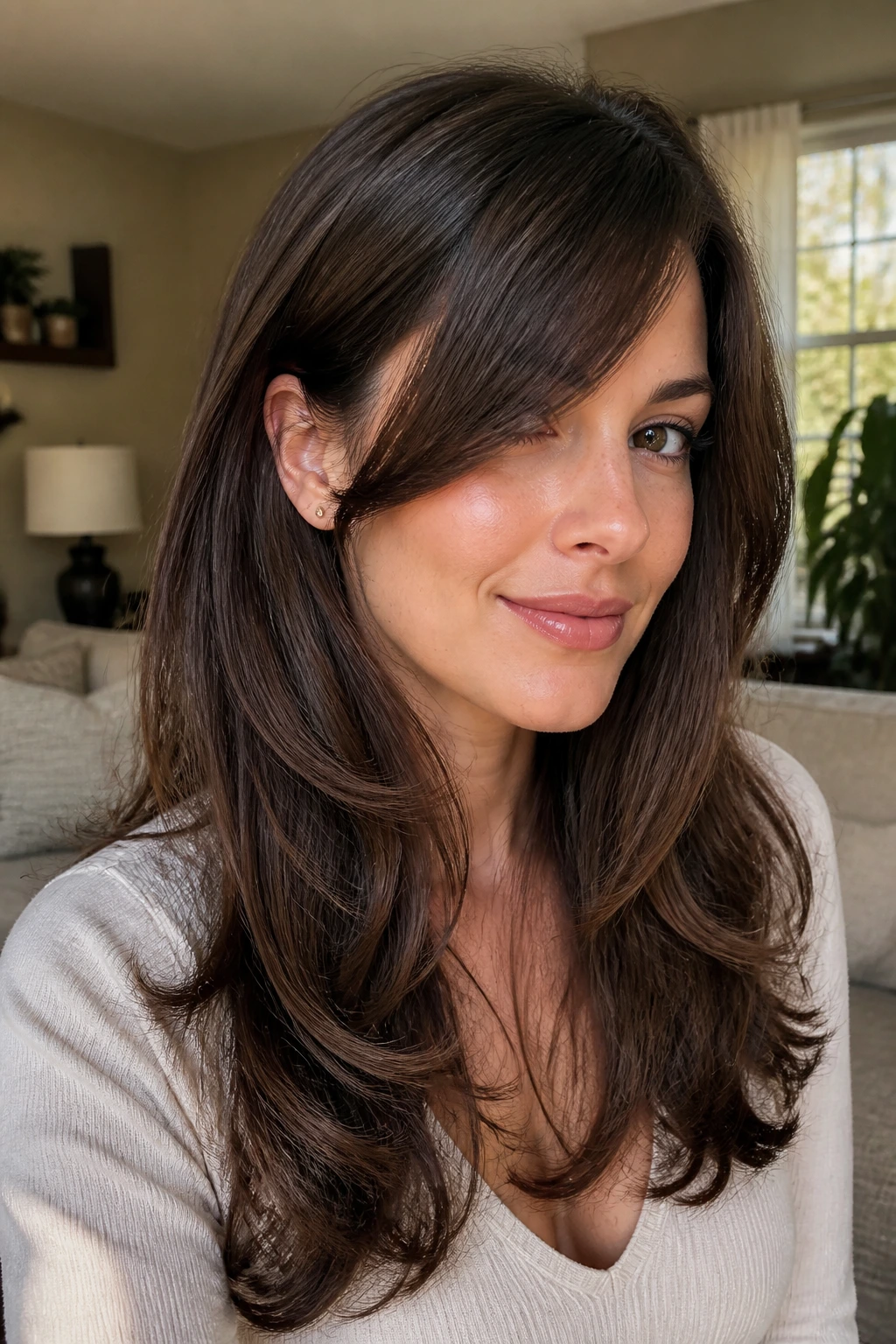
Long side bangs are the sleeper hit of this whole category. They give the front of the cut shape, but they don’t demand the same upkeep as short curtain bangs. For thin hair, that can be a relief. The bangs blend into the butterfly layers and grow out without giving you that awkward split forehead phase.
This version works well if you like to wear hair behind one ear or toss it to one side. The side bang creates a diagonal line, which makes the hair feel fuller because the eye keeps moving. It also works better than blunt fringe on very soft density.
If you’re lazy about styling—no judgment, just honesty—this is one of the better choices. It forgives a rough blow-dry.
16. Crown-Lift Butterfly with Micro Layers Up Top
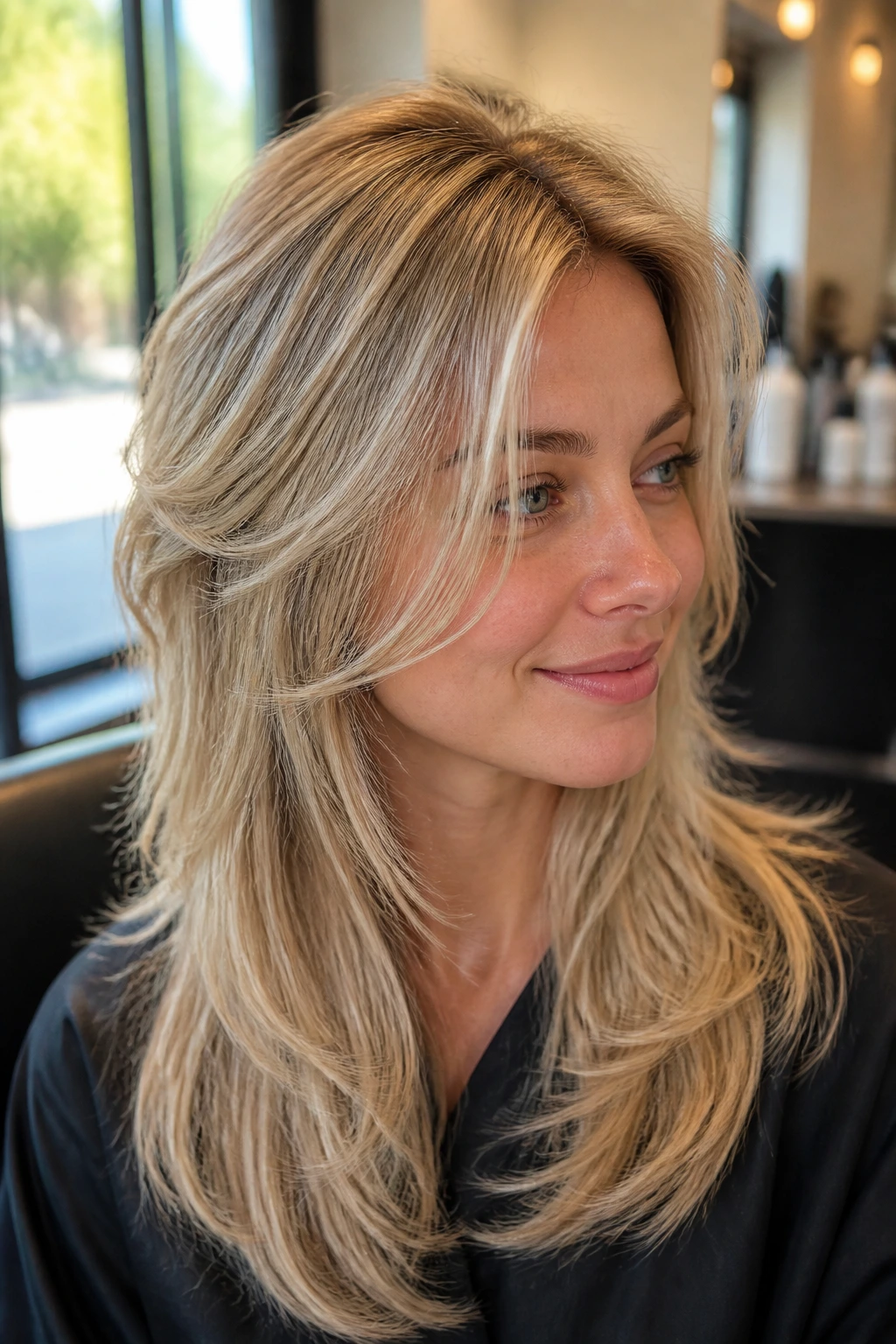
This is the most delicate version to cut well. Micro layers at the crown can create lift, but on thin hair they can also expose too much scalp if they’re too aggressive. The goal is a tiny boost, not a shredded top.
When it’s done right, the crown rises just enough to stop the hair from collapsing flat against the head. That makes the face frame look longer and the overall shape feel lighter. A root-lift spray at the base and a round brush at the roots help the cut hold its shape.
I’d reserve this for hair that is thin but not fragile, especially if you have some natural root bend. If your hair is very sparse on top, go softer. Much softer.
17. Soft U-Shape Butterfly for Long Thin Hair
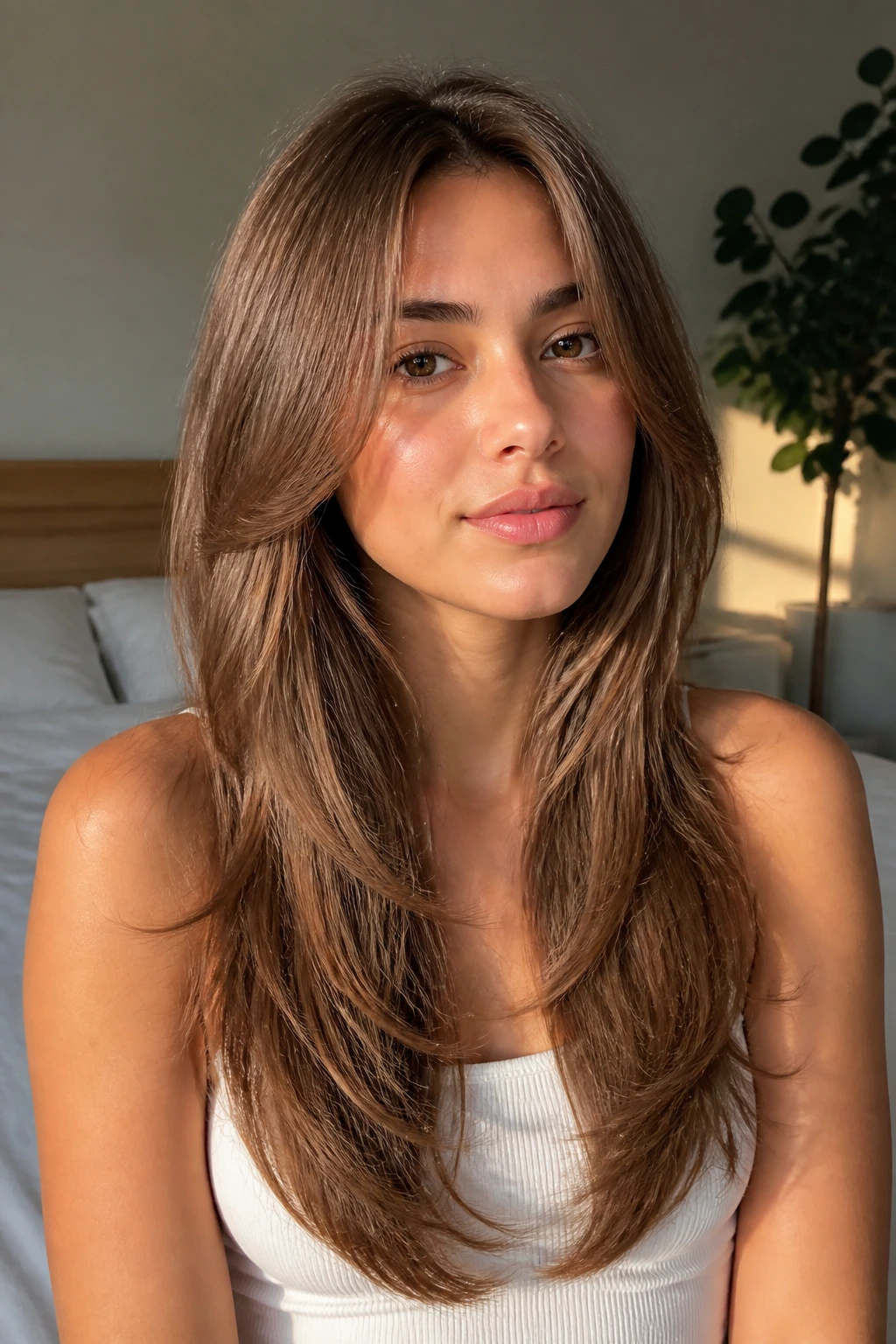
A U-shaped hemline is a quiet way to protect fullness. Instead of a hard straight line across the back, the hair falls a little longer in the center and softly shorter at the sides. That shape keeps long thin hair from looking chopped off and gives the butterfly layers a better backdrop.
This is one of the best choices if you love long hair and refuse to give it up. The U-shape keeps the ends from feeling heavy at the sides while still preserving enough length to look substantial. The face frame can start at the cheekbone, then sweep into the longer lengths like it was always meant to be there.
One small thing: if your ends are fragile, ask for a dusting rather than a big trim. Long thin hair loses its appeal fast when the bottom gets too thinned out.
18. Textured Butterfly Bob
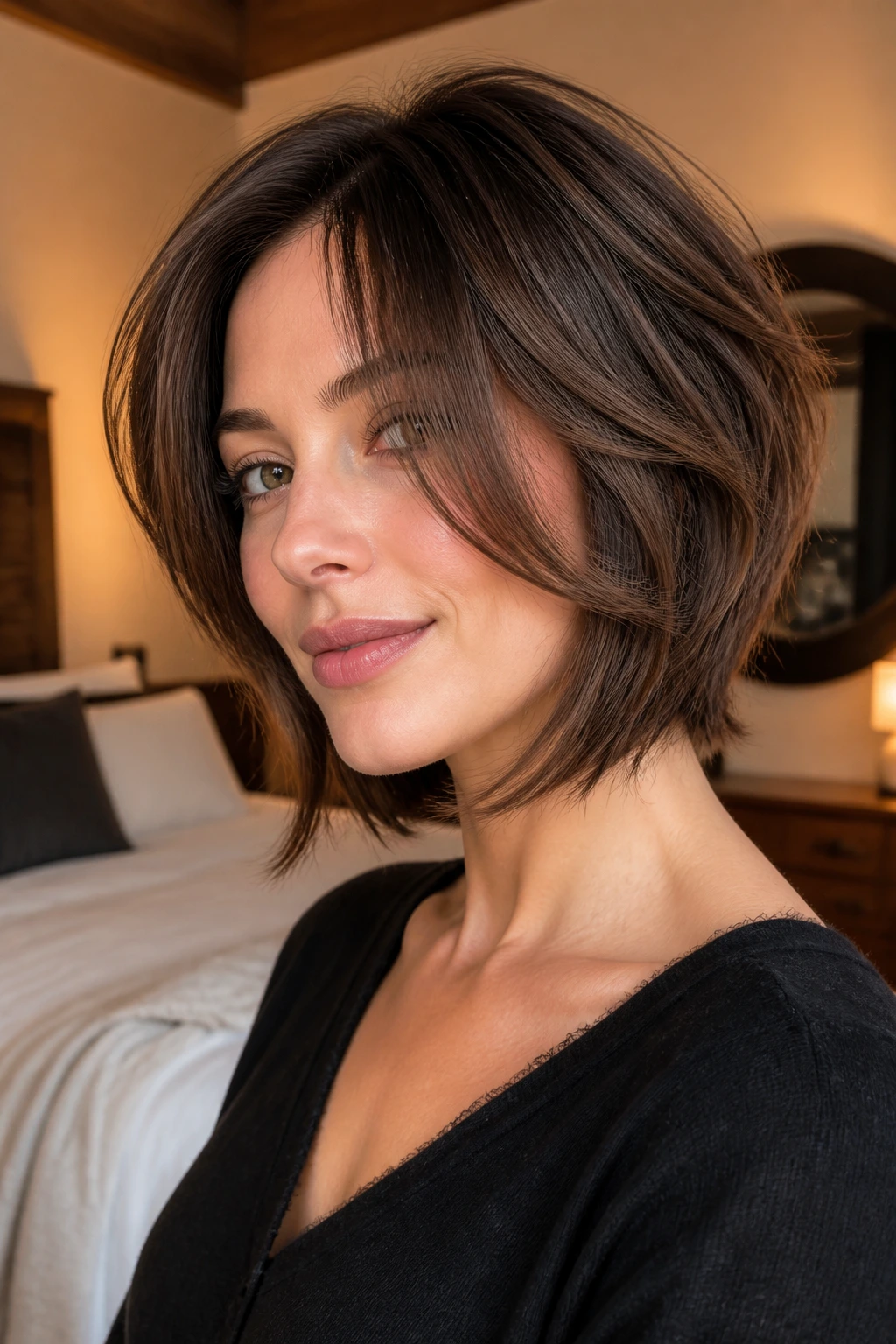
A butterfly bob is short enough to give thin hair instant density and long enough to keep the face-framing idea alive. That combination is useful. You get a strong outline, a bit of lift around the cheeks, and a shape that doesn’t depend on having tons of hair to begin with.
This works especially well if your hair barely holds volume when it gets past the shoulders. At bob length, the hair can support itself better. The butterfly layers then become the movement, not the whole story. That’s the part I like.
If you want it to feel modern, keep the texture soft and the ends clean. Too much point-cutting can make a bob look patchy. Not a good trade.
19. Rounded Cheekbone Butterfly
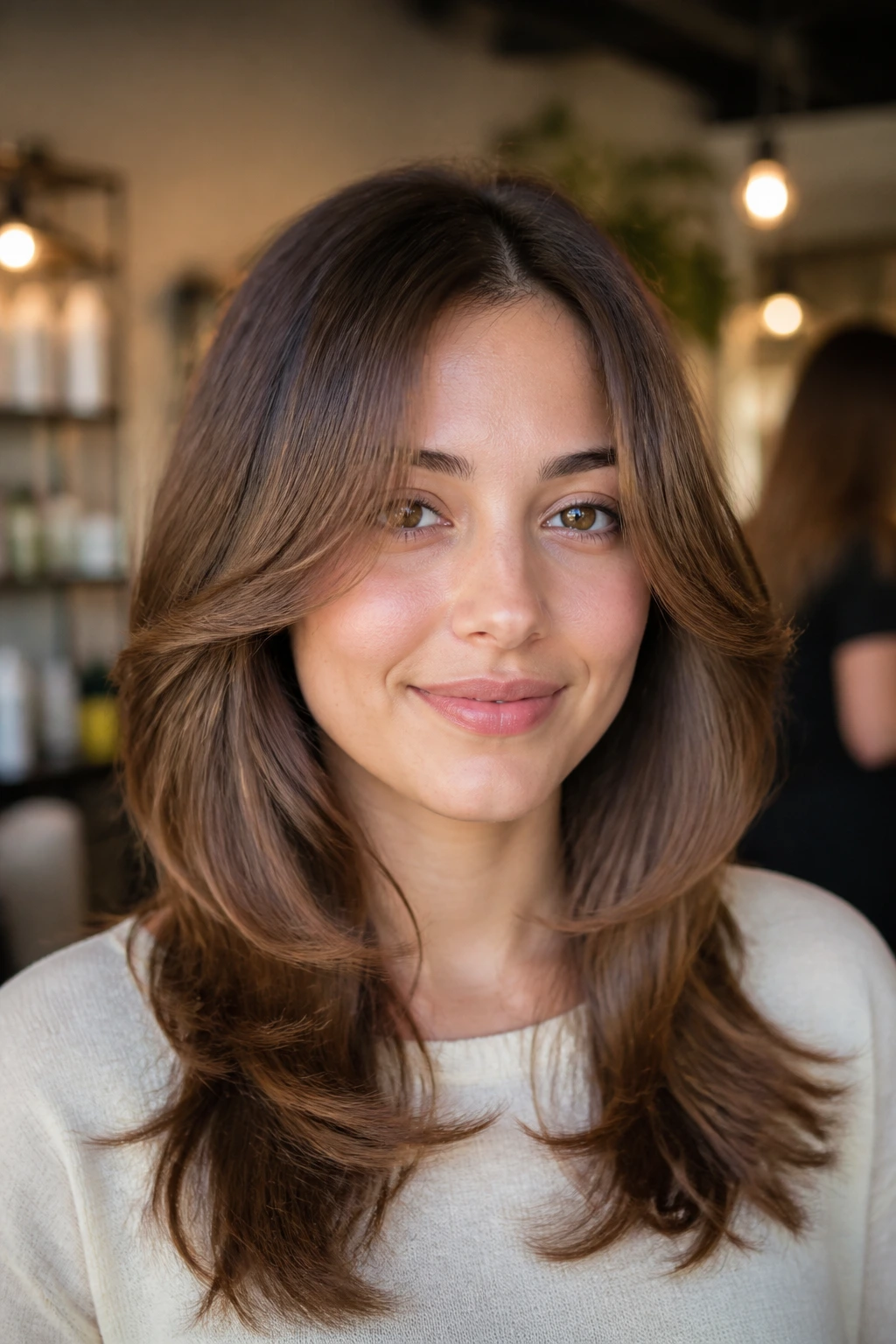
This version is all about the shape of the front. The shortest pieces curve around the cheekbones in a rounded way, which adds width where thin hair often looks narrow. It’s especially nice if your face is long or if your cheek area could use a little softening.
The difference between rounded and pointed matters. Pointed face-framing layers can look sharp and skimpy on fine hair. Rounded ones keep more mass in the front, so the cut feels fuller when the hair moves. That fuller front also makes the back look better by comparison.
If you wear your hair tucked behind one ear a lot, this cut still holds up. The shape lives in the arc, not in a single dramatic piece.
20. Grow-Out Friendly Butterfly with Tapered Tail
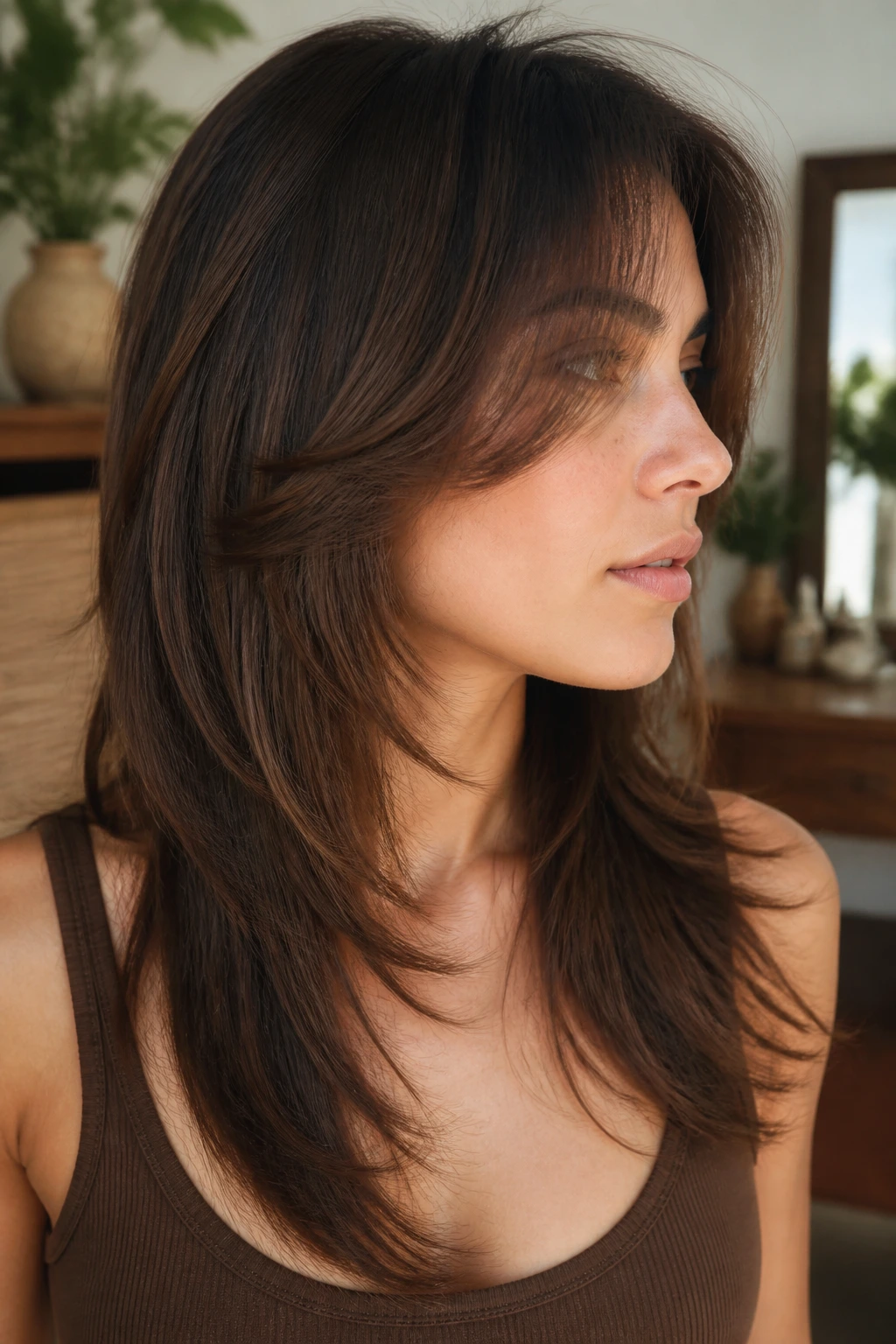
Some haircuts look good only on the day they’re fresh. This isn’t one of them when it’s done right. A tapered-tail butterfly keeps the layers long enough that the cut grows into itself instead of away from itself.
The taper is the key. The shortest face-framing pieces should blend into the rest of the cut gradually, not stop in an obvious shelf. That makes the grow-out process easier, especially for thin hair that can look ragged when a layer line gets too hard.
If you hate frequent salon trips, this is a strong pick. It’s also useful if you’re growing your hair longer but want something that still looks shaped right now.
21. Razor-Light Butterfly for Fine Hair
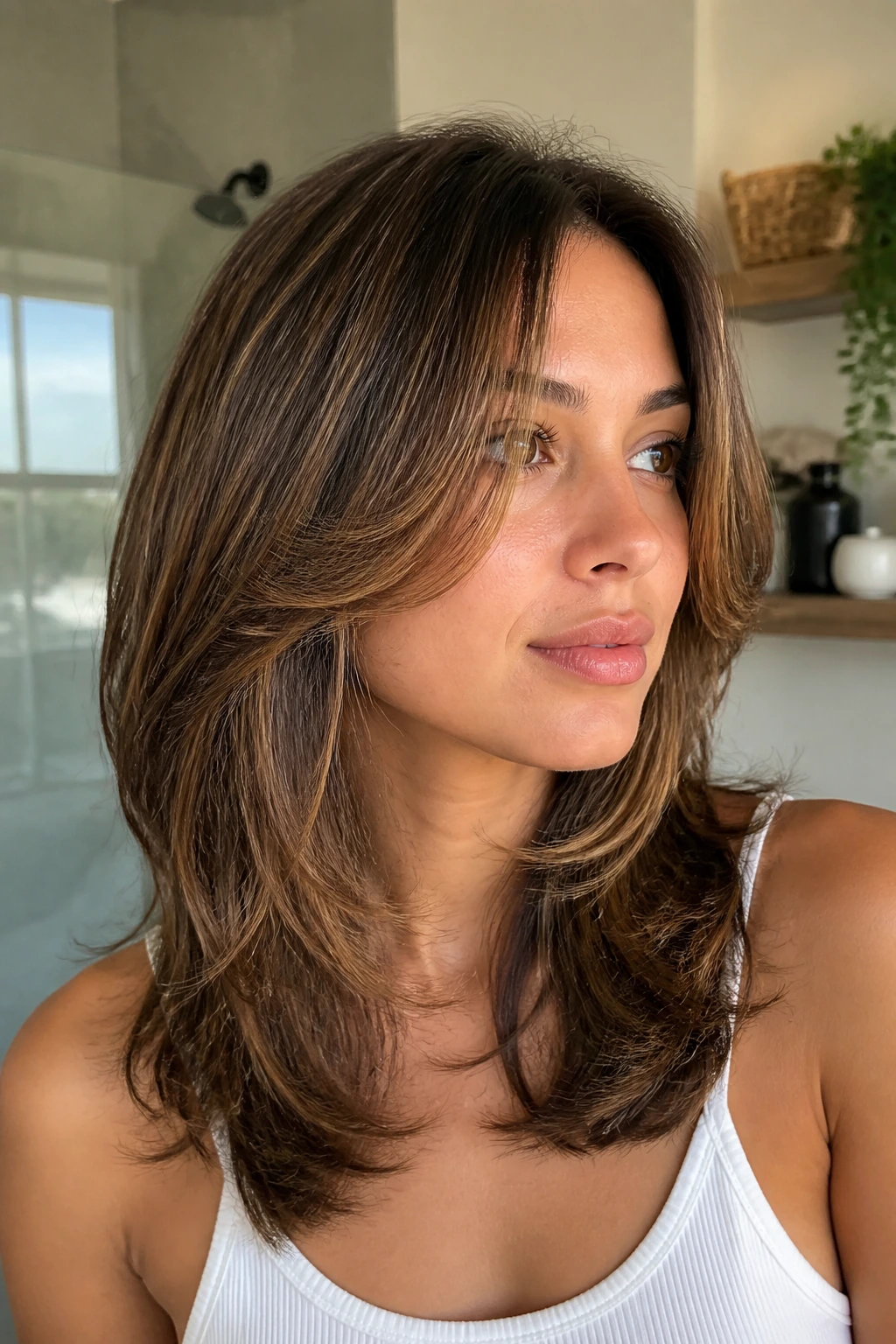
I’m cautious about razor-cutting fine hair. Some stylists use it too eagerly and end up with ends that look frayed instead of soft. But in the right hands, a very light razor touch can create a lovely, airy butterfly shape.
The trick is to use the razor only where the hair has enough body to handle it—usually through the face frame and mid-lengths, not the fragile ends. The result is movement with a feather-light edge that doesn’t feel blunt or heavy.
If your hair is already dry, brittle, or prone to split ends, skip this one. Seriously. A scissor-cut butterfly will usually treat you better.
22. Invisible Layer Butterfly for Extra Density
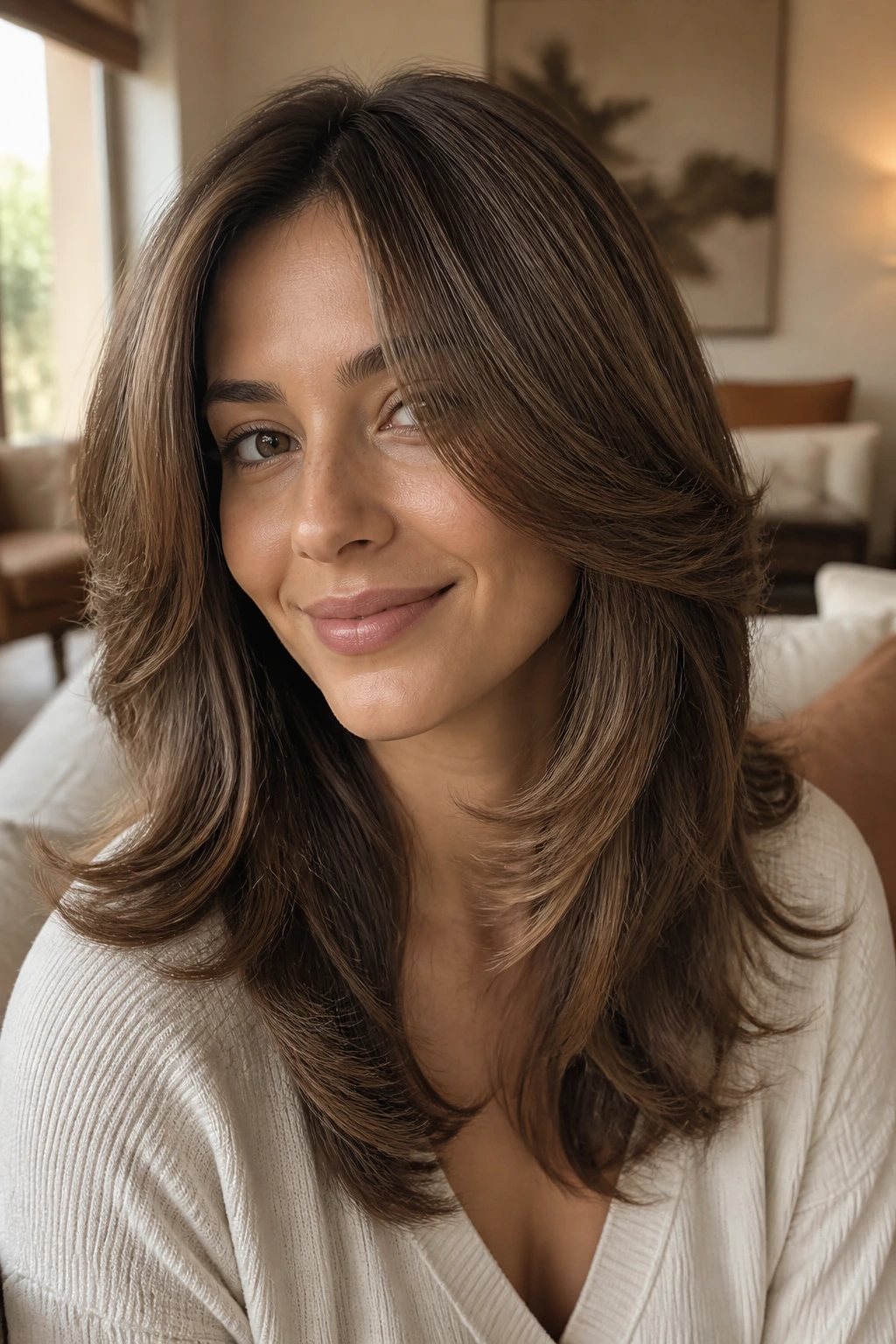
This is the version I reach for when someone wants the butterfly look but can’t afford to lose any more thickness at the sides. The layers are tucked inside the shape, so the outside line stays full and calm. From the front, you still get the lift around the face.
Invisible layers are the trickiest kind of good layering on thin hair. You’re building movement into the inside of the haircut rather than taking away from the perimeter. That’s why the cut still reads as dense in photos and in person.
If your hair feels see-through at the ends, this is one of the smartest choices in the whole list. It’s subtle. Which is exactly the point.
23. Voluminous Butterfly with Hot-Roller Bounce
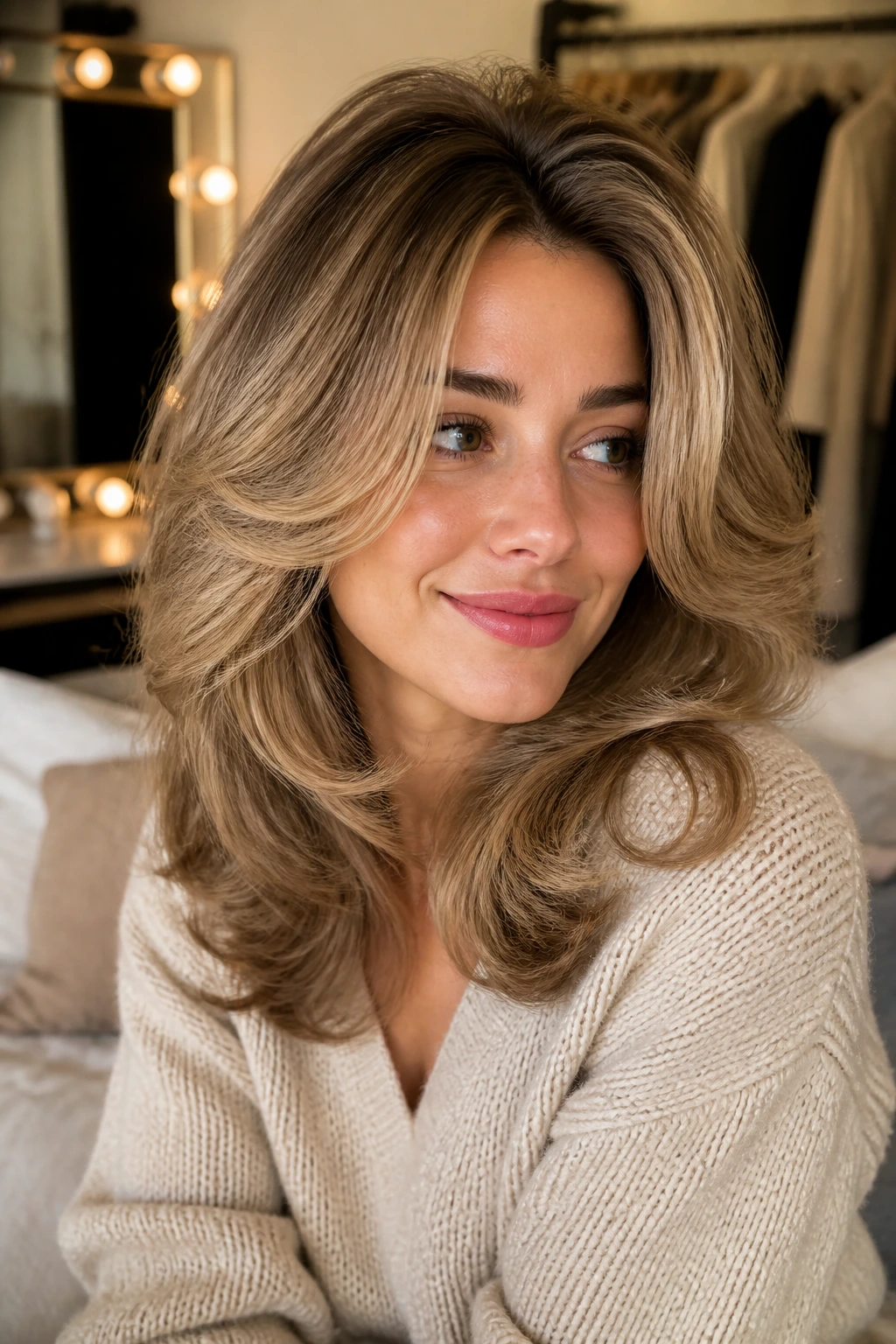
This one is for people who like styling. Hot rollers or large velcro rollers can turn a butterfly cut into a soft, blown-out shape with obvious lift at the crown and face. Thin hair often holds roller sets better than it holds curling irons, because the hair cools in the shape instead of being touched too much.
The cut should be built with that in mind. Keep the face layers long enough to wrap around a 1.5-inch roller or a large brush. If the layers are too short, they’ll kick out too hard and the whole shape gets cartoonish.
Rollers are old-school for a reason. They give thin hair body without roughing up the ends. I still think they beat overcooking the hair with a curling iron.
24. Air-Dry Butterfly with Loose Face Framing
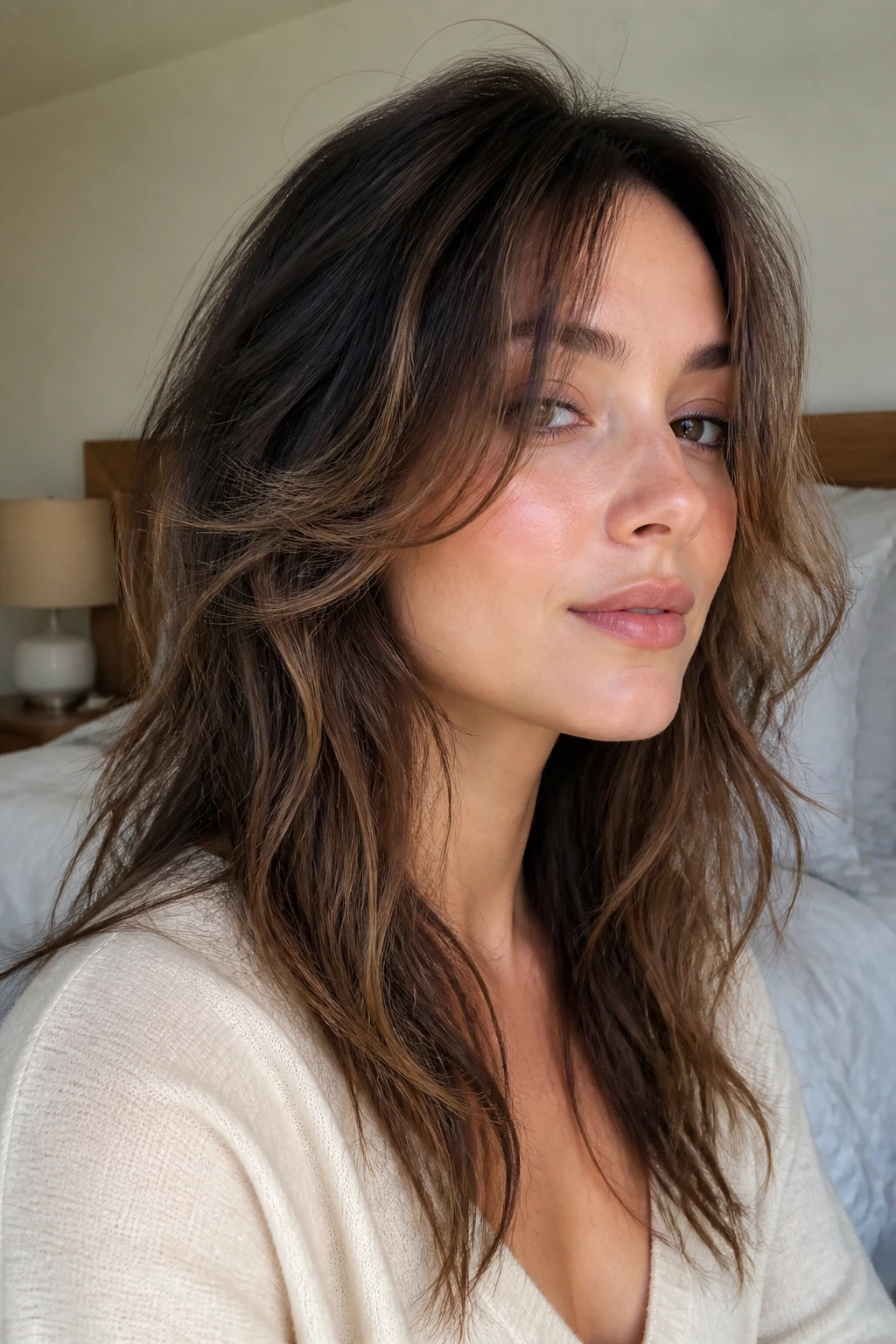
Not every butterfly cut needs a full blowout. A soft air-dry version can work if the layers are cut long, the face frame is gentle, and your hair has at least a hint of wave. The goal here is to let the hair dry into its own shape without collapsing into a single flat curtain.
Use a lightweight leave-in, not a heavy cream that will drag the roots down. A little scrunching around the mids and a tucked-behind-the-ear twist while the hair dries can help the front pieces fall in a flattering way. On thin hair, that’s often enough.
This is the version for people who’d rather spend five minutes than thirty-five. It won’t look as sculpted as a blowout, but it can look soft and lived-in in a good way.
25. Polished Butterfly with a Soft Money Piece
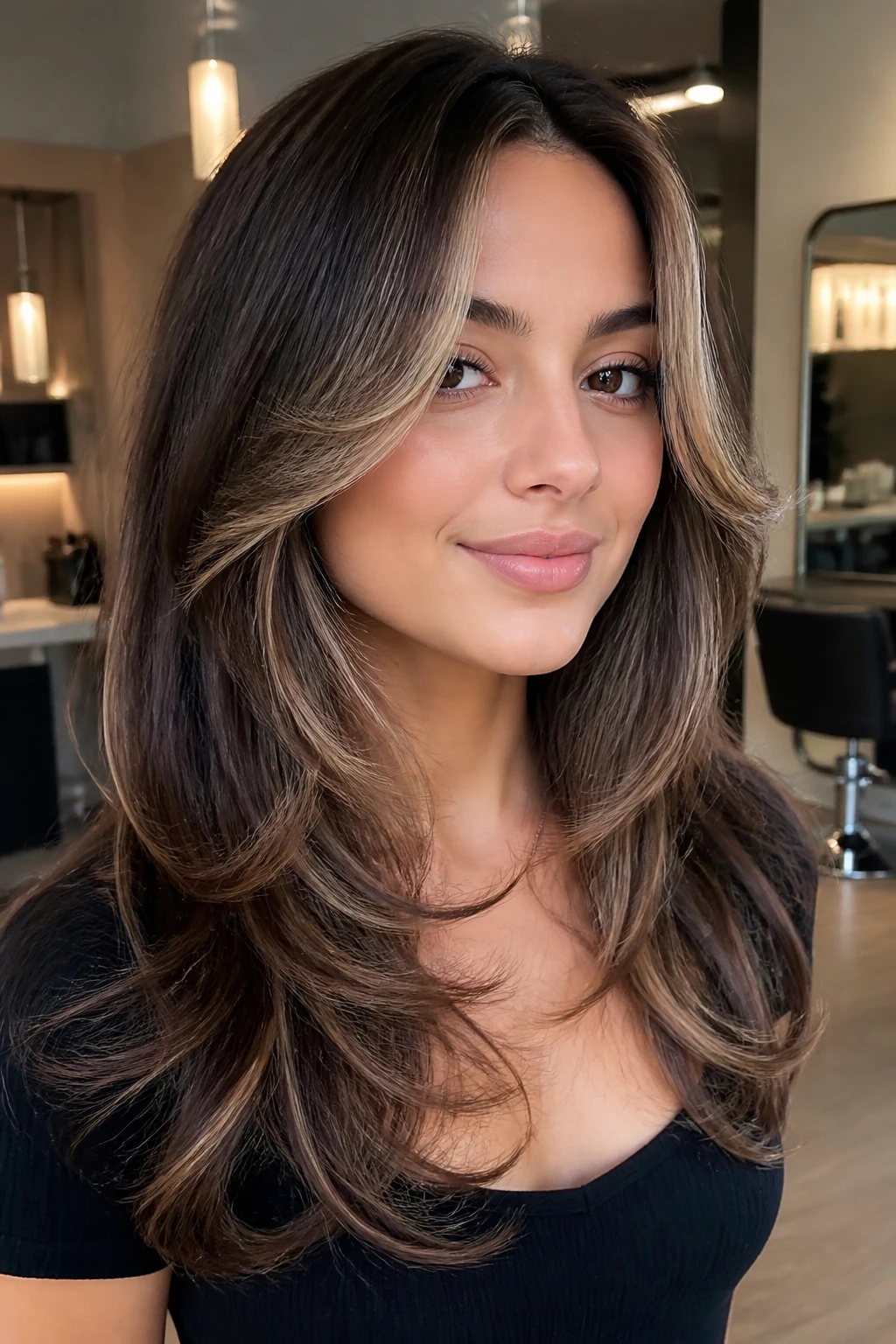
A subtle money piece can sharpen the front of a butterfly cut, especially if your hair is so fine that the layers disappear unless you style them hard. The lighter front pieces catch the eye and make the face frame read more clearly. Used sparingly, they work with the haircut instead of stealing the show.
If you already wear highlights, ask for the front pieces to be just a shade brighter than the rest, not streaky or obvious. The color shouldn’t look striped. It should feel like a quiet frame around the face. That small contrast can make thin hair look more dimensional, especially when the layers are soft.
Even without color, this version works because the face frame is polished and deliberate. The cut itself does the rest.
What Makes the Butterfly Shape So Useful When Hair Is Sparse
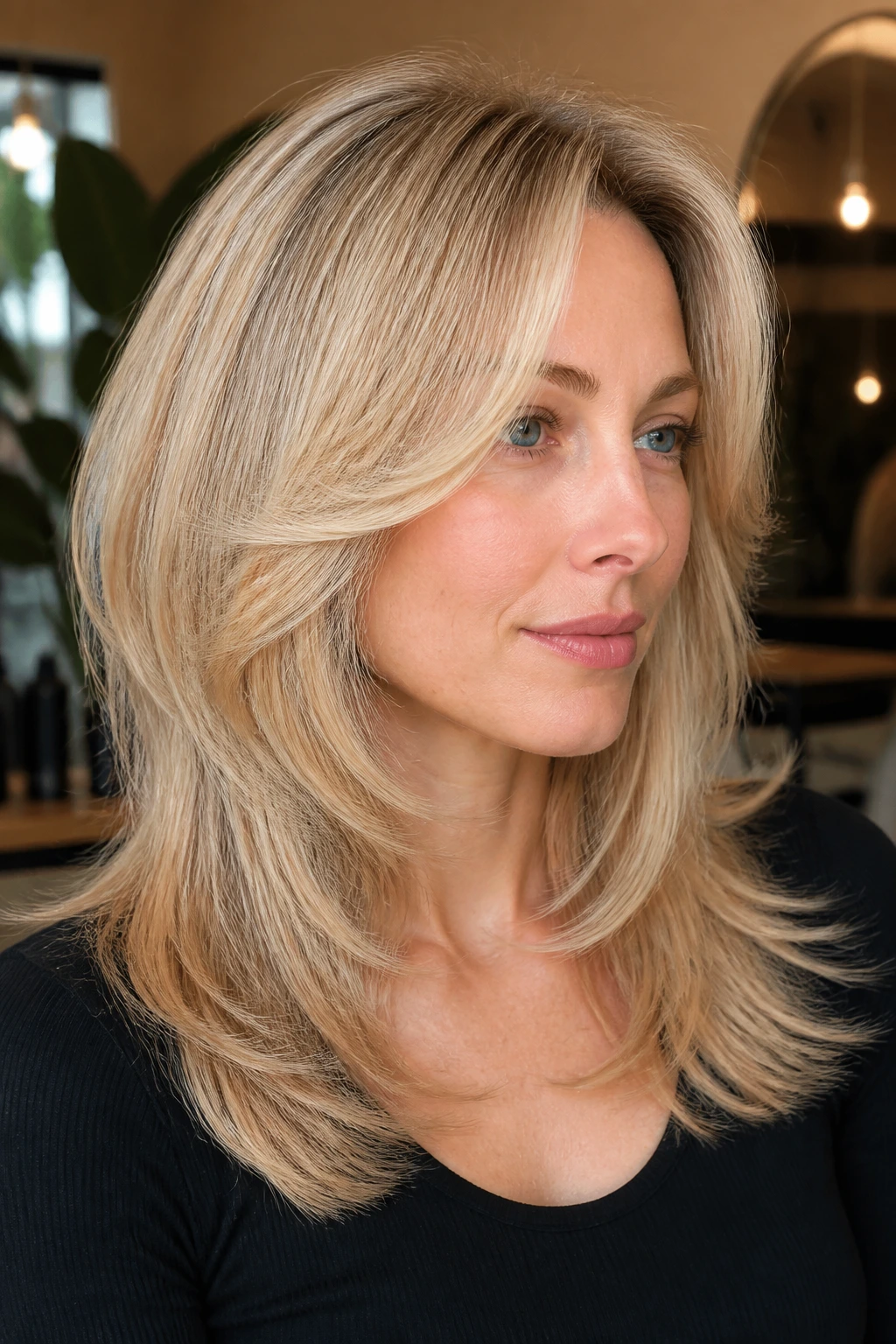
The butterfly cut works on thin hair because it separates jobs instead of asking every strand to do everything at once. The upper layers create lift, the face frame creates focus, and the perimeter keeps the shape from fraying into nothing. That division of labor is the secret.
A lot of bad layering happens when the stylist goes after “movement” without protecting the hemline. Thin hair pays for that mistake fast. The ends start to look thin, the crown looks flat, and the whole cut feels lighter in the wrong way. A good butterfly shape avoids that trap by keeping the bottom section honest and letting the movement live higher up.
I also like how the cut shifts attention toward the face. That’s useful. Instead of staring at sparse ends, the eye sees the cheekbones, jawline, and neckline. The haircut ends up looking intentional because the framing is doing a job.
Tools That Make the Cut Easy to Wear
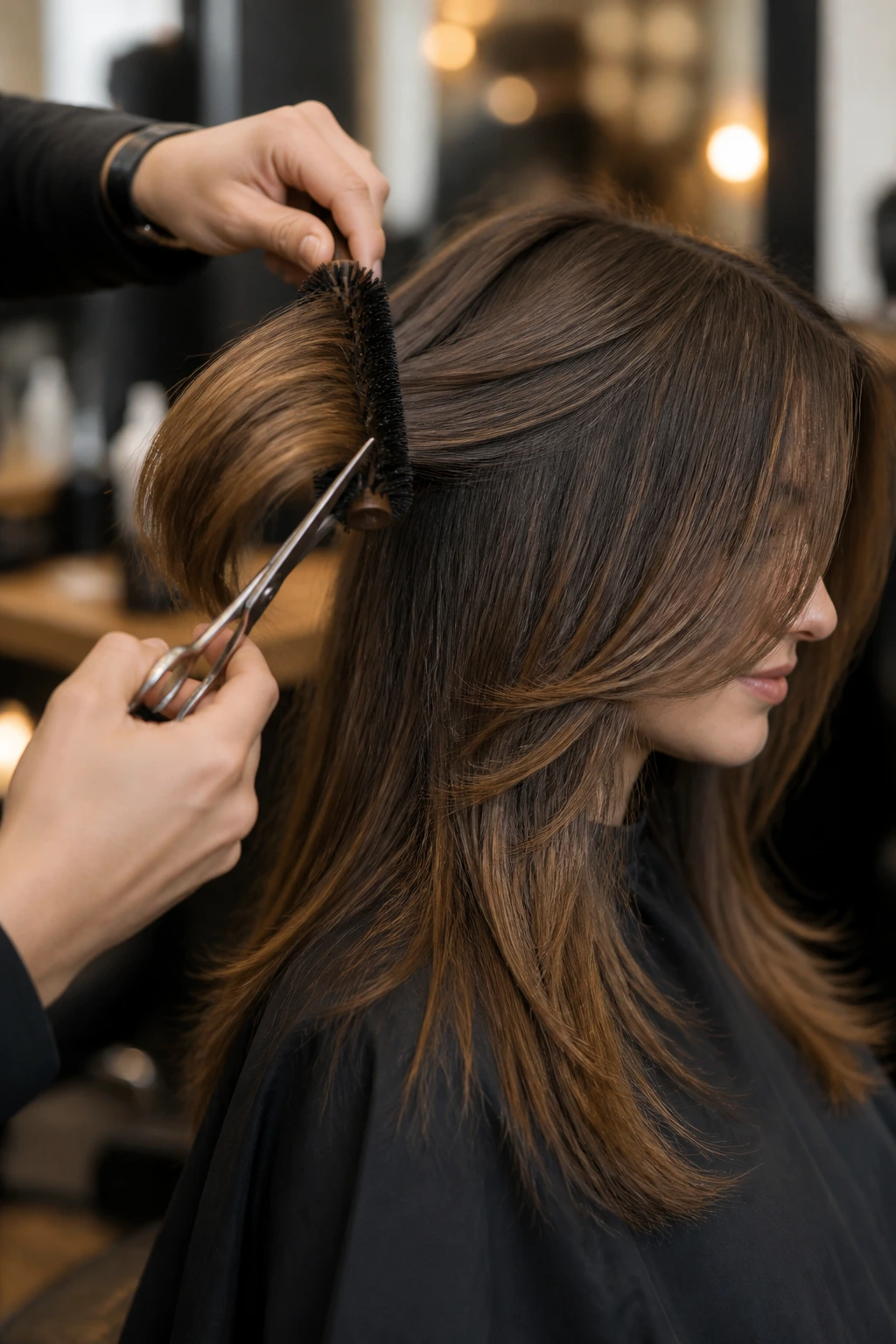
- Styling shears or salon scissors: Clean cuts matter on thin hair; a blunt, tidy edge keeps the perimeter from looking shredded.
- Sectioning clips: These help keep the face frame and crown pieces separate while you blow-dry or set rollers.
- 1.25-inch round brush: A medium round brush gives the best bend for curtain pieces and shoulder-length butterfly cuts.
- Blow dryer with a concentrator nozzle: The nozzle helps direct root lift and smooth the face-framing layers without puffing them out.
- Flat iron with rounded plates: Useful for a soft bend at the ends when you want polish, not curls.
- Velcro rollers or large hot rollers: Great for setting the front pieces so they hold volume instead of falling flat the moment you leave the mirror.
- Lightweight root-lift spray: Use it at the roots, not through the ends, or the hair will feel sticky and dry.
- Heat protectant spray: Thin hair shows heat damage fast, so this is non-negotiable if you style with hot tools.
- Texture spray or dry shampoo: A small amount at the crown can keep the butterfly shape from collapsing.
- Hand mirror: Handy for checking whether the back hemline still looks full and not over-thinned.
How to Talk to Your Stylist Without Getting Too Many Short Layers
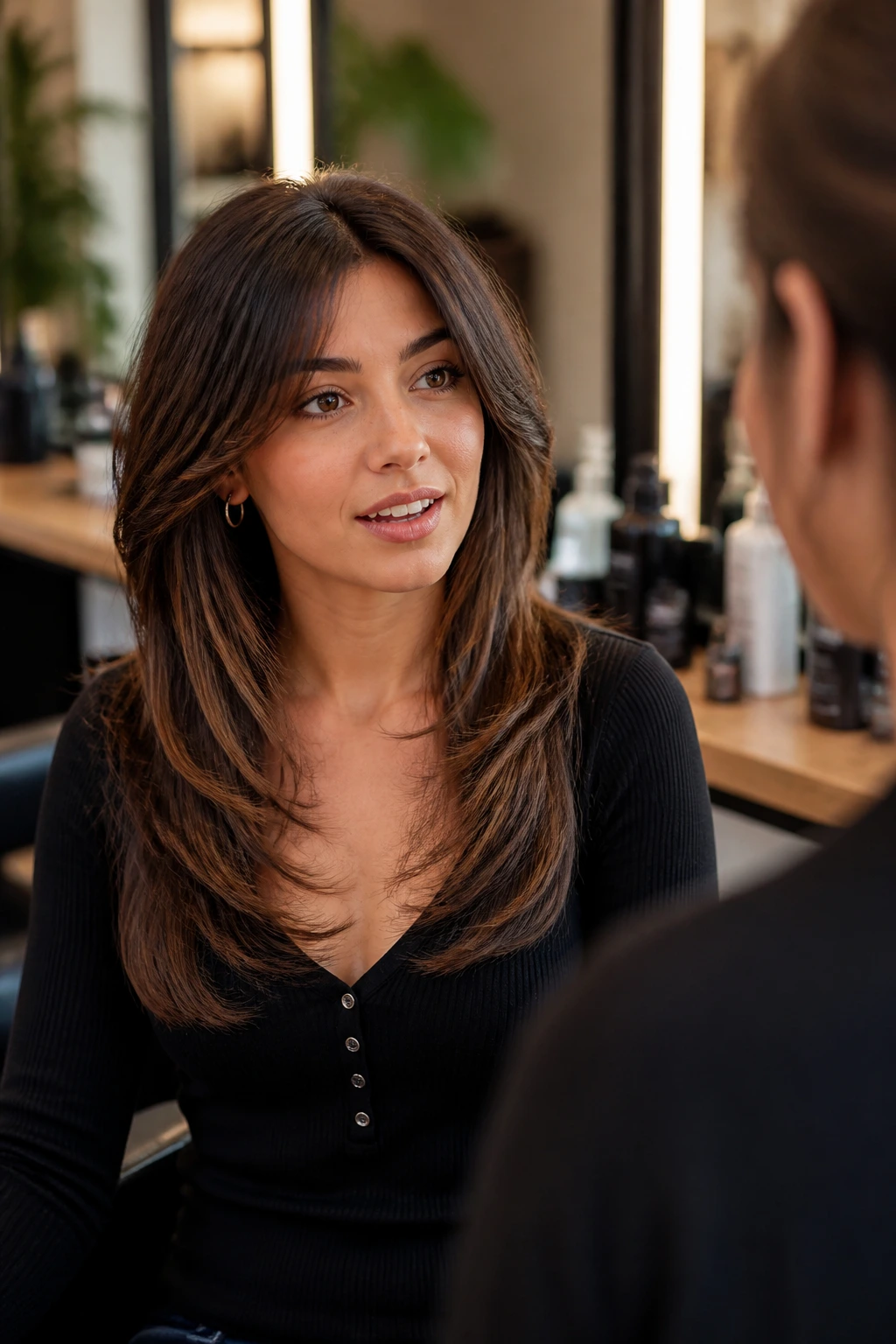
Show photos, yes. But also say what you don’t want. That second half matters more than people think. Tell your stylist whether you want a stronger blowout shape, a softer air-dry finish, or a cut that can survive without daily styling. Thin hair can handle a butterfly shape, but it usually needs more restraint than a thick-hair version.
Be specific about the shortest face-framing point. Say cheekbone, lip, or chin level instead of “around my face.” That precision helps. If you have sparse temples or a narrow front hairline, say so. A good stylist can keep the front pieces long enough to flatter the face without making the sides look eaten up.
Also talk about the hemline. If you want your ends to look full, ask for a blunt or softly U-shaped perimeter with internal layers rather than a lot of point cutting. That one sentence can save you from a haircut that looks pretty for three days and vague for three months.
Styling Moves That Bring the Layers to Life
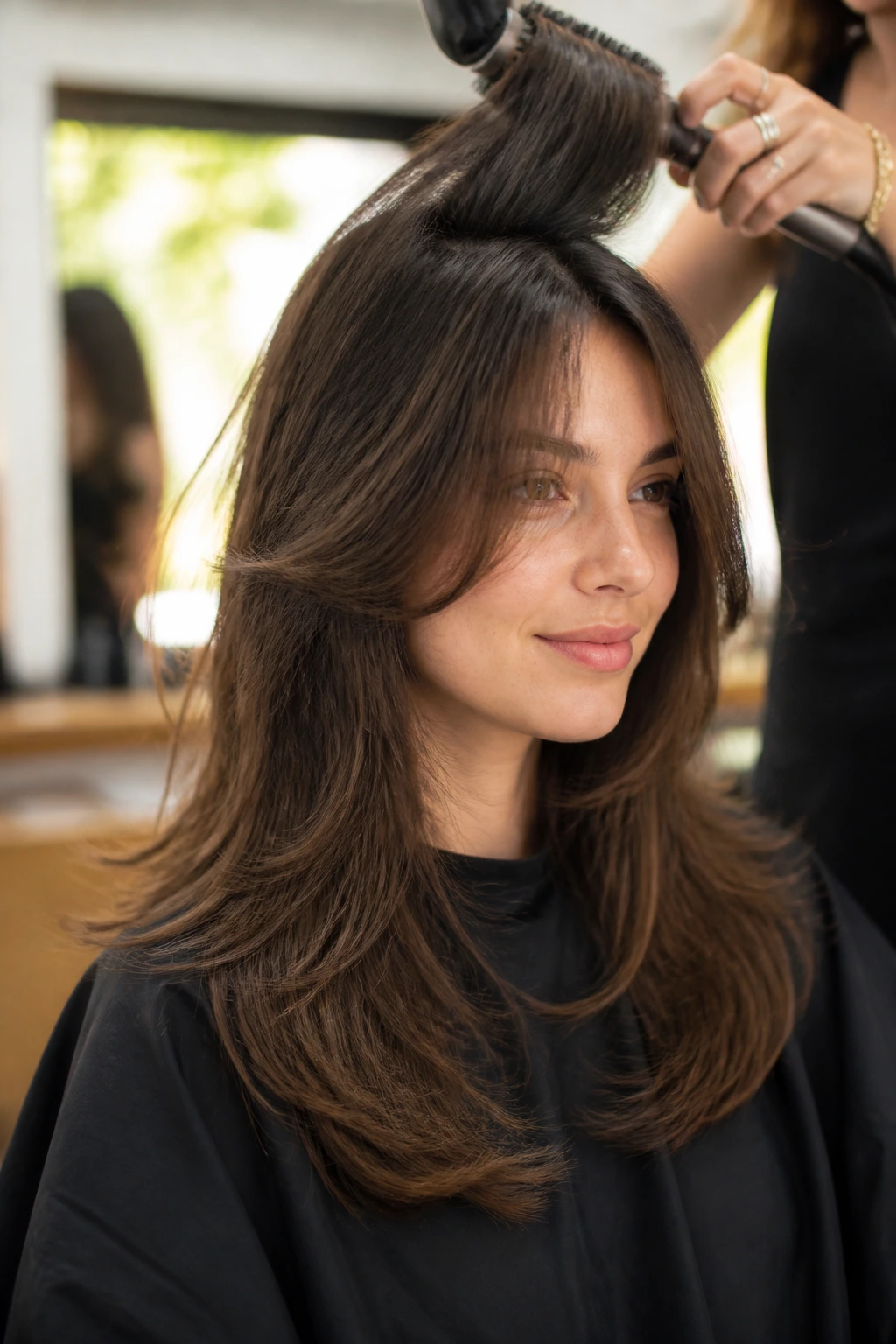
Root Lift:
Start at the roots, not the ends. Blow-dry the top section with the nozzle aimed upward at the crown, then cool it in place with a clip or your hand. Thin hair usually needs root memory more than more product.
Face-Frame Finish:
Wrap the front pieces around a round brush and direct them away from the face, then let them cool before touching them again. If you pull too soon, they fall flat.
Keep the Ends Full:
Curving the bottom 1 to 2 inches inward or outward is enough. You don’t need spirals. A soft bend keeps the hemline reading thick.
Day-Two Rescue:
A little dry shampoo at the roots and a quick re-bend of the face frame can bring the shape back in under five minutes. Thin hair usually responds better to a reset than to more layers of product.
If you only remember one thing, remember this: the cut is the architecture, but the finish is the proof.
Common Mistakes That Make Thin Hair Look Thinner
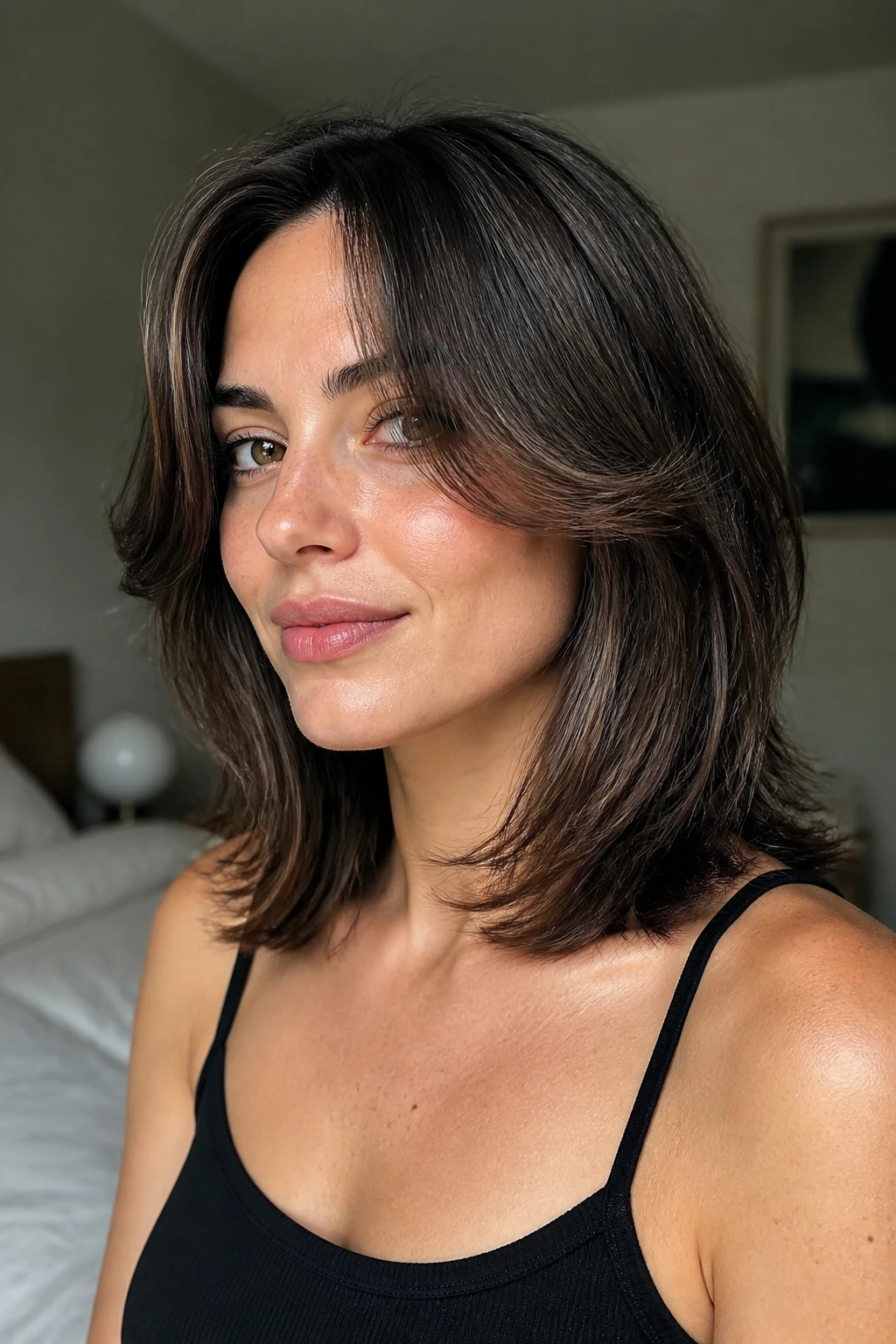
Over-layering the crown:
If the top is cut into too many short pieces, the scalp line shows more easily and the hair loses its body. The fix is a softer crown with longer internal layers.
Cutting the face frame too short:
Short pieces can look cute in the chair and patchy two days later. On thin hair, keep the shortest layers long enough to blend—usually cheekbone to lip level works better than higher.
Thinning the ends for “movement”:
That trick often backfires. The ends start to look stringy, and once the perimeter goes sparse, there’s no quick fix except waiting for it to grow back.
Styling only the top and ignoring the hemline:
A lifted crown with flat ends looks unfinished. Bend the lower lengths a little, even if you’re in a rush.
Choosing a shaggy version when the hair is already sparse:
Some butterfly cuts borrow shag ideas, but thin hair can’t always carry heavy texturing. Ask for softness, not shredding.
Variations and Alternatives to Try
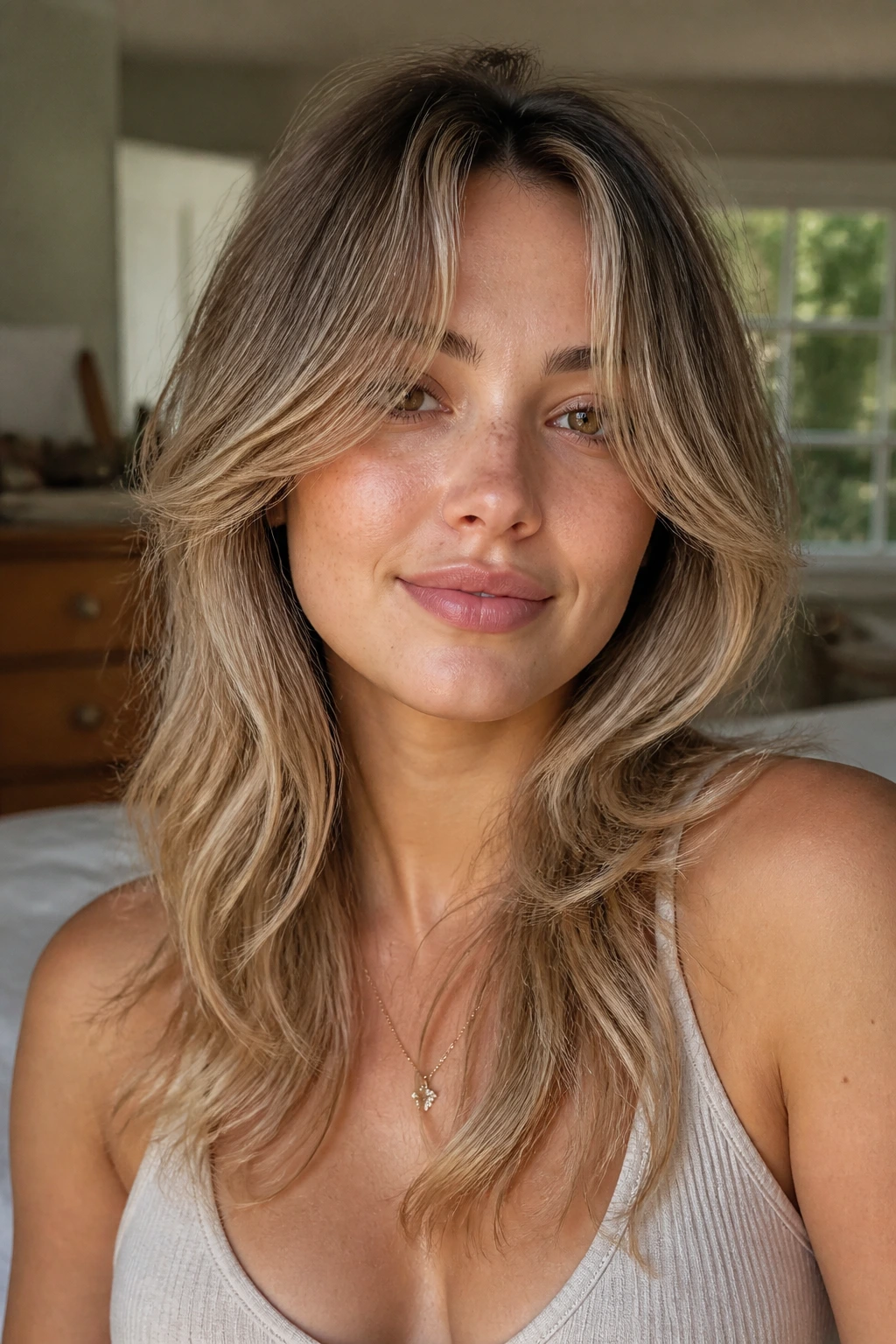
The Barely-There Butterfly:
If you want the idea of the cut without much drama, this version keeps the layer difference small. It’s a good fit for very fine hair that needs shape but not obvious separation.
The Curtain-Bang Butterfly:
This is the most face-framing option in the bunch. Curtain bangs blend into the cheekbone layers and make the cut feel more styled, especially on round or heart-shaped faces.
The Blunt-Perimeter Butterfly:
A smart pick when density is the main concern. The ends stay thick-looking, and the layers stay hidden until the hair moves.
The Shag-Leaning Butterfly:
Choose this if your hair is naturally wavy and you like a little grit. Keep the texture soft so it doesn’t break the perimeter apart.
The Bob-Length Butterfly:
If your hair is too thin to wear long layers well, a shorter version can save the shape. A butterfly bob keeps the front interesting while giving the ends more body.
Keeping the Shape Between Trims
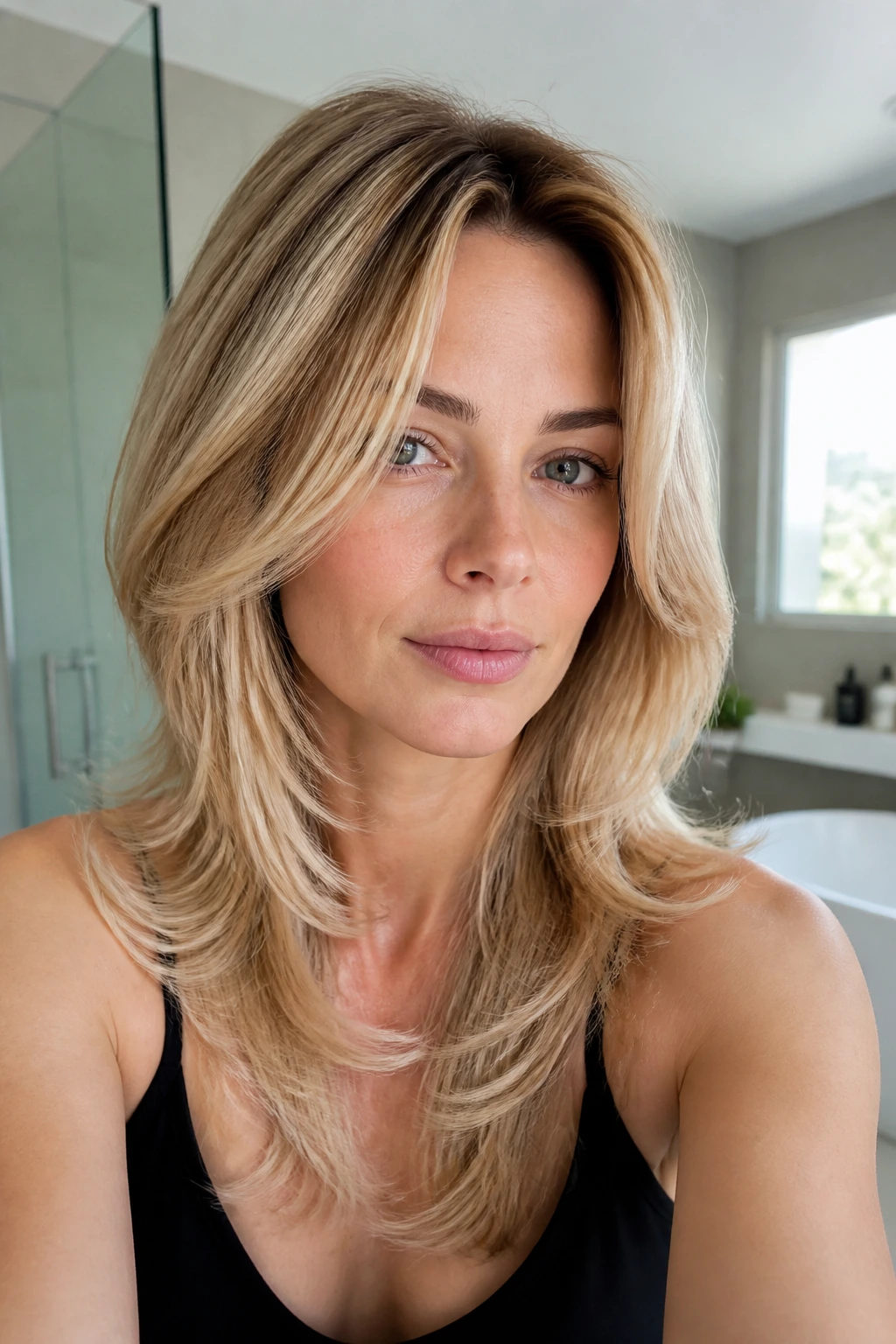
Thin hair tends to lose its haircut faster than thick hair because every uneven edge shows up sooner. For most butterfly cuts, a shape refresh every 8 to 10 weeks keeps the face frame neat and the perimeter from fraying. If you wear bangs or bottleneck pieces, you may want a fringe clean-up every 4 to 6 weeks so the front doesn’t start hanging in your eyes.
At home, the biggest win is protecting the ends. Use heat protectant every time you blow-dry or flat iron, and keep heavy oils away from the roots. A light conditioner on the mids and ends is enough for most thin hair; too much moisture can make the cut sink before lunch.
Sleep matters too. If the front pieces keep folding weirdly overnight, pin them loosely back or use a silk scrunchie to keep the shape from bending hard against the pillow. On wash day, rough-dry the roots until they’re about 80 percent dry, then shape the front with a brush. That last step keeps the butterfly effect visible instead of vague.
Questions People Ask About Butterfly Haircuts for Thin Hair
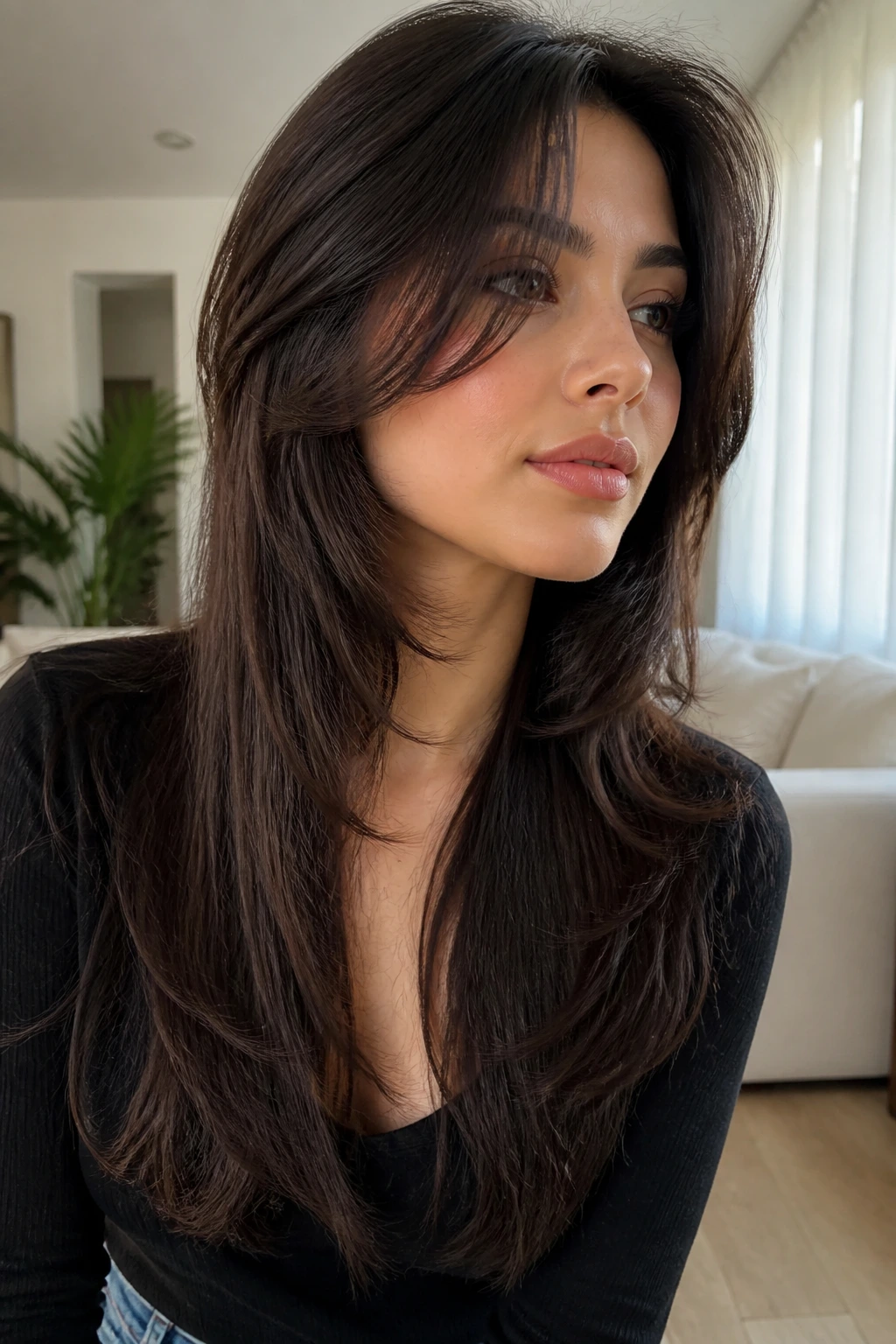
Will a butterfly haircut make thin hair look thinner?
It can, if the layers are cut too aggressively. A good version keeps the perimeter full and uses the face-framing pieces to create movement, not holes. Placement matters more than layer count.
How short should the face-framing layers be?
Cheekbone to lip level is usually the safest range for thin hair. Going shorter can work, but only if the hair has enough density at the front to support it.
Is this cut better with a center part or a side part?
Both can work. A center part feels cleaner and more symmetrical, while a deep side part can create extra lift at the root and help flat hair look fuller.
Can I get a butterfly haircut if my hair is very straight?
Yes, but keep the layers subtle. Straight hair shows every line, so softer transitions and a blunt-ish bottom usually look better than heavy texturizing.
What if my hair falls flat right after styling?
That usually means the roots need more set and the ends need a little more bend. Try root-lift spray, sectioning clips while the hair cools, and a round brush on the front pieces.
Does the butterfly cut work on wavy hair?
It does, and sometimes wavy hair carries it better than straight hair. The layers catch the movement and make the cut look fuller without much extra effort.
How often should I trim it?
Most thin hair butterfly cuts need a shape trim every 8 to 10 weeks. If the front frame is short or you wear bangs, you may need touch-ups sooner.
Can I keep my length and still get this shape?
Absolutely. That’s one of the reasons the butterfly cut is so popular with thin hair. The longer lower section stays in place while the upper layers do the framing work.
The Shape That Keeps Thin Hair Looking Full
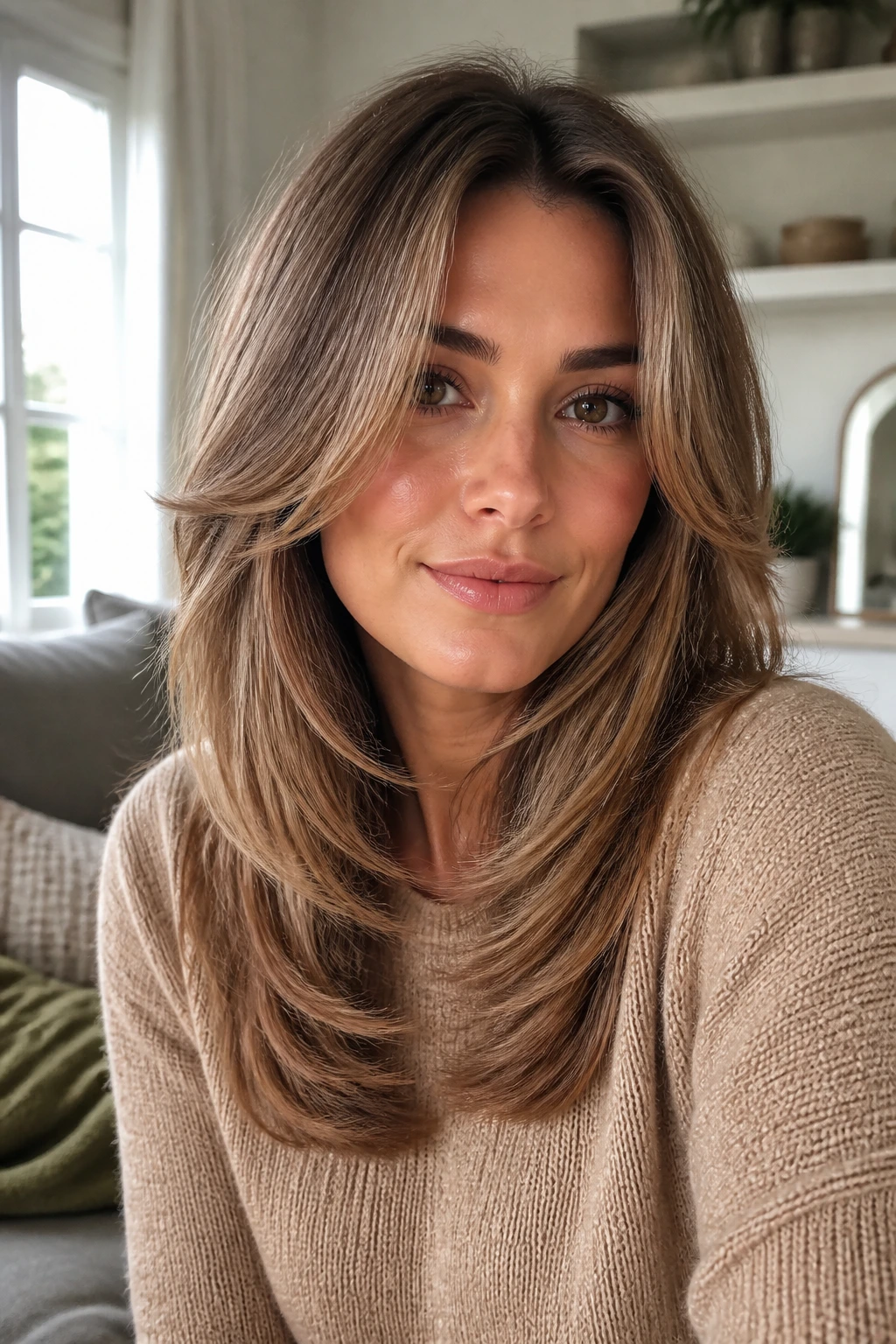
The best butterfly haircut for thin hair is rarely the most dramatic one. It’s the one that keeps a steady hemline, places the face-framing layers where they can do real work, and leaves enough weight in the right places so the hair still looks like hair, not fluff.
That’s the real line to hold. Keep the perimeter strong, keep the front pieces purposeful, and keep your styling simple enough that you’ll actually do it. A soft bend, a little root lift, and a clean outline will take you farther than an over-layered cut ever will.
If you’re bringing this idea to a stylist, bring one photo of the shape you like and one photo of the face frame you don’t want. That tiny bit of extra direction can save you from a lot of regret later.