



Soft layers are the reason long hair can still look lively instead of dragged down by its own weight. Long hairstyles for women over 50 with soft layers keep the length, but they break up that heavy curtain effect that can make even healthy hair look flat at the sides and bulky at the ends.
That matters more than people admit. A blunt, all-one-length cut can be gorgeous on the right person, but on long hair it often exaggerates thinning at the ends, shows every cowlick near the hairline, and makes the face feel boxed in. Soft layers do the opposite. They let silver strands move. They give thick hair somewhere to go. They make fine hair look less pin-straight and more alive.
I also think soft layers age better than aggressive ones. Not “age better” in some vague beauty-magazine sense — I mean they grow out with less drama, they sit well whether you blow-dry or air-dry, and they don’t depend on a perfect styling day to look intentional. The trick is knowing where the layers start, how much weight gets removed, and which face-framing shape plays nicely with your natural texture. That part matters. A lot.
Why This Collection Feels Different
-
The length stays the star: These cuts keep hair long enough to pull back, tuck behind an ear, or wear loose, while the layers stop the ends from hanging like a single heavy rope.
-
Soft layers are forgiving: A little regrowth doesn’t wreck the shape, which is why these styles tend to look decent even when your trim is overdue by a few weeks.
-
They work with real texture: Straight, wavy, silver, coarse, fine, or curly hair all need different layer placement, and these examples show that difference instead of pretending one cut fits all.
-
The face gets a frame, not a wall: Layers around the cheekbone, jaw, or collarbone soften the outline without chopping the length into pieces.
-
They style up or down without much fuss: A round brush, a large curling iron, or a simple air-dry cream can take the same cut in very different directions.
-
They keep bulk where you want it: The good versions of soft layers remove weight strategically, not everywhere at once, so the hair still has body at the bottom.
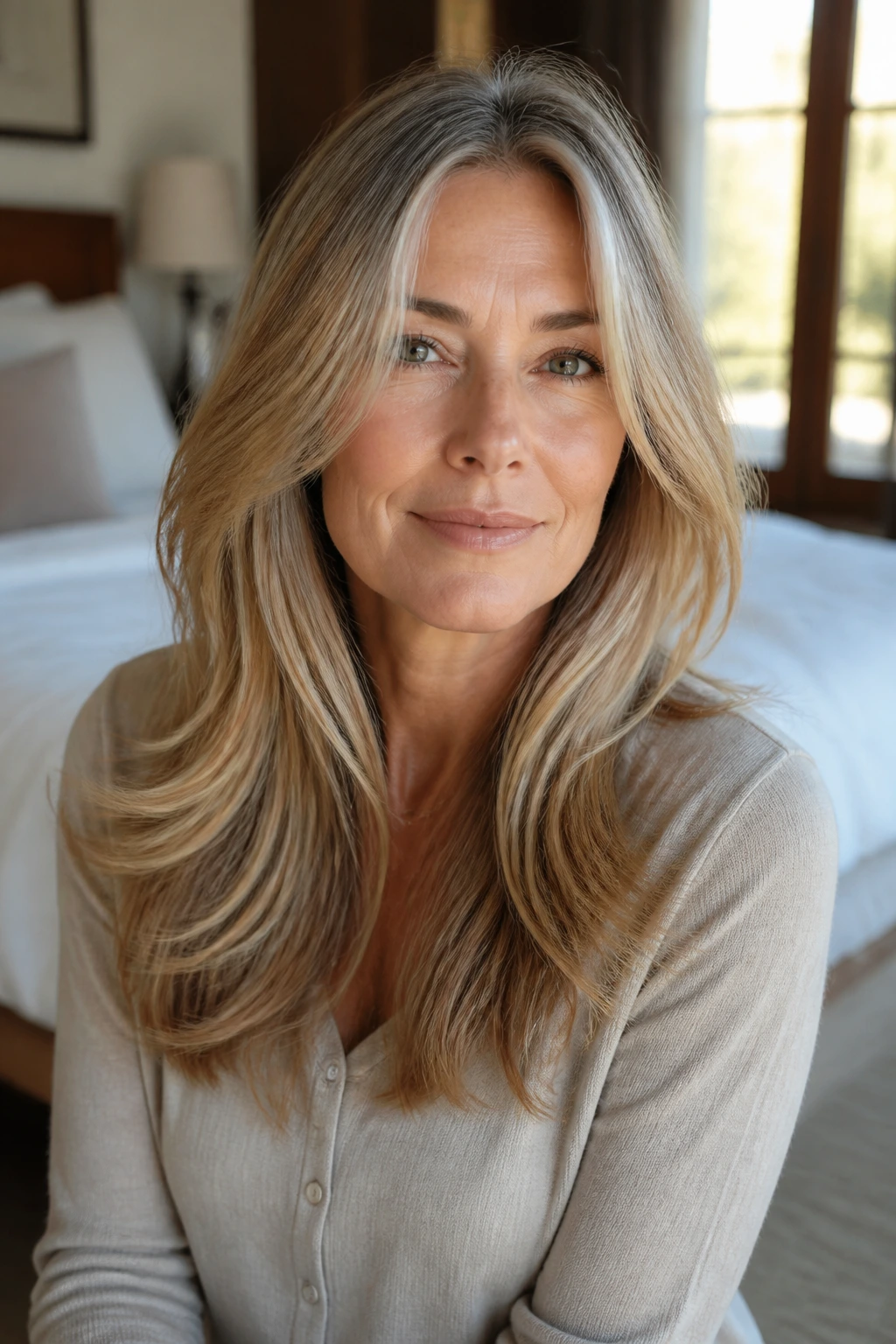
1. Long Face-Framing Layers with a Soft Center Part
These are the layers I reach for when someone wants length first and movement second. The longest face-framing pieces start around the cheekbone and slide down into the rest of the hair, so the shape stays open around the face instead of closing in on it. A center part keeps the cut calm and balanced, which is useful if your hair has enough density to support symmetry.
Why it works
The magic here is restraint. The shortest pieces should not jump up too high, or the front will feel thin before the rest of the hair has a chance to do its job. When the layers begin a little lower, the face still gets softness, but the ends keep their weight. That matters if your hair is straight or only slightly wavy, because too much front layering can make the whole style look stringy by lunch.
This cut also plays nicely with a blow-dry round brush. Roll the front sections away from the face for a minute or two, then let them cool before you touch them. That little cooling pause helps the bend hold without turning the ends stiff.
2. Chest-Length U-Cut with Feathered Ends
If you like hair that falls in one long sweep but still has some shape, the U-cut is one of the smartest options on the table. The back keeps its length, while the sides curve gently inward, which gives the cut a softer outline than a blunt hemline. Feathered ends keep it from looking too heavy at chest length.
The effect is subtle, and that’s why it works. You see movement first, not the haircut itself. If your hair tends to sit flat at the top and puff at the bottom, this shape evens out the silhouette without making you lose inches you wanted to keep.
A stylist can create this with scissors or a softer point-cutting technique. I prefer the version that looks almost invisible when the hair is down. When the cut is too obvious, you start fighting the shape instead of enjoying it.
3. Loose Waves with Invisible Layers
This is the cut for women who want the hair to look like it fell that way on purpose, even when it took ten minutes and a large-barrel iron. The layers sit inside the shape rather than shouting from the surface, so the wave pattern stays smooth and the ends don’t fray. On medium-density hair, that hidden structure gives you movement without visible chop marks.
What makes it different
Invisible layers are not a license to thin the hair to death. They’re a way of taking weight out from the inside so the outer line still looks full. The best version is especially good if your hair tends to collapse when curled, because the internal layers keep the wave from becoming one large, puffy bend.
Use a 1¼-inch curling iron or wand, leave the last inch of the ends out, and brush through once it cools. That creates the soft, brushed wave that sits well on mature hair. Tight curls can look a little fussy here; relaxed bends are the point.
4. Deep Side-Part Layers for Silver Hair
Silver and white hair can be luminous, but it also shows every flat spot. A deep side part helps break up the surface, and soft layers near the cheek and jaw give the color dimension without needing heavy styling. The result feels polished without looking stiff.
The best thing about this shape is how it handles contrast. Darker lowlights, bright silver, and even a little natural yellow in the ends all read more clearly when the part shifts off center. That tiny asymmetry keeps the style from looking severe.
I like this cut on hair that has some natural bend. A side part gives the hair somewhere to fall, and the layers stop the front from building into one solid sheet. If your hair is fine, keep the layers longer and avoid too much texturizing at the ends.
5. Curtain Bangs That Melt into the Length
Curtain bangs can be a gift or a nuisance, and the difference is usually where they stop. The good ones skim the brow or cheekbone, then disappear into the side layers so there’s no hard line between fringe and length. On women over 50, that blend can soften the forehead and draw the eye upward without feeling childlike.
This cut likes a little round-brush work at the front. A quick bend away from the face gives the bangs shape, and the longer sides keep the transition smooth. Skip the tiny barrel iron here unless you want the bangs to look too separated from the rest of the hair.
The real advantage is flexibility. You can split the bangs wider on a casual day, tuck them behind the ears, or let them sit forward for a little more coverage. That’s a lot of mileage from one front section.
6. Rounded Blowout Layers with Crown Lift
This is the style for hair that looks best when it has a bit of polish. The layers are cut to support a rounded silhouette, so the crown rises slightly and the ends curve inward instead of hanging straight down. It’s the kind of shape that makes a blow-dry feel more expensive than it was.
The crown lift matters. It opens the face, gives the profile a cleaner line, and keeps the top from collapsing under the weight of long hair. If your scalp has a natural cowlick or your hair lies flat after sleep, this cut gives you more room to redirect it.
A medium round brush and a nozzle attachment on the dryer help a lot here. Pull the top sections up and back while drying, then let them cool in clips for a minute. That extra minute does more than another pass with hot air ever will.
7. Straight Long Layers for Fine Hair
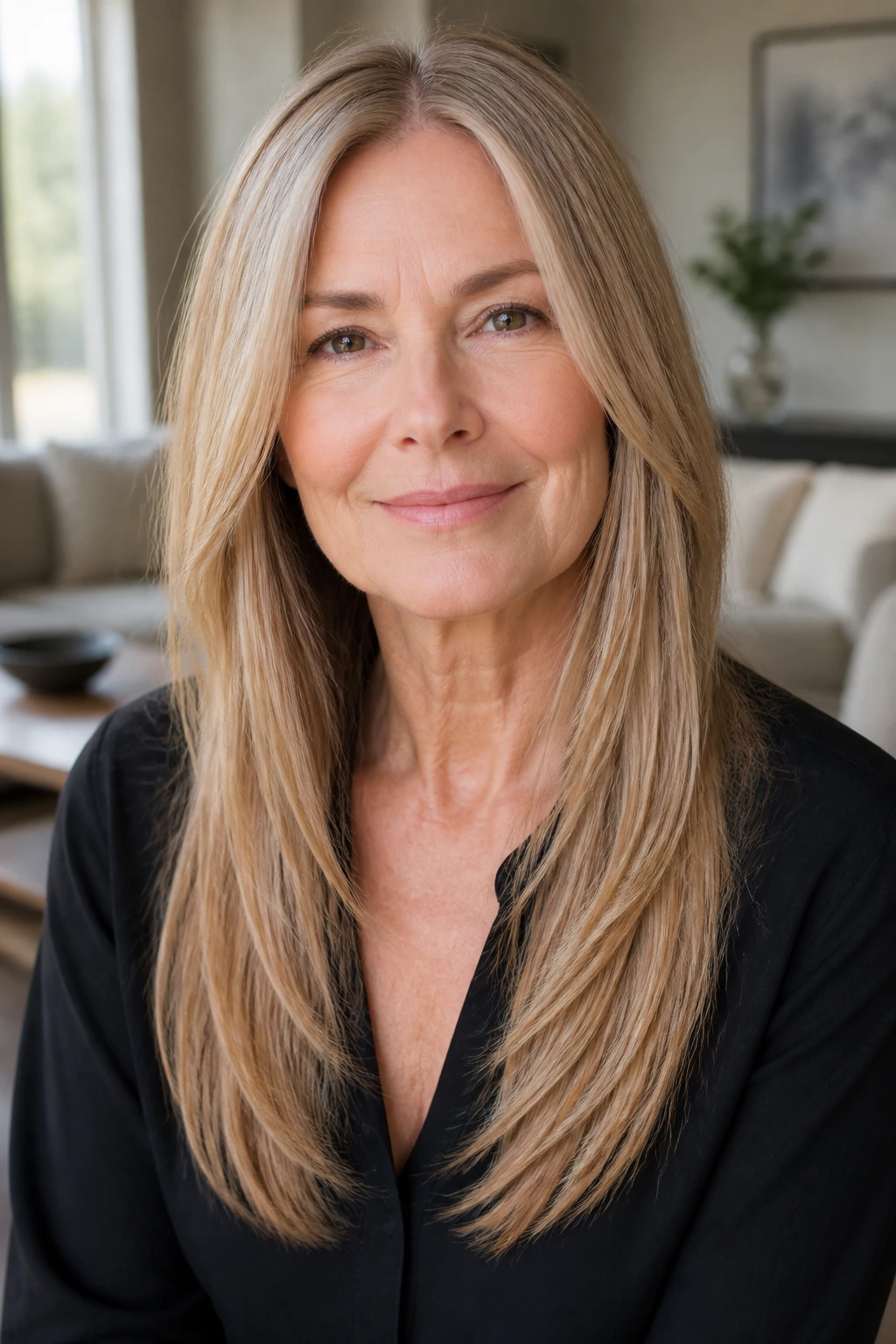
Fine hair does not need aggressive layering. It needs shape with enough weight left in the ends to keep the line from going wispy. This cut keeps the layers long, often starting below the cheekbone or even closer to the shoulder, so the length still feels substantial.
The trick is to create movement without leaving gaps. A few long, softly connected layers can make straight hair swing more easily while avoiding that see-through look that comes from too many short layers. If your hair is fine and straight, that balance is everything.
I’d avoid over-thinning this one. A razor-happy cut can leave the ends looking threadbare in a hurry. Ask for clean, soft removal of weight, not texture for texture’s sake.
8. Soft Shag with a Long Back Line
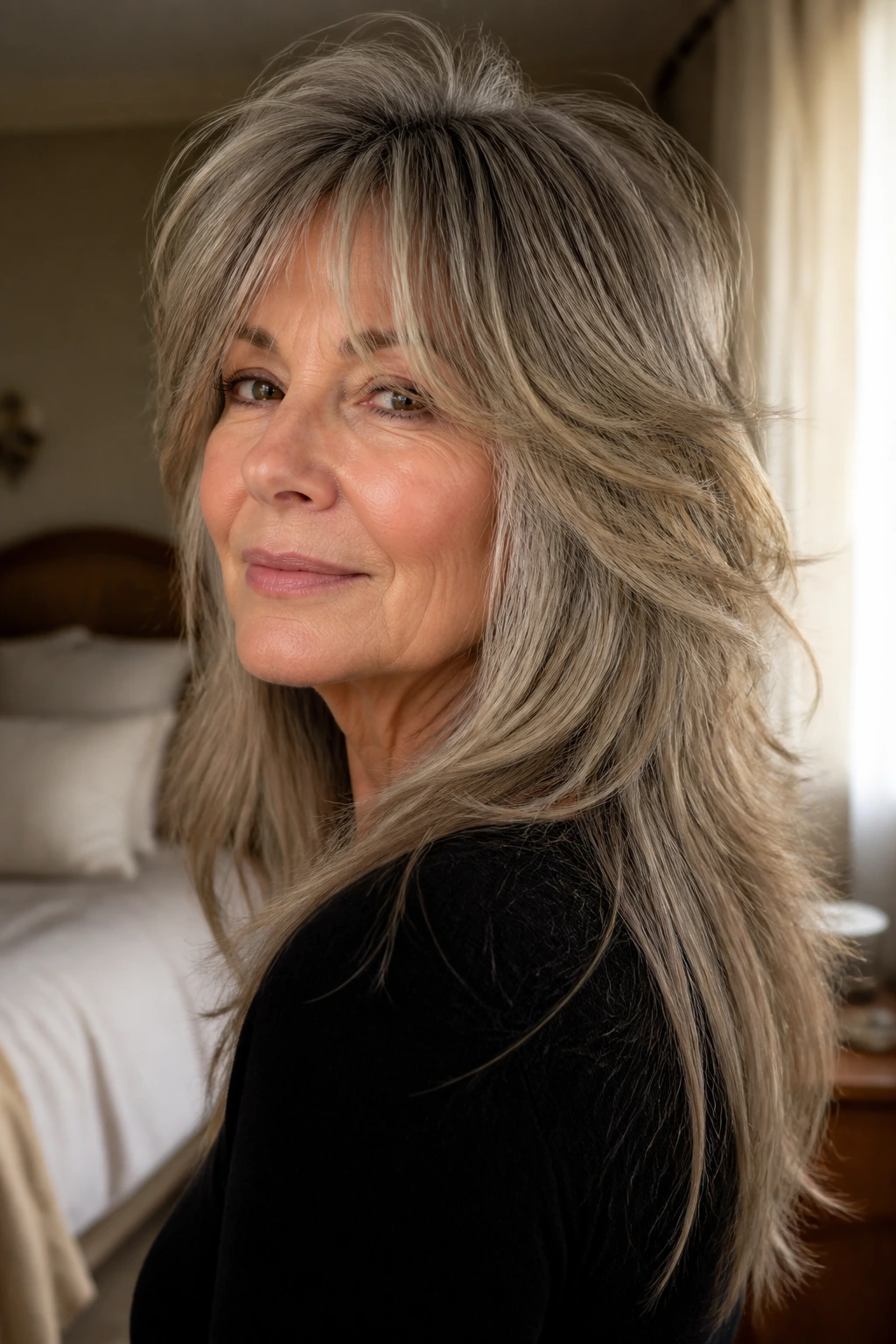
A modern shag does not have to be short or punky. Kept long, with the back line intact, it becomes one of the best options for women who want energy around the face and length through the body. The layers are more visible here, but they still need to feel soft, not chopped.
This cut works when the front has a little attitude. The crown gets lift, the sides get movement, and the bottom line keeps enough weight to stop the whole shape from turning fluffy. It’s especially flattering on slightly wavy or air-dried hair.
The biggest mistake is taking the layers too high. Then you don’t have a shag; you have a cloud. Keep the shortest pieces near the cheek and temple, not halfway to the top of the head, and the haircut stays modern instead of wild.
9. Wavy Layers with Honey Highlights
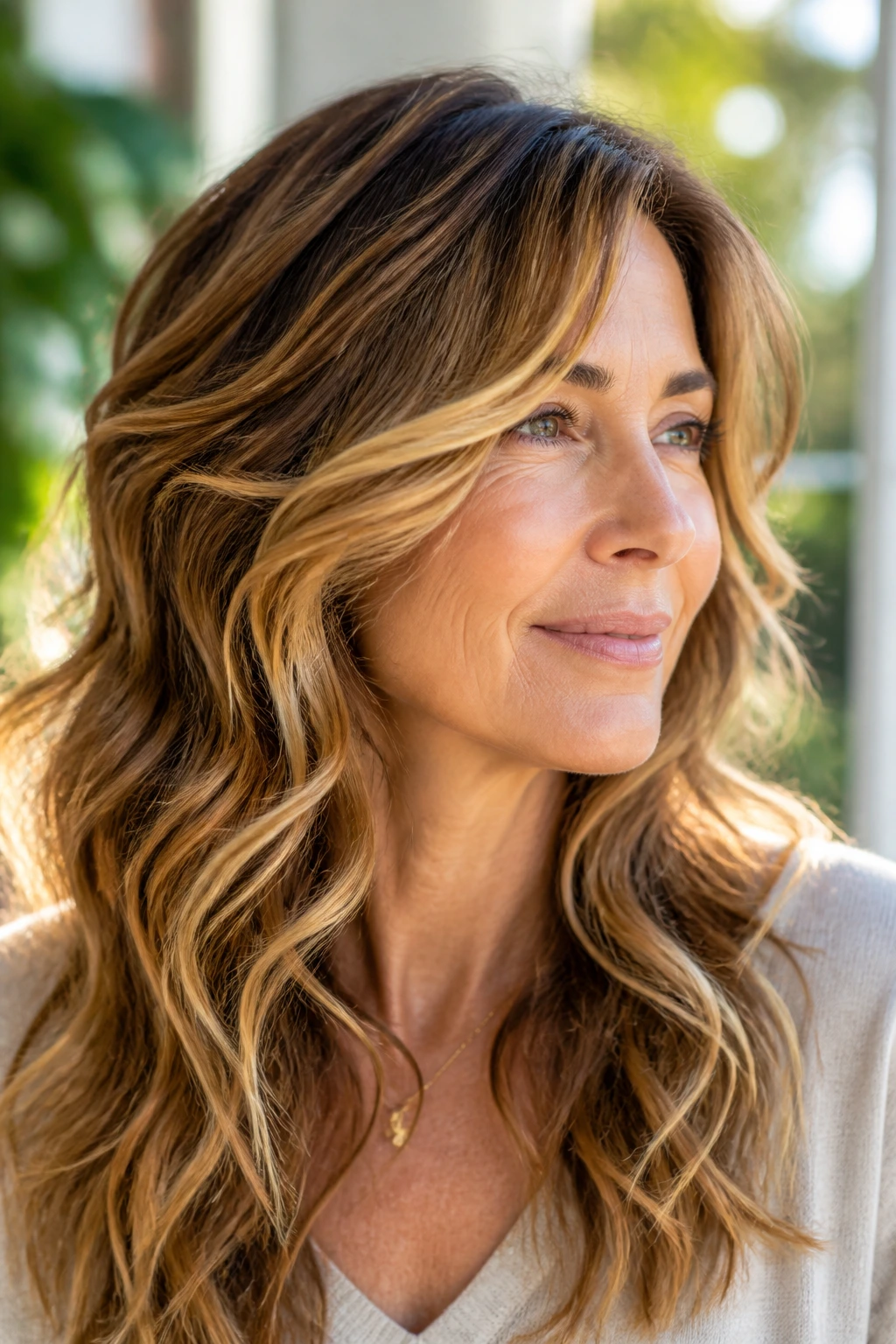
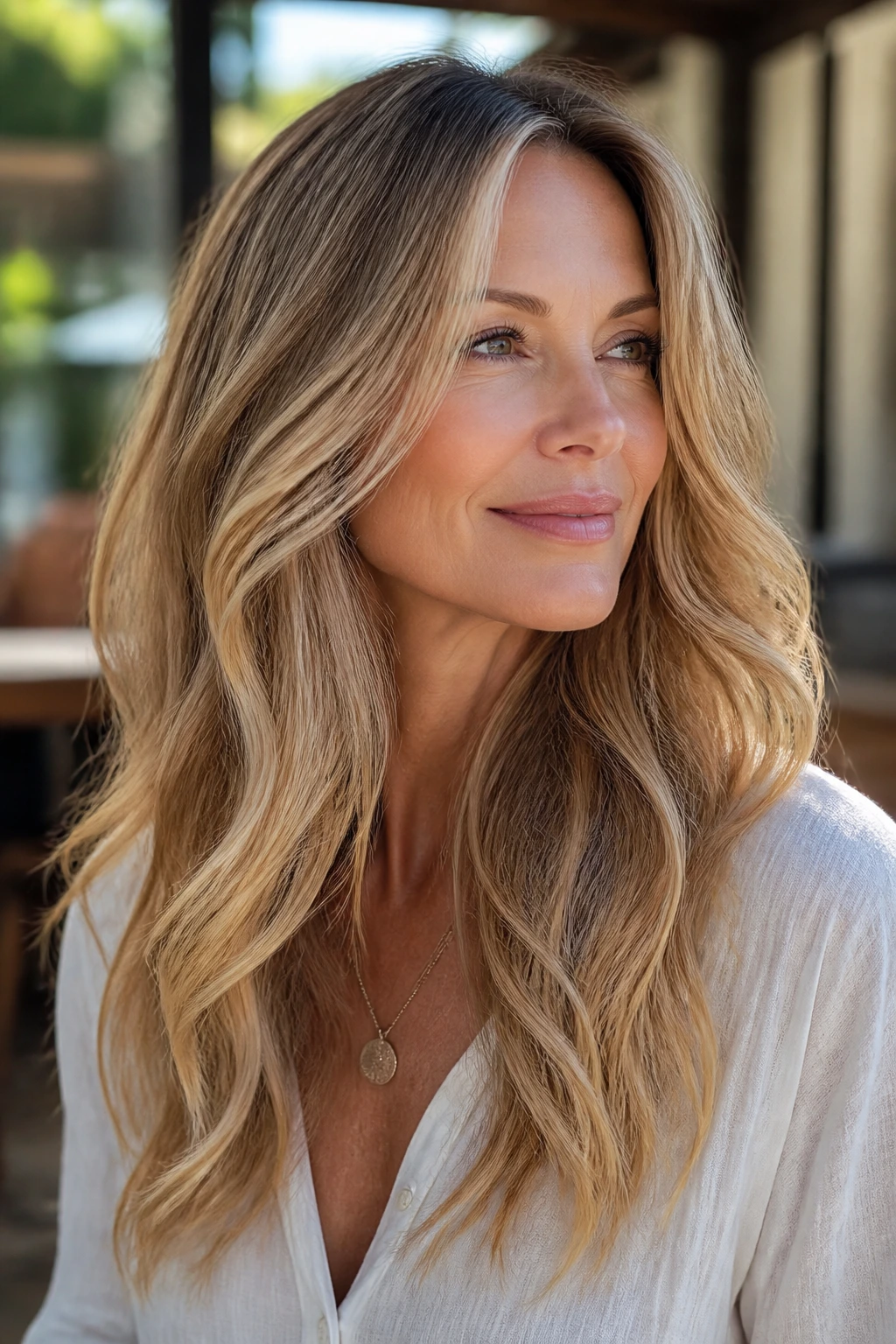
Soft layers and warm highlights are old friends. The layers give the waves a place to bend, and the honey tones pick up on those bends so the whole style looks fuller without teasing or heavy product. This is one of my favorite ways to add depth to hair that’s lost a little color contrast over time.
The color is not decoration here; it’s structure. Honey, caramel, or soft gold pieces placed around the face and on the top layer make the movement easier to read. On long hair, that can matter more than a dramatic cut line.
A little sea-salt spray or a light mousse can make this shape look piecey in the best way. Keep the product away from the roots if your hair is fine, though. You want wave, not crunch.
10. Curly Layers That Keep the Shape at the Cheekbones
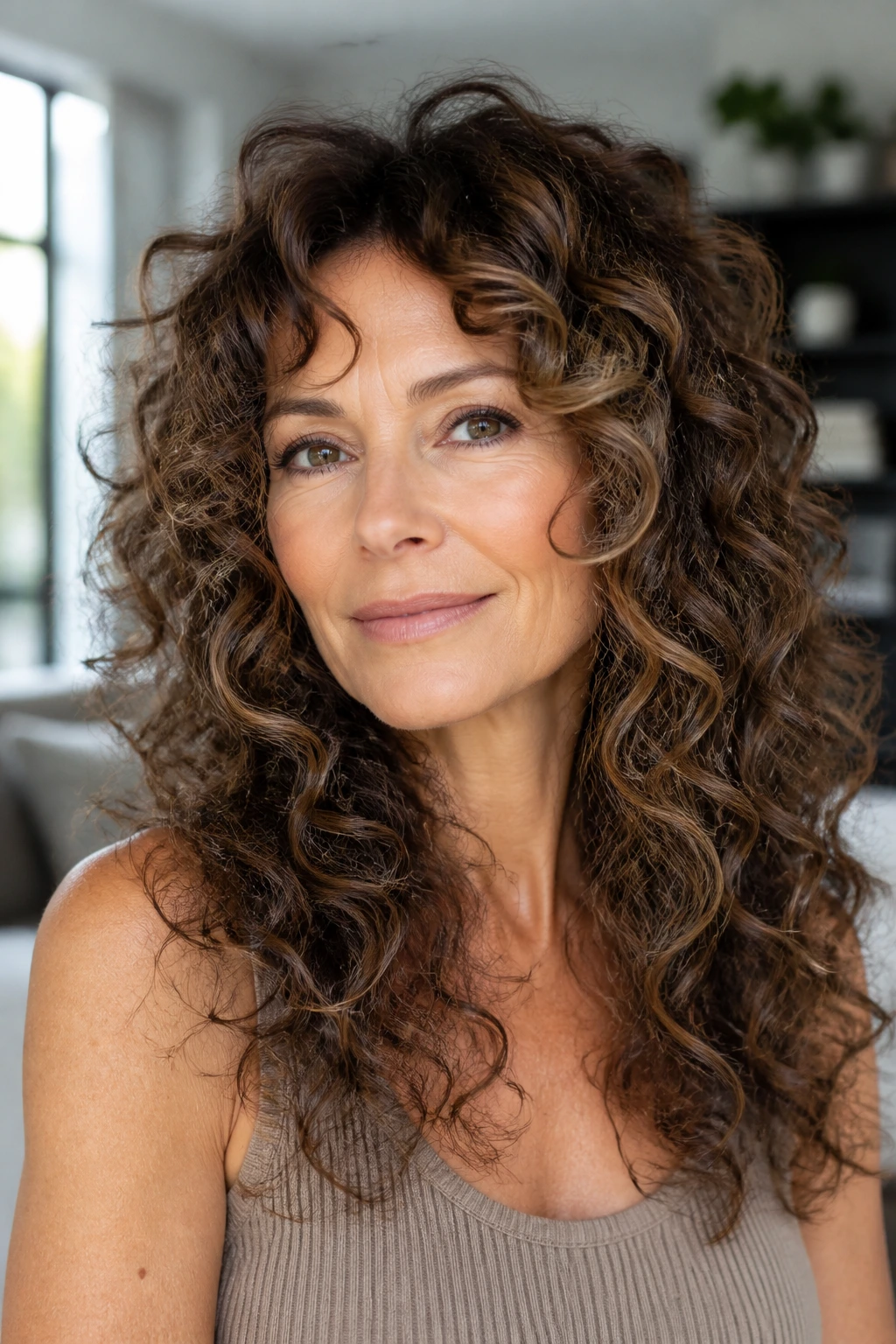
Curly hair needs layers with a plan. The goal is not to make it smaller; the goal is to stop the bottom from ballooning while letting the curls stack in a shape that follows the face. If the shortest pieces land around the cheekbones, the curl pattern gets a frame without losing length.
This cut is best done dry or on hair that’s at least close to its natural curl state. Wet curls can lie to you. They shrink. They spring. They behave better or worse than expected, which is why a stylist who understands curl pattern matters more than almost anything else.
A cream gel or curl cream usually works better than a heavy oil here. Too much oil makes the curls clump at the ends, and then the layers disappear. You want spring, not slickness.
11. Bottleneck Bangs with Sweeping Sides
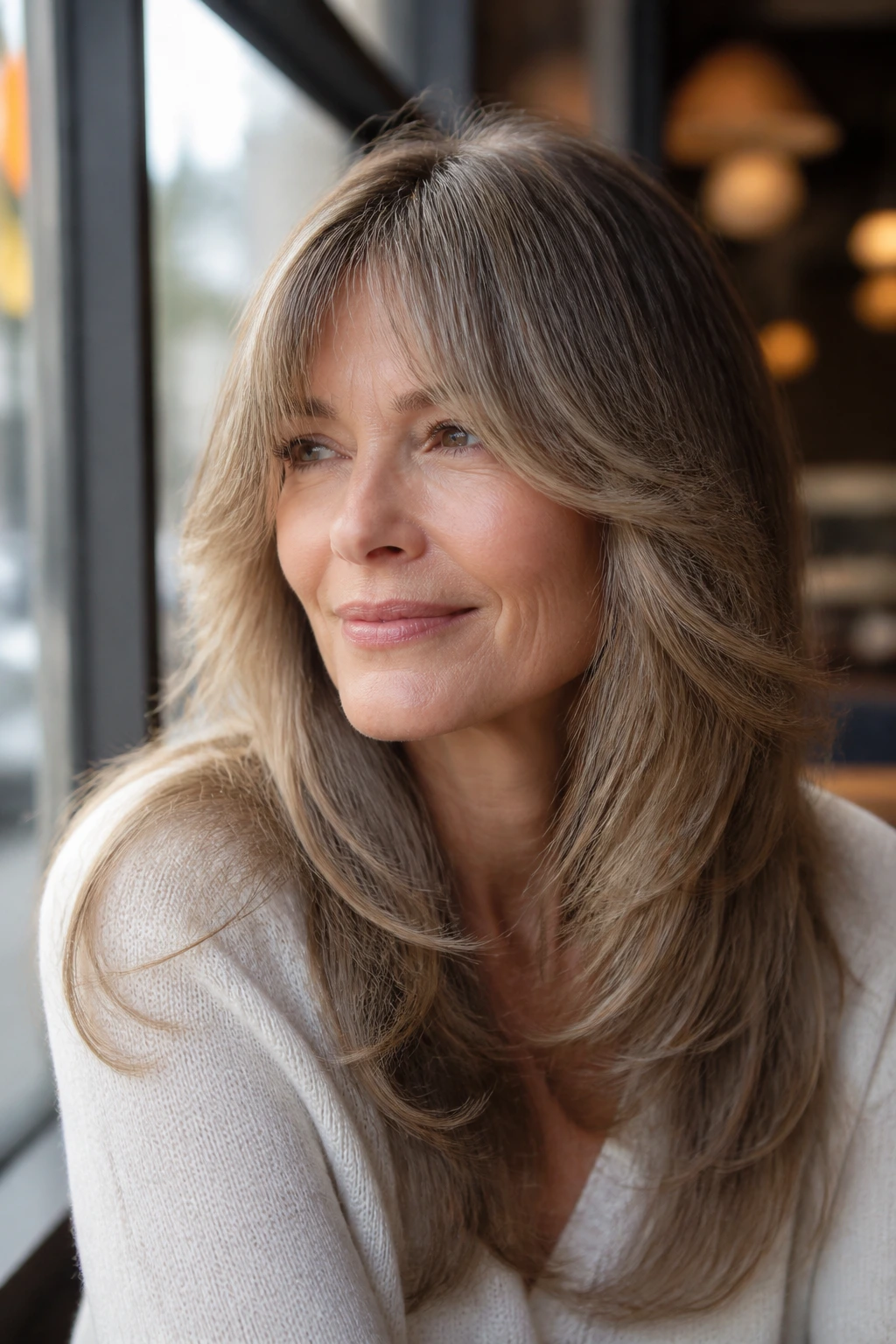
Bottleneck bangs are a softer cousin to blunt fringe, and they’re especially nice with long layers because they let the face stay open. The center sits shorter, then the sides taper longer and blend into the cut. That taper is what keeps the style from looking boxed in.
The bangs can soften a strong forehead, but they also work for anyone who wants a bit of movement around the eyes without committing to a full fringe. I like them better than straight-across bangs on long hair, frankly. Straight fringe can fight with length; bottleneck bangs cooperate with it.
Keep the rest of the layers low and flowing. If the front is busy and the body is busy, the haircut starts talking over itself. One strong feature is enough.
12. Air-Dried Layers for Low-Effort Mornings
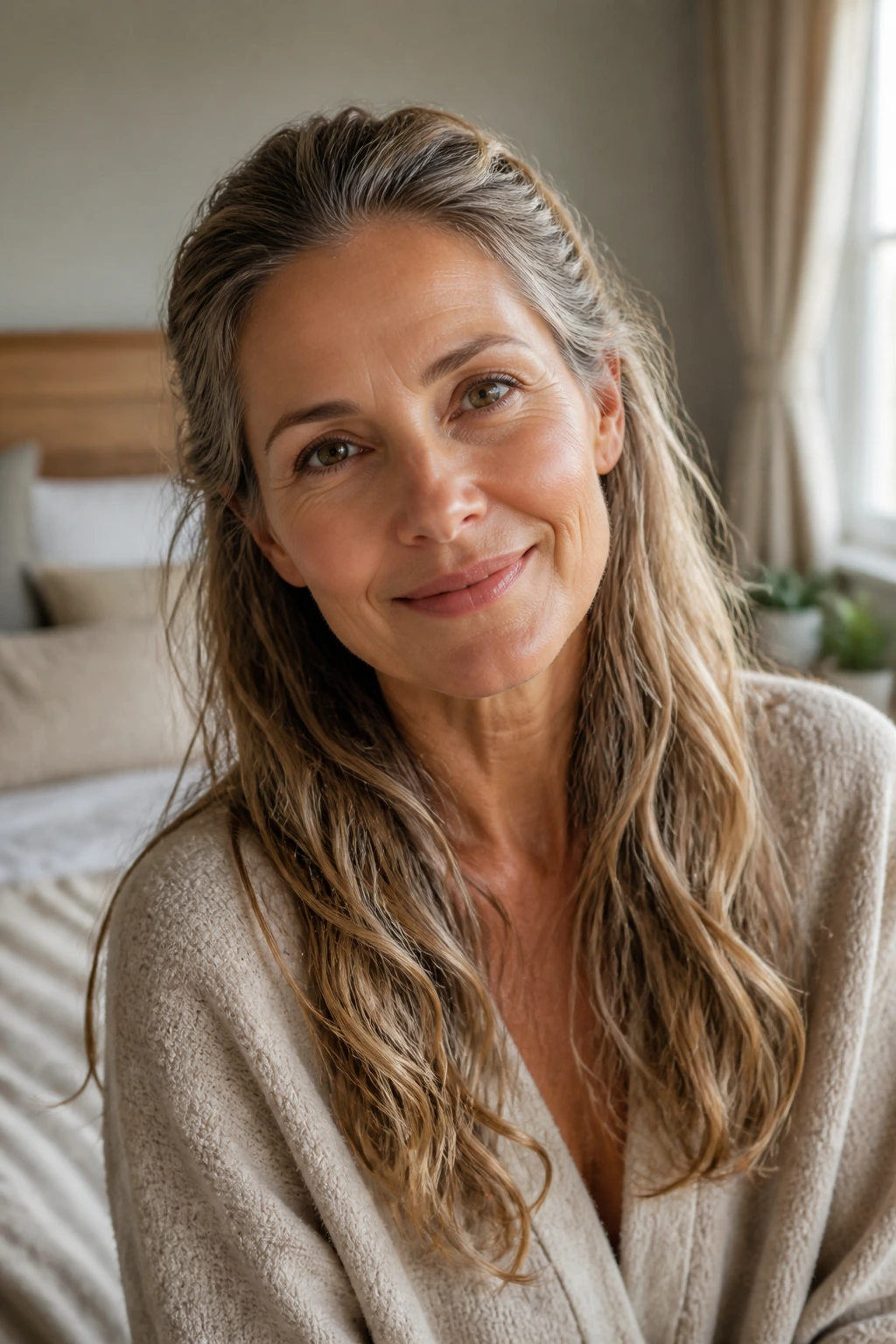
Not every haircut needs a blowout to earn its keep. Air-dried soft layers are built around natural bend, especially if your hair has a mild wave or a bit of texture after washing. The shape should still read clearly when the hair is half dry and tucked behind the ears.
This is the cut I recommend when someone hates spending twenty minutes with a dryer every morning. The layers should be long, connected, and placed so they fall into shape on their own. A leave-in cream and a touch of gel at the ends can help define the movement without making the hair feel coated.
The key is not to over-layer the crown. Air-dried hair needs weight at the top to stop it from puffing up, especially in humidity. The face frame can do the work instead.
13. Side-Swept Front Layers with a Gloss Finish
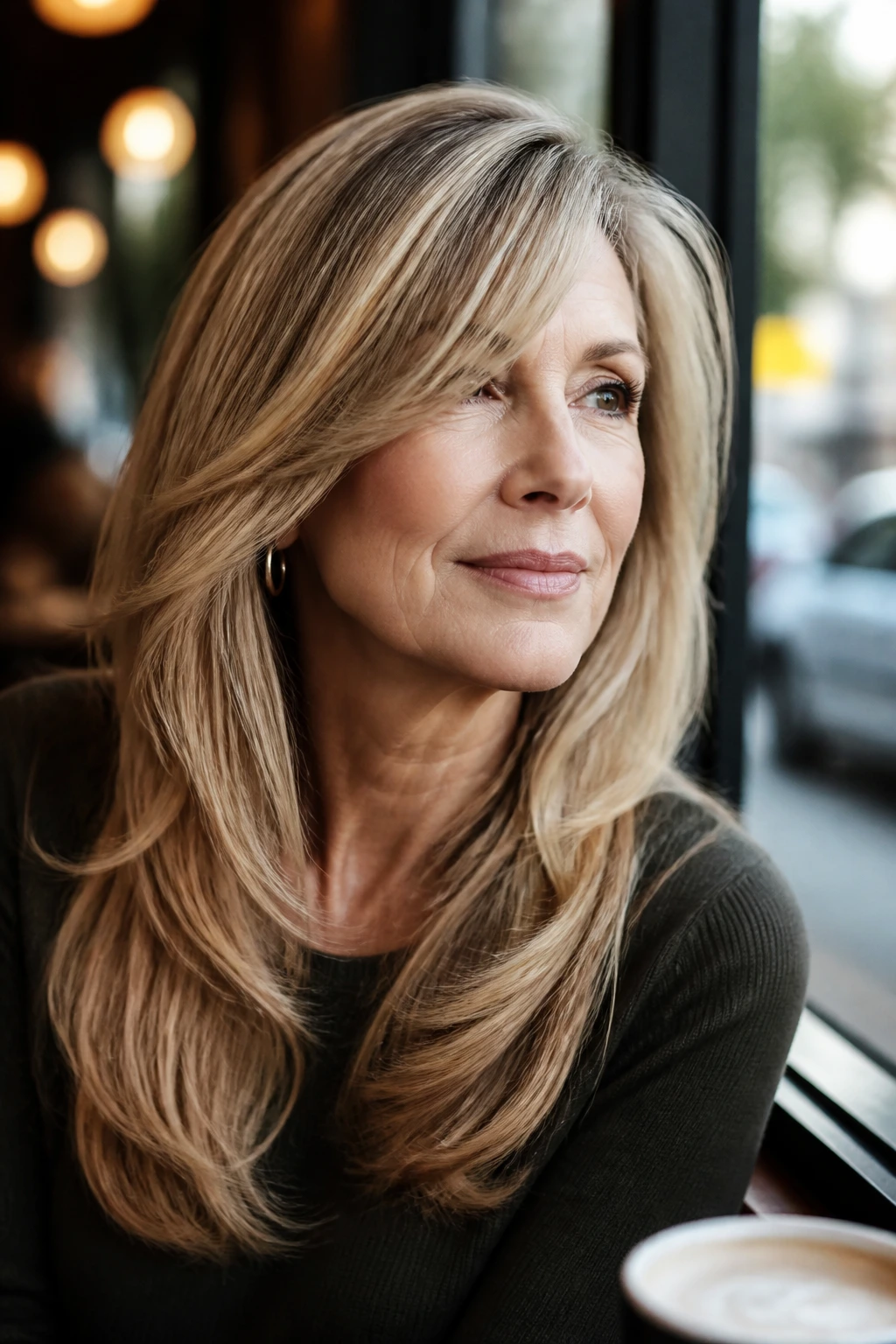
A side-swept front brings immediate softness to long hair. The front section sweeps across the forehead and merges into longer layers, which gives the face a little diagonal movement. That diagonal line is useful because it breaks up symmetry in a way that feels gentle, not severe.
The gloss finish matters here. Long hair can pick up frizz and dullness at the outer layer, so a smoothing cream or a few drops of serum on the mid-lengths can make the whole cut look cleaner. Use less than you think. Too much product will drag the hair down.
This style is especially nice if you wear earrings or glasses. The side sweep frames both without stealing the show. That sounds small, but it changes how the whole look reads in the mirror.
14. Flipped-Out Ends with Brushable Layers
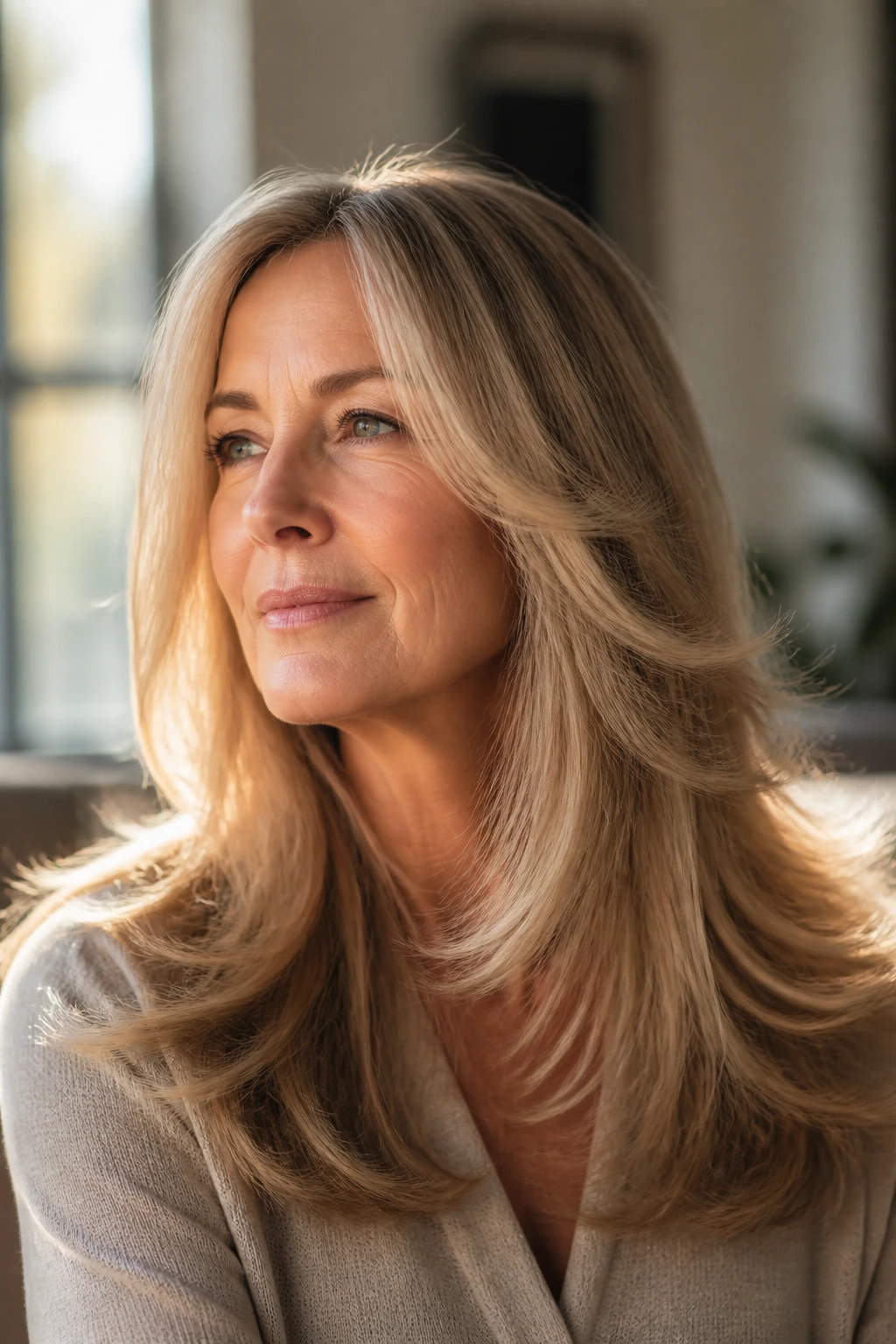
Flipped-out ends can look dated when they’re overdone. Done softly on long layers, though, they add energy and stop the haircut from falling in one heavy line. The trick is to keep the bend loose and brushable, not stiff.
A large round brush or a flat iron with a slight wrist turn can create the effect. The ends should kick out a little, not curl into little hooks. If the flip is too pronounced, the style turns costume-y in a hurry.
This one works well when the hair has a blunt density that needs some relief. The layers take the edge off, and the flipped finish keeps the cut from feeling too safe. It has a bit of personality. Not too much. Enough.
15. Internal Layers for Thick, Heavy Hair
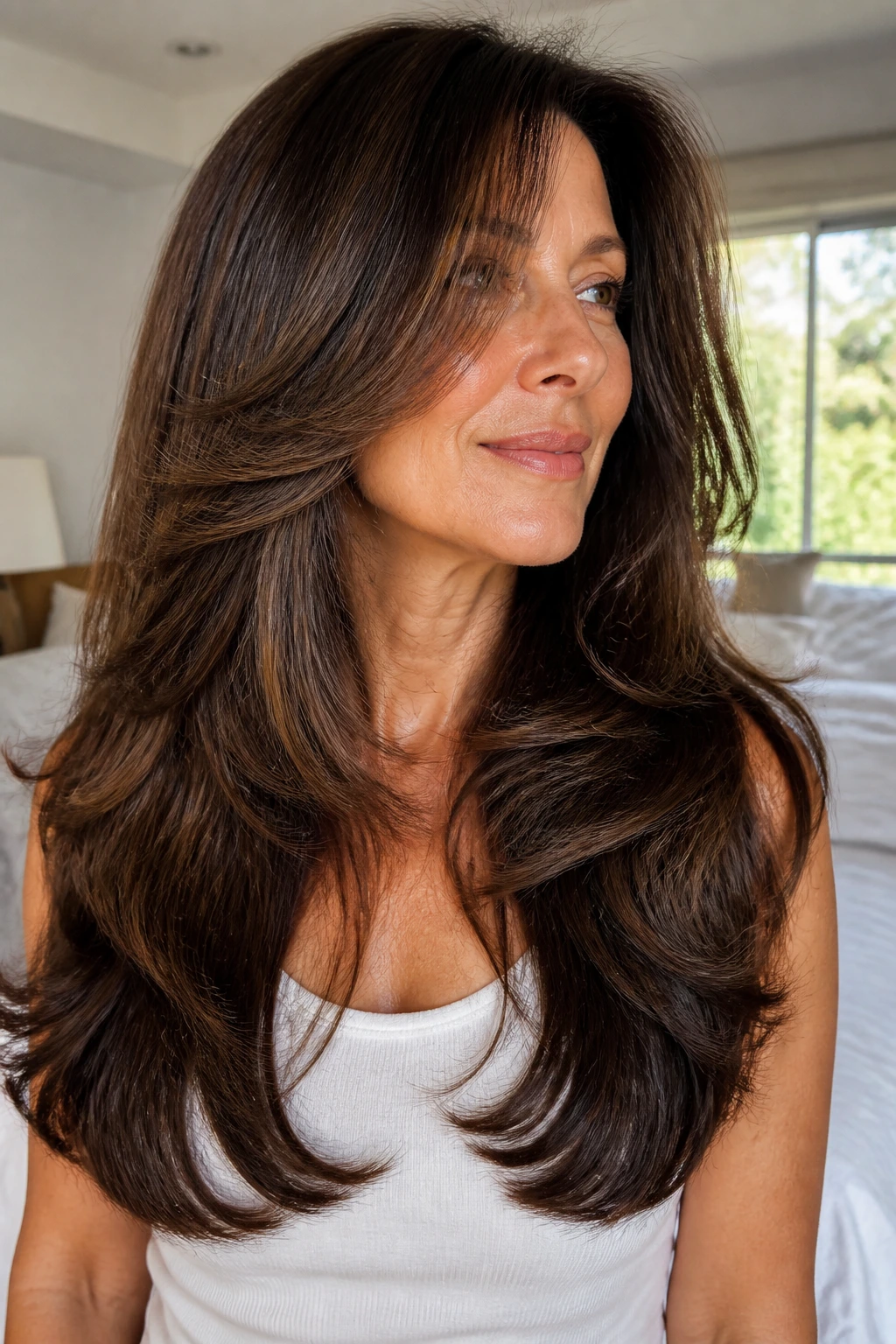
Thick hair often needs relief more than it needs length reduction. Internal layers remove weight from underneath so the surface still looks smooth, but the hair no longer feels like a blanket on the shoulders. If you’ve ever had a cut that looked fine wet and then turned into a pyramid when dry, this is the fix.
The layers should be placed carefully. Too much removal near the ends makes thick hair frizzy and bell-shaped. Better to take weight from the middle sections and leave a clean outline at the bottom.
I’m a fan of this shape for women who like long hair but hate the feeling of dragging it around all day. It can make ponytails lighter too, which sounds minor until you’ve had heavy hair on a hot day. Then it sounds very minor. Very.
16. Salt-and-Pepper Waves with a Bright Face Frame
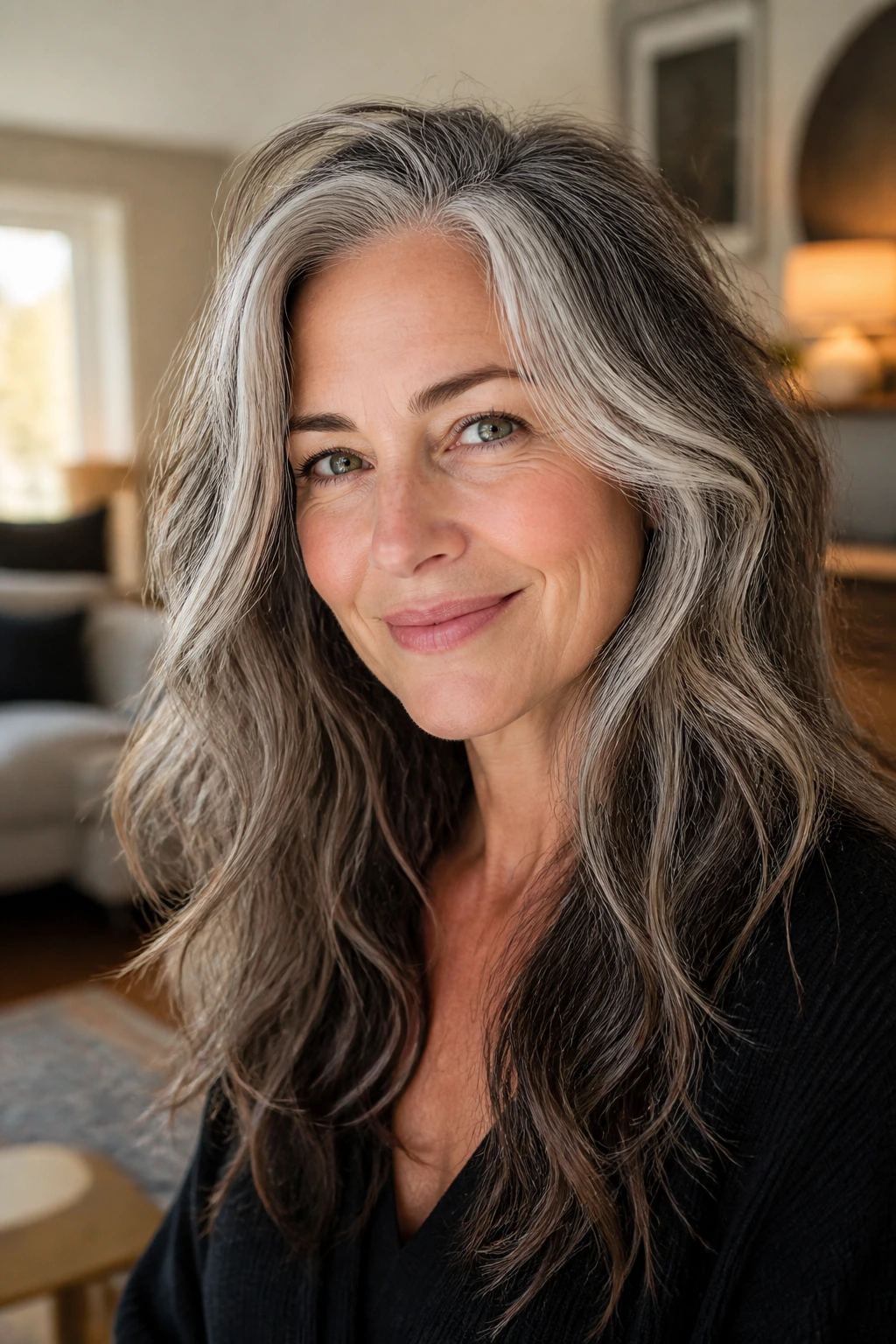
Salt-and-pepper hair has texture built into it already, and soft layers can make that color pattern look intentional instead of uneven. Brightening the face frame with a few lighter strands or letting the gray come in strong around the temples gives the cut a clean, modern shape. The waves carry the movement.
This style is one of the least fussy on the list. The contrast between silver, darker strands, and a soft face frame does a lot of the visual work. You don’t need perfect curls or a straight blowout.
A side part or off-center part usually helps here. It shifts the brightest pieces slightly and keeps the whole look from becoming too symmetrical. Hair like this should look lived-in, not staged.
17. Long Layers with an Off-Center Part
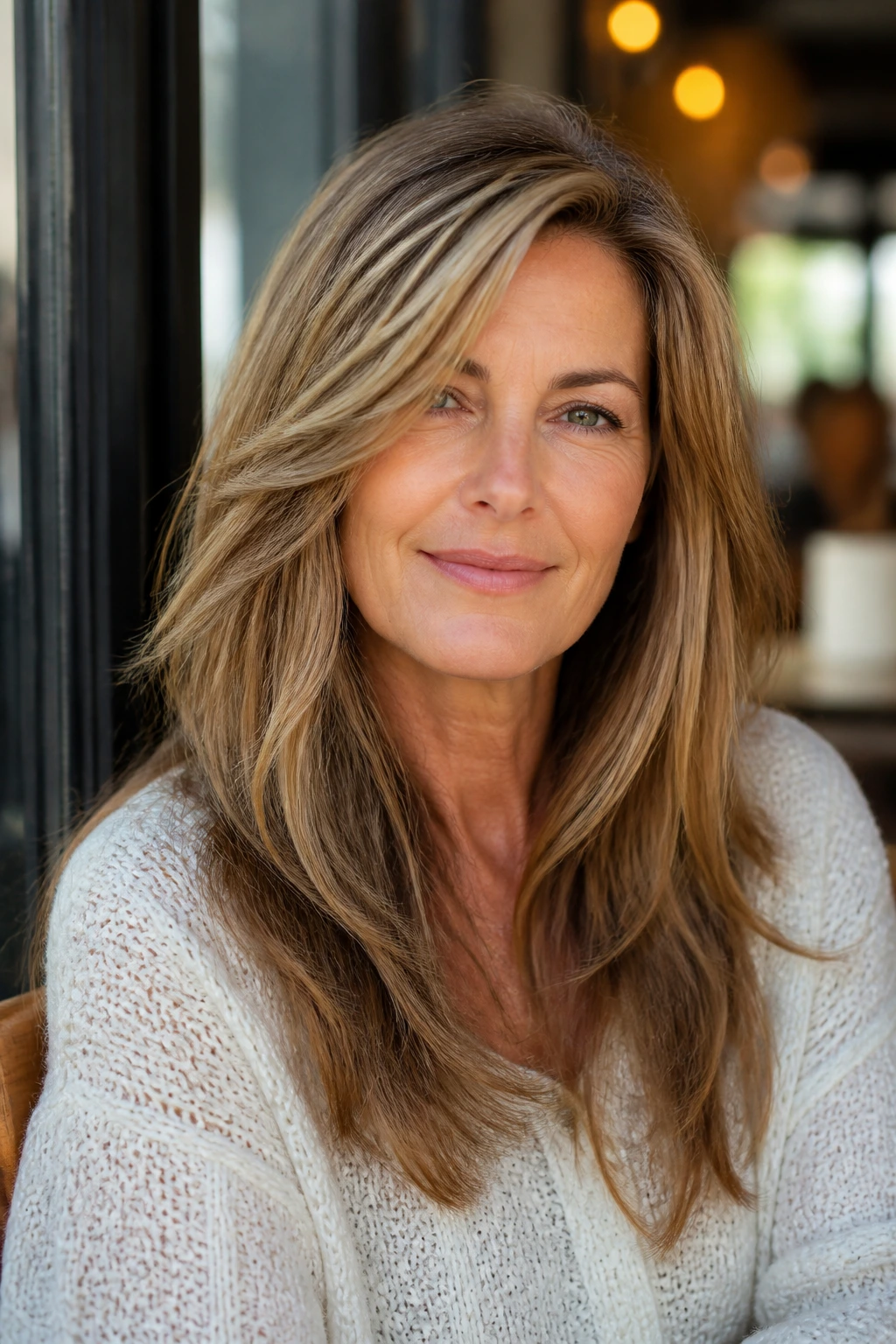
The off-center part is the quiet fix for hair that feels too flat in the middle but too heavy on one side when pushed hard to the left or right. It softens the balance without making a big statement. On long layers, that slight shift can change the whole mood of the haircut.
The front pieces should fall a little differently on each side. One side can skim the cheek, the other can taper near the jaw. That asymmetry is what keeps the style from feeling stale.
If your face is very symmetrical, this look can still help by breaking the straight vertical line of long hair. If your face is already more angular, the part softens it. Small change. Real effect.
18. Razor-Soft Ends with a Smooth Blowout
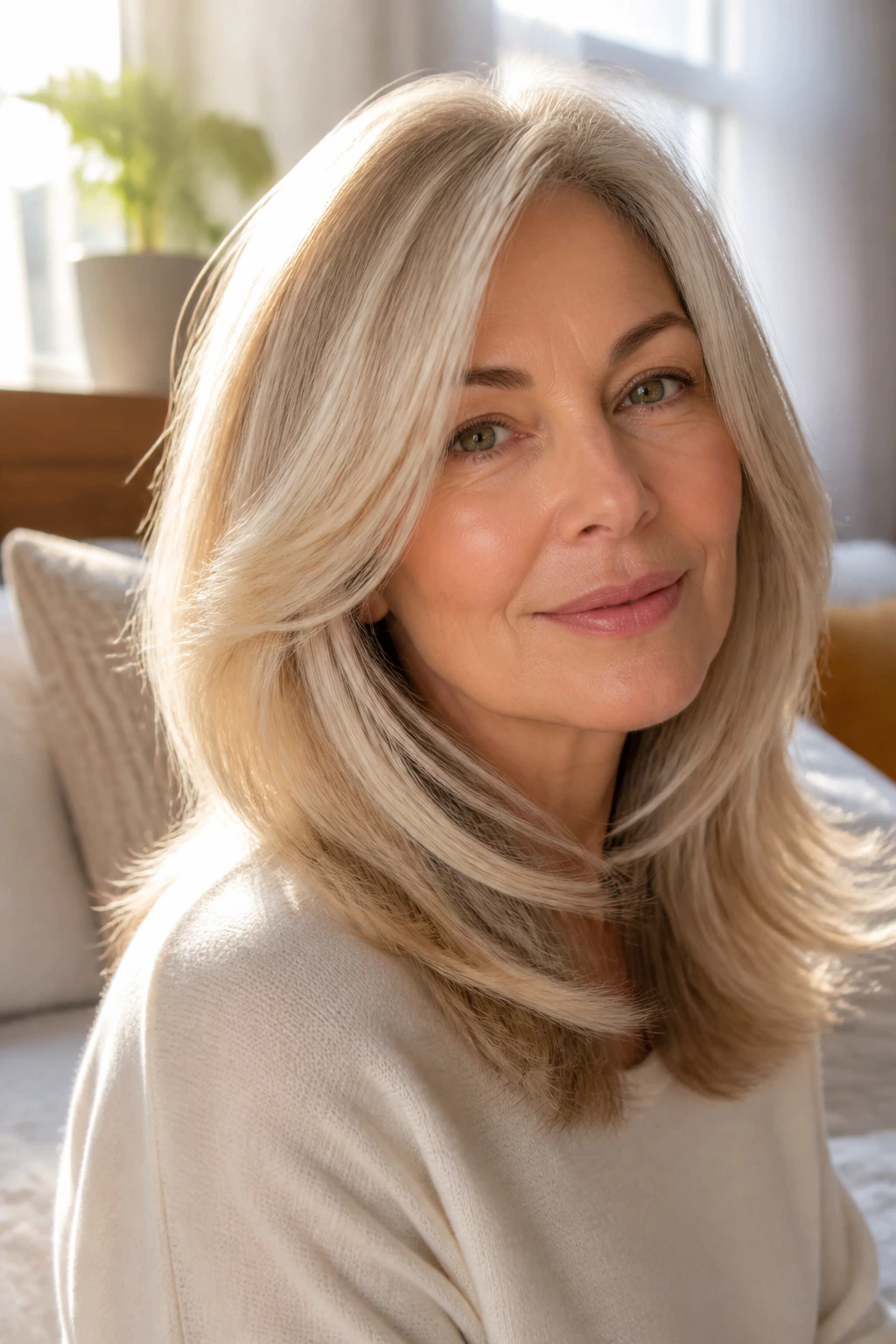
There’s a big difference between razor-soft and razor-thinned. The first gives movement. The second makes ends look shredded. When done well, this cut leaves the perimeter airy and the blowout clean, with no blunt shelf sitting at the bottom.
It’s a good choice if your hair holds shape easily and doesn’t puff from humidity at the first sign of weather. A smooth blowout works best because it shows the softness in the ends without making them disappear. The surface should still look full.
I’d keep this one away from hair that’s already fragile at the ends. If the hair snaps easily, bluntness is your friend. Softness without strength is just damage wearing good clothes.
19. Spiral Curls with Invisible Internal Layers
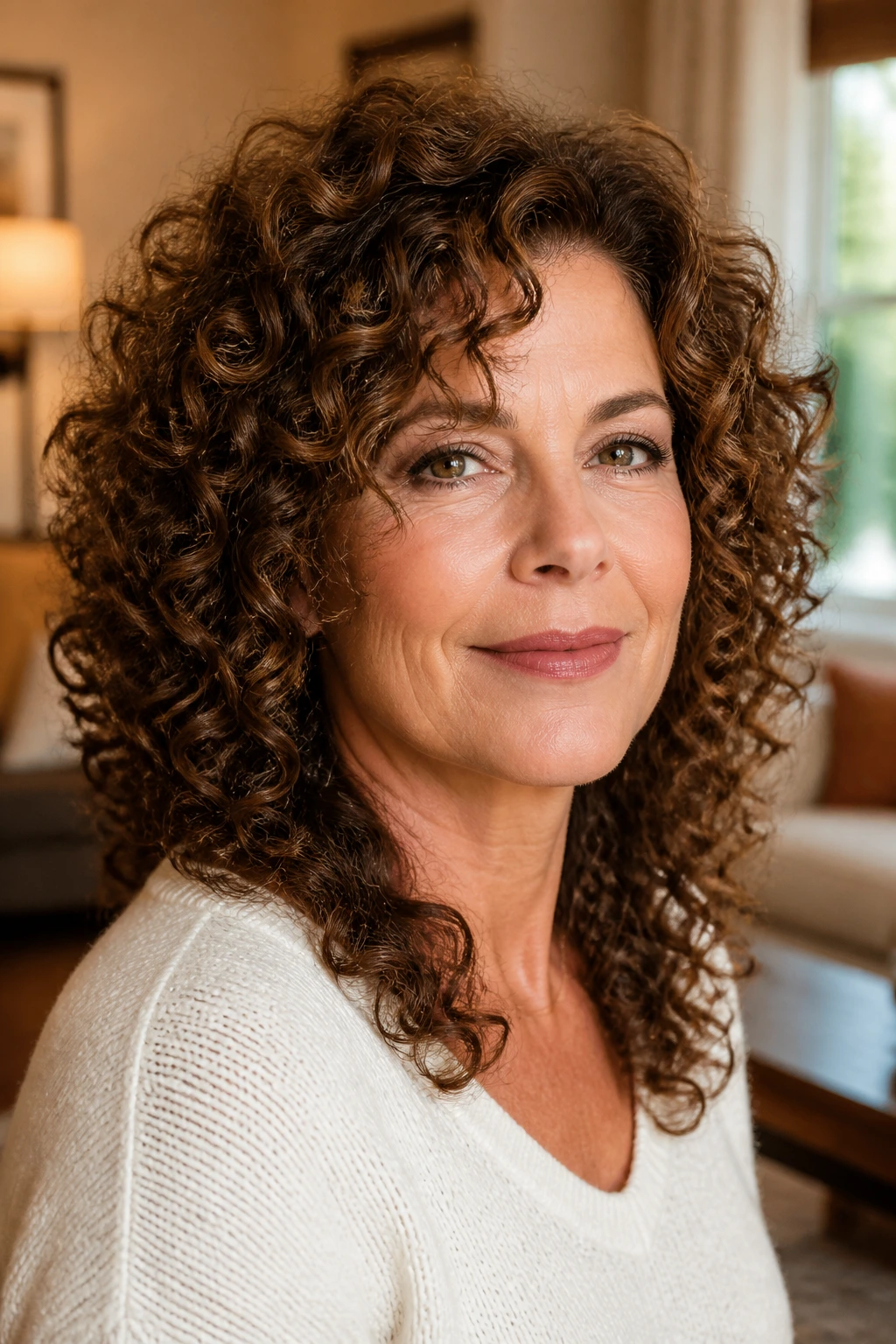
Spiral curls can look weighed down if every curl starts at the same place and stacks into a cone. Invisible internal layers solve that by removing weight from inside the shape, which lets the spirals bounce without breaking the outline. The best version keeps the curls grouped, not frizzy.
This is a strong cut for women whose curls have changed over time and need a little rebalancing. Maybe the top is flatter than it used to be. Maybe the bottom gets too wide. Internal layers can correct both without shortening the length in any dramatic way.
Use a diffuser on low heat if you’re styling this yourself. High heat scatters the curl pattern, and then the layers look random instead of soft. Random is rarely the goal.
20. Long Layers That Still Work in a Ponytail
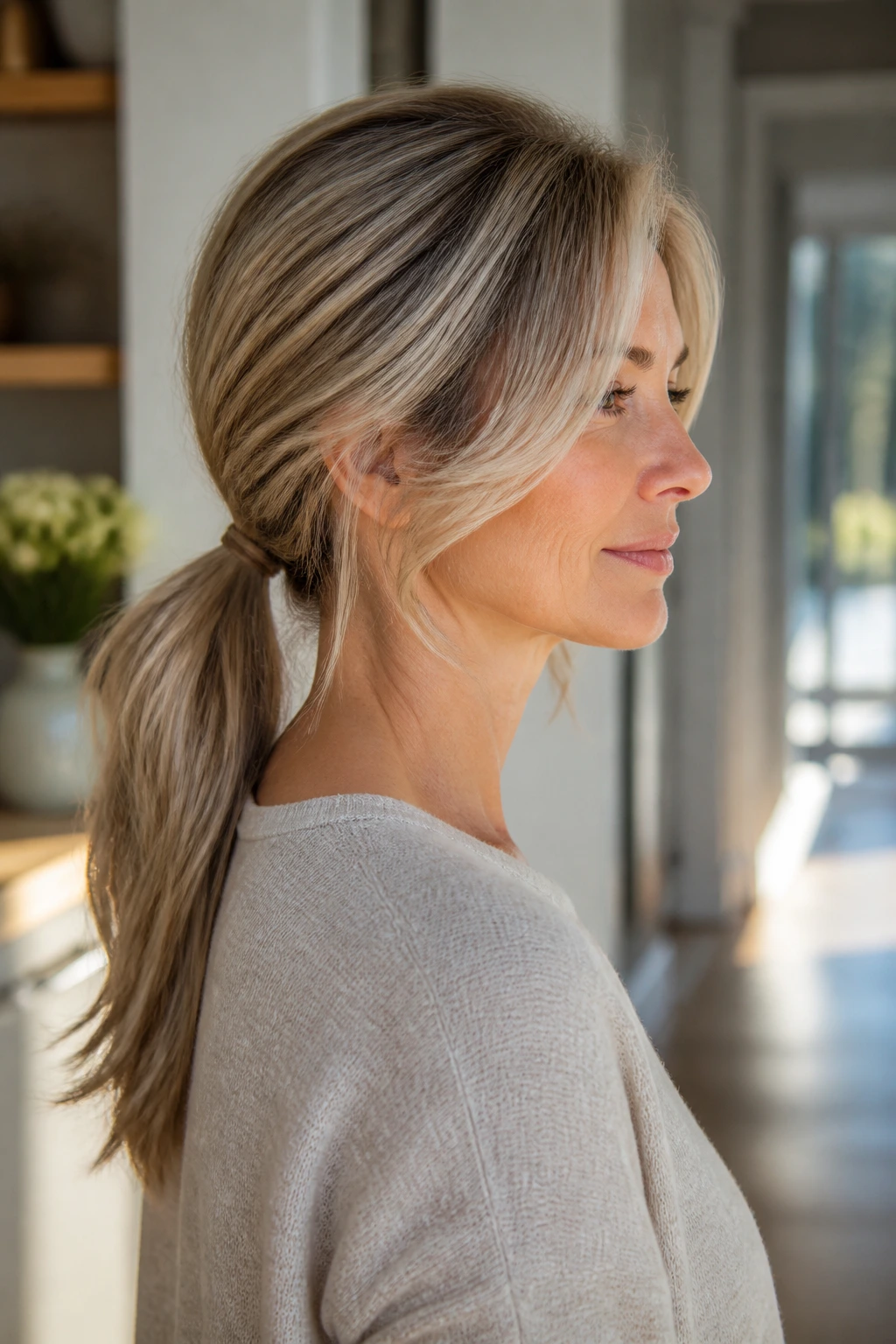
Some long cuts look lovely down and awkward up. This one should do both. The layers are placed so the front softens the face when worn loose, but enough length stays in the back and sides to gather into a ponytail without little stubs sticking out everywhere.
That matters more than it sounds. A hairstyle you can’t tie back turns into a daily negotiation. This cut keeps your options open, which is part of why so many women keep their long hair once they find the right layering pattern.
Ask for face-framing pieces that are long enough to tuck into a low ponytail. If they stop too high, they’ll hang loose and annoy you. That’s not a styling issue; that’s a planning issue.
21. Glossy Length with Minimal Layers
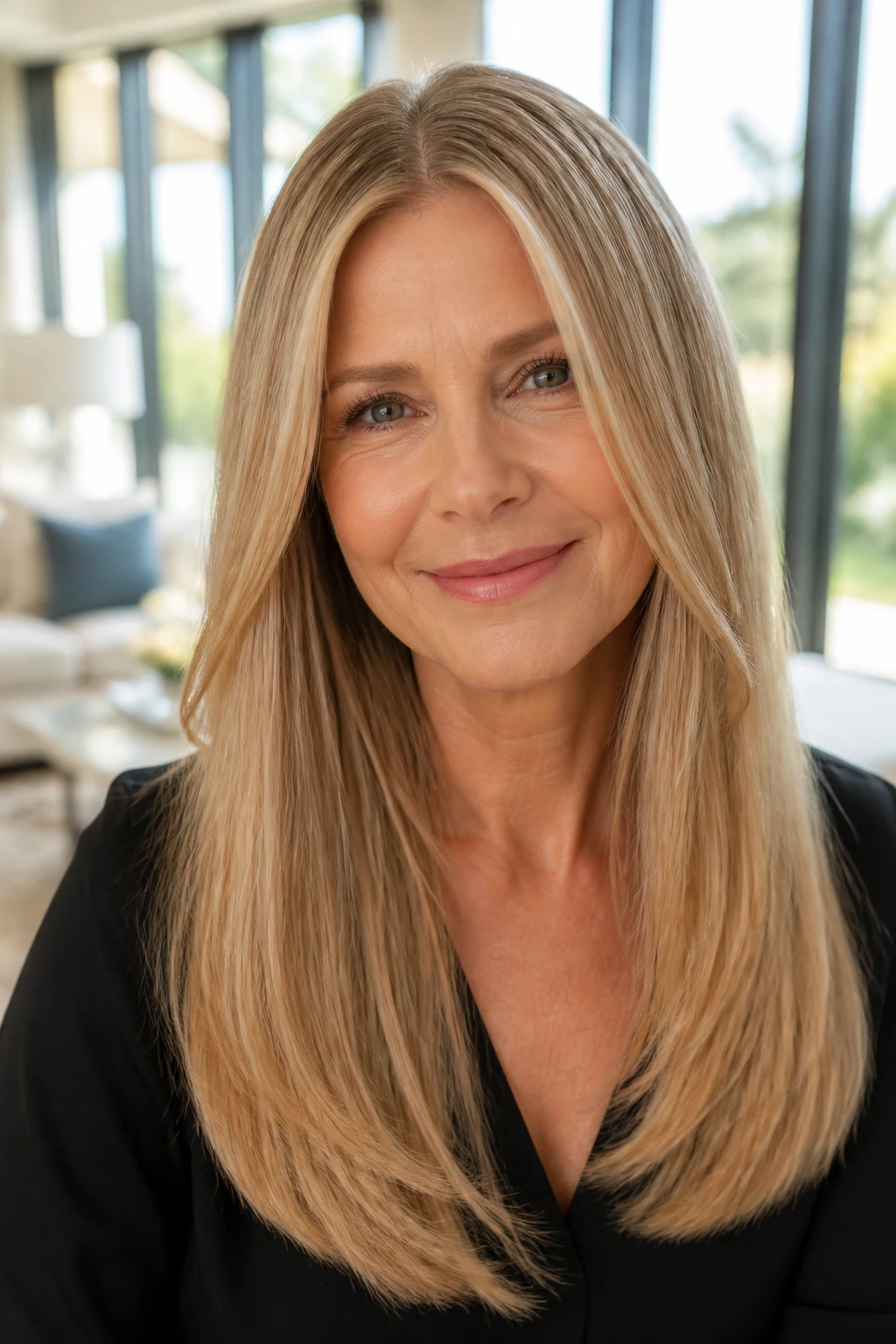
Not every long haircut needs movement everywhere. Sometimes the right move is a mostly one-length base with just a touch of layering around the face and the bottom corners. That keeps the hair glossy and full while still softening the outline.
This is my pick for women with hair that’s already fine to medium and doesn’t love heavy texturizing. The shape stays sleek. The ends look deliberate. And the little bit of layer around the front stops the style from feeling severe.
A shine spray or light serum suits this better than a matte product. You want the finish to show off the length, not break it apart. Minimal layers need a clean surface to make sense.
22. Airy Layers Around the Jawline
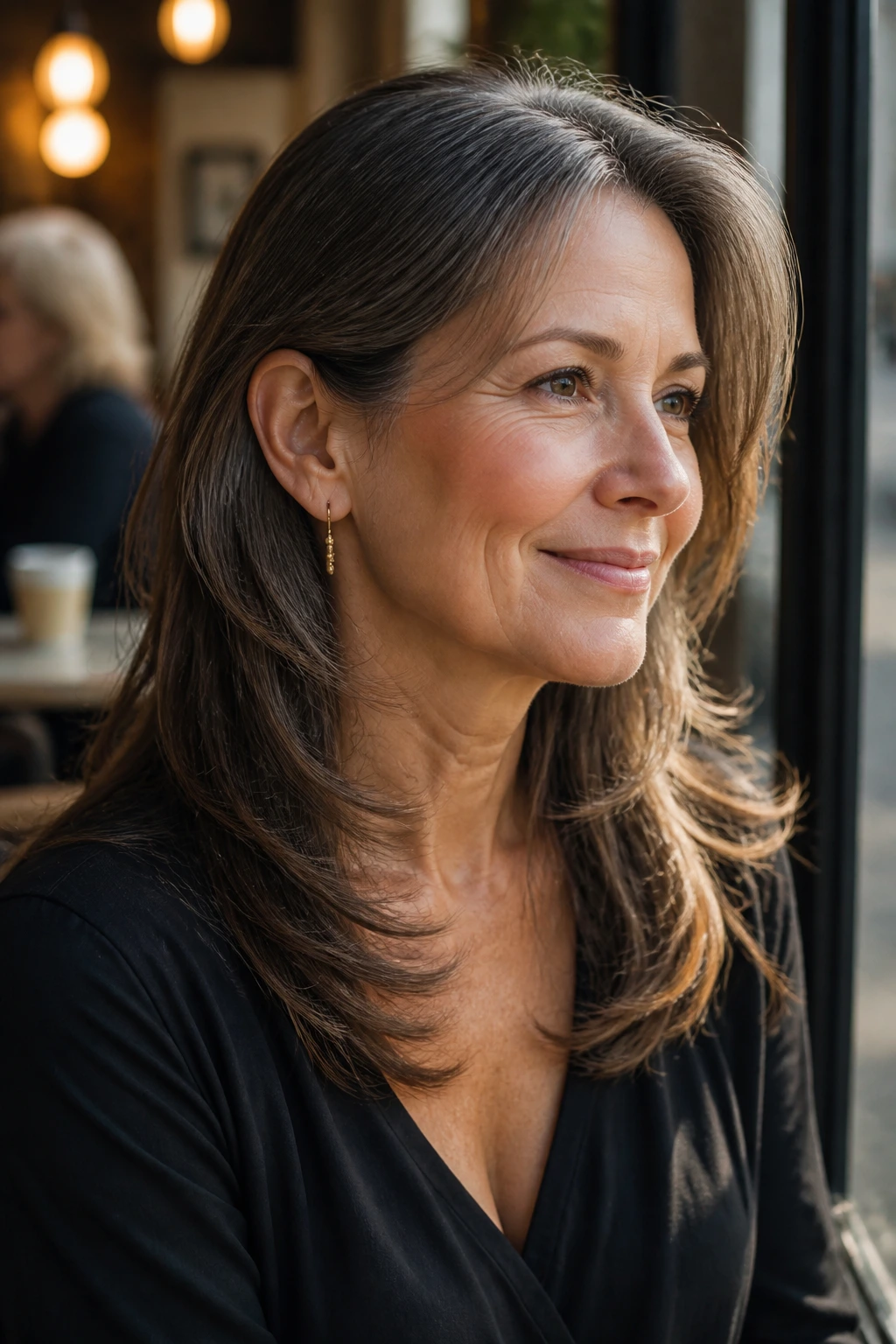
Jawline layers are one of the most useful face-framing tricks in long hair. They keep the sides from falling straight down beside the face, which can make the whole look feel heavy and boxy. With the right placement, the jaw gets softened without the haircut looking obviously layered.
This shape works particularly well if you wear your hair tucked behind one ear a lot. The front pieces still do their job when they’re tucked, and they still look intentional when they fall forward. That flexibility is half the appeal.
I like this one for coarse hair too, because the jawline is usually where thickness starts to compete with the face. A few soft pieces there can change the whole outline.
23. Long Layers with Arched Bangs
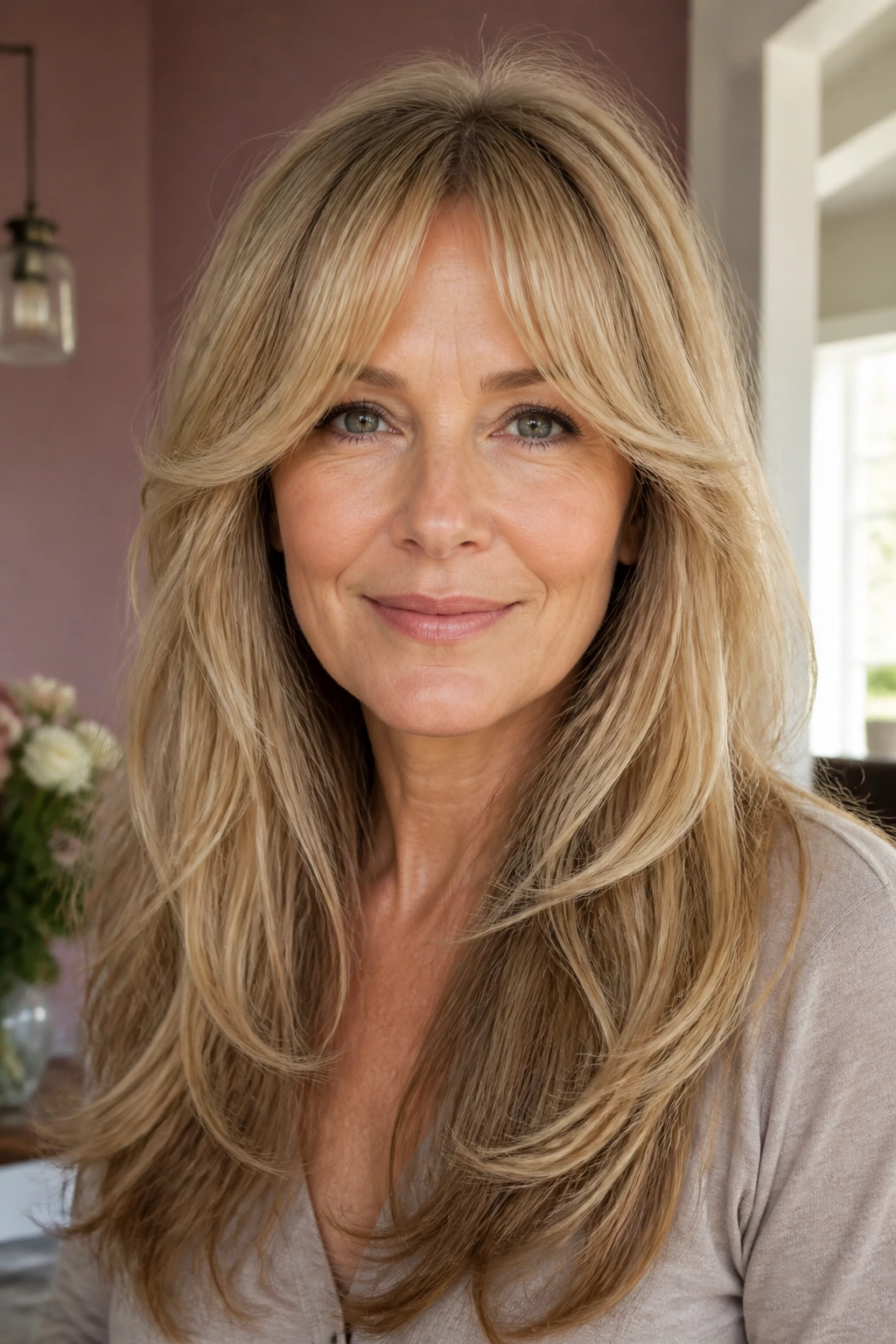
Arched bangs are a little more sculpted than curtain bangs, but they still play well with length. The center sits lighter, the sides arch outward, and the whole fringe blends into the front layers with a soft curve. That curve can be very flattering if you want to open the face without losing coverage.
The shape should never feel too neat. A crisp arch can read formal in a way that ages fast. Softness at the tips keeps it relaxed.
This cut is also good for women who like a bit of forehead coverage but hate feeling trapped by full bangs. You get the comfort of a fringe with more air around it. That air makes a difference.
24. Half-Up Friendly Layers with Loose Face Pieces
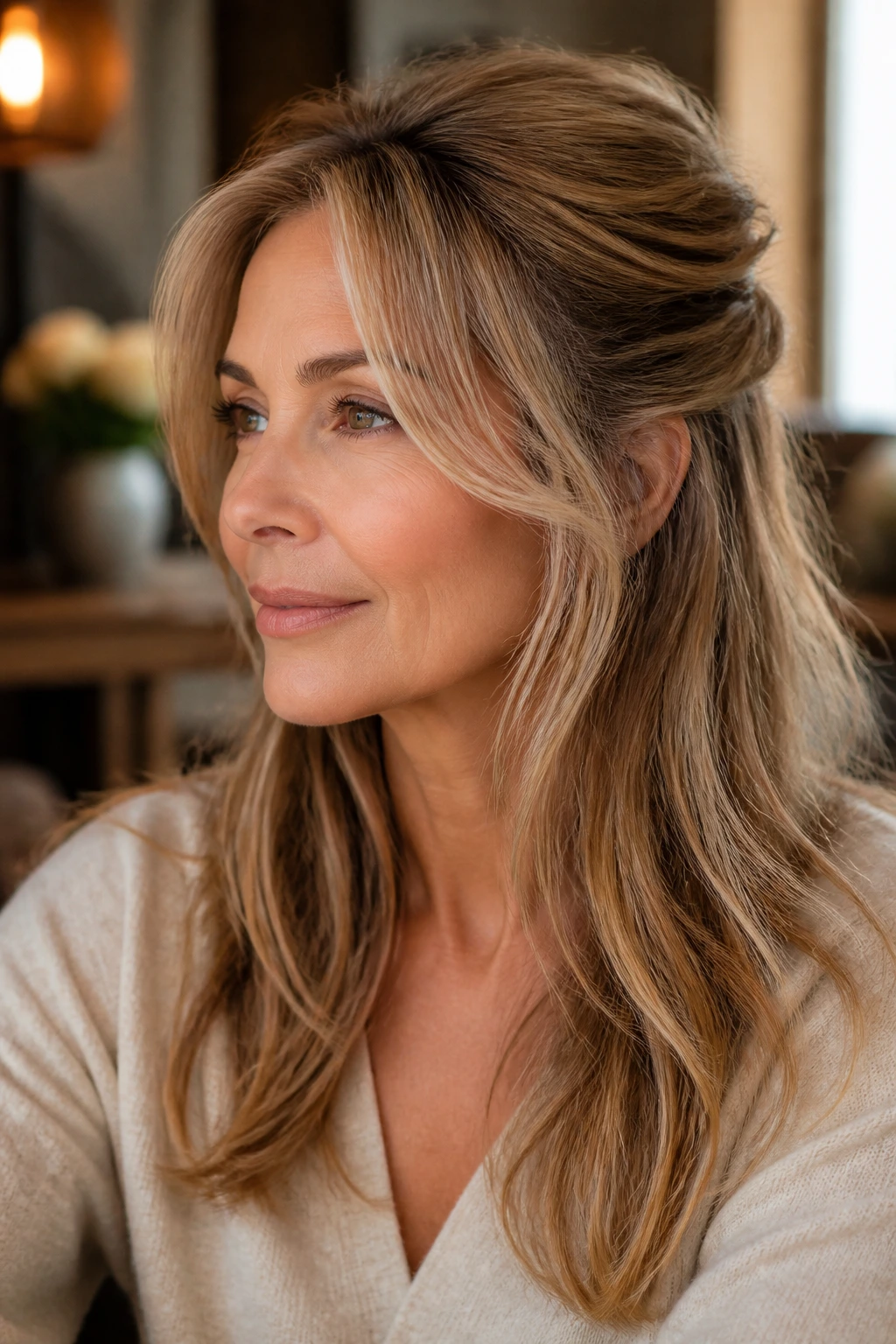
If you wear half-up styles a lot, the layers need to cooperate when the top section is pulled back. The best version leaves a few loose pieces around the temples and cheekbones so the face still gets softness while the crown is lifted. It sounds simple, and it is — which is why it works.
This style is useful for weddings, dinners, or any day you want the hair off your neck without losing the long shape. The loose face pieces keep the look from turning severe. And because the layers are soft, the half-up twist or clip looks more relaxed than formal.
I’d keep the shortest pieces long enough to tuck behind the ear. Too short, and they stick out in odd directions once the top is pinned back. That’s the kind of detail people notice even if they can’t name it.
25. Mid-Back Length with Subtle S-Curve Movement
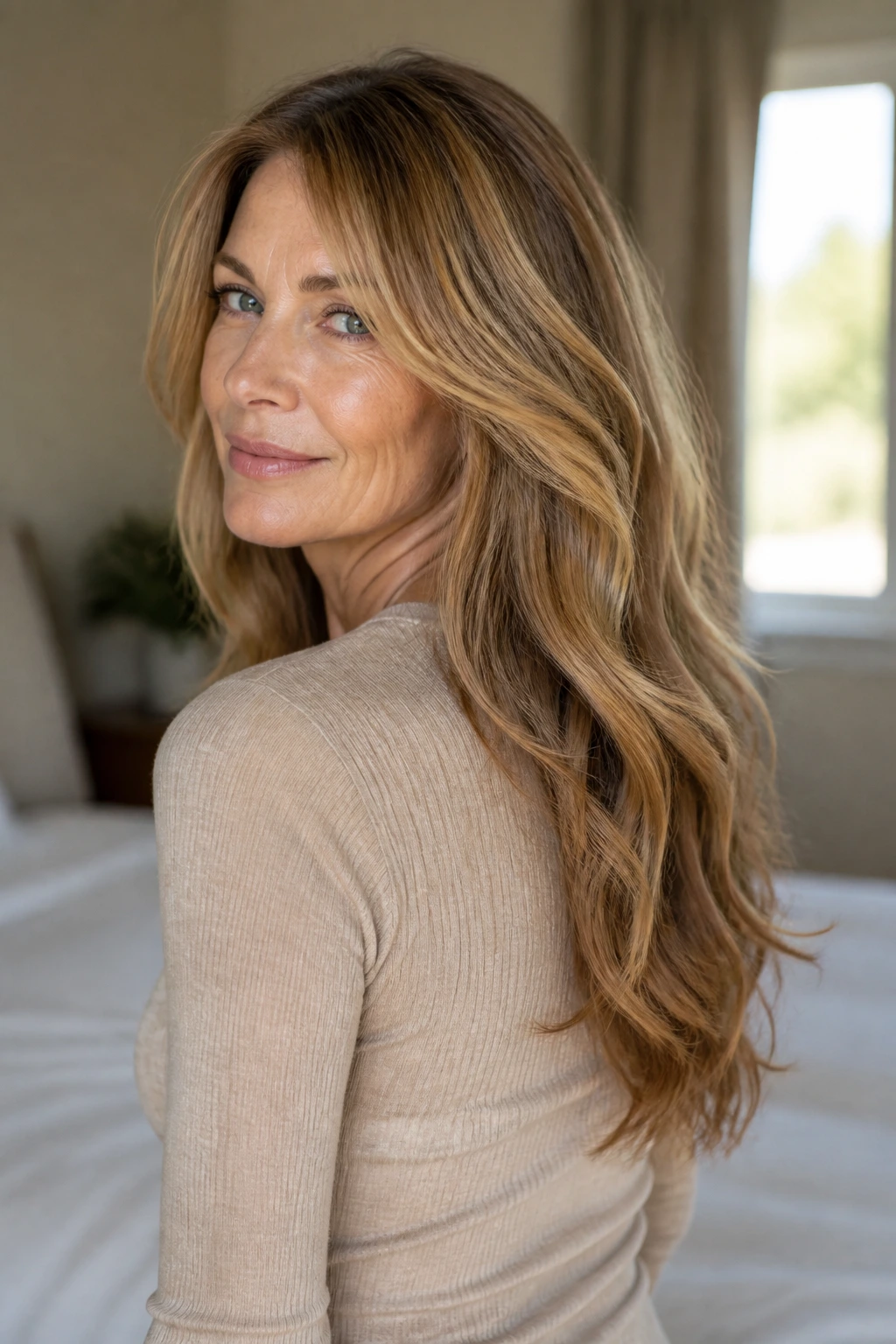
This is the quietest cut in the group, and maybe the one with the most staying power. The hair keeps its length past the shoulders, while the layers create a subtle S-curve through the mid-lengths and ends. Nothing yells. Everything moves.
The S-curve is especially nice if your hair falls straight but not flat, or if you want a shape that works with both air-drying and blow-drying. The movement lives in the body of the hair, not in a dramatic front shape. That makes the style calmer and easier to maintain.
I like this one for women who want long hair without a lot of styling theater. It’s long. It’s soft. It does not ask for applause every morning.
What Makes Soft Layers Work on Long Hair
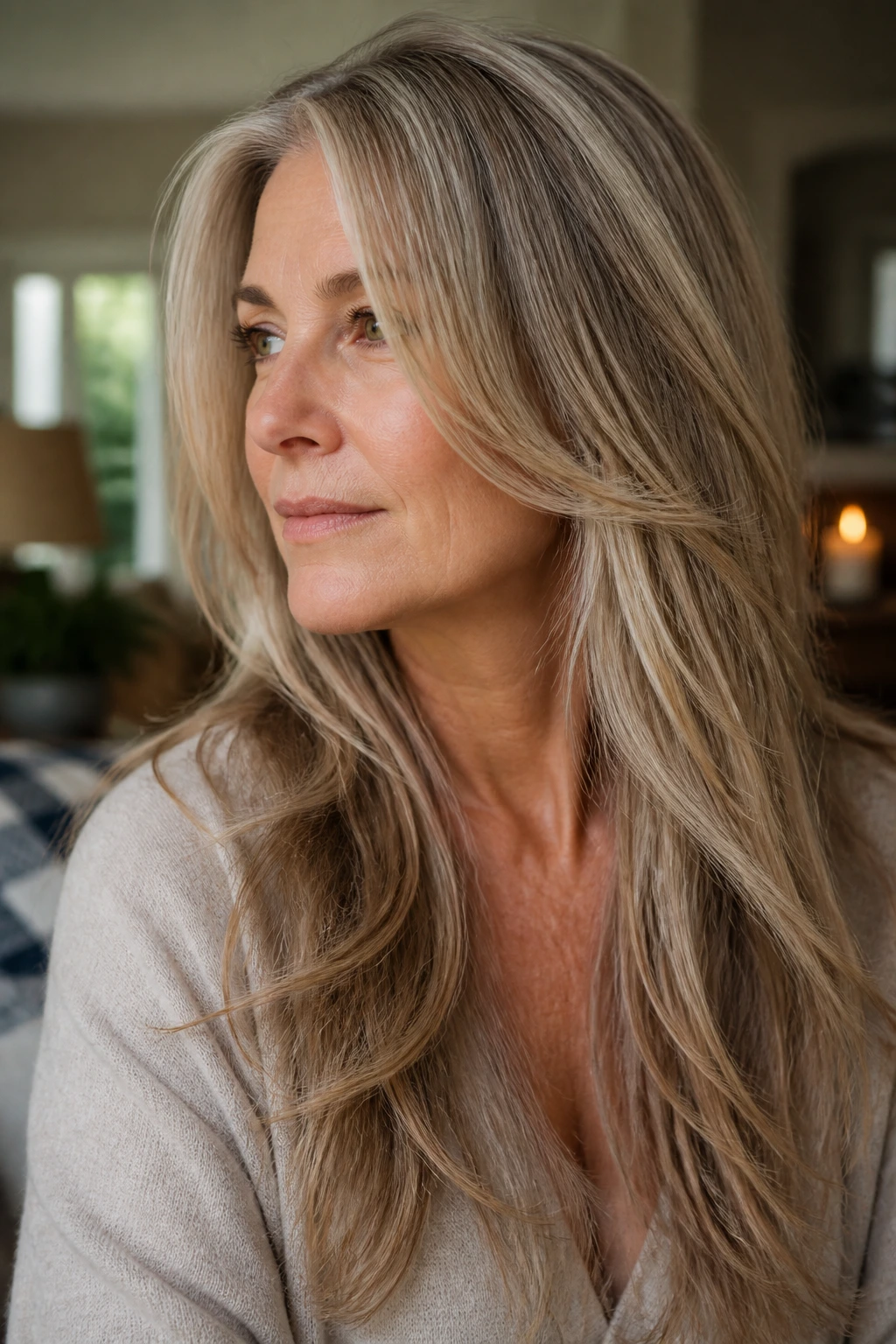
Soft layers succeed because they solve a mechanical problem before they try to be pretty. Long hair gets heavy as it grows, and heavy hair pulls itself straight at the roots while spreading wide at the ends. That’s the triangle shape nobody asks for. Soft layers interrupt that drop line, let the hair bend where it needs to bend, and keep the outline close to the head instead of drifting away from it.
The placement matters more than the label. A few long layers starting around the cheekbone can make a bigger difference than ten short chops that begin too high. Too many people ask for “layers” and get a haircut that behaves like a different haircut every time the weather changes. Better to be specific: where the face frame starts, how much weight stays at the bottom, and whether you want movement at the crown or only at the sides.
Soft layers also make color look better. Silver strands catch light differently than darker hair, and long layers give that contrast some room to show. Highlights get the same benefit. A blunt sheet of hair can hide good color work. Layered length lets it breathe.
And yes, they age well in the practical sense. The grow-out is gentler, the shape is easier to revisit at the salon, and you can usually stretch the cut a bit longer before it starts to look lazy. That’s useful, because a cut that only looks good for two weeks is a bad deal no matter how pretty the before photo was.
What to Tell Your Stylist in the Chair
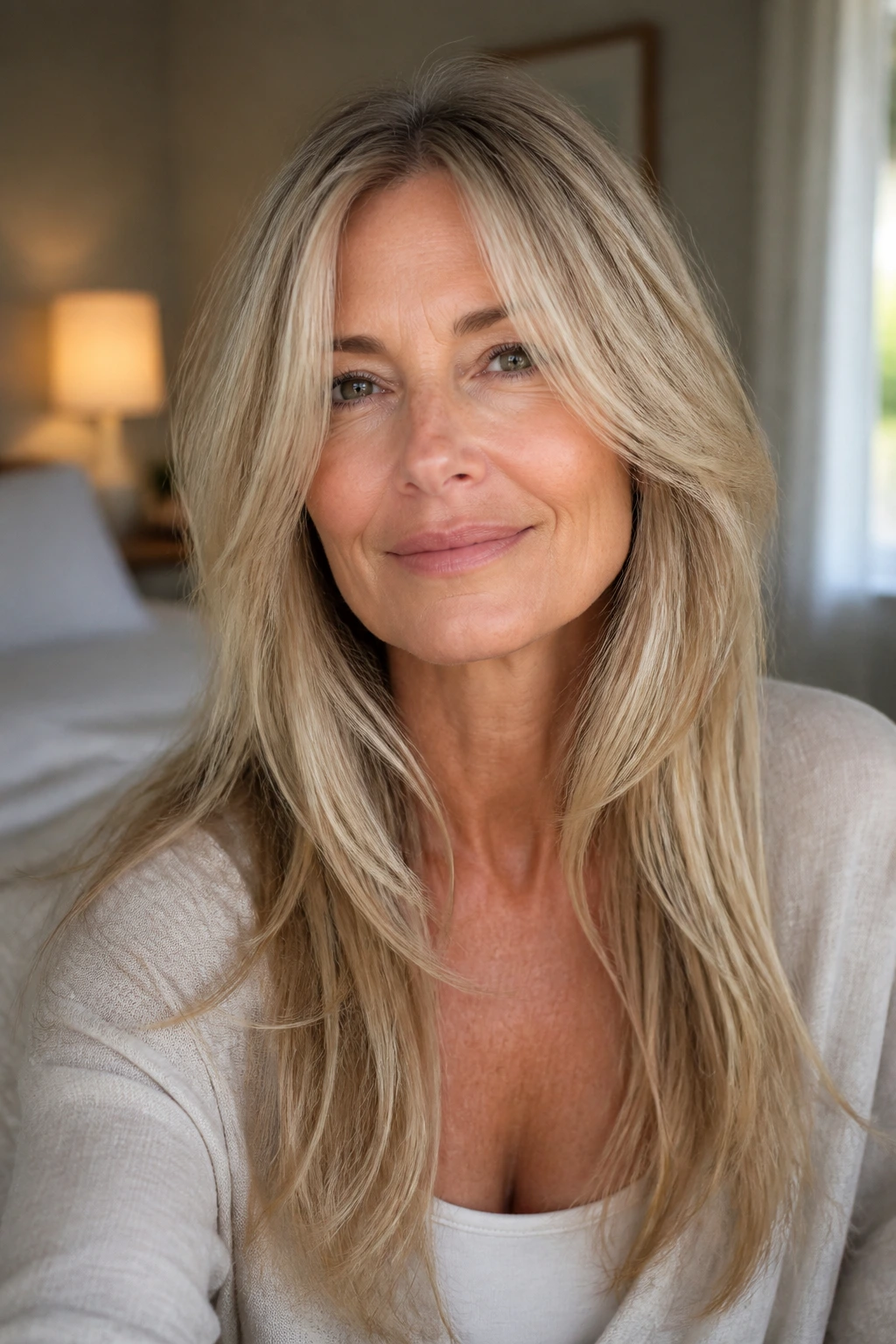
Bring photos, but do not hand them over like the haircut is done for you. Use them as a starting point, then point out the exact parts you like. Is it the face frame? The crown lift? The way the ends taper? Those details matter more than the model’s hair color or age.
Say where you want the shortest layer to start. If you have fine hair, you’ll usually want it lower. If your hair is thick and heavy, you may want more internal removal, but even then, ask for softness rather than a lot of piecey texture. I’d rather hear “I want movement without losing fullness” than “just make it lighter.” Those are not the same thing.
Tell the stylist how you wear your hair most days. Center part, side part, air-dry, bun, ponytail, curling iron — all of that changes the cut. A long layered cut that looks good only with a salon blowout is a shiny trap. The best one still makes sense when you’ve slept on it badly and pulled it into a clip.
Tools and Products That Earn Their Place
-
A medium round brush: Best for turning the face-framing pieces under or away from the face without making them look stiff.
-
A blow dryer with a nozzle attachment: The nozzle keeps the airflow controlled, which matters when you’re trying to smooth layers instead of blasting them all over the place.
-
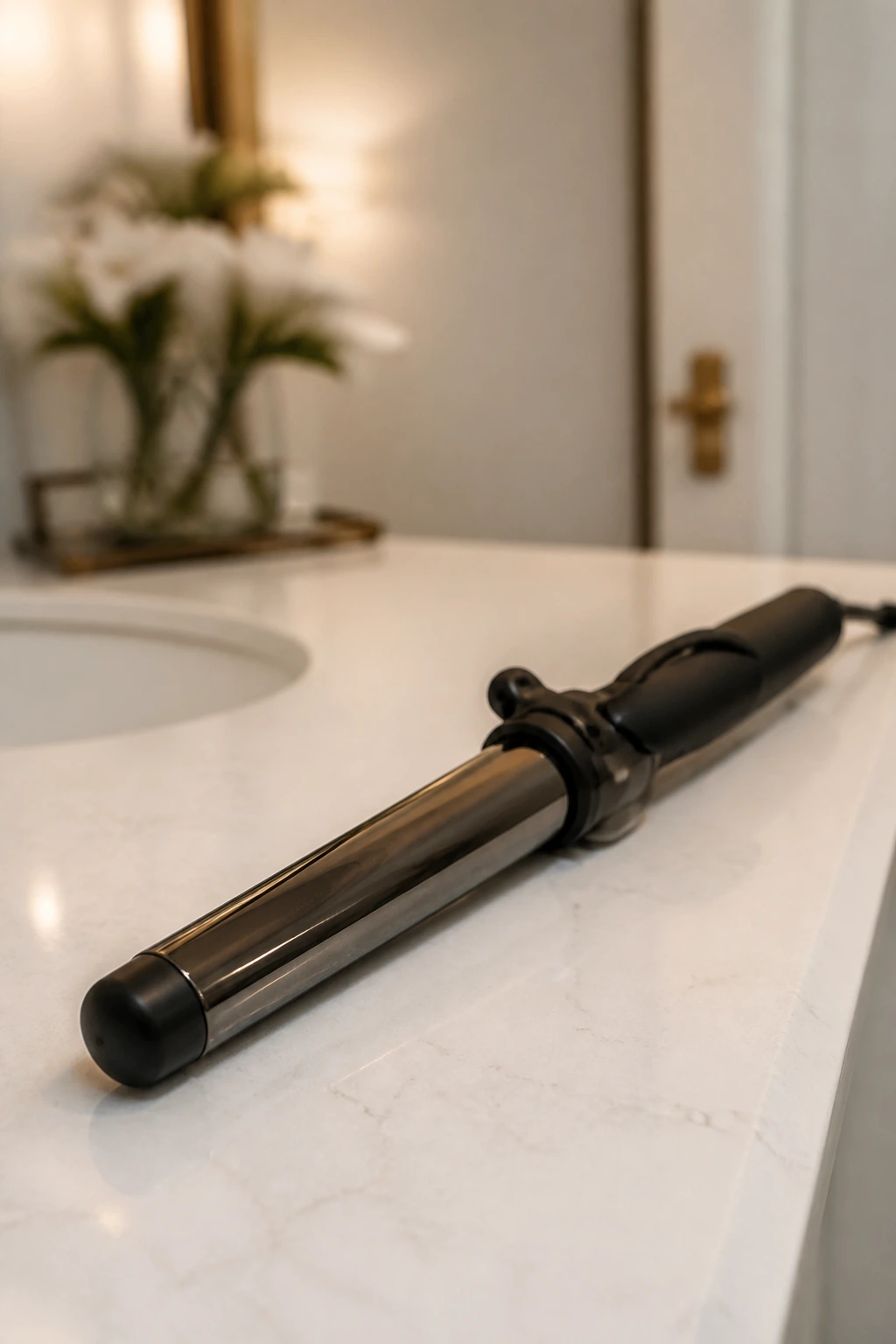
A 1¼-inch curling iron or wand: Good for soft bends, brushed-out waves, and the kind of movement that sits well on long layers.
-
A wide-tooth comb: Useful for detangling wet hair without pulling the layers into frizz.
-
Heat protectant spray: Non-negotiable if you use hot tools, even on low heat. Long hair ends take the damage first.
-
Lightweight styling cream or leave-in conditioner: Helps the layers sit together instead of separating into dry little wisps.
-
Volumizing mousse: Best at the roots for fine hair or flat crowns; a small amount goes farther than people think.
-
A few duckbill clips: Handy for setting the front pieces while they cool after blow-drying.
-
A microfiber towel or soft T-shirt: Reduces rough drying, especially on wavy or curly hair.
-
A finishing serum: Use one drop at a time on the mid-lengths and ends to keep softness from turning fuzzy.
How to Style Long Layers on Ordinary Days
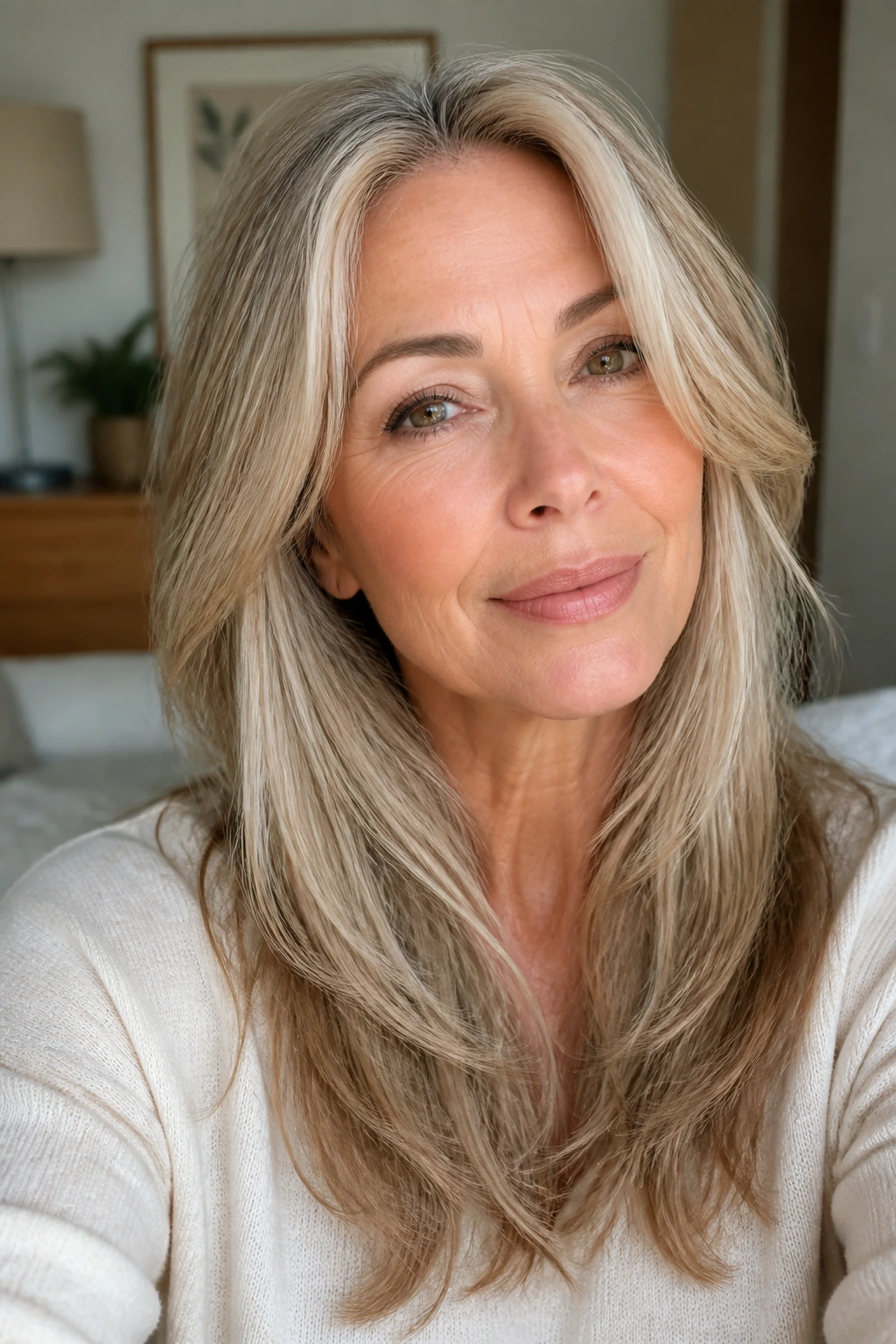
The haircut should not demand a ceremony. Start with a leave-in conditioner or light cream on damp hair, then decide whether you want the front to go forward, away from the face, or off-center. That choice alone changes the whole read of the style.
For a quick blow-dry, dry the roots first. Then move to the face frame and crown, because those are the sections that show mistakes fastest. If the front dries wrong, the rest of the hair can be fine and the style still feels off. A round brush at the cheeks and a cool shot at the end usually does more than another five minutes of hot air.
Air-drying is easier when the layers are long enough to fall in one direction. Scrunch only if your hair has natural wave or curl. If it’s straight, scrunching can create puffiness at the bottom that nobody wants.
Keeping the Shape Between Salon Visits
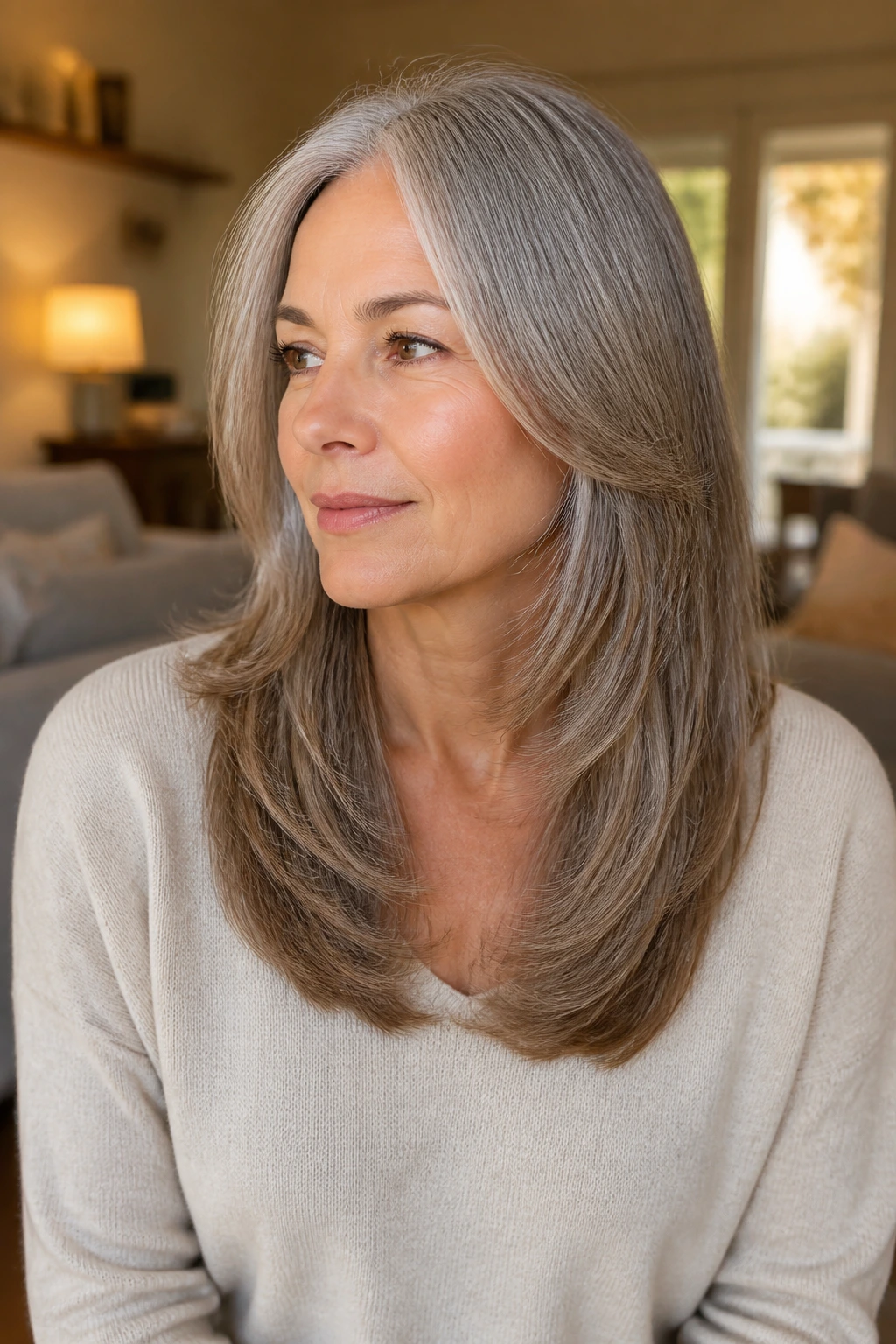
Long soft layers do not need constant rescue, but they do need some respect. Plan on a trim every 8 to 12 weeks if you want the shape to stay clean. If your face frame includes bangs or shorter side pieces, those may need a small tidy-up sooner, sometimes around 3 to 5 weeks, depending on how fast your hair grows.
The ends tell you when it’s time. If they start to look thin, rough, or dry even after conditioning, the haircut has gone past its best point. Waiting too long can make soft layers look stringy at the bottom, and once that happens, the only fix is removing the damaged ends.
At home, treat the lengths gently. Use a heat protectant every time you use hot tools. Detangle from the ends up. And if you sleep with long hair loose, put it in a loose braid or low silk scrunchie so the face frame doesn’t wake up with weird bends.
Common Mistakes That Make the Cut Look Wrong
-
Starting the shortest layers too high: The front gets thin fast, and the shape loses fullness before the rest of the hair can balance it. Ask for the first layer to start lower if you want softness, not a hole near the temples.
-
Over-thinning thick hair: It can look lighter in the chair and frizzy three days later. Thick hair usually needs weight removed with control, not shredded ends.
-
Using too much texturizing on fine hair: The ends start to look see-through, and long hair loses its best quality — length that still looks substantial. Long layers on fine hair need restraint.
-
Skipping the cool-down after styling: A bend that’s still warm changes shape when it falls. Let the front pieces cool in the shape you want, even if it takes two minutes.
-
Forgetting the part line: A bad part can ruin a good cut. Move it a little and the same haircut suddenly looks lighter, fuller, or softer.
-
Ignoring the ends: Soft layers still need healthy bottoms. Dry, split ends make even the best cut look tired.
Variations and Adaptations for Different Hair Types
Fine Hair Lift: Keep the layers long and start them below the cheekbone, with only a light face frame. That gives movement without stripping away the density the ends need.
Thick Hair Control: Ask for internal layers and a clean outer line. This removes weight where it builds up most, especially through the mid-lengths, while keeping the finish smooth.
Curly Pattern Shape: Work with the curl in its natural state and avoid over-cutting the top. Soft layers should follow the curl’s spring, not fight it.
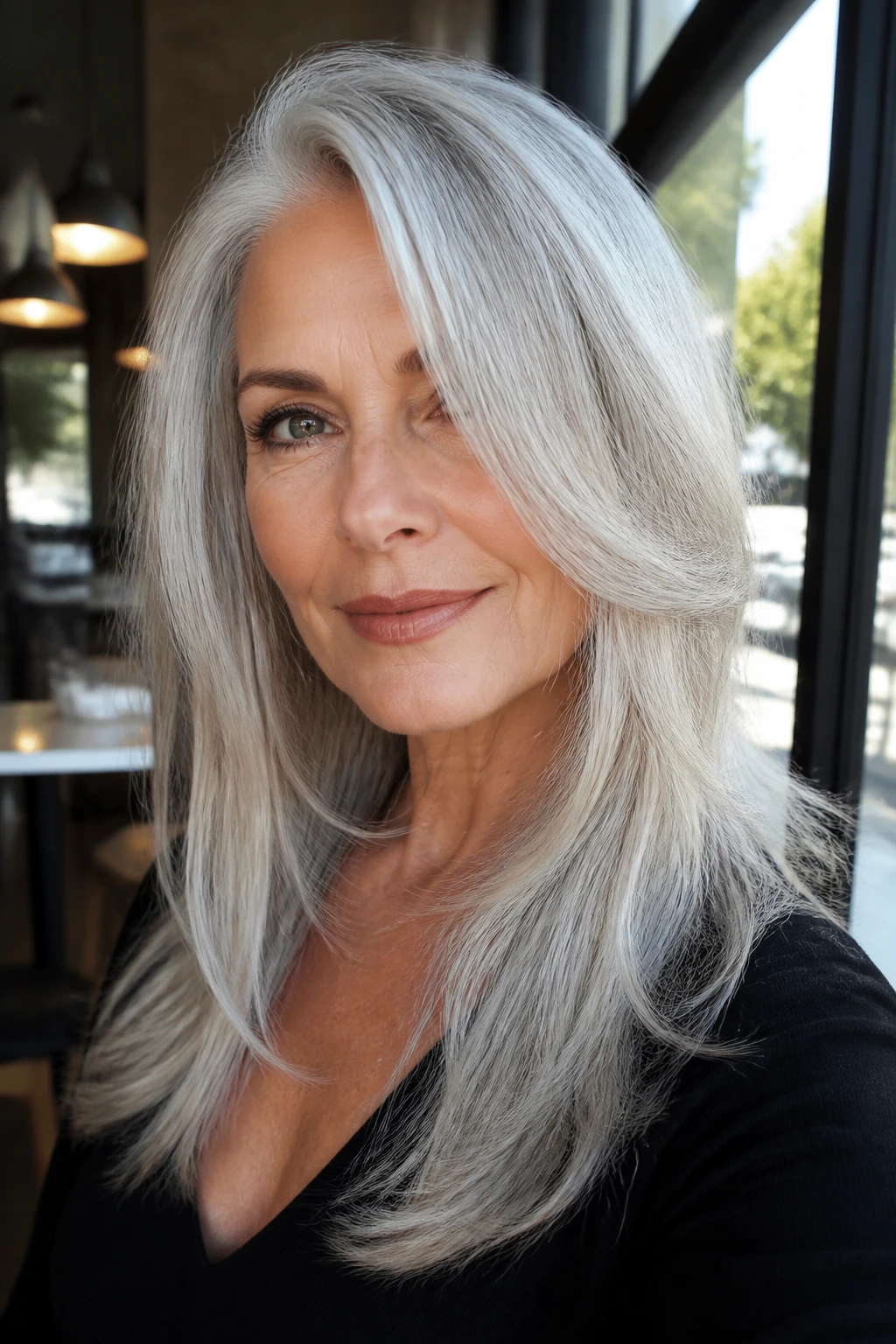
Silver and Gray Glow: Add a brighter frame around the face and keep the layers soft enough to show the color variation. Gray hair often looks richer when the shape isn’t overworked.
Low-Maintenance Air-Dry Version: Go for long, blended layers and a longer face frame. This version dries with minimal intervention and still keeps the silhouette open.
Questions People Ask Before They Commit to Long Layers
Will long layers make my hair look thinner?
They can, if they start too high or if too much bulk gets removed from the ends. Done well, soft layers should keep the perimeter full and only soften the inside and front. For fine hair, long layers placed lower are usually safer than a heavily layered cut.
Where should the first face-framing layer start?
That depends on your face shape and density, but cheekbone, lip, or jaw level are common starting points. If your hair is fine, longer face-framing pieces usually behave better. If your hair is thick, a stylist may be able to bring the front up a little more without losing fullness.
Can I keep my hair long and still avoid the heavy look?
Yes, and that’s the whole point of this style family. The cut needs movement built into the shape, not a shorter length. A long U-cut, soft face frame, or internal layering can keep the hair from feeling like one heavy sheet.
Are curtain bangs a bad idea on long hair after 50?
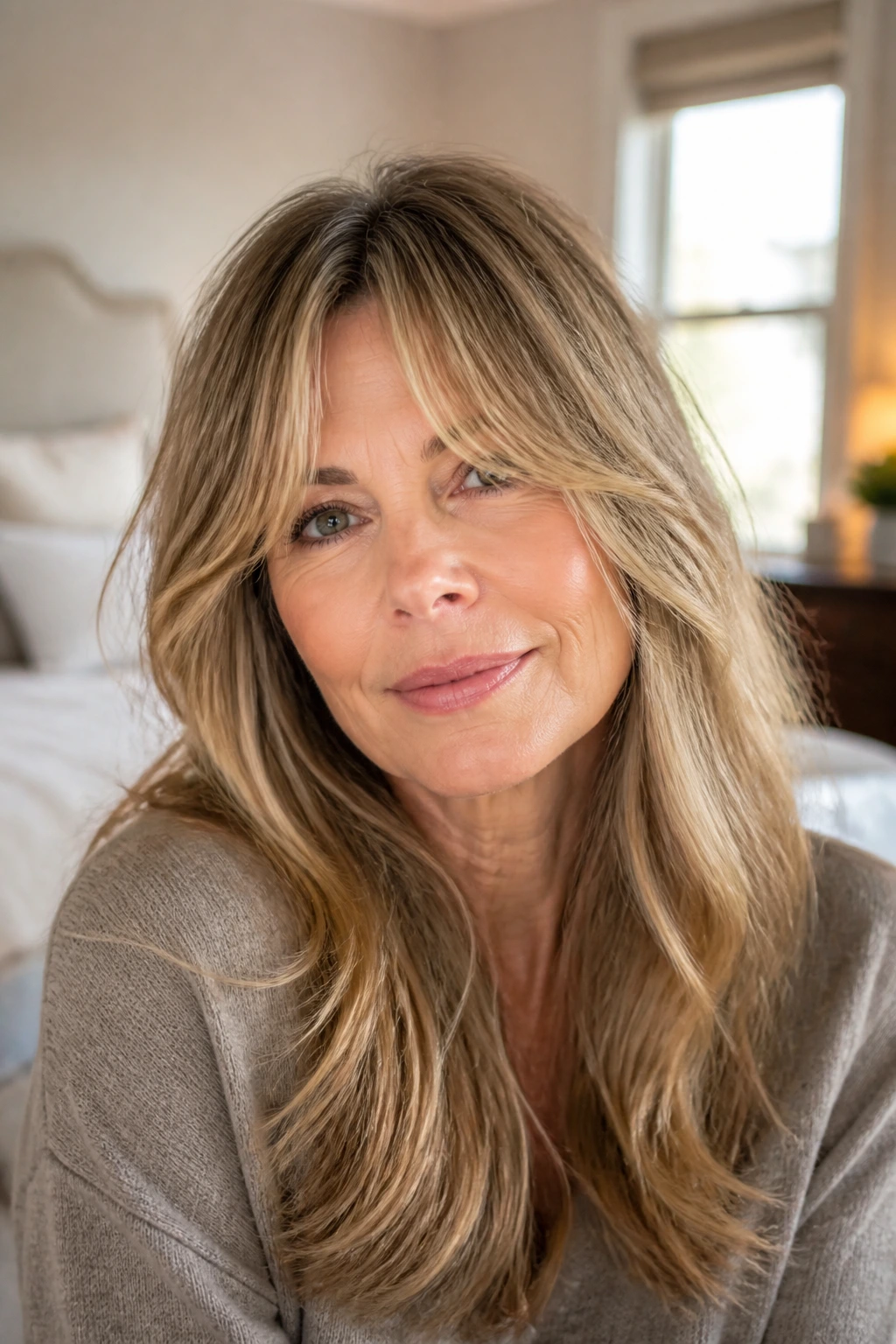
Not at all, but they need to blend into the cut. Short fringe that ends abruptly can fight with length, while curtain bangs that taper into the sides work with it. The longer version is usually easier to live with.
How often do soft layers need trimming?
Most look best with a trim every 8 to 12 weeks. If you wear bangs or a short face frame, those pieces may need a small cleanup sooner. Waiting too long usually shows up first in the ends, not the shape.
What if my hair is curly and I’m worried about frizz?
Ask for layers that respect the curl pattern and avoid aggressive thinning. Curly hair needs shape, but it also needs enough weight to keep the curls from puffing outward. A curl cream and diffuser help the cut sit better than a heavy brush-out.
Can I still wear these cuts in a ponytail?
Yes, if the front layers are kept long enough. Mention that you tie your hair back often so the stylist can leave enough length around the temples and jaw. That one detail saves a lot of annoyance later.
Do soft layers work on gray hair that’s a little coarse?
They can work very well. Coarser gray strands often hold shape better than fine hair, and soft layers help them move instead of standing out in one blunt curtain. A smoothing cream or light serum usually helps the finish look cleaner.
The Shape That Keeps Paying Off
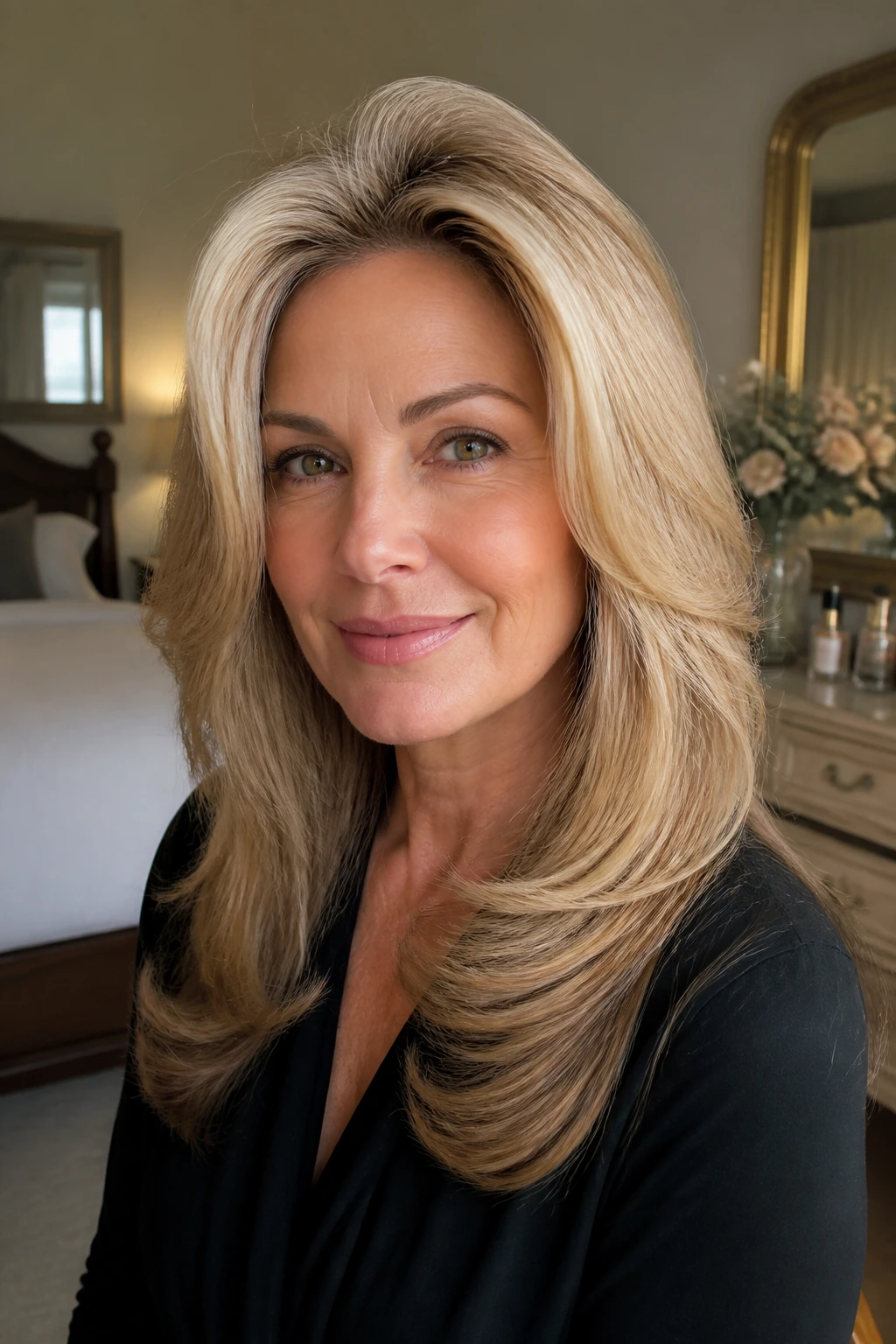
Long hair after 50 does not need to be a statement of rebellion or restraint. It can just be hair that fits. Soft layers make that possible because they let length stay long while the shape still moves, frames, and breathes instead of hanging there out of habit.
The best part is how adaptable these cuts are. You can keep them sleek, wave them, air-dry them, clip them up, or let the silver and highlights do half the work. A good long layered cut keeps giving back every morning, which is more than most hairstyles can say.
If you’re thinking about keeping your length, start with the layer placement instead of the length itself. That’s the part that changes everything.