



Face-framing layers on short curly hair can do something a blunt cut almost never manages: they pull attention upward, soften the jawline, and give curls a place to land instead of letting them balloon out at the sides. A curl that stops at the cheekbone, then springs back a little after it dries, can change the whole read of a haircut. That’s the game here. Not random short pieces. Placement.
Short curls are picky about weight. Cut them too blunt and the shape can sit heavy. Thin them too much and the front goes wispy, frizzy, and oddly older-looking than it should. The best face-framing layers respect shrinkage, hug the face at the right points, and keep enough structure in the back so the cut still feels like a haircut, not a cloud with opinions.
Some of these shapes lean soft and romantic. Others are sharper, a little gamine, a little cheeky. A few are built for dense coils that need room to breathe; others work better when the curls are fine and need help looking fuller around the temples. The common thread is simple: the front pieces do real work, not decorative work.
Why These Cuts Make Short Curls Look Intentional
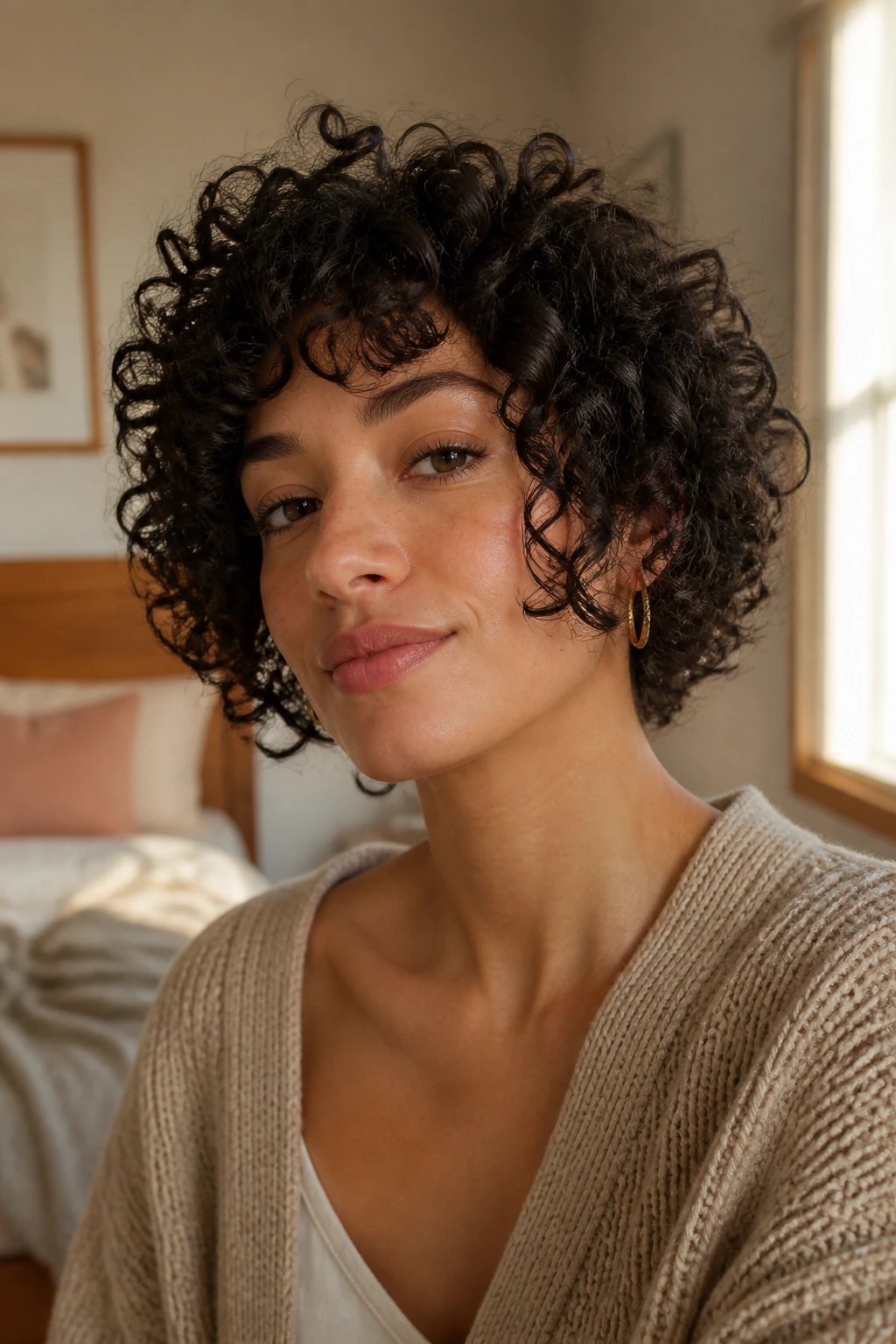
- They work with shrinkage, not against it: On curly hair, a front piece that lands at the mouth wet may sit at the cheekbone dry, and that shift is the whole trick.
- They keep the silhouette from going boxy: A short curly cut can puff out at the sides fast; layers placed around the face pull that bulk inward.
- They give the eye a path to follow: A few curved pieces around the temples, cheekbones, or jawline can make the whole haircut read cleaner and more sculpted.
- They help short hair grow out better: When the front pieces are cut with a plan, the grow-out looks lived-in instead of accidental.
- They let you choose your level of drama: You can go subtle with a soft fringe or push it with a shaggy front. Same idea, different attitude.
1. Cheekbone-Skimming Curly Bob
This is the cut that makes a lot of people say, “Oh, that’s it.” The front pieces hit right around the cheekbone, then curl back into the shape of the bob so the face gets a little lift without losing the rounded outline. On tighter curls, it reads plush and sculpted. On looser curls, it can look almost airy if the layers are kept light.
Why It Works
The cheekbone is one of the safest places to start face-framing layers because it’s high enough to open the face, but not so high that the cut turns into a triangle. Ask for the front to be cut longer than it first appears in the chair if your curls bounce hard. A good stylist will check the pieces after they spring up, not before.
- Best for medium-density curls that need shape without too much thinning.
- Keeps the jawline visible instead of burying it.
- Works with middle parts and soft off-center parts.
Tip: If your curls clump well, ask for the front pieces to sit just above the cheekbone when dry. That tiny difference matters a lot.
2. Jawline Curl Bob with Soft Side Pieces
A jawline bob is bolder than it sounds, mostly because curly hair changes the math. The length lands around the jaw when dry, which means the side pieces can soften the lower face instead of cutting it off. I like this shape on people who want definition but hate anything that feels fussy.
The beauty of this cut is the balance. The bob itself stays short enough to feel fresh, but the side pieces are left just long enough to move. If your curls expand wide, this shape keeps the volume from drifting outward too far. If your curls are looser, the front pieces can bend forward and create a really clean line around the mouth and jaw.
Best for
- Round faces that need a bit of vertical pull
- Curls that flatten at the crown but puff at the sides
- Anyone who wants a short cut without going pixie-short
Ask for
- A jaw-length perimeter
- Soft layering starting at the temples
- Minimal thinning through the ends
The one thing I would not do here is over-texturize the front. That’s how a crisp bob turns fuzzy before lunch.
3. Chin-Length Crop with Center-Part Curtains
Why does this one work so well? Because it gives the face a clean center opening, then lets two curly curtain pieces fall on either side like a frame that was actually measured. Chin-length on curls is not as long as it sounds. Shrinkage usually pulls it a little higher, which is exactly why it stays neat.
The front pieces should be cut with enough length to bend, not just sit there. If the curls are springy, the pieces can end up at the cheek or even above it once dry. That’s fine. In fact, that’s the point. A center-parted shape also helps if your face is wider through the cheeks, because the hair creates a soft vertical line.
How to wear it
- Let the front dry on its own before touching it.
- Use a light gel or mousse at the temples so the frame holds.
- Clip the roots at the part for a few minutes if they tend to collapse.
This is one of those cuts that looks simple but depends on placement. The wrong length feels like a helmet. The right one looks deliberate.
4. Curly Pixie with Long Temples
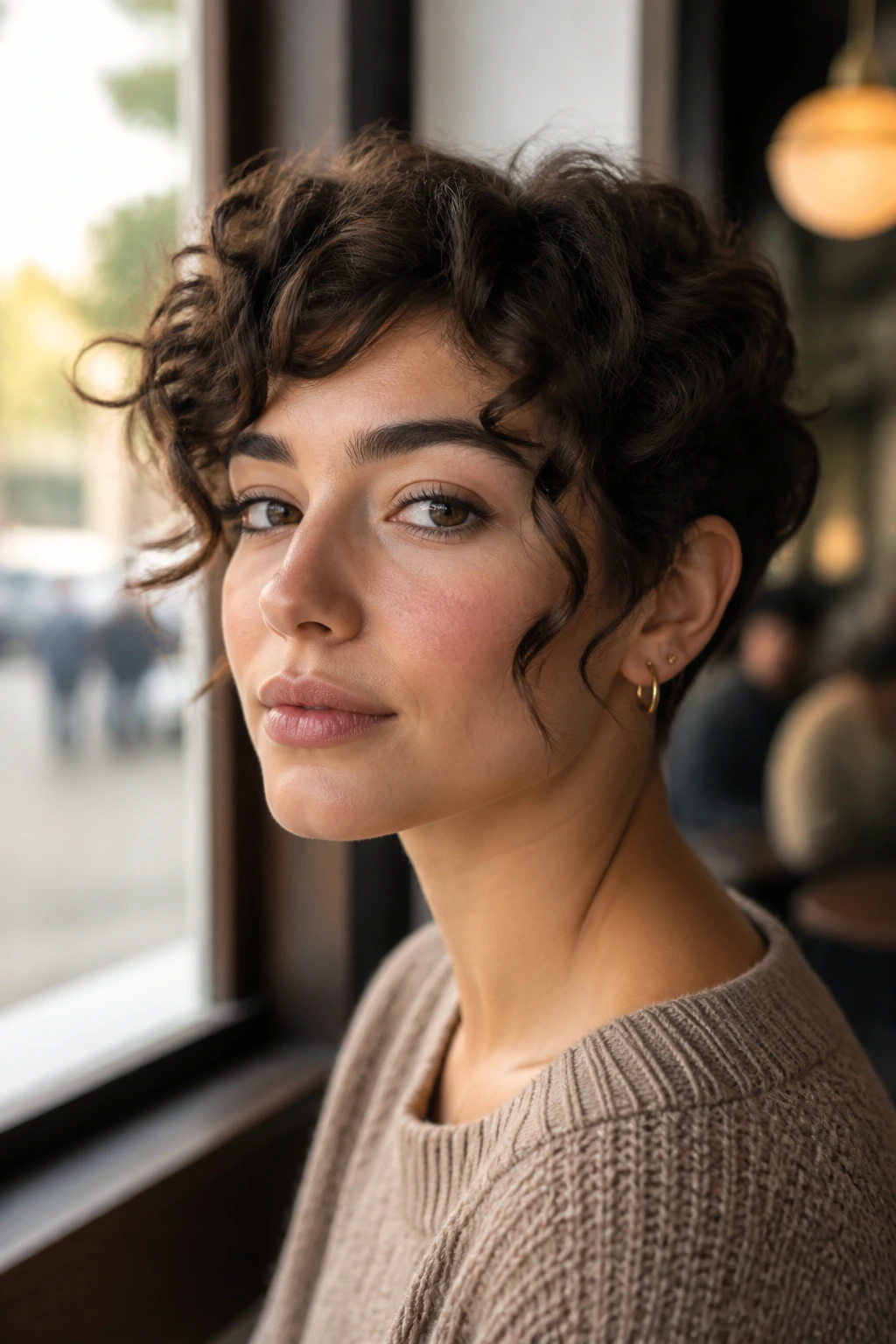
A curly pixie with long temple pieces is a sharp little cut with a soft edge. The back and sides stay close to the head, while the front and temple curls are left long enough to graze the cheek. That contrast is what keeps it from looking too severe.
This shape is especially good if you want short hair that still leaves room for personality. The longer temple pieces can tuck behind the ear, fall forward across the cheek, or sit loose and piecey. I prefer it on curls that have a bit of spring but not so much density that the sides explode outward. Tight curls can wear it too, but the temple pieces need to be left longer than you think.
Watch for this: if the temple curls are cut too short, the whole haircut loses its softness. You want movement, not little hard nubs at the sides.
5. Bixie with Feathered Fringe
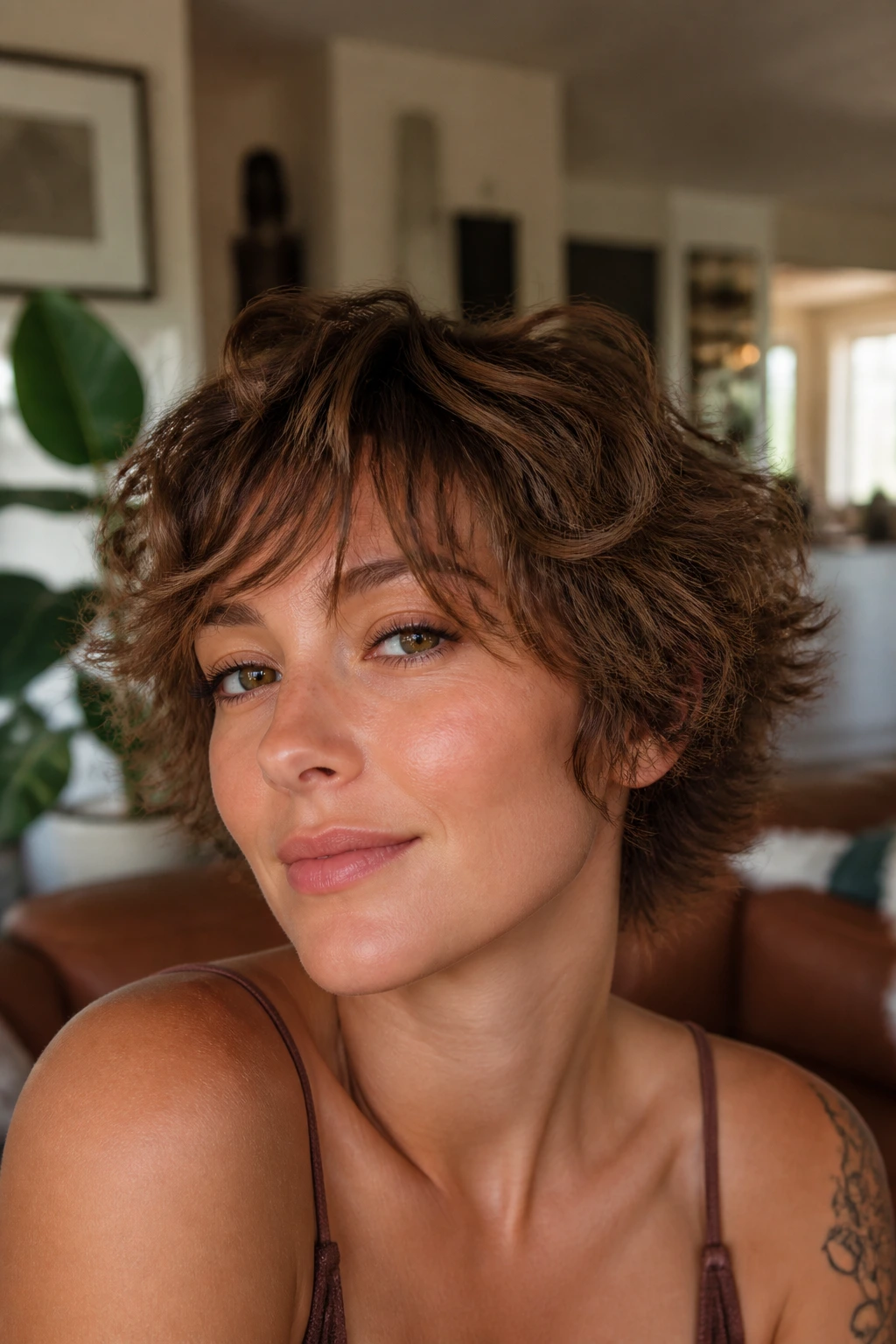
The bixie lives in that useful middle zone between a bob and a pixie, and curly hair makes the shape even better when the fringe is feathered instead of blunt. The front can sit lightly across the forehead or split into a few curl pieces that land around the brow and temples. It feels relaxed, not precious.
What I like here is the grow-out. A good bixie does not betray you after six weeks. The fringe softens first, the sides stay neat for a while, and the back keeps its shape if the neckline is trimmed cleanly. On dense curls, the feathers stop the front from looking too heavy. On fine curls, they make the hair seem fuller without stacking too much bulk on the crown.
H3: Best way to ask for it
Ask for a short bob that leans pixie, with the front left longer than the nape and the fringe broken up into several small pieces. If your curls are tight, tell the stylist you want the fringe to collapse into shape rather than stand straight out.
That one sentence can save a lot of disappointment.
6. Mini Shag with Airy Crown Layers
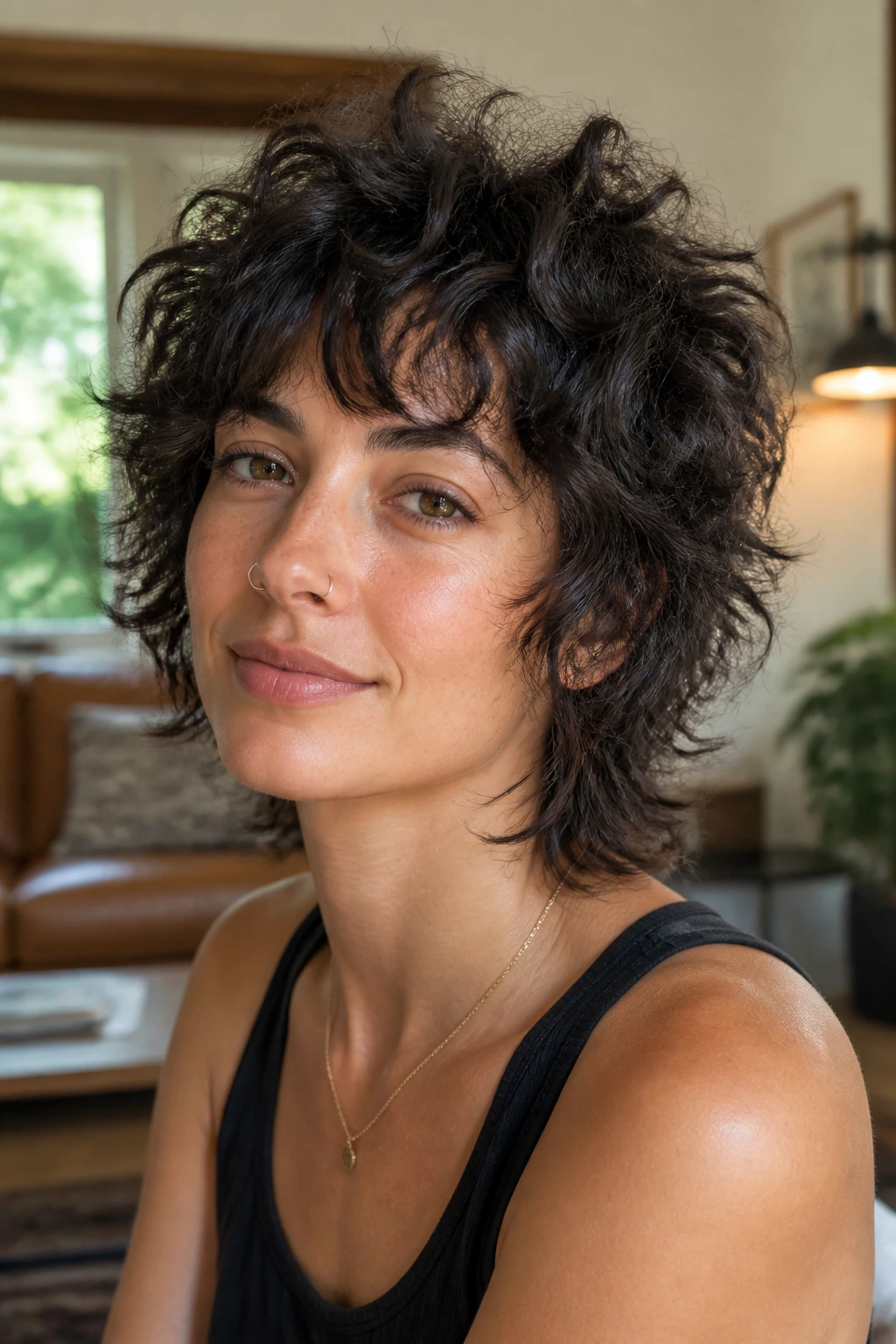
A shag on short curly hair can go wrong fast if it’s too chopped up, but a mini shag with airy crown layers is one of the best ways to add lift without turning the head into a triangle. The top is cut to encourage movement, while the face pieces stay soft enough to skim the cheek and lip line.
This cut is a friend to curls that get flat on top and bulky below. The crown layers lift the silhouette; the front pieces pull the eyes inward. It works especially well if your curls are loose to medium and you like a piecey, slightly undone finish. You’ll probably need a diffuser and a bit of root clipping to keep the top from lying too close to the scalp.
A lot of people think shag means “messy.” Not here. It means the layers are doing a job.
7. French Bob with Wispy Bangs

The French bob on curly hair has a specific mood. It’s short, cheeky, and slightly cropped through the ends, but the wispy bangs keep it from feeling severe. Those bangs don’t need to be flat across the forehead. They can live as a few soft curls that break around the brows.
This shape is best when you want the mouth and cheekbones to take center stage. The hair sits close to the face, which makes the curl pattern itself look richer. If your curls are dense, the perimeter can be trimmed just enough to stay crisp. If they’re fine, leaving the fringe a touch longer helps the whole cut feel fuller.
One thing I love: the French bob does not need perfect symmetry. A little bend in the part, a small difference between the sides, and it still looks polished.
8. Asymmetrical Side-Part Bob
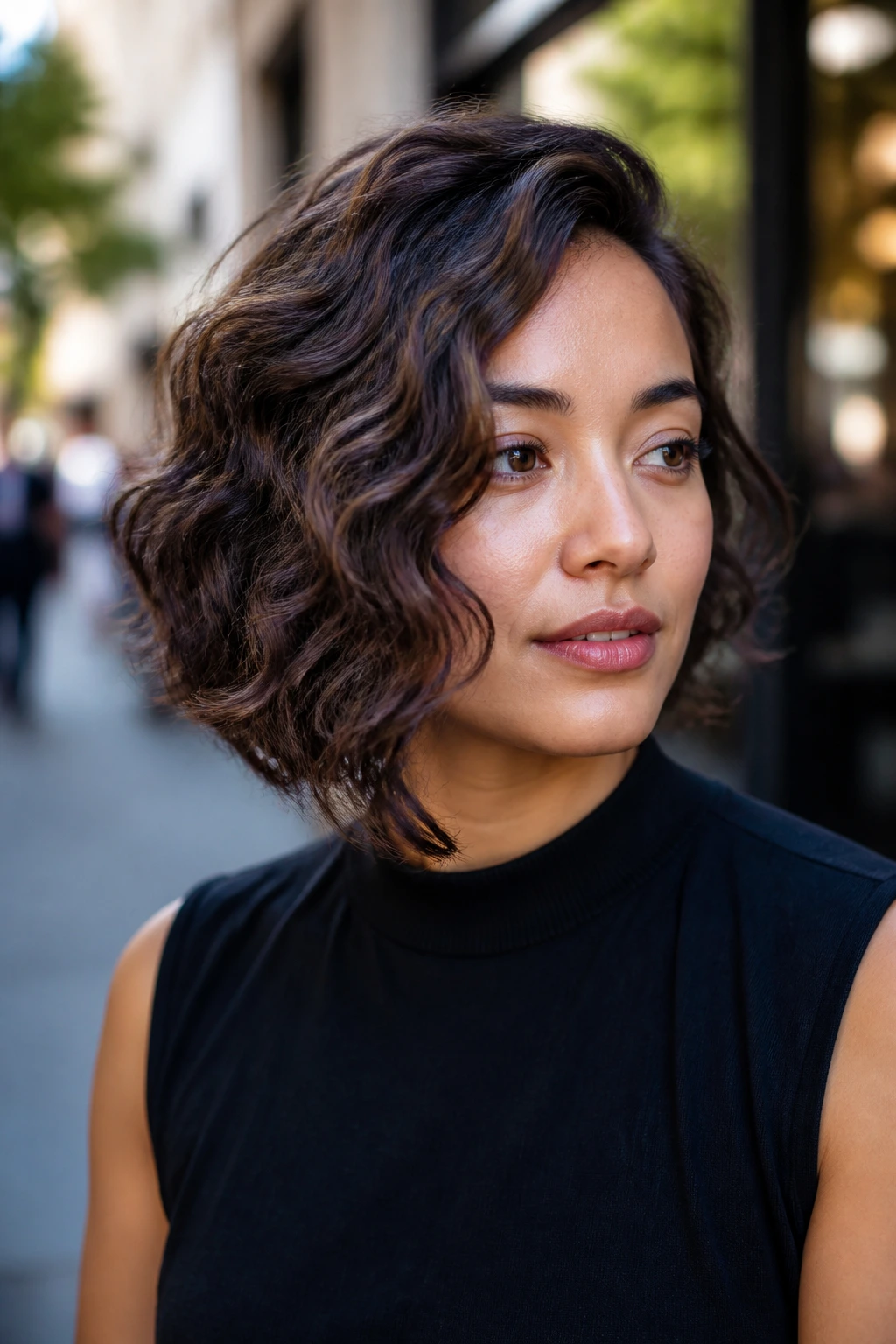
If you like a haircut with some edge, this is the one. A side-parted bob with one side slightly longer gives curly hair an immediate sense of direction, and the face-framing layers become part of the line instead of an afterthought. The longer side can fall along the cheek and jaw, while the shorter side keeps the style lifted.
This cut is especially useful when one side of your hair naturally behaves better than the other. Rather than fight the curl pattern, you lean into it. The asymmetry distracts from any uneven shrinkage, which is handy because curly hair loves to surprise you in the mirror.
What makes it different
- The part does a lot of visual work.
- The front pieces are not mirror copies.
- It can soften strong jawlines or sharpen a soft face shape, depending on where the longer side falls.
If you are bored by “safe” haircuts, this one has just enough attitude to feel fresh without getting gimmicky.
9. Inverted Bob with a Longer Front

The inverted bob is built on contrast. Shorter in back, longer in front, and then the curl pattern does the rest. On short curly hair, that longer front section keeps the cut from feeling boxy, especially if the curls are thick or springy.
The front pieces should angle down just enough to graze the jaw or neck. Too steep, and the haircut can start looking dated. Too subtle, and you lose the whole point. I like this cut best when the front curls are cut dry so the stylist can see exactly how much the hair pops once it leaves the chair.
Good for:
- Hair with a lot of density in the back
- People who like structure but not stiffness
- Curls that bunch up at the nape
The back gives shape. The front gives softness. That’s the deal.
10. Tapered Nape Crop with Framing Ribbons
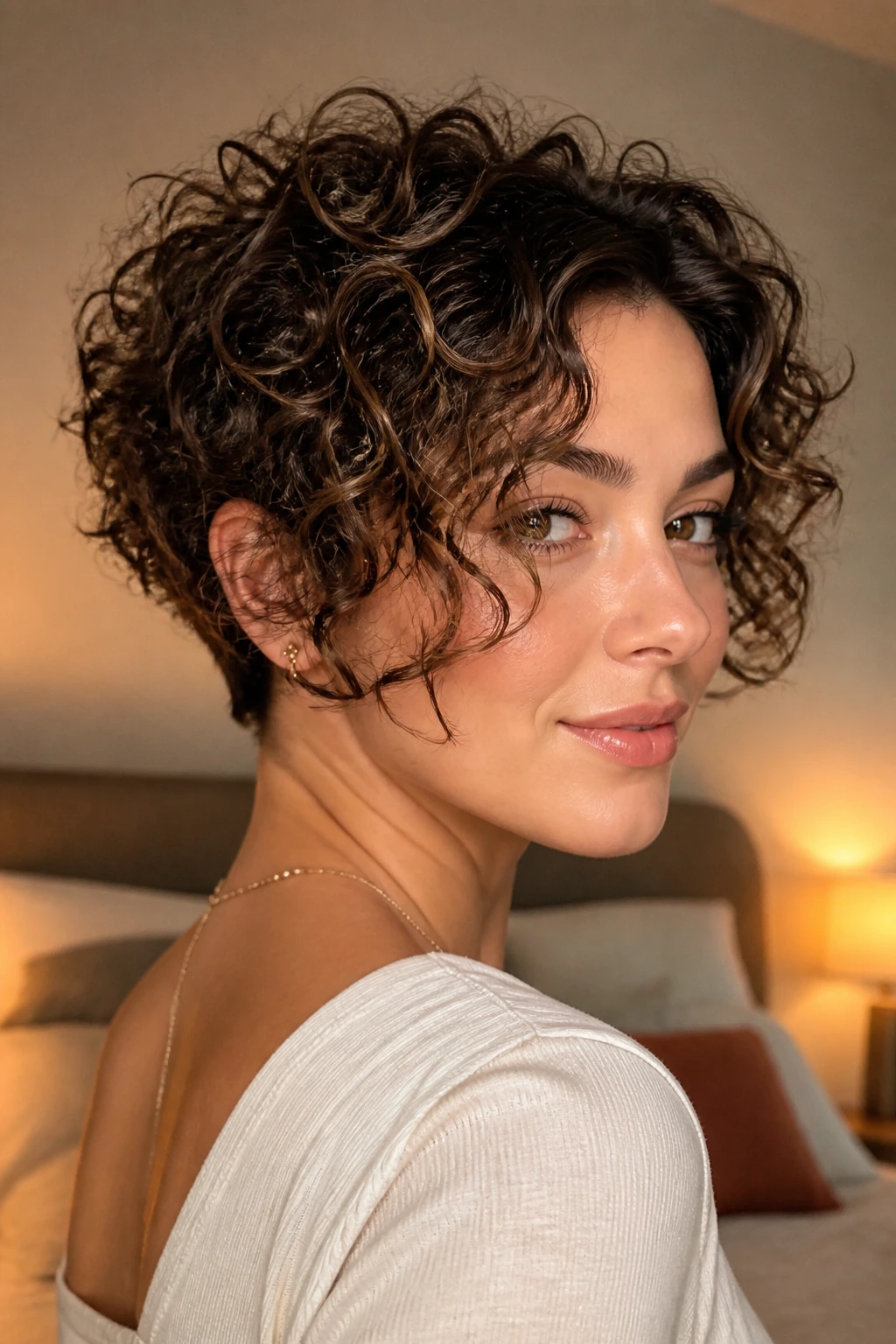
A tapered nape crop is one of the smartest shapes for short curly hair because it keeps the neckline neat while letting the front behave like a little frame. The “ribbons” are the longer front strands that bend around the cheek and jaw, and they stop the style from feeling too clipped.
This one is especially nice if you wear earrings or have a defined neck. The short nape shows off both. The front pieces do the opposite work: they bring the attention back to the face. If your curls are thick, the taper can cut down on the bulk at the back of the head. If they’re soft and loose, the taper creates a clean outline that makes the front look fuller.
Pro move: ask the stylist to check the nape when your hair is dry, not just wet. Curly napes can lie to everybody.
11. Rounded Bob for Full Cheeks

A rounded bob is one of the few short curly cuts that actively plays with roundness instead of trying to fight it. The shape curves in toward the face a little at the sides and then releases at the front, which gives full cheeks a softer outline. It is not about hiding the face. It’s about giving it a frame that doesn’t shout.
This cut works best when the layers are kept controlled. If the front gets too choppy, the round shape turns wide. If the layers are too blunt, the bob can feel heavy at the mouth. The sweet spot is a curved perimeter with face pieces that begin near the temples and finish around the jaw.
A rounded bob also behaves well on humid days, which is a small mercy. Less edge means less chance for stray curl bits to turn into fluff.
12. Mini Wolf Cut for Loose-to-Medium Curls

A mini wolf cut on short curls is for people who like some mess, but in a good way. The crown gets lift, the mid-lengths get movement, and the front pieces fall in a way that makes the face look more open. It’s shaggy, yes. But if the layers are controlled, it reads as modern rather than wild.
This shape is strongest on loose-to-medium curls that can separate into visible sections. The front usually starts around the cheekbone or just above the mouth, then blends into shorter crown layers. If the hair is too fine, the top can go flat. If it is too dense, the shape needs careful de-bulking so the head doesn’t puff out.
I’d call this one a “cool haircut” cut. It has personality even when you do almost nothing to it.
13. Sculpted Ringlet Bob for Tight Curls
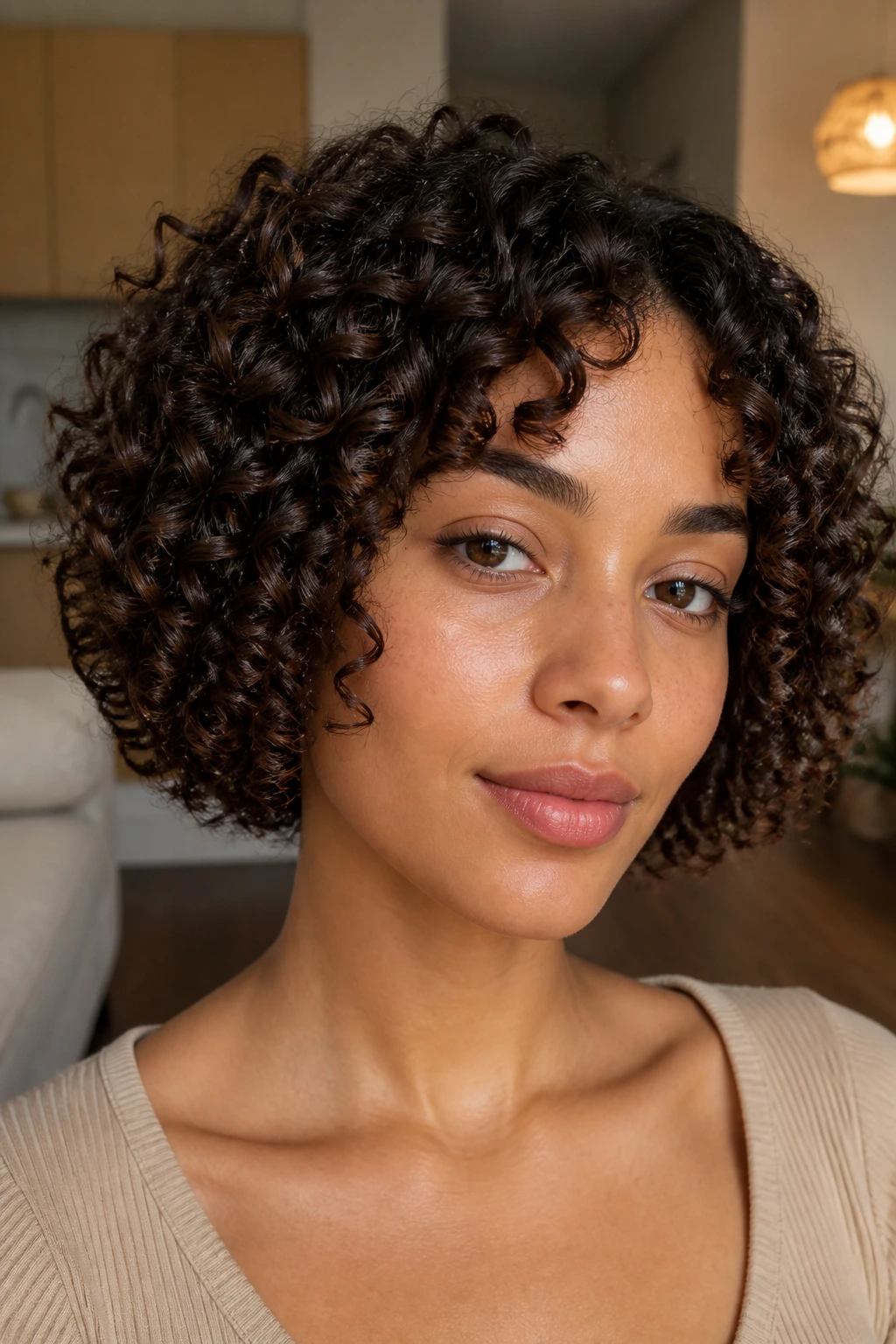
Do tight curls need face-framing layers? Absolutely. They just need them handled with more respect. A sculpted ringlet bob keeps the curls defined while letting a few front coils sit a little longer than the rest so the face gets softness around the temples and chin.
The trick here is restraint. Too many layers and the curl clumps split apart. Too little layering and the bob can feel boxy. A good sculpted shape often means the stylist cuts curl by curl, checking how each ringlet wants to sit instead of forcing a round shape where it does not belong.
H3: Best part about it
The cut looks good even when the curls do not all match perfectly. That matters more than people admit. Real hair is uneven. A smart bob makes that look intentional.
If your coils shrink a lot, ask for front pieces that fall somewhere around the lower cheek or mouth when dry. They’ll probably land higher than that once they spring up.
14. Undercut Bob with Soft Front Fall
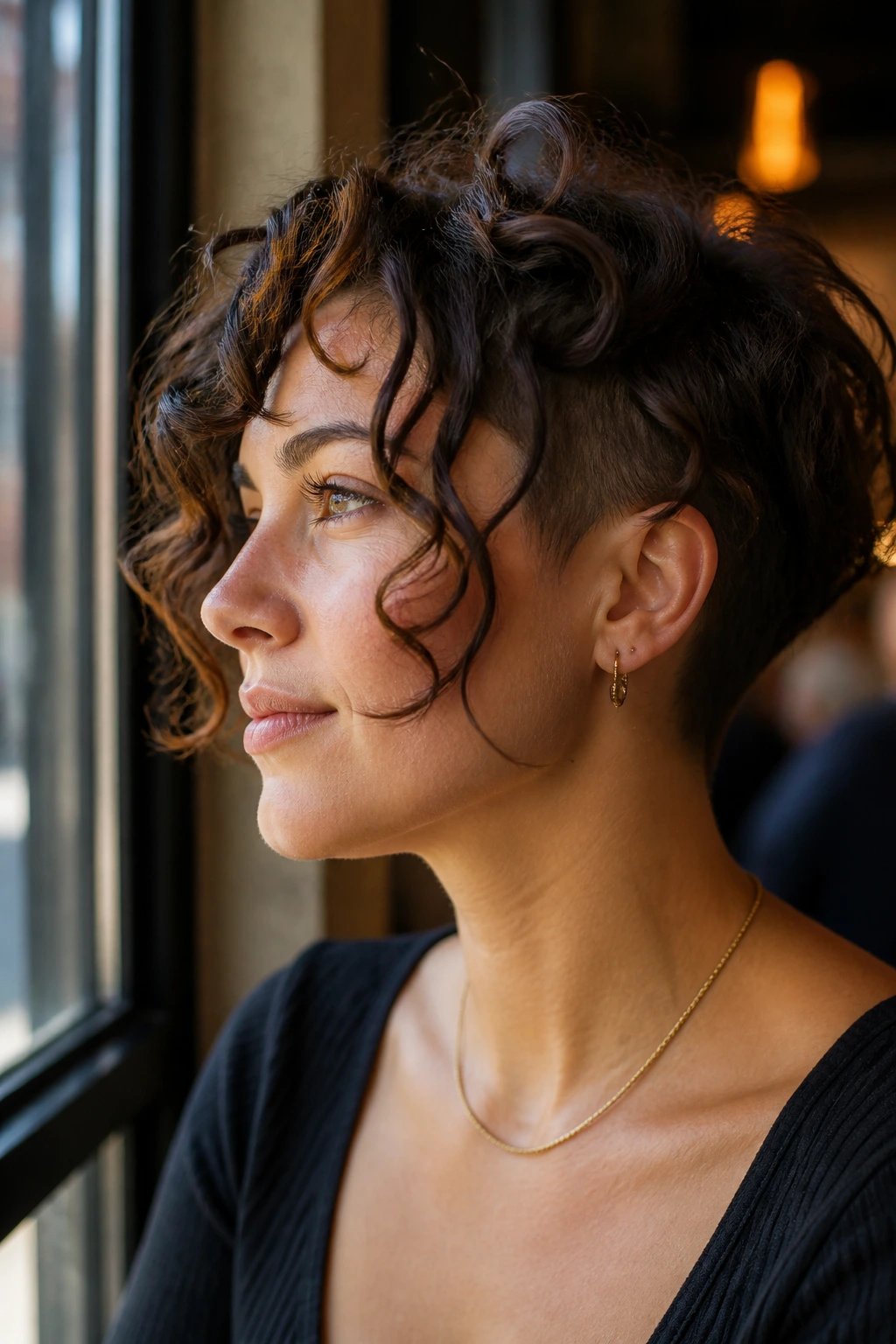
An undercut bob is the answer when the back and sides carry too much bulk. Taking weight out underneath lets the top curls fall cleanly, which makes the face-framing layers look lighter and more defined. The front stays soft. The hidden undercut does the heavy lifting.
This cut is not just for edgy looks. It’s practical for dense curly hair that wants to puff around the ears or at the nape. By removing some of that hidden bulk, you give the front curls room to curve inward instead of being shoved outward by the mass underneath. The result feels cleaner, and honestly, easier to live with.
If you’re nervous about undercuts, keep them subtle. Hidden matters. A little removal under the surface can change the entire feel of the cut without flashing your scalp in every mirror.
15. Layered Crop for Fine, Soft Curls
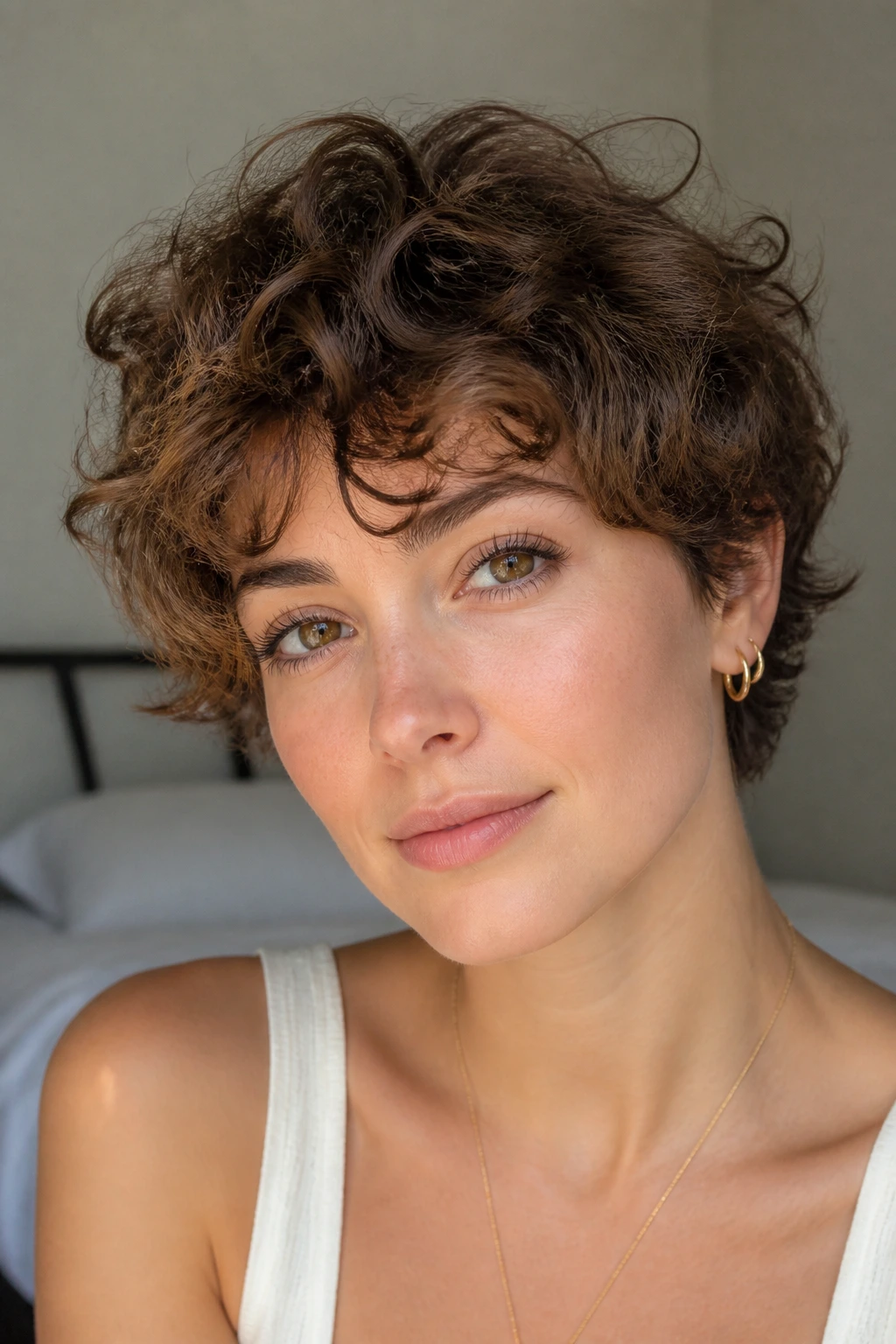
Fine curly hair needs a different kind of face-framing layer. Not aggressive. Not choppy just for the sake of it. A layered crop with soft front pieces creates the look of fullness without stripping away the little bit of weight fine curls need to hold shape.
The key is keeping the layers long enough to overlap. If the front is cut too short, the curls separate and look stringy. If the layers are too even, the hair can collapse into one flat shape around the head. A few careful layers around the temples and cheekbones give the illusion of density and stop the cut from looking see-through at the sides.
How to wear it
- Use a light mousse rather than a heavy cream.
- Diffuse upside down for root lift, then flip back and finish.
- Avoid over-brushing, which breaks up the curl clumps.
This is one of those cuts that rewards a light hand. Less product, less hacking, more control.
16. De-Bulked Crop for Dense, Thick Curls
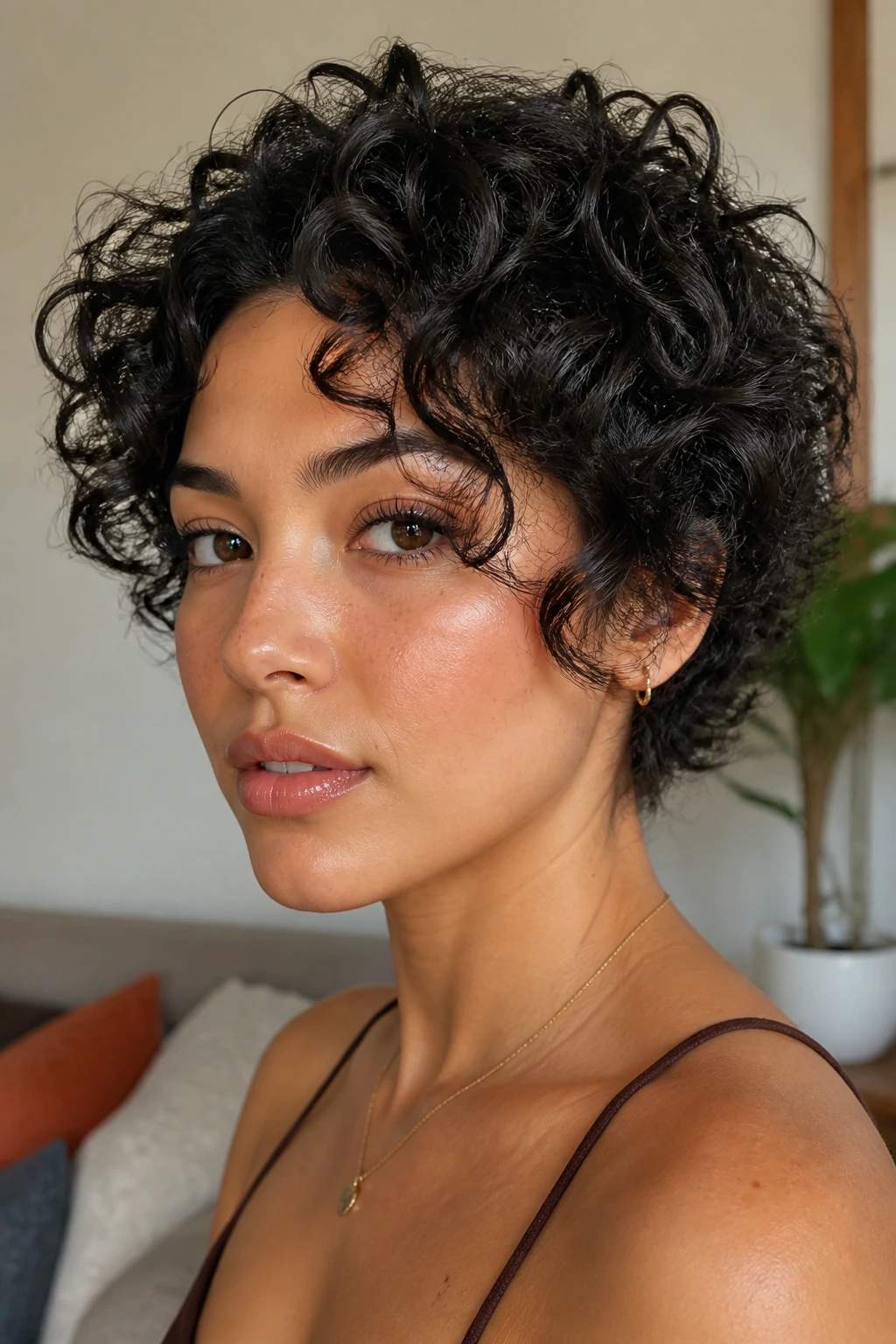
When curls are thick, the problem usually isn’t lack of shape. It’s too much of it. A de-bulked crop solves that by removing weight from the right places so the front pieces can actually frame the face instead of disappearing into the mass around them.
The front is often left a touch longer than the sides, but the real work happens inside the haircut. Internal shaping trims some of the hidden bulk so the surface curls can sit in a cleaner outline. On dense hair, that can mean the difference between a sculpted crop and a triangular puff.
What to ask for
- Internal de-bulking, not a razor-heavy thin-out
- Front pieces kept long enough to bend around the face
- A neckline that stays tidy but not shaved close
Too much thinning can frizz up dense curls fast. What you want is release, not emptiness.
17. Heart-Shape Cut with Long Sideburn Pieces

A heart-shaped face often needs a little balance through the lower half, and long sideburn pieces are the easiest way to get it. These front layers fall from the temple down toward the cheek and jaw, which softens a broader forehead without hiding the face.
The cut works because the side pieces create movement where the face narrows. Short curls around the temple can be surprisingly flattering when they are left long enough to bend rather than stand out. If the hair is chin-length or slightly shorter, the sideburn pieces can tuck under the jaw and make the whole shape look more grounded.
I like this cut on people who hate bangs but still want something around the front. It gives the same framing effect without the maintenance of a full fringe.
18. Square-Shape Cut with Curved Front Layers
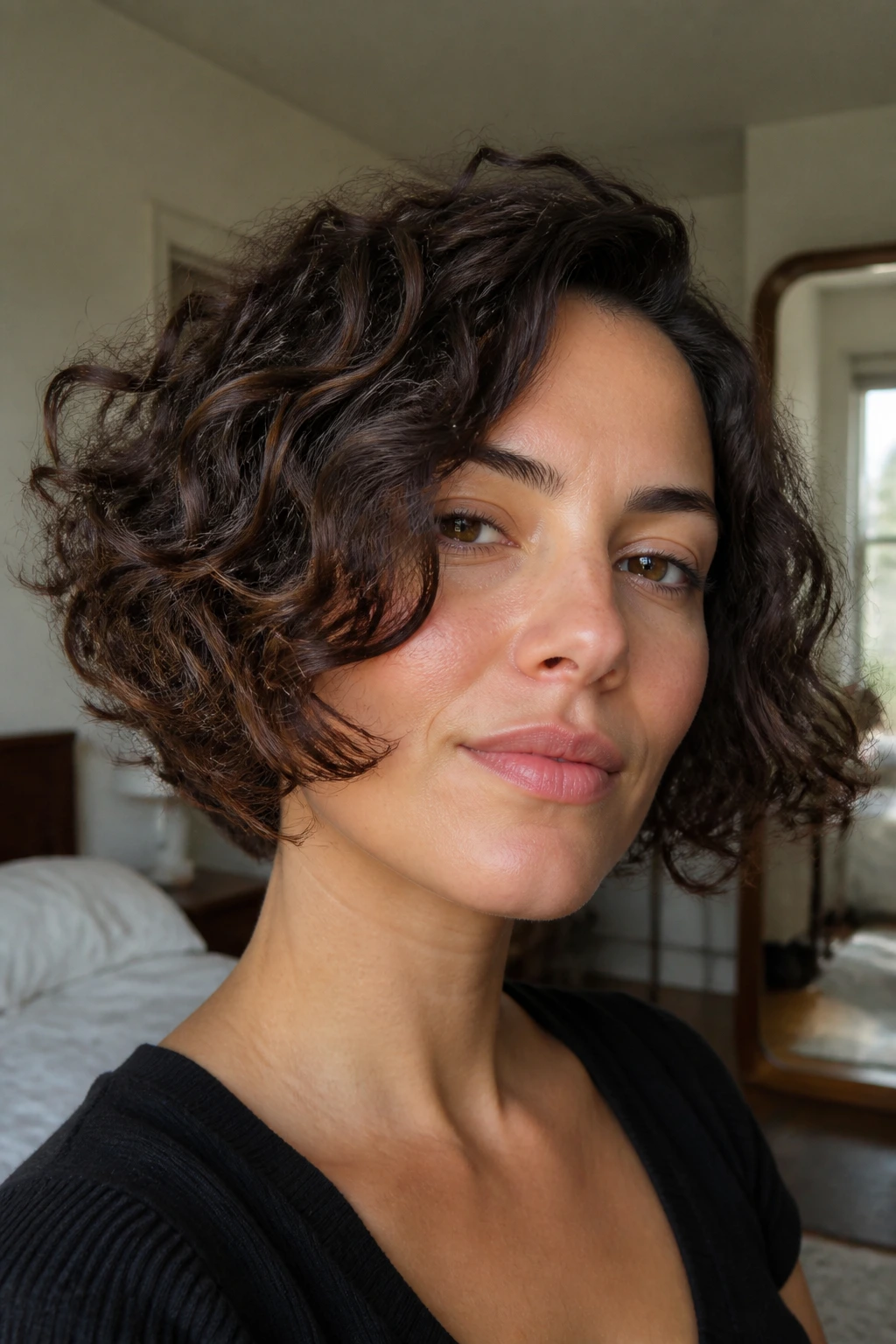
Square faces can take strong shape, but the right curl cut should soften the angles a little instead of boxing them in further. Curved front layers do that by moving diagonally across the cheeks and jaw rather than stopping bluntly at one point.
This is where face-framing layers earn their keep. A curved layer line brings the eye up and around the face, which softens the corners without hiding the bone structure. The front pieces should not be too straight or too symmetrical. Curved is better. Slightly broken is better. Curls look best when they can meander a little.
A side part can help here, especially if the face feels wide at the temples. It shifts the visual weight off the center and lets the front curl pieces fall at a more flattering angle.
19. Round-Face Cut with Diagonal Front Sections
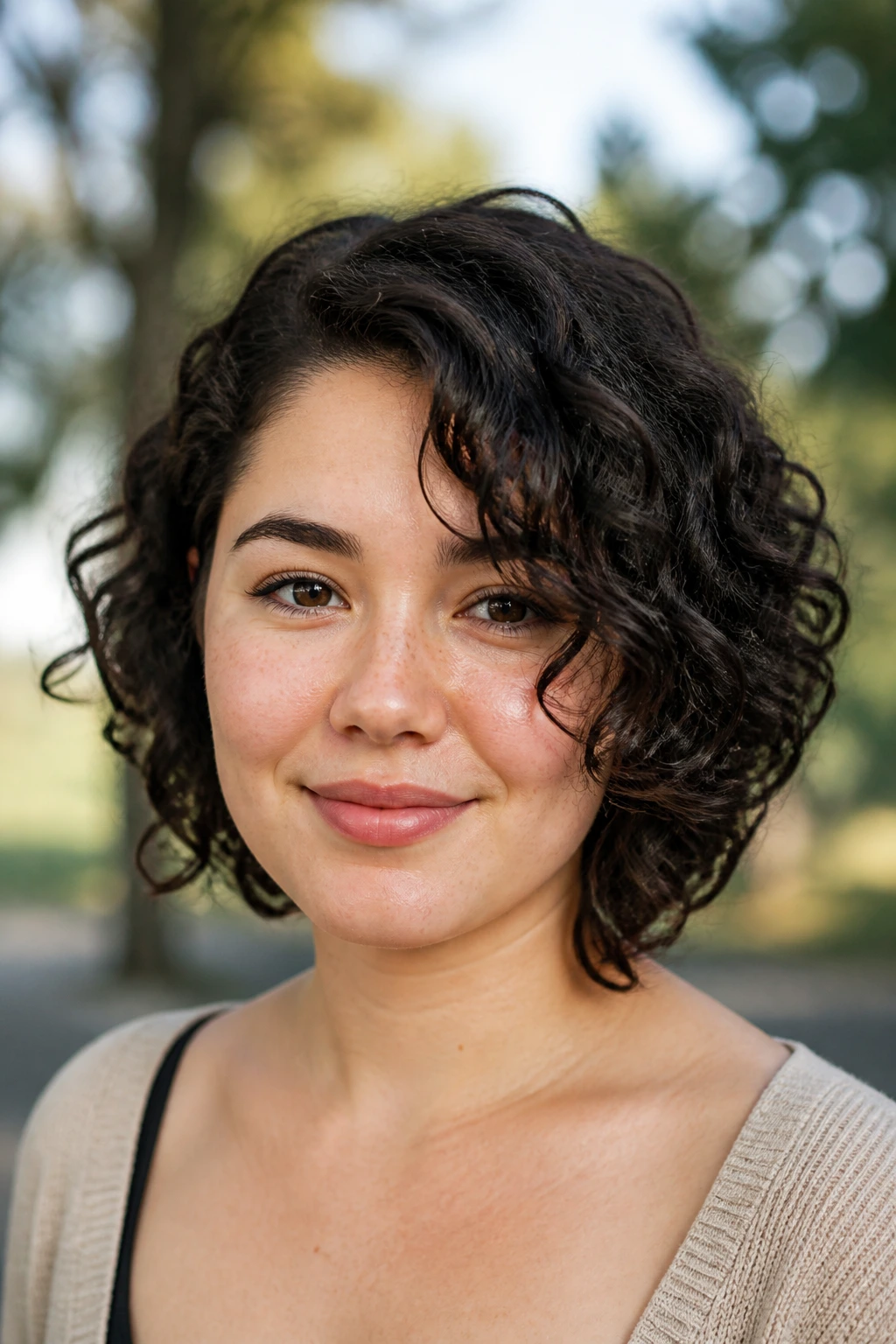
Round faces do well with front pieces that create diagonals. Straight-across lines can make the face feel wider than it is, but a diagonal curl line draws the eye downward and adds a little stretch. That’s the useful part.
This cut often starts with a side part or off-center part, then uses layered front pieces that fall from the brow area down toward the jaw. The curls do not need to be long. They just need direction. On short hair, direction matters more than length. A diagonal piece can do more work than a longer one that sits in the wrong place.
H3: The rule I’d follow
Avoid setting the shortest point of the frame right at the widest point of the cheeks. That’s the easiest way to accidentally widen the face. Bring the shortest bend in a little higher or lower instead.
20. Oval-Face Cut with Balanced Temple Layers

Oval faces are easy to overcomplicate. They already carry balance, so the best short curly cut usually just needs a clean shape and a soft frame at the temples. Balanced layers keep the proportions even without making the haircut feel over-designed.
This is the place for restraint again. A few front pieces around the temples, a bit of length near the cheeks, and a perimeter that doesn’t flare out too much. If the curls are loose, the layers can be a little more playful. If the curls are tight, the balance should stay cleaner so the shape doesn’t drift too wide.
The upside of an oval face is freedom. You can wear a rounded bob, a mini shag, a bixie, or a pixie-bob and still keep the face-framing layers subtle. Lucky, sure. But there’s still a bad haircut hiding in there if the weight is cut off in the wrong spots.
21. Curly Mullet Lite with Front Payoff
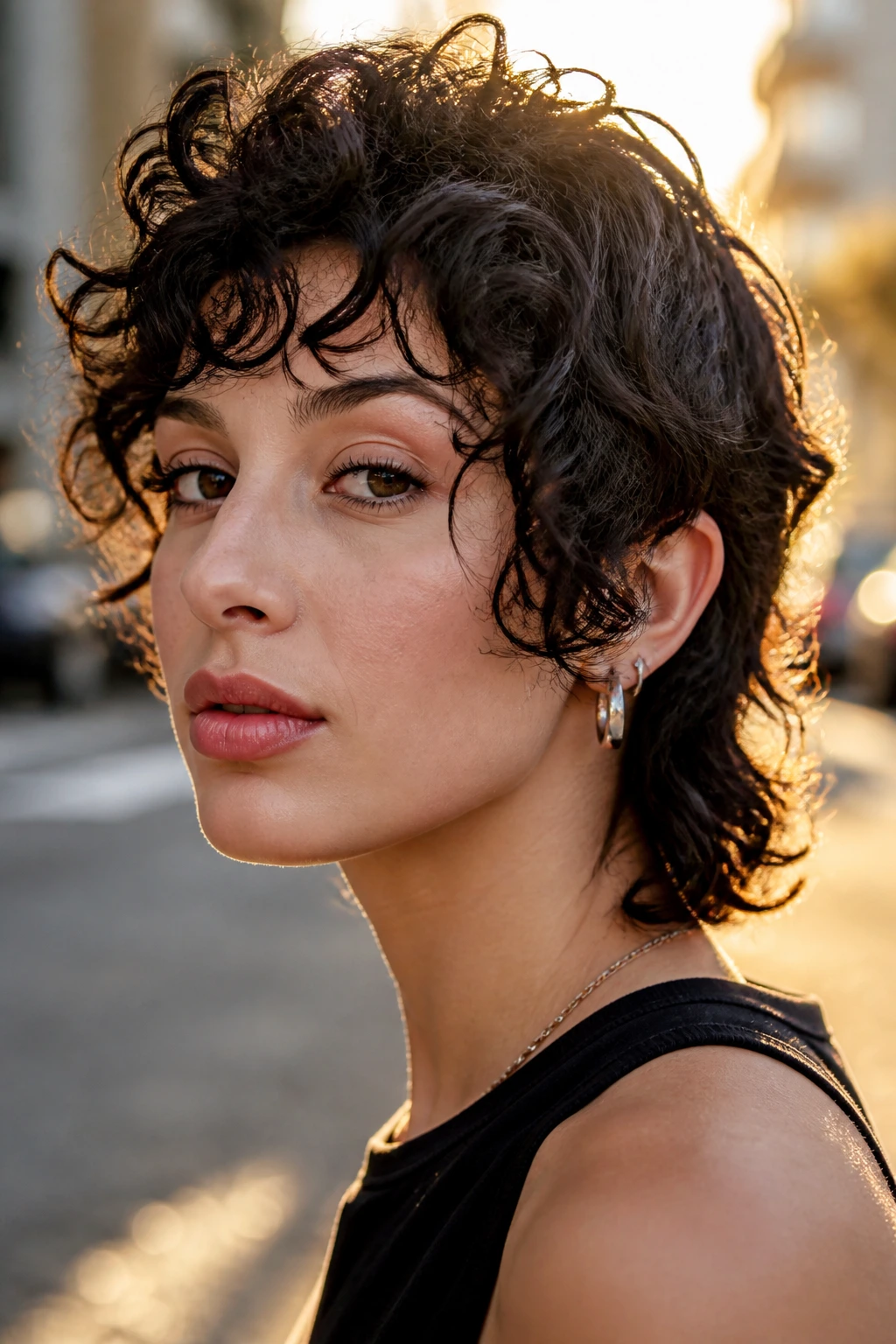
A curly mullet lite sounds bolder than it is. The back stays a touch longer, the crown gets lift, and the front pieces become the star of the show. On short curly hair, that front payoff can be a cheekbone-skimming layer, a temple tendril, or a soft fringe that breaks up the forehead.
This is a good cut if you like contrast and don’t want your hair to look too prim. The front gives the softness, the back gives the attitude, and the top keeps the shape from falling flat. The secret is not making the difference between the front and back too extreme. “Lite” matters. Otherwise the cut starts to look costume-y, and nobody needs that.
A little texture spray at the roots can help this one. Not too much. Just enough to keep the crown from collapsing under the front pieces.
22. Halo-Framed Afro Crop
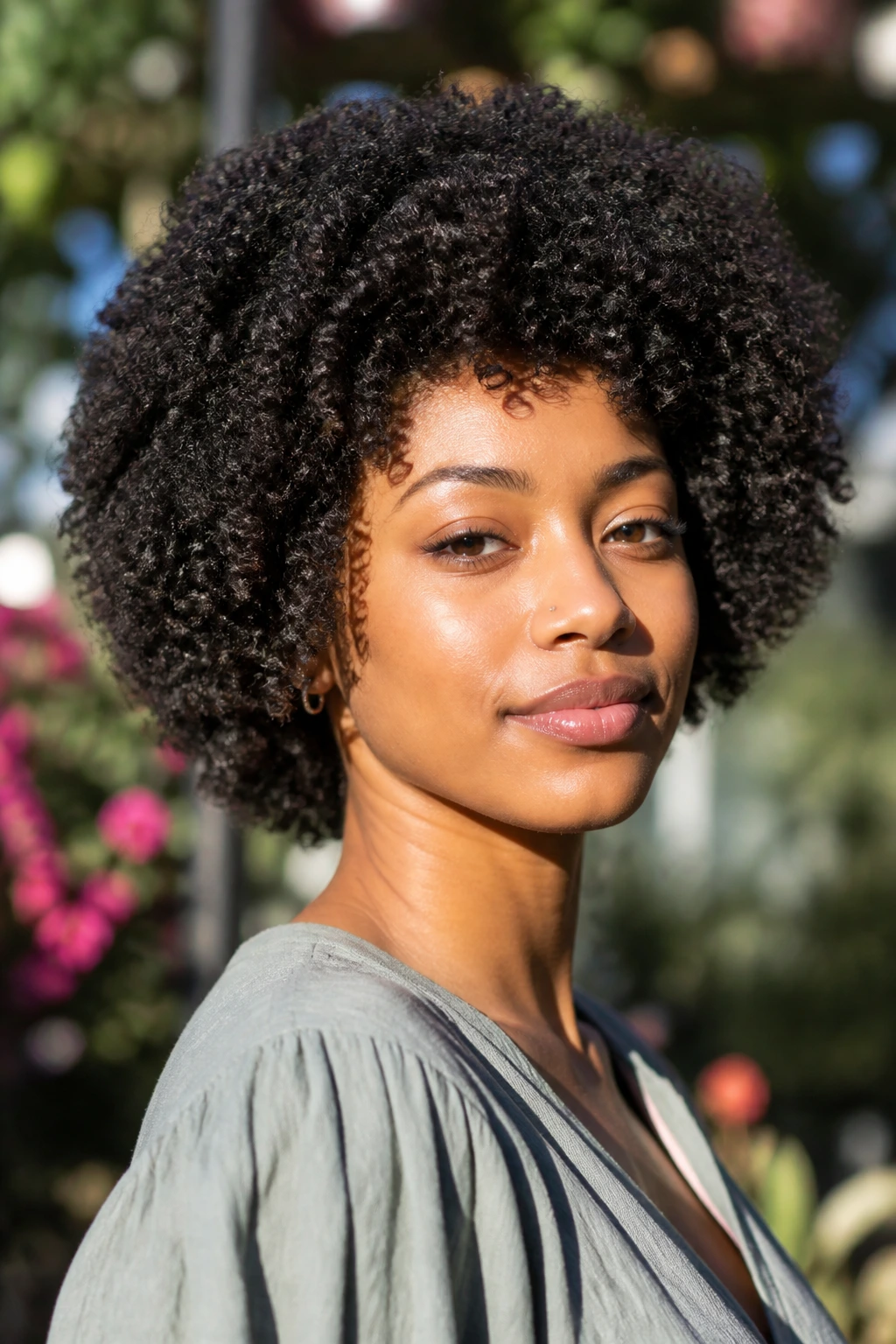
For tight coils and afro textures, face-framing layers do not have to mean long wisps at the cheeks. They can mean a halo shape that opens around the forehead, temples, and jaw so the face sits inside the cut rather than under it. Done well, this shape looks sculpted and soft at the same time.
What matters here is the outline. A good halo-framed crop keeps the top rounded, lets the side pieces breathe, and avoids square corners that can make the face look compressed. The front can be shaped into a gentle curve, a side sweep, or a soft arch depending on how much forehead you want to show.
Best part: this cut makes earrings, glasses, and necklines look sharper. The hair stops competing with them.
23. Choppy Wash-and-Go Bob
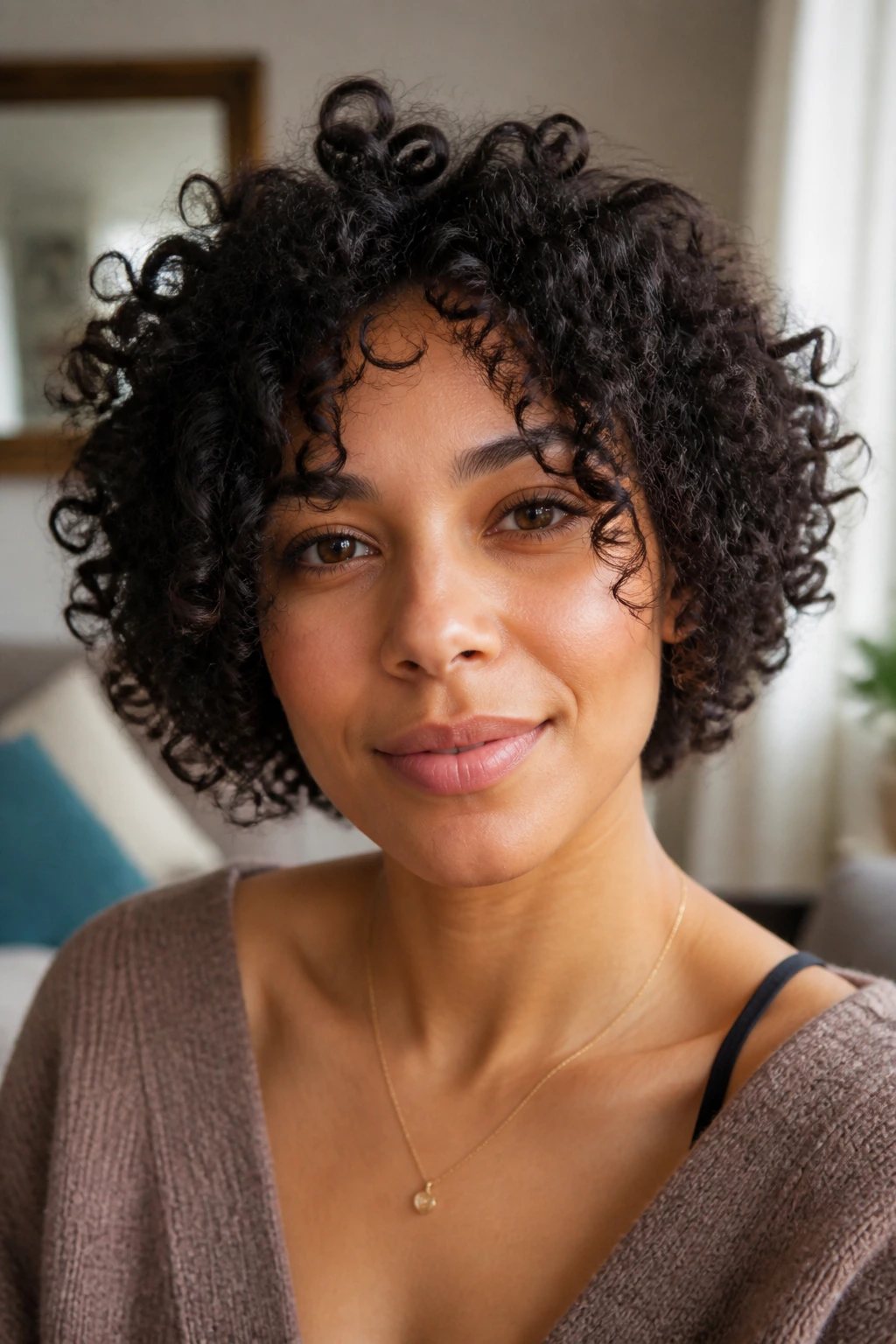
Some curly cuts need a lot of styling. This one does not. A choppy wash-and-go bob leans on strategic layering to keep the front pieces visible and the body of the haircut light enough to air-dry into shape with minimal effort.
The front layers should be broken up enough to move, but not so short that they frizz out the second humidity hits. I like this shape when the curls already have decent clump formation. The cut supports the curl pattern instead of trying to invent one. It’s the sort of bob that looks a little better after a scrunch and a diffuser, but still survives a lazy air-dry without turning into a triangle.
If you travel a lot, this one is worth a look. It does not demand a perfect routine to look decent.
24. Face-Framing Crop for Gray or Silver Curls

Gray and silver curls have a texture all their own. They can be wirier, softer, or both at once, and face-framing layers help them keep shape without looking heavy around the mouth and jaw. A cropped cut with soft front pieces lets the color show in movement, which is far nicer than a single flat slab of silver.
This is a good place for slightly longer face pieces because gray curls can shrink unevenly. Leaving a little length around the temples and cheekbones keeps the style from looking choppy as it grows. If the texture is coarse, the layers should be clean and deliberate. If it’s soft, the front can be a little feathered.
No, silver curls do not need to be “tamed.” They need shape. That’s different.
25. Low-Maintenance Pixie-Bob with Swingy Sides
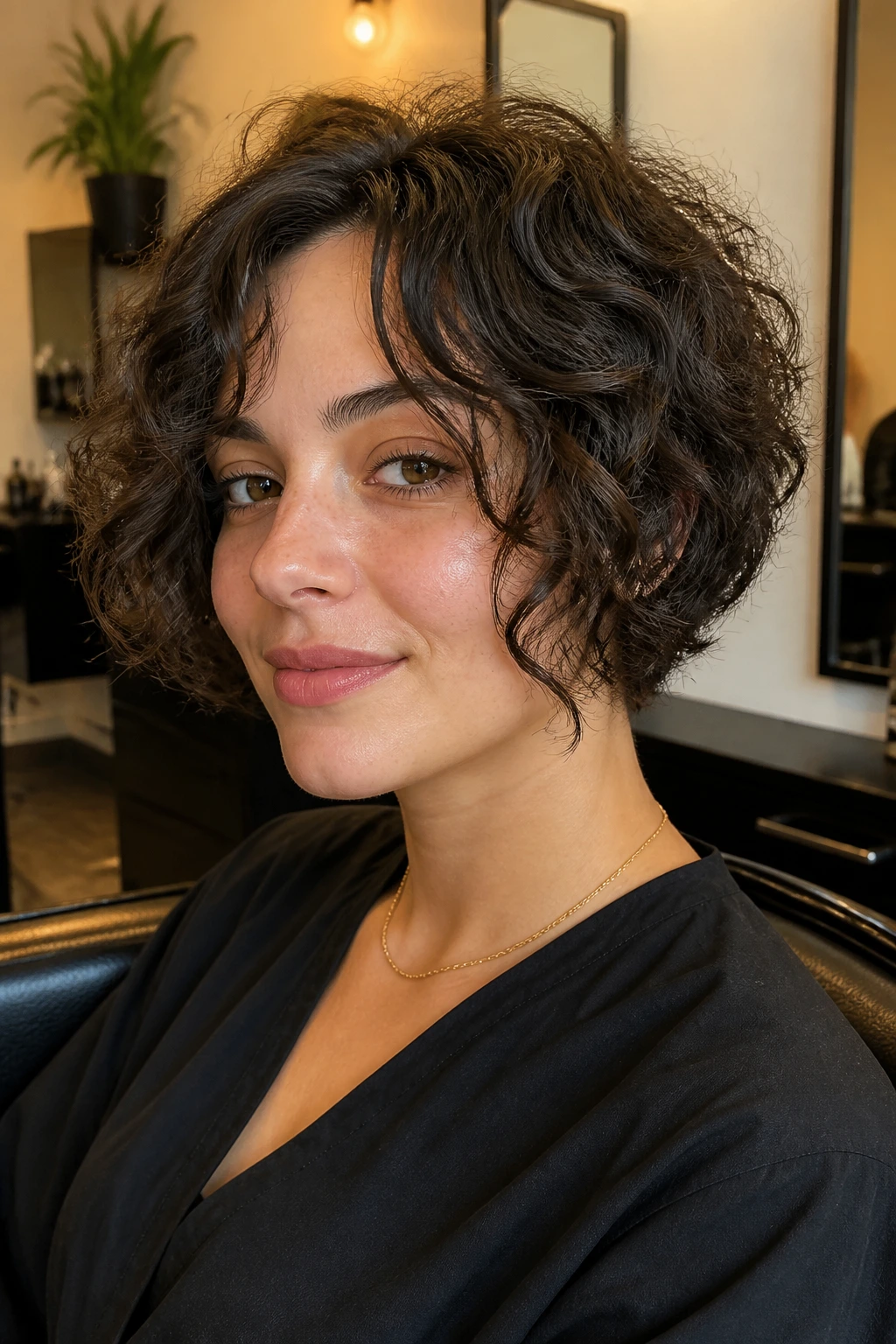
If you want short hair that does not feel too short, the pixie-bob is the sweet spot. The back sits close enough to stay neat, the sides keep enough length to swing around the face, and the front layers do that important work of framing the eyes and cheekbones.
This cut grows out well because it never starts from a harsh line. The swingy sides make it forgiving, and the short back keeps everything from collapsing into a heavy shape. On curly hair, the difference between a pixie-bob and a regular bob can be the amount of room left around the ears and temples. That extra room changes the whole feel.
I’d choose this one for someone who wants easy mornings, not zero styling. There’s still shape here. Just not much drama about it.
Why Face-Framing Layers Change the Whole Shape of Short Curly Hair
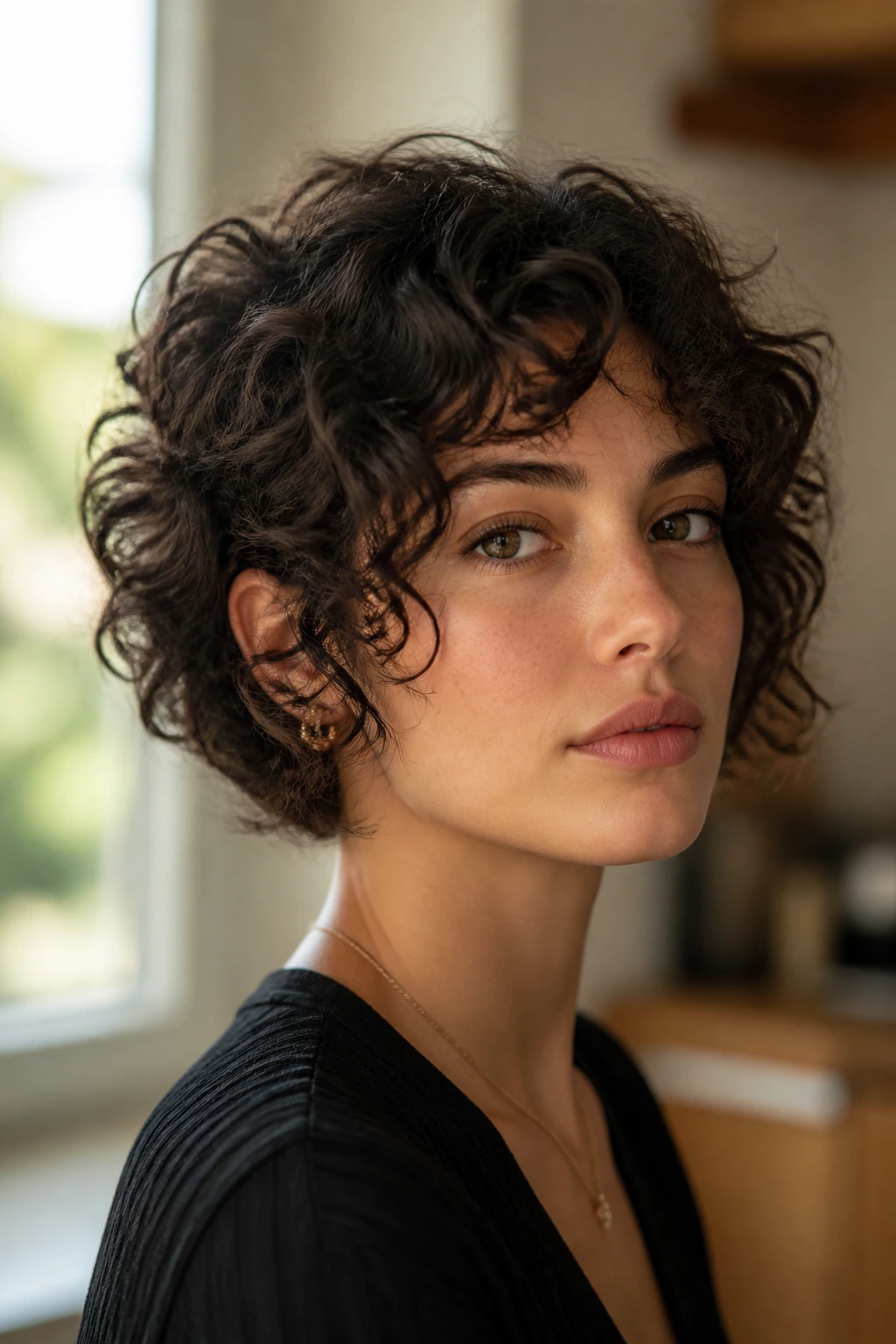
A short curly cut lives or dies by where the weight sits. If the front is cut too blunt, the face can disappear into the hair. If the front is too shredded, the curl pattern starts to look weak and fuzzy. Face-framing layers solve that by putting the shortest, lightest pieces exactly where the eye needs a break: the temples, cheekbones, jaw, or a little above the brow.
The other reason they matter is shrinkage. Curly hair does not sit at one length. It lands, bounces, and changes its mind. A layer that looks subtle when wet can show up dramatically dry, especially if the curl pattern is springy or the hair is high density. That is why a good curly cut is rarely about a straight line in the mirror. It’s about where the hair ends up after it dries.
There’s also the face-shape piece, which people talk about in vague ways when the real answer is simpler. Face-framing layers can direct volume upward, inward, or diagonally. That direction changes how wide or long the face appears. It’s not magic. It’s geometry with better texture.
How to Ask for Face-Framing Layers Without Losing the Curl Pattern
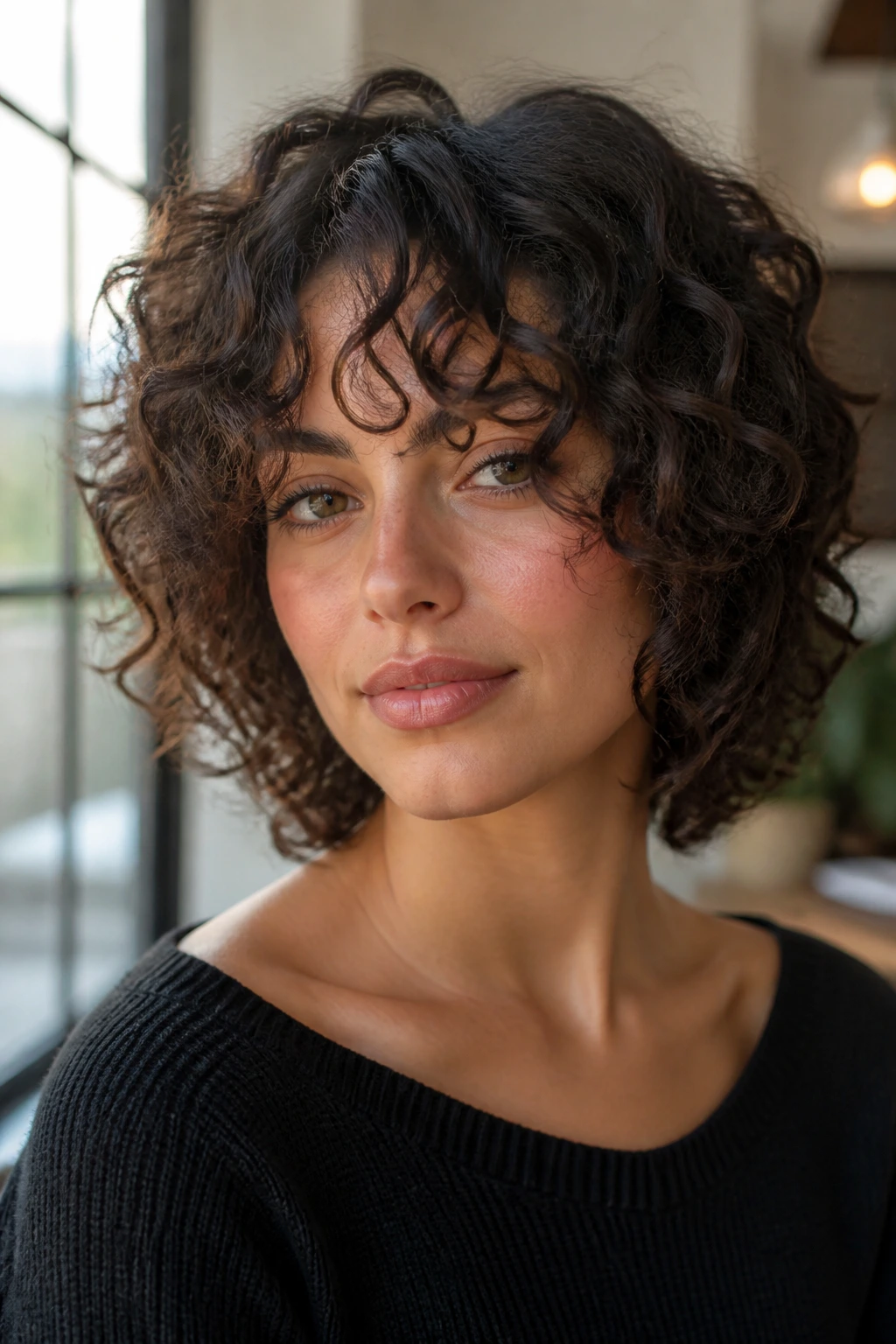
If you walk into a salon and say “I want face-framing layers,” you’re giving a useful idea, but not enough detail. Bring a few photos of people whose curl pattern and density actually resemble yours. Same face shape helps, sure, but curl behavior matters more. A loose wave and a tight coil can wear the same haircut in completely different ways.
Say where you want the shortest piece to land when dry. That matters more than the wet length. If you wear a middle part, say so. If your curls collapse on the right side, say that too. A good stylist can only shape around the way you actually live with your hair, not the way it behaves for the first ten minutes after the appointment.
H3: Words worth using in the chair
- Dry cut or curl-by-curl shaping: Useful if your curl pattern changes a lot as it dries.
- Keep the weight at the perimeter: Helpful if your hair is fine and needs fullness.
- Remove bulk inside, not at the ends: Smart for thick curls that puff wide.
- Temple pieces, cheekbone length, jawline length: Those are the landmarks that make the cut readable.
Do not be shy about saying what you dislike. “I don’t want my front to go wispy” is a perfectly normal sentence.
Styling Face-Framing Layers So They Sit Where You Want

The front of a curly cut needs a little more attention than the back, mostly because the face-framing pieces are the first ones to frizz, separate, or dry in a weird direction. Start with enough water in the hair that the curls clump properly. Then use product in a way that respects the curl pattern instead of forcing it to behave like straight hair.
A light curl cream or mousse can help the front stay soft, but too much cream weighs down short curls fast. I usually prefer a lighter product at the temples and a stronger hold gel through the front pieces if they tend to spring away from the face. Diffuse with the head tipped slightly forward or to the side, then stop before the roots get too dry and stiff. You want shape, not helmet hair.
For a softer face frame, finger-twist just the front pieces and let the rest air-dry. For a sharper line, clip the front pieces in place while they dry so they bend in the direction you want. That tiny bit of control often beats another round of product.
Essential Tools That Make These Cuts Easier to Live With
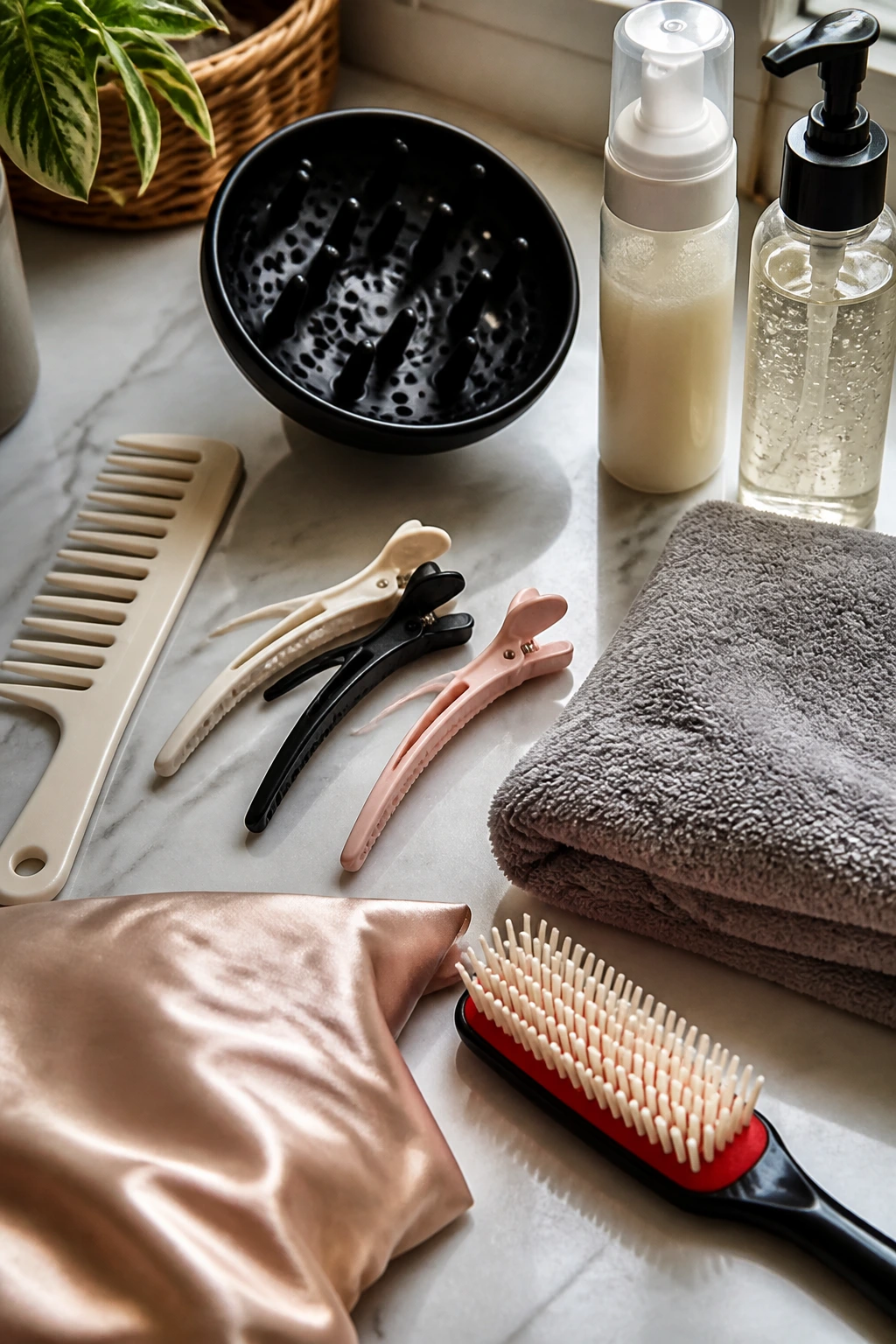
- Wide-tooth comb: Good for distributing conditioner without tearing apart curl clumps.
- Microfiber towel or cotton T-shirt: Helps remove water without roughing up the front pieces.
- Diffuser attachment: Useful for setting the front shape and lifting the crown without blasting curls apart.
- Duckbill clips or small curl clips: Great for clipping the roots or training the front while it dries.
- Light mousse or curl foam: Helpful when the cut needs volume without heaviness.
- Medium-hold gel: Keeps cheekbone and temple layers from puffing out too fast.
- Silk or satin pillowcase: Reduces the overnight friction that wrecks the face frame first.
- Small styling brush or denman-style brush: Optional, but handy if you like a more sculpted front.
Common Mistakes That Flatten the Front or Puff the Sides

The first mistake is cutting the face frame too short, too fast. Curly hair shrinks, and short front pieces can end up hovering awkwardly above the cheekbone. The fix is simple: leave more length than the first reveal suggests, then refine after the curl dries.
Another common problem is over-thinning the sides. You get a little relief at the salon chair, then a lot of frizz two days later. If the hair is dense, ask for internal bulk removal rather than aggressive thinning shears through the visible ends. Those shears can leave the front pieces looking frayed.
A third one: ignoring the part. A middle part and a side part do not frame the face the same way. If you always wear one part, cut for that part. If you switch, ask for a shape that can bend both ways.
And yes, product matters. Too much cream weighs the front down. Too little hold lets the side pieces flare outward. Short curls need a middle path.
Variations and Adaptations to Try
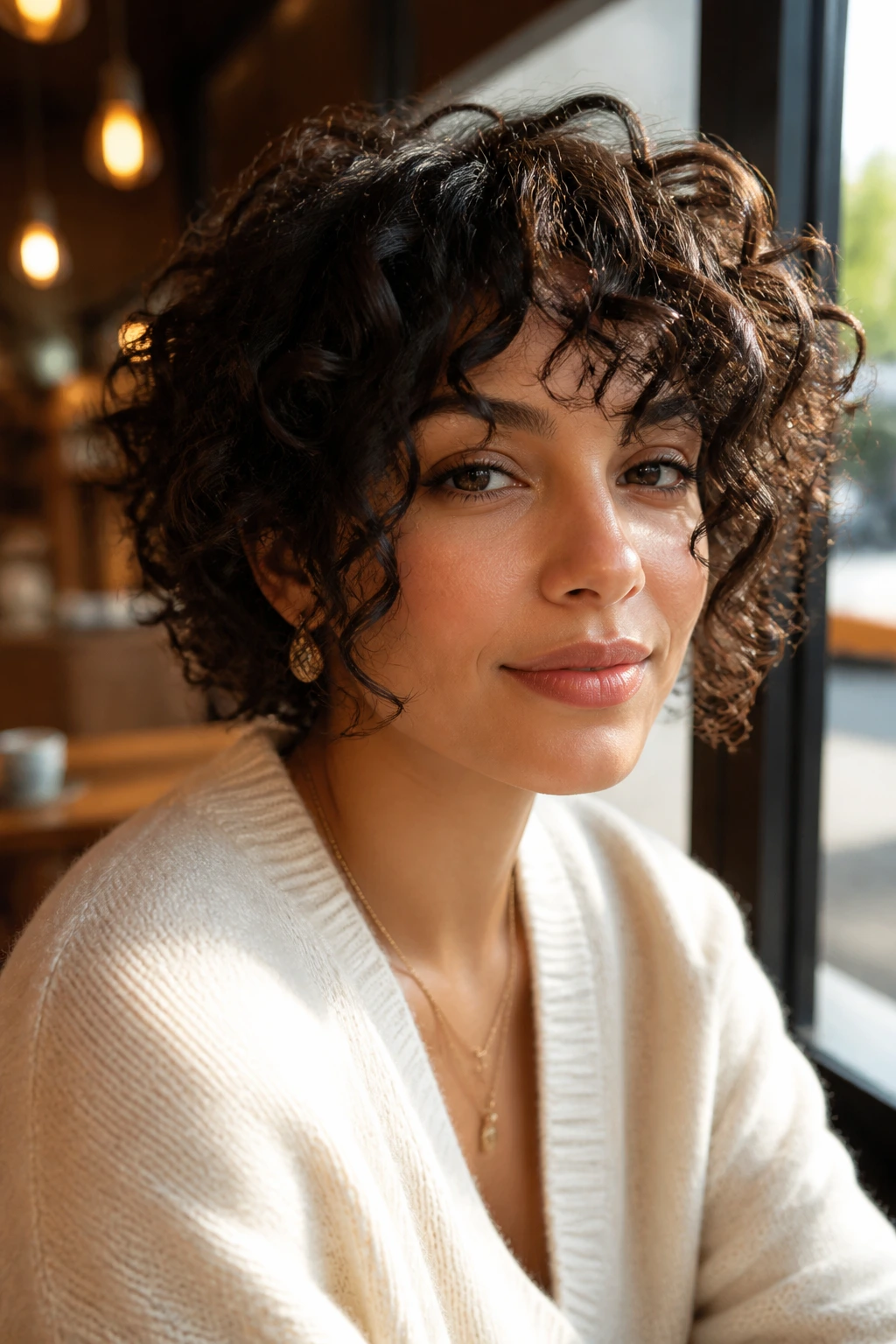
The Soft Office Version: Keep the perimeter clean, leave the front pieces at cheekbone length, and skip any heavy fringe. It’s neat, tidy, and easy to style without a lot of fuss.
The Edgy Piecey Version: Ask for more separation through the front and a slightly choppier crown. This works when you want a little attitude and do not mind using gel to define a few standout curls.
The Fine-Hair Lift Version: Keep layers long and subtle, then use mousse at the roots. The goal is to build volume through the top and temples without stealing weight from the ends.
The Dense-Curl Release Version: Remove bulk internally and leave the front pieces long enough to fold inward. This one is best if the haircut tends to swell outward after wash day.
The Tight-Coil Halo Version: Shape the front into a soft frame around the temples and brow instead of trying to create loose tendrils. That keeps the silhouette round and polished.
Keeping the Shape Between Salon Visits
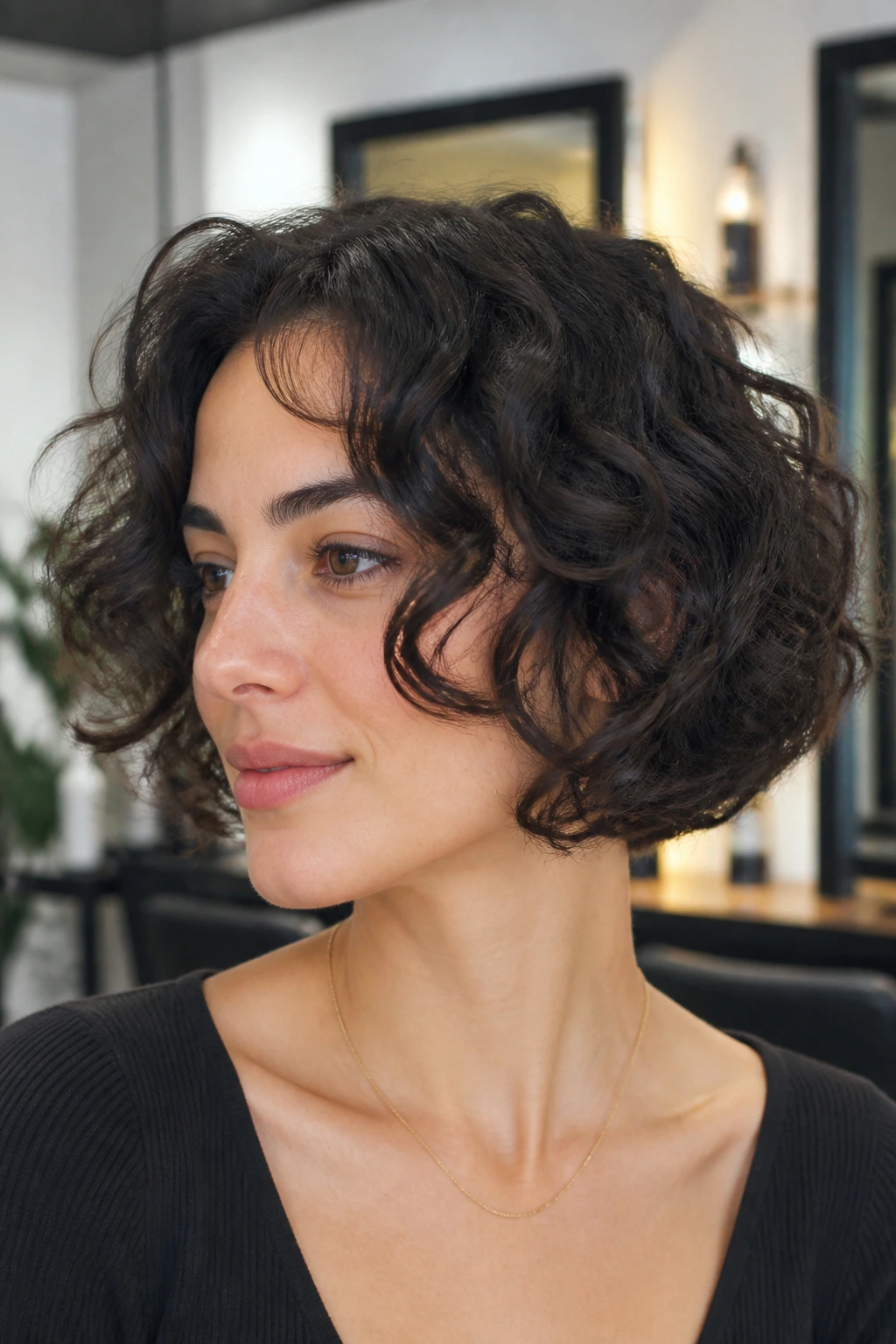
Short curly hair grows out in ways that are not always polite. The front frame usually shows it first. Once the cheekbone pieces start landing in the wrong place or the nape loses its clean edge, the whole cut shifts. For most short curly shapes, a trim every 8 to 10 weeks keeps the structure from drifting too far. Pixie-bobs and cropped fringes may need attention a little sooner.
Night care matters more than people think. A silk or satin pillowcase helps, but if the front layers are delicate, a loose pineapple or a soft bonnet can keep them from rubbing flat. On day two, a mist bottle with water and a pea-sized amount of gel can re-activate the front pieces without soaking the whole head. Scrunch gently. Don’t rake your fingers through it like you’re combing out a ponytail.
If buildup starts making the front look dull or sticky, a clarifying shampoo every few weeks can reset the curl pattern. The front shows product buildup first because it gets touched the most. That’s normal. Annoying, but normal.
Frequently Asked Questions About Face-Framing Layers on Short Curly Hair
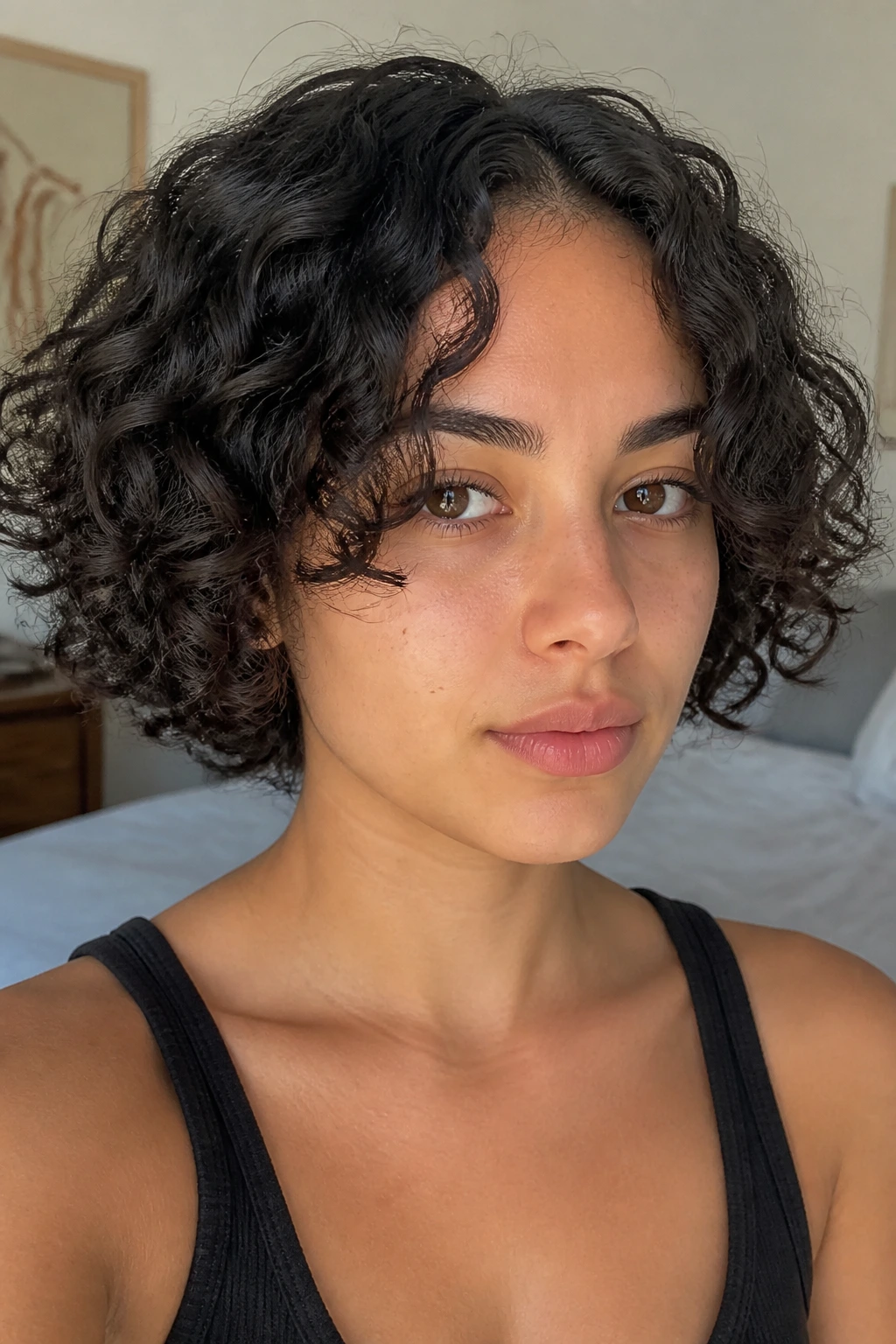
Do face-framing layers make short curly hair look thinner?
Not when they’re cut with the right amount of weight left in the ends. The trick is softening the front while keeping enough bulk in the body of the cut so the overall shape still feels full.
Should curly hair be cut wet or dry for face-framing layers?
Dry or mostly dry is usually safer if your curl pattern shrinks a lot or changes shape as it dries. Wet cutting can still work, but the stylist needs to understand how your curls behave once they spring up.
Can I get face-framing layers if my curls are fine?
Yes, but keep the layers longer and lighter. Fine curls need shape, not a lot of removal, or they can end up see-through at the temples and mouth.
What if my curls are very dense and puff out at the sides?
Ask for internal de-bulking and a front frame that stays longer than the back edges. That helps the haircut fall inward instead of ballooning outward around the cheeks.
How short can the front pieces be?
Short enough to show the cheekbones, but not so short that shrinkage turns them into an accidental fringe. For many curl patterns, that means cutting a little longer than you think and letting the dry shape reveal the truth.
Are bangs a bad idea with short curly hair?
Not at all. They just need to be curl-aware. Curly bangs work best when they’re broken up a bit and cut with shrinkage in mind, not chopped like straight fringe.
What’s the easiest version to maintain?
A low-maintenance pixie-bob or choppy wash-and-go bob tends to be friendlier than sharper shags or undercut shapes. Less extreme layering usually means less styling drama.
How do I keep the front from frizzing first?
Use your strongest hold product on the face-framing pieces, not just the crown, and avoid rubbing them dry with a towel. The front is the part that gets touched, slept on, and messed with first.
The Shape That Keeps Doing the Work
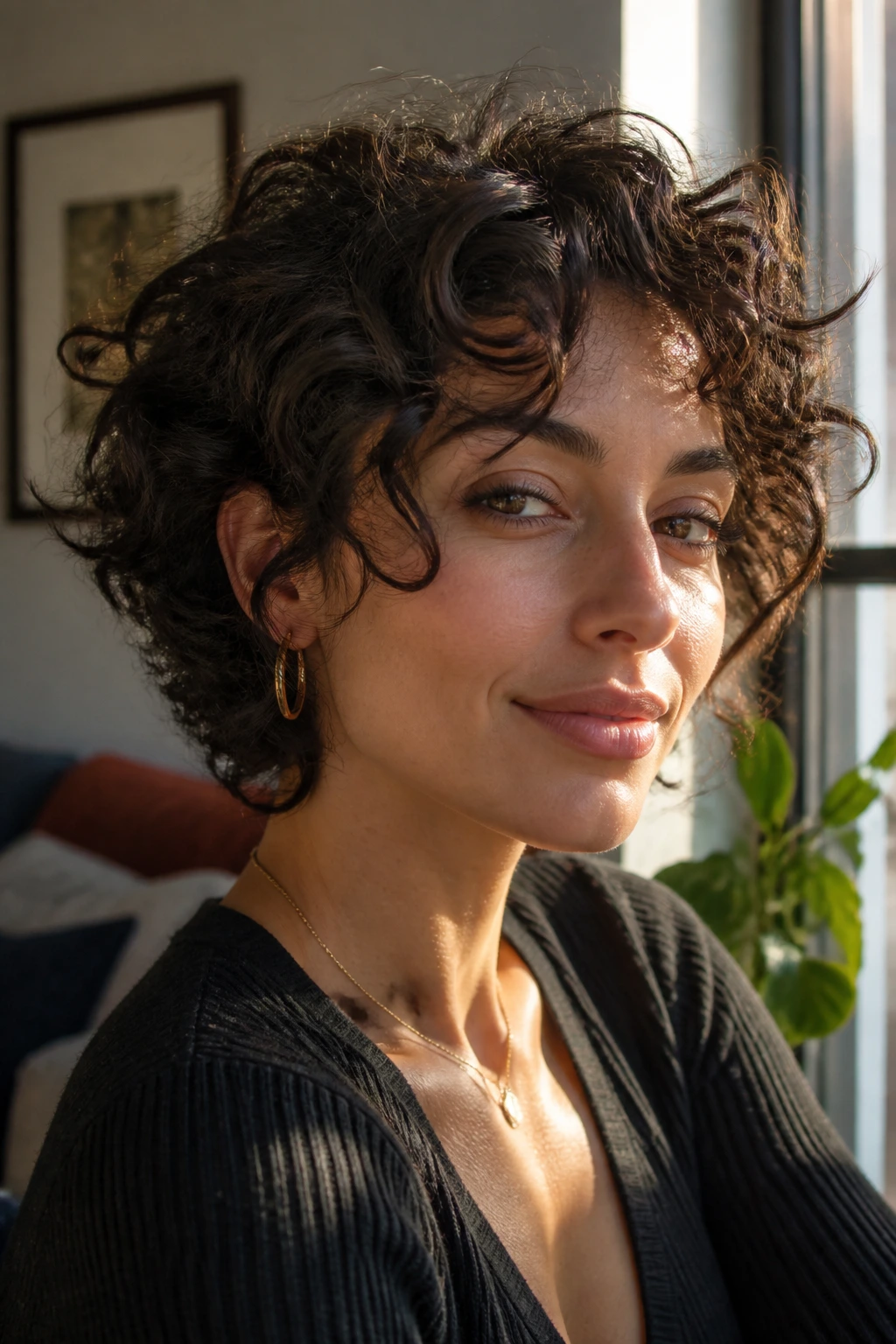
The best face-framing layers on short curly hair do not shout. They steer. They guide the curl pattern toward the cheekbones, jawline, and eyes without flattening the personality out of the cut. That’s why a good short curly shape can look soft, sharp, and lived-in all at once.
Pick the version that matches your density, your curl pattern, and how much styling you’re willing to do in the morning. If you choose the right front pieces, the rest of the haircut gets easier. And that’s the part worth chasing.