



A good shoulder-length bob for women over 50 with babylights does something blunt, old-school cuts rarely manage: it gives the hair shape without making it look boxed in. The ends land around the collarbone or just below it, and the babylights sit in those tiny, almost whisper-thin threads that keep the color from reading flat. That combination matters more than people think, especially when hair has started to come in a little finer, a little grayer, or a little less eager to hold volume.
Babylights are the trick I reach for when a client wants softness without surrendering structure. They’re narrower than standard highlights, which means the grow-out line is gentler and the light can be placed right where the bob needs lift — at the part, around the face, through the crown, or just on the top layer so the cut doesn’t collapse visually. And yes, a clean bob can look severe fast if the color is too solid.
Some versions lean sleek. Some bend under with a round brush. Some have enough internal layering to move when you turn your head. The good ones all do the same thing: they keep the shoulders open, the jawline framed, and the color believable. The first job is choosing the right version for the hair you actually have.
Why This Collection Stays Soft Instead of Stiff
Babylights blur the line between color and regrowth. That matters because most people do not want to live inside the salon chair every six weeks. Fine weaving around the hairline, part, and crown keeps the grow-out soft enough that the color still looks intentional after several shampoos.
Shoulder length gives the cut somewhere to go. A bob that lands right at the neck can turn puffy in humidity or kick out at the ends. A cut that grazes the collarbone has a little more movement, which makes it easier to wear straight, waved, tucked, or brushed under.
The light placement changes how the face reads. A few brighter pieces around the cheekbone can lift the whole cut. A slightly deeper root with babylights through the top gives the illusion of fullness without the stiff, helmet-ish effect that some one-length bobs can have.
Gray blending gets easier. Fine highlights mingle with silver strands instead of fighting them, so the contrast stays softer. That’s one reason babylights have such a loyal following on mature hair.
These cuts can be styled three ways and still make sense. Air-dried, brushed smooth, or bent with a flat iron — the shape survives all three. That’s a big deal on mornings when you want the hair to behave without staging a full production.
What to Ask for at the Salon Before the Shears Come Out
A good bob starts long before the first snip. If the cut and color are planned together, the whole thing lands better around the face and grows out in a way that still looks tidy.
Length, Layers, and Part
Ask for the length to sit at the collarbone or just below it if you want the most versatility. If your hair is fine, request a blunt perimeter with only light internal texture. If it’s thick or wavy, the stylist should remove bulk underneath so the top layer doesn’t puff outward.
Babylight Placement
Tell the colorist you want micro-fine highlights, not chunky ribbons. The best placement usually lives around the part line, temples, and surface layer. A few lighter pieces near the front can do more for the face than dozens hidden underneath.
Tone and Contrast
Warm skin often likes honey, champagne, beige-gold, or soft caramel. Cooler skin usually looks best with ash-blonde, pearl, taupe, or silver-blend tones. If your gray is coming in bright, ask for a root shadow or a soft lowlight so the grow-out doesn’t jump at you every time the light hits.
Bring Reference Photos
Bring two or three photos, but say what you like about each one. The shape. The color. The way the ends sit. That saves a lot of guesswork and keeps the consultation from turning into vague hand-waving.
1. Soft Collarbone Bob with Champagne Babylights
This is the easiest place to start if you want a bob that feels polished but not severe. The collarbone length keeps the line relaxed, while champagne babylights skim the top layer and the money pieces around the face. The result is soft, warm, and a little expensive-looking without being fussy.
I like this version on women whose hair has thinned a bit at the temples or crown. The lightness pulls the eye upward, and the extra half-inch of length keeps the ends from flipping too hard. A quick round-brush bend under the ends is usually enough.
If you wear glasses, this cut behaves. It tucks neatly, sits well behind the ears, and doesn’t compete with frames.
2. Layered Swing Bob with Beige Babylights
This one moves. That’s the whole point. A swing bob keeps a little length in front and a touch of lift in the back, so the shape sways instead of hanging straight down. Beige babylights soften the motion and keep the cut from looking too dark or dense.
Why the swing matters
A swing shape makes the neck look longer and keeps thick hair from taking over the silhouette. On straighter hair, it stops the bob from feeling flat and boxy. On wavy hair, it gives the natural bend a cleaner path.
A few babylights through the front layers make the movement visible even when the hair is tucked or partially pinned. That’s a small detail, but it changes how alive the cut feels in motion.
3. Blunt Shoulder-Length Bob with Ash-Blonde Babylights
Can a blunt cut work after 50? Absolutely — if the light is handled carefully. This version keeps a crisp line at the bottom and uses ash-blonde babylights to break up the mass through the top without disturbing the edge. It’s sleek, modern, and much softer than it sounds on paper.
The cool tone helps if your skin runs pink, rosy, or fair. It also keeps brass from taking over, which is the biggest risk with a straight, clean bob. I’d call this a good choice for naturally straight hair that already falls in a tidy line.
Wear it with a center part for a cleaner look or a shallow side part if you want a little lift at the crown.
4. Side-Part Bob with Caramel Face-Framing Babylights
A deep side part does a lot of quiet work. It gives the hair volume on top, opens one side of the face, and keeps a shoulder-length bob from looking symmetrical in a way that can feel too exact. Caramel babylights around the face add warmth where the eye lands first.
This cut is especially kind to broader foreheads or long faces, because the part and the front light pieces alter the proportions without shouting about it. The color should stay concentrated from the cheekbone down to the jaw, then fade more softly through the back.
If you’re the type who likes to tuck one side behind the ear, this is a smart pick. The exposed side shows off the color; the fuller side keeps the shape balanced.
5. Wavy Bob with Pearl Babylights
Pearl babylights have a cool, soft shimmer that suits wavy hair better than a louder blonde ever could. They sit on the bends instead of fighting them, which means the color catches the eye in a gentler way. Nothing about this cut needs to be rigid.
Use a diffuser or let the hair air-dry with a touch of cream, then pinch a few pieces around the face if they need definition. The shoulder length keeps the waves from ballooning outward, and the babylights keep the texture from looking heavy.
It’s a nice option if you want movement but not frizz. That line matters.
6. Feathered Bob with Honey Babylights
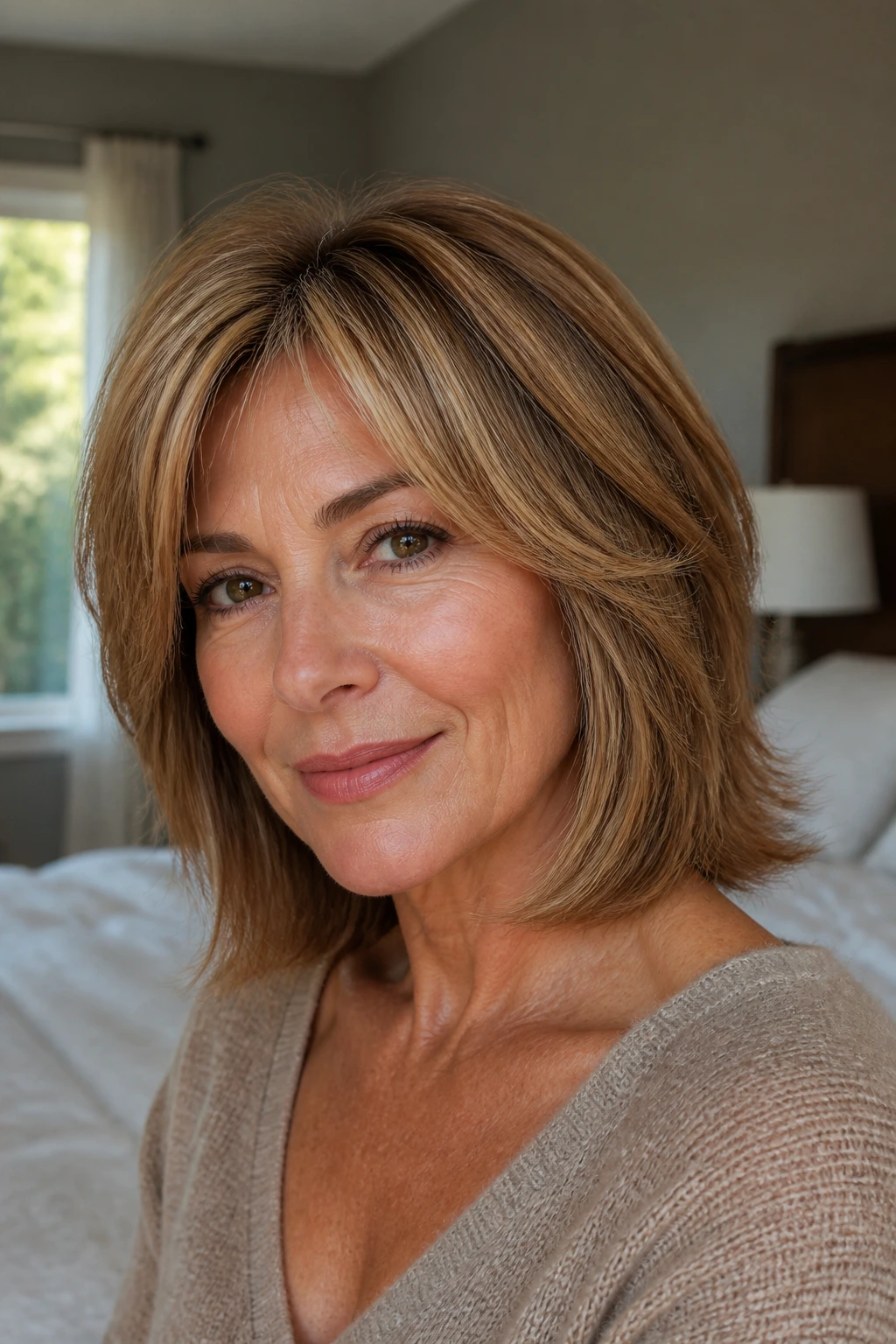
A feathered bob is one of those cuts that sounds dated until you see it done with restraint. The ends are softened, the layers are light, and honey babylights weave through the top to keep the whole shape warm instead of fuzzy. Done well, it feels airy without falling apart.
- Best for: medium to thick hair that needs bulk removed without losing body.
- Styling note: a medium round brush gives the ends a bend that keeps them off the shoulders.
- Color note: honey reads richer than gold and less orange than copper, which helps on warmer skin tones.
This is the cut I’d choose for someone who wants movement but hates obvious layers.
7. Stacked Back Bob with Cream Babylights
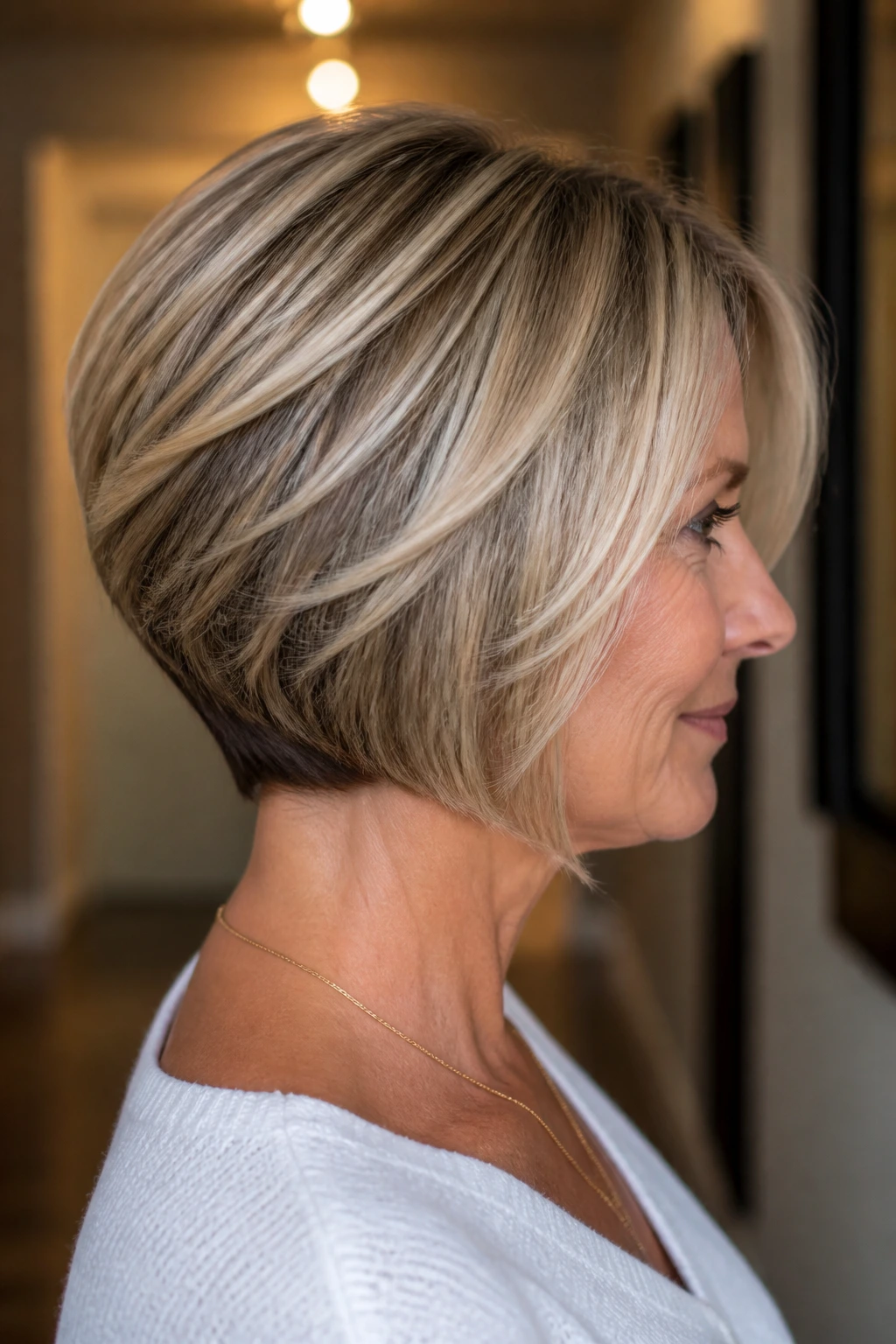
A stacked back gives the crown a little lift and keeps the nape neat. That makes the whole style sit higher and look fuller, which is useful if your hair has gone a bit flat at the back. Cream babylights on the top sections make the height visible without turning the cut stripey.
This shape is tidy, but not stiff. The back can be cut close enough to keep bulk off the neckline while the front stays long enough to graze the shoulders. It’s a practical haircut with a polished finish, and I think that’s why it works so well.
If you want a bob that looks good from the side as much as the front, start here.
8. Tousled Bob with Sunlit Babylights
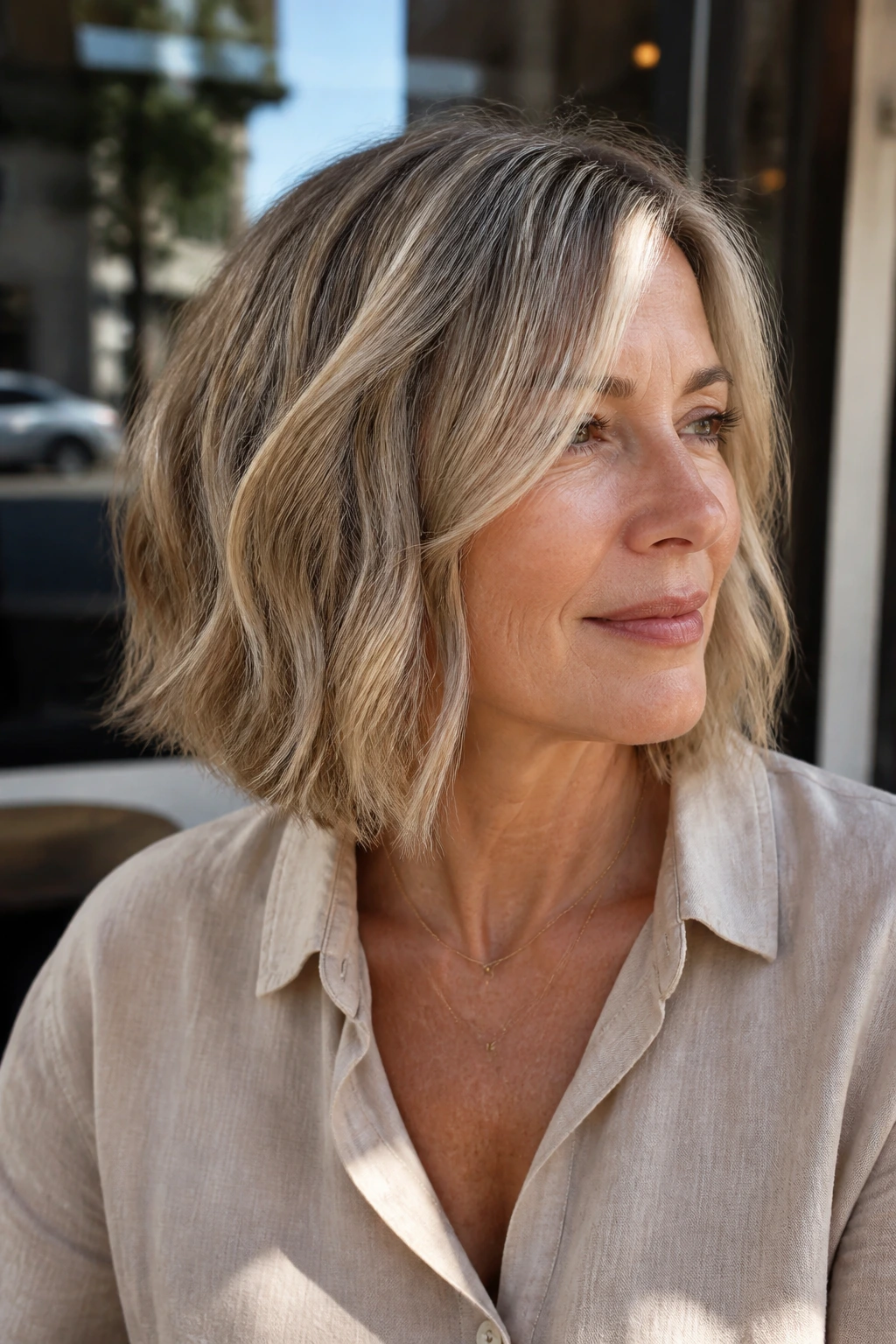
A tousled bob lives on texture. The shape is relaxed, the ends are piecey, and the babylights are scattered in a way that makes the hair look naturally kissed by light, not painted in stripes. Sunlit is the right word here because the color should feel warm but not brassy.
What matters most is restraint. Too much product and the texture turns crunchy. Too little and it falls flat. A light mousse at the roots, a rough dry, and a few bends made with a flat iron usually do the job.
This is the version for people who don’t want to fight the hair every morning. Good.
9. Angled Bob with Mocha Babylights
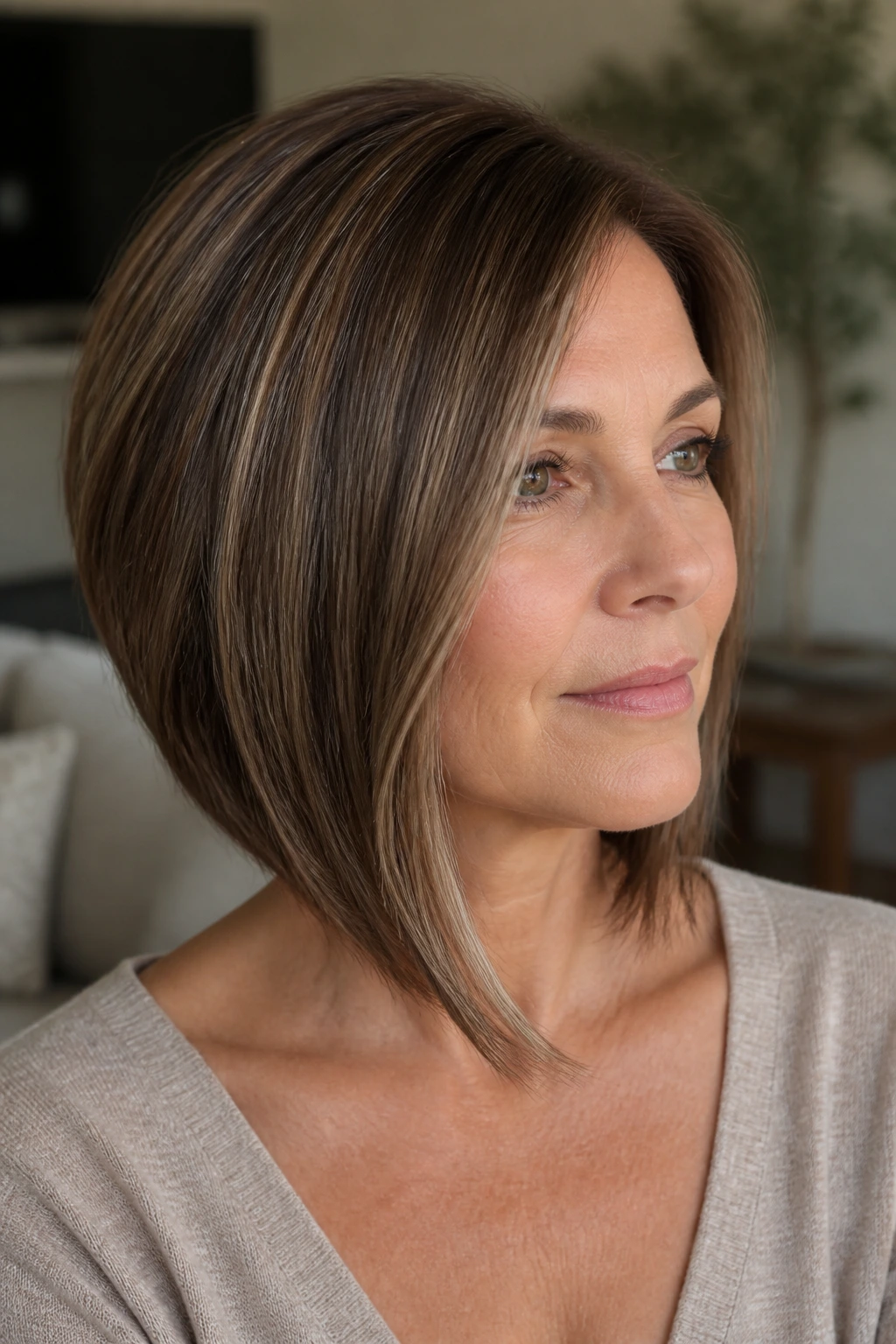
The angled bob is the strongest shape in the whole group. Longer in front, shorter in back, it pulls the eye diagonally and makes the neck look longer. Mocha babylights keep the color grounded so the angle doesn’t feel sharp or overdone.
This cut tends to flatter rounder faces because the front length creates a vertical line. It also works well if your hair likes to flip at the ends — the angle makes that movement look planned instead of unruly.
Ask your stylist to keep the front long enough to hit just below the jaw. Too short, and you lose the whole point.
10. Curved Under Bob with Vanilla Babylights
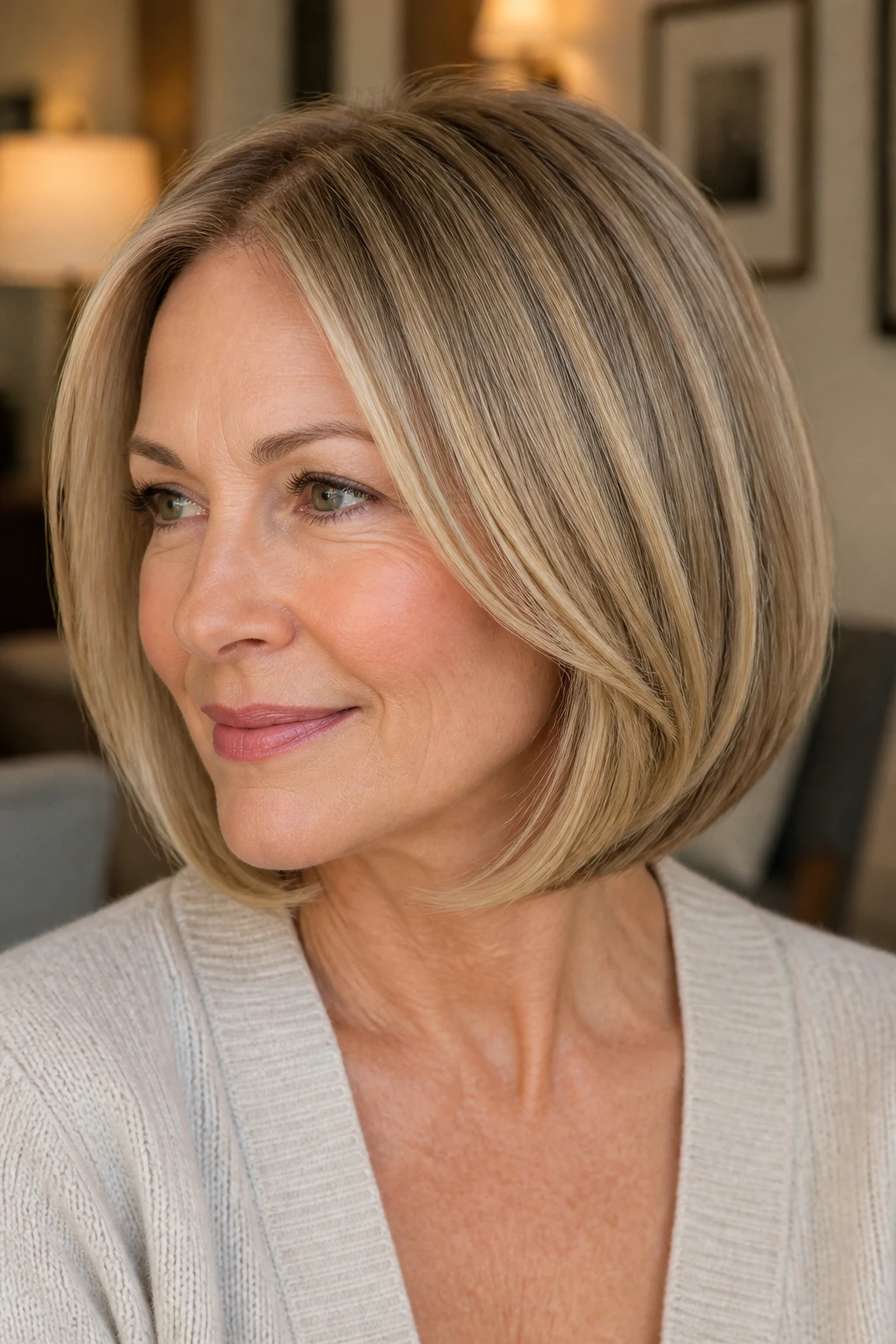
There’s something satisfying about a bob that curves neatly under at the ends. It looks cared for, even when the styling took ten minutes. Vanilla babylights soften the top layer so the polished shape doesn’t become too hard.
This is one of the best choices for straight to slightly wavy hair that needs a little direction. A blow-dry brush or large round brush will tuck the ends in without making them look stiff. The cut sits close to the head, but the babylights keep it from reading flat.
If you like hair that behaves, this one has manners.
11. Shaggy Bob with Wheat Babylights
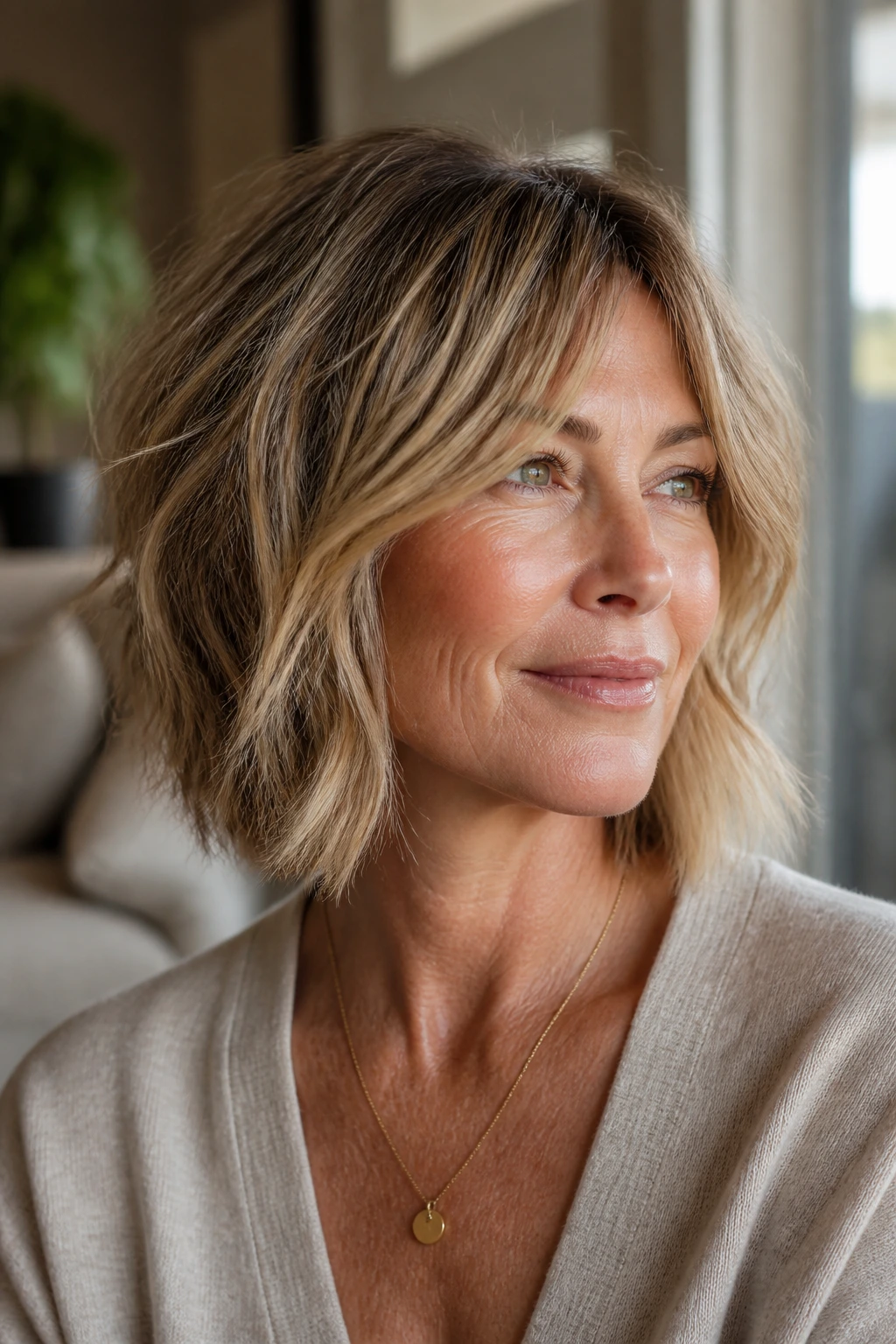
The shaggy bob is for someone who wants texture first and precision second. Layers are cut in a softer, looser way, so the ends move instead of sitting in one clean line. Wheat babylights add warmth and keep the whole thing from looking too dark through the interior.
What makes it work
The babylights should live on the upper sections and the face-framing pieces. That’s where the light catches when the hair moves. The layers then do the rest, breaking up bulk and giving the cut some edge.
If your hair has a little natural wave, this version can look good with almost no heat. Scrunch, air-dry, walk away. That’s the appeal.
12. Chin-Boosting Bob with Soft Copper Babylights
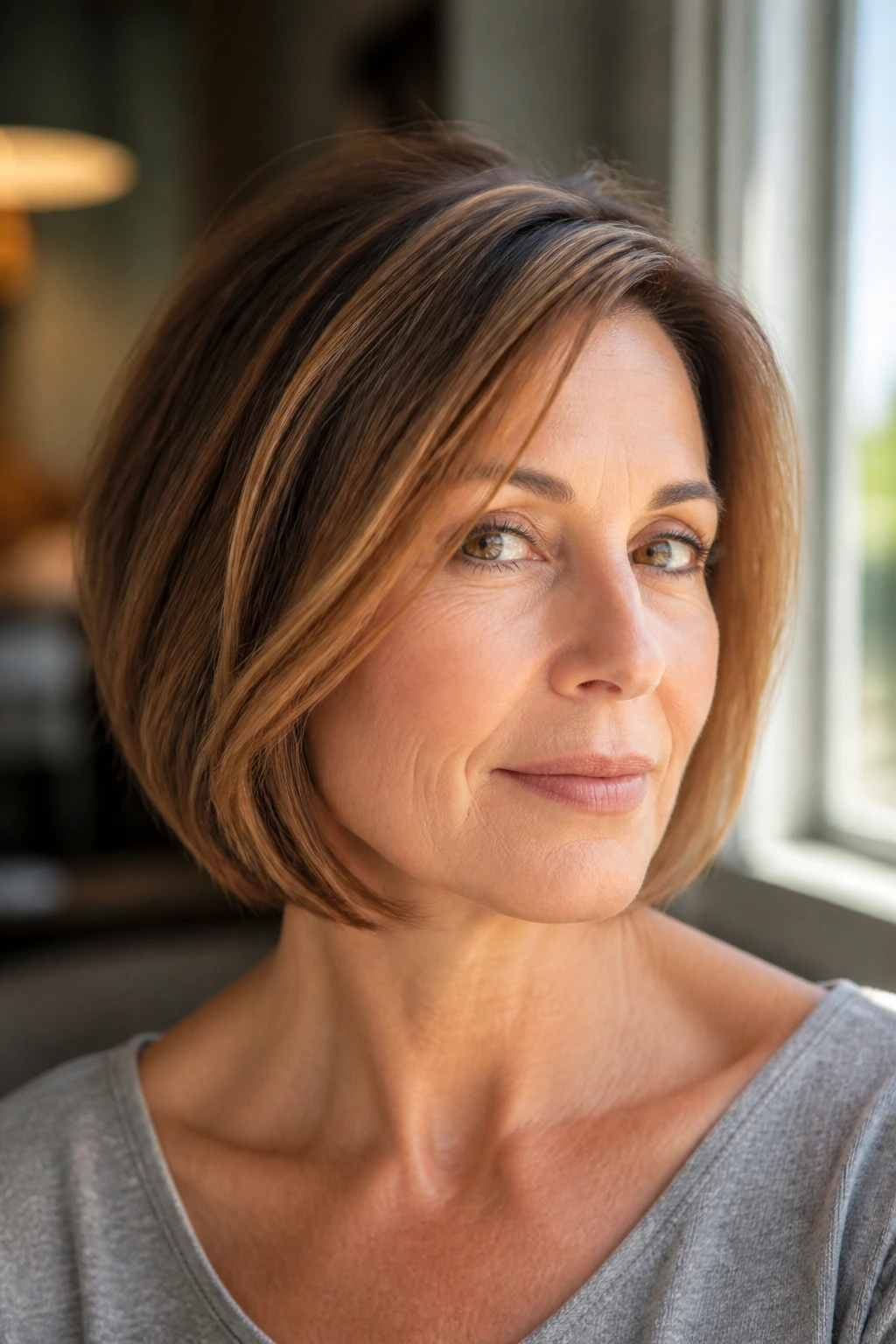
This cut lands just under the chin, which gives the jawline a little lift and makes the face feel more open. Soft copper babylights warm the skin and keep the shape from looking washed out, especially if your hair is naturally dark or your features need a little brightness.
I like this on faces that want structure near the chin without a hard line. The cut should be clean, but not blunt enough to feel severe. A tiny amount of layering around the front can help it sit closer to the face.
Copper is not for everyone. When it works, though, it wakes the whole haircut up.
13. Curtain Bang Bob with Beige-Gold Babylights
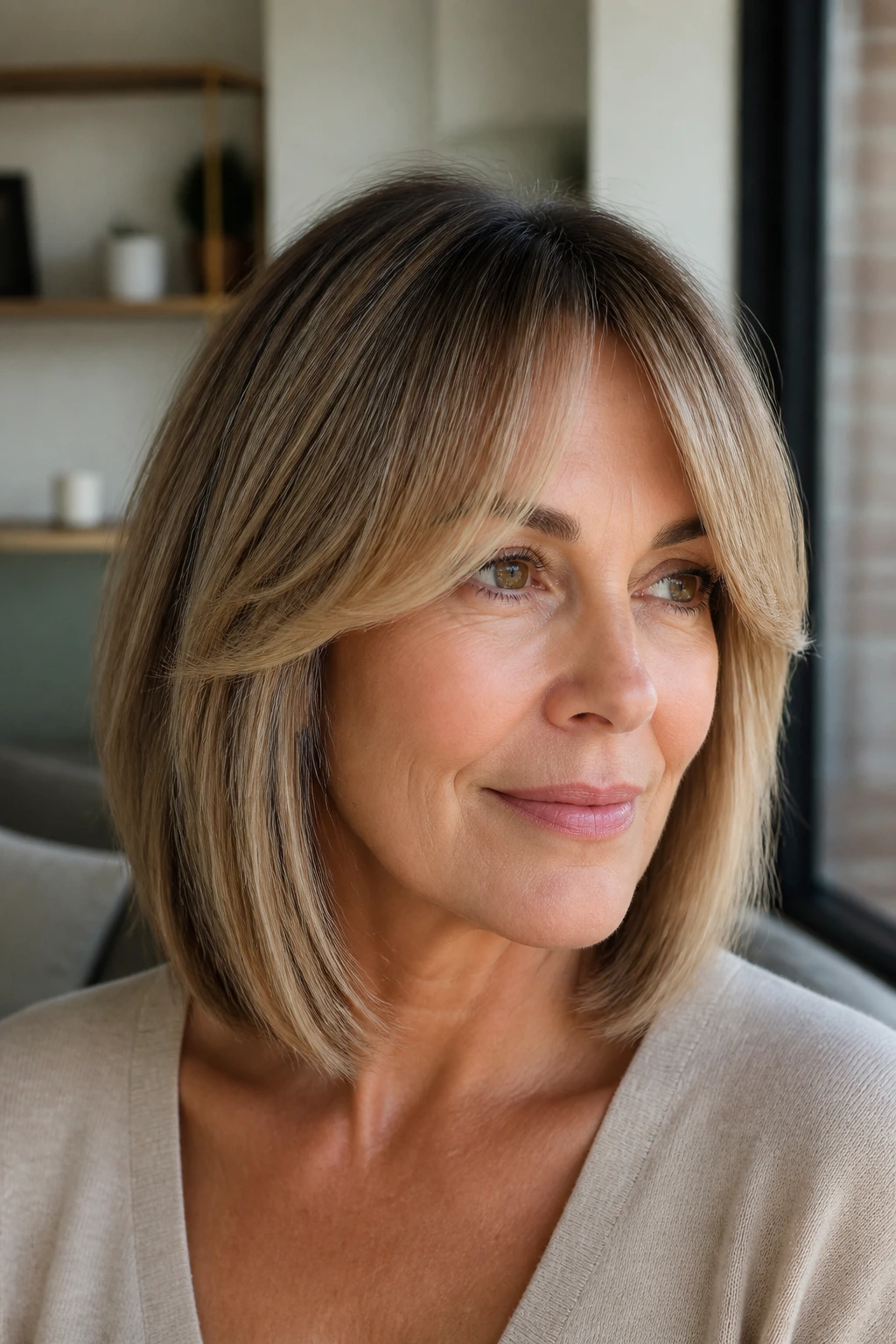
Curtain bangs can make a shoulder-length bob feel lighter right away. They split softly at the center, skim the temples, and blend into the rest of the cut instead of sitting on top of it like a separate shape. Beige-gold babylights give the fringe some dimension so it doesn’t look heavy.
This is a smart choice if you want to soften a forehead or bring attention to the eyes. The bangs should be long enough to push open at the cheekbone, not chopped short. That little extra length keeps them useful on days when you want to tuck or pin them back.
It’s a flattering cut without trying too hard. Rare, frankly.
14. Tucked-Behind-Ear Bob with Silver-Blend Babylights
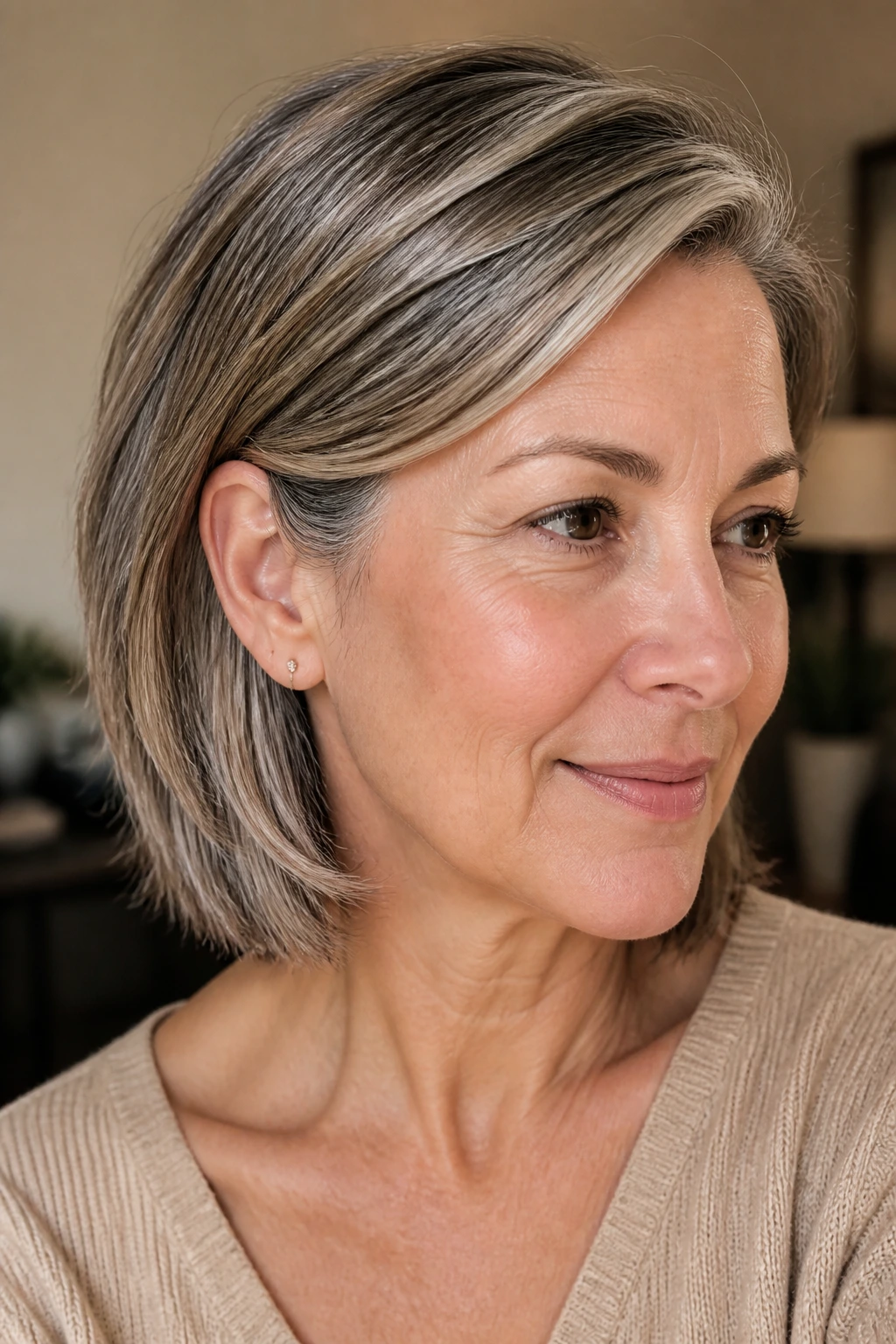
Some bobs are made for movement. This one is made for tucking. The length sits right where the ear can catch a side section cleanly, and silver-blend babylights let natural gray or white strands mingle without looking accidental.
If you wear earrings, this style earns its keep. The exposed ear and cheek line create a clean frame, while the tucked side keeps the haircut from feeling too busy. A slight side part helps the shape stay soft instead of severe.
It’s especially good if you want a bob that still feels good on day three, not only on salon day.
15. French Bob-Inspired Shoulder Cut with Taupe Babylights
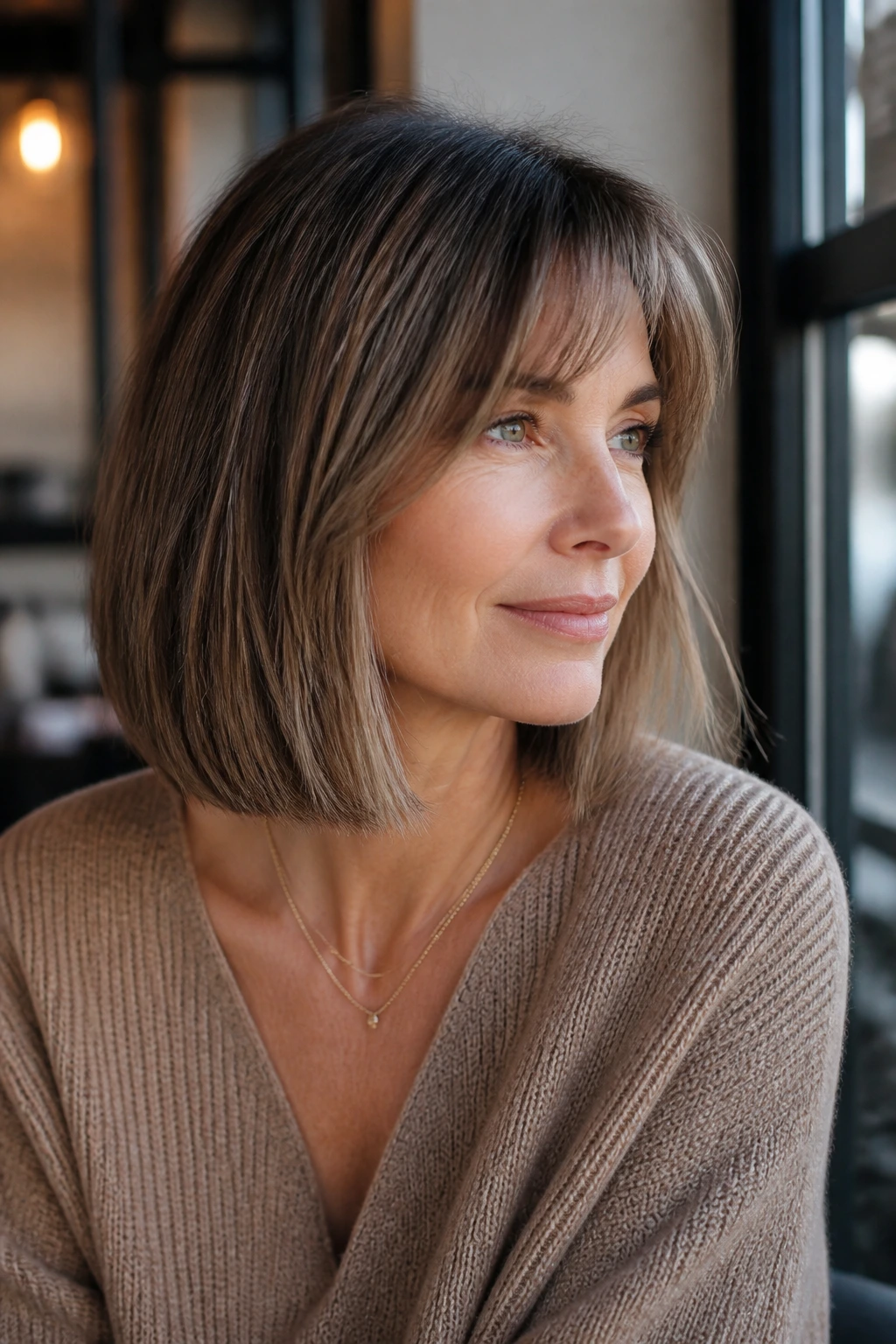
A true French bob sits shorter, but this shoulder-length version borrows the blunt attitude and tones it down. Taupe babylights keep the color muted and elegant, which stops the cut from leaning too sweet or too polished. The result feels a little editorial, but still wearable.
The trick is keeping the perimeter clean and the interior mostly quiet. You want the shape to do the talking. If the layers get too busy, the whole thing loses that strong, spare line that makes the style interesting.
This is a good cut if you like structure and don’t mind a little maintenance with the flat iron.
16. Thick-Hair Bob with Ribboned Babylights
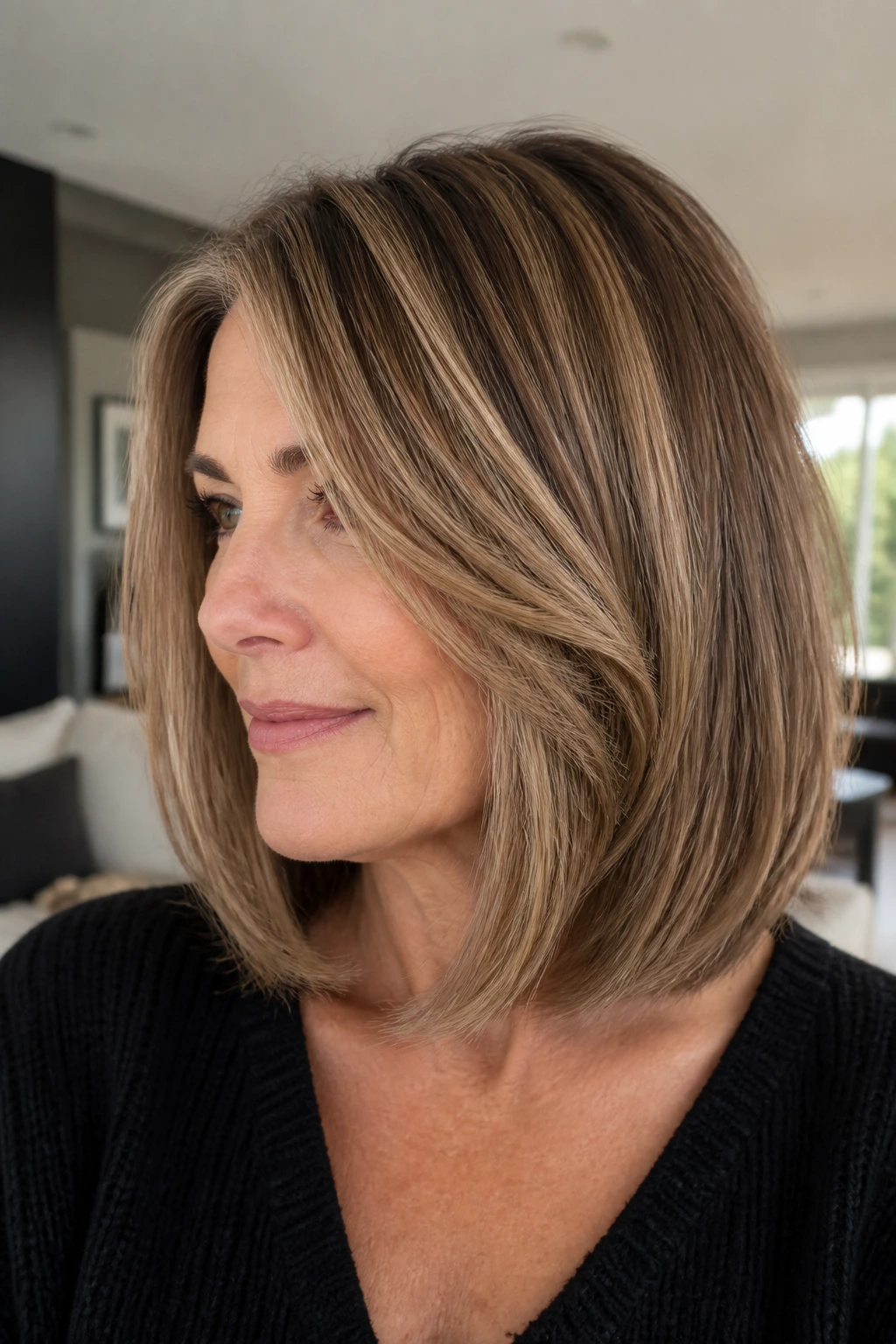
Thick hair needs control more than it needs volume. A shoulder-length bob can absolutely handle it, but the interior has to be thinned in the right places so the ends don’t kick outward like a triangle. Ribboned babylights — still fine, just a touch more visible in dense hair — keep the color from disappearing into the mass.
- Best cut detail: remove weight beneath the top layer, not all over.
- Best color detail: place light pieces around the face and crown first.
- Best styling tool: a smoothing cream before a round-brush blow-dry.
I prefer this on hair that has a lot of body but needs shape, not more bulk.
17. Fine-Hair Bob with Micro Babylights
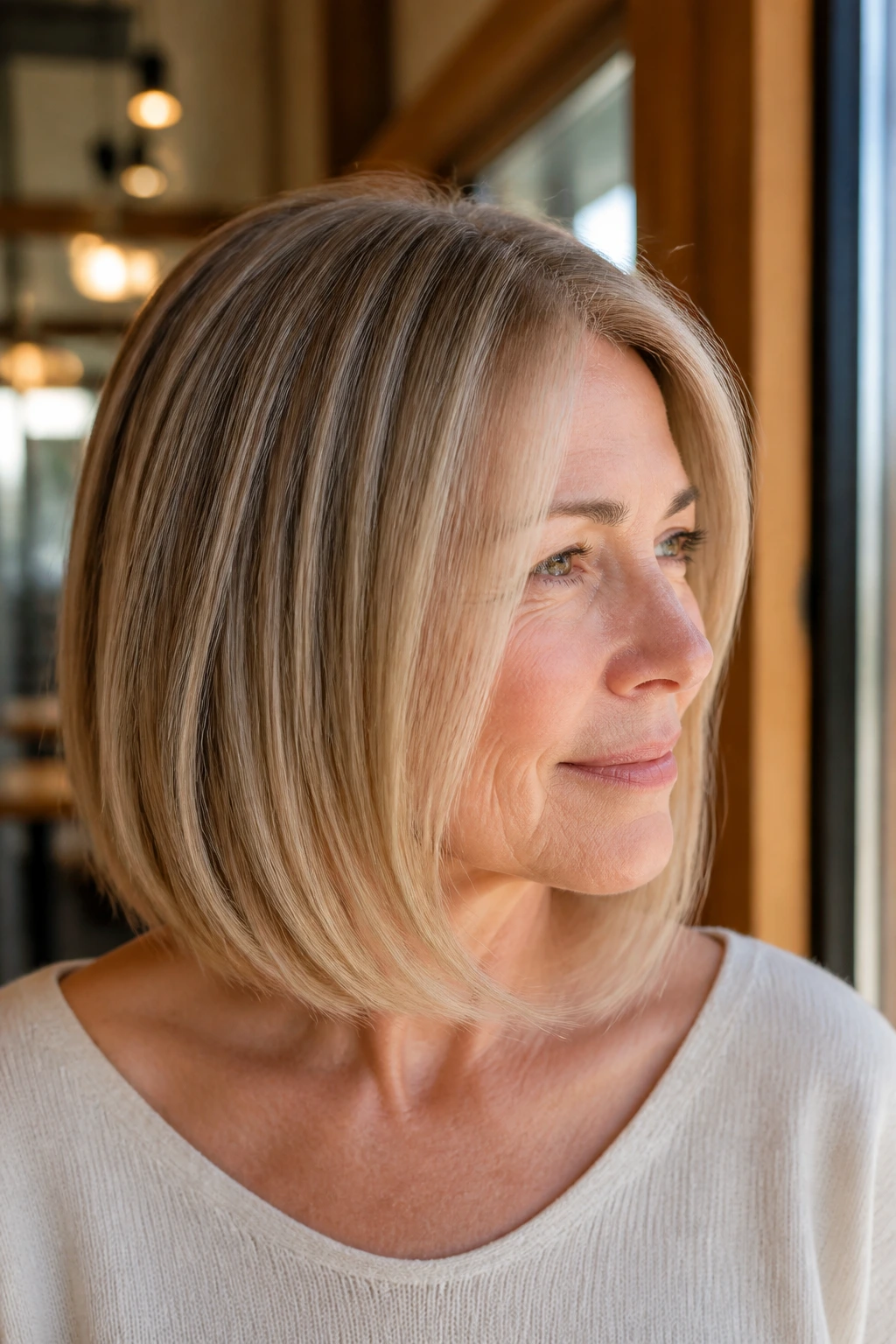
Can fine hair wear babylights without looking sparse? Yes, if the placement is careful. Micro babylights are exactly what they sound like: tiny, delicate strands of light that make the surface look fuller without creating obvious gaps. On a shoulder-length bob, they help the hair read as denser.
The cut itself should stay clean at the bottom, with only light internal movement. Too many layers and fine hair starts to look wispy at the ends. A root-lift spray and a round brush are usually enough to make this one behave.
This is a good choice if you want softness but hate anything that looks overdone.
18. Natural Gray Bob with Ice Babylights
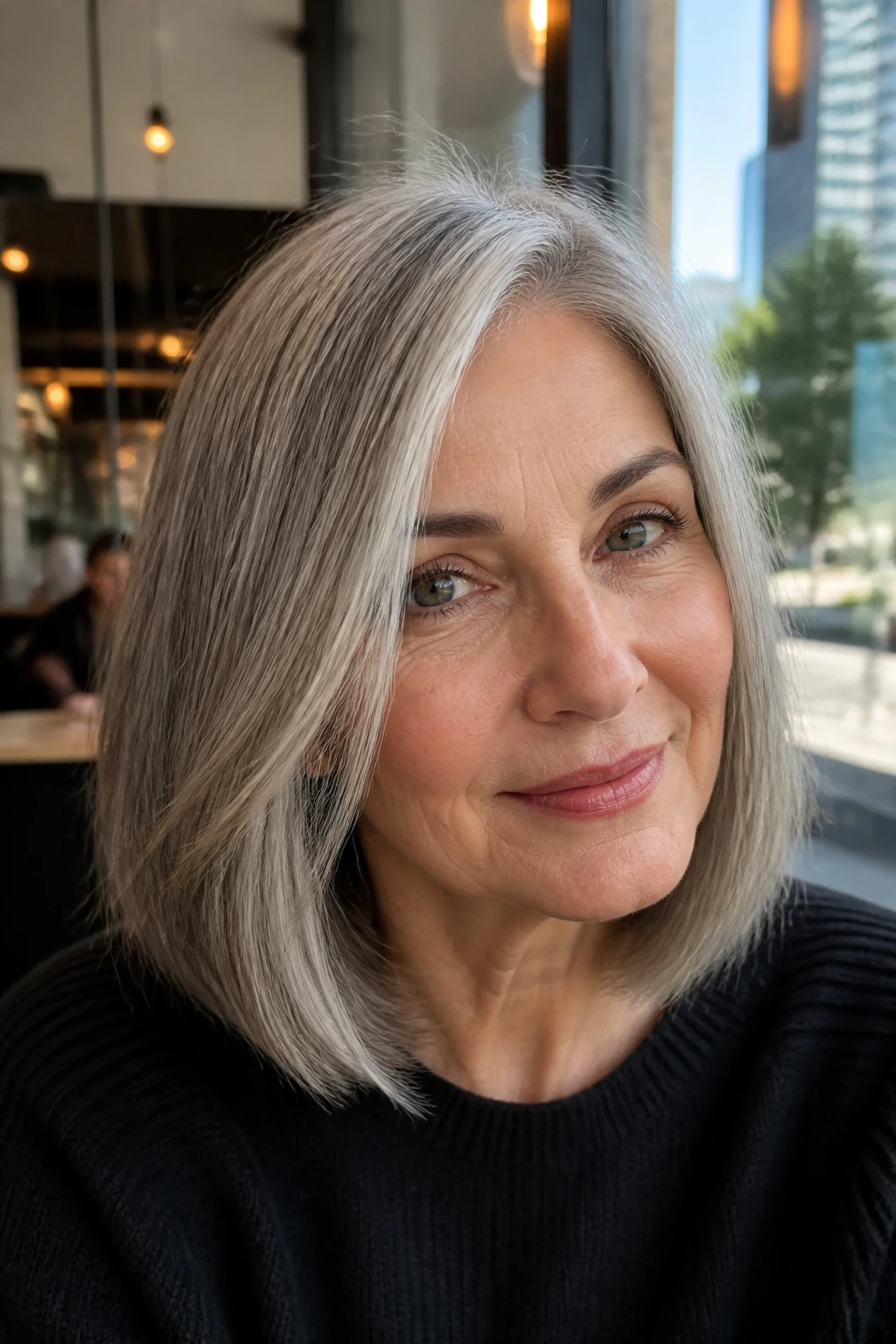
Gray hair doesn’t need to be hidden to look intentional. That’s the whole point of this style. The bob keeps the shape tidy, and the ice babylights knit the silver strands together so the regrowth looks blended instead of striped.
Why it doesn’t look harsh
The light should be placed around the part, temples, and top layer — not all over. That way, the gray remains part of the story instead of becoming a separate color block. A few lowlights can help if the natural gray is very bright and you want more depth.
This one looks especially good when the cut stays sleek and the ends are trimmed regularly. Gray loves a clean line.
19. Curly Shoulder Bob with Warm Sand Babylights
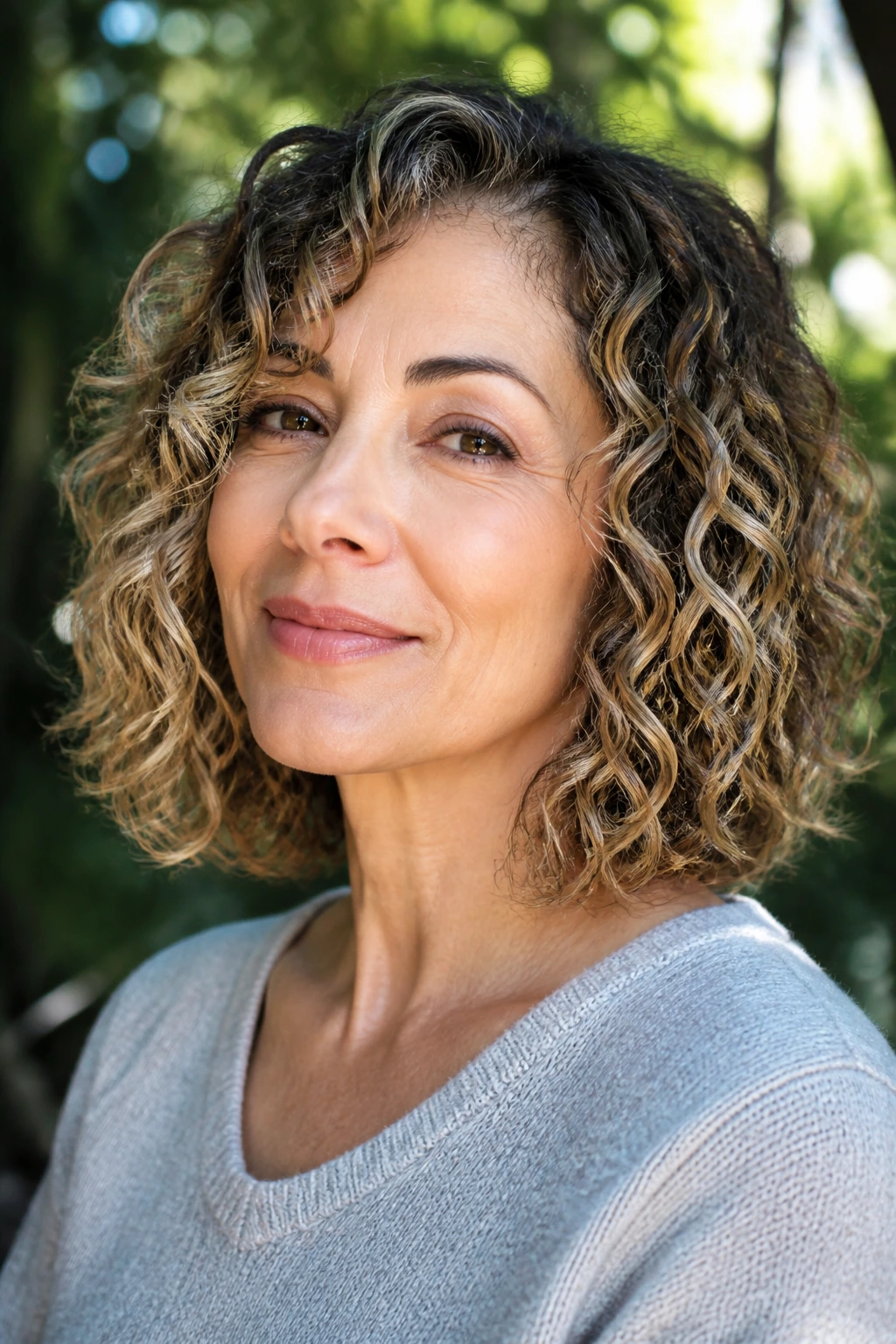
Curly hair and a shoulder-length bob can be a lovely pair if the cut respects the curl pattern. The length should be long enough to let the curls spring without piling up around the ears, and the babylights should be painted where the light naturally lands — on the outer curve and around the face.
Warm sand tones keep the curl pattern readable without making every ringlet compete for attention. That’s the mistake people make with curly color: too much contrast, and the texture starts shouting. Softness wins here.
Use a diffuser on low heat, then leave a little frizz. A little. That’s the part that looks alive.
20. Straight Sleek Bob with Biscotti Babylights
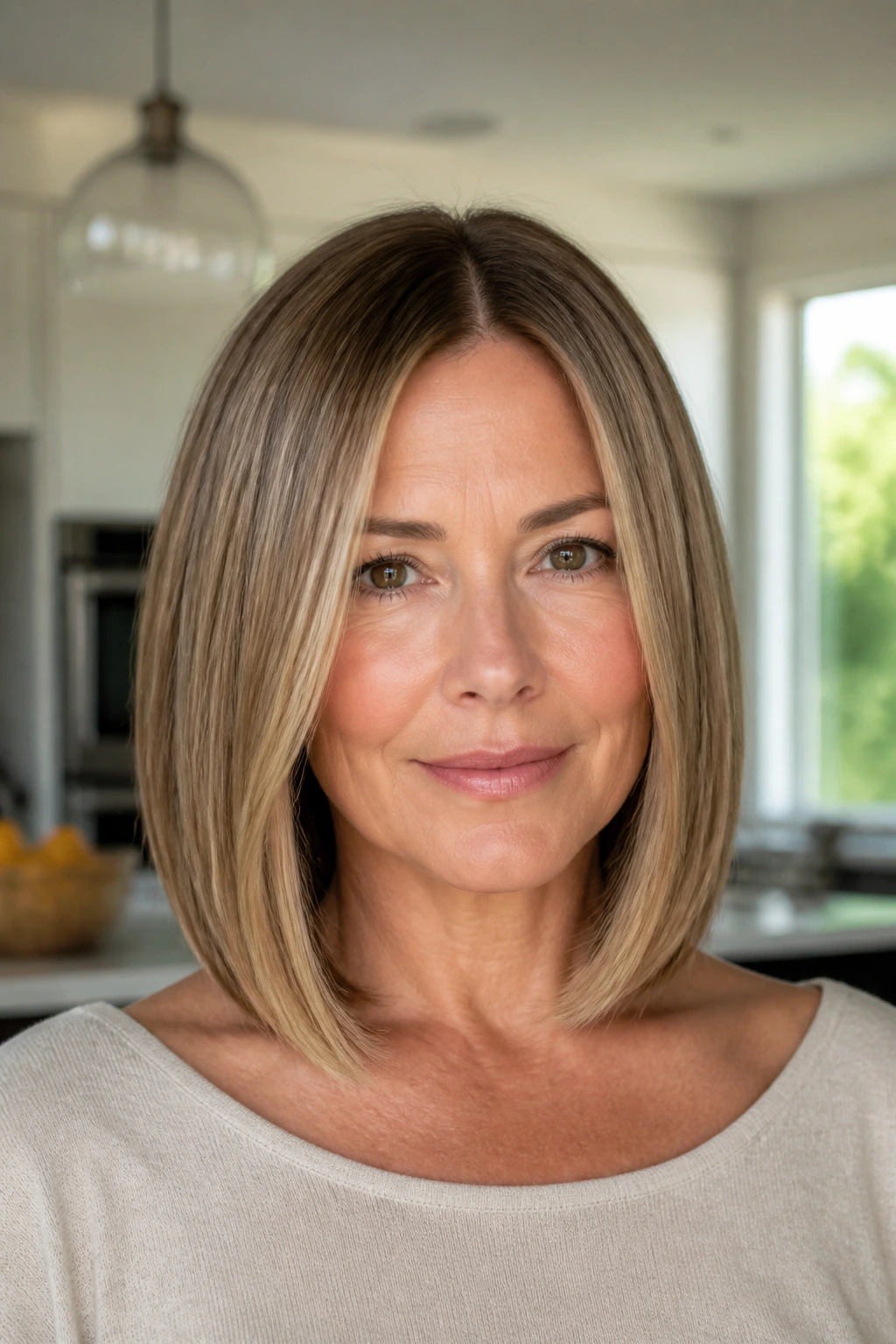
A sleek bob on straight hair can be beautiful, but plain one-tone color sometimes leaves it looking a bit too hard. Biscotti babylights warm the surface just enough to give the cut depth, which is useful when the perimeter is very clean and the styling is smooth.
This style loves a center part and a flat brush blowout. The color should stay subtle — not too blonde, not too dark — so the eye sees shine instead of stripes. If your hair is naturally straight, you may not need much heat at all.
It’s sharp. It’s tidy. It also photographs well in real life, which is more than I can say for many bobs.
21. Razored Bob with Smoky Blonde Babylights
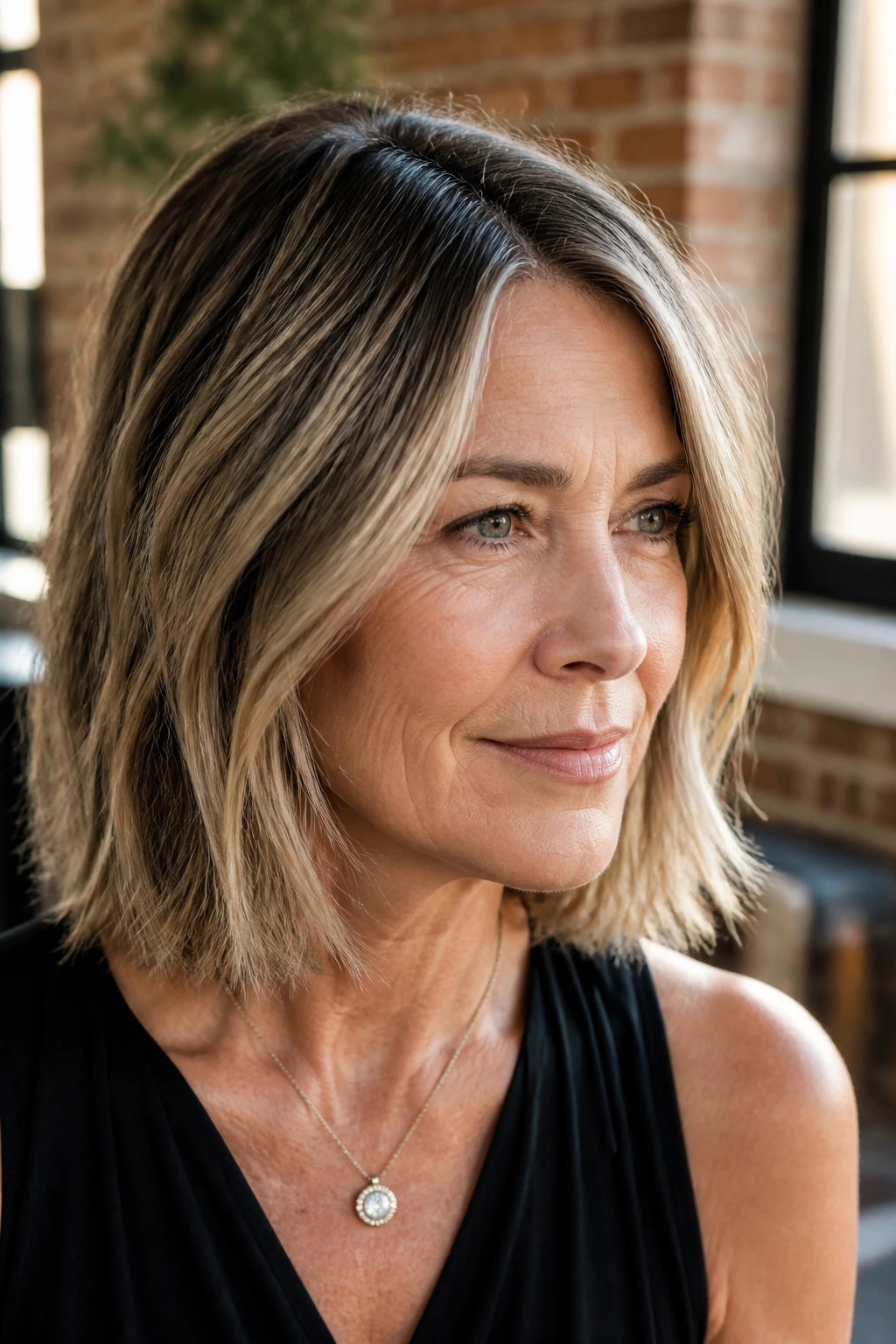
Razoring can be risky, but on the right hair it creates a soft, feathered edge that moves well around the shoulders. Smoky blonde babylights keep the texture from looking dry or too broken up. The combination works best on medium-density hair that needs shape, not weight.
I’d use this on someone whose ends tend to look blunt and heavy when cut straight. The razor removes that heaviness, and the color adds a bit of lift through the top layers. It’s a modern, piecey take that still reads grown-up.
If your hair frizzes easily, ask for a lighter hand with the razor. Too much can get messy fast.
22. Rounded Bob with Soft Walnut Babylights
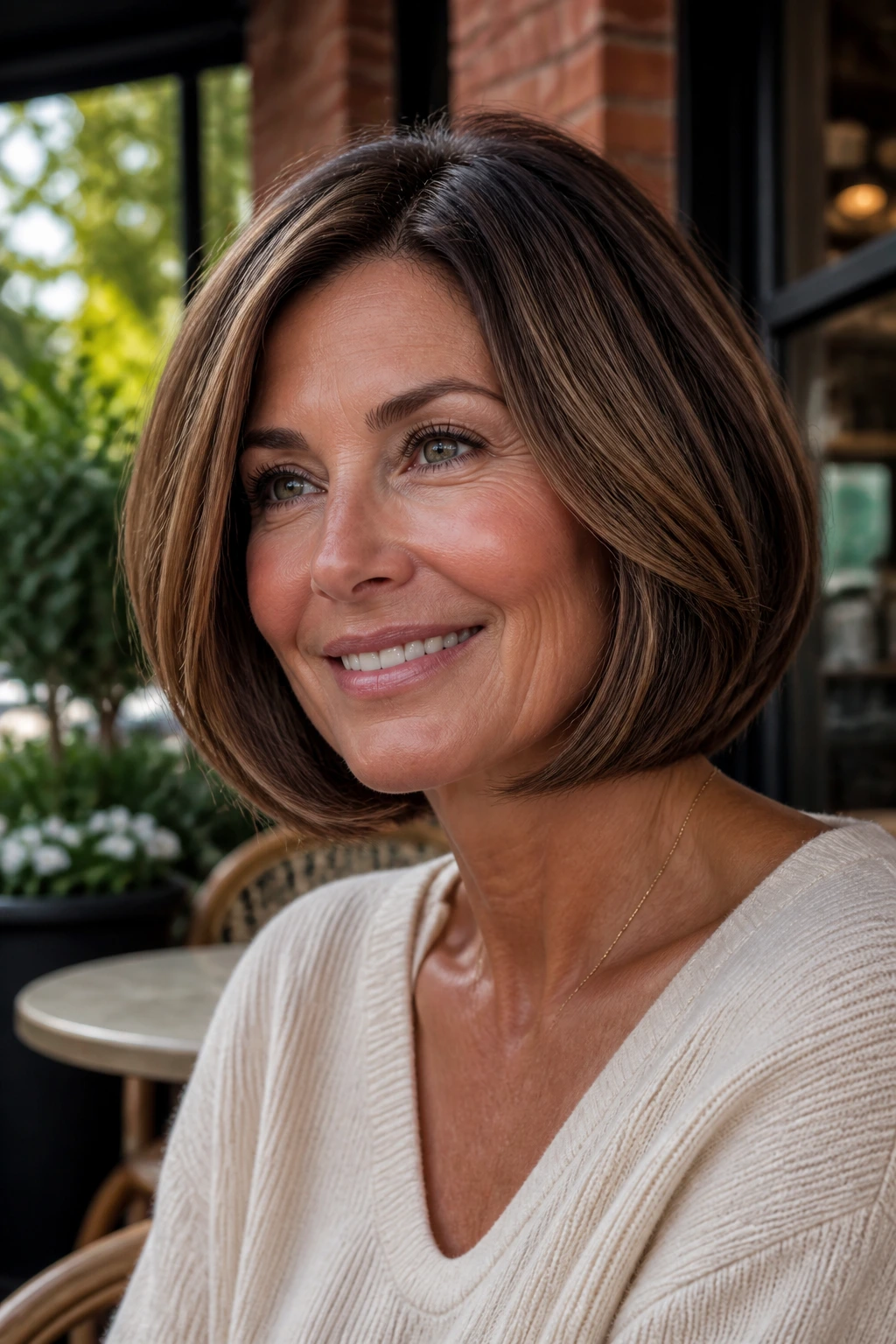
A rounded bob curves gently around the face and neck, which makes the silhouette feel fuller without turning puffy. Soft walnut babylights add depth inside the shape, so the curve doesn’t flatten out under one flat color.
This is a quietly flattering cut. It smooths the jawline, softens the cheek area, and sits nicely under coats and collars. I like it on hair that has enough body to hold a rounded outline but not so much that it balloons.
A little polish goes a long way here. A paddle brush and a finishing serum are usually enough.
23. Layered Lob with Sun-Kissed Babylights
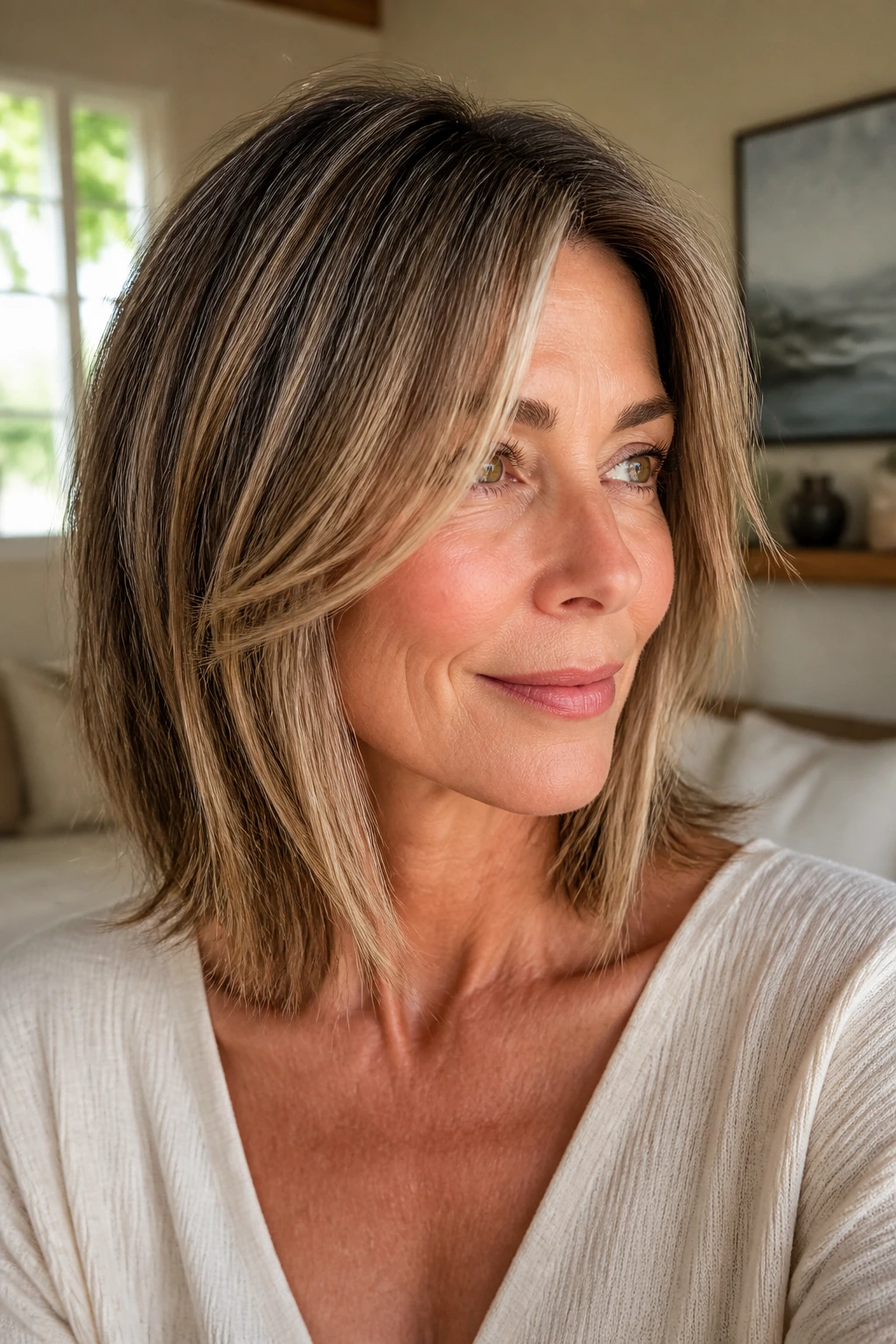
A lob — long bob — is just the more relaxed cousin in this group. It gives you shoulder-grazing length with enough room for ponytails, clips, and lazy air-drying. Sun-kissed babylights keep the longer shape from feeling heavy at the ends.
This is the safest option if you’re growing out a shorter cut or if you’re nervous about losing too much length at once. The layers should be soft and mostly hidden inside the shape, so the bob still reads clean from the front. A few brighter pieces near the face keep the whole thing from sinking into one color block.
It’s the kind of cut people keep wearing because it refuses to be difficult.
24. Low-Maintenance Bob with Rooted Vanilla Babylights
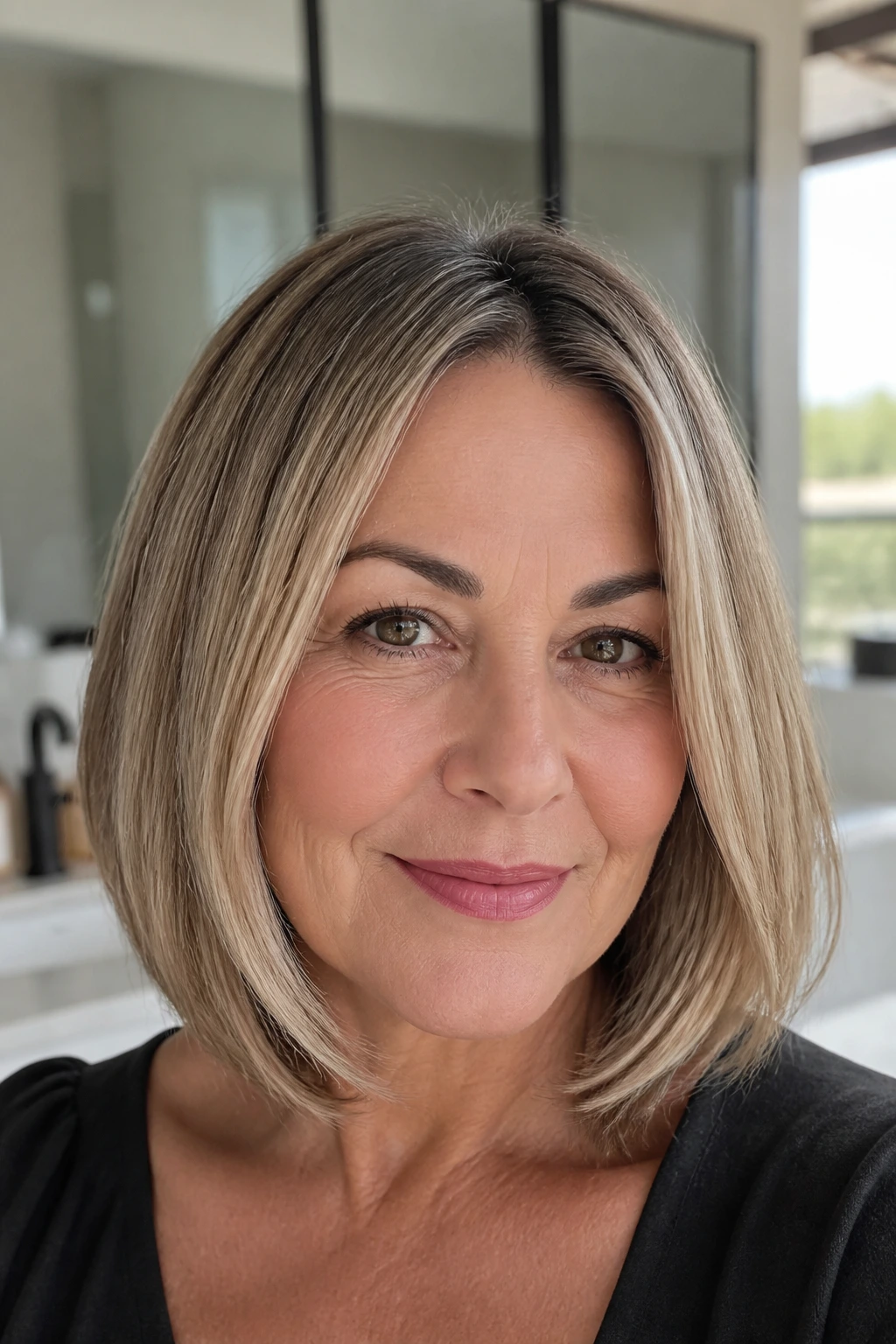
If you want the color to forgive real life — workouts, humidity, late trims, gray regrowth — this is the practical pick. A rooted vanilla babylight pattern leaves the base slightly deeper and the lighter pieces diffused through the midlengths, so the grow-out stays soft for longer.
- Ask for: a subtle shadow root, not a hard stripe at the scalp.
- Best for: anyone who wants fewer salon visits.
- Styling note: air-dry cream or a loose blowout both work.
The cut can be blunt or lightly layered, but the color should never be too high-contrast. This is a quietly smart version of the bob.
25. Polished Evening Bob with Rose-Gold Babylights
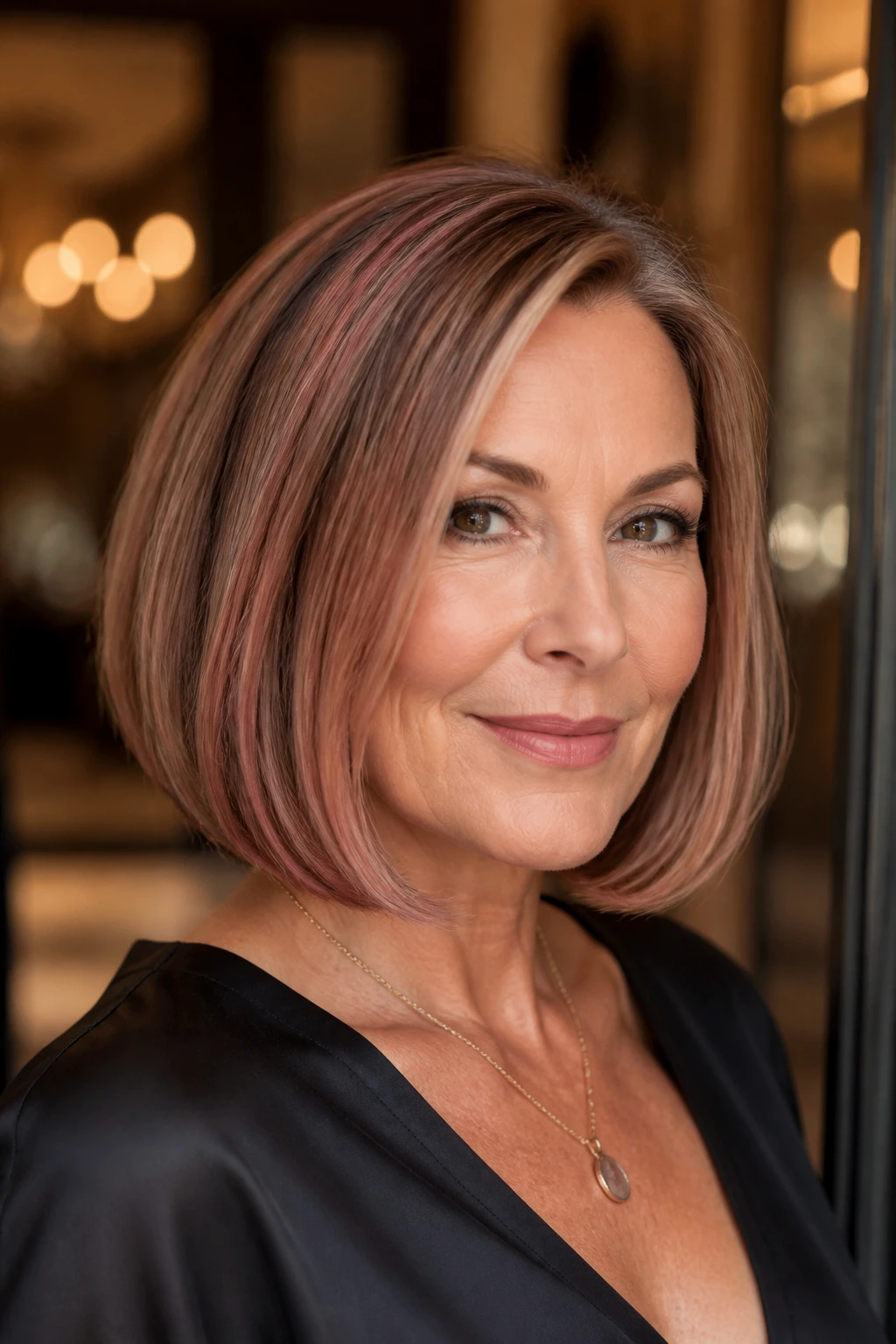
This one has a little glow to it. Rose-gold babylights add warmth without tipping into obvious copper, and the polished bob shape keeps the whole style elegant enough for dinner, events, or any moment when you want the hair to look done. Not stiff. Done.
The best version is smooth at the crown with beveled ends and a soft side part. It should move when you turn your head, not sit like a shell. I’d keep the rose tone subtle unless the rest of your coloring can carry more warmth.
If you want a bob that feels special without becoming fussy, this is the one I’d point to first.
How to Style These Bobs Without Flattening the Ends
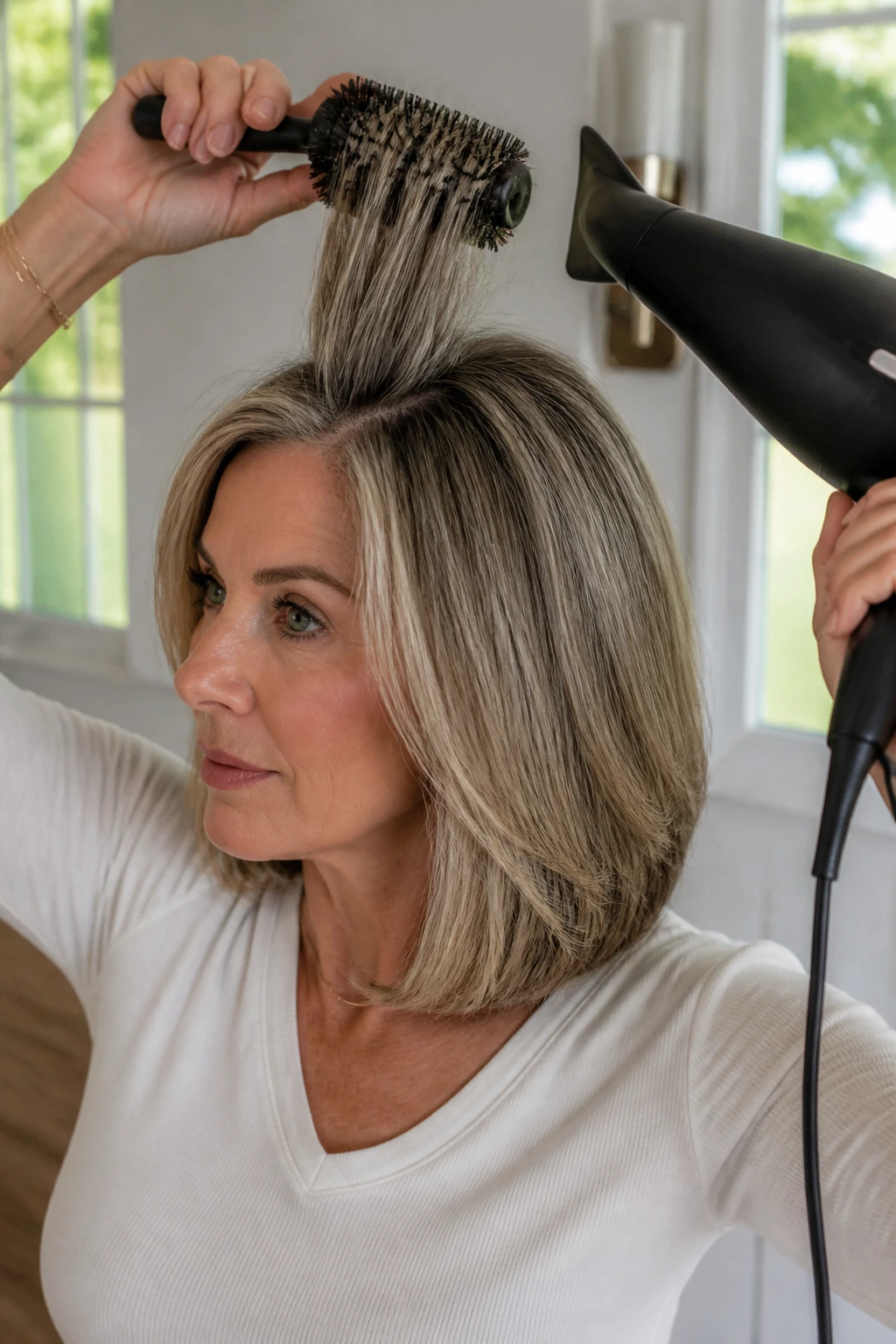
The easiest way to ruin a shoulder-length bob is to blast it dry and forget the ends. You end up with flat roots and flipped-out tips, which is a bad trade. Start with a light mousse or root spray at the crown, then rough-dry until the hair is about 80 percent dry before reaching for a round brush or dryer nozzle.
The crown needs lift, not bulk. Aim the dryer upward at the roots for a few seconds, then smooth the midlengths down and slightly under. A 1.5- to 2-inch round brush is usually enough for most shoulder-length shapes.
Heat protectant is not optional. Babylights can look dull if the hair gets scorched, and fine highlights show damage faster than a solid color does. A light serum on the ends helps, but keep it off the roots unless the hair is dry and coarse.
If you like air-drying, twist a few face-framing pieces away from the face while they dry. Small move. Big difference.
Common Mistakes That Make a Bob Look Older Than It Is

Cutting the length too short under the chin can make the bob feel severe. The hair sits right on the jaw, which can harden the whole face. Ask for a collarbone graze if you want more softness.
Using highlights that are too chunky breaks the whole babylight effect. You lose the quiet blend and get visible stripes instead. If the color reads from across the room before the shape does, it’s too heavy.
Letting the ends get too blunt and dry is another one. Shoulder-length hair can start to look triangular when the lower edge frays. A trim every 6 to 8 weeks keeps the perimeter crisp.
Overtoning blonde pieces into gray can leave the hair flat and muddy. Babylights need contrast to show depth. A little warmth or a soft root shadow is often better than trying to make everything the same tone.
Skipping the part change is sneaky, but it matters. Moving the part a half-inch now and then stops the crown from lying in one flat direction forever. Hair gets lazy. So do we.
Variations and Color Twists to Try
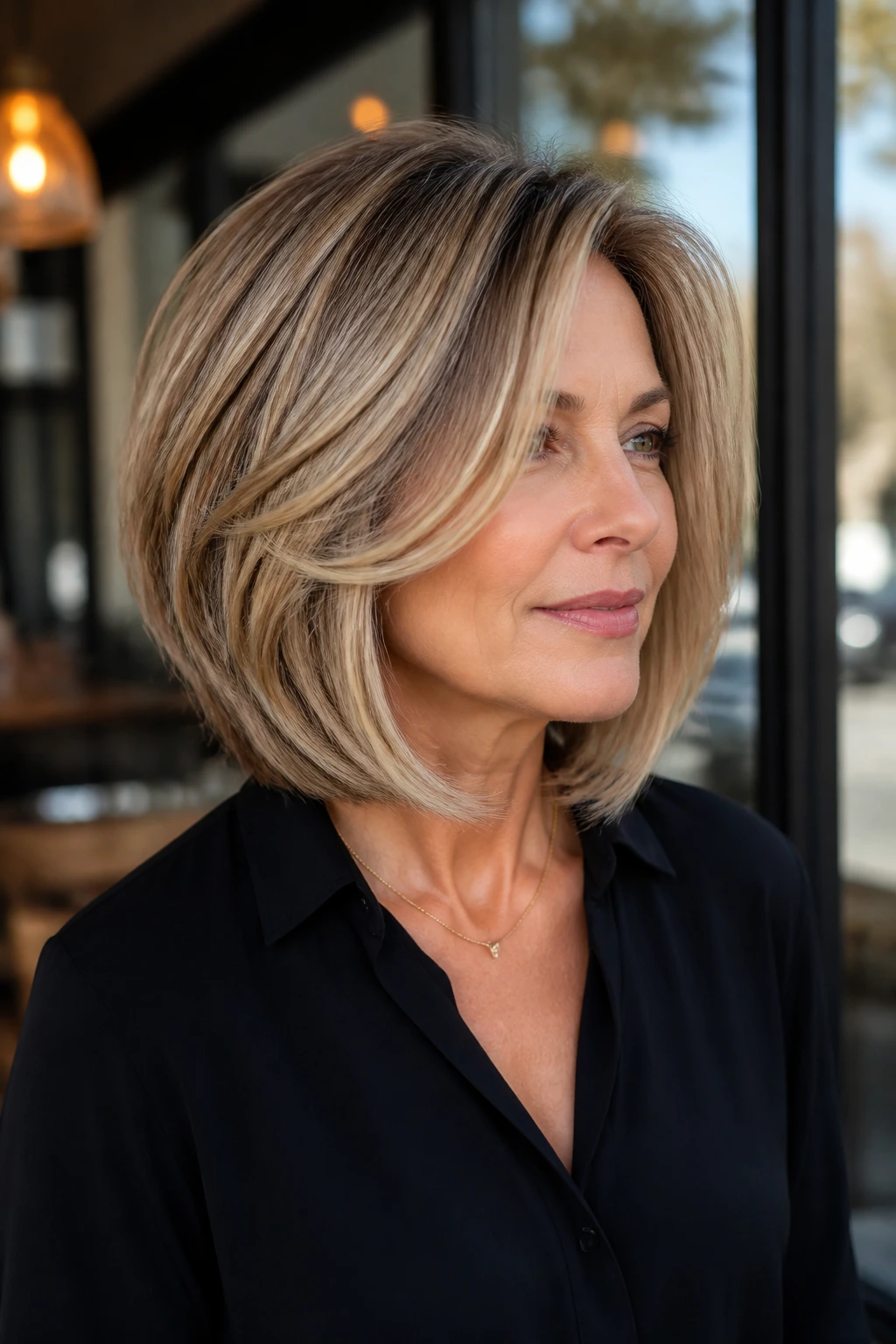
Soft Beige Lift: Keep the cut the same and ask for beige babylights with a slightly deeper root. This works when you want the color to look calm and low-contrast instead of bright.
Silver-Thread Blend: Swap warmer blonde tones for pearl and icy ribbons through gray hair. It’s a cleaner look that keeps natural silver in the conversation instead of covering it.
Warm Caramel Frame: Place the brightest pieces only around the front hairline and cheekbone area. That gives the face a lifted look while the back stays quieter and easier to maintain.
Slightly Longer Grow-Out: Let the bob sit a bit past the shoulders and keep the babylights closer to the top layer. This version is forgiving when you want to stretch the time between trims.
Curly Diffused Version: Keep the same bob shape but use warm, scattered babylights that follow the curl pattern. The color should support the curl, not interrupt it.
Tools and Products That Earn Their Keep
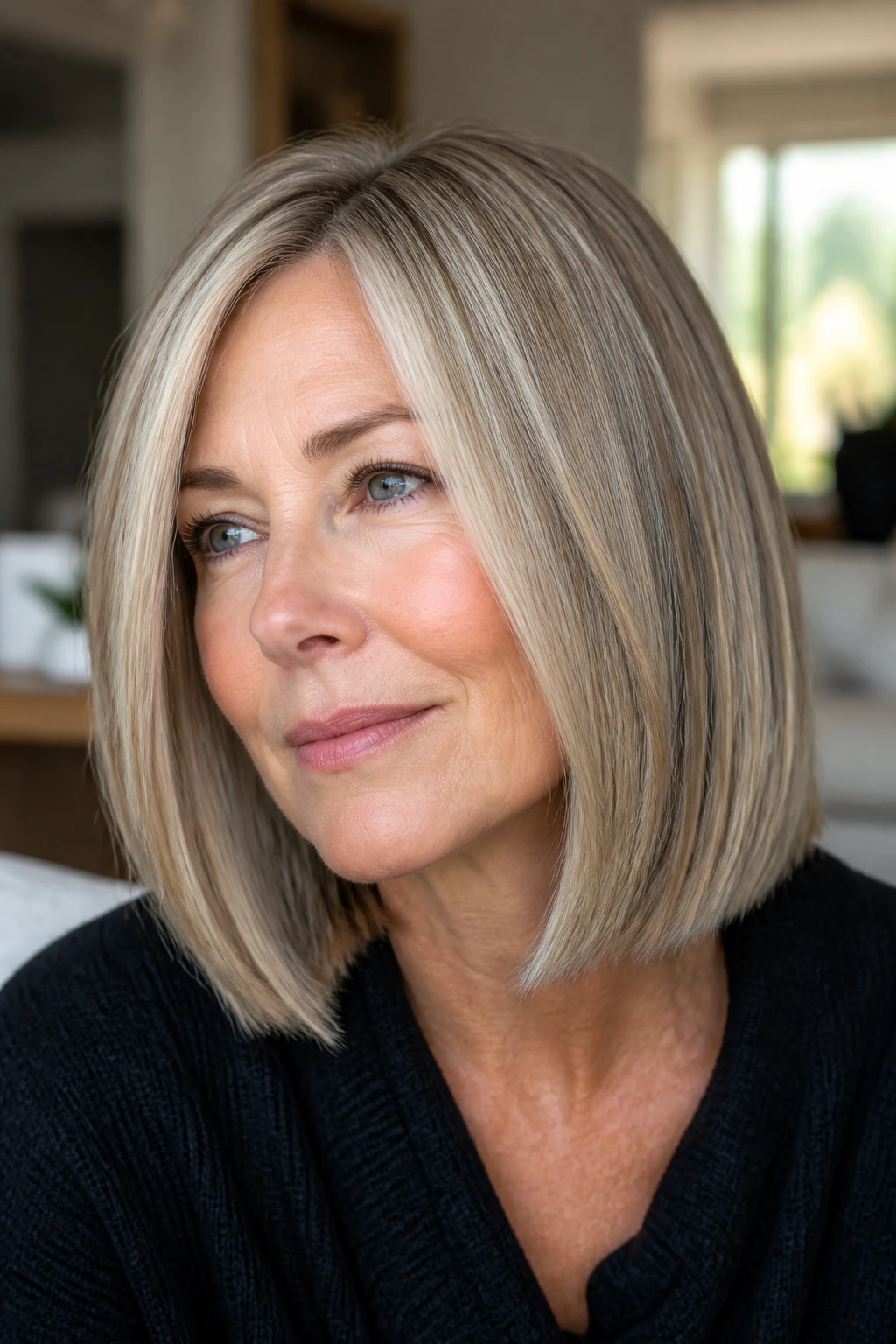
- Blow dryer with nozzle attachment: The nozzle gives you control at the root and keeps the ends smoother.
- 1.5- to 2-inch round brush: Best for bending the ends under without creating a hard curl.
- Heat protectant spray: Use it before any blow-dry or hot-tool pass, especially on highlighted hair.
- Lightweight mousse or root-lift spray: Helps the crown stay up without making the bob stiff.
- Color-safe shampoo and conditioner: Keeps babylights from fading too fast and helps the ends stay softer.
- Purple shampoo, used sparingly: Useful for ash, pearl, or silver tones, but too much can make the hair dull.
- Finishing serum or cream: A pea-sized amount is plenty; more than that and the bob starts to look greasy.
- Wide-tooth comb and section clips: Handy for detangling and styling without pulling the shape apart.
Keeping the Cut and Color Fresh Between Appointments
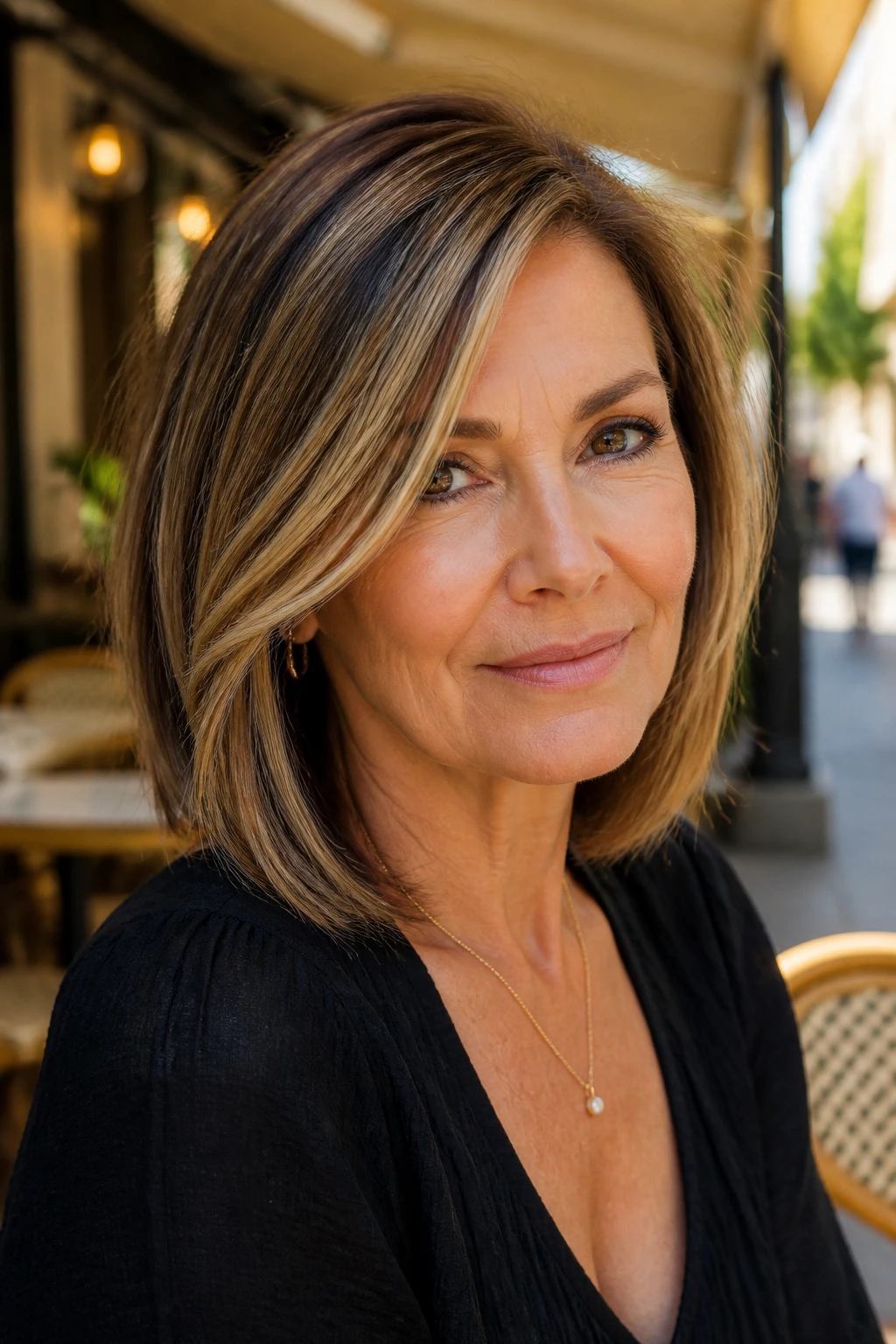
A shoulder-length bob looks best when the outline stays crisp. Plan on a trim every 6 to 8 weeks if you want the ends to keep their shape. If your hair grows quickly or flips at the shoulders, the shorter end of that range is worth it.
Babylights usually hold up well because the grow-out is softer than with standard highlights, but the tone still fades. A gloss or toner refresh every 4 to 6 weeks keeps beige, ash, or champagne shades from turning dull. If your hair is gray or silver-blended, you may only need toning when the brass starts showing.
At home, wash with lukewarm water, not hot water. Hot water opens the cuticle too much and strips tone faster than people expect. If the hair feels dry, use a mask on the midlengths and ends once a week, and keep the scalp area lighter.
For styling, cut back on daily heat when you can. A rough dry one day, a smoother blowout the next, and an air-dry day in between makes the color and the cut last longer. A satin pillowcase helps too. Boring advice, maybe. It works.
Questions People Ask Before They Book
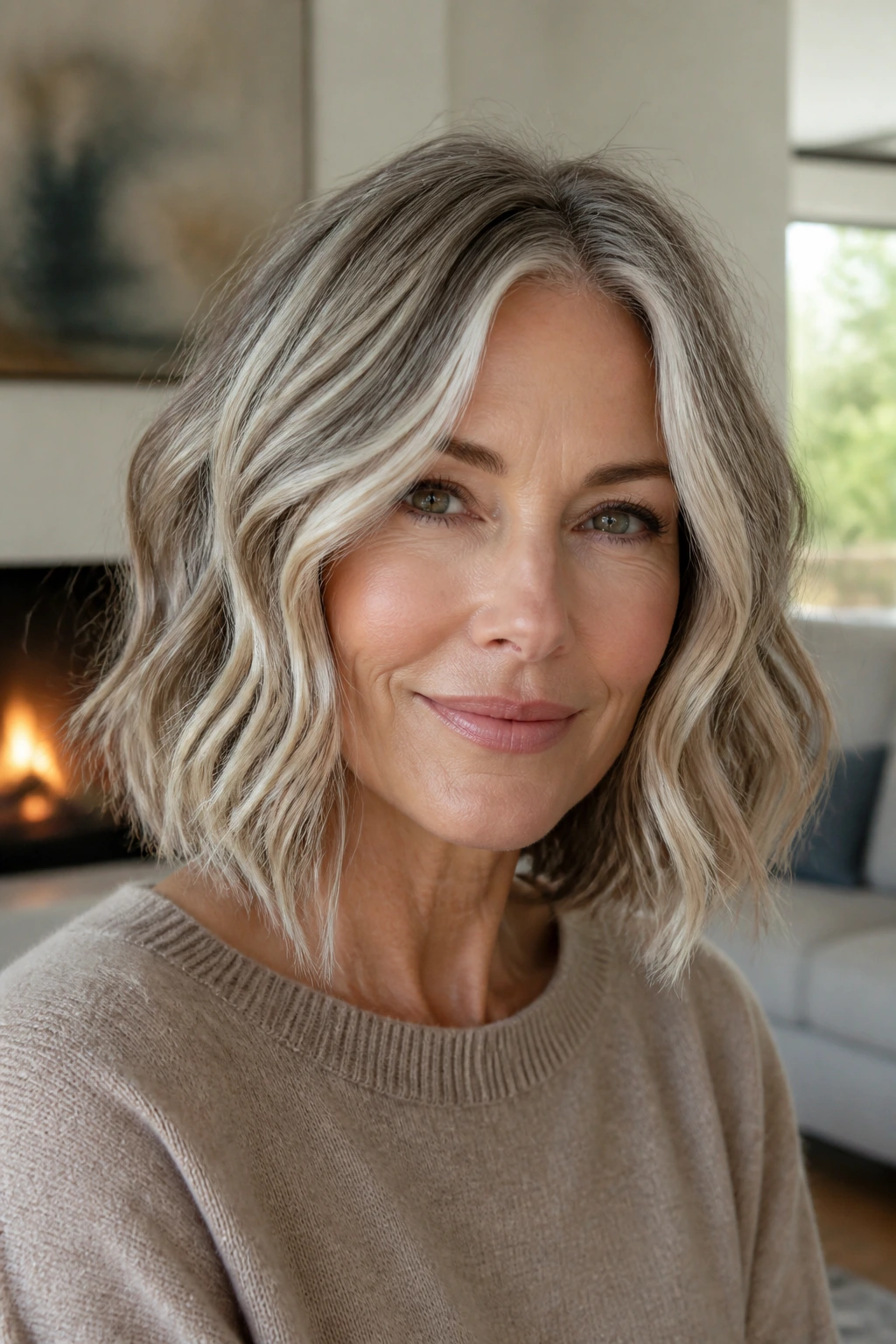
Will a shoulder-length bob make my face look wider?
Not if the cut is balanced well. A side part, face-framing babylights, or a slightly longer front usually keeps the face open rather than boxed in. The bluntest versions need the most careful shaping.
Are babylights better than regular highlights for gray blending?
For most people, yes. Babylights are finer and sit closer to the natural dimension of gray hair, so the regrowth looks softer. Regular highlights can work, but they often create a harder line.
What bob length is easiest to live with?
The collarbone length is the sweet spot for a lot of people. It’s long enough to tuck and clip, but short enough to keep the shape from dragging. If your hair is thick, you may like it a touch longer to stop puffing.
Can I wear this cut if my hair is curly?
Yes, but the curl pattern should guide the cut. A curly bob needs enough length to spring without shrinking up into the jaw. Babylights should be painted where the curls show their outer curve.
Do I need a side part?
No, but a side part adds lift very quickly. If your hair is fine or your crown lies flat, a side part can make the whole style look fuller in under a minute.
What if my hair turns brassy fast?
Ask for a cooler tone at the salon and use a color-safe shampoo at home. If the brass keeps winning, a gloss between color services is usually smarter than trying to fix it with stronger shampoo.
How do I keep the ends from flipping out?
Blow-dry them under while they’re still damp, using tension from a round brush or paddle brush. If the ends are already dry and stubborn, a quick pass with a flat iron and a slight bend inward usually settles them.
The Bob That Keeps Its Shape
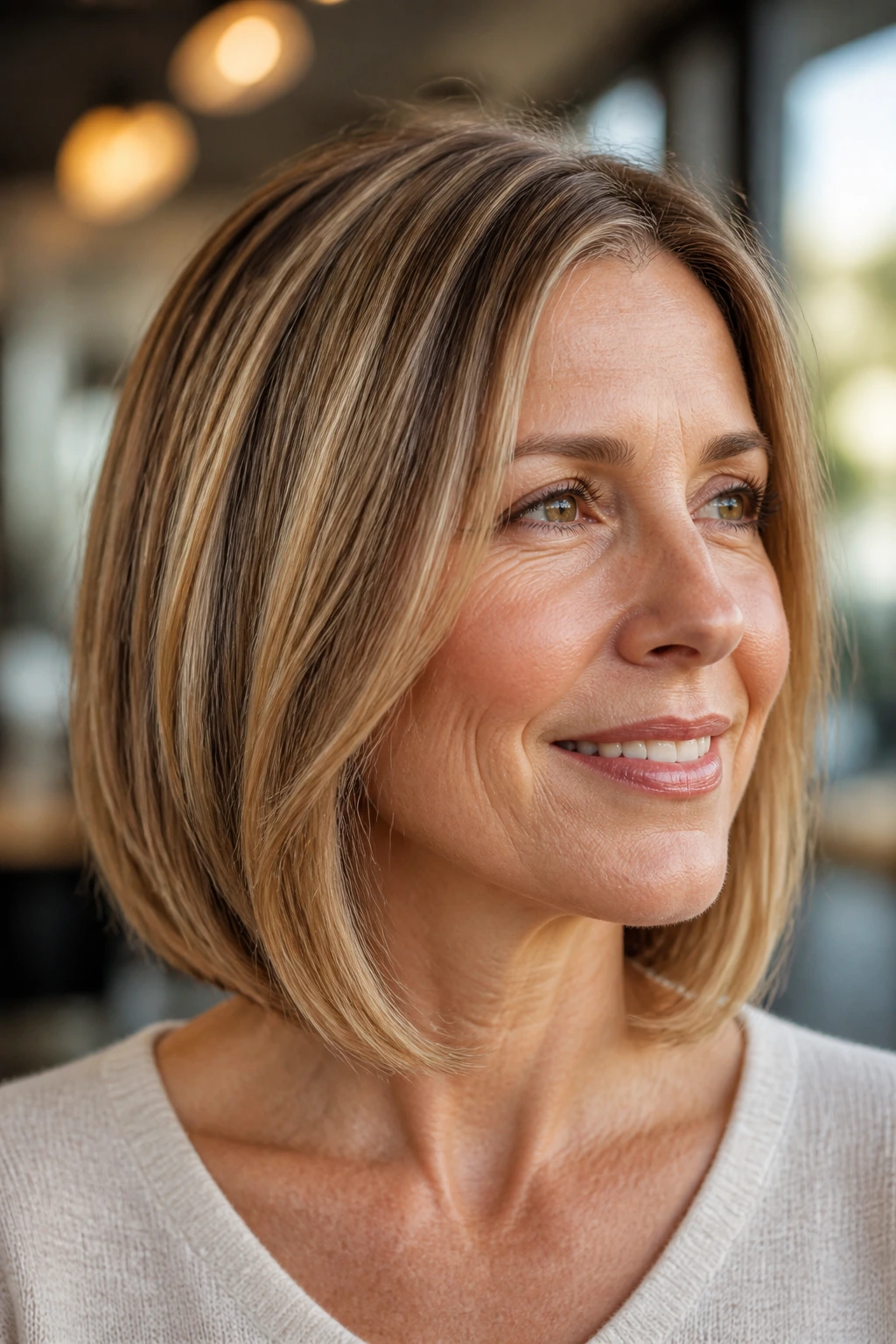
A shoulder-length bob with babylights has real staying power because it doesn’t force one look on every head of hair. It can be blunt, feathered, wavy, polished, gray-blending, warm, cool, or almost invisible in its coloring — and that flexibility is the whole appeal. The cut does the structure. The babylights do the softening.
What I like most is that these styles don’t ask the hair to be younger, louder, or bigger than it is. They ask it to look clean, light, and well cared for. That’s a much better deal.
If you take one thing from this collection, make it this: keep the line around the shoulders, keep the light pieces fine, and keep the shape moving. That combination never feels dated for long.