



Loose curls behave differently once the air turns dry. They don’t have the slack, glassy look of pin-straight hair, and they don’t fight the weather the way tight ringlets can. They sit in the middle, which is exactly why they’re useful when the temperature drops, your scarf starts rubbing at your neck, and your hair wants to puff up the second you step inside.
That middle ground gives you options. A low twist can stay neat under a coat collar. A half-up shape keeps the crown from getting flattened by a beanie. A side clip, a ribbon, or a small braid can make the whole style look intentional even if you only spent ten minutes on it. That’s the sweet spot here: enough shape to look styled, enough looseness to survive a real day.
These winter hairstyles for long hair with loose curls work because they respect the hair you already have instead of forcing it into something stiff. Some are quick fixes for rushed mornings. Others are better when you want your ends to keep their bend and your roots to stay calm. Start with the one that matches your coat, your schedule, and how cooperative your curls feel before coffee.
Why These Styles Earn Their Spot When the Weather Turns Dry
-
They keep the crown from collapsing: Half-up shapes and low anchors protect the top layer from being rubbed flat by hats, hoods, and scarf collars.
-
They leave the ends doing the work: Loose curls look better when the most visible part of the hair has shape, so these styles let the ends keep their bend instead of hiding everything in a tight knot.
-
They handle static without a fight: Softer styles need less brushing, which means less frizz and fewer little flyaways popping up the second you walk into heated air.
-
They’re quick to reset: If a curl falls, you can usually revive it with a wand, a mist of water, or a finger twist. No full redo.
-
They make long hair feel lighter: Long lengths can get heavy under winter layers. These styles redistribute the weight so your hair doesn’t drag on your neck all day.
-
They look better after a little wear: A bit of looseness helps. Winter hair rarely stays pin-neat, and these styles are built to age in a decent way.
1. Center-Part Curls Tucked Softly Behind the Ears
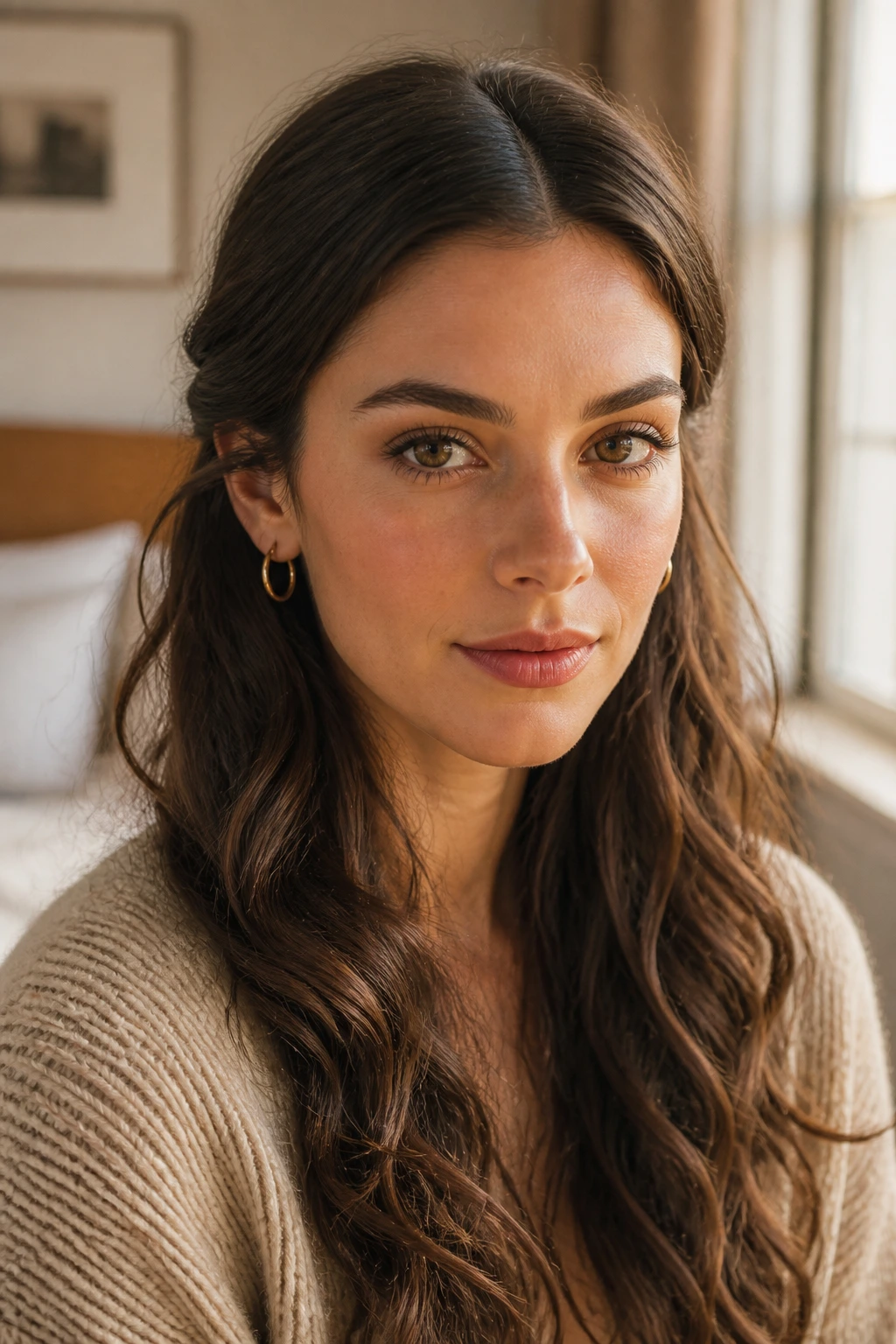
This is the style I reach for when I want my hair to look like I spent longer on it than I actually did. The curls stay loose and visible, but the front gets nudged back just enough to clear the face and keep the shape from getting swallowed by a scarf. It’s tidy without going stiff.
A deep center part gives the whole look some calm. Then you take the front two-inch sections on each side, smooth them with your fingers, and tuck them behind the ears or pin them just under the top layer. That tiny move keeps the sides from expanding into a halo once you step outside.
How to keep the front from puffing up
Use a pea-sized amount of lightweight serum on the surface only. Not the roots. The roots don’t need shine; they need space. If your hair is fine, skip the brush after styling and use a wide-tooth comb only before you curl. Brushing loose curls after the fact turns them fuzzy fast.
A single decorative pin on one side can make this feel finished. I like a simple metal barrette better than a giant clip here. Bigger isn’t better. It just starts to look like the accessory is carrying the whole style.
2. Low Velvet Ribbon Half-Up Twist
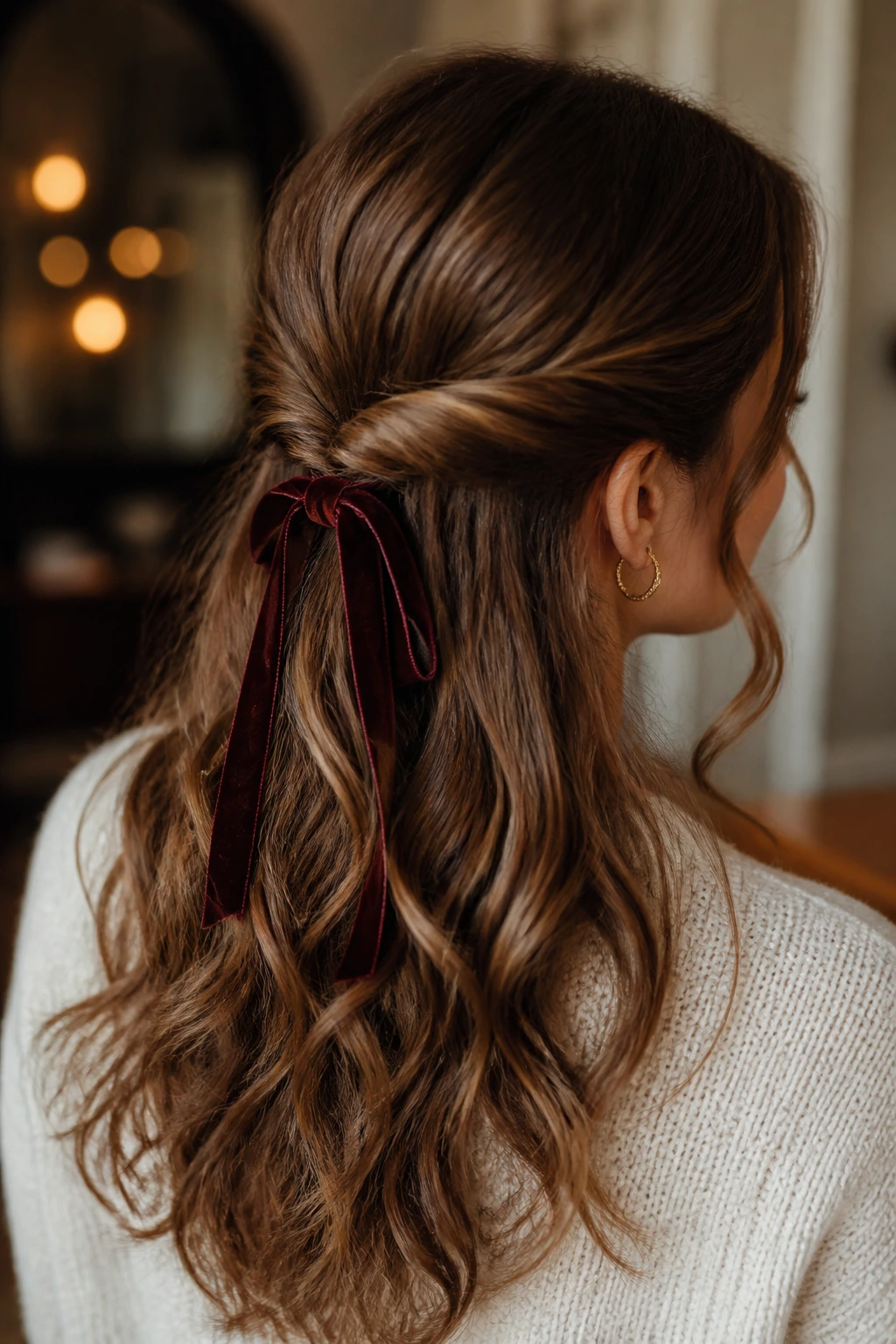
A velvet ribbon changes the whole mood of loose curls. It pulls the style into winter territory fast, and it doesn’t need much else to look complete. The half-up twist keeps the crown in place, while the ribbon softens the back and gives the curls room to fall.
Take the top section from temple to temple, twist it loosely, and secure it at the back of the head with a small elastic or two hidden pins. Tie a velvet ribbon around the anchor point and let the tails hang with the curls. Keep the ribbon flat against the hair. If you cinch it too tightly, the top starts to bump and wrinkle.
For this style, the ribbon should feel like part of the hairstyle, not an afterthought. Choose a narrow one for finer hair and a slightly wider one if your hair is thick or very long. The curls can stay soft and brushed out; the ribbon gives you enough structure that you do not need a lot of extra styling.
3. Claw-Clip French Twist with Loose Face Framing
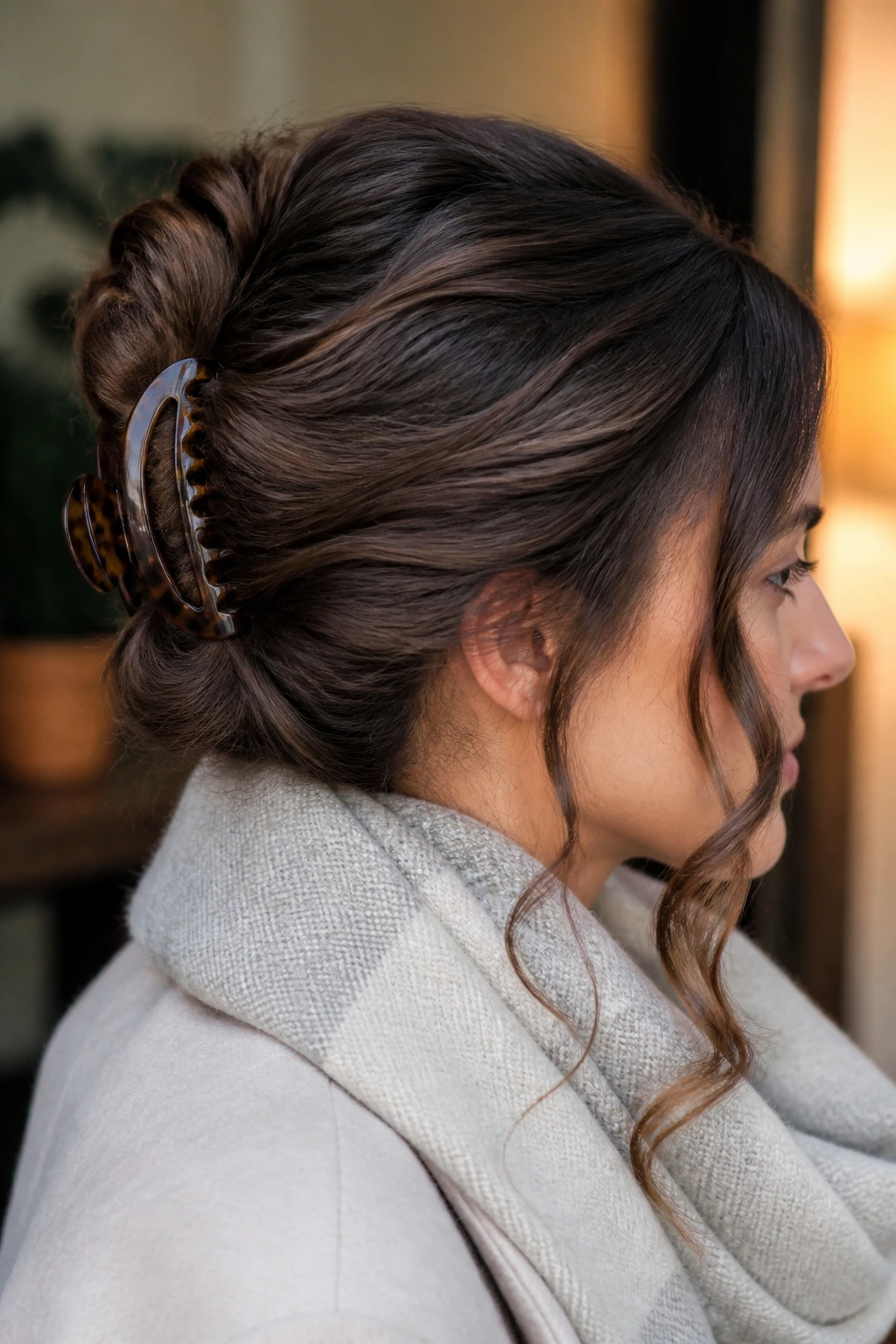
A claw clip makes a long-hair winter life easier. It lifts the weight off your neck, keeps the scarf from snagging the ends, and lets the loose curls around the face stay visible where they count. The trick is not to pile all your hair into the clip like a suitcase. That’s how you end up with a lumpy twist that slides out ten minutes later.
Gather the top two-thirds of your hair at the back of the head, twist upward, and fold the length into the clip. Leave the bottom inches hanging free so the curls can swing at the shoulders. Pull out two face-framing pieces, one on each side, and bend them with your fingers rather than brushing them straight.
Why the clip matters
A curved clip with teeth grips better than a flat one, especially if your hair is slippery or freshly smoothed. If you have thick hair, choose a clip that looks slightly too large. It probably isn’t. Thick winter hair eats small clips for lunch.
This style works best when the twist sits low enough that a coat collar won’t hit it. If the clip lands too high, your jacket does the undoing for you.
4. Braided Crown with Open Lengths
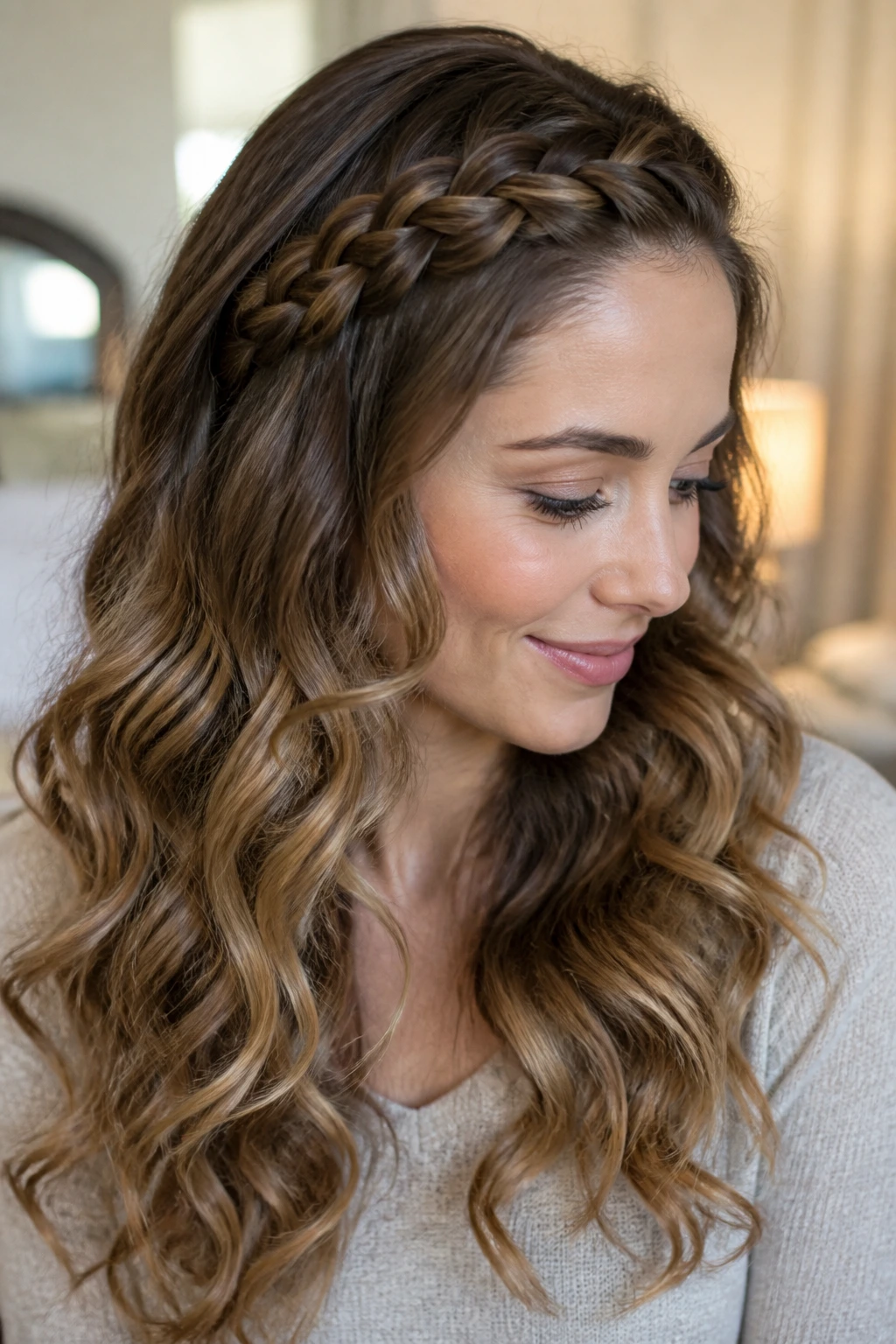
A braid along the hairline buys you control without hiding the loose curls you actually want to show off. It’s a smart option for windy days, or those mornings when the front pieces keep slipping into your mouth every time you zip a coat. The rest of the hair stays down and soft, which keeps the look from feeling too formal.
Start a small braid at one temple and follow the hairline across the top of the head, pinning it behind the opposite ear. Don’t braid tightly. That’s the mistake. A taut braid looks severe against loose curls, and it tends to create a crease once you take it down later. A relaxed braid should sit like a thin frame, not a helmet strap.
The loose lengths underneath can stay brushed out or lightly separated with your fingers. If the ends are a little uneven, the braid actually helps. It gives the eye something structured to hold onto.
5. Sleek Low Ponytail with Curled Ends
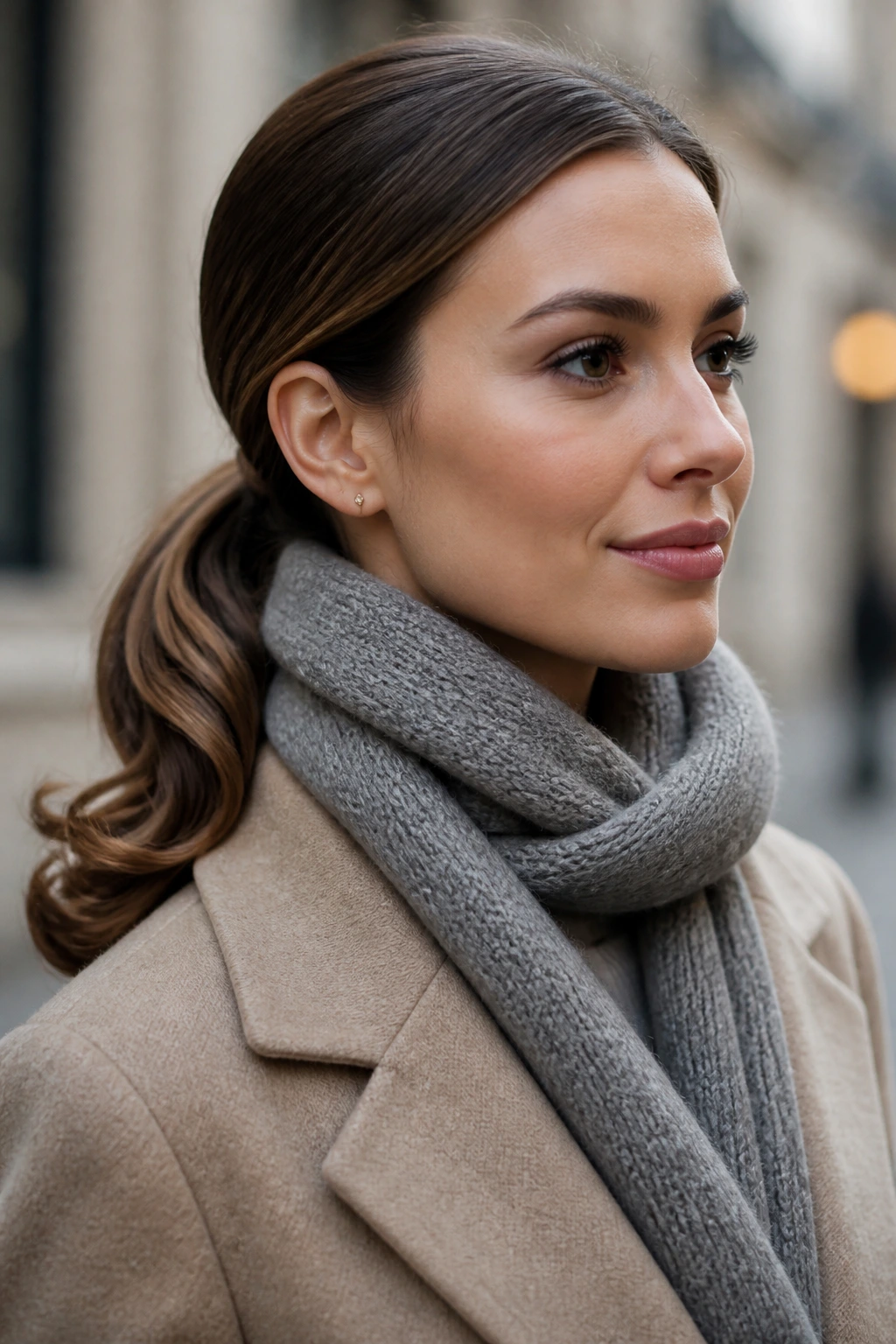
This is the style for days when your hair needs to look neat but not flat. A low ponytail keeps the crown smooth under a scarf, while the curled ends stop the whole thing from reading too severe. Done right, it looks clean, not strict.
Brush the top section gently back to the nape and secure it with a no-snag elastic. Leave enough slack at the crown so the hair still has a soft curve. Then wrap a small strand around the elastic and pin it underneath. That tiny cover-up matters more than people think. It turns a practical ponytail into a finished one.
Keep the ponytail low enough that it sits below coat collars and above scarf friction. If your hair is very long, curl the last 4 to 6 inches a bit more tightly than the rest so the ends still have shape after a few hours. The ponytail will loosen a little as the day goes on. That is the goal, not a failure.
6. Side-Swept Waves Held with a Statement Pin
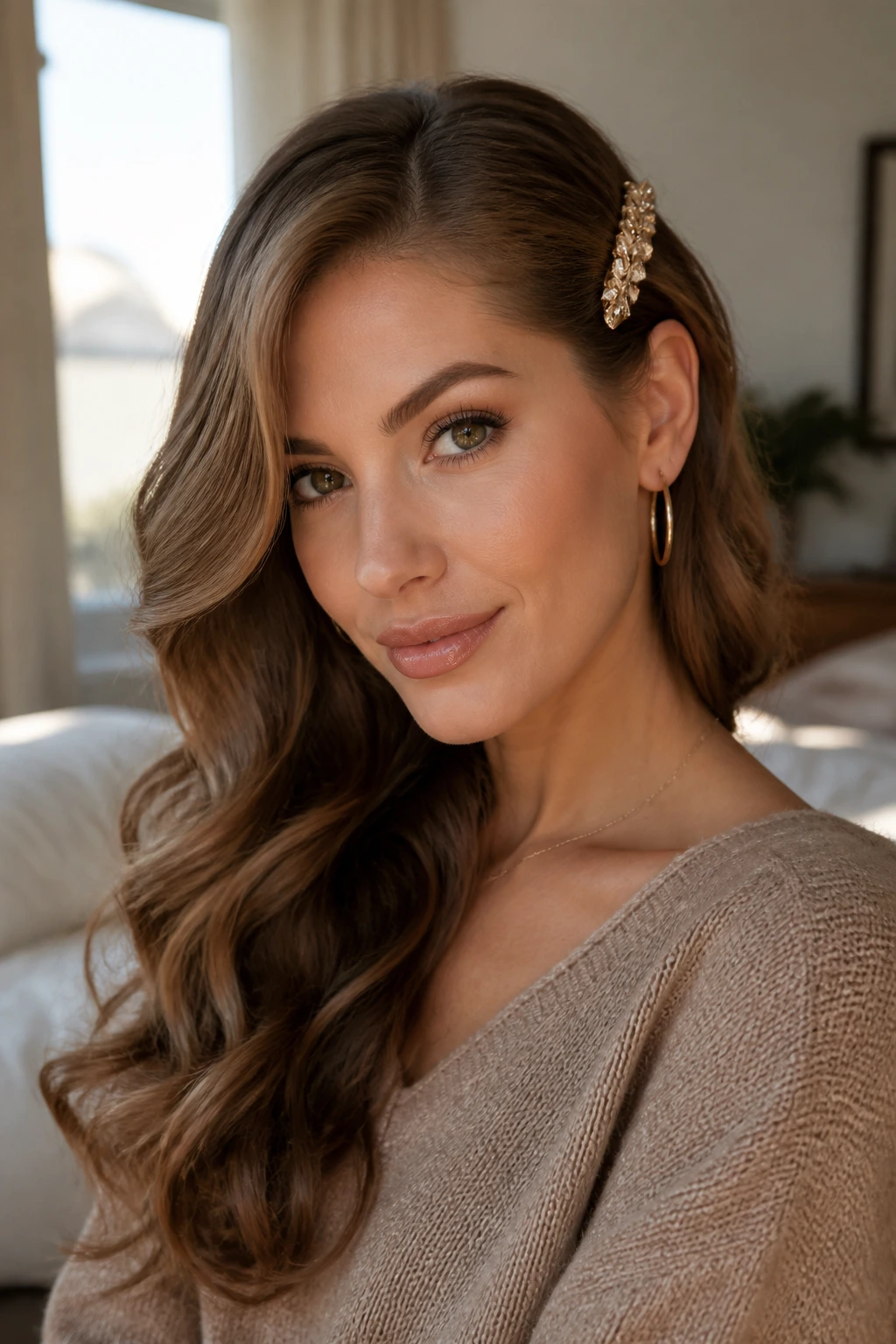
A side sweep gives loose curls some direction. Without it, the hair can drift into that in-between state where it’s down but not really styled. A single statement pin solves that. It holds the heavier side back, keeps the front out of the face, and gives the whole shape a little asymmetry.
Take a side part, sweep the larger front section across the forehead, and pin it just above the ear with a barrette that has real grip. If the pin is decorative, good. If it actually bites into the hair, even better. Pretty pins that slide out are just jewelry with delusions of usefulness.
This is one of the fastest options on the list. It’s also one of the most forgiving. If the curls are a bit loose or day-old, the style still works because the visual focus lands on the sweep and the pin, not on every single strand behaving.
7. Bubble Ponytail with Soft Curl Ends
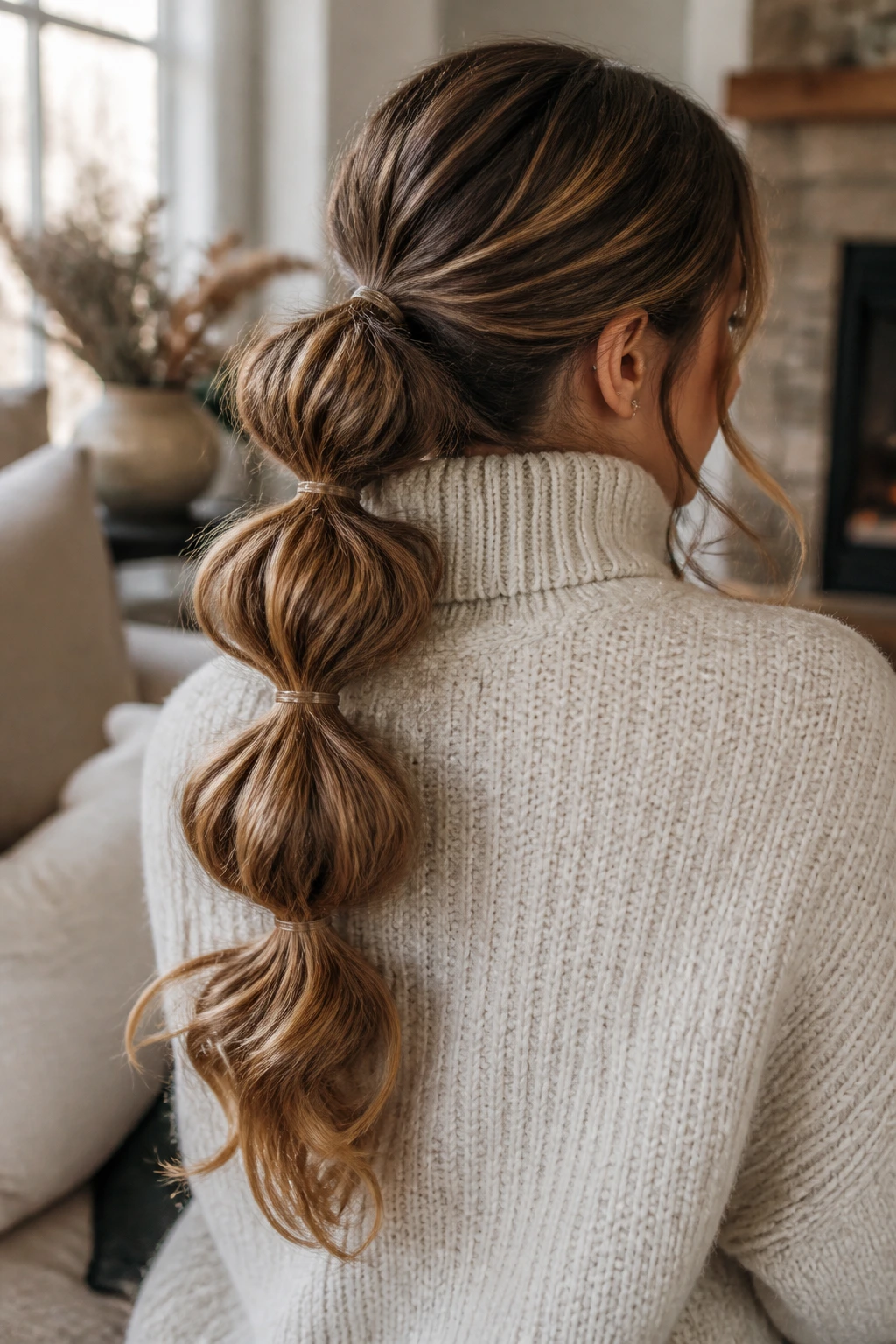
Bubble ponytails can look childish if the sections are too puffed up or too evenly spaced. With loose curls, though, the style lands in a different place. It feels modern and a little graphic, and the waves between each elastic add enough softness to keep it from looking hard.
Start with a low or mid ponytail. Add clear elastics every 2 to 3 inches down the length, then gently tug each section outward just enough to create rounded “bubbles.” Don’t yank. You want shape, not balloons. The loose curls should spill around the elastics and soften the lines.
A bubble ponytail is useful when your hair is long enough to get heavy but you still want movement. It also survives winter layers better than a high ponytail, which gets flattened by coats and scarves almost immediately. If your hair is very thick, use a couple of discreet pins above the first elastic to anchor the base.
8. Twisted Half-Up Knot
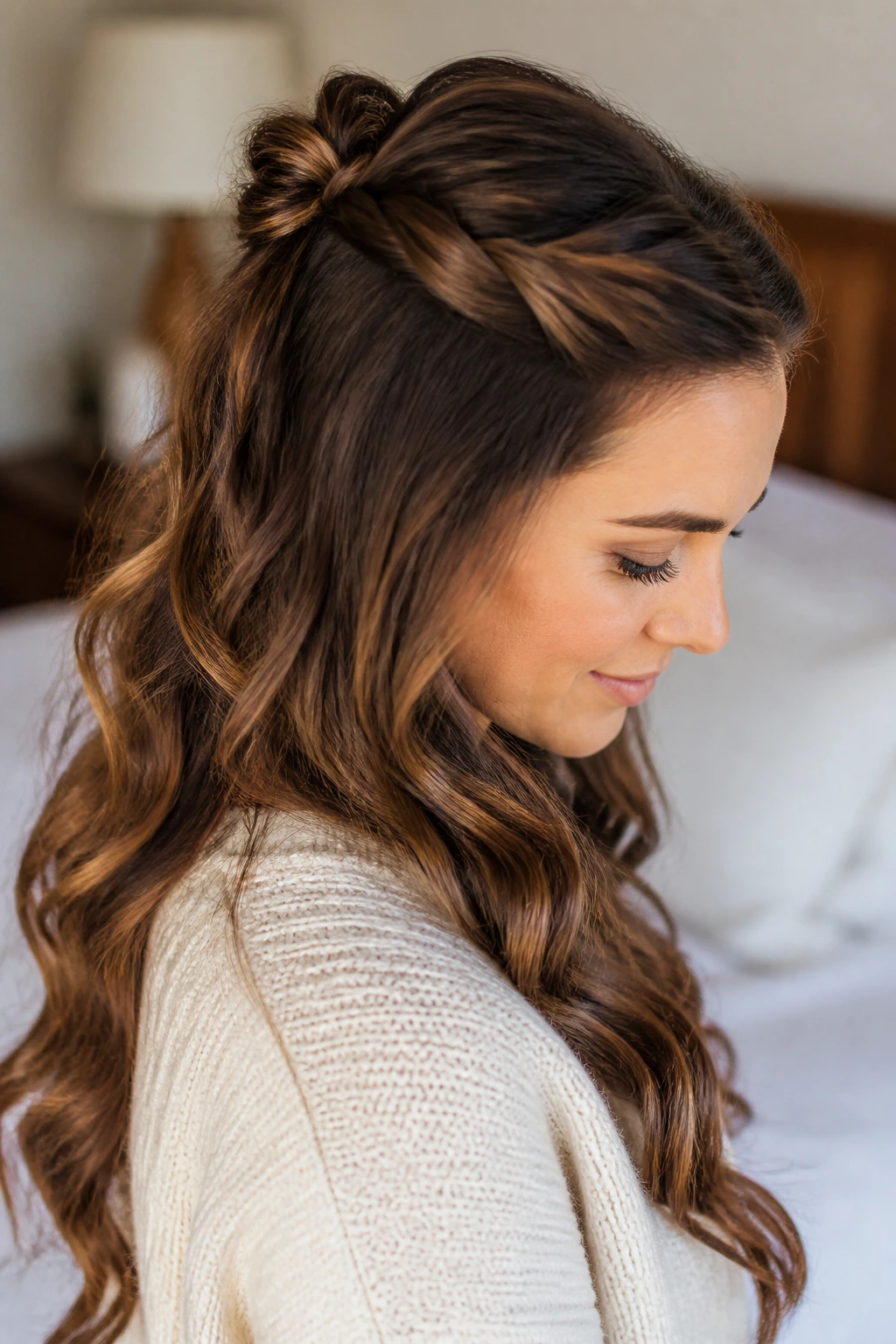
This one is barely a hairstyle and somehow still counts as a good one. Two front sections get twisted back, tied into a small knot at the back of the crown, and left to sit over the loose curls below. It keeps the top from falling in your face without making you commit to a full updo.
The best version looks slightly undone. Pull the twists apart just a little before tying them off so the knot has texture. Then fan the curls underneath with your fingers. If the knot sits too tight, it pulls the shape upward in a way that can make the face look harsh. Looser is better here.
A twisted half-up knot is also kind to second-day curls. You don’t need freshly set spirals for it to work. In fact, a little bend in the hair helps the knot stay put.
9. Low Messy Bun with Curled Tendrils
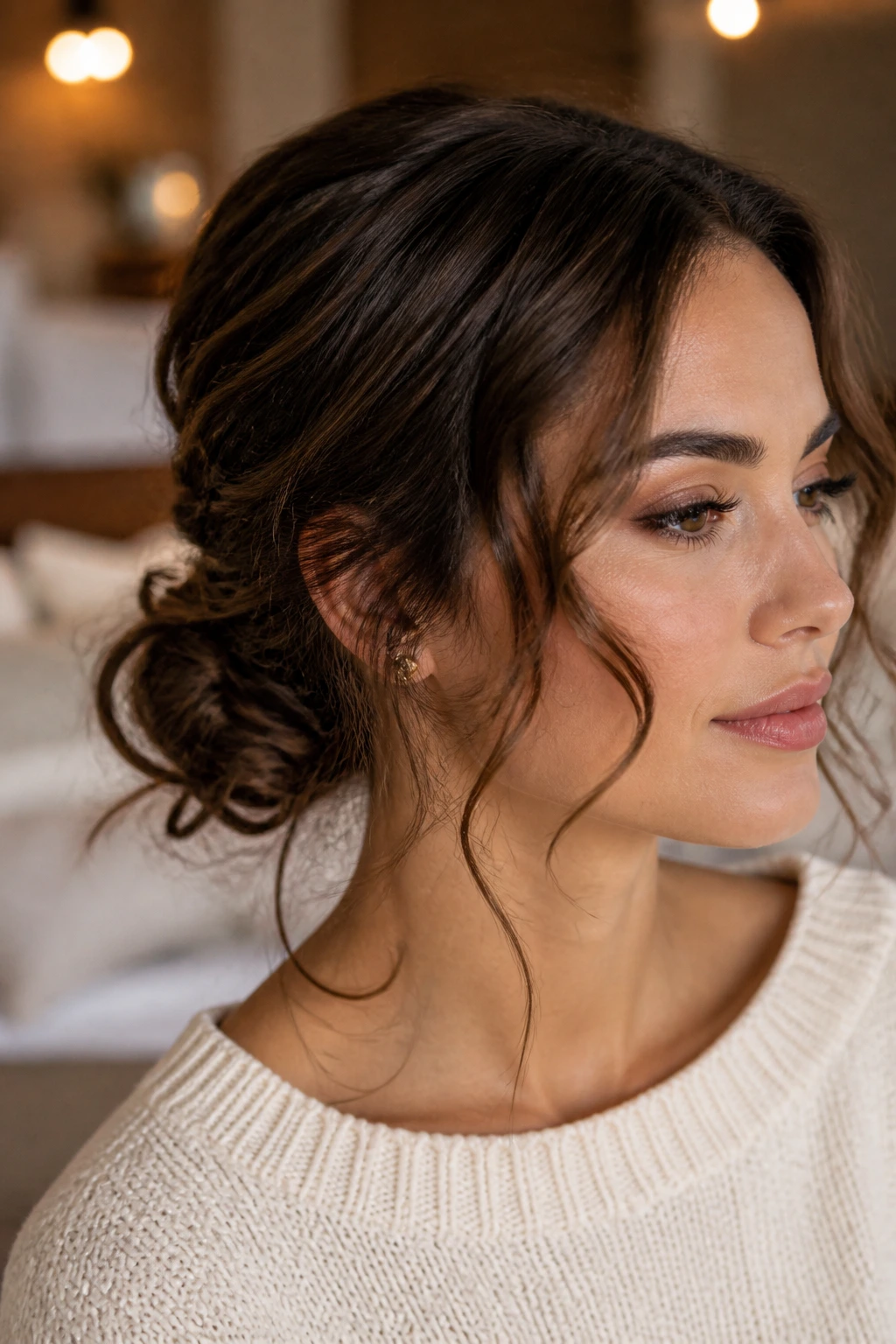
A low messy bun sounds simple, and in winter that’s a compliment. The bun keeps the bulk away from your neck, which matters when you’re wearing a thick sweater or a high collar. The curled tendrils around the face keep the style from looking like you gave up halfway through.
Gather the hair at the nape and twist it into a loose bun, then pin it from different angles so the base feels secure. Pull out a few thin strands at the temples and around the ears. Curl those pieces again if they’ve gone flat. They do a lot of visual work.
This style looks best when the bun isn’t polished to the point of stiffness. You want enough looseness that a few curls can spring out around the edges. If the bun starts to feel too neat, tug at the surface with your fingers and let a little texture show.
10. Velvet Headband and Loose Side-Part Waves
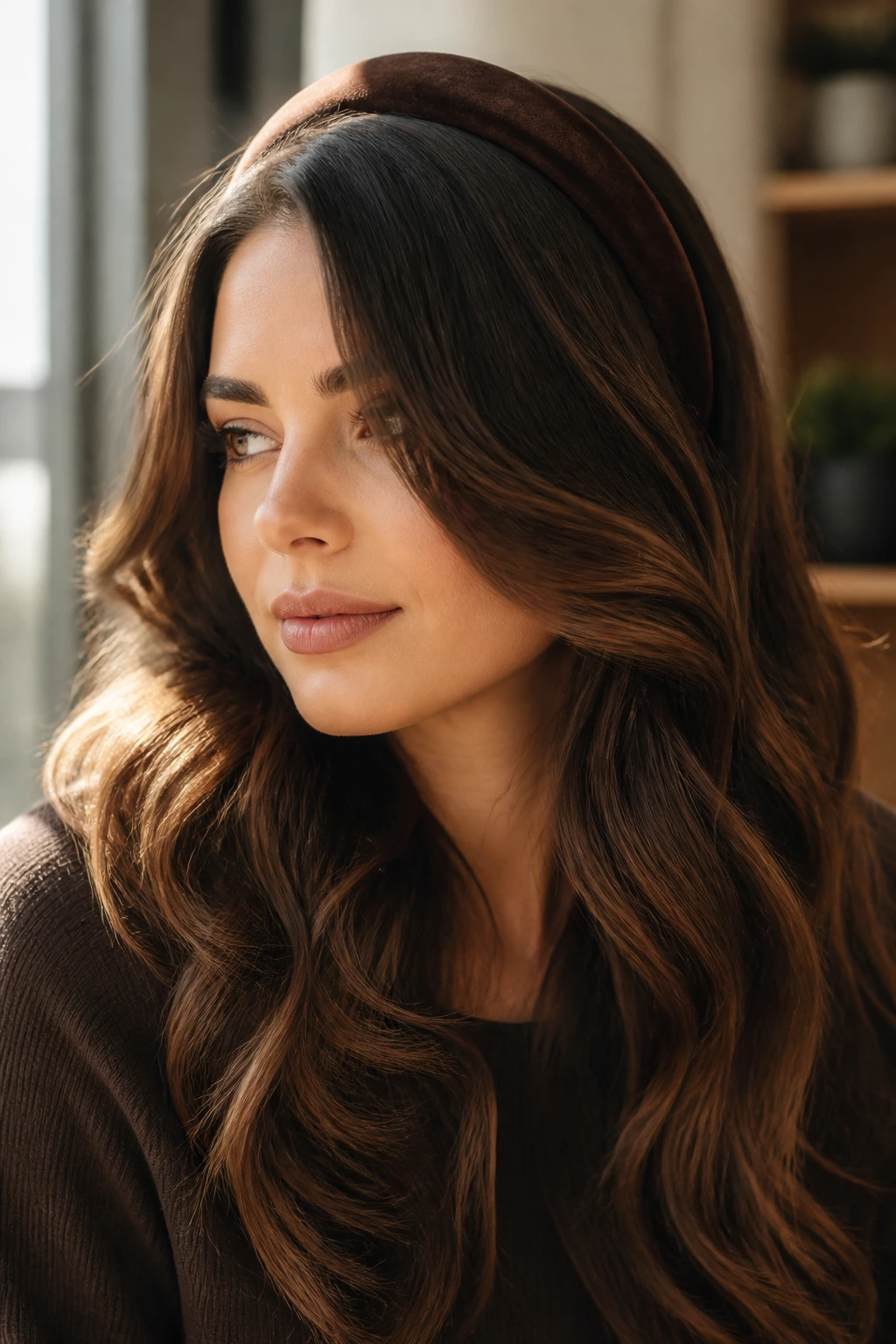
A velvet headband can rescue a plain curl day in about ten seconds. It gives the hair a frame, keeps the front pieces from scattering, and adds a little winter texture that doesn’t look fussy. The band is doing the heavy lifting, which is the whole point.
Choose a side part or a slightly off-center part, slide the headband on, and push it back just enough to keep the front from puffing up. Leave the hair around the ears soft. If you flatten the sides too much, the whole look starts to resemble a school-photo retake.
This is the style for mornings when you need speed more than drama. It also works when your curls are clean but not perfectly styled. The headband makes them look intentional. A low-profile version in black, burgundy, or deep green tends to read best against winter clothing.
11. Double Mini Braids Feeding into Loose Curls
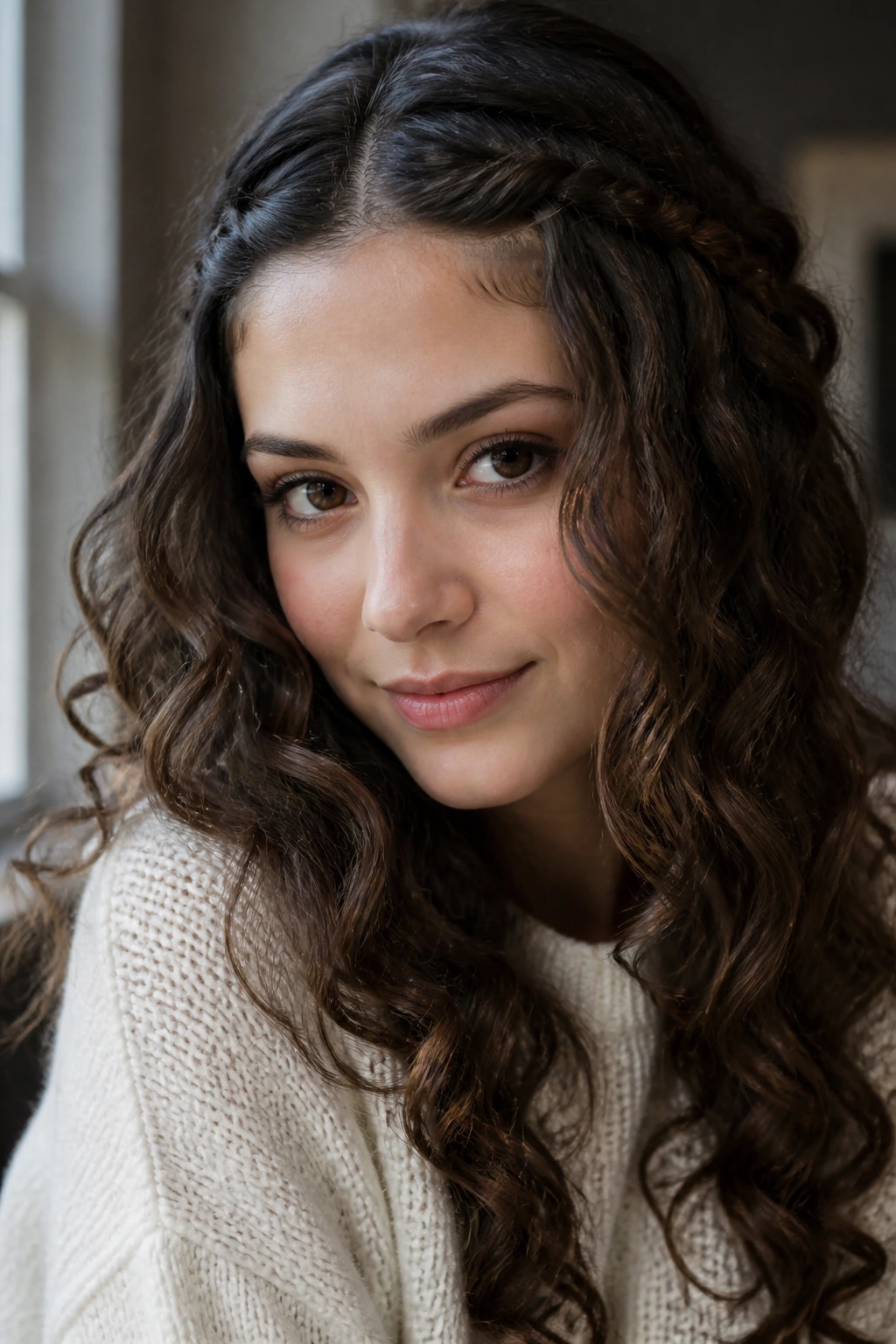
Tiny braids at the temples add a bit of edge without stealing the show from the curls. They also keep those annoying front pieces from drifting forward every time you turn your head. That’s the useful part. The rest is just a nice bonus.
Part off two narrow sections near the front hairline and braid each one loosely back toward the ears. Secure them with tiny elastics or hidden pins, then let the rest of the hair hang in loose curls. If you want a softer finish, gently stretch each braid after it’s tied off so it doesn’t look too tight or too neat.
This style works especially well with layered hair because the braids help gather the shorter pieces that would otherwise escape. It’s a good option if you want some detail near the face but don’t want to commit to a full crown braid.
12. Half-Up Top Knot with Curled Ends
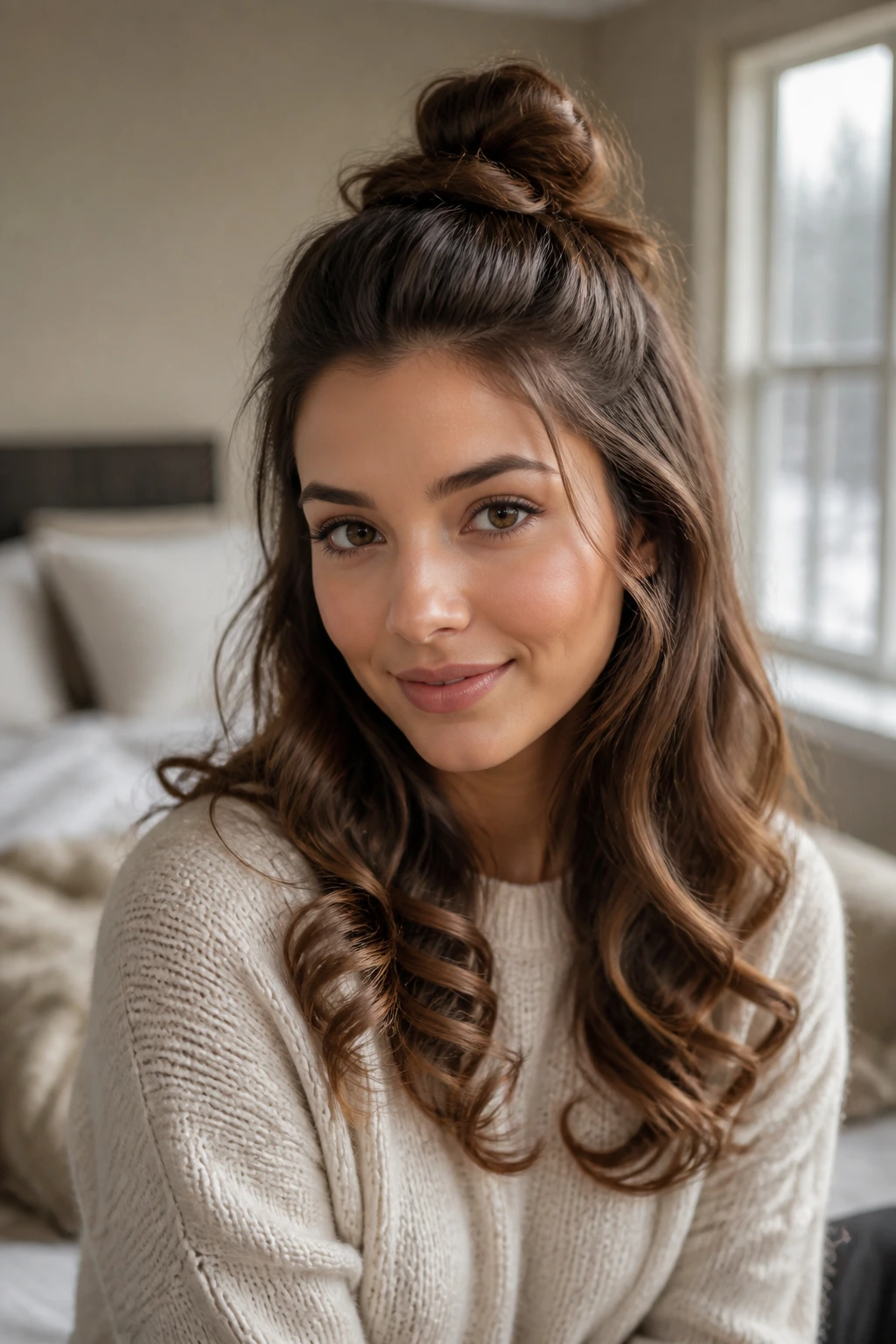
The half-up top knot is the lazy cousin of a proper updo, and I mean that as praise. It keeps the top layer under control, shows off the loose curls underneath, and takes about as long as it takes to find one hair tie.
Pull the top section into a high mini bun at the crown and leave the bottom half down. Don’t smooth the top too hard. A bit of texture helps the knot sit better and keeps the look from going flat against the scalp. If the bun feels too bulky, twist the top section first, then coil it once or twice before pinning.
This style is good when you want height without a full blowout look. It also survives a knit hat better than a full top knot because the lower curls keep some movement. If your curls are prone to frizz, spray the bun lightly with hairspray before you step out. The loose ends can stay softer.
13. Side Braid Into Loose Curls
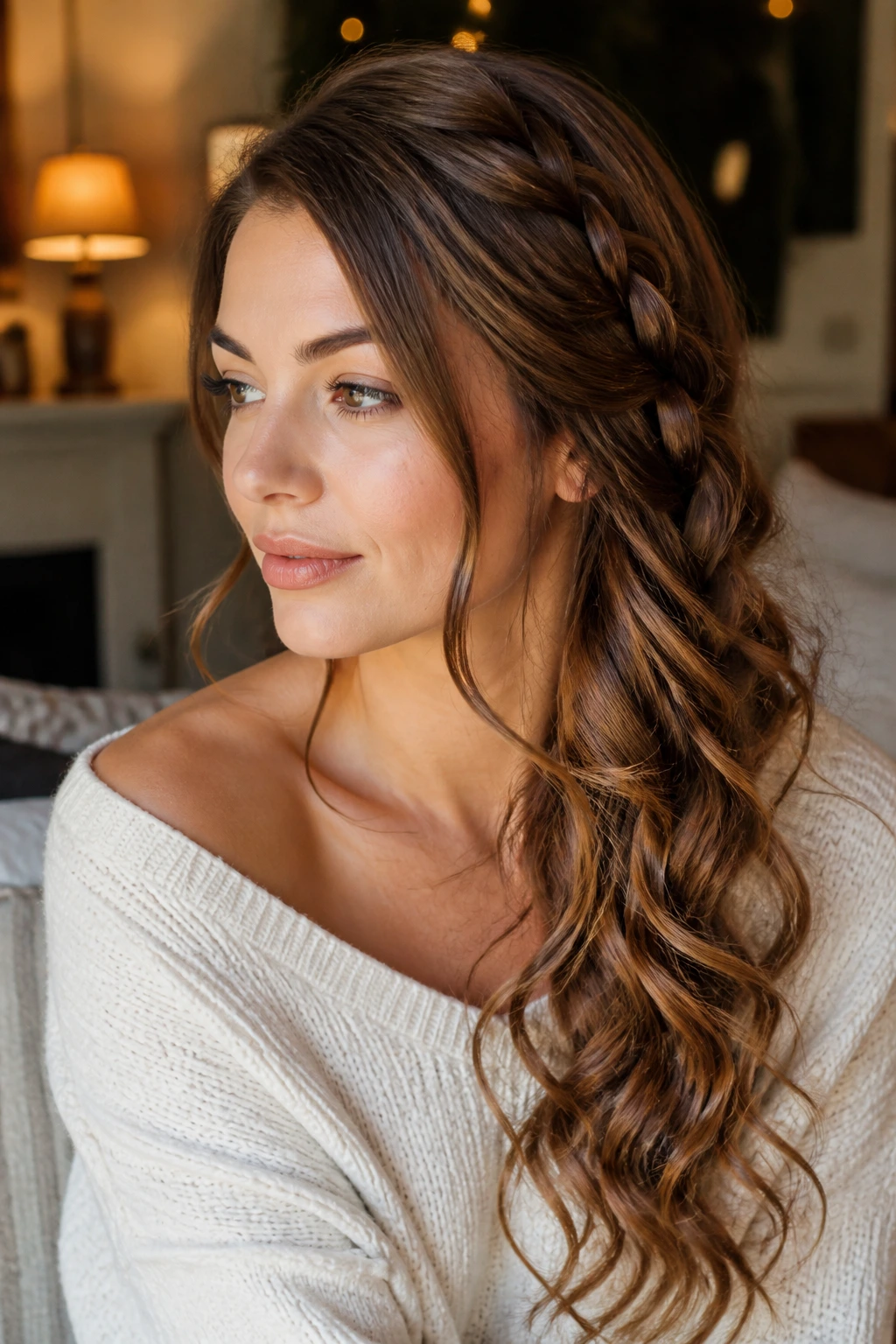
A side braid gives you a little structure on one side and leaves the rest of the hair free. It’s one of the better answers to winter wind because the braid keeps the front from blowing everywhere while the loose curls keep the style from looking too fixed.
Start the braid just below the temple or slightly behind it, depending on how much face framing you want. Braid loosely down one side and secure it near the shoulder, then let the rest of the hair fall in curls around it. If the braid feels too tidy, gently pull apart the edges with your fingertips. A braid with a little width looks better against soft curls than a skinny, sharp one.
This is one of those styles that can tilt casual or dressed up depending on the accessory. A simple elastic keeps it low-key. A ribbon or a small metal cuff can make it feel deliberate.
14. Faux Waterfall Braid Over Loose Waves
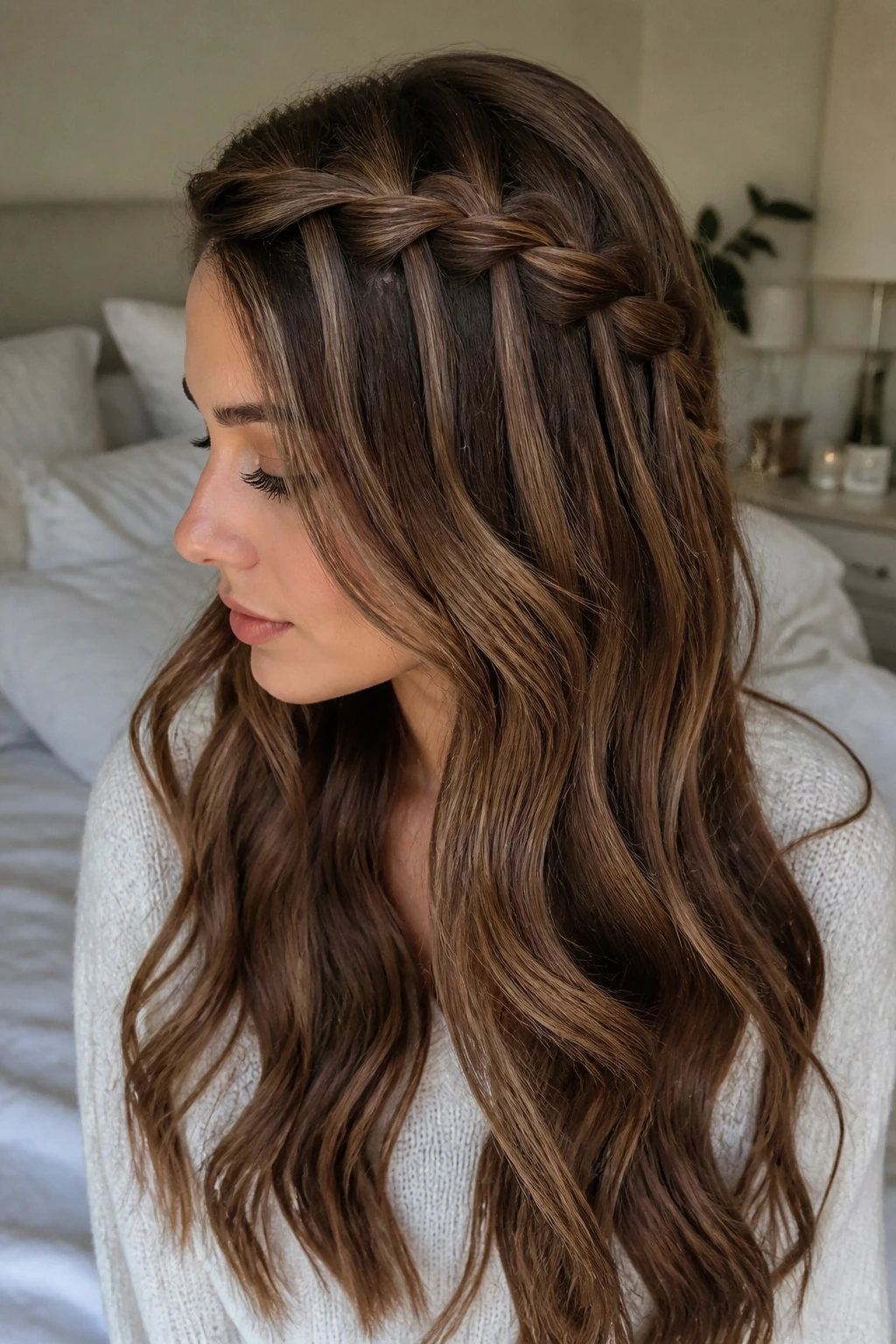
A faux waterfall braid gives you the look of something intricate without the time cost of something truly intricate. Good trade. It threads small pieces across the top while leaving the rest of the hair down, so your loose curls stay the main event.
Start near one temple, crossing small sections over and dropping the bottom piece each time so the hair appears to cascade through the braid. Keep the braid shallow and close to the hairline. If it climbs too high, it starts to fight the rest of the style. The loose waves should still feel like the center of the look.
What makes this one worth the effort
It looks especially good when the curls are soft and brushed out, because the braid adds contrast. If the hair is too curled or too tight, the braid disappears into the texture. Slightly undone is the sweet spot. A few invisible pins along the back edge can keep the braid from shifting while you move.
15. Ribbon-Laced Low Ponytail
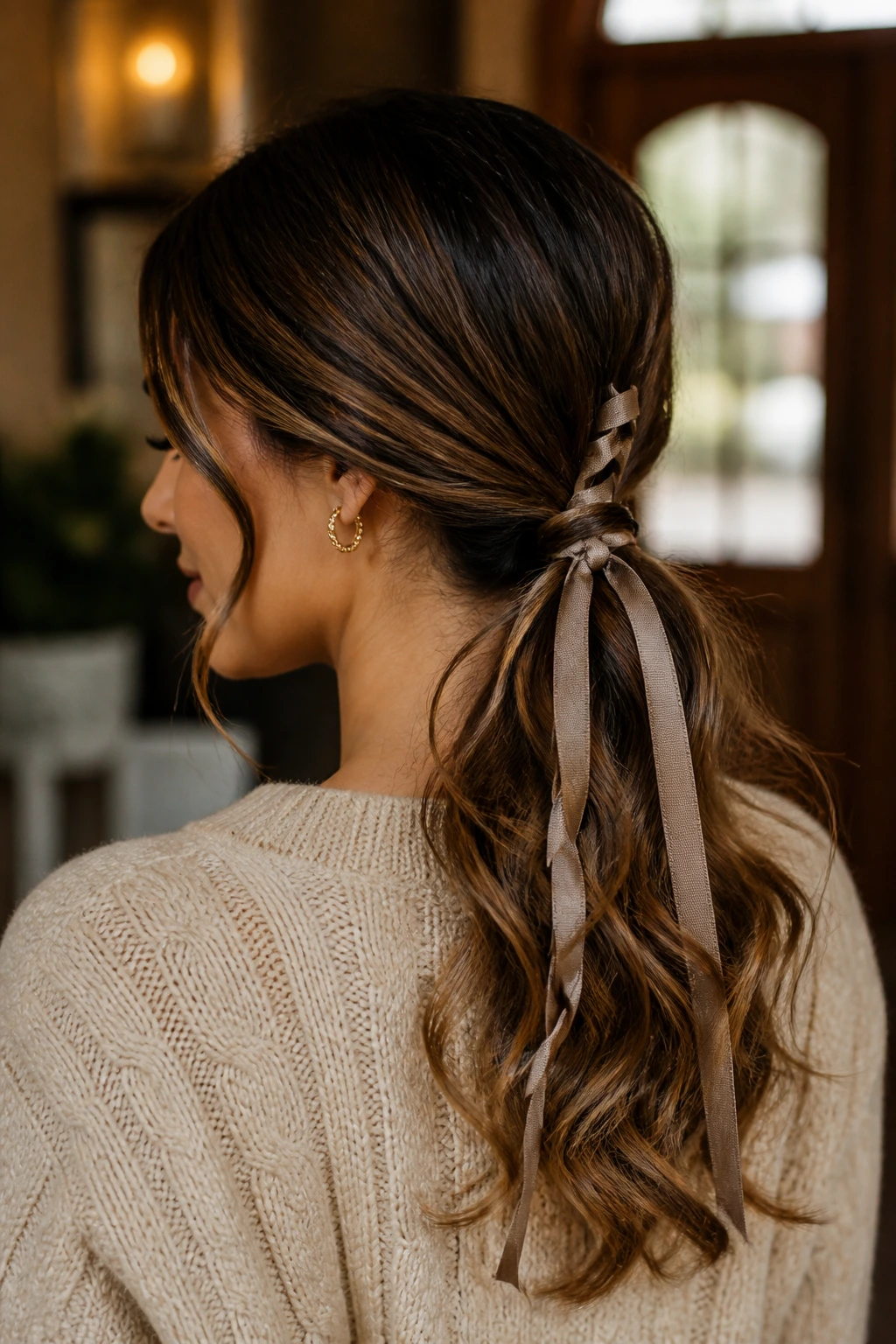
A ribbon-laced ponytail is the plainest ponytail’s better-dressed sibling. It keeps the hair low and manageable, then uses ribbon to give the whole thing some shape and color. The loose curls at the ends stop it from feeling too neat.
Secure a low ponytail with a small elastic. Then thread a ribbon through the base or wrap it around the elastic and weave it down the length a few times, depending on the look you want. Keep the ribbon flat and let the tails hang long enough to mingle with the curls. Satin, grosgrain, or velvet all work. Use satin when you want softness, velvet when you want a colder, richer texture.
This style is especially useful if your coat or sweater creates a lot of static. The ribbon distracts from a few flyaways, which is handy because winter hair rarely stays perfectly controlled. A wrapped ponytail also makes it easier to hide an elastic that has seen better days.
16. Hat-Friendly Low Braid with Flipped Ends
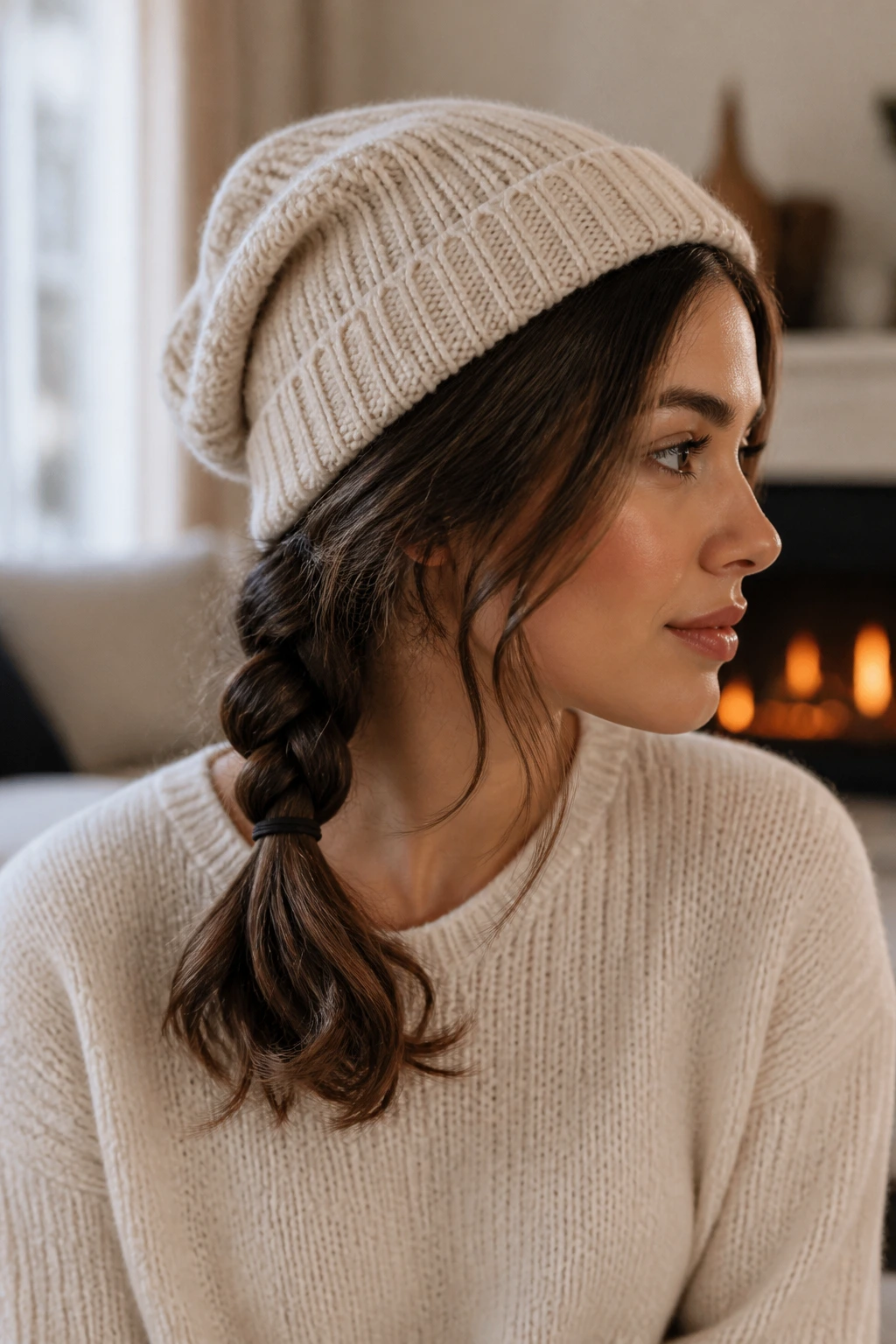
Some styles are made for sitting under a beanie, and this is one of them. A low braid keeps the body of the hair compact, so the hat doesn’t flatten the whole shape into a sad sheet. When you take the hat off, the braid usually leaves enough texture that the loose ends still have some life.
Start the braid low at the nape and keep it relaxed. Once it’s secured, leave the last few inches out and curl them softly, or braid all the way down and gently loosen the top half so the braid doesn’t look too tight. The key is that the braid should sit low enough that your hat can rest above it, not smash directly on top of it.
If you wear hats often, this is one of the least annoying choices on the list. It takes punishment well. And it looks better after a little wear, which is rare and useful.
17. Deep Side Part Hollywood Waves with a Few Hidden Pins
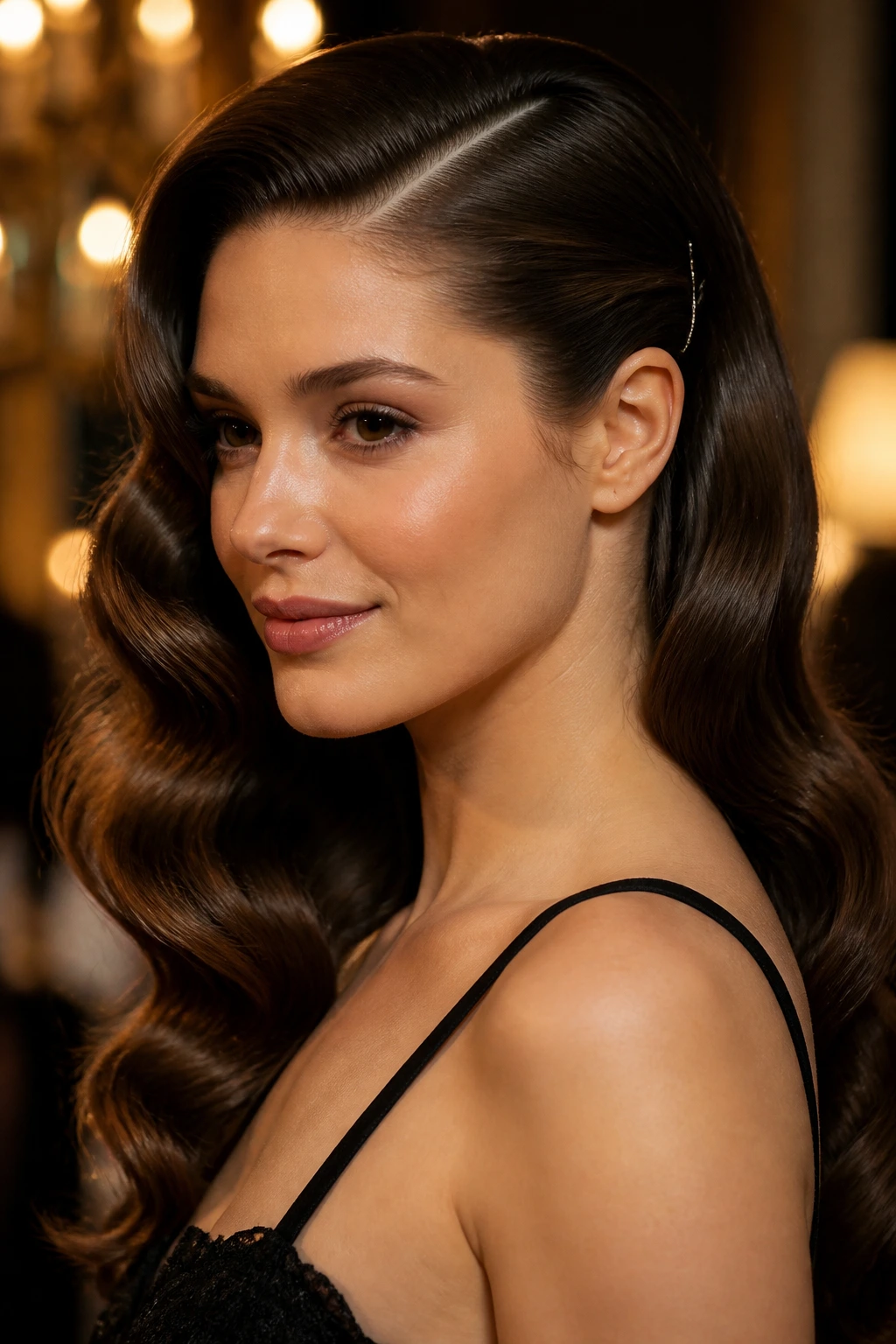
This is the polished option. Not stiff, not prom-heavy, not trying too hard. Just smooth, side-parted loose curls with a little structure at the front so the waves fall in a deliberate line over one shoulder. It’s the one I’d pick for dinner, a holiday party, or any day you want your hair to do more than survive.
Set a deep side part, curl the lengths in consistent, soft bends, and brush them lightly so the wave pattern stays connected. Tuck one side behind the ear and pin it from underneath with two small bobby pins that disappear into the hair. A glossy finish spray can help here, but only a light mist. Too much and the waves lose their swing.
This style likes a smooth crown and a fuller mid-length. If the roots are too flat, it reads limp. If the waves are too separated, it starts looking pieced together. The middle ground is where it lives.
18. Rolled Half-Up French Twist for Long Curls
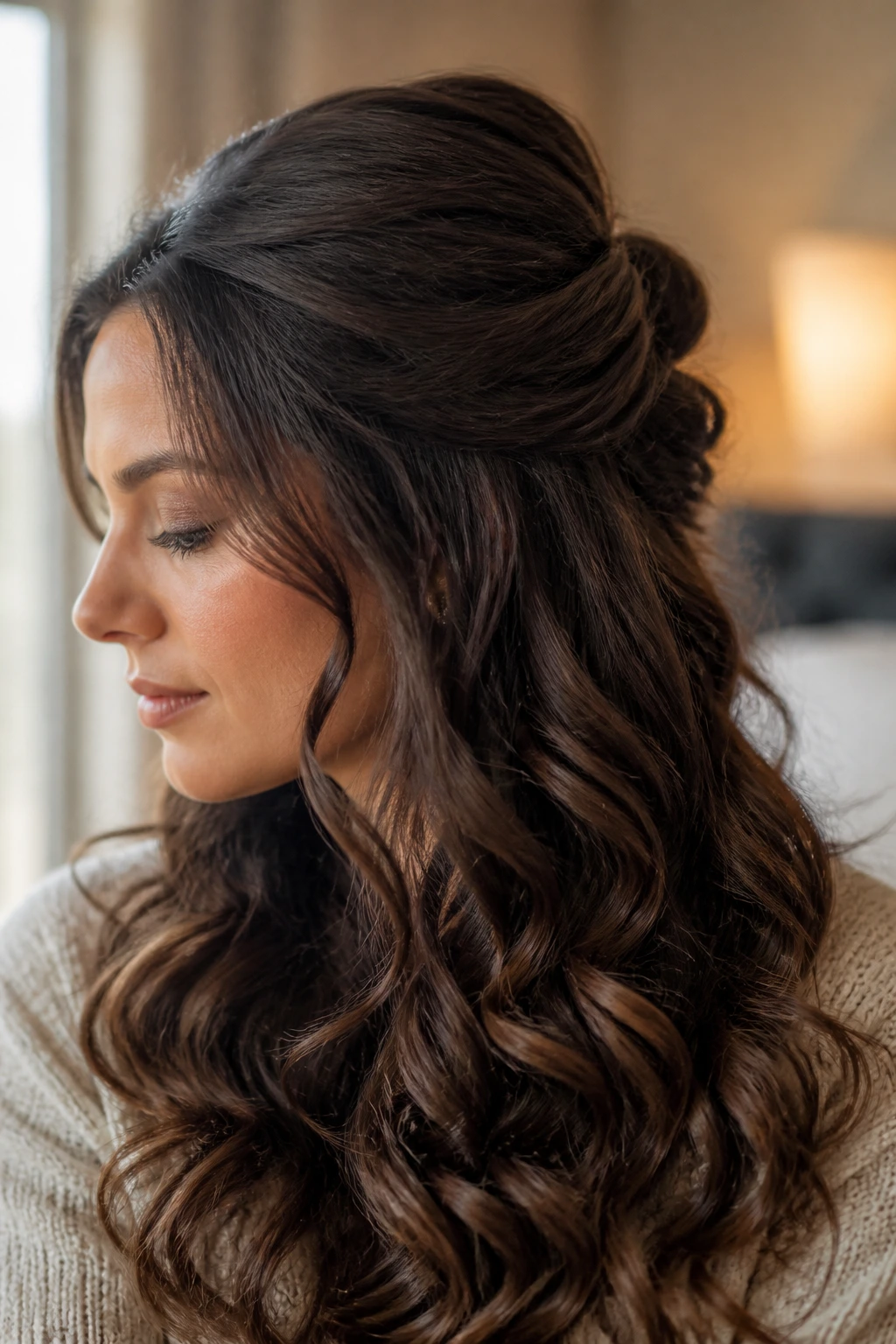
A soft rolled half-up twist gives you the clean line of a French twist without the obligation of a full updo. The top section gets rolled inward and pinned low at the back, while the loose curls stay down and visible. It’s neat around the face and soft through the lengths.
Take the top third of the hair, twist it gently, and roll it toward the center back of the head. Pin it horizontally with two or three bobby pins, then let the curls below fall over the rest. If the roll feels too formal, tug at the top edge a little so it loosens. That little bit of slack is what keeps it from looking stiff.
This is a strong choice when you want winter hair that behaves around collars and scarves but still keeps some movement. It’s also one of the few half-up looks that can handle thick long hair without getting bulky. The roll tames the top. The curls do the rest.
Why Loose Curls and Winter Layers Get Along
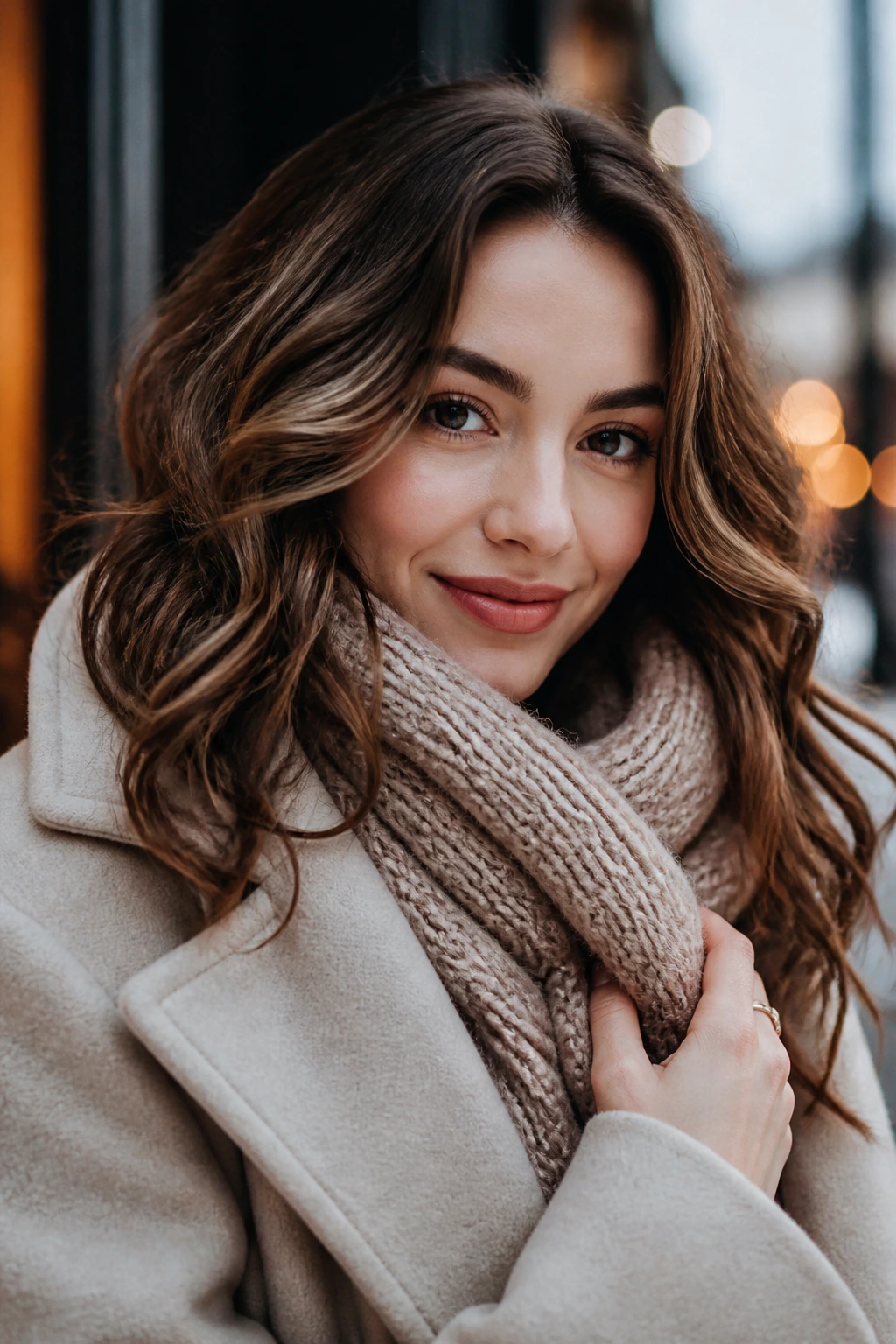
Loose curls are forgiving in a way that straight hair and tighter curl patterns often are not. They bend around a scarf instead of fighting it. They take a little static better than a pin-straight blowout, and they don’t collapse as sharply when the back of your coat brushes the ends. That makes them a useful base for winter styling, especially on long hair where every extra inch can get snagged, flattened, or bent at the wrong angle.
The other reason they work is simple: loose curls keep enough structure that small styling choices show up. A ribbon actually looks like a choice. A pin actually has a job. A low braid or tucked-back front piece doesn’t disappear into the hair the way it might on a very fine, very straight texture. You get more style mileage out of each small move.
There’s a practical side too. Loose curls are easier to refresh than a full smooth blowout. A quick twist around a warm barrel, a finger coil at the front, or a light mist of water can bring the shape back without starting over. That matters when your day includes heated rooms, cold sidewalks, and whatever your coat collar is doing to the back of your head.
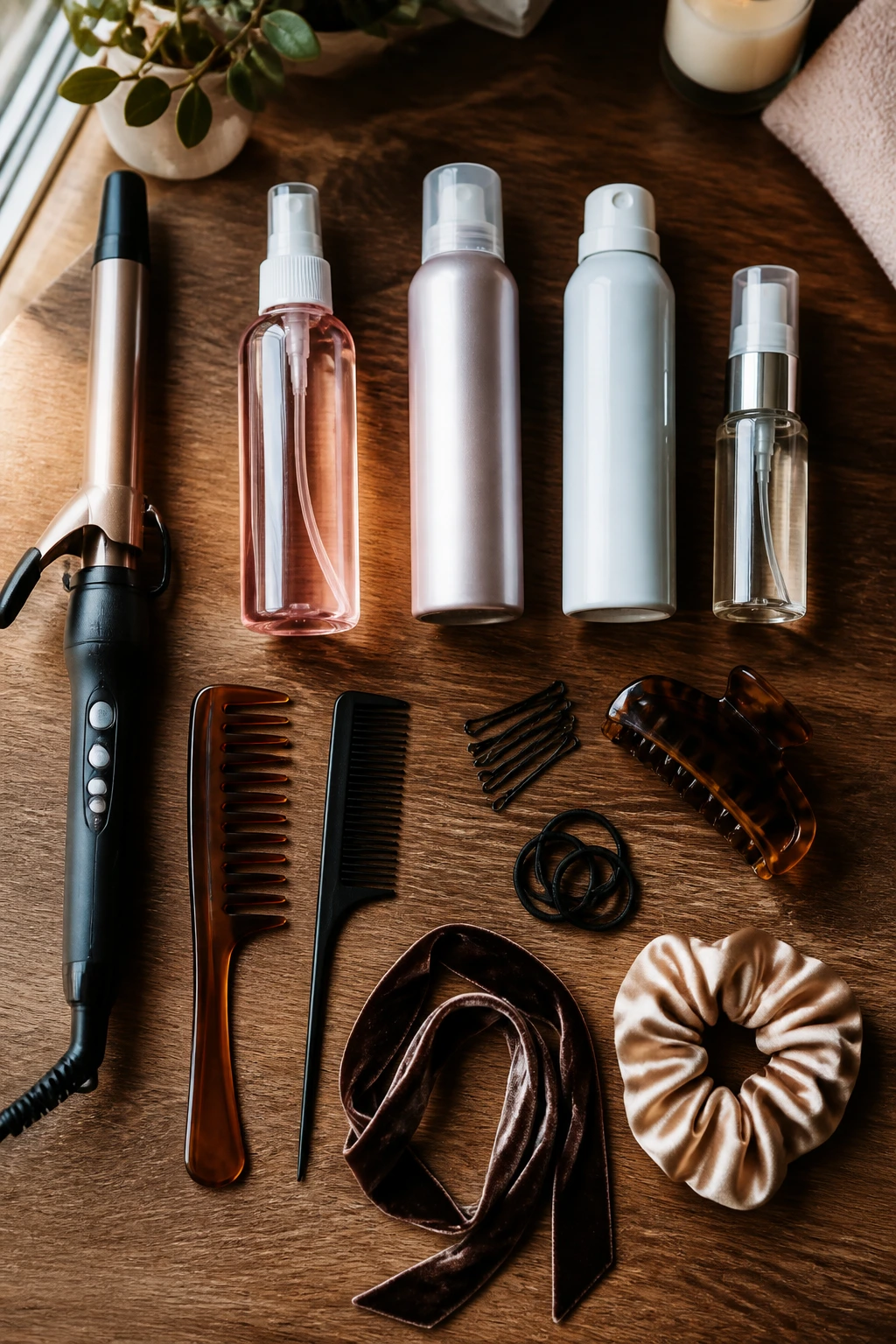
Essential Equipment for These Hairstyles
-
1-inch or 1.25-inch curling iron or wand: Best for creating loose bends that still hold after you brush them out.
-
Heat protectant spray: A thin coat before curling keeps the ends from drying out and looking brittle.
-
Lightweight hairspray: Use this for hold at the crown, on braids, or over pinned sections without turning the hair crunchy.
-
Dry shampoo: Handy at the roots when winter static makes the hair look flat or a little too soft.
-
Smoothing serum or anti-frizz cream: A tiny amount on the outer layer keeps flyaways under control.
-
Wide-tooth comb: Better than a brush for separating curls without wrecking the shape.
-
Rat-tail comb: Useful for clean parts, braid sections, and neat half-up lines.
-
Bobby pins in two colors: Match them to your hair so they disappear, or keep a dark set and a light set for different shades.
-
Small snag-free elastics: Best for ponytails, braids, and half-up knots without chewing up the hair.
-
Claw clip with strong teeth: Choose one that can hold all of your hair, not just the top layer.
-
Velvet or satin ribbon: A simple winter accessory that looks intentional and is kinder to long hair than rougher ties.
-
Silk or satin scrunchie: Good for overnight prep and low ponytails that need fewer dents.
-
Hand mirror: Sounds small, but it helps when you’re trying to pin the back of a twist without guessing.
Smart Product and Accessory Picks for Winter Curls
Winter styling lives or dies on the products you choose. A strong-hold spray can save a braid from going fuzzy, but if it has a heavy alcohol smell and dries the hair like straw, it will make loose curls look old by lunchtime. A better bet is a flexible hairspray with enough grip to hold the shape while still letting the curls move when you turn your head.
Heat protectant matters more than most people admit. If you’re curling the same long hair over and over through the colder months, the ends get tired fast. Look for a spray or cream that doesn’t leave a greasy film, because loose curls show buildup quickly. One or two pumps too many and the ends start separating in a way that looks oily instead of glossy.
Accessories should do real work. A ribbon should stay tied. A clip should actually hold. A bobby pin should disappear into the hair rather than sliding down the side of your head after ten minutes. If you have thick hair, buy pins and elastics in stronger versions. Cheap elastics snap fast, and flimsy clips crack when you force too much hair into them. That’s false economy.
How to Wear These Styles With Coats, Hats, and Scarves
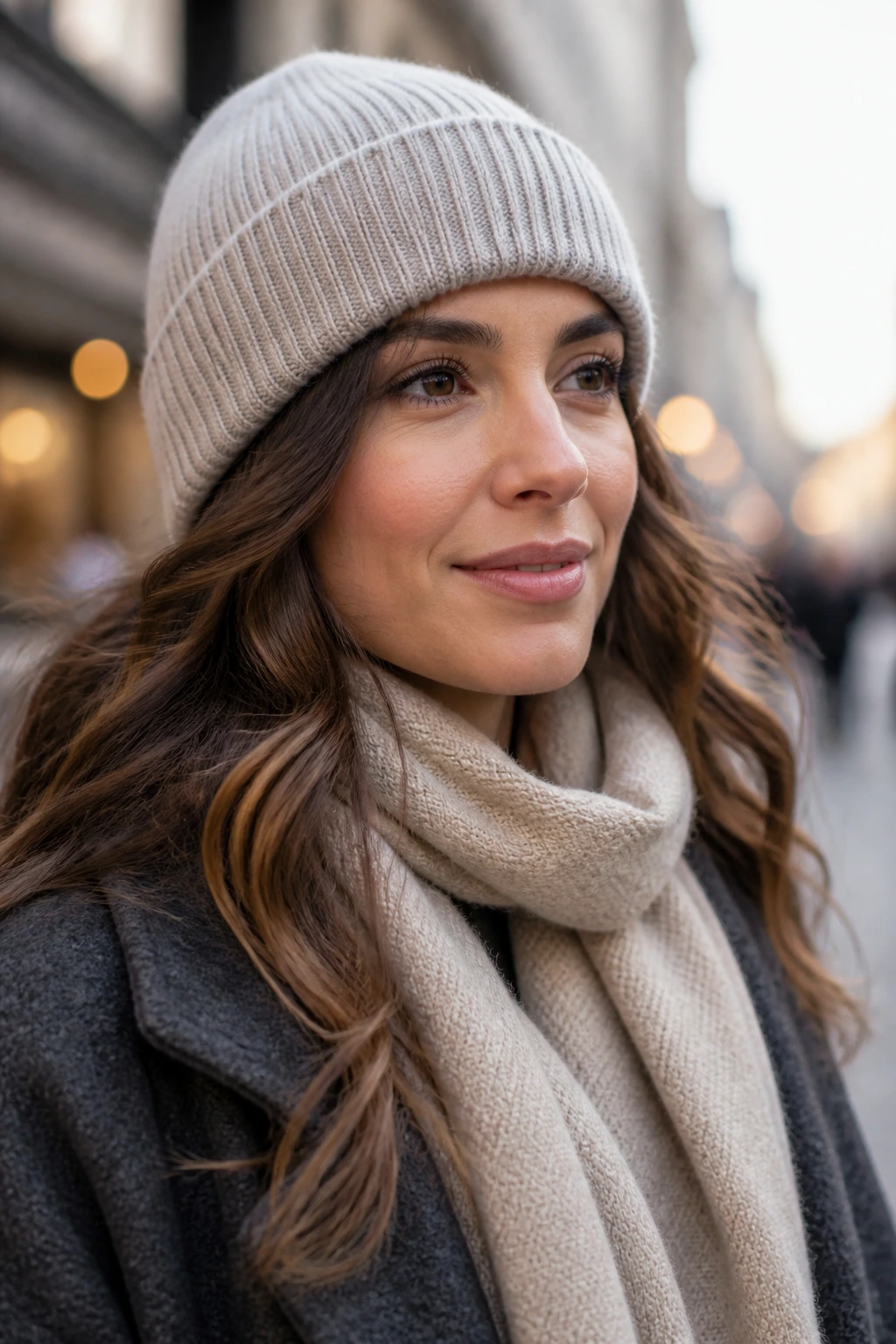
Hat strategy: Keep the crown low and avoid bulky knots right where the hat band sits. A low braid, tucked-back front pieces, or a clipped half-up shape usually survives better than anything perched high on the head.
Scarf strategy: Let the nape stay smooth. Low ponytails, French twists, and low buns are safer near knit collars because they keep the ends from rubbing in the same spot all day. If the back of your scarf is rough, choose a style that ends above it.
Workday strategy: Pick something that can loosen gracefully. Center-part tucks, side pins, and ribbon half-ups can soften over time without looking sloppy. A hard shell of hairspray will not age as well.
Cold-weather fix: Keep a couple of extra bobby pins and one tiny elastic in your bag. Wind, static, and coat friction will test the style before lunch if you’re unlucky. One pin can save the entire day.
Extra Tricks for Shine, Hold, and Frizz Control
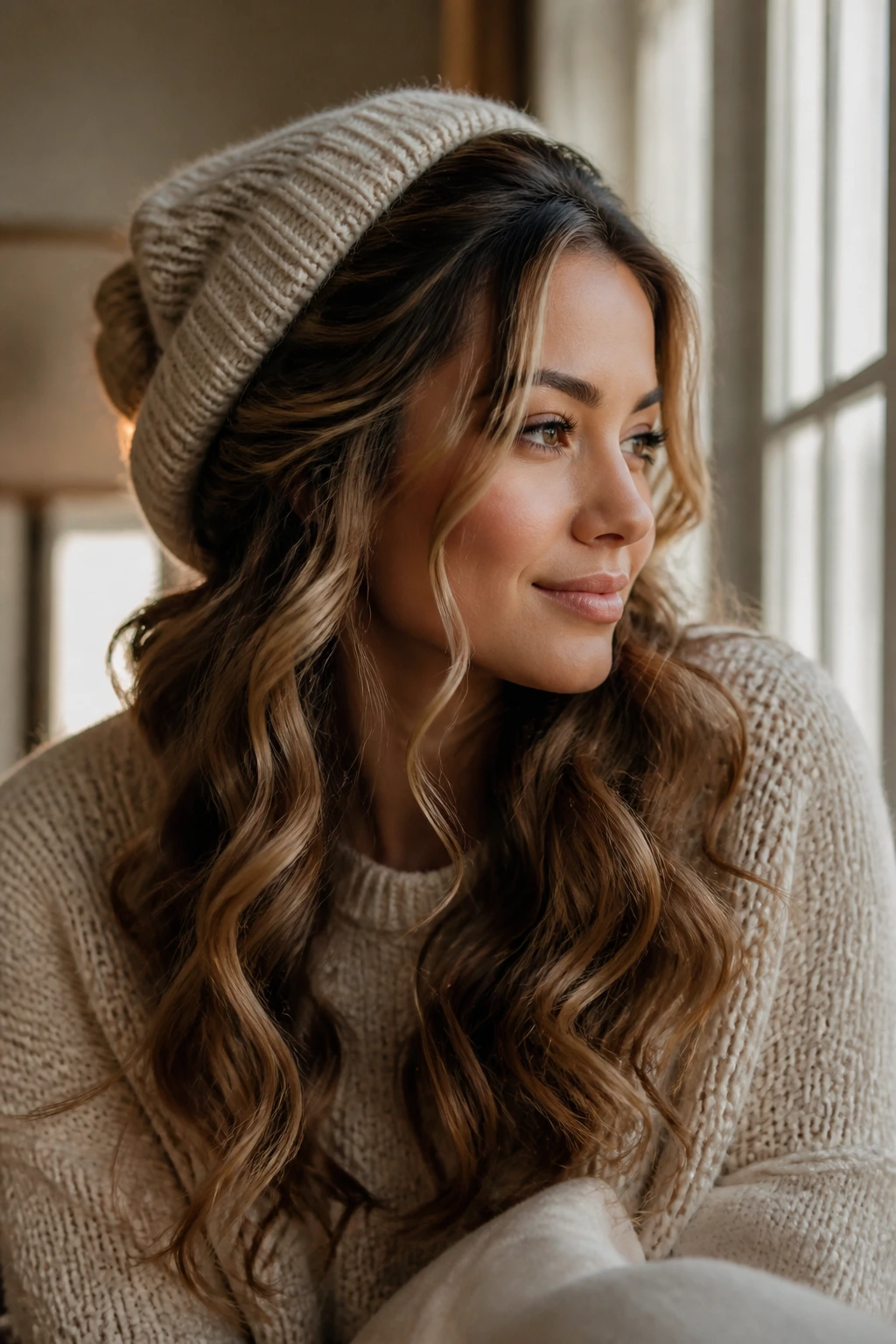
Shine: Put a drop of serum on your palms, rub them together, and skim only the outermost layer of the curls. If you can feel the product sitting there, you used too much.
Grip: Mist a small cloud of hairspray onto a brush or your fingers before smoothing a section down. That gives control without loading the whole head with lacquer.
Lift: If the crown goes flat, lift a one-inch section at the root and tap in a bit of dry shampoo, then shake it out with your fingers. Don’t ruffle the whole thing.
Color play: Winter accessories can do more than hold hair. A velvet ribbon, a tortoiseshell clip, or a dark satin headband can carry the look when your hair is having an ordinary day.
Short on time: Start from yesterday’s curls if you have them. Two-day loose curls usually hold braids and half-up styles better than freshly washed hair that’s still too slippery.
How to Keep the Style Fresh on Day Two
Loose curls on the first day are easy. The real test is what happens after sleep, scarves, and indoor heat. A satin pillowcase helps a lot because it cuts down on friction, and that means fewer flat spots around the temples and less fuzz at the ends. If you can’t switch pillowcases, a loose pineapple with a satin scrunchie gets you part of the way there.
The best styles for day two are the ones that don’t need every curl to behave. Braids, low ponytails, half-up knots, and side-swept pins hide the rough edges well. If one side has gone straighter overnight, use it as the pinned side. That little imbalance can work in your favor.
Refresh the hair with a very light mist of water or a curl refresher spray, then twist the worst pieces around your finger or a warm barrel for 5 to 10 seconds. Don’t re-curl everything. That usually leads to overstyled ends and tired roots. Focus on the front, the top layer, and the pieces that frame the face.
Variations and Adaptations to Try
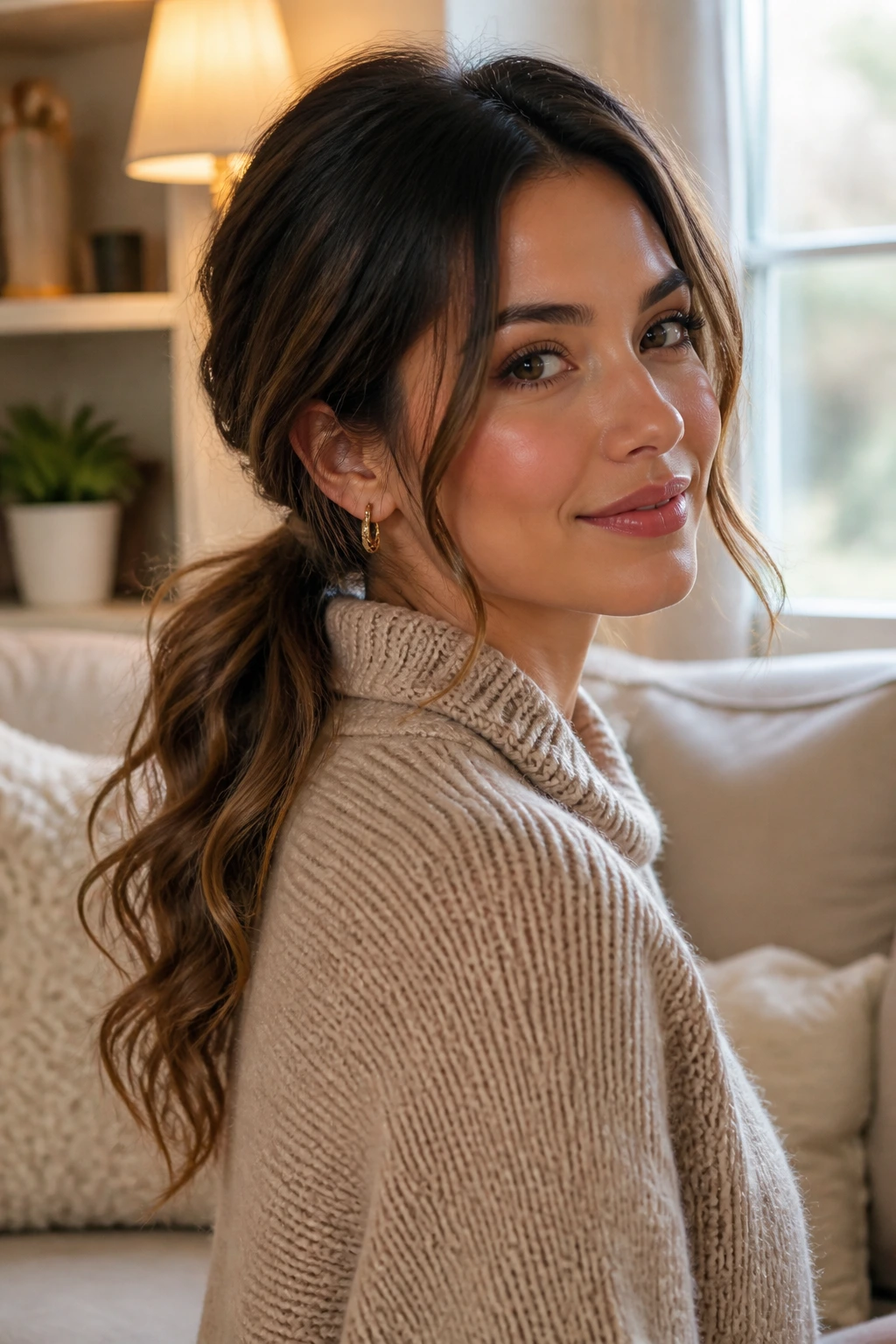
Fine-Hair Version: Use fewer products and more structure. A light mousse before drying, then a claw clip, side pin, or low ponytail will keep the hair from getting overwhelmed. Fine loose curls can look fuller when the crown stays soft and the ends stay defined.
Thick-Hair Version: Split the hair into cleaner sections and choose clips or elastics that can hold real weight. Low braids, twisted half-ups, and French-style rolls tend to behave better than anything that asks all the hair to sit high on the head.
Heatless Version: Overnight braids, robe tie curls, or large foam rollers can create the loose bend you need without a hot tool. This works best if you let the hair dry fully before taking it down; damp ends turn frizzy and weird fast.
Office-to-Evening Version: Start with a center part, a low ponytail, or a side pin, then loosen the face-framing pieces later and add a ribbon or barrette. The style should be able to loosen up a notch without needing a full reset.
Static-Prone Version: Choose styles with less exposed rubbing at the collar and finish with a tiny amount of serum on the bottom third of the hair. Avoid overbrushing. That’s the fastest route to puff.
Cold-Wind Version: Braids, low anchors, and pinned sides are safer than high buns or loose front layers. The wind will always test the front first, so give it less to grab.
Common Mistakes to Avoid
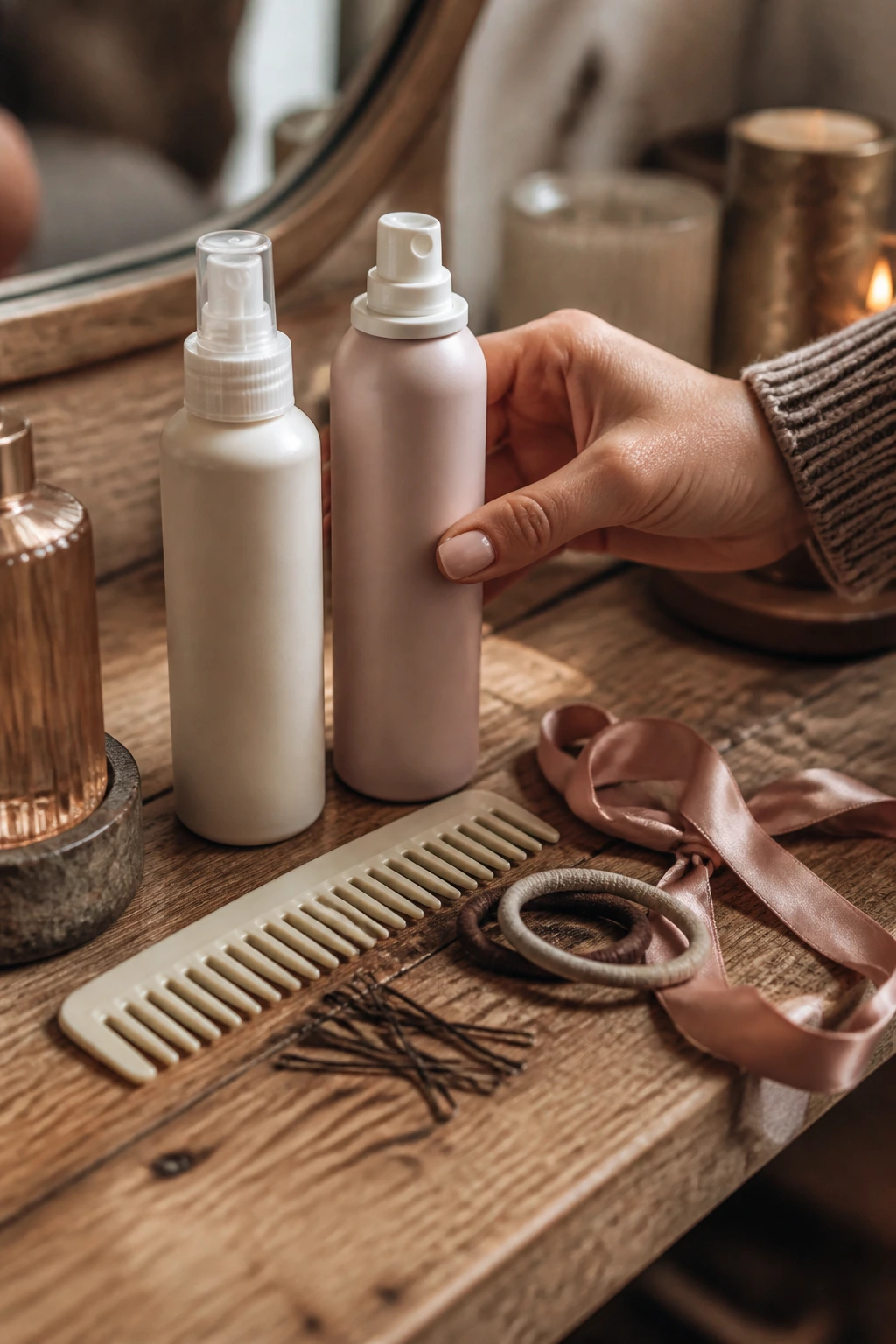
Pinning too high under a hat: If the style sits where the hat band or hood hits, it will flatten, slide, or poke. Keep the anchor lower than you think.
Using too much serum: One extra drop can make the ends limp and separable, which reads oily in winter light. Start with less than you think you need.
Brushing out the curls after styling: A brush can turn loose curls into a cloud of static. Use your fingers or a wide-tooth comb only when you mean to reshape, not just smooth.
Choosing tiny accessories for thick hair: A small clip on a heavy section is a losing battle. It may look cute on the shelf and fail in actual hair.
Tying elastics too tight: You’ll get dents, headaches, and a ponytail that looks strained. Secure the style, but leave enough give that the hair still moves.
Ignoring collar friction: Long hair rubs exactly where your sweater, coat, and scarf meet. If you hear the hair scraping or feel the nape getting rough, switch to a lower style next time.
Frequently Asked Questions
Which barrel size gives the softest loose curls for these styles?
A 1-inch to 1.25-inch barrel is the safest range for long hair. Smaller barrels make tighter bends that can shrink once brushed, while bigger barrels can leave the curl too vague for braids and half-up styles.
Can these hairstyles work on layered hair?
Yes, and layered hair often gets even more movement from loose curls. The only catch is that shorter face-framing pieces may slip out faster, so keep a few bobby pins nearby or choose styles like side sweeps and mini braids that are built to handle escapees.
What if my curls fall flat under a hat?
Start with a low base or a side-pinned style instead of a high ponytail. When you take the hat off, flip your head once, lift the roots with your fingers, and refresh only the top layer with a little dry shampoo or texture spray.
Do these styles work on second-day hair better than clean hair?
Usually, yes. Slightly lived-in hair has more grip, which makes braids, clips, and half-up styles hold better. Clean hair can be too slippery, especially if you’ve used conditioner generously.
Can I use a curling wand instead of an iron?
Absolutely. A wand often gives a softer, more irregular bend, which suits loose winter curls well. Just wrap the hair in the same direction if you want smooth waves, or alternate directions if you want more movement.
How do I keep bobby pins from sliding out?
Cross two pins in an X shape over the same anchor point, or spray the pin lightly before sliding it in. You want the bumpy side against the scalp, not the smooth side.
What’s the best style if my hair is very thick?
A low braid, French twist, or claw-clip roll tends to handle thick hair better than small half-up knots. Thick hair needs a shape that spreads the weight out instead of stacking it all in one place.
Is there a way to make loose curls last all day without making them crunchy?
Use flexible hold, not hard hold. Finish the hair with a light mist of hairspray, smooth the surface with a brush that has a little spray on it, and leave the curls alone after that. Constant touching is what ruins them.
Soft Shapes for Cold Mornings
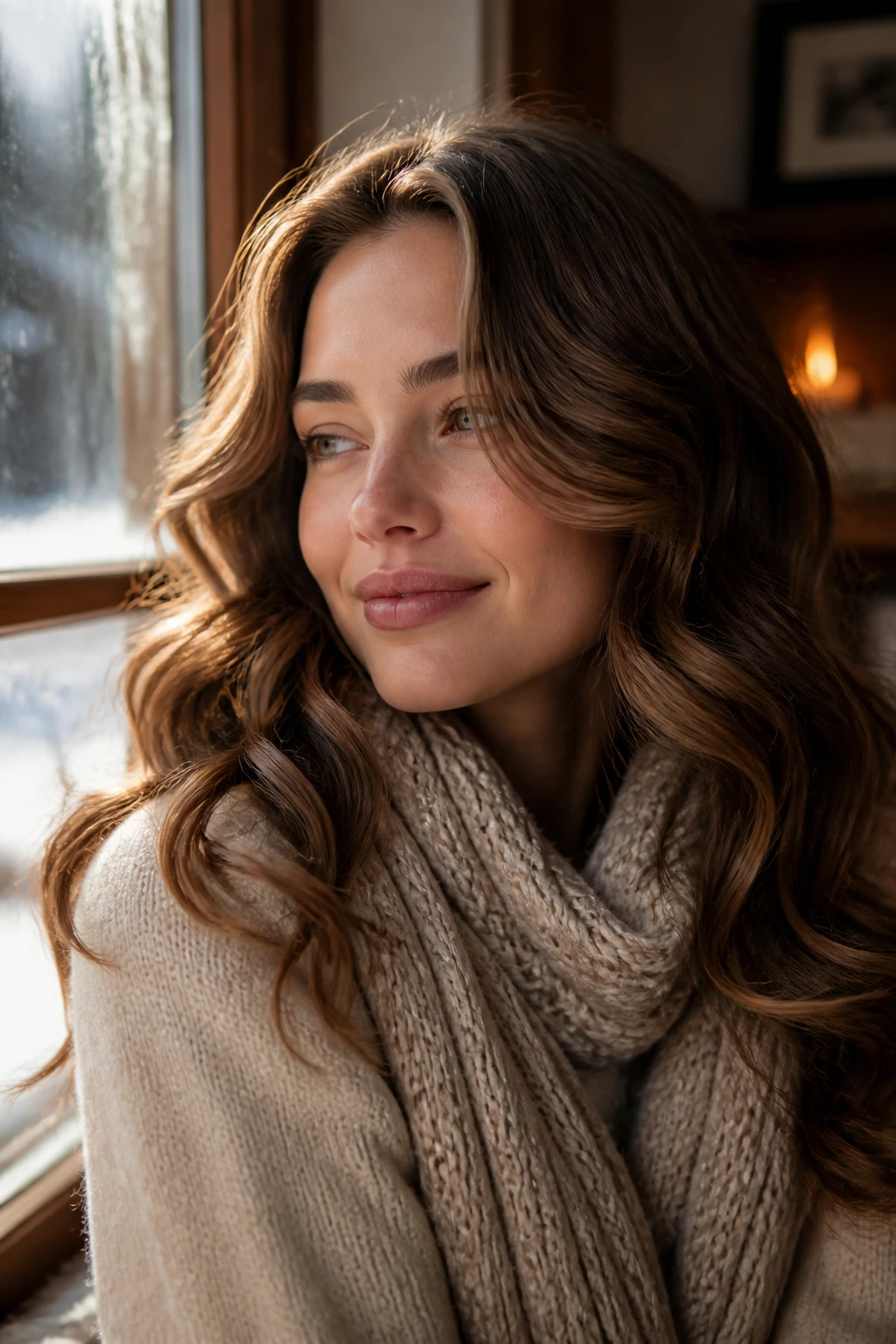
Winter hair is usually a negotiation, not a masterpiece. The best styles for long hair with loose curls don’t fight the season; they work with the scarves, the collars, the static, and the fact that you do not want to restyle everything at 7 p.m. when you get home.
The good ones are the styles that still look like hair when they loosen a little. That’s the real test. A ribbon half-up can go slightly soft and still look deliberate. A low braid can get a little rumpled and still feel right. Even a simple tuck-behind-the-ear looks better when the curls keep some motion instead of freezing into place.
Pick the style that matches the day you actually have, not the one you imagine. Cold air, long coats, and loose curls all ask for a little compromise. The right shape makes that compromise look easy.